
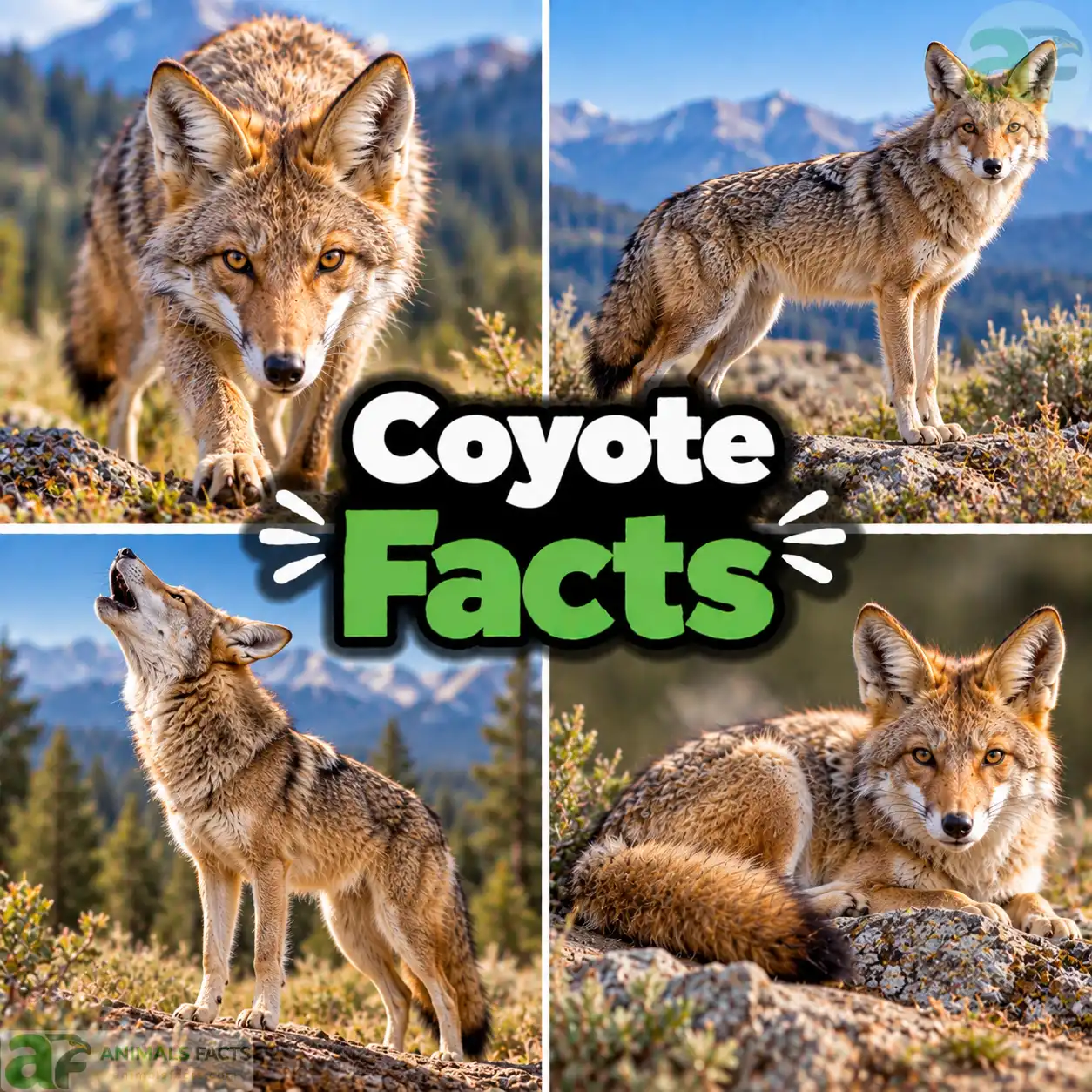
Coyote Facts
| Feature | Details |
|---|---|
| Scientific Name | Canis latrans |
| Common Names | Coyote, American Jackal, Prairie Wolf, Brush Wolf |
| Kingdom | Animalia |
| Phylum | Chordata |
| Class | Mammalia |
| Order | Carnivora |
| Family | Canidae |
| Genus | Canis |
| Habitat | Deserts, grasslands, forests, mountains, wetlands, suburbs, and major cities |
| Lifespan | 6–8 years in the wild; up to 14–18 years in captivity |
| Diet | Omnivore — small mammals, birds, insects, fruit, carrion |
| Weight | 7–21 kg (males typically larger than females) |
| Body Length | 75–100 cm (body); tail adds 30–40 cm |
| Top Speed | Up to 64 km/h (40 mph) |
| Conservation Status | Least Concern — population stable or expanding |
| Population Estimate | Millions across North America; range still expanding |
| Unique Feature | The only large North American carnivore whose range has expanded despite a century of intensive persecution — now found in every U.S. state except Hawaii, including major cities |
 1. Introduction: What is a Coyote?
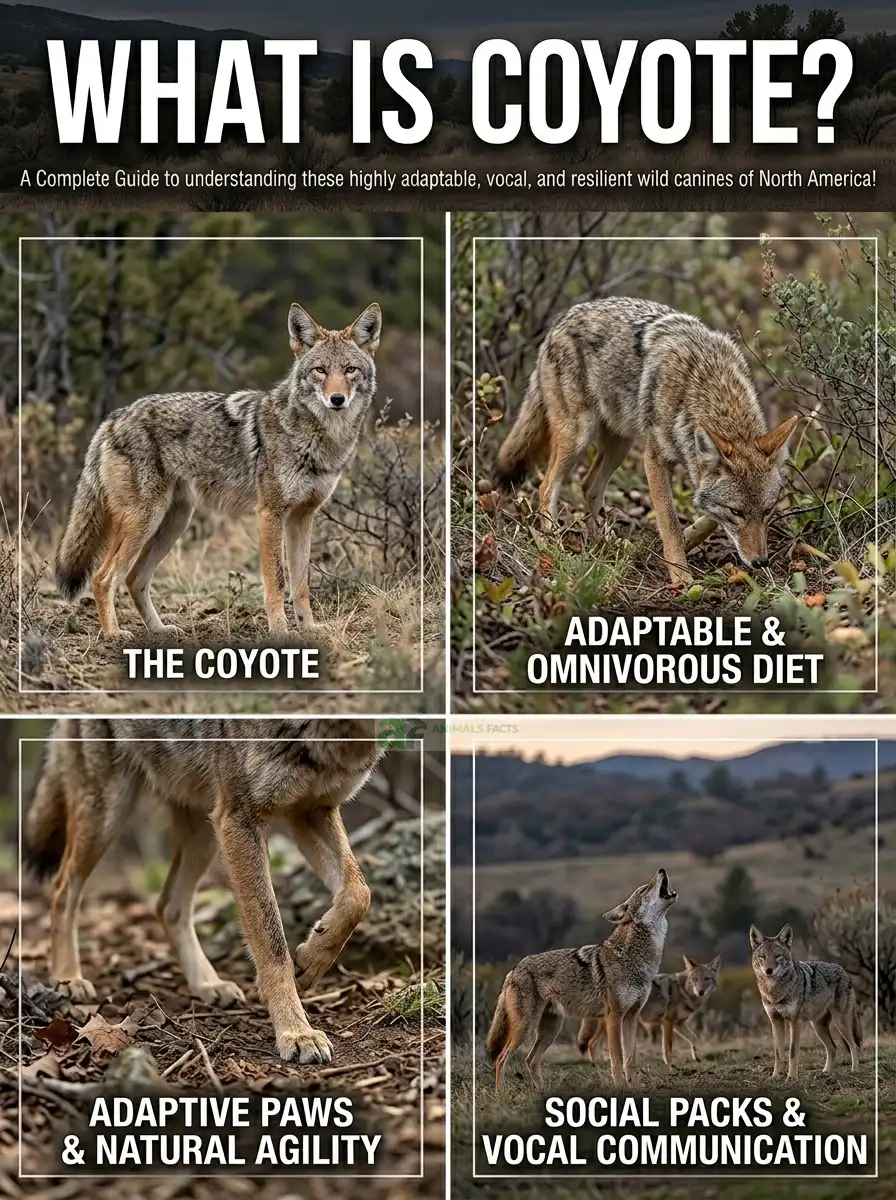
While the wolf was hunted to near-extinction across most of the continental United States and the mountain lion was pushed into isolated mountain refuges, one North American predator did something almost no other large carnivore has ever managed: it expanded. Coyote facts tell the story of an animal that has been poisoned, trapped, shot, and targeted by government-funded eradication campaigns for over a century — and yet has more than doubled its historical range in that same period, colonizing every U.S. state except Hawaii, spreading into Central America, and establishing thriving breeding populations in the heart of cities like Chicago, Los Angeles, New York, and Toronto.
The coyote (Canis latrans) is a medium-sized member of the dog family, Canidae, native to North America and widely regarded by wildlife biologists as one of the most behaviorally flexible, cognitively sharp, and ecologically resilient predators on the planet. Where the gray wolf requires large, undisturbed wilderness territories with abundant large prey to thrive, the coyote has proven remarkably capable of adjusting nearly every aspect of its biology and behavior — diet, activity patterns, social structure, pack size, denning habits, and even average body size — to fit almost any environment humans create. This extraordinary adaptability has made the coyote a central subject of ongoing scientific research into predator resilience, mesopredator ecology, and the emerging field of urban wildlife biology.
Perhaps most remarkably, the very forces that were designed to eliminate the coyote from the North American landscape appear to have instead accelerated its spread. Twentieth-century predator control programs targeted wolves and coyotes alike across the American West, but wolves — with their reliance on large territories, pack cohesion, and large prey — collapsed under the pressure, while coyotes adapted, dispersed into the ecological vacuum left behind, and colonized territory they had never previously occupied. It is one of the great unintended consequences in the history of North American wildlife management, and it forms the backbone of the coyote facts explored throughout this guide.
Whether you’re a student researching coyote facts for a school project, a suburban homeowner curious about the coyotes calling near your neighborhood at night, a parent searching for coyote facts for kids, a rancher trying to understand coyote behavior around livestock, or a wildlife enthusiast fascinated by North America’s most successful wild canid, this guide covers everything — coyote habitat, coyote diet, reproduction, communication, the extraordinary and ongoing story of coyote range expansion, Indigenous folklore, pop culture, conservation status, and much more. This is the most complete guide to coyote facts you will find anywhere.
2. Coyote Species Overview & Classification
The coyote belongs to the genus Canis, the same genus that includes the gray wolf, the domestic dog, and several jackal species — placing it among the most taxonomically and evolutionarily significant members of the broader dog family. Unlike many predator species with a straightforward, stable classification history, the coyote’s taxonomy has become genuinely more complex over the past several decades due to extensive hybridization with wolves and domestic dogs, particularly across the eastern United States and eastern Canada, where coyotes expanded into territory formerly occupied by gray wolves and red wolves.
Classification Table
| Level | Classification |
|---|---|
| Kingdom | Animalia |
| Phylum | Chordata |
| Class | Mammalia |
| Order | Carnivora |
| Family | Canidae |
| Genus | Canis |
| Species | C. latrans |
| Closest Living Relatives | Gray wolf (Canis lupus), domestic dog (Canis familiaris), red wolf (Canis rufus), golden jackal (Canis aureus) |
Recognized Subspecies
Taxonomists have historically recognized approximately 19 subspecies of coyote distributed across North and Central America, reflecting the extraordinary range of habitats and climates the species successfully occupies — from subarctic Canada to tropical Central America.
| Subspecies | Range | Notable Feature |
|---|---|---|
| Plains Coyote (C. l. latrans) | Great Plains, central US | The reference “typical” subspecies; medium build |
| Mountain Coyote (C. l. lestes) | Rocky Mountains, Pacific Northwest | Larger body size; thick winter coat |
| California Valley Coyote (C. l. ochropus) | California | Smaller frame; lighter, sandier coat |
| Northeastern Coyote / “Coywolf” | Northeastern US, eastern Canada | Substantially larger due to wolf/dog admixture |
| Mexican Coyote (C. l. cagottis) | Central Mexico | Smaller, southern-adapted form |
| Belize Coyote (C. l. goldmani) | Central America | Southernmost coyote population; smallest average size |
| Peninsula Coyote (C. l. peninsulae) | Baja California | Isolated desert-adapted population |
| Texas Plains Coyote (C. l. texensis) | Texas, southern Great Plains | Common western form; moderate size |
The “Coywolf” Phenomenon — A Modern Evolutionary Story
One of the most scientifically fascinating developments in coyote facts is the emergence of the so-called “coywolf” — northeastern coyote populations carrying significant amounts of wolf and domestic dog DNA, acquired through hybridization as coyotes expanded eastward into former wolf territory during the 20th century, encountering remnant wolf populations (and later, farm and feral dogs) along the way.
Genetic studies of northeastern coyote populations have found that many individuals carry roughly 60–84% coyote DNA, 8–25% wolf DNA, and 8–11% dog DNA — a genetic mixture that has produced coyotes in the northeastern United States and eastern Canada that are noticeably larger and more robust than their western counterparts, with body weights sometimes reaching 20–25 kg, well above the typical western coyote average of 7–14 kg. Some researchers have argued this hybridization even conferred functional advantages — larger jaw and skull proportions that may assist eastern coyotes in taking down deer, a prey source largely unavailable to smaller western coyotes hunting alone.
This hybridization is not merely a historical curiosity; it represents one of the most well-documented examples of rapid, human-influenced evolutionary change in a living large carnivore, occurring within a timeframe of roughly a century — evolutionary blink-of-an-eye speed by normal standards.
Species Evolution & Discovery Timeline
~1–2 million years ago: Early members of the genus Canis began diversifying across North America during the Pleistocene, with the coyote lineage emerging as a distinct evolutionary branch adapted to open grassland and scrubland habitats, in contrast to the more forest- and tundra-adapted ancestors of the modern gray wolf.
~1 million years ago: The modern coyote form, Canis latrans, is believed to have become genetically distinct, evolving alongside now-extinct Pleistocene megafauna such as mammoths, giant ground sloths, and dire wolves — functioning as a mid-sized scavenger-predator within a far more predator-rich ecosystem than exists in North America today.
~10,000 years ago: Following the extinction of most Pleistocene megafauna and the disappearance of the dire wolf (a direct competitor), coyotes expanded into ecological niches left vacant, setting the stage for their long-term success as a generalist mesopredator.
Pre-contact era: Indigenous peoples across North America maintained deep, sophisticated spiritual and cultural relationships with coyotes, prominently featuring the animal as a trickster figure in oral traditions across dozens of nations, particularly throughout the western United States, the Great Basin, and the Southwest.
19th century: European settlers formally documented and named the species using the Spanish-adapted Nahuatl word coyotl, and the westward expansion of ranching and agriculture brought coyotes into direct, sustained conflict with livestock interests — a conflict that would define coyote-human relations for the next century.
Early–mid 20th century: Federal and state-sponsored predator eradication programs, including the establishment of the U.S. Bureau of Biological Survey’s predator control division, launched widespread poisoning, trapping, and bounty campaigns targeting coyotes intensively across the western United States in an effort to protect livestock — killing an estimated millions of coyotes over several decades.
Mid-20th century: Despite (and arguably because of) these intensive eradication efforts, coyotes began expanding eastward into regions formerly dominated by gray wolves and red wolves, interbreeding with remnant wolf populations and domestic dogs along the expansion front.
1970s–1990s: Coyotes established breeding populations across virtually the entire eastern United States and southeastern Canada for the first time in recorded history, a range expansion largely completed within just a few generations.
2000s–2026: Coyotes have become firmly established in nearly every major North American city, with dedicated urban coyote research programs now active in Chicago, Los Angeles, Denver, New York, and numerous other metropolitan areas, generating an entirely new field of study focused on how large carnivores adapt to dense human environments.
3. Coyote Physical Description & Unique Features
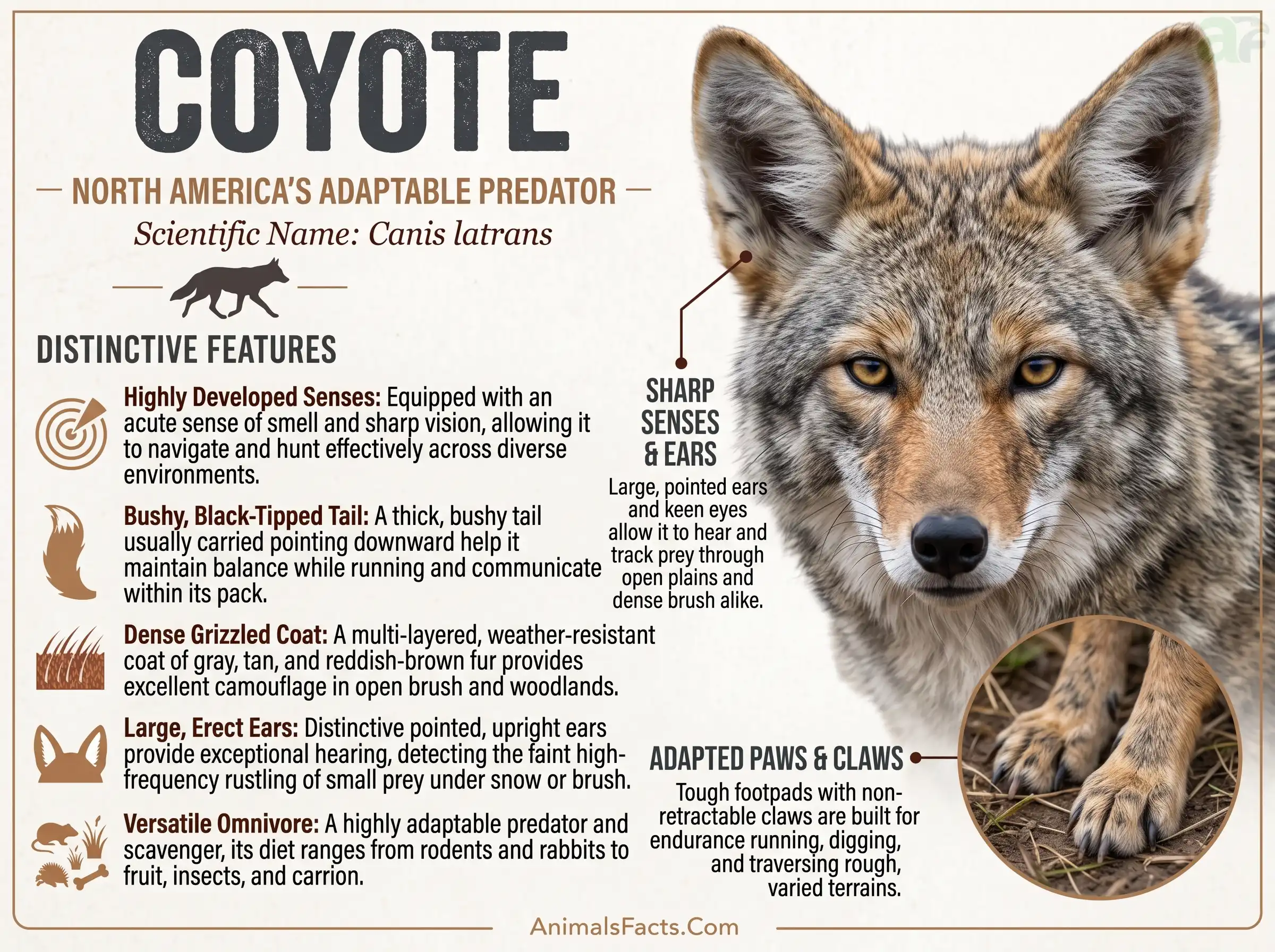
The coyote’s physical build reflects its identity as a generalist predator — engineered for endurance, speed, and adaptability rather than the raw power and bulk of larger canids like the gray wolf.
Size and Build
- Weight: Typically 7–21 kg, with western coyotes generally smaller (7–14 kg) and northeastern “coywolf” populations often significantly larger (16–21+ kg) due to wolf and dog ancestry.
- Body length: 75–100 cm, with a bushy, black-tipped tail adding another 30–40 cm to total length.
- Shoulder height: Approximately 58–66 cm.
- Build: Slender, long-legged, with a narrow chest, pointed muzzle, and relatively large, erect ears — a body plan optimized for covering long distances efficiently and detecting small prey, rather than overpowering large animals through brute strength.
Comparing Male and Female Coyotes
Coyotes show modest sexual dimorphism, with males typically averaging 10–15% larger than females in both body weight and skeletal size. This size difference is far less pronounced than in many other carnivore species, reflecting the coyote’s cooperative, pair-based social structure rather than intense male-male competition for mates or territory.
Coat and Coloration
Coyote coat color varies considerably by region, subspecies, and season, ranging from grayish-brown to yellowish-gray across the back and sides, typically with reddish or tawny tones concentrated on the legs, ears, and muzzle, a pale, cream-colored underside, and a distinctive black-tipped tail that remains one of the most reliable field markers distinguishing coyotes from both domestic dogs and gray wolves at a distance. Coyotes in northern and mountainous regions typically grow a noticeably thicker, longer winter coat to cope with cold temperatures, while desert-adapted subspecies maintain shorter, lighter-colored coats suited to heat management and camouflage against arid terrain.
Speed and Athleticism
Coyotes are exceptionally fast and agile, ranking among the most athletic mid-sized carnivores in North America:
- Top speed: Up to 64 km/h (40 mph) in short bursts — among the fastest land mammals on the continent, faster than most domestic dog breeds and comparable to a pronghorn antelope over short distances.
- Sustained speed: Coyotes can maintain a steady trotting pace of 20–25 km/h for extended periods, an efficient long-distance travel gait that allows them to patrol large territories with minimal energy expenditure.
- Jumping ability: Coyotes can clear obstacles up to 4 meters (13 feet) in a single leap, a critical adaptation for scaling fences in both agricultural and increasingly urban environments.
- Swimming: Competent swimmers, capable of crossing rivers, lakes, and even coastal waterways when necessary during dispersal, hunting, or territory establishment.
Sensory Adaptations
Hearing: Coyotes possess exceptionally acute hearing, capable of detecting small rodent movement beneath snow or dense grass from considerable distances — a critical sensory adaptation underlying their signature “mousing pounce” hunting technique, closely paralleling the same behavior documented in red foxes.
Smell: A highly developed olfactory sense allows coyotes to detect carrion, live prey, and the scent marks of rival coyotes from across considerable distances, playing a central role in both hunting and territorial navigation.
Night vision: Like most canids, coyotes possess a reflective tapetum lucidum layer behind the retina that enhances low-light vision, supporting their characteristically crepuscular (dawn/dusk) and, in areas of high human activity, increasingly nocturnal activity patterns.
Whisker sensitivity: Coyote whiskers (vibrissae) provide fine-tuned tactile feedback, particularly useful when navigating dense brush or hunting in low-visibility conditions.
Teeth and Bite
Adult coyotes possess 42 teeth, the standard canid dental formula, including prominent canine teeth used for gripping and killing prey, and specialized carnassial teeth adapted for shearing meat and, when necessary, cracking bone — a dental toolkit reflecting the species’ flexible, opportunistic feeding strategy.
Did You Know? Coyotes are one of the few North American mammals documented to have increased in average body size in regions where they’ve hybridized with wolves — meaning that a century of attempted eradication has, paradoxically, contributed to the emergence of a genetically distinct, larger-bodied coyote population across the northeastern United States and eastern Canada, one now sometimes capable of successfully hunting adult white-tailed deer, a feat rarely accomplished by smaller western coyotes hunting alone.
4. Top 25 Surprising & Interesting Coyote Facts
- Coyotes are found in every U.S. state except Hawaii — the broadest range of any wild canid in North America.
- The coyote’s scientific name, Canis latrans, translates roughly to “barking dog” — a reference to its distinctive and varied vocal repertoire.
- Coyotes can run at speeds up to 64 km/h (40 mph), faster than most domestic dog breeds and nearly matching a pronghorn over short distances.
- Despite over a century of organized eradication efforts, coyote range has more than doubled since the early 1900s.
- Northeastern “coywolf” populations carry significant wolf and dog DNA, making them notably larger than western coyotes — sometimes weighing 20–25 kg.
- Coyotes are largely monogamous, often forming long-term pair bonds that persist across multiple breeding seasons.
- A coyote’s howl can be heard from up to 5 kilometers (3 miles) away under favorable acoustic conditions.
- Coyotes can jump obstacles up to 4 meters high, a key adaptation for navigating fenced agricultural and urban landscapes.
- Urban coyotes have been documented using crosswalks and waiting for traffic signals to safely navigate city streets.
- A single coyote howling can sound like multiple animals due to a vocal phenomenon called the “beau geste effect,” making small family groups sound far larger than they are.
- Coyotes are true omnivores, eating everything from rodents and rabbits to fruit, insects, and human food waste.
- Coyote pups are born blind and deaf, typically in litters of 4–7, though litters of up to 12 have been recorded.
- Coyotes have been documented forming rare, genuine hunting partnerships with American badgers, cooperatively pursuing burrowing rodents.
- The coyote is one of very few large North American mammals whose population has increased as human development has expanded across the continent.
- Coyotes can interbreed with both wolves and domestic dogs, producing fertile offspring — a genetic flexibility rare among wild canid species.
- Studies of Chicago’s urban coyote population have found individuals maintaining surprisingly large territories, sometimes exceeding 20 square kilometers, even within dense city limits.
- Coyotes primarily hunt alone or in mated pairs, unlike wolves, which rely heavily on large cooperative pack hunting to bring down big game.
- Some urban coyote populations have shifted to being almost entirely nocturnal, a behavioral change specifically linked to minimizing human contact.
- Coyote attacks on humans are extremely rare, with dramatically fewer documented incidents nationally than domestic dog attacks.
- Coyotes appear in the traditional stories of dozens of Indigenous nations across North America, most famously as a clever, complex trickster figure.
- A coyote’s diet shifts dramatically by season, moving from rodent-heavy in winter to fruit- and insect-rich in late summer.
- Coyotes have been recorded living within a few kilometers of downtown Chicago and Los Angeles, some spending their entire lives within city limits.
- Coyote pups become independent and begin dispersing from their natal territory at around 6–9 months of age.
- Coyotes typically mark territory using scent marking and vocal displays rather than resorting to physical confrontation with neighboring groups.
- Twentieth-century government-funded coyote eradication programs killed an estimated millions of individual coyotes, yet the species’ total population and geographic range are demonstrably larger today than at any previously recorded point in history.
5. Fun Facts About Coyotes
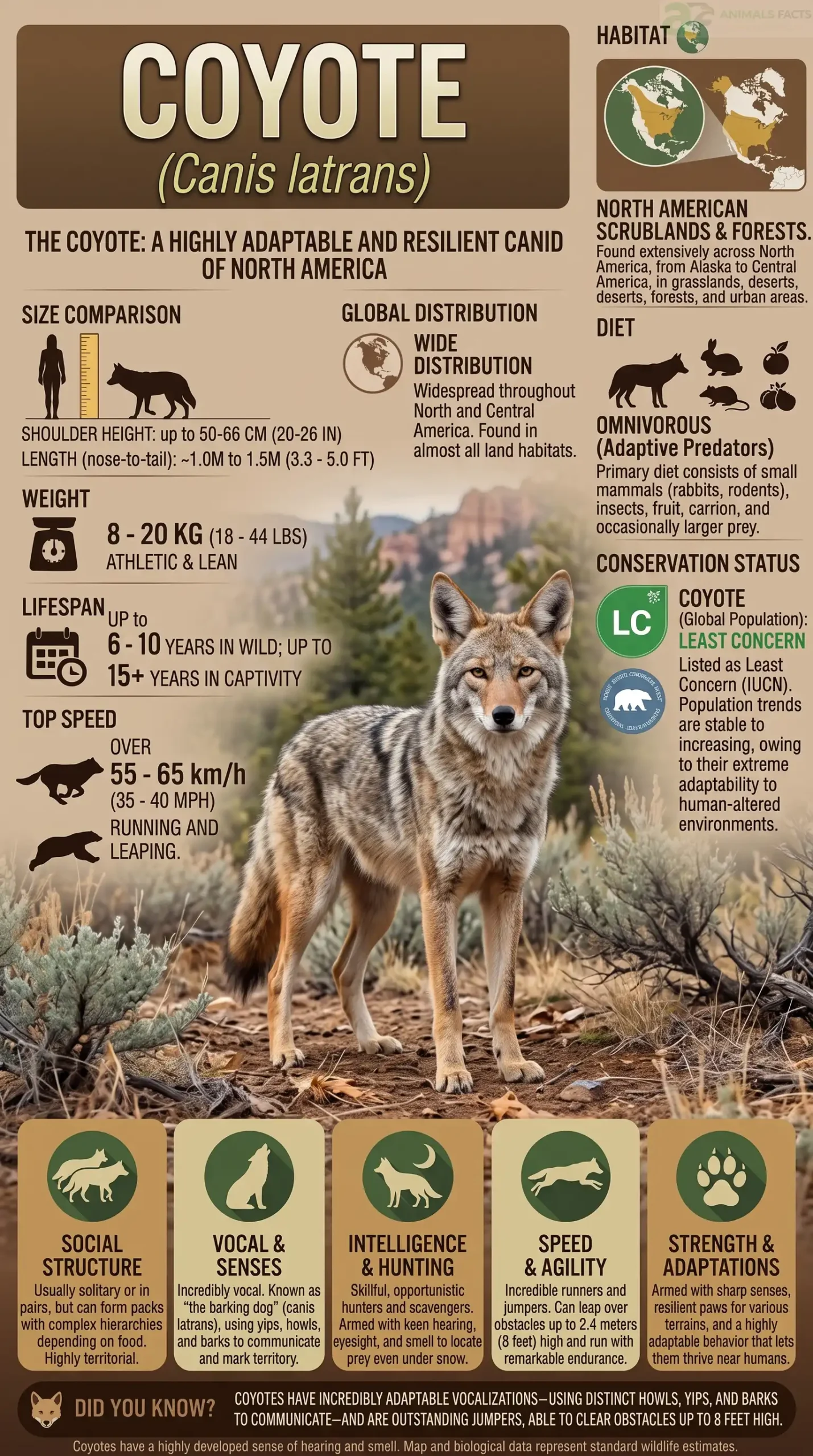
- Coyotes live in every U.S. state except Hawaii.
- Their howl can travel up to 5 km under the right conditions.
- A “coywolf” is a hybrid-descended coyote carrying wolf and dog DNA.
- Coyotes can leap over obstacles up to 4 meters high.
- Baby coyotes are called pups or kits.
- Coyotes are mostly monogamous, pairing for multiple seasons.
- They can sprint up to 64 km/h.
- Coyotes eat fruit, rodents, insects, birds, and carrion.
- Urban coyotes have adapted to city life across most major North American cities.
- Their common name comes from the Nahuatl word coyotl.
- A family group of coyotes is sometimes called a pack or band.
- Coyotes very rarely attack humans.
- Coyotes have been documented cooperating with badgers while hunting.
- A single howling coyote can sound like several through vocal trickery.
6. Coyote Habitat & Geographic Range
Few North American mammals demonstrate the sheer habitat flexibility of the coyote, which thrives across an extraordinary range of ecosystems — from the arid deserts of the American Southwest to the boreal forest edges of Canada, the wetlands of the Southeast, and, increasingly, the concrete and asphalt landscapes of major metropolitan cities.
Primary Habitat Types
Grasslands and prairies: The coyote’s ancestral stronghold, offering ideal open terrain for hunting small mammals, denning in earthen burrows, and maintaining clear sightlines for detecting both prey and threats.
Deserts: Coyotes thrive across the arid Southwest, remarkably well-adapted to extreme daytime heat, limited surface water, and sparse vegetation, often shifting to nocturnal activity to avoid the harshest desert conditions.
Forests and mountains: Increasingly common in forested and mountainous terrain historically dominated by gray wolves, particularly across the eastern United States following coyote range expansion in the mid-20th century.
Wetlands and coastal areas: Coyotes have successfully colonized marshland, swamp edges, and coastal scrub across the southeastern United States, demonstrating tolerance for wet, humid environments quite different from their historical grassland range.
Urban and suburban areas: Perhaps the most striking modern habitat shift documented in coyote facts — coyotes now maintain established, breeding territories within many major North American cities, adapting activity patterns, denning behavior, and diet composition to minimize human contact while exploiting the abundant food and shelter resources cities inadvertently provide.
Geographic Range Table
| Region | Population Status | Notes |
|---|---|---|
| Western United States | Abundant | Historical stronghold; core range for over a millennium |
| Central United States (Great Plains) | Abundant | Core ancestral range |
| Eastern United States | Rapidly expanding | Hybridized “coywolf” populations dominant |
| Southeastern United States | Established, expanding | Colonized within past 50–70 years |
| Canada | Abundant, expanding north | Present in nearly all provinces and territories |
| Mexico | Established | Widespread across central and northern regions |
| Central America | Expanding | Range extending progressively south, into Panama |
| Alaska | Present, expanding | Range expansion linked partly to climate change and reduced snowpack |
The Mechanics of Range Expansion
The coyote’s remarkable range expansion across the 20th century was driven by a combination of factors rarely aligned so favorably for a single species: the near-total extirpation of gray wolves and red wolves across much of the eastern United States removed the coyote’s primary historical competitor and predator; large-scale deforestation and agricultural conversion created open, edge habitat ideally suited to coyote hunting strategies; and the coyote’s own exceptional dispersal ability — with young coyotes documented traveling over 100 km from their natal territory in search of new range — allowed the species to colonize new territory with remarkable speed once the ecological opportunity presented itself.
Did You Know? Coyotes were historically confined largely to the western and central plains of North America. Their expansion east and north over the past century — facilitated significantly by the extermination of gray wolves, which had previously excluded coyotes from much of their territory through direct competition and even direct predation — represents one of the most dramatic range expansions ever documented for a North American carnivore, arguably unmatched by any other large predator species on the continent during the same period.
7. Coyote Diet & Feeding Behavior
The coyote is a true generalist omnivore, and this dietary flexibility is arguably the single greatest factor behind its extraordinary ecological success across such a remarkably diverse range of habitats.
Diet Breakdown Table
| Food Type | Approximate Percentage | Notes |
|---|---|---|
| Small mammals (rodents, rabbits, hares) | 40–60% | Primary year-round prey base across most of the range |
| Fruit and plant matter | 10–30% | Rises sharply in late summer and autumn |
| Insects | 5–15% | Grasshoppers, beetles, and other invertebrates, especially in summer |
| Birds and eggs | 5–10% | Opportunistic, ground-nesting species particularly vulnerable |
| Carrion | 5–15% | Especially important during winter months |
| Human-associated food and waste | Variable, often significant | Pet food, garbage, and compost in urban/suburban populations |
| Larger prey (deer, especially fawns) | Variable | More significant among larger, hybridized eastern coyotes |
| Livestock (sheep, poultry) | Variable | Localized but historically significant source of human-coyote conflict |
Hunting Strategy
Unlike wolves, which rely heavily on cooperative pack hunting to bring down large prey such as elk or moose, coyotes primarily hunt alone or in mated pairs, relying on stealth, patience, acute hearing, and a distinctive high-arcing pounce — sometimes called “mousing” — to catch small rodents hidden beneath grass, leaf litter, or snow. This solitary-to-pair hunting strategy suits the coyote’s typical prey base of small, dispersed mammals far better than large-group hunting would, minimizing the energy costs of pack coordination while maximizing hunting efficiency for the coyote’s typical target size.
The Coyote-Badger Partnership
One of the more remarkable documented behaviors in coyote facts is an occasional cooperative hunting relationship between coyotes and American badgers. Badgers excel at digging burrowing rodents such as ground squirrels directly out of the earth, while coyotes excel at chasing down prey that attempts to flee across open terrain — and researchers studying prairie ecosystems have documented the two species hunting cooperatively with notable regularity, each benefiting from the other’s complementary skill set in a rare example of interspecies hunting cooperation between two unrelated carnivore families.
Seasonal Dietary Shifts
Coyote diet composition shifts markedly across the year in response to prey availability:
Winter: Rodents and other small mammals dominate the diet, supplemented significantly by carrion, particularly deer carcasses from winterkill or hunting season remains.
Spring: Diet shifts toward actively hunted small mammals and ground-nesting birds and their eggs, coinciding with the demanding energetic requirements of raising a new litter of pups.
Summer: Insects become a substantially more prominent food source, alongside continued small mammal predation.
Autumn: Fruit and plant matter — including wild berries, apples, and agricultural crops such as melons and corn — can make up a significant proportion of the diet, particularly in regions where such food sources are locally abundant.
Urban Dietary Adaptation
Urban and suburban coyote populations have shown a remarkable capacity to incorporate human-associated food sources into their diet, including unsecured garbage, compost, pet food left outdoors, and, controversially, unattended small pets. Wildlife biologists studying urban coyote populations in Chicago and elsewhere have found that despite this dietary flexibility, urban coyotes still derive a substantial majority of their caloric intake from natural prey sources such as rodents and rabbits, rather than human food waste — a finding that has somewhat reshaped public assumptions about urban predator ecology.
Did You Know? Coyote diet composition shifts dramatically by season — rodents dominate in winter when other food sources are scarce, while fruit, berries, and insects become far more prominent in late summer and early autumn, when coyotes have been observed gorging on wild berries, windfall apples, melons, and even garden produce in suburban and rural areas alike.
8. Coyote Reproduction & Life Cycle
Coyotes are largely monogamous, forming pair bonds that in many documented cases persist across multiple consecutive breeding seasons, with both parents contributing substantially to raising the litter — a cooperative parenting structure that distinguishes coyotes from many other mid-sized carnivores.
Mating and Pair Bonding
Mating season: Typically January to March, with timing varying somewhat by latitude — northern populations tend to mate slightly later than southern populations.
Courtship: Coyote courtship can extend over several weeks and includes mutual scent marking, playful interaction, and close physical association between the pair prior to mating.
Pair fidelity: While not universally lifelong in the way beaver pair bonds are, coyote breeding pairs frequently remain together across several consecutive breeding seasons, cooperatively defending a shared territory and raising successive litters together.
Gestation and Birth
Gestation: Approximately 60–63 days.
Litter size: Typically 4–7 pups, though litters of up to 12 have been documented, particularly in areas of reduced coyote population density, where research has shown coyote reproductive rates naturally increase — a compensatory mechanism that has significantly complicated human eradication efforts, since heavy hunting or trapping pressure on a coyote population often triggers larger litter sizes and earlier breeding in survivors, partially offsetting population reduction.
Birth condition: Pups are born blind, deaf, and entirely dependent on their mother, typically within an underground den dug into a hillside, hollow log, or abandoned burrow of another species such as a badger or fox.
Den selection: Coyote pairs often maintain multiple potential den sites within their territory, sometimes relocating pups between dens if a site is disturbed by predators or human activity.
Growth Stages Table
| Stage | Age | Development |
|---|---|---|
| Birth | Spring (April–May) | Blind, deaf, fully dependent on mother |
| Eyes open | ~10–14 days | Beginning basic sensory development |
| First emergence from den | ~3 weeks | Brief exploratory trips near the den entrance |
| Weaning | ~5–7 weeks | Transition to solid, regurgitated and later whole food |
| First hunting lessons | ~8–12 weeks | Parents bring live prey to the den for pups to practice on |
| Den abandonment | ~2–3 months | Family relocates to more mobile “rendezvous” sites |
| Independence/dispersal begins | 6–9 months | Young coyotes begin traveling beyond natal territory |
| Sexual maturity | ~1 year | Physiologically capable of breeding |
| First breeding | Typically ~2 years | Most coyotes do not breed successfully until their second year |
Dispersal — A Key to Range Expansion
Coyote pup dispersal is one of the critical behavioral mechanisms behind the species’ remarkable range expansion. Young coyotes leaving their natal territory in search of unclaimed range have been documented traveling extraordinary distances — with some tracked individuals covering more than 100 kilometers (60+ miles) before establishing a new territory, a dispersal capacity far exceeding that of most similarly sized carnivores and a major factor in how rapidly the species has colonized new regions across North America.
Coyote Lifespan Comparison Table
| Species | Average Wild Lifespan | Maximum Captive Lifespan |
|---|---|---|
| Coyote | 6–8 years | 14–18 years |
| Gray Wolf | 6–8 years | ~16 years |
| Red Fox | 3–5 years | ~14 years |
| Domestic Dog (comparison) | 10–13 years | ~20 years |
9. Social Behavior & Communication
Coyote social structure is far more flexible and dynamic than that of the gray wolf, ranging from solitary individuals to mated pairs to small extended family groups, with the specific structure adopted by a given population depending heavily on local food availability, population density, hunting pressure, and habitat type.
Pack and Family Structure
Unlike wolf packs, which can number a dozen or more individuals organized around a strict dominance hierarchy, coyote family groups are typically much smaller — usually consisting of a breeding pair and their current-year pups, occasionally joined by one or two yearlings from the previous litter who remain temporarily to help raise the new litter (a behavior known as cooperative breeding or “helper” behavior) before eventually dispersing to establish their own territories.
Territoriality
Established coyote pairs and family groups defend territories ranging enormously in size depending on habitat quality and prey density — from as small as 3–5 square kilometers in prey-rich rural areas to over 20 square kilometers in some documented urban populations, where prey may be more dispersed and human infrastructure creates additional territorial constraints.
The Famous Coyote Howl
Coyote vocalizations are among the most recognizable and evocative sounds in North American wilderness — and, increasingly, in suburban nights across the continent. Their vocal repertoire includes howls, yips, barks, whines, and group “yip-howls,” used variously for long-distance communication, territorial announcement, pack coordination, and reunion greetings between family members.
The “Beau Geste Effect”: Research has documented that a small group of coyotes howling together can create an auditory illusion suggesting a far larger group is present than actually exists — a phenomenon researchers have named the “beau geste effect” after the 1924 novel Beau Geste, in which the defenders of a besieged desert fort create the illusion of a much larger garrison to deter attackers. Acoustic analysis suggests this vocal trick, whether or not it evolved specifically for this purpose, may function to deter potential rivals, intimidate competing coyote groups, or simply serve as a highly effective long-range group identification and bonding signal.
Body Language and Scent Communication
Beyond vocalizations, coyotes communicate extensively through scent marking — using urine and feces deposited at prominent territorial boundary points to signal occupancy, reproductive status, and individual identity to other coyotes — as well as through body language, including tail position, ear orientation, and posture, which convey dominance, submission, playfulness, or alarm within family groups and during rare encounters with unfamiliar coyotes.
Coyote Intelligence
Coyotes are widely regarded among wildlife biologists as one of the more cognitively sophisticated canid species, demonstrating notable problem-solving ability, rapid behavioral adaptation to novel environments (including urban infrastructure), and — as documented in the badger-hunting partnership described earlier — a capacity for interspecies cooperative behavior that is genuinely unusual among wild carnivores.
Did You Know? Urban coyote populations have been documented shifting their activity patterns to become almost exclusively nocturnal, specifically to minimize encounters with humans — a striking example of rapid behavioral adaptation to human-dominated landscapes occurring within just a handful of generations, and a pattern researchers consider strong evidence of the coyote’s exceptional behavioral plasticity.
10. Predators & Defense Mechanisms
As a mid-sized carnivore, the coyote faces predation pressure primarily from larger predators, though adult coyotes have relatively few natural enemies compared to smaller prey species — a fact that has contributed significantly to their population resilience.
Natural Predators
Gray Wolves: The coyote’s primary natural predator and ecological competitor, with wolves documented actively killing coyotes — not merely for food, but specifically to reduce direct competition for shared prey resources within overlapping territory. This wolf-coyote antagonism is a major reason coyote densities remain notably lower in areas of active wolf recovery, such as portions of Yellowstone National Park following wolf reintroduction in 1995.
Mountain Lions (Cougars): Opportunistic predators of coyotes in areas of range overlap, particularly across the western United States, where cougars have been documented both killing coyotes outright and displacing them from carcasses.
Bears (Black and Grizzly): Occasional predators of coyote pups, particularly at den sites discovered during opportunistic foraging.
Large Raptors: Golden eagles have been documented preying on coyote pups in open terrain, particularly in areas lacking dense protective cover near den sites.
Humans: Historically the overwhelmingly dominant source of coyote mortality through organized eradication campaigns, trapping, and hunting — and still, alongside vehicle collisions, among the leading causes of death in many coyote populations today, particularly in agricultural and suburban regions.
Defense Mechanisms
Speed and agility: A coyote’s primary defense against most threats — capable of outrunning many potential predators over both short sprints (up to 64 km/h) and sustained distances via an efficient trotting gait.
Vigilance and wariness: Coyotes are famously cautious animals, quick to detect and avoid unfamiliar or risky situations, a behavioral trait that has contributed enormously to their survival despite over a century of intensive, targeted human persecution.
Habitat flexibility: The ability to retreat into dense brush, urban infrastructure such as culverts and storm drains, or steep and rugged terrain largely inaccessible to larger competing predators.
Group vigilance: Even in small family groups, coyotes benefit from multiple sets of eyes and ears monitoring for threats, with alarm barks quickly alerting other family members to danger.
11. Coyote Facts for Kids
Hey kids — get ready to learn about one of North America’s cleverest and most amazing wild animals!
- Coyotes can run super fast — up to 64 km/h, almost as fast as a car driving on a neighborhood street!
- A baby coyote is called a pup, and just like human babies, pups are born unable to see or hear.
- Coyotes can jump over fences taller than 4 meters — that’s taller than a basketball hoop!
- When just one coyote howls, it can sometimes sound like a whole group of coyotes — this clever trick is called the “beau geste effect.”
- Coyotes live almost everywhere in North America — deserts, mountains, forests, and even inside big cities like Chicago and Los Angeles!
- A coyote’s favorite foods include mice, rabbits, insects, and even fruit like berries and apples!
- Coyote moms and dads often stay together as a team, taking turns hunting and caring for their pups.
- Some coyotes have even been seen waiting patiently at crosswalks for the light to change before crossing busy streets!
- Coyotes sometimes team up with badgers to hunt — the badger digs, and the coyote chases, and they share the meal!
Did You Know? Even though coyotes live near millions of people across North America, attacks on humans are extremely rare — coyotes are naturally very cautious around people and almost always try to avoid us entirely, preferring to stay hidden and slip away quietly rather than come anywhere close to a confrontation!
12. Relationship with Humans
The coyote’s relationship with humans is one of the most contentious, complicated, and historically significant predator-human dynamics in North American history — marked by over a century of intense, organized conflict, yet culminating in one of the most successful wildlife range expansions ever scientifically documented.
Indigenous Traditions
Coyotes hold deep and enduring cultural and spiritual significance across dozens of Indigenous nations, most famously as a trickster figure in oral traditions spanning the western United States, the Great Basin, the Southwest, and portions of the Great Plains, where Coyote is often portrayed as a clever, mischievous, sometimes foolish character who is nonetheless central to creation stories, moral teachings, and explanations for natural phenomena. Unlike simpler folk villain archetypes, the Coyote figure in Indigenous storytelling is typically portrayed with genuine narrative complexity — capable of great cleverness and occasional genuine wisdom, but just as often undone by his own greed, vanity, or impulsiveness, reflecting nuanced traditional understandings of both the natural world and human nature itself.
The Eradication Era
Beginning in the early 20th century, the U.S. federal government funded extensive, systematic predator control programs explicitly aimed at protecting livestock interests — involving widespread aerial and ground-based poisoning campaigns, leg-hold trapping, aerial gunning, and government-sponsored bounty systems that collectively killed an estimated millions of coyotes over several decades, administered in significant part through the U.S. Bureau of Biological Survey (later folded into what is now the U.S. Fish and Wildlife Service) and subsequently the USDA’s Wildlife Services program. Remarkably, rather than eliminating the species as intended, these campaigns appear to have contributed directly to coyote range expansion — as reduced competition from wolves (which were targeted even more intensively and successfully eliminated across most of the lower 48 states) opened vast new ecological territory that dispersing coyotes were uniquely positioned to colonize.
Livestock Conflict
Coyote predation on livestock, particularly sheep and, to a lesser extent, young cattle and poultry, remains a genuine and economically significant source of conflict in agricultural regions, and lethal coyote control continues in many rural areas today, administered through both private landowner action and government wildlife management programs. This ongoing conflict represents one of the most persistent tensions in North American wildlife management, pitting agricultural economic interests against a species that has proven remarkably resistant to population suppression through lethal control alone.
Contemporary Urban Coexistence
Today, coyotes are firmly established in most major North American cities, generating both public fascination and legitimate concern regarding pet safety and rare human encounters. Wildlife agencies in cities including Chicago, Denver, Los Angeles, and New York run active urban coyote research and public education programs, promoting “hazing” techniques — loud noises, assertive body language, and other methods intended to maintain healthy coyote wariness of humans — as the primary tool for reducing human-coyote conflict while allowing the species to persist as a functional component of urban ecosystems.
Did You Know? The long-running Cook County Urban Coyote Project in Chicago, one of the most comprehensive urban carnivore research programs in the world, has tracked hundreds of individually radio-collared coyotes since 2000, generating groundbreaking data showing that urban coyotes generally avoid direct human contact so successfully that most city residents living near established coyote territories are entirely unaware of their presence.
13. Coyote Conservation Status & Threats
| Category | Status |
|---|---|
| IUCN Status | Least Concern |
| Population Trend | Increasing across most of North America |
| Historical Persecution | An estimated millions killed through 20th-century federal and state eradication programs |
| Current Legal Status | Largely unprotected; hunting and trapping legal with few restrictions across most of the US and Canada |
| Current Threats | Vehicle collisions, continued lethal control in agricultural areas, localized habitat fragmentation |
Unlike most large North American carnivores, the coyote requires no significant conservation intervention to maintain its population — its numbers and geographic range have both increased dramatically over the past century despite sustained, deliberate human persecution, making it arguably the single greatest success story of predator resilience in modern North American wildlife history.
Why Lethal Control Has Failed to Reduce Coyote Populations
Wildlife biologists have identified several biological mechanisms that explain the coyote’s remarkable resistance to population-level lethal control:
Compensatory reproduction: As noted in the reproduction section, coyote populations subjected to heavy hunting or trapping pressure have been documented responding with larger average litter sizes and earlier breeding ages among surviving individuals, partially or fully offsetting population losses.
Rapid recolonization: Removing coyotes from a given territory frequently creates a vacuum rapidly filled by dispersing young coyotes from surrounding areas, particularly given the species’ demonstrated capacity for long-distance dispersal.
Behavioral and dietary flexibility: The coyote’s generalist diet and behavioral adaptability allow surviving populations to persist and thrive even in landscapes heavily altered or degraded by human activity, conditions that would prove far more challenging for a habitat or dietary specialist species.
Did You Know? Wildlife biologists estimate that coyote range has more than doubled since the early 1900s, expanding from primarily western and central grassland habitat to cover nearly the entire North American continent, including Central America — a population and range trajectory almost the exact inverse of most large carnivore species across the same historical period.
14. Famous Coyotes
Wile E. Coyote — the perpetually unsuccessful antagonist of Warner Bros.’ Looney Tunes Road Runner cartoons, arguably the single most globally recognized coyote in popular culture, despite bearing essentially no behavioral resemblance to real wild coyotes.
Hal and other Cook County Project coyotes — numerous individually radio-collared urban coyotes tracked extensively as part of the long-running Cook County Urban Coyote Project in Chicago, one of the most comprehensive urban coyote research initiatives in North America, providing decades of key scientific data on urban coyote territory size, denning behavior, and human-avoidance strategies.
The Central Park Coyote (2010, 2006, and recurring sightings) — individual coyotes that have periodically made headlines after being spotted, and occasionally captured and relocated, within New York City’s Central Park, generating significant media attention and public fascination with the coyote’s remarkable urban colonization of one of the world’s most famous cities.
15. Role in Ecosystem & Food Chain
As a mid-level predator, the coyote plays a significant regulatory role in North American ecosystems, particularly in the many regions where gray wolves have been historically extirpated and no longer perform their traditional top-predator ecological function.
Rodent population control: Coyote predation helps regulate populations of rabbits, ground squirrels, and other small mammals, indirectly benefiting agricultural areas through reduced crop damage and reducing disease transmission risks associated with rodent overpopulation, including tick-borne illness transmission linked to elevated small mammal density.
Mesopredator regulation: In many North American ecosystems, coyotes function as a check on smaller predator (“mesopredator”) populations such as red foxes and feral or free-roaming domestic cats — a dynamic wildlife ecologists refer to as mesopredator suppression. Research has documented a corresponding “mesopredator release effect” in areas where coyotes are absent or suppressed, allowing smaller predators to overpopulate and place substantially increased predation pressure on ground-nesting birds and other vulnerable prey species — meaning coyote presence can, somewhat counterintuitively, benefit certain bird populations by controlling fox and cat numbers.
Scavenging and nutrient cycling: Coyote consumption of carrion contributes to efficient nutrient cycling within ecosystems and reduces the presence of decomposing carcasses that might otherwise harbor disease.
16. Myths, Folklore & Cultural Significance
The coyote occupies a uniquely significant place in North American Indigenous storytelling traditions, appearing across dozens of nations — particularly throughout the western United States, the Great Basin, and the Southwest — as a complex trickster figure, simultaneously clever and foolish, a creator figure and a chaotic troublemaker, reflecting deep and genuinely nuanced traditional understandings of the natural world, human folly, and moral instruction. Among nations including various groups within the Great Basin, Southwest, and Pacific Northwest traditions, Coyote stories serve not merely as entertainment but as vehicles for transmitting ecological knowledge, social values, and cultural history across generations.
In broader contemporary American culture, the coyote has come to symbolize cunning, resourcefulness, resilience, and adaptability — themes reflected consistently across literature, regional folklore, and popular media referencing the species, and reinforced by the coyote’s genuinely remarkable real-world success story of surviving and thriving despite a century of determined human efforts at eradication.
17. Coyotes in Pop Culture
“Wile E. Coyote and the Road Runner” — the iconic Looney Tunes cartoon series, created by Chuck Jones and first appearing in 1949, has made the coyote one of the most globally recognizable animal characters in the history of American animation, despite the character’s portrayal bearing little resemblance to actual coyote hunting behavior or intelligence.
“Meep, Meep” — the Road Runner’s catchphrase and Wile E. Coyote’s endless, elaborately engineered pursuit of his prey have become enduring cultural shorthand for futile, over-engineered effort.
“Coyote Ugly” (2000) — the popular film borrowed the coyote name for its title bar setting, further cementing “coyote” as a culturally resonant term evoking ruggedness and independence in American popular vocabulary.
Coyotes also feature prominently in numerous nature documentaries focused specifically on urban wildlife adaptation, reflecting growing public and scientific fascination with the species’ remarkable ongoing success in colonizing human-dominated landscapes across the continent.
18. Coyote Facts vs. Common Myths
Myth: Coyotes are a major, ongoing threat to human safety. Fact: Coyote attacks on humans are extremely rare — far less common statistically than domestic dog attacks — and coyotes typically go to considerable lengths to avoid humans entirely.
Myth: Coyotes only live in rural, wild, or remote areas. Fact: Coyotes are firmly established in most major North American cities, including dense urban cores such as downtown Chicago and portions of New York City.
Myth: All coyotes look and behave identically across North America. Fact: Coyote size, coloration, and even genetics vary significantly by region, with northeastern “coywolf” populations notably larger and more robust due to historical wolf and dog hybridization.
Myth: Coyotes hunt in large, wolf-like packs. Fact: Coyotes typically hunt alone or in mated pairs; large cooperative pack hunting of the kind associated with gray wolves is not characteristic of typical coyote behavior.
Myth: A lone howling coyote means a large pack is nearby. Fact: Due to the “beau geste effect,” a single coyote or small family group can create an auditory illusion of a much larger group through vocal layering and pitch variation.
Myth: Killing coyotes effectively reduces local coyote populations long-term. Fact: Research has repeatedly shown that lethal control often triggers compensatory reproduction and rapid recolonization by dispersing coyotes, frequently resulting in little sustained population reduction.
19. Best Places to See Coyotes in the Wild
Yellowstone National Park, Wyoming, USA — offers excellent coyote viewing opportunities, particularly in open valleys such as Lamar and Hayden Valley during early morning and evening hours.
Point Reyes National Seashore, California, USA — coastal grasslands and open terrain support a well-established, frequently visible coyote population.
Joshua Tree National Park, California, USA — desert habitat with relatively frequent coyote sightings, particularly around dawn and dusk.
Chicago, Illinois, USA — home to one of the best-studied urban coyote populations in the world, with sightings common in city parks, golf courses, and green spaces throughout the metropolitan area.
Rocky Mountain National Park, Colorado, USA — mountain coyote populations are regularly observed across open meadow habitat within the park.
Grasslands National Park, Saskatchewan, Canada — one of the best remaining examples of native North American prairie ecosystem, supporting a healthy, visible coyote population.
20. Top Documentaries & Books
“Meet the Coyote” (PBS Nature) — an accessible documentary covering coyote ecology, behavior, and the species’ remarkable adaptability across diverse habitats.
“Coyote America: A Natural and Supernatural History” by Dan Flores (2016) — widely regarded as the definitive popular book on coyote biology, Indigenous and settler cultural history, and the species’ extraordinary and ongoing resilience against a century of persecution; an essential read for anyone seeking a deeper understanding of coyote facts beyond the surface level.
Urban coyote research publications from the Cook County Urban Coyote Project provide the most comprehensive scientific documentation available on urban coyote ecology and behavior.
21. Comparison of Coyotes with Similar Animals
| Feature | Coyote | Gray Wolf | Red Fox | Golden Jackal |
|---|---|---|---|---|
| Scientific Name | Canis latrans | Canis lupus | Vulpes vulpes | Canis aureus |
| Weight | 7–21 kg | 30–80 kg | 3.6–9 kg | 6–14 kg |
| Social Structure | Pairs/small family groups | Large hierarchical packs | Small family groups | Pairs/small family groups |
| Diet | Omnivore | Primarily carnivore | Omnivore | Omnivore |
| Range Trend | Expanding | Historically reduced, now recovering in parts | Stable/expanding | Stable, expanding in parts of Europe |
| Hunting Style | Solitary/pair hunting | Cooperative pack hunting | Solitary hunting | Solitary/pair hunting |
| Conservation Status | Least Concern | Least Concern (regionally variable) | Least Concern | Least Concern |
22. How You Can Help
Support organizations such as Project Coyote, a nonprofit specifically dedicated to promoting coexistence-based approaches to human-coyote conflict through science-based education and advocacy against lethal control programs, and local urban wildlife programs in your city that provide public education on coyote hazing techniques and safe coexistence practices.
Practical actions:
Secure trash, compost, and pet food outdoors to avoid attracting coyotes into close contact with residential areas.
Keep small pets supervised or leashed, particularly during dawn and dusk hours when coyote activity peaks.
Practice hazing techniques — loud noise, assertive body language, waving arms — if you encounter a coyote showing insufficient wariness of humans, helping maintain healthy population-wide caution around people.
Support local urban wildlife research programs and citizen science reporting initiatives that track coyote sightings and contribute to population monitoring data.
Advocate for non-lethal, coexistence-based coyote management policies at the municipal and state level, informed by the substantial body of research showing lethal control’s limited long-term effectiveness.
23. Frequently Asked Questions About Coyotes
Q1: What is a coyote’s scientific name?
The coyote’s scientific name is Canis latrans, translating roughly to “barking dog,” a reference to its extensive and distinctive vocal repertoire.
Q2: Are coyotes dangerous to humans?
No — coyote attacks on humans are extremely rare, and coyotes generally go to considerable lengths to avoid direct contact with people.
Q3: What do coyotes eat?
Coyotes are omnivores, eating rodents, rabbits, insects, fruit, birds, carrion, and occasionally human food waste or, in rare cases, livestock and small pets.
Q4: How fast can a coyote run?
Coyotes can reach speeds of up to 64 km/h (40 mph) in short bursts, among the fastest land mammals in North America.
Q5: Are coyotes endangered?
No — coyotes are classified as Least Concern by the IUCN, with a population and geographic range that have both expanded substantially over the past century.
Q6: What is a “coywolf”?
A “coywolf” refers to northeastern coyote populations carrying significant wolf and domestic dog DNA acquired through historical hybridization during the coyote’s eastward range expansion.
Q7: Do coyotes live in cities?
Yes — coyotes are firmly established in most major North American cities, including Chicago, Los Angeles, Denver, and New York, with dedicated research programs studying their urban adaptation.
Q8: How long do coyotes live?
Coyotes typically live 6–8 years in the wild, though they can live 14–18 years in captivity.
Q9: Do coyotes mate for life?
Coyotes are largely monogamous and often maintain pair bonds across multiple consecutive breeding seasons, though this is not always strictly lifelong.
Q10: Why haven’t eradication programs reduced coyote populations?
Coyote populations respond to heavy hunting or trapping pressure with compensatory reproduction — larger litters and earlier breeding — along with rapid recolonization by dispersing individuals, both of which have made sustained, large-scale population reduction extremely difficult to achieve.
Q11: What is the “beau geste effect”?
It’s a vocal phenomenon in which a small group of howling coyotes creates the auditory illusion of a much larger group, through pitch variation and layered howling.
Q12: How can I keep coyotes away from my property?
Secure trash, compost, and pet food; supervise small pets, especially at dawn and dusk; and use hazing techniques (loud noise, assertive posture) if a coyote appears insufficiently wary of humans.