


Fennec Fox Facts
| Feature | Details |
|---|---|
| Scientific Name | Vulpes zerda |
| Common Names | Fennec Fox, Desert Fox |
| Kingdom | Animalia |
| Phylum | Chordata |
| Class | Mammalia |
| Order | Carnivora |
| Family | Canidae |
| Genus | Vulpes |
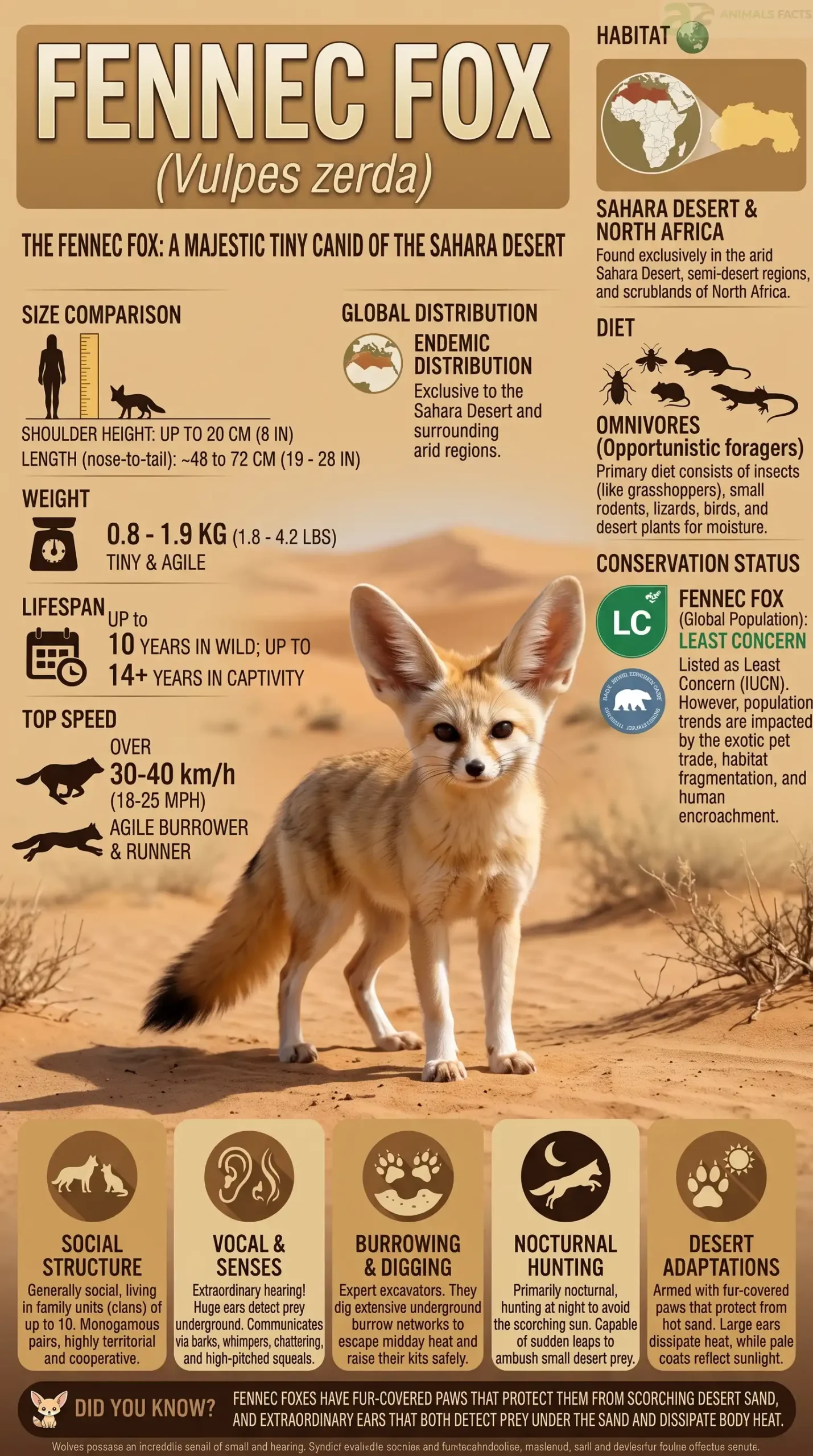
| Habitat | Sandy deserts and semi-deserts of North Africa, from Western Sahara and Mauritania to the Sinai Peninsula; also reported in the Negev and Arava deserts |
| Lifespan | Up to 10 years in the wild; up to 14 years in captivity |
| Diet | Omnivore — insects, small rodents, lizards, birds, eggs, roots, fruit, and leaves |
| Size and Weight | 0.9–1.9 kg (2–3.5 lbs) |
| Body Length | 24–41 cm (head and body); tail adds 18–31 cm |
| Speed | Capable of short, fast sprints across sand; agile jumper |
| Conservation Status | Least Concern (IUCN, since 2008/2015 assessments); listed on CITES Appendix II |
| Population Estimate | Not precisely known — considered widespread and abundant based on frequency of sightings across its roughly 8.6 million square kilometer range |
| Unique Feature | The largest ears relative to body size of any canid species in the world, used for both heat dissipation and locating prey moving beneath the sand |
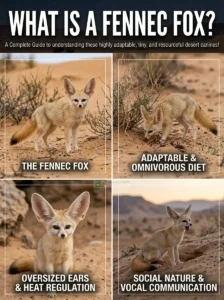 1. Introduction: What is a Fennec Fox?
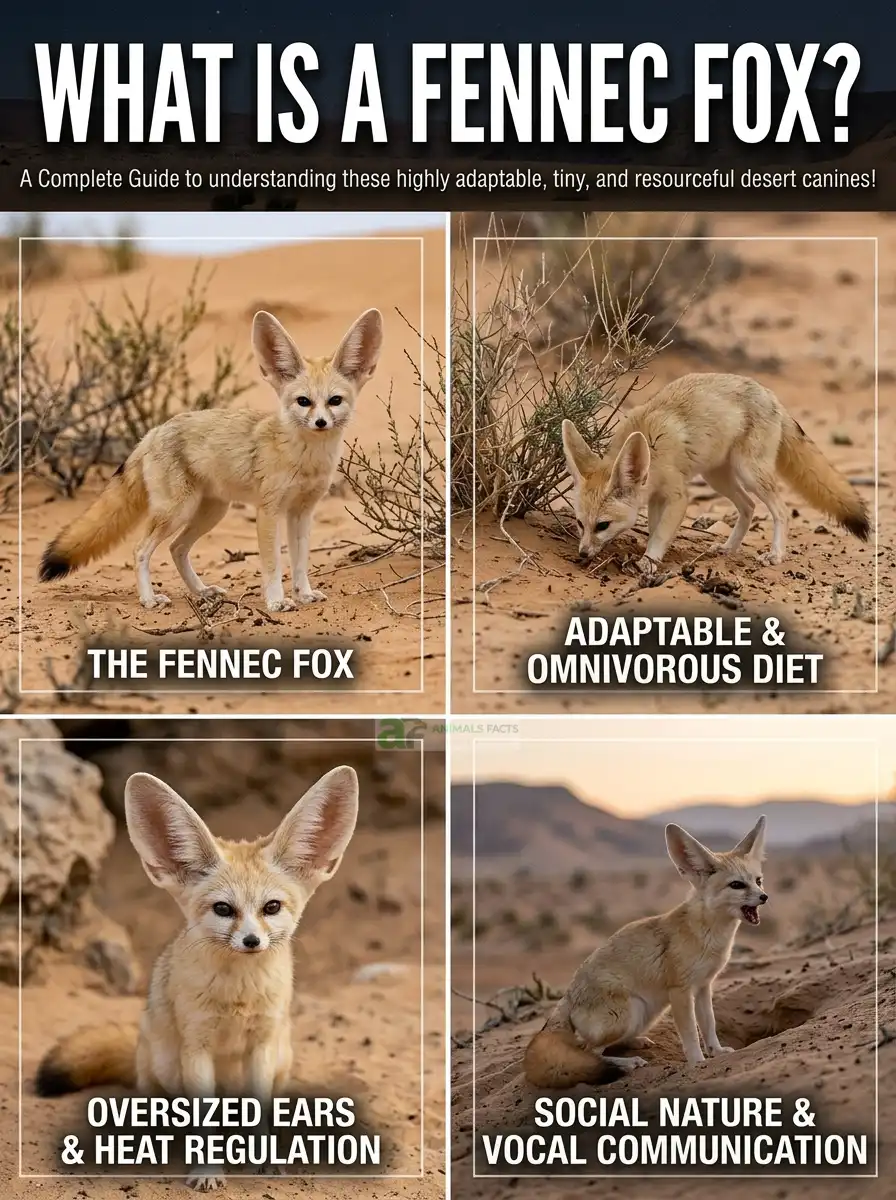
It is smaller than most house cats, has ears nearly as long as its head, and can survive for extended periods without ever taking a direct drink of water. Fennec fox facts read like a checklist of extreme desert adaptation — an animal engineered almost entirely around the challenge of surviving one of the hottest, driest, and most unforgiving environments on Earth. The fennec fox (Vulpes zerda) is the smallest species of fox in the world, and yet it carries the single most exaggerated feature of any canid on the planet: enormous, radar-dish ears that can measure up to 15 centimeters long — nearly half the length of its entire body.
Native to the vast sand seas and rocky plains of the Sahara Desert, along with parts of the Sinai Peninsula and neighboring arid regions, the fennec fox has become one of the most recognizable and most beloved small desert mammals in the world, prized for its striking appearance and gentle-seeming demeanor. But behind the wide eyes and oversized ears lies an animal shaped by relentless evolutionary pressure — specialized kidneys that conserve nearly every drop of moisture, thickly furred paws that allow it to walk across sand too hot for most other animals to touch, and a nocturnal lifestyle built entirely around avoiding the punishing heat of the desert day.
Unlike many of the animals covered in this series, the fennec fox is not currently considered endangered — it has held a Least Concern status on the IUCN Red List since assessments in 2008 and 2015, with populations believed to be broadly stable across its enormous range. Yet this “safe” conservation status masks a genuinely serious and growing threat: the illegal wildlife trade, in which fennec foxes are increasingly trapped, hand-raised, and sold both to tourists in North Africa and to exotic pet buyers around the world — a practice that, while not yet threatening the species as a whole, causes significant individual animal suffering and raises real concerns for the future.
Whether you are a student researching fennec fox facts for a school project, a parent looking for fennec fox facts for kids, someone considering (or reconsidering) a fennec fox as an exotic pet, or simply someone who has always been charmed by this tiny desert fox with the impossibly large ears, this is the most complete guide to fennec fox facts you will find anywhere. We cover fennec fox habitat, fennec fox diet, fennec fox scientific name, fennec fox behavior, fennec fox size and weight, reproduction, conservation status, folklore, and the complete story of the world’s smallest and most distinctive fox.
2. Fennec Fox Species Overview & Classification
The fennec fox belongs to the family Canidae — the same family that includes wolves, domestic dogs, jackals, and all other foxes — and sits within the genus Vulpes, the “true foxes,” which includes better-known relatives such as the red fox and Arctic fox.
Species Classification Table
| Level | Classification |
|---|---|
| Kingdom | Animalia |
| Phylum | Chordata |
| Class | Mammalia |
| Order | Carnivora |
| Family | Canidae |
| Genus | Vulpes |
| Species | V. zerda |
| Closest Living Relatives | Other Vulpes species, including Rüppell’s fox (Vulpes rueppellii) and the pale fox (Vulpes pallida), both of which share overlapping desert range in parts of North Africa |
A Genus of “True Foxes”
The genus name Vulpes translates roughly to “true fox,” distinguishing the fennec fox and its close relatives from more distantly related fox-like canids such as the grey fox or the bat-eared fox, which belong to entirely different genera despite superficial similarities. Within Vulpes, the fennec fox is the smallest member by a considerable margin, and it possesses by far the largest ears relative to body size of any canid species studied.
Overlap and Confusion with Related Species
In parts of its range, the fennec fox’s territory overlaps with that of Rüppell’s fox and the pale fox, two similarly sized desert-adapted canids. Field researchers have noted that fennec foxes are sometimes confused with Rüppell’s fox in areas of range overlap, since both are small, pale-colored, and nocturnal. Genetic research published in the 2020s has further illuminated the evolutionary relationships and adaptive genomic signatures shared among these North African desert fox species, revealing evidence of historical interbreeding and shared adaptations to extreme aridity across the group.
Species Evolution & Discovery Timeline
Millions of years ago: Ancestral Vulpes foxes began diversifying across arid and semi-arid regions of Africa and Eurasia, gradually adapting to a wide range of desert, steppe, and temperate environments across their range.
Deep evolutionary history: The fennec fox’s lineage adapted specifically to extreme desert conditions over an extended period, developing the specialized kidney function, oversized ears, and thermoregulatory adaptations that distinguish it from its larger, less heat-adapted Vulpes relatives.
Ancient human contact: Fennec foxes have coexisted with human populations across North Africa for millennia, with early references to “long-eared foxes” as pets appearing even in ancient Roman literature, including in Martial’s Epigrams, suggesting fennec foxes may have been kept as exotic pets in the Roman world.
1780: The fennec fox was formally described scientifically as Canis zerda by naturalist Eberhardt Zimmermann, later reclassified into the genus Vulpes as taxonomic understanding of the fox lineage developed further.
20th century: Growing interest in North African wildlife, combined with the rise of tourism in Sahara-adjacent countries, led to increased trapping of fennec foxes for exhibition and sale to visitors — a practice that continues in some areas today.
2008 and 2015: IUCN Red List assessments confirmed the fennec fox’s status as a species of Least Concern, citing its wide range, apparent population stability, and relatively low level of direct range-wide threat compared to many other small carnivores.
2020s: Genomic studies of North African fox species, including the fennec fox, revealed detailed evidence of historical genetic exchange between fennec foxes and their close relatives, offering new insight into how these species adapted independently and jointly to some of the harshest desert conditions on Earth.
2026: The fennec fox remains listed as Least Concern, legally protected in Morocco, Algeria, Tunisia, and Egypt, even as concerns grow over the scale of illegal trapping for the exotic pet trade and the gradual expansion of human infrastructure — roads, drilling operations, and settlements — into previously untouched desert habitat.
3. Fennec Fox Physical Description & Unique Features
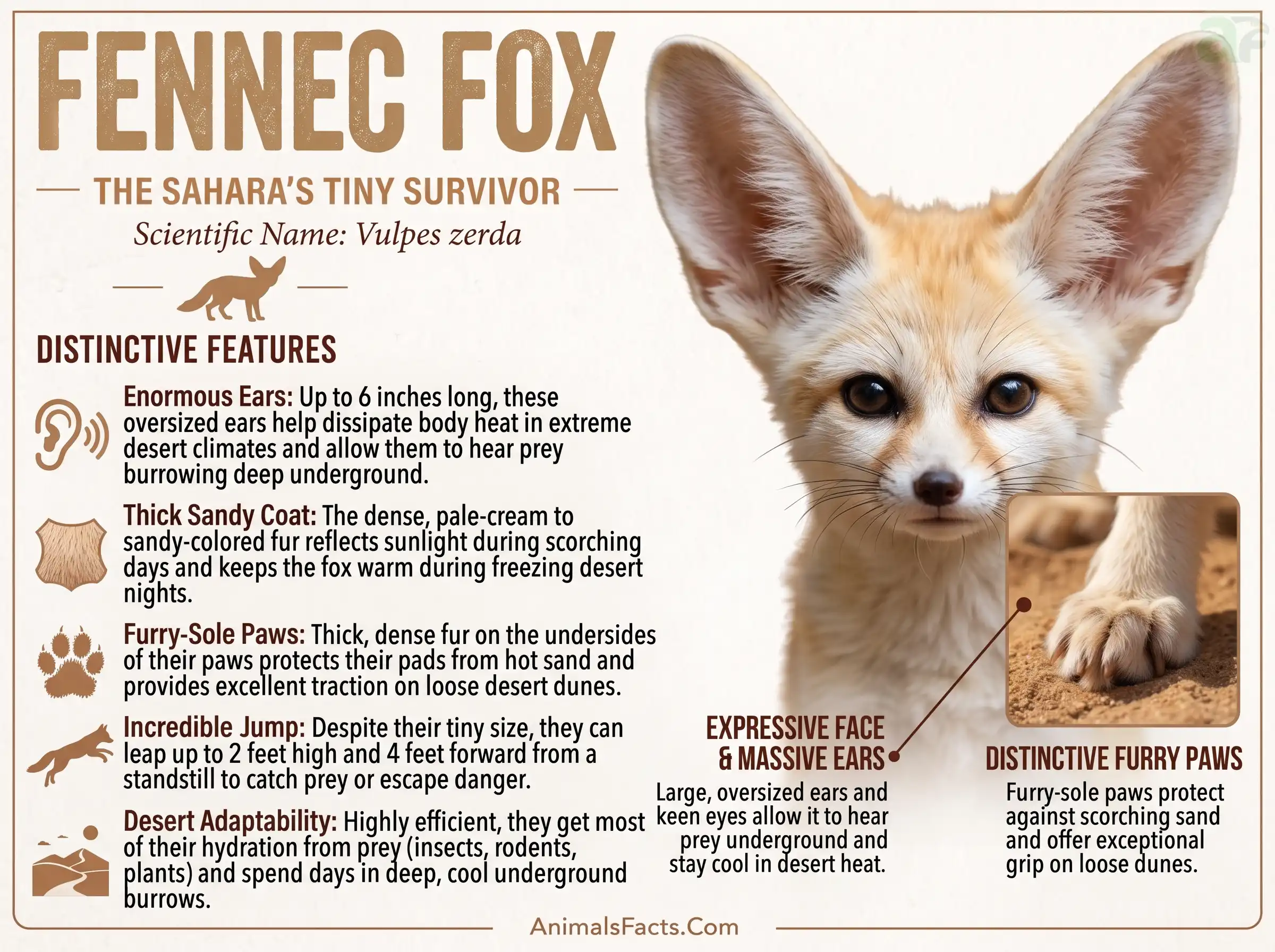
The fennec fox’s body is a case study in desert specialization — virtually every physical feature it possesses serves a direct function in managing extreme heat, extreme aridity, and life on shifting desert sand.
Size — The World’s Smallest Fox
Weight: Adult fennec foxes typically weigh just 0.9–1.9 kg (roughly 2–3.5 lbs) — lighter than many domestic house cats.
Body length: 24–41 cm (head and body), with a bushy, black-tipped tail adding another 18–31 cm.
Shoulder height: Approximately 20 cm — standing lower than most domestic cats when on all fours.
The Extraordinary Ears
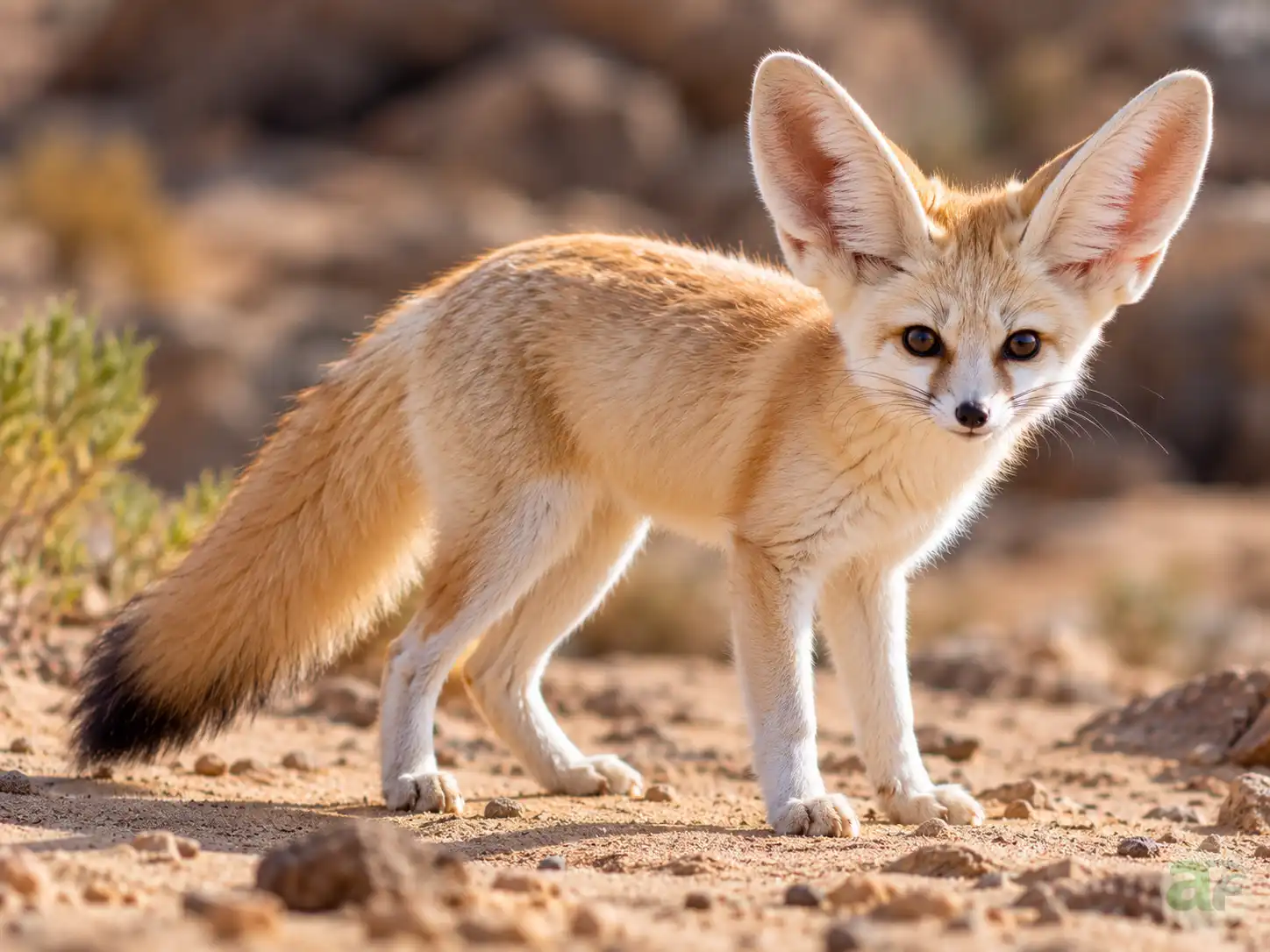
The fennec fox’s most defining feature by far is its ears, which can measure up to 15 centimeters (6 inches) in length — the largest ears relative to body size of any member of the canid family, and disproportionately large compared to almost any other mammal on Earth.
Heat dissipation: The ears are richly supplied with blood vessels close to the skin surface, allowing the fox to release excess body heat into the surrounding air — an essential cooling mechanism in an environment where daytime temperatures can reach 50°C (122°F).
Acute hearing: The oversized ears also provide exceptional low-frequency hearing sensitivity, allowing the fennec fox to detect the faint sounds of insects and small rodents moving beneath the surface of the sand — a critical hunting adaptation in an environment where visual tracking of buried prey is impossible.
Fur and Coloration
Despite living in one of the hottest environments on the planet, fennec foxes have thick, long, soft fur — an adaptation that may seem counterintuitive but serves dual purposes: insulating against intense daytime heat by reflecting solar radiation away from the skin, and providing warmth during the surprisingly cold desert nights, when temperatures can drop dramatically after sunset.
Coloration ranges from reddish cream to light fawn to nearly white, providing excellent camouflage against pale desert sand. The fennec fox is considered the palest of all fox species. The tail is bushy with a distinctive black tip, and the underside of the body is typically pure white.
Paws Built for Sand
Fennec fox paws are heavily furred on the soles — an adaptation that provides insulation against the scorching surface temperature of desert sand, which can become hot enough to injure the unprotected paws of many other animals, while also offering improved traction when running or digging across loose, shifting terrain.
Specialized Kidneys
One of the fennec fox’s most physiologically remarkable adaptations is its kidney function, which is specially developed to conserve water with extraordinary efficiency, concentrating urine far more than most mammals require. This allows the fennec fox to survive for extended periods — potentially its entire life in some cases — without ever needing to drink free-standing water directly, instead obtaining sufficient moisture from the food it consumes and, in some cases, by licking dew that condenses in its burrow overnight.
Did You Know? A fennec fox’s ears aren’t just for hearing — they function almost like a built-in air conditioning system. The dense network of blood vessels near the surface of each ear allows excess body heat to radiate away into the cooler night air, helping the fox regulate its body temperature far more efficiently than an animal of similar size without such enlarged, blood-vessel-rich ears would be able to manage in the extreme heat of the Sahara.
4. Top 25 Surprising & Interesting Fennec Fox Facts
- Fennec foxes are the smallest species of fox in the world, typically weighing less than most house cats.
- Their ears can grow up to 15 centimeters long — the largest ears relative to body size of any canid on Earth.
- Fennec fox ears help dissipate body heat and also allow them to hear prey moving underground beneath the sand.
- Fennec foxes can survive for extended periods without drinking water directly, obtaining moisture almost entirely from their food.
- Their kidneys are specially adapted to concentrate urine and conserve water far more efficiently than most mammals.
- Fennec foxes are nocturnal, spending the hottest daylight hours resting in burrows to avoid extreme desert heat.
- They dig extensive burrow systems that can reach up to 10 meters (32 feet) in length, often with multiple entrances.
- Fennec fox burrows can sometimes adjoin the burrows of other fennec fox families, forming loosely connected underground networks.
- Despite their small size, fennec foxes have been documented catching and killing prey larger than themselves, including fully grown rabbits.
- Their paws are heavily furred on the soles, providing insulation against scorching hot sand and improved traction for running.
- Fennec foxes are the palest of all fox species, an adaptation providing excellent camouflage against desert sand.
- They are omnivores, eating insects, small rodents, lizards, birds, eggs, roots, fruits, and leaves.
- Fennec foxes have been documented eating locusts and grasshoppers in large numbers, helping to naturally suppress local insect population booms.
- The fennec fox is the national animal of Algeria and lends its name to the nickname of Algeria’s national football team, “Les Fennecs.”
- Ancient Roman literature, including Martial’s Epigrams, appears to describe a “long-eared fox” kept as an exotic pet — likely an early reference to the fennec fox.
- The fennec fox was first scientifically described in 1780, originally classified as Canis zerda before later reclassification into the genus Vulpes.
- Fennec fox gestation lasts only about 50 days, considerably shorter than many similarly sized carnivores.
- Male fennec foxes actively provide food for their mate and defend her during the weeks surrounding birth.
- Fennec fox pups remain highly dependent on their parents in the earliest weeks of life, with the male playing an active role in provisioning.
- Fennec foxes are legally protected in Morocco, Algeria, Tunisia, and Egypt.
- The IUCN has classified the fennec fox as Least Concern since assessments in 2008 and 2015, reflecting its wide, largely stable population.
- Fennec foxes are commonly trapped in North Africa for exhibition or sale to tourists — a practice conservationists warn could escalate demand and threaten local populations over time.
- In parts of the exotic pet trade, breeders remove fennec fox pups from their mothers to hand-raise them, a practice that raises significant animal welfare concerns.
- The fennec fox’s range spans an estimated 8.6 million square kilometers — roughly the same size as the entire United States.
- Genetic studies have revealed evidence of historical interbreeding between fennec foxes and closely related North African fox species, shedding new light on their shared desert adaptations.
5. Fun Facts About Fennec Foxes
- Fennec foxes are the smallest fox species in the world.
- Their ears can reach up to 15 cm long.
- They can survive without drinking water directly.
- Fennec foxes are nocturnal desert hunters.
- Their burrows can stretch up to 10 meters long.
- They can catch prey larger than themselves.
- Fennec foxes are the palest of all fox species.
- They’re the national animal of Algeria.
- Ancient Romans may have kept them as pets.
- Fennec fox gestation lasts only about 50 days.
- Their paws are furred to protect against hot sand.
- They’re currently listed as Least Concern by the IUCN.
6. Fennec Fox Habitat & Geographic Range
Fennec foxes are found exclusively across the arid and semi-arid regions of North Africa, with their range extending into parts of the Sinai Peninsula and, according to some sources, portions of the Arabian Peninsula.
Habitat Requirements
Sandy desert and semi-desert: Fennec foxes thrive in stable or sparsely vegetated sand dune environments, favoring loose, sandy substrate suitable for digging extensive burrow systems.
Low rainfall tolerance: Fennec foxes typically inhabit regions receiving less than 100 mm (about 4 inches) of rainfall annually, with the southern edge of their range receiving somewhat more, up to around 300 mm (12 inches).
Habitat flexibility: Compared to many other canids, fennec foxes tolerate a notably wide range of arid habitat types and are capable of surviving in remote desert areas with little to no vegetation at all.
Reduced presence near permanent settlements: Fennec foxes are considered less common in areas close to permanent human settlement, with documented local extirpations linked to settlement expansion in some regions since the mid-20th century.
Geographic Range Table
| Region | Presence | Notes |
|---|---|---|
| Western Sahara & Mauritania | Core range | Western edge of overall distribution |
| Morocco & Algeria | Core range | Legally protected populations; documented in multiple protected areas |
| Tunisia | Core range | Overlapping range with red fox and African golden wolf in some areas |
| Libya & Egypt | Core range | Extends toward the Sinai Peninsula |
| Sinai Peninsula, Egypt | Range edge | Eastern extent of confirmed range |
| Negev & Arava Deserts, Israel | Reported presence | Some sources describe presence here, though range details remain debated |
| Arabian Peninsula | Uncertain | Occurrence outside the African continent remains unclear in current research |
Did You Know? The fennec fox’s total range covers an estimated 8,600,000 square kilometers (about 3,320,000 square miles) — an area roughly comparable to the entire landmass of the United States — making it one of the most widely distributed small carnivores in the world, despite being one of the smallest.
7. Fennec Fox Diet & Feeding Behavior
Fennec foxes are opportunistic omnivores, adapting their diet to whatever food sources are available in their harsh and often unpredictable desert environment.
Diet Breakdown Table
| Food Type | Notes |
|---|---|
| Insects (grasshoppers, locusts) | A major food source; fennec foxes help naturally suppress insect population booms |
| Small rodents | Hunted using acute hearing to detect movement beneath sand |
| Lizards and small reptiles | Regularly consumed opportunistically |
| Birds and eggs | Taken when available, including ground-nesting species |
| Roots, fruits, and leaves | Consumed partly for hydration as well as nutrition |
Hunting Behavior
Nocturnal hunting: Fennec foxes hunt alone at night, using their oversized ears to detect the faint sounds of prey moving both above and beneath the desert sand.
Digging for prey: Once prey is located underground, the fox digs rapidly with all four feet to expose and capture it — a technique essential for accessing rodents and insects sheltering beneath the surface.
Punching above their weight: Despite their small size, fennec foxes have been documented catching and killing prey considerably larger than themselves, including fully grown rabbits, demonstrating a level of predatory capability disproportionate to their diminutive stature.
Food caching: Fennec foxes may cache surplus food near their burrows, buffering against the unpredictable availability of prey in the desert environment.
Water Independence
Perhaps the fennec fox’s most remarkable dietary trait is its capacity to survive without direct water intake for extended periods, relying instead on moisture obtained from food and, in some cases, by licking dew that condenses inside the burrow during cooler overnight hours — an adaptation that allows the species to occupy some of the driest habitat of any canid in the world.
Did You Know? Fennec foxes play a genuinely important ecological role by helping to control populations of rodents and locusts in their desert habitat — a valuable natural pest-control service, since unchecked rodent and insect population booms can pose direct risks to fragile desert vegetation and, in areas bordering agriculture, to human crops as well.
8. Reproduction & Life Cycle
Fennec fox reproduction follows a strongly seasonal pattern, shaped by the extreme conditions of the desert environment and characterized by intensive shared parental care between breeding pairs.
Mating and Birth
Breeding season: Known as the rutting season, typically lasting four to six weeks, during which males become notably more aggressive and mark their territory extensively with urine.
Estrus: Females are receptive for only one to two days during the breeding season, a narrow window that intensifies competition and territorial behavior among males.
Gestation: Approximately 50 days — relatively short, consistent with many small canid species.
Parental roles before and after birth: Males actively defend the female before and during birth and continue to provide food for her and, later, for the pups, particularly during the first several weeks after birth when the female remains close to the den.
Developmental Stages
| Stage | Age | Key Development |
|---|---|---|
| Birth | Day 0 | Born in an underground den; blind and highly dependent |
| Early nursing | 0–4 weeks | Mother nurses continuously; male provisions food for the female |
| Weaning begins | Around 4 weeks | Gradual transition toward solid food as pups grow |
| Den exploration | Several weeks to a few months | Pups begin cautiously exploring the area near the den entrance |
| Independence | Several months | Young foxes begin developing independent hunting skills |
| Sexual maturity | Approximately 9 months to 1 year | Reaches breeding age, consistent with many small canid species |
Fennec Fox Lifespan Comparison Table
| Species | Average Wild Lifespan | Maximum Recorded |
|---|---|---|
| Fennec Fox | ~10 years | ~14 years (captivity) |
| Rüppell’s Fox | 6–8 years | ~10–12 years (captivity) |
| Red Fox | 3–5 years | ~14 years (captivity) |
| Arctic Fox | 3–6 years | ~14 years (captivity) |
9. Social Behavior & Communication
Fennec foxes are considered more social than many other small desert canids, often living in small family groups and maintaining an unusually rich vocal communication system for their size.
Family Groups and Burrow Networks
Fennec fox families typically occupy burrow systems that can be surprisingly extensive — reportedly reaching up to 10 meters (32 feet) in tunnel length — often featuring multiple entrances that provide safe escape routes if a threat approaches. Interestingly, burrows belonging to different fennec fox families have been documented adjoining one another, suggesting a degree of tolerated proximity between neighboring groups that is less common among many other small desert carnivores.
Vocal Communication
Fennec foxes are known for a notably wide vocal repertoire for such a small animal, including whimpers, barks, shrieks, squeaks, growls, howls, and distinctive chattering sounds — used to communicate across a range of contexts from mate coordination to territorial defense to parent-offspring interaction.
Scent Marking and Territoriality
Like most canids, fennec foxes are territorial and mark their terrain using urine and feces, particularly intensifying this behavior during the breeding season when males compete for access to receptive females.
Seasonal Monogamy
Fennec foxes form pair bonds during the breeding season, with both parents contributing to the provisioning and protection of pups — a cooperative breeding strategy that, while not necessarily lifelong in every case, reflects a meaningful investment from both parents during the demanding early period of a litter’s development.
Did You Know? Fennec fox burrow systems sometimes connect to or sit adjacent to the burrows of other small desert species, which use the fennec fox’s excavation work for their own protection from the sun and from predators — an incidental but genuinely valuable ecological benefit that fennec fox digging behavior provides to other desert wildlife sharing the same harsh environment.
10. Predators & Defense Mechanisms
As one of the smallest canids in the world, the fennec fox faces predation risk from a range of larger desert carnivores and birds of prey, and relies heavily on avoidance behavior and its burrow system for protection.
Natural Predators
Pharaoh Eagle-Owl: Considered the primary natural predator of fennec fox pups, capable of hunting at night when fennec foxes are most active outside their burrows.
Jackals: Documented predators of both adult and young fennec foxes in areas of range overlap.
Striped Hyenas: Occasional predators of fennec foxes, particularly opportunistic encounters near shared desert water or food sources.
Caracals: Noted among the natural predators capable of taking fennec foxes in some regions.
Domestic Dogs: An increasingly significant threat in areas where human settlement and domestic animals encroach on fennec fox habitat.
Defense Mechanisms
Nocturnal activity: By remaining active primarily at night, fennec foxes avoid many diurnal predators as well as the extreme heat of the desert day.
Burrow refuge: The extensive, multi-entrance burrow system provides a critical safe retreat from predators, allowing the fox to escape through an alternate exit if one entrance is threatened.
Camouflage: The fennec fox’s pale, sand-colored fur provides highly effective camouflage against the desert landscape, reducing the likelihood of detection by predators in the first place.
Speed and agility: Fennec foxes are quick and agile runners across sand, capable of short bursts of speed sufficient to escape many potential predators over open desert terrain.
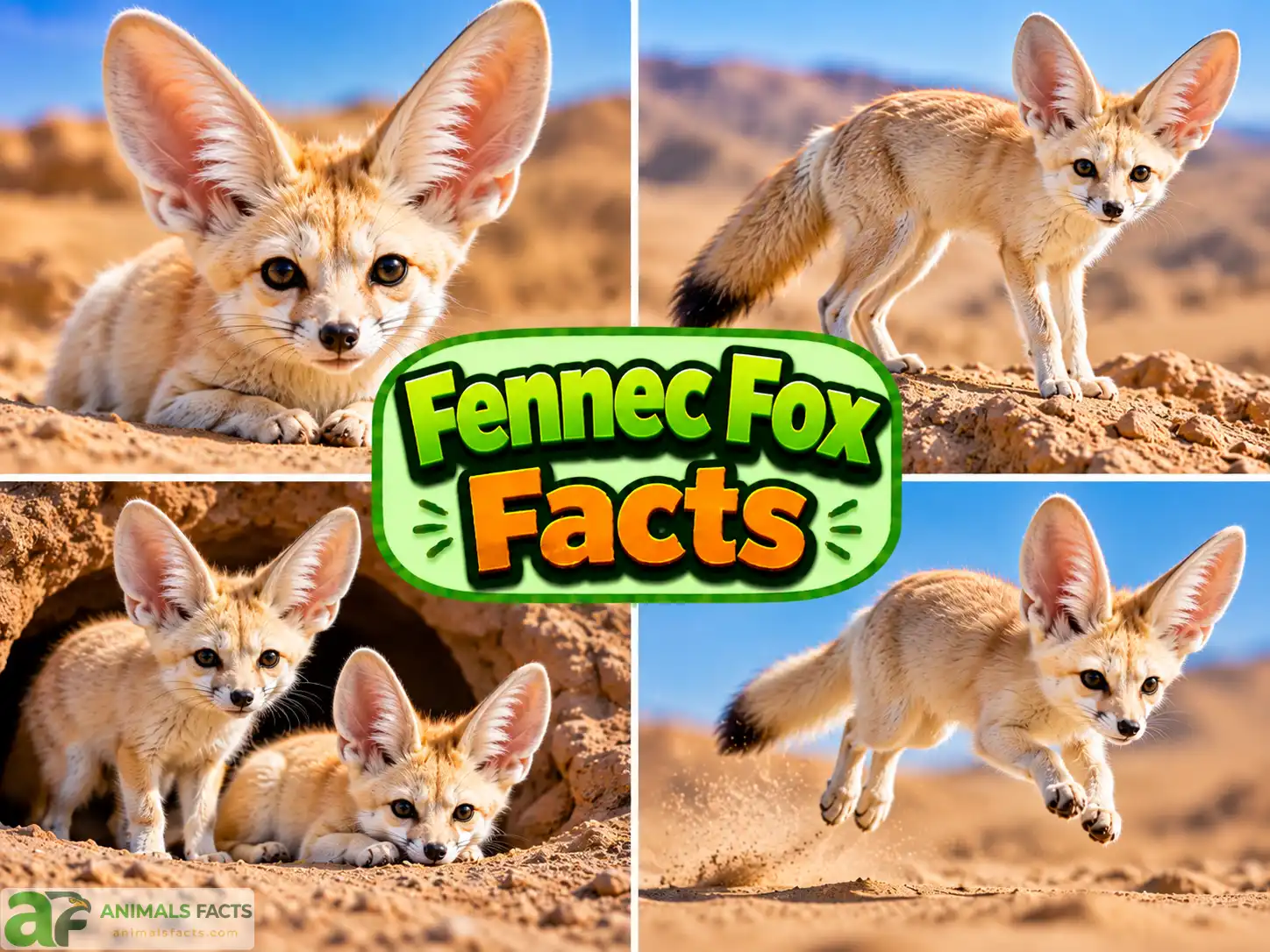
11. Fennec Fox Facts for Kids
Hey kids — let’s find out why the fennec fox is one of the most amazing little animals in the whole desert!
Fennec foxes are the smallest foxes in the entire world — they’re even smaller than most pet cats!
Their ears are ENORMOUS — up to 15 centimeters long, almost as big as their whole head! These giant ears help them stay cool in the hot desert and help them hear tiny bugs and mice moving under the sand.
Fennec foxes hardly ever need to drink water — they get almost all the water they need from the food they eat!
They come out mostly at night, because the desert during the day is way too hot to handle — daytime temperatures can reach a scorching 50 degrees Celsius (122 degrees Fahrenheit)!
Fennec foxes dig amazing underground tunnels called burrows, which can stretch as long as 10 meters — that’s longer than a school bus!
Even though they’re tiny, fennec foxes are brave hunters — they’ve even been seen catching rabbits bigger than themselves!
Their paws are extra furry on the bottom, like built-in slippers, which protect their feet from the burning-hot sand.
Did You Know? A fennec fox’s giant ears aren’t just for hearing — they work kind of like a car radiator! Blood flows close to the surface of the ears, and heat escapes into the air, helping the fox cool down in one of the hottest places on Earth.
12. Relationship with Humans
The fennec fox’s relationship with humans stretches back thousands of years across North Africa, evolving from ancient companionship and folklore into a modern conservation concern centered largely on the exotic pet trade.
Ancient Historical Connection
References in ancient Roman literature, including Martial’s Epigrams, appear to describe a “long-eared fox” kept as a popular pet, suggesting that fennec foxes — or animals very much like them — may have been kept in captivity by humans as far back as the Roman era, making the fennec fox one of the longest-documented small exotic pets in Western historical record.
Traditional Hunting and Fur Use
Indigenous populations across the Sahara region have historically hunted fennec foxes, both for their fur, which has been locally prized, and, in some contexts, for food, though this practice has become less widespread as legal protections have expanded across much of the species’ range.
The Modern Exotic Pet Trade
The fennec fox’s undeniably appealing appearance — those oversized ears, wide eyes, and small stature — has made it one of the more sought-after exotic pets globally, a demand that carries serious welfare implications.
Illegal wild trapping: In North Africa, fennec foxes are commonly trapped for exhibition or sale directly to tourists, with trappers sometimes killing mother foxes to more easily capture their young.
Commercial captive breeding: In the United States and elsewhere, fennec foxes are also bred commercially as pets, with breeders often removing pups from their mothers at a young age to hand-raise them, since tame foxes are considered more valuable.
Welfare concerns: Conservation organizations note that animals captured for the pet trade often endure inhumane conditions, inadequate food and medical care, and significant risk of death from dehydration, starvation, or injury during transport to new owners.
Legal status of ownership: As of recent surveys, more than a dozen US states have permitted private ownership of foxes without special documentation requirements in certain circumstances, though regulations vary considerably by jurisdiction, and organizations working with fennec foxes emphasize that they remain wild animals poorly suited to typical household life.
Human Infrastructure Encroachment
Beyond the pet trade, expanding human activity across the Sahara — including new road construction, oilfield development, and exploratory drilling — increasingly disturbs fennec fox burrows and habitat, while permanent settlements at the desert’s edge have, in some documented cases, caused local population retreats.
13. Fennec Fox Conservation Status & Threats
Unlike many species profiled in this series, the fennec fox is not currently considered at significant risk of extinction, but its conservation picture is far from free of concern.
Conservation Data (2026)
| Category | Status | Notes |
|---|---|---|
| IUCN Red List | Least Concern | Status confirmed in 2008 and reaffirmed in the 2015 assessment |
| CITES Listing | Appendix II | Regulates international trade without full prohibition |
| Legal Protection | Protected in Morocco, Algeria, Tunisia, and Egypt | Protections vary in strength and enforcement by country |
| Population Trend | Believed stable | Precise population figures remain unknown; estimates are based on frequency of sightings across the range |
Major Threats
Illegal trapping for the pet trade: The most consistently cited threat to fennec foxes, particularly in North Africa, where animals are trapped for exhibition or direct sale to tourists, often resulting in the death of mother foxes during the capture of pups.
Commercial exotic pet breeding: While legal in some jurisdictions, commercial breeding for the pet trade raises significant animal welfare concerns, including early pup removal, inappropriate captive diets leading to abnormal growth, and stereotyped behaviors linked to inadequate captive environments.
Habitat disturbance from infrastructure expansion: Road construction, oilfield development, and exploratory drilling increasingly disturb previously remote desert habitat, disrupting burrows and increasing road traffic risk to foxes.
Human settlement expansion: New permanent settlements at the edges of the Sahara have, in documented cases, caused local fennec fox populations to retreat from areas they previously occupied.
Hunting for fur: Though reduced compared to historical levels, fennec foxes are still hunted in some areas of North Africa for their fur.
Did You Know? Although the fennec fox is currently classified as Least Concern, conservation organizations caution that continued high demand from the exotic pet trade — combined with expanding human infrastructure across the Sahara — could gradually shift this status over time if left unaddressed, even though there is currently no range-wide evidence of a population decline severe enough to warrant a higher threat classification.
14. Famous Fennec Foxes
Sahara and Desi — Two fennec foxes residing at the Smithsonian’s National Zoo’s Small Mammal House, serving as public conservation ambassadors and helping educate visitors about desert adaptation and the risks associated with the exotic pet trade.
Fenneko — A fennec fox character appearing in the anime television series “Aggretsuko,” which introduced the species to a large global audience of anime fans and contributed meaningfully to the animal’s rising popularity and recognizability in pop culture.
The Little Prince’s Fox — While not explicitly identified in the text as a fennec fox, the desert fox character in Antoine de Saint-Exupéry’s classic 1943 novella “The Little Prince” is widely associated with and often illustrated as a fennec fox, cementing the species’ place in one of the most beloved works of 20th-century literature.
15. Role in Ecosystem & Food Chain
The fennec fox plays a meaningful, if localized, ecological role within the harsh desert ecosystems it inhabits, functioning both as a predator and as an incidental habitat provider for other species.
Natural pest control: By preying heavily on rodents, locusts, and other insects, fennec foxes help regulate populations of species that could otherwise damage fragile desert vegetation or, in areas near agriculture, threaten crops.
Prey base for larger predators: Fennec foxes themselves serve as an important prey source for larger desert predators, including eagle owls, jackals, hyenas, and caracals, forming a meaningful link in the desert food chain between small prey species and larger carnivores.
Habitat engineering for other species: The extensive burrow systems fennec foxes dig are frequently reused or shared by other small desert species seeking shelter from the sun and from predators — a modest but genuine ecological service that extends the benefit of the fennec fox’s digging behavior well beyond its own family group.
16. Myths, Folklore & Cultural Significance
The fennec fox holds a distinctive place in North African cultural identity and has, in more recent decades, become an increasingly prominent symbol in broader popular imagination.
National Symbolism in Algeria
The fennec fox is the official national animal of Algeria, a status reflecting both its distinctive desert adaptation and its strong cultural association with the Saharan landscape that defines much of the country’s southern territory. The species also lends its nickname, “Les Fennecs,” to Algeria’s national football team — one of the more visible modern expressions of the fennec fox’s symbolic importance within Algerian national identity.
Early European Natural History Legends
Early European natural history accounts of the fennec fox emphasized its enormous ears and mysterious desert burrows, helping cement the animal’s reputation in later Western storytelling and literature as a creature seemingly “made for the dunes” — an early foundation for the fennec fox’s enduring association with exotic desert mystique in Western popular imagination.
Literary Legacy
The fennec fox is widely associated with the iconic fox character in Antoine de Saint-Exupéry’s 1943 novella “The Little Prince,” in which a wise desert fox teaches the young protagonist about the nature of relationships and responsibility — one of the most emotionally resonant and widely read passages in 20th-century literature, and a major contributor to the fennec fox’s enduring popularity worldwide.
17. Fennec Foxes in Pop Culture
“The Little Prince” — The desert fox character in this beloved 1943 novella is widely depicted and associated with the fennec fox, contributing enormously to the species’ worldwide recognition and affectionate reputation.
“Aggretsuko” — The character Fenneko, a fennec fox, appears as a main character in this popular Japanese anime series, introducing the species to a large contemporary audience and further boosting its popularity as a favored “cute animal” subject online.
Ranger Rick Magazine — The fennec fox was featured on the cover of this well-known nature-focused children’s magazine in 2000, reflecting its longstanding appeal as an educational and visually striking wildlife subject for young readers.
Social media virality — Fennec foxes have become a recurring viral subject across social media platforms, prized for their oversized ears and expressive faces, a trend that has simultaneously boosted public affection for the species and fueled increased demand in the exotic pet trade.
18. Fennec Fox Facts vs. Common Myths
Myth: Fennec foxes make great house pets, just like dogs or cats. Fact: Fennec foxes are wild animals with highly specialized needs, and conservation organizations caution strongly against keeping them as household pets. Many captive-bred foxes are removed from their mothers young, and captive animals are frequently reported to develop abnormal growth patterns and stereotyped behaviors due to inappropriate diets and inadequate living environments.
Myth: Fennec foxes never need water at all. Fact: While fennec foxes can survive for long periods without direct drinking water and are remarkably efficient at conserving moisture, they do still obtain water from their food and, in some cases, from licking dew — they are extremely water-efficient, not entirely water-independent in an absolute sense.
Myth: Fennec foxes are endangered. Fact: The fennec fox is currently classified as Least Concern by the IUCN, with a believed stable population across its wide range. However, localized threats from the exotic pet trade and habitat disturbance remain a genuine ongoing concern.
Myth: Fennec foxes are too small to be effective predators. Fact: Despite their tiny size, fennec foxes have been documented catching and killing prey larger than themselves, including fully grown rabbits, demonstrating considerable hunting capability relative to their small body size.
Myth: All large-eared desert foxes seen in North Africa are fennec foxes. Fact: Fennec foxes are sometimes confused with the similarly sized and similarly colored Rüppell’s fox in areas of range overlap; the two species can be difficult to distinguish without close observation of ear size and other subtle physical differences.
19. Best Places to See Fennec Foxes in the Wild
Erg Chebbi, Morocco — A well-known Saharan dune region near Merzouga frequently visited by desert tour operators, offering a realistic (though not guaranteed) chance of spotting fennec foxes during nighttime desert excursions.
Tunisian Sahara (Douz and surrounding regions) — An area where fennec fox range overlaps with red fox and African golden wolf populations, sometimes included in guided desert wildlife tours.
Ahaggar National Park, Algeria — A protected desert region within the fennec fox’s core range, offering habitat relatively insulated from heavy human disturbance.
Western Sahara and Mauritania dune regions — Remote, sparsely populated desert areas representing some of the most undisturbed fennec fox habitat remaining.
Sinai Peninsula, Egypt — The eastern edge of the fennec fox’s confirmed range, occasionally included in specialized desert wildlife-watching itineraries.
Zoos and wildlife parks worldwide — For a guaranteed and ethically managed viewing experience, numerous accredited zoos, including the Smithsonian’s National Zoo, maintain fennec fox exhibits that also support public education about the species’ conservation needs.
20. Top Documentaries & Books
Documentaries
Various BBC and National Geographic Sahara wildlife segments — Multiple nature documentary productions covering Saharan desert wildlife have included dedicated segments on the fennec fox’s remarkable heat and water adaptations, typically filmed using night-vision and thermal imaging technology to capture the species’ nocturnal behavior.
Books
“The Little Prince” by Antoine de Saint-Exupéry (1943) — While a work of fiction rather than natural history, this classic novella’s desert fox character is inseparably linked to the fennec fox in popular imagination and remains one of the most widely read books in the world.
“Canids: Foxes, Wolves, Jackals and Dogs — Status Survey and Conservation Action Plan” (IUCN/SSC Canid Specialist Group) — A detailed scientific reference including comprehensive coverage of fennec fox biology, distribution, and conservation status, compiled by leading canid researchers.
“Mammals of Africa, Volume V: Carnivores, Pangolins, Equids and Rhinoceroses” edited by Jonathan Kingdon and Michael Hoffmann (2013) — A major scientific reference work covering the fennec fox alongside other African carnivore species in detailed taxonomic and ecological context.
21. Comparison of Fennec Foxes with Similar Animals
| Feature | Fennec Fox | Rüppell’s Fox | Red Fox | Bat-Eared Fox |
|---|---|---|---|---|
| Scientific Name | Vulpes zerda | Vulpes rueppellii | Vulpes vulpes | Otocyon megalotis |
| Weight | 0.9–1.9 kg | 1.1–1.9 kg | 3.6–9 kg | 3–5.3 kg |
| Family | Canidae | Canidae | Canidae | Canidae |
| Habitat | Sahara Desert, North Africa | Deserts of North Africa, Middle East, Central Asia | Highly adaptable; found across the Northern Hemisphere | Savannas and arid grasslands of eastern and southern Africa |
| Ear Size | Largest relative to body size of any canid | Large, though slightly smaller than fennec fox | Moderate | Very large, comparable in relative size to fennec fox |
| Diet | Insects, small rodents, lizards, birds, plants | Insects, small rodents, lizards | Highly varied omnivore | Primarily insects, especially harvester termites |
| Conservation Status | Least Concern | Least Concern | Least Concern | Least Concern |
| Water Dependence | Extremely low; rarely drinks directly | Low, similar desert adaptation | Moderate | Moderate |
22. How You Can Help
Support These Organizations
IUCN/SSC Canid Specialist Group — The leading international scientific body coordinating research and conservation assessment for fennec foxes and other wild canid species worldwide.
IFAW (ifaw.org) — Provides public education about the risks of the exotic pet trade and supports broader wildlife protection efforts relevant to species like the fennec fox.
Fox Protection International — An organization focused on fox conservation and welfare issues, including education about the risks associated with keeping wild fox species as pets.
Accredited zoos and conservation education centers — Institutions such as the Smithsonian’s National Zoo maintain fennec fox exhibits paired with public education programs about desert conservation and the ethical concerns surrounding the exotic pet trade.
Practical Actions
Avoid purchasing fennec foxes or fennec fox products from unregulated or exotic pet sources, since demand directly fuels illegal wild trapping and inhumane breeding practices.
Support ecotourism operators in North Africa that follow responsible wildlife viewing practices rather than operations offering direct animal handling or photo opportunities with captured wild foxes.
Raise awareness about the difference between a fennec fox’s charming appearance and its genuine unsuitability as a household pet, helping reduce uninformed demand that contributes to trapping and poor captive welfare.
Support scientific research and genetic studies of North African desert fox species, which continue to improve understanding of population health and conservation needs across the fennec fox’s enormous range.
23. Frequently Asked Questions About Fennec Foxes
Q1: What is the scientific name of the fennec fox?
The fennec fox’s scientific name is Vulpes zerda. It belongs to the family Canidae, within the genus Vulpes, the “true foxes.”
Q2: Why do fennec foxes have such big ears?
A fennec fox’s large ears serve two main purposes: dissipating excess body heat through a dense network of blood vessels, and providing exceptional hearing sensitivity to detect prey moving both above and beneath the desert sand.
Q3: How big is a fennec fox?
Fennec foxes typically weigh between 0.9 and 1.9 kg (2–3.5 lbs) and measure 24–41 cm in body length, making them the smallest species of fox in the world.
Q4: Do fennec foxes need to drink water?
Fennec foxes have specially adapted kidneys that allow them to survive for extended periods without drinking water directly, obtaining most of the moisture they need from the food they eat.
Q5: What do fennec foxes eat?
Fennec foxes are omnivores, eating insects (especially locusts and grasshoppers), small rodents, lizards, birds, eggs, roots, fruits, and leaves.
Q6: Are fennec foxes endangered?
No — the IUCN currently classifies the fennec fox as Least Concern, with a believed stable population across its wide North African range, though illegal trapping for the exotic pet trade remains a significant local concern.
Q7: How long do fennec foxes live?
Fennec foxes typically live up to 10 years in the wild and can live up to around 14 years in captivity.
Q8: Are fennec foxes good pets?
Conservation organizations generally advise against keeping fennec foxes as pets. They are wild animals with highly specialized needs, and much of the commercial pet trade involves welfare concerns, including early pup removal from mothers and inappropriate captive care.
Q9: Where do fennec foxes live?
Fennec foxes live across the sandy deserts and semi-deserts of North Africa, including Western Sahara, Mauritania, Morocco, Algeria, Tunisia, Libya, and Egypt, extending to the Sinai Peninsula.
Q10: What is the national animal of Algeria?
The fennec fox is the official national animal of Algeria, and it also lends its nickname, “Les Fennecs,” to Algeria’s national football team.
24. Sources & References
Research Sources:
- Wikipedia — Vulpes zerda
- IUCN Red List — iucnredlist.org IFAW — ifaw.org
- Smithsonian’s National Zoo and Conservation Biology Institute — nationalzoo.si.edu
- San Diego Zoo Wildlife Alliance Library SeaWorld/United Parks & Resorts PBS Nature Animal Corner A-Z Animals Fox Protection International