
Red Fox Facts
| Feature | Details |
|---|---|
| Scientific Name | Vulpes vulpes |
| Common Names | Red Fox |
| Kingdom | Animalia |
| Phylum | Chordata |
| Class | Mammalia |
| Order | Carnivora |
| Family | Canidae |
| Genus | Vulpes |
| Habitat | Extraordinarily adaptable — Arctic tundra, boreal forest, grassland, mountains, desert margins, farmland, and city centers across the Northern Hemisphere |
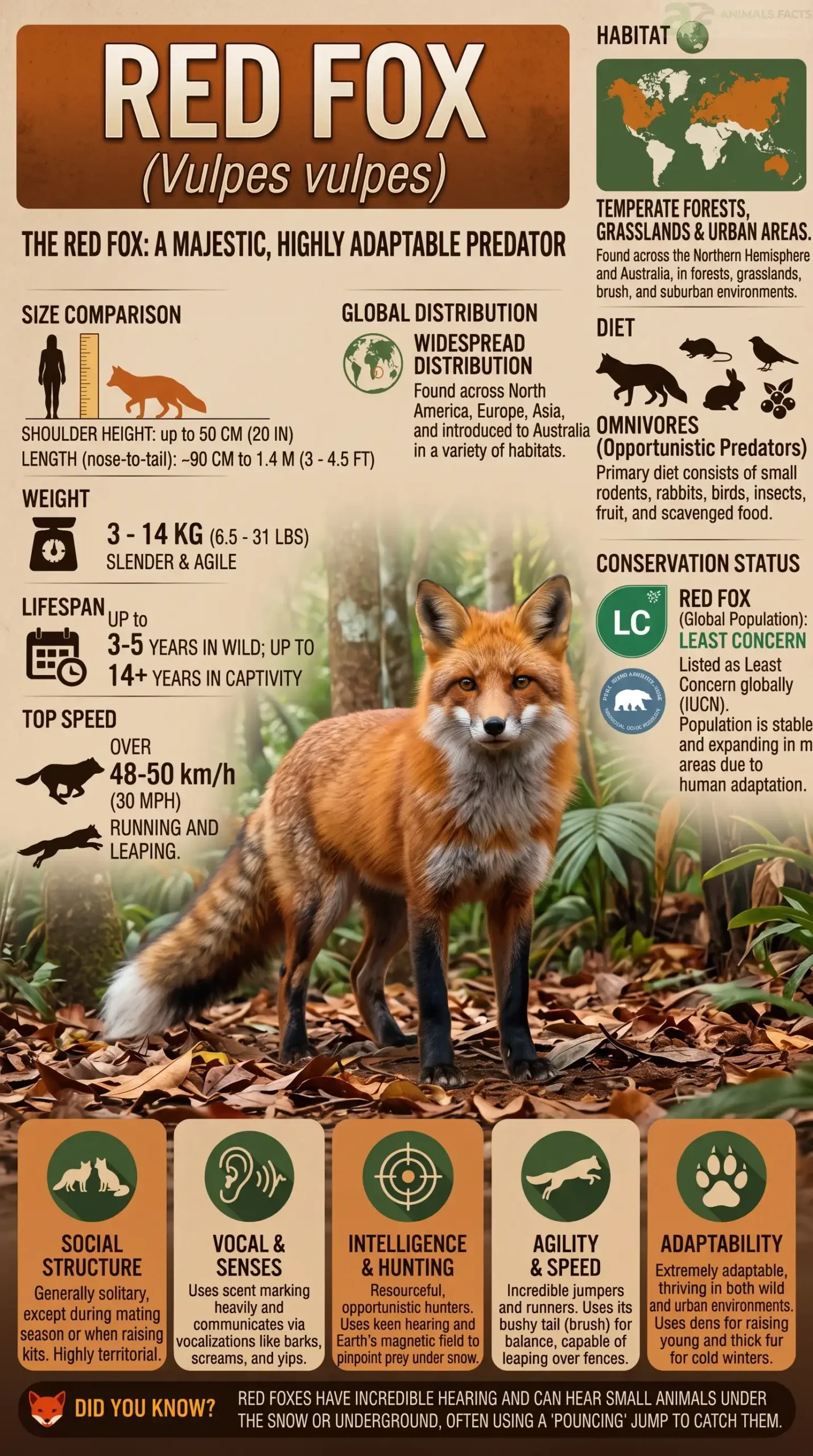
| Lifespan | 2–5 years typical in the wild; up to 10–13 years in captivity |
| Diet | Omnivore — small rodents, rabbits, birds, eggs, insects, fruit, carrion |
| Weight | 3–14 kg (6.6–31 lbs), varying enormously by region and latitude |
| Body Length | 45.5–90 cm (head and body), plus a 30–55 cm bushy tail |
| Speed | Top speed of approximately 48 km/h (30 mph); capable of leaping obstacles up to 2 meters high |
| Conservation Status | Least Concern (IUCN, globally); listed among the “world’s 100 worst invasive species” due to its ecological impact in Australia; some regional/subspecies populations, such as the Sierra Nevada red fox, are separately listed as Endangered |
| Population Estimate | No precise global figure exists, but the species is considered abundant and stable across nearly its entire native range, with millions of individuals estimated worldwide |
| Unique Feature | The most widely distributed wild carnivore on Earth, naturally found across the entire Northern Hemisphere and successfully introduced to Australia; famous for its “mousing” hunting technique of leaping high into the air to pin prey hidden under snow or grass |
 1. Introduction: What is a Red Fox?
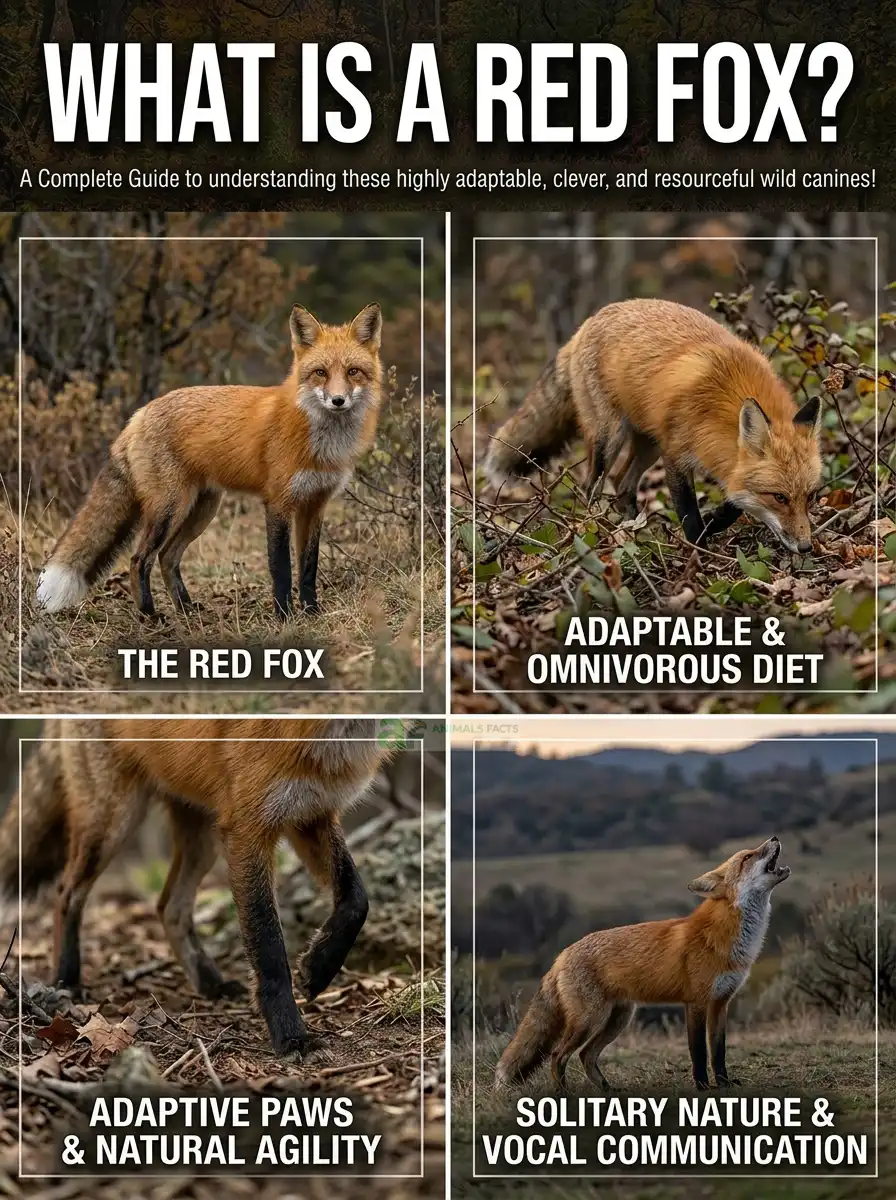
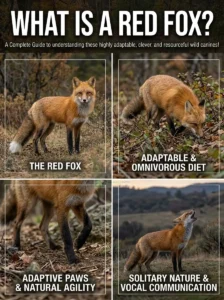
It lives on frozen Arctic tundra and in the heart of major cities with equal ease, has been recorded leaping straight up and diving nose-first into snowbanks to catch prey it cannot even see, and holds the title of the most widely distributed wild carnivore anywhere on the planet. Red fox facts consistently reveal an animal defined by one extraordinary trait above all others: adaptability. While countless species have been squeezed into ever-smaller ranges by human expansion, the red fox (Vulpes vulpes) has done something remarkably rare — it has thrived alongside humanity, expanding its range in step with agriculture, deforestation, and urbanization rather than retreating from it.
Native to the entire Northern Hemisphere — from the Arctic Circle in Canada and Russia to the deserts of North Africa and the Middle East — the red fox occupies boreal forests, open grasslands, mountain slopes, coastal dunes, farmland, and increasingly, city centers, making it arguably the most ecologically flexible member of the entire dog family. Its unmistakable reddish coat, white-tipped bushy tail, and sharp, intelligent expression have made it one of the most recognizable wild mammals in the world, appearing in the folklore, literature, and popular culture of virtually every culture across its enormous range.
Yet the red fox’s story is not without genuine complexity. While the species as a whole is thriving and classified as Least Concern by the IUCN, its remarkable adaptability has, in one notable case, turned it into an ecological problem: introduced to Australia in the 1850s for recreational hunting, the red fox has since become one of the most damaging invasive predators on the continent, implicated in the decline and extinction of numerous native marsupials and ground-nesting birds, and formally listed among the “world’s 100 worst invasive species.” At the same time, certain isolated native populations — such as the Sierra Nevada red fox in California — have become critically rare and are separately protected under endangered species law, a striking contrast to the global abundance of the species as a whole.
Whether you’re a student researching red fox facts for a school project, a parent looking for red fox facts for kids, a wildlife traveler hoping to spot one on a countryside walk or even in your own backyard, or a conservation-minded reader trying to understand how the same species can be simultaneously a global conservation success and a listed invasive pest, this is the most complete guide to red fox facts you will find anywhere. We cover red fox habitat, red fox diet, red fox scientific name, red fox behavior, red fox size and weight, reproduction, conservation status, folklore, and the complete story of the world’s most successful wild fox species.
2. Red Fox Species Overview & Classification
The red fox belongs to the family Canidae, which includes wolves, jackals, coyotes, and domestic dogs, and sits within the genus Vulpes, the “true foxes,” of which it is by far the largest member.
Species Classification Table
| Level | Classification |
|---|---|
| Kingdom | Animalia |
| Phylum | Chordata |
| Class | Mammalia |
| Order | Carnivora |
| Family | Canidae |
| Genus | Vulpes |
| Species | V. vulpes |
| Closest Living Relatives | Other Vulpes species, including the Arctic fox (Vulpes lagopus) and the corsac fox (Vulpes corsac) |
The Largest True Fox
Apart from its unmatched geographic range, the red fox is distinguished from all other fox species primarily by its size — it is the largest member of the genus Vulpes, and its ability to adapt quickly to new environments, from Arctic tundra to major metropolitan areas, sets it apart even among its highly adaptable canid relatives.
Subspecies and Regional Populations
The red fox is an extraordinarily variable species, with dozens of recognized subspecies described across its enormous range, though modern genetic research has significantly reshaped scientific understanding of these divisions.
| Subspecies/Population | Region | Notable Feature |
|---|---|---|
| Vulpes vulpes crucigera | Central Europe | One of the most studied European populations |
| Vulpes vulpes fulva (sometimes classified as Vulpes fulva) | Eastern North America | Genetic research suggests North American red foxes may merit recognition as a distinct species |
| Vulpes vulpes necator (Sierra Nevada red fox) | Sierra Nevada and southern Cascades, California/Oregon, USA | Federally listed as Endangered; critically small population |
| Vulpes vulpes (Arabian populations) | Arabian Peninsula | Distinctive pale-yellowish color morph adapted to desert conditions |
Recent large-scale genetic research analyzing roughly 1,000 samples from across the red fox’s entire range found that the species likely originated in the Middle East before radiating outward across Eurasia and eventually into North America, and further suggested that red foxes native to North America are genetically distinct enough to potentially merit classification as their own species, Vulpes fulva, rather than a subspecies of the Eurasian Vulpes vulpes — a taxonomic debate that remains unsettled in the scientific literature as of 2026.
Color Morphs
Beyond the classic reddish coat, the red fox displays several genetically determined color variants:
| Morph | Appearance | Approximate Frequency |
|---|---|---|
| Red (standard) | Reddish-brown upperparts, white underside, black legs, white-tipped tail | Most common morph across the species’ range |
| Cross fox | Reddish-brown fur with a dark stripe down the back and across the shoulders | Approximately 25% of individuals in some populations |
| Silver/black fox | Ranges from strong silver to nearly black | Approximately 10% of individuals; historically the most prized morph among furriers |
| Pale-yellowish morph | Lighter coloration | Common on the Arabian Peninsula and in certain native North American subspecies |
Species Evolution & Discovery Timeline
At least 400,000 years ago: The red fox originated in Eurasia during the Middle Pleistocene, according to fossil and genetic evidence, making it one of the older extant canid lineages still widely distributed today.
Prior to 130,000 years ago: The species colonized North America, crossing from Eurasia and establishing populations that would later diversify across the continent.
Recent genetic research (2010s): A range-wide phylogenetic study incorporating roughly 1,000 samples confirmed a likely Middle Eastern origin for the species, with subsequent radiation across Eurasia, and identified genetically distinct North American lineages.
Long before European contact: Indigenous peoples across the Northern Hemisphere developed extensive practical and cultural relationships with the red fox, incorporating the animal into folklore, hunting practice, and, in some cultures, spiritual tradition.
Medieval and early modern Europe: The red fox became deeply embedded in European folklore and hunting culture, giving rise to enduring literary archetypes of cunning and trickery that persist in Western storytelling today.
1850s: The red fox was deliberately introduced to Australia for recreational hunting purposes, beginning one of the most consequential and damaging predator introductions in the country’s ecological history.
19th–20th centuries: Fox hunting became deeply institutionalized in British culture, while fox fur farming developed into a significant global industry, particularly across Europe.
1970s–2000s: A large-scale oral rabies vaccination campaign carried out across 24 European countries successfully eliminated rabies from wild fox populations across Western and Central Europe — one of the most successful wildlife disease control programs in history.
2021: The Sierra Nevada red fox’s Distinct Population Segment in California was formally listed as Endangered under the US Endangered Species Act, with only an estimated 18–39 individuals remaining in the wild.
2026: The global red fox population remains classified as Least Concern, continuing its status as the most widely distributed wild carnivore species on Earth, even as isolated native populations such as the Sierra Nevada red fox remain critically threatened and the species continues to be managed intensively as an invasive predator across much of Australia.
3. Red Fox Physical Description & Unique Features
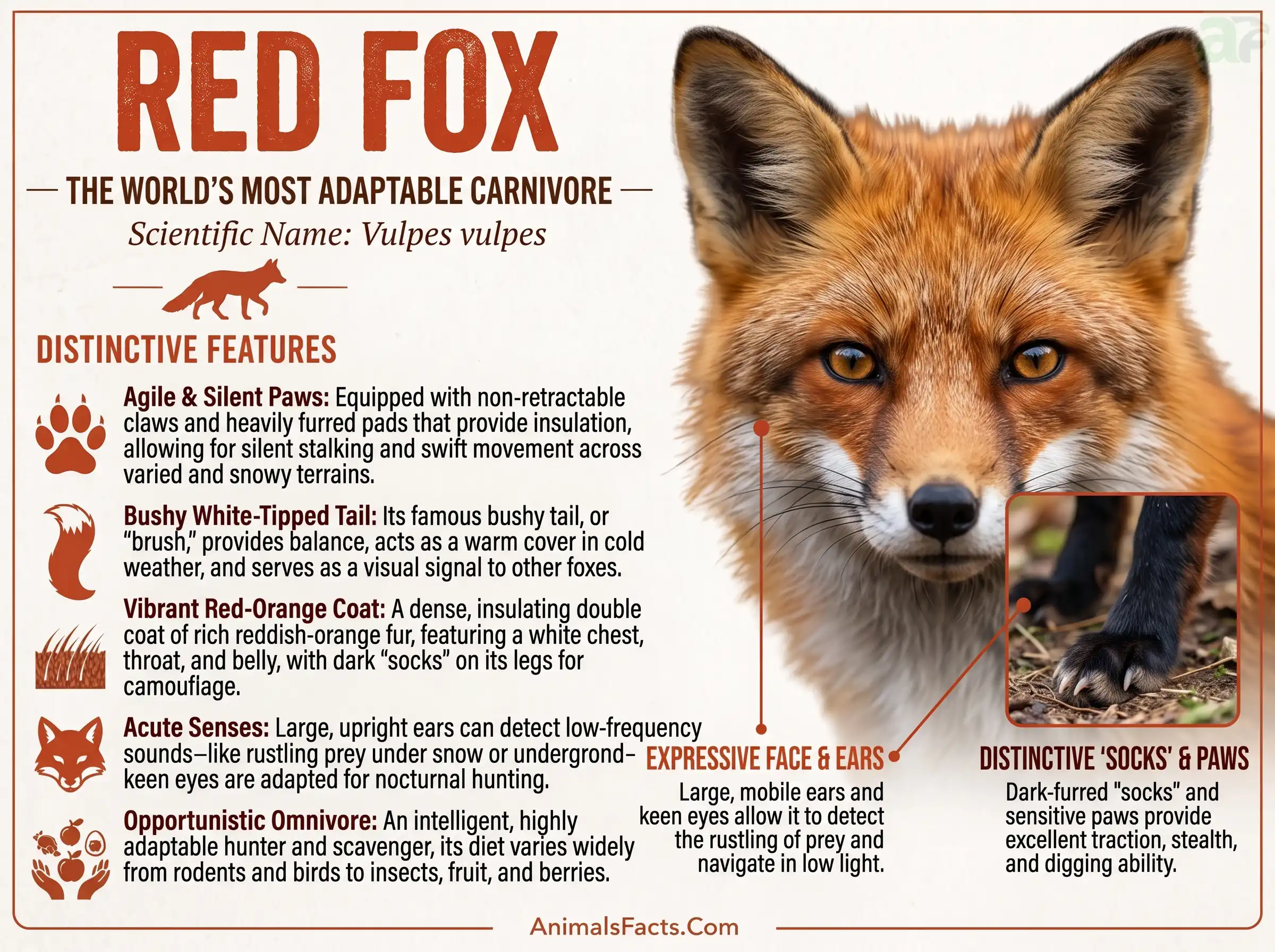
The red fox’s physical design reflects its status as a generalist predator built for versatility rather than extreme specialization, allowing it to succeed across an unmatched range of climates and habitats.
Size and Build
Weight: Adult red foxes typically weigh between 3 and 14 kg (6.6–31 lbs), with substantial variation by region — populations in Europe and northern latitudes tend to run larger, consistent with Bergmann’s Rule, while populations in southern deserts and parts of North America tend to be smaller.
Body length: 45.5–90 cm (head and body), with a bushy tail adding a further 30–55 cm.
Sexual dimorphism: Males are slightly larger than females on average, and both sexes — particularly females — show seasonal variation in body weight tied to breeding cycles and food availability.
Coloration and Coat
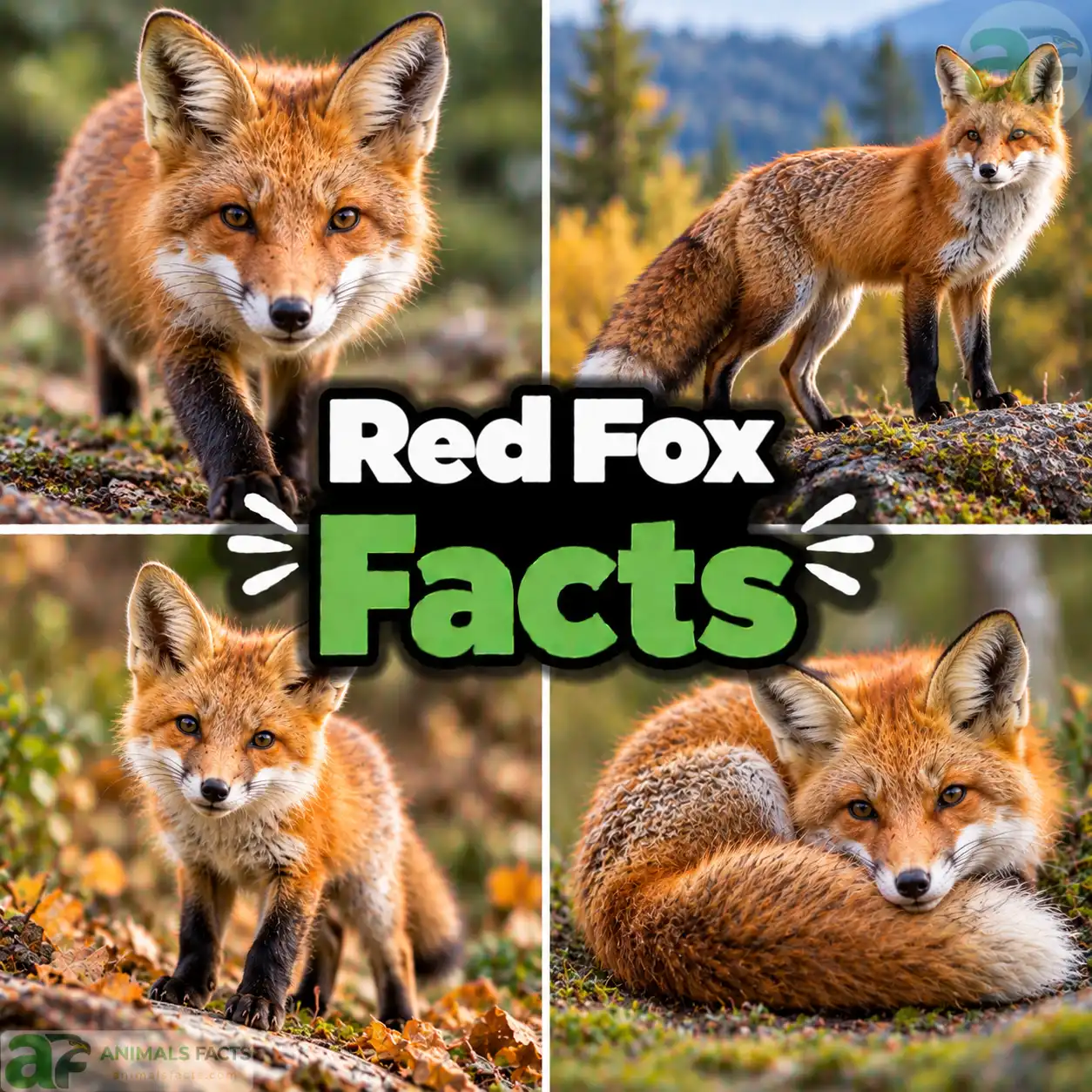
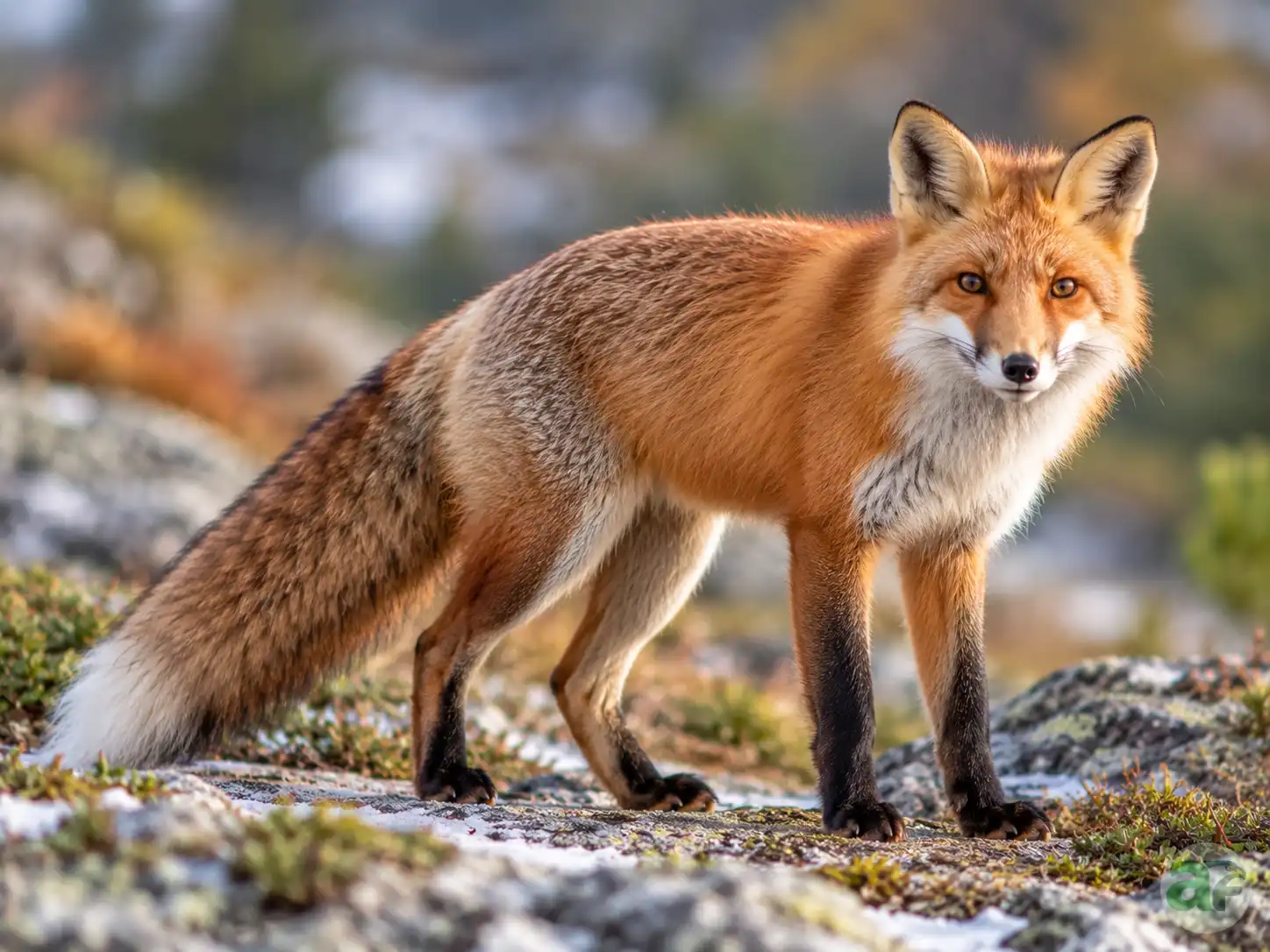
The classic red fox coloration features reddish-brown to deep auburn upperparts, with a white or pale underside, black-colored lower legs and ear backs, and a long, bushy tail typically tipped in white. As detailed in the classification section above, several distinct color morphs occur naturally, including the cross fox and the historically fur-trade-prized silver/black morph.
Sensory and Physical Adaptations
Eyes: Mature red foxes have distinctive yellow eyes with vertically slit pupils — a trait shared with cats and unusual among canids — that likely enhances low-light vision for their crepuscular and nocturnal hunting habits.
Scent glands: Red foxes possess a specialized tail (supracaudal) gland located roughly 75mm above the base of the tail, used in scent communication, along with well-developed anal glands typical of the canid family.
Speed and agility: Red foxes can reach a top speed of approximately 48 km/h (30 mph) and are capable of leaping over obstacles as high as 2 meters, reflecting a body built for both endurance travel and explosive short-range athleticism during hunting or escape.
Dentition: Red foxes have a dental formula of 3/3, 1/1, 4/4, 2/3, with a tooth row occupying more than half the length of the skull — well suited to their varied, omnivorous diet of small prey, insects, and plant material.
Did You Know? A comparative infrared thermographic study examining surface temperature regulation in the red fox, Arctic fox, and kit fox found that each species shows a distinct thermal profile suited to its native climate — with the red fox’s intermediate insulation reflecting its position as a temperate-zone generalist, less extremely adapted to cold than the Arctic fox but considerably better insulated than desert-dwelling relatives like the kit fox.
4. Top 25 Surprising & Interesting Red Fox Facts
- The red fox is the most widely distributed wild carnivore on Earth, found naturally across the entire Northern Hemisphere.
- It is the largest member of the genus Vulpes, the “true foxes.”
- Red foxes originated in Eurasia at least 400,000 years ago and colonized North America prior to 130,000 years ago.
- Genetic research suggests North American red foxes may be distinct enough to warrant classification as their own species, Vulpes fulva.
- Red foxes can run at speeds of up to 48 km/h and leap obstacles as high as 2 meters.
- Their famous “mousing” hunting technique involves leaping high into the air and diving nose-first to pin prey hidden under snow or grass.
- Mature red foxes have yellow eyes with vertically slit pupils, unusual among canids.
- Three main color morphs exist — red, cross, and silver/black — with the silver morph historically the most prized in the fur trade.
- Red foxes were deliberately introduced to Australia in the 1850s for recreational hunting.
- The species is now listed among the “world’s 100 worst invasive species” due to its devastating impact on native Australian wildlife.
- A large-scale European rabies vaccination campaign across 24 countries successfully eliminated rabies from wild fox populations between the 1970s and 2000s.
- Red foxes possess a specialized scent gland located about 75mm above the base of the tail.
- The Sierra Nevada red fox, a native North American subspecies, was listed as Endangered in 2021, with only an estimated 18–39 individuals remaining.
- Red foxes are largely solitary and do not form packs like wolves, though family groups may include helper females assisting with pup-rearing.
- A single male may mate with multiple females, who can sometimes share the same den.
- Red foxes can successfully occupy urban areas, thriving in close proximity to humans in many cities worldwide.
- Their diet is remarkably flexible, including rodents, rabbits, birds, insects, fruit, and carrion.
- In Australia, diet studies show rabbits, house mice, and sheep carrion are among the most commonly consumed food items.
- The global fox fur farming industry generates hundreds of millions of dollars annually, with Finland historically the world’s largest producer and exporter of fox pelts.
- Red foxes typically use the same den system across multiple generations, often taking over burrows originally dug by other animals such as rabbits.
- Female red foxes, called vixens, have an annual estrous period lasting only 1 to 6 days.
- Red fox populations closely track rabbit population cycles in some regions, with a documented lag before fox numbers decline following rabbit population crashes.
- Red foxes are primarily nocturnal or crepuscular, with activity peaks generally corresponding to peaks in prey activity.
- The cross fox color morph makes up roughly 25% of individuals in some populations, while the silver/black morph accounts for roughly 10%.
- Red foxes have been recorded traveling well-worn trails through their home range so consistently that these paths become physically visible over time.
5. Fun Facts About Red Fox
- Red foxes live on every continent except Antarctica and South America (natively or introduced).
- They can run up to 48 km/h.
- Their signature hunting move is a dramatic snow-diving pounce.
- They have cat-like vertical-slit pupils.
- Three natural color morphs exist: red, cross, and silver/black.
- They were introduced to Australia in the 1850s.
- They’re now considered one of the world’s worst invasive species there.
- A European vaccination program eliminated fox rabies across 24 countries.
- Red foxes thrive in cities as well as wilderness.
- The Sierra Nevada red fox is critically endangered, with fewer than 40 left.
- Vixens are only fertile for a few days each year.
- Fox dens can be used across many generations.
6. Red Fox Habitat & Geographic Range
The red fox holds the distinction of having the widest natural geographic range of any land carnivore on Earth, and its range has continued to expand alongside human settlement rather than contract.
Habitat Flexibility
Red fox habitat spans an extraordinary diversity of environments — Arctic tundra, boreal forest, temperate woodland, open grassland, mountain slopes, coastal dunes, agricultural farmland, desert margins, and dense urban centers. The species appears to be particularly abundant in fragmented agricultural landscapes, which offer a productive mix of cover, food sources, and denning opportunities.
Geographic Range Table
| Region | Status | Notes |
|---|---|---|
| Europe | Native, abundant | Present from Mediterranean coastlines to Scandinavian tundra |
| Asia (including Middle East, Russia, China) | Native, abundant | Extensive range across nearly all of Asia’s temperate and Arctic zones |
| North Africa | Native | Present in desert-margin habitats |
| North America (Canada, USA) | Native, abundant | Ranges from Arctic Canada to the southern United States; distinct native subspecies present |
| Arabian Peninsula | Native | Distinctive pale-yellowish color morph adapted to desert heat |
| Australia | Introduced (1850s) | Classified as a major invasive species; subject to active baiting and control programs |
| United Kingdom | Native, abundant | Common in both rural and urban settings; historically central to organized fox hunting culture |
Did You Know? The red fox has the widest natural range of any land carnivore in the world, found from Arctic tundra in Canada and Russia all the way to the deserts of North Africa and the Middle East — a single species successfully occupying nearly every major terrestrial biome across the entire Northern Hemisphere.
7. Red Fox Diet & Feeding Behavior
The red fox is an opportunistic omnivore with no specialized food requirements, a dietary flexibility that is central to its unmatched ecological success across such a wide range of habitats.
Diet Breakdown Table
| Food Type | Notes |
|---|---|
| Small rodents (mice, voles) | Core dietary staple across most of the species’ range |
| Rabbits and hares | Major prey item; fox population dynamics often closely track rabbit population cycles |
| Birds and eggs | Consumed opportunistically, including ground-nesting species |
| Insects | A regular seasonal component of the diet |
| Fruits and berries | Consumed particularly in autumn; an important part of the omnivorous diet |
| Carrion | Frequently scavenged, including livestock carcasses in agricultural areas |
| Urban food sources | Household waste and discarded food are commonly exploited in city environments |
Feeding Behavior
Red fox diet flexibility: Red foxes are opportunistic predators and scavengers, adjusting their diet seasonally based on whatever food sources are most available — a key reason for their success across such varied environments.
The “mousing” technique: One of the red fox’s most celebrated hunting behaviors involves standing motionless and listening intently for the sound of rodents moving beneath snow or dense grass, then leaping high into the air and diving down nose-first with both forepaws to pin the hidden prey — a dramatic and highly effective hunting method widely captured in wildlife photography and documentary footage.
Rabbit population dependency: In many regions, red fox population dynamics are closely tied to rabbit numbers. When rabbit populations crash due to drought, disease such as myxomatosis, or Rabbit Calicivirus Disease, there is typically a lag period before fox numbers decline and adjust to the reduced food supply.
Urban foraging: Red foxes in cities have adapted to exploit human food waste, garden resources, and small urban wildlife, allowing surprisingly dense fox populations to persist within major metropolitan areas.
Did You Know? In Australia, where the red fox is an introduced and invasive species, diet studies have found that rabbits, house mice, and sheep carrion are among the most commonly consumed food items — reflecting how thoroughly the species has adapted its already flexible natural diet to the specific prey and carrion resources available in its non-native environment.
8. Red Fox Reproduction & Life Cycle
Red fox reproduction displays notable behavioral flexibility, ranging from strict monogamy to more complex group breeding arrangements involving helper individuals.
Mating and Birth
Mating system variability: Red fox mating behavior varies substantially — many pairs are monogamous, but males with multiple female mates are also documented, as are family groups in which non-breeding female helpers assist in raising young. Regardless of arrangement, red fox groups always contain only one breeding male, although that male may also seek mating opportunities outside the group.
Estrus: The annual estrous period for female red foxes (vixens) lasts only 1 to 6 days, a narrow reproductive window.
Gestation: Approximately 52–53 days.
Litter size: Typically ranges from 1 to 11 kits, with an average litter size varying by region and food availability.
Developmental Stages
| Stage | Timing | Key Development |
|---|---|---|
| Birth | Spring (timing varies by latitude) | Kits born blind and dark-furred in an underground den |
| Early den life | First several weeks | Nursing continuously; both parents (or helpers) may provision food |
| Den emergence | Around 4–5 weeks | Kits begin exploring outside the den entrance |
| Weaning | 8–10 weeks | Transition to solid food |
| Independence | Autumn of first year | Juveniles disperse to establish their own territories |
| Sexual maturity | Approximately 10 months | Reaches breeding age by the following season |
Red Fox Lifespan Comparison Table
| Species | Average Wild Lifespan | Maximum Recorded |
|---|---|---|
| Red Fox | 2–5 years | 10–13 years (captivity) |
| Arctic Fox | 3–6 years | ~11 years wild; ~14 years captivity |
| Fennec Fox | ~10 years | ~14 years (captivity) |
| Swift Fox | 3–6 years | ~14 years (captivity) |
9. Social Behavior & Communication
The red fox is generally solitary but demonstrates a surprisingly flexible social structure, occupying a middle ground between the strictly monogamous pair-bonding seen in some canids and more cooperative family group arrangements.
Territoriality
Red foxes do not form true packs like wolves. Instead, home ranges are typically occupied by an adult male and one or two adult females along with their associated young. Ranges may overlap somewhat with neighboring foxes during parts of the year, though core areas are regularly defended, making the species at least partially territorial.
Den Systems
Red fox family groups maintain a main earthen den along with additional emergency burrows scattered throughout their home range. Dens belonging to other animals, such as rabbits or marmots, are frequently taken over and repurposed. Larger dens are often dug specifically for winter use and for birthing and rearing young, and the same den system may be reused across many successive generations of foxes.
Vocalizations and Body Language
Red foxes are highly vocal animals, producing an extensive range of calls including barks, screams, howls, and a variety of other sounds used in territorial communication, mate attraction, and interactions between parents and kits — their vocal repertoire is considered one of the more extensive among wild canid species.
Activity Patterns
Red foxes are primarily nocturnal or crepuscular, with activity peaks generally corresponding to the activity peaks of their prey. They often travel the same routes repeatedly throughout their home range, and these paths can become worn into visible trails over time through consistent use.
Did You Know? Unlike wolves, red foxes never form true cooperative hunting packs — but their family groups can still include non-breeding helper females who assist the dominant breeding pair in raising kits, a flexible social strategy that allows the species to adapt its reproductive and parenting approach to local food availability and population density.
10. Predators & Defense Mechanisms
While adult red foxes have relatively few natural predators across much of their range, they still face pressure from larger carnivores and, increasingly, from human management efforts in areas where the species is considered a pest or invasive threat.
Natural Predators
Wolves: Documented predators of red foxes across shared range in Eurasia and North America, and in some areas, wolf presence has been associated with reduced fox density due to both direct predation and competitive exclusion.
Coyotes: A significant competitor and occasional predator of red foxes in North America, particularly in areas where coyote populations have expanded.
Golden Eagles and other large raptors: Capable of taking fox kits and smaller adults in some regions.
Lynx: Documented as an occasional predator across parts of the red fox’s Eurasian range.
Larger domestic and feral dogs: Pose a threat in some rural and semi-urban environments.
Humans: Historically and currently the most significant source of red fox mortality across much of the species’ range, through organized hunting, fur trapping, vehicle collisions, and, in Australia, deliberate culling and baiting programs aimed at controlling the species’ invasive impact.
Defense Mechanisms
Speed and agility: A top speed of roughly 48 km/h and the ability to leap obstacles up to 2 meters high provide effective escape capability from most terrestrial predators.
Den refuge: Extensive multi-entrance den systems provide secure shelter, particularly during the vulnerable kit-rearing period.
Camouflage and stealth: While the red fox’s coloring is relatively conspicuous compared to some camouflaged species, its nocturnal and crepuscular habits reduce direct encounters with many potential predators and human threats.
Adaptive avoidance behavior: Red foxes are noted for their intelligence and wariness, quickly learning to avoid areas of high human or predator activity, a behavioral flexibility that contributes significantly to their success even in landscapes with substantial hunting or control pressure.
11. Red Fox Facts for Kids
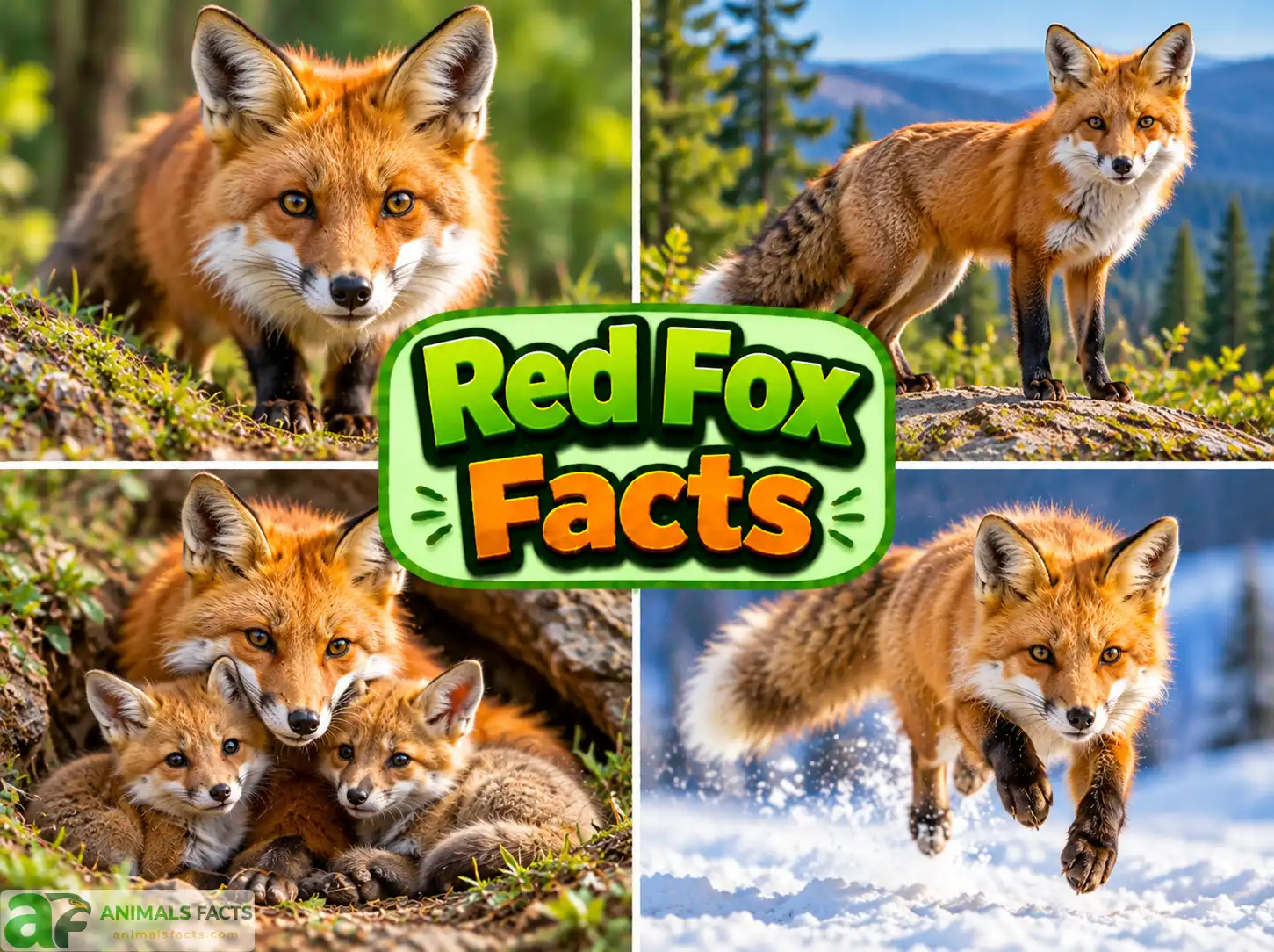
Hey kids — let’s find out why the red fox is one of the cleverest and most adaptable animals in the whole world!
Red foxes live almost everywhere — from freezing cold Arctic snow all the way to busy city streets!
They have amazing cat-like eyes with slitted pupils, which help them see really well at night.
Red foxes can jump super high in the air and dive straight down into snow to catch mice they can’t even see — they just listen for them!
They can run really fast — up to 48 kilometers per hour — and can jump over things as tall as 2 meters!
Red fox babies are called kits, and they’re born blind, snuggled safely inside an underground den.
Some red foxes have special coat patterns — like the “cross fox,” with a dark stripe across its back and shoulders!
Red foxes are super chatty — they bark, scream, and even howl to talk to each other!
Did You Know? Even though a red fox looks like it belongs only in the wild, red foxes have learned to live successfully right in the middle of big cities too — sneaking around gardens and parks at night, and even raising their kits in dens hidden under garden sheds!
12. Relationship with Humans
The red fox’s relationship with humans is one of the longest and most complicated of any wild carnivore, spanning deep folklore tradition, an enormous global fur industry, organized hunting culture, and, in Australia, a genuinely destructive ecological introduction.
Historical and Cultural Roles
Red foxes have featured prominently in the folklore, storytelling, and hunting traditions of virtually every culture across their vast natural range for thousands of years, most often cast as clever, cunning tricksters in oral and written tradition.
The Fur Trade and Farming Industry
The red fox has long been a major target of the international fur trade, both through wild trapping and large-scale commercial fox farming. The global fox fur farming industry generates hundreds of millions of dollars annually, with production concentrated heavily in Europe — Finland has historically been the world’s largest producer and exporter of fox fur, and European Union fox fur farms alone generated billions of dollars in value during the early 2000s. Russia, the Baltic states, and China also represent significant shares of global fox fur production.
Organized Hunting Culture
Red foxes have historically been the target of organized mounted and foot hunting traditions, particularly in the United Kingdom, where fox hunting became deeply institutionalized as both a rural pest-control practice and a formalized sport, generating significant cultural debate that continues in various forms today.
Disease Management
One of the most successful modern examples of human-red fox interaction has been disease control: a large-scale oral rabies vaccination campaign carried out across 24 European countries between the 1970s and 2000s successfully eliminated rabies from wild fox populations across Western and Central Europe, widely regarded as one of the most successful wildlife disease control programs ever undertaken.
The Australian Invasion
Perhaps the most consequential chapter in the red fox’s relationship with humans is its deliberate introduction to Australia in the 1850s for recreational hunting. Lacking natural predators and encountering a continent full of naive native prey species, the red fox rapidly established itself as one of the most damaging invasive predators in Australian ecological history, contributing significantly to the decline and, in some cases, extinction of native marsupials and ground-nesting birds — a legacy that has earned the species inclusion on the list of the world’s 100 worst invasive species.
13. Red Fox Conservation Status & Threats
The red fox presents one of the more paradoxical conservation profiles of any wild carnivore — a species that is simultaneously one of the most successful and abundant wild mammals on Earth, a listed global invasive species, and, in specific isolated native populations, critically endangered.
Conservation Data (2026)
| Region/Assessment | Status | Notes |
|---|---|---|
| IUCN Red List (global) | Least Concern | Reflects a stable, abundant population across nearly the entire native range |
| Australia | Listed among world’s 100 worst invasive species | Subject to active baiting and control programs to protect native wildlife |
| Sierra Nevada red fox (California/Oregon, USA) | Endangered (federally listed, 2021) | Only an estimated 18–39 individuals remain in the Sierra Nevada Distinct Population Segment |
| Southern Cascades red fox population | Not federally listed | Considered less at risk of substantial decline than the Sierra Nevada segment |
Major Threats
Invasive species management pressure: In Australia, red foxes are subject to extensive government and conservation baiting and control programs aimed at reducing their impact on critically endangered native wildlife, representing a significant management-driven mortality source specific to that introduced range.
Hybridization and genetic dilution: In parts of North America, native montane red fox populations, including the Sierra Nevada red fox, face threats from hybridization with non-native red foxes, which can dilute distinct regional genetic adaptations built up over thousands of years of isolation.
Habitat loss and fragmentation: While red foxes are highly adaptable, isolated montane populations such as the Sierra Nevada red fox remain vulnerable to habitat loss, wildfire, and drought, particularly given their already critically small population size.
Competition with coyotes: In parts of North America, expanding coyote populations compete directly with red foxes for territory and food resources, contributing to localized declines in some native fox populations.
Historical fur trade and hunting pressure: While no longer posing a threat to the species’ overall global stability, hunting and fur trapping remain ongoing activities across much of the red fox’s range.
Did You Know? The Sierra Nevada red fox tells a genuinely striking conservation story: while the global red fox population numbers in the millions and is thriving across nearly the entire Northern Hemisphere, this single native North American subspecies was formally listed as Endangered in 2021, with only an estimated 18 to 39 individuals remaining in the wild — illustrating how a species can be globally abundant while a genetically distinct regional population teeters on the edge of extinction.
14. Famous Red Foxes
Foxes in folklore archetypes — While not individually named real-world animals, the red fox has inspired some of the most enduring animal archetypes in world literature and folklore, cast for centuries as the clever trickster figure across European, Asian, and North American storytelling traditions.
Zoo and sanctuary ambassador foxes — Numerous red foxes at accredited zoos and wildlife rehabilitation centers around the world serve as public education ambassadors, helping visitors understand the species’ remarkable adaptability and its complicated conservation status across different parts of its range.
Urban celebrity foxes — In many major cities, including London and other European capitals, individual urban red foxes have become locally recognized and photographed regularly by residents, reflecting the species’ unusual and well-documented success at colonizing dense human environments.
15. Role in Ecosystem & Food Chain
The red fox occupies an important and often complex ecological role, functioning as both a valuable natural predator within its native range and a significant disruptive force where introduced outside it.
Rodent and rabbit population control: Within its native range, the red fox plays a meaningful role in regulating populations of small rodents and rabbits, contributing to broader ecosystem balance.
Scavenger role: By consuming carrion, red foxes help recycle nutrients within their ecosystems and reduce waste from larger predator kills or livestock mortality.
Prey base for larger predators: Red foxes themselves serve as prey for wolves, coyotes, large raptors, and other apex predators within their native range, forming an important link in temperate and Arctic food webs.
Invasive ecological disruption in Australia: In stark contrast to its beneficial native role, the introduced red fox population in Australia has had a profoundly disruptive ecological impact, directly contributing to the decline and extinction of numerous native rat-kangaroo species and other small-to-medium-sized native mammals and ground-nesting birds that evolved without exposure to an efficient placental predator of this kind.
16. Myths, Folklore & Cultural Significance
Few wild animals carry as rich and universal a folkloric legacy as the red fox, which appears as a central figure in the storytelling traditions of cultures across nearly its entire natural range.
The Universal Trickster Archetype
Across European, Asian, and North American folklore, the red fox is almost universally cast as a clever, cunning trickster figure — a character type reflected in countless fables, including the classic European Reynard the Fox story cycle, in which a scheming fox repeatedly outwits larger and more powerful animals through wit rather than strength.
East Asian Fox Spirit Traditions
In Chinese, Japanese, and Korean folklore, fox spirits — known respectively in various traditions as huli jing, kitsune, and gumiho — are prominent supernatural figures believed capable of shapeshifting, often depicted as intelligent, magical beings capable of both benevolent and mischievous or dangerous behavior toward humans, reflecting deep and long-standing cultural fascination with the red fox’s perceived cunning.
European Hunting Culture and Symbolism
In British and broader European culture, the red fox became deeply symbolically tied to rural hunting tradition, with fox hunting historically viewed by its practitioners as an important part of countryside heritage, though the practice has generated significant modern ethical and political debate.
17. Red Foxes in Pop Culture
“Fantastic Mr Fox” — Roald Dahl’s beloved children’s novel, later adapted into a critically acclaimed stop-motion film, centers on a clever red fox protagonist embodying the classic trickster archetype in modern popular culture.
“The Fox and the Hound” — A well-known animated film centered on an unlikely friendship between a red fox and a hunting dog, widely recognized as an influential piece of red fox representation in Western children’s media.
Reynard the Fox — The medieval European fable cycle featuring a cunning fox protagonist remains one of the most influential literary sources for the red fox’s enduring trickster reputation in Western storytelling.
Wildlife documentaries — The red fox’s dramatic “mousing” hunting technique, involving a spectacular leap and snow-dive, has become one of the most frequently featured and widely shared wildlife behaviors in nature documentary footage and viral wildlife videos.
18. Red Fox Facts vs. Common Myths
Myth: Red foxes are dangerous to humans. Fact: Red foxes are generally shy and avoid direct human contact, posing minimal direct threat; most human-fox conflict involves livestock predation (particularly poultry) rather than any danger to people themselves.
Myth: Red foxes hunt in packs like wolves. Fact: Red foxes are largely solitary or live in small family groups; they do not form cooperative hunting packs the way wolves do.
Myth: All red foxes look the same. Fact: Red foxes display several distinct natural color morphs, including the red, cross, and silver/black variants, in addition to a pale-yellowish morph common in desert populations.
Myth: Red foxes are endangered everywhere. Fact: The global red fox population is classified as Least Concern and is considered one of the most successful and widespread wild carnivores on Earth. However, specific isolated native populations, such as the Sierra Nevada red fox, are critically endangered.
Myth: Red foxes are harmless wherever they live. Fact: While native and ecologically beneficial across most of the Northern Hemisphere, the introduced Australian red fox population is formally listed among the world’s 100 worst invasive species due to its severe impact on native wildlife.
19. Best Places to See Red Foxes in the Wild
The Scottish Highlands, UK — Offers excellent opportunities to observe red foxes in a dramatic, sparsely populated countryside setting.
Yellowstone National Park, USA — Home to visible red fox populations alongside other well-known wildlife, particularly active during dawn and dusk hunting periods.
The Cairngorms National Park, UK — A reliable location for observing red foxes across varied Scottish upland habitat.
Berlin and other major European cities — Remarkably, some of the most reliable red fox sightings occur in urban parks and green spaces across major European cities, where the species has successfully adapted to city life.
Bavarian Forest National Park, Germany — Known for consistent red fox activity across extensive woodland habitat.
Algonquin Provincial Park, Canada — Offers opportunities to see North American red fox populations within a well-preserved wilderness setting.
The English countryside broadly — Red foxes remain common and visible across much of rural England, particularly around dawn and dusk in agricultural and mixed woodland areas.
20. Top Documentaries & Books
Documentaries
Various BBC and National Geographic wildlife documentaries — Numerous major nature documentary productions have featured extensive red fox segments, particularly showcasing the species’ celebrated “mousing” hunting technique and its remarkable adaptability to urban environments.
Urban wildlife documentary segments — Multiple documentary productions have specifically focused on the phenomenon of red foxes successfully colonizing major cities, exploring both the ecological and human-interest dimensions of urban fox populations.
Books
“The Fox” by T. F. Dale (1906) — A historical account of red fox natural history and hunting tradition in Britain, reflecting the deep cultural entanglement between the species and British countryside culture.
“Fantastic Mr Fox” by Roald Dahl (1970) — The beloved children’s novel featuring a cunning red fox protagonist, later adapted into a celebrated stop-motion animated film.
“Canids of the World: Wolves, Wild Dogs, Foxes, Jackals, Coyotes, and Their Relatives” by José R. Castelló (2018) — A comprehensive modern scientific reference covering red fox biology, taxonomy, and conservation alongside the rest of the canid family.
21. Comparison of Red Foxes with Similar Animals
| Feature | Red Fox | Arctic Fox | Fennec Fox | Swift Fox |
|---|---|---|---|---|
| Scientific Name | Vulpes vulpes | Vulpes lagopus | Vulpes zerda | Vulpes velox |
| Weight | 3–14 kg | 3–8 kg | 0.9–1.9 kg | 1.8–3 kg |
| Family | Canidae | Canidae | Canidae | Canidae |
| Habitat | Nearly all Northern Hemisphere biomes; introduced to Australia | Arctic and alpine tundra | Sahara Desert, North Africa | Grasslands of the North American Great Plains |
| Diet | Highly varied omnivore | Lemmings, seabirds, carrion | Insects, small rodents, plants | Small rodents, insects, plants |
| Conservation Status | Least Concern (globally); Endangered for Sierra Nevada subspecies; invasive in Australia | Least Concern (Critically Endangered in Fennoscandia) | Least Concern | Least Concern (recovering) |
| Top Speed | ~48 km/h | Not extensively recorded; agile over snow | Agile sprinter over sand | Fast sprinter across grassland |
22. How You Can Help
Support These Organizations
IUCN/SSC Canid Specialist Group — The leading international scientific body coordinating red fox research and conservation assessment worldwide, including monitoring of threatened native subspecies.
US Fish & Wildlife Service Sierra Nevada Red Fox Recovery Program — Leads conservation efforts specifically focused on protecting the critically endangered Sierra Nevada red fox population.
Local wildlife rehabilitation centers — Many regional wildlife rescue and rehabilitation organizations treat injured red foxes, particularly those affected by vehicle strikes in urban and suburban areas.
Invasive Species Council (Australia) — Supports research and management efforts addressing the red fox’s significant ecological impact on native Australian wildlife.
Practical Actions
Support conservation funding for the critically endangered Sierra Nevada red fox population, which numbers only in the dozens of individuals.
If living in Australia, support responsible invasive species management programs that aim to protect vulnerable native wildlife from red fox predation.
Drive cautiously in known fox habitat, particularly around dawn and dusk when red foxes are most active, to help reduce vehicle strike mortality.
Avoid feeding wild red foxes in urban and suburban areas, since human-provided food can increase unhealthy habituation and human-wildlife conflict.
Support responsible, transparent practices in the fox fur industry and advocate for humane standards where fur farming continues to operate.
23. Frequently Asked Questions About Red Foxes
Q1: What is the scientific name of the red fox?
The red fox’s scientific name is Vulpes vulpes. It belongs to the family Canidae, within the genus Vulpes, the “true foxes,” of which it is the largest member.
Q2: How big is a red fox?
Red foxes typically weigh 3–14 kg (6.6–31 lbs) and measure 45.5–90 cm in body length, plus a bushy tail of 30–55 cm, with considerable size variation by region.
Q3: What do red foxes eat?
Red foxes are opportunistic omnivores, eating small rodents, rabbits, birds, eggs, insects, fruit, and carrion, adapting their diet flexibly to whatever food sources are locally available.
Q4: Are red foxes endangered?
No — globally, the IUCN classifies the red fox as Least Concern, with a stable and abundant population across nearly its entire native range. However, the Sierra Nevada red fox, a native North American subspecies, was listed as Endangered in 2021, with only 18–39 individuals remaining.
Q5: Why are red foxes considered invasive in Australia?
Red foxes were introduced to Australia in the 1850s for recreational hunting and have since become one of the most damaging invasive predators on the continent, contributing to the decline and extinction of numerous native marsupials and ground-nesting birds.
Q6: How fast can a red fox run?
Red foxes can reach speeds of approximately 48 km/h (30 mph) and can leap obstacles as high as 2 meters.
Q7: How long do red foxes live?
Red foxes typically live 2–5 years in the wild, though they can live up to 10–13 years in captivity.
Q8: Do red foxes live in packs?
No — red foxes are largely solitary or live in small family groups consisting of a breeding pair and their young, sometimes with non-breeding helper females, rather than forming true cooperative packs like wolves.
Q9: What is the “mousing” technique red foxes are known for?
Mousing is a hunting behavior where a red fox listens for prey hidden under snow or grass, then leaps high into the air and dives down nose-first to pin the prey with both forepaws — a dramatic and highly effective hunting method.
Q10: Where do red foxes live?
Red foxes have the widest natural range of any land carnivore, found across nearly the entire Northern Hemisphere — from Arctic tundra to desert margins — and have also been introduced to Australia.
26. Sources & References
Research Sources:
Wikipedia — Vulpes vulpes
IUCN Red List — iucnredlist.org
IUCN SSC Invasive Species Specialist Group — iucngisd.org
Animal Diversity Web — animaldiversity.org
Canids (IUCN/SSC Canid Specialist Group) — canids.org
US Fish & Wildlife Service — fws.gov
Texas Tech Natural Science Research Laboratory — depts.ttu.edu Britannica