
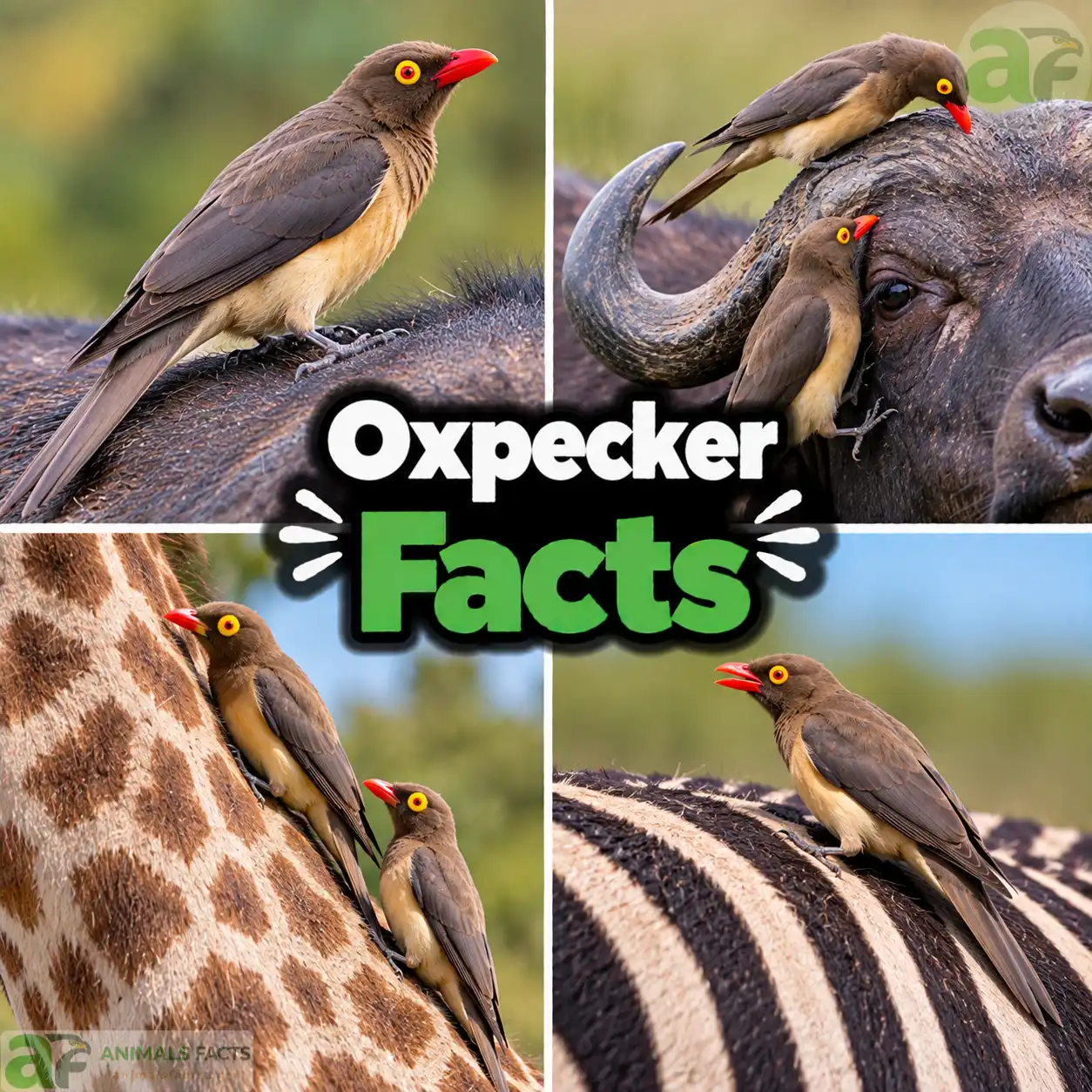
Oxpecker Facts
| Feature | Details |
|---|---|
| Scientific Name | Buphagus africanus (yellow-billed) and Buphagus erythrocephalus (red-billed) |
| Kingdom | Animalia |
| Phylum | Chordata |
| Class | Aves (Birds) |
| Order | Passeriformes |
| Family | Buphagidae |
| Genus | Buphagus (Brisson, 1760) |
| Common Names | Oxpecker, tickbird |
| Native Range | Sub-Saharan Africa |
| Habitat | Savannas, grasslands, open woodlands wherever large mammals are present |
| Lifespan | 5–15 years (wild); up to 17 years (captivity) |
| Diet | Ticks, parasites, dead skin, blood, earwax, mucus, wound tissue |
| Length | 17–22 cm depending on species |
| Weight | 40–75 grams |
| Top Speed | Approximately 40–50 km/h in flight |
| Conservation Status | Least Concern (IUCN) — both species |
| Number of Species | 2 living species |
| Ecological Role | Parasite removal from large mammals — mutualistic/parasitic relationship |
 1. Introduction: What is an Oxpecker?
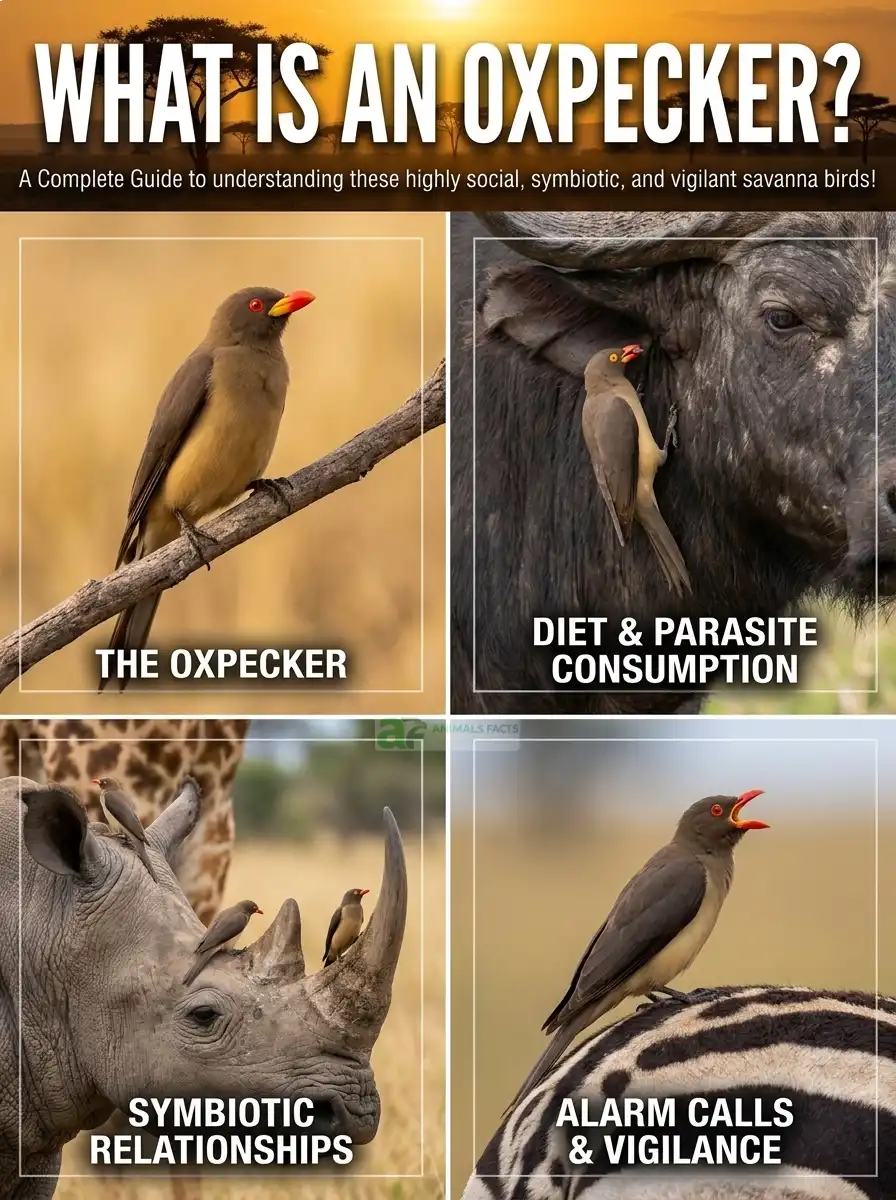
Somewhere on the vast East African savanna, a Cape buffalo stands in the midday heat — massive, dark, and seemingly indifferent to the world. But look more closely and you will notice a flicker of movement along its thick hide. Then another. Then a small, rust-and-yellow bird working its way methodically across the buffalo’s back with the focused intensity of a surgeon. A second bird perches inside the buffalo’s ear. A third picks at a wound on the animal’s flank. These are oxpeckers — and oxpecker facts begin with this single, extraordinary image of birds and mammals locked in one of the most complex, most studied, most debated, and most visually compelling symbiotic relationships in all of African wildlife.
The oxpecker is simultaneously one of Africa’s most familiar birds — visible on virtually every large mammal safari — and one of its most misunderstood. For most of the 20th century, oxpeckers were celebrated as the great cleaners of the African savanna — birds that kept large mammals free of ticks and parasites in a straightforward and mutually beneficial partnership. Then research began to reveal a more complicated story. Interesting facts about oxpeckers show that these birds do indeed remove ticks — but they also drink blood from the wounds of their hosts, prevent wounds from healing by continuously picking them open, and may in some contexts cause more harm to individual hosts than the parasites they remove. The oxpecker’s relationship with Africa’s megafauna turns out to be not a simple mutualism but a conditional mutualism — one of the most sophisticated and contextually dependent ecological relationships in the animal kingdom, and one that tells us something profound about how nature’s partnerships are rarely as straightforward as they appear.
Whether you are a student searching for oxpecker facts for kids to bring an ecology lesson to life, a wildlife enthusiast planning a safari and wanting to understand the remarkable animals you will encounter, a biology researcher interested in the science of mutualism and its limits, or simply someone captivated by the idea of birds that spend their entire lives living on the backs of buffalo, hippos, and rhinoceroses — this is your comprehensive guide. We cover oxpecker scientific name, oxpecker diet, oxpecker size and weight, oxpecker behavior, the extraordinary complexity of the host-parasite relationship, conservation status, cultural significance, and everything else these remarkable birds have to offer. The tickbird and its complicated partnerships await.
2. Oxpecker Species Overview & Classification
Oxpeckers occupy a genuinely unique taxonomic position — they are the sole members of the family Buphagidae, a family that contains only two living species and belongs exclusively to sub-Saharan Africa.
Species Classification Table
| Taxonomic Rank | Classification |
|---|---|
| Kingdom | Animalia |
| Phylum | Chordata |
| Class | Aves |
| Order | Passeriformes |
| Family | Buphagidae (Lesson, 1828) |
| Genus | Buphagus (Brisson, 1760) |
| Number of Species | 2 living species |
| Sister Family | Sturnidae (starlings) — closest living relatives |
| Temporal Range | Fossil record from Late Miocene (~7–10 million years ago) |
The Two Species of Oxpecker
Yellow-billed Oxpecker (Buphagus africanus)
| Feature | Details |
|---|---|
| Scientific Name | Buphagus africanus (Linnaeus, 1766) |
| Length | 20–22 cm |
| Weight | 55–75 grams |
| Bill | Broad, flattened, entirely yellow — distinctive “banana-shaped” bill |
| Eye color | Red with yellow orbital ring |
| Distribution | West and Central Africa; also East and Southern Africa |
| Preferred hosts | Cattle, buffalo, hippos, giraffes |
| IUCN Status | Least Concern |
Red-billed Oxpecker (Buphagus erythrocephalus)
| Feature | Details |
|---|---|
| Scientific Name | Buphagus erythrocephalus (Stanley, 1814) |
| Length | 17–20 cm |
| Weight | 40–60 grams |
| Bill | Shorter, more pointed, entirely red — the key field identification feature |
| Eye color | Red with orange-red orbital ring |
| Distribution | East and Southern Africa primarily |
| Preferred hosts | Buffalo, rhino, elephant, impala, zebra, giraffe |
| IUCN Status | Least Concern |
Evolutionary Relationship with Starlings
The oxpecker family Buphagidae is most closely related to the starling family Sturnidae — a relationship confirmed through multiple molecular phylogenetic studies. This makes oxpeckers essentially highly specialized starlings that have evolved an entirely unique ecological niche over millions of years of African savanna evolution.
The divergence of oxpeckers from their starling ancestors is estimated to have occurred approximately 40–50 million years ago — coinciding broadly with the diversification of the large African ungulate fauna that oxpeckers evolved to exploit. As Africa’s megafauna diversified and the savanna ecosystem took shape during the Miocene and Pliocene epochs, the ancestral oxpecker lineage was co-evolving alongside it — developing the specialized morphological and behavioral toolkit that enables their unique lifestyle.
Subspecies Comparison Table
| Species | Subspecies | Range | Notable Differences |
|---|---|---|---|
| Yellow-billed | B. a. africanus | West and Central Africa | Nominate subspecies |
| Yellow-billed | B. a. langi | East Africa | Slightly larger; marginally different coloration |
| Red-billed | B. e. erythrocephalus | East Africa | Nominate subspecies |
| Red-billed | B. e. caffer | Southern Africa | Marginally smaller; southern distribution |
Evolution & Discovery Timeline
~40–50 million years ago — The oxpecker lineage diverges from starling ancestors during the Eocene-Oligocene boundary — coinciding with the major diversification of African mammals.
~10–7 million years ago — The oldest known oxpecker fossil material, from Late Miocene deposits of East Africa, documents that the basic oxpecker body plan was established at this time — coinciding with the peak diversification of African ungulate megafauna.
~2–3 million years ago — The two living species (B. africanus and B. erythrocephalus) are estimated to have diverged from a common ancestor during the Pliocene epoch.
1766 — Carl Linnaeus formally describes the yellow-billed oxpecker as Buphagus africanus in the 12th edition of Systema Naturae — the first formal scientific description of an oxpecker species.
1814 — Edward Smith-Stanley formally describes the red-billed oxpecker as Buphagus erythrocephalus — completing the formal description of both living oxpecker species.
1828 — René Lesson formally establishes the family Buphagidae — recognizing oxpeckers as a distinct family separate from starlings.
1900s — The relationship between oxpeckers and their host mammals is widely characterized as a straightforward mutualism — beneficial to both parties — in early ecological literature.
1990s — A series of landmark studies — particularly work by Roan Plotz and Wayne Liversidge — begin documenting that oxpeckers drink blood from wounds and prevent wound healing, challenging the simple mutualism narrative.
2000 — A pivotal study by Kern Reilly and collaborators in Zimbabwe demonstrates that oxpeckers may actually impede wound healing in cattle — providing the first strong empirical evidence that the relationship is more complex than mutualism.
2011 — Research confirms that blood constitutes a significant portion of the yellow-billed oxpecker’s dietary intake — transforming scientific understanding of oxpecker feeding ecology.
2020–2024 — New studies using GPS tracking and continuous video monitoring provide the most detailed documentation yet of oxpecker host selection, time budget on hosts, and the contextual variables that determine whether the relationship is net beneficial or net harmful to specific host individuals.
“The oxpecker relationship with its hosts is one of the most compelling examples in ecology of how what appears straightforward from a distance becomes beautifully, maddeningly complex the closer you look. These birds are neither simply helpers nor simply parasites — they are something more interesting than either.” — Dr. Ara Monadjem, Professor of Zoology, University of Eswatini, and leading oxpecker researcher
3. Oxpecker Physical Description & Unique Features
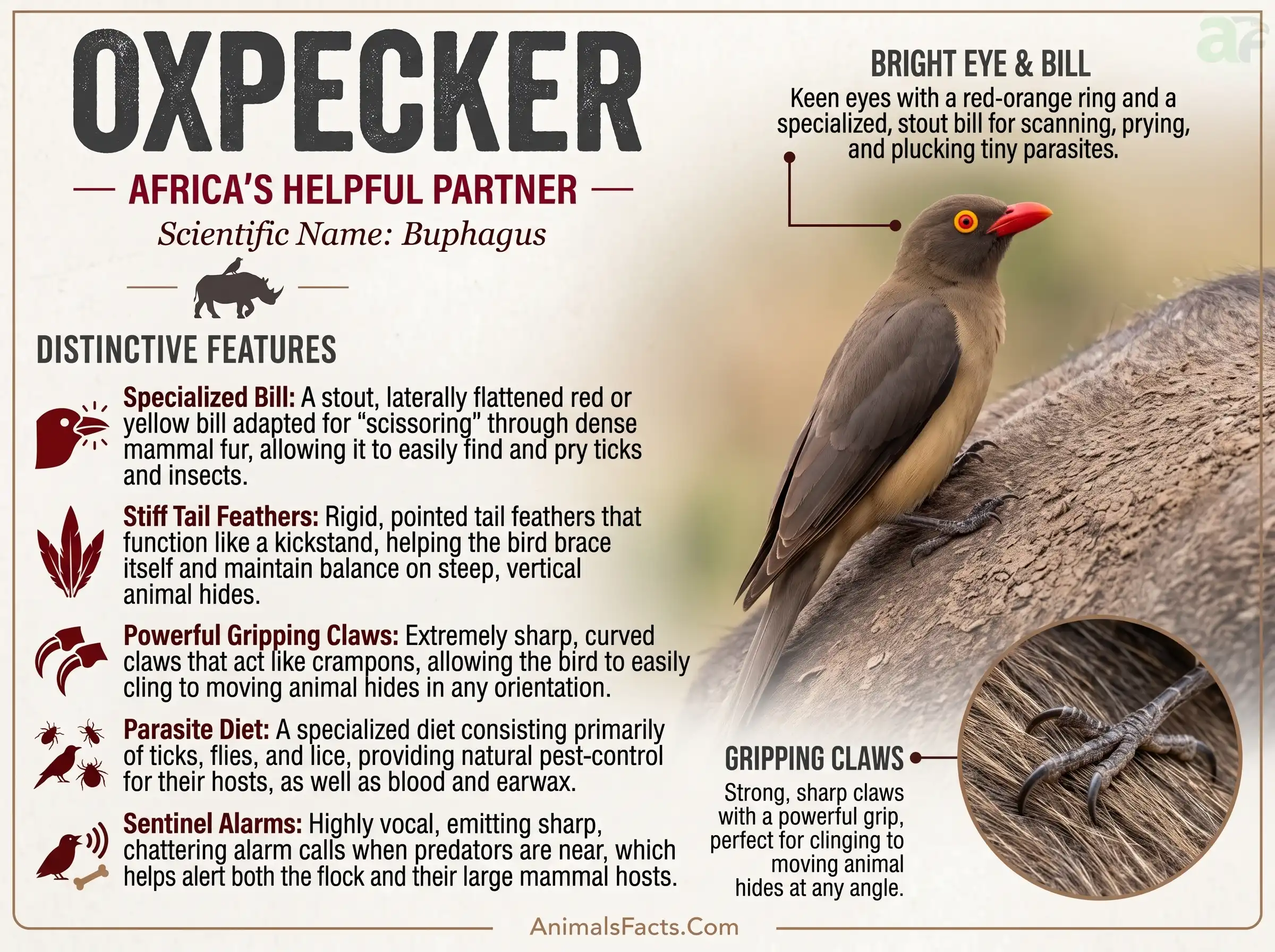
Oxpecker size and weight place them in the medium-small range of African passerine birds — but their physical features are so uniquely specialized for their parasitic lifestyle that virtually every aspect of their morphology tells a story of evolutionary adaptation to living on the bodies of large mammals.
Body Form
Both oxpecker species are compact, strongly built birds with several highly distinctive morphological features:
Overall proportions — Oxpeckers have a somewhat flattened, horizontally oriented body profile that facilitates clinging to the sides and undersides of large mammals. Their bodies are not particularly round or robust — they are streamlined for the combination of clinging, climbing, and short-distance flight that their lifestyle demands.
Short, strong legs — Oxpecker legs are short relative to body size but extraordinarily strong — with powerful grip musculature that allows them to cling to a host’s skin even when the host is running, rolling, or attempting to dislodge them. The toes are equipped with sharp, curved claws that hook into the hide of large mammals with remarkable tenacity.
Stiff tail — The oxpecker’s tail is significantly stiffer than that of most passerine birds — functioning as a brace (similar to the tail of a woodpecker) that provides a third point of contact when the bird is working on a vertical or overhanging surface of a host’s body. This woodpecker-like tail prop is a convergent adaptation that has evolved independently in several bird lineages that work on vertical surfaces.
The Bill
The oxpecker bill is the most immediately distinctive feature of the family — and the two species have evolved meaningfully different bill shapes that reflect subtly different feeding specializations:
Yellow-billed oxpecker bill — Broad, laterally flattened, with a distinctly banana-shaped or spatulate cross-section. This wider, flatter bill is well-suited for the “scissoring” technique this species uses most frequently — moving the bill rapidly through hair or across skin in a side-to-side raking motion to dislodge and collect ticks from the surface of host skin.
Red-billed oxpecker bill — Shorter, more pointed and conical — better suited for picking individual ticks from specific locations and for probing into wounds, ears, and other body openings. The more precise tip of the red-billed oxpecker’s bill reflects its reputation as a more active wound-picker and blood-drinker compared to the yellow-billed species.
Eyes
Both oxpecker species have striking red eyes with colored orbital rings (yellow in the yellow-billed species; orange-red in the red-billed). These vivid red eyes give oxpeckers a distinctly intense expression that reflects their alert, constantly vigilant behavioral style. The red coloration may have signaling functions — communicating status or arousal state to other oxpeckers on the same host animal.
Plumage
Both species have relatively understated plumage that prioritizes camouflage and durability over display:
Yellow-billed oxpecker — Overall olive-brown to buff plumage; paler underparts; the yellow bill and red eye-ring are the primary field identification features.
Red-billed oxpecker — Similar overall olive-brown coloration; slightly brighter buff on the underparts; the red bill and red-orange eye ring are diagnostic field marks.
Neither species has dramatic sexual dimorphism — males and females are similar in appearance, with males being marginally larger on average.
💡 Did You Know? The oxpecker’s tail functions as a third leg — like a woodpecker’s tail — when the bird is working on a vertical surface. When clinging to the side of a buffalo or rhinoceros, the oxpecker uses its two feet for gripping and its stiff tail as a brace against the host’s skin, creating a three-point anchoring system that is extraordinarily stable even on a moving animal. This convergent evolution of the woodpecker-style tail prop in a passerine bird is one of the most elegant examples of form following function in avian anatomy.
4. Top 25 Amazing Oxpecker Facts
Here is your definitive collection of the most extraordinary, scientifically verified, and genuinely astonishing oxpecker facts as of 2026:
- Oxpeckers are the sole members of the family Buphagidae — a two-species family found only in sub-Saharan Africa, making them one of the most geographically and taxonomically restricted bird families on Earth.
- The relationship between oxpeckers and their host mammals is not a simple mutualism — it is a conditional mutualism that shifts between beneficial and parasitic depending on tick abundance, wound presence, and the specific host individual involved.
- Oxpeckers drink blood from the wounds of their host animals — a behavior confirmed by multiple studies and representing a genuinely parasitic dimension of a relationship long celebrated as purely beneficial.
- A single oxpecker can remove and consume up to 100 engorged ticks per day from a single host animal — representing genuine and significant parasite load reduction for tick-infested hosts.
- Oxpeckers have been documented preventing wounds from healing — continuously picking at wounds to maintain access to blood and wound fluid, a behavior that can significantly extend recovery time in injured host animals.
- The yellow-billed oxpecker uses a distinctive “scissoring” technique — running its bill rapidly through host hair in a side-to-side raking motion — to locate and dislodge ticks embedded in skin.
- Red-billed oxpeckers are more commonly associated with probing wounds and drinking blood than yellow-billed oxpeckers — the difference in bill shape reflecting this more penetrative feeding strategy.
- Oxpeckers serve as an early warning system for their host animals — producing loud alarm calls when they detect approaching predators, providing host animals with threat detection they may not have through their own senses.
- A study in Zimbabwe in 2000 demonstrated that cattle without oxpeckers had wounds that healed significantly faster than cattle with oxpeckers — providing compelling evidence that oxpecker feeding on wounds is harmful to individual host welfare.
- Oxpeckers consume not only ticks but also earwax, mucus, dead skin cells, and wound secretions from their hosts — an extraordinarily broad diet by the standards of any bird.
- Hippos and rhinoceroses are among the most consistently tolerant oxpecker hosts — showing minimal defensive behavior even when oxpeckers probe wounds and sensitive body areas.
- Domestic cattle and horses are generally less tolerant of oxpecker feeding than wild ungulates — showing more defensive behaviors (head shaking, skin twitching, tail swishing) that reduce the time oxpeckers can spend feeding on them.
- Oxpeckers are highly selective about which individual host animals they use — research has shown that they preferentially associate with specific host individuals and return to the same animals repeatedly over extended periods.
- The alarm call of an oxpecker — a sharp, hissing “churr” or “kriss” — is recognized and responded to by multiple mammal species that share their savanna habitat, including some that are not themselves oxpecker hosts.
- Oxpeckers have been documented removing ticks from areas of host bodies that are inaccessible to the host’s own grooming — including inside ears, around eyes, on the underside of the tail, and between the toes — providing services that the host genuinely cannot provide for itself.
- A single African buffalo may carry up to 35,000 ticks at peak tick season — a parasite burden that represents a genuine health threat, and that oxpecker predation measurably reduces in areas where oxpecker populations are healthy.
- Giraffe oxpecker associations represent some of the most visually spectacular wildlife encounters — multiple oxpeckers working across a giraffe’s extensive surface area, including inside the giraffe’s enormous ears.
- Oxpeckers use host fur as nesting material — collecting hair from the backs and flanks of their host animals and incorporating it into their nests, representing an additional dimension of the host-parasite relationship.
- The yellow-billed oxpecker was eliminated from South Africa in the early 20th century — driven out by the combination of habitat loss, the decline of game animals, and the widespread use of acaricides (tick-killing chemicals) on domestic livestock that poisoned the oxpeckers’ primary food source.
- Yellow-billed oxpeckers have been successfully reintroduced to South Africa — with reintroduction programs beginning in the 1990s and the species now re-established in several game reserves, representing one of Africa’s most successful bird reintroduction programs.
- Oxpeckers are communally roosting birds — groups of oxpeckers roost together at night in vegetation near their host animals’ grazing areas, maintaining proximity to their food source and social network simultaneously.
- The blood-drinking behavior of oxpeckers classifies them technically as vampiric birds — one of only a very small number of bird species globally known to regularly consume vertebrate blood as a significant dietary component.
- Elephants are notably intolerant of oxpeckers — frequently using their trunks to brush oxpeckers off their skin, suggesting that elephants’ behavioral assessment of the oxpecker relationship comes down on the “not worth it” side.
- Research using stable isotope analysis of oxpecker feathers has confirmed that blood constitutes a significant and consistent portion of the yellow-billed oxpecker’s annual dietary intake — not merely an opportunistic supplement.
- The co-evolution between oxpeckers and their host mammals spans tens of millions of years — producing the remarkable behavioral tolerance that allows wild buffalo to stand completely still while an oxpecker probes inside their ear canal with its bill.
5. Fun Facts About Oxpecker Bird
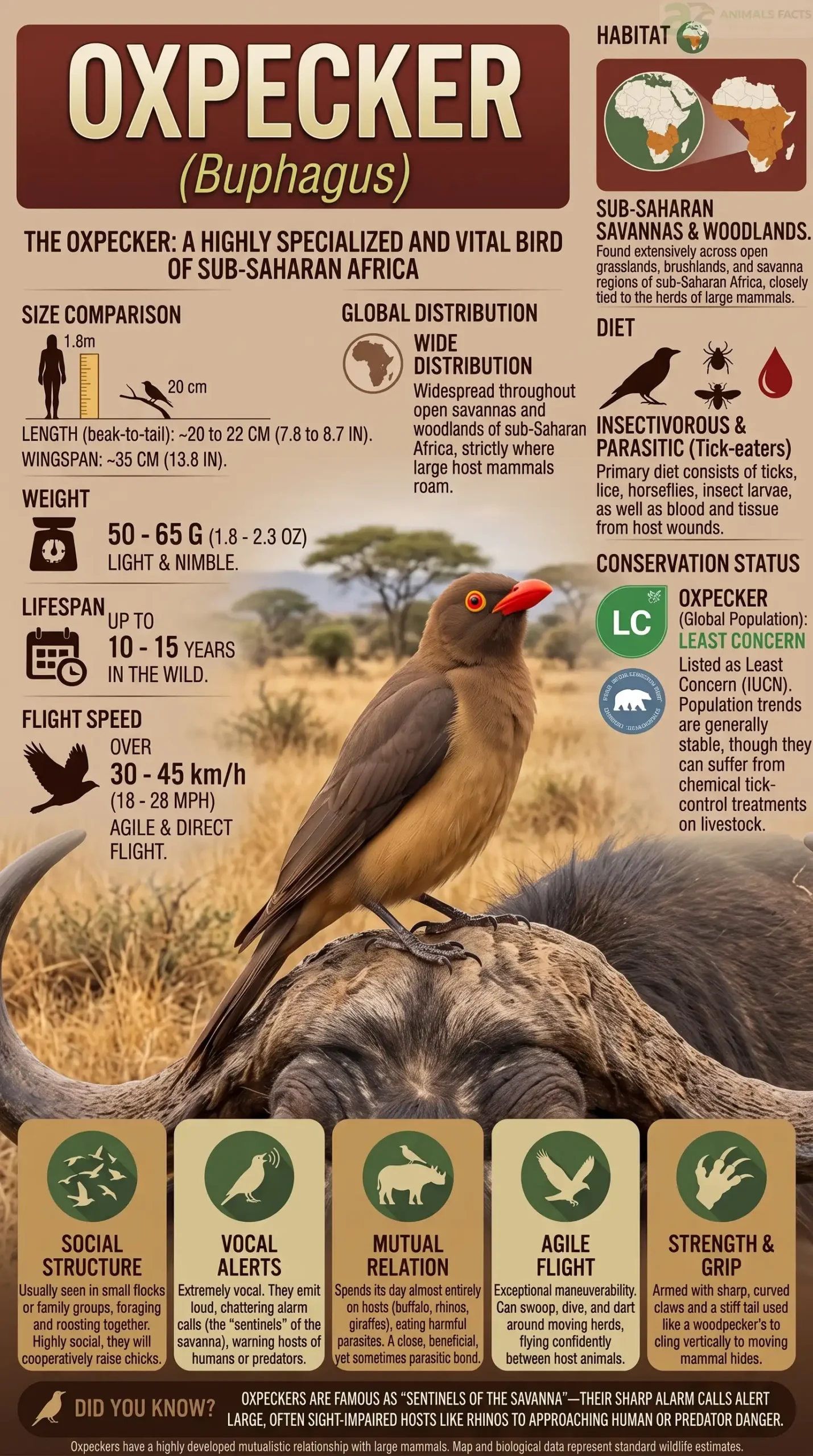
- Oxpeckers are the only members of the bird family Buphagidae
- They can remove up to 100 ticks per day from a single host animal
- Oxpeckers drink blood — making them technically vampiric birds
- They prevent wounds from healing by continuously picking at them
- A buffalo can carry up to 35,000 ticks at peak season
- Oxpeckers serve as an early warning alarm system for host animals
- Their tails work like woodpecker tails — as a brace on vertical surfaces
- Oxpeckers eat earwax and mucus in addition to ticks and blood
- Elephants actively brush oxpeckers off — they find them more irritating than helpful
- The yellow-billed oxpecker was eliminated from South Africa and then reintroduced
- Oxpeckers collect host fur for their nests
- Their alarm call is understood by multiple mammal species that are not even hosts
6. Oxpecker Natural Habitat & Geographic Range
Oxpecker habitat is defined not by physical geography but by the presence of large mammals — wherever Africa’s megafauna grazes, oxpeckers follow. Their distribution map is essentially a map of large mammal presence across sub-Saharan Africa.
Habitat Requirements
Oxpeckers require three fundamental elements in their habitat:
Sufficient host animals — Large mammals carrying tick loads heavy enough to support oxpecker feeding requirements. Minimum viable host densities have been estimated at approximately 10–20 large mammals per square kilometer for sustainable oxpecker populations.
Nesting sites — Trees or shrubs with suitable cavities or dense vegetation for nest construction; oxpeckers nest in natural cavities, old woodpecker holes, and dense bush tangles.
Roosting areas — Vegetation near host animal grazing grounds where groups of oxpeckers can roost communally at night.
Habitat Types
Oxpeckers are found across a wide range of African habitat types wherever large mammals are present:
- Savanna and open woodland — The core habitat; open enough for oxpeckers to easily locate and approach hosts, with sufficient tree cover for nesting and roosting
- Grassland — Where large herds of ungulates graze
- Bushveld and thornbush — Thicket environments supporting buffalo and black rhinoceros
- Wetland margins — Where hippos spend daylight hours
- Montane grassland — At elevations up to approximately 3,000 meters in East Africa where suitable host animals are present
- Agricultural areas — Where domestic cattle replace or supplement wild ungulate hosts
Geographic Range by Country
| Region | Species Present | Primary Hosts | Notes |
|---|---|---|---|
| East Africa (Kenya, Tanzania, Uganda) | Both species | Buffalo, impala, zebra, giraffe, rhino | Core range; highest diversity |
| Southern Africa (Zimbabwe, Zambia, Botswana) | Both species | Buffalo, impala, zebra, kudu | Strong populations |
| South Africa | Red-billed (native); yellow-billed (reintroduced) | Buffalo, impala, rhino, giraffe | Yellow-billed reintroduced since 1990s |
| West Africa | Yellow-billed primarily | Cattle, buffalo | Less studied; locally common |
| Central Africa (DRC, Central African Republic) | Yellow-billed primarily | Forest buffalo, cattle | Less studied |
| Ethiopia, Eritrea | Red-billed | Cattle, buffalo | Northern limit of range |
| Eswatini, Namibia | Red-billed | Buffalo, cattle, kudu | Southern populations |
💡 Did You Know? Oxpeckers were completely absent from South Africa for most of the 20th century — driven out by the combined effects of the near-elimination of wild game animals in the early 1900s and the widespread use of organochlorine acaricides (tick-killing chemicals applied to cattle) that poisoned the oxpeckers feeding on treated livestock. When acaricide use changed and game numbers recovered in protected areas, reintroduction programs starting in the 1990s were able to re-establish yellow-billed oxpeckers in the Kruger National Park and surrounding reserves — one of the most carefully documented and scientifically studied bird reintroductions in African conservation history.
7. Oxpecker Diet & Feeding Behavior
Oxpecker diet is one of the most scientifically debated aspects of the species’ ecology — with the simple “tick-eater” narrative that dominated 20th century understanding having been replaced by a far more complex picture of a bird that consumes ticks, blood, wound secretions, earwax, mucus, dead skin, and other host-derived materials in proportions that vary dramatically by season, location, individual host condition, and contextual factors.
Diet Breakdown Table
| Food Type | Estimated % of Diet | Notes |
|---|---|---|
| Ticks (engorged and unengorged) | ~50–70% (varies by season) | Primary food source; most important nutritionally |
| Blood (from host wounds) | ~10–25% | Confirmed by stable isotope analysis; vampiric component |
| Wound secretions and tissue | ~5–10% | Exudate, lymph fluid, wound tissue |
| Earwax and cerumen | ~3–5% | Regularly consumed; energy-rich |
| Mucus from eyes and nostrils | ~3–5% | Regularly consumed |
| Dead skin cells (keratinous material) | ~2–5% | Skin surface feeding |
| Flies and other insects | ~2–5% | Opportunistic; caught on host surface or in flight |
The Tick-Removal Technique
Both oxpecker species have developed highly efficient tick-removal techniques — though the specific methods differ between species:
Yellow-billed oxpecker “scissoring” — The yellow-billed oxpecker uses a distinctive feeding technique unique in the bird world — running its flattened bill rapidly through host hair in a lateral raking or scissoring motion, with the bill partially open, sweeping ticks off the skin surface and into the bill in a rapid repetitive action. This technique is extraordinarily efficient for removing surface-attached ticks — particularly unengorged ticks that are moving through host hair in search of a feeding site.
Red-billed oxpecker “picking” — The red-billed oxpecker uses a more targeted picking technique — carefully selecting individual ticks that are attached to the skin and removing them with a precise plucking motion. This technique is more effective for deeply embedded, engorged ticks that cannot be dislodged by the scissoring technique.
Blood Drinking — The Vampiric Reality
One of the most scientifically significant oxpecker facts to emerge from modern research is the confirmation that blood drinking is a regular and significant dietary component — not merely an opportunistic supplement. Key findings include:
- Stable isotope analysis of oxpecker feathers confirms that blood contributes measurably to their annual dietary intake
- Oxpeckers have been directly observed reopening closed wounds and actively maintaining wound openings to maintain blood access
- Wounds on host animals with resident oxpecker populations heal significantly more slowly than equivalent wounds in areas without oxpeckers or on oxpecker-excluded individuals
- The anticoagulant properties of oxpecker saliva — documented but not yet fully characterized — may help maintain blood flow from wounds being accessed
Foraging Time Budget
Research studies using continuous video observation of individually identified oxpeckers have documented the proportion of foraging time spent on different activities:
- Active tick-searching (scissoring/picking): ~40–55% of foraging time
- Wound attention: ~15–25% of foraging time — significantly more than would be expected if this were purely opportunistic
- Ear, eye, and nostril attention: ~10–15% of foraging time
- Rest on host: ~15–20% of foraging time
- Alert scanning: ~5–10% of foraging time
8. Oxpecker Reproduction & Life Cycle
Oxpecker reproduction is timed to coincide with seasonal peaks in tick abundance — ensuring that newly independent young birds have maximum food availability during their critical first independent foraging period.
Breeding Season
Oxpeckers breed during the warm, wet season in most of their African range — typically November to March in East and Southern Africa — when tick populations are at their annual peak, host animals are at their best nutritional condition, and vegetation provides maximum concealment for nesting sites.
Nesting
Oxpeckers are cavity nesters — using natural tree holes, old woodpecker cavities, rock crevices, and occasionally the interiors of dense vegetation tangles for nest placement. The choice of cavity is important — the nest must be:
- Sufficiently enclosed to protect eggs and chicks from weather and predators
- Close to reliable host concentrations — oxpeckers rarely nest more than 2–3 km from their primary host grazing areas
- Large enough for both parents and eventually the developing chick(s)
Nest construction — The nest is lined with host fur — collected directly from the backs and flanks of host animals — along with dry grass, leaves, and feathers. The use of host fur as primary nesting material is a direct behavioral integration of the host relationship into every aspect of oxpecker life.
Eggs & Incubation
- Clutch size: typically 2–4 eggs (occasionally 5)
- Egg color: whitish, speckled with reddish-brown spots
- Incubation period: approximately 12–13 days — relatively short for a passerine of this size
- Incubation: shared by both parents, with the female taking the majority of nighttime incubation
Chick Development
Oxpecker chicks are altricial — born helpless, blind, and with minimal feather coverage. Both parents feed the chicks — primarily on ticks and other host-derived materials. Chick development stages:
- Hatchling (Days 0–5) — Eyes closed; entirely dependent on parents for warmth and food
- Early chick (Days 5–10) — Eyes open; pin feathers emerging; beginning to beg actively
- Growing chick (Days 10–20) — Rapid feather growth; becoming more active in nest
- Pre-fledging (Days 20–30) — Near full feather coverage; beginning to exercise wings
- Fledgling (Days 30–35) — Leaves nest; begins associating with host animals under parental supervision
- Independence (Days 60–90) — Becomes fully independent; joins existing oxpecker groups on host animals
Oxpecker Lifespan Comparison Table
| Species | Average Lifespan (Wild) | Max Documented | Notable |
|---|---|---|---|
| Yellow-billed oxpecker (B. africanus) | 5–12 years | ~15 years | Longest-lived populations in protected areas |
| Red-billed oxpecker (B. erythrocephalus) | 5–10 years | ~14 years | Similar lifespan; slightly smaller body |
| Common starling (Sturnus vulgaris) | 2–3 years | ~22 years | Closest family; longer max life in captivity |
| African grey hornbill (Lophoceros nasutus) | 10–15 years | ~25 years | Similar habitat; different niche |
9. Social Behavior & Communication
Oxpecker social behavior reflects the unique demands of their lifestyle — communal enough to benefit from group living and information sharing, yet competitive enough to maintain individual feeding access on valuable host animals.
Group Dynamics
Oxpeckers are group-living birds — typically found in small groups of 3–15 individuals on individual host animals, with larger aggregations occurring on especially tick-infested hosts or during periods of peak tick abundance. Group membership is not fixed — oxpeckers move between hosts and join or leave groups fluidly based on feeding opportunity.
Within-group dynamics show a loose dominance hierarchy — larger individuals tend to access the most productive feeding sites on a host body (wounds, ear interiors, heavily tick-infested areas), while smaller or subordinate birds feed on lower-value surface areas. This hierarchy is maintained through threat postures — raised crown feathers, bill pointing, and short chases — rather than sustained aggressive contact.
Host Preference and Fidelity
Research using individually color-ringed oxpeckers has documented remarkable individual fidelity to specific host animals — groups of oxpeckers return to the same individual host animals day after day, learning the specific tick load, wound locations, and behavioral tolerance of each host individual. This site fidelity represents a sophisticated form of resource management — oxpeckers are essentially managing their host animals as renewable resources.
Communication
Alarm calls — The oxpecker’s most ecologically significant vocalization is its alarm call — a sharp, hissing “churr” or “krrr” sound produced when predators approach. This call is loud, distinctive, and rapidly produced — alerting not only the host animal the oxpecker is currently on, but other oxpeckers and host animals within earshot. Multiple mammal species including buffalo, impala, zebra, and rhinoceros have been documented responding to oxpecker alarm calls even when the calling bird is on a different species — demonstrating cross-species communication of remarkable sophistication.
Contact calls — Softer chirping vocalizations maintain contact between group members and communicate location and feeding status.
Threat vocalizations — Hissing and bill-clapping sounds used in intraspecific disputes over feeding sites on host bodies.
Intelligence
Oxpeckers demonstrate learning and individual recognition at a level that is impressive for birds of their body size. Research has documented:
- Individual host recognition — oxpeckers distinguish between host individuals and adjust their behavior based on each host’s specific behavioral tolerance and parasite load
- Predator recognition — distinguishing between threatening and non-threatening species and producing appropriately graded alarm responses
- Seasonal pattern learning — adjusting host selection based on learned knowledge of which host species carry the highest tick loads at different times of year
10. Predators & Defense Mechanisms
Oxpeckers face a range of natural predators and have evolved defensive strategies that leverage their unique ecological position — living on the bodies of large, powerful mammals provides both protection and unique vulnerabilities.
Natural Predators
- Raptors — The primary oxpecker predators; African goshawks (Accipiter tachiro), gabar goshawks (Micronisus gabar), and various falcon species take oxpeckers in flight or from host animal backs
- Snakes — Tree snakes and climbing snakes may raid oxpecker nests for eggs and chicks
- Mongooses and small carnivores — Ground-based predators threatening nests and fledglings
- Domestic cats — A threat in areas where oxpeckers venture near human habitation
Defense Strategies
The “living armor” of host animals — The most effective oxpecker defense against aerial predators is simply their position on the back of a large mammal — a raptor attempting to snatch an oxpecker from a buffalo’s back risks the buffalo’s defensive response (head toss, horn sweep, or full aggressive charge). Most raptors wait for oxpeckers to fly between hosts before attempting predation.
Alarm network — Oxpecker groups on host animals maintain constant vigilance — the collective awareness of multiple alert birds means that approaching predators are detected earlier than a single bird could achieve. When one oxpecker sounds the alarm, all birds in the group respond simultaneously — making predator success more difficult.
Flight agility — Oxpeckers are agile fliers capable of rapid direction changes and tight maneuvering that makes aerial pursuit by even skilled raptors challenging in open terrain.
Host proximity during flight — When moving between host animals, oxpeckers take direct, low-altitude routes that minimize time in open airspace and maximize proximity to potential host animal protection.
💡 Did You Know? The oxpecker’s relationship with its host animals creates a remarkable mutual defense system — while the host mammal protects oxpeckers from raptors by its sheer intimidating presence, the oxpeckers simultaneously protect the host from predators by their alarm calling. Studies have shown that impalas and other antelope with resident oxpecker groups detect approaching predators significantly earlier than those without oxpeckers — the birds’ elevated vantage point on the host’s back and their excellent vision providing a predator detection service that measurably reduces predation risk. This mutual alarm system is one of the genuine mutualistic dimensions of a relationship that is otherwise considerably more complex and conditional.
11. Oxpecker Facts for Kids
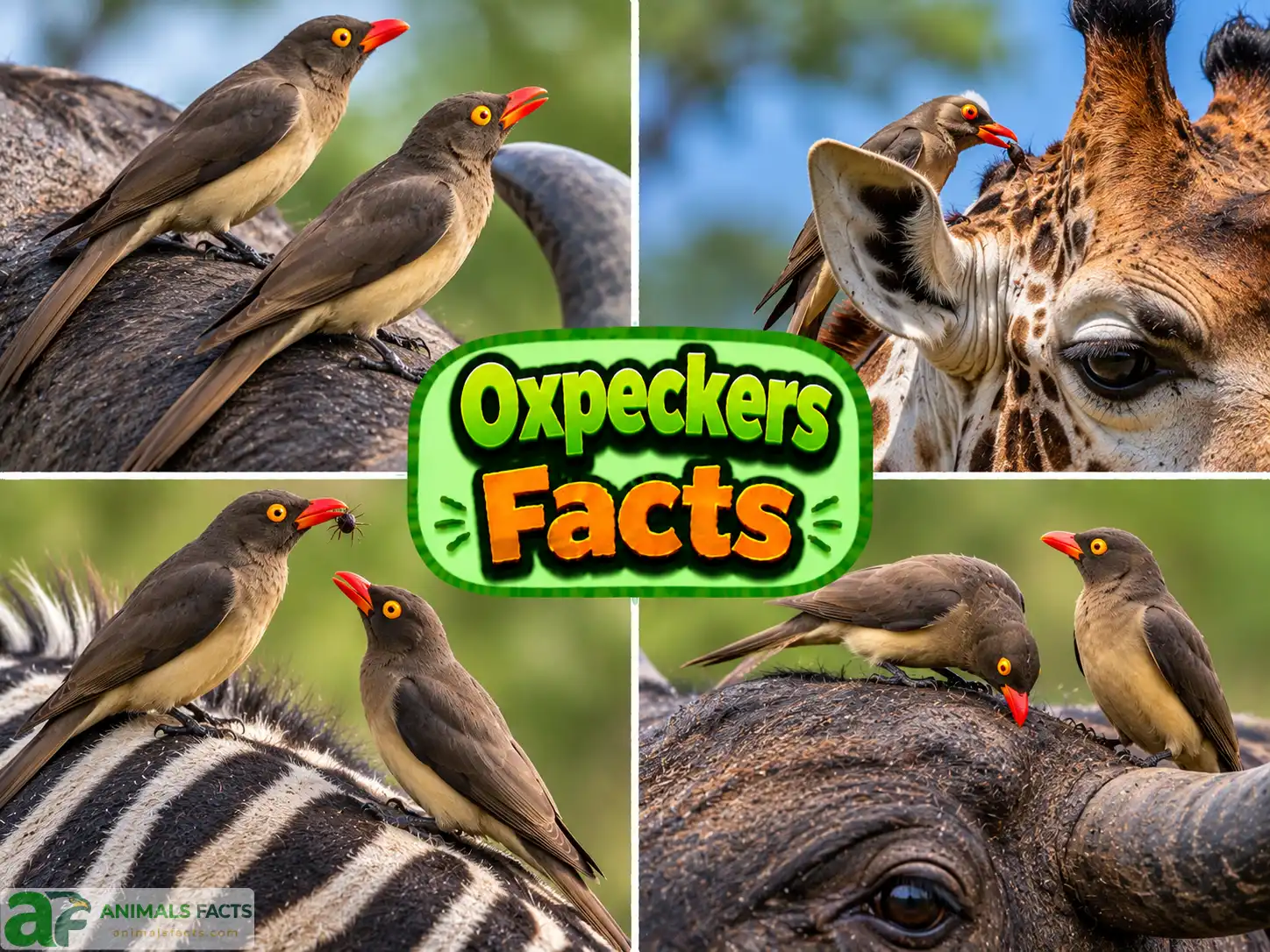
Hey amazing young wildlife explorers and future biologists! Here are some totally incredible oxpecker facts for kids that will make you the most interesting person in your class:
- Oxpeckers spend their whole lives on the backs of wild animals! These small birds live on giraffes, buffalos, rhinoceroses, and hippos — riding around on them all day eating the ticks and parasites off their skin. Imagine having a bird living on your back!
- They are nature’s alarm system! When a predator approaches — like a lion sneaking through the grass — the oxpecker lets out a loud warning call that the buffalo or impala it’s sitting on can hear and respond to. The birds and animals protect each other!
- Oxpeckers actually drink BLOOD! This sounds scary, but oxpeckers sometimes keep wounds open on their host animals and drink the blood. This makes them technically vampiric birds — one of very few birds in the world that regularly drink blood!
- A buffalo can have 35,000 ticks at once! That is why oxpeckers are so important — without them, those thousands of ticks would make the buffalo very sick. One oxpecker can eat up to 100 ticks in a single day!
- Elephants do not like oxpeckers! While most large animals tolerate oxpeckers happily, elephants use their trunks to brush them off. Apparently elephants have decided that oxpeckers cause more trouble than they are worth!
- They build their nests with fur stolen from their hosts! Oxpeckers collect hair directly from the backs of buffalos and other animals to line their nests. Their whole lives — including their homes — are connected to the large animals they live on!
- Their alarm call is understood by animals that are not even their hosts! When an oxpecker shouts its warning sound, zebras, impalas, and other savanna animals that have never even had an oxpecker on their back will run away — because all the animals of the savanna know what that call means!
- There are only TWO kinds of oxpecker in the whole world! The yellow-billed oxpecker and the red-billed oxpecker — that is the entire family. You can tell them apart easily by looking at their bill color — one is completely yellow and one is completely red!
12. Relationship with Humans
The oxpecker’s relationship with humans is indirect — mediated through its relationship with domestic livestock and through the broader human interest in African wildlife and conservation. This indirect relationship has significant practical, economic, and conservation dimensions.
Oxpeckers and Domestic Livestock
The extension of oxpecker associations to domestic cattle in sub-Saharan Africa is one of the most practically significant dimensions of oxpecker ecology — and one of the most economically important. Across rural Africa, domestic cattle herders have long been aware of the oxpecker relationship, with traditional ecological knowledge in many communities reflecting nuanced understanding of when oxpeckers help and when they hinder cattle welfare.
The practical benefit — In areas where tick-borne diseases (including East Coast fever, anaplasmosis, and babesiosis) represent significant threats to cattle health, oxpecker predation on ticks provides a genuine and measurable economic benefit to cattle farmers. Studies in Tanzania and Zimbabwe have estimated that healthy oxpecker populations can reduce the cost of tick control on communally grazed cattle by 15–30% — a meaningful economic benefit for subsistence farmers with limited access to veterinary acaricides.
The practical cost — Conversely, oxpecker wound-picking behavior causes delayed wound healing in cattle — extending the duration of injuries caused by wire fences, biting flies, thorny vegetation, and other common livestock hazards. In individual animals with significant wounds, the net effect of oxpecker association may be negative — a calculation that experienced cattle herders in some communities have long made empirically.
The Acaricide Problem
The most significant human impact on oxpecker populations has been the widespread use of acaricides (chemical tick-killing compounds) applied to domestic livestock throughout sub-Saharan Africa. When oxpeckers feed on ticks from acaricide-treated cattle, they ingest the chemicals — causing sublethal and lethal toxicity depending on the specific compounds and application rates involved.
Organochlorine acaricides — compounds like DDT and dieldrin widely used in the mid-20th century — were particularly devastating, accumulating in oxpecker bodies through bioconcentration and causing widespread mortality. The elimination of yellow-billed oxpeckers from South Africa in the early 20th century was directly caused by this mechanism.
Modern acaricides — current compounds including synthetic pyrethroids and organophosphates are less persistently toxic but still represent a significant threat to oxpecker populations in heavily treated livestock areas.
Wildlife Tourism Value
Oxpeckers are among the most reliably visible and most photographed birds on African wildlife safaris — their conspicuous behavior on large, accessible host animals makes them photographic subjects for virtually every visitor to East and Southern African wildlife areas. This tourism value — while difficult to quantify precisely — contributes to the broader economic case for wildlife conservation in oxpecker range countries.
13. Oxpecker Conservation Status & Threats
Both oxpecker species are classified as Least Concern by the IUCN — but this designation masks significant regional variation in population trends and localized threats that make complacency inappropriate.
Conservation Status Overview
| Species | IUCN Status | Population Trend | Range Extent |
|---|---|---|---|
| Yellow-billed oxpecker (B. africanus) | Least Concern | Stable overall; locally decreasing | Patchy across sub-Saharan Africa |
| Red-billed oxpecker (B. erythrocephalus) | Least Concern | Stable overall; locally decreasing | East and Southern Africa |
Major Threats
| Threat | Description | Impact Level |
|---|---|---|
| Acaricide use on livestock | Chemical tick control poisoning oxpeckers through treated host animals | High — primary historical and ongoing threat |
| Host animal population decline | Reduction of wild ungulate populations through poaching, hunting, habitat loss | High — directly reduces available hosts |
| Habitat loss | Loss of savanna and woodland habitat through agricultural conversion | Medium-High |
| Wildlife area fragmentation | Isolation of game areas limiting oxpecker movement between host populations | Medium |
| Human-wildlife conflict | Persecution of host animal species affecting oxpecker habitat quality | Medium |
| Climate change | Altering tick seasonality and host animal distribution | Increasing concern |
The South African Recovery Story
The yellow-billed oxpecker reintroduction to South Africa represents one of the most carefully studied and most encouraging conservation recovery stories for any African passerine bird. Key milestones:
Pre-1900 — Yellow-billed oxpeckers common across most of South Africa on wild ungulates
1900–1930 — Dramatic decline following the rinderpest epidemic (which killed most wild ungulates), the conversion of wildlife habitat to livestock farming, and the introduction of organochlorine acaricide use on cattle
By 1950 — Yellow-billed oxpeckers effectively extinct in South Africa south of the Limpopo River
1979 — First systematic effort to document the species’ complete absence from South Africa confirms the extinction
1990s — Reintroduction program begins — birds sourced from Zimbabwe and introduced to the Phinda Private Game Reserve and later Kruger National Park
2000–2010 — Successful establishment and natural range expansion from reintroduction sites; breeding confirmed in multiple game reserves
2010–2026 — Yellow-billed oxpeckers now re-established across a significant portion of their former South African range — with populations in Kruger National Park, various KwaZulu-Natal reserves, and expanding into adjacent areas
14. Famous Oxpeckers in History & Pop Culture
Scientific Significance
Oxpeckers in the development of symbiosis theory — The oxpecker-host relationship has become one of the most cited case studies in ecology textbooks for illustrating the concept of conditional mutualism — a relationship that can be mutualistic under some conditions and parasitic under others. The scientific literature on oxpecker ecology has contributed substantially to moving ecological understanding beyond simplistic mutualism/parasitism binary classifications.
The Kern Reilly Study (2000) — This landmark Zimbabwe study — which demonstrated that cattle wounds healed faster in the absence of oxpeckers than in their presence — became one of the most discussed papers in behavioral ecology of the early 2000s, challenging decades of received wisdom about oxpecker biology and generating significant scientific debate that continues to productively shape the field.
“Tickbird” in colonial natural history — The oxpecker’s common name “tickbird” reflects its strong identification in European colonial natural history literature as primarily a tick-removing mutualist — a characterization that shaped popular understanding for most of the 20th century and whose oversimplification the modern research agenda has been progressively correcting.
Media and Documentary Fame
Planet Earth and Big Cat Diary sequences — Multiple BBC wildlife documentary productions have featured oxpecker behavior in memorable sequences — including close-up footage of oxpeckers working inside rhinoceros ears and probing open wounds on buffalo, providing mainstream television audiences with their first detailed exposure to the complexity of the oxpecker relationship.
The “tickbird” name in popular culture — The name “tickbird” appears in numerous wildlife guides, safari books, and educational materials — representing the most widely recognized popular designation for oxpeckers and reflecting the simplified mutualism narrative that dominated public understanding for most of the 20th century.
15. Role in Ecosystem & Food Chain
Oxpeckers play multiple simultaneous ecological roles in African savanna ecosystems — functioning as parasitologists, alarm systems, wound managers, and nutrient recyclers in ways that make their ecological impact considerably more complex than their modest size would suggest.
Tick Population Regulation
The most straightforward ecological role of oxpeckers is tick population regulation — reducing the abundance of ticks on individual host animals and therefore potentially reducing the overall tick biomass in a savanna ecosystem. At the landscape scale, healthy oxpecker populations may contribute to reducing tick-borne disease transmission among wild ungulate populations by removing substantial numbers of disease-carrying ticks before they complete their blood meal and either transmit pathogens or drop off to lay eggs.
However, this regulation role is context-dependent — in areas of high host animal density and low oxpecker density, the regulatory impact is minimal; in areas with high oxpecker-to-host ratios and high tick loads, the impact may be substantial.
Information Network
The oxpecker functions as a node in the African savanna information network — its alarm calls linking multiple host animal species into a shared predator-detection system. Research in Kenyan savanna has documented that the presence of oxpecker-associated host animals in a mixed-species herd increases the collective predator detection capability of the entire assemblage, benefiting even species that are not oxpecker hosts.
Wound Management — Ecological Complexity
The wound-managing role of oxpeckers is the most ecologically complex — simultaneously:
- Removing parasites and dead tissue that might otherwise cause infection (potentially beneficial)
- Drinking blood and wound fluids that represents a caloric cost to the host (parasitic)
- Preventing wound healing that could prolong vulnerability to infection and predation (potentially harmful)
The net ecological impact of these wound-managing behaviors depends on the specific context — wound type, tick load, host species, season, and individual host condition all influence whether the wound attention is net beneficial or net harmful.
16. Myths, Folklore & Cultural Significance
Oxpeckers have been observed by African communities for thousands of years — and have accumulated cultural significance across multiple traditions that reflects the nuanced, relationship-based understanding of the natural world that characterizes indigenous African ecological knowledge.
Nilotic and East African Pastoral Traditions
Among Maasai, Samburu, Turkana, and other East African pastoral peoples who have coexisted with oxpeckers for millennia alongside their cattle and alongside wild ungulates, the oxpecker is understood with a sophisticated ambivalence that mirrors the modern scientific understanding — both beneficial and problematic, both welcome and occasionally unwelcome.
Maasai pastoralists have traditional knowledge of the oxpecker’s wound-picking behavior — noting that cattle with open sores should sometimes be moved away from areas frequented by oxpeckers to allow wounds to heal. This traditional ecological knowledge preceded Western scientific documentation of the same phenomenon by generations — reflecting the depth of observational understanding accumulated through centuries of close coexistence with both oxpeckers and cattle.
The “Doctor Bird” Tradition
In several East and Central African traditions, the oxpecker is referred to as a “doctor bird” — a designation that honors its role in maintaining the health of large mammals. This cultural recognition of the oxpecker as a health-maintaining species has practical conservation implications — communities that regard the oxpecker as a beneficial presence are more likely to avoid practices (such as heavy acaricide use) that harm them.
Southern African Traditional Knowledge
Among Zulu, Ndebele, and other Southern African communities, the oxpecker is associated with the health of cattle herds — its presence on healthy, well-conditioned animals being regarded as a sign of a well-managed herd, while its conspicuous absence from emaciated or heavily parasitized animals that are too sick to attract oxpecker interest is recognized as a warning signal of animal health problems.
Symbol of African Ecological Interdependence
In the broader cultural and symbolic landscape of African wildlife — as represented in conservation communication, wildlife art, and ecotourism marketing — the oxpecker has become a symbol of ecological interdependence and the complexity of natural relationships. The image of a small bird perched on a massive buffalo — apparently incongruous in the contrast of scale — communicates something important about the web of relationships that connects all living things in the African ecosystem.
17. Oxpeckers in Pop Culture
Wildlife Photography Icon — The oxpecker is one of the most photographed birds in African wildlife photography — images of oxpeckers inside rhinoceros ears, perched on giraffe necks, or working across the flanks of cape buffalo are among the most widely shared and most recognizable images in the entire genre of African wildlife photography. These images have appeared on the covers of National Geographic, BBC Wildlife Magazine, and hundreds of other publications globally.
Planet Earth and wildlife documentary prominence — David Attenborough’s landmark nature documentary series — including Planet Earth, Africa, and Our Planet — have featured oxpecker behavior in multiple sequences, bringing close-up footage of their remarkable feeding behavior to mainstream global audiences. The sequences showing oxpeckers probing inside rhinoceros ears are among the most frequently cited examples of African wildlife documentary content.
Safari and ecotourism branding — The oxpecker’s visual appeal and ecological story make it a popular subject in safari company branding, wildlife tourism marketing, and educational wildlife content. Its association with the megafauna of the African savanna — particularly the “Big Five” that drive much of African wildlife tourism — makes it a reliable presence in virtually every safari photography collection.
Children’s wildlife education — The oxpecker’s visually simple, easily explained ecological story (birds that clean large animals) makes it a popular subject in children’s wildlife books, museum exhibits, and classroom materials — where it serves as an accessible entry point for discussing ecological relationships and symbiosis.
18. Oxpecker Facts vs. Common Myths
| Common Myth | The Real Fact |
|---|---|
| “Oxpeckers are purely beneficial to their host animals” | Oversimplified — the relationship is a conditional mutualism that can be net harmful to individual hosts, particularly those with significant open wounds |
| “Oxpeckers only eat ticks” | False — oxpeckers also consume blood, wound secretions, earwax, mucus, dead skin cells, and flies; blood is a confirmed significant dietary component |
| “Oxpeckers are the same as tickbirds” | True but incomplete — “tickbird” is a common name for oxpeckers; the name accurately reflects one aspect of their diet but misses the blood-drinking and wound-maintaining dimensions |
| “Elephants benefit from oxpeckers like other animals” | False — elephants actively dislodge oxpeckers and are among the least tolerant hosts; their behavioral assessment appears to conclude the relationship is not worth it |
| “All large African mammals welcome oxpeckers equally” | False — host tolerance varies dramatically between species and between individual animals; domestic cattle are generally less tolerant than wild buffalo |
| “Oxpeckers prevent wound infection” | Contested — while removing some dead tissue, their wound-picking behavior more commonly delays healing and may increase infection risk by maintaining wound openness |
| “The oxpecker reintroduction to South Africa was recent” | Partially false — the reintroduction process began in the 1990s and the species has now been re-established for over 30 years in South African game reserves |
| “There are many species of oxpecker” | False — there are only 2 living species in the entire family Buphagidae |
19. Best Places to See Oxpeckers in the Wild
1. Serengeti National Park and Ngorongoro Crater, Tanzania — The vast ungulate herds of the Serengeti ecosystem support one of the largest oxpecker populations in Africa — with both yellow-billed and red-billed oxpeckers common on buffalo, impala, topi, zebra, and giraffe across the park. The Ngorongoro Crater’s concentrated megafauna provides exceptional close-range oxpecker observation opportunities.
2. Masai Mara National Reserve, Kenya — Adjacent to the Serengeti ecosystem and sharing its extraordinary wildlife density, the Masai Mara offers equally outstanding oxpecker viewing — with the added advantage of the Great Migration concentrations of wildebeest and zebra providing spectacular host-animal backdrops for oxpecker observation and photography.
3. Kruger National Park, South Africa — Both yellow-billed and red-billed oxpeckers are well-established in Kruger — the yellow-billed following its successful reintroduction. Kruger’s accessible road network and open savanna make oxpecker observation straightforward from vehicles. Buffalo herds in the park regularly carry large numbers of oxpeckers.
4. Hluhluwe-iMfolozi Park, KwaZulu-Natal, South Africa — One of the best places to observe oxpeckers on rhinoceroses — both black and white rhinos in this park carry resident oxpecker groups, and the park’s relatively accessible terrain makes close-range rhino-with-oxpecker photography achievable.
5. Hwange National Park, Zimbabwe — Zimbabwe’s largest national park hosts excellent populations of both oxpecker species on a diverse host animal community including buffalo, impala, kudu, and elephant (though the elephants themselves are typically oxpecker-free by their own choice).
6. Chobe National Park, Botswana — The extraordinary elephant and buffalo concentrations along the Chobe River provide spectacular large-animal wildlife viewing — and the large buffalo herds reliably carry significant oxpecker groups that can be observed at extremely close range from river boats.
7. Samburu National Reserve, Kenya — Northern Kenya’s distinctive wildlife community — including reticulated giraffe, Grevy’s zebra, and Somali ostrich — offers oxpecker observation in a different ecological context from the more familiar East African savanna. Red-billed oxpeckers are common on the area’s giraffe and impala populations.
20. How You Can Help
Supporting oxpecker conservation requires action primarily at the level of their host animals, their habitat, and the livestock management practices that are the primary threat to their populations.
Support these organizations:
- African Wildlife Foundation — awf.org — broad wildlife conservation across oxpecker range countries including host animal protection
- BirdLife Africa — birdlife.org/africa — the primary bird conservation organization for the African continent; coordinates oxpecker monitoring and conservation planning
- Wildlife Conservation Society Africa — wcs.org — field-based conservation in key oxpecker range countries
- WWF Eastern and Southern Africa — worldwildlife.org — habitat protection and wildlife management across the region
- Endangered Wildlife Trust (South Africa) — ewt.org.za — involved in yellow-billed oxpecker monitoring and conservation post-reintroduction
What you can do:
- Support wildlife tourism in East and Southern Africa — ecotourism revenue directly funds the protected area management that maintains wild ungulate populations essential for oxpecker survival
- Advocate for acaricide reduction — supporting research into and adoption of targeted, low-toxicity tick control methods that protect cattle health without poisoning oxpeckers
- Engage with citizen science — programs like eBird and iNaturalist actively need oxpecker sighting records to document population distribution and trends; your safari sightings have genuine scientific value when recorded
- Support predator conservation — the same protected areas that maintain ungulate herds for oxpeckers also protect the predators that maintain healthy ungulate populations; comprehensive wildlife conservation benefits all components of the system
- Spread accurate information — the complex reality of the oxpecker relationship is more interesting and more important than the simplified “tickbird” narrative; sharing accurate information helps build genuine public understanding
21. Top Documentaries & Books
Must-Watch Documentaries
- Africa (BBC, 2013) — David Attenborough’s landmark six-part series on African wildlife features oxpecker sequences in its savanna and grassland episodes; among the finest oxpecker footage ever produced
- Planet Earth II (BBC, 2016) — The grassland episode features African savanna ecology with oxpecker appearances in the megafauna sequences
- Big Cat Diary (BBC, multiple series) — Long-running Kenyan wildlife documentary series that regularly features oxpecker behavior as background to its big cat narratives
- Africa’s Elephant Kingdom (National Geographic) — Features oxpecker interactions with elephant herds including the characteristic elephant trunk-brushing behavior
- Our Planet — Grasslands (Netflix, 2019) — David Attenborough’s Netflix series includes African savanna sequences with oxpecker content
Must-Read Books
- “Birds of East Africa” by Terry Stevenson and John Fanshawe — The definitive field guide for the region; includes detailed oxpecker species accounts, distribution maps, and behavioral notes
- “Birds of Southern Africa” by Ian Sinclair et al. — The standard Southern African field guide; essential for identifying and understanding oxpeckers in their southern range
- “African Wildlife: Ecology and Behavior” by various academic authors — Scientific overviews including discussion of the oxpecker mutualism research
- “The Behavior Guide to African Mammals” by Richard Despard Estes — Classic reference on African mammal behavior including extensive discussion of host-oxpecker interactions from the host animal perspective
- “Birdwatching in Africa” by various authors — Multiple popular guides to African birding that include oxpecker accounts; particularly valuable for planning safari birdwatching
22. Comparison with Similar Symbiotic Bird Species
| Feature | Oxpecker | Cattle Egret | Egyptian Plover | Honeyguide |
|---|---|---|---|---|
| Scientific name | Buphagus species | Bubulcus ibis | Pluvianus aegyptius | Indicator species |
| Family | Buphagidae | Ardeidae | Pluvianidae | Indicatoridae |
| Host association | Direct body contact — on host skin | Follows host — catches disturbed insects | Associated with crocodiles — legend disputed | Guides humans/honey badgers to bee nests |
| Relationship type | Conditional mutualism/parasitism | Commensalism | Disputed/mythological | Mutualism |
| Host benefit | Tick removal, alarm calling | None (uses host only to disturb insects) | Disputed (egg-sitting legend largely disproven) | None directly |
| Bird benefit | Ticks, blood, wound material | Insects disturbed by host movement | Food near crocodile | Access to bee larvae and wax |
| Conservation status | Least Concern | Least Concern | Least Concern | Variable by species |
| Geographic range | Sub-Saharan Africa | Global | Africa and Middle East | Sub-Saharan Africa |
| Physical contact with host | Yes — direct skin contact | No | No | No |
23. Frequently Asked Questions About Oxpeckers
What is the scientific name of the oxpecker?
There are two species of oxpecker, each with its own scientific name. The yellow-billed oxpecker is Buphagus africanus (Linnaeus, 1766), and the red-billed oxpecker is Buphagus erythrocephalus (Stanley, 1814). Both belong to the genus Buphagus (Brisson, 1760) and the family Buphagidae (Lesson, 1828) — a family containing only these two species, found exclusively in sub-Saharan Africa. The family name Buphagidae derives from the Greek bous (ox, cattle) and phagein (to eat) — literally “cattle-eater” — reflecting the long-standing association of these birds with large mammals.
How many species of oxpecker exist?
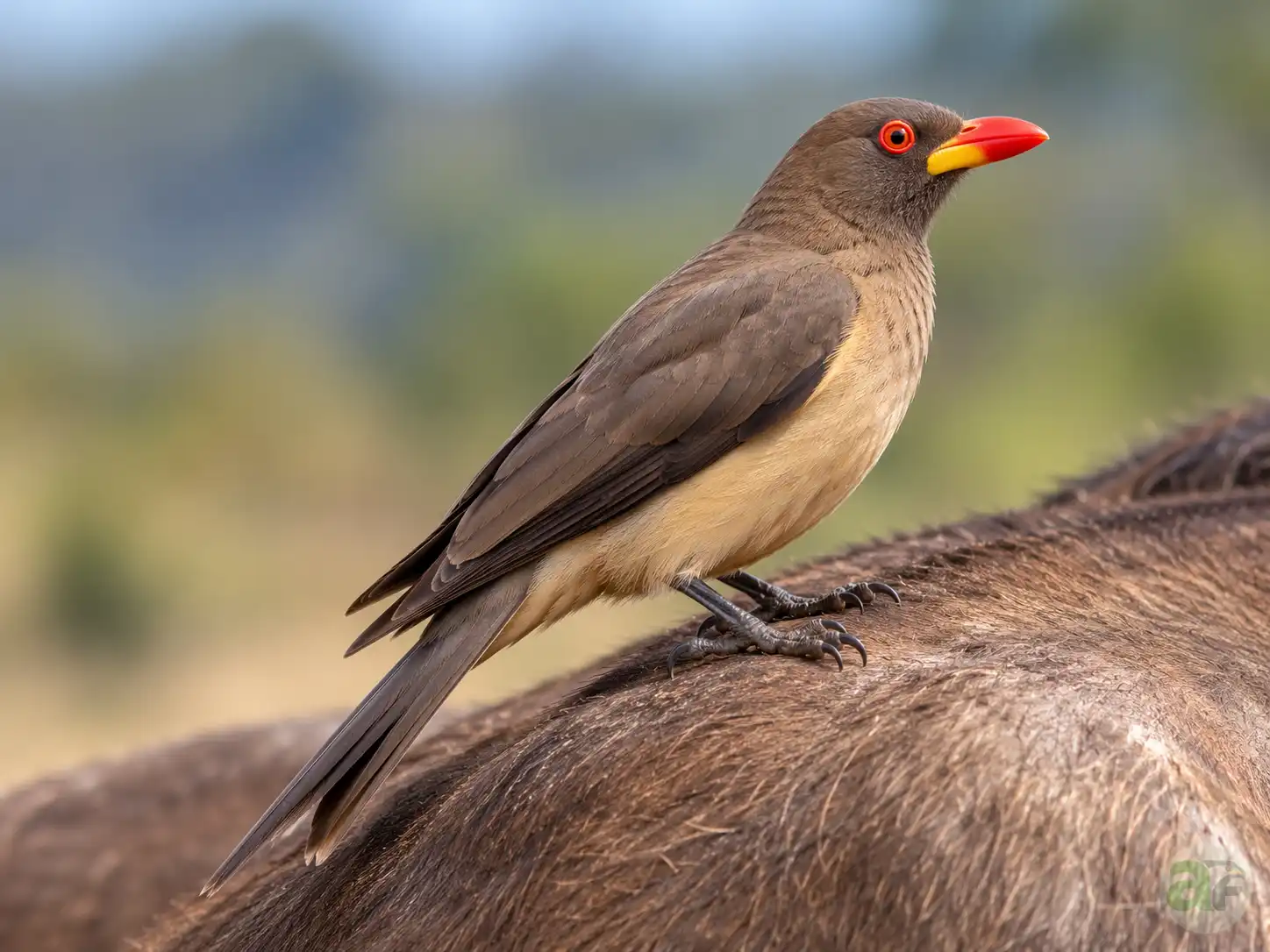
There are only 2 living species of oxpecker in the entire world — the yellow-billed oxpecker (Buphagus africanus) and the red-billed oxpecker (Buphagus erythrocephalus). The family Buphagidae is therefore one of the smallest bird families on Earth by species count. The two species can be distinguished reliably in the field by bill color — the yellow-billed has an entirely yellow bill with a distinctive banana-like shape, while the red-billed has an entirely red, more pointed bill.
Do oxpeckers actually help their host animals?
The answer is genuinely “it depends” — which is what makes oxpecker ecology so scientifically interesting. When tick loads on host animals are high, oxpecker tick removal provides measurable benefit — reducing the parasite burden and associated disease risk. The oxpecker alarm calling also provides genuine predator detection benefits to host animals. However, when oxpeckers focus on wound picking and blood drinking — maintaining wounds open, preventing healing, and consuming host blood — the relationship shifts toward being parasitic. The net benefit or cost to any individual host animal depends on the balance of these activities, which varies by season, tick abundance, wound presence, host species, and individual host condition.
Why do elephants not like oxpeckers?
Elephants are among the least tolerant of all potential oxpecker hosts — consistently using their trunks to brush oxpeckers off their skin when they attempt to land and feed. The most plausible explanation is that elephants’ behavioral calculation of the oxpecker relationship comes down on the “not worth it” side — their skin is less tick-infested than buffalo or rhinoceros due to their mud-bathing behavior (which suffocates ticks), their tick loads are lower, and their highly sensitive skin may make oxpecker feeding more irritating and painful than for thicker-hided hosts. Essentially, for elephants, the potential tick-removal benefit does not outweigh the discomfort and blood loss cost.
What do oxpeckers eat besides ticks?
Oxpeckers consume a remarkably broad range of host-derived materials beyond ticks. Blood from host wounds is a confirmed significant dietary component — stable isotope analysis of feathers demonstrates that blood contributes measurably to their annual diet. They also consume earwax (cerumen), nasal and ocular mucus, wound secretions and tissue, dead skin cells, and flies and other insects caught on or near host bodies. This dietary breadth makes them among the most ecologically versatile of African passerine birds in terms of the types of biological material they exploit.
Are oxpeckers endangered?
No — both oxpecker species are classified as Least Concern on the IUCN Red List, with globally stable population trends. However, this overall status masks significant local and regional population declines in areas of heavy livestock acaricide use and widespread wild ungulate decline. The yellow-billed oxpecker was effectively eliminated from South Africa in the early 20th century through acaricide poisoning and host animal loss — a regional extinction that took decades of conservation effort to reverse through reintroduction programs beginning in the 1990s. The species’ dependence on large mammal hosts makes it inherently vulnerable to any factor that reduces wild ungulate populations.
How do oxpeckers find their host animals?
Oxpeckers locate host animals primarily through visual search from flight — scanning the landscape for large mammals from above and descending to suitable hosts when detected. They show strong fidelity to familiar host individuals — research with color-ringed birds has documented oxpeckers returning to the same individual buffalo, rhinoceros, or impala day after day, suggesting that spatial memory of host location plays an important role. Social information is also important — oxpeckers follow the movements of conspecific groups and are attracted to hosts already carrying feeding oxpeckers.
Can oxpeckers harm their host animals?
Yes — under some conditions, oxpecker activity is genuinely harmful to individual host animals. The most clearly documented harm is wound-picking — oxpeckers actively maintain open wounds to access blood and wound fluids, preventing normal healing processes. Studies comparing wound healing rates in cattle with and without oxpecker access have demonstrated that wounds heal significantly faster in the absence of oxpeckers. Additionally, the blood consumed by oxpeckers represents a caloric cost to the host — though at typical oxpecker densities this cost is relatively small per individual oxpecker. The harm is most significant for host animals with large, open wounds that attract intensive oxpecker attention.
24. Sources & References
- Wikipedia — Buphagus africanus, Buphagus erythrocephalus, Buphagidae, Symbiosis
- IUCN Red List — iucnredlist.org (2024 assessments for both oxpecker species)
- BirdLife International — birdlife.org (species factsheets and range maps)
- National Geographic — nationalgeographic.com
- Smithsonian Institution — si.edu
- BBC Wildlife / BBC Earth — bbcearth.com
- Britannica — britannica.com/animal/oxpecker
- Live Science — livescience.com
- Monadjem, Ara — published research on oxpecker ecology; University of Eswatini
- Reilly, Kern et al. (2000). “Oxpeckers and cattle: a mutualism or parasitism?” Published study on wound healing in cattle; Zimbabwe
- Plotz, Roan D. & Liversidge, Wayne — published research on oxpecker feeding ecology and blood consumption
- del Hoyo, J. et al. (eds.) Handbook of the Birds of the World — oxpecker species accounts
- Stevenson, Terry & Fanshawe, John (2002). Birds of East Africa. T&AD Poyser
- African Wildlife Foundation — awf.org