
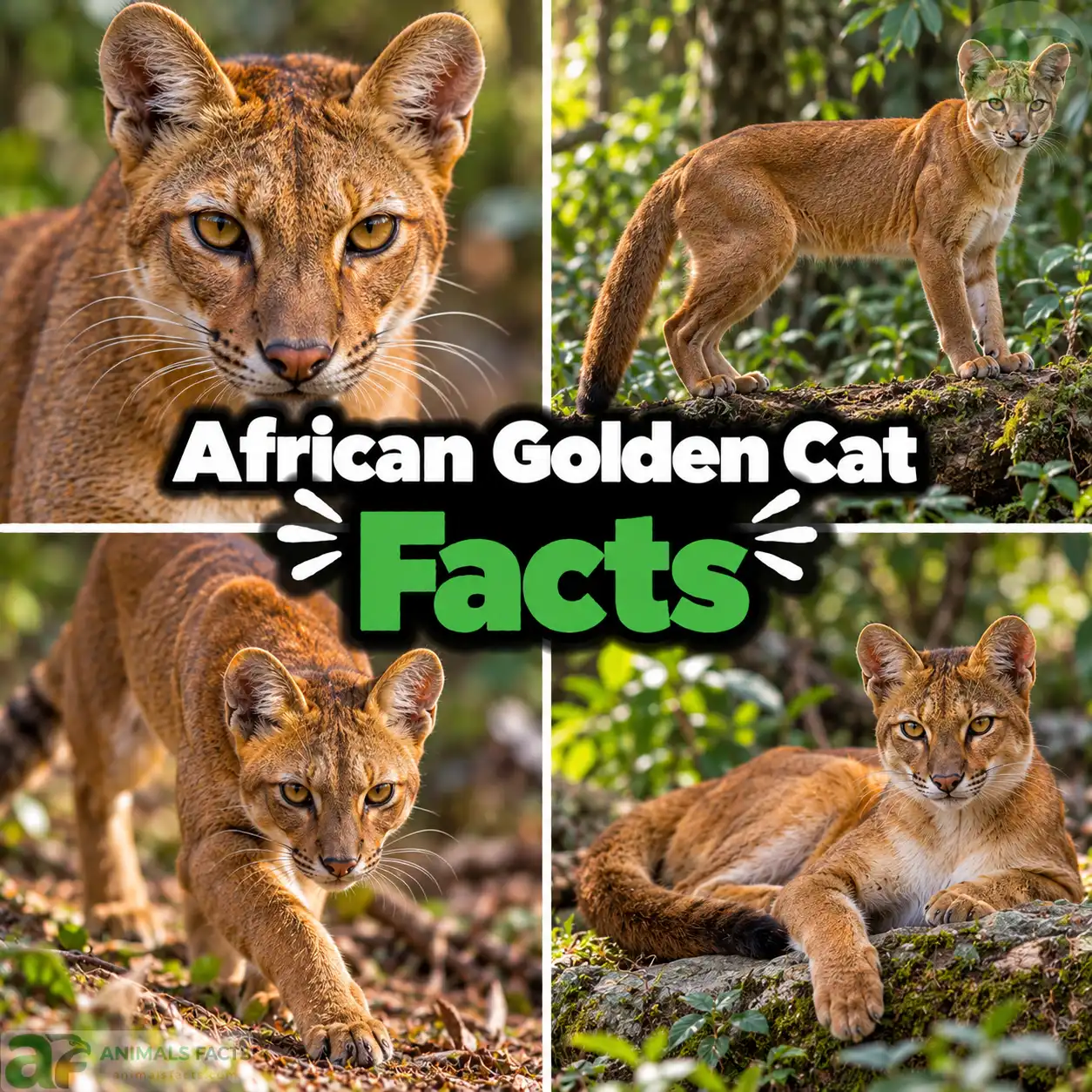
African Golden Cat Facts
| Feature | Details |
|---|---|
| Scientific Name | Caracal aurata (Temminck, 1827) |
| Kingdom | Animalia |
| Phylum | Chordata |
| Class | Mammalia |
| Order | Carnivora |
| Family | Felidae |
| Subfamily | Felinae |
| Common Names | African golden cat, golden cat |
| Native Range | West and Central Africa — equatorial rainforest belt |
| Habitat | Dense tropical rainforest, forest-savanna mosaic, montane forest |
| Lifespan | Estimated 12–15 years (wild); up to 21 years (captivity) |
| Diet | Rodents, small antelope, birds, monkeys, hyraxes — highly varied |
| Body Length | 61–101 cm plus 16–46 cm tail |
| Height | 38–55 cm at shoulder |
| Weight | 5.5–16 kg — roughly 2–3 times the size of a domestic cat |
| Top Speed | Estimated 50 km/h in short bursts |
| Conservation Status | Vulnerable (IUCN) — declining |
| Defining Feature | Extraordinary coat color variation — from golden to grey to melanistic — in the same species |
| Research Status | Among the least studied wild cats in the world — camera trap data primary knowledge source |
| Closest Relative | Caracal (Caracal caracal) and Serval (Leptailurus serval) |
 1. Introduction: What is an African Golden Cat?
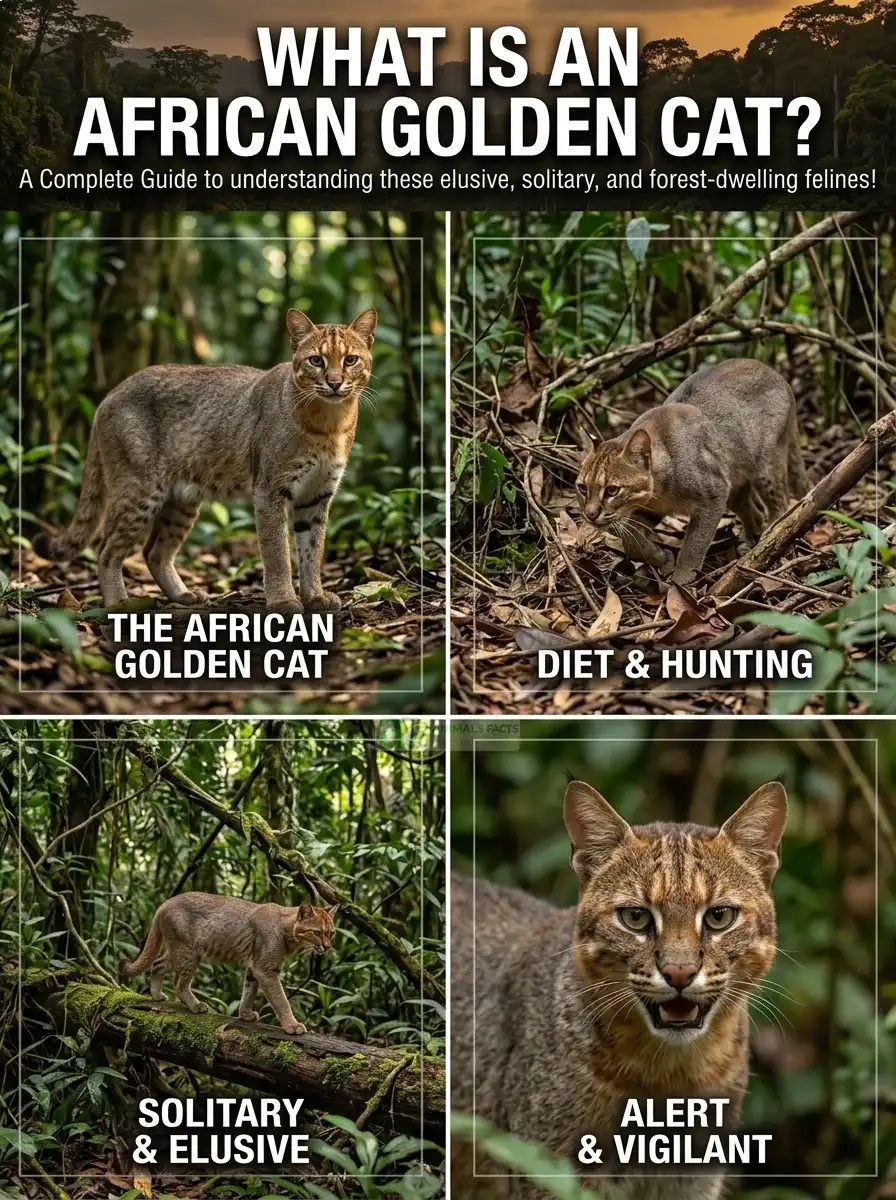
Deep in the Congo Basin — in a cathedral of ancient trees so dense that midday looks like twilight — a medium-sized cat moves through the understorey with a silence and a deliberateness that even the most experienced field researchers rarely have the opportunity to observe directly. It may be golden-red, shimmering like captured sunlight filtering through the canopy. It may be a cool, smoky grey, almost invisible against the dappled shadows. It may be entirely black — a melanistic ghost of the forest that vanishes completely into the shadows the moment it chooses to. African golden cat facts begin with this single, deliberately paradoxical image — an animal named for one of its color forms that is just as likely to be grey or black, living in one of the most biologically rich and most logistically challenging research environments on Earth, and known to science primarily through the brief, blurry frames of camera trap photographs rather than through the years of systematic behavioral study that have characterized research on more accessible wild cat species.
The African golden cat is simultaneously one of Africa’s most fascinating and most poorly understood wild predators — a medium-sized felid that occupies the forest understorey of the equatorial rainforest belt with extraordinary competence while remaining so elusive, so rarely observed, and so resistant to systematic study that basic aspects of its biology — home range size, mating system, litter size in the wild, population density — remain uncertain or entirely unknown. Interesting facts about African golden cats reveal an animal of breathtaking coat color variability that makes it one of the most visually diverse of any wild cat species; a predator of surprising dietary ambition that has been documented hunting prey as large as adult male red colobus monkeys and small antelope; a rainforest specialist whose continued existence depends on the fate of Central Africa’s forests — forests that are disappearing at some of the most alarming rates anywhere on Earth.
Whether you are searching for African golden cat facts for kids to explore the science of rainforest ecology and wild cat biology, a wildlife enthusiast fascinated by Africa’s least known large mammals, a conservationist wanting to understand the threats facing this Vulnerable species, or simply someone who encountered a camera trap photograph of this extraordinary cat and needed to understand everything about it immediately — this is your comprehensive guide. We cover African golden cat scientific name, African golden cat diet, African golden cat size and weight, African golden cat behavior, the extraordinary coat color variation, conservation status, cultural significance, and the profound mystery of an animal that science is still in the early stages of truly understanding. Africa’s most secretive forest cat awaits.
2. African Golden Cat Species Overview & Classification
The African golden cat belongs to the family Felidae — the cats — and occupies a taxonomically fascinating position as one of three closely related medium-sized African felids whose molecular relationships were clarified only through modern genetic analysis.
Species Classification Table
| Taxonomic Rank | Classification |
|---|---|
| Kingdom | Animalia |
| Phylum | Chordata |
| Class | Mammalia |
| Order | Carnivora |
| Family | Felidae |
| Subfamily | Felinae |
| Genus | Caracal (Gray, 1843) |
| Species | C. aurata (Temminck, 1827) |
| Common Names | African golden cat, golden cat |
| Etymology | aurata = “golden” (Latin) — referring to the most commonly described color form |
| Sister Species | Caracal (C. caracal); Serval (Leptailurus serval) |
| Previous Genus | Formerly placed in Profelis — now recognized in Caracal based on molecular evidence |
The Surprising Molecular Relationship
One of the most scientifically significant African golden cat facts is the molecular confirmation that this rainforest specialist’s closest relatives are the caracal — an open-country, arid-environment specialist — and the serval — a wetland and grassland specialist. These three species form a closely related clade within the Felinae despite occupying dramatically different habitats:
| Feature | African Golden Cat | Caracal | Serval |
|---|---|---|---|
| Scientific name | Caracal aurata | Caracal caracal | Leptailurus serval |
| Habitat | Dense rainforest | Arid scrub, savanna | Wetland, grassland |
| Weight | 5.5–16 kg | 8–23 kg | 7–18 kg |
| Ear tufts | Absent | Prominent black tufts | Absent |
| Coat pattern | Variable — spots, plain, melanism | Uniform tawny | Bold spots and stripes |
| Conservation | Vulnerable | Least Concern | Least Concern |
Two Subspecies
Two subspecies of African golden cat are currently recognized — distinguished by geographic range and subtle physical differences:
| Subspecies | Range | Notes |
|---|---|---|
| Caracal aurata aurata | West Africa — Senegal to Democratic Republic of Congo | Slightly smaller; western range |
| Caracal aurata celidogaster | Central/East Africa — Congo basin to Uganda, Kenya margin | Slightly larger; more easterly range |
Evolution & Discovery Timeline
~8.5 million years ago — The lineage that will produce the African golden cat, caracal, and serval diverges from other Felinae — the three species sharing a common ancestor that lived in Africa during the late Miocene.
~3–5 million years ago — The African golden cat lineage separates from the caracal lineage — diverging as the ancestral population adapts to the equatorial rainforest environment while the caracal lineage adapts to more open, arid environments.
1827 — Dutch zoologist Coenraad Jacob Temminck formally describes the African golden cat as Felis aurata — based on specimens from Sierra Leone. This is the first formal Western scientific description of the species.
1844 — John Edward Gray recognizes additional specimens and the species begins appearing in systematic catalogs of African mammals.
1900s — Colonial-era natural history collections accumulate specimens — but systematic field study of the living animal in its rainforest habitat remains essentially absent throughout the 20th century.
1990s — The first camera trap photographs of wild African golden cats are obtained — providing the first systematic photographic documentation of the species in its natural habitat. These images reveal the extraordinary coat color variability that characterizes the species.
2003 — Molecular phylogenetic analysis by Warren Johnson and colleagues confirms the African golden cat’s placement within the genus Caracal — establishing the surprising genetic relationship with the caracal and serval.
2008 — The first systematic camera trap survey specifically targeting African golden cats is published — providing the first population density estimates for the species in specific forest sites.
2015 — Research published based on camera trap data from the Congo Basin documents the African golden cat hunting adult red colobus monkeys — establishing for the first time that this species is capable of taking primate prey substantially larger than previously assumed.
2019 — The first comprehensive review of African golden cat ecology, based on accumulated camera trap data from multiple forest sites, provides the most complete picture to date of the species’ habitat use, activity patterns, and population status.
2024 — Ongoing camera trap programs across the Congo Basin and West African forest sites continue to accumulate data — with the African golden cat remaining among the least studied of all medium-sized wild cats globally.
“The African golden cat is one of the great mysteries of African wildlife — an animal that shares the Congo with gorillas and forest elephants but that we know less about than almost any other felid on the continent. Every camera trap photograph of this cat is a small scientific event.”
— Dr. Luke Hunter, President Emeritus, Panthera, and author of Wild Cats of the World
3. African Golden Cat Physical Description & Unique Features
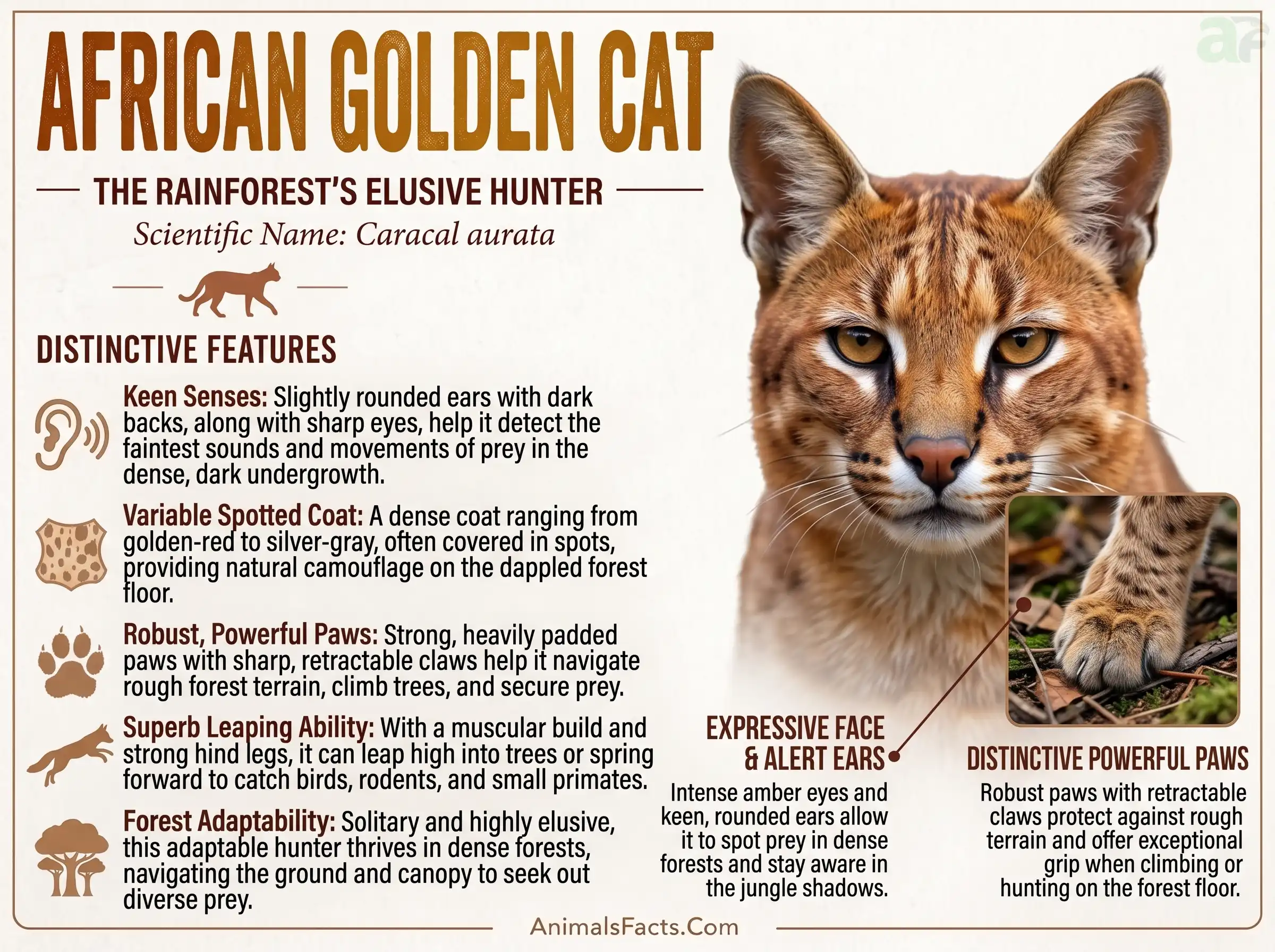
African golden cat size and weight make it a medium-sized wild cat — substantially larger than a domestic cat at 5.5–16 kg but considerably smaller than a leopard — with a robust, muscular build that reflects its role as an active predator of forest prey.
The Extraordinary Coat Color Variation
The most immediately striking — and most scientifically fascinating — physical feature of the African golden cat is its remarkable coat color variability. Unlike most wild cat species, where individuals within a population are visually similar with only modest variation, the African golden cat shows such extraordinary color diversity that early naturalists initially believed they were looking at multiple different species:
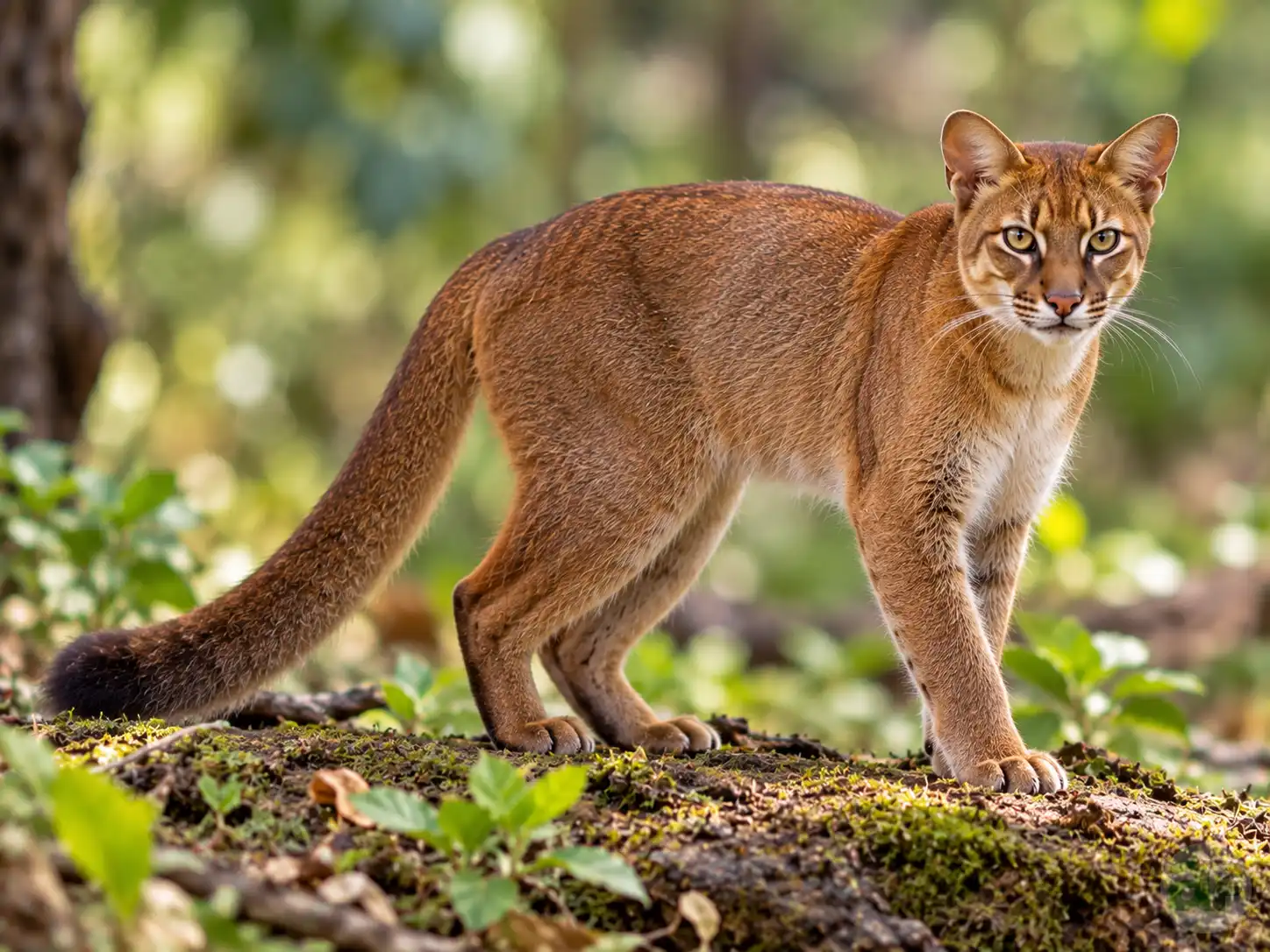
Golden-red form — The form that gives the species its name and the most commonly depicted in natural history illustrations; a rich reddish-gold to orange-brown coat that varies from warm amber to deep mahogany. May be plain (unpatterned) or show faint spotting.
Grey form — A cool blue-grey to warm grey coat that appears in populations across the species’ range — sometimes as common as or more common than the golden form in specific locations. May be plain or spotted.
Spotted form — Both golden and grey individuals may show prominent black spots ranging from small, distinct spots to larger rosette-like markings across the flanks, back, and legs. The degree of spotting varies continuously from essentially unspotted individuals to heavily spotted ones.
Melanistic form — Completely black individuals occur throughout the range — melanistic African golden cats have been documented in multiple populations. The melanism appears to follow a similar genetic basis to melanism in other felids.
Transitional and mixed forms — Individuals with intermediate coloration between golden and grey also occur — sometimes a single individual may show golden flanks with grey dorsal coloring.
What drives the variation? — The genetic basis of this extraordinary color polymorphism is not fully characterized, though research published in 2019 suggests that a small number of genetic loci control most of the variation. The ecological significance — if any — of the different color forms in rainforest environments is debated. No consistent habitat or behavior differences between color forms have been documented.
Body Form
Beyond the coat, the African golden cat has a distinctive body form:
Robust, muscular build — Substantially more powerful relative to body length than the lean, long-limbed serval; the African golden cat’s heavy build reflects its forest hunting lifestyle where ambush power is more important than open-country chase speed.
Relatively short tail — The tail is proportionally shorter than most felids of equivalent body size — approximately 16–46 cm, or roughly one-third to one-half of body length. This shorter tail reflects reduced requirements for the aerial balance functions that long tails provide in arboreal species.
Large paws — The feet are notably large and broad relative to body size — providing excellent grip on tree bark for climbing and stability on the uneven surfaces of forest floor terrain.
Rounded head — A distinctly round facial profile with small, rounded ears (lacking the prominent tufts of the caracal) gives the face a somewhat domestic-cat-like quality at first glance.
Long legs — Despite the robust build, the African golden cat has proportionally long legs for a forest cat — suggesting a combination of ground-level pursuit hunting and climbing that requires both power and reach.
Facial Markings
The face shows characteristic markings that are relatively consistent across color forms:
- White patches beneath and around the eyes — creating a distinctive facial pattern
- Pale chin and throat
- Dark dorsal stripe — a dark line running from the top of the head along the back in most individuals
- Variable cheek markings — spots or stripes on the cheeks in more heavily marked individuals
💡 Did You Know? The African golden cat’s coat color variability is so extreme that two individuals of the same litter can be dramatically different in color — one golden, one grey. This remarkable within-litter variation confirms that the color polymorphism is genetically controlled and not a result of environmental or age-related factors. When early European naturalists first collected specimens in the 19th century, the variation was so puzzling that the grey and golden forms were occasionally described as entirely separate species before examination of additional specimens and skeletal measurements confirmed they were the same animal. The African golden cat is therefore a species that confused taxonomists for decades not because it was rare but because individual members of the same species look so dramatically different from one another.
4. Top 25 Amazing African Golden Cat Facts
Here is your definitive collection of the most extraordinary, scientifically verified, and genuinely astonishing African golden cat facts as of 2026:
- The African golden cat is not always golden — individuals of the same species can be golden-red, grey, spotted, or completely black (melanistic), making it one of the most color-variable wild cat species in the world.
- The African golden cat is among the least studied wild cats on Earth — despite being Africa’s only medium-sized forest felid and occupying one of the world’s most biodiverse ecosystems, basic aspects of its biology including exact home range sizes, wild litter sizes, and mating systems remain poorly documented.
- The species was previously placed in its own genus Profelis — but molecular genetic analysis confirmed its placement within the genus Caracal, revealing that this dense rainforest specialist is the closest living relative of the caracal, which inhabits open, arid environments of Africa and the Middle East.
- African golden cats have been documented hunting adult red colobus monkeys — prey that can weigh up to 10 kg and that is capable of vigorous defense. This makes the African golden cat one of the few medium-sized felids documented hunting adult primates.
- The species’ scientific name aurata means “golden” in Latin — reflecting the color form that most commonly appeared in 19th century museum collections, though grey individuals may be equally or more common in some populations.
- African golden cats are opportunistic and dietary flexible — their documented prey list includes rodents, small antelope (including duiker), birds, hyraxes, monkeys, and various other forest vertebrates — one of the most diverse prey lists of any comparable-sized wild cat.
- The African golden cat is strictly a rainforest and forest-associated species — it does not persist in degraded habitats or open country, and its presence in a forest area is increasingly used as an indicator of overall forest quality and intactness.
- Both diurnal and nocturnal activity have been documented in African golden cats — camera trap data from multiple sites shows activity across all hours of the day, with some populations showing predominantly nocturnal habits while others are more crepuscular or even diurnal.
- The African golden cat’s closest wild relatives — the caracal and serval — are both grassland and savanna specialists, making the golden cat’s evolution into a dense rainforest specialist one of the most dramatic ecological divergences within a closely related felid group.
- African golden cats are skilled climbers — documented ascending trees to access prey, rest, and potentially avoid larger predators. Their large, broad paws are well-adapted for gripping tree bark.
- In the Bwindi Impenetrable Forest of Uganda — famous for its mountain gorillas — African golden cats have been documented sharing the forest with gorillas, chimpanzees, forest elephants, and the full complement of Central African forest megafauna.
- Camera trap studies have documented African golden cats at elevations up to 3,600 meters in montane forest — demonstrating a vertical range far exceeding what was previously assumed for a tropical lowland species.
- The species is protected under CITES Appendix II — commercial international trade is regulated but not prohibited; in practice, the primary threats are habitat loss and bushmeat hunting rather than direct trade.
- African golden cats are used in ritual and cultural contexts by forest-dwelling peoples across Central and West Africa — particularly their skins, which are used in ceremonial dress and in various traditional medicinal and spiritual applications.
- The African golden cat’s population density varies dramatically between forest sites — camera trap studies have estimated densities ranging from 1 to 5 individuals per 100 km² in different forest areas, reflecting habitat quality differences and hunting pressure variation.
- The African golden cat is one of the few medium-sized felids in Africa that does not extensively overlap in range with other similar-sized cats — it occupies the rainforest zone where no comparable competitor exists, making it the dominant medium-sized predator of its ecosystem.
- Male African golden cats are significantly larger than females — with males potentially twice the weight of females in some populations — one of the more pronounced sexual dimorphism ratios in medium-sized felids.
- The species shows remarkable dietary opportunism — documented consuming prey ranging from tiny rodents weighing under 50 grams to small antelope weighing several kilograms, a dietary range that would be exceptional for a felid of its size.
- African golden cats have been very rarely kept in captivity — few zoological institutions have successfully maintained the species, and captive breeding programs are extremely limited compared to most other threatened wild cat species.
- The African golden cat’s skin is among the most sought-after in Central African bushmeat and traditional use markets — not primarily for the meat but for the distinctive, variably colored pelt that holds significant ceremonial value in multiple forest-dwelling cultures.
- Camera trap data has revealed that African golden cats sometimes follow army ant swarms — moving through the forest in the wake of the ants’ movement to prey on the small vertebrates (lizards, frogs, small rodents) that are flushed from cover by the ant columns.
- The Congo Basin — the world’s second largest tropical rainforest — represents the core of the African golden cat’s range and the area with the largest remaining populations. The fate of this forest ecosystem is essentially the fate of the species.
- African golden cats have been documented in secondary forest and forest margins adjacent to agricultural areas in some parts of their range — suggesting some limited tolerance of habitat modification, though they do not persist in heavily degraded or cleared landscapes.
- The IUCN Felid Specialist Group lists the African golden cat as one of the wild cat species for which the most fundamental biological data gaps remain — its inclusion on the list of priority species for basic research reflects how little is still known about this animal.
- Despite their extreme elusiveness, African golden cats have been photographed by camera traps at 72 different sites across their range as of the most recent systematic review — providing a distribution picture that confirms wider occurrence than previously suspected but also highlighting the species’ dependence on remaining intact forest.

5. Fun Facts About African Golden Cats
- The African golden cat is not always golden — it can be grey, spotted, or black
- Two kittens in the same litter can be dramatically different colors
- Their closest relative is the caracal — an open desert specialist
- They hunt adult red colobus monkeys — remarkable for their size
- They have been recorded at 3,600 meters elevation in mountain forest
- The species is among the least studied wild cats on Earth
- They follow army ant swarms to prey on flushed small animals
- Males can be twice the weight of females
- The species occupies the Congo Basin — Earth’s second largest rainforest
- Camera traps are virtually the only research tool available for this species
- Their skin holds deep ceremonial significance across Central African cultures
- They are strictly forest-dependent — a direct indicator of forest quality
6. African Golden Cat Habitat & Geographic Range
African golden cat habitat is defined by the equatorial rainforest belt of West and Central Africa — one of the most biodiverse and most logistically challenging research environments on Earth, characterized by year-round high temperatures, extremely high rainfall, dense vegetation, and the extraordinary biological richness that characterizes intact tropical forest systems.
Habitat Requirements
The African golden cat is among the most habitat-specialist of all African wild cats — requiring specific environmental conditions that limit its distribution to relatively intact forest:
Dense canopy forest — The primary requirement across all populations; the African golden cat is not documented persisting in open or heavily modified habitats. Camera trap data consistently shows highest activity rates in areas of dense, continuous canopy cover.
Forest floor complexity — The understorey structure of the forest — fallen logs, root systems, dense herb layer, and the complex three-dimensional structure of intact tropical forest — provides both hunting habitat and movement corridors that the African golden cat requires.
Prey availability — Forest rodent populations, small duiker antelope, primates, and birds must be sufficiently abundant to support golden cat population viability. Bushmeat hunting that depletes prey populations reduces habitat quality even in otherwise intact forest.
Minimal human disturbance — The African golden cat shows stronger avoidance of direct human presence than most medium-sized wild cats — its extremely low detection rates near human settlements reflect genuine avoidance rather than simple rarity.
Water availability — The rainforest provides abundant water through rainfall and streams — specific water features within the forest appear to be used as hunting sites for prey that aggregate near water.
Habitat Types
Lowland tropical rainforest — The primary habitat; the dense, tall-canopy forests of the Congo Basin and West African forest zone support the largest African golden cat populations
Montane forest — Camera trap records from Uganda, Rwanda, and eastern DRC confirm the species’ presence up to 3,600 meters — in the dense montane forests of the Albertine Rift highlands, a habitat quite different from the lowland primary range
Forest-savanna mosaic — The transition zone between forest and savanna in West Africa supports African golden cats where forest patches are large enough to sustain prey populations
Secondary and degraded forest — Present in some logged forest areas where sufficient canopy and prey remain — but at substantially lower densities than in intact primary forest
Riverine forest — Gallery forest along rivers that extends into the savanna zone may allow range extension beyond the main forest block in some areas
Geographic Range
| Region | Country | Status | Notes |
|---|---|---|---|
| West Africa | Senegal, Guinea-Bissau, Guinea, Sierra Leone, Liberia, Côte d’Ivoire, Ghana, Nigeria | Present but fragmented | Severely reduced; forest loss ongoing |
| Central Africa | Cameroon, Central African Republic, Gabon, Republic of Congo, DRC | Core range; most abundant | Congo Basin populations most viable |
| East Africa (margins) | Uganda, Rwanda, Burundi, western Kenya, western Tanzania | Present | Albertine Rift montane populations |
| Equatorial islands | Bioko Island (Equatorial Guinea) | Present | Island population; genetically distinctive |
💡 Did You Know? The African golden cat has been documented on Bioko Island — the large volcanic island of Equatorial Guinea located approximately 30 km off the coast of Cameroon in the Gulf of Guinea. The presence of African golden cats on this island — which has been separated from the African mainland for approximately 10,000 years since sea level rise at the end of the last Ice Age — suggests that the island was colonized before the sea level rise separated it from the continent, and that the island population has since evolved in isolation. The Bioko African golden cat population represents an island population of particular conservation significance — isolated from mainland gene flow for 10,000 years and potentially carrying unique genetic characteristics. Bioko Island also hosts the Bioko Island drill and other endemic or near-endemic wildlife — making it one of West Africa’s most important wildlife conservation sites.
7. African Golden Cat Diet & Feeding Behavior
African golden cat diet is one of the most remarkably diverse of any medium-sized wild cat — reflecting the dietary opportunism of a forest predator that has adapted to exploit virtually every prey item available in its complex, three-dimensional rainforest habitat.
Diet Breakdown Table
| Food Type | Estimated % of Diet | Notes |
|---|---|---|
| Rodents (forest rats, dormice, porcupines) | ~30–40% | Most consistently documented prey category |
| Small antelope (duiker species) | ~20–25% | Important prey; requires significant hunting capability |
| Birds (ground birds, roosting birds) | ~10–15% | Both ground-level and arboreal prey |
| Primates (red colobus, mangabeys, small monkeys) | ~8–12% | Remarkable given prey size; documented camera trap kills |
| Hyraxes (Dendrohyrax species) | ~8–12% | Tree hyraxes important where abundant |
| Other small mammals (mongooses, genets, small carnivores) | ~5–10% | Opportunistic predation |
| Reptiles (lizards, smaller snakes) | ~3–5% | Documented supplementary prey |
| Frogs and invertebrates | ~2–3% | Minor; opportunistic |
The Primate Hunting Discovery
One of the most scientifically significant recent African golden cat findings was the camera trap documentation of red colobus monkey predation — published by Shira Bhatt and colleagues in 2015 based on data from Kibale National Park, Uganda:
- Camera traps documented African golden cats actively hunting within red colobus monkey troops
- Red colobus males weigh up to 10 kg — approaching the body weight of the smaller female African golden cats
- The hunting strategy appeared to involve stalking through the understorey below the canopy-level troop, then launching rapid vertical strikes at low-hanging or descending individuals
- The finding dramatically revised understanding of the species’ hunting capability and its ecological role as a primate predator
This discovery has significant implications for understanding the African golden cat’s ecological impact — primate populations are themselves ecologically significant, and a predator capable of regularly taking adult red colobus is a meaningful population regulator.
The Army Ant Following Behavior
Among the most behavioral fascinating documented behaviors is army ant following — the use of army ant columns as a foraging enhancement strategy:
The mechanism — Army ant columns (Dorylus species) — the massive, aggressive swarms that sweep through the forest floor consuming everything in their path — flush small vertebrates from cover as they advance. The disturbed animals — small rodents, lizards, frogs, and various invertebrates — attempt to escape the ants by fleeing into open areas where they become temporarily visible and disoriented.
The opportunity — African golden cats apparently learn to associate army ant column movement with elevated prey availability — positioning themselves along the advancing column front to intercept the flushed prey items. Similar army ant following behavior is well documented in birds (ant-following birds are a major guild in tropical forest bird communities) but is rarer in mammals.
The significance — This behavior demonstrates a level of ecological intelligence — learning to exploit the foraging activities of a completely different animal as a hunting aid — that is impressive in any predator and has been documented in only a handful of wild cat species globally.
Hunting Strategy
The African golden cat’s primary hunting strategy is stalk-and-ambush — the standard felid approach — executed within the complex three-dimensional environment of the forest understorey:
Ground-level stalking — The primary approach for rodent and small antelope prey; slow, deliberate approach using vegetation cover, culminating in a short, explosive rush.
Arboreal hunting — Documented for bird and tree hyrax prey; the large paws and climbing ability allow the African golden cat to ascend trees to access prey that other forest floor predators cannot reach.
Opportunistic strikes — The army ant following behavior suggests a more opportunistic, reactive hunting mode that supplements the primary stalk-and-ambush strategy.
8. African Golden Cat Reproduction & Life Cycle
African golden cat reproduction is one of the least documented aspects of this poorly studied species — what is known comes primarily from the small number of captive individuals that have been kept in zoological facilities combined with field observations extrapolated from camera trap data.
Mating System
The African golden cat’s mating system in the wild is essentially undocumented — no systematic study of wild African golden cat mating behavior has been conducted. Based on general felid biology and what is known of related species:
Presumed solitary — Like most medium-sized felids, African golden cats are likely solitary with mating encounters being brief associations between otherwise independent individuals.
Scent communication — Scent marking through urine spraying and scratching on trees is the presumed primary mechanism for communicating reproductive status and territorial occupancy across individual ranges.
Male-female range overlap — In related species, male home ranges typically overlap with multiple female ranges — a spatial organization that facilitates mate location when females enter estrus.
What Captive Studies Have Revealed
The small number of African golden cats maintained in captivity — primarily in European zoos in the mid-20th century — provided limited but important reproductive data:
- Gestation period: approximately 75–78 days — comparable to other medium-sized felids
- Litter size: typically 1–2 kittens (maximum documented 3)
- Birth weight: approximately 180–240 grams per kitten
- Eye opening: approximately Day 6–16 after birth
- Weaning: approximately 6–8 weeks
- Independence: estimated 9–12 months based on captive observations
The Color Variation at Birth
One of the most remarkable aspects of African golden cat reproduction is the within-litter color variation documented in captive litters — where sibling kittens may show dramatically different coat colors from birth. This confirms that the color polymorphism is under direct genetic control rather than being environmentally induced or age-related.
Lifespan Comparison Table
| Species | Average Wild Lifespan | Max Captive | Notes |
|---|---|---|---|
| African golden cat | ~12–15 years (estimated) | 21 years | Poor captive record; most data estimated |
| Caracal | 12–16 years | 19 years | Closely related; better documented |
| Serval | 10–12 years | 23 years | Closely related; better documented |
| Leopard | 12–17 years | 23 years | Larger co-occurring felid |
| Ocelot | 8–12 years | 20 years | Comparable size; much better studied |
9. Social Behavior & Communication
African golden cat social behavior is among the least documented of any wild cat species — the combination of extreme elusiveness, dense forest habitat, and very limited research effort means that essentially all knowledge of social behavior is either inferred from camera trap data or extrapolated from closely related species.
Presumed Solitary Organization
Based on camera trap data and general felid biology, the African golden cat is presumed to be largely solitary — maintaining individual home ranges with minimal direct social interaction outside of mating and mother-young associations:
Home range — Camera trap-based estimates suggest home ranges of approximately 60–160 km² for adults — substantially larger than many medium-sized felids, possibly reflecting the relatively low prey density of forest environments and the need for wide-ranging foraging. These estimates carry significant uncertainty given the limited data available.
Range use — Camera trap records suggest that individual African golden cats use multiple forest habitat types within their range — moving between lowland forest, forest margins, and potentially montane forest areas in ranges that cross multiple vegetation zones.
Scent marking — Presumably the primary communication mechanism — the forest substrate provides abundant marking surfaces including tree trunks and fallen logs. The specific glands used for marking and the information content of marks have not been studied.
Activity Patterns
Camera trap data has provided the most reliable information about African golden cat activity:
Variable activity timing — Unlike many wild cats with clearly defined activity windows, African golden cats show activity across all hours of the 24-hour cycle in camera trap data from multiple sites. This temporal flexibility may reflect adaptation to the complex prey community of the rainforest, where different prey species have different activity patterns.
Site-specific variation — Activity patterns appear to vary between sites — some camera trap studies show predominantly nocturnal activity while others show substantial diurnal activity. Whether this reflects individual variation, population-level differences, or responses to specific prey community composition is unknown.
Response to human presence — Camera trap data consistently shows African golden cat avoidance of areas with high human activity — with trap rates dropping near settlements, roads, and frequently used forest trails. This behavioral avoidance of human presence makes the species particularly vulnerable to habitat disturbance.
10. Predators & Defense Mechanisms
The African golden cat occupies a position in the Congo Basin food web where it is both a significant predator and a potential prey item for larger carnivores sharing its forest habitat.
Natural Predators
Leopard (Panthera pardus) — The primary predator of African golden cats across most of their shared range. Leopards and African golden cats co-occur throughout the Congo Basin and West African forest zone. Leopards are documented killing medium-sized felids in other ecosystems, and the size advantage (leopards at 30–90 kg vs. golden cats at 5.5–16 kg) would make individual golden cats vulnerable to leopard predation.
African crowned eagle (Stephanoaetus coronatus) — The most powerful forest raptor in Africa — capable of taking prey up to 30 kg — represents a significant aerial predation threat, particularly to juveniles and smaller adult female golden cats.
African rock python (Python sebae) — Large pythons in the Congo Basin represent a predation threat to medium-sized mammals of the golden cat’s size range — particularly for juveniles.
Human hunters — In many forest areas, human hunters with snares, dogs, and firearms represent the most significant predation pressure on African golden cats — both through direct targeting and through incidental capture in snares set for bushmeat species.
Defense Mechanisms
Cryptic behavior — The primary defense of the African golden cat is its extraordinary elusiveness — combining cryptic coloration (particularly the grey form in dappled forest shadow), secretive movement behavior, and avoidance of open areas to minimize detection probability.
Arboreal escape — Climbing trees provides refuge from terrestrial predators — the large paws and muscular build suggest effective climbing capability.
Vocalization — Like most solitary felids, the African golden cat likely uses threat vocalizations (hissing, spitting) when directly confronted — but detailed information about the species’ vocal repertoire is lacking.
Coat color ambiguity — The extraordinary coat color variation may itself serve a defensive function — the variability preventing predators from forming a specific search image for the species, making each individual somewhat novel in appearance.
💡 Did You Know? The African crowned eagle — the most powerful forest raptor in Africa — is one of the most significant predators of African golden cat-sized mammals in the Congo Basin, and the relationship between these two predators represents one of the most poorly studied predator-predator dynamics in African ecology. African crowned eagles have been documented in prey remains studies consuming mammals up to 30 kg — well within the size range of adult African golden cats. The eagle’s hunting strategy of a rapid, powerful dive from a concealed perch in the forest canopy is precisely the attack mode that the African golden cat’s ground-level cryptic behavior provides the least protection against. The interplay between these two powerful, secretive predators in the same forest ecosystem represents one of the intriguing unknowns of Central African wildlife ecology.

11. African Golden Cat Facts for Kids
Hey brilliant young wildlife explorers! Here are some absolutely incredible African golden cat facts for kids that will make every animal lover you know say “Wow!”:
- 🐱 The African golden cat is NOT always golden! Despite its name, this wild cat can be golden-red, silvery-grey, spotted, or completely black. Two kittens in the exact same litter can look completely different from each other — one could be golden and one could be grey! It is like nature forgot to decide what color it should be and decided all of them were fine.
- 🐱 It is one of the most mysterious cats on Earth! Scientists still do not know very much about how African golden cats live their lives — how big their territories are, how many kittens they have in the wild, or even exactly what their mating behavior looks like. Almost everything we know comes from camera trap photos taken when the cat accidentally walks past a hidden camera.
- 🐱 It lives in the SAME forest as gorillas! In the Congo Basin — one of the world’s greatest wildlife places — African golden cats share the forest with gorillas, chimpanzees, forest elephants, and hundreds of other extraordinary species. It is one of the few places where a wild cat coexists with our closest animal relatives.
- 🐱 It hunts monkeys — much bigger than you would expect! Scientists were amazed to discover that African golden cats can hunt and kill adult red colobus monkeys — primates that can weigh 10 kilograms. That is like a medium-sized cat hunting an animal almost as heavy as itself!
- 🐱 It follows army ant armies to find food! When massive army ant swarms march through the forest floor, they scare tiny animals out of their hiding places. The clever African golden cat follows along behind the ants, snapping up the frightened rodents and lizards that come running out!
- 🐱 It can climb to the top of MOUNTAINS! Camera traps have photographed African golden cats at 3,600 meters above sea level in mountain forests — much higher than anyone expected to find this rainforest cat. It is like discovering that an animal you thought only liked the beach also loves skiing!
- 🐱 Its closest wild cousin is the CARACAL — a completely different-looking cat from the desert! The African golden cat and the caracal look nothing alike and live in completely different places — but DNA testing proved they are each other’s closest relatives. It is like finding out your closest cousin somehow looks nothing like you and lives in a completely different country!
- 🐱 Each camera trap photo is a mini scientific discovery! Because African golden cats are so rare and so shy, every time a hidden camera captures a photo of one, researchers get genuinely excited. In some forests, it takes hundreds of camera trap nights to get even a single photograph of this cat.
12. Relationship with Humans
The relationship between African golden cats and humans is shaped by three distinct but interacting dynamics — the ancient, culturally embedded relationship between forest-dwelling peoples and the cat that shares their forest; the modern conservation challenge of protecting a species whose habitat is disappearing; and the extraordinarily limited scientific engagement with a species that remains almost entirely unknown despite decades of broader African wildlife research.
Indigenous Forest Peoples and the Golden Cat
Across the Congo Basin and West African forest zone, indigenous forest-dwelling peoples — including BaAka, Baka, Mbuti, Aka, and other forest-dependent communities — have coexisted with African golden cats for thousands of years, developing detailed traditional ecological knowledge of the species’ behavior, habitat use, and cultural significance:
Hunting — African golden cats are occasionally hunted in forest communities — though their extreme elusiveness makes them difficult to target deliberately. They more commonly appear as incidental captures in snares set for bushmeat species such as duikers.
Cultural use of skins — The African golden cat’s distinctive, variably colored pelt holds significant cultural value across multiple forest-dwelling societies. Skins are used in ceremonial robes, headdresses, and other ceremonial objects by community leaders, traditional healers, and in initiation ceremonies. The cultural demand for golden cat skins creates a specific pressure distinct from ordinary bushmeat hunting — skins may be kept, traded, or used in ceremonies without the meat being consumed.
The Pygmy cultural significance — Among BaAka, Baka, and other forest hunter-gatherer communities, the African golden cat occupies a particularly significant cultural position. In several forest peoples’ traditions, the golden cat is associated with hunting success, forest power, and the authority of traditional leaders. The golden cat skin worn by a hunting leader or elder communicates specific social and spiritual status that is deeply embedded in the cultural framework of forest communities.
Traditional ecological knowledge — Forest peoples’ knowledge of African golden cat behavior, habitat use, and activity patterns represents the most detailed observational record of the species available — accumulated over generations of coexistence that far exceeds the temporal coverage of any modern scientific study. Conservation programs increasingly recognize the importance of integrating this traditional knowledge with camera trap data to build a more complete understanding of the species.
The Scientific Knowledge Gap
The African golden cat’s research record represents one of the most stark knowledge gaps in African wildlife biology — a species occupying one of Africa’s most biodiverse ecosystems that has received a fraction of the research attention devoted to far less ecologically significant species in more accessible environments:
Why so little is known — Several factors combine to make systematic research on African golden cats extraordinarily challenging:
- Extreme habitat inaccessibility — The Congo Basin and West African forest zone are among the most logistically difficult research environments in the world — dense vegetation, poor road infrastructure, difficult terrain, and in many areas, security challenges that limit researcher access
- Extreme species elusiveness — Even in well-studied areas with camera trap networks, trap rates for African golden cats are among the lowest of any forest carnivore
- Limited captive population — Very few zoos have maintained African golden cats, limiting the captive behavioral and physiological studies that supplement field research for many other species
- Research funding prioritization — Research funding for African wildlife has historically concentrated on charismatic megafauna (lions, elephants, gorillas) rather than elusive medium-sized predators
The camera trap revolution — The deployment of camera trap networks across Central and West African forests from approximately 2005 onward has transformed knowledge of the species — providing the first systematic distribution data, activity pattern information, and photographic documentation of behavior that previous methods entirely failed to produce.
Conservation Context
The African golden cat’s relationship with the broader human world is increasingly defined by the conservation emergency of Central African deforestation:
The Congo Basin crisis — The Democratic Republic of Congo — which holds the majority of the Congo Basin forest and the majority of the African golden cat’s core range — has experienced dramatically accelerating deforestation rates from 2000 onward. Satellite monitoring confirms that the Congo Basin is losing forest at increasing rates driven by agricultural expansion, charcoal production, artisanal mining, and commercial logging.
The bushmeat nexus — In most of the African golden cat’s range, the primary direct human pressure is bushmeat hunting — the commercial and subsistence hunting of forest mammals for food. While African golden cats are not primary bushmeat targets (the meat has limited commercial value), their incidental capture in snares set for duikers, chevrotains, and other target species represents significant mortality pressure on already small populations.
13. African Golden Cat Conservation Status & Threats
Conservation Status Overview
| Feature | Details |
|---|---|
| IUCN Status | Vulnerable (VU) |
| CITES Listing | Appendix II |
| Population Trend | Decreasing |
| Total Population Estimate | Unknown — insufficient data for reliable estimate |
| Primary Threats | Habitat loss; bushmeat hunting; cultural use of skins |
Major Threats
| Threat | Description | Impact Level |
|---|---|---|
| Deforestation | Agricultural expansion, logging, charcoal in Congo Basin and West Africa | Critical — primary long-term threat |
| Bushmeat hunting | Incidental snare capture; bushmeat market pressure | High |
| Cultural skin trade | Deliberate hunting for ceremonial skin use | High |
| Prey depletion | Bushmeat hunting depletes forest prey base even in apparently intact forest | High |
| Road construction | New roads into previously inaccessible forest open hunting pressure | High |
| Artisanal mining | Forest clearance and disturbance from mining in DRC and Congo | Medium-High |
| Political instability | Limits conservation enforcement across much of DRC range | High |
| Research gap | Insufficient knowledge to design targeted interventions | Medium |
| Climate change | Potential forest composition change; drought stress | Increasing concern |
The Forest Loss Crisis
The African golden cat’s Vulnerable status is driven primarily by the accelerating loss of its forest habitat — a threat operating across the entire species’ range:
West African forests — Already severely reduced; the forest zone of West Africa has lost the majority of its original extent. Countries including Côte d’Ivoire, Ghana, and Nigeria retain only small fragments of their original forest cover, and golden cat populations in these countries are likely critically small and highly fragmented.
Congo Basin — The largest remaining forest block in the African golden cat’s range — and the global conservation priority for maintaining viable populations. However, Congo Basin deforestation has accelerated dramatically since 2000, with satellite monitoring showing loss rates exceeding 500,000 hectares per year across the basin.
The bushmeat-deforestation nexus — In most of the golden cat’s range, deforestation and bushmeat hunting operate simultaneously — roads built for logging or agricultural expansion immediately open previously inaccessible forest to hunters, creating a combined pressure that degrades forest wildlife value even when some forest cover remains.
Conservation Responses
Protected area network — African golden cats are present in multiple protected areas across their range — including Lopé National Park (Gabon), Odzala-Kokoua National Park (Republic of Congo), Salonga National Park (DRC), Tai National Park (Côte d’Ivoire), Kibale National Park (Uganda), and Bwindi Impenetrable National Park (Uganda). Protected area effectiveness varies dramatically across the range — from well-managed parks with effective enforcement to nominally protected areas with essentially no management.
Camera trap monitoring — The Panthera organization, Wildlife Conservation Society, and various partner institutions maintain camera trap networks in multiple forest sites that provide ongoing population monitoring data — the primary tool for tracking African golden cat status.
Community engagement — Programs engaging forest-dependent communities in conservation — particularly addressing the bushmeat hunting pressure and developing alternative livelihoods — represent the most promising approach to reducing direct hunting pressure on golden cats and their prey.
14. Famous African Golden Cats in History & Pop Culture
Famous Individuals and Moments
The Kibale Discovery (2015) — The camera trap documentation of African golden cats hunting red colobus monkeys in Kibale National Park, Uganda — published by researchers including Shira Bhatt and colleagues — was described in the scientific community as one of the most significant African felid behavioral discoveries of the decade. The footage showing a golden cat actively hunting within a colobus troop revised the scientific understanding of this species’ ecological role and hunting capability.
Lopé National Park Camera Trap Records — Camera trap programs in Lopé National Park, Gabon — one of the most intensively monitored forest sites in Central Africa — have produced some of the highest-quality photographic records of wild African golden cats available. Individual animals identified through coat pattern recognition in Lopé data have contributed the most detailed habitat use and activity pattern data available for the species.
The Bioko Island Population — The discovery and genetic characterization of the Bioko Island population of African golden cats — isolated from the mainland for 10,000 years — was a significant biogeographic finding that added an important dimension to understanding of the species’ distribution and population structure. The Bioko population, studied by researchers at the Bioko Biodiversity Protection Program, represents a genetically distinctive island isolate of conservation significance.
IUCN Cat Specialist Group Recognition — The African golden cat’s consistent appearance on the IUCN Felid Specialist Group’s lists of priority species for research and conservation has generated sustained attention from the global wild cat conservation community — with the species regularly cited as the African felid most urgently in need of basic biological research.
15. Role in Ecosystem & Food Chain
The Mesopredator Role
The African golden cat occupies the mesopredator niche in the Congo Basin forest ecosystem — a position of considerable ecological significance that is currently poorly understood:
Rodent population regulation — The African golden cat’s most ecologically significant role is likely the regulation of forest rodent populations — controlling populations of forest rats, dormice, and other rodents that are themselves important consumers of seeds, fruits, and invertebrates. Changes in rodent abundance cascade through the food web affecting seed predation rates, invertebrate communities, and vegetation regeneration patterns.
Small antelope regulation — Predation on duiker species — the small forest antelopes that are among the most ecologically important herbivores of the rainforest — contributes to regulating duiker population density and behavior. Duiker population regulation affects vegetation browsing patterns and seed dispersal dynamics in forest communities.
Primate community effects — The recently documented ability to hunt adult red colobus monkeys places the African golden cat in the select group of predators that influence primate community structure — a role with cascading effects through the rainforest ecosystem given the importance of primates as seed dispersers and canopy herbivores.
The Army Ant Following Ecological Connection
The documented behavior of following army ant swarms creates an interesting ecological linkage between the African golden cat and one of the most significant ecological forces in the tropical rainforest — the army ant column. By predating on animals flushed by the ants, the golden cat participates in a complex, multi-species ecological interaction that connects the forest floor invertebrate fauna to mid-level vertebrate predation in ways that are only beginning to be understood.
The Forest Integrity Indicator Role
Increasingly, the presence or absence of African golden cats is being used by conservation ecologists as an indicator of forest intactness and quality — the species’ strict dependence on intact forest, its sensitivity to hunting pressure, and its requirement for adequate prey populations make it a sensitive indicator of the overall ecological health of forest sites. A forest site that supports African golden cats is, by implication, a forest site with sufficient structural integrity, prey diversity, and hunting pressure limitation to support one of the most demanding forest carnivores.
16. Myths, Folklore & Cultural Significance
The Forest Peoples’ Relationship
The African golden cat holds a cultural significance in forest-dwelling communities of Central and West Africa that is simultaneously ancient, deeply embedded, and increasingly in tension with modern conservation priorities:
The hunting power belief — Across multiple BaAka, Baka, and other Pygmy communities of the Congo Basin, the African golden cat is believed to possess or transmit hunting power — the quality of being an exceptionally skilled, forest-smart predator. A hunter who possesses or wears part of an African golden cat is believed to acquire some aspect of the cat’s forest intelligence and hunting skill. This belief creates cultural demand for golden cat skins and parts that is distinct from ordinary bushmeat demand and driven by entirely different values.
Authority and status symbol — In many forest communities, golden cat skins worn by traditional leaders, healers, and elders communicate authority and connection to forest spiritual power. The cat’s extraordinary elusiveness and color variability — it appears differently to different observers — adds to its mystical significance: an animal that cannot be reliably described is an animal that partakes in something beyond ordinary nature.
The Fang people (Gabon/Cameroon) — Among the Fang people of Gabon and Cameroon, the African golden cat appears in ceremonial contexts associated with the Bwiti spiritual tradition — its skin used in ritual objects and ceremonial dress that connect practitioners to forest spiritual forces.
The “leopard of the forest floor” — In various forest community traditions, the African golden cat is described in terms that parallel the leopard’s cultural significance in savanna communities — a powerful, mysterious, predatory force of the natural world that commands respect and that humans engage with carefully and ceremonially rather than casually.
Conservation Implications
The cultural significance of African golden cat skins creates a conservation challenge that is distinct from the more straightforward bushmeat hunting pressure:
- Cultural skin demand does not respond to the same economic interventions that reduce subsistence bushmeat hunting — it is driven by social values rather than hunger or poverty
- Conservation programs that engage with the cultural meaning of the cat — rather than simply prohibiting its use — are more likely to generate community support for conservation
- Some conservation programs have explored the development of synthetic alternatives to golden cat skin for ceremonial use — objects that carry the visual and tactile qualities of the skin without requiring a dead cat
17. African Golden Cats in Pop Culture
Wildlife photography and camera trap releases — The most significant contemporary cultural representation of the African golden cat occurs through wildlife photography publications and camera trap releases — each new high-quality photograph of a wild African golden cat generates significant engagement within the wildlife photography and conservation communities. Given the extreme difficulty of obtaining such images, each new photograph is a genuine event. Publications including National Geographic, BBC Wildlife Magazine, and the IUCN release camera trap African golden cat images that consistently generate high engagement on social media platforms.
“Our Planet” (Netflix, 2019) and related productions — David Attenborough’s landmark series touched on the biodiversity of the Congo Basin forest ecosystem that the African golden cat inhabits — though the species itself has not yet featured prominently in any major international wildlife documentary production, reflecting the extreme difficulty of filming this animal.
Conservation social media — Organizations including Panthera, Wildlife Conservation Society, and the African Wildlife Foundation use African golden cat camera trap images in social media conservation content — the species’ extraordinary appearance and extreme rarity making it particularly effective content for wildlife conservation awareness campaigns.
Scientific publications reaching public audiences — The 2015 red colobus monkey predation discovery was covered by multiple popular science publications and wildlife media outlets — briefly bringing the African golden cat to the attention of audiences far beyond the specialist conservation community.
18. African Golden Cat Facts vs. Common Myths
| Common Myth | The Real Fact |
|---|---|
| “The African golden cat is always golden” | False — individuals range from golden-red through grey to fully melanistic black; two kittens from the same litter can be dramatically different colors |
| “The African golden cat is related to the Asian golden cat” | Not closely — the Asian golden cat (Catopuma temminckii) is in a different genus and is only distantly related; the African golden cat’s closest relatives are the caracal and serval |
| “The African golden cat is a leopard subspecies or melanistic form” | False — it is a completely separate species; melanistic African golden cats are their own species’ black color form, not melanistic leopards |
| “African golden cats are nocturnal” | Not exclusively — camera trap data shows activity across all hours of the day; activity patterns appear to vary between populations |
| “The African golden cat is found only in lowland rainforest” | False — camera traps have documented the species at elevations up to 3,600 meters in montane forest |
| “African golden cats are aggressive toward humans” | No evidence — the species shows strong avoidance of human presence; no documented attacks on humans exist |
| “Because it is Vulnerable, the African golden cat is well monitored” | False — this is one of the least monitored wild cats in Africa; basic population parameters remain unknown despite the Vulnerable designation |
| “The grey and golden color forms are separate subspecies” | False — both color forms occur within the same populations and can appear in the same litter; color variation is not correlated with the two recognized geographic subspecies |
19. Best Places to See African Golden Cats in the Wild
1. Kibale National Park, Uganda — One of the most intensively studied forest sites in East Africa — with active camera trap programs that have produced significant African golden cat documentation including the landmark red colobus predation footage. Guided night walks and camera trap demonstration programs occasionally provide visitor engagement with golden cat research data.
2. Bwindi Impenetrable National Park, Uganda — The mountain gorilla conservation flagship of East Africa also supports African golden cat populations in its dense montane forest. Camera trap programs have documented golden cats sharing the forest with gorillas, chimpanzees, and the full Bwindi wildlife community.
3. Lopé National Park, Gabon — One of the most comprehensive long-term camera trap datasets in Central Africa includes significant African golden cat records. Research programs based at Lopé occasionally accept wildlife researcher volunteers and conservation tourism visitors.
4. Odzala-Kokoua National Park, Republic of Congo — One of Africa’s finest remaining intact forest ecosystems — with active wildlife monitoring including golden cat camera trap records. African Parks manages this park with comprehensive wildlife monitoring that provides the most current African golden cat status data for the western Congo Basin.
5. Tai National Park, Côte d’Ivoire — West Africa’s most important remaining forest ecosystem — with active wildlife research programs that have documented African golden cats as part of comprehensive forest mammal monitoring.
6. Honest Assessment — The African golden cat is among the most genuinely difficult of all African mammals to observe in the wild — researchers specifically targeting the species with intensive camera trap effort still typically require months of camera deployment to obtain even a single photograph. Wildlife tourists should not visit any of the above sites with realistic expectations of a golden cat sighting; the realistic wildlife tourism experience in these forests is extraordinary regardless — gorillas, chimpanzees, forest elephants, and dozens of other remarkable species are far more reliably observable. The African golden cat, if encountered at all, will be a profound bonus rather than a plannable experience.
20. How You Can Help
Supporting African golden cat conservation requires action primarily focused on forest protection, bushmeat hunting reduction, and funding the basic research that is still needed to understand this species adequately.
Support these organizations:
- Panthera — panthera.org — the world’s leading wild cat conservation organization; maintains African golden cat camera trap programs across multiple sites
- Wildlife Conservation Society — wcs.org — operates comprehensive wildlife programs in Congo Basin forests including golden cat monitoring
- African Wildlife Foundation — awf.org — forest conservation programs across Central and West Africa
- Odzala-Kokoua National Park / African Parks — african-parks.org — supports direct protected area management in core golden cat habitat
- Bioko Biodiversity Protection Program — bioko.net — protects the Bioko Island golden cat population and broader island wildlife
- Wildlife Conservation Society Congo Basin Program — dedicated Congo Basin forest conservation including bushmeat reduction programs
What you can do:
- Support Congo Basin forest conservation — the fate of the African golden cat is essentially the fate of the Congo Basin forest; any action supporting Congo Basin conservation benefits the species directly
- Reduce demand for tropical hardwoods — certified sustainable timber products reduce logging pressure in Congo Basin forests
- Donate to camera trap research programs — the basic research needed to understand this species requires sustained funding for equipment, field staff, and data analysis
- Spread awareness — most people have never heard of the African golden cat; sharing accurate information about the species builds the public awareness needed for effective advocacy
- Support organizations working with forest communities — programs that engage forest-dependent communities in conservation and provide livelihood alternatives to bushmeat hunting are among the most impactful interventions available
21. Top Documentaries & Books
Must-Watch Documentaries
- “Congo” (BBC Natural World) — Multiple BBC documentary treatments of the Congo Basin ecosystem include the broader forest context in which African golden cats live; specific golden cat footage is extremely rare in any documentary production
- “Our Planet — Forests” (Netflix, 2019) — David Attenborough’s landmark series covers the Congo Basin forest ecosystem broadly; while not specifically featuring African golden cats, provides essential context for understanding the habitat
- “Gabon: The Last Eden” (various producers) — Documentary treatments of Gabon’s extraordinary wildlife including Lopé National Park provide the best documentary context for the African golden cat’s habitat
- Panthera and WCS camera trap releases — Both organizations maintain YouTube channels and social media presences with camera trap footage from their African programs — the best available video documentation of African golden cats in natural settings
Must-Read Books
- “Wild Cats of the World” by Luke Hunter — The definitive popular reference for all wild cat species; the most comprehensive and scientifically accurate account of African golden cat biology currently available for general readers
- “African Predators” by Gus Mills and Martin Harvey — Covers the full complement of African carnivores with African golden cat content
- “Cats of Africa” by Luke Hunter and Gerald Hinde — Specifically focused on African felids; excellent African golden cat coverage with photographic documentation
- “The Rainforests of West Africa” by W. Maesen et al. — Academic but essential; the best available treatment of the forest ecosystems that define African golden cat habitat
- IUCN SSC Cat Specialist Group publications — The primary scientific literature on African golden cat ecology; available through the IUCN website and academic databases
22. Comparison with Similar Medium Wild Cat Species
| Feature | African Golden Cat | Caracal | Serval | Leopard Cat | Ocelot |
|---|---|---|---|---|---|
| Scientific name | Caracal aurata | Caracal caracal | Leptailurus serval | Prionailurus bengalensis | Leopardus pardalis |
| Weight | 5.5–16 kg | 8–23 kg | 7–18 kg | 3–7 kg | 8–16 kg |
| Range | Central/West Africa | Africa, Middle East | Sub-Saharan Africa | South/SE Asia | Central/South America |
| Primary habitat | Dense rainforest | Arid scrub, savanna | Wetland, grassland | Forest, scrub | Tropical forest |
| Coat variation | Extreme — golden, grey, black | Uniform tawny | Bold spots/stripes | Spotted | Complex rosettes |
| Ear tufts | Absent | Yes — prominent | Absent | Absent | Absent |
| Closest relative | Caracal, Serval | African golden cat, Serval | Caracal, African golden cat | Sand cat lineage | Margay, Oncilla |
| Conservation | Vulnerable | Least Concern | Least Concern | Least Concern | Least Concern |
| Research status | Very poorly known | Well studied | Moderately studied | Moderately studied | Well studied |
| Captive population | Very rare | Common | Common | Common | Common |
23. Frequently Asked Questions About African Golden Cats
Q1. What is the scientific name of the African golden cat?
The African golden cat’s scientific name is Caracal aurata (Temminck, 1827). The genus name Caracal was previously associated only with the caracal (C. caracal) — but molecular genetic analysis revealed that the African golden cat belongs within the same genus, leading to its reclassification from the former genus Profelis to Caracal. The species name aurata is the Latin feminine form of auratus meaning “golden” — referencing the golden-red color form that was most prominently represented in the 19th century museum specimens on which the original description was based. The species was formally described by Dutch zoologist Coenraad Jacob Temminck in 1827 based on specimens from Sierra Leone.
Q2. Why does the African golden cat have so many color forms?
The African golden cat shows one of the most remarkable coat color polymorphisms of any wild cat species — with individuals ranging from golden-red through various shades of grey to completely melanistic black, and with variable degrees of spotting across all color backgrounds. The genetic basis of this variation has been partly characterized through recent molecular studies — with a relatively small number of genetic loci controlling most of the observed variation. Why this polymorphism is maintained in the population is debated. Some researchers suggest that the color variation provides no specific adaptive advantage and is maintained by genetic drift in a relatively small, forest-restricted population. Others propose that different color forms may have different crypsis advantages in different microhabitat types within the forest — golden forms potentially better concealed in dappled sun patches, grey forms better concealed in deep shade. No field study has yet provided definitive evidence for or against these competing hypotheses.
Q3. Is the African golden cat related to the Asian golden cat?
The African golden cat and the Asian golden cat (Catopuma temminckii) share a similar common name and a superficially similar appearance — but are not closely related. The Asian golden cat belongs to the genus Catopuma and is in a different lineage of the Felidae. The similarity in name reflects the similar golden-brown coloration that both species can show — a convergent appearance rather than a shared ancestry. The African golden cat’s closest relatives are the caracal and serval — both African species in the subfamily Felinae. The Asian golden cat’s closest relative is the bay cat (Catopuma badia) of Borneo. The two “golden cats” represent independent evolutionary experiments in medium-sized forest felid biology on different continents.
Q4. How many African golden cats are left?
The honest answer is that we do not know — and this is itself one of the most significant facts about the species. No reliable global population estimate exists for the African golden cat. Camera trap density estimates from individual forest sites range from approximately 1 to 5 individuals per 100 km² — but extrapolating these site-specific estimates to the full range involves enormous uncertainty given the heterogeneity of habitat quality across the range and the very limited number of sites where camera trap studies have been conducted. The IUCN’s Vulnerable assessment reflects the combination of a declining population trend driven by habitat loss and hunting pressure, without a reliable total population figure. Generating a reliable global population estimate is itself one of the priority research needs for the species.
Q5. What is the biggest threat to African golden cats?
The primary threat to the African golden cat at the broadest scale is habitat loss — the deforestation of the Congo Basin and West African forests that constitute the species’ range. The Congo Basin is experiencing dramatically accelerating deforestation driven by agricultural expansion, charcoal production, artisanal mining, and commercial logging — with satellite data confirming loss rates that have increased significantly since 2000. At the more local scale, bushmeat hunting represents the most immediate direct threat to individual animals and local populations — both through direct targeting for skins (cultural demand) and through incidental capture in snares set for bushmeat species. The combined effect of habitat reduction and hunting pressure within remaining habitat is driving the population decline that justifies the Vulnerable designation.
Q6. Can African golden cats be kept in zoos?
African golden cats have been maintained in captivity in a small number of zoological facilities — primarily in European zoos during the mid-20th century. However, the species has very rarely been successfully kept in zoos compared to most other threatened wild cat species — captive animals have typically been kept as individuals or pairs rather than in managed breeding programs, and the total captive population at any given time has been extremely small. As of 2026, the African golden cat is not maintained in significant captive numbers by any major zoo system, and no coordinated captive breeding program analogous to those for other threatened felids exists. This contrasts sharply with the extensive captive populations maintained for species such as the clouded leopard, amur leopard, and Iberian lynx — and reflects both the logistical difficulty of obtaining animals for captive programs and the challenges of maintaining them successfully.
Q7. How do scientists study African golden cats?
Given the species’ extreme elusiveness and the logistical challenges of its rainforest habitat, camera traps represent virtually the only practical research tool for studying wild African golden cats. Systematic camera trap surveys at forest sites — with cameras positioned along forest trails, near water sources, and at other locations where animal movement concentrates — produce the photographs from which distribution, activity patterns, habitat use, and rough population density estimates are derived. Some individuals can be identified through distinctive coat patterns, allowing limited individual recognition and re-encounter rates to be tracked. Genetic sampling from fecal material — identified through camera trap photographs and physically collected in the field — provides population genetics data. Direct behavioral observation of wild African golden cats is essentially impossible given their extreme avoidance of human presence — making the camera trap approach the scientific standard for the foreseeable future.
24. Sources & References
- Wikipedia — Caracal aurata, African golden cat, Felidae, Caracal
- IUCN Red List — iucnredlist.org (current assessment for Caracal aurata)
- Panthera — panthera.org (African felid conservation programs)
- Wildlife Conservation Society — wcs.org (Congo Basin programs)
- National Geographic — nationalgeographic.com
- Smithsonian National Museum of Natural History — naturalhistory.si.edu
- BBC Wildlife / BBC Earth — bbcearth.com
- Britannica — britannica.com/animal/African-golden-cat
- Live Science — livescience.com
- Hunter, Luke (2015). Wild Cats of the World. Bloomsbury Publishing
- Johnson, W.E. et al. (2006). “The late Miocene radiation of modern Felidae.” Science
- Bahaa-el-din, L. et al. (2015). “The African golden cat (Caracal aurata): Africa’s least-known felid.” Mammal Review
- Bhatt, S. et al. (2015). “Evidence of African golden cat (Caracal aurata) predation on red colobus.” African Journal of Ecology
- Ray, J.C. et al. (various) — published camera trap studies of African golden cat distribution; Wildlife Conservation Society