
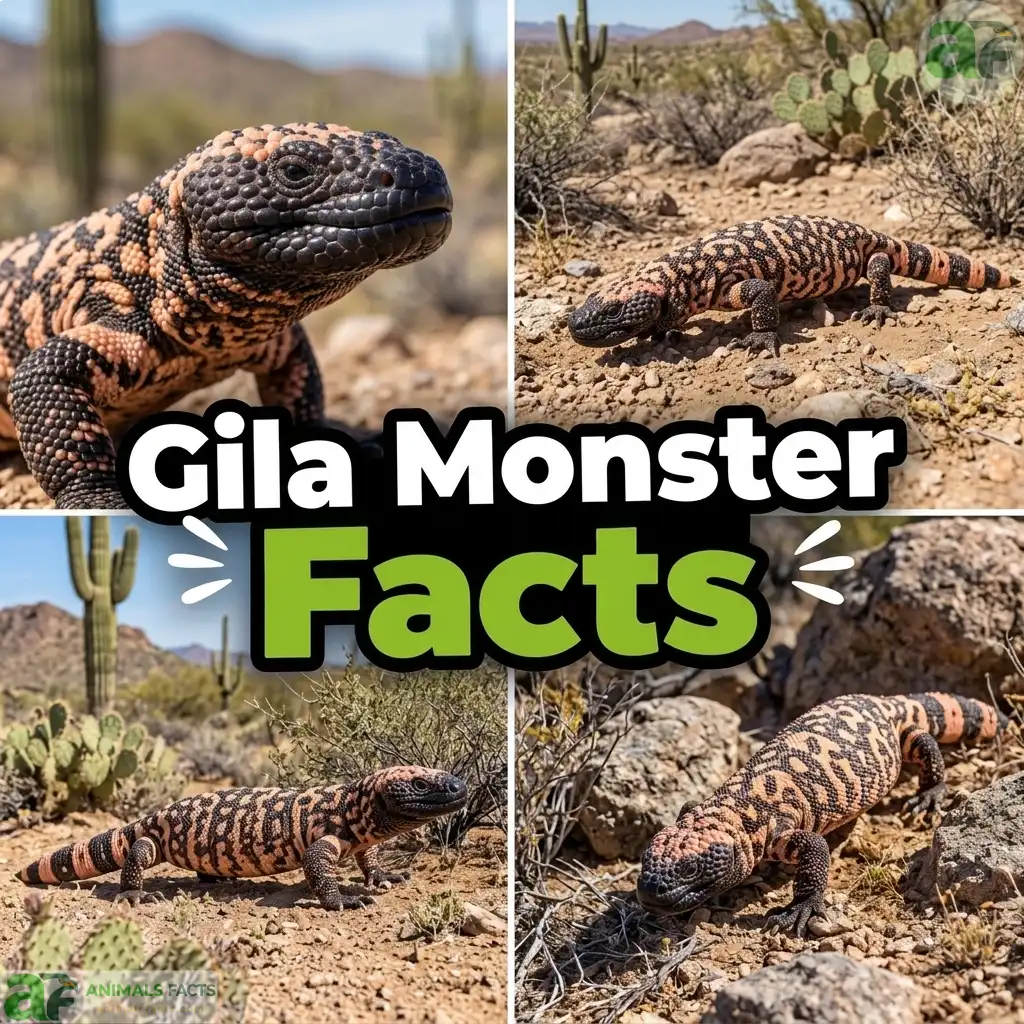
Gila Monster Facts
| Feature | Details |
|---|---|
| Scientific Name | Heloderma suspectum (Cope, 1869) |
| Kingdom | Animalia |
| Phylum | Chordata |
| Class | Reptilia |
| Order | Squamata |
| Family | Helodermatidae |
| Common Names | Gila monster; Gila lizard |
| Native Range | Southwestern United States and northwestern Mexico |
| Habitat | Sonoran Desert, Mojave Desert, Great Basin Desert scrub, rocky foothills, oak woodland |
| Lifespan | 20–30 years (wild); up to 36 years (captivity) |
| Diet | Eggs (bird, reptile), small mammals, birds, lizards, carrion — highly opportunistic |
| Body Length | 38–56 cm — one of North America’s largest native lizards |
| Weight | 350 grams to 2.3 kg |
| Top Speed | Approximately 1.5 km/h walking; short bursts faster |
| Conservation Status | Near Threatened (IUCN) — declining across much of range |
| Defining Feature | One of only two venomous lizard species native to North America |
| Venom System | Unique groove-channeled lower jaw venom glands — no true hollow fangs |
| Activity | Spends approximately 98% of its life underground |
| Medical Significance | Venom compound exendin-4 led directly to development of diabetes drug Byetta |
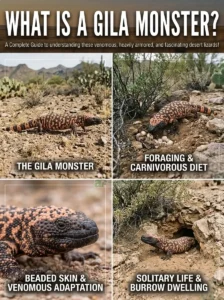 1. Introduction: What is a Gila Monster?
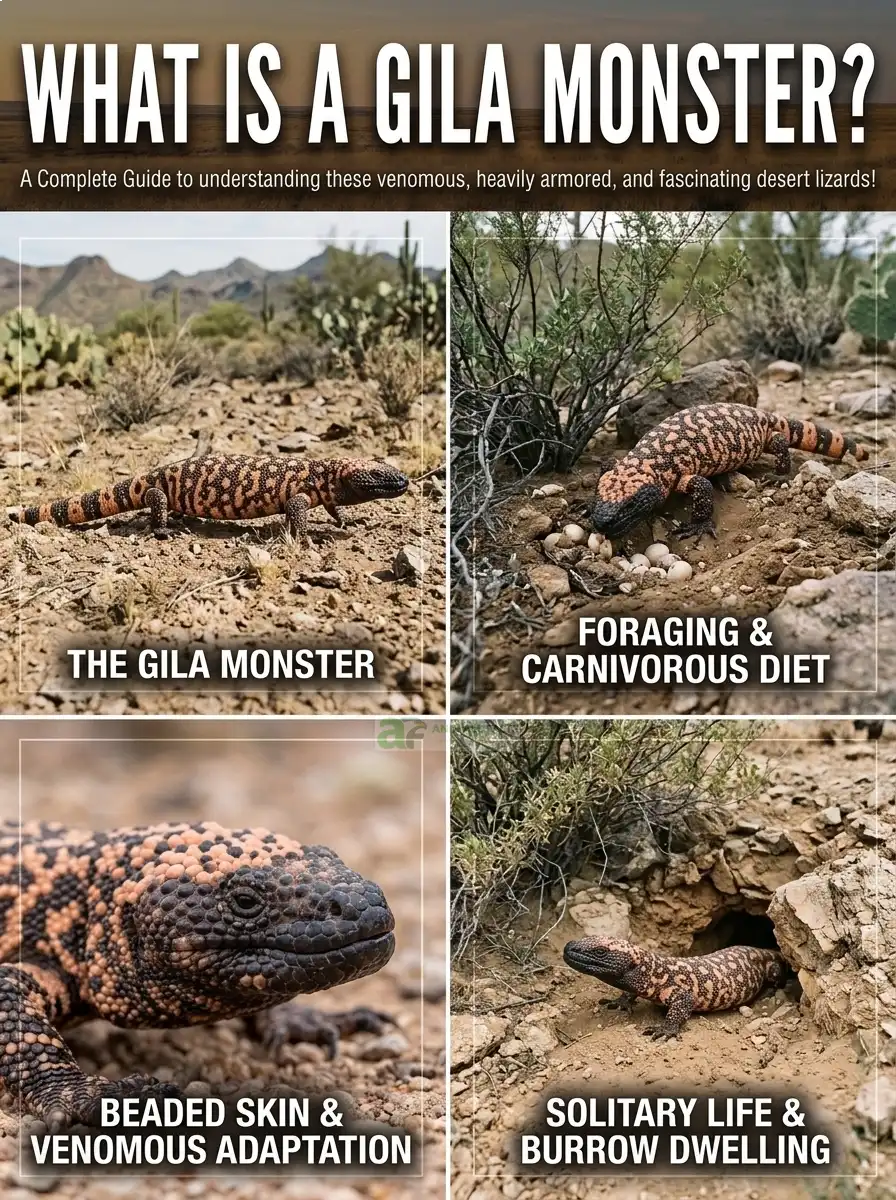
In the rocky foothills of the Sonoran Desert in Arizona, in the brief window of a spring morning before the sun climbs high enough to make surface activity dangerous, a slow-moving, heavily beaded lizard emerges from beneath a desert boulder and begins making its way across the caliche soil with the deliberate, swinging gait of an animal that has been doing exactly this for 98 million years of evolutionary time. It is patterned in orange and black — colors that are not camouflage but warning — and it moves with a patience that reflects its fundamental biological reality: this animal needs to be in a hurry approximately 2% of the time. The other 98% of its life is spent underground, in the cool dark of burrows and rock crevices, metabolizing with the extraordinary efficiency of a reptile that has mastered the art of doing more with less than almost any other vertebrate on Earth. Gila monster facts begin with this image — one of the most extraordinary and most misunderstood animals in North America, officially venomous, officially protected, officially the subject of one of the most important medical discoveries of the 21st century, and almost always invisible to the humans who share its desert landscape.
The Gila monster (Heloderma suspectum) is a biological paradox wrapped in orange-and-black beaded skin. It is one of only two venomous lizard species native to the entire North American continent — yet the venom it evolved over millions of years has saved more human lives than it has threatened, through its role in the development of exenatide (Byetta) — the first in a class of diabetes drugs derived directly from a Gila monster venom compound that has transformed the treatment of Type 2 diabetes globally. It is large enough to be North America’s second-largest native lizard — yet spends so much of its life underground that most people who live within its range have never seen one. It moves so slowly that escape from a healthy human is trivially easy — yet has been so feared throughout human history that multiple US states enacted laws specifically protecting it long before the concept of endangered species protection existed in American law, precisely because irrational fear was driving people to kill every Gila monster they saw.
Interesting facts about Gila monsters reveal an animal of breathtaking biological sophistication — a fat-storage tail that functions as an energy bank precisely calibrated for the desert’s punishing seasonal extremes; a venom delivery system so anatomically unusual that it required the complete revision of scientific understanding of how venomous lizards work; a lifespan of up to 36 years in captivity that makes it one of North America’s longest-lived lizards; a metabolic rate so low that a single large meal can sustain the animal for months; and a chemical signature in its venom that — through the extraordinary chain of events connecting desert herpetology to molecular pharmacology — produced a drug now used by millions of diabetic patients worldwide. Whether you are searching for Gila monster facts for kids, a wildlife enthusiast wanting to understand this remarkable desert predator, a medical history enthusiast fascinated by the drug discovery story, or simply someone who encountered this spectacular lizard on a desert hike and needed to understand everything about it immediately — this is your comprehensive guide. North America’s most venomous lizard has an extraordinary story to tell.
2. Gila Monster Species Overview & Classification
The Gila monster belongs to the family Helodermatidae — one of the most evolutionarily ancient lizard families — and is the most familiar member of a small genus of venomous lizards distributed across the American Southwest and Central America.
Species Classification Table
| Taxonomic Rank | Classification |
|---|---|
| Kingdom | Animalia |
| Phylum | Chordata |
| Class | Reptilia |
| Order | Squamata |
| Suborder | Lacertilia |
| Family | Helodermatidae (Gray, 1837) |
| Genus | Heloderma (Wiegmann, 1829) |
| Species | H. suspectum (Cope, 1869) |
| Common Name | Gila monster |
| Etymology | Heloderma = “studded skin” (Greek: helos = nail/stud + derma = skin); suspectum = “suspected” (Latin) — referring to the suspicion of venom that existed before formal scientific confirmation; named for the Gila River of Arizona |
Two Subspecies
Two subspecies of Gila monster are currently recognized — distinguished by coloration pattern and geographic range:
| Subspecies | Common Name | Range | Coloration Pattern |
|---|---|---|---|
| H. s. suspectum | Reticulate Gila monster | Southern Arizona, extreme southwestern New Mexico, northwestern Mexico (Sonora) | Broken, irregular pattern of orange/pink and black — more mottled |
| H. s. cinctum | Banded Gila monster | Utah, Nevada, extreme southwestern Colorado, extreme northwestern Arizona | More distinct transverse bands of orange/pink alternating with black |
The Helodermatidae Family
The Gila monster belongs to a small, ancient family with a disproportionate scientific significance:
| Species | Common Name | Range | Weight | IUCN Status |
|---|---|---|---|---|
| Heloderma suspectum | Gila monster | SW USA, NW Mexico | Up to 2.3 kg | Near Threatened |
| Heloderma horridum | Mexican beaded lizard | Mexico, Guatemala | Up to 4 kg | Least Concern |
| Heloderma alvarezi | Black-chested beaded lizard | Chiapas, Mexico | Up to 3 kg | Endangered |
| Heloderma charlesbogerti | Guatemalan beaded lizard | Guatemala | ~600 g | Critically Endangered |
| Heloderma exasperatum | Rio Fuerte beaded lizard | Sinaloa, Mexico | Up to 3 kg | Least Concern |
The Relationship with Varanids — The Varanoid Superfamily
The Helodermatidae is classified within the Toxicofera — the clade of reptiles that evolved venom-producing capability — and is most closely related to the monitor lizards (Varanidae) and the extinct marine mosasaurs within the broader Varanoidea superfamily:
- The relationship between Helodermatidae and Varanidae was controversial for decades — the two families sharing a common ancestor but having diverged substantially in body plan and ecology
- The venom systems of Gila monsters and monitor lizards (including Komodo dragons) share evolutionary origins within the Toxicofera — suggesting that venom evolved once in the common ancestor of this group rather than independently in each family
Evolution — An Ancient Lineage
The Helodermatidae is one of the most evolutionarily ancient lizard families — with fossil evidence suggesting remarkable morphological conservatism over tens of millions of years:
~98 million years ago — Fossil helodermatids (Eurheloderma, Paraderma) appear in the fossil record of North America — establishing the family as one of the oldest continuously documented lizard lineages. The Cretaceous helodermatids were already recognizably similar in body plan to modern Gila monsters — the “living fossil” characterization has genuine basis in the fossil record.
~40 million years ago — Helodermatid diversity peaks in North America — multiple genera and species occupy ecological niches across what is now the United States and Mexico.
~5–10 million years ago — The Helodermatidae contracts in diversity — most genera go extinct as North American climates become more arid, leaving only the genus Heloderma as the surviving lineage.
1869 — American herpetologist Edward Drinker Cope formally describes the species as Heloderma suspectum — the species name reflecting the suspicion of venom that already existed in popular knowledge but had not yet been formally confirmed.
1882 — The venom of Heloderma suspectum is formally confirmed through experimental studies — establishing the species as definitively venomous and triggering the legal protections that would follow.
1952 — Arizona becomes the first US state to formally protect the Gila monster under state law — one of the earliest state-level wildlife protection statutes for a specific reptile species in American legal history.
1990s–2000s — Researcher John Eng at the Veterans Affairs Medical Center in New York discovers exendin-4 in Gila monster venom and its glucose-regulating properties — the discovery that leads directly to the development of exenatide (Byetta), approved by the FDA in 2005 as the first GLP-1 receptor agonist diabetes drug.
2024 — Heloderma suspectum maintains its Near Threatened IUCN classification — with declining populations across much of the range driven by habitat loss, illegal collection, and climate change.
“The Gila monster is one of the most remarkable examples of evolutionary conservatism in the vertebrate world — an animal that has barely changed in 98 million years, that has spent most of its life underground during all of those 98 million years, and that turns out to contain in its venom one of the most medically important molecules discovered in the last quarter century. It is what happens when evolution gets it right the first time and has no reason to change.”
— Dr. Daniel Beck, Central Washington University, author of the definitive scientific monograph on Gila monster biology
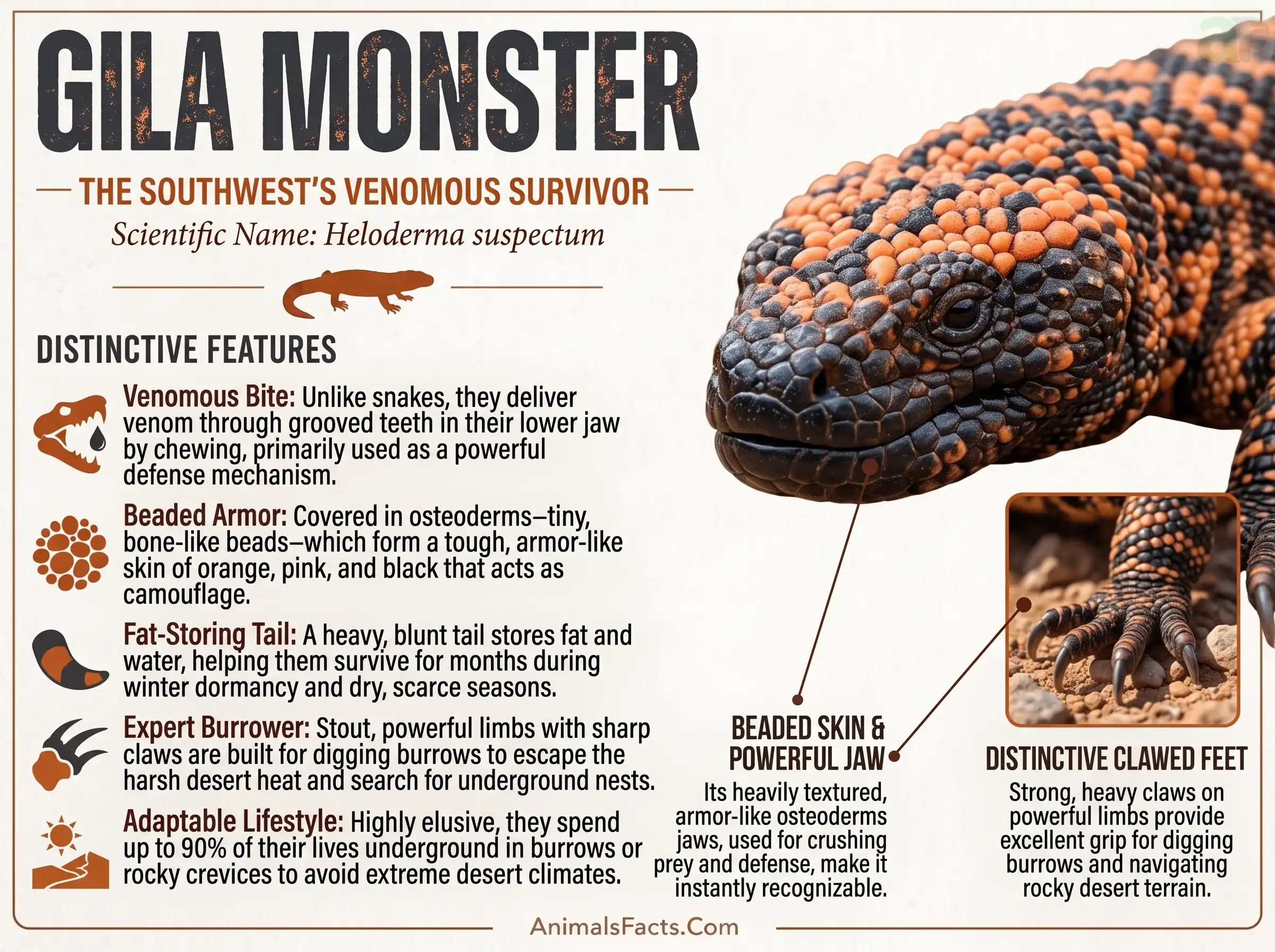
3. Gila Monster Physical Description & Unique Features
Gila monster size and weight make it one of North America’s most impressive native lizards — at 38–56 cm body length and up to 2.3 kg, it is the second-largest lizard native to the United States (after the Mexican beaded lizard, which extends marginally into the US in some accounts).
The Beaded Skin — Osteoderms as Armor and Warning
The Gila monster’s most immediately distinctive physical feature is its beaded skin — the small, rounded, non-overlapping scales that cover the dorsal surface:
Osteoderms — Each rounded scale on the Gila monster’s back contains a small osteoderm — a bony nodule embedded within the scale. These bony inclusions give the scales their rounded, bead-like appearance and provide significant mechanical protection to the dorsal surface.
Why rounded scales? — Unlike the overlapping scales of most lizards, the Gila monster’s rounded, non-overlapping scales allow greater flexibility of the body — important for navigating rocky terrain and burrowing through soil. The osteoderm inclusions provide the protection that scale overlap normally provides, but without sacrificing mobility.
The warning coloration — The dramatic orange/pink and black pattern of the Gila monster is aposematic (warning coloration) — advertising the animal’s venomous nature to potential predators. Unlike most desert reptiles (which are cryptically colored to match the environment), the Gila monster is designed to be seen and recognized as dangerous.
Pattern variation — The two subspecies show distinct pattern expressions:
- H. s. suspectum (Reticulate): broken, irregular blotches of orange on black — a “reticulated” or net-like pattern
- H. s. cinctum (Banded): more distinct transverse bands of orange alternating with black — a “banded” pattern that gives the subspecies its name
The Fat-Storage Tail — The Desert Energy Bank
One of the Gila monster’s most biologically important physical features is its thick, cylindrical tail — a specialized fat-storage organ:
Function — The Gila monster stores fat in its tail — accumulating reserves during periods of abundant food (spring and early summer) and metabolizing those reserves during the long periods of inactivity (late summer through winter) when surface activity is minimal. The tail’s fatness is a reliable indicator of the animal’s nutritional condition — a fat, rounded tail indicates good condition; a thin, shrunken tail indicates recent starvation or illness.
The tail-to-body ratio — A well-fed Gila monster has a tail that is thick and rounded in cross-section — nearly as wide as the body behind the pelvis. A starving individual has a dramatically thinner tail as fat reserves are depleted.
Metabolic context — The fat-storage tail is part of a broader metabolic strategy of extraordinary efficiency — see the Diet section for details on the Gila monster’s remarkable energy economy.
Comparison to Gila River — The species’ common name — Gila monster — refers to the Gila River of Arizona, where early European-American settlers frequently encountered the species. The “monster” designation reflects the fear the venomous lizard inspired rather than its actual size (which is modest by world reptile standards).
The Venom System — Anatomically Unique
The Gila monster’s venom delivery system is anatomically distinct from that of venomous snakes and represents an independent evolutionary solution to the problem of venom delivery:
Venom glands — The venom glands are located in the lower jaw (unlike snakes, which have venom glands behind the upper jaw). The glands open through ducts near the base of the grooved lower teeth.
No hollow fangs — Unlike venomous snakes, the Gila monster has no hollow fangs. Instead, venom travels along grooves on the surface of the lower jaw teeth through capillary action — the chewing action of the jaws drawing venom up the grooves and into the wound.
The chewing requirement — The Gila monster must chew to deliver venom effectively — the pumping action of the jaw muscles driving venom up the tooth grooves. This is why Gila monster bites involve characteristic tenacious grip and chewing — the animal is actively working the venom into the wound. A brief contact bite delivers minimal venom; a sustained chewing bite delivers the full venom load.
The evolutionary context — The Gila monster’s lower-jaw venom gland system was considered for many years to be entirely separate in origin from snake venom systems. More recent molecular research suggests both systems evolved from a common Toxicofera ancestral venom system — the Gila monster representing one evolutionary elaboration of this ancient capability and snakes representing another.
The Tongue and Chemosensory System
Like other lizards, the Gila monster uses a forked tongue and Jacobson’s organ for chemosensory detection — but with important differences from the Komodo dragon’s system:
Tongue color — The Gila monster’s tongue is pink to pale — contrasting with the yellow tongue of the Komodo dragon.
Detection range — The Gila monster’s chemosensory system is effective at detecting prey scents at distances of several hundred meters — impressive but not comparable to the Komodo dragon’s 9.5 km range. The Gila monster’s prey detection needs are met by shorter-range detection appropriate to its predominantly underground lifestyle.
Primary use — The chemosensory system is used primarily for egg detection — locating buried bird and reptile eggs that constitute a primary prey category — and for detecting the residual scent trails of small mammals near burrow entrances.
💡 Did You Know? The Gila monster’s family name Helodermatidae translates literally as “studded skin lizards” — from the Greek helos (nail or stud) and derma (skin). This name perfectly captures the most immediately visible feature of the Gila monster’s appearance — the rounded, bead-like scales that give the entire family its distinctive tactile and visual character. The family name was established in 1837 by the British zoologist John Edward Gray — making it one of the earliest established lizard family names still in current use. The remarkable thing about the Helodermatidae name is that Gray was describing skin texture as the defining family characteristic — unknowingly identifying the osteoderms (bony inclusions within the scales) that are now understood to be among the most important anatomical features distinguishing this ancient family from other lizard groups.
4. Top 25 Amazing Gila Monster Facts
Here is your definitive collection of the most extraordinary, scientifically verified, and genuinely astonishing Gila monster facts as of 2026:
- The Gila monster spends approximately 98% of its life underground — in burrows, rock crevices, and beneath boulders. The total annual surface activity time of a Gila monster in the wild averages only 100–200 hours per year — the rest spent in underground refugia metabolizing slowly on stored fat reserves.
- A compound found in Gila monster venom — exendin-4 — directly led to the development of exenatide (Byetta), approved by the FDA in 2005 as the first GLP-1 receptor agonist diabetes drug. This drug class, initially inspired by the Gila monster venom compound, has since expanded to include drugs like semaglutide (Ozempic and Wegovy) — among the most prescribed and most commercially significant pharmaceuticals in the world in the 2020s.
- The Gila monster is one of only two venomous lizard species native to North America — the other being its close relative, the Mexican beaded lizard (Heloderma horridum). All other North American lizard species are non-venomous.
- The Gila monster’s venom glands are in the lower jaw — the opposite arrangement from venomous snakes (whose glands are behind the upper jaw). There are no hollow fangs — venom travels along grooves on the lower teeth through capillary action driven by jaw chewing movements.
- The Gila monster can store enough fat in its tail to survive without eating for several months to over a year — a metabolic efficiency that allows it to sustain its minimal energy requirements through the long inactive periods of the desert year.
- The Gila monster has fossil relatives dating back approximately 98 million years to the Cretaceous period — making the Helodermatidae one of the oldest continuously documented lizard family lineages in the fossil record. The basic body plan has remained essentially unchanged for tens of millions of years.
- Despite having venom, the Gila monster is not considered a significant threat to healthy adult humans — documented fatalities from Gila monster bites are extremely rare (fewer than 10 confirmed cases in all of recorded history), and modern medical treatment makes even severe envenomations survivable.
- Arizona became the first US state to formally protect the Gila monster under state law in 1952 — one of the earliest state-level wildlife protection statutes for a specific reptile in American legal history. The protection was motivated primarily by the species’ decline from irrational killing driven by unfounded fear.
- The Gila monster’s scientific name Heloderma suspectum contains the word “suspected” — reflecting the scientific community’s initial uncertainty about whether this lizard was truly venomous. Early naturalists suspected venom but the formal confirmation through experimental evidence took decades.
- A Gila monster can eat up to 50% of its body weight in a single meal — consuming an entire clutch of bird or reptile eggs, or a large rodent, in one feeding event. This single meal may represent the majority of the animal’s food intake for the entire year.
- The Gila monster is legally protected across its entire US range — it is illegal to collect, harm, or possess a Gila monster without appropriate permits in Arizona, Nevada, Utah, New Mexico, and California.
- The Gila monster has a venom that is primarily defensive rather than predatory — it uses constriction, jaw strength, and terrain navigation to capture prey rather than relying on venom to immobilize it. The venom is most important in predator defense — producing intense pain in any animal that bites or harasses a Gila monster.
- Gila monsters are primarily egg eaters — their most ecologically important prey category consists of the eggs of ground-nesting birds, reptile eggs, and the contents of rodent nests. The specialized chemosensory capability for detecting buried eggs is among the most refined in any North American reptile.
- Female Gila monsters lay 2–12 eggs (typically 5–8) in July or August — the eggs overwintering underground and hatching the following April or May. The incubation period of approximately 9–10 months is one of the longest of any North American lizard.
- Gila monster home ranges of adult males average approximately 10–15 hectares in good habitat — the animals traversing their entire range over the course of the active season through multiple movement bouts separated by extended underground retreats.
- The Gila monster produces a distinctive musk secretion from cloacal glands when threatened — the musk serves as a chemical deterrent and individual identification signal. This musk, combined with the aposematic coloration, provides multiple layers of predator deterrence.
- Research using radio-telemetry has documented that individual Gila monsters maintain remarkable site fidelity — returning to the same burrow sites, the same foraging areas, and the same hibernation sites year after year with extraordinary precision, demonstrating detailed spatial memory of their home range.
- The Gila monster’s metabolic rate is approximately 60% lower than equivalent-sized lizards of other families — a metabolic suppression that is the fundamental basis for its ability to sustain life on minimal annual food intake. This metabolic efficiency is achieved through physiological adaptations at the cellular level.
- During periods of extreme heat, Gila monsters practice estivation — a torpor-like state of reduced metabolism during summer heat comparable to hibernation during winter cold. A Gila monster may experience both winter hibernation and summer estivation, with active periods only in the temperate spring and autumn months.
- The Gila monster was the subject of one of the earliest wildlife protection controversies in American legal history — public debates about whether a venomous animal “deserved” legal protection mirrored arguments that would resurface in the Endangered Species Act debates of the 1960s–1970s.
- Gila monster venom contains multiple biologically active compounds including exendin-4 (the diabetes drug precursor), helothermine (a neurotoxic compound affecting calcium channels), gilatoxin (a serine protease affecting blood clotting), and serotonin — a pharmacological complexity that has made the venom a productive source for drug discovery research.
- The Gila monster’s tongue is used for scent tracking along the soil surface — the animal follows the scent trails of prey by tongue-flickering close to the ground. This ground-level scent tracking is particularly effective for locating the buried egg caches of desert-nesting birds and reptiles.
- Juvenile Gila monsters are more vividly patterned than adults — the bright orange-and-black banding being particularly distinct in hatchlings and young individuals. The vivid coloration of juveniles may provide stronger aposematic signaling to naive predators that have not previously encountered the species.
- The Gila monster has been documented in elevations from sea level in the Gulf Coast lowlands of Sonora to over 1,500 meters in the mountain foothills of Arizona and New Mexico — an elevation range substantially greater than early natural history accounts suggested.
- As of 2026, the Gila monster faces increasing pressure from urban expansion in the Phoenix, Tucson, and Las Vegas metropolitan areas — the species’ core US range coinciding with some of the fastest-growing urban areas in North America. Climate change is predicted to shift the species’ suitable habitat northward and upward in elevation — potentially reducing total available habitat by 20–45% by 2080 under moderate warming scenarios.
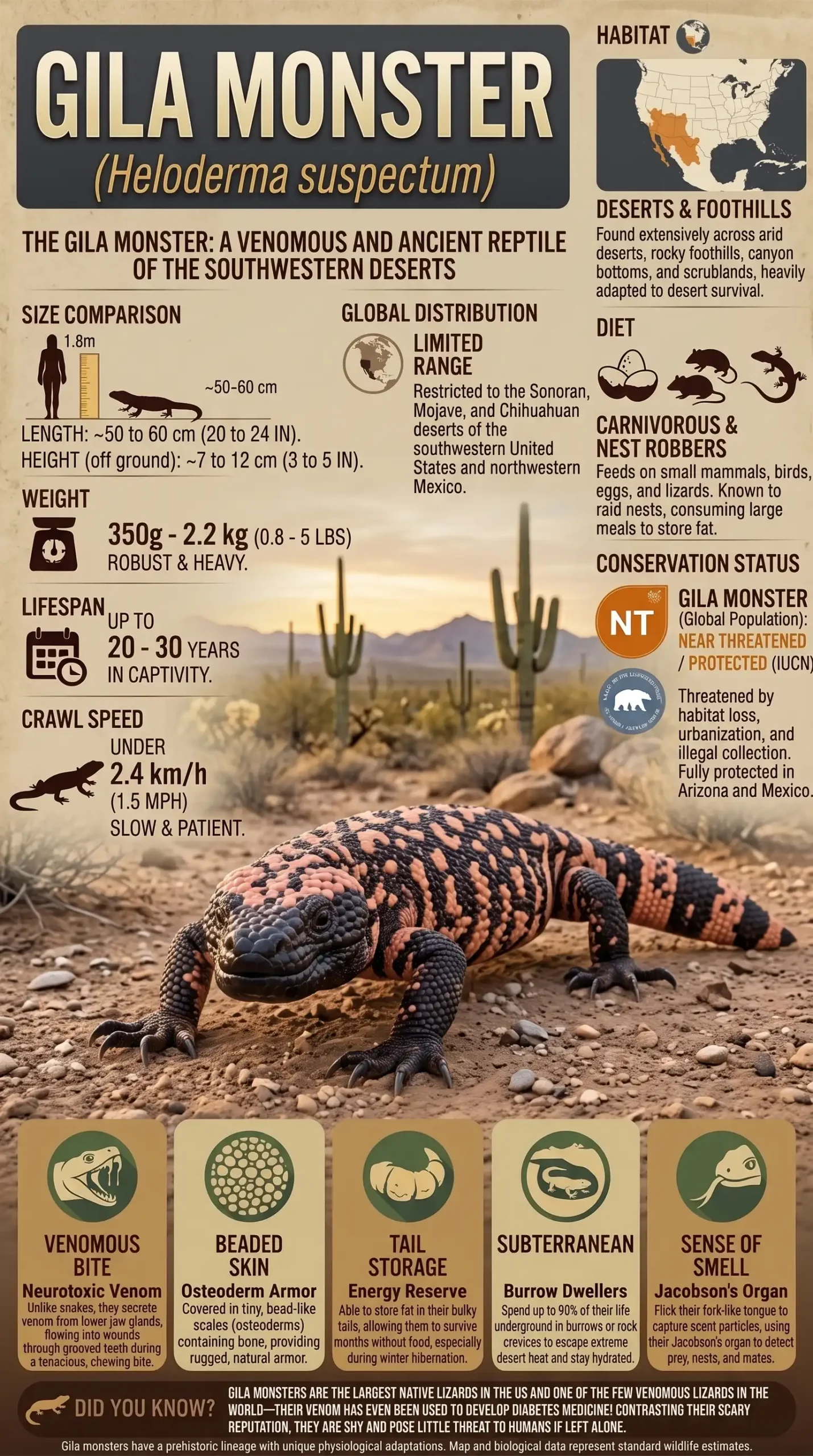
5. Fun Facts Gila Monsters
- Spends 98% of life underground — only active ~100–200 hours per year
- Venom compound directly inspired Ozempic and Wegovy weight loss drugs
- One of only two venomous lizards in all of North America
- Venom glands in lower jaw — no hollow fangs; must chew to deliver venom
- Can survive months to over a year on fat stored in tail
- Fossil relatives from 98 million years ago — Cretaceous period
- Fewer than 10 confirmed human fatalities in recorded history
- Arizona protected it in 1952 — one of the USA’s first reptile protection laws
- Can eat 50% of body weight in one meal
- Eggs incubate for 9–10 months underground — among longest in North American lizards
- Follows scent trails with tongue flat against the ground
- Urban expansion is reducing habitat across the Phoenix and Las Vegas metro areas
6. Gila Monster Habitat & Geographic Range
Gila monster habitat is restricted to the desert and semi-arid environments of the American Southwest and northwestern Mexico — a geographic range centered on the Sonoran Desert with extensions into adjacent desert and semi-arid zones.
Core Habitat Requirements
Rocky terrain — The Gila monster’s most consistent habitat requirement; rocky slopes, boulder fields, canyon walls, and rocky desert washes provide the burrow sites, sheltering crevices, and thermal regulation opportunities the species requires. Rocky terrain also provides protection from predators and access to the rock-cavity dens used for hibernation.
Presence of underground shelter — Gila monsters use burrows extensively — both self-excavated burrows and those dug by other species (primarily badgers and ground squirrels). Habitats lacking adequate underground shelter cannot support permanent Gila monster populations.
Prey availability — The presence of ground-nesting bird species, reptiles that produce accessible eggs, and small mammal populations is essential — the Gila monster’s diet depends on these prey categories being available during its brief active season.
Moderate elevation — In Arizona and New Mexico, Gila monsters are most common between 300 and 1,500 meters elevation — avoiding the most extreme low-elevation desert basins where temperatures are too extreme, and the high-elevation ponderosa pine forests where prey diversity is insufficient.
Habitat Types
Sonoran Desert scrub — The primary habitat; rocky desert scrub with saguaro cactus, palo verde, and mesquite provides the combination of rocky shelter sites and prey abundance that supports the highest Gila monster densities.
Mojave Desert scrub — Present in Nevada, extreme southwestern Utah, and California portions of the Mojave Desert — the banded Gila monster subspecies (H. s. cinctum) is the characteristic form here.
Great Basin Desert margins — The northernmost range of the banded subspecies extends into Great Basin Desert scrub in southern Utah and Nevada.
Desert grassland and oak woodland — The transition zone between desert and grassland or woodland provides productive habitat — the higher prey diversity of these ecotones supporting good Gila monster populations in southeastern Arizona and southwestern New Mexico.
Riparian corridors — Desert rivers and streams provide productive Gila monster habitat — the higher vegetation density, prey diversity, and moisture availability of riparian zones supporting notable concentrations in some areas.
Geographic Distribution
| State/Region | Subspecies | Status | Notes |
|---|---|---|---|
| Arizona | Both; suspectum dominant | Common in suitable habitat | Core US range |
| Nevada | cinctum | Present — scattered | Desert regions |
| Utah | cinctum | Present — near northern range limit | Washington County area |
| New Mexico | suspectum | Southwestern corner | Limited range |
| California | cinctum | Extreme southeast only | Very limited |
| Sonora, Mexico | suspectum | Present — less studied | Significant population |
| Baja California (N) | suspectum | Marginally present | Limited records |
💡 Did You Know? The Gila monster’s name refers to the Gila River — the major river of Arizona that flows westward across the state to join the Colorado River near Yuma. The Gila River basin was one of the first areas explored by American naturalists in the Southwest following the US-Mexico War of 1846–1848, and the abundant Gila monsters encountered by these early naturalists in the river’s tributary washes and rocky hillsides gave the species its geographic name. The river itself takes its name from the Yuma (Quechan) word hah-quah-seel (pronounced hah-kwah-EEL) for the Cocopah people, later corrupted through Spanish to “Gila.” The naming chain — Quechan word to Spanish corruption to American river name to lizard common name — is a perfect microcosm of the cultural layering of the American Southwest.
7. Gila Monster Diet & Feeding Behavior
Gila monster diet is one of the most specialized of any North American lizard — the combination of its underground lifestyle, chemosensory capabilities, and metabolic efficiency creating a feeding ecology precisely calibrated for desert seasonality and the specific prey resources available during its brief active season.
Diet Breakdown Table
| Food Type | Estimated % of Diet | Season | Notes |
|---|---|---|---|
| Bird eggs | ~35–50% | Spring (primary); some fall | Ground-nesting bird eggs detected by chemosense |
| Lizard and reptile eggs | ~20–30% | Spring–summer | Including other desert lizard clutches |
| Small mammals | ~15–25% | Spring | Neonatal rabbits, rodent pups — particularly vulnerable young |
| Young birds (nestlings) | ~5–10% | Spring | Ground-nesting species; helpless nestlings |
| Lizards (adult/subadult) | ~3–5% | Occasional | Slower or smaller desert lizards |
| Carrion | ~2–5% | Opportunistic | Less common; detected by scent |
| Insects and invertebrates | ~1–3% | Occasional | Particularly for juveniles |
The Extreme Metabolic Efficiency
The Gila monster’s dietary biology is inseparable from its extraordinary metabolic efficiency — the two aspects of its biology reinforcing each other to produce one of the most energy-efficient lifestyles of any North American vertebrate:
Annual food requirement — Research by Daniel Beck and other Gila monster ecologists has established that many wild Gila monsters consume only 3–5 meals per year — an annual food intake that would represent approximately one day’s food for a comparable-sized mammal.
Caloric calculation — A Gila monster weighing 400 grams may consume a single clutch of quail eggs (8 eggs, approximately 80 grams) in a meal — representing approximately 150 kcal. Three to five such meals per year (450–750 kcal annually) sustains an animal that, as a mammal, would require approximately 20 times that caloric intake for basic metabolic maintenance.
The metabolic suppression — The approximately 60% lower metabolic rate compared to other lizard families is achieved through cellular metabolic regulation — reduced enzymatic activity, lowered body temperature during inactivity, and physiological state changes during dormancy that reduce energy expenditure to near-zero during the extended underground periods.
The Egg-Detection Superpower
The Gila monster’s most impressive dietary behavior is its ability to detect and excavate buried eggs:
The chemosensory search — The Gila monster moves through its territory with its tongue flickering close to the soil surface — following scent gradients of buried eggs from distances of several meters. The detection of buried eggs through overlying soil is possible because volatile compounds from eggs slowly diffuse through porous desert soils.
The excavation — Once an egg cache is located, the Gila monster excavates using its front legs — digging with rapid scratching movements to a depth of 10–30 cm where bird and reptile eggs are typically cached.
The consumption method — Eggs are consumed whole, crushed in the jaws, and the contents swallowed. Thick-shelled eggs may be punctured repeatedly with the lower jaw teeth before swallowing.
The seasonal timing — The spring emergence of Gila monsters coincides precisely with the nesting season of ground-nesting birds in the Sonoran Desert — the lizard’s activity cycle is calibrated to the availability of this primary prey resource.
The Neonatal Mammal Prey
The second most important prey category — neonatal small mammals — is similarly timed to prey vulnerability:
The target — Newborn cottontail rabbits, jackrabbits, and various rodent species — born blind, helpless, and concentrated in shallow burrow nests — are detected through scent and consumed before they can escape.
The detection — The Gila monster locates natal burrows by scent — the distinctive chemical signature of neonatal mammals diffusing from nest burrow openings.
The caloric value — A clutch of neonatal rabbits (5–7 individuals, each 10–15 grams) represents approximately the same caloric value as a clutch of bird eggs — a significant single-meal energy acquisition.
8. Gila Monster Reproduction & Life Cycle
Gila monster reproduction is characterized by an extraordinarily long incubation period, careful nest site selection, and the complete absence of parental care following egg-laying.
Mating System
Mating season — May through June — the period of maximum spring activity before summer heat drives Gila monsters underground.
Male combat — Males engage in wrestling contests for mating access — two males intertwine and attempt to pin each other to the ground. These contests can last for hours and are among the most dramatic social interactions documented in any North American lizard.
The wrestling sequence — Males approach, orient in parallel, and then begin a slow wrestling match — each attempting to throw the other onto its back by applying pressure with the body. The winner maintains body pressure while the loser attempts to right itself. After sufficient wrestling, the loser withdraws.
Mating — The victorious male courts the female through tongue-flicking contact and body alignment. Mating involves the male inserting one of the paired hemipenes while grasping the female with his jaws.
Nesting and Egg-laying
- Nesting season: July–August — relatively late compared to most North American lizards
- Nest site selection: The female selects a south-facing slope in loose, sandy or loamy soil — site selection is critical and reflects considerable behavioral investment. The south-facing orientation maximizes solar warming of the nest during the cool winter and spring incubation period
- Nest depth: typically 12–30 cm below the soil surface
- Clutch size: typically 5–8 eggs (range 2–12)
- Egg size: approximately 6 cm × 3 cm — relatively large for a lizard of this body size
- Parental investment: the female abandons the nest immediately after covering the eggs — no parental care of any kind follows egg-laying
The Extraordinary Incubation Period
The Gila monster’s incubation period is one of the most remarkable aspects of its reproductive biology:
Duration — approximately 9–10 months — from July/August egg-laying to April/May hatching. This is one of the longest incubation periods of any North American lizard and approaches the incubation durations of some large monitor lizard species.
Winter dormancy — The eggs develop slowly through the cool winter months — the development rate being temperature-dependent and nearly halting during the coldest winter periods. The extended incubation is a consequence of the cool desert winter rather than a specific biological requirement for long development.
The hatching timing — Hatching in April–May precisely coincides with the peak spring active period when prey (bird eggs, neonatal mammals) is most available — the timing of hatching calibrated by evolutionary selection to the prey availability calendar of the Sonoran Desert.
Hatchling Biology
Hatchling size: approximately 16–18 cm total length; 8–10 grams body weight
Immediate independence: hatchlings are born with functional venom glands and are capable of delivering a venomous bite immediately — unlike many other venomous reptiles, the Gila monster’s defensive capability is present from birth
Juvenile diet: hatchlings focus on small insects and invertebrates before graduating to eggs and small vertebrates as they grow
Growth rate: relatively slow — Gila monsters take approximately 4–5 years to reach sexual maturity
Lifespan Table
| Species | Wild Lifespan | Max Captive | Sexual Maturity |
|---|---|---|---|
| Gila monster | 20–25 years | 36 years | 4–5 years |
| Mexican beaded lizard | 20+ years | 30+ years | 5–6 years |
| Komodo dragon | ~30 years | 30+ years | 8–10 years |
| Chuckwalla | 15–20 years | 25 years | 2–3 years |
| Desert tortoise | 50–80 years | 100+ years | 15–20 years |
9. Social Behavior & Communication
Gila monster social behavior is primarily asocial — the species’ predominantly underground lifestyle limits most social interaction to brief encounters during the active season. However, the documented social behaviors — particularly male combat and the evidence for individual recognition — are more complex than simple solitary reptile characterizations suggest.
Social Organization
Primarily solitary — Adult Gila monsters spend the overwhelming majority of their time in individual burrow systems, without sustained social associations.
Overlapping home ranges — Male home ranges overlap significantly with each other and with female ranges — the spatial organization is not one of exclusive territories but of overlapping areas where encounters occur during the active season.
Male-male competition — The most significant social interaction; males encounter each other during the brief active season and engage in the wrestling contests described above. The outcome determines mating access for that season.
Seasonal aggregation — In areas of limited suitable hibernation sites, multiple Gila monsters may overwinter in proximity — a practical aggregation driven by site scarcity rather than social affiliation.
Communication
Chemical communication — The primary channel; tongue-flickering samples the chemical landscape for information about other individuals — sex, identity, reproductive status, and recent history of passage through the area.
Visual signaling — The aposematic coloration is a continuous visual signal to any observing animal. Defensive posturing — body flattening, gaping display, arching the back — provides additional visual signals to threatening animals.
Vocal communication — Gila monsters produce a distinctive hissing sound during defensive encounters — one of the more impressive reptilian threat sounds, produced by forceful exhalation.
Cloacal musk — The musk secreted when threatened provides both a deterrent chemical and an individual scent mark.
Individual Recognition Research
Research using radio-telemetry and behavioral observation has documented that individual Gila monsters respond differently to chemical signals from different individuals — suggesting a capacity for individual chemical recognition that underlies the social spacing system and potentially the wrestling contest assessment system.
10. Predators & Defense Mechanisms
The Gila monster faces a range of natural predators — particularly as juveniles — and has evolved a multi-layered defense system based on warning coloration, venom, and behavioral deterrence.
Natural Predators
Predators of adults:
- Coyotes (Canis latrans) — The most documented predator of adult Gila monsters; coyotes occasionally overcome Gila monster defenses through persistence, attacking the softer ventral surface
- Birds of prey — Harris’s hawks, red-tailed hawks, and great horned owls occasionally take adult Gila monsters, particularly smaller individuals
- Badgers (Taxidea taxus) — Documented excavating Gila monster burrows and consuming both adults and eggs
- Humans — Historically the most significant source of adult mortality through deliberate killing; modern legal protections have reduced but not eliminated this threat
Predators of juveniles and eggs:
- Kingsnakes (Lampropeltis species) — Resistant to Gila monster venom and documented consuming juvenile Gila monsters
- Coachwhips (Masticophis flagellum) — Fast desert snakes that take juvenile lizards
- Roadrunners (Geococcyx californianus) — Documented predators of juvenile Gila monsters
- Feral pigs — Opportunistic excavators of Gila monster nests in some areas
Defense Mechanisms
Aposematic coloration — The primary passive defense; the orange-and-black pattern warns experienced predators of the venom before any contact.
Venom delivery — When seized by a predator, the Gila monster bites and chews — delivering venom through the grooved lower teeth. The venom produces intense pain in the attacker — the helothermine and serotonin components creating immediate, severe pain that deters most predators from maintaining their grip.
The tenacious grip — The Gila monster’s jaw muscles are exceptionally powerful relative to its body size — once it has bitten an attacker, it maintains an extremely tenacious grip that is difficult to break. This extended grip maximizes venom delivery time through the groove-channeled teeth.
Cloacal musk — The chemical deterrent released when threatened.
Defensive posture — When threatened, the Gila monster flattens its body against the ground, arches the back, and gapes the mouth — displaying the dark oral cavity and providing visual warning of the bite capability.
Hissing — The forceful exhalation that produces the threat hiss.
Rolling defense — Some accounts describe Gila monsters rolling onto their back when seized — presenting the soft belly and disorienting the attacker in a way that may facilitate escape.
💡 Did You Know? Kingsnakes (Lampropeltis species) are one of the few predators with documented resistance to Gila monster venom — making them among the most significant natural predators of juvenile Gila monsters despite their own lack of venom. The resistance of kingsnakes to Gila monster venom is part of a broader pattern of kingsnake resistance to reptile venoms — kingsnakes are also resistant to rattlesnake venom and are documented consuming rattlesnakes and other venomous snakes throughout their range. The mechanism of kingsnake venom resistance appears to involve serum proteins that bind and neutralize venom compounds — a form of acquired venom resistance through blood-protein binding rather than the receptor modification that produces mongoose resistance to cobra venom. This multi-species venom resistance network in the American Southwest — Gila monsters venomous to most predators but not to kingsnakes; rattlesnakes venomous to most prey but not to kingsnakes — represents one of the most complex and best-studied arms race networks in any regional herpetofauna.
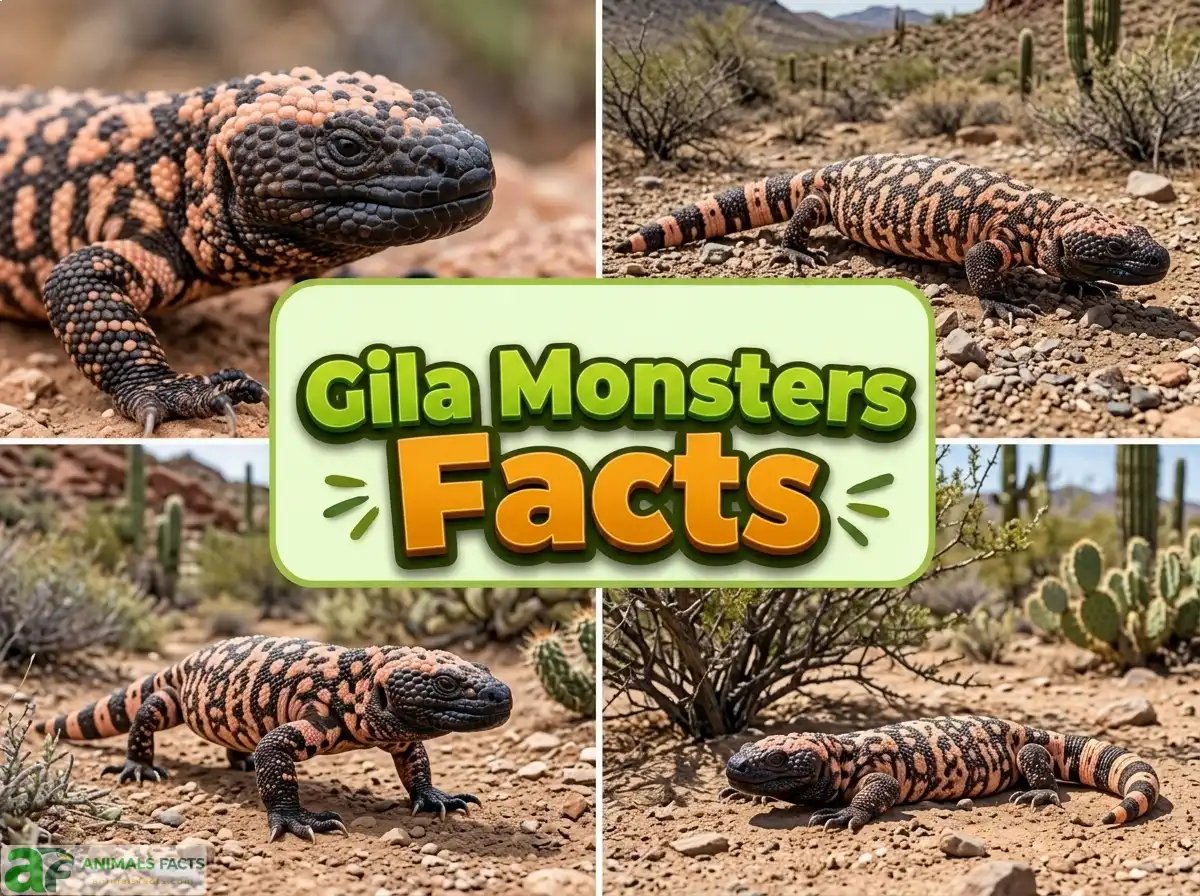
11. Gila Monster Facts for Kids
Hey amazing young wildlife scientists, reptile fans, and future herpetologists! Here are some truly mind-blowing Gila monster facts for kids that will make every science class and wildlife conversation instantly more interesting:
- The Gila monster helped scientists create medicines that millions of people with diabetes use EVERY DAY! Scientists studying Gila monster venom found a chemical called exendin-4 that helps control blood sugar levels. This led to the creation of drugs like Ozempic that are now among the most prescribed medicines in the world. A desert lizard that most people are afraid of turned out to contain one of the most important medical discoveries in decades!
- The Gila monster spends 98% of its life UNDERGROUND — almost invisible! If you lived in Gila monster territory for your whole life, you might never see one, even though they are living right beneath your feet. In an entire year, a Gila monster is only active on the surface for about 100 to 200 hours — the rest of the time it is resting underground, living on fat stored in its tail!
- It is one of only TWO venomous lizards in all of North America! The Gila monster and its relative the Mexican beaded lizard are the only venomous lizard species on the entire North American continent. Every other North American lizard — all hundreds of species — is non-venomous. So the Gila monster is extremely special!
- It has to CHEW to deliver venom — it has no hollow fangs! Unlike venomous snakes that inject venom through hollow fangs like syringes, the Gila monster’s venom travels through tiny grooves on the surface of its lower teeth. This means a Gila monster has to actually chew on something to get venom into the wound. That is why Gila monster bites involve gripping and chewing — the animal is working the venom in!
- The Gila monster’s TAIL is like a battery! The fat stored in the Gila monster’s thick tail is its energy reserve — like a battery that powers it through months of not eating. When the tail is fat and round, the lizard is healthy and well-fed. When the tail becomes thin, it means the lizard has been living on its reserves for a long time. You can tell a lot about a Gila monster’s health just by looking at its tail!
- The Gila monster’s eggs take NINE TO TEN MONTHS to hatch! Most North American lizard eggs hatch in two to three months. But Gila monster eggs are laid in summer and do not hatch until the following spring — almost a year later! The eggs spend the winter slowly developing underground, waiting for the warm spring temperatures that tell them it is time to hatch.
- Fossil Gila monster relatives are 98 MILLION YEARS OLD! Helodermatid lizards — the family that includes the Gila monster — have fossils dating back to the time when dinosaurs still roamed the Earth. The basic Gila monster body plan has barely changed since the Cretaceous period. The Gila monster is genuinely one of the closest things to a dinosaur-era lizard still walking the Earth today!
- Arizona made it illegal to harm a Gila monster in 1952 — one of the USA’s FIRST reptile protection laws! Before modern wildlife protection laws existed, Arizona specifically passed a law protecting the Gila monster because so many people were killing them out of unnecessary fear. A single venomous lizard became the subject of one of America’s first wildlife protection debates — and the protection side won!
12. Relationship with Humans
The Gila monster’s relationship with humans is one of the most scientifically consequential and most legally significant human-wildlife relationships in American natural history — encompassing a long history of irrational fear-based killing, landmark wildlife protection legislation, and the extraordinary medical discovery that has made the species directly beneficial to millions of human lives.
The History of Fear and Persecution
Early European-American encounters — When American settlers and explorers first encountered Gila monsters in the Southwest in the mid-19th century, the response was overwhelmingly fearful. The distinctive aposematic coloration, the sluggish but intimidating appearance, the confirmed venomousness, and the lizard’s tendency to bite and cling tenaciously combined to produce a cultural response of intense fear disproportionate to the actual danger.
The folk mythology — An extraordinary collection of Gila monster folk beliefs developed in the 19th and early 20th century American Southwest:
- Gila monsters were believed to have no anus — unable to defecate and therefore accumulating toxins that made their venom uniquely deadly
- Gila monsters were believed to have fetid, poisonous breath capable of killing from a distance
- Gila monsters were believed to be impossible to kill — requiring decapitation and burning
- Gila monster bites were believed to be invariably fatal
None of these beliefs had any factual basis — but all were widely held and contributed to the systematic killing of every Gila monster encountered.
The systematic killing — Throughout the late 19th and early 20th century, Gila monsters were killed on sight by most people who encountered them. The combination of fear, mythology, and the general attitude toward wildlife in frontier America produced population declines that, while difficult to quantify from this era, were clearly significant.
The Legal Protection Milestone
Arizona 1952 — In 1952, Arizona enacted legislation specifically protecting the Gila monster — making it illegal to collect, kill, or harm the species without appropriate authorization. This legislation was significant in multiple respects:
- It was one of the first state-level wildlife protection statutes for a specific reptile species in American legal history
- It was passed before the broader environmental movement of the 1960s–1970s that would eventually produce the Endangered Species Act
- It required overcoming significant public resistance — the argument that a venomous animal “did not deserve” legal protection was explicitly made in opposition to the legislation
- The successful passage established a precedent that wildlife protection could extend to species that many people feared or disliked
Subsequent protections — Nevada, Utah, California, and New Mexico subsequently enacted similar state-level protections. The Gila monster is now fully protected across its entire US range under state law, with collection or possession for any purpose requiring specific permits.
The Medical Discovery — From Venom to Worldwide Drug
The most extraordinary chapter in the Gila monster’s relationship with humans is the story of how a venom compound from this desert lizard became one of the most important pharmaceutical discoveries of the late 20th century:
The discovery — In the 1990s, Dr. John Eng — an endocrinologist at the Veterans Affairs Medical Center in the Bronx, New York — was studying the biological properties of various animal venoms when he analyzed Gila monster venom and identified a novel compound he named exendin-4.
The property — Exendin-4 was found to mimic the action of GLP-1 (glucagon-like peptide-1) — a hormone produced in the human gut that stimulates insulin secretion in response to blood glucose elevation. The compound was structurally similar enough to human GLP-1 to activate GLP-1 receptors but difficiently different to resist the rapid breakdown that makes human GLP-1 itself impractical as a therapeutic agent.
The drug development — The pharmaceutical company Amylin Pharmaceuticals licensed the discovery and developed exenatide — a synthetic version of exendin-4 — which was approved by the FDA in April 2005 as Byetta — the first GLP-1 receptor agonist approved for treatment of Type 2 diabetes.
The cascade of discovery — The success of exenatide demonstrated the viability of GLP-1 receptor agonism as a therapeutic approach for Type 2 diabetes — triggering a wave of drug development that produced liraglutide (Victoza, Saxenda), semaglutide (Ozempic, Wegovy), dulaglutide (Trulicity), and numerous other drugs. The GLP-1 receptor agonist class — with semaglutide as its most commercially successful member — has become one of the most significant pharmaceutical classes of the 2020s, with applications extending from diabetes treatment to weight loss.
The medical legacy — The Gila monster’s venom compound is the conceptual and pharmacological ancestor of a drug class used by tens of millions of patients globally — an extraordinary medical legacy for an animal whose primary cultural reputation was as a dangerous pest to be killed on sight.
Human Bites — The Reality
Actual Gila monster bites of humans are rare and almost always involve deliberate handling:
Documented fatalities — Fewer than 10 confirmed human fatalities from Gila monster bites are recorded in all of documented history. Several of these involve pre-modern medicine conditions; with modern medical treatment, Gila monster envenomation is rarely life-threatening to healthy adults.
Bite circumstances — The overwhelming majority of documented Gila monster bites to humans involve:
- Deliberate handling — people picking up or attempting to handle Gila monsters
- Illegal collection attempts — people attempting to capture Gila monsters for the pet trade
- Accidental contact — rarely, people accidentally placing hands near concealed Gila monsters
- A Gila monster bite to an unprovoked healthy person walking normally through its habitat is essentially never documented — the species has no history of approaching or pursuing humans.
Bite symptoms — A significant Gila monster bite produces:
- Intense, immediate pain — described as among the most severe pain of any venomous bite, out of proportion to the tissue damage
- Swelling and edema — at the bite site and extending proximally
- Hypotension — lowering of blood pressure
- Nausea and weakness — systemic effects
- Pain lasting hours to days — even after the animal is removed and wound treated
13. Gila Monster Conservation Status & Threats
Conservation Status Overview
| Feature | Details |
|---|---|
| IUCN Status | Near Threatened (NT) |
| Population Trend | Decreasing |
| Population Estimate | Unknown — insufficient systematic survey data |
| US Legal Status | Protected by state law in all range states |
| CITES Listing | Appendix II — international trade regulated |
| Mexican Status | Protected under NOM-059 (Special Protection) |
Major Threats
| Threat | Description | Impact Level |
|---|---|---|
| Urban expansion | Phoenix, Tucson, Las Vegas, St. George growth eliminating habitat | Critical in core range |
| Road mortality | Highway kills during spring activity season | High |
| Illegal collection | Pet trade; collected despite legal protection | High |
| Habitat fragmentation | Roads and development fragmenting populations | High |
| Climate change | Habitat range shift; increased extreme temperatures | Medium-High — increasing |
| Off-road vehicle use | Crushing burrow systems; habitat degradation | Medium |
| Deliberate killing | Fear-based killing despite legal protection | Medium |
| Predator increase | Coyote population increase in suburban interfaces | Medium |
| Prey depletion | Ground-nesting bird decline reducing egg prey availability | Medium |
The Urban Expansion Crisis
The most acute immediate threat to Gila monster populations is the explosive urban growth of the American Southwest:
Phoenix metropolitan area — One of the fastest-growing cities in the United States; the Phoenix metro area has expanded dramatically into prime Gila monster habitat in the Sonoran Desert foothills of Maricopa and Pinal Counties — directly eliminating habitat and fragmenting remaining populations with roads and development.
Tucson metropolitan area — Similar dynamics in southern Arizona; urban expansion into the Santa Cruz River valley and surrounding foothills is affecting populations in the biologically rich region of southern Arizona.
Las Vegas metropolitan area — Nevada’s urban growth in the Las Vegas valley has affected the banded Gila monster subspecies population in the Mojave Desert foothills surrounding the city.
The road mortality crisis — Even where habitat remains, roads bisecting Gila monster home ranges create significant mortality during spring emergence when animals cross roads during the relatively brief active season. Studies in suburban Arizona have documented road mortality as one of the primary causes of adult Gila monster death.
Climate Change Projections
Habitat range shift modeling — Multiple studies using ecological niche modeling have projected that climate change will shift the Gila monster’s climatically suitable range northward and upward in elevation by 2050–2080 — potentially opening new habitat in currently cool areas while reducing suitability in currently warm low-elevation areas.
The net habitat loss concern — The available evidence suggests that the northward and upward shift may not compensate for the loss of currently occupied low-elevation habitat — with net suitable habitat potentially declining by 20–45% by 2080 under moderate warming scenarios.
The urban interface — Climate change and urban expansion interact — as climate change shifts suitable habitat northward, urban development is simultaneously expanding across those northern areas.
Conservation Responses
Legal protections — The existing state-level and international legal protections provide the essential framework for Gila monster conservation — enforcement of these protections against illegal collection and deliberate killing is a continuing priority.
Research programs — Long-term population monitoring programs in Arizona, Nevada, and Utah are accumulating trend data — the Chiricahua Desert Museum and various university programs maintain monitoring efforts.
Habitat protection — Purchase and protection of critical Gila monster habitat in the urban fringe areas of Phoenix and Tucson through conservation easements and land trust acquisitions addresses the immediate habitat loss threat.
Road mitigation — Wildlife crossing programs and road mortality surveys in critical areas identify hotspots for targeted mitigation.
Public education — Programs addressing the persistent fear-based attitudes that continue to drive some illegal killing are an important complement to legal protections.
14. Famous Gila Monsters in History & Pop Culture
Famous Individual Gila Monsters
The Bronx Zoo individuals (early 20th century) — The Bronx Zoo in New York maintained early captive Gila monsters that were among the first individuals to be studied systematically in a zoo setting — contributing to the foundational understanding of the species’ captive requirements, longevity, and behavioral characteristics.
Cope’s type specimens (1869) — The specimens formally described by Edward Drinker Cope in 1869 that established the species Heloderma suspectum — among the most historically significant Gila monster individuals in scientific terms, as they provided the type basis for the species’ formal scientific description.
John Eng’s venom subjects (1990s) — The individual Gila monsters whose venom was analyzed by Dr. John Eng at the VA Medical Center — indirectly the most medically consequential individual Gila monsters in the species’ relationship with humans, as their venom provided the exendin-4 compound that led to the diabetes drug discovery.
“Goliath” — A large male Gila monster maintained at the Arizona-Sonora Desert Museum near Tucson who became one of the most-viewed individual Gila monsters in public education history — the museum’s outstanding desert reptile exhibits having introduced hundreds of thousands of visitors to the species’ actual biology.
Historical Significance
Edward Drinker Cope and the formal description — The 1869 formal scientific description of Heloderma suspectum by Edward Drinker Cope — the celebrated American paleontologist and herpetologist — was significant not only taxonomically but philosophically. Cope’s choice of the species name suspectum (“suspected”) reflected scientific uncertainty about whether the lizard was truly venomous — the lingering doubt reflecting how resistant the scientific community was to accepting that a lizard (as opposed to a snake) could be genuinely venomous. The confirmation of Gila monster venom in 1882 was a significant milestone in herpetological science.
The Arizona Protection Law (1952) — The passage of Arizona HB 2218 in 1952 — specifically protecting the Gila monster — is a landmark in American wildlife law. The legislative debate surrounding the bill explicitly addressed questions that would later define the Endangered Species Act debates: does a dangerous or feared animal deserve legal protection? Does economic or ecological value matter? The resolution in favor of protection established precedents that contributed to the development of the broader American wildlife protection framework.
15. Role in Ecosystem & Food Chain
The Predator Role
The Gila monster occupies an important mesopredator position in Sonoran Desert food webs — consuming prey species that are themselves important consumers:
Egg predation effects — The Gila monster’s consumption of ground-nesting bird and reptile eggs contributes to regulating the reproductive success of these species. This predation pressure creates selective pressure on nest site selection, nest concealment, and egg production strategies of prey species — driving the evolution of deeper nesting, better nest concealment, and clutch size compensation in frequently-preyed-upon species.
Rodent pup predation — Consumption of neonatal rodents limits the establishment of new cohorts of rodent populations during the spring breeding season — a form of early-stage population regulation that complements the predation pressure exerted by raptors and snakes on adult rodents.
Carrion consumption — The Gila monster’s opportunistic consumption of carrion provides a minor but real contribution to desert nutrient cycling — participating in the decomposer guild alongside vultures, ravens, and various invertebrate decomposers.
The Prey Role
Gila monsters are consumed by various predators — particularly coyotes and raptors — contributing to the energy budget of these higher-level consumers:
Supporting predator populations — Gila monsters represent a prey item for coyotes that, while defended by venom, are occasionally overcome. The caloric value of a Gila monster to a coyote is significant — the fat reserves in the tail representing concentrated energy.
The Ecosystem Engineering Role
Burrow use and modification — Gila monsters extensively use and occasionally modify burrow systems throughout their home ranges — contributing to the burrowing infrastructure that many desert species depend on. Their use of existing burrows maintains and extends these systems; their occasional excavation creates new shelter sites.
16. Myths, Folklore & Cultural Significance
Indigenous Cultural Traditions
Tohono O’odham traditions — The Tohono O’odham people — whose traditional territory overlaps extensively with the Gila monster’s core range in southern Arizona — have traditional ecological knowledge of the species that includes both practical coexistence wisdom and cultural significance:
The healer association — In some Tohono O’odham traditions, the Gila monster is associated with healing power — potentially reflecting an intuitive recognition of the medicinal context (the species’ association with traditional healing practices) that was confirmed 20th century science has confirmed through the diabetes drug discovery. Traditional healers in some communities were said to use knowledge of the Gila monster in various healing contexts.
The respect tradition — Traditional O’odham ecological relationships generally emphasized respect for dangerous desert animals — the Gila monster’s power being respected rather than feared in ways that drove killing, a different cultural framework from the European-American “kill on sight” approach.
Navajo traditions — The Navajo (Diné) people, whose territory overlaps with the northern range of the Gila monster in Arizona and New Mexico, include the lizard in various traditional knowledge frameworks — recognizing the connection between desert reptiles and the health of the desert ecosystem.
The European-American Folk Mythology
As described in the human relationship section, a remarkable collection of folk beliefs developed around the Gila monster in the European-American culture of the 19th-century Southwest:
The “no anus” myth — One of the most widespread and most biologically absurd folk beliefs; the idea that Gila monsters could not defecate and therefore accumulated toxins in their bodies was used to explain both the presumed potency of the venom and the need to kill every Gila monster seen. The belief persisted in some communities well into the 20th century.
The “deadly breath” myth — The belief that the Gila monster could kill humans by breathing on them or being in proximity — requiring no actual bite. This belief made the animal seem uniquely dangerous and unkillable by normal means.
The cultural significance of fear — The extreme folk fear of the Gila monster is itself culturally significant — it represents one of the clearest American examples of how an animal’s actual danger (modest, requiring deliberate handling to produce a bite) can be dramatically amplified by cultural mythology to produce systematic persecution.
The Medical Cultural Significance
In the early 21st century, the Gila monster has acquired a new cultural significance — as the origin of a revolutionary drug class:
The Byetta story in popular science — The discovery of exendin-4 and its development into exenatide has been featured in numerous popular science books, articles, and media — becoming one of the most frequently cited examples of bioprospecting (the search for medically useful compounds in natural organisms) producing a major pharmaceutical result.
The conservation argument — The Gila monster’s medical legacy has become one of the most powerful arguments for protecting biodiversity generally — if a feared, persecuted desert lizard contains a compound that has transformed diabetes treatment globally, what other medically important compounds might be found in other “unimportant” or “unpleasant” species? The Gila monster has become a flagship example of the argument that biodiversity has practical medical value that cannot be predicted in advance.
17. Gila Monsters in Pop Culture
Arizona state symbol significance — The Gila monster is deeply embedded in the cultural identity of the American Southwest — appearing in the names of sports teams (Arizona’s Gila River Arena), business names, and artistic representations throughout the region. The species’ distinctiveness as a uniquely Southwestern animal has made it a regional cultural symbol.
Natural history documentaries — The Gila monster has been featured in multiple natural history documentary treatments including National Geographic specials, BBC wildlife features, and various reptile-focused documentaries. The species’ combination of dramatic appearance, venomous nature, and extraordinary medical legacy makes it consistently compelling natural history content.
“Rango” (Paramount, 2011) — The animated Western film set in the Mojave Desert includes various Southwestern desert reptile characters in a world populated by lizards and other reptiles; while not featuring a specific Gila monster character, the cultural world of the film draws on the same Southwestern desert reptile community that includes the Gila monster as a flagship species.
Southwestern art traditions — The Gila monster’s dramatic aposematic coloration — the orange and black beaded pattern — has made it a recurring subject in Southwestern art, pottery, jewelry, and textile design. The beaded skin pattern appears in multiple Native American artistic traditions and in contemporary Southwestern visual culture.
The diabetes drug narrative in media — The story of exendin-4 and its development into the GLP-1 receptor agonist drug class has been told in numerous popular media outlets — particularly following the explosive commercial success of semaglutide (Ozempic/Wegovy) in the 2020s. Multiple news organizations published stories connecting the Ozempic phenomenon to the Gila monster — dramatically increasing public awareness of the species and its medical significance.
Scientific naming honors — Multiple scientific institutions and organisms have been named in recognition of the Gila monster’s medical significance — the compound class “exendins” named for the Gila monster connection to exenatide.
18. Gila Monster Facts vs. Common Myths
| Common Myth | The Real Fact |
|---|---|
| “Gila monsters are deadly to humans” | Exaggerated — fewer than 10 confirmed human fatalities in all recorded history; with modern medical treatment, Gila monster bites are rarely life-threatening to healthy adults |
| “Gila monsters have no anus and accumulate toxins” | Completely false — this 19th-century folk belief has no biological basis whatsoever; Gila monsters have normal reptilian digestive systems |
| “Gila monster breath is poisonous” | Completely false — the “deadly breath” myth has no scientific basis; the venom is delivered only through biting |
| “Gila monsters cannot be removed once they bite” | Partially misleading — while Gila monsters grip and chew tenaciously, they can be removed through specific techniques; the bite should be treated as a medical emergency but the animal can be safely removed |
| “Gila monsters are aggressive and will chase humans” | False — Gila monsters are slow-moving, non-aggressive animals that virtually never initiate contact with humans; almost all human bites involve deliberate handling |
| “Gila monsters are the most venomous lizard in the world” | False — several other lizard species (including some monitor lizards) have more potent venom; the Gila monster’s medical significance comes from the unique pharmacological properties of its venom compounds, not from the venom’s toxicity to humans |
| “The Ozempic/Wegovy drugs are made from Gila monster venom” | Partially misleading — modern GLP-1 drugs like semaglutide are synthetic molecules that mimic the action of exendin-4 (the Gila monster venom compound) but are not derived from or containing actual venom; the Gila monster provided the conceptual and pharmacological model, not the manufacturing source |
19. Best Places to See Gila Monsters in the Wild
1. Saguaro National Park (East and West), Tucson, Arizona — One of the most accessible and most reliably productive locations for wild Gila monster observation in the US. The park’s rocky Sonoran Desert habitat supports good Gila monster populations, and the spring months (March–May) provide the best activity window. Experienced ranger-led programs occasionally include Gila monster sightings.
2. Arizona-Sonora Desert Museum, Tucson, Arizona — While technically a zoo and botanical garden rather than a wild viewing location, the Desert Museum’s outdoor exhibit design and living Sonoran Desert habitat has one of the finest Gila monster exhibits available anywhere — allowing close-range observation of active individuals in a naturalistic setting. The museum is widely considered the finest desert natural history museum in the world.
3. McDowell Sonoran Preserve, Scottsdale, Arizona — One of the largest urban wilderness preserves in the US; the rocky volcanic terrain of the McDowell Mountains in this preserve supports good Gila monster populations accessible via the preserve’s extensive trail network during spring months.
4. Red Cliffs Desert Reserve, St. George, Utah — The northernmost significant Gila monster population in the US; the Red Cliffs Reserve protects critical habitat for the banded subspecies near St. George. Spring visits with local naturalist guides provide the best observation opportunities.
5. Lake Mead National Recreation Area, Nevada/Arizona — The rocky desert terrain of the Lake Mead area supports Gila monster populations accessible to visitors during spring months — the combination of rocky terrain and Mojave Desert scrub providing good habitat.
6. Kartchner Caverns State Park, Benson, Arizona — The rocky limestone terrain surrounding Arizona’s famous cave system supports an excellent Gila monster population — the combination of rocky terrain and oak woodland providing diverse habitat. Spring guided trail walks occasionally produce Gila monster encounters.
7. The Honest Assessment — Wild Gila monster sightings require a combination of correct timing (March through May in most of the range), appropriate habitat (rocky terrain with boulder fields and desert scrub), morning activity windows (Gila monsters are most active in the cool morning hours during the active season), and patience. The species’ predominantly underground lifestyle makes sightings inherently rare — but not impossible. Contacting local herpetological societies in Arizona (the Arizona Herpetological Association) or accessing iNaturalist observation records for recent sightings in your target area substantially improves success probability.
20. How You Can Help
Supporting Gila monster conservation requires action focused primarily on habitat protection, legal protection enforcement, road mortality reduction, and climate change advocacy across the American Southwest.
Support these organizations:
- Arizona Herpetological Association — azreptiles.org — Arizona-based reptile conservation and education
- Chiricahua Desert Museum — chiricahuadesertmuseum.com — dedicated Sonoran Desert natural history education and conservation
- The Nature Conservancy Arizona — nature.org/arizona — protecting critical desert habitat including Gila monster range
- Center for Biological Diversity — biologicaldiversity.org — advocates for Southwestern desert wildlife protection including climate change policy
- Tucson Herpetological Society — tucsonherpetologicalsociety.org — local herpetological education and conservation
- Arizona-Sonora Desert Museum — desertmuseum.org — world-class desert natural history education; directly supports Sonoran Desert conservation
Critical individual actions:
- Never handle or disturb a wild Gila monster — approaching is legal; touching is legal in most states; disturbing, harming, or collecting is illegal
- Report illegal collection or killing — the illegal pet trade and fear-based killing continue to threaten Gila monster populations; reporting suspected illegal activity to Arizona Game and Fish Department or equivalent agencies
- Drive slowly in desert areas during spring — road mortality is a significant threat; reduced vehicle speed in desert areas during spring evening and morning hours substantially reduces Gila monster road kill probability
- Support habitat conservation in the Southwest — land trust donations, conservation easement support, and advocacy for protected area expansion directly benefit Gila monster populations
- Spread accurate information — the persistent folk mythology about Gila monster danger continues to drive fear-based killing; sharing accurate information about the species’ actual biology and medical significance helps change attitudes
21. Top Documentaries & Books
Must-Watch Documentaries
- “Monsters of the Desert” (National Geographic) — Dedicated Sonoran Desert predator documentary including Gila monster content
- “Life of Cold Blood” (BBC, David Attenborough, 2008) — The finest television treatment of reptile biology; North American desert lizard content including helodermatids
- “The Living Desert” (Disney, 1953) — The classic Disney nature documentary set in the Sonoran Desert; historically important early natural history film including Gila monster sequences
- “Nature: Reptiles — The Beautiful and Dangerous” (PBS) — North American reptile natural history including Gila monster content
- National Geographic and BBC wildlife specials on Sonoran Desert biodiversity regularly feature Gila monster content
Must-Read Books
- Biology of the Gila Monster and Beaded Lizard by Daniel Beck (2005, University of California Press) — The definitive scientific monograph; the most comprehensive treatment of Gila monster biology available
- Venomous Animals of Arizona by David Hardy — Practical guide to Arizona’s venomous wildlife including comprehensive Gila monster coverage
- Amphibians and Reptiles of Arizona by Thomas Brennan and Andrew Holycross — The standard field guide for Arizona herpetofauna
- Gila Monster: Facts, Photos and Information for Kids and Adults — Various accessible introductions for general audiences
- The Sonoran Desert by Steven Phillips and Patricia Comus — Comprehensive Sonoran Desert natural history reference providing essential ecological context
22. Gila Monster Comparison with Other Venomous Lizards and Desert Reptiles
| Feature | Gila Monster | Mexican Beaded Lizard | Komodo Dragon | Gila Monster (medical) | Chuckwalla |
|---|---|---|---|---|---|
| Scientific name | Heloderma suspectum | Heloderma horridum | Varanus komodoensis | — | Sauromalus ater |
| Family | Helodermatidae | Helodermatidae | Varanidae | — | Iguanidae |
| Length | 38–56 cm | Up to 1 m | Up to 3.13 m | — | 28–47 cm |
| Weight | Up to 2.3 kg | Up to 4 kg | Up to 166 kg | — | Up to 1.8 kg |
| Venomous | Yes — lower jaw glands | Yes — lower jaw glands | Yes — lower jaw glands | — | No |
| Venom delivery | Groove-channeled teeth; must chew | Groove-channeled; must chew | Groove-channeled + injection | — | None |
| Primary prey | Eggs, neonatal mammals | Eggs, small mammals | Deer, pigs, buffalo | — | Plants only — herbivore |
| Activity | 98% underground | Primarily underground | Surface — diurnal | — | Surface — diurnal |
| Conservation | Near Threatened | Least Concern | Endangered | — | Least Concern |
| Medical significance | Diabetes drug precursor | Some compounds studied | Venom research | — | None significant |
| Range | SW USA, NW Mexico | Mexico, Guatemala | 5 Indonesian islands | — | SW USA, NW Mexico |
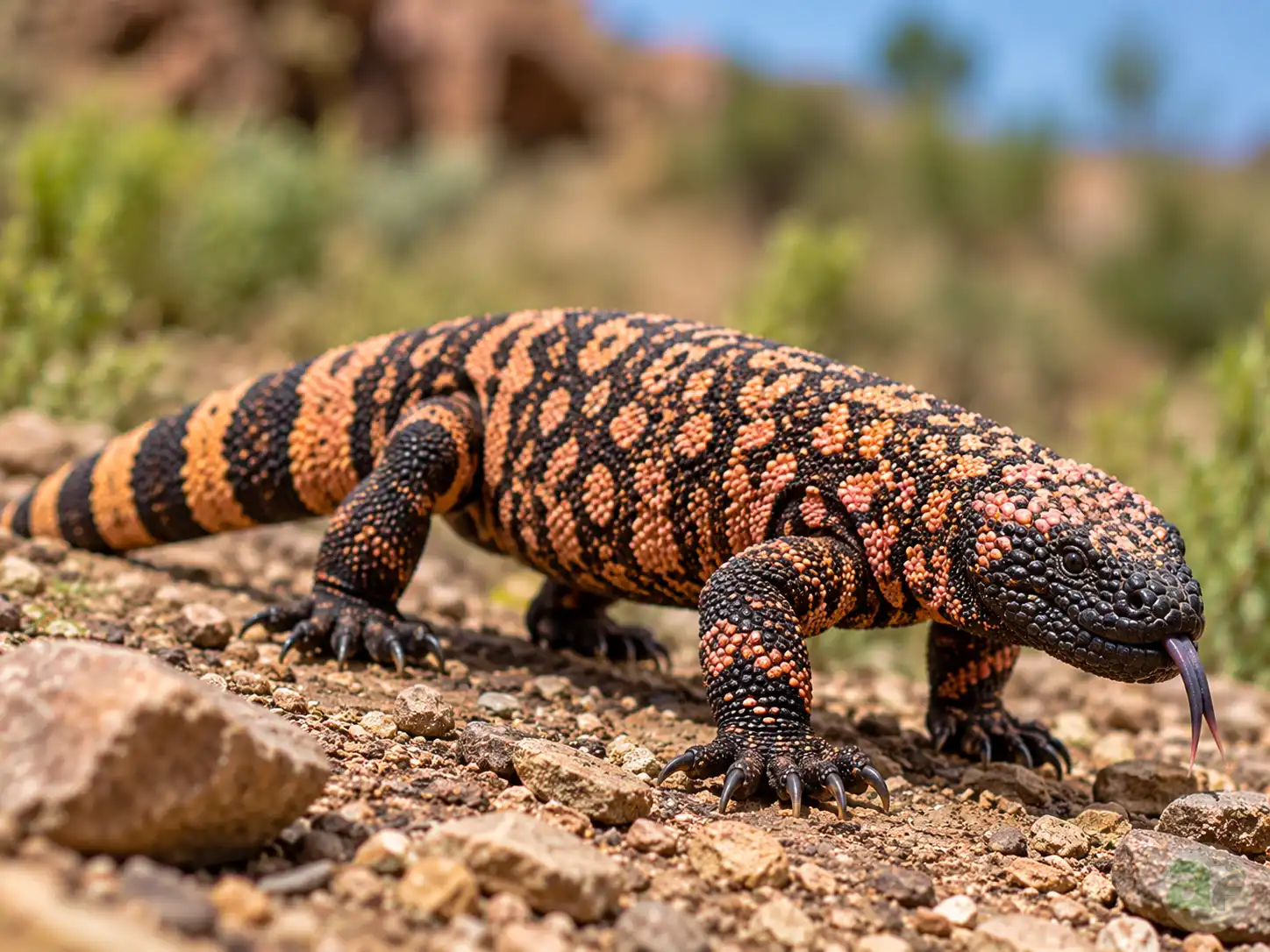
23. Frequently Asked Questions About Gila Monsters
Q1. What is the scientific name of the Gila monster?
The Gila monster’s scientific name is Heloderma suspectum (Cope, 1869). The genus name Heloderma derives from the Greek helos (nail or stud) and derma (skin) — meaning “studded skin” — referring to the distinctive rounded, bead-like scales produced by the underlying osteoderms. The species name suspectum is Latin for “suspected” — reflecting the scientific community’s initial uncertainty about whether this lizard was truly venomous when the species was formally described. The species was described by the celebrated American paleontologist and herpetologist Edward Drinker Cope in 1869 based on specimens from the Gila River region of Arizona. Two subspecies are recognized: H. s. suspectum (the Reticulate Gila monster of southern Arizona and northwestern Mexico) and H. s. cinctum (the Banded Gila monster of Utah, Nevada, and northwestern Arizona).
Q2. Is the Gila monster really dangerous to humans?
The danger is real but extremely modest relative to the legendary reputation. The Gila monster is genuinely venomous — its venom produces intense pain, swelling, hypotension, and systemic effects that require medical treatment. However, fewer than 10 confirmed human fatalities from Gila monster bites have been documented in all of recorded history — and with modern medical treatment, even significant Gila monster envenomations are rarely life-threatening to healthy adults. The critical point is that virtually all documented Gila monster bites to humans involve deliberate handling of the animal — the species has no history of approaching, pursuing, or attacking humans unprovoked. A person walking normally through Gila monster habitat has essentially zero risk of being bitten. The extreme folk fear of the Gila monster — rooted in 19th-century mythology including fictional beliefs about poisonous breath and no anus — dramatically exceeded the actual danger and drove systematic killing of a species that posed minimal realistic threat to people not deliberately handling it.
Q3. How did the Gila monster lead to diabetes drugs?
The connection begins with researcher Dr. John Eng at the Veterans Affairs Medical Center in the Bronx, New York, who in the 1990s was studying the biological properties of venomous animal secretions. When Eng analyzed Gila monster venom, he identified a novel compound he named exendin-4 that had a remarkable property: it mimicked the action of the human gut hormone GLP-1 (glucagon-like peptide-1) — a hormone that stimulates insulin secretion in response to elevated blood glucose. Human GLP-1 itself breaks down too quickly in the body to be therapeutically useful, but exendin-4 — while similar enough in structure to activate GLP-1 receptors — was resistant to the enzyme that normally breaks down GLP-1. This resistance made it potentially viable as a therapeutic agent. The pharmaceutical company Amylin Pharmaceuticals licensed the discovery and developed exenatide — a synthetic version of exendin-4 — which was FDA-approved in 2005 as Byetta, the first GLP-1 receptor agonist for Type 2 diabetes. The success of exenatide demonstrated the therapeutic value of GLP-1 receptor agonism and sparked development of an entire drug class — including semaglutide (Ozempic, Wegovy) — that has become one of the most significant and commercially successful pharmaceutical classes of the 2020s.
Q4. Why does the Gila monster spend so much time underground?
The Gila monster’s predominantly underground lifestyle is a metabolic and thermoregulatory strategy perfectly calibrated to the desert environment it inhabits. The Sonoran Desert experiences extreme thermal conditions — summer surface temperatures exceeding 50°C on exposed ground, winter temperatures that can approach freezing, and very low food availability throughout most of the year. The Gila monster’s solution to this hostile surface environment is to avoid it for 98% of the year — spending the vast majority of time in underground burrows where temperatures are more moderate and metabolic demands can be met by fat stored in the tail. The animal’s extraordinarily low metabolic rate allows it to sustain life on minimal energy expenditure during these underground periods. The brief surface active season — approximately 100–200 hours per year — is timed to the spring when temperatures are moderate, prey (particularly eggs and neonatal mammals) is abundant, and mating can occur. This strategy of extreme temporal partitioning between surface activity and underground dormancy is one of the most refined desert survival strategies of any North American vertebrate.
Q5. Are Gila monsters protected by law?
Yes — across their entire US range. The Gila monster is protected by state law in Arizona, Nevada, Utah, New Mexico, and California — it is illegal in all these states to collect, harm, kill, or possess a Gila monster without appropriate scientific or educational permits. Arizona was the first to enact this protection in 1952 — one of the earliest state-level wildlife protection laws for a specific reptile in American legal history. At the international level, the Gila monster is listed on CITES Appendix II — meaning international trade is regulated and requires documentation of legal origin. In Mexico, the species is protected under NOM-059 as a species under Special Protection. Despite these legal protections, illegal collection for the exotic pet trade and deliberate killing driven by irrational fear continue to threaten some populations — particularly in areas of rapid urban expansion where human-Gila monster encounters are increasingly common.
24. Sources & References
- Wikipedia — Heloderma suspectum, Helodermatidae, Exenatide, GLP-1 receptor agonist
- IUCN Red List — iucnredlist.org (current Near Threatened assessment for Heloderma suspectum)
- Beck, D.D. (2005). Biology of the Gila Monster and Beaded Lizard. University of California Press — the definitive monograph
- Eng, J. et al. (1992). “Isolation and characterization of exendin-4, an exendin-3 analogue, from Heloderma suspectum venom.” Journal of Biological Chemistry — the foundational exendin-4 discovery paper
- Arizona Game and Fish Department — azgfd.com — species management and protection information
- National Geographic — nationalgeographic.com
- Smithsonian National Museum of Natural History — naturalhistory.si.edu
- BBC Wildlife / BBC Earth — bbcearth.com
- Britannica — britannica.com/animal/Gila-monster
- Live Science — livescience.com
- Arizona-Sonora Desert Museum — desertmuseum.org — natural history education resources
- US Food and Drug Administration — fda.gov (Byetta/exenatide approval documentation)
- Chiricahua Desert Museum — chiricahuadesertmuseum.com