
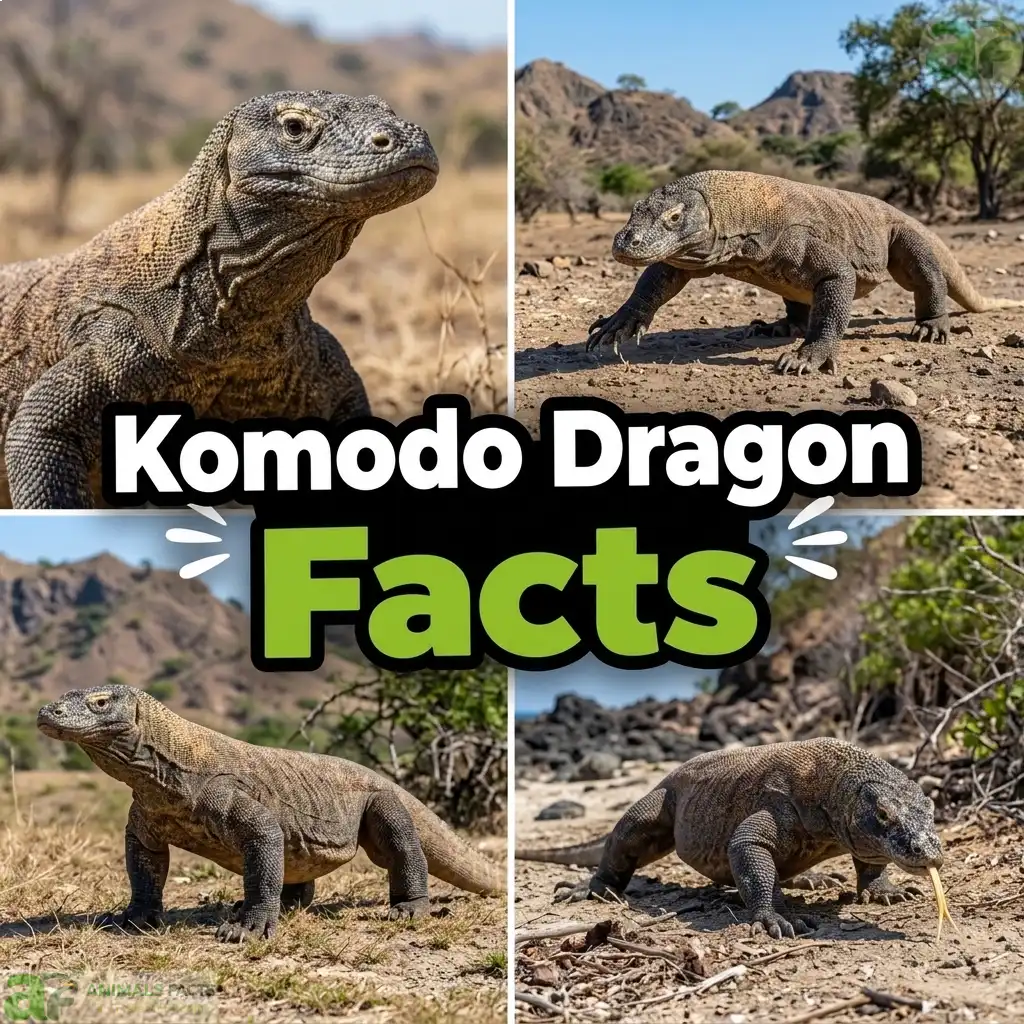
Komodo Dragon Facts
| Feature | Details |
|---|---|
| Scientific Name | Varanus komodoensis (Ouwens, 1912) |
| Kingdom | Animalia |
| Phylum | Chordata |
| Class | Reptilia |
| Order | Squamata |
| Family | Varanidae |
| Common Names | Komodo dragon; ora (local Komodo Island name) |
| Native Range | Komodo, Rinca, Flores, Gili Motang, and Gili Dasami islands — Indonesia only |
| Habitat | Tropical dry forest, savanna, monsoon forest, beach and coastal scrub |
| Lifespan | 30 years (wild); up to 30+ years (captivity) |
| Diet | Deer, pigs, goats, water buffalo, smaller Komodo dragons, carrion — apex predator |
| Body Length | Up to 3.13 meters — longest lizard on Earth |
| Weight | Up to 166 kg — heaviest lizard on Earth |
| Top Speed | Up to 20 km/h in short bursts |
| Conservation Status | Endangered (IUCN) — downlisted from Vulnerable in 2021 due to climate change threats |
| Defining Feature | World’s largest living lizard — apex predator of its island ecosystems |
| Venom System | Dual — venom glands producing anticoagulant compounds plus bacteria-laden saliva |
| Reproduction | Can reproduce parthenogenetically — females can produce offspring without males |
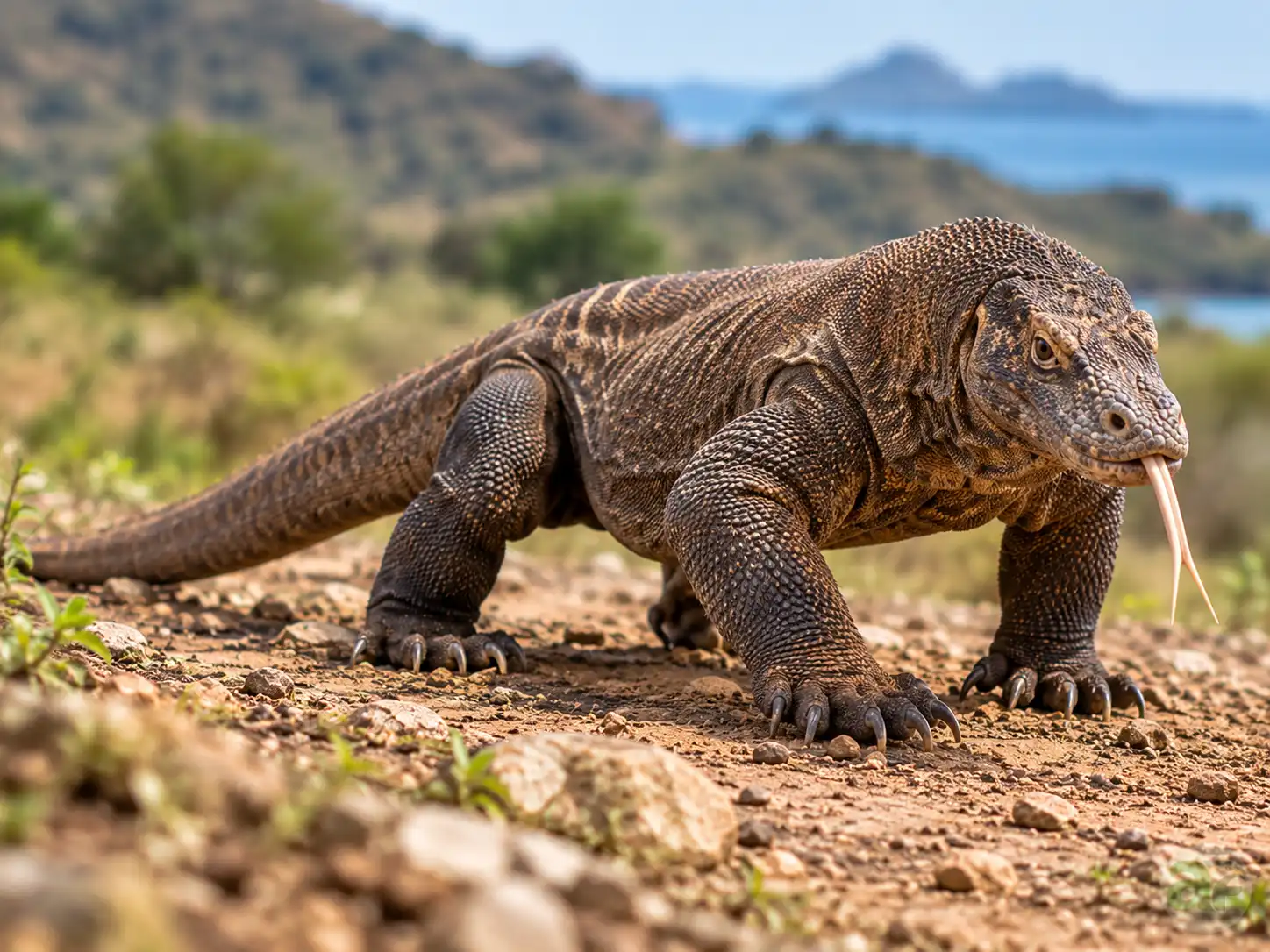
| Tongue | Forked, yellow — used for chemosensory detection up to 9.5 km |
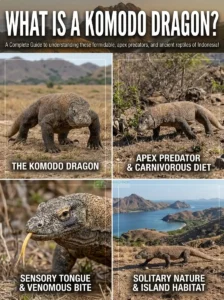 1. Introduction: What is a Komodo Dragon?
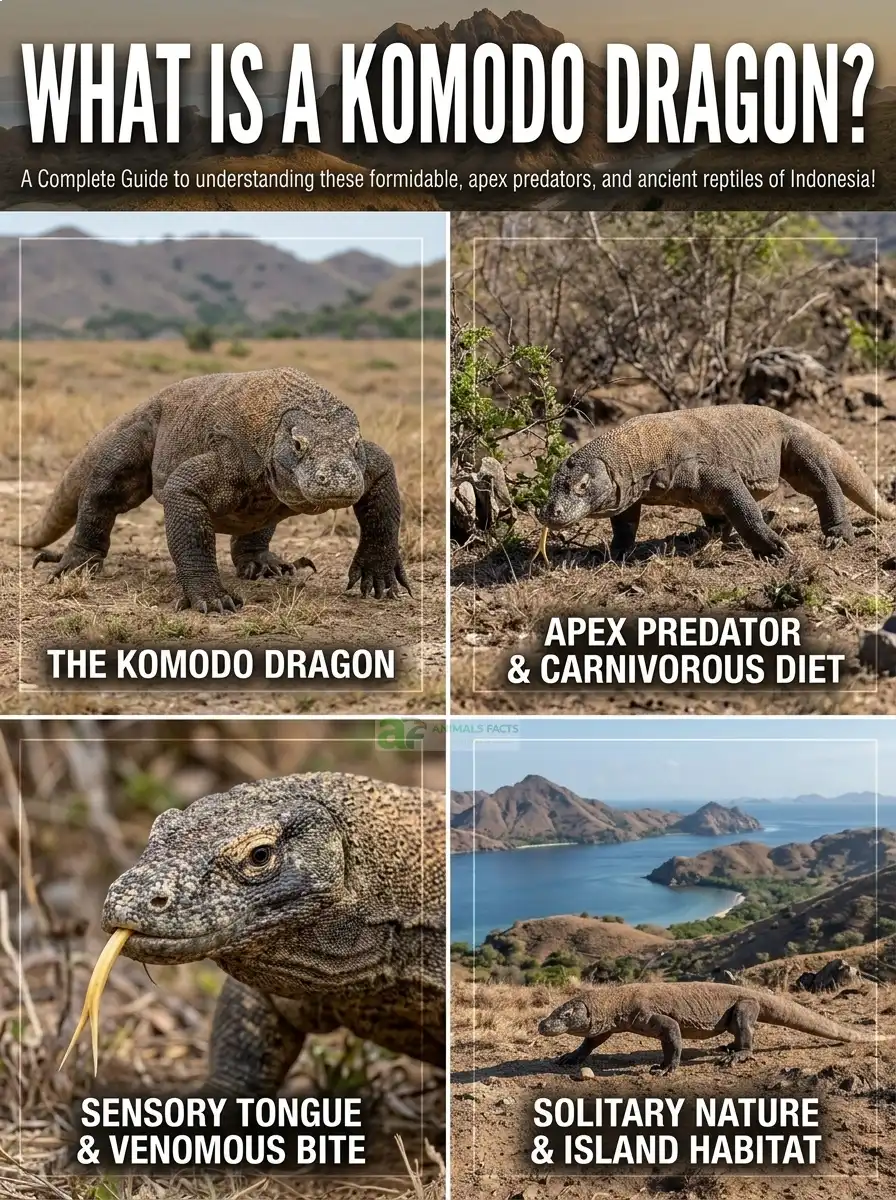
On a sun-scorched hillside on Komodo Island, in the Indonesian archipelago between the islands of Sumbawa and Flores, an animal that looks precisely like what it is — a dragon — raises its massive head and flicks a long, forked yellow tongue at the hot, dry air. It weighs approximately 70 kilograms. It is nearly 2.5 meters long. It is tasting the air with the most sensitive chemosensory system in the reptile world — processing molecular information from molecules carried on the wind from sources up to 9.5 kilometers away — and somewhere in the layered chemical complexity of that information, there is the signature of a deer that has died within the past day. The Komodo dragon begins to move. It moves with the deceptively fluid locomotion of an animal whose evolutionary lineage extends back to the age of dinosaurs — the massive body swinging low, the powerful legs churning at the ground, the thick tail sweeping slowly behind. It is unhurried. It knows, with the biological certainty of millions of years of apex predation on these islands, that whatever it finds at the end of this scent trail will not escape it for long. Komodo dragon facts begin with this image — the most magnificent living lizard on Earth, the closest thing to a dragon that evolution has actually produced, lord of an island ecosystem that existed in almost complete isolation from human knowledge until 1910.
The Komodo dragon (Varanus komodoensis) is a biological superlative in almost every dimension — the longest lizard on Earth at up to 3.13 meters; the heaviest lizard on Earth at up to 166 kg; the largest living member of the order Squamata (lizards and snakes); the only lizard that regularly kills and eats prey as large as water buffalo; the owner of a dual killing system combining venom glands producing anticoagulant compounds with an extraordinarily bacteria-laden saliva that creates devastating wound infections; and one of the very few vertebrates capable of parthenogenesis — females producing viable offspring without male fertilization. Interesting facts about Komodo dragons reveal an animal of extraordinary biological sophistication — a sensory system that can detect a single drop of blood in the air from kilometers away; a serrated, backward-curved teeth arrangement that produces wounds that cannot be effectively closed; a feeding behavior so efficient that a single large meal can be digested over weeks; a thermoregulation system that allows sustained activity in the extreme heat of Indonesian island savanna; and a social hierarchy among adults that produces one of the most complex reptile societies documented anywhere in the world.
Whether you are searching for Komodo dragon facts for kids to explore the science of giant reptiles and island gigantism, a wildlife enthusiast wanting to understand the biology of one of Earth’s most extraordinary surviving predators, a conservation researcher concerned about the threats facing this Endangered species, or simply someone captivated by the idea that dragons — or something astonishingly close to them — actually exist on a handful of Indonesian islands — this is your comprehensive guide. The world’s largest lizard has an extraordinary story to tell.
2. Komodo Dragon Species Overview & Classification
The Komodo dragon belongs to the genus Varanus — the monitor lizards — one of the most species-rich lizard genera, containing approximately 80 recognized species across Africa, Asia, and Australia.
Species Classification Table
| Taxonomic Rank | Classification |
|---|---|
| Kingdom | Animalia |
| Phylum | Chordata |
| Class | Reptilia |
| Order | Squamata |
| Suborder | Lacertilia (lizards) |
| Family | Varanidae |
| Genus | Varanus (Merrem, 1820) |
| Species | V. komodoensis (Ouwens, 1912) |
| Common Name | Komodo dragon |
| Local Name | Ora (Komodo Island); buaya darat (“land crocodile” — some Indonesian communities) |
| Etymology | komodoensis = “of Komodo” — named for Komodo Island, the type locality |
The Varanidae Family Context
The Komodo dragon belongs to a family of lizards with an extraordinary evolutionary and ecological diversity:
| Species | Common Name | Max Length | Range | Notes |
|---|---|---|---|---|
| Varanus komodoensis | Komodo dragon | 3.13 m | Indonesia (5 islands) | World’s largest lizard |
| Varanus salvator | Water monitor | 3.2 m | South/SE Asia | Longest monitor; lighter build |
| Varanus giganteus | Perentie | 2.5 m | Australia | Largest Australian monitor |
| Varanus niloticus | Nile monitor | 2.1 m | Africa | Most widespread African monitor |
| Varanus varius | Lace monitor | 2.1 m | Australia | Arboreal; egg-thief |
| Varanus prasinus | Emerald tree monitor | 1 m | New Guinea | Arboreal specialist |
| Varanus brevicauda | Short-tailed monitor | 23 cm | Australia | Smallest monitor |
The Extinct Megalania — The Komodo’s Giant Cousin
The Komodo dragon’s size is extraordinary — but in evolutionary context, it is modest compared to an extinct relative:
Varanus priscus (formerly Megalania prisca) — the giant goanna of Pleistocene Australia — was the largest terrestrial lizard in Earth’s history:
- Estimated length: 4.5–7 meters
- Estimated weight: 97–1,940 kg (estimates vary widely)
- Extinction: approximately 50,000 years ago — coinciding with human arrival in Australia
- Prey: megafauna of Pleistocene Australia including giant wombats, diprotodonts, and early humans
The Komodo dragon is the closest living relative of this extinct giant — and provides the best living model for understanding Megalania’s ecology and behavior.
Evolution & Discovery Timeline
~40 million years ago — The varanid lizard lineage diverges from other lizard groups — establishing the monitor lizard evolutionary line that will eventually produce the Komodo dragon.
~4 million years ago — Varanus komodoensis fossil evidence first appears in the Australian fossil record — the Komodo dragon evolved in Australia, not Indonesia. Early Komodo dragons were part of Australia’s Pleistocene megafauna guild.
~900,000 years ago — Komodo dragons colonize the Indonesian islands that will become their current range — dispersing from Australia through the Indonesian archipelago during periods of lower sea level.
~350,000 years ago — Komodo dragons apparently go extinct in Australia — possibly driven by competition with Varanus priscus (Megalania) or by the environmental changes of the Pleistocene.
~50,000 years ago — Varanus priscus (Megalania) goes extinct in Australia — leaving the Komodo dragon, persisting on Indonesian islands, as the largest surviving varanid.
1910 — Pieter Ouwens, director of the Zoological Museum in Bogor, Java, receives reports of a “land crocodile” on Komodo Island from Dutch colonial administrators and Lieutenant van Steyn van Hensbroek. Ouwens organizes an expedition that collects the first scientific specimens.
1912 — Ouwens formally describes the species as Varanus komodoensis — establishing the scientific name still used today.
1926 — W. Douglas Burden leads the first American scientific expedition to Komodo Island — collecting specimens and live animals for the American Museum of Natural History. Burden’s accounts of the creature’s dragon-like appearance and behavior reportedly inspired Merian C. Cooper to create King Kong (1933).
1980 — Komodo National Park is established — protecting the Komodo dragon’s primary habitat and providing the conservation framework that has maintained the species.
1991 — Komodo National Park is designated a UNESCO World Heritage Site.
2009 — Research by Bryan Fry and colleagues at the University of Melbourne publishes evidence that Komodo dragons possess venom glands — overturning the previous consensus that the killing power of Komodo bites was due solely to bacteria in the saliva.
2021 — The IUCN reclassifies the Komodo dragon from Vulnerable to Endangered — citing the additional threat of climate change and sea level rise that will reduce available habitat on the low-lying islands of the species’ restricted range.
“The Komodo dragon is not merely a large lizard — it is the living embodiment of what the Mesozoic predatory reptile lineage could achieve given sufficient size and sufficient evolutionary time. When you stand twenty meters from a large Komodo dragon in the wild and it turns its head toward you and begins tasting the air with that yellow tongue, you understand viscerally why every human culture on Earth invented dragons.”
— Dr. Tim Jessop, University of Melbourne, leading Komodo dragon field researcher
3. Komodo Dragon Physical Description & Unique Features
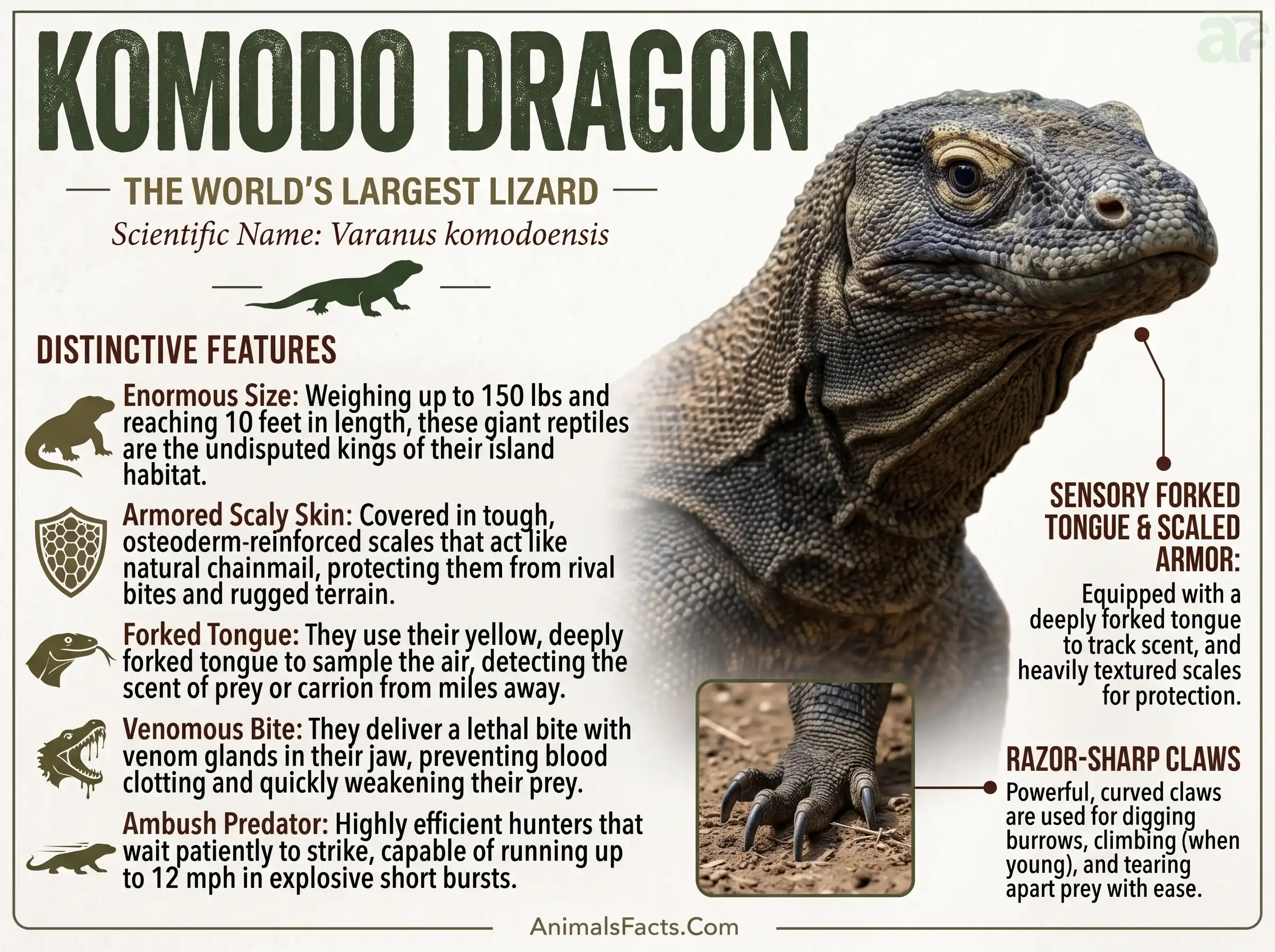
Komodo dragon size and weight make it the most physically impressive living lizard on Earth — the largest confirmed individual measured at 3.13 meters in length and the heaviest confirmed individual weighed at 166 kilograms.
Scale — Understanding the Komodo Dragon’s Size
The Komodo dragon’s size requires genuine contextualization to appreciate:
Compared to other lizards — The next largest lizard by weight — the water monitor (Varanus salvator) — typically reaches 15–20 kg in large adults. The largest Komodo dragons are approximately 8–10 times heavier. In terms of body mass, the Komodo dragon is in an entirely different size class from any other living lizard.
Compared to crocodilians — Large saltwater crocodiles (Crocodylus porosus) reach 400–1,000 kg — making them substantially larger than Komodo dragons. However, the Komodo dragon is the largest living lizard specifically — a distinction that matters taxonomically.
Compared to extinct relatives — Varanus priscus (Megalania) of Pleistocene Australia may have reached 4.5–7 meters — making the Komodo dragon a diminished but still extraordinarily impressive survivor of a formerly larger varanid lineage.
Size variation by sex — Male Komodo dragons are substantially larger than females — a pronounced sexual dimorphism:
- Males: typically 2.5–3 meters, up to 79–90 kg on average; exceptional individuals reaching 166 kg
- Females: typically 1.8–2.2 meters, up to 45–60 kg
The Tongue — The Extraordinary Chemosensory System
The Komodo dragon’s forked, yellow tongue is its most immediately distinctive visible feature — and its most sophisticated sensory organ:
Jacobson’s organ — The tongue delivers chemical molecules to the vomeronasal organ (Jacobson’s organ) in the roof of the mouth — a paired chemosensory structure that processes chemical information with extraordinary sensitivity. Each fork of the tongue samples the air independently — providing directional chemosensory information that allows the dragon to determine not only what scent is present but which direction it is strongest.
Detection range — The Komodo dragon can detect the scent of blood, carrion, and live prey at distances of up to 9.5 kilometers in favorable wind conditions — making it one of the most sensitive olfactory detectors of any living vertebrate relative to its body size.
Tongue flickering rate — The tongue is flicked in and out at high frequency during active scent-following — the rate increasing as the scent concentration increases, indicating proximity to the source.
The directional sampling — The two forks of the tongue, by sampling the air at slightly different points, provide differential concentration information that allows the Komodo dragon to track a scent gradient with the precision of a compass — turning systematically toward the higher-concentration fork until the source is located.
The Teeth — Serrated, Backward-Curved Wound Creators
The Komodo dragon’s teeth are specialized for producing devastating wounds rather than for clean killing:
Structure — The teeth are laterally compressed, serrated on both edges, and curved backward — a design that maximizes the tearing effect during the lateral head-shaking that follows a bite. The serrations act like a steak knife — cutting through tissue as the head moves.
Replacement — Like all reptiles, Komodo dragons continuously replace their teeth throughout their lives — new teeth growing from the dental lamina whenever existing teeth are lost or worn. A Komodo dragon may go through 4–5 sets of teeth in its lifetime.
Hidden teeth — The teeth are partially concealed by gingival tissue that is sliced open during feeding — the gums bleeding along with the prey, and this blood mixing with the venom gland secretions during the bite.
The wound design — The combination of serrated, backward-curved teeth with lateral head-shaking produces wounds that are extremely difficult to close — the tissue tearing rather than cutting cleanly, and the backward curve preventing easy withdrawal of the teeth once embedded.
The Venom System — The 2009 Scientific Revolution
The discovery of Komodo dragon venom glands in 2009 fundamentally revised scientific understanding of how the animal kills:
Pre-2009 understanding — The previous consensus held that Komodo dragons killed primarily through wound infection — their saliva being so heavily contaminated with pathogenic bacteria (including Escherichia coli, Staphylococcus species, Pasteurella multocida) that bite wounds became rapidly infected and prey weakened and died of septicemia over days.
The 2009 discovery — Bryan Fry and colleagues at the University of Melbourne demonstrated through MRI scanning and tissue analysis of Komodo dragon mandibles that the lower jaw contains venom glands — ducted structures producing complex venom including anticoagulant compounds that prevent blood clotting at wound sites.
The venom effect — The venom components cause:
- Anticoagulation — blood at wound sites cannot clot effectively, producing continuous bleeding from even relatively small bite wounds
- Hypotension — lowering of blood pressure, contributing to shock
- Muscle paralysis — some components affecting neuromuscular function
- Tissue damage — direct cytotoxic effects on wound tissue
The dual system — The current understanding is that the Komodo dragon kills through a dual system:
- Venom anticoagulation — preventing wound closure and causing progressive blood loss
- Bacterial wound infection — bacteria from the saliva and environment colonizing wounds not effectively closed by clotting
Ongoing scientific debate — Some researchers continue to debate the relative importance of venom versus bacteria — noting that the anticoagulant venom components may be less potent than initially claimed, and that bacterial wound infection may remain the primary killing mechanism for large prey.
The Skin — Osteoderms and Armor
The Komodo dragon’s skin contains osteoderms — small bone-like structures embedded within the scales that provide structural reinforcement:
Osteoderms — Tiny, pebble-like bony structures within the dermis; their mosaic pattern has been studied using X-ray and CT scanning, revealing a complex interlocking structure that provides both flexibility and mechanical protection.
Sensory function — Recent research has documented that the osteoderm mosaic serves not only as armor but also as a sensory platform — the mechanical properties of the osteoderm matrix transmitting vibrations and pressure information to sensory neurons within the skin.
Coloration — Adult Komodo dragons are dark grey to brown with some yellow-orange flecking — coloration that provides reasonable camouflage in the dry savanna and forest habitats they occupy. Juveniles are more strikingly patterned — green with yellow and black bands — providing camouflage in the tree canopies where young dragons spend much of their early lives avoiding adult cannibalism.
💡 Did You Know? The Komodo dragon’s forked tongue provides what researchers describe as “stereo olfaction” — the ability to determine the direction of a scent source from a single sampling event, by comparing the concentration detected on the left fork with the concentration on the right. This capability is fundamentally different from the olfactory system of mammals (which requires sequential sampling from different positions to determine direction) and is arguably more efficient for directional scent tracking. The stereo olfaction system of varanid lizards has been studied as a potential model for robotic chemical sensing systems — the engineering principle of directional chemical detection from a bifurcated sensor being applied in the development of chemical detection robots for environmental monitoring and security applications.
4. Top 25 Amazing Komodo Dragon Facts
Here is your definitive collection of the most extraordinary, scientifically verified, and genuinely astonishing Komodo dragon facts as of 2026:
- The Komodo dragon is the world’s largest living lizard — the largest confirmed individual measured 3.13 meters in length and weighed 166 kilograms — heavier than the average adult human male and longer than a standard car.
- The Komodo dragon can detect the scent of blood from up to 9.5 kilometers away — using its forked yellow tongue to deliver chemical molecules to the Jacobson’s organ in the roof of its mouth. This makes it one of the most sensitive long-range scent detectors of any vertebrate.
- Komodo dragons possess venom glands in their lower jaw — discovered in 2009 by Bryan Fry and colleagues at the University of Melbourne. The venom contains anticoagulant compounds that prevent blood from clotting at bite wounds, causing progressive blood loss that eventually kills prey too large to be immediately consumed.
- Female Komodo dragons are capable of parthenogenesis — reproducing without any male fertilization. This was first documented scientifically in 2006 when females at Chester Zoo and London Zoo produced fertile eggs despite having had no contact with males. The offspring produced are always male — a consequence of the ZW sex determination system in Komodo dragons.
- Komodo dragons evolved in Australia, not Indonesia — fossil evidence places Varanus komodoensis in Australia approximately 4 million years ago. The species colonized the Indonesian islands during lower sea level periods and apparently went extinct in Australia approximately 350,000 years ago.
- A Komodo dragon can consume up to 80% of its own body weight in a single meal — with the flexible skull, expandable stomach, and slow digestion allowing consumption of prey that appears impossibly large relative to the predator’s body. A large meal can sustain a Komodo dragon for weeks to months.
- Young Komodo dragons are primarily arboreal — spending much of their early lives in trees to avoid predation by adult Komodo dragons, which practice cannibalism. Juveniles cover themselves in feces to deter adults who are reluctant to eat foul-smelling prey.
- The Komodo dragon’s prey includes water buffalo (Bubalus bubalis) — animals that can weigh over 1,000 kg — making the size ratio of prey to predator (potentially more than 10:1 by weight) among the largest of any living predator-prey relationship.
- Komodo dragons can run at up to 20 km/h in short bursts — faster than most humans can sprint over short distances. This sprint capability, combined with ambush hunting technique, allows the dragon to take prey with a single explosive charge before the animal can react effectively.
- The Komodo dragon has a metabolic rate far lower than any comparable-sized mammal — it requires only approximately 8–10% of the food energy that a mammal of equivalent body weight would need. This metabolic efficiency allows it to survive on as few as 12 large meals per year.
- Komodo dragon teeth are covered by gingival tissue that is torn during feeding — the bleeding gums mixing blood with the venom gland secretions during bites, contributing to the potency of the wound-creating system.
- The Komodo National Park — established in 1980 and designated a UNESCO World Heritage Site in 1991 — protects the primary Komodo dragon habitat and is one of the few places in the world where a large apex predator has been formally protected across essentially its entire global range.
- Komodo dragons have a bifurcated hemipenis (paired reproductive organs in male reptiles) — a feature shared with all squamate reptiles. The two sides of the hemipenis are used alternately for mating.
- The Komodo dragon’s skull is highly kinetic — multiple bones articulate with each other in ways that allow the skull to flex during feeding, accommodating passage of large prey items through the mouth and throat. This kinesis is a key adaptation for consuming prey larger than the dragon’s own head.
- Komodo dragons have been documented cooperating in predation — multiple individuals converging on large prey (including water buffalo) and attacking sequentially, with later arrivals exploiting wounds created by earlier attackers. Whether this constitutes deliberate cooperative hunting or opportunistic aggregation at a wounded prey item remains debated.
- The Komodo dragon’s tongue is yellow — a distinctive coloration that distinguishes it from the black or dark tongues of most other monitor lizards. The yellow coloration is consistent across the species and is one of the reliable field identification features.
- Komodo dragons are excellent swimmers — documented swimming between the islands of the Indonesian archipelago, potentially colonizing new islands through swimming dispersal. This swimming capability may be increasingly important as climate change alters the accessibility of islands within the range.
- A Komodo dragon bite on a human — while extraordinarily rare — produces wounds that are extremely difficult to treat effectively due to the combination of venom anticoagulation, bacterial wound contamination, and the mechanical tear damage produced by the serrated, backward-curved teeth.
- The Komodo dragon practices communal feeding at large carcasses — with a strict dominance hierarchy governing access. The largest males feed first, followed by smaller males, then females, and finally juveniles. Dominant individuals may drive off competitors with aggressive displays and physical confrontation.
- Komodo dragons can go without water for extended periods — obtaining most of their water requirements from the prey they consume. Their kidneys are highly efficient at water conservation, producing concentrated urine that minimizes water loss in the dry savanna habitats they occupy.
- The discovery of Komodo dragon venom glands in 2009 overturned a consensus that had persisted for nearly a century — during which the killing power of Komodo bites was attributed entirely to pathogenic bacteria. The 2009 research using MRI scanning revealed the venom gland anatomy that previous researchers had missed.
- Komodo dragon eggs have a gestation period of approximately 7–8 months inside the nest — an extraordinarily long incubation period for a reptile. The female excavates a nest in soil or in a megapode bird’s abandoned nest mound — the rotting vegetation of the mound providing the warmth needed for incubation without the mother’s continued presence.
- The total global wild population of Komodo dragons is estimated at approximately 3,000–5,000 individuals — making it one of the rarest large predators on Earth by total population count, though this number may be more stable than many Endangered species due to the protection provided by Komodo National Park.
- Komodo dragon hatchlings are approximately 30 cm long at birth and are immediately independent — receiving no parental care whatsoever. They are immediately capable of hunting small prey but face significant predation pressure from adult Komodo dragons throughout their early lives.
- Climate change poses a unique and acute threat to the Komodo dragon — the species’ entire range consists of small, low-lying islands highly vulnerable to sea level rise. IUCN projections suggest that 30% or more of current Komodo dragon habitat could be submerged by 2050 under moderate climate change scenarios — the primary reason for the 2021 Endangered reclassification.
5. Fun Facts About Komodo Dragons
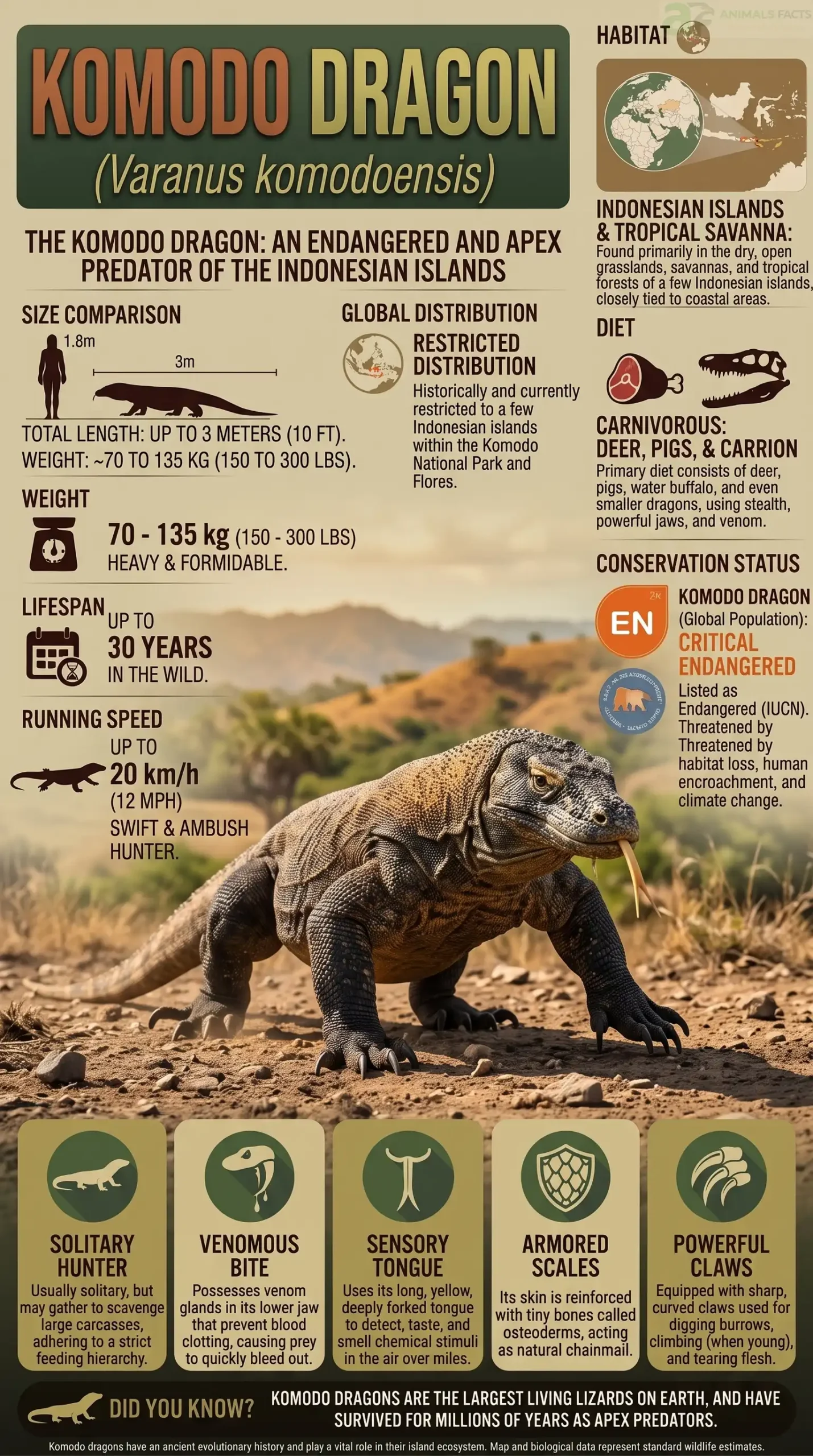
- World’s largest living lizard — 3.13 meters; 166 kg
- Can smell blood from 9.5 km away
- Females can reproduce without males — parthenogenesis
- Evolved in Australia — not Indonesia
- Can eat 80% of its body weight in one meal
- Young Komodo dragons cover themselves in feces to deter cannibalism
- Hunts water buffalo — 10× heavier than itself
- Runs at 20 km/h — faster than most humans sprint
- Needs only 12 large meals per year
- Venom glands were only discovered in 2009
- Teeth are covered by gum tissue that bleeds during feeding
- Total wild population only 3,000–5,000 individuals
6. Komodo Dragon Natural Habitat & Geographic Range
Komodo dragon habitat is the most geographically restricted of any large predator on Earth — the species occurring naturally on only five small Indonesian islands in the Lesser Sunda island chain.
The Five Islands
| Island | Area | Status | Notes |
|---|---|---|---|
| Komodo Island | 390 km² | Within Komodo National Park | Primary island; largest population; most visited |
| Rinca Island | 198 km² | Within Komodo National Park | Second-largest population; excellent viewing access |
| Gili Motang | 30 km² | Within Komodo National Park | Small island; smaller population |
| Gili Dasami | 9 km² | Within Komodo National Park | Smallest island; minimal population |
| Flores Island | 14,300 km² | Outside protected area (partially) | Western Flores only; most threatened population |
Habitat Types
Tropical dry forest — The primary Komodo dragon habitat; seasonally dry forest with a distinct dry season during which vegetation becomes desiccated and prey concentrations around water sources create hunting opportunities.
Savanna and grassland — Open grassland dominated by Lontar palms (Borassus flabellifer) and coarse grasses; Komodo dragons actively hunt in savanna habitats, particularly where deer and pigs concentrate around waterholes.
Monsoon forest — Denser forest in areas receiving higher rainfall; Komodo dragons present but at lower density.
Coastal beach and scrub — Komodo dragons are regularly observed on beaches — particularly the pink-sand beaches of Komodo Island that are a tourist attraction in their own right. Beach and coastal habitats provide access to marine carrion (beached whales, dolphins, sea turtles) and to nesting seabirds.
Rocky hillsides — The rocky terrain of Komodo and Rinca Islands provides denning sites in caves and crevices; dominant males establish territories on hillside vantage points from which they survey their domain.
The Island Gigantism Paradox
The Komodo dragon’s extraordinary size relative to all other living lizards is a product of island evolution dynamics — but specifically island gigantism rather than the more commonly discussed island dwarfism:
Island gigantism — In island environments where apex predators are absent, prey species may become larger over evolutionary time (reduced selection for small size and speed). Simultaneously, the predator on the island may also increase in size as larger prey becomes available and as the absence of competition from other large predators removes the selective pressure to remain small.
The Komodo situation — The Indonesian islands occupied by Komodo dragons historically lacked the large mammalian predators (tigers, leopards, large cats) that would compete with a giant lizard predator on the mainland. The presence of large prey (Stegodon, prehistoric elephants; subsequently deer, pigs, and cattle) and the absence of competing apex predators allowed the Komodo dragon lineage to reach and maintain its extraordinary body size.
The prey context — The Komodo dragon evolved in a prey environment that included pygmy Stegodon (Stegodon florensis) — a miniature elephant adapted to island conditions — on Flores. The extinction of Stegodon approximately 12,000 years ago (possibly associated with human arrival) removed the largest prey item from the Komodo dragon’s historical prey base.
💡 Did You Know? The sand of Pink Beach on Komodo Island — one of only a handful of pink-sand beaches in the world — owes its distinctive coloration to red coral fragments (Foraminifera) mixed with the white sand. This beach is one of the most visited tourist sites in Komodo National Park — and Komodo dragons are regularly encountered on and near the beach, basking in the early morning or walking between the shoreline and the forest interior. The juxtaposition of one of the world’s most extraordinary reptile predators with one of the world’s most beautiful beach environments creates a wildlife tourism context unique in the world — the Komodo dragon is the only large apex predator that tourists regularly encounter within meters of a beach holiday setting.
7. Komodo Dragon Diet & Feeding Behavior
Komodo dragon diet is the most impressive of any living lizard — the combination of the species’ extraordinary size, sophisticated sensory system, venom-enhanced killing power, and patient ambush hunting strategy allowing it to prey on animals from small insects to full-grown water buffalo.
Diet Breakdown Table
| Food Type | Estimated % of Diet | Notes |
|---|---|---|
| Deer (Timor deer, Rusa timorensis) | ~40–50% | Primary prey species; abundant on all islands |
| Wild pigs (Sus scrofa) | ~15–20% | Important secondary prey; abundant |
| Water buffalo (Bubalus bubalis) | ~10–15% | Largest prey; may require multiple attack-and-follow encounters |
| Smaller Komodo dragons (cannibalism) | ~5–10% | Particularly juveniles; significant juvenile mortality source |
| Goats (domestic/feral) | ~5–8% | Important on islands with feral goat populations |
| Carrion (any species) | ~5–8% | Highly opportunistic; detected from extreme distances |
| Eggs (megapode, sea turtle) | ~2–5% | Seasonally important |
| Snakes, lizards, rodents | ~2–5% | Small prey important for juveniles |
| Sea carrion (beached whales, etc.) | ~1–3% | Coastal habitats; high caloric value when available |
| Crabs, marine invertebrates | ~1–2% | Beach and coastal foraging |
The Hunting System — Ambush and Patient Pursuit
The Komodo dragon’s primary hunting strategy is ambush from concealment — combined with the extraordinary patient pursuit strategy that exploits the venom anticoagulation system:
Phase 1 — Scent-based location — The dragon uses its chemosensory system to locate prey at distance — following scent gradients to within visual detection range of the target prey.
Phase 2 — Ambush positioning — The dragon uses its surprisingly effective camouflage (the grey-brown coloration blending with dry vegetation and soil) to approach within explosive-sprint distance of prey — typically a deer or pig approaching a waterhole, a resting place, or a trail corridor.
Phase 3 — Explosive ambush — The dragon launches a rapid charge — covering the final 3–5 meters in an explosive burst that prevents the prey from reacting effectively. The initial attack targets the underside, throat, or leg — areas where deep wounds can be created and where major blood vessels run close to the surface.
Phase 4 — The wounding bite — The serrated, backward-curved teeth are dragged through tissue with lateral head-shaking — creating extensive laceration wounds. Simultaneously, venom anticoagulants are delivered through the wound. The dragon may release the prey immediately or maintain grip during an extended attack.
Phase 5 — Patient pursuit — If the prey escapes the initial attack (common with large prey like water buffalo), the dragon follows the blood scent — tracking the wounded, progressively weakening animal using the chemosensory system. This pursuit may extend over several days and several kilometers, with the prey gradually succumbing to blood loss and wound shock.
Phase 6 — Consumption — The dragon consumes the weakened or dead prey — large carcasses attracting multiple Komodo dragons in a dominance-structured feeding aggregation. The flexible skull, expandable stomach, and powerful digestive system allow consumption of bone, hide, and hooves — virtually the entire carcass.
The Water Buffalo Predation Challenge
The Komodo dragon’s predation on water buffalo is one of the most remarkable predator-prey relationships of any living reptile:
The size disproportion — An adult water buffalo can weigh over 1,000 kg — potentially more than 10 times the weight of the attacking Komodo dragon. This is the largest prey-to-predator weight ratio of any living predator-prey relationship involving a reptile.
The buffalo’s defense — Water buffalo in Indonesia are not native — they are feral descendants of domestic animals introduced centuries ago. They have some learned responses to Komodo dragon attacks but lack the evolved anti-predator behaviors of prey species that have coexisted with this predator for millions of years.
The attack strategy — The Komodo dragon typically attacks water buffalo at the legs and ankles — creating deep wounds that prevent effective escape movement. The anticoagulant venom ensures these wounds continue bleeding. The dragon then withdraws and follows the progressively weakening buffalo.
The outcome timeline — A bitten water buffalo may survive for days to weeks before succumbing — the Komodo dragon following patiently and feeding when the animal dies or is too weakened to defend itself effectively.
Feeding Efficiency
The Komodo dragon’s feeding efficiency is extraordinary:
- Digestion rate: approximately 2–4 weeks for a large meal
- Food requirement: approximately 30 kg of food per month for a large adult
- Metabolic efficiency: approximately 8–10% of equivalent mammalian energy requirements
- Waste: minimal — Komodo dragons consume bone, hide, and most non-digestible material, regurgitating a pellet of hair, feathers, and hooves after digestion
8. Komodo Dragon Reproduction & Life Cycle
Komodo dragon reproduction combines the conventional sexual reproduction typical of varanid lizards with the extraordinary capability of parthenogenesis — one of the most biologically remarkable reproductive strategies documented in any large vertebrate.
Sexual Reproduction
Mating season — July through August on most islands — coinciding with the dry season when prey is concentrated and conditions favor successful egg incubation.
Male competition — Males compete for mating access through wrestling matches — two males rise on their hind legs and grapple, each attempting to throw the other to the ground. These bouts can last for hours and occasionally produce serious injuries. The dominant male then approaches the receptive female.
Mating — The male courts the female with tongue-flicking, chin-rubbing, and scratching of the back. Mating involves the male aligning his body with the female’s and inserting one of the paired hemipenes. Copulation lasts for several hours.
Female aggression — Females sometimes resist mating — producing scratches and bites on the male. The male pins the female with his body weight during copulation.
Parthenogenesis — The Virgin Birth Phenomenon
The 2006 discovery of parthenogenesis in Komodo dragons was one of the most significant findings in vertebrate reproductive biology of the decade:
The cases — In 2006, females at Chester Zoo (UK) and London Zoo (UK) — both of which had been kept isolated from males — produced fertile eggs. DNA analysis confirmed that the eggs had been produced without any male genetic contribution.
The mechanism — Komodo dragon parthenogenesis occurs through a process called automixis with terminal fusion — the female’s egg fuses with a polar body (a cell produced during egg cell formation that normally degenerates) rather than with a sperm cell. The resulting offspring has two sets of the mother’s chromosomes.
Why only males — Komodo dragons use a ZW sex determination system (the reverse of the XY system used by mammals). Females are ZW; males are ZZ. When a ZW female produces parthenogenetic offspring through terminal fusion, the possible chromosome combinations are ZZ (male) and WW. WW offspring are not viable — so only ZZ (male) offspring survive. All parthenogenetic Komodo dragon offspring are therefore male.
The evolutionary significance — Parthenogenesis in Komodo dragons may be an adaptation to colonization scenarios — a single female stranded on a new island can produce male offspring through parthenogenesis, those male offspring can mate with their mother (sexual reproduction), and a viable population can be established from a single founding female. This “colonial parthenogenesis” strategy may explain how Komodo dragons were able to colonize multiple Indonesian islands from small founding populations.
Nesting and Incubation
- Egg-laying: September–October — females excavate nests in soil or appropriated megapode bird mounds
- Clutch size: typically 15–30 eggs per clutch
- Egg size: approximately 9–12 cm in length — relatively large for a lizard
- Incubation period: approximately 7–8 months — unusually long for a reptile
- Female nest guarding: the female guards the nest for approximately 3 months after laying — longer nest guarding than most reptiles
- Hatching: May–July of the following year
Hatchling Development
Hatchlings emerge at approximately 30–40 cm in length and are immediately independent:
- No parental care after hatching
- Immediately arboreal — climbing trees to avoid adult cannibalism
- Feces-coating behavior begins immediately
- Diet of insects, small lizards, and small mammals
- Remain primarily arboreal for approximately 4–5 years — until large enough to be less vulnerable to adult predation
Growth and Maturity Timeline
| Age | Length | Weight | Stage |
|---|---|---|---|
| Hatch | 30–40 cm | ~100–150 g | Independent hatchling; arboreal |
| 1 year | ~60–70 cm | ~0.5 kg | Still arboreal; small prey |
| 3 years | ~1 m | ~2–4 kg | Beginning terrestrial activity |
| 5 years | ~1.5 m | ~8–15 kg | Increasingly terrestrial |
| 8–10 years | 2+ m | Sexual maturity | — |
| 20+ years | 2.5–3+ m | 50–80+ kg | Full adult size |
Lifespan
- Wild lifespan: approximately 30 years — relatively long for a reptile
- Maximum captive lifespan: 30+ years — captive Komodo dragons are long-lived with appropriate care
9. Social Behavior & Communication
Komodo dragon social behavior is more complex than the basic “solitary reptile” characterization suggests — the species shows a structured dominance hierarchy, complex social interactions at feeding aggregations, and communication systems involving multiple sensory channels.
Social Hierarchy
Adult Komodo dragons maintain a linear dominance hierarchy based primarily on body size — larger individuals dominate smaller ones in all social contexts:
Feeding hierarchy — At large carcasses, access follows strict dominance order: largest males first, progressively smaller males, then females, then juveniles. Dominant individuals can displace subordinates from feeding positions through posturing and threat displays without physical confrontation.
Territorial structure — Large dominant males maintain territories on the islands’ ridgelines and vantage points — areas from which they can detect other dragons and potential prey. Subordinate males and females have overlapping home ranges without strictly exclusive territories.
Juvenile exclusion — Juveniles are actively persecuted by adults — cannibalism drives juveniles into arboreal refugia where they remain beyond adult reach. The gradual transition to terrestrial life as juveniles grow represents a progressive negotiation of the dominance hierarchy.
Communication Systems
Chemosensory communication — The primary long-distance channel; tongue-flicking delivers chemical information about individual identity, sex, and reproductive status. Dragons trailing other dragons use the chemosensory system to detect the passage of specific individuals through a scent landscape.
Visual displays — Threat displays include:
- Body inflation — inflating the throat and body to appear larger
- Tail posture — raising or flattening the tail as status signals
- Gaping — open-mouthed display exposing the teeth
- Color flushing — changes in skin color associated with arousal states
Vocalizations — Komodo dragons are not highly vocal but produce:
- Hissing — primary threat sound; produced during confrontations
- Growling — low-frequency threat during confrontations
- Chuffing — contact sounds during mating and social interactions
Physical interaction — Wrestling bouts between males during mating competition are the most dramatic social physical interactions. Tongue-flicking contact between compatible individuals during mating is a significant affiliative contact behavior.
Intelligence and Learning
Research on captive Komodo dragons has documented learning capabilities that exceed the expectations of “simple reptile” characterizations:
Individual recognition — Captive Komodo dragons recognize individual human keepers — differentiating between known and unknown humans and responding differently to each.
Operant conditioning — Komodo dragons have been trained to respond to specific stimuli for feeding rewards — demonstrating the basic learning capability underlying behavioral conditioning.
Spatial memory — Field observations suggest that Komodo dragons maintain detailed spatial memories of their territories — knowing the locations of waterholes, prey trails, denning sites, and competitor territories.
Play behavior — Captive Komodo dragons at the Smithsonian National Zoo and other facilities have been documented engaging in play behavior — interacting with objects (bags, boxes, shoes) in ways that serve no immediate survival function. Play in reptiles was previously considered essentially nonexistent; the Komodo dragon play documentation has been significant in expanding understanding of reptile cognition.
10. Predators & Defense Mechanisms
Adult Komodo dragons are the apex predators of their island ecosystems — they have no natural predators as adults. However, juveniles face significant predation pressure, primarily from adult Komodo dragons themselves.
Natural Predators of Adults
None — Adult Komodo dragons at the top of the size hierarchy have no natural predators on their islands. The largest adults face no biological threat from any other native species.
Crocodiles (potential) — Estuarine crocodiles (Crocodylus porosus) are present in some waterways of the Komodo island region and represent a theoretical predation threat to Komodo dragons near water — but documented crocodile-Komodo dragon predation is rare or absent.
Humans — The only significant threat to adult Komodo dragons is human — deliberate killing, snaring, and habitat destruction. These are anthropogenic threats rather than predation in the biological sense.
Predators of Juveniles
Adult Komodo dragons — The primary predator of juvenile Komodo dragons is larger members of the same species. Cannibalism is common and is the primary selective pressure that drives juvenile arboreal behavior, feces-coating defense, and the extended period of predominantly arboreal life in young dragons.
Raptors — Large raptors including serpent eagles (Spilornis species) may take small juvenile Komodo dragons in the early arboreal phase — juveniles of 30–50 cm are within the size range of large raptor prey.
Feral pigs — Feral pigs (Sus scrofa) present on some islands may predate Komodo dragon eggs and very small hatchlings.
Juvenile Defense Mechanisms
Arboreal refuge — The primary defense; climbing trees to elevations inaccessible to adult Komodo dragons.
Feces coating — Juveniles roll in and coat themselves with feces — producing an odor that adult Komodo dragons appear to find unpalatable or deterring. This unusual defense has been documented in multiple field observations and captive settings.
Camouflage — The juvenile coloration — green with yellow and black patterning — provides camouflage in the tree canopy environments where young dragons spend their early years.
Speed and agility — Juveniles are significantly faster and more agile than adults — the lighter body allowing rapid escape maneuvers that large adults cannot match.
Adult Defense Capabilities
While adult Komodo dragons face no natural predators, they deploy impressive defensive capabilities when threatened by humans or in social confrontations with other Komodo dragons:
Tail strike — The massive, muscular tail is a primary weapon — a full-force tail whip from a large Komodo dragon can knock a human off their feet and produce serious bruising or injury.
Bite — The primary offensive weapon; a full-force bite from a large Komodo dragon produces the same devastating wound system as in prey capture — the venom anticoagulation, bacterial contamination, and mechanical tear damage creating wounds extremely difficult to treat effectively.
Claw raking — The powerful claws on all four feet can rake across skin with force sufficient to produce deep lacerations.
Defensive posturing — Gaping display, body inflation, and hissing are deployed before physical contact — most threats are deterred by the defensive display without escalating to physical contact.
💡 Did You Know? The Komodo dragon play behavior documented at the Smithsonian National Zoo — specifically a juvenile male named Kraken who was observed repeatedly carrying, manipulating, and interacting with a park ranger’s shoe without any feeding motivation — was described in a 2004 paper by Gordon Burghardt and colleagues that became one of the most cited papers on reptile cognition of the decade. The paper challenged the prevailing assumption that play behavior — previously considered characteristic of birds and mammals — was essentially absent in reptiles. Subsequent documentation of play-like behavior in various crocodilian and lizard species has confirmed that the cognitive foundations of play behavior extend deeper into the vertebrate lineage than previously recognized. The Komodo dragon, as the largest living lizard, has been particularly important in this research — its cognitive capabilities providing evidence for a richer inner life in reptiles than the popular characterization of “cold-blooded automata” would suggest.
11. Komodo Dragon Facts for Kids
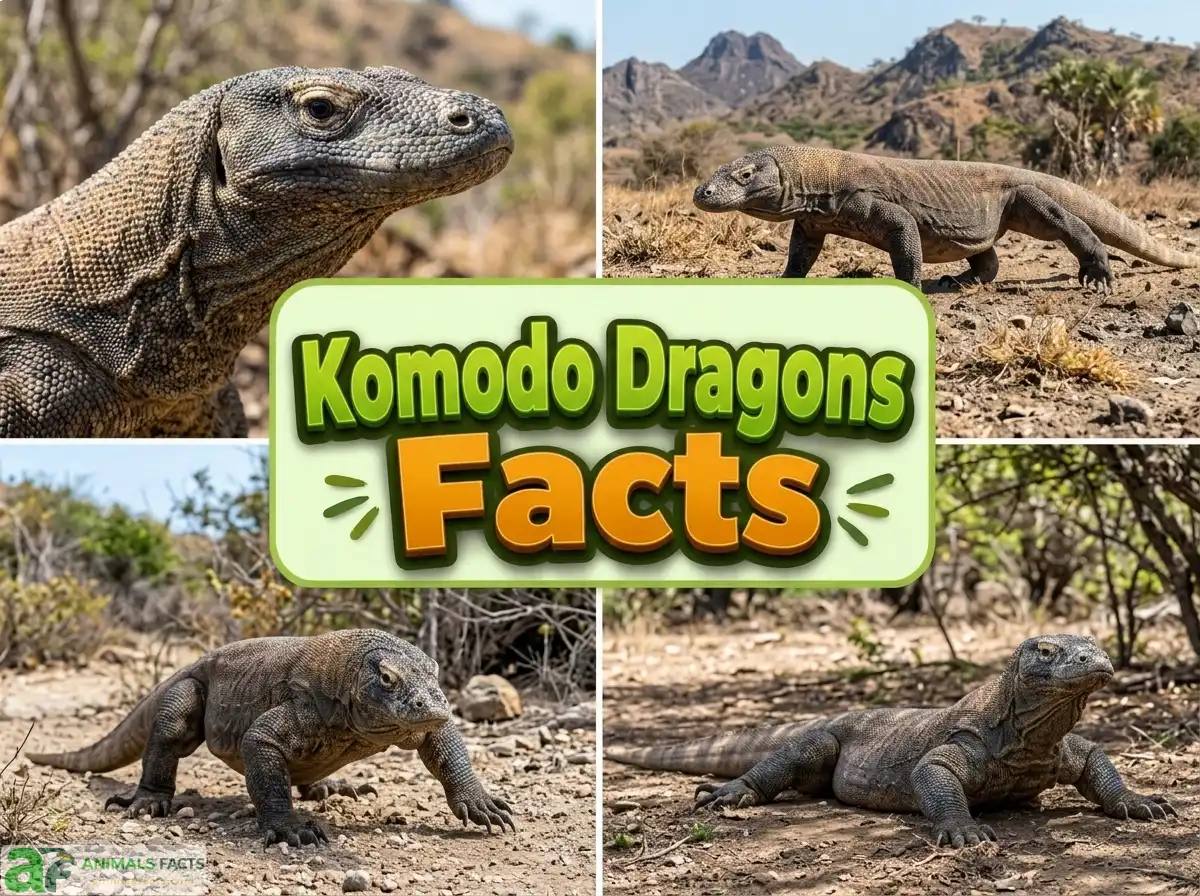
Hey amazing young wildlife scientists and future herpetologists! Here are some absolutely incredible Komodo dragon facts for kids that will astonish every dinosaur and reptile fan you know:
- The Komodo dragon is the WORLD’S LARGEST LIZARD — and it looks exactly like a real dragon! The biggest Komodo dragons grow over 3 meters long and weigh more than 100 kilograms — longer than a car and heavier than most adult humans. They have scales, claws, a forked tongue, and they eat animals much larger than themselves. If you were designing a real dragon, you would build something very much like a Komodo dragon!
- It can SMELL BLOOD from 9.5 kilometers away! The Komodo dragon flicks its long, forked yellow tongue in and out of its mouth constantly — but it is not tasting the air like we would taste food. It is smelling it. The two forks of the tongue send chemical information to a special organ in the roof of the mouth that is incredibly sensitive. A single drop of blood kilometers away can be detected!
- Female Komodo dragons can have BABIES WITHOUT A FATHER! This is called parthenogenesis and scientists discovered it in 2006 when female Komodo dragons in zoos — that had NEVER been near a male — produced eggs that hatched into healthy baby dragons. The babies are always male. Scientists think this ability helps the species colonize new islands when only one female arrives!
- Baby Komodo dragons roll in FECES to protect themselves from being EATEN! Baby Komodo dragons are in danger from adult Komodo dragons — which will eat them if they get the chance. To protect themselves, babies roll in poop and cover themselves in it so they smell disgusting. Adult Komodo dragons are reluctant to eat something that smells that bad, so the babies stay safe up in the trees!
- A Komodo dragon can eat a meal that weighs 80% of its own body weight! Because a Komodo dragon’s skull has special moveable bones, it can open its mouth enormously wide and swallow huge pieces of food. It can eat almost an entire deer in one sitting — and then it does not need to eat again for WEEKS. A Komodo dragon only needs about 12 big meals in an entire YEAR!
- Scientists only discovered that Komodo dragons have VENOM in 2009! For almost 100 years, scientists thought Komodo dragons killed their prey mainly through horrible bacteria in their mouths. Then in 2009, researchers using MRI scanning found that Komodo dragons actually have venom glands in their lower jaws that produce chemicals preventing blood from clotting. This discovery completely changed our understanding of how one of the world’s most famous animals kills!
- The Komodo dragon evolved in AUSTRALIA — not Indonesia! The island of Komodo is where the species gets its name, but Komodo dragons actually evolved in Australia millions of years ago. They spread to the Indonesian islands when sea levels were lower, and then went extinct in Australia. Their huge extinct cousin — Megalania — was the largest land lizard that ever lived, reaching possibly 7 meters long!
- Komodo dragons hunt animals TEN TIMES their own size! Water buffalo can weigh over a thousand kilograms. Komodo dragons can weigh 70 to 100 kilograms. A Komodo dragon will still attack a water buffalo — biting its legs to create wounds that will not stop bleeding, and then following the buffalo for days until it is too weak to run. Patient and deadly!
12. Relationship with Humans
The relationship between Komodo dragons and humans encompasses ancient Indonesian cultural traditions, the dramatic history of Western scientific discovery, complex modern conservation challenges, and the extraordinary global tourism economy that the species now supports.
Indigenous Relationships — The Anak Kraeng
The indigenous people of Komodo Island — the Anak Kraeng — have coexisted with Komodo dragons for generations, developing a cultural relationship with the giant lizard that blends practical coexistence wisdom with spiritual significance:
Historical coexistence — The Anak Kraeng developed hunting practices, settlement patterns, and behavioral protocols that allowed coexistence with Komodo dragons — avoiding known dragon territories during dangerous periods, securing livestock, and maintaining traditional ecological knowledge about dragon behavior.
Relocation controversy — In 2019, the Indonesian government proposed relocating the approximately 1,700 Anak Kraeng residents of Komodo Island as part of a tourism development plan for the area. This proposal generated significant controversy — human rights organizations and conservation groups objected that the relocation was both culturally inappropriate and potentially counterproductive for conservation, as the indigenous community’s traditional knowledge and presence had been compatible with Komodo dragon conservation for generations.
The spiritual dimension — In some Anak Kraeng traditions, Komodo dragons are treated with spiritual respect — understood as powerful forest spirits whose territory must be respected. These traditions have contributed to a cultural framework of coexistence that, in important respects, parallels modern conservation principles.
Human Attacks — The Reality
Komodo dragon attacks on humans are extremely rare but documented:
Historical attacks — Multiple cases of Komodo dragons attacking and killing humans have been documented on the Indonesian islands — primarily involving indigenous community members working in or near dragon territories. In most cases, the attacks involved people approaching or surprising dragons rather than dragons actively stalking human prey.
Tourist attacks — Several attacks on tourists visiting Komodo National Park have been documented — typically involving tourists who approached individual dragons too closely or who surprised dragons on forest trails. None of the documented tourist attacks in recent decades has been fatal, but serious injuries have occurred.
The 2007 attack — A particularly significant attack occurred in 2007 when a Komodo dragon entered the garden of a Ware family on Flores and seriously injured a child — an incident reflecting the challenges of the porous boundary between protected park habitat and human-occupied land on Flores island.
Safety protocols — Komodo National Park requires all visitors to be accompanied by trained ranger guides — guides carry forked sticks that can be used to deter dragon approaches and position visitors at safe distances from known individual dragons.
The Tourism Economy
Komodo National Park is one of Indonesia’s most important tourism assets — generating revenues that directly fund conservation:
Visitor numbers — Pre-COVID, Komodo National Park received approximately 176,000 international visitors per year — a number that had been growing steadily and that represents one of the highest visitor densities of any marine and terrestrial national park in Southeast Asia.
Economic value — The combined tourism-related economic activity generated by Komodo National Park — including diving tourism (the park’s coral reef system is among the world’s finest), Komodo dragon viewing, and related hospitality services — has been estimated at hundreds of millions of US dollars annually.
The tourism-conservation relationship — Tourism revenue provides the financial foundation for park management, ranger employment, and community development programs that support conservation. The Komodo dragon is genuinely a flagship species whose appeal to global wildlife tourism generates the economic resources that fund its own protection.
The 2020 controversy — In 2020, the Indonesian government proposed closing Komodo Island to tourists for a year to allow ecological recovery — a proposal that generated significant controversy among local communities dependent on tourism income and that was ultimately not implemented in full. The debate highlighted the tension between tourism pressure and conservation needs that characterizes many high-profile wildlife tourism destinations.
13. Komodo Dragon Conservation Status & Threats
Conservation Status Overview
| Feature | Details |
|---|---|
| IUCN Status | Endangered (EN) — reclassified from Vulnerable in 2021 |
| Population Trend | Decreasing |
| Estimated Wild Population | 3,000–5,000 individuals |
| CITES Listing | Appendix I — highest protection level; international trade prohibited |
| National Protection | Fully protected under Indonesian law |
| Primary Protected Area | Komodo National Park (1,817 km² terrestrial and marine) |
The 2021 Reclassification — Why Endangered?
The 2021 reclassification from Vulnerable to Endangered was driven primarily by a new threat not previously adequately incorporated in IUCN assessments:
Climate change and sea level rise — The Komodo dragon’s entire range consists of small, low-lying islands. IUCN climate change projections suggest that 30% or more of current Komodo dragon terrestrial habitat could be lost to sea level rise by 2050 under moderate climate change scenarios. This habitat loss is not recoverable — submerged island area cannot be restored — and represents a uniquely severe threat to a species with no other habitats to retreat to.
Major Threats
| Threat | Description | Impact Level |
|---|---|---|
| Climate change / sea level rise | Permanent habitat loss on low-lying islands | Critical — primary driver of 2021 reclassification |
| Habitat loss | Human settlement expansion; agricultural clearing on Flores | High |
| Prey depletion | Deer and pig hunting by local communities | High |
| Illegal poaching | Komodo dragon capture for illegal wildlife trade | Medium-High |
| Tourism pressure | Disturbance at viewing sites; infrastructure development | Medium |
| Fire | Dry season fires reducing habitat quality | Medium |
| Introduced species | Feral pigs, dogs affecting hatchling survival | Medium |
| Human-wildlife conflict | Attacks on livestock driving retaliatory killing | Medium |
| Inbreeding | Small isolated island populations with limited gene flow | Long-term concern |
The Flores Population — The Most Threatened
The Komodo dragon population on Flores Island — the only island in the range not entirely within Komodo National Park — faces the most severe threats:
- Flores has a human population of approximately 2.5 million people — far denser than the population on the national park islands
- Rapid agricultural expansion and deforestation in western Flores has dramatically reduced available Komodo dragon habitat
- Prey depletion through bushmeat hunting has reduced deer and pig populations in many parts of western Flores
- The Flores population is genetically distinct from the park island populations — its loss would represent irreplaceable genetic diversity
Conservation Responses
Komodo National Park management — The park’s management by the Indonesian Ministry of Environment and Forestry provides formal protection for the majority of the species’ range. Park rangers patrol against poaching and manage visitor access.
Community development programs — Programs supporting alternative livelihoods for communities adjacent to the park reduce pressure from poaching and prey depletion.
Captive breeding — Multiple zoos globally maintain Komodo dragon populations — including the Smithsonian National Zoo, San Diego Zoo, London Zoo, and numerous others. These captive populations provide genetic insurance and research opportunities.
Climate change adaptation planning — Conservation planning organizations including the IUCN SSC Monitor Lizard Specialist Group are developing climate change adaptation strategies — including habitat corridor planning, possible assisted colonization of additional islands, and community engagement on climate adaptation.
14. Famous Komodo Dragons in History & Pop Culture
Famous Individual Komodo Dragons
“Kraken” — The juvenile male Komodo dragon at the Smithsonian National Zoo in Washington DC whose documented play behavior with a park ranger’s shoe was described in a landmark 2004 paper on reptile play cognition — one of the most scientifically significant individual Komodo dragon contributions to research.
“Raja” — A male Komodo dragon at the San Diego Zoo who became one of the most publicly visible individual Komodo dragons in North American zoo history — featured in multiple Zoo San Diego publications and educational programs over his extended captive life.
“Flora” — A female Komodo dragon at Chester Zoo in the UK who was one of the first documented parthenogenetic Komodo dragons in 2006 — her production of fertile eggs without male contact being one of the most significant reproductive biology findings of the decade. Flora’s case was simultaneously documented alongside a similar case at London Zoo, providing multiple independent confirmation of Komodo dragon parthenogenesis.
W. Douglas Burden’s specimens (1926) — The live Komodo dragons captured by the Burden Expedition of 1926 and brought to the American Museum of Natural History in New York were the first live Komodo dragons displayed to a Western public — their exhibition generating extraordinary public interest and reportedly inspiring the concept that became King Kong.
Historical Significance
The King Kong connection — W. Douglas Burden’s 1926 expedition to Komodo Island and his account of the Komodo dragon’s dragon-like appearance and behavior reportedly inspired his friend Merian C. Cooper to develop the concept of King Kong — the 1933 film that became one of the most influential monster films in cinema history. The connection between the real dragon of Komodo Island and the fictional King Kong is one of the most remarkable chains of inspiration in popular culture history.
The Dutch colonial discovery — The process by which Komodo dragons came to Western scientific attention — through reports from Dutch colonial administrators to Pieter Ouwens in 1910 — is one of the last major “discovery” events in the history of vertebrate zoology. The idea that a 3-meter, 100-kg lizard existed on an island group close to a colonial administrative center and had remained unknown to Western science until the 20th century is a remarkable reminder of how much biodiversity was still undescribed in the early 20th century.
15. Role in Ecosystem & Food Chain
The Apex Predator Role
The Komodo dragon is the undisputed apex predator of its island ecosystems — occupying the top of the food web with no native competitor or natural enemy in the adult stage:
Prey population regulation — Komodo dragon predation regulates the populations of Timor deer (Rusa timorensis) and wild pigs (Sus scrofa) on the islands — preventing these herbivore populations from growing to levels that would cause overgrazing and habitat degradation. Research has documented that islands with higher Komodo dragon densities maintain healthier vegetation communities — a trophic cascade effect linking the apex predator to plant community health.
The deer-vegetation trophic cascade — Without Komodo dragon predation pressure, deer populations on the islands would likely increase until food limitation — overgrazing would reduce vegetation cover, alter species composition, and potentially trigger soil erosion on the steep island terrain. The Komodo dragon’s predation maintains deer at densities compatible with sustainable plant community health.
Carrion processing — The Komodo dragon’s role as a carrion consumer provides the island equivalent of a vulture scavenging service — removing carcasses that would otherwise decompose slowly, releasing nutrients for plant uptake and reducing pathogen reservoirs associated with decomposing large animal carcasses.
The Ecosystem Engineer Role
Beach and coastal habitat use — Komodo dragon nesting and feeding activities on beaches and coastal areas modify soil structure, redistribute nutrients from marine to terrestrial environments (through consumption of marine carrion and sea turtle eggs), and create physical disturbances that benefit certain plant and invertebrate species.
Megapode nest use — The Komodo dragon’s use of megapode bird nest mounds for egg incubation creates a complex relationship with these nest-building birds — the dragon’s use of pre-existing mounds reducing the nest site competition while making megapode mounds more salient landscape features.
The Prey Community Structure
The presence of a large apex predator creates behavioral ecology effects across the prey community:
Fear ecology — The constant predation pressure from Komodo dragons drives deer and pig behavioral adjustments — increased vigilance, altered habitat use (avoiding areas of high dragon density), and modified activity patterns — that have cascading effects on vegetation through the “landscape of fear” concept. Prey avoid grazing in areas of high predator density even when not immediately threatened, creating spatial heterogeneity in grazing pressure.
16. Myths, Folklore & Cultural Significance
Anak Kraeng Traditions
The indigenous people of Komodo Island — the Anak Kraeng — have the deepest and most historically rooted cultural relationship with Komodo dragons:
The dragon ancestor legend — One of the most significant Anak Kraeng traditions holds that Komodo dragons are descendants of a legendary figure — a dragon princess who gave birth to both a human child and a Komodo dragon, making the two species siblings. In this tradition, Komodo dragons are not merely animals but relatives — deserving of respect and protection as family members. This legend has provided a cultural foundation for coexistence that has historically limited persecution of the animals.
The naming tradition — In some Anak Kraeng traditions, specific large individual Komodo dragons associated with particular territories are given names and treated as individual personalities — a recognition of Komodo dragon individuality that parallels the individual recognition that wildlife researchers have more recently formalized.
Spiritual protection beliefs — Several Anak Kraeng traditions hold that certain large Komodo dragons are protective spirits of specific locations — that their presence near a village or area indicates spiritual protection rather than danger. These beliefs create localized protection for specific individuals that has conservation value beyond any formal legal protection.
Wider Indonesian Cultural Traditions
The “land crocodile” characterization — In Indonesian languages and traditions outside of Komodo Island, the Komodo dragon is frequently described as buaya darat — “land crocodile” — reflecting the cultural framework of comparing it to the crocodile, the most familiar large reptile predator in the Indonesian archipelago. This characterization reflects both the visual similarities and the behavioral reputation as a dangerous predator.
National symbol significance — The Komodo dragon has become a significant symbol of Indonesian national natural heritage — featured on Indonesian postage stamps, in tourism promotion, and as a flagship example of Indonesia’s extraordinary biodiversity. The Indonesian rupiah has featured Komodo dragon imagery; the komodo is referenced in official Indonesian tourism branding.
Western Cultural Mythology
The dragon archetype — The Western cultural encounter with Komodo dragons through the 20th century — particularly Burden’s expedition accounts and the subsequent popular media coverage — reinforced the deep human cultural archetype of the dragon. The Komodo dragon’s combination of massive scaled body, forked tongue, powerful predatory behavior, and island-lord ecological status mapped almost perfectly onto the characteristics that human cultures across the world have independently attributed to legendary dragons.
The universality of dragon mythology across Asian, European, and other cultural traditions — and the structural similarity of dragon descriptions to what a large varanid lizard would actually look like — has led some researchers to propose that early human encounters with very large monitor lizards in Southeast Asia or Africa may have contributed to the origin and maintenance of dragon mythology. Whether or not this hypothesis is correct, the Komodo dragon stands as the closest living approximation of the legendary creature that human imagination has produced.
17. Komodo Dragons in Pop Culture
King Kong (1933) — The legendary monster film whose concept was reportedly inspired by W. Douglas Burden’s 1926 Komodo expedition; while King Kong himself is a giant ape rather than a lizard, the film included giant monitor lizard creatures on Skull Island that are clearly inspired by the Komodo dragon. The film established the cultural template of the monster-island narrative that has been reproduced in dozens of films since.
“The Lost World” and related adventure fiction — The Komodo dragon’s discovery in 1912 coincided with the height of the lost world adventure fiction genre — stories of isolated islands or plateaus where prehistoric creatures survived. While the Komodo dragon did not directly inspire any single work in this genre, its real existence as a dragon-like reptile on a remote island provided real-world confirmation of the genre’s imaginative premise.
David Attenborough BBC documentaries — Multiple BBC natural history productions have featured Komodo dragons — including “Life of Cold Blood” (BBC, 2008), “Planet Earth” (BBC, 2006), and various BBC Natural World productions. Attenborough’s narration of Komodo dragon hunting behavior — particularly the patient pursuit of deer and the communal feeding at carcasses — has produced some of the most widely viewed reptile wildlife footage in broadcasting history.
“Komodo” (1999 film) — A horror film featuring giant Komodo dragons; one of multiple monster-movie treatments that have used the species’ fearsome reputation as a genre vehicle.
National Geographic and wildlife media — Komodo dragon natural history has been among the most consistently popular wildlife content in international nature media — the combination of extraordinary size, venomous killing system, parthenogenesis, and ancient appearance creating a media subject of near-universal appeal.
Indonesian national tourism — The “Wonderful Indonesia” tourism campaign has consistently featured Komodo dragons as one of the country’s primary international tourism attractions — the species serving as a flagship example of Indonesia’s extraordinary natural heritage in marketing directed at international visitors.
18. Komodo Dragon Facts vs. Common Myths
| Common Myth | The Real Fact |
|---|---|
| “Komodo dragons kill prey with bacteria alone” | Outdated — the 2009 discovery of venom glands confirmed a dual killing system; anticoagulant venom compounds are delivered through bites alongside the bacterial wound contamination previously considered the sole killing mechanism |
| “Komodo dragons are slow and sluggish” | False — Komodo dragons can sprint at up to 20 km/h and are agile hunters; their apparent slowness between hunts reflects energy conservation, not physical limitation |
| “Komodo dragons are related to crocodiles” | False — Komodo dragons are lizards (order Squamata); they are more closely related to snakes than to crocodiles, which belong to the order Crocodilia |
| “The Komodo dragon has the world’s most bacteria-laden mouth of any animal” | Debated and likely false — multiple studies have suggested that the saliva bacterial load of Komodo dragons is not significantly higher than that of other carnivores; the venom gland system may be more important than the bacterial system |
| “Komodo dragons are prehistoric survivors from the age of dinosaurs” | Partially misleading — varanid lizards as a group date from the Cretaceous period, but the Komodo dragon as a species evolved relatively recently (approximately 4 million years ago) and is not a “living fossil” in the sense of being unchanged from prehistoric forms |
| “Komodo dragons can track a scent for hundreds of kilometers” | Exaggerated — the documented detection range of up to 9.5 km is extraordinary but is the maximum in optimal conditions; typical foraging scent detection is over shorter distances |
| “Female Komodo dragons always reproduce parthenogenetically” | False — parthenogenesis is a capability activated when males are absent; females in normal social environments reproduce sexually, as sexual reproduction produces more genetically diverse offspring |
19. Best Places to See Komodo Dragons in the Wild
1. Komodo Island, Komodo National Park, Indonesia — The original and most famous Komodo dragon viewing location — the island the species is named after. Guided walking tours from the park ranger station take visitors on trails through dry forest and savanna where Komodo dragons are regularly encountered. The famous Banugulung water hole is a reliable viewing location where multiple dragons often congregate. Access is by boat from Labuan Bajo on Flores Island.
2. Rinca Island, Komodo National Park, Indonesia — Many experienced wildlife visitors consider Rinca to offer better Komodo dragon viewing than Komodo Island itself — the dragon population is dense, the terrain is more accessible, and the Komodo dragons around the Loh Buaya ranger station are particularly habituated to human presence. Multiple dragons are typically visible around the station buildings where they come for the shade and the occasional food scraps.
3. Gili Motang, Komodo National Park, Indonesia — A smaller, less visited island with a good Komodo dragon population; visiting requires special permits and advance arrangement through park authorities. The limited visitor traffic makes wildlife encounters potentially more naturalistic.
4. Labuan Bajo, Flores, Indonesia — The gateway town for Komodo National Park has become a significant dive tourism center in its own right — the coral reef system of the surrounding waters is among the finest in Indonesia. Multiple operators offer liveaboard and day-trip tours to the park islands.
5. Smithsonian National Zoo, Washington DC, USA — For visitors who cannot travel to Indonesia, the Smithsonian’s Reptile Discovery Center maintains Komodo dragons in large, naturalistic indoor enclosures that allow close-range observation. The Smithsonian’s Komodo dragon collection has contributed significantly to research and has been the site of documented play behavior.
6. San Diego Zoo and Zoo Safari Park, California, USA — One of the largest and best-presented Komodo dragon collections outside Indonesia; the San Diego Zoo’s reptile habitats allow excellent viewing.
7. London Zoo, UK — Home to one of the parthenogenetic females (Flora) from the landmark 2006 discovery; London Zoo’s reptile house maintains a notable Komodo dragon collection.
8. The Honest Assessment — Wild Komodo dragon viewing in Komodo National Park is essentially guaranteed if you visit with licensed guides during normal park hours — the habituated dragons around the ranger stations on both Komodo and Rinca Islands are reliably present and visible. Unlike most wildlife encounters described in these guides, a wild Komodo dragon encounter is close to a certainty with appropriate planning. The challenge is not finding them — it is maintaining appropriate distance and heeding ranger guidance for safety.
20. How You Can Help
Supporting Komodo dragon conservation requires action focused primarily on Indonesian habitat protection, climate change advocacy, tourism revenue generation, and illegal wildlife trade prevention.
Support these organizations:
- Wildlife Conservation Society Indonesia — wcs.org — operates conservation programs in Indonesia including Komodo dragon research and protection
- Komodo Survival Program — komodosurvivals.com — specifically focused on Komodo dragon conservation research and community programs
- IUCN SSC Monitor Lizard Specialist Group — the scientific body coordinating Komodo dragon conservation planning globally
- Indonesian Ministry of Environment and Forestry — menlhk.go.id — manages Komodo National Park; international support for park management contributes to conservation
- World Wildlife Fund Indonesia — wwf.or.id — supports biodiversity conservation across Indonesia including Komodo dragon habitat
- Climate change organizations — given the 2021 reclassification driven primarily by climate change projections, supporting broader climate action is directly relevant to Komodo dragon conservation
Critical individual actions:
- Visit Komodo National Park — responsible wildlife tourism generates the revenue that funds park management and ranger employment; choosing licensed, conservation-supporting operators maximizes the conservation benefit of visits
- Never purchase Komodo dragon products — any product made from Komodo dragon body parts is illegal under CITES Appendix I; reporting any such trade to authorities
- Support climate action — the single most important long-term factor for Komodo dragon conservation is limiting global warming and sea level rise; supporting climate action is directly relevant
- Spread accurate information — sharing accurate facts about Komodo dragon biology and conservation status helps counter misinformation and builds public support for conservation
21. Top Documentaries & Books
Must-Watch Documentaries
- “Life of Cold Blood” (BBC, David Attenborough, 2008) — The finest television treatment of reptile biology; the Komodo dragon episode features exceptional hunting footage and narration
- “Planet Earth — Jungles” (BBC, 2006) — Includes exceptional Komodo dragon predation sequences
- “Komodo: Secrets of the Dragon” (National Geographic) — Dedicated Komodo dragon natural history documentary
- “Giant Dragon” (National Geographic) — Comprehensive Komodo dragon biology documentary including venom system coverage
- “Our Planet — Jungles” (Netflix, David Attenborough, 2019) — Southeast Asian biodiversity coverage including Indonesian island wildlife context
Must-Read Books
- Dragon Lizards of Komodo by W. Douglas Burden (1927) — The foundational Western natural history account of the Komodo dragon; historically essential
- Komodo Dragons: Biology and Conservation edited by James Murphy, Claudio Ciofi, Colomba de la Panouse, and Trooper Walsh — The most comprehensive scientific treatment of Komodo dragon biology available
- The Komodo Dragon by David Quammen (essay in various collections) — Quammen’s characteristically brilliant natural history essay on the species
- Varanoid Lizards of the World by Eric Pianka and Dennis King — Comprehensive reference on the varanid family providing essential biological context for Komodo dragon biology
- Monitors: The Biology of Varanid Lizards by Dennis King and Brian Green — Accessible scientific treatment of monitor lizard biology
22. Comparison with Other Giant Reptiles
| Feature | Komodo Dragon | Saltwater Crocodile | Green Anaconda | Nile Monitor | Perentie |
|---|---|---|---|---|---|
| Scientific name | Varanus komodoensis | Crocodylus porosus | Eunectes murinus | Varanus niloticus | Varanus giganteus |
| Max length | 3.13 m | 6.3 m | 8.8 m | 2.1 m | 2.5 m |
| Max weight | 166 kg | 1,000+ kg | 97 kg | ~20 kg | ~20 kg |
| Order | Squamata (lizard) | Crocodilia | Squamata (snake) | Squamata (lizard) | Squamata (lizard) |
| Venom | Yes — anticoagulant | No | No | No | Debated |
| Parthenogenesis | Documented | Not documented | Documented | Not documented | Not documented |
| Prey size | Up to 1,000+ kg buffalo | Up to large mammals | Up to deer, pigs | Up to small mammals | Up to medium mammals |
| Conservation | Endangered | Least Concern | Least Concern | Least Concern | Least Concern |
| Range | 5 Indonesian islands only | Indo-Pacific | South America | Africa | Australia |
| Scent detection | Up to 9.5 km | Limited | Jacobson’s organ | Jacobson’s organ | Jacobson’s organ |
23. Frequently Asked Questions About Komodo Dragons
Q1. What is the scientific name of the Komodo dragon?
The Komodo dragon’s scientific name is Varanus komodoensis (Ouwens, 1912). The genus name Varanus is the Latinized form of the Arabic word waral or waran — a term applied to monitor lizards by Arabic-speaking communities across the Middle East and North Africa. The species name komodoensis means “of Komodo” — naming the species after Komodo Island, the type locality where the first scientific specimens were collected. The species was formally described by Pieter Ouwens, director of the Zoological Museum in Bogor, Java, in 1912 — following reports from Dutch colonial officials and the collection of the first scientific specimens from Komodo Island. Approximately 12 subspecies are recognized across the species’ range on five Indonesian islands.
Q2. Is the Komodo dragon venomous?
Yes — following the landmark 2009 discovery by Bryan Fry and colleagues at the University of Melbourne. The research demonstrated through MRI scanning and tissue analysis that Komodo dragons possess venom glands in their lower jaw that produce complex venom including anticoagulant compounds that prevent blood from clotting at wound sites. This discovery overturned the previous consensus (held for nearly a century) that the killing power of Komodo bites was due solely to pathogenic bacteria in the saliva. The current understanding is that the Komodo dragon kills through a dual system: venom anticoagulation (preventing wound closure and causing progressive blood loss) combined with bacterial wound infection (bacteria from the saliva and environment colonizing wounds). Some scientific debate continues about the relative importance of venom versus bacteria in actual prey killing.
Q3. Can female Komodo dragons really reproduce without males?
Yes — this has been scientifically confirmed. Parthenogenesis in Komodo dragons was first documented in 2006 when females at Chester Zoo and London Zoo in the UK — both of which had been kept isolated from males — produced fertile eggs that hatched into healthy male offspring. DNA analysis confirmed that no male genetic material was present in the offspring. The parthenogenetic offspring are always male — a consequence of the ZW sex determination system: females are ZW; parthenogenetic offspring produced by terminal fusion of egg and polar body can be ZZ (male) or WW; WW offspring are not viable, so only ZZ (male) offspring survive. This reproductive capability may be an adaptation that allows colonization of new islands by a single founding female — the female first producing male offspring parthenogenetically, and those males then mating with the mother to establish a sexually reproducing population.
Q4. How does a Komodo dragon kill its prey?
The Komodo dragon kills prey through a sophisticated dual system that was not fully understood until the 2009 venom discovery. The sequence is: (1) Detection — the Komodo dragon locates prey from up to 9.5 km using the forked yellow tongue and Jacobson’s organ chemosensory system. (2) Ambush — the dragon waits concealed near prey trails or waterholes and launches an explosive short-range charge. (3) The wounding bite — the serrated, backward-curved teeth are dragged through tissue with lateral head-shaking, creating extensive lacerations; simultaneously, venom from the lower jaw glands is delivered into the wound, containing anticoagulant compounds that prevent blood clotting. (4) Patient pursuit — if large prey escapes, the dragon tracks the blood scent using its chemosensory system over distances of several kilometers and multiple days, following the progressively weakening animal. (5) Consumption — the dragon consumes the dead or dying prey, with dominant individuals feeding first at large carcasses attracting multiple dragons.
Q5. Where can Komodo dragons be found in the wild?
Komodo dragons exist naturally on only five small Indonesian islands: Komodo Island, Rinca Island, Gili Motang, Gili Dasami (all within Komodo National Park), and the western tip of Flores Island (partially outside the park). The entire wild range of this species is encompassed within a geographic area of approximately 2,500 km² — one of the most geographically restricted ranges of any large predator on Earth. Komodo National Park, established in 1980 and designated a UNESCO World Heritage Site in 1991, protects the populations on the four park islands. The Flores population, outside full park protection, faces the most severe conservation threats. The best practical locations for wild Komodo dragon viewing are Komodo Island and Rinca Island — both accessible by boat from Labuan Bajo on Flores, and both offering reliable encounters with habituated individuals around the ranger stations.
Q6. Why was the Komodo dragon reclassified as Endangered in 2021?
The 2021 IUCN reclassification from Vulnerable to Endangered was driven primarily by the incorporation of climate change projections into the species’ threat assessment — a threat dimension not adequately reflected in previous assessments. The Komodo dragon’s entire range consists of small, low-lying islands that are highly vulnerable to sea level rise. IUCN climate projections suggest that under moderate global warming scenarios, 30% or more of current Komodo dragon terrestrial habitat could be permanently submerged by sea level rise by 2050 — an irreversible habitat loss with no alternative range available. This climate change threat compounds existing pressures from habitat loss on Flores, prey depletion from hunting, and poaching for the illegal wildlife trade. The reclassification was significant not because immediate population data suggested acute decline, but because the medium-term trajectory under realistic climate scenarios warranted the elevated concern reflected in the Endangered designation.
24. Sources & References
- Wikipedia — Varanus komodoensis, Varanidae, Komodo National Park
- IUCN Red List — iucnredlist.org (2021 Endangered assessment for Varanus komodoensis)
- Komodo National Park official documentation — komodo.tnkomodo.id
- Fry, B.G. et al. (2009). “A central role for venom in predation by Varanus komodoensis (Komodo Dragon).” Proceedings of the National Academy of Sciences — the landmark venom discovery paper
- Watts, P.C. et al. (2006). “Parthenogenesis in Komodo dragons.” Nature — the landmark parthenogenesis paper
- Burghardt, G.M. et al. (2004). “Functional Iguanas: A Case Study of Apparent Play in Reptiles.” Herpetological Monographs — the play behavior paper
- Murphy, J.B. et al. (2002). Komodo Dragons: Biology and Conservation. Smithsonian Institution Press
- National Geographic — nationalgeographic.com
- Smithsonian National Zoo — nationalzoo.si.edu
- BBC Wildlife / BBC Earth — bbcearth.com
- Britannica — britannica.com/animal/Komodo-dragon
- Live Science — livescience.com
- Jessop, T.S. et al. — multiple published papers on Komodo dragon ecology and behavior