
Arctic Fox Facts
| Feature | Details |
|---|---|
| Scientific Name | Vulpes lagopus |
| Common Names | Arctic Fox, White Fox, Polar Fox, Snow Fox |
| Kingdom | Animalia |
| Phylum | Chordata |
| Class | Mammalia |
| Order | Carnivora |
| Family | Canidae |
| Genus | Vulpes |
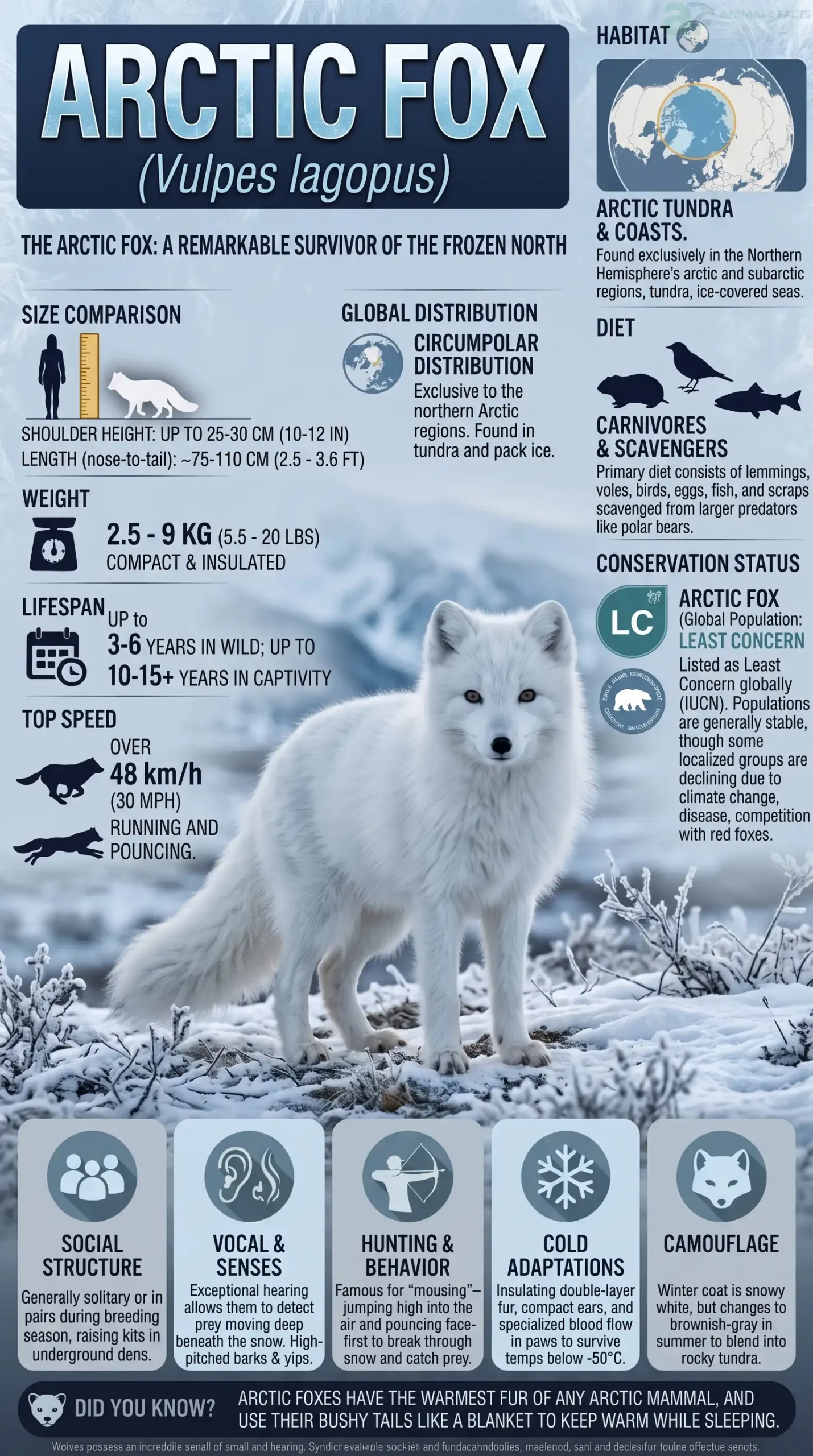
| Habitat | Arctic and alpine tundra across the circumpolar Northern Hemisphere, including sea ice |
| Lifespan | 3–6 years in the wild (most individuals do not survive past their first year); up to 14 years in captivity |
| Diet | Omnivore/carnivore — lemmings, voles, seabirds, fish, seal pups, carrion, berries, seaweed |
| Size and Weight | 3–8 kg (6.6–17 lbs) |
| Body Length | 46–68 cm (18–27 in), plus a 25–30 cm tail |
| Speed | Capable of sustained travel of over 46 km per day during long-distance dispersal; recorded single-day distances of up to 155 km |
| Conservation Status | Least Concern (IUCN, globally, since 2004); Critically Endangered in Norway, Endangered in Sweden, and functionally extinct/recovering in Finland (Fennoscandian population) |
| Population Estimate | Global estimate of several hundred thousand, with figures ranging from roughly 330,000 to 930,000 depending on methodology; the isolated Fennoscandian population numbers only around 400–600 adults |
| Unique Feature | The warmest fur coat of any mammal, capable of insulating against temperatures as low as −50°C; also known for producing the largest litters of any wild canid, sometimes exceeding a dozen pups |
 1. Introduction: What is an Arctic Fox?
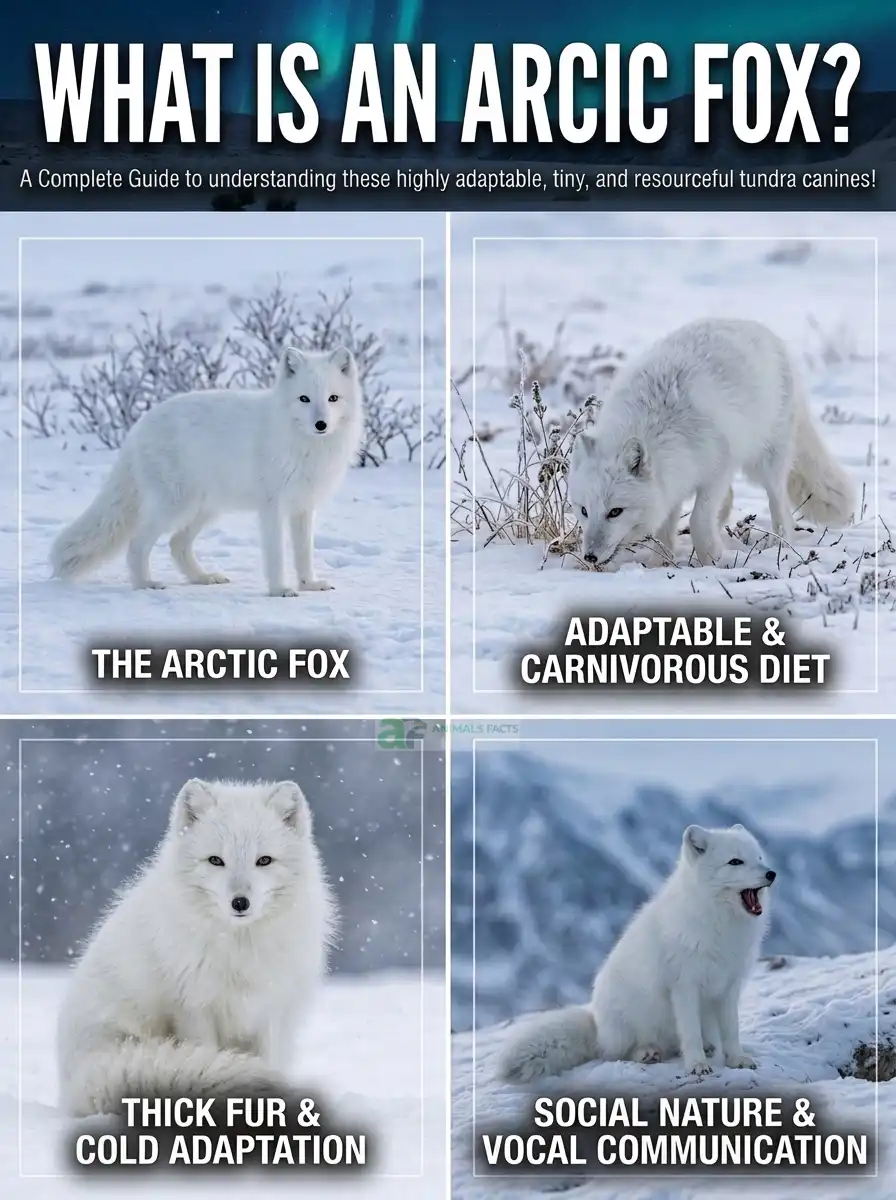
It can survive temperatures plunging to −50°C without shivering, change the entire color of its coat with the seasons, and once, in a feat tracked by satellite, walked over 3,500 kilometers across sea ice and open tundra in just 76 days. Arctic fox facts read like a survival manual for the harshest environment on the planet — because that is essentially what this animal’s entire biology represents. The Arctic fox (Vulpes lagopus) is one of the most cold-adapted mammals on Earth, a compact, round-bodied predator built almost entirely around the singular challenge of staying alive through the brutal, months-long darkness of the polar winter.
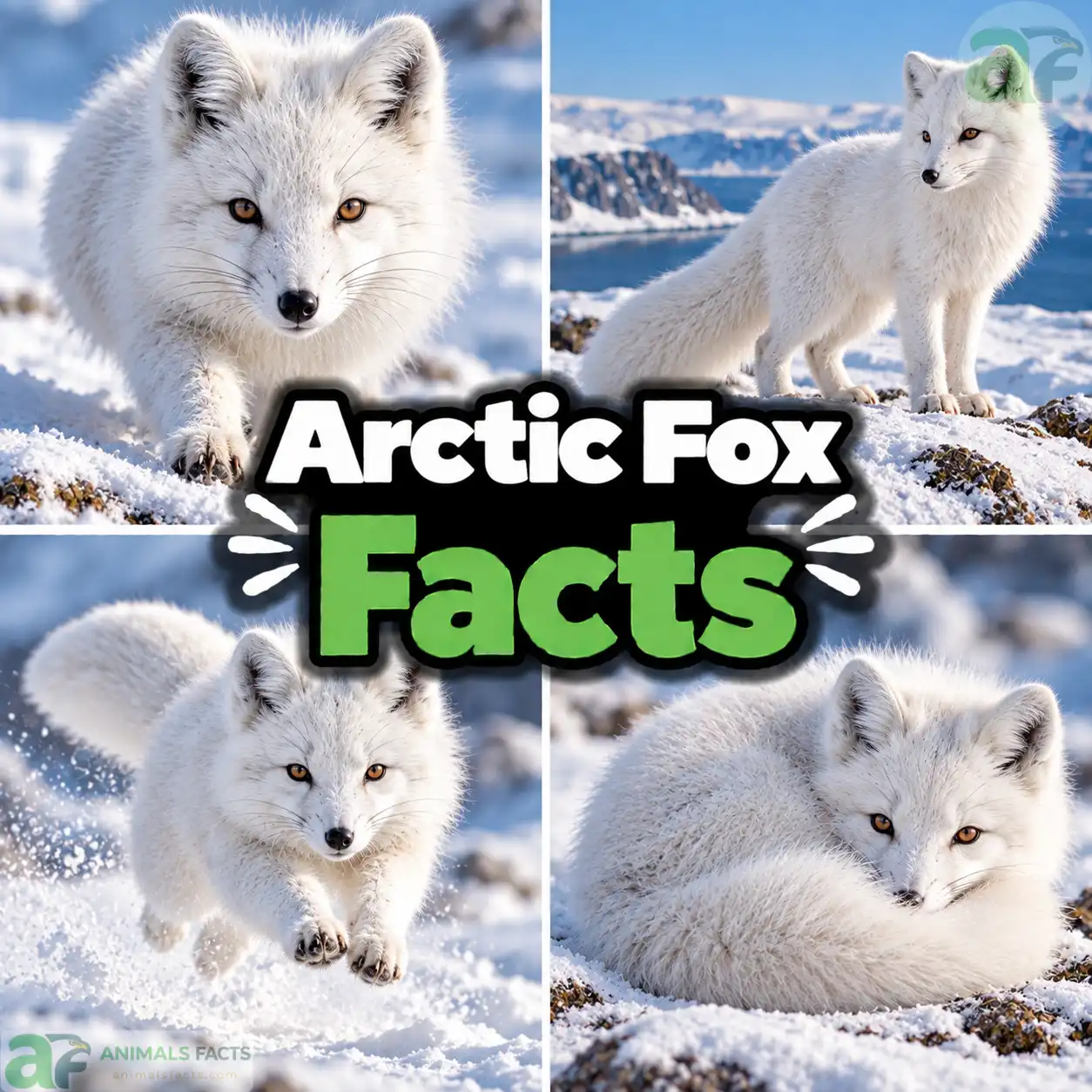
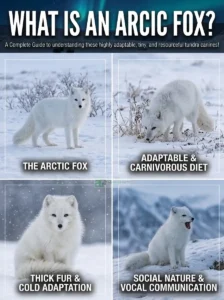
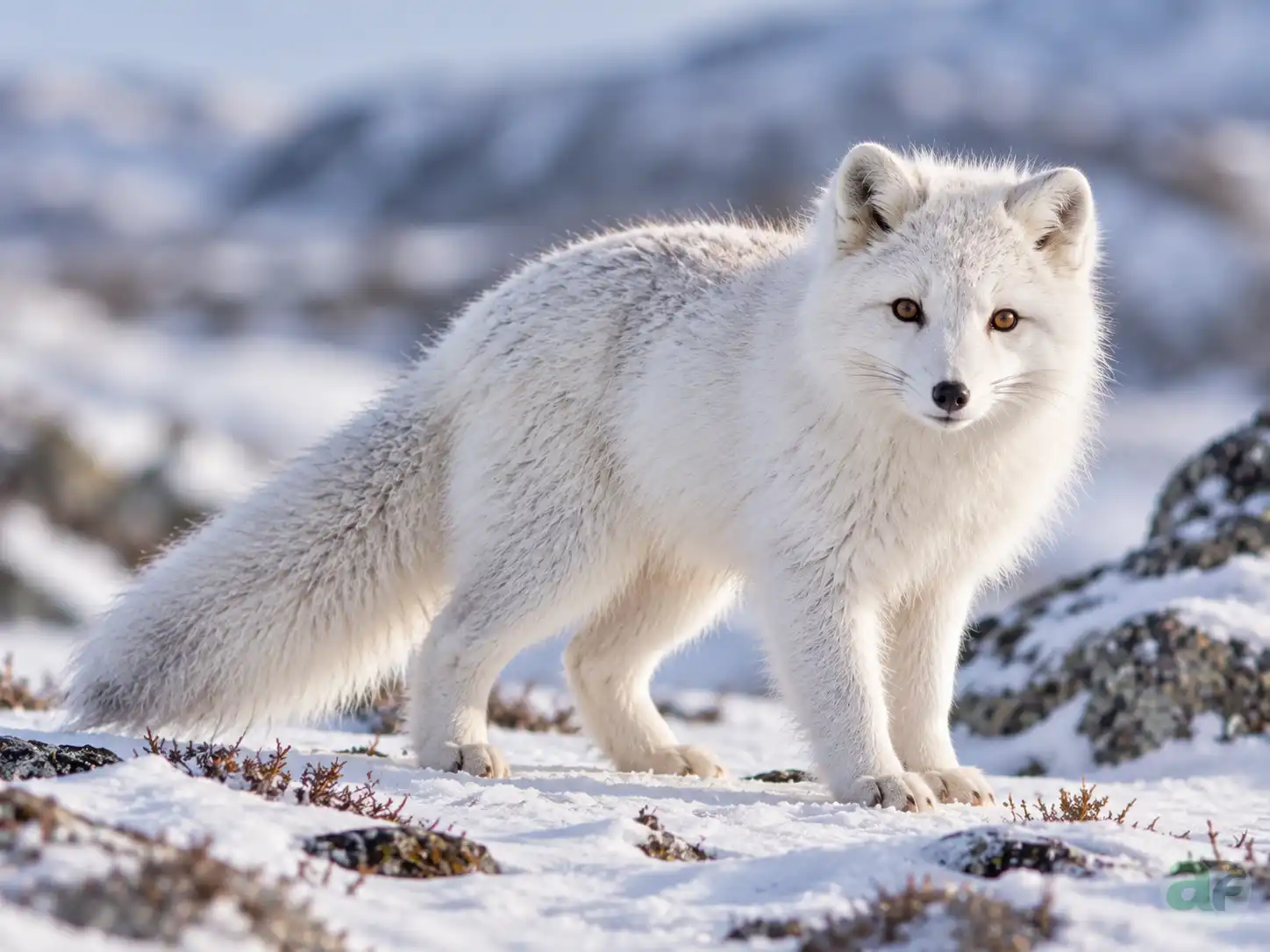
Found across the circumpolar tundra of the Northern Hemisphere — from Arctic Russia and Canada to Greenland, Svalbard, and Iceland (where it is the only native land mammal) — the Arctic fox has developed a suite of adaptations found in few other animals: multilayered fur so dense it qualifies as the warmest of any mammal species studied, fur-covered paw pads that function like built-in snow boots, and a compact, short-eared, short-muzzled body shape that minimizes the surface area exposed to cold. Its coat changes dramatically with the seasons, shifting from brilliant white in winter to brown or grey in summer, providing camouflage against both snow and open tundra depending on the time of year.
The Arctic fox’s conservation story is genuinely a tale of two very different populations. Globally, the species has been assessed as Least Concern since 2004, with a population estimated at several hundred thousand individuals spread across a vast circumpolar range. Yet within that broad global stability sits one of the most severe regional population crashes recorded for any fox species anywhere in the world: the Fennoscandian population, spanning Norway, Sweden, and Finland, collapsed under intense historical fur-trade hunting and has remained critically low for over 90 years, with numbers falling as low as roughly 30 adults in Sweden by 1980, and the species going functionally extinct in Finland for decades. Understanding the Arctic fox properly means understanding both halves of this story — the resilient, still-widespread global species, and the fragile, intensively managed regional population fighting for survival in the mountains of Scandinavia.
Whether you’re a student researching Arctic fox facts for a school project, a parent looking for Arctic fox facts for kids, a wildlife traveler hoping to see one on a polar expedition, or a conservation-minded reader trying to understand why this same species can be simultaneously “Least Concern” and “Critically Endangered” depending on where it lives, this is the most complete guide to Arctic fox facts you will find anywhere. We cover Arctic fox habitat, Arctic fox diet, Arctic fox scientific name, Arctic fox behavior, Arctic fox size and weight, reproduction, conservation status, folklore, and the complete story of the tundra’s toughest survivor.
2. Arctic Fox Species Overview & Classification
The Arctic fox belongs to the family Canidae, the same family as wolves, domestic dogs, and other foxes, and sits within the genus Vulpes, the “true foxes.” Its scientific name, Vulpes lagopus, references its distinctively furred feet — “lagopus” derives from Greek roots meaning “hare-footed,” a nod to the thick fur covering its paws, reminiscent of the feathered feet of ptarmigan and certain hares adapted to snowy environments.
Species Classification Table
| Level | Classification |
|---|---|
| Kingdom | Animalia |
| Phylum | Chordata |
| Class | Mammalia |
| Order | Carnivora |
| Family | Canidae |
| Genus | Vulpes |
| Species | V. lagopus |
| Closest Living Relatives | Other Vulpes species, including the red fox (Vulpes vulpes) and the swift fox (Vulpes velox) |
Taxonomic History
The Arctic fox was previously classified in its own genus, Alopex, as Alopex lagopus, a classification still occasionally seen in older scientific literature. Modern genetic analysis has since placed the species firmly within the genus Vulpes alongside its closest relatives, reflecting its evolutionary position as a true fox adapted to extreme cold rather than a fundamentally distinct lineage.
Color Morphs
Rather than distinct subspecies, the Arctic fox is best known for two genetically determined color morphs that occur throughout its range:
| Morph | Winter Coat | Summer Coat | Notes |
|---|---|---|---|
| White morph | Pure white | Greyish-brown | The most common morph across most of the species’ range; provides maximum camouflage against snow |
| Blue morph | Blue-grey to charcoal | Darker grey-brown | More common in coastal and island populations, including parts of Iceland, the Aleutian Islands, and Svalbard; historically prized in the fur trade as “blue fox” |
Genetic research has shown that coat color in Arctic foxes has a clear genetic architecture, with documented fitness consequences tied to which morph an individual carries in different habitat types — white morphs generally faring better in areas with substantial winter snow cover, and blue morphs holding an advantage in milder coastal environments with less consistent snow.
Regional Population Distinctions
While not formally recognized as separate subspecies in most modern taxonomies, several geographically isolated Arctic fox populations are managed and studied as distinct conservation units due to their genetic isolation and differing threat levels:
| Population | Region | Conservation Note |
|---|---|---|
| Fennoscandian population | Norway, Sweden, Finland | Critically Endangered/Endangered; subject to intensive captive breeding and supplementary feeding programs |
| Mednyi Island population | Commander Islands, Russia | Isolated island population at critically low levels |
| Pribilof Islands population | St. Paul Island, Alaska | Endemic subspecies facing ongoing threats and lacking legal protection in some areas |
| Mainland Eurasian/North American populations | Russia, Canada, Alaska, Greenland | Considered generally stable and abundant |
Species Evolution & Discovery Timeline
Millions of years ago: Ancestral Vulpes foxes diversified across the Northern Hemisphere, with lineages gradually adapting to increasingly cold, high-latitude environments as some populations spread into Arctic and subarctic regions.
Pleistocene epoch: As ice ages repeatedly reshaped the Northern Hemisphere’s climate and geography, ancestral Arctic fox populations became adapted to life on tundra and sea ice, developing the specialized fur, body shape, and physiology that define the modern species.
Long before European contact: Indigenous Arctic peoples across North America, Greenland, and Siberia developed deep practical and cultural relationships with the Arctic fox, relying on its fur for cold-weather clothing and incorporating the animal into oral tradition and seasonal subsistence practices.
18th–19th centuries: European fur traders began targeting Arctic foxes intensively, particularly for their prized winter coats, with “blue fox” pelts commanding especially high prices in international fur markets.
Early 20th century: The Fennoscandian Arctic fox population collapsed dramatically due to extreme fur prices driving intensive hunting, even during periods when the population was already critically low — a pattern of continued exploitation that pushed the regional population toward the brink of extinction.
1997: Population surveys placed the entire Fennoscandian population at approximately 140 breeding adults combined across Sweden, Norway, Finland, and the Kola Peninsula — a level considered dangerously close to non-viability.
2004: The IUCN formally assessed the global Arctic fox population as Least Concern, reflecting the species’ continued abundance across most of its enormous circumpolar range despite regional crises.
2000s–2010s: Intensive conservation interventions in Scandinavia, including captive breeding and release programs, supplementary winter feeding stations, and red fox culling in key habitat areas, began to reverse the Fennoscandian population’s decline, with several hundred pups released into the wild during the early 2000s alone.
July 2019: A young female Arctic fox fitted with a GPS tracker by the Norwegian Polar Institute traveled from Svalbard across the polar ice to Greenland and onward to Ellesmere Island in Canada, covering a documented 3,506 kilometers in 76 days — one of the most remarkable long-distance movements ever recorded for a terrestrial mammal of its size.
2026: The global Arctic fox population remains classified as Least Concern, while the Fennoscandian population has grown to an estimated 400–600 adults through sustained conservation effort — a meaningful recovery, though the population remains vulnerable to inbreeding, disease, and continuing climate-driven habitat change.
3. Arctic Fox Physical Description & Unique Features
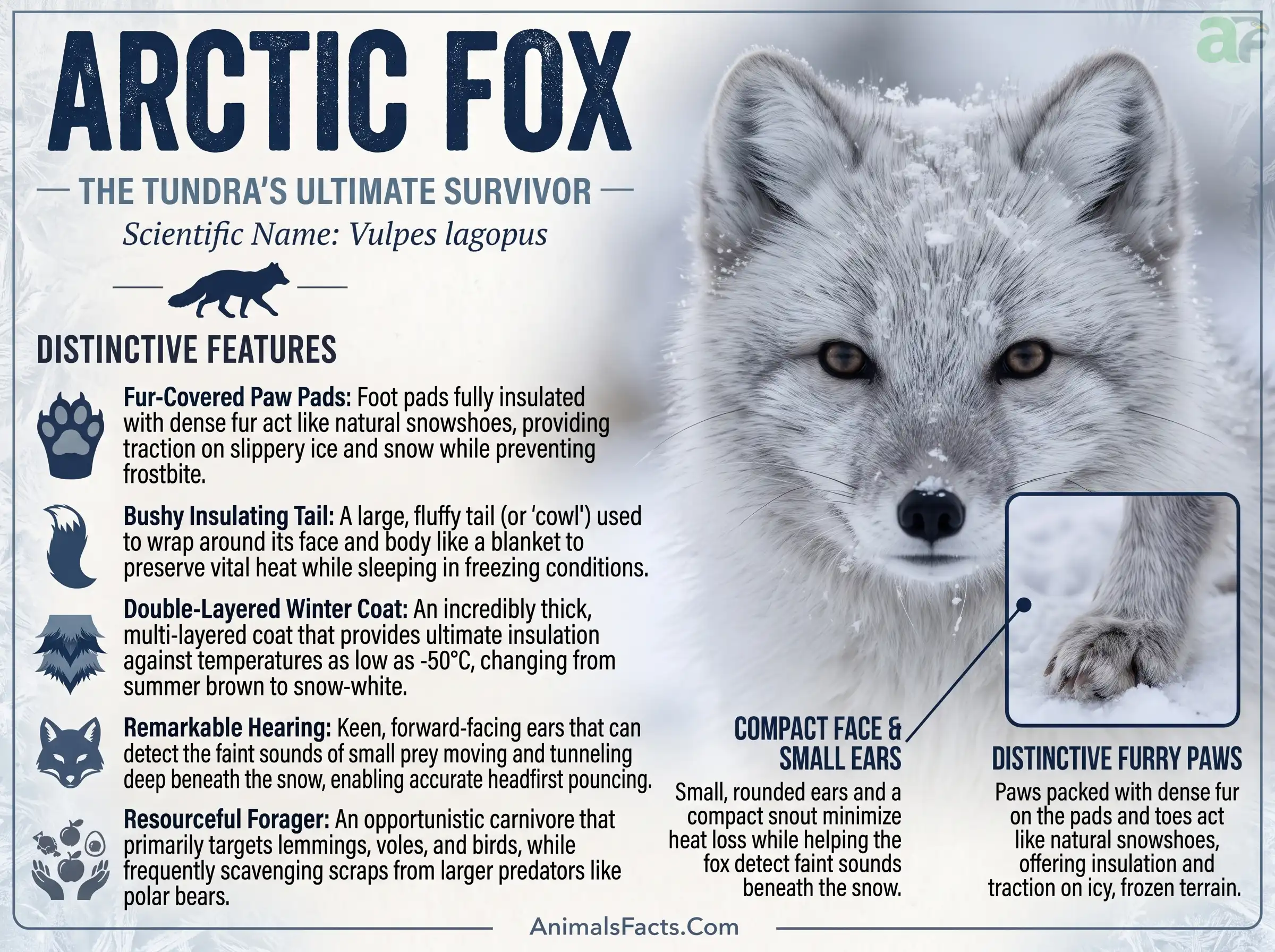
The Arctic fox’s entire body plan represents one of the most complete cold-climate adaptations found in any mammal, engineered from nose to tail to minimize heat loss in one of Earth’s most punishing environments.
Size and Build
Weight: Adult Arctic foxes typically weigh 3–8 kg (6.6–17 lbs), varying by region, season, and sex, with males generally slightly larger than females.
Body length: 46–68 cm (18–27 in), excluding the large, bushy tail, which adds a further 25–31 cm.
Compact build: The Arctic fox has a notably rounded, compact body shape with short legs, a short muzzle, and small, rounded ears — every one of these features reduces surface area relative to body volume, directly limiting the amount of body heat that can escape into the surrounding cold air.
The Warmest Fur of Any Mammal
The Arctic fox’s fur is considered, by some measures, the warmest insulating coat of any mammal species on Earth, consisting of multiple dense layers that trap air and provide extraordinary thermal protection.
Seasonal molting: In winter, the coat is thick, long, and almost entirely white (or blue-grey in the blue morph), providing both maximum insulation and camouflage against snow. In summer, the coat thins considerably and shifts to a brown or grey-brown coloration that blends with exposed tundra rock and vegetation.
Fur-covered paws: Even the soles of an Arctic fox’s feet are covered in dense fur, functioning like built-in snow boots that protect against frostbite, insulate against contact with ice, and provide improved traction on slippery terrain.
Cold tolerance: Arctic foxes are physiologically capable of withstanding temperatures as low as −50°C without increasing their metabolic rate, a level of cold tolerance that researchers studying infrared thermal imaging in foxes have found to be exceptional even compared to other cold-adapted canids such as the red fox.
Sensory Adaptations
Hearing: Arctic foxes have highly sensitive hearing that allows them to detect the faint sounds of lemmings and other small prey moving beneath thick layers of snow, a critical hunting adaptation for locating food during long winter months when visual tracking of prey is largely impossible.
Compact ears: Unlike many of their fox relatives, Arctic fox ears are notably short and rounded rather than large and pointed — a deliberate adaptive trade-off that sacrifices some heat-dissipation capacity (useful in hot climates) in favor of minimizing heat loss in the extreme cold.
Did You Know? Arctic foxes are considered ecosystem engineers in a surprising way: research published in Scientific Reports has documented that the areas around long-used Arctic fox dens accumulate significantly increased soil nutrients from generations of fox waste and leftover prey remains, leading to measurably increased plant productivity around den sites compared to the surrounding tundra — creating small, long-lasting islands of enhanced vegetation across the otherwise nutrient-poor Arctic landscape.
4. Top 25 Surprising & Interesting Arctic Fox Facts
- Arctic foxes can survive temperatures as low as −50°C without shivering or increasing their metabolic rate.
- Their fur is considered the warmest of any mammal species, made up of multiple dense insulating layers.
- Arctic foxes have fur-covered paw pads that function like built-in snow boots, protecting against frostbite and improving traction on ice.
- Their coat changes color with the seasons — white in winter, brown or grey in summer — providing camouflage year-round.
- A GPS-tracked Arctic fox once traveled 3,506 kilometers from Svalbard to Ellesmere Island, Canada, in just 76 days, averaging over 46 km per day.
- Arctic foxes can produce litters of up to 20 pups, though litters of around 5–12 are more typical — among the largest litters of any wild carnivore.
- The Arctic fox is the only land mammal native to Iceland.
- Arctic foxes are monogamous, with breeding pairs maintaining the same territory for several years.
- They can hear prey moving beneath more than 30 cm of snow, using this ability to locate lemmings without any visual contact.
- Arctic foxes often follow polar bears across sea ice, scavenging leftover scraps from seal kills.
- Their global population is estimated at several hundred thousand, with some estimates ranging up to 930,000 individuals.
- Despite a healthy global population, the Fennoscandian population in Norway, Sweden, and Finland is Critically Endangered, with numbers as low as roughly 30 adults in Sweden by 1980.
- Historical fur trade prices for a single high-quality Arctic fox pelt once reached extraordinary valuations cited in historical fur trade research.
- Arctic fox den sites can be hundreds of years old, reused by generations of foxes across many decades.
- Arctic foxes store surplus food in caches beneath the snow to buffer against unpredictable prey availability.
- Most wild Arctic foxes do not survive past their first year, though exceptional individuals can live up to 11 years in the wild.
- Arctic fox populations rise and fall dramatically in sync with multi-year lemming population cycles.
- Climate change is enabling red foxes to expand northward into traditional Arctic fox territory, increasing direct competition and even predation on the smaller species.
- Escaped farm-bred blue foxes have interbred with wild Arctic fox populations in parts of Norway, raising concerns about genetic dilution.
- The Arctic fox remains the single most important terrestrial game species across much of the Arctic region.
- Migratory Arctic foxes have a mortality rate more than three times higher than foxes that remain resident within a fixed territory.
- Conservation programs in Scandinavia released around 385 captive-bred pups into the wild during the early 2000s to help boost the critically low Fennoscandian population.
- Arctic foxes have been documented denning near snow goose colonies specifically to raid eggs during the nesting season.
- Areas around long-used Arctic fox dens show significantly increased soil nutrients and plant growth compared to surrounding tundra, due to accumulated waste and food remains over generations.
- Sarcoptic mange has emerged as a significant disease threat to Arctic fox populations in parts of Fennoscandia.
5. Fun Facts About Arctic Fox
- Arctic foxes can survive temperatures down to −50°C.
- Their fur is considered the warmest of any mammal.
- Their coat changes color with the seasons.
- They’re the only native land mammal in Iceland.
- A tracked fox once traveled over 3,500 km in 76 days.
- Litters can contain up to 20 pups.
- They can hear prey moving under thick snow.
- They sometimes scavenge polar bear kills.
- Fennoscandian populations are critically endangered.
- Their global population may be as high as 930,000.
- Arctic fox dens can be centuries old.
- They cache extra food under the snow for later.
6. Arctic Fox Habitat & Geographic Range
The Arctic fox has one of the most northerly distributions of any land mammal on Earth, occupying tundra and coastal habitat across the entire circumpolar Arctic region of the Northern Hemisphere.
Habitat Requirements
Arctic and alpine tundra: Arctic foxes breed north of the tree line across the Arctic tundra of North America and Eurasia, and on alpine tundra at high elevation in Fennoscandia, where suitable cold, open habitat exists even at more southerly latitudes.
Coastal and sea ice habitat: Many populations, particularly in Svalbard, Greenland, and the Canadian Arctic, make extensive use of coastal areas and sea ice, especially when following polar bears to scavenge remains of seal kills.
Den sites: Arctic foxes require suitable elevated, well-drained ground for digging dens, often reusing the same den systems for generations, with some documented dens estimated to be centuries old.
Geographic Range Table
| Region | Population Status | Notes |
|---|---|---|
| Russia (Siberian Arctic) | Stable, abundant | Extensive tundra habitat supports large populations |
| Canada (Arctic mainland and archipelago) | Stable, abundant | Found from northern tundra to the high Canadian Arctic islands |
| Alaska (coastal and interior) | Generally stable | Some Aleutian Island populations are non-native and subject to eradication for seabird conservation |
| Greenland | Stable | Widespread across ice-free coastal regions |
| Svalbard, Norway | Stable | Notable for extreme long-distance dispersal recorded via GPS tracking |
| Iceland | Stable | Only native land mammal on the island |
| Fennoscandian mainland (Norway, Sweden, Finland) | Critically Endangered/Endangered | Isolated alpine tundra population; subject to intensive conservation intervention |
| Commander Islands & Pribilof Islands (Russia/Alaska) | Critically low, isolated | Small endemic island populations facing distinct localized threats |
Did You Know? While the global Arctic fox population is considered healthy and stable, the Fennoscandian mountain population in Norway, Sweden, and Finland tells an entirely different story. This isolated alpine population collapsed under intense historical fur-trade hunting and remained at critically low numbers for more than 90 years, at one point dropping to as few as roughly 30 adults in Sweden — illustrating how a single species can be simultaneously secure globally and in genuine crisis regionally.
7. Arctic Fox Diet & Feeding Behavior
Arctic foxes are opportunistic omnivores with a diet that shifts dramatically by season and region, closely tied to the boom-and-bust population cycles of their primary prey.
Diet Breakdown Table
| Food Type | Notes |
|---|---|
| Lemmings and voles | Primary food source for inland populations; population cycles of lemmings directly drive fox breeding success and survival |
| Seabirds and eggs | Important seasonal food source, particularly during nesting season near seabird colonies |
| Fish and marine invertebrates | Consumed opportunistically, particularly in coastal populations |
| Ringed seal pups | Preyed upon in some coastal and sea-ice habitats |
| Carrion (including polar bear kill remains) | An important scavenged food source, especially during winter |
| Berries, seaweed, and other vegetation | Consumed seasonally, particularly in summer and autumn |
| Insects and other invertebrates | A minor but regular dietary component |
Feeding Behavior
Lemming dependency: Inland Arctic fox populations are heavily dependent on lemming abundance, with breeding success and overall population size fluctuating closely with multi-year lemming population cycles — during lemming population crashes, fox reproduction can drop sharply or fail entirely for an entire breeding season.
Scavenging behavior: Arctic foxes frequently follow polar bears across sea ice, taking advantage of leftover seal remains from bear kills — a behavior that has become an important supplemental food source in coastal and sea-ice habitats.
Food caching: To buffer against unpredictable prey availability, Arctic foxes cache surplus food beneath the snow or in other hidden locations, retrieving it later during leaner periods.
Winter hunting under snow: One of the Arctic fox’s most remarkable hunting behaviors involves detecting the sound of lemmings moving beneath more than 30 centimeters of snow, then leaping and diving through the snow to capture prey it cannot see at all — a hunting technique that relies entirely on acute hearing.
Did You Know? Because lemming populations rise and fall dramatically across multi-year cycles, Arctic fox reproduction is tightly linked to these boom-and-bust patterns. In peak lemming years, a single female may successfully raise a very large litter, while in years of lemming scarcity, many pairs may fail to breed successfully at all — making the Arctic fox one of the clearest examples in the animal kingdom of a predator population directly shaped by prey population cycles.
8. Arctic Fox Reproduction & Life Cycle
Mating and Birth
Monogamous pairing: Arctic foxes form monogamous breeding pairs that typically maintain the same territory together for several years, cooperating in raising litters across multiple breeding seasons.
Breeding season: Typically occurs in late winter, with births following in spring.
Gestation: Approximately 52 days.
Litter size: Litters can range from a handful of pups up to an extraordinary 20 pups in a single litter during peak lemming abundance years, although litters of roughly 5–12 pups are more typical — still among the largest litter sizes recorded for any wild canid or carnivore species.
Developmental Stages
| Stage | Timing | Key Development |
|---|---|---|
| Birth | April–June (varies by region) | Pups born blind and dark-furred in an underground den |
| Early den life | First few weeks | Pups remain in the den, nursing continuously |
| Weaning | Several weeks after birth | Gradual transition to solid food as parents bring prey to the den |
| Den emergence | Several weeks to a couple months | Pups begin exploring outside the den under parental supervision |
| Independence | Late summer to autumn | Juveniles disperse from natal territory, some traveling extremely long distances |
| Sexual maturity | Approximately 9–10 months | Reaches breeding age by the following season |
Arctic Fox Lifespan Comparison Table
| Species | Average Wild Lifespan | Maximum Recorded |
|---|---|---|
| Arctic Fox | 3–6 years (most don’t survive past year one) | ~11 years wild; ~14 years captivity |
| Red Fox | 3–5 years | ~14 years (captivity) |
| Fennec Fox | ~10 years | ~14 years (captivity) |
| Swift Fox | 3–6 years | ~14 years (captivity) |
9. Social Behavior & Communication
Territoriality and Residency
Resident behavior: Many Arctic foxes maintain stable territories year after year, a strategy associated with significantly higher survival rates.
Nomadic and migratory behavior: Some individuals, particularly as they age, adopt a more nomadic lifestyle, ranging over vast distances rather than holding a fixed territory. Research has shown that migratory foxes experience a mortality rate more than three times higher than resident foxes, underscoring the survival advantage of maintaining a stable home territory when possible.
Vocalizations and Communication
Arctic foxes communicate through a range of vocalizations, including barks, yips, and various calls used between mates and between parents and pups, though their vocal repertoire has historically received less detailed scientific study than some other canid species due to the logistical challenges of observing them in such remote environments.
Cooperative Parenting
Both parents, and in some cases additional helper individuals from previous litters, may contribute to feeding and protecting pups — a cooperative breeding strategy that helps support the unusually large litters Arctic foxes are capable of producing.
Did You Know? In July 2019, researchers with the Norwegian Polar Institute tracked a young female Arctic fox fitted with a GPS device as she crossed from Svalbard over polar sea ice to Greenland in just 21 days, then continued onward to Ellesmere Island in northern Canada, covering a documented total of 3,506 kilometers in 76 days — averaging just over 46 kilometers a day, with a single-day maximum of 155 kilometers, making it one of the most extraordinary long-distance movements ever recorded for a mammal of its size.
10. Predators & Defense Mechanisms
Natural Predators
Polar Bears: Occasional predators of Arctic foxes, particularly when foxes venture too close while scavenging bear kill remains.
Wolves: Documented predators of Arctic foxes across parts of their shared range.
Wolverines: Capable of preying on Arctic foxes, particularly in overlapping tundra habitat.
Golden Eagles and other large raptors: Known to take Arctic fox pups and smaller adults in some regions.
Red Foxes: Increasingly significant as a threat — as climate change allows red foxes to expand their range northward into traditional Arctic fox territory, red foxes have been documented directly competing for den sites and food resources, and in some cases preying upon Arctic foxes directly, contributing to range contraction for the smaller, native species.
Human hunters: Historically the most significant threat to Arctic fox populations through the fur trade, though hunting pressure has decreased substantially since the decline of the international fur market, even as the species remains the single most important terrestrial game species across much of the Arctic.
Defense Mechanisms
Camouflage: The Arctic fox’s seasonally changing coat — white in winter, brown or grey in summer — provides continuous, effective camouflage against both predators and prey throughout the year.
Den refuge: Extensive, well-established den systems, sometimes centuries old, provide secure shelter from predators, particularly during the vulnerable pup-rearing period.
Speed and endurance: Arctic foxes are capable of covering remarkable distances quickly, an ability that likely aids in evading predators as well as tracking down unpredictable and widely dispersed food sources across the vast Arctic landscape.
11. Arctic Fox Facts for Kids
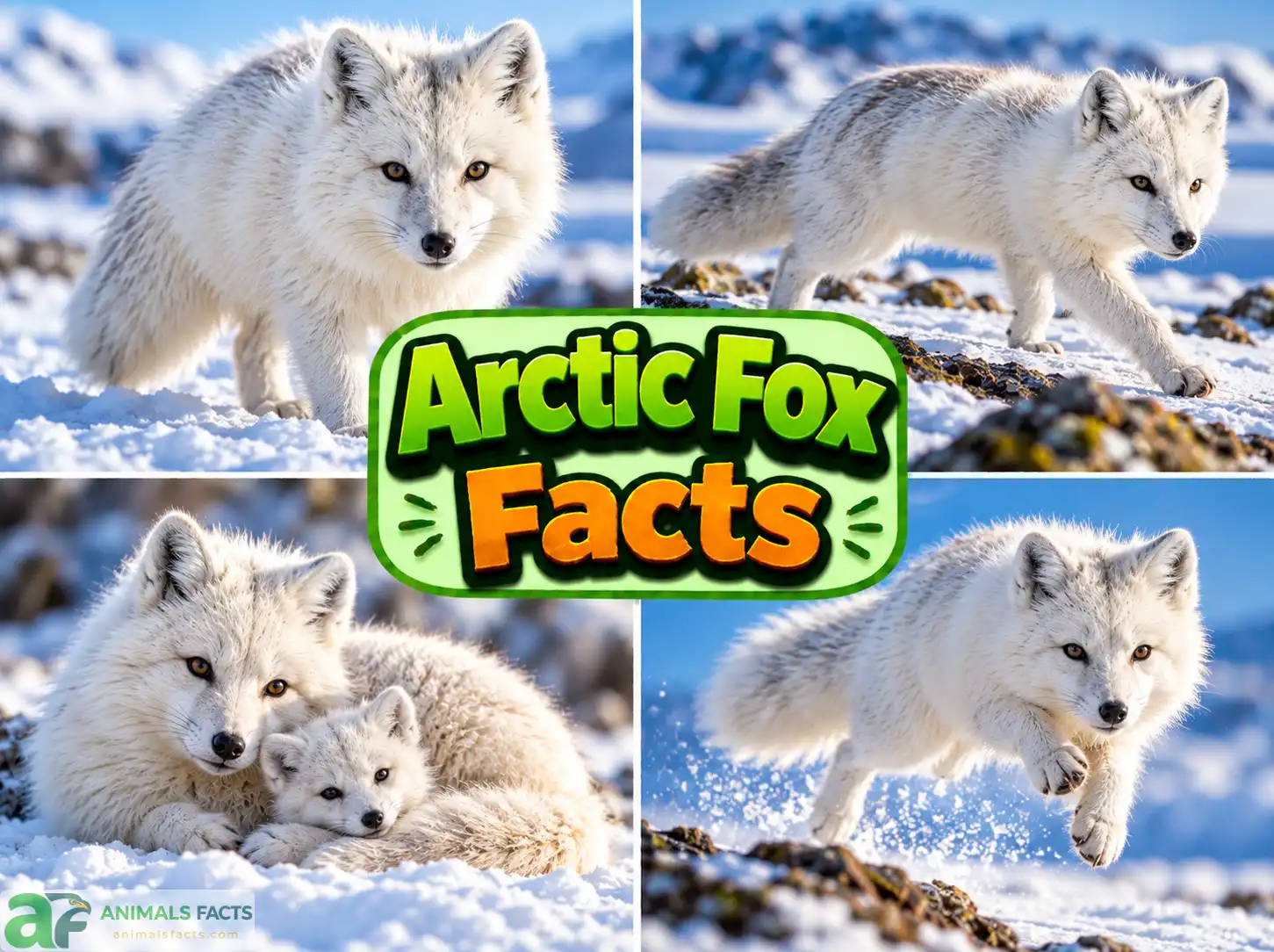
Hey kids — let’s find out why the Arctic fox is one of the toughest little animals on the whole planet!
Arctic foxes can survive temperatures as cold as −50°C — that’s colder than almost anywhere else on Earth — without even shivering!
Their fur changes color with the seasons — it turns bright white in winter to match the snow, and brown or grey in summer to match the rocks and plants!
Arctic foxes have furry feet — even the bottoms of their paws are covered in fur, just like built-in snow boots to keep them warm and help them grip the ice.
They can hear tiny lemmings moving under more than a foot of snow, then jump and dive right through the snow to catch them — without even seeing where the lemming is first!
One super-traveler Arctic fox walked over 3,500 kilometers across ice and snow in just 76 days — that’s like walking from one side of a country to the other!
Arctic fox moms can have up to 20 babies in one litter — that’s way more babies than almost any other wild dog-like animal in the world!
Arctic foxes are the only wild land mammal that lives naturally in Iceland!
Did You Know? Arctic foxes sometimes follow polar bears around on the ice — not to hunt them, but to sneak leftover scraps from the bear’s seal dinner! It’s like having a very large, very scary roommate who occasionally leaves you snacks.
12. Relationship with Humans
Indigenous Relationships
Indigenous peoples across the Arctic — including numerous First Nations, Inuit, Sámi, and Siberian communities — have relied on Arctic fox fur for cold-weather clothing for thousands of years, developing detailed traditional knowledge of fox behavior, denning locations, and seasonal movement patterns as part of broader subsistence hunting practices across the circumpolar region.
The Fur Trade Era
The Arctic fox’s dense, high-quality winter coat made it one of the most valuable fur species in the international fur trade, with historical accounts describing single high-quality pelts, particularly of the “blue fox” morph, commanding extraordinary prices. This intense commercial demand drove severe overhunting through the 19th and early 20th centuries, contributing directly to the near-collapse of the Fennoscandian population, which remained at critically low densities for more than 90 years following the peak of fur trade exploitation.
Modern Hunting and Fur Farming
While the international fur trade has declined substantially, the Arctic fox remains the single most important terrestrial game species across much of the Arctic region, still hunted by Indigenous populations living in close proximity to fox habitat. Separately, Arctic foxes are also raised commercially on fur farms in some countries, and escaped farm-bred blue foxes have been documented interbreeding with wild populations in parts of Norway, raising conservation concerns about genetic dilution of wild Arctic fox lineages.
The Exotic Pet Trade
Arctic foxes have occasionally been kept as exotic pets, a practice that conservation and rehabilitation organizations, including sanctuaries caring for former pet-trade Arctic foxes, generally discourage, since the species’ specialized needs and wild behavior make it poorly suited to typical domestic life.
13. Arctic Fox Conservation Status & Threats
Conservation Data (2026)
| Region/Assessment | Status | Population Estimate | Notes |
|---|---|---|---|
| IUCN Red List (global) | Least Concern | Several hundred thousand; estimates range from roughly 330,000 to 930,000 | Assessed as Least Concern since 2004 |
| Fennoscandian population (Norway, Sweden, Finland) | Critically Endangered (Norway); Endangered (Sweden); functionally extinct historically in Finland | Approximately 400–600 adults | Subject to intensive captive breeding, supplementary feeding, and red fox control programs |
| Mednyi Island, Russia | Critically low, isolated | Small endemic population | Distinct genetic population facing localized threats |
| Pribilof Islands (St. Paul Island), Alaska | Declining, unprotected in some areas | Endemic subspecies | Currently lacks legal protection; misinformation about origin has fostered negative local attitudes |
Major Threats
Lemming cycle disruption: Climate change is degrading the “sub-nivean” space beneath the snow where lemmings shelter and breed, through more frequent rain-on-snow and melt-freeze events, which is collapsing the reliable multi-year lemming population cycles that Arctic foxes depend on for breeding success.
Red fox range expansion: As Arctic warming allows the larger, more aggressive red fox to expand northward into traditional Arctic fox territory, red foxes increasingly compete for den sites and food resources, and in some cases directly prey upon Arctic foxes, driving range contraction for the smaller species.
Historical and ongoing hunting: While no longer the dominant threat it once was, hunting for fur remains a factor in some regions, and the Arctic fox continues to be the single most important terrestrial game species across much of the Arctic.
Disease: Sarcoptic mange has emerged as a significant health threat in parts of Fennoscandia, adding further pressure to an already critically small regional population.
Genetic pollution: Interbreeding between wild Arctic foxes and escaped farm-bred blue foxes has been documented in parts of Norway, raising concerns about the loss of genetic traits, including breeding synchronization with lemming cycles, that are important for the species’ long-term survival in the wild.
Habitat and ecosystem change: Broader Arctic warming — occurring at roughly twice the rate of the rest of the world — is reshaping the tundra ecosystems Arctic foxes depend on, from reduced sea ice affecting coastal foraging opportunities to melting permafrost altering denning and vegetation conditions.
Did You Know? The Fennoscandian Arctic fox population’s recovery is a genuine conservation success story in progress: from a low of around 30 adults in Sweden in 1980 and a broader Fennoscandian total of roughly 140 breeding adults in 1997, sustained conservation intervention — including releasing around 385 captive-bred pups into the wild during the early 2000s, supplementary winter feeding stations, and targeted red fox control — has helped the population grow to an estimated 400–600 adults today, though it remains far from fully secure.
14. Famous Arctic Foxes
Artie — A former exotic pet trade Arctic fox now serving as an animal ambassador at the Endangered Wolf Center, where his story is used to teach the public about the risks of the pet trade and the vital ecological roles Arctic foxes play in their native ecosystem.
The Svalbard-to-Ellesmere Island Traveler — While not individually named in public records, the young GPS-tracked female fox that completed the extraordinary 3,506-kilometer journey from Svalbard to Greenland and onward to Ellesmere Island in 2019 became something of a scientific celebrity, her journey widely reported in international media as one of the most remarkable wildlife movements ever documented.
Zoo and sanctuary ambassador foxes — Numerous Arctic foxes at accredited zoos and wildlife sanctuaries across North America and Europe serve as public education ambassadors, helping visitors understand both the species’ remarkable cold-adaptation biology and its complicated regional conservation challenges.
15. Role in Ecosystem & Food Chain
The Arctic fox occupies a genuinely important ecological position within the Arctic tundra food web, both as a predator regulating smaller species populations and, more surprisingly, as a localized ecosystem engineer.
Lemming population regulation: As a primary predator of lemmings and voles, Arctic foxes play a role in regulating rodent population cycles, contributing to the broader dynamic balance of the tundra ecosystem.
Scavenger role: By scavenging polar bear kill remains and other carrion, Arctic foxes help recycle nutrients within the Arctic food web and reduce waste from larger predator kills.
Ecosystem engineering through denning: Perhaps most remarkably, research has documented that long-used Arctic fox den sites accumulate significantly elevated soil nutrients from generations of waste and leftover food, leading to measurably increased plant productivity around dens compared to surrounding tundra — creating small but ecologically significant nutrient hotspots scattered across the otherwise nutrient-poor Arctic landscape.
Prey base for larger predators: Arctic foxes themselves serve as prey for polar bears, wolves, wolverines, and large raptors, forming an important link between smaller tundra species and the Arctic’s largest predators.
16. Myths, Folklore & Cultural Significance
Indigenous Arctic Traditions
Various Indigenous peoples across the Arctic — including Inuit, Sámi, and numerous Siberian communities — have long incorporated the Arctic fox into oral tradition, seasonal subsistence knowledge, and, in some cultures, spiritual belief systems reflecting the animal’s remarkable resilience and adaptability to the harshest environment inhabited by any land mammal.
Sámi and Scandinavian Folklore
In parts of Scandinavian folklore, the Arctic fox has historically been associated with the aurora borealis (Northern Lights), with some traditional stories describing the shimmering lights as sparks created by an Arctic fox running across the snowy mountains, its tail brushing against the peaks and throwing sparks into the sky — a poetic reflection of the deep cultural connection between the species and its dramatic polar environment.
Symbol of Arctic Resilience
More broadly in modern conservation and environmental discourse, the Arctic fox has become something of a symbol for the broader vulnerability of Arctic ecosystems to climate change, frequently referenced alongside polar bears as an emblem of a rapidly transforming polar world.
17. Arctic Foxes in Pop Culture
Nature documentaries — The Arctic fox is a frequent and beloved subject of polar wildlife documentaries, particularly segments covering its remarkable winter survival strategies, seasonal coat change, and its opportunistic scavenging relationship with polar bears.
Wildlife conservation campaigns — The Arctic fox regularly appears in climate change and Arctic conservation awareness campaigns run by organizations such as WWF, often used as a relatable, visually striking symbol of the broader ecological changes occurring across the polar regions.
Educational children’s media — Given its dramatic seasonal coat change and extreme cold survival abilities, the Arctic fox is a frequent subject in children’s educational programming about animal adaptation and Arctic ecosystems.
Social media virality — Footage and photographs of Arctic foxes, particularly showing their striking winter-to-summer coat transformation or their playful behavior in snow, are frequently shared and celebrated across social media platforms, contributing to widespread public affection for the species.
18. Arctic Fox Facts vs. Common Myths
Myth: Arctic foxes are endangered worldwide. Fact: The global Arctic fox population is classified as Least Concern by the IUCN, with several hundred thousand individuals across a vast circumpolar range. Only specific, geographically isolated populations — most notably in Fennoscandia — are genuinely endangered.
Myth: Arctic foxes are always white. Fact: Arctic fox coloration changes seasonally, shifting from white in winter to brown or grey in summer. Some individuals, known as the “blue morph,” remain a blue-grey to charcoal color year-round rather than turning white.
Myth: Arctic foxes hibernate through the winter. Fact: Arctic foxes remain active throughout the winter, relying on their extraordinary insulating fur, food caching behavior, and scavenging opportunities (including following polar bears) to survive the coldest months without hibernating.
Myth: Arctic foxes and red foxes get along fine sharing the same territory. Fact: As climate change allows red foxes to expand northward into traditional Arctic fox range, red foxes have been documented directly competing for den sites and food, and in some cases preying on the smaller Arctic fox, contributing to range contraction for the native species.
Myth: All Arctic fox populations are thriving equally. Fact: While the species is secure globally, the Fennoscandian mountain population in Norway, Sweden, and Finland remains Critically Endangered or Endangered, having collapsed under historical fur-trade hunting and requiring decades of intensive conservation intervention to begin recovering.
19. Best Places to See Arctic Foxes in the Wild
Hornstrandir Nature Reserve, Iceland — Widely regarded as one of the best places in the world to observe wild Arctic foxes up close, since Iceland’s population has had no natural predators for thousands of years and is notably less wary of humans than mainland populations.
Svalbard, Norway — A reliable location for spotting Arctic foxes across tundra and coastal habitat, including foxes following polar bears along the sea ice.
Wrangel Island, Russia — Known for significant Arctic fox activity, including documented hunting behavior around large Arctic seabird and snow goose colonies.
Churchill, Manitoba, Canada — Famous primarily for polar bear viewing, this region also offers opportunities to observe Arctic foxes, including individuals scavenging near bear activity.
Devon Island and other Canadian Arctic Archipelago locations — Remote but rewarding locations for observing Arctic foxes in an undisturbed high-Arctic setting.
Dovrefjell-Sunndalsfjell National Park, Norway — A key site for the Fennoscandian Arctic fox conservation and reintroduction program, offering a rare opportunity to see individuals from one of the world’s most intensively managed fox populations.
Greenland’s coastal tundra regions — Offers widespread Arctic fox sightings across ice-free coastal areas, particularly during the summer denning season.
20. Top Documentaries & Books
Documentaries
Various BBC and National Geographic polar wildlife documentaries — Multiple major nature documentary productions have featured extensive Arctic fox segments, particularly focused on winter survival strategies, seasonal coat transformation, and the fox’s scavenging relationship with polar bears on sea ice.
Fennoscandian conservation documentary coverage — Norwegian and Swedish wildlife media have documented the intensive, decades-long effort to save the critically endangered Fennoscandian Arctic fox population, offering detailed insight into captive breeding and reintroduction methods.
Books
“Canids: Foxes, Wolves, Jackals and Dogs — Status Survey and Conservation Action Plan” (IUCN/SSC Canid Specialist Group) — A comprehensive scientific reference covering Arctic fox biology, distribution, and conservation status alongside other canid species worldwide.
“The Arctic Fox: Life at the Top of the World” (various natural history publications) — Various natural history texts and academic references cover the species’ remarkable physiological and behavioral adaptations to extreme cold in detail.
Peer-reviewed research from the Journal of Applied Ecology and Polar Research — Numerous academic studies documenting the Fennoscandian Arctic fox recovery program provide detailed, data-driven accounts of one of the more significant small-carnivore conservation efforts undertaken in Europe.
21. Comparison of Arctic Foxes with Similar Animals
| Feature | Arctic Fox | Red Fox | Fennec Fox | Swift Fox |
|---|---|---|---|---|
| Scientific Name | Vulpes lagopus | Vulpes vulpes | Vulpes zerda | Vulpes velox |
| Weight | 3–8 kg | 3.6–9 kg | 0.9–1.9 kg | 1.8–3 kg |
| Family | Canidae | Canidae | Canidae | Canidae |
| Habitat | Arctic and alpine tundra | Highly adaptable; found across the Northern Hemisphere | Sahara Desert, North Africa | Grasslands of the North American Great Plains |
| Fur Adaptation | Warmest fur of any mammal; seasonal white/brown color change | Moderate insulation; reddish coat year-round | Thin but insulating; pale sand-colored | Moderate insulation; greyish coat |
| Conservation Status | Least Concern (globally); Critically Endangered in Fennoscandia | Least Concern | Least Concern | Least Concern (recovering from historical decline) |
| Litter Size | Up to 20 pups (typically 5–12) | Typically 4–6 pups | Typically 2–4 pups | Typically 3–6 pups |
22. How You Can Help
Support These Organizations
WWF (worldwildlife.org) — Actively works to protect Arctic ecosystems and mitigate climate change impacts affecting the Arctic fox and other polar species, and has directly supported Fennoscandian population recovery efforts.
Norwegian Institute for Nature Research (NINA) and the Swedish Fennoscandian Arctic fox conservation program — Leads much of the scientific research and on-the-ground conservation work, including captive breeding and supplementary feeding programs, responsible for the Fennoscandian population’s ongoing recovery.
Endangered Wolf Center (endangeredwolfcenter.org) — While focused primarily on wild canids more broadly, provides public education about Arctic foxes, including former exotic pet trade animals now serving as conservation ambassadors.
SAFE Worldwide (safeworldwide.org) — Supports awareness and conservation programs monitoring vulnerable Arctic fox populations amid ongoing Arctic climate change.
Practical Actions
Support climate action policies that reduce greenhouse gas emissions, since climate change is the primary long-term driver of threats facing Arctic fox habitat and prey availability across their range.
Advocate for responsible development practices in Arctic regions, helping limit habitat disturbance in sensitive tundra ecosystems.
Support conservation programs specifically monitoring and assisting vulnerable regional Arctic fox populations, particularly the Fennoscandian population.
Avoid purchasing fur products derived from wild-caught Arctic foxes, and support transparency in the fur industry more broadly to reduce demand-driven overhunting pressure.
Participate in or support citizen science and wildlife monitoring programs in Arctic regions where available, contributing to broader population and range-shift research.
23. Frequently Asked Questions About Arctic Foxes
Q1: What is the scientific name of the Arctic fox?
The Arctic fox’s scientific name is Vulpes lagopus. It belongs to the family Canidae, within the genus Vulpes, the “true foxes.”
Q2: How cold can an Arctic fox survive?
Arctic foxes can survive temperatures as low as −50°C (−58°F) without increasing their metabolic rate, thanks to their multilayered fur, which is considered the warmest insulating coat of any mammal species.
Q3: Do Arctic foxes change color?
Yes — Arctic foxes molt seasonally, with most individuals turning white in winter to blend with snow and brown or grey in summer to match the exposed tundra. A smaller number of individuals, known as the “blue morph,” remain a blue-grey color year-round.
Q4: What do Arctic foxes eat?
Arctic foxes are opportunistic omnivores, eating primarily lemmings and voles, along with seabirds, eggs, fish, seal pups, carrion (including scavenged polar bear kills), berries, and seaweed.
Q5: Are Arctic foxes endangered?
Globally, the IUCN classifies the Arctic fox as Least Concern, with a stable population of several hundred thousand. However, the isolated Fennoscandian population in Norway, Sweden, and Finland is Critically Endangered or Endangered, numbering only around 400–600 adults.
Q6: How big is an Arctic fox?
Arctic foxes typically weigh 3–8 kg (6.6–17 lbs) and measure 46–68 cm in body length, plus a bushy tail of 25–31 cm.
Q7: How long do Arctic foxes live?
Most wild Arctic foxes do not survive past their first year, though exceptional individuals can live up to 11 years in the wild; in captivity, they can live up to 14 years.
Q8: How many babies do Arctic foxes have?
Arctic foxes can have unusually large litters, with some litters recorded at up to 20 pups, although 5–12 pups is more typical — among the largest litter sizes of any wild carnivore.
Q9: Why do Arctic foxes follow polar bears?
Arctic foxes often follow polar bears across sea ice to scavenge leftover remains from the bears’ seal kills, an important supplemental food source, particularly in winter.
Q10: What is the biggest threat to Arctic foxes?
The most significant emerging threat is climate change, which disrupts lemming population cycles and is allowing the larger, more aggressive red fox to expand into Arctic fox territory, increasing competition and, in some cases, predation.
24. Sources & References
Research Sources: Wikipedia — Vulpes lagopus;
IUCN Red List — iucnredlist.org;
WWF — worldwildlife.org and panda.org;
Britannica; Canids (IUCN/SSC Canid Specialist Group) — canids.org;
Endangered Wolf Center — endangeredwolfcenter.org;
SAFE Worldwide — safeworldwide.org;
Norwegian Polar Institute; Ecology Prime.