
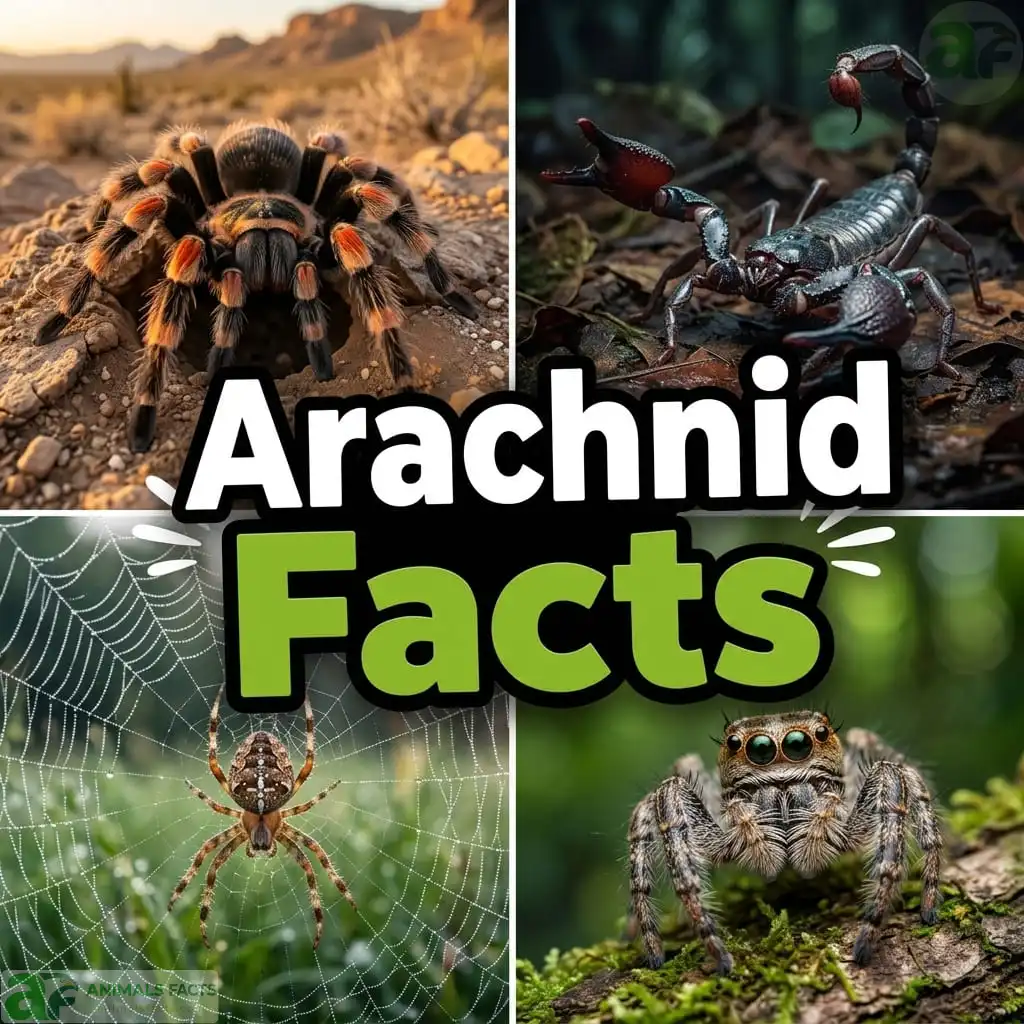
Arachnid Facts
| Feature | Details |
|---|---|
| Scientific Name | Arachnida (class) |
| Kingdom | Animalia |
| Phylum | Arthropoda |
| Subphylum | Chelicerata |
| Class | Arachnida (Cuvier, 1812) |
| Number of Orders | 18 recognized orders |
| Number of Described Species | Over 100,000 described species |
| Estimated Total Species | 500,000–1,000,000+ (vast majority undescribed) |
| Habitat | Every terrestrial environment on Earth; some aquatic |
| Lifespan | Days (some mites) to 25+ years (tarantulas, scorpions) |
| Diet | Primarily carnivorous; some herbivorous mites; a few omnivores |
| Size Range | 0.1 mm (some mites) to 30 cm leg span (Goliath birdeater) |
| Weight Range | Nanograms (dust mites) to ~170 grams (Goliath birdeater) |
| Speed | Up to 53 km/h (giant house spider, scaled) |
| Conservation Status | Varies; majority unassessed; many threatened or extinct |
| Global Abundance | Among the most numerous land animals on Earth |
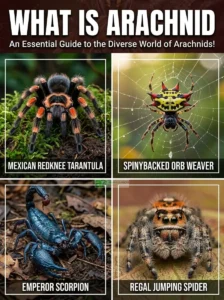 1. Introduction: What is an Arachnid?
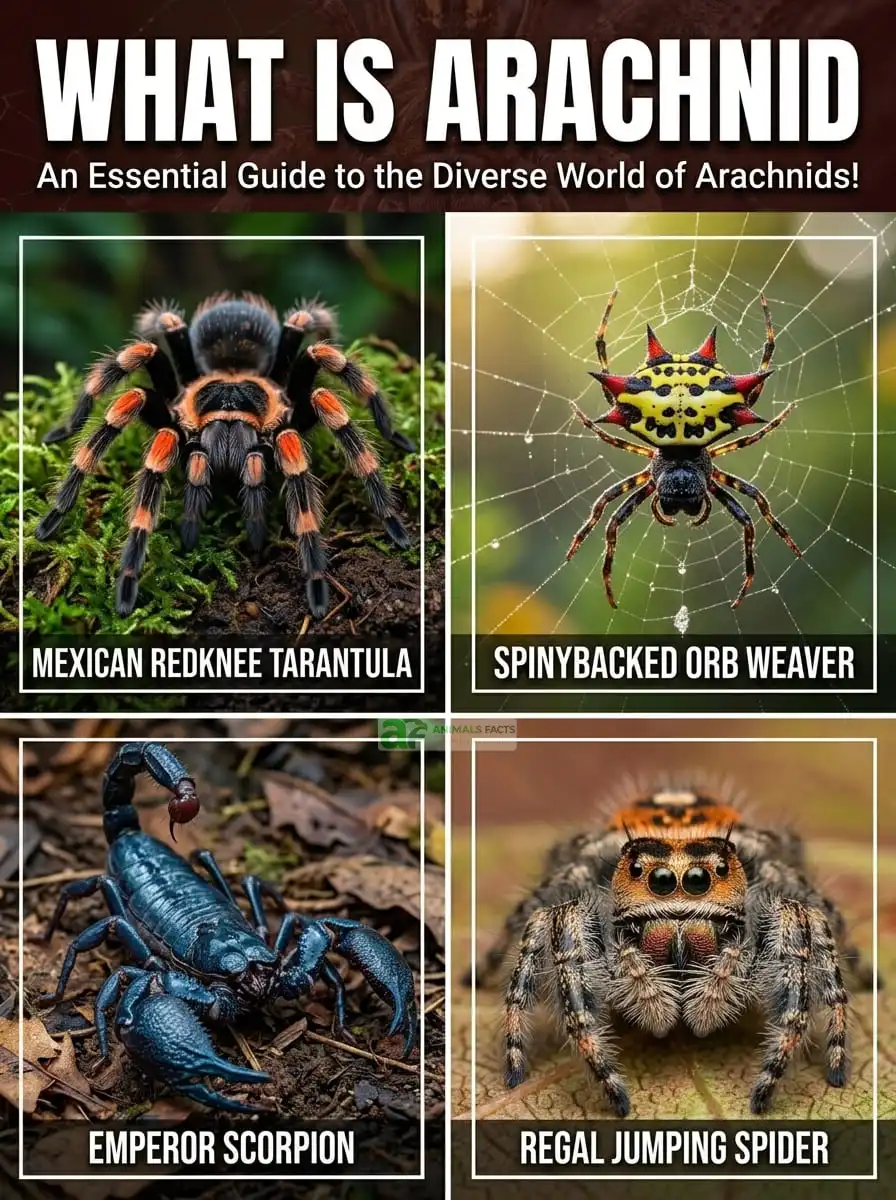
There is a corner of the natural world that most people instinctively shy away from — the domain of eight-legged creatures that spin silk, carry their young on their backs, build cities underground, glow under ultraviolet light, and produce venom that may one day cure cancer. Arachnid facts occupy a unique space in natural history: simultaneously the subject of some of humanity’s deepest, most widespread fears and the source of some of science’s most extraordinary discoveries. To understand arachnids is to understand that what frightens us most is often what most deserves our admiration.
The class Arachnida is one of the most species-rich, ecologically diverse, and biologically innovative groups of animals ever to evolve on Earth. With over 100,000 formally described species — and an estimated true total potentially exceeding one million when mites and ticks alone are fully catalogued — arachnids have colonized virtually every habitat available to land animals. They have been walking this Earth for over 400 million years, surviving every mass extinction and outlasting the dinosaurs. They exist in forms ranging from the dust mite too small to see with the naked eye to the Goliath birdeater tarantula whose legs span a dinner plate. Interesting facts about arachnids reveal animals that breathe through specialized structures that haven’t fundamentally changed in 400 million years, navigate by polarized light from the stars, produce silk stronger than steel, and in the case of the velvet mite, spend their youth as parasites before settling into adulthood as fearsome predators.
Whether you’re searching for arachnid facts for kids to make a biology class electric, exploring arachnid habitat and ecology for research, overcoming arachnophobia by replacing fear with knowledge, or simply fascinated by the extraordinary diversity of life on our planet — this guide is your comprehensive companion. We cover arachnid scientific names, arachnid diet, arachnid size and weight records, arachnid behavior, conservation, mythology, and the profound ecological roles these animals play in keeping terrestrial life functioning. Let’s step into the web.
2. Arachnid Species Overview & Classification
Arachnids belong to the class Arachnida within the subphylum Chelicerata — a lineage defined by the possession of chelicerae (specialized mouthparts) and pedipalps (sensory appendages near the mouth) rather than the mandibles and antennae that characterize insects and crustaceans.
Species Classification Table
| Taxonomic Rank | Classification |
|---|---|
| Kingdom | Animalia |
| Phylum | Arthropoda |
| Subphylum | Chelicerata |
| Class | Arachnida (Cuvier, 1812) |
| Number of Orders | 18 recognized orders |
| Number of Described Species | ~100,000+ |
| Estimated True Total | 500,000–1,000,000+ |
| Temporal Range | ~430 million years ago to present |
| Distribution | Global; every continent including Antarctica (mites) |
The 18 Orders of Arachnida
The class Arachnida is divided into 18 orders, each representing a distinct evolutionary lineage:
Major Orders:
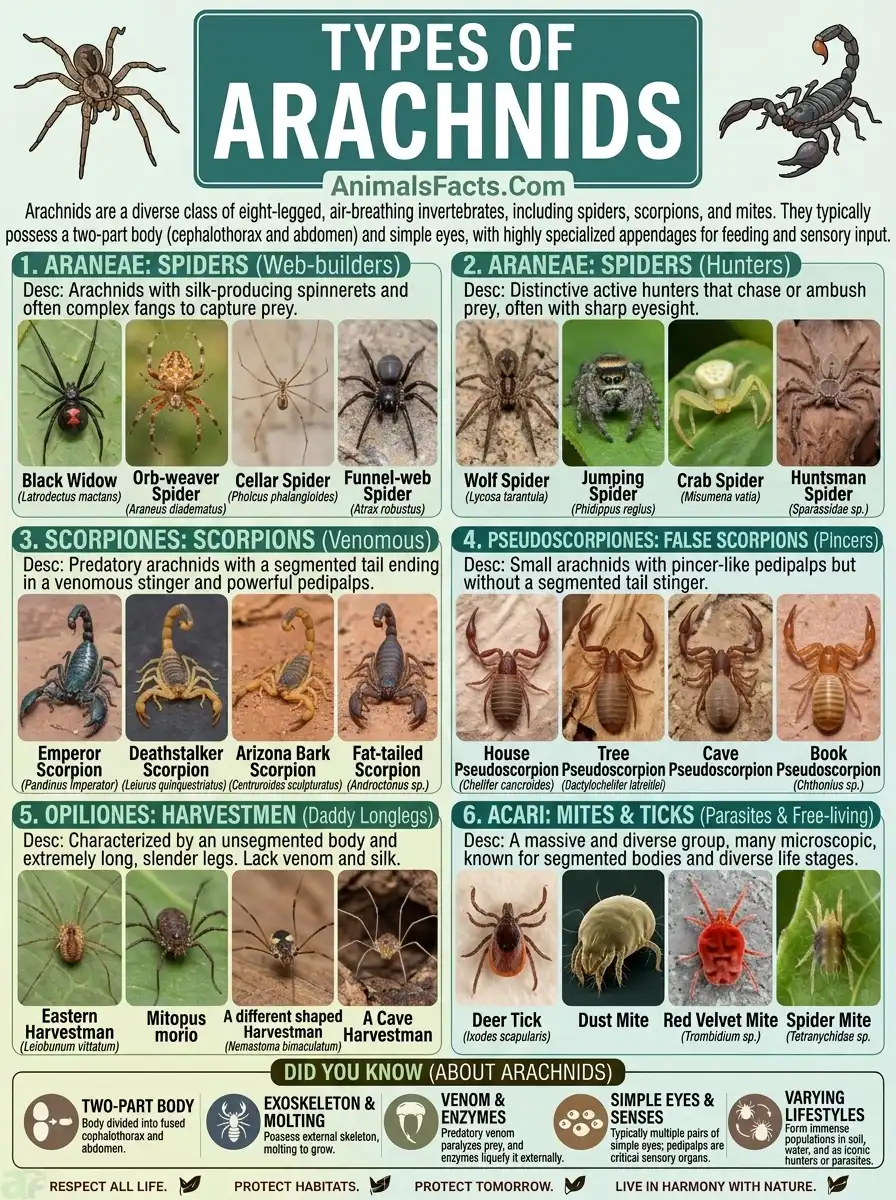
- Araneae (Spiders) — ~50,000 species; largest arachnid order
- Acari (Mites and ticks) — ~55,000+ described; true total likely 1 million+
- Scorpiones (Scorpions) — ~2,700 species
- Opiliones (Harvestmen/daddy longlegs) — ~6,600 species
- Pseudoscorpiones (Pseudoscorpions) — ~3,500 species
- Solifugae (Camel spiders/sun spiders) — ~1,100 species
- Uropygi (Whip scorpions) — ~160 species
- Amblypygi (Whip spiders) — ~200 species
- Ricinulei (Ricinuleids) — ~80 species; among the rarest arachnids
- Schizomida (Schizomids) — ~280 species; tiny, cave-adapted
Minor Orders: Palpigradi, Trigonotarbida (extinct), Haptopoda (extinct), Kustarachnida (extinct), Uraraneida (extinct), Tetrapulmonata, Haplocnemata, Dromopoda
Defining Characteristics of Arachnida
What makes an arachnid an arachnid? All members of the class share:
- Eight legs (4 pairs) in adult form — the defining feature that distinguishes arachnids from insects (6 legs) and crustaceans (10+ legs)
- Chelicerae — specialized mouthparts that may be pincer-like (chelate), fang-like, or modified for piercing
- Pedipalps — a pair of appendages near the mouth used for sensing, grasping prey, or mating
- No wings — arachnids never evolved wings; any apparent flying (in spiders) is passive ballooning on silk threads
- No antennae — arachnids use their pedipalps and legs for sensory functions that insects accomplish with antennae
- Two main body sections — the cephalothorax (prosoma, fused head and thorax) and abdomen (opisthosoma)
- Book lungs, tracheae, or both — respiratory structures unique to the chelicerate lineage
Arachnid Evolution & Discovery Timeline
~430 million years ago — The first arachnids appear in the Silurian period — marine chelicerates begin transitioning to terrestrial life. The earliest scorpions are the founding order of the terrestrial arachnid lineage.
~380 million years ago — The first spiders appear in the fossil record during the Devonian period. Attercopus fimbriunguis from New York State represents some of the earliest silk-spinning arachnids.
~300 million years ago — The Carboniferous period sees extraordinary arachnid diversification in the “age of insects and arachnids.” Giant scorpions (Pulmonoscorpius) reach 70 cm; giant millipedes and dragonflies share their world.
~245 million years ago — Arachnids survive the Permian-Triassic mass extinction — the worst in Earth’s history, eliminating ~96% of marine species. This survival is one of the most remarkable events in arachnid evolutionary history.
~130 million years ago — Major spider families reach their modern forms during the Cretaceous. Spectacular spider specimens preserved in Burmese amber document the diversity of this period.
1758 — Carl Linnaeus formally classifies many arachnid species in Systema Naturae — the foundation of modern arachnid taxonomy.
1812 — Georges Cuvier formally establishes the class Arachnida.
1890s–1920s — The golden age of descriptive arachnology; museums worldwide mount collecting expeditions and describe thousands of new species.
1971 — E.O. Wilson’s landmark work on social insects includes extensive arachnid comparative analysis, establishing the field of arachnid sociobiology.
2002 — DNA analysis confirms the evolutionary relationships of major arachnid orders and resolves several long-standing classification debates.
2023–2024 — New molecular studies reveal that mites alone may represent over 1 million species — more than all currently described animals combined.
“Arachnids are the hidden engine of terrestrial life. Without them — without their predation, their soil turnover, their seed dispersal, their silk — the world as we know it would simply not function.” — Dr. Norman Platnick, spider expert, American Museum of Natural History, widely considered the 20th century’s greatest spider systematist
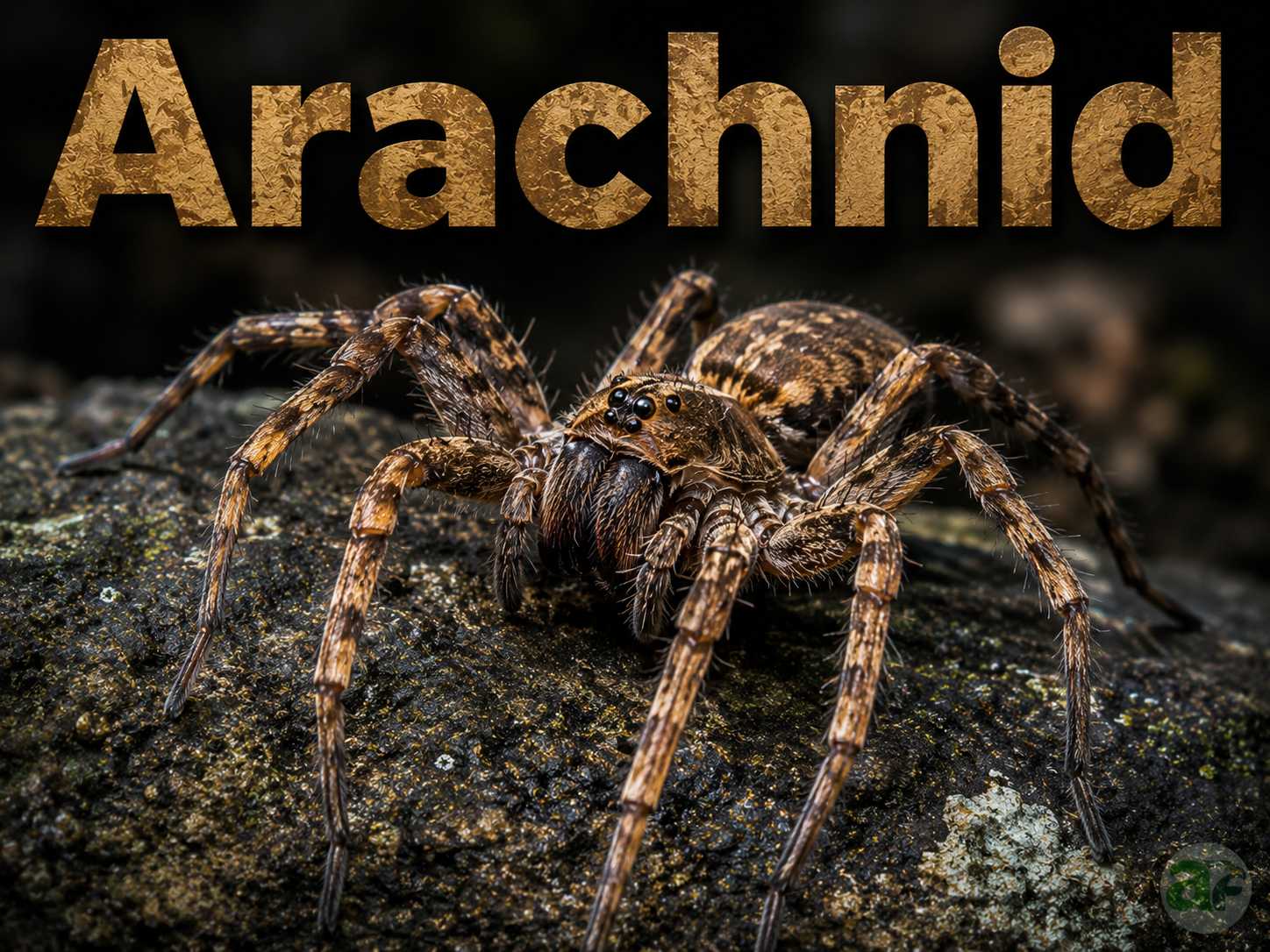
3. Arachnid Physical Description & Features
Arachnid size and weight span the most extreme range of any major animal class — from organisms too small to see with the naked eye to animals large enough to be weighed on kitchen scales — and the physical innovations within the class are among the most diverse in the arthropod world.
Size Extremes
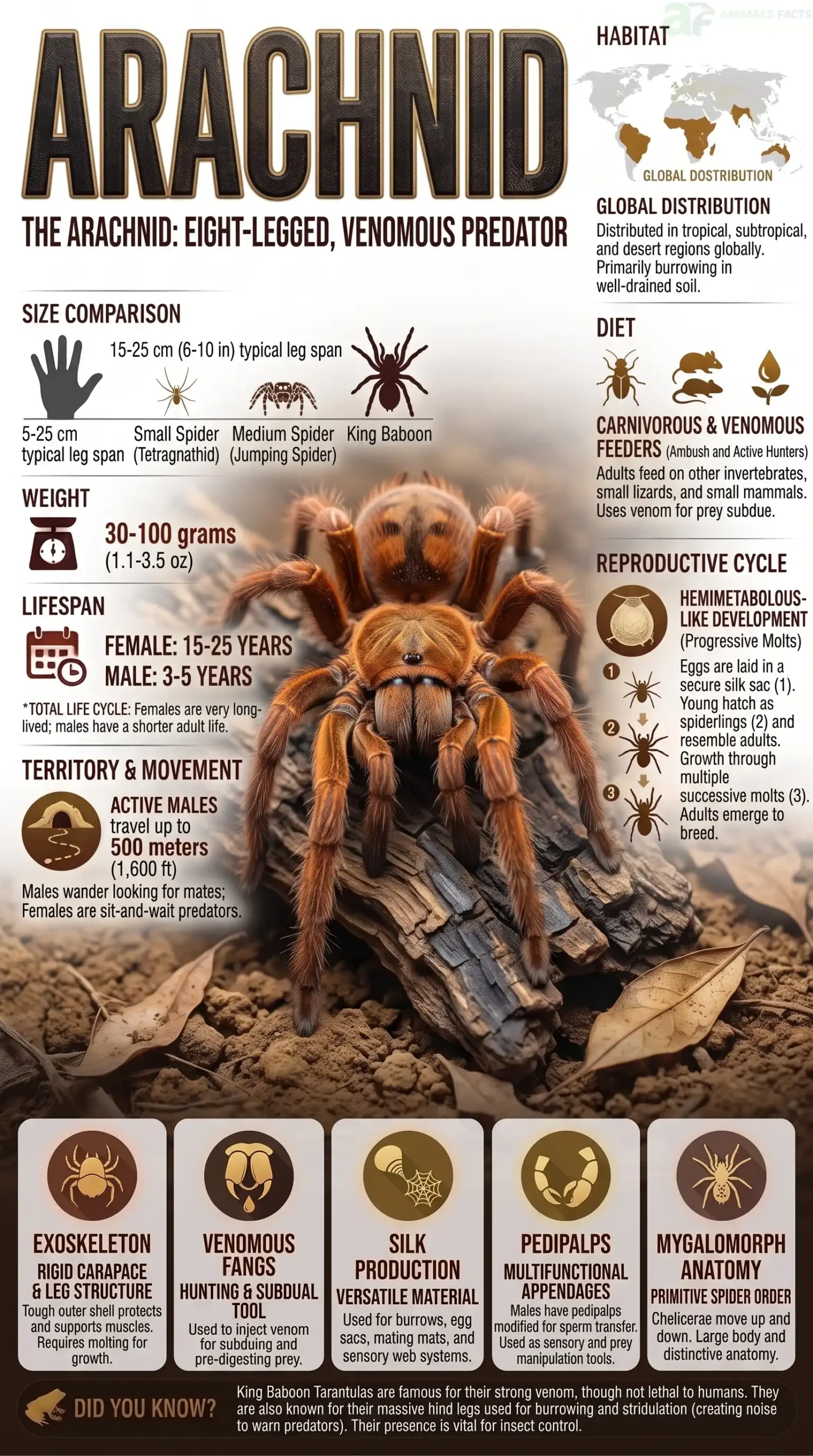
The smallest arachnid is Demodex brevis — a follicle mite that lives in human sebaceous glands, measuring approximately 0.15 mm in body length. It is present on the face of virtually every adult human alive. At the other extreme, the Goliath birdeater tarantula (Theraphosa blondi) of South America has a leg span of up to 30 cm and weighs approximately 170 grams — easily the largest arachnid alive today.
The Two Body Sections
All arachnids are organized around a two-section body plan:
Cephalothorax (prosoma) — The “head-thorax” section, bearing the chelicerae, pedipalps, and all four pairs of walking legs. The cephalothorax also typically bears the eyes — ranging from 2 to 12 eyes depending on order, with arrangements varying dramatically. Spider jumping eyes are telephoto-precision structures; scorpion eyes are motion detectors; mites have no eyes at all.
Abdomen (opisthosoma) — Contains the digestive organs, reproductive structures, respiratory organs (book lungs or tracheae), and in spiders, the silk glands and spinnerets. In scorpions, the opisthosoma extends into the characteristic “tail” (metasoma) bearing the venom gland.
Silk: Arachnida’s Greatest Innovation
The production of silk is arguably the most transformative innovation in arachnid evolution — though it is important to note that not all arachnids produce silk, and that silk has evolved independently multiple times within the class. Spiders are the most accomplished silk producers, but pseudoscorpions produce silk for egg cases from glands near their mouth, and some mites produce silk as well.
Spider silk is produced in specialized abdominal glands and extruded through spinnerets — with different glands producing chemically distinct silk types for different purposes. The toughest spider silks are weight-for-weight 5 times stronger than steel and 3 times tougher than Kevlar.
Chelicerae: The Universal Arachnid Tool
The chelicerae are perhaps the most morphologically diverse structures in the class. In spiders, they form hollow fangs that deliver venom. In harvestmen, they are gentle pincer-like manipulators for handling food. In scorpions, they are small but powerful chelate graspers used to tear apart prey. In mites and ticks, the chelicerae are modified into piercing and cutting structures for feeding on plant or animal tissue.
Did You Know? Demodex mites — microscopic arachnids approximately 0.15–0.4 mm in length — live in the hair follicles and sebaceous glands of virtually every adult human face. They are entirely harmless in healthy individuals, feeding on sebum and dead skin cells. You are almost certainly sharing your face with dozens to hundreds of these tiny arachnids right now. They are most active at night, emerging to mate on the skin surface before retreating to follicles by morning.
4. Top 25 Amazing Arachnid Facts
Here is your comprehensive, scientifically verified collection of the most extraordinary arachnid facts as of 2026:
- The class Arachnida contains over 100,000 described species — and scientists estimate the true total may exceed 1 million, making it potentially the most species-rich class of land animals on Earth.
- Arachnids have existed for ~430 million years — surviving all five major mass extinctions and outlasting virtually every other animal group that was alive when they first appeared.
- Mites (Acari) are the most numerous and diverse arachnid order — with more than 55,000 described species and an estimated true total that may exceed 1 million species — more than all currently described animals combined.
- Virtually every adult human alive carries Demodex mites (microscopic arachnids) living in their facial hair follicles — completely harmless and nearly universal.
- Spider silk is weight-for-weight 5 times stronger than steel and 3 times tougher than Kevlar — the material used in bulletproof vests.
- Darwin’s bark spider (Caerostris darwini) of Madagascar produces the toughest biological material ever recorded — a silk 10 times stronger than Kevlar — and builds webs spanning 25 meters across rivers.
- All scorpions fluoresce blue-green under UV light — a property found even in museum specimens hundreds of years old, the biological purpose of which remains scientifically debated.
- Jumping spiders (Salticidae) have demonstrated the ability to recognize individual human faces, remember specific people, and plan complex detour routes to prey they cannot currently see.
- Harvestmen (Opiliones) are the only arachnid order entirely lacking venom glands — they are harmless and produce defensive secretions from repugnatory glands rather than using venom.
- The Sahara silver ant is not an arachnid — but the camel spider (Solifugae), which terrifies desert travelers, is an arachnid that can run at 16 km/h and is completely non-venomous despite its fearsome appearance and enormous chelicerae.
- Mites are found in Antarctica — making them the only arachnids to colonize every continent on Earth, including the most extreme environments yet documented for terrestrial arthropods.
- Pseudoscorpions — tiny arachnids with scorpion-like pincers but no tail — have been found attached to the legs of large beetles and flies, using them as taxis for long-distance transport. This behavior is called phoresy.
- The portia spider (Portia genus) is capable of planning detour routes to prey it cannot currently see, modifying hunting strategies in real time based on feedback, and learning from failed attempts — cognitive abilities previously thought impossible for animals with such tiny nervous systems.
- Tick saliva contains compounds that suppress immune responses, prevent blood clotting, ease pain at the bite site, and in some species cause paralysis or transmit over 17 different human diseases — making ticks the world’s most medically important arachnids.
- Whip spiders (Amblypygi) — arachnids with extraordinarily long first legs used as antennae-like sensors — have been demonstrated to learn the layout of complex mazes faster than most vertebrates tested in comparable tasks.
- Book lungs — the breathing organs of many arachnids — are thought to be derived from the gill structures of ancient aquatic chelicerate ancestors, essentially internalized gills modified for air breathing over hundreds of millions of years of evolution.
- The trapdoor spider (Gaius villosus) of Western Australia holds the confirmed record for the longest-lived spider ever documented: a female known as “Number 16” lived to approximately 43 years before being killed by a parasitic wasp in 2016.
- Red velvet mites (Trombidium) spend their larval stage as parasites of insects before metamorphosing into fearsome predators of other soil arthropods as adults — one of the most dramatic lifestyle shifts in the arachnid world.
- Scorpion venom is currently among the most expensive liquids on Earth — up to $39 million per liter — due to its extraordinary value in pharmaceutical research including brain tumor treatment and antibiotic development.
- Spiders collectively consume between 400 and 800 million tons of prey annually — more than the entire human race and all whales combined eat in a year.
- The whip scorpion (Mastigoproctus giganteus) of the Americas defends itself by spraying a mixture of acetic acid (vinegar) and caprylic acid from glands at the base of its tail — earning it the common name “vinegar wasp” among some communities.
- Some jumping spider species can see ultraviolet wavelengths invisible to humans — and male peacock spiders have UV-reflective markings used in courtship displays that are completely invisible to human observers without UV-sensitive equipment.
- Cave-adapted arachnids (Charinus whip spiders, various cave spiders) have evolved in isolated cave systems with no light for so long that they are genetically distinct from surface relatives — some populations have been isolated for millions of years, having lost their eyes entirely.
- The harvestman has a uniquely unified body — unlike other arachnids, the cephalothorax and abdomen are broadly fused with no obvious waist, giving it the appearance of a single oval body with extremely long legs.
- A 2024 study confirmed that certain spider species can experience REM-like sleep — rapid eye movement states associated with dreaming in mammals — raising profound questions about arachnid consciousness.
5. Arachnid Fun Facts for Kids
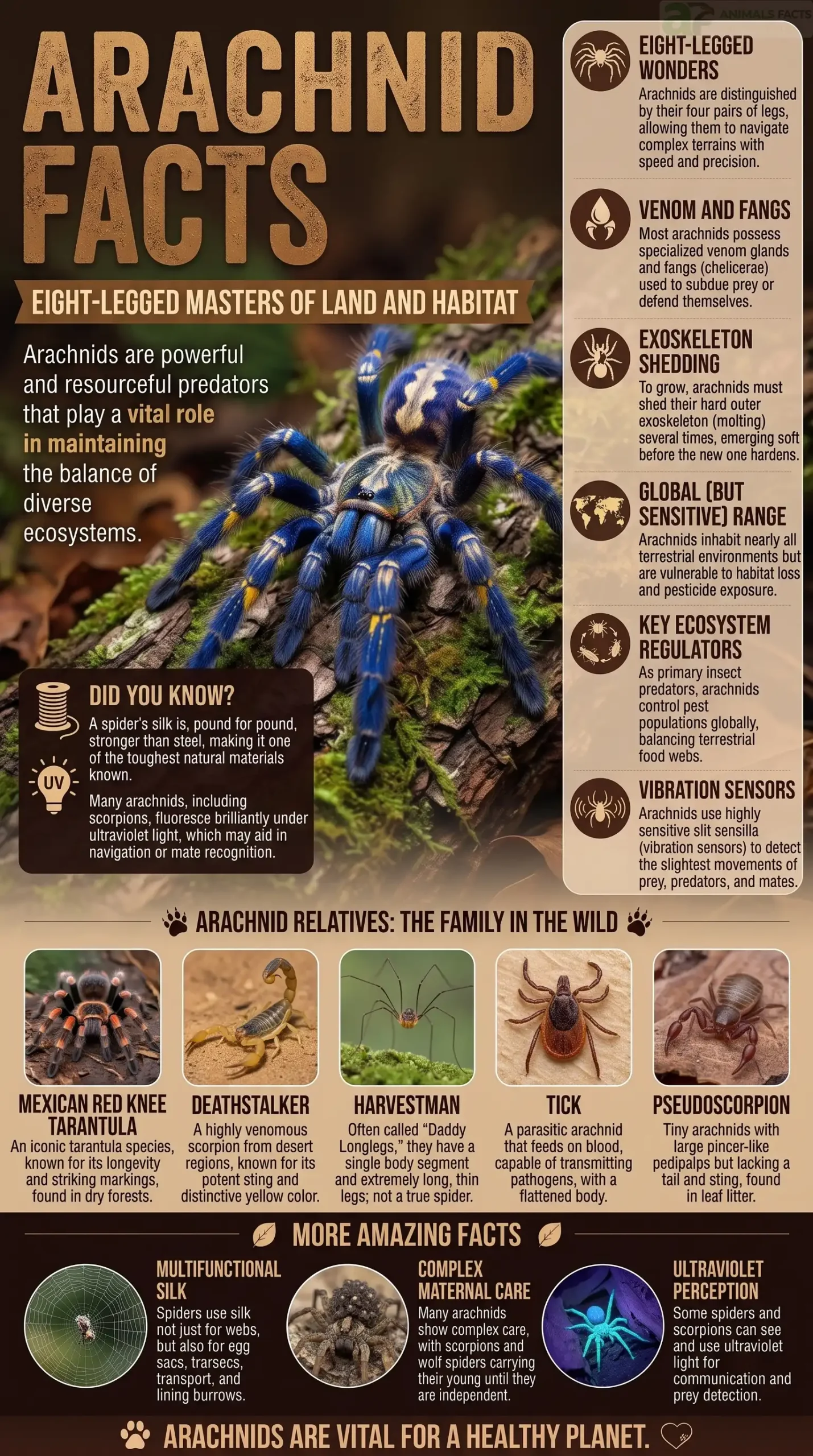
- Arachnids have been on Earth for over 430 million years — predating dinosaurs by over 200 million years
- Mites may represent over 1 million species — more than all described animals on Earth
- You likely have Demodex mites living in your eyelash follicles right now
- Spider silk is weight-for-weight stronger than steel
- All scorpions glow under UV light for reasons science hasn’t fully explained
- The 43-year-old trapdoor spider “Number 16” is the world’s oldest confirmed spider
- Jumping spiders can recognize and remember individual human faces
- Arachnids survived all five mass extinctions in Earth’s history
- The camel spider — despite terrifying legends — is completely non-venomous
- Ticks transmit more diseases to humans than any other arthropod
- Spiders eat more prey annually than the entire human population eats food
- Harvestmen (daddy longlegs) are arachnids but are entirely non-venomous
6. Natural Habitat of Arachnids
Arachnid habitat diversity is unmatched in the animal world — these animals have colonized virtually every terrestrial environment on the planet, and some orders have returned to aquatic life.
Arachnid Habitat Types
Arachnids inhabit tropical rainforests, temperate forests, deserts, grasslands, mountains, caves, soil, leaf litter, freshwater margins, salt marshes, urban buildings, the skin of mammals (parasitic mites and ticks), and even the intertidal zone (some mites live between tide lines). The water mite family Hydrachnidiae contains thousands of species living in freshwater streams, ponds, and rivers — swimming, crawling, and parasitizing aquatic insects.
Habitat Range by Continent
| Continent | Notable Species | Habitat Type | Diversity Level |
|---|---|---|---|
| South America | Goliath birdeater, bullet ant-hunting velvet mites, Latrodectus | Rainforest, cloud forest, savanna | Highest (spiders, mites) |
| Africa | Deathstalker scorpion, solifugids, weaver spiders, emperor scorpion | Desert, savanna, rainforest | Very high |
| Asia | Giant huntsman spider, Asian forest scorpion, giant whip scorpion | Tropical forest, cave, urban | Very high |
| Australia | Funnel-web spider, redback spider, trapdoor spider, bulldog ant | Woodland, urban, cave, desert | High (many endemics) |
| North America | Black widow, brown recluse, bark scorpion, wolf spider | Desert, forest, urban, grassland | High |
| Europe | Garden spider, European black widow, cave pseudoscorpions, Euscorpius | Woodland, cave, Mediterranean scrub | Moderate |
| Antarctica | Nanorchestes mites | Under rocks, soil | Very low but present |
| Deep ocean floor | No true arachnids | N/A | Absent (sea spiders are not arachnids) |
Did You Know? Oribatid mites — tiny soil-dwelling arachnids — are among the most abundant animals on Earth, with populations of up to 400,000 individuals per square meter of forest soil. A single square meter of European forest floor may contain over 150 species of oribatid mite. They are primary decomposers, breaking down organic matter and cycling nutrients at a rate that fundamentally underpins soil fertility across the planet.
7. Arachnid Diet & Feeding Behavior
Arachnid diet is predominantly carnivorous — but the extraordinary diversity of the class means that feeding strategies and prey types span virtually the entire range of available food sources in terrestrial ecosystems.
Diet Breakdown Table
| Order | Dietary Strategy | Primary Food | Notable Prey |
|---|---|---|---|
| Araneae (Spiders) | Active and passive carnivore | Insects, other spiders | Insects (95%+), small vertebrates (some) |
| Acari — Predatory mites | Active carnivore | Other mites, small invertebrates | Soil arthropods, nematodes |
| Acari — Parasitic ticks/mites | Ectoparasite | Blood, tissue fluids | Mammal, bird, reptile blood |
| Acari — Herbivorous mites | Plant feeder | Plant sap, spores | Crops, garden plants |
| Scorpiones | Ambush carnivore | Insects, arachnids | Beetles, crickets, other scorpions |
| Opiliones | Omnivore/scavenger | Plant material, fungi, small invertebrates | Extremely broad diet |
| Solifugae (Camel spiders) | Aggressive carnivore | Insects, lizards, small birds | Any mobile prey they can subdue |
| Pseudoscorpiones | Predatory | Mites, collembola, small insects | Soil micro-arthropods |
Extraordinary Feeding Adaptations
Spider web engineering — Web-building spiders represent the pinnacle of passive trap-based predation. Orb-weaver spiders construct spiral capture webs of sticky silk that intercept flying insects; funnel-web spiders build sheet webs with trip wires above; cobweb spiders build tangled spatial webs in three dimensions. Each web design reflects evolutionary optimization for the prey available in the spider’s specific microhabitat.
Camel spider (solifugid) predation — Among the most voracious predators in the arachnid class, camel spiders use their enormous chelicerae (which can represent up to 1/3 of their body length) to crush and liquefy prey far larger than themselves. They have been documented consuming lizards, small birds, and rodents — and their feeding speed is remarkable, dismembering prey in seconds.
Jumping spider tactics — Jumping spiders hunt visually with exceptional precision, stalking prey using their forward-facing telephoto eyes to judge distance accurately, then leaping distances of 50 times their body length to land on prey with pinpoint accuracy. They also trail a safety dragline during leaps that can anchor them if they miss.
Tick blood feeding — Ticks are the arachnid class’s most specialized parasites. A single blood meal can increase a tick’s body mass by 100–200 times over several days of feeding. Their saliva contains compounds that suppress immune responses, prevent blood clotting, and mask the feeding site from pain detection — allowing them to feed for days without detection.
8. Arachnid Reproduction & Life Cycle
Arachnid reproduction strategies are among the most diverse in the animal kingdom — spanning the entire spectrum from simple egg-laying to live birth, from no parental care whatsoever to months of maternal devotion.
Mating Strategies
Spider courtship — Among the most elaborate and dangerous in the arthropod world. Male spiders must approach females — who are typically larger and potentially cannibalistic — using species-specific signals to announce their identity. Jumping spiders perform elaborate visual dances. Wolf spiders drum vibrational signals. Web spiders pluck the female’s web in species-specific patterns. Peacock spiders display iridescent abdominal fans in performances that have been described as some of the most spectacular animal courtship displays on Earth.
Scorpion promenade à deux — The courtship dance of scorpions, in which male and female grasp chelae-to-chelae and perform a prolonged “dance” across the substrate while the male searches for a suitable site to deposit his spermatophore, can last from minutes to over 24 hours.
Harvestman pair bonding — Harvestmen are among the few arachnid groups with documented male parental care — in some species, males guard egg clutches for extended periods, defending them from predators and parasitic flies.
Life Stages
All arachnids undergo some form of ecdysis (molting) — periodically shedding and replacing their exoskeleton as they grow. The number of molts varies from 4–5 (some mites and small spiders) to over 20 (large tarantulas that molt annually throughout their long lives). The post-molt period, when the new cuticle is soft and hardening, is a period of extreme vulnerability.
Most arachnids are oviparous (egg-laying), though some spiders and scorpions give birth to live young (viviparity) and others hatch internally (ovoviviparity). Scorpions are unique among arachnids in being universally viviparous — all species give birth to live young.
Arachnids Lifespan Comparison Table
| Species/Order | Average Lifespan | Maximum Documented | Notable |
|---|---|---|---|
| Trapdoor spider (Gaius villosus, female) | 15–25 years | 43 years (“Number 16”) | Longest documented spider lifespan |
| Emperor scorpion (Pandinus imperator) | 6–8 years | 25 years (captivity) | Most popular pet arachnid |
| Tarantula (Theraphosa blondi, female) | 15–20 years | ~25 years | Males 3–6 years |
| Black widow (Latrodectus mactans, female) | 1–3 years | ~5 years | Males rarely survive mating |
| House dust mite (Dermatophagoides) | ~1–4 months | ~5 months | Billions per human home |
9. Social Behavior & Communication
Most arachnids are solitary — but the diversity of the class means that the full spectrum from complete solitude to genuine cooperative society is represented within Arachnida.
Solitary Majority
The typical arachnid is a solitary hunter or ambush predator that tolerates conspecifics only during mating and, in some species, during maternal care of young. Adult spiders, scorpions, and most other orders are territorial and cannibalistic toward each other outside these windows.
Social Exceptions
Social spiders — Approximately 25 species of spiders are genuinely social, living in colonies of hundreds to thousands that share communal webs, cooperate in prey capture, and jointly care for young. Anelosimus eximius of South America forms colonies of up to 50,000 individuals in webs spanning several meters — capturing prey far larger than any individual could handle alone.
Harvestman aggregations — Some harvestman species form aggregations of thousands of individuals in sheltered locations during winter or drought. These aggregations provide group thermoregulation and collective anti-predator benefits.
Communication Systems
Chemical communication — Across virtually all arachnid orders, pheromones are the primary communication channel — used for mate attraction, territorial marking, alarm signaling, and individual recognition. The chemical sophistication of spider silk itself includes pheromone compounds that communicate the producer’s species, sex, and reproductive status to any other spider that contacts the silk.
Vibrational communication — Scorpions, spiders, and other arachnids communicate extensively through substrate-borne vibrations — sounds transmitted through the ground or web structure rather than through air. Male Argiope garden spiders pluck their webs in species-specific patterns; wolf spiders drum the ground with palps and legs; scorpions stridulate (rub body parts) to produce species-specific signals.
Visual communication — Reaches its peak in jumping spiders (Salticidae), which have the most sophisticated visual communication of any arachnid. Male peacock spiders (Maratus genus) of Australia perform multi-step dances with iridescent abdominal fans raised and vibrating — displays that have been filmed in slow motion and shared globally, attracting millions of online viewers.
10. Predators & Defense Mechanisms
Despite their own predatory prowess, arachnids face threats from a diverse array of natural enemies — and have evolved correspondingly sophisticated defensive strategies.
Natural Predators of Arachnids
- Birds — Among the most significant arachnid predators; many bird species specialize in spider prey
- Parasitic wasps (Pompilidae/spider wasps) — Paralyze spiders, lay eggs inside them; the paralyzed spider serves as living food for the larva
- Parasitoid wasps — Lay eggs inside scorpions and harvestmen as well
- Lizards — Major predators of spiders, scorpions, and other ground-dwelling arachnids
- Frogs and toads — Consume enormous quantities of soil-dwelling arachnids
- Centipedes — Prey on spiders and smaller arachnids sharing the same microhabitats
- Meerkats and mongooses — Semi-resistant to scorpion venom; specialized scorpion predators
- Other arachnids — Cannibalism and interspecific predation are widespread
Defense Strategies Across the Class
Venom — The most famous arachnid defense, present in spiders (all venomous), scorpions (all venomous), and some mites (velvet mites produce defensive chemicals). Venom serves primarily as a predation tool but also deters predators.
Silk retreats and escape lines — Most spiders maintain a silk dragline at all times — a safety line that allows them to drop away from a threat rapidly and return to their position afterward. Many also maintain silk retreats providing physical protection.
Defensive secretions — Harvestmen cannot sting or bite effectively but produce repugnatory gland secretions containing quinones, phenols, and other compounds that deter predators. Whip scorpions spray acetic acid from tail glands. Camel spiders produce no venom but can deliver painful mechanical bites with their enormous chelicerae.
Autotomy (leg shedding) — Many arachnid species — particularly harvestmen, whip spiders, and some true spiders — can voluntarily shed legs when grasped by a predator, allowing escape while sacrificing the limb. Unlike lizard tails, shed arachnid legs do not regenerate (except in species that can still molt, where partial regeneration may occur).
Camouflage — From the bark-like pattern of certain huntsman spiders to the flower-matching white and yellow of crab spiders, cryptic coloration is widespread. Some species go further with active camouflage — selecting and attaching debris to their bodies to create custom disguises.
Thanatosis — Playing dead is documented across multiple arachnid orders, particularly in smaller spider species that cannot escape rapidly enough to outrun predators.
Did You Know? Spider wasps (family Pompilidae) are among the most efficient arachnid predators — they sting and paralyze spiders (sometimes species much larger than themselves) with surgical precision, then drag the paralyzed spider to a prepared burrow where they lay a single egg on its body. The paralyzed but living spider then serves as fresh food for the developing wasp larva over several weeks. The tarantula hawk wasp (Pepsis species) delivers one of the most painful insect stings known to science specifically for the purpose of paralyzing tarantulas.
11. Arachnid Facts for Kids
Hey brilliant young scientists! Here are some totally incredible arachnid facts for kids that will absolutely blow your mind:
You are NEVER far from an arachnid! Scientists estimate that in most places on Earth, you are never more than 1 meter away from a spider at any given time — indoors or outdoors!
Spiders have BLUE blood! Well, sort of — their blood contains copper instead of iron, which turns it blue. That’s why it looks blue-greenish inside their bodies!
Scorpions GLOW in the dark! If you shine a special UV light (ultraviolet) on a scorpion at night, it glows blue-green like something from a science fiction movie. Nobody is completely sure why!
The oldest spider ever lived for 43 YEARS! A trapdoor spider in Australia named “Number 16” by scientists lived for 43 years before she died — that’s older than many people’s parents were when they were born!
Jumping spiders are tiny geniuses! These little spiders can recognize human faces, plan detour routes around obstacles, and remember their plans for up to an hour. They have the biggest brains relative to body size of any spider!
You have tiny mites living on your face right now! Harmless Demodex mites — too small to see — live in your eyelash follicles. They’re completely harmless and actually clean up dead skin cells. Gross but true!
Spider silk is stronger than steel! If you could make a rope the thickness of a pencil from spider silk, it would be strong enough to stop a jet airplane in flight. That’s stronger than any metal wire of the same thickness.
Camel spiders can run as fast as a person! These enormous desert arachnids (they’re not really spiders) can reach speeds of up to 16 km/h — and despite looking terrifying, they have absolutely NO venom at all!
12. Relationship with Humans
The relationship between arachnids and humans is one of the most paradoxical in the natural world — combining deep-seated fear (arachnophobia is one of the most common phobias globally), ecological indispensability, medical hazard, pharmaceutical promise, and extraordinary cultural richness.
Arachnophobia
Arachnophobia — fear of arachnids, primarily spiders — affects an estimated 3.5–6.1% of the global population in clinically significant form, with many more experiencing milder anxiety. Evolutionary psychology proposes that mild wariness toward arachnids was once adaptive — particularly in environments where venomous species posed genuine survival threats. This ancestral wariness has been amplified in many modern individuals into a full phobia despite the fact that the overwhelming majority of arachnids pose no threat to humans whatsoever.
Medical Significance
Ticks are the most medically significant arachnids by far — transmitting over 17 distinct human diseases worldwide, including Lyme disease (the most common vector-borne disease in the Northern Hemisphere), Rocky Mountain spotted fever, tick-borne encephalitis, Crimean-Congo hemorrhagic fever, and anaplasmosis. Global tick-borne disease incidence is increasing as climate change expands tick habitat ranges northward.
Venomous spiders cause far fewer deaths than public fear would suggest. The Sydney funnel-web spider (Atrax robustus) is genuinely dangerous — its venom can kill without antivenom in under 15 minutes — but since the introduction of antivenom in 1981, no confirmed deaths from funnel-web bites have occurred in Australia. The black widow causes significant morbidity in the United States but very rarely death in healthy adults with modern medical care.
Dust mites — arachnids of the genus Dermatophagoides — are among the most significant domestic allergen sources, with their shed skin fragments and feces triggering allergic asthma and rhinitis in an estimated 500 million people globally.
Pharmaceutical Promise
Arachnid venoms are increasingly recognized as extraordinary pharmacological resources:
- Spider silk being developed for surgical sutures, wound dressings, and biodegradable packaging
- Scorpion chlorotoxin in clinical trials as a brain tumor imaging agent
- Spider venom peptides being studied for pain management (Hm3a from funnel-web venom shows promise for heart attack treatment)
- Tick saliva anticoagulants being studied for stroke and thrombosis treatment
- Mite-derived enzymes used in industrial biotechnology
Arachnids in Agriculture
Predatory mites are actively deployed as biological pest control agents in commercial agriculture — released into greenhouses and orchards to control spider mite and thrips infestations that would otherwise require chemical pesticide treatment. This industry generates tens of millions of dollars annually in sales of beneficial predatory mites.
13. Arachnid Conservation Status & Threats
Arachnid conservation is one of the most neglected fields in invertebrate biology — the vast majority of the class has never been formally assessed for conservation status, and public support for arachnid conservation is far weaker than for charismatic vertebrates.
Conservation Status Overview
| Status Category | Approximate Number of Arachnid Species |
|---|---|
| Not Assessed (vast majority) | ~95,000+ species |
| Least Concern | ~500 species formally assessed |
| Near Threatened | ~100 species |
| Vulnerable | ~200 species |
| Endangered | ~100 species |
| Critically Endangered | ~50 species |
| Extinct | ~30+ confirmed species |
| CITES Listed | Emperor scorpion, several tarantula species |
Most Threatened Arachnids (2026)
- Kauaʻi cave wolf spider (Adelocosa anops) — Hawaii; found in a handful of lava tube caves; population estimated at a few hundred individuals
- Desertas wolf spider (Hogna ingens) — Found only on Desertas Grande island, Madeira; population under 5,000 individuals in a tiny habitat
- Cobalt blue tarantula (Cyriopagopus lividus) — Southeast Asia; heavily collected for the pet trade
- Various Atypus purse-web spiders — UK and Europe; highly habitat-specific; rapidly declining
Major Threats
| Threat | Description | Impact |
|---|---|---|
| Habitat destruction | Deforestation, agricultural expansion, urbanization | High — primary driver |
| Invasive species | Introduced ants, wasps, and mammals devastate island arachnid communities | High on islands |
| Pesticide use | Broad-spectrum insecticides/acaricides kill non-target species | High — widespread |
| Climate change | Alters habitat suitability; disrupts prey timing | Increasing |
| Collection for pet trade | Tarantulas, emperor scorpions, whip scorpions | Medium |
| Light pollution | Disrupts nocturnal behavior of many species | Medium-increasing |
14. Famous Arachnids in History & Pop Culture
Historically Famous Individual Arachnids
“Number 16” — The trapdoor spider (Gaius villosus) of Western Australia monitored from 1974 to 2016 by researcher Barbara York Main. She lived to an estimated 43 years — the world’s oldest documented spider — before being killed by a parasitic wasp. Her individual life history represents the most complete longitudinal spider behavioral dataset ever collected.
“The Goliath” specimens — Multiple Goliath birdeater tarantulas (Theraphosa blondi) held in museum collections from 19th-century Amazon expeditions by Alfred Russel Wallace and Henry Walter Bates represent among the first specimens of this extraordinary species to reach European science, triggering Victorian-era fascination with giant spiders.
“Charlotte” — While fictional (E.B. White’s beloved spider from Charlotte’s Web), this barn spider character has done more to generate public empathy for arachnids than perhaps any scientific publication, introducing generations of children to a positive relationship with spiders.
15. Role in Ecosystem & Food Chain
Arachnids collectively perform ecological functions of such scale and importance that their removal from any terrestrial ecosystem would cause rapid, measurable, and cascading deterioration.
Pest Control at Global Scale
Spiders alone consume between 400 and 800 million tons of prey annually — more than the combined food consumption of all humans and all whales on Earth. This predation falls primarily on insects — including agricultural pests, disease vectors, and decomposers. The economic value of spider pest control services to global agriculture is estimated at hundreds of billions of dollars annually.
Predatory mites in forest and agricultural soil consume enormous quantities of harmful mite species, nematodes, and other invertebrates — providing the most important biological pest control service in many temperate farming systems.
Soil Engineering
Oribatid mites — with populations of up to 400,000 individuals per square meter — are the primary decomposers of organic matter in temperate forest soils. Their feeding activity breaks down leaf litter, fungal material, and dead organisms into forms that plants and soil microbes can use — essentially running the nutrient cycle of temperate forests. Without oribatid mites, forest soils would accumulate undecomposed organic material and become progressively less fertile.
Burrowing spiders and scorpions aerate soil through their tunneling activity — improving drainage, increasing water infiltration, and enhancing root penetration in ways that benefit plant communities.
Food Web Support
Arachnids serve as critical prey for an enormous range of vertebrates — birds, lizards, frogs, small mammals, and fish all depend significantly on arachnid prey. Arachnivorous birds (those specializing in arachnid prey) include several globally significant migratory species whose population health is directly linked to arachnid abundance in their breeding and wintering habitats.
16. Arachnid Myths, Folklore & Cultural Significance
Arachnids — particularly spiders — have occupied a central position in human mythology and cultural symbolism across virtually every civilization in recorded history.
Arachne – The Origin of the Word
The entire class takes its name from the Greek myth of Arachne — a mortal weaver of extraordinary skill who challenged the goddess Athena to a weaving contest. The myth’s denouement — Arachne transformed into a spider for her hubris — gave the class Arachnida its name and embedded spiders permanently in Western cultural consciousness as symbols of the dangerous consequences of pride and the relationship between craft and nature.
Anansi – The African Spider Trickster God
In West African and Caribbean oral tradition, Anansi is one of the most important and beloved figures in all of human mythology — a spider deity of stories, wisdom, and cunning who repeatedly outwits larger and more powerful beings through intelligence and trickery. Anansi stories traveled to the Americas through the transatlantic slave trade and became foundational to African-American, Jamaican, and Ghanaian literary traditions. Neil Gaiman’s novel Anansi Boys (2005) and its television adaptation represent the most prominent recent appearances of this ancient figure in global popular culture.
Spider Grandmother – Native American Traditions
Among the Hopi, Navajo, and other Southwestern Pueblo peoples, Spider Grandmother (Na’ashjé’ii Asdzáá) is a revered creator deity — a wise elder who helped form the world, taught humans to weave, and guides heroes through the spirit world. The web of the spider is understood as a metaphor for the interconnected nature of all life — a concept that has profound resonance with modern ecological network theory.
Scorpion Symbolism
The scorpion appears in the astronomical sign of Scorpius and the astrological sign Scorpio, in the Egyptian goddess Serket, in Babylonian mythology’s guardian Girtablullu, and in pre-Columbian Mesoamerican calendar systems. Across cultures, the scorpion consistently symbolizes death, transformation, protection, and the dangerous threshold between worlds — a remarkable consistency given the genuine danger some species pose.
17. Arachnids in Pop Culture
Spider-Man (Marvel Comics, 1962–present) — The most commercially successful arachnid-inspired superhero in history, generating over $1 billion in annual merchandise revenue and multiple billion-dollar film franchises. Spider-Man’s silk-spinning, wall-climbing, and web-swinging abilities — while fantastical — are all inspired by real spider biology, and the character has done more to generate positive associations with spiders in public consciousness than perhaps any other cultural force.
Charlotte’s Web (E.B. White, 1952) — The barn spider Charlotte remains one of the most beloved animal characters in all of children’s literature — and arguably the most effective piece of arachnid PR in human history.
Shelob (The Lord of the Rings, J.R.R. Tolkien) and Aragog (Harry Potter, J.K. Rowling) — Giant fictional spiders that represent the darkest cultural archetype of the spider as monstrous, predatory, and terrifying — powerful examples of how arachnophobia is transmitted and amplified through fiction.
Arachnoquake, Eight Legged Freaks, Arachnophobia — A long tradition of spider horror films reflects and amplifies public fear; the 1990 film Arachnophobia was one of the most financially successful creature-horror films of its decade.
Peacock spiders on YouTube — Videos of Maratus peacock spiders performing their extraordinary courtship dances have collectively accumulated hundreds of millions of views online — these tiny Australian jumping spiders have become arguably the most internet-famous arachnids on Earth, generating enormous goodwill toward the spider family as a whole.
18. Arachnid Facts vs. Common Myths
| Common Myth | The Real Fact |
|---|---|
| “All arachnids are spiders” | False — spiders are one of 18 orders; arachnids also include scorpions, mites, ticks, harvestmen, camel spiders, pseudoscorpions, and more |
| “Daddy longlegs are the most venomous spiders” | False on two counts — daddy longlegs (harvestmen) are NOT spiders and have no venom glands at all; if referring to cellar spiders (Pholcus), their venom is mild and unproven as exceptionally toxic |
| “Camel spiders are venomous and deadly” | False — camel spiders (Solifugae) have no venom glands; they are powerful mechanical biters but non-venomous |
| “We swallow 8 spiders per year while sleeping” | Completely false — sleeping humans produce vibrations, heat, and CO₂ that repel spiders; documented spider-swallowing during sleep is essentially non-existent |
| “All arachnids have 8 eyes” | False — eye number ranges from 0 (some mites and cave species) to 12 (some scorpions); most spiders have 8 but some have 6, 4, or 2 |
| “Bigger arachnids are more dangerous” | Generally false — the most dangerous species (deathstalker scorpion, Sydney funnel-web) are small to medium; the largest (Goliath birdeater, emperor scorpion) have mild or medically unimportant venom |
| “Arachnids are insects” | False — arachnids have 8 legs, 2 body segments, no wings, and no antennae; insects have 6 legs, 3 body segments, usually wings, and antennae |
| “Killing spiders in your home is harmless” | Ecologically harmful — house spiders consume significant quantities of pest insects; their removal allows pest populations to increase |
19. Best Places to Experience Arachnids in the Wild
1. Amazon Rainforest, Peru & Brazil — The most arachnid-diverse region on Earth. Every forest walk yields encounters with extraordinary spiders, velvet mites, whip scorpions, and other arachnids invisible to untrained eyes. Research stations at Manu National Park (Peru) and Cristalino Lodge (Brazil) offer expert-guided night walks that reveal the full splendor of Amazon arachnid diversity.
2. Australian Outback & Subtropical Forest — Home to some of the world’s most distinctive arachnids including funnel-web spiders, trapdoor spiders, redback spiders, and stick spiders. The Queensland Museum and Australian Museum offer outstanding educational resources, and many national parks provide night walk programs that reveal spider diversity.
3. Namib and Sahara Deserts — The world’s premier destinations for scorpion and solifugid watching under UV lights. Guided night tours from Sossusvlei (Namibia) and Zagora (Morocco) provide reliable encounters with desert arachnids in dramatic desert settings.
4. Borneo, Malaysia — The tropical forests of Borneo host extraordinary arachnid diversity including giant huntsman spiders, whip scorpions, whip spiders, and dozens of remarkable orb-weaver species. Night walks at Danum Valley and Maliau Basin are exceptional.
5. Monteverde Cloud Forest, Costa Rica — The misty cloud forest environment creates spectacular conditions for web-building spiders — orb-weaver webs heavy with dew in morning light are among the most beautiful natural sights in the arachnid world. Multiple endemic species found nowhere else.
6. Sydney region, Australia — For those with sufficient nerve, the Sydney area is the only place on Earth where wild Sydney funnel-web spiders can be encountered — arguably the world’s most dangerous spider in its natural habitat. The Australian Reptile Park runs Australia’s only funnel-web milking program, which produces the antivenom that has eliminated spider-related deaths from this species.
7. Your own home and garden — Armed with a UV flashlight (for scorpion detection) or simply careful observation at night with a torch, virtually every garden in temperate and tropical regions will reveal active spiders, harvestmen, and other arachnids. iNaturalist allows you to submit observations that contribute directly to scientific distribution databases.
20. How You Can Help
Arachnid conservation is one of the most underfunded and under-recognized areas of biodiversity conservation — and one where individual action can have genuine impact.
Support these organizations:
- Xerces Society for Invertebrate Conservation — xerces.org — the most significant invertebrate conservation organization in North America
- British Arachnological Society — britishspiders.org.uk — UK-based research and conservation with global relevance
- American Arachnological Society — americanarachnology.org
- Buglife (Invertebrate Conservation Trust) — buglife.org.uk
- iNaturalist — inaturalist.org — citizen science platform for recording arachnid observations
What you can do:
- Stop killing house spiders — they eat flies, mosquitoes, and other household pests; relocate rather than kill
- Reduce pesticide use — broad-spectrum pesticides devastate arachnid communities
- Leave leaf litter and log piles in your garden — critical habitat for ground-dwelling arachnids
- Plant native species — native plant communities support the insect prey that arachnids depend on
- Contribute to iNaturalist — arachnid distribution data is extremely sparse; your observations matter
- Buy captive-bred if keeping pet arachnids — never wild-caught; reduces pressure on wild populations
21. Top Documentaries & Books
Must-Watch Documentaries
- Life in the Undergrowth (BBC, 2005) — David Attenborough’s landmark five-part series on invertebrate life; the most comprehensive and beautifully filmed arachnid documentary ever produced; covers spiders, scorpions, solifugids, and more
- Micro Monsters with David Attenborough (Sky 3D/BBC, 2013) — Cutting-edge macro photography of arachnid behavior; extraordinary spider, scorpion, and mite sequences
- Planet Earth II (BBC, 2016) — Several sequences featuring spider behavior and scorpion ecology at broadcast quality unmatched before or since
- The Secret Life of Scorpions (PBS) — Dedicated documentary on scorpion biology, venom chemistry, and ecological roles
- Peacock Spider documentaries — Multiple YouTube documentaries featuring Jurgen Otto’s extraordinary macro-photography of Maratus peacock spiders; among the most viewed wildlife footage on the internet
Must-Read Books
- Spiders of the World by Robert Foelix — The definitive scientific reference on spider biology
- Scorpions of the World by Eric Ythier — Comprehensive photographic guide to global scorpion diversity
- The Ants by Hölldobler & Wilson (Pulitzer Prize) — While primarily about ants, provides essential context for understanding the arthropod world arachnids inhabit
- Arachnids by Jan Beccaloni (Natural History Museum) — Beautifully illustrated guide to all arachnid orders; ideal for general readers
- Eight-Legged Wonders by Amanda Wood — Accessible popular science introduction to arachnid diversity
22. Comparison of Major Arachnid Orders
| Feature | Spiders (Araneae) | Scorpions (Scorpiones) | Mites & Ticks (Acari) | Harvestmen (Opiliones) |
|---|---|---|---|---|
| Species count | ~50,000 | ~2,700 | ~55,000+ (est. 1M+) | ~6,600 |
| Body segments | 2 distinct | 2 + segmented tail | 1 (fused) | 1 (fused) |
| Legs | 8 | 8 | 8 (adults) | 8 |
| Venom | Yes — almost all | Yes — all | Some parasitic species | No — none |
| Silk | Yes — all | No | Some species | No |
| Eyes | 2–8 | 2–12 | 0–2 | 2 |
| UV fluorescence | Some species | All species | Not known | No |
| Stinger | No | Yes — all | No | No |
| Parental care | Some species | Yes — all carry young | Rare | Some species |
| Largest species | Goliath birdeater (30 cm span) | Giant forest scorpion (23 cm) | Buthus (tick, ~3 cm) | Trogulus (~22 mm) |
23. Frequently Asked Questions About Arachnid Facts
Q1. What is the scientific name for arachnids?
Arachnids belong to the class Arachnida (Cuvier, 1812), within the subphylum Chelicerata of the phylum Arthropoda. The class name derives from the Greek myth of Arachne, the weaver transformed into a spider by the goddess Athena. Individual arachnid orders each have their own scientific names — spiders belong to order Araneae, scorpions to Scorpiones, mites and ticks to Acari, harvestmen to Opiliones, and so on. The class as a whole contains 18 recognized orders and over 100,000 described species.
Q2. How many arachnid species exist?
Over 100,000 arachnid species have been formally described, but scientists estimate the true total is dramatically higher. Mites alone (order Acari) may represent over 1 million species when fully catalogued — making Acari potentially the most species-rich order of any animal group on Earth. The true total diversity of the class Arachnida is genuinely unknown and may dwarf the diversity of any other animal class.
Q3. Are all arachnids venomous?
No — this is one of the most important arachnid facts to clarify. Harvestmen (Opiliones, often called daddy longlegs) have no venom glands whatsoever and are entirely harmless. Many mites and ticks produce no venom (though they may transmit diseases). Camel spiders (Solifugae) are large, fearsome-looking arachnids with no venom glands at all. Spiders are almost all venomous, but the vast majority produce venom that is harmless to healthy adult humans. Scorpions are all venomous, but only ~30–35 of 2,700 species can seriously harm a healthy adult.
Q4. What is the most dangerous arachnid?
From a public health perspective, ticks (order Acari) are the most dangerous arachnids — transmitting over 17 distinct human diseases and affecting millions of people annually. From a venom perspective, the Sydney funnel-web spider (Atrax robustus) and the deathstalker scorpion (Leiurus quinquestriatus) are the most dangerous venomous arachnids to healthy adults. The Indian red scorpion (Hottentotta tamulus) causes more confirmed deaths annually than any other venomous arachnid species.
Q5. What is the largest arachnid?
The Goliath birdeater tarantula (Theraphosa blondi) of South America is the world’s largest arachnid by mass — weighing up to approximately 170 grams with a leg span of up to 30 cm (12 inches). The giant huntsman spider (Heteropoda maxima) of Laos has the greatest leg span at up to 30 cm, though it is lighter-bodied than the Goliath birdeater. Among scorpions, the giant forest scorpion (Heterometrus spinifer) can reach 23 cm in body length.
Q6. Are arachnids important to ecosystems?
Critically so. Spiders alone consume 400–800 million tons of prey annually — primarily insects — providing the world’s most important biological pest control service. Mites are the primary decomposers of organic matter in temperate forest soils, essential to nutrient cycling. Arachnids serve as critical prey for enormous numbers of birds, lizards, frogs, and mammals. Their collective ecological functions — predation, decomposition, soil engineering, pest control — underpin the functioning of virtually every terrestrial ecosystem on Earth.
Q7. Why do scorpions glow under UV light?
All scorpions tested — across all 18 families and including preserved museum specimens centuries old — fluoresce a characteristic blue-green color under ultraviolet light. The fluorescent compounds are located in the cuticle (exoskeleton). Despite decades of research, the biological function remains incompletely explained. Leading hypotheses include UV sensing for detecting moonlight intensity; mate/species recognition; a byproduct of cuticle chemistry with no specific function; or a novel sensory system for navigating by UV light reflected from the environment. A 2022–2023 study provided evidence for a communication role but the question remains open.
Q8. Do arachnids sleep?
Yes — though arachnid sleep is very different from mammalian sleep. Spiders have been documented in sleep-like states with reduced responsiveness and specific postural changes. Most remarkably, a 2022 study documented REM-like sleep states in jumping spiders — including rapid eye movements (their eyes move during the REM-equivalent state despite having fixed, immobile eye structures in most cases) — suggesting arachnids may have sleep states more complex than previously imagined, possibly including something analogous to dreaming.
24. Sources & References
Research Sources
- Wikipedia — Arachnida, Araneae, Acari, Scorpiones, Opiliones, Solifugae
- National Geographic — nationalgeographic.com
- Smithsonian Institution — si.edu
- Britannica — britannica.com/animal/arachnid
- Live Science — livescience.com
- BBC Wildlife / BBC Earth — bbcearth.com
- IUCN Red List — iucnredlist.org
- Foelix, Rainer (2011). Biology of Spiders (3rd ed.). Oxford University Press
- Harvey, Mark S. — multiple published papers on arachnid systematics
- Rowe, Ashlee H. et al. (2013). Grasshopper mouse venom resistance. Science
- Rößler, D.C. et al. (2022). “REM-like sleep in jumping spiders.” PNAS
- Platnick, Norman I. — multiple published works on spider systematics and conservation
- Xerces Society — xerces.org
- British Arachnological Society — britishspiders.org.uk