
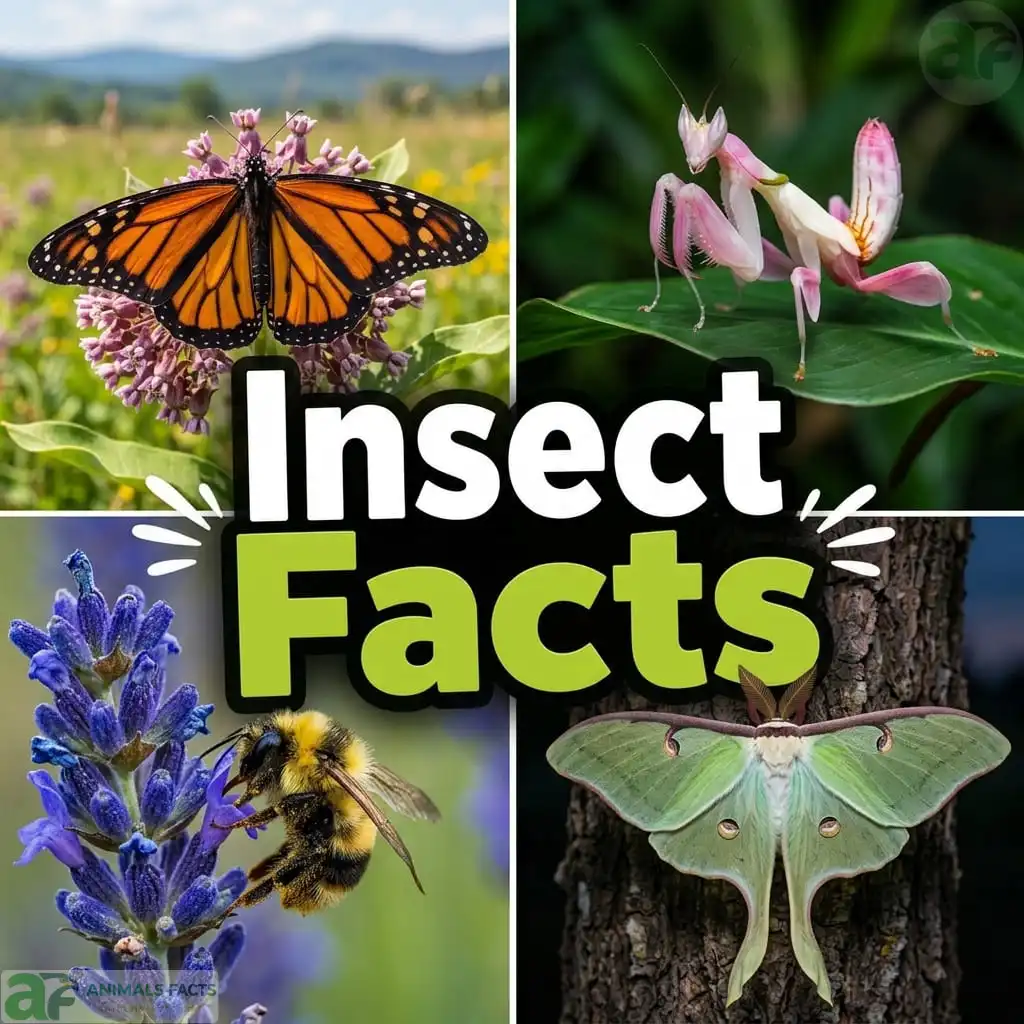
Insect Facts
| Feature | Details |
|---|---|
| Scientific Class | Insecta |
| Kingdom | Animalia |
| Phylum | Arthropoda |
| Total Known Species | Approximately 1,000,000 formally described; estimated 5–10 million total |
| Oldest Insect Group | Silverfish (Order Zygentoma) — wingless insects virtually unchanged for 400 million years |
| Habitat | Every continent including Antarctica; every environment except open ocean |
| Smallest Insect | Dicopomorpha echmepterygis (parasitic wasp) — 0.139 mm body length |
| Largest Insect | Goliath Beetle (Goliathus goliatus) by weight — up to 100 grams; Giant Stick Insect (Phobaeticus chani) by length — up to 35.7 cm |
| Fastest Insect | Australian Tiger Beetle (Cicindela hudsoni) — up to 9 km/h relative to body size; fastest flight: Hawk Moths at ~50 km/h |
| Longest Lifespan | Termite Queens — up to 50 years; 17-year Cicada — 17 years (mostly underground) |
| Shortest Lifespan | Mayfly adults — as little as a few hours to a maximum of 24 hours |
| Diet | Herbivores, carnivores, omnivores, detritivores, parasites — every dietary strategy known |
| Conservation Status | Approximately 40% of insect species declining; over 2,000 species on IUCN Red List |
| Global Population | Estimated 10 quintillion (10,000,000,000,000,000,000) individual insects alive at any moment |
| Share of Animal Species | Insects represent approximately 80% of all known animal species on Earth |
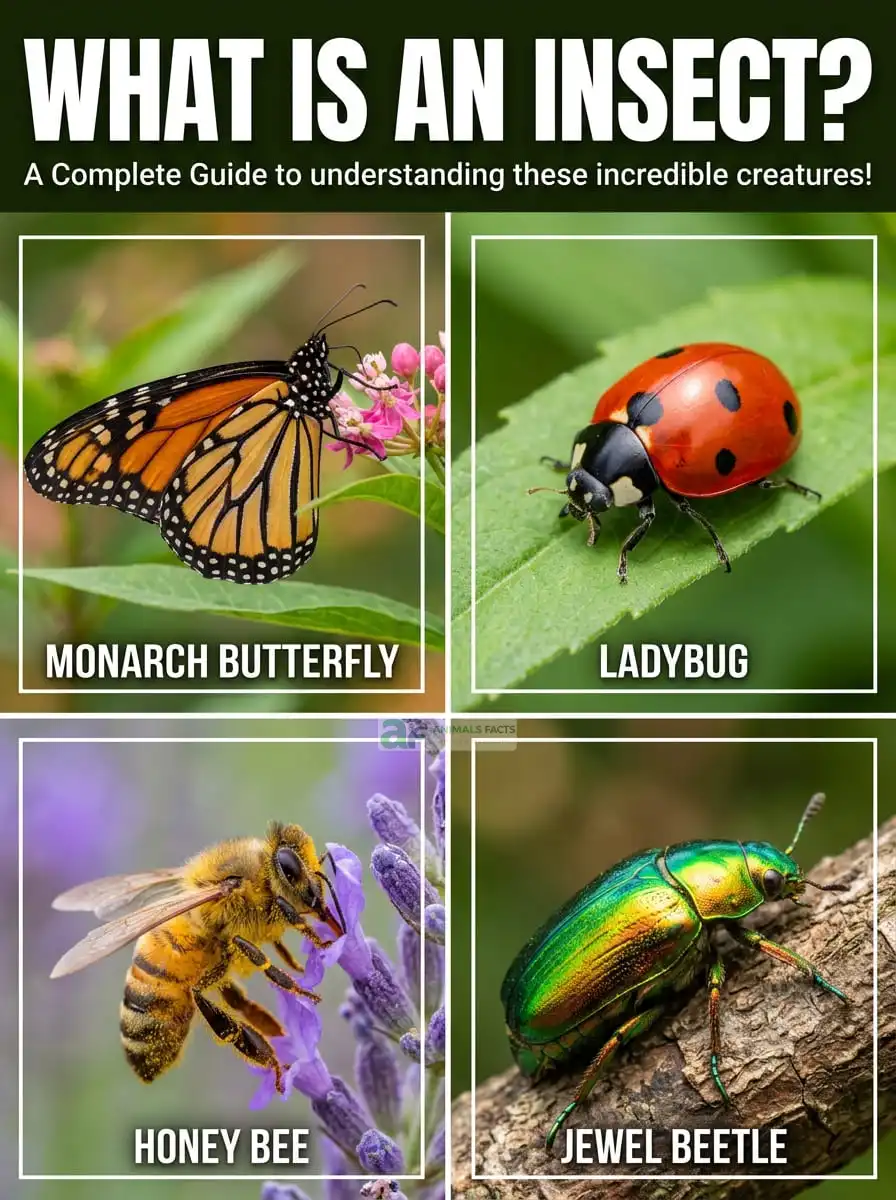
1. Introduction: What is Insect?
They outnumber every other animal on Earth by a margin so vast it is almost impossible to comprehend. They have been here for over 400 million years — surviving every mass extinction event that wiped out dinosaurs, mammoths, and countless other species. They pollinate the crops that feed humanity, decompose the dead matter that would otherwise overwhelm our ecosystems, and form the nutritional foundation upon which almost every other animal on land depends. Insect facts are not merely fascinating curiosities — they are fundamental truths about how life on Earth actually works.
The class Insecta is, without any question, the most successful and most diverse group of animals in the entire history of our planet. With approximately one million formally described species — and an estimated five to ten million yet to be discovered — insects represent roughly 80% of all known animal species. They inhabit every continent on Earth, including Antarctica, where the Antarctic Midge (Belgica antarctica) survives as the southernmost free-living insect. They range in size from the barely-visible 0.139 mm parasitic wasp to the 35-centimeter Giant Stick Insect of Borneo. They have colonized forests, deserts, freshwater rivers, alpine meadows, caves, and the fur of mammals.
Whether you are a student searching for insect facts for kids, a biology enthusiast fascinated by evolutionary success, a gardener wanting to understand the creatures sharing your outdoor space, or simply someone who watched a bee visiting a flower and wondered about the extraordinary complexity behind that moment — this is your definitive guide. We cover insect habitat, insect diet, insect behavior, their irreplaceable ecological roles, their conservation crisis, and everything in between. Let us begin.
2. Insect Species Overview & Classification
Insects belong to the phylum Arthropoda — animals with an external skeleton (exoskeleton), a segmented body, and jointed limbs. Within arthropods, insects are distinguished from other groups such as spiders, crabs, and centipedes by a specific set of characteristics that define every member of the class Insecta without exception.
What Defines an Insect?
Every insect shares these defining characteristics:
- Three body segments: Head, thorax, and abdomen — always exactly three
- Six legs: All six attached to the thorax — always exactly six in adults
- Three pairs of mouthparts: Adapted to specific feeding strategies
- One pair of antennae: Used for touch, smell, and in some species, hearing
- Most species have wings: Two pairs in most species; one pair in flies; none in some groups
- Exoskeleton: A rigid outer skeleton made of chitin that provides structure, prevents desiccation, and must be shed (molted) for the insect to grow
Major Insect Classification Table
| Order | Common Name | Approx. Species | Key Examples |
|---|---|---|---|
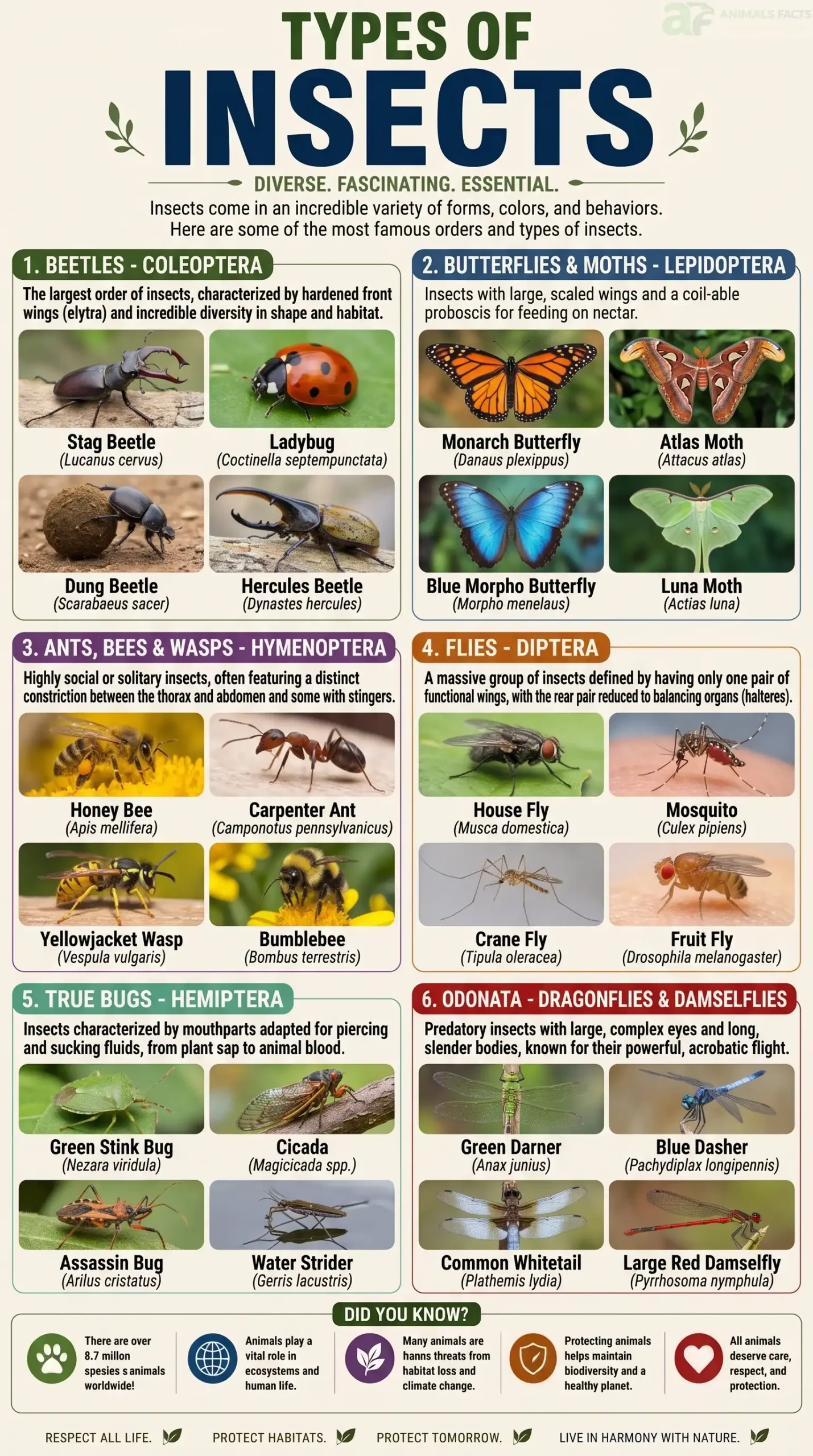
| Coleoptera | Beetles | ~400,000 | Dung Beetle, Ladybug, Firefly, Weevil |
| Lepidoptera | Butterflies & Moths | ~180,000 | Monarch Butterfly, Atlas Moth, Hawkmoth |
| Hymenoptera | Bees, Wasps & Ants | ~150,000 | Honeybee, Fire Ant, Paper Wasp, Bumblebee |
| Diptera | Flies | ~125,000 | Housefly, Mosquito, Horsefly, Hover Fly |
| Hemiptera | True Bugs | ~80,000 | Cicada, Aphid, Bedbug, Water Strider |
| Orthoptera | Grasshoppers & Crickets | ~25,000 | Locust, Katydid, Field Cricket |
| Odonata | Dragonflies & Damselflies | ~6,000 | Emperor Dragonfly, Damselfly species |
| Blattodea | Cockroaches & Termites | ~7,000 | American Cockroach, Termite, German Cockroach |
| Mantodea | Mantises | ~2,400 | Praying Mantis, Orchid Mantis |
| Phasmatodea | Stick & Leaf Insects | ~3,000 | Giant Stick Insect, Leaf Insect |
| Siphonaptera | Fleas | ~2,500 | Cat Flea, Human Flea, Oriental Rat Flea |
| Zygentoma | Silverfish | ~570 | Common Silverfish, Firebrat |
Insect Species Evolution & Discovery Timeline
~479 million years ago: The earliest evidence of terrestrial arthropods — the ancestors of insects — appeared during the Ordovician Period.
~400 million years ago: The first true wingless insects emerged during the Devonian Period. Rhyniognatha hirsti — discovered in fossilized Scottish peat — is one of the oldest known insect fossils, dating to approximately 410 million years ago.
~350 million years ago: Winged insects appeared during the Carboniferous Period — one of the most transformative innovations in animal evolution. The ability to fly opened entirely new ecological niches and allowed rapid diversification.
~300 million years ago: Giant insects thrived during the Carboniferous — including Meganeura, a dragonfly-like insect with a 70 cm wingspan — the largest insect ever known, made possible by the higher oxygen content of the atmosphere at that time.
~252 million years ago: The Permian-Triassic mass extinction severely impacted insect diversity, but the class recovered and diversified more explosively than any other animal group in the aftermath.
~130 million years ago: The co-evolution of flowering plants (angiosperms) and pollinating insects — particularly bees, butterflies, and flies — began during the Cretaceous Period, driving one of the greatest biodiversity expansions in Earth’s history.
~100 million years ago: Ants and termites developed eusocial colony structures — among the most ecologically dominant and sophisticated social organizations ever evolved by any animal.
1758: Carl Linnaeus formally classified insects in Systema Naturae, establishing the foundations of modern insect taxonomy.
1859: Charles Darwin’s On the Origin of Species identified insect diversity — particularly beetle diversity — as one of the most compelling demonstrations of natural selection’s power.
1973: Karl von Frisch shared the Nobel Prize in Physiology or Medicine for his discovery and decoding of the honeybee waggle dance — one of the most remarkable examples of symbolic communication in the animal kingdom.
2006–present: Mounting scientific evidence of dramatic global insect population declines began triggering international conservation concern; the term “insect apocalypse” entered mainstream scientific and public discourse.
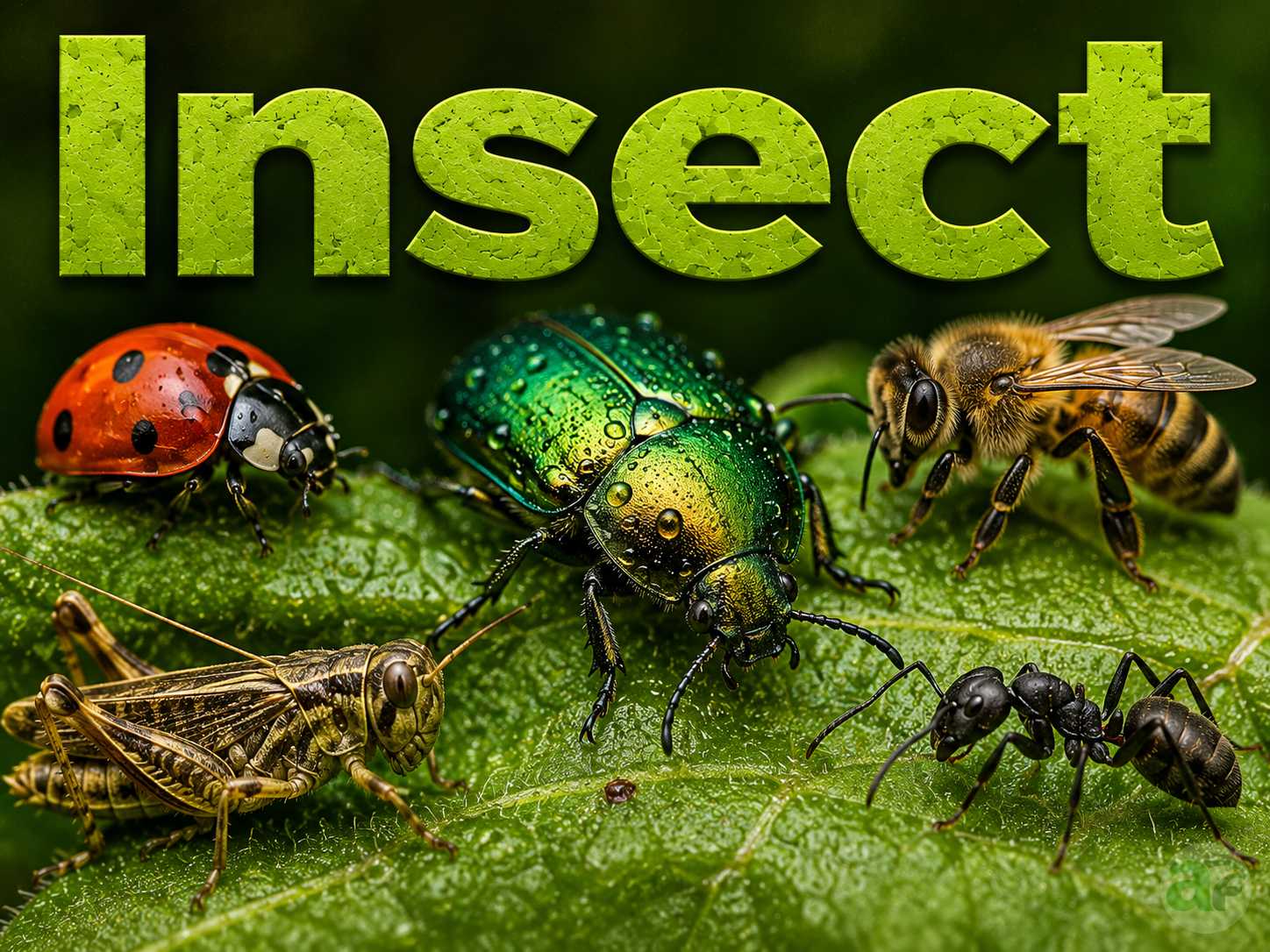
3. Physical Description of Insects
The physical diversity of insects is extraordinary — a direct reflection of over 400 million years of evolution into virtually every ecological niche available on land, in freshwater, and in the air.
Size Extremes
Smallest known insect: Dicopomorpha echmepterygis — a parasitic wasp from Costa Rica measuring just 0.139 mm in body length — smaller than some single-celled organisms and visible only under magnification.
Largest insect by weight: The Goliath Beetle (Goliathus goliatus) of Central Africa — males can weigh up to 100 grams and reach 11 cm in length — heavier than many small vertebrates.
Largest insect by length: Phobaeticus chani — a Giant Stick Insect from Borneo — reaches a total length of 35.7 cm including outstretched legs, with a body length of 22.3 cm.
Largest wingspan: The White Witch Moth (Thysania agrippina) of South America has a confirmed wingspan of up to 30 cm — the widest wingspan of any living insect.
Longest wings relative to body: The Atlas Moth of Asia has the largest wing surface area of any moth, with wings spanning up to 25–30 cm.
The Insect Body Plan
The Exoskeleton: Made of chitin — a tough, lightweight polysaccharide material — the exoskeleton provides structural support, protects internal organs, prevents water loss, and serves as an attachment point for muscles. Because it cannot expand, insects must periodically shed it through moulting (ecdysis) to grow.
Compound Eyes: Most insects have compound eyes — structures composed of thousands of individual light-detecting units called ommatidia. Dragonflies have up to 30,000 ommatidia per eye — giving them nearly 360-degree vision and extraordinary ability to detect movement. Many insects can also see ultraviolet light invisible to humans, which reveals patterns on flower petals that guide them to nectar.
Antennae: Used for detecting chemicals (smell), air movement, touch, temperature, and in some species, sound. Antenna morphology varies enormously — from the elaborate feathery plumes of male silk moths (which can detect a single molecule of female pheromone from 11 kilometers away) to the club-shaped antennae of butterflies.
Wings: The evolutionary origin of insect wings remains one of the most debated questions in evolutionary biology. Most flying insects have two pairs of wings — the forewings and hindwings. In beetles (Coleoptera), the forewings are hardened into protective covers (elytra); in flies (Diptera), the hindwings are reduced to tiny balancing organs called halteres. Some insects — including all ants outside of the reproductive caste, all fleas, and primitive orders like silverfish — are secondarily wingless.
Did You Know? The Hawk Moth (family Sphingidae) hovers in front of flowers like a hummingbird while feeding on nectar — beating its wings up to 70–85 times per second. At night, it navigates by moonlight — maintaining a fixed angle to the moon as it flies. Artificial lights confuse this navigation system, causing moths to spiral endlessly around light sources rather than flying in straight lines — a behavior called positive phototaxis.
4. Top 25 Surprising & Interesting Insect Facts
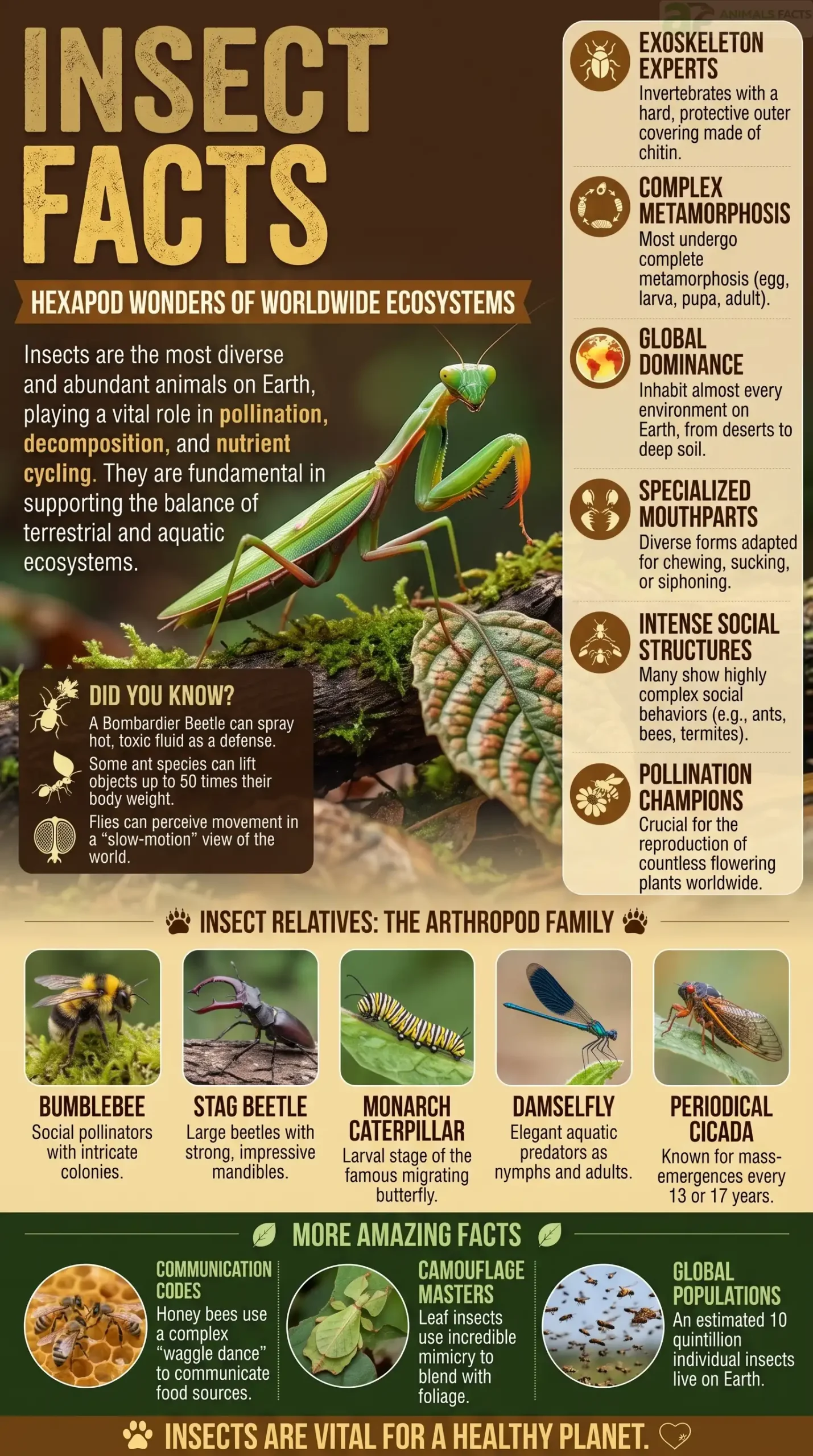
- Insects have been on Earth for over 400 million years — they survived all five major mass extinction events in Earth’s history.
- There are an estimated 10 quintillion (10,000,000,000,000,000,000) individual insects alive on Earth at this moment — approximately 1.4 billion insects for every single human being.
- The Monarch Butterfly migrates up to 4,800 kilometers from Canada and the United States to a single mountain forest in Michoacán, Mexico — navigating using the sun’s position and the Earth’s magnetic field.
- Ants have been farming fungi underground for approximately 60 million years — making them the second-oldest farmers on Earth after termites.
- The Bombardier Beetle fires a boiling, caustic chemical mixture from its abdomen at 100°C in rapid pulses — up to 500 bursts per second — as a defense mechanism precise enough to target specific directions.
- A single Honeybee colony of 50,000–80,000 workers can visit up to 2 million flowers to produce a single 500-gram jar of honey.
- The Dung Beetle is the strongest animal on Earth relative to body weight — it can pull 1,141 times its own body weight, equivalent to a human pulling six double-decker buses simultaneously.
- Male Silk Moths (Bombyx mori) can detect a single molecule of female sex pheromone from distances of up to 11 kilometers using their feathery antennae.
- The Migratory Locust can eat its own body weight in food every day — swarms of 40–80 million locusts per square kilometer can consume enough crops to feed 35,000 people in a single day.
- Dragonflies are the most effective predators in the animal kingdom — they successfully capture 95% of all prey they pursue, compared to approximately 25% for lions and 50% for great white sharks.
- The 17-year Cicada spends up to 17 years as a nymph underground before emerging in massive synchronized swarms to mate, lay eggs, and die — all within a few weeks.
- Honeybee communication uses a sophisticated “waggle dance” — a figure-eight movement that encodes the direction, distance, and quality of a food source relative to the position of the sun — earning researcher Karl von Frisch the Nobel Prize in 1973.
- The Water Strider walks on water using microscopic hairs on its feet that trap tiny air bubbles, creating surface tension support capable of bearing the insect’s weight.
- Ants collectively weigh approximately the same as all humans on Earth combined — an astonishing testament to their numerical dominance of terrestrial ecosystems.
- The Flea can jump 200 times its own body length — equivalent to a human jumping over a 120-story skyscraper — accelerating at up to 100 g (100 times the force of gravity), the highest acceleration of any animal on Earth.
- Fireflies (Lampyridae) produce light through a chemical reaction called bioluminescence with an efficiency of nearly 100% — virtually no energy is lost as heat, making them the most energy-efficient light producers in the natural world.
- The Army Ant colony functions as a unified superorganism — 700,000 individuals moving, hunting, and building structures together with no central command, coordinated entirely through chemical signals and behavioral rules.
- Some Ant species practice agriculture, livestock herding, and slave-raiding — making them the only non-human animals known to conduct warfare with the deliberate purpose of enslaving other animals.
- The Desert Locust (Schistocerca gregaria) swarm of 2019–2021 — affecting East Africa, the Middle East, and South Asia — was the worst locust outbreak in 70 years, threatening the food supply of over 35 million people across multiple countries.
- Termite mounds in northern Australia are the largest structures built by any non-human animal — some reaching over 6 meters in height and containing millions of individuals in a precisely climate-controlled internal environment.
- The Monarch Butterfly population in North America declined by approximately 80% between 1996 and 2020 — one of the most alarming documented insect population collapses of the modern era.
- The Praying Mantis is the only insect with a single ear — located in the center of its chest — that is specialized specifically for detecting the echolocation calls of hunting bats, allowing the mantis to take evasive action in flight.
- Cockroaches can survive without their head for up to one week — they breathe through spiracles in their body segments and only die eventually because they cannot drink water.
- Some Ant queens live for over 30 years — the longest confirmed lifespan of any known insect — and can produce millions of offspring over their lifetime.
- The total biomass of ants alone is estimated to exceed the total biomass of all wild birds and wild mammals on Earth combined — a statistic that illustrates just how fundamentally dominant insects are as a group.
5. Insects Fun Facts for Kids
- Insects represent approximately 80% of all known animal species on Earth — no other animal class comes remotely close.
- The Bombardier Beetle’s chemical defense spray reaches 100°C — hot enough to kill small predators outright.
- A Queen Termite can lay up to 30,000 eggs per day for decades — a single queen may produce hundreds of millions of offspring in her lifetime.
- Dragonflies existed before dinosaurs — fossil dragonfly relatives with 70 cm wingspans flew during the Carboniferous Period over 300 million years ago.
- Bees are the only insects that produce food consumed by humans at commercial scale — the approximately 100 agricultural crop species that feed 90% of the world’s population depend on bee pollination.
- The Hawk Moth’s tongue (proboscis) can be longer than its entire body — used to access nectar from deep-throated flowers that no other pollinator can reach.
- Ants can lift objects 10–50 times their own body weight using their mandibles — proportionally among the strongest animals on Earth.
- The Monarch Butterfly uses the same overwintering forest in Mexico year after year — despite no individual butterfly ever having made the journey before. The navigational information appears to be inherited genetically.
- Cockroaches have been on Earth virtually unchanged for over 300 million years — they survived the asteroid impact that killed the dinosaurs.
- A single locust swarm can contain up to 80 billion individuals and consume the food supply of millions of people in a single day.
- The Atlas Moth has no functional mouth as an adult — it lives entirely on fat reserves stored during its larval stage, surviving only one to two weeks as an adult.
- Beetles (Coleoptera) are by far the most species-rich order of any animal — J.B.S. Haldane, the famous evolutionary biologist, was reportedly asked what God’s creation revealed about His character, and replied: “An inordinate fondness for beetles.”
6. Insect’s Habitat & Geographic Range
Insects have achieved the most complete ecological conquest of any animal class in the history of life. They inhabit virtually every environment on Earth that supports complex life — and several that barely do.
Major Insect Habitat Types
Tropical Rainforests: The most species-rich insect habitat on Earth. The Amazon Basin, Congo Basin, and Southeast Asian rainforests host extraordinary concentrations of beetle, butterfly, ant, and bee diversity. A single tree in the Amazon has been found to contain more ant species than the entire British Isles. New insect species are discovered in tropical forests at rates of hundreds per year.
Temperate Forests & Grasslands: Major habitats for beetles, butterflies, moths, bees, and countless other groups. The temperate deciduous forests of Europe and North America support extraordinary moth, beetle, and bee diversity. The grasslands of Africa support the world’s most dramatic locust and termite activity.
Deserts: Insects have conquered the world’s harshest deserts with remarkable adaptations. The Namib Desert Beetle collects drinking water from morning fog using microscopic bumps on its back that condense water droplets and direct them toward its mouth — inspiring biomimetic designs for water collection systems. Desert Locusts can survive extreme heat and drought as eggs buried in sand for months.
Freshwater Ecosystems: Many insect orders have fully aquatic larval stages — including dragonflies, mayflies, caddisflies, stoneflies, and many beetles. These aquatic larvae are critical components of freshwater food webs and essential food sources for fish, amphibians, and water birds.
Caves: Specialized cave-adapted insects — including cave crickets, cave beetles, and springtails — have evolved in subterranean environments worldwide, often losing eyes and pigmentation while developing enhanced chemical and mechanical senses.
Polar Regions: The Antarctic Midge (Belgica antarctica) is the only permanently land-based animal in Antarctica — surviving temperatures as low as -15°C, complete freezing, and months of darkness through extraordinary cold-hardening physiological adaptations.
Urban Environments: Cockroaches, ants, silverfish, house flies, mosquitoes, and numerous other species have adapted so successfully to human-built environments that they now have effectively global distributions, traveling with human trade and transportation networks.
Insect Habitat Range by Continent
| Continent | Notable Insect Groups | Approximate Species |
|---|---|---|
| South America | Morpho Butterflies, Leafcutter Ants, Hercules Beetles, Army Ants | 500,000+ |
| Asia | Silk Moths, Atlas Moths, Giant Hornets, Giant Stick Insects, Fireflies | 450,000+ |
| Africa | Goliath Beetles, Desert Locusts, Driver Ants, Tsetse Flies, Dung Beetles | 100,000+ |
| North America | Monarch Butterflies, Honeybees, Fireflies, 17-Year Cicadas, Dragonflies | 90,000+ |
| Australia & Oceania | Ulysses Butterfly, Giant Weta, Bull Ants, Rhinoceros Beetles | 85,000+ |
| Europe | Bumblebees, Stag Beetles, Purple Emperor Butterfly, Glow-worms | 35,000+ |
| Antarctica | Antarctic Midge | ~70 species total (extreme specialist) |
Did You Know? The Amazon rainforest is estimated to contain more species of ants alone than the entire continent of Europe contains insect species. A single hectare of Amazon rainforest may contain over 8 million individual ants from dozens of different species — a density of ant life that staggers the imagination.
7. Insects Diet & Feeding Behavior
Insects have evolved to exploit virtually every food source available in the natural world — a key reason for their extraordinary species diversity and ecological dominance. The extraordinary variety of insect mouthpart types directly reflects this dietary diversity.
Major Dietary Categories
Herbivores (Plant-feeders): The most common dietary strategy among insects. Includes leaf-chewing caterpillars, sap-sucking aphids, seed-eating weevils, nectar-feeding butterflies and moths, wood-boring beetles, and countless others. Approximately 25–35% of all plant species face significant insect herbivory.
Carnivores (Predators): Dragonflies, praying mantises, tiger beetles, assassin bugs, predatory wasps, antlions, and many ground beetles actively hunt and kill other insects and small invertebrates.
Omnivores: Cockroaches, ants, crickets, and many beetles consume both plant and animal material. Most ant species are broadly omnivorous — consuming seeds, fungi, honeydew, and insect prey.
Detritivores (Decomposers): Dung beetles, carrion beetles, certain fly larvae, springtails, and termites consume dead organic material — performing the critical ecological service of breaking down waste and recycling nutrients.
Parasites: Fleas, lice, bedbugs, mosquitoes, bot flies, and parasitic wasps obtain nutrition from living hosts. Approximately 15–20% of all insect species are parasitic at some life stage.
Filter Feeders: Some aquatic insect larvae — particularly blackfly larvae and certain caddisfly larvae — filter organic particles and microorganisms from flowing water.
Fungivores (Fungus feeders): Many beetles, flies, springtails, and some ants feed primarily on fungi. Leafcutter ants farm fungus gardens inside their colonies — cutting leaves to use as substrate for growing the fungus they actually eat.
Diet Breakdown Table
| Insect Group | Primary Food | Secondary Food | Feeding Method |
|---|---|---|---|
| Butterflies (adults) | Floral nectar (80%) | Rotting fruit, mineral salts (20%) | Siphoning through proboscis |
| Caterpillars (larvae) | Leaves (90%) | Flowers, stems (10%) | Chewing mandibles |
| Honeybees | Nectar and pollen (100%) | — | Sponging/lapping; pollen baskets |
| Dragonflies | Flying insects (95%) | Aquatic prey (larvae, 5%) | Aerial ambush; basket trap formed by legs |
| Ants (general) | Insects, seeds, honeydew (60%) | Fungi, carrion, nectar (40%) | Mandibles; formic acid digestion |
| Mosquitoes (female) | Blood (for reproduction, 100%) | Nectar (male and non-reproducing female) | Piercing-sucking proboscis |
| Dung Beetles | Animal dung (100%) | — | Rolling; tunneling; dwelling in dung |
| Praying Mantis | Live insects (90%) | Small vertebrates (10%) | Strike and grip with raptorial forelegs |
| Locusts | Grasses, crops, leaves (100%) | — | Chewing mandibles |
| Termites | Wood, plant material (60%) | Fungal gardens, soil (40%) | Symbiotic gut bacteria; fungal digestion |
Did You Know? The Dragonfly is the most efficient predator on Earth — catching 95 out of every 100 prey it pursues. It achieves this extraordinary success rate through a unique hunting strategy: rather than chasing prey from behind, it calculates the future position of its target and intercepts it — a form of predictive flight previously thought to occur only in the brains of vertebrates. Studies have shown that dragonflies can tune out all visual distractions to lock onto a single target among a swarm of thousands of insects.
8. Insects Reproduction & Life Cycle
Insect reproductive strategies encompass some of the most extraordinary, most diverse, and most productive biological processes in the entire animal kingdom. The fundamental innovation of complete metamorphosis (holometabolism) — in which the larval and adult stages are radically different animals optimized for entirely different ecological roles — is arguably the single most successful developmental strategy ever evolved.
Types of Metamorphosis
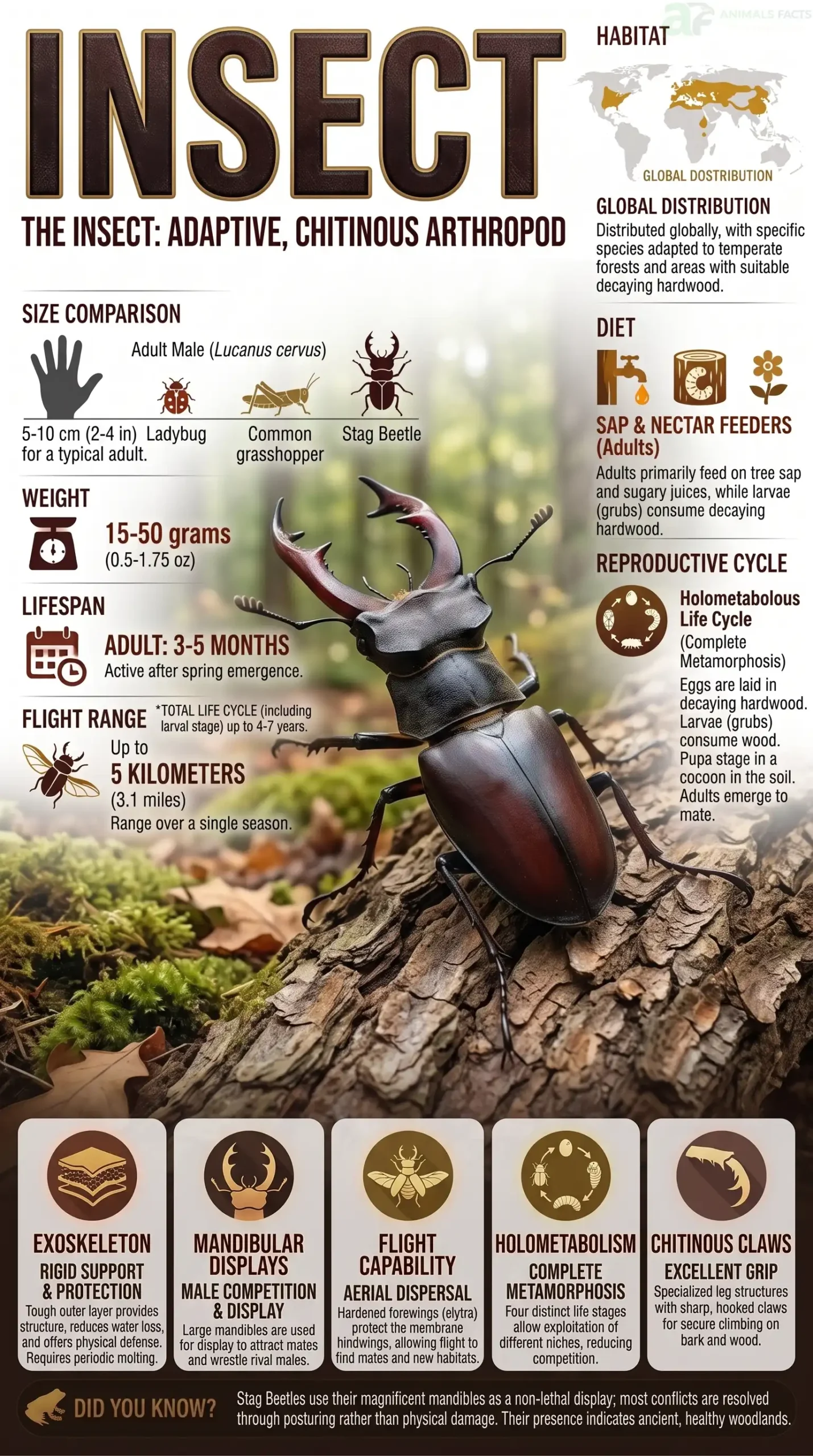
Complete Metamorphosis (Holometabolism): The most evolutionarily advanced and species-rich reproductive strategy. Involves four distinct stages: egg → larva → pupa → adult. The larva and adult are morphologically, ecologically, and dietarily completely different. Used by beetles, butterflies, moths, flies, bees, wasps, ants, and fleas — representing approximately 85% of all insect species.
Incomplete Metamorphosis (Hemimetabolism): Involves three stages: egg → nymph → adult. Nymphs resemble small wingless versions of adults and gradually develop through a series of molts. Used by grasshoppers, crickets, cockroaches, dragonflies, and true bugs.
No Metamorphosis (Ametabolism): The most primitive strategy — used only by silverfish and springtails. Young hatch as miniature versions of adults and grow through molts without any structural transformation.
Extraordinary Reproductive Strategies
Eusociality: The most complex social reproductive system in the animal kingdom. In honeybee, ant, and termite colonies, a single queen monopolizes reproduction while thousands or millions of sterile workers perform all colony maintenance tasks. Worker bees sacrifice their own reproductive potential entirely in service of the colony — a strategy explained by kin selection (workers share more genes with the queen’s offspring than they would with their own).
Parthenogenesis: Several insect species reproduce without males — female aphids can produce clones of themselves asexually during summer months, generating dozens of new aphids per day per individual, building populations of millions within weeks.
Mass synchronized emergence: The 17-year Cicada (Magicicada species) spends 13 or 17 years as an underground nymph, then emerges in a single massive synchronized swarm across an entire region — producing such overwhelming numbers that predators cannot possibly consume them all, ensuring a proportion survive to mate and lay eggs regardless of predation pressure. This strategy is called predator satiation.
The waggle dance as reproductive communication: In honeybee colonies, the precise location of food sources — which directly determines colony survival and reproductive success — is communicated through the waggle dance, allowing the colony as a whole to make informed decisions about resource allocation without any central command.
Insects Lifespan Comparison Table
| Species | Larval/Immature Stage | Adult Stage | Total Lifespan |
|---|---|---|---|
| Mayfly | 1–3 years (aquatic nymph) | A few hours to 24 hours | ~1–3 years total |
| Monarch Butterfly | 2 weeks (caterpillar) | 2–6 weeks (non-migratory); 8–9 months (migratory generation) | ~2 months to 9 months |
| Honeybee Worker | 21 days | 6 weeks (summer); 4–6 months (winter) | ~3–7 months |
| Honeybee Queen | 16 days | 3–5 years | Up to 5 years |
| Dragonfly | 1–5 years (aquatic larva) | 2 weeks to 6 months | 1–5 years total |
| 17-Year Cicada | 17 years (underground nymph) | 2–6 weeks | ~17 years total |
| Termite Queen | Variable | 20–50 years | Up to 50 years |
| Ant Queen | Variable | 15–30+ years | Up to 30+ years |
9. Social Behavior & Communication
Among the most intellectually remarkable aspects of insect biology is the extraordinary social complexity achieved by certain groups — particularly the eusocial insects: bees, wasps, ants, and termites. These species have evolved forms of collective organization that rival and in some respects exceed human societies in their structural sophistication.
Eusocial Insect Societies
Honeybee colonies are perhaps the most studied social insect system in the world. A typical colony contains 50,000–80,000 workers — all sterile females — serving a single reproductive queen. Workers perform precisely age-determined roles: newly emerged bees clean cells; slightly older bees nurse larvae; then bees progress through roles as wax producers, food processors, and finally foragers. The entire colony behaves as a superorganism — collectively making decisions, regulating temperature, defending the nest, and allocating labor with extraordinary precision.
Ant colonies demonstrate even greater diversity of social organization. Army Ants form nomadic supercolonies of up to 700,000 individuals, building temporary nest structures from their own bodies (called bivouacs) and conducting coordinated mass-raids that overwhelm any prey in their path. Leafcutter Ants maintain underground fungus gardens, waste-disposal systems, and ventilation networks in colonies that can contain 8 million individuals — making them one of the most architecturally sophisticated builders in the non-human world.
Termite colonies build the most massive structures of any non-human animal — mounds that maintain near-constant internal temperature and humidity through elaborate ventilation systems that remain engineering marvels to this day.
Communication Methods
Chemical communication (Pheromones): The primary communication channel for most insect societies. Ants lay chemical trails to food sources that other workers follow; alarm pheromones trigger instant defensive responses across the colony; queen pheromones suppress worker reproduction; death pheromones trigger removal of dead colony members. The complexity of pheromone-based communication in ant societies encompasses dozens of distinct chemical signals.
The Waggle Dance: The Honeybee waggle dance is the most sophisticated non-human symbolic communication system ever documented. A forager bee returning with information about a food source performs a figure-eight dance on the honeycomb: the angle of the straight run relative to vertical encodes the direction of the food relative to the sun; the duration of the waggle encodes the distance; and the vigor of the dance communicates the quality of the food source. Other workers read this information and fly directly to the indicated location — sometimes kilometers away.
Acoustic communication: Many insects communicate through sound — either produced by specialized structures or through substrate vibration. Crickets produce their calls by stridulation — rubbing a file structure on one wing against a scraper on the other. Cicadas produce the loudest calls of any insect — up to 120 decibels — using specialized resonating structures called tymbals in their abdomen.
Visual signals: Fireflies use species-specific bioluminescent flash patterns for mate recognition — each species has a distinct flash sequence that allows individuals to identify appropriate mates in darkness. Butterflies use wing patterns for species recognition, mate assessment, and warning signaling.
Did You Know? Research has shown that Bumblebee colonies learn new behaviors through social transmission — a discovery published in 2022 demonstrated that bumblebees could learn a novel puzzle-box technique by watching a trained demonstrator bee, then teach it to other bees who had never seen it. This represents one of the clearest documented cases of cultural learning — the transmission of new behaviors through observation — in any invertebrate animal.
10. Predators & Defense Mechanisms
Despite being among the most numerous animals on Earth, insects face predation from an extraordinary range of animals — and have evolved correspondingly diverse and inventive defensive strategies in response.
Common Insect Predators
Birds: The single most important predator class for most insect species. Virtually every bird species consumes insects at some stage of its life; many are almost exclusively insectivorous. A single pair of nesting Blue Tits may bring 10,000 caterpillars to their chicks during a single breeding season.
Spiders: Among the most abundant insect predators globally — particularly important predators of flying insects captured in webs and of ground-dwelling insects taken by hunting spiders.
Other insects: Predatory insects — dragonflies, praying mantises, assassin bugs, tiger beetles, ground beetles, and predatory wasps — collectively consume astronomical quantities of other insects.
Bats: The primary nocturnal aerial insect predators. A single Little Brown Bat can consume up to 600 mosquitoes per hour. Bat colonies of millions of individuals — such as the Brazilian Free-tailed Bat colony at Bracken Cave, Texas (containing approximately 15 million bats) — consume thousands of tonnes of insects annually.
Amphibians and Reptiles: Frogs, toads, lizards, and chameleons depend heavily on insects as their primary food source.
Mammals: Anteaters, aardvarks, pangolins, shrews, moles, and many bat species are specialized insectivores. Aardvarks and Giant Anteaters can consume up to 35,000 ants or termites per day.
Defense Mechanisms
Camouflage: The most widespread insect defense. The Stick Insect resembles twigs so convincingly that birds frequently perch beside them without detecting them. Leaf Insects (Phyllium species) replicate leaf venation, color variation, and even simulated insect bite damage with extraordinary fidelity.
Warning coloration (Aposematism): Monarch Butterflies, Poison Arrow Beetles, Wasps, and thousands of other toxic or venomous species display vivid color patterns that predators learn to associate with unpleasant or dangerous consequences.
Mimicry: Harmless species that mimic dangerous or toxic ones. Hoverflies — which are completely harmless — mimic the yellow-and-black banding of wasps and bees with remarkable accuracy. The Orchid Mantis mimics a flower rather than a predator, using its appearance to ambush pollinating insects that approach thinking it is a flower.
Chemical defense: The Bombardier Beetle fires boiling caustic spray. The Monarch Butterfly stores cardenolide toxins from milkweed in its wing tissues — making it extremely unpalatable to birds. The Fire Ant uses formic acid in its venom. Some beetles release cyanide compounds when threatened.
Physical defense: Stag Beetle males have enormous mandibles used in combat. Rhinoceros Beetles have horns used for wrestling rivals. Many ground beetles have heavily armored exoskeletons resistant to bird beaks.
Startle displays: Several moth species — including the Io Moth and various Saturniid Moths — suddenly reveal large eyespot patterns on their hindwings when threatened, startling predators who mistake them for the eyes of a larger animal.
11. Insect Facts for Kids
Hey kids — did you know that insects are the most successful animals that have ever lived on Earth? They have been here for over 400 million years, they outnumber every other animal by billions to one, and some of them can do things that seem absolutely impossible!
Here are some truly amazing insect facts for kids:
- There are so many insects on Earth that if you counted one every second without stopping, it would take you 317 million years to count them all!
- The Flea can jump so high that if a human could jump the same way relative to body size, we could leap over a 120-story skyscraper in a single bound!
- Dragonflies can see in almost every direction at once with their enormous eyes — and they catch 95 out of every 100 insects they chase. They are better at hunting than lions or sharks!
- Fireflies make light from their bodies using a chemical reaction — and they waste almost no energy at all doing it. Scientists are studying them to make better, more efficient light bulbs!
- Some caterpillars completely dissolve inside their chrysalis during metamorphosis — the caterpillar’s body turns into a kind of biological soup, then reorganizes entirely into a butterfly!
- The Monarch Butterfly flies all the way from Canada to Mexico — a journey of up to 4,800 kilometers — every single year. And the amazing part? No butterfly has ever made that journey before, yet they all know exactly where to go!
- A Queen Termite can lay 30,000 eggs in a single day for decades — she might produce over 100 million babies in her lifetime!
- Ants can lift objects 50 times heavier than themselves — if you could do that, you could lift a small car with your bare hands!
Did You Know? Honeybees make decisions democratically. When a colony needs to find a new home, scout bees fly out to search for potential nest sites. They return and perform waggle dances to “vote” for their preferred location — the scout whose dance lasts longest and attracts the most followers wins, and the whole colony flies to that location. Scientists have called it one of the clearest examples of democratic decision-making in the animal kingdom!
12. Relationship with Humans
No animal group has shaped the course of human civilization — through both its services and its threats — more profoundly or more continuously than insects.
Insects That Sustain Humanity
Pollination: The single most valuable service insects provide to humanity. Approximately 75% of flowering plant species depend on animal pollination — the vast majority provided by insects. In agricultural terms, insect pollinators contribute an estimated $235–577 billion in annual economic value to global food production. The crops most dependent on insect pollination include almonds, apples, berries, melons, squash, coffee, and chocolate — foods central to human diets and economies worldwide.
Silk production: The Silkworm (Bombyx mori) — a species so thoroughly domesticated over approximately 5,000 years that it can no longer survive in the wild — produces silk that has been one of humanity’s most prized luxury materials throughout recorded history. China’s ancient Silk Road trade network — one of the most transformative commercial routes in history — was built on the foundation of this single insect species.
Honey: Honeybees produce honey that has been harvested by humans for at least 8,000 years (the oldest known evidence of honey collection comes from cave paintings in Spain). Honey was among the most valuable trade goods in the ancient world, used as food, medicine, and preservative — and it remains commercially important globally today.
Shellac: The Lac Bug (Kerria lacca) of South Asia produces a resinous secretion called shellac that was the primary ingredient in the world’s first plastics and remains commercially used in food glazes, wood polish, and pharmaceutical coatings.
Biological pest control: Predatory insects — particularly parasitic wasps, ladybugs, ground beetles, and lacewings — perform natural pest control services worth an estimated $4.5 billion annually to US agriculture alone.
Insects That Threaten Humanity
Mosquitoes – the deadliest animals on Earth: Female Anopheles mosquitoes transmit malaria — which killed approximately 608,000 people in 2022 according to the WHO, the vast majority of them children under five in sub-Saharan Africa. Mosquitoes also transmit dengue fever, yellow fever, Zika virus, West Nile virus, and numerous other diseases — making them collectively responsible for more human deaths than any other animal by an enormous margin.
Locusts – the oldest agricultural threat: Desert Locust swarms have devastated human agriculture for as long as recorded history — referenced in ancient Egyptian texts, the Bible, the Quran, and the historical records of virtually every civilization in Africa, the Middle East, and Asia. The 2019–2021 outbreak across East Africa, the Middle East, and South Asia was described by the UN as “the worst locust crisis in 70 years”, threatening the food security of over 35 million people.
The Tsetse Fly – Africa’s development barrier: The Tsetse Fly transmits African trypanosomiasis (sleeping sickness) in humans and nagana in livestock — historically rendering vast areas of sub-Saharan Africa inaccessible for both agriculture and human settlement. The fly’s distribution closely correlates with areas of African economic underdevelopment – its impact on African history rivals that of any political or military factor.
13. Insects Conservation Status & Threats
The global insect decline is one of the most alarming and most rapidly developing conservation crises of the 21st century. Multiple large-scale studies published since 2017 have documented insect population losses so dramatic that scientists have coined the term “insect apocalypse” to describe what is occurring.
Global Conservation Data (2026)
| IUCN Category | Number of Insect Species |
|---|---|
| Critically Endangered | 400+ |
| Endangered | 600+ |
| Vulnerable | 1,000+ |
| Near Threatened | 500+ |
| Data Deficient | Tens of thousands (most insects never assessed) |
| Estimated species declining | 40% of all insect species |
| Estimated biomass loss (Europe) | 75% decline in flying insect biomass over 27 years (2017 Krefeld study) |
Major Threats in Detail
Habitat Loss & Agricultural Intensification: The transformation of natural habitats to intensive agriculture — through destruction of hedgerows, wildflower meadows, woodland edges, and wetlands — has removed the food sources, nesting sites, and overwintering habitat that insects depend on. Intensive monoculture farming provides no food value for most insect species. Researchers have identified agricultural intensification as the single greatest driver of insect decline worldwide.
Pesticides: The introduction of neonicotinoid insecticides — systemic pesticides that permeate all plant tissues including pollen and nectar — has been catastrophic for pollinators. Neonicotinoids impair bee navigation, memory, reproduction, and immunity at concentrations found routinely in agricultural environments. Multiple countries have introduced partial or complete bans on neonicotinoids, though their global use continues. Herbicides compound the problem by eliminating the wildflowers that insect pollinators depend on.
Light Pollution: Artificial night lighting is a major but often overlooked threat to insects. Moths, beetles, fireflies, and many other nocturnal insects are drawn to artificial lights — spending energy, failing to mate, being predated by light-hunting bats, and failing to perform normal ecological functions. Light pollution has increased by approximately 2% annually for the past several decades.
Climate Change: Shifting seasons, changed precipitation patterns, and rising temperatures disrupt the synchronized timing between insects and their food plants and between insects and the birds, bats, and other predators that depend on them. Many spring-emerging insects are now emerging weeks earlier than they did 50 years ago — but the birds that depend on the caterpillar peak to feed their chicks are not adjusting at the same rate, creating a dangerous phenological mismatch.
Invasive Species: Introduced insects — including the Asian Hornet (Vespa velutina) spreading across Europe, the Brown Marmorated Stink Bug invading North America, and various ant species spreading globally — devastate native insect communities wherever they become established.
Did You Know? A landmark 2017 study conducted by the Entomological Society Krefeld in Germany — monitoring flying insect biomass over 27 years across multiple nature reserves — found a 75–82% decline in total flying insect biomass during that period. Even in protected nature reserves, insect abundance was collapsing. The study triggered worldwide scientific alarm and launched what has become known as the global “insect apocalypse” debate.

14. Famous Insects
The Honeybee – Civilization’s Partner
No single insect species has had a greater positive impact on human civilization than the Western Honeybee (Apis mellifera). For at least 8,000 years, humans have kept bees for honey, beeswax, and royal jelly — and for the past 10,000 years of settled agriculture, honeybees have been the primary pollinators of human food crops. Albert Einstein is frequently (though probably incorrectly) quoted as saying: “If the bee disappeared from the surface of the Earth, man would have no more than four years to live.” Whether Einstein said it or not, the sentiment captures a scientific truth — humanity’s food system depends profoundly on bee pollination.
Archy – The Insect Poet
Archy was a fictional cockroach created by American humorist and journalist Don Marquis in 1916. Archy was a free-verse poet in a previous life who had been reincarnated as a cockroach and communicated by hurling himself headfirst onto the keys of Marquis’s typewriter at night. The Archy and Mehitabel stories — featuring Archy and his friend Mehitabel the alley cat — became enormously popular in American culture and remain in print today. Archy’s cockroach perspective on humanity remains among the most beloved insect characters in literary history.
The Monarch Butterfly – Conservation Icon
The Monarch Butterfly (Danaus plexippus) has become the global symbol of insect conservation. Its extraordinary annual migration from Canada and the United States to a specific mountain forest in Michoacán, Mexico — a journey of up to 4,800 kilometers undertaken by insects that have never made the trip before — is one of the greatest natural wonders of the insect world. The 80% decline in the North American Monarch population between 1996 and 2020 shocked the conservation community and triggered major public awareness campaigns, citizen science programs, and habitat restoration initiatives across North America.
The Desert Locust of the 2019-2021 Outbreak
The Desert Locust (Schistocerca gregaria) swarms that swept across East Africa, the Arabian Peninsula, and South Asia between 2019 and 2021 became the most documented and most widely reported locust crisis in the modern era. Swarms containing up to 80 billion insects per swarm stripped entire landscapes of vegetation — threatening the food security of over 35 million people in Somalia, Kenya, Ethiopia, Yemen, India, and Pakistan. The crisis highlighted the terrifying power of insect population dynamics and the inadequacy of current locust monitoring and response systems.
The Glow-worm of Waitomo – New Zealand’s Living Ceiling
The New Zealand Glow-worm (Arachnocampa luminosa) is not technically an insect but a fungus gnat larva that produces bioluminescent light to attract and trap small flying insects in sticky threads. The Waitomo Glowworm Caves of New Zealand — where thousands of these larvae stud the cave ceiling like a living galaxy — have become one of the country’s most iconic tourist attractions, visited by hundreds of thousands of people annually.
15. Role in Ecosystem & Food Chain
Insects are not merely participants in Earth’s ecosystems — they are the foundational layer upon which the structure of most terrestrial and freshwater ecosystems rests. Remove insects from an ecosystem, and the entire edifice collapses.
Pollination – The Foundation of Plant Diversity
Approximately 75% of the world’s flowering plant species — and 35% of global food crop production — depend on insect pollination. Without insect pollinators, most flowering plants cannot reproduce. Without flowering plants, the structure of forests, grasslands, and meadows transforms radically — impacting every animal that depends on those habitats. The estimated economic value of insect pollination services to global agriculture alone exceeds $500 billion annually.
The relationship between flowering plants and their insect pollinators is one of the most celebrated examples of co-evolution in biology — each driving the other’s diversification in an arms race of mutual adaptation spanning over 130 million years.
Decomposition – The Engine of Nutrient Cycling
Dung beetles, carrion beetles, fly larvae, and termites collectively break down dead organic material — animal dung, dead plants, animal carcasses, and wood — releasing bound nutrients back into the soil and making them available to plants and microorganisms. Dung beetles alone are estimated to save the United States cattle industry approximately $380 million annually through dung burial services that reduce parasite transmission, improve soil fertility, and decrease greenhouse gas emissions from exposed dung.
Termites are the primary decomposers of wood in tropical ecosystems — their ability to digest cellulose (the primary component of wood) through symbiotic gut microorganisms makes them ecologically irreplaceable processors of dead wood. Without termites, dead wood would accumulate indefinitely in tropical forests.
Food Web Foundation
Insects form the primary food source for an extraordinary proportion of terrestrial and freshwater animals. Every species of freshwater fish depends on aquatic insect larvae to some degree. The vast majority of songbirds feed insects to their nestlings — even seed-eating birds typically rely on caterpillars as the protein source for growing chicks. Bats, lizards, frogs, small mammals, and spiders all depend fundamentally on insects as their food base.
A 2023 study estimated that insectivorous birds consume between 400 and 500 million tonnes of insects annually worldwide — a figure that illustrates just how central insects are to the global energy budget of terrestrial ecosystems.
16. Insects Myths, Folklore & Cultural Significance
Insects have occupied a profound and diverse place in human mythology, religious belief, and cultural tradition across virtually every civilization in recorded history.
Ancient Egypt
The Scarab Beetle (Scarabaeus sacer) was one of the most sacred symbols in all of ancient Egyptian religion. The scarab’s behavior of rolling dung balls across the ground was seen as a metaphor for the sun god Khepri rolling the sun across the sky each day. Scarab amulets were placed over the hearts of mummified dead to protect them during judgment in the afterlife — making the dung beetle literally the guardian of the soul.
The Bee was associated with the pharaohs of Lower Egypt — the title “He of the Sedge and the Bee” was one of the Pharaoh’s formal names, and bee hieroglyphs accompanied royal names throughout Egyptian history.
Ancient Greece & Rome
The Cicada was a symbol of immortality in ancient Greek culture — the story of Tithonus, granted immortality but not eternal youth by the goddess Aurora, has him eventually transformed into a cicada, endlessly singing. The Greeks also associated cicadas with the Muses and with musical inspiration. Aristotle wrote extensively about bees, ants, and the social insects in his Historia Animalium — recognizing their organizational sophistication thousands of years before modern science explained it.
Chinese Culture
The Cricket has been kept as a pet for its singing in China for over 2,000 years — making it the oldest documented insect pet-keeping tradition in the world. Cricket fighting was a popular sport among Chinese aristocrats from the Tang Dynasty (618–907 CE) onward. The cricket is associated with good luck, courage, and the passage of seasons in Chinese tradition.
The Silkworm holds a central place in Chinese civilization — silk production is traditionally attributed to the legendary Empress Leizu (approximately 2700 BCE), who is said to have discovered sericulture when a silkworm cocoon fell into her tea and the silk thread began to unwind. For over 2,000 years, China maintained a strict monopoly on silk production technology — trade secrets punishable by death.
Native American Traditions
The Butterfly carries profound spiritual significance across numerous Native American traditions. For the Blackfoot people, the butterfly is the bringer of dreams — Blackfoot warriors painted butterflies on their tipis and clothing to bring restful sleep. The Hopi peoples of the American Southwest have elaborate Butterfly Dance ceremonies associated with prayers for rain and agricultural fertility.
Aztec Mythology
The Butterfly was associated with Xochiquetzal — the Aztec goddess of beauty, love, and flowers — and with the souls of fallen warriors who were believed to be reborn as butterflies and hummingbirds. The spectacular butterfly processions that accompany the arrival of Monarch Butterflies in central Mexico each autumn — coinciding with the Day of the Dead (Día de los Muertos) — are still interpreted by some indigenous Mexican communities as the returning souls of the dead.
18. Insects in Pop Culture
Insects have inspired an extraordinary range of cultural creations — from ancient mythology through to modern viral media — reflecting humanity’s long and complex relationship with the most numerous animals on Earth.
Film & Animation
“A Bug’s Life” (Pixar, 1998) — One of Pixar’s most commercially successful early films, featuring an ant colony as its central setting and bringing insect social biology to mainstream animated entertainment.
“Antz” (DreamWorks, 1998) — Released in the same year as A Bug’s Life and featuring a more adult-oriented ant colony story with significant voice talent. Sparked a wave of popular interest in ant biology.
“Bee Movie” (DreamWorks, 2007) — A culturally influential animated film featuring bee biology (with significant dramatic license) that became a major internet meme phenomenon years after its release.
“Microcosmos” (1996) — A groundbreaking French documentary filmed entirely at insect scale in a French meadow — following the daily lives of beetles, caterpillars, bees, grasshoppers, and water insects with extraordinary close-up cinematography. Considered one of the greatest nature documentaries ever made.
“The Silence of the Lambs” (1991) — The Death’s-head Hawk Moth that appears on the film’s iconic poster — and is used as a calling card by the fictional serial killer Buffalo Bill — made this moth one of the most recognized insects in cinema history.
Literature
“The Metamorphosis” (Die Verwandlung) by Franz Kafka (1915) — One of the most celebrated and analyzed works of 20th-century literature; the story of Gregor Samsa waking to find himself transformed into a giant insect (most commonly interpreted as a beetle or cockroach) remains the most famous literary use of an insect as metaphor.
“The Ants” by Bert Hölldobler and Edward O. Wilson (1990) — A Pulitzer Prize-winning scientific work that brought the extraordinary complexity of ant society to mainstream scientific and public audiences; one of the most comprehensive books on any insect group ever published.
“The Bees” by Laline Paull (2014) — A widely acclaimed literary novel narrated from the perspective of a worker honeybee; praised for the accuracy of its portrayal of hive biology alongside its narrative ambition.
Video Games & Digital Culture
“SimAnt” (Maxis, 1991) — One of the earliest and most educationally influential simulation games, based on real ant colony behavior research by E.O. Wilson; a pioneering example of insect biology reaching gaming audiences.
“Hollow Knight” (Team Cherry, 2017) — One of the most critically acclaimed indie games of the past decade; set in an underground kingdom of insects with extraordinary worldbuilding detail inspired by real insect anatomy and behavior.
19. Insect Facts vs. Common Myths
Myth: Daddy longlegs are the most venomous spiders in the world but cannot bite humans. Fact: Daddy longlegs (harvestmen) are not spiders and have no venom glands whatsoever. The cellar spider, sometimes called daddy longlegs, does produce venom but it is not exceptionally potent. This myth is entirely false on multiple levels.
Myth: Queen bees rule the hive and give orders to workers. Fact: The queen bee does not give orders to anyone. She performs essentially one function — laying eggs. Colony decisions are made collectively by workers through behavioral signals and the waggle dance. The “queen” title is misleading from a governance perspective — she is more accurately the colony’s primary reproductive individual.
Myth: Bees die after stinging. Fact: Only Honeybee workers die after stinging — because their barbed stinger becomes embedded in mammalian skin and is torn from their body when they pull away. Bumblebees, wasps, hornets, and other stinging insects can sting repeatedly without dying. Queen honeybees have smooth stingers and can sting multiple times.
Myth: Mosquitoes feed on blood for energy. Fact: Both male and female mosquitoes feed on nectar for energy. Only female mosquitoes consume blood — and only for the protein needed to develop eggs. Blood-feeding in mosquitoes is exclusively reproductive, not energetic.
Myth: Moths eat clothing. Fact: Adult moths cannot eat anything at all — many adult moth species have no functional mouthparts. It is the larvae (caterpillars) of certain moth species — particularly the Common Clothes Moth (Tineola bisselliella) — that feed on natural fiber clothing such as wool, silk, and cashmere.
Myth: Insects are simple-minded creatures with no behavioral flexibility. Fact: Insects demonstrate learning, memory, decision-making, and in social species, collective intelligence of remarkable sophistication. Honeybees learn flower patterns and colors in a single visit. Bumblebees demonstrate cultural learning. Dragonflies use predictive calculations to intercept prey. The complexity of insect behavior continues to surprise researchers.
Myth: All ants are female. Fact: Worker ants are indeed all female — but male ants (drones) do exist and are produced seasonally for mating flights. Male ants typically live only a few weeks, dying shortly after mating.
Myth: Cockroaches would survive a nuclear war when humans would not. Fact: Cockroaches are more radiation-resistant than humans — their simple cell cycle means radiation causes proportionally less damage. However, they are not nuclear-proof and would not survive a direct nuclear blast or the extreme radiation levels at the epicenter of a nuclear explosion. At the radiation levels that would kill most humans, cockroaches would also eventually die, though more slowly.
20. Best Places to See Insects in the Wild
Amazon Basin, Brazil, Peru & Ecuador
The single most biodiverse insect region on Earth. Yasuni National Park in Ecuador is believed to contain more insect species per hectare than anywhere else ever surveyed. Night walks through Amazon rainforest reveal extraordinary beetles, moths, stick insects, katydids, and leaf insects invisible during the day. The dramatic nightly swarms of insects around lights at jungle lodges alone provide astonishing diversity.
Michoacán, Mexico — Monarch Butterfly Overwintering Sites
Between November and March each year, the oyamel fir forests of the Sierra Chincua and El Rosario sanctuaries in Michoacán, Mexico host the overwintering population of the Eastern Monarch Butterfly — hundreds of millions of butterflies clustered so densely on tree branches that they bend under the weight. The sight and sound (a collective rustling described as falling rain) of this gathering is considered one of the natural wonders of the insect world.
Borneo, Malaysia & Indonesia
Home to the Giant Stick Insect (world’s longest insect), the Atlas Moth (world’s largest wing surface area), Rajah Brooke’s Birdwing Butterfly, extraordinary rhinoceros beetles, and hundreds of endemic firefly species. Firefly river tours along the Selangor River in Malaysia — where thousands of synchronized male fireflies flash in unison from riverside mangrove trees — are among the most spectacular insect displays on Earth.
Kruger National Park & Surrounding Areas, South Africa
The best location in the world for observing Dung Beetle behavior — one of the most ecologically important and behaviorally fascinating insect groups on Earth. The park also supports extraordinary termite mound diversity, significant locust activity in drought years, and remarkable butterfly and moth diversity in its diverse habitats.
The Camargue, France – Dragonfly Paradise
The vast wetlands of the Camargue in southern France are among Europe’s most important dragonfly and damselfly habitats — supporting over 50 species of odonates in peak summer. June through August provides the best conditions for observing aerial hunting dragonflies in extraordinary numbers over open water.
Waitomo Caves, New Zealand
Home to the famous Glowworm Caves — where the bioluminescent larvae of Arachnocampa luminosa stud the cave ceiling in their thousands, creating one of the most otherworldly natural light displays on Earth. Boat tours beneath the living galaxy of glowworm light are one of New Zealand’s signature wildlife experiences.
Great Smoky Mountains National Park, USA
Home to the spectacular Synchronous Firefly (Photinus carolinus) — one of only a handful of firefly species in North America that synchronize their flashing. For approximately two weeks each June, thousands of male fireflies flash in perfectly synchronized waves across the dark forest floor — one of the most remarkable bioluminescent displays in the world and the subject of a highly competitive annual lottery for viewing permits.
21. Top Documentaries & Books
Must-Watch Documentaries
“Microcosmos” (1996, Jacques Perrin & Claude Nuridsany) — Filmed entirely at ground level in a French meadow with revolutionary macro-cinematography; one of the greatest and most artistically extraordinary nature documentaries ever made. Every insect sequence is revelatory.
“Planet Earth II — Grasslands” (BBC, 2016) — Includes extraordinary sequences of locust swarms and their ecological impacts; the wider series features numerous insect sequences of remarkable quality.
“The Love Affair of the Orchid” (various networks) — Documents the extraordinary co-evolutionary relationship between orchid species and their insect pollinators — among the most complex and beautiful examples of co-evolution in the natural world.
“Dancing with Bees” (various networks) — A moving documentary about bumblebee behavior and the insect decline crisis; features remarkable close-up footage of bee foraging and colony behavior.
“Wings of Life” (Disney Nature / Louie Schwartzberg, 2013) — A visually stunning documentary narrated by Meryl Streep, focused on the relationship between pollinators (bees, butterflies, hummingbirds) and the flowers that depend on them.
Essential Books
“The Ants” by Bert Hölldobler & Edward O. Wilson (1990, Pulitzer Prize) — The most comprehensive scientific work on ant biology ever published for a general audience; essential reading for anyone serious about insect social behavior.
“The Bees” by Laline Paull (2014) — Acclaimed literary novel narrated from a worker bee’s perspective; beautifully accurate about hive biology while being genuinely compelling as fiction.
“The Insect Crisis” by Oliver Milman (2022) — The most thorough and up-to-date popular science account of the global insect decline emergency; essential reading for anyone concerned about conservation.
“The Life of the Bee” by Maurice Maeterlinck (1901) — A classic of natural history writing that remains one of the most beautiful books ever written about a single insect species; Nobel Prize laureate Maeterlinck’s meditation on honeybee society anticipates many findings of modern behavioral biology.
“An Introduction to the Study of Insects” by Borror, Triplehorn & Johnson — The definitive English-language entomology reference for students and researchers; covers identification, biology, and ecology of all major insect orders.
22. Comparison of Major Insect Groups
| Feature | Beetles (Coleoptera) | Butterflies & Moths (Lepidoptera) | Bees, Wasps & Ants (Hymenoptera) | Flies (Diptera) | Dragonflies (Odonata) |
|---|---|---|---|---|---|
| Known Species | ~400,000 | ~180,000 | ~150,000 | ~125,000 | ~6,000 |
| Wings | 2 (1 pair hardened elytra) | 4 (scaly) | 4 (membranous) | 2 (1 pair; halteres) | 4 (membranous, unlinked) |
| Diet (adults) | Varied — plants, fungi, carrion, predatory | Nectar, fruit | Nectar, pollen, prey | Varied — nectar, blood, carrion, dung | Predatory — insects |
| Metamorphosis | Complete | Complete | Complete | Complete | Incomplete |
| Lifespan | Days to years | Weeks to months | Weeks to years (queen) | Days to weeks | Weeks to months (adults) |
| Conservation | Many threatened; major declines | Monarch — threatened; many declining | Bees — major crisis globally | Mixed | Many threatened; wetland loss |
| Ecological Role | Decomposer, pollinator, predator | Pollinator, food source | Pollinator, predator, decomposer | Pollinator, decomposer, disease vector | Apex aerial predator of insects |
| Unique Feature | Most species-rich order; armored wings | Metamorphosis; wing scales; migration | Eusociality; waggle dance; venom | Halteres; medical importance; speed | 95% hunting success rate; 360° vision |
23. How You Can Help
The insect decline crisis is real, deeply serious, and accelerating — but it is also uniquely reversible through individual action, because insect populations can recover quickly when conditions improve. Here is what every person can do.
Support These Organizations
Xerces Society for Invertebrate Conservation (xerces.org) — The leading North American organization dedicated to insect and invertebrate conservation; runs pollinator habitat programs, citizen science, and policy advocacy.
Butterfly Conservation (butterfly-conservation.org) — UK-based charity focused on protecting butterflies, moths, and their habitats through research, habitat management, and citizen science.
Bumblebee Conservation Trust (bumblebeeconservation.org) — Dedicated specifically to the conservation of declining bumblebee species through habitat creation, research, and public engagement.
Buglife (buglife.org.uk) — UK charity dedicated to the conservation of all invertebrates; campaigns against pesticide use and habitat loss.
The Pollinator Partnership (pollinator.org) — International organization focused on protecting pollinators through education, research, and habitat programs across North America.
Practical Actions You Can Take Today
Plant for pollinators. Growing native wildflowers in your garden, window box, or balcony provides nectar and pollen for bees, butterflies, and hoverflies. Even a small patch of lavender, borage, foxglove, or ox-eye daisies can support dozens of insect species. Avoid hybrid varieties with double flowers — they typically produce little or no pollen or nectar.
Eliminate or reduce pesticides. Pesticides — particularly neonicotinoids and broad-spectrum insecticides — kill insects indiscriminately. Switching to organic gardening methods removes one of the most direct threats to local insect populations.
Create insect habitats. Install an insect hotel (a bundle of hollow stems and drilled wood blocks) to provide nesting habitat for solitary bees. Leave areas of bare soil for ground-nesting bees. Allow part of your lawn to grow longer — longer grass supports significantly more insect life than a closely mown lawn.
Reduce outdoor lighting. Turning off unnecessary outdoor lights or switching to amber-spectrum LEDs (which are less attractive to night-flying insects than blue-white lights) can significantly reduce light pollution impacts on moths, beetles, and other nocturnal insects.
Participate in citizen science. iNaturalist (inaturalist.org), Great Sunflower Project (greatsunflower.org), UK Butterfly Monitoring Scheme, and Bumble Bee Watch all welcome insect observations from members of the public — contributing directly to global insect population monitoring.
Buy organic and local food. Organic farming eliminates synthetic pesticide use and typically maintains more habitat diversity — supporting significantly higher insect diversity. Local and seasonal food purchasing reduces the agricultural footprint associated with intensive global food supply chains.
Did You Know? The Great British Bee Count — a UK citizen science initiative — has collected over 3 million bee and pollinator sightings from members of the public since its launch. This data has directly influenced national pollinator conservation policy and identified key habitat corridors for urgent protection. Citizen science programs make every person with a smartphone a meaningful contributor to insect conservation science.
24. Frequently Asked Questions About Insects
Q1: How many insect species exist on Earth?
As of 2026, scientists have formally described approximately 1 million insect species — but the true total is estimated at between 5 and 10 million species, the vast majority of which have never been formally described. Insects represent approximately 80% of all known animal species. New species are discovered at a rate of several thousand per year, with tropical forests producing the greatest number of new discoveries.
Q2: What makes an animal an insect?
All insects share three definitive characteristics: three body segments (head, thorax, abdomen); six legs (all attached to the thorax); and one pair of antennae. Most adult insects also have wings. Insects belong to the class Insecta within the phylum Arthropoda — they are related to spiders, crabs, and centipedes but are distinguished from all of these by their six legs and three-part body.
Q3: Are insects declining globally?
Yes — alarmingly so. Multiple large-scale studies published since 2017 have documented dramatic insect population declines across Europe and North America. A landmark 2017 German study found a 75–80% decline in flying insect biomass over 27 years even in protected nature reserves. A 2019 global review estimated that 40% of all insect species are declining, with one-third threatened with extinction. The primary drivers are habitat loss, pesticide use, climate change, light pollution, and invasive species.
Q4: What is the most dangerous insect to humans?
The Mosquito — specifically female Anopheles mosquitoes transmitting malaria and other disease-carrying mosquito species — is by an enormous margin the most dangerous insect to humans. Mosquito-transmitted diseases kill approximately 700,000–1,000,000 people annually, mostly from malaria in sub-Saharan Africa. For comparison, all other dangerous insects combined — including bees, wasps, hornets, and fire ants — cause fewer than 100 human deaths annually in most years in most countries.
Q5: Why are insects so important to ecosystems?
Insects perform four essential ecological functions: pollination (fertilizing approximately 75% of flowering plant species); decomposition (breaking down dead organic matter and recycling nutrients); food web support (forming the primary food source for most birds, freshwater fish, amphibians, reptiles, and small mammals); and pest control (predatory insects keeping herbivore populations in check). Remove insects and virtually every terrestrial and freshwater ecosystem collapses within years.
Q6: What is the largest insect in the world?
The answer depends on the measurement used. The Goliath Beetle (Goliathus goliatus) of Central Africa is the heaviest insect — adult males weigh up to 100 grams and measure up to 11 cm in length. The Giant Stick Insect (Phobaeticus chani) of Borneo is the longest — reaching 35.7 cm in total length with legs extended. The White Witch Moth (Thysania agrippina) has the greatest wingspan — up to 30 cm.
Q7: How long do insects live?
Lifespans vary enormously by species. Mayfly adults live only a few hours — the shortest adult lifespan of any animal. Worker bees live 6 weeks in summer. Monarch Butterflies of the migratory generation live 8–9 months. Ant queens and Termite queens can live for 30–50 years — the longest confirmed lifespans of any insect. The 17-year Cicada spends 17 years as an underground nymph, making it one of the longest-lived insects overall despite its brief adult stage.
Q8: Can insects feel pain?
This remains one of the most actively debated questions in insect biology. Insects do possess nociceptors — sensory neurons that detect damaging stimuli and trigger avoidance behaviors. Research published in recent years suggests that some insects — particularly fruit flies — may experience something analogous to chronic pain after injury, modifying their behavior in ways that go beyond simple reflexive avoidance. However, whether this constitutes conscious pain as experienced by vertebrates remains genuinely uncertain and scientifically contested.
Q9: Are all insects harmful?
No — the vast majority of insect species provide profound ecological benefits. Of the approximately 1 million described species, only a few hundred are considered significant agricultural pests, and fewer still are vectors of human disease. The overwhelming majority of insects — pollinators, decomposers, predatory species, and simply ecologically neutral species — are either beneficial or ecologically neutral to human interests. The cultural tendency to regard all insects as pests is one of the major factors contributing to their ongoing decline.
Q10: How can I help protect insects near my home?
The most impactful individual actions are: planting native wildflowers to provide nectar and pollen; eliminating pesticide use in your garden; creating insect habitat through insect hotels, bare soil patches, and longer grass areas; reducing outdoor lighting to protect nocturnal insects; participating in citizen science programs like iNaturalist or Bumble Bee Watch; and supporting conservation organizations such as the Xerces Society, Buglife, or Butterfly Conservation through membership or donation.
25. Sources & References
Research Sources
- Wikipedia — Class Insecta and individual species articles
- IUCN Red List — iucnredlist.org
- Xerces Society — xerces.org
- Butterfly Conservation — butterfly-conservation.org
- Bumblebee Conservation Trust — bumblebeeconservation.org
- National Geographic — nationalgeographic.com
- Smithsonian Institution — si.edu
- Encyclopaedia Britannica — britannica.com
- BBC Wildlife — bbc.co.uk
- Live Science — livescience.com
- Entomological Society of America — entsoc.org
- iNaturalist — inaturalist.org
- WWF — wwf.org
- Hallmann et al. (2017) — “More than 75 percent decline over 27 years in total flying insect biomass in protected areas” — PLOS ONE
- Sánchez-Bayo & Wyckhuys (2019) — “Worldwide decline of the entomofauna: A review of its drivers” — Biological Conservation
- Hölldobler, Bert & Wilson, Edward O. — “The Ants” (1990)
- Milman, Oliver — “The Insect Crisis” (2022)