
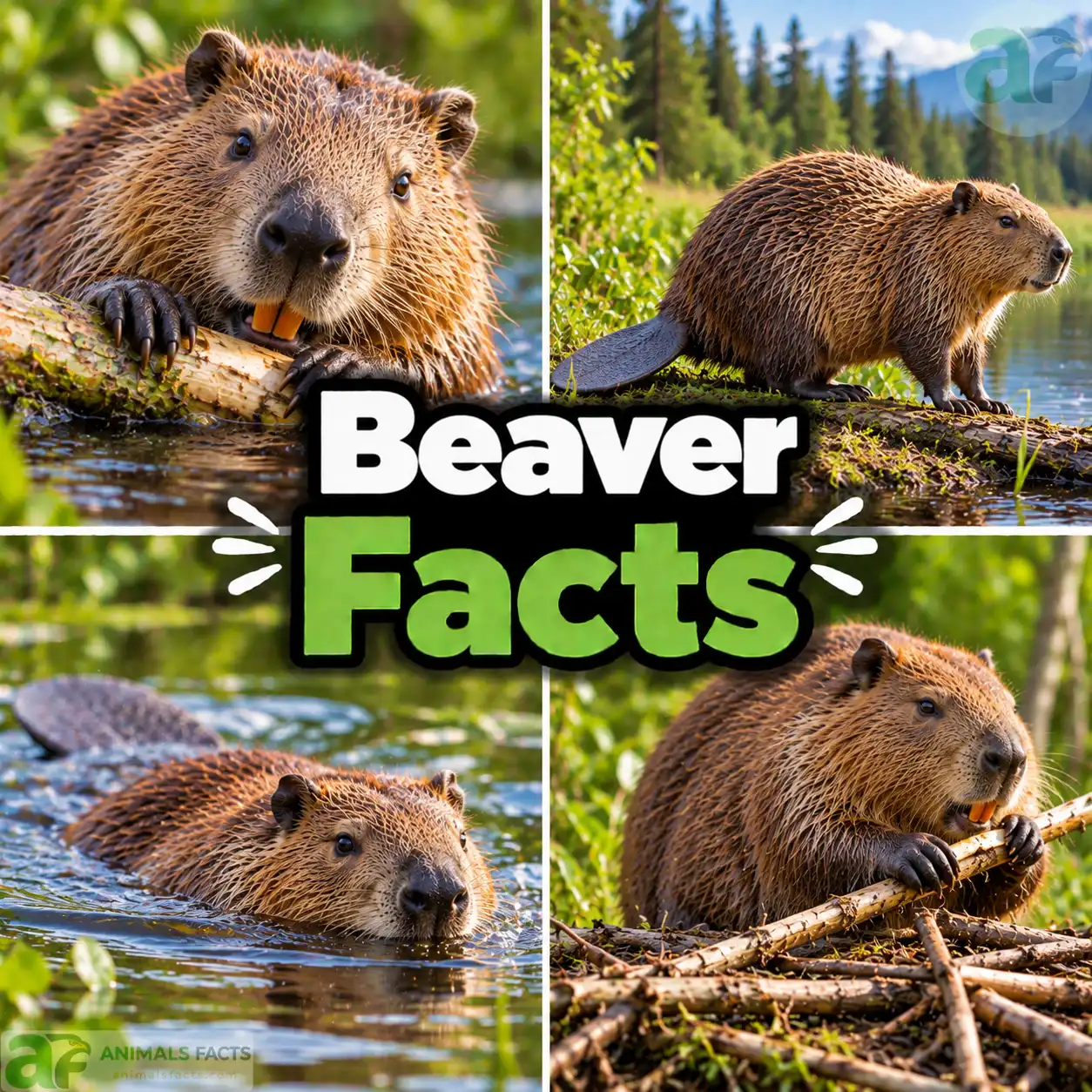
Beaver Facts (Nature’s Greatest Engineer)
| Feature | Details |
|---|---|
| Scientific Names | North American Beaver: Castor canadensis; Eurasian Beaver: Castor fiber |
| Common Names | Beaver, North American Beaver, Canadian Beaver, Eurasian Beaver, European Beaver |
| Kingdom | Animalia |
| Phylum | Chordata |
| Class | Mammalia |
| Order | Rodentia |
| Family | Castoridae |
| Genus | Castor |
| Habitat | Freshwater streams, rivers, lakes, and ponds with adjacent woodland — across North America and Eurasia |
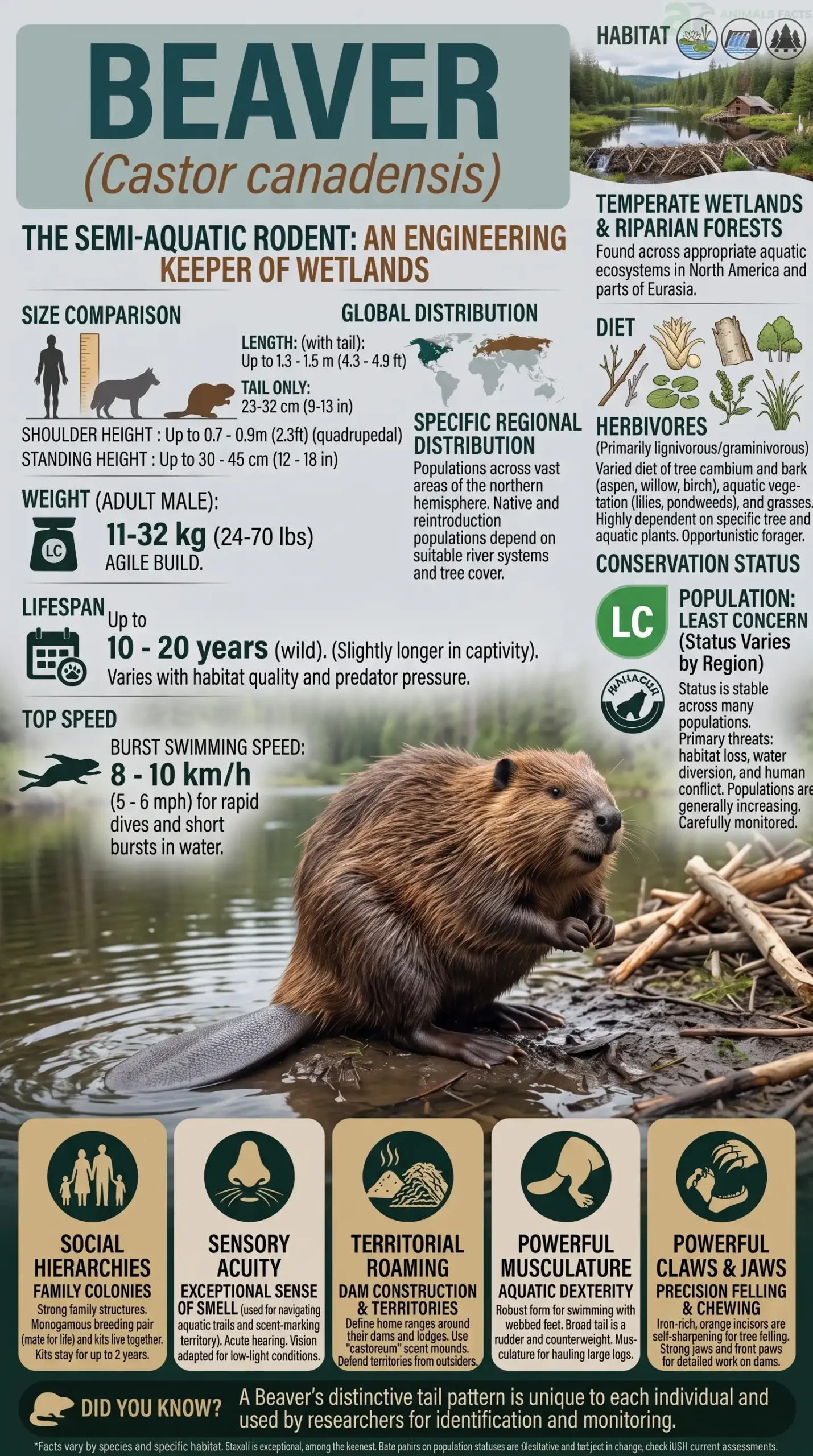
| Lifespan | 10–15 years in the wild; up to 24 years in captivity |
| Diet | Herbivore — bark (primary), leaves, roots, aquatic plants |
| Weight | 16–32 kg — second largest rodent in the world after the capybara |
| Body Length | 74–100 cm (body); tail adds 25–50 cm |
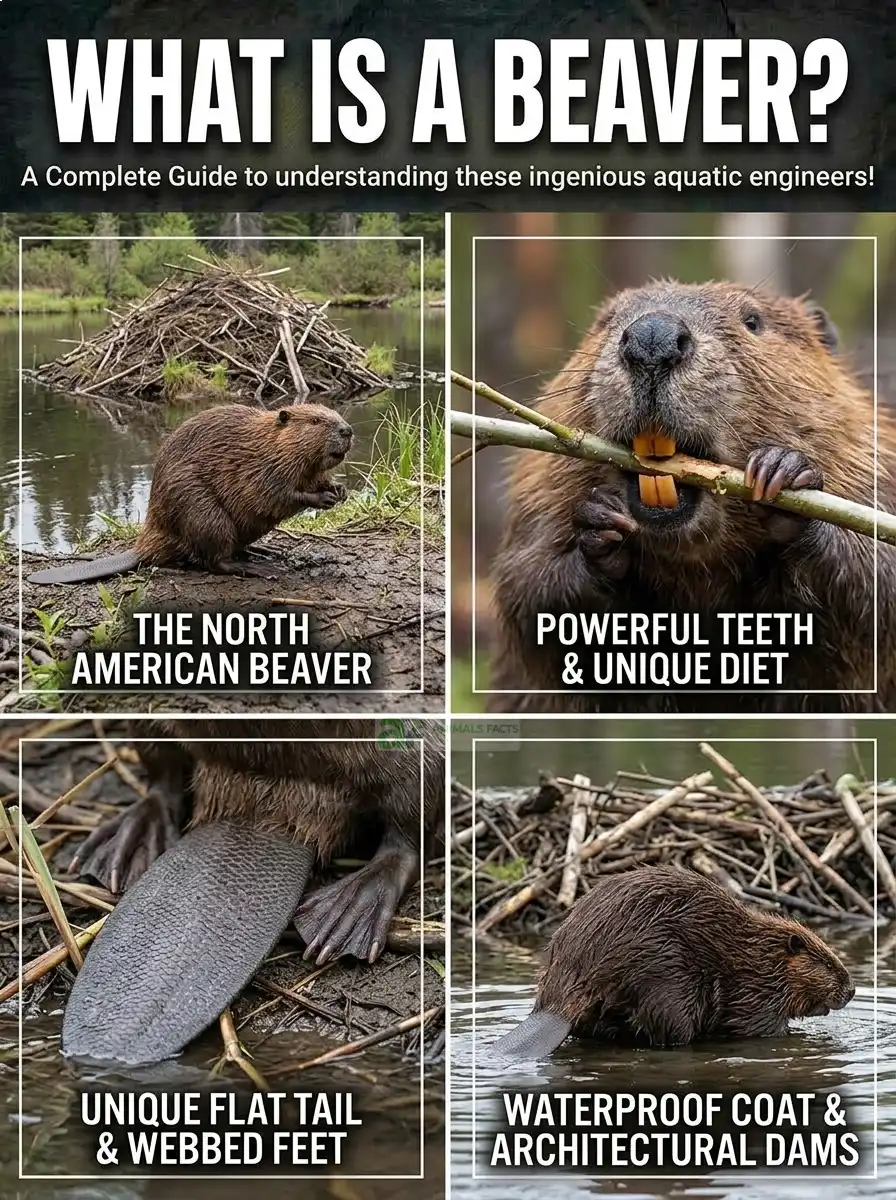
| Tail | Distinctive paddle-shaped, scaly tail — unique among rodents |
| Conservation Status | Least Concern (North American Beaver); Least Concern (Eurasian Beaver — recovered from near-extinction) |
| North American Population | Estimated ~10–15 million individuals — recovered from near-extinction |
| Eurasian Population | Estimated ~1.5–2 million individuals — remarkable recovery from ~1,200 individuals in early 20th century |
| Unique Feature | Only rodent that substantially modifies its own habitat through dam and lodge construction; second largest rodent in the world; one of the most important keystone species in temperate freshwater ecosystems; largest dams can be seen from space |
 1. Introduction: What is a Beaver?
It has been building dams for millions of years — engineering waterways, creating wetlands, and reshaping landscapes with a sophistication that led early observers to speculate about whether it might be nearly as intelligent as humans. The largest beaver dam ever documented measures over 850 meters in length and is clearly visible on satellite imagery — built by generations of beavers in northern Alberta, Canada, over an estimated period of decades, representing the largest known structure built by any non-human animal on Earth. And yet the beaver had been hunted nearly to extinction across both North America and Eurasia by the early 20th century — driven to the brink by centuries of fur trade exploitation that valued the beaver’s extraordinarily dense, waterproof underfur more than the extraordinary ecological services the animal provided. Beaver facts reveal an animal of genuinely superlative achievement across every dimension from engineering to ecology.
The beaver — comprising two living species, the North American Beaver (Castor canadensis) and the Eurasian Beaver (Castor fiber) — is a large, semi-aquatic rodent and the world’s most significant non-human ecosystem engineer. No other animal on Earth, outside of humans, transforms its environment as completely and as consequentially as the beaver — with every dam it builds creating new wetland habitat, raising water tables, filtering pollutants, reducing flood risk, recharging groundwater, and providing habitat for hundreds of other species across the freshwater ecosystems it inhabits. This extraordinary ecological impact has led ecologists to classify beavers as one of the quintessential keystone species — animals whose disproportionately large ecological influence relative to their population size makes them critical to the structure and function of entire ecosystem communities.
Whether you are a student researching beaver facts for a school project, a wildlife traveler hoping to observe these remarkable engineers in action, a conservation advocate interested in the extraordinary Eurasian beaver reintroduction story, a parent looking for beaver facts for kids, or simply someone who has always been fascinated by these industrious dam-builders — this is the most complete guide to beaver facts you will find anywhere. We cover beaver habitat, beaver diet, beaver behavior, the extraordinary dam-building mechanics, the tail-slap alarm system, reproduction, the fur trade history, the remarkable conservation recovery, mythology, and the full story of nature’s greatest engineer.
2. Beaver Species Overview & Classification
The beaver belongs to the order Rodentia (the rodents) and the family Castoridae — a family that once encompassed dozens of species during the Miocene and Pliocene epochs but has been reduced by extinction to just the two living species that survive today. These two species — the North American Beaver and the Eurasian Beaver — are closely related but distinct enough that they cannot interbreed despite their superficial similarity.
Two Beaver Species — Not Interchangeable
Despite looking nearly identical to casual observers, the North American and Eurasian beavers are distinct species that diverged from a common ancestor approximately 7.5 million years ago — separated long enough to have developed meaningful genetic differences including a different chromosome number that prevents hybridization:
- North American Beaver (Castor canadensis): 40 chromosomes
- Eurasian Beaver (Castor fiber): 48 chromosomes
These chromosome differences make successful hybridization impossible between the two species — a fact of significant conservation importance in regions where both species might potentially co-occur.
Species Classification Table
| Level | Classification |
|---|---|
| Kingdom | Animalia |
| Phylum | Chordata |
| Class | Mammalia |
| Order | Rodentia |
| Family | Castoridae |
| Genus | Castor |
| Species 1 | C. canadensis (North American Beaver) |
| Species 2 | C. fiber (Eurasian Beaver) |
| Closest Living Relatives | Other rodents within Castoridae; more broadly, squirrels (Sciuridae) and mountain beavers (Aplodontidae) |
North American Beaver Subspecies
| Subspecies | Scientific Name | Range | Notable Feature |
|---|---|---|---|
| Canadian Beaver | C. c. canadensis | Canada and northern US | Most widespread; largest |
| Missouri Beaver | C. c. missouriensis | Central US | Medium size |
| Texas Beaver | C. c. texensis | Texas and adjacent areas | Southern adaptation |
| Pacific Beaver | C. c. pacificus | Pacific Coast | Coastal adaptation |
Eurasian Beaver Subspecies (Conservation-Relevant)
| Subspecies / Population | Range | Conservation Status | Notes |
|---|---|---|---|
| Elbe Beaver | Germany (Elbe River) | Recovered | Core source population for European restoration |
| Rhône Beaver | Southern France | Recovered | Relict population; expanded |
| Belarusian Beaver | Belarus | Recovered | Major reintroduction source |
| Norwegian Beaver | Norway | Recovered | Relict population; expanded |
| Mongolian Beaver | Mongolia | Endangered | Most threatened remaining subspecies |
Species Evolution & Discovery Timeline
~35–40 million years ago: The family Castoridae diverged from other rodents during the Eocene — establishing the evolutionary foundation for the beaver lineage.
~24 million years ago: Early Castoridae diversified significantly during the Miocene — producing dozens of species adapted to diverse semi-aquatic and terrestrial environments, including the giant beaver (Castoroides ohioensis) that would evolve much later.
~7.5 million years ago: The North American and Eurasian beaver lineages diverged — beginning the independent evolutionary trajectories that would eventually produce the two modern species.
~2.5 million years ago: The Giant Beaver (Castoroides ohioensis) — the largest beaver species ever documented, estimated at 60–100 kg — appeared in North America, coexisting with early human populations before extinction approximately 10,000 years ago.
~10,000 years ago: The Giant Beaver went extinct at the end of the Pleistocene — leaving the two modern beaver species as the sole surviving Castoridae.
Pre-contact era: Indigenous peoples across North America maintained complex and sustainable relationships with beavers — harvesting them for food and fur within ecological frameworks that maintained viable beaver populations, and incorporating beavers into spiritual traditions, clan systems, and cultural practice across dozens of nations.
17th–19th century: The fur trade era — driven by European demand for beaver felt hats — drove systematic destruction of beaver populations across North America and Eurasia. By the early 19th century, beavers had been largely extirpated from most of their historical North American range east of the Mississippi, and Eurasian beaver populations had been reduced to fewer than 1,200 individuals across isolated relict populations.
Early–mid 20th century: Legal protection and active reintroduction programs began the recovery of both species — with Eurasian beaver reintroduction programs in particular representing one of the most ambitious and most successful wildlife recovery programs in European conservation history.
2026: North American beaver populations have recovered to approximately 10–15 million — from a low of perhaps 100,000 in the early 1900s; Eurasian beaver populations have recovered to approximately 1.5–2 million from their early 20th century nadir of approximately 1,200 individuals.
3. Beaver Physical Description & Unique Features
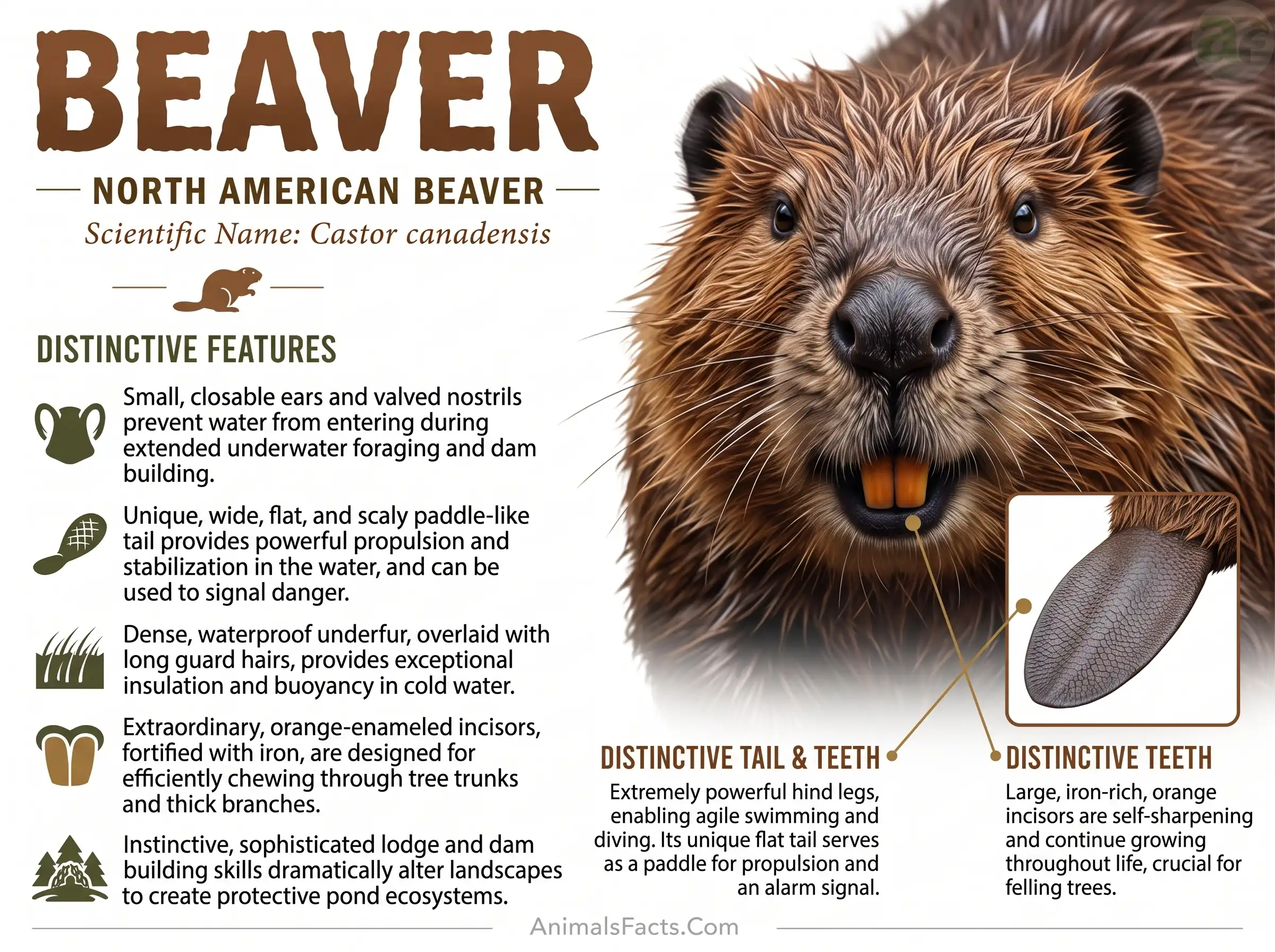
The beaver’s physical design is one of the most complete and most thoroughly adapted semi-aquatic body plans in the mammalian world — with virtually every major anatomical feature contributing to either aquatic locomotion, dam and lodge construction, or the processing of woody plant material that constitutes the primary dietary base.
Size — The World’s Second Largest Rodent
The beaver is the second largest rodent in the world — exceeded in size only by the South American capybara:
- Weight: Typically 16–32 kg — with the largest documented individuals occasionally approaching 40 kg
- Body length: 74–100 cm (excluding tail)
- Tail length: 25–50 cm — the distinctive flat, paddle-shaped tail adding substantially to total length
The North American Beaver and Eurasian Beaver are comparable in size — with minor average differences that partially reflect different habitat productivity and historical selective pressures in their respective ranges.
The Paddle Tail — Nature’s Most Versatile Appendage
The beaver’s most immediately recognizable anatomical feature — the flat, paddle-shaped, scaly tail — is also one of the most functionally versatile appendages in the rodent world:
Aquatic propulsion: The tail functions as a rudder and propulsion surface during swimming — providing directional control and contributing to forward thrust through lateral undulation.
Fat storage: The tail stores significant quantities of fat — providing both energy reserves and temperature insulation for the beaver’s metabolism during winter.
Alarm signaling: The famous tail slap — forcefully striking the water surface with the flat tail — produces a sound that carries for hundreds of meters across still water, serving as an alarm signal to family members when a predator is detected.
Thermoregulation: The tail’s extensive blood vessel network provides a surface for heat dissipation during warm conditions and can constrict blood flow to reduce heat loss in cold conditions.
Prop during construction: The tail serves as a physical support prop during upright dam and lodge construction activities — allowing the beaver to balance on its hind legs while using forepaws for material manipulation.
The Remarkable Teeth
The beaver’s incisors are among the most extraordinary teeth in the mammalian world — and provide the fundamental tool for the dam-building and foraging activities that define the species’ ecology:
Color: The incisors are stained bright orange by iron compounds in the enamel — a natural pigmentation that hardens the enamel surface and provides enhanced wear resistance compared to the white enamel of most rodents.
Self-sharpening: The incisors grow continuously throughout life — with the harder orange enamel on the front surface wearing more slowly than the softer dentine on the back, maintaining a naturally sharp chisel edge that sharpens through use rather than dulling.
Size: Adult beaver incisors can measure up to 5 cm in length — powerful enough to fell trees with trunk diameters exceeding 1 meter given sufficient time.
Waterproofing Adaptations
The beaver possesses an extraordinary suite of waterproofing and aquatic adaptations:
Waterproof underfur: The underfur is so dense — up to 23,000 hairs per square centimeter in the finest undercoat regions — that water cannot penetrate it to reach the skin, providing complete insulation and buoyancy even in ice-cold water.
Oil gland waterproofing: Paired castor glands near the tail produce castoreum — an oily secretion used for waterproofing the fur (applied through grooming) and territorial scent marking.
Webbed hind feet: Fully webbed hind feet provide aquatic propulsion and serve as paddles during swimming.
Transparent third eyelid: A specialized transparent nictitating membrane slides over the eye during underwater swimming — protecting the eye while maintaining underwater vision.
Closable nostrils and ears: Both nostrils and ears can be sealed during underwater diving — preventing water entry during submersions that can last up to 15 minutes.
Did You Know? The beaver’s liver can store approximately three times as much glycogen as that of most comparable rodents — a physiological adaptation that provides extended energy reserves for the demanding metabolic requirements of dam construction and cold-water swimming during winter. This enhanced glycogen storage capacity, combined with the substantial fat reserves in the paddle tail, allows beavers to remain metabolically active throughout winter even when foraging is severely limited by ice cover — subsisting on both stored food in underwater food caches adjacent to their lodges and on the body energy reserves that their specialized physiology allows them to maintain more efficiently than most comparable mammals.
4. Top 25 Surprising & Interesting Beaver Facts
- The largest beaver dam ever documented measures over 850 meters in length — located in Wood Buffalo National Park in northern Alberta, Canada, and clearly visible on satellite imagery from space.
- Beavers are the second largest rodent in the world — exceeded in size only by the South American capybara, and far larger than the largest rats or squirrels.
- The beaver’s orange teeth contain iron compounds in the enamel that make them harder than white teeth — and the incisors self-sharpen through use, maintaining a permanently sharp chisel edge.
- The Eurasian Beaver was reduced to fewer than 1,200 individuals in isolated relict populations in the early 20th century — but has recovered to approximately 1.5–2 million individuals through one of the most remarkable wildlife restoration programs in European conservation history.
- Beavers can hold their breath for up to 15 minutes — using specialized physiological mechanisms including a capacity to dramatically reduce heart rate during submersion.
- A single North American beaver family (typically 2 adults and 2–4 young) can create a wetland complex that benefits hundreds of other species — including fish, amphibians, waterfowl, songbirds, mammals, and invertebrates that depend on the habitat created by beaver engineering.
- Beaver dams increase the water table in surrounding areas by raising pond levels — with studies documenting measurable groundwater recharge extending hundreds of meters from active beaver ponds.
- Beaver castoreum — the oily secretion from paired glands near the tail — has been used as a perfume fixative in high-end European perfumery for centuries, and is listed as Generally Recognized as Safe (GRAS) as a food flavoring by the US FDA.
- The beaver’s underfur is so dense — up to 23,000 hairs per square centimeter — that water cannot penetrate to the skin even during extended cold-water submersion.
- Beavers fell trees not through gnawing in circles but through a precise series of cuts creating a notch — with the final felling direction somewhat predictable but not perfectly controllable, contrary to popular belief.
- The North American Beaver is Canada’s national animal — appearing on the Canadian five-cent coin and serving as one of the country’s most historically and economically significant wildlife symbols.
- Beaver pond sediments document environmental history — with peat cores from beaver ponds containing pollen, invertebrate remains, and chemical signatures that have allowed paleontologists and archaeologists to reconstruct thousands of years of local ecological history.
- Research has documented that beaver dams reduce downstream flood peaks by 20–60% in some watershed studies — providing a natural flood control function that has generated significant interest in beaver-based flood management programs in the UK and Europe.
- Beavers are monogamous — pairing for life with the same mate and maintaining family units consisting of the adult pair plus offspring from the current and previous year.
- The food cache that beaver families build before winter — a pile of branches and logs submerged adjacent to the lodge — can contain several tons of woody material that provides the family’s winter food supply under ice.
- Beaver teeth are never seen to become overgrown in healthy animals because the upper and lower incisors wear against each other during use — but misalignment (malocclusion) can cause dangerous overgrowth that eventually prevents the animal from eating.
- Beaver dams can remain active for generations — with some dams documented as continuously maintained structures for over 100 years, passing from one family generation to the next.
- The beaver’s semi-aquatic lifestyle gives it a thermal advantage in winter — water temperature in an ice-covered beaver pond remains around 4°C (just above freezing) even when air temperatures outside drop far below zero, providing the beaver family with a relatively warm refuge.
- Research in Scotland’s Tay Valley — where beavers were reintroduced in 2009 and formally recognized as a protected species in 2019 — has documented measurable improvements in water quality, fish populations, and riparian biodiversity within just 10 years of reintroduction.
- Beaver lodges are thermally insulated naturally — with the exterior frozen solid in winter (providing predator protection) while the interior chamber remains ice-free and above freezing due to the beaver family’s body heat.
- The Giant Beaver (Castoroides ohioensis) — extinct since approximately 10,000 years ago — weighed up to 100 kg and measured over 2 meters in length, representing one of the largest rodents in the evolutionary history of the Americas.
- Beaver territorial scent mounds — piles of mud and vegetation marked with castoreum — are detectable by other beavers from considerable distances and serve as territorial boundary markers that significantly reduce the frequency of direct confrontation between neighboring families.
- Research has documented that beaver ponds sequester carbon — with the sediment accumulation and peat formation in beaver wetlands removing significant quantities of atmospheric carbon dioxide over time, contributing a meaningful ecosystem service relevant to climate change mitigation.
- The reintroduction of beavers to England — beginning with licensed trials in Devon in 2013 and expanding to various sites — has generated what researchers describe as one of the most rigorously evaluated wildlife reintroduction programs ever conducted in the UK, with detailed monitoring demonstrating measurable ecological benefits within years of reintroduction.
- Beaver swimming speed can reach approximately 8 km/h (5 mph) — with the combination of webbed hind feet, paddle tail, and streamlined body allowing sustained underwater travel that far exceeds the capability of most comparable-sized terrestrial rodents.
5. Fun Facts About Beavers
- The largest beaver dam is over 850 meters long — visible from space!
- Beavers are the second largest rodent on Earth after the capybara.
- Beaver teeth are orange — from iron compounds that make them extra hard.
- Beavers can hold their breath for 15 minutes underwater.
- Eurasian beavers recovered from just 1,200 individuals to nearly 2 million!
- Beaver fur has up to 23,000 hairs per cm² — completely waterproof.
- The beaver is Canada’s national animal.
- Beavers are monogamous — they mate for life.
- Beaver dams can reduce downstream flooding by up to 60%.
- Their castoreum secretion is used in perfume and as a food flavoring.
- A single beaver family benefits hundreds of other species through habitat creation.
- Beaver dams can remain active for over 100 years.
6. Beavers Natural Habitat & Geographic Range
The beaver is a semi-aquatic generalist of temperate and subarctic freshwater systems — inhabiting a broader range of stream, river, and lake environments than almost any other large rodent, and demonstrating remarkable flexibility in the scale and type of aquatic system it can successfully colonize and modify.
Primary Habitat Requirements
The beaver’s habitat requirements center on the intersection of freshwater systems and adjacent woodland — specifically:
Accessible water: Streams, rivers, ponds, lakes, and wetlands providing both the water resource for dam construction and the aquatic pathway network the beaver uses for movement, predator escape, and food transport.
Adjacent deciduous woodland: Particularly stands of willow, alder, aspen, birch, and poplar — the deciduous trees whose bark provides the primary food resource and whose trunks and branches provide the primary dam and lodge construction material.
Gentle to moderate gradient: Very steep streams are typically unsuitable for dam construction — with gentle to moderate gradient streams providing the most productive beaver habitat by allowing the construction of effective dams that impound significant water volumes.
Moderate human disturbance tolerance: While beavers adapt to considerable levels of human activity in many areas, intensive industrial activity, severe water pollution, and excessive hunting pressure can exclude beavers from otherwise suitable habitat.
Geographic Range Table
| Region | Species | Status | Population | Notes |
|---|---|---|---|---|
| Canada | North American Beaver | Least Concern | ~6–8 million | Core of global range; national symbol |
| United States | North American Beaver | Least Concern | ~4–6 million | Recovered across most states |
| Mexico (northern) | North American Beaver | Least Concern | Lower density | Southern range margin |
| Northern/Central Europe | Eurasian Beaver | Least Concern; recovering | ~1.5 million | Remarkable recovery from 1,200 |
| Russia | Eurasian Beaver | Least Concern | Significant | Major populations in river systems |
| United Kingdom | Eurasian Beaver | Recovering | ~700+ individuals | Reintroduction programs expanding |
| Mongolia | Eurasian Beaver | Endangered | ~700–1,000 | Most threatened population |
| China (Xinjiang) | Eurasian Beaver | Critically Endangered | ~500–700 | Smallest national population |
Did You Know? Beavers are sometimes called “ecosystem engineers of the tundra margin” in reference to their documented expansion into subarctic habitats in Alaska and northern Canada in response to climate warming — with shrub vegetation expanding northward into former tundra as temperatures increase, providing the woody browse that beavers require for food and dam construction in areas that were previously unsuitable habitat. Research has documented that this beaver expansion into Arctic margins is accelerating permafrost thaw in some areas — as beaver ponds saturate previously dry permafrost ground, generating a positive feedback loop between warming, beaver colonization, and further permafrost degradation that represents one of the more unexpected and consequential wildlife-climate interactions documented in Arctic ecology.
7. Beaver Diet & Feeding Behavior
The beaver is a strict herbivore — consuming exclusively plant material, with bark as the dietary foundation year-round and a broader range of aquatic and terrestrial vegetation providing seasonal supplements.
What Beavers Eat
Diet Breakdown Table
| Food Type | Approximate Percentage | Season/Notes |
|---|---|---|
| Tree bark (aspen, willow, alder, birch, poplar) | 50–70% (winter dominant) | Primary year-round food; critical winter staple |
| Woody stems and twigs | 15–25% | Consumed alongside bark; winter and autumn primary |
| Aquatic vegetation (pond weeds, water lilies) | 10–20% | Summer primary; highest summer consumption |
| Terrestrial plants (grasses, ferns, rushes) | 5–10% | Summer supplement; more important in summer |
| Agricultural crops (corn, soybeans, root vegetables) | Variable | Significant conflict source in agricultural areas |
The Bark-Eating Strategy
The beaver’s primary dietary commitment to tree bark represents one of the most nutritionally challenging dietary specializations of any large mammal — with woody plant material containing primarily cellulose, hemicellulose, and lignin that are notoriously difficult to digest efficiently. The beaver addresses this challenge through:
Extended gut fermentation: A large, specialized cecum (analogous to the herbivore digestive chamber in ruminants) housing diverse bacterial communities that ferment woody material and extract carbohydrates from cellulose.
Cecotrophy: Like rabbits, beavers practice cecotrophy — consuming their own nutrient-rich cecal feces to recover the nutrients released by fermentation during a second digestive pass, maximizing nutritional extraction from their low-quality bark diet.
Species selectivity: Beavers show strong preference for the most nutritious and most palatable tree species — with aspen, willow, and alder consistently preferred over conifers (whose high resin content makes them considerably less palatable and digestible).
The Winter Food Cache
One of the beaver’s most celebrated behavioral achievements — the winter food cache — provides the family’s food supply during the winter months when ice prevents access to fresh-cut material:
Construction: Beginning in late summer and autumn, beavers intensify their tree-cutting and transport activities — felling trees and transporting branches and logs to a pile submerged adjacent to the lodge entrance underwater.
Scale: A well-provisioned beaver family’s winter cache can contain several tons of woody material — enough to sustain the family through months of ice cover.
Access: During winter, beavers exit the lodge through underwater tunnels, access the submerged food cache, and return to the lodge to consume bark — never needing to surface above the ice during the most severe winter weather.
Did You Know? Beavers are one of relatively few temperate mammals that do not hibernate despite living in climates that regularly experience temperatures far below freezing and months of continuous ice cover. This remarkable winter activity is possible because of the beaver’s extraordinary combination of adaptations — the thermally insulated lodge that remains above freezing through family body heat, the winter food cache that provides bark without surface access, the dense waterproof underfur that allows brief cold-water swims to access the cache, and the metabolic efficiency of the large beaver body relative to the cold stress of the winter environment.
8. Beavers Reproduction & Life Cycle
Beaver reproduction is characterized by lifelong pair bonds, small but well-cared-for litters, and an extended family social structure that keeps offspring in the family unit for two years — one of the most extended family investment periods of any comparably-sized rodent.
Mating and Pair Bonding
Beavers are among the relatively few mammalian species that are genuinely monogamous — forming long-term pair bonds that typically last for life, with partners remaining together across successive breeding seasons and cooperative in dam and lodge maintenance, food cache construction, and kit-rearing.
Mating typically occurs in January and February — in North American populations, the mating season corresponds with the coldest period of winter, with pairs mating in the lodge or in the water beneath ice cover.
Gestation and Birth
Gestation: Approximately 100–110 days — one of the longer gestations for a rodent of comparable body size.
Litter size: Typically 1–6 kits (most commonly 2–4).
Birth condition: Kits are born in a remarkably precocial state for rodents — eyes open, fully furred, and capable of swimming within hours of birth. This advanced birth condition reflects the beaver’s relatively long gestation.
Birth weight: Approximately 225–570 grams per kit — relatively large for a rodent at birth.
The Extended Family System
The beaver’s social system creates a multi-generational family unit — with the adult pair, the current year’s kits, and the previous year’s kits (yearlings) typically all residing together in the same lodge:
- Adult pair: The monogamous breeding pair — maintaining the territory, dam, and lodge
- Kits (0–1 year): The current season’s young — dependent on parents for first winter
- Yearlings (1–2 years): The previous season’s young — helping with family duties
- Dispersal: At approximately 2 years of age, young beavers are typically expelled from the family territory — dispersing to find their own mates and territories
Key Developmental Stages
| Stage | Age | Key Development |
|---|---|---|
| Birth | May/June | ~350 grams; precocial; eyes open |
| First swimming | Within days of birth | Semi-aquatic capabilities established early |
| First diving | ~1 month | Beginning underwater navigation |
| Weaning | ~2–3 months | Transition to solid food (bark) |
| Dam training | Throughout first summer | Learning construction skills through observation |
| First winter | Year 1 | Overwintering in family lodge; learning cache use |
| Yearling period | Year 1–2 | Assisting in family activities; learning territory |
| Dispersal | ~2 years | Finding own territory and mate |
| Sexual maturity | ~3 years | First breeding |
Lifespan Comparison Table
| Species | Average Wild Lifespan | Maximum Confirmed |
|---|---|---|
| North American Beaver | 10–15 years | ~24 years (captivity) |
| Eurasian Beaver | 10–15 years | ~25 years (captivity) |
| Capybara (comparison) | 6–10 years | ~12 years (captivity) |
| Muskrat (comparison) | 3–4 years | ~10 years (captivity) |
9. Social Behavior & Communication
The beaver’s social organization — centered on the lifelong monogamous pair bond and the multi-generational family unit — is among the most sophisticated documented for any rodent species, combining genuine pair fidelity, extended parental investment, cooperative family labor, and a complex territorial communication system.
Family Cooperative Behavior
The beaver family demonstrates genuine cooperative labor in the construction and maintenance of dams and lodges — with all family members contributing to the ongoing work that maintains their aquatic territory:
Division of labor: Adult beavers typically take primary responsibility for major construction and repair work — with yearlings contributing secondary labor and kits beginning to learn construction behaviors through observation and play-participation.
Coordinated maintenance: Dam repairs following floods or storm damage are addressed rapidly by the family working cooperatively — with damage detected through the sound of running water (a behavioral trigger that immediately activates dam maintenance behavior) generating prompt repair responses.
Territorial Scent Communication
The beaver’s primary long-distance social communication system is scent marking — with the combination of castoreum secretion and anal gland secretions deposited at scent mounds throughout the territorial boundary providing rich chemical information to neighboring families:
Scent mound construction: Beavers build small piles of mud, leaves, and vegetation at territorial boundary locations — applying castoreum to the mounds by squatting over them and allowing the secretion to contact the mud surface.
Information content: Scent marks convey information about individual identity, sex, reproductive status, and territory occupancy to other beavers assessing territory boundaries — allowing mutual recognition and avoidance of direct confrontation between neighboring families.
The Tail Slap Alarm
The beaver’s most famous behavioral signal — the tail slap — serves as an immediate alarm communication to family members when a predator or other threat is detected:
Mechanism: The beaver strikes the flat tail forcefully against the water surface — generating a loud, sharp report that carries for hundreds of meters across still water.
Response: Other family members immediately dive underwater upon hearing a tail slap — retreating to the lodge or depth where surface threats cannot reach them.
Duration: Alarmed beavers may tail-slap repeatedly — maintaining the alarm signal for several minutes after a perceived threat.
Did You Know? Research has documented that beavers can detect the sound of running water with extraordinary sensitivity — with experiments demonstrating that beavers will begin dam construction or repair behavior within hours of hearing water flow sounds, even when those sounds are produced by artificial speakers rather than actual water leakage. This behavioral response to water-flow sound appears to be an innate trigger — hardwired into beaver behavior through millions of years of evolution in which the sound of flowing water indicated a breach in dam integrity requiring immediate repair. The same innate response means that devices generating flow-sound playback near beaver dams have been tested as management tools for altering beaver dam-building behavior, with varying success.
10. Predators & Defense Mechanisms
As a medium-to-large rodent in temperate freshwater ecosystems, the beaver faces predation pressure from several large carnivores — and has evolved a suite of physical and behavioral defenses centered on the aquatic environment that provides its primary refuge.
Natural Predators
Wolves: The most significant natural predator of beavers across most of their range — with wolves documented as efficient beaver predators in areas where wolf populations have recovered, including Yellowstone National Park and various Canadian ecosystems. Wolf predation on beavers has generated significant research interest as part of broader studies on wolf-ecosystem interactions.
Coyotes: A significant predator across North America — particularly effective at catching beavers on land during the terrestrial foraging and construction activities that take beavers away from their aquatic refuge.
Mountain Lions (Cougars): Documented beaver predators in areas of range overlap — with mountain lions capable of ambushing beavers at water margins during foraging or construction activity.
Bears (both grizzly and black): Opportunistic beaver predators — with bears documented digging into beaver lodges to access kits and catching beavers near water margins during vulnerable moments.
River Otters: A significant predation threat for beaver kits in the water — with river otters’ superior swimming capability making them effective aquatic predators of young beavers in the same ponds and streams.
Lynx and Bobcats: Documented beaver predators across northern portions of the range — particularly effective at ambushing beavers during terrestrial movement between water bodies.
Large Raptors (Eagles and Ospreys): Primary predators of small beaver kits in open water — with bald eagles and golden eagles documented taking young beavers from pond surfaces.
Humans: The dominant historical mortality source — through the fur trade and contemporary conflict management — but now less significant as the primary mortality factor in most well-managed beaver populations.
Defense Mechanisms
Aquatic escape: The beaver’s primary defensive strategy — immediate submersion into water at any sign of threat, with the combination of breath-holding capability (up to 15 minutes) and the safety of depth and darkness providing effective refuge from most surface threats.
Tail slap alarm: As described above — provides advance warning to family members and demonstrates to a predator that it has been detected, reducing the predator’s advantage of surprise.
Lodge construction: The beaver lodge — with walls of packed mud and sticks up to 60 cm thick — provides physical protection for the family, particularly in winter when the exterior freezes solid into a nearly impenetrable structure. Lodge entrance tunnels are underwater, preventing easy access by terrestrial predators.
Scent marking territory: Well-maintained scent marking territory reduces the probability of encountering unfamiliar beavers whose behavior might be less predictable — providing a modest social security benefit through territory clarity.
11. Beaver Facts for Kids
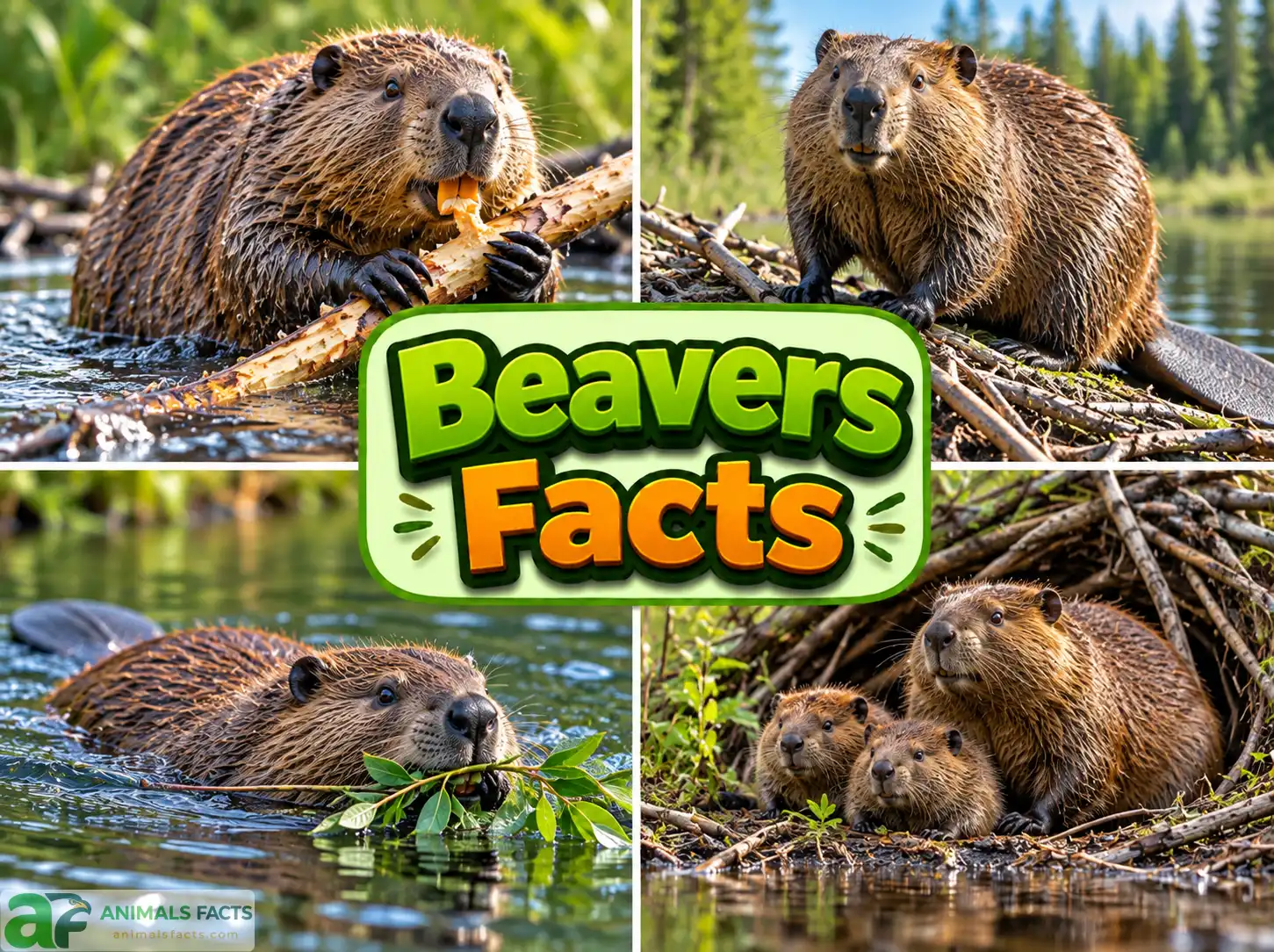
Hey kids — get ready to discover why beavers are one of the most amazing builders in the whole animal kingdom!
- Beavers are the world’s second biggest rodent — they’re in the same animal group as mice, rats, and squirrels, but they can weigh as much as a medium-sized dog! The only rodent bigger than a beaver is the South American capybara.
- Beaver teeth are orange — not because they eat carrots, but because they have iron in the enamel of their teeth! This iron makes the teeth super hard and helps them stay sharp all by themselves as the beavers chew through wood.
- The biggest beaver dam ever found is over 850 meters long — that’s longer than 8 football fields in a row! It’s so big it can be seen from satellites in space!
- Beavers are amazing engineers — they build dams across streams to make deep ponds where they can safely swim. Then they build their homes, called lodges, in the middle of the pond. The only way to get inside is through an underwater tunnel!
- Before winter, beaver families spend weeks cutting branches and dragging them into the pond to create a winter food pile underwater. This pile is their refrigerator — they swim out and grab branches to eat all winter while the pond is frozen over!
- The beaver’s flat tail is like a Swiss Army knife — it helps them swim, stores fat for energy, can warn the whole family of danger with a loud SLAP on the water, and even helps them balance when they’re standing up building their dams!
- Beaver moms and dads stay together for life — they’re one of the few animals that pick one partner and keep that partner forever, working as a team to raise their babies and maintain their home.
- A single beaver family can create a wetland that helps hundreds of other animals — frogs, fish, ducks, otters, and songbirds all benefit from the ponds and wetlands that beavers create!
Did You Know? Beavers don’t hibernate in winter — they’re one of the very few animals that stay awake all winter in cold snowy climates! They stay in their cozy lodge (which stays warm from their body heat even when it’s frozen solid on the outside), swimming out through underwater tunnels to eat from their food pile under the ice. Their fur is so thick and waterproof that they can swim in ice-cold water and come back into the lodge without getting cold — it’s like wearing a permanent super-dry wetsuit made of fur!
12. Relationship with Humans
The beaver’s relationship with human civilization across North America and Eurasia is one of the most consequential and most historically significant human-wildlife relationships in the Northern Hemisphere — generating an extraordinary range of economic, cultural, ecological, and political interactions across thousands of years.
Indigenous Relationships
Beavers were central to the subsistence, spiritual, and cultural traditions of dozens of Indigenous nations across North America — providing both practical resources (fur for warmth and bedding, meat for food, castoreum for medicine) and spiritual significance as totemic animals, clan ancestors, and figures in creation narratives across diverse Indigenous cultures.
Sustainable management: Many Indigenous nations maintained sophisticated traditional management practices for beaver populations — harvesting beavers in ways that maintained viable breeding populations and distributed harvesting pressure across watersheds. This sustainable management contrasted sharply with the commercial exploitation that followed European contact.
Cultural significance: Beaver clan systems, beaver-centered creation stories, and beaver symbolism in traditional art and ceremony appear across dozens of North American Indigenous nations — reflecting the depth of the cultural relationship between Indigenous peoples and this foundational freshwater species.
The Fur Trade Era — Reshaping Continents
The European fashion industry’s appetite for beaver felt hats — which became the dominant hat style across Europe in the 17th–18th centuries — generated one of the most significant commercial wildlife exploitation episodes in history:
The hat trade: Beaver underfur, processed into thick felt, produced the finest and most water-resistant hat material available in pre-industrial Europe. The demand for beaver felt drove the establishment of the Hudson’s Bay Company (1670) and the Northwest Company, and was a primary economic driver of European exploration and colonization of North America’s interior.
Ecological devastation: Commercial beaver trapping drove the species to local extinction across vast areas of both North America and Eurasia — with the Eastern US largely depopulated of beavers by the early 19th century and European populations reduced to tiny relict groups.
The geopolitical dimension: Competition between France, Britain, and eventually the United States for control of the beaver fur trade directly influenced the geopolitical boundaries of North America — with the phrase “fought over a beaver pelt” literally applicable to major territorial conflicts of the colonial era.
Contemporary Coexistence and Conflict
The beaver’s remarkable population recovery has generated a new set of human-wildlife challenges:
Flooding of agricultural and residential land: Beaver dam construction on streams adjacent to human infrastructure can flood roads, crop fields, and residential areas — generating conflict that has driven demand for lethal management in some areas.
Road and infrastructure damage: Beaver dam-raising can flood culverts, undermine road foundations, and damage irrigation infrastructure — representing a genuine economic conflict source in areas of high beaver density.
Timber damage: Beaver felling of commercially valuable trees in managed forest areas represents an economic conflict source in some regions.
Positive management applications: Against these conflicts, growing recognition of the beaver’s ecological services — flood prevention, water quality improvement, drought buffering, carbon sequestration — has generated significant interest in beaver-based water management programs that harness rather than oppose the beaver’s natural engineering capabilities.
13. Beaver Conservation Status & Threats
The conservation status of the two beaver species represents one of the most dramatic recovery stories in wildlife management history — with both species having pulled back from historical population lows of genuinely catastrophic scale.
Conservation Data (2026)
| Species | IUCN Status | Current Population | Historical Low | Recovery Factor |
|---|---|---|---|---|
| North American Beaver | Least Concern | ~10–15 million | ~100,000 (early 1900s) | ~100–150x recovery |
| Eurasian Beaver | Least Concern | ~1.5–2 million | ~1,200 (early 1900s) | ~1,200–1,600x recovery |
| Eurasian Beaver (Mongolia) | Endangered | ~700–1,000 | — | Relict population |
Major Ongoing Threats
Habitat loss: River channelization, wetland drainage, and riparian forest clearance continue to reduce suitable beaver habitat across portions of both species’ ranges — particularly in heavily agricultural and developed areas where the combination of degraded riparian zones and flood-intolerant land use conflicts most severely with beaver engineering.
Conflict management killing: Lethal control of beavers in areas of conflict — including government-sanctioned culling programs and illegal shooting by landowners experiencing property flooding — represents an ongoing source of mortality, particularly significant in areas of recent recolonization where human communities have limited experience with beaver coexistence management.
Water pollution: Severe water pollution can degrade beaver habitat quality — with industrial effluents, agricultural runoff, and other water quality impairments reducing aquatic vegetation diversity and fish populations that complement the beaver’s food and habitat base.
North American Beaver as invasive species: North American Beavers introduced to Tierra del Fuego in southern Argentina (introduced in 1946 for fur farming, subsequently escaped and established wild populations) have become one of the most damaging invasive species in the sub-Antarctic ecosystem — dramatically modifying native Nothofagus (southern beech) forest in ways that have no ecological precedent in the region’s evolutionary history, generating significant management challenges and conservation concern.
Did You Know? The reintroduction of Eurasian beavers to Scotland — beginning with a licensed trial reintroduction on the River Tay in 2009 and subsequently expanding — has been formally evaluated through one of the most comprehensive ecological monitoring programs ever conducted for a UK wildlife reintroduction. Research by Scotland’s River Tay Beaver Study Group and subsequent monitoring by NatureScot (Scottish Natural Heritage) documented measurable improvements in water quality, fish population diversity, invertebrate abundance, and riparian plant diversity within 10 years of reintroduction — providing scientific evidence for the ecological benefits of beaver reintroduction that has influenced decision-making for similar programs across England and Europe.
14. Famous Beavers
The Wood Buffalo Dam — World Record Builder
While not attributed to a specific named individual beaver, the beaver dam in Wood Buffalo National Park, Alberta, Canada — measuring approximately 850 meters in length and estimated to have been under continuous construction for over 50 years by multiple generations of beavers — represents the world’s largest structure built by non-human animals. The dam was first discovered by aerial survey in 2007 and confirmed as the world’s largest through subsequent satellite analysis, generating international media coverage and scientific interest in the generational cooperative building behavior required to produce a structure of such scale.
Castor and Pollux — The European Restoration Symbols
Multiple pairs of reintroduced Eurasian Beavers have been individually named and monitored across European reintroduction programs — with the foundational reintroduction pairs on rivers including the Elbe, Danube, Rhône, and Tay serving as named symbols of conservation recovery programs that have generated extensive public interest and political support for the broader European beaver restoration initiative.
Various UK Reintroduction Beavers
The beavers of Devon’s River Otter — the first confirmed wild-breeding beavers in England in over 400 years, discovered in 2013 and subsequently granted protected status and formally licensed as a wild population in 2020 — have been studied, photographed, and reported on extensively, with their activities generating both scientific data and public enthusiasm for the UK’s expanding beaver reintroduction program.
15. Role in Ecosystem & Food Chain
The beaver’s ecological role is among the most extensively studied and most consequential of any non-predatory species in temperate freshwater ecosystems — functioning as the archetypal keystone species and ecosystem engineer whose activities transform habitat, regulate hydrology, and support extraordinary biodiversity across the landscapes it inhabits.
Dam Engineering — Wetland Creation at Scale
The beaver’s fundamental ecological contribution is the creation of wetland habitat through dam construction — with each beaver-dammed stream creating a pond and associated riparian wetland complex that transforms a flowing-water habitat into a standing-water ecosystem with dramatically different biodiversity characteristics:
Habitat creation: Beaver ponds provide breeding habitat for waterfowl, aquatic invertebrates, amphibians, and riparian songbirds that cannot use unmodified streams. Research has documented 40–50% increases in bird species richness in areas with active beaver populations compared to comparable areas without beavers.
Fish habitat: Beaver ponds create deep, slow-water refuges that benefit trout, salmon, and other cold-water fish species during drought conditions and thermal stress — with studies documenting measurable improvements in salmonid populations in streams with active beaver dams.
Water table management: Beaver dams raise local groundwater tables — providing drought buffering that maintains vegetation moisture levels during dry periods and reducing the probability of stream drying that would be catastrophic for aquatic species in beaver-free streams.
Hydrology and Water Quality
Flood attenuation: Beaver dams store water during high-flow events and release it slowly during low-flow periods — reducing peak flood flows by 20–60% in some documented watershed studies, providing a natural infrastructure function with significant implications for human flood management downstream.
Pollutant filtration: Beaver ponds trap sediment, nutrients, and agricultural pollutants — with studies documenting measurable reductions in phosphorus, nitrogen, and suspended sediment concentrations in streams below active beaver ponds compared to streams without beavers.
Carbon sequestration: Beaver pond sediment accumulation and peat formation remove significant quantities of atmospheric carbon — with research suggesting that the global network of historical beaver ponds represented a substantial carbon sink before the species’ population collapses of the 17th–19th centuries.
16. Myths, Folklore & Cultural Significance
The beaver occupies a position of profound cultural significance across the Indigenous nations of North America — and a significant economic and national identity role across the settler cultures of Canada and the United States — that reflects thousands of years of intimate human engagement with this remarkable animal.
Indigenous North American Traditions
The beaver appears across the cultural traditions of dozens of North American Indigenous nations in roles ranging from practical food and material resource to sacred clan ancestor to creator figure. Common themes include:
The Beaver Clan: Many eastern and midwestern Indigenous nations — including various Iroquois (Haudenosaunee), Algonquian, Ojibwe, and other nations — maintain beaver clan systems in which the beaver serves as a clan ancestor, with specific governance, ceremonial, and social roles assigned to members of the beaver clan.
Creation narratives: The beaver appears in creation stories across numerous Indigenous traditions — often as a participant in the creation of the earth from primordial waters, with different nations’ traditions assigning the beaver specific roles in shaping the world.
Sustainable harvest protocols: Many Indigenous traditional management frameworks included specific protocols for sustainable beaver harvest — regulating season, location, and quantity in ways that maintained viable populations. These protocols reflect sophisticated traditional ecological knowledge of beaver population dynamics developed through thousands of years of observation.
Canadian National Identity
The beaver holds the status of Canada’s national animal — appearing on the five-cent coin (the “nickel”), in the logos of the Hudson’s Bay Company and numerous Canadian institutions, and in Canadian cultural imagery of extraordinary pervasiveness. The beaver’s national status reflects both its historical importance to Canada’s fur trade economy (which was foundational to the country’s colonial development) and its perceived alignment with the Canadian national character — industrious, practical, adaptable, and oriented toward community cooperation.
European Folklore
In European traditions — particularly across Germany, Scandinavia, and Slavic cultures — the beaver has historically been associated with industriousness, engineering capability, and the domestication of wild water. The beaver’s habit of modifying streams was observed and admired by medieval European naturalists, generating a body of folklore attributing to beavers remarkable intelligence, foresight, and planning capability.
The curious medieval European belief that beavers would bite off their own testicles when pursued by hunters (to deprive the hunters of the castoreum they sought) — recorded in multiple medieval bestiaries — represents one of the more entertaining animal myths in European natural history, though it is entirely fictional.
17. Beavers in Pop Culture
The beaver has generated a diverse and culturally deeply embedded popular culture presence across North America — from beloved children’s fictional characters through national symbols to the subject of serious documentary natural history.
Literature and Children’s Media
“Leave It to Beaver” (CBS, 1957–1963) — The iconic American television family sitcom featuring the “Beaver” Cleaver character (Theodore Cleaver) — while the show’s protagonist is human rather than an actual beaver, the long cultural association between the nickname “Beaver” and this beloved family-friendly series established a particular connotation of the word in American popular culture.
“The Chronicles of Narnia” by C.S. Lewis — Mr. and Mrs. Beaver are among the most beloved animal characters in the Narnia series — providing shelter, warmth, and wisdom to the Pevensie children during their first entry into Narnia, and embodying qualities of domestic warmth, practical wisdom, and loyal friendship that reflect the cultural associations surrounding beavers in British and North American tradition.
Various children’s educational media — Beavers appear frequently in North American children’s educational programming about wildlife and ecology — with their dam-building behavior making them particularly valuable subjects for explaining ecosystem engineering and the relationships between animals and their environments.
National Symbolism
The beaver’s role as Canada’s national animal has generated one of the most sustained and geographically extensive wildlife-national identity associations in the world — with beaver imagery appearing across Canadian institutions, commercial brands, tourism materials, and cultural communications in ways that have made this semi-aquatic rodent one of the most recognized national animal symbols globally.
18. Beaver Facts vs. Common Myths
Myth: Beavers can accurately direct which way a tree falls when they cut it. Fact: Beavers cannot reliably control which direction a tree falls — they gnaw a notch around the trunk but have no mechanism for controlling the felling direction, which is determined by the tree’s lean, the wind, and other physical factors. Beavers occasionally trap themselves under fallen trees when a tree falls in an unexpected direction, resulting in documented mortality events.
Myth: Beavers eat fish. Fact: Beavers are strictly herbivorous — they eat only plant material, primarily bark, leaves, aquatic vegetation, and roots. Despite living in freshwater environments full of fish, beavers have no interest in fish as food, and their teeth and digestive system are designed for processing woody plant material rather than animal protein.
Myth: The largest beaver dams are built by single highly skilled individuals. Fact: Large beaver dams are cooperative, multi-generational constructions — built and maintained by successive family units over periods of years or decades. The largest documented dam (850 meters) required an estimated 50+ years of continuous construction and maintenance by multiple beaver generations — not the work of any single animal.
Myth: Beaver lodges have an air hole at the top that the beaver uses to enter. Fact: Beaver lodges have no above-water entry points — all access is through one or more underwater tunnels that exit well below the pond surface. The apparent hole at the lodge peak is actually a ventilation gap that allows air exchange while remaining impassable as an entry point for most predators.
Myth: Beavers eat wood. Fact: Beavers eat bark, not wood itself — stripping the outer bark layer from felled branches and trees, which contains the nutritious cambium tissue directly beneath. The peeled white sticks found near beaver activity sites represent branches from which all edible bark has been stripped, not wood that has been consumed.
Myth: Beaver castoreum is extracted inhumanely for perfume production. Fact: Historically, castoreum was extracted from killed beavers — but modern commercial castoreum production typically uses live-animal “milking” procedures similar to those used for musk deer, with the beaver anesthetized for a brief secretion collection before release. However, the use of castoreum in commercial products has declined significantly with the availability of synthetic alternatives.
19. Best Places to See Beavers in the Wild
Voyageurs National Park, Minnesota, USA
Voyageurs — a water-based national park in northern Minnesota — hosts one of the highest densities of North American beavers in the US national park system, with beaver dams, lodges, and active family groups visible throughout the park’s extensive lake and stream network. Dawn and dusk boat-based wildlife tours provide excellent beaver viewing in a spectacular wilderness lake setting.
Algonquin Provincial Park, Ontario, Canada
Algonquin — Canada’s oldest provincial park — supports thriving beaver populations across its extensive river and lake system, with beaver lodges, dams, and active beavers visible throughout the park, particularly along the Highway 60 corridor lakes and on canoe route portages.
Yellowstone National Park, Wyoming, USA
Yellowstone’s river and stream network supports significant beaver populations in several valleys — with the Hayden Valley, Slough Creek, and Madison River areas providing particularly productive beaver viewing opportunities, especially in early morning and evening when beavers are most active.
River Otter, Devon, UK
The River Otter Beaver Trial in Devon — England’s first formally licensed wild beaver reintroduction — has established a viewing infrastructure along the river that provides some of the most accessible wild beaver viewing in the UK, with designated viewing sites, guided tours, and research programs generating public engagement with this landmark conservation program.
Bialowieza Forest, Poland/Belarus
The ancient Bialowieza Primeval Forest supports thriving Eurasian beaver populations in its extensive river and stream systems — with beaver lodges, dams, and active individuals viewable throughout the forest’s waterway network in the best-preserved example of European primeval forest.
Bavaria, Germany — Isar and Inn Rivers
Germany’s river system — home to rapidly expanding Eurasian beaver populations — provides excellent viewing opportunities, particularly along river corridors in Bavaria where beaver activity is well-established and local wildlife guides provide organized viewing programs.
20. Top Documentaries & Books
Must-Watch Documentaries
“Leave It to Beavers” (PBS Nature, 2014) — A comprehensive documentary specifically focused on the growing movement to use beavers as natural watershed restoration tools in the American West, documenting both the science of beaver ecology and the practical application of beaver-based water management. One of the finest beaver-specific documentary productions available.
“Beavers — The Master Builders” (various BBC and NatGeo productions) — Multiple documentary segments covering beaver dam-building behavior, family dynamics, and ecological impact, with excellent natural history filming of both North American and Eurasian populations.
“Scotland’s Beaver Trial” (various BBC Scotland productions) — Coverage of the River Tay and River Otter reintroduction programs providing excellent context for understanding the European beaver restoration movement and the documented ecological benefits of reintroduction.
Essential Books
“Eager: The Surprising Secret Life of Beavers and Why They Matter” by Ben Goldfarb (2018) — The most accessible, most thoroughly researched, and most entertainingly written popular book on beaver ecology and conservation currently available — covering the science of beaver ecosystem engineering, the history of the fur trade, and the growing movement to use beavers as water management tools.
“The Beaver Manifesto” by Glynnis Hood (2011) — A Canadian ecologist’s compelling case for the ecological importance of beaver restoration, combining rigorous science with accessible writing for a general audience.
“Castor fiber: Eurasian Beaver” — Various scientific publications from the Eurasian Beaver working groups provide the most comprehensive technical documentation of European beaver restoration.
21. Beaver Comparison of Beavers with Similar Animals
| Feature | North American Beaver | Eurasian Beaver | Muskrat | Capybara | Nutria |
|---|---|---|---|---|---|
| Scientific Name | Castor canadensis | Castor fiber | Ondatra zibethicus | Hydrochoerus hydrochaeris | Myocastor coypus |
| Weight | 16–32 kg | 16–32 kg | 0.6–2 kg | 35–66 kg | 5–9 kg |
| Family | Castoridae | Castoridae | Cricetidae | Caviidae | Myocastoridae |
| Distribution | North/Central America | Eurasia | North America | South America | South America (native); invasive worldwide |
| Tail Type | Flat, paddle-shaped | Flat, paddle-shaped | Laterally flattened; scaly | Short, sparse | Round, rat-like |
| Dam Building | Yes — primary behavior | Yes — primary behavior | Small push-up mounds | None | None |
| Diet | Bark, aquatic plants | Bark, aquatic plants | Aquatic vegetation, roots | Grasses, aquatic plants | Roots, aquatic plants |
| Monogamy | Yes — lifelong pairs | Yes — lifelong pairs | No | No | No |
| Size Rank | 2nd largest rodent globally | 2nd largest rodent globally | Small | 1st largest rodent globally | Medium rodent |
| Conservation | Least Concern | Least Concern | Least Concern | Least Concern | Least Concern |
| Invasive Status | Invasive in Tierra del Fuego | Not invasive | Invasive in parts of Europe | Native only | Invasive across multiple continents |
22. How You Can Help
Beaver conservation has evolved from an endangered species rescue effort into a more nuanced challenge of managing recovered populations while maximizing their ecological services and navigating conflict with human land use.
Support These Organizations
Beaver Trust (beavertrust.org) — The leading UK organization specifically advocating for beaver restoration and coexistence — running reintroduction programs, conflict mitigation research, and public education across England and Wales.
North American Beaver Society / Beaver Institute (beaverinstitute.org) — The primary North American organization providing technical resources for coexistence with urban and agricultural-area beavers, promoting non-lethal flow management devices as alternatives to lethal control.
WWF Living Rivers Programs — WWF’s river conservation programs across North America and Europe incorporate beaver restoration as a primary tool for achieving freshwater ecosystem health targets.
Rewilding Europe (rewildingeurope.com) — Incorporates Eurasian beaver restoration into broader landscape rewilding programs across multiple European countries.
IUCN Otter Specialist Group — Beaver programs — The IUCN coordinates international monitoring and conservation assessment for Eurasian beaver populations across their range.
Practical Actions
Support beaver-based flood management programs. Organizations and government programs implementing “Beaver Meadow” and Natural Flood Management projects — using beaver engineering to attenuate flood flows in headwater catchments — provide concrete flood risk management benefits while simultaneously delivering habitat creation and water quality improvements. Advocacy for such programs contributes to both beaver conservation and climate adaptation.
Use non-lethal beaver conflict solutions. Where beavers cause property flooding, flow devices (pipes installed through beaver dams that maintain pond levels below damaging thresholds while allowing beavers to remain) provide effective, humane, and cost-effective alternatives to lethal removal. Supporting organizations that install and maintain flow devices reduces the lethal conflict management that represents the primary mortality source for recovered beaver populations.
Participate in citizen science. Organizations including iNaturalist, Riverfly Partnership, and national beaver monitoring programs in the UK and Europe welcome beaver sighting and activity reports that contribute to population mapping and distribution monitoring.
Advocate for beaver reintroduction programs. In countries and regions where beaver restoration is being planned or debated — including parts of England, Ireland, and various European nations — public support for reintroduction programs provides the political foundation for progressing these programs.
Did You Know? The Beaver Institute in Massachusetts has documented that installing a simple flow device (sometimes called a “Beaver Deceiver” — a pipe installed through a beaver dam to maintain water level below flooding threshold) costs approximately $300–400 per installation — while the alternative of repeated dam removal typically costs $3,000–5,000 annually per site and is ultimately futile as beavers immediately rebuild. This straightforward economic comparison — combined with the substantial ecological services that a maintained beaver pond provides to the surrounding watershed — makes flow device installation one of the most cost-effective and ecologically beneficial wildlife management interventions available for any coexisting-with-wildlife situation, yet remains underused due to lack of awareness among property owners and municipal managers experiencing beaver-related flooding.
23. Frequently Asked Questions About Beavers
Q1: What is the scientific name of the beaver?
There are two beaver species: the North American Beaver (Castor canadensis) and the Eurasian Beaver (Castor fiber). Both belong to the genus Castor, the family Castoridae, the order Rodentia, and the class Mammalia. The two species cannot interbreed due to different chromosome numbers (40 vs. 48).
Q2: How big is a beaver?
Beavers are the second largest rodent in the world — adult North American and Eurasian beavers weigh typically 16–32 kg and measure 74–100 cm in body length, with the distinctive paddle tail adding another 25–50 cm. The largest documented individuals occasionally approach 40 kg.
Q3: What do beavers eat?
Beavers are strictly herbivores — eating only plant material, primarily the bark of deciduous trees (especially aspen, willow, birch, and alder). They also eat leaves, aquatic plants, roots, and grasses seasonally. Contrary to popular belief, they do not eat fish.
Q4: How long can beavers hold their breath?
Beavers can hold their breath for up to 15 minutes — using specialized physiological adaptations including the ability to dramatically reduce heart rate during submersion, allowing extended underwater activity when foraging or escaping predators.
Q5: How large is the biggest beaver dam?
The largest beaver dam ever documented measures approximately 850 meters (2,790 feet) in length — located in Wood Buffalo National Park in northern Alberta, Canada. It is clearly visible on satellite imagery and was first identified through aerial surveys in 2007.
Q6: Are beavers monogamous?
Yes — beavers form lifelong monogamous pair bonds — remaining with the same mate year after year and cooperating in dam maintenance, lodge construction, food caching, and kit-rearing. They are among the relatively few monogamous mammalian species.
Q7: Do beavers hibernate?
No — beavers do not hibernate. They remain active throughout winter — living in their thermally insulated lodge, swimming under ice to access their winter food cache (a pile of bark-covered branches submerged adjacent to the lodge), and maintaining their aquatic territory even during severe winter weather.
Q8: Are beavers endangered?
The North American Beaver is classified as Least Concern — with a recovered population of approximately 10–15 million individuals. The Eurasian Beaver is also Least Concern globally — but was near extinction in the early 20th century (reduced to ~1,200 individuals) and has recovered dramatically to approximately 1.5–2 million through reintroduction programs. The Mongolian Beaver subspecies remains endangered with approximately 700–1,000 individuals.
Q9: What is castoreum?
Castoreum is an oily secretion produced by paired scent glands (castor sacs) near the beaver’s tail. Beavers use it for waterproofing their fur (applied during grooming) and territorial scent marking. Historically, castoreum was extracted commercially for use as a perfume fixative in luxury perfumery and is listed as safe for use as a food flavoring by the US FDA — though commercial use has declined with the availability of synthetic alternatives.
Q10: How can I help beaver conservation?
Key actions include: supporting the Beaver Trust (UK), Beaver Institute (North America), and WWF Living Rivers programs; advocating for non-lethal beaver conflict management (flow devices rather than dam removal or lethal control); supporting beaver reintroduction programs in regions where restoration is being planned; participating in citizen science beaver monitoring programs; and raising public awareness about the beaver’s extraordinary ecological services through sharing accurate information about this remarkable ecosystem engineer.
24. Sources & References
Research Sources
- Wikipedia — Castor canadensis, Castor fiber, and related articles
- IUCN Red List — iucnredlist.org
- Beaver Trust — beavertrust.org
- Beaver Institute — beaverinstitute.org
- WWF — worldwildlife.org
- National Geographic — nationalgeographic.com
- Smithsonian’s National Zoo — nationalzoo.si.edu
- Encyclopaedia Britannica — britannica.com
- BBC Wildlife — bbc.co.uk
- Live Science — livescience.com
- Goldfarb, Ben — “Eager: The Surprising Secret Life of Beavers and Why They Matter” (2018)
- Hood, Glynnis — “The Beaver Manifesto” (2011)
- Scotland’s River Tay Beaver Study Group — research publications (multiple)
- NatureScot (Scottish Natural Heritage) — beaver reintroduction monitoring data