

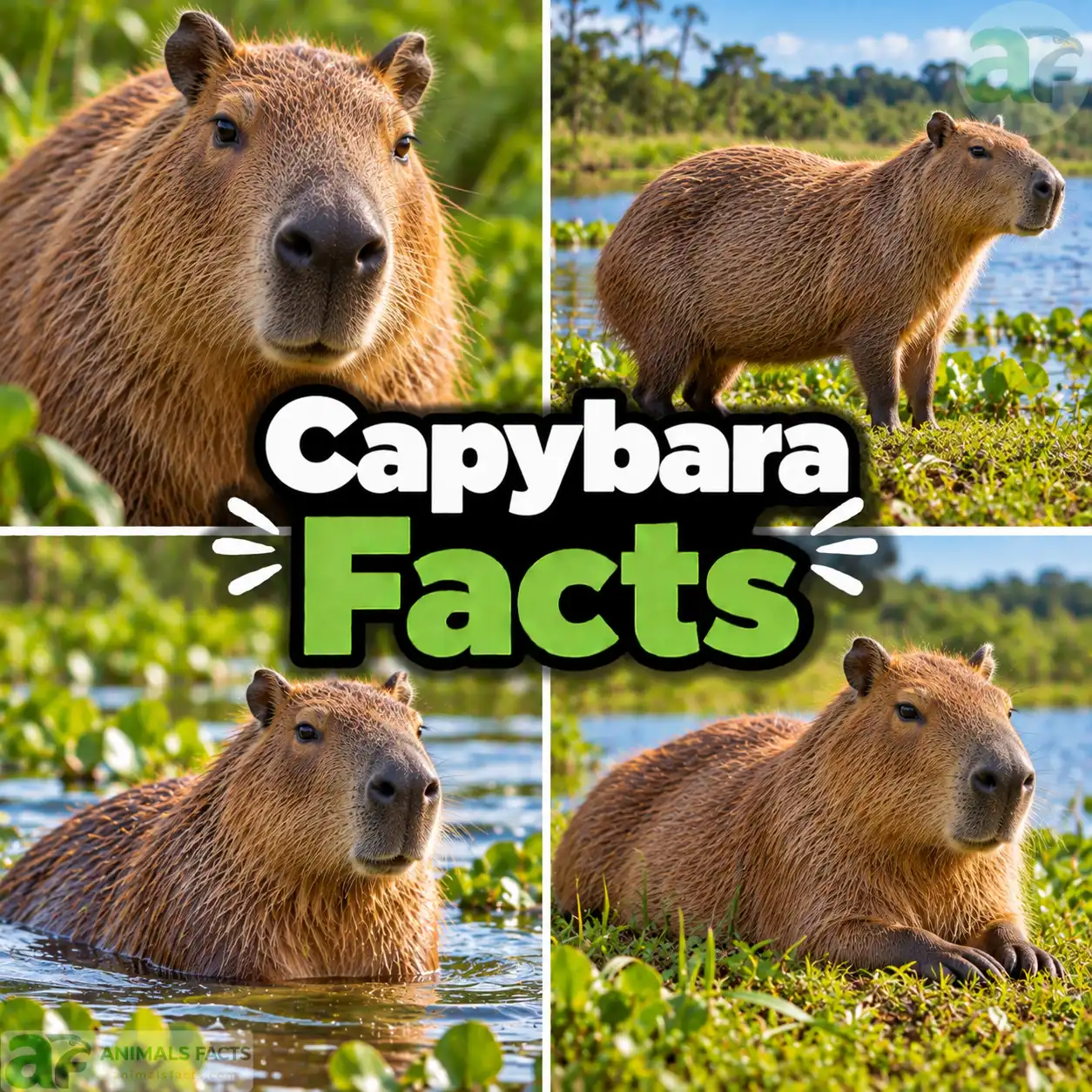
Capybara Facts
| Feature | Details |
|---|---|
| Scientific Name | Hydrochoerus hydrochaeris |
| Common Names | Capybara, Carpincho (Spanish), Capivara (Portuguese), Water Pig, Water Hog |
| Kingdom | Animalia |
| Phylum | Chordata |
| Class | Mammalia |
| Order | Rodentia |
| Family | Caviidae |
| Genus | Hydrochoerus |
| Recognized Species | 2 living species — Hydrochoerus hydrochaeris (Greater Capybara) and Hydrochoerus isthmius (Lesser Capybara) |
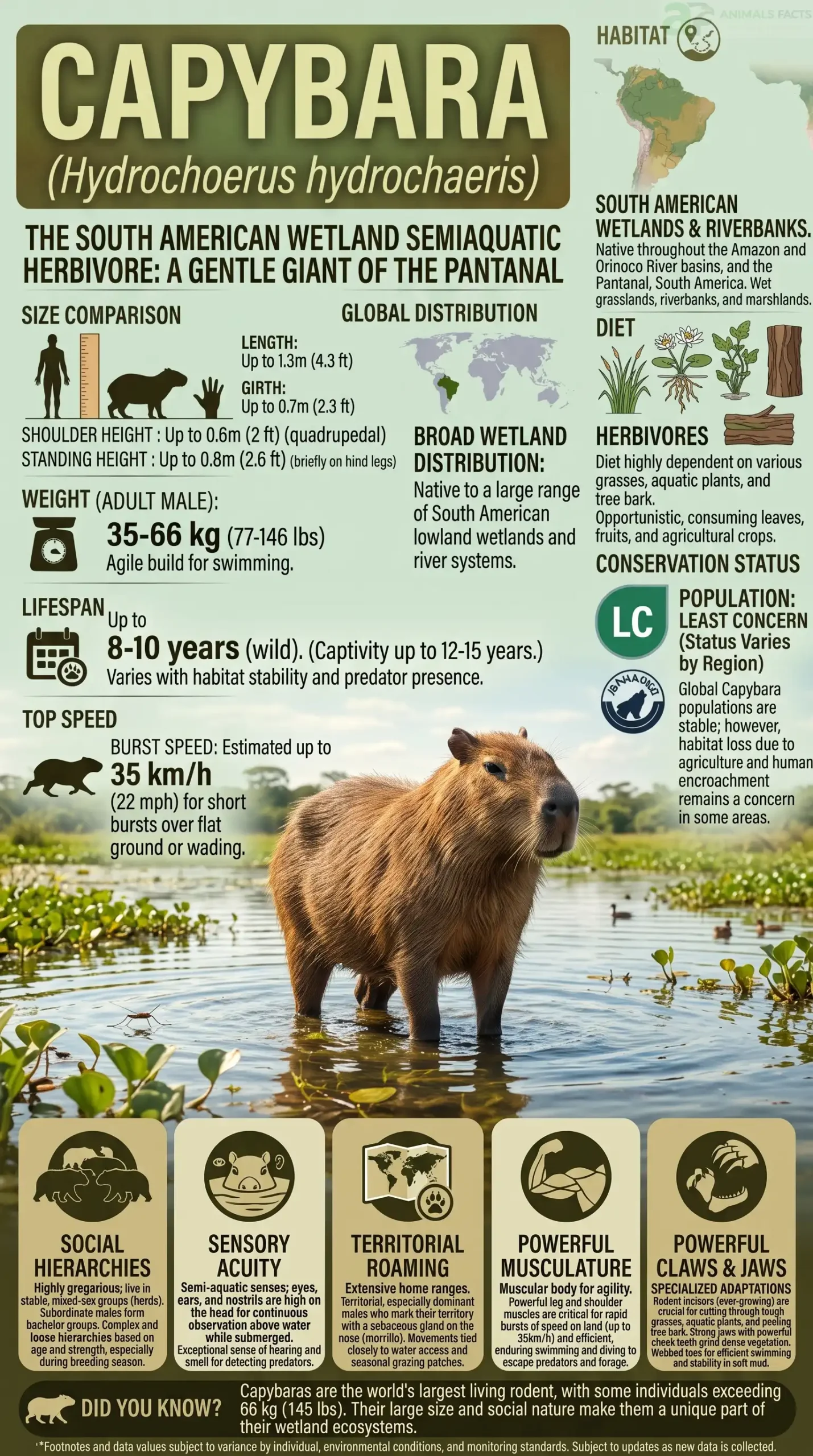
| Habitat | Tropical and subtropical grassland, savanna, wetland, gallery forest — always near water, across South America and Central America |
| Lifespan | 8–10 years in the wild; up to 12 years in captivity |
| Diet | Herbivore — grasses (primary), aquatic plants, fruit, bark |
| Weight | 35–66 kg (average ~50 kg); some individuals exceed 80 kg |
| Body Length | 106–134 cm |
| Shoulder Height | 50–62 cm |
| Top Speed | Up to 35 km/h (22 mph) on land; 8 km/h sustained swimming |
| Conservation Status | Least Concern (IUCN Red List) |
| Global Wild Population | Estimated several million across South America |
| Unique Feature | World’s largest rodent; semi-aquatic; universally accepted by all other animals as friends; remarkable social tolerance that has made it a global internet phenomenon; eyes, ears, and nostrils all positioned on top of head |
 1. Introduction: What is a Capybara?
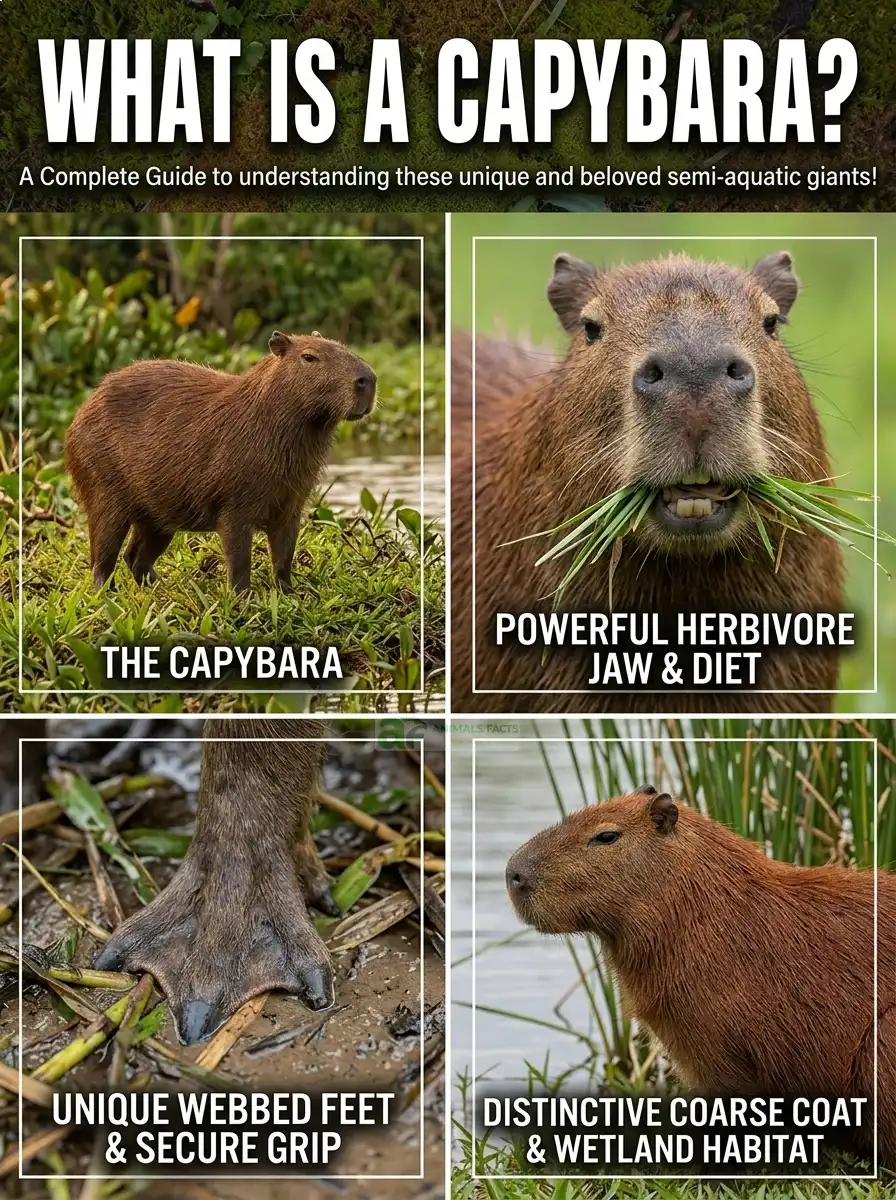
It is the world’s largest rodent — a barrel-shaped, short-legged, decidedly pig-like herbivore that can weigh over 65 kilograms and resembles nothing so much as a giant guinea pig, which is exactly what it is, evolutionarily speaking. Photographs of capybaras have been shared hundreds of millions of times across global social media — typically showing them sitting in perfect serenity while birds perch on their backs, monkeys drape themselves across their necks, or caimans rest beside them on the same river bank, all apparently in complete mutual comfort. They have become the internet’s unofficial symbol of radical calm acceptance, generating a global cultural phenomenon based on an animal that almost nobody outside South America knew about twenty years ago. And their extraordinary social tolerance — documented by researchers and anecdotally observed by virtually everyone who has encountered them — is not merely an internet myth but a genuine and scientifically interesting behavioral characteristic of a remarkable species. Capybara facts are full of surprises, contradictions, and genuinely extraordinary biological and cultural details.
The capybara — Hydrochoerus hydrochaeris — is a large, semi-aquatic rodent of South America and parts of Central America, inhabiting grasslands, wetlands, and gallery forests adjacent to rivers, lakes, and streams across a range extending from Colombia and Venezuela in the north to northern Argentina and Uruguay in the south. Despite its enormous size — making it the undisputed world record holder among living rodents — the capybara is a member of the family Caviidae, closely related to the domestic guinea pig (Cavia porcellus) that children keep as pets worldwide. This evolutionary connection between the world’s largest and one of the world’s most commonly kept small rodents is one of capybara biology’s most charming and most surprising details.
Whether you are a student researching capybara facts for a school project, a wildlife traveler planning a Pantanal or Llanos expedition where capybaras are the most reliably observed large mammal, someone who has become fascinated by capybara internet content and wants to understand the real animal behind the memes, a parent looking for capybara facts for kids, or simply someone curious about why this enormous, gentle rodent has captured the affection of the entire internet — this is the most complete guide to capybara facts you will find anywhere.
2. Capybara Species Overview & Classification
The capybara belongs to the family Caviidae — the cavies — within the order Rodentia, making it closely related to guinea pigs, rock cavies, and maras rather than to the other large semi-aquatic rodents (beavers, nutria, muskrats) with which it might superficially be compared.
The Two Capybara Species
| Species | Scientific Name | Common Name | Range | Size | Status |
|---|---|---|---|---|---|
| Greater Capybara | Hydrochoerus hydrochaeris | Capybara | Most of South America | 35–66 kg | Least Concern |
| Lesser Capybara | Hydrochoerus isthmius | Lesser Capybara, Panamanian Capybara | Panama, Colombia, Venezuela (northwestern) | 28–45 kg | Least Concern |
The Lesser Capybara is significantly smaller than the Greater Capybara, with a more restricted range concentrated around Panama and adjacent northwestern South America — making it a less commonly encountered and considerably less studied species than its larger relative.
Species Classification Table
| Level | Classification |
|---|---|
| Kingdom | Animalia |
| Phylum | Chordata |
| Class | Mammalia |
| Order | Rodentia |
| Suborder | Hystricomorpha |
| Family | Caviidae |
| Genus | Hydrochoerus |
| Species | H. hydrochaeris (Greater Capybara) |
| Closest Living Relatives | Guinea pig (Cavia porcellus), Rock cavy (Kerodon rupestris), Patagonian mara (Dolichotis patagonum) |
The Guinea Pig Relationship
The capybara’s membership in the family Caviidae — alongside the domestic guinea pig — is one of the most startling taxonomic facts in mammalogy. The guinea pig (Cavia porcellus) typically weighs approximately 0.7–1.2 kg, making it roughly 50–70 times lighter than a large capybara. This size disparity between the closest living relatives of the capybara is one of the most dramatic examples in the mammalian world of evolutionary size divergence within a single family, and provides a compelling illustration of the evolutionary flexibility that the rodent body plan has demonstrated across its evolutionary history.
Species Evolution & Discovery Timeline
~5–10 million years ago: The Caviidae family diverged from other rodent lineages during the Miocene — with the ancestors of the capybara lineage beginning the evolutionary trajectory toward larger body size that would eventually produce the world’s largest rodent.
~2–3 million years ago: The Hydrochoerus lineage established itself as a large, semi-aquatic specialist — with fossil evidence demonstrating that the capybara lineage achieved semi-aquatic specialization relatively early in its evolutionary history.
~10,000 years ago: The Giant Capybara (Neochoerus or related genera) — much larger than modern capybaras, potentially reaching 100+ kg — went extinct at the end of the Pleistocene alongside other South American megafauna, leaving the modern capybara as the largest surviving caviid.
Pre-Columbian era: Capybaras were an important food resource for Indigenous peoples across South America — hunted sustainably across their range and incorporated into the subsistence economies and cultural traditions of communities throughout their habitat.
1533: Spanish explorer Gonzalo Fernández de Oviedo y Valdés provided one of the earliest written European descriptions of the capybara in his chronicles of South American natural history — describing an animal unlike anything previously documented by European naturalists.
1766: Carl Linnaeus formally classified the capybara as Mus hydrochaeris in Systema Naturae — later reclassified to its current genus and species designation as classification was refined.
21st century: The capybara became a global internet phenomenon — with social media content showing capybaras’ remarkable social tolerance with other species generating hundreds of millions of views and establishing the species as one of the most widely recognized and most beloved wild animals in global digital culture.
3. Capybara Physical Description & Unique Features
The capybara’s physical design is one of the most distinctive and most immediately recognizable in the mammalian world — combining enormous size, a uniquely barrel-shaped body form, and a suite of semi-aquatic adaptations that make it one of the most thoroughly water-adapted large rodents ever documented.
Size — The World’s Largest Rodent
The capybara holds the undisputed world record as the largest living rodent:
- Weight: Typically 35–66 kg — with average adults in the 50–55 kg range; the largest documented individuals have exceeded 80 kg
- Body length: 106–134 cm
- Shoulder height: 50–62 cm — standing approximately as tall as a medium-sized dog at the shoulder
- Sexual dimorphism: Females are slightly larger than males on average — an unusual pattern for a mammal in which males are typically larger, possibly related to the energetic demands of pregnancy and lactation
The Barrel Body
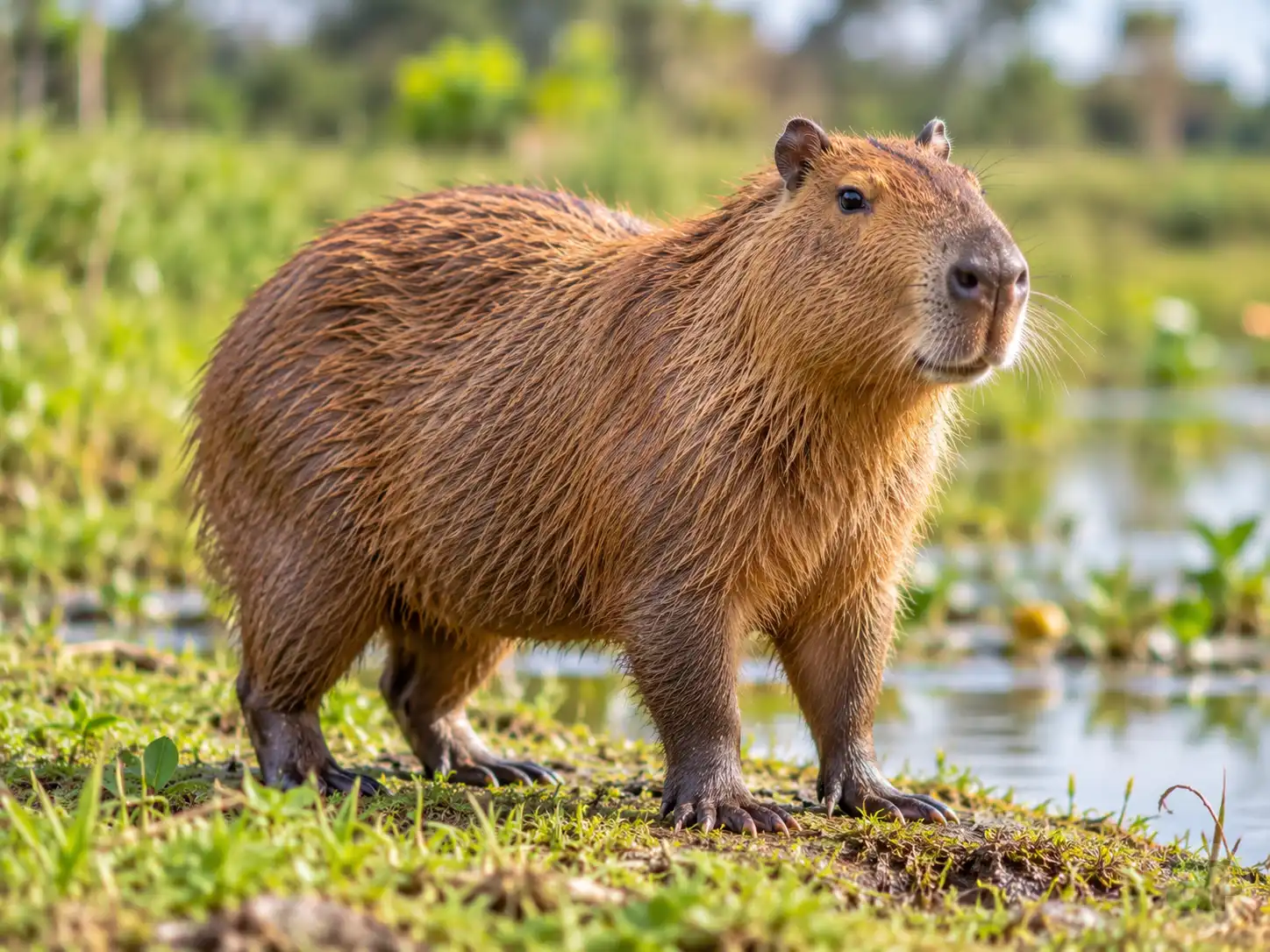
The capybara’s most characteristic body form feature is its pronounced barrel-shaped torso — with the body being approximately as wide as it is tall, creating a compact, low-slung silhouette that is immediately distinctive from any other large mammal. This body form reflects the capybara’s evolutionary optimization for semi-aquatic life — with the rounded, streamlined torso providing efficient aquatic locomotion while the short limbs minimize drag during swimming.
The Hydrodynamic Head
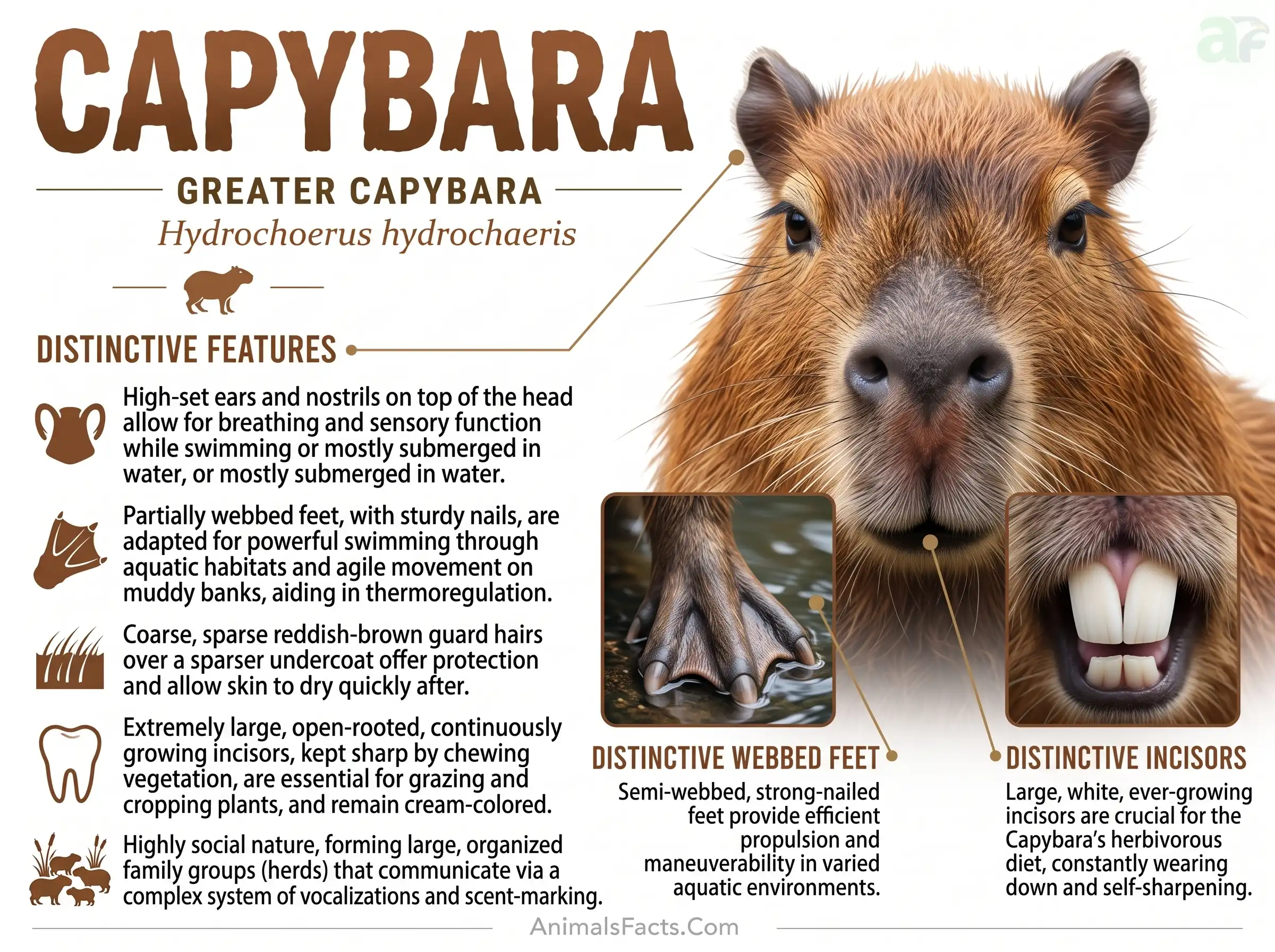
The capybara possesses one of the most hydrodynamically optimized head designs of any large mammal — with a distinctive arrangement of sensory organs that allows the animal to remain almost completely submerged while maintaining sensory awareness of its environment:
Eyes: Positioned high on the sides of the head — providing a wide field of view and remaining above water when the rest of the body is submerged.
Ears: Similarly positioned high and laterally — allowing hearing to continue during nearly complete submersion.
Nostrils: Located on the top of the snout — allowing breathing to continue when only the very top of the muzzle projects above the water surface.
This arrangement allows capybaras to remain in water with only the top of the head exposed — maintaining vision, hearing, smell, and breathing while virtually invisible to terrestrial predators viewing the water surface.
The Webbed Feet
Capybara feet are partially webbed — with webbing connecting the digits on all four feet, providing improved aquatic propulsion during swimming while maintaining adequate terrestrial locomotion capability. The hind feet have more pronounced webbing than the front feet, reflecting the greater role of the hind limbs in aquatic propulsion.
The Morrillo — The Male Distinguishing Feature
Adult male capybaras possess a distinctive enlarged scent gland on the top of the snout called the morrillo — a dark, protruding glandular structure used for territorial scent marking. The morrillo is unique to male capybaras, providing an immediate visual indicator of sex in adult animals.
Did You Know? The capybara’s teeth — like those of all rodents — grow continuously throughout life, with the incisors self-sharpening through use against each other. But the capybara’s incisors are proportionally enormous even for a rodent of its size — capable of cutting through grass stems, bark, and aquatic plant material with the efficiency of a pair of garden shears, and capable of delivering a genuinely serious bite if the animal is threatened. Despite its gentle reputation — accurately reflecting the animal’s typically placid, socially tolerant behavioral profile — an adult capybara’s bite force is substantial, and direct handling of wild capybaras without appropriate expertise is not advisable.
4. Top 25 Surprising & Interesting Capybara Facts
- The capybara is the world’s largest rodent — with adults averaging approximately 50 kg and the largest documented individuals exceeding 80 kg, dwarfing all other living members of the order Rodentia.
- Despite its enormous size, the capybara is most closely related to the guinea pig (Cavia porcellus) — sharing family membership (Caviidae) with this familiar small pet animal that weighs approximately 50–70 times less than an adult capybara.
- Capybaras are remarkably tolerant of other species — with documented cases of birds, monkeys, caimans, turtles, ducks, cats, dogs, and numerous other animals resting on, near, or in direct contact with relaxed capybaras. This extreme social tolerance across species boundaries has generated a global internet phenomenon and is backed by genuine behavioral research.
- The capybara’s eyes, ears, and nostrils are all positioned on the top of the head — allowing the animal to remain almost completely submerged while continuing to see, hear, smell, and breathe.
- Capybaras can hold their breath for up to 5 minutes — allowing them to remain submerged long enough to escape most surface predators.
- A single capybara group typically consists of 10–20 individuals — but in exceptionally productive habitats (particularly the Venezuelan Llanos during the dry season), groups of 100 or more capybaras have been documented gathering at shrinking water sources.
- Capybaras practice coprophagy — eating their own feces — as an essential nutritional strategy, consuming nutrient-rich cecal feces in the early morning to recover proteins and vitamins produced by gut bacteria during overnight fermentation of grass.
- The Catholic Church officially classified the capybara as a fish in the 16th century — allowing Venezuelan and Colombian Catholics to eat capybara meat during Lent. This unusual designation has persisted as cultural tradition, with capybara consumption remaining common during Lenten periods in Venezuela and Colombia to this day.
- Capybaras communicate through a remarkably diverse vocal repertoire — producing barks, clicks, whistles, squeals, coughs, and purrs that convey different emotional states and social messages within the group.
- The dominant male in a capybara group marks his territory using his morrillo — the specialized scent gland on the top of his snout — by rubbing it on vegetation, trees, and other objects throughout the group’s range.
- Wild capybaras have been documented allowing birds to pick parasites from their skin — engaging in mutualistic relationships with specific bird species (particularly cowbirds and jacanas) that provide the capybara with parasite removal while providing the birds with food.
- Capybaras in some areas have demonstrated the capacity to modify their foraging behavior in response to human agricultural cycles — timing their crop-raiding activity to coincide with harvest periods and learning to avoid specific deterrent methods, demonstrating genuine behavioral adaptability.
- The capybara’s scientific name Hydrochoerus derives from the Greek words for “water” (hydro) and “pig” (choiros) — translating as “water pig,” reflecting both the animal’s semi-aquatic lifestyle and its superficially pig-like appearance.
- Capybara populations show dramatic seasonal density changes — with dry season water scarcity concentrating groups at remaining water bodies and producing the spectacular mass aggregations documented in the Venezuelan Llanos.
- Research has documented that capybaras in well-protected areas become substantially habituated to human presence — approaching tourists and researchers without alarm, generating some of the most intimate wild large mammal encounters available anywhere in South America.
- The Pantanal of Brazil — the world’s largest tropical wetland — supports what is probably the world’s most dense and most visible capybara population, with research estimating several hundred capybaras per square kilometer in optimal habitat.
- Capybara young begin eating grass within days of birth — while continuing to nurse for several months, reflecting the precocial (well-developed at birth) state characteristic of the Caviidae family.
- Multiple capybara females within a group will nurse each other’s young — with communal nursing documented as a genuine reproductive strategy that distributes the energetic cost of lactation across the group and increases cub survival rates.
- Capybaras are invasive in Florida — with a small but established feral population in parts of south-central Florida, descended from escaped or released pets, representing one of the more unusual North American invasive species situations.
- The capybara’s swimming speed of approximately 8 km/h sustained — with short bursts approaching 14 km/h — allows it to outswim many pursuing predators in deep water, where the aquatic advantage reverses the terrestrial predation risk.
- Capybaras have been documented successfully defending themselves against jaguars through group behavior — with multiple individuals coordinating to defend a targeted group member, demonstrating a collective defense capability unusual for a prey species of the capybara’s size.
- Research in Brazilian protected areas has documented capybaras acting as “host” animals for numerous other species — with the birds perching on them, the fish that consume algae from their wet fur in water, and the insects that clean their skin all reflecting the diverse ecological relationships the capybara maintains with surrounding species.
- Capybara populations managed through sustainable harvest programs in Venezuela and Colombia represent one of South America’s more successful examples of wildlife-based rural income generation — with carefully regulated community harvesting demonstrating that capybara populations can sustain economic use without significant population decline.
- The Hydrochoerus genus fossil record extends back approximately 2–5 million years — demonstrating that capybaras have occupied semi-aquatic South American freshwater habitats for millions of years, making them one of the more evolutionarily ancient large mammal body forms in the Western Hemisphere.
- Capybaras are legally kept as pets in several US states and various other countries worldwide — with their generally gentle temperament and high social tolerance making them popular exotic pets, though wildlife welfare experts consistently note that capybaras have complex social and aquatic needs impossible to meet adequately in typical domestic settings.
5. Fun Facts About Capybara
- The capybara is the world’s largest rodent — a giant guinea pig.
- Their eyes, ears, and nostrils are all on top of the head for semi-aquatic living.
- The Catholic Church classified capybaras as fish — so Catholics could eat them during Lent!
- Capybaras are universally tolerant of other species — birds, monkeys, caimans all chill with them.
- They can hold their breath for 5 minutes underwater.
- Capybaras eat their own feces in the morning — to recover nutrients!
- Groups of 100+ capybaras gather at water bodies in the dry season.
- Capybaras have a scent gland on top of their nose — the morrillo, found only in males.
- They communicate with barks, clicks, whistles, squeals, and purrs.
- The Pantanal may have the densest capybara population in the world.
- Multiple females in a group nurse each other’s babies.
- There are wild capybaras in Florida — escaped exotic pets!
6. Capybara Natural Habitat & Geographic Range
The capybara’s habitat distribution follows the river systems, wetlands, and water-adjacent grasslands of South America — with the species occurring wherever the combination of abundant freshwater and productive grassland provides both the aquatic refuge and the grazing resource the species depends upon.
Primary Habitat Requirements
Permanent freshwater access: The single most critical habitat requirement — capybaras must have daily access to water for thermoregulation, predator escape, and aquatic foraging, and cannot persist in habitats without reliable freshwater. Rivers, lakes, ponds, flooded savannas, marshes, and man-made reservoirs all provide suitable water habitat.
Adjacent grassland: Dense, productive grassland adjacent to water — particularly tall-grass communities in tropical and subtropical savannas — provides the primary dietary base for capybara groups. The combination of water and productive grass growth characterizes optimal capybara habitat across their range.
Riparian forest: Gallery forest and riparian woodland adjacent to water bodies provides denning sites, shade for thermoregulation in hot weather, and supplementary browse resources that complement the primary grass diet.
Minimal predator pressure: While capybaras coexist with jaguars, pumas, caimans, and other predators across their range, areas with intact predator communities and suitable flight-to-water escape options support healthier and behaviorally richer capybara populations than areas where predator pressure is so intense as to prevent normal social aggregation.
Geographic Range Table
| Region | Country Examples | Population | Notes |
|---|---|---|---|
| Venezuela (Llanos) | Venezuela | Very high density | Largest seasonal aggregations documented |
| Pantanal | Brazil, Bolivia, Paraguay | Highest density | World’s best capybara viewing |
| Amazon Basin | Brazil, Peru, Colombia | Widespread; lower density | Distributed through riparian habitats |
| Brazilian Cerrado | Brazil | Significant | Open savanna populations |
| Colombia | Colombia | Widespread | Extensive Llanos populations |
| Argentina (Paraná system) | Argentina | Present; southern range margin | Southern distribution |
| Uruguay | Uruguay | Present; recovering | Some populations recovering from hunting |
| Central America | Panama | Present (Lesser Capybara) | Lesser Capybara range |
| Florida, USA | USA (south-central) | Small invasive population | Escaped pets; established feral group |
Did You Know? The capybara’s range extends from northern Colombia at 10° N latitude to approximately 37° S latitude in northern Argentina — spanning approximately 5,000 kilometers of north-south range, making it one of the widest north-south ranging large mammals in South America. This extraordinary latitudinal range encompasses tropical rainforest margins, extensive tropical savannas (Llanos and Cerrado), subtropical grasslands, and temperate grasslands of the Pampas — demonstrating the capybara’s remarkable ecological flexibility across dramatically different climate zones, provided that adequate freshwater access and productive grassland are available.
7. Capybaras Diet & Feeding Behavior
The capybara is a strict herbivore — consuming exclusively plant material, with a dietary composition strongly dominated by grasses that makes it one of the most thoroughly grass-specialized large herbivores in South America.
What Capybaras Eat
Diet Breakdown Table
| Food Type | Approximate Percentage | Notes |
|---|---|---|
| Grasses (various savanna and riparian species) | 75–85% | Primary dietary foundation across all habitats |
| Aquatic plants (water hyacinth, pondweed, etc.) | 5–10% | Important supplementary food in wetland habitats |
| Fruit (various species) | 3–8% | Seasonal supplement; important in forest-margin habitats |
| Tree bark and woody material | 2–5% | More important during dry season when grass quality declines |
| Agricultural crops (sugarcane, grain) | Variable | Significant conflict source in agricultural areas |
| Cecal feces (coprophagy) | Early morning dietary supplement | Nutritional recovery of gut-fermented proteins and vitamins |
The Coprophagy Strategy
One of the most unusual and most nutritionally important aspects of capybara dietary behavior is their practice of coprophagy — consuming cecal feces (nutrient-rich digestive byproduct produced in the cecum during overnight fermentation of grass) in the early morning before beginning the day’s primary grazing.
This behavior — shared with rabbits, guinea pigs, and other small herbivores — allows the capybara to recover proteins, vitamins B and K, and various other nutrients produced by the bacterial fermentation of grass cellulose during overnight processing. The cecal feces are chemically distinct from regular feces and are consumed directly as they are produced — maximizing the nutritional extraction from the grass diet that might otherwise be lost in a single digestive pass.
Grazing Behavior
Capybaras are primarily grazers — feeding on grasses in a manner that, while less selective than some specialist grazers, shows meaningful preference for certain grass species and grass growth stages:
Grass height preference: Capybaras consistently prefer short, actively growing grass — selecting recently sprouted grass shoots over mature, taller grass stands. This preference for actively growing grass (which has higher protein and digestibility than mature grass) mirrors the selective grazing strategies of many large African ungulates in comparable savanna ecosystems.
Dry season dietary shifts: As the dry season reduces grass productivity and quality, capybaras shift their dietary composition toward aquatic plants, bark, and any remaining green plant material — demonstrating the dietary flexibility that allows them to persist through the challenging periods of reduced grass availability.
Did You Know? Research on capybara dietary selectivity has documented that individual capybaras show consistent individual preferences for specific grass species within the available plant community — with some individuals consistently selecting certain grass species while others of the same group prefer different species. This individual-level dietary variation — documenting genuine individual food preferences within a social group that has access to the same plant community — suggests a level of individual foraging decision-making sophistication that adds to the growing body of evidence for genuine individual variation in herbivore behavioral ecology.
8. Capybara Reproduction & Life Cycle
Capybara reproduction reflects the species’ evolutionary position as a prey animal in a diverse and formidable predator community — with relatively high reproductive rates, precocial young capable of rapid independence, and the communal nursing system that distributes reproductive investment across the social group.
Mating System
Capybaras are polygynous — with a single dominant male maintaining exclusive breeding access to the females in his group while subordinate males either remain in the group in non-breeding peripheral roles or disperse to establish new groups. The dominant male continuously monitors and herds females to maintain mating access, particularly during peak estrus periods.
Female choice: Research has documented that female capybaras exercise meaningful mate choice — with females actively seeking out specific males and showing behavioral resistance to mating attempts by non-preferred males, suggesting that female reproductive decision-making is not simply passive.
Group mating dynamics: In larger capybara groups, the dominant male cannot perfectly monitor all females simultaneously — allowing subordinate males occasional mating opportunities, resulting in mixed paternity within litters born to the same group.
Gestation and Birth
Mating season: Capybaras can breed year-round in equatorial portions of their range — but show seasonal peaks in April–May and October–November in more seasonal habitats, corresponding to periods of optimal grass productivity.
Gestation period: Approximately 130–150 days — one of the longer gestations for a rodent of comparable body size.
Litter size: Typically 4–5 young (range 1–8).
Birth weight: Approximately 1.5 kg per pup — relatively large and precocial for rodents.
Birth condition: Capybara pups are born fully furred, eyes open, and capable of running within hours — one of the most precocial birth conditions documented for any rodent, reflecting the exposure to predation risk that makes rapid early mobility essential.
The Communal Nursing System
One of the capybara’s most remarkable social reproductive behaviors is communal nursing — with multiple females in the group nursing each other’s offspring interchangeably:
Mechanism: Nursing females allow pups from other group members to suckle alongside their own offspring — distributing the energetic cost of milk production across multiple females and providing pups with nutritional access even if their own mother is temporarily absent or unavailable.
Adaptive value: Research suggests communal nursing increases pup survival rates by providing nutritional redundancy — pups with access to multiple nursing females survive at higher rates than pups dependent on a single mother, particularly during the early weeks when vulnerability to starvation and predation is highest.
Key Developmental Stages
| Stage | Age | Key Development |
|---|---|---|
| Birth | Variable | ~1.5 kg; fully precocial; running within hours |
| First grazing | Within days | Beginning to sample grass alongside nursing |
| Group integration | 1–2 weeks | Joining peer groups of pups |
| Weaning | ~4 months | Completing transition to solid food |
| Sexual maturity | Female: ~12 months; Male: ~15–24 months | First breeding possible |
| Social maturity | 2–3 years | Full behavioral integration into adult social hierarchy |
Capybara Lifespan Comparison Table
| Species | Average Wild Lifespan | Maximum Confirmed |
|---|---|---|
| Capybara | 8–10 years | ~12 years (captivity) |
| Beaver | 10–15 years | ~24 years (captivity) |
| Giant Panda | 15–20 years | ~38 years (captivity) |
| Raccoon | 2–3 years | ~21 years (captivity) |
9. Social Behavior & Communication
The capybara is one of the most thoroughly social of all rodent species — living in structured groups with clear dominance hierarchies, complex communication systems, and the extraordinary inter-species social tolerance that has made the animal a global cultural phenomenon.
Group Social Organization
Capybara groups are organized around a central dominant male (the group’s primary breeder), multiple adult females, subordinate males (in various peripheral roles), and the current season’s young. Typical groups consist of 10–20 individuals in most habitats, with dry season aggregations sometimes producing temporary congregations of 100 or more at focal water sources.
Dominant male role: The dominant male — identified by his enlarged morrillo (scent gland) and dominant behavioral posture — maintains his position through continuous vigilance and occasional direct confrontation with challenging males. Dominant male tenure can last for several years in stable populations with low predator pressure.
Female hierarchy: Within the female cohort, a linear dominance hierarchy exists — with dominant females having priority access to the best foraging locations and the most sheltered resting areas.
Pup cohorts: Young capybaras spend most of their time in peer cohorts — groups of same-age pups that forage, play, and rest together under the loose supervision of multiple group adults, providing both social learning opportunities and numerical safety in predation contexts.
The Famous Inter-Species Tolerance
The capybara’s documented tolerance for close proximity with other species — which has generated hundreds of millions of social media views showing birds perching on capybaras, monkeys sitting on them, and even caimans resting beside them — is a genuine and well-documented behavioral characteristic rather than merely an internet myth.
Research attributes this inter-species tolerance to several factors:
Low inherent aggression: Capybaras have genuinely low baseline aggression toward non-threatening stimuli — a characteristic of large, socially complex herbivores that can afford behavioral tolerance given their predator-escape options.
Habituation and learning: Capybaras in areas with regular inter-species contact learn through experience that specific other species represent neither predation threats nor food competition — reducing arousal responses to their presence over time.
Mutualistic relationships: Several bird species (particularly yellow-headed caracaras and cattle egrets) maintain genuine mutualistic relationships with capybaras — providing parasite removal services while using the capybara as a perch, platform, and disturbance flush. This mutualism creates a context in which bird presence is actively beneficial to capybaras, reinforcing the tolerant behavioral relationship.
Vocalizations
The capybara’s vocal repertoire is extensive for a rodent — with documented vocalizations including:
Purring: Continuous low-frequency sound during relaxed social interaction — particularly between adults and pups. Clicking: Short, rapid contact calls between group members. Barking: Short, sharp alarm calls when a predator is detected. Whistling: Contact and social interaction calls. Coughing: Alert calls indicating detected threat. Squealing: Distress vocalization from individuals under threat.
Did You Know? Research on capybara social behavior has documented that the purring vocalization — typically associated in popular culture with cats — serves a similar reassurance and bonding function in capybara groups that it serves in domestic cat-human relationships. Capybaras purr during relaxed physical contact between group members, during nursing interactions between mothers and pups, and during calm social interaction generally — with the purring potentially serving as a continuous low-cost signal of non-threat and social acceptance that maintains group cohesion during the extended periods of group proximity that characterize the capybara’s highly social lifestyle.
10. Predators & Defense Mechanisms
As the world’s largest rodent occupying South American ecosystems that include some of the most formidable predators on Earth, the capybara faces genuine and severe predation pressure — with its primary defensive strategy centered on rapid water access and group vigilance.
Natural Predators
Jaguars: The most significant natural predator of adult capybaras — with jaguar predation on capybaras documented across the species’ entire range wherever the two species coexist. Jaguars are documented as the primary source of capybara mortality in many protected areas, hunting capybaras both on land and in shallow water.
Caimans: A significant and unusual predation threat — with black and spectacled caimans documented ambushing capybaras at water margins, pulling them underwater to drown, and occasionally attacking capybaras swimming across water bodies. The irony of the same water bodies that provide capybara predator refuge also harboring their own predators creates a complex risk landscape for capybara movement decisions.
Anacondas: Green anacondas — the world’s heaviest snake — represent a genuine aquatic predation threat, with documented anaconda predation on capybaras, particularly on young animals and smaller adults.
Pumas (Mountain Lions): A secondary predator — pumas take capybaras across the portions of the range where both species coexist, particularly in areas of lower capybara density where alternative prey may be less readily available.
Ocelots and other medium cats: Significant predators of capybara pups and young animals — with medium-sized cats capable of taking young capybaras well before the animals reach the size that deters most natural predators.
Harpy Eagles and other large raptors: Documented predators of capybara pups — with harpy eagles capable of carrying young capybaras in flight.
Humans: A significant mortality source historically and in some contemporary contexts — with subsistence hunting, commercial hunting, and pest-control killing representing meaningful population pressure in some areas.
Defense Mechanisms
Water escape: The capybara’s primary and most effective defensive strategy — immediate entry into water at any sign of predator detection, with the combination of swimming speed and breath-holding capability allowing escape from most terrestrial predators that cannot follow effectively into deep water.
Group vigilance: Multiple pairs of eyes within the social group provide dramatically better predator detection than any single individual — with the characteristic bark alarm call immediately alerting all group members and triggering a coordinated flight to water.
Submersion: When threatened in water, capybaras can remain fully submerged for up to 5 minutes — hiding from surface-scanning predators while breathing from small air pockets or by approaching the surface from below.
Group defense: As documented above, capybara groups have been observed coordinating group defense against single predators — with multiple adults positioning themselves to challenge or confuse a hunting jaguar or caiman.
11. Capybara Facts for Kids
Hey kids — get ready to discover why the capybara might be the most relaxed and most loveable animal in all of South America!
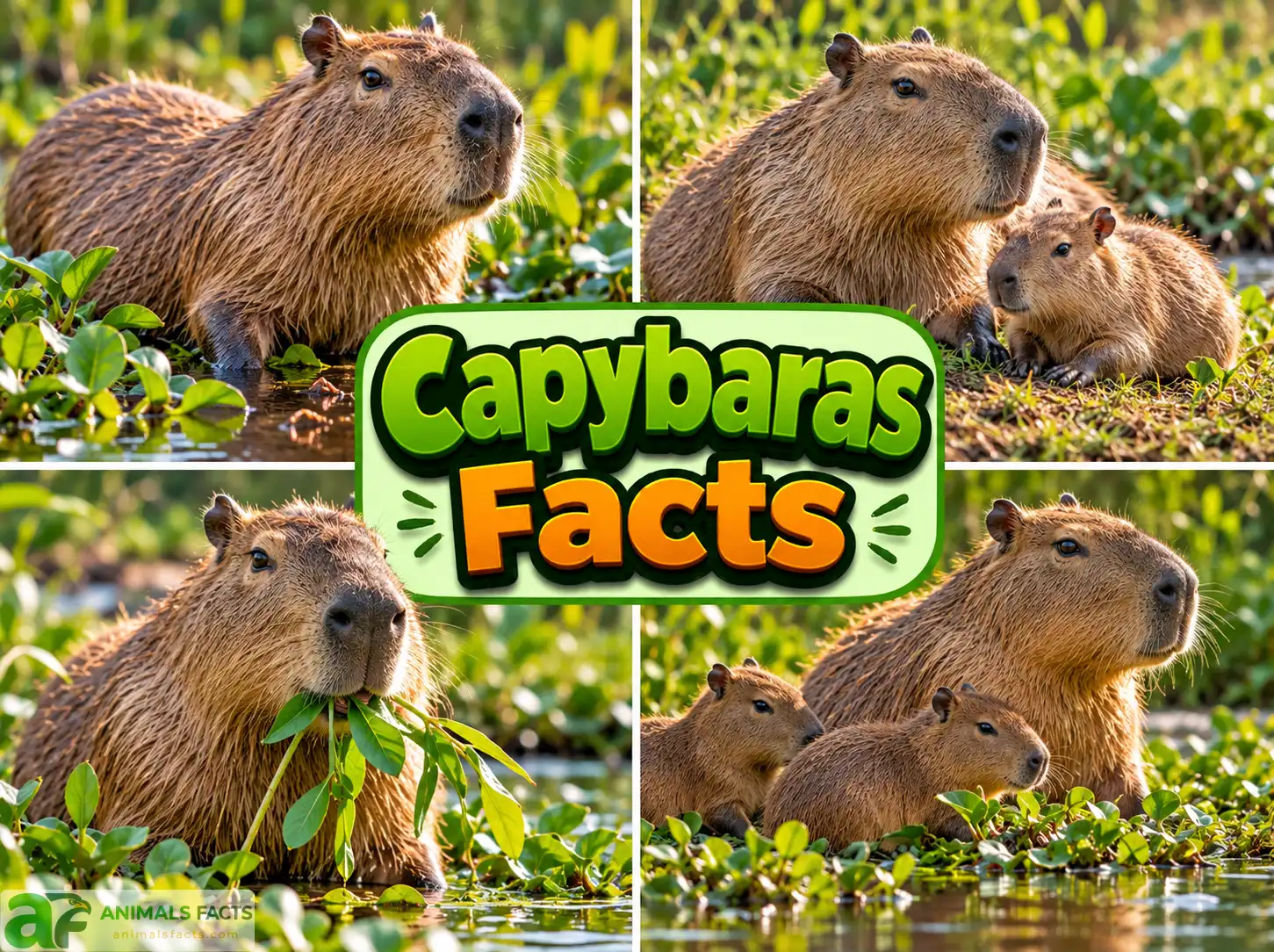
- The capybara is the biggest rodent in the whole world — it’s related to guinea pigs, the cute little pets that many kids have at home, but a capybara can weigh as much as a large dog! Imagine if your guinea pig grew to the size of a Labrador retriever — that’s basically a capybara!
- Capybaras are famous for being friends with everyone — there are thousands of photos and videos online of birds perching on capybaras’ backs, monkeys cuddling up to them, baby ducks swimming with them, and even caimans (which are like crocodiles!) lying peacefully right next to them. Capybaras seem to have decided that almost everyone is welcome!
- The capybara’s eyes, ears, and nose are all on the very top of its head — so it can swim almost completely underwater with only the top of its head poking out. Imagine swimming in a pool and being able to see, hear, and breathe with just the top of your head above the water!
- Capybaras can stay underwater for up to 5 minutes — holding their breath to hide from predators. They’re such good swimmers that their feet are even slightly webbed, like a duck!
- In some countries, the Catholic Church officially decided that capybaras are “fish” — so that Catholics could eat capybara meat during Lent (when they’re not supposed to eat regular meat). Scientists would disagree — but capybaras do love the water!
- Baby capybaras can walk and run within hours of being born — and they start eating grass just a few days later, even though they still nurse milk from their moms. They’re born ready to go!
- Mother capybaras are incredibly generous — they nurse each other’s babies! Multiple moms in the group will let any of the group’s pups drink milk from them, so all the babies have plenty of food.
- Capybara groups can sometimes grow to over 100 animals at water holes during the dry season — imagine a crowd of 100 giant guinea pigs all gathered around the same pond!
Did You Know? Capybaras eat their own droppings in the morning — but not the regular kind! They produce two kinds of droppings: regular ones and special nutrient-packed ones made in the early morning. The special ones are full of vitamins and good bacteria that their bodies can’t get enough of in just one pass through their digestive system. It might sound gross, but lots of animals do this — including rabbits and guinea pigs — and it helps them get extra nutrition from the grass they eat. It’s like having a second breakfast that was already inside you!
12. Relationship with Humans
The capybara’s relationship with human communities across South America spans thousands of years of Indigenous subsistence use, colonial-era cultural and economic interaction, contemporary wildlife management including both sustainable harvest and pest control, and the 21st century internet phenomenon that has made the capybara one of the world’s most globally recognized animals without most of its range country’s populations having had direct contact with it.
Indigenous Relationships
Capybaras were a significant subsistence food resource for Indigenous peoples across South America — hunted for their meat, their hides (used for leather and waterproofing), and occasionally for their fat. This hunting occurred within traditional ecological knowledge frameworks that generally maintained capybara populations at ecologically productive levels — reflecting the same pattern of sustainable traditional resource management documented for many other large-bodied prey species in Indigenous South American contexts.
Multiple Indigenous nations incorporated capybaras into their cultural and spiritual traditions — with various Amazonian and Orinoco basin peoples maintaining mythological narratives and ceremonial practices involving the capybara that reflect thousands of years of cultural coexistence with this prominent riverside animal.
The Catholic Fish Classification
One of the most culturally distinctive aspects of the capybara’s human relationship is the Catholic Church’s 16th-century classification of the capybara as a fish — a decision made in response to a request from Venezuelan and Colombian colonists who wished to continue consuming capybara meat during Lent (the period when Catholics traditionally abstain from land-animal meat). The Vatican apparently agreed that the semi-aquatic capybara was sufficiently fish-like to qualify, and this classification has persisted as cultural practice — with capybara consumption during Lent remaining a widespread tradition in Venezuela and Colombia that generates significant seasonal demand for capybara meat.
Sustainable Harvest Programs
Venezuela has developed one of the most sophisticated sustainable wildlife harvest programs for any large South American mammal — with regulated community-based capybara harvesting on private cattle ranches (hatos) generating income for rural communities while scientific monitoring maintains population viability. Research has documented that well-managed capybara harvesting can sustain significant annual yields without long-term population decline, demonstrating the potential for wildlife-based income generation as a conservation-compatible land use alternative to deforestation or intensive agriculture.
Contemporary Conflict
In some agricultural areas — particularly sugarcane and grain-growing regions — capybaras are considered significant crop pests, generating conflict with farming communities. The capybara’s habit of raiding agricultural fields, damaging fences, and potentially serving as a tick reservoir that affects cattle has generated lethal control programs in some areas that represent meaningful population pressure in conflict-prone regions.
13. Capybara Conservation Status & Threats
The capybara’s Least Concern IUCN status reflects its genuinely robust global population across most of its South American range — but this broad classification masks meaningful regional and local variation in population health and trend.
Conservation Data (2026)
| Region | Status | Population | Trend |
|---|---|---|---|
| Venezuela (Llanos) | Least Concern | High density; well-monitored | Stable under sustainable harvest |
| Pantanal | Least Concern | Very high density | Stable in protected areas |
| Amazon Basin | Least Concern | Widely distributed | Stable in intact habitat |
| Atlantic Forest region | Locally threatened | Reduced; fragmented | Declining in fragmented areas |
| Argentina (southern range) | Least Concern | Recovering in some areas | Mixed |
| Florida, USA | Invasive | Small but established | Slowly increasing |
Major Threats
Habitat loss: Conversion of riparian grassland and wetland to agriculture, urban development, and aquaculture — reducing available habitat quality and water access in agricultural-dominated landscapes.
Hunting: While controlled hunting is sustainable in managed systems, illegal and unregulated hunting in unprotected areas represents a mortality source that can significantly impact local populations.
Road mortality: Expanding road networks bisecting capybara habitat — particularly in Brazil’s rapidly developing interior — generate significant vehicle collision mortality, particularly during nocturnal road crossings.
Tick-associated disease pressure: Capybaras are important hosts for ticks carrying spotted fever (Rickettsia rickettsii) — generating public health concern and lethal control programs in some peri-urban areas of Brazil where capybara-tick-human disease transmission chains have been documented.
Invasive status in non-native range: The small Florida invasive population and potential for further spread represent an ecological concern for Florida’s native plant and wildlife communities, though the population remains small enough that major ecological impacts have not yet been documented.
Did You Know? The Pantanal of Brazil, Bolivia, and Paraguay — the world’s largest tropical wetland — supports what is almost certainly the world’s highest density of wild capybaras, with research estimates suggesting population densities of several hundred individuals per square kilometer in optimal habitat zones. These extraordinary densities — far exceeding those found in any other part of the capybara’s range — reflect the Pantanal’s exceptional productivity as freshwater wetland habitat, with year-round water availability, abundant aquatic vegetation, and extensive grass communities providing the resource base that the capybara’s dietary and habitat needs require.
14. Famous Capybaras
Capybara Craze — The Internet’s Beloved Meme Animals
While individual capybaras are rarely named in the way that charismatic megafauna like bears or great apes are individually profiled by conservation programs, the capybara as a collective cultural phenomenon has generated a level of global internet fame that rivals or exceeds that of most individually famous wild animals. The specific viral moment widely credited with launching the capybara’s modern internet celebrity was a series of photographs — first widely shared around 2011–2012 — showing capybaras in the wild with various other animals sitting peacefully upon or beside them.
Caplin Roscoe — The Pet Capybara Celebrity
Caplin Roscoe — a pet capybara owned by Melanie Typaldos of Texas in the early 2010s — became one of the first individual capybaras to achieve significant online celebrity through a dedicated blog, Facebook page, and YouTube presence. Caplin Roscoe’s documented friendly interactions with humans, dogs, and other animals helped establish the capybara’s public image as an extraordinarily gentle and socially tolerant animal.
JoeZoo and Other Social Media Capybaras
Multiple individual pet capybaras maintained by exotic animal keepers in Japan, the United States, Brazil, and other countries have achieved significant social media followings through documented interactions with their human caretakers and with other pet species — contributing to the broader capybara cultural phenomenon through consistent content demonstrating the species’ characteristically calm, tolerant behavioral profile.
15. Role in Ecosystem & Food Chain
The capybara functions as a prey species, grassland manager, and ecological connector across the diverse South American ecosystems it inhabits — with its position in food webs and its modification of grassland structure through intensive grazing generating ecological effects that extend well beyond the animal’s own population dynamics.
Prey Ecosystem Role
As the largest rodent in the world — and one of the most abundant large-bodied prey animals in South American savannas and wetlands — the capybara provides a critical and high-value prey resource for the top predators of South American ecosystems:
Jaguar prey: Capybaras represent one of the most important prey species for jaguars across much of the jaguar’s South American range — with research in the Pantanal and Venezuelan Llanos documenting capybara as a primary dietary component for jaguar populations in these productive grassland and wetland habitats.
Caiman prey: As documented above, capybaras provide a significant prey resource for black and spectacled caimans — connecting the terrestrial and semi-aquatic food webs of South American freshwater ecosystems.
Supporting predator populations: The high density and high productivity of capybara populations in habitats like the Pantanal and Llanos effectively subsidizes the predator communities of these ecosystems — with the abundant capybara biomass supporting higher densities of jaguars, caimans, anacondas, and other large predators than would be possible with a less productive prey base.
Grassland Management
Capybara grazing at the population densities documented in the Pantanal and Llanos represents a genuine grassland community modification force — with concentrated grazing pressure around water bodies creating distinct vegetation patches of different sward heights and composition that support different invertebrate, bird, and small mammal communities.
Tick Ecology
The capybara’s role as a primary host for several tick species — including ticks that vector spotted fever rickettsia — makes it a significant component of the disease ecology of South American grassland ecosystems, with capybara population dynamics directly influencing tick population dynamics and associated disease transmission risk to other animals and humans in the ecosystem.
16. Myths, Folklore & Cultural Significance
The capybara’s cultural significance across the diverse human communities of South America reflects both thousands of years of Indigenous cultural relationship and the remarkable 21st-century global cultural phenomenon generated by the species’ internet celebrity.
Indigenous Traditions
Multiple Amazonian and Orinoco basin Indigenous nations maintain oral traditions, ceremonial practices, and cultural frameworks incorporating the capybara — reflecting the species’ prominence as a riverside animal that has been a constant presence in the landscapes of South American river communities across millennia.
In some traditions, the capybara is associated with abundance, calm, and the generosity of the river ecosystem — reflecting genuine cultural observation of the animal’s tolerant social behavior, its riverside habitat association, and its role as a significant food resource. The capybara’s apparent fearlessness in water — often grazing along riverbanks within sight of caimans — has generated cultural associations with harmonious coexistence with the dangerous in some traditions.
Venezuela and the Lenten Tradition
The Catholic classification of the capybara as a “fish” has created a uniquely South American culinary-cultural tradition — with smoked or salted capybara meat (called “chigüire” in Venezuela) being a traditional Lenten food widely consumed during the 40-day period before Easter. The smoked capybara industry in Venezuela represents a culturally embedded food tradition with centuries of history, generating both cultural identity and economic activity around the Lenten period.
The Internet Cultural Phenomenon
In the 21st century, the capybara has achieved a cultural significance unprecedented for any comparable South American wildlife species — with the “capybara as universal friend” meme becoming one of the most widely shared wildlife cultural concepts in global digital culture. This internet cultural phenomenon has generated:
Global awareness: The capybara’s internet fame has introduced the species to audiences in countries where it is completely non-native — with many people in Europe, Asia, and North America having their first capybara encounter through social media content rather than any natural history media.
Conservation awareness: The internet visibility has indirectly generated increased public awareness of South American biodiversity and ecosystems among audiences that might otherwise have no connection to these conservation contexts.
Exotic pet interest: The same cultural visibility has unfortunately also increased demand for capybaras as exotic pets — with wildlife welfare concerns about the suitability of domestic keeping for a species with complex social and aquatic needs.
17. Capybaras in Pop Culture
The capybara has generated one of the most remarkable popular culture presences of any South American wildlife species — transforming from near-total global obscurity outside South America in the early 21st century to one of the world’s most widely recognized and most beloved wild animals through internet cultural dynamics that even the most experienced wildlife communicators did not anticipate.
The Internet Meme Phenomenon
The capybara’s internet cultural journey from obscurity to global celebrity is one of the most extraordinary wildlife media stories of the social media era. Key moments in this trajectory include:
The “chilling with other animals” viral imagery (2010s): The photographs and videos showing capybaras sitting peacefully with birds perched on their backs, monkeys clinging to their necks, and caimans resting alongside them became some of the most widely shared wildlife images in early social media history — establishing the “capybara as universal friend and ultimate chill animal” cultural identity that has persisted and grown.
“Capybara vibes” as internet concept (2020s): The capybara became shorthand across social media platforms for an attitude of radical calm acceptance — with “capybara energy” or “capybara vibes” becoming widely used internet idioms for a state of relaxed, non-judgmental social openness.
Dedicated social media accounts: Dozens of dedicated capybara social media accounts — combining wildlife photography, pet capybara content, and meme creation — maintain collective followings of millions of users, generating ongoing capybara content that sustains the cultural phenomenon.
Music — “Capybara” by Aarón Espino
The viral song “Capy Capy” and various other capybara-themed musical content has generated significant streaming activity and social media engagement — with capybara-themed music achieving the kind of virality typically associated with pop culture phenomena rather than wildlife-themed content.
Video Games and Animation
The capybara has appeared as characters in multiple video games, animated series, and digital media productions — reflecting its high public recognition and positive cultural associations as a character design inspiration.
18. Capybara Facts vs. Common Myths
Myth: Capybaras are naturally friendly with all animals because they are unusually intelligent. Fact: The capybara’s inter-species tolerance reflects a combination of genuine behavioral characteristics — low baseline aggression, habituation, mutualistic relationships, and the calm that characterizes large-bodied prey animals with effective aquatic escape options — rather than any unusual cognitive sophistication. The tolerance is real and genuinely documented, but reflects the animal’s ecology and behavioral profile rather than active friendship-seeking intelligence.
Myth: Capybaras are related to hippos. Fact: Capybaras are members of the rodent family Caviidae — making their closest relatives guinea pigs, rock cavies, and maras. Hippos are artiodactyls (even-toed ungulates) more closely related to whales than to rodents. The superficial similarity in semi-aquatic large herbivore appearance reflects convergent evolution rather than close relationship.
Myth: The Catholic Church declaring capybaras “fish” is a modern joke. Fact: This classification is historically genuine — with the 16th-century Vatican genuinely responding to a request from South American colonists and providing a determination that allowed capybara consumption during Lent. The tradition has persisted to the present day in Venezuela and Colombia as a genuine cultural practice rather than as a modern novelty.
Myth: Capybaras make good pets. Fact: While capybaras can become tame and form genuine bonds with human caretakers, they are wild animals with complex social and environmental needs that are extremely difficult to meet in domestic settings. Capybaras require: constant access to water for bathing and thermoregulation, social company of conspecifics (they are highly social and suffer psychologically in isolation), extensive space for grazing, specialized veterinary care, and in many jurisdictions, specific permits. Wildlife welfare organizations consistently advise against capybara keeping as pets.
Myth: Capybaras eat meat occasionally. Fact: Capybaras are strictly herbivorous — consuming exclusively plant material. The cecal feces consumed during coprophagy are not “meat” but are produced from plant material during bacterial fermentation. Despite belonging to the order Carnivora, capybaras have no interest in or physiological adaptation for consuming animal protein.
19. Best Places to See Capybaras in the Wild
Pantanal, Brazil/Bolivia/Paraguay
The Pantanal — the world’s largest tropical wetland — is unquestionably the best destination globally for observing wild capybaras in extraordinary density and accessibility. Capybaras are essentially impossible to miss in the Pantanal — visible in groups of dozens along every road, river margin, and lodge waterway, often grazing within meters of tourist vehicles and boats with minimal alarm. The Transpantaneira road in Mato Grosso state, and the river systems of the southern Pantanal accessible from Bonito and Corumbá, provide particularly reliable and spectacular capybara viewing.
Los Llanos, Venezuela and Colombia
The Venezuelan and Colombian Llanos — the vast tropical savanna grassland system — hosts the largest seasonal capybara aggregations documented anywhere, with dry-season gatherings of 100+ individuals at shrinking water bodies creating wildlife spectacles comparable in density to African savanna aggregations. Wildlife ranches (hatos) on the Venezuelan Llanos provide excellent guided wildlife tours that typically include exceptional capybara viewing alongside giant anteaters, anacondas, and caimans.
Iguazu Falls National Parks, Argentina/Brazil
The national parks surrounding Iguazu Falls — particularly the Argentine side — support habituated capybara populations that graze along park trails and waterways with considerable indifference to human visitors, providing some of the most accessible close-range capybara viewing in a spectacular natural heritage setting.
Iberá Wetlands, Argentina
Iberá — a vast wetland system in northeastern Argentina — supports significant and recovering capybara populations in a spectacular wilderness landscape. The Iberá rewilding project (which has reintroduced jaguars and other species) includes capybara monitoring as part of a comprehensive ecosystem management program that provides scientific context for capybara viewing alongside genuinely exceptional broader wildlife diversity.
City Parks of São Paulo and Rio de Janeiro, Brazil
One of the most unusual capybara viewing opportunities globally — several urban parks and golf courses in Brazil’s major cities have established feral or semi-wild capybara populations that provide some of the world’s most accessible capybara encounters without any wilderness travel requirement. Notable urban capybara populations have been documented in São Paulo’s Parque Estadual da Cantareira and various golf courses in Belo Horizonte and other Brazilian cities.
20. Top Documentaries & Books
Must-Watch Documentaries
“Planet Earth II” — Grasslands episode (BBC, 2016) — David Attenborough-narrated sequences featuring capybaras and their relationship with caimans and other Pantanal predators, providing some of the finest capybara wildlife photography available alongside exceptional coverage of the broader South American grassland ecosystem.
Various Pantanal and Llanos wildlife documentaries (BBC and NatGeo) — Multiple productions covering the Pantanal and Venezuelan Llanos ecosystems have featured extensive capybara content, documenting both normal group behavior and the dramatic predator encounters that characterize life in these predator-rich ecosystems.
“The Living Planet” and various David Attenborough South America productions — Multiple classic and contemporary Attenborough-narrated South America productions have featured capybaras in their Llanos and Pantanal habitat.
Essential Books
“Capybara” — Various popular natural history publications covering South American wildlife include dedicated capybara chapters providing accessible scientific context for understanding the species’ ecology and behavior.
“Jaguars and Other Wildlife of the Pantanal” — Field guides and natural history publications covering the Pantanal ecosystem invariably include extensive capybara coverage given the species’ dominance in this landscape.
21. Comparison of Capybaras with Similar Animals
| Feature | Capybara | Beaver | Nutria | Mara | Giant Otter |
|---|---|---|---|---|---|
| Scientific Name | Hydrochoerus hydrochaeris | Castor canadensis | Myocastor coypus | Dolichotis patagonum | Pteronura brasiliensis |
| Weight | 35–66 kg | 16–32 kg | 5–9 kg | 8–16 kg | 22–32 kg |
| Family | Caviidae (Rodentia) | Castoridae (Rodentia) | Myocastoridae (Rodentia) | Caviidae (same family as capybara!) | Mustelidae |
| Distribution | South/Central America | North America; Eurasia | South America (native); invasive worldwide | Patagonia (Argentina, Chile) | South America |
| Habitat | Freshwater wetland, grassland | Forest streams, rivers | Marshes, rivers, lakes | Open grassland, desert | Rivers, lakes |
| Primary Diet | Grass, aquatic plants | Bark, aquatic plants | Aquatic plants, roots | Grass, shrubs | Fish (specialist carnivore) |
| Social Structure | Highly social groups (10–20+) | Monogamous family units | Pairs/small groups | Pairs/small groups | Highly social family groups |
| Dam Building | None | Yes — primary behavior | None | None | None |
| Webbed Feet | Partially webbed | Webbed hind feet | Partially webbed | Not webbed | Fully webbed |
| Conservation Status | Least Concern | Least Concern | Least Concern | Near Threatened | Endangered |
| Internet Fame | Extraordinary — global meme phenomenon | Moderate | Low | Low | Moderate |
22. How You Can Help
Capybara conservation differs from most endangered species conservation contexts — with the species globally abundant — but meaningful contributions to the broader conservation of South American freshwater ecosystems, sustainable wildlife management, and responsible exotic pet education are all relevant action areas.
Support These Organizations
WWF Brazil and WWF South America (worldwildlife.org) — Supporting WWF’s Pantanal and Amazon conservation programs directly protects capybara habitat alongside the full diversity of South American freshwater ecosystems.
Wildlife Conservation Society South America programs (wcs.org) — WCS conducts research and conservation programs across the Pantanal, Amazon, and Atlantic Forest — all systems supporting significant capybara populations alongside the broader wildlife communities these ecosystems sustain.
Panthera South America (panthera.org) — Panthera’s jaguar conservation programs in the Pantanal and Llanos directly protect the predator-prey ecosystem relationships that include capybaras as a central prey species.
Rewilding Argentina (rewildingargentina.org) — Argentina’s Iberá rewilding project provides excellent context for understanding capybara ecology within a restored predator ecosystem.
Practical Actions
Choose responsible Pantanal and Llanos ecotourism. Selecting ecotourism operators in the Pantanal and Venezuelan Llanos who demonstrate genuine conservation commitment — through contributions to local wildlife research, employment of community guides, and adherence to appropriate wildlife approach protocols — generates economic value from living, wild capybaras and creates local stakeholder interest in maintaining the pristine freshwater ecosystems that capybaras and dozens of other species depend upon.
Advocate against capybara exotic pet trade. While capybara keeping is legal in some jurisdictions, advocating for appropriate exotic pet regulations and sharing accurate information about the complex social and environmental needs of capybaras helps reduce demand that drives both legal and illegal capybara trade.
Support South American wetland conservation. Organizations specifically focused on protecting and restoring South American freshwater ecosystems — wetlands, rivers, and gallery forests — provide the most direct conservation benefit for capybara habitat across the broad geographic scale that the species’ range requires.
Raise awareness responsibly. The capybara’s extraordinary internet celebrity provides a unique opportunity for conservation communication — sharing accurate information about the species’ wild ecology, its conservation situation, and the spectacular South American ecosystems it inhabits alongside the viral content that generates engagement.
Did You Know? Despite its massive internet celebrity, the capybara remains one of the least scientifically studied large mammals in South America — with basic parameters of wild capybara population dynamics, individual social relationship complexity, and behavioral ecology remaining poorly documented compared to the level of scientific attention directed toward comparably abundant large mammals in Africa and North America. This scientific knowledge gap represents both a research opportunity and a conservation management challenge — with limited baseline population data making it difficult to assess whether apparent population stability in specific regions reflects genuine ecological health or simply inadequate monitoring of ongoing decline. Organizations supporting South American wildlife research are therefore contributing to genuinely important knowledge gaps with each capybara field research program funded.
23. Frequently Asked Questions About Capybaras
Q1: What is the scientific name of the capybara?
The capybara’s scientific name is Hydrochoerus hydrochaeris — with “Hydrochoerus” deriving from the Greek words for “water” (hydro) and “pig” (choiros), translating as “water pig.” The family is Caviidae, order Rodentia, class Mammalia. There is also a smaller related species, the Lesser Capybara (Hydrochoerus isthmius), found in Panama and adjacent Colombia.
Q2: Is the capybara really the world’s largest rodent?
es — the capybara is definitively the world’s largest living rodent, with adults averaging approximately 50 kg and the largest documented individuals exceeding 80 kg. It significantly exceeds the next largest rodents (beavers at typically 16–32 kg) and is in a completely different size category from any other living rodent.
Q3: Are capybaras related to guinea pigs?
Yes — capybaras and guinea pigs are both members of the family Caviidae, making them genuinely closely related despite their extraordinary size difference (approximately 50–70 times weight difference between the species). This is one of the most dramatic examples of body size divergence within a single mammalian family.
Q4: Why are capybaras so tolerant of other animals?
The capybara’s documented inter-species tolerance reflects several factors — inherently low baseline aggression, habituation to specific species through repeated non-threatening contact, genuine mutualistic relationships with bird species that remove parasites, and the calm behavioral profile of a large-bodied prey animal with effective aquatic escape options. The tolerance is a genuine documented behavioral characteristic rather than merely internet mythology.
Q5: Do capybaras really eat their own droppings?
Yes — capybaras practice coprophagy (consuming their own feces), specifically eating nutrient-rich cecal feces produced during overnight gut fermentation of grass. This allows recovery of proteins and vitamins produced by gut bacteria during fermentation — a behavior shared with rabbits and guinea pigs that maximizes nutritional extraction from a low-quality grass diet.
Q6: Are capybaras endangered?
No — capybaras are classified as Least Concern by the IUCN, with a global population of several million individuals distributed across most of their South American range. The species is genuinely abundant across most of its range, particularly in productive wetland habitats like the Pantanal.
Q7: Can capybaras be kept as pets?
While legally possible in some jurisdictions, wildlife welfare experts strongly advise against capybara keeping as pets — citing the species’ complex social needs (requiring conspecific companions), constant water access requirements for thermoregulation, extensive grazing space requirements, specialized veterinary care needs, and the legal complications of exotic animal ownership. Capybaras kept without meeting these needs invariably suffer significant welfare harm.
Q8: How long can capybaras hold their breath?
Capybaras can hold their breath for up to 5 minutes — a capability used primarily for predator escape, allowing the animal to remain fully submerged while a predator scans the water surface.
Q9: Is it true the Catholic Church classified capybaras as fish?
Yes — this is historically genuine. In the 16th century, the Vatican responded to a request from Venezuelan and Colombian colonists by providing a determination that allowed capybara meat to be consumed during Lent. The practice of eating capybara (locally called “chigüire”) during Lent persists as a genuine cultural tradition in Venezuela and Colombia to this day.
Q10: Where is the best place to see wild capybaras?
The Pantanal of Brazil, Bolivia, and Paraguay — the world’s largest tropical wetland — provides the most reliable, most accessible, and most spectacular wild capybara viewing available anywhere. The Transpantaneira road corridor in Mato Grosso state is particularly outstanding. The Venezuelan and Colombian Llanos provide the opportunity to see the largest capybara aggregations anywhere, particularly during the dry season.
26. Sources & References
Research Sources
- Wikipedia — Hydrochoerus hydrochaeris and related articles
- IUCN Red List — iucnredlist.org
- WWF — worldwildlife.org
- Panthera — panthera.org
- National Geographic — nationalgeographic.com
- Smithsonian’s National Zoo — nationalzoo.si.edu
- Encyclopaedia Britannica — britannica.com
- BBC Wildlife — bbc.co.uk
- Live Science — livescience.com
- Wildlife Conservation Society — wcs.org
- Rewilding Argentina — rewildingargentina.org
- Various peer-reviewed publications on capybara ecology (Ojasti, Juhani et al.; multiple)