
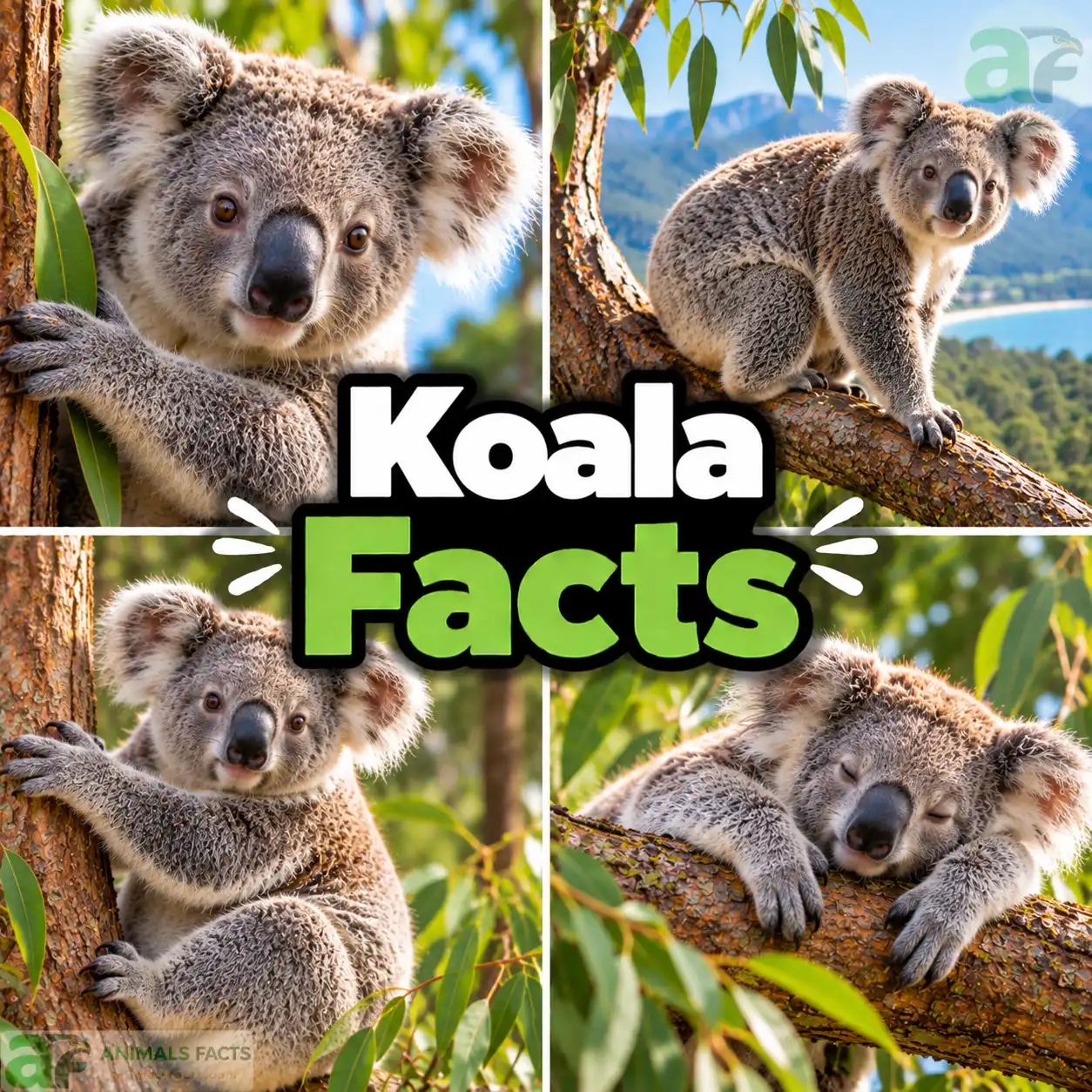
Koala Facts
| Feature | Details |
|---|---|
| Scientific Name | Phascolarctos cinereus |
| Common Names | Koala, Koala Bear (technically incorrect — not a bear) |
| Kingdom | Animalia |
| Phylum | Chordata |
| Class | Mammalia |
| Infraclass | Marsupialia |
| Order | Diprotodontia |
| Family | Phascolarctidae |
| Genus | Phascolarctos |
| Habitat | Eucalyptus forests and woodlands of eastern and southeastern Australia |
| Lifespan | 10–15 years in the wild (females often reaching up to 18 years) |
| Diet | Herbivore — almost exclusively eucalyptus leaves |
| Weight | 4–15 kg (males larger than females; northern koalas smaller than southern koalas) |
| Body Length | 60–85 cm |
| Speed | Slow on the ground (~5 km/h); capable of quick bursts when climbing or fleeing |
| Conservation Status | Vulnerable (IUCN, global); Endangered in Queensland, New South Wales, and the Australian Capital Territory (Australian Government, since February 2022) |
| Population Estimate | Roughly 92,000–100,000 nationally in earlier assessments, with some regional estimates as low as 43,000–63,000; overabundant in parts of South Australia and Victoria |
| Unique Feature | A near-total dietary dependence on toxic eucalyptus leaves that almost no other mammal can safely digest; sleeps up to 20 hours a day; has fingerprints nearly indistinguishable from human fingerprints |
 1. Introduction: What is a Koala?
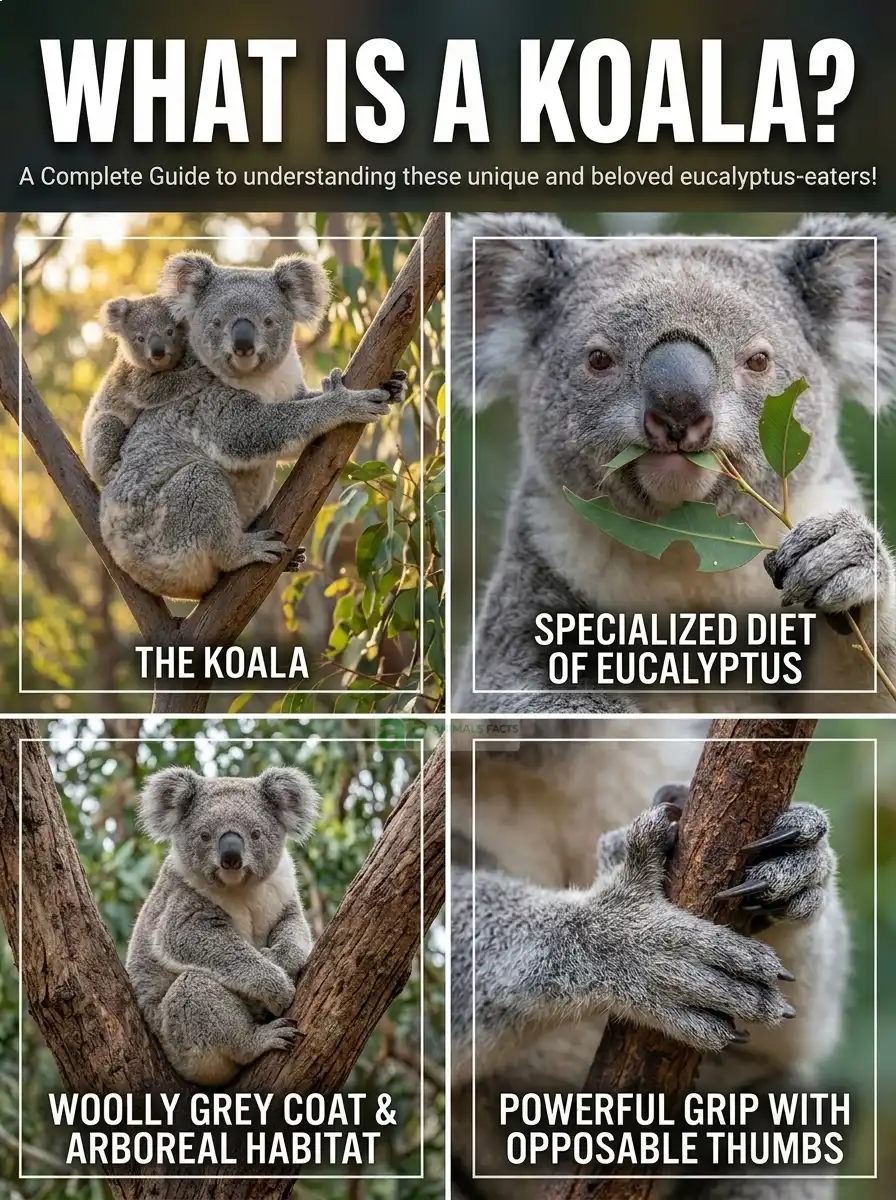
It sleeps up to 20 hours a day, eats a plant that would poison most other mammals, and has fingerprints so similar to a human’s that they have occasionally confused forensic investigators. Koala facts read less like a list of animal trivia and more like a case study in evolutionary specialization taken to its logical extreme. The koala is not a bear at all — despite the enduring nickname “koala bear” — but a marsupial, more closely related to wombats and kangaroos than to anything resembling a bear. It is one of the most instantly recognizable animals on the planet, and yet one of the most widely misunderstood, with myths about its diet, its temperament, and even its taxonomic identity persisting stubbornly in popular culture.
The koala (Phascolarctos cinereus) is the sole surviving member of its family, Phascolarctidae, a lineage that once included a much greater diversity of species across Australia’s ancient forests, some of them considerably larger than the modern animal. Today the koala survives as a single species clinging to eucalyptus forests along Australia’s eastern and southeastern coast — an animal so completely adapted to one narrow ecological niche that it can extract nutrition and moisture almost entirely from a single genus of tree, while most other mammals cannot touch the same leaves without becoming seriously ill. That specialization is the key to understanding almost everything about the koala — its slow metabolism, its small brain relative to body size, its huge digestive cecum, its famously sedentary lifestyle, and ultimately its precarious conservation status in the modern era.
The koala’s story in 2026 is also a genuinely complicated one, and this guide does not shy away from that complexity. In February 2022, the Australian Government formally listed koala populations in Queensland, New South Wales, and the Australian Capital Territory as Endangered, a significant escalation from the Vulnerable listing applied a decade earlier — a direct consequence of habitat clearing, catastrophic bushfires, disease, and the compounding pressures of climate change. And yet, in the very same country, koala populations in parts of Victoria and South Australia are considered locally overabundant, requiring fertility control and translocation programs to prevent overgrazing damage to the forests they depend on. Few animals illustrate more clearly how conservation status can vary dramatically across a single species’ range, and how “endangered” and “abundant” can both be true realities of the very same country, in the very same decade.
Whether you are a student researching koala facts for a school project, a parent looking for koala facts for kids, a wildlife traveler hoping to see one in the wild, a conservation-minded reader trying to understand why this beloved animal was declared endangered, or simply someone who has always found the koala’s sleepy, cuddly reputation charming without ever fully understanding the biology behind it — this is the most complete guide to koala facts you will find anywhere. We cover koala habitat, koala diet, koala scientific name, koala behavior, koala size and weight, reproduction, the extraordinary and unusual digestive adaptations that make this animal possible, conservation status, cultural significance, and the complete story of one of the world’s most recognizable and most misunderstood mammals.
2. Koala Species Overview & Classification
The koala belongs to the order Diprotodontia — the large group of Australian marsupials that includes kangaroos, wallabies, wombats, and possums — but sits in its own exclusive family, Phascolarctidae, of which it is the only living representative. This taxonomic isolation is itself a remarkable fact: while most familiar mammal groups include dozens or hundreds of living species spread across multiple genera, the koala represents an entire family reduced, through millions of years of extinction and environmental change, to a single surviving lineage.
Species Classification Table
| Level | Classification |
|---|---|
| Kingdom | Animalia |
| Phylum | Chordata |
| Class | Mammalia |
| Infraclass | Marsupialia |
| Order | Diprotodontia |
| Family | Phascolarctidae |
| Genus | Phascolarctos |
| Species | P. cinereus |
| Closest Living Relatives | Wombats (family Vombatidae) |
Why Wombats, Not Bears
The koala’s superficial resemblance to a small bear — a round face, stocky body, and large nose — is a case of convergent evolution rather than close kinship. Genetically and developmentally, the koala’s nearest living relatives are the wombats, sharing a common marsupial ancestor and a broadly similar reproductive strategy involving short gestation and extended pouch development. The koala diverged from its wombat-like ancestors as its lineage adapted toward an arboreal, folivorous (leaf-eating) lifestyle, developing the specialized hands, digestive system, and behavior that define the modern animal.
Regional Variants (Not Formally Recognized Subspecies)
Historically, three subspecies were proposed based on regional size and coat differences, though modern genetic research treats these more as regional clines — gradual variation across geography — than as true, taxonomically distinct subspecies.
| Regional Form | Range | Notable Feature |
|---|---|---|
| Northern (formerly “adustus”) | Queensland | Smaller body size, shorter and lighter-colored fur, adapted to warmer climates |
| Central/NSW (formerly “cinereus”) | New South Wales | Intermediate size and fur density |
| Southern (formerly “victor”) | Victoria, South Australia | Largest body size, thickest fur — an adaptation to cooler climates, consistent with Bergmann’s Rule |
This north-to-south size gradient is one of the clearest examples of Bergmann’s Rule in Australian mammals: within a widely distributed species, populations in cooler climates tend to be larger-bodied, since a larger body retains heat more efficiently relative to its surface area. A koala from Victoria may weigh nearly twice as much as a koala from tropical Queensland despite belonging to the same species.
Species Evolution & Discovery Timeline
Roughly 30 million years ago: Ancestral phascolarctids began diverging within Australia’s marsupial lineage during the Oligocene epoch, as the continent’s forests began the long transition from rainforest toward the drier eucalyptus woodlands that would eventually dominate much of the landscape.
Millions of years of diversification: The fossil record shows that Phascolarctidae once included numerous genera and species — some larger and more robustly built than the modern koala — many of which went extinct as Australia’s climate dried and rainforest gave way to eucalypt-dominated habitat over an extended period of environmental change.
Pleistocene epoch: As Australia’s climate and vegetation continued shifting, most phascolarctid lineages disappeared, leaving Phascolarctos cinereus as the last survivor of an entire once-diverse family — a pattern of decline and single-species survival echoed in several other unique Australian lineages.
Tens of thousands of years ago: Aboriginal Australians developed deep cultural, spiritual, and subsistence relationships with the koala, incorporating it into Dreamtime stories, rock art, ceremony, and oral tradition across many distinct nations and language groups, long before European contact.
1798: European naturalists recorded the first scientific descriptions of the koala following British colonization of Australia, initially causing considerable confusion in Europe about how to classify an animal that resembled nothing else in the established zoological literature of the time.
1888–1927: The commercial fur trade drove the killing of at least 8 million koalas for their pelts across this roughly four-decade span, devastating populations across much of the continent and representing one of the most intensive targeted fur harvests of any Australian native species.
1930s: Public outcry over the fur trade, combined with growing conservation awareness both domestically and internationally, led to legal protections for koalas being introduced across Australian states, effectively ending large-scale commercial hunting.
2012: The Australian Government listed koala populations in Queensland and New South Wales as Vulnerable under national environmental law, citing documented population declines of roughly 40% in Queensland and 33% in New South Wales.
2017: A WWF-commissioned report found a 53% decline per generation in Queensland’s koala population and a 26% decline in New South Wales, adding further evidence to the case for stronger protection.
2019–2020: Catastrophic Australian bushfires burned up to 12.6 million hectares of forest nationwide, devastating already-declining koala populations and accelerating calls to uplist the species.
February 2022: The Australian Government uplisted koala populations across Queensland, New South Wales, and the Australian Capital Territory from Vulnerable to Endangered under the Environment Protection and Biodiversity Conservation Act, a landmark and controversial decision that drew both praise for its overdue recognition of decline and criticism for arriving too late to prevent further habitat loss.
2025–2026: Continued investment, including an estimated AUD 76 million “Saving Koalas Fund,” has aimed to address habitat loss, disease, and population decline, even as researchers and advocacy groups such as the Australian Koala Foundation continue to debate whether current protections are sufficient, and as populations in parts of South Australia and Victoria remain locally overabundant, prompting active population management rather than protection.
3. Koala Physical Description & Unique Features
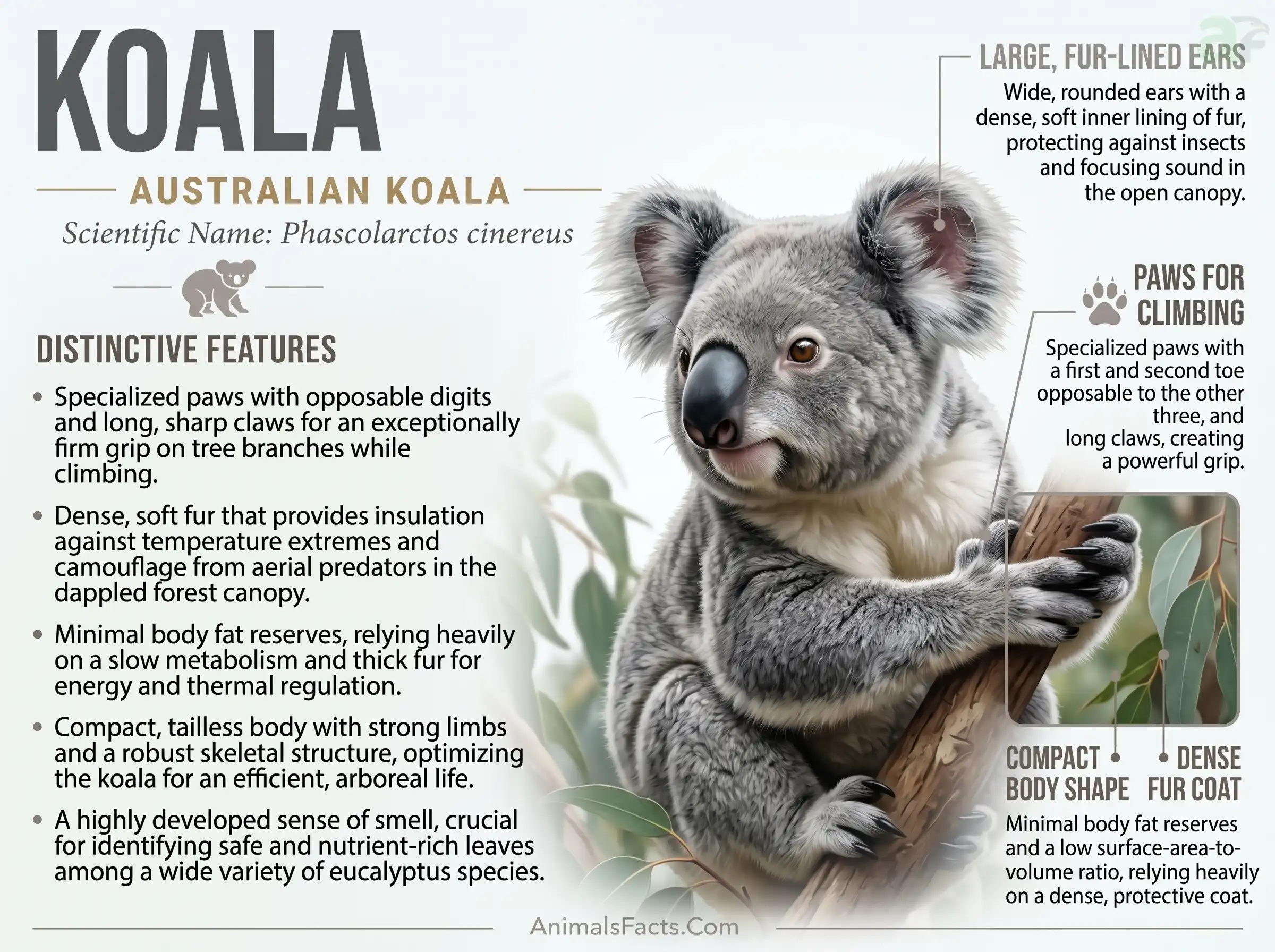
The koala’s body is a masterclass in specialized design — built almost entirely around the demands of an arboreal life spent processing an extremely low-nutrient, mildly toxic diet. Nearly every distinctive physical trait the koala possesses can be traced back to this singular evolutionary pressure.
Size and Build
Weight: Adult males typically weigh 6–15 kg; females are smaller, typically 4–11 kg. Southern koalas (Victoria, South Australia) are noticeably larger than northern koalas (Queensland) — an example of Bergmann’s Rule in action, where cooler climates favor larger body size for heat retention through a more favorable surface-area-to-volume ratio.
Body length: 60–85 cm, with males generally longer and more heavily built than females of the same regional population.
Build: A stocky, barrel-shaped body with no visible external tail (koalas retain only a small vestigial tail bone), large rounded ears fringed with long protective hair, and a large, spoon-shaped nose that provides an exceptional sense of smell — critical for detecting which eucalyptus leaves are safe, palatable, and nutritious to eat versus which carry dangerously high toxin concentrations.
Coloration: Fur color ranges from grey to a warmer brown-grey, typically with a white or cream-colored chest, throat, and inner ear fur, and darker fur across the back and limbs — providing some degree of camouflage against tree bark and canopy shadow.
Specialized Hands and Feet
Koalas have two opposable digits on each forepaw (the first and second digits, positioned opposite the remaining three), giving them an extremely strong grip for gripping branches — a hand structure often compared to having two thumbs on each hand. Their hind feet, meanwhile, feature a large, clawless first digit (useful for grip) alongside fused second and third digits that form a specialized grooming tool used to comb through fur. Both front and back paws carry sharp claws and rough, ridged pads that provide secure grip on smooth eucalyptus bark.
Fingerprints: Koala fingerprints are remarkably similar in pattern — loops, whorls, and ridges — to human fingerprints, a similarity so pronounced that it has, on rare documented occasions, caused confusion at crime scenes in Australia, a detail frequently cited in forensic science literature as a striking example of convergent evolution between an unrelated primate and marsupial lineage.
The Specialized Digestive System
Cecum: Koalas possess one of the largest cecums (a pouch located at the junction of the small and large intestine) relative to body size of any mammal — often exceeding 2 meters in length in adult animals — which houses specialized bacterial communities capable of breaking down the tough fiber and neutralizing some of the toxic compounds present in eucalyptus leaves. This enlarged fermentation chamber functions in a broadly similar way to the rumen of cattle, though structured very differently, allowing the koala to extract usable energy from an otherwise largely indigestible and mildly poisonous food source.
Liver detoxification: Beyond the cecum, the koala’s liver plays a major role in metabolizing and neutralizing the various terpenes and phenolic compounds found in eucalyptus oil, allowing the animal to consume leaves that would sicken most other mammalian herbivores.
Sense of smell: A highly developed olfactory system, centered on that oversized nose, allows koalas to detect and reject leaves with dangerously high toxin concentrations before eating them — an essential filtering mechanism given how variable toxin levels can be even between individual trees of the same eucalyptus species.
Fur and Thermoregulation
Koala fur is dense and wool-like, providing insulation against both cold nights and intense Australian summer heat. Southern koalas have notably thicker coats than their northern counterparts, an adaptation to the more variable and colder climates found in Victoria and South Australia compared to tropical Queensland. Koalas also have a cartilaginous pad at the base of the spine that provides a natural cushion for sitting comfortably in the fork of a tree for many hours at a stretch — an anatomical feature essential to an animal that spends the overwhelming majority of its life sitting or lying in trees.
Brain Size
One of the more curious and frequently cited koala facts concerns brain size: the koala’s brain is unusually small and smooth relative to its skull cavity, occupying only a fraction of the available cranial space and lacking many of the deep folds (gyri and sulci) seen in the brains of many other mammals of comparable body size. This is widely believed to be an energy-conservation adaptation, since brain tissue is metabolically expensive to maintain, and an animal surviving on such a low-calorie diet may have been under evolutionary pressure to minimize energy-hungry organs wherever possible.
Did You Know? Because eucalyptus leaves are so low in nutritional value and calories, koalas conserve energy by sleeping or resting for up to 20 hours per day — one of the highest rates of daily rest recorded in any mammal, rivaled only by animals like sloths. This is not laziness in any behavioral sense, but a direct physiological consequence of an extremely low-energy diet combined with a metabolism that has been shaped by millions of years to match it.
4. Top 25 Surprising & Interesting Koala Facts
- Koalas are not bears — they are marsupials, more closely related to wombats than to any bear species.
- A koala’s fingerprints are so similar to a human’s that they have occasionally been mistaken for human prints in forensic contexts.
- Koalas sleep or rest up to 20 hours per day, largely to conserve energy from their extremely low-calorie diet.
- Eucalyptus leaves are mildly toxic to most mammals, but a koala’s specialized gut bacteria and enlarged cecum allow it to detoxify and digest them safely.
- A koala’s cecum can measure over 2 meters long — one of the largest relative to body size of any mammal.
- Koalas rarely need to drink water directly — the name “koala” is sometimes said to derive from an Aboriginal word roughly meaning “no drink,” though this specific linguistic origin is debated among scholars.
- Baby koalas, called joeys, are born the size of a jellybean — roughly 2 cm long and weighing less than a gram at birth.
- A joey feeds on a special substance from its mother called “pap” — a soft, partially digested form of maternal feces that introduces the bacteria the joey needs to safely digest eucalyptus leaves later in life.
- Koalas have two opposable digits on their front paws, giving them an exceptionally strong grip often described as having “two thumbs.”
- Male koalas have a loud, deep bellowing call — disproportionately low-pitched for their body size — produced by a unique extra pair of vocal folds located outside the larynx.
- Koalas were hunted for fur so intensively that at least 8 million were killed between 1888 and 1927 alone.
- In February 2022, koalas were officially listed as Endangered in Queensland, New South Wales, and the Australian Capital Territory.
- Despite endangered status in parts of their range, koala populations in areas of South Australia and Victoria are locally overabundant, requiring active fertility control programs.
- Koalas eat roughly 200–500 grams of eucalyptus leaves per day, but are highly selective, often rejecting the majority of leaves available on a given tree.
- There are over 700 species of eucalyptus in Australia, but koalas eat only a small fraction — as few as a few dozen species regularly, with strong regional and even individual preferences.
- Koala joeys stay in the mother’s pouch for about six months before riding on her back and beginning to explore independently.
- Koalas reach general independence from their mother at around 12 months of age.
- A koala’s brain is unusually small and smooth relative to its skull cavity, thought to be an energy-saving adaptation tied to its low-calorie diet.
- Vehicle collisions and dog attacks kill approximately 4,000 koalas per year in Australia, accounting for roughly two-thirds of all known koala deaths.
- Koalas are considered one of the animals most vulnerable to climate change, since rising atmospheric CO2 levels reduce the nutritional quality of eucalyptus leaves even further.
- Chlamydia is a major disease threat to wild koalas, and vaccination programs are now underway across parts of Australia to combat its spread.
- The 2019–2020 Australian bushfires destroyed up to 12.6 million hectares of forest nationwide, devastating koala habitat and populations across multiple states.
- Koalas have a cartilage pad at the base of their spine that cushions them for the many hours they spend sitting in tree forks each day.
- Some assessments have found koala populations declining from an estimated 185,000 individuals roughly two decades ago to around 92,000 in more recent surveys within their core range.
- Koalas hold deep spiritual significance in Aboriginal Dreamtime stories, some of which describe the koala as playing a role in helping animals survive rising seas in ancient times.
5. Fun Facts About Koala Animal
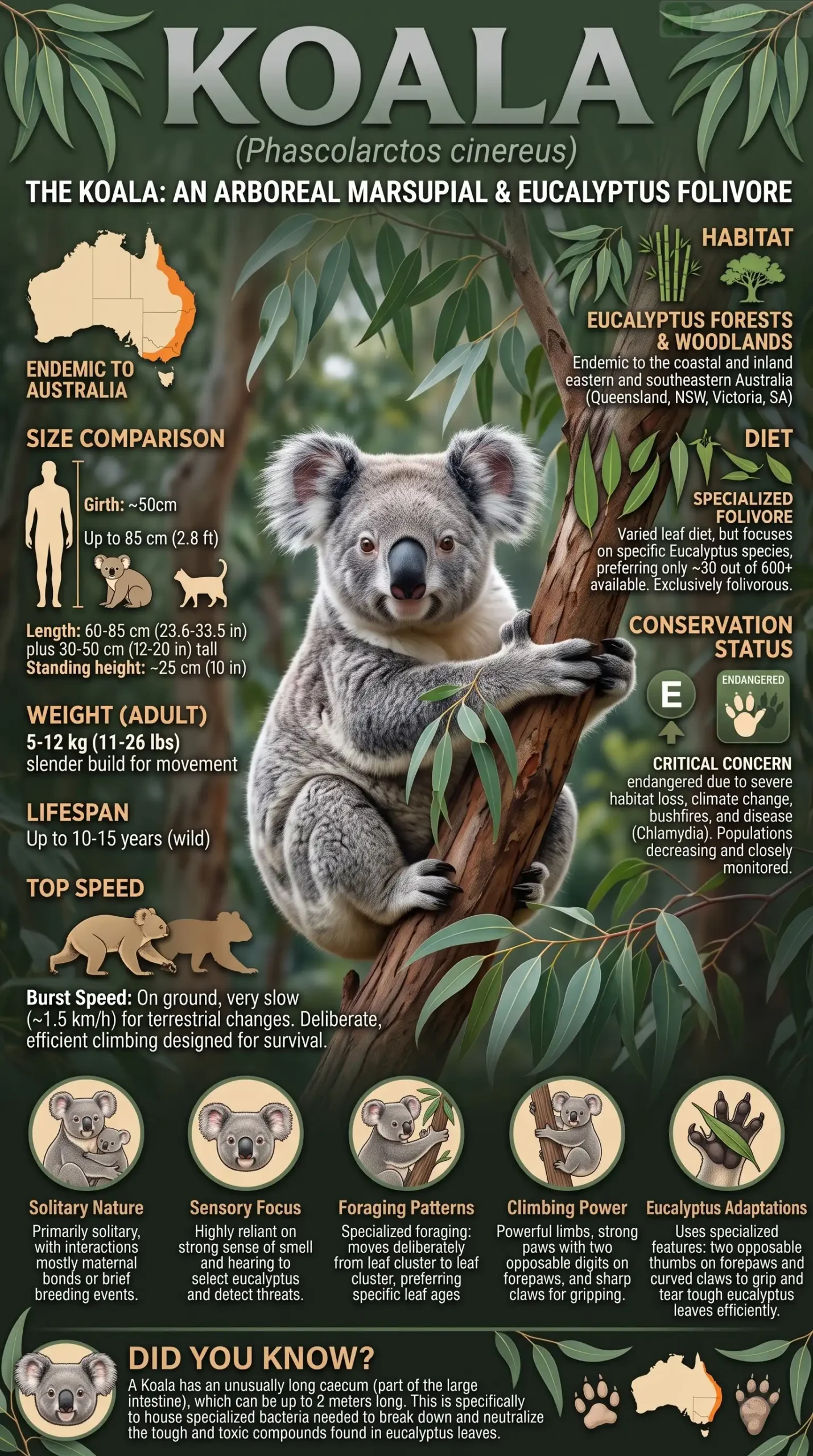
- Koalas aren’t bears — they’re marsupials.
- They sleep up to 20 hours a day.
- Their fingerprints closely resemble human fingerprints.
- Joeys are born the size of a jellybean.
- Koalas rarely drink water directly.
- They eat up to 500 grams of eucalyptus leaves daily.
- Male koalas make surprisingly deep bellowing calls.
- Koalas have two opposable “thumbs” on each front paw.
- They were listed as Endangered in parts of Australia in 2022.
- Some koala populations are actually overabundant, not endangered.
- A koala’s cecum can be over 2 meters long.
- Climate change is reducing the nutritional value of their only food source.
- Koalas have a small, smooth brain relative to their skull size.
- They can live up to 18 years in the wild, longer than many similarly sized mammals.
6. Natural Habitat & Geographic Range
Koalas are found exclusively in Australia, restricted to eucalyptus forests and woodlands along the eastern and southeastern parts of the continent, where their sole food source grows in sufficient density and diversity to sustain them.
Habitat Requirements
Eucalyptus forest and woodland: Koalas require a landscape with sufficient density and diversity of eucalyptus species to sustain their highly selective feeding habits, since individual trees vary considerably in leaf toxin concentration and nutritional value.
Connected canopy: Because koalas move primarily by climbing and occasionally crossing short distances on the ground between trees, fragmented or isolated patches of forest — often the direct result of land clearing for agriculture and urban development — pose serious risks, forcing koalas onto roads and into contact with dogs, cars, and unfamiliar terrain.
Climate tolerance: Koalas occupy a genuinely wide range of climates, from the tropical woodlands of northern Queensland to the cooler temperate forests of Victoria and South Australia, with regional body size and fur density adapting accordingly.
Elevation and terrain: While often associated with lowland coastal forest, koalas also occupy inland woodland habitats at moderate elevations, provided sufficient eucalyptus cover exists.
Geographic Range Table
| Region | Status | Population Trend | Notes |
|---|---|---|---|
| Queensland | Endangered (national listing) | Declining | Some areas described by officials as “functionally extinct” locally due to severe local declines |
| New South Wales | Endangered (national listing) | Declining | Subject of the proposed Great Koala National Park, still facing ongoing logging debate |
| Australian Capital Territory | Endangered (national listing) | Declining | Small population, high conservation priority |
| Victoria | Not nationally listed | Locally overabundant in places | Overgrazing issues documented in areas like Cape Otway and French Island |
| South Australia | Not nationally listed | Overabundant in places, especially the Mount Lofty Ranges | Koalas are not native here — introduced around 1920 from Victoria |
| Kangaroo Island, SA | Not nationally listed | Sharply reduced after 2020 bushfires | Population fell from an estimated ~48,000 to roughly 5,000–10,000 |
Did You Know? Koalas are not native to South Australia at all. The population there descends from koalas translocated from French Island, Victoria, around 1920 — meaning some of Australia’s most “abundant” modern koala populations are, ecologically speaking, an introduced population now actively managed through sterilization and translocation programs to prevent them from overgrazing and destroying the very forests they depend on.
Did You Know? The Mount Lofty Ranges near Adelaide, home to roughly 10% of Australia’s entire koala population, has seen numbers grow so rapidly that a 2026 modelling study warned continued unchecked growth could exceed local ecosystem carrying capacity, prompting evaluation of fertility control and other management strategies to balance population health with forest sustainability.
7. Koalas Diet & Feeding Behavior
Koalas are among the most extreme dietary specialists in the mammal world, relying almost exclusively on eucalyptus leaves — a food source that is low in calories, high in fiber, and often laced with toxic compounds that few other animals can tolerate in any meaningful quantity.
Diet Breakdown Table
| Food Type | Approximate Share of Diet | Notes |
|---|---|---|
| Eucalyptus leaves | ~95–99% | Core food source; roughly 200–500 grams consumed daily |
| Other native leaves (occasional) | Small remainder | Some non-eucalyptus browse consumed in certain regions |
| Water | Minimal direct drinking | Most moisture obtained from leaves themselves; direct drinking increases during heat or drought |
Feeding Behavior
Selectivity: Koalas are highly selective feeders, often smelling and rejecting the majority of leaves on a given tree before choosing which to eat, based on moisture content, toxin levels, and nutrient value — a process that can take considerable time given how variable individual trees and even individual branches can be.
Species preference: Of the more than 700 eucalyptus species found across Australia, koalas regularly consume only a few dozen, with strong regional and even individual preferences — a koala in one forest patch may favor different eucalyptus species than a koala just a short distance away, depending on local availability and learned preference.
Feeding posture and pace: Koalas typically feed in short bursts spread throughout the day and night, wedged securely in a tree fork, using their strong grip and opposable digits to draw branches toward their mouth.
Low-energy lifestyle: Because their diet provides so little caloric energy relative to its bulk, koalas move slowly, rest for the vast majority of the day, and minimize unnecessary physical activity — a behavioral adaptation directly tied to their nutritional constraints rather than any lack of alertness or capability.
Water intake during heat: While koalas rarely need to drink under normal conditions, extreme heat and drought — increasingly common under climate change — have been documented driving koalas to seek out direct water sources more frequently, sometimes bringing them into closer contact with humans and roads.
Did You Know? Because eucalyptus leaves are so low in nutritional value, a koala’s slow-moving, sleep-heavy lifestyle isn’t laziness — it’s a calculated energy-conservation strategy essential to its survival on one of the most nutritionally poor diets of any mammal on Earth. Some researchers have compared the koala’s metabolic rate, adjusted for body size, to be among the lowest recorded of any marsupial.
8. Reproduction & Life Cycle
Koala reproduction is defined by an extraordinarily undeveloped birth, an extended period of maternal dependence, and a marsupial developmental strategy broadly shared with kangaroos and wombats, though shaped by the koala’s own unique ecological demands.
Mating and Birth
Breeding season: Typically spans from spring into summer (roughly September through March in Australia), though timing can vary somewhat by region and climate.
Gestation: Approximately 33–35 days — remarkably short, as is typical of marsupials, since most development occurs after birth inside the mother’s pouch rather than in the womb.
Birth: A koala joey is born extremely undeveloped — roughly the size of a jellybean, blind, hairless, and with only partially formed limbs — and immediately crawls, using strong forelimbs and an instinctive sense of direction, into the mother’s pouch, where it attaches to one of two teats and begins nursing continuously.
Single offspring: Koalas typically give birth to a single joey per breeding season, occasionally twins, reflecting a reproductive strategy centered on intensive investment in one offspring at a time rather than large litters.
Developmental Stages
| Stage | Age | Key Development |
|---|---|---|
| Birth | Day 0 | Jellybean-sized; blind, hairless; crawls into pouch unaided |
| Pouch stage | 0–6 months | Nursing continuously; growing fur, eyes, and limbs inside the pouch |
| “Pap” feeding | Around 6–7 months | Consumes mother’s pap to acquire the specialized gut bacteria needed for eucalyptus digestion |
| Emerges from pouch | ~6 months | Begins riding on mother’s back and briefly exploring nearby branches |
| Weaning | ~7–12 months | Gradual transition from milk to eating eucalyptus leaves directly |
| Independence | ~12 months | Leaves mother’s home range to establish its own territory |
| Sexual maturity | 2–3 years (females); 3–4 years (males) | Reaches reproductive age; males typically mature slightly later than females |
Koala Lifespan Comparison Table
| Species | Average Wild Lifespan | Maximum Recorded |
|---|---|---|
| Koala | 10–15 years (up to 18 for females) | ~18–20 years |
| Common Wombat | 5–15 years | ~20 years (captivity) |
| Sugar Glider | 5–9 years | ~14 years (captivity) |
| Ringtail Possum | 4–6 years | ~9 years |
Did You Know? The “pap” a joey consumes from its mother is not ordinary waste — it is a specially softened, cecum-derived substance rich in the specific bacteria the joey requires to eventually digest tough, toxic eucalyptus leaves on its own. Without this maternal inoculation early in life, a young koala would be unable to safely process its future adult diet.
9. Social Behavior & Communication
Koalas are largely solitary animals, with social interaction concentrated mainly around mating season and mother-joey relationships, but they possess a surprisingly rich communication system for an otherwise quiet, low-energy species.
Vocalizations
Male bellow: Adult male koalas produce a deep, resonant bellowing call — disproportionately low-pitched for their body size — produced using a specialized extra pair of vocal folds located outside the larynx, an anatomical feature not found in the vocal apparatus of most other mammals. This call is used to advertise territory and attract females during breeding season and can travel a considerable distance through dense forest.
Female and joey calls: Softer grunts, snarls, hisses, screams, and clicking sounds are used in close-contact communication between mothers and joeys, or during aggressive encounters between individuals disputing territory or resources.
Distress calls: Koalas in distress, particularly during conflict or when threatened, may produce a scream-like vocalization notably different from their usual quiet demeanor.
Scent Marking
Male koalas possess scent glands located on their chest, which they rub against tree trunks to mark territory and communicate reproductive status, individual identity, and dominance to nearby koalas, particularly females during breeding season.
Territoriality
Koalas maintain home ranges that vary widely in size depending on habitat quality and eucalyptus density, often overlapping between individuals of the opposite sex while remaining largely exclusive among same-sex individuals. Dominant males typically maintain the largest and most resource-rich territories, overlapping with the ranges of several females.
Intelligence and Cognition
While koalas are not typically regarded as among the most cognitively sophisticated mammals — a trait some researchers link to their unusually smooth, low-convolution brain structure — they demonstrate clear behavioral learning, particularly in identifying which specific trees and eucalyptus species within their home range are safest and most palatable, knowledge that appears to develop through early experience alongside the mother.
Did You Know? A male koala’s bellow is produced by an extra set of vocal folds located outside the larynx entirely — a unique anatomical feature that allows a comparatively small animal to produce a call more typical of a much larger mammal, audible over considerable distances through dense eucalyptus forest, and often compared by researchers to sounds far more befitting a large livestock animal than a marsupial under 15 kg.
10. Predators & Defense Mechanisms
Adult koalas have relatively few natural predators, thanks largely to their arboreal lifestyle, but they remain vulnerable during ground movement between trees and are especially at risk as joeys.
Natural and Introduced Predators
Dingoes: A natural predator capable of catching koalas that descend to the ground to move between trees, particularly in more open or fragmented habitat where trees are farther apart.
Domestic dogs: Now one of the leading causes of koala mortality in areas where human development borders koala habitat, with attacks occurring both in suburban areas and on rural properties.
Birds of prey: Large raptors occasionally take young or otherwise vulnerable koalas, particularly during vulnerable moments on the ground or in low branches.
Pythons and monitor lizards (goannas): Documented as occasional predators of joeys and smaller individuals in some regions, particularly in Queensland.
Defense Mechanisms
Arboreal refuge: A koala’s primary defense is simply staying in trees, out of reach of most ground-based predators, and moving to higher, thinner branches that larger predators cannot easily follow.
Claws: Sharp, curved claws provide both climbing ability and a defensive tool if a koala is cornered or handled roughly.
Camouflage and stillness: Koalas often remain motionless for long periods, relying on their coloring and lack of movement to avoid drawing predator attention in the first place — stillness as a primary defense strategy rather than speed or aggression.
Bite and scratch response: While generally docile, a cornered or frightened koala is capable of delivering a painful bite and forceful scratches, a fact well known to wildlife handlers and veterinarians who work with injured or stressed individuals.
Human-caused threats: In modern Australia, the greatest dangers to koalas are not natural predators at all, but vehicle strikes and dog attacks, which together account for roughly two-thirds of known koala deaths, a stark illustration of how human infrastructure and pets have replaced natural predation as the dominant mortality pressure on the species.
11. Koala Facts for Kids
Hey kids — let’s find out why koalas are one of Australia’s most amazing sleepyheads!
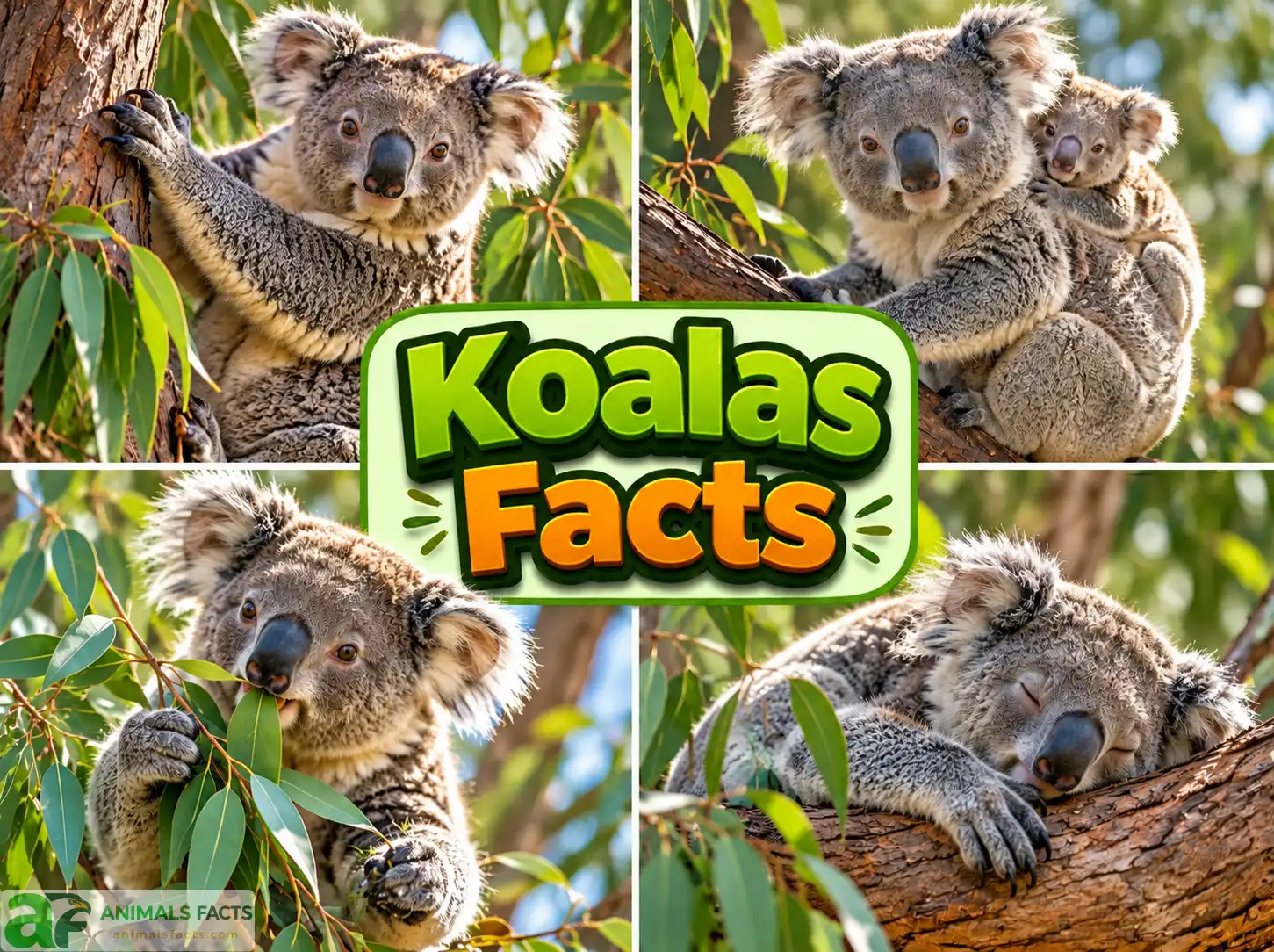
- Koalas are NOT bears — even though people call them “koala bears,” they’re actually marsupials, just like kangaroos! That means baby koalas grow up snug inside their mom’s pouch, just like a baby kangaroo does.
- Koalas sleep up to 20 hours a day — that’s way more than you sleep, even on a lazy weekend! They do this because their favorite food, eucalyptus leaves, doesn’t give them much energy, so they save it all up by resting.
- Baby koalas are called joeys, and when they’re born, they’re only about the size of a jellybean! They’re so tiny and undeveloped that they can’t even open their eyes yet.
- Koalas have two “thumbs” on each front paw — this super grip helps them hold onto tree branches all day long without ever slipping.
- Male koalas make a really loud, deep bellowing sound — much lower and bigger-sounding than you’d expect from an animal their size! It sounds almost like a pig snorting or a door creaking.
- Koalas hardly ever need to drink water — they get most of the moisture they need straight from the leaves they eat, which is pretty amazing for such a big, furry animal.
- A koala’s fingerprints look so much like a human’s that scientists have to look really closely to tell them apart! It’s one of the strangest coincidences in the whole animal kingdom.
- Koala joeys ride on their mom’s back once they get a bit bigger — just like a backpack, except the backpack is a fuzzy baby koala!
Did You Know? Even though koalas look cuddly, they eat leaves that are actually poisonous to most other animals! Their bodies have special helper bacteria in their tummies that break down the poison safely — something almost no other animal on Earth can do with eucalyptus leaves the way a koala can.
12. Relationship with Humans
The koala’s relationship with humans spans tens of thousands of years of Aboriginal cultural connection, followed by a much shorter but far more destructive period of European settlement, fur trade exploitation, and modern conservation conflict that continues to unfold today.
Aboriginal Cultural Connection
Koalas hold deep spiritual and cultural significance for many Aboriginal Australian nations, appearing in Dreamtime creation stories, rock art, ceremony, and oral tradition. Some traditional stories describe the koala as playing a role in the survival of animals during a time of rising seas, reflecting the animal’s long-standing symbolic importance in Indigenous culture that predates European arrival by tens of thousands of years. Traditional relationships with koalas also included sustainable harvest practices in some regions, guided by seasonal and ecological knowledge passed down across generations.
The Fur Trade Era
Commercial hunting for koala fur intensified through the late 19th and early 20th centuries, driven by demand for koala pelts in the fur trade, with at least 8 million koalas killed for their fur between 1888 and 1927 alone — an extraordinary scale of exploitation for a slow-reproducing species with a single offspring per breeding season. Public outrage over this mass hunting, both within Australia and internationally, eventually contributed to legal protections being introduced across Australian states in the following decades, effectively ending large-scale commercial harvesting of the species.
Modern Conflict and Coexistence
Vehicle strikes and dog attacks: Together these account for roughly two-thirds of known koala deaths in modern Australia, particularly in areas where housing development has fragmented koala habitat and pushed koalas into closer contact with roads, driveways, and residential yards.
Habitat clearing conflicts: Ongoing land clearing and logging — including within areas proposed for protection, such as the planned Great Koala National Park in New South Wales — remain a significant point of public and political controversy, with conservation groups and some political parties pushing for stronger protections while logging and development interests continue to operate in overlapping areas.
Wildlife rescue and rehabilitation: Numerous koala hospitals and rehabilitation centers across eastern Australia treat injured, sick, and orphaned koalas, with vehicle- and dog-related trauma, along with chlamydia infection, cited among the most common reasons for admission in long-term rehabilitation center studies.
Urban coexistence: Some koala populations persist successfully in and around urban and semi-urban areas, provided sufficient tree cover and connectivity remain — a reminder that coexistence, rather than simple exclusion, is often the most realistic long-term path for koala conservation near populated regions.
13. Koala Conservation Status & Threats
The koala’s conservation status is a genuinely complicated picture — a species officially endangered across much of its core range, yet locally overabundant in other parts of the same country, creating one of the more unusual conservation management challenges among widely recognized mammal species.
Conservation Data (2026)
| Region/Body | Status | Population Estimate | Notes |
|---|---|---|---|
| IUCN Red List (global) | Vulnerable | — | Reassessed from Least Concern to Vulnerable during the 2010s |
| Queensland, NSW, ACT (Australian Government) | Endangered | Some estimates around 92,000 nationally in earlier assessments; other estimates as low as 43,000–63,000 in specific surveyed regions | Listed endangered in February 2022 |
| Victoria | Not federally listed | Locally overabundant in places | Managed through translocation and fertility control programs |
| South Australia | Not federally listed | Locally overabundant (e.g., Mount Lofty Ranges) | Introduced population, not native to the state |
| Kangaroo Island, SA | Not federally listed | Roughly 5,000–10,000 (down from an estimated ~48,000 before 2020) | Sharp decline following the 2020 Kangaroo Island bushfires |
Major Threats
Habitat loss and fragmentation: Land clearing for agriculture and urban development remains the single largest driver of koala decline in Queensland and New South Wales, both directly destroying habitat and isolating remaining populations into smaller, more vulnerable fragments.
Bushfires: The 2019–2020 Australian bushfire season destroyed up to 12.6 million hectares of forest nationwide, with devastating effects on already-declining koala populations, particularly in New South Wales and parts of Queensland and Victoria.
Disease: Chlamydia infection is a major cause of illness, infertility, and death in wild koala populations, prompting the development and rollout of vaccination programs in several regions in an effort to reduce disease-related mortality and reproductive failure.
Vehicle strikes and dog attacks: Responsible for an estimated 4,000 koala deaths per year across Australia, concentrated in areas where roads and residential development intersect with remaining koala habitat.
Climate change: Rising atmospheric CO2 is reducing the nutritional quality of eucalyptus leaves, compounding the already narrow margins of the koala’s specialized diet, while more frequent and intense heatwaves and droughts add further physiological stress. The IUCN lists koalas among the animals most vulnerable to climate change of any species assessed.
Regional overabundance and management conflict: Somewhat counterintuitively, populations in parts of South Australia and Victoria have grown so large in places that they risk overgrazing and destroying the very eucalyptus forest they depend on, requiring fertility control and translocation efforts rather than protective measures — a genuinely unusual conservation dynamic within a single species.
Did You Know? The Australian Government committed an estimated AUD 76 million to the “Saving Koalas Fund,” part of a broader effort to address habitat loss, disease, and population decline — yet researchers and conservation groups such as the Australian Koala Foundation continue to debate whether current protections are strong enough, especially as some proposed protected areas, including the planned Great Koala National Park, have continued to see logging activity even after political commitments to protect them.
14. Famous Koalas
Blinky Bill — The beloved fictional koala created by Australian author Dorothy Wall in 1933, star of numerous books, an animated television series, and a 1990s animated feature film, and one of the most enduring koala characters in Australian children’s literature, credited with shaping generations of Australian children’s early impressions of native wildlife.
Sam the Koala — A koala who became an international symbol of the devastating 2009 Victorian “Black Saturday” bushfires after a widely circulated photograph and video showed a firefighter giving her water from a bottle; her story drew global media attention to koala welfare during bushfire crises and remains one of the most recognized individual wildlife images from that disaster.
Zoo ambassador koalas — Numerous named koalas at major Australian zoos and wildlife parks, including at the San Diego Zoo (the first zoo outside Australia to successfully breed koalas), have served for decades as public conservation ambassadors, helping build global awareness of koala conservation needs and supporting international breeding and research programs.
15. Role in Ecosystem & Food Chain
While the koala is not typically described as a classic keystone species in the way a beaver or wolf might be, it plays an important indicator role within Australia’s eucalyptus forest ecosystems, and its conservation is closely tied to the health of the broader ecological community around it.
Indicator species: Because koalas are so dependent on healthy, connected eucalyptus forest, their population health is often used by conservationists as a broader proxy indicator of ecosystem health across eastern Australia — a decline in local koala numbers frequently signals broader problems with forest connectivity, quality, or disturbance.
Foraging influence: Koala browsing behavior has some localized influence on eucalyptus growth patterns and canopy structure, though at a much smaller landscape scale than large ecosystem engineers such as beavers or elephants.
Shared habitat protection: Conservation efforts focused on protecting koala habitat — such as proposed national parks and reforestation initiatives — simultaneously protect numerous other species that share the same eucalyptus forest ecosystem, including gliders, possums, various forest birds, and understorey plant and invertebrate communities, making the koala something of an “umbrella species” for broader forest conservation.
16. Myths, Folklore & Cultural Significance
The koala occupies a central place in Aboriginal Australian storytelling traditions and has become one of the most recognized national symbols of Australia worldwide, carrying cultural weight far beyond its modest size and quiet demeanor.
Aboriginal Dreamtime Traditions
Various Aboriginal nations across Australia maintain distinct Dreamtime stories involving the koala, some describing its role in helping animals survive a great rising of the seas, reflecting the koala’s long-standing symbolic and spiritual significance that predates European contact by tens of thousands of years. These stories vary across regions and language groups, each carrying its own specific meaning and cultural context within the traditions of the communities that hold them.
National Symbolism
Alongside the kangaroo, the koala is one of the most globally recognized symbols of Australia, appearing widely in tourism marketing, national branding, and popular culture as an ambassador for Australian wildlife more broadly, often serving as many international visitors’ first mental image of Australian nature.
The “Drop Bear” Legend
A well-known piece of modern Australian folklore describes the “drop bear” — a fictional, dangerous predatory version of the koala said to drop from trees onto unsuspecting victims below. The legend is a distinctly Australian joke, often told good-naturedly to tourists and international visitors, with absolutely no basis in the real animal’s docile, slow-moving, and entirely non-predatory nature.
17. Koalas in Pop Culture
Blinky Bill — One of Australia’s most famous fictional animal characters, appearing across books, television, and film since the 1930s, and a cultural touchstone for generations of Australian children learning about native wildlife.
Tourism campaigns and national branding — Koalas frequently appear across Australian tourism marketing and popular media as one of the country’s defining wildlife symbols, often paired with the kangaroo as shorthand for Australian identity in global advertising.
Qantas branding — The koala has appeared prominently in the marketing and mascot imagery associated with Australia’s national airline over the decades, reflecting its status as a recognizable national icon well beyond Australia’s own borders.
Documentary subjects — Koalas are a frequent subject of wildlife documentaries exploring Australian ecosystems, bushfire recovery efforts, and conservation challenges, often serving as an emotionally resonant entry point for broader stories about Australian biodiversity loss and recovery.
18. Koala Facts vs. Common Myths
Myth: Koalas are bears. Fact: Koalas are marsupials, not bears — they are more closely related to wombats than to any bear species. The nickname “koala bear” is a historical misnomer, likely coined by early European settlers based on superficial resemblance, that has stuck stubbornly in popular usage ever since.
Myth: Koalas are constantly drunk or high from eating eucalyptus. Fact: While eucalyptus leaves do contain toxic compounds, koalas’ specialized digestive systems — including their oversized cecum and detoxifying liver function — process these compounds effectively without intoxicating the animal. Their extreme sleepiness is a direct consequence of the extremely low caloric value of their diet, not intoxication of any kind.
Myth: Koalas never need water. Fact: Koalas obtain most of their moisture from eucalyptus leaves and rarely drink directly under normal conditions, but they are not entirely water-independent — they will drink from available water sources, particularly during extreme heat, drought, or periods of physiological stress.
Myth: All koala populations are equally endangered. Fact: Conservation status varies dramatically by region — koalas are officially Endangered in Queensland, New South Wales, and the ACT, but are locally overabundant in parts of Victoria and South Australia, where fertility control and translocation programs are used instead of protective conservation measures.
Myth: Koalas are aggressive or dangerous, as in the “drop bear” legend. Fact: Koalas are generally slow-moving, docile animals that pose no predatory threat to humans whatsoever. The “drop bear” is a purely fictional piece of Australian folklore, typically shared as a joke, with no basis in real koala behavior or biology.
19. Best Places to See Koalas in the Wild
Kangaroo Island, South Australia — Despite significant population declines following the 2020 bushfires, Kangaroo Island remains one of the more accessible places to view koalas in a relatively undisturbed island setting, alongside other distinctive Australian wildlife.
Great Otway National Park, Victoria — Known for a comparatively dense and visible koala population, particularly around Cape Otway, where roadside and forest trail sightings are relatively common.
Lone Pine Koala Sanctuary, Queensland — One of the world’s largest koala sanctuaries, offering close viewing and conservation education alongside opportunities to learn about wild population conservation efforts nearby.
Magnetic Island, Queensland — Home to one of the largest and most accessible wild koala populations in northern Australia, with guided walking trails specifically oriented toward koala spotting.
Port Stephens, New South Wales — A recognized koala hotspot with a dedicated koala hospital and structured viewing programs supporting both tourism and rehabilitation efforts.
Raymond Island, Victoria — A small island with a notably dense and easily viewable koala population, accessible by a short ferry ride and popular for self-guided walking tours.
Adelaide Hills and Mount Lofty Ranges, South Australia — Home to a rapidly growing, highly visible koala population, offering some of the most reliable wild sighting opportunities in the country, albeit one managed for population control rather than growth.
20. Top Documentaries & Books
Documentaries
Koala rescue and hospital documentary segments (various ABC and BBC productions) — Multiple documentary productions have followed koala rescue and rehabilitation efforts, particularly in the aftermath of major bushfire events, offering an in-depth look at both the animal’s biology and the practical conservation challenges it faces on the ground.
Bushfire recovery documentaries (various, 2020–2023) — Extensive documentary coverage followed the impact of the 2019–2020 bushfires on koala populations and the emergency rescue and long-term recovery efforts that followed across affected states.
Books
“Koala: Origins of an Icon” by Stephen Jackson (2007) — A comprehensive scientific and cultural history of the koala, covering its evolutionary background, biology, and its complicated relationship with human settlement in Australia.
“The Koala: Natural History, Conservation and Management” by Roger Martin and Kathrine Handasyde (1999) — A foundational scientific reference on koala biology and conservation, widely cited in academic and policy literature.
“Blinky Bill” by Dorothy Wall (1933) — The classic Australian children’s book that introduced one of the most enduring fictional koala characters in literature, still read and adapted today.
21. Comparison of Koalas with Similar Animals
| Feature | Koala | Common Wombat | Sugar Glider | Ringtail Possum |
|---|---|---|---|---|
| Scientific Name | Phascolarctos cinereus | Vombatus ursinus | Petaurus breviceps | Pseudocheirus peregrinus |
| Weight | 4–15 kg | 20–35 kg | 100–160 g | 700–1,100 g |
| Family | Phascolarctidae | Vombatidae | Petauridae | Pseudocheiridae |
| Habitat | Eucalyptus forest (arboreal) | Burrows, grasslands | Forest canopy | Forest canopy |
| Diet | Eucalyptus leaves (near-exclusive) | Grasses, roots, bark | Sap, insects, nectar | Leaves, flowers, fruit |
| Conservation Status | Vulnerable (global); Endangered in parts of Australia | Least Concern (Common Wombat) | Least Concern | Least Concern |
| Lifestyle | Solitary, arboreal | Solitary, burrowing | Social, gliding | Solitary/social, arboreal |
22. How You Can Help
Support these organizations:
Australian Koala Foundation (savethekoala.com) — The leading advocacy and research organization dedicated specifically to wild koala conservation, habitat mapping, and public policy advocacy.
WWF-Australia (wwf.org.au) — Runs the “Koalas Forever” initiative, aiming to double koala numbers across eastern Australia by 2050 through habitat restoration and protection efforts.
IFAW (ifaw.org) — Conducts direct rescue, rehabilitation, and release work along Australia’s east coast, alongside broader habitat restoration and community engagement efforts.
Port Stephens Koala Hospital and other regional koala hospitals — Provide direct veterinary care, rehabilitation, and public education for injured and sick koalas across affected regions.
Practical actions:
Support habitat protection campaigns, including advocacy for the proposed Great Koala National Park in New South Wales and similar reserve proposals elsewhere.
Drive cautiously and observe wildlife signage in known koala habitat areas to help reduce vehicle strike deaths, particularly at dawn and dusk when koalas are most likely to be moving between trees.
Keep dogs restrained in or near koala habitat, since dog attacks remain one of the leading causes of koala mortality in populated areas.
Donate to or symbolically adopt a koala through WWF-Australia or the Australian Koala Foundation to directly fund rescue, habitat, and research work.
Support reforestation and tree-planting programs that restore and reconnect fragmented eucalyptus habitat, helping reduce the ground-level movement that exposes koalas to cars and dogs.
23. Frequently Asked Questions About Koalas
Q1: What is the scientific name of the koala?
The koala’s scientific name is Phascolarctos cinereus. It is the only living member of the family Phascolarctidae.
Q2: Is a koala a bear?
No — despite the common nickname “koala bear,” the koala is a marsupial, not a bear. It is more closely related to wombats than to any bear species.
Q3: What do koalas eat?
Koalas eat almost exclusively eucalyptus leaves, consuming roughly 200–500 grams per day, and are highly selective about which leaves and eucalyptus species they choose to eat.
Q4: How much do koalas sleep?
Koalas sleep or rest for up to 20 hours a day, largely to conserve energy given the extremely low caloric value of their eucalyptus diet.
Q5: Are koalas endangered?
The IUCN lists koalas as Vulnerable globally. However, the Australian Government listed koala populations in Queensland, New South Wales, and the Australian Capital Territory as Endangered in February 2022, while some populations in Victoria and South Australia are locally overabundant.
Q6: How big is a koala?
Adult koalas typically weigh between 4 and 15 kg and measure 60–85 cm in body length, with males generally larger than females and southern koalas larger than northern koalas.
Q7: How long do koalas live?
Koalas typically live 10–15 years in the wild, with females sometimes reaching up to 18 years.
Q8: What is a baby koala called?
A baby koala is called a joey. Joeys are born extremely undeveloped — about the size of a jellybean — and spend roughly six months developing inside their mother’s pouch.
Q9: Do koalas drink water?
Koalas obtain most of their moisture from eucalyptus leaves and rarely need to drink directly, though they will drink from available water sources during extreme heat or drought.
Q10: What are the biggest threats to koalas?
The major threats include habitat loss and fragmentation, bushfires, disease (particularly chlamydia), vehicle strikes, dog attacks, and climate change, which reduces the nutritional quality of eucalyptus leaves.
24. Sources & References
Research Sources:
Wikipedia — Phascolarctos cinereus and Koala conservation;
IUCN Red List — iucnredlist.org; Australian Koala Foundation — savethekoala.com;
WWF-Australia — wwf.org.au; IFAW — ifaw.org;
Australian Government Department of Climate Change, Energy, the Environment and Water — dcceew.gov.au;
San Diego Zoo Wildlife Alliance; Britannica; Live Science;
National Geographic; BBC Wildlife.