
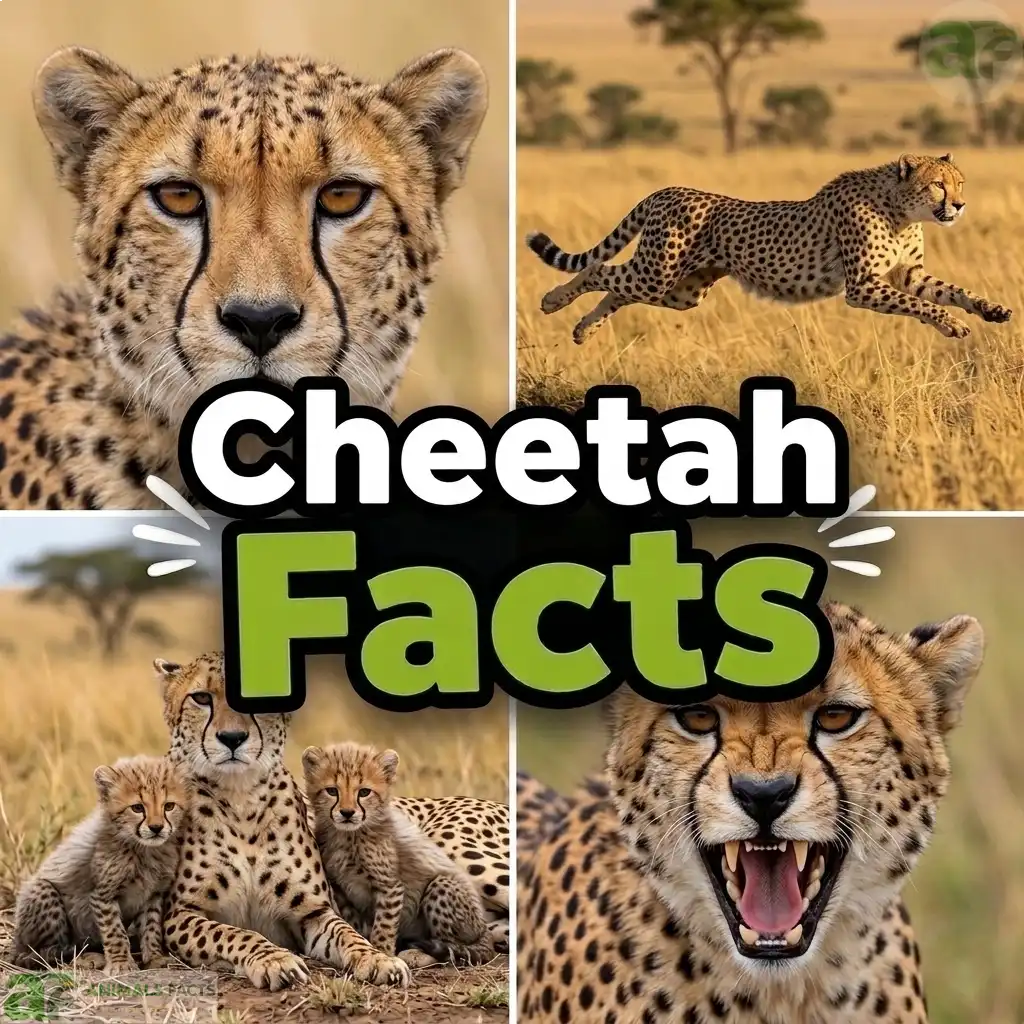
Cheetah Facts
| Feature | Details |
|---|---|
| Scientific Name | Acinonyx jubatus |
| Kingdom | Animalia |
| Phylum | Chordata |
| Class | Mammalia |
| Order | Carnivora |
| Family | Felidae |
| Genus | Acinonyx (sole living species) |
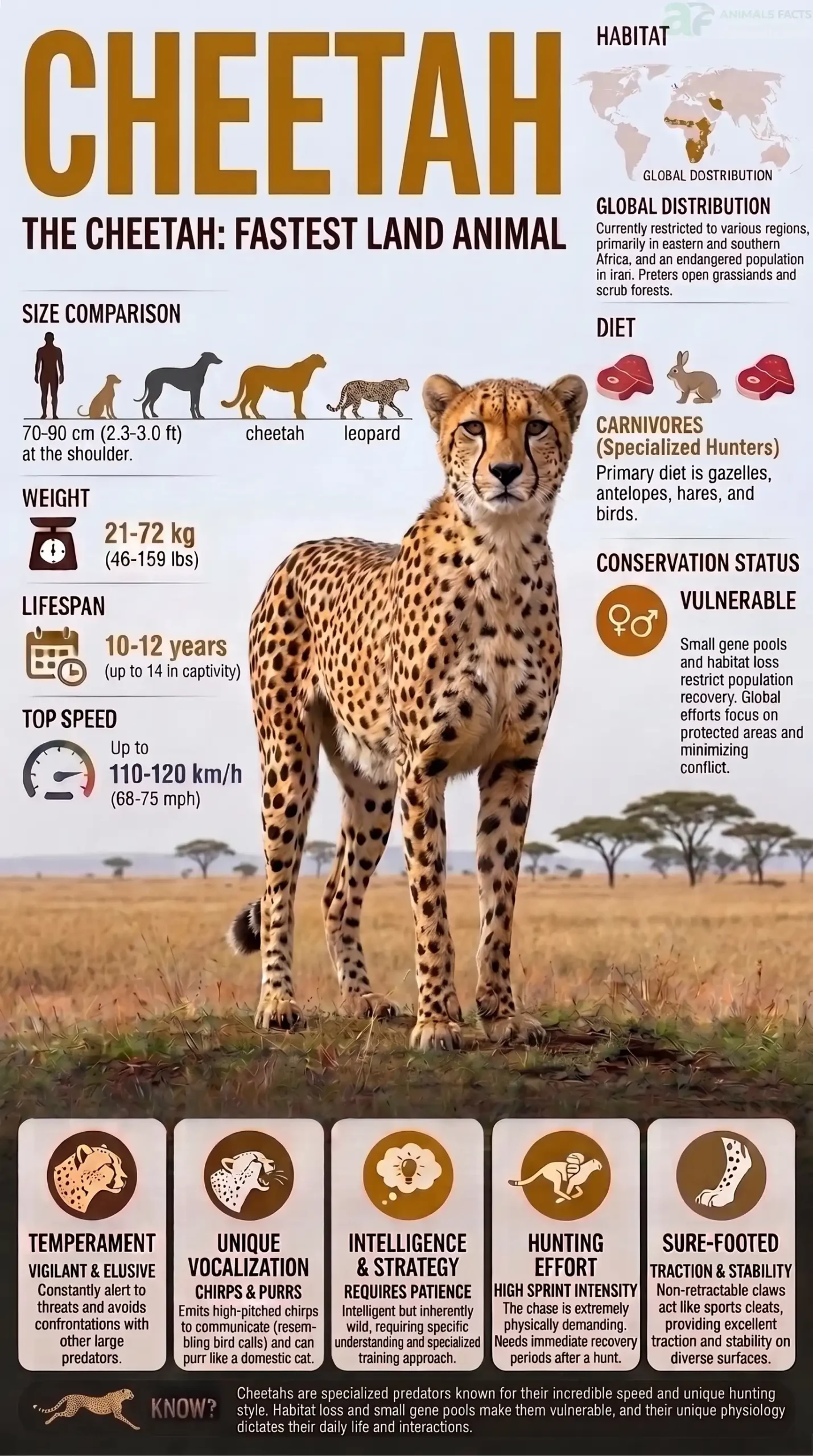
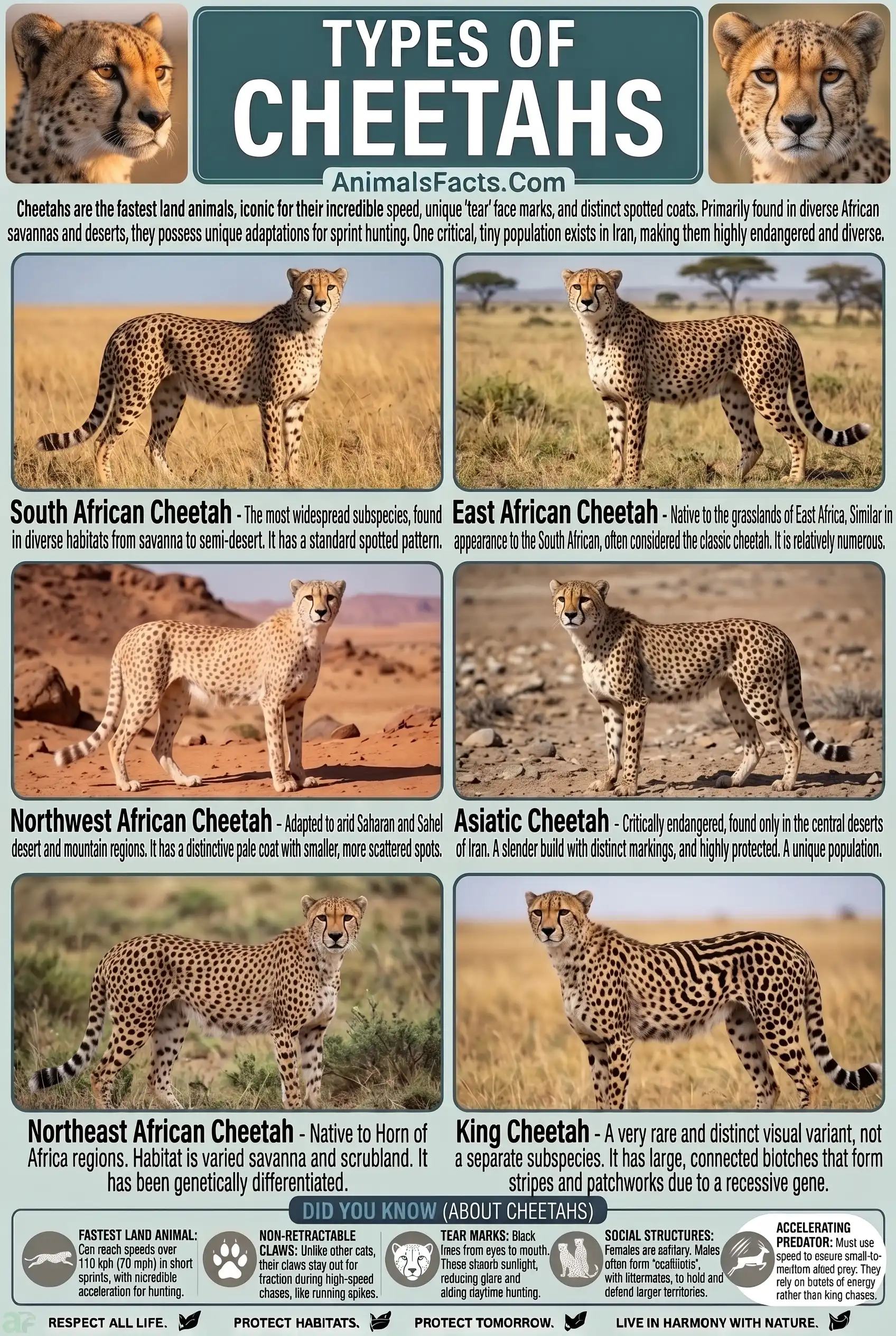
| Living Subspecies | 4 recognized subspecies (Southeast African, Northeast African, Northwest African, Asiatic) |
| Habitat | Open savanna, grassland, woodland, semi-arid scrubland — primarily sub-Saharan Africa; tiny Asiatic population in Iran |
| Lifespan | 8–12 years in the wild; up to 20 years in captivity |
| Diet | Apex daytime carnivore — Thomson’s gazelle, impala, springbok, hares, and other small-to-medium prey |
| Weight | 21–72 kg — lightest of the African large cats |
| Body Length | 1.1–1.5 meters (excluding tail); tail adds 60–80 cm |
| Shoulder Height | 67–94 cm |
| Top Speed | 120–128 km/h (75–80 mph) — fastest land animal on Earth |
| Acceleration | 0 to 96 km/h in approximately 3 seconds — faster than most sports cars |
| Conservation Status | Vulnerable (IUCN Red List) |
| Global Wild Population | Estimated ~7,100 individuals (2026) |
| Unique Feature | Fastest land animal; semi-retractable claws (unique among cats); cannot roar; black “tear marks” on face |
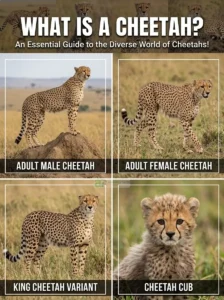 1. Introduction: What is a Cheetah?
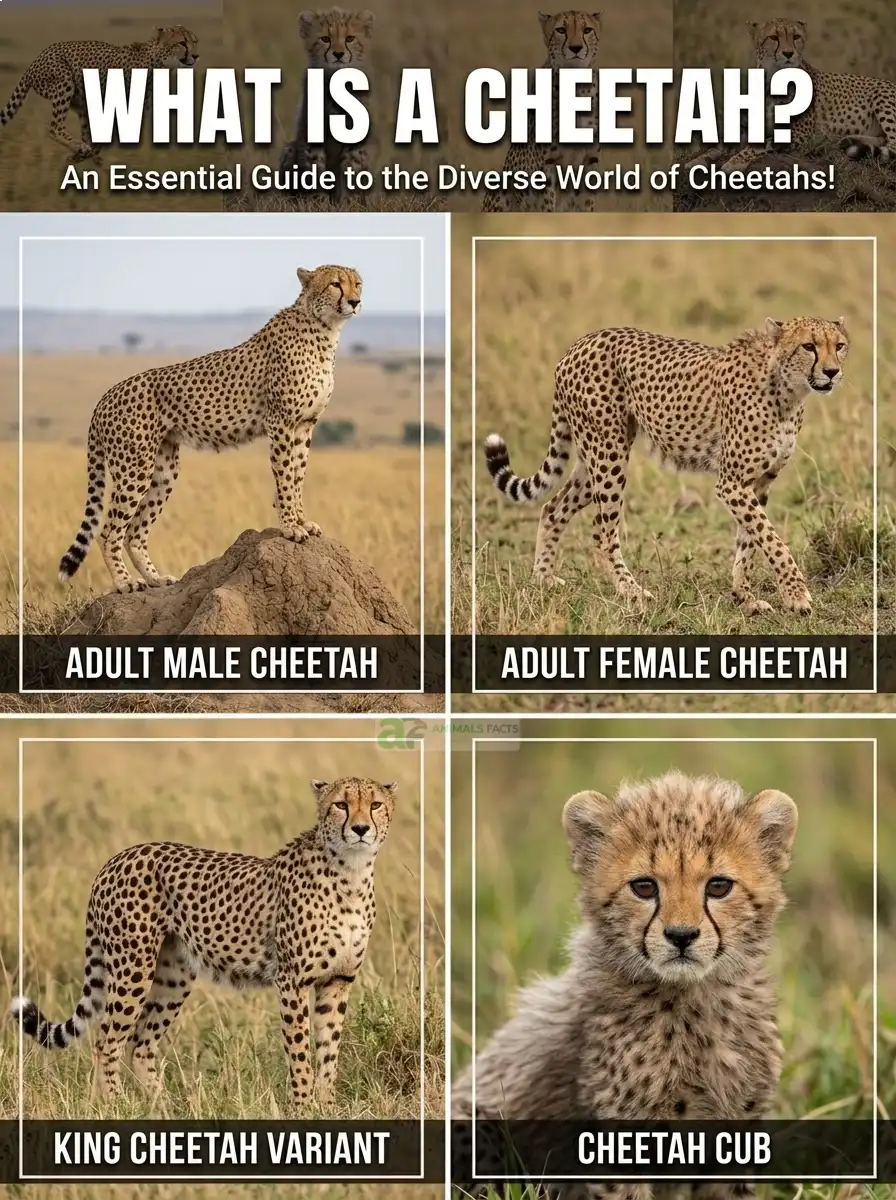
It is the fastest land animal on Earth — capable of accelerating from zero to 96 km/h in approximately three seconds and reaching top speeds of 120–128 km/h in full sprint, outpacing every other creature that has ever run across the surface of our planet. Cheetah facts are among the most extraordinary in the entire animal kingdom — revealing a creature so supremely specialized for speed that virtually every aspect of its anatomy, physiology, and behavior has been modified at the expense of the raw strength and adaptability that characterize other big cats. The cheetah is the Ferrari of the wild world: breathtakingly fast, aerodynamically perfect, and surprisingly fragile.
The cheetah — Acinonyx jubatus — is unique in virtually every sense. It is the only member of its genus, having diverged from the rest of the cat family on a separate evolutionary trajectory millions of years ago. It cannot roar — producing instead a remarkable range of sounds more reminiscent of birds than big cats. Its claws are semi-retractable, functioning more like a sprinter’s cleats than the retractable knives found in all other large cats, providing traction during high-speed pursuit rather than weapons for restraining prey. And it is the most genetically uniform large cat species on Earth — a consequence of a catastrophic population bottleneck approximately 10,000 years ago during which the cheetah came within a whisker of complete extinction.
Whether you are a student searching for cheetah facts for a school assignment, a wildlife enthusiast planning a safari in the Serengeti, a parent looking for cheetah facts for kids, a conservation advocate concerned about this Vulnerable species’ uncertain future, or simply someone transfixed by the extraordinary spectacle of a cheetah at full sprint — this is the most complete guide to cheetah facts you will find anywhere. We cover cheetah habitat, cheetah diet, cheetah behavior, communication, reproduction, all four subspecies, conservation challenges, mythology, and the extraordinary biology of the animal that evolution built to be faster than anything else on land. Let us begin.
2. Cheetah Species Overview & Classification
The cheetah occupies a unique position within the family Felidae — representing an evolutionary lineage so distinct from all other cats that it is classified in its own genus, Acinonyx, with no close living relatives. This evolutionary isolation, combined with the extreme specialization for speed that characterizes the entire lineage, makes the cheetah unlike any other cat species on Earth.
What Makes the Cheetah Unique Among Cats?
- Fastest land animal: No other animal can match the cheetah’s acceleration and top speed across open terrain
- Semi-retractable claws: The only cat species in which claws cannot be fully retracted — providing grip during sprinting rather than functioning primarily as weapons
- Cannot roar: Unlike lions, tigers, leopards, and jaguars, the cheetah lacks the modified laryngeal anatomy required for true roaring, instead producing a remarkable range of bird-like vocalizations
- Slender, lightweight build: The least powerfully built of the African large cats — deliberately traded strength for speed during evolution
- Extreme genetic uniformity: The most genetically homogeneous large cat species on Earth, reflecting a severe Pleistocene population bottleneck
- Diurnal hunting: Unlike most cats, cheetahs are primarily daytime hunters — relying on exceptional vision rather than night vision for prey detection
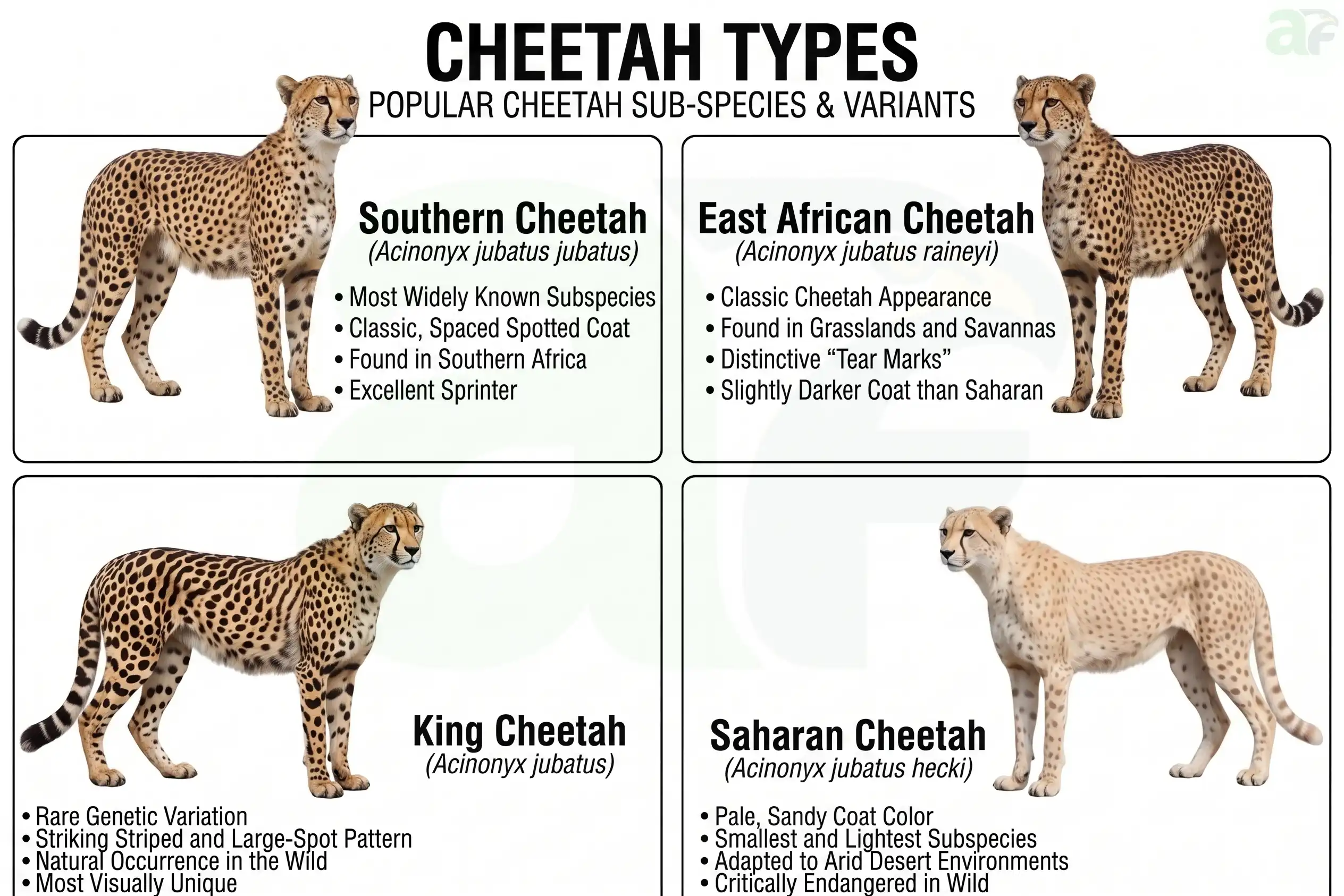
Living Cheetah Subspecies Comparison
| Subspecies | Scientific Name | Range | Population | Key Feature |
|---|---|---|---|---|
| Southeast African Cheetah | Acinonyx jubatus jubatus | Eastern and Southern Africa | ~4,000–5,000 | Most numerous; classic cheetah range |
| Northeast African Cheetah | Acinonyx jubatus soemmeringii | Ethiopia, Sudan, South Sudan | ~900 | Genetically distinct; poorly studied |
| Northwest African (Saharan) Cheetah | Acinonyx jubatus hecki | Algeria, Niger, Libya, Chad, Mali | ~200–250 | Most endangered African subspecies; pale coat |
| Asiatic Cheetah | Acinonyx jubatus venaticus | Iran only | ~12–40 individuals | Critically Endangered; near extinction |
Species Evolution & Discovery Timeline
~8–10 million years ago: The cheetah lineage diverged from the ancestor of other cats — the longest independent evolutionary trajectory of any living felid genus, reflecting deep and early divergence from the main cat family tree.
~5 million years ago: Early cheetah-like cats appeared in North America — a continent where the cheetah lineage actually originated — before spreading to Eurasia and Africa through intercontinental migrations via ancient land bridges.
~3 million years ago: The genus Acinonyx — the true cheetah lineage — appeared in Africa and Eurasia, with multiple extinct species including the giant cheetah (Acinonyx pardinensis), significantly larger than the modern cheetah, distributed across Europe and Asia.
~50,000–12,000 years ago: North American cheetahs went extinct alongside other Pleistocene megafauna, leaving only the African and Asiatic populations of the modern species.
~10,000–12,000 years ago: A catastrophic population bottleneck — likely caused by climate change, prey extinction, and possibly human hunting — reduced the global cheetah population to a tiny number of survivors, creating the profound genetic uniformity that characterizes the entire modern cheetah species.
~3,000 BCE: Ancient Egyptian records document the first clear evidence of cheetah domestication for coursing (hunting with trained cheetahs) — a practice that would eventually spread across the ancient world.
~1556 CE: Mughal Emperor Akbar the Great of India reportedly maintained a stable of over 1,000 trained cheetahs during his reign — the most documented large-scale cheetah domestication program in history, and a major driver of the depletion of Indian cheetah populations.
1758: Carl Linnaeus formally classified the cheetah as Felis jubatus in Systema Naturae, later reclassified as Acinonyx jubatus as its extraordinary distinctiveness within the cat family was recognized.
1947: The Asiatic Cheetah was declared extinct in India following the shooting of the last three confirmed wild cheetahs in the country by a Maharaja — one of the most lamented single-event wildlife losses in Indian conservation history.
2022: India reintroduced 8 Namibian cheetahs to Kuno National Park in Madhya Pradesh — followed by additional translocations — in the most ambitious inter-continental wildlife reintroduction program ever attempted, aiming to restore cheetahs to India after 75 years of absence.
3. Cheetah Physical Description & Unique Features
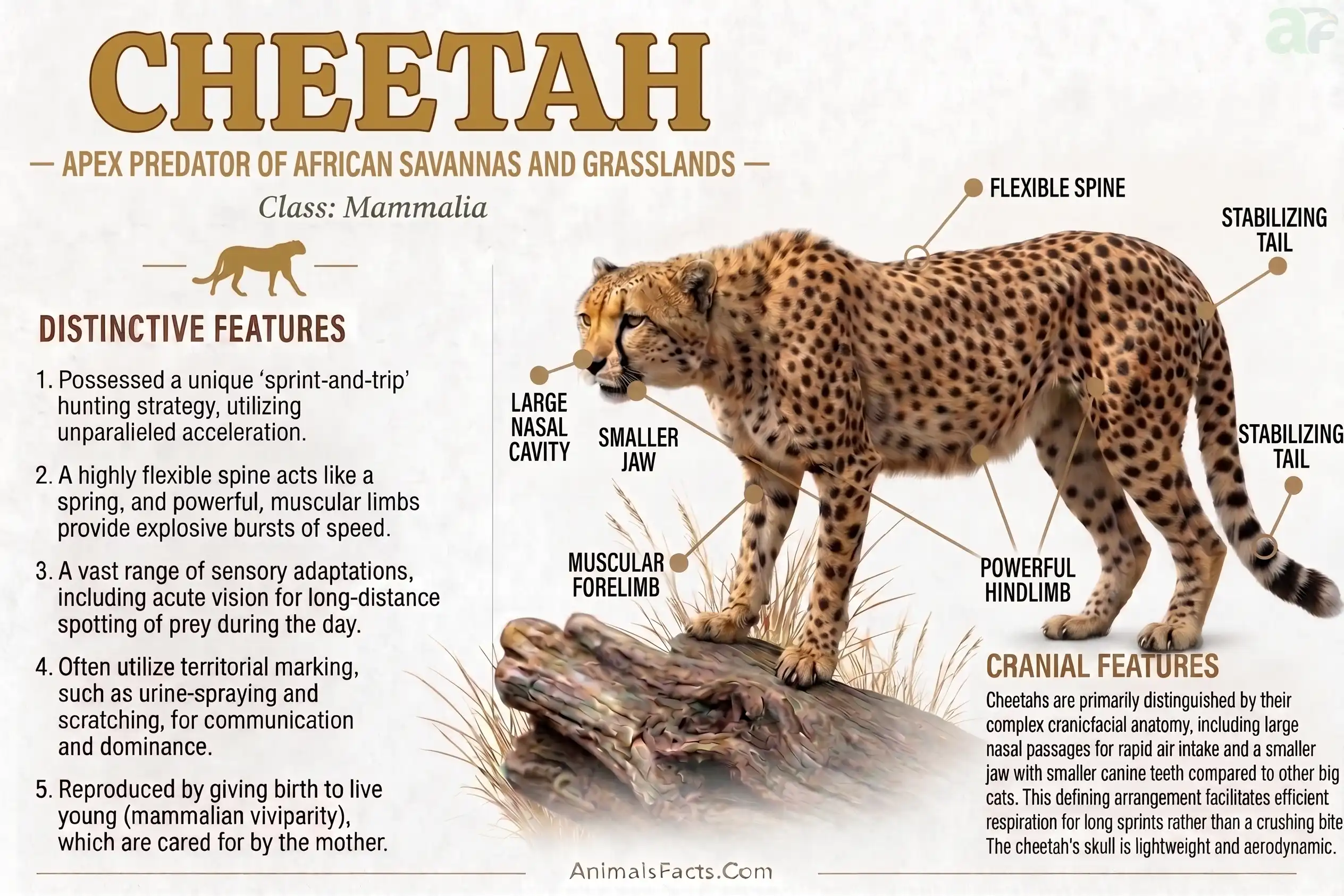
The cheetah’s body is a masterwork of aerodynamic engineering — every anatomical feature from skull shape to claw structure has been sculpted by natural selection into an integrated system optimized for one supreme purpose: running faster than anything else on Earth.
The Speed Machine — Anatomy for Velocity
Lightweight skeleton: The cheetah is the lightest of Africa’s large cats — typically weighing 21–72 kg, considerably less than a female lion (~120–180 kg) or a male leopard (up to 90 kg). This low weight is critical — every kilogram of additional body mass imposes a speed penalty and increases the metabolic cost of acceleration.
Enlarged heart and lungs: The cheetah possesses a proportionally enlarged heart and lungs relative to body size — providing significantly greater oxygen delivery capacity during the intense aerobic demands of a high-speed pursuit. During a chase, a cheetah’s respiratory rate increases from approximately 60 breaths per minute at rest to over 150 breaths per minute, and heart rate increases correspondingly.
Flexible spine: The cheetah’s unusually flexible spine functions as a biological spring — compressing and extending during each stride in a gallop that generates stride lengths of 7–8 meters at full speed. In a full gallop, the cheetah’s spine flexes so dramatically that all four feet leave the ground simultaneously during both extension and compression phases of each stride cycle — providing the mechanical advantage that generates the animal’s extraordinary ground coverage per stride.
Semi-retractable claws: Unlike virtually all other cats, a cheetah’s claws cannot be fully retracted into protective sheaths — they project semi-permanently from the paws, functioning like the cleats on a sprinting shoe, providing traction grip on the substrate during high-speed turns and acceleration. This claw structure means cheetah claws wear down with use — losing the razor sharpness that fully retractable cat claws maintain — but gaining the traction grip that is more valuable during pursuit than in prey restraint.
Enlarged nasal passages and trachea: Wider nasal passages and a larger trachea than proportionally expected for a cat of its size allow dramatically increased airflow during aerobic exertion — a critical adaptation for maintaining oxygen supply during the intense demand of a sprint.
The “Tear Marks”
One of the cheetah’s most distinctive and instantly recognizable features — the black “tear marks” or “malar stripes” running from the inner corner of each eye down the sides of the muzzle. While they give the cheetah an appearance of permanent sadness in human perception, these marks serve a functional purpose: reducing glare from bright sunlight on the open savanna — functioning similarly to the black eye grease used by American football players and cricketers — allowing sharper daytime vision in the bright environments where cheetahs hunt.
Did You Know? During a full-speed chase, a cheetah’s body temperature can rise to 40–41°C (normal resting temperature ~38.5°C) — approaching the threshold of genuine heat stroke — within 20–30 seconds of maximum exertion. This physiological heat buildup is one of the primary reasons cheetah sprints are limited to 20–30 seconds of maximum effort, and why cheetahs must rest for 15–30 minutes after a successful hunt before consuming their kill, during which period they are highly vulnerable to losing their kill to larger predators.
4. Top 25 Surprising & Interesting Cheetah Facts
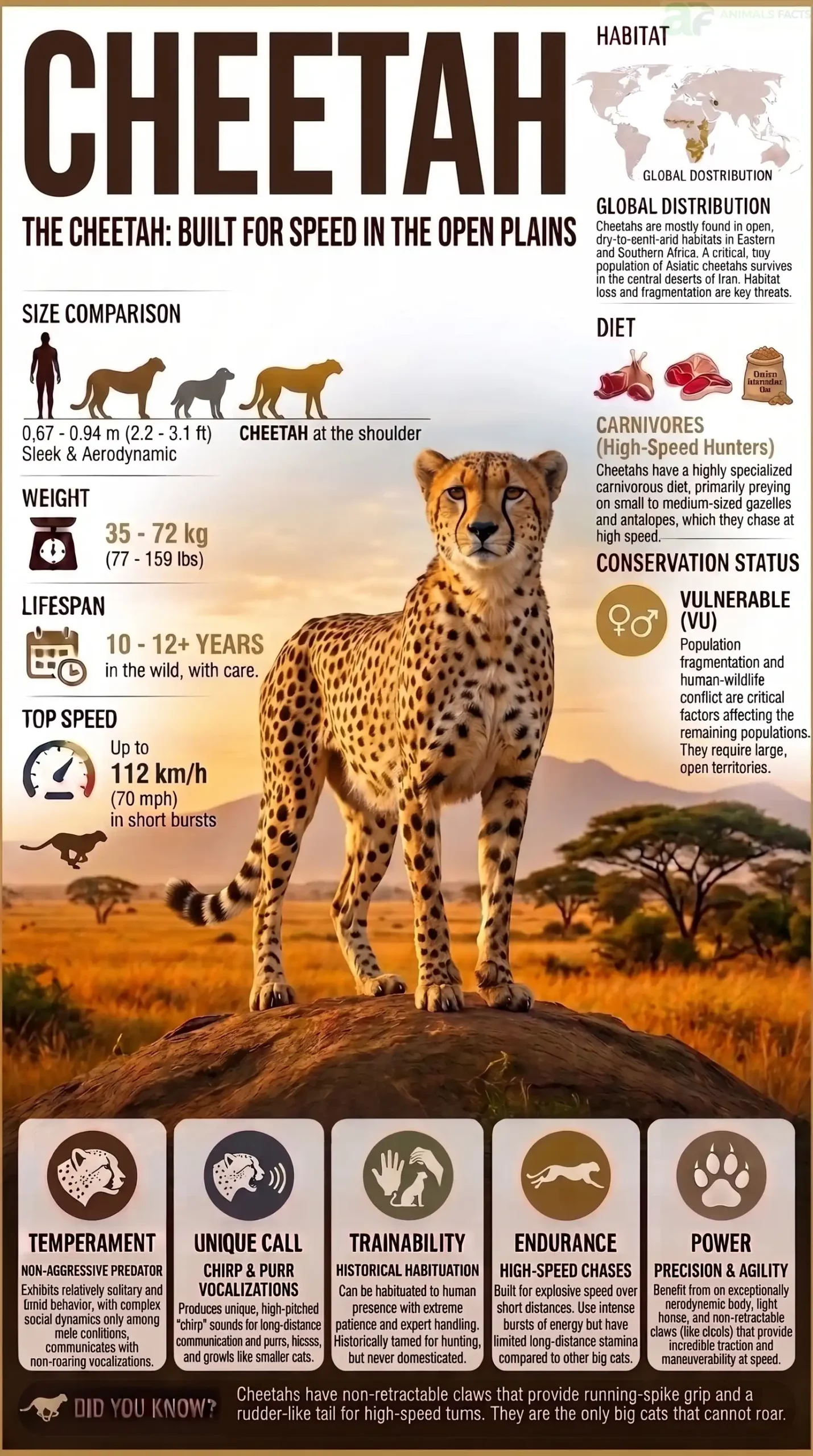
- The cheetah holds the title of fastest land animal on Earth — reaching documented speeds of 120–128 km/h (75–80 mph) in full sprint, a speed no other land creature approaches.
- A cheetah can accelerate from 0 to 96 km/h in approximately 3 seconds — faster acceleration than most production sports cars and virtually all motorcycles.
- At full sprint, a cheetah’s stride length reaches 7–8 meters — approximately the length of a large living room — with the flexible spine compressing and extending like a biological spring to generate this extraordinary ground coverage.
- Cheetahs cannot roar — they produce instead a remarkable range of sounds including chirps (surprisingly similar to bird calls), churrs, purrs, and a unique high-pitched yelp, none of which remotely resemble the roar of lions or tigers.
- The cheetah is the most genetically uniform large cat species on Earth — so genetically similar that skin grafts between unrelated cheetahs are accepted without immune rejection, an astonishing absence of genetic diversity that reflects a near-extinction bottleneck approximately 10,000 years ago.
- Despite being called a “big cat,” the cheetah is more accurately classified as a large cat — it cannot roar, cannot fully retract its claws, and diverged from the roaring cat lineage millions of years before lions, tigers, and leopards.
- The Asiatic Cheetah — restricted entirely to Iran — has a wild population estimated at only 12–40 individuals, making it one of the most critically endangered mammals on Earth.
- Cheetahs are the only large cats that are regularly active during daylight hours (diurnal) — a behavioral adaptation that reduces direct competition with nocturnal large predators like lions and leopards, at the cost of increased visibility to prey.
- After a successful sprint hunt, a cheetah must rest for 15–30 minutes before eating — because its body temperature has risen to dangerous levels and its respiratory and cardiovascular systems require recovery time before the animal can begin consuming the kill.
- The cheetah’s tear marks (black lines from eye to mouth) function as anti-glare devices, reducing the intensity of reflected sunlight during daytime hunting — similar to the black eye makeup worn by human athletes in bright-light sports.
- Male cheetahs frequently form coalitions — typically brothers from the same litter — that hunt cooperatively, defend larger territories, and achieve significantly better reproductive success than solitary males.
- A cheetah’s kill rate is approximately 50% during sprints that actually reach the prey contact stage — but the overall success rate including unsuccessful pursuits is much lower, around 25–40% for adult females.
- The Northwest African (Saharan) Cheetah has adapted to desert life by developing a paler, shorter coat, larger paws for traction on sand, and nocturnal activity patterns unusual for the species — demonstrating remarkable behavioral and physical plasticity within a single species.
- Cheetahs have been maintained as tamed hunting companions by humans for at least 5,000 years — longer than virtually any other large wild cat, with Egyptian pharaohs, Assyrian kings, Persian royalty, and Mughal emperors all maintaining trained cheetahs for coursing.
- India’s Project Cheetah — the 2022 translocation of African cheetahs from Namibia and South Africa to India’s Kuno National Park — represents the first inter-continental large carnivore reintroduction ever attempted in conservation history.
- A cheetah’s spots are solid black — a key visual difference from the leopard’s rosette spots (which have a lighter center surrounded by black border). This distinction allows experienced observers to reliably distinguish the two species.
- Cheetah cubs have a distinctive grey mantle of long hair on their back and neck that gradually disappears as they mature — believed to provide camouflage by mimicking the coloration of the honey badger, one of Africa’s most aggressively defensive small carnivores that most predators avoid.
- The South African King Cheetah — with a distinctive pattern of large blotches and stripes rather than the typical small spots — was initially believed to be a separate subspecies or even species before genetic analysis revealed it was simply a rare color morph caused by a single recessive gene, occurring rarely in wild populations.
- Cheetahs are documented to have the widest visual acuity of any African cat — their eyes contain a high concentration of nerve cells in a broad horizontal band (a “visual streak”) across the retina, providing exceptional panoramic sharpness across a wide horizontal field rather than a central focal point.
- During a hunt, a cheetah makes a kill using a tripping technique followed by a throat bite — the forepaws hook the prey’s hindquarters or flank, the running momentum trips the prey, and the cheetah immediately bites the throat, cutting off air supply through sustained suffocation rather than a direct spinal or skull bite.
- The global cheetah population of approximately 7,100 individuals is distributed across approximately 33 countries — with over 77% of cheetahs living outside formally protected areas in privately owned farmland and communal land, making human-cheetah coexistence a critical conservation challenge.
- Cheetahs produce a purr during exhalation — unlike domestic cats which purr on both inhale and exhale — a distinction shared with lions and other large cats that roar. The cheetah’s purr on exhalation only reflects its anatomical position between roaring cats and purring cats.
- A cheetah’s liver removes lactic acid from the muscles more efficiently than any other studied felid — contributing to faster sprint recovery and allowing repeated high-intensity hunting efforts within shorter rest periods than most other large carnivores.
- Cheetah cubs have one of the highest mortality rates of any large cat — with studies in the Serengeti showing that up to 90% of cheetah cubs die before reaching independence, primarily from predation by lions, leopards, and spotted hyenas.
- The cheetah’s tail functions as a dynamic rudder during high-speed pursuit — shifting position independently to counterbalance direction changes at speeds where any imbalance could cause a catastrophic fall, operating similarly to the tail fins of a fighter aircraft.
5. Cheetahs Fun Facts for Kids
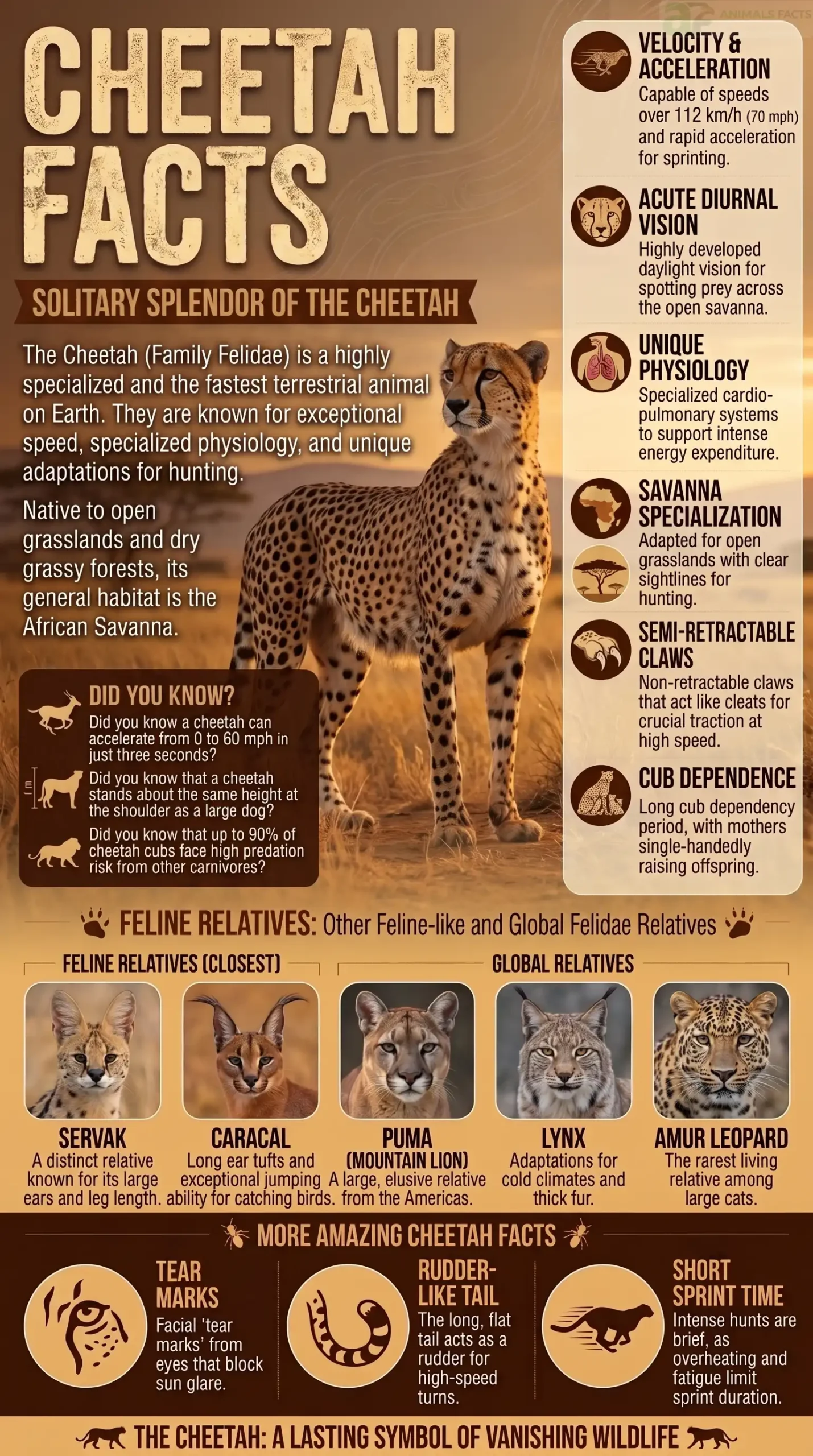
- The cheetah can reach 120–128 km/h — the fastest speed ever recorded for any land animal.
- A cheetah accelerates faster than most sports cars — 0 to 96 km/h in roughly 3 seconds.
- Cheetahs cannot roar — they chirp, purr, and yelp instead.
- The cheetah is the only cat that cannot fully retract its claws.
- Cheetah spots are solid black — unlike the hollow rosettes of a leopard.
- Over 77% of wild cheetahs live outside protected areas.
- The entire modern cheetah species passed through a near-extinction bottleneck ~10,000 years ago.
- The Asiatic Cheetah may have fewer than 40 individuals left in Iran.
- Cheetah cubs have a grey mantle believed to mimic the dangerous honey badger.
- Male cheetahs often form lifetime coalitions with their brothers.
- The cheetah has been used by humans as a hunting companion for 5,000 years.
- After sprinting, a cheetah must rest 15–30 minutes before eating its kill.
- The King Cheetah’s distinctive blotched pattern is caused by a single recessive gene.
6. Natural Habitat & Geographic Range
The cheetah once inhabited a vast range stretching from southern Europe through the Middle East and Central Asia across the entire Indian subcontinent and throughout Africa. Today, it is confined primarily to sub-Saharan Africa, with a tiny, critically threatened population surviving in central Iran — a range collapse of approximately 91% from its historical maximum.
Primary Habitat Types
Open savanna: The quintessential cheetah habitat — open, short-grass savanna with adequate prey and visibility for detecting and pursuing fast-running gazelle and impala. The Serengeti–Masai Mara ecosystem represents the best-preserved and most extensively studied cheetah savanna habitat remaining.
Open woodland: Cheetahs utilize open woodland and bush savanna where adequate clear ground allows high-speed pursuit — adapting their prey selection to the larger, denser habitats compared to open grassland.
Scrubland and semi-arid land: Namibia’s farm and communal lands — where the world’s largest free-ranging cheetah population survives almost entirely outside protected areas — demonstrate the cheetah’s capacity to utilize scrubby, semi-arid farmland habitats when large carnivore competitors are absent or reduced.
Saharan desert: The Northwest African (Saharan) Cheetah has adapted remarkably to genuine desert conditions — hunting in rocky mountain terrain and desert plains across Algeria, Niger, Libya, and Chad, primarily at night, on sparse prey populations in one of the world’s most challenging environments.
Temperate montane habitat: The Asiatic Cheetah in Iran inhabits a dramatically different environment from African cheetahs — utilizing montane terrain, rocky outcrops, and dry steppe landscapes across the central and northeastern Iranian plateau.
Habitat Range by Region
| Region | Subspecies | Estimated Population | Status |
|---|---|---|---|
| Southern Africa (Namibia, Botswana, South Africa, Zimbabwe) | Southeast African | ~3,500–4,500 | Largest regional population; primarily farmland |
| East Africa (Tanzania, Kenya) | Southeast African | ~800–1,200 | Core protected area populations |
| Ethiopia, Sudan, South Sudan | Northeast African | ~700–900 | Poorly monitored; fragmented |
| West / North Africa (Algeria, Niger, Chad, Libya) | Saharan (NW African) | ~200–250 | Critically endangered; extremely sparse |
| Iran | Asiatic | 12–40 | Critically Endangered; near extinction |
| India (Kuno NP — reintroduced) | Southeast African (translocated) | ~15–20 (introduced) | Experimental reintroduction ongoing |
Did You Know? Namibia holds the world’s largest free-ranging cheetah population — an estimated 3,000–4,000 individuals — yet approximately 95% of Namibian cheetahs live outside formally protected areas, on commercial farms and communal agricultural lands. This extraordinary situation has made Namibia both the global capital of cheetah conservation and the epicenter of human-cheetah conflict research, with the Cheetah Conservation Fund (based in Namibia) pioneering community-based coexistence programs that have fundamentally reshaped global understanding of how large carnivores can persist alongside human land use.
7. Diet & Feeding Behavior
The cheetah is a highly specialized pursuit predator — hunting by sight during daylight hours, relying on explosive speed over short distances rather than the patient ambush strategies used by leopards and tigers, and targeting specific prey sizes calibrated precisely to its hunting capability and digestive requirements.
What Cheetahs Eat
Cheetah prey selection is tightly calibrated to the species’ hunting method and physical capability — cheetahs are most effective hunting medium-sized prey weighing 20–60 kg, primarily gazelles (particularly Thomson’s gazelle in East Africa and springbok in Southern Africa), impala, hares, and birds. Unlike lions and leopards, cheetahs rarely take prey significantly larger than themselves, because their killing method (throat suffocation following a trip) and their relatively slender build make restraining large, struggling prey genuinely dangerous.
Diet Breakdown Table
| Prey Type | Approximate Percentage | Notes |
|---|---|---|
| Thomson’s Gazelle / Springbok | 40–60% (primary prey) | Optimal prey size; prime hunting target across range |
| Impala | 15–25% (Southern/East Africa) | Common alternative where gazelle is scarce |
| Hares / Small mammals | 10–20% | Particularly important for single mothers with cubs |
| Grant’s Gazelle / Other medium antelope | 10–15% | Where available; slightly large for optimal cheetah prey |
| Warthog (young) | 5–10% | Young warthogs targeted; adults avoided |
| Birds (francolins, guinea fowl) | 2–5% | Supplementary; taken opportunistically |
| Steenbok, duiker (small antelope) | 5–10% (Southern Africa) | Important in farmland habitats |
| Livestock (calves) | Variable | Major source of human-cheetah conflict |
The Cheetah Hunt — A Sequence of Extraordinary Events
Detection: Cheetahs hunt by sight during daylight hours — scanning from elevated vantage points (termite mounds, fallen logs, vehicle roofs in park areas) to detect prey across open terrain. Their exceptional horizontal visual acuity allows detection of prey movement at distances of 4–5 kilometers.
Stalk: From initial detection, a cheetah typically begins a slow stalk — using all available cover to reduce the visible gap to prey to within 60–100 meters before committing to a sprint, because top speed cannot be maintained for more than 200–300 meters.
Sprint: From the stalking position, the cheetah explodes into a pursuit sprint — reaching maximum speed within approximately 3–4 seconds, tracking the prey’s every turn through remarkable high-speed maneuverability, using its tail as a counterbalance rudder.
Trip and kill: The final contact involves hooking the prey’s hindquarters with a forepaw (using the distinctive “dew claw” — an enlarged, hooked claw on the inside of the forepaw), tripping the running prey, and immediately clamping the throat in a suffocating bite held for 5–25 minutes until the prey loses consciousness and dies.
Recovery and feeding: After making the kill, the cheetah must rest — sometimes beside the carcass, panting heavily — for up to 30 minutes before beginning to feed. During this critical vulnerability window, the kill is frequently stolen by hyenas, lions, leopards, and even large vulture flocks before the cheetah can begin eating.
Did You Know? Cheetahs lose an estimated 10–15% of their kills to other predators — particularly spotted hyenas, lions, and leopards — who detect the cheetah’s distress calls, the cheetah’s characteristic post-hunt panting, and the circling vultures that mark a fresh kill from considerable distances. This kleptoparasitism (kill theft) is one of the most significant ecological pressures on cheetah populations, particularly in areas with high lion and hyena densities, and is a primary reason why cheetahs have evolved to hunt during the hours when most large competing predators are resting.
8. Reproduction & Life Cycle
Cheetah reproduction reflects the species’ vulnerable ecological position — high cub mortality rates, long maternal care requirements, and relatively short lifespans in the wild have produced a reproductive strategy characterized by large litters and early maturity that partially compensates for the extraordinary predation losses during the juvenile period.
Mating Behavior
Cheetahs are non-seasonal breeders in most of their range — mating can occur year-round, though there may be regional peaks associated with prey availability. Female cheetahs are largely solitary and non-territorial — their home ranges overlap considerably with those of other females, and they typically only associate with males during the brief mating period.
Male coalitions — groups of 2–4 males, usually brothers — hold and defend territories that overlap with the ranges of multiple females, providing them with greater reproductive access than solitary males. When a female enters estrus, she may mate with multiple males from a coalition in rapid succession — a promiscuous mating strategy that creates paternity uncertainty and may reduce infanticide risk.
Gestation and Birth
Gestation period: Approximately 90–98 days — the shortest gestation of any African large cat.
Litter size: Typically 3–5 cubs (range: 1–8) — among the largest litters of any large cat species.
Birth weight: Approximately 150–300 grams per cub — very small relative to adult size.
Den location: Cubs are born in dense vegetation, rocky outcrops, or tall grass — the mother changes den sites frequently (typically every 5–7 days) to reduce predator discovery risk.
Key Developmental Stages
| Stage | Age | Key Development |
|---|---|---|
| Neonatal | 0–3 weeks | Eyes closed; grey mantle present; helpless |
| Eyes open | 10–14 days | Beginning visual awareness; confined to den |
| Den changes begin | 2–6 weeks | Mother regularly moves cubs to new concealed locations |
| First solid food | 3–4 months | Beginning meat consumption alongside nursing |
| Weaning | 4–6 months | Transition to solid food; nursing ends |
| Accompany mother on hunts | 3–12 months | Learning prey detection and pursuit through observation |
| Independence | 16–24 months | Sub-adults separate from mother |
| Sibling group phase | 18–30 months | Siblings stay together briefly after maternal separation |
| Sexual maturity | Female: ~21 months; Male: ~12–14 months (but breeding later) | Functional maturity |
Lifespan Comparison Table
| Species | Average Wild Lifespan | Maximum Confirmed |
|---|---|---|
| Cheetah | 8–12 years | ~20 years (captivity) |
| Lion | 10–14 years | ~29 years (captivity) |
| Leopard | 12–15 years | ~23 years (captivity) |
| Serval | 10–12 years | ~20 years (captivity) |
| African Wild Dog | 10–12 years | ~17 years (captivity) |
9. Social Behavior & Communication
The cheetah’s social system is one of the most flexible and nuanced of any large cat — occupying a fascinating middle position between the strict solitary lifestyle of tigers and leopards and the fully social pride structure of lions, with male and female cheetahs displaying dramatically different social organizations.
Female Social Structure
Adult female cheetahs are primarily solitary — maintaining large individual home ranges that overlap with other females without active territorial defense. The primary and nearly exclusive social bond for female cheetahs is with their dependent cubs, which they raise entirely alone without male assistance.
This solitary female lifestyle, combined with the cub mortality crisis, means that adult female cheetahs spend the majority of their lives either alone (between breeding periods) or focused entirely on cub-rearing — a demanding maternal investment that can last 16–24 months per litter.
Male Social Structure — The Coalition System
Male cheetahs display one of the most remarkable social structures of any wild cat — typically living in coalitions with their brothers (occasionally unrelated males) that persist for life. These coalitions provide significant advantages: larger territories, more successful hunting of larger prey, reduced take-over risk from rival males, and dramatically improved reproductive success compared to solitary males.
Coalition males patrol and defend territories using communal scent marking — spraying urine on prominent trees and structures, scratching bark, and producing yelping vocalizations that advertise the coalition’s presence and size to potential rivals. Within a coalition, individual males maintain high levels of social affiliation — resting together, grooming each other, and occasionally cooperating on hunts.
Communication Methods
Chirping: The most frequently heard cheetah vocalization — a high-pitched, remarkably bird-like call used for contact calling between mothers and cubs and between separated coalition members. The cheetah’s chirp is one of the most distinctive wildlife sounds on the African savanna — surprisingly high-pitched and entirely unexpected from an animal its size.
Churring: A prolonged stutter-like call, also called a “stutter bark” — produced during social excitement, particularly during mating encounters and in coalitions during prey approach.
Purring: Produced during calm, affiliative interactions — physical contact between mothers and cubs or between coalition males. The cheetah purrs only during exhalation (unlike domestic cats which purr on both inhale and exhale).
Yelping: A high-pitched distress call produced by lost cubs and occasionally by adults in distress — designed to carry across the savanna landscape.
Growling and hissing: Threat vocalizations used during encounters with predators or competitors — though cheetahs almost universally choose flight over confrontation when threatened.
Did You Know? Research by the Cheetah Conservation Fund using GPS collar data on Namibian cheetahs documented that male cheetah coalitions use “play trees” — specific, prominent trees or termite mounds used repeatedly over years as scent-marking, scratching, and socializing locations. These play trees function as long-term information hubs where multiple cheetahs deposit scent marks and receive chemical information from other cheetahs that have visited the same site days, weeks, or months earlier — functioning similarly to a community notice board in the cheetah’s invisible social information network.
10. Predators & Defense Mechanisms
The cheetah is one of the most ecologically vulnerable large cats on Earth — simultaneously an apex pursuit predator over its prey range and a highly susceptible target for larger carnivores across virtually all stages of its life. This extraordinary vulnerability — a direct consequence of the physical trade-offs made in service of extreme speed — is one of the most significant factors limiting cheetah population recovery.
Natural Predators
Lions: The primary predator of cheetah cubs and juveniles across East and Southern Africa — lions systematically kill cheetah cubs when found at dens or when encountered in the open, eliminating a competitor species. Research in the Serengeti documented that lion predation accounted for approximately 78% of cheetah cub deaths in the study area — an extraordinary cub mortality pressure that profoundly shapes cheetah population dynamics and drives cheetahs to strongly avoid areas of high lion activity.
Leopards: Significant cub predators, and occasional adult cheetah killers — leopards are more nocturnal and arboreal than cheetahs, reducing direct competition, but remain a genuine threat particularly to sub-adult cheetahs learning to navigate the landscape independently.
Spotted Hyenas: Regular kill thieves and occasional cub predators — large hyena clans can displace a cheetah from a kill through sheer numerical advantage, and hyenas investigate the sounds and scent associated with cheetah hunting and resting to locate and steal kills.
Eagles: Martial Eagles and other large African raptors prey upon very young cheetah cubs — small enough to be carried off by a large eagle, particularly in the first weeks of life before their body size becomes too large for avian predators to handle.
Defense Mechanisms and Survival Strategies
Flight: The cheetah’s primary and overwhelmingly preferred response to any threat — with a top speed dramatically exceeding that of any of its predators, flight is by far the most effective defensive option available to an adult cheetah in open terrain.
Avoidance of temporal and spatial overlap: Cheetahs actively structure their activity — hunting during the hours when large competitors are resting, avoiding areas of known lion activity, and shifting den sites frequently — to minimize encounters with species that could kill them.
Maternal concealment: Cheetah mothers invest extraordinary effort in keeping cubs hidden — changing den sites every few days, moving cubs individually (carrying them in the mouth like domestic cats), and actively luring potential predators away from dens through distraction behavior.
Absence of physical defense: Unlike leopards (which will aggressively confront hyenas and occasionally kill them) or lions (which cooperatively mob and kill hyenas), cheetahs almost never engage in direct confrontation with competitors or predators — a survival strategy reflecting the reality that their lean, lightly built bodies are poorly equipped for absorbing the injuries that direct combat with larger carnivores would inflict.
11. Cheetah Facts for Kids
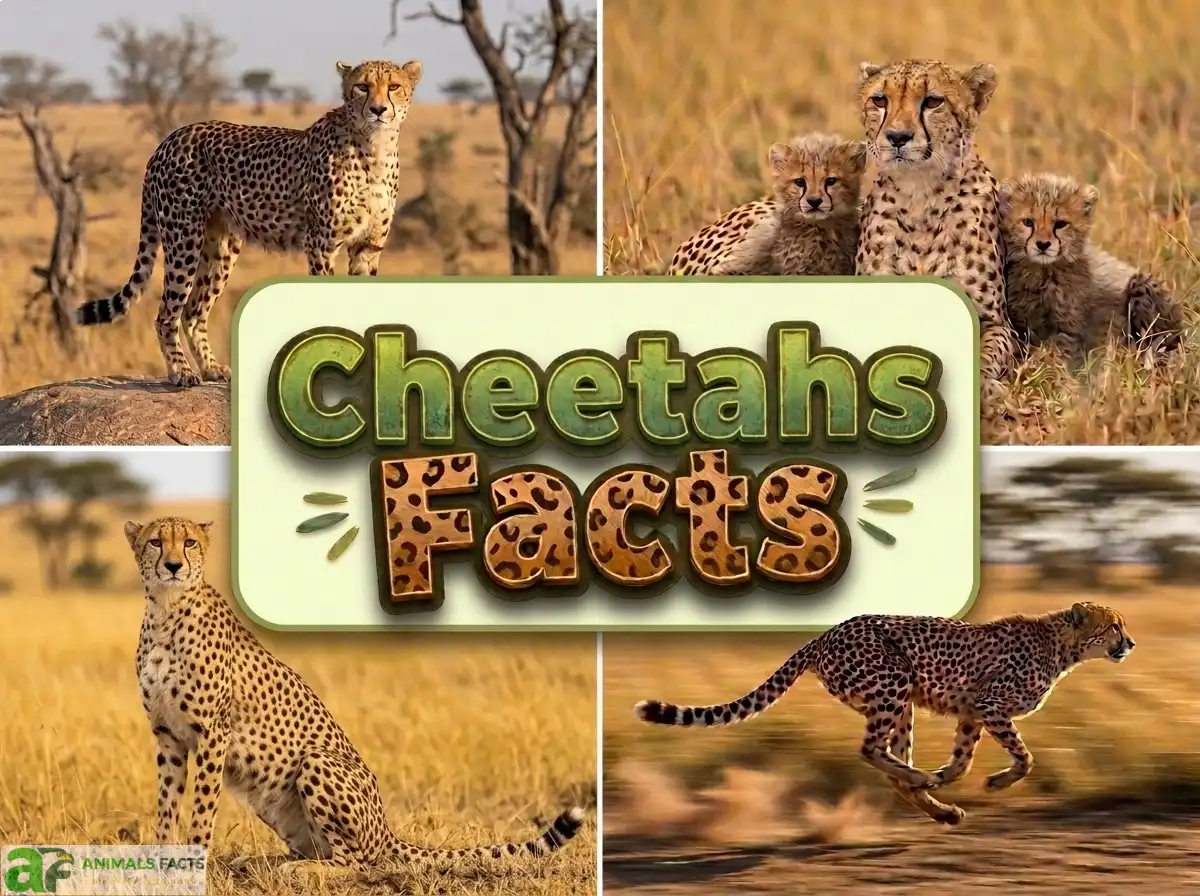
Hey kids — get ready to learn why the cheetah is one of the most incredible animals ever to set paw on the Earth!
- The cheetah is the fastest animal in the entire world — it can run as fast as 120 kilometers per hour! That’s faster than most cars drive on a motorway!
- A cheetah can go from completely standing still to faster than 96 km/h in just 3 seconds — that’s faster acceleration than most racing cars!
- Cheetahs can’t roar like lions or tigers! Instead, they make sounds that sound more like birds — chirping and purring sounds that are surprisingly sweet for such a fast and powerful animal.
- The black lines on a cheetah’s face — running from its eyes down to its mouth — work like sunglasses! They reduce the glare of bright sunlight so the cheetah can see perfectly while it’s running at full speed on the bright, sunny savanna.
- Cheetah cubs are born with a strange grey fluffy coat on their backs that looks nothing like an adult cheetah! Scientists think this makes them look like honey badgers — small animals that are famous for being so aggressive and smelly that most predators don’t want to mess with them!
- The cheetah is the only cat that can’t fully hide its claws — its claws stick out a little bit all the time, like the spikes on a running shoe, to help it grip the ground while running super fast!
- After catching a meal, the cheetah has to rest for up to half an hour before it can eat — because running so fast makes it so hot and out of breath that it needs to cool down first!
- There are only about 7,100 cheetahs left in the wild — and over three quarters of them don’t live in national parks but on regular farmland alongside people and their livestock!
Did You Know? A running cheetah’s feet are barely touching the ground at full speed — during each stride, the cheetah is actually airborne (all four feet off the ground) twice! The special springy backbone flexes and snaps back like a rubber band with each stride, launching the cheetah through the air between footfalls. At top speed, a cheetah’s feet only touch the ground for a tiny fraction of each second — meaning it’s flying more than it’s running!
12. Relationship with Humans
The cheetah’s relationship with humanity is among the oldest, most complex, and most consequential of any large carnivore — spanning at least 5,000 years of documented use as a hunting companion, a cultural symbol across multiple civilizations, a target of both persecution and conservation effort, and today the subject of one of the most ambitious and controversial wildlife reintroduction programs ever attempted.
5,000 Years of Cheetah Taming
The cheetah is the oldest and most extensively documented tamed wild carnivore in history — evidence of cheetahs trained for coursing (hunting with trained animals) dates to at least 3000 BCE in ancient Egypt, and similar practices appear in Assyrian, Persian, and Indian historical records across subsequent millennia. Unlike domestic animals that have been selectively bred over generations, cheetahs were typically captured as adults or sub-adults and trained — a process that exploited the cheetah’s naturally low aggression toward humans, its good tractability, and its extraordinary hunting efficiency.
The scale of historical cheetah taming is remarkable — Egyptian pharaohs maintained cheetah menageries as status symbols; Persian and Mughal royalty used trained cheetahs as prestige hunting companions; and Mughal Emperor Akbar the Great reportedly maintained over 1,000 trained cheetahs during his reign (1556–1605 CE) — the largest collection of trained cheetahs ever documented. This extraordinary demand for wild-caught cheetahs, sustained across centuries of royal hunting tradition across Asia and North Africa, is believed to have been a significant factor in the depletion and eventual extinction of the cheetah from India and across much of the Middle East.
Human-Cheetah Conflict Today
In contemporary conservation contexts, the most significant human-cheetah conflict is livestock predation — cheetahs killing calves, lambs, and small livestock on farms and communal grazing lands in Southern and East Africa. This conflict is particularly acute because, as documented above, the majority of the world’s cheetahs live outside protected areas on farmland, bringing them into regular proximity with herders and their animals.
The Cheetah Conservation Fund’s (CCF) Livestock Guarding Dog Program — placing Anatolian Shepherd Dogs with farming families as non-lethal cheetah deterrents — has demonstrated remarkable effectiveness in reducing cheetah-livestock conflict while dramatically reducing farmer retaliatory killing, and has become one of the most celebrated practical coexistence models in large carnivore conservation.
Project Cheetah — India’s Reintroduction
India’s Project Cheetah — officially launched with the translocation of 8 Namibian cheetahs to Kuno National Park, Madhya Pradesh, in September 2022 — represents the first inter-continental large carnivore reintroduction in conservation history. The program has been celebrated as an extraordinary conservation ambition and critiqued as an ecologically and genetically problematic exercise — debate among conservation biologists continues regarding the suitability of African cheetahs as replacements for the extinct Asiatic Cheetah subspecies, the adequacy of Kuno’s prey base, and the long-term prospects for the Indian population.
13. Conservation Status & Threats
The cheetah’s conservation situation represents a classic but severe case of a species in sustained long-term decline — not facing the immediate dramatic crisis of the most critically endangered large cats, but losing ground steadily through a combination of habitat loss, human conflict, genetic vulnerability, and the fundamental challenge that most cheetahs live outside the protection of formal conservation areas.
Global Cheetah Conservation Data (2026)
| Subspecies / Population | IUCN Status | Population | Trend |
|---|---|---|---|
| Southeast African Cheetah | Vulnerable | ~4,000–5,000 | Slowly declining |
| Northeast African Cheetah | Vulnerable | ~700–900 | Poorly monitored; declining |
| Saharan / Northwest African Cheetah | Critically Endangered | ~200–250 | Sharply declining |
| Asiatic Cheetah (Iran) | Critically Endangered | 12–40 | Near extinction |
| India (reintroduced population) | N/A (introduced) | ~15–20 (2026) | Experimental; uncertain |
Major Threats to Cheetahs
Habitat loss and fragmentation: Agricultural expansion, human settlement growth, and infrastructure development across cheetah range in Africa have progressively reduced available cheetah habitat — fragmenting populations and reducing prey availability across increasingly isolated patches of suitable land.
Human-wildlife conflict and retaliatory killing: Cheetah predation on livestock drives significant farmer retaliatory killing — estimated to account for a substantial proportion of adult cheetah mortality in farmland habitats. Because most cheetahs live outside protected areas, this conflict cannot be addressed through reserve-focused conservation alone but requires genuine community-level coexistence solutions.
Illegal wildlife trade: Cheetahs are among the most heavily trafficked wildlife species globally — driven primarily by demand from Gulf states (particularly UAE, Qatar, and Saudi Arabia) for cheetahs as exotic status pets. The trade routes run primarily through the Horn of Africa (Ethiopia, Somalia, Djibouti), with cubs captured from the wild and smuggled through trafficking networks. The mortality rate in transit is extraordinarily high — estimated at 6 out of 10 cubs captured dying before reaching buyers — making each cheetah sold as a pet responsible for the deaths of multiple additional animals.
Genetic vulnerability: The cheetah’s extreme genetic homogeneity — a legacy of the Pleistocene bottleneck — creates significant vulnerability to disease, reduced immune function, and reproductive anomalies that may limit population recovery rates even where other threats are managed.
Loss of prey base: The same bushmeat hunting that depletes prey for tigers and lions in their range countries also reduces gazelle, impala, and other key cheetah prey across Africa, rendering apparently suitable habitat unable to sustain viable cheetah populations.
Did You Know? The Asiatic Cheetah in Iran is so critically endangered that individual animals are now identified and monitored by name by Iranian wildlife authorities — with names including Firouz, Khorshid, and others. With a total wild population potentially as low as 12 individuals, the Asiatic Cheetah represents perhaps the most extreme example of functional extinction-in-progress of any large mammal — every single individual is known to researchers, and the death or injury of any single animal represents a potentially irreplaceable loss to the subspecies.
14. Famous Cheetahs
Saba, Toto, and Tatu — The Serengeti Siblings
Saba, Toto, and Tatu — three male cheetah brothers in Tanzania’s Serengeti National Park — became among the most extensively documented wild cheetah coalition in scientific history, studied by the Serengeti Cheetah Project over multiple years. Their behavior demonstrated the extraordinary effectiveness of male coalitions in holding territories, hunting larger prey, and achieving reproductive success dramatically exceeding that of solitary males. They were featured in multiple BBC documentary productions and became familiar figures to multiple generations of Serengeti researchers and safari visitors.
Firouz and Dalbar — Iran’s Last Asiatic Cheetahs
The Asiatic Cheetahs monitored by Iranian wildlife authorities — individually named and tracked through camera traps across the remaining Asiatic Cheetah range in central and northeastern Iran — represent the most publicized critically endangered individual animals in contemporary conservation. Each named individual represents a significant portion of the remaining global Asiatic Cheetah population, and their deaths from vehicle collisions, snaring, and other causes generate significant media attention within Iran and internationally.
Kris — The Foundation of CCF’s Genetic Research
Kris was a cheetah maintained at the Cheetah Conservation Fund’s research center in Namibia who contributed significantly to foundational research on cheetah genetics and reproductive biology — including the landmark studies on cheetah genetic uniformity that demonstrated the species’ extraordinary homogeneity and established the framework for understanding the cheetah’s Pleistocene population bottleneck.
Chester Zoo’s Cheetah Breeding Program
Several European zoos — including Chester Zoo in the UK, Cologne Zoo in Germany, and others — maintain cheetah breeding programs under the coordinated European Endangered Species Programme (EEP) that have contributed significantly to understanding cheetah reproductive biology, cub mortality factors, and captive management techniques informing wild population management.
15. Role in Ecosystem & Food Chain
The cheetah occupies a distinctive and important ecological role as a daytime, pursuit-specialized mesopredator — regulating specific prey populations through selective predation, influencing prey behavior through the landscape of fear, and occupying an ecological niche that no other large African cat fills in the same way.
Prey Regulation
Cheetah predation primarily targets small-to-medium gazelle and antelope, particularly Thomson’s gazelle in East Africa and springbok in Southern Africa — prey species that are generally taken less frequently by lions (which prefer larger prey) and leopards (which primarily hunt at night). This niche separation means that cheetah predation provides a distinct and complementary prey regulation service to other large carnivores in the same ecosystem, contributing to the overall balance of herbivore communities.
Selective Predation Benefits
Cheetah predation is predominantly focused on young, old, and weakened individuals — consistent with the pursuit predation strategy in which only individuals unable to maintain sprint pace over the full duration of a chase are successfully caught. This selective predation removes genetically and physically compromised individuals from prey populations, contributing to the long-term fitness and health of gazelle and antelope herds.
The Mesopredator Role
The cheetah’s position as a mesopredator in African ecosystems — below lions and leopards in the predator hierarchy — means that cheetah population dynamics are significantly influenced by the density of these larger competitors. In areas where lions and leopards are reduced or absent through human-caused mortality, cheetah populations sometimes increase — a “mesopredator release” effect that demonstrates the complex interdependencies within African large carnivore communities.
Seed Dispersal and Landscape Impact
Cheetahs contribute indirectly to seed dispersal and nutrient cycling through their predation and movement patterns — carcass remains provide nutrient inputs to specific locations, and the concentration of scent-marking activity at “play trees” and other prominent features can influence plant community dynamics around these focal points.
16. Myths, Folklore & Cultural Significance
The cheetah’s combination of extraordinary speed, unique spotted coat, and ancient association with human royalty and hunting tradition has generated a rich cultural legacy across multiple civilizations — though considerably less extensive than that of the lion or tiger, reflecting the cheetah’s more specialized geographic distribution and its relationship with humans as a hunting tool rather than a feared adversary.
Ancient Egypt — The Royal Cat
The cheetah occupied a position of considerable prestige in ancient Egyptian culture — associated with the goddess Mafdet, one of the earliest Egyptian deities and protector against snakes and scorpions, sometimes depicted as a cheetah or cheetah-headed woman. Tamed cheetahs were maintained by pharaohs as status symbols and hunting companions, and cheetah imagery appears in Egyptian tomb paintings and royal regalia across multiple dynasties.
Persian and Mughal Royal Traditions
Guepardo — the Persian and subsequently Arabic term for cheetah — reflects the animal’s long integration into Persian royal culture, where cheetahs were trained hunting companions for nobility. The Persian tradition spread westward through the Islamic world and eastward to Mughal India, where as documented earlier, Emperor Akbar the Great’s 1,000-cheetah stable represented the apex of the practice. The cheetah became so associated with imperial power and the hunt in Mughal culture that it appeared extensively in Mughal miniature painting — one of the most common animal subjects in Mughal artistic tradition.
African Traditional Symbolism
In several Sub-Saharan African traditions, the cheetah’s speed and distinctiveness have made it a symbol of quickness, agility, and foresight — the ability to anticipate and act before events unfold. Some East African communities associate cheetah spotted patterns with specific supernatural qualities, and cheetah skins have historically been used in ceremonial and royal regalia across multiple African kingdoms.
Heraldic and Modern Symbolism
The cheetah appears in the national coats of arms of Malawi and Botswana, reflecting its cultural significance in Southern and Central African national identities. The animal’s associations with speed and grace have made it a popular symbol in commercial contexts — most famously as the inspiration for the Mac OS X “Cheetah” operating system release and in various athletic and automotive brand identities.
17. Cheetahs in Pop Culture
While less pervasively present in global popular culture than lions or tigers, cheetahs have generated a number of significant and culturally resonant presences in entertainment, advertising, and sports.
Film and Television
“Duma” (Carroll Ballard, 2005) — A celebrated family adventure film following the relationship between a South African boy and a hand-raised cheetah, widely praised for its authentic portrayal of cheetah behavior and the challenges of wildlife rehabilitation.
“Cheetah” (Disney, 1989) — A Disney adventure film featuring a young American family raising an orphaned cheetah in Kenya, contributing to public awareness of cheetah behavior and conservation.
BBC’s “Big Cat Diary” and “Big Cat Week” (multiple series since 1996) — The long-running BBC series following cheetah families in the Masai Mara has provided some of the finest and most extensively viewed cheetah natural history documentary footage ever produced, making specific individual cheetahs and their family dramas familiar to millions of viewers worldwide across decades of production.
“The Cheetah Girls” (Disney, 2003 and sequels) — While not focused on the animal itself, this franchise brought the cheetah’s spotted aesthetic and associations with speed and energy to an enormous youth audience.
Sports and Advertising
Reebok’s “Cheetah” running shoe series and various athletic brand uses of cheetah imagery reflect the animal’s powerful cultural association with speed and athletic performance. The Aston Martin DB5 was famously called “the cheetah among cars” in early reviews, capturing the animal’s synonymy with elegant, explosive speed in popular consciousness.
Chester the Cheetah — the mascot of Cheetos snack products since 1986 — is one of the most recognizable advertising mascots in North American consumer culture, appearing on product packaging and in advertisements for over three decades and cementing the cheetah’s cool, fast, stylish image in the popular imagination.
Online Culture and Social Media
The cheetah consistently ranks among the most popular animals on wildlife photography social media platforms — with footage of cheetah hunts, cub behavior, and coalition male interactions generating some of the highest engagement of any wildlife content across platforms including YouTube, Instagram, and TikTok, reflecting the species’ extraordinary visual appeal and behavioral drama.
18. Cheetah Facts vs. Common Myths
Myth: The cheetah is the most dangerous big cat to encounter in Africa. Fact: The cheetah is almost certainly the least dangerous large cat to humans in Africa — cheetahs have an extremely low aggression toward humans by natural temperament and rely on flight rather than confrontation as their primary defensive strategy. Adult cheetahs essentially never attack humans defensively or predatorily in natural settings, and even cornered cheetahs typically emit threat displays without making physical contact. The far more dangerous African cats are lions and leopards.
Myth: Cheetahs are a type of leopard or are closely related to leopards. Fact: Cheetahs are not closely related to leopards — they represent the sole surviving species of a separate cat lineage (genus Acinonyx) that diverged from the common felid ancestor approximately 8–10 million years ago, long before the Panthera big cats diversified. Cheetahs can be distinguished from leopards immediately by their solid black spots (vs. leopard rosettes), slender build, tear marks on the face, and semi-retractable claws.
Myth: The cheetah always catches its prey because nothing can outrun it. Fact: Overall hunting success for adult cheetahs is approximately 25–40% — meaning three out of every five or more hunts result in failure, from either prey escape or kill theft by other predators. Prey animals have evolved escape strategies specifically calibrated to the cheetah’s limitations — sharp turning ability to exploit the cheetah’s reduced maneuverability at maximum speed, and the ability to sustain moderate speeds for longer than the cheetah’s 20–30 second maximum sprint.
Myth: Cheetahs can run at 120 km/h for long distances. Fact: The cheetah’s maximum speed of 120–128 km/h can only be maintained for approximately 20–30 seconds covering 200–500 meters before physiological heat buildup and energy depletion force the animal to slow. Most cheetah hunts are over within 300 meters — and if the prey has not been caught by then, the cheetah typically abandons the chase.
Myth: The King Cheetah is a different species or subspecies from the regular cheetah. Fact: The King Cheetah — with its distinctive blotched and streaked coat pattern rather than typical small spots — is simply a rare color morph caused by a single recessive gene mutation occurring occasionally in normal Southeast African Cheetah populations. It is not a separate subspecies, was not known to Western science until 1926 (causing initial confusion about its identity), and individual King Cheetahs can be born to spotted parents who both carry the recessive gene.
Myth: Cheetahs are the same as or similar to leopards. Fact: Beyond the common “spotted African cat” description, cheetahs and leopards are profoundly different animals — cheetahs are slender, diurnal, poor climbers that hunt by pure pursuit speed; leopards are powerfully built, primarily nocturnal, accomplished tree climbers that hunt by ambush and stealth. Their ecological roles, social systems, prey preferences, and physical capabilities are entirely distinct.
19. Best Places to See Cheetahs in the Wild
Serengeti National Park, Tanzania
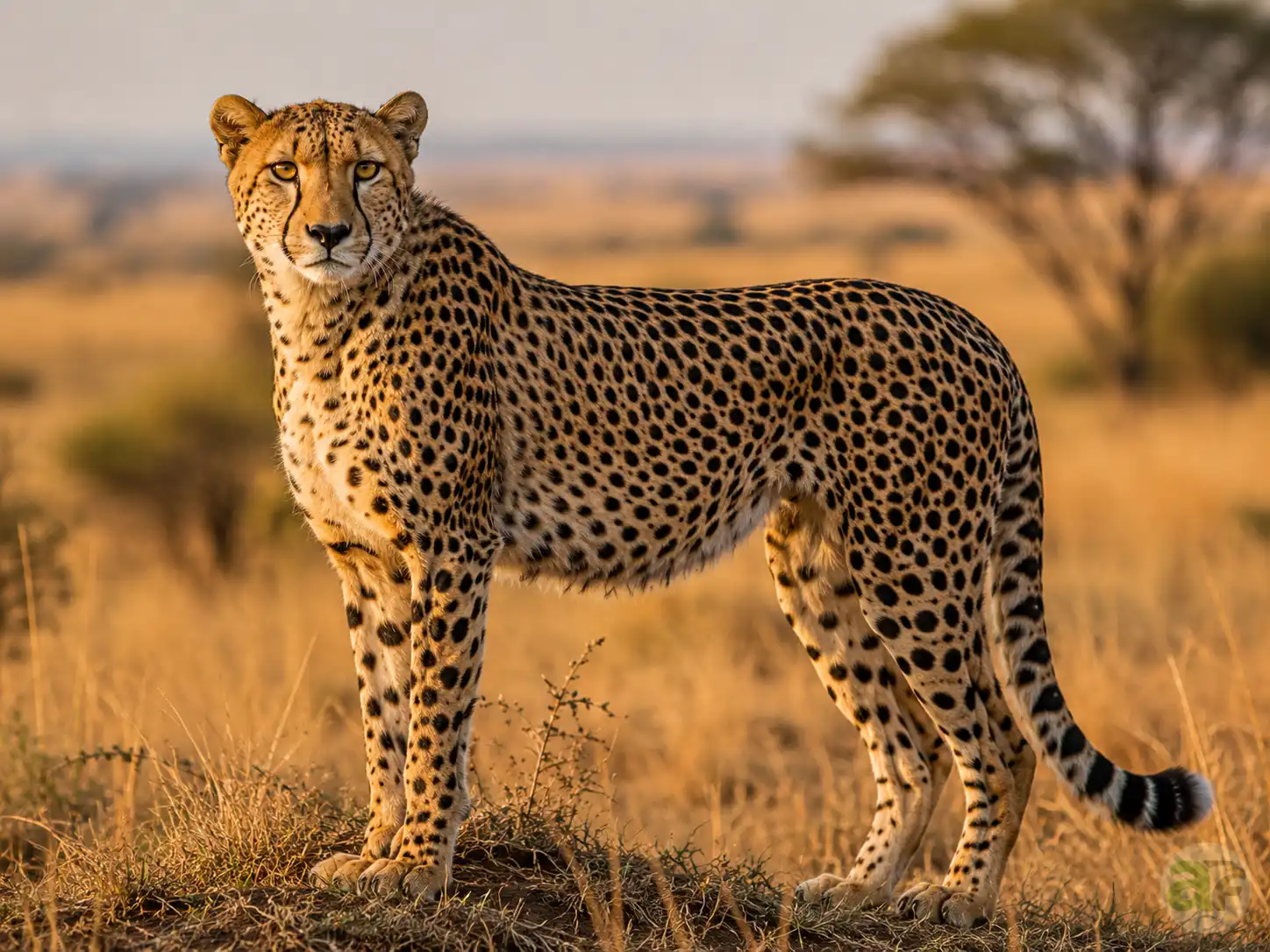
The vast open grasslands of the Serengeti support one of the best-studied and most reliably viewable cheetah populations in Africa — particularly in the Ndutu area during the dry season when Thomson’s gazelle concentrations are highest. The open terrain and habituated cheetah population make this one of the finest locations for observing and photographing hunts, mother-cub interactions, and coalition behavior.
Masai Mara National Reserve, Kenya
The northern extension of the Serengeti ecosystem, the Masai Mara offers superb cheetah viewing year-round — with specific, regularly tracked individuals and families known to Mara naturalists allowing targeted encounters with specific cheetahs over successive days. The combination of open landscape, high gazelle and impala density, and excellent safari infrastructure makes the Mara one of Africa’s premier cheetah destinations.
Etosha National Park, Namibia
While Namibia’s largest cheetah population lives outside protected areas on farmland, Etosha National Park supports a significant cheetah population in an accessible, well-managed reserve — with flat, open terrain and excellent waterhole-based viewing infrastructure. The dry-season concentration of prey around waterholes creates particularly productive cheetah observation opportunities.
Kgalagadi Transfrontier Park, South Africa/Botswana
The arid red-sand dunes and open savanna of the Kgalagadi support a relatively dense cheetah population adapted to the semi-arid Kalahari environment, alongside some of the most dramatic Kalahari predator-prey interactions found anywhere in Southern Africa. Self-drive accessibility makes Kgalagadi particularly popular with wildlife photographers.
Cheetah Conservation Fund Research Centre, Namibia
The CCF’s centre near Otjiwarongo offers visitors the opportunity to see cheetahs at close range in educational ambassador enclosures, learn directly from CCF researchers about cheetah conservation, and understand the farm-based context in which most of the world’s wild cheetahs actually live.
Moremi Game Reserve, Botswana
The Moremi area of the Okavango Delta ecosystem supports cheetahs alongside exceptional predator diversity — offering the unusual opportunity to observe cheetahs in a mixed habitat of open floodplain, riverine woodland, and dry savanna, with some of Southern Africa’s finest general wildlife viewing as a backdrop.
20. Top Documentaries & Books
Must-Watch Documentaries
“Cheetah” (BBC Natural World, multiple productions) — BBC Natural History Unit productions following cheetah families through the Masai Mara and Serengeti have produced some of the finest cheetah natural history footage ever filmed — including extraordinary close-range hunt sequences and mother-cub behavioral studies.
“Big Cat Diary — Cheetah” (BBC, multiple series) — The long-running Big Cat Diary series, particularly its cheetah sequences following specific known individuals in the Masai Mara, provides the most emotionally engaging and behaviorally nuanced cheetah documentary content available.
“Cheetah: Race Against Time” (National Geographic) — Examines the conservation crisis facing cheetahs across their range with particular focus on the illegal pet trade and the habitat loss driving population declines.
“David Attenborough’s Africa — Kalahari” (BBC, 2013) — Contains exceptional Kalahari cheetah sequences, including the rarely filmed behavior of cheetah cubs learning to hunt — filmed with the BBC Natural History Unit’s characteristic technical excellence.
“Speed King: The Cheetah’s Story” (various wildlife networks) — Multiple wildlife documentary productions have explored the cheetah’s extraordinary speed physiology in depth, using high-speed cameras to reveal the biomechanics of the fastest land animal’s sprint in extraordinary slow-motion detail.
Essential Books
“The Cheetah: Biology and Conservation” edited by Sarah Durant and colleagues — The foundational scientific reference on cheetah ecology, conservation, and population biology, drawing on decades of field research across the cheetah’s range.
“Fast Times: The Cheetah’s Story” and related popular natural history volumes from the Cheetah Conservation Fund — CCF publications provide accessible, authoritative accounts of cheetah natural history and conservation based directly on the world’s most extensive cheetah research program.
“Tears of the Cheetah” by Stephen O’Brien (2003) — A landmark popular science account of wildlife genetics that uses the cheetah’s extraordinary genetic uniformity as a central case study, narrating the discovery and implications of the cheetah’s Pleistocene bottleneck for a general audience.
“Cheetah Under Pressure” by various conservation authors — multiple accounts of the cheetah’s conservation crisis, the illegal pet trade, and community-based coexistence programs provide essential context for understanding the species’ contemporary situation.
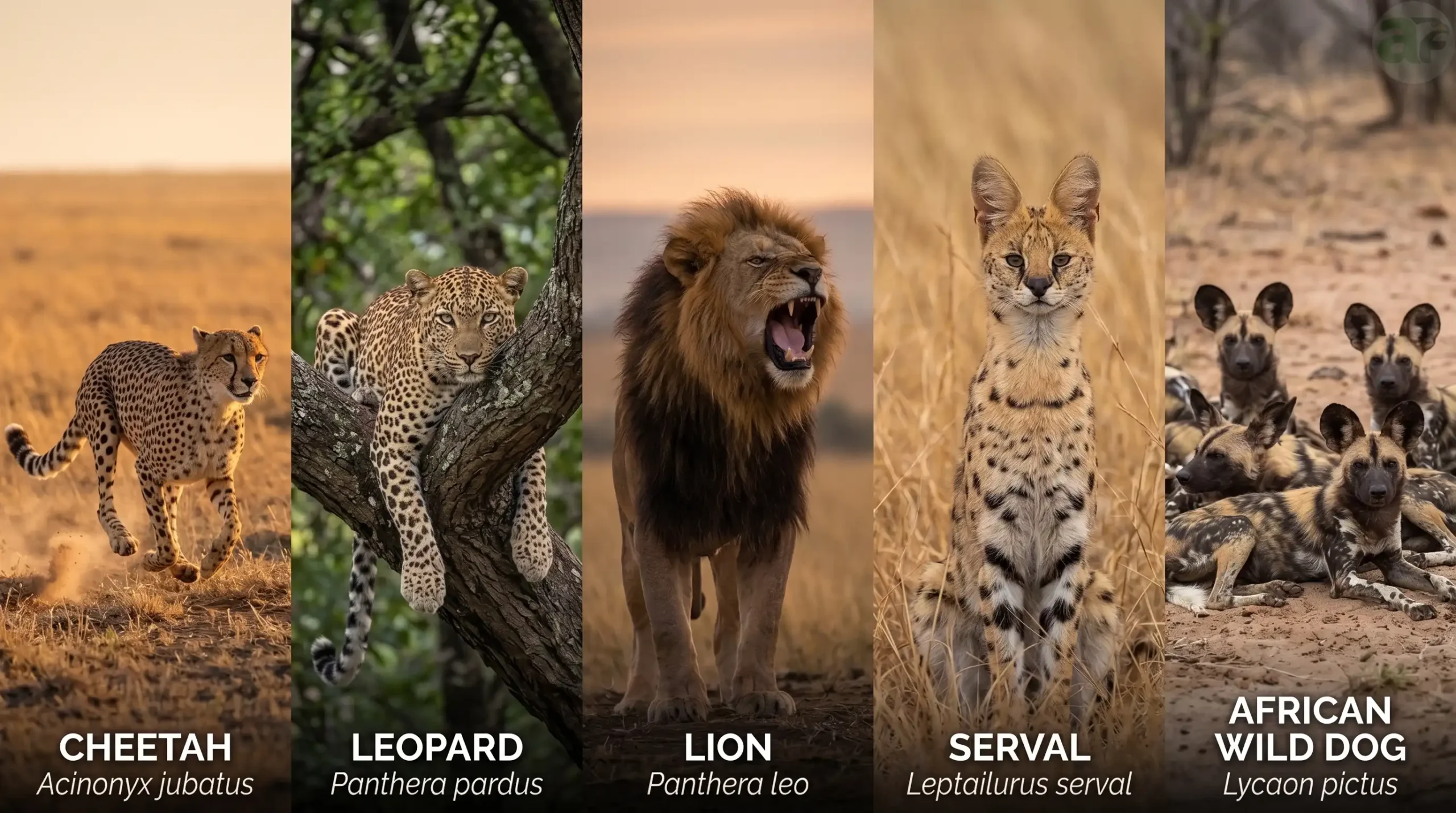
21. Comparison of Cheetahs with Similar Big Cats
| Feature | Cheetah | Leopard | Lion | Serval | African Wild Dog |
|---|---|---|---|---|---|
| Scientific Name | Acinonyx jubatus | Panthera pardus | Panthera leo | Leptailurus serval | Lycaon pictus |
| Weight | 21–72 kg | 28–90 kg | 120–250 kg | 8–18 kg | 17–36 kg |
| Top Speed | 120–128 km/h | 58 km/h | 81 km/h | 70–80 km/h | 66 km/h |
| Distribution | Sub-Saharan Africa; Iran | Africa; Asia | Sub-Saharan Africa; India | Sub-Saharan Africa | Sub-Saharan Africa |
| Habitat | Open savanna; scrubland | Forest; rocky terrain | Savanna; open woodland | Grassland; wetland margins | Savanna; open woodland |
| Social Structure | Female solitary; male coalitions | Solitary | Prides | Solitary | Pack (highly social) |
| Hunting Method | Pure pursuit; trip and throat bite | Ambush; suffocation | Cooperative pride hunts | Pounce from high grass | Long-distance cooperative pursuit |
| Conservation Status | Vulnerable | Vulnerable | Vulnerable | Least Concern | Endangered |
| Unique Feature | Fastest land animal; semi-retractable claws | Most adaptable big cat; strongest climber | Only social cat; mane | Exceptionally tall relative to body | Highest cooperative hunting success (80%+) |
22. How You Can Help
Cheetah conservation requires action across multiple fronts — from reducing illegal pet trade demand to supporting community-based coexistence programs that allow cheetahs to persist on the farmland where most of the world’s wild cheetahs actually live.
Support These Organizations
Cheetah Conservation Fund (cheetah.org) — The world’s leading cheetah research and conservation organization, based in Namibia, operating the most comprehensive long-term cheetah monitoring and community coexistence program anywhere, including the landmark livestock guarding dog program.
Cheetah Conservation Botswana (cheetahbotswana.com) — A leading Southern African organization focused on cheetah research and conservation in Botswana’s exceptional predator landscape.
Panthera (panthera.org/cat/cheetah) — Runs cheetah conservation programs across multiple range countries, contributing to range-wide population monitoring and policy engagement.
Iranian Cheetah Society (iransafari.ir) — The primary Iranian organization working on Asiatic Cheetah conservation — monitoring the critically tiny remaining population, reducing road mortality through infrastructure advocacy, and raising public awareness within Iran.
Wildlife Conservation Society (wcs.org) — Runs cheetah conservation programs in Tanzania and Kenya, including long-term population monitoring essential to understanding range-wide population trends.
Practical Actions
Never purchase a cheetah or support the exotic pet trade — consumer demand from Gulf states drives the illegal capture and trafficking of wild cheetah cubs, with catastrophic mortality rates. Sharing awareness of the trade’s devastating ecological impact helps reduce social normalization of exotic pet ownership.
Support community-based coexistence programs — organizations like CCF that fund livestock guarding dog placements with farming communities directly reduce retaliatory cheetah killing, the most widespread human-caused cheetah mortality source. Small donations cover the purchase and maintenance of individual livestock guardian dogs.
Choose certified sustainable beef products — consumer demand for beef products from ranching operations certified as wildlife-friendly or predator-coexistence committed creates economic incentives for farmers to tolerate rather than kill cheetahs.
Report suspected wildlife trade activity — if you observe cheetahs or cheetah products being offered for sale (including on social media, which is a major exotic pet trade platform), reporting to TRAFFIC (the wildlife trade monitoring network), local authorities, or directly to platforms can contribute to enforcement actions.
Participate in citizen science — iNaturalist and country-specific cheetah sighting platforms welcome wildlife observation reports that contribute to range-wide occupancy mapping and population monitoring essential for conservation planning.
Did You Know? The Cheetah Conservation Fund’s Livestock Guarding Dog program has placed over 700 Anatolian Shepherd and Kangal dogs with Namibian farming families since the program began in 1994. Farms using CCF-provided guardian dogs have reported over 80% reductions in livestock losses to predators — reducing both the economic impact driving farmer-cheetah conflict and the retaliatory killing that represents one of the primary causes of cheetah mortality in Namibian farmland. The program has been replicated in multiple other range countries and is considered one of the most successful practical large carnivore coexistence tools ever developed.
23. Frequently Asked Question About Cheetahs
Q1: What is the scientific name of the cheetah?
The cheetah’s scientific name is Acinonyx jubatus — the sole living species in the genus Acinonyx. The name “jubatus” is derived from the Latin for “maned” or “crested,” referring to the grey mantle of longer hair present on cheetah cubs. The family is Felidae (cats), order Carnivora, and class Mammalia.
Q2: How fast can a cheetah run?
The cheetah is the fastest land animal on Earth, reaching documented speeds of 120–128 km/h (75–80 mph) in a full sprint. This speed can only be maintained for approximately 20–30 seconds over a distance of 200–500 meters before physiological heat buildup and energy depletion force the animal to slow. The cheetah’s acceleration — from 0 to 96 km/h in approximately 3 seconds — exceeds that of most production sports cars.
Q3: Are cheetahs endangered?
Cheetahs are classified as Vulnerable on the IUCN Red List globally. However, two subspecies face far more severe situations: the Saharan (Northwest African) Cheetah is Critically Endangered with approximately 200–250 individuals, and the Asiatic Cheetah is Critically Endangered with an estimated 12–40 wild individuals — one of the lowest populations of any large mammal in the world.
Q4: Do cheetahs live alone or in groups?
Female cheetahs are predominantly solitary — living alone and raising cubs without male assistance. Male cheetahs frequently form coalitions (typically with brothers from the same litter) that persist for life, providing advantages in territory holding and reproduction. This makes the cheetah’s social system one of the most flexible among large cats, with dramatic differences between the social organizations of males and females.
Q5: Why can’t cheetahs roar?
Cheetahs lack the modified laryngeal (voice box) anatomy that enables the roaring big cats (lions, tigers, leopards, jaguars) to produce their characteristic roars. This modification — involving a different structure of the laryngeal cartilage — trades off the ability to purr continuously (which small cats do, cheetahs partially do) against roaring capability. The cheetah occupies an evolutionary position between roaring cats and purring cats, producing neither a full roar nor a continuous purr but a unique range of chirps, churrs, and other distinctive vocalizations.
Q6: What do cheetahs eat?
Cheetahs are specialized hunters primarily targeting small-to-medium prey weighing 20–60 kg — with Thomson’s gazelle, springbok, and impala comprising the majority of the diet across most of their range. They also take hares, warthog piglets, birds, and other smaller prey. Unlike lions and leopards, cheetahs rarely attempt prey significantly larger than themselves.
Q7: How long do cheetahs live?
Wild cheetahs typically live 8–12 years — with individuals in protected, prey-rich areas sometimes reaching the older end of this range. In captivity with appropriate care, cheetahs can live up to 20 years. Wild lifespan is limited by hunting injuries, predation, territorial combat (in males), and the cumulative effects of the high physical demands of sprint hunting.
Q8: What is the King Cheetah?
The King Cheetah is a rare color morph of the Southeast African Cheetah, produced by a single recessive genetic mutation that causes large blotches and stripe-like patterns to replace the typical small round spots. It is not a separate subspecies, not a hybrid, and not an albino — simply a rare but naturally occurring color variant that appears occasionally in wild populations and is bred regularly in some captive populations where both parents carry the recessive gene.
Q9: What is happening with India’s cheetah reintroduction?
India’s Project Cheetah began in September 2022 with the translocation of 8 cheetahs from Namibia to Kuno National Park in Madhya Pradesh, followed by additional individuals from South Africa. By 2026, the program has resulted in the birth of cubs in Indian habitat for the first time in over 75 years. The program faces ongoing challenges including some adult mortality and questions about habitat suitability, prey availability, and the long-term genetic and ecological prospects for the population.
Q10: How can I help cheetah conservation?
Key actions include: supporting the Cheetah Conservation Fund and other reputable organizations; never supporting the exotic pet trade in cheetahs or other wild cats; raising awareness about the illegal cheetah pet trade in Gulf states; choosing wildlife-friendly certified products where available; reporting suspected illegal wildlife trade to TRAFFIC or relevant authorities; and participating in citizen science platforms that contribute to cheetah population monitoring data.
24. Sources & References
Research Sources
- Wikipedia — Acinonyx jubatus and subspecies articles
- IUCN Red List — iucnredlist.org
- Cheetah Conservation Fund — cheetah.org
- Panthera — panthera.org/cat/cheetah
- Iranian Cheetah Society — iransafari.ir
- National Geographic — nationalgeographic.com
- Smithsonian’s National Zoo — nationalzoo.si.edu
- Encyclopaedia Britannica — britannica.com
- BBC Wildlife — bbc.co.uk
- Live Science — livescience.com
- TRAFFIC (Wildlife Trade Monitoring Network) — traffic.org
- WWF — worldwildlife.org
- Wildlife Conservation Society — wcs.org
- O’Brien, Stephen J. — “Tears of the Cheetah” (2003)
- Durant, Sarah et al. — “The global decline of cheetah Acinonyx jubatus and what it means for conservation” (PNAS, 2017)