
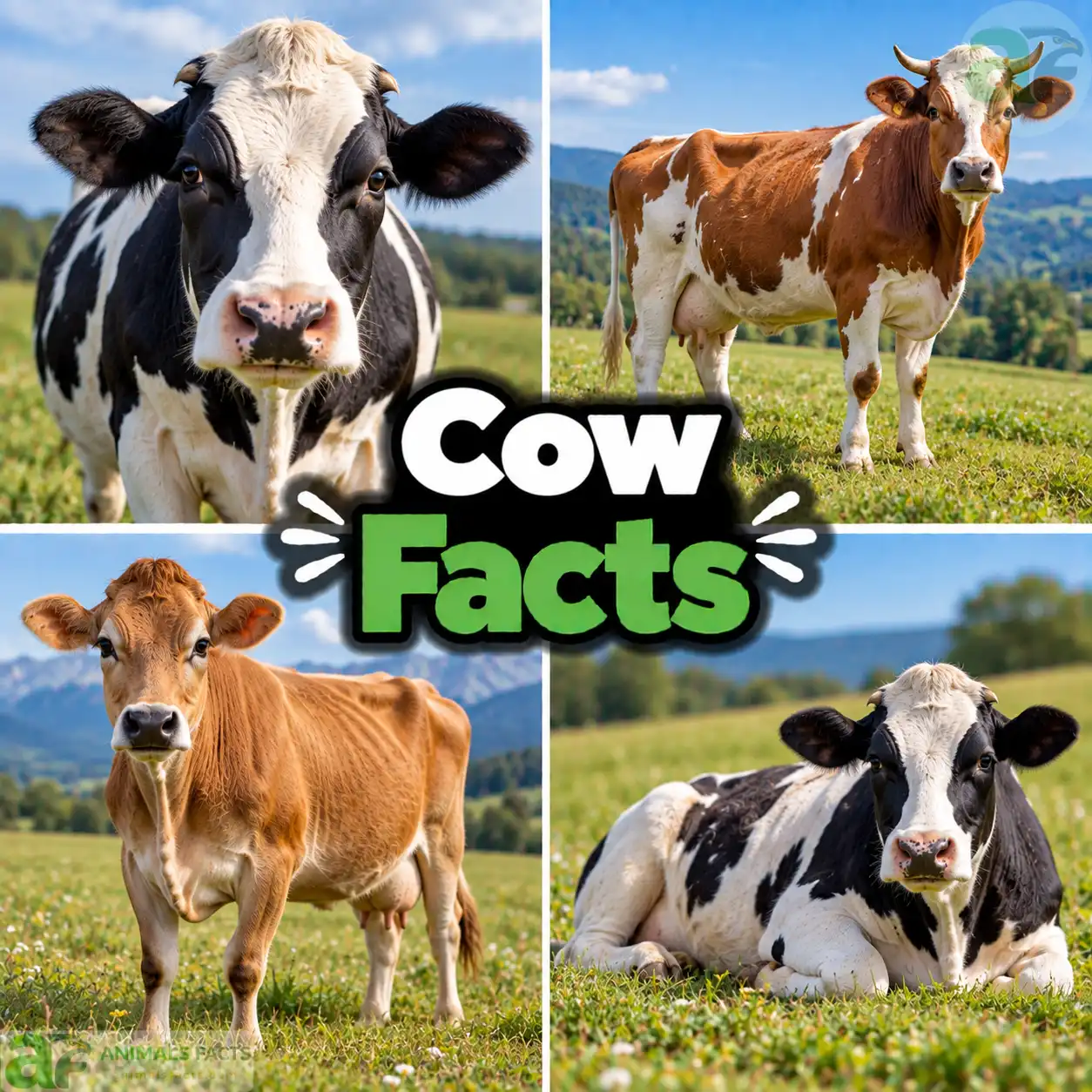
Cow Facts
| Feature | Details |
|---|---|
| Scientific Name | Bos taurus (domestic cattle); wild ancestor Bos primigenius (aurochs, extinct) |
| Common Names | Cow, Cattle, Bovine, Bull (male), Calf (young), Steer/Ox (castrated male) |
| Kingdom | Animalia |
| Phylum | Chordata |
| Class | Mammalia |
| Order | Artiodactyla |
| Family | Bovidae |
| Habitat | Domesticated across grasslands, farmland, and pastures on every inhabited continent |
| Lifespan | 18–22 years naturally; commercial dairy/beef cattle typically live 4–6 years due to industry practices |
| Diet | Herbivore — grasses, hay, silage, grains |
| Weight | 500–900 kg for adult cows; bulls can exceed 1,000 kg; varies enormously by breed |
| Height | 1.2–1.5 meters at the shoulder, varying by breed |
| Speed | Up to 35 km/h (22 mph) in short bursts |
| Conservation Status | Domesticated (not assessed); wild ancestor (aurochs) is Extinct |
| Global Population | Approximately 1.5 billion domestic cattle worldwide |
| Unique Feature | Has a four-chambered stomach and can produce more than 500 liters of saliva per day to aid digestion; possesses nearly 360-degree panoramic vision; recognized as sacred in Hinduism and protected in India |
 1. Introduction: What is a Cow?
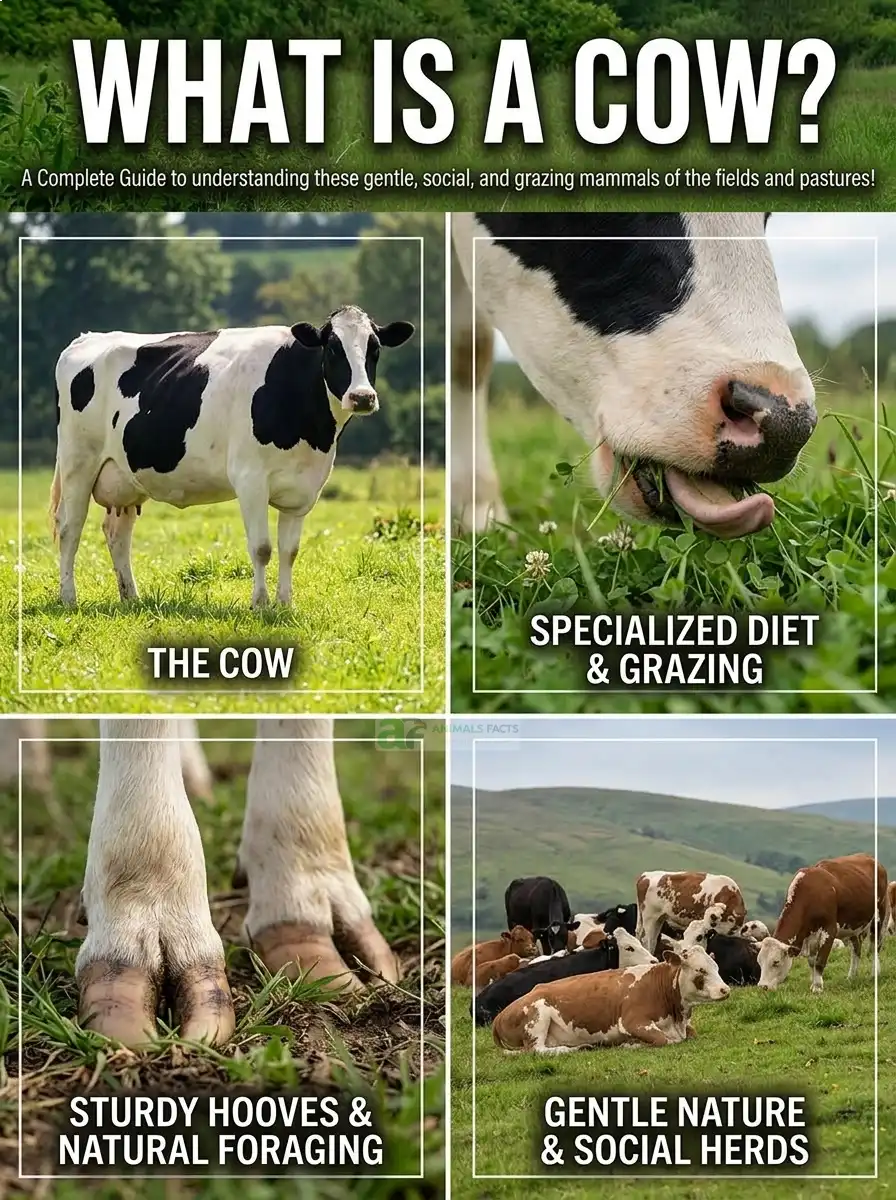
It is one of the most numerous large mammals on the planet, with a global population exceeding 1.5 billion, and yet most people know surprisingly little about the actual biology, behavior, and history behind one of humanity’s oldest and most consequential domesticated animals. Cow facts reveal an animal far more complex, intelligent, and biologically remarkable than its familiar, unassuming presence in fields and pastures around the world might suggest — from a four-chambered stomach capable of processing tough, fibrous grasses that would be indigestible to most other animals, to a nearly 360-degree field of vision, to documented evidence of individual personalities, social bonds, and even the capacity to feel measurable stress when separated from close companions.
The domestic cow (Bos taurus) descends from the now-extinct aurochs (Bos primigenius), a massive wild cattle species that once roamed across Europe, Asia, and North Africa, standing considerably larger and more formidable than any modern domestic cattle breed alive today. The domestication of cattle, beginning roughly 10,000 years ago, ranks among the most transformative developments in human agricultural history, fundamentally reshaping diets, economies, religious traditions, and entire civilizations across virtually every inhabited continent — a domestication story whose consequences continue to shape global food systems, culture, and environmental policy today.
Beyond their agricultural and economic significance, cows hold deep and varied cultural meaning across human societies, from their sacred status within Hinduism, where cows are protected and revered across much of India, to their central symbolic role in countless other cultural and religious traditions worldwide, to their ubiquitous presence in Western popular culture, advertising, and children’s media. Understanding cow facts today means appreciating not just a familiar farm animal, but a species whose deep partnership with humanity has fundamentally shaped the modern world.
Whether you’re a student researching cow facts for a school project, a farmer or aspiring rancher wanting to better understand cattle behavior and biology, someone curious about the cultural and religious significance of cows across different societies, a parent looking for cow facts for kids, or simply someone who has always wondered exactly how many stomachs a cow really has, this guide covers everything — cow habitat, cow diet, the extraordinary digestive system, reproduction, social behavior and intelligence, domestication history, mythology, and much more. This is the most complete guide to cow facts you will find anywhere.
2. Cow Species Overview & Classification
The domestic cow belongs to the family Bovidae, a large and diverse family that includes cattle, bison, buffalo, goats, sheep, and antelope — all unified by the possession of true horns (in most species) and a shared ruminant digestive system. Within this broader family, domestic cattle belong to the genus Bos, alongside several wild and semi-wild relatives.
Classification Table
| Level | Classification |
|---|---|
| Kingdom | Animalia |
| Phylum | Chordata |
| Class | Mammalia |
| Order | Artiodactyla |
| Family | Bovidae |
| Subfamily | Bovinae |
| Genus | Bos |
| Species | B. taurus (with B. indicus, the zebu, often classified as a subspecies or closely related sister species) |
| Wild Ancestor | Bos primigenius (aurochs) — Extinct since 1627 |
| Closest Living Relatives | Bison (Bison bison, Bison bonasus), water buffalo (Bubalus bubalis), yak (Bos grunniens) |
Major Cattle Types and Breed Categories
Domestic cattle are broadly divided into two major groupings based on ancestry and physical characteristics, alongside hundreds of distinct breeds developed for different purposes and climates.
| Type | Scientific Classification | Characteristics | Examples |
|---|---|---|---|
| Taurine Cattle | Bos taurus | Humpless; originated in temperate Europe/Near East | Holstein, Angus, Hereford, Jersey |
| Zebu (Humped Cattle) | Bos indicus | Prominent shoulder hump; heat and parasite-resistant | Brahman, Gir, Sahiwal |
| Sanga Cattle | Hybrid of taurine/zebu | African cattle type combining both lineages | Ankole-Watusi, Afrikaner |
An Estimated 1,000+ Recognized Breeds
One of the most striking cow facts is the sheer number of distinct cattle breeds that exist worldwide — estimates suggest well over 1,000 recognized breeds globally, developed over thousands of years of selective breeding for traits including milk production, meat quality, draft power, climate tolerance, and disease resistance. This staggering breed diversity reflects cattle’s status as one of the most extensively and deliberately bred domesticated animals in human history, with breeding programs tailored to nearly every climate and agricultural need across the globe.
Species Evolution & Discovery Timeline
~2 million years ago: The genus Bos began diverging within the broader bovid lineage during the Pleistocene, giving rise to the ancestral wild cattle populations that would eventually be domesticated.
~250,000 years ago: The aurochs (Bos primigenius), the direct wild ancestor of modern domestic cattle, emerged as a distinct species, eventually spreading across a vast range covering Europe, Asia, and North Africa.
~10,500 years ago: Cattle domestication began independently in at least two separate regions — the Near East (giving rise to taurine cattle) and the Indus Valley region of South Asia (giving rise to zebu cattle) — representing one of the most significant agricultural developments in human history.
~8,000–7,000 years ago: Domesticated cattle spread across Europe, Asia, and North Africa alongside expanding agricultural societies, becoming deeply integrated into farming economies, religious practices, and cultural traditions across multiple civilizations.
Ancient Egyptian, Mesopotamian, and Indus Valley civilizations: Cattle became central to religious symbolism, agricultural labor (as draft animals), and economic wealth measurement across numerous early civilizations, with cattle ownership frequently serving as a marker of social status and prosperity.
1st millennium BCE: Cattle became firmly established as sacred animals within early Vedic and subsequently Hindu religious traditions across the Indian subcontinent, a status that continues today.
15th–17th centuries CE: European colonization brought domestic cattle to the Americas, Australia, and other regions where no native cattle species previously existed, fundamentally transforming these regions’ agricultural landscapes and, in some cases, their broader ecosystems.
1627: The last known aurochs — the wild ancestor of all modern domestic cattle — died in the Jaktorów Forest in Poland, marking the extinction of the species and leaving domestic cattle as the sole surviving representatives of this ancient lineage.
19th–20th centuries: Selective breeding programs intensified dramatically, giving rise to highly specialized modern breeds optimized for industrial-scale milk and meat production, alongside the development of modern veterinary science and reproductive technologies including artificial insemination.
2026: The global cattle population stands at approximately 1.5 billion, making domestic cattle one of the most numerous large mammal species on Earth and a central pillar of global agriculture, while conservation and rewilding efforts in parts of Europe have explored breeding programs aimed at recreating aurochs-like cattle through selective backbreeding of existing breeds.
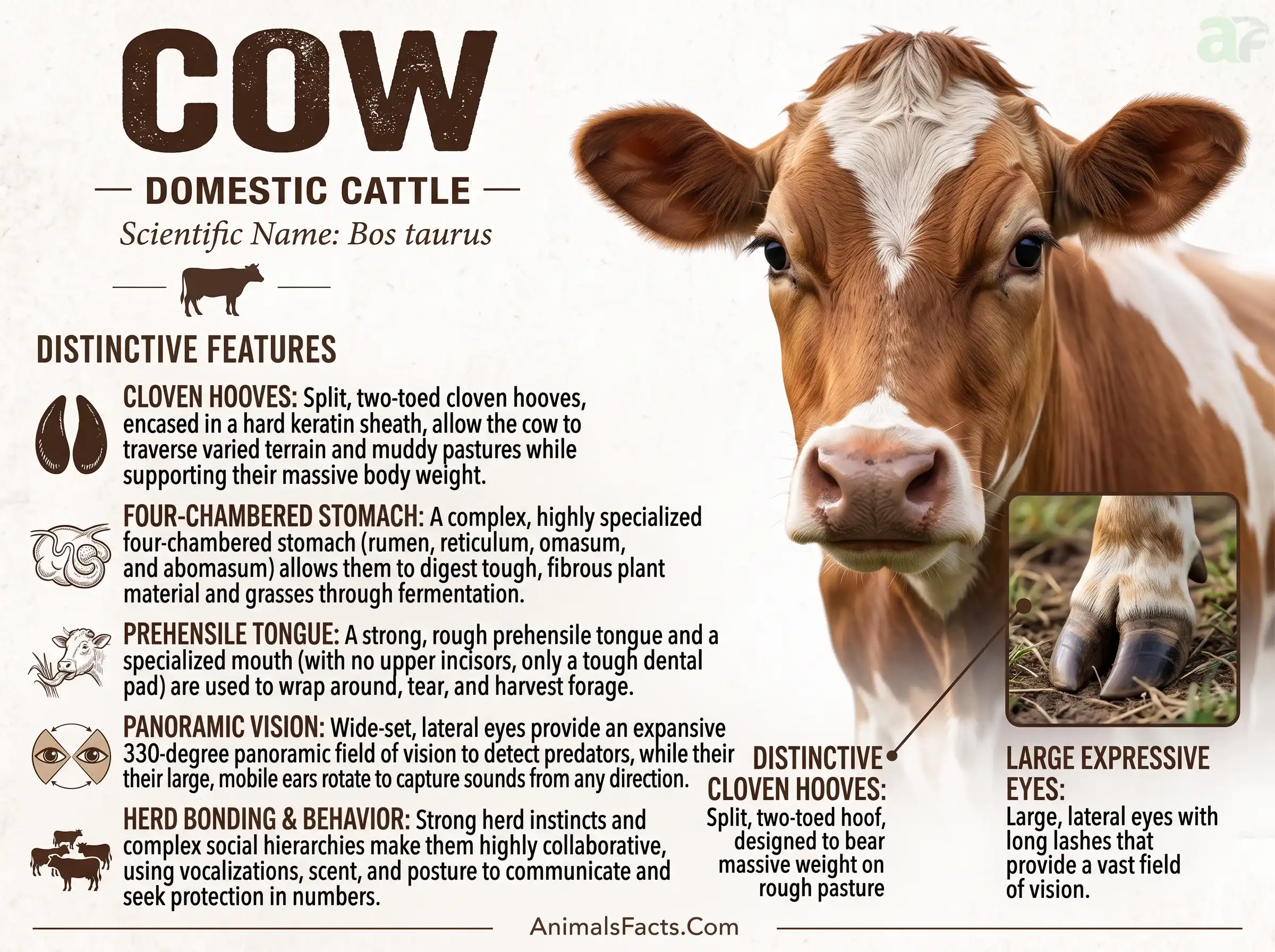
3. Cow Physical Description & Unique Features
Domestic cattle display enormous physical variation across their many breeds, reflecting thousands of years of selective breeding for different climates, purposes, and production goals, yet share a core set of anatomical features that define the species.
Size and Build
- Weight: Adult cows typically weigh 500–900 kg, while bulls can exceed 1,000 kg, with considerable variation across breeds — dairy breeds like the Jersey tend toward the smaller end, while large beef breeds can be substantially heavier.
- Height: 1.2–1.5 meters at the shoulder for most breeds, though this too varies considerably.
- Body length: Approximately 2.3–2.9 meters.
The Four-Chambered Stomach — A Digestive Marvel
Perhaps the single most biologically remarkable feature of cattle is their extraordinarily complex digestive system, built around a four-chambered stomach that allows them to extract nutrition from tough, fibrous plant material that would be nutritionally inadequate or entirely indigestible for most other animals, including humans.
The four chambers:
Rumen: The largest chamber, capable of holding up to 150–200 liters in a large adult cow, functioning as a massive fermentation vat where billions of specialized microorganisms — bacteria, protozoa, and fungi — break down cellulose from grass and other plant material.
Reticulum: Sometimes called the “honeycomb” stomach due to its distinctive internal lining texture, working closely with the rumen in the fermentation process and helping filter out foreign objects the animal may have accidentally ingested.
Omasum: Absorbs water and additional nutrients from the partially digested food before it moves to the final chamber.
Abomasum: Often called the “true stomach,” functioning most similarly to the single stomach found in humans and other non-ruminant animals, using acid and enzymes for final digestion before nutrients pass into the intestines.
Cud-chewing (rumination): Cattle regularly regurgitate partially digested food, known as “cud,” back into the mouth for additional chewing — a process that further breaks down tough plant fibers and significantly improves overall digestive efficiency, with cattle spending a substantial portion of each day, sometimes 6–8 hours, specifically engaged in this rumination process.
Extraordinary Saliva Production
Cattle produce an astonishing volume of saliva as part of their digestive process — up to 150–180 liters per day for a large dairy cow, though some estimates for very high-producing animals suggest figures approaching or exceeding 200 liters daily. This saliva serves several important digestive functions, including buffering the acidity within the rumen to maintain the ideal pH for the billions of beneficial microorganisms performing fermentation, and helping to moisten and break down tough, fibrous feed material.
Near-Panoramic Vision
Cattle possess remarkably wide-angle vision, with eyes positioned on the sides of the head providing a field of view approaching 330 degrees — nearly a full panoramic view of their surroundings, with only a relatively small blind spot directly behind them. This wide field of view is a classic prey-animal adaptation, allowing cattle to monitor for potential threats from nearly every direction simultaneously, though it comes at some cost to depth perception and binocular vision directly ahead.
Color perception: Contrary to the widespread popular belief that cattle (and specifically bulls) are enraged by the color red, cattle are actually largely red-green colorblind, similar to many other mammals — meaning the color of a matador’s cape has no special significance to a bull; it is the movement of the cape, not its color, that provokes a reaction.
Horns and Their Variation
Horn presence, size, and shape vary enormously across cattle breeds and between sexes, ranging from the naturally hornless (“polled”) condition common in breeds like Angus, to the dramatically long, wide horns of breeds such as the Ankole-Watusi, whose horns can span an extraordinary 2.4 meters (8 feet) from tip to tip in exceptional individuals — among the largest horn spans of any cattle breed in the world, believed to also serve a thermoregulatory function by dissipating heat through the extensive blood vessel network within the horn structure.
The Distinctive Zebu Hump
Zebu cattle (Bos indicus), predominant across South Asia, Africa, and other tropical and subtropical regions, possess a distinctive fatty hump over the shoulders — an adaptation that, alongside other physiological traits, contributes to the zebu’s notably superior heat tolerance and parasite resistance compared to taurine cattle breeds, making zebu and zebu-cross cattle particularly well-suited to hot, humid tropical climates.
Did You Know? A cow’s sense of smell is remarkably acute, with research suggesting cattle can detect scents from as far away as 8 kilometers (5 miles) under favorable wind conditions — a sensory capability far beyond typical human perception and one that likely plays an important role in the animal’s ability to locate food, water, and detect potential predators from significant distances.
4. Top 25 Surprising & Interesting Cow Facts
- Cows have a four-chambered stomach, allowing them to digest tough plant material that most animals cannot process.
- A cow can produce up to 180 liters of saliva per day to aid digestion.
- Cattle have nearly 330-degree panoramic vision, giving them an almost complete view of their surroundings.
- Contrary to popular belief, bulls are actually red-green colorblind — it’s movement, not color, that provokes a reaction to a matador’s cape.
- The wild ancestor of all domestic cattle, the aurochs, went extinct in 1627 when the last individual died in Poland.
- There are over 1,000 recognized cattle breeds worldwide.
- Cattle domestication began roughly 10,500 years ago, occurring independently in the Near East and South Asia.
- A cow’s sense of smell can detect scents from up to 8 kilometers away.
- Cows spend up to 6–8 hours a day chewing their cud.
- The global cattle population is estimated at approximately 1.5 billion.
- Cows are considered sacred in Hinduism and are legally protected from slaughter in much of India.
- Ankole-Watusi cattle can have horns spanning up to 2.4 meters from tip to tip.
- Cattle can form close social bonds and have been documented showing signs of stress when separated from preferred companions.
- A cow’s gestation period is approximately 9 months — nearly identical to that of humans.
- Newborn calves can typically stand and walk within about 30 minutes of birth.
- Cattle can recognize and remember the faces of up to 100 individual humans and other cattle.
- Cows communicate using more than 20 distinct vocalizations, each linked to different emotional states or needs.
- A single dairy cow can produce over 9,000 liters of milk per year under intensive modern dairy production.
- Cattle have an excellent memory and have been shown in studies to remember solutions to problems for extended periods.
- Zebu cattle possess a distinctive fatty hump that aids heat tolerance in tropical climates.
- Cattle are farmed on every inhabited continent on Earth, from tropical regions to sub-Arctic climates.
- The word “cattle” originally comes from a root meaning “property” or “capital,” reflecting cattle’s historic role as a primary measure of wealth.
- Some cattle breeds, like the miniature Dexter, can weigh under 350 kg as full-grown adults.
- Cattle can sleep both standing up and lying down, though deep REM sleep generally only occurs while lying down.
- Cows have been documented displaying signs of excitement, sometimes described informally as “cow zoomies,” when released into fresh pasture after a period of confinement.
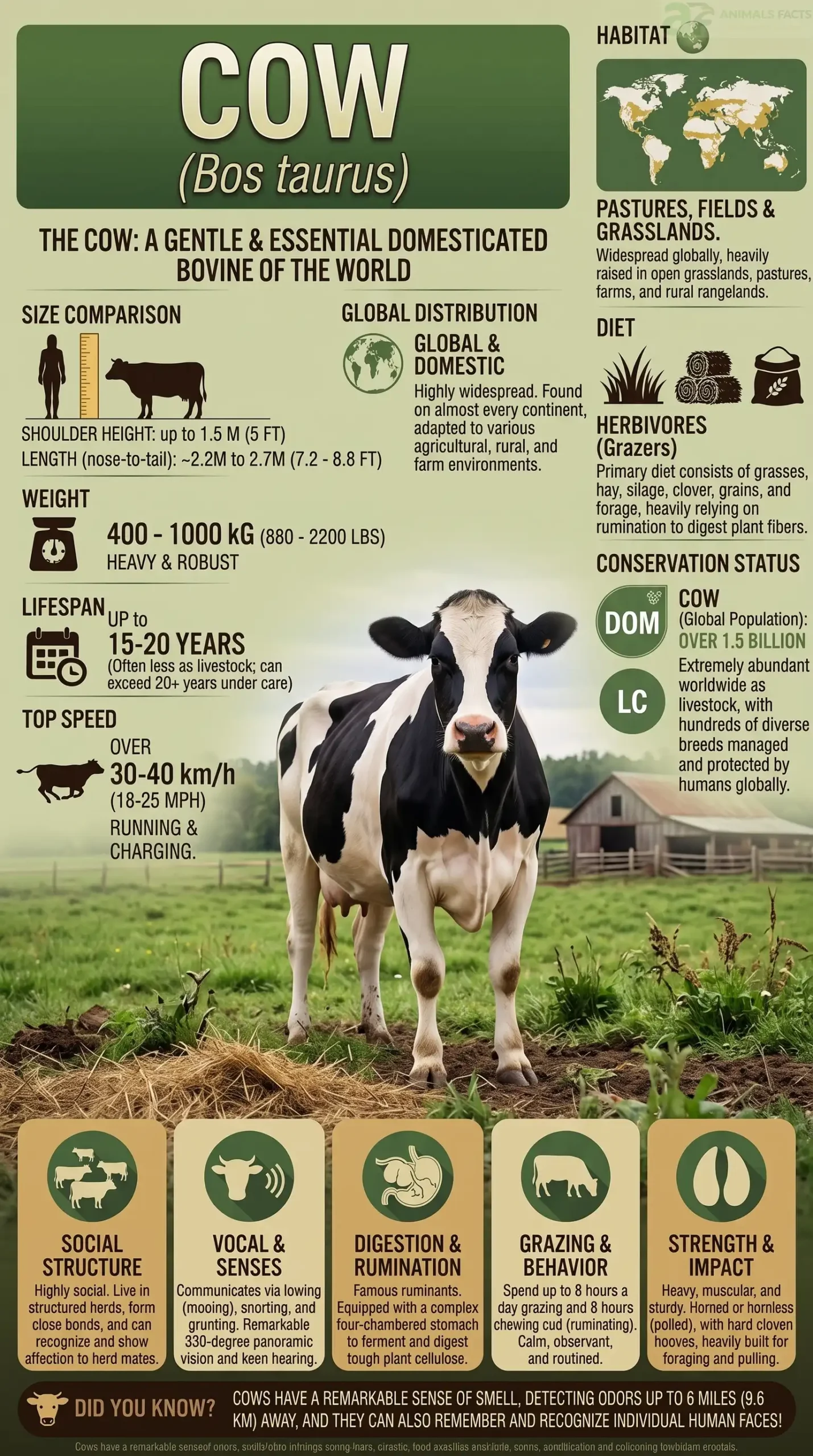
5. Fun Facts About Cows
- Cows have four stomach chambers.
- They produce up to 180 liters of saliva daily.
- Cattle have almost 330-degree vision.
- Bulls are actually colorblind to red.
- The wild ancestor, the aurochs, is extinct.
- There are over 1,000 cattle breeds worldwide.
- Cows chew cud for up to 8 hours a day.
- The global cattle population is about 1.5 billion.
- Cows are sacred in Hinduism.
- Some Ankole-Watusi horns span 2.4 meters.
- Calves can walk within 30 minutes of birth.
- Cows can recognize up to 100 faces.
- They use over 20 different vocal sounds.
- Cattle gestation lasts about 9 months — just like humans!
6. Cow Habitat & Geographic Range
Unlike wild animals with a naturally evolved geographic range, domestic cattle occupy an almost entirely human-determined habitat, having been deliberately bred and distributed by humans across virtually every agriculturally viable region of the planet.
Primary Habitat Types
Temperate grassland and pasture: The classic cattle-farming landscape across much of Europe, North America, and temperate regions of the Southern Hemisphere, offering the grass-based forage cattle are naturally adapted to consume.
Tropical and subtropical grassland: Home primarily to heat-tolerant zebu and sanga cattle breeds, particularly across South Asia, Africa, and parts of South America.
Mixed farmland and feedlot systems: Increasingly common across intensive modern agricultural systems, where cattle may spend significant portions of their lives in confined feeding operations rather than open pasture.
High-altitude and cold-climate regions: Certain hardy cattle breeds, along with the closely related yak, have been specifically developed or adapted for high-altitude and cold-climate farming across regions including the Himalayas, Scotland, and Scandinavia.
Geographic Range Table
| Region | Cattle Population Status | Notes |
|---|---|---|
| Asia (particularly India, China) | Very high | India alone hosts one of the world’s largest cattle populations, significantly shaped by religious protection of cows |
| South America (Brazil, Argentina) | Very high | Major global beef export region |
| North America (USA, Canada, Mexico) | High | Extensive beef and dairy production systems |
| Europe | High | Long-established dairy and beef traditions across nearly every country |
| Africa | High, growing | Significant pastoral and increasingly commercial cattle farming |
| Australia | High | Major beef export industry across vast rangeland operations |
Did You Know? India is home to one of the largest cattle populations of any country on Earth, a status directly connected to the sacred role cows hold within Hindu religious tradition — in many Indian states, cow slaughter is illegal or heavily restricted, resulting in large populations of cattle, including elderly and non-productive animals, that live out their full natural lifespans under legal protection rather than being processed for meat production as would typically occur in commercial cattle industries elsewhere.
7. Cows Diet & Feeding Behavior
Cattle are herbivores and true ruminants, possessing a highly specialized digestive system that allows them to extract substantial nutrition from grasses and other fibrous plant material that would be largely indigestible to non-ruminant animals.
Diet Breakdown Table
| Food Type | Approximate Percentage | Notes |
|---|---|---|
| Fresh grass/pasture | 40–70% (pasture-raised) | Primary natural food source |
| Hay and dried forage | 20–40% | Especially important during winter or dry seasons |
| Silage (fermented forage) | Variable | Common in intensive dairy operations |
| Grain-based feed | Variable, often 20–40% in commercial systems | Common in feedlot and intensive dairy production |
| Mineral and vitamin supplements | Small quantity | Ensures nutritional completeness in managed systems |
Grazing Behavior
Cattle are natural grazers, using their tongue — which is notably long, muscular, and slightly rough — to pull grass and other vegetation into the mouth, where it is roughly chewed before swallowing into the rumen for initial fermentation. A grazing cow may spend 6–10 hours per day actively grazing, depending on pasture quality and availability, alongside the additional several hours spent on cud-chewing (rumination) to further process previously consumed material.
Daily Water and Feed Intake
A large adult dairy cow can consume approximately 10–20 kg of dry matter feed and drink between 95 and 150 liters of water per day, particularly during periods of high milk production, when water demands increase substantially given that milk itself is roughly 87% water.
Did You Know? Cattle are considered highly selective grazers under natural conditions, often preferentially choosing more nutritious and palatable plant species within a pasture rather than grazing indiscriminately — a behavior that, when properly managed through rotational grazing practices, can actually benefit overall grassland ecosystem health and plant diversity.
8. Cow Reproduction & Life Cycle
Cattle reproduction has been extensively studied and, in commercial settings, is often carefully managed through modern reproductive technologies including artificial insemination, though natural breeding behavior remains well understood from both wild ancestor studies and observations of extensively managed herds.
Mating and Breeding
Breeding age: Female cattle (heifers) typically reach sexual maturity and can be bred starting around 12–15 months of age, though breeding is often delayed until slightly later to ensure adequate physical development.
Estrus cycle: Female cattle cycle approximately every 21 days when not pregnant, with a fertile window of approximately 12–18 hours during which conception can occur.
Artificial insemination: Widely used across the modern commercial cattle industry, allowing genetic material from selected high-value bulls to be used across large numbers of cows without requiring natural mating, significantly influencing modern breed development and genetic improvement programs.
Gestation and Birth
Gestation: Approximately 283 days (roughly 9 months) — remarkably similar in length to human gestation.
Litter size: Almost always a single calf; twins occur in a small percentage of births (roughly 1–4%, varying by breed) and can present increased health risks for both mother and calves.
Birth weight: Typically 25–45 kg, varying significantly by breed.
Birth condition: Calves are precocial, capable of standing and attempting to walk within approximately 30 minutes to an hour of birth — an important adaptation reflecting cattle’s evolutionary history as a prey species needing to keep pace with a mobile herd shortly after birth.
Growth Stages Table
| Stage | Age | Development |
|---|---|---|
| Birth | — | 25–45 kg; standing within 30–60 minutes |
| Weaning | ~6–8 months | Transition to solid forage diet |
| Heifer/Bullock stage | 6 months–2 years | Continued growth toward maturity |
| Sexual maturity | 12–15 months (females) | Breeding typically delayed slightly for full development |
| Full physical maturity | ~4–5 years | Complete skeletal and muscular development |
Lifespan Comparison Table
| Species/Category | Natural Lifespan | Typical Commercial Lifespan |
|---|---|---|
| Domestic Cattle (natural) | 18–22 years | — |
| Dairy Cattle (commercial) | — | 4–6 years |
| Beef Cattle (commercial) | — | 1–2 years (slaughter age) |
| Bison (comparison) | 15–20 years | — |
| Water Buffalo (comparison) | 18–25 years | — |
9. Social Behavior & Communication
Cattle are genuinely social animals with complex herd dynamics, individual personalities, and communication systems that have been the subject of increasing scientific research in recent decades, challenging older assumptions that cattle possessed only limited behavioral or cognitive complexity.
Herd Structure and Social Bonds
Cattle naturally form herds with established social hierarchies, and research has documented that cattle form genuine preferential social bonds with specific herd members — essentially close friendships — with studies showing measurable physiological stress responses, including elevated heart rate, when cattle are separated from preferred companions, and correspondingly calmer behavior when kept with familiar, bonded individuals.
Vocal Communication
Cattle possess an extensive vocal repertoire, with research identifying more than 20 distinct vocalizations linked to different contexts and emotional states, including calls associated with hunger, distress, mother-calf communication, and social contact-seeking. Studies analyzing cattle vocalizations have found that individual cows maintain distinctive, recognizable “voices” throughout their lives, and that mother cows and their calves can recognize each other’s specific calls even at a distance and amid the general noise of a larger herd.
Memory and Cognitive Abilities
Research into cattle cognition has revealed surprising sophistication, including the capacity to remember the location of food sources over extended periods, recognize and remember up to 100 individual faces (both human and bovine), and demonstrate problem-solving abilities in structured behavioral tests — with some research suggesting cattle may even display something resembling excitement or frustration in response to successfully or unsuccessfully solving a task, sometimes informally described by researchers as an “eureka” response.
Did You Know? Animal behavior researchers have documented that cattle released into new or expanded pasture space, particularly after a period of winter confinement, frequently display bursts of joyful-seeming physical activity — jumping, kicking, and running — a behavior sometimes informally referred to as “cow zoomies” or “binkying,” widely interpreted by animal welfare researchers as a visible expression of positive emotional状态 relief and excitement.
10. Predators & Defense Mechanisms
Adult domestic cattle, owing to their substantial size and the protective management provided by human farming practices, face relatively limited direct predation pressure in most modern agricultural contexts, though this varies considerably by region and farming system.
Natural and Modern Predators
Wolves: In regions where wolf populations overlap with cattle grazing areas, particularly parts of North America and Europe, wolves represent a documented predation threat, primarily targeting calves and vulnerable individuals.
Large cats: In parts of Africa, Asia, and the Americas, big cats including lions, tigers, and mountain lions occasionally prey on cattle, particularly in regions where livestock grazing occurs near remaining wild predator habitat.
Bears: Grizzly and black bears can pose a predation risk to cattle in parts of North America where grazing operations overlap with bear habitat.
Defense Mechanisms
Herd vigilance: Cattle benefit from group-based predator detection, with herd members collectively more likely to notice an approaching threat than any single isolated individual.
Powerful kicks and horns: Adult cattle are capable of delivering forceful kicks and, in horned breeds, can use their horns defensively against predators or perceived threats.
Protective maternal behavior: Cow mothers display strong protective behavior toward calves, capable of aggressive defense against perceived threats to their young.
Human protection: In modern commercial farming contexts, human-provided protections including fencing, guardian animals (such as livestock guardian dogs), and active herd management represent the dominant “defense mechanism” against predation for most managed cattle populations today.
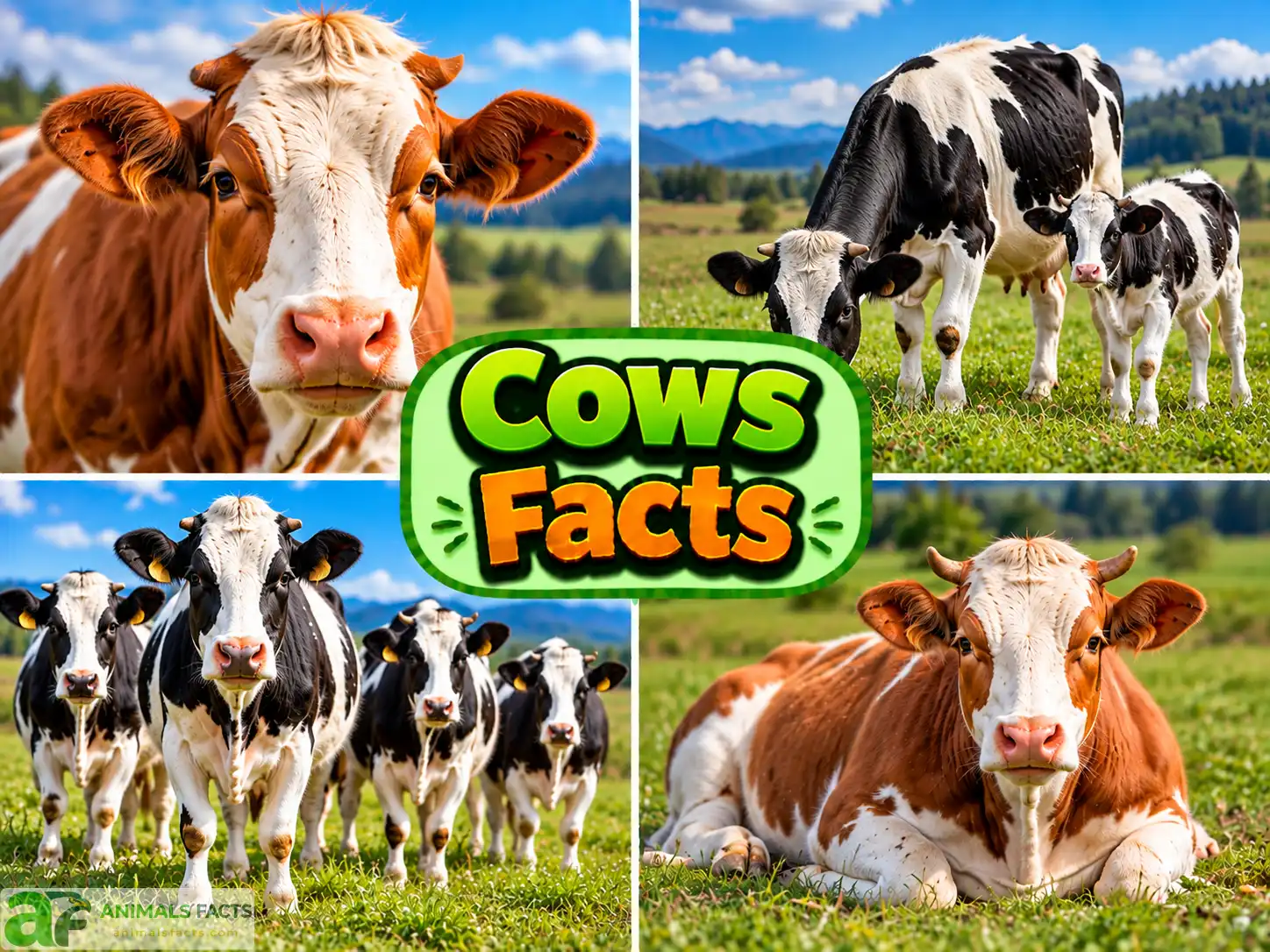
11. Cow Facts for Kids
Hey kids — get ready to learn some amazing things about one of the most important animals on farms all over the world!
- Did you know a cow has FOUR stomachs, not just one? Each stomach part has a special job to help the cow digest tough, chewy grass!
- Cows can make up to 180 liters of spit every single day — that’s like filling more than a whole bathtub with saliva!
- Cows can see almost all the way around themselves without even turning their heads — they have almost 330 degrees of vision!
- Even though people think bulls get angry at the color red, cows and bulls actually can’t even see red very well — it’s the WAVING of a cape that gets their attention, not the color!
- A baby cow, called a calf, can stand up and start walking in less than an hour after it’s born!
- Cows can remember up to 100 different faces — that means they can recognize their favorite farmer or even their cow friends!
- Cows “talk” to each other using more than 20 different sounds, and mother cows can even recognize their own calf’s special call!
- When cows get to run around in a big open field after being inside for a while, they sometimes jump and kick their legs up in the air because they’re so happy — some people call it “cow zoomies”!
Did You Know? Cows actually have best friends! Scientists have found that cows form close bonds with certain other cows in their herd, just like people have best friends, and they can even get stressed out if they’re separated from their favorite cow buddy!
12. Relationship with Humans
The relationship between cattle and humanity ranks among the most significant, longstanding, and transformative animal-human relationships in the history of civilization, spanning over 10,000 years of domestication, agriculture, religion, economics, and culture.
The Agricultural Revolution and Domestication
Cattle domestication, occurring independently roughly 10,500 years ago in both the Near East and the Indus Valley region, represented a fundamental turning point in human history, providing early agricultural societies with a reliable source of meat, milk, hides, and — critically — draft power for plowing fields and hauling loads, dramatically increasing agricultural productivity and enabling the growth of larger, more complex settled societies.
Economic and Historical Significance
Cattle have historically served as one of the most important measures of wealth and economic value across numerous cultures, with cattle ownership frequently functioning as a direct indicator of social status, wealth, and prosperity in societies ranging from ancient Mesopotamia to traditional pastoral communities across East Africa today, including groups such as the Maasai, for whom cattle ownership remains deeply integrated into social structure, marriage customs, and cultural identity.
Religious and Sacred Status
Cattle, and specifically cows, hold profound religious significance within Hinduism, where cows are considered sacred and are associated with several important deities and religious symbolism, including their connection to the goddess Kamadhenu and their association with the deity Krishna, who is traditionally depicted as a cowherd. This religious significance translates into substantial legal protection across much of India, where cow slaughter is illegal or heavily restricted in the majority of Indian states, resulting in a uniquely large population of elderly and non-productive cattle living out their natural lifespans.
Modern Agricultural Industry
Today, cattle farming represents an enormous global industry, encompassing both dairy production (milk, cheese, butter, and related products) and beef production, alongside significant contributions to leather, gelatin, and various other byproducts. Modern commercial cattle farming has become highly industrialized in many regions, employing advanced breeding technologies, specialized nutrition programs, and large-scale production systems that differ dramatically from traditional pastoral cattle-raising practices still common in other parts of the world.
Animal Welfare Considerations
Growing public and scientific attention to cattle cognition, social bonding, and capacity for stress and distress — as detailed in the Social Behavior section above — has increasingly informed animal welfare standards and practices within the modern cattle industry, with ongoing debate and evolving standards regarding appropriate housing, handling, and management practices across different farming systems worldwide.
13. Cow Conservation Status & Threats
| Category | Status |
|---|---|
| Domestic Cattle Status | Domesticated (not formally assessed by IUCN as a conservation category) |
| Wild Ancestor (Aurochs) | Extinct (since 1627) |
| Global Population | Approximately 1.5 billion |
| Genetic Diversity Concern | Declining diversity among commercial breeds due to concentrated selective breeding |
Genetic Diversity and Rare Breed Conservation
While domestic cattle as a whole are far from endangered given their enormous global population, a genuine and growing conservation concern exists regarding the loss of genetic diversity among cattle breeds. As commercial agriculture increasingly concentrates around a relatively small number of highly productive breeds — such as Holstein for dairy and Angus for beef — many traditional, regionally adapted heritage breeds have declined dramatically in number, with some facing genuine risk of extinction as distinct breeds, representing an irreplaceable loss of genetic diversity, disease resistance traits, and climate adaptations that took centuries to develop.
Aurochs “De-Extinction” and Rewilding Efforts
Several European conservation and rewilding initiatives, most notably the long-running Tauros Programme, have pursued selective backbreeding projects aiming to recreate cattle closely resembling the extinct aurochs in both appearance and ecological function, with the goal of reintroducing large, hardy, semi-wild cattle into European rewilding landscapes to restore grazing pressure and ecological dynamics historically provided by wild aurochs before their extinction.
Did You Know? The aurochs, the direct wild ancestor of all modern domestic cattle, was a genuinely massive animal — bulls could stand up to 1.8 meters at the shoulder, considerably larger than most modern cattle breeds, and the species was documented in detail by Julius Caesar in his writings on Gaul, where he described the aurochs as only slightly smaller than an elephant in general impression, though this was likely something of an exaggeration reflecting the animal’s genuinely imposing size compared to domestic cattle of the era.
14. Famous Cows
Blossom — widely recognized as one of the most productive dairy cows in recorded history, with exceptional lifetime milk production figures documented in dairy industry records.
Chillingham cattle — a genuinely unique, isolated herd of semi-wild white cattle maintained at Chillingham Park in England for several centuries, believed to represent one of the most genetically distinct and historically isolated cattle populations in the world, studied extensively for insights into cattle genetics and natural behavior largely uninfluenced by modern selective breeding.
Elsie the Cow — the long-running advertising mascot for the Borden dairy company, one of the most recognizable and enduring cattle-based advertising icons in American commercial history since her introduction in the late 1930s.
15. Role in Ecosystem & Food Chain
While domestic cattle exist primarily within human-managed agricultural systems rather than wild ecosystems, they nonetheless play significant ecological roles, both beneficial and, in certain contexts, environmentally challenging.
Grassland ecosystem management: Properly managed cattle grazing can play a genuinely beneficial ecological role, mimicking the historical grazing pressure once provided by wild aurochs and bison, helping maintain grassland ecosystem health, promote plant diversity, and prevent the woody encroachment that can occur in the absence of any large grazing animals.
Nutrient cycling: Cattle manure provides significant nutrient cycling value within pasture ecosystems, returning organic matter and nutrients to the soil and supporting a wide range of dung-dependent insect and microbial communities.
Environmental impact considerations: At the same time, large-scale industrial cattle farming has been linked to significant environmental concerns, including methane emissions (cattle are a notable source of this potent greenhouse gas through their digestive process), land use change associated with pasture and feed crop expansion, and water resource demands — environmental considerations that have become an increasingly prominent part of broader discussions regarding sustainable agriculture and climate change.
16. Myths, Folklore & Cultural Significance
Cattle hold an extraordinarily deep and varied position within human mythology, religion, and cultural symbolism across virtually every major world civilization that has practiced cattle farming.
Hindu Religious Tradition
Within Hinduism, the cow holds sacred status connected to numerous deities and religious narratives, most notably through associations with Krishna, traditionally depicted as a cowherd deity, and Kamadhenu, a divine wish-fulfilling cow goddess representing abundance and the sanctity of all cattle. This sacred status translates directly into significant cultural practices and legal protections across much of India today.
Ancient Egyptian and Mesopotamian Traditions
Cattle held significant religious symbolism across ancient Egyptian civilization, associated with several deities including Hathor, often depicted with cow features or a cow-horned headdress representing motherhood, fertility, and abundance. Similarly, cattle imagery and symbolism appeared extensively throughout ancient Mesopotamian religious and cultural traditions.
European Folklore
Cattle appear throughout European folklore and mythology, including Celtic traditions where cattle raiding and cattle wealth featured prominently in mythological narratives, most notably in the Irish epic tale the “Táin Bó Cúailnge” (The Cattle Raid of Cooley), one of the most significant works of early Irish literature, centered entirely around a legendary cattle raid.
African Pastoral Traditions
Across numerous East African pastoral cultures, including the Maasai, Dinka, and Nuer peoples, cattle hold profound cultural, economic, and spiritual significance extending far beyond simple livestock value, deeply integrated into social structure, marriage customs (including cattle-based dowry systems), religious ceremony, and individual and community identity.
17. Cows in Pop Culture
“Elsie the Cow” — the enduring Borden dairy company mascot, one of the most recognizable cattle advertising icons in American commercial history, introduced in the late 1930s and remaining in use in various forms for decades afterward.
“The Laughing Cow” (La Vache qui rit) — the internationally recognized French cheese brand mascot, one of the most globally distributed cow-based commercial branding icons.
“Cows” in children’s media — cattle appear extensively throughout children’s books, television, and educational media as one of the most universally recognized farm animal archetypes, frequently among the very first animals young children learn to identify.
Chick-fil-A’s “Eat Mor Chikin” cow campaign — a widely recognized and long-running American advertising campaign featuring cattle encouraging consumers toward chicken rather than beef consumption, notable for its distinctive humor and marketing approach.
18. Cow Facts vs. Common Myths
Myth: Bulls are enraged by the color red. Fact: Cattle are largely red-green colorblind; it is the movement of a matador’s cape, not its color, that provokes a reaction.
Myth: Cows only have one stomach. Fact: Cattle have a single stomach divided into four distinct chambers — the rumen, reticulum, omasum, and abomasum — each serving a different digestive function.
Myth: All cows have horns. Fact: Horn presence varies significantly by breed and sex; many modern breeds are naturally polled (hornless), and horns are more commonly associated with certain breeds and with bulls more than cows in some breed types.
Myth: Cows are not intelligent or emotionally complex animals. Fact: Research has documented cattle possess sophisticated memory, individual social bonds and preferences, extensive vocal communication, and measurable emotional responses to social separation and positive experiences.
Myth: Chocolate milk comes from brown cows. Fact: Milk color is unrelated to the cow’s coat color; chocolate milk is simply regular milk with added chocolate flavoring and sweetener.
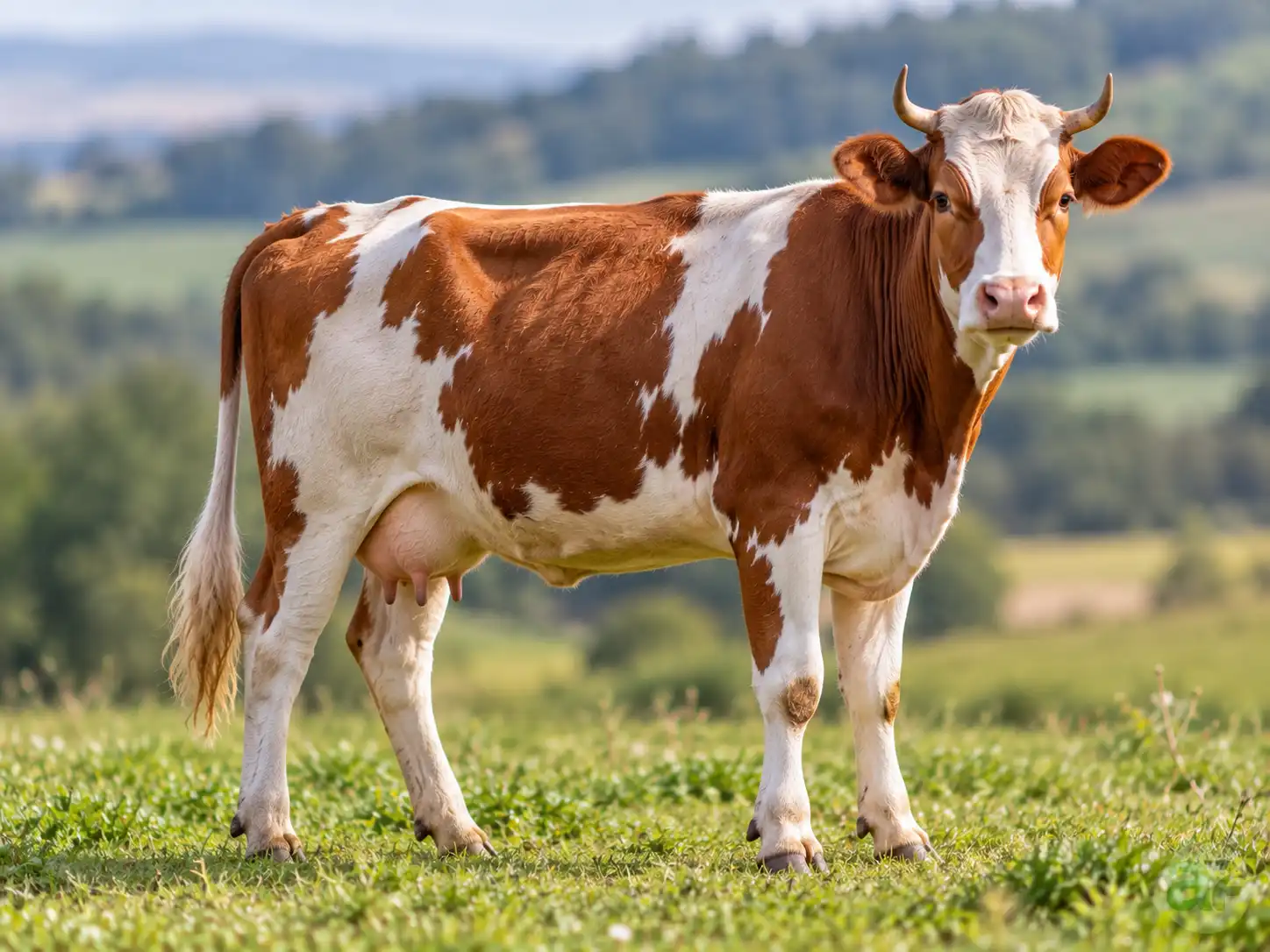
19. Best Places to See Cows in the World
Chillingham Park, England — home to the unique, historically isolated Chillingham wild cattle herd, offering visitors a rare opportunity to observe a genuinely distinct, semi-wild cattle population largely uninfluenced by modern breeding.
Rural India — offers visitors the opportunity to observe the unique cultural relationship between cattle and communities across a country where cows hold protected, sacred status and often roam with considerable freedom within towns and rural areas.
The Scottish Highlands — home to the distinctive, shaggy-coated Highland cattle breed, a popular and visually striking sight across the Scottish countryside.
East African pastoral regions (Kenya, Tanzania) — offer opportunities to observe traditional Maasai and other pastoral cattle-herding practices deeply integrated into local culture and economy.
Working farms and agricultural tourism sites globally — increasingly popular agritourism operations across North America, Europe, and elsewhere offer visitors direct opportunities to observe and interact with dairy and beef cattle within working farm settings.
20. Top Documentaries & Books
“Cowspiracy” — a widely discussed documentary examining the environmental impact of the cattle industry, offering a critical perspective on modern large-scale cattle farming practices.
“The Secret Life of Cows” by Rosamund Young — a widely praised book drawing on the author’s decades of close observation of cattle behavior, documenting individual cow personalities and social relationships in accessible, engaging detail.
Various agricultural and farming documentaries — numerous productions explore both traditional and modern cattle farming practices across different global regions, offering insight into the diversity of human-cattle relationships worldwide.
21. Comparison of Cows with Similar Animals
| Feature | Domestic Cattle | American Bison | Water Buffalo | Yak |
|---|---|---|---|---|
| Scientific Name | Bos taurus | Bison bison | Bubalus bubalis | Bos grunniens |
| Weight | 500–1,000+ kg | 460–900 kg | 300–900 kg | 300–600 kg |
| Domestication Status | Fully domesticated | Wild (some ranched) | Domesticated | Domesticated |
| Habitat | Global farmland | North American plains (historical) | South/Southeast Asia | High-altitude Asia |
| Climate Adaptation | Varies by breed | Temperate grassland | Hot, humid tropical | Cold, high-altitude |
22. How You Can Help
Support organizations working on rare and heritage cattle breed conservation, such as The Livestock Conservancy, which works to preserve genetic diversity among endangered heritage cattle breeds facing decline due to commercial agriculture’s concentration around a small number of highly productive modern breeds.
Practical actions:
Support heritage breed conservation organizations working to preserve genetically diverse, regionally adapted cattle breeds facing decline.
If consuming dairy or beef products, consider researching and supporting farms with strong documented animal welfare practices.
Support agricultural policies and practices that promote sustainable, well-managed grazing systems that provide genuine ecological benefits.
Learn more about the cultural and religious significance of cattle across different societies to develop a fuller appreciation of the human-cattle relationship worldwide.
25. Frequently Asked Questions About Cows
Q1: What is a cow’s scientific name?
The domestic cow’s scientific name is Bos taurus, descending from the extinct wild aurochs (Bos primigenius).
Q2: How many stomachs does a cow have?
Cows have one stomach divided into four distinct chambers — the rumen, reticulum, omasum, and abomasum — each performing a different role in digestion.
Q3: Do bulls really get angry at the color red?
No — cattle are largely red-green colorblind. It’s the movement of a matador’s cape, not its color, that provokes a bull’s reaction.
Q4: How long do cows live? Cattle can naturally live 18–22 years, though commercial dairy cattle typically live only 4–6 years and beef cattle far less, due to industry production practices.
Q5: How many cattle breeds are there?
There are over 1,000 recognized cattle breeds worldwide, developed for different climates, purposes, and production goals.
Q6: Are cows intelligent?
Yes — research shows cattle possess strong memory, can recognize up to 100 individual faces, form close social bonds, and communicate using more than 20 distinct vocalizations.
Q7: Why are cows sacred in Hinduism?
Cows hold sacred status in Hinduism due to their association with deities including Krishna and Kamadhenu, and are legally protected from slaughter across much of India.
Q8: How much milk can a cow produce?
A single high-producing dairy cow can produce over 9,000 liters of milk per year under intensive modern dairy farming conditions.
Q9: What is the wild ancestor of the cow?
The aurochs (Bos primigenius) is the extinct wild ancestor of all modern domestic cattle, with the last known individual dying in Poland in 1627.
Q10: How long is a cow pregnant?
Cattle gestation lasts approximately 283 days, or about 9 months — remarkably similar in length to human pregnancy.
26. Sources & References
Research Sources
- Wikipedia — Cattle: https://en.wikipedia.org/wiki/Cattle
- IUCN Red List — Aurochs: https://www.iucnredlist.org/species/136721/45156822
- World Wildlife Fund: https://www.worldwildlife.org/
- National Geographic — Cattle: https://www.nationalgeographic.com/animals/mammals/facts/domestic-cattle
- Smithsonian’s National Zoo: https://nationalzoo.si.edu/
- Encyclopaedia Britannica — Cattle: https://www.britannica.com/animal/cattle
- Live Science: https://www.livescience.com/
- Livestock Conservancy: https://livestockconservancy.org/