
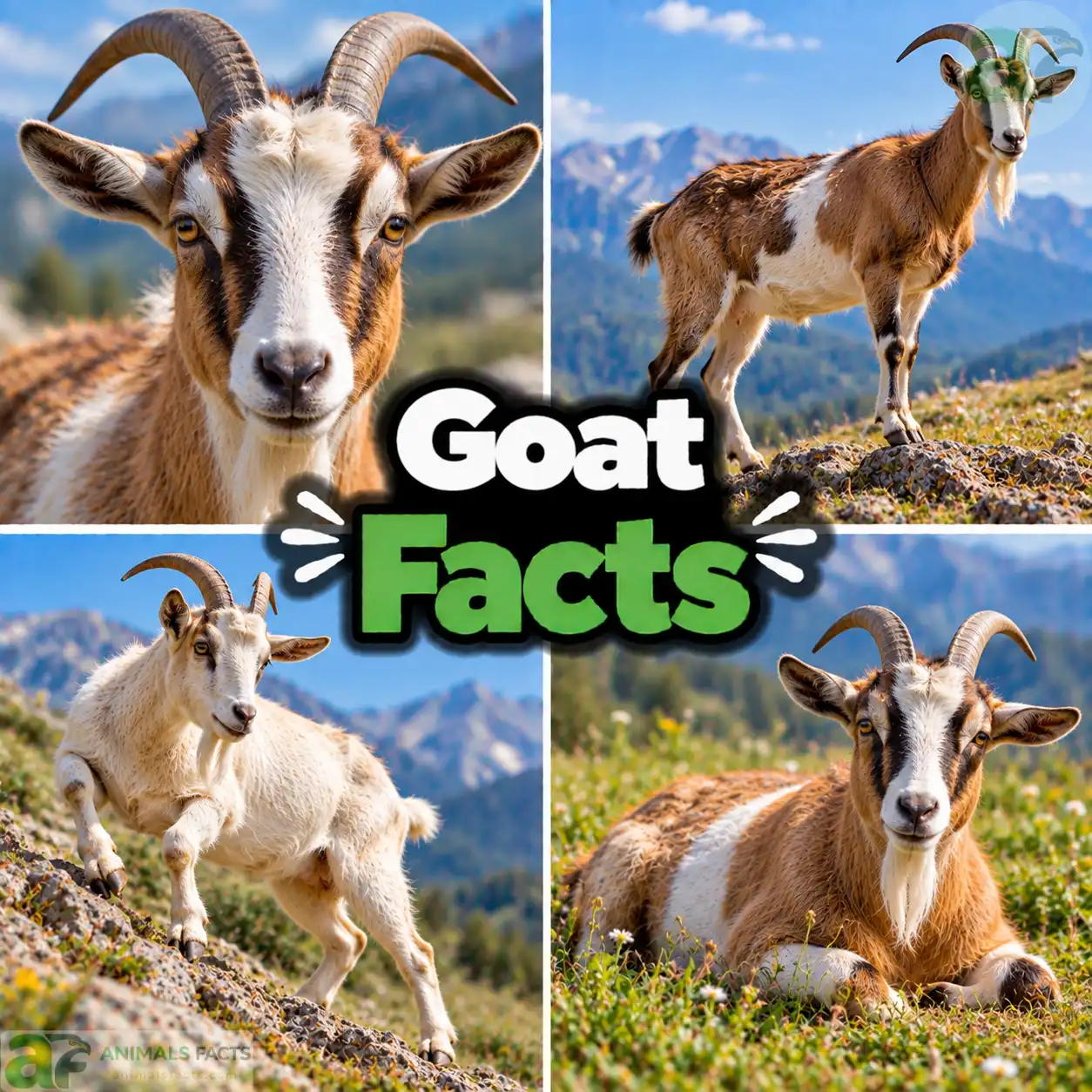
Goat Facts
| Feature | Details |
|---|---|
| Scientific Name | Capra hircus (domestic goat); wild ancestor Capra aegagrus (bezoar ibex) |
| Common Names | Goat, Domestic Goat, Billy (male), Nanny/Doe (female), Kid (young) |
| Kingdom | Animalia |
| Phylum | Chordata |
| Class | Mammalia |
| Order | Artiodactyla |
| Family | Bovidae |
| Habitat | Domesticated globally; wild relatives inhabit mountainous, rocky, and arid terrain across Europe, Asia, Africa, and the Middle East |
| Lifespan | 15–18 years for domestic goats; wild goat species typically 10–15 years |
| Diet | Herbivore — grasses, shrubs, leaves, bark, weeds |
| Weight | 20–140 kg, varying enormously by breed and sex |
| Height | 0.4–1.2 meters at the shoulder, depending on breed |
| Speed | Up to 19 km/h (12 mph); exceptional climbing and jumping ability over raw speed |
| Conservation Status | Domestic goat: Domesticated (not assessed); several wild goat relatives range from Least Concern to Endangered or Critically Endangered |
| Global Population | Approximately 1.1 billion domestic goats worldwide |
| Unique Feature | Rectangular pupils provide nearly 340-degree panoramic vision; among the most agile climbers of any large mammal, capable of scaling near-vertical cliff faces and even trees |
1. Introduction: What is a Goat?
It can scale a near-vertical cliff face with the effortless confidence of a creature defying gravity, climb trees to browse leaves other animals could never reach, and thrive on a diet of tough, thorny vegetation that would leave most other livestock species malnourished. Goat facts introduce readers to one of humanity’s oldest domesticated animals — a creature so remarkably adaptable, intelligent, and physically capable that it has earned a reputation as perhaps the single most versatile livestock species on the planet, thriving everywhere from the rocky mountain slopes of the Alps to the arid scrublands of sub-Saharan Africa to suburban backyards kept as beloved pets.
The domestic goat (Capra hircus) descends from the wild bezoar ibex (Capra aegagrus), a wild goat species still found today across parts of the Middle East, Central Asia, and southeastern Europe. Goat domestication ranks among the very earliest and most consequential livestock domestication events in human history, beginning roughly 10,000 years ago in the Fertile Crescent region of the Middle East — placing the goat among a small handful of animals, alongside sheep and cattle, that fundamentally launched the agricultural revolution and transformed human civilization from nomadic hunting and gathering toward settled farming communities.
Beyond their historical significance, goats are increasingly recognized by researchers as genuinely intelligent, socially complex, and emotionally expressive animals, capable of learning complex tasks, reading human body language and facial expressions, and forming lasting social bonds — a level of cognitive sophistication that has helped fuel the goat’s growing popularity not only as livestock but as companion animals and even, increasingly, as subjects of dedicated animal cognition research. Understanding goat facts today means appreciating both an ancient agricultural partner and a genuinely underrated example of mammalian intelligence.
Whether you’re a student researching goat facts for a school project, a homesteader or aspiring goat keeper wanting to understand goat behavior and care, someone fascinated by viral videos of goats climbing seemingly impossible terrain, a parent looking for goat facts for kids, or simply someone who has always wondered why goats seem to eat absolutely everything, this guide covers everything — goat habitat, goat diet, the extraordinary climbing anatomy, reproduction, social intelligence, domestication history, mythology, and much more. This is the most complete guide to goat facts you will find anywhere.
2. Goat Species Overview & Classification
The domestic goat belongs to the family Bovidae and more specifically to the genus Capra, which includes the domestic goat alongside a number of wild goat species and their close relatives, including ibex, markhor, and tur — all generally adapted to mountainous, rocky, and often steep terrain across their respective ranges.
Classification Table
| Level | Classification |
|---|---|
| Kingdom | Animalia |
| Phylum | Chordata |
| Class | Mammalia |
| Order | Artiodactyla |
| Family | Bovidae |
| Subfamily | Caprinae |
| Genus | Capra |
| Species | C. hircus (domestic goat) |
| Wild Ancestor | Capra aegagrus (bezoar ibex/wild goat) |
| Closest Living Relatives | Ibex species, markhor (Capra falconeri), sheep (genus Ovis) |
The Genus Capra — Wild Goats and Their Relatives
The genus Capra contains approximately 9–10 recognized wild species, in addition to the domestic goat, spread across mountainous regions of Europe, Asia, the Middle East, and North Africa.
| Species | Scientific Name | Range | Conservation Status |
|---|---|---|---|
| Bezoar Ibex (Wild Goat) | Capra aegagrus | Middle East, Central Asia, SE Europe | Vulnerable |
| Alpine Ibex | Capra ibex | European Alps | Least Concern |
| Nubian Ibex | Capra nubiana | Middle East, NE Africa | Vulnerable |
| Spanish Ibex | Capra pyrenaica | Iberian Peninsula | Least Concern |
| Markhor | Capra falconeri | Central/South Asia | Near Threatened |
| Siberian Ibex | Capra sibirica | Central Asia | Least Concern |
| Walia Ibex | Capra walie | Ethiopian Highlands | Endangered |
An Estimated 300+ Domestic Goat Breeds
Domestic goats have been selectively bred into an extraordinary array of distinct breeds worldwide — estimates suggest well over 300 recognized breeds — developed for milk production, meat production, fiber (such as cashmere and mohair), and, increasingly, companionship, with breeds adapted to nearly every climate on Earth, from the frigid high-altitude Himalayas to the scorching arid regions of Africa and the Middle East.
Species Evolution & Discovery Timeline
~5–6 million years ago: The genus Capra began diverging within the broader Caprinae subfamily, giving rise to the various wild goat species that would eventually spread across mountainous regions of Eurasia and North Africa.
~10,500 years ago: Goat domestication began in the Zagros Mountains region of the Fertile Crescent (spanning parts of modern-day Iran and Iraq), making the goat one of the very earliest domesticated livestock species in human history, alongside sheep.
~10,000 years ago: Domesticated goats began spreading alongside expanding early agricultural communities across the Middle East, North Africa, and Europe, valued for their exceptional adaptability to marginal, rocky terrain unsuitable for many crops or other livestock.
~7,000 years ago: Goat domestication and husbandry had spread extensively across Europe, Africa, and parts of Asia, becoming deeply integrated into early pastoral economies and cultural traditions across numerous civilizations.
Ancient Egyptian, Greek, and Roman civilizations: Goats became firmly established figures within mythology, religious symbolism, and daily agricultural life across the ancient Mediterranean and Near Eastern world, appearing prominently in artwork, religious iconography, and mythological narratives.
15th–19th centuries CE: European colonization and global maritime trade spread domestic goats to virtually every inhabited continent, including the Americas, Australia, and remote oceanic islands, where in some cases introduced goat populations would later become significant invasive species concerns.
19th–20th centuries: Specialized breed development intensified significantly, giving rise to highly specialized modern dairy, meat, and fiber breeds, alongside the establishment of formal breed registries and standards across major goat-producing regions worldwide.
2026: The global domestic goat population stands at approximately 1.1 billion, making goats one of the most numerous and widely distributed large domesticated mammals on Earth, while several wild Capra relatives, including the Walia ibex and markhor, remain subjects of active international conservation concern and protection efforts.
3. Goat Physical Description & Unique Features
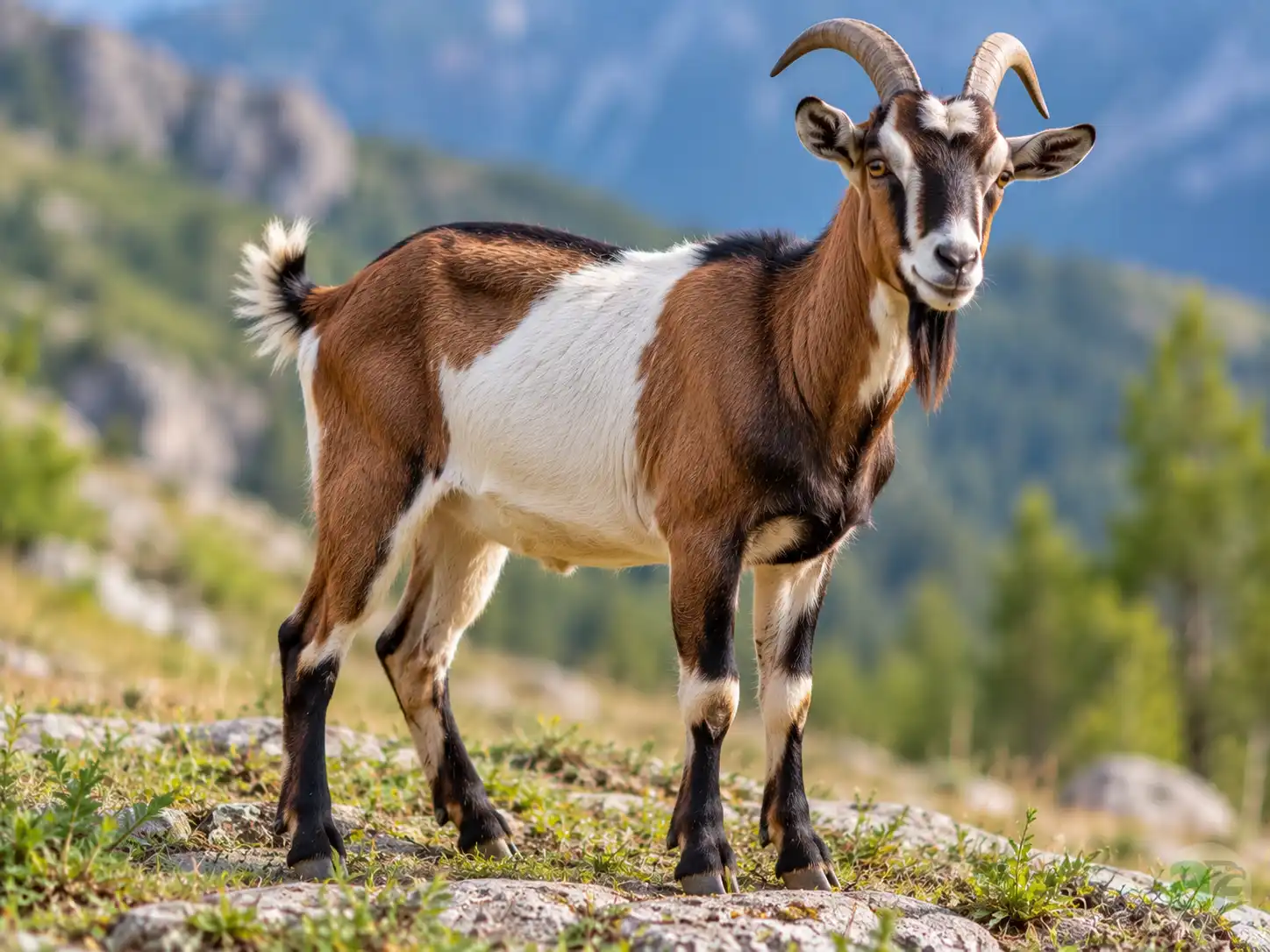
Goats display enormous physical diversity across their many breeds, yet share a distinctive set of anatomical adaptations that reflect both their wild mountain-dwelling ancestry and thousands of years of selective breeding for agricultural purposes.
Size and Build
- Weight: Ranges dramatically from as little as 20 kg in small breeds like the Nigerian Dwarf goat to over 140 kg in the largest breeds, such as the Boer goat, with most standard breeds falling somewhere in the 30–80 kg range.
- Height: 0.4–1.2 meters at the shoulder, again varying enormously by breed.
- Build: A generally lean, athletic, sure-footed body structure well-suited to climbing and navigating uneven or steep terrain, reflecting the species’ wild mountain-dwelling ancestry.
Rectangular Pupils — A Vision Superpower
One of the most immediately striking and genuinely unusual physical features of goats is their distinctive rectangular (horizontal) pupils, a trait shared with sheep and several other grazing prey animals but rarely found outside this group.
Panoramic field of view: This unusual pupil shape provides goats with an extraordinarily wide field of view — estimated at approximately 320–340 degrees — allowing them to monitor for predators across nearly their entire surrounding environment without needing to move their head, an invaluable survival adaptation for a prey species that spends considerable time with its head down while grazing.
Enhanced peripheral depth perception: Research into horizontally-slitted pupils suggests this shape may also enhance an animal’s ability to judge horizontal distances along the ground plane with particular precision, potentially aiding rapid, precise footing decisions while navigating steep or uneven terrain — a plausible functional explanation for why this pupil shape appears so consistently among sure-footed, cliff-dwelling grazing animals.
Pupil orientation shift: Remarkably, research has documented that goats (along with other horizontally-slit-pupilled animals) can rotate their eyes to keep their pupils aligned parallel with the ground even when their head is tilted downward while grazing — an active compensatory mechanism that maintains the panoramic field of view regardless of head position.
The Extraordinary Climbing Anatomy
Goats are widely regarded as among the most capable climbers of any large land mammal, an ability rooted in a remarkable combination of anatomical adaptations:
Specialized hooves: Goat hooves are split into two distinct, independently mobile toes, each capable of spreading apart and gripping irregular rock surfaces individually, while a soft, rubbery pad on the underside of each hoof provides exceptional traction on smooth or steep rock surfaces.
Low center of gravity and body proportions: Goats possess a relatively low center of gravity combined with strong, flexible leg joints, allowing for the kind of precise balance and rapid weight-shifting required to navigate narrow ledges and steep inclines.
Muscular strength-to-weight ratio: Wild goat relatives, in particular, possess exceptional muscular power relative to their body weight, enabling the kind of explosive jumping and climbing movements documented in dramatic footage of wild goats scaling near-vertical dam faces and cliff surfaces.
Tree-climbing behavior: In certain regions, most famously in parts of Morocco, domestic goats have become locally famous for climbing directly into argan trees to browse the leaves and fruit, a behavior widely documented in viral photographs and videos and representing one of the more visually startling examples of the species’ remarkable climbing versatility.
Horns
Most goats, both male and female, possess horns, though horn size, shape, and curvature vary enormously by breed and sex, with males (bucks/billies) generally possessing larger, more prominent horns than females. Wild Capra species, particularly markhor and various ibex species, are known for spectacular, dramatically curved or spiraled horns that can reach impressive lengths, with markhor horns in particular forming a distinctive corkscrew spiral that can exceed 1.6 meters in the largest documented individuals.
The Distinctive Beard and Coat
Many goat breeds, particularly males, display a characteristic chin beard, and coat types vary enormously across breeds — from the short, smooth coats of many dairy breeds to the luxuriously long, fine fiber coats of specialized fiber breeds such as the Angora (producing mohair) and Cashmere goat breeds, prized for their exceptionally soft, warm undercoat fiber.
Did You Know? Goats’ distinctive rectangular pupils are shared by nearly all grazing prey animals with eyes positioned on the sides of their head, including sheep, horses, and deer — while predator species, including cats and many others, typically possess vertically-oriented slit pupils instead, an evolutionary pattern researchers believe reflects fundamentally different visual priorities between animals that primarily need to detect approaching threats across a wide field (prey) versus animals that need precise depth perception for pouncing on prey (predators).
4. Top 25 Surprising & Interesting Goat Facts
- Goats have rectangular pupils, giving them a panoramic field of view of roughly 320–340 degrees.
- Goats can rotate their eyes to keep their pupils level with the ground even when grazing with their head down.
- Domestic goats descend from the wild bezoar ibex (Capra aegagrus), still found today across parts of the Middle East and Central Asia.
- Goat domestication began roughly 10,500 years ago in the Zagros Mountains region — one of the earliest livestock domestication events in human history.
- There are over 300 recognized domestic goat breeds worldwide.
- In parts of Morocco, domestic goats are famous for climbing directly into trees to browse leaves and fruit.
- A goat’s split hooves have soft, rubbery pads that provide exceptional grip on steep or rocky terrain.
- The global domestic goat population is estimated at approximately 1.1 billion.
- Male markhor goats can grow spectacular corkscrew-shaped horns exceeding 1.6 meters in length.
- Goats are widely regarded as one of the most intelligent livestock species, capable of learning complex tasks and solving problems.
- Research has shown goats can read and respond to human facial expressions and body language.
- Goats have been shown in studies to prefer interacting with humans displaying happy facial expressions over angry ones.
- A goat’s gestation period is approximately 150 days (about 5 months).
- Goat kids can typically stand and walk within just a few minutes of birth.
- Cashmere goats produce an exceptionally soft undercoat fiber that has been prized in luxury textiles for centuries.
- Goats communicate using distinct vocalizations, and research suggests individual goats may develop regional “accents” within their herd.
- Goats are highly selective eaters, despite their reputation for eating “everything” — they actually browse carefully and avoid many plants when better options are available.
- Fainting goats, a specific breed, have a genetic condition causing temporary muscle stiffness when startled, giving the appearance of “fainting” (though they remain fully conscious).
- Goats have been sent into space, with early goat-based biological research contributing to broader space medicine developments.
- Goat milk is consumed by more people worldwide than cow’s milk, particularly across Africa, the Middle East, and parts of Asia.
- Wild markhor populations were once critically endangered but have shown encouraging recovery in parts of their range due to conservation efforts.
- Goats are used in some regions for “conservation grazing,” specifically employed to clear invasive brush and vegetation in natural areas.
- A single goat can produce hundreds of liters of milk annually, depending on breed and management.
- Goats are federally recognized in some countries as effective, eco-friendly alternatives to herbicides and mechanical land-clearing equipment.
- Goats have four-chambered stomachs, similar to cattle, allowing efficient digestion of tough, fibrous plant material through rumination.
5. Fun Facts About Goats
- Goats have rectangular pupils for panoramic vision.
- They can see almost 340 degrees around themselves.
- Goats descend from the wild bezoar ibex.
- Domestication began about 10,500 years ago.
- There are over 300 goat breeds worldwide.
- Some goats climb trees!
- Markhor horns can spiral over 1.6 meters long.
- Goats can read human facial expressions.
- Fainting goats don’t actually faint — their muscles just stiffen!
- Goat gestation lasts about 150 days.
- More people worldwide drink goat milk than cow’s milk.
- Goats have been used in space research.
- Goats have four-chambered stomachs like cattle.
- The global goat population is about 1.1 billion.
6. Goat Natural Habitat & Geographic Range
While the domestic goat’s range today is almost entirely determined by human agricultural distribution, understanding goat habitat requires examining both the wild goat species that gave rise to domestic goats and the enormous range domestic goats now occupy worldwide.
Wild Goat Habitat Requirements
Wild goat species within the genus Capra are overwhelmingly associated with mountainous, rocky, and often steep terrain, favoring habitats including:
Rocky mountain slopes and cliffs: The classic wild goat habitat, providing both the challenging terrain wild goats are supremely adapted to navigate and effective protection from many ground-based predators unable to follow onto steep rock faces.
Semi-arid scrubland and highland regions: Many wild Capra species also utilize semi-arid, sparsely vegetated highland terrain, particularly across the Middle East and Central Asia.
High-altitude alpine zones: Species such as the Alpine ibex are specifically adapted to high-altitude environments, often above the treeline, tolerating harsh, cold conditions unsuitable for most other large herbivores.
Domestic Goat Global Distribution
Domestic goats, by contrast, have been successfully established by human farmers across an extraordinarily broad range of climates and environments worldwide.
Geographic Range Table
| Region | Goat Population Status | Notes |
|---|---|---|
| Asia (particularly China, India) | Very high | World’s largest domestic goat populations |
| Africa (Sub-Saharan) | Very high | Critical livestock species across pastoral economies |
| Middle East | High | Ancient center of goat domestication and continued significance |
| Europe | Moderate–High | Long-established dairy and fiber breed traditions |
| Americas | Moderate, growing | Increasing popularity for both agricultural and companion purposes |
| Australia/Oceania | Moderate | Both farmed and, in some regions, significant feral populations |
Did You Know? China is home to the largest domestic goat population of any country on Earth, followed closely by India, with both countries together accounting for a substantial proportion of the entire global goat population — reflecting goats’ particular importance within traditional and modern Asian agricultural systems, especially in regions with challenging, marginal terrain less suited to cattle or intensive crop farming.
7. Goat Diet & Feeding Behavior
Goats are herbivores and true ruminants, but their feeding strategy differs meaningfully from that of cattle and sheep in ways that reflect their wild mountain-browsing ancestry.
Diet Breakdown Table
| Food Type | Approximate Percentage | Notes |
|---|---|---|
| Shrubs, brush, and woody browse | 40–60% | Preferred food source, reflecting browsing rather than grazing tendency |
| Leaves and tree foliage | 15–25% | Including climbing behavior to access higher foliage |
| Grasses | 15–25% | Consumed, though generally less preferred than browse |
| Weeds and “undesirable” vegetation | Variable | Goats readily consume many plants other livestock avoid |
| Bark and woody material | Small quantity | Particularly in winter or when other forage is scarce |
Browsers, Not Just Grazers
Unlike cattle and sheep, which are predominantly grazers favoring grasses, goats are more accurately described as browsers, naturally preferring to eat leaves, shrubs, woody plants, and vegetation at various heights — including standing on their hind legs to reach higher branches, or, as documented in parts of Morocco, climbing directly into trees. This browsing preference is a key reason goats are so effective at clearing brush and invasive vegetation that other livestock would leave untouched.
The Truth Behind “Goats Eat Everything”
Despite their widespread reputation for indiscriminately eating almost anything, including inedible objects, goats are actually notably selective and careful eaters under natural grazing and browsing conditions, often investigating potential food items carefully with their lips and tongue before consuming them, and showing clear dietary preferences when a range of options is available. Their reputation for eating “everything” likely stems partly from their natural curiosity — goats frequently mouth or nibble unfamiliar objects out of exploratory interest — combined with their genuinely broad dietary tolerance for plant species other livestock would avoid, rather than truly indiscriminate consumption.
Digestive System
Like cattle, goats possess a four-chambered stomach (rumen, reticulum, omasum, abomasum) that enables efficient microbial fermentation and digestion of tough, fibrous plant material, along with regular cud-chewing (rumination) to further break down consumed vegetation.
Did You Know?Goats have been increasingly employed in a growing land management practice known as “conservation grazing” or “targeted grazing,” in which herds of goats are deliberately deployed to clear invasive plant species, reduce wildfire fuel loads, or manage vegetation in areas where herbicides or mechanical clearing would be impractical, expensive, or environmentally undesirable — an eco-friendly application of the species’ natural browsing behavior that has grown significantly in popularity across parts of the United States and Europe in recent years.
8. Goat Reproduction & Life Cycle
Goat reproduction has been extensively studied both in wild Capra populations and, particularly, within commercial and small-scale domestic goat husbandry, where breeding is often carefully managed to optimize kid survival and production outcomes.
Mating and Breeding
Breeding age: Female goats (does) can reach sexual maturity as early as 4–6 months of age, though responsible breeding practices typically wait until does are physically mature, generally around 7–12 months or older, depending on breed and individual development.
Estrus cycle: Female goats cycle approximately every 21 days during breeding season, with a fertile window of roughly 12–36 hours.
Seasonal breeding: Many goat breeds, particularly those originating from temperate climates, display seasonal breeding patterns tied to day length, typically breeding in autumn for births the following spring, though some tropical and subtropical breeds can breed year-round.
Buck behavior: Male goats (bucks) display characteristic breeding-season behaviors including increased vocalization, territorial urination behavior (including a notable habit of urinating on their own faces and beards, believed to enhance attractiveness to does through scent), and displays of dominance toward rival males.
Gestation and Birth
Gestation: Approximately 150 days (about 5 months).
Litter size: Goats commonly give birth to multiple kids per pregnancy — twins are especially common, with singles, triplets, and occasionally quadruplets or more also occurring depending on breed, age, and nutritional condition.
Birth weight: Typically 2–4 kg per kid, varying by breed.
Birth condition: Kids are highly precocial, generally able to stand and attempt walking within just a few minutes of birth, and capable of following their mother and the broader herd remarkably quickly thereafter.
Growth Stages Table
| Stage | Age | Development |
|---|---|---|
| Birth | — | 2–4 kg; standing within minutes |
| Weaning | ~2–4 months | Transition to solid forage diet |
| Sexual maturity (does) | 4–12 months | Varies by breed and management practice |
| Sexual maturity (bucks) | 3–6 months | Bucks can breed notably early; careful management required |
| Full physical maturity | ~2–3 years | Complete skeletal and muscular development |
Goat Lifespan Comparison Table
| Species/Type | Average Lifespan | Maximum Recorded |
|---|---|---|
| Domestic Goat | 15–18 years | ~24 years |
| Wild Bezoar Ibex | 10–15 years | ~17 years |
| Domestic Sheep (comparison) | 10–12 years | ~20 years |
| Alpine Ibex (comparison) | 14–17 years | ~20 years |
9. Social Behavior & Communication
Goats are highly social herd animals with well-documented cognitive sophistication, social bonding, and communication abilities that have made them an increasingly popular subject of formal animal behavior and cognition research in recent years.
Herd Structure
Goats naturally form social herds with established dominance hierarchies, typically led by an experienced, often older doe, with social rank influencing access to preferred food, resting areas, and other resources within the group. Goats generally strongly prefer group living and can experience genuine distress when isolated from herd companions.
Cognitive Abilities and Human Interaction
Research into goat cognition has produced some of the more remarkable findings in recent farm animal behavior science:
Reading human facial expressions: A landmark study found that goats could distinguish between happy and angry human facial expressions in photographs, and demonstrated a clear behavioral preference for approaching images of happy faces — evidence of a genuinely sophisticated capacity to read human emotional signals, an ability more commonly associated with domesticated companion animals like dogs than with typical livestock species.
Problem-solving: Goats have been shown in controlled studies to successfully learn and remember complex tasks, including multi-step puzzle box challenges to access food rewards, retaining the learned solution for extended periods afterward — comparable in some respects to problem-solving abilities documented in dogs.
Communication with humans: Research has documented that goats will look toward humans in a manner suggestive of seeking assistance when faced with an unsolvable problem, a behavior pattern previously believed to be largely unique to domesticated dogs and considered a significant indicator of sophisticated social cognition and human-directed communication.
Vocalizations and “Accents”
Goats communicate through a range of vocalizations, most notably their characteristic bleating call, and intriguing research has suggested that goat vocalizations may develop subtle regional variations — informally described as “accents” — influenced by the specific social group a goat is raised within, similar to vocal learning patterns documented in some other social mammal species.
Did You Know? In a widely cited 2016 study, researchers found that goats not only could distinguish between happy and angry human facial expressions but showed a clear preference for approaching photographs of happy faces — a finding that placed goats among a very small number of non-companion animal species demonstrated to read and respond to human emotional expressions, challenging longstanding assumptions about the relatively limited social-cognitive abilities of typical farm livestock.
10. Predators & Defense Mechanisms
Goats, both wild and domestic, face predation pressure from a range of carnivores across their global range, and have developed both physical and behavioral defenses suited to their often steep, rugged natural habitat.
Natural Predators
Wolves: A significant predator of both wild goats and, in some regions, unprotected domestic goat herds, particularly across parts of Europe, Asia, and North America where wolf and goat ranges overlap.
Snow Leopards: A major predator of several wild Capra species across Central Asian mountain ranges, including ibex and markhor, with wild goat species representing a critical prey base supporting snow leopard populations across much of their range.
Golden Eagles: Documented predators of young goat kids, particularly in mountainous terrain where eagles can exploit their aerial advantage against vulnerable young animals on exposed cliff terrain.
Coyotes and Bobcats: Significant predators of domestic goats across parts of North America, particularly in regions with inadequate fencing or guardian animal protection.
Defense Mechanisms
Climbing escape: A wild or feral goat’s primary defense against many ground-based predators is simply retreating to terrain too steep or precarious for the predator to follow — a strategy that leverages the goat’s exceptional climbing ability as its most significant survival advantage.
Herd vigilance: Group living provides collective predator detection benefits, with multiple herd members increasing the likelihood of spotting an approaching threat.
Horns: Both male and female goats can use their horns defensively against predators or rivals, delivering forceful headbutts capable of causing significant injury.
Alarm calls: Goats produce distinct alarm vocalizations upon detecting a potential threat, alerting other herd members to the danger.
Human and guardian animal protection: For domestic goats, human-provided protections including secure fencing and livestock guardian animals — dogs, llamas, or donkeys — represent a critical modern defense against predation.
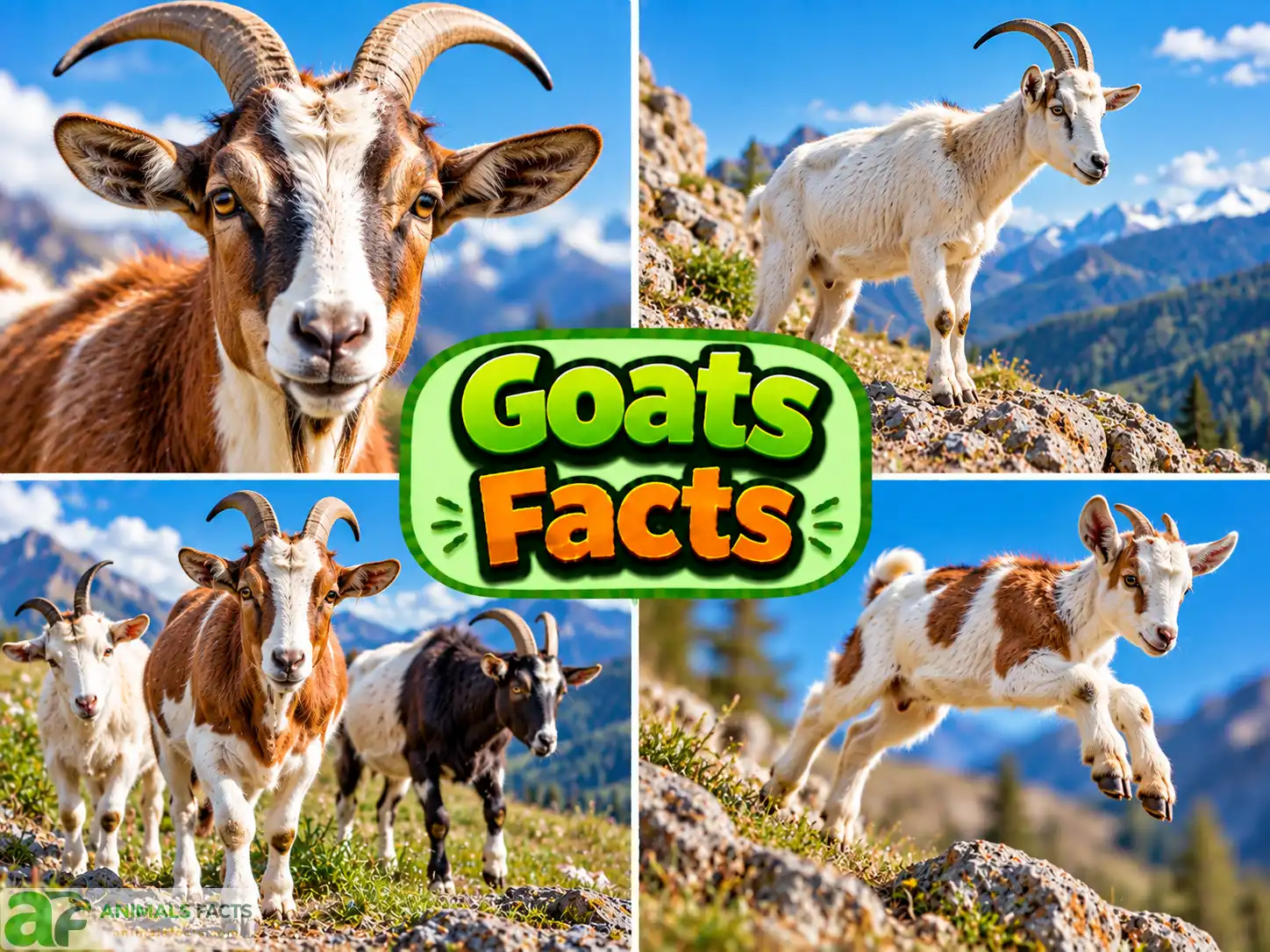
11. Goat Facts for Kids
Hey kids — get ready to learn about one of the most amazing climbers in the whole animal kingdom!
- Goats have super special eyes with rectangular pupils, which lets them see almost all the way around themselves — nearly 340 degrees!
- Believe it or not, some goats in Morocco actually climb up INTO trees to eat leaves and fruit!
- A goat’s hooves are specially shaped to grip rocks really well, kind of like built-in climbing shoes!
- Goats are actually really smart — scientists found out that goats can tell the difference between a happy face and an angry face!
- Baby goats, called kids, can stand up and start walking just a few minutes after they’re born!
- There’s a special kind of goat called a “fainting goat” — when it gets surprised, its muscles get stiff for a few seconds, but it doesn’t actually faint, it just looks like it does! More people around the world drink goat milk than cow’s milk!
- Goats have even helped scientists with space research!
Did You Know? Goats are so good at climbing that some wild mountain goats have been filmed scaling nearly straight-up cliff faces and even the side of a giant dam — using tiny little cracks and bumps in the rock that most other animals couldn’t even see, let alone climb!
12. Relationship with Humans
The relationship between goats and humanity represents one of the oldest and most enduring domestication partnerships in human history, spanning over 10,000 years of agriculture, culture, mythology, and — increasingly — companionship.
Early Domestication and Agricultural Significance
Goat domestication, beginning roughly 10,500 years ago in the Zagros Mountains region, represented one of the very first major livestock domestication events in human history, occurring alongside sheep domestication as part of the broader agricultural revolution in the Fertile Crescent. Goats proved particularly valuable to early agricultural societies due to their exceptional ability to thrive on marginal, rocky terrain unsuitable for crops or many other livestock species, providing meat, milk, hide, and fiber even in challenging environments.
Goats in Traditional Pastoral Economies
Across numerous traditional pastoral societies, particularly throughout Africa, the Middle East, and parts of Asia, goats remain a critically important livestock species, often specifically valued for their remarkable resilience during drought and their ability to convert sparse, low-quality vegetation into valuable milk and meat where cattle or sheep might struggle to survive — a resilience that has made goats an increasingly important focus of agricultural development and food security programs in arid and semi-arid regions worldwide.
Products and Modern Industry
Milk: Goat milk is consumed by a larger proportion of the world’s population than cow’s milk, particularly significant across Africa, the Middle East, and parts of Asia, and is also valued for producing distinctive cheese varieties prized in culinary traditions worldwide.
Meat: Goat meat (often called chevon or capretto for younger animals) is the most widely consumed red meat globally when measured by the proportion of the world’s population that consumes it as a dietary staple, particularly significant across Africa, the Middle East, the Caribbean, and parts of Asia.
Fiber: Specialized fiber breeds, particularly Cashmere and Angora goats, produce highly prized luxury textile fibers — cashmere wool and mohair respectively — that command significant value within the global textile industry.
The Rise of Goats as Companion Animals
In recent decades, particularly across North America and parts of Europe, goats — especially smaller breeds such as the Nigerian Dwarf and Pygmy goat — have experienced a significant surge in popularity as companion and hobby-farm animals, valued for their intelligence, playful personality, and manageable size, alongside a parallel rise in “goat yoga” and similar novelty animal-therapy activities that have generated significant social media and popular culture attention in recent years.
13. Conservation Status & Threats
| Category | Status |
|---|---|
| Domestic Goat Status | Domesticated (not formally assessed by IUCN) |
| Bezoar Ibex (wild ancestor) | Vulnerable |
| Markhor | Near Threatened (recovering from historically Endangered status) |
| Walia Ibex | Endangered |
| Global Domestic Population | Approximately 1.1 billion |
Threats to Wild Capra Species
While domestic goats face no conservation concern given their enormous global population, several wild relatives within the genus Capra face genuine and, in some cases, severe conservation challenges:
Habitat loss: Mountain and highland habitat degradation, driven by human settlement expansion, livestock competition, and infrastructure development, continues to pressure several wild goat species across their range.
Poaching: Illegal hunting for meat and, particularly for species with dramatic horns such as the markhor, for trophy purposes, has historically represented a significant threat, though regulated trophy hunting programs have, somewhat counterintuitively, also been credited with funding successful conservation recovery efforts in some markhor range areas.
Competition with domestic livestock: Wild goat species often compete directly with domestic livestock, including domestic goats and sheep, for limited forage and water resources across shared mountain and highland habitat.
Disease transmission: Contact between wild and domestic goat populations creates disease transmission risk in both directions, representing an ongoing management challenge in regions where wild and domestic populations range in close proximity.
The Markhor Conservation Success Story
The markhor (Capra falconeri), Pakistan’s national animal, represents one of the more encouraging conservation recovery stories among wild goat species, having been uplisted from Endangered to Near Threatened status by the IUCN following successful community-based conservation programs, including regulated trophy hunting schemes that direct significant revenue toward local communities and conservation efforts, incentivizing habitat and population protection.
Did You Know? The Walia ibex, found only in Ethiopia’s Simien Mountains, remains one of the most critically restricted wild goat species on Earth, with its entire global population confined to a single mountain range — making targeted habitat protection within Simien Mountains National Park, itself a UNESCO World Heritage Site, absolutely critical to the species’ continued survival.
14. Famous Goats
William Windsor (“Billy”) — a Cashmere goat that famously served as the regimental mascot of the Royal Welsh regiment of the British Army, a role with a tradition stretching back over a century, including formal military rank and ceremonial duties.
Various “fainting goat” internet celebrities — individual fainting goats (Myotonic goats) have become notable viral internet sensations over the years, their distinctive muscle-stiffening reaction to sudden surprise generating widespread online popularity and fascination.
Toggenburg and Nubian breed champions — within the dedicated world of competitive goat showing, individual champion dairy goats achieve significant recognition and notability within breeder and agricultural show communities worldwide.
15. Role in Ecosystem & Food Chain
Goats, both wild and domesticated, play meaningful ecological roles within the environments they inhabit, ranging from natural mountain ecosystem dynamics to increasingly valuable applications in modern land management.
Vegetation management: Wild goat browsing helps shape mountain and highland plant community structure, while domestic goats increasingly serve a deliberate, valuable ecological function through conservation grazing programs, effectively controlling invasive plant species and reducing wildfire fuel loads in ways that are often more environmentally sustainable than chemical or mechanical alternatives.
Prey base: Wild goat species represent a critically important prey base for several endangered predator species, most notably the snow leopard, whose survival across large portions of its Central Asian range is directly linked to the health and abundance of wild goat and sheep populations.
Seed dispersal: Goat browsing and subsequent digestion contributes to seed dispersal across the landscapes goats inhabit, aiding plant distribution and regeneration.
Soil and erosion considerations: In some contexts, particularly involving overgrazing by large domestic goat herds in fragile arid or semi-arid environments, goat grazing pressure has been linked to soil erosion and vegetation degradation concerns — an important reminder that goat grazing’s ecological impact depends significantly on appropriate herd management and stocking density.
16. Myths, Folklore & Cultural Significance
Goats hold an extraordinarily deep and varied position within human mythology, religion, and cultural symbolism, appearing across the folklore and religious traditions of numerous civilizations throughout history.
Ancient Greek and Roman Mythology
Goats feature prominently throughout ancient Greek mythology, most notably through the figure of Pan, the Greek god of the wild, shepherds, and rustic music, traditionally depicted with the legs and horns of a goat. The mythological figure of Amalthea, a goat that nursed the infant Zeus according to Greek mythology, further cements the goat’s deep symbolic association with ancient Mediterranean religious tradition, and the constellation Capricornus (“the horned goat” or “sea-goat”) represents one of the twelve zodiac signs, directly derived from goat symbolism in ancient astronomy and astrology.
Norse Mythology
In Norse mythology, two goats named Tanngrisnir and Tanngnjóstr famously pull the chariot of the god Thor, representing another significant example of goat symbolism within a major world mythological tradition.
Religious Symbolism
Goats appear extensively throughout biblical and broader religious tradition, including the concept of the “scapegoat” — derived directly from an ancient Hebrew ritual practice described in the Book of Leviticus, in which a goat symbolically bearing a community’s sins was released into the wilderness — a concept so culturally significant that the term “scapegoat” remains in common modern usage to describe someone unfairly blamed for others’ wrongdoing, entirely disconnected from most contemporary speakers’ awareness of its literal goat-related origin.
The Chinese Zodiac
The goat (sometimes translated as “sheep,” reflecting some ambiguity in the original Chinese term) represents one of the twelve animals of the Chinese zodiac, associated with specific personality traits and characteristics within traditional Chinese astrological belief.
17. Goats in Pop Culture
“Goat Yoga” — a genuinely viral wellness and fitness trend that emerged in the mid-2010s, combining yoga practice with the presence of small, friendly goats wandering among participants, generating enormous social media attention and spawning similar novelty animal-interaction activities worldwide.
Screaming goat memes and videos — viral internet videos featuring goats making unusually human-sounding screaming vocalizations became a significant early social media phenomenon, generating countless remixes, memes, and even musical mashups.
“Goats of Anarchy” and similar rescue social media accounts — dedicated goat rescue and sanctuary social media accounts have built substantial online followings, significantly contributing to the species’ growing popularity as companion animals.
Mountain goat imagery in outdoor and sports branding — mountain goats, in particular, feature prominently in outdoor recreation, sports team, and adventure brand logos and mascots worldwide, symbolizing agility, resilience, and mountain-terrain mastery.
18. Goat Facts vs. Common Myths
Myth: Goats will eat literally anything, including tin cans. Fact: Goats are actually selective, careful eaters; their reputation stems from natural curiosity and exploratory nibbling of unfamiliar objects, combined with a genuinely broad dietary tolerance for tough plants other livestock avoid — not indiscriminate consumption of inedible material.
Myth: Fainting goats actually lose consciousness. Fact: Fainting goats remain fully conscious throughout the episode; the “fainting” appearance results from a genetic condition called myotonia congenita, causing temporary muscle stiffness when startled, not an actual loss of consciousness.
Myth: Goats and sheep are basically the same animal. Fact: Goats and sheep are distinct genera (Capra and Ovis respectively) with meaningful behavioral and physical differences, including goats’ browsing (versus grazing) diet preference and generally more independent, exploratory temperament.
Myth: All goats have horns. Fact: While most goats naturally grow horns, some breeds and individuals are naturally polled (hornless), and dehorning or disbudding is also commonly practiced in commercial dairy operations for handling safety.
19. Best Places to See Goats in the Wild
Simien Mountains National Park, Ethiopia — home to the critically restricted Walia ibex, found nowhere else on Earth, alongside dramatic highland scenery.
Swiss and Italian Alps — excellent opportunities to observe the Alpine ibex across its recovered and well-protected European mountain range.
Chitral Gol National Park, Pakistan — a key protected area for observing the recovering markhor population, Pakistan’s national animal.
Sierra de Gredos, Spain — a notable location for observing the Spanish ibex within its native Iberian mountain habitat.
Working goat farms and agritourism sites globally — numerous farms across North America, Europe, and elsewhere increasingly welcome visitors for direct interaction with domestic goat herds, including popular “goat yoga” and similar experiential tourism offerings.
20. Top Documentaries & Books
Wildlife documentaries covering Alpine ibex, markhor, and other wild Capra species frequently feature dramatic footage of these animals’ extraordinary climbing abilities across mountainous terrain worldwide.
“The Secret Life of Goats”-style popular science and farming books explore both the cognitive research and practical husbandry knowledge behind modern goat keeping.
Various goat husbandry and homesteading guides — numerous practical books cater to the growing community of small-scale and hobby goat keepers across North America and Europe.
21. Comparison of Goats with Similar Animals
| Feature | Domestic Goat | Domestic Sheep | Alpine Ibex | Markhor |
|---|---|---|---|---|
| Scientific Name | Capra hircus | Ovis aries | Capra ibex | Capra falconeri |
| Weight | 20–140 kg | 45–160 kg | 45–120 kg | 40–110 kg |
| Diet Preference | Browser | Grazer | Browser/grazer mix | Browser/grazer mix |
| Domestication Status | Fully domesticated | Fully domesticated | Wild | Wild |
| Horn Presence | Most individuals | Variable by breed | Both sexes | Both sexes (males larger) |
| Conservation Status | Domesticated | Domesticated | Least Concern | Near Threatened |
22. How You Can Help
Support organizations working on wild Capra species conservation, particularly community-based programs supporting markhor recovery in Pakistan and Central Asia, and organizations protecting the critically restricted Walia ibex population within Ethiopia’s Simien Mountains National Park.
Practical actions:
Support conservation and community-based programs protecting wild goat species and their mountain habitats across their range.
Consider supporting heritage and rare domestic goat breed conservation, given the ongoing loss of genetic diversity linked to commercial agriculture’s concentration around a small number of highly productive breeds.
If interested in goat husbandry, research reputable breeders and rescue organizations, and learn proper goat care practices given their genuine social and cognitive complexity.
Raise awareness about goat conservation grazing and other sustainable land management applications as environmentally beneficial alternatives to chemical or mechanical vegetation control.
23. Frequently Asked Questions About Goats
Q1: What is a goat’s scientific name?
The domestic goat’s scientific name is Capra hircus, descending from the wild bezoar ibex (Capra aegagrus).
Q2: Why do goats have rectangular pupils?
Rectangular (horizontal) pupils give goats a panoramic field of view of roughly 320–340 degrees, helping them detect predators from nearly every direction while grazing — a common trait among grazing prey animals.
Q3: Do goats really climb trees?
Yes — in parts of Morocco, domestic goats are famous for climbing directly into argan trees to browse leaves and fruit, a widely documented and photographed behavior.
Q4: Do fainting goats actually faint?
No — fainting goats remain fully conscious. Their apparent “fainting” is caused by a genetic condition (myotonia congenita) that causes temporary muscle stiffness when startled.
Q5: Are goats intelligent?
Yes — research has shown goats can read human facial expressions, solve complex problems, remember learned tasks for extended periods, and seek human assistance when facing an unsolvable challenge.
Q6: How long do goats live?
Domestic goats typically live 15–18 years, with some individuals living into their early twenties under excellent care.
Q7: How many goat breeds are there?
There are over 300 recognized domestic goat breeds worldwide, developed for milk, meat, fiber, and companionship purposes.
Q8: What do goats eat?
Goats are herbivorous browsers, preferring shrubs, leaves, and woody vegetation over grass, though they are actually selective eaters rather than indiscriminate consumers.
Q9: Are wild goat species endangered?
Some are — the markhor is Near Threatened (recovering), the bezoar ibex is Vulnerable, and the Walia ibex is Endangered, though others like the Alpine ibex are Least Concern.
Q10: How long is a goat pregnant?
Goat gestation lasts approximately 150 days, or about 5 months, and commonly results in twins or even triplets.
26. Sources & References
Research Sources
- Wikipedia — Goat: https://en.wikipedia.org/wiki/Goat
- IUCN Red List — Capra aegagrus: https://www.iucnredlist.org/species/3786/295551756
- World Wildlife Fund: https://www.worldwildlife.org/
- National Geographic — Goat: https://www.nationalgeographic.com/animals/mammals/facts/domestic-goat
- Smithsonian’s National Zoo: https://nationalzoo.si.edu/
- Encyclopaedia Britannica — Goat: https://www.britannica.com/animal/goat
- Live Science: https://www.livescience.com/
- Snow Leopard Trust: https://snowleopard.org/