
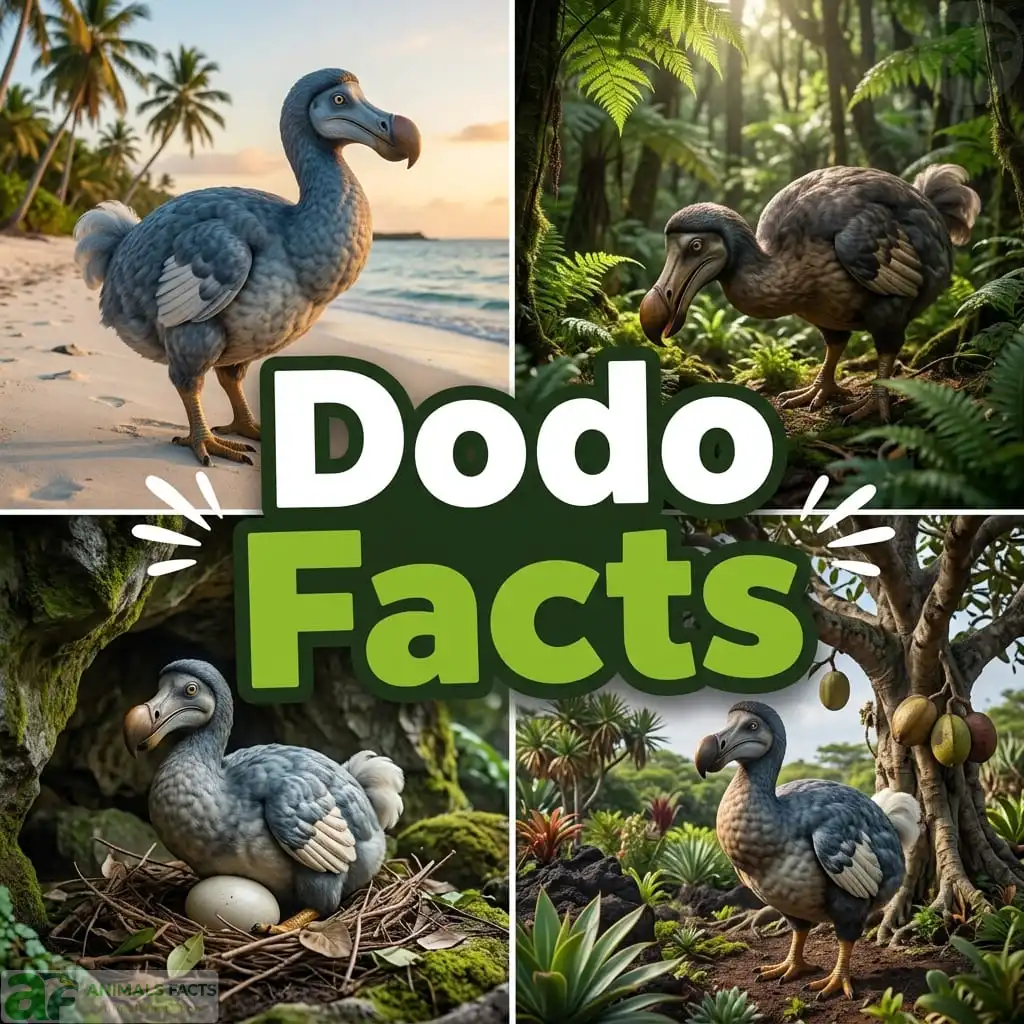
Dodo Facts
| Feature | Details |
|---|---|
| Scientific Name | Raphus cucullatus (Linnaeus, 1758) |
| Kingdom | Animalia |
| Phylum | Chordata |
| Class | Aves (Birds) |
| Order | Columbiformes |
| Family | Columbidae (pigeons and doves) |
| Genus | Raphus (Brisson, 1760) |
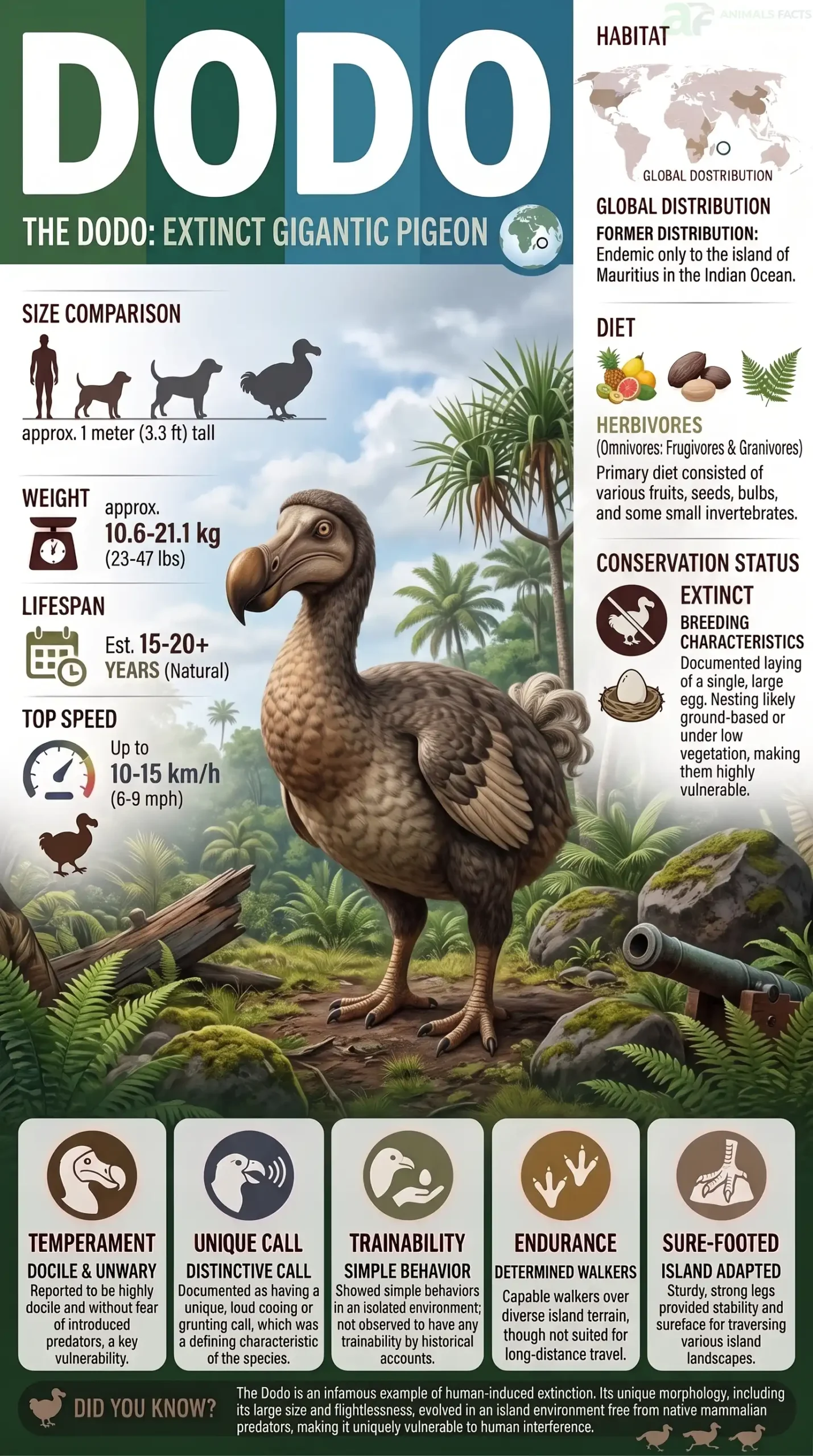
| Native Range | Mauritius only — a single island in the Indian Ocean |
| Habitat | Tropical coastal forest and inland forest |
| Lifespan | Estimated 10–30 years (inferred from columbiform relatives) |
| Diet | Fruits, seeds, nuts, roots, fallen berries, possibly crabs and shellfish |
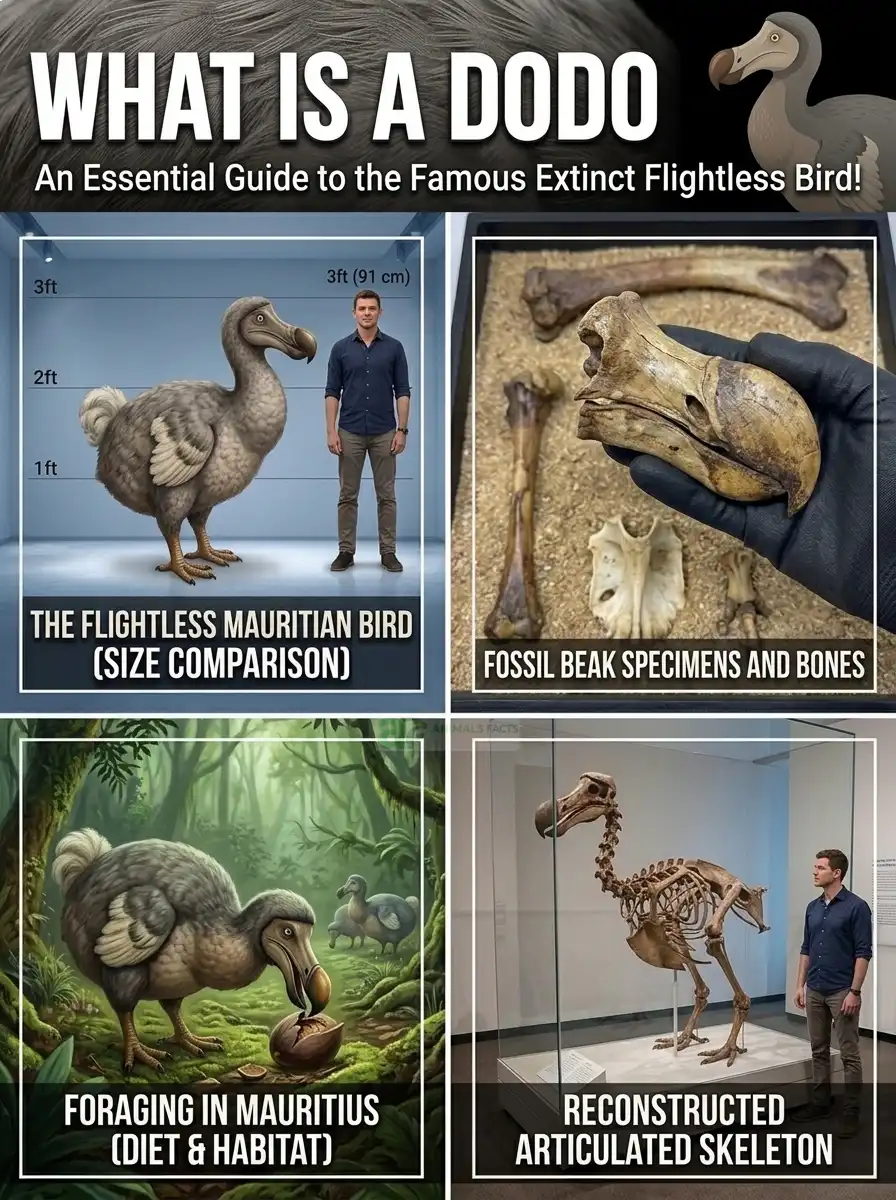
| Size | Approximately 1 meter (3.3 feet) tall |
| Weight | Estimated 10–21 kg (22–46 lbs) |
| Speed | Slow-walking; flightless — estimated walking speed 3–5 km/h |
| Conservation Status | Extinct (last confirmed sighting ~1662) |
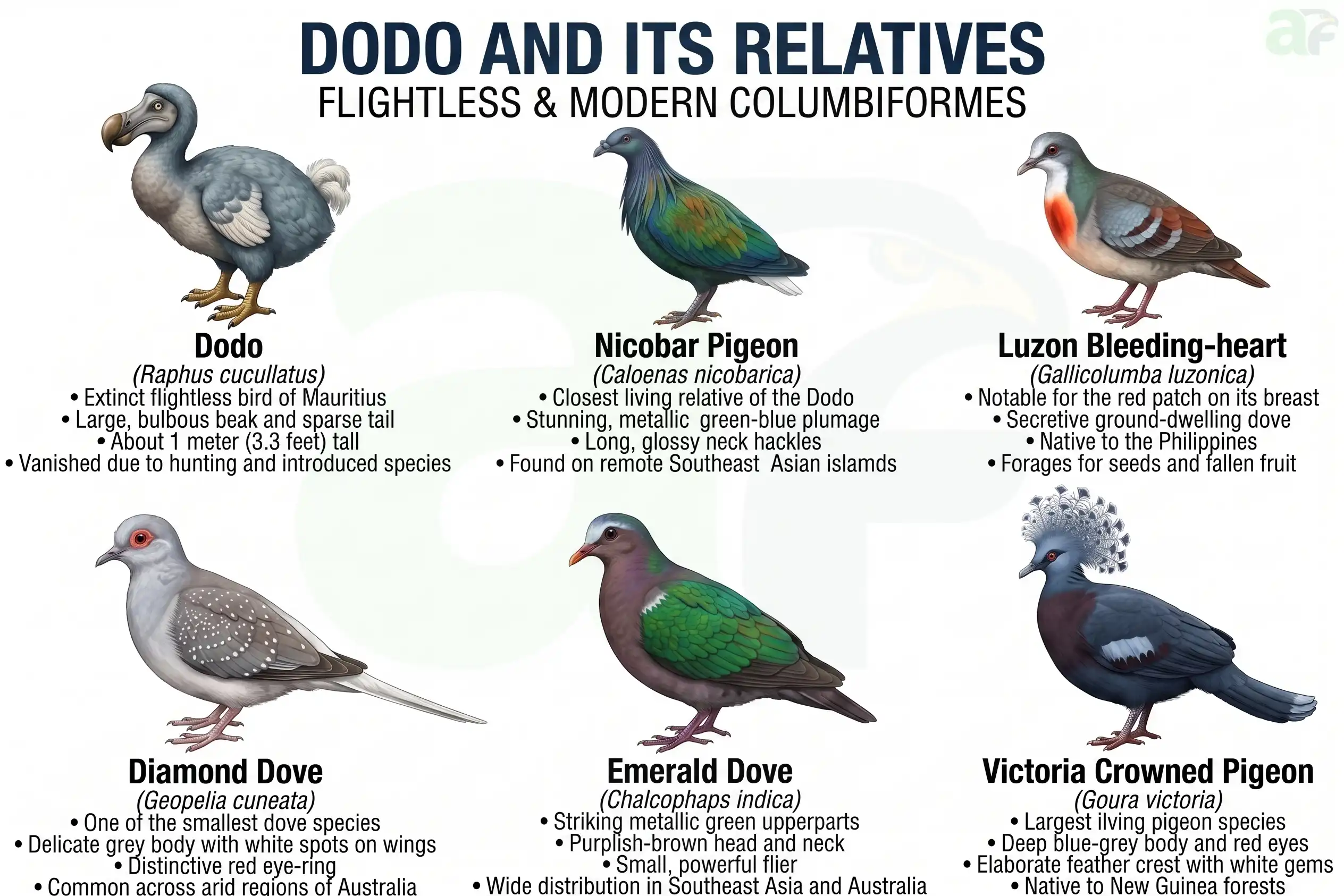
| Closest Living Relative | Nicobar pigeon (Caloenas nicobarica) |
| Time to Extinction | Went from first human contact (~1598) to extinction (~1662) in approximately 64 years |
 1. Introduction: What is a Dodo?
Few animals have captured the human imagination quite like the dodo — a bird that no living human has ever seen, that vanished from the Earth over 360 years ago, and yet remains one of the most recognized, most referenced, and most culturally significant animals in the history of natural science. Dodo facts manage the remarkable feat of being simultaneously heartbreaking and fascinating — telling the story of a unique, wonderfully strange bird that evolved in paradise, encountered humans for the first time, and disappeared within a single human lifetime.
The word “dodo” has entered English as a synonym for stupidity or obsolescence — “dead as a dodo,” “don’t be a dodo” — and yet interesting facts about the dodo reveal an animal that was anything but stupid in the environment for which it evolved. The dodo was a highly specialized, ecologically sophisticated creature that had spent millions of years perfecting its niche on the island of Mauritius, where no large predators existed and flight was an evolutionary luxury it simply didn’t need. Its notorious fearlessness around humans was not stupidity — it was the completely rational behavior of an animal that had never encountered a land predator in its evolutionary history. It could not have known what was coming.
Whether you’re searching for dodo facts for kids to bring a history lesson to life, researching dodo habitat and biology for a school project, or simply fascinated by one of the world’s most famous extinctions and what it tells us about our own relationship with the natural world, this is your definitive guide. We will cover dodo scientific name, dodo diet, dodo size and weight, its remarkable evolutionary history, the true story of its extinction (which is more complex than textbooks suggest), and the remarkable efforts now underway to potentially bring it back. Because in 2026, the dodo may be extinct — but its story is far from over.
2. Dodo Species Overview & Classification
The dodo is one of the most taxonomically debated birds in the history of ornithology — not because its identity was unclear, but because the nature of the specimens available for study was so limited and often of such poor quality that reconstructing its true biology took centuries.
Species Classification Table
| Taxonomic Rank | Classification |
|---|---|
| Kingdom | Animalia |
| Phylum | Chordata |
| Class | Aves |
| Order | Columbiformes |
| Family | Columbidae |
| Subfamily | Raphinae (extinct) |
| Genus | Raphus |
| Species | R. cucullatus |
| Authority | Linnaeus, 1758 |
| Common Names | Dodo, Dronte (historical Dutch/German) |
| Sister Taxon | Pezophaps solitaria (Rodrigues solitaire — extinct) |
The Dodo’s Surprising Relatives
One of the most counterintuitive dodo facts is its taxonomic placement. For much of the 19th and early 20th century, the dodo was variously classified as a relative of ostriches (due to its flightlessness), vultures (due to its hooked bill), or even rails. It was only through careful morphological analysis and eventually genetic sequencing of dodo bone material that its true identity was revealed.
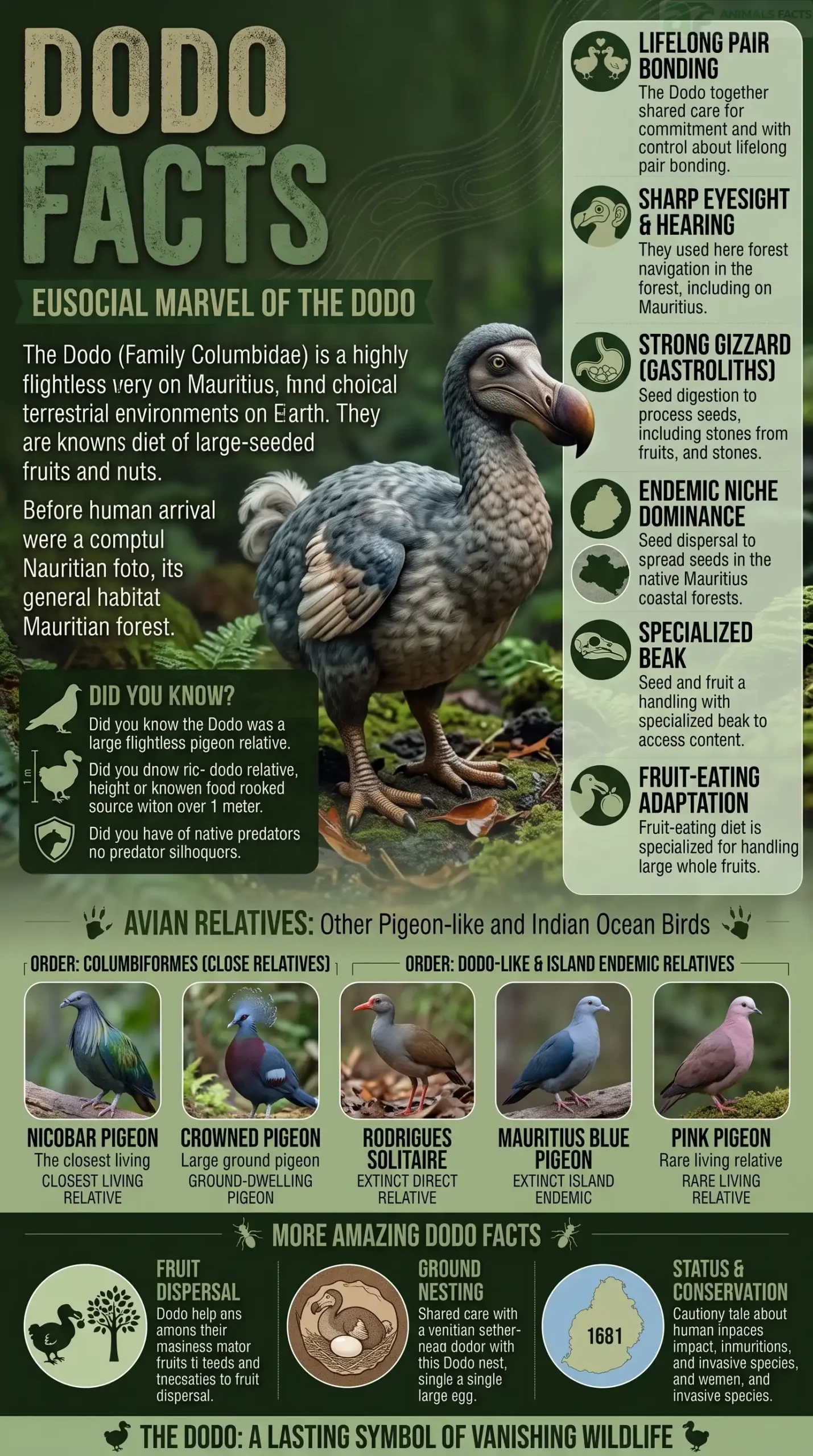
The dodo is a highly modified member of the pigeon family (Columbidae) — making it a relative of the humble street pigeon. Its closest living relative is the Nicobar pigeon (Caloenas nicobarica) — a spectacularly beautiful, iridescent green and blue pigeon found on the Nicobar and Andaman Islands of the Indian Ocean. This relationship was confirmed through DNA analysis of dodo bones published in 2002 by Alan Cooper and colleagues, overturning centuries of incorrect classification.
The dodo’s nearest extinct relative is the Rodrigues solitaire (Pezophaps solitaria) — another large, flightless columbiform that evolved independently on the nearby island of Rodrigues and went extinct in approximately 1730, roughly 68 years after the dodo.
The Raphinae: Island Giants
The dodo and the Rodrigues solitaire belong to the extinct subfamily Raphinae — a group of large, flightless pigeons that evolved on the Mascarene Islands of the Indian Ocean (Mauritius, Rodrigues, and Réunion). All members of this subfamily are now extinct, driven to extinction by the arrival of humans and their introduced animals.
Evolution & Discovery Timeline
~10–8 million years ago — A columbiform bird ancestor ancestral to both the Nicobar pigeon lineage and the Raphinae colonizes the Mascarene Islands from Southeast Asia, probably through a single long-distance over-water dispersal event.
Millions of years of isolation — On the predator-free island of Mauritius, the colonizing pigeon loses its need for flight. Over successive generations, wings shrink, body size increases, and the bird transforms into the dodo — a ground-dwelling, forest-adapted frugivore perfectly tailored to its unique island environment.
1598 — Dutch fleet under Admiral Jacob Corneliszoon van Neck makes first documented contact between Europeans and the dodo on Mauritius. Sailors record the dodo in journals, describing large, strange birds that showed no fear of humans.
1601–1626 — Multiple Dutch expeditions visit Mauritius; several dodo specimens are captured and taken to Europe alive. At least one dodo is documented alive in Europe — kept in the menagerie of Emperor Rudolf II in Prague around 1610.
1638 — Peter Mundy provides what may be the last reliable eyewitness account of living dodos in significant numbers on Mauritius.
1662 — Volkert Evertsz documents what is now considered the last confirmed sighting of a live dodo — a single individual captured on a small islet off Mauritius.
1681 — The last possible dodo sighting is recorded — a single bird reported by English colonist Benjamin Harry; widely considered the last plausible observation, though not universally accepted.
1755 — The dodo is formally classified by Mathurin Jacques Brisson as Raphus cucullatus in his ornithological catalog.
1758 — Carl Linnaeus includes the dodo in Systema Naturae under its current scientific name.
1865 — An extraordinary cache of dodo bones is discovered at the Mare aux Songes marsh in southeastern Mauritius — the first significant assemblage of dodo skeletal material, providing the first reliable foundation for physical reconstruction.
2002 — Alan Cooper and colleagues successfully sequence dodo DNA from museum specimens, confirming its relationship to the Nicobar pigeon and definitively placing it in Columbidae.
2022 — Colossal Biosciences — the same company pursuing mammoth de-extinction — announces a partnership with the Revive & Restore organization to pursue dodo de-extinction, following successful sequencing of a near-complete dodo genome.
2024–2025 — Researchers at Colossal announce significant progress in dodo genome sequencing and early-stage work on the cellular biology of columbiform birds that would be required for de-extinction — making the dodo one of the world’s most actively pursued de-extinction targets.
“The dodo is not just a symbol of extinction — it is a symbol of what happens when an evolved, specialized creature encounters a world it was never prepared for. It is a mirror held up to human impact.” — Dr. Beth Shapiro, paleogeneticist, UC Santa Cruz, and leading figure in dodo genomics research
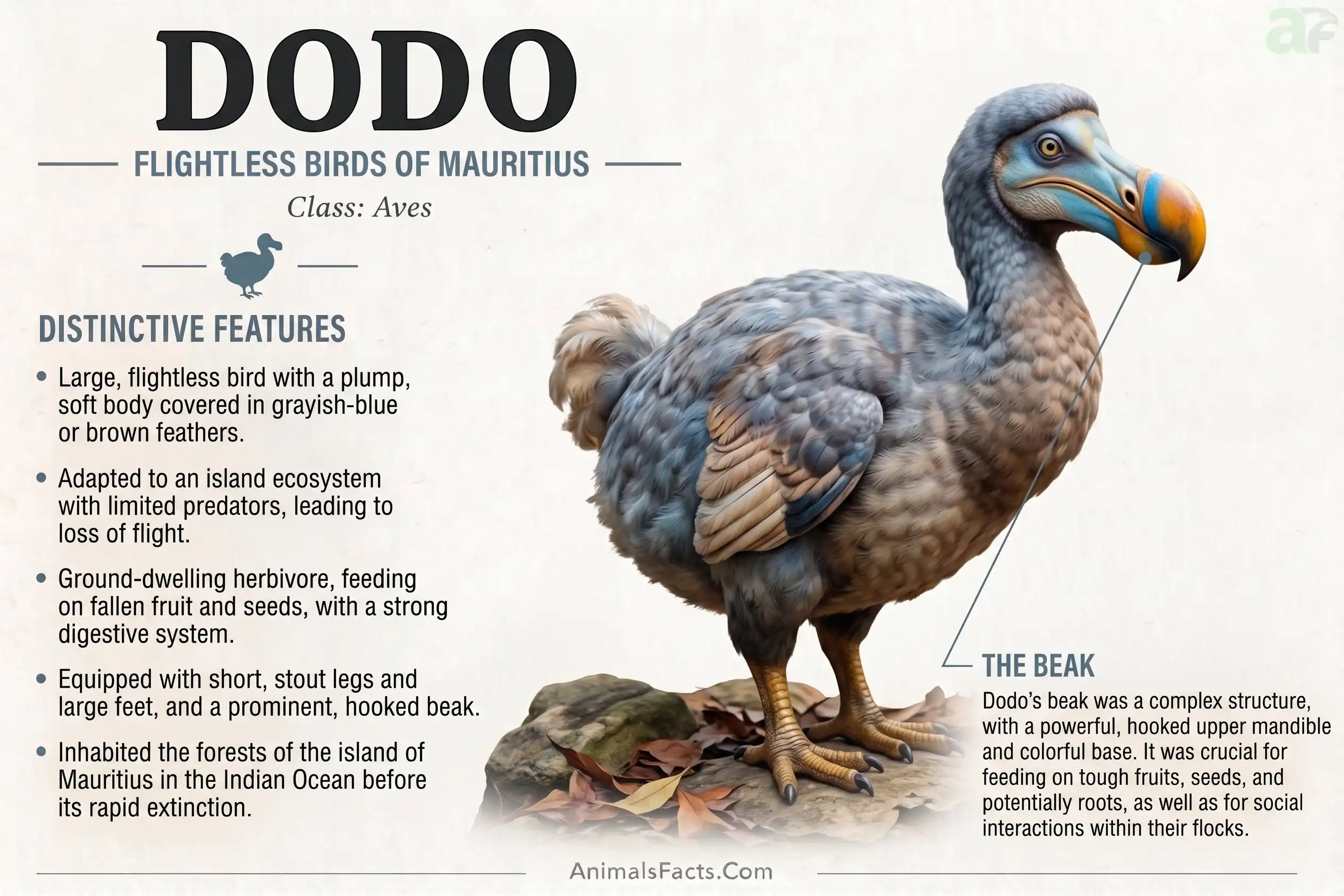
3. Dodo Physical Description & Unique Features
Dodo size and weight have been subjects of significant revision over the past several decades, as improved analysis of historical accounts, contemporary artwork, and the actual skeletal material from Mare aux Songes has replaced earlier inaccurate reconstructions with a more nuanced picture.
Size & Body Form
The dodo stood approximately 1 meter (3.3 feet) tall — roughly the height of a large turkey. Weight estimates have varied enormously in the scientific literature — from as low as 10 kg to as high as 28 kg — but the most current analysis, incorporating both skeletal measurements and critical assessment of historical illustrations, suggests a typical adult weight of approximately 10–18 kg, with sexually mature individuals perhaps reaching 18–21 kg in peak condition.
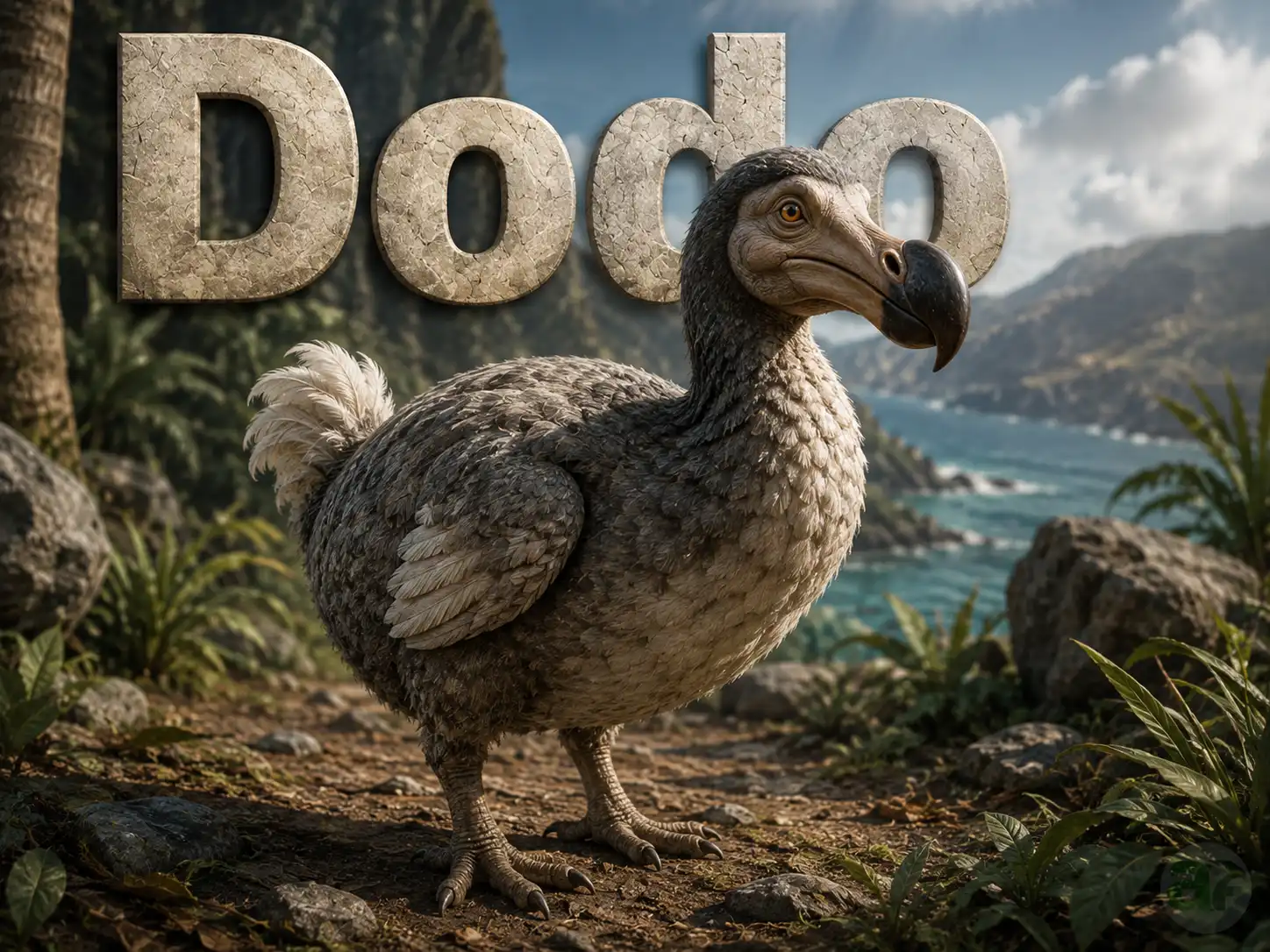
The dodo had a distinctive body form: a robust, rounded torso covered in gray-brown plumage, a large hooked bill (unusually large relative to body size, approximately 23 cm long), reduced vestigial wings (present but completely non-functional for flight), short but sturdy yellow legs with four toes, and a distinctive tuft of curly white feathers at the base of the tail where other birds have a full tail fan.
Plumage
The dodo’s coloration is known from a combination of contemporary illustrations (some more reliable than others), written descriptions by sailors and naturalists, and microscopic analysis of preserved feather material. The most consistent accounts describe:
- Body plumage: Blue-gray to brownish-gray overall
- Head: Lighter gray, with a bare facial skin patch around the bill
- Bill: Greenish-gray with a hooked reddish tip
- Wings: Small, whitish, vestigial
- Tail tuft: White, curly feathers
- Legs: Yellow
Bill
The dodo’s bill is one of its most distinctive features — large, strongly hooked at the tip, and far more robust than the slender bills of most pigeons. This specialized bill is now understood to have been adapted for processing large, hard-shelled fruits and possibly cracking open tough nuts and seeds — consistent with the dodo’s role as the primary large frugivore of Mauritius’s forest ecosystem.
Gender & Age Differences
Distinguishing male from female dodos from skeletal material alone is difficult — there is some suggestion from bone size analysis that males were slightly larger than females, consistent with sexual dimorphism in many birds. Contemporary accounts make only occasional gender references, and no comprehensive comparative analysis was possible during the dodo’s brief period of documented human contact.
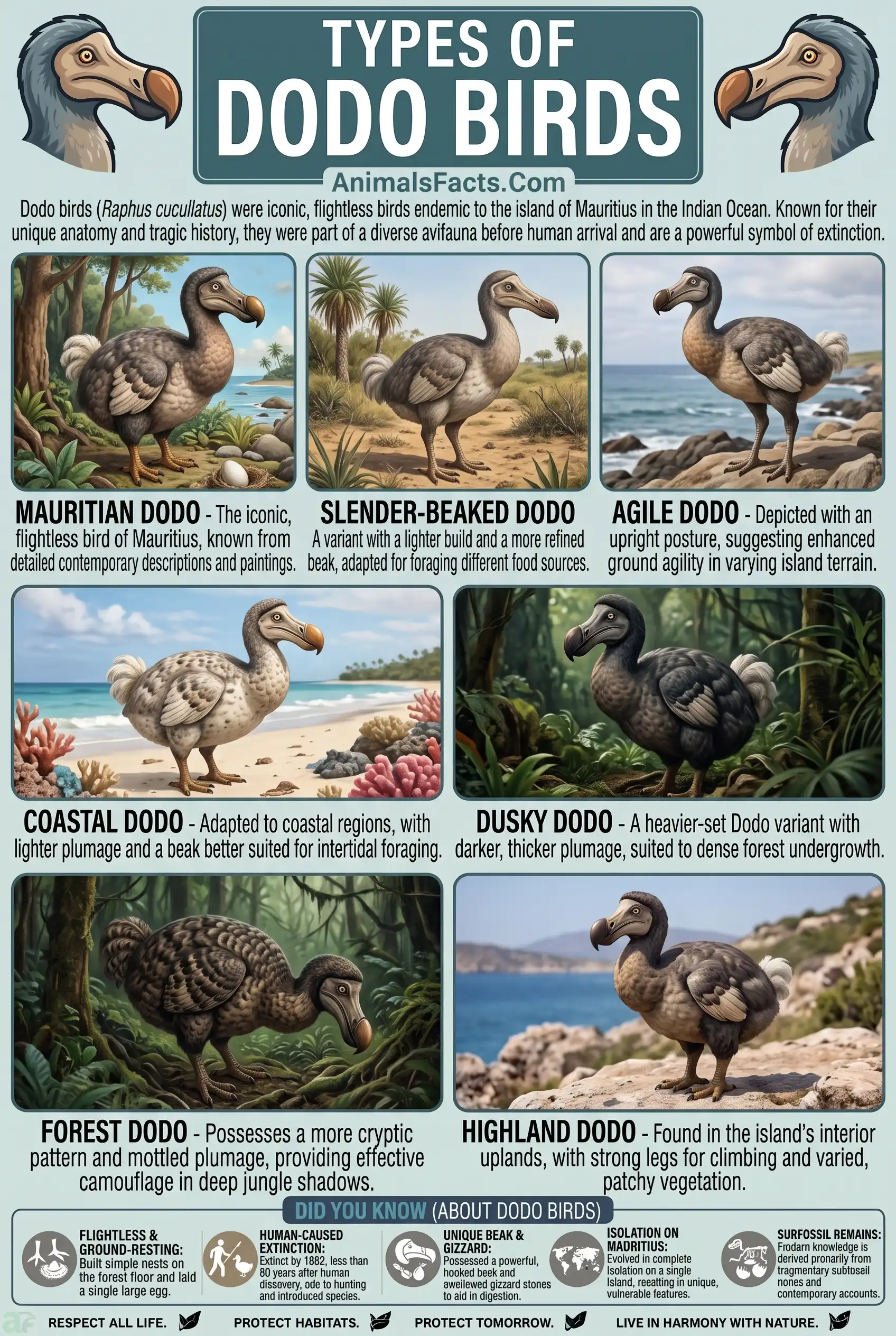
Did You Know? Many famous historical illustrations of the dodo — including the most widely reproduced image of an apparently obese, round bird — were likely drawn from captive specimens that had been overfed in European menageries or ships, giving an exaggerated impression of the dodo’s size and rotundity. Wild dodos, based on skeletal analysis, were considerably leaner and more athletic-looking than these iconic images suggest.
4. Top 25 Amazing Dodo Facts
Here is your definitive collection of the most extraordinary, scientifically grounded, and genuinely surprising dodo facts as of 2026:
- The dodo went from first European contact (1598) to complete extinction (approximately 1662) in just 64 years — one of the fastest documented extinctions of any large vertebrate in recorded history.
- The dodo’s closest living relative is the Nicobar pigeon (Caloenas nicobarica) — a spectacularly beautiful, iridescent seabird found in Southeast Asia and the Pacific.
- The word “dodo” may derive from the Dutch word dodaars (meaning “fat-arse” or “knot-arse,” referring to the tail feather tuft) or from the Portuguese doudo (meaning “fool” or “simpleton”) — the precise etymology remains debated.
- The dodo is the most famous extinct animal whose extinction was directly and unambiguously caused by human activity, making it the defining symbol of anthropogenic extinction.
- The entire skeleton of the dodo can be assembled from remains found at only a handful of sites — complete or near-complete individual skeletons are extraordinarily rare; the Oxford Dodo (Natural History Museum, Oxford) is the only specimen retaining original soft tissue.
- A dodo was documented alive in Europe around 1610 — kept in the menagerie of Holy Roman Emperor Rudolf II in Prague and almost certainly the subject of paintings by court painter Roelandt Savery.
- The Calvaria major tree (Sideroxylon grandiflorum) of Mauritius was proposed in a famous (though contested) 1977 study to depend on passage through the dodo’s digestive system for germination — its seeds allegedly requiring the mechanical abrasion of the dodo’s gizzard to germinate successfully. This claim has since been significantly challenged and partially debunked.
- The dodo was not afraid of humans because it had evolved on an island with no large land predators — it had literally no evolutionary programming for fear of a bipedal creature approaching it on foot.
- Contrary to popular belief, sailors probably didn’t find dodo particularly tasty — contemporary accounts describe dodo meat as tough and unpleasant. The dodo’s extinction was driven more by habitat destruction and introduced predators than by direct hunting.
- The earliest confirmed written description of the dodo was made by Dutch sailor Heyndrick Dircksz Jolinck in 1598 — just one year after the Dutch fleet’s first landing on Mauritius.
- Only about 26 significant dodo specimens (or partial specimens) survive in museum collections worldwide — making the dodo one of the rarest birds in museum collections despite being one of the most famous.
- Roelandt Savery (1576–1639), a Flemish painter working at the court of Rudolf II, produced the most extensive and reliable series of dodo paintings from what is believed to be direct observation of live specimens — his paintings are among the most important sources of dodo appearance data.
- The dodo had a fully functional gizzard — a muscular stomach organ used to grind hard plant material — consistent with a diet heavy in hard seeds, nuts, and fruits.
- Dodo bones have been found with bite marks from introduced rats and pigs — confirming the role of introduced animals in preying on dodo eggs, chicks, and possibly adults.
- The last universally accepted dodo sighting was made by sailor Volkert Evertsz in 1662, who described capturing a single bird on a small islet near Mauritius.
- The Natural History Museum of Mauritius in Port Louis holds the most significant collection of dodo material, including skeletal elements from the Mare aux Songes excavations — the single richest source of dodo remains.
- Dodo eggs were laid in ground-level nests — a strategy completely safe in a predator-free environment but catastrophically vulnerable to introduced rats, pigs, and monkeys.
- CT scanning of dodo skull specimens has revealed that the dodo had a relatively large olfactory bulb — suggesting it may have relied significantly on smell to locate food, an unusual trait in birds (most of which have a poor sense of smell).
- The dodo’s vestibular system (inner ear balance organs), analyzed through CT scanning of skull material, suggests it was capable of relatively rapid, agile movement — contradicting the old image of a slow, bumbling bird.
- Colossal Biosciences has announced dodo de-extinction as an active research target, with a near-complete dodo genome sequenced and early-stage cellular biology research underway as of 2024–2025.
- The phrase “dead as a dodo” did not appear in common English usage until the 19th century — well after the dodo’s actual extinction — and became popular only after the dodo was retroactively recognized as a symbol of extinction.
- The dodo’s wings were not completely absent — they retained small, vestigial wings with functional (though small) pectoral muscles. These may have been used for balance, display, or fighting rather than flight.
- Analysis of dodo bone growth rings suggests dodos may have had a seasonal breeding pattern, with a distinct breeding season — possibly timed to coincide with the fruiting of specific tree species.
- The Mare aux Songes excavation in southeastern Mauritius has yielded thousands of dodo bones since systematic excavation began in the 1980s, representing the remains of hundreds of individual birds deposited over thousands of years by flooding events that swept animals into the marsh.
- Lewis Carroll’s dodo character in Alice’s Adventures in Wonderland (1865) is widely believed to be Carroll’s self-portrait — Carroll (whose real name was Charles Lutwidge Dodgson) is thought to have identified with the dodo because his stutter caused him to sometimes introduce himself as “Do-Do-Dodgson.”
5. Dodo Fun Facts for Kids
- Dodos were only found on one island in the entire world — Mauritius in the Indian Ocean
- The dodo is more closely related to pigeons than to any other living bird
- Dodo eggs were laid on the ground — making them easy prey for introduced animals
- The dodo’s brain-to-body ratio was comparable to other pigeons — not unusually small
- Only 26 significant museum specimens of dodo material survive worldwide
- The dodo went extinct before photography was invented — all visual records are illustrations or paintings
- Subfossil dodo bones continue to be found at Mare aux Songes, Mauritius during excavations
- The dodo could not fly but retained vestigial wings used possibly for balance and display
- Dodo meat was reportedly unpleasant — sailors called it “disgusting fowl” in many accounts
- The Rodrigues solitaire, the dodo’s closest relative, went extinct approximately 68 years later
- A dodo skeleton sold at auction in 2016 for $430,000 — making it one of the most valuable bird specimens ever sold
- The dodo’s scientific name cucullatus means “hooded” in Latin — referring to the appearance of its head
6. Natural Habitat & Geographic Range
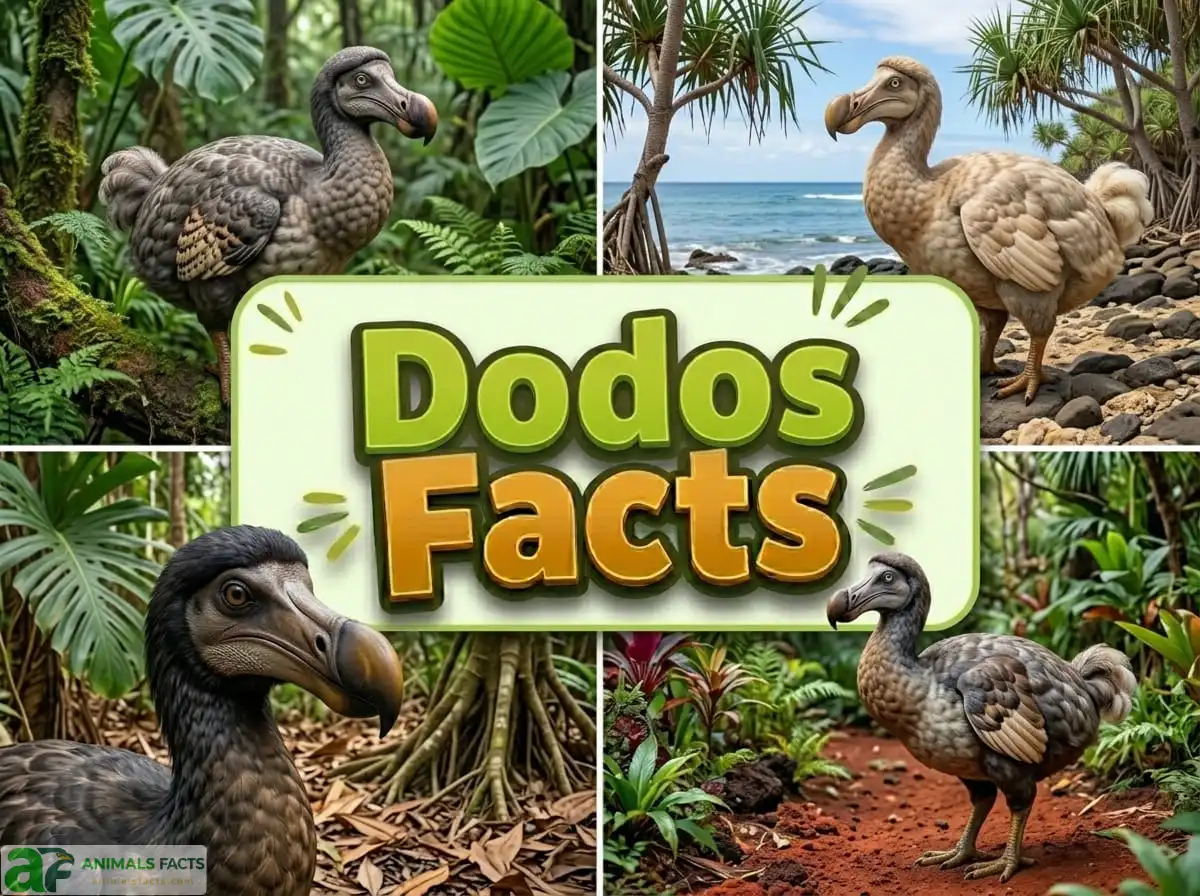
Dodo habitat was remarkably restricted by any standard — the dodo was found on exactly one island in the entire world: Mauritius, a volcanic island of approximately 2,040 km² in the southwestern Indian Ocean, located approximately 2,000 km east of Madagascar and roughly 900 km east of Réunion.
The Island of Mauritius
At the time of human arrival in the late 16th century, Mauritius was covered almost entirely in dense tropical forest — a lush, complex ecosystem that had evolved in almost complete isolation for millions of years. The forest harbored an extraordinary array of endemic species found nowhere else on Earth, including giant tortoises, endemic reptiles, unique invertebrates, and a remarkable bird community that included the dodo, several endemic pigeons, parrots, and the red rail (Aphanapteryx bonasia) — another flightless bird that went extinct alongside the dodo.
Within Mauritius
The dodo was almost certainly distributed across the entire island at the time of first human contact, with highest densities in lowland and coastal forest zones where its preferred food sources (large tropical fruits) were most abundant. Evidence from historical accounts suggests dodos were particularly associated with:
- Coastal forests — where early sailors most commonly encountered them
- Palm forests — where large, fallen palm fruits would have provided abundant food
- Lowland tropical forest — the dominant habitat across most of Mauritius
Subfossil dodo remains have been found at multiple locations across Mauritius, confirming island-wide distribution. The Mare aux Songes site in the southeast is the richest dodo bone locality, likely because periodic flooding events carried carcasses and bones into the marsh from the surrounding forest over thousands of years.
Habitat Range Table
| Region | Presence | Habitat Type | Notes |
|---|---|---|---|
| Mauritius (entire island) | Native and endemic | Tropical forest, coastal forest, palm savanna | Only location on Earth |
| Rodrigues Island | Never present | N/A | Sister species (Pezophaps solitaria) found here |
| Réunion Island | Never confirmed | N/A | A separate putative “white dodo” is not supported by evidence |
| Rest of the world | Captive only (1600s) | Menageries, ships | A handful of live birds transported to Europe and Asia |
Did You Know? A “white dodo” or “Réunion solitaire” was long believed to have existed on the nearby island of Réunion based on a historical account and a painting. Modern analysis, including genetic testing of bones from Réunion, has determined that this was almost certainly an ibis (Threskiornis solitarius) — not a relative of the dodo at all. The white dodo is now considered a phantom species based on misidentification and artistic exaggeration.
7. Diet & Feeding Behavior
Dodo diet was primarily frugivorous — the dodo fed on fallen fruits, seeds, nuts, and roots on the forest floor — a dietary strategy perfectly suited to the abundant fruit production of Mauritius’s tropical forest ecosystem.
Diet Breakdown Table
| Food Type | Estimated % of Diet | Evidence |
|---|---|---|
| Fallen tropical fruits | ~55–65% | Gizzard stone analysis, bill morphology, habitat association |
| Seeds and nuts | ~20–25% | Robust bill adapted for hard food processing; gizzard morphology |
| Roots and tubers | ~5–10% | Bill shape; ground-foraging behavior inferred from skeletal foot morphology |
| Fallen palm nuts | ~5–10% | Historical accounts; association with palm forests |
| Invertebrates (crabs, insects) | ~3–5% | Speculative but consistent with opportunistic ground-feeding |
| Stones (gastroliths) | Non-nutritive | Gizzard stones found in stomach contents; used for grinding food |
Feeding Strategy
The dodo was a ground-level forager — walking through the forest floor and collecting fallen fruits and other food items using its large, hooked bill. The hooked bill tip was well-suited for peeling the flesh from large tropical fruits and for cracking open moderately hard seeds. For truly hard nuts and seeds, the dodo almost certainly used its powerful gizzard — the muscular stomach organ containing swallowed stones (gastroliths) that ground hard food items just as modern pigeons use their gizzard for grain processing.
Seasonal Feeding Patterns
The forest of Mauritius would have had distinct fruiting seasons for different tree species, and the dodo likely tracked these seasonal pulses of food availability — moving to areas of peak fruit production as they occurred. This pattern is consistent with modern frugivorous birds and would have made dodos important seed dispersers for multiple tree species.
Dodo behavior during the cooler, drier season (June–September) — when fruit production was lower — may have included increased reliance on roots, bulbs, fallen palm nuts, and invertebrates.
8. Reproduction & Life Cycle
Dodo reproduction is one of the least-documented aspects of the species’ biology, inferred from a combination of bone analysis, comparative biology with living columbiform relatives, and limited historical accounts.
Mating Behavior
No direct contemporary accounts of dodo courtship behavior exist. Based on comparison with the Rodrigues solitaire (which was better documented by later European colonists) and modern large columbiform birds, dodo courtship likely involved:
- Vocal displays — calling to attract mates and announce territorial presence
- Physical displays — wing spreading, tail tuft raising, and strutting behavior
- Possible nest site defense — establishing and defending a ground-level nesting territory
The Rodrigues solitaire was documented engaging in active physical combat between males, using hardened wing knobs to strike rivals. The dodo’s vestigial wings may have served a similar function.
Nesting & Egg-Laying
All available evidence indicates the dodo was ground-nesting — consistent with all other flightless island birds. Its eggs were laid in a simple ground nest made from plant material, in a sheltered location within the forest. The number of eggs per clutch is unknown, but comparison with large columbiform birds suggests one egg per clutch — typical of pigeons and related birds. Multiple clutches per breeding season may have been possible if eggs were lost.
Growth Stages
- Egg — Incubated on the ground nest by one or both parents
- Chick — Hatched relatively precocial for a columbiform; covered in yellow down
- Juvenile — Transitioning to adult plumage; growing rapidly; still dependent on parents
- Sub-adult — Approaching adult size; sexually immature
- Adult — Sexually mature; fully independent
Bone growth ring analysis of dodo specimens suggests a distinct breeding season — possibly timed to August (the Southern Hemisphere winter on Mauritius), based on evidence that bone growth was accelerated at certain times of year. This seasonal breeding pattern would have created a single, synchronous pulse of vulnerable eggs and chicks — catastrophically exploited by introduced predators.
Lifespan Comparison Table
| Species | Estimated Lifespan | Status | Notes |
|---|---|---|---|
| Dodo (Raphus cucullatus) | ~10–30 years (estimated) | Extinct ~1662 | Based on columbiform comparison |
| Rodrigues solitaire (Pezophaps solitaria) | ~15–25 years (estimated) | Extinct ~1730 | Close relative; slightly longer-lived island columbiform |
| Nicobar pigeon (Caloenas nicobarica) | ~15–20 years | Near Threatened | Closest living relative |
| Victoria crowned pigeon (Goura victoria) | ~20–25 years | Vulnerable | Large, ground-dwelling columbiform comparison |
9. Social Behavior & Communication
Dodo social behavior remains one of the most poorly documented aspects of the species — the animal was observed for such a brief period by people whose primary interest was usually hunting or capturing specimens rather than systematic behavioral observation.
Group Behavior
Most early accounts describe dodos in small groups — typically described as aggregations of a few to a dozen or more individuals, particularly around abundant food sources. The description by Heyndrick Dircksz Jolinck in 1598 mentions dodos moving in groups, and multiple accounts describe their boldness in approaching ships and sailors in what appear to be curious, social aggregations.
Whether dodos maintained territorial pairs with overlapping home ranges that occasionally aggregated at food sources, or whether they were more persistently group-living, is unknown. The social behavior of the Rodrigues solitaire — which was more extensively documented — was decidedly territorial, with pairs defending large territories and engaging in seasonal combat. If the dodo was similarly territorial, the group observations likely represent temporary aggregations at exceptional food sources rather than stable social groups.
Vocalizations
Contemporary accounts provide tantalizingly little information about dodo vocalizations. The only directly relevant historical reference describes a sound “like a young goose” — a weak, breathy call consistent with the generally soft vocalizations of large columbiform birds. CT scanning of dodo skull material reveals syrinx-related structures consistent with vocalization capacity, but the nature and complexity of dodo calls remains unknown.
Intelligence
The persistent myth that dodos were “stupid” — approaching human hunters without fear — reflects a fundamental misunderstanding of island evolution rather than any cognitive deficit. Dodo brain-to-body ratio was analyzed through CT scanning of cranial material and found to be broadly consistent with other columbiform birds — not unusually small or unusually large. The dodo’s fearlessness was a rational evolutionary adaptation to a predator-free environment, not cognitive limitation.
Comparative studies of island birds consistently show that predator-naïveté — the lack of fear response to novel threats — is a universal feature of birds evolved without land predators, not a sign of reduced intelligence.
10. Predators & Defense Mechanisms
In its evolutionary environment — predator-free Mauritius — the dodo had essentially no natural predators. This fact is the most important key to understanding the dodo’s behavior, its rapid extinction, and the broader lesson its story holds for conservation biology.
Pre-Human Mauritius
Before human arrival, the predatory species on Mauritius were essentially limited to:
- Birds of prey (hawks and falcons) — capable of taking small birds or dodo chicks, but not adult dodos
- Large reptiles — giant Mauritian tortoises (now also extinct) were herbivorous and presented no predatory threat
- Possibly large snakes — though the historical snake fauna of Mauritius is poorly documented
Against this minimal predator pressure, the dodo had no evolutionary need for:
- Flight — energetically expensive and unnecessary; wings reduced over generations
- Fear responses to large terrestrial animals — there were none; such responses were lost
- Camouflage — unnecessary without ground predators to hide from
- Rapid escape behavior — the slow, deliberate movement of the dodo reflected its zero-predator environment
Introduced Predators & The Fatal Vulnerability
When humans arrived, they brought with them — deliberately or accidentally — a suite of animals to which the dodo had no evolutionary preparation:
- Black rats (Rattus rattus) — arrived on ships; devastated ground-nesting bird eggs across the entire island
- Pigs — introduced by Dutch settlers; ate eggs, chicks, and competed for fallen fruits
- Macaques (crab-eating macaques, Macaca fascicularis) — introduced deliberately; ate eggs, competed for forest fruits, disturbed nesting
- Cats and dogs — introduced companions of settlers; became feral predators of chicks and possibly adults
- Cattle and goats — destroyed the understory vegetation that provided the dodo’s food and nesting habitat
The evidence from dodo bones at Mare aux Songes shows clear bite marks from rats and pigs — confirming active predation on dodo individuals or carcasses by introduced animals.
Did You Know? Modern analysis suggests that direct hunting by Dutch sailors may have played a much smaller role in the dodo’s extinction than is commonly assumed. Sailor accounts consistently describe dodo meat as unpalatable — tough, fishy, and generally unappealing. The main extinction drivers were almost certainly habitat destruction (forest clearing for agriculture), egg predation by introduced rats, pigs, and monkeys, and competition for food resources from introduced animals — making the dodo’s extinction a story of systemic ecological disruption rather than simply overhunting.
11. Dodo Facts for Kids
Hey curious young explorers! Here are some incredible dodo facts for kids that will make your teachers and friends amazed:
- The dodo was a real bird — not a fairy tale! Even though it’s been gone for over 360 years, the dodo was as real as any bird alive today. Scientists have its bones, its DNA, and pictures made by people who actually SAW it!
- The dodo was related to pigeons! That’s right — the fat, funny-looking dodo was actually a giant pigeon. Its closest living cousin today is the beautiful Nicobar pigeon, which lives in the Indian Ocean.
- The dodo wasn’t scared of anything — and that was the problem! The dodo lived on an island with no lions, foxes, or other dangerous animals, so it never learned to be afraid. When humans arrived, it walked right up to them — which made it very easy to catch.
- The dodo couldn’t fly — but it didn’t need to! Because there were no predators to run from on its island home, the dodo’s wings got smaller and smaller over millions of years until they couldn’t lift it off the ground anymore.
- Scientists are trying to bring the dodo BACK! A company called Colossal Biosciences is working to use the dodo’s DNA to recreate the bird. We might see a live dodo again in our lifetime!
- Lewis Carroll’s dodo in Alice in Wonderland is based on a real person! The author, whose last name was Dodgson, had a stutter that made him say “Do-Do-Dodgson” when he introduced himself. So he put a dodo in his famous story as a kind of self-portrait!
- Only 26 dodo museum specimens exist in the whole world! That’s fewer than most school classes. The dodo disappeared so fast that very few bones and specimens were saved.
- The dodo’s egg was laid on the GROUND! Unlike birds that nest in trees, dodos built their nests on the forest floor — which was totally safe before humans arrived with rats and pigs that ate the eggs.
12. Relationship with Humans
The relationship between humans and the dodo is one of the most documented and most consequential human-animal interactions in the history of natural science — not because it was long or complex, but because it was so catastrophically brief and so definitively final.
First Contact
The first documented European encounter with the dodo occurred in September 1598, when the Dutch fleet under Admiral Jacob Corneliszoon van Neck anchored at Mauritius (then uninhabited by humans). Sailors went ashore and encountered dodos — which they reportedly rounded up easily by hand or drove into groups with sticks, describing the birds as curious, unafraid, and readily captured. The earliest accounts describe the dodos making sounds and attempting to flee when grabbed, but not exhibiting the sustained rapid flight response that would be typical of a bird that had evolved alongside land predators.
It is significant that Mauritius had been known to Arab traders for centuries before European arrival — appearing on Arab maps as Dina Arobi — but it appears that Arab traders used the island only as a temporary stopover without establishing settlements, and no sustained human-dodo interaction occurred before the Dutch colonial period.
Captive Dodos in Europe
Several dodos were transported from Mauritius to Europe during the early 17th century, providing the basis for the contemporary illustrations and firsthand accounts that are our primary source of dodo appearance data. A dodo is documented in Rudolf II’s menagerie in Prague (~1610), in the Amsterdam menagerie (~1636), and reportedly at least one was kept in Surat, India (~1628) and Nagasaki, Japan — testimony to the extraordinary reach of early modern trade networks.
The Prague dodo — almost certainly observed directly by Roelandt Savery — is the most important of these captive animals for our knowledge of the species. Savery’s multiple paintings and sketches of dodos, made from what is believed to be direct observation, remain among the most reliable visual records of the living bird.
The Extinction
The dodo went extinct so rapidly that it was not even recognized as extinct for decades. The last reliable sighting occurred around 1662; the last possible sighting in 1681. By the time European naturalists began trying to compile information about the bird in earnest, the dodo was already gone — and so few specimens and records had been preserved that its very existence was questioned. As late as the mid-19th century, some naturalists suggested the dodo might be mythological or a gross exaggeration.
It was the discovery of the Mare aux Songes bone deposit in 1865 — yielding hundreds of authentic dodo bones — that definitively confirmed the dodo’s real existence and sparked the modern scientific study of extinction as a phenomenon.
13. Conservation Status & Extinction
The dodo is extinct — classified as such by the IUCN and every relevant scientific authority. It is the type example of human-caused extinction, though the precise mechanics of its disappearance are more complex than simple hunting.
Extinction Timeline & Causes
| Period | Event | Primary Impact |
|---|---|---|
| 1598 | First European contact; Dutch establish regular visits | Initial disruption of undisturbed ecosystem |
| 1638 | Dutch establish permanent settlement on Mauritius | Systematic forest clearance begins; introduced animals established |
| 1638–1662 | Massive ecological disruption | Rat, pig, macaque, cat, dog populations explode; ground nests devastated |
| ~1662 | Last confirmed dodo sighting (Volkert Evertsz) | Final extinction of the species |
| ~1681 | Last possible sighting (Benjamin Harry) | Unconfirmed; the dodo may have lingered in very small numbers |
The Introduced Animal Catastrophe
The critical insight from modern analysis of the dodo’s extinction is that rats, pigs, and macaques were almost certainly more responsible for the dodo’s extinction than direct human hunting. By destroying eggs and chicks at ground-level nests — where 100% of dodo reproduction occurred — these introduced animals eliminated the dodo’s ability to replace itself. A species that lays a single egg per clutch, with no evolved defenses for nest protection, cannot withstand sustained egg predation from multiple introduced predator species simultaneously.
This pattern — island bird extinction driven primarily by introduced rodents and mammals rather than by direct hunting — has been replicated hundreds of times across the world’s island ecosystems, making the dodo not merely a historical tragedy but a deeply relevant case study for modern conservation.
Could De-extinction Save the Dodo?
The dodo de-extinction project represents one of the most scientifically challenging and ethically complex restoration efforts ever proposed. Key facts as of 2026:
| De-extinction Milestone | Status (2026) |
|---|---|
| Near-complete dodo genome sequenced | Completed (Colossal/collaborators, 2022–2024) |
| Closest living relative identified (Nicobar pigeon) | Confirmed |
| Host species cellular biology research | Early stage, ongoing |
| First target: viable dodo stem cells | In progress |
| Estimated timeline to living animal | No confirmed timeline; likely 10–20+ years minimum |
| Habitat restoration (Mauritius forest) | Active ongoing work by Mauritian government; essential prerequisite |
14. Famous Dodos in History & Pop Culture
Famous Historical Dodo Specimens & Individuals
The Oxford Dodo — The most famous dodo specimen in the world, held at the Oxford University Museum of Natural History. It is the only dodo specimen retaining original soft tissue — specifically a dried head and foot. Originally part of the collection of John Tradescant the Younger in the 17th century, it was bequeathed to Oxford in 1683 and has been the subject of extensive scientific analysis, including CT scanning and DNA extraction. It served as the primary inspiration for Lewis Carroll’s dodo character in Alice’s Adventures in Wonderland — Carroll lived in Oxford and almost certainly knew the specimen.
The Prague Dodo — The dodo documented in the menagerie of Holy Roman Emperor Rudolf II in Prague around 1610, almost certainly observed directly by court painter Roelandt Savery. Multiple Savery paintings survive and are among the most important visual records of the living dodo.
The Mauritius Natural History Museum Skeleton — The most complete dodo skeleton assembled in the world, housed at the Natural History Museum of Mauritius in Port Louis. Assembled from multiple individuals found at Mare aux Songes, it represents the best physical documentation of the dodo’s complete skeletal anatomy.
The Amsterdam Dodo Skeleton — Held at the Naturalis Biodiversity Center in Leiden, Netherlands, this specimen was used in one of the most important early morphological analyses of the dodo and contributed crucial data to CT scanning studies of dodo anatomy.
The 2016 Auction Skeleton
A near-complete dodo skeleton sold at auction in 2016 for $430,000 — one of the highest prices ever paid for a bird specimen and a vivid demonstration of the extraordinary cultural and scientific value placed on dodo material.
15. Role in Ecosystem & Food Chain
The dodo occupied a keystone ecological role in the forest ecosystem of Mauritius — a role so specific and so irreplaceable that its loss has had demonstrable cascading effects that persist to the present day.
Seed Disperser of Large-Fruited Trees
The dodo’s most critical ecological function was as a seed disperser for large-fruited tree species whose seeds were too large to be processed by any other animal on the island. As the dodo swallowed large fruits whole, passed them through its digestive system, and deposited the seeds elsewhere in the forest, it performed an essential service that maintained the diversity and regeneration of Mauritius’s forest community.
The most famous proposed example of this relationship is the Calvaria major tree (Sideroxylon grandiflorum) — which, as of the 1970s when the hypothesis was first proposed, was known from only 13 very old individuals, with no successful germination documented in centuries. Botanist Stanley Temple proposed in 1977 that Calvaria seeds required passage through the dodo’s digestive system (specifically, the mechanical abrasion of the gizzard) to germinate — and that the tree was therefore “dying” because its disperser was extinct.
This hypothesis — while elegantly compelling and widely publicized — has since been challenged. Other researchers have successfully germinated Calvaria seeds without dodo gizzard passage, and other potential dispersers (giant tortoises, also extinct) may have played an equal or greater role. The current scientific consensus is that Calvaria’s germination challenges reflect multiple factors including its entire suite of extinct dispersers (including giant tortoises) rather than dodo-exclusive dependence. Calvaria populations have been supplemented through human intervention and show signs of recovery.
Nevertheless, the dodo’s loss from the forest ecosystem almost certainly disrupted seed dispersal patterns for multiple large-fruited tree species — effects that compound over generations and contribute to the ongoing impoverishment of Mauritius’s forest biodiversity.
Prey Role
As a large, ground-dwelling herbivore, the dodo may also have served as prey for some species — though the lack of large natural predators on pre-human Mauritius means this role was probably minor. The dodo’s primary ecological importance was as a consumer and disperser at the herbivore level, not as prey.
16. Myths, Folklore & Cultural Significance
The dodo arrived in human consciousness as a real animal simultaneously with becoming a symbol — and the myths that grew around it reveal as much about human psychology as they do about the bird itself.
The “Stupid” Myth
The most persistent cultural myth about the dodo — embedded in the very English phrase “dead as a dodo” and the common use of “dodo” to mean a foolish or obsolete person — is that the bird was inherently stupid. This myth has been comprehensively dismantled by modern science. The dodo was not stupid. It was appropriately calibrated for the environment in which it evolved. An animal that had spent millions of years in a predator-free environment had no adaptive reason to develop fear responses to large terrestrial animals — because such animals did not exist in its world. Its fearlessness was as rational as a human’s lack of fear of house cats.
The persistence of the “stupid dodo” myth reflects an uncomfortable human tendency to blame extinction victims rather than examine our own role — attributing the dodo’s extinction to some inherent deficiency rather than to the devastating collision between an evolved island specialist and a globally disruptive technological civilization.
Mauritius National Identity
The dodo holds a central place in Mauritian national identity — appearing on the national coat of arms, on currency, on postage stamps, and as the mascot of multiple national institutions. In Mauritius, the dodo is not primarily a symbol of stupidity or obsolescence but of uniqueness, endemic pride, and irreplaceable natural heritage. The dodo’s image is everywhere in Mauritius — in souvenir shops, government buildings, and school textbooks — reflecting the island nation’s complex relationship with the animal that represents both its exceptional biodiversity and the destruction wrought by colonization.
Conservation Symbol
Globally, the dodo has become the defining symbol of human-caused extinction — more universally recognized than any other extinct animal except perhaps the woolly mammoth. Its image is used by conservation organizations worldwide as a reminder of the irreversibility of extinction and the urgency of protecting species before they reach the point of no return.
17. Dodo in Pop Culture
Lewis Carroll’s Alice’s Adventures in Wonderland (1865) — The dodo character who organizes the Caucus Race is the most famous fictional dodo in literary history. As noted above, Carroll almost certainly based the character on the Oxford Dodo specimen and incorporated it as a self-portrait due to his stutter. Carroll’s dodo — pompous, procedural, and slightly absurd — helped cement the bird’s association with an older, obsolete world.
The Dodo (media company) — Founded in 2014, The Dodo is one of the world’s largest animal-focused digital media platforms, with hundreds of millions of social media followers and billions of video views. Its founders chose the dodo as their symbol precisely because of its associations with extinction — positioning their platform as a countervailing force for animal welfare. The irony of one of the world’s most successful online media brands being named after an extinct bird has not been lost on commentators.
Ice Age (2002 film) — The Ice Age franchise features dodos in one of its most memorable sequences — a large, frenzied dodo tribe obsessively hoarding melons for the impending “ice age.” While scientifically inaccurate (dodos lived millions of years after the Ice Age in a completely different part of the world), the sequence made dodos immediately recognizable to an entire generation of children.
Dodo in gaming — The dodo appears in multiple video games, most notably as a pterodactyl substitute in the original Grand Theft Auto: Vice City (2002) and as a tameable flying mount in Ark: Survival Evolved. In the mobile game Hungry Shark, the dodo is a recurring prey item.
18. Dodo Facts vs. Common Myths
| Common Myth | The Real Fact |
|---|---|
| “Dodos were stupid” | False — dodos were appropriately calibrated for their predator-free island environment; fearlessness is rational when there are no predators |
| “Sailors ate dodos to extinction” | Mostly false — sailor accounts consistently describe dodo meat as unpleasant; introduced animals (rats, pigs, macaques) and habitat destruction were the primary extinction drivers |
| “Dodos couldn’t run fast” | Likely false — CT scanning of inner ear anatomy suggests dodos were capable of agile, relatively rapid movement; the “clumsy” image reflects captive, overfed specimens |
| “There was a white dodo on Réunion” | False — the “white dodo” was almost certainly the Réunion ibis (Threskiornis solitarius), not a columbiform relative of the dodo |
| “The dodo was huge — as big as a cow” | Exaggerated — the dodo weighed approximately 10–18 kg — comparable to a large turkey, not a cattle-sized animal |
| “All dodo illustrations are accurate” | False — many illustrations, particularly those made from captive specimens, show an obese bird distorted by overfeeding; wild dodos were considerably slimmer |
| “The Calvaria tree can only germinate through a dodo’s gizzard” | Oversimplified — this famous hypothesis has been largely challenged; other dispersers (tortoises) and mechanical abrasion alone can promote germination |
| “Dodos were related to ostriches” | False — dodos are columbiformes (pigeon relatives), not ratites (ostrich relatives); the flightlessness is convergent, not shared ancestry |
19. Best Places to Explore Dodo History
1. Natural History Museum of Mauritius, Port Louis, Mauritius — The definitive destination for dodo enthusiasts. Houses the most significant collection of dodo skeletal material in Mauritius, assembled from Mare aux Songes excavations. The museum’s displays provide exceptional context for the dodo within Mauritian natural and cultural history.
2. Mare aux Songes, Mauritius — The single richest source of dodo fossils — a marshy area in southeastern Mauritius where thousands of dodo bones have been excavated since systematic work began in the 1980s. While not currently open for public excavation visits, the site is scientifically important and guided natural history tours of the surrounding area are available.
3. Oxford University Museum of Natural History, Oxford, UK — Home of the Oxford Dodo — the world’s only dodo specimen retaining original soft tissue, and the specimen that inspired Lewis Carroll. The museum’s display provides excellent historical and scientific context, and the specimen itself is on permanent display.
4. Naturalis Biodiversity Center, Leiden, Netherlands — The former home of the most important dodo skeleton assembled in Europe (now partially on loan to other institutions). The museum holds significant dodo material and is closely associated with the Dutch colonial history that brought Europeans to Mauritius.
5. Natural History Museum, London, UK — Holds significant dodo skeletal material and has been the site of important dodo DNA extraction and CT scanning work. The museum’s Earth Hall provides broader extinction context for the dodo’s story.
6. American Museum of Natural History, New York, USA — Houses important dodo skeletal material and provides exceptional context for dodo biology within the broader story of island biogeography and extinction.
7. Black River Gorges National Park, Mauritius — The largest remaining area of native Mauritian forest — the closest surviving approximation of the habitat the dodo actually lived in. While the dodo is long gone, the park is home to several other endemic Mauritian birds including the Mauritian kestrel, pink pigeon, and echo parakeet, all of which have benefited from intensive conservation work that could serve as a model for future dodo habitat restoration.
20. How You Can Help — Island Bird Conservation
While the dodo itself cannot be conserved (being extinct), the broader cause it represents — the conservation of island birds and island ecosystems from the threats that killed it — is urgently relevant.
Support these organizations:
- Durrell Wildlife Conservation Trust — durrell.org — founded by Gerald Durrell specifically to save species from extinction; extensive island bird conservation programs
- BirdLife International — birdlife.org — the world’s largest bird conservation organization; extensive island programs
- Revive & Restore — reviverestore.org — the leading de-extinction nonprofit; working with Colossal on dodo de-extinction
- Colossal Biosciences — colossal.com — pursuing dodo de-extinction research
- Mauritian Wildlife Foundation — mauritian-wildlife.org — directly conserving Mauritius’s surviving endemic species and restoring native habitat
What you can do:
- Support island invasive species removal — rat and cat eradication on islands is the single most effective conservation intervention for island birds; many organizations fund this work
- Travel responsibly — choose eco-certified tourism operators in island destinations; avoid introducing invasive species (including seeds in shoe soles and soil) to islands
- Advocate for stricter biosecurity — island biosecurity (preventing introduction of invasive animals and plants) is one of the most cost-effective conservation investments available
- Engage with de-extinction science — follow and support the dodo de-extinction project; public awareness directly influences funding and policy
- Support the pink pigeon — the pink pigeon of Mauritius (a close relative of the dodo) was once reduced to 10 individuals and has recovered to over 500 through intensive conservation work — a living proof of concept for what dedicated effort can achieve
21. Top Documentaries & Books
Must-Watch Documentaries
- The Dodo (Natural World, BBC, 2002) — A dedicated documentary examining the latest scientific understanding of dodo biology, extinction, and what the bird was really like in life; narrated with David Attenborough’s characteristic insight
- Extinct: A Horizon Guide to Vanished Species (BBC Horizon) — Includes substantial dodo content in the broader context of extinction science
- Racing Extinction (Discovery Channel, 2015) — The Oscar-nominated documentary on current extinction crises; places the dodo’s story in the context of ongoing biodiversity loss with powerful effect
- Raising the Mammoth — While not specifically about the dodo, this documentary’s treatment of de-extinction science provides essential context for the current dodo de-extinction effort
- Island of Lemurs: Madagascar — Provides crucial context for understanding island endemism and the specific vulnerabilities that made the dodo’s extinction possible
Must-Read Books
- Dodo: From Extinction to Icon by Errol Fuller — The definitive popular science book on the dodo; beautifully illustrated and scientifically thorough, covering history, biology, and cultural significance
- Extinct Birds by Errol Fuller — Places the dodo in the broader context of bird extinctions; essential reading for understanding the scale of island bird loss
- How to Clone a Mammoth by Beth Shapiro — The most authoritative and accessible book on de-extinction science by the paleogeneticist who has led dodo genome work
- The Song of the Dodo: Island Biogeography in an Age of Extinction by David Quammen — A Pulitzer Prize finalist exploring island biogeography and extinction; the dodo features prominently and the book is one of the finest works of popular science writing in the conservation genre
- Dodo: The Bird Behind the Legend by Alan Grihault — A Mauritius-based perspective on the dodo’s history and significance; excellent for understanding the island context
22. Comparison with Similar Species
| Feature | Dodo | Rodrigues Solitaire | Nicobar Pigeon | Pink Pigeon |
|---|---|---|---|---|
| Scientific name | Raphus cucullatus | Pezophaps solitaria | Caloenas nicobarica | Nesoenas mayeri |
| Status | Extinct ~1662 | Extinct ~1730 | Near Threatened | Vulnerable |
| Island | Mauritius | Rodrigues | Nicobar/Andaman Is. | Mauritius |
| Height/Size | ~1 m; 10–18 kg | ~0.9 m; ~15–28 kg | ~40 cm; ~0.6 kg | ~36 cm; ~0.35 kg |
| Flight | Flightless | Flightless | Flighted | Flighted |
| Diet | Frugivore/omnivore | Frugivore/omnivore | Frugivore/granivore | Frugivore/granivore |
| Relationship to dodo | — | Closest extinct relative | Closest living relative | Same island; different family |
| Extinction cause | Introduced animals + habitat | Introduced animals + hunting | Ongoing habitat loss | Introduced predators (recovering) |
23. Frequently Asked Questions About Dodo Facts
Q1: What is the scientific name of the dodo?
The dodo’s scientific name is Raphus cucullatus, first formally assigned by Carl Linnaeus in his landmark Systema Naturae (1758). The genus name Raphus was established by Mathurin Jacques Brisson in 1760, and cucullatus is Latin for “hooded” — referring to the appearance of the dodo’s head plumage. For much of the 19th and early 20th century the dodo was sometimes classified as Didus ineptus (“inept dodo”) — a name that has since been rejected in favor of the Linnaean priority of R. cucullatus.
Q2: When did the dodo go extinct?
The last universally accepted confirmed sighting of a living dodo was made by Dutch sailor Volkert Evertsz in 1662, who described capturing a dodo on a small islet near Mauritius. A final possible sighting in 1681 by English colonist Benjamin Harry is sometimes cited but is not universally accepted as reliable. For most scientific purposes, the dodo is considered to have gone extinct in approximately 1662–1681, with 1662 being the most commonly cited date. From first European contact (1598) to extinction (1662) was approximately 64 years — one of the fastest extinctions of any large vertebrate in recorded history.
Q3: What did the dodo eat?
The dodo was primarily a frugivore — feeding on fallen tropical fruits, seeds, and nuts on the forest floor of Mauritius. Its large, hooked bill was well-adapted for peeling and processing hard fruits and seeds, and its powerful gizzard (containing swallowed gastroliths — stones used to grind food) allowed it to process hard-shelled items. Analysis of preserved gizzard contents and comparison with the Rodrigues solitaire (better-documented) confirms a fruit-dominated diet supplemented by roots, seeds, and possibly invertebrates. A complete stomach content analysis of one specimen found stones, seeds, and fruit remnants.
Q4: Why did the dodo go extinct?
The dodo went extinct due to a combination of factors introduced by European colonization of Mauritius beginning in 1638. Contrary to popular belief, direct hunting by sailors was probably a minor factor — contemporary accounts describe dodo meat as unpleasant. The primary drivers were: introduced animals (rats, pigs, monkeys, cats, and dogs that destroyed ground-level nests and eggs); habitat destruction (forest clearance for agriculture by Dutch settlers); and the dodo’s complete lack of evolved predator defenses — behavioral, physical, or reproductive — that left it catastrophically vulnerable to every element of the human-introduced disturbance regime simultaneously.
Q5: How big was the dodo?
Adult dodos stood approximately 1 meter (3.3 feet) tall and weighed an estimated 10–18 kg (22–40 lbs) for typical wild individuals, with peak-condition adults possibly reaching up to 21 kg. Early weight estimates (some reaching 28 kg) were based on captive specimens that had been overfed in European menageries, producing an exaggerated impression of the dodo’s natural body condition. Modern skeletal analysis suggests the wild dodo was considerably more athletic in proportions than the iconic illustrations of captive birds suggest — closer in body condition to a very large, robust turkey than to the round, roly-poly figure of popular imagination.
Q6: Is the dodo related to the ostrich?
No — despite both being large and flightless, the dodo and ostriches are not closely related. Ostriches belong to the group Ratitae — ancient flightless birds whose ancestors were never capable of sustained flight. The dodo, by contrast, is a member of Columbiformes — the pigeon order — and descended from a flying ancestor that flew to Mauritius from Southeast Asia and subsequently lost its flight ability through evolution in a predator-free island environment. The dodo’s flightlessness is an example of convergent evolution — independently developing a similar trait (flightlessness) through completely separate evolutionary pathways.
Q7: What is the closest living relative of the dodo?
The Nicobar pigeon (Caloenas nicobarica) — a spectacularly iridescent green and blue pigeon found in the Nicobar and Andaman Islands of the Indian Ocean and islands of Southeast Asia — is the closest living relative of the dodo. This relationship was confirmed through DNA analysis published in 2002 by Alan Cooper and colleagues. The Nicobar pigeon is itself classified as Near Threatened due to habitat loss and hunting pressure — meaning the dodo’s closest living relative also faces conservation challenges.
Q8: Could the dodo be brought back through de-extinction?
This is an active research area as of 2026. Colossal Biosciences has announced dodo de-extinction as a project target and reports that a near-complete dodo genome has been sequenced. The scientific challenges are enormous — the Nicobar pigeon (the closest living relative, needed as a host species framework) is considerably smaller and biologically different from the dodo, and the cellular biology required for de-extinction involves techniques at the very frontier of current science. No confirmed timeline exists for a living animal. Even if successful, a de-extincted dodo would require carefully restored native Mauritian forest habitat — which makes habitat conservation on Mauritius an essential prerequisite for any de-extinction to be meaningful.
Q:9 Why is the dodo so famous?
The dodo’s extraordinary cultural prominence despite its obscurity as a living animal reflects several intersecting factors. It was the first large, well-documented animal to be driven to extinction by human activity in the modern era — making it the defining case study for the concept of anthropogenic extinction at a time when European civilization was only beginning to grapple with that concept. Its brief, tragic story — evolved in paradise, extinct in 64 years — is a compelling narrative of innocence and loss. Its distinctive appearance makes it immediately recognizable. And its appearance in Lewis Carroll’s Alice in Wonderland — one of the most widely read works of English literature — ensured its cultural presence in every generation of English-speaking children since 1865. The dodo is famous, in the end, because its story demands to be remembered.
24. Sources & References
Research Sources
- Wikipedia — Raphus cucullatus, Raphinae, Columbiformes, Nicobar pigeon
- IUCN Red List — iucnredlist.org
- Natural History Museum, London — nhm.ac.uk
- Smithsonian National Museum of Natural History — naturalhistory.si.edu
- National Geographic — nationalgeographic.com
- Britannica — britannica.com/animal/dodo-extinct-bird
- BBC Wildlife / BBC Earth — bbcearth.com
- Live Science — livescience.com
- Oxford University Museum of Natural History — oumnh.ox.ac.uk
- Mauritian Wildlife Foundation — mauritian-wildlife.org
- Cooper, A. et al. (2002). “Complete mitochondrial genome sequences of two extinct moas clarify ratite evolution.” Nature (and associated dodo DNA work)
- Fuller, Errol (2002). Dodo: From Extinction to Icon. HarperCollins
- Quammen, David (1996). The Song of the Dodo. Scribner
- Shapiro, Beth (2015). How to Clone a Mammoth. Princeton University Press
- Colossal Biosciences press releases and research updates (2022–2025) — colossal.com