

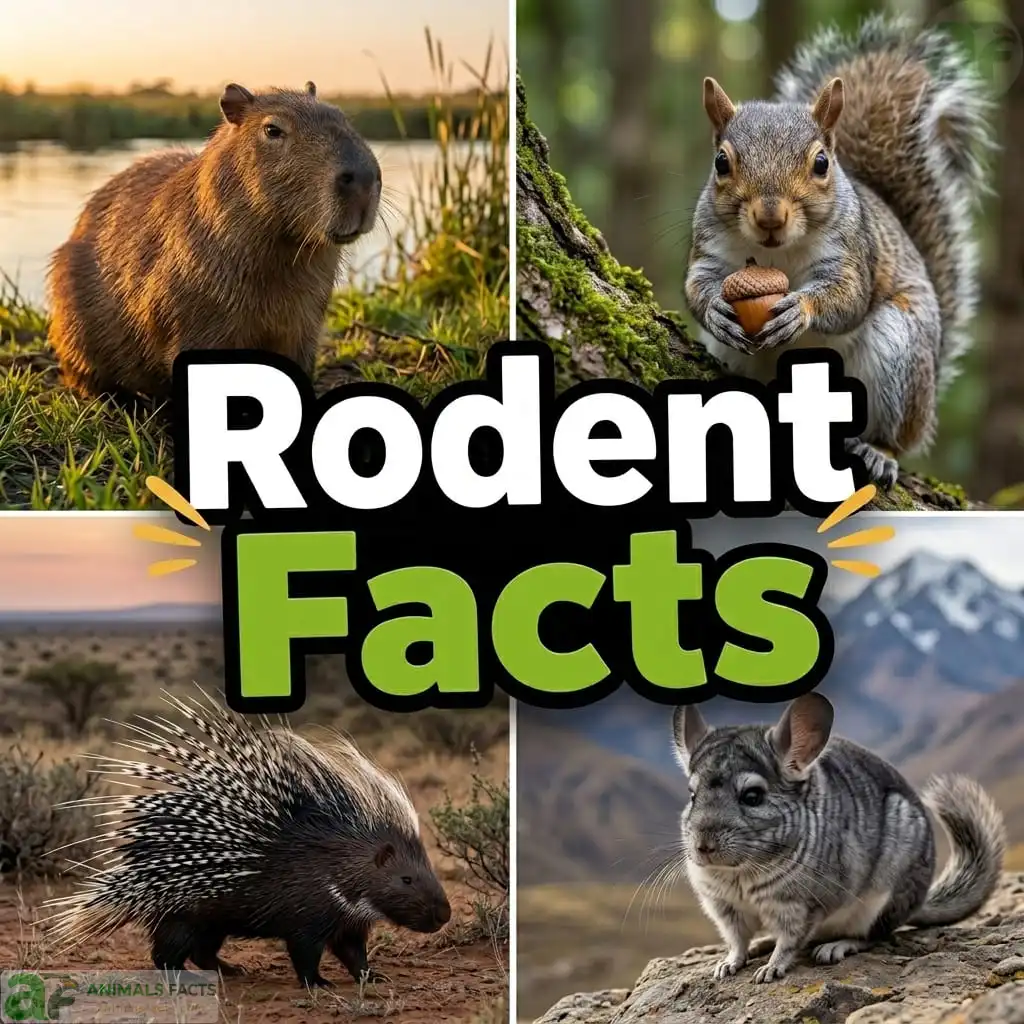
Rodent Facts
| Feature | Details |
|---|---|
| Scientific Name | Rodentia (order) |
| Kingdom | Animalia |
| Phylum | Chordata |
| Class | Mammalia |
| Order | Rodentia (Bowdich, 1821) |
| Number of Families | 33 recognized families |
| Number of Described Species | Over 2,500 species |
| Habitat | Every continent except Antarctica; every terrestrial and many aquatic habitats |
| Lifespan | 1 year (some mice) to 32 years (naked mole rat — record) |
| Diet | Primarily herbivorous; many omnivorous; some carnivorous |
| Size Range | 4.5 cm (Etruscan shrew — not a rodent; smallest rodent: Mus minutoides at ~6 cm) to 130 cm (capybara) |
| Weight Range | 7 grams (Baiomys taylori) to 65 kg (capybara) |
| Top Speed | Up to 45 km/h (brown rat, short burst); up to 48 km/h (North American deer mouse) |
| Conservation Status | Varies — majority Least Concern; ~300 species threatened |
| % of All Mammal Species | Rodents represent approximately 40–43% of all mammal species |
| Global Population | Incalculable — billions of rats and mice alone; some species among the most abundant mammals |
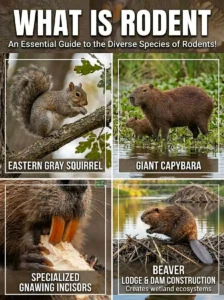 1. Introduction: What is Rodent?
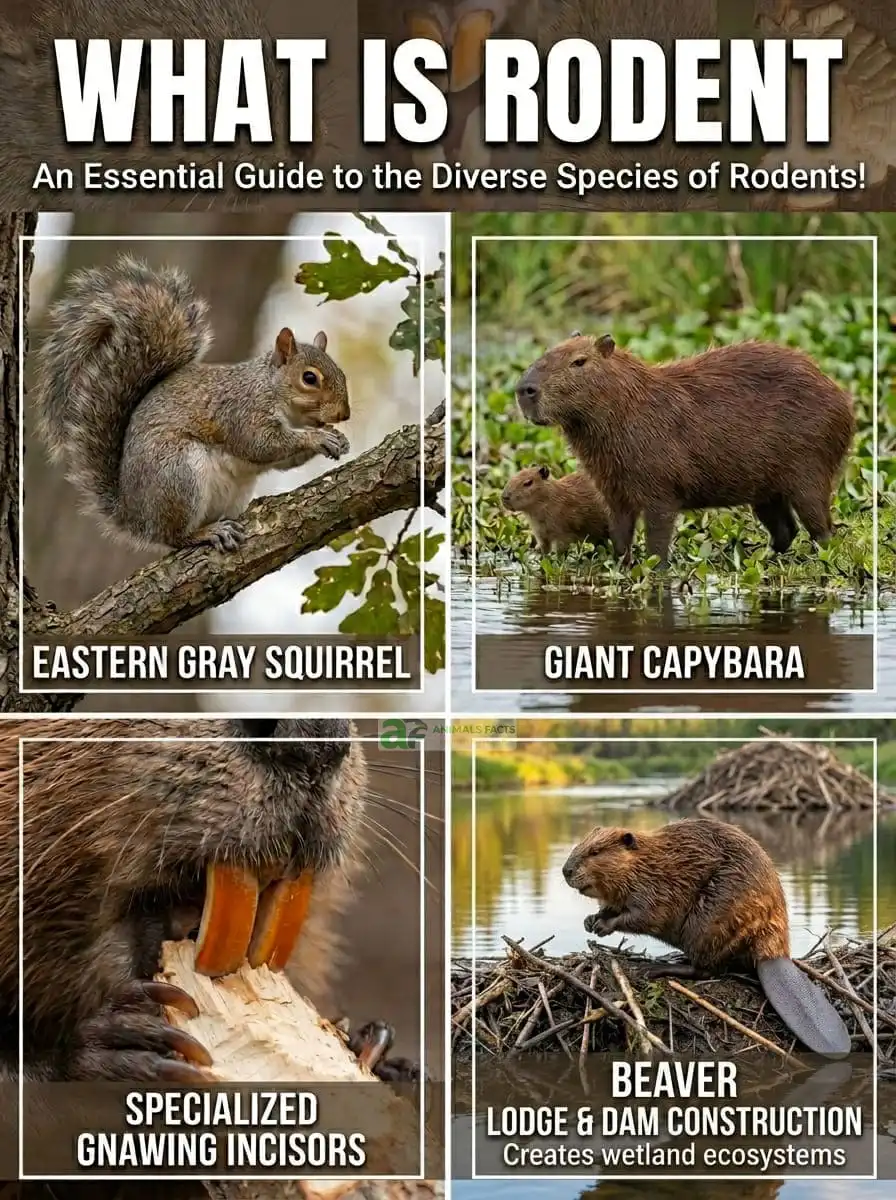
If you were asked to name the most successful mammals on Earth — by any metric you care to choose — the answer is almost certainly not the lion, the elephant, or the human. The answer is the rodent. Rodent facts reveal a group of animals so extraordinarily adaptable, so phenomenally diverse, and so biologically innovative that they account for nearly half of all mammal species on Earth — approximately 2,500 species out of roughly 6,500 — and have colonized virtually every terrestrial habitat from the Himalayan snowline to the depths of the Amazon, from Antarctic research stations to the streets of Tokyo and New York.
These are not the simple, interchangeable pests of popular imagination. Interesting facts about rodents reveal a group that includes the world’s largest rodent (the capybara, which reaches the size of a large dog), the world’s longest-lived rodent (the naked mole rat, which shows negligible aging and rarely develops cancer), the only rodent that builds dams and entire ecosystems (the beaver, one of the most important ecological engineers on Earth), and the African giant pouched rat (Cricetomys gambianus) — trained to detect landmines and diagnose tuberculosis with a sensitivity that outperforms standard laboratory tests. Rodents have been to space. They have changed the course of medical science. They built the cities we live in — in the sense that without the food storage that agricultural rodent management enabled, large permanent human settlements might never have become viable.
Whether you’re looking for rodent facts for kids to make a science lesson unforgettable, exploring rodent habitat and ecology for academic study, trying to understand the animal that shares your home in ways you may not fully appreciate, or simply drawn by curiosity to the most species-rich mammal order on Earth — this is your comprehensive guide. We cover rodent scientific names, rodent diet, rodent size and weight, rodent behavior and social intelligence, conservation, mythology, and the profound ecological roles these remarkable animals play in keeping terrestrial ecosystems functioning. The order Rodentia: underrated, underappreciated, and absolutely extraordinary.
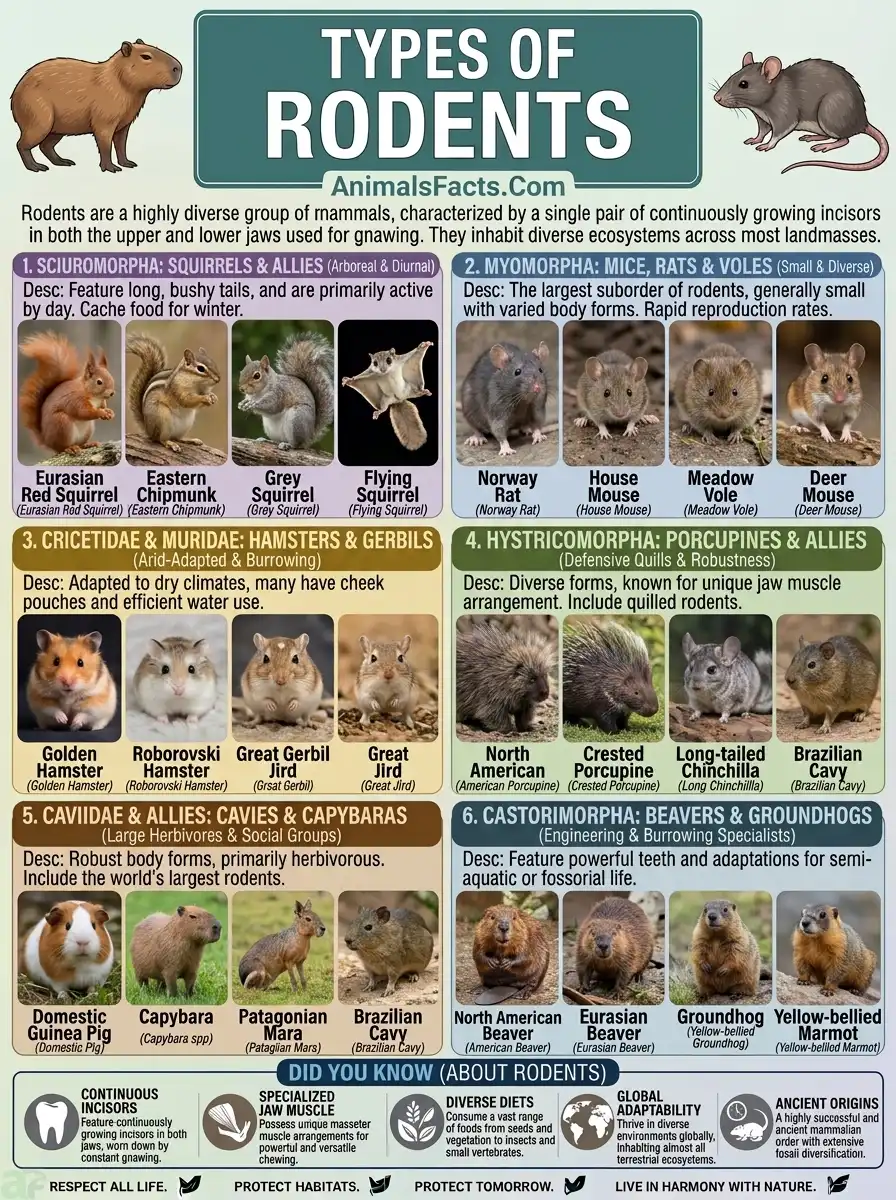
2. Rodent Species Overview & Classification
Rodents belong to the order Rodentia — the largest order of mammals by number of species. They are defined by a single, unique anatomical feature: a pair of continuously growing incisors (one on each side of both the upper and lower jaw) that the animal must wear down through constant gnawing — an adaptation that gives the order its name (rodere = “to gnaw” in Latin).
Species Classification Table
| Taxonomic Rank | Classification |
|---|---|
| Kingdom | Animalia |
| Phylum | Chordata |
| Class | Mammalia |
| Order | Rodentia (Bowdich, 1821) |
| Number of Suborders | 3 (Sciuromorpha, Castorimorpha, Myomorpha, Anomaluromorpha, Hystricomorpha) |
| Number of Families | 33 recognized families |
| Number of Genera | ~490+ genera |
| Number of Species | ~2,500 described species |
| % of Mammal Species | ~40–43% |
| Temporal Range | ~56 million years ago to present |
Major Rodent Suborders & Families
Sciuromorpha (Squirrel-like rodents)
- Sciuridae — Squirrels, chipmunks, marmots, prairie dogs (~290 species)
- Aplodontiidae — Mountain beaver (1 species — not a true beaver; most primitive living rodent)
- Gliridae — Dormice (~28 species)
Castorimorpha (Beaver-like rodents)
- Castoridae — Beavers (2 species: North American and Eurasian)
- Geomyidae — Pocket gophers (~40 species)
- Heteromyidae — Pocket mice, kangaroo rats (~65 species)
Myomorpha (Mouse-like rodents — largest suborder)
- Muridae — Rats and mice (~730 species — the largest rodent family)
- Cricetidae — Hamsters, voles, lemmings, New World rats and mice (~730 species)
- Dipodidae — Jerboas, jumping mice (~50 species)
- Spalacidae — Mole rats, blind mole rats (~20 species)
Hystricomorpha (Porcupine-like rodents)
- Caviidae — Guinea pigs, capybaras, maras (~18 species)
- Hystricidae — Old World porcupines (~11 species)
- Erethizontidae — New World porcupines (~16 species)
- Chinchillidae — Chinchillas, viscachas (~7 species)
- Ctenomyidae — Tuco-tucos (~70 species)
- Octodontidae — Degus and relatives (~13 species)
- Bathyergidae — African mole rats including naked mole rat (~22 species)
Rodents Evolution & Discovery Timeline
~56 million years ago — The first true rodents appear in the fossil record during the Paleocene-Eocene transition in Asia. The oldest confirmed rodent fossil is Tribosphenomys minutus from China.
~50–40 million years ago — Rodents undergo rapid diversification and spread across Asia, Europe, and North America during the Eocene epoch. Early squirrel-like and rat-like forms appear.
~38 million years ago — Rodents colonize South America (then an island continent) through a remarkable trans-Atlantic dispersal event — swimming or rafting on vegetation from Africa. These colonists eventually produce the entire extraordinary radiation of South American rodents (capybara, guinea pig, chinchilla, nutria, etc.).
~25 million years ago — The modern murid family (mice and rats) begins its diversification — what will become the most species-rich mammal family ever to evolve.
~5 million years ago — Muridae spreads to Australia across the Wallace Line — without human assistance. These colonizing murids eventually produce over 70 endemic Australian murid species.
~5,000 years ago — The house mouse (Mus musculus) begins its global expansion in association with human agricultural settlements — one of the most successful commensalisms in mammal history.
1758 — Carl Linnaeus formally classifies multiple rodent species in Systema Naturae, establishing the scientific foundation for rodent taxonomy.
1821 — Charles Bowdich formally establishes the order Rodentia.
1895 — The plague (Yersinia pestis, transmitted by fleas from black rats) is confirmed as the cause of the Black Death — completing the most consequential human-rodent interaction in history and transforming the public perception of rats globally.
1980s — The naked mole rat (Heterocephalus glaber) becomes the subject of intense scientific research after its extraordinary social organization (eusociality), cancer resistance, and negligible senescence are documented.
2003 — The mouse genome is fully sequenced — the second complete mammal genome after humans — transforming biomedical research. Mice and rats now serve as the primary model organisms for virtually every field of biomedical science.
2022 — Colossal Biosciences and associated researchers begin applying rodent cellular biology techniques to de-extinction projects — the cellular biology of the house mouse (Mus musculus) is now arguably the most thoroughly understood of any mammal.
“Rodents are the great survivors of the mammal world — they have been with us, quite literally, for our entire evolutionary history, and will almost certainly be here long after we are gone.” — Dr. David Macdonald CBE, Professor of Wildlife Conservation, University of Oxford, and one of the world’s leading mammalogists
3. Physical Description of Rodents
Rodent size and weight span the widest range of any mammal order — from animals so small they can fit in a teaspoon to animals larger than most domestic dogs — and the physical diversity of the group reflects millions of years of adaptation to radically different ecological niches.
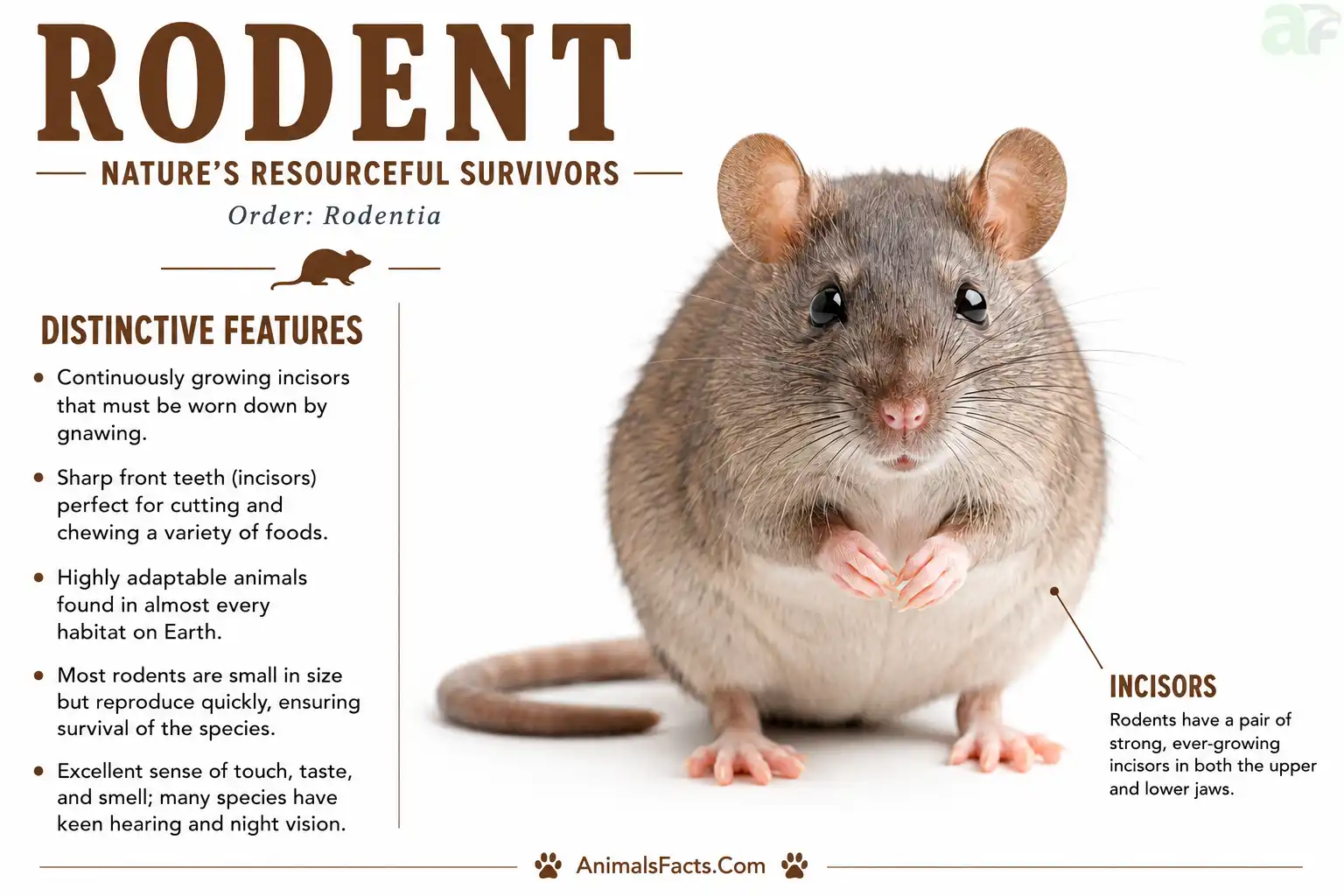
The Defining Feature: Continuously Growing Incisors
The single anatomical feature shared by all rodents — and found in no other mammal group — is a pair of continuously growing incisors that erupt through both the upper and lower jaw. These incisors:
- Grow throughout the animal’s life — never stopping
- Are self-sharpening — the front surface is covered in extremely hard orange or yellow enamel (colored by iron compounds), while the back surface is softer dentine; as the tooth wears, it maintains a naturally sharp, chisel-like edge
- Must be worn down constantly through gnawing — without adequate material to gnaw, the incisors grow unchecked and can eventually curve back through the animal’s own skull, causing death
- Function as versatile tools — for gnawing through wood, seeds, and other materials; for defense; for carrying food; and in some species for digging
Between the incisors and the molars (used for grinding food), rodents have a distinctive diastema — a gap where canine and premolar teeth would be in other mammals. Rodents have no canine teeth whatsoever.
Size Extremes
The world’s smallest rodent by body weight is the Baluchistan pygmy jerboa (Salpingotulus michaelis) of Pakistan, with adults weighing approximately 3.8 grams and a body length of roughly 4.4 cm (plus a tail twice that length). By some measurements, Baiomys taylori (the Northern pygmy mouse of North and Central America) at 7 grams is cited — measurements differ by methodology.
The world’s largest rodent is the capybara (Hydrochoerus hydrochaeris) of South America — adult males can reach 65 kg (143 lbs) and a body length of 130 cm (4.3 feet) — about the size of a Labrador retriever or small pig. The capybara is so large that it can support entire communities of birds (cattle egrets and yellow-headed caracaras perch on them), is eaten by jaguars, and swims freely in South American rivers alongside caimans.
Fur, Color & Camouflage
Rodent fur spans virtually every color in the mammalian palette — from the snowy white of Arctic lemmings to the deep chocolate brown of beavers, the iridescent blue-black of some African mole rats (living underground in complete darkness), and the extraordinary array of domestic varieties bred by humans in mice, rats, guinea pigs, and chinchillas.
Many rodent species show counter-shading (darker above, lighter below) — a widespread camouflage strategy. Some desert-adapted rodents show substrate matching of remarkable precision — the pale Saharan sand rat is almost perfectly matched to the color of its sandy environment.
Did You Know? Rodent incisors are not naturally white — they are typically yellow or orange-brown, colored by iron-containing compounds in the enamel. The more intensely orange the incisors, the harder and more wear-resistant they are. White incisors in a rodent actually indicate potential iron deficiency or dental problems. If your pet rat has brilliant white front teeth, it might be worth consulting a vet.
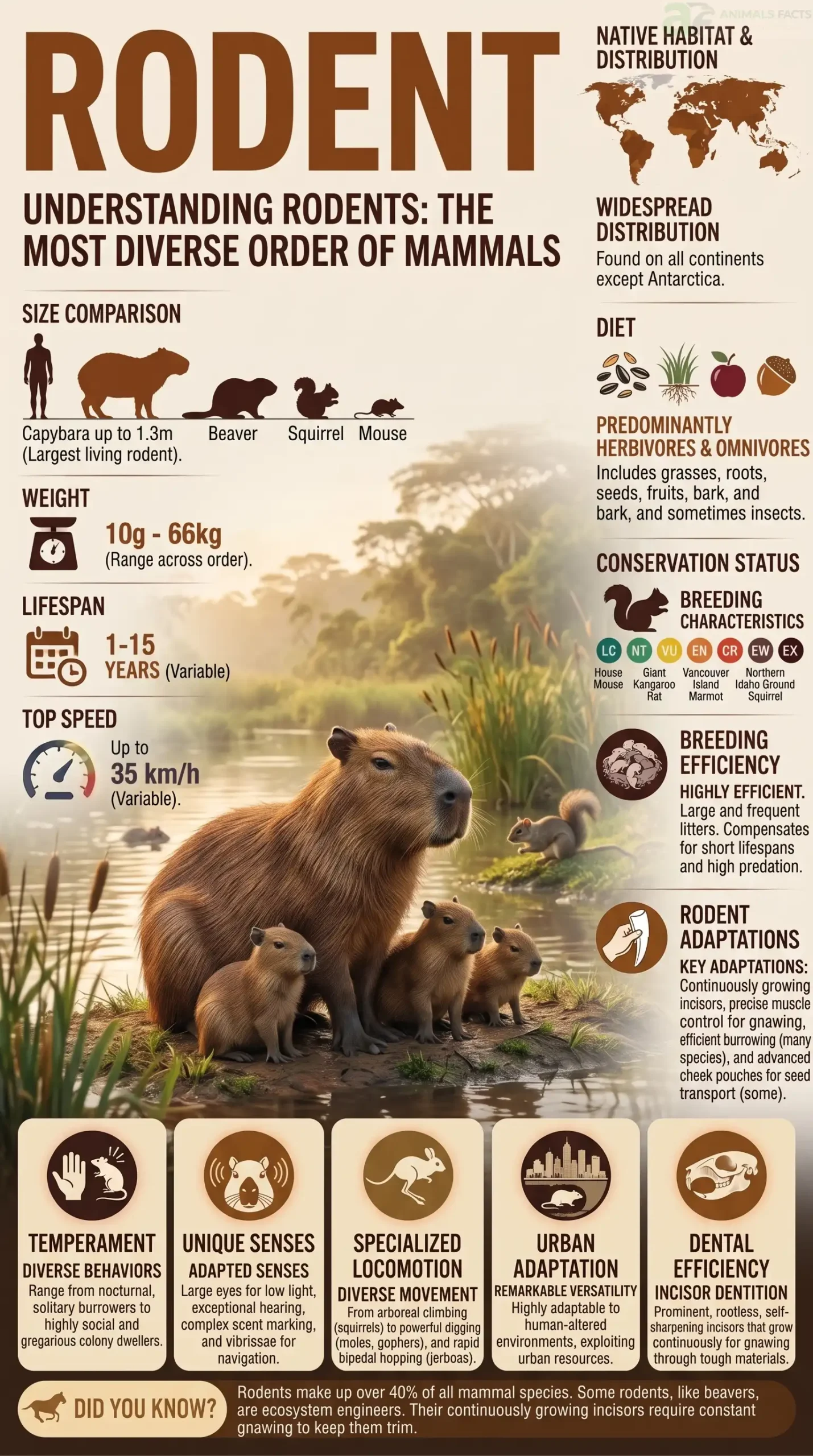
4. Top 25 Amazing Rodent Facts
Here is your comprehensive, scientifically verified collection of the most extraordinary rodent facts as of 2026:
- Rodents represent approximately 40–43% of all mammal species — with over 2,500 described species, the order Rodentia is the largest order of any vertebrate class.
- The naked mole rat (Heterocephalus glaber) is the world’s longest-lived rodent — surviving up to 32 years in captivity — and demonstrates negligible senescence (it does not age in the conventional biological sense) and extraordinary cancer resistance.
- Naked mole rats are the only eusocial mammal apart from two damaraland mole rat species — living in colonies organized like those of bees and ants, with a single reproductive queen and sterile worker castes.
- The African giant pouched rat (Cricetomys gambianus) has been trained by the Belgian NGO APOPO to detect landmines and diagnose tuberculosis from sputum samples with sensitivity exceeding standard laboratory tests — saving lives in Mozambique, Cambodia, Tanzania, and elsewhere.
- Beavers (Castor canadensis and C. fiber) are among the most powerful ecosystem engineers in the natural world — their dams create wetlands that support extraordinary biodiversity and retain more water per unit area than almost any other natural structure.
- The Patagonian mara (Dolichotis patagonum) — a South American rodent — looks almost exactly like a small antelope and moves with a deer-like bounding gait — a remarkable example of convergent evolution in form and locomotion.
- Prairie dogs (Cynomys species) possess the most complex vocal communication system of any non-human land animal — their alarm calls encode information about the size, shape, color, and speed of approaching predators with specificity that some researchers describe as a primitive language.
- The house mouse (Mus musculus) has been to space — multiple missions have included mice, and experiments on space station mice have contributed significantly to our understanding of bone density loss, immune function in microgravity, and muscle atrophy.
- A beaver’s continuously growing incisors wear themselves into a self-sharpening chisel shape and can fell a 10-cm (4-inch) diameter tree in approximately 5 minutes.
- The South American nutria (Myocastor coypus) — introduced to multiple countries for fur farming — has colonized waterways across Europe, North America, and Asia and can cause severe damage to wetland vegetation through intensive feeding.
- Squirrels (Sciuridae) are responsible for accidentally planting millions of trees annually — forgetting approximately 25% of the nuts they cache, many of which germinate and grow into new trees.
- The springhare (Pedetes capensis) of southern Africa is so different from all other rodents that it has been placed in its own family — it hops like a kangaroo, has enormous ears and eyes, and can leap 2 meters in a single bound from a standing start.
- Brown rats (Rattus norvegicus) have demonstrated the ability to feel regret — in a 2014 study, rats showed measurable physical responses (accelerated heart rate, behavioral changes) when they discovered they had passed up a better food option, an emotion previously considered exclusively human.
- Rats have demonstrated empathy in multiple studies — releasing trapped companions from restraint without any reward offered, and sharing food with hungry strangers even when doing so required active effort.
- The North American porcupine (Erethizon dorsatum) has approximately 30,000 quills — each barbed at the tip so that they embed progressively deeper with muscle movement after penetrating skin.
- Rodents have colonized Australia twice — once naturally (murids crossing from Asia ~5 million years ago before humans) and once via human vessels (rats and mice arriving with European settlement).
- The capybara (Hydrochoerus hydrochaeris) is the world’s largest rodent and is so broadly tolerated in Brazilian and Venezuelan culture that it has become a beloved internet meme — videos of capybaras peacefully coexisting with jaguars, anacondas, birds, and monkeys have accumulated hundreds of millions of views.
- The dormouse (Muscardinus avellanarius) hibernates for up to 7–8 months per year — more than any other European mammal — and was famously kept by Romans in special ceramic pots (gliraria) where they were fattened on nuts before being eaten as a delicacy.
- Voles are among the most important prey species in temperate ecosystems — the entire population dynamics of foxes, hawks, owls, and weasels in northern Europe track vole population cycles with mathematical precision.
- The jumping mouse (Zapus species) of North America can jump up to 3 meters in a single leap — nearly 30 times its own body length.
- Chinchillas have the densest fur of any land mammal — approximately 60 hairs grow from a single follicle (compared to 1–4 in most mammals), producing the extraordinarily soft pelt that made them nearly extinct through the fur trade.
- The degu (Octodon degus) of Chile is the only non-primate, non-human animal that has been demonstrated to use tools voluntarily in the wild — raking food toward itself using stick tools in laboratory conditions.
- Ground squirrels (Spermophilus species) produce alarm calls that distinguish between aerial predators (hawks) and ground predators (foxes), with different community responses to each — a semantic referential communication system comparable to that of vervet monkeys.
- The Laotian rock rat (Laonastes aenigmamus) — discovered by science in 2005 from a Laotian market — was found to be the sole surviving member of a rodent family (Diatomyidae) previously known only from fossils millions of years old — a living fossil discovered in a market stall.
- Kangaroo rats (Dipodomys species) of North American deserts can survive their entire lives without ever drinking liquid water — obtaining all necessary moisture from the metabolic processing of dry seeds.
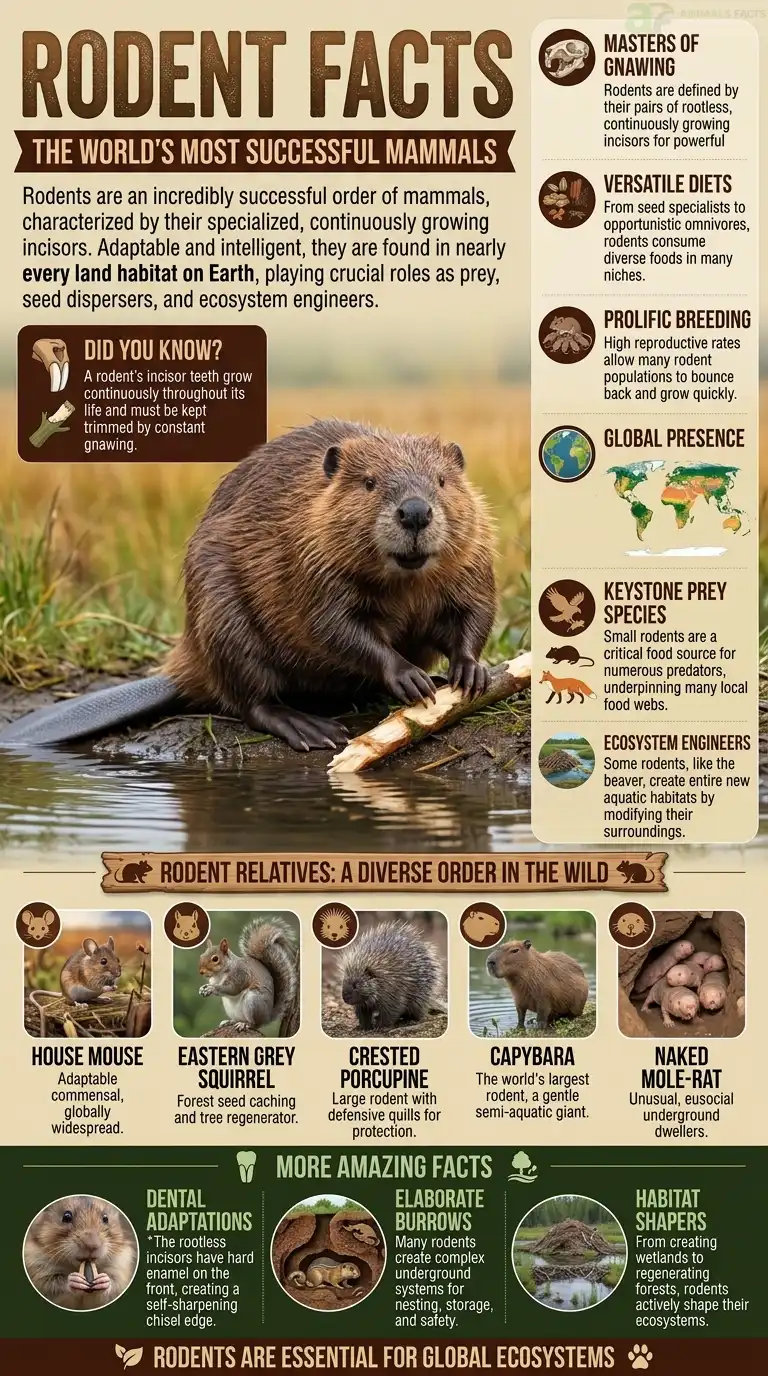
5. Rodent Fun Facts for Kids
- Rodents represent 40–43% of all mammal species — more than any other mammal order
- The capybara is the world’s largest rodent — as big as a medium-sized dog
- Naked mole rats can live for 32 years and barely age
- Squirrels forget ~25% of their cached nuts, accidentally planting millions of trees
- The African giant pouched rat detects landmines and tuberculosis better than laboratory tests
- Kangaroo rats survive entirely on metabolic water from dry seeds
- Prairie dog calls can communicate the color, size, and speed of approaching predators
- Beavers can fell a 10 cm tree in 5 minutes with their continuously growing incisors
- Rodent incisors are naturally yellow or orange — not white
- Dormice hibernate for up to 8 months per year
- Chinchillas have up to 60 hairs per follicle — the densest fur of any land mammal
- The Laotian rock rat was discovered in 2005 in a market — and turned out to be a living fossil
6. Natural Habitat of Rodents
Rodent habitat diversity is simply the broadest of any mammal order — these animals have successfully exploited virtually every terrestrial and many freshwater environments available on Earth.
Habitat Types
Rodents inhabit tropical and temperate rainforests, deserts, arctic tundra, alpine meadows, grasslands, wetlands, mangroves, urban environments, agricultural fields, forests, caves, and even the islands of the Antarctic convergence zone (where ship rats have colonized sub-Antarctic islands). They are found in burrow systems 3 meters underground, in tree canopies 50 meters high, swimming in rivers, and gliding between trees (in the case of flying squirrels).
Habitat Range by Continent
| Continent | Notable Species | Primary Habitats | Diversity Level |
|---|---|---|---|
| South America | Capybara, chinchilla, guinea pig, patagonian mara, nutria | Rainforest, grassland, wetland, desert, mountain | Very high — extraordinary endemism |
| Africa | Naked mole rat, African giant pouched rat, springhare, porcupine | Savanna, desert, rainforest, burrowed systems | Very high |
| Asia | Old World rats and mice, jerboas, bamboo rats, Laotian rock rat | Tropical forest, desert, alpine, urban | Highest species diversity |
| North America | Prairie dogs, beaver, squirrels, kangaroo rats, porcupine | Forest, desert, grassland, wetland | High |
| Australia | Native rats and mice (~70 species), invasive black and brown rat | Desert, forest, grassland, urban | High endemism; devastated by invasives |
| Europe | Dormouse, red squirrel, water vole, bank vole, harvest mouse | Woodland, grassland, wetland, urban | Moderate |
| Arctic/Subarctic | Lemmings, arctic ground squirrels, collared pikas | Tundra, boreal forest | Low diversity, high abundance |
| Antarctica | None native (rats on sub-Antarctic islands are invasive) | N/A | Absent |
Did You Know? The North American beaver (Castor canadensis) was once distributed across virtually the entire North American continent from Mexico to the Arctic — but was hunted to near extinction for its fur during the 17th–19th centuries, with the European fur trade and fashion industry consuming millions of beaver pelts annually. Conservation efforts have restored beaver populations significantly, and their ecosystem restoration effect — recreating wetlands across North America — is now recognized as one of the most cost-effective conservation interventions available.
8. Rodent Diet & Feeding Behavior
Rodent diet is primarily herbivorous — but the order contains an extraordinary range of dietary specialists, from completely granivorous (seed-eating) to aquatic vegetation specialists to insectivores to broad omnivores.
Diet Breakdown Table
| Dietary Strategy | Approximate % of Rodent Species | Example Species |
|---|---|---|
| Seeds and grains (granivory) | ~45% | Harvest mice, kangaroo rats, hamsters, squirrels |
| Green vegetation (leaves, grass, stems) | ~35% | Voles, lemmings, capybara, guinea pig, mara |
| Fungi | ~20% | Red squirrels, flying squirrels, various forest rodents |
| Fruits and berries | ~30% | Many forest rodents; dormice |
| Bark and woody material | ~15% | Beavers, porcupines, voles (winter) |
| Invertebrates (insects, worms) | ~25% | Rats, deer mice, wood mice — supplementary protein |
| Small vertebrates (eggs, chicks, lizards)** | ~5% | Brown rats, black rats, some Neotropical rice rats |
| Aquatic vegetation | ~10% | Beavers, muskrats, coypu, water voles |
| Fungi and truffles | ~15% | Flying squirrels, many forest rodents |
Remarkable Feeding Adaptations
Beaver food caching — Beavers do not truly hibernate — they remain active under ice during winter, feeding from submerged food caches of branches anchored to the pond bottom near the lodge entrance. In autumn, beavers spend weeks constructing these underwater larders, stockpiling enough woody material to survive the frozen months.
Kangaroo rat metabolic water — The kangaroo rat obtains essentially all its water through metabolic water production — the chemical byproduct of oxidizing carbohydrates in seeds. These animals have exceptionally efficient kidneys that produce extremely concentrated urine, nasal passages that recover water vapor from exhaled air, and behavioral adaptations (nocturnal activity, burrow dwelling) that minimize water loss — allowing them to survive indefinitely without drinking.
Prairie dog colony farming — Prairie dog colonies maintain a form of passive habitat management — their grazing, burrowing, and defecation maintain the short-grass prairie structure they require, preventing the encroachment of taller vegetation that would make predator detection impossible.
Hamster food hoarding — The common hamster (Cricetus cricetus) can carry astonishing quantities of food in its expandable cheek pouches — up to its own body weight in seeds in a single trip — building winter food caches that can contain 5–10 kg of seeds and root vegetables.
8. Rodents Reproduction & Life Cycle
Rodent reproduction is defined by its extraordinary speed and flexibility — many species can go from birth to first reproduction in under six weeks, and the reproductive potential of the order is staggering.
Reproductive Rates
The reproductive capability of rodents is legendary — and occasionally alarming to humans who observe it. A pair of house mice, given unlimited food and no predation, could theoretically produce over 500 descendants in a single year. A female Norway rat can produce 5–12 litters per year, each containing 6–12 pups, and her daughters can begin reproducing at 5–6 weeks of age.
This extraordinary reproductive rate is the product of evolutionary pressure — most small rodents face intense predation and have very short natural lifespans. The solution: reproduce as fast and as often as possible.
Mating Systems
Rodent mating systems span the full spectrum:
Promiscuity — Most small rodents (mice, rats, voles) are promiscuous, with multiple males mating with each female and sperm competition determining actual paternity. This drives sperm evolution — promiscuous rodent species have the largest, most elaborately shaped sperm of any mammal group.
Monogamy — Beavers are famously monogamous — pairs maintain long-term pair bonds, share parental duties, and typically mate for life. Prairie voles (Microtus ochrogaster) show arguably the strongest pair bonding of any rodent — their monogamous bonding is neurologically similar to human pair bonding and mediated by oxytocin and vasopressin receptors, making them important models for studying the neuroscience of love and attachment.
Polygyny — Some larger rodents (some squirrel species, marmots) maintain harem systems where dominant males control access to multiple females.
Eusociality — The naked mole rat and two Fukomys (Damaraland mole rat) species are genuinely eusocial — with a single reproductive queen who suppresses reproduction in all other colony members.
Rodent Lifespan Comparison Table
| Species | Average Lifespan (Wild) | Average Lifespan (Captivity) | Max Documented |
|---|---|---|---|
| Naked mole rat (Heterocephalus glaber) | ~10–15 years | 28–32 years | 32 years |
| Capybara (Hydrochoerus hydrochaeris) | 7–10 years | ~12 years | ~15 years |
| North American beaver (Castor canadensis) | 10–15 years | ~25 years | ~30 years |
| Common squirrel (Sciurus vulgaris) | 3–7 years | ~10 years | ~15 years |
| House mouse (Mus musculus) | ~1 year | 2–3 years | ~4 years |
9. Social Behavior & Communication
Rodent social behavior ranges from extreme solitude to the most sophisticated non-human mammal societies on Earth — and the communication systems found within the order include some of the most remarkable in all of animal behavior research.
Prairie Dog Language
The black-tailed prairie dog (Cynomys ludovicianus) of North America has been studied extensively by animal behaviorist Dr. Con Slobodikoff of Northern Arizona University, who has documented what may be the most complex vocalization system of any non-human land animal. Prairie dog alarm calls appear to encode information about:
- The species of the approaching predator (human, hawk, coyote, domestic dog)
- The predator’s size (tall/short)
- The predator’s shape (fat/thin)
- The predator’s color (e.g., shirt color)
- The predator’s speed of approach
Different prairie dog populations also appear to have regional “dialects” — consistent differences in call structure that vary between geographically separated colonies, analogous to regional accents in human language.
Naked Mole Rat Eusociality
The naked mole rat colony is one of the most complex mammalian societies ever studied — and the only mammal society organized on eusocial insect principles outside of Damaraland mole rats. Key features include:
- A single breeding queen and 1–3 breeding males; all other colony members are reproductively suppressed
- Worker castes with specialization — smaller workers maintaining tunnels and caring for young; larger workers (“soldiers”) defending the colony
- Colony sizes of 20–300 individuals in elaborate underground burrow systems
- The queen actively suppresses workers’ reproduction through behavioral and possibly chemical dominance
- Genetic relatedness within colonies is extremely high — members are almost as related as identical twins
Squirrel Spatial Memory
Grey squirrels (Sciurus carolinensis) have been demonstrated in laboratory and field studies to maintain spatial memories of thousands of individual nut cache locations over periods of months — and to use sophisticated deceptive strategies when they believe they are being observed, making “fake” cache sites to mislead potential thieves.
10. Predators & Defense Mechanisms
Small rodents are the foundational prey species of virtually every terrestrial food web in the temperate world — supporting populations of owls, hawks, foxes, weasels, snakes, and dozens of other predators. Their defenses reflect this fundamental ecological position.
Natural Predators
- Raptors (owls, hawks, falcons) — The primary aerial predators of small to medium rodents globally
- Mustelids (weasels, stoats, ferrets, mink) — Specialized rodent predators that can follow prey into burrows
- Foxes and canids — Major terrestrial predators of rodents across all habitats
- Snakes — Primary predators in tropical environments; many snake species feed almost exclusively on rodents
- Cats (domestic and wild) — Estimated to kill billions of rodents annually
- Larger rodents — Some rats prey on smaller rodents
- Humans — Through direct killing (pest control) and habitat destruction
Defense Strategies
Speed and agility — The primary defense of most small rodents — rapid, unpredictable movement in multiple directions makes tracking by predators extremely difficult. The brown rat can change direction at full speed with extraordinary agility.
Burrowing — Underground burrow systems provide shelter from virtually all aerial predators and most terrestrial ones. Many species spend the majority of their lives in burrow networks that represent years of accumulated construction work.
Alarm calling — Colonial species (prairie dogs, ground squirrels, meerkats) post sentinels and maintain sophisticated alarm call systems that alert the entire community to predator approach.
Quills — Porcupines (both Old World Hystricidae and New World Erethizontidae) represent the most dramatic physical defense in the order — sharp, barbed quills that detach on contact and embed progressively deeper in the predator’s flesh. Common misconceptions aside, porcupines cannot shoot their quills — contact is required.
Scatter hoarding — By caching food in many small hidden locations rather than one large one, rodents like squirrels reduce the risk that losing one cache to a predator or theft represents a catastrophic loss.
Group vigilance — Prairie dogs, ground squirrels, and other colonial species maintain constant vigilance through rotating sentinel duties — ensuring an alert individual is always watching while others feed.
Did You Know? The meadow vole (Microtus pennsylvanicus) is one of the most important prey species in North America — supporting populations of short-eared owls, red foxes, rough-legged hawks, American kestrels, weasels, and dozens of other predators. The population cycle of meadow voles — which can swing from very sparse to extraordinary abundance on a roughly 3–5 year cycle — drives corresponding population cycles in virtually every predator species that relies on them. The ecology of entire regions can be read through the lens of vole population dynamics.
11. Rodent Facts for Kids
Hey young scientists and nature explorers! Here are some totally incredible rodent facts for kids that will make your friends and teachers amazed:
Nearly HALF of all mammal species are rodents! That means if you listed every mammal on Earth, almost half of them would be rodents — from tiny mice to the giant capybara!
Rodent front teeth NEVER stop growing! Unlike your baby teeth that fell out and grown-up teeth that stay the same size, a rodent’s front teeth grow their entire life — that’s why they have to gnaw on things all the time to keep them from getting too long!
Some rats are trained to find landmines! Special African giant pouched rats are taught to sniff out buried landmines in countries like Mozambique, saving people’s lives. They’re too light to set the mines off, so they’re perfectly safe!
Capybaras are the world’s friendliest giants! These enormous rodents — as big as a dog — get along with almost every other animal: birds sit on them, monkeys play with them, and even caimans (small crocodilians) nap next to them!
Some rats feel SORRY for making bad choices! Scientists have shown that rats experience something like regret — when they pass up a good food choice and find out about it, they show signs of being upset. They have feelings too!
Squirrels plant millions of trees by ACCIDENT! When squirrels hide nuts for winter and forget where they put them, those forgotten nuts often grow into new trees. Squirrels are some of nature’s best gardeners!
Kangaroo rats never need to drink water! These tiny desert rodents get all the water they need from the seeds they eat — their bodies produce water as they digest food. They can live their whole life without a single sip!
A naked mole rat can live for 32 YEARS! That’s longer than most people own the same car, and it’s extraordinary for an animal the size of a mouse. They also almost never get cancer!
12. Relationship with Humans
The relationship between rodents and humans is one of the most ancient, consequential, and multi-faceted human-animal interactions in history — encompassing everything from devastating plagues and agricultural destruction to life-saving medical research and beloved companion animals.
Rodents as Pests
The brown rat (Rattus norvegicus) and black rat (Rattus rattus) are the most economically damaging animal pests globally — consuming, contaminating, or destroying an estimated 20–30% of the world’s annual food production, causing billions of dollars of damage to infrastructure and agriculture, and serving as vectors for numerous human diseases including leptospirosis, rat-bite fever, and historically, plague.
The relationship between rats and human food storage goes back to the earliest agricultural settlements — as humans began storing grain in fixed locations, rats followed. This parallel evolution of human civilization and rat infestation has been documented archaeologically for at least 10,000 years.
Rodents in Medical Research
The house mouse (Mus musculus) and Norway rat (Rattus norvegicus) are the primary model organisms for virtually all biomedical research — from cancer treatment to vaccine development, from cardiovascular research to neuroscience. The reasons are scientific: their genetic similarity to humans (mice share approximately 85% of their protein-coding genes with humans), their rapid reproduction rate, their small size, and the availability of vast libraries of genetic modification techniques developed over decades.
The mouse genome was fully sequenced in 2002, and over 10,000 genetically modified mouse strains have been created for specific research purposes. It is no exaggeration to say that the majority of medical treatments available today were developed using rodent models.
Rodent Companions
Pet rodents represent a significant and growing segment of the global companion animal market. Guinea pigs, hamsters, gerbils, fancy rats, fancy mice, chinchillas, and degus are kept as pets by millions of people worldwide. Pet rats in particular — selectively bred from Norway rats — are recognized for their intelligence, sociability, and ability to form genuine bonds with human owners. Pet rats can learn their names, perform complex tricks, solve mazes, and actively seek human interaction.
13. Rodent Conservation Status & Threats
While the order Rodentia as a whole is extraordinarily abundant and successful, individual species face genuine and in some cases critical extinction risks — particularly on islands, where introduced invasive rodents have devastated endemic species.
Conservation Status Overview
| Status Category | Approximate Number of Rodent Species |
|---|---|
| Least Concern | ~1,600 species |
| Near Threatened | ~100 species |
| Vulnerable | ~150 species |
| Endangered | ~100 species |
| Critically Endangered | ~60 species |
| Extinct (since 1500) | ~60+ species |
| Data Deficient | ~300 species |
Most Threatened Rodents (2026)
- Bramble Cay melomys (Melomys rubicola) — Australian island rodent; confirmed extinct in 2019; likely the world’s first mammal extinction directly attributed to human-caused climate change (storm surge destroyed its only island habitat)
- Chinchilla (Chinchilla chinchilla, long-tailed) — Wild population reduced to a few thousand in the Andes by fur hunting
- Florida salt marsh vole (Microtus pennsylvanicus dukecampbelli) — Critically endangered; found only in a tiny area of Florida
- Mountain pygmy possum (not a rodent but often confused) — Various mountain rodents in isolated alpine habitats severely threatened by climate change
Invasive Rodents as Conservation Threats
Perhaps the most significant conservation impact of rodents globally is the role of invasive rats and mice on island ecosystems. Introduced black rats and Norway rats have been responsible for the extinction of hundreds of island bird, reptile, and native rodent species worldwide. New Zealand, the Hawaiian islands, and various Pacific and Atlantic island groups have lost enormous proportions of their endemic biodiversity to introduced rodents.
Island rat eradication has emerged as one of the most cost-effective conservation interventions available — restoration of rat-free islands has repeatedly produced dramatic recovery of native bird, reptile, and invertebrate communities within years.
14. Famous Rodents in History & Pop Culture
Historically Famous Individual Rodents
Albert II — A rhesus monkey, but the first primate to reach space; however multiple mice and rats have been more significant space travelers — the French sent the first rat to space in 1961 (Hector), and the Soviets sent multiple rodents. As of 2026, mice have been sent to the International Space Station on multiple missions for studies of bone density loss and muscle atrophy.
“Number 16” — While technically a spider (trapdoor), the naming convention for long-term monitored individuals is also applied to famous rodents in research. Various naked mole rat queens in research colonies have been studied for decades — the longest-lived documented individual in Barbara Lacy’s research program at the City University of New York surpassed 30 years of age.
Punxsutawney Phil — The famous groundhog (a large squirrel, family Sciuridae) who “predicts” the arrival of spring at Groundhog Day celebrations in Pennsylvania, USA, every February 2nd — a cultural phenomenon generating enormous public interest and a Bill Murray film (1993).
15. Role in Ecosystem & Food Chain
Rodents are foundational components of virtually every terrestrial food web on Earth — serving simultaneously as prey, seed dispersers, soil engineers, and herbivores whose grazing shapes plant community structure.
Keystone Prey Species
In virtually every temperate terrestrial ecosystem, small rodents (particularly voles, lemmings, mice, and rats) are the primary food source for the guild of medium-sized predators — foxes, weasels, owls, hawks, snakes, and many others. The population dynamics of these predator species track rodent population cycles with remarkable fidelity — in years of rodent abundance, predator breeding success soars; in crash years, predator populations decline.
The lemming cycle of the Arctic is perhaps the most dramatic example — the approximately 3–4 year population boom-and-bust cycle of Norway lemmings (Lemmus lemmus) drives corresponding cycles in Arctic fox, snowy owl, rough-legged hawk, and other predator populations across the entire Arctic ecosystem.
Ecosystem Engineering
Beavers are the most powerful ecosystem engineers in the rodent order and one of the most important in the world. A single beaver family can transform a stream valley within a few years — creating a pond, establishing a wetland, raising the water table, and dramatically increasing biodiversity. Studies have shown that beaver-created wetlands support 75% more bird species, 50% more fish, and significantly greater amphibian, invertebrate, and mammal diversity than adjacent streams without beavers.
Burrowing rodents (prairie dogs, gophers, ground squirrels, mole rats) aerate soil through their tunneling, improving drainage and creating microsites used by hundreds of other species. Prairie dog towns in particular — once covering hundreds of millions of acres of the American Great Plains — functioned as keystone structures supporting the grazing ecology of the entire grassland system.
Seed Dispersal & Forest Renewal
Tree squirrels are responsible for one of the most important seed dispersal relationships in temperate forest ecology. By caching millions of seeds annually in scattered locations and failing to recover a significant fraction of them, squirrels effectively plant trees across the landscape — a service critical for forest renewal, range expansion, and genetic mixing of tree populations.
16. Rodent Myths, Folklore & Cultural Significance
Rodents — particularly rats and mice — occupy a complex and ambivalent position in human cultural mythology worldwide, reflecting their intimate association with human settlement, food stores, and disease.
The Chinese Zodiac Rat
In the Chinese zodiac, the rat is the first of the twelve animals — a position earned, according to legend, through cunning rather than speed (the rat hitched a ride on the ox’s back and jumped down to cross the finish line first). People born in rat years are traditionally associated with intelligence, adaptability, quick-wittedness, and resourcefulness — characteristics that reflect genuine scientific understanding of rat cognition. The rat year is considered auspicious in Chinese tradition — a remarkable cultural rehabilitation given the rat’s reputation in Western tradition.
The Pied Piper
The most famous rodent myth in Western culture is the Pied Piper of Hamelin — a folk tale first documented in the 13th century (possibly as early as 1284) in which a mysterious musician lures the rats of a plague-afflicted town into the river with his pipe, then leads the town’s children away when the townspeople refuse payment. The tale has been interpreted as an allegorical memory of a rat plague, a children’s crusade, or a historical event of mass child migration or death — and has been retold in thousands of literary, theatrical, and musical versions.
Hindu Tradition — Karni Mata Temple
In the Karni Mata Temple of Deshnoke, Rajasthan, India, approximately 25,000 black rats are worshipped as sacred incarnations of the female deity Karni Mata and her dead children. Devotees feed the rats milk and grain, consider it deeply auspicious if a rat runs over their feet, and seek out the rare white rat within the temple as an especially sacred omen. The temple — called the “rat temple” by visitors — attracts thousands of pilgrims annually.
Aztec Rodent Myths
In Aztec mythology, the mouse was associated with the god Quetzalcoatl — specifically with the story in which the mouse teaches Quetzalcoatl to eat corn, essentially credited with the foundation of Mesoamerican agricultural civilization. The mouse’s association with grain and food storage made it simultaneously a pest and a significant cultural figure in pre-Columbian Mesoamerica.
17. Rodents in Pop Culture
Mickey Mouse (Walt Disney, 1928–present) — The most commercially successful animal character in entertainment history, with global brand value estimated at over $100 billion. Mickey’s first sound cartoon, Steamboat Willie (1928), was one of cinema’s first synchronized sound cartoons and launched one of the world’s most recognizable brands.
Ratatouille (Pixar, 2007) — The Academy Award-winning animated film about a rat who becomes a gourmet chef in a Paris restaurant is widely considered one of Pixar’s finest films — remarkable for its sympathetic, nuanced portrayal of rat intelligence and creativity.
Stuart Little (E.B. White, 1945; film 1999) — The mouse protagonist of E.B. White’s classic children’s novel (the same author as Charlotte’s Web) was one of the first significant positive mouse characters in American literature.
Capybara internet phenomenon — The capybara has become one of the most beloved animals on the 21st-century internet — with videos of capybaras lounging in hot springs in Japan, being used as a furniture surface by birds, and peacefully coexisting with literally every other animal they encounter accumulating hundreds of millions of views and spawning dedicated fanbase communities across social media platforms globally.
The Princess Bride’s “Rodents of Unusual Size” — One of film history’s most quoted monster references — while entirely fictional, it has contributed significantly to popular awareness of the extraordinary size range possible within the rodent order.
18. Rodent Facts vs. Common Myths
| Common Myth | The Real Fact |
|---|---|
| “Lemmings follow each other off cliffs to commit mass suicide” | False — popularized by a staged Disney documentary (1958); lemmings do drown during migration attempts but this is accidental, not suicidal |
| “Rats are filthy, disease-ridden animals” | Partially true historically — rats are actually fastidious self-groomers; disease transmission was primarily through fleas they carried, not innate dirtiness |
| “Rodents can’t vomit” | True for most rodents — mice and rats lack the physical mechanism to vomit, which is why rat poison is effective (they cannot expel it) |
| “All rodents gnaw everything in sight” | Overstated — gnawing is targeted behavior, primarily for food, nesting material, and incisor maintenance; rodents don’t gnaw randomly |
| “Porcupines shoot their quills” | False — porcupine quills require direct contact to transfer; they cannot be projected |
| “Mice are attracted to cheese” | Largely false — mice prefer sugary and fatty foods; cheese is not a natural dietary component and is not particularly attractive to wild mice |
| “The naked mole rat is a mole” | False — despite the name, naked mole rats are rodents (family Bathyergidae) entirely unrelated to true moles (which are insectivores) |
| “Squirrels remember where they bury every nut” | Partially false — squirrels do have remarkable spatial memory but forget a significant fraction (~25%) of their caches; this “forgetting” is ecologically crucial for forest regeneration |
19. Best Places to See Rodents in the Wild
1. Pantanal, Brazil/Bolivia — The world’s largest tropical wetland is home to the world’s largest rodent — capybaras are extraordinarily abundant here, often seen in groups of 10–30 animals lounging at waterside, with birds perched on their backs and caimans resting nearby. Guided boat tours from Cuiabá or Porto Jofre offer extraordinary encounters.
2. Yellowstone National Park, Wyoming, USA — Reintroduced beavers are actively transforming stream valleys throughout Yellowstone — their ponds and dams can be observed at multiple sites. Prairie dog towns in the Lamar Valley are also extraordinary — excellent for observing the social dynamics, alarm calls, and predator-prey relationships of these colonial rodents.
3. Tibetan Plateau, China — The high-altitude grasslands of the Tibetan Plateau support enormous populations of plateau pikas (Ochotona curzoniae) — small, rabbit-like rodent relatives that form the primary prey base for virtually every predator on the plateau, including snow leopards, Tibetan foxes, and upland buzzards.
4. Atacama and Patagonian steppe, Chile/Argentina — The high Andes and Patagonian steppe are home to chinchillas (now rare but present in some protected areas), Patagonian maras, and extraordinary caviomorph rodents found nowhere else on Earth.
5. Serengeti and Masai Mara, Tanzania/Kenya — The grasslands of East Africa support enormous populations of multimammate rats, vlei rats, and African striped mice — the primary prey base for serval cats, raptors, and many snake species. Night drives reveal extraordinary rodent diversity.
6. Northern Europe (Scandinavia, Finland) — In peak lemming years (roughly every 3–4 years), the Norwegian and Finnish tundra displays lemming population explosions visible across the landscape — with corresponding extraordinary concentrations of snowy owls, rough-legged hawks, and Arctic foxes.
7. Any woodland in North America or Europe — Tree squirrels (grey squirrels in eastern North America, red squirrels across Europe and northern Asia) are among the most observable and behaviorally complex wild mammals available to urban and suburban observers. Careful observation of squirrel caching, deceptive behavior, and inter-individual interactions in any park provides a compelling window into rodent cognition.
20. How You Can Help
Rodent conservation spans a spectrum from protecting threatened endemic species to managing invasive rodents that threaten biodiversity.
Support these organizations:
- Island Conservation — islandconservation.org — the global leader in island invasive rodent eradication; has protected over 1,000 island species
- WWF Freshwater Program — worldwildlife.org — supports beaver restoration and wetland conservation
- Rodent Biology Group (IUCN SSC) — iucn.org — the body responsible for rodent species conservation assessments
- APOPO — apopo.org — the organization training giant African pouched rats to detect landmines and tuberculosis; direct public support welcome
- Rewilding Europe — rewildingeurope.com — supports beaver reintroduction and grassland rodent recovery across Europe
What you can do:
- Support beaver reintroduction in your region — beavers are one of the most powerful wetland restoration tools available
- Oppose unnecessary use of rodenticides (rat poison) — second-generation anticoagulant rodenticides cause secondary poisoning of owls, hawks, and foxes that eat poisoned rodents
- Never release pet rodents (particularly guinea pigs, nutria, and gerbils) into the wild — introduced rodents on islands have caused catastrophic biodiversity losses
- Support island rat eradication programs — one of the most cost-effective conservation investments available
- Contribute to iNaturalist — rodent distribution data is significantly incomplete for many species
21. Top Documentaries & Books
Must-Watch Documentaries
- Planet Earth — Grasslands (BBC, 2006) — Features prairie dog towns, lemming population cycles, and rodent-predator interactions with extraordinary cinematography
- Life in the Undergrowth (BBC, 2005) — While primarily about invertebrates, provides essential context for the ecosystem roles of burrowing rodents
- Wild Russia (various) — Features remarkable footage of Siberian lemmings, ground squirrels, and Eurasian beavers in pristine wild settings
- The Secret Life of the Mole Rat (National Geographic/BBC) — The most comprehensive documentary on naked mole rat biology, social structure, and extraordinary longevity
- Rat Film (2016 documentary) — A critically praised documentary on the relationship between humans and rats in Baltimore, exploring urban ecology, poverty, and coexistence
Must-Read Books
- The Story of Rats by S.A. Barnett — The most comprehensive popular science book on rat biology and behavior
- An Entirely Synthetic Fish by Anders Halverson — Explores rodent-ecosystem interactions through a fisheries lens
- Rats: Observations on the History and Habitat of the City’s Most Unwanted Inhabitants by Robert Sullivan — Richly researched popular science on New York City rats
- The Beaver: Natural History of a Wetlands Engineer by Michael Runtz — The definitive popular account of North American beaver ecology
- Naked Mole Rat: Biology of an Extraordinary Mammal (academic volume) — The most authoritative scientific account of the naked mole rat
22. Comparison of Major Rodent Groups
| Feature | Mice & Rats (Muridae) | Squirrels (Sciuridae) | Beavers (Castoridae) | Capybara (Caviidae) |
|---|---|---|---|---|
| Species count | ~730 species | ~290 species | 2 species | 2 species |
| Size range | 7 g – ~1 kg | 10 g – 9 kg (marmot) | 11–38 kg | 25–65 kg |
| Habitat | Virtually universal | Forest, grassland, desert | Freshwater riparian | Wetland, grassland |
| Diet | Omnivore | Seeds, nuts, fungi, some insects | Bark, aquatic vegetation | Grasses, aquatic plants |
| Social structure | Solitary to colonial | Solitary to colonial | Monogamous family | Social groups (up to 100) |
| Lifespan | 1–4 years | 3–12 years | 10–20 years | 7–12 years |
| Conservation | Mostly Least Concern | Mostly Least Concern | Recovering (from near extinction) | Least Concern |
| Reproduction | 5–12 litters/year | 1–2 litters/year | 1 litter/year | 1 litter/year |
23. Frequently Asked Questions About Rodent Facts
What is the scientific name for rodents?
Rodents belong to the order Rodentia (Bowdich, 1821), within the class Mammalia. The order name derives from the Latin rodere (to gnaw) — a reference to the continuously growing incisors that define the group. Individual species each have their own scientific names — the house mouse is Mus musculus, the Norway rat is Rattus norvegicus, the capybara is Hydrochoerus hydrochaeris, the American beaver is Castor canadensis, and the naked mole rat is Heterocephalus glaber.
How many rodent species are there?
As of 2026, over 2,500 species of rodents have been formally described — making Rodentia the largest order of mammals by species count. Rodents represent approximately 40–43% of all mammal species. New rodent species are described regularly, particularly through DNA analysis of populations previously considered to be single species and from surveys of poorly explored tropical regions.
What makes something a rodent?
The defining feature of all rodents is a pair of continuously growing incisors — one on each side of both the upper and lower jaw — that must be worn down through constant gnawing. These incisors are self-sharpening (hard enamel on the front, softer dentine behind) and grow throughout the animal’s life. Rodents also have a characteristic diastema (toothless gap) between the incisors and molars, no canine teeth, and no more than two premolars on each side of each jaw.
What is the largest rodent in the world?
The capybara (Hydrochoerus hydrochaeris) of South America is the world’s largest living rodent. Adult males reach lengths of up to 130 cm (4.3 feet) and weights of up to 65 kg (143 lbs) — comparable to a Labrador retriever in size. Extinct giant rodents were considerably larger — the prehistoric Josephoartigasia monesi of South America, which lived approximately 2–4 million years ago, may have weighed up to 1,000 kg — making it the largest rodent ever to have existed.
What is the smallest rodent?
The Baluchistan pygmy jerboa (Salpingotulus michaelis) of Pakistan is often cited as the world’s smallest rodent by body weight — with adults weighing approximately 3.8 grams and a body length of roughly 4.4 cm (with a proportionally much longer tail). The Northern pygmy mouse (Baiomys taylori) of North and Central America (approximately 7 grams) is another candidate depending on measurement methodology.
Are rodents dangerous to humans?
Most rodents pose no direct danger to humans. However, some rodent species are significant vectors of disease — rats and mice can transmit leptospirosis, hantavirus, rat-bite fever, and historically (through their fleas) bubonic plague. Ticks carried by rodents can transmit Lyme disease. In terms of direct physical threat, large rodents like capybaras can bite if threatened but are not aggressive, and most small rodents bite only when handled or cornered. The most significant rodent-related human harm is through agricultural destruction and food contamination.
How long do rodents live?
Lifespan varies enormously by species. House mice live approximately 1 year in the wild and 2–3 years in captivity. Brown rats live 1–2 years in the wild. Grey squirrels live 3–7 years in the wild. Beavers can live 10–20 years in the wild. The extraordinary outlier is the naked mole rat — the world’s longest-lived rodent, documented to live up to 32 years in captivity with no apparent deterioration in reproductive capacity or cancer rates with age.
Are rodents intelligent?
Far more so than commonly appreciated. Rats have demonstrated empathy, regret, play behavior, optimism/pessimism bias, and complex social learning. Prairie dogs have the most complex non-human land animal vocalization system ever studied. Grey squirrels use deceptive strategies to protect their food caches. Degus may use tools. The naked mole rat maintains complex eusocial societies with clear task specialization. Rodent cognition is one of the most actively studied areas in comparative psychology and neuroscience.
24. Sources & References
Research Sources
- Wikipedia — Rodentia, Muridae, Sciuridae, Castoridae, Heterocephalus glaber, Capybara
- IUCN Red List — iucnredlist.org (2024–2025 assessments)
- National Geographic — nationalgeographic.com
- Smithsonian National Museum of Natural History — naturalhistory.si.edu
- BBC Wildlife / BBC Earth — bbcearth.com
- Britannica — britannica.com/animal/rodent
- Live Science — livescience.com
- Animal Diversity Web (University of Michigan) — animaldiversity.org
- Slobodikoff, C.N. et al. — published research on prairie dog communication
- Bekoff, M. & Pierce, J. (2009). Wild Justice: The Moral Lives of Animals — rat empathy research
- APOPO — apopo.org (African giant pouched rat programs)
- Macdonald, D.W. ed. (2006). The Princeton Encyclopedia of Mammals