
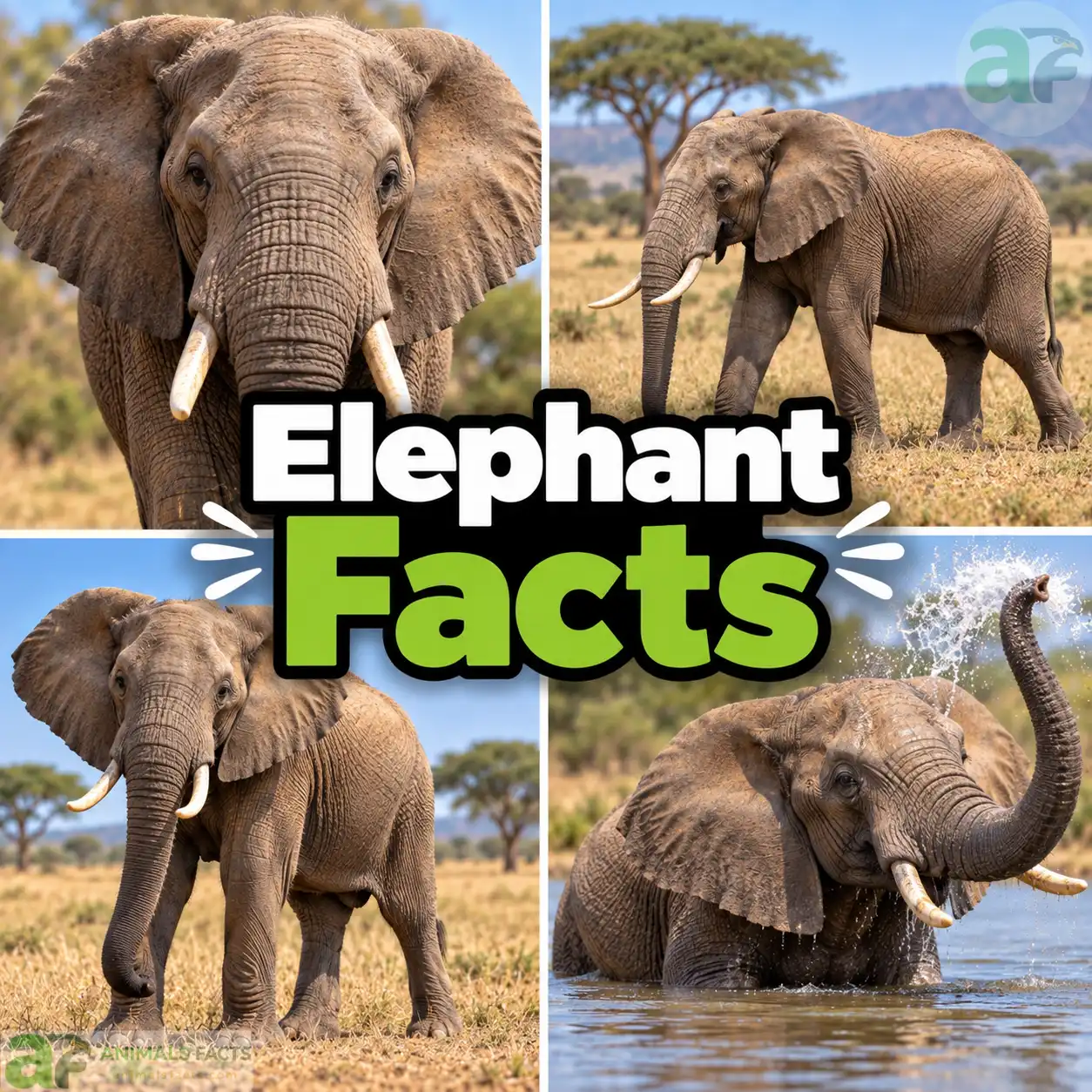
Elephant Facts
| Feature | Details |
|---|---|
| Scientific Family | Elephantidae |
| Kingdom | Animalia |
| Phylum | Chordata |
| Class | Mammalia |
| Order | Proboscidea |
| Living Species | 3 species — African Bush Elephant, African Forest Elephant, Asian Elephant |
| Habitat | Sub-Saharan Africa and South/Southeast Asia — savanna, forest, grassland, and scrubland |
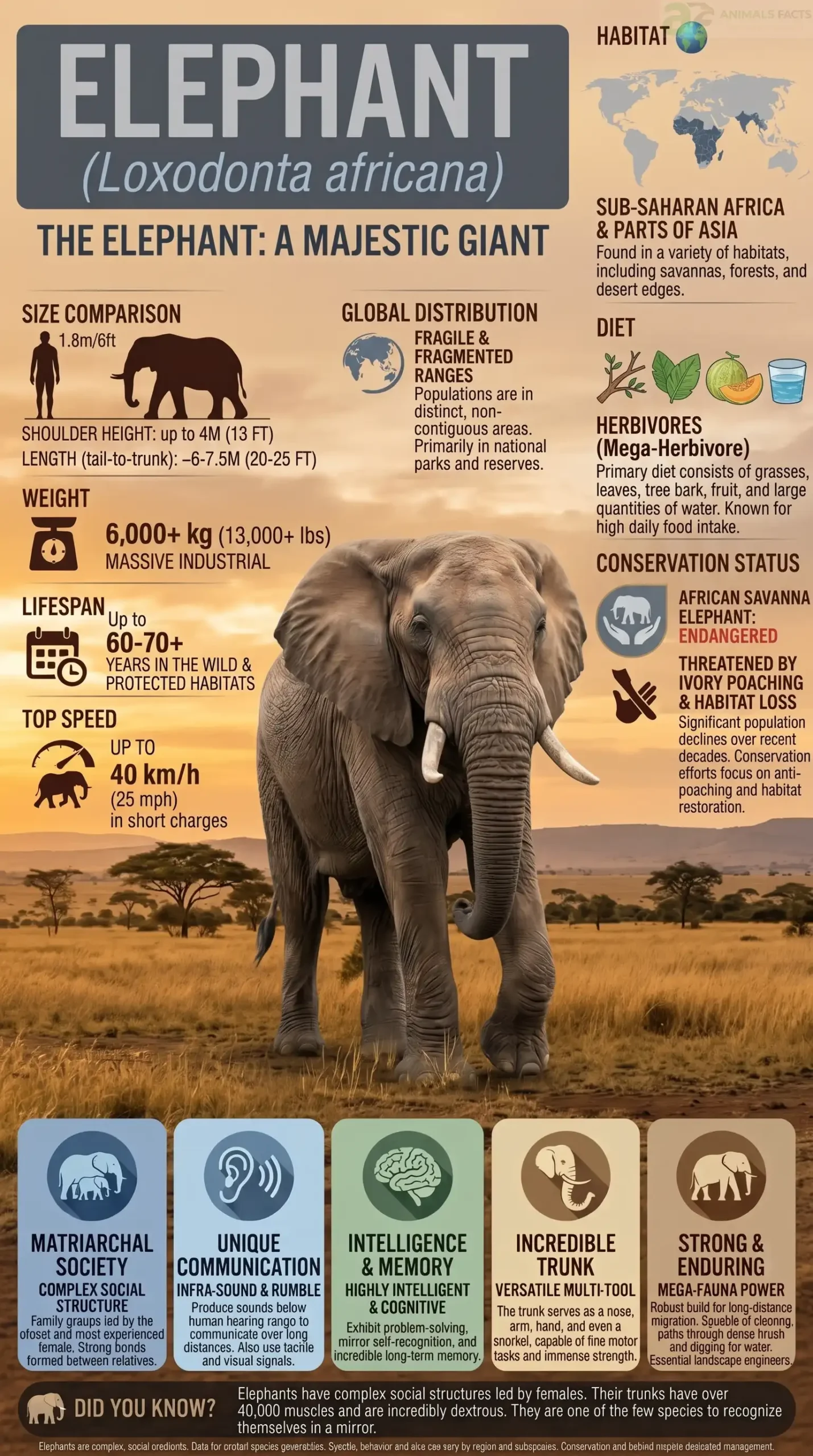
| Lifespan | 60–70 years in the wild; up to 86 years confirmed in captivity |
| Diet | Herbivore — grasses, bark, roots, fruit, leaves |
| Weight | 2,700–6,000 kg (African Bush Elephant largest); 2,700–4,000 kg (Asian Elephant) |
| Height | Up to 4 meters at the shoulder (African Bush Elephant) |
| Speed | Up to 40 km/h (25 mph) in a charge |
| Conservation Status | African Bush Elephant: Endangered; African Forest Elephant: Critically Endangered; Asian Elephant: Endangered |
| Population Estimate | African elephants (combined): ~415,000; Asian Elephant: ~40,000–50,000 |
| Gestation Period | 22 months — longest of any land mammal |
| Brain Weight | Up to 5.4 kg — largest brain of any land animal |
 1. Introduction: What is an Elephant?
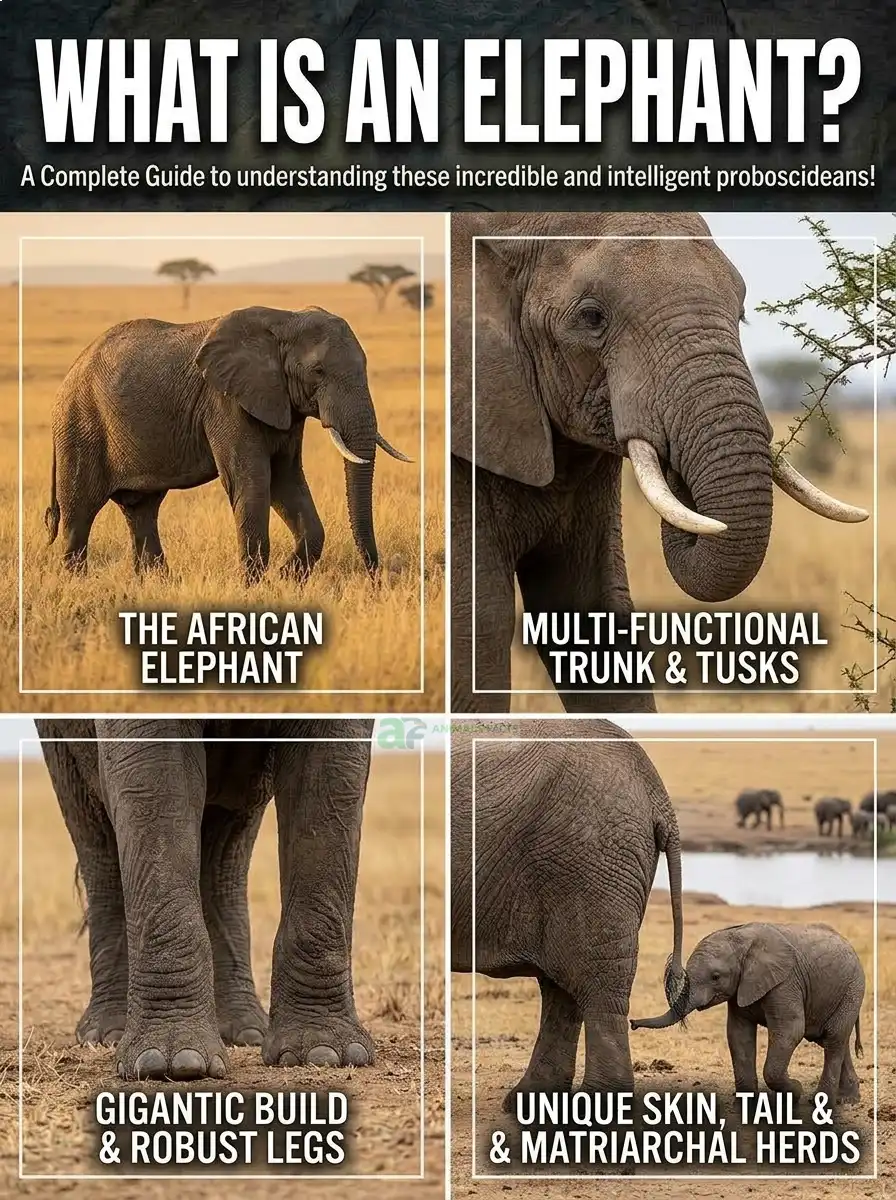
They mourn their dead. They recognize themselves in mirrors. They can detect rainfall hundreds of kilometers away through vibrations in the ground. They carry the longest pregnancy of any land animal and possess a brain larger than that of any other creature walking the Earth.
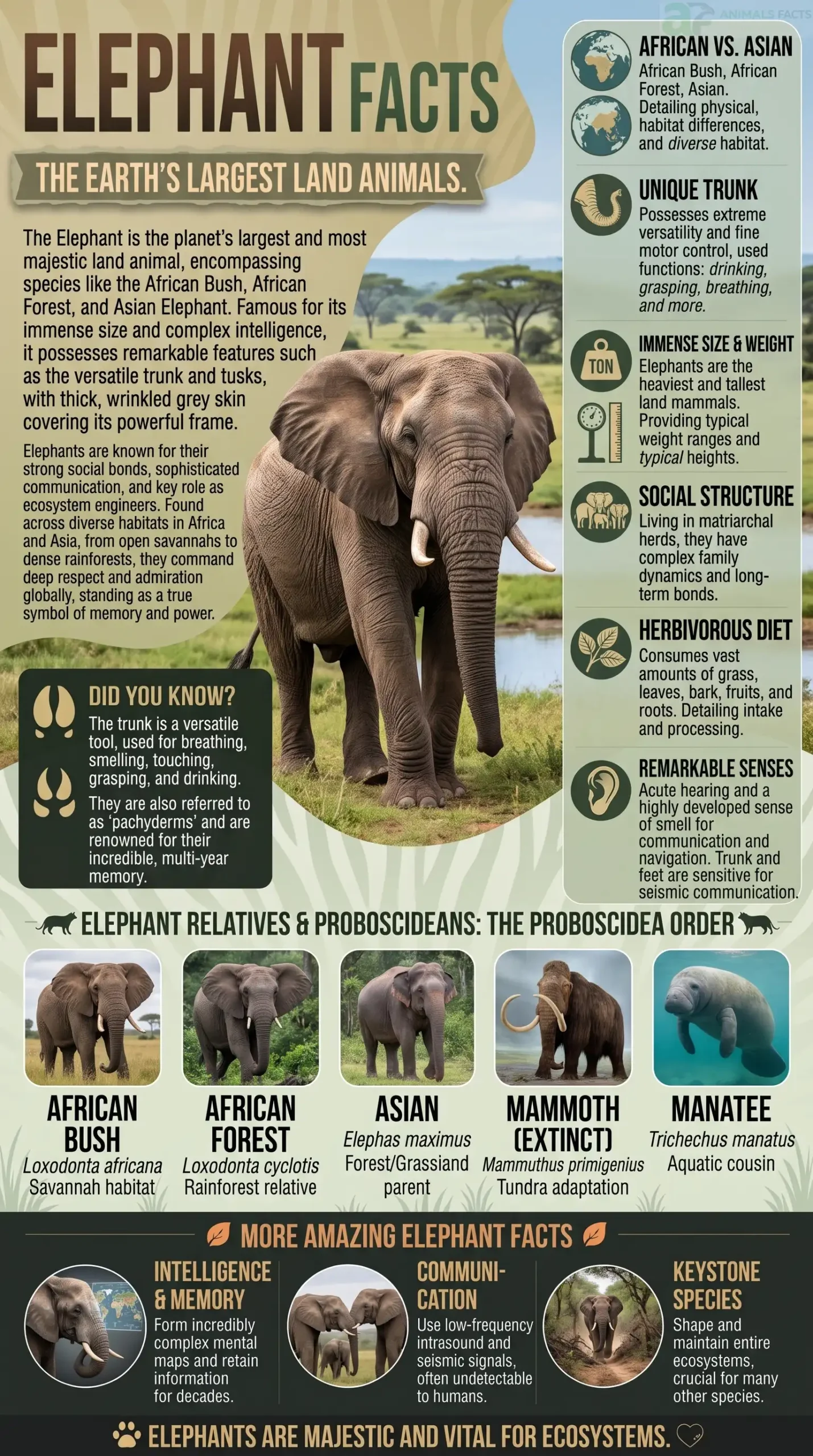
There are three living species of this animal on Earth today: the African Bush Elephant (Loxodonta africana), the largest land animal alive, roaming the savannas and grasslands of sub-Saharan Africa; the African Forest Elephant (Loxodonta cyclotis), a smaller, more elusive relative inhabiting the dense rainforests of Central and West Africa; and the Asian Elephant (Elephas maximus), found across the forests and grasslands of South and Southeast Asia, distinguished by its smaller ears and the long, intertwined history it shares with human civilization. Together, these three species represent the last surviving members of the order Proboscidea — a once vastly more diverse group that included mammoths, mastodons, and dozens of other now-extinct giants.
Whether you are a student researching elephant facts for a school project, a safari traveler preparing for an African or Asian wildlife trip, a parent searching for elephant facts for kids, a conservation-minded reader wanting to understand the threats these animals face, or simply someone who has always been captivated by their intelligence and emotional depth — this is the most complete guide to elephant facts you will find anywhere. We cover elephant habitat, elephant diet, elephant behavior, reproduction, conservation, mythology, and the extraordinary cultural significance elephants hold across human civilization. Let us begin.
2. Elephant Species Overview & Classification
Elephants belong to the family Elephantidae within the order Proboscidea — a lineage named for the elephant’s most distinctive feature, the trunk (proboscis). Today, just three species survive from what was once a far more diverse evolutionary family.
What Defines an Elephant?
All three living elephant species share these defining characteristics:
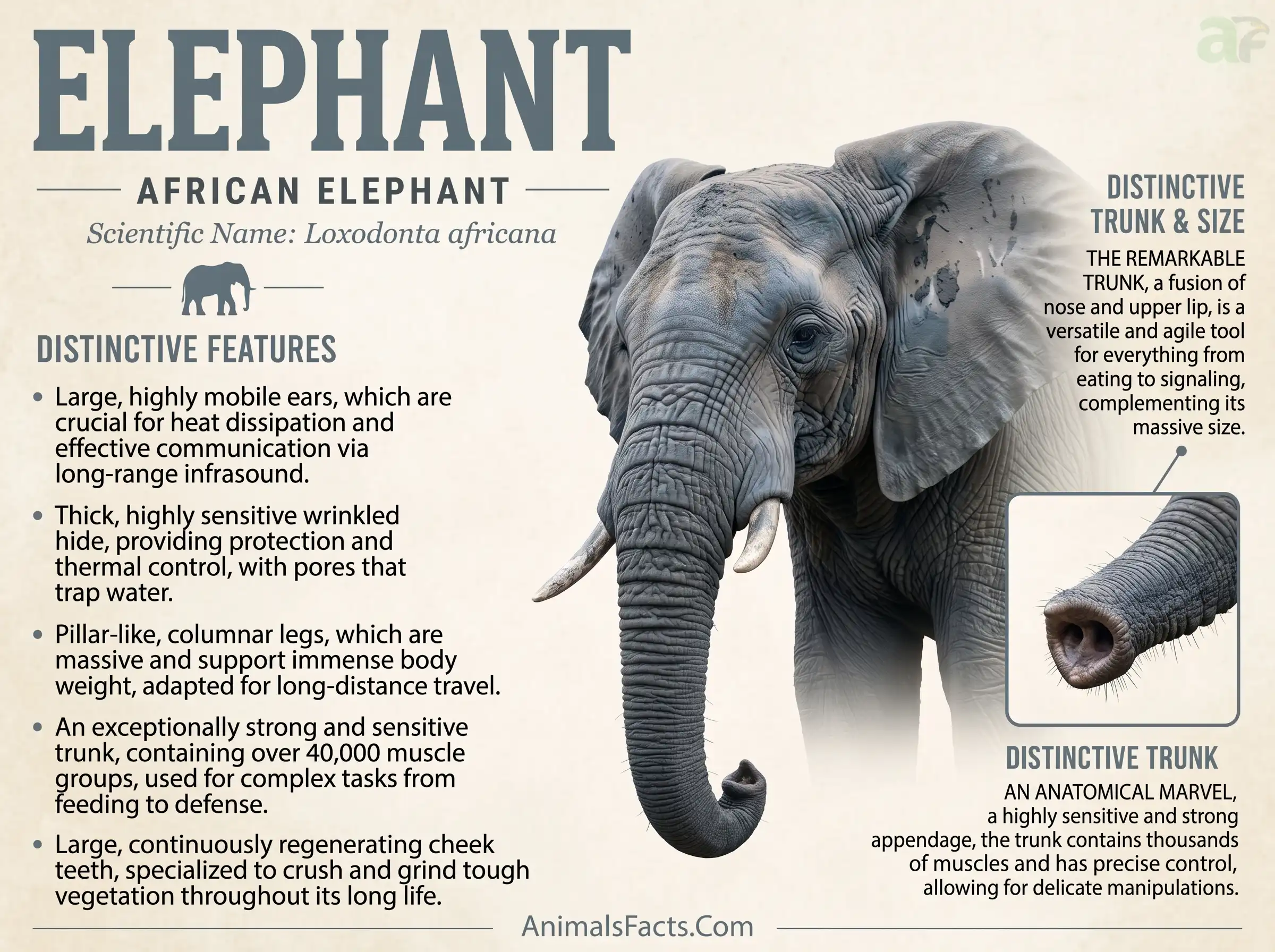
- A muscular trunk: A fusion of the nose and upper lip, containing no bone and an estimated 40,000–150,000 individual muscles, used for breathing, smelling, drinking, feeding, communication, and social bonding
- Tusks: Elongated upper incisor teeth made of ivory, present to varying degrees across species and sexes
- Large, flapping ears: Used extensively for thermoregulation, radiating excess body heat through an extensive network of blood vessels
- Pillar-like legs: Structured to support the immense body weight, with a unique internal padding system in the feet that cushions each step
- Highly developed brains: The largest brain of any land animal, supporting complex emotional, social, and cognitive capabilities
- Herbivorous diet: All elephants are strict herbivores, consuming enormous quantities of plant material daily
Elephant Family Classification Table
| Species | Scientific Name | Approx. Wild Population | Native Range |
|---|---|---|---|
| African Bush Elephant | Loxodonta africana | ~415,000 (combined with Forest) | Sub-Saharan Africa (savanna) |
| African Forest Elephant | Loxodonta cyclotis | ~150,000–250,000 (estimated, declining) | Central & West African rainforest |
| Asian Elephant | Elephas maximus | ~40,000–50,000 | South & Southeast Asia |
Asian Elephant Subspecies
| Subspecies | Range | Notable Feature |
|---|---|---|
| Indian Elephant | Indian Subcontinent | Most numerous Asian subspecies |
| Sri Lankan Elephant | Sri Lanka | Largest of the Asian subspecies |
| Sumatran Elephant | Sumatra, Indonesia | Smallest Asian subspecies; Critically Endangered |
| Bornean Elephant (Pygmy Elephant) | Borneo | Smallest and most genetically distinct population |
Species Evolution & Discovery Timeline
~60 million years ago: The order Proboscidea began to diverge from other mammal lineages shortly after the extinction of the dinosaurs, with early ancestors resembling small, pig-like animals bearing little resemblance to modern elephants.
~37–35 million years ago: Moeritherium, an early proboscidean roughly the size of a large pig with no trunk, lived in what is now Egypt — providing crucial fossil evidence of early elephant ancestry.
~7–5 million years ago: The lineages leading to modern Loxodonta (African elephants) and Elephas (Asian elephants) diverged from a common ancestor, alongside the now-extinct Mammuthus (mammoth) lineage.
~5 million years ago to 4,000 years ago: Woolly Mammoths (Mammuthus primigenius) thrived across the cold steppes of Eurasia and North America, eventually going extinct around 4,000 years ago, with a small isolated population on Russia’s Wrangel Island surviving until that time — meaning mammoths were still alive when the Great Pyramid of Giza was already standing.
~11,000–10,000 years ago: Most of the major Ice Age proboscidean species — including mastodons and most mammoth populations — went extinct at the end of the Pleistocene epoch, likely due to a combination of climate change and human hunting pressure.
1758: Carl Linnaeus formally classified the Asian Elephant as Elephas maximus in Systema Naturae.
1797: The African Elephant was formally classified as a distinct genus, Loxodonta.
2000: Genetic and morphological research led scientists to formally split the African elephant into two distinct species — the African Bush Elephant and the African Forest Elephant — a classification subsequently confirmed and widely adopted following further genomic studies in 2010.
2021: The IUCN formally recognized the African Forest Elephant and African Bush Elephant as separate species on the Red List, with the Forest Elephant classified as Critically Endangered and the Bush Elephant as Endangered — reflecting their distinct conservation statuses for the first time.
3. Elephant Physical Description & Unique Features
Elephants possess one of the most distinctive and instantly recognizable body plans of any animal on Earth — a combination of immense scale, specialized anatomy, and remarkable sensory capability unmatched among land mammals.
Size Comparison
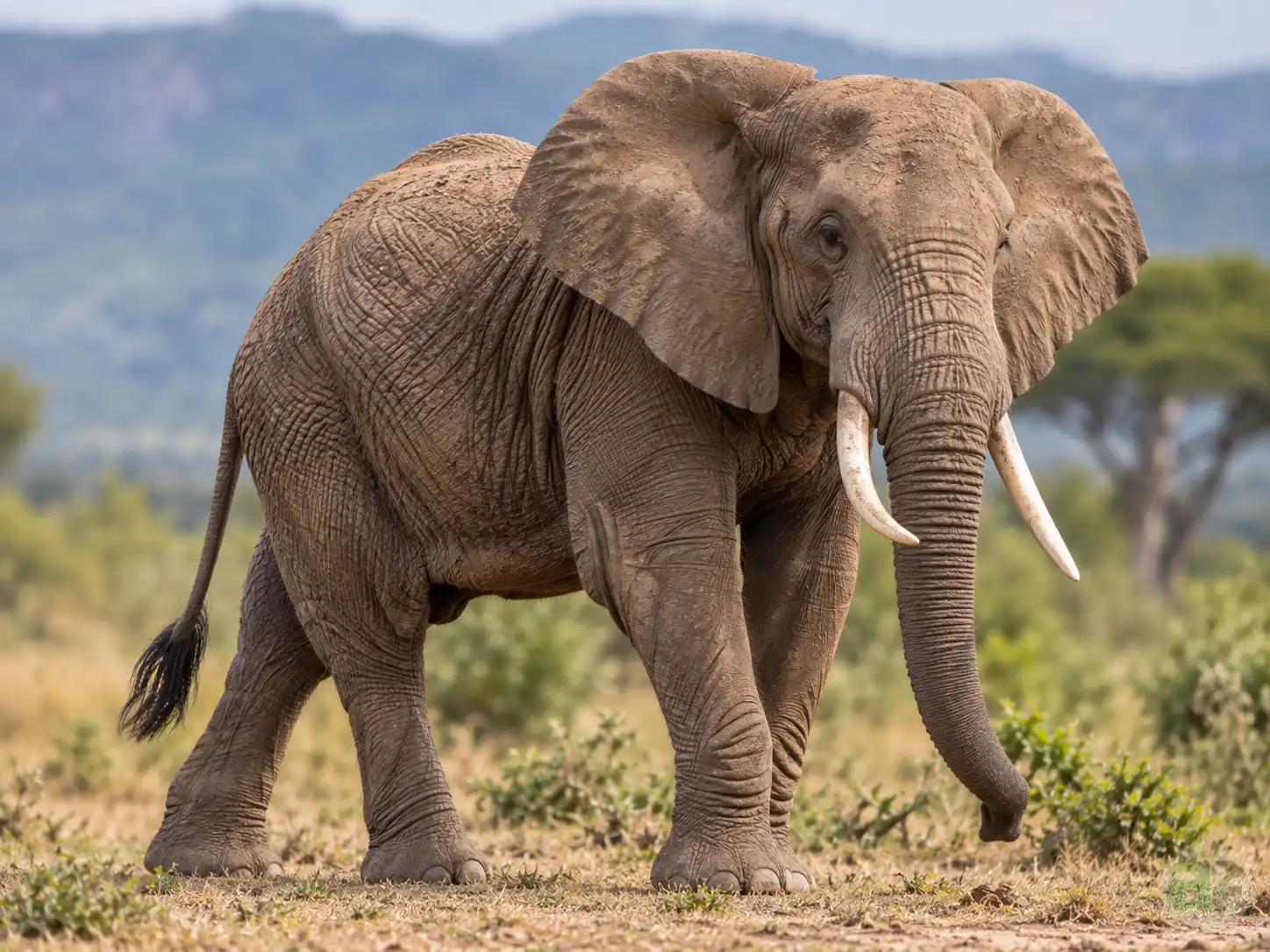
Largest species: The African Bush Elephant is the largest living land animal — males can weigh up to 6,000 kg and stand up to 4 meters tall at the shoulder. The largest confirmed individual, shot in Angola in 1956, weighed an estimated 10,000 kg.
Smallest species: The Bornean Elephant, a subspecies of the Asian Elephant found only on the island of Borneo, is notably smaller than mainland Asian Elephants, with adults rarely exceeding 2,500 kg — earning it the popular nickname “pygmy elephant,” though it remains enormous by the standards of nearly any other land mammal.
Middle ground: The African Forest Elephant and standard Asian Elephant populations both fall between these extremes, typically weighing 2,700–4,000 kg.
The Extraordinary Elephant Trunk
The elephant’s trunk deserves special attention as perhaps the single most remarkable organ possessed by any living mammal. Formed through the evolutionary fusion of the nose and upper lip, the trunk contains no bone or cartilage whatsoever — its structure and movement are entirely controlled by an estimated 40,000 to 150,000 individual muscles (compared to approximately 650 muscles in the entire human body).
The trunk serves an extraordinary range of functions: breathing and smelling (elephants possess one of the most sensitive senses of smell of any mammal); drinking (an elephant can hold up to 8.5 liters of water in its trunk at one time); feeding (capable of both delicately plucking a single blade of grass and tearing entire branches from trees); social bonding (elephants intertwine trunks in greeting, comfort, and affection); and communication (trunk position and movement convey significant information to other elephants).
African Elephants possess two finger-like projections at the tip of their trunk, allowing for remarkably precise manipulation, while Asian Elephants have only one — a key anatomical distinction between the genera.
Tusks
Elephant tusks are elongated upper incisor teeth composed of dentine, covered by enamel only at the very tip. They continue growing throughout the animal’s life and are used for digging, stripping bark, fighting, and defense. Tusk presence varies significantly by species and sex: virtually all male and roughly half of female African Elephants grow visible tusks, while in Asian Elephants, typically only males grow substantial tusks, and a significant proportion of male Asian Elephants — known as “makhnas” — naturally lack tusks entirely.
Ears
Elephant ears serve a primarily thermoregulatory function rather than purely auditory purposes. Laced with an extensive network of blood vessels, the ears act as natural radiators — flapping the ears increases blood flow and heat dissipation, helping elephants manage their substantial body heat in hot climates. African Elephant ears are notably larger than those of Asian Elephants, shaped distinctively like the African continent, while Asian Elephant ears are smaller and more rounded.
Did You Know? Elephant skin, despite appearing thick and tough, is actually remarkably sensitive — capable of detecting the landing of a single fly. Elephants are frequently observed using their trunks to spray dust or mud onto their skin, a behavior that serves as both sun protection and natural insect repellent, in addition to helping regulate body temperature.
4. Top 25 Surprising & Interesting Elephant Facts
- An elephant’s trunk contains an estimated 40,000 to 150,000 muscles — more than the entire human body — yet contains absolutely no bone.
- Elephants have the longest gestation period of any land mammal — pregnancy lasts approximately 22 months, nearly twice as long as a human pregnancy.
- Their brains weigh up to 5.4 kilograms — the largest brain of any land animal — and contain roughly three times more neurons than a human brain, though distributed differently across brain regions.
- African Bush Elephants are the largest land animals alive today, with the heaviest confirmed individual weighing an estimated 10,000 kg.
- Elephants can detect seismic vibrations through the ground using sensitive nerve endings in their feet and trunk — allowing them to “hear” rumbling vocalizations from other elephants from distances of up to 10 kilometers.
- Elephants are one of the very few non-human animals confirmed to recognize themselves in a mirror — a test called the mirror self-recognition test, passed by only a handful of species including great apes, dolphins, and magpies.
- An adult elephant can consume up to 150 kilograms of vegetation and drink up to 190 liters of water in a single day.
- Elephants display behaviors widely interpreted by researchers as grief and mourning — including standing vigil over deceased herd members, touching the bones of the dead with their trunks, and returning repeatedly to specific locations where family members have died.
- The African Forest Elephant is significantly smaller and more rounded than its savanna relative, with straighter, downward-pointing tusks adapted for navigating dense rainforest vegetation.
- Elephant tusks never stop growing throughout the animal’s life — the largest recorded tusks, taken in the 19th century from an elephant in Kenya, weighed over 102 kg combined.
- Elephants are capable of using tools — documented behaviors include using branches to swat flies, scratching themselves with sticks, and plugging waterholes with chewed bark to prevent evaporation.
- A baby elephant, called a calf, can weigh up to 120 kilograms at birth — roughly the weight of an adult human male — and can stand and walk within hours.
- Elephants communicate using infrasound — extremely low-frequency vocalizations below the range of human hearing, capable of traveling several kilometers and allowing widely dispersed herd members to coordinate movements.
- The skin on an elephant’s back and head can be up to 2.5 centimeters thick, yet remains sensitive enough to feel a single insect landing.
- Elephants have been documented showing apparent empathy toward injured or distressed herd members, including other elephants and, in some recorded cases, other species entirely.
- An elephant’s four molars are replaced up to six times throughout its lifetime, with each new set rotating forward to replace worn teeth — once the final set wears down, typically around 60–70 years of age, the elephant can no longer effectively chew food, a major factor in natural elephant mortality.
- Asian Elephants have been used by humans in agriculture, logging, transportation, and ceremonial roles for over 4,000 years, representing one of the longest documented human-animal working relationships in history.
- Elephants can run at speeds of up to 40 km/h despite never technically breaking into a true “run” in the biomechanical sense — at all speeds, elephants maintain at least one foot in contact with the ground at all times.
- A herd of elephants is typically led by the oldest and most experienced female, called the matriarch, whose accumulated knowledge of water sources, migration routes, and seasonal food availability is critical to herd survival.
- Elephants possess an exceptional sense of smell, believed to be among the most acute of any land mammal — capable of distinguishing between different human ethnic groups by scent in studies conducted in Kenya, associating certain groups with greater threat based on historical hunting patterns.
- The world’s most famous elephant skeleton, “Jumbo,” stood approximately 3.2 meters at the shoulder and became one of the most famous animals of the 19th century after being exhibited by P.T. Barnum.
- Female African and Asian Elephants can give birth to calves until approximately 50 years of age, with reproductive lifespans extending considerably longer than most other large mammals.
- Elephant family groups maintain remarkably strong bonds, with research documenting that separated family members can recognize each other’s vocalizations even after decades of separation.
- The Sumatran Elephant subspecies has lost an estimated 70% of its viable habitat in just one generation, making it one of the most critically threatened large mammal populations in Southeast Asia.
- Elephants are considered a “keystone species” and “ecosystem engineers” — their feeding and movement behaviors fundamentally shape the structure of the ecosystems they inhabit, creating clearings, dispersing seeds, and maintaining grassland-forest boundaries that support countless other species.
5. Fun Facts About Elephants
- There are only three living elephant species in the world today, despite the order Proboscidea once including dozens of now-extinct relatives including mammoths and mastodons.
- An elephant’s trunk can detect scent from up to 19 kilometers away under favorable wind conditions.
- African Elephants have two trunk “fingers”; Asian Elephants have only one.
- A newborn elephant calf can stand and begin walking within just a few hours of birth.
- Elephants are among the very few animals known to display behaviors interpreted as mourning their dead.
- The Woolly Mammoth, an extinct relative, survived on isolated Wrangel Island until approximately 4,000 years ago — meaning mammoths were still alive during the construction of the Egyptian pyramids.
- Elephant ears function primarily as natural air conditioning systems, radiating excess heat through dense blood vessel networks.
- A single elephant can produce up to 150 kilograms of dung daily — an enormous contribution to nutrient cycling and seed dispersal in their ecosystems.
- Elephants have been observed covering deceased elephants with leaves and branches, a behavior some researchers interpret as a rudimentary form of burial ritual.
- The world’s tallest recorded elephant stood approximately 4 meters at the shoulder — taller than a standard double-decker bus.
- Elephant toenails are not directly attached to the bones of the foot — they essentially float in the surrounding tissue, an adaptation that helps cushion the animal’s enormous weight with each step.
- Elephants can swim remarkably well, using their trunk as a natural snorkel to breathe while almost fully submerged.
6. Natural Habitat & Geographic Range
Elephants inhabit a diverse range of environments across two continents, with each species and subspecies showing distinct habitat preferences shaped by millions of years of evolutionary adaptation.
African Bush Elephant Habitat
The African Bush Elephant ranges across savanna, grassland, woodland, and semi-desert environments throughout sub-Saharan Africa, demonstrating remarkable adaptability across diverse climatic conditions — from the relatively lush grasslands of the Serengeti to the arid landscapes of Namibia’s desert-adapted elephant populations, among the most extreme environmental adaptations documented in any elephant population.
African Forest Elephant Habitat
The African Forest Elephant is restricted to the dense tropical rainforests of Central and West Africa, particularly the Congo Basin — the second-largest contiguous rainforest on Earth after the Amazon. This species plays a uniquely critical ecological role within these forest ecosystems, functioning as one of the primary large seed dispersers for numerous rainforest tree species.
Asian Elephant Habitat
Asian Elephants inhabit a range of environments including tropical and subtropical forests, grasslands, and scrublands across South and Southeast Asia, typically favoring areas with access to both forest cover and open grazing land, alongside reliable water sources.
Habitat Range by Region
| Region | Notable Elephant Population | Approximate Numbers |
|---|---|---|
| Southern Africa (Botswana, Zimbabwe, South Africa) | African Bush Elephant | ~250,000+ (largest regional population) |
| East Africa (Kenya, Tanzania) | African Bush Elephant | ~100,000+ |
| Central Africa (Congo Basin) | African Forest Elephant | ~150,000–250,000 (declining) |
| India | Asian Elephant (Indian subspecies) | ~27,000–29,000 |
| Sri Lanka | Asian Elephant (Sri Lankan subspecies) | ~5,800–7,000 |
| Sumatra, Indonesia | Asian Elephant (Sumatran subspecies) | ~2,400–2,800 (Critically Endangered) |
| Borneo (Malaysia/Indonesia) | Asian Elephant (Bornean subspecies) | ~1,000–1,500 |
| Thailand, Myanmar, Laos, Vietnam, Cambodia | Asian Elephant | ~5,000–10,000 combined |
Did You Know? Desert-adapted Elephants in Namibia’s Kunene region and Mali’s Gourma region represent one of the most remarkable habitat adaptations documented within the elephant family — these populations have learned to survive in some of Earth’s driest environments, traveling extraordinary distances of up to 70 kilometers in a single night between water sources and developing specialized knowledge of seasonal water availability passed down through generations of matriarchal leadership.
7. Elephant Diet & Feeding Behavior
Elephants are strict herbivores with extraordinarily high daily food and water requirements, reflecting the enormous energy demands of maintaining their massive body size.
What Elephants Eat
Elephant diets are remarkably diverse and vary considerably by habitat, season, and species. African Bush Elephants in grassland environments consume substantial quantities of grasses, while Forest Elephants and elephants in more wooded habitats rely more heavily on fruit, leaves, bark, and woody vegetation.
A single adult elephant may consume over 100 different plant species across the course of a year, demonstrating remarkable dietary flexibility that allows elephants to adapt to seasonal changes in food availability.
Daily Consumption
An adult elephant typically spends 12 to 18 hours per day feeding, consuming between 100 and 150 kilograms of vegetation daily and drinking up to 190 liters of water. Due to their relatively inefficient digestive system, elephants extract only an estimated 40-50% of the nutritional value from the vegetation they consume, necessitating their enormous daily food intake.
Diet Breakdown Table
| Food Type | Percentage of Diet (Approximate) | Notes |
|---|---|---|
| Grasses | 30–60% (varies seasonally) | Primary food source in savanna habitats |
| Bark & Woody Vegetation | 15–25% | Important fiber and mineral source |
| Leaves & Foliage | 15–25% | Major component in forest habitats |
| Fruit | 10–20% | Critical for Forest Elephants; seasonal importance |
| Roots & Tubers | 5–10% | Dug up using tusks and trunk |
| Bamboo (Asian Elephant) | Up to 20% in some regions | Particularly important in parts of Southeast Asia |
Feeding Behavior
Elephants use their trunk with extraordinary precision during feeding — capable of delicately selecting a single piece of fruit while simultaneously demonstrating the strength to uproot entire small trees in search of roots or to strip bark from large branches. Elephants frequently use their tusks to dig for roots, minerals, and water sources, and to strip bark from trees — behavior that, at scale across a herd, can significantly alter local vegetation structure.
Did You Know? Elephants play a critical role as “gardeners of the forest” through their feeding behavior — many plant species, including several African tree species, have evolved seeds that require passage through an elephant’s digestive system to germinate effectively. Researchers have documented that some tree species face significant reproductive challenges in areas where elephant populations have been eliminated, demonstrating a direct evolutionary dependency between certain plants and the elephants that disperse their seeds.
8. Elephant Reproduction & Life Cycle
Elephant reproduction is characterized by an exceptionally long gestation period, slow reproductive rate, and an unusually extended period of calf dependency compared to most other mammals — reproductive characteristics that make elephant populations particularly vulnerable to overexploitation and slow to recover from population declines.
Mating and Gestation
Female elephants reach sexual maturity at approximately 10 to 12 years of age, though successful first pregnancies often occur somewhat later depending on environmental conditions and social factors within the herd. Male elephants experience a periodic condition called musth — a state of heightened testosterone, aggression, and reproductive activity, often accompanied by a distinctive discharge from glands located near the eyes — which can occur multiple times per year.
Elephant gestation lasts approximately 22 months — the longest pregnancy of any land mammal — a duration believed to reflect the substantial brain development that must occur before birth, given the extraordinary cognitive demands placed on elephant calves from a very young age.
Birth and Early Development
Newborn elephant calves weigh between 90 and 120 kilograms at birth and can typically stand and begin walking within just a few hours — a critical adaptation given the constant movement required of elephant herds in search of food and water. Calves are born with relatively underdeveloped trunk control, often requiring several months to learn to use this complex organ effectively, frequently observed stepping on or struggling to coordinate their own trunks during this learning period.
Key Developmental Stages
| Stage | Age | Key Development |
|---|---|---|
| Newborn | 0–6 months | Heavily dependent on mother; learning trunk coordination |
| Infant | 6 months–2 years | Weaning begins; increasing mobility and social integration |
| Juvenile | 2–6 years | Continued nursing alongside solid food; active social learning |
| Adolescent | 6–10 years (female); 6–14 years (male) | Approaching sexual maturity; males begin leaving natal herd |
| Young Adult | 10–20 years | Reproductive maturity; establishment of social role |
| Mature Adult | 20–50 years | Peak reproductive and physical capability |
| Elder | 50+ years | Declining tooth function; matriarchal leadership role (females) |
Lifespan Comparison Table
| Species | Average Lifespan (Wild) | Record / Maximum |
|---|---|---|
| African Bush Elephant | 60–70 years | ~80 years |
| African Forest Elephant | 60–65 years | ~75 years (estimated) |
| Asian Elephant | 48–60 years | 86 years (confirmed captive record, “Lin Wang,” Taipei Zoo) |
| (Comparison) White Rhinoceros | 40–50 years | ~50 years |
| (Comparison) Giraffe | 20–25 years | ~28 years |
9. Social Behavior & Communication
Elephants possess one of the most sophisticated and well-documented social structures of any non-human animal, organized around stable, matriarchal family units with complex, long-lasting relationships extending across generations.
Herd Structure
Elephant society is organized around the matriarchal family unit — a core group typically consisting of related females and their immature offspring, led by the oldest and most experienced female, known as the matriarch. The matriarch’s accumulated knowledge regarding water sources, seasonal migration routes, and the location and avoidance of danger represents critical survival information passed down through direct experience over many decades, making older matriarchs disproportionately valuable to overall herd survival.
Male elephants typically leave their natal herd between the ages of 10 and 14 years, subsequently living either solitarily or forming loose, fluctuating bachelor groups with other males, coming into contact with female herds primarily during mating opportunities.
Communication Methods
Infrasound vocalizations: Elephants produce extremely low-frequency rumbles, many below the threshold of human hearing, capable of traveling several kilometers through both air and ground vibration. These infrasonic calls allow geographically dispersed herd members and even unrelated herds to coordinate movements and share information across considerable distances.
Seismic communication: Elephants can detect vibrations transmitted through the ground using highly sensitive nerve endings in their feet and trunk — research has demonstrated that elephants can detect and respond to seismic signals from vocalizing elephants located up to 10 kilometers away, and may even be capable of distinguishing between the seismic signatures of different elephant calls.
Vocal repertoire: Beyond infrasound, elephants produce an extensive range of audible vocalizations including trumpeting (typically associated with excitement, alarm, or aggression), roaring, barking, and a variety of rumbles associated with greeting, contact-seeking, and social bonding.
Body language and touch: Elephants engage in extensive physical contact as a means of communication and bonding — including trunk intertwining, touching, and a behavior researchers term “greeting ceremonies,” in which reunited family members engage in elaborate vocalizations and physical contact, sometimes lasting several minutes.
Chemical communication: Elephants possess a highly developed sense of smell and use scent marking, urine, and secretions from temporal glands (particularly pronounced during musth in males) to convey reproductive status, individual identity, and emotional state to other elephants.
Did You Know? Research conducted by elephant behavioral scientists has documented that elephants appear capable of recognizing the calls of at least 100 different individual elephants, and studies analyzing recorded elephant vocalizations have suggested that elephants may use distinct, name-like vocal labels to address specific individuals — a remarkable parallel to a capability previously documented robustly only in dolphins and a small number of other highly social species.
10. Predators & Defense Mechanisms
Due to their immense size and strength, adult elephants face remarkably few natural predators — a position shared by very few other land mammals — though calves and, in rare circumstances, weakened or injured adults remain vulnerable.
Natural Predators
Lions: The most significant natural predator of elephant calves, particularly in regions where lion prides have developed specialized cooperative hunting techniques specifically targeting young or vulnerable elephants, most notably documented among certain lion populations in Botswana’s Chobe National Park and parts of Zimbabwe.
Tigers: In parts of their overlapping Asian range, tigers have occasionally been documented preying on young or isolated Asian Elephant calves, though such predation events remain comparatively rare.
Crocodiles: Nile Crocodiles have been documented opportunistically attacking elephants, particularly young calves, during river crossings or while drinking at water sources.
Hyenas: Spotted Hyenas occasionally target very young, sick, or isolated calves, particularly when other predation pressure or herd vigilance is reduced.
Defense Mechanisms
Herd protection: The primary defense mechanism for elephant calves is the coordinated protective behavior of the surrounding herd — adult females will form protective circles around vulnerable young when threats are detected, presenting potential predators with a wall of adult elephants rather than an accessible calf.
Size and strength: For adult elephants, sheer physical size represents an overwhelming deterrent against virtually all natural predators — an adult elephant’s size, strength, and willingness to charge represents a level of risk that few predators are willing to engage with directly.
Tusks: While primarily used for feeding and digging, tusks also serve as formidable defensive and offensive weapons when elephants feel genuinely threatened.
Vocal and visual displays: Elephants frequently employ intimidating displays — including trumpeting, ear flapping (which makes the animal appear significantly larger), and mock or genuine charges — to deter potential threats before any physical confrontation becomes necessary.
Matriarchal leadership: The accumulated experience of an elephant herd’s matriarch plays a critical defensive role, with experienced matriarchs demonstrating superior ability to identify and avoid dangerous situations, including areas of high predator activity or, increasingly significantly, regions associated with poaching activity.
11. Elephant Facts for Kids
Hey kids — get ready to learn why elephants are some of the most amazing animals on the entire planet!
- An elephant’s trunk has no bones at all — it’s made up of tens of thousands of tiny muscles, which is why elephants can use it to do incredibly precise things, like picking up a single peanut!
- Baby elephants are huge when they’re born — they can weigh as much as 120 kilograms, which is heavier than most adult humans!
- Elephants have the biggest brains of any animal that lives on land — and scientists believe they’re one of the smartest animals on Earth!
- Elephants can “hear” with their feet! They can feel rumbling sounds traveling through the ground from other elephants that are many kilometers away!
- A grown-up elephant eats so much food every day — up to 150 kilograms — that it spends almost the whole day just eating!
- Elephants love water and are actually excellent swimmers — they use their trunk like a built-in snorkel to breathe while swimming!
- A group of elephants is led by the oldest, wisest female, called the matriarch, who remembers where to find water and food even during difficult years!
- Elephants seem to understand when another elephant has died, and scientists have seen them gently touching the bones of elephants that passed away — almost like they’re remembering them.
Did You Know? Elephants are one of the very few animals in the entire world that can recognize themselves in a mirror! Scientists tested this by putting a small mark on an elephant’s face where it could only be seen in a mirror. When the elephant looked in the mirror and saw the mark, it touched its own face — proving it understood the reflection was actually itself! Only a handful of animals, including chimpanzees, dolphins, and magpies, have ever passed this same test.
13. Relationship with Humans
The relationship between humans and elephants spans thousands of years and encompasses some of the most significant working partnerships, cultural traditions, and increasingly urgent conservation challenges in the entire animal kingdom.
Domestication and Working Elephants
Unlike many domesticated animals, elephants have never been truly domesticated in the genetic sense — working elephants, particularly across Asia, are typically captured from wild populations (historically) or bred from already-tamed individuals and then trained, a process referred to as “taming” rather than domestication. This relationship stretches back at least 4,000 years, with archaeological and historical evidence documenting the use of Asian Elephants in agriculture, logging, warfare, ceremonial functions, and transportation across South and Southeast Asia.
War elephants played a significant role in numerous historical military campaigns, perhaps most famously in Hannibal’s crossing of the Alps during the Second Punic War in 218 BCE, and across numerous South and Southeast Asian military traditions for over two millennia.
Elephants in Modern Tourism and Logging
Today, an estimated 3,000–4,000 captive Asian Elephants continue to work across various industries, particularly in Thailand, Myanmar, and India, historically in logging operations (now significantly restricted in several countries due to conservation and welfare concerns) and increasingly in tourism. Growing awareness of elephant welfare concerns has driven significant industry shifts toward ethical, observation-based tourism models that avoid direct riding or performance activities in favor of sanctuary-style viewing experiences.
Human-Elephant Conflict
As human populations expand into traditional elephant range across both Africa and Asia, human-elephant conflict has become an increasingly significant challenge — elephants raiding agricultural crops can cause substantial economic damage to subsistence farmers, occasionally resulting in human injury or death, and correspondingly leading to retaliatory elephant killings. This conflict represents one of the most pressing modern challenges to elephant conservation, requiring sophisticated, community-based mitigation strategies including early warning systems, physical barriers, and compensation programs.
14. Conservation Status & Threats
All three elephant species face significant conservation challenges, with population trends and specific threats varying considerably between African and Asian populations.
Global Elephant Conservation Data (2026)
| Species | IUCN Status | Estimated Population | Population Trend |
|---|---|---|---|
| African Bush Elephant | Endangered | ~415,000 (combined African estimate) | Stable to slightly increasing in protected areas; declining regionally |
| African Forest Elephant | Critically Endangered | ~150,000–250,000 (significant uncertainty) | Sharply declining (estimated 86% decline over 31 years) |
| Asian Elephant | Endangered | ~40,000–50,000 | Declining |
| Sumatran Elephant (subspecies) | Critically Endangered | ~2,400–2,800 | Sharply declining |
Major Threats to Elephants
Poaching for Ivory: Historically the single greatest threat to African Elephant populations, driven by international demand for ivory, particularly across parts of Asia. While international ivory trade bans implemented through CITES (Convention on International Trade in Endangered Species) since 1989 have significantly reduced large-scale legal trade, illegal poaching continues to represent a serious ongoing threat, particularly to Forest Elephant populations.
Habitat Loss and Fragmentation: Agricultural expansion, infrastructure development, logging, and human settlement continue to fragment and reduce available elephant habitat across both Africa and Asia, with Asian Elephant populations facing particularly severe habitat pressure given the region’s dense human population.
Human-Elephant Conflict: As discussed above, conflict resulting from habitat encroachment and resource competition results in significant elephant mortality through retaliatory killing, alongside genuine human safety and economic concerns that complicate conservation efforts.
Climate Change: Increasingly unpredictable rainfall patterns and prolonged droughts, particularly across parts of Africa, place additional pressure on already-stressed elephant populations and their available water and food resources.
Captivity and Welfare Concerns: While not a direct extinction threat, ongoing concerns regarding the welfare of captive elephants in tourism, entertainment, and working contexts continue to drive significant conservation and animal welfare advocacy efforts globally.
Did You Know? The African Forest Elephant population has declined by an estimated 86% over a 31-year period according to IUCN assessments — one of the most severe documented population collapses of any large mammal species, driven primarily by intensive poaching pressure across the Congo Basin combined with significant ongoing habitat loss from logging and agricultural expansion, making this subspecies’ conservation status considerably more urgent than that of its savanna-dwelling relative.
15. Famous Elephants
Jumbo — The Original Celebrity Elephant
Jumbo was an African Bush Elephant captured as a calf in Sudan in the 1860s, later transferred to the London Zoo, where his enormous size made him a major public attraction. Sold to American showman P.T. Barnum in 1882 amid significant public controversy in Britain, Jumbo became one of the most famous animals in the world, touring extensively with Barnum’s circus before his death in a railway accident in 1885. His name has since entered the English language as a synonym for anything exceptionally large.
Lin Wang — The Record-Breaking Asian Elephant
Lin Wang was an Asian Elephant who lived at the Taipei Zoo in Taiwan, originally serving as a working elephant during World War II before being relocated to the zoo, where he became a beloved national figure. Lin Wang lived to the confirmed age of 86 years, making him the longest-lived elephant ever officially documented, and his death in 2003 prompted significant national mourning and media coverage across Taiwan.
Echo — The Most Studied Wild Elephant in History
Echo was a wild African Bush Elephant matriarch studied continuously for over three decades by researcher Cynthia Moss and the Amboseli Elephant Research Project in Kenya — representing one of the longest continuous studies of any individual wild animal in scientific history. Echo’s life, documented extensively through both scientific publication and popular media including a dedicated documentary, provided extraordinary insight into elephant social behavior, matriarchal leadership, and family dynamics that fundamentally shaped modern scientific understanding of elephant society.
Raja — Sri Lanka’s Sacred Elephant
Raja was a celebrated tusker elephant in Sri Lanka who served for decades as the principal elephant responsible for carrying the sacred Buddhist relic casket during the annual Esala Perahera festival procession in Kandy — one of the most significant Buddhist religious ceremonies in Sri Lanka. Following his death in 1988, Raja was declared a National Treasure by the Sri Lankan government, and his preserved body remains on public display at the Temple of the Sacred Tooth Relic.
Dumbo’s Real-World Inspiration
While entirely fictional, Disney’s Dumbo (1941) — the circus elephant with oversized ears who learns to fly — drew significant inspiration from genuine historical circus elephant traditions and remains one of the most commercially successful and culturally influential elephant characters in entertainment history, introducing generations of children worldwide to elephant imagery, albeit through a heavily fictionalized lens.
16. Role in Ecosystem & Food Chain
Elephants are widely recognized by ecologists as a keystone species and “ecosystem engineers” — animals whose presence and behavior fundamentally shape the broader ecosystem in ways that extend far beyond their direct interactions with other individual species.
Maintaining Savanna-Forest Balance
In African savanna ecosystems, elephants play a critical role in preventing woodland encroachment through their feeding behavior — by knocking down trees, stripping bark, and consuming woody vegetation, elephants help maintain the open grassland habitats that support numerous other grazing species, from wildebeest and zebra to a wide range of grassland-dependent bird species. Without elephant activity, many savanna ecosystems would gradually transition toward denser woodland, fundamentally altering the broader ecological community.
Seed Dispersal
Elephants are among the most significant long-distance seed dispersers of any animal on Earth, capable of transporting seeds across distances of many kilometers through their digestive system before depositing them, along with substantial fertilizing dung, at distant locations. African Forest Elephants in particular serve as the primary or sole disperser for numerous large-seeded rainforest tree species, with research demonstrating that several tree species show significantly reduced reproductive success and even localized population decline in forest areas where elephant populations have been eliminated or severely reduced.
Water Source Creation
Elephants frequently dig for water in dry riverbeds during drought conditions, creating waterholes that subsequently become critical resources for numerous other species, including animals unable to dig for themselves — a direct and measurable example of elephants providing essential ecosystem services that benefit the broader wildlife community well beyond their own species.
Nutrient Cycling
A single elephant can produce up to 150 kilograms of dung daily, contributing substantially to soil fertility and supporting entire ecological communities of dung beetles, insects, and microorganisms that depend on this nutrient-rich resource, which in turn supports the broader food web through these intermediate species.
17. Myths, Folklore & Cultural Significance
Elephants occupy an extraordinarily prominent and overwhelmingly positive position within the mythology, religion, and cultural traditions of numerous civilizations, particularly across South and Southeast Asia and Africa.
Hindu Tradition — Ganesha
Perhaps no single religious figure more powerfully demonstrates the cultural significance of elephants than Ganesha, the elephant-headed Hindu deity associated with wisdom, prosperity, and the removal of obstacles — one of the most widely worshipped deities across the entire Hindu pantheon. Ganesha’s distinctive elephant head, according to traditional mythology, resulted from the god Shiva’s intervention following a misunderstanding, after which an elephant’s head was used to restore the deity’s son to life. Ganesha is traditionally invoked at the beginning of new ventures, journeys, and significant life events across Hindu communities worldwide.
Buddhist Tradition
In Buddhist tradition, the white elephant holds profound symbolic significance, associated directly with the conception of the historical Buddha, Siddhartha Gautama — according to traditional accounts, his mother Queen Maya dreamed of a white elephant entering her side shortly before his birth, an event interpreted as a powerful omen of the child’s future spiritual significance. White elephants remain revered throughout Buddhist Southeast Asia, historically considered royal property in countries including Thailand and Myanmar.
African Traditions
Across numerous African cultures, elephants are widely regarded as symbols of strength, wisdom, patience, and royal authority. In several West African traditions, elephant imagery is closely associated with chieftaincy and leadership, reflecting the animal’s social structure built around experienced matriarchal guidance.
Ancient Mediterranean and European Traditions
While elephants were not native to Europe, they nonetheless held significant symbolic and practical importance in classical antiquity, most famously through their military use, including Hannibal’s legendary crossing of the Alps with war elephants during the Second Punic War, and Alexander the Great’s encounters with war elephants during his campaigns in India, which significantly influenced subsequent military and cultural perceptions of the animal across the ancient Mediterranean world.
Modern Symbolic Significance
Elephants remain powerful contemporary symbols across multiple contexts — serving as the official mascot of the United States Republican Party since the 19th century, the national animal of Thailand, and a globally recognized symbol of conservation, intelligence, and environmental stewardship through extensive use in conservation branding and public awareness campaigns worldwide.
18. Large Animals in in Pop Culture
Elephants have maintained a consistent, beloved presence across virtually every era and medium of human entertainment and storytelling, reflecting their deep and longstanding cultural resonance.
Film and Animation
“Dumbo” (Disney, 1941 & 2019) — One of Disney’s earliest and most enduringly beloved animated features, following a young circus elephant with oversized ears who discovers he can fly; the story has remained in continuous cultural circulation for over eight decades.
“The Jungle Book” (1967 & 2016 Disney adaptations) — Features Colonel Hathi and his elephant herd, portrayed with significant comedic emphasis on military-style discipline and organization, reflecting popular perceptions of elephant social structure.
“Babar the Elephant” — Originally created as a French children’s book series by Jean de Brunhoff in 1931, later adapted into multiple television series and films, following the adventures of an orphaned elephant who becomes king of the elephants, representing one of the longest-running elephant character franchises in children’s media.
“My Elephant Friend” and numerous wildlife documentaries — Reflect the continued and significant audience demand for genuine elephant nature content, distinct from purely fictional portrayals.
Literature
“Water for Elephants” by Sara Gruen (2006) — A bestselling novel (later adapted into a major film) set within Depression-era American circus culture, featuring a significant elephant character central to the narrative’s emotional core.
“The Elephant’s Journey” by José Saramago (2008) — A novel by the Nobel Prize-winning Portuguese author, based on the historical 16th-century journey of an elephant gifted to the Habsburg royal family, blending historical fact with literary reflection.
Corporate and National Symbols
The elephant serves as the official symbol of the US Republican Party, the national animal of Thailand, and appears extensively throughout global conservation branding, perhaps most notably through organizations such as the World Wildlife Fund, where elephant imagery remains among the most recognizable and emotionally resonant symbols used in international conservation advocacy.
19. Elephant Facts vs. Common Myths
Myth: Elephants are afraid of mice. Fact: This widely repeated myth has no scientific basis. While elephants may startle at sudden, unexpected movement from any small, fast-moving creature near their feet, there is no evidence elephants hold any specific fear response toward mice particularly, and the myth appears to derive primarily from old cartoon depictions rather than documented behavior.
Myth: Elephants never forget anything. Fact: While elephants do possess genuinely exceptional long-term memory, particularly regarding social relationships, water sources, and dangerous locations, the popular phrase significantly overstates the literal accuracy of elephant memory capabilities, which — while impressive — function according to the same general cognitive principles as memory in other highly intelligent mammals, rather than representing some form of absolute, infallible recall.
Myth: Elephants are closely related to rhinoceroses and hippopotamuses due to their similar size. Fact: Despite superficial size similarities, elephants are not closely related to either species. Genetic research has revealed elephants’ closest living relatives are actually the manatee and the hyrax (a small, rabbit-sized mammal) — a relationship that would be entirely unexpected based on physical appearance alone.
Myth: All elephants have tusks. Fact: Tusk presence varies significantly by species, sex, and individual genetics. While most male and roughly half of female African Elephants grow visible tusks, a significant proportion of male Asian Elephants, known as “makhnas,” naturally lack tusks entirely, and virtually all female Asian Elephants are tuskless.
Myth: Elephant ivory grows back if removed humanely. Fact: Elephant tusks are living, permanently rooted teeth with nerve and blood supply extending well into the skull — removal causes significant trauma and pain and does not regenerate in any meaningful capacity, making any claims of “humane” ivory harvesting fundamentally misleading.
Myth: Elephants can be fully domesticated like dogs or horses. Fact: Working elephants are more accurately described as tamed rather than domesticated in the genetic sense — unlike truly domesticated species, elephants have not undergone the genetic selection processes over many generations that characterize true domestication, and working elephants continue to display fundamentally wild behavioral instincts and physiology.
Myth: A charging elephant cannot be stopped or deterred. Fact: Many elephant charges, similar to bear “bluff charges,” represent warning or threat displays rather than committed attacks, and experienced wildlife guides and researchers can frequently distinguish between genuine charges and intimidation displays based on ear position, vocalization, and trunk behavior — though all elephant encounters in the wild require extreme caution and professional guidance.
20. Best Places to See Elephants in the Wild
Amboseli National Park, Kenya
Renowned globally for offering exceptional African Bush Elephant viewing against the dramatic backdrop of Mount Kilimanjaro, and home to some of the most extensively studied wild elephant populations on Earth through the long-running Amboseli Elephant Research Project.
Chobe National Park, Botswana
Home to one of the largest concentrations of African Elephants anywhere in the world, with the Chobe River corridor supporting an estimated 50,000+ elephants during peak dry season congregations, offering exceptional river-based viewing opportunities.
Minneriya National Park, Sri Lanka
Famous for “The Gathering,” an extraordinary annual congregation of several hundred wild Asian Elephants around the Minneriya reservoir during the dry season, representing one of the largest predictable wild elephant gatherings anywhere in Asia.
Periyar Tiger Reserve, Kerala, India
A premier destination for observing wild Asian Elephants within a dramatic lake and forest setting, alongside significant broader biodiversity including tigers and a wide range of South Indian wildlife.
Dzanga-Sangha Special Reserve, Central African Republic
One of the very few locations offering reliable opportunities to observe the elusive African Forest Elephant, particularly at the famous Dzanga Bai forest clearing, where dozens of forest elephants regularly congregate to access mineral-rich soil.
Way Kambas National Park, Sumatra, Indonesia
A critical conservation site for the Critically Endangered Sumatran Elephant, offering visitors the opportunity to observe conservation efforts directly while supporting one of the most urgent elephant subspecies conservation priorities in the world.
Kruger National Park, South Africa
One of Africa’s most accessible and well-developed safari destinations, supporting a substantial and stable African Bush Elephant population alongside extensive broader wildlife viewing infrastructure suitable for a wide range of visitor experience levels.
21. Top Documentaries & Books
Must-Watch Documentaries
“Echo: An Elephant to Remember” (PBS Nature, 2010) — Documents the remarkable life of Echo, the extensively studied Amboseli matriarch, offering unprecedented insight into elephant family dynamics and individual personality developed over decades of research.
“Disneynature Elephant” (2020) — Narrated by Meryl Streep, this visually stunning documentary follows an African Elephant family’s epic migration journey across the Kalahari Desert.
“David Attenborough’s Africa” (BBC, 2013) — Includes extensive and exceptional elephant footage across multiple episodes, narrated with Attenborough’s characteristic insight and the BBC Natural History Unit’s renowned production quality.
“The Elephant Whisperers” (2022, Academy Award winner) — A deeply moving short documentary following an Indian couple caring for orphaned elephant calves, offering an intimate perspective on human-elephant relationships in southern India.
“Forest of the Elephants” (various wildlife networks) — Provides rare documented insight into the secretive lives of African Forest Elephants within the Congo Basin rainforest ecosystem.
Essential Books
“Elephant Memories” by Cynthia Moss (1988) — A foundational and beautifully written account of the author’s decades-long research into elephant family life in Amboseli National Park, widely regarded as one of the most important works in elephant behavioral science.
“The Elephant’s Secret Sense” by Caitlin O’Connell (2007) — Explores the remarkable scientific discovery of elephant seismic communication, offering accessible insight into cutting-edge elephant cognition and communication research.
“Coming of Age with Elephants” by Joyce Poole (1996) — A compelling personal and scientific account from one of the pioneering researchers in elephant behavioral biology, documenting decades of fieldwork across Africa.
“Elephant Company” by Vicki Constantine Croke (2014) — A historical narrative recounting the remarkable true story of working elephants during World War II in Burma, blending military history with genuine elephant biology and behavior.
22. Comparison of the Three Elephant Species
| Feature | African Bush Elephant | African Forest Elephant | Asian Elephant |
|---|---|---|---|
| Scientific Name | Loxodonta africana | Loxodonta cyclotis | Elephas maximus |
| Max Weight | 6,000+ kg | ~2,700–4,500 kg | 2,700–4,000 kg |
| Max Height | 4 meters (shoulder) | ~2.5 meters (shoulder) | 3.5 meters (shoulder) |
| Habitat | Savanna, grassland, woodland | Dense tropical rainforest | Forest, grassland, scrubland |
| Ears | Very large, Africa-shaped | Smaller, more rounded | Smaller still, rounded |
| Tusks | Outward-curving; most individuals | Straighter, downward-pointing | Males primarily; many tuskless |
| Trunk Tips | Two finger-like projections | Two finger-like projections | One finger-like projection |
| Conservation Status | Endangered | Critically Endangered | Endangered |
| Population | ~415,000 (combined African) | ~150,000–250,000 (declining sharply) | ~40,000–50,000 |
| Unique Feature | Largest land animal alive | Primary rainforest seed disperser | Longest documented human partnership |
23. How You Can Help
Elephant conservation represents one of the most urgent and well-publicized large mammal conservation challenges in the world today, with numerous established organizations and practical actions through which individuals can contribute meaningfully.
Support These Organizations
Save the Elephants (savetheelephants.org) — A leading research and conservation organization based in Kenya, focused on elephant tracking research, anti-poaching efforts, and human-elephant conflict mitigation across Africa.
World Wildlife Fund (WWF) (worldwildlife.org) — Runs extensive elephant conservation programs across both Africa and Asia, including significant anti-poaching, habitat protection, and community engagement initiatives.
Elephant Family (elephantfamily.org) — A UK-based organization focused specifically on Asian Elephant conservation and human-elephant coexistence projects across South and Southeast Asia.
Amboseli Elephant Research Project (elephanttrust.org) — Continues the legacy of Cynthia Moss’s pioneering research, supporting ongoing scientific study and conservation of the renowned Amboseli elephant population.
Practical Actions You Can Take Today
Never purchase ivory products. Avoiding any ivory-derived products, including antique items where legal status can be difficult to verify, helps reduce ongoing demand that drives continued poaching pressure.
Support ethical elephant tourism. Choose sanctuary-style, observation-based elephant tourism experiences that prioritize animal welfare over riding or performance-based attractions, helping shift industry standards toward more ethical practices.
Support human-elephant conflict mitigation. Many conservation organizations fund practical conflict reduction tools, including beehive fences (which leverage elephants’ natural aversion to bees) and early warning systems that benefit both farming communities and elephant populations.
Participate in citizen science. Programs such as Wildbook for Elephants and various regional elephant identification databases welcome public photographic contributions, helping researchers track individual elephants across vast ranges.
Advocate for strong international ivory trade enforcement. Supporting organizations and policies that maintain and strengthen the international ivory trade ban contributes directly to reducing poaching incentives at a structural level.
Did You Know? Innovative conservation programs using beehive fences — simple barriers constructed from beehives connected by wire, leveraging elephants’ instinctive avoidance of bee stings around their sensitive trunk and eyes — have demonstrated remarkable success in reducing crop-raiding incidents in several African farming communities, in some documented cases reducing successful elephant crop raids by over 80%, representing one of the most elegant and mutually beneficial human-elephant conflict solutions developed in recent conservation history.
24. Frequently Asked Questions About Elephants
Q1: How many species of elephants exist in the world?
There are three living elephant species: the African Bush Elephant, the African Forest Elephant, and the Asian Elephant. The African Bush and Forest Elephants were formally recognized as distinct species by the IUCN in 2021, having previously been classified together as a single African Elephant species.
Q2: What is the largest land animal in the world?
The African Bush Elephant is the largest living land animal, with males regularly exceeding 6,000 kilograms in weight and standing up to 4 meters tall at the shoulder, with the largest confirmed individual estimated at approximately 10,000 kilograms.
Q3: How long do elephants live?
Wild elephants typically live between 48 and 70 years, depending on species, with Asian Elephants generally showing somewhat shorter average wild lifespans than African species. The longest confirmed elephant lifespan belongs to Lin Wang, an Asian Elephant at the Taipei Zoo who lived to 86 years.
Q4: Why do elephants have such long pregnancies?
Elephant gestation lasts approximately 22 months — the longest of any land mammal — believed to reflect the substantial brain development required before birth, given the considerable cognitive and physical capabilities elephant calves must develop relatively quickly after birth, including the ability to stand, walk, and begin integrating into complex herd social structures within hours to days.
Q5: Are elephants endangered?
Yes, all three species face significant conservation concern. The African Forest Elephant is classified as Critically Endangered, having declined by an estimated 86% over 31 years. The African Bush Elephant and Asian Elephant are both classified as Endangered, facing ongoing threats from poaching, habitat loss, and human-elephant conflict.
Q6: What do elephants eat?
Elephants are strict herbivores, consuming grasses, leaves, bark, fruit, and roots, with diet composition varying considerably by species and habitat. An adult elephant typically consumes between 100 and 150 kilograms of vegetation daily, spending up to 18 hours per day feeding.
Q7: How smart are elephants?
Elephants are widely regarded as among the most cognitively sophisticated non-human animals, possessing the largest brain of any land animal, demonstrating self-recognition in mirror tests, tool use, apparent grief responses, complex long-term memory, and sophisticated social communication systems comparable in complexity to those documented in great apes and cetaceans.
Q8: What is the difference between African and Asian elephants?
African Elephants are generally larger, with notably bigger, Africa-shaped ears, more pronounced and outward-curving tusks present in both sexes (to varying degrees), and two finger-like projections at the trunk tip. Asian Elephants are typically smaller, with smaller, rounded ears, tusks primarily present in males (with many naturally tuskless), and only one finger-like trunk projection.
Q9: Why do elephants have big ears?
Their ears serve primarily as natural thermoregulatory organs rather than purely for hearing — the extensive network of blood vessels within the ears allows elephants to radiate excess body heat by flapping their ears, helping manage their substantial body temperature, particularly in hot climates. African Elephants, inhabiting generally hotter environments, have notably larger ears than their Asian relatives.
Q10: How can I help elephant conservation?
Key actions include: never purchasing ivory products; choosing ethical, sanctuary-style elephant tourism that avoids riding or performance attractions; supporting reputable conservation organizations such as Save the Elephants and the International Elephant Foundation; supporting human-elephant conflict mitigation programs; and advocating for continued strong enforcement of international ivory trade bans to reduce ongoing poaching incentives.
25. Sources & References
Research Sources
- Wikipedia — Family Elephantidae and individual species articles
- IUCN Red List — iucnredlist.org
- Save the Elephants — savetheelephants.org
- WWF — worldwildlife.org
- Elephant Family — elephantfamily.org
- International Elephant Foundation — elephantconservation.org
- National Geographic — nationalgeographic.com
- Smithsonian’s National Zoo — nationalzoo.si.edu
- Encyclopaedia Britannica — britannica.com
- BBC Wildlife — bbc.co.uk
- Live Science — livescience.com
- Amboseli Elephant Research Project — elephanttrust.org
- CITES — cites.org
- Moss, Cynthia — “Elephant Memories” (1988)
- O’Connell, Caitlin — “The Elephant’s Secret Sense” (2007)
- Poole, Joyce — “Coming of Age with Elephants” (1996)