

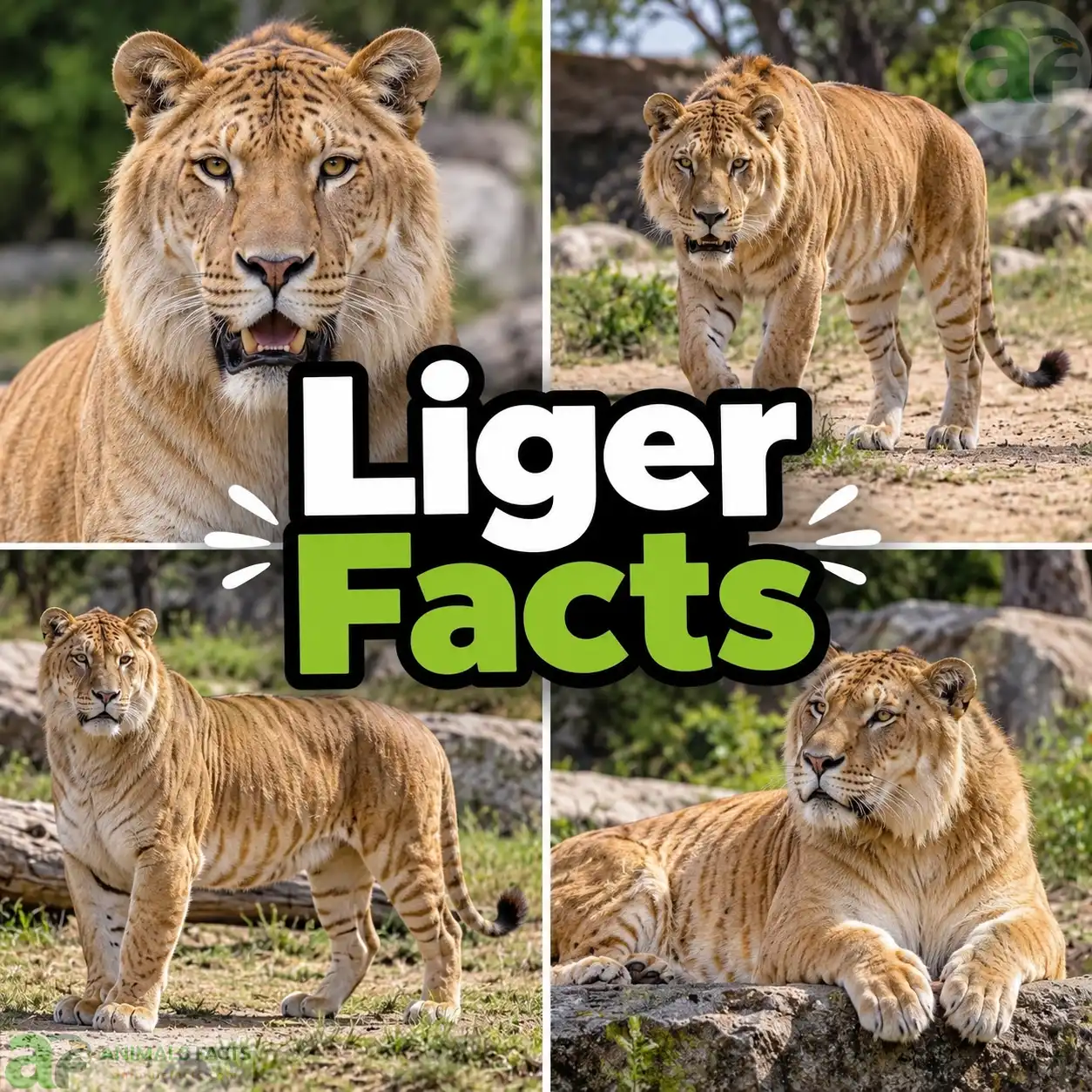
Liger Facts
| Feature | Details |
|---|---|
| Scientific Name | Panthera leo × Panthera tigris (hybrid) |
| Kingdom | Animalia |
| Phylum | Chordata |
| Class | Mammalia |
| Order | Carnivora |
| Family | Felidae |
| Common Names | Liger |
| Parent Species | Male lion (Panthera leo) × Female tiger (Panthera tigris) |
| Native Range | Not native — produced exclusively in captivity |
| Habitat | Captive environments — zoos, wildlife sanctuaries, private facilities |
| Lifespan | Estimated 15–25 years (based on parent species lifespans) |
| Diet | Meat — large quantities of beef, chicken, fish, and other protein sources |
| Height | Up to 1.8 meters (6 feet) at shoulder — taller than either parent |
| Body Length | 3–3.7 meters (10–12 feet) including tail |
| Weight | 270–450 kg (600–1,000 lbs) — the largest cat on Earth |
| Top Speed | Estimated 80 km/h in short bursts |
| Conservation Status | Not applicable as a species — sterile hybrid (females occasionally fertile) |
| Chromosome Count | 2n = 38 (same as both parent species — unlike many hybrids) |
| Estimated World Population | Fewer than 100 individuals worldwide |
 1. Introduction: What is a Liger?

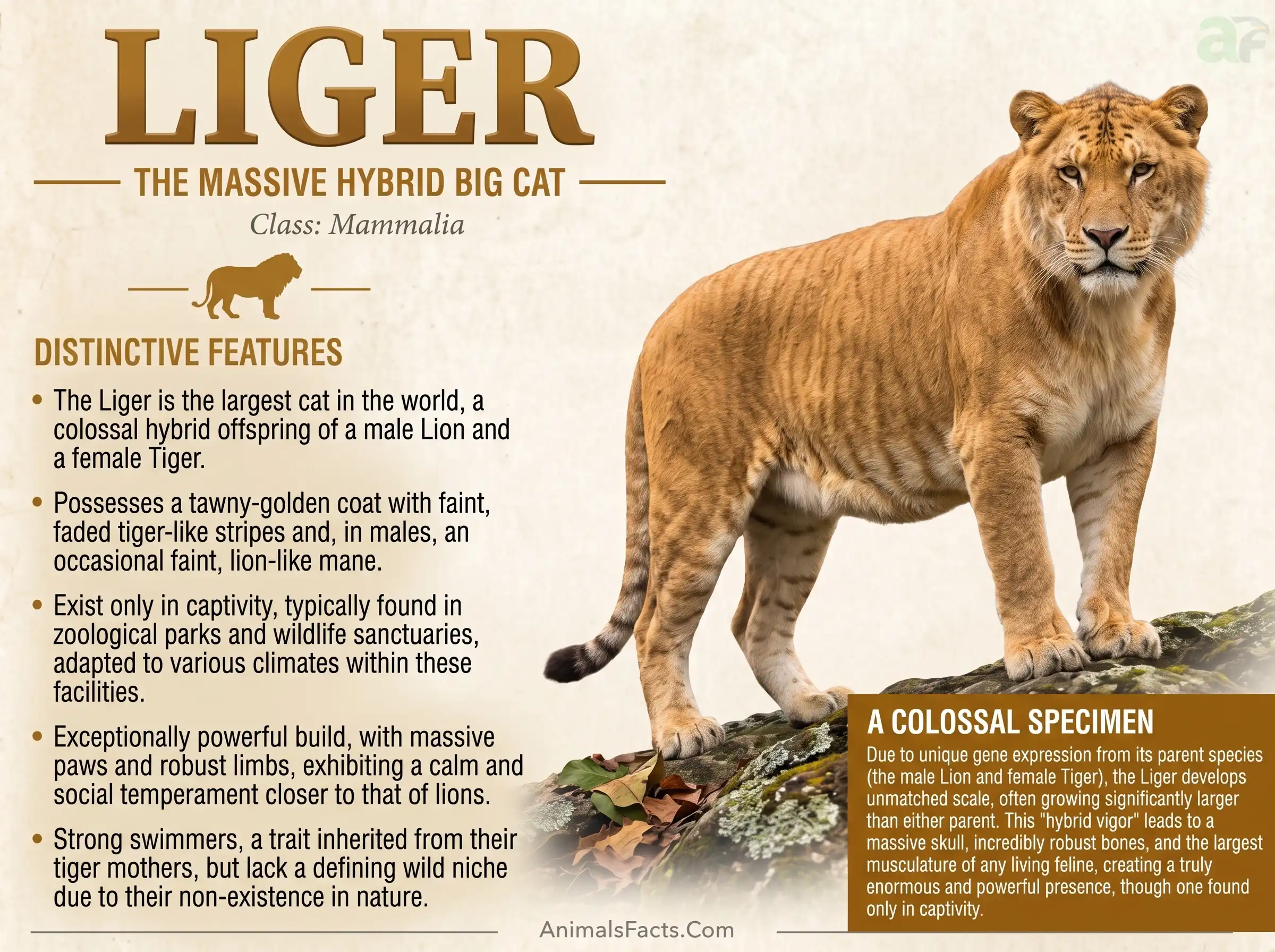
Picture the largest cat that has ever walked the Earth in the modern era — an animal so enormous it dwarfs both of its already formidable parents, combining the powerful build of a lion with the dramatic striped patterning of a tiger into a creature that seems almost too extraordinary to be real. Liger facts begin with this single, astonishing truth: the liger is the largest cat alive on Earth today — and it exists not because of millions of years of evolutionary refinement, but because of the deliberate or accidental proximity of two of the world’s most iconic predators in human captivity. With adults regularly reaching 3.7 meters in length and weighing up to 450 kilograms, the liger is not merely a curiosity — it is a biological phenomenon that challenges our understanding of genetics, body size regulation, and the invisible boundaries between species.
Interesting facts about ligers reveal an animal that is far more complex, more biologically significant, and more ethically contested than its popular culture reputation — shaped primarily by a comedic reference in a 2004 teen film — would suggest. The liger’s extraordinary size is caused by a phenomenon called genomic imprinting — a sophisticated epigenetic mechanism by which certain genes are expressed differently depending on whether they were inherited from the mother or the father. When a male lion’s growth-promoting genes combine with the absence of the tiger mother’s growth-inhibiting genes, the result is an animal that simply does not receive the genetic signal to stop growing — continuing to develop far beyond the size of either parent. This is not a defect or a disease. It is genetics in its most dramatic and visible form.
Whether you are searching for liger facts for kids to satisfy an insatiable curiosity about the world’s biggest cat, a biology enthusiast fascinated by the science of genomic imprinting and hybrid gigantism, a big cat conservation advocate concerned about the ethics of deliberately breeding hybrids, or simply someone who has always been captivated by the idea of an animal that combines the two most iconic predators on Earth — this is your comprehensive guide. We cover liger scientific name, liger diet, liger size and weight in extraordinary detail, liger behavior, the genetics of hybrid gigantism, the profound ethical debates surrounding liger breeding, and everything else these remarkable animals have to offer. The world’s largest cat deserves your full attention — and your most informed perspective.
2. Liger Species Overview & Classification
The liger occupies one of the most taxonomically fascinating positions in the animal kingdom — sharing the same chromosome count as both parent species, belonging to the same genus as both parents, yet being neither lion nor tiger but something genuinely distinct that could not exist without deliberate or accidental human facilitation.
Species Classification Table
| Taxonomic Rank | Classification |
|---|---|
| Kingdom | Animalia |
| Phylum | Chordata |
| Class | Mammalia |
| Order | Carnivora |
| Family | Felidae |
| Subfamily | Pantherinae |
| Genus | Panthera (both parent species) |
| Father (Sire) | Male lion — Panthera leo |
| Mother (Dam) | Female tiger — Panthera tigris |
| Hybrid Designation | Panthera leo × Panthera tigris |
| Taxonomic Status | Hybrid — not a recognized species |
| Chromosome Count | 2n = 38 (same as both parent species) |
Understanding the Liger vs. Tigon Distinction
The direction of the cross is critically important — and produces dramatically different results:
- Liger — Male lion × female tiger — produces the enormous, lion-mane-influenced, growth-unrestricted giant
- Tigon — Male tiger × female lion — produces a smaller hybrid that is typically smaller than both parent species due to the opposite genomic imprinting dynamic
This dramatic difference between liger and tigon — produced by simply reversing which parent is male and which is female — is one of the most striking demonstrations of genomic imprinting in any animal system and has made the liger/tigon comparison a standard teaching example in advanced genetics education.
The Parent Species
Lions (Panthera leo):
- 2n = 38 chromosomes
- Native to sub-Saharan Africa and a small population in India’s Gir Forest
- Social, pride-living apex predators
- Males possess the iconic mane; males significantly larger than females
- IUCN Status: Vulnerable — approximately 20,000–25,000 wild individuals
Tigers (Panthera tigris):
- 2n = 38 chromosomes — same as lions, explaining the hybrid viability
- Native to Asia — multiple subspecies across South, Southeast, and East Asia
- Solitary apex predators; the world’s largest wild cat species
- No mane; distinctive orange-black-white striped coat
- IUCN Status: Endangered — approximately 3,900 wild individuals
Subspecies Comparison Table
The characteristics of individual ligers vary depending on which subspecies of lion and tiger were the parents:
| Liger Type | Lion Parent | Tiger Parent | Notable Characteristics |
|---|---|---|---|
| African lion × Bengal tiger | P. l. leo | P. t. tigris | Most common; largest body size |
| African lion × Siberian tiger | P. l. leo | P. t. altaica | Very large; Siberian tiger’s cold adaptation |
| Asiatic lion × Bengal tiger | P. l. persica | P. t. tigris | Rarer; both parents from Asian populations |
| African lion × Sumatran tiger | P. l. leo | P. t. sumatrae | Smaller than typical liger; Sumatran tiger smallest subspecies |
Evolution & Discovery Timeline
~3–4 million years ago — The ancestral Panthera lineage diverges into the lion and tiger lineages as African and Asian populations separate — accumulating the genetic differences that make their hybrid offspring so remarkably different in size from either parent.
~2,000–3,000 years ago — The first possible historical references to lion-tiger hybrids appear in ancient texts — Roman natural history accounts mention large hybrid cats kept in imperial menageries, though these accounts are not definitively confirmed as describing ligers specifically.
1824 — The first reliably documented liger birth in recorded history — a pair of hybrid cubs born at Windsor, England from a male lion and female tiger kept in the same enclosure at the Windsor Castle menagerie.
1837 — A second documented liger birth in India, described by British colonial naturalists — providing early scientific confirmation that the lion-tiger cross was reproducible.
1900s — Multiple European and American zoos begin documenting liger births — initially as accidents from housing lions and tigers together, later as deliberate crosses motivated by public interest.
1935 — A landmark account of ligers living at the Hellabrunn Zoo in Munich, Germany describes adult ligers of extraordinary size — providing some of the first detailed measurements confirming the hybrid’s dramatically larger body compared to either parent.
1973 — The first scientific analysis of liger growth hormone profiles begins to identify the biochemical basis of hybrid gigantism — early work that eventually leads to the genomic imprinting explanation.
1993 — The film Jurassic Park — while not featuring ligers directly — sparks enormous public interest in the genetics of hybrid animals and the concept of organisms produced outside their natural evolutionary context.
2004 — The film Napoleon Dynamite includes the character Napoleon describing his hobby of drawing “ligers” — describing them as “pretty much my favorite animal” and noting they are “bred for their skills in magic.” This comedic reference introduces the word “liger” to a global popular culture audience of tens of millions who had never previously heard of the animal.
2012 — “Hercules” — a male liger at the Myrtle Beach Safari in South Carolina, USA — is confirmed by Guinness World Records as the world’s largest living cat — weighing 418.2 kg (922 lbs) and measuring 3.33 meters (131 inches) in length.
2018 — Updated genetic research on genomic imprinting in Panthera hybrids provides the most complete molecular explanation yet for liger gigantism — identifying specific imprinted gene regions responsible for the growth dysregulation.
2023 — Ongoing ethical debate within the zoo and conservation community leads multiple major zoological associations to formally discourage or prohibit the deliberate breeding of ligers in member institutions — marking a significant shift in institutional attitudes toward hybrid big cats.
“The liger is one of the most extraordinary demonstrations of genetics I have ever encountered in living form. It tells us things about genomic imprinting, body size regulation, and the hidden instructions in our DNA that no laboratory experiment could communicate as viscerally as simply standing before one of these magnificent animals.” — Dr. Craig Packer, Director of the Lion Research Center, University of Minnesota, and one of the world’s leading lion biologists
3. Liger Physical Description & Unique Features
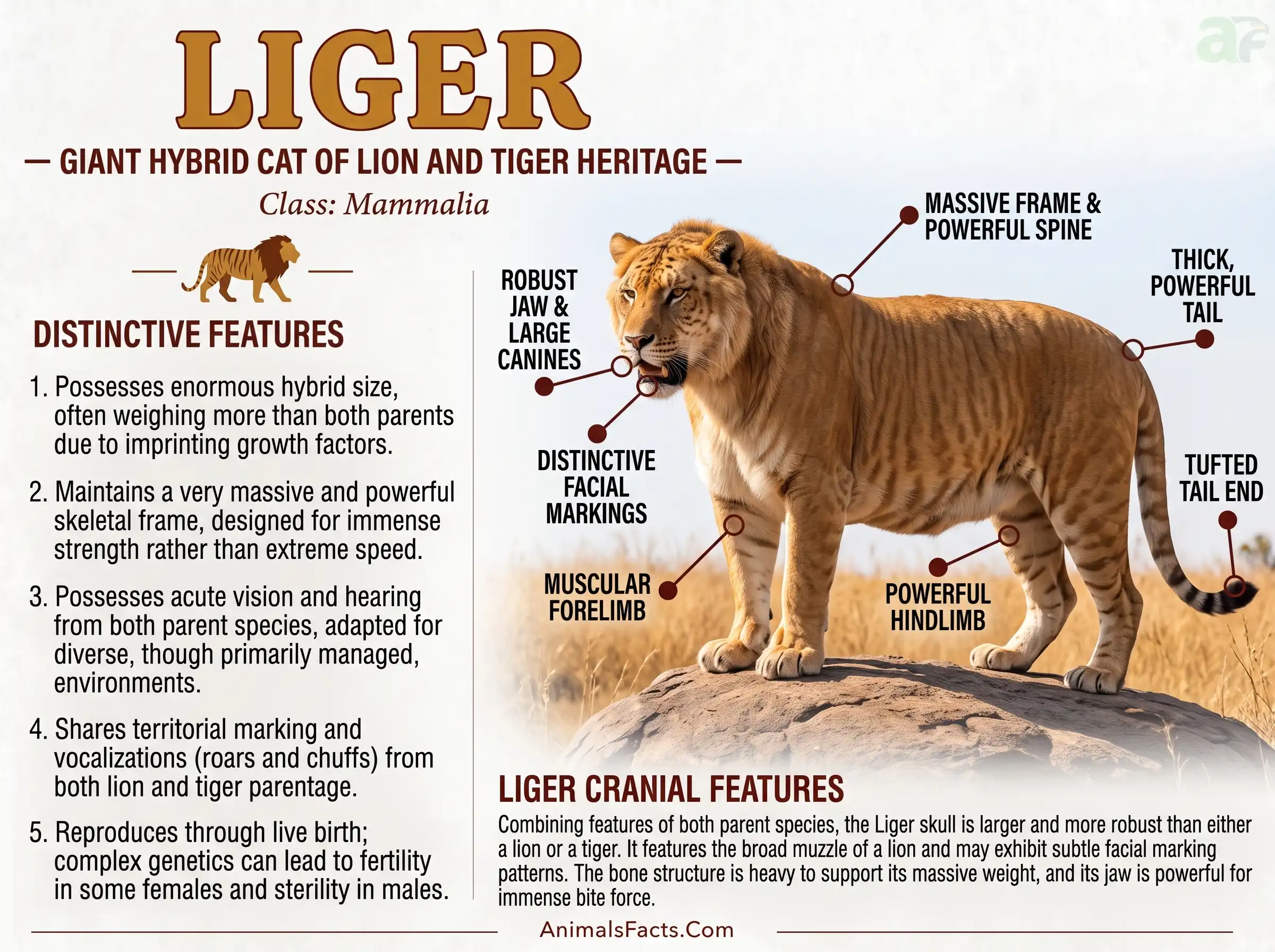
Liger size and weight are the defining facts of the species — and the numbers are genuinely difficult to absorb without seeing a liger in person. These animals are not merely “bigger than a lion or tiger” — they are categorically, dramatically, almost incomprehensibly larger than any wild cat alive today, representing a body size that has no parallel in the modern feline world.
Body Size — The Extraordinary Scale
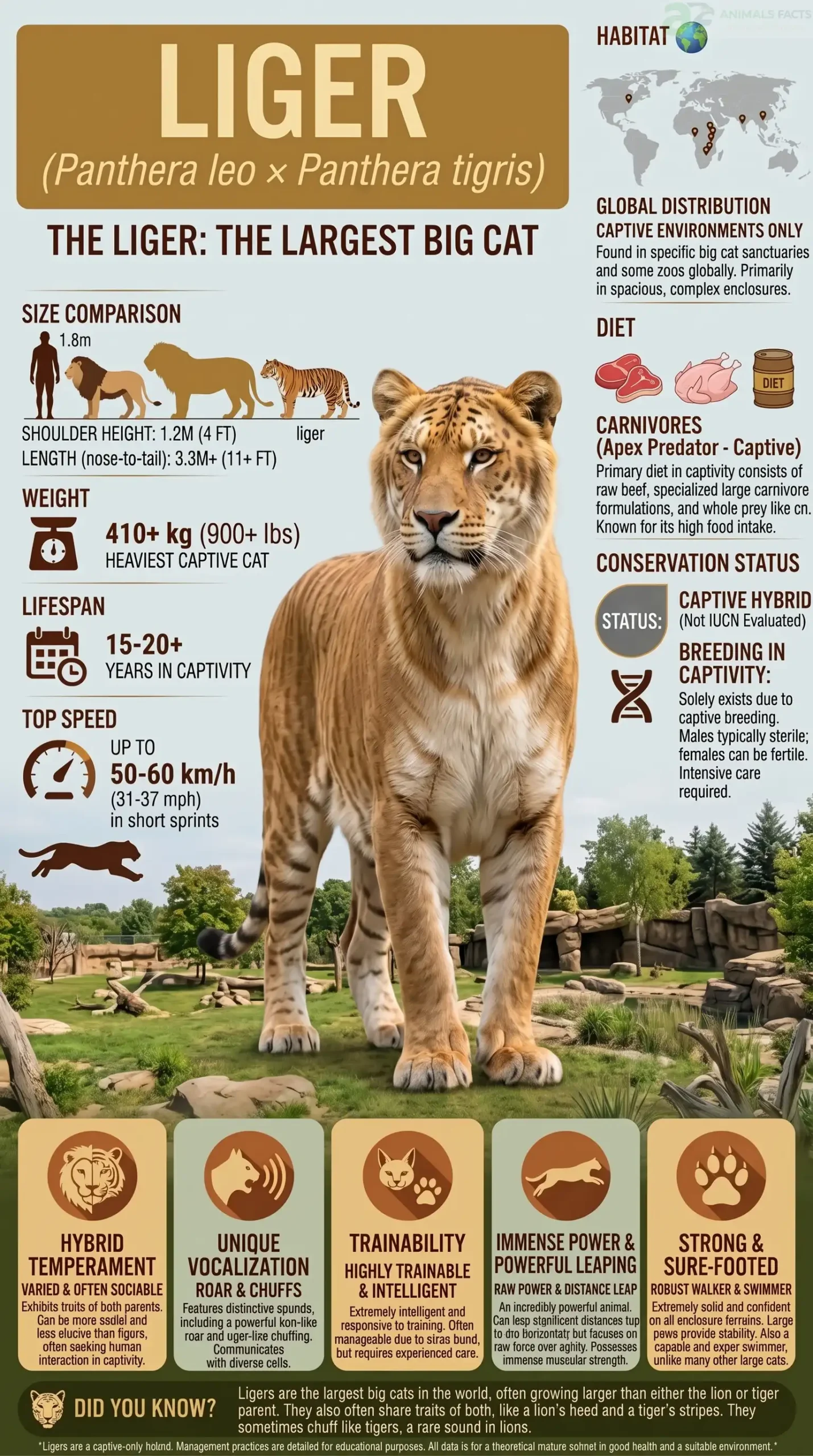
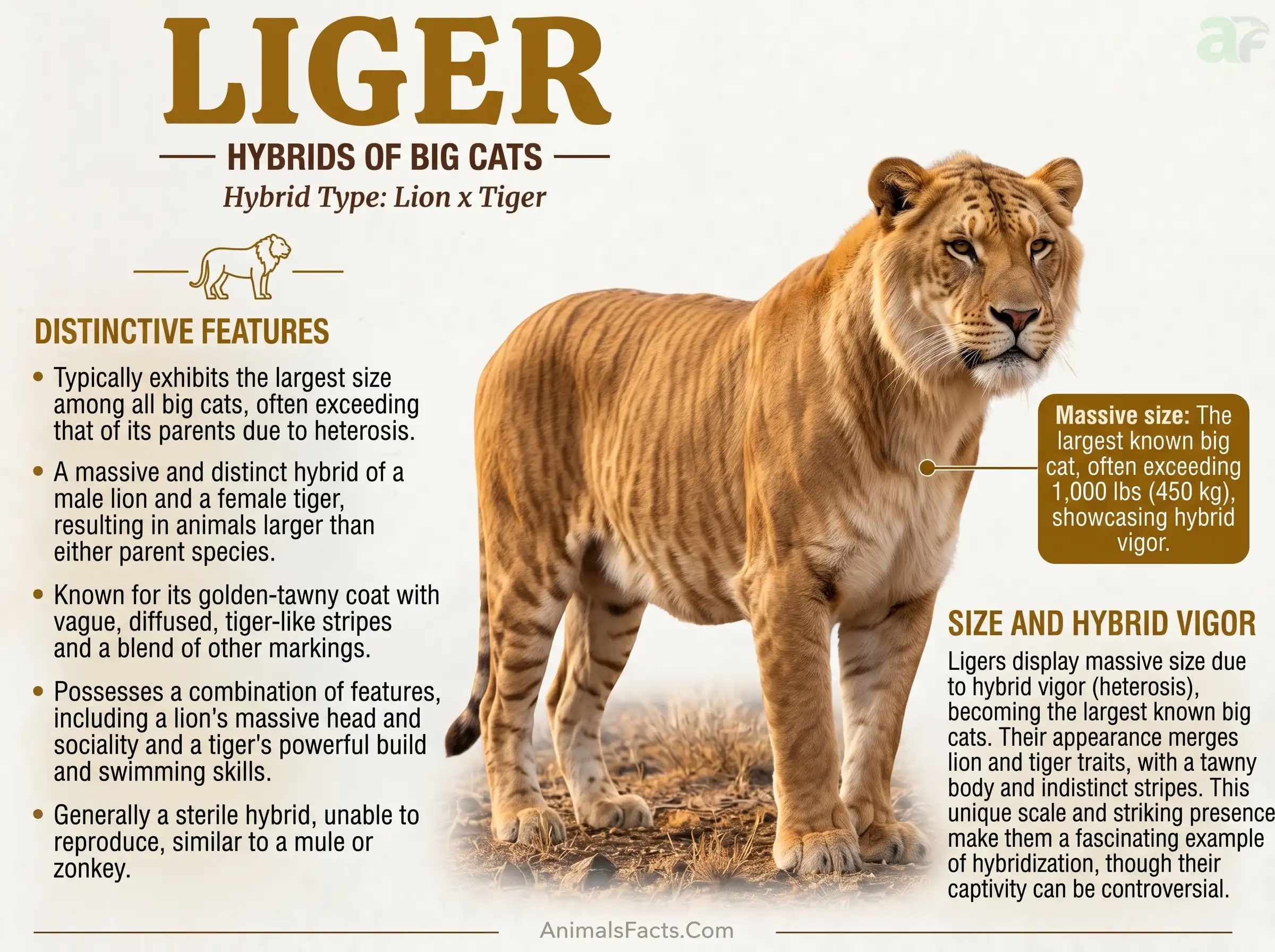
The average adult male liger weighs between 270 and 450 kg (600–1,000 lbs) — compared to:
- Male African lion: 150–250 kg
- Male Bengal tiger: 175–260 kg
- Male Siberian tiger: 180–306 kg (largest wild cat)
A large adult male liger therefore weighs approximately twice as much as a large male lion or tiger — achieving a body mass that has no parallel among living felids and that approaches the body mass of some extinct prehistoric big cats.
Body length of adult ligers ranges from 3 to 3.7 meters (10–12 feet) including the tail — making them longer than any wild cat and approaching the length of some small crocodilians.
Shoulder height of adult ligers can reach 1.8 meters (6 feet) — meaning that standing at full height, a liger’s back is at the eye level of an average adult human, while the top of its head would tower above most people.
Coat & Appearance
The liger’s coat combines features of both parent species in a visually striking and variable way:
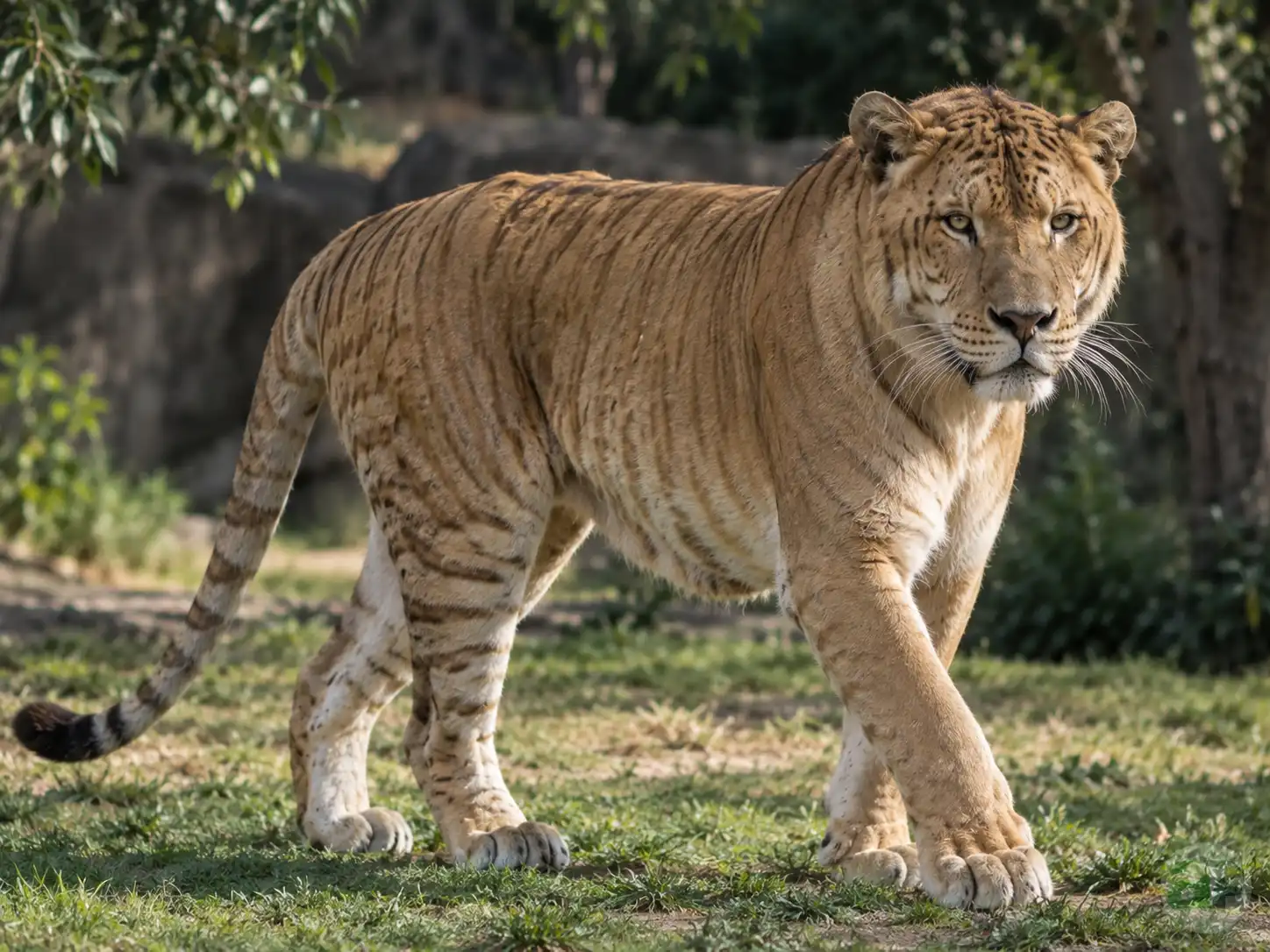
Base color — Typically tawny golden-brown to pale buff — reflecting the lion’s coat color more than the tiger’s orange, though the exact shade varies between individuals
Stripes — Most ligers display faint to moderate tiger-stripe patterns — the stripes are typically less bold and less distinct than a tiger’s, often appearing as shadow markings on the tawny base coat rather than the sharp black-on-orange contrast of a purebred tiger. Some ligers show very faint ghost striping; others have moderately distinct stripes particularly on the flanks and legs
Spots — Many ligers also show faint rosette or spot patterns — reflecting the lion’s genetic heritage, since lion cubs are born with spots that fade with maturity but leave faint residual patterns that appear more prominently in liger hybrids
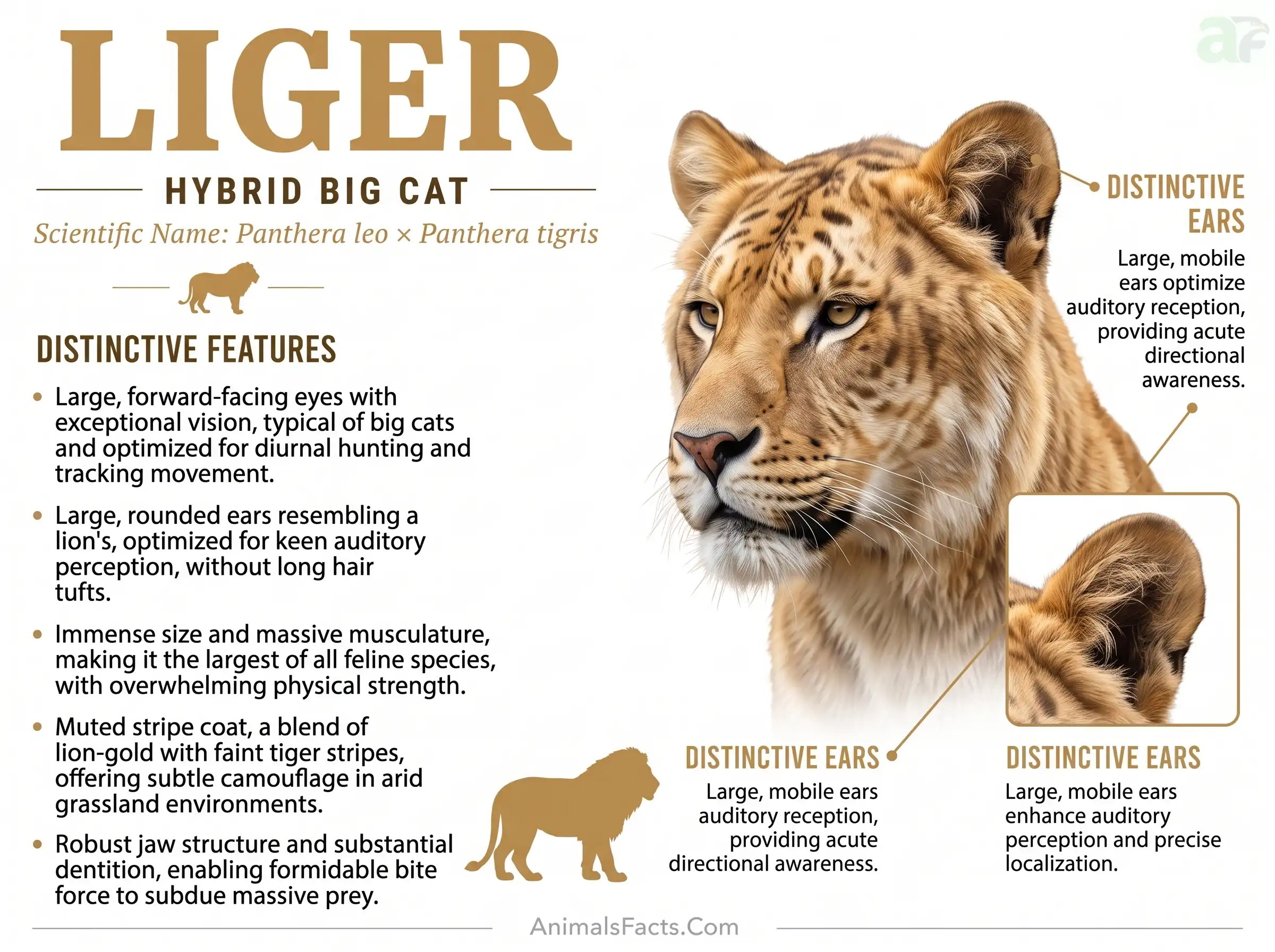
Mane — Male ligers almost always develop a mane — typically less full and dramatic than a purebred male lion’s mane, but present and genuine. Mane development varies considerably between individuals — some male ligers develop impressive manes approaching lion quality, while others have sparse, patchy mane development
Head & Facial Features
The liger’s head is enormous — proportionally large even for an animal of its overall body mass — combining the broad, powerful skull of the lion with the wider facial structure of the tiger. The overall facial impression is of a creature that is recognizably between both species — with a lion-like muzzle and eye placement combined with tiger-influenced facial width and whisker pad prominence.
Gender Differences
Female ligers are significantly smaller than males — typically weighing 150–250 kg — though still substantially larger than either parent species’ females. Female ligers occasionally retain some degree of fertility — a remarkable distinction from most hybrid animals — and documented cases of female ligers successfully producing offspring with purebred lions or tigers exist, creating the animals known as “Li-ligers” (female liger × male lion) or “ti-ligers” (female liger × male tiger).
Did You Know? The liger’s extraordinary size is caused by a biological mechanism called genomic imprinting — a process where certain genes are “switched on” or “switched off” depending on whether they were inherited from the mother or the father. In lions, males carry growth-promoting genes that are normally counterbalanced by growth-limiting genes from female lions. When a male lion mates with a female tiger, the tiger mother does not carry the lion’s growth-limiting counterpart genes — so the liger inherits the lion’s growth promotion without the corresponding inhibition, resulting in continuous, unchecked growth far beyond either parent’s normal adult size. This is not a disease or a defect — it is the genome doing exactly what it is programmed to do, simply without the normal check on the other end.
4. Top 25 Amazing Liger Facts
Here is your definitive collection of the most extraordinary, scientifically verified, and genuinely astonishing liger facts as of 2026:
- The liger is the largest cat on Earth — larger than any wild lion, any wild tiger, and any other living felid species — with adults regularly exceeding 360 kg and the largest confirmed individual weighing 418 kg.
- “Hercules” — a male liger at Myrtle Beach Safari in South Carolina — was confirmed by Guinness World Records as the world’s largest living cat, weighing 418.2 kg (922 lbs) and measuring 3.33 meters in length.
- Ligers exist exclusively because of human activity — lions and tigers do not share any natural wild habitat today (and have not for thousands of years), meaning every liger that has ever lived is the result of captive proximity arranged by humans.
- The liger’s extraordinary size is caused by genomic imprinting — a sophisticated epigenetic mechanism where the lion father’s growth-promoting genes are expressed without the usual counterbalancing growth-limiting genes that would normally come from a lion mother.
- Unlike most hybrid animals (including zonkeys and mules), ligers share the same chromosome count as both parent species — 2n = 38 — which explains why fertilization is possible and why female ligers are occasionally fertile.
- Female ligers are sometimes fertile — a remarkable exception to the usual sterility of interspecific hybrids. Female ligers have successfully produced offspring (“Li-ligers” and “Ti-ligers”) with purebred lions and tigers respectively.
- Ligers are excellent swimmers — inheriting this ability from their tiger parent, as tigers are known among big cats for their comfort and ability in water. Most lions avoid swimming; ligers swim readily.
- Ligers can roar — they inherit the roaring capability from both parent species and produce vocalizations described as intermediate between the lion’s deep roar and the tiger’s more percussive roar.
- The liger is not the only Panthera hybrid — the tigon (male tiger × female lion) also exists and is in many ways the liger’s biological opposite: typically smaller than both parent species due to the reverse genomic imprinting dynamic.
- Despite their massive size, ligers are reportedly gentle and social in captivity — with handlers at facilities that maintain them describing them as typically calm, interactive, and bonding readily with familiar humans.
- A liger’s paw size is proportional to its body — adult male ligers have paws that are dramatically larger than those of either parent species, with paw prints exceeding 30 cm in diameter — larger than those of any wild cat.
- Ligers are described as having lion-like social tendencies combined with tiger-like independence — some individuals show strong social bonding behaviors consistent with lion pride dynamics, while others display the more solitary, self-contained temperament of tigers.
- Ligers can consume up to 9 kg of meat per day — and in some documented cases significantly more — reflecting both their enormous body mass and the metabolic demands of an animal that is continuously fighting the genetic tendency toward further growth.
- The first documented liger in recorded history was born in Windsor, England in 1824 — making the liger a documented reality for nearly 200 years despite its relatively recent entry into popular culture awareness.
- Napoleon Dynamite (2004) — the cult comedy film — is responsible for introducing the word “liger” to a global popular culture audience of tens of millions when the character Napoleon describes his artwork depicting a “liger” as “pretty much my favorite animal.”
- Ligers have been documented at facilities across the United States, Russia, China, South Korea, India, South Africa, and Germany — though the total global population of all ligers is estimated at fewer than 100 individuals.
- Male ligers typically do not become fully reproductively functional — while they produce some testosterone and develop secondary sexual characteristics including manes, most male ligers are effectively sterile, unlike female ligers who may retain some fertility.
- The genomic imprinting mechanism that causes liger gigantism is the same biological process involved in human Beckwith-Wiedemann syndrome — a growth disorder where human babies are born significantly larger than normal due to similar imprinting disruption — making liger biology directly relevant to human medical research.
- Ligers are estimated to eat approximately 25,000 calories per day when fully grown — compared to approximately 2,000 calories for an average adult human and approximately 7,000–9,000 calories for a wild lion.
- The largest liger ever documented in reliable historical records was reportedly kept in a Russian zoo in the early 20th century, with accounts describing an animal measuring over 4 meters in length — though these historical measurements lack the verification standards of modern Guinness records.
- Major zoological associations including the World Association of Zoos and Aquariums (WAZA) have formally discouraged deliberate liger breeding — classifying it as contrary to conservation goals and potentially harmful to animal welfare given the health challenges associated with hybrid gigantism.
- Ligers appear to inherit behavioral characteristics from both parent species — they have been documented climbing trees (a tiger behavior unusual in lions), swimming readily (tiger behavior), AND showing social affiliative behavior toward familiar animals and humans (lion behavior).
- The liger’s coat pattern is unique to each individual — no two ligers have exactly the same arrangement of faint stripes, spots, and base coloration, just as no two tigers have the same stripe pattern and no two lions have the same facial whisker spot arrangement.
- Ligers often develop health challenges as they age — the continuous growth pressure imposed by the genomic imprinting mechanism can stress joints, organs, and other body systems not designed to support extreme body mass, making careful veterinary management essential for captive ligers.
- The scientific significance of ligers extends beyond novelty — studying liger biology has contributed to understanding of genomic imprinting, body size regulation, hybrid vigor and depression, species divergence mechanisms, and the epigenetic regulation of growth — areas with direct relevance to human medicine and evolutionary biology.
5. Fun Facts About Ligers
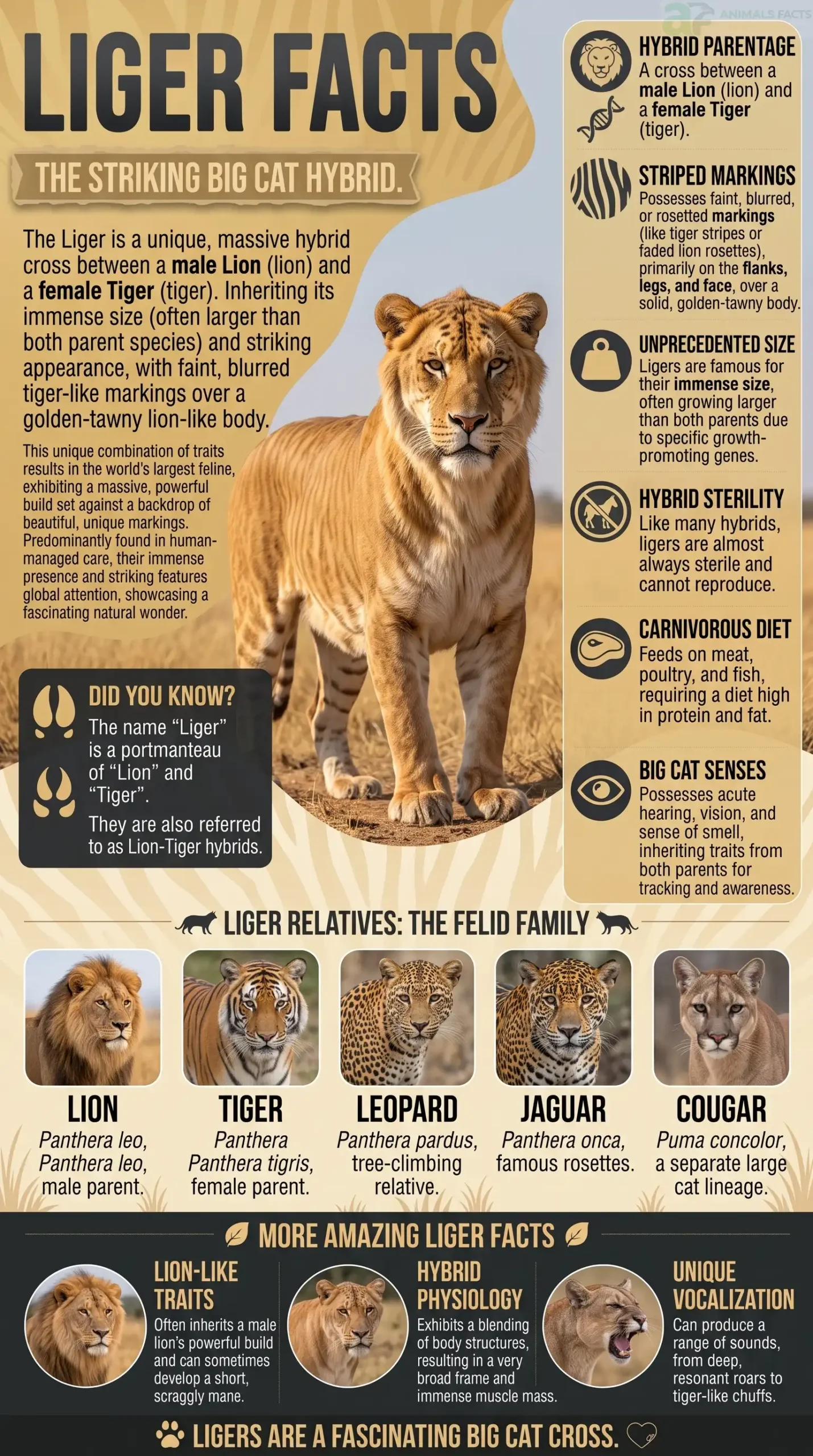
- Ligers are the largest cats on Earth — bigger than any wild lion or tiger
- The record-holder “Hercules” weighed 418 kg — heavier than a grand piano
- Ligers exist only in captivity — lions and tigers share no wild habitat
- Ligers are excellent swimmers — thanks to their tiger parent
- Female ligers can sometimes reproduce — unlike most hybrid animals
- Ligers can roar — inheriting this from both parent species
- The liger’s giant size is caused by genomic imprinting — not a disease
- Ligers eat up to 9 kg of meat per day
- Napoleon Dynamite made ligers famous in 2004
- Fewer than 100 ligers exist in the world today
- Ligers can climb trees like tigers despite their enormous size
- Each liger has a completely unique coat pattern
6. Ligers Natural Habitat & Geographic Range
Liger habitat is exclusively and entirely the human-managed environments of captive facilities — because the liger is not a naturally occurring animal and cannot exist without human facilitation. Lions and tigers have not shared natural wild habitat for thousands of years, and even in the regions of historical overlap, the probability of natural hybridization was essentially zero given the species’ distinct ecological requirements and behavioral barriers.
Why No Wild Ligers Exist
The fundamental reason wild ligers do not occur is geographic — lions and tigers no longer share any natural range:
- Lions (Panthera leo) are found in sub-Saharan Africa and a single small population in India’s Gir Forest (Asiatic lion — approximately 700 individuals)
- Tigers (Panthera tigris) are found in South, Southeast, and East Asia — with no populations overlapping with the African lion’s range, and the Asian lion population in Gir Forest occupying a separate area from India’s tiger populations
Historically, lions ranged across parts of the Middle East and Central Asia where tigers also occurred — and some ancient accounts may describe rare natural hybridization events from these zones of historical overlap. However, both species were eliminated from the Middle East and Central Asia hundreds of years ago, eliminating any possibility of natural hybridization today.
Captive Liger Locations Worldwide
Ligers are maintained at a limited number of facilities globally:
| Country | Approximate Number | Notable Facilities |
|---|---|---|
| United States | ~30–40 individuals | Myrtle Beach Safari (SC), various private facilities |
| China | ~20–30 individuals | Multiple zoological parks |
| Russia | ~5–10 individuals | Various regional zoos |
| South Korea | ~5–10 individuals | Everland theme park and others |
| India | ~5 individuals | Rare; various private facilities |
| Germany | ~3–5 individuals | Safari-type parks |
| South Africa | ~3–5 individuals | Private wildlife facilities |
| Other countries | ~5–10 individuals | Various scattered facilities |
Total estimated global population: fewer than 100 individuals — making ligers among the rarest large felids in the world by absolute individual count, though this rarity is human-determined rather than conservation-driven.
Captive Habitat Requirements
Ligers require exceptionally large enclosures by zoological standards — their enormous body size demands proportionally extensive space for movement, and facilities that house ligers must accommodate:
- Minimum enclosure size of several hundred square meters for basic welfare
- Swimming facilities — pools or water features reflecting the liger’s tiger-inherited love of water
- Strong perimeter fencing rated for the force that a 400 kg cat can generate — far exceeding standard tiger or lion enclosure specifications
- Climate considerations — some ligers appear more heat-sensitive than either parent species, possibly due to the metabolic demands of their enormous body mass
Did You Know? The only region where lions and tigers share even marginal geographic proximity today is the Gir Forest of Gujarat, India — where the last surviving Asiatic lion population (~700 individuals) occupies habitat in the same general region of western India where tigers historically occurred (though tigers are not currently present in Gujarat). Conservation authorities have actively discussed the possibility of establishing a second Asiatic lion population elsewhere in India partly to prevent accidental hybridization concerns — though the practical risk of lion-tiger hybridization in the wild is effectively zero given current population distributions.
7. Liger Diet & Feeding Behavior
Liger diet is entirely carnivorous — reflecting the obligate carnivore status of both parent species — but the quantities involved are extraordinary, proportional to the liger’s massive body size and the significant metabolic demands of maintaining and continuously growing a body that far exceeds evolutionary design parameters.
Diet Breakdown Table
| Food Type | Estimated % of Diet | Notes |
|---|---|---|
| Beef and large ruminant meat | ~50–60% | Primary protein source in most facilities |
| Chicken and poultry | ~20–25% | Supplementary protein; whole carcasses preferred |
| Fish | ~5–10% | Reflects tiger parent’s fish-eating tendency; some ligers are enthusiastic fish consumers |
| Horse meat | ~5–10% | Used in some facilities; nutritionally appropriate |
| Rabbit and small prey | ~2–5% | Enrichment feeding; whole carcasses provide enrichment |
| Vitamin and mineral supplements | Non-nutritive | Essential given the difficulty of meeting all nutritional needs from zoo-grade meat |
Daily Food Intake
The liger’s daily food requirement is one of the most practically significant aspects of maintaining these animals in captivity:
- Adult male liger (400 kg): approximately 7–9 kg of meat per day under managed feeding programs
- Adult female liger (200 kg): approximately 4–6 kg of meat per day
These quantities represent significant logistical and financial challenges for facilities maintaining ligers — the annual meat cost for a single large adult male liger can exceed $10,000–$15,000 depending on meat prices and feeding protocols.
Feeding Behavior
Ligers display feeding behaviors that combine characteristics of both parent species:
Lion feeding heritage — Lions are adapted to feast-and-fast cycles — consuming enormous quantities at a single sitting after a successful hunt, then potentially going days without eating. Captive ligers show this tendency — most facilities feed them every other day or in large single-meal events rather than daily small portions, reflecting the natural feeding pattern of large felids.
Tiger feeding heritage — Tigers are more consistent hunters than lions, typically taking prey every 3–5 days in the wild. The liger appears to combine aspects of both feeding strategies — showing strong feeding motivation and large consumption capacity while tolerating the feast-and-fast cycle.
Water behavior — Unlike lions which typically drink from water sources but avoid immersion, ligers frequently enter water during or after feeding — a behavior directly inherited from the tiger parent that is unusual in lion-influenced animals. Some ligers will carry food items into their water features and eat while partially submerged.
Prey Enrichment
Responsible liger facilities provide enrichment feeding — offering whole animal carcasses, hidden food items, and food placed in elevated positions — to allow natural hunting, stalking, and predatory behaviors even in captivity. Ligers allowed enrichment feeding show significantly better psychological wellbeing than those fed only pre-portioned meat from containers.
8. Reproduction & Life Cycle
Liger reproduction is one of the most scientifically fascinating aspects of the species — combining the expected sterility of a hybrid animal with the remarkable exception of partial female fertility, and illustrating the genomic mechanisms that both enable hybrid formation and typically prevent hybrid reproduction.
The Genetics of Liger Fertility
Unlike most interspecific hybrids (including mules, zonkeys, and most other animal hybrids between different species), ligers share the same chromosome count as both parent species — 2n = 38. This means that unlike a zonkey (whose mismatched chromosome numbers prevent normal meiosis), a liger’s chromosomes can theoretically pair during meiosis, potentially producing viable eggs or sperm.
In practice:
- Male ligers are almost always sterile — despite the chromosome count being theoretically compatible, the epigenetic disruption of the genome caused by the lion-tiger cross typically prevents the production of viable sperm
- Female ligers are occasionally fertile — several documented cases exist of female ligers successfully conceiving and producing offspring when mated with purebred male lions or tigers
Documented Cases of Female Liger Fertility
“Shasta” — A female liger at the Salt Lake City Zoo was reportedly mated with a male lion and produced offspring in the 1950s — one of the earliest documented cases of female liger fertility, though the offspring (called “Li-ligers”) reportedly did not survive long.
Chinese facility ligers — Multiple Chinese zoological facilities have documented female ligers producing offspring with male lions, with at least some cubs surviving to adulthood — providing the most extensive documented evidence of female liger fertility and producing the first known second-generation liger hybrids.
The “Li-liger” and “Ti-liger”
The offspring of a female liger × male lion is called a “Li-liger” — an animal with three-quarters lion ancestry and one-quarter tiger ancestry. The offspring of a female liger × male tiger is called a “Ti-liger” — with three-quarters tiger ancestry. These second-generation hybrids are extremely rare, with fewer than a dozen documented individuals worldwide, and their existence raises significant ethical questions about deliberate breeding of already-hybrid animals.
Growth Rate & Development
Liger cubs are born at sizes comparable to or slightly larger than lion or tiger cubs — but they grow at a dramatically faster rate than either parent species. The genomic imprinting mechanism that causes liger gigantism appears to activate progressively during development, with ligers diverging increasingly from their parent species’ growth trajectories as they mature.
Adult size is typically reached by approximately 4–6 years of age — though some evidence suggests ligers may continue growing slowly throughout their lives, potentially never reaching a true growth plateau in the way that purebred lions and tigers do.
Liger Lifespan Comparison Table
| Animal | Average Lifespan (Wild/Captivity) | Max Documented | Reproductive? |
|---|---|---|---|
| Liger (hybrid) | 15–20 years (captivity) | ~25 years | Males No; Females Sometimes |
| Tigon (tiger × lion) | 12–20 years (captivity) | ~20 years | Females occasionally |
| Lion (Panthera leo) | 10–14 years (wild); 20–25 (captivity) | 29 years (captivity) | Yes |
| Tiger (Panthera tigris) | 10–15 years (wild); 20–26 (captivity) | 26 years (captivity) | Yes |
| Leopard (Panthera pardus) | 12–15 years (wild); 23 (captivity) | 27 years (captivity) | Yes |
9. Social Behavior & Communication
Liger social behavior is one of the most genuinely intriguing aspects of these hybrid animals — representing a behavioral negotiation between the fundamentally social nature of lions (which live in structured pride groups) and the fundamentally solitary nature of tigers (which establish and defend individual territories), producing individuals whose social tendencies vary dramatically from one animal to the next.
Social Tendencies
Lion social heritage — Lions are unique among big cats in being genuinely social animals — living in pride groups of related females, their cubs, and associated males. This social structure involves extensive affiliative behaviors including mutual grooming (allogrooming), communal cub rearing, coordinated hunting, and sustained social bonds between pride members that last years or decades. Ligers that express stronger lion-heritage social tendencies show these same affiliative behaviors — seeking physical contact with familiar animals and humans, showing distress when isolated, and demonstrating the kind of relaxed group tolerance that characterizes lion pride living.
Tiger social heritage — Tigers are among the most solitary of all the large felids — adults maintaining large exclusive territories and tolerating conspecifics only during mating and, briefly, mother-cub associations. Ligers expressing stronger tiger-heritage social tendencies may be more self-contained, more resistant to enforced proximity with unfamiliar individuals, and more inclined toward exploratory, independent behavior.
Individual variation — The relative expression of lion vs. tiger social tendencies appears to vary considerably between individual ligers — making each animal’s behavioral profile somewhat unpredictable and requiring experienced handlers who can read each individual’s specific behavioral signals rather than applying a uniform management approach.
Vocalizations
Ligers can roar — inheriting functional roaring capability from both parent species, both of which are members of the roaring cat group (Panthera). The liger’s roar is typically described as intermediate between the two parent species — deeper and more resonant than a tiger’s roar (which has a more percussive, short-burst quality) but potentially less powerful and sustained than the full territorial roar of a male African lion (which can be heard up to 8 km away).
Ligers also produce the full range of felid vocalizations including chuffs, hisses, growls, mews, and contact calls — with some individuals reported to produce tiger-like prusten (friendly puffing breath vocalizations) and others producing lion-like soft moaning contact calls.
Intelligence
Ligers appear to inherit the cognitive capabilities of both parent species — which are broadly similar given the close evolutionary relationship between lions and tigers. Problem-solving behavior, spatial memory, learning by observation, and recognition of familiar individuals have all been documented in captive ligers. Some handlers describe ligers as showing unusual cognitive flexibility — potentially reflecting the combination of lion social intelligence (calibrated to complex pride social dynamics) and tiger hunting intelligence (calibrated to sophisticated solitary prey stalking).
10. Predators & Defense Mechanisms
Adult ligers have absolutely no natural predators — their combination of enormous size, physical power, speed, and formidable weaponry (claws and jaws capable of generating the bite force of a large lion) places them beyond the threat level of any living terrestrial predator. In the captive environments where all ligers live, the question of predation is essentially academic — though understanding the liger’s defensive capabilities is important for facility management and handler safety.
Physical Defensive Capabilities
Size advantage — At 300–400 kg, an adult male liger is simply too large for any living predator to physically subdue. For comparison, the largest known prey items taken by lions (Cape buffalo up to 870 kg, young elephants) are typically taken by coordinated group hunting — no single predator attacks a healthy adult liger-sized animal.
Bite force — The liger’s jaw musculature — proportional to its enormous head — generates bite force estimated at approximately 1,200–1,800 Newtons — comparable to or exceeding that of either parent species and sufficient to crush bone and penetrate the hide of any living animal.
Claw weaponry — Liger claws are proportionally scaled to their enormous body size — significantly larger and potentially more forceful than those of either parent species. A single swipe from an adult liger paw delivers force sufficient to cause severe injury to any animal within range.
Speed — Despite their enormous mass, ligers can reportedly achieve speeds of approximately 80 km/h in short bursts — faster than either parent species — reflecting the explosive muscular power generated by their oversized musculature.
Handler Safety
The primary safety consideration in liger facilities is protecting human handlers from the accidental or intentional application of the liger’s enormous physical force. Even in ligers that are well-socialized, calm, and familiar with their handlers:
- Play behavior from a 400 kg cat involves forces that are potentially lethal to humans
- Surprise reactions to unfamiliar stimuli can result in explosive movements that endanger nearby handlers
- Feeding-associated arousal increases the risk of defensive or predatory behavior
All responsible liger facilities implement protected contact protocols — ensuring that handlers never share an unbarriered space with adult ligers, working through barriers with controlled access points rather than free contact with the animals.
Did You Know? The tigon — the liger’s biological opposite, produced by a male tiger × female lion cross — is typically smaller than both parent species rather than larger. This dramatic contrast between liger and tigon size is caused by the same genomic imprinting mechanism working in opposite directions: when a male tiger’s growth genes combine with a female lion’s counter-imprinting, the result is double inhibition of growth rather than the double promotion that produces the liger giant. The tigon therefore represents the genomic imprinting effect in its “shrinking” mode rather than its “growing” mode — and the two animals together constitute one of the most striking genetic demonstrations of imprinting biology in the entire animal kingdom.
11. Liger Facts for Kids
Hey incredible young animal explorers and future scientists! Here are some totally mind-blowing liger facts for kids that will make everyone around you stare in amazement:
- 🦁 A liger is BIGGER than any wild cat that has ever lived in modern times! It is bigger than the biggest lion, bigger than the biggest tiger, bigger than any cat you have ever seen — adult male ligers can weigh as much as a small car!
- 🦁 The world’s biggest liger weighs almost as much as a grand piano! “Hercules” — a liger in South Carolina — weighs 418 kilograms and is officially confirmed by Guinness World Records as the world’s largest living cat. That is nearly five times heavier than a large male lion!
- 🦁 Ligers only exist because of humans! Lions live in Africa and tigers live in Asia — they never meet in the wild. The only reason ligers exist is because humans keep lions and tigers near each other in captivity. Without humans, there would be no ligers anywhere on Earth!
- 🦁 Ligers love to swim! Even though most lions avoid water, ligers love to swim — they inherited this from their tiger parent. Tigers are famous for being brilliant swimmers who actually enjoy water, and their liger children share this enthusiasm!
- 🦁 A liger can ROAR like a lion AND roar like a tiger! Both parent species can roar, and so can the liger — producing a sound that is somewhere between a lion’s deep, rolling roar and a tiger’s shorter, sharper roar!
- 🦁 The word “liger” became world famous from a funny film! In the 2004 movie “Napoleon Dynamite,” the main character says his hobby is drawing ligers — “pretty much my favorite animal” — describing them as “bred for their skills in magic.” Millions of people learned about ligers from this joke!
- 🦁 Ligers are the rarest big cats in the world! There are only about 100 ligers on the entire planet. That makes them rarer than tigers, rarer than lions, and rarer than almost any other big cat you can name!
- 🦁 Some female ligers can have babies! Most hybrid animals cannot have babies at all — but female ligers are sometimes able to have cubs with male lions or tigers, producing animals called “Li-ligers” and “Ti-ligers” that are even more unusual!
12. Relationship with Humans
The relationship between ligers and humans is simultaneously one of the most intimate in the big cat world — since every liger has lived its entire life in close proximity to humans — and one of the most ethically contested, with ongoing and increasingly heated debate about whether creating these animals serves any legitimate purpose or whether it represents an exploitation of genetic novelty at the expense of individual animal welfare and broader conservation goals.
The Creation of Ligers — Deliberate vs. Accidental
Ligers were initially produced accidentally — in the early days of zoological parks, lions and tigers were sometimes housed together (or in adjacent enclosures with insufficient separation), and accidental matings occasionally produced hybrid cubs. The extraordinary size and appearance of these animals generated enormous public interest, which in some facilities led to deliberate breeding — intentionally crossing male lions with female tigers to produce ligers as visitor attractions.
As zoological ethics evolved through the 20th and into the 21st century, this deliberate breeding has become increasingly controversial within the professional zoo community. Today, major zoological associations globally — including WAZA, the Association of Zoos and Aquariums (AZA) in North America, and the European Association of Zoos and Aquaria (EAZA) — have formally discouraged or prohibited the deliberate breeding of ligers in member institutions, arguing that:
- Ligers serve no conservation purpose — they cannot contribute to the survival of either parent species
- The health challenges associated with hybrid gigantism may compromise animal welfare
- Resources devoted to maintaining ligers could more productively support conservation breeding of endangered parent species
- Breeding hybrids for public attraction is inconsistent with the conservation mission of modern zoos
Despite these institutional positions, private facilities, roadside zoos, and facilities outside mainstream zoological associations continue to breed ligers in some countries — particularly the United States, China, and Russia — where regulatory oversight of hybrid breeding is limited.
Public Fascination & Educational Value
The extraordinary public fascination with ligers — evident in the millions of social media engagements that liger content generates — does have some genuine educational value potential. Ligers can serve as living demonstrations of:
- Genomic imprinting — one of the most important and most difficult concepts in modern genetics to communicate to general audiences
- Species boundaries — the fact that lions and tigers can produce hybrids challenges simplistic ideas about what a “species” means
- Hybrid biology — the contrast between liger gigantism and tigon dwarfism is a compelling teaching tool for epigenetics education
Whether this educational value justifies the creation of individual animals — who will live their entire lives in captivity, face specific health challenges, and cannot contribute to conservation of wild populations — is the central ethical question in the liger debate.
Handler Relationships
Individual ligers that are extensively socialized from birth — handled by experienced staff in consistent routines — often develop what appear to be genuine social bonds with familiar handlers. Multiple liger handlers have described their animals as responsive to their specific voice, seeking physical contact and social interaction, and showing recognizable emotional differentiation between familiar and unfamiliar humans. These individual relationships are real and meaningful — but they also reflect the genuine challenge of maintaining appropriate professional objectivity when working with animals of this cognitive sophistication and social capability.
13. Conservation Status & Threats
As a hybrid rather than a species, the liger has no IUCN conservation status — it cannot be endangered or threatened in the conservation sense because it does not represent a population with independent evolutionary history or ecological function. However, the conservation context of its parent species — both of which face serious threats in the wild — is critically important background to understanding the ethical dimensions of liger breeding.
Parent Species Conservation Status
| Parent Species | IUCN Status | Wild Population | Population Trend |
|---|---|---|---|
| African lion (Panthera leo leo) | Vulnerable | ~20,000–25,000 | Decreasing |
| Asiatic lion (Panthera leo persica) | Endangered | ~700 | Increasing (from very low base) |
| Bengal tiger (Panthera tigris tigris) | Endangered | ~2,500 | Slowly increasing |
| Siberian tiger (Panthera tigris altaica) | Endangered | ~500 | Stable/slowly increasing |
| Sumatran tiger (Panthera tigris sumatrae) | Critically Endangered | ~400 | Decreasing |
The Conservation Ethics of Liger Breeding
The conservation ethics debate surrounding liger breeding is genuine, complex, and unresolved — and serious people on multiple sides of the argument make legitimate points:
Arguments against deliberate liger breeding:
- Deliberately bred ligers consume resources (space, food, veterinary care, staff time) that could support conservation breeding of endangered parent species
- Ligers cannot contribute genetically to the recovery of either lion or tiger wild populations — their existence is conservation-neutral at best
- Health challenges associated with hybrid gigantism may represent genuine welfare costs to individual animals
- Public fascination with ligers may distract conservation attention from the urgent needs of wild lion and tiger populations
- The private facility liger trade in some countries exists primarily for profit rather than educational or conservation purposes
Arguments in support of responsible liger maintenance:
- Existing ligers (however they were created) deserve excellent welfare for the duration of their natural lives — the ethical debate should not translate into neglect of living animals
- Well-managed liger exhibits provide genuine public education opportunities about genetics, hybridization, and conservation
- Individual ligers develop genuine social bonds with human caregivers that create animal welfare obligations independent of conservation debates
- Scientific research on liger biology has produced insights into genomic imprinting and body size regulation with broader medical significance
Regulatory Context
As of 2026, the regulation of liger breeding varies dramatically between countries:
- Most major zoological associations (AZA, EAZA, WAZA) discourage or prohibit deliberate hybrid breeding in member institutions
- Some US states have specific regulations restricting private ownership or breeding of big cat hybrids under the Big Cat Public Safety Act (2022) — which prohibits public contact with big cats and restricts private ownership
- China, Russia, and several other countries have no specific restrictions on liger breeding
- India has regulations against breeding hybrid big cats in government facilities but private facilities are less regulated
14. Famous Ligers in History & Pop Culture
Famous Named Liger Individuals
“Hercules” — The most famous liger in the world and the current Guinness World Record holder for the largest living cat. Hercules lives at the Myrtle Beach Safari (formerly T.I.G.E.R.S. — The Institute of Greatly Endangered and Rare Species) in South Carolina, USA, managed by Bhagavan “Doc” Antle. Born in 2002, Hercules has been the subject of numerous television documentaries, news features, and magazine articles. His 418.2 kg (922 lb) body weight and 3.33 meter length are confirmed by Guinness World Records. As of 2026, Hercules is one of the longest-lived well-documented ligers, approaching his mid-20s.
“Hobbs” — A male liger at the Valley of the Kings Animal Sanctuary in Wisconsin, USA, who became one of the most documented ligers in American educational media during the 1990s and 2000s — featured in multiple educational films and natural history programs that introduced liger biology to American school students.
“Samson” — A liger at the Novosibirsk Zoo in Russia who became the subject of significant scientific interest in the Russian veterinary and zoological community — with detailed health records documenting the medical challenges of managing a very large hybrid felid providing valuable data for veterinary research.
“Oden” — A male liger at Everland theme park in South Korea who became one of the most photographed and visited ligers in Asia — generating enormous public interest in South Korea’s wildlife attraction community and producing significant media coverage.
The Windsor Ligers (1824) — The original documented liger cubs born at Windsor Castle’s menagerie in England — the first reliably recorded ligers in history, whose birth was documented in natural history literature of the early 19th century and represents the entry point of ligers into the formal scientific record.
15. Role in Ecosystem & Food Chain
As animals that exist exclusively in captivity, ligers play no role in any natural ecosystem or food chain. This is one of the most significant ways in which ligers differ from the wild parent species — both lions and tigers are keystone apex predators whose presence or absence profoundly shapes the ecological communities of their respective habitats, while the liger exerts no such influence on any natural system.
The Absent Ecological Role
Lions as ecosystem engineers — In African savanna ecosystems, lions regulate herbivore populations, maintain the behavioral vigilance of prey species that shapes their habitat use, and through their kills provide nutrient subsidies that support scavenger communities including hyenas, vultures, jackals, and numerous smaller species. The lion’s presence in an ecosystem creates a landscape of fear that distributes herbivore pressure across the landscape rather than concentrating it at favored feeding sites — a fundamental service to vegetation community structure.
Tigers as ecosystem engineers — In Asian forest ecosystems, tigers perform equivalent apex predator functions — regulating deer, wild boar, and other ungulate populations, maintaining the forest understory through the trophic cascade effects of predation pressure, and providing kills that support extensive scavenger communities.
The liger’s absence from these systems — The liger, confined to captive enclosures, contributes to none of these ecosystem functions. Its ecological footprint is essentially limited to the consumption of captive-supplied food resources and the production of waste materials managed by facility staff.
Educational Ecosystem Role
The liger’s most meaningful functional role in relation to ecosystems is as an educational ambassador — its extraordinary visibility and the public fascination it generates can be directed toward building awareness of the conservation needs of wild lions and tigers, whose ecological roles are genuinely critical and whose populations are genuinely threatened.
Responsible facilities use liger exhibits as an entry point for conservation education — explaining that while the liger is fascinating, the truly urgent conservation story is the wild lion and tiger whose habitats and populations require immediate protection.
16. Myths, Folklore & Cultural Significance
The liger’s cultural history is simultaneously ancient — with possible references in classical antiquity — and remarkably recent in terms of mainstream popular awareness. The animal occupies a unique cultural position as something that seems almost mythologically improbable yet is genuinely real.
Ancient Possible References
Some classical scholars have proposed that certain ancient Roman and Greek accounts of large, unusual hybrid cats kept in imperial menageries may describe early ligers — the Roman practice of collecting exotic animals for the vivarium (private animal collection) and the munus (gladiatorial spectacle) included the capture and importation of exotic cats from across the empire and its trade networks. Ancient accounts describe hybrid cats of unusual size that some researchers interpret as possibly describing lion-tiger crosses, though these interpretations are speculative.
The ancient text known as the Periplus of the Erythraean Sea — a 1st century CE Greco-Roman document describing trade routes between the Mediterranean and India — mentions large hybrid animals from the Indian subcontinent that some scholars have interpreted as possibly describing liger-like creatures observed in the menageries of Indian rulers who kept both lions and tigers.
The Napoleon Dynamite Cultural Moment
The defining cultural moment for liger awareness is unambiguously the 2004 film Napoleon Dynamite, in which the socially awkward protagonist Napoleon describes his artwork as depicting a liger — which he defines as “a lion and a tiger mixed, bred for its skills in magic.” This comedic reference — delivered with complete deadpan sincerity — introduced the word “liger” to tens of millions of viewers worldwide who had never previously heard of the animal.
The cultural impact of this single film reference is genuinely significant — internet search traffic for “liger” increased by thousands of percent following the film’s release, public awareness of the animal’s existence dramatically expanded, and the phrase “bred for its skills in magic” became a widely quoted internet meme that continues to circulate decades later.
Symbol of Hybrid Potential
In popular cultural imagination, the liger has become a symbol of hybrid potential — the idea that combining two powerful, distinct elements can produce something greater than either alone. This cultural reading of the liger has been applied in business writing, sports team building literature, and personal development contexts as a metaphor for the creative combination of complementary strengths. The liger’s genuine genetic story — where combination produces gigantism rather than moderation — provides an unexpectedly literal basis for this metaphorical usage.
17. Ligers in Pop Culture
Napoleon Dynamite (Fox Searchlight, 2004) — As discussed above, this film is the defining cultural moment in liger popular awareness. Director Jared Hess has stated that the liger reference was inspired by genuine curiosity about hybrid animals, and the script’s casual deployment of the word as if it were entirely ordinary contributed to the comedic effect. The film has grossed over $46 million against a budget of approximately $400,000, and the liger reference is among its most quoted and memed moments.
“Liger” in internet culture — The liger is one of the most persistently popular subjects in the “amazing hybrid animals” genre of internet content — image galleries, YouTube compilations, and educational videos featuring ligers collectively attract hundreds of millions of views. The combination of the animal’s extraordinary appearance and the Napoleon Dynamite cultural association makes liger content unusually engaging across multiple online demographics.
National Geographic and Discovery Channel documentaries — Multiple dedicated documentary programs on ligers have aired across cable wildlife networks — including “Liger: The Giant Cat” and various episodes of broader big cat programs that include liger segments. These programs have collectively reached audiences of tens of millions and provided the most substantive public education about liger biology available outside of academic sources.
“Liger” in branding and naming — The word “liger” has been adopted by numerous businesses, sports teams, gaming usernames, and brand names — reflecting its cultural resonance as a concept of powerful hybrid combination. The term appears in company names across technology, sports, gaming, and entertainment sectors, typically invoking the connotations of unusual size, power, and the combination of complementary strengths.
18. Liger Facts vs. Common Myths
| Common Myth | The Real Fact |
|---|---|
| “Ligers are the result of accidental escapes in Africa” | False — lions and tigers share no wild habitat; every liger is produced in captivity, never in the wild |
| “Ligers are unhealthy animals that suffer from their size” | Partially misleading — well-managed ligers can be healthy throughout their lives; health challenges are real but manageable with proper veterinary care |
| “Ligers are sterile like mules” | Partially false — male ligers are typically sterile, but female ligers are sometimes fertile and documented cases of female ligers producing offspring exist |
| “The liger is bigger than any prehistoric cat” | False — prehistoric cats including Smilodon fatalis and Panthera atrox were likely larger; the liger is the largest living cat but not the largest felid that has ever existed |
| “Ligers are bred for their skills in magic” | Napoleon Dynamite reference — entertainingly false; ligers are not bred for any skills, magical or otherwise |
| “Ligers have a shorter lifespan due to their hybrid nature” | Uncertain — some ligers have lived to their mid-20s; current evidence does not definitively show shortened lifespan compared to parent species |
| “Ligers can breed with each other to form a liger population” | False — male ligers are sterile; while female ligers may be fertile, they can only produce offspring with purebred lions or tigers, not with other ligers |
| “A zorse, liger, and zonkey are basically the same thing” | False — these are entirely different hybrid animals from different species with different genetics, different sizes, and different biological characteristics |
19. Best Places to See Ligers
1. Myrtle Beach Safari, South Carolina, USA — Home of “Hercules” — the Guinness World Record holder for the world’s largest living cat — Myrtle Beach Safari (managed by Bhagavan “Doc” Antle) is the most famous liger facility in the world. The facility offers guided tours that include encounters with Hercules and other ligers. Note: The facility has been the subject of both enormous public interest and significant controversy regarding its practices — potential visitors should research the facility’s current standards and make informed decisions.
2. Everland Theme Park, South Korea — South Korea’s most visited theme park maintains a significant liger population and provides one of the best-documented and most accessible liger viewing experiences in Asia — with high animal welfare standards and excellent educational programming around their liger exhibits.
3. Novosibirsk Zoo, Russia — One of Russia’s finest zoological parks, the Novosibirsk Zoo has historically maintained ligers with strong scientific documentation of their biology and health — providing one of the most research-oriented liger viewing experiences available.
4. Various Chinese Zoological Parks — China hosts some of the world’s largest liger populations, with multiple facilities in Beijing, Shanghai, and other major cities maintaining ligers. The quality and ethical standards of these facilities vary significantly — research individual parks before visiting.
5. Wildlife Sanctuaries (US) — Several accredited wildlife sanctuaries across the United States that have taken in ligers from situations where private owners could no longer care for them provide sanctuary-based viewing experiences that combine liger observation with rescue and rehabilitation education. These facilities typically offer the strongest ethical framework for liger viewing.
6. Online Documentary Content — For the majority of liger enthusiasts who cannot travel to facilities housing these animals, the extensive library of high-quality documentary footage available on YouTube, National Geographic, and Discovery Plus provides the next best experience — with professional cinematography capturing liger behavior, scale, and ecology in ways that are difficult to appreciate from still photographs.
7. Guinness World Records Museum — Several Guinness World Records museums globally feature display content related to Hercules as the world’s largest living cat — providing liger awareness and education in accessible public settings even without the animal present.
20. How You Can Help
While the liger itself does not require conservation intervention — it is neither a species nor a wild population — you can meaningfully support the conservation of its endangered parent species, both of which face genuine extinction threats in the wild.
Support these organizations:
- Panthera — panthera.org — the world’s leading wild cat conservation organization; operates major lion and tiger field programs
- WWF Big Cats Program — worldwildlife.org — comprehensive lion and tiger conservation across Africa and Asia
- Wildlife Conservation Society — wcs.org — field-based lion and tiger conservation in key range countries
- Tiger Conservation Campaign — various regional organizations working on specific tiger subspecies protection
- Lion Recovery Fund — lionrecoveryfund.org — dedicated to doubling wild lion numbers
- Born Free Foundation — bornfree.org.uk — advocates for wildlife in natural habitats and ethical captive animal management
What you can do:
- Support wild lion and tiger conservation — the parent species of ligers are genuinely endangered; directing fascination with ligers into conservation support for wild populations is the most meaningful action
- Choose ethical wildlife tourism — visit only accredited facilities with strong welfare standards; avoid facilities that offer public contact with big cats (including ligers)
- Advocate for the Big Cat Public Safety Act — support enforcement of regulations preventing private ownership and public contact with big cats in the United States
- Educate others — share accurate information about liger biology, ethics, and the conservation needs of wild lions and tigers alongside the fascinating facts
- Support anti-poaching programs — both lions and tigers face significant poaching pressure; direct financial support to field enforcement programs makes a measurable difference
21. Top Documentaries & Books
Must-Watch Documentaries
- “Liger: The Giant Cat” (National Geographic) — The most comprehensive and widely viewed dedicated liger documentary; covers liger biology, genetics, and the facilities maintaining these animals with excellent production values
- “Big Cat Week” (National Geographic) — Annual programming block featuring multiple episodes on big cats including ligers with strong scientific content
- “Tiger King” (Netflix, 2020) — While primarily about private big cat ownership controversies in the United States, this documentary provides essential context for understanding the private facility ecosystem in which most American ligers exist — though its entertainment-focused approach should be supplemented with more educational sources
- “The Real Liger” (Discovery Channel) — A more scientifically focused documentary specifically examining liger genetics and biology
- “Big Cats: An Amazing Animal Family” (BBC) — Comprehensive coverage of the big cat family including discussion of hybridization and liger biology in evolutionary context
Must-Read Books
- “Cat Wars: The Devastating Consequences of a Cuddly Killer” by Peter P. Marra & Chris Santella — While focused on domestic cat impacts, provides essential context for understanding felid biology relevant to liger management
- “The Tiger: A True Story of Vengeance and Survival” by John Vaillant — The definitive popular account of Siberian tiger biology; essential reading for understanding one of the liger’s parent species
- “Carnivore: A Love Story” by Mary Roach — Accessible exploration of large carnivore biology and human relationships with apex predators
- “The Lives of Lions” by Craig Packer — The definitive popular science account of lion biology by one of the world’s leading lion researchers; essential context for the liger’s other parent species
- “Genetics: Analysis and Principles” by Robert Brooker — Standard genetics textbook that uses liger and tigon biology as teaching examples for genomic imprinting
22. Comparison with Similar Hybrid and Big Cat Species
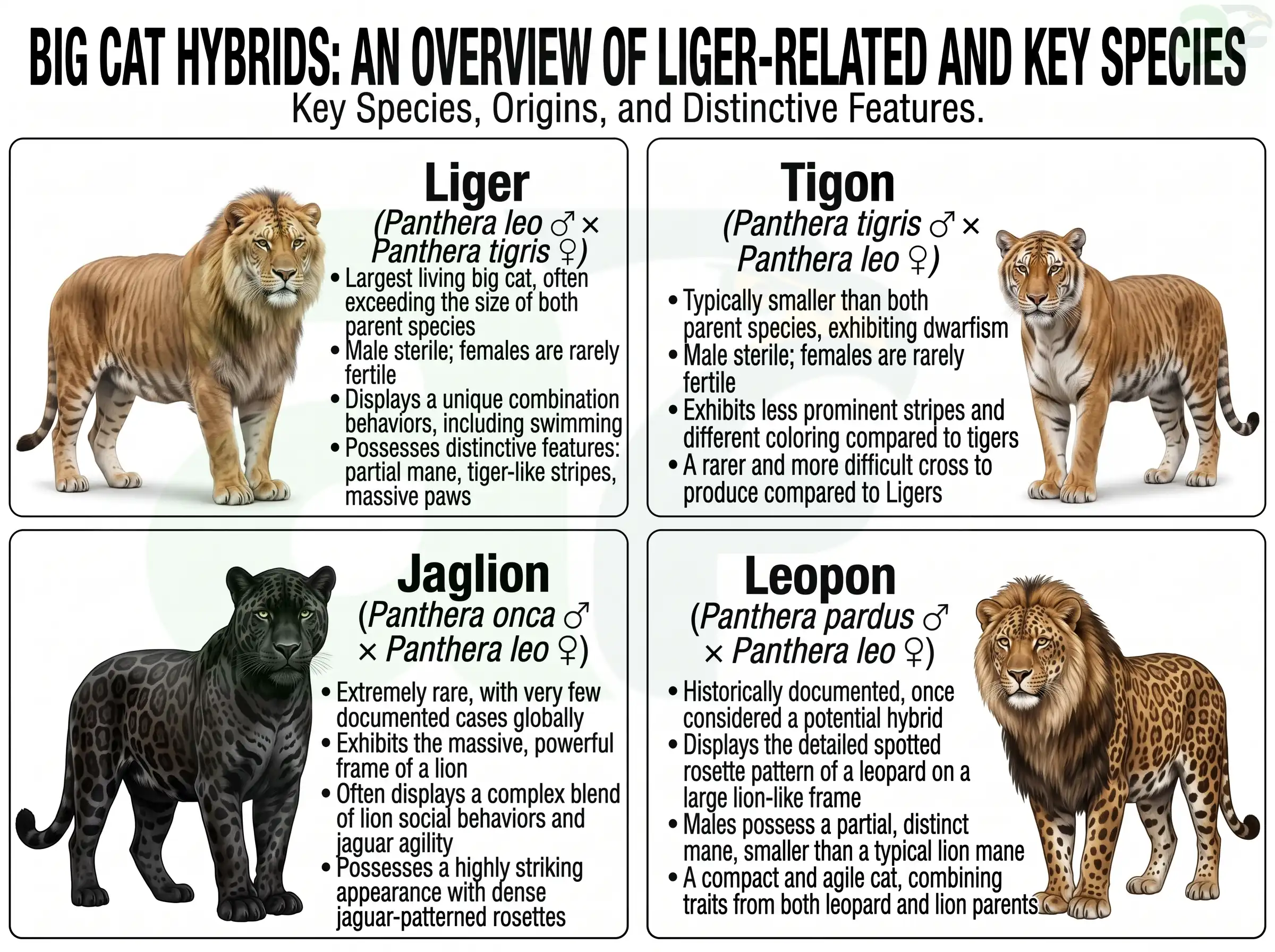
| Feature | Liger | Tigon | Jaglion | Leopon | Cheetiger |
|---|---|---|---|---|---|
| Parents | Male lion × Female tiger | Male tiger × Female lion | Male jaguar × Female lion | Male leopard × Female lion | Male cheetah × Female tiger |
| Chromosome count | 2n = 38 | 2n = 38 | 2n = 38 | 2n = 38 | 2n = 38 (disputed) |
| Size vs. parents | Much larger than both | Smaller than both | Intermediate | Intermediate | Rare; data limited |
| Sterile? | Males yes; females sometimes no | Males yes; females sometimes | Unknown/likely | Unknown/likely | Extremely rare; unknown |
| Key characteristic | Largest living cat | Smaller than parents (opposite of liger) | Jaguar spots on lion body | Leopard spots, lion body | Hypothetical/extremely rare |
| Rarity | Fewer than 100 worldwide | Fewer than 20 worldwide | Extremely rare — a few documented | Extremely rare | None confirmed |
| Vocalization | Can roar | Can roar | Can roar | Can roar | Unknown |
| Swimming | Yes (tiger heritage) | Less certain | Unknown | Unknown | Unknown |
| Cultural fame | Napoleon Dynamite (2004) | Less well-known | Very obscure | Very obscure | Unknown |
23. Frequently Asked Questions About Ligers
What is the scientific name of a liger?
The liger does not have its own formal scientific name as a recognized species — because it is a hybrid, not a species, it cannot be assigned a binomial name under the International Code of Zoological Nomenclature. It is scientifically described as the hybrid of Panthera leo (lion) × Panthera tigris (tiger), with the × symbol indicating a hybrid cross. The father is conventionally listed first in hybrid notation — making the standard liger designation Panthera leo × Panthera tigris, confirming the male lion father and female tiger mother that produce the characteristic liger rather than the reverse cross (tigon).
Are ligers real animals?
Yes — absolutely and completely real. Ligers are genuine biological hybrid animals produced by crossing a male lion with a female tiger. They have existed in documented form since at least 1824 (the Windsor Castle birth) and are currently maintained at numerous facilities worldwide. The Guinness World Record for the world’s largest living cat is held by a liger named Hercules — confirming beyond any doubt that ligers are real, large, and documentable animals. They are not mythological creatures, not digital fabrications, and not the product of any fantasy or exaggeration.
Why are ligers so much bigger than lions or tigers?
Liger gigantism is caused by a genetic mechanism called genomic imprinting — a process where certain genes are expressed differently depending on whether they were inherited from the mother or the father. In the liger, the male lion contributes growth-promoting imprinted genes that are normally counterbalanced by growth-limiting genes from a female lion mother. When the male lion mates with a female tiger instead, the tiger mother does not carry the lion’s corresponding growth-limiting genes — so the liger receives the growth promotion without the corresponding inhibition, resulting in continuous, dramatically elevated growth that produces an animal roughly twice the size of either parent. The reverse cross (tigon — male tiger × female lion) produces the opposite effect: the tigon receives double growth inhibition and is typically smaller than both parent species.
Can ligers reproduce?
The answer is different for males and females. Male ligers are almost universally sterile — the epigenetic disruption of the hybrid genome typically prevents the production of viable sperm, despite the chromosome count being theoretically compatible with meiosis. Female ligers are occasionally fertile — several documented cases exist of female ligers successfully producing offspring when mated with purebred male lions (producing “Li-ligers”) or male tigers (producing “Ti-ligers”). These second-generation hybrids are extremely rare, with fewer than a dozen confirmed individuals worldwide.
How much does a liger eat?
Adult ligers are among the most food-demanding animals in captivity due to their enormous body mass. A large adult male liger (approximately 400 kg) typically consumes 7–9 kg of meat per day under managed feeding programs — though some facilities report consumption significantly exceeding this during growth phases. The annual food cost for maintaining a single adult male liger can exceed $10,000–$15,000 in meat costs alone. Ligers are typically fed on a feast-and-fast cycle — large meals every other day or several times per week rather than small daily portions — reflecting the natural feeding pattern of large wild felids.
Where can I see a liger?
The most famous liger viewing destination is Myrtle Beach Safari in South Carolina, USA — home of Hercules, the Guinness World Record holder for the world’s largest living cat. Ligers are also maintained at facilities in South Korea (Everland), Russia (Novosibirsk Zoo), China (multiple parks), Germany, and various private facilities in the United States. Potential visitors should research the ethical standards and welfare record of any facility before visiting — the liger facility landscape includes both high-quality operations and facilities with problematic practices. For those unable to visit in person, high-quality documentary footage is available through National Geographic, Discovery, and YouTube channels.
Are ligers dangerous to humans?
Yes — ligers are genuinely dangerous to humans and should be treated with the caution appropriate to handling any large apex predator. An adult male liger weighing 400 kg, with the jaw force of a large lion and claws proportional to its body size, has the physical capability to cause fatal injuries to humans through even playful interactions. Even well-socialized, human-familiar ligers should never be approached without appropriate safety protocols. Facilities that offer public contact with ligers — allowing visitors to touch, pet, or photograph alongside these animals — are engaging in practices widely condemned by animal welfare organizations and prohibited at accredited zoological facilities.
What is the difference between a liger and a tigon?
The liger is produced by a male lion × female tiger cross and is dramatically larger than both parent species — the world’s largest living cat. The tigon is produced by the reverse cross — a male tiger × female lion — and is typically smaller than both parent species, often weighing only 150–200 kg compared to either parent’s typical 200+ kg. This dramatic difference is caused by the same genomic imprinting mechanism working in opposite directions — the liger receives growth promotion without corresponding inhibition; the tigon receives growth inhibition without corresponding promotion. The liger is far more common than the tigon (whose production involves different management challenges) and is significantly better known culturally.
24. Sources & References
- Wikipedia — Liger, Tigon, Panthera leo, Panthera tigris, Genomic imprinting, Hybrid (biology)
- Guinness World Records — guinnessworldrecords.com (Hercules documentation)
- National Geographic — nationalgeographic.com
- Smithsonian National Museum of Natural History — naturalhistory.si.edu
- WWF Species Programme — worldwildlife.org
- Panthera — panthera.org
- BBC Wildlife / BBC Earth — bbcearth.com
- Britannica — britannica.com/animal/liger
- Live Science — livescience.com
- IUCN Red List — iucnredlist.org (parent species conservation assessments)
- Packer, Craig — multiple published papers on lion biology and conservation
- Journal of Heredity — published research on genomic imprinting in Panthera hybrids
- Association of Zoos and Aquariums — aza.org (policy statements on hybrid breeding)
- World Association of Zoos and Aquariums — waza.org (hybrid breeding guidelines)
- Born Free Foundation — bornfree.org.uk (captive big cat welfare standards)