

Horse Facts
| Feature | Details |
|---|---|
| Scientific Name (Domestic Horse) | Equus ferus caballus |
| Scientific Genus | Equus |
| Kingdom | Animalia |
| Phylum | Chordata |
| Class | Mammalia |
| Order | Perissodactyla (odd-toed ungulates) |
| Family | Equidae |
| Total Equus Species | 7 living species — including horses, zebras, and donkeys/asses |
| Total Horse Breeds (Domestic) | Approximately 350–400 recognized breeds worldwide |
| Habitat | Every inhabited continent (domestic); grasslands and steppe (wild species) |
| Lifespan | 25–30 years average; up to 62 years confirmed record |
| Diet | Herbivore — grasses, hay, grains |
| Smallest Breed | Falabella — as small as 38–76 cm at the shoulder |
| Largest Breed | Shire Horse — up to 219 cm at the shoulder |
| Top Speed | Up to 88 km/h (55 mph) — Quarter Horse over short sprints |
| Global Domestic Population | Estimated 58–60 million horses worldwide |
| Conservation Status (Domestic) | Not evaluated (domesticated species) |
| Conservation Status (Przewalski’s Horse — only true wild horse) | Endangered; reclassified from Extinct in the Wild following reintroduction |
 1. Introduction: What is a Horse?

They carried armies across continents, pulled the plows that fed civilizations, and connected distant cultures through trade routes that would otherwise have taken generations to cross. They can sleep both lying down and standing up, see nearly 360 degrees around their own body without turning their head, and communicate with extraordinary subtlety through tiny shifts in ear position, muscle tension, and breath. Horse facts are not simply a catalog of an animal’s biology — they are, in many respects, a history of human civilization itself, since few animals have shaped the trajectory of human society as profoundly as the horse.
The genus Equus contains just seven living species today — the domestic horse, the critically important Przewalski’s Horse (the only truly wild horse species never domesticated), several species of zebra, and the donkeys and wild asses of Africa and Asia. Yet within the domestic horse alone, Equus ferus caballus, humans have developed an astonishing 350 to 400 distinct breeds — from the towering Shire Horse, capable of pulling loads exceeding its own body weight, to the diminutive Falabella, smaller than many dogs. This extraordinary diversity reflects over 5,500 years of selective breeding, during which horses have been shaped for speed, strength, endurance, temperament, and beauty in service of human needs.
Whether you are a dedicated equestrian searching for horse facts you have never encountered, a student researching horse facts for a school project, a parent looking for horse facts for kids, a history enthusiast curious about the horse’s role in shaping civilization, or simply someone captivated by these magnificent animals — this is the most complete guide to horse facts you will find anywhere. We cover horse habitat, horse diet, horse behavior, reproduction, intelligence, conservation, mythology, and the extraordinary partnership between horses and humanity that stretches back thousands of years. Let us begin.
2. Horse Species Overview & Classification
Horses belong to the family Equidae within the order Perissodactyla — the odd-toed ungulates, a group that also includes rhinoceroses and tapirs. The genus Equus, to which all modern horses, zebras, and donkeys belong, represents the sole surviving genus of a family that was once far more diverse.
What Defines an Equid?
All members of genus Equus share these defining characteristics:
- Single-toed hooves: Modern equids walk on a single, enlarged toe (the third digit), encased in a hard hoof — a significant evolutionary specialization for speed and endurance on open terrain
- Long legs built for running: Equids are among the fastest sustained runners in the animal kingdom, with anatomy specialized for covering long distances efficiently
- Herbivorous, hindgut fermentation digestion: Unlike ruminants such as cattle, equids digest plant material primarily in an enlarged cecum located after the stomach
- Highly social herd structure: Nearly all equid species live in structured social groups
- Excellent panoramic vision: Eyes positioned on the sides of the head provide nearly 360-degree vision, a critical adaptation for detecting predators while grazing
- Long, mobile ears: Capable of rotating up to 180 degrees independently, providing exceptional directional hearing
Major Equus Classification Table
| Species | Common Name | Approx. Wild Population | Native Range |
|---|---|---|---|
| Equus ferus caballus | Domestic Horse | ~58–60 million (domestic) | Worldwide (domesticated) |
| Equus ferus przewalskii | Przewalski’s Horse | ~2,000+ (reintroduced) | Mongolia, China |
| Equus africanus | African Wild Ass | ~200 (Critically Endangered) | Horn of Africa |
| Equus hemionus | Asiatic Wild Ass (Onager) | ~55,000 | Central & South Asia |
| Equus kiang | Kiang | ~60,000–70,000 | Tibetan Plateau |
| Equus zebra | Mountain Zebra | ~35,000 | Southern Africa |
| Equus quagga | Plains Zebra | ~150,000–250,000 | Eastern & Southern Africa |
| Equus grevyi | Grévy’s Zebra | ~2,000–2,500 | Kenya, Ethiopia |
Domestic Horse Breed Groups
Modern domestic horse breeds are broadly classified into several major categories:
Hot-blooded breeds: Spirited, fast, and athletic — including Arabians and Thoroughbreds, prized for speed and stamina.
Cold-blooded breeds: Large, calm, powerful draft horses — including the Shire, Clydesdale, and Belgian, historically bred for heavy pulling work.
Warm-blooded breeds: A blend of hot and cold-blooded traits, developed primarily for equestrian sport — including the Hanoverian, Dutch Warmblood, and Trakehner.
Pony breeds: Smaller equines under approximately 147 cm, including the Shetland Pony, Welsh Pony, and Connemara Pony, often noted for hardiness and intelligence.
Species Evolution & Discovery Timeline
~55 million years ago: Eohippus (also called Hyracotherium), a small, multi-toed forest-dwelling mammal roughly the size of a fox, represents the earliest known ancestor of the modern horse lineage, living during the early Eocene Epoch in North America.
~33 million years ago: Mesohippus appeared, showing the gradual evolutionary trend toward a larger body size and a reduction in the number of toes.
~20 million years ago: Merychippus developed high-crowned teeth adapted for grazing on grasses, reflecting the global spread of grassland ecosystems during this period and marking a pivotal dietary shift in horse evolution.
~4 million years ago: The genus Equus first appeared in North America, eventually giving rise to all modern horses, zebras, and donkeys through subsequent migration into Asia, Africa, and Europe via ancient land bridges.
~11,000–8,000 years ago: Horses became extinct in their ancestral North American homeland, likely due to a combination of climate change and human hunting pressure at the end of the last Ice Age, surviving only in Eurasian and African populations.
~5,500 years ago: The domestication of the horse began on the Eurasian steppe, most likely in the region of modern-day Kazakhstan, among the Botai culture, representing one of the most transformative developments in human history.
~4,000 years ago: Horse-drawn chariots appeared across the ancient Near East, fundamentally transforming warfare, trade, and the pace of human communication and travel.
1493: Horses were reintroduced to the Americas by Spanish colonizers, over 10,000 years after their extinction on the continent — a reintroduction that would eventually transform the cultures of numerous Indigenous peoples of the Great Plains.
1879: The Przewalski’s Horse was formally described by Western science following its documentation by Russian explorer Nikolai Przhevalsky in Central Asia — the last truly wild horse species, never having undergone domestication.
1969: The Przewalski’s Horse went extinct in the wild, surviving only in captive populations descended from approximately 12 founding individuals.
1990s–2000s: Sustained international reintroduction programs successfully returned Przewalski’s Horses to protected areas in Mongolia and China, representing one of the most celebrated equine conservation success stories in modern history.
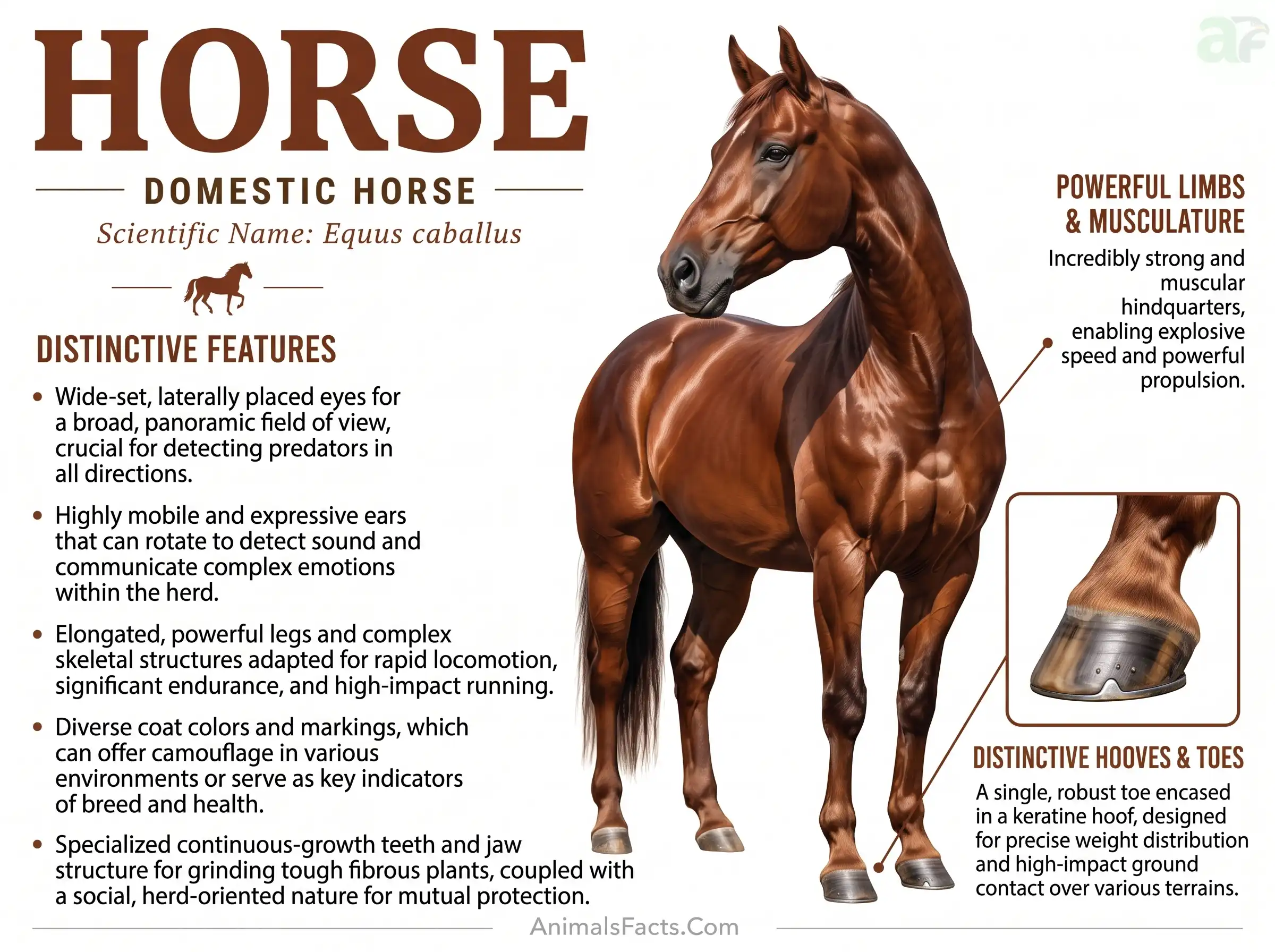
3. Horse Physical Description & Unique Features
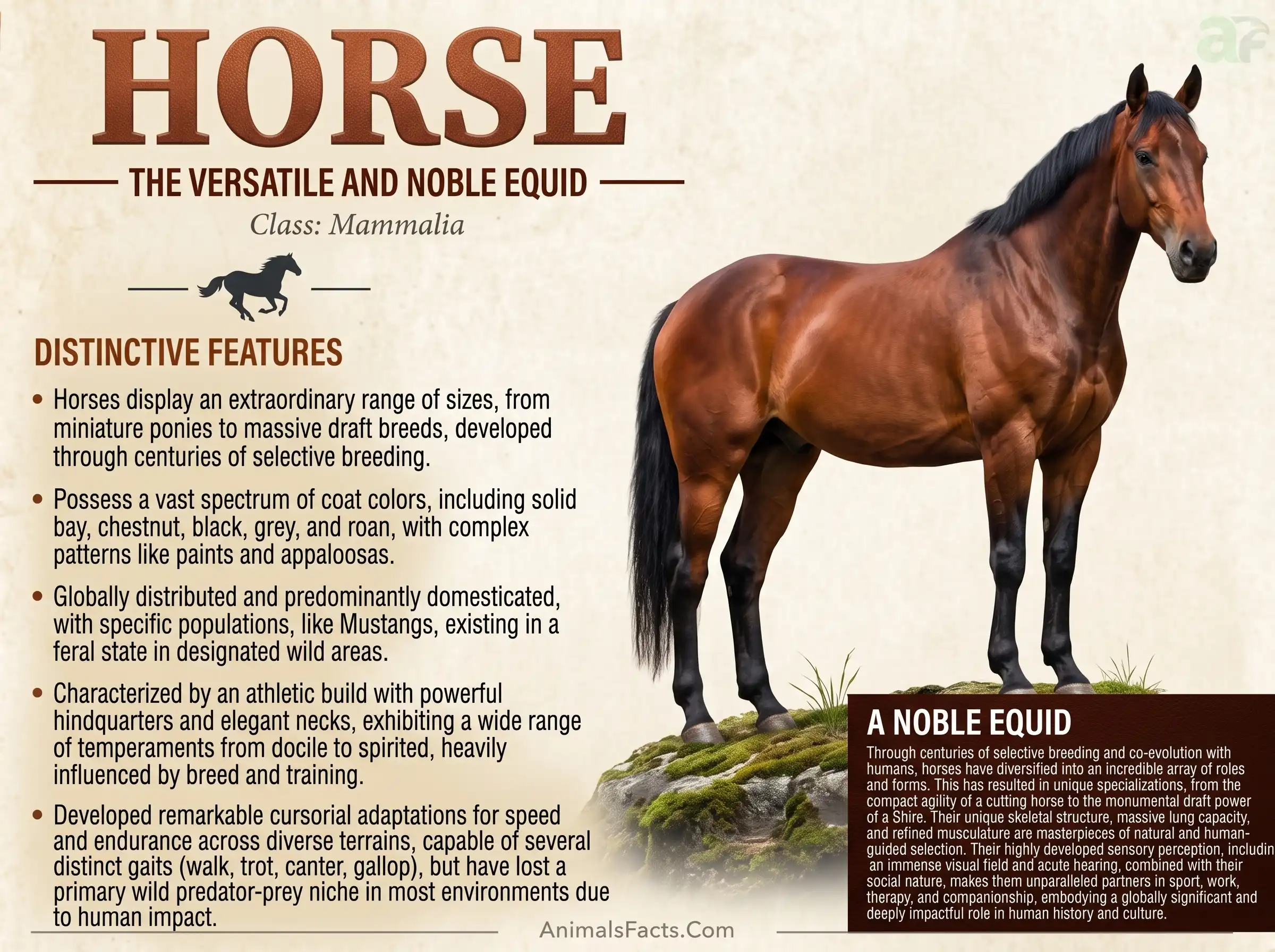
The domestic horse displays one of the widest ranges of size and physical type of any single mammalian species on Earth — a direct result of thousands of years of selective breeding for vastly different working purposes.
Size Extremes
Smallest breed: The Falabella, originating in Argentina, stands as small as 38–76 cm at the shoulder — smaller than many large dog breeds, despite being a fully proportioned horse rather than a pony.
Largest breed: The Shire Horse of England holds the record for the tallest horse breed, with the largest confirmed individual, a stallion named Sampson (later “Mammoth”), measuring an extraordinary 219.7 cm at the shoulder during the 19th century — a height that remains unmatched by any horse since.
Heaviest breed: Belgian Draft Horses and Shires regularly exceed 900–1,000 kg, with the heaviest horse ever recorded — a Belgian named Big Jake — confirmed at approximately 998 kg.
The Extraordinary Horse Eye
A horse’s eye is the largest of any land mammal, even larger proportionally than that of an elephant or whale. This remarkable size contributes to a field of vision spanning nearly 350 degrees — among the widest of any animal — allowing horses to detect potential predators approaching from almost any direction without needing to turn their head. However, this panoramic vision comes with two significant blind spots: directly in front of the nose and directly behind the tail, areas where horses cannot see and may react with surprise or alarm if approached unexpectedly.
Horses also possess a reflective layer behind the retina called the tapetum lucidum — the same structure found in cats — significantly enhancing their night vision capability, allowing them to navigate and graze effectively in low-light conditions.
Hooves and Locomotion
A horse’s hoof is a remarkable structural adaptation — a single, enlarged toe encased in a hard, insensitive outer wall (analogous to a human fingernail) surrounding sensitive internal structures, including a shock-absorbing structure called the frog. This single-toed structure, evolved from multi-toed ancestors over tens of millions of years, allows for exceptional speed and stamina across open terrain, though it requires regular maintenance (trimming and, for working horses, shoeing) in domestic settings.
Horses possess four natural gaits — the walk, trot, canter, and gallop — each with a distinct footfall pattern, alongside specialized additional gaits found in certain breeds, such as the smooth, four-beat “running walk” of the Tennessee Walking Horse.
Teeth and Age Estimation
Horse teeth grow continuously throughout much of their lives and change shape and angle in highly predictable patterns as the animal ages — allowing experienced horse handlers to estimate a horse’s age with reasonable accuracy through dental examination, giving rise to the well-known English phrase “long in the tooth” to describe advancing age.
Did You Know? Horses are capable of sleeping both lying down and standing up, thanks to a unique anatomical adaptation called the “stay apparatus” — a system of tendons and ligaments in the legs that locks the joints in place, allowing a horse to rest and even doze while remaining upright with minimal muscular effort. Horses require only brief periods of lying-down deep sleep (REM sleep) — typically just 30 minutes to a few hours daily, often achieved in short intervals — making them one of the few large mammals capable of resting effectively while remaining immediately ready to flee a potential predator.
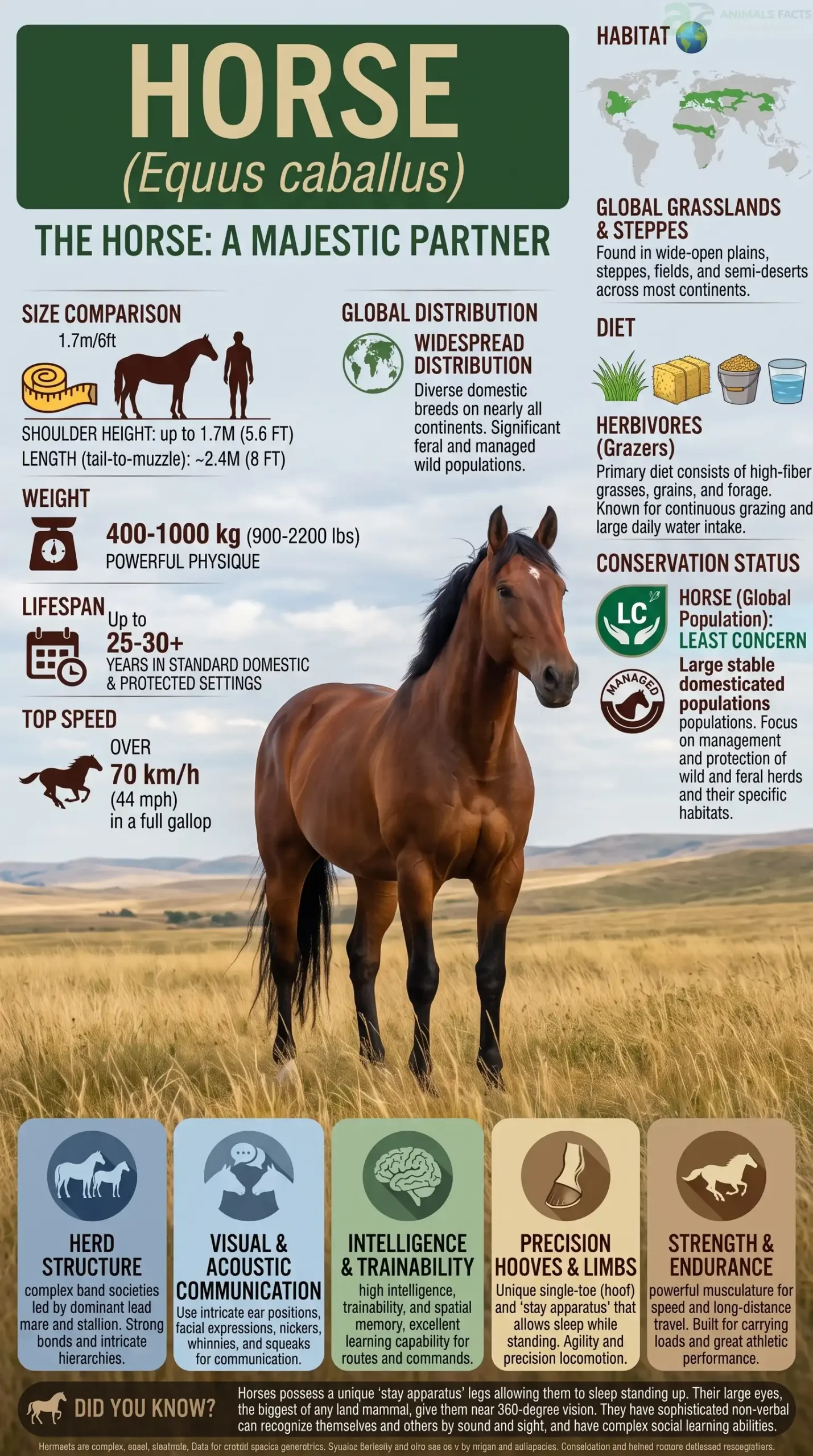
4. Top 25 Surprising & Interesting Horse Facts
- A horse’s eye is the largest of any land mammal, providing a nearly 350-degree field of vision — among the widest of any animal on Earth.
- Horses can sleep standing up thanks to a specialized “stay apparatus” of tendons and ligaments that locks their leg joints in place, requiring only minimal muscular effort to remain upright.
- The fastest recorded speed for a domestic horse — a Quarter Horse — was approximately 88 km/h (55 mph) over a short sprint distance.
- Przewalski’s Horse is the only truly wild horse species remaining on Earth — all other “wild” horse populations, including America’s mustangs and Australia’s brumbies, descend from domesticated ancestors that subsequently returned to a feral state.
- Horses have almost 360-degree vision due to the placement of their eyes on the sides of their head, with only two small blind spots directly in front of the nose and directly behind the tail.
- A horse’s heart typically weighs around 4 kg, but the heart of legendary racehorse Secretariat was found upon necropsy to weigh approximately 9.98 kg — nearly 2.5 times the average size, widely believed to explain his extraordinary racing performance.
- Horses have excellent long-term memory, with research demonstrating they can remember specific humans, locations, and learned tasks for periods exceeding several years.
- The Shetland Pony, despite its small stature, is proportionally one of the strongest horse breeds relative to body size, historically used extensively in coal mining due to its compact strength.
- Horses communicate extensively through their ears, which can rotate independently up to 180 degrees, allowing them to monitor sounds from multiple directions simultaneously while focusing visual attention elsewhere.
- A horse’s hoof grows continuously throughout its life, at an average rate of approximately 6–10 mm per month, requiring regular trimming in domestic settings to maintain proper hoof health and balance.
- The Akhal-Teke, an ancient breed from Turkmenistan, possesses a uniquely metallic, shimmering coat caused by an unusual hair structure that reflects light differently than in other horse breeds.
- Horses can recognize and distinguish between different human facial expressions, with studies demonstrating measurable physiological stress responses when shown images of angry human faces compared to happy ones.
- Domestic horses were reintroduced to the Americas by Spanish colonizers in 1493, over 10,000 years after horses had gone extinct on the continent, fundamentally transforming the cultures of numerous Indigenous Plains peoples within a few generations.
- A horse’s stomach is relatively small for its body size, and horses are physiologically unable to vomit due to a particularly strong band of muscle at the junction between the esophagus and stomach — making certain digestive issues, such as colic, especially dangerous for horses.
- The world’s oldest confirmed horse, a pony named “Old Billy,” reportedly lived to 62 years of age in 19th-century England, though some modern researchers consider this historical record difficult to fully verify by contemporary standards.
- Horses possess highly mobile lips, capable of remarkable dexterity in selecting individual blades of grass or specific feed items — a sensitivity comparable in some respects to the manipulative capability of a human hand.
- Mongolian horses, among the hardiest breeds in the world, can survive temperatures ranging from extreme winter cold of -40°C to summer heat exceeding 30°C, living largely unsheltered year-round on the open steppe.
- A galloping horse is briefly completely airborne, with all four hooves off the ground simultaneously, a fact famously confirmed through Eadweard Muybridge’s pioneering 1878 motion photography studies.
- Horses display measurable emotional contagion, with research demonstrating that a horse’s heart rate and stress indicators can shift in response to the emotional state of nearby humans or other horses.
- The Clydesdale, famous as the symbol of a major American beer brand, can weigh up to 900 kg and stands among the tallest and most recognizable draft horse breeds in the world.
- Horses have a specialized upper lip movement called the “flehmen response” — curling the upper lip upward to draw air over a specialized scent organ — used to analyze unfamiliar or significant odors, particularly related to reproductive status.
- The Marwari horse of India possesses a uniquely distinctive feature among horse breeds: ears that curve inward and can touch at the tips, an adaptation believed to enhance directional hearing sensitivity in its native desert environment.
- Horses are capable of learning to recognize their own name and respond to a range of vocal commands, with working and performance horses often understanding dozens of distinct verbal and physical cues.
- The modern Thoroughbred breed descends from just three foundation stallions imported to England between the late 17th and early 18th centuries — the Byerley Turk, the Darley Arabian, and the Godolphin Arabian — meaning virtually every Thoroughbred racehorse alive today traces its male lineage to one of these three animals.
- Horses can identify familiar human voices even when they cannot see the speaker, and studies have demonstrated they can distinguish between recordings of a familiar handler’s voice and that of an unfamiliar person.

5. Fun Facts About Horses
- There are an estimated 58–60 million domestic horses worldwide, alongside just 7 living species in the broader genus Equus.
- The domestic horse has been selectively bred into 350–400 distinct breeds, ranging in size from under 80 cm to nearly 220 cm at the shoulder.
- A galloping racehorse can cover up to 8 meters in a single stride at full speed.
- Przewalski’s Horse has 66 chromosomes — two more than the domestic horse’s 64 — yet the two can still successfully interbreed and produce fertile offspring.
- Horses can recognize themselves to some degree in behavioral mirror studies, suggesting a level of self-awareness previously underappreciated in this species.
- A horse’s sense of smell is significantly more developed than a human’s, used extensively to identify other horses, detect subtle environmental changes, and assess unfamiliar food sources.
- The fastest documented horse breed over extremely short sprint distances is the Quarter Horse, named for its historical dominance in quarter-mile races.
- Wild mustangs in the American West are technically a feral population, descended from horses that escaped or were released by Spanish colonizers and subsequent settlers over several centuries.
- Horses have been documented showing apparent empathy and comforting behavior toward distressed herd mates and, in some recorded cases, toward humans.
- A standard horse “hand” measurement — used to measure height at the shoulder — equals exactly 10.16 cm (4 inches), a unit historically based on the width of an adult human hand.
- The Caspian Horse, one of the oldest documented horse breeds, was believed extinct for centuries until a small surviving population was rediscovered in northern Iran in 1965.
- Horses display distinct, measurable individual personalities, with researchers documenting consistent behavioral traits across contexts comparable to personality research conducted in other intelligent mammals.
6. Horse Habitat & Geographic Range
Domestic horses, owing to their close partnership with humans, now inhabit virtually every continent except Antarctica. Wild and feral equid populations, however, occupy more specific and ecologically distinct habitats shaped by millions of years of evolutionary adaptation.
Domestic Horse Distribution
Domestic horses are found wherever human agricultural, sporting, working, or companion animal traditions have established them — from the high-altitude pastures of the Andes to the open ranches of Australia, demonstrating remarkable adaptability across an enormous range of climates and terrains.
Wild and Feral Equid Habitats
Steppe and Grassland: Przewalski’s Horse is native to the open steppe grasslands of Mongolia and northern China, an environment characterized by extreme seasonal temperature variation and relatively sparse vegetation, demanding significant hardiness and efficient foraging behavior.
Desert and Semi-Arid Regions: The African Wild Ass, Asiatic Wild Ass (Onager), and Kiang inhabit some of the most challenging arid and semi-arid environments on Earth, including portions of the Horn of Africa, the Gobi Desert, and the high-altitude Tibetan Plateau, demonstrating remarkable physiological adaptations for water conservation and temperature regulation.
African Savanna: Plains Zebra, Mountain Zebra, and Grévy’s Zebra inhabit the grassland and savanna ecosystems of eastern and southern Africa, often sharing habitat with numerous other large herbivore species in some of the world’s most biodiverse terrestrial ecosystems.
Feral Horse Populations: Several significant feral horse populations exist worldwide, descended from domesticated ancestors that escaped or were deliberately released — including American Mustangs across the western United States, Australian Brumbies across multiple states, and smaller feral populations on various islands worldwide, including Sable Island off the coast of Nova Scotia, Canada.
Habitat Range by Region
| Region | Notable Equid Population | Status |
|---|---|---|
| North America | Domestic horses; feral Mustangs | Widespread; Mustangs federally protected |
| South America | Domestic horses (various working breeds) | Widespread |
| Europe | Domestic horses; small feral populations | Widespread |
| Mongolia & China | Przewalski’s Horse; domestic horses | Reintroduced wild population recovering |
| Horn of Africa | African Wild Ass | Critically Endangered; extremely limited range |
| Central & South Asia | Asiatic Wild Ass (Onager) | Fragmented populations |
| Tibetan Plateau | Kiang | Relatively stable population |
| Eastern & Southern Africa | Plains Zebra, Mountain Zebra, Grévy’s Zebra | Varies significantly by species |
| Australia | Feral Brumbies | Widespread; significant management debate |
Did You Know? Sable Island, a remote, crescent-shaped sandbar located approximately 300 kilometers off the coast of Nova Scotia, Canada, hosts a fully protected feral horse population of several hundred animals that has survived in complete isolation for over 250 years, with no human management, supplemental feeding, or veterinary intervention — representing one of the most remarkable examples of horses surviving entirely independently in a genuinely harsh and isolated marine environment.
7. Horse Diet & Feeding Behavior
Horses are strict herbivores, evolved as hindgut fermenters — a digestive strategy distinct from the multi-chambered stomach system used by ruminant animals such as cattle and sheep.
How Horses Digest Food
Unlike ruminants, which extensively ferment plant material in a specialized forestomach before it reaches the true stomach, horses digest food primarily through enzymatic action in a relatively simple stomach, with significant fermentation occurring afterward in an enlarged section of the large intestine called the cecum. This digestive strategy allows horses to process food more quickly than ruminants but extracts somewhat less total nutritional value from high-fiber plant material, necessitating nearly continuous grazing behavior in natural conditions.
What Horses Eat
Grasses: The primary natural food source for horses, both wild and domestic, comprising the overwhelming majority of dietary intake under natural grazing conditions.
Hay: The primary dietary staple for domestic horses without continuous pasture access, particularly during winter months or in regions without year-round grazing availability.
Grains: Supplementary feed, including oats, corn, and barley, traditionally provided to working or performance horses requiring additional caloric density beyond what forage alone can supply.
Foraged vegetation: Wild and feral equids consume a range of additional vegetation depending on regional availability, including shrubs, bark, and various desert-adapted plants in arid environments.
Daily Feeding Behavior
In natural conditions, horses spend an estimated 16 to 18 hours per day grazing, reflecting both their relatively small stomach capacity (requiring frequent small meals rather than large infrequent ones) and the relatively low nutritional density of grass compared to more energy-rich foods consumed by many other large mammals.
Toxic Foods for Horses
Several common plants and substances are dangerously toxic to horses and must be carefully avoided:
| Substance | Effect |
|---|---|
| Chocolate | Theobromine toxicity; cardiac effects |
| Avocado | Persin toxicity; can cause severe cardiac and respiratory distress |
| Certain ornamental plants (oleander, yew) | Severe cardiac toxicity; frequently fatal |
| Moldy or spoiled hay | Mycotoxin poisoning; respiratory and neurological effects |
| Excessive grain without adaptation | Colic and potentially fatal laminitis |
| Black walnut shavings (bedding) | Severe laminitis even without ingestion |
Did You Know? Because horses are physiologically unable to vomit due to the unusually strong muscular valve at the junction of their esophagus and stomach, digestive problems that might cause simple vomiting and recovery in other animals can become genuinely life-threatening emergencies in horses — making conditions such as colic (abdominal pain from digestive disturbance) one of the leading causes of serious illness and mortality in domestic horses, and a primary reason for the careful, gradual feeding management practiced by experienced horse owners.
8. Horse Reproduction & Life Cycle
Horse reproduction follows patterns broadly similar to many large grazing mammals, with notable adaptations reflecting the species’ evolutionary history as a highly mobile, predator-vulnerable prey animal.
Domestic Horse Reproduction
Female horses, called mares, typically reach sexual maturity around 12 to 24 months of age, though responsible breeding practices generally wait until physical maturity is more fully achieved, typically around 3 to 4 years. Mares are seasonally polyestrous, generally cycling through reproductive periods during spring and summer months when daylight hours are longest, reflecting an evolutionary timing that ensures foals are born during periods of optimal food availability.
Gestation period: Approximately 11 months (320–370 days) — notably long for a mammal of the horse’s size, though shorter than the elephant’s extraordinary 22-month gestation.
Foaling: Mares typically give birth to a single foal; twin births are comparatively rare and carry significantly elevated risk for both mare and offspring due to the physical demands of supporting two developing fetuses.
Foal Development
Newborn foals are remarkably precocial compared to many mammals — capable of standing within approximately 1 hour of birth and running alongside their mother within just a few hours, a critical adaptation reflecting the horse’s evolutionary history as a prey species requiring immediate mobility for survival.
Key Developmental Stages
| Stage | Age | Key Development |
|---|---|---|
| Foal | 0–1 year | Rapid growth; nursing; beginning solid food consumption |
| Weanling | 6 months–1 year | Weaning typically complete; increasing independence |
| Yearling | 1–2 years | Continued significant growth; early training may begin |
| Young Adult | 2–4 years | Physical maturity approaching; many breeds begin formal training |
| Adult | 4–15 years | Peak physical condition and working capability |
| Senior | 15+ years | Gradual decline; increased veterinary monitoring recommended |
Lifespan Comparison Table
| Species/Breed | Average Lifespan | Record / Maximum |
|---|---|---|
| Shetland Pony | 25–30 years | ~35 years |
| Thoroughbred | 25–28 years | ~30+ years |
| Arabian Horse | 25–30 years | ~35 years |
| Draft Breeds (Shire, Clydesdale) | 20–25 years | ~30 years |
| Przewalski’s Horse | 20–25 years (wild) | ~36 years (captivity) |
| “Old Billy” (historical record) | — | 62 years (disputed but widely cited historical record) |
9. Social Behavior & Communication
Horses are profoundly social animals, having evolved as a prey species dependent on group living for protection, with sophisticated communication systems developed to maintain herd cohesion and coordinate collective responses to potential threats.
Herd Structure
Wild and feral horse populations typically organize into harem bands — small family groups consisting of one or occasionally two dominant stallions, several mares, and their offspring, alongside separate bachelor bands composed of young or displaced males not currently affiliated with a breeding herd. This social structure provides protection through numbers while limiting direct reproductive competition within established family units.
Within domestic settings, horses kept in groups establish similar, though often more fluid, social hierarchies based on a combination of age, experience, temperament, and individual relationships rather than strict, rigid dominance structures.
Communication Methods
Vocalizations: Horses produce several distinct vocal sounds, each conveying specific information. The whinny (or neigh) is typically used for long-distance contact calling, particularly between separated herd members. The nicker is a softer, lower vocalization associated with greeting familiar individuals or anticipating food. Squealing typically signals aggression or discomfort, often during initial introductions between unfamiliar horses.
Ear position: Among the most reliable indicators of a horse’s attention and emotional state — ears pointed forward typically indicate interest or alertness; ears pinned flat back against the head signal aggression or significant discomfort; ears held loosely to the side often indicate relaxation.
Body posture: A horse’s overall posture, including head height, tail carriage, and weight distribution, conveys substantial information to other horses and experienced handlers. A lowered head and relaxed lower lip typically indicate calm contentment; a raised head with tense muscles often signals alertness or anxiety.
Mutual grooming: Horses frequently engage in allogrooming — mutual grooming behavior between bonded individuals, typically involving gentle nibbling along the neck and withers — which serves both a practical hygiene function and an important social bonding role.
Scent communication: Horses use scent extensively for individual recognition, reproductive signaling, and territorial marking, with stallions in particular using elimination behavior and the flehmen response to gather and process chemical information from their environment.
Did You Know? Research published in recent years has demonstrated that horses can use a combination of gestures, including head movements and gaze direction, to deliberately communicate specific requests to familiar humans — for example, indicating a desire for access to food that has been placed out of reach — suggesting a level of intentional, goal-directed communication toward humans that researchers have found genuinely remarkable for a non-primate species.
10. Predators & Defense Mechanisms
As a species that evolved fundamentally as prey animals across millions of years, horses possess a suite of highly developed sensory and behavioral adaptations specifically oriented toward predator detection and evasion.
Natural Predators
Wolves: Historically and in regions of continued overlap, wolves represent a significant predator of wild and feral horse populations, particularly targeting foals, elderly, or weakened individuals rather than healthy adult horses, which can present significant defensive risk.
Mountain Lions (Cougars): In parts of the western United States, mountain lions occasionally prey on feral mustang populations, again typically targeting more vulnerable individuals.
Hyenas and African predators: Wild equid species in Africa, including zebras and the African Wild Ass, face predation pressure from lions, hyenas, and occasionally leopards, representing a significant and ongoing ecological relationship within African savanna ecosystems.
Bears: In certain regions of overlap, bears have been documented opportunistically preying on young or vulnerable feral horses.
Defense Mechanisms
Speed: A horse’s primary defense mechanism is simply outrunning a threat — horses are capable of sustained galloping speeds that exceed those of most pursuing predators over extended distances, reflecting millions of years of evolutionary selection for efficient long-distance running ability.
Panoramic vision: The horse’s nearly 360-degree field of vision allows for early detection of approaching predators from almost any direction, providing critical additional reaction time compared to animals with more limited visual fields.
Herd vigilance: Living in groups allows horses to benefit from collective vigilance — with multiple individuals monitoring the surrounding environment simultaneously, significantly increasing the likelihood that an approaching predator will be detected before it can launch a successful surprise attack.
Powerful kicks: When direct confrontation becomes unavoidable, horses are capable of delivering extremely powerful defensive kicks with their hind legs, generating force sufficient to seriously injure or kill many potential predators.
Flight response: Horses possess an extremely well-developed “flight” instinct, with a strong evolutionary bias toward immediate evasive movement at the first sign of potential danger, rather than pausing to fully assess a threat — an instinct that, while occasionally inconvenient in domestic handling contexts, reflects an effective survival strategy honed over millions of years.

11. Horse Facts for Kids
Hey kids — get ready to learn why horses are some of the most amazing animals that have ever lived alongside humans!
- A horse’s eyes are the biggest of any land animal — even bigger than an elephant’s! That helps horses see almost all the way around themselves without even turning their head!
- Horses can sleep standing up! They have special legs that lock in place like a built-in chair, so they can snooze without falling over — though they still need to lie down sometimes for deeper sleep!
- A baby horse, called a foal, can stand up and even start walking within just one hour of being born!
- The fastest horses can run almost as fast as a car driving down a neighborhood street — up to 88 kilometers per hour!
- Horses can’t throw up, even if they wanted to! Their tummies are built completely differently from ours, which is why owners have to be really careful about what and how much horses eat.
- A horse’s ears can swivel around almost all the way, like little radar dishes, so they can listen to sounds coming from lots of different directions at once!
- The Przewalski’s Horse is the only truly wild horse left in the whole world — every other “wild” horse, like American mustangs, actually came from horses that escaped from people a long time ago!
- Horses can recognize their owner’s voice, even when they can’t see them, and some horses can learn dozens of different words and commands!
Did You Know? Horses are really good at understanding how humans are feeling! Scientists have discovered that horses can actually tell the difference between a happy human face and an angry human face just by looking at a picture — and their own heart rate changes depending on which face they see! That means horses are paying much closer attention to us than most people realize.
12. Relationship with Humans
Few relationships between humans and animals have shaped the course of human civilization as profoundly and as comprehensively as the partnership between humans and horses.
The Transformative Power of Domestication
The domestication of the horse, beginning approximately 5,500 years ago on the Eurasian steppe, ranks among the most consequential developments in human history. Before horse domestication, human travel, trade, and communication were fundamentally limited by walking speed. The horse compressed distances dramatically, enabling the rapid spread of trade goods, ideas, technologies, and, often, military conquest across previously isolated regions at a pace unimaginable in earlier eras.
Horses in Warfare
From ancient chariot warfare in the Near East and Egypt, through the mounted cavalry traditions of the Mongol Empire (whose extraordinary mobility, built almost entirely on horsepower, enabled the largest contiguous land empire in human history), to mounted knights of medieval Europe and cavalry units used as recently as the early 20th century, horses fundamentally shaped military history for thousands of years, only being largely superseded by mechanized vehicles in the 20th century.
Horses in Agriculture and Transportation
Before mechanization, horses provided the primary motive power for plowing fields, transporting goods, and powering early industrial machinery across much of the world, fundamentally enabling the agricultural productivity that supported growing human populations for centuries.
Horses and Indigenous Cultures
The reintroduction of horses to the Americas in 1493 by Spanish colonizers triggered one of history’s most rapid and transformative cultural shifts — within just a few generations, numerous Indigenous Plains peoples of North America fundamentally restructured their economies, military strategies, and cultural traditions around horsemanship, developing extraordinarily sophisticated equestrian skills and horse-centered cultural practices that became deeply central to Plains Indigenous identity.
Horses in Modern Sport and Companionship
Today, horses remain central to numerous sporting traditions worldwide, including horse racing, show jumping, dressage, rodeo, and polo, alongside their continued significant role in therapeutic riding programs, which have demonstrated measurable physical and psychological benefits for individuals with a wide range of disabilities and mental health conditions.
13. Horse Conservation Status & Threats
While the domestic horse faces no conservation concern given its enormous global population, several wild equid species face serious and in some cases critical conservation challenges.
Wild Equid Conservation Data (2026)
| Species | IUCN Status | Estimated Wild Population | Primary Threat |
|---|---|---|---|
| African Wild Ass | Critically Endangered | ~200 | Hunting; hybridization with domestic donkeys; habitat loss |
| Grévy’s Zebra | Endangered | ~2,000–2,500 | Habitat loss; competition with livestock |
| Przewalski’s Horse | Endangered | ~2,000+ (reintroduced) | Limited genetic diversity; habitat fragmentation |
| Mountain Zebra | Vulnerable | ~35,000 | Historical hunting; habitat loss |
| Asiatic Wild Ass (Onager) | Near Threatened | ~55,000 | Habitat fragmentation; competition with livestock |
| Plains Zebra | Near Threatened | ~150,000–250,000 | Habitat loss; localized hunting pressure |
| Kiang | Least Concern | ~60,000–70,000 | Relatively stable; some habitat competition |
Major Threats to Wild Equids
Habitat Loss and Fragmentation: Agricultural expansion, infrastructure development, and competition with domestic livestock for grazing land represent the most widespread threat facing nearly all wild equid species across their respective ranges.
Hunting: Historical and, in some regions, ongoing hunting pressure has severely impacted several species, particularly the African Wild Ass, which faces additional pressure from hunting for traditional medicine markets in parts of its range.
Hybridization: The African Wild Ass faces a particularly insidious genetic threat from interbreeding with domestic donkeys, which can dilute the genetic distinctiveness of remaining wild populations.
Limited Genetic Diversity: The Przewalski’s Horse, having been reduced to extinction in the wild and subsequently reintroduced from a very small founding captive population (approximately 12 individuals), continues to face ongoing genetic diversity challenges that require careful management to avoid problems associated with inbreeding.
Climate Change: Increasingly unpredictable precipitation patterns across arid and semi-arid equid habitats place additional pressure on already water-limited environments critical to several species, including the Kiang and various wild ass populations.
Did You Know? The successful reintroduction of Przewalski’s Horse to the wild represents one of the most celebrated conservation achievements in equine history. Following complete extinction in the wild by 1969, sustained international captive breeding and reintroduction efforts — coordinated across numerous zoos and conservation organizations worldwide — successfully returned populations to protected areas in Mongolia and China beginning in the 1990s, with the wild population now exceeding 2,000 individuals, prompting the IUCN to officially reclassify the species from Extinct in the Wild to Endangered — a genuinely rare and celebrated conservation status improvement.
14. Famous Horses
Secretariat — The Greatest Racehorse in History
Secretariat was an American Thoroughbred racehorse who, in 1973, became the first horse in 25 years to win the Triple Crown of American horse racing, setting record times in all three races — the Kentucky Derby, the Preakness Stakes, and the Belmont Stakes — several of which remain unbroken to this day. His Belmont Stakes victory, won by an astonishing 31 lengths, is widely regarded as the single greatest performance in horse racing history. Upon his death in 1989, a necropsy revealed his heart weighed approximately 9.98 kg — nearly two and a half times the size of an average horse’s heart — providing a compelling physiological explanation for his extraordinary athletic capability.
Bucephalus — Alexander the Great’s War Horse
Bucephalus was the celebrated warhorse of Alexander the Great, reportedly tamed by Alexander as a young man when no other handler could manage the animal’s spirited temperament. Bucephalus carried Alexander through numerous major military campaigns across his conquest of the Persian Empire and into India, and upon the horse’s death around 326 BCE, Alexander founded a city named Bucephala in his honor — one of the earliest and most celebrated examples of an individual animal achieving lasting historical fame.
Marengo — Napoleon’s Legendary Steed
Marengo was reportedly the principal warhorse of Napoleon Bonaparte, an Arabian-bred grey stallion who carried the French emperor through several major military campaigns, including the disastrous Russian campaign of 1812. Following Napoleon’s final defeat at Waterloo in 1815, Marengo was captured and brought to England, where his skeleton remains on public display at the National Army Museum in London to this day.
Seabiscuit — The Depression-Era Underdog
Seabiscuit was an undersized, initially unsuccessful American Thoroughbred racehorse who, under new training and ownership, became one of the most celebrated sporting figures of the Great Depression era, captivating American audiences with a series of dramatic comeback victories, most famously his 1938 match race victory over the heavily favored War Admiral. Seabiscuit’s story, chronicled extensively in subsequent books and a major 2003 film, remains one of the most beloved underdog narratives in American sporting history.
Comanche — The “Sole Survivor”
Comanche was a US Cavalry horse widely (though somewhat disputedly, by some historical accounts) believed to be the only survivor found on the immediate battlefield following the catastrophic defeat of General George Armstrong Custer’s forces at the Battle of the Little Bighorn in 1876. Comanche subsequently became a revered symbol within the US Cavalry, formally retired from active duty and excused from all further work for the remainder of his life — an extraordinary honor for a military horse.
15. Role in Ecosystem & Food Chain
Wild and feral equid populations play significant ecological roles within the grassland and savanna ecosystems they inhabit, functioning as important grazers that shape vegetation structure and support broader biodiversity.
Grazing and Grassland Maintenance
As large grazing herbivores, equids including zebras, wild asses, and feral horse populations contribute significantly to maintaining open grassland ecosystems through their feeding behavior, preventing the encroachment of woody vegetation and maintaining the habitat structure required by numerous other grassland-dependent species, from ground-nesting birds to smaller grazing mammals.
African Savanna Food Webs
Zebras represent a particularly significant component of African savanna food webs, serving as primary prey for major predators including lions, hyenas, and African Wild Dogs, while their grazing patterns — often preceding other grazing species such as wildebeest during the famous Great Migration — help process taller, coarser grasses, making subsequent shorter growth more accessible to other grazing species in a phenomenon ecologists term “grazing succession.”
Seed Dispersal
Equids contribute to plant seed dispersal through their digestive process and movement patterns, transporting viable seeds across significant distances and depositing them, along with fertilizing dung, in new locations — a contribution to ecosystem regeneration and plant community diversity.
Feral Horse Ecological Debates
The ecological role of large feral horse populations, particularly American Mustangs and Australian Brumbies, remains a subject of significant ongoing ecological and management debate, with some researchers and land managers expressing concern regarding overgrazing impacts in regions without natural predator populations to regulate herd size, while others emphasize the cultural, historical, and intrinsic value of these populations, representing one of the more contested areas of contemporary wildlife and land management policy.
16. Myths, Folklore & Cultural Significance
Few animals have occupied as consistently prominent, powerful, and overwhelmingly positive a position within human mythology and cultural tradition as the horse, reflecting its profound practical and symbolic significance across thousands of years of shared history.
Ancient Greek Mythology
The horse features prominently throughout Greek mythology, perhaps most famously through Pegasus, the magnificent winged horse born from the blood of the slain Gorgon Medusa, who became a symbol of poetic inspiration and was eventually transformed into a constellation. The legendary Trojan Horse, described in Homer’s accounts of the Trojan War, remains one of the most enduringly referenced strategic deceptions in Western cultural history, its name entering common usage to describe any deceptive infiltration strategy.
Norse Mythology
In Norse mythology, Sleipnir, the eight-legged horse belonging to the chief god Odin, was renowned as the fastest and most powerful horse in existence, capable of traveling between the various realms of Norse cosmology, representing one of the most distinctive and memorable equine figures in world mythology.
Chinese Zodiac and Culture
The Horse is the seventh animal in the Chinese Zodiac, associated with energy, freedom, and adventurous spirit, with individuals born in horse years believed to share these characteristic traits according to traditional belief. Horses also hold significant historical importance in Chinese culture through their critical role along the ancient Silk Road trade routes.
Indigenous Plains Cultures
As discussed previously, the horse became deeply integrated into the spiritual, cultural, and practical traditions of numerous Indigenous Plains peoples of North America following its reintroduction in the 16th century, with horsemanship and horse ownership becoming central markers of status, identity, and cultural practice within remarkably few generations following initial contact.
Celtic and European Traditions
The horse goddess Epona, worshipped across Celtic and subsequently Roman territories, represented one of the relatively few Celtic deities formally adopted into the broader Roman pantheon, reflecting the horse’s deep symbolic and practical significance across ancient European cultures.
Modern National and Cultural Symbolism
Horses remain powerful symbols across numerous modern contexts, from the ceremonial significance of royal cavalry traditions in countries including the United Kingdom, to the central cultural role of the horse in countries such as Mongolia, where equestrian skill remains deeply embedded in national identity and traditional practices including the annual Naadam festival.
17. Horses in Pop Culture
Horses have maintained an extraordinarily consistent and beloved presence across nearly every era and medium of human entertainment and storytelling, reflecting their deep historical partnership with humanity.
Film and Television
“Black Beauty” (multiple adaptations since 1946, based on Anna Sewell’s 1877 novel) — One of the most enduringly popular horse-centered stories in English literature, notable for its pioneering first-person narrative told from the horse’s own perspective, significantly influencing public attitudes toward animal welfare upon its original publication.
“Seabiscuit” (2003) — A critically acclaimed and commercially successful film adaptation of the celebrated underdog racehorse’s story, earning multiple Academy Award nominations and significantly renewing public interest in horse racing history.
“War Horse” (2011, Steven Spielberg) — Based on Michael Morpurgo’s novel and subsequent stage adaptation, this film follows a horse’s experiences during World War I, offering a powerful and emotionally resonant perspective on the historical role horses played in early 20th-century military conflict.
“Spirit: Stallion of the Cimarron” (DreamWorks, 2002) — A critically praised animated film notable for its almost entirely non-verbal narrative approach to depicting horse experience and emotion, reflecting genuine equine behavior with unusual fidelity for an animated feature.
Literature
“Black Beauty” by Anna Sewell (1877) — As noted above, one of the most historically significant animal welfare novels ever published, credited with directly influencing public attitudes and subsequent legislation regarding the treatment of working horses in Victorian Britain.
“National Velvet” by Enid Bagnold (1935) — A beloved novel (later adapted into a successful 1944 film starring a young Elizabeth Taylor) following a young girl’s journey to compete in the Grand National steeplechase race.
“War Horse” by Michael Morpurgo (1982) — The source material for the later Spielberg film and acclaimed stage production, offering a powerful exploration of the historical relationship between horses and soldiers during World War I.
Sport and Cultural Icons
Horse racing itself has produced numerous cultural icons beyond Secretariat and Seabiscuit, with events including the Kentucky Derby, Royal Ascot, and the Melbourne Cup representing major annual cultural and sporting institutions in their respective countries, while equestrian sports including dressage and show jumping remain prominent fixtures of the modern Olympic Games.
18. Horse Facts vs. Common Myths
Myth: Horses are colorblind, seeing the world only in black and white. Fact: Horses are not colorblind. Research has confirmed horses possess dichromatic color vision, similar in some respects to red-green colorblindness in humans — they can distinguish blues and yellows reasonably well but have more difficulty differentiating reds and greens, rather than seeing an entirely monochrome world.
Myth: You can accurately determine a horse’s age simply by “looking at its teeth,” with no real skill required. Fact: While horse teeth do change in predictable, age-related patterns that experienced equine professionals can use to estimate age, accurate age assessment through dental examination requires genuine expertise and experience — it is considerably more nuanced than the common idiom suggests, and accuracy decreases significantly in older horses.
Myth: Wild Mustangs represent a genuinely native North American wild species. Fact: While horses originally evolved in North America millions of years ago, the species went fully extinct on the continent approximately 10,000 years ago. Modern Mustangs are feral domestic horses, descended from animals brought by Spanish colonizers and subsequent settlers beginning in the 16th century — a historically and ecologically distinct situation from a genuinely native wild species.
Myth: Horses only sleep standing up. Fact: While horses can doze while standing thanks to their specialized “stay apparatus,” they require periodic lying-down sleep to achieve genuine REM sleep, typically for relatively brief periods throughout each day — horses deprived entirely of lying-down rest can experience genuine sleep deprivation issues over time.
Myth: A horse’s size directly determines its strength or working capability. Fact: While larger draft breeds generally possess greater absolute pulling power, smaller breeds including Shetland Ponies are often proportionally among the strongest horses relative to body size, historically valued precisely for this disproportionate strength-to-size ratio in demanding working roles such as coal mining.
Myth: Zebras are simply striped horses, essentially interchangeable in temperament and trainability. Fact: Despite their close genetic relationship, zebras display fundamentally different behavioral characteristics from domestic horses, generally retaining significantly stronger wild instincts, heightened defensive aggression, and considerably greater resistance to traditional domestication and training approaches — a key reason zebras, unlike horses, were never successfully domesticated despite numerous historical attempts.
Myth: All horse breeds require essentially the same care and management approach. Fact: Significant differences in metabolism, temperament, and physical requirements exist across the 350–400 recognized horse breeds, with considerations ranging from differing susceptibility to certain metabolic conditions to vastly different exercise, dietary, and management needs depending on a breed’s historical working purpose and physiological characteristics.
19. Best Places to See Wild Horses
Hustai National Park, Mongolia
The primary reintroduction site for Przewalski’s Horse, offering visitors a genuine opportunity to observe the world’s only truly wild horse species in its native steppe habitat, alongside significant broader Mongolian grassland wildlife.
Assateague Island, Maryland & Virginia, USA
Home to the famous Chincoteague Ponies (technically feral horses), a well-known feral population inhabiting this barrier island ecosystem, with an annual managed pony swim and auction representing a significant regional cultural tradition dating back generations.
Sable Island National Park Reserve, Nova Scotia, Canada
As discussed previously, home to a fully protected, genuinely isolated feral horse population that has survived independently for over two centuries on this remote North Atlantic sandbar, representing one of the most ecologically unique horse-viewing locations in the world.
Outer Banks, North Carolina, USA
Home to several distinct feral Banker Horse populations, descended from Spanish colonial-era horses and managed through dedicated conservation organizations across various sections of North Carolina’s barrier island coast.
Namib Desert, Namibia
Home to a small, remarkable population of feral desert-adapted horses, believed descended from horses associated with early 20th-century colonial military activity, surviving in one of the most extreme and arid horse habitats on Earth.
Maasai Mara & Serengeti Ecosystem, Kenya & Tanzania
While not horses in the strict sense, this region offers exceptional opportunities to observe Plains Zebra in extraordinary numbers, particularly during the famous Great Migration, representing one of the world’s premier wild equid viewing destinations.
Snowy Mountains, New South Wales, Australia
A significant range for observing wild Brumbies, feral horses deeply embedded in Australian cultural identity and literary tradition, though their ongoing presence remains the subject of significant contemporary ecological management debate within Australian conservation policy.
20. Top Documentaries & Books
Must-Watch Documentaries
“Wild Horse, Wild Ride” (2011) — Documents the demanding Extreme Mustang Makeover competition, in which trainers work with previously wild Mustangs over a compressed timeframe, offering significant insight into both Mustang behavior and the broader challenges of America’s wild horse management policy.
“Secretariat” (2010) — A narrative feature film (rather than strict documentary) dramatizing the celebrated racehorse’s extraordinary 1973 Triple Crown campaign, praised for its compelling storytelling alongside reasonably accurate historical detail.
“The Mustangs: America’s Wild Horses” (PBS, 2019) — A comprehensive documentary examining the history, ecology, and ongoing management controversies surrounding America’s federally protected wild horse populations.
“Equus: Story of the Horse” (PBS Nature, 2018) — A two-part documentary series exploring the deep evolutionary history and ongoing partnership between horses and humans across thousands of years.
“Buck” (2011) — A critically acclaimed documentary following renowned horse trainer Buck Brannaman, offering profound insight into modern, welfare-focused horsemanship philosophy and the deep communicative relationship possible between horses and skilled handlers.
Essential Books
“Black Beauty” by Anna Sewell (1877) — As discussed extensively above, one of the most historically influential animal welfare novels ever published, remaining widely read and culturally significant nearly 150 years after publication.
“Seabiscuit: An American Legend” by Laura Hillenbrand (2001) — The definitive, meticulously researched account of the legendary racehorse’s career, providing the basis for the subsequent acclaimed film adaptation.
“The Horse: A Natural History” by Wendy Williams (2015) — An accessible and scientifically rigorous exploration of horse evolution, biology, and the species’ profound historical partnership with humanity.
“Equus Caballus” and various scientific reference texts — Multiple academic and semi-academic works provide detailed exploration of horse evolutionary biology, genetics, and domestication history for readers seeking deeper scientific context.
“True Unity” and other works by Tom Dorrance and Ray Hunt — Foundational texts within the modern “natural horsemanship” training philosophy movement, emphasizing communication and partnership-based training approaches that have significantly influenced contemporary equestrian practice.
22. Horse Comparison of Major Equus Species
| Feature | Domestic Horse | Przewalski’s Horse | Plains Zebra | African Wild Ass |
|---|---|---|---|---|
| Scientific Name | Equus ferus caballus | Equus ferus przewalskii | Equus quagga | Equus africanus |
| Weight | 380–1,000+ kg (varies by breed) | 200–300 kg | 175–385 kg | 230–280 kg |
| Distribution | Worldwide (domesticated) | Mongolia, China (reintroduced) | Eastern & Southern Africa | Horn of Africa |
| Habitat | All (with humans) | Steppe grassland | Savanna, grassland | Desert, semi-arid |
| Diet | Grass, hay, grain | Grasses, steppe vegetation | Grasses | Sparse desert vegetation |
| Social Structure | Herd/harem (varies) | Harem bands; bachelor groups | Harem bands | Small family groups; more solitary |
| Chromosomes | 64 | 66 | 44 | 62 |
| Conservation Status | Not evaluated | Endangered | Near Threatened | Critically Endangered |
| Unique Feature | Most breed diversity of any mammal | Only true wild horse species | Most numerous wild equid | Most endangered equid species |
22. How You Can Help
Wild equid conservation faces genuinely urgent challenges across several species, while domestic horse welfare remains an ongoing area requiring sustained public attention and support.
Support These Organizations
Przewalski’s Horse Reintroduction Projects (via organizations such as the Zoological Society of London and Prague Zoo) — Support ongoing reintroduction, genetic management, and habitat protection efforts for the world’s only truly wild horse species.
Grevy’s Zebra Trust (grevyszebratrust.org) — Dedicated specifically to the conservation of the critically declining Grévy’s Zebra through community-based conservation programs across Kenya and Ethiopia.
American Wild Horse Conservation (americanwildhorses.org) — Advocates for humane management policy regarding America’s federally protected wild Mustang and Burro populations.
World Horse Welfare (worldhorsewelfare.org) — A leading international organization focused on horse welfare across working, sporting, and companion animal contexts worldwide.
Equus Survival Trust — Focuses specifically on the conservation of rare and endangered domestic horse breeds facing population decline despite not being classified as wild species.
Practical Actions You Can Take Today
Support ethical equestrian tourism and sport. Choosing operators and events that prioritize horse welfare, appropriate training methods, and responsible management practices helps drive broader industry standards.
Advocate for sustainable wild horse management policy. Engaging with ongoing public policy discussions regarding Mustang, Brumby, and wild equid population management helps ensure conservation decisions incorporate both ecological science and genuine animal welfare considerations.
Support rare breed conservation. Several historic domestic horse breeds face genuine population decline and require dedicated conservation breeding programs to avoid genetic loss, similar in principle to wild species conservation.
Participate in citizen science. Various regional wild and feral horse population monitoring programs welcome public observation data, contributing to ongoing population research.
Consider adoption. Organizations managing excess Mustang and Burro populations, alongside numerous horse rescue organizations worldwide, regularly seek qualified adopters for horses requiring rehoming, providing a direct and meaningful conservation and welfare action for those with appropriate resources and experience.
Did You Know? The Przewalski’s Horse reintroduction program stands as one of conservation biology’s most celebrated success stories specifically because it demonstrates that even a species reduced to complete extinction in the wild, surviving only through a tiny captive founder population, can be successfully restored to functioning wild populations through sustained, internationally coordinated conservation effort spanning multiple decades — offering genuine hope and a proven methodology applicable to other critically endangered large mammal species facing similarly severe population bottlenecks.
23. Frequently Asked Questions About Horses
Q1: What is the scientific name of the domestic horse?
The domestic horse’s scientific name is Equus ferus caballus, classifying it as a subspecies of the wild horse Equus ferus, which also includes the only surviving truly wild horse population, Przewalski’s Horse (Equus ferus przewalskii).
Q2: How many horse breeds exist in the world?
Estimates vary somewhat by classification methodology, but most equine authorities recognize approximately 350 to 400 distinct domestic horse breeds worldwide, reflecting thousands of years of selective breeding for vastly different working purposes, climates, and aesthetic preferences.
Q3: When were horses first domesticated?
Horses were first domesticated approximately 5,500 years ago, with current archaeological and genetic evidence pointing to the Eurasian steppe region, particularly around modern-day Kazakhstan, among populations associated with the Botai culture.
Q4: Is the Przewalski’s Horse really the only wild horse species?
Yes — Przewalski’s Horse is widely recognized by scientists as the only horse population that was never successfully domesticated and therefore represents a genuinely wild horse lineage. Other populations commonly described as “wild,” including American Mustangs and Australian Brumbies, are technically feral populations descended from previously domesticated horses.
Q5: How fast can horses run? Speed varies considerably by breed and context, but the fastest recorded sprint speed for a domestic horse — achieved by a Quarter Horse over a short distance — reached approximately 88 km/h (55 mph). Most horses sustain considerably lower speeds over longer distances, with racing Thoroughbreds typically averaging speeds around 60–65 km/h during competitive races.
Q6: How long do horses live?
Average lifespan varies somewhat by breed and management, but most domestic horses live between 25 and 30 years with appropriate care, with smaller breeds such as ponies often living somewhat longer than larger breeds. Historical records, though difficult to fully verify by modern standards, suggest exceptional individuals may have lived considerably longer.
Q7: Are horses colorblind?
No — horses are not colorblind, though they possess dichromatic vision, somewhat similar to red-green colorblindness in humans, allowing reasonably good differentiation of blues and yellows but more limited ability to distinguish reds and greens compared to typical human trichromatic color vision.
Q8: What is the difference between a horse and a pony?
The primary distinction is generally based on height, with horses standing taller than approximately 147 cm (14.2 hands) at the shoulder and ponies measuring below this threshold, though ponies also frequently display certain proportional and temperamental characteristics distinct from horse breeds, including comparatively greater strength relative to body size and often notably hardy constitutions.
Q9: Are wild horses endangered?
The conservation picture varies significantly across species. Przewalski’s Horse, the only truly wild horse, is classified as Endangered following its remarkable recovery from complete extinction in the wild. Feral horse populations such as American Mustangs are not considered endangered but remain subject to significant ongoing population management policy debate. Several related wild equid species, including the African Wild Ass and Grévy’s Zebra, face genuinely severe and urgent conservation concerns.
Q10: How can I help horse and wild equid conservation?
Key actions include: supporting reputable conservation organizations focused on critically endangered wild equids such as the Grevy’s Zebra Trust and Przewalski’s Horse reintroduction programs; advocating for humane wild horse management policy; supporting rare domestic breed conservation efforts; considering responsible adoption of horses requiring rehoming through qualified rescue and management organizations; and supporting ethical equestrian sport and tourism practices that prioritize genuine horse welfare.
24. Sources & References
Research Sources
- Wikipedia — Genus Equus and individual species articles
- IUCN Red List — iucnredlist.org
- World Horse Welfare — worldhorsewelfare.org
- Grevy’s Zebra Trust — grevyszebratrust.org
- American Wild Horse Conservation — americanwildhorses.org
- National Geographic — nationalgeographic.com
- Smithsonian’s National Zoo — nationalzoo.si.edu
- Encyclopaedia Britannica — britannica.com
- BBC Wildlife — bbc.co.uk
- Live Science — livescience.com
- American Society for the Prevention of Cruelty to Animals — aspca.org
- Hillenbrand, Laura — “Seabiscuit: An American Legend” (2001)
- Williams, Wendy — “The Horse: A Natural History” (2015)
- Sewell, Anna — “Black Beauty” (1877)

