
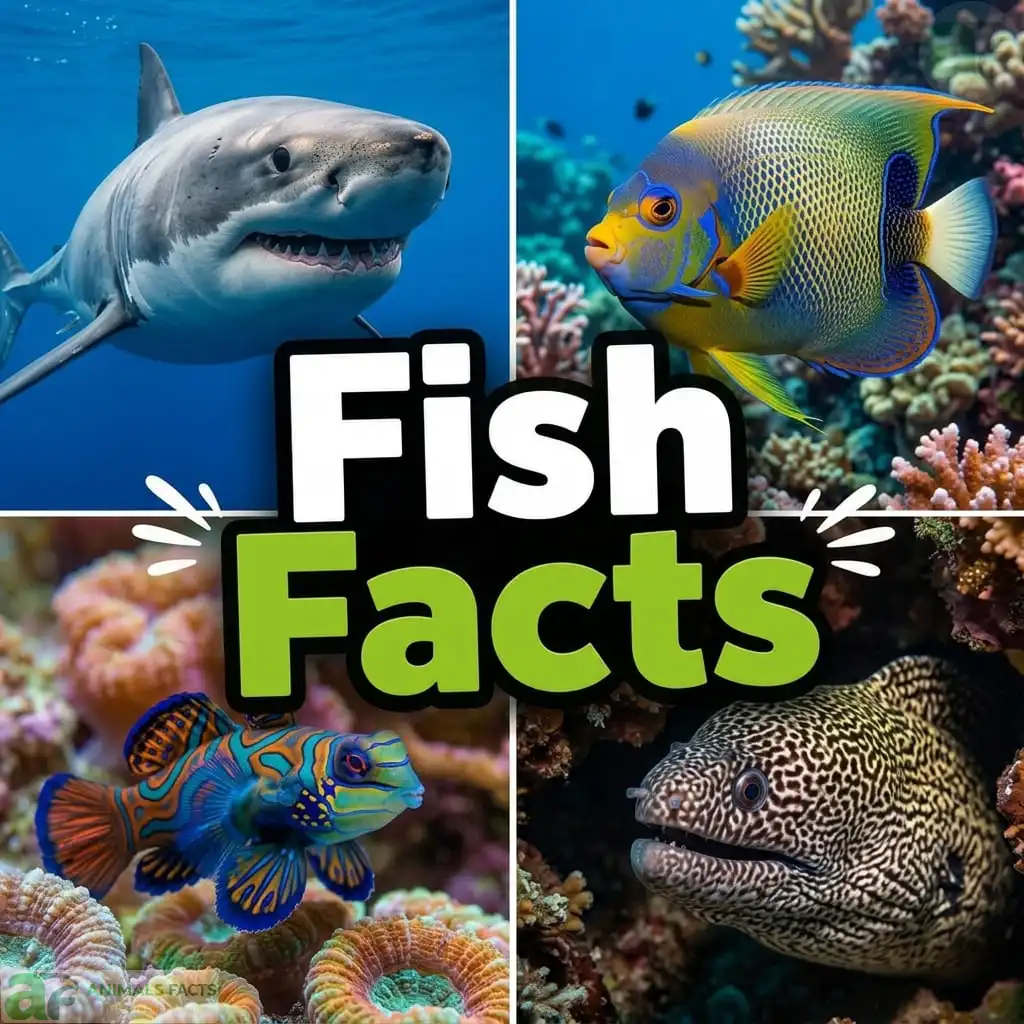
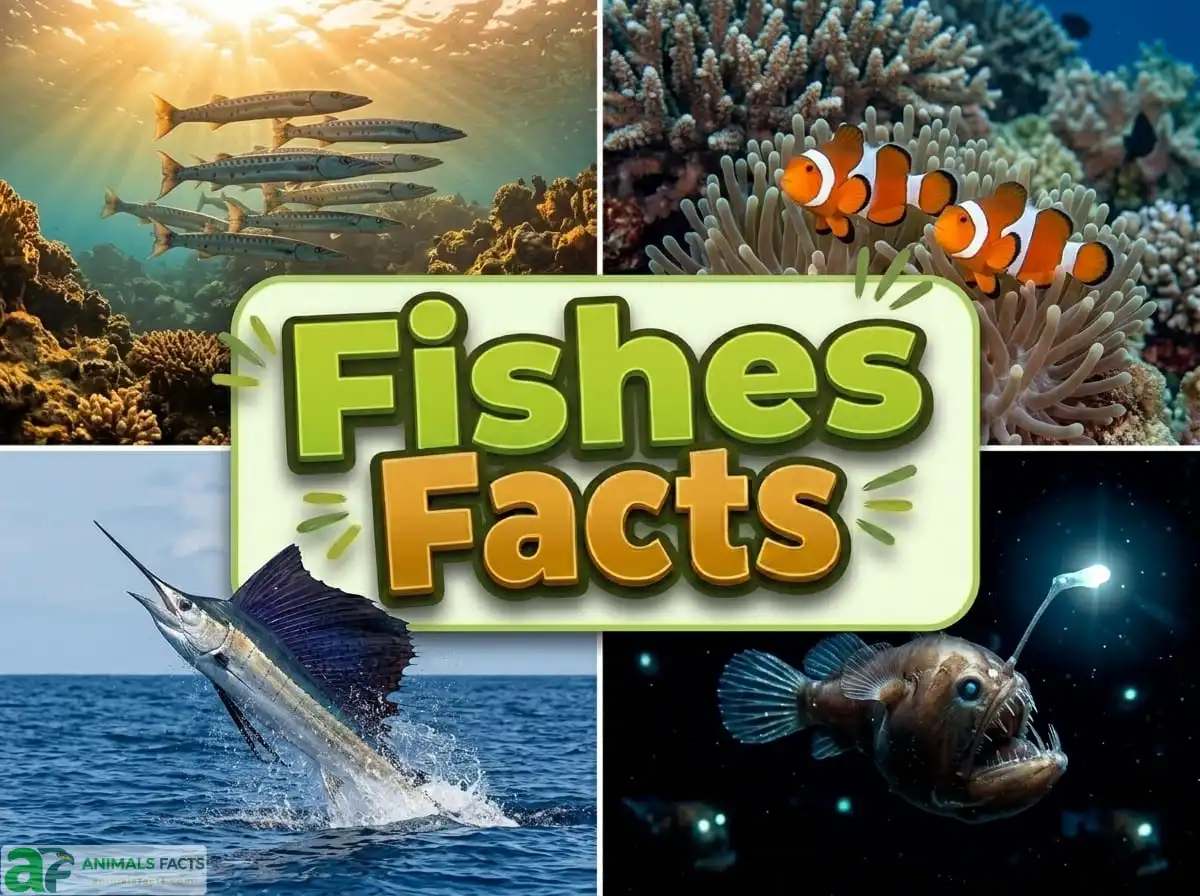
Fish Facts
| Feature | Details |
|---|---|
| Scientific Superclass | Pisces (informal grouping); includes Classes Agnatha, Chondrichthyes, and Osteichthyes |
| Kingdom | Animalia |
| Phylum | Chordata |
| Total Known Species | Approximately 34,000+ formally described species — more than all other vertebrate groups combined |
| Oldest Fish Group | Jawless Fish (Agnatha) — appeared approximately 530 million years ago |
| Habitat | Every aquatic environment on Earth — freshwater rivers, lakes, deep ocean trenches, coral reefs, polar seas, and hot springs |
| Smallest Fish | Paedocypris progenetica (Southeast Asia) — 7.9 mm body length; smallest known vertebrate with a backbone |
| Largest Fish | Whale Shark (Rhincodon typus) — up to 18.8 meters and 21.5 metric tons |
| Fastest Fish | Black Marlin (Istiompax indica) — estimated 130 km/h in short bursts |
| Deepest-living Fish | Snailfish (Pseudoliparis swirei) — confirmed at 8,336 meters depth in the Mariana Trench |
| Longest Lifespan | Greenland Shark (Somniosus microcephalus) — estimated 270–500+ years |
| Shortest Lifespan | Turquoise Killifish (Nothobranchius furzeri) — as little as 3–4 months total lifespan |
| Diet | Every dietary strategy known — herbivores, carnivores, omnivores, filter feeders, parasites, and detritivores |
| Conservation Status | Over 3,000 fish species threatened with extinction (IUCN Red List, 2026) |
| Global Population | Estimated 1–3.5 trillion individual fish in the world’s oceans alone |
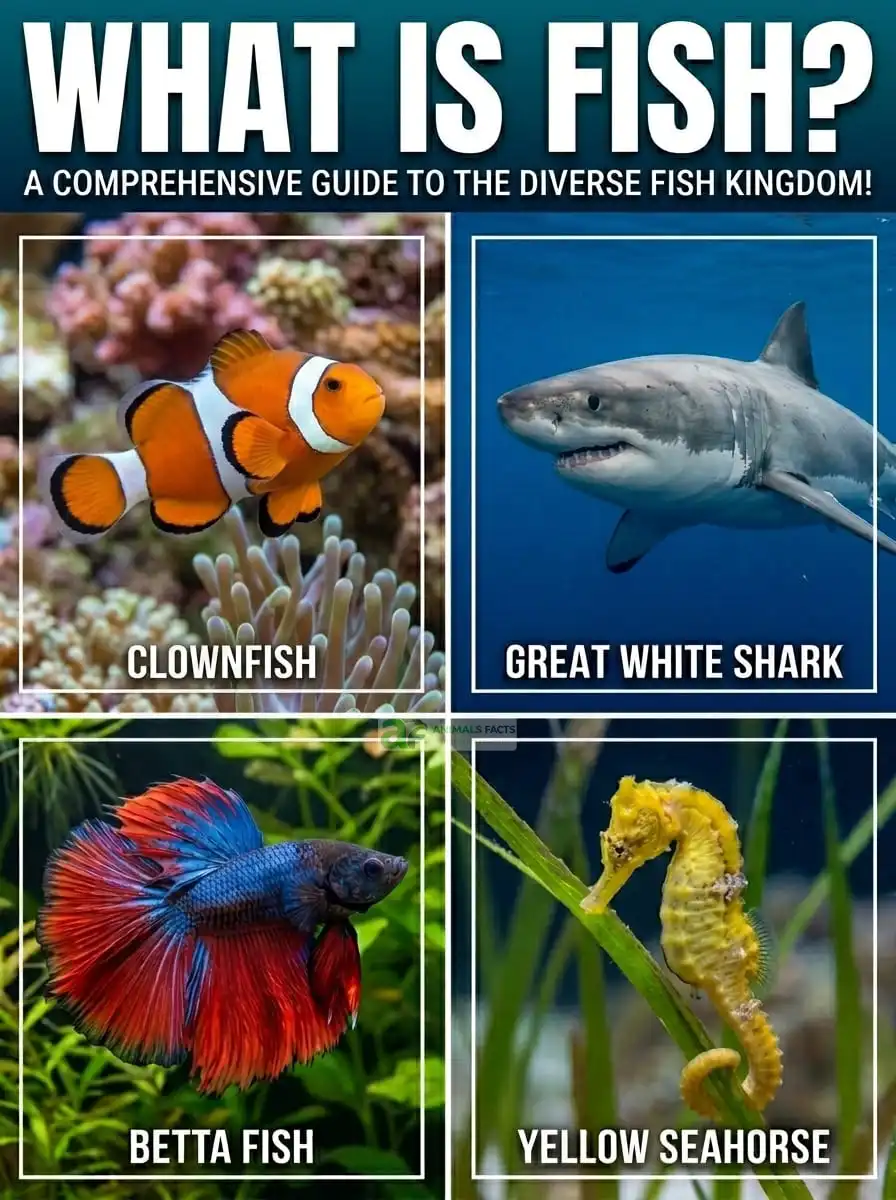
1. Introduction: What is Fish?
They were the first vertebrates on Earth. They ruled the ancient seas for hundreds of millions of years before any animal with legs ever set foot on land. Today they inhabit every body of water on the planet — from the sunlit coral reefs of the Indo-Pacific to the crushing darkness of the deepest ocean trenches, from the boiling hot springs of Yellowstone to rivers hidden beneath Antarctic ice. Fish facts are, in the most literal sense, the facts that define the vertebrate story of life on Earth.
Fish are the most species-rich, most ecologically diverse, and most numerically dominant group of vertebrate animals alive today. With over 34,000 formally described species — more than all mammals, birds, reptiles, and amphibians combined — they represent the extraordinary adaptive success of aquatic vertebrate life. A single visit to the Great Barrier Reef reveals over 1,500 fish species sharing a single ecosystem. The Amazon Basin harbors over 3,000 freshwater species — more than the entire Atlantic Ocean. And in the hadal depths of the Mariana Trench, ghostly Snailfish survive at pressures that would instantly crush most submarine vehicles.
Whether you are a student searching for fish facts for a school project, an angler who wants to understand the animals you pursue, a parent looking for fish facts for kids, a marine biologist, or simply someone who watched a David Attenborough ocean documentary and fell in love with the underwater world — this article is your definitive guide. We cover fish habitat, fish diet, fish behavior, their extraordinary ecological roles, their conservation crisis, their cultural significance, and everything in between. Let us dive in.
2. Fish Species Overview & Classification
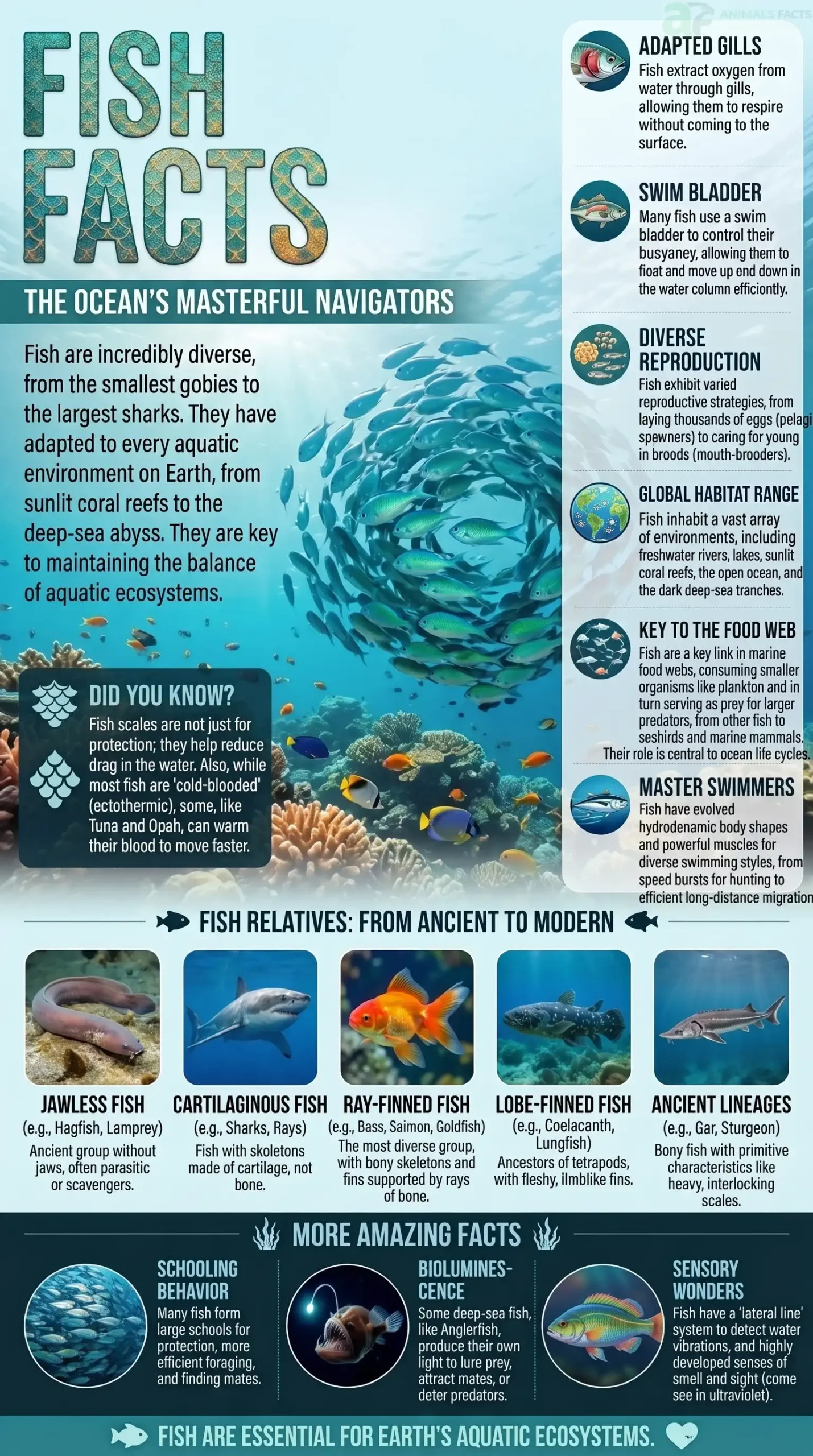
Fish are not a single unified biological group in the strict scientific sense — they are a paraphyletic grouping, meaning the term “fish” encompasses several distinct evolutionary lineages that do not all share a single common ancestor exclusive to themselves. When scientists refer to “fish,” they are typically referring to three major classes of aquatic vertebrates that together constitute what we commonly call fish.
What Defines a Fish?
While not all fish share every characteristic, the following features define the group broadly:
- Aquatic vertebrates: All fish live in water and possess a vertebral column (backbone)
- Gill breathing: Fish extract oxygen from water through gills — specialized vascular organs — though some species also breathe air through modified organs
- Ectothermic: Most fish are cold-blooded — regulating body temperature through external water temperature — with notable exceptions including Tuna and Great White Sharks, which maintain elevated body temperatures through counter-current heat exchange
- Fins: Fish use fins for locomotion, steering, and stability — though fin number, shape, and function vary enormously
- Scales: Most fish are covered in scales, though some species (catfish, eels) are scaleless
Major Fish Classification Table
| Class | Common Name | Approx. Species | Key Examples |
|---|---|---|---|
| Agnatha | Jawless Fish | ~120 | Lamprey, Hagfish |
| Chondrichthyes | Cartilaginous Fish | ~1,100 | Sharks, Rays, Skates, Chimeras |
| Actinopterygii | Ray-finned Bony Fish | ~30,000+ | Salmon, Tuna, Clownfish, Goldfish, Seahorse |
| Sarcopterygii | Lobe-finned Bony Fish | ~8 living species | Coelacanth, Lungfish |
The Four Major Fish Groups in Detail
Jawless Fish (Agnatha): The most ancient living fish lineage — descendants of the first vertebrates to evolve. Lampreys and hagfish lack jaws entirely, have no paired fins, and retain numerous primitive features. Hagfish produce extraordinary quantities of slime when threatened — one of the most effective biological defenses known.
Cartilaginous Fish (Chondrichthyes): Sharks, rays, and their relatives — distinguished by skeletons made entirely of cartilage rather than bone. This group has existed virtually unchanged for over 400 million years, making it one of the most evolutionarily stable vertebrate lineages ever recorded.
Ray-finned Fish (Actinopterygii): By far the largest and most diverse fish group — encompassing approximately 30,000+ species and representing over 96% of all living fish species. Virtually every fish familiar to most people — from goldfish and tuna to seahorses and flying fish — belongs to this group.
Lobe-finned Fish (Sarcopterygii): The smallest group in terms of living species — yet evolutionarily the most significant for the history of life on land, because all tetrapods (amphibians, reptiles, birds, and mammals — including humans) evolved from lobe-finned fish ancestors. The Coelacanth (Latimeria chalumnae) — thought extinct for 65 million years until its rediscovery in 1938 — is the most famous living member of this group.
Species Evolution & Discovery Timeline
~530 million years ago: The earliest known vertebrates — primitive jawless fish — appeared in the ocean during the Cambrian Period. Haikouichthys from China is among the oldest confirmed fish fossils.
~500 million years ago: Agnathans (jawless fish) dominated the ancient seas during the Ordovician and Silurian Periods — some growing to over 2 meters in length.
~430 million years ago: The evolution of jaws — one of the most transformative innovations in vertebrate history — occurred during the Silurian Period, enabling fish to exploit an enormous range of food sources previously inaccessible to jawless animals.
~420 million years ago: Placoderms — armored jawed fish — became the dominant vertebrates in Devonian seas. Dunkleosteus terrelli — a placoderm with crushing jaw plates generating the most powerful bite of any fish ever — reached lengths of 6–8 meters and was among the most formidable predators in Earth’s history.
~400 million years ago: The Devonian Period is known as the “Age of Fishes” — the most diverse and ecologically dominant period for fish in Earth’s history.
~375 million years ago: Lobe-finned fish gave rise to the first tetrapods — the ancestors of all land vertebrates including humans. Tiktaalik roseae represents one of the most complete transitional fossils between fish and the first land-dwelling vertebrates.
~200 million years ago: Modern bony fish groups — the Teleostei — began their explosive diversification following the Triassic-Jurassic mass extinction.
1938: The Coelacanth (Latimeria chalumnae) was rediscovered alive off the coast of South Africa — one of the greatest zoological discoveries of the 20th century; a species believed extinct for 65 million years was found living in the deep sea.
1997: A second living coelacanth species — Latimeria menadoensis — was discovered in Indonesian waters, confirming the group’s survival across two ocean basins.
2004: Tiktaalik roseae was discovered in the Canadian Arctic — providing one of the most complete fossil records of the fish-to-tetrapod transition ever found.
2005: Paedocypris progenetica — the world’s smallest known vertebrate — was formally described from Sumatran peat swamps.
3. Fish Physical Description & Unique Features
The physical diversity of fish is arguably the greatest of any vertebrate group — a direct consequence of their extraordinary evolutionary history spanning over 530 million years and their colonization of virtually every aquatic environment on Earth.
Size Extremes
Smallest fish and smallest vertebrate: Paedocypris progenetica of Southeast Asian peat swamps — adult females measure just 7.9 mm in body length — smaller than most insects and barely visible to the naked eye.
Largest fish: The Whale Shark (Rhincodon typus) — confirmed individuals reaching 18.8 meters in length and 21.5 metric tons in weight — the largest fish alive and the largest non-mammalian vertebrate on Earth.
Largest bony fish: The Ocean Sunfish (Mola mola) — up to 3.3 meters long and weighing up to 2,300 kg — the heaviest bony fish known.
Largest freshwater fish: The Giant Freshwater Stingray (Urogymnus polylepis) of Southeast Asian rivers — confirmed individuals weighing over 600 kg.
Longest fish: The Oarfish (Regalecus glesne) — the world’s longest bony fish at confirmed lengths of up to 8 meters, with unverified reports of individuals over 15 meters — likely the origin of ancient sea serpent myths.
Unique Physical Adaptations
Swim Bladder: Most bony fish possess a swim bladder — a gas-filled internal organ that provides buoyancy, allowing fish to remain at any desired depth without constantly swimming. By adjusting the gas content, fish can rise or descend effortlessly — one of the most elegant hydrostatic solutions in vertebrate biology.
Lateral Line System: A uniquely fish-specific sensory system — a row of sensory organs running along each side of the body that detects water pressure changes and vibrations with extraordinary sensitivity. The lateral line allows fish to detect the presence of other fish, approaching predators, and water currents in complete darkness — effectively a sixth sense that has no equivalent in any terrestrial vertebrate.
Electroreception: Many fish species — including sharks, rays, catfish, and electric eels — detect electrical fields generated by the muscle contractions of nearby animals. Sharks detect electrical fields as weak as 5 billionths of a volt per centimeter through specialized organs called Ampullae of Lorenzini — making their electrical sensitivity among the most refined sensory capabilities of any animal on Earth.
Counter-current Heat Exchange: Several large, active fish species — including Tuna, Swordfish, and Great White Sharks — maintain body temperatures significantly above the surrounding water through rete mirabile (counter-current heat exchangers) — networks of blood vessels that recover heat from blood leaving the muscles before it reaches the body surface. This allows these species to remain highly active in cold water where most fish would become sluggish.
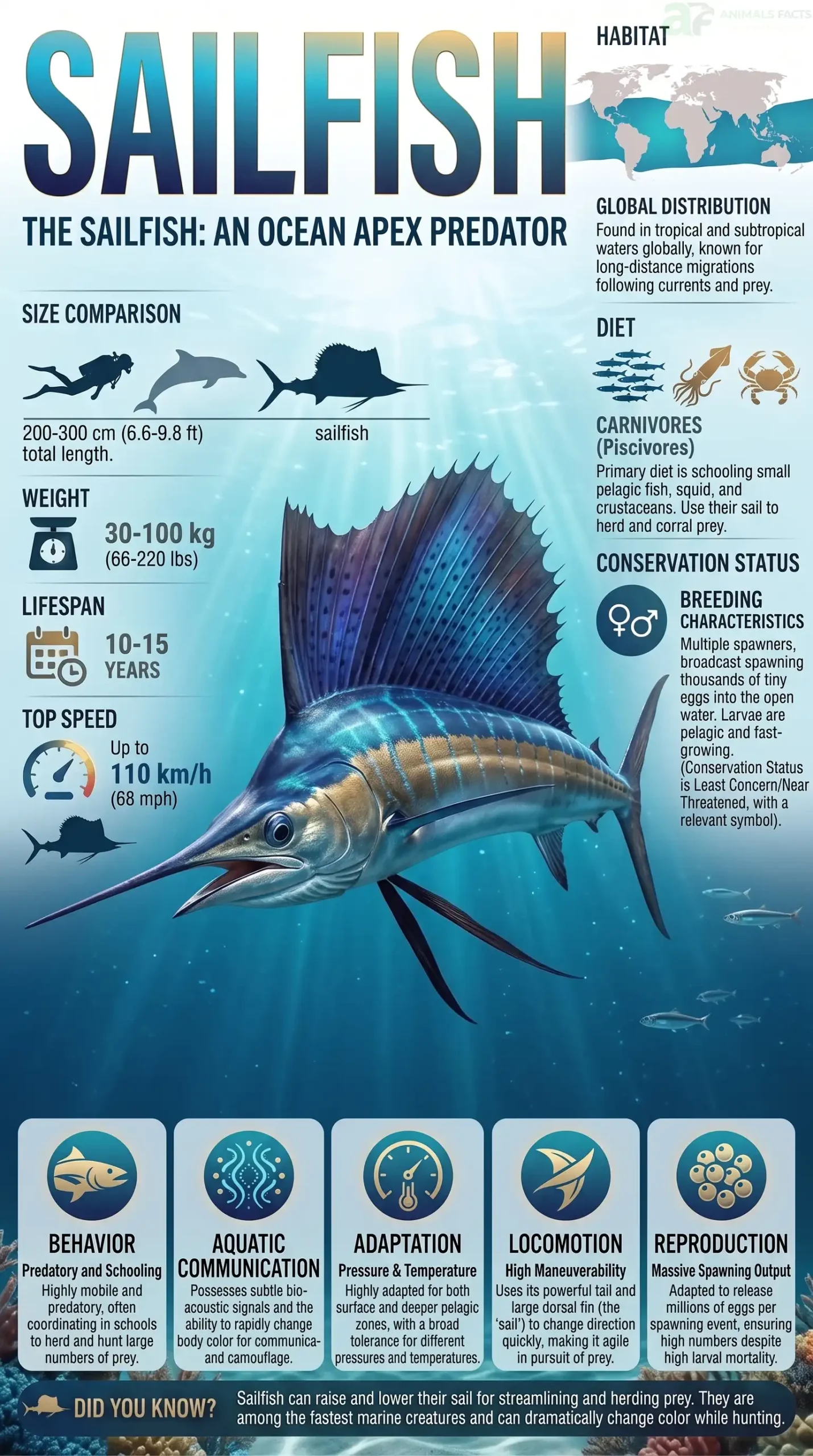
Bioluminescence: An estimated 76% of deep-sea fish species produce their own light through chemical bioluminescence — used for communication, camouflage, and luring prey in an environment of complete darkness. The Anglerfish uses a bioluminescent lure attached to its forehead to attract prey directly toward its enormous mouth.
Did You Know? The Mimic Octopus is famous for impersonating dangerous animals — but the Mimic Filefish (Paraluteres prionurus) performs an equally remarkable trick: it impersonates the highly toxic Valentini’s Sharpnose Puffer with such anatomical precision — matching the puffer’s body shape, fin placement, color pattern, and even its swimming behavior — that predators avoid it entirely, despite the filefish itself being harmless and edible.
4. Top 25 Surprising & Interesting Fish Facts
- Fish were the first vertebrates on Earth — their ancestors appeared over 530 million years ago, long before any animal walked on land.
- There are more fish species — over 34,000 — than all other vertebrate groups (mammals, birds, reptiles, and amphibians) combined.
- All land vertebrates — including humans — evolved from lobe-finned fish ancestors. Your arms, legs, and hands are evolutionarily modified fish fins.
- The Greenland Shark is the longest-lived vertebrate animal confirmed by science — estimated to live between 270 and 500 years, reaching sexual maturity at approximately 150 years of age.
- The Whale Shark — the world’s largest fish — is completely harmless to humans. It feeds by filter-feeding on plankton, fish eggs, and small fish, swimming with its enormous mouth open.
- Seahorses are the only animals in the world where the male becomes pregnant — the female deposits eggs into the male’s specialized brood pouch, where he fertilizes and carries them until birth.
- The Coelacanth was believed extinct for 65 million years until a living specimen was discovered by a South African museum curator in 1938 — one of the greatest zoological discoveries of the 20th century.
- Electric Eels can generate electrical discharges of up to 860 volts — powerful enough to stun a horse, illuminate light bulbs, and in extreme cases deliver a fatal shock to a human.
- The Deep-sea Anglerfish has one of the most extreme sexual dimorphism cases in the animal kingdom — males are a fraction of the female’s size and permanently fuse their bodies to females after mating, eventually sharing her circulatory system.
- Clownfish — made famous by Finding Nemo — are all born male. The dominant fish in a group can change sex to become female when the existing female dies — one of the most remarkable sex-change systems in vertebrates.
- The Pistol Shrimp that lives symbiotically with certain gobies is not a fish — but the goby’s role in this relationship is extraordinary: the nearly blind shrimp digs and maintains a burrow while the sharp-eyed goby stands guard, touching the shrimp with its tail fin to signal danger.
- Flying Fish (Exocoetidae) can launch themselves from the water and glide through the air on enlarged pectoral fins for distances of up to 400 meters — reaching heights of 6 meters above the surface.
- The Mudskipper spends more time out of water than in it — walking on its pectoral fins across mudflats, climbing mangrove roots, and breathing air through its skin and lining of its mouth.
- Sharks have existed virtually unchanged for over 450 million years — they predate the dinosaurs by over 200 million years and have survived all five major mass extinction events.
- The Blobfish — voted the world’s ugliest animal in 2013 — only looks like a deflated blob at sea level. In its natural deep-sea habitat at 900–1,200 meters, pressure compresses its gelatinous body into a normal fish shape.
- Tuna are warm-blooded in the sense that they maintain muscle temperatures significantly above the surrounding water — making them among the most physiologically exceptional fish in the world, capable of extraordinary sustained speed and endurance.
- The Migratory Atlantic Salmon returns from years at sea to spawn in the exact stream where it was born — navigating thousands of kilometers using the Earth’s magnetic field and its memory of the specific chemical signature of its home river.
- The Ocean Sunfish (Mola mola) produces the most eggs of any vertebrate animal — a single female can release up to 300 million eggs in a single spawning event.
- Some species of lungfish can survive out of water for up to 4 years by sealing themselves in a mucus cocoon underground — breathing air through a modified swim bladder that functions as a primitive lung.
- Goldfish have a memory span of at least 3 months — they can be trained to navigate mazes, recognize their owners, and anticipate feeding times. The “3-second memory” myth is entirely false.
- The Snailfish (Pseudoliparis swirei) holds the record for the deepest-confirmed fish — found alive at 8,336 meters depth in the Mariana Trench, surviving pressures over 800 times greater than atmospheric pressure at sea level.
- Sharks do not have a single bone in their bodies — their entire skeleton is made of cartilage, which is lighter and more flexible than bone and does not fossilize as easily, explaining why shark fossils are mostly just teeth.
- The Archerfish hunts insects by spitting precise jets of water with enough force to knock prey off overhanging branches from up to 3 meters away — compensating perfectly for the light refraction that distorts the apparent position of above-water targets.
- Some Antarctic Icefish have transparent, colorless blood — containing no hemoglobin and no red blood cells whatsoever. They absorb oxygen directly through their skin and through blood plasma at the extreme cold temperatures of Antarctic waters.
- The Parrotfish produces 80% of the white sand on tropical beaches — it bites coral using its fused beak-like teeth, digests the organic material, and excretes the calcium carbonate as fine white sand. A single large parrotfish can produce 90 kilograms of sand per year.
5. Fish Fun Facts for Kids
- Fish represent over 50% of all vertebrate species on Earth — more than mammals, birds, reptiles, and amphibians combined.
- The Coelacanth has been called a “living fossil” — it is more closely related to humans than it is to most other fish.
- A school of Herring can contain over 3 billion individual fish — one of the largest aggregations of vertebrates ever recorded.
- The Pufferfish inflates by rapidly swallowing water — expanding to several times its normal size, making it too large for most predators to swallow.
- Salmon swim upstream against powerful river currents, leap over waterfalls, and navigate thousands of kilometers — without eating anything during the entire upstream journey.
- The Archerfish can hit targets 3 meters above the water surface with a precisely aimed water jet — compensating for light refraction with mathematical precision.
- Goldfish can live for over 40 years — a confirmed record individual named Tish lived to 43 years of age.
- The Seahorse is the slowest fish in the ocean — it moves at approximately 1.5 meters per hour using a tiny dorsal fin that beats up to 35 times per second.
- Cleaner Wrasse fish run “cleaning stations” on coral reefs — larger fish queue up and wait their turn to have parasites, dead scales, and food debris removed by the wrasse, even allowing the tiny cleaner fish to enter their mouths and gill chambers.
- The Electric Eel can detect its own electrical fields and use them to remotely control the muscles of paralyzed prey — essentially using electricity as a remote control for the prey’s nervous system.
- Fish can get sunburned — shallow-water species like trout and some reef fish have been documented with UV-radiation damage, and some species produce mycosporine-like amino acids as natural sunscreen.
- The total weight of all the Herring in the North Atlantic has historically exceeded the total weight of all humans on Earth.
6. Fishes Habitat & Geographic Range
Fish have achieved the most complete aquatic conquest of any vertebrate group — inhabiting every body of water on Earth from mountain streams at 5,000 meters elevation to ocean trenches at 11 km depth, from Antarctic waters at -1.9°C to hot springs at 44°C.
Major Fish Habitat Types
Coral Reefs: Often called the “rainforests of the sea,” coral reefs cover less than 1% of the ocean floor yet support over 25% of all marine fish species — approximately 4,000–5,000 species. The extraordinary structural complexity of reef environments creates countless microhabitats supporting extraordinary fish biodiversity. The Indo-Pacific Coral Triangle is the most fish-diverse marine region on Earth.
Open Ocean (Pelagic Zone): The largest habitat on Earth by volume. Home to the fastest, largest, and most migratory fish species — including tuna, marlin, swordfish, mako sharks, and whale sharks. Pelagic fish often school in enormous numbers and travel thousands of kilometers annually.
Deep Sea (Bathypelagic & Hadal Zones): Below 200 meters, sunlight disappears entirely. The deep sea supports extraordinarily specialized fish — anglerfish, viperfish, gulper eels, snailfish — adapted to crushing pressure, near-freezing temperatures, and complete darkness through bioluminescence, enormous eyes or complete blindness, and highly flexible bodies and metabolisms.
Freshwater Rivers & Streams: Home to approximately 40% of all fish species despite freshwater comprising less than 1% of Earth’s water by volume. The Amazon Basin (3,000+ species), the Congo Basin (700+ species), and the Mekong River (850+ species) are the most freshwater-fish-rich river systems on Earth.
Freshwater Lakes: The African Great Lakes — particularly Lake Victoria (500+ cichlid species), Lake Tanganyika (350+ species), and Lake Malawi (800+ species) — are extraordinary centers of freshwater fish diversity and evolution. The cichlid fish of these lakes represent one of the most dramatic and well-studied examples of adaptive radiation in evolutionary biology.
Estuaries & Mangroves: The transition zones between freshwater and saltwater support species capable of tolerating a wide range of salinities — including mullet, flounder, tarpon, snook, and juvenile stages of many marine species that use mangroves as nursery habitat.
Polar Seas: The Southern Ocean and Arctic Ocean support specialized fish communities including Antarctic Icefish (with their colorless blood), Arctic Cod, and Notothenioid fish — species that produce biological antifreeze proteins preventing ice crystal formation in their tissues at sub-zero water temperatures.
Habitat Range by Region
| Region / Water Body | Notable Fish Groups | Approximate Species |
|---|---|---|
| Indo-Pacific (Coral Triangle) | Clownfish, Parrotfish, Reef Sharks, Mandarinfish, Lionfish | 3,000+ |
| Amazon Basin | Piranha, Electric Eel, Arapaima, Discus, Freshwater Stingray | 3,000+ |
| African Great Lakes | Cichlids (Victoria, Malawi, Tanganyika), Nile Perch, Tigerfish | 1,500+ |
| Open Ocean (Global) | Tuna, Marlin, Mako Shark, Flying Fish, Whale Shark | 2,000+ |
| North Atlantic | Atlantic Cod, Herring, Atlantic Salmon, Basking Shark, Halibut | 1,000+ |
| Mediterranean Sea | Bluefin Tuna, Swordfish, Sea Bass, Grouper, Moray Eel | 700+ |
| Mekong River Basin | Giant Mekong Catfish, Giant Freshwater Stingray, Siamese Carp | 850+ |
| Deep Sea (Global) | Anglerfish, Viperfish, Snailfish, Gulper Eel, Oarfish | 2,000+ |
| Antarctic/Arctic Seas | Antarctic Icefish, Arctic Cod, Notothenioids, Greenland Shark | 400+ |
Did You Know? Lake Malawi in East Africa contains more fish species than the entire North Atlantic Ocean — over 800 species of cichlid fish have evolved in this single lake over the past 1–2 million years, representing one of the fastest and most spectacular adaptive radiations ever documented in vertebrate evolution. Every species in this extraordinary diversity evolved from a small number of founding ancestors that colonized the lake when it formed.
7. Fish Diet & Feeding Behavior
Fish exploit virtually every food source available in aquatic environments — from microscopic phytoplankton and bacteria to large marine mammals. The extraordinary diversity of fish diets is matched by an equally extraordinary diversity of feeding structures, strategies, and behaviors.
Major Dietary Categories
Herbivores: Feed on algae, aquatic plants, and plant material. Parrotfish graze coral; Surgeonfish graze algae from reef surfaces; Grass Carp consume aquatic vegetation voraciously. Herbivorous fish perform critical ecosystem services by controlling algal overgrowth on coral reefs and in freshwater systems.
Carnivores: The majority of fish species are carnivorous to some degree — consuming invertebrates, other fish, and in the largest species, marine mammals. Strategies range from active high-speed pursuit (Marlin, Barracuda) to ambush predation (Stonefish, Flatfish) to filter feeding on plankton (Whale Sharks, Manta Rays, Basking Sharks).
Omnivores: Many freshwater species — including Carp, Tilapia, Catfish, and most Cichlids — consume a flexible diet of plant material, invertebrates, and small fish depending on availability.
Planktivores: Species that filter or selectively consume microscopic plankton — including Herring, Anchovies, Sardines, Menhaden, and the giant filter feeders (Whale Shark, Basking Shark, Manta Ray). Planktivorous fish form the critical link between microscopic primary producers and larger predators in ocean food webs.
Parasitic feeders: Lampreys attach to host fish using their toothed sucker mouth and rasp through scales and flesh to feed on blood and body fluids — one of the most ancient feeding strategies of any vertebrate.
Detritivores: Many bottom-dwelling species — Mullet, Carp, Catfish, Goatfish — feed on organic sediment, decomposing material, and associated microorganisms, performing critical nutrient recycling functions.
Diet Breakdown Table
| Fish Group | Primary Food | Secondary Food | Feeding Method |
|---|---|---|---|
| Sharks (large, active) | Fish, marine mammals (70%) | Invertebrates, carrion (30%) | Active pursuit; ambush |
| Whale Shark / Basking Shark | Zooplankton, fish eggs (90%) | Small fish (10%) | Ram filter feeding |
| Tuna / Marlin | Fish (70%) | Squid, crustaceans (30%) | High-speed pursuit |
| Salmon (ocean phase) | Fish, squid, crustaceans (100%) | — | Active pursuit |
| Parrotfish | Coral algae (70%) | Coral polyps, invertebrates (30%) | Biting with fused beak teeth |
| Piranha | Fish, invertebrates (60%) | Fruits, seeds, carrion (40%) | Pack feeding; biting |
| Electric Eel | Fish, frogs, small mammals (90%) | Invertebrates (10%) | Electrical stunning; suction |
| Anglerfish | Any fish or invertebrate that approaches (100%) | — | Bioluminescent lure; ambush |
| Archerfish | Insects, spiders (above water, 80%) | Aquatic invertebrates (20%) | Water-jet shooting |
| Cleaner Wrasse | Parasites, dead tissue (100%) | — | Picking from host fish |
Did You Know? The Great White Shark — the ocean’s most famous predator — does not actually prefer to eat humans. Research has confirmed that Great Whites are highly selective feeders, preferring the high-fat blubber of marine mammals (seals, sea lions, and whale carcasses) over the lean muscle tissue of humans. Most human attacks are now attributed to investigative biting — the shark uses its mouth to explore unfamiliar objects, not recognizing humans as suitable prey. The vast majority of attacks do not involve the shark consuming the victim.
8. Fish Reproduction & Life Cycle
Fish employ the most diverse range of reproductive strategies of any vertebrate group — encompassing virtually every combination of external and internal fertilization, egg-laying and live birth, parental care and total abandonment, and some of the most extraordinary sex-determination and sex-change systems in the animal kingdom.
Reproductive Strategies
External fertilization with broadcast spawning: The most common strategy in marine fish. Females release eggs and males release sperm simultaneously into open water — fertilization occurs externally and larvae develop without any parental care. The Atlantic Cod was historically one of the greatest broadcast spawners — a single female releasing up to 9 million eggs per spawning event.
Nest building and egg guarding: Many freshwater fish — including cichlids, sticklebacks, bass, and catfish — construct nests and actively guard eggs and larvae from predators. Male Sticklebacks build elaborate nests from plant material, glued with a kidney secretion, and fan the eggs with their fins to maintain oxygenation.
Mouth brooding: Several fish groups — particularly cichlids and some marine fish — carry fertilized eggs or larvae in their mouths for protection during development. Some species carry young in their mouths for weeks, during which the parent cannot feed.
Live birth (Vivipary): Sharks, rays, and many bony fish give birth to fully formed live young. Guppies, Swordtails, Mollies, and related livebearers are among the most familiar examples. Some sharks — including the Sand Tiger Shark — practice intrauterine cannibalism, where the largest embryo consumes its siblings in the womb, ensuring only the largest and strongest offspring are born.
Sequential hermaphroditism: Many fish species change sex during their lifetime. Protogyny (female first, then male) is seen in Wrasses and Groupers. Protandry (male first, then female) is seen in Clownfish. This flexibility allows fish to maximize reproductive success based on social circumstances.
Extraordinary Migration & Reproduction
Pacific Salmon return from years of ocean feeding to the exact freshwater stream where they hatched — guided by magnetic field memory and chemical olfaction. The upstream journey involves battling powerful currents, leaping waterfalls, and surviving gauntlets of bear, eagle, and otter predation — all without eating. Upon reaching spawning grounds, salmon spawn and die, their decomposing bodies fertilizing the stream with marine nutrients that support the next generation.
European Eels undertake one of the most mysterious migrations in the animal kingdom — adult eels from rivers across Europe travel to the Sargasso Sea in the central Atlantic Ocean to spawn, in waters so deep and remote that no human has ever observed wild eel spawning. The larvae then drift back to European rivers on ocean currents over three years — metamorphosing through multiple life stages during the journey.
Lifespan Comparison Table
| Species | Average Lifespan | Record / Maximum |
|---|---|---|
| Turquoise Killifish | 3–4 months | ~6 months maximum |
| Common Goldfish | 10–15 years | 43 years (confirmed record — Tish) |
| Atlantic Salmon | 3–8 years | ~13 years |
| Great White Shark | 40–70 years | ~73 years (confirmed) |
| Coelacanth | 60 years (estimated) | ~100 years (estimated) |
| Koi Carp | 25–35 years | 226 years (Hanako — Japan, unverified) |
| Whale Shark | 70–130 years | ~150 years (estimated) |
| Greenland Shark | 270–400 years | ~500 years (estimated) |
9. Social Behavior & Communication
Fish social behavior ranges from the completely solitary to the extraordinarily complex — encompassing cooperative hunting, democratic decision-making, intricate communication systems, and social structures that have surprised even experienced ichthyologists (fish scientists).
Schooling Behavior
The most recognizable fish social behavior is schooling — large numbers of fish moving in coordinated, synchronized formations. A school of Herring can contain over 3 billion individuals; Sardine schools off South Africa’s Wild Coast during the annual Sardine Run contain billions of fish and extend for kilometers.
Schooling serves multiple functions: predator confusion (the “confusion effect” — a predator cannot focus on a single individual in a mass of identical moving targets); hydrodynamic efficiency (fish in a school expend less energy swimming in the slipstream of neighbors); and information transfer (a predator attack in one part of the school triggers an instantaneous wave of evasive movement throughout the entire group).
Communication Methods
Visual signals: Many fish communicate through color changes, fin displays, and body posture. Cichlids use complex color patterns for species recognition, territorial signaling, and mate choice. Cuttlefish — not fish but related — display some of the most complex skin color communications of any animal. Male Siamese Fighting Fish (Betta) extend their fins and deepen their colors dramatically when encountering rivals.
Acoustic communication: Fish produce a wider variety of sounds than most people realize — through grinding teeth, vibrating swim bladders, and stridulation. Toadfish produce loud humming calls during breeding season. Cod produce low-frequency grunts. Piranha bark, drum, and click during aggressive interactions. The Oyster Toadfish produces calls reaching 100 decibels — as loud as a motorbike.
Chemical communication (Pheromones): Fish detect chemical signals through highly sensitive olfactory systems. Sharks detect blood in concentrations as low as one part per billion. Many species release alarm pheromones (called schreckstoff in minnows) when injured — triggering instant flight responses in nearby conspecifics. Salmon use chemical olfaction to navigate back to their birth stream.
Electrical communication: Electric Fish of South America and Africa — including Weakly Electric Fish (Gymnotiformes and Mormyridae) — produce constant low-voltage electrical fields that create an “electric image” of their surroundings. These fish communicate through species-specific electric pulse patterns, conduct electric duets during courtship, and use electrical dominance displays in territorial encounters — a communication channel completely invisible to most other animals.
Did You Know? The Cleaner Wrasse (Labroides dimidiatus) consistently passes the mirror self-recognition test — a cognitive test previously considered exclusive to animals with high intelligence such as great apes, dolphins, and elephants. In 2019, researchers published evidence that Cleaner Wrasse fish behaved in ways consistent with recognizing themselves in a mirror — scratching marks on their own bodies that were only visible when looking at their reflection. The finding sparked major scientific debate about the nature of self-awareness across animal species.
10. Predators & Defense Mechanisms
Fish face predation from an extraordinary range of animals — including other fish, marine mammals, seabirds, reptiles, and humans — and have evolved a correspondingly diverse array of defensive strategies across their hundreds of millions of years of evolution.
Common Fish Predators
Other fish: Large predatory fish — sharks, barracuda, tuna, grouper, pike, and predatory catfish — are the primary predators of most fish species. Apex predatory fish sit at the top of aquatic food webs and shape the behavior and distribution of prey fish throughout their ecosystems.
Marine mammals: Dolphins, porpoises, killer whales, seals, sea lions, and otters consume vast quantities of fish. Orcas have developed highly specialized hunting techniques for different fish prey — herding herring into bait balls, carousel feeding, and intentional beaching to catch salmon.
Seabirds: Gannets, pelicans, herons, kingfishers, cormorants, puffins, and penguins all depend on fish as their primary food source. The Northern Gannet dives from heights of 30 meters at speeds exceeding 100 km/h to pursue fish underwater — one of the most dramatic predatory techniques in the bird world.
Reptiles: Crocodilians, sea turtles (some species), and sea snakes all prey on fish. The Nile Crocodile is the primary predator of large freshwater fish in African river systems.
Humans: The single greatest predatory pressure on fish populations globally — humans harvest approximately 80–90 million tonnes of wild fish annually, making fishing the largest wild animal harvest in human history.
Defense Mechanisms
Schooling: As described above — the confusion effect makes individual targeting extremely difficult for predators in a school of thousands or millions of identical fish.
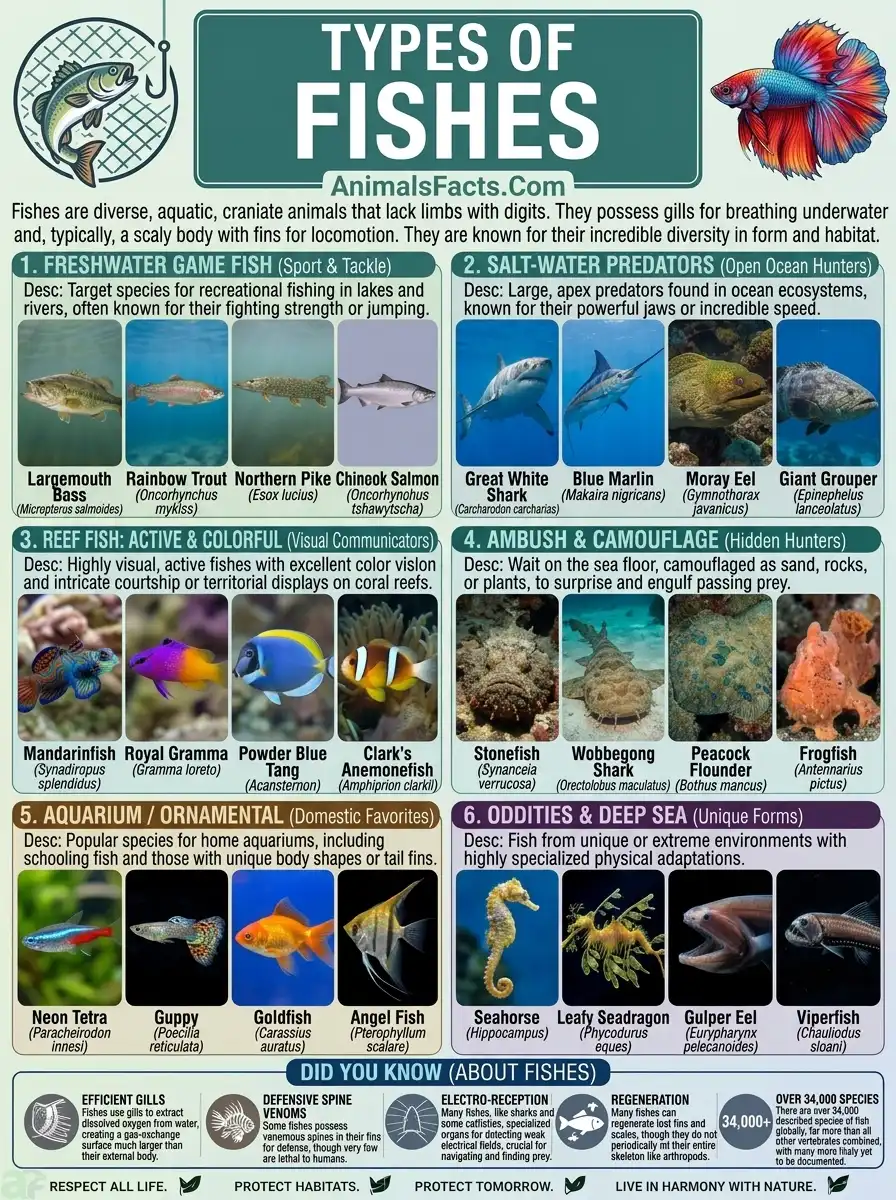
Camouflage: The most widespread fish defense. Flatfish (flounder, halibut) can match virtually any bottom substrate — sand, gravel, or pebble — with extraordinary precision within seconds. The Stonefish is virtually indistinguishable from a reef rock even at close range — making it simultaneously the world’s most camouflaged fish and the world’s most venomous fish.
Toxic venoms and spines: The Stonefish (Synanceia verrucosa) injects venom through 13 dorsal spines capable of causing excruciating pain, paralysis, cardiac arrest, and death in humans without rapid treatment. Lionfish possess spectacular venomous dorsal spines used purely defensively. Pufferfish contain tetrodotoxin — one of the most potent biological toxins known — in their organs and skin; a single pufferfish contains enough toxin to kill 30 adult humans.
Physical inflation: The Pufferfish rapidly swallows water to inflate itself to several times its normal volume — making it impossible for most predators to swallow. Some Porcupinefish add sharp spines to this defense.
Electrical defense: The Electric Eel (Electrophorus electricus) generates discharges of up to 860 volts — sufficient to stun or kill most predators and large enough to deter even Caimans and large mammals.
Speed: Many prey fish species — Flying Fish, Needlefish, Halfbeak — escape aerial and aquatic predators by leaping from the water and using speed and unpredictable movement patterns to avoid capture.
Ink: Hagfish release extraordinary quantities of thick, fibrous slime — which clogs the gills of predatory fish that attempt to bite them — with such speed and volume that a single hagfish can fill a large bucket with slime within seconds.
11. Fish Facts for Kids
Hey kids — did you know that fish are the oldest backboned animals on Earth? They have been swimming in the world’s oceans, rivers, and lakes for over 530 million years — and they are still the most diverse vertebrate group alive today!
Here are some truly incredible fish facts for kids:
- The Whale Shark is as long as a school bus and weighs as much as three elephants — but it only eats tiny plankton, fish eggs, and small fish. It is completely harmless to humans!
- Seahorses are the only animals in the world where the dad has the babies! The female puts her eggs into a special pouch on the dad’s tummy, and he carries them until they are born.
- Clownfish — like Nemo — can change from male to female when they need to. The biggest fish in a group becomes the female!
- The Electric Eel can produce electricity strong enough to light up 10 light bulbs at the same time — or stun a horse!
- Parrotfish make sand — they chew up coral with their beak-like teeth, digest it, and poop out fine white sand. All those beautiful white beaches you see on tropical islands? A lot of that sand came from a parrotfish!
- Goldfish actually have a really good memory — they can remember things for months, recognize their owners, and even be trained to push levers for food. The “3-second memory” story is completely made up!
- The Coelacanth was thought to be extinct for 65 million years — then a live one was found in 1938! It is like finding a living dinosaur!
- Flying Fish can actually fly — well, glide — through the air for up to 400 meters, which is longer than four football fields!
Did You Know? The Archerfish is one of the most remarkable hunters on Earth. It lives in rivers and mangroves in Southeast Asia and Australia — and it hunts by spitting water at insects sitting on branches above the water. It can hit a target up to 3 meters away with a precisely aimed jet of water — and it even compensates for the bending of light at the water surface to make sure its shot lands exactly right. Scientists are studying the archerfish to understand how its brain makes these complex calculations!
12. Relationship with Humans
No animal group has a deeper, more complex, or more consequential relationship with human civilization than fish. They have fed humanity for hundreds of thousands of years, shaped the development of coastal and river civilizations, inspired religious belief and mythology across every culture on Earth, and today face an existential crisis driven almost entirely by human overexploitation.
Fish as Food — The Foundation of Civilizations
Fish has been a primary human food source for at least 500,000 years — archaeological evidence of fish consumption extends back to the earliest anatomically modern humans in Africa. The development of fishing technology — nets, hooks, traps, and eventually boats — was one of the most significant technological leaps in human prehistory.
The Neolithic Revolution — the transition from nomadic hunting-gathering to settled agriculture — was preceded and in many coastal regions replaced by settled fishing economies that provided the stable food surplus necessary for complex social organization. The ancient civilizations of Mesopotamia, Egypt, Japan, the Pacific Islands, and virtually every coastal culture depended fundamentally on fish protein.
The medieval European fishing industry — particularly the North Sea Herring fishery and the Grand Banks Cod fishery of the North Atlantic — was one of the most economically significant industries in pre-industrial Europe, driving trade networks, shipbuilding, and geopolitical competition across centuries.
Today, fish provides the primary protein source for over 3.3 billion people worldwide — approximately 17% of global animal protein consumption comes from fish — and global fish harvests amount to approximately 80–90 million tonnes of wild-caught fish annually, making fishing the largest wild animal harvest in human history.
Aquaculture — Fish Farming
Aquaculture (fish farming) now supplies approximately half of all fish consumed by humans globally — and is the fastest-growing food production sector in the world. China produces approximately 58% of the world’s farmed fish, with salmon farming in Norway, shrimp farming in Southeast Asia, and tilapia farming in Africa and Latin America representing the other major production systems.
Ornamental Fish
The global ornamental fish trade — involving fish kept in home aquariums and garden ponds rather than for food — is estimated at $6–8 billion annually. Over 600 million ornamental fish are traded globally each year. The Koi Carp — a decorative variety of common carp developed in Japan — can sell for extraordinary prices; a single premium Koi sold for approximately $2 million at auction in Japan in 2018.
Fish in Medicine
Fish have contributed to human medicine in ways that extend well beyond nutrition:
Omega-3 fatty acids from fish oil — particularly EPA and DHA — have been demonstrated to reduce cardiovascular disease risk, support brain development, and reduce inflammation, driving a multi-billion-dollar global fish oil supplement industry.
Insulin for treating diabetes was originally extracted from fish pancreases before synthetic production became available.
Ziconotide — a powerful non-opioid painkiller — is derived from the venom of cone snails (not fish, but ocean organisms). However, numerous fish venoms are actively studied as sources of bioactive compounds for pain management, cancer treatment, and antibiotic development.
Tetrodotoxin from Pufferfish is studied for potential use in treating certain pain conditions and as a surgical anesthetic in situations where conventional anesthetics are contraindicated.
13. Fish Conservation Status & Threats
The world’s fish populations are facing the most severe and the most rapidly escalating conservation crisis in their 530-million-year history — driven primarily by human overexploitation, habitat destruction, pollution, climate change, and invasive species.
Global Conservation Data (2026)
| IUCN Category | Number of Fish Species |
|---|---|
| Critically Endangered | 500+ |
| Endangered | 700+ |
| Vulnerable | 1,500+ |
| Near Threatened | 800+ |
| Data Deficient | 5,000+ (most deep-sea and freshwater species unassessed) |
| Extinct since 1500 | 80+ confirmed |
| Overfished marine stocks | Over 33% of commercial fish stocks fished beyond sustainable levels (FAO, 2024) |
Major Threats in Detail
Overfishing: The single greatest direct threat to fish populations. The Grand Banks Cod — once the most abundant fish in the North Atlantic — collapsed catastrophically in 1992 after decades of industrial overfishing; the stock has never fully recovered and the fishery remains largely closed over 30 years later. The Atlantic Bluefin Tuna was fished to a small fraction of its historical abundance before international management began stabilizing populations. Over 33% of global marine fish stocks are currently fished beyond sustainable levels.
Habitat Destruction: Coral reef degradation (from bleaching, pollution, and destructive fishing practices), mangrove deforestation, wetland drainage, dam construction blocking fish migration routes, river channelization, and coastal development all destroy the habitats fish depend on for feeding, spawning, and juvenile development.
Climate Change: Ocean warming, ocean acidification, sea level rise, changing current patterns, and altered seasonal timing all affect fish distribution, reproduction, food availability, and coral reef health. Many tropical fish species are already shifting their ranges poleward as waters warm, and coral bleaching events are eliminating the reef habitat that thousands of species depend on.
Pollution: Agricultural runoff, sewage discharge, plastic pollution, heavy metal contamination, and oil spills all degrade aquatic habitats. Microplastics are now found in the bodies of fish species across every ocean on Earth. Agricultural nutrient runoff creates oxygen-depleted “dead zones” in coastal seas — over 500 coastal dead zones have been documented globally.
Invasive Species: Introduced fish species have devastated native fish communities worldwide. The introduction of Nile Perch to Lake Victoria in the 1950s caused the extinction of over 200 endemic cichlid species — the largest documented vertebrate extinction event caused by a single species introduction. Asian Carp threatening North American river systems and Brown Trout devastating native fish in the Southern Hemisphere are among dozens of other serious invasive fish crises.
Dam Construction: Large hydroelectric and irrigation dams block fish migration routes — catastrophically impacting migratory species such as salmon, sturgeon, eel, and shad. Over 2.8 million dams exist globally, and their cumulative impact on migratory fish populations has been devastating.
Did You Know? The European Eel (Anguilla anguilla) was once so abundant in European rivers that it was a primary food of the poor across the continent. Since the 1980s, glass eel recruitment to European rivers has declined by approximately 95–99% — one of the most catastrophic population collapses of any commercially important fish species. The species is now classified as Critically Endangered and its total extinction within decades is considered a genuine possibility by leading eel researchers.
14. Famous Fish
The Coelacanth – The Living Fossil
The West Indian Ocean Coelacanth (Latimeria chalumnae) is arguably the most famous fish discovery in scientific history. Known only from fossils believed to date no more recently than 65 million years ago, it was considered a prime example of an extinct lineage — until December 1938, when a South African museum curator named Marjorie Courtenay-Latimer noticed an extraordinary fish among the catch at a local fishing port in East London, South Africa. Her description and subsequent identification of the fish as a living coelacanth caused a worldwide scientific sensation. The species has been named Latimeria chalumnae in her honor. A second living coelacanth species (Latimeria menadoensis) was discovered in Indonesian waters in 1997.
Old Tom – The Killer Whale Who Herded Whales for Whalers
Old Tom was an Orca (killer whale — not technically a fish, but too remarkable to omit in this context) who lived in Twofold Bay, New South Wales, Australia, and led a pod of orcas that cooperated with human whalers from the 1840s until 1930. Old Tom and his pod would herd baleen whales into the bay and alert the whalers by slapping the water — in exchange for being allowed to eat the lips and tongue of the harpooned whales (the “Law of the Tongue”). Old Tom’s skeleton is preserved at the Eden Killer Whale Museum in New South Wales.
Tish – The World’s Oldest Confirmed Goldfish
Tish was a common Goldfish (Carassius auratus) won at a fairground stall in 1956 by seven-year-old Peter Hand of Yorkshire, England. Tish lived until 1999 — reaching the confirmed age of 43 years — and is recognized by the Guinness World Records as the oldest goldfish ever verified. Tish’s extraordinary longevity definitively disproved the persistent myth that goldfish have only a three-second memory and short lifespans.
Jaws – The Great White Shark That Changed Ocean Perception
While not a real individual fish, the fictional Great White Shark of Peter Benchley’s 1974 novel and Steven Spielberg’s 1975 film “Jaws” is arguably the most consequential fish character in human cultural history. The film triggered what researchers have documented as a decades-long wave of public fear of Great White Sharks — contributing to widespread killing of sharks and significantly impeding their conservation for over 20 years after the film’s release. Peter Benchley himself spent his later years working to counter the film’s negative impact on shark conservation, becoming an active advocate for shark protection before his death in 2006.
Barry – The Giant Freshwater Stingray
Barry – a male Giant Freshwater Stingray (Urogymnus polylepis) captured by fishermen in Thailand’s Mae Klong River in May 2022 — was confirmed as the largest freshwater fish ever recorded by weight. Measured at approximately 4 meters in total length (including tail) and weighing approximately 300 kg, Barry was carefully tagged and released alive by a team of scientists from the Wonders of the Mekong conservation project. His discovery confirmed that giant freshwater fish of extraordinary size still exist in Southeast Asian rivers despite severe overfishing pressure.
15. Role in Ecosystem & Food Chain
Fish are the structural and energetic backbone of aquatic ecosystems worldwide. Their removal — wherever it has occurred through overfishing or habitat loss — has produced dramatic, far-reaching, and often irreversible ecosystem changes.
The Foundation of Marine Food Webs
Small pelagic fish — particularly Anchovies, Sardines, Herring, Sprats, and Capelin — are the most ecologically important fish in the ocean in terms of total energy transfer. These species form the critical middle layer of ocean food webs: they consume zooplankton and are in turn consumed by virtually every marine predator — tuna, sharks, dolphins, seabirds, seals, and whales — in quantities that dwarf all other prey types combined.
When anchovy populations collapsed off the coast of Peru during the 1972–73 El Niño event — drastically reducing the catch — the cascading effects included massive seabird and marine mammal population crashes that took decades to recover. The Atlantic Menhaden performs a similar foundational role on the US East Coast — providing food for bluefish, striped bass, tuna, dolphins, and osprey while simultaneously filtering enormous volumes of water through their filter feeding.
Coral Reef Ecosystem Engineers
Parrotfish and Surgeonfish are the primary grazers of coral reef ecosystems — consuming the algae that would otherwise overgrow and smother coral. On healthy reefs with intact parrotfish populations, algal growth is kept in balance with coral recovery. On reefs where parrotfish have been heavily fished, algae frequently overtops coral — transforming diverse coral gardens into structurally simple algal mats that support dramatically less biodiversity.
Parrotfish sand production also maintains the sandy substrate of coral lagoons and adjacent beaches — without parrotfish bioerosion, many coral reef islands would gradually disappear beneath rising seas without the continuous sand supply that keeps them above water.
Salmon as Ecosystem Engineers
Pacific Salmon transport vast quantities of marine-derived nutrients deep into terrestrial ecosystems — far from the ocean. Salmon that die on spawning grounds after returning from the sea provide nitrogen, phosphorus, and carbon from their marine-fed bodies to river banks and surrounding forest soils. Bears, eagles, ravens, and other animals drag salmon carcasses far from rivers — fertilizing forest vegetation with marine nutrients that support forest productivity measurably higher than in comparable streams without salmon.
Studies have documented marine-derived nitrogen in the leaves of trees growing hundreds of meters from salmon streams — demonstrating that the boundary between ocean and forest ecosystems is far less clear-cut than it appears.
16. Fish Myths, Folklore & Cultural Significance
Fish occupy a profound and extraordinarily diverse place in the mythology, religion, and cultural traditions of human civilizations across every continent and every era of recorded history.
Ancient Mesopotamia & Egypt
In Mesopotamian mythology, the god Enki (god of water, wisdom, and creation) was associated with fish, and the Abzu (primordial freshwater ocean beneath the Earth) was depicted as teeming with divine fish. The Oannnes myth — describing a fish-bodied being that emerged from the sea to teach humans civilization, agriculture, and the arts — is one of the oldest recorded human-fish mythological narratives.
In ancient Egypt, the fish-headed god Sobek (associated with the Nile Crocodile) coexisted with genuine reverence for Nile fish species as symbols of fertility and rebirth. The Tilapia — which was observed to appear to carry its young in its mouth (mouth-brooding behavior) — became a symbol of resurrection and rebirth in Egyptian cosmology.
Christianity
Fish occupy a uniquely central position in Christian symbolism. Jesus’s disciples were fishermen. The miraculous feeding of 5,000 people with five loaves and two fish is one of the best-known miracles in the Gospels. The Ichthys (Greek word for fish) symbol — the simple fish outline formed by two intersecting arcs — was one of the earliest symbols used by early Christians to identify themselves to each other during periods of Roman persecution. It remains the most widely recognized Christian symbol after the cross.
The Friday fish-eating tradition in Catholicism — arising from the prohibition on eating warm-blooded meat on Fridays as a form of penance — shaped European fishing economies, dietary traditions, and even geography for centuries, with its influence still visible in the dominance of fish-and-chip culture in the UK and the ubiquity of seafood restaurants near Catholic coastal communities globally.
Japan
In Japan, fish culture reaches a depth and sophistication found nowhere else in the world. The Koi Carp is a symbol of perseverance, strength, and good fortune — associated with the samurai class and displayed on banners during Children’s Day celebrations. The tradition of Kintsugi — repairing broken ceramics with gold — includes imagery of fish as symbols of transformation and beauty.
Sushi and Sashimi — raw fish preparation traditions with roots over 2,000 years in Japanese culinary history — represent perhaps the most refined and culturally significant food traditions built around fish consumption in any culture worldwide.
The Fugu (Pufferfish) tradition — in which licensed chefs prepare a fish that contains one of the world’s deadliest toxins, removing the toxic organs with sufficient precision to make the flesh safe while allegedly leaving just enough toxin to create a distinctive tingling sensation in the diner’s lips — represents a unique intersection of fish culture, culinary art, and extreme risk that is found nowhere else.
Pacific Islander Traditions
Fish hold a sacred status across virtually every Pacific Island culture. For the Māori of New Zealand, the North Island of New Zealand itself is the “fish of Maui” — the legendary culture hero Māui is said to have pulled the North Island from the sea using a fishhook made from his grandmother’s jawbone. The South Island is Maui’s canoe. This creation narrative places fish — and the act of fishing — at the absolute foundation of Māori cosmological identity.
17. Fish in Pop Culture
From ancient cave paintings to billion-dollar animated film franchises, fish have inspired human cultural creativity across every medium and every era.
Film & Animation
“Finding Nemo” (Pixar, 2003) — One of the highest-grossing animated films ever made, set entirely in the underwater world of the Great Barrier Reef and the open ocean. Its success introduced an entire generation to coral reef biology and the extraordinary diversity of marine fish life. Unfortunately, it also triggered the “Nemo Effect” — a dramatic increase in demand for Clownfish as pets that placed significant pressure on wild clownfish populations on coral reefs worldwide.
“Jaws” (Steven Spielberg, 1975) — Arguably the most culturally influential wildlife film ever made, and almost certainly the most damaging to the conservation of a single species. The film’s portrayal of the Great White Shark as a mindless human-hunting monster triggered decades of public fear and widespread shark killing that severely impacted Great White populations before recovery measures were implemented. Steven Spielberg has expressed regret for the film’s conservation impact.
“The Shape of Water” (Guillermo del Toro, 2017) — Academy Award winner for Best Picture; featuring a humanoid amphibious fish creature as its central romantic character — one of the most celebrated and unusual depictions of a fish-like being in mainstream cinema.
“Blue Planet” and “Blue Planet II” (BBC, 2001 & 2017) — Discussed further in the documentaries section; these series contain the most extraordinary fish natural history footage ever filmed and have had measurable impacts on public awareness of ocean conservation.
Literature
“The Old Man and the Sea” by Ernest Hemingway (1952, Nobel Prize-winning work) — The epic three-day struggle between an aging Cuban fisherman and a giant Blue Marlin has become one of the most celebrated meditations on perseverance, dignity, and humanity’s relationship with nature in the 20th century literary canon.
“Moby Dick” by Herman Melville (1851) — Though the White Whale is technically a mammal, the novel’s entire narrative fabric — its world of whalers, ocean ecosystems, and the obsessive pursuit of a marine animal — makes it the definitive literary work about the relationship between humans and the creatures of the sea.
“The Life of Pi” by Yann Martel (2001) — Features extraordinary sequences of Pacific marine life observed from a lifeboat, including a remarkable encounter with a flying fish storm that has introduced millions of readers to the reality of flying fish behavior.
Gaming & Digital Culture
“Feeding Frenzy” (PopCap, 2004) — One of the most successful casual video games of the 2000s, based on the simple premise of a small fish eating smaller fish and growing large enough to eat bigger fish — a perfect gamification of the marine food chain.
“Subnautica” (Unknown Worlds Entertainment, 2018) — One of the most acclaimed survival games of the decade, set entirely underwater on an alien ocean planet; widely credited with generating significant new public interest in ocean biology and marine conservation among young gamers.
18. Fish Facts vs. Common Myths
Myth: Goldfish have a three-second memory. Fact: Goldfish have been demonstrated in multiple studies to possess memory spans of at least three months. They can be trained to navigate mazes, anticipate feeding times, recognize their owners, and respond to signals. This myth — which has been debunked repeatedly for decades — persists stubbornly in popular culture.
Myth: Great White Sharks are mindless human-hunting machines. Fact: Great White Sharks are highly intelligent, selective predators that prefer the high-calorie blubber of marine mammals. Most human attacks are classified as investigative bites — the shark examining an unfamiliar object with its mouth, not a predatory attack. Unprovoked fatal attacks on humans are statistically extremely rare.
Myth: Fish are silent. Fact: Fish produce a remarkable variety of sounds — grunts, chirps, hums, clicks, and booms — through grinding teeth, vibrating swim bladders, and other mechanisms. The Oyster Toadfish produces calls reaching 100 decibels. Underwater soundscapes in healthy marine ecosystems are extraordinarily complex.
Myth: A fish’s memory is so poor it cannot recognize its owner. Fact: Captive fish — including cichlids, goldfish, oscars, and many others — readily learn to recognize the specific person who feeds them, swimming to the front of their tank when that person approaches while ignoring strangers.
Myth: Sharks must keep swimming to survive. Fact: This is true for obligate ram ventilators — species like the Great White Shark and Mako that must swim to force water over their gills. However, many shark species — including Nurse Sharks, Whitetip Reef Sharks, and Wobbegongs — breathe by actively pumping water over their gills and can rest completely motionless on the sea floor for extended periods.
Myth: The Piranha will strip a living animal to the bone in seconds. Fact: The dramatic scenes of frenzied piranha attacks in films like “Piranha” (1978) are almost entirely fictional. Piranhas are primarily scavengers and opportunists — they feed most aggressively on already-dead or injured animals. Healthy animals swimming through piranha-inhabited rivers are rarely attacked. Piranhas are also important components of Amazon food webs, consuming fruit and seeds as a significant portion of their diet.
Myth: The Blobfish is naturally blob-shaped. Fact: The famous photograph of the Blobfish — showing a deflated, gloomy-looking gelatinous mass — is what the fish looks like after being brought to the surface from its natural habitat at 900–1,200 meters depth. The dramatic pressure change causes the fish’s gelatinous flesh to expand grotesquely. In its natural environment, the Blobfish looks like a relatively unremarkable, normally-shaped fish.
19. Best Places to See Fish in the Wild
Great Barrier Reef, Queensland, Australia
The world’s largest coral reef system — stretching over 2,300 kilometers — supports over 1,500 fish species, including reef sharks, giant grouper, parrotfish, lionfish, clownfish in their sea anemones, and spectacular schools of reef fish in extraordinary density. Snorkeling and scuba diving in the Coral Sea along the reef provides the most accessible world-class fish diversity viewing available anywhere.
Galápagos Islands, Ecuador
The unique marine environment of the Galápagos — where cold Humboldt Current waters meet warm tropical Pacific currents — creates extraordinary marine diversity including the world’s only Marine Iguana, Galápagos Penguins, Whale Sharks, Hammerhead Sharks, enormous schools of Hammerhead and Galapagos Sharks, and reef fish found nowhere else on Earth. The underwater visibility and fish abundance here are among the best in the world.
Palau, Micronesia
The marine lakes and reefs of the Republic of Palau in the western Pacific are widely considered to offer the finest shark diving in the world — with Grey Reef Sharks, Whitetip Reef Sharks, Hammerhead Sharks, and the extraordinary spectacle of sharks gathering at Blue Corner in predictable numbers unmatched almost anywhere on Earth. The Jellyfish Lake of Palau — where millions of jellyfish drift with the sun — is one of the world’s most extraordinary snorkeling experiences.
Amazon Basin, Brazil & Peru
The rivers, lakes, and flooded forests of the Amazon Basin offer unparalleled freshwater fish viewing — including the extraordinary Arapaima (one of the world’s largest freshwater fish), Amazon River Dolphins herding fish, Electric Eels, Piranhas, Disc Fish (Discus), and hundreds of catfish and cichlid species. Boat tours and fishing expeditions through Mamirauá Reserve in Brazil provide exceptional wildlife encounters.
Silfra Fissure, Iceland
The Silfra Fissure between the North American and Eurasian tectonic plates in Þingvallavatn Lake, Iceland offers the world’s clearest freshwater diving — with visibility exceeding 100 meters in glacially filtered water. While fish diversity is limited compared to tropical sites, the extraordinary clarity and the surreal experience of swimming between two continental plates make this one of the world’s most unforgettable aquatic environments. Arctic Char and Brown Trout are the primary fish species visible.
Wild Coast, South Africa — Sardine Run
Between May and July each year, billions of Sardines migrate northward along South Africa’s Wild Coast in one of the greatest marine spectacles on Earth — the Sardine Run. The sardine shoals attract extraordinary concentrations of Sharks, Dolphins, Gamefish, Cape Gannets, Whales, and thousands of human divers, creating underwater feeding frenzies of breathtaking intensity and scale. This is widely considered the greatest marine wildlife event accessible to recreational divers anywhere in the world.
Mekong River, Southeast Asia
The Mekong River — flowing through China, Myanmar, Laos, Thailand, Cambodia, and Vietnam — is the most fish-diverse river in Asia with over 850 species, including the critically endangered Giant Mekong Catfish (one of the world’s largest freshwater fish), the Giant Freshwater Stingray, and dozens of other giant freshwater species. Conservation organizations and research institutions run responsible fish-viewing programs in several sections of this extraordinary river.
20. Fish Top Documentaries & Books
Must-Watch Documentaries
“Blue Planet” (BBC, 2001) — The original landmark series narrated by Sir David Attenborough; the first television documentary series to systematically explore the deep ocean, coral reef, polar sea, and open ocean environments. Changed public understanding of marine life more profoundly than any documentary before it.
“Blue Planet II” (BBC, 2017) — The long-awaited sequel; featuring revolutionary new filming technology that revealed fish behaviors never previously documented, including tusk fish using tools, trevally hunting birds, and false killer whales teaching dolphins. Its final episode on plastic ocean pollution is credited with transforming global public attitudes toward single-use plastic more effectively than years of campaigning.
“Mission Blue” (Netflix, 2014) — Documents ocean conservationist Sylvia Earle’s lifelong campaign to protect the world’s oceans and fish populations; one of the most personal and compelling ocean conservation documentaries ever made.
“Seaspiracy” (Netflix, 2021) — A controversial but widely viewed documentary examining the impact of commercial fishing on ocean ecosystems; sparked major international debate about fishing industry sustainability.
“My Octopus Teacher” (Netflix, 2020) — While focused on an octopus, this Academy Award-winning documentary features extraordinary underwater kelp forest sequences and a profound meditation on the relationship between humans and marine life.
Essential Books
“The Sea Around Us” by Rachel Carson (1951) — The predecessor to Silent Spring; a beautifully written scientific meditation on the ocean that became a major bestseller and helped inspire the modern ocean conservation movement.
“Four Fish: The Future of the Last Wild Food” by Paul Greenberg (2010) — A compelling examination of the four most commonly consumed fish species — Salmon, Sea Bass, Cod, and Tuna — and the environmental consequences of their industrial exploitation.
“Reef Life” by Callum Roberts (2019) — A beautifully written personal memoir and scientific account of coral reef fish biology and the global reef conservation crisis by one of the world’s leading marine conservation biologists.
“The Soul of an Octopus” by Sy Montgomery (2015) — While focused on octopuses, this acclaimed book explores marine life intelligence and consciousness in ways that transform how readers understand underwater animal cognition including fish.
“Fishes of the World” by Joseph S. Nelson et al. — The definitive taxonomic reference for fish classification; an essential resource for anyone seriously interested in fish biology and diversity.
21. Comparison of Major Fish Groups
| Feature | Ray-finned Fish (Actinopterygii) | Cartilaginous Fish (Chondrichthyes) | Jawless Fish (Agnatha) | Lobe-finned Fish (Sarcopterygii) |
|---|---|---|---|---|
| Known Species | ~30,000+ | ~1,100 | ~120 | ~8 living species |
| Skeleton | Bone | Cartilage | Cartilage/fibrous | Bone |
| Jaws | Yes | Yes | No | Yes |
| Swim Bladder | Most species | Absent | Absent | Modified as lung |
| Scales | Most species (modified types) | Dermal denticles (placoid scales) | None or primitive | Cosmoid / ganoid |
| Largest Species | Ocean Sunfish (2,300 kg) | Whale Shark (21,500 kg) | Sea Lamprey (2.5 kg) | Coelacanth (95 kg) |
| Reproduction | Eggs / live birth | Eggs / live birth | Eggs | Eggs / live birth |
| Lifespan | Days to 500+ years | Decades to 500+ years | 5–20 years | 60–100+ years (estimated) |
| Distribution | Global — all aquatic habitats | Marine and some freshwater | Marine and freshwater | Deep Indian Ocean; African rivers |
| Conservation | Many threatened; critical overfishing | Many sharks threatened | Some species Endangered | Critically Endangered |
| Unique Feature | Most diverse vertebrate group | Ancient lineage; no bone | Oldest vertebrate lineage | Ancestor of all land vertebrates |
22. How You Can Help
The global fish conservation crisis is one of the most urgent environmental issues of our time — affecting the food security, livelihoods, and natural heritage of billions of people. Individual choices and collective action both matter enormously.
Support These Organizations
Marine Conservation Society (mcsuk.org) — UK-based organization working to protect the ocean and its fish through consumer guidance, citizen science, and policy advocacy. Produces the widely used Good Fish Guide — a rating system for sustainable seafood choices.
WWF Oceans (worldwildlife.org/industries/seafood) — Runs global ocean conservation programs including fish stock recovery, illegal fishing enforcement, and sustainable aquaculture development.
Oceana (oceana.org) — The world’s largest international ocean conservation organization; focuses on policy change, ending overfishing, and protecting critical ocean habitats.
The Ocean Conservancy (oceanconservancy.org) — Coordinates global ocean cleanup efforts, fisheries advocacy, and climate ocean research.
Monterey Bay Aquarium Seafood Watch (seafoodwatch.org) — Produces the most widely used sustainable seafood consumer guide in the world; their free app allows consumers to make informed seafood choices instantly at point of purchase.
Practical Actions You Can Take Today
Choose sustainable seafood. Use the Monterey Bay Aquarium Seafood Watch app or the Marine Conservation Society Good Fish Guide to make sustainable seafood choices. Avoid species listed as “Avoid” — particularly imported shrimp, Atlantic Cod, Bluefin Tuna, and Chilean Sea Bass unless specifically certified as sustainably sourced.
Reduce single-use plastic consumption. An estimated 8 million metric tons of plastic enters the ocean annually — killing fish through entanglement, ingestion, and chemical contamination. Every piece of single-use plastic you eliminate reduces this flow.
Never release aquarium fish into the wild. Released aquarium fish can introduce disease and establish invasive populations that devastate native fish communities. The Lionfish invasion of the Caribbean and Atlantic — driven primarily by aquarium releases — has caused catastrophic damage to reef fish communities.
Support dam removal campaigns. Hundreds of aging dams across Europe and North America are being removed — restoring migratory fish passage for salmon, eel, shad, and sturgeon. Supporting dam removal advocacy organizations directly benefits migratory fish conservation.
Participate in citizen science. iNaturalist (inaturalist.org), ReefLife Survey (reeflifesurvey.com), and REEF — Reef Environmental Education Foundation (reef.org) all accept fish observation data from recreational snorkelers, divers, and anglers — contributing directly to global fish population monitoring.
Practice catch-and-release responsibly. If you fish recreationally, catch-and-release — done correctly with barbless hooks, minimal handling, and quick return to water — reduces fish mortality while maintaining the fishing experience.
Did You Know? The Atlantic Bluefin Tuna — once driven to critically low levels by industrial overfishing in the Mediterranean and North Atlantic — is showing genuine signs of partial recovery following decades of improved international management through ICCAT (International Commission for the Conservation of Atlantic Tunas). While still far below historical abundance, Bluefin Tuna populations have increased measurably in recent years — demonstrating that fish populations can recover when given effective protection. The Bluefin story is one of conservation’s most cautious but genuine success stories.
23. Frequently Asked Questions about Fishes
Q1: How many species of fish exist in the world?
As of 2026, scientists have formally described over 34,000 fish species — more than all other vertebrate groups combined. An estimated several thousand additional species remain to be described, particularly in deep-sea environments and in the highly diverse freshwater systems of tropical South America, Africa, and Southeast Asia. New species are discovered at a rate of approximately 200–400 per year.
Q2: Are fish vertebrates?
Yes — all fish are vertebrates. They possess a backbone (vertebral column) and were in fact the first vertebrates to evolve on Earth, approximately 530 million years ago. All other vertebrate groups — amphibians, reptiles, birds, and mammals, including humans — are descended from fish ancestors.
Q3: Do fish feel pain?
Yes — scientific consensus has shifted substantially toward accepting that fish experience pain. Fish possess nociceptors (pain-detecting neurons), produce physiological stress responses to damaging stimuli, and modify their behavior after injury in ways consistent with pain experience. A landmark review published in 2016 concluded that fish are sentient beings capable of experiencing pain and should be treated accordingly in fishing, aquaculture, and research contexts.
Q4: What is the most dangerous fish in the world?
The answer depends on the definition of “dangerous.” The Stonefish (Synanceia verrucosa) is the most venomous fish — its sting can kill humans without rapid medical treatment. The Great White Shark is the largest predatory fish and responsible for the most unprovoked fatal human attacks. The Mosquitofish and similar species introduced as invasive fish cause the greatest ecological damage through the destruction of native fish communities. For indirect human deaths, Mosquito larvae — which are fish prey — contribute enormously to malaria transmission dynamics.
Q5: How long do fish live?
Lifespans vary enormously. The Turquoise Killifish lives just 3–4 months — the shortest vertebrate lifespan confirmed. Common aquarium fish like goldfish can live over 40 years with proper care. The Whale Shark is estimated to live 70–150 years. The Greenland Shark is estimated to live between 270 and 500 years — making it the longest-lived vertebrate animal confirmed by science.
Q6: What is the largest fish in the world?
The Whale Shark (Rhincodon typus) is the largest living fish — confirmed individuals reaching 18.8 meters in length and 21.5 metric tons in weight. Despite its enormous size, it is completely harmless to humans, feeding exclusively on plankton, fish eggs, and small fish by filter feeding.
Q7: Can fish drown?
In a sense — yes. Fish extract dissolved oxygen from water through their gills; if the water becomes depleted of dissolved oxygen (hypoxic or anoxic conditions — caused by agricultural pollution, algal blooms, or warm water holding less oxygen), fish can suffocate despite being surrounded by water. This is the mechanism behind fish kills in polluted or eutrophic water bodies.
Q8: Are sharks fish?
Yes — sharks are fish. Specifically, they belong to the class Chondrichthyes (cartilaginous fish) — distinguished from bony fish by their cartilage skeletons, their placoid scales (dermal denticles), and their lack of a swim bladder. Rays, skates, and chimeras are also cartilaginous fish and therefore also fish.
Q9: Why are fish important to ecosystems?
Fish perform critical ecological roles as predators (regulating prey populations throughout aquatic food webs), prey (forming the primary food source for seabirds, marine mammals, and larger fish), nutrient cyclers (particularly migratory fish like salmon that transport marine nutrients into freshwater and terrestrial ecosystems), reef maintainers (parrotfish and surgeonfish preventing algal overgrowth of coral reefs), and ecosystem engineers (large fish like sharks structuring entire ocean ecosystems through top-down predation pressure).
Q10: How can I help protect fish?
Key actions include: choosing sustainable seafood using guides like the Monterey Bay Aquarium Seafood Watch; reducing single-use plastic to protect ocean fish from plastic pollution; never releasing aquarium fish into the wild; supporting organizations like Oceana, WWF Oceans, and the Marine Conservation Society; participating in citizen science through platforms like iNaturalist and Reef Life Survey; and advocating for stronger ocean protection policies including expanded marine protected areas and improved fishing regulations.
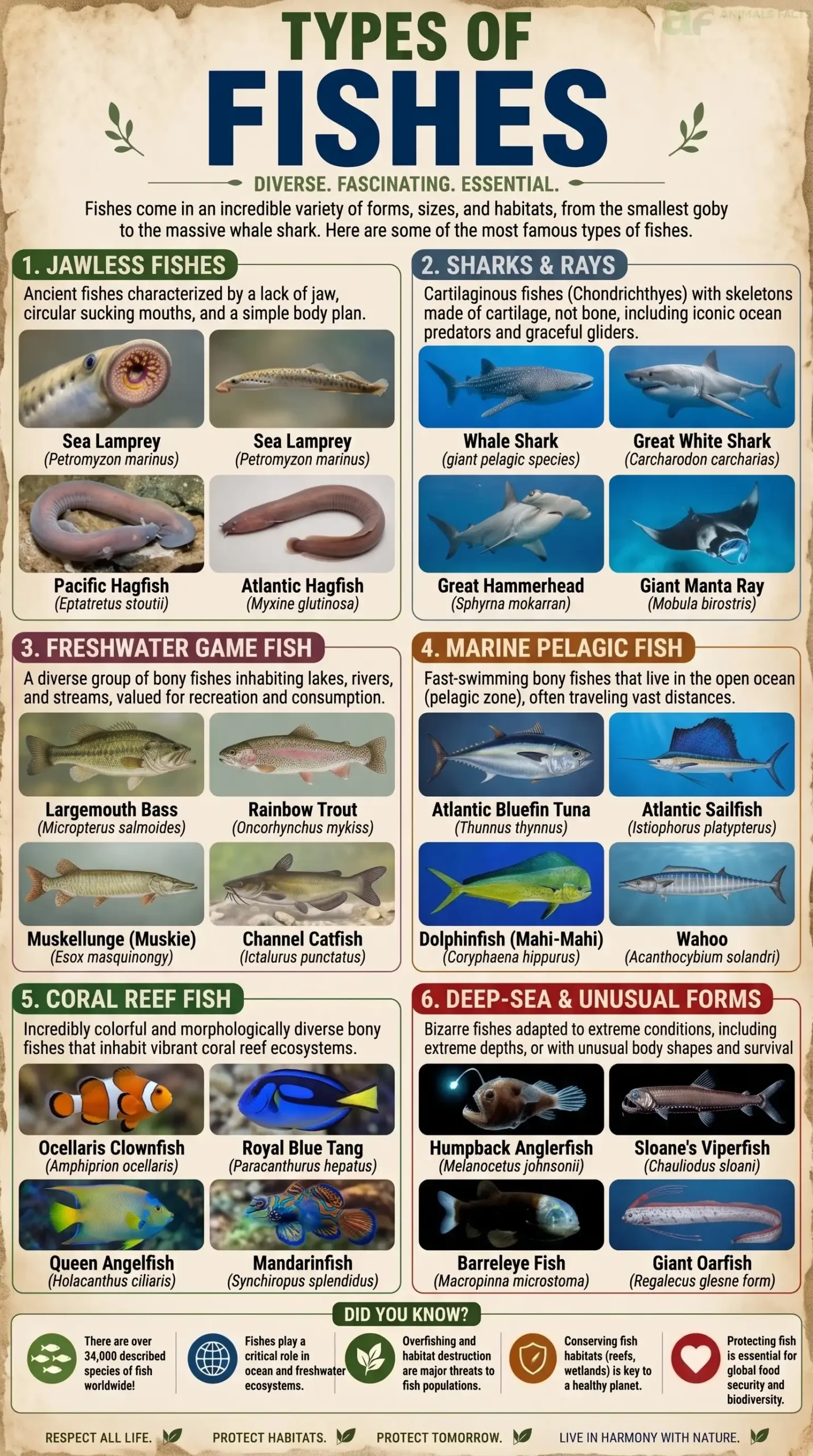
24. Sources & References
Research Sources
- Wikipedia — Superclass Pisces and individual species articles
- IUCN Red List — iucnredlist.org
- FAO — Fisheries and Aquaculture Department — fao.org/fishery
- WWF Oceans — worldwildlife.org
- Oceana — oceana.org
- Marine Conservation Society — mcsuk.org
- Monterey Bay Aquarium Seafood Watch — seafoodwatch.org
- National Geographic — nationalgeographic.com
- Smithsonian Institution — Ocean Portal — ocean.si.edu
- Encyclopaedia Britannica — britannica.com
- BBC Wildlife / Blue Planet — bbc.co.uk
- Live Science — livescience.com
- FishBase — fishbase.org (the world’s most comprehensive fish species database)
- REEF — Reef Environmental Education Foundation — reef.org
- Carson, Rachel — “The Sea Around Us” (1951)
- Greenberg, Paul — “Four Fish” (2010)
- Roberts, Callum — “Reef Life” (2019)