
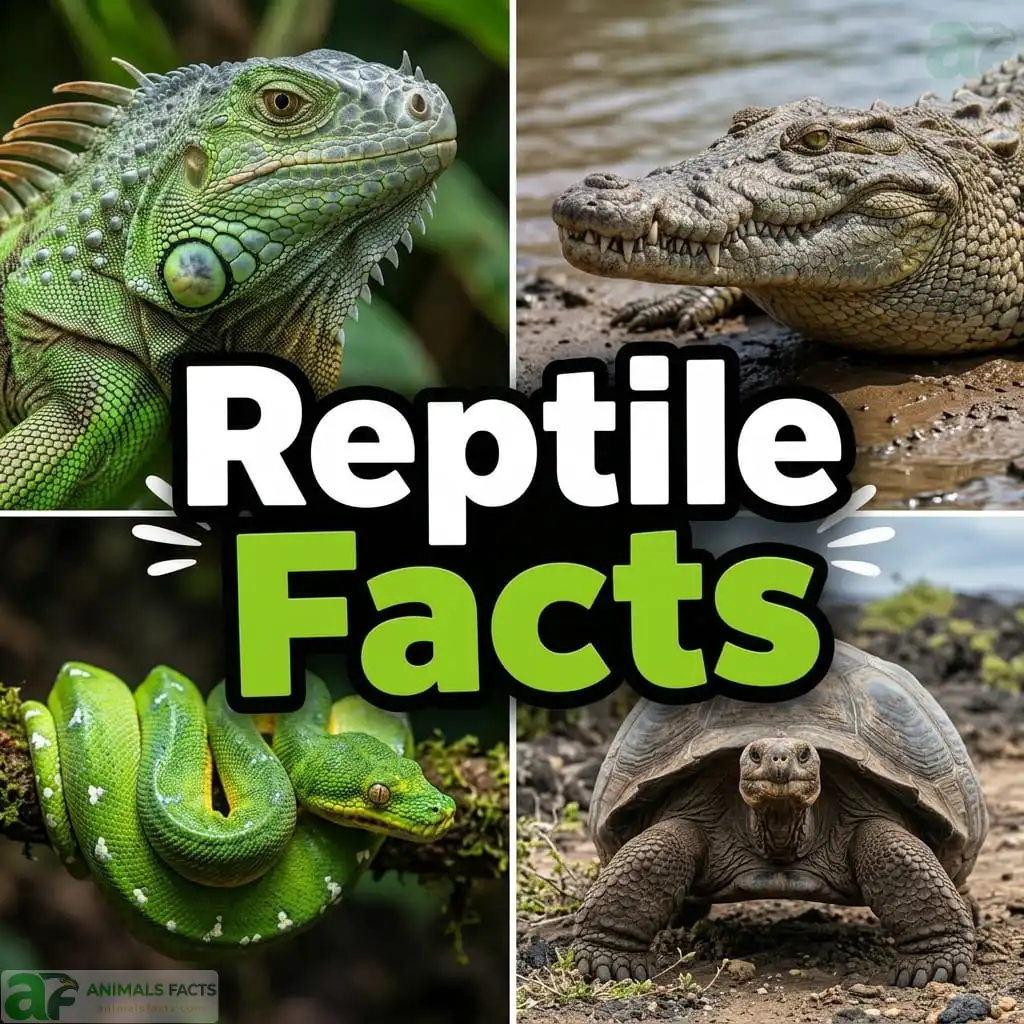
Reptile Facts
| Feature | Details |
|---|---|
| Scientific Class | Reptilia |
| Kingdom | Animalia |
| Phylum | Chordata |
| Total Known Species | Approximately 10,000–11,000 species worldwide |
| Oldest Reptile Group | Tuataras and Crocodilians — among the most ancient vertebrate lineages alive today |
| Habitat | Every continent except Antarctica (the Leatherback Sea Turtle ventures into subpolar waters) |
| Smallest Reptile | Nano-Chameleon (Brookesia nana) — approximately 13.5 mm body length; discovered in Madagascar in 2021 |
| Largest Living Reptile | Saltwater Crocodile (Crocodylus porosus) — up to 6.3 meters and 1,000+ kg |
| Largest Reptile Ever | Titanoboa cerrejonensis — an extinct snake approximately 13 meters long and 1,135 kg, living approximately 58–60 million years ago |
| Fastest Reptile on Land | Black Mamba — up to 20 km/h |
| Fastest Reptile in Water | Leatherback Sea Turtle — up to 35 km/h |
| Longest Lifespan | Aldabra Giant Tortoise — confirmed over 190 years; Tuatara — estimated up to 100+ years |
| Conservation Status | Over 1,800 reptile species currently threatened with extinction (IUCN, 2026) |
| Global Population | Varies by species; total individuals estimated in the hundreds of billions including small lizards and geckos |
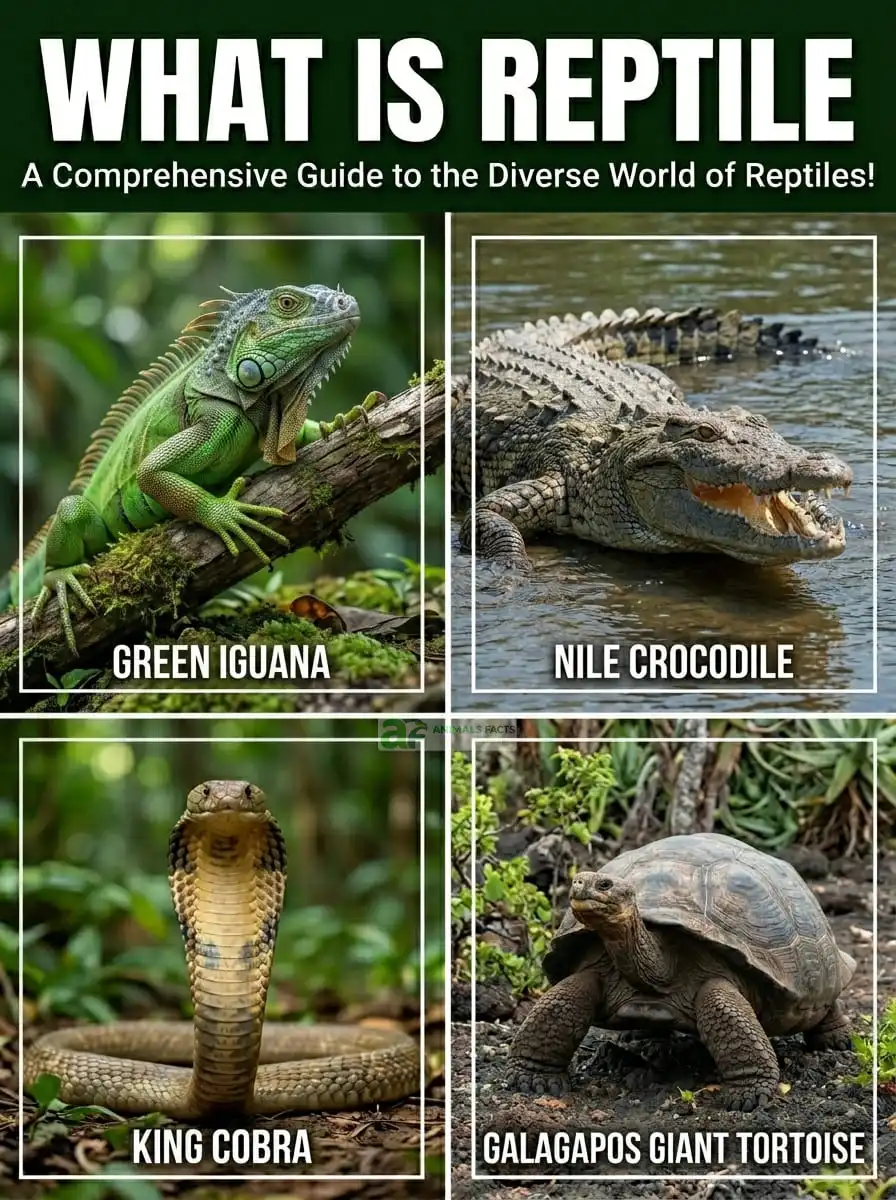
1. Introduction: What is Reptile?
They survived the asteroid that wiped out the dinosaurs. They thrived in deserts so hot that water boils at the surface. They colonized islands, rivers, oceans, and mountain ranges across every corner of the globe. And yet, of all the major vertebrate groups on Earth, reptiles remain the most misunderstood, most feared, and most underappreciated. Reptile facts — real, verified, scientific reptile facts — have the power to transform that entirely.
The word “reptile” conjures images of cold, slithering, dangerous creatures lurking in shadows. But the truth is far more extraordinary and far more nuanced than any stereotype. Class Reptilia encompasses over 10,000 species of breathtaking diversity — from the 2-centimeter nano-chameleon that sits comfortably on a fingertip, to the 6-meter Saltwater Crocodile whose ancestors predate the dinosaurs, to the ancient Tuatara of New Zealand whose lineage stretches back over 230 million years without meaningful change.
Whether you are a student searching for reptile facts for kids, a herpetology enthusiast, a teacher building a lesson plan about cold-blooded creatures, or simply someone who watched a documentary about Komodo Dragons and fell into a wonderful spiral of fascination — this is the most complete guide to reptile facts you will find anywhere. We cover reptile habitat, reptile diet, reptile behavior, reproduction, conservation, mythology, and pop culture. Let us begin.
2. Reptile Species Overview & Classification
Reptiles are cold-blooded (ectothermic) vertebrates — meaning they regulate their body temperature using external heat sources rather than generating it internally. They breathe air through lungs, have skin covered in scales or scutes (bony plates), and the vast majority reproduce by laying eggs.
What Defines a Reptile?
- Ectothermic: Body temperature regulated by the external environment rather than internal metabolism
- Scaled skin: All reptiles have skin covered in scales, scutes, or osteoderms (bony skin plates)
- Lung breathing: All reptiles breathe air through lungs — even fully aquatic species like sea turtles must surface to breathe
- Amniotic eggs: Reptile eggs have a protective membrane that prevents drying out — the evolutionary innovation that freed vertebrates from dependence on water for reproduction
- Vertebrates: All reptiles have a backbone and an internal skeleton
Major Reptile Classification Table
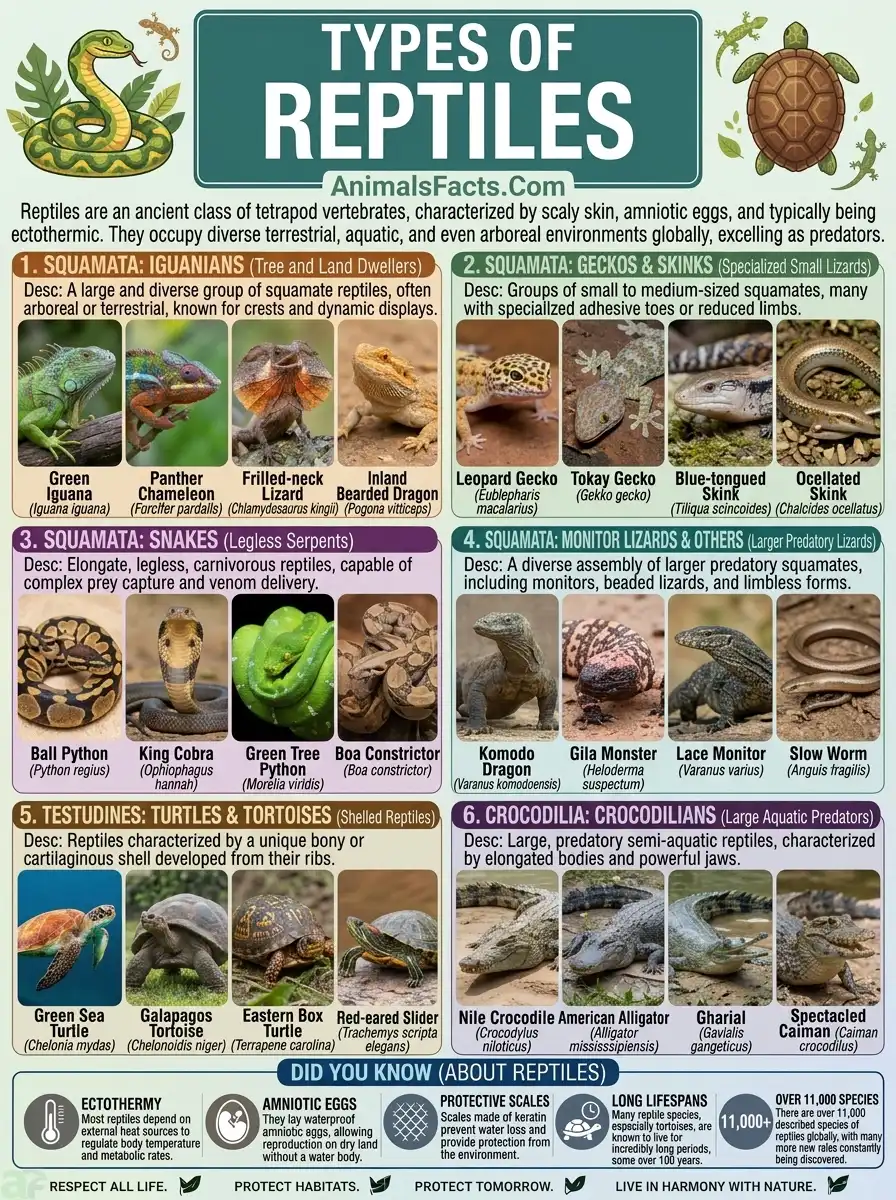
| Order | Common Name | Approx. Species | Key Examples |
|---|---|---|---|
| Squamata | Lizards & Snakes | ~9,000 | Komodo Dragon, King Cobra, Gecko, Chameleon |
| Testudines | Turtles & Tortoises | ~350 | Leatherback, Galápagos Tortoise, Snapping Turtle |
| Crocodilia | Crocodilians | ~26 | Saltwater Crocodile, Nile Crocodile, Gharial |
| Rhynchocephalia | Tuatara | 1 | Tuatara (Sphenodon punctatus) — New Zealand only |
Subspecies & Diversity Within Squamata
The order Squamata — containing lizards and snakes — is by far the most species-rich reptile group, representing approximately 90% of all reptile species. Within Squamata, the major subgroups include:
Serpentes (Snakes): Approximately 3,700 species; found on every continent except Antarctica Lacertilia (Lizards): Approximately 6,500 species; the most diverse reptile subgroup Amphisbaenia (Worm Lizards): Approximately 190 species; legless, burrowing reptiles often mistaken for worms
Species Evolution & Discovery Timeline
~312 million years ago: The first amniotes — animals capable of laying eggs on land without returning to water — appeared during the Carboniferous Period. These were the ancestors of all modern reptiles, mammals, and birds.
~280–250 million years ago: The synapsids (ancestors of mammals) and sauropsids (ancestors of reptiles and birds) diverged into two distinct lineages.
~252 million years ago: The Permian-Triassic mass extinction — Earth’s most catastrophic extinction event — wiped out approximately 96% of marine species and 70% of land species, clearing the way for reptile dominance.
~230 million years ago: Dinosaurs and crocodilians appeared during the Triassic Period; early turtles also emerged during this era.
~200 million years ago: The first lizards appeared; ichthyosaurs and plesiosaurs dominated the oceans as giant marine reptiles.
~150 million years ago: Snakes are believed to have evolved from lizard ancestors, losing their limbs as an adaptation to burrowing or aquatic lifestyles.
~100 million years ago: Sea turtles and the ancestors of modern crocodilians were well established.
~66 million years ago: The mass extinction at the end of the Cretaceous Period eliminated the non-avian dinosaurs, the mosasaurs, the plesiosaurs, and the pterosaurs — leaving behind the four modern reptile orders that persist today.
1758: Carl Linnaeus formally classified reptiles in his Systema Naturae, though the boundaries of the group have been revised significantly since.
1821: The Tuatara was formally described by European scientists, though Māori people of New Zealand had known and named the species for centuries.
2021: The Nano-Chameleon (Brookesia nana) was formally described from specimens collected in Madagascar — the smallest known reptile and one of the smallest vertebrates on Earth.
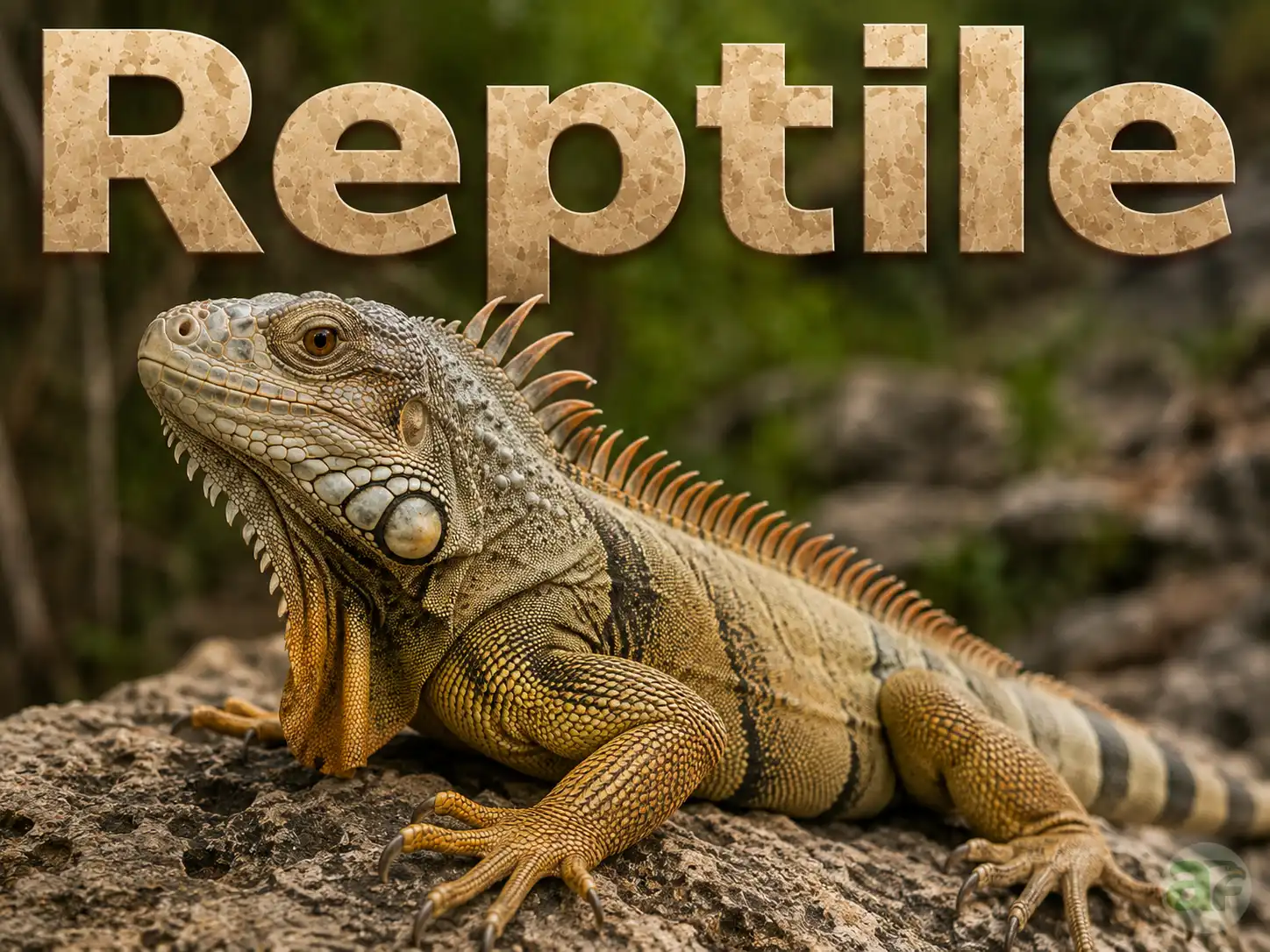
3. Reptile Physical Description & Unique Features
The physical diversity of reptiles is extraordinary — a direct reflection of their extraordinary evolutionary history and the enormous variety of ecological niches they occupy worldwide.
Size Extremes
Smallest living reptile: The Nano-Chameleon (Brookesia nana) of Madagascar — males measure just 13.5 mm from snout to vent (body length excluding tail) — small enough to perch on a fingernail. Formally described in 2021.
Largest living reptile: The Saltwater Crocodile (Crocodylus porosus) — confirmed individuals reach 6.3 meters in length and over 1,000 kilograms in weight.
Largest snake: The Green Anaconda (Eunectes murinus) — the heaviest snake on Earth, with large females exceeding 250 kilograms and 8 meters in length. The Reticulated Python (Malayopython reticulatus) is the longest snake — confirmed individuals exceeding 7 meters, with unverified reports of over 9 meters.
Largest lizard: The Komodo Dragon (Varanus komodoensis) — up to 3 meters long and 70 kilograms in weight.
Largest turtle/tortoise: The Leatherback Sea Turtle (Dermochelys coriacea) — up to 2.1 meters long and over 900 kilograms in weight.
Unique Physical Adaptations by Group
Chameleons can move each eye completely independently — looking in two entirely different directions simultaneously. Their tongue can extend up to twice the length of their body in under 0.07 seconds — the fastest muscle movement relative to body size of any tetrapod (four-limbed vertebrate).
Geckos have microscopic hair-like structures called setae on their toe pads — up to 14,000 per square millimeter — that create adhesion through van der Waals forces, allowing them to walk upside down on glass and support 40 times their own body weight on a single toe.
Sea Turtles have existed virtually unchanged for over 100 million years. They navigate across entire ocean basins using the Earth’s magnetic field as a GPS system — returning to the exact beach where they hatched to lay their own eggs, sometimes after journeys of 15,000 kilometers or more.
Crocodilians have pressure-sensitive receptors (Dermal Pressure Receptors or DPRs) covering their entire jaw surface — allowing them to detect the slightest pressure wave in water from a struggling animal, even in complete darkness.
Snakes detect heat using specialized pit organs (in pit vipers) or, in all snakes, the Jacobson’s organ in the roof of their mouth — “smelling” by collecting chemical particles on their forked tongue and transferring them to this sensory structure.
Did You Know? The Thorny Devil lizard of Australia can drink water through its skin. Microscopic channels between its scales act like capillary tubes, drawing water up from any surface the lizard touches — including wet sand — and directing it toward the corners of its mouth. In the driest desert on Earth, it harvests morning dew this way.
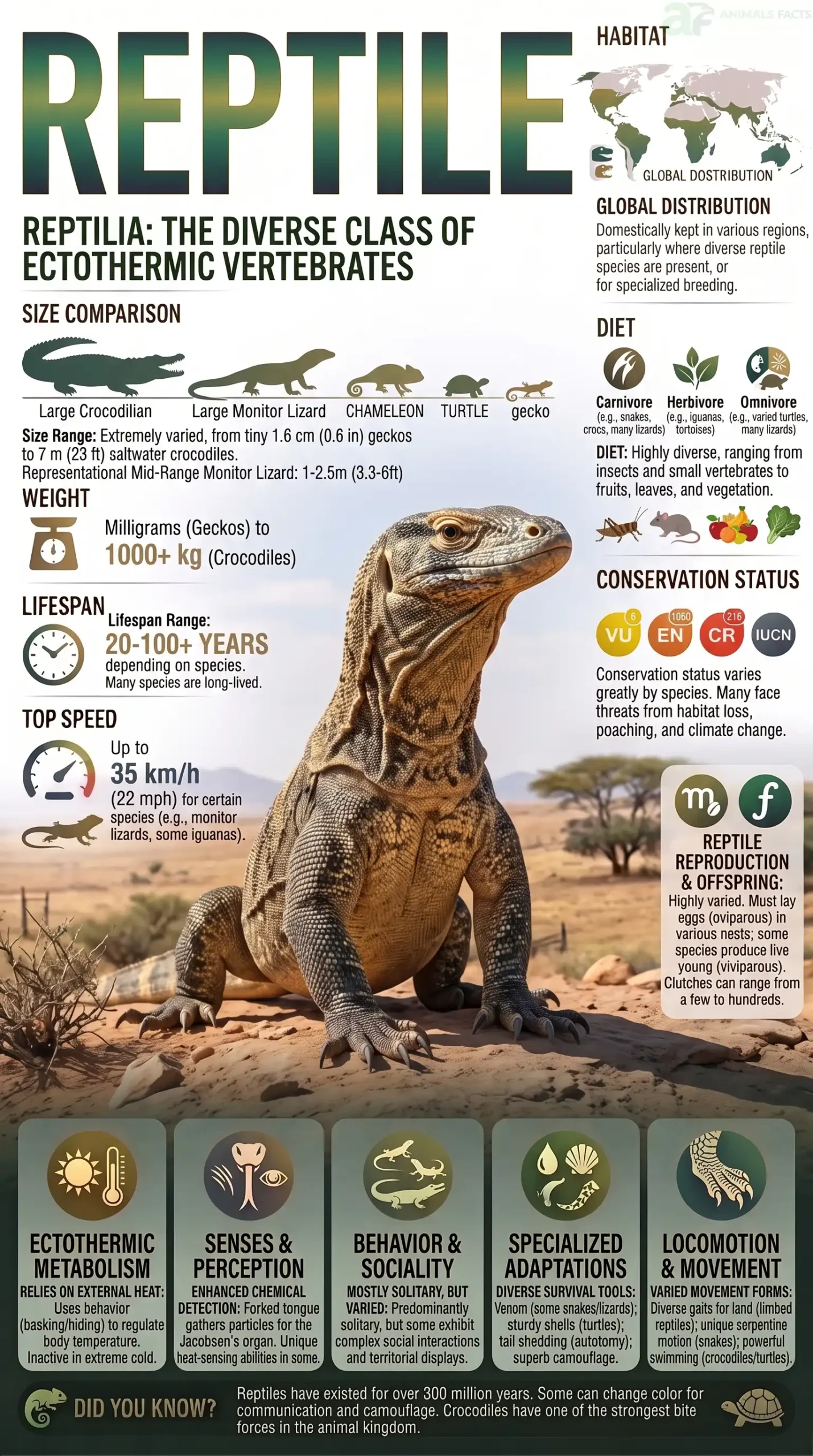
4. Top 25 Surprising & Interesting Reptile Facts
- The Saltwater Crocodile has the most powerful bite force ever measured in a living animal — approximately 16,460 Newtons — enough to crush solid bone with ease.
- Komodo Dragons were officially unknown to Western science until 1910, despite being the largest lizards on Earth.
- The Tuatara of New Zealand has a third eye on the top of its head — complete with a lens and retina — that becomes covered by scales in adult animals but is believed to detect light changes that regulate biological rhythms.
- Chameleons change color primarily to communicate emotions and social status — not for camouflage as commonly believed. Color change is also used for temperature regulation.
- The Reticulated Python can go without eating for up to one full year between meals.
- Sea Turtles cry — not from emotion, but to expel excess salt from their bodies through specialized glands near their eyes.
- The Flying Lizard (Draco volans) of Southeast Asia glides between trees using extendable ribs covered in skin — it can glide over 10 meters in a single flight.
- Crocodilians are the closest living relatives of birds — more closely related to them than to other reptiles such as lizards or snakes.
- The Basilisk Lizard of Central America can run across the surface of water on its hind legs — earning it the nickname “the Jesus Christ lizard.”
- Gila Monsters and Mexican Beaded Lizards are the only venomous lizards native to North America — and their venom has contributed to the development of Exenatide, a diabetes medication.
- The Leatherback Sea Turtle can dive to depths of over 1,200 meters — deeper than most submarines operate.
- Crocodilians are extraordinary parents — they are among the most attentive egg guarders and hatchling protectors in the reptile world, carrying young in their mouths with extraordinary gentleness.
- The King Cobra builds a nest for its eggs — the only snake in the world known to actively construct a nest and guard it until the eggs hatch.
- Geckos can voluntarily detach their own tail to distract predators — and regrow a new one (made of cartilage, not bone) within a few weeks.
- The Galápagos Marine Iguana is the only lizard in the world that feeds underwater, diving to graze on underwater algae at depths of up to 12 meters in cold Pacific waters.
- Some turtle species can breathe through their cloaca (posterior opening) during winter hibernation at the bottom of frozen ponds — absorbing oxygen from water through this specialized structure.
- The Black Mamba — Africa’s deadliest snake — can travel at speeds of up to 20 km/h in short bursts — the fastest land snake on Earth.
- Alligators have been documented using sticks balanced on their snouts to attract birds gathering nest material — possibly the only documented case of a non-avian, non-mammalian animal using tools as bait for hunting.
- The Thorny Devil can change color to blend with its surroundings AND drink water through its skin simultaneously — arguably the most multi-talented small lizard on Earth.
- Komodo Dragons were once thought to kill prey with bacteria in their saliva. In 2009, scientists discovered they actually have venom glands in their lower jaw that produce anticoagulant compounds.
- Sea Turtles have existed for over 100 million years — they shared the ocean with Mosasaurs and witnessed the extinction of the dinosaurs.
- The Boomslang — a tree snake of sub-Saharan Africa — has venom so specialized that it has only one known antivenom and has killed experienced herpetologists who misjudged its danger.
- Crocodilians swallow stones (gastroliths) to aid digestion and possibly to act as ballast for buoyancy control while swimming.
- The Green Anaconda gives birth to live young rather than laying eggs — clutches can contain up to 40 live snakelets, each already over 60 cm long at birth.
- The Aldabra Giant Tortoise, when a giant tortoise named Jonathan was confirmed as the world’s oldest living land animal in 2022 at approximately 190 years of age — meaning he was born around 1832 and has outlived multiple human generations.
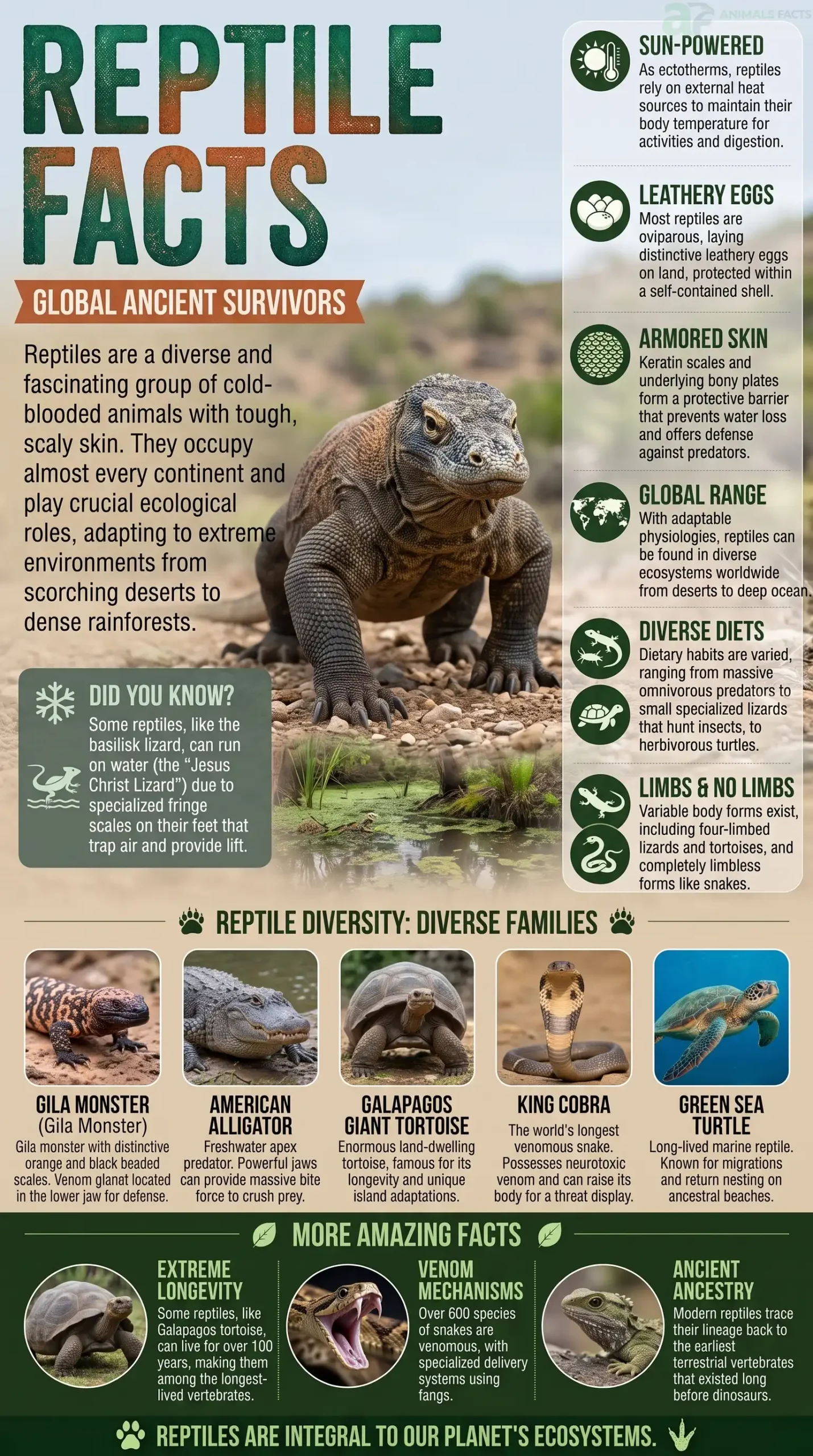
5. Reptile Fun Facts for Kids
- Reptiles have been on Earth for approximately 312 million years — they predate the dinosaurs.
- There are more species of lizards and snakes (~9,000) than all mammal species combined (~6,500).
- The Komodo Dragon can detect prey using its forked tongue from over 9 kilometers away downwind.
- Some gecko species are entirely female — they reproduce by parthenogenesis (without males) and produce genetically identical clones of themselves.
- The Anaconda and the Reticulated Python regularly compete for the title of world’s largest snake — one by weight, one by length.
- A Crocodile cannot stick out its tongue — it is attached to the bottom of its mouth along its entire length.
- Sea Turtles can hold their breath for up to 7 hours while resting at the bottom of the ocean.
- The Horned Lizard of North America can squirt blood from its eyes as a defense mechanism — shooting a stream up to 1.5 meters containing chemicals that are repellent to canine and feline predators.
- Snakes smell with their tongue — the forked tips collect scent particles and deliver them to the Jacobson’s organ in the roof of the mouth.
- The Tortoise Jonathan, living on the island of Saint Helena, is old enough to have been alive during the American Civil War, World War I, and World War II.
- Reptile skin does not grow — reptiles periodically shed their entire outer skin layer (ecdysis) to allow growth and remove parasites.
- Some Python species can sense the body heat of warm-blooded prey through heat-sensing pit organs lining their lips, detecting temperature differences as small as 0.003°C.
6. Reptiles Habitat & Geographic Range
Reptiles are one of the most geographically widespread classes of vertebrates on Earth. They inhabit every continent except Antarctica — though the Leatherback Sea Turtle regularly ventures into waters off the coasts of Norway, Alaska, and southern Chile, demonstrating remarkable tolerance for cold water despite being ectothermic.
Major Reptile Habitats
Tropical Rainforests: The most species-rich habitat for reptiles. The Amazon Basin, Congo Basin, and Southeast Asian rainforests host extraordinary concentrations of lizards, snakes, caimans, and turtles. Over 40% of all reptile species are found in tropical forest environments.
Deserts: Reptiles are superbly adapted to desert life. Unlike mammals and birds, their low metabolic rate means they require far less water and food to survive. The Sonoran Desert of North America, the Namib and Sahara of Africa, and the Australian Outback support remarkable reptile diversity.
Oceans & Coastlines: Seven species of sea turtles navigate the world’s oceans. The Yellow-bellied Sea Snake is the most widespread reptile on Earth — found across the entire Indian and Pacific Oceans. Marine Iguanas are the only lizards that feed at sea. Saltwater Crocodiles regularly cross open ocean between island groups.
Freshwater Ecosystems: Crocodilians, freshwater turtles, and numerous snake species depend on rivers, lakes, and wetlands. The Nile Crocodile is the apex predator of African freshwater systems. The Anaconda inhabits the flooded grasslands and rivers of the Amazon Basin.
Grasslands & Savannas: Monitor lizards, tortoises, cobras, and numerous skink species thrive in African, Australian, and Asian grassland systems.
Mountain Environments: Some reptiles have adapted to high-altitude living. The Tibetan Toad-headed Agama survives at altitudes over 5,000 meters. Common Vipers range further north and higher in altitude than any other snake species in Europe and Asia.
Habitat Range by Continent
| Continent | Notable Reptile Groups | Approximate Reptile Species |
|---|---|---|
| Asia | King Cobras, Monitor Lizards, Gharials, Sea Turtles, Flying Lizards | 2,500+ |
| Africa | Nile Crocodiles, Chameleons, Mambas, Tortoises, Monitor Lizards | 1,600+ |
| South America | Anacondas, Caimans, Iguanas, Tegus, Pit Vipers | 1,500+ |
| Australia | Goannas, Taipans, Sea Turtles, Bluetongue Lizards, Frilled-neck Lizards | 1,000+ |
| North America | Rattlesnakes, Alligators, Snapping Turtles, Gila Monsters, Geckos | 900+ |
| Europe | Common Vipers, Grass Snakes, Wall Lizards, Hermann’s Tortoises | 200+ |
| Oceans (Global) | Seven sea turtle species, Yellow-bellied Sea Snake, Saltwater Crocodile | 70+ |
| Antarctica | No native reptile species | 0 |
Did You Know? The island of Madagascar — roughly the size of France — is home to approximately half of all chameleon species in the world, plus hundreds of gecko, skink, and snake species found nowhere else on Earth. Madagascar is considered the single most important island for reptile diversity and conservation on the planet.
7. Reptile Diet & Feeding Behavior
Reptile feeding strategies are as diverse as the group itself — ranging from filter-feeding sea turtles and specialist insectivores to apex ambush predators capable of swallowing prey larger than their own head.
Major Dietary Strategies
Carnivores: The majority of reptile species are carnivorous to some degree. This includes all snakes, all crocodilians, most lizards, and several turtle species. Prey ranges from insects and earthworms to large mammals.
Herbivores: Relatively uncommon among reptiles. Notable herbivores include Iguanas, Green Sea Turtles (which feed primarily on seagrass as adults), Giant Tortoises, and the Marine Iguana.
Omnivores: Many turtle and lizard species consume both plant and animal material. Box Turtles, Bearded Dragons, and many skink species are opportunistic omnivores.
Insectivores: The majority of small lizard species — including geckos, anoles, chameleons, and many skinks — feed primarily or exclusively on insects and other invertebrates.
Specialist feeders: Some reptiles have extraordinarily specialized diets. The Leatherback Sea Turtle feeds almost exclusively on jellyfish. The Indian Egg-eating Snake feeds exclusively on bird eggs. The Snail Kite Snake of South America feeds exclusively on freshwater apple snails.
Diet Breakdown by Major Group
| Reptile Group | Primary Food | Secondary Food | Feeding Method |
|---|---|---|---|
| Crocodilians | Fish, mammals, birds (70%) | Carrion, invertebrates (30%) | Ambush; death roll |
| Large Constrictors | Mammals, birds (90%) | Reptiles, eggs (10%) | Constriction; swallowing whole |
| Venomous Snakes | Small mammals, birds (60%) | Lizards, frogs (40%) | Envenomation; swallowing whole |
| Monitor Lizards | Carrion, eggs, small animals (60%) | Invertebrates, fruit (40%) | Active foraging |
| Chameleons | Insects (85%) | Small lizards, birds (15%) | Ballistic tongue strike |
| Giant Tortoises | Grasses, leaves, fruit (95%) | Carrion (5%, opportunistic) | Grazing |
| Sea Turtles (adult Green) | Seagrass, algae (90%) | Jellyfish, invertebrates (10%) | Grazing underwater |
| Leatherback Turtle | Jellyfish (95%) | Other soft invertebrates (5%) | Open-water pursuit |
How Reptiles Hunt
Ambush predation: Used by crocodilians, pit vipers, and many large constrictors. The animal remains motionless for extended periods — sometimes hours or days — then strikes with explosive speed when prey approaches within range.
Active foraging: Used by monitor lizards, tegus, and many snake species. The animal actively searches for prey by scent, sight, or heat detection.
Ballistic tongue strike: Used by chameleons — the tongue is launched at extraordinary speed, with a sticky tip that captures insects through adhesion.
Constriction: Used by pythons, boas, and anacondas — the snake wraps its muscular body around prey and tightens its grip with each exhalation of the prey animal, causing death by cardiac arrest rather than suffocation as previously believed.
Did You Know? The African Egg-eating Snake (Dasypeltis scabra) has no functional teeth at all. It swallows bird eggs whole — sometimes eggs larger than its own head — then uses modified vertebrae that project downward into its throat to crack the shell, absorbs the contents, and regurgitates the crushed shell in a neat parcel. It is one of the most specialized feeding adaptations of any reptile.
8. Reptile’s Reproduction & Life Cycle
Reptile reproduction is the evolutionary bridge between the water-dependent reproduction of amphibians and the fully terrestrial strategies of mammals and birds. The development of the amniotic egg — with its protective membranes and shell — was one of the most transformative innovations in the history of vertebrate life.
Reproductive Strategies
Ovipary (Egg-laying): The most common reproductive strategy among reptiles. Crocodilians, turtles, most lizards, and most snakes lay eggs in nests, burrows, or decomposing vegetation.
Vivipary (Live birth): Approximately 20% of reptile species give birth to live young. This is particularly common in vipers, boas, sea snakes, and many skink species. Live birth is often associated with cold climates, where incubating eggs externally would be difficult.
Ovovivipary: Some reptiles retain eggs internally until they hatch, then give birth to live young — a strategy combining elements of both egg-laying and live birth.
Parthenogenesis: Several reptile species — including Komodo Dragons, certain whiptail lizards, pit vipers, and boa constrictors — can reproduce without males. Female-only populations produce genetically identical or nearly identical offspring from unfertilized eggs.
Nesting Behavior
Crocodilians are among the most devoted reptile parents. Female crocodiles construct elaborate nests of vegetation that generate heat through decomposition, carefully guard them throughout the incubation period, respond to the calling of hatching young, gently crack eggs to assist hatching, carry hatchlings in their mouths to water, and protect the young for weeks or months after hatching.
Sea Turtles represent the opposite extreme — they dig a nest on a beach, lay 80–120 eggs, cover them with sand, and return to the ocean, never seeing their offspring. Hatchlings emerge together and instinctively race for the ocean guided by the reflection of moonlight and starlight on the water.
Temperature-Dependent Sex Determination (TSD): In many reptiles — including all crocodilians, most turtles, and some lizards — the sex of offspring is determined not by genetics but by the temperature at which the eggs are incubated. Warmer temperatures typically produce more females in turtles. This mechanism has profound implications for sea turtle conservation under climate change.
Reptile Lifespan Comparison Table
| Species | Average Lifespan | Record/Maximum |
|---|---|---|
| Chameleon (small species) | 2–3 years | ~5 years |
| Anole Lizard | 3–4 years | ~7 years |
| Ball Python | 20–30 years | ~50 years (captivity) |
| Nile Crocodile | 40–60 years | ~100 years |
| Komodo Dragon | 20–30 years | ~60 years |
| Galápagos Tortoise | 100–150 years | ~175 years (confirmed) |
| Aldabra Tortoise (Jonathan) | 150–190+ years | ~192 years (as of 2026) |
| Tuatara | 60–100 years | ~100+ years estimated |
9. Social Behavior & Communication
Reptiles have long been dismissed as simple, robotic creatures with no meaningful social lives. Modern research has thoroughly dismantled this view — revealing surprisingly complex behavior, genuine communication, and in some species, social bonds that last years.
Social Structures
Largely solitary: Most reptiles are solitary outside of mating season. Large predators like crocodilians, monitor lizards, and most large snakes are generally intolerant of each other except during courtship and mating.
Aggregating species: Many snake species aggregate in large groups for communal hibernation (brumation) during winter. The Red-sided Garter Snakes of Manitoba, Canada, form the largest snake aggregations on Earth — with thousands of snakes emerging simultaneously from limestone sinkholes each spring in one of nature’s most spectacular wildlife events.
Crocodilian social complexity: Crocodilians are the most socially sophisticated reptiles. They maintain loose hierarchies, communicate through bellowing, head slaps, vibrations, and infrasound, and display remarkable maternal behavior rarely seen in ectothermic vertebrates.
Lizard territories: Many lizard species — particularly iguanas, monitor lizards, and agamid lizards — maintain and actively defend territories through visual displays, color changes, push-up displays, and direct combat between males.
Communication Methods
Visual signals: The Frilled-neck Lizard of Australia extends its dramatic frill to appear larger and more threatening. Chameleons shift colors to signal mood, dominance, and readiness to mate. Male Anole lizards extend a brightly colored dewlap (throat fan) in territorial displays.
Chemical signals: Most reptiles use chemical communication extensively. Snakes follow pheromone trails left by potential mates across large distances. Many lizards use femoral pores on their inner thighs to deposit chemical signals readable by other members of their species.
Acoustic signals: Long thought to be nearly mute, reptiles are now known to produce a wider variety of sounds than previously recognized. Crocodilians produce bellowing, hissing, and infrasound vibrations. Geckos are among the most vocal lizards — many species produce complex calls used in territorial defense and mate attraction. The tuatara hisses. Even some turtles produce surprisingly complex vocal repertoires.
Did You Know? In a landmark 2022 study, researchers recording underwater microphones at turtle nesting beaches discovered that sea turtle embryos communicate with each other and with their mother through acoustic signals while still inside the nest — and that hatchlings coordinate the timing of their emergence, all breaking from their shells at roughly the same time in response to these signals.
10. Predators & Defense Mechanisms
Despite their reputation as fearsome predators, most reptile species are themselves prey for a wide range of animals — and have evolved an extraordinary diversity of defensive strategies in response.
Common Reptile Predators
Birds of prey: Eagles, hawks, secretary birds, and roadrunners are significant predators of snakes and lizards worldwide. The Secretarybird of Africa kills venomous snakes by stomping them with powerful legs.
Mammals: Mongooses, honey badgers, meerkats, hedgehogs, pigs, and numerous small carnivores prey on snakes. Large cats prey on crocodilians and monitor lizards. Humans are by far the most significant mammalian threat to reptile populations globally.
Other reptiles: Large monitor lizards eat smaller lizards and snakes. King Cobras specialize in eating other snakes. Large crocodilians eat smaller ones. The Indigo Snake of North America is famous for hunting and eating Rattlesnakes — it is immune to their venom.
Fish: Many freshwater fish prey on baby crocodilians, aquatic turtles, and water snakes.
Defense Mechanisms
Camouflage: The Leaf-Tailed Gecko (Uroplatus) of Madagascar is so perfectly camouflaged against tree bark and dead leaves that it is virtually invisible even at close range. Many vipers have cryptic patterning that makes them indistinguishable from dead leaves on the forest floor — contributing to their danger, since they are frequently stepped on accidentally.
Autotomy (Tail shedding): Many lizard species can voluntarily detach their tail when grabbed by a predator. The tail continues to wriggle, distracting the predator while the lizard escapes. A new tail — made of cartilage rather than bone — regenerates over several weeks.
Venom: Approximately 600 snake species are venomous enough to harm humans, and approximately 200 are potentially lethal. Venom is primarily a hunting tool, not a defensive one — but many venomous snakes will use it defensively when threatened.
Armor: Tortoises and turtles retreat entirely inside their shell. The Armadillo Girdled Lizard curls into a ball and bites its own tail, presenting only armored scales to predators.
Blood squirting: The Horned Lizard of North America can squirt blood from the corners of its eyes in a stream up to 1.5 meters — the blood contains chemical compounds that are highly repellent to canine and feline predators.
Mimicry: The harmless Milk Snake and Scarlet Kingsnake mimic the red-yellow-black banding of the highly venomous Eastern Coral Snake — one of the most celebrated examples of Batesian mimicry (a harmless species mimicking a dangerous one) in the natural world.
Playing dead: The Eastern Hognose Snake puts on one of the animal kingdom’s most dramatic death performances — rolling onto its back, mouth gaping, tongue lolling out, releasing a foul smell from its cloaca — remaining limp even when picked up and handled.
11. Reptile Facts for Kids
Hey kids — are you ready to discover why reptiles are actually the coolest animals on the planet? Forget the scary stuff — here are some truly amazing reptile facts for kids!
- Reptiles are living dinosaurs! Crocodiles have barely changed in 200 million years — they are almost exactly the same as they were when real dinosaurs walked the Earth.
- The Chameleon changes color to talk to other chameleons — it is like using colors as words to say “I am angry” or “I want to be your friend”!
- Geckos can walk upside down on glass using millions of tiny invisible hairs on their feet that work like super-powered sticky pads!
- The Basilisk Lizard runs so fast on water that it does not sink — people call it the “Jesus Lizard” because it seems to walk on water!
- Tortoises are the longest-living animals with a backbone on Earth. One tortoise named Jonathan is about 192 years old — he was already alive before your great-great-great-great-grandparents were born!
- Some snakes can fly — well, glide! The Paradise Flying Snake of Southeast Asia flattens its body into a ribbon shape and glides from tree to tree through the forest.
- The Komodo Dragon has a tongue that can smell prey from 9 kilometers away — that is further than most people can see!
- Sea Turtles always come back to the beach where they were born to lay their own eggs — even after swimming thousands of kilometers across the ocean!
Did You Know? A baby crocodile calls to its mother from inside its egg before it even hatches! The mother hears the calls and carefully digs up the nest. Then she gently picks up the eggs and hatchlings in her enormous jaws — which could crush solid bone — and carries them all the way to the water without hurting them at all. Crocodile moms are actually amazing parents!
12. Relationship with Humans
The relationship between humans and reptiles is one of the most complex and contradictory in the natural world — defined simultaneously by fear, reverence, exploitation, fascination, and an increasingly urgent need for conservation.
Historical Significance
Reptiles have shaped human culture since the earliest civilizations. Crocodilians were both feared and worshipped across ancient Egypt, Mesoamerica, and Southeast Asia. Snakes appear in the oldest known religious texts and mythological traditions of virtually every civilization on Earth. Turtles feature in the creation myths of dozens of Indigenous cultures across North America, Asia, and Oceania.
Reptiles as Food
Reptile meat has been consumed by humans across cultures and millennia. Crocodile, iguana, sea turtle, monitor lizard, and snake meat are consumed in various parts of Africa, Asia, Latin America, and the Pacific. Turtle eggs are considered a delicacy in several countries, despite being a significant driver of sea turtle population declines. The global reptile meat trade — both legal and illegal — is a multi-billion-dollar industry with significant conservation implications.
The Pet Trade
Reptiles are among the most popular exotic pets globally. The Ball Python, Bearded Dragon, Leopard Gecko, Corn Snake, and Blue-tongued Skink are among the most widely kept reptile pets. The global reptile pet market is estimated to be worth over $1 billion annually. While many reptiles in the pet trade are captive-bred, illegal wild collection continues to threaten numerous species — particularly tortoises, chameleons, and rare turtle species.
Reptiles & Medicine
Reptile venoms have contributed to the development of numerous important medications:
Captopril — an angiotensin-converting enzyme (ACE) inhibitor used to treat hypertension, derived from the venom of the Brazilian Lancehead Viper (Bothrops jararaca).
Exenatide (Byetta) — a diabetes medication derived from a protein found in the saliva of the Gila Monster lizard.
Eptifibatide — a blood clot-preventing drug derived from the venom of the Pygmy Rattlesnake.
Tirofiban — another antiplatelet drug, derived from venom of the Saw-scaled Viper.
Reptile venoms remain one of the most actively researched sources of bioactive compounds in pharmaceutical science.
13. Reptiles Conservation Status & Threats
Reptiles are among the most severely threatened vertebrate groups on Earth — yet they receive dramatically less conservation attention and funding than mammals, birds, or even amphibians.
Global Conservation Data (2026)
| IUCN Category | Number of Reptile Species |
|---|---|
| Critically Endangered | 300+ |
| Endangered | 500+ |
| Vulnerable | 1,000+ |
| Near Threatened | 400+ |
| Extinct since 1500 | 30+ confirmed |
Major Threats in Detail
Habitat Loss: The destruction of tropical forests, wetlands, coastal nesting beaches, and grasslands is the primary driver of reptile population decline worldwide. Sea turtle nesting beach erosion, deforestation affecting arboreal lizard species, and wetland drainage impacting crocodilian populations are among the most severe habitat-related threats.
Climate Change: Temperature-dependent sex determination makes sea turtles and crocodilians uniquely vulnerable to climate change. At several major sea turtle nesting beaches, rising sand temperatures are now producing nearly 100% female hatchlings — threatening the long-term reproductive viability of entire populations.
Invasive Species: On islands worldwide, introduced rats, cats, pigs, and mongooses have devastated native reptile populations. The Brown Tree Snake (Boiga irregularis), accidentally introduced to Guam after World War II, has driven 12 of Guam’s 18 native forest birds to extinction and caused catastrophic declines in native lizard and small animal populations.
Illegal Wildlife Trade: Tens of thousands of reptiles — particularly rare tortoises, chameleons, pythons, and turtles — are illegally collected from the wild each year for the international pet trade, traditional medicine markets, and food markets in Asia and Africa.
Direct Persecution: Widespread cultural fear and misunderstanding of snakes and crocodilians drives significant deliberate killing of reptiles across the world. An estimated millions of snakes are killed by humans annually out of fear — the majority of which are harmless species.
Pollution: Marine plastic pollution is catastrophic for sea turtles — they mistake floating plastic bags for jellyfish (their primary prey), leading to intestinal blockage and death. Agricultural chemicals, water pollution, and light pollution from coastal development all negatively impact reptile health and reproduction.
Did You Know? The Gharial — one of the most distinctive and ecologically important crocodilians, with its uniquely long, narrow snout adapted for catching fish — declined from an estimated population of 20,000 in the 1940s to fewer than 300 mature individuals in the wild by 2006. It remains one of the most critically endangered reptiles on Earth, confined to a handful of rivers in northern India and Nepal.
14. Famous Reptiles
Jonathan – The World’s Oldest Living Land Animal
Jonathan is an Aldabra Giant Tortoise (Aldabrachelys gigantea) residing on the island of Saint Helena in the South Atlantic Ocean. Born approximately around 1832, he was officially recognized by Guinness World Records in 2022 as the oldest living land animal ever confirmed — at approximately 190–192 years of age as of 2026. He has outlived five different colonial administrations on Saint Helena, was alive during the American Civil War, both World Wars, and the moon landing. He continues to live on the grounds of Plantation House, the official residence of the Governor of Saint Helena.
Gustave – The Giant Nile Crocodile of Burundi
Gustave is a massive male Nile Crocodile inhabiting the Ruzizi River and northern shores of Lake Tanganyika in Burundi. Estimated to be over 65 years old and approximately 6 meters in length, Gustave became notorious in the 1990s and early 2000s for allegedly killing and consuming over 300 people along the riverbanks — though these figures are difficult to verify. He has evaded every attempt at capture and was last confirmed photographed alive in 2019. He is the subject of the 2004 documentary “Capturing the Killer Croc.”
Lonesome George’s Reptile Legacy
Lonesome George — the last known Pinta Island Tortoise (Chelonoidis abingdonii) — died in June 2012 at the Charles Darwin Research Station in the Galápagos Islands. He was the most famous individual reptile in conservation history and became the global symbol of extinction and the consequences of habitat destruction. Following his death, ongoing genetic research has identified tortoises on other Galápagos islands carrying Pinta Island DNA — descendants of tortoises transported by whalers — raising the extraordinary possibility that the subspecies could be partially recovered through selective breeding.
Albert the Crocodile – London Zoo
Albert was a Nile Crocodile who lived at London Zoo from 1896 to 1951 — a remarkable 55 years in captivity — becoming one of the most famous and longest-lived captive reptiles in European zoo history. He was a beloved institution at the zoo and attracted millions of visitors over his half-century residence.
The Komodo Dragons of National Geographic
When American naturalist W. Douglas Burden led the first Western scientific expedition to Komodo Island in 1926 and returned with living specimens, the animals he displayed to audiences in New York — combined with his dramatic accounts of their predatory behavior — directly inspired the creation of the character King Kong for the 1933 film, according to several film historians. The Komodo Dragon’s place in Western imagination as the closest thing to a living dragon was firmly established from that moment forward.
15. Role in Ecosystem & Food Chain
Reptiles are essential components of virtually every terrestrial and freshwater ecosystem on Earth — and several marine ones. Their removal from ecosystems, wherever it has occurred, has produced dramatic and frequently damaging cascading effects.
Crocodilians as Ecosystem Engineers
Crocodilians are perhaps the most ecologically impactful reptiles. During dry seasons in African and Australian wetlands, Nile crocodiles and Freshwater Crocodiles dig water holes that retain water long after surrounding areas have dried up — providing critical water sources for dozens of other species. Their wallowing also creates and maintains open water channels through dense vegetation. When crocodilian populations collapsed across Africa and Asia due to hide hunting in the mid-20th century, the ecological consequences included dramatic fish population changes and altered wetland vegetation dynamics.
Sea Turtles & Marine Ecosystems
Green Sea Turtles are critical grazers of seagrass meadows — the ocean’s equivalent of grazing mammals on land. Their grazing keeps seagrass blades short and healthy, preventing the buildup of decomposing material that depletes oxygen, and promoting the recycling of nutrients through the ecosystem. Seagrass meadows in turn serve as nurseries for numerous commercially important fish species, carbon storage systems, and feeding grounds for dugongs and manatees.
Leatherback Sea Turtles are the primary predators of jellyfish in many ocean regions. As jellyfish populations explode globally — due to warming oceans, overfishing of their predators, and coastal eutrophication — the continued decline of Leatherbacks removes a natural check on these blooms, which devastate fish populations and fisheries.
Snakes as Rodent Controllers
Snakes — particularly rat snakes, kingsnakes, and vipers — are the primary controllers of rodent populations in agricultural and forest ecosystems worldwide. The estimated economic value of snake-mediated rodent control to global agriculture runs into billions of dollars annually. The decline of snake populations in agricultural areas — through persecution, road mortality, and habitat loss — is directly correlated with increases in crop damage and rodent-borne disease transmission.
Monitor Lizards & Scavenging
Large Monitor Lizards (Varanus species) perform critical scavenging services across Asian and African ecosystems, consuming carcasses with acidic enough stomach conditions to destroy many pathogens. The decline of Bengal Monitor and other Asian monitor species due to skin trade hunting has been linked to increased incidence of rodent-borne diseases in some regions.
16. Myths, Folklore & Cultural Significance
No group of animals has generated a more powerful, more globally widespread, or more enduring mythology than reptiles. From the oldest religious texts in human history to the most recently released video games, reptiles have occupied a uniquely symbolic position in human imagination.
Ancient Egypt
The Nile Crocodile was simultaneously one of the most feared and most revered animals in ancient Egyptian culture. Sobek — the crocodile-headed god of the Nile, military power, and fertility — was worshipped across Egypt for thousands of years. Sacred crocodiles were kept in temple pools, adorned with gold jewelry, and mummified after death. Thousands of mummified crocodiles have been recovered from Egyptian archaeological sites.
The Cobra — specifically the Egyptian Cobra (Naja haje) — was equally sacred. The Uraeus — a rearing cobra depicted on the headdress of every Pharaoh — was the symbol of royal authority, divine protection, and the power of the sun god Ra. The goddess Wadjet was depicted as a cobra and was one of the oldest deities in the Egyptian pantheon.
Serpent Symbolism Worldwide
The snake is perhaps the single most universally and diversely symbolized animal in the entirety of human mythology.
In Hinduism, the great serpent Shesha (or Ananta) coils beneath the world and is ridden by the god Vishnu. Nāgas — divine serpent beings — are revered throughout Hindu and Buddhist traditions across South and Southeast Asia.
In Norse mythology, the world serpent Jormungandr encircles the entire Earth by biting its own tail — destined to fight the god Thor at the end of the world.
In Aztec mythology, Quetzalcoatl — the Feathered Serpent — was one of the most important deities in the Mesoamerican pantheon, associated with wind, learning, priesthood, and the dawn.
In West African and Caribbean traditions, the rainbow serpent Ayida-Weddo (or Damballah) is a foundational deity of Vodou religion — associated with creation, fertility, and the unity of earth and sky.
The caduceus — two serpents entwined around a staff — is the symbol of Hermes in Greek mythology and (through confusion with the similar Rod of Asclepius) has become the widely recognized symbol of medicine and healthcare.
Dragon Mythology
The Dragon — found in the mythology of virtually every culture on Earth — is almost certainly derived in large part from real reptiles. Chinese Dragons (lóng) are benevolent, water-associated beings representing imperial power and cosmic energy. European Dragons are fire-breathing, gold-hoarding monsters representing chaos and evil — to be slain by heroes. Both traditions may derive from actual encounters with large crocodilians, giant snakes, or fossilized dinosaur bones misidentified as dragon remains by ancient peoples.
The Tuatara & Māori Culture
The Tuatara is deeply significant in Māori tradition, where it is regarded as a kaitiaki (guardian or protector spirit). In Māori cosmology, the tuatara is associated with Whiro, god of the underworld and darkness, and is believed to carry supernatural knowledge. Iwi (tribes) that hold territorial rights to islands where tuataras live consider themselves the guardians of these living ancestors.
17. Reptiles in Pop Culture
Reptiles have inspired some of the most enduring characters, stories, and cultural phenomena in human entertainment history.
Film & Television
“Jurassic Park” (1993 & franchise) — Steven Spielberg’s landmark film permanently transformed public fascination with reptiles by bringing non-avian dinosaurs back to life on screen with unprecedented realism. While the dinosaurs of the franchise are now known to be inaccurate in numerous ways (feathers, primarily), the films created a generation of herpetology and paleontology enthusiasts.
“Crocodile Dundee” (1986) — The iconic crocodile-wrestling scene became one of the most parodied moments in cinema history and reinforced Australia’s international identity as a land of extraordinary and dangerous reptiles.
“Rango” (2011) — An Academy Award-winning animated film featuring a chameleon as the unlikely hero in a Western setting — notable for its extraordinary visual realism in depicting lizard anatomy and movement.
“The Jungle Book” (Disney, 1967 & 2016) — Kaa, the hypnotic python, is one of the most memorable reptile characters in animation history, though significantly reimagined from Rudyard Kipling’s original novel.
“Godzilla” (franchise, 1954–present) — Japan’s most iconic fictional monster is clearly reptilian in inspiration, representing atomic-age fears of nature unleashed. The franchise has produced over 30 films and remains one of the most valuable entertainment properties in the world.
Literature
“The Jungle Book” by Rudyard Kipling (1894) — Kaa the rock python is portrayed as an ancient, wise, and somewhat sinister presence — one of the earliest complex reptile characters in English literature.
“The Reptile Room” by Lemony Snicket (2000) — The second book in A Series of Unfortunate Events, featuring herpetologist Uncle Monty and his extraordinary reptile collection — introducing a generation of young readers to the wonder of reptile diversity.
“Python” by various authors in the adventure genre — Python encounters feature prominently in adventure fiction from H. Rider Haggard through to modern thriller writers, reflecting enduring human fascination and fear.
Video Games & Digital Culture
“Bowser” from Nintendo’s Super Mario franchise — one of the most recognized video game characters in history — is a giant, spiky-shelled turtle-dragon hybrid inspired by Japanese dragon mythology and real turtle anatomy.
Reptile from the Mortal Kombat franchise is one of the series’ most popular and enduring characters — a green-scaled humanoid ninja with venomous abilities.
Sobek appears as a powerful deity in numerous mythology-based games including Smite and Age of Mythology, reflecting the enduring cultural power of crocodile symbolism.
18. Reptile Facts vs. Common Myths
Myth: All snakes are dangerous and should be killed on sight. Fact: Of approximately 3,700 snake species, only about 600 are venomous enough to harm humans, and approximately 200 are potentially lethal. The vast majority of snakes are completely harmless to humans and provide critical rodent control services. Killing snakes on sight is both ecologically damaging and, in many regions, illegal.
Myth: Crocodiles and alligators are slow and lumbering on land. Fact: Crocodilians can gallop at speeds of up to 17 km/h on land in short bursts — faster than most humans can sprint over rough terrain. They are significantly faster than their appearance suggests.
Myth: Snakes can chase and catch running humans. Fact: The fastest land snake on Earth — the Black Mamba — reaches approximately 20 km/h. An average adult human can sprint at 24–28 km/h. In reality, virtually all snakes flee from approaching humans rather than pursuing them; bites almost always occur when snakes are accidentally stepped on or deliberately handled.
Myth: Lizards and snakes are slimy. Fact: Reptile skin is completely dry. Their smooth, shiny scales can appear wet under light, but reptiles produce no external mucus or skin secretions comparable to frogs or slugs.
Myth: Crocodiles are fish-like creatures with tiny brains and no emotions. Fact: Crocodilians have relatively large, complex brains for reptiles. They demonstrate genuine maternal behavior, playfulness (documented in multiple studies), long-term memory, and possibly emotional states. They are significantly more cognitively complex than their ancient appearance implies.
Myth: The largest snakes can swallow humans whole. Fact: While large pythons and anacondas have been documented killing humans on very rare occasions, authenticated cases of a large snake swallowing an adult human are extraordinarily rare and debated. Children are theoretically at greater risk, but attacks remain extremely uncommon.
Myth: Chameleons change color to blend with their surroundings. Fact: Chameleons primarily change color to communicate with other chameleons — expressing mood, dominance, reproductive readiness, and health. Their resting coloration is already adapted for background matching; active color change serves primarily social functions.
Myth: Tortoises and turtles can leave their shells. Fact: A turtle or tortoise’s shell is permanently fused to its spine and ribcage — it is an integral part of the skeleton, not a portable home. Removing a turtle from its shell would be equivalent to removing a human’s ribcage and spine simultaneously.
19. Best Places to See Reptiles in the Wild
Komodo National Park, Indonesia
The only place on Earth where Komodo Dragons can be observed in their natural habitat. The park encompasses Komodo, Rinca, Flores, and several smaller islands, hosting approximately 5,700 Komodo Dragons across the protected area. Licensed guided walks allow visitors to observe the world’s largest lizard hunting and feeding in the wild.
Tortuguero National Park, Costa Rica
One of the most important Green Sea Turtle nesting beaches in the Caribbean, with up to 50,000 female turtles nesting each year between July and October. Guided night tours allow visitors to witness nesting and hatching in one of nature’s most moving spectacles.
Nile River & Lake Nasser, Egypt & Sudan
Home to one of the most significant remaining Nile Crocodile populations in northern Africa. Lake Nasser in southern Egypt supports thousands of crocodiles rarely disturbed by human activity — one of the best locations to observe Nile Crocodiles basking and hunting in a wild setting.
Madagascar
The single most important destination for Chameleon diversity — with approximately half of all chameleon species in the world found on this one island. Ranomafana National Park and Ankarana Reserve are particularly rich in chameleon, gecko, and snake diversity.
Galápagos Islands, Ecuador
Home to the extraordinary Galápagos Giant Tortoise, the unique Marine Iguana, Land Iguanas, Lava Lizards, and Galápagos Racer Snakes — animals found nowhere else on Earth that display virtually no fear of human presence.
Kakadu National Park, Australia
Home to Freshwater Crocodiles and Saltwater Crocodiles, the extraordinary Frilled-neck Lizard, Blue-tongue Skinks, numerous Monitor Lizard (Goanna) species, and abundant sea snake species in its coastal areas.
Everglades National Park, Florida, USA
One of the most accessible locations in North America for observing American Alligators in the wild — with populations now fully recovered following the near-extinction event caused by the hide trade in the mid-20th century. The Everglades also hosts American Crocodiles, numerous turtle species, and a catastrophic but remarkable population of invasive Burmese Pythons now permanently established in the ecosystem.
20. Reptiles Top Documentaries & Books
Must-Watch Documentaries
“Planet Earth II” (BBC, 2016) — The opening “Islands” episode features the extraordinary sequence of Galápagos Racer Snakes pursuing Marine Iguana hatchlings across lava fields — widely described as the greatest wildlife sequence ever filmed on television.
“David Attenborough’s Life in Cold Blood” (BBC, 2008) — A five-part series dedicated entirely to reptiles and amphibians; narrated by Sir David Attenborough and widely considered the definitive television documentary on reptile biology and diversity.
“Capturing the Killer Croc” (National Geographic, 2004) — Documents the extraordinary attempt to capture Gustave, the legendary giant Nile Crocodile of Burundi.
“Secrets of the Crocodile Caves” (National Geographic) — Explores the extraordinary behavior of Nile Crocodiles that gather in underground cave systems in Gabon — a completely undocumented behavior discovered in the 21st century.
“The Reptiles” (BBC Natural World series) — Various episodes across the BBC Natural World catalogue have produced some of the finest individual reptile natural history films ever made, including documentaries on Komodo Dragons, Sea Turtles, and Chameleons.
Essential Books
“The Life of Reptiles” by Angus Bellairs — A comprehensive, accessible scientific overview of reptile biology; one of the most respected popular science books on herpetology.
“Snakes of the World” by Mark O’Shea — A beautifully illustrated, authoritative reference covering snake diversity, biology, and distribution worldwide.
“Voyage of the Turtle” by Carl Safina (2006) — A compelling narrative of sea turtle biology, conservation, and the extraordinary life of the Leatherback Sea Turtle.
“The Kingdom of Rarities” by Eric Dinerstein — Explores some of the world’s rarest animals, including several critically endangered reptile species, in their natural habitats.
“A Field Guide to the Reptiles of East Africa” by Stephen Spawls et al. — The definitive field reference for one of the world’s richest reptile regions.
21. Comparison of Major Reptile Groups
| Feature | Snakes | Lizards | Crocodilians | Turtles & Tortoises | Tuatara |
|---|---|---|---|---|---|
| Known Species | ~3,700 | ~6,500 | ~26 | ~350 | 1 |
| Limbs | None | Most have 4 (some legless) | 4 | 4 (flippers in sea turtles) | 4 |
| Largest Species | Reticulated Python (7m+) | Komodo Dragon (3m) | Saltwater Croc (6.3m) | Leatherback Turtle (2.1m) | Up to 80 cm |
| Distribution | Global (exc. Antarctica) | Global (exc. Antarctica) | Tropics & subtropics | Global oceans & tropics | New Zealand only |
| Diet | Carnivore | Varied (mostly insectivore) | Carnivore | Varied (herbivore to omnivore) | Insectivore / omnivore |
| Reproduction | Eggs / live birth | Eggs / live birth | Eggs (with maternal care) | Eggs (beach nesting) | Eggs |
| Lifespan | 10–50+ years | 2–60+ years | 40–100+ years | 20–190+ years | 60–100+ years |
| Conservation Status | Many threatened | Many threatened | Several Critically Endangered | Most species threatened | Least Concern (recovering) |
| Unique Trait | Limbless; venom; jaw flexibility | Tail autotomy; camouflage; dewlaps | Ancient lineage; parental care | Shell; longevity; TSD | Third eye; spiny crest; ancient lineage |
22. How You Can Help
Reptiles are among the most neglected groups in conservation — receiving far less funding, public attention, and political support than mammals or birds, despite facing comparable or greater threats. Here is what every person can do.
Support These Organizations
Turtle Conservancy (turtleconservancy.org) — Dedicated specifically to the conservation of the world’s most endangered turtle and tortoise species through habitat protection, captive breeding, and field research.
IUCN Crocodile Specialist Group (iucncsg.org) — The global authority on crocodilian conservation; coordinates research and management programs for all 26 crocodilian species worldwide.
Sea Turtle Conservancy (conserveturtles.org) — The world’s oldest sea turtle research and conservation organization, founded in 1959; runs conservation programs across the Caribbean and beyond.
Herpetological Conservation International — Supports field conservation of threatened reptile and amphibian species globally.
Durrell Wildlife Conservation Trust (durrell.org) — Focuses on breeding and reintroducing critically endangered species including several reptile groups, inspired by the work of naturalist Gerald Durrell.
Practical Actions
If you encounter a snake — leave it alone. The vast majority of snake bites occur when people try to kill or handle snakes. Simply moving away prevents the encounter from becoming dangerous — for both human and snake.
Never purchase wild-caught reptiles as pets. Always verify that pet reptiles are captive-bred from reputable, licensed breeders. Demand for wild-caught animals drives illegal collection that devastates wild populations.
Reduce plastic consumption. Every piece of plastic that enters the ocean represents a potential lethal threat to sea turtles. Reusable bags, containers, and bottles directly reduce this threat.
Support shade-grown coffee and sustainable agriculture. Agricultural intensification is a primary driver of reptile habitat loss. Consumer choices that support sustainable farming indirectly protect reptile habitat worldwide.
Participate in reptile citizen science. iNaturalist (inaturalist.org) welcomes reptile observations from anywhere on Earth — your sightings contribute to global distribution data that informs conservation planning.
Advocate against reptile persecution. Sharing accurate information about reptiles — particularly snakes and crocodilians — with friends, family, and on social media helps counter the fear and misunderstanding that drive enormous numbers of unnecessary killings each year.
Did You Know? The American Alligator is one of conservation’s greatest success stories. Following near-extinction due to unregulated hunting for hides in the mid-20th century — with populations estimated to have dropped by over 90% in some states — the Alligator was listed under the Endangered Species Act in 1967. By 1987, it had recovered sufficiently to be removed from the threatened list entirely. Today, approximately 5 million American Alligators inhabit the southeastern United States — a remarkable testament to what effective conservation policy can achieve.
23. Frequently Asked Question About Reptiles
Q1: How many species of reptiles are there in the world?
As of 2026, scientists have formally described approximately 10,000 to 11,000 reptile species worldwide. New species continue to be discovered at a remarkable rate — particularly lizards, geckos, and snakes in tropical regions. The formal description of the Nano-Chameleon (Brookesia nana) in 2021 was one of the most celebrated recent discoveries.
Q2: Are reptiles dangerous to humans?
The vast majority of reptile species pose absolutely no danger to humans. Of approximately 3,700 snake species, only about 200 are potentially lethal to humans. Crocodilian attacks on humans occur but are relatively rare given how frequently humans share habitat with these animals. Komodo Dragon attacks are exceptional events. The greatest danger posed by most reptile species is the risk of harm caused by humans to them — not the reverse.
Q3: What is the largest reptile in the world?
The largest living reptile is the Saltwater Crocodile (Crocodylus porosus), which can reach confirmed lengths of 6.3 meters and weights exceeding 1,000 kilograms. The largest reptile ever to exist was Titanoboa cerrejonensis — a snake that lived approximately 58–60 million years ago, reaching an estimated 13 meters in length and over 1,100 kilograms.
Q4: Are reptiles cold-blooded?
Yes — reptiles are ectothermic, meaning they regulate their body temperature through external sources rather than internal metabolism. They bask in sunlight to warm up and seek shade or water to cool down. This is why reptiles are most active during warm parts of the day and least active during cold periods. A few large reptiles — including the Leatherback Sea Turtle and large pythons during egg incubation — can maintain internal temperatures above ambient through metabolic heat, blurring the strict cold-blooded label.
Q5: Do reptiles make good pets?
Many reptile species are kept successfully as pets — the Bearded Dragon, Leopard Gecko, Ball Python, Corn Snake, and Blue-tongued Skink are among the most popular. However, reptiles have specific care requirements including precise temperature gradients, appropriate humidity, correct lighting (including UVB for many species), and species-appropriate diets. They are not low-maintenance pets and require significant research and ongoing commitment. Always choose captive-bred animals from reputable breeders.
Q6: How long do reptiles live?
Lifespan varies enormously by species. Small lizards and geckos may live only 2–5 years. Medium-sized snakes and lizards typically live 15–30 years. Large crocodilians can live 40–100 years. Giant tortoises are the longest-lived reptiles — and the longest-lived vertebrates after certain fish — with confirmed individuals living well over 150 years. Jonathan the Aldabra Giant Tortoise is approximately 192 years old as of 2026.
Q7: Are reptiles related to dinosaurs?
Closely but not directly. Modern reptiles share a common ancestor with dinosaurs from the Archosaur lineage of the Triassic Period. Crocodilians and birds (technically avian dinosaurs) are the closest living relatives of non-avian dinosaurs — more closely related to them than lizards, snakes, or turtles are. Strictly speaking, if “dinosaur” is defined broadly to include all descendants of the common ancestor of Triceratops and modern birds, then birds are dinosaurs — but lizards and crocodiles are not.
Q8: What do reptiles eat?
Reptile diets span the full range from strict herbivores to apex predators. Most small lizards are insectivores. Most snakes are carnivores — consuming prey from insects to large mammals depending on species size. Crocodilians are apex predators consuming fish, birds, and mammals. Giant tortoises and many iguana species are largely herbivorous. Sea turtles range from almost entirely herbivorous (adult Green Turtles) to almost entirely carnivorous (adult Leatherbacks feeding on jellyfish).
Q9: Why are reptiles important to ecosystems?
Reptiles perform critical ecological roles as predators (controlling rodent, insect, and fish populations), prey (feeding birds of prey, mammals, and larger reptiles), seed dispersers (through fruit-eating in many lizard and tortoise species), scavengers (particularly monitor lizards), and ecosystem engineers (crocodilians creating water holes in dry seasons). The removal of reptile species from ecosystems consistently produces negative cascading effects on other species and overall ecosystem health.
Q10: How can I help reptile conservation?
Key actions include: never purchasing wild-caught reptiles; reducing plastic waste (critical for sea turtles); supporting specialized reptile conservation organizations; reporting reptile sightings to citizen science platforms like iNaturalist; sharing accurate information about reptiles to counter fear and persecution; choosing sustainable seafood and agricultural products to protect reptile habitat; and supporting political policies that protect wetlands, tropical forests, and coastal nesting beaches.
24. Sources & References
Research Sources
- Wikipedia — Class Reptilia and individual species articles
- IUCN Red List — iucnredlist.org
- IUCN Crocodile Specialist Group — iucncsg.org
- Sea Turtle Conservancy — conserveturtles.org
- Turtle Conservancy — turtleconservancy.org
- National Geographic — nationalgeographic.com
- Smithsonian’s National Zoo — nationalzoo.si.edu
- Encyclopaedia Britannica — britannica.com
- BBC Wildlife — bbc.co.uk
- Live Science — livescience.com
- Animal Diversity Web (University of Michigan) — animaldiversity.org
- Reptile Database — reptile-database.reptarium.cz
- iNaturalist — inaturalist.org
- WWF — wwf.org
- Safina, Carl — “Voyage of the Turtle” (2006)
- O’Shea, Mark — “Snakes of the World”
- Attenborough, David — “Life in Cold Blood” (BBC, 2008)