
Frog Facts
| Feature | Details |
|---|---|
| Scientific Name | Order Anura |
| Kingdom | Animalia |
| Phylum | Chordata |
| Class | Amphibia |
| Order | Anura |
| Families | Over 55 recognized families |
| Genera | More than 400 |
| Species | Over 7,000 described species, with new species discovered every year |
| Habitat | Freshwater ponds, tropical rainforests, wetlands, grasslands, deserts, trees — every continent except Antarctica |
| Lifespan | 4–15 years in the wild; some species live 20+ years in captivity |
| Diet | Insects, worms, spiders, small invertebrates; largest species eat small vertebrates |
| Size | 7.7 mm (Paedophryne amauensis) to over 32 cm and 3.3 kg (Goliath frog) |
| Top Ability | Some species leap over 20 times their own body length in a single jump |
| Conservation Status | Varies by species — frogs collectively represent the most threatened vertebrate group on Earth |
| Global Trend | Over one-third of all amphibian species are currently threatened with extinction |
| Unique Feature | Only vertebrate group that breathes and drinks through its skin; undergoes complete metamorphosis from aquatic larva to land-capable adult |
 1. Introduction: What is a Frog?
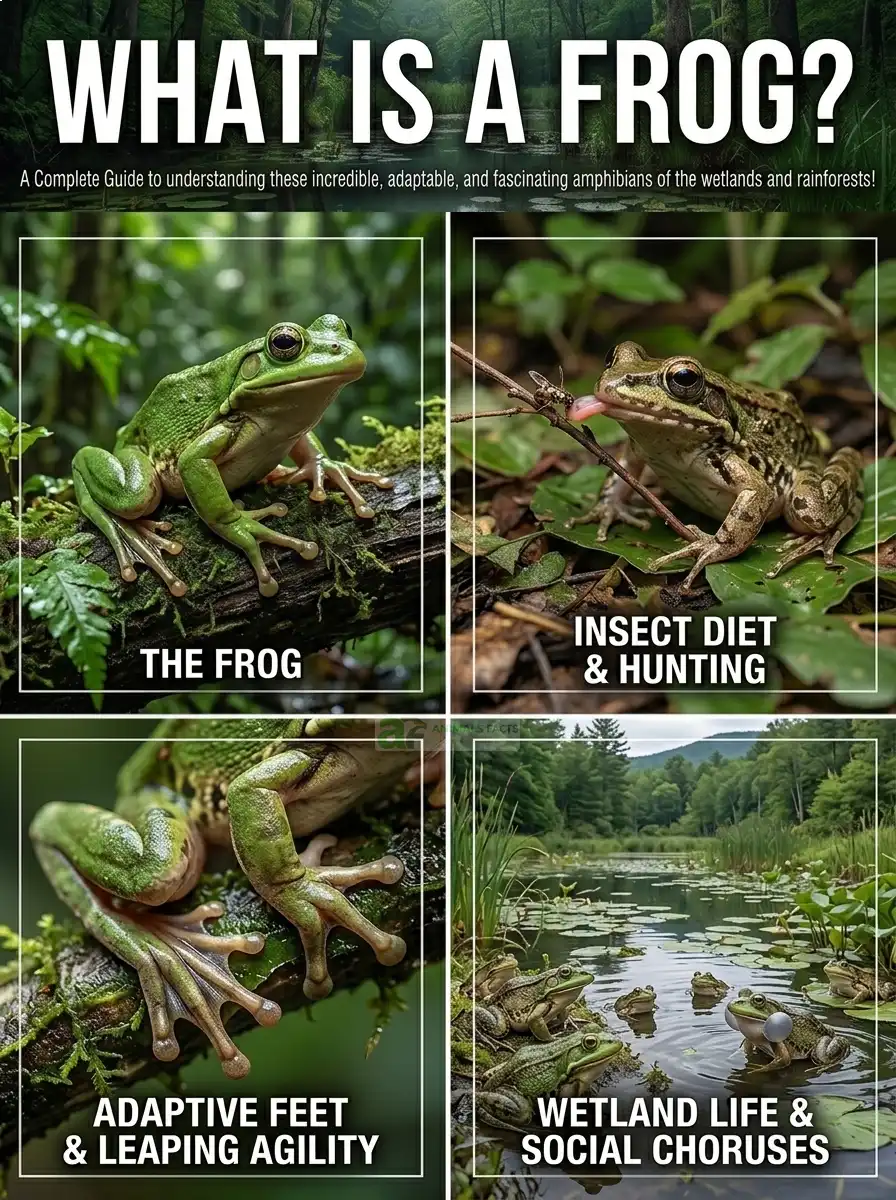
It sits motionless on a lily pad at dusk, its bulging eyes tracking the flicker of a moth against the fading light, its throat pulsing gently with each breath drawn partly through skin thinner than paper. Then, in a movement too fast for the human eye to fully register, its tongue snaps outward and back in a fraction of a second, and the moth is gone. This is the frog — one of the oldest, strangest, and most quietly extraordinary groups of animals on Earth, and the subject of some of the most fascinating frog facts in the entire animal kingdom.
Frogs belong to the order Anura, a lineage that has existed in something close to its modern form for over 200 million years, meaning frogs were already an ancient group when the very first dinosaurs appeared, and they went on to survive the mass extinction event that eventually wiped those dinosaurs out entirely. Today, more than 7,000 described species occupy nearly every terrestrial and freshwater habitat on the planet, from the driest deserts of Australia to the edges of the Arctic Circle, from the tops of cloud forest canopies in Central America to the flooded rice paddies of Southeast Asia. Few other animal groups have achieved such staggering diversity while remaining, at their core, remarkably consistent in body plan: four limbs, no tail as adults, and a permeable, moisture-dependent skin unlike anything found in reptiles, birds, or mammals.
Frog facts matter for reasons that extend well beyond trivia night. Because frog skin absorbs water, oxygen, and — unfortunately — pollutants and pathogens directly from the environment, frogs function as living bioindicators: early warning systems whose health, or sudden and catastrophic decline, often signals problems in an ecosystem long before those problems become visible to humans. The global amphibian decline of recent decades — driven by habitat loss, pollution, climate change, and a devastating fungal disease — has made frogs one of the most urgently studied and most actively conserved vertebrate groups on the planet, a conservation story running in parallel with genuinely remarkable stories of adaptation, survival, and resilience across nearly every continent on Earth.
Whether you are a student researching frog facts for a school project, a biology enthusiast curious about frog habitat and frog diet, a teacher building a lesson plan, a parent searching for frog facts for kids, or simply someone who heard a chorus of frogs calling one summer evening and wanted to know more, this is the most complete guide to frog facts you will find anywhere. We cover classification, physical adaptations, the complete life cycle from egg to adult, behavior and communication, predators and defenses, conservation status, mythology, famous individual frogs, and practical ways you can help protect frog populations worldwide. Let us begin.
2. Frog Species Overview & Classification
Frogs belong to the order Anura — from the Greek an- (“without”) and oura (“tail”) — a name referring to the fact that, unlike their amphibian relatives the salamanders and caecilians, adult frogs lack a tail entirely, though the larval stage, the tadpole, has one. Anura sits within the class Amphibia, alongside two much smaller orders: Caudata (salamanders and newts) and Gymnophiona (caecilians, limbless burrowing amphibians). Of the three, Anura is overwhelmingly the largest and most successful, accounting for roughly 90% of all living amphibian species described to date.
Taxonomy Table
| Rank | Classification |
|---|---|
| Kingdom | Animalia |
| Phylum | Chordata |
| Subphylum | Vertebrata |
| Class | Amphibia |
| Order | Anura |
| Families | Over 55 |
| Genera | More than 400 |
| Species | Over 7,000, and rising |
Major Frog Family Comparison
| Family | Common Name | Estimated Species | Notable Trait |
|---|---|---|---|
| Ranidae | True frogs | 400+ | Long legs, smooth skin, powerful jumpers |
| Bufonidae | True toads | 600+ | Dry, warty skin; parotoid glands behind the eyes |
| Hylidae | Tree frogs | 900+ | Adhesive toe pads for climbing |
| Dendrobatidae | Poison dart frogs | 200+ | Small, brightly colored, highly toxic |
| Microhylidae | Narrow-mouthed frogs | 700+ | Small-bodied, burrowing or leaf-litter species |
| Rhacophoridae | Asian gliding frogs | 400+ | Extensive webbing used for parachuting between trees |
| Pipidae | Clawed and Surinam frogs | 40+ | Fully aquatic, flattened body, no tongue |
| Leptodactylidae | Neotropical frogs | 200+ | Highly diverse reproductive strategies, including foam nests |
| Centrolenidae | Glass frogs | 150+ | Translucent underside skin revealing internal organs |
| Megophryidae | Asian horned toads | 200+ | Leaf-mimicking camouflage; pointed facial horns |
Subspecies and Regional Variation
Because Anura is such a vast order, meaningful “subspecies” comparisons are typically made within individual species rather than across the order as a whole. The American Bullfrog (Lithobates catesbeianus) shows distinct regional population variation across its native range in eastern North America, and has also become one of the world’s most successful — and ecologically damaging — invasive species after being introduced to South America, Europe, and Asia for the food and pet trade, where it regularly outcompetes and preys upon smaller native frog species. The Common Frog (Rana temporaria) similarly shows regional variation in size, coloration, and breeding timing across its enormous natural range spanning most of Europe and parts of northern Asia, with populations at higher latitudes and altitudes breeding several weeks later than populations closer to the equator.
The Common Toad (Bufo bufo), found across most of Europe and parts of Asia, likewise displays significant regional variation, with some isolated island and mountain populations classified by researchers as distinct subspecies based on subtle differences in size, skin texture, and genetic markers.
Species Evolution & Discovery Timeline
~265 million years ago: The lineage that would eventually give rise to modern frogs began diverging from other early amphibians during the late Permian period, tens of millions of years before the first dinosaurs appeared.
~200 million years ago: The oldest fossils recognizably belonging to Anura — including Prosalirus bitis and the slightly later Vieraella herbstii — already display the essential modern frog body plan, including elongated hind limbs adapted for jumping, showing how conservative frog anatomy has remained across an immense span of geological time.
~150 million years ago: By the Jurassic period, frog diversity had expanded considerably, with fossil evidence of early relatives of several modern frog families appearing across what are now separate continents, reflecting their distribution across the ancient supercontinent Pangaea before it began to break apart.
~66 million years ago: Frogs survived the Cretaceous–Paleogene mass extinction event that eliminated the non-avian dinosaurs — a survival scientists attribute partly to small body size, freshwater and burrowing habits, and flexible diets, all of which likely buffered frog populations against the immediate environmental catastrophe that followed the asteroid impact.
~30–10 million years ago: Major modern frog families, including Hylidae and Dendrobatidae, underwent rapid diversification as continents drifted into roughly their current positions, isolating populations across newly separated landmasses and driving explosive speciation, particularly across the tropics.
1758: Swedish naturalist Carl Linnaeus formally classified several frog species in his landmark work Systema Naturae, laying the taxonomic groundwork that modern amphibian classification still builds upon today.
19th–20th centuries: Naturalists and taxonomists described thousands of new frog species as global scientific exploration expanded into South America, Africa, and Southeast Asia — regions that remain, to this day, the most frog-diverse places on Earth.
1998–2000s: Scientists first identified the amphibian chytrid fungus (Batrachochytrium dendrobatidis) as the cause of mass, unexplained frog die-offs occurring simultaneously on multiple continents, marking the beginning of intensive global research into what would come to be recognized as one of the most destructive wildlife diseases ever documented.
2010s–2020s: Advances in DNA barcoding and bioacoustic monitoring have dramatically accelerated the discovery of new frog species, with over 100 new species formally described in the past decade alone — many identified not by physical appearance but by subtle differences in their mating calls, a field known as bioacoustic taxonomy.
Did You Know? Scientists increasingly rely on frog mating calls rather than physical appearance alone to tell species apart — a discipline that has revealed many “single species” long recognized by biologists are actually clusters of multiple genetically distinct species that simply happen to look nearly identical to the human eye.
3. Frog Physical Description & Unique Features
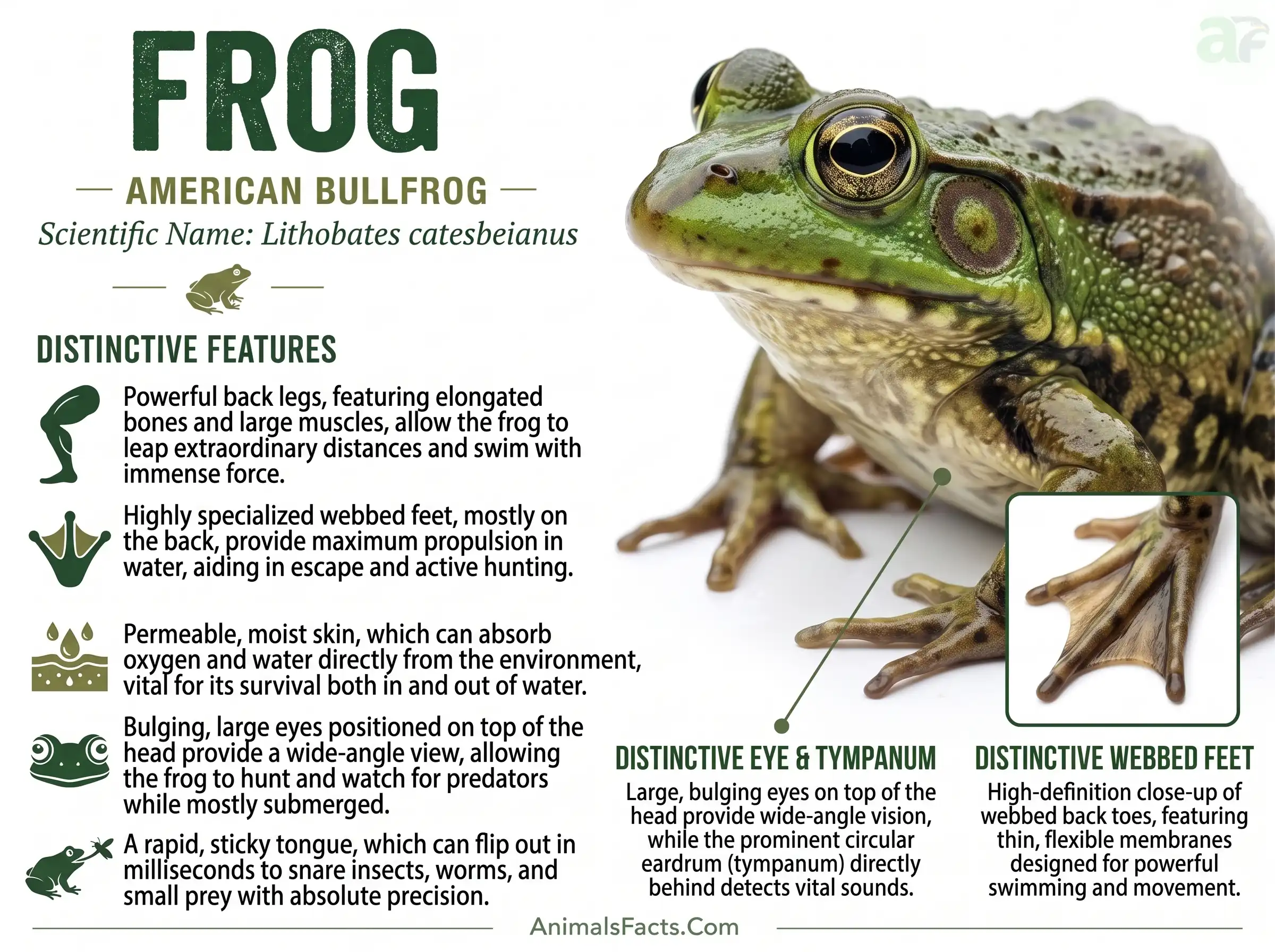
The frog’s physical design reflects tens of millions of years of refinement toward two very different lifestyles occupying the same body — an aquatic larval stage and a jumping, breathing, land-capable adult stage — and nearly every anatomical feature can be traced back to one of these two evolutionary pressures.
Size Extremes
The smallest known frog — and one of the smallest vertebrates on the planet — is Paedophryne amauensis, discovered in the leaf litter of Papua New Guinea in 2009, measuring a mere 7.7 millimeters in length, smaller than a housefly. At the opposite extreme, the Goliath frog (Conraua goliath) of Cameroon and Equatorial Guinea can reach 32 centimeters in body length and weigh over 3.3 kilograms — roughly the size of a small house cat, and heavy enough that a fully grown adult can comfortably fill both cupped human hands.
Skin: The Frog’s Most Extraordinary Organ
Frog skin is thin, moist, and remarkably permeable, allowing gases and water to pass directly through it in a process called cutaneous respiration. Many species obtain a significant share of their oxygen this way, and some fully aquatic species rely on skin breathing almost exclusively while submerged for long periods. This same permeability, however, makes frogs extraordinarily vulnerable to pollutants, pesticides, ultraviolet radiation, and pathogens — a central reason frogs are considered such sensitive indicators of overall environmental health.
Frog skin coloration serves several distinct biological functions:
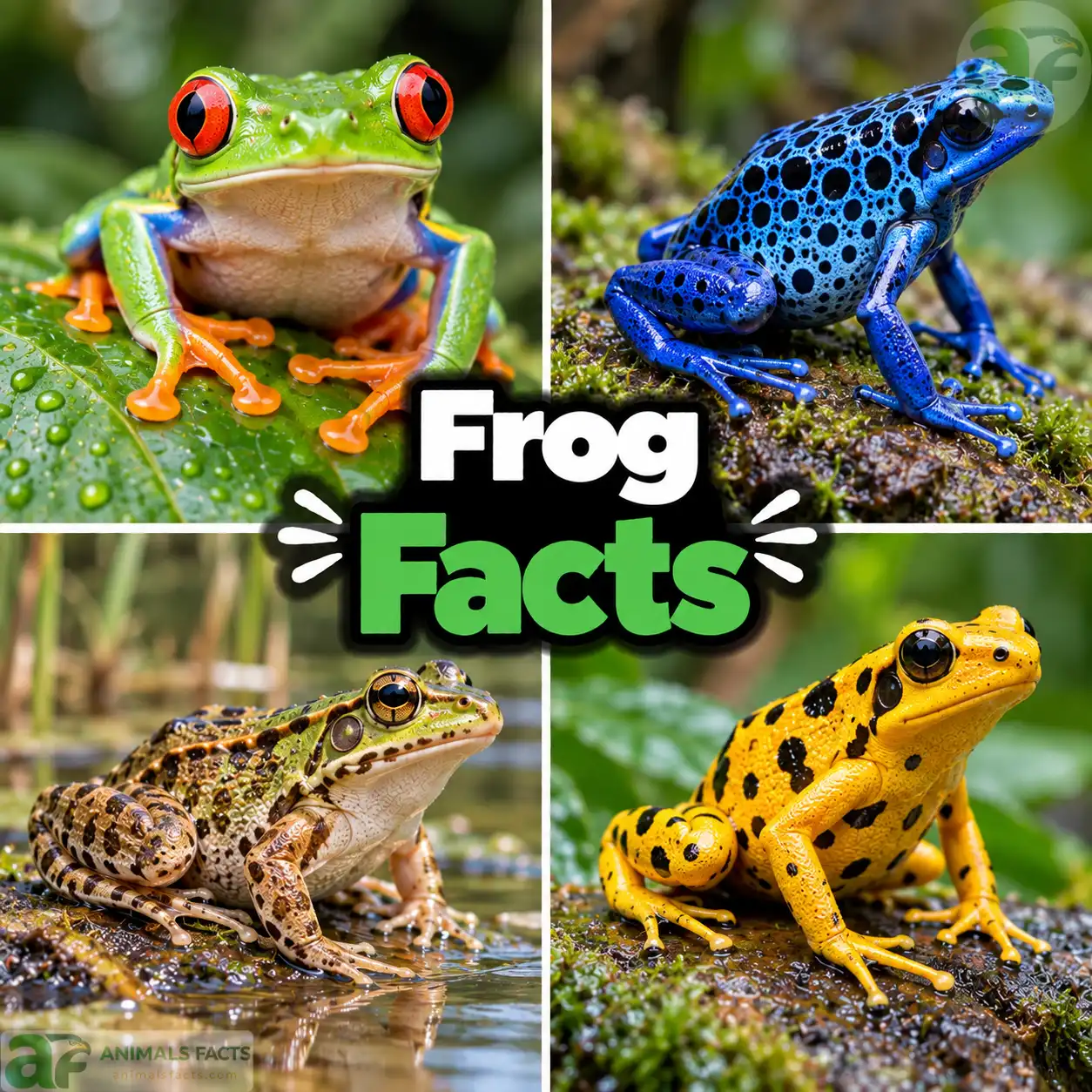
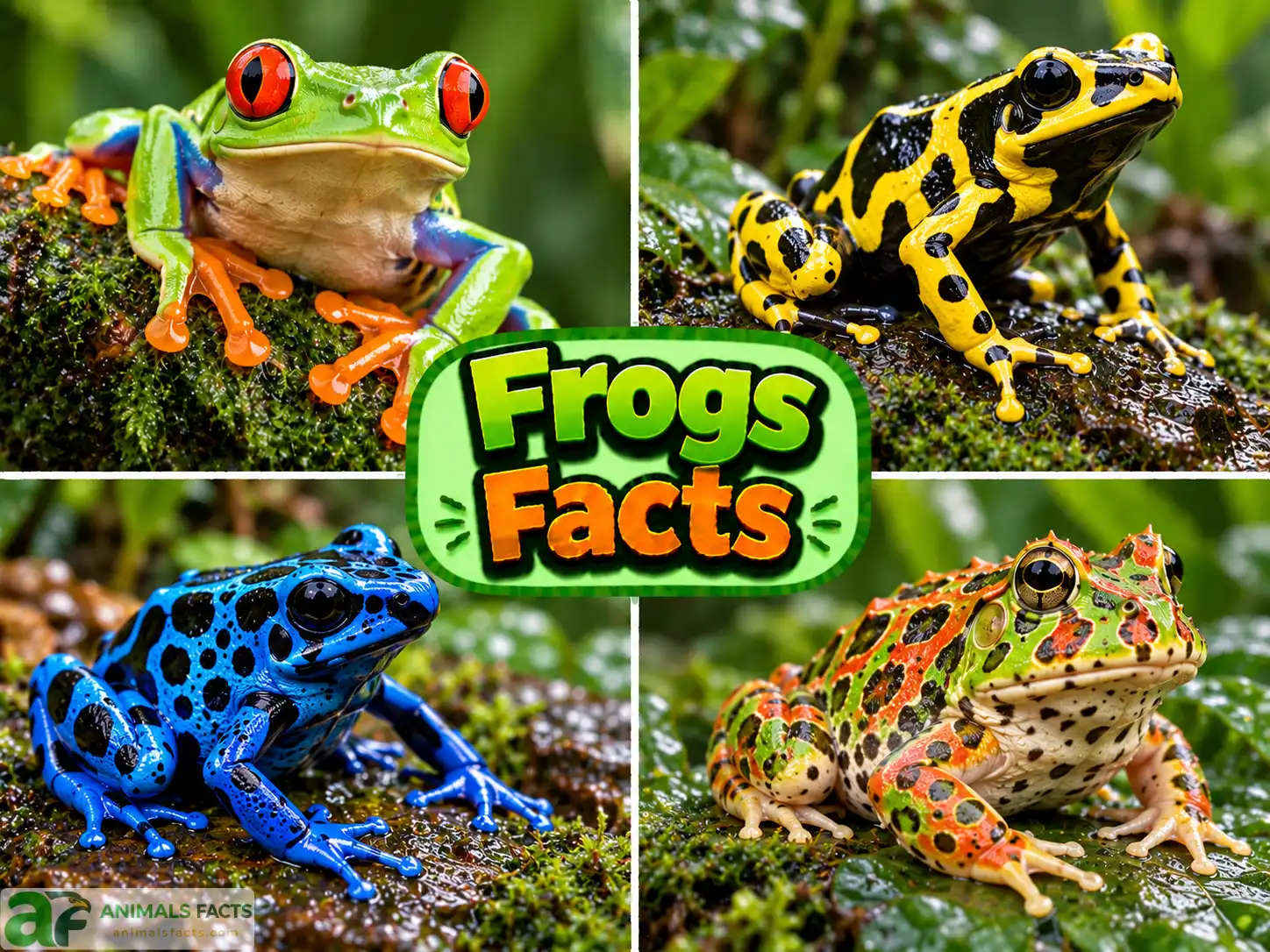
- Bright warning colors — reds, yellows, and electric blues, as seen in poison dart frogs — advertise toxicity to potential predators, a defense strategy known as aposematism
- Camouflage greens, browns, and mottled patterns — used by the overwhelming majority of species to blend into leaf litter, tree bark, or pond vegetation
- Adjustable shading — many species can shift skin tone somewhat in response to temperature, humidity, or stress, through the expansion and contraction of pigment-bearing cells called chromatophores
Eyes Built for Survival
Frog eyes sit high and forward on the skull, giving many species close to 360-degree vision — a critical adaptation for spotting both prey and approaching predators without needing to move the head. A transparent third eyelid called the nictitating membrane closes horizontally across the eye to protect it underwater or during a strike at prey, functioning much like a built-in pair of swimming goggles. Perhaps most remarkably, when a frog swallows, its eyeballs actually retract downward into the skull, physically helping push food down the throat — a genuinely unusual adaptation not found in most other vertebrate groups.
Legs, Feet, and Locomotion
Frog hind limbs are dramatically elongated relative to overall body size and densely packed with powerful muscle, functioning essentially like coiled biological springs. Species specifically adapted for jumping can leap more than 20 times their own body length in a single bound — the equivalent of an average adult human jumping the length of a basketball court from a standstill. Fully aquatic species have extensively webbed hind feet optimized for swimming, while tree-dwelling species instead evolved expanded, adhesive toe pads capable of gripping smooth vertical surfaces, including wet leaves and, famously, glass. Some Asian gliding species take this a step further, stretching enormous webbing between all four limbs to parachute controllably between trees, sometimes covering more than 15 meters in a single glide.
The Frog Skeleton and Body Plan
Unlike most vertebrates, a frog’s skeleton lacks ribs almost entirely, an adaptation that, combined with its highly flexible spine, allows many species to fold their bodies into remarkably compact shapes for squeezing into tight crevices, burrows, and gaps in bark. The frog’s shortened, fused backbone — called a urostyle — provides a rigid anchor point for the powerful jumping muscles of the hind legs, functioning as a kind of internal shock absorber that also helps stabilize the body during landing after a jump.
Comparison by Sex and Age
In the majority of frog species, females grow noticeably larger than males, likely because greater body size allows for the production of more numerous and larger eggs. Males frequently develop specialized vocal sacs — inflatable pouches of loose skin used to dramatically amplify their mating calls — along with rough, gripping patches called nuptial pads on their thumbs and forearms, used to hold onto females securely during mating, sometimes for hours at a time.
Did You Know? Some male frog species develop temporary spines or thickened patches on their chest and forearms during breeding season specifically to help maintain grip on a female during amplexus, particularly in fast-flowing streams where currents could otherwise separate a mating pair.
4. Top 25 Surprising & Interesting Frog Facts
- There are more than 7,000 known frog species worldwide, and new ones are still being formally described every year.
- Frogs have existed for roughly 200 million years, predating the extinction of the dinosaurs by well over 100 million years.
- Some frog species can jump over 20 times their own body length in a single leap.
- The Goliath frog of Central Africa is the largest frog species on Earth, weighing over 3 kilograms.
- The smallest known frog, Paedophryne amauensis, is smaller than a housefly.
- Frogs absorb water directly through their skin rather than drinking it with their mouths.
- A group of frogs on land is called an “army,” while a group calling together is a “chorus.”
- The wood frog can survive being partially frozen solid during winter, thanks to natural antifreeze compounds circulating in its blood.
- Poison dart frogs derive their toxicity from specific ants and mites in their wild diet — captive-bred individuals raised on different food are not toxic at all.
- Many tree frog species have adhesive toe pads capable of gripping perfectly smooth glass surfaces.
- Frogs regularly shed their outer skin, and most species eat the shed skin immediately afterward to recycle its nutrients.
- Puerto Rico’s tiny coquí frog is named directly after the loud, two-note sound of its call.
- Frog tadpoles are largely herbivorous, grazing on algae, while most adult frogs become fully carnivorous predators.
- A frog’s bulging eyes give it close to 360-degree vision without needing to turn its head.
- Certain frog species have been documented changing sex from female to male under environmental stress, including exposure to chemical pollution.
- The glass frog of Central and South America has translucent skin on its underside, through which its beating heart, liver, and digestive tract are clearly visible.
- Frogs use their own eyeballs, retracted into the skull, to help push food down their throats when swallowing.
- Toads are, biologically speaking, simply frogs adapted to drier terrestrial conditions — there is no strict scientific boundary separating the two.
- Some frog species display camouflage so precise that they remain nearly invisible against bark, moss, or leaf litter even at close range.
- Certain Asian tree frog species can glide between trees using extensive webbing stretched between their elongated toes, covering over 15 meters in a single glide.
- Frogs are considered a key bioindicator species, with population health closely reflecting overall wetland and ecosystem condition.
- Some male frogs produce calls loud enough to be heard from over a kilometer away on a still night.
- Over one-third of all amphibian species — including many frogs — are currently classified as threatened with extinction.
- The amphibian chytrid fungus has contributed to the decline or extinction of over 200 amphibian species worldwide since its discovery in the late 1990s.
- Frog skin secretions are actively studied by pharmaceutical researchers for potential pain-relief and antimicrobial compounds that could one day treat human disease.
5. Frog Fun Facts About Frogs
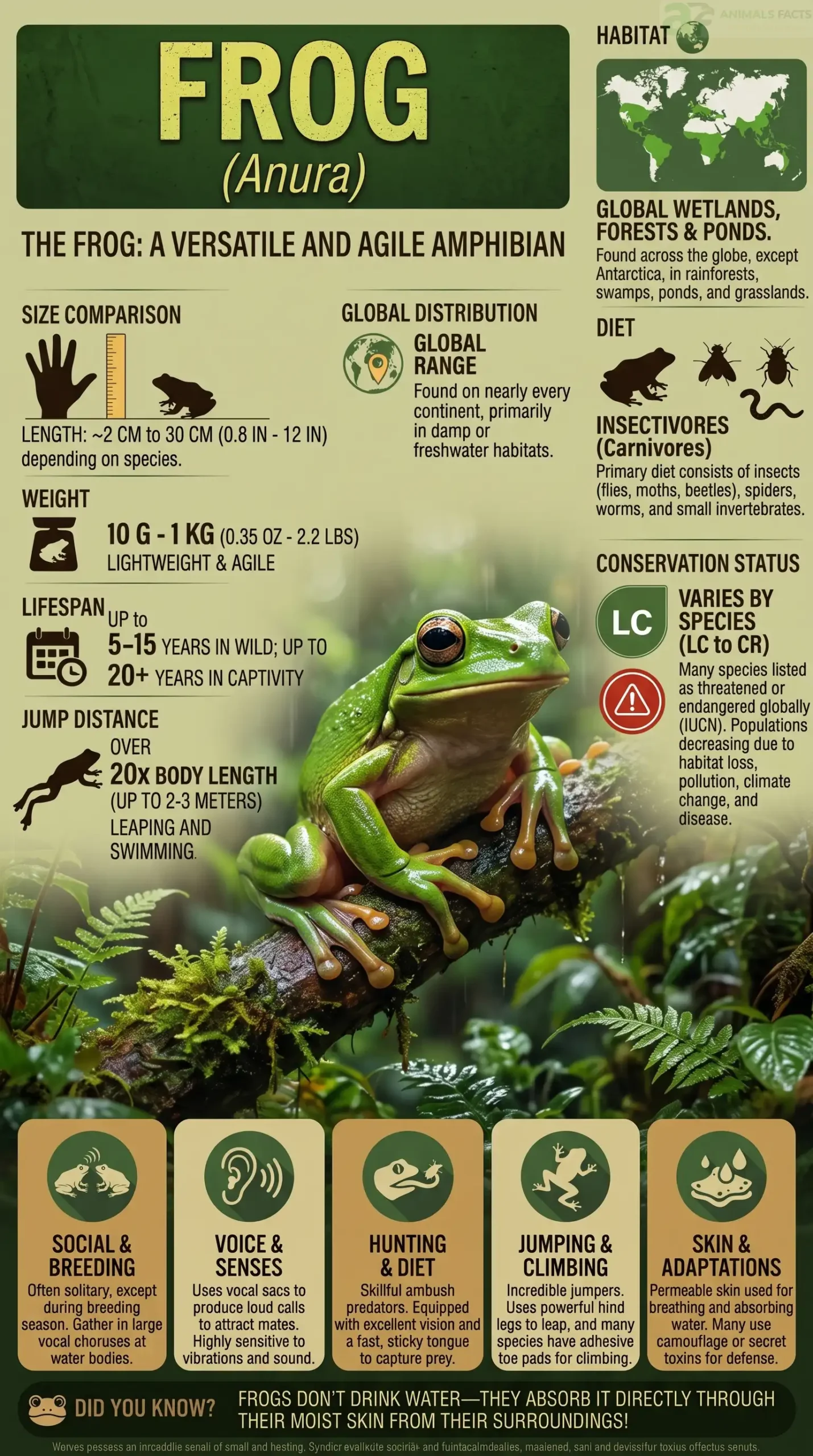
- Frogs are the largest group of amphibians on Earth — there are more frog species than every other amphibian combined!
- Frogs don’t need to drink water — their skin soaks it up like a sponge.
- A frog’s sticky tongue can strike and snap back in a fraction of a second.
- Some frogs can leap 20 times their own body length in one jump.
- Frogs live on every continent except Antarctica, which is simply too cold for them.
- Baby frogs, called tadpoles, breathe underwater with gills, just like fish.
- Frog eggs are laid in jelly-like clusters that protect them from drying out.
- Frog croaking is almost always a male-only behavior, used to call for a mate.
- The wood frog can survive being partially frozen through an entire winter.
- Frog skin chemicals are being studied by scientists for new medicines, including possible pain relievers.
- Some frogs can change color slightly depending on temperature and mood.
- Frogs blink by pulling their eyeballs down into their heads to help swallow food!
6. Frogs Natural Habitat & Geographic Range
Frog habitat spans an extraordinary range of environments — these amphibians occupy nearly every ecological niche on Earth except the polar regions and the very driest true deserts.
Primary Habitat Types
Freshwater ponds, lakes, and streams: The classic, most familiar frog habitat, and the essential breeding ground for the vast majority of species, which require standing or slow-moving water to lay their eggs and allow tadpoles to develop.
Tropical rainforests: Home to the greatest concentration of frog species diversity on the planet, particularly in the multi-layered canopy and understory of Central and South American, African, and Southeast Asian rainforests, where high humidity allows many species to live entirely away from standing water.
Wetlands and marshes: Seasonal and permanent wetlands provide essential breeding habitat for enormous numbers of species worldwide, and are frequently the first habitat type lost to agricultural drainage and urban development.
Trees and forest canopy: Arboreal species, including most tree frogs and Asian gliding frogs, spend most or all of their adult lives well above ground level, descending only to breed in temporary pools that collect in tree hollows or bromeliad leaves.
Underground burrows: Arid-adapted species, particularly in Australia and parts of Africa, dig deep burrows and enter a dormant state called aestivation, sometimes remaining underground for many months at a time until sufficient rainfall triggers emergence and rapid breeding.
Grasslands and floodplains: Many chorus frog and cricket frog species inhabit seasonally flooded grasslands, timing their entire breeding cycle to brief windows of standing water following heavy rain.
Habitat Range by Continent
| Continent | Notable Frog Diversity |
|---|---|
| South America | Highest global frog biodiversity on Earth, concentrated in the Amazon Basin and Andean cloud forests |
| Africa | Home to the Goliath frog and hundreds of reed frog and puddle frog species |
| Asia | Extremely diverse rainforest, mountain, and rice-paddy-adapted frog species |
| North America | Bullfrogs, chorus frogs, and dozens of native tree frog species across varied climates |
| Europe | Common frog, edible frog, and pool frog species distributed across most of the continent |
| Australia | Highly distinctive species, including the Corroboree frog and numerous burrowing desert specialists |
| Antarctica | No native frog species — extreme cold makes survival impossible for any amphibian |
Did You Know? Frogs are almost entirely absent from remote oceanic islands not connected to a mainland by land bridges, because their permeable, salt-intolerant skin makes surviving a long ocean crossing essentially impossible — a striking contrast to birds, reptiles, and many insects, which have colonized isolated islands far more successfully throughout evolutionary history.
7. Frog Diet & Feeding Behavior
Frog diet shifts dramatically over the course of a single individual’s life. Tadpoles are largely herbivorous or omnivorous, grazing on algae and organic debris suspended in water, while adult frogs transition into active, opportunistic carnivorous predators.
What Adult Frogs Eat
- Flying and ground-dwelling insects, including flies, crickets, moths, beetles, and ants
- Spiders and other arachnids
- Earthworms and slugs
- Small fish
- Smaller frogs, including, in some species, individuals of their own kind
- Occasionally small rodents or birds, in the case of the very largest species such as the Goliath frog and various horned frogs
Prey Breakdown Table
| Prey Type | Approximate % of Diet (Typical Insectivorous Frog) |
|---|---|
| Flying insects | 40% |
| Ground insects (beetles, ants) | 30% |
| Spiders and arachnids | 15% |
| Worms and slugs | 10% |
| Other (small vertebrates, etc.) | 5% |
How Frogs Hunt
Most frogs are patient ambush predators, relying on stillness and camouflage before launching an explosively fast strike. A frog’s tongue is attached at the front rather than the back of the mouth, allowing it to flip outward with extraordinary speed — among the fastest muscle-powered movements documented in any vertebrate — coated in a specialized saliva that instantly becomes sticky on contact with prey, then turns fluid again once inside the mouth to allow the prey to be swallowed whole.
Approach and detection: Most frogs rely primarily on movement detection rather than fine visual detail, meaning a motionless insect can often go completely unnoticed even at close range, while the slightest twitch instantly triggers a strike response.
The strike: Once triggered, the tongue extends and retracts in as little as 0.07 seconds, with the entire tongue tip coated in a saliva that behaves as a shear-thinning fluid — thick and sticky on contact, then instantly turning liquid to release the prey into the mouth.
Swallowing: As described above, frogs use their retractable eyeballs to help physically compress and push prey down the esophagus, a behavior that can be observed as a distinct blinking motion each time a frog swallows.
Species-Specific Feeding Adaptations
Large South American horned frogs, sometimes called “Pac-Man frogs” due to their enormous mouths relative to body size, are aggressive enough to attempt eating prey nearly their own size, including small birds, rodents, and other frogs. The African bullfrog, another notably large and aggressive species, is known to consume smaller frogs, rodents, and even small snakes when the opportunity arises. By contrast, many small leaf-litter species specialize almost exclusively in tiny prey such as ants and termites, some possessing specially adapted narrow mouths and sticky tongues fine-tuned for this diet.
Did You Know? Some large frog species have been documented attempting to eat prey items too large to swallow successfully, occasionally resulting in choking — a risk biologists attribute to the frog’s instinctive, largely automatic strike response, which is triggered by movement and size cues rather than any deliberate assessment of whether the prey is actually swallowable.
8. Frog Reproduction & Life Cycle
Frog reproduction culminates in one of the most dramatic transformations in the entire animal kingdom: metamorphosis, in which an aquatic, gill-breathing larva gradually transforms into an air-breathing, four-legged, land-capable adult.
Mating Behavior
Male frogs advertise their location and fitness primarily through vocal calls, with each species producing a distinct pattern recognizable to females of the same species even amid a crowded, noisy chorus. During mating, the male grips the female tightly in a position known as amplexus, fertilizing her eggs externally as she releases them into the surrounding water — a method of reproduction that predates internal fertilization by tens of millions of years in the amphibian lineage. In a small number of species, amplexus can last anywhere from a few minutes to, in extreme cases documented in certain toad species, several days.
Egg-Laying Strategies
Reproductive strategies vary enormously across frog species:
- Simple aquatic clutches — the majority of species lay large clusters or strings of eggs directly in ponds or slow streams
- Foam nests — several Neotropical and African species whip their eggs into a protective foam nest using their hind legs, shielding the eggs from both predators and desiccation
- Direct development — some tropical species skip the free-swimming tadpole stage entirely, with fully formed miniature frogs hatching directly from terrestrial eggs
- Parental carrying — certain species, including some poison dart frogs, carry tadpoles on their backs to multiple small pools of water to reduce competition and predation risk
Gestation and Development Timeline
Gestation period: Frog eggs typically hatch within 1 to 3 weeks of fertilization, depending heavily on water temperature and species, though some cold-climate species take considerably longer.
Clutch size: Ranges enormously by species — from single-digit numbers of large eggs in some direct-developing tropical frogs to several thousand eggs in a single clutch for species like the American bullfrog.
From Egg to Adult
- Eggs — laid in jelly-like clusters or strings in water, sometimes numbering in the thousands per clutch
- Tadpoles — hatch with external gills and a swimming tail, living an entirely aquatic existence
- Metamorphosis — hind legs develop first, followed by front legs, while the tail is gradually reabsorbed and lungs replace gills
- Froglet — a small, largely formed frog that begins transitioning out of the water onto land
- Adult frog — sexually mature and capable of reproducing, typically within one to three years depending on species and environmental conditions
Key Developmental Stages Table
| Stage | Approximate Duration | Key Development |
|---|---|---|
| Egg | 1–3 weeks | Embryonic development inside jelly capsule |
| Early tadpole | 2–6 weeks | External gills; herbivorous grazing begins |
| Late tadpole | 6–12 weeks | Hind legs emerge; internal gills develop |
| Metamorphosis | 1–2 weeks | Front legs emerge; tail reabsorbed; lungs replace gills |
| Froglet | Weeks to months | Transitioning to land; still very small |
| Adult | 1–3 years to maturity | Sexually mature; capable of breeding |
Lifespan Comparison Table
| Species | Average Lifespan (Wild) |
|---|---|
| Common Frog | 5–8 years |
| American Bullfrog | 7–9 years |
| Poison Dart Frog | 3–7 years |
| Goliath Frog | 15+ years |
| Various tree frog species | 4–6 years |
Did You Know? Some frog species can lay several thousand eggs in a single breeding season, yet due to intense predation on both eggs and tadpoles, often less than 1% survive to become breeding adults — a reproductive strategy biologists call “r-selection,” relying on sheer numbers rather than parental protection to ensure a handful of offspring reach adulthood.
9. Social Behavior & Communication
Frogs are not social animals in the way mammals or birds often are, but they display genuinely complex group behavior, particularly around the breeding season, when large numbers gather at once around the same water source.
Group Dynamics
Male frogs frequently gather in large numbers near suitable breeding water to call simultaneously, forming a dense chorus. This collective calling increases the overall volume, attracting females from far greater distances than any single individual could manage alone, while also making it considerably harder for predators to pinpoint any one calling frog — a survival strategy researchers refer to as the “dilution effect” of group signaling. Within a chorus, individual males often establish small calling territories only a meter or two apart, occasionally engaging in physical wrestling matches to displace a rival from a particularly favorable calling spot.
Vocalizations
Frog calls serve several distinct biological purposes:
- Advertisement calls — the loud, repeated calls used to attract mates from potentially long distances
- Territorial calls — shorter, often more aggressive calls used to establish and defend a favorable calling site
- Release calls — produced by a male mistakenly grasped by another male during the chaos of a breeding chorus, signaling the error
- Distress calls — a sharp, often unusually loud call produced when a frog is captured or physically threatened, sometimes startling a predator into briefly loosening its grip
Body Language and Intelligence
While frogs lack the sophisticated problem-solving abilities associated with mammals, research indicates that many species can learn simple associations, recognize familiar territory boundaries over time, and even adjust the timing and pitch of their calls to avoid being drowned out by overlapping calls from nearby rival males — a behavior researchers compare directly to the “cocktail party effect” observed in human group conversation. Some species have also been shown to selectively call during brief lulls in background noise, such as between passing vehicles or gusts of wind, maximizing the chance their call is heard clearly by a listening female.
Did You Know? In extremely dense breeding choruses, some frog species switch from vocal calls to visual signaling, using rapid foot-flagging or vocal sac-waving movements that can be seen by nearby females even when the surrounding noise is too loud for calls to be reliably heard.
10. Predators & Defense Mechanisms
Occupying a middle position in most food webs, frogs face predation pressure from an unusually wide range of animals across every stage of their life cycle, from egg to fully grown adult.
Natural Enemies
- Snakes — the primary predator of adult frogs across most habitats, with many snake species specializing almost exclusively in frog prey
- Wading birds such as herons and kingfishers, which hunt frogs at the water’s edge
- Fish — particularly predatory species sharing ponds with breeding frogs, consuming enormous numbers of eggs and tadpoles
- Larger frogs, including cannibalistic individuals of the same species
- Mammals such as raccoons and otters
- Invertebrate predators of eggs and tadpoles, including large spiders, giant water bugs, and dragonfly larvae
Survival Strategies
- Camouflage — blending seamlessly into surrounding leaf litter, bark, or vegetation
- Toxin production — most developed in poison dart frogs and certain toad species, whose skin secretions can range from mildly irritating to genuinely lethal
- Body inflation — some species inflate their lungs to make themselves physically harder for a predator to swallow
- Rapid, evasive jumping — a quick, unpredictable escape into water or dense vegetation
- Death feigning — some species freeze completely still to avoid triggering a predator’s attack response
- Startle displays — certain species, when disturbed, suddenly flash brightly colored patches on their thighs or flanks (normally hidden at rest), momentarily startling a predator and buying time to escape
Predator-Prey Arms Race
The relationship between toxic frog species and their predators has driven a genuine evolutionary arms race in several regions. Certain snake species that specialize in eating toxic toads have evolved significant physiological resistance to the toxins, allowing them to safely consume prey that would otherwise be lethal to most other predators — a striking example of coevolution between predator and prey occurring over many thousands of generations.
Did You Know? Poison dart frogs raised in captivity on a diet different from their wild diet of specific toxic ants and mites gradually lose their toxicity entirely within a few generations — conclusive proof that their poison originates from what they eat in the wild rather than from anything inherent in their own genetics.
11. Frog Facts for Kids
Hey kids! Frogs are some of the coolest and strangest animals on the planet — here are some fun and easy facts to remember:
- Frogs start life as tiny eggs laid in water, clustered together like little jelly balls.
- Baby frogs are called tadpoles, and just like fish, they have tails and gills for breathing underwater.
- As tadpoles grow, they slowly lose their tails and grow legs — this incredible change is called metamorphosis.
- Frogs don’t drink water with their mouths — they soak it up right through their skin!
- Some frogs are so tiny they could sit comfortably on your fingernail, while others are as big as a house cat!
- Frogs use super sticky, super fast tongues to snatch up bugs to eat in the blink of an eye.
- Male frogs make loud croaking sounds at night to call for a mate — almost like singing a song to attract attention.
- You can find frogs almost everywhere in the world, except in freezing Antarctica.
- Frogs blink by pulling their eyeballs down into their head — it actually helps them swallow their food!
- Some frog species can glide through the air between trees using webbed feet like little parachutes.
Fun Activity: Next time you’re near a pond after dark, listen closely — you might hear a whole frog chorus singing together, each one trying to be heard over the others!
12. Relationship with Humans
Frogs have interacted with human societies for thousands of years — practically, symbolically, and, increasingly, scientifically.
Historical Significance
In many ancient cultures across the world, frogs symbolized fertility, rainfall, and transformation, largely due to their strong association with water and their dramatic, highly visible life cycle from egg to tadpole to adult, unfolding within days or weeks in a way early observers could easily witness firsthand.
Frogs in Science and Medicine
Frogs have played an outsized role in biological and medical research, particularly in the study of embryology, genetics, and neuroscience, where their large, transparent, and easily observed eggs made them ideal early research subjects for scientists studying how vertebrate embryos develop. The African clawed frog (Xenopus laevis), in particular, became one of the most important laboratory animals of the 20th century, used in everything from early pregnancy testing to landmark studies in developmental biology. Today, certain frog skin secretions are actively studied for potential antibiotic and pain-relief compounds, an area of pharmaceutical research that has already yielded several promising experimental treatments derived from naturally occurring frog peptides.
Frogs and Agriculture
By consuming enormous quantities of insect pests, frogs provide farmers across the world with a natural, entirely chemical-free form of pest control, particularly valuable in rice paddies and garden ecosystems throughout Asia, where their presence is often actively encouraged and even protected by local farming communities.
Frog Legs as Food
In certain culinary traditions — most famously French cuisine, alongside parts of Southeast Asian and Chinese cooking — frog legs are considered a genuine delicacy, typically sourced from farmed bullfrog species raised specifically for the food trade rather than harvested from dwindling wild populations, though unsustainable wild harvesting remains a serious conservation concern in some regions.
Frogs as Pets
The exotic pet trade has also made certain frog species, particularly various tree frogs and the popular White’s tree frog, into common household pets worldwide, driving both a legitimate captive-breeding industry and, unfortunately, illegal wild collection pressure on some rarer species.
13. Frog Conservation Status & Threats
Amphibians, including frogs, represent one of the most threatened vertebrate groups on the planet, facing a combination of pressures unlike almost any other class of animal.
IUCN Status Overview
| Status | Approx. Share of Frog Species |
|---|---|
| Least Concern | ~55% |
| Near Threatened | ~10% |
| Vulnerable | ~10% |
| Endangered | ~10% |
| Critically Endangered | ~8% |
| Data Deficient | ~7% |
Major Threats
Habitat loss: The large-scale drainage of wetlands and deforestation of tropical rainforest habitat remains the single most significant long-term threat to frog populations worldwide, eliminating both breeding sites and the surrounding terrestrial habitat many species depend on for the rest of their life cycle.
Climate change: Shifting rainfall patterns and rising temperatures are disrupting the precise seasonal breeding cues many frog species rely on, while simultaneously shrinking the range of suitable habitat available at higher elevations and latitudes — a particular concern for mountain-dwelling species with nowhere higher to retreat.
Pollution: Because frog skin is so permeable, frogs absorb pesticides, herbicides, and other chemical runoff directly from their environment far more readily than most other animals, making agricultural and urban pollution an especially severe threat, with documented effects including developmental deformities and reduced fertility.
Chytrid fungus (Batrachochytrium dendrobatidis): A devastating fungal disease responsible for mass amphibian die-offs on nearly every continent since its discovery, considered one of the most destructive wildlife diseases ever documented in scientific history. The fungus attacks keratin in frog skin, disrupting the cutaneous respiration and water absorption frogs depend on to survive, often leading to fatal cardiac arrest.
Invasive species: Introduced predators, competitors, and even invasive frog species themselves — such as the American bullfrog outside its native range — have displaced numerous native frog populations around the world, sometimes also acting as carriers that spread chytrid fungus into previously unaffected regions.
Regional Conservation Snapshots
| Region | Notable Conservation Concern |
|---|---|
| Central America | Severe chytrid-driven declines among high-elevation cloud forest species |
| Australia | Multiple species pushed to extinction or near-extinction by chytrid fungus since the 1980s |
| Madagascar | Habitat loss threatens numerous highly endemic species found nowhere else |
| North America | Wetland drainage and agricultural runoff affecting native pond-breeding species |
| Southeast Asia | Rainforest deforestation and unsustainable wild harvesting for the food and pet trade |
Did You Know? The amphibian chytrid fungus has contributed to the decline or extinction of more than 200 amphibian species worldwide, making it, by most measures, the most destructive wildlife pathogen ever recorded for any vertebrate group — a fungal equivalent, in ecological terms, of some of history’s most devastating human epidemics.
14. Famous Frogs
Kermit the Frog — created by puppeteer Jim Henson and first appearing on television in the 1950s, Kermit is arguably the single most recognizable frog in the world, later becoming the enduring host and heart of The Muppet Show and numerous subsequent films, and remaining a globally recognized cultural icon for over half a century.
Toughie — the last known individual of the Rabbs’ fringe-limbed treefrog, a species from Panama. Toughie lived out his final years at the Atlanta Botanical Garden, cared for by conservation staff who searched unsuccessfully for years for any surviving wild individuals of his species. His death in 2016 became a widely publicized symbol of the ongoing global amphibian extinction crisis, drawing significant media attention to frog conservation worldwide.
Various record-holding frogs — individuals recognized over the years by Guinness World Records for extremes including the largest frog ever measured, the longest recorded frog jump (achieved during long-running frog jumping competitions in the United States), and the greatest documented lifespan in captivity.
Xenopus laevis research specimens — while not individually named, generations of African clawed frogs used in laboratories worldwide collectively hold a unique place in scientific history as one of the most important model organisms ever used in developmental biology and genetics research.
15. Role in Ecosystem & Food Chain
Frogs serve as a vital connective link within countless food webs, sitting between insect populations and the larger predators — birds, snakes, fish, and mammals — that rely on frogs as an essential food source.
Prey Regulation
By consuming vast quantities of insects at every life stage, frogs help regulate insect populations that would otherwise cause significant damage to crops and natural vegetation, while tadpoles simultaneously help control algae growth in the ponds and streams where they develop.
Frogs as a Keystone Prey Species
In many wetland ecosystems, frogs and their tadpoles represent one of the single largest sources of biomass available to predators, meaning a healthy frog population often directly supports the broader food web above it — from wading birds and snakes up through larger predatory fish and mammals.
Ecological Importance Summary
- Pest control — consuming enormous quantities of insects, including mosquitoes capable of transmitting disease to humans
- Prey base — supporting healthy populations of birds, snakes, fish, and small mammals throughout their range
- Bioindicators — their extreme sensitivity to pollution makes frog populations an early warning system for broader ecosystem health
- Nutrient cycling — tadpoles help regulate algae growth in ponds and streams, keeping aquatic ecosystems in balance
16. Myths, Folklore & Cultural Significance
Ancient Egyptian Traditions
The frog-headed goddess Heqet was closely associated with fertility and childbirth in ancient Egyptian religion, reflecting the frog’s ancient symbolic link to the life-giving annual floodwaters of the Nile, which brought with them enormous seasonal explosions of frog populations.
European Folklore
The classic fairy tale of the “Frog Prince”, first popularized by the Brothers Grimm, uses the frog as a powerful symbol of hidden transformation and nobility concealed beneath an unassuming, even unappealing, exterior — a narrative device that has echoed through European storytelling for centuries.
Chinese Tradition
The “money frog,” often depicted as a three-legged toad clutching a coin in its mouth, remains a widely recognized symbol of wealth, prosperity, and good fortune in Chinese culture, commonly displayed near entrances of homes and businesses.
Indigenous American Cultures
Many Indigenous communities across the Americas closely associate frogs with rain and water spirits, a connection rooted directly in the frog’s dramatic reappearance and vocal activity at the start of each wet season, often incorporated into traditional stories, pottery designs, and ceremonial art.
Australian Aboriginal Traditions
Several Australian Aboriginal cultures feature the water-holding frog prominently in Dreamtime stories, reflecting the real biological adaptation of certain desert frog species to store large amounts of water in their bodies during dry periods — a survival trait Indigenous peoples historically relied on as an emergency water source in extreme drought conditions.
17. Frogs in Pop Culture
Kermit the Frog (The Muppets) — a defining cultural icon of American entertainment since the 1970s, recognized globally and still actively appearing in new media today.
Frogger — a classic arcade video game, first released in 1981, built entirely around a frog attempting to safely cross busy roads and rivers, later spawning numerous sequels, imitators, and mobile adaptations across four decades.
Michigan J. Frog — the top-hatted, cane-twirling singing frog from Warner Bros. cartoons, later adopted as a mascot by television network The WB.
Frog motifs appear widely across animated films, children’s literature, corporate branding, and continue to recur as a popular and enduring theme across internet meme culture, particularly in recent years through viral frog-themed illustrations and animations.
18. Best Places to See Frogs in the Wild
Amazon Rainforest, South America
The single most frog-diverse region on Earth, home to hundreds of species found nowhere else, including many still being newly described by scientists conducting ongoing biodiversity surveys deep within the basin.
Costa Rica’s Cloud Forests
Internationally famous as the home of the iconic, strikingly colored red-eyed tree frog, alongside dozens of other rainforest species readily observed on night walks through protected reserves such as Monteverde.
Madagascar
A global hotspot of unique, highly endemic frog species, the result of millions of years of isolated evolution on the island following its separation from mainland Africa.
Great Smoky Mountains, USA
One of the most amphibian-diverse protected areas in North America, supporting a wide range of native frog and salamander species across its varied elevation zones.
Borneo Rainforests, Southeast Asia
Home to remarkable gliding tree frog species uniquely adapted to life in the forest canopy, alongside numerous other rainforest specialists found only in this region.
Okavango Delta, Africa
A seasonal wetland ecosystem that erupts into dramatic, vibrant frog choruses following the annual flood, drawing wildlife enthusiasts specifically to experience the phenomenon.
Australian Wet Tropics
Home to distinctive burrowing and tree frog species found only in specific regional pockets of the continent, including several species now the focus of intensive chytrid-recovery conservation programs.
19. Top Documentaries & Books
Must-Watch Documentaries
“Life in Cold Blood” (BBC, narrated by David Attenborough) — a landmark natural history series with extensive, beautifully filmed coverage of frog behavior and diversity worldwide, widely regarded as one of the finest amphibian and reptile documentaries ever produced.
“The Amphibians” (nature documentary series) — dedicated coverage of amphibian biology, behavior, and the ongoing global conservation crisis facing frogs and their relatives.
“Planet Earth II” (BBC) — includes several notable amphibian segments woven into its broader coverage of global wildlife, filmed using advanced camera technology previously unavailable to wildlife documentarians.
Essential Books
“Frogs: The Animal Answer Guide” — a comprehensive, accessible reference covering frog biology and behavior for general readers and students alike.
“A Chorus of Frogs” — a popular nonfiction title exploring frog communication and ecology through accessible, engaging storytelling.
“National Geographic Kids: Everything Frogs” — an engaging, richly illustrated introduction to frogs designed specifically for younger readers and classroom use.
20. Frog Facts vs. Common Myths
Myth: Touching a frog gives you warts. Fact: Warts are caused entirely by a human virus (HPV) and have nothing to do with frog skin — this is one of the most widespread and persistent pieces of animal misinformation in Western folklore.
Myth: All frogs are poisonous. Fact: Only a relatively small percentage of frog species, most notably poison dart frogs, produce toxins dangerous to humans — the vast majority of frog species are entirely harmless to touch.
Myth: Frogs and toads are completely different, unrelated animals. Fact: Toads are simply frogs that have evolved adaptations for drier terrestrial environments; there is no formal scientific distinction separating them at the order level.
Myth: Frogs drink water through their mouths, the same way most animals do. Fact: Frogs absorb the water they need directly through their skin, through a specialized area sometimes called the “drink patch” located on the lower abdomen and thighs.
Myth: No amphibian can survive being frozen. Fact: Several species, most famously the wood frog, can survive being partially frozen solid for extended periods during winter, thanks to natural antifreeze compounds that protect their cells from damage.
Myth: Frogs and toads can be told apart reliably just by whether they hop or walk. Fact: While toads often move with a slower, walking gait and frogs typically hop, this distinction is unreliable across the full order, as many frog species classified as “toads” hop just as readily as their smooth-skinned relatives.
21. Comparison with Similar Amphibians
| Feature | Frog | Toad | Salamander | Newt |
|---|---|---|---|---|
| Skin | Smooth, moist | Dry, warty | Smooth, moist | Smooth, moist |
| Tail (adult) | Absent | Absent | Present | Present |
| Habitat | Variable; often near water | Often drier terrestrial areas | Moist forests, streams | Ponds and moist land |
| Locomotion | Jumping | Walking/hopping | Walking | Walking/swimming |
| Order | Anura | Anura | Caudata | Caudata |
| Conservation Status | Varies widely by species | Varies widely by species | Generally understudied | Generally understudied |
| Reproduction | External fertilization, aquatic eggs | External fertilization, aquatic eggs | Variable; some internal fertilization | Internal fertilization |
22. How You Can Help
Support These Organizations
Amphibian Survival Alliance — a global partnership of conservation organizations coordinating amphibian protection efforts across every continent, focused on both research and direct habitat intervention.
IUCN Amphibian Specialist Group — the leading scientific body assessing amphibian conservation status worldwide and guiding global research and policy priorities.
Save The Frogs! — an organization focused specifically on frog conservation, public education, and habitat protection campaigns, including an annual global awareness day dedicated to frogs.
Practical Actions
Avoid harmful pesticides. Refraining from pesticide use in gardens near ponds or wetlands directly protects the sensitive skin of local frog populations from chemical exposure.
Participate in citizen science. Numerous regional programs welcome volunteer observations of frog calls and sightings, contributing directly to population monitoring data used by researchers to track declines and recoveries over time.
Build a backyard pond. A small, chemical-free pond can provide meaningful breeding habitat for local amphibian populations in increasingly developed landscapes.
Practice good biosecurity. Cleaning footwear and equipment between visits to different wetland sites helps prevent the accidental spread of chytrid fungus between frog populations.
Spread awareness. Sharing accurate information about frog conservation helps counter the widespread indifference and misinformation that continues to hinder amphibian protection efforts globally.
Did You Know? Coordinated, large-scale amphibian rescue efforts — including emergency captive breeding programs for critically endangered species threatened by chytrid fungus — have already prevented the outright extinction of several frog species that would otherwise almost certainly be gone from the wild today.
24. Frequently Asked Questions About Frogs
Q1: How many frog species exist in the world?
Over 7,000 recognized species belonging to the order Anura, with new species still being discovered and formally described on a regular basis.
Q2: What is the largest frog in the world?
The Goliath frog of Central Africa, which can weigh up to 3.3 kilograms and reach 32 centimeters in body length.
Q3: What is the smallest frog in the world?
Paedophryne amauensis, discovered in Papua New Guinea, at just 7.7 millimeters long — smaller than a housefly.
Q4: Do frogs drink water?
No — frogs absorb the water they need directly through their permeable skin rather than drinking it with their mouths.
Q5: What do frogs eat?
Mostly insects, spiders, worms, and other small invertebrates; the largest species occasionally eat small vertebrates, including rodents and other frogs.
Q6: How long do frogs live?
Typically 4 to 15 years in the wild, depending heavily on species, with some individuals living considerably longer in captivity.
Q7: Are all frogs poisonous?
No — only certain species, most notably poison dart frogs, produce dangerous toxins, and even then, only when raised in the wild on their natural toxic diet.
Q8: What’s the difference between a frog and a toad?
Toads are simply frogs adapted for drier terrestrial habitats, generally recognizable by their drier, bumpier skin, but there is no strict scientific line separating the two.
Q9: Why are frog populations declining worldwide?
The leading causes include habitat loss, water and soil pollution, climate change, and the devastating amphibian chytrid fungus.
Q10: Can frogs survive winter in cold climates?
Some species, most famously the wood frog, can survive partial freezing during winter through natural antifreeze compounds circulating in their blood.
24. Sources & References
- Wikipedia — https://en.wikipedia.org/wiki/Frog
- World Wildlife Fund (WWF) — https://www.worldwildlife.org
- National Geographic — https://www.nationalgeographic.com/animals/amphibians
- IUCN Red List — https://www.iucnredlist.org
- Encyclopaedia Britannica — https://www.britannica.com/animal/frog
- Smithsonian’s National Zoo — https://nationalzoo.si.edu
- Live Science — https://www.livescience.com
- AmphibiaWeb — https://amphibiaweb.org
- BBC Wildlife — https://www.discoverwildlife.com