
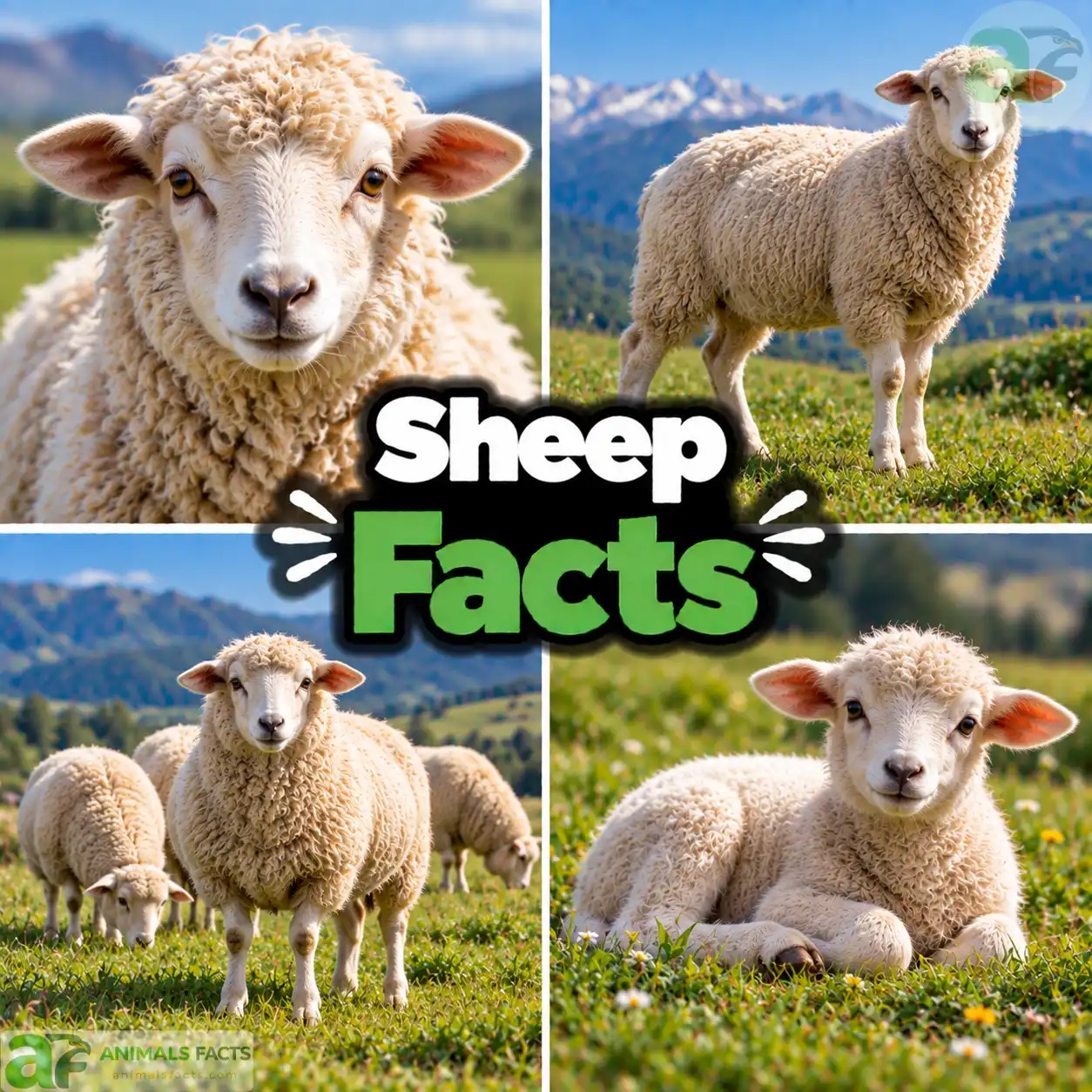
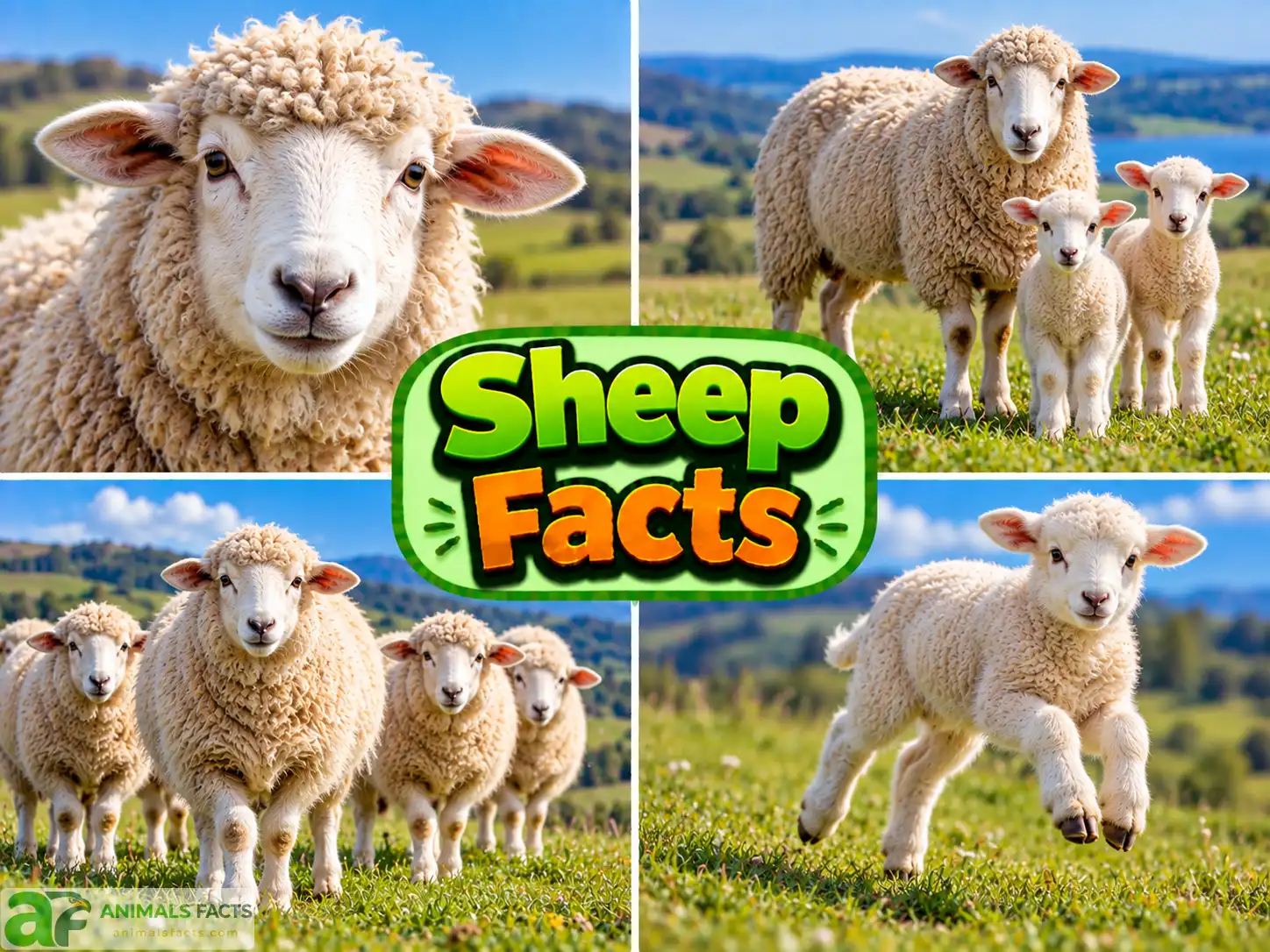
Sheep Facts
| Feature | Details |
|---|---|
| Scientific Name | Ovis aries (domestic sheep); wild ancestor primarily Ovis orientalis (mouflon) |
| Common Names | Sheep, Ewe (female), Ram/Tup (male), Lamb (young), Wether (castrated male) |
| Kingdom | Animalia |
| Phylum | Chordata |
| Class | Mammalia |
| Order | Artiodactyla |
| Family | Bovidae |
| Habitat | Domesticated globally; wild relatives inhabit mountainous, steppe, and semi-arid terrain across Europe, Asia, and North America |
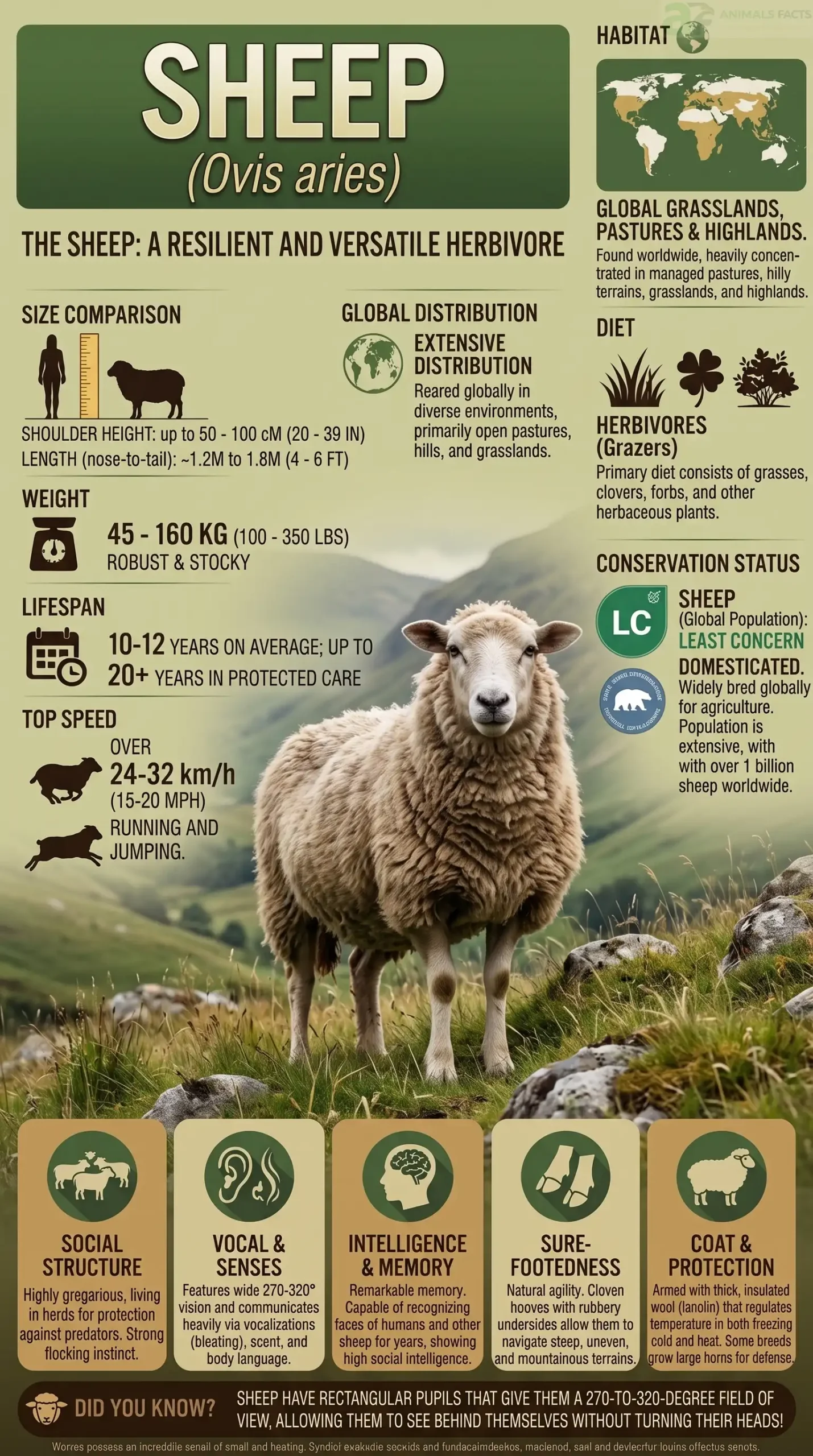
| Lifespan | 10–12 years for domestic sheep; wild sheep species typically 10–15 years |
| Diet | Herbivore — grasses, clover, forbs, hay |
| Weight | 45–160 kg, varying by breed and sex |
| Height | 0.7–0.9 meters at the shoulder, depending on breed |
| Speed | Up to 40 km/h (25 mph) in short bursts |
| Conservation Status | Domestic sheep: Domesticated (not assessed); wild relatives range from Least Concern to Endangered |
| Global Population | Approximately 1.2 billion domestic sheep worldwide |
| Unique Feature | Rectangular pupils provide nearly 320-degree panoramic vision; wool grows continuously throughout life and requires regular shearing; possess an exceptional facial recognition memory, able to remember up to 50 individual faces for over two years |
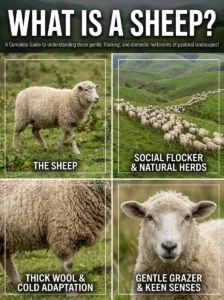 1. Introduction: What is a Sheep?
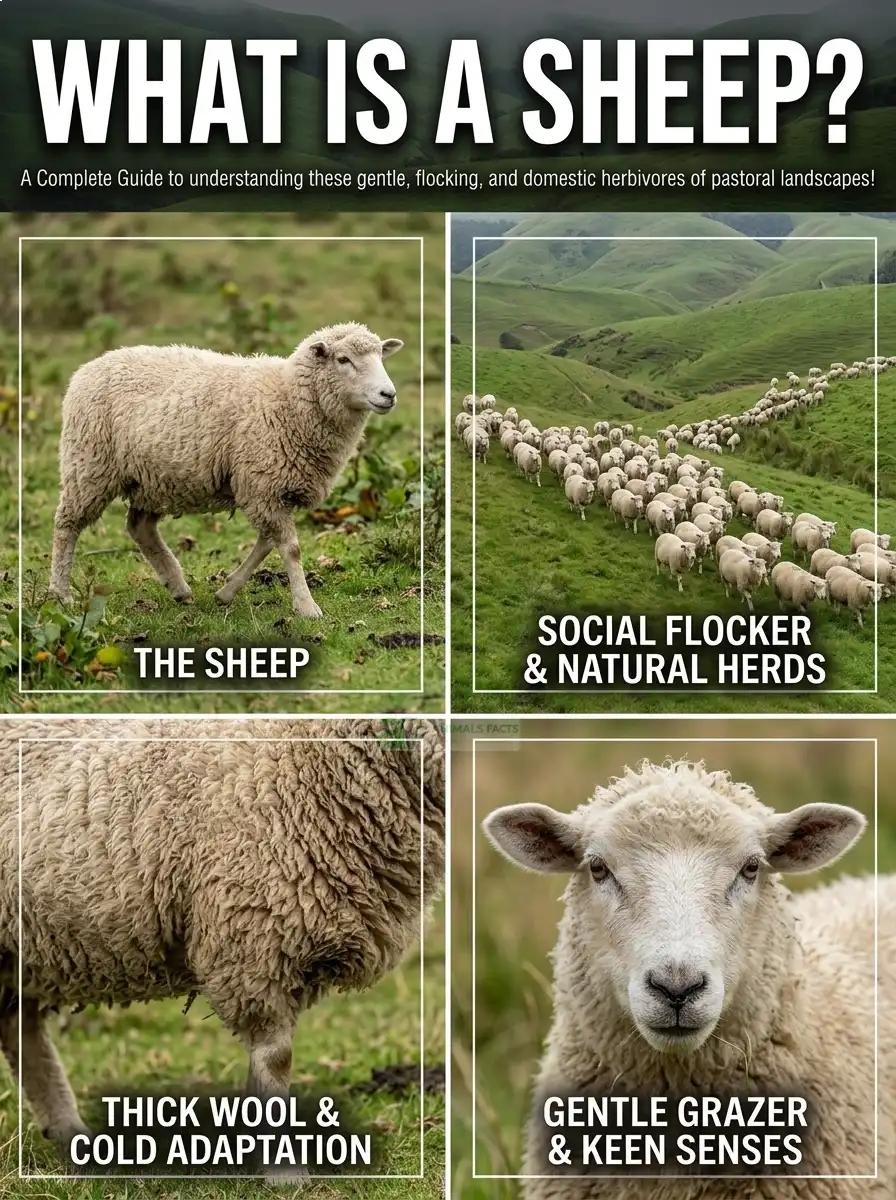
It has clothed, fed, and sustained human civilizations for over 10,000 years, produces a fiber so remarkably versatile that it remains one of the most widely used natural textiles on Earth, and possesses a facial memory so sharp that researchers have documented individuals remembering specific faces — both human and sheep — for years at a time. Sheep facts introduce readers to an animal whose familiar, unassuming presence in pastures across the globe belies a genuinely fascinating biology, an ancient and consequential domestication history, and a level of cognitive sophistication that challenges the enduring stereotype of sheep as simple, mindlessly obedient “flock followers.”
The domestic sheep (Ovis aries) descends primarily from the mouflon (Ovis orientalis), a wild sheep species still found today across parts of the Middle East, Central Asia, and portions of southeastern Europe, where it was likely introduced in ancient times. Sheep domestication ranks among the very earliest livestock domestication events in human history, beginning roughly 10,000–11,000 years ago in the Fertile Crescent region — placing sheep, alongside goats, among the founding animals of the entire agricultural revolution that transformed human civilization from nomadic subsistence toward settled farming societies.
Beyond their agricultural significance, sheep have increasingly become the subject of serious scientific attention regarding animal cognition, with landmark research demonstrating that sheep possess sophisticated facial recognition abilities, complex social structures, and problem-solving capabilities that place them well beyond the simplistic, purely instinct-driven reputation the species has long carried in popular culture. Understanding sheep facts today means appreciating not just history’s most important fiber-producing livestock animal, but a genuinely underrated example of mammalian intelligence and social complexity.
Whether you’re a student researching sheep facts for a school project, a farmer or aspiring shepherd wanting to understand sheep behavior and care, someone curious about the remarkable science behind sheep facial recognition, a parent looking for sheep facts for kids, or simply someone who has always wondered exactly why sheep need shearing while most other animals don’t, this guide covers everything — sheep habitat, sheep diet, the extraordinary wool-growing biology, reproduction, social intelligence, domestication history, mythology, and much more. This is the most complete guide to sheep facts you will find anywhere.
2. Sheep Species Overview & Classification
The domestic sheep belongs to the family Bovidae and more specifically to the genus Ovis, which includes the domestic sheep alongside a number of wild sheep species distributed across the mountainous, steppe, and semi-arid regions of Europe, Asia, and North America.
Classification Table
| Level | Classification |
|---|---|
| Kingdom | Animalia |
| Phylum | Chordata |
| Class | Mammalia |
| Order | Artiodactyla |
| Family | Bovidae |
| Subfamily | Caprinae |
| Genus | Ovis |
| Species | O. aries (domestic sheep) |
| Wild Ancestor | Ovis orientalis (mouflon), with additional genetic contributions debated among researchers |
| Closest Living Relatives | Wild sheep species (bighorn, argali, urial), goats (genus Capra) |
The Genus Ovis — Wild Sheep Species
The genus Ovis contains approximately 7–9 recognized wild species, in addition to the domestic sheep, distributed across mountainous and steppe regions of the Northern Hemisphere.
| Species | Scientific Name | Range | Conservation Status |
|---|---|---|---|
| Mouflon | Ovis orientalis | Middle East, introduced to parts of Europe | Least Concern (varies regionally) |
| Bighorn Sheep | Ovis canadensis | Western North America | Least Concern |
| Dall Sheep | Ovis dalli | Alaska, northwestern Canada | Least Concern |
| Argali | Ovis ammon | Central Asia (largest wild sheep species) | Near Threatened |
| Urial | Ovis vignei | Central/South Asia | Vulnerable |
| Snow Sheep | Ovis nivicola | Eastern Siberia | Least Concern |
| Marco Polo Sheep (Argali subspecies) | Ovis ammon polii | Pamir Mountains, Central Asia | Near Threatened |
An Estimated 1,000+ Domestic Sheep Breeds
Domestic sheep have been bred into an extraordinary array of breeds worldwide, with estimates suggesting well over 1,000 recognized breeds globally — arguably even more numerous than cattle breeds — developed specifically for wool production, meat, milk, and increasingly specialized purposes, reflecting sheep’s status as one of the most extensively and purposefully bred domesticated animals in human agricultural history.
Species Evolution & Discovery Timeline
~3 million years ago: The genus Ovis began diverging within the broader Caprinae subfamily, eventually giving rise to the various wild sheep species distributed across mountainous regions of Eurasia and, following migration across the Bering land bridge, North America.
~11,000 years ago: Sheep domestication began in the region spanning modern-day eastern Turkey, Iraq, and Iran within the Fertile Crescent, making sheep one of the very earliest domesticated livestock species, alongside goats, at the dawn of the agricultural revolution.
~10,000 years ago: Early domesticated sheep were valued primarily for meat and milk, with selective breeding for enhanced wool production developing somewhat later as a distinct agricultural priority.
~6,000 years ago: Evidence suggests the deliberate development of woolly sheep breeds — distinct from the coarser, hair-dominant coats of early domesticated and wild sheep — became increasingly established, marking a significant turning point in sheep’s role within human textile production.
Ancient Mesopotamian, Egyptian, and later Greek and Roman civilizations: Sheep became deeply integrated into agricultural economies, religious symbolism, and textile production across the ancient world, with wool becoming one of the most significant traded commodities of antiquity.
Medieval Europe: The wool trade became an enormously significant economic driver across medieval Europe, particularly in England and Flanders, with sheep farming and wool production directly shaping regional economies, trade networks, and even political developments of the era.
15th–19th centuries CE: European colonization spread domestic sheep to the Americas, Australia, New Zealand, and South Africa, with Australia and New Zealand in particular developing into globally dominant wool and sheep-meat producing regions.
19th–20th centuries: Specialized breed development intensified dramatically, giving rise to highly specialized modern wool, meat, and dairy sheep breeds, alongside the establishment of formal breed registries across major sheep-producing nations.
1996: Dolly the sheep became the first mammal successfully cloned from an adult somatic cell, a landmark scientific achievement conducted at the Roslin Institute in Scotland that placed sheep at the center of one of the most significant biotechnology breakthroughs in modern scientific history.
2026: The global domestic sheep population stands at approximately 1.2 billion, with Australia, China, India, and several other major producing nations continuing to rely on sheep for wool, meat, and dairy production, while several wild Ovis species, including the argali and urial, remain subjects of active international conservation concern.
3. Sheep Physical Description & Unique Features
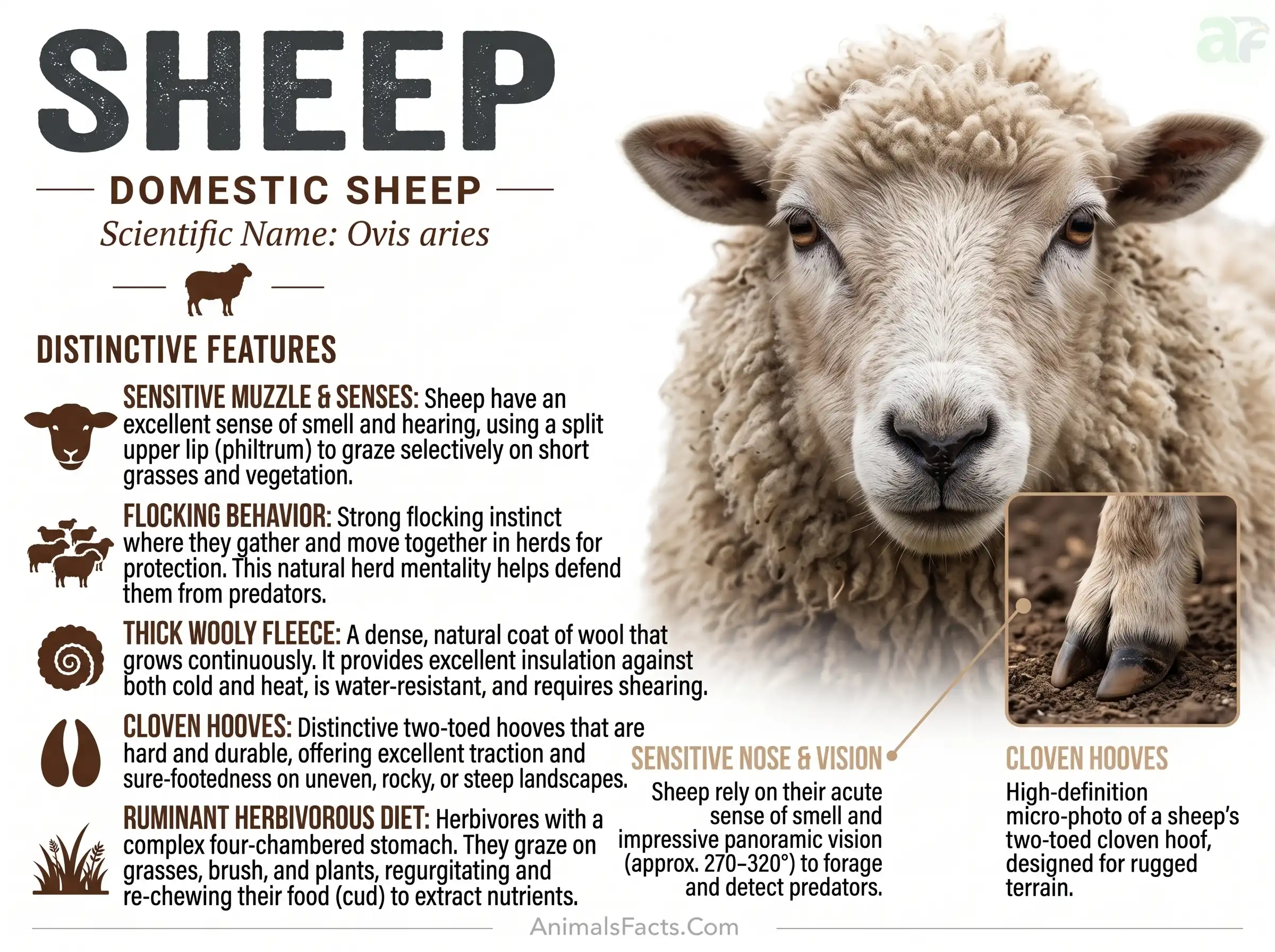
Domestic sheep display considerable physical variation across their many breeds, yet share a distinctive set of anatomical features — most notably their remarkable wool-growing capacity — that set them apart from their closest bovid relatives.
Size and Build
- Weight: Ranges from approximately 45 kg in smaller breeds up to over 160 kg in the largest breeds, with rams (males) generally significantly heavier than ewes (females).
- Height: 0.7–0.9 meters at the shoulder for most breeds.
- Build: A generally stockier, more rounded body structure compared to the leaner, more athletic build typical of goats, reflecting sheep’s evolutionary adaptation as predominantly grazing, open-terrain animals rather than the agile climbing specialists goats represent.
Wool — A Biological and Textile Marvel
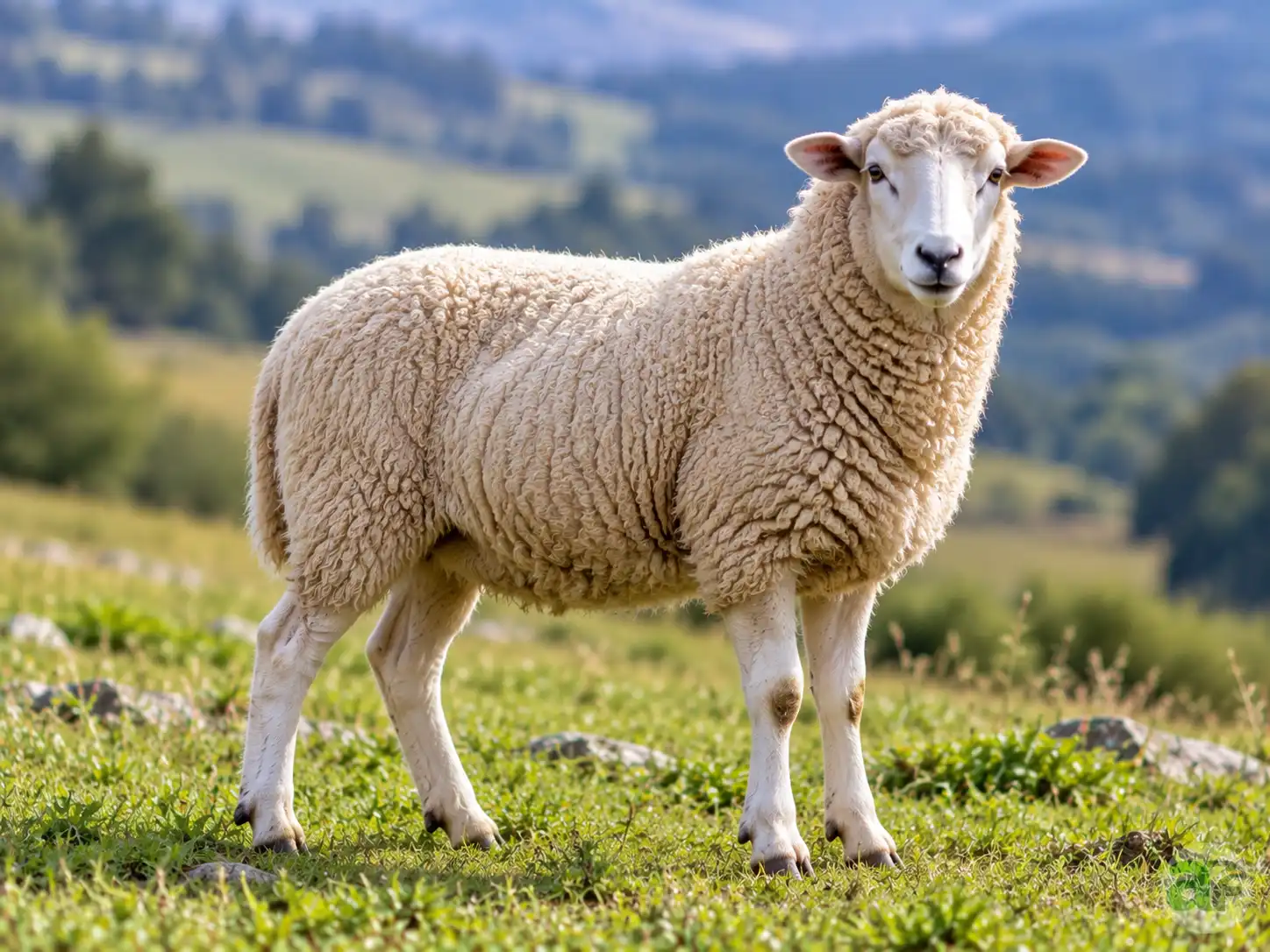
The single most economically and biologically significant feature distinguishing sheep from virtually all other domesticated livestock is their wool — a specialized hair type that, unlike the fur or hair of most mammals, grows continuously throughout the animal’s life rather than shedding and regrowing seasonally.
Continuous growth: Because domestic sheep wool does not naturally shed the way wild sheep coats do, domestic sheep require regular shearing — typically once or twice annually — without which wool can grow to an extreme, health-compromising degree, as famously illustrated by cases of long-lost domestic sheep discovered in the wild carrying wool fleeces weighing tens of kilograms.
Wool structure: Wool fibers possess a distinctive crimped, scaled structure at the microscopic level that gives the material its characteristic elasticity, insulating properties, and ability to be spun into yarn — properties that have made wool one of the most valuable and versatile natural textile fibers in human history.
Lanolin: Sheep skin produces a natural oily substance called lanolin, which coats the wool fibers, providing natural water resistance and skin protection; lanolin is itself commercially extracted and used in a wide range of cosmetic and skincare products.
Fleece weight: A single sheep’s annual wool fleece (shearing) can weigh anywhere from 2 kg to over 18 kg, depending significantly on breed, with specialized wool breeds such as the Merino producing particularly fine, high-quality fiber prized in the global textile industry.
Rectangular Pupils
Like their close goat relatives, sheep possess distinctive rectangular (horizontal) pupils, providing an exceptionally wide panoramic field of view estimated at approximately 270–320 degrees — an important predator-detection adaptation for a prey species that spends considerable time grazing with its head lowered.
Facial Recognition — A Genuine Cognitive Marvel
One of the most scientifically remarkable sheep facts concerns the species’ documented facial recognition capabilities, established through a landmark series of studies conducted primarily at the University of Cambridge:
Remembering individual faces: Research has demonstrated that sheep can learn to distinguish and remember up to 50 individual faces — both sheep and human — retaining this recognition for periods exceeding two years without any reinforcement or repeated exposure.
Recognizing familiar human faces: Sheep have been shown capable of recognizing photographs of familiar human handlers’ faces even when presented from unfamiliar angles, demonstrating a genuinely sophisticated level of facial processing comparable in some respects to facial recognition abilities documented in primates.
Neurological research applications: Because of this documented facial recognition sophistication, sheep have become an increasingly significant model species in certain areas of neurological research, including some studies investigating cognitive decline and neurodegenerative disease processes, given similarities between sheep and human brain structure in relevant respects.
Wool Color and Coat Variation
While white wool has become the dominant commercial standard due to its dyeing versatility, sheep naturally occur in a considerable range of wool colors, including black, brown, grey, and various mixed patterns, with numerous heritage and specialty breeds specifically maintained for their naturally colored wool, valued by hand-spinners and specialty textile producers who prize the unique character of naturally pigmented fiber.
Sheep Horns
Horn presence varies considerably by breed and sex — many sheep breeds are naturally polled (hornless) in both sexes, while others, including several primitive and heritage breeds, retain prominent horns, particularly in rams, which can develop the dramatic, tightly curled horn formations associated with wild sheep species such as bighorn sheep and argali.
Did You Know? The wild ancestor of the domestic sheep, the mouflon, along with most other wild Ovis species, naturally sheds its coat seasonally and does not require shearing — the continuously growing wool fleece characteristic of most domestic sheep breeds is a direct product of thousands of years of deliberate human selective breeding, meaning modern wool sheep are, in a very real sense, entirely dependent on human shearing intervention for their basic welfare, a striking illustration of how thoroughly domestication has reshaped the species from its wild ancestral form.
4. Top 25 Surprising & Interesting Sheep Facts
- Sheep can remember up to 50 individual faces — both human and sheep — for over two years.
- Domestic sheep wool grows continuously throughout life and requires regular shearing, unlike the seasonally shedding coats of wild sheep.
- Sheep have rectangular pupils, giving them a panoramic field of view of roughly 270–320 degrees.
- Domestic sheep descend primarily from the mouflon (Ovis orientalis), still found in parts of the Middle East and introduced regions of Europe.
- Sheep domestication began roughly 11,000 years ago — among the very earliest livestock domestication events in history.
- Dolly the Sheep, born in 1996, was the first mammal ever successfully cloned from an adult cell.
- There are over 1,000 recognized domestic sheep breeds worldwide.
- A single sheep’s annual wool fleece can weigh anywhere from 2 to over 18 kg, depending on breed.
- Sheep skin naturally produces lanolin, an oily substance also commercially used in cosmetics and skincare products.
- The global domestic sheep population is estimated at approximately 1.2 billion.
- Wild bighorn sheep rams can deliver head-butting collisions at speeds up to 32 km/h (20 mph) during dominance contests.
- Argali sheep, found across Central Asia, are the largest wild sheep species in the world.
- Sheep can recognize familiar human faces even from unfamiliar photo angles — a genuinely sophisticated cognitive ability.
- Sheep have been used as a model species in certain areas of neurological research due to relevant similarities with human brain structure.
- A sheep’s gestation period is approximately 147 days (about 5 months).
- Lambs can typically stand and walk within just 20–30 minutes of birth.
- Sheep are highly social animals and can experience significant stress when isolated from their flock.
- Merino sheep are particularly prized for producing exceptionally fine, high-quality wool used in premium textiles.
- Marco Polo sheep, a subspecies of argali, can have horns spanning over 1.9 meters in curved length — among the largest of any wild sheep.
- Long-lost domestic sheep found in the wild without regular shearing have occasionally carried fleeces weighing over 40 kg.
- Sheep have a natural instinct to flock together tightly when threatened, a behavior extensively utilized by sheepdogs in herding.
- New Zealand and Australia together account for a substantial proportion of the world’s total wool production.
- Sheep are ruminants with a four-chambered stomach, similar to cattle and goats, allowing efficient digestion of grasses.
- The word “shepherd” derives from Old English terms literally meaning “sheep herder,” reflecting the profession’s ancient origins.
- Wild mouflon rams possess large, distinctively curved horns that can weigh a significant proportion of the animal’s total body weight.
5. Fun Facts About Sheeps
- Sheep can remember 50 faces for over 2 years.
- Their wool grows continuously and needs shearing.
- Sheep have rectangular pupils for panoramic vision.
- Domestic sheep descend from the mouflon.
- Domestication began about 11,000 years ago.
- Dolly the Sheep was the first cloned mammal.
- There are over 1,000 sheep breeds worldwide.
- A fleece can weigh up to 18 kg.
- Sheep skin produces lanolin, used in cosmetics.
- The global sheep population is about 1.2 billion.
- Argali sheep are the largest wild sheep on Earth.
- Marco Polo sheep horns can span nearly 2 meters.
- Lambs can walk within 30 minutes of birth.
- Sheep are highly social and dislike being alone.
6. Sheep Natural Habitat & Geographic Range
While the domestic sheep’s range today is almost entirely determined by human agricultural distribution, understanding sheep habitat requires examining both the wild sheep species within the genus Ovis and the vast global range domestic sheep now occupy.
Wild Sheep Habitat Requirements
Wild sheep species are predominantly associated with mountainous, steppe, and semi-arid terrain across the Northern Hemisphere, favoring:
Mountainous and alpine terrain: Species such as bighorn sheep, argali, and urial favor steep, rugged mountain terrain, often at high elevation, providing both grazing opportunities and protection from many predators.
Steppe and semi-arid grassland: Several wild sheep species, particularly across Central Asia, utilize open steppe and semi-arid grassland habitat in addition to mountainous terrain.
Arctic and subarctic regions: The Dall sheep and snow sheep are specifically adapted to the harsh, cold conditions of Alaska, northwestern Canada, and eastern Siberia respectively.
Domestic Sheep Global Distribution
Geographic Range Table
| Region | Sheep Population Status | Notes |
|---|---|---|
| Asia (particularly China, India) | Very high | World’s largest domestic sheep populations |
| Oceania (Australia, New Zealand) | Very high | Dominant global wool and sheep-meat exporters |
| Africa (Sub-Saharan and North) | High | Significant traditional and commercial populations |
| Europe | High | Long-established wool, meat, and dairy traditions |
| Middle East | High | Historical center of sheep domestication and continued significance |
| Americas | Moderate | Significant regional production, particularly in parts of South America |
Did You Know? China hosts the largest domestic sheep population of any country on Earth, though Australia remains globally dominant in wool production specifically, owing to its extensive Merino sheep farming operations — Australian wool has historically been considered among the finest and most commercially valuable in the world, playing an outsized role in the country’s agricultural economy and history relative to its total sheep population ranking.
7. Sheep Diet & Feeding Behavior
Sheep are herbivores and true ruminants, with a feeding strategy centered predominantly on grazing rather than the browsing behavior more characteristic of goats.
Diet Breakdown Table
| Food Type | Approximate Percentage | Notes |
|---|---|---|
| Grasses | 50–70% | Primary food source, reflecting strong grazing preference |
| Clover and legumes | 15–25% | Valuable protein-rich supplement |
| Forbs (broad-leaved plants) | 10–20% | Consumed alongside grasses in pasture settings |
| Hay | Variable | Primary winter/dry season feed source |
| Grain supplements | Variable | Common in commercial production systems |
Grazers, Not Browsers
Unlike goats, which prefer browsing shrubs, leaves, and woody vegetation at various heights, sheep are predominantly grazers, favoring grasses and low-growing pasture vegetation and generally grazing much closer to the ground than goats — a distinction that allows sheep and goats to be effectively co-grazed on the same land without excessive direct competition, since each species tends to favor different vegetation types and heights within a shared pasture.
Grazing Behavior and Daily Intake
A grazing sheep may spend 7–9 hours per day actively grazing, supplemented by several additional hours of cud-chewing (rumination), consuming approximately 2–4% of their body weight in dry matter feed daily, depending on breed, production stage (such as lactation), and available forage quality.
Digestive System
Like cattle and goats, sheep possess a four-chambered stomach (rumen, reticulum, omasum, abomasum), enabling efficient microbial fermentation and digestion of grasses and other fibrous plant material through regular rumination.
Did You Know? Sheep demonstrate a documented preference for grazing closer to the ground than cattle, which can create beneficial complementary grazing dynamics when the two species are managed together on shared pastureland — a traditional mixed-grazing practice that can improve overall pasture utilization and health compared to single-species grazing management.
8. Sheep Reproduction & Life Cycle
Sheep reproduction is well-documented both through extensive commercial breeding management and through decades of dedicated agricultural research, given sheep’s long-standing economic significance.
Mating and Breeding
Breeding age: Female sheep (ewes) typically reach sexual maturity around 6–8 months of age, though responsible breeding management often delays first breeding until ewes are more fully physically developed, generally around 12 months or later.
Estrus cycle: Ewes cycle approximately every 17 days during breeding season, with a fertile window of roughly 24–36 hours.
Seasonal breeding: Most temperate-climate sheep breeds display distinctly seasonal breeding patterns, triggered by decreasing day length in autumn, resulting in births (“lambing”) clustered in spring when pasture conditions are most favorable for supporting nursing ewes and growing lambs; some breeds, particularly certain tropical and subtropical types, can breed year-round.
Ram behavior: Male sheep (rams) display characteristic breeding-season behaviors including increased vocalization, scent-marking, and — particularly among wild sheep species and certain domestic breeds — dramatic head-butting contests to establish dominance and breeding access.
Gestation and Birth
Gestation: Approximately 147 days (about 5 months).
Litter size: Commonly single or twin lambs, with triplets and occasionally higher numbers also occurring depending on breed, ewe age, and nutritional condition; highly prolific breeds have been specifically developed to increase average litter size for commercial production purposes.
Birth weight: Typically 3–6 kg per lamb, varying by breed.
Birth condition: Lambs are highly precocial, generally able to stand and attempt walking within approximately 20–30 minutes of birth, and capable of following the ewe and flock relatively quickly thereafter — an important adaptation reflecting sheep’s evolutionary history as a herd-dependent prey species.
Growth Stages Table
| Stage | Age | Development |
|---|---|---|
| Birth | — | 3–6 kg; standing within 20–30 minutes |
| Weaning | ~3–4 months | Transition to solid forage diet |
| Sexual maturity (ewes) | 6–8 months | Breeding typically delayed to ~12 months |
| Sexual maturity (rams) | 4–6 months | Careful management required given early onset |
| Full physical maturity | ~2–3 years | Complete skeletal and muscular development |
Sheep Lifespan Comparison Table
| Species/Type | Average Lifespan | Maximum Recorded |
|---|---|---|
| Domestic Sheep | 10–12 years | ~20 years |
| Bighorn Sheep (wild) | 10–15 years | ~20 years |
| Argali (wild) | 10–13 years | ~18 years |
| Domestic Goat (comparison) | 15–18 years | ~24 years |
9. Social Behavior & Communication
Sheep are strongly social flock animals with well-documented cognitive abilities and social bonding patterns that, in recent decades, have significantly reshaped scientific understanding of the species’ behavioral and mental complexity.
Flock Structure and Herd Instinct
Sheep possess a powerful natural instinct to remain in close physical proximity to the flock, a behavior deeply rooted in their evolutionary history as a heavily predated prey species, for which group cohesion provided significant protective advantage through collective vigilance and the simple mathematical dilution of individual predation risk within a larger group. This strong flocking instinct is the foundational behavioral trait that makes sheepdog herding possible, with trained dogs exploiting sheep’s natural tendency to bunch tightly together and move as a cohesive unit when a perceived threat (the herding dog) is present.
The Cambridge Facial Recognition Research
As detailed in the physical description section, landmark research conducted at the University of Cambridge established that sheep possess sophisticated facial recognition capabilities comparable in some respects to those documented in primates, remembering up to 50 individual faces for periods exceeding two years — a finding that fundamentally challenged the longstanding popular perception of sheep as simple, cognitively unremarkable animals incapable of individual recognition or complex social awareness.
Vocalizations
Sheep communicate primarily through their characteristic bleating vocalization, with research indicating that ewes and their lambs can recognize each other’s individual bleats amid the general noise of a larger flock — an important adaptation for maintaining mother-offspring contact within large group settings, particularly during the vulnerable early weeks after lambing.
Emotional Responses and Welfare Indicators
Research into sheep behavior has increasingly documented measurable emotional and stress responses, including elevated heart rate and stress hormone levels when isolated from the flock, alongside behavioral indicators suggesting sheep experience genuine distress in isolation — findings that have meaningfully informed modern animal welfare standards and practices within the sheep farming industry.
Did You Know? The landmark Cambridge University sheep facial recognition study specifically found that sheep could learn to recognize photographs of celebrity faces, including images of actress Emma Watson and former US President Barack Obama, correctly selecting the target face from a pair of images at a rate significantly better than chance — a striking demonstration of the species’ facial processing sophistication that generated considerable media attention when first published.
10. Predators & Defense Mechanisms
Sheep, both wild and domestic, face significant predation pressure from a range of carnivores across their global range, and have developed both physical and, especially, behavioral defenses centered heavily on group cohesion.
Natural Predators
Wolves: A historically and currently significant predator of both wild and domestic sheep across much of the Northern Hemisphere, particularly in regions where wolf populations have recovered or remained present alongside sheep farming operations.
Snow Leopards: A major predator of several wild Ovis species across Central Asian mountain ranges, including argali and urial, representing an important prey-predator relationship within these mountain ecosystems.
Coyotes: A significant predator of domestic sheep across much of North America, representing one of the most economically significant predation concerns for sheep farmers in the region.
Golden Eagles: Documented predators of young lambs, particularly in mountainous terrain where eagles can exploit their aerial advantage.
Domestic and Feral Dogs: A notable and sometimes underappreciated predation threat to domestic sheep flocks in various regions worldwide.
Defense Mechanisms
Flocking behavior: A sheep’s primary defense against predation is remaining within the tight cohesion of the flock, benefiting from collective vigilance and the reduced individual predation risk that group living provides.
Alarm responses: Sheep display strong collective alarm and flight responses upon detecting a threat, with the entire flock typically moving together rapidly away from perceived danger.
Ram horn defense: In horned breeds and wild sheep species, rams can use their horns defensively, though this is considerably more significant in wild sheep species, where dramatic head-butting combat between rams is a well-documented and visually striking behavior primarily associated with breeding-season dominance contests rather than predator defense specifically.
Human and guardian animal protection: For domestic sheep, human-provided protections including secure fencing, sheepdogs (for both herding and, in the case of specialized livestock guardian breeds, direct protection), and other guardian animals such as llamas or donkeys represent critical modern defenses against predation.
11. Sheep Facts for Kids
Hey kids — get ready to learn about an animal that’s way smarter than most people think!
- Did you know sheep can remember up to 50 different faces — both sheep faces AND people faces — for more than TWO WHOLE YEARS?!
- A sheep’s wool never stops growing! That’s why sheep need a haircut, called shearing, once or twice a year — otherwise their wool would just keep getting bigger and bigger!
- Sheep have special rectangular-shaped pupils in their eyes, which lets them see almost all the way around themselves without turning their head!
- Baby sheep, called lambs, can stand up and start walking in less than 30 minutes after they’re born!
- A very famous sheep named Dolly was the first animal ever cloned from just one single cell — she was born in 1996 and became super famous in science!
- There are more than 1,000 different kinds of sheep breeds all around the world! Sheep love being together in a group so much that they can actually feel stressed and worried if they get separated from their flock!
- Wild sheep called argali have some of the biggest, curliest horns of any animal — they live way up in the mountains of Asia!
Did You Know? Scientists at a famous university once taught sheep to recognize photos of famous people’s faces — including celebrities — and the sheep could actually pick out the right face from a group of pictures! That means sheep might be a lot smarter than the old saying “sheep just follow the crowd” would have you believe!
12. Relationship with Humans
The relationship between sheep and humanity represents one of the oldest, most economically transformative, and most enduring domestication partnerships in human history, spanning over 11,000 years of agriculture, textile production, culture, and — in the modern era — even groundbreaking biotechnology research.
Early Domestication and the Wool Economy
Sheep domestication, beginning roughly 11,000 years ago in the Fertile Crescent, represented one of the very first major livestock domestication events in human history. While early domesticated sheep were valued primarily for meat and milk, the subsequent deliberate development of wool-bearing breeds several thousand years later launched what would become one of the most economically significant textile industries in human history, with wool remaining a major global commodity to the present day.
The Medieval Wool Trade
Few historical episodes illustrate sheep’s profound economic significance to human civilization as vividly as the medieval European wool trade, particularly across England and Flanders, where wool production and trade became a dominant economic force shaping regional prosperity, urban development, taxation systems, and even significant political and military developments of the era — England’s medieval economy, in particular, was so heavily dependent on wool exports that the position of Lord Chancellor in the British Parliament has traditionally been associated with sitting upon the “Woolsack,” a wool-stuffed seat symbolizing the historical importance of the wool trade to the nation’s prosperity, a tradition that continues in ceremonial form today.
Products and Modern Industry
Wool: Remains one of the most significant natural textile fibers globally, valued for its natural insulating, moisture-wicking, and flame-resistant properties, with specialized breeds such as Merino producing particularly fine, premium-grade fiber.
Meat: Sheep meat, generally divided into lamb (younger animals) and mutton (older animals), remains a globally significant protein source, particularly important across the Middle East, parts of Europe, Australia, New Zealand, and various African and Asian culinary traditions.
Milk: Sheep milk, while less globally significant in overall volume compared to cow or goat milk, is highly valued in specific culinary and cheesemaking traditions, most notably in the production of prestigious cheeses such as Roquefort, Pecorino, and Manchego.
Lanolin: The natural oily substance produced by sheep skin is commercially extracted from wool during processing and widely used in cosmetics, skincare products, and various industrial applications.
Dolly the Sheep and Scientific Legacy
Sheep hold a uniquely significant place in modern scientific history through Dolly the Sheep, born in 1996 at the Roslin Institute in Scotland, who became the first mammal successfully cloned from an adult somatic cell — a landmark achievement in cloning and genetic research that opened entirely new avenues of scientific inquiry into cellular biology, aging, and reproductive technology, cementing sheep’s place in the history of modern biotechnology alongside their far older agricultural significance.
13. Sheep Conservation Status & Threats
| Category | Status |
|---|---|
| Domestic Sheep Status | Domesticated (not formally assessed by IUCN) |
| Mouflon (primary wild ancestor) | Least Concern (varies by regional population) |
| Argali | Near Threatened |
| Urial | Vulnerable |
| Global Domestic Population | Approximately 1.2 billion |
Threats to Wild Ovis Species
While domestic sheep face no conservation concern given their enormous global population, several wild relatives within the genus Ovis face genuine conservation challenges:
Habitat loss and fragmentation: Mountain and steppe habitat degradation, driven by human settlement, infrastructure development, and mining, continues to pressure several wild sheep species across their range, particularly across Central Asia.
Poaching and trophy hunting concerns: Illegal hunting, particularly targeting rams with impressive horn formations, has historically represented a significant threat to several wild sheep species, though regulated, well-managed trophy hunting programs in some regions have been credited with generating conservation funding and local community incentives supporting population protection.
Competition with domestic livestock: Wild sheep species frequently compete with domestic sheep and other livestock for limited forage and water resources across shared mountain and steppe habitat.
Disease transmission: Contact between wild and domestic sheep populations creates significant disease transmission risk, with certain pathogens carried by domestic sheep populations posing particular concern for wild sheep herd health in areas of range overlap.
The Marco Polo Sheep and Trophy Hunting Debate
The Marco Polo sheep, a spectacular subspecies of argali found across the high-altitude Pamir Mountains of Central Asia, named after the famous explorer who documented the species during his travels, represents a particularly notable case study in the ongoing conservation debate surrounding regulated trophy hunting — with its dramatically curved horns, among the largest of any wild sheep, making it a highly sought-after trophy species, generating significant conservation funding debate regarding the balance between hunting revenue-based conservation incentives and direct population protection concerns.
Did You Know? The argali, found across the mountains of Central Asia, is the largest wild sheep species in the world, with the largest males weighing over 180 kg — approaching or exceeding the weight of many domestic sheep breeds — and possessing massive, dramatically curved horns that can weigh a significant proportion of the animal’s total body mass.
14. Famous Sheep
Dolly the Sheep — the first mammal ever successfully cloned from an adult somatic cell, born in 1996 at the Roslin Institute in Scotland, remaining one of the most globally significant and recognizable individual animals in the history of modern science.
Shrek the Sheep — a New Zealand Merino sheep that became an international media sensation after evading shearing for approximately six years, resulting in an enormous overgrown fleece that, upon eventual shearing, weighed an extraordinary 27 kg — a vivid real-world illustration of exactly how dramatically domestic sheep wool can grow without regular human intervention.
Various champion show and wool-competition sheep — within the dedicated world of competitive sheep showing and wool competitions, individual champion animals achieve significant recognition within breeder and agricultural show communities worldwide, particularly within Merino wool competitions in Australia and New Zealand.
15. Role in Ecosystem & Food Chain
Sheep, both wild and domesticated, play meaningful ecological roles within the environments they inhabit, from natural mountain and steppe ecosystem dynamics to significant, and sometimes contested, roles within managed agricultural landscapes.
Grassland ecosystem management: Well-managed sheep grazing can play a beneficial ecological role in maintaining grassland ecosystem health and plant diversity, mimicking historical grazing pressure once provided by wild grazing animals across many temperate grassland regions.
Prey base: Wild sheep species represent an important prey base for several significant predator species, including wolves and snow leopards, forming a critical link within the food web dynamics of the mountain and steppe ecosystems they inhabit.
Environmental impact considerations: At the same time, overgrazing by large domestic sheep flocks, particularly in fragile arid, semi-arid, or high-altitude ecosystems, has been linked in various regions to soil erosion, vegetation degradation, and broader ecosystem health concerns — an important reminder, similar to the ecological considerations surrounding goat and cattle grazing, that sheep grazing’s overall environmental impact depends significantly on appropriate management practices and stocking density.
16. Myths, Folklore & Cultural Significance
Sheep hold an extraordinarily deep and pervasive position within human mythology, religion, and cultural symbolism, appearing across the folklore, religious traditions, and literature of numerous civilizations throughout recorded history.
Religious Symbolism
Sheep and the shepherd relationship carry profound symbolic weight across several major world religions. Within Christianity, the image of the shepherd and sheep serves as one of the most pervasive and significant metaphors throughout religious text and tradition, with Jesus frequently depicted as the “Good Shepherd” and believers symbolically represented as his flock — imagery that has become deeply embedded in Western religious art, literature, and cultural expression for nearly two millennia. Sheep also hold significant ritual and symbolic importance within Judaism and Islam, including their traditional role in various religious sacrificial and festival practices.
Greek Mythology
Sheep, and particularly the mythological figure of the Golden Fleece, feature prominently in ancient Greek mythology, most famously in the legend of Jason and the Argonauts’ quest to retrieve the Golden Fleece — a narrative that has remained one of the most enduring and frequently referenced myths of classical antiquity across subsequent Western literature and popular culture.
The Chinese Zodiac
The sheep (sometimes translated as “goat,” reflecting linguistic ambiguity in the original Chinese term) represents one of the twelve animals of the Chinese zodiac, associated with specific personality traits and characteristics within traditional Chinese astrological belief systems.
European Pastoral Tradition
Sheep and shepherding have held deep symbolic significance within European literary and artistic pastoral traditions for centuries, representing idealized rural simplicity, peace, and connection to nature across countless works of poetry, painting, and literature spanning from classical antiquity through the modern era.
17. Sheep in Pop Culture
“Shaun the Sheep” — the enormously popular British claymation animated character and television series, one of the most globally recognized sheep figures in modern children’s entertainment and popular culture.
“Dolly the Sheep” — beyond her purely scientific significance, Dolly became a genuine global media phenomenon and cultural touchstone representing the broader public conversation around cloning technology and its ethical implications throughout the late 1990s and beyond.
“Counting sheep” as a sleep aid tradition — the widely recognized cultural practice and idiom of “counting sheep” to fall asleep represents one of the most globally pervasive sheep-related cultural references in everyday language, despite limited genuine scientific evidence supporting its actual effectiveness as a sleep aid technique.
Wool and knitting culture — sheep and wool imagery remain deeply embedded within craft, textile, and knitting culture worldwide, with sheep serving as an enduring visual and cultural symbol closely associated with traditional and artisanal fiber arts.
18. Sheep Facts vs. Common Myths
Myth: Sheep are simple-minded animals with no real intelligence. Fact: Research has documented sophisticated facial recognition abilities in sheep, including remembering up to 50 individual faces for over two years — a cognitive capability that significantly challenges the “mindless flock follower” stereotype.
Myth: All sheep need to be sheared or they’ll be fine without it. Fact: Most modern domestic sheep breeds have been bred to grow wool continuously without natural shedding; without regular shearing, wool can grow to an extreme, health-compromising degree, as dramatically illustrated by cases like Shrek the Sheep’s 27 kg fleece.
Myth: Sheep and goats are essentially the same animal. Fact: Sheep (genus Ovis) and goats (genus Capra) are distinct genera with meaningful behavioral differences, including sheep’s stronger grazing preference (versus goats’ browsing tendency) and generally more pronounced flocking instinct.
Myth: Counting sheep is a scientifically proven way to fall asleep. Fact: Despite the pervasive cultural idiom, research has actually found that counting sheep is not a particularly effective sleep aid technique, with some studies suggesting more engaging mental imagery may be more effective at promoting sleep onset.
19. Best Places to See Sheep in the Wild
Pamir Mountains, Tajikistan — home to the spectacular Marco Polo sheep, offering dramatic high-altitude scenery alongside opportunities to observe this remarkable wild sheep subspecies.
Rocky Mountain National Park, Colorado, USA — excellent opportunities to observe wild bighorn sheep across dramatic mountain terrain within one of America’s most visited national parks.
Denali National Park, Alaska, USA — a premier location for observing Dall sheep against the backdrop of North America’s tallest peak.
Chitral Gol National Park, Pakistan — offers opportunities to observe urial alongside the region’s more famous markhor population.
Highlands of Sardinia, Italy — home to the European mouflon, offering visitors a chance to observe the wild ancestor species of domestic sheep within its Mediterranean island habitat.
20. Top Documentaries & Books
Wildlife documentaries covering bighorn sheep, argali, and Dall sheep frequently feature dramatic footage of ram head-butting contests and mountain terrain navigation, showcasing the athletic capabilities of wild sheep species worldwide.
Documentaries and news coverage surrounding Dolly the Sheep remain valuable historical resources for understanding one of the most significant biotechnology milestones of the late 20th century.
Various sheep husbandry and wool-production guides — numerous practical agricultural books cater to both commercial sheep farmers and the growing community of small-scale and hobby sheep keepers worldwide.
21. Comparison of Sheep with Similar Animals
| Feature | Domestic Sheep | Domestic Goat | Bighorn Sheep | Argali |
|---|---|---|---|---|
| Scientific Name | Ovis aries | Capra hircus | Ovis canadensis | Ovis ammon |
| Weight | 45–160 kg | 20–140 kg | 55–140 kg | Up to 180+ kg |
| Diet Preference | Grazer | Browser | Grazer | Grazer |
| Domestication Status | Fully domesticated | Fully domesticated | Wild | Wild |
| Wool/Coat | Continuous wool growth (most breeds) | Hair coat (some fiber breeds) | Seasonal shedding coat | Seasonal shedding coat |
| Conservation Status | Domesticated | Domesticated | Least Concern | Near Threatened |
22. How You Can Help
Support organizations working on wild Ovis species conservation, particularly programs supporting argali and urial protection across Central Asia, and consider supporting heritage domestic sheep breed conservation organizations working to preserve genetic diversity threatened by commercial agriculture’s concentration around a small number of highly productive modern breeds.
Practical actions:
Support conservation and community-based programs protecting wild sheep species and their mountain and steppe habitats across Central Asia and beyond.
Consider supporting heritage and rare domestic sheep breed conservation, given the ongoing loss of genetic diversity linked to commercial agriculture’s concentration around a limited number of highly productive breeds.
If purchasing wool products, consider researching and supporting suppliers with strong documented animal welfare practices.
Raise awareness about sheep cognitive research and welfare considerations, helping challenge outdated perceptions of sheep as simple or unintelligent animals.
23. Frequently Asked Questions About Sheeps
Q1: What is a sheep’s scientific name?
The domestic sheep’s scientific name is Ovis aries, descending primarily from the wild mouflon (Ovis orientalis).
Q2: Can sheep really recognize faces?
Yes — research from the University of Cambridge demonstrated that sheep can learn to recognize and remember up to 50 individual faces, both human and sheep, for periods exceeding two years.
Q3: Why do sheep need to be sheared?
Most modern domestic sheep breeds have been bred to grow wool continuously without natural shedding, unlike their wild ancestors; without regular shearing, their fleece can grow to an extreme, unhealthy degree.
Q4: Who was Dolly the Sheep?
Dolly was the first mammal ever successfully cloned from an adult somatic cell, born in 1996 at Scotland’s Roslin Institute, marking a landmark achievement in cloning and biotechnology research.
Q5: Are sheep intelligent?
Yes — despite their reputation as simple “flock followers,” sheep have demonstrated sophisticated facial recognition, memory, and social cognition abilities in scientific research.
Q6: How long do sheep live?
Domestic sheep typically live 10–12 years, with some individuals living up to 20 years under excellent care.
Q7: How many sheep breeds are there?
There are over 1,000 recognized domestic sheep breeds worldwide, developed for wool, meat, milk, and specialized agricultural purposes.
Q8: What do sheep eat?
Sheep are herbivorous grazers, primarily eating grasses, clover, and other pasture vegetation, along with hay and supplementary feed as needed.
Q9: Are wild sheep species endangered?
Some face conservation concern — the argali and Marco Polo sheep are Near Threatened, and the urial is Vulnerable, though others like bighorn and Dall sheep are Least Concern.
Q10: How long is a sheep pregnant?
Sheep gestation lasts approximately 147 days, or about 5 months, commonly resulting in single or twin lambs.
26. Sources & References
Research Sources
- Wikipedia — Sheep: https://en.wikipedia.org/wiki/
- Sheep IUCN Red List — Ovis orientalis: https://www.iucnredlist.org/species/15739/22146189
- World Wildlife Fund: https://www.worldwildlife.org/
- National Geographic — Sheep: https://www.nationalgeographic.com/animals/mammals/facts/domestic-sheep
- Smithsonian’s National Zoo: https://nationalzoo.si.edu/
- Encyclopaedia Britannica — Sheep: https://www.britannica.com/animal/sheep
- Live Science: https://www.livescience.com/
- University of Cambridge — Sheep Facial Recognition Research: https://www.cam.ac.uk/research/news/sheep-recognise-familiar-faces-from-photographs