
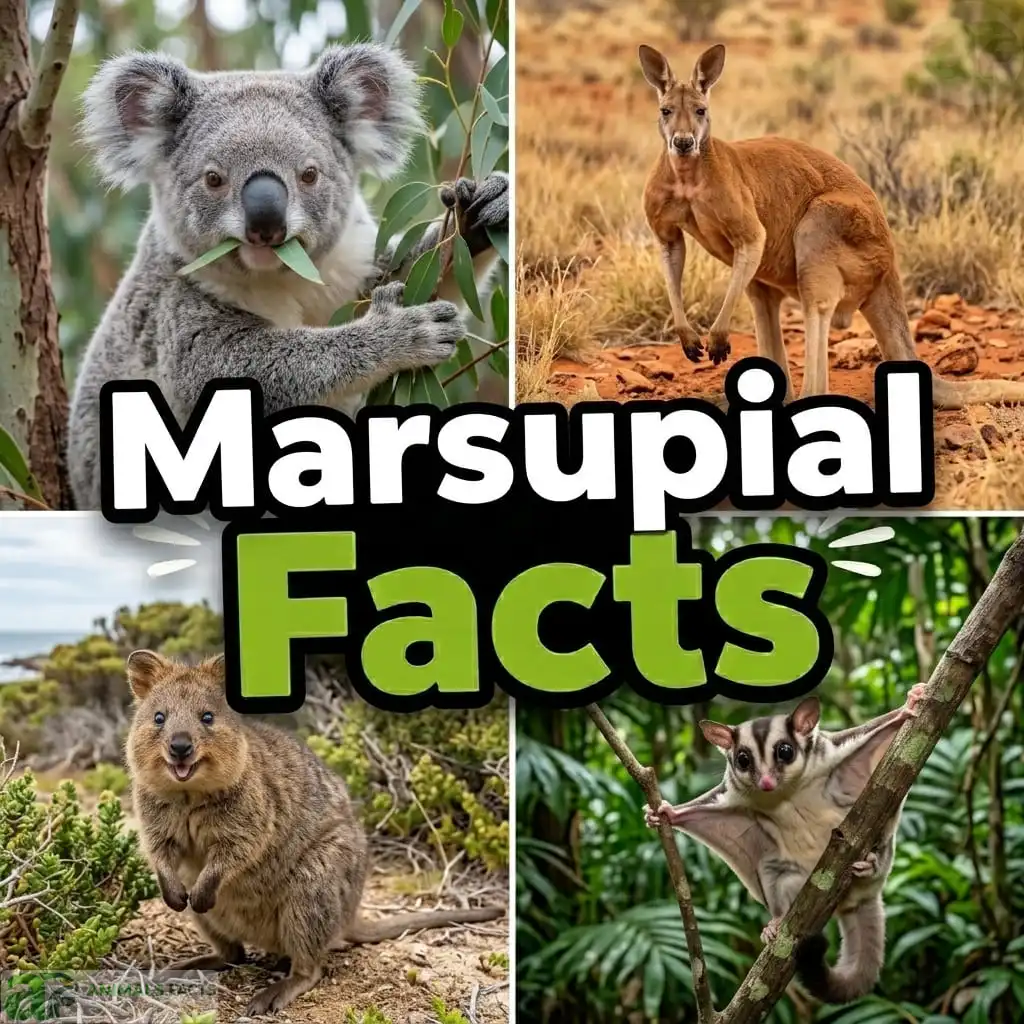
Marsupial Facts
| Feature | Details |
|---|---|
| Scientific Name | Marsupialia (infraclass) |
| Kingdom | Animalia |
| Phylum | Chordata |
| Class | Mammalia |
| Infraclass | Marsupialia (Illiger, 1811) |
| Number of Orders | 7 recognized orders |
| Number of Families | ~22 families |
| Number of Species | Approximately 335 described species |
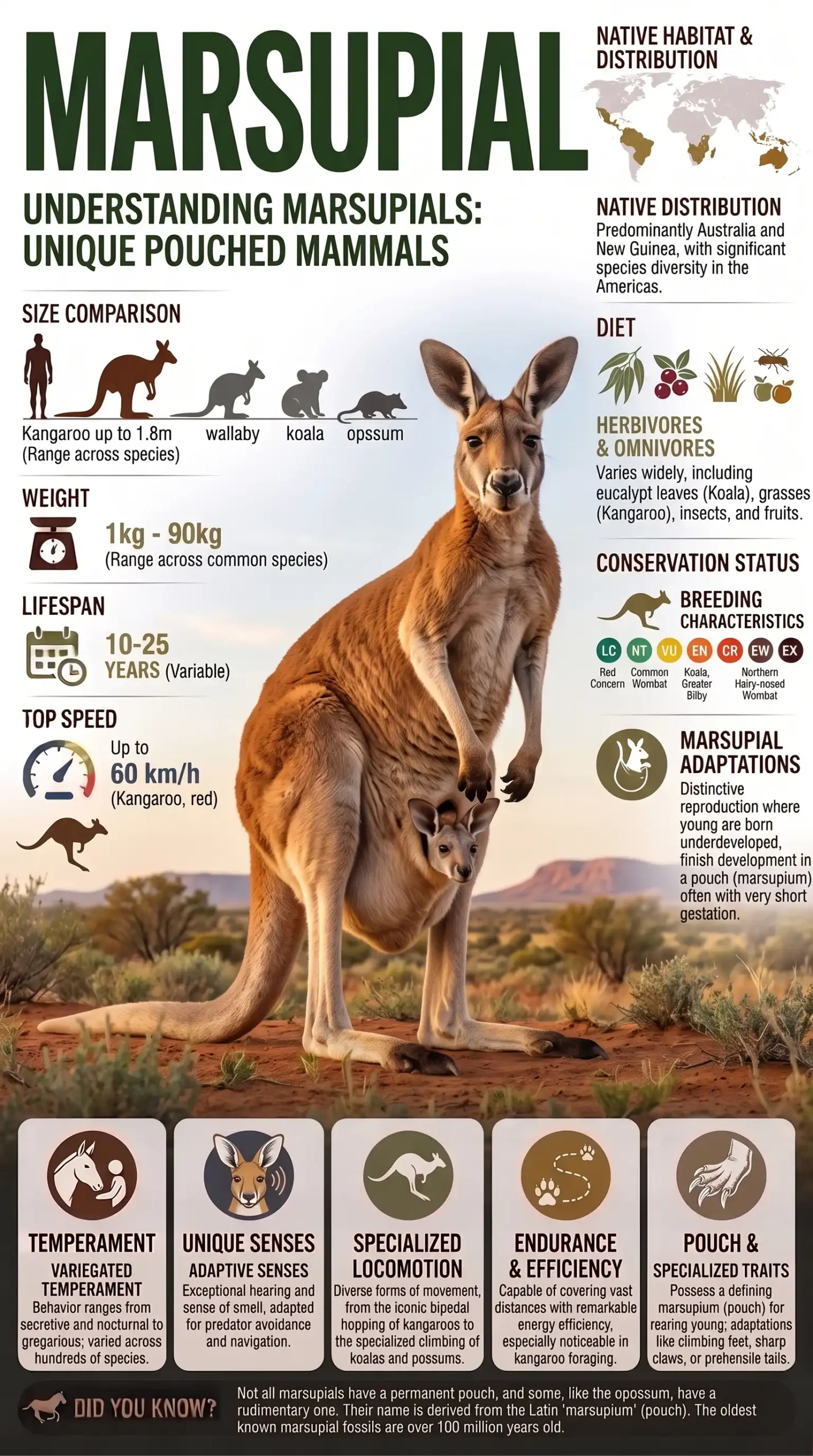
| Native Range | Australia, New Guinea, surrounding islands; Americas (opossums) |
| Habitat | Forests, deserts, grasslands, mountains, wetlands, urban areas |
| Lifespan | 1–2 years (small dasyurids) to 20+ years (large kangaroos, wombats) |
| Diet | Herbivores, carnivores, insectivores, omnivores — extraordinary dietary diversity |
| Size Range | 4.6 grams (long-tailed planigale) to 90 kg (red kangaroo) |
| Weight Range | 4.6 grams to 90 kg |
| Top Speed | Up to 70 km/h (red kangaroo) |
| Conservation Status | Varies — Australia has the worst mammal extinction record of any country on Earth |
| % of All Mammal Species | Approximately 5% |
| Joeys at Birth | Born at extremely early developmental stage — red kangaroo joeys weigh just 0.75 grams |
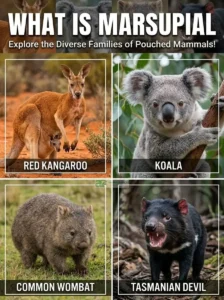 1. Introduction: What is Marsupial?
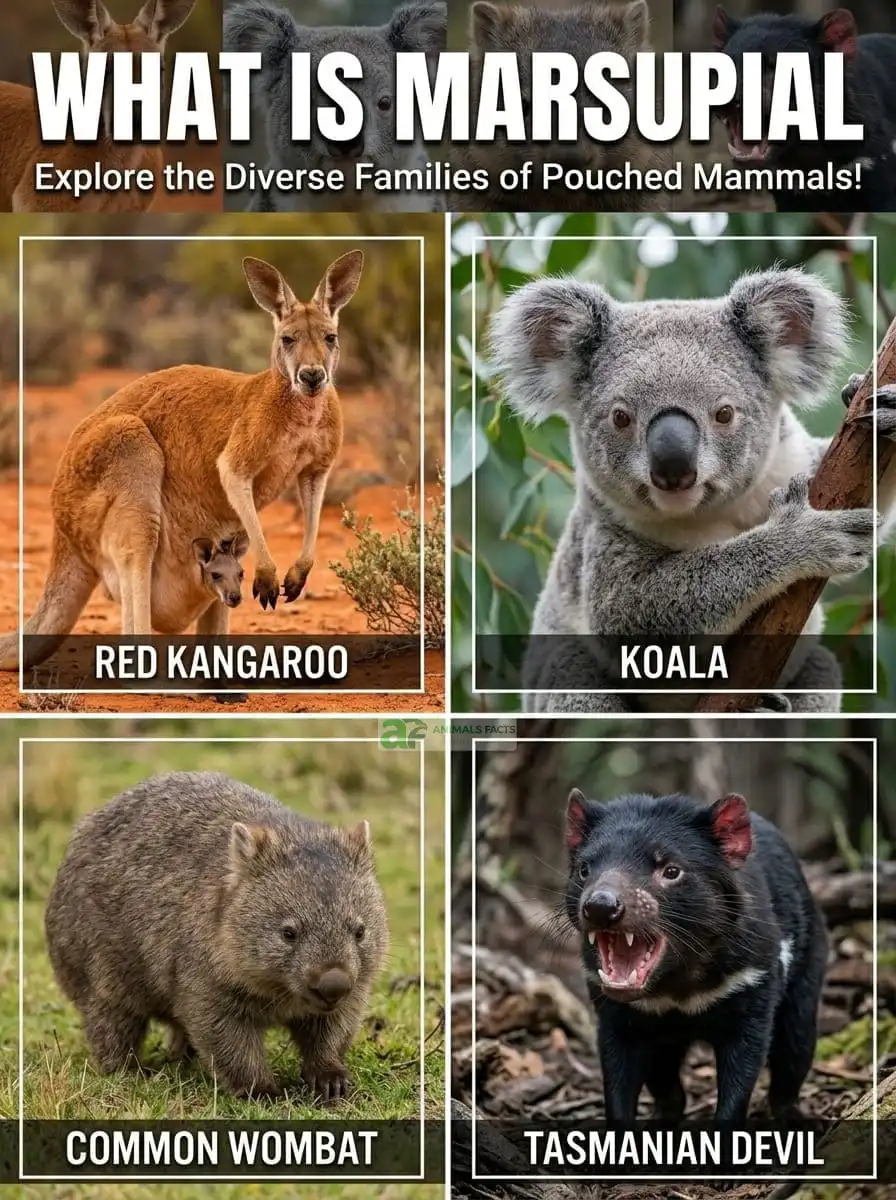
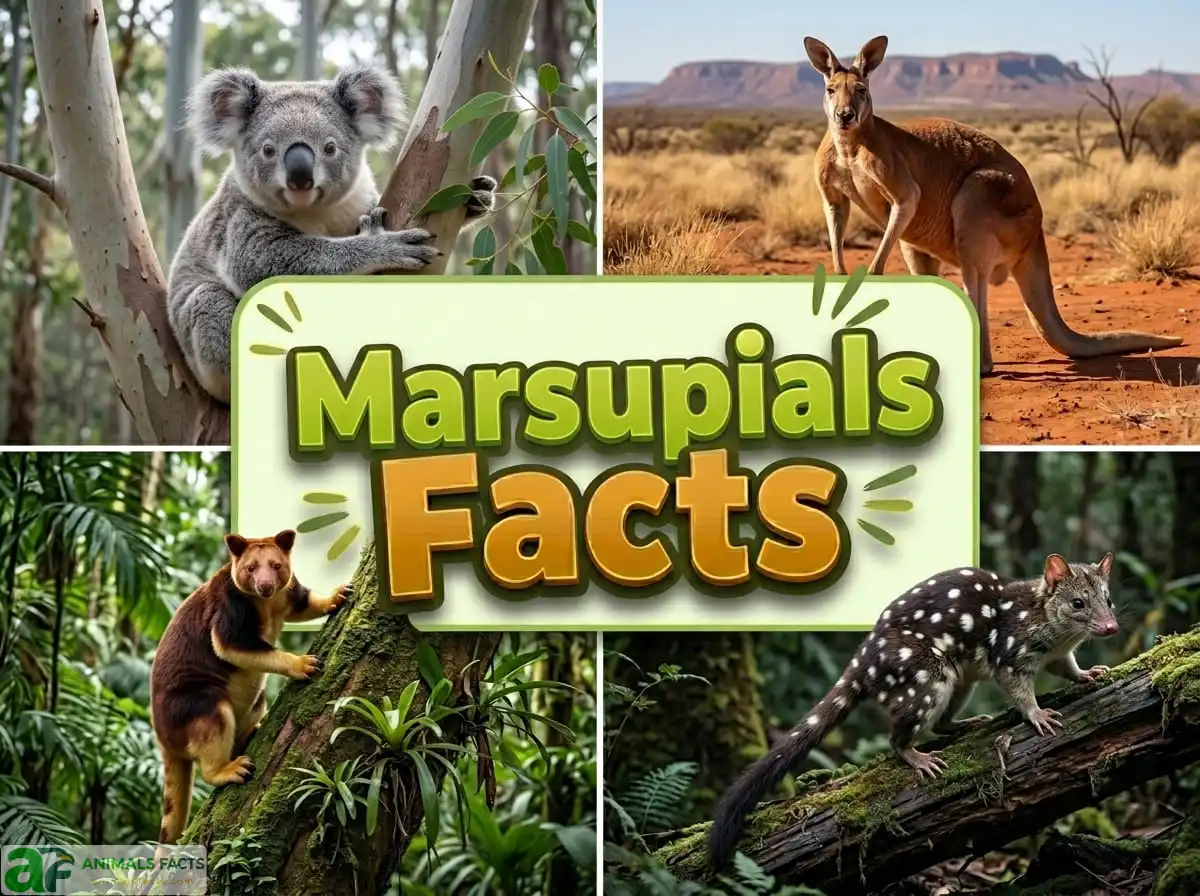
There is a moment in every encounter with a live marsupial — whether it’s a kangaroo bounding across red Australian dust, a sugar glider sailing between trees on membranes of skin, or a tiny wombat emerging from its burrow at dusk — when you feel you are watching a different evolutionary experiment from the one that produced the mammals you grew up knowing. Marsupial facts consistently deliver exactly that feeling: they reveal animals that solved the same biological challenges as placental mammals — locomotion, thermoregulation, feeding, parenting, intelligence — through a completely different evolutionary toolkit, producing solutions so elegant and unexpected that biologists continue to marvel at them.
Interesting facts about marsupials begin with the basic reproductive biology that defines the group: marsupials give birth to young at an almost impossibly early developmental stage and complete their development in an external pouch (the marsupium, from which the group takes its name). A red kangaroo joey at birth weighs just 0.75 grams — less than a pea — and is essentially a fetus with front legs developed just enough to crawl the few centimeters from the birth canal to the pouch. It will spend the next 8–11 months in that pouch, growing from an eyeless, hairless, organ-system-undeveloped fetus into a full-furred, alert juvenile. This reproductive strategy — radically different from the placental mammal approach — turns out to have remarkable advantages, particularly in unpredictable environments where carrying a large, energetically expensive fetus to term might be metabolically catastrophic.
Whether you are searching for marsupial facts for kids to bring a science class to life, exploring marsupial habitat and ecology for academic study, planning a wildlife trip to Australia, or simply captivated by one of evolution’s most creative alternatives to placental mammal biology — this guide has everything you need. We cover marsupial scientific names, marsupial diet, marsupial size and weight records, marsupial behavior, the extraordinary reproductive biology that defines the group, conservation urgency, cultural significance, and the profound ecological roles these animals play in the ecosystems they inhabit. Welcome to the world of the marsupial — where the pouch is just the beginning.
2. Marsupial Species Overview & Classification
Marsupials form the infraclass Marsupialia within the class Mammalia — one of three major mammal groups, alongside Monotremata (egg-laying mammals: platypus and echidnas) and Eutheria (placental mammals, which includes the vast majority of mammals including humans).
Species Classification Table
| Taxonomic Rank | Classification |
|---|---|
| Kingdom | Animalia |
| Phylum | Chordata |
| Class | Mammalia |
| Infraclass | Marsupialia (Illiger, 1811) |
| Number of Orders | 7 |
| Number of Families | ~22 |
| Number of Genera | ~80 |
| Number of Species | ~335 described |
| % of Mammal Species | ~5% |
| Temporal Range | ~125 million years ago to present |
The 7 Orders of Marsupials
Australasian Orders (Australia, New Guinea, surrounding islands):
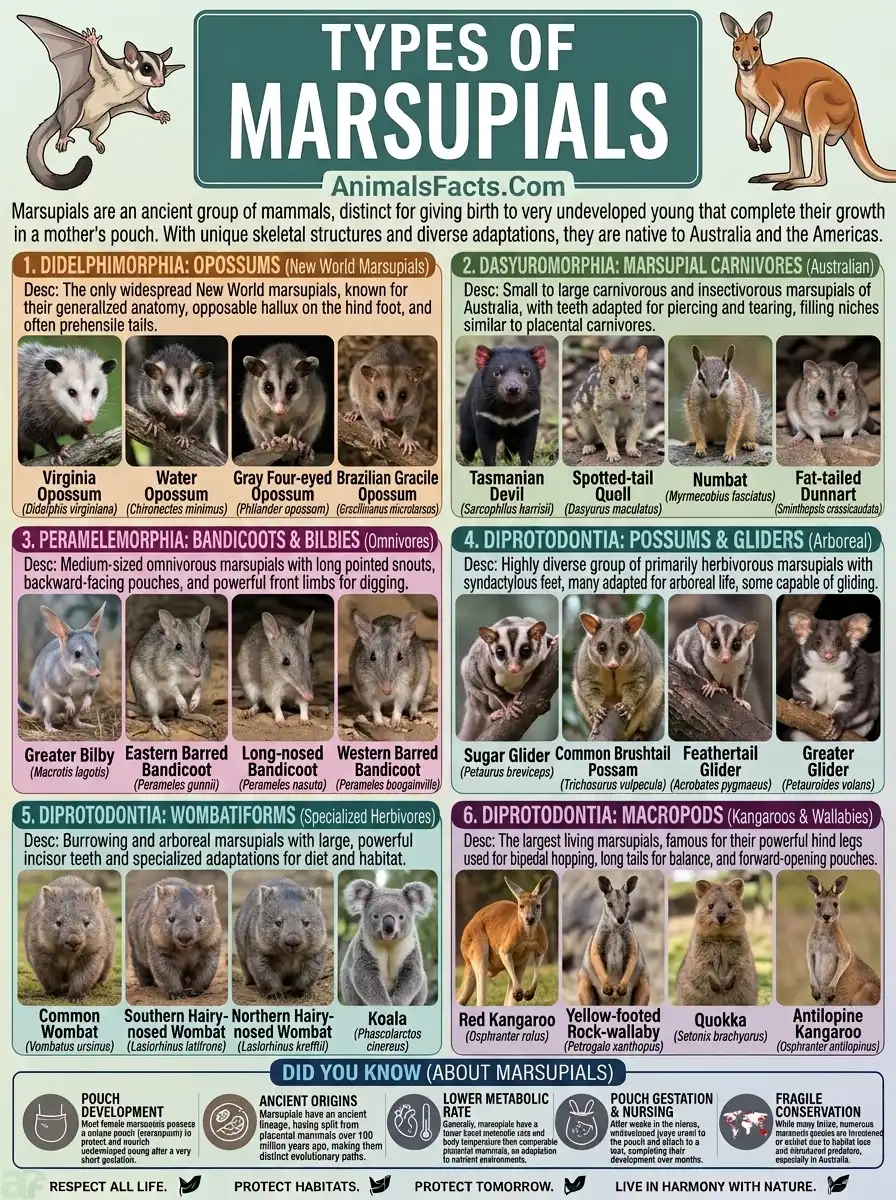
- Diprotodontia — The largest marsupial order; ~120 species including kangaroos, wallabies, koalas, wombats, possums, gliders, and potoroos
- Dasyuromorphia — Carnivorous marsupials; ~75 species including Tasmanian devil, quolls, numbat, dunnarts, and antechinuses
- Peramelemorphia — Bandicoots and bilbies; ~22 species
- Notoryctemorphia — Marsupial moles; 2 species (extraordinary burrowing specialists)
- Microbiotheria — Contains only 1 living species: the monito del monte of Chile — the only non-Australian marsupial native to its continent rather than North America
American Orders:
- Didelphimorphia — Opossums; ~110 species; by far the most species-rich American marsupial order
- Paucituberculata — Shrew opossums; ~7 species; confined to the Andes of South America
Marsupial Subspecies Comparison Table (Selected Major Species)
| Species | Subspecies/Distinct Populations | Geographic Range | Conservation Status |
|---|---|---|---|
| Red kangaroo (Osphranter rufus) | None recognized | Arid/semi-arid Australia | Least Concern |
| Eastern grey kangaroo (Macropus giganteus) | 2 subspecies | Eastern/Southeastern Australia | Least Concern |
| Koala (Phascolarctos cinereus) | 3 populations (Qld, NSW, SA/Vic) — not formal subspecies | Eastern/Southeastern Australia | Endangered (2022) |
| Common wombat (Vombatus ursinus) | 3 subspecies | Southeastern Australia | Least Concern |
| Tasmanian devil (Sarcophilus harrisii) | None recognized | Tasmania only | Endangered |
| Virginia opossum (Didelphis virginiana) | Multiple regional forms | North and Central America | Least Concern |
Marsupials Evolution & Discovery Timeline
~180 million years ago — Marsupials and placental mammals diverge from a common ancestor during the Jurassic period — the earliest representatives of the marsupial lineage appear.
~125 million years ago — The oldest confirmed marsupial fossils appear in what is now China — Sinodelphys szalayi represents the earliest known marsupial.
~65 million years ago — The Cretaceous-Paleogene extinction event eliminates many mammal lineages but marsupials survive, primarily in the Southern Hemisphere. Australian marsupials begin their extraordinary adaptive radiation.
~40 million years ago — South America becomes a marsupial stronghold — connected to Antarctica (which was then temperate and forested) and ultimately to Australia, allowing faunal exchange.
~25 million years ago — Antarctica cools dramatically; the land bridge between South America and Antarctica/Australia is severed; Australian marsupials begin evolving in increasing isolation, producing the extraordinary endemic diversity seen today.
~3–5 million years ago — The formation of the Isthmus of Panama reconnects North and South America; placental mammals flood south from North America; most South American marsupial orders go extinct. Only opossums and shrew opossums survive.
1520 — Italian explorer Antonio Pigafetta provides the first European written description of a marsupial — the Virginia opossum observed in Brazil during Magellan’s circumnavigation.
1629 — Dutch explorer Francisco Pelsaert provides the first European description of an Australian marsupial — a small wallaby observed on the Abrolhos Islands off Western Australia.
1770 — Captain James Cook and naturalist Joseph Banks formally document kangaroos at Endeavour River, Queensland — the description that introduced kangaroos to the Western world.
1811 — Johann Karl Wilhelm Illiger formally establishes the Marsupialia as a distinct mammalian group.
1996 — Scientists describe the facial tumor disease (DFTD) devastating Tasmanian devil populations — the discovery that transforms conservation efforts for the species.
2022 — The koala is officially listed as Endangered under Australia’s Environment Protection and Biodiversity Conservation Act — a milestone reflecting decades of population decline.
“The marsupials of Australia have had millions of years of isolated evolution to become something extraordinary — a completely parallel solution to the problem of being a mammal. Every one of them is a living demonstration of evolution’s creativity.” — Sir David Attenborough, The Life of Mammals (BBC, 2002)
3. Physical Description of Marsupials
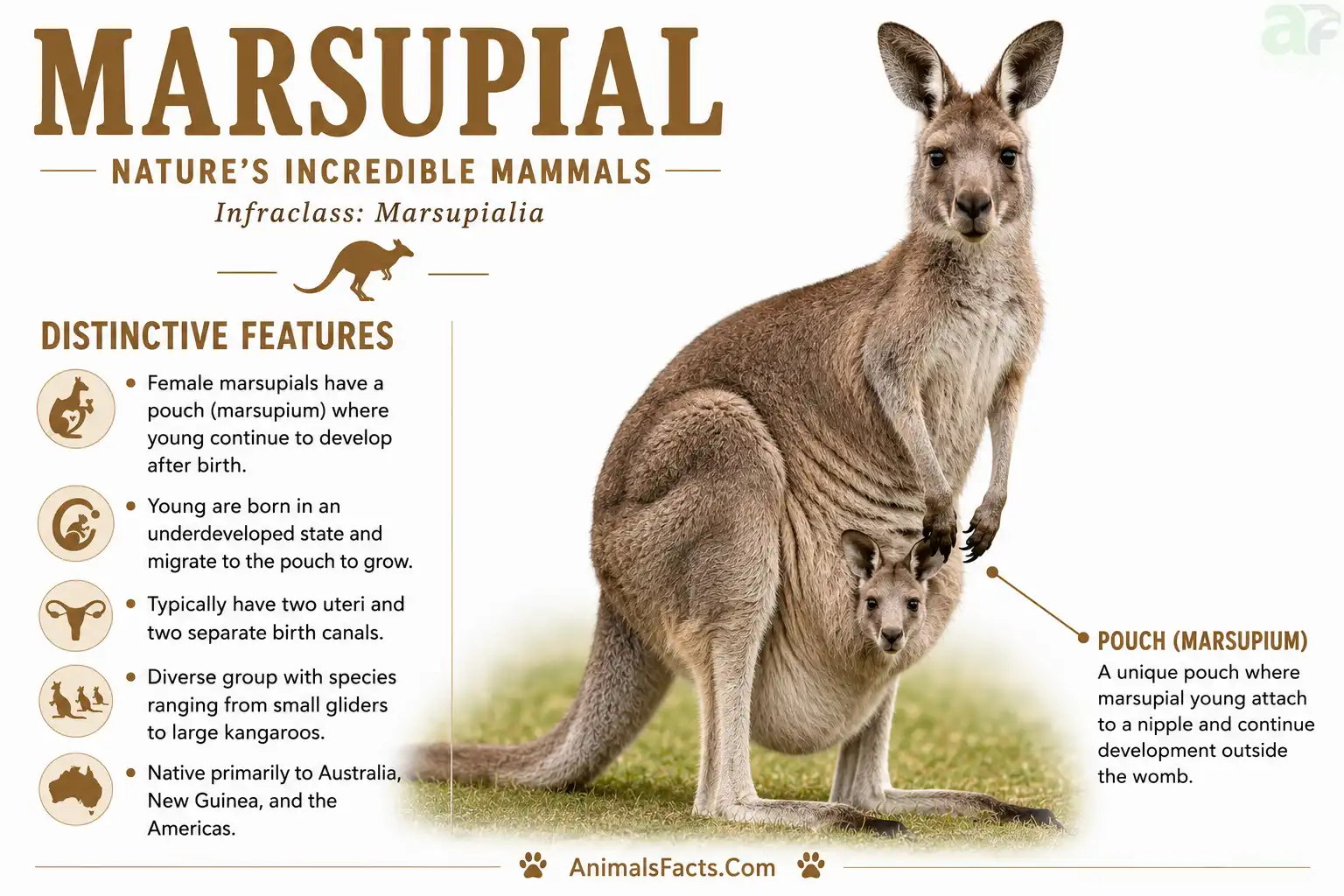
Marsupial size and weight span an extraordinary range within a single infraclass — from the long-tailed planigale (Planigale ingrami) weighing just 4.6 grams (the world’s smallest marsupial by weight), to the red kangaroo (Osphranter rufus) where large males can reach 90 kg (198 lbs) and stand 2 meters (6.6 feet) tall when balanced on their tail.
The Marsupium (Pouch)
The most iconic feature of marsupials is the marsupium — the pouch in which young develop after birth. The marsupium varies dramatically across species:
- Well-developed forward-opening pouch — Kangaroos, wallabies, koalas, wombats; the joey enters and the pouch closes around it
- Backward-opening pouch — Wombats and some digging marsupials; prevents soil entering the pouch during burrowing
- Lateral (side-opening) pouch — Bandicoots; opens sideways
- No true pouch — Some small dasyurids (carnivorous marsupials) have only a fold of skin or individual mammary patches without a complete pouch
- No pouch at all — Some species of opossums; young cling directly to the mother’s fur after crawling to a nipple
The Epipubic Bones
All marsupials — and no placental mammals — possess epipubic bones (also called marsupial bones or os marsupiale) — a pair of bones extending forward from the pelvis. In females, these bones help support the pouch; in both sexes, they may assist with locomotion. Their absence in placental mammals reflects the evolutionary history of the groups.
Teeth
Marsupial teeth are distinctive — most marsupials have more incisors than placental mammals. Diprotodont marsupials (kangaroos, koalas, wombats) have a distinctive fused lower incisor pair and large upper incisors. The Tasmanian devil’s jaws generate one of the highest bite-force-to-body-weight ratios of any living mammal.
Gender Differences
In kangaroos, males (bucks) are dramatically larger than females (does) — a red kangaroo male can weigh 90 kg while the female averages just 25–35 kg. Male kangaroos develop powerful forelimb musculature for wrestling — their arms can deliver devastating blows in fighting.
Koala males possess a large sternal scent gland on their chest that they rub against trees to mark territory — females lack this structure. Wombat males and females are similarly sized with no obvious external differences.
Did You Know? The male red kangaroo is one of the few animals whose forearm musculature is proportionally more developed than any other body region — built entirely for boxing with rivals. During male-male combat, kangaroos balance on their tail, grip opponents with their forelimbs, and deliver powerful raking kicks with their hind feet — kicks capable of disemboweling opponents with the claw on the elongated second toe.
4. Top 25 Amazing Marsupial Facts
Here is your comprehensive, scientifically verified collection of the most extraordinary marsupial facts as of 2026:
- A newborn red kangaroo weighs just 0.75 grams — less than a pea — and must climb to the pouch unaided immediately after birth, a journey of approximately 8 cm that represents one of the most dramatic first moments in mammalian life.
- Marsupials represent approximately 5% of all mammal species — but in Australia, they represent over 80% of native land mammal diversity.
- The Tasmanian devil produces one of the highest bite-force-to-body-size ratios of any living mammal — capable of crushing through bone with a bite that leaves marks on metal feeding dishes.
- Female kangaroos can pause the development of an embryo in a state of suspended animation called embryonic diapause — effectively having one joey in the pouch, one embryo on pause in the uterus, and producing two different kinds of milk simultaneously (richer for the pouch joey, lighter for the new joey when it arrives).
- The wombat is the only animal in the world that produces cubic feces — square-shaped droppings produced by an uniquely structured digestive system that stacks them for territorial marking without rolling away.
- Koalas have fingerprints virtually identical in pattern complexity to human fingerprints — even forensic experts examining a fingerprint cannot reliably distinguish between the two species without microscopy.
- The short-beaked echidna is a monotreme, not a marsupial — but the marsupial mole (Notoryctes typhlops) of Australia’s deserts is equally extraordinary — blind, earless, with a leathery nose shield, golden silky fur, and forelimbs like shovels; it “swims” through sandy soil and leaves no permanent tunnel.
- The Virginia opossum (Didelphis virginiana) is the only marsupial species in North America north of Mexico — and it is spreading northward in range as climate change moderates winter temperatures.
- Kangaroos are the world’s largest animals that move primarily by hopping — their elastic tendons store energy with each bound and release it in the next, making hopping at cruising speed energetically cheaper than running.
- The Tasmanian devil’s facial tumor disease (DFTD) is one of only a handful of transmissible cancers known in the natural world — the tumor cells spread between individuals through biting during feeding competition.
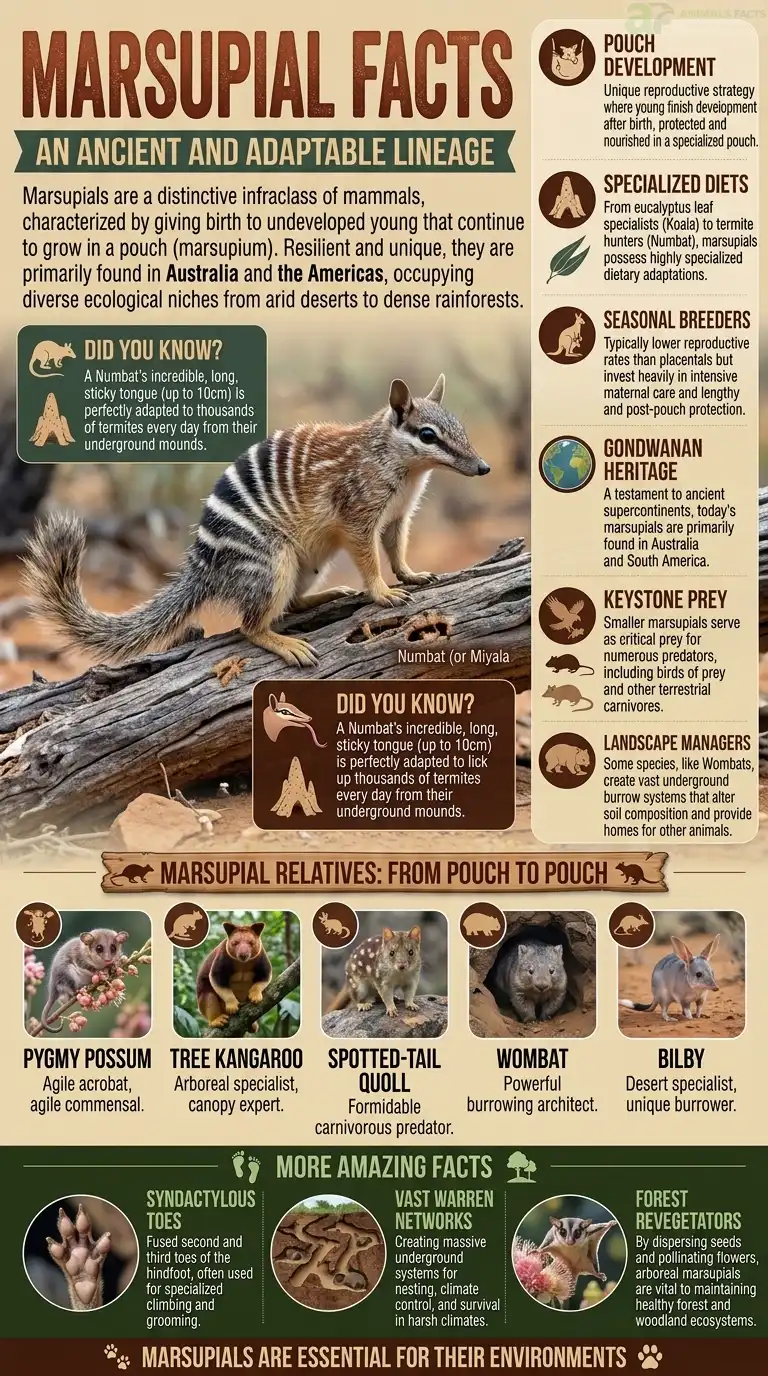
- Numbats (Myrmecobius fasciatus) are the only marsupials that are exclusively diurnal (active only during daylight) — they feed entirely on termites and can consume up to 20,000 termites per day.
- The quokka (Setonix brachyurus) of Rottnest Island, Western Australia, has become one of the world’s most photographed animals due to its naturally “smiling” facial expression — #quokkaselfie has millions of social media posts.
- Potoroos — small, rat-like marsupials — consume truffles (underground fungi) as a primary dietary component and are among the most important truffle spore dispersers in Australian forest ecosystems.
- Wombat burrows can extend 30 meters underground and maintain a stable temperature regardless of surface conditions — over 100 animal species have been recorded using wombat burrows for shelter, including during wildfires.
- The sugar glider (Petaurus breviceps) can glide up to 50 meters in a single flight using a membrane (patagium) stretching from wrist to ankle — and has evolved independently similar to the flying squirrels of North America and Southeast Asia.
- Koalas sleep for 18–22 hours per day — the most of any mammal — because their exclusively eucalyptus diet is so low in nutrition and requires such extended digestion time.
- Male antechinuses (small carnivorous marsupials) die after a single mating season — devoting all their biological resources to reproduction in a phenomenon called semelparity or “suicidal reproduction.” All males in a population die within a 2–3 week mating period of hormonal exhaustion.
- The greater bilby (Macrotis lagotis) — Australia’s Easter Bilby — digs burrows 1–2 meters deep with a spiral design that prevents predators from entering and maintains stable internal conditions.
- Marsupial newborns do not breathe through their lungs initially — they absorb oxygen through their skin while the lungs continue developing in the pouch.
- The Tasmanian tiger (Thylacinus cynocephalus) — the marsupial apex predator that looked almost exactly like a dog — went extinct in 1936 when the last known individual died in Hobart Zoo. It represents one of the most iconic human-caused extinctions in history.
- Kangaroo locomotion at speeds above 15 km/h is energetically more efficient than quadrupedal running at equivalent speeds — the efficiency improves as speed increases due to elastic tendon energy storage.
- The honey possum (Tarsipes rostratus) of southwestern Australia feeds exclusively on nectar and pollen — it has a long brush-tipped tongue and is a critical pollinator of multiple plant species. It is the only non-bat, non-primate mammal to feed exclusively on nectar.
- Opossums have a remarkable resistance to snake venom — including rattlesnake, copperhead, and cottonmouth venom — due to a blood factor called LTNF (Lethal Toxin Neutralizing Factor) that neutralizes many pit viper venoms. Research is ongoing to develop antivenom treatments based on this compound.
- The southern hairy-nosed wombat can survive on food and water of such poor quality that no placental mammal of comparable size could maintain itself on the same diet.
- A kangaroo cannot walk backward — its large hind legs and thick tail prevent the reverse movement, which is why the kangaroo (along with the emu, which also cannot walk backward) was chosen for the Australian coat of arms: symbolizing a nation that only moves forward.
5. Marsupial Fun Facts for Kids
- Marsupials have been on Earth for over 125 million years
- Australia has lost more mammal species than any other country on Earth since European settlement
- Wombat poop is cubic — the only animal in the world that produces square droppings
- Koala fingerprints are nearly indistinguishable from human fingerprints even under forensic examination
- A newborn kangaroo weighs less than a pea (0.75 grams)
- Kangaroos cannot walk backward
- Male antechinuses die after mating — every single one, every year
- Quokka selfies have their own dedicated global hashtag with millions of posts
- The Virginia opossum is immune to most pit viper snake venoms
- Numbats eat up to 20,000 termites per day
- Wombat burrows shelter over 100 other species during Australian wildfires
- The honey possum is the only non-bat, non-primate mammal to feed exclusively on nectar
6. Natural Habitat of Marsupials
Marsupial habitat diversity spans virtually every terrestrial environment in Australia and New Guinea, with a substantial secondary radiation of opossums occupying virtually every American habitat from Tierra del Fuego to southern Canada.
Habitat Types
Australian marsupials occupy deserts (bilbies, marsupial moles, desert rodent-like species), tropical rainforests (tree kangaroos, ringtail possums), temperate forests (koalas, common wombats, brush-tailed possums), alpine meadows (mountain pygmy possums — the only marsupials that hibernate), grasslands (red and grey kangaroos), mangroves (agile wallabies), semi-arid scrublands (most kangaroo species), and underground burrow systems (wombats).
American opossums occupy tropical and temperate rainforests, dry forests, scrublands, and increasingly urban environments — the Virginia opossum has adapted extraordinarily well to human-modified landscapes across North America.
Habitat Range by Continent/Region
| Region | Native/Introduced | Notable Species | Primary Habitats |
|---|---|---|---|
| Australia | Native | Red kangaroo, koala, wombat, Tasmanian devil, quokka, bilby | Desert, forest, grassland, alpine, urban |
| Tasmania | Native | Tasmanian devil, eastern quoll, Bennett’s wallaby | Temperate forest, heath, grassland |
| New Guinea | Native | Tree kangaroos, New Guinea quolls, bandicoots | Tropical montane forest, lowland rainforest |
| New Zealand | Introduced (brushtail possum — invasive) | Brushtail possum | Forest (devastating invasive impact) |
| South America | Native (opossums, shrew opossums, monito del monte) | Water opossum, gray four-eyed opossum | Tropical forest, Andean cloud forest |
| North America | Native (Virginia opossum) | Virginia opossum | Forest, urban, suburban |
| Europe/Asia/Africa | Not native | None | — |
Did You Know? The mountain pygmy possum (Burramys parvus) is the only Australian marsupial to hibernate and the only Australian mammal restricted to alpine habitat. It was known only from Pleistocene fossils until a living individual was discovered in a ski lodge kitchen at Mount Hotham, Victoria, in 1966 — one of the most remarkable zoological discoveries of the 20th century, representing a species rediscovered half a century after it was presumed prehistoric.
7. Marsupial Diet & Feeding Behavior
Marsupial diet spans an extraordinary range — the group includes strict herbivores, dedicated insectivores, exclusive nectar feeders, specialist termite eaters, and fearsome carnivores.
Diet Breakdown Table
| Dietary Strategy | Approximate % of Marsupial Species | Example Species |
|---|---|---|
| Herbivory (leaves, grasses, fruits) | ~45% | Kangaroos, koalas, wombats, possums |
| Insectivory (insects and arthropods) | ~30% | Most small dasyurids, numbat, many bandicoots |
| Omnivory (mixed) | ~20% | Most opossums, quolls, Tasmanian devil, bandicoots |
| Carnivory (vertebrates) | ~5% | Tasmanian devil (scavenging/opportunistic), large quolls |
| Nectarivory (nectar and pollen) | ~2% | Honey possum, various pygmy possums |
| Fungivory (fungi/truffles) | ~3% | Potoroos, bettongs, some bandicoots |
| Myrmecophagy (ants/termites) | ~1% | Numbat (termites only), some bandicoots |
Remarkable Feeding Adaptations
Koala eucalyptus specialization — Koalas feed almost exclusively on eucalyptus leaves — which are toxic to most mammals, containing phenolic compounds and terpenes that would poison a human consuming them in any quantity. Koalas have evolved specialized liver enzymes and gut microbiota that detoxify these compounds, along with highly selective dietary preferences (out of approximately 700 eucalyptus species in Australia, koalas typically eat leaves from only 30–50 species, and individuals within a population often specialize on just 2–3 preferred species).
Wombat digestion — Wombats have the longest intestinal tract relative to body size of any marsupial — with a digestive retention time of up to 150 hours (more than 6 days). This extraordinary digestive efficiency allows them to extract maximum nutrition from extremely low-quality fibrous vegetation and survive on the poorest pasture in the most arid conditions.
Tasmanian devil scavenging — The Tasmanian devil is predominantly a scavenger and opportunistic predator — its powerful bite allows it to consume entire carcasses including bones, and groups of devils can reduce a wallaby carcass to nothing within minutes. Their stomach acid is strong enough to dissolve bone, and they are largely immune to the botulism toxins that would kill most scavengers feeding from rotting carcasses.
Virginia opossum omnivory — The Virginia opossum is one of the most ecologically generalist mammals in North America — consuming insects, earthworms, slugs, small rodents, birds, eggs, fruit, berries, carrion, and a remarkable diversity of plant material. Critically, they consume and destroy the tick populations that transmit Lyme disease — research suggests a single opossum destroys approximately 5,500 larval ticks per week by grooming, making them significant biological control agents for tick-borne diseases.
8. Marsupial Reproduction & Life Cycle
Marsupial reproduction is the most distinct and biologically remarkable feature of the group — representing a fundamentally different approach to mammalian reproduction from the placental strategy.
The Marsupial Reproductive Strategy
The key difference between marsupial and placental mammal reproduction:
Placental mammals — Invest massively in gestation (developing young inside the uterus for extended periods connected to a nutrient-providing placenta); birth occurs at a relatively advanced developmental stage; relatively few, well-developed offspring per litter.
Marsupials — Invest minimally in gestation (the marsupial placenta is rudimentary and short-lived, typically lasting only weeks before birth occurs); birth occurs at an extremely early developmental stage; development is completed in the external pouch, where the young has direct access to milk from mammary glands.
This system has a crucial advantage in unpredictable environments: if conditions deteriorate after birth, the joey can be “abandoned” with far less reproductive investment than a late-stage placental fetus — allowing the mother to attempt reproduction again more quickly.
Embryonic Diapause
Perhaps the most remarkable marsupial reproductive adaptation is embryonic diapause (also called delayed implantation) — practiced by most kangaroos, wallabies, and some other marsupials. After giving birth, the female mates again almost immediately. The resulting embryo develops to a blastocyst stage and then pauses — its development suspended by hormones. If the pouch joey dies or leaves the pouch, the suspended embryo resumes development and a new joey is born approximately 30 days later. This system allows females to maintain a continuous reproductive pipeline — potentially having a joey in the pouch, a suspended embryo in the uterus, and a young-at-foot joey still nursing outside the pouch simultaneously.
Even more remarkably, kangaroo females produce two different types of milk simultaneously from adjacent mammary glands — one nipple produces rich, fat-dense milk for the older young-at-foot, while another produces a different composition appropriate for the young pouch joey. The mammary glands respond to the developmental stage of each joey individually.
Growth Stages
Using the red kangaroo as an example of marsupial joey development:
- Birth — 0.75 grams; crawls unaided to pouch; attaches to nipple
- Days 1–70 — Attached firmly to nipple in pouch; organogenesis continues; eyes closed; no fur
- Days 70–130 — Eyes open; fur begins to appear; joey begins to detach from nipple temporarily
- Days 130–190 — Joey begins making brief excursions outside pouch; returns to nurse
- ~8 months — Joey permanently exits pouch; continues nursing as “young at foot” for additional 3–4 months
- ~18 months — Full independence; begins competitive feeding
- ~2 years — Sexual maturity in females; ~3 years in males
Lifespan Comparison Table
| Species | Avg Lifespan (Wild) | Avg Lifespan (Captivity) | Max Documented |
|---|---|---|---|
| Red kangaroo (Osphranter rufus) | 8–12 years | ~25 years | 27 years (captivity) |
| Koala (Phascolarctos cinereus) | 10–15 years (wild) | ~20 years | 23 years |
| Tasmanian devil (Sarcophilus harrisii) | 5–6 years | ~8 years | 8+ years |
| Common wombat (Vombatus ursinus) | ~15 years | ~25 years | 30 years (captivity) |
| Virginia opossum (Didelphis virginiana) | 1–2 years | ~4 years | ~4 years |
| Antechinus (various) | ~1 year (males); 2–3 years (females) | ~3 years | — |
9. Social Behavior & Communication
Marsupial social behavior ranges from extreme solitude (marsupial moles, most small dasyurids) to the complex, well-documented group living of kangaroos and the extraordinary colonial feeding of Tasmanian devils.
Kangaroo Mob Dynamics
Kangaroos are the most studied social marsupials — living in loosely organized groups called mobs (or troupes) that typically number 10–50 individuals in good habitat, though aggregations at water sources can number in the hundreds. Mob membership is fluid rather than fixed, with individuals joining and leaving freely. Social hierarchy among males is maintained through ritualized combat — males assess each other through mutual grooming, sparring, and chest-rubbing before escalating to serious fighting when resources or females are contested.
Wombat Solitary Territory
Common wombats are among the most solitary marsupials — adults maintain individual territories centered on their burrow systems and actively exclude conspecifics. Yet their burrows function as community resources during environmental stress — dozens of other species shelter in wombat burrows during floods and wildfires, a relationship increasingly studied as part of broader wombat conservation advocacy.
Communication
Vocalizations across marsupials span from the infamously loud, aggressive coughing roar of the Tasmanian devil to the gentle clicking of mothers communicating with pouch joeys, the alarm coughs of kangaroos, the sweet birdlike calls of sugar gliders, and the bellowing of male wombats during breeding season.
Scent marking is critically important across the group — most marsupials maintain territorial scent marks through glands on the chest, chin, cloaca, and feet, depositing chemical information about identity, sex, and reproductive status.
Intelligence
Marsupial intelligence is often underestimated relative to placental mammals, partly because marsupials have a smaller neocortex (the brain region associated with higher cognitive functions in placentals). However, research has demonstrated that marsupials perform comparably to equivalent placental mammals on many learning and problem-solving tasks, suggesting their striatum (a different brain region) plays a larger role in marsupial cognition than in placentals. Brushtail possums have demonstrated object permanence, food puzzle solving, and spatial memory comparable to some primates in laboratory tests.
10. Predators & Defense Mechanisms
The predator-prey relationships of marsupials have been profoundly altered by European settlement — the introduction of foxes, cats, and dingoes to Australia has been catastrophically damaging to marsupials that evolved without effective land predator pressure.
Natural Predators
Australia:
- Wedge-tailed eagle — Major aerial predator of medium-sized marsupials including rabbits and wallabies
- Dingo (Canis lupus dingo) — The primary large mammalian predator of marsupials in mainland Australia
- Pythons — Several species (amethystine, carpet) are major predators of possums and small marsupials
- Quolls and Tasmanian devils — Prey on smaller marsupials within their range
Americas:
- Raptors, owls, foxes, bobcats, coyotes — Primary predators of opossums
Introduced predators (catastrophic impact):
- Red fox (Vulpes vulpes) — Introduced 1850s; responsible for extinction or severe decline of dozens of small and medium marsupial species
- Feral cat — Estimated to kill over 1.5 billion native animals annually in Australia including enormous numbers of marsupials
- Black rat — Consumes eggs and young of ground-nesting marsupials
Defense Strategies
Thanatosis (playing dead) — The Virginia opossum has given English the phrase “playing possum” — when severely threatened, opossums enter an involuntary catatonic state that can last minutes to hours, complete with open mouth, reduced breathing, and release of unpleasant anal secretions that make them smell like a rotting corpse. This response is involuntary — a neurological shutdown rather than a conscious strategy.
Wombat burrow retreat — Wombats retreat to their burrows when threatened and can block the entrance with their armored rump — delivering powerful kicks to anything attempting to follow. Predator testing in wombat burrows has resulted in broken skulls and shattered limbs of pursuing predators.
Quoll speed and aggression — Quolls are fast, agile predators themselves and are not passive prey — they actively defend themselves and can inflict serious wounds on attacking predators much larger than themselves.
Kangaroo speed and kick — Adult kangaroos are effectively invulnerable to most natural predators except dingoes in coordinated pursuit. They can reach 70 km/h and their hind leg kick can disembowel a pursuing predator with a single strike from the sharp central claw.
Did You Know? The Tasmanian devil’s decline from mainland Australia approximately 3,000 years ago (coinciding with the expansion of dingoes, which were introduced by humans) is considered a significant ecological disruption. On dingo-free Tasmania, devils remained as the apex carnivore and scavenger — their removal from the mainland allowed invasive scavengers and predators to fill the vacuum. Programs reintroducing dingo-naive Tasmanian devils to predator-managed sanctuaries in mainland New South Wales began in 2020 — a remarkable rewilding experiment.
11. Marsupial Facts for Kids
Hey young wildlife explorers! Here are some totally amazing marsupial facts for kids that will make you the most interesting person in your class:
Baby kangaroos are born TINY! A newborn red kangaroo weighs less than a pea — just 0.75 grams! It has to climb all the way to its mum’s pouch as soon as it’s born. That’s as amazing as you climbing a mountain right after being born!
Wombats have SQUARE poop! They’re the only animals in the entire world that make square-shaped droppings. Scientists only recently figured out how their intestines create the cube shape — it was a genuine scientific mystery!
Koalas are almost always asleep! They sleep for up to 22 hours every day — more than any other mammal. Their eucalyptus leaf diet is so hard to digest and so low in energy that they need all that sleep to save energy!
Opossums are almost immune to snake venom! The Virginia opossum in North America can survive the bites of many venomous snakes that would kill most other animals. Scientists are studying their blood to potentially develop new medicines!
A kangaroo can’t walk backward! Its big hind legs and thick tail make reverse movement impossible — which is one reason the kangaroo was chosen for Australia’s coat of arms, to represent a country that always moves forward!
The quokka is the world’s happiest-looking animal! These small marsupials on Rottnest Island in Western Australia have a natural “smile” on their faces and love having their photo taken. The #quokkaselfie tag has millions of photos!
Male antechinuses die after mating! These tiny marsupials put ALL their energy into finding a mate during a short mating season — and then every single male in the population dies. It’s one of the most extreme life strategies in nature!
Wombat burrows save other animals in wildfires! When Australia’s devastating bushfires rage, over 100 different species shelter in wombat burrows to survive. Wombats are genuine environmental heroes!
12. Relationship with Humans
The relationship between marsupials and humans encompasses over 60,000 years of Indigenous Australian coexistence, the catastrophic impacts of European colonization, contemporary conservation urgency, and an increasingly significant role in global wildlife tourism and pop culture.
Indigenous Australian Relationships
The Aboriginal Australian peoples have coexisted with marsupials for over 60,000 years — the longest continuous human-animal coexistence record for any marsupial species. Kangaroos, wallabies, possums, wombats, and bandicoots were central to Aboriginal diets, material cultures (clothing, tools from bones and tendons), spiritual traditions, and ecological management practices.
Fire stick farming — Aboriginal Australians used controlled burning to maintain open grassland habitats that supported kangaroo populations, demonstrating sophisticated understanding of the relationship between habitat management and marsupial abundance that Western science has only relatively recently recognized.
European Colonization Impact
The arrival of European settlers from 1788 onward initiated an ecological catastrophe for Australian marsupials. Habitat clearing, introduced foxes and feral cats, competition from introduced livestock, and direct hunting drove dozens of marsupial species to extinction. Australia now holds the worst mammal extinction record of any country on Earth — approximately 30 mammal species have gone extinct since European settlement, the majority marsupials.
Marsupials as Pests
From the European settler perspective, several marsupial species became agricultural pests. Kangaroos compete with livestock for pasture, leading to large-scale government-sanctioned culling programs. Brushtail possums introduced to New Zealand have become one of the most damaging invasive species in any country — devastating native forest, agricultural production, and spreading bovine tuberculosis, leading to massive poisoning and trapping programs.
Wildlife Tourism
Marsupial wildlife tourism generates enormous economic value for Australia — encounters with wild kangaroos, quokkas, koalas, wombats, and Tasmanian devils at wildlife sanctuaries and in national parks represent a multi-billion dollar industry. The quokka selfie phenomenon has generated extraordinary global publicity for Rottnest Island and Western Australia tourism.
14. Marsupial Conservation Status & Threats
Marsupial conservation represents one of the most urgent challenges in global biodiversity management. Australia’s extraordinary and uniquely irreplaceable marsupial diversity faces threats on multiple fronts simultaneously.
Conservation Status Overview
| Status Category | Approximate Number of Marsupial Species |
|---|---|
| Least Concern | ~175 species |
| Near Threatened | ~25 species |
| Vulnerable | ~50 species |
| Endangered | ~40 species |
| Critically Endangered | ~20 species |
| Extinct (since 1500) | ~30+ species |
| Data Deficient | ~10 species |
Most Critically Threatened Marsupials (2026)
- Gilbert’s potoroo (Potorous gilbertii) — Fewer than 100 individuals in the wild; one of the world’s rarest mammals
- Northern hairy-nosed wombat (Lasiorhinus krefftii) — Fewer than 300 individuals; found in a single location in Queensland
- Eastern quoll (Dasyurus viverrinus) — Extinct on mainland Australia; surviving only in Tasmania
- Tasmanian devil (Sarcophilus harrisii) — Endangered; facial tumor disease has reduced populations by ~60–80% since the 1990s
Major Threats
| Threat | Impact |
|---|---|
| Introduced predators (foxes, cats) | Primary cause of most marsupial extinctions and declines |
| Habitat destruction (clearing, urbanization) | Loss of critical feeding, shelter, and breeding habitat |
| Tasmanian devil facial tumor disease | Wiped out up to 80% of devil population in affected areas |
| Climate change | Increased fire frequency and drought; disrupts food availability |
| Vehicle strikes | Major mortality source for kangaroos, wombats, possums |
| Disease (chlamydia in koalas) | Up to 80–90% of some koala populations infected; major fertility impact |
| Invasive plants | Replace native vegetation that marsupials depend on |
14. Famous Marsupials in History & Pop Culture
Famous Named Marsupial Individuals
Harriet — A Tasmanian devil at the Copenhagen Zoo who became one of the most photographed animals in Europe during the height of concern about facial tumor disease, serving as an ambassador for devil conservation internationally.
“Blinky” — The name given to multiple famous captive koalas across Australian zoos and wildlife parks; koala diplomacy has seen Australian governments gift koalas to zoos in Japan, the US, and Europe as symbols of bilateral goodwill.
“Thyla” — Name given to Tasmanian tiger (Thylacinus cynocephalus) individuals at various points in the early 20th century. The last known individual — a male — died at the Hobart Zoo on September 7, 1936. This date is now commemorated as National Threatened Species Day in Australia.
“Roger” — A red kangaroo at a South Australian wildlife sanctuary who became a social media celebrity for his extraordinary musculature — his photos showing his defined arms and chest generated global media coverage and numerous “gym kangaroo” memes.
The Thylacine — Australia’s Greatest Conservation Regret
The thylacine or Tasmanian tiger (Thylacinus cynocephalus) — a striped, wolf-like marsupial apex predator — was hunted to extinction through a government bounty scheme in the early 20th century. Its extinction in 1936 has since become one of the most significant symbols of human-caused species loss, and its image appears on multiple conservation organization logos. Colossal Biosciences has announced an active thylacine de-extinction project targeting functional revival — as of 2026, significant progress has been made in sequencing the thylacine genome and developing cellular biology techniques using the numbat (its closest living relative) as a research platform.
15. Role in Ecosystem & Food Chain
Marsupials are foundational ecological components of the Australian and American ecosystems they inhabit — functioning as herbivores that shape plant community structure, seed dispersers, insectivore pest controllers, scavengers, and prey species supporting predator guilds.
Herbivore Impact on Vegetation
Large marsupial herbivores — kangaroos, wallabies, and wombats — are the dominant large herbivores of Australian grasslands and open woodlands, performing ecological functions analogous to those of antelope and wildebeest in African savannas. Their grazing maintains grassland structure, prevents shrub encroachment, and cycles nutrients through their dung.
Seed Dispersal & Fungal Spore Dispersal
Potoroos and bettongs are critically important dispersers of underground truffle-like fungi (hypogeal fungi) in Australian forests. These fungi form mycorrhizal associations with eucalyptus and other trees — providing the trees with water and mineral nutrients in exchange for photosynthetic products. Without potoroo seed and spore dispersal, forest regeneration after fire may be severely impaired — making the conservation of these small, inconspicuous marsupials disproportionately important for forest ecosystem integrity.
Scavenging
Tasmanian devils perform the critical ecological function of carcass processing in Tasmanian ecosystems — rapidly consuming the remains of dead animals (wallabies, wombats, sheep, other devils) and reducing the spread of disease that would otherwise emanate from rotting carcasses. Studies following devil population declines from facial tumor disease have shown measurable increases in carcass persistence and associated pest fly populations in affected areas.
Wombats as Ecosystem Engineers
The wombat’s burrowing activity creates significant habitat that benefits hundreds of other species — with “wombat warrens” in some areas functioning similarly to the prairie dog towns of North America, maintaining patches of disturbed, aerated soil with high biodiversity value. Their burrow systems act as fire refuges during increasingly frequent Australian bushfires — providing shelter for dozens of species including reptiles, small mammals, birds, and invertebrates.
16. Marsupials Myths, Folklore & Cultural Significance
Marsupials are central to the cultural, spiritual, and artistic traditions of the Aboriginal Australian peoples — representing one of the longest-standing human-animal cultural relationships on Earth.
Aboriginal Australian Traditions
In Aboriginal Australian Dreamtime traditions, marsupials feature in creation narratives, totemic systems, ceremonial practices, and environmental knowledge spanning over 60,000 years. The kangaroo, wombat, echidna, and possum are among the most common subjects of rock art found across Australia — some paintings dating back tens of thousands of years and representing some of the oldest continuous artistic traditions in human history.
The kangaroo is a totemic animal for many clans and language groups — individuals belonging to kangaroo totemic groups maintain special relationships with kangaroos, often including obligations to manage kangaroo habitat and responsibilities for ceremonial roles related to kangaroo hunting and use.
Koori and Wiradjuri Traditions
Among the Wiradjuri people of New South Wales, the wombat (gawaali) is associated with persistence and deep earth knowledge — its extraordinary burrowing capacity linking it to the underground world and ancestral forces within the earth.
New World Opossum Mythology
In Mesoamerican mythology — particularly in the Aztec traditions of central Mexico — the opossum appears as a deity or mythological figure associated with fire, drunkenness, and trickery. The god Tlacuache (the opossum) is credited in some traditions with stealing fire from the gods for humanity — paralleling the Prometheus myth of ancient Greece in its basic narrative structure.
17. Marsupials in Pop Culture
Crash and Eddie (Ice Age franchise, 2006–2022) — The possum brothers Crash and Eddie became beloved characters in the Ice Age animated film series — while technically Virginia opossums rather than Australian marsupials, they introduced these American marsupials to global audiences as comedic and endearing characters.
Kanga and Roo (Winnie the Pooh, A.A. Milne, 1926–present) — The kangaroo mother and joey in the Hundred Acre Wood are arguably the most globally recognized fictional kangaroos, introducing the concept of the marsupial pouch to generations of children worldwide.
Crash Bandicoot (Sony PlayStation, 1996–present) — The orange, spinning eastern barred bandicoot (Perameles gunnii) protagonist of the Crash Bandicoot video game franchise has sold over 50 million copies worldwide — making him arguably the most commercially successful marsupial character in entertainment history, and incidentally one of the few game characters named after a truly endangered animal.
Dot and the Kangaroo (1977, Australian animation) — A classic Australian animated film based on the 1899 children’s novel by Ethel C. Pedley, about a lost girl protected by a kangaroo. It introduced Australian marsupials to international children’s audiences decades before the internet.
18. Marsupial Facts vs. Common Myths
| Common Myth | The Real Fact |
|---|---|
| “Koalas are bears” | False — koalas are marsupials entirely unrelated to bears; they belong to the family Phascolarctidae with no close bear relatives |
| “Kangaroos are only in Australia” | Mostly true — but tree kangaroos also live in New Guinea, and the related wallaby has been introduced to New Zealand and some European locations |
| “Marsupials are primitive mammals” | False — marsupials are not more primitive than placentals; they represent an equally valid evolutionary strategy that is highly specialized for their environments |
| “Opossums are rodents” | False — opossums are marsupials; despite their rat-like appearance, they are no more closely related to rodents than humans are |
| “Playing possum is a choice” | False — thanatosis in opossums is an involuntary neurological response, not a conscious decision |
| “Wombats are slow and harmless” | Dangerously false — wombats can run at 40 km/h and their armored rump and powerful kick can seriously injure or kill dogs and have broken human bones |
| “Kangaroos use their tail to hop” | False — the tail provides balance but does not contribute propulsive force; all hopping energy comes from the hind legs |
| “All marsupials have pouches” | False — some marsupial species (particularly some didelphid opossums and small dasyurids) lack a true pouch; young cling directly to mammary patches |
19. Best Places to See Marsupials in the Wild
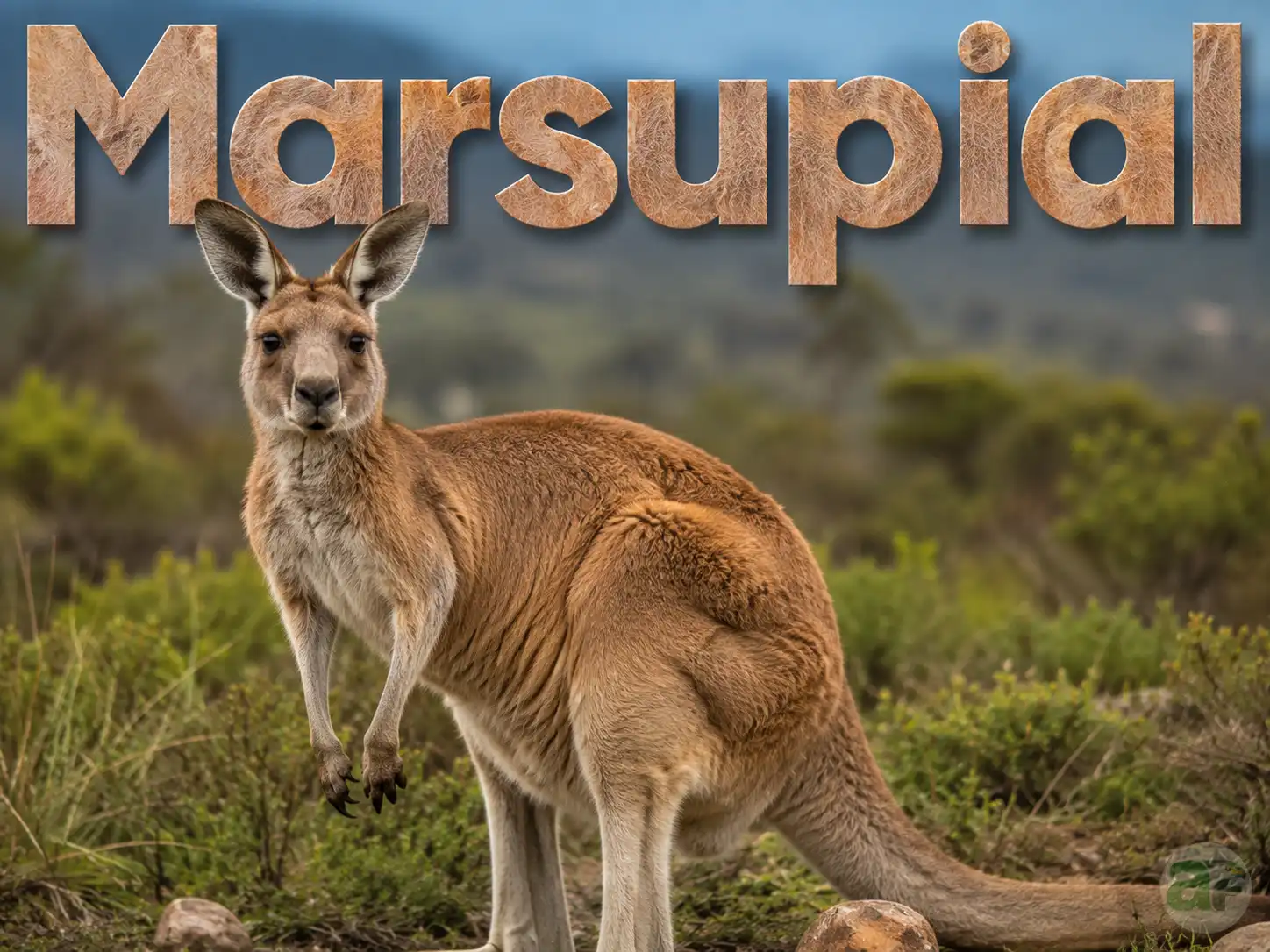
1. Kangaroo Island, South Australia — The most accessible location for reliably seeing kangaroos, wallabies, echidnas, koalas, wombats, platypuses, and the remarkable Australian sea lion in the wild, without the predator pressure that affects mainland populations. A genuine wildlife paradise accessible by ferry from Adelaide.
2. Cradle Mountain National Park, Tasmania — The best location in the world to observe Tasmanian devils, quolls, wombats, wallabies, and the unique Tasmanian wildlife community. Night tours at the park’s visitor center reliably produce devil sightings.
3. Rottnest Island, Western Australia — Home to the quokka — found nowhere else in the world in significant numbers. The island is vehicle-free, making it perfectly safe for quokkas and guaranteeing encounters with Australia’s most photogenic marsupial.
4. Lamington National Park, Queensland — Subtropical rainforest home to platypuses, possums, pademelons, and remarkable bird life; one of the best places in eastern Australia for diverse wildlife encounters in a single location.
5. Kakadu National Park, Northern Territory — The wildlife richness of Kakadu includes agile wallabies, quolls, bandicoots, wallaroos, and extraordinary bird life alongside some of the world’s most significant Aboriginal art sites.
6. Daintree Rainforest, Queensland — The world’s oldest tropical rainforest hosts musky rat-kangaroos (the world’s smallest and most primitive kangaroo), tree kangaroos, and ring-tailed possums in a tropical forest setting of extraordinary biodiversity.
7. Stanley Park area, Virginia/Maryland/DC, USA — For North American visitors, the Virginia opossum is surprisingly observable in suburban and urban environments at dusk and night — trash can investigations, neighborhood walks with a flashlight, and garden feeding stations regularly reveal this remarkable North American marsupial.
20. How You Can Help
Marsupial conservation requires action at individual, community, national, and international levels.
Support these organizations:
- Australian Wildlife Conservancy — australianwildlife.org — operates the largest network of private conservation reserves in Australia; pivotal for marsupial protection
- Save the Tasmanian Devil Program — tassiedevil.com.au — direct support for devil facial tumor disease research and population management
- WWF Australia — wwf.org.au — campaigns on koala and broad marsupial conservation
- Wettenhall Environment Trust — wettenhall.org.au — Australian private land conservation
- Colossal Biosciences (Thylacine Project) — colossal.com — pursuing thylacine de-extinction research
What you can do:
- Support predator control programs — Feral cat and fox management is the single most impactful conservation intervention for most threatened marsupials
- Plant native vegetation — Native Australian plants support the insects and fungi that small marsupials depend on
- Drive carefully at dawn and dusk — Vehicle strikes are a major mortality source for kangaroos, wombats, and possums
- Support wildlife rescue organizations — Many marsupials can be successfully hand-raised and released; wildlife carers are always in need of volunteers and donations
- Choose marsupial-friendly tourism — Visit ethical wildlife sanctuaries and national parks; your tourism dollars directly fund conservation
21. Top Documentaries & Books
Must-Watch Documentaries
- The Life of Mammals (BBC, 2002) — David Attenborough’s comprehensive mammal series includes landmark marsupial sequences; the kangaroo boxing and koala eucalyptus feeding segments remain among the finest ever filmed
- Wild Australia (various BBC/ABC productions) — Multiple series covering Australian wildlife with exceptional marsupial content
- Australia’s First 4 Billion Years (NOVA/PBS) — Covers the evolutionary history of Australian marsupials in the context of continental geology
- Tasmanian Devil: The Bloodthirsty Marsupial (National Geographic) — Dedicated documentary on devil biology, facial tumor disease, and conservation efforts
- Kangaroo Dundee (BBC, 2013) — The moving story of Gillian Abbott’s kangaroo sanctuary in Queensland; among the most popular wildlife documentary series of the decade
Must-Read Books
- The Future Eaters by Tim Flannery — The definitive account of the ecological history of Australia and the role of Aboriginal peoples and European colonists in shaping the marsupial fauna we see today
- Possums: The Brushtails, Ringtails and Greater Gliders by Deb Worland — Comprehensive popular guide to Australian possum diversity
- The Last Tasmanian Tiger by Robert Paddle — The definitive historical account of the thylacine’s extinction
- In the Company of Wombats by Jackie French — Beloved natural history memoir of life with wild common wombats
- Kangaroo by Tim Flannery and Paula Kendall — Comprehensive natural history of Australia’s most iconic marsupial
22. Comparison of Major Marsupial Groups
| Feature | Kangaroos (Macropodidae) | Koala (Phascolarctidae) | Tasmanian Devil (Dasyuridae) | Virginia Opossum (Didelphidae) |
|---|---|---|---|---|
| Family | Macropodidae | Phascolarctidae | Dasyuridae | Didelphidae |
| Size | 18–90 kg | 4–14 kg | 4–14 kg | 0.3–6 kg |
| Habitat | Grassland, open woodland | Eucalyptus forest | Forest, heath, farmland | Forest, urban, suburban |
| Diet | Herbivore (grass) | Herbivore (eucalyptus only) | Scavenger/omnivore | Omnivore |
| Social | Mob groups | Mostly solitary | Solitary; communal feeding | Solitary |
| Conservation | Least Concern | Endangered | Endangered | Least Concern |
| Continent | Australia, New Guinea | Australia | Tasmania | Americas |
| Pouch | Yes — forward-opening | Yes — forward-opening | Yes — backward-opening | Yes — well-developed |
| Speed | Up to 70 km/h | Up to 10 km/h | ~25 km/h | ~7.5 km/h |
23. Frequently Asked Questions About Marsupial Facts
What is the scientific name for marsupials?
Marsupials belong to the infraclass Marsupialia (Illiger, 1811), within the class Mammalia. The name derives from the Latin marsupium (pouch) — a reference to the defining external pouch in which young develop. Individual species each have their own scientific names — the red kangaroo is Osphranter rufus, the koala is Phascolarctos cinereus, the Tasmanian devil is Sarcophilus harrisii, and the Virginia opossum is Didelphis virginiana.
How many marsupial species exist?
As of 2026, approximately 335 species of marsupials are formally recognized. The order Diprotodontia (kangaroos, koalas, wombats, possums) is the largest with ~120 species. Didelphimorphia (opossums) contains ~110 species, all in the Americas. Dasyuromorphia (carnivorous marsupials) contains ~75 species. New species are occasionally described, particularly from poorly surveyed areas of New Guinea.
What makes a marsupial different from other mammals?
The defining feature of marsupials is their reproductive strategy — they give birth to extremely underdeveloped young after a very short gestation period, and complete development in an external pouch (marsupium). Marsupials also possess epipubic bones (unique bones extending forward from the pelvis), a bifurcated (forked) reproductive tract in females, and divided (bifid) penis in males. Unlike monotremes (which lay eggs) or placental mammals (which develop young through a complex placenta), marsupials occupy a unique reproductive strategy between these two groups.
Are marsupials endangered?
Many species are severely threatened. The koala was officially listed as Endangered in 2022. The Tasmanian devil is Endangered due to facial tumor disease. The Gilbert’s potoroo has fewer than 100 wild individuals — one of the world’s rarest mammals of any type. Australia holds the worst mammal extinction record of any country on Earth — approximately 30 mammal species (mostly marsupials) have been driven to extinction since European settlement.
Where do marsupials live?
The vast majority of marsupial species are native to Australia, Tasmania, and New Guinea. A substantial secondary radiation of marsupials — the opossums (order Didelphimorphia) — occurs throughout South and North America, from Patagonia to southern Canada. The monito del monte of Chile is the only South American marsupial not belonging to the Americas; it belongs to the exclusively Australasian order Microbiotheria, representing a living link to the ancient land connection between South America and Australia via Antarctica.
What do marsupials eat?
Marsupial diet is extraordinarily diverse. Kangaroos and wallabies are grazers and browsers (grass, leaves, shoots). Koalas feed exclusively on eucalyptus leaves. Tasmanian devils are scavengers and opportunistic carnivores. Numbats eat only termites (up to 20,000 per day). Honey possums feed exclusively on nectar and pollen. Opossums are among the most ecologically generalist mammals alive — consuming insects, carrion, fruit, small vertebrates, and plant material.
How long do marsupials live?
Lifespan varies enormously by species. Small carnivorous marsupials (antechinuses) may live only 1–2 years. Virginia opossums rarely survive more than 2 years in the wild. Red kangaroos live 8–15 years in the wild. Koalas survive 10–15 years in the wild and up to 20 in captivity. Common wombats can live up to 25–30 years in captivity — one of the longest lifespans of any marsupial.
Is a koala a bear?
Absolutely not — despite the common name “koala bear,” koalas are marsupials entirely unrelated to bears. Bears are placental mammals (family Ursidae), while koalas are marsupials (family Phascolarctidae). The only family Phascolarctidae contains just one living species — the koala itself. The bear comparison originates purely from the koala’s rounded, bear-like appearance — not any biological relationship. The correct name for this animal is simply “koala,” never “koala bear.”
24. Sources & References
Research Sources
- Wikipedia — Marsupialia, Macropodidae, Phascolarctos cinereus, Sarcophilus harrisii, Didelphis virginiana
- IUCN Red List — iucnredlist.org (2024–2025 assessments)
- Australian Government Department of Climate Change, Energy, the Environment and Water — dcceew.gov.au
- National Geographic — nationalgeographic.com
- Smithsonian National Museum of Natural History — naturalhistory.si.edu
- WWF Australia — wwf.org.au
- BBC Wildlife / BBC Earth — bbcearth.com
- Britannica — britannica.com/animal/marsupial
- Live Science — livescience.com
- Flannery, Tim (1994). The Future Eaters. Reed Books
- Paddle, Robert (2000). The Last Tasmanian Tiger. Cambridge University Press
- Save the Tasmanian Devil Program — tassiedevil.com.au
- Australian Wildlife Conservancy — australianwildlife.org