
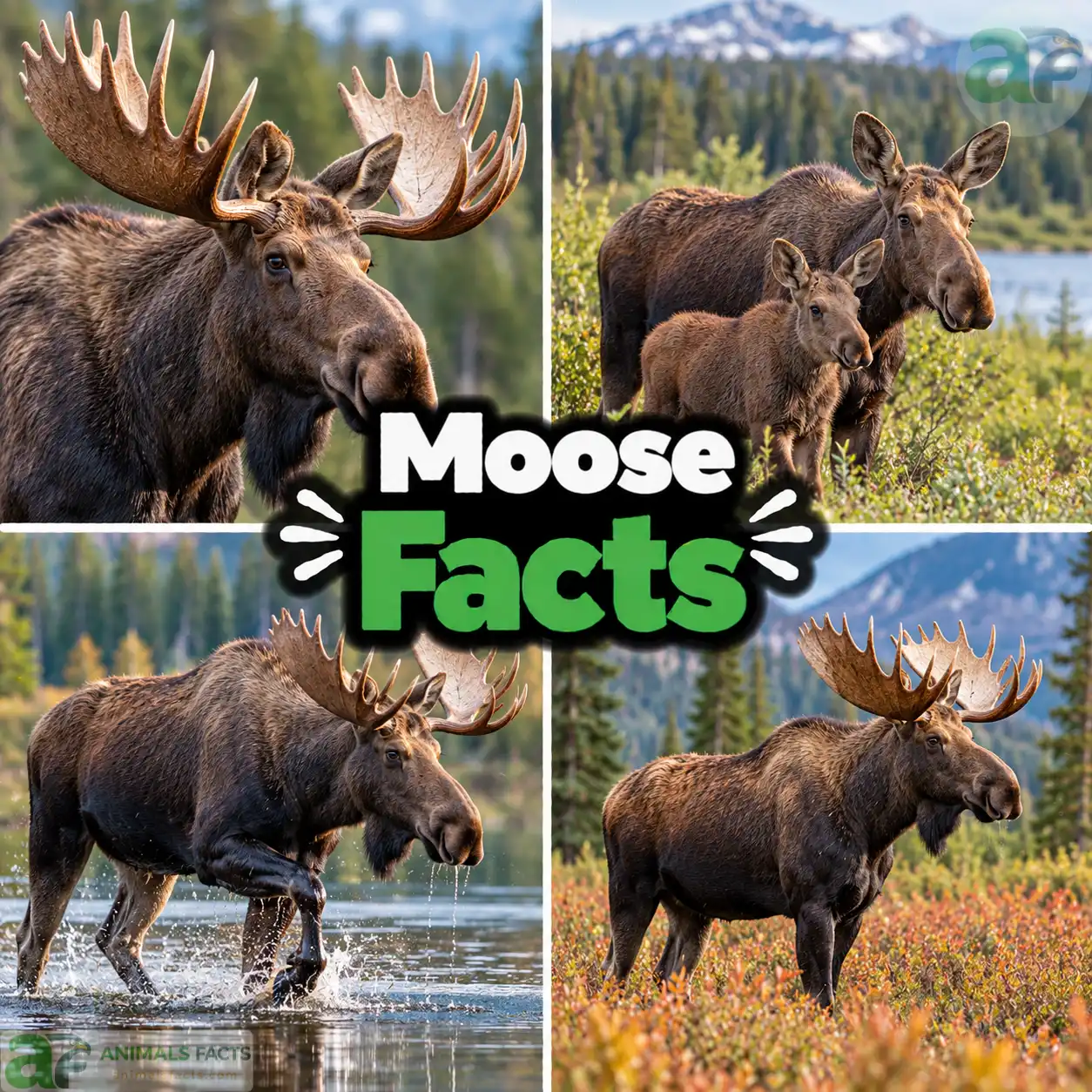
Moose Facts
| Feature | Details |
|---|---|
| Scientific Name | Alces alces |
| Common Names | Moose (North America), Elk (Europe — unrelated to North American “elk”) |
| Kingdom | Animalia |
| Phylum | Chordata |
| Class | Mammalia |
| Order | Artiodactyla |
| Family | Cervidae |
| Genus | Alces |
| Habitat | Boreal and mixed deciduous forests, wetlands, and tundra margins across the Northern Hemisphere |
| Lifespan | 8–12 years in the wild; up to 20–25 years in captivity |
| Diet | Herbivore — leaves, twigs, bark, and aquatic vegetation |
| Weight | 380–700 kg (males typically larger than females) |
| Shoulder Height | 1.4–2.1 meters — tallest of all deer species |
| Antler Span | Up to 1.8 meters (6 feet) in mature bulls — largest antlers of any living animal |
| Top Speed | Up to 56 km/h (35 mph) on land; strong swimmer up to 10 km/h |
| Conservation Status | Least Concern globally — some regional populations declining |
| Population Estimate | Approximately 1–1.5 million worldwide |
| Unique Feature | The largest living species of deer on Earth; only deer species capable of diving completely underwater to forage on aquatic plants |
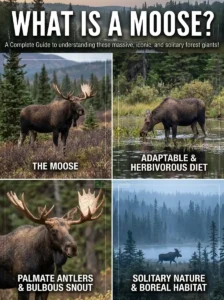 1. Introduction: What is a Moose?
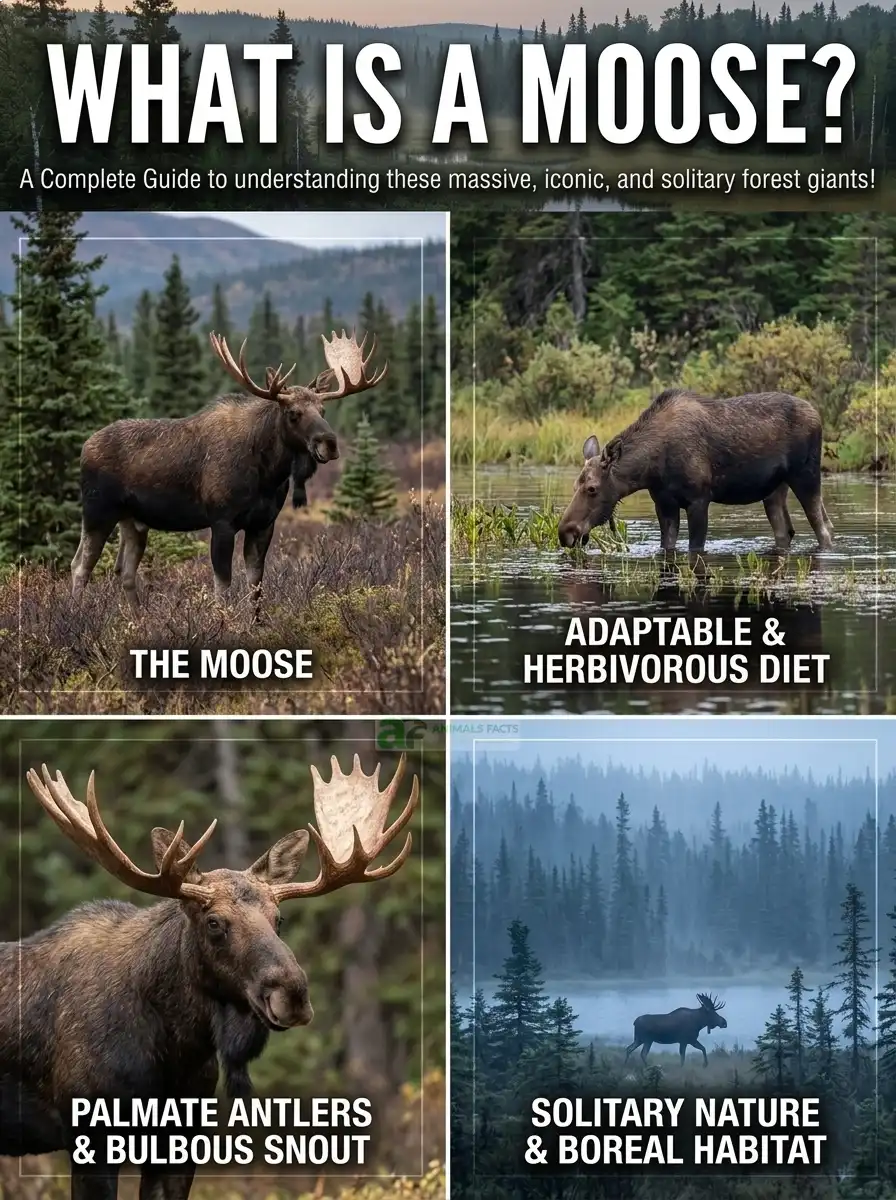
It stands taller at the shoulder than most horses, carries antlers that can weigh as much as an adult human, and can dive completely beneath the surface of a lake to graze on aquatic plants growing on the bottom. Moose facts introduce readers to an animal of genuinely startling scale — the moose (Alces alces) is not merely the largest species of deer alive today, but one of the largest land mammals in the entire Northern Hemisphere, with mature bulls in prime Alaskan and Canadian populations occasionally exceeding 700 kilograms, comparable in weight to a small car. A moose standing in a roadway at night, dark-coated and nearly invisible against a forest backdrop, represents one of the most genuinely dangerous wildlife encounters a driver can experience anywhere in North America — a fact that has shaped road design, wildlife signage, and public safety campaigns across Canada, Scandinavia, and the northern United States.
Despite this enormous size, the moose is a remarkably solitary, quiet, and habitat-specific animal — a far cry from the dramatic image its bulk and antlers might suggest. Where elk gather in large, vocal herds and bugle across open meadows each autumn, moose spend the overwhelming majority of the year alone, moving quietly through dense boreal forest and wetland habitat, and rarely straying far from the specific combination of woody browse, water, and cover their biology demands. Moose are creatures of the boreal forest and northern wetlands, deeply tied to cold climates, dense vegetation, and abundant freshwater, and their biology reflects an extraordinary suite of adaptations for surviving brutal winters, evading predators despite their size, and thriving on a diet of woody browse that would be nutritionally inadequate for most other large herbivores.
The moose’s relationship with its environment is also increasingly a story about climate change. Few large mammals in North America illustrate the direct, measurable consequences of a warming climate as clearly as the moose — a species so exquisitely adapted to cold that even moderately warm summer weather can push individuals into dangerous heat stress, and whose southern populations are now being devastated by explosive winter tick outbreaks directly linked to shorter, milder winters. Understanding moose facts today means understanding not just a magnificent animal, but a live case study in how climate change is reshaping wildlife populations across an entire continent in real time.
Whether you’re a student researching moose facts for a school project, a traveler hoping to spot one in Alaska, the Canadian wilderness, or the mountains of the American West, a driver wanting to understand the genuine road-safety risk moose pose in certain regions, a parent searching for moose facts for kids, or simply someone fascinated by the sheer scale of North America’s largest land mammal, this guide covers everything — moose habitat, moose diet, the extraordinary antler-growing cycle, reproduction, social behavior, predator-prey dynamics, conservation challenges linked to climate change, folklore, and much more. This is the most complete guide to moose facts you will find anywhere.
2. Moose Species Overview & Classification
The moose belongs to the deer family, Cervidae, and is the sole living member of the genus Alces — though taxonomists recognize considerable variation across the species’ enormous circumpolar range, with as many as eight subspecies identified based on regional differences in size, antler shape, and coloration. The genus name Alces derives from an ancient root referring to large deer, used in classical Latin and Greek texts describing enormous, elk-like animals inhabiting the forests of northern Europe long before formal Linnaean taxonomy existed.
Classification Table
| Level | Classification |
|---|---|
| Kingdom | Animalia |
| Phylum | Chordata |
| Class | Mammalia |
| Order | Artiodactyla |
| Family | Cervidae |
| Subfamily | Capreolinae |
| Genus | Alces |
| Species | A. alces |
| Closest Living Relatives | Other Cervidae — including elk/wapiti (Cervus canadensis), red deer, reindeer/caribou, and white-tailed deer |
Recognized Subspecies
Moose are distributed in a broad circumpolar band across the Northern Hemisphere, and populations separated by thousands of kilometers of geography have diverged into recognizably distinct regional forms.
| Subspecies | Range | Notable Feature |
|---|---|---|
| Alaska Moose (A. a. gigas) | Alaska, Yukon | Largest subspecies; largest antlers of any moose, sometimes exceeding 1.8 m |
| Eastern Moose (A. a. americana) | Eastern Canada, New England | Second-largest North American subspecies |
| Western/Shiras Moose (A. a. shirasi) | Rocky Mountains | Smallest North American subspecies |
| Northwestern Moose (A. a. andersoni) | Central Canada | Widespread; moderate size |
| Eurasian Moose (A. a. alces) | Scandinavia, western Russia | Called “elk” in Europe; smaller antler palmation than North American forms |
| Siberian Moose (A. a. pfizenmayeri) | Central Siberia | Large-bodied Asian population, closer in size to Alaska moose |
| Ussuri Moose (A. a. cameloides) | Far Eastern Russia, northeast China | Smallest Eurasian subspecies; more slender antler form |
| Yakutia/East Siberian Moose | Eastern Siberia | Adapted to extreme continental cold |
A Note on Naming Confusion
One of the most persistent sources of confusion in moose facts is naming: in North America, “moose” refers to Alces alces, while “elk” refers to an entirely different, smaller species (Cervus canadensis). In Europe, however, the same animal North Americans call a moose is called an “elk,” while the North American elk’s closest European relative is instead called a “red deer.” This transatlantic naming swap has caused genuine and long-standing confusion in wildlife literature, hunting regulations, and translated nature documentaries for centuries, and remains a common point of clarification needed for international readers encountering moose-related content for the first time.
Species Evolution & Discovery Timeline
~1.5–2 million years ago: Early moose ancestors began diverging within the deer family during the Pleistocene, evolving in the cold forested regions of Eurasia — likely from an ancestral stock shared with other large-bodied northern deer lineages.
~500,000–1 million years ago: Ancestral moose species, including now-extinct forms with even more dramatically palmated antlers than modern moose, spread widely across Eurasia during successive glacial periods.
~200,000–500,000 years ago: The modern moose lineage crossed into North America via the Bering land bridge during a glacial period when sea levels were low enough to expose a land connection between Siberia and Alaska, eventually establishing populations across the northern reaches of the continent.
Ice Age megafauna era: Moose coexisted with a wide range of now-extinct Pleistocene megafauna, including short-faced bears, American lions, and dire wolves, all of which likely preyed upon or competed with early moose populations.
Pre-contact era: Indigenous peoples across the northern United States, Canada, and Scandinavia maintained deep subsistence and cultural relationships with moose, which served as a critical food, hide, and tool-material source across dozens of northern nations, with virtually every part of the animal traditionally used for food, clothing, shelter construction, or tool-making.
19th–early 20th century: Unregulated hunting, driven partly by commercial hide and meat markets, significantly reduced moose populations across parts of their range, particularly in the northeastern United States, where moose were extirpated from several states entirely — prompting some of North America’s earliest wildlife conservation and hunting regulation efforts.
Mid-20th century: Conservation programs, hunting season regulation, and habitat protection allowed moose populations to recover substantially across most of their historical range in North America, with several northeastern states seeing natural moose recolonization by the late 20th century.
1958: Researchers began the landmark long-term study of wolf and moose population dynamics on Isle Royale in Lake Superior — a study that continues today and represents the longest continuously running predator-prey research project in the world.
2000s–2026: Climate change has emerged as a major and growing threat to southern moose populations, with rising temperatures, expanding tick populations, and habitat shifts driving significant regional population declines in areas such as Minnesota and New Hampshire, even as northern populations in Alaska and northern Canada remain comparatively stable or, in some areas, are expanding northward as warming opens new marginal habitat.
3. Moose Physical Description & Unique Features
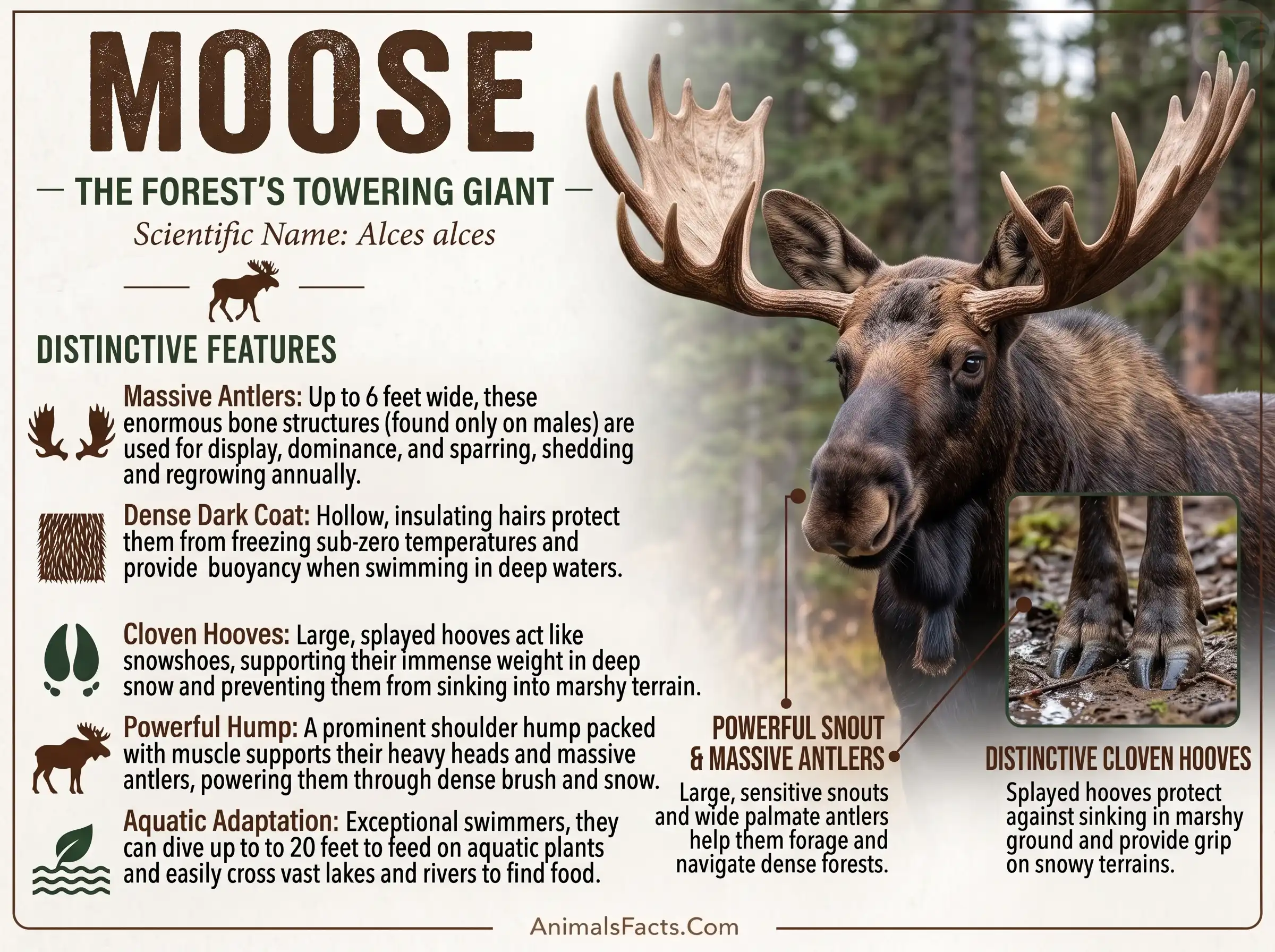
The moose’s physical design reflects extreme specialization for life in cold, densely vegetated northern habitats — an animal built less for speed or grace than for raw size, browsing efficiency, and cold-weather endurance. Nearly every anatomical feature of the moose, from its towering legs to its oddly shaped nose, exists in direct service of surviving deep snow, dense brush, and long, harsh winters.
Size — The Largest Living Deer
Moose are, without exception, the largest living species of deer on Earth, dwarfing every other member of the Cervidae family by a substantial margin:
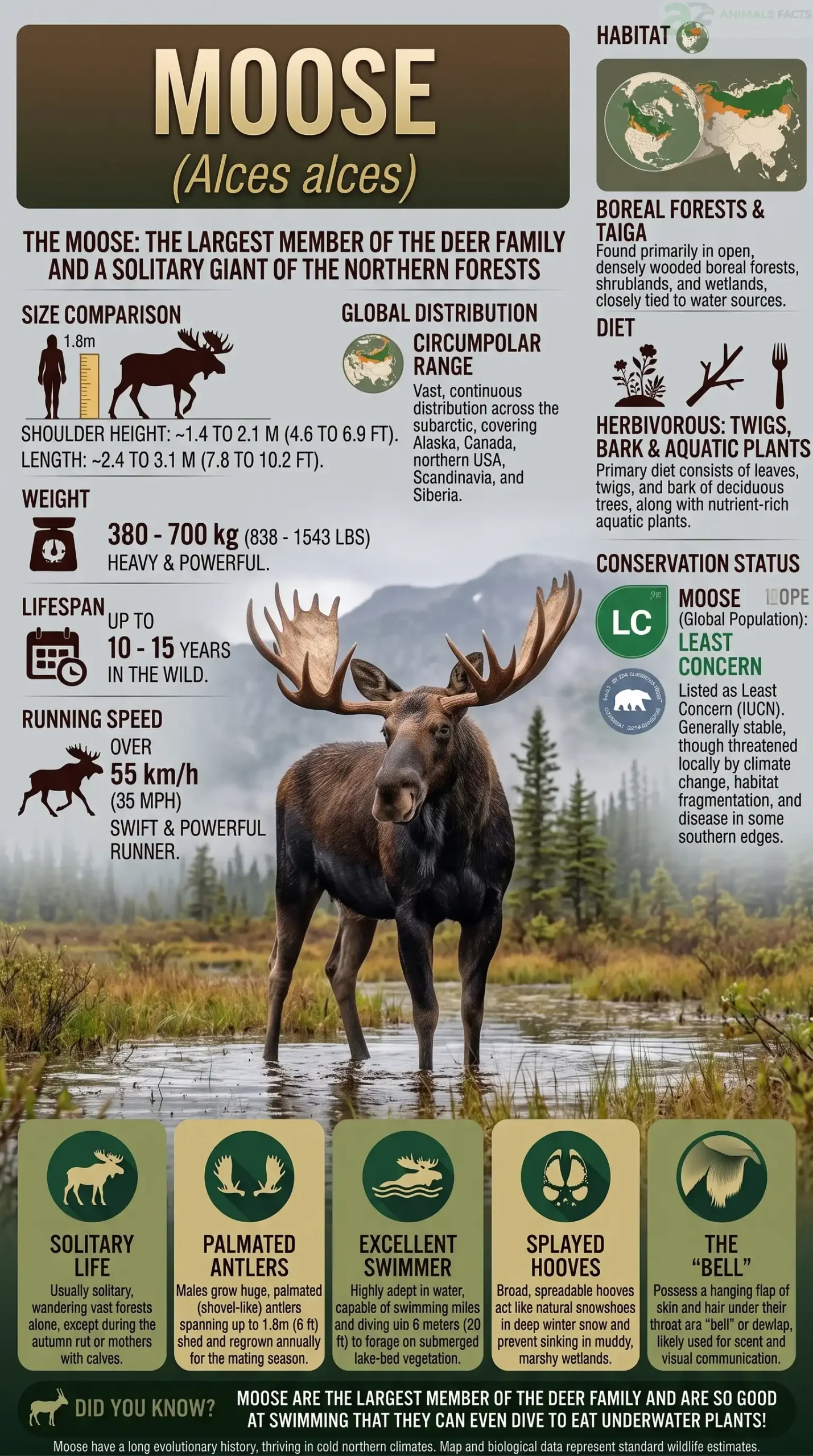
- Weight: Typically 380–700 kg, with the largest Alaska moose bulls occasionally exceeding 700 kg — heavier than a grand piano.
- Shoulder height: 1.4–2.1 meters — taller at the shoulder than most horses, and tall enough that an adult moose can look directly into a second-story window in some building designs.
- Body length: 2.4–3.1 meters.
Males (bulls) are substantially larger than females (cows), typically outweighing cows by 100–200 kg, with bulls also distinguished by their massive, seasonally regrown antlers, which cows entirely lack.
The Extraordinary Antlers
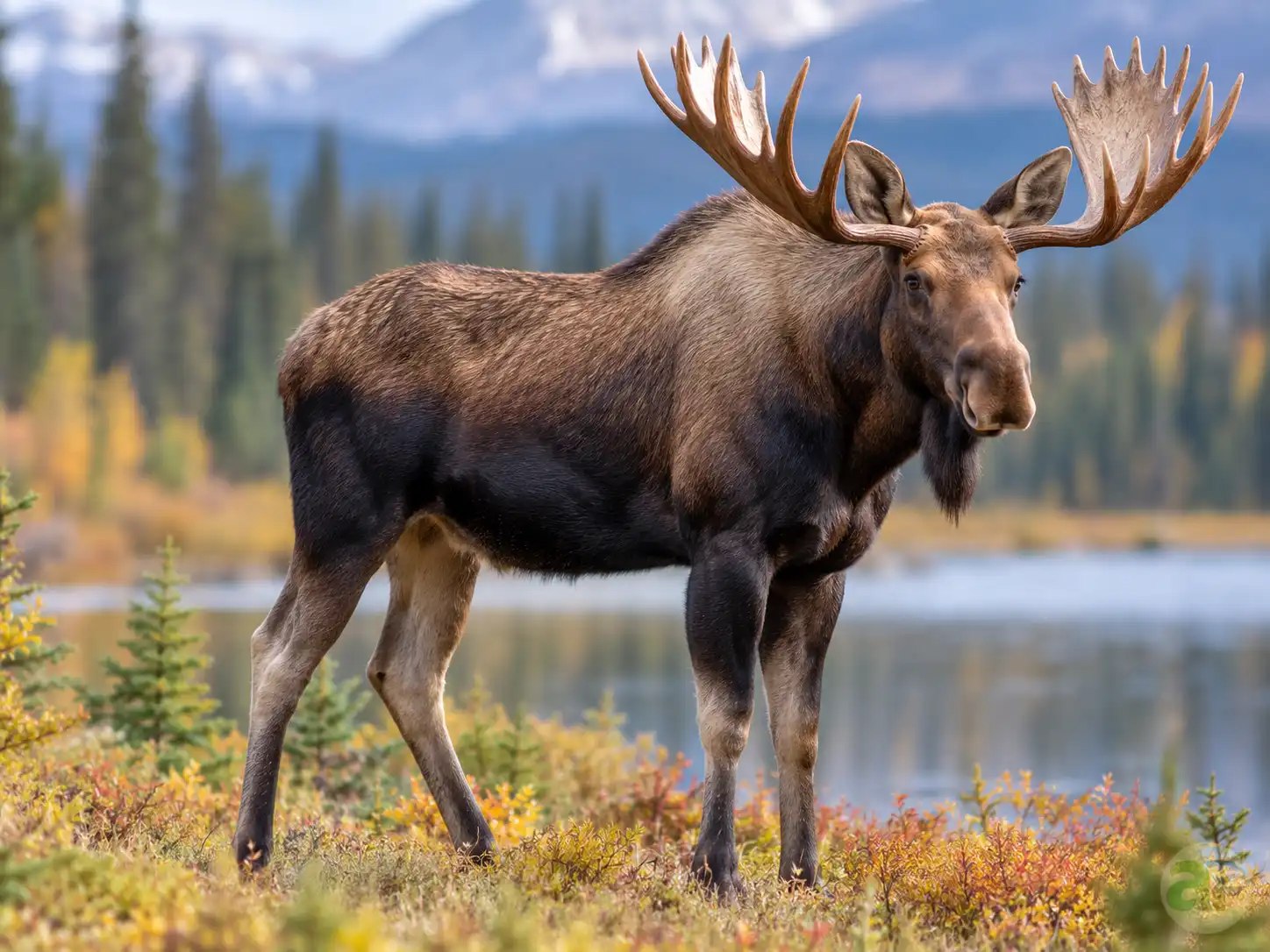
A mature bull moose’s antlers represent one of the most remarkable growth structures in the entire animal kingdom, and stand as the single most iconic physical feature associated with the species.
Size: Antler spans can reach up to 1.8 meters (6 feet) across in the largest Alaska moose bulls — the largest antlers of any living animal on Earth, exceeding even the antler spread of extinct Irish elk relatives in some documented cases.
Weight: A full set of mature antlers can weigh up to 20–30 kg — comparable to carrying a fully loaded suitcase on one’s head for months at a time.
Growth speed: Moose antlers are entirely regrown each year from scratch, and during peak summer growth, antlers can add up to 2.5 cm of length per day — among the fastest-growing tissue known in any mammal, requiring enormous caloric and mineral investment during the summer growing season.
Palmation: Unlike the branching, tine-based antlers of elk or deer, mature bull moose antlers develop broad, flattened “palmate” surfaces — a shape believed to enhance both visual display during the rut and possibly acoustic functions, as the wide surfaces may help bulls funnel and amplify sound during the breeding season.
Annual cycle: Antlers begin growing in spring covered in a soft, blood-vessel-rich tissue called “velvet,” which supplies the rapidly growing bone structure with nutrients; by late summer, blood flow to the velvet ceases, the tissue dries and is rubbed off against trees and brush, and the antlers hardened into solid bone in preparation for the autumn breeding season (the “rut”). After the rut concludes, antlers are shed entirely each winter — typically between November and January — only to regrow larger the following spring until the bull reaches peak antler size, usually between 5 and 10 years of age, after which antler size may gradually decline with advancing age.
The Distinctive Dewlap (“Bell”)
Both male and female moose possess a flap of skin hanging beneath the throat known as a “bell” or dewlap, whose exact function remains somewhat debated among biologists but is believed to play a role in scent dispersal during the breeding season — potentially helping distribute pheromones produced by glands in the area — and, potentially, in visual signaling of individual size, health, and fitness to rival bulls and prospective mates during rutting-season encounters.
Adaptations for Cold and Wetland Life
Long legs: Moose have exceptionally long legs relative to their body — proportionally longer than any other deer species — an adaptation that allows them to wade through deep snow and dense wetland vegetation far more efficiently than most other large herbivores, and to step cleanly over fallen logs and thick underbrush that would impede shorter-legged animals.
Specialized nose: A moose’s large, bulbous, overhanging nose contains specialized muscular valves that can close completely, allowing the animal to submerge its head underwater while foraging on aquatic vegetation without water entering the nostrils — a genuinely unique adaptation among deer species.
Dense winter coat: Moose grow an exceptionally thick, hollow-haired winter coat that provides outstanding insulation, with each individual hair containing air-filled cells that trap warmth extremely effectively, allowing moose to remain active and comfortable in temperatures well below freezing — so effective that moose are highly vulnerable to overheating even in moderately warm weather (temperatures as low as 14°C/57°F in summer can already induce heat stress), a factor increasingly significant as climate change raises average temperatures across their range.
Split, wide hooves: Moose hooves are large, splayed, and capable of spreading to distribute the animal’s weight over snow or soft, boggy wetland ground — functioning somewhat like natural snowshoes and allowing moose to traverse terrain that would trap smaller-hoofed animals.
Eyesight and other senses: Moose have comparatively poor visual acuity, particularly for stationary objects, but compensate with an excellent sense of smell and highly sensitive hearing, both critical for detecting approaching predators in dense forest habitat where visibility is often limited to just a few meters.
Did You Know? Moose are excellent swimmers despite their enormous size, capable of sustained swimming speeds of up to 10 km/h and documented swimming distances of over 20 kilometers in a single crossing — an ability that allows them to access isolated islands and aquatic feeding grounds unavailable to most other large land mammals, and to dive completely underwater, sometimes to depths of 5–6 meters, to reach nutrient-rich aquatic plants growing on lake bottoms, holding their breath for up to 30 seconds or more per dive during extended feeding bouts.
4. Top 25 Surprising & Interesting Moose Facts
- The moose is the largest living species of deer on Earth, with the biggest bulls approaching 700 kg.
- A mature bull’s antlers can span up to 1.8 meters (6 feet) — the largest antlers of any living animal.
- Moose antlers can grow up to 2.5 cm per day during peak summer growth, among the fastest tissue growth of any mammal.
- Moose are excellent swimmers, capable of sustained speeds of 10 km/h and crossing distances over 20 km.
- Moose can dive completely underwater, sometimes to depths of 5–6 meters, to graze on aquatic plants — a feat no other deer species performs.
- A moose’s nose contains special muscular valves that close automatically underwater, preventing water from entering the nostrils while submerged.
- In North America, “moose” and “elk” refer to two entirely different species — but in Europe, the animal North Americans call a moose is called an “elk.”
- Moose can run up to 56 km/h (35 mph) despite their massive size — faster than most humans can ever hope to run.
- A newborn moose calf can outrun a human within just a few days of birth.
- Moose are almost entirely solitary animals, unlike many other deer species that form large herds.
- An adult moose can eat up to 32 kg (70 lbs) of vegetation per day during summer months.
- Moose have poor distance eyesight for stationary objects but exceptional senses of smell and hearing.
- A bull moose’s antlers are shed entirely every winter and regrown larger the following year, up until peak maturity.
- The flap of skin under a moose’s throat is called a “bell” or dewlap.
- Moose are surprisingly dangerous to humans — in parts of Alaska, moose injure more people annually than bears do.
- A full-grown moose has virtually no natural predators as an adult except wolves and bears hunting in groups, and humans.
- Moose vision is thought to be adapted primarily for detecting movement rather than fine stationary detail, similar to many prey species.
- Winter ticks can infest a single moose by the tens of thousands, contributing to severe population declines in parts of the northeastern U.S.
- Moose are excellent at moving through deep snow due to their exceptionally long legs and wide, splayed hooves.
- The word “moose” derives from the Algonquian word moz (or moosu), meaning roughly “twig eater” — a direct reference to their woody browse diet.
- Moose milk is significantly richer in fat than cow’s milk, supporting extremely rapid calf growth.
- A moose’s stomach, like other ruminants, has four chambers to digest tough, fibrous plant material.
- Male moose can lose up to 20% of their body weight during the autumn rutting season due to reduced feeding and intense competition for mates.
- Moose are the state animal of Alaska and Maine, and the provincial or territorial animal symbol of several Canadian regions.
- Vehicle collisions with moose are a significant public safety concern in parts of Canada, Scandinavia, and the northern United States due to the animal’s massive size, dark coloration, and high leg-to-body proportion.
5. Fun Facts About Mooses
- Moose are the largest deer species in the world.
- Their antlers can span up to 1.8 meters.
- Moose can dive completely underwater to eat plants.
- They’re strong swimmers, crossing over 20 km of open water.
- A moose can run up to 56 km/h.
- Moose are mostly solitary animals.
- Adults eat up to 32 kg of food per day in summer.
- The word “moose” comes from an Algonquian word meaning “twig eater.”
- Moose have poor eyesight but excellent smell and hearing.
- A group of moose is sometimes loosely called a “herd” during winter yarding.
- Bulls shed and regrow antlers every single year.
- Moose are Alaska’s and Maine’s official state animal.
- A moose calf can already outrun a human within days of birth.
- Moose antlers are made of solid bone once they finish growing.
6. Moose Natural Habitat & Geographic Range
Moose are creatures of the northern forest, tightly associated with the boreal forest (taiga) biome and adjacent wetland, tundra-margin, and mixed deciduous forest habitats stretching across the entire Northern Hemisphere in a broad circumpolar band spanning North America, Scandinavia, and Russia.
Primary Habitat Requirements
Boreal and mixed forest: Providing woody browse (willow, birch, aspen) essential to the moose diet, along with dense cover from predators and shelter from extreme weather during the harshest winter months.
Wetlands and lakes: Critical for summer feeding on nutrient-rich aquatic vegetation, and equally important for thermoregulation during warm weather, when moose frequently wade or fully submerge in water to cool down and escape biting insects.
Deep snow tolerance: Moose are exceptionally well-adapted to snowy conditions, with their long legs and splayed hooves allowing efficient movement through snow depths that would immobilize most other large herbivores — though extremely deep, crusted snow can still restrict movement and increase vulnerability to predation.
Cold-climate dependence: Moose thrive in average annual temperatures well below those tolerable to most other large ungulates, and the species’ southern range boundary is largely determined not by food availability but by the animal’s physiological intolerance to sustained summer heat.
Geographic Range Table
| Region | Population Status | Notes |
|---|---|---|
| Alaska, USA | Abundant | Largest subspecies (gigas) found here |
| Canada | Abundant | Present in nearly every province and territory |
| Northeastern United States | Declining regionally | Significant tick-related decline in New Hampshire, Maine, Vermont |
| Rocky Mountain US (Wyoming, Colorado, Utah) | Stable | Shiras moose subspecies; smaller population overall |
| Great Lakes region (Minnesota, Michigan) | Sharply declining | One of the most severe regional moose declines documented |
| Scandinavia (Norway, Sweden, Finland) | Abundant | Called “elk” locally; managed hunting populations, some of the densest moose populations in the world |
| Russia | Abundant | Largest total Eurasian population, spanning vast boreal territory |
| Baltic states/Eastern Europe | Stable to declining | Habitat fragmentation pressures in some areas |
Habitat Use Across Seasons
Moose habitat preferences shift notably across the year. In spring, moose are drawn to early-emerging vegetation along forest edges and wetland margins. In summer, lakes, ponds, and slow-moving rivers become critical for both aquatic feeding and thermoregulation, with moose spending significant portions of warm days standing in or near water. In autumn, bulls range more widely in search of mates during the rut, sometimes crossing into unfamiliar territory. In winter, moose often concentrate in dense conifer stands offering both browse and shelter from wind and deep snow — the “yarding” behavior described further in the social behavior section.
Did You Know? Climate change is reshaping moose range in real time — warming temperatures at the southern edge of moose habitat in states like Minnesota and New Hampshire have triggered explosive growth in winter tick populations, which can infest a single moose by the tens of thousands, causing severe blood loss, hair loss (giving rise to the grim nickname “ghost moose” for severely afflicted individuals), and, in the most severe cases, death from anemia and exhaustion — a dynamic that has driven double-digit percentage population declines in some southern moose populations over the past two decades, and one of the clearest, most measurable large-mammal impacts of climate change documented anywhere in North America.
7. Moose Diet & Feeding Behavior
Moose are strict herbivores with a highly specialized diet centered on woody browse and aquatic vegetation — a nutritional strategy that allows them to thrive in habitats too nutrient-poor and too heavily forested to support many other large herbivores, but one that also demands an enormous daily volume of food intake to meet their metabolic needs.
Diet Breakdown Table
| Food Type | Approximate Percentage | Notes |
|---|---|---|
| Woody browse (willow, birch, aspen twigs/leaves) | 50–70% | Primary year-round food source, especially critical in winter |
| Aquatic vegetation (pondweed, water lilies) | 15–25% | Dominant in summer; rich in sodium and other minerals |
| Bark | 10–15% | Important supplemental source during deep winter |
| Forbs and shrubs | 5–15% | Seasonal supplement, most abundant in spring and summer |
Feeding Strategy — Browsers, Not Grazers
Moose are classified as “browsers” rather than grazers, meaning they primarily feed on the leaves, twigs, buds, and bark of woody plants and shrubs rather than grasses — a dietary niche that reduces direct competition with grazing species like elk, bison, and deer sharing the same landscape, and that reflects the moose’s evolutionary history as a forest and wetland-adapted species rather than a plains-grazing one.
Daily intake: An adult moose can consume up to 32 kg (70 lbs) of vegetation daily during the nutrient-rich summer months — an enormous volume reflecting both the animal’s massive body size and the relatively low nutritional density of much of its woody diet. Intake drops significantly during winter when food quality and availability decline substantially, forcing moose to rely on lower-calorie bark and twig browse and to draw on fat reserves accumulated during the summer growing season.
Height range: Moose are capable of browsing vegetation from ground level up to roughly 3 meters high thanks to their height and long neck, giving them access to a browse zone unavailable to smaller deer species — though moose lack the neck length of giraffes and cannot reach significantly higher canopy vegetation.
Winter feeding challenges: During the coldest months, moose must consume substantially larger volumes of lower-quality woody browse to meet their caloric needs, a period of significant physiological stress that, combined with deep snow limiting mobility, represents the most challenging season of the annual cycle for moose survival.
Aquatic Feeding — A Unique Cervid Adaptation
Moose are unique among all deer species in their capacity to dive completely underwater — sometimes to depths of 5–6 meters — to graze on nutrient- and sodium-rich aquatic plants such as pondweed and water lilies, a critical dietary supplement during summer months when sodium demands are especially high, both for general physiological function and to support lactation in nursing cows. This aquatic feeding behavior is believed to be closely tied to the specialized nasal valve adaptation described in the physical description section, without which sustained underwater foraging would be impossible.
Sodium significance: Sodium is relatively scarce in the moose’s typical terrestrial browse diet, and aquatic plants growing in lakes and wetlands often contain significantly higher sodium concentrations, making summer aquatic feeding not merely an opportunistic behavior but a physiologically important part of the annual dietary cycle.
Did You Know? Moose milk is significantly richer in fat and protein than cow’s milk, supporting the remarkably rapid growth rate of moose calves, which can gain over 1 kg per day during their first months of life — a critical adaptation for reaching a survivable body size before facing their first winter, during which juvenile mortality risk is at its highest across the entire moose life cycle.
8. Moose Reproduction & Life Cycle
Moose reproduction centers on an intense autumn breeding season known as the rut, followed by a long gestation and the birth of remarkably fast-growing calves — a reproductive strategy shaped heavily by the extreme seasonal constraints of northern forest environments.
The Rut
Timing: Typically September to October, varying somewhat by latitude and regional climate.
Bull behavior: Bulls compete for access to receptive females through a combination of vocalizations, antler displays, wallowing in scent-marked mud pits to advertise their presence and fitness, and, when necessary, occasionally direct physical combat between rival males — clashes involving locked antlers that can result in serious injury despite rarely being fatal.
Cow behavior: Cows in estrus produce distinctive vocalizations to attract bulls and may actively seek out dominant males, with successful bulls sometimes attending multiple cows in sequence across the several-week breeding period.
Energy cost: Bulls can lose up to 20% of their body weight during the rut due to intensely reduced feeding and near-constant competitive and courtship activity, entering the following winter in significantly depleted physical condition — a factor that can affect subsequent winter survival, particularly for younger or less experienced bulls.
Gestation and Birth
Gestation: Approximately 231 days (about 8 months).
Birth timing: Typically May to June, timed to coincide with the emergence of nutrient-rich spring vegetation critical for supporting lactation.
Litter size: Usually a single calf; twins occur in roughly 10–30% of births depending on regional food availability and maternal body condition, with well-nourished cows in high-quality habitat significantly more likely to produce twins, and triplets occurring rarely but documented in exceptional cases.
Birth weight: Calves weigh approximately 11–16 kg at birth — already a substantial size compared to the newborns of most other deer species, reflecting the long gestation period.
Maternal protectiveness: Cow moose are famously protective of newborn calves and are considered among the most dangerous large mammals to approach during the calving and early rearing period, frequently charging perceived threats — including humans, dogs, and vehicles — that venture too close.
Growth Stages Table
| Stage | Age | Development |
|---|---|---|
| Birth | May–June | 11–16 kg; can stand and walk within hours |
| Rapid growth phase | First few months | Can gain over 1 kg per day on rich maternal milk |
| Weaning | ~5 months | Transition to solid browse diet |
| First winter | Year 1 | Highest mortality risk period of the entire life cycle |
| Independence | ~12 months | Cow drives off calf shortly before giving birth to the next calf |
| Sexual maturity | 1.5–2.5 years | Varies by sex and local population density |
| Antler growth begins (males) | Year 1 | First small “spike” antlers appear |
| Peak antler size | 5–10 years | Bulls reach maximum antler size and body mass |
Moose Lifespan Comparison Table
| Species | Average Wild Lifespan | Maximum Captive Lifespan |
|---|---|---|
| Moose | 8–12 years | 20–25 years |
| Elk (Wapiti) | 10–13 years | ~20 years |
| White-tailed Deer | 6–8 years | ~20 years |
| Red Deer (comparison) | 10–13 years | ~18 years |
9. Social Behavior & Communication
Unlike many deer species that form large, cohesive herds, moose are predominantly solitary animals for most of the year, coming together only briefly during the autumn rut and, in some northern populations, loosely aggregating in favorable feeding areas (“yards”) during severe winter conditions.
Solitary Lifestyle
Adult moose, outside of cow-calf pairs and brief rutting-season interactions, generally avoid close association with other moose, a behavioral strategy believed to reduce local competition for the relatively dispersed, low-density browse that makes up their diet, and one that also likely reduces the risk of predators locating multiple individuals in a single encounter.
Vocalizations
Moose vocal communication includes low grunts, bellows, and, during the rut, distinctive calls used by both bulls and cows to advertise reproductive status and location to potential mates — quieter and less far-carrying than the dramatic, echoing bugling calls associated with elk, reflecting the moose’s generally more solitary and less display-dependent social structure. Cow moose in estrus produce a distinctive wailing call to attract bulls, while bulls grunt and produce a range of guttural vocalizations during direct rutting encounters and antler-clashing contests.
Winter Yarding
In regions with severe winter snowfall, moose sometimes gather in loose aggregations called “yards” — areas of dense conifer cover offering some protection from deep snow and wind, where multiple individuals may feed and shelter in relative proximity, representing one of the few contexts in which moose display anything resembling group behavior. These yards are not organized social groups in the way wolf packs or elk herds are, but rather multiple individuals independently drawn to the same favorable microhabitat during the most physically demanding period of the year.
Mother-Calf Bonds
The strongest and most enduring social bond in moose life is between a cow and her calf, persisting for approximately one year until the cow, preparing to give birth again, actively drives the previous year’s calf away — a process that can involve genuine aggression from the mother toward her nearly-grown offspring.
Did You Know? Despite their generally solitary nature and famously poor long-distance eyesight, moose possess an exceptional sense of smell and hearing, allowing them to detect approaching predators — including humans — from surprising distances despite limited visual acuity, and researchers believe moose rely on scent and sound far more heavily than sight for both predator detection and mate location during the rut.
10. Predators & Defense Mechanisms
Adult moose, owing to their enormous size, face relatively few natural predators compared to smaller deer species — though calves and, in some cases, adults remain vulnerable to a select group of large carnivores, and the moose-predator relationship has become one of the most extensively studied dynamics in North American wildlife ecology.
Natural Predators
Gray Wolves: The primary natural predator of moose across most of their range, typically hunting in packs to bring down adult moose through coordinated group effort, a behavior extensively studied in ecosystems such as Isle Royale National Park, where wolf-moose population dynamics have been continuously researched for over 60 years — one of the longest-running predator-prey studies in the world, providing landmark data on how wolf and moose populations rise and fall in cyclical relationship to one another.
Brown/Grizzly Bears: Significant predators of moose calves, and occasionally capable of killing adult moose, particularly in spring when moose are recovering from the physical toll of winter and calves are especially vulnerable during their first weeks of life.
Black Bears: Primarily a threat to newborn calves rather than adults, with predation risk highest during the brief window immediately following birth before calves develop sufficient speed and stamina to escape pursuit.
Humans: A significant source of mortality through regulated hunting across most of the moose’s range, managed as a sustainable resource in most jurisdictions through licensed hunting seasons and quota systems designed to maintain stable population levels.
The Wolf-Moose Dynamic at Isle Royale
The Isle Royale wolf-moose study, initiated in 1958, has documented dramatic population cycles in which wolf numbers rise following periods of abundant moose prey, subsequently driving moose numbers down through predation pressure, which in turn reduces the wolf population through food scarcity — a cyclical predator-prey relationship that has provided ecologists with unparalleled long-term data on large mammal population dynamics in a relatively closed island ecosystem, free from the confounding variables of human hunting and larger-scale migration present in most mainland moose populations.
Defense Mechanisms
Size and strength: An adult moose’s sheer size and powerful legs represent formidable defenses — moose are capable of delivering potentially lethal kicks to threatening predators, including wolves and even bears, with forward and lateral kicks capable of breaking bone or causing fatal injury to an attacking predator.
Aggression when threatened: Unlike most deer species, moose — particularly cows with calves and bulls during the rut — are known to display genuine aggression toward perceived threats, including humans, making them one of the more dangerous large mammals to encounter at close range in North America, with documented charges occurring with minimal apparent provocation when a moose feels cornered or its offspring are threatened.
Water escape: Moose frequently use water as an escape route from predators such as wolves, as their swimming ability generally exceeds that of pursuing land predators, allowing them to escape onto islands or across lakes where terrestrial predators cannot easily follow.
Snow advantage: In deep snow conditions, moose — with their long legs and large body mass relative to surface area — can sometimes outmaneuver wolves, which tend to sink more deeply into soft snow, giving moose a defensive advantage during certain winter conditions despite the general vulnerability deep snow otherwise creates.
11. Moose Facts for Kids
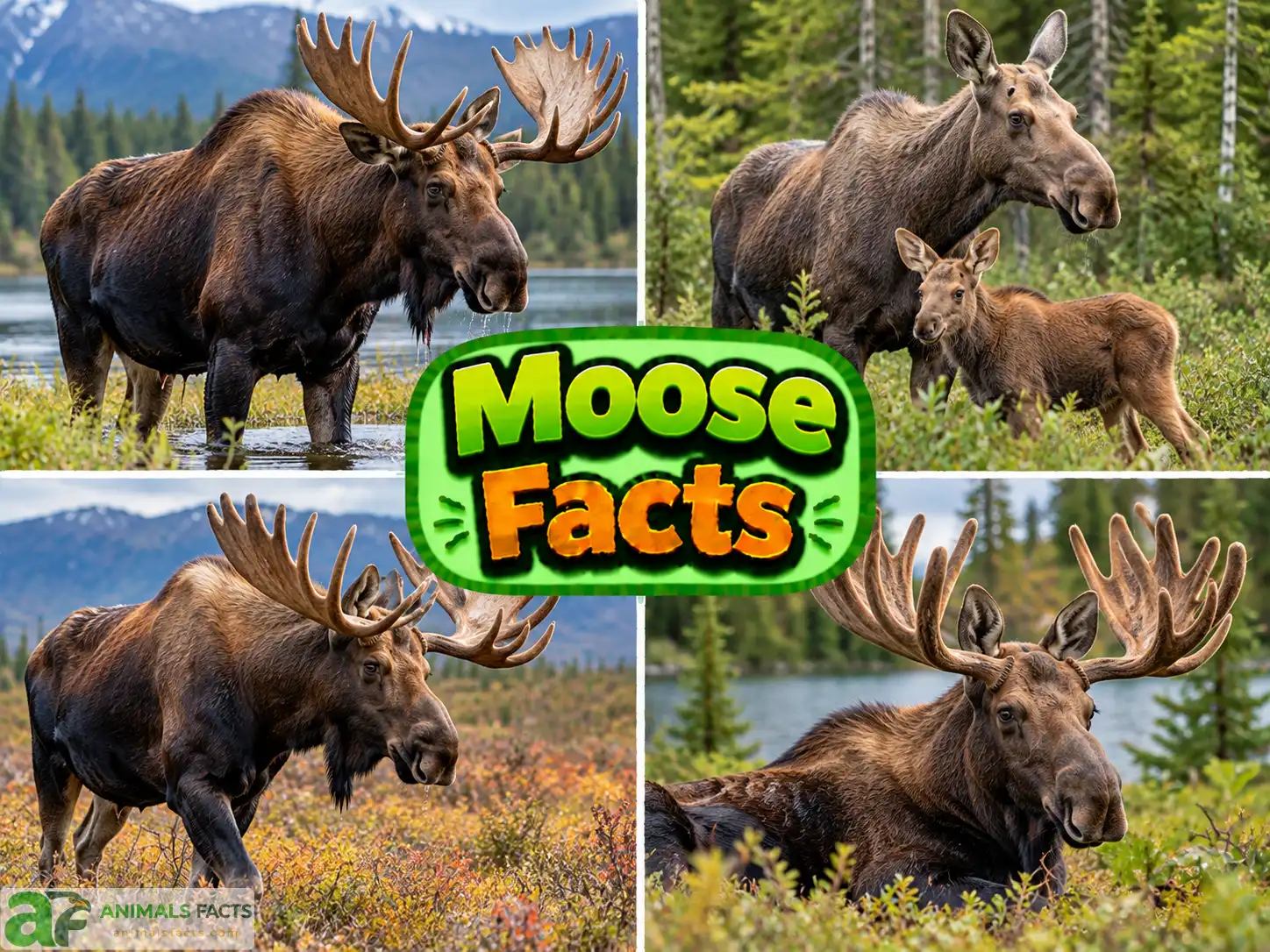
Hey kids — get ready to learn about the biggest deer in the whole world!
- Moose are the biggest deer species on Earth — some are as heavy as a small car!
- A bull moose’s antlers can be as wide as 1.8 meters — wider than most doorways!
- Moose can actually swim underwater to eat plants growing at the bottom of lakes!
- Baby moose, called calves, can already outrun a person just a few days after being born!
- Moose lose their giant antlers every winter and grow a brand-new, even bigger set the next year!
- A moose’s nose has special flaps that close automatically so water doesn’t get in when it dives underwater!
- Moose usually live alone, unlike deer that live in big herds together.
- An adult moose can eat about 32 kg of leaves and twigs every single day — that’s like eating your own body weight in salad!
- Baby moose can gain more than 1 kg every single day while they’re growing!
- A moose’s antlers are made of pure bone once they finish growing — and they can grow up to 2.5 cm bigger every day in summer!
Did You Know? Even though moose look calm and slow-moving, they can actually run as fast as 56 km/h and can be surprisingly dangerous if they feel threatened — wildlife experts always recommend giving moose plenty of space in the wild, especially moms with babies!
12. Relationship with Humans
The moose’s relationship with humans spans thousands of years of subsistence hunting, cultural significance, and — in the modern era — genuine public safety concerns related to both direct encounters and vehicle collisions, making the moose one of the few large mammals whose relationship with people remains actively and measurably dangerous today.
Indigenous Traditions
Moose have served as a critical subsistence resource for Indigenous peoples across the northern United States, Canada, and Scandinavia for thousands of years, providing meat, hides for clothing and shelter, and bone and antler material for tools and implements — with many Indigenous nations maintaining traditional ecological knowledge and sustainable harvest practices developed over countless generations of moose hunting, and moose holding significant spiritual and cultural importance in numerous northern Indigenous traditions.
Vehicle Collisions
Moose-vehicle collisions represent a significant public safety issue across parts of Canada, Scandinavia, Alaska, and the northern United States. Because of the moose’s tall body and dark coloration, collisions are particularly dangerous — a moose’s body mass sits largely above a standard vehicle’s hood height, meaning collisions frequently result in the animal’s body striking the windshield area directly rather than the vehicle’s front end absorbing the impact as it typically would with a smaller deer, contributing to disproportionately severe injury outcomes for vehicle occupants compared to collisions with smaller deer species. Several Scandinavian countries have implemented specialized road signage, wildlife fencing, and vehicle safety design standards specifically in response to moose collision risk.
Direct Human Encounters
In parts of Alaska, moose are documented to injure more people annually than bears — a surprising statistic reflecting both the moose’s size and its genuine willingness to act defensively, particularly cows protecting calves and bulls during the rutting season, when testosterone-driven aggression significantly lowers the threshold for a charging response toward perceived threats, including humans and domestic dogs.
Hunting and Wildlife Management
Regulated moose hunting remains an important cultural, subsistence, and economic activity across much of the species’ range, generating significant revenue for state and provincial wildlife management agencies through licensing fees that, in many jurisdictions, directly fund broader conservation and habitat protection programs.
13. Moose Conservation Status & Threats
| Category | Status |
|---|---|
| IUCN Status | Least Concern globally |
| Population Trend | Stable to increasing in northern range; declining in parts of southern range |
| Total Population | Approximately 1–1.5 million worldwide |
| Major Regional Threat | Climate change–driven winter tick infestations |
Major Threats
Winter ticks: The single greatest emerging threat to southern moose populations, with a single moose capable of hosting tens of thousands of ticks simultaneously, leading to severe anemia, dramatic hair loss (as afflicted moose rub excessively trying to remove ticks, exposing pale underlying skin), and mortality — a phenomenon strongly linked to warming winters that allow tick populations to survive later into the season and reproduce at higher rates than in historically colder climates.
Climate change and heat stress: Moose are extremely well-adapted to cold and poorly tolerant of heat; warming average temperatures across the southern portion of their range have been linked to increased physiological stress, reduced feeding activity during warm periods, and gradual habitat contraction at the range’s southern edge.
Habitat loss and fragmentation: Forestry practices, land development, and habitat fragmentation continue to reduce suitable moose habitat in some regions, though managed forestry in other areas has, in some cases, created beneficial early-succession browse habitat that can temporarily boost local moose populations.
Brainworm and other parasites: In areas of range overlap with white-tailed deer, moose are vulnerable to a parasitic brainworm carried asymptomatically by deer but frequently fatal to moose, representing an additional regional mortality factor, particularly as deer range continues to expand northward.
Did You Know? The moose population of Isle Royale National Park in Lake Superior has been studied continuously alongside its wolf predators since 1958, making it the longest-running predator-prey study of its kind in the world and providing decades of invaluable data on the dynamics between moose and their primary natural predator — data that has become increasingly valuable as researchers work to understand how climate change is altering these traditional predator-prey relationships.
14. Famous Moose
Bullwinkle J. Moose — the iconic cartoon character from The Rocky and Bullwinkle Show (1959), one of the most recognizable fictional moose in American popular culture, presented as good-natured, if not especially clever.
Isle Royale’s studied moose population — the subject of the world’s longest continuously running predator-prey ecological study, providing globally significant scientific insight into wolf-moose population dynamics since 1958.
Alice the Moose — a moose that became a minor social media sensation after repeatedly wandering into an Anchorage, Alaska neighborhood, illustrating the increasingly common overlap between moose and urban/suburban human populations in parts of Alaska.
15. Role in Ecosystem & Food Chain
As one of the largest herbivores in northern forest ecosystems, moose exert substantial influence on vegetation structure and composition through their browsing activity, functioning as a significant ecological force shaping the character of the boreal forests they inhabit.
Vegetation shaping: Concentrated moose browsing can significantly influence forest regeneration patterns, particularly affecting the growth of young willow, birch, and aspen — with heavy, sustained browsing pressure sometimes altering forest composition over time, suppressing certain tree species while favoring others that are less palatable to moose.
Prey base: Moose represent a critical prey species for wolves and bears across much of the boreal forest, forming a foundational link in northern predator-prey food web dynamics, with moose population fluctuations often directly driving corresponding changes in predator populations dependent on them.
Aquatic ecosystem interaction: Moose foraging on aquatic vegetation contributes to nutrient cycling within lake and wetland ecosystems, and their movement through and disturbance of shallow water habitat can influence local aquatic plant community structure.
Carcass contributions: Moose that die from predation, disease, or natural causes provide a substantial nutrient and food resource for a wide range of scavenger species, from ravens and eagles to smaller mammalian scavengers, given the sheer volume of biomass a single moose carcass represents.
16. Myths, Folklore & Cultural Significance
Moose hold significant cultural importance across Indigenous nations throughout North America’s northern forests and across Scandinavia, appearing in traditional stories, subsistence practices, and symbolic representations of strength, endurance, and the northern wilderness itself.
Indigenous North American Traditions
Across numerous northern Indigenous nations, the moose holds deep practical and spiritual significance, frequently appearing in traditional stories that reflect both careful ecological observation of the animal’s behavior and broader cultural teachings about respect for the natural world and sustainable harvest practices developed over countless generations of coexistence.
Scandinavian Culture
In Scandinavian culture, the moose (called “elk” locally) holds particular symbolic prominence in Norway, Sweden, and Finland, appearing widely in folklore, national imagery, tourism branding, and even modern road signage specifically warning drivers of collision risk — a testament to how deeply embedded the animal is in regional cultural identity and everyday life.
17. Moose in Pop Culture
“Bullwinkle” from The Rocky and Bullwinkle Show — one of the most enduringly popular fictional moose characters in American television history, a cultural touchstone since the late 1950s.
Canadian and Alaskan tourism branding — the moose serves as one of the most widely used wildlife symbols in Canadian and Alaskan tourism marketing, appearing on everything from license plates to road signage to souvenirs, functioning as an informal but powerful regional identity symbol.
Scandinavian road signage and culture — the moose (locally “elk”) appears extensively in Scandinavian cultural imagery, from traditional folk art to modern road-safety campaigns.
18. Moose Facts vs. Common Myths
Myth: Moose are slow and clumsy due to their size. Fact: Moose can run up to 56 km/h and are strong, capable swimmers despite their bulk.
Myth: Moose are docile and harmless. Fact: Moose can be genuinely dangerous, particularly cows with calves and bulls during the rut, and injure more people in some regions than bears do.
Myth: “Moose” and “elk” refer to the same animal everywhere. Fact: In North America they’re different species entirely; in Europe, “elk” refers to what North Americans call a moose.
Myth: Moose antlers stay on year-round like a permanent structure. Fact: Moose antlers are shed entirely every winter and regrown from scratch each spring.
Myth: Moose only eat grass like other deer. Fact: Moose are primarily browsers, eating woody twigs, bark, and leaves, plus aquatic plants — not grazers of grass.
19. Best Places to See Moose in the Wild
Denali National Park, Alaska, USA — excellent moose viewing across open tundra and forest edge habitat, particularly along river corridors.
Isle Royale National Park, Michigan, USA — home to the world’s most studied wild moose population, accessible by boat or seaplane.
Algonquin Provincial Park, Ontario, Canada — reliable moose sightings, particularly near wetlands and roadside “moose licks” in early morning.
Grand Teton National Park, Wyoming, USA — Shiras moose commonly observed near riverside willow habitat.
Baxter State Park, Maine, USA — one of the best moose-viewing destinations in the northeastern United States.
Jasper National Park, Alberta, Canada — reliable moose sightings in wetland and forest-edge habitat across the park.
20. Top Documentaries & Books
“Wolf and Moose of Isle Royale” documentaries — covering the landmark long-term predator-prey study, offering rare insight into decades of continuous ecological data.
“Moose: Giant of the Northern Forest” by Valerius Geist — a comprehensive natural history resource covering moose biology, behavior, and evolutionary history in accessible detail.
Various PBS Nature and BBC wildlife productions — covering moose biology, the annual antler cycle, and the challenges facing southern moose populations amid climate change.
21. Comparison of Moose with Similar Animals
| Feature | Moose | Elk (Wapiti) | White-Tailed Deer |
|---|---|---|---|
| Scientific Name | Alces alces | Cervus canadensis | Odocoileus virginianus |
| Weight | 380–700 kg | 225–450 kg | 45–135 kg |
| Social Structure | Solitary | Herd-forming | Small groups |
| Diet | Browser | Mixed grazer/browser | Browser |
| Antler Span | Up to 1.8 m | Up to 1.5 m | Much smaller |
| Swimming Ability | Excellent; can dive underwater | Good | Moderate |
| Conservation Status | Least Concern | Least Concern | Least Concern |
22. How You Can Help
Support organizations conducting moose research and habitat conservation, such as state and provincial wildlife agencies running tick-monitoring and population studies, and drive cautiously in moose-collision hotspot areas, particularly at dawn and dusk during high-activity seasons when visibility is reduced and moose movement peaks.
Practical actions:
Support state and provincial wildlife agency research funding, often generated through hunting license fees that directly support habitat conservation and population monitoring programs.
Practice safe driving in moose-collision hotspot regions, reducing speed at dawn and dusk and remaining especially alert in areas marked with moose-crossing signage.
Maintain safe distances from wild moose if encountered, particularly cows with calves and bulls during the autumn rut, when defensive aggression is most likely.
Participate in citizen science programs monitoring moose sightings and health, which many state wildlife agencies use to track tick infestation severity and population trends.
23. Frequently Asked Questions About Mooses
Q1: What is a moose’s scientific name?
The moose’s scientific name is Alces alces.
Q2: How big do moose get?
Moose can weigh up to 700 kg and stand up to 2.1 meters at the shoulder in the largest subspecies, the Alaska moose.
Q3: Can moose swim?
Yes — moose are strong swimmers, capable of sustained speeds up to 10 km/h and long crossings, and they can dive completely underwater to feed on aquatic plants.
Q4: Are moose dangerous?
Yes, moose can be genuinely dangerous, particularly cows with calves and bulls during the rutting season, and in parts of Alaska they injure more people annually than bears do.
Q5: What do moose eat?
Moose primarily eat woody browse like willow, birch, and aspen twigs and bark, along with aquatic vegetation such as pondweed during summer months.
Q6: How fast can a moose run?
Moose can run up to 56 km/h (35 mph) despite their enormous size.
Q7: Are moose endangered?
No — moose are classified as Least Concern globally, though some southern populations, particularly in Minnesota and New Hampshire, are experiencing significant declines linked to climate-related winter tick infestations.
Q8: How long do moose live?
Moose typically live 8–12 years in the wild, and can live 20–25 years in captivity.
Q9: Do moose shed their antlers every year?
Yes — bull moose shed their antlers completely each winter and regrow an entirely new, typically larger set the following spring, up until they reach peak maturity around age 5–10.
Q10: What’s the difference between a moose and an elk?
In North America, moose (Alces alces) and elk (Cervus canadensis) are entirely separate species; in Europe, however, “elk” refers to the same animal North Americans call a moose.
26. Sources & References
Wikipedia, IUCN Red List, National Geographic, Smithsonian’s National Zoo, Encyclopaedia Britannica, Isle Royale Wolf-Moose Study (ongoing research publications), Geist, Valerius — “Moose: Giant of the Northern Forest,” state wildlife agency data (Alaska Department of Fish and Game, Minnesota DNR, Maine IF&W), Live Science