

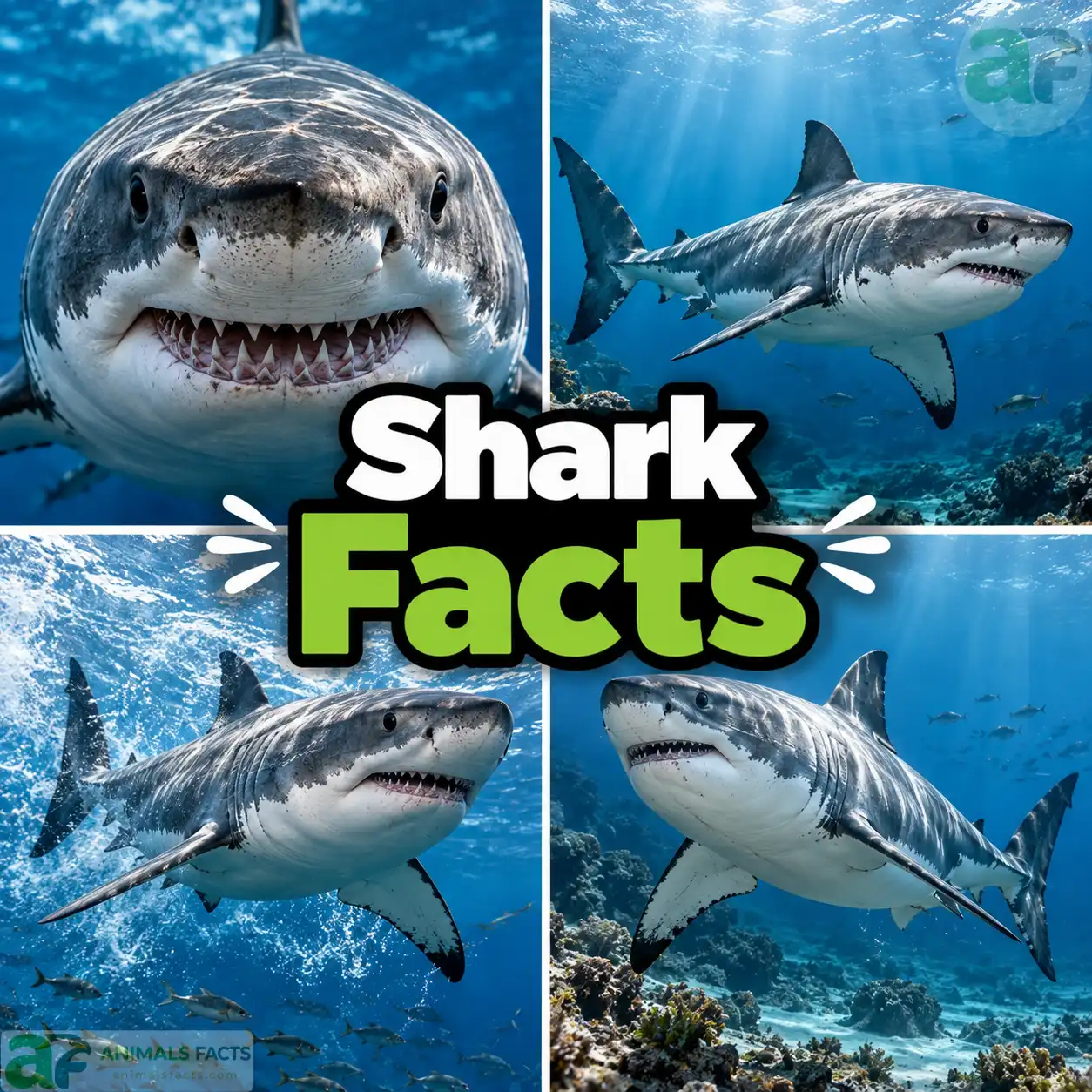
Shark Facts
| Feature | Details |
|---|---|
| Scientific Class | Chondrichthyes (cartilaginous fish) |
| Scientific Superorder | Selachimorpha |
| Kingdom | Animalia |
| Phylum | Chordata |
| Total Known Species | Approximately 540+ species worldwide |
| Oldest Shark Lineage | Sharks first appeared approximately 450 million years ago; predate dinosaurs by over 200 million years |
| Habitat | Every ocean on Earth; from shallow reefs to depths over 3,700 meters; some species enter freshwater rivers |
| Smallest Shark | Dwarf Lanternshark (Etmopterus perryi) — as small as 17–20 cm in length |
| Largest Shark | Whale Shark (Rhincodon typus) — up to 18.8 meters and 21.5 metric tons |
| Fastest Shark | Shortfin Mako Shark (Isurus oxyrinchus) — burst speeds up to 74 km/h (46 mph) |
| Longest Lifespan | Greenland Shark (Somniosus microcephalus) — estimated 270–500+ years |
| Diet | Carnivores and filter feeders — fish, marine mammals, invertebrates, and plankton depending on species |
| Conservation Status | Over one-third of all shark and ray species threatened with extinction (IUCN Red List, 2026) |
| Annual Human Deaths from Sharks | Approximately 5–10 deaths globally per year |
| Annual Sharks Killed by Humans | Estimated 80–100 million sharks killed annually, primarily for the fin trade |
 1. Introduction: What is a Shark?
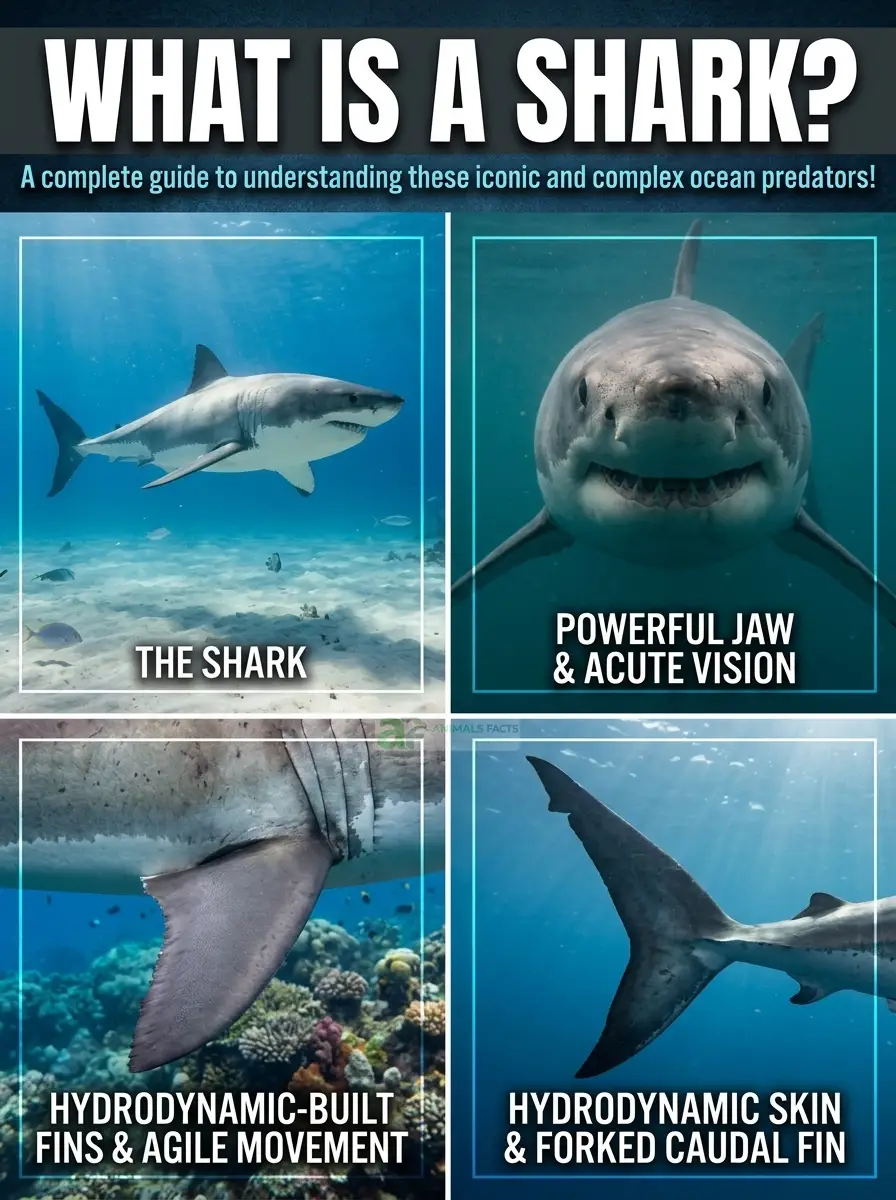
They have patrolled the oceans for over 450 million years — surviving all five of Earth’s mass extinction events, outliving the dinosaurs by hundreds of millions of years, and refining a body plan so effective that it has barely needed to change since before trees existed on land. Yet despite this extraordinary evolutionary pedigree, sharks remain one of the most misunderstood and most feared animals on the planet. Shark facts — real, scientifically verified shark facts — reveal an animal of astonishing diversity, intelligence, and ecological importance that bears almost no resemblance to the mindless killing machine of popular imagination.
The superorder Selachimorpha encompasses over 540 known species — an extraordinary range of forms spanning from the Dwarf Lanternshark, small enough to rest in the palm of a human hand, to the Whale Shark, the largest fish on Earth at up to 18.8 meters in length. Sharks inhabit every ocean on the planet, from sunlit tropical reefs to the crushing darkness of the deep sea, from polar waters to the open Pacific. They include filter feeders that pose no threat to anything larger than plankton, ancient deep-sea species that move so slowly they grow new skin cells more gradually than any other vertebrate, and apex predators whose evolutionary refinement has made them among the most efficient hunters in the natural world.
Whether you are a student researching shark facts for a school project, a diver fascinated by these ocean giants, a parent looking for shark facts for kids, a marine biology enthusiast, or simply someone whose understanding of sharks comes primarily from a famous 1975 film and wants to learn the truth — this article is your definitive guide. We cover shark habitat, shark diet, shark behavior, reproduction, the urgent conservation crisis facing sharks worldwide, their cultural significance, and everything in between. Let us dive in.
2. Shark Species Overview & Classification
Sharks belong to the class Chondrichthyes — cartilaginous fish — distinguishing them fundamentally from the bony fish (Osteichthyes) that make up the vast majority of fish species on Earth. This single anatomical distinction — a skeleton made of cartilage rather than bone — defines much of what makes sharks biologically unique.
What Defines a Shark?
All sharks share these defining characteristics:
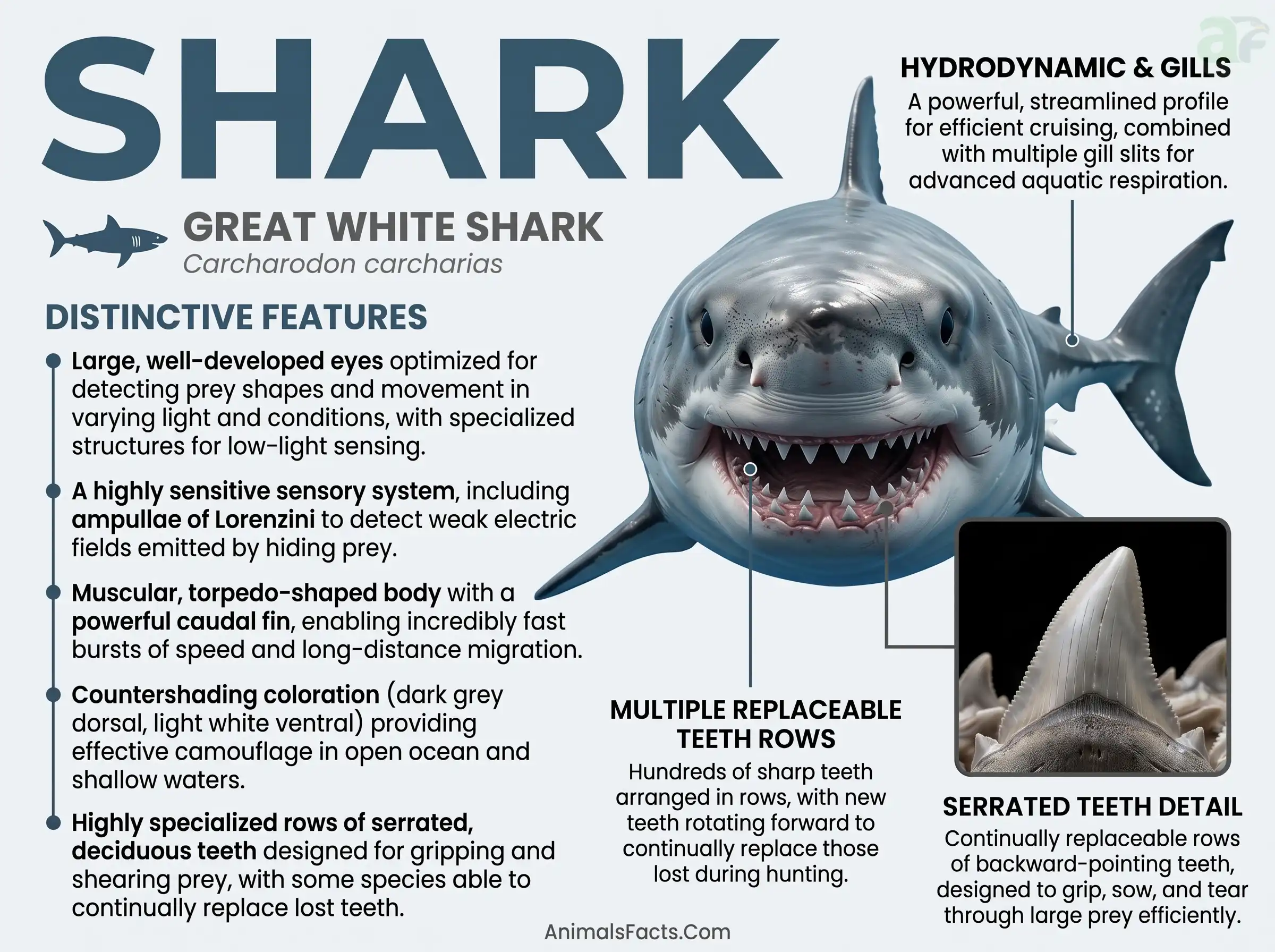
- Cartilaginous skeleton: Lighter and more flexible than bone, allowing for efficient movement and reduced energy expenditure
- Five to seven gill slits: Exposed on the sides of the head, unlike the single gill covering (operculum) of bony fish
- Placoid scales (dermal denticles): Tiny tooth-like structures covering the skin, giving shark skin a rough, sandpaper-like texture and providing significant hydrodynamic advantages
- Continuous tooth replacement: Sharks regenerate teeth continuously throughout their lives — many species can produce tens of thousands of teeth over a lifetime
- No swim bladder: Unlike bony fish, sharks rely on large, oil-filled livers and continuous swimming (in most species) to maintain buoyancy
- Electroreception: Specialized organs called the Ampullae of Lorenzini detect the faint electrical fields generated by all living animals
Major Shark Classification Table
| Order | Common Name | Approx. Species | Key Examples |
|---|---|---|---|
| Carcharhiniformes | Ground Sharks | ~290 | Tiger Shark, Bull Shark, Blacktip Reef Shark, Hammerhead |
| Squaliformes | Dogfish Sharks | ~130 | Spiny Dogfish, Greenland Shark, Lanternsharks |
| Lamniformes | Mackerel Sharks | ~15 | Great White Shark, Mako Shark, Basking Shark, Megamouth |
| Orectolobiformes | Carpet Sharks | ~45 | Whale Shark, Nurse Shark, Wobbegong, Zebra Shark |
| Squatiniformes | Angel Sharks | ~23 | Angel Shark |
| Heterodontiformes | Bullhead Sharks | ~9 | Horn Shark, Port Jackson Shark |
| Hexanchiformes | Cow & Frilled Sharks | ~6 | Frilled Shark, Sixgill Shark |
| Pristiophoriformes | Sawsharks | ~9 | Longnose Sawshark |
Species Evolution & Discovery Timeline
~450 million years ago: The earliest shark-like fish ancestors appeared during the Late Ordovician Period — based on fossilized scales found in Australia and the United States, representing the oldest evidence of shark lineage.
~400 million years ago: Cladoselache, one of the earliest well-documented sharks, appeared in Devonian seas — already exhibiting the streamlined torpedo-shaped body plan that remains characteristic of sharks today.
~358–323 million years ago: The Carboniferous Period is sometimes called the “Golden Age of Sharks” — an extraordinary diversification produced bizarre forms including Stethacanthus, with its distinctive anvil-shaped dorsal fin, and Helicoprion, with its astonishing spiral whorl of teeth.
~252 million years ago: Sharks survived the Permian-Triassic mass extinction — the most catastrophic extinction event in Earth’s history, which eliminated approximately 96% of marine species — demonstrating extraordinary evolutionary resilience.
~66 million years ago: Sharks survived the Cretaceous-Paleogene extinction event that eliminated the non-avian dinosaurs — continuing their unbroken presence in Earth’s oceans.
~23–3.6 million years ago: Megalodon (Otodus megalodon) — the largest shark and one of the largest predatory fish ever to exist, reaching estimated lengths of 15–20 meters — dominated the world’s oceans during the Miocene and Pliocene epochs before going extinct approximately 3.6 million years ago.
1758: Carl Linnaeus formally classified several shark species in Systema Naturae, establishing the foundation of modern shark taxonomy.
1976: The Megamouth Shark (Megachasma pelagios) was discovered for the first time — an entirely new family of shark previously unknown to science, demonstrating that even large shark species can remain undiscovered.
2003: Researchers confirmed that Hammerhead Sharks can reproduce through parthenogenesis (virgin birth) — a discovery made after a captive female with no access to males produced viable offspring.
2016: A Greenland Shark was confirmed through radiocarbon dating of eye lens tissue to be approximately 392 years old (with an estimated range of 272–512 years) — making it the longest-lived vertebrate animal ever scientifically documented.
3. Shark Physical Description & Unique Features
Sharks possess one of the most refined and evolutionarily stable body plans in the history of vertebrate life — a design so effective that it has required remarkably little modification across hundreds of millions of years.
Size Extremes
Smallest shark: The Dwarf Lanternshark (Etmopterus perryi) — found in deep waters off Colombia and Venezuela — measures just 17–20 centimeters in length, small enough to fit in a human hand. It is also bioluminescent, producing light from specialized organs on its underside.
Largest shark and largest fish on Earth: The Whale Shark (Rhincodon typus) — confirmed individuals reaching 18.8 meters in length and 21.5 metric tons in weight. Despite its enormous size, it is a gentle filter feeder posing no threat to humans.
Largest predatory shark: The Great White Shark (Carcharodon carcharias) — confirmed individuals reaching up to 6.4 meters in length and over 1,900 kg in weight, though most adults are considerably smaller, averaging 4–5 meters.
Largest shark ever to exist: Megalodon (Otodus megalodon) — extinct for approximately 3.6 million years — is estimated to have reached 15–20 meters in length, with a bite force estimated at over 180,000 Newtons, the most powerful bite of any animal in Earth’s history.
Unique Physical Adaptations
Placoid Scales (Dermal Denticles): Shark skin is covered not in conventional fish scales but in tiny, tooth-like structures called dermal denticles — each one a microscopic version of a shark tooth, with the same basic structure of enamel, dentine, and a pulp cavity. These denticles reduce drag and turbulence as the shark swims, making shark skin so hydrodynamically efficient that competitive swimwear manufacturers have copied the structure for racing swimsuits. Shark skin feels rough when stroked from tail to head and smooth in the opposite direction — like sandpaper with a directional grain.
Ampullae of Lorenzini: Named for the Italian scientist who first described them in 1678, these specialized electroreceptor organs — small, jelly-filled pores clustered around the snout — detect electrical fields as weak as 5 billionths of a volt per centimeter. This extraordinary sensitivity allows sharks to detect the faint electrical signals generated by the muscle contractions and heartbeats of prey animals, even those completely hidden beneath sand.
Continuous Tooth Replacement: Unlike most vertebrates, sharks are not limited to two sets of teeth across their lifetime. Shark teeth are arranged in multiple rows, with new teeth continuously developing behind the functional row and rotating forward to replace teeth that are lost or worn. A single shark can produce and shed tens of thousands of teeth over its lifetime — which is why shark teeth are among the most common vertebrate fossils on Earth.
Liver-Based Buoyancy: Lacking the swim bladder used by bony fish, most sharks rely on an enormous, oil-filled liver — which can comprise up to 30% of total body weight in some species — to provide buoyancy. Shark liver oil is less dense than seawater, providing lift that reduces (though does not eliminate) the energy required to avoid sinking.
The Heterocercal Tail: Most sharks possess an asymmetrical tail fin, with the upper lobe larger than the lower — generating both forward thrust and lift as the shark swims, compensating partially for the absence of a swim bladder.
Did You Know? The Great White Shark is partially warm-blooded — a rare trait among fish called regional endothermy. Using a specialized network of blood vessels called the rete mirabile (“wonderful net”), Great Whites and several related species (including Mako and Salmon Sharks) recover metabolic heat from their swimming muscles before it dissipates into the surrounding water — keeping core muscle temperature up to 14°C warmer than the surrounding ocean. This allows them to swim faster, hunt more effectively, and tolerate a wider range of water temperatures than nearly any other fish.
4. Top 25 Surprising & Interesting Shark Facts
- Sharks have existed for over 450 million years — they predate dinosaurs by more than 200 million years and have survived all five of Earth’s mass extinction events.
- The Greenland Shark is the longest-lived vertebrate animal ever scientifically confirmed — radiocarbon dating estimated one individual at approximately 392 years old, with a possible range up to 512 years.
- Sharks can detect a single drop of blood diluted in an estimated 100 liters of water — and can detect blood from distances of up to 400 meters depending on water currents.
- The Whale Shark — the largest fish on Earth — feeds exclusively on plankton, fish eggs, and small fish, posing zero threat to humans despite its enormous size.
- Hammerhead Sharks have been confirmed to reproduce through parthenogenesis — virgin birth — with documented cases of females with no access to males producing viable offspring.
- The Cookiecutter Shark takes circular bites out of much larger animals — including whales, dolphins, and even submarines and underwater cables — using its uniquely specialized jaw and suction-cup-like mouth.
- Sharks have electroreception so sensitive they can detect the electrical field generated by a hidden flatfish’s heartbeat through a layer of sand.
- The Shortfin Mako Shark is the fastest shark in the ocean — capable of burst speeds up to 74 km/h (46 mph) — making it one of the fastest fish in the entire ocean.
- Great White Sharks can detect a seal silhouette from over 150 meters away and launch attacks at speeds exceeding 40 km/h, sometimes breaching completely out of the water in pursuit.
- The Megamouth Shark — one of the largest sharks at up to 5.5 meters — was completely unknown to science until 1976, demonstrating how much of the deep ocean remains unexplored.
- Shark skin is covered in microscopic tooth-like structures called dermal denticles that reduce drag so effectively that competitive swimwear has been engineered to mimic the structure.
- Most sharks must keep swimming continuously to breathe, forcing oxygenated water over their gills — though several species, including Nurse Sharks, can pump water over their gills while stationary and rest on the ocean floor.
- Tiger Sharks are sometimes called “garbage cans of the sea” because their diet includes an extraordinarily wide range of items — including license plates, tires, and other debris alongside their normal prey.
- The Bull Shark is one of the only shark species that can survive and even thrive in freshwater — they have been documented over 4,000 kilometers up the Amazon River and in Lake Nicaragua.
- A shark’s bite force varies dramatically by species — the Great White Shark’s bite force has been measured at approximately 18,000 Newtons, while extinct Megalodon is estimated to have exceeded 180,000 Newtons — the most powerful bite of any animal in Earth’s history.
- Sharks have survived five mass extinction events, including the Permian-Triassic extinction that eliminated approximately 96% of marine species — making them one of the most evolutionarily resilient vertebrate lineages on Earth.
- The Goblin Shark has a uniquely protrusible jaw that can shoot forward from its head to capture prey — one of the strangest and least-studied feeding mechanisms of any shark.
- Whale Sharks have a pattern of spots on their skin that is as unique as a human fingerprint — researchers use photo-identification of spot patterns to track individual whale sharks over years and across ocean basins.
- Sharks do not have bones — their entire skeleton is made of cartilage, the same flexible tissue found in human ears and noses, which is why complete shark skeletons rarely fossilize and most shark fossils are simply teeth.
- The Frilled Shark — a deep-sea species with a snake-like body — is sometimes called a “living fossil” because its anatomy closely resembles sharks from 80 million years ago.
- Lemon Sharks have demonstrated learning and memory capabilities comparable to some mammals — they can be trained to complete tasks and remember the solutions for extended periods, even after months without practice.
- Sharks produce and shed tens of thousands of teeth over their lifetime — making fossilized shark teeth among the most commonly found vertebrate fossils anywhere on Earth.
- The Epaulette Shark of Australia and Indonesia can “walk” across exposed reef flats using its muscular fins — and can survive out of water for up to an hour by significantly reducing its brain’s oxygen requirements.
- Despite their fearsome reputation, sharks kill an average of just 5–10 humans globally per year — while humans kill an estimated 80–100 million sharks annually, primarily for the international shark fin trade.
- The Basking Shark — the second-largest fish on Earth at up to 12 meters — filters an estimated 2,000 cubic meters of water per hour through its gill rakers to capture zooplankton, despite having a mouth wide enough to swallow a human.
5. Fun Facts About Sharks
- Sharks predate trees — the oldest tree fossils are approximately 385 million years old, while shark ancestors appeared approximately 450 million years ago.
- A shark’s liver can comprise up to 30% of its total body weight — providing buoyancy in the absence of a swim bladder.
- The Greenland Shark doesn’t reach sexual maturity until approximately 150 years of age — the slowest-maturing vertebrate ever documented.
- Sharks have an extraordinarily efficient sense of smell — two-thirds of a shark’s brain is dedicated to processing olfactory information.
- The Port Jackson Shark lays distinctive spiral-shaped egg cases that it wedges into rock crevices for protection.
- Nurse Sharks can survive for extended periods lying motionless on the sea floor — actively pumping water over their gills rather than relying on forward swimming.
- A group of sharks is sometimes called a “shiver” — though “school” is also commonly used for some species.
- Pyjama Sharks and several other species lay eggs encased in distinctive structures called “mermaid’s purses” — frequently found washed up on beaches worldwide.
- Sharks are found in every ocean on Earth — from the tropics to the Arctic and Antarctic, and from the surface to depths exceeding 3,700 meters.
- The Great White Shark’s stomach can be turned inside out and ejected through its mouth — a behavior called gastric eversion that allows it to expel unwanted stomach contents.
- A single Whale Shark can carry over 300 remora fish attached to its body — cleaning parasites and feeding on scraps in a mutually beneficial relationship.
- Sharks have no vocal cords and produce no sound — they communicate entirely through body language, electroreception, and chemical signals.
6. Sharks Habitat & Geographic Range
Sharks have achieved one of the most complete ocean colonizations of any vertebrate group — inhabiting virtually every marine environment on Earth, from tropical coral reefs to polar seas, from shallow coastal shelves to depths exceeding 3,700 meters.
Major Shark Habitat Types
Coral Reefs: Tropical reef ecosystems support a wide range of reef-associated sharks including Blacktip Reef Sharks, Whitetip Reef Sharks, Grey Reef Sharks, and Nurse Sharks. These species play critical roles in maintaining reef fish population balance.
Open Ocean (Pelagic Zone): The largest oceanic habitat by volume. Home to highly migratory species including Great White Sharks, Mako Sharks, Blue Sharks, Oceanic Whitetip Sharks, and the filter-feeding giants — Whale Sharks and Basking Sharks — which traverse entire ocean basins following seasonal plankton blooms.
Deep Sea: Below 200 meters, an extraordinary array of specialized deep-sea sharks survive in cold, dark, high-pressure environments. The Greenland Shark inhabits Arctic waters down to 2,200 meters. The Goblin Shark and Frilled Shark represent ancient lineages adapted to deep, dark waters where they encounter few competitors. The Portuguese Dogfish has been recorded at depths exceeding 3,700 meters — the deepest confirmed depth for any shark species.
Coastal & Estuarine Waters: Many shark species use shallow coastal waters, bays, and estuaries as nursery habitat for their young — including Lemon Sharks, Bull Sharks, and numerous hammerhead species, which give birth in protected shallow waters offering refuge from larger predators.
Freshwater: A small number of shark species tolerate or thrive in freshwater. The Bull Shark is the most notable example — capable of osmoregulating effectively in freshwater and documented over 4,000 kilometers up the Amazon River and resident in Lake Nicaragua.
Polar Seas: The Greenland Shark is the primary large shark species of Arctic waters, tolerating water temperatures as low as -1.8°C. Several smaller shark species inhabit Antarctic and sub-Antarctic waters as well.
Habitat Range by Region
| Region / Water Body | Notable Shark Species | Approximate Species Count |
|---|---|---|
| Indo-Pacific (Coral Triangle) | Whale Shark, Reef Sharks, Hammerheads, Tiger Shark | 130+ |
| Atlantic Ocean | Great White Shark, Mako Shark, Blue Shark, Basking Shark | 100+ |
| Caribbean Sea | Nurse Shark, Reef Sharks, Lemon Shark, Bull Shark | 50+ |
| Mediterranean Sea | Blue Shark, Shortfin Mako, Basking Shark, Sandbar Shark | 47 |
| Arctic & Subarctic | Greenland Shark, Black Dogfish | 10+ |
| Deep Sea (Global, 200m+) | Goblin Shark, Frilled Shark, Portuguese Dogfish, Lanternsharks | 100+ |
| Amazon River System | Bull Shark (freshwater populations) | 1 (freshwater) |
| Antarctic & Sub-Antarctic | Antarctic-associated dogfish species | 5+ |
Did You Know? Sharks are found in every ocean on Earth without exception, and a small number of species — most notably the Bull Shark — can survive extended periods in fully freshwater rivers and lakes. Bull Sharks have been documented swimming in the Mississippi River as far north as Illinois, over 3,200 kilometers from the open ocean, demonstrating one of the most remarkable osmoregulatory adaptations of any cartilaginous fish.
7. Sharks Diet & Feeding Behavior
Shark diets span the full spectrum from microscopic plankton to large marine mammals, reflecting the extraordinary ecological diversity of the over 540 species within the group. The popular image of the shark as an indiscriminate killing machine obscures the reality that most species are highly specialized, selective feeders.
Major Dietary Categories
Apex Predators: Large, active predatory sharks — including Great White Sharks, Tiger Sharks, and Bull Sharks — occupy the top of marine food webs, preying on fish, marine mammals, sea turtles, and other sharks.
Filter Feeders: The three largest shark species — Whale Shark, Basking Shark, and Megamouth Shark — have evolved to filter microscopic plankton, fish eggs, and small fish from enormous volumes of water, despite their massive size. None pose any predatory threat to humans.
Specialist Predators: Many shark species have evolved highly specific prey preferences and feeding adaptations. The Hammerhead Shark’s distinctive head shape is believed to enhance its ability to detect and pin down stingrays, one of its preferred prey items, using electroreception distributed across its wide head.
Bottom Feeders: Species such as the Nurse Shark, Wobbegong, and Angel Shark feed primarily on bottom-dwelling invertebrates, crustaceans, and small fish, using suction feeding to extract prey from crevices and sand.
Scavengers: Many sharks, particularly the Tiger Shark, are notably opportunistic — consuming carrion and a remarkably wide range of items beyond typical prey.
Diet Breakdown Table
| Shark Species | Primary Food | Secondary Food | Feeding Method |
|---|---|---|---|
| Great White Shark | Seals, sea lions, large fish (70%) | Whale carcasses, other sharks (30%) | Ambush; explosive vertical attack |
| Whale Shark | Zooplankton, fish eggs (90%) | Small fish, krill (10%) | Ram and suction filter feeding |
| Tiger Shark | Fish, sea turtles, marine mammals (60%) | Carrion, marine debris, birds (40%) | Opportunistic active hunting |
| Bull Shark | Fish, other sharks (60%) | Marine mammals, birds, turtles (40%) | Active pursuit; ambush |
| Hammerhead Shark | Stingrays, fish (70%) | Squid, crustaceans (30%) | Active hunting; electroreception |
| Basking Shark | Zooplankton (95%) | Small fish (5%) | Passive ram filter feeding |
| Nurse Shark | Crustaceans, mollusks (60%) | Small fish (40%) | Suction feeding; nocturnal foraging |
| Mako Shark | Fast fish (tuna, swordfish) (80%) | Squid, other sharks (20%) | High-speed pursuit |
| Cookiecutter Shark | Flesh plugs from larger animals (100%) | — | Suction attachment; rotational bite |
Did You Know? Despite their reputation, Great White Sharks are highly selective feeders that show a strong preference for the energy-rich blubber of seals and sea lions over the comparatively lean muscle tissue of humans. Research published by shark behavior specialists has demonstrated that the majority of shark bites on humans are best classified as “investigative bites” — the shark using its mouth to explore an unfamiliar object in the water, not a predatory attack intending to consume the victim. In the overwhelming majority of recorded shark bite incidents, the shark releases the person after a single bite and does not return.
8. Shark Reproduction & Life Cycle
Sharks display the most diverse range of reproductive strategies of any fish group — encompassing egg-laying, live birth, and several intermediate strategies, alongside some of the slowest reproductive rates and longest gestation periods in the entire animal kingdom.
Reproductive Strategies
Oviparity (Egg-laying): Approximately 40% of shark species lay eggs, typically encased in a tough, leathery protective structure commonly called a “mermaid’s purse.” Species including the Port Jackson Shark, Swell Shark, and Catshark species deposit these egg cases in protected crevices or attach them to seaweed and coral, where they develop for several months to over a year before hatching with no further parental involvement.
Viviparity (Live Birth): Many shark species, including Hammerhead Sharks, Bull Sharks, and Lemon Sharks, give birth to live young that develop inside the mother via a placental connection similar in function (though not in evolutionary origin) to mammalian pregnancy.
Ovoviviparity: The most common shark reproductive strategy — embryos develop inside eggs that are retained within the mother’s body until hatching, after which she gives birth to live young. The Great White Shark and many other species use this strategy. In several species — most dramatically the Sand Tiger Shark — this leads to intrauterine cannibalism, in which the first embryo to develop teeth consumes its siblings in the womb, ensuring only the largest, strongest pup from each uterus is born.
Extraordinary Reproductive Facts
Parthenogenesis: Several shark species — including Hammerhead Sharks, Blacktip Sharks, and Zebra Sharks — have been documented reproducing via parthenogenesis, in which females produce viable offspring without any genetic contribution from a male. This was first confirmed scientifically in 2007 in a captive Hammerhead Shark that had never had contact with a male.
Extremely long gestation: The Frilled Shark has the longest confirmed gestation period of any vertebrate animal — estimated at up to 42 months (3.5 years) — though some researchers suggest the Spiny Dogfish may rival this at up to 24 months.
Multiple paternity: Genetic studies of shark litters have revealed that pups within a single litter can have different fathers — female sharks of several species mate with multiple males during a single reproductive cycle, increasing genetic diversity among offspring.
No parental care: With extremely rare exceptions, sharks provide zero parental care after birth or hatching. Shark pups are fully independent from the moment they are born — they must immediately hunt, avoid predators (including, in many cases, larger sharks of their own species), and survive entirely without maternal protection or guidance.
Lifespan Comparison Table
| Species | Average Lifespan | Record / Maximum |
|---|---|---|
| Spiny Dogfish | 25–40 years | ~100 years |
| Lemon Shark | 25–30 years | ~37 years (captivity) |
| Tiger Shark | 20–30 years | ~50 years (estimated) |
| Great White Shark | 40–70 years | 73 years (confirmed) |
| Whale Shark | 70–130 years | ~150 years (estimated) |
| Greenland Shark | 270–400 years | ~392 years confirmed; up to 512 years possible |
9. Social Behavior & Communication
Sharks have long been characterized as solitary, instinct-driven hunters — but decades of research have revealed a far more behaviorally complex animal, capable of social learning, individual recognition, and surprisingly sophisticated group dynamics in several species.
Social Structures
Largely solitary species: Many large sharks — including Great White Sharks and Tiger Sharks — are predominantly solitary, coming together only opportunistically around abundant food sources or during mating season.
Schooling species: Several species form large, coordinated groups. Scalloped Hammerhead Sharks form daytime schools of hundreds of individuals at locations including the Galápagos Islands and the Sea of Cortez — a behavior whose precise function (predator protection, mating opportunity, or social structure) remains an active area of research. Whale Sharks congregate in large numbers at predictable seasonal feeding aggregations.
Hierarchical interactions: Observations at shark feeding aggregations have documented apparent size-based dominance hierarchies, with larger individuals gaining priority access to food resources, and smaller sharks displaying deference behaviors when approached by larger conspecifics.
Communication Methods
Body language: Sharks communicate primarily through visual postural signals. The “hunch” display — in which a shark arches its back, lowers its pectoral fins, and swims in an exaggerated, jerky pattern — is a well-documented threat display used by Grey Reef Sharks and several other species to warn off perceived intruders before resorting to a bite.
Electroreception-based awareness: Sharks use their Ampullae of Lorenzini not only to detect prey but also to maintain spatial awareness of other sharks and large animals in their vicinity, contributing to coordinated movement in schooling species.
Chemical communication: Sharks release and detect chemical signals (pheromones) related to reproductive status — critically important during mating season, when males track females over considerable distances using olfactory cues.
Did You Know? Research conducted on Lemon Sharks at the Bimini Biological Field Station in the Bahamas has demonstrated that these sharks display measurable social preferences — individuals show consistent patterns of associating with specific other sharks over extended periods, a behavior consistent with the formation of social bonds. This research has fundamentally challenged the long-standing assumption that sharks are purely solitary, instinct-driven animals incapable of social relationships.
10. Predators & Defense Mechanisms
Despite sitting at or near the top of most marine food webs, sharks themselves face predation — particularly during their vulnerable juvenile stages — and have evolved a range of defensive adaptations in response.
Natural Predators of Sharks
Orcas (Killer Whales): The most significant natural predator of large sharks, including documented predation on Great White Sharks. Orcas have been observed using a specialized hunting technique — flipping sharks upside down to induce a paralytic state called tonic immobility — before consuming primarily the shark’s liver, which is exceptionally rich in nutrients.
Larger sharks: Cannibalism and interspecific shark predation are common — large Tiger Sharks, Great White Sharks, and Bull Sharks regularly prey on smaller shark species, and shark pups of nearly every species face significant predation risk from adult sharks, including members of their own species.
Large bony fish and marine mammals: Juvenile and small shark species face predation from a range of larger fish, seals, and other marine predators.
Defense Mechanisms
Size and speed: For most adult sharks, sheer physical size and swimming speed represent their primary defense — adult Great White Sharks, Tiger Sharks, and similar apex species face minimal predation risk once they reach full maturity.
Camouflage: Bottom-dwelling species, including Wobbegongs, Angel Sharks, and many catsharks, rely heavily on cryptic coloration that matches sandy or rocky substrates, remaining nearly invisible to both predators and prey.
Spines: Several shark species, including the Spiny Dogfish and Horn Shark, possess sharp spines positioned in front of their dorsal fins, providing a physical deterrent against predation attempts.
Schooling behavior: Species that form schools, such as juvenile Hammerhead Sharks, gain a degree of protection from the dilution effect of group living, reducing individual predation risk.
Tonic immobility: Many shark species, when flipped upside down, enter a temporary, trance-like paralytic state called tonic immobility. While the evolutionary function of this response remains debated, it has been exploited both by predators (notably orcas) and by researchers conducting safe handling and tagging procedures.
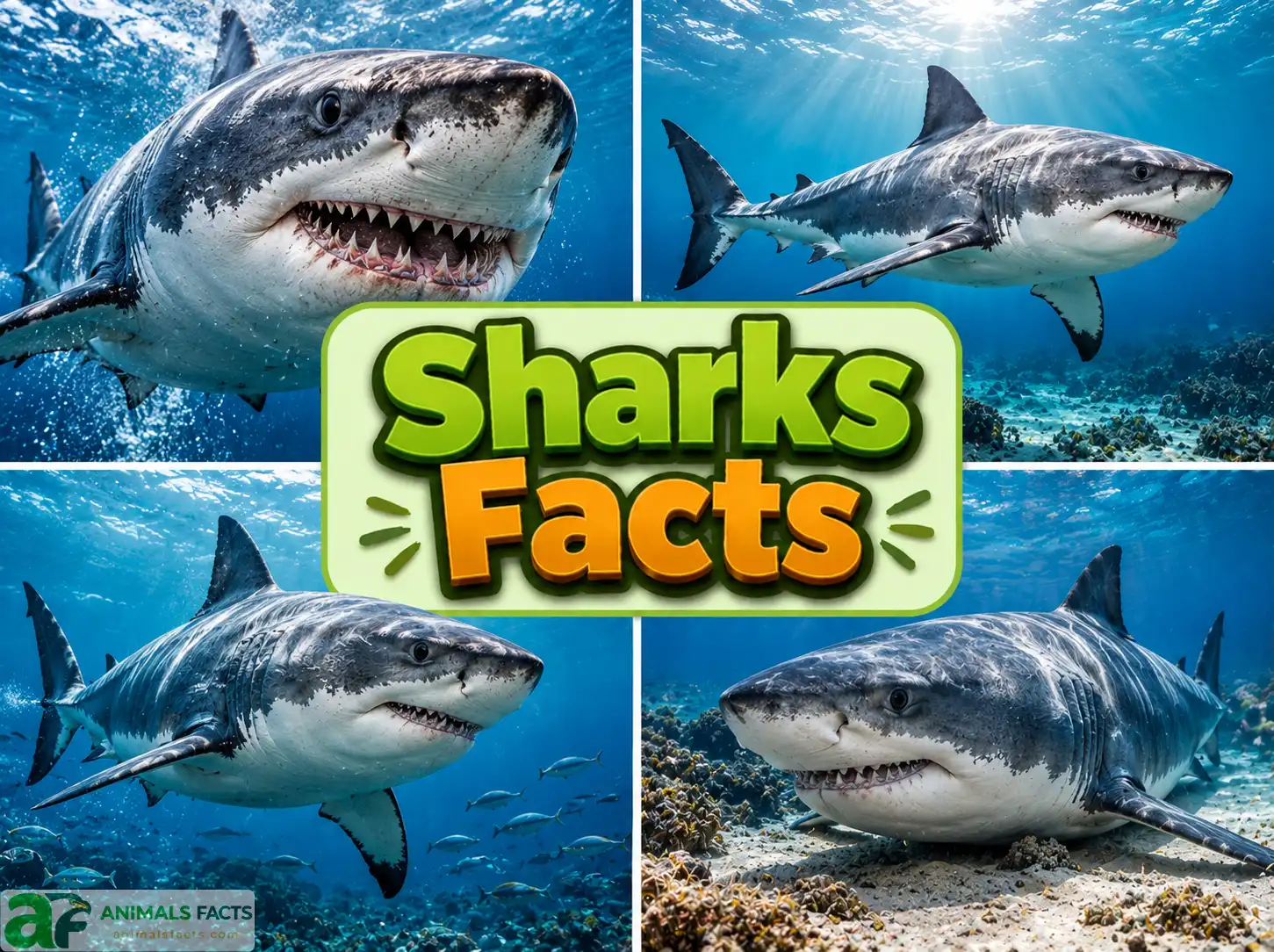
11. Shark Facts for Kids
Hey kids — get ready to discover the truth about sharks, which are way more fascinating than any scary movie makes them look!
- Sharks have been swimming in Earth’s oceans for over 450 million years — that means sharks were here before trees existed on land!
- The biggest fish in the entire ocean — the Whale Shark — is as long as a school bus, but it only eats tiny plankton, smaller than a grain of rice!
- Sharks never run out of teeth — they keep growing new teeth their whole lives, and some sharks go through tens of thousands of teeth in a lifetime!
- A shark’s skin is covered in millions of tiny tooth-shaped bumps — that’s why if you rub a shark from tail to head, it feels rough like sandpaper!
- The Greenland Shark can live to be almost 400 years old — older than your great-great-great-great-great-grandparents would be alive today!
- Sharks can sense electricity! They have special organs on their snout that can detect another animal’s heartbeat — even if that animal is hiding under the sand!
- The fastest shark — the Mako Shark — can swim as fast as a car driving on the highway!
- Sharks rarely ever bite people. In fact, more people are hurt by falling coconuts each year than by shark bites!
Did You Know? Most baby sharks are completely on their own from the very moment they are born! There is no shark mom waiting around to feed them or teach them how to hunt. A baby shark — called a pup — has to know exactly what to do right away, swimming off to find food and stay safe all by itself within minutes of being born. Talk about growing up fast!
12. Relationship with Humans
The relationship between humans and sharks is defined by a profound asymmetry: while sharks are responsible for an average of just 5–10 human deaths globally per year, humans kill an estimated 80–100 million sharks annually — making the human impact on sharks many millions of times greater than the reverse.
Shark Attacks — The Reality Behind the Fear
According to the International Shark Attack File, maintained by the Florida Museum of Natural History, there are typically between 60 and 100 unprovoked shark bites recorded globally each year, with an average of 5–10 resulting in fatality. For context, researchers regularly note that activities including falling coconuts, vending machine accidents, lightning strikes, and domestic dog attacks each cause comparable or greater numbers of human deaths annually in the United States alone.
The vast majority of shark bites are classified as “hit and run” incidents — the shark bites once, often mistaking a surfer or swimmer’s silhouette for a seal from below, then releases and departs without further interest. Fatal attacks, while devastating for the individuals and families involved, represent an extraordinarily small risk relative to nearly any other outdoor or aquatic activity.
The Shark Fin Trade
The single greatest driver of human-caused shark mortality is the international shark fin trade, primarily driven by demand for shark fin soup, a dish considered a luxury delicacy in parts of East and Southeast Asia. The practice of “finning” — removing a shark’s fins and discarding the body, often while the shark is still alive — has been banned in many countries and international waters but continues in regions with weaker enforcement. Conservation organizations estimate that the fin trade, combined with bycatch in commercial fishing operations, accounts for the deaths of approximately 80–100 million sharks annually.
Sharks in Science and Medicine
Sharks have contributed meaningfully to human science and medicine. Their remarkable resistance to many forms of cancer has driven extensive research into shark immune systems, though early claims that shark cartilage could cure human cancer have been thoroughly debunked by clinical research. Shark antibodies, structurally simpler and more stable than human antibodies, are being studied for potential use in diagnostic tools and therapeutic applications. Shark skin’s hydrodynamic properties have inspired biomimetic engineering applications in swimwear, aircraft surface coatings, and even hospital surface treatments designed to inhibit bacterial growth.
13. Shark Conservation Status & Threats
Sharks face one of the most severe conservation crises of any major vertebrate group on Earth — a crisis made more urgent by their naturally slow reproductive rates, which leave shark populations particularly vulnerable to overexploitation and slow to recover even under strong protective measures.
Global Conservation Data (2026)
| IUCN Category | Approximate Number of Shark & Ray Species |
|---|---|
| Critically Endangered | 80+ |
| Endangered | 110+ |
| Vulnerable | 150+ |
| Near Threatened | 80+ |
| Overall threatened (sharks & rays combined) | Over one-third of all assessed species |
| Population decline (oceanic sharks, since 1970) | Approximately 71% decline (2021 Nature study) |
Major Threats in Detail
Overfishing and the Fin Trade: The single greatest threat to shark populations worldwide. Sharks are targeted directly for their fins, meat, liver oil, and cartilage, and are also caught extensively as bycatch in commercial fisheries targeting tuna, swordfish, and other species. Their slow growth rates, late sexual maturity (some species not reproducing until 15–20 years of age or later), and low reproductive output make shark populations exceptionally vulnerable to overexploitation compared to most bony fish.
Habitat Destruction: Coastal development, mangrove deforestation, and coral reef degradation eliminate critical nursery habitats that many shark species depend on for the survival of their young.
Climate Change: Ocean warming and acidification are altering the distribution of prey species and affecting the reproductive success of temperature-sensitive shark species, while also threatening the coral reef ecosystems that support numerous reef-associated species.
Bycatch: Sharks are frequently caught unintentionally in fishing gear, particularly longlines and gillnets, targeting other commercially valuable species. Bycatch mortality represents a substantial and difficult-to-regulate component of overall shark mortality.
Pollution: Plastic pollution, chemical contamination, and microplastic ingestion are increasingly documented in shark populations, with unclear but potentially significant long-term health consequences.
Did You Know? A landmark study published in the journal Nature in 2021 found that global populations of oceanic sharks and rays have declined by approximately 71% since 1970 — a staggering loss driven almost entirely by overfishing. The study’s authors warned that without dramatically improved fisheries management and international protection, several iconic shark species face a genuinely realistic risk of extinction within the coming decades.
14. Famous Sharks
Jaws — The Fictional Shark That Changed Everything
While not a real individual, the fictional Great White Shark of Peter Benchley’s 1974 novel and Steven Spielberg’s 1975 film “Jaws” remains arguably the most consequential and culturally significant shark in human history. The film’s enormous commercial success and its portrayal of sharks as relentless, vengeful predators triggered a documented decades-long surge in public fear of sharks — and a corresponding wave of recreational shark hunting that significantly impacted shark populations along the US East Coast. Peter Benchley himself became a dedicated shark conservation advocate later in life, publicly expressing regret over the film’s negative impact on real-world shark populations.
Deep Blue — The Largest Great White Ever Filmed
Deep Blue is widely regarded as the largest Great White Shark ever captured on film — an enormous female estimated at over 6 meters in length, first documented by researchers near Guadalupe Island, Mexico, in 2013, and subsequently filmed in numerous locations including a widely viewed encounter off the coast of Hawaii in 2019. Deep Blue has become something of a celebrity within the shark research and diving community, with her sightings generating significant public and scientific interest in Great White Shark biology and conservation.
Lessepsian Migrant Sharks — Tracking the Mediterranean’s Newcomers
Several individually tagged and tracked sharks have contributed enormously to scientific understanding of shark migration patterns, including satellite-tagged Great White Sharks and Mako Sharks monitored by organizations such as OCEARCH, whose publicly trackable tagged sharks — including a Great White named “Mary Lee”, tracked extensively along the US East Coast from 2012 until her tag’s signal was lost in 2017 — have generated significant public engagement with shark migration science, accumulating millions of social media followers.
Megalodon — The Shark That Captured Public Imagination
While extinct for approximately 3.6 million years, Megalodon (Otodus megalodon) remains one of the most famous sharks in popular consciousness, inspiring documentaries, museum exhibits, and major Hollywood films. Its enormous estimated size — up to 15–20 meters — and the discovery of its massive fossilized teeth across the globe have made it a perennial subject of both legitimate paleontological research and persistent, scientifically unsupported claims of modern-day survival.
15. Role in Ecosystem & Food Chain
Sharks occupy critical positions throughout marine food webs, and their removal from ecosystems has been demonstrated to produce dramatic and often destabilizing ecological consequences.
Apex Predators and Trophic Cascades
As apex predators, large sharks regulate the population sizes and behavior of the species below them in the food web through a process known as top-down trophic control. The most extensively documented example comes from research along the US Atlantic coast, where the dramatic decline of large shark populations — including Bull Sharks, Tiger Sharks, and other large coastal species — has been linked to a corresponding explosion in populations of smaller predators including Cownose Rays, which in turn has been associated with significant declines in commercially important shellfish populations that the rays consume in large quantities.
Sharks also exert significant non-consumptive effects on prey populations — the mere presence of sharks alters the foraging behavior, habitat use, and movement patterns of prey species, a phenomenon known as the “ecology of fear.” Research on Tiger Sharks and sea turtles and dugongs in seagrass ecosystems has demonstrated that shark presence prevents these grazing species from overexploiting any single area, promoting healthier and more resilient seagrass meadows.
Sharks as Indicator Species
Because sharks sit at or near the top of marine food webs and are highly sensitive to ecosystem disruption, their population health serves as a valuable indicator of overall ocean ecosystem health. Declining shark populations in a given region frequently signal broader ecosystem stresses, including overfishing, habitat degradation, and pollution affecting the entire food web.
Nutrient Cycling
Sharks contribute to nutrient cycling within marine ecosystems through their movement patterns, feeding behavior, and the transport of nutrients across different ocean zones during migration — connecting otherwise separated marine habitats and contributing to overall ecosystem productivity.
16. Myths, Folklore & Cultural Significance
Sharks occupy a uniquely powerful and often contradictory place in the mythology and cultural traditions of coastal and island civilizations worldwide — simultaneously revered as gods and protectors, and feared as agents of destruction.
Hawaiian and Pacific Islander Traditions
In Hawaiian mythology, sharks hold profound spiritual significance as ‘aumakua — family or personal guardian spirits believed to protect and guide their human descendants. Kāmohoali’i, the shark god and brother of the volcano goddess Pele, is one of the most important deities in the Hawaiian pantheon, associated with protection of fishermen and safe ocean passage. Many Hawaiian families historically believed specific sharks to be the reincarnated spirits of deceased ancestors, treating them with corresponding reverence rather than fear.
Throughout numerous Pacific Islander cultures — including in Fiji, the Solomon Islands, and across Polynesia — sharks are similarly regarded as powerful spiritual entities, often associated with protection, chiefly authority, and the souls of ancestors.
Ancient Greek and Roman Traditions
While less central than in Pacific cultures, sharks appear in ancient Mediterranean writing, including references by Aristotle, who conducted some of the earliest documented scientific observations of shark reproduction and anatomy in his Historia Animalium, demonstrating remarkably accurate understanding of shark biology for his era, including correct observations regarding live birth in certain species.
West African Traditions
In various West African coastal traditions, sharks feature prominently in folklore as powerful, often ambivalent spiritual forces associated with both the dangers and the bounty of the sea, themes that were carried across the Atlantic and influenced shark symbolism in certain Afro-Caribbean spiritual traditions.
Modern Symbolic Significance
In contemporary culture, the shark has become a powerful and almost universally recognized symbol of danger, power, and predatory efficiency — a symbolic association overwhelmingly shaped by 20th and 21st-century media rather than historical tradition, and one that shark conservationists actively work to counterbalance with accurate biological and ecological information.
17. Sharks in Pop Culture
Few animals have been as thoroughly transformed by a single piece of popular media as the shark — and few cultural depictions have had as measurable and lasting an impact on a species’ real-world conservation status.
Film
“Jaws” (1975) — Discussed extensively above; the most culturally significant and arguably the most consequential wildlife film ever made, in terms of its documented negative impact on public perception and real-world shark populations. Director Steven Spielberg has publicly expressed regret over the film’s role in promoting shark fear and the recreational shark hunting it inspired.
“The Meg” (2018) — A commercially successful film centered on a surviving Megalodon, reflecting the enduring public fascination with the extinct super-predator and generating significant renewed public interest in shark paleontology, despite its highly fictionalized premise.
“Shark Week” (Discovery Channel, since 1988) — One of the longest-running and most successful annual cable television programming events in history, credited with both raising public awareness of shark biology and conservation, and — in some specific instances of sensationalized programming — perpetuating exaggerated fears about shark danger.
“Blue Planet” and “Blue Planet II” (BBC, 2001 & 2017) — Contains some of the most scientifically accurate and visually extraordinary shark footage ever filmed, contributing significantly to public understanding of genuine shark behavior and ecology.
Literature
“Jaws” by Peter Benchley (1974) — The bestselling novel that inspired the film; Benchley’s later conservation advocacy work represents one of the most notable examples of an author actively working to counter the cultural impact of his own creation.
“The Shark Trust” and shark conservation literature — A growing body of accessible popular science writing, including works by marine biologists and shark researchers, has emerged specifically to counter the public misperceptions created by decades of sensationalized media.
Digital Culture and Social Media
The work of organizations like OCEARCH, which publicly tracks tagged sharks via satellite and shares their movements through social media and a dedicated app, has generated significant positive public engagement, allowing millions of people to follow individual sharks’ migrations in near-real time and fostering a more personal, less fear-driven public relationship with these animals.
18. Shark Facts vs. Common Myths
Myth: Sharks are mindless killing machines that actively hunt humans. Fact: Sharks do not perceive humans as natural prey. The overwhelming majority of shark bites are investigative bites or cases of mistaken identity, where a shark briefly bites an unfamiliar object — often a surfer silhouetted against the surface — before quickly releasing and departing. Sharks kill an average of just 5–10 humans globally per year.
Myth: All sharks are large and dangerous. Fact: Of the more than 540 known shark species, only around a dozen have ever been involved in unprovoked attacks resulting in significant human injury. The majority of species — including the two largest, the Whale Shark and Basking Shark — are completely harmless filter feeders, and many species are smaller than a typical house cat.
Myth: Sharks must keep swimming constantly or they will die. Fact: This is true only for certain obligate ram ventilator species, such as the Great White and Mako, which rely on forward motion to force water over their gills. Many other species — including Nurse Sharks and Wobbegongs — can actively pump water over their gills while stationary and rest motionless on the sea floor for extended periods.
Myth: Sharks cannot get cancer. Fact: This widely circulated myth, which fueled a damaging market for shark cartilage supplements in the 1990s, has been thoroughly debunked. Sharks can and do develop tumors and cancer, including documented cases of cancer directly within shark cartilage tissue itself.
Myth: Shark attacks have been increasing dramatically in recent years. Fact: While the total number of recorded shark bites has gradually increased over recent decades, this reflects the substantial growth in the number of people swimming, surfing, and diving in shark habitat, rather than increased shark aggression. The rate of attacks relative to ocean usage has remained relatively stable or has decreased in many regions.
Myth: Sharks have poor eyesight and rely entirely on smell. Fact: Sharks possess excellent vision, well-adapted to low-light underwater conditions, with some species capable of detecting color. Vision plays a significant role in final-stage prey targeting, working in combination with their exceptional sense of smell and electroreception.
Myth: A shark fin breaking the surface always signals danger. Fact: Dorsal fins breaking the surface are visible from a wide range of species, the overwhelming majority of which pose no threat to humans, and the behavior itself — simply swimming near the surface — carries no inherent aggressive significance.
19. Best Places to See Sharks in the Wild
Guadalupe Island, Mexico
Widely regarded as one of the premier destinations on Earth for observing Great White Sharks in exceptionally clear water, with cage diving operations offering reliable encounters with large, well-documented individuals, including the famous Deep Blue.
Galápagos Islands, Ecuador
Home to extraordinary aggregations of Scalloped Hammerhead Sharks, as well as Galápagos Sharks, Whale Sharks, and Whitetip Reef Sharks, particularly around Darwin and Wolf Islands — among the most biologically rich shark-diving locations in the world.
Tiger Beach, Bahamas
One of the most reliable locations globally for encountering Tiger Sharks, alongside Lemon Sharks, Nurse Sharks, and Caribbean Reef Sharks, in clear, shallow water ideal for both diving and underwater photography.
Ningaloo Reef, Western Australia
One of the best locations in the world for swimming alongside Whale Sharks, which gather seasonally (typically March through July) to feed on coral spawn and plankton blooms along this remote reef system.
Fiji
Home to one of the most successful shark conservation diving programs in the world, with regular sightings of Bull Sharks, Tiger Sharks, and numerous reef shark species at dedicated marine protected sites supporting both tourism and active conservation.
South Africa (False Bay and Gansbaai)
Historically one of the world’s most famous locations for Great White Shark cage diving, though shark populations and behavior patterns in this region have shifted significantly in recent years, prompting ongoing scientific study into the underlying causes.
Cocos Island, Costa Rica
A remote UNESCO World Heritage marine site renowned for exceptional Hammerhead Shark aggregations, alongside Whitetip Reef Sharks and occasional Whale Shark and Tiger Shark sightings, accessible primarily via dedicated liveaboard diving expeditions.
20. Top Documentaries & Books
Must-Watch Documentaries
“Shark Week” (Discovery Channel, since 1988) — The longest-running cable television event of its kind, featuring an extensive library of shark-focused documentary content of varying scientific rigor, though increasingly incorporating credible research-based programming in recent years.
“Blue Planet II” (BBC, 2017) — Contains exceptional shark footage filmed using innovative techniques, presenting some of the most accurate and visually stunning shark behavior sequences ever produced for television.
“Sharkwater” (2006) — A groundbreaking and influential documentary by the late filmmaker Rob Stewart, widely credited with significantly raising global public awareness of the shark fin trade and its devastating impact on shark populations.
“Jaws of the Deep” and various OCEARCH documentaries — Document the satellite tagging and migration tracking research conducted by OCEARCH, offering accessible insight into genuine shark research methodology.
“My Octopus Teacher” (2020) — While focused on an octopus, this Academy Award-winning documentary includes notable shark encounters within its broader exploration of a South African kelp forest ecosystem.
Essential Books
“Demon Fish: Travels Through the Hidden World of Sharks” by Juliet Eilperin (2011) — A comprehensive and accessible exploration of shark biology, conservation, and human-shark relationships across cultures.
“The Shark Handbook” by Greg Skomal (2008) — A detailed, scientifically grounded reference covering shark biology, behavior, and species diversity.
“Close to Shore: The Terrifying Shark Attacks of 1916” by Michael Capuzzo (2001) — A historically significant account of the shark attacks that helped shape early 20th-century American shark perception, predating and influencing the cultural backdrop into which “Jaws” would later be released.
“Soul Surfer” by Bethany Hamilton (2004) — The memoir of a professional surfer who survived a shark attack and returned to competitive surfing, offering a personal, balanced perspective on shark encounters.
21. Shark Comparison of Major Shark Species
| Feature | Great White Shark | Whale Shark | Tiger Shark | Hammerhead Shark | Greenland Shark |
|---|---|---|---|---|---|
| Scientific Name | Carcharodon carcharias | Rhincodon typus | Galeocerdo cuvier | Sphyrna spp. | Somniosus microcephalus |
| Max Length | 6.4 m | 18.8 m | 5.5 m | 6 m (Great Hammerhead) | 7.3 m |
| Diet | Seals, fish, marine mammals | Plankton, fish eggs | Fish, turtles, marine debris | Stingrays, fish | Fish, carrion, seals |
| Habitat | Coastal & open ocean (global) | Tropical & warm temperate oceans | Tropical & temperate coastal waters | Coastal & open ocean | Cold Arctic & North Atlantic waters |
| Lifespan | 40–70 years | 70–130 years | 20–30 years | 20–30 years | 270–500+ years |
| Conservation Status | Vulnerable | Endangered | Near Threatened | Critically Endangered (Great Hammerhead) | Near Threatened |
| Unique Feature | Partial warm-bloodedness | Largest fish on Earth | Extremely broad, opportunistic diet | Distinctive hammer-shaped head | Longest-lived vertebrate known |
22. How You Can Help
The global shark conservation crisis is severe, but it is also one of the more responsive conservation challenges when given sufficient public support, political will, and funding — making individual action genuinely meaningful.
Support These Organizations
Shark Trust (sharktrust.org) — A UK-based organization dedicated to shark and ray conservation through research, education, and policy advocacy worldwide.
Oceana (oceana.org) — Campaigns extensively on shark fin trade bans, sustainable fisheries policy, and broader ocean conservation issues affecting shark populations.
WildAid (wildaid.org) — Runs high-profile public awareness campaigns specifically targeting demand reduction for shark fin soup in key consumer markets across Asia.
Shark Research Institute (sharks.org) — Supports global shark research and conservation initiatives, including population monitoring and public education programs.
OCEARCH (ocearch.org) — Conducts satellite tagging research on sharks and offers public engagement through real-time tracking, contributing valuable migration data to the broader scientific community.
Practical Actions You Can Take Today
Choose sustainable seafood. Use resources such as the Monterey Bay Aquarium Seafood Watch guide to avoid seafood products linked to high shark bycatch rates.
Refuse shark fin products. Avoid purchasing or consuming shark fin soup or any product derived from shark fins, and support continued international efforts to ban the fin trade.
Support marine protected areas. Advocate for and support the establishment and enforcement of marine protected areas that provide critical refuge for shark populations and their nursery habitats.
Participate in citizen science. Platforms such as the OCEARCH app and regional shark identification and sighting databases welcome public contributions, helping researchers track shark populations and movements.
Educate others. Sharing accurate, science-based information about shark behavior and conservation needs helps counter decades of media-driven misinformation that continues to hinder effective conservation efforts.
Did You Know? Following sustained public pressure and advocacy efforts, the United States banned the domestic sale and trade of shark fins nationwide through the Shark Fin Sales Elimination Act, signed into law in December 2022 — representing one of the more significant recent legislative victories for shark conservation, and demonstrating that public engagement can translate directly into meaningful policy change.
23. Frequently Asked Questions About Sharks
Q1: How many species of sharks exist in the world?
There are over 540 known shark species worldwide as of 2026, ranging from the 17-centimeter Dwarf Lanternshark to the 18.8-meter Whale Shark. New species continue to be discovered, particularly in deep-sea environments that remain largely unexplored.
Q2: How long have sharks existed on Earth?
Sharks first appeared approximately 450 million years ago, predating dinosaurs by over 200 million years and surviving all five of Earth’s major mass extinction events, making them one of the most evolutionarily successful and resilient vertebrate lineages in the planet’s history.
Q3: What is the most dangerous shark to humans?
The Great White Shark, Tiger Shark, and Bull Shark are most frequently associated with unprovoked attacks on humans, primarily due to their size, hunting behavior, and tendency to inhabit coastal waters frequented by swimmers and surfers. However, even among these species, attacks remain extremely rare relative to the number of people sharing the water with them.
Q4: Are sharks really dangerous to humans?
Statistically, sharks pose an extremely low risk to humans, causing an average of just 5–10 deaths globally each year, compared to tens of millions of sharks killed by humans annually. Numerous everyday activities and animals, including domestic dogs and even falling coconuts, are statistically more dangerous than sharks.
Q5: What do sharks eat?
Shark diets vary enormously by species, ranging from microscopic plankton and fish eggs (Whale Sharks, Basking Sharks) to fish, marine mammals, sea turtles, and other sharks (Great White, Tiger, and Bull Sharks). Most species are highly specialized, selective feeders rather than indiscriminate predators.
Q6: How long do sharks live?
Lifespan varies dramatically by species. Smaller sharks may live 20–30 years, while the Greenland Shark has been confirmed through radiocarbon dating to live approximately 392 years, with a possible range up to 512 years — making it the longest-lived vertebrate animal scientifically documented.
Q7: Why are sharks important to ocean ecosystems?
Sharks serve as apex predators that regulate prey populations and influence prey behavior throughout marine food webs, a role critical to maintaining overall ecosystem balance. Their decline has been linked to cascading negative effects throughout multiple marine ecosystems, including damage to seagrass meadows and shellfish populations.
Q8: Are sharks endangered?
Yes — over one-third of all assessed shark and ray species are currently threatened with extinction according to the IUCN Red List, and global oceanic shark and ray populations have declined by approximately 71% since 1970, driven primarily by overfishing and the international fin trade.
Q9: Can sharks be domesticated or kept as pets?
No — sharks are wild marine animals with specific habitat, dietary, and behavioral requirements that make them entirely unsuitable for domestication or typical pet ownership. While some smaller species are occasionally kept by experienced public aquariums and specialized private aquarists with significant resources, sharks are not domesticated animals in any meaningful sense.
Q10: How can I help protect sharks?
Key actions include: avoiding shark fin products; choosing sustainably sourced seafood; supporting shark conservation organizations such as the Shark Trust and Oceana; advocating for stronger fishing regulations and marine protected areas; and sharing accurate, science-based information to help counter widespread misconceptions about shark behavior and danger.
24. Sources & References
Research Sources
- Wikipedia — Selachimorpha and individual species articles
- IUCN Red List — iucnredlist.org
- Shark Trust — sharktrust.org
- Oceana — oceana.org
- OCEARCH — ocearch.org
- International Shark Attack File, Florida Museum of Natural History — floridamuseum.ufl.edu
- National Geographic — nationalgeographic.com
- Smithsonian Institution — Ocean Portal — ocean.si.edu
- Encyclopaedia Britannica — britannica.com
- BBC Wildlife — bbc.co.uk
- Live Science — livescience.com
- Nature — MacNeil et al. (2021), “Global status and conservation potential of reef sharks”
- WildAid — wildaid.org
- Eilperin, Juliet — “Demon Fish: Travels Through the Hidden World of Sharks” (2011)