

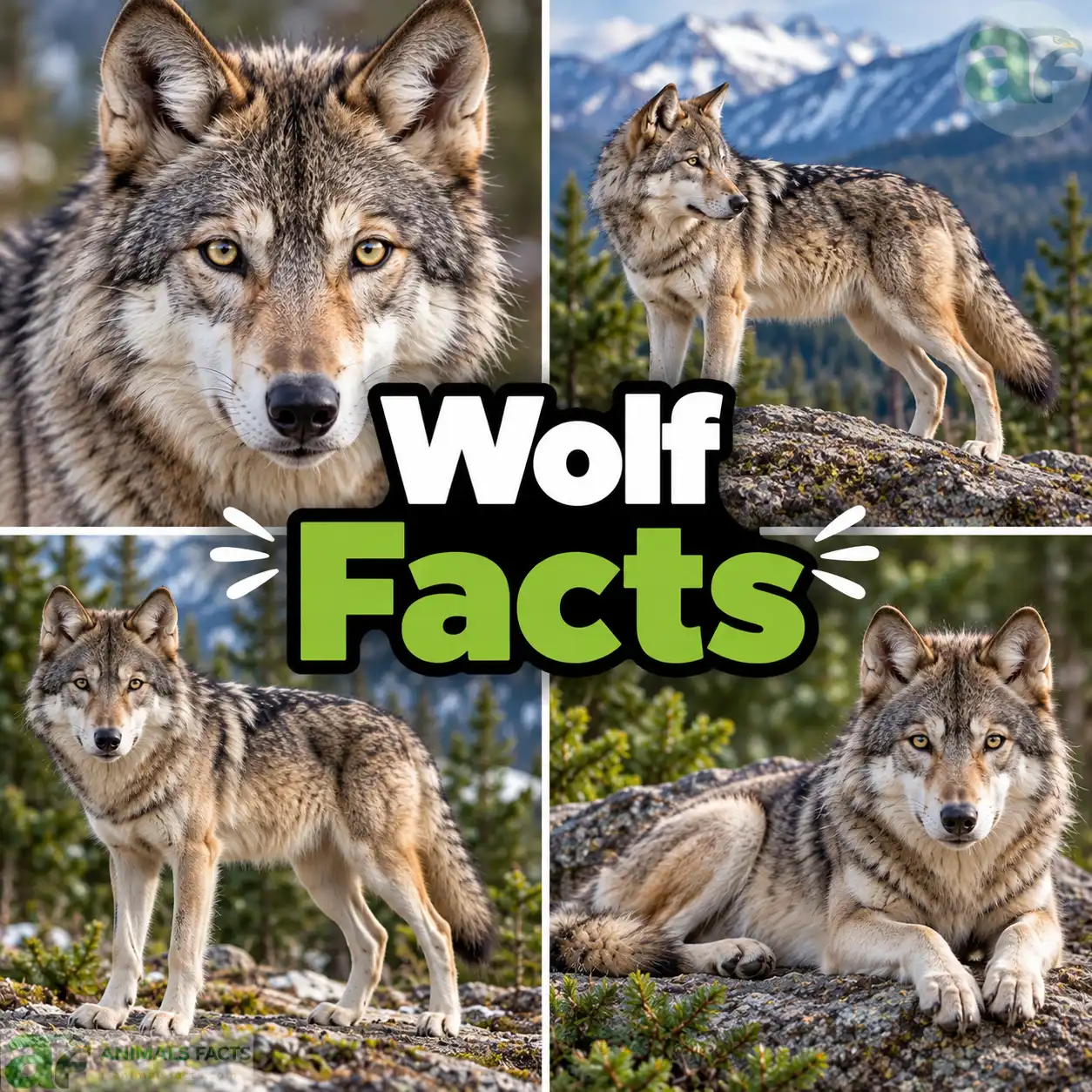
Wolf Facts
| Feature | Details |
|---|---|
| Scientific Name (Gray Wolf) | Canis lupus |
| Kingdom | Animalia |
| Phylum | Chordata |
| Class | Mammalia |
| Order | Carnivora |
| Family | Canidae |
| Total Wolf Species | Approximately 3–5 distinct wolf species recognized (Gray Wolf, Red Wolf, Ethiopian Wolf, Eastern Wolf, Himalayan Wolf) |
| Total Gray Wolf Subspecies | Approximately 38 recognized subspecies worldwide |
| Habitat | Forests, tundra, grasslands, mountains, deserts — North America, Europe, Asia, and small populations in Africa |
| Lifespan | 6–8 years in the wild; up to 16–20 years in captivity |
| Diet | Carnivore — large ungulates (deer, elk, bison), smaller mammals, carrion |
| Weight | 18–80 kg depending on subspecies; males typically larger than females |
| Body Length | 100–160 cm (excluding tail); tail adds 30–50 cm |
| Shoulder Height | 60–90 cm |
| Top Speed | Up to 65 km/h (40 mph) in pursuit; sustained trot of 8–10 km/h |
| Pack Size | Typically 5–12 individuals; documented packs over 40 in exceptional cases |
| Conservation Status (Gray Wolf) | Least Concern globally (IUCN); but several subspecies and related species critically endangered |
| Global Gray Wolf Population | Estimated ~300,000 individuals worldwide |
 1. Introduction: What is a Wolf?
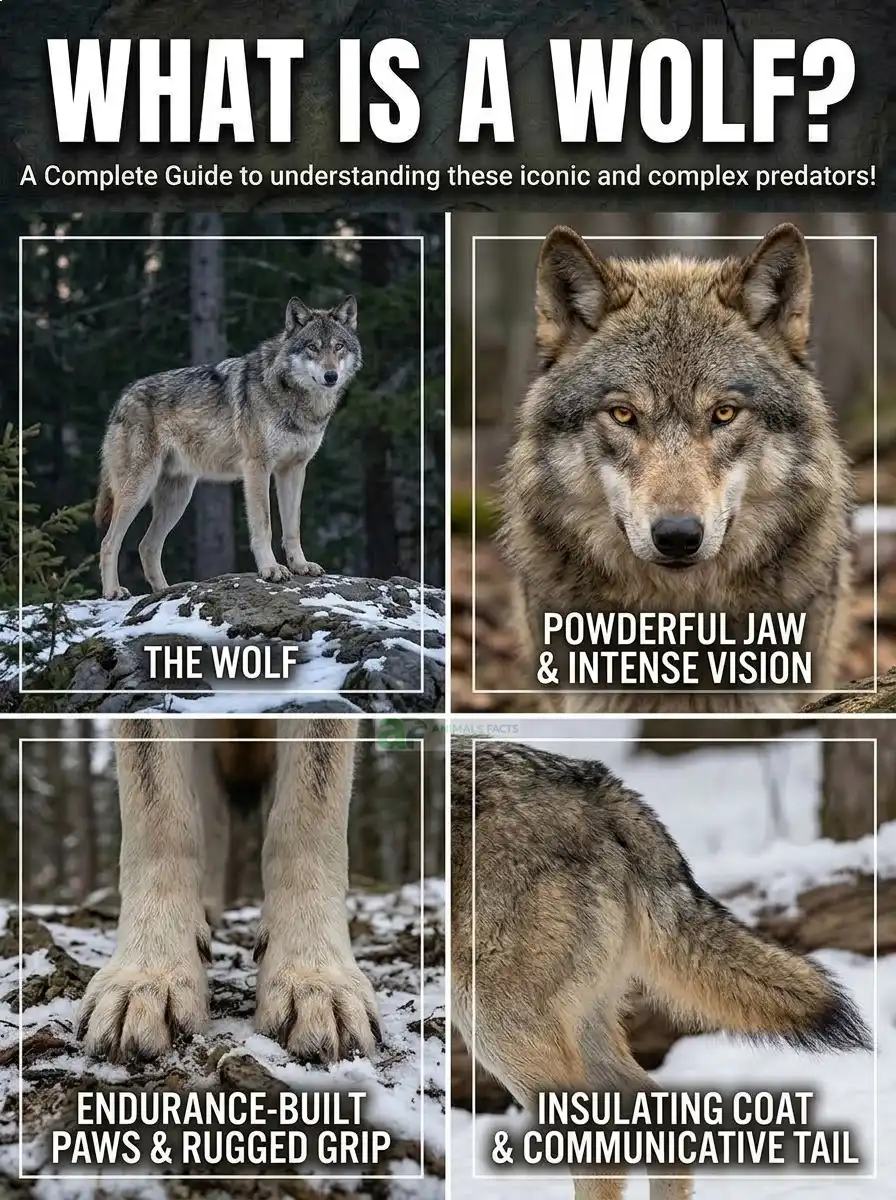
They howl at the moon, or so the legends say. They run in coordinated packs that have inspired military strategists, sports teams, and mythmakers across thousands of years of human civilization. They are the ancestors of every domestic dog on Earth, from the tiniest Chihuahua to the most massive Great Dane. Wolf facts are, in many respects, some of the most extraordinary in the entire animal kingdom — and yet wolves remain among the most misunderstood, most feared, and most controversially managed animals in the world today.
The wolf — primarily represented by the Gray Wolf (Canis lupus) — is one of the most ecologically significant large carnivores to have ever walked the Earth. Over the past century, wolves were systematically hunted, poisoned, and trapped to near-extinction across most of their former range across North America and Europe, only to be dramatically vindicated by landmark conservation science demonstrating that their presence, as apex predators, was essential to the health of entire ecosystems. The reintroduction of wolves to Yellowstone National Park in 1995 became one of the most celebrated and widely cited ecological experiments in history — literally changing the course of rivers by restoring natural balance to the food web.
Whether you are a student searching for wolf facts for a school report, a nature documentary enthusiast fascinated by pack behavior, a hiker wanting to understand the animals you might encounter in wolf country, a conservationist engaged in the ongoing debates around wolf management policy, or simply someone who has always been captivated by the sound of a wolf howl echoing across a dark valley — this is the most complete guide to wolf facts you will find anywhere. We cover wolf habitat, wolf diet, wolf behavior, communication, reproduction, conservation, mythology, and the extraordinary ecological role that makes wolves genuinely essential to healthy wild landscapes. Let us begin.
2. Wolf Species Overview & Classification
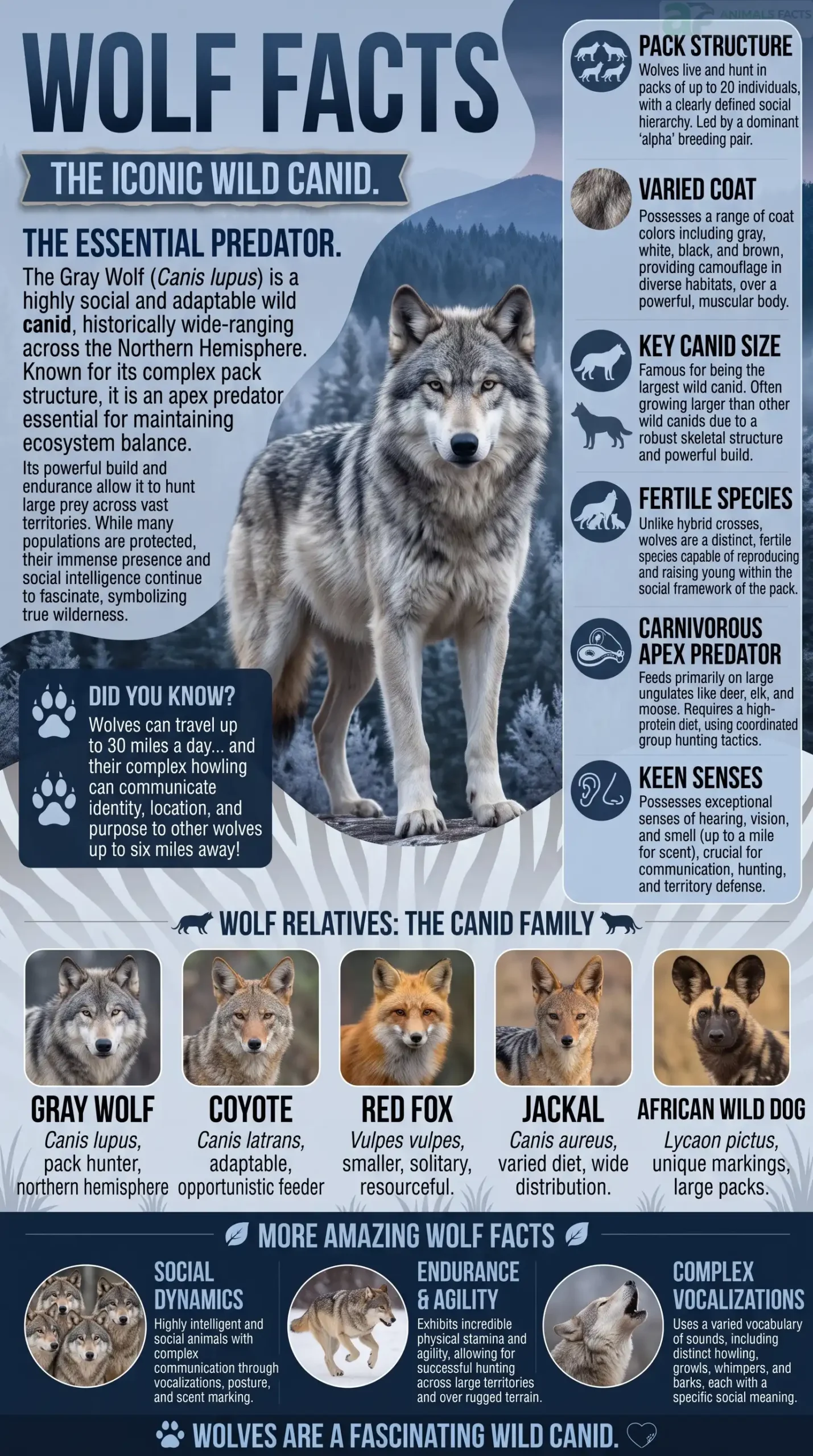
Wolves belong to the family Canidae — the same family that includes domestic dogs, foxes, coyotes, jackals, and their relatives. Within this diverse family, wolves represent the largest wild members of the genus Canis, distinguished by their size, pack-hunting behavior, and extraordinary ecological impact.
What Defines a Wolf?
While wolf species vary considerably in size, coloration, and habitat, they share several key characteristics:
- Large body size: Wolves are consistently the largest wild members of genus Canis in any region where they occur
- Pack social structure: All wolf species live in social family units with clearly defined roles and relationships
- Coursing predators: Wolves pursue prey over distance through stamina and coordinated pack strategy rather than purely through explosive speed
- Highly developed communication: Wolves communicate through an extraordinary range of vocalizations, body language, and scent signals
- Territorial behavior: Wolf packs maintain and actively defend home territories marked through howling, scent marking, and direct confrontation
Major Wolf Species Classification Table
| Species | Scientific Name | Approx. Wild Population | Native Range |
|---|---|---|---|
| Gray Wolf | Canis lupus | ~300,000 | North America, Europe, Asia, small parts of Middle East |
| Ethiopian Wolf | Canis simensis | ~500 | Ethiopian highlands (Afroalpine mountains) |
| Red Wolf | Canis rufus | ~20 (wild) | Eastern North Carolina, USA only |
| Eastern Wolf | Canis lycaon | ~500–1,000 | Eastern Canada (Ontario, Quebec) |
| Himalayan Wolf | Canis lupus chanco (distinct population) | ~350 | Nepal, Tibet, northern India |
Gray Wolf Subspecies Comparison
| Subspecies | Scientific Name | Range | Notable Feature |
|---|---|---|---|
| Timber Wolf | Canis lupus occidentalis | Rocky Mountains, USA/Canada | Largest North American subspecies |
| Arctic Wolf | Canis lupus arctos | Canadian Arctic, Greenland | White coat; tolerates extreme cold |
| Mexican Wolf | Canis lupus baileyi | Mexico, Arizona, New Mexico | Critically endangered; smallest North American subspecies |
| Arabian Wolf | Canis lupus arabs | Arabian Peninsula | Smallest subspecies globally; adapted to desert heat |
| Eurasian Wolf | Canis lupus lupus | Europe, Russia, Central Asia | Most widespread subspecies |
| Indian Wolf | Canis lupus pallipes | Indian subcontinent | Genetically ancient; lean build |
| Mongolian Wolf | Canis lupus chanco | Central Asia, Mongolia | Dense winter coat; large |
Species Evolution & Discovery Timeline
~40 million years ago: Early carnivore ancestors of the Canidae family — Hesperocyon and related genera — appeared during the Eocene Epoch in North America.
~6–7 million years ago: The genus Canis emerged in North America, giving rise to the lineage that would eventually include wolves, coyotes, jackals, and domestic dogs.
~2–3 million years ago: Canis lupus — the direct ancestor of the modern Gray Wolf — first appeared during the Pleistocene Epoch, initially in Eurasia before spreading across the Northern Hemisphere.
~800,000–500,000 years ago: Gray Wolves crossed from Eurasia into North America via the Bering Land Bridge, establishing populations across the entire North American continent.
~40,000–15,000 years ago: The domestication of the dog began, with wolves in Eurasia gradually self-selecting toward less fearful interaction with humans, eventually diverging into what became Canis lupus familiaris — the domestic dog, technically a subspecies of the Gray Wolf.
~11,000 years ago: Large pack-hunting wolves in North America faced significant population pressures as the megafauna they hunted (mammoths, giant ground sloths) disappeared at the end of the last Ice Age.
1758: Carl Linnaeus formally described and classified the Gray Wolf as Canis lupus in his landmark Systema Naturae.
Late 19th–early 20th century: Systematic extermination campaigns across North America and Europe drove wolves to extinction or near-extinction across vast portions of their historical range.
1995: The landmark Yellowstone Wolf Reintroduction began, with 31 gray wolves captured in Canada and released into Yellowstone National Park — one of the most scientifically consequential wildlife conservation events in history.
2010s–2020s: Wolf populations continued recovering across parts of Europe (Germany, France, Italy, Switzerland, Netherlands) and the western United States, while the Red Wolf teetered on the edge of complete extinction with wild numbers falling to approximately 20 individuals by 2026.
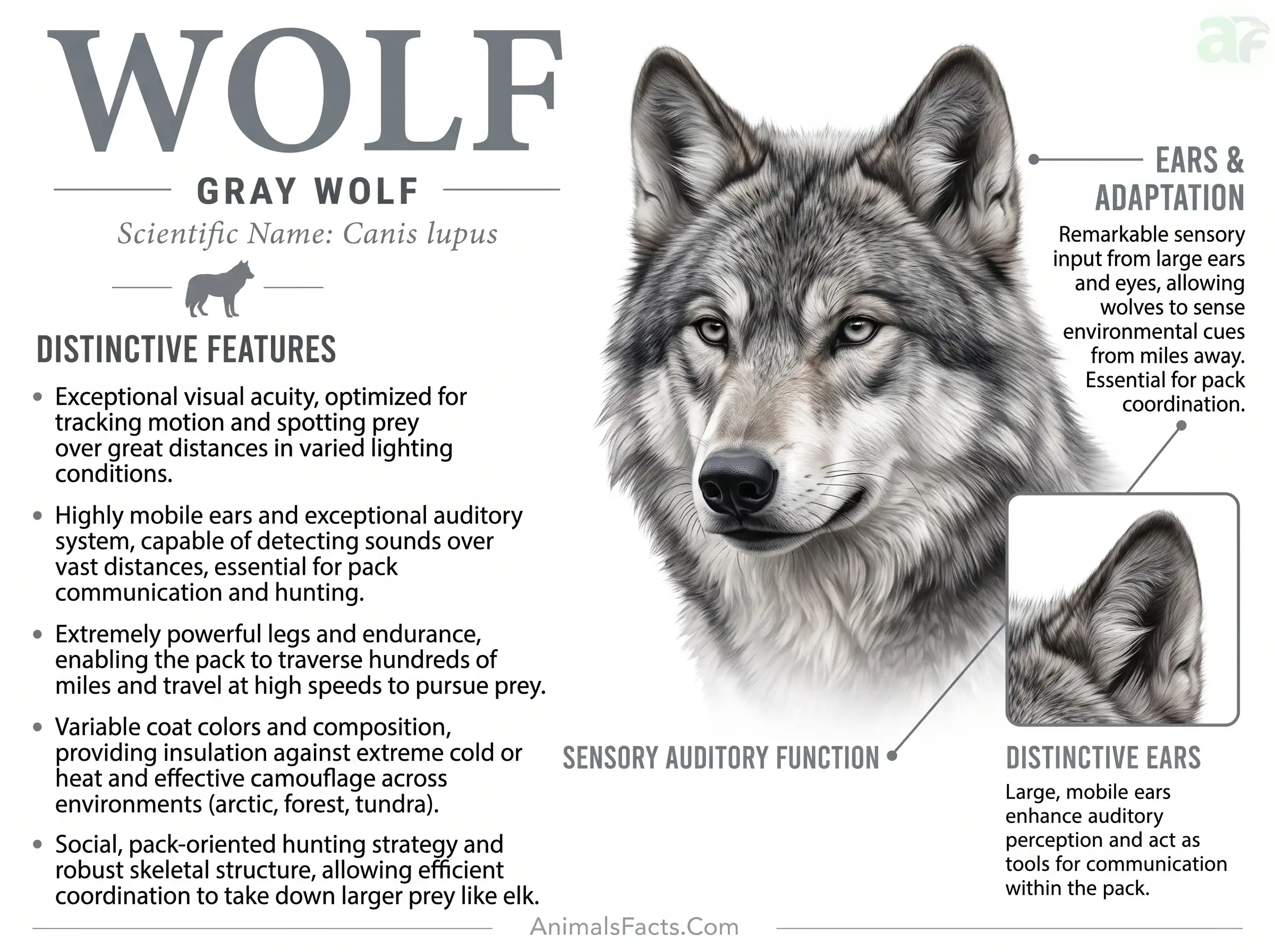
3. Wolf Physical Description & Unique Features
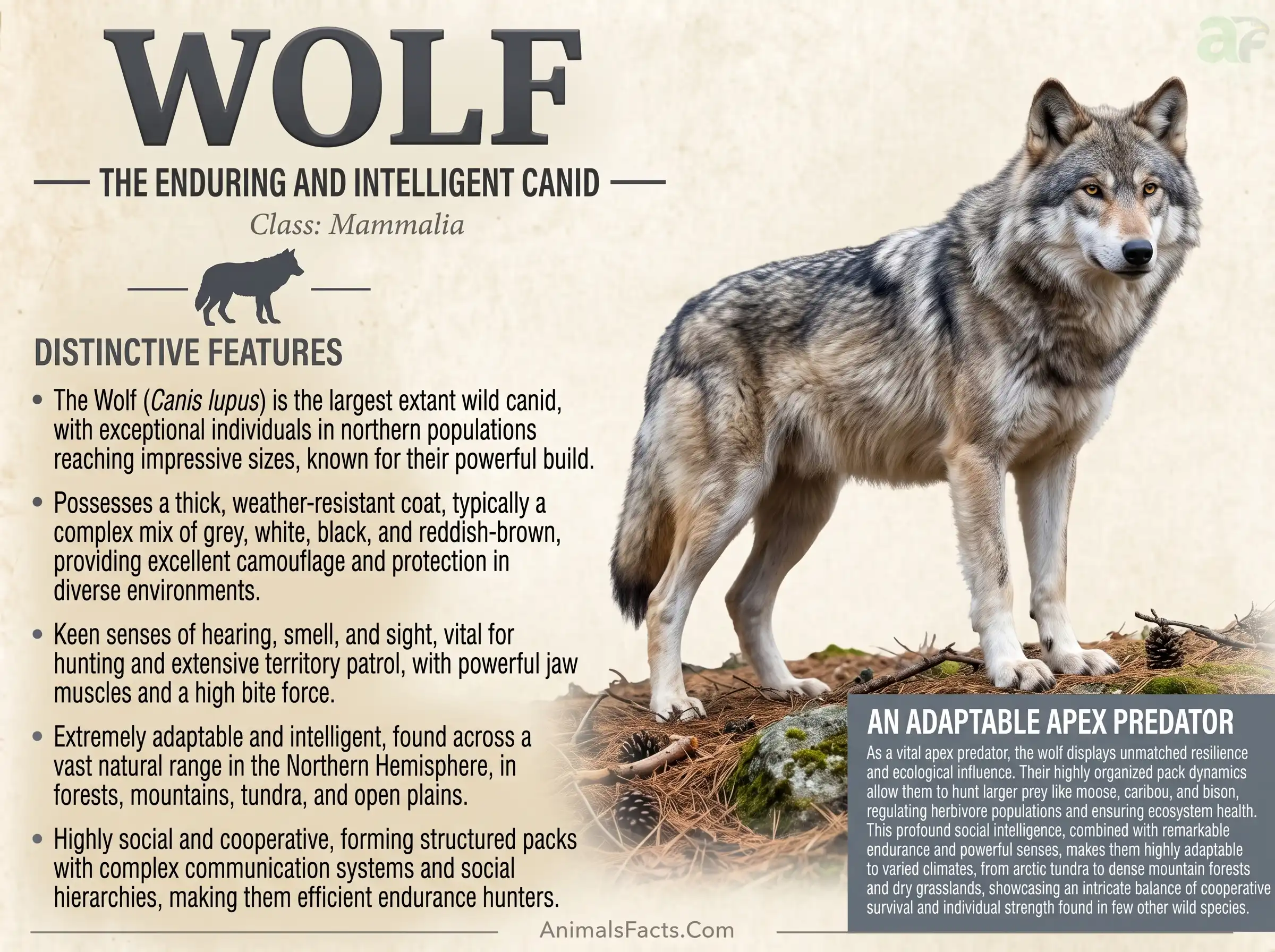
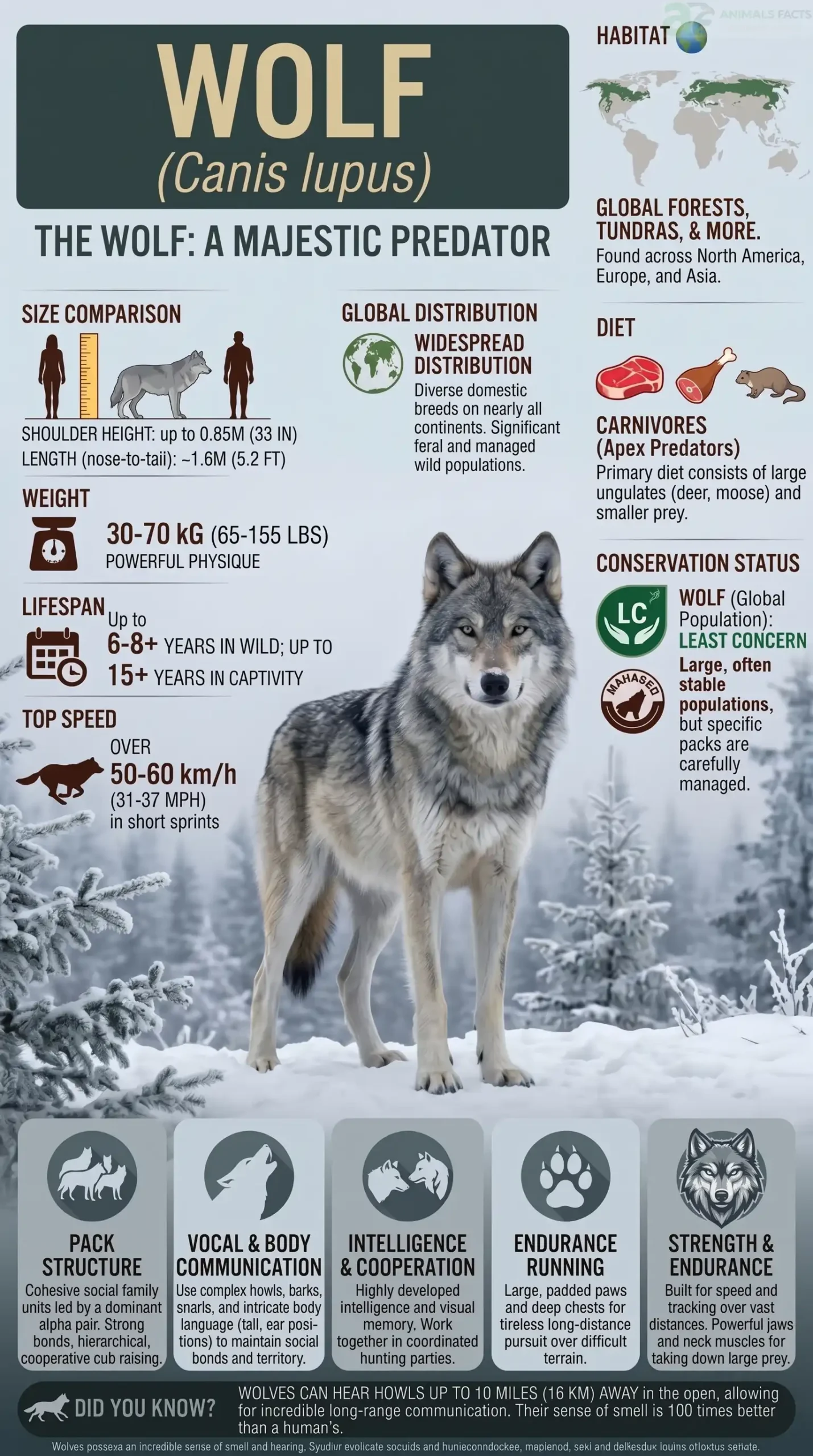
Wolves are built for endurance, intelligence, and cooperative hunting — every aspect of their physical design reflects millions of years of evolutionary refinement as one of the most successful cursorial (pursuit) predators in vertebrate history.
Size Extremes
Largest subspecies: The Northwestern Wolf (Canis lupus occidentalis), reintroduced to Yellowstone and ranging across the northern Rocky Mountains, regularly produces males exceeding 68 kg, with exceptional individuals approaching 80 kg. The Mackenzie Valley Wolf of northwestern Canada is widely considered the largest wolf subspecies, with some documented individuals exceeding 80 kg.
Smallest subspecies: The Arabian Wolf (Canis lupus arabs) of the Arabian Peninsula is the smallest wolf subspecies, with adults typically weighing only 18–20 kg — approximately the size of a large domestic dog.
Physical Characteristics by Sex
Male wolves are consistently larger than females — typically 20% heavier on average within the same population. This sexual dimorphism is most pronounced in the largest subspecies. Male wolves tend to have broader heads and wider chests, while females are typically more slender through the hindquarters.
The Wolf’s Coat
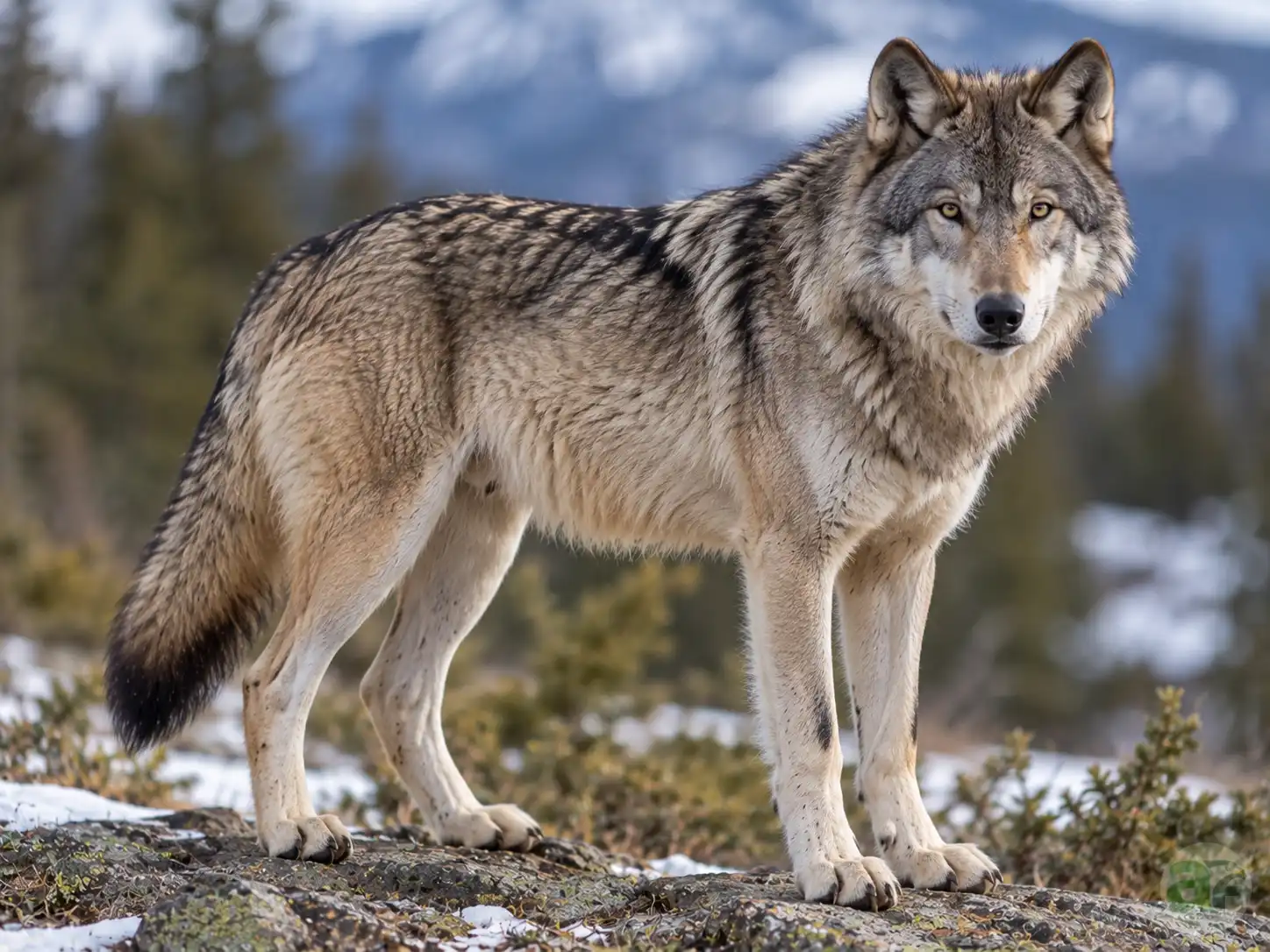
Wolf coats are double-layered — a dense, insulating undercoat overlaid by longer, weather-resistant guard hairs. This double coat provides extraordinary insulation, allowing wolves to comfortably inhabit environments with temperatures as low as -40°C in subspecies such as the Arctic Wolf, while desert-adapted subspecies like the Arabian Wolf have shorter, lighter coats suited to heat management in their respective environments.
Wolf coat color varies enormously across subspecies and individuals — from pure white (Arctic Wolf), through greys, browns, and tans, to near-black, with many individuals displaying complex multi-colored patterns that change with age. The coat color of individual wolves within a single pack can vary considerably, a feature that assists pack members in recognizing each other at a distance.
The Wolf’s Feet
A wolf’s feet are uniquely adapted for efficient long-distance travel across diverse terrain. The front paws are slightly larger than the rear paws and possess a small additional pad called the dewclaw that provides grip during rapid turns. Wolves walk and run on their toes (digitigrade locomotion) — similar to dogs and cats — rather than flat-footed like bears and humans, which contributes to their remarkable stride efficiency and speed.
Wolves can maintain a trot of approximately 8–10 km/h for hours without rest — an extraordinary endurance capability that allows packs to cover up to 50–70 km in a single day when pursuing prey or patrolling territory, and to pursue ungulate prey for extended distances until the prey animal fatigues.
Did You Know? A wolf’s nose is approximately 100 times more sensitive than a human’s — with roughly 280 million scent receptors compared to just 5 million in humans. Wolves can detect prey scent from distances of nearly 3 kilometers under favorable wind conditions, and can track prey trails that are hours or even days old, making their olfactory system one of the most powerful in the entire animal kingdom.
4. Top 25 Surprising & Interesting Wolf Facts
- Every domestic dog on Earth — from the tiniest Chihuahua to the largest Great Dane — is a subspecies of the Gray Wolf (Canis lupus familiaris), descending from wolves domesticated between 15,000 and 40,000 years ago.
- The reintroduction of just 31 wolves to Yellowstone National Park in 1995 triggered a cascade of ecological changes that, within a decade, had altered river courses, restored vegetation, and transformed entire landscape dynamics — a phenomenon scientists now call a trophic cascade.
- A wolf can consume up to 9 kilograms (20 pounds) of meat in a single feeding — after which it may not eat again for several days, reflecting feast-and-famine feeding cycles adapted to the unpredictable success rate of pack hunting.
- The Red Wolf (Canis rufus) has been reduced to approximately 20 wild individuals — all in a small area of eastern North Carolina — making it one of the rarest mammals on Earth, rarer than the Giant Panda or Snow Leopard.
- Wolves can hear sounds at frequencies up to 40,000 Hz — compared to a human maximum of approximately 20,000 Hz — allowing them to detect prey movements and communicate over distances significantly beyond human hearing capability.
- The howl of a wolf can travel up to 10 kilometers (6 miles) across open terrain under favorable acoustic conditions.
- Wolf packs are fundamentally family units — typically consisting of a breeding pair and their offspring from one or more recent years — rather than the rigid dominance hierarchies involving unrelated wolves that popular culture has historically depicted.
- The Ethiopian Wolf (Canis simensis) is Africa’s only wolf species and the world’s most endangered canid, with a total wild population of fewer than 500 individuals confined to isolated mountain ranges in Ethiopia.
- Wolves are capable of recognizing the howls of individual pack members and can distinguish familiar wolves from strangers based on howl characteristics alone.
- The alpha wolf concept — as originally described by researcher Rudolph Schenkel in 1947 based on captive wolves — has been significantly revised by the same researcher’s later field work and by subsequent researchers including L. David Mech, who now advocates replacing “alpha” with “breeding pair” to more accurately reflect natural wolf pack dynamics.
- Wolves have been documented traveling 100+ kilometers in a single night in exceptional cases, with dispersing young wolves sometimes traveling over 1,000 kilometers to establish new territories.
- The Mexican Wolf (Canis lupus baileyi) was completely extinct in the wild by 1980, surviving only through a captive breeding program before reintroduction into the American Southwest. By 2026, the wild population had recovered to over 240 individuals — the most endangered large mammal recovery program in North American history.
- Wolves practice selective predation — targeting prey animals that are old, injured, sick, or very young — which significantly improves the overall genetic health and physical condition of prey populations by removing weaker individuals.
- Wolves urinate approximately 35 times per mile during territory patrols, using scent marking as the primary medium for communicating territorial boundaries, pack presence, reproductive status, and individual identity to other wolves.
- The Dire Wolf (Aenocyon dirus) — now famous largely through the HBO series “Game of Thrones” — was a real species that coexisted with gray wolves in North America during the Pleistocene Epoch before going extinct approximately 9,500 years ago. Despite the popular name, new DNA research published in 2021 revealed that Dire Wolves were not closely related to modern gray wolves, representing a completely separate canid lineage.
- Wolves are one of the few non-human animal species documented to have designated latrines — specific locations regularly used for defecation, which also serve as scent-marking and information-sharing sites within territories.
- Wolf howls are individually distinctive — each wolf produces a howl with a unique frequency pattern that experienced researchers can use to identify specific individuals without visual observation.
- Wolves can detect injured or diseased prey animals by smell — detecting biochemical compounds associated with illness or injury that are indiscernible to human senses.
- Wolves display remarkable behavioral flexibility — populations in different environments have been documented developing distinct hunting strategies, social traditions, and even vocalization patterns that are passed between generations, representing a form of cultural transmission.
- The International Wolf Center in Ely, Minnesota, USA, has tracked wolf dispersal events where individual wolves traveled over 1,600 kilometers before establishing new territories.
- Wolf puppies are born blind, deaf, and helpless, with brown/grey fuzzy fur, blue eyes that later change to amber or yellow, and weigh just 300–500 grams at birth.
- Wolves are one of the few large carnivores that regularly regurgitate food for their puppies and other pack members who did not participate in a hunt — a cooperative food-sharing behavior that strengthens social bonds within the pack.
- The famous “lone wolf” of popular culture actually represents a genuinely desperate and dangerous situation for a wolf — solitary wolves, having left their pack, suffer significantly higher mortality rates and very rarely survive long-term without eventually joining or forming a new pack.
- Wolves deliberately split and herd prey during hunts — a sophisticated coordinated strategy that, in combination with the extraordinary sustained endurance of wolf packs, enables them to successfully take prey animals considerably larger than any individual wolf.
- The largest wild wolf pack ever reliably documented consisted of 37 individuals, recorded in Yellowstone National Park’s Druid Peak pack during the early 2000s, when Yellowstone’s wolf population was at its greatest density following the landmark 1995 reintroduction.
5. Fun Facts About Wolf
- Every domestic dog on Earth is literally a subspecies of the Gray Wolf.
- A wolf can trot effortlessly at 8–10 km/h for hours — covering up to 70 kilometers in a single day when necessary.
- The Yellowstone wolf reintroduction changed the course of actual rivers within a decade.
- Wolves communicate through howls, whines, growls, barks, and body language — with their ears alone able to convey over 20 distinct emotional states.
- The Red Wolf — with fewer than 20 wild individuals — is the rarest wolf on Earth and among the rarest mammals alive.
- Wolf packs are primarily families — parents and their offspring — not gangs of unrelated dominant animals as once believed.
- A wolf’s howl travels up to 10 kilometers across open terrain.
- Wolves can consume up to 9 kg of meat in one meal and then go without food for several days.
- The Ethiopian Wolf is Africa’s only true wolf species — and one of the world’s rarest large carnivores.
- Wolves have been documented dispersing over 1,600 kilometers from their birth territory to establish new packs.
- Wolf puppies are born with blue eyes that typically change to golden-yellow by adulthood.
- Wolves sleep an average of 12 hours per day — often in dogpile arrangements that reinforce social bonds within the pack.
6. Wolf Habitat & Geographic Range
Wolves are among the most habitat-adaptable large carnivores on Earth — capable of surviving in environments as diverse as the frozen Arctic tundra, dense boreal forests, open grasslands and prairies, mountainous terrain, Mediterranean scrubland, and semi-arid desert regions.
Major Wolf Habitat Types
Boreal & Temperate Forests: The primary habitat of the vast majority of Gray Wolf populations in North America and Eurasia — dense coniferous and mixed forest ecosystems with abundant deer, elk, moose, and other ungulate prey species. The forests of Canada, Russia, and Scandinavia represent the largest remaining wolf populations in the world.
Arctic Tundra: The exclusive habitat of the Arctic Wolf (Canis lupus arctos), which inhabits the frozen Canadian Arctic and Greenland year-round — environments too extreme for most large carnivores, where wolves have adapted white coats, smaller ears, and modified physiology for extreme cold.
Mountain Ecosystems: Several wolf populations, including the Himalayan Wolf and various European populations, inhabit high-altitude mountain terrain — following prey species that seasonally migrate between high summer and lower winter grazing areas.
Grasslands and Prairies: Historically, wolves occupied the vast grassland ecosystems of North America and the steppes of Eurasia, following enormous herds of bison, saiga antelope, and other prairie ungulates. Most of these populations were eliminated during the 19th and early 20th centuries.
Semi-arid and Desert Regions: The Arabian Wolf and Indian Wolf inhabit semi-arid and arid environments, demonstrating the remarkable physiological flexibility of the wolf lineage and representing among the most heat-adapted wolf populations known.
Afroalpine Meadows: The Ethiopian Wolf is uniquely restricted to high-altitude Afroalpine grassland ecosystems in Ethiopia — a highly specialized habitat found only on the highest mountain massifs in the East African Rift system, above 3,200 meters elevation.
Habitat Range by Continent
| Continent | Major Wolf Species/Subspecies | Approximate Population | Status |
|---|---|---|---|
| North America | Gray Wolf (multiple subspecies), Red Wolf, Eastern Wolf | ~70,000 | Recovering in some regions; extirpated from most of range |
| Europe | Eurasian Gray Wolf | ~22,000 | Recovering since 1990s; expanding westward |
| Russia & Central Asia | Eurasian Gray Wolf, Mongolian Wolf | ~50,000–60,000 | Relatively stable; largest single national population |
| Asia (South & Southeast) | Indian Wolf, Himalayan Wolf | ~3,000 | Fragmented; several populations declining |
| Middle East | Arabian Wolf | ~300–600 | Declining; most threatened regional population |
| Africa | Ethiopian Wolf | ~500 | Critically Endangered; limited range |
Did You Know? Wolves were once among the most widely distributed land mammals on Earth, inhabiting an enormous range spanning virtually all of North America, Europe, Asia, and parts of Africa. By the early 20th century, systematic extermination had eliminated wolves from approximately 95% of their historical range in the contiguous United States — one of the most dramatic wildlife range contractions ever documented for a large carnivore.
7. Wolf Diet & Feeding Behavior
Wolves are hypercarnivores — animals whose diet consists of more than 70% meat — and represent one of the most specialized and ecologically significant predator lineages in terrestrial ecosystems worldwide.
What Wolves Eat
Wolf diet varies considerably by region, prey availability, and pack size, but universally centers on large-bodied ungulates (hoofed mammals) as the primary prey source. Individual wolf populations have been documented specializing in specific prey species to a remarkable degree — with packs in some areas showing strong preference for elk, others for moose, others for caribou, and others for bison, reflecting both prey availability and culturally transmitted hunting traditions passed between generations.
Diet Breakdown Table
| Prey / Food Type | Approximate Percentage | Notes |
|---|---|---|
| Large ungulates (deer, elk, moose, caribou, bison) | 60–80% | Primary prey for most populations |
| Medium mammals (beaver, hare, marmots) | 10–20% | Particularly important in summer and low prey density periods |
| Small mammals (voles, rabbits, mice) | 5–10% | Supplement diet, particularly for pups learning to hunt |
| Birds | 1–5% | Opportunistic; particularly waterfowl and ground nesters |
| Fish (certain populations) | 1–5% | Documented in coastal populations during salmon runs |
| Carrion | 5–15% | Important supplement, particularly in winter |
| Plant material (berries, grass) | <2% | Incidental; occasionally consumed, not nutritionally significant |
Hunting Strategy
The wolf pack’s cooperative hunting strategy represents one of the most studied and celebrated examples of social predation in the animal kingdom. Unlike ambush predators such as cats, wolves are coursing predators that typically begin a hunt by testing potential prey for weakness before committing to a full pursuit.
Phase 1 — Detection: Wolves locate prey primarily through scent, then visually assess the herd to identify potential vulnerable individuals — watching for animals that appear stiff, limping, separated, or behaviorally abnormal.
Phase 2 — Testing: The pack approaches the herd, deliberately triggering a flight response. This initial flight allows wolves to assess the running ability of each individual — a healthy, fit adult that runs freely is typically abandoned as too risky and energetically costly to pursue.
Phase 3 — Selection and pursuit: Wolves select a specific target — typically an animal that runs stiffly, cannot maintain herd pace, or separates from the group — and commit to a sustained pursuit.
Phase 4 — Cooperative attack: As the prey tires, wolves take turns attacking from multiple angles, targeting vulnerable areas, and using coordinated strategy to overwhelm an animal that any single wolf could not subdue alone.
Did You Know? Wolf packs have a documented average hunting success rate of approximately 14–25% for large ungulate prey — meaning they fail in three out of four or more hunts. This relatively low success rate reflects the genuine danger of attacking large animals capable of killing wolves with kicks, antlers, and sheer body mass. Packs sustain regular injuries during hunts, and some individuals are killed by prey animals. The energy cost-benefit calculation wolves make in selecting prey is one of the most sophisticated ecological decisions documented among large predators.
8. Reproduction & Life Cycle
Wolf reproduction is tightly integrated with pack social structure, with typically only the dominant breeding pair (historically termed the “alpha pair”) in a pack reproducing in any given year — a reproductive strategy that concentrates parental and pack resources on a single litter while maximizing the genetic contribution of the most experienced and capable individuals.
Mating Season and Pair Bonds
Wolves are seasonally monogamous — mating occurs once per year, during late winter (typically January through March depending on latitude and subspecies), with breeding pairs typically maintaining long-term pair bonds that may last for the lifetime of both individuals.
Courtship behavior includes extensive social bonding activities — mutual grooming, play behavior, traveling and resting in close physical contact — over the weeks preceding mating. The breeding pair mates multiple times during a brief receptive window of approximately 5–7 days during the female’s annual estrus cycle.
Gestation and Birth
Gestation period: Approximately 62–75 days — remarkably consistent across wolf subspecies and species.
Pup birth: Litters typically contain 4–6 pups (range: 1–14), born in a den prepared by the female, often in an earth burrow, rock crevice, or excavated hollow tree, in locations specifically chosen for concealment from predators and proximity to reliable food and water sources.
Birth condition: Pups are born altricial — completely blind, deaf, and helpless, weighing just 300–500 grams, with a fuzzy dark grey/brown coat and characteristic blue eyes that gradually shift to golden-amber during the first few months of life.
Growth and Development
| Stage | Age | Key Development |
|---|---|---|
| Neonatal | 0–2 weeks | Blind, deaf, entirely dependent on mother |
| Transition | 2–4 weeks | Eyes and ears open; first mobility |
| Socialization | 3–12 weeks | Critical learning window; rapid behavioral development |
| Juvenile | 3–6 months | Joins pack activities; begins eating solid food |
| Adolescent | 6–18 months | Participates in hunts; tests social boundaries |
| Young adult | 18 months–3 years | May disperse to form own pack; sexually mature |
| Adult | 3–8 years | Peak physical condition; may be breeding pair |
| Elder | 8+ years | Declining physical capability; increasingly rare in wild |
Lifespan Comparison Table
| Species | Average Wild Lifespan | Maximum Confirmed |
|---|---|---|
| Gray Wolf | 6–8 years | 16 years (confirmed wild) |
| Red Wolf | 5–6 years (very limited wild data) | 14 years (captivity) |
| Ethiopian Wolf | 8–9 years | 12 years (confirmed) |
| Coyote | 6–8 years | 14 years (wild) |
| African Wild Dog | 10–12 years | 17 years (captivity) |
9. Social Behavior & Communication
The wolf is arguably the most thoroughly studied and most sociologically complex wild carnivore on Earth — their intricate social structures, rich communication repertoire, and deeply developed cooperative behaviors have fascinated researchers and naturalists for centuries and fundamentally shaped our understanding of social predator dynamics.
Pack Structure
Modern wolf research — led most prominently by L. David Mech, who has conducted field research on wolves for over six decades — has significantly revised earlier understanding of wolf pack social dynamics. The previously dominant “dominance hierarchy” model, derived largely from observations of captive unrelated wolves, has been largely replaced by an understanding of wolf packs as cooperative family units.
A typical wolf pack consists of: a breeding pair (the most experienced male and female, who are typically the parents of most other pack members); yearlings (offspring from the previous breeding season); pups (current year’s offspring); and occasionally dispersers from other packs that have been accepted into the family group. Decision-making within the pack reflects the experience and leadership of the breeding pair rather than constant competitive dominance reassertion.
Communication Methods
Howling: The most celebrated and ecologically important wolf vocalization, serving multiple functions simultaneously. A wolf’s howl is used for: long-distance contact calling between separated pack members; territorial advertisement to warn neighboring packs to stay out of established territories; pack rallying before and after hunts; and social bonding during evening and dawn chorus events. Howling sessions can last several minutes, with each wolf contributing its individual voice to create a coordinated chorus.
Body language: Wolves possess an extraordinarily expressive physical communication system — ear position, tail carriage, facial expression, body posture, and even hackle (dorsal fur) position all communicate complex social and emotional information to other pack members. Researchers have documented over 20 distinct body language signals in wolves, creating a rich visual communication vocabulary used for social coordination, conflict avoidance, and affection signaling within the pack.
Scent marking: As described earlier, wolves communicate extensive information through urine, feces, and glandular secretions deposited throughout their territory. A single sniff at a scent mark can potentially convey information about the individual’s identity, sex, reproductive status, health, and the approximate time since the mark was deposited.
Short-range vocalizations: Beyond howling, wolves produce: barks (alarm signals, rare in wolves compared to domestic dogs); growls (threat signals during conflict); whines and whimpers (submission, greeting, social affiliation); and yips (playful interaction, particularly among pups and during play behavior).
Did You Know? A 2010 study published in the journal PLOS ONE demonstrated that wolves can interpret and respond appropriately to human pointing gestures — a social cognitive ability long considered unique to domestic dogs. The study suggested that this capacity for human-directed social communication may have pre-existed domestication in the wolf lineage, challenging the previous assumption that dogs had evolved this ability uniquely through the domestication process.
10. Predators & Defense Mechanisms
Despite their position as apex predators in most of the ecosystems they inhabit, wolves — particularly pups, juveniles, and elderly or weakened individuals — face genuine predation risk from several other large predators, and pack social cohesion itself represents their primary defensive strategy.
Natural Predators and Competitors
Brown/Grizzly Bears: The most significant natural mortality risk for wolves in North America and parts of Eurasia. Bears regularly attempt to steal wolf kills (a behavior called kleptoparasitism), and territorial encounters can result in wolf deaths. Bears occasionally prey on wolf pups when dens are discovered, though direct confrontations between healthy adult wolves and large bears are typically resolved through mutual avoidance.
Mountain Lions (Cougars): In the western United States, mountain lions and wolves overlap significantly in range and prey preferences, with competition for prey and documented instances of both species killing individuals of the other.
Other wolves: Inter-pack conflict is the leading cause of wolf mortality in many studied populations. Territorial encounters between packs can be lethal — pack members are regularly killed during boundary disputes, making territorial conflict with other wolves statistically more dangerous to individual wolves than large prey animals.
Humans: By an overwhelming margin, the primary cause of wolf mortality in every region where wolves and humans coexist — through legal hunting, poaching, vehicle collisions, and lethal control measures related to livestock predation.
Defensive Strategies
Pack size and cohesion: The primary defense mechanism for all wolf species — larger, more cohesive packs are more effective both at defending kills from competing predators and at protecting pups from large carnivore threats.
Den concealment: Female wolves invest significant effort in selecting den sites that are well-concealed, difficult to access, and located in areas with good sightlines that allow detection of approaching threats.
Vocal and scent territory defense: Howling and scent marking serve a critical defensive function by communicating pack presence and size to potential competitors, often deterring boundary violations without requiring direct physical confrontation.
Coordinated mob behavior: Wolves will collectively mob and harass bears, mountain lions, and other large predators that approach their pups or active kill sites — a cooperative defense strategy that can successfully drive away animals considerably larger than any individual wolf.
11. Wolf Facts for Kids
Hey kids — get ready to discover why wolves are some of the most amazing and misunderstood animals on the planet!
- Every dog you’ve ever met is related to a wolf! That’s right — from a tiny Chihuahua to a huge Saint Bernard, all pet dogs are actually descended from wolves that lived thousands of years ago.
- Wolves live in family groups called packs — just like your family! A wolf pack is usually made up of a mom, a dad, and their children of different ages all living and hunting together.
- A wolf’s howl can travel 10 kilometers through the air — that’s further than most people can see! Wolves howl to talk to their pack members when they’re far apart.
- Baby wolves are called pups, and they’re born completely blind and deaf. They can’t do anything for themselves — just like a newborn baby! Their eyes open after about two weeks.
- Wolves have super powerful noses — about 100 times better than yours! They can smell another animal from 3 kilometers away without even seeing it.
- A wolf can eat up to 9 kilograms of meat in one sitting — that’s like eating about 60 hamburgers all at once!
- The fastest wolves can run at 65 km/h, which is faster than a car driving through most neighborhoods. But what really makes them special is that they can keep running for hours and hours without stopping.
- There are wolves so small they weigh the same as a medium-sized dog — and wolves so big they weigh as much as a large adult human!
Did You Know? Wolf pups are born with blue eyes that slowly turn golden yellow as they grow up — just like some human babies are born with blue eyes that change color! Scientists think this might be because the pigment in wolf eyes takes time to fully develop, revealing the beautiful amber-gold color that most adult wolves are known for.
12. Relationship with Humans
The relationship between wolves and humans is perhaps the longest, most complex, most contradictory, and most consequential interspecies relationship in human history — encompassing domestication (giving us every breed of domestic dog), persecution (driving wolves to extinction across most of their former range), reverence (in dozens of cultural and religious traditions), fear (generating centuries of mythology and persecution), and now active conservation effort.
The Longest Partnership and the Greatest Persecution
On one hand, wolves gave humanity its closest and most enduring animal partner — the domestic dog, whose companionship, working utility, and mutual dependency with humans stretches back at least 15,000–40,000 years and has shaped human society in ways impossible to fully quantify.
On the other hand, as humans expanded their agricultural activities and livestock herding across the Northern Hemisphere over the past several thousand years, wolves became one of the most intensively persecuted large mammals in history. In Europe, organized wolf extermination campaigns involving trapping, poisoning, and hunting with trained hounds eliminated wolves from Britain by approximately 1700, from Ireland by 1786, and from most of Western Europe by the early 20th century. In North America, government-sponsored bounty and poisoning programs — using strychnine-laced carcasses that killed wolves and every other scavenging animal in an area — eliminated wolves from virtually all of the contiguous United States by the mid-20th century.
Human-Wolf Conflict Today
Wolf recovery across North America and Europe has brought renewed human-wolf conflict — primarily related to livestock predation, which represents one of the most significant political and management challenges in contemporary wildlife conservation. While wolves represent genuine economic losses for ranchers and shepherds in wolf territories, research consistently demonstrates that well-designed non-lethal deterrent programs — including livestock guardian dogs, night corrals, and range riders — can significantly reduce predation losses, and that compensation programs for verified wolf kills can reduce retaliatory poaching.
Unprovoked Attacks on Humans
Genuine, unprovoked attacks by healthy wild wolves on humans are documented but extremely rare in North America and Western Europe. Most documented wolf attacks involve wolves that have been deliberately or inadvertently food-conditioned through human feeding, or individuals showing signs of rabies infection. The vast majority of historical claims of wolf attacks in Europe and North America have been demonstrated by researchers — particularly through the detailed work of Will Graves and wolf biologist Mark McNay — to involve extenuating circumstances rather than routine predatory behavior toward humans by healthy wild wolves.
13. Wolf Conservation Status & Threats
Wolf conservation presents one of the most complex and politically charged challenges in wildlife management — involving strongly competing interests between ranching communities, hunting interests, conservation advocates, and government wildlife agencies, set against a backdrop of genuine ecological science demonstrating the critical importance of wolves to healthy ecosystems.
Global Wolf Conservation Data (2026)
| Species / Subspecies | IUCN Status | Population | Primary Threat |
|---|---|---|---|
| Gray Wolf (global) | Least Concern | ~300,000 | Persecuted in many range countries |
| Ethiopian Wolf | Critically Endangered | ~500 | Rabies from domestic dogs; habitat loss |
| Red Wolf | Critically Endangered | ~20 (wild) | Hybridization with coyotes; habitat loss; persecution |
| Mexican Wolf | Endangered | ~240 (wild, 2026) | Persecution; low genetic diversity; political opposition to recovery |
| Himalayan Wolf | Vulnerable | ~350 (estimated) | Persecution; prey depletion; habitat fragmentation |
| Arabian Wolf | Endangered | ~300–600 | Hunting; habitat loss; conflict with Bedouin communities |
| Indian Wolf | Endangered | ~3,000 | Habitat loss; persecution; road mortality |
Major Threats to Wolf Populations
Direct persecution: Despite legal protection in many regions, wolves continue to be killed illegally across much of their range through deliberate poaching and through legal hunting in regions where wolves have been delisted from protected status (such as certain US states and Canadian provinces). Poisoning — which kills wolves indiscriminately alongside many other scavengers — remains a persistent threat in parts of Europe and Asia.
Genetic concerns: Species and subspecies with very small remaining populations — particularly the Red Wolf (~20 individuals) and Mexican Wolf (~240 individuals) — face severe inbreeding depression and genetic diversity loss that threatens long-term viability even where persecution is controlled.
Disease from domestic dogs: The Ethiopian Wolf faces a uniquely severe threat from rabies outbreaks transmitted by domestic dogs in surrounding communities — single outbreaks have killed over 20% of the total remaining population within weeks, representing perhaps the most acute near-term extinction risk faced by any wolf species.
Habitat fragmentation: Infrastructure development — particularly roads and highways — fragments wolf territories, increases traffic mortality, and impedes the natural dispersal of wolves between populations that is essential for maintaining genetic connectivity.
Political opposition to recovery: In the United States particularly, wolf conservation has become deeply politically polarized, with recurring legislative and regulatory efforts to remove federal protections from recovering wolf populations, often generating cycles of population growth followed by population reduction that impede sustained recovery.
Did You Know? The Red Wolf reintroduction program in North Carolina — launched in 1987 as the first US carnivore reintroduction ever attempted — grew to approximately 130 wild individuals at its peak in the early 2000s before policy reversals, poaching, and hybridization with expanding coyote populations drove the wild count back below 20 individuals by the mid-2020s, making it one of conservation’s most heartbreaking stories of recovery followed by renewed decline.
14. Famous Wolves
OR7 — The Oregon Wolf Who Walked 1,000 Miles
OR7 — nicknamed “Journey” by followers who tracked his movements via GPS collar — was a male Gray Wolf who dispersed from the Imnaha Pack in northeastern Oregon in September 2011 and traveled an extraordinary solo journey of over 1,000 miles across Oregon and into northern California, becoming the first confirmed wild wolf in California in approximately 90 years. His movements were followed by thousands of people worldwide, generating enormous public interest in wolf recovery. OR7 eventually returned to Oregon, where he found a mate and established the Rogue Pack — contributing significantly to Oregon’s expanding wolf population. His story inspired a documentary and several children’s books.
Druid Peak Alpha Female — Yellowstone’s Most Famous Pack Leader
The Druid Peak Pack of Yellowstone National Park — at its peak in the early 2000s numbering 37 individuals — produced some of the most extensively studied and publicly beloved wolves in conservation history. The Druid Peak Alpha Female (known as Wolf 42F), who led the pack for years and whose story was documented across multiple National Geographic and PBS specials, became one of the most recognizable wild wolves ever filmed, demonstrating remarkable intelligence, pack leadership, and the complex social dynamics of Yellowstone’s wolf communities.
Lobo — The King of Currumpaw
Lobo was an extraordinary large wolf who led a pack in northeastern New Mexico in the 1890s, reportedly responsible for substantial cattle predation and famously eluding all conventional trapping attempts. He was eventually captured in 1894 by naturalist and artist Ernest Thompson Seton, whose subsequent short story “Lobo, the King of the Currumpaw” — describing his emotional response to capturing and killing this magnificent animal — is credited by many historians as one of the early works that began shifting American public attitudes toward wildlife from pure exploitation toward conservation-minded appreciation.
White Fang and Grey Brother — Literary Wolves
White Fang, the wolf-dog protagonist of Jack London’s 1906 novel of the same name, and Grey Brother, the beloved wolf who serves as Mowgli’s companion and protector in Rudyard Kipling’s Jungle Book (1894), are among the most celebrated fictional wolves in literary history — both representing the complex, morally nuanced portrayal of wolves that has gradually replaced the purely villainous representation of earlier centuries.
15. Role in Ecosystem & Food Chain
The ecological role of wolves in terrestrial ecosystems is, arguably, the most thoroughly documented and most dramatic example of apex predator impact ever studied — and the Yellowstone reintroduction story has become the single most powerful illustration of trophic cascade effects ever witnessed in a large-scale, real-world ecological system.
The Yellowstone Trophic Cascade
Before wolf reintroduction in 1995, elk in Yellowstone had, for decades without a significant predator, grazed with impunity in river valleys and canyon systems — cropping vegetation to the soil surface, collapsing streambank vegetation, and destabilizing stream channels across the park.
After reintroduction, the wolves changed the behavior of the elk at least as much as they changed their numbers. Elk stopped lingering in open valley bottoms and river channels where wolves could easily pursue them, retreating to higher, more defensible terrain. Within years, the released grazing pressure allowed willows, cottonwoods, and aspens to regenerate along streamsides — taller vegetation that stabilized stream banks, reduced erosion, changed water temperature, and improved fish habitat.
Beaver populations exploded as the returning vegetation provided dam-building materials — and beaver dams created wetland habitats that supported extraordinary increases in waterfowl, amphibians, fish, and riparian mammal populations. Ravens, eagles, and coyotes (whose populations were controlled by wolves) shifted in density and behavior. River channels actually narrowed and deepened as vegetation stabilized their banks — meaning wolves, by changing elk behavior, had physically altered the hydrology of Yellowstone’s river systems.
This cascade — from wolves to elk to vegetation to beavers to rivers — has been called “How Wolves Change Rivers”, the title of a 2014 short film that has been viewed hundreds of millions of times worldwide and introduced the concept of trophic cascades to an enormous global audience.
Beyond Yellowstone
Research across multiple wolf-occupied ecosystems in North America and Europe has confirmed similar trophic cascade effects wherever wolves establish or recolonize ecosystems — demonstrating that the relationship between apex predators and overall ecosystem health is not unique to Yellowstone but represents a general ecological principle.
16. Myths, Folklore & Cultural Significance
Few animals have occupied as powerful, as universal, or as contradictory a position in human mythology and cultural tradition as the wolf — simultaneously revered as a divine ancestor, feared as a supernatural threat, celebrated as a symbol of freedom and strength, and condemned as a voracious villain across different cultures and historical periods.
Ancient Rome — Romulus and Remus
One of the foundational myths of Roman civilization centers on a wolf. According to Roman tradition, the twin founders of Rome — Romulus and Remus — were abandoned as infants and suckled by a she-wolf who nursed them to survival before they were discovered by a shepherd. The image of the she-wolf nursing the twins became one of the most enduring and widely reproduced symbols of Roman identity, appearing on coins, statuary, and civic emblems across the Roman Empire and its subsequent cultural descendants.
Norse Mythology — Fenrir and the Wolves of Ragnarök
In Norse mythology, the wolf occupies a position of cosmic significance. Fenrir — the monstrous wolf offspring of the trickster god Loki — is prophesied to swallow Odin himself during Ragnarök, the Norse apocalypse. The wolves Sköll and Hati are believed to chase the sun and moon across the sky, and will catch and devour them at the end of time. Despite (or because of) their terrifying narrative roles, wolves were also admired in Norse culture as symbols of fierce warrior strength — the legendary Berserkers wore wolf skins and were associated with wolf-like ferocity in battle.
Indigenous North American Traditions
Across dozens of distinct Indigenous nations of North America, wolves hold sacred and deeply respected cultural positions. Many nations consider the wolf a “brother” animal — sharing similar social structures, territorial behavior, and hunting strategies with human communities. Numerous nations maintain Wolf Clan systems within their governance structures. The Anishinaabe, Lenape, Ojibwe, and many other nations maintain oral traditions in which wolves taught humans how to hunt cooperatively, with the two species sharing a deep spiritual kinship.
European Folklore — The Big Bad Wolf
The European folkloric tradition presents perhaps the most complex and contradictory wolf mythology — wolves serve simultaneously as divine symbols (wolf nurses Romulus and Remus), warrior totems (Germanic wolf warriors), demonic threats (werewolves, which appear in the mythology of dozens of European cultures), and childhood fairy-tale villains (“The Big Bad Wolf” of Three Little Pigs and Little Red Riding Hood). This ambivalent position — simultaneously feared and respected — likely reflects centuries of genuine human-wolf conflict in agricultural Europe, where wolf predation on livestock was a real and significant economic threat.
East Asian Traditions
In several East Asian cultures, wolves occupy a more positive symbolic position than in European tradition. In Chinese mythology, wolves are associated with military prowess, the protection of nomadic herders, and the spirit of the grasslands. The Mongolian people have deep cultural bonds with the wolf, which in Mongolian tradition is considered a sacred ancestor spirit — a cultural position reflected in Genghis Khan’s legend of descent from a “blue wolf” and a “fallow deer.”
17. Wolves in Pop Culture
Wolves have generated some of the most enduring, most beloved, and most culturally significant animal characters in human entertainment and storytelling — a reflection of their deep symbolic power and the intense emotional response they provoke.
Film and Television
“Never Cry Wolf” (Disney, 1983) — Based on Farley Mowat’s celebrated memoir of the same name, this film follows a researcher sent to study wolves in the Canadian Arctic who comes to appreciate their behavior and social complexity, directly challenging popular misconceptions about wolf-caribou predation dynamics. Despite scientific controversies regarding some of its specific claims, the film is widely credited with significantly shifting North American public attitudes toward wolves.
“The Grey” (2011) — A survival thriller featuring Liam Neeson that generated significant conservation controversy for its portrayal of wolves as relentlessly aggressive, organized human hunters — behavior that wildlife biologists universally dismissed as contrary to documented wolf behavior. The film sparked substantial public debate about wolf portrayal in popular media.
“Dances with Wolves” (1990) — While primarily a film about a Civil War soldier’s relationship with a Lakota Sioux community, the film features a wolf character (“Two Socks”) that functions as a symbol of wildness and freedom, and the film’s overall treatment of the natural world contributed positively to public attitudes toward both wolves and Indigenous cultures.
“Game of Thrones” (HBO, 2011–2019) — The Dire Wolf companions of the Stark children became among the most beloved characters in the series, significantly renewing global public interest in both the fictional dire wolf and the real historical species of the same name, as well as contributing to positive public attitudes toward wolves in general.
Literature
“The Jungle Book” by Rudyard Kipling (1894) — The wolf pack led by Akela who adopt the human child Mowgli represents one of the most enduringly positive portrayals of wolf social structure in children’s literature, depicting wolves as noble, family-oriented, and morally serious social animals.
“White Fang” by Jack London (1906) — Following a wolf-dog hybrid from wilderness birth through domestication, this novel remains one of the finest explorations of the nature-nurture interplay between wolf ancestry and domestic socialization in American literature.
“Of Wolves and Men” by Barry Lopez (1978) — Perhaps the most important and influential popular work of wolf natural history and cultural analysis ever published — a deep, rigorous, and beautifully written examination of wolves as biological beings and as cultural symbols.
Conservation and Digital Culture
The “How Wolves Change Rivers” short film (2014, narrated by George Monbiot) — perhaps the most powerful piece of conservation media ever produced at its length — introduced the concept of trophic cascades to a mainstream global audience and generated hundreds of millions of views across platforms, fundamentally shifting public understanding of why wolf conservation matters for entire ecosystems rather than simply for the wolves themselves.
18. Wolf Facts vs. Common Myths
Myth: Wolves howl at the moon. Fact: Wolves do not howl specifically at the moon — they howl for communication purposes (contact calling, territorial advertisement, pack rallying) regardless of lunar phase. The association between wolves and the moon likely arose from the increased visibility of wolves during full moon nights, when human observers could see and hear them more readily.
Myth: Wolves are mindless killing machines that kill far more than they eat. Fact: Wolves are highly efficient predators that consume prey thoroughly — they typically consume most of a large ungulate carcass, with remaining portions consumed by ravens, eagles, and other scavengers. Surplus killing (killing more than can be immediately consumed) does occasionally occur, typically when prey animals are unusually vulnerable (for example, during deep snow events) and represents opportunistic behavior rather than wanton killing.
Myth: Wolves regularly attack and kill humans. Fact: Genuinely unprovoked attacks by healthy wild wolves on humans are extraordinarily rare in North America and Western Europe. Most documented attacks involve food-conditioned wolves (habituated to human presence through deliberate or inadvertent feeding), sick individuals (particularly those with rabies), or historical cases in Europe involving wolves in a very different ecological context centuries ago.
Myth: Wolf packs are organized around a violent, aggressive “alpha” male who dominates all other members. Fact: Wolf packs are fundamentally family units led by a breeding pair — the most experienced parents. Social cohesion within packs is maintained primarily through cooperation and family bonds rather than constant aggressive dominance assertion. Even the researcher who coined the “alpha” terminology, L. David Mech, has publicly advocated against its continued use as inaccurate and misleading.
Myth: Wolves are all grey. Fact: Wolf color varies enormously by individual and subspecies — ranging from pure white (Arctic Wolf), through virtually every shade of grey, brown, and tan, to near-black. Within a single pack, individual members may display dramatically different coat colors.
Myth: A lone wolf is the most powerful, dominant individual. Fact: Lone wolves — individuals that have left or been expelled from their pack — are actually in a highly precarious and dangerous situation. Solitary wolves face significantly higher mortality from predators, starvation, and territorial encounters with established packs. The “lone wolf” cultural ideal of solitary, self-sufficient dominance is essentially the opposite of what lone wolf status actually represents in biological terms.
19. Best Places to See Wolves in the Wild
Yellowstone National Park, USA
The gold standard of wolf viewing worldwide — the wolf population in Yellowstone is uniquely habituated to vehicle presence, and the park’s open valley landscapes make wolves visible at distances that allow safe, extraordinary observation. The Lamar Valley — known as “America’s Serengeti” — provides the most reliable wolf viewing opportunities, particularly in winter when wolves are most active during daylight hours and their dark coats stand out against snow. The park employs dedicated wolf-watching volunteer spotters (the “Wolf Project” spotters) during peak viewing seasons who help visitors locate packs with high-powered spotting scopes.
Białowieża Forest, Poland & Belarus
The ancient Białowieża Primeval Forest, spanning the border of Poland and Belarus, is Western Europe’s last lowland old-growth forest and supports one of Europe’s most significant wolf populations. Wolf tracking expeditions and naturalist-guided wildlife tours offer exceptional opportunities to observe wolf tracks, signs, and occasionally the wolves themselves in genuinely pristine European wilderness.
Denali National Park, Alaska, USA
The vast, roadless wilderness of Denali National Park supports healthy wolf populations that can be observed from the park road during bus tours. Sightings are less predictable than in Yellowstone, but wolf encounters in Denali’s spectacular mountain setting are among the most dramatic and wilderness-immersed available in North America.
Abruzzo, Lazio and Molise National Park, Italy
One of the best locations in Western Europe for observing Apennine wolves — a significant distinct population of the Eurasian wolf subspecies that has recovered remarkably across Italy since the 1970s. Guided wildlife tours and nature hides provide opportunities to observe wolves against the spectacular backdrop of the Apennine mountain landscape.
Bale Mountains National Park, Ethiopia
As discussed in the Ethiopian Wolf section, Bale Mountains National Park in the Ethiopian highlands provides the best — and essentially only accessible — opportunity to observe the Ethiopian Wolf in its native habitat. The open Afroalpine meadows of the Sanetti Plateau make Ethiopian Wolves — and their specialized prey, the Giant Mole Rat — relatively visible to patient wildlife watchers accompanied by experienced local guides.
Kootenay and Banff National Parks, Canada
The interconnected national park system of the Canadian Rockies supports thriving wolf populations across a spectacular mountain wilderness setting. While sightings require luck and patience, the combination of exceptional wildlife diversity and wilderness grandeur makes this one of North America’s premier wolf-watching destinations during winter months.
20. Top Documentaries & Books
Must-Watch Documentaries
“The Rise of Black Wolf” (BBC/Natural World) — Follows a young male wolf from Yellowstone’s famous Druid Peak Pack as he navigates the challenges of dispersal and territory establishment, offering extraordinary close-up footage of individual wolf behavior and social dynamics.
“Wolves: A Legend Returns to Yellowstone” (PBS/Nature) — The definitive documentary account of the Yellowstone wolf reintroduction, featuring extensive footage of the returning wolves and interviews with the scientists and conservationists who made it happen.
“Living with Wolves” (Jim and Jamie Dutcher, multiple productions) — The Dutchers lived for six years alongside the Sawtooth Pack, a semi-wild wolf pack in Idaho, producing the most intimate documentary footage of wolf pack social life and individual wolf personalities ever filmed.
“David Attenborough’s Life on Earth — Wolves” and various BBC Natural World wolf episodes — Across multiple decades of production, the BBC Natural History Unit has produced the finest wolf wildlife film library available.
“How Wolves Change Rivers” (Sustainable Human, 2014) — The short viral film that has introduced more people worldwide to the concept of trophic cascades and the ecological importance of wolves than any other single piece of media.
Essential Books
“Of Wolves and Men” by Barry Lopez (1978) — The essential, foundational popular science and cultural analysis of wolves — arguably the most important book about wolves ever written for a general audience, combining rigorous natural history with deep cultural analysis.
“The Wolf: The Ecology and Behavior of an Endangered Species” by L. David Mech (1970, revised editions) — The scientific standard reference for wolf biology, written by the world’s leading wolf researcher, covering all aspects of wolf ecology and behavior with comprehensive scientific rigor.
“Never Cry Wolf” by Farley Mowat (1963) — A classic, compelling memoir of wolf field research in the Canadian Arctic that significantly shaped mid-20th century public attitudes toward wolves, despite ongoing scientific debates about some of its specific claims.
“American Wolf: A True Story of Survival and Obsession in the West” by Nate Blakeslee (2017) — A narrative nonfiction masterwork following the life of Yellowstone’s famous wolf O-Six and the human dramas — conservation battles, hunting politics, and passionate wildlife observation — surrounding her, widely regarded as the finest popular account of the Yellowstone wolf story ever written.
21. Wolf Comparison of Major Wolf Species
| Feature | Gray Wolf | Ethiopian Wolf | Red Wolf | Eastern Wolf | Arabian Wolf |
|---|---|---|---|---|---|
| Scientific Name | Canis lupus | Canis simensis | Canis rufus | Canis lycaon | Canis lupus arabs |
| Weight | 18–80 kg | 11–19 kg | 18–36 kg | 20–35 kg | 18–22 kg |
| Distribution | N. America, Europe, Asia | Ethiopian highlands only | Eastern NC, USA only | Eastern Canada | Arabian Peninsula |
| Habitat | Forest, tundra, grassland | Afroalpine meadows | Coastal plain/wetland | Mixed forest | Desert, semi-arid |
| Diet | Large ungulates (primary) | Rodents (90%+ of diet) | Deer, rabbits, small prey | Deer, beaver | Hares, rodents, small animals |
| Social Structure | Pack (5–12+) | Family group (3–13) | Pair / small pack | Pack | Pair / small pack |
| Conservation Status | Least Concern (globally) | Critically Endangered | Critically Endangered | Endangered | Endangered |
| Population | ~300,000 | ~500 | ~20 (wild) | ~500–1,000 | ~300–600 |
| Primary Threat | Regional persecution | Rabies from domestic dogs | Coyote hybridization | Hybridization; persecution | Hunting; habitat loss |
22. How You Can Help
Wolf conservation needs vary dramatically by species and region — from supporting wild population recovery to addressing the urgent, near-term extinction threats facing the Ethiopian and Red Wolves. Here is what every person can do.
Support These Organizations
Defenders of Wildlife (defenders.org) — One of the leading US-based organizations working on wolf policy, legal protection, and conflict resolution across the American West.
Ethiopian Wolf Conservation Programme (ethiopianwolf.org) — The primary organization protecting the world’s rarest wolf through rabies vaccination of domestic dogs, population monitoring, and community engagement in the Ethiopian highlands. Donations directly fund vaccination programs that are the single most important near-term protection against Ethiopian Wolf extinction.
Red Wolf Coalition (redwolves.com) — Works specifically on Red Wolf recovery through education, advocacy, and support for the US Fish and Wildlife Service’s recovery program.
International Wolf Center (wolf.org) — Based in Ely, Minnesota, runs extensive wolf education programs and maintains a resident wolf pack for educational ambassador purposes.
Rewilding Europe (rewildingeurope.com) — Supports wolf recovery and human-coexistence programs across multiple European countries where wolves are naturally recolonizing former range.
Practical Actions
Support non-lethal predator deterrents. Many organizations fund practical conflict-reduction tools including livestock guardian dogs, range riders, and night corrals that protect livestock without requiring wolf killing. Supporting these programs addresses the primary driver of wolf persecution.
Advocate for science-based management. Wolf management policies are frequently driven by political rather than ecological considerations. Engaging with public comment periods on wolf delisting proposals, state wolf management plan reviews, and federal protections ensures that scientific evidence reaches decision-makers.
Participate in wolf monitoring. Citizen science programs in several regions welcome public reports of wolf sightings, tracks, and howls — contributing to population monitoring that informs conservation management.
Choose sustainable beef. Agricultural practices that support coexistence with predators and discourage broad extermination of wolves and other predators in livestock areas can be supported through consumer choices favoring ranches with documented commitment to non-lethal predator coexistence programs.
Did You Know? The Yellowstone Wolf Project, run by the US National Park Service, has published over 100 peer-reviewed scientific papers based on research from the Yellowstone reintroduced wolf population since 1995 — making it one of the most productive ongoing wildlife research programs in history. Many of these papers have fundamentally shaped how ecologists understand predator-prey relationships, trophic cascades, and ecosystem dynamics worldwide, with implications extending far beyond Yellowstone or wolves specifically.
23. Frequently Asked Questions About Wolves
Q1: What is the scientific name of the wolf?
The Gray Wolf — the most widespread and representative wolf species — has the scientific name Canis lupus. The domestic dog is classified as the subspecies Canis lupus familiaris, reflecting its direct descent from Gray Wolf ancestors. Other wolf species include the Ethiopian Wolf (Canis simensis), Red Wolf (Canis rufus), and Eastern Wolf (Canis lycaon).
Q2: How many wolves are left in the world?
The global Gray Wolf population is estimated at approximately 300,000 individuals, making it the most numerous wolf species and classified as Least Concern globally by the IUCN. However, several other wolf species face genuine extinction risk — the Red Wolf has fewer than 20 wild individuals remaining; the Ethiopian Wolf has approximately 500; and the Himalayan Wolf is estimated at approximately 350 individuals.
Q3: Are wolves dangerous to humans?
Genuinely unprovoked attacks by healthy wild wolves on humans are extremely rare in North America and Western Europe. Most documented attacks involve food-conditioned wolves habituated to human presence, or animals infected with rabies. The statistical risk of a wolf attack is dramatically lower than risks from domestic dogs, bee stings, or traffic in virtually any country where wolves exist.
Q4: What do wolves eat?
Wolves are hypercarnivores that feed primarily on large ungulates — deer, elk, moose, caribou, and bison — depending on regional prey availability. Secondary prey includes beavers, hares, and various rodents. Wolves are opportunistic and will consume carrion, fish (in coastal populations), and occasionally berries when primary prey is scarce.
Q5: How do wolf packs work?
Wolf packs are fundamentally family units — typically consisting of a breeding pair and their offspring from one or more previous years. The breeding pair makes most major decisions regarding territory, den sites, and movement. Pack size typically ranges from 5 to 12 individuals, though exceptional packs of 30+ have been documented. Young wolves typically disperse between 1–3 years of age to establish their own packs.
Q6: Are wolves and dogs related?
Yes — every domestic dog is a subspecies of the Gray Wolf, classified as Canis lupus familiaris. The domestication of dogs from wolf ancestors occurred between approximately 15,000 and 40,000 years ago, likely beginning with wolves that were less fearful of humans and benefited from proximity to human settlements. Wolves and dogs can still interbreed and produce fertile offspring, which is why hybridization between wolves and domestic or feral dogs is a significant conservation concern for some wolf populations.
Q7: How long do wolves live?
Wild wolves typically live 6–8 years on average — a relatively short lifespan driven by the high-risk nature of their hunting lifestyle, territorial competition with other packs, and human-caused mortality. Maximum confirmed wild lifespans reach approximately 16 years. In captivity, wolves regularly live to 16–20 years with proper care.
Q8: Why did wolves change the rivers in Yellowstone?
The reintroduction of wolves to Yellowstone in 1995 triggered a trophic cascade — a chain of ecological effects flowing through multiple levels of the food web. Wolves changed the behavior of elk, who stopped grazing along river banks and valley floors where wolves could easily catch them. This behavioral shift allowed streamside vegetation to recover, which stabilized stream banks, reduced erosion, created habitat for beavers, improved fish habitat, and ultimately changed the physical structure of river channels — a remarkable demonstration of how a single species can shape entire landscapes.
Q9: What is the rarest wolf in the world?
The Red Wolf (Canis rufus) of North America, with an estimated fewer than 20 wild individuals — all confined to a small area in eastern North Carolina — is the rarest wolf species on Earth and one of the rarest mammals globally. The Ethiopian Wolf, with approximately 500 individuals, is the second rarest. Both species face ongoing threats that make their long-term survival genuinely uncertain without sustained and improved conservation intervention.
Q10: Can wolves and dogs interbreed?
Yes — wolves and domestic dogs can produce fertile offspring, called wolfdogs or wolf-dog hybrids. This reproductive compatibility reflects their very close genetic relationship, with dogs being classified as a subspecies of the Gray Wolf. In conservation contexts, hybridization between wolves and domestic dogs — or between wolves and coyotes — is considered a significant threat to the genetic integrity of small, isolated wolf populations such as the Red Wolf and Eastern Wolf.
24. Sources & References
Research Sources
- Wikipedia — Canis lupus, Ethiopian Wolf, Red Wolf, Eastern Wolf and related articles
- IUCN Red List — iucnredlist.org
- International Wolf Center — wolf.org
- Defenders of Wildlife — defenders.org
- Ethiopian Wolf Conservation Programme — ethiopianwolf.org
- Red Wolf Coalition — redwolves.com
- National Park Service, Yellowstone Wolf Project — nps.gov/yell/learn/nature/wolves.htm
- National Geographic — nationalgeographic.com
- Smithsonian’s National Zoo — nationalzoo.si.edu
- Encyclopaedia Britannica — britannica.com
- BBC Wildlife — bbc.co.uk
- Live Science — livescience.com
- Mech, L. David — “The Wolf: The Ecology and Behavior of an Endangered Species” (1970)
- Lopez, Barry — “Of Wolves and Men” (1978)
- Blakeslee, Nate — “American Wolf” (2017)
- Ripple, W.J. & Beschta, R.L. — “Wolves and the Ecology of Fear” (2004)