

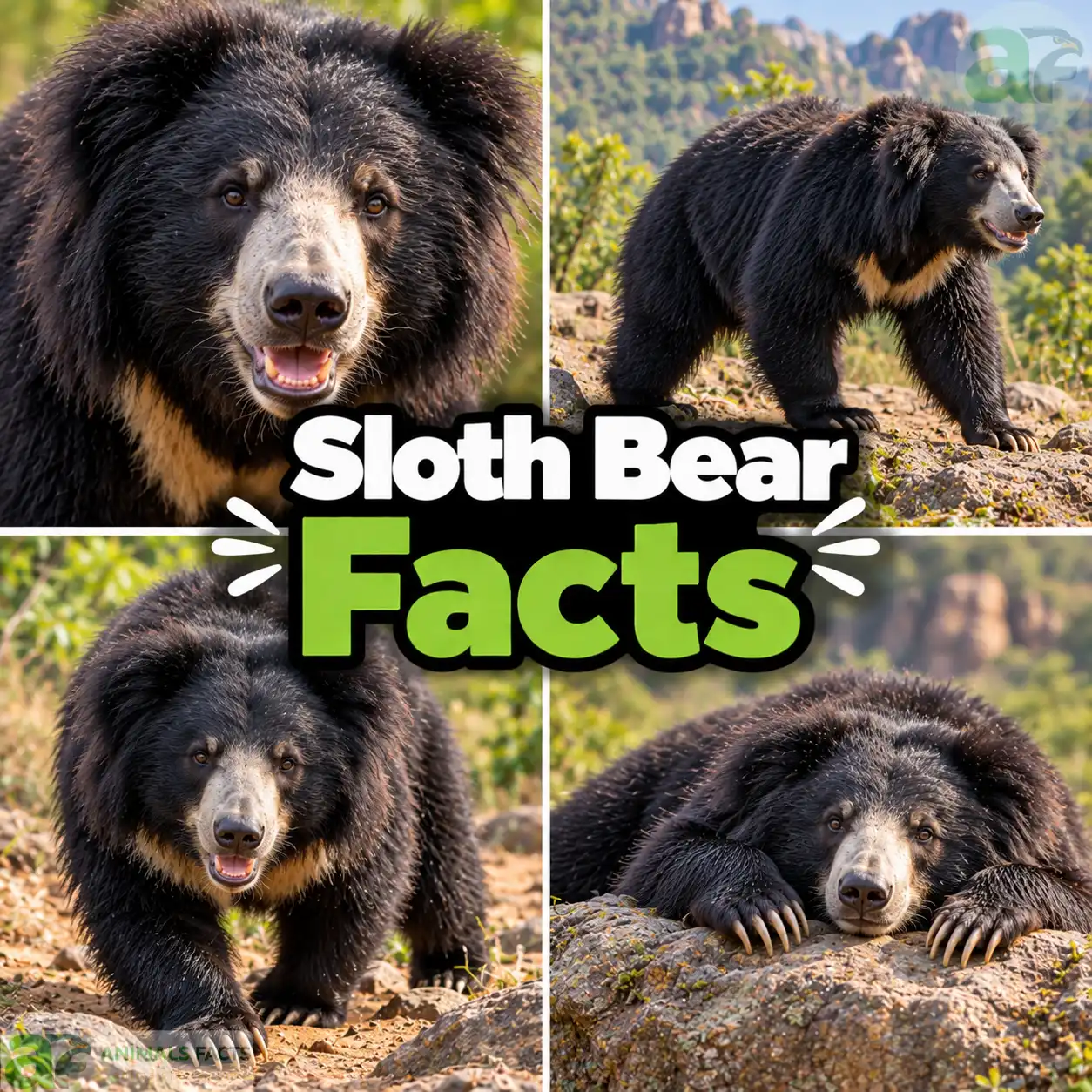
Sloth Bear Facts
| Feature | Details |
|---|---|
| Scientific Name | Melursus ursinus |
| Common Names | Sloth Bear, Honey Bear (regional), Labiated Bear (historical) |
| Kingdom | Animalia |
| Phylum | Chordata |
| Class | Mammalia |
| Order | Carnivora |
| Family | Ursidae |
| Genus | Melursus (sole living species) |
| Recognized Subspecies | 2 subspecies — Melursus ursinus ursinus (Indian subcontinent) and Melursus ursinus inornatus (Sri Lanka) |
| Habitat | Tropical and subtropical dry forest, scrubland, grassland, moist deciduous forest — India, Nepal, Bhutan, and Sri Lanka |
| Lifespan | 20–25 years in the wild; up to 40 years in captivity |
| Diet | Insectivore-focused omnivore — termites (primary), ants, honey, fruit, flowers, carrion |
| Weight | Males: 80–145 kg; Females: 55–95 kg |
| Body Length | 140–190 cm |
| Shoulder Height | 60–92 cm |
| Lip and Snout Structure | Uniquely mobile, extensible lips and missing upper incisors — forming a tube to vacuum insects |
| Conservation Status | Vulnerable (IUCN Red List) |
| Global Wild Population | Estimated 20,000 individuals — declining |
| Unique Feature | Sole species in genus Melursus; uniquely adapted for vacuuming termites; can carry cubs on its back; one of only two bear species known to carry young on back; extremely dangerous when encountered by surprise |
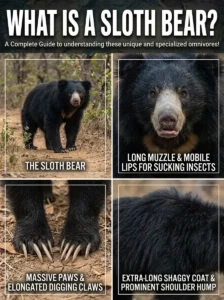 1. Introduction: What is a Sloth Bear?
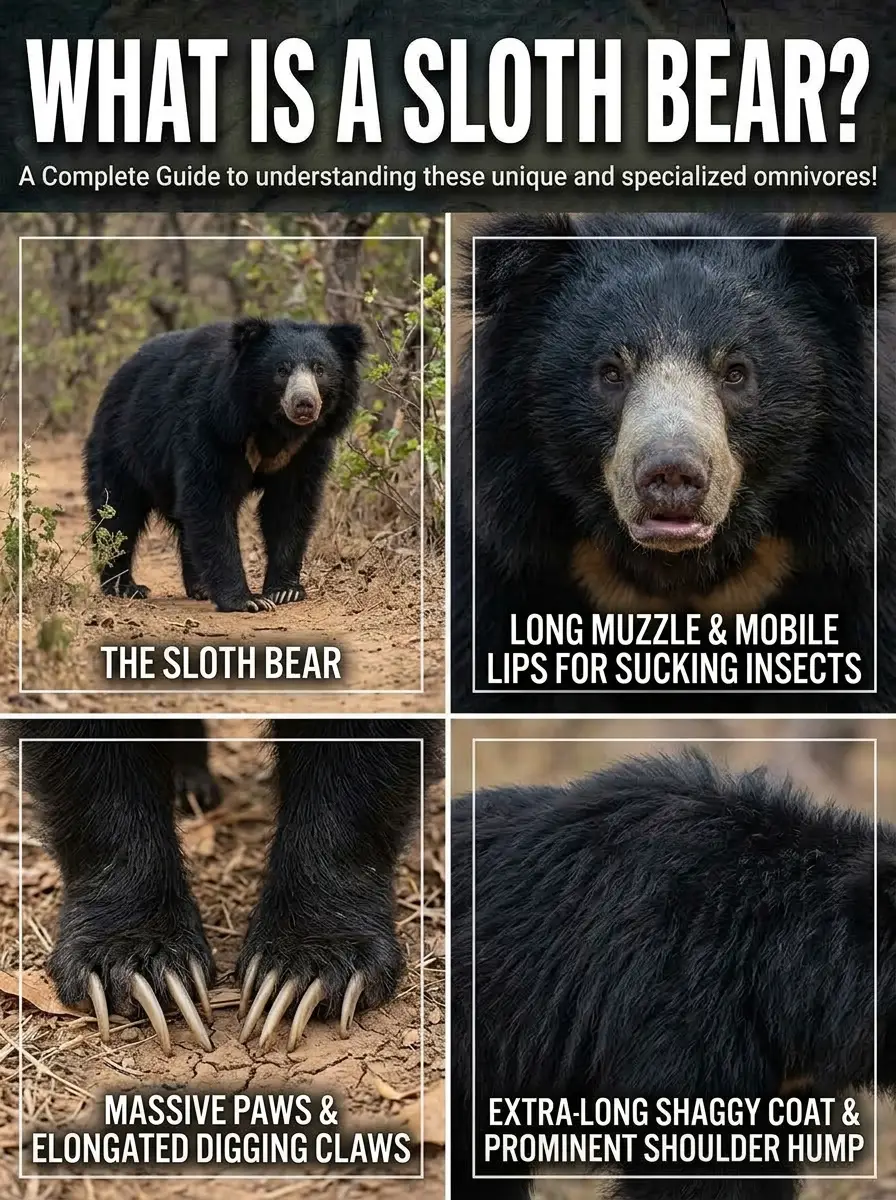
It is the only bear in the world with a built-in vacuum cleaner — a uniquely adapted oral anatomy that allows it to close its nostrils, extend its mobile lips into a tube, and generate powerful suction that vacuums termites and ants out of mounds with an audible slurping sound that can be heard from 100 meters away. It is also the only bear species known to regularly carry its young on its back — cubs riding their mother’s shaggy coat like tiny hitchhikers, clinging on during foraging expeditions through the dry forests of South Asia. And it is, by the account of wildlife researchers who have spent decades working across South Asia, one of the most dangerous and unpredictable animals in the region — responsible for more human casualties than leopards and tigers combined in some specific areas — despite its relative obscurity outside the countries it inhabits. Sloth bear facts are genuinely extraordinary from the very beginning.
The sloth bear — Melursus ursinus — is a medium-sized bear found across the Indian subcontinent and Sri Lanka, and is the sole living member of its own genus, occupying a taxonomic isolation that reflects millions of years of independent evolutionary development in South Asian forest and scrubland environments. Its name reflects a case of early scientific misidentification — when first described to Western science in the 1790s, naturalists initially classified it as a type of sloth (the South American mammal) based on its long, curved claws and general unfamiliar appearance, before subsequent examination confirmed it was a bear. The “sloth bear” name stuck despite being completely taxonomically inaccurate, and the animal has carried this misleading label ever since.
Whether you are a student researching sloth bear facts for a school project, a wildlife traveler planning a safari to India, a conservation advocate interested in the bear’s ongoing population challenges, a parent looking for sloth bear facts for kids, or someone who has just discovered this remarkable and under-appreciated South Asian bear for the first time — this is the most complete guide to sloth bear facts you will find anywhere. We cover sloth bear habitat, sloth bear diet, sloth bear behavior, communication, the extraordinary maternal back-riding behavior, reproduction, the sad history of dancing bears, conservation, mythology, and the remarkable ecological story of South Asia’s most unique and most overlooked bear species.
2. Sloth Bear Species Overview & Classification
The sloth bear belongs to the family Ursidae and occupies its own unique evolutionary position as the sole living species in the genus Melursus — a genus name derived from the Greek “meli” (honey) and Latin “ursus” (bear), roughly translating to “honey bear.” This taxonomic isolation reflects the sloth bear’s genuinely distinct evolutionary history and its morphological differences from all other living bear species.
Evolutionary Position Within the Bear Family
Genetic analyses place the sloth bear as an early-diverging member of the bear family — having split from the common ancestor of other bears before the more recent divergences within the genus Ursus, and representing an independent evolutionary lineage with distinctive physical and behavioral characteristics that reflect millions of years of adaptation to South Asian forest environments and their specific insect and fruit food resources.
Species Classification Table
| Level | Classification |
|---|---|
| Kingdom | Animalia |
| Phylum | Chordata |
| Class | Mammalia |
| Order | Carnivora |
| Family | Ursidae |
| Genus | Melursus |
| Species | M. ursinus |
| Common Names | Sloth Bear, Honey Bear (regional), Labiated Bear (historical) |
| Closest Relatives | Sun Bear (Helarctos malayanus); Asian Black Bear (Ursus thibetanus) within the broader bear family |
Subspecies
| Subspecies | Scientific Name | Range | Notes |
|---|---|---|---|
| Indian Sloth Bear | Melursus ursinus ursinus | Indian subcontinent — India, Nepal, Bhutan | Larger; more extensively studied |
| Sri Lankan Sloth Bear | Melursus ursinus inornatus | Sri Lanka only | Smaller; shorter fur; island-isolated |
Species Evolution & Discovery Timeline
~5–6 million years ago: The evolutionary lineage leading to the sloth bear diverged from other bear ancestors during the Miocene — establishing the independent trajectory toward the insect-specialist morphology of the modern species.
~2–3 million years ago: The sloth bear achieved something close to its present-day morphological form — with the specialized lip-snout anatomy, absent upper incisors, and extensible oral tube structure that define the species’ unique insect-vacuum feeding system.
1791: The sloth bear was first formally described to Western science by George Shaw — who initially classified it as a new sloth species (Bradypus ursinus), misled by its long curved claws and unfamiliar appearance. It was subsequently reclassified as a bear by Frédéric Cuvier in 1825, though the misleading “sloth bear” name was retained.
1860s–1950s: The practice of training captured sloth bears as “dancing bears” for street performance entertainment reached its peak across South Asia — with thousands of bears captured from the wild, subjected to painful training procedures, and kept in conditions that generated severe welfare concerns and contributed to wild population pressure.
1972: India enacted the Wildlife Protection Act — listing the sloth bear as a protected species and making hunting and capture illegal, representing the critical turning point in formal legal protection for the species.
2009: The last known “dancing bear” in India was retired following a campaign by Wildlife SOS — marking the official end of the centuries-old dancing bear tradition in India, though the practice continues in smaller numbers in some other South Asian contexts.
2016: The IUCN reclassified the sloth bear from Least Concern to Vulnerable — reflecting documented population declines across the species’ Indian range and increased recognition of the threats facing specific subpopulations.
3. Sloth Bear Physical Description & Unique Features
The sloth bear’s physical design is simultaneously the most unusual and the most functionally specialized of any South Asian bear — a morphology that prioritizes insect detection and extraction so thoroughly that the species has evolved anatomical features found in no other bear and very few mammals anywhere in the world.
Size and Sexual Dimorphism
- Males: Typically 80–145 kg, with Indian populations averaging larger than Sri Lankan
- Females: Typically 55–95 kg — considerably lighter than males
- Body length: 140–190 cm, making sloth bears medium-sized among the world’s eight bear species
- Shoulder height: 60–92 cm
Despite its moderate body size, the sloth bear possesses disproportionate strength — particularly in its forelimbs and claws — that gives it predatory capability and defensive ferocity beyond what weight alone would suggest.
The Extraordinary Oral Anatomy
The sloth bear’s most remarkable and most distinctive anatomical features are all directly related to its termite-and-ant-specialist diet:
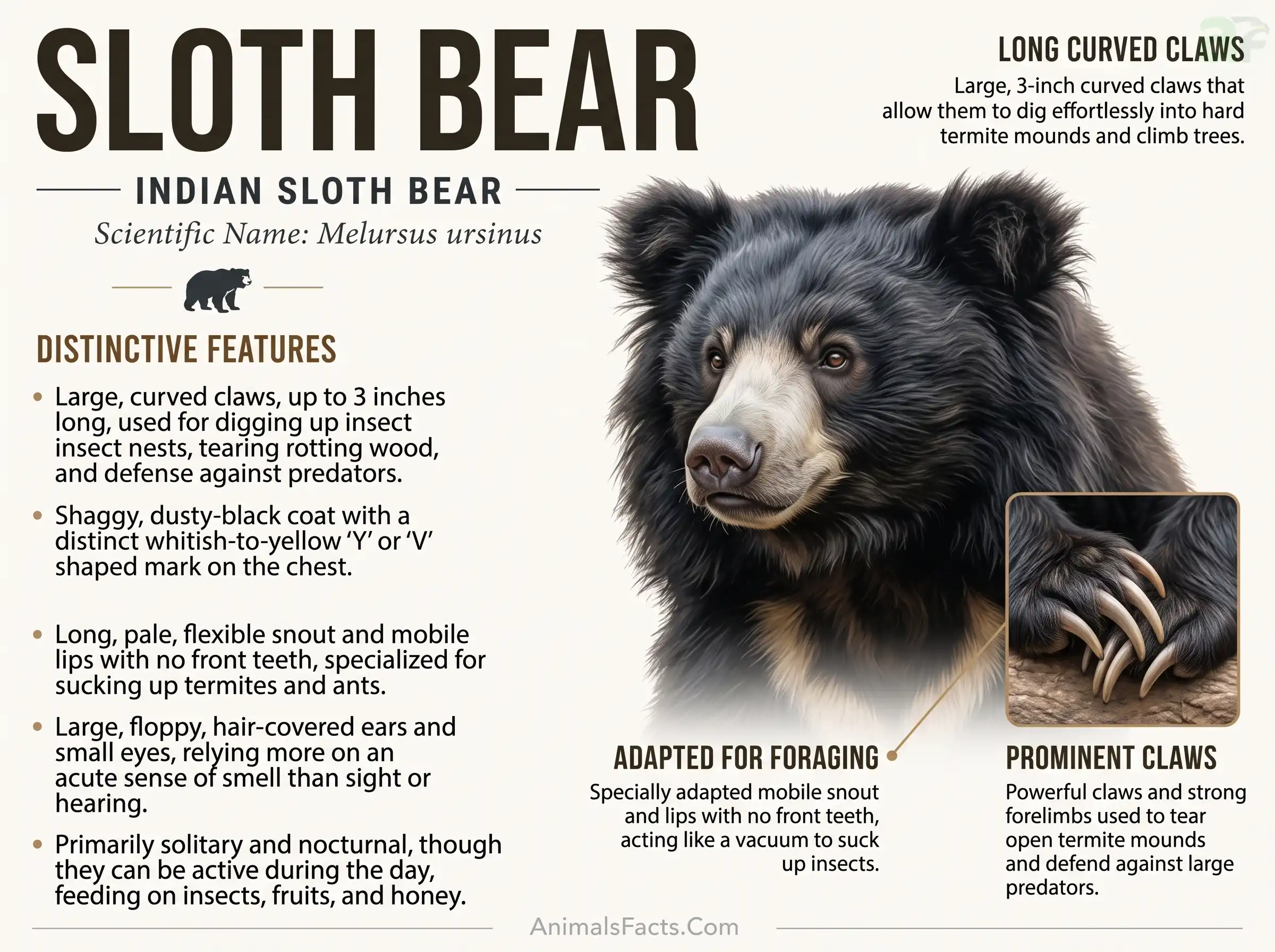
No upper incisors: The sloth bear is the only bear species that lacks upper incisors — the four front teeth in the upper jaw are absent, creating a gap in the dental formula that, combined with the bear’s extended lower lip, forms a natural tube when the mouth is pursed.
Extensible, mobile lips: The sloth bear’s lips are uniquely mobile and extensible among bears — capable of being extended outward and shaped into a tube configuration that, when the nostrils are voluntarily closed, creates a sealed channel for generating powerful directional suction.
The vacuum system: When feeding on termites or ants, the sloth bear: (1) opens a termite mound with its powerful claws; (2) blows debris away from the opening; (3) closes its nostrils; (4) extends its lips into a tube; and (5) inhales forcefully — generating powerful suction that vacuums termites and soil particles into the mouth, from which the termites are extracted while the soil particles are expelled. The resulting loud slurping, snuffling, and blowing sounds carry for extraordinary distances through the quiet forest, making a feeding sloth bear one of the most acoustically distinctive feeding events in South Asian wildlife.
The Shaggy Coat
The sloth bear’s coat is distinctive among bear species — long, coarse, and shaggy, particularly around the shoulders and chest where longer guard hairs create a mane-like appearance. The coat is typically black, though some individuals show brownish-black or black with grey or reddish-brown highlights. The characteristic white or yellowish-white V or Y-shaped chest mark on a black background provides a reliable species identification feature and — like the sun bear’s chest patch — is individually variable in its exact shape and extent.
Feet and Claws
The sloth bear possesses long, strongly curved, whitish claws — among the longest relative to body size of any bear species — that are used for powerful termite mound excavation. These same claws enable a degree of tree-climbing capability, though sloth bears are considerably less arboreal than sun bears.
Did You Know? The sloth bear can voluntarily close its nostrils — a capability shared by relatively few mammals — allowing it to prevent soil and insect debris from entering the nasal passages during the powerful suction feeding that defines its termite-eating technique. This voluntary nasal closure is combined with the unique extensible lip anatomy and the absent upper incisors to create a feeding system that has no close parallel in the entire bear family or in most other mammalian carnivore-insectivore groups. The system is so efficient that a sloth bear can empty a significant termite mound of its inhabitants in a matter of minutes — far faster than any other predator attempting to access the same food resource.
4. Top 25 Surprising & Interesting Sloth Bear Facts
- The sloth bear is the only bear species that lacks upper incisors — a dental modification that, combined with extensible lips, creates a natural tube for vacuuming insects from mounds.
- A sloth bear’s vacuum feeding produces a loud slurping sound audible from 100 meters away — making it one of the most acoustically distinctive feeding behaviors in South Asian wildlife.
- The sloth bear is one of only two bear species known to regularly carry cubs on its back — mothers transporting cubs on their shaggy coats during foraging expeditions, a behavior unique among large carnivores.
- Sloth bears are responsible for more human casualties in some South Asian regions than leopards and tigers combined — despite their much lower public profile, representing one of the most significant human-wildlife conflict situations in India.
- The sloth bear’s name is a taxonomic accident — Western naturalists initially misidentified the species as a type of sloth based on its long claws, and the misleading name “sloth bear” has persisted ever since, despite the species being entirely unrelated to sloths.
- Sloth bears can voluntarily close their nostrils during termite feeding to prevent soil and insect debris from entering their nasal passages — a capability shared by very few mammals.
- The distinctive V or Y-shaped white chest mark of the sloth bear is individually variable between individuals — functioning as a potential individual identification marker similar to the sun bear’s chest patch.
- Sloth bears are documented blowing debris away from termite mound openings before inserting their lips to feed — a preparatory behavior that improves the efficiency of the subsequent vacuum feeding by clearing the intake area.
- The “dancing bear” tradition — in which captured sloth bears were trained through painful procedures to perform for money on Indian streets — continued for centuries before the last documented practicing dancing bear in India was retired in 2009 through the efforts of Wildlife SOS.
- Sloth bears are frugivorous as well as insectivorous — consuming significant quantities of fruit during fruiting seasons, contributing to seed dispersal processes in the dry forests and scrubland they inhabit.
- Kipling’s Baloo — the wise, good-natured bear of “The Jungle Book” — is widely believed to have been inspired by the sloth bear of India’s central forests, making this relatively obscure bear species the inspiration for one of the most famous fictional bears in world literature.
- Sloth bears are found in significantly higher densities in India’s protected tiger reserves than in unprotected forest areas — suggesting that the indirect protection of tigers in these landscapes benefits sloth bears by reducing human hunting pressure.
- Unlike most bears that retreat from threats, sloth bears are documented making immediate offensive charges toward perceived threats — including humans — with very little warning behavior, making surprise encounters in the forest genuinely and seriously dangerous.
- Research has documented that sloth bear attacks on humans in India are disproportionately concentrated in a few specific forest districts — suggesting that specific local ecological conditions, including reduced prey availability and habitat loss, drive elevated conflict rates in these areas.
- The sloth bear’s shaggy, unkempt coat creates an appearance sometimes described as “disheveled” or “wild” that sets it apart visually from the more neatly furred bear species — contributing to its cultural associations with chaos, danger, and the primal wild forest in South Asian tradition.
- Sri Lanka’s sloth bear subspecies (M. u. inornatus) is the smaller of the two recognized subspecies — with shorter fur reflecting the warmer, lower-altitude environment of Sri Lanka compared to parts of the Indian mainland range.
- Sloth bears have a documented home range of approximately 10–40 km² for females and 23–65 km² for males — relatively modest home ranges reflecting the concentrated availability of termite mounds and fruit trees in their forest habitats.
- Research in India’s Panna Tiger Reserve documented that individual sloth bears show strong preference for specific termite mound species over others — suggesting individual dietary preferences and learned food selection that reflect genuine individual cognitive differences in foraging behavior.
- Sloth bears produce an extraordinary range of vocalizations — including huffing, screeching, rattling, gurgling, and roaring — and are considered among the noisiest of bear species, with feeding vocalizations particularly carrying across considerable distances.
- Wildlife SOS — a leading Indian wildlife NGO — has documented that rescued former dancing bears often suffer from severe psychological trauma, chronic pain, and behavioral abnormalities that require years of careful rehabilitation before the animals can achieve anything approaching normal behavioral expression.
- The sloth bear is an important ecological engineer in South Asian dry forest ecosystems — with their termite mound excavation activities creating significant microhabitat structure that provides shelter and foraging opportunities for dozens of other species.
- India’s Satpura Tiger Reserve in Madhya Pradesh supports one of the highest known densities of wild sloth bears anywhere — with camera trap studies documenting remarkable individual diversity and behavioral richness in this well-protected landscape.
- Sloth bears have been documented swimming to cross rivers and access food resources on islands within river systems — demonstrating aquatic capability that supplements their primarily terrestrial lifestyle.
- The sloth bear’s distinctive chest mark has been interpreted across various South Asian cultural traditions as symbolizing the moon, the sun, the lightning bolt, and various supernatural beings — reflecting the cultural imagination that this visually distinctive marking has inspired across diverse communities within the bear’s range.
- Despite living in close proximity to tigers across much of their range, sloth bears maintain a complex and sometimes adversarial relationship with tigers — with documented cases of sloth bears successfully defending themselves against tigers, as well as documented tiger predation on sloth bears, creating one of South Asia’s most fascinating large-predator interactions.
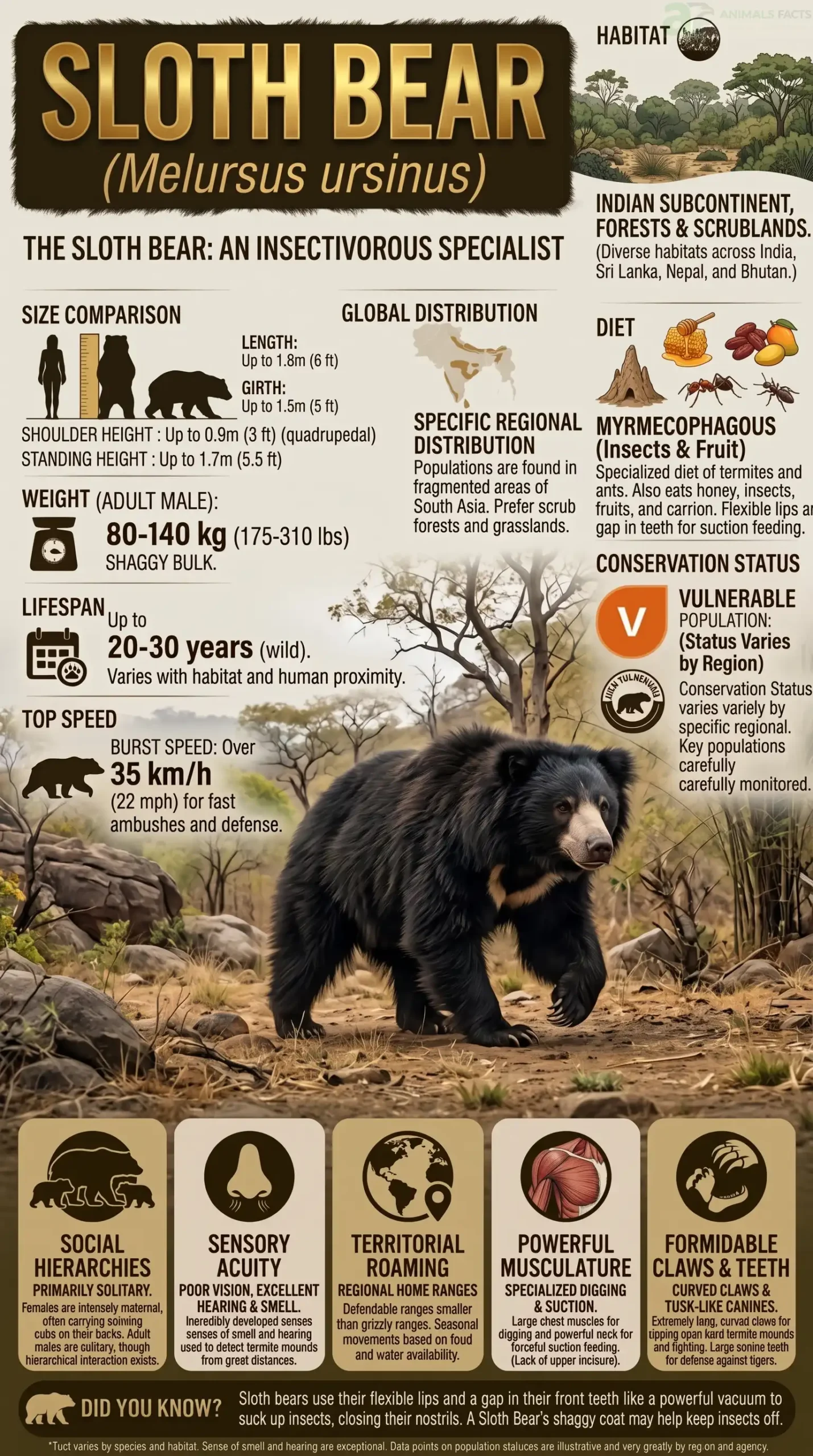
5. Fun Facts About Sloth Bear
- The sloth bear has a built-in vacuum cleaner for eating termites — nostrils that can close, extensible lips, and no upper front teeth.
- The feeding sound can be heard 100 meters away — one of the noisiest feeding bears.
- Sloth bear mothers carry cubs on their backs — unique among large carnivores.
- Baloo from The Jungle Book is believed to be based on the sloth bear!
- The name “sloth bear” is a scientific mistake from 1791 — it’s not related to sloths at all.
- Sloth bears cause more human injuries in some Indian regions than tigers or leopards.
- The last “dancing bear” in India was retired in 2009.
- Sloth bears can close their nostrils voluntarily during feeding.
- The V-shaped chest mark is unique to each individual.
- Sloth bears live in tiger reserves — and benefit from the indirect protection this provides.
- Sri Lanka has its own, smaller sloth bear subspecies.
- Sloth bears are classified as Vulnerable with a population of ~20,000.
6. Sloth Bear Habitat & Geographic Range
The sloth bear’s geographic range is among the most restricted of any bear species — confined entirely to the Indian subcontinent and Sri Lanka, with the species’ distribution further limited within this area by its specific habitat requirements centered on dry forest and scrubland environments that support the termite and ant populations that form the foundation of its diet.
Primary Habitat Types
Tropical and subtropical dry forest: The sloth bear’s most characteristic and most important habitat — the seasonally dry tropical forest of central, southern, and eastern India, characterized by teak, sal, and mixed deciduous woodland with a seasonally variable understory that supports abundant termite colonies and fruiting trees critical to the sloth bear’s diet across different seasons.
Scrubland and thorn forest: The transition zones between forest and agricultural land — including thorn scrub, open woodland, and rocky hillside scrubland — support significant sloth bear populations and represent important habitat at the margins of protected areas, where the interface with human agricultural land creates both opportunity (crop raiding) and conflict (retaliatory killing).
Grassland and savanna mosaic: Sloth bears are documented in grassland habitats with sufficient woody cover — particularly in the forest-grassland mosaics of central India’s protected areas, where the combination of grassland fruit resources and adjacent forest termite habitat provides complementary seasonal food.
Tropical moist forest: While less typical than dry forest, sloth bears also inhabit tropical moist deciduous and semi-evergreen forest in wetter parts of their range — including forest areas in the Western Ghats, eastern India, and Sri Lanka.
Rocky outcrops and boulder fields: Sloth bears show a particularly strong association with rocky terrain — using rock crevices and cave-like spaces beneath boulders as denning sites for females with cubs, and finding concentrated insect resources in the soil and dead wood associated with rocky habitat.
Geographic Range
| Region / Country | Population | Status | Notes |
|---|---|---|---|
| India (mainland) | ~6,000–10,000 | Vulnerable | Most of global population; concentrated in central and southern India |
| Sri Lanka | ~500–1,000 | Endangered (national) | Island subspecies; more isolated |
| Nepal (Terai region) | ~500–1,000 | Vulnerable | Small but significant population; recovering in some protected areas |
| Bhutan | ~200–500 | Data deficient | Limited research; present in some southern forests |
| Bangladesh | Possible; poorly documented | Critically reduced | Little evidence of viable populations |
Did You Know? The sloth bear’s distribution in India is strongly associated with the country’s tiger reserve network — with research demonstrating that sloth bear population density is measurably higher inside tiger reserves than in comparable unprotected forest outside their boundaries. This pattern reflects the indirect conservation benefit that sloth bears receive from tiger protection — tiger reserves provide the strongest legal protection available to Indian wildlife, dramatically reducing the hunting, habitat clearing, and human disturbance that suppress sloth bear populations in unprotected areas. This “umbrella species” effect of tiger conservation protecting sloth bears has been cited as evidence for the ecological value of protecting large apex predators even for the benefit of non-target species that share the same landscape.
7. Sloth Bear Diet & Feeding Behavior
The sloth bear is the most insect-specialized of the world’s eight living bear species — with termites and ants forming a dietary foundation that is unique in its importance within the bear family, and supported by the most extraordinary feeding anatomy of any bear species.
What Sloth Bears Eat
While the sloth bear’s diet includes seasonal fruit and other supplementary foods, termites and ants represent the dietary foundation across most of the year — with the species’ entire oral anatomy specifically evolved to maximize the efficiency of accessing and consuming these social insect colonies.
Diet Breakdown Table
| Food Type | Approximate Percentage | Season / Notes |
|---|---|---|
| Termites (various species) | 40–60% | Year-round primary prey; primary insect target |
| Ants (various species) | 10–20% | Secondary insect prey; extracted similarly to termites |
| Fruit (various forest fruit species) | 15–30% | Seasonal peaks during fruiting events; mangoes, mahua, jamun |
| Flowers and nectar (mahua flowers) | 5–15% (seasonal) | Critical seasonal resource; mahua flowers ferment and are consumed in large quantities |
| Honey and bee larvae | 5–10% | Important high-calorie supplement |
| Small vertebrates and carrion | 2–5% | Supplementary; taken opportunistically |
| Crops (sugarcane, corn, etc.) | Variable | Conflict source; taken when forest foods scarce |
The Termite Vacuum System — In Detail
The sloth bear’s termite feeding technique is the most mechanically specialized insect extraction system documented in any bear species — a multi-step process using a unique combination of physical modifications and behavioral adaptations:
Step 1 — Locating: The sloth bear detects active termite mounds through smell — its olfactory system is acutely tuned to the specific chemical signatures of termite colonies, allowing precise discrimination between active and inactive mounds across a foraging area.
Step 2 — Excavation: Using its powerful forelimbs and long, curved claws, the sloth bear breaks open the hardened outer structure of termite mounds — the outer casing of some tropical termite mounds approaches the hardness of concrete, requiring significant force to breach.
Step 3 — Debris clearing: The sloth bear blows sharply into the exposed opening — clearing loose soil, construction material, and disturbed termites from the immediate feeding area to improve the subsequent suction efficiency.
Step 4 — Vacuum feeding: The bear positions its extended, tubular lips over the opening, closes its nostrils, and generates powerful inhalation — creating a suction force that draws termites and loose soil into the oral cavity. The broad, flat palate acts as a sorting surface — termites are swallowed while soil particles are expelled by subsequent exhalation.
Step 5 — Auditory signature: The resulting combination of powerful inhalation, exhalation of debris, and the movement of soil and termites through the oral and nasal cavities creates the characteristic loud snuffling, slurping, and rattling sounds that carry through the forest — one of the most acoustically distinctive large mammal feeding behaviors in South Asian wildlife.
Mahua Flowers — The Seasonal Fermented Feast
One of the most unusual and most culturally significant elements of the sloth bear’s seasonal diet is its consumption of mahua flowers (Madhuca longifolia) — which fall in enormous quantities from mahua trees during the spring flowering season. These flowers are highly nutritious and also undergo natural alcoholic fermentation on the forest floor after falling — producing a mildly intoxicating food source that sloth bears consume in large quantities during the mahua season.
This consumption of naturally fermented mahua flowers has generated local cultural observations across the sloth bear’s range about bears appearing intoxicated after mahua feasts — contributing to a body of cultural lore about the sloth bear’s behavior that persists across multiple South Asian traditions.
Did You Know? Research tracking sloth bear foraging in India’s Mudumalai Tiger Reserve documented that individual bears show remarkable termite mound fidelity — returning to the same individual termite mounds repeatedly over periods of months, apparently monitoring the recovery of termite colonies between visits and timing returns to maximize the number of termites available for extraction at each visit. This sophisticated exploitation of renewable food resources — spacing visits to allow prey population recovery between feeding events — demonstrates a temporal foraging strategy considerably more complex than simple opportunistic insect predation, and suggests a level of spatial and temporal cognitive planning that researchers did not initially anticipate from a bear species.
8. Reproduction & Life Cycle
Sloth bear reproduction includes some of the most distinctive and most frequently photographed behaviors of any bear species — particularly the remarkable cub-carrying behavior that has made the species famous among wildlife photographers and which represents a genuinely unique adaptation among the world’s bear species.
Mating Behavior
Sloth bears mate during the summer months across much of their Indian range, primarily between May and July, with females entering estrus for a limited period during which males compete aggressively for mating access. Unlike most bear species, sloth bear mating encounters are often accompanied by loud, prolonged vocalizations — with pairs documented producing extended vocal duets during consortship that can be heard at considerable distances, contributing to the species’ reputation as one of the noisier bear species.
Delayed implantation: As with other bear species, sloth bears appear to practice embryonic diapause — with fertilized eggs entering a dormant state before implantation, allowing birth to be timed for the period of maximum maternal condition after autumn food accumulation.
Denning and Birth
Gestation: Approximately 210 days from implantation to birth — though the total period from mating to birth (including the diapause period) is longer.
Birth: Typically November to January in India — during the winter season when the bear dens in rock caves, hollow trees, or dense vegetation.
Litter size: Typically 1–2 cubs, with 2 being most common — reflecting higher reproductive output than some bear species in similar body size ranges.
Birth weight: Approximately 400–500 grams per cub.
The Back-Riding Behavior — Unique Among Bears
The sloth bear’s most celebrated and most photographically documented behavioral feature is the habit of female sloth bears carrying their cubs on their backs during foraging expeditions — a behavior unique in the bear family and shared with very few other large mammals anywhere in the world.
Cubs begin riding on the mother’s back at approximately 1–2 months of age, once they have sufficient strength to grip the mother’s long fur. The cubs — typically two siblings — ride by gripping the fur on the mother’s back and shoulders, and will maintain this riding position during the mother’s foraging movements, climbing on and off as the situation demands. Cubs may continue to ride intermittently until they are 6–9 months old and sufficiently large and mobile to follow the mother independently.
The functional advantages of this back-riding behavior are believed to include rapid transport away from predators, energy conservation for small cubs unable to match the mother’s foraging pace, and protection from ground-level threats including snakes, predators, and intraspecific competition.
Key Developmental Stages
| Stage | Age | Key Development |
|---|---|---|
| Birth in den | November–January | ~450 grams; blind, helpless |
| Eyes open | ~4 weeks | Beginning visual awareness |
| Back-riding begins | ~1–2 months | Cubs grip mother’s fur; transported during foraging |
| Back-riding peaks | 3–6 months | Primary transport mode for mobile cubs |
| First solid food | 3–4 months | Beginning to sample mother’s food sources |
| Back-riding declines | 6–9 months | Cubs increasingly mobile; begin following independently |
| Independence | 24–30 months | Separation from mother |
| Sexual maturity | ~3 years | First breeding possible |
Sloth Bear Lifespan Comparison Table
| Species | Average Wild Lifespan | Maximum Confirmed |
|---|---|---|
| Sloth Bear | 20–25 years | ~40 years (captivity) |
| Sun Bear | ~25 years | ~30 years (captivity) |
| American Black Bear | 18–23 years | ~39 years (captivity) |
| Grizzly Bear | 20–25 years | ~44 years (captivity) |
9. Social Behavior & Communication
The sloth bear occupies an interesting middle position in bear social complexity — primarily solitary outside of mother-cub family groups and mating associations, but demonstrating a level of vocal and behavioral expressiveness that distinguishes it from most other bear species, and occasionally showing unexpected social tolerance in food-concentrated environments.
Territorial Organization and Social Tolerance
Sloth bear territories overlap between individuals of both sexes — with male territories larger than female territories but without the strict exclusive territorial defense documented in some other solitary carnivores. Male sloth bears in overlapping ranges demonstrate considerable mutual tolerance outside of mating competition, and in areas of concentrated fruit or insect food resources, multiple adults may forage within close proximity.
In India’s Daroji Bear Sanctuary in Karnataka — one of the best places for reliable sloth bear observation — multiple individuals regularly forage simultaneously within the sanctuary’s rocky terrain, demonstrating social tolerance at food-concentrated sites comparable to what is observed in other bear species at predictable seasonal food concentrations.
Vocalizations
The sloth bear is one of the most vocally expressive of bear species — producing an extensive range of sounds across diverse behavioral contexts:
Feeding vocalizations: The loud snuffling, sucking, blowing, and rattling sounds produced during termite and ant vacuum feeding — audible at 100 meters and extremely characteristic of the species.
Threat vocalizations: Loud roars, grunts, and huffing sounds produced during encounters with humans, tigers, leopards, and rival bears — among the most dramatic and most alarming threat displays of any South Asian mammal.
Mother-cub communication: Soft churring, whimpering, and comfort vocalizations between mothers and cubs during normal family interactions — a quieter, more intimate vocal register than the threat vocalizations.
Mating vocalizations: The extended vocal exchanges between consorting pairs — including what researchers have described as “duet-like” vocal interactions between mating bears — represent one of the most unusual and least studied aspects of sloth bear social communication.
Alarm and warning sounds: Sloth bears produce characteristic huffing and rattling warning sounds when detecting a potential threat before committing to either retreat or charge — a brief warning window that, experienced observers note, can be extremely brief and easily missed in dense forest, contributing to the unexpectedness of sloth bear defensive charges.
Did You Know? Research on human-sloth bear conflict in India’s Chhattisgarh state documented that the majority of sloth bear attacks on humans occurred during unexpected encounters at close range — typically less than 5 meters — when a bear suddenly encountered a person who was foraging, collecting wood, or passing through the forest on foot without making sufficient noise to alert the bear in advance. Unlike tigers or leopards, which typically either actively stalk human prey or observe before retreating, sloth bears surprised at close range appear to respond with an immediate offensive charge that gives the human virtually no time to react, resulting in the severe injuries associated with these encounters.
10. Predators & Defense Mechanisms
The sloth bear’s position in South Asian predator hierarchies is complex and genuinely unusual — simultaneously prey of tigers and leopards across much of its range, and the source of significantly more human casualties than either of these large cats in specific conflict-prone areas. Its defensive strategy of immediate offensive charging has generated both serious wildlife management challenges and an extraordinary body of documented conflict incidents.
Natural Predators
Tigers: The sloth bear’s most significant natural predator across their shared range — with tigers documented hunting and killing sloth bears across multiple protected areas in India and Nepal. Research in tiger reserves has documented that sloth bears significantly modify their behavior in areas of high tiger activity — shifting feeding times, avoiding specific locations, and showing elevated vigilance in habitats where tiger presence is marked by recent signs.
However, the relationship between sloth bears and tigers is more complex than simple predator-prey — multiple documented incidents in which sloth bears have successfully defended themselves against tigers, including cases in which adult sloth bears have been observed driving tigers away from cubs or from carcasses. Naturalist accounts across British India and contemporary wildlife documentation both describe encounters in which the unpredictable ferocity of a cornered sloth bear’s charge was sufficient to cause tigers to retreat.
Leopards: Leopards represent a genuine predation threat to sloth bear cubs — with documented leopard predation on juvenile sloth bears across multiple Indian protected areas. Adult sloth bears are generally too large and too defensively capable for leopards to attack successfully, but the species’ cubs remain vulnerable during the period before they are large enough for effective self-defense.
Dholes (Asian Wild Dogs): As documented for sun bears, pack-hunting dholes represent a coordinated predation threat that can overwhelm an individual sloth bear through numerical advantage, particularly in open terrain where escape options are limited.
Humans: The dominant source of sloth bear mortality across the species’ range — through habitat loss and fragmentation, direct hunting, crop-raiding retaliatory killing, vehicle collisions, and (historically) capture for the dancing bear trade.
The Offensive Charge — Defense Through Attack
The sloth bear’s primary defensive strategy — an immediate, explosive charge toward perceived threats — distinguishes it dramatically from the more typical bear response of bluff display followed by retreat if the threat yields. Research and wildlife management documentation suggests that sloth bears may be more likely to charge and make contact than either tigers or leopards in comparable surprise encounter situations, and that the brief or absent warning behavior before charging reduces the opportunity for humans to take evasive action.
This aggressive defensive style is believed to reflect a long evolutionary history of encounters with large cat predators — particularly tigers and leopards — in which the brief window of the initial encounter determines survival, making an immediate proactive offensive charge more effective than a slower escape-based strategy for an animal of the sloth bear’s size and build.
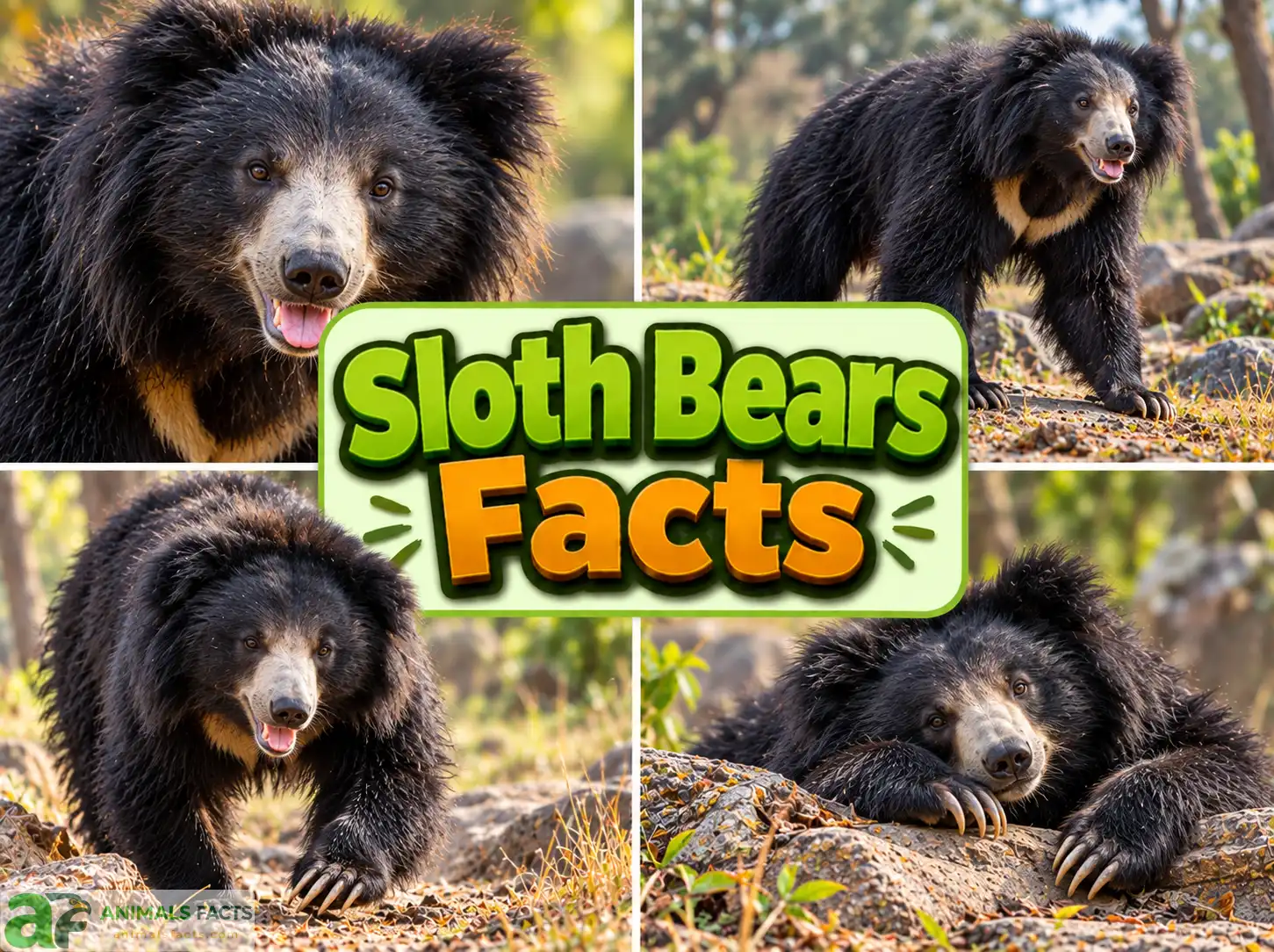
11. Sloth Bear Facts for Kids
Hey kids — let’s explore why the sloth bear is one of the most unusual and most surprising animals in all of South Asia!
- The sloth bear has a built-in vacuum cleaner for eating termites! It has no upper front teeth, and it can push its lips out into a tube shape, close its nose, and suck insects right out of their mounds — like a living vacuum cleaner! The sound it makes while doing this can be heard from far away across the forest!
- Sloth bear moms carry their babies on their backs — the little cubs cling to the long, shaggy fur on mom’s back and shoulders while she goes foraging for food. This makes the sloth bear one of only a couple of bear species in the whole world to carry its young this way, and it looks amazing!
- The “sloth” in “sloth bear” is a big scientific mistake — when Western scientists first saw a sloth bear in the 1790s, they thought it was a type of sloth (the hanging South American animal) because of its long claws! It took decades to sort out that it was actually a bear, but the wrong name stuck forever!
- Did you know that Baloo — the loveable, wise bear from Rudyard Kipling’s The Jungle Book — was probably inspired by the sloth bear? Kipling lived in India where sloth bears roamed the same kind of forests he wrote about!
- Sloth bears eat a special fermented flower called the mahua flower — these flowers fall off trees and sit on the forest floor where they naturally start to ferment a bit (like how fruit can sometimes do). Sloth bears eat huge amounts of them each spring!
- Despite looking shaggy and bumbling, sloth bears are considered one of the most dangerous animals in the Indian forest when surprised — because they charge very quickly and with almost no warning. Even tigers are cautious around them!
- There’s a really special place in India called Daroji Bear Sanctuary in Karnataka where you can see sloth bears foraging in rocky, open terrain — sometimes several at once — making it one of the best places in the world to actually see these bears in the wild!
- The sloth bear’s long, white claws are so strong they can break open termite mounds that are almost as hard as concrete — and once they’ve opened the mound, in goes the vacuum-cleaner snout!
Did You Know? The sloth bear can tell the difference between different species of termites — research has found that individual bears actively prefer certain termite species over others when they have a choice, suggesting that sloth bears can not only smell which termite species are present in a mound but also have individual food preferences that they act on! Some bears consistently favor certain termite species that may be higher in fat or protein content, showing a level of dietary discrimination far more sophisticated than simply eating any insects available. This is like a bear equivalent of being a picky eater — with real nutritional reasoning behind the choosiness!
12. Relationship with Humans
The sloth bear’s relationship with South Asian human communities spans thousands of years of cultural proximity — from the ancient reverence reflected in cave art and religious symbolism, through the devastating tradition of dancing bear performance, to the contemporary complexities of crop raiding, forest conflict, and conservation coexistence.
Ancient Cultural Coexistence
The sloth bear has shared the forests and cultural landscape of the Indian subcontinent with human communities for thousands of years, appearing in prehistoric cave art at sites including Bhimbetka in Madhya Pradesh — some of India’s oldest human artistic sites, where sloth bear representations appear alongside other forest animals in rock art dated to at least several thousand years before the common era. This ancient artistic record reflects a prolonged and intimate coexistence between human forest communities and sloth bears that predates any written documentation of the relationship.
The Dancing Bear Tradition — A Welfare Crisis
The most internationally publicized and most extensively documented aspect of the human-sloth bear relationship is the “dancing bear” tradition that persisted across South Asia — particularly in India — for centuries before its formal end in India in 2009. The practice involved:
Capture: Bear cubs captured from the wild — most commonly by killing the mother first — entering the trade at ages of a few weeks to months.
Training: Cubs subjected to the painful procedure of piercing the muzzle with a hot needle and threading a rope through the piercing — used subsequently to control the bear’s movements by pulling the rope, causing pain. The “dancing” behavior — swaying and moving in response to music — was trained through this rope-pain response, creating the appearance of dancing while actually representing a pain-avoidance behavior.
Performance: Adult bears kept in inadequate conditions and walked through cities and villages to perform for money — typically in severe physical and psychological distress, often suffering from malnutrition, dental disease (teeth were often pulled or filed to reduce danger), and the neurotic repetitive behaviors characteristic of severely inadequate captive conditions.
Scale: At the practice’s peak, thousands of sloth bears were held in this condition across India, Nepal, Pakistan, and Bangladesh — representing a significant fraction of the total wild population that was being removed annually to supply the trade.
End in India: The combination of the Wildlife Protection Act (1972), subsequent legislative strengthening, and the sustained campaign by Wildlife SOS — which purchased bears from owners, provided alternative livelihoods for the Kalandar community that had historically practiced bear keeping, and operated rehabilitation sanctuaries — resulted in the retirement of the last known dancing bear in India in 2009. The practice persists at reduced scale in some other South Asian countries.
Human-Bear Conflict
Contemporary human-sloth bear conflict in India represents one of the most significant and most challenging wildlife management situations on the subcontinent — involving an animal that is smaller and less famous than tigers or leopards but that generates comparable or greater numbers of human injuries in specific geographic areas.
Research in Chhattisgarh, Jharkhand, and Odisha has documented injury rates from sloth bear encounters that significantly exceed those from other large carnivores in the same areas, with the bears’ tendency to make immediate offensive charges against surprised humans generating severe facial and arm injuries in many documented cases.
13. Sloth Bear Conservation Status & Threats
The sloth bear’s reclassification from Least Concern to Vulnerable in the 2016 IUCN Red List assessment reflected genuine and documented population declines across the species’ range — driven by habitat loss, hunting, and the complex dynamics of human-wildlife conflict that simultaneously reflect the bear’s ecological success in certain areas and create the conflict that drives mortality in others.
Conservation Data (2026)
| Region / Population | Status | Population | Trend |
|---|---|---|---|
| India (overall) | Vulnerable | ~6,000–10,000 | Declining overall; stable or recovering in protected areas |
| Sri Lanka | Endangered (national) | ~500–1,000 | Declining; habitat fragmentation |
| Nepal | Vulnerable | ~500–1,000 | Recovering in some protected areas |
| Bhutan | Data deficient | ~200–500 | Poorly quantified |
| Bangladesh | Critically reduced | Near zero viable population | Possibly functionally extirpated |
Major Threats
Habitat loss and fragmentation: The conversion of tropical dry forest to agricultural land, urban development, and plantation forestry across the Indian subcontinent has reduced and fragmented sloth bear habitat significantly over the past century — with the species now concentrated primarily within the formal protected area network, particularly tiger reserves and wildlife sanctuaries, and in decreasing amounts outside protected areas.
Hunting: Despite legal protection under India’s Wildlife Protection Act, sloth bears continue to be poached — for body parts used in traditional medicine, for meat, and in retaliatory killing following conflict incidents. The parts trade — including claws, teeth, and gall bladders — represents a significant and difficult-to-monitor threat.
Human-wildlife conflict and retaliatory killing: As discussed above, the sloth bear’s tendency to inflict injuries during encounters generates significant retaliatory killing pressure — both targeted killing of individual bears responsible for specific attacks and broader persecution of bears in areas of high conflict frequency.
The remnant dancing bear trade: While largely eliminated in India, the practice continues in reduced form in some neighboring countries — with the associated wild cub capture representing an ongoing mortality impact on wild populations in affected areas.
Road mortality: As the Indian road network expands and traffic density increases, vehicle collisions are an increasingly documented cause of sloth bear mortality — particularly for individuals whose territories include roads crossing forest land.
Did You Know? Wildlife SOS — the Indian wildlife NGO most closely associated with ending the dancing bear practice in India — operated a landmark program that not only rescued bears from captivity but also provided alternative livelihoods for members of the Kalandar community whose generational identity had been built around bear keeping. The program offered vocational training, micro-enterprise grants, health care, and educational support to Kalandar families as an alternative to the bear trade — addressing the human dimension of the conservation challenge rather than simply removing bears from cultural practice. This community-integrated approach is now widely cited as a model for conservation programs addressing wildlife trade in communities whose economic survival has historically depended on the practice.
14. Famous Sloth Bears
Baloo — The Jungle Book Bear
The most globally famous bear arguably inspired by the sloth bear — Baloo of Rudyard Kipling’s “The Jungle Book” (1894) — the wise, good-natured bear who serves as Mowgli’s teacher and protector in the fictional central Indian forest of Seeonee. While Kipling did not explicitly identify Baloo’s species, the combination of the bear’s Indian forest setting, its good-natured omnivore ecology, and various physical descriptions in the text have led most wildlife scholars and Indian naturalists to identify Baloo as most plausibly inspired by the sloth bear — the bear Kipling would most likely have encountered in accounts of the central Indian forest environment he fictionalized.
Raju — The First Dancing Bear Rescue
Raju — the first sloth bear rescued by Wildlife SOS at the beginning of their dancing bear campaign — became a symbol of the broader effort to end the practice in India, with his story and subsequent rehabilitation at the Agra Bear Rescue Facility generating significant international media attention that contributed to the fundraising and advocacy momentum that ultimately made possible the retirement of all India’s dancing bears over the following decade.
The Daroji Sanctuary Bears
The individually photographed and identified sloth bears of Daroji Bear Sanctuary in Karnataka — including specific individuals recognized by researchers and wildlife guides through their distinctive facial features and chest marks — represent some of the most accessible and most extensively documented wild sloth bears anywhere in India, contributing to scientific understanding of wild sloth bear behavior through decades of consistent observation opportunity.
15. Role in Ecosystem & Food Chain
The sloth bear functions as both a mesopredator and an important ecosystem engineer in South Asian dry forest ecosystems — with its feeding activities, denning behavior, and movement patterns generating ecological effects that extend far beyond simple predator-prey dynamics.
Termite Population Regulation
The sloth bear’s intensive termite predation — consuming potentially thousands of termites per feeding session, across multiple mounds per night — represents a significant and largely unquantified regulatory pressure on termite populations in South Asian dry forests. Termites are themselves ecosystem engineers of enormous importance — responsible for dead-wood decomposition, soil aeration, and nutrient cycling across dry forest systems — meaning that sloth bear predation on termites indirectly influences the broader suite of ecosystem functions that termites themselves perform.
Forest “Plowing” Through Termite Mound Excavation
The physical opening of termite mounds by sloth bears creates significant structural disturbance — exposing the interior of mounds, disturbing their construction, and creating the soil and nutrient mixing associated with the destruction of mound architecture. This “plowing” effect contributes to soil aeration, nutrient availability, and the microhabitat diversity that benefits multiple other forest species.
Seed Dispersal
Sloth bears consume significant quantities of forest fruit across the fruiting seasons — including mangoes, jamun (Indian blackberry), and various other tropical fruits — distributing seeds across their foraging ranges through their digestive tracts. The sloth bear’s contribution to forest regeneration through seed dispersal has been less thoroughly studied than in some other frugivorous mammals, but represents an ecologically meaningful contribution to plant community dynamics across the dry forests they inhabit.
Ecological Indicator
Like other large carnivores, the sloth bear’s population health and distribution serves as a meaningful indicator of ecosystem integrity — with healthy sloth bear populations indicating sufficiently intact forest cover, sufficient termite and fruit food resources, and sufficient freedom from human hunting pressure to sustain viable bear populations. Sloth bear population decline therefore signals broader ecological degradation affecting the entire forest community beyond bears alone.
16. Myths, Folklore & Cultural Significance
The sloth bear occupies a rich and complex position within the mythological, religious, and cultural traditions of South Asia — appearing across Hindu mythology, tribal traditions, Mughal miniature art, and the diverse oral traditions of the many communities that have shared landscapes with the species across millennia.
Hindu Mythological References
In Hindu mythology, the sloth bear is most prominently referenced through the figure of Jambavan — the ancient bear king who appears in both the Ramayana and the Mahabharata, two of Hinduism’s most sacred epic texts. In the Ramayana, Jambavan is a powerful supernatural being of great wisdom and age, associated with Lord Brahma (the creator deity), who serves as an advisor to Lord Rama and plays a critical role in locating and retrieving Sita from Lanka. Jambavan’s combination of extraordinary physical strength, ancient wisdom, and gentle advisory role maps remarkably well onto the characteristic behavioral profile of the sloth bear — suggesting that millennia of human observation of the species in the forests of the Indian subcontinent informed the mythological construction of this bear figure.
The bear army of the Ramayana — the vanaras and rikshas (bear-beings) who accompany Rama’s forces — has been widely interpreted as a mythological reflection of actual animal behavior observed over generations, with the bear contingent potentially drawing on the sloth bear’s characteristics as the most familiar wild bear of the Indian subcontinent.
Tribal Cultural Traditions
The diverse tribal communities of central India — including the Baiga, Gond, Kol, and Bhil peoples who have historically inhabited the same forested landscapes as the sloth bear — maintain rich oral traditions and ceremonial practices that incorporate the sloth bear’s presence into their understanding of the forest world. The bear’s reputation for ferocity, its distinctive feeding sounds, and its habit of appearing suddenly and dramatically from dense cover have contributed to its role as a spirit of the deep forest — unpredictable, powerful, and deserving of respect and careful approach.
Mughal Artistic Tradition
Mughal miniature painting — one of South Asia’s finest artistic traditions, flourishing from the 16th to the 18th century — includes numerous depictions of sloth bears in hunting scenes, royal menageries, and natural history illustrations that represent some of the most detailed and most accurate pre-photographic visual documentation of the species’ appearance and behavior. The Mughal emperors maintained extensive royal menageries that included sloth bears, and court painters documented these animals with the observational precision characteristic of Mughal naturalist painting.
17. Sloth Bears in Pop Culture
The sloth bear has generated a surprisingly extensive and culturally important presence in South Asian and global popular culture — primarily through the Baloo connection to The Jungle Book, but also through a growing body of documentary coverage and wildlife media attention.
The Jungle Book — Baloo’s Enduring Legacy
Rudyard Kipling’s Baloo — the bear of “The Jungle Book” (1894) — has become the most globally famous fictional bear character inspired by the sloth bear, generating generations of affection for the bear archetype in the form Kipling created: wise, good-natured, food-focused, and gentle in protective relationships with those in his care. The multiple film adaptations of The Jungle Book — including the 1967 Disney animated film (where Baloo is memorably voiced by Phil Harris) and the 2016 Disney live-action version — have kept this bear character continuously in global popular culture for over a century, making Baloo one of the most enduring and most loved fictional bears in world entertainment history.
The specific association between Baloo and the sloth bear — while not always explicitly made in popular adaptations — gives the sloth bear a unique cultural legacy that far exceeds the public awareness of the species itself, creating a curious situation in which millions of people who have loved Baloo across multiple generations have no idea that their beloved fictional bear was most likely inspired by the Vulnerable, conflict-challenged, and globally overlooked sloth bear of South Asia’s dry forests.
Wildlife Documentary Coverage
BBC, NatGeo, and Discovery Channel productions covering Indian wildlife have increasingly featured sloth bears in recent years — particularly in productions focused on tiger reserve ecosystems, where sloth bears appear alongside tigers, leopards, and the broader community of South Asian forest species. The Daroji Bear Sanctuary in Karnataka has provided accessible, reliable filming locations for some of the most detailed sloth bear natural history footage ever produced.
“The Sloth Bear” (various BBC Wildlife and NatGeo productions) — Multiple dedicated segments and full episodes covering sloth bear natural history, with particular attention to the back-riding cub behavior, the termite vacuum feeding, and the human-wildlife conflict situation, have generated growing international awareness of the species.
The Dancing Bear Documentaries
Multiple documentary productions specifically covering the Wildlife SOS dancing bear rescue campaign have generated significant international awareness of the sloth bear’s welfare crisis and the subsequent conservation achievement — including programs broadcast on BBC, CNN, and major wildlife networks that brought the dancing bear issue to international audiences and contributed significantly to fundraising for the rescue program.
18. Sloth Bear Facts vs. Common Myths
Myth: Sloth bears are slow and lumbering, like the sloths they’re named after. Fact: Despite the name “sloth bear,” these animals are not slow in any meaningful sense of the term — they can charge at surprising speed over short distances, climb trees effectively despite their size, and demonstrate the rapid, explosive movement characteristic of defensive aggression that makes surprise encounters so dangerous. The name reflects a taxonomic mistake, not any behavioral characteristic of the species.
Myth: Sloth bears are relatively harmless because they’re smaller than tigers and leopards. Fact: Sloth bears cause more human injuries in some specific areas of India than tigers and leopards combined — their tendency to make immediate offensive charges when surprised, with minimal warning behavior and considerable strength, results in serious facial, scalp, and arm injuries in documented attack cases.
Myth: Baloo from The Jungle Book is a made-up bear with no real-world species basis. Fact: While Kipling’s Baloo is a fictional character, the bear is widely believed to have been inspired by the sloth bear of central India’s dry forests — the bear species that Kipling’s colonial-era readers and the local communities whose stories informed his writing would have known best in the forest settings he described.
Myth: Dancing bears in India were traditional performers who enjoyed their work. Fact: The dancing behavior of performing bears was not voluntary or natural — it was trained through pain response (the bear sways and moves to relieve pain from the rope through the muzzle piercing), meaning that “dancing” bears were expressing distress, not enjoyment. The practice generated severe, chronic welfare damage to every bear involved.
Myth: Sloth bears only eat insects. Fact: While insects — particularly termites and ants — form the dietary foundation, sloth bears are genuine omnivores that consume significant quantities of seasonal fruit, flowers (including fermented mahua flowers), honey, small vertebrates, and occasionally carrion. Diet composition shifts significantly with the seasons as different food resources become available.
Myth: Tiger reserves in India are too focused on tigers to help other species like sloth bears. Fact: Research demonstrates that sloth bears actually benefit significantly from tiger reserve protection — with measurably higher population densities inside tiger reserves than in comparable unprotected areas, reflecting the indirect conservation benefit of the stronger legal protection, better enforcement, and reduced human hunting pressure that the tiger reserve designation provides to all species within the protected landscape.
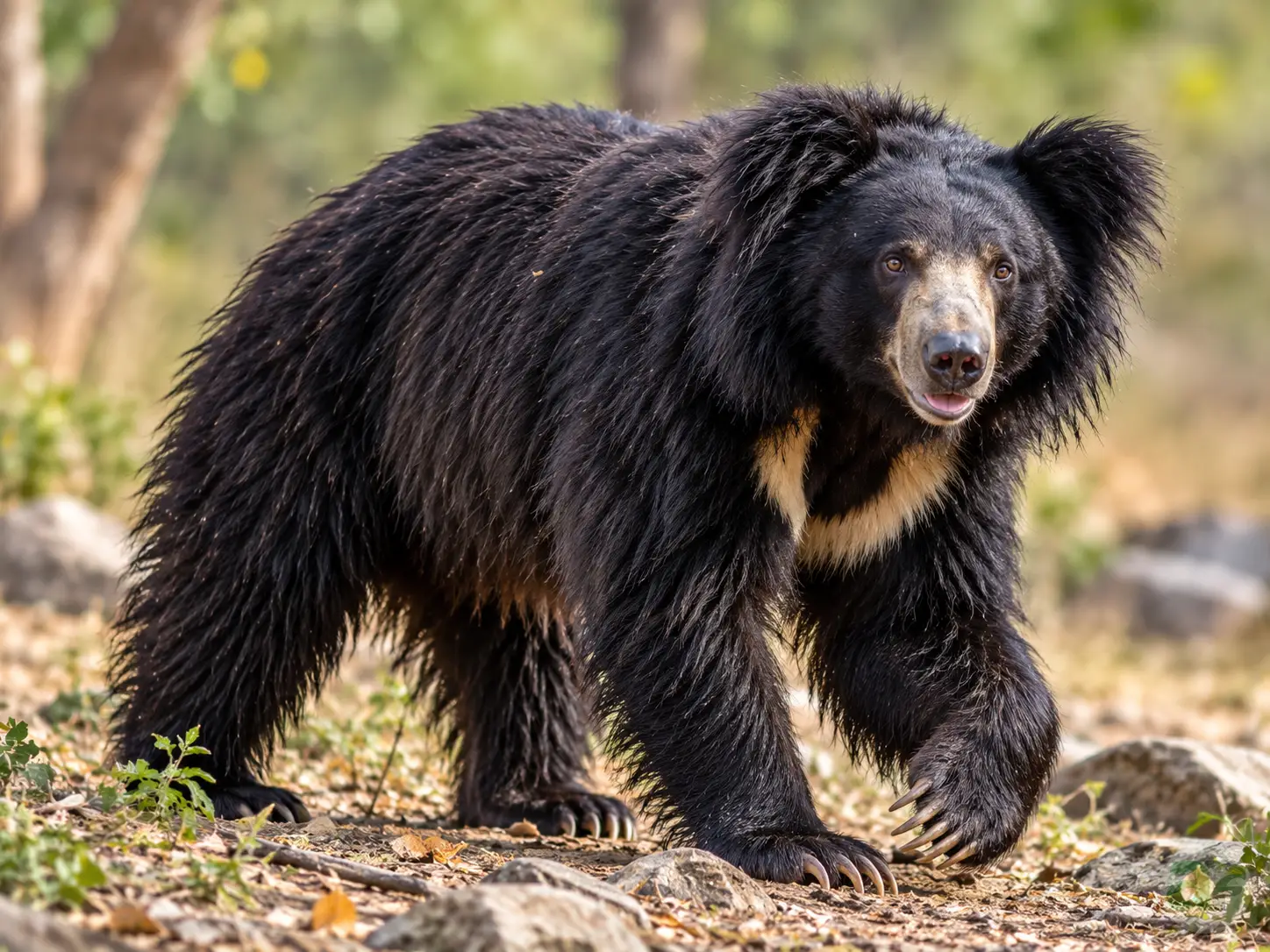
19. Best Places to See Sloth Bears in the Wild
Daroji Sloth Bear Sanctuary, Karnataka, India
The world’s best location for reliable wild sloth bear observation — this small but exceptional sanctuary in Karnataka’s boulder-strewn Deccan Plateau supports one of the highest accessible densities of wild sloth bears anywhere, with the open rocky terrain providing excellent visibility for observing bears foraging in the late afternoon and early evening. Multiple bears are commonly visible simultaneously, and the accessible viewing infrastructure makes this one of the most visitor-friendly wildlife experiences in India for encountering a species that can be difficult to observe elsewhere.
Satpura Tiger Reserve, Madhya Pradesh, India
Satpura is widely regarded by wildlife researchers and experienced safari guides as supporting one of the finest remaining sloth bear populations in central India — with excellent forest quality, a well-managed tourism program, and the combination of camera trap documentation and jeep safari wildlife viewing providing both research insights and exceptional wildlife photography opportunities for sloth bears alongside tigers, leopards, and the broad diversity of Satpura’s forest wildlife.
Pench Tiger Reserve, Madhya Pradesh, India
Pench — the tiger reserve widely believed to have most directly inspired the forest setting of Kipling’s Jungle Book — combines exceptional Jungle Book heritage significance with genuine wildlife quality, supporting a healthy sloth bear population alongside the species that inspired Kipling’s most famous characters.
Kanha Tiger Reserve, Madhya Pradesh, India
Kanha — one of India’s most famous and most visited tiger reserves — supports a significant sloth bear population in some of India’s finest sal forest, with experienced guides and the park’s excellent general wildlife viewing infrastructure providing reasonable opportunities for sloth bear observation alongside tigers, leopards, dholes, and exceptional deer diversity.
Nagarhole National Park, Karnataka, India
Nagarhole — adjacent to Bandipur Tiger Reserve in the Nilgiri Biosphere Reserve — supports sloth bear populations in excellent forest alongside elephants, tigers, leopards, and exceptional general wildlife diversity, with the combination of accessible wildlife viewing infrastructure and genuine forest quality making this one of Karnataka’s finest wildlife destinations.
Yala National Park, Sri Lanka
For the Sri Lankan subspecies specifically — Yala National Park on Sri Lanka’s southeastern coast supports the island’s most accessible and most observable sloth bear population, with bears regularly encountered on wildlife drives in the park’s dry zone scrubland and rocky areas alongside the park’s famous leopard population.
20. Top Documentaries & Books
Must-Watch Documentaries
“The Sloth Bear” (BBC Natural World / various) — Multiple BBC and National Geographic productions have dedicated full episodes or major segments to sloth bear natural history — covering the vacuum feeding, the back-riding cub behavior, and the human-wildlife conflict situation with excellent camera work in Indian tiger reserves.
“The Last Dancing Bears” and related Wildlife SOS documentary productions — The story of the dancing bear campaign rescue program has been documented in multiple productions available through BBC, CNN, and wildlife networks, providing some of the most powerful and most emotionally significant conservation documentary content related to the sloth bear.
“Kingdom of the White Tiger” and various Indian wildlife productions — Multiple productions covering the broader Indian tiger reserve ecosystem have included significant sloth bear content, contextualizing the species within the community of large mammals sharing South Asia’s protected landscapes.
Essential Books
“Bears of the World” by various authors — Comprehensive scientific overviews of all bear species including dedicated sloth bear chapters provide the most complete available popular reference on the species’ biology and conservation.
“The Jungle Book” by Rudyard Kipling (1894) — While fiction rather than natural history, Kipling’s creation of Baloo provides essential cultural context for understanding the sloth bear’s place in South Asian literary and imaginative tradition — and re-reading the original text with knowledge of sloth bear natural history illuminates the many ways in which Baloo reflects genuine sloth bear characteristics.
“Bear Necessities” and Wildlife SOS publications — Various books and publications from Wildlife SOS documenting the dancing bear rescue program provide both conservation history and behavioral documentation of the rescued bears.
21. Sloth Bear Comparison of Sloth Bears with Similar Bear Species
| Feature | Sloth Bear | Sun Bear | Spectacled Bear | American Black Bear | Asian Black Bear |
|---|---|---|---|---|---|
| Scientific Name | Melursus ursinus | Helarctos malayanus | Tremarctos ornatus | Ursus americanus | Ursus thibetanus |
| Weight | 55–145 kg | 27–65 kg | 60–200 kg | 57–300 kg | 40–200 kg |
| Distribution | Indian subcontinent and Sri Lanka | SE Asia | Andean South America | North America | Asia (widespread) |
| Habitat | Tropical dry forest, scrubland | Tropical rainforest | Montane/cloud forest | Temperate forest | Montane/temperate forest |
| Primary Diet | Termites and ants (specialist) | Insects, honey, fruit | Fruit, bromeliads | Berries, nuts, insects, fish | Bamboo shoots, fruit, insects |
| Upper Incisors | Absent (unique among bears) | Present | Present | Present | Present |
| Lip Anatomy | Extensible vacuum lips (unique) | Standard | Standard | Standard | Standard |
| Cubs on Back | Yes (distinctive behavior) | No | No | No | No |
| Tree Climbing | Moderate | Excellent (most arboreal bear) | Good | Good | Good |
| Hibernation | No (tropical) | No | Sometimes | Yes | Yes |
| Conservation Status | Vulnerable | Vulnerable | Vulnerable | Least Concern | Vulnerable |
| Unique Feature | Vacuum feeding; cubs on back; Baloo inspiration | World’s smallest bear; tree nests | Only South American bear | Most color variation | Moon/crescent chest patch; aggressive |
22. How You Can Help
Sloth bear conservation requires action across multiple simultaneous threat fronts — habitat protection, human-wildlife conflict mitigation, anti-poaching enforcement, and addressing the remaining remnants of the dancing bear trade in South Asian countries outside India.
Support These Organizations
Wildlife SOS (wildlifesos.org) — The leading Indian organization for sloth bear welfare and conservation — operating multiple bear rescue facilities in India, conducting research on conflict mitigation, and running active programs for the Kalandar community whose historical bear trade has been addressed through alternative livelihood support.
World Wildlife Fund India (wwfindia.org) — Running habitat conservation programs across India’s tiger reserves and broader protected area network that directly benefit sloth bear populations.
Wildlife Conservation Society India (wcs.org/India) — Conducting research on human-wildlife conflict and predator conservation across India’s central forest landscapes, including sloth bear-specific research.
International Bear Association — Supporting bear conservation research and advocacy globally, including programs relevant to the sloth bear’s conservation situation.
Practical Actions
Support Wildlife SOS financially and through advocacy. Direct financial support to Wildlife SOS funds both bear rescue and rehabilitation programs for individual bears and the community livelihood programs that address the social dimensions of the dancing bear issue in countries where the practice continues.
Advocate for responsible Indian wildlife tourism. Choosing responsible, conservation-affiliated wildlife operators in Indian tiger reserves and sloth bear destinations — including Daroji Bear Sanctuary — generates economic value from living, wild sloth bears and creates financial incentives for the protected area management that benefits the species.
Raise awareness about the remaining dancing bear trade. While largely ended in India, the dancing bear practice continues in some neighboring countries. Supporting organizations working on this issue and raising public awareness of its continuation contributes to the advocacy pressure necessary for regulatory change.
Support habitat connectivity. Organizations working on forest corridor protection and private land conservation in areas between India’s protected areas — particularly in the landscapes of central India where sloth bear populations depend on connectivity between tiger reserves — help maintain the population connectivity essential for long-term sloth bear viability.
Consume certified sustainable forest products. Consumer choices favoring certified sustainable timber, paper, and other forest products from South Asian suppliers reduce the deforestation pressure on sloth bear habitat.
Did You Know? Wildlife SOS operates the Agra Bear Rescue Facility — the world’s largest sloth bear rescue facility, housing over 100 rescued former dancing bears as of 2026 — as a lifetime sanctuary for bears who cannot be returned to the wild after long periods of captivity and the physical and psychological damage associated with their lives as performing bears. The facility provides extensive naturalistic enclosures, veterinary care, social enrichment, and behavioral programming designed to allow former dancing bears to express as wide a range of natural behaviors as possible given the constraints of their physical and psychological history. Many of these bears — who entered the facility severely injured, malnourished, and behaviorally abnormal — have shown remarkable behavioral recovery over years of patient rehabilitation, demonstrating the resilience of the sloth bear as a species and the impact of dedicated conservation care on individual animals.
25. Frequently Asked Questions About Sloth Bears
Q1: What is the scientific name of the sloth bear?
The sloth bear’s scientific name is Melursus ursinus — placing it in its own genus, Melursus, as the sole living species. The genus name combines the Greek “meli” (honey) and Latin “ursus” (bear). The family is Ursidae (bears), order Carnivora, class Mammalia. There are 2 recognized subspecies — M. u. ursinus (Indian subcontinent) and M. u. inornatus (Sri Lanka).
Q2: Why is it called a sloth bear?
The “sloth” in sloth bear is the result of a taxonomic mistake — when the species was first described to Western science in 1791 by naturalist George Shaw, he misidentified it as a type of sloth (the South American mammal) based on its long curved claws and unfamiliar appearance. The error was corrected by subsequent scientists who identified it as a bear, but the misleading “sloth bear” name was retained and has persisted in scientific and common use ever since.
Q3: What is unique about the sloth bear’s feeding?
The sloth bear possesses a uniquely specialized insect-vacuum feeding system — it has no upper incisors (unique among bears), highly mobile extensible lips that can form a tube configuration, and the ability to voluntarily close its nostrils. This combination creates a living vacuum cleaner that generates powerful suction for extracting termites and ants from mounds, producing a distinctive loud slurping sound audible from 100 meters away.
Q4: Do sloth bears really carry cubs on their backs?Y
es — the sloth bear is one of only a very few bear species known to regularly carry cubs on their backs, with mothers transporting cubs on their long, shaggy fur during foraging expeditions. Cubs begin riding at approximately 1–2 months of age and may continue until 6–9 months, when they become sufficiently mobile to follow independently. This behavior is genuinely unique among large carnivores.
Q5: Is Baloo from The Jungle Book a sloth bear?
Most wildlife scholars and Indian naturalists believe Baloo was inspired by the sloth bear — the bear species Kipling would have been most familiar with from accounts of the central Indian forest environment he fictionalized. Kipling did not explicitly specify the species in the text, but the Indian forest setting, the bear’s omnivore diet, and various physical and behavioral characteristics described in the book align most closely with the sloth bear.
Q6: Are sloth bears dangerous?
Yes — sloth bears are considered by wildlife researchers as among the most dangerous animals in the Indian forest for humans. They cause more human injuries in some specific areas of India than tigers or leopards, primarily because of their tendency to make immediate, explosive offensive charges when surprised at close range, with minimal warning behavior giving humans very little time to respond.
Q7: Are sloth bears endangered?
Sloth bears are classified as Vulnerable by the IUCN, with a global population estimated at approximately 20,000 individuals and a documented population decline of approximately 30% over the past three decades. The Sri Lankan subspecies faces a more severe conservation situation that some national assessments classify as Endangered.
Q8: What do sloth bears eat?
Sloth bears are primarily insectivore-focused omnivores — with termites and ants forming the dietary foundation (approximately 50–80% of diet), supplemented by honey and bee larvae, seasonal tropical fruit (including mangoes and jamun), mahua flowers (which they consume in large quantities during the spring flowering season), and occasional small vertebrates and carrion. Diet composition shifts significantly across seasons.
Q9: Where do sloth bears live?
Sloth bears are found across the Indian subcontinent and Sri Lanka — primarily in India (which holds the majority of the global population), Nepal, Bhutan, and Sri Lanka. They inhabit tropical and subtropical dry forest, scrubland, grassland mosaics, and thorn forest — with the species most densely distributed in India’s central and southern forest landscapes, particularly within the tiger reserve network.
Q10: How can I help sloth bear conservation?
Key actions include: supporting Wildlife SOS financially — the leading organization for sloth bear welfare and the successful dancing bear rescue program; supporting WWF India and Wildlife Conservation Society India programs protecting sloth bear habitat; choosing responsible Indian wildlife tourism that generates economic value from living bears; advocating against the remaining dancing bear trade in countries where the practice continues; and raising awareness about this remarkable, overlooked, and genuinely vulnerable species.
26. Sources & References
Research Sources
- Wikipedia — Melursus ursinus and related articles
- IUCN Red List — iucnredlist.org
- Wildlife SOS — wildlifesos.org
- WWF India — wwfindia.org
- Wildlife Conservation Society India — wcs.org
- National Geographic — nationalgeographic.com
- Smithsonian’s National Zoo — nationalzoo.si.edu
- Encyclopaedia Britannica — britannica.com
- BBC Wildlife — bbc.co.uk
- Live Science — livescience.com
- Dharaiya, Nishith et al. — IUCN/SSC Bear Specialist Group (Sloth Bear) publications
- Seshamani, Geeta and Kartick Satyanarayan — Wildlife SOS dancing bear research and rescue documentation
- Puri, Megan et al. — Various sloth bear ecology research publications