
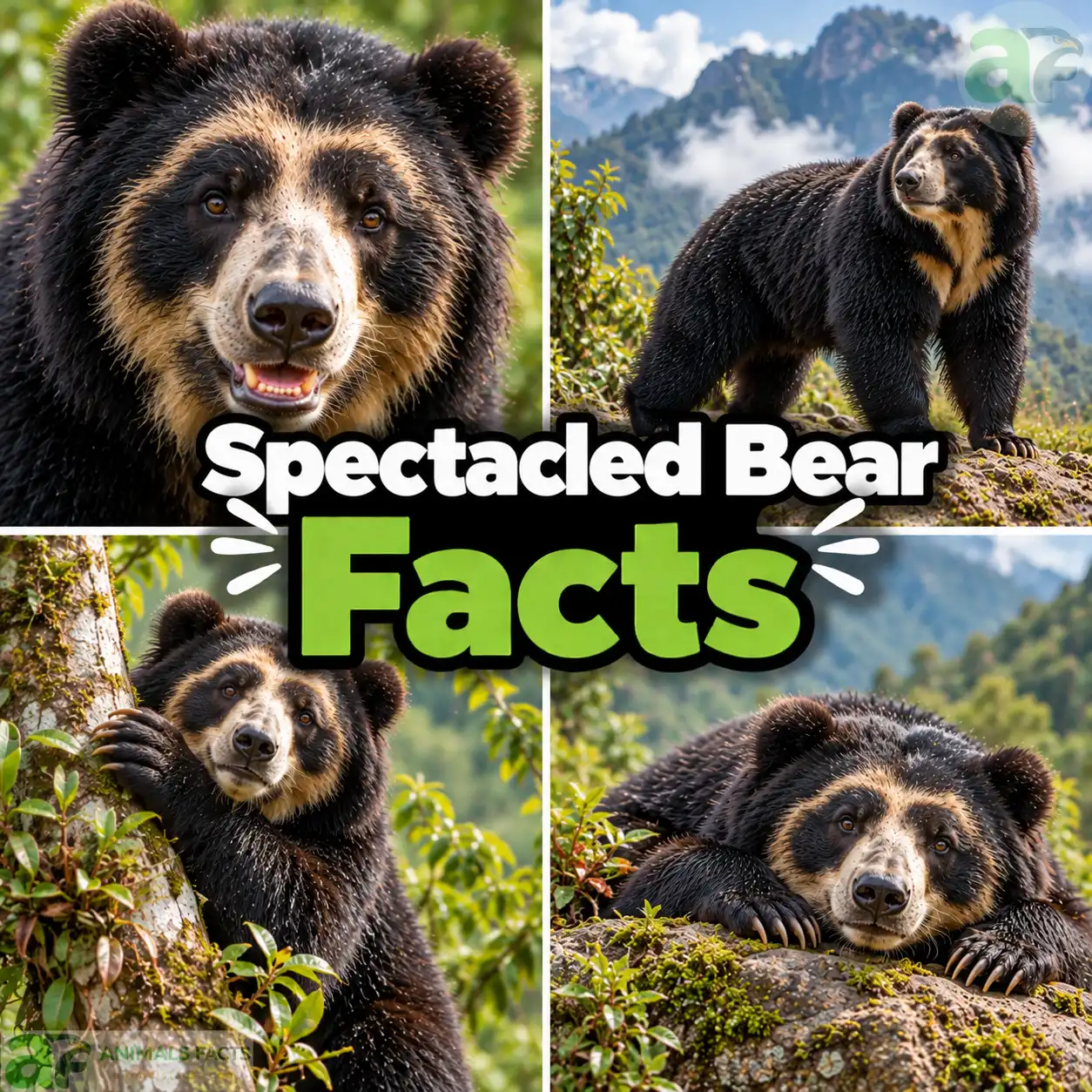
Spectacled Bear Facts
| Feature | Details |
|---|---|
| Scientific Name | Tremarctos ornatus |
| Common Names | Spectacled Bear, Andean Bear, Andean Short-Faced Bear, Ukuku (Quechua) |
| Kingdom | Animalia |
| Phylum | Chordata |
| Class | Mammalia |
| Order | Carnivora |
| Family | Ursidae |
| Genus | Tremarctos (sole living species) |
| Recognized Subspecies | No formally recognized subspecies — some regional variation in facial marking patterns but insufficient genetic differentiation for subspecies designation |
| Habitat | Andean cloud forest, montane forest, paramo grassland, dry forest — across Venezuela, Colombia, Ecuador, Peru, Bolivia, Argentina |
| Lifespan | 20–25 years in the wild; up to 36 years in captivity |
| Diet | Frugivore-dominated omnivore — fruit (primary), bromeliads, cacti, palm hearts, insects, small vertebrates |
| Weight | Males: 100–200 kg; Females: 35–82 kg |
| Body Length | 120–200 cm |
| Shoulder Height | 60–90 cm |
| Conservation Status | Vulnerable (IUCN Red List) |
| Global Wild Population | Estimated ~18,000 individuals (wide uncertainty; some estimates lower) |
| Unique Feature | Only bear in South America; only surviving member of the short-faced bear subfamily (Tremarctinae); unique facial marking pattern individually variable like fingerprints; inspiration for Paddington Bear |
 1. Introduction: What is a Spectacled Bear?
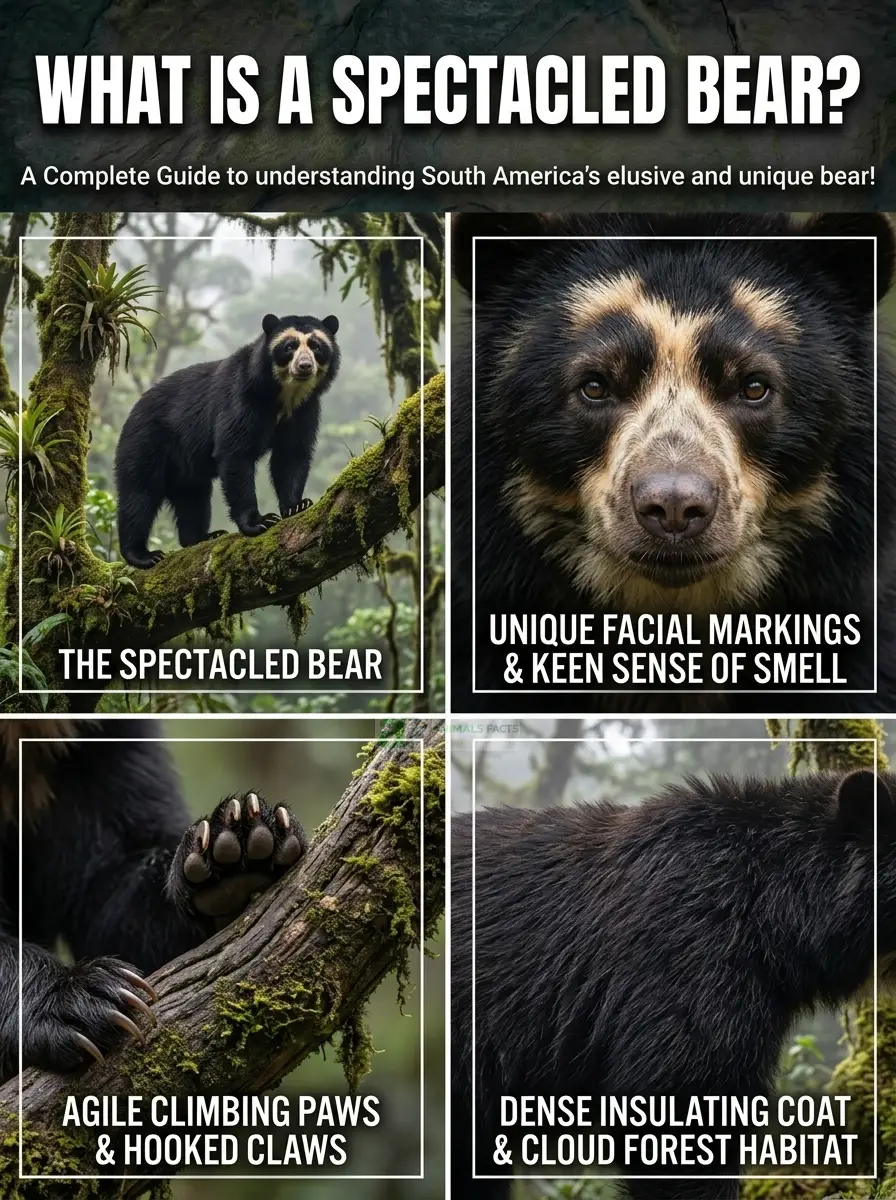
It is the only bear in the entire continent of South America — the sole survivor of an ancient bear lineage that once dominated the Americas, a living link to the great Pleistocene short-faced bears that ruled North and South America thousands of years ago. It wears a unique facial pattern of pale cream or yellowish markings around its eyes and across its muzzle that is as individually distinctive as a human fingerprint — no two spectacled bears in the world carry identical facial markings, making every individual instantly recognizable. And it is the real animal behind one of the world’s most beloved fictional bears — the inspiration for Paddington Bear, whose fictional origin in “darkest Peru” connects directly to the spectacled bear’s Andean homeland. Spectacled bear facts begin, as they continue, with genuinely extraordinary surprises.
The spectacled bear — Tremarctos ornatus — is a medium-to-large bear of the Andes Mountains and surrounding lowland forests of South America, found across a range stretching from Venezuela and Colombia in the north through Ecuador, Peru, and Bolivia to a small population in northwestern Argentina. It is the sole member of its genus, the sole surviving species of the subfamily Tremarctinae — the short-faced bears — and represents one of the most evolutionary ancient and most ecologically important large mammals remaining in South American ecosystems. Its closest living relatives are not other bears but the extinct giant short-faced bears of Pleistocene North America, whose evolutionary lineage the spectacled bear has outlasted by thousands of years.
Whether you are a student researching spectacled bear facts for a school project, a wildlife traveler planning a trip to the Andean cloud forests, a Paddington Bear fan curious about the real animal behind the fiction, a conservation advocate concerned about deforestation in the Andes, or a parent looking for spectacled bear facts for kids — this is the most complete guide to spectacled bear facts you will find anywhere. We cover spectacled bear habitat, spectacled bear diet, spectacled bear behavior, the unique facial markings, the extraordinary ecological role in cloud forest seed dispersal, reproduction, conservation, mythology, and the full story of South America’s most extraordinary and most overlooked bear.
2. Spectacled Bear Species Overview & Classification
The spectacled bear occupies a genuinely unique position within the bear family — the sole surviving member of the subfamily Tremarctinae, a group of bears that diverged from the ancestral bear lineage earlier than any other living bear family subdivision, and that once included some of the most formidable terrestrial predators of the Pleistocene Americas.
The Tremarctinae — An Ancient and Largely Lost Lineage
The subfamily Tremarctinae — sometimes called the “short-faced bears” — represents an evolutionary lineage of bears that diverged from the ancestral Ursidae stock and invaded South America through the Isthmus of Panama land bridge when it formed approximately 3 million years ago. This lineage produced multiple genera and species across North and South America during the Pleistocene, including:
- Arctodus simus (the North American Short-Faced Bear) — one of the largest terrestrial mammalian predators ever documented, estimated to have reached body weights of 700–900 kg and standing heights of nearly 2 meters at the shoulder
- Arctotherium angustidens (the South American Giant Short-Faced Bear) — possibly the largest bear ever to have existed, with some estimates suggesting body weights exceeding 1,500 kg
- Tremarctos floridanus (the Florida Cave Bear) — the spectacled bear’s closest extinct relative, extinct approximately 11,000 years ago
The spectacled bear is the sole surviving member of this once-diverse and ecologically dominant lineage — making it not merely a South American bear but a living evolutionary relic of one of the most significant carnivore lineages in the history of the Western Hemisphere.
Species Classification Table
| Level | Classification |
|---|---|
| Kingdom | Animalia |
| Phylum | Chordata |
| Class | Mammalia |
| Order | Carnivora |
| Family | Ursidae |
| Subfamily | Tremarctinae (the short-faced bears — spectacled bear is the SOLE surviving species) |
| Genus | Tremarctos |
| Species | T. ornatus |
| Common Names | Spectacled Bear, Andean Bear, Andean Short-Faced Bear, Ukuku (Quechua), Oso de Anteojos (Spanish) |
Species Evolution & Discovery Timeline
~20–25 million years ago: The Ursidae (bear family) diverged from other Carnivora during the Oligocene-Miocene boundary — establishing the evolutionary foundation for all modern bear species.
~12–15 million years ago: The Tremarctinae (short-faced bear) lineage diverged from the main Ursidae line during the Miocene — establishing an independent evolutionary trajectory that would eventually produce the giants of the Pleistocene and the living spectacled bear.
~3 million years ago: The Isthmus of Panama formed — connecting North and South America and allowing the ancestor of the spectacled bear to migrate southward during the Great American Biotic Interchange, establishing the first bear populations on the South American continent.
~2–3 million years ago: Early Tremarctos species established themselves across South America — adapting to the extraordinary diversity of Andean and Amazonian environments and diverging from their North American short-faced bear relatives.
~11,000 years ago: The mass extinction of Pleistocene megafauna eliminated all other Tremarctinae species — leaving Tremarctos ornatus as the sole surviving member of a lineage that had once dominated the carnivore communities of two continents.
1825: The spectacled bear was formally scientifically described by French naturalist Frédéric Cuvier — establishing its place in Western scientific taxonomy with the species name “ornatus” (Latin for “decorated” or “adorned”), a clear reference to its distinctive facial markings.
1958: Michael Bond’s “A Bear Called Paddington” was published — featuring a fictional bear from “darkest Peru” who is widely understood to be based on the spectacled bear, cementing the species’ connection to one of the most beloved children’s characters in literary history.
2016: The spectacled bear’s IUCN Red List status was confirmed as Vulnerable — reflecting population declines driven by habitat loss and hunting across its Andean range.
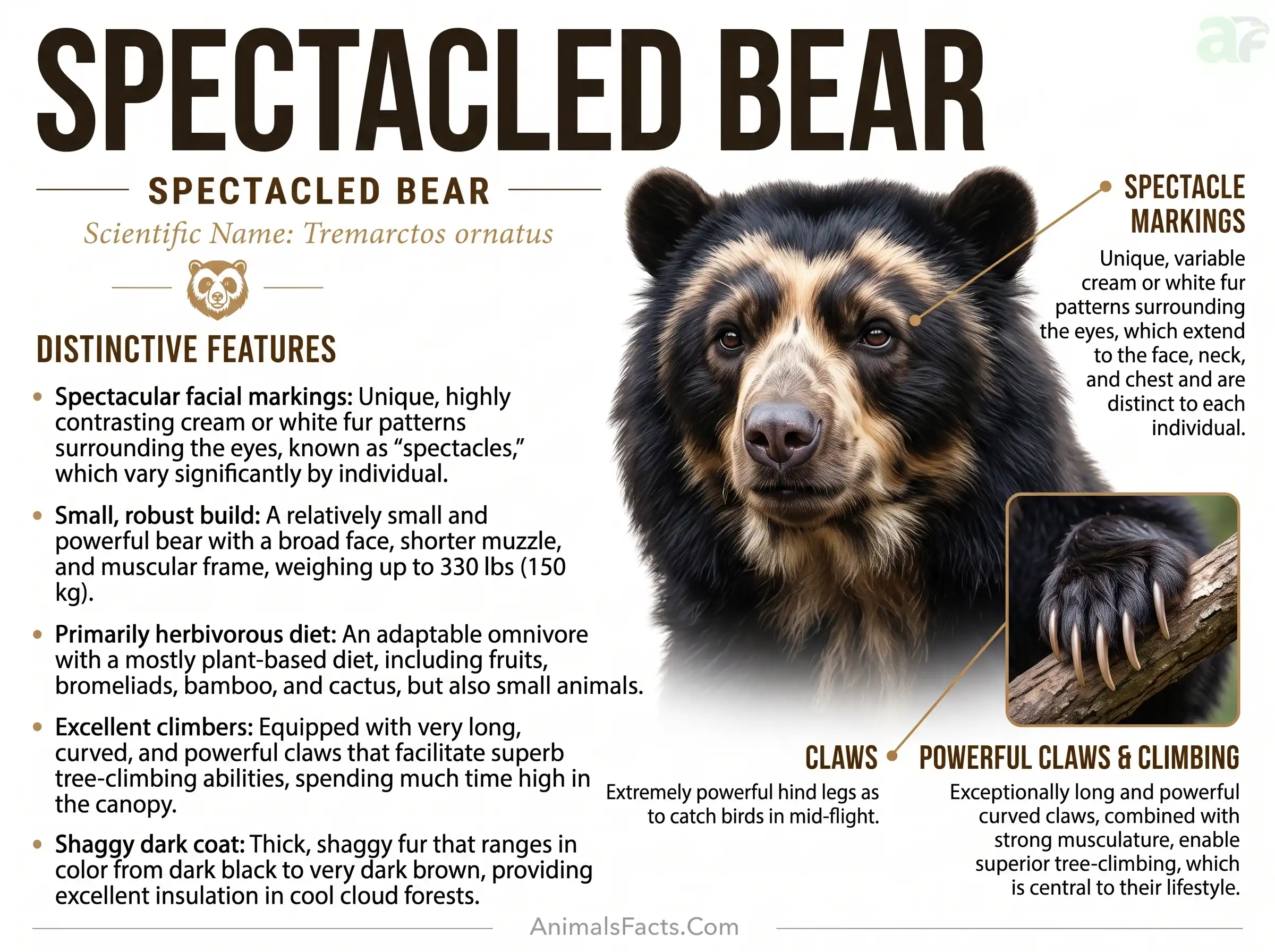
3. Spectacled Bear Physical Description & Unique Features
The spectacled bear’s physical design reflects its evolutionary origins in the short-faced bear lineage and its ecological specialization for the challenging, diverse environments of the Andean mountain system — combining medium-large body size with physical adaptations for frugivory, climbing, and navigation across the complex three-dimensional terrain of cloud forest habitat.
Size and Sexual Dimorphism
The spectacled bear shows one of the most pronounced sexual dimorphisms of any bear species — with males often dramatically larger than females:
- Males: Typically 100–200 kg, with some large individuals reaching 200 kg — among the medium-to-large bears globally
- Females: Typically 35–82 kg — considerably smaller than males, reflecting one of the larger proportional size differences between sexes in the bear family
- Body length: 120–200 cm — comparable to a medium-sized brown bear
The Distinctive Facial Markings
The spectacled bear’s most celebrated and most immediately recognizable feature is the pattern of pale cream, yellowish, or white markings around the eyes, across the muzzle, and extending in some individuals down the throat and chest — creating the “spectacle” appearance that gives the species its most common English name.
These markings are individually unique to each bear — like fingerprints in humans, no two spectacled bears carry identical facial mark patterns. The variation ranges from bears with well-defined circular eye rings connected by a pale muzzle band that closely resembles a pair of glasses, to individuals with minimal facial marking or very irregular, asymmetric patterns. This individual variability has made facial marking photography one of the primary individual identification methods for spectacled bear research — allowing bears to be identified and monitored from photographs without physical capture or tagging.
Short-Faced Bear Characteristics
The spectacled bear’s ancestry within the Tremarctinae is reflected in its slightly different facial proportions compared to most other living bears — with a relatively shorter, broader skull and a flatter facial profile that reflects the evolutionary inheritance of the “short-faced” skull structure that characterized many Tremarctinae species, though modified from the extreme short-faced morphology of the Pleistocene giants.
Climbing Adaptations
The spectacled bear is a remarkably accomplished climber for a medium-to-large bear — using its powerful forelimbs, curved claws, and flexible body to ascend fruit trees, bromeliads, and other vegetation with a facility that exceeds most other bears of comparable body size. This climbing capability is directly connected to the species’ frugivorous diet — access to fruiting trees that cannot be reached from the ground requires the climbing capability that the spectacled bear has developed as a key ecological specialization.
Did You Know? The spectacled bear has a significantly shorter snout than most other living bear species — a feature that reflects its ancestry in the Tremarctinae (short-faced bear) subfamily and distinguishes it subtly from the longer-snouted brown bears and black bears that most people in North America and Europe are more familiar with. This facial structure — combined with the spectacled bear’s flatter, rounder face — contributes significantly to the visual appearance of the species that makes it the most “human-looking” of all bear species and may have contributed to its cultural role across multiple Andean Indigenous traditions as a being associated with human-animal transformation and shamanic power.
4. Top 25 Surprising & Interesting Spectacled Bear Facts
- The spectacled bear is the only bear species in South America — and the only bear species in the Southern Hemisphere — representing the southernmost extent of the bear family’s global distribution.
- The spectacled bear is the sole surviving member of the Tremarctinae (short-faced bear) subfamily — an ancient lineage that once included massive Pleistocene predators estimated to have weighed over 1,500 kg, making the spectacled bear a living evolutionary relic of one of the most formidable predator groups in the history of the Americas.
- Every spectacled bear has a completely unique facial marking pattern — no two individuals are identical, allowing researchers to identify individual bears from photographs without capture or tagging.
- The fictional bear Paddington — from Michael Bond’s celebrated children’s books series — is widely understood to have been inspired by the spectacled bear of Peru, establishing one of the most beloved connections between a wild animal species and a fictional character in literary history.
- The spectacled bear is considered the most important seed disperser in several Andean cloud forest ecosystems — consuming enormous quantities of fruit and distributing seeds across territories that can exceed 200 km², making its foraging movements critical to forest regeneration across large areas.
- Spectacled bears build platforms in trees — bending and breaking branches to create elevated feeding and resting platforms in fruiting trees, where they may spend days at a time while the fruit is in season.
- Despite being classified in the order Carnivora, spectacled bears derive approximately 80–95% of their caloric intake from plant material — making them one of the most strongly frugivore-dominated bear species on Earth.
- The spectacled bear is documented foraging at elevations exceeding 4,300 meters above sea level in the Andean paramo — the high-altitude grassland zone — demonstrating one of the widest altitudinal ranges of any bear species.
- The spectacled bear’s closest living relatives are not other bears — they are the extinct giant short-faced bears of the Pleistocene, including Arctodus simus (North America) and Arctotherium angustidens (South America), rather than living Ursus species.
- Research has documented spectacled bears consuming cacti — including large, spiny cactus species — a dietary behavior unusual for any large mammal, reflecting the species’ ability to exploit food resources in the dry, rocky terrain of some portions of its range.
- The spectacled bear has been observed making and using simple tools — including using sticks and branches to reach food in positions inaccessible by direct approach, a behavioral capability that adds to the growing literature on bear cognitive sophistication.
- Spectacled bears in Peru’s Machu Picchu Historical Sanctuary have been documented foraging on the steep, heavily vegetated slopes of the sanctuary — coexisting with the intense tourist activity of the surrounding landscape in a genuinely remarkable example of large carnivore persistence alongside major human tourism infrastructure.
- The spectacled bear’s tongue is long and specialized for extracting the soft interior of bromeliads — a bromeliad specialist feeding behavior that has made these epiphytic plants a critical dietary component in the cloud forest portions of the species’ range.
- Research on spectacled bears in Ecuador’s Mindo Cloud Forest has documented individual bears making targeted foraging journeys to specific fruiting trees remembered from previous seasons — demonstrating spatial memory for food resources comparable to that documented in other highly cognitive foragers like elephants and great apes.
- The Andean bear is considered a cultural keystone species across multiple Andean Indigenous traditions — associated with strength, healing, and human-animal transformation in Quechua, Aymara, and various other Andean cultural systems.
- Spectacled bears are documented as important pollinators of some Andean plant species — carrying pollen on their fur while foraging on bromeliads and other flowering plants, contributing a pollination ecosystem service that has been little studied but may be significant in specific cloud forest communities.
- The spectacled bear’s chest marking pattern is as individually variable as its facial marking — and the two patterns together provide a highly reliable individual identification system for research purposes.
- Female spectacled bears have been documented defending their cubs against adult males in confrontations that, while typically resolved through behavioral signaling, demonstrate the same maternal ferocity documented in other bear species facing infanticide risk.
- Spectacled bears in some parts of their range have adapted to using agricultural land — particularly avocado and corn plantations — as supplementary foraging areas, creating both conservation challenges (crop raiding conflict) and opportunities (maintaining bears in human-dominated landscapes).
- The spectacled bear is the largest land carnivore in South America — exceeding the puma (mountain lion), jaguar, and all other South American predators in body weight at maximum size.
- Spectacled bear populations have been documented recovering in areas of the Andean cloud forest where forest protection programs have been implemented — demonstrating the species’ capacity for population recovery when habitat threats are addressed.
- The species’ scientific name Tremarctos ornatus — from the Latin “ornatus” (decorated or adorned) — directly references the distinctive facial markings that have made the spectacled bear one of the most visually distinctive bears in the world.
- Research has documented spectacled bears spending up to 10–14 days continuously in a single fruiting tree during fruit abundance peaks — remaining elevated in the canopy for extended periods to exploit a concentrated food resource rather than descending and returning.
- The spectacled bear has been documented in five different biomes across its range — including tropical rainforest, cloud forest, dry forest, paramo grassland, and even coastal desert margins in some parts of Peru — demonstrating ecological flexibility unusual among bear species.
- Camera trap research using the spectacled bear’s unique facial mark patterns as individual identification has built individual bear databases with hundreds of identified individuals across multiple Andean countries — enabling population dynamics research without the welfare concerns of physical capture and tagging.
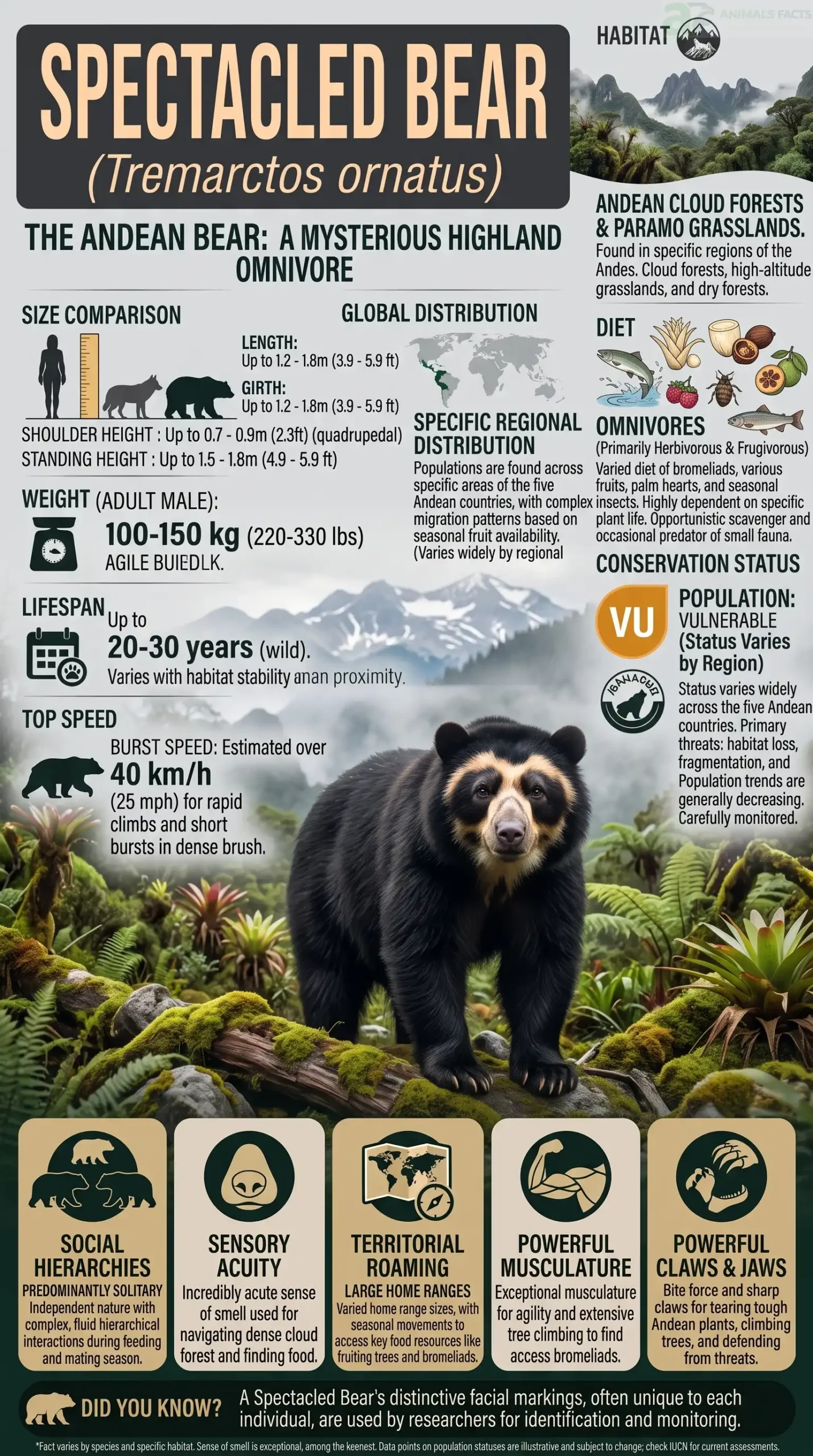
5. Fun Facts About Spectacled Bear
- The spectacled bear is the only bear in South America and the only bear in the Southern Hemisphere.
- It is the last surviving short-faced bear — an ancient lineage of Pleistocene giants.
- Every spectacled bear has a unique facial mark pattern — like a fingerprint.
- Paddington Bear was inspired by the spectacled bear of Peru.
- Spectacled bears are the most important seed dispersers in many Andean cloud forests.
- They get up to 95% of their diet from plants — one of the most plant-focused bears.
- They forage at over 4,300 meters elevation — one of the highest-altitude bears.
- Spectacled bears build tree platforms to rest while eating fruit.
- They can eat cacti despite the spines — unusual for any large mammal.
- The spectacled bear is the largest land carnivore in South America.
- They have been documented foraging near Machu Picchu alongside tourists.
- Wild bears are identified by researchers from photos of their face markings alone.
6. Spectacled Bear Habitat & Geographic Range
The spectacled bear inhabits one of the world’s most biodiverse and most vertically complex mountain systems — the Andes Mountains of western South America — exploiting a remarkable range of elevations, vegetation types, and ecological communities across a north-south range extending from Venezuela to northwestern Argentina.
Primary Habitat Types
Andean cloud forest: The spectacled bear’s most characteristic and most important habitat — the dense, mist-shrouded montane forest of the Andean slopes at elevations of approximately 1,000–3,000 meters, characterized by extraordinary epiphytic plant diversity (particularly bromeliads and orchids), abundant fruiting trees, and the perpetual humidity that sustains one of the world’s most biodiverse forest ecosystems. The cloud forest provides the highest density and highest diversity of the spectacled bear’s primary food resources — fruit, bromeliads, and the invertebrates associated with epiphyte-rich vegetation.
Paramo grassland: The high-altitude grassland zone above the tree line — typically 3,000–4,500 meters in the northern Andes — supports spectacled bear foraging activity, particularly for the rhizomes, roots, and bromeliads that provide food resources in this treeless, windy environment. Spectacled bears are documented crossing paramo zones during seasonal movements between lower-elevation fruiting areas.
Dry forest and scrubland: In the drier western slopes of the Andes — particularly in Peru and Bolivia — spectacled bears inhabit tropical dry forest and cactus scrubland, demonstrating the dietary flexibility that allows exploitation of these more arid environments through consumption of cactus fruits, palm hearts, and other dry-forest food resources.
Tropical moist forest (foothills and Amazonian slopes): In the eastern Andean foothills — the transition zone between cloud forest and the Amazonian basin — spectacled bears inhabit tropical moist forest down to relatively low elevations, extending their range into the western Amazon in some areas.
Agricultural margins: Spectacled bears increasingly use agricultural land adjacent to forest — particularly corn and avocado plantations — as supplementary foraging areas, creating the human-wildlife conflict that represents the most significant contemporary management challenge for the species.
Geographic Range
| Country | Status | Notes |
|---|---|---|
| Venezuela | Present; poorly monitored | Northern range; most isolated from core population |
| Colombia | Present; fragmented | Significant cloud forest populations; hunting pressure |
| Ecuador | Present; significant populations | Some of best-studied populations; active conservation programs |
| Peru | Present; largest national population | Core of global range; Machu Picchu area; Manu corridor |
| Bolivia | Present; fragmented | Southern range; dry forest and cloud forest populations |
| Argentina | Present; tiny; isolated | Jujuy and Salta provinces; southernmost populations |
Did You Know? The spectacled bear’s range spans an extraordinary vertical gradient of approximately 4,300 meters — from near sea level in some coastal areas of Peru to over 4,300 meters in Andean paramo. This altitudinal range is one of the widest documented for any bear species and reflects the spectacled bear’s remarkable ecological flexibility in exploiting food resources across vastly different temperature, precipitation, and vegetation conditions within a single individual’s home territory. Research using GPS collars has documented individual spectacled bears making regular elevational movements of 500–1,000 meters vertical distance as part of normal seasonal foraging patterns — following the seasonal fruiting calendar of different elevation bands across their home range.
7. Spectacled Bears Diet & Feeding Behavior
The spectacled bear is the most strongly frugivore-oriented bear species in the world — with fruit, bromeliads, and other plant material comprising approximately 80–95% of the diet across most studied populations, placing it at the extreme plant-specialist end of the bear family’s dietary spectrum.
What Spectacled Bears Eat
Diet Breakdown Table
| Food Type | Approximate Percentage | Notes |
|---|---|---|
| Fruit (various species) | 50–65% | Primary dietary foundation; varies by season |
| Bromeliads (hearts and leaf bases) | 15–25% | Critical year-round food in cloud forest |
| Palm hearts and palm fruit | 5–10% | Important in lower-elevation and dry forest habitats |
| Cacti (fruit and pads) | 2–8% (dry habitat) | Notable dietary component in dry forest populations |
| Orchid bulbs and roots | 2–5% | Cloud forest supplementary food |
| Insects (ants, beetles, honey) | 2–5% | Supplementary protein; more important in some seasons |
| Small vertebrates (rodents, birds) | 1–3% | Rarely taken; opportunistic |
| Carrion | <2% | Occasional; taken opportunistically |
| Corn and agricultural crops | Variable | Supplementary/conflict source in agricultural margins |
Bromeliad Feeding — A Unique Behavioral Specialty
The spectacled bear’s consumption of bromeliads — the epiphytic plants that are among the most characteristic organisms of Andean cloud forest — represents one of the most distinctive dietary behaviors of any bear species. Spectacled bears consume both the soft heart (base) of large bromeliad plants — tearing apart the rosette structure with their claws to access the soft, nutritious interior — and the accumulated water and invertebrates in the bromeliad’s central water-holding chamber.
This bromeliad feeding behavior has two significant ecological consequences: it destroys individual bromeliads during feeding, potentially affecting local bromeliad population dynamics; and it simultaneously provides critical water access in dry seasons when other water sources may be limited — with large bromeliads holding substantial water reserves in their central tanks.
Tree Platform Feeding
One of the most visually striking spectacled bear feeding behaviors is the construction of elevated feeding platforms in fruiting trees — a behavior distinct from simple tree climbing. When a spectacled bear locates a heavily fruiting tree, it will climb the tree, break branches to create a stable platform, and then remain elevated in the tree for extended periods — sometimes days — while the fruit is accessible, consuming fruit continuously and resting on the platform between feeding bouts.
These platforms remain visible in trees long after the bear has moved on — providing field sign that has been used by researchers to document spectacled bear presence across areas where direct observation is impractical.
Did You Know? Research analyzing the diet of spectacled bears in Ecuador’s Mindo and Cotacachi-Cayapas regions found that individual bears maintained surprisingly precise and consistent seasonal dietary calendars — visiting specific tree species at predictable times of year that corresponded with the fruiting phenology of those trees, demonstrating a level of temporal and spatial food resource memory that researchers have compared to the foraging knowledge systems of long-lived, cognitively sophisticated frugivores including primates and elephants. This finding suggests that individual spectacled bears accumulate significant ecological knowledge across their lifetimes — knowledge that is potentially lost when individual bears are killed or habitats are fragmented in ways that disconnect bears from their traditionally used fruiting areas.
8. Spectacled Bear Reproduction & Life Cycle
Spectacled bear reproduction is the least studied of any of the eight bear species — a consequence of the combination of remote, difficult terrain, dense cloud forest vegetation that impedes observation, small and fragmented populations, and the limited research funding historically directed toward this species compared to more accessible or more publicly prominent bears.
Mating Behavior
Research suggests spectacled bears can mate year-round across much of their tropical and subtropical range — consistent with the lack of a strongly defined hibernation season in a species that inhabits equatorial and near-equatorial environments without severe winter food scarcity. Some populations may show breeding peaks correlated with fruit abundance seasons, when female body condition is at its peak.
Like other bear species, spectacled bears practice delayed implantation — with fertilized eggs entering diapause before implantation, though the exact timing and triggers of this process in the spectacled bear remain less precisely documented than in temperate-zone bears.
Gestation and Birth
Gestation: Approximately 160–255 days — a wide documented range reflecting both genuine biological variation and the limited sample sizes available in the research literature.
Litter size: Typically 1–2 cubs (rarely 3) — with 1–2 being most commonly documented in captive and wild settings.
Birth weight: Approximately 300–360 grams per cub — consistent with the general bear pattern of highly altricial newborns small relative to adult body size.
Denning: Unlike temperate-zone bears that den for extended hibernation periods, spectacled bears do not practice true hibernation — females give birth in relatively sheltered locations without the extended dormancy of northern bears, consistent with their tropical and subtropical forest habitat.
Key Developmental Stages
| Stage | Age | Key Development |
|---|---|---|
| Birth | Variable (year-round possible) | ~330 grams; blind, helpless |
| Eyes open | ~4 weeks | Beginning visual awareness |
| First outings | 3–4 months | Beginning to accompany mother |
| Tree climbing learning | 3–8 months | Developing critical arboreal skills |
| Weaning | 6–8 months | Gradual transition to solid food |
| Independence | 6–15 months | Extended maternal care period |
| Sexual maturity | Female: ~4 years; Male: ~4–7 years | First breeding |
| Physical prime | 6–15 years | Maximum size and reproductive success |
Lifespan Comparison Table
| Species | Average Wild Lifespan | Maximum Confirmed |
|---|---|---|
| Spectacled Bear | 20–25 years | ~36 years (captivity) |
| Sun Bear | ~25 years | ~30 years (captivity) |
| Sloth Bear | 20–25 years | ~40 years (captivity) |
| Grizzly Bear | 20–25 years | ~44 years (captivity) |
9. Social Behavior & Communication
The spectacled bear is primarily solitary outside of mother-cub family groups and brief mating associations — consistent with the general pattern of most bear species and reflecting the distributed, individual-foraging ecology of a frugivore that relies on individual knowledge of fruit-tree locations rather than the cooperative hunting or group defense strategies that can favor social living in other large mammals.
Surprising Tolerance at Food Resources
Despite their solitary lifestyle, spectacled bears are documented showing greater social tolerance at concentrated food resources than might be expected from a species typically described as solitary — with multiple bears sometimes observed feeding simultaneously in the same fruiting tree or area, apparently developing individual recognition and tolerance relationships that reduce conflict at productive feeding sites.
This tolerance parallels the behavioral patterns observed in other frugivorous large mammals — where the predictability and abundance of fruiting trees as food resources creates conditions in which mutual tolerance of other individuals can be more energetically efficient than competitive exclusion.
Communication
Vocalizations: Spectacled bears produce a range of vocalizations including huffing, screaming, high-pitched squeals during social interactions, and a distinctive low-pitched moaning sound that has been documented in various social contexts. The specific functions of the spectacled bear’s vocal repertoire remain less thoroughly documented than for more extensively studied bear species.
Scent marking: As with other solitary bears, scent marking likely represents a primary territorial and social communication channel — with bears leaving olfactory information at rub trees, on prominent vegetation, and at other locations within their home ranges.
Facial expressions: The spectacled bear’s distinctive facial markings may contribute to its capacity for visual communication — with the pale marking areas potentially enhancing the visibility and readability of facial expression changes during social encounters, similar to the function hypothesized for sun bear chest patches.
Did You Know? Researchers studying spectacled bear behavior in Ecuador documented that wild bears in areas with established ecotourism programs gradually habituated to human presence over time — with bears in higher-visitation areas showing measurably reduced flight distances from humans compared to bears in undisturbed areas. This habituation process — while potentially concerning from a wildlife management perspective if it leads to food conditioning — has also generated extraordinary opportunities for close-range behavioral observation of wild bears that has contributed substantially to scientific understanding of spectacled bear behavior, including some of the most detailed footage of tree platform building, bromeliad feeding, and social interactions ever documented for the species.
10. Predators & Defense Mechanisms
The adult spectacled bear occupies the position of the largest terrestrial predator in its South American range — facing very limited natural predation pressure as a healthy adult, while cubs and juveniles face several genuine threats.
Natural Predators and Competitors
Jaguars: The only large predator in the spectacled bear’s range capable of seriously threatening an adult bear — with documented jaguar predation on spectacled bears, particularly on juveniles and possibly on smaller adult females. The spectacled bear and jaguar co-occur across much of the lower-elevation portions of the spectacled bear’s range, creating one of South America’s most significant large-predator interactions.
Pumas (Mountain Lions): A secondary predation threat — pumas represent a genuine risk to spectacled bear cubs and potentially to smaller adults in areas of range overlap. The altitudinal distribution of pumas across the Andes overlaps significantly with that of spectacled bears, making puma the most geographically ubiquitous large cat competitor across the species’ range.
Humans: The dominant cause of spectacled bear mortality across the entire range — through habitat destruction, direct hunting (for perceived livestock protection, for body parts, and in some areas for bushmeat), vehicle collisions on Andean roads bisecting forest habitat, and retaliatory killing following crop-raiding incidents.
Defense Mechanisms
Tree climbing: The spectacled bear’s most distinctive and most ecologically significant defensive capability — the species’ excellent climbing ability allows rapid escape into the forest canopy from ground-based predators, with the large, curved claws and powerful forelimbs enabling ascent of large-diameter tree trunks that would be inaccessible to most pursuing predators.
Elevated resting: The tree platform behavior serves defensive as well as foraging functions — bears resting on elevated platforms in large trees are effectively inaccessible to ground-based threats, providing safety during rest periods without the need for a hidden ground-level den.
Defensive aggression: Adult spectacled bears — particularly mothers with cubs — are documented as aggressively defending themselves when threatened, with the species’ combination of powerful forelimbs, curved claws, and substantial body weight making it a genuinely formidable defensive opponent.
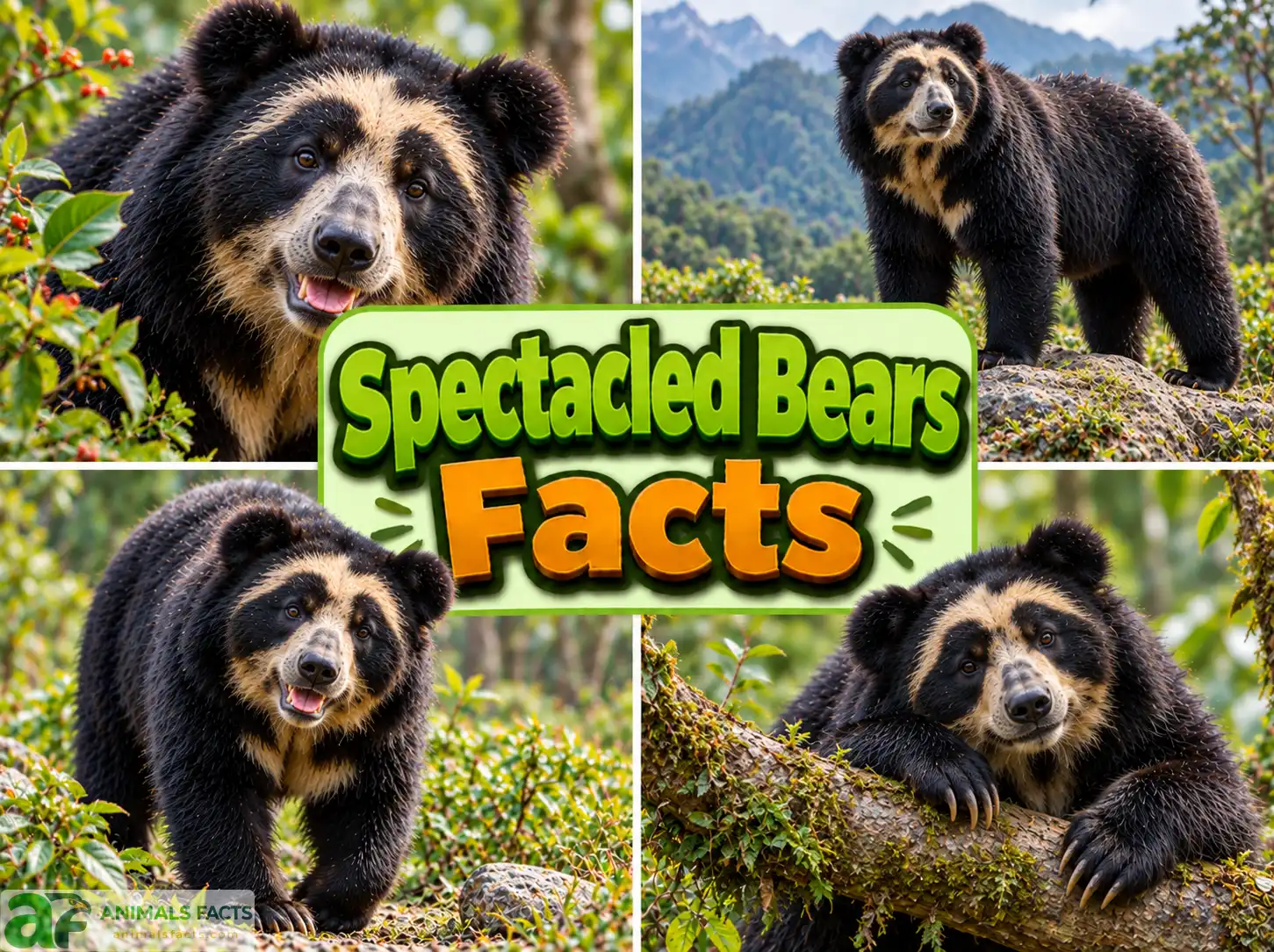
11. Spectacled Bear Facts for Kids
Hey kids — let’s discover why the spectacled bear is one of South America’s most amazing and most important wild animals!
- The spectacled bear is the only bear that lives in South America — and because South America is in the Southern Hemisphere, it’s also the only bear that lives in the Southern Hemisphere! Every other bear in the world lives in the Northern Hemisphere!
- Each spectacled bear has a completely unique pattern of pale markings around its face — like a pair of glasses or spectacles, which is how it got its name! No two spectacled bears in the world have exactly the same face pattern, just like no two people have the same fingerprints!
- You might know Paddington Bear — the famous fictional bear who comes from “darkest Peru”! Paddington was inspired by the real spectacled bears of Peru, which means your favorite marmalade-loving bear friend is actually based on this real South American bear!
- Even though the spectacled bear looks like a typical large bear, it’s actually related to the giant short-faced bears of prehistoric times — enormous bears that could weigh over 1,000 kilograms and went extinct about 11,000 years ago. The spectacled bear is the last survivor of that whole ancient bear family!
- Spectacled bears build nests in trees — they climb up fruiting trees, break branches to make a little platform, and then sit there eating fruit for days! It’s like having a treehouse restaurant!
- The spectacled bear eats a lot of bromeliads — the spiky plants that look like pineapple tops and are common in South American cloud forests! It tears them apart to eat the soft inside, getting both food and water at the same time.
- Spectacled bears are incredibly important for the cloud forest because when they eat fruit and then walk around their territory, they spread the seeds in their droppings, helping new trees and plants grow in different places!
- Scientists can recognize individual spectacled bears from photographs of their face markings without ever having to catch or touch the bears — each bear’s face pattern is unique enough to work like a photo ID!
Did You Know? The spectacled bear is sometimes called the “Ukuku” in the Quechua language — one of the major Indigenous languages of the Andes that was spoken across the Inca Empire. In Quechua cultural tradition, the Ukuku is a being that is half-bear and half-human — a supernatural character associated with the boundary between the wild forest world and the human world, and featured in important traditional ceremonies and dances that continue in Andean communities to this day. This deep cultural connection between the spectacled bear and the Indigenous peoples of the Andes is one of the richest human-bear cultural relationships documented anywhere in the world.
12. Relationship with Humans
The spectacled bear’s relationship with human communities across the Andes spans thousands of years of Indigenous cultural coexistence, through the disruptions of Spanish colonial conquest, to the contemporary conservation challenges of deforestation, crop raiding, and the political complexities of large carnivore management across multiple Andean nations.
Indigenous Cultural Coexistence
The spectacled bear has been a central presence in the cultural, spiritual, and artistic traditions of Andean Indigenous peoples for thousands of years — appearing in pre-Columbian art, textiles, ceramics, and architectural decoration across multiple Andean civilizations including the Mochica, Tiwanaku, and Inca cultures. Archaeological evidence of spectacled bear representation in Andean material culture dates back at least 2,000 years, reflecting a prolonged and intimate cultural engagement with the species across successive Andean civilizations.
The Inca Tradition
In Inca tradition, the spectacled bear held a complex and significant spiritual position — associated with the boundary between the human world and the wild Andean forest, with transformation and shamanic power, and with specific deities and ceremonial traditions. The Inca maintained bears in captivity as part of their royal menageries — a practice reflecting both the practical display of imperial power and the spiritual significance attributed to the bear within the Inca cosmological system.
The Ukuku — A Living Cultural Tradition
One of the most extraordinary surviving cultural traditions associated with the spectacled bear is the Ukuku ceremony — a ritual dance tradition associated with the Qoyllur Riti festival (Star Snow festival), one of the most important and most attended religious festivals in the Andean Quechua cultural calendar. The Ukuku character — depicted as a half-bear, half-human supernatural being wearing a bear-fur costume — serves as a mediator between the human and supernatural realms, performs protective and community-service functions during the festival, and represents one of the most enduring human-bear cultural connections documented anywhere in the world.
Contemporary Human-Bear Conflict
The most significant contemporary human-spectacled bear relationship challenge is crop-raiding conflict — with bears entering cornfields, avocado plantations, and other agricultural areas adjacent to forest habitat, generating economic losses for farming communities and powerful incentives for retaliatory killing. Research across Peru, Ecuador, and Colombia documents that crop-raiding bears — while typically representing a small proportion of the total bear population — account for a disproportionate share of human-caused bear mortality, as retaliatory killing of specific crop-raiding individuals often extends to killing of non-raiding bears in the same area.
13. Spectacled Bear Conservation Status & Threats
The spectacled bear’s Vulnerable IUCN classification reflects genuine and ongoing population declines across its Andean range — with the combined pressures of habitat loss, hunting, and human-wildlife conflict creating a deteriorating situation for a species that was already naturally rare and patchily distributed across its mountain forest habitat.
Conservation Data (2026)
| Country | Status | Population | Trend |
|---|---|---|---|
| Peru | Vulnerable | ~5,000–7,000 | Declining |
| Colombia | Vulnerable to Endangered (national) | ~2,500–4,000 | Declining |
| Ecuador | Vulnerable | ~2,000–3,000 | Declining; some recovery in PAs |
| Bolivia | Vulnerable | ~3,000–5,000 | Declining |
| Venezuela | Endangered (national) | ~1,000–2,000 | Sharply declining |
| Argentina | Critically Endangered (national) | ~100–200 | Critical; isolated |
Major Threats
Deforestation and habitat loss: The most fundamental and most geographically extensive threat — with the Andean cloud forest experiencing some of the highest deforestation rates of any forest type in the Americas, driven by agricultural expansion (particularly coca cultivation, cattle ranching, and subsistence agriculture), infrastructure development, and urban growth along the Andean slope. The cloud forest that represents the spectacled bear’s optimal habitat has been reduced by over 50% of its historical extent in some Andean countries.
Hunting: Direct hunting of spectacled bears — for perceived livestock protection, for body parts (claws, fat, and other parts used in traditional medicine in some regions), and occasionally for bushmeat — represents a significant and in some areas dominant direct mortality source, with hunting estimated to account for a substantial proportion of adult bear mortality across the species’ range.
Human-wildlife conflict: Crop-raiding-driven retaliatory killing as described above — representing both a direct mortality source and a significant barrier to community-level support for bear conservation in the agricultural communities that share landscapes with bears.
Road construction: The expansion of Andean road networks — including both formal government road construction and informal agricultural access tracks — creates direct vehicle collision mortality and effective habitat fragmentation barriers that reduce connectivity between bear populations.
Climate change: Upward shifting of vegetation zones in response to Andean warming is projected to progressively reduce the extent of cloud forest at lower elevations while potentially expanding it at higher elevations — creating complex habitat changes that may affect food availability, denning conditions, and population connectivity in ways that are difficult to predict but likely challenging for bears with established home range patterns.
Did You Know? The spectacled bear’s total global population is estimated at approximately 18,000 individuals — but this number comes with significant uncertainty, because the remoteness of the Andean cloud forest, the species’ naturally low population density, and the logistical challenges of comprehensive population surveys across multiple countries have made systematic population assessment extremely difficult. Some researchers believe the actual population could be considerably lower than 18,000 — and the trend data that does exist consistently points toward decline across virtually all portions of the species’ range. The combination of uncertain population size and documented declining trend makes the spectacled bear one of the less well-quantified conservation situations among the world’s Vulnerable large mammals.
14. Famous Spectacled Bears
Paddington Bear — The World’s Most Famous Spectacled Bear
While not a real bear, Paddington Bear — the fictional character created by Michael Bond in “A Bear Called Paddington” (1958) — is the most famous cultural representation of a spectacled bear anywhere in the world. Bond’s creation of a bear from “darkest Peru” who travels to London, where he is adopted by the Brown family, was directly inspired by Bond’s awareness of Andean bears, and Paddington’s origins in Peru connect him unambiguously to the spectacled bear as the only bear species native to that country. Paddington’s cultural significance across multiple generations of readers and viewers in dozens of countries has contributed substantially to international awareness of both Peru as a wildlife-rich country and, by association, the spectacled bear as the animal that inspired the fictional character.
The Machu Picchu Bears
Multiple individual spectacled bears documented through camera trap and direct observation research in the Machu Picchu Historical Sanctuary — including individually identified individuals monitored across multiple years — have become important symbols of the coexistence between wildlife conservation and cultural heritage tourism in Peru. These bears, documented foraging on the vegetated slopes of the Machu Picchu sanctuary within sight of the ancient Inca citadel and the tourist operations that surround it, represent one of the most extraordinary examples of large carnivore persistence in a heavily human-trafficked cultural heritage landscape anywhere in the world.
Research-Identified Bears Across Ecuador and Peru
Multiple camera trap research programs in Ecuador’s Andes — including programs associated with the Spectacled Bear Conservation Society and WCS Ecuador — have built databases of individually identified wild spectacled bears, with specific animals tracked across multiple years of research providing the long-term individual data necessary for understanding population dynamics, home range use, and behavioral ecology.
15. Role in Ecosystem & Food Chain
The spectacled bear functions as a keystone species and seed disperser across Andean cloud forest ecosystems — with its foraging movements and dietary patterns generating ecological effects that fundamentally shape forest composition, regeneration, and the broader biodiversity of the cloud forest communities it inhabits.
Seed Dispersal — The Cloud Forest Gardener
The spectacled bear’s role as a seed disperser is its most consequential ecological contribution — and one of the most significant large mammal seed dispersal services documented in the Western Hemisphere. By consuming large quantities of forest fruit and dispersing seeds across home ranges that can exceed 200 km², individual spectacled bears contribute to the spatial distribution of tree species across enormous forest areas in ways that no other animal in the ecosystem can replicate.
Research on plant-bear interactions in Andean cloud forests has documented that spectacled bears are primary dispersers for several large-seeded fruit species whose seeds are too large to be effectively dispersed by the birds and smaller mammals that handle most cloud forest seed dispersal. For these plant species — including several large-seeded members of the Clusiaceae, Lauraceae, and other important cloud forest families — the spectacled bear may represent an irreplaceable dispersal mutualist, meaning that the local extinction of bears from specific areas could cause long-term, progressive changes in forest composition as seed-limited tree species fail to regenerate in areas beyond direct seed fall from parent trees.
Bromeliad Community Effects
The spectacled bear’s intensive bromeliad consumption — which destroys individual plants during feeding — likely influences bromeliad population dynamics and community structure in heavily used portions of the cloud forest. While poorly studied relative to the seed dispersal function, this direct effect on bromeliad communities could have cascading implications for the dozens of species (amphibians, invertebrates, birds) that use bromeliads as microhabitats.
Apex Predator Position
As the largest terrestrial predator in South America (by weight), the spectacled bear occupies the apex position in the terrestrial food webs of the Andean ecosystems it inhabits — with its presence shaping the behavior and distribution of prey species (deer, rodents) and potentially regulating some prey populations through predation.
16. Myths, Folklore & Cultural Significance
The spectacled bear occupies one of the deepest and most multi-dimensional positions of cultural significance of any bear species in the world — embedded across thousands of years of Andean Indigenous cultural history in ways that make it one of the richest human-bear cultural relationships documented anywhere on Earth.
The Ukuku — The Bear-Human Mediator
The most important and most extensively documented spectacled bear cultural tradition is the Ukuku figure in Quechua-speaking Andean communities. The Ukuku — depicted as a supernatural being that is simultaneously human and bear, occupying the boundary between the natural and human worlds — appears in community ceremonies, carnival celebrations, and most prominently in the Qoyllur Riti festival of the Cusco region, one of the largest and most important festivals in the Andean ceremonial calendar.
At Qoyllur Riti, Ukuku dancers wearing bear-fur costumes and distinctive masks perform protective, policing, and community-service functions — ascending glaciers in the pre-dawn darkness to collect ice blocks considered sacred, maintaining order during the festival proceedings, and serving as intermediaries between the human community and the supernatural forces represented by the mountain glaciers and the heavens above them. The Ukuku’s role as a boundary-crossing mediator — part human, part bear, existing between natural and cultural worlds — reflects a profound Indigenous understanding of the spectacled bear’s ecological position at the edge between the human agricultural world and the wild Andean forest.
Pre-Columbian Artistic Traditions
Spectacled bear imagery appears extensively across multiple pre-Columbian South American artistic traditions — in Mochica ceramics (northern Peru, approximately 100–700 CE), Tiwanaku stonework (Bolivia/Peru, approximately 300–1000 CE), Inca textiles and gold work, and numerous other material culture traditions across the Andean cultural sphere. This artistic record documents both the practical observation of spectacled bears across multiple centuries of Andean civilization and the cultural significance attributed to the bear as a symbolic figure of power, transformation, and connection to the wild mountain forest.
The Bear Cult in Peruvian Highland Villages
Several highland Peruvian communities maintain specific festivals and ceremonial traditions centered on the spectacled bear — including the “Bear Festival” traditions of some Cusco region communities, which combine Spanish colonial Catholic festival forms with pre-Columbian Indigenous bear symbolism in a syncretic cultural expression that reflects the complex layering of cultural influences across Andean history.
17. Spectacled Bears in Pop Culture
The spectacled bear has generated a uniquely prominent position in global popular culture through the Paddington Bear connection — far exceeding the cultural visibility of most comparably obscure wildlife species, and providing an extraordinary platform for conservation communication that few endangered animals can match.
Paddington Bear — A Global Cultural Ambassador
Paddington Bear — created by British author Michael Bond in 1958 and subsequently adapted into animated television series, feature films (2014 and 2017), and numerous other media — is one of the world’s most beloved fictional characters, recognized across dozens of countries by audiences spanning multiple generations. The films alone generated combined global box office revenues exceeding $500 million, introducing the story of a bear from Peru to new generations worldwide.
The Paddington connection provides the spectacled bear with a form of cultural capital that conservation organizations have recognized and increasingly sought to leverage — with WWF, WCS, and other organizations explicitly referencing the Paddington connection in conservation communication about the spectacled bear, connecting audiences’ affection for the fictional character to awareness of the real animal’s conservation situation.
Wildlife Documentary Coverage
Multiple BBC, National Geographic, and Discovery Channel productions have featured spectacled bears — with the species appearing in “Planet Earth II” (BBC, 2016), which included an extraordinary sequence of a spectacled bear navigating the high-altitude paramo landscape of the Andes, and various dedicated South American wildlife documentaries that have brought the species to broader international audiences.
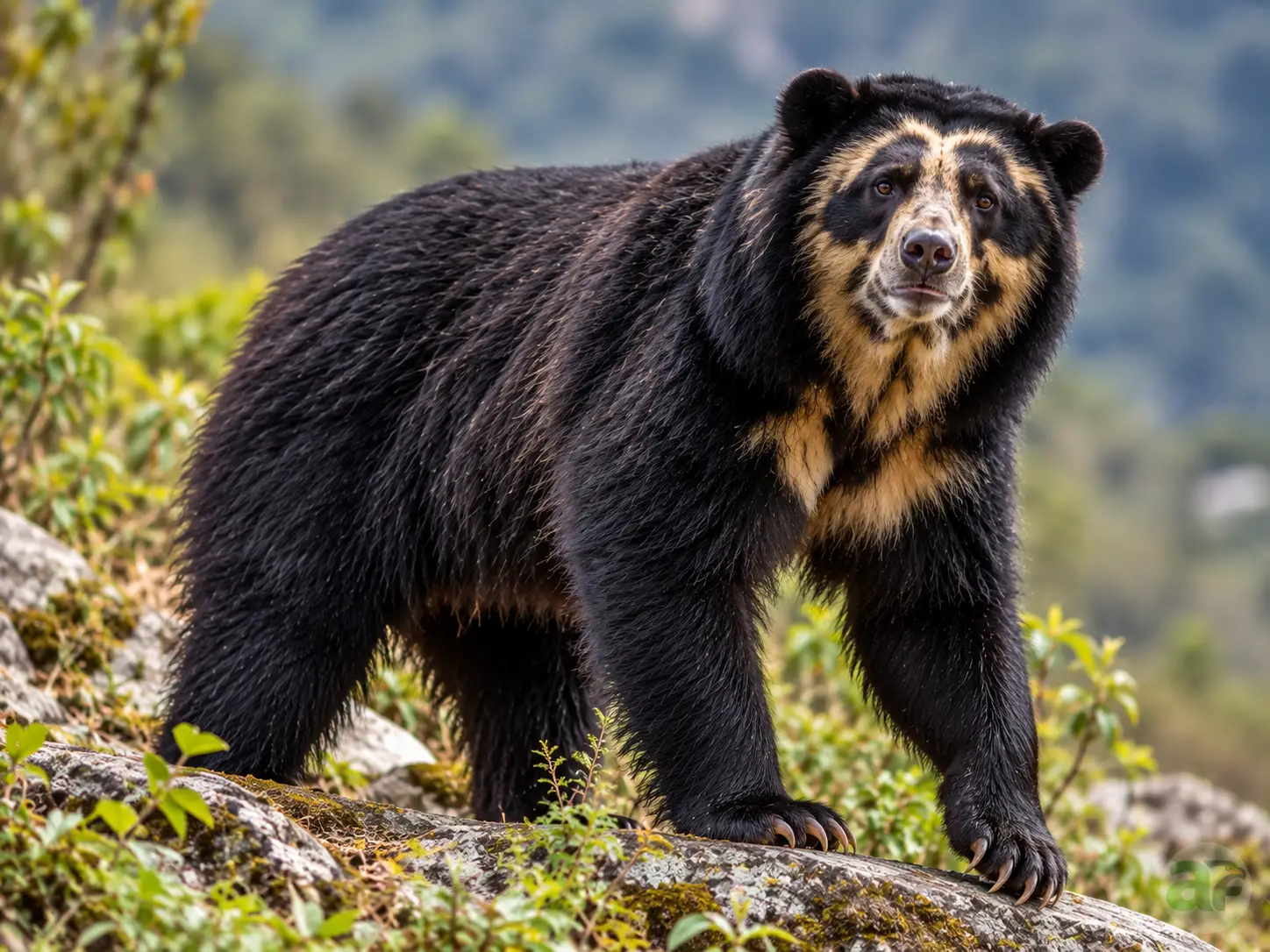
18. Spectacled Bear Facts vs. Common Myths
Myth: The spectacled bear is a relatively recent arrival in South America. Fact: The spectacled bear’s lineage arrived in South America approximately 3 million years ago through the newly formed Isthmus of Panama — making the Tremarctinae one of the earliest North American mammal groups to colonize South America during the Great American Biotic Interchange. The bear’s South American ancestry is considerably more ancient than many people assume.
Myth: Paddington Bear is just a fictional character with no real animal basis. Fact: Michael Bond specifically chose Peru as Paddington’s origin — and the spectacled bear (also known as the Andean bear) is the only bear native to Peru and the only bear in South America. Bond was aware of Andean bears, and the connection between Paddington and the spectacled bear is acknowledged by bear researchers who have explicitly referenced the fictional character as an awareness-raising asset for conservation.
Myth: Spectacled bears are primarily carnivores that occasionally eat plants. Fact: Spectacled bears derive approximately 80–95% of their diet from plant material — fruit, bromeliads, cacti, and other vegetation. This makes them one of the most strongly plant-dominated omnivores in the bear family, far more similar in dietary ecology to a giant panda (which eats almost exclusively bamboo) than to a polar bear (which eats almost exclusively meat).
Myth: The spectacled bear is found throughout South America. Fact: The spectacled bear’s range is confined to the Andes Mountains and adjacent forest zones of western South America — it is not found in the Amazon Basin, the Pampas, Patagonia, or most of Brazil, despite South America’s enormous extent. Its distribution is genuinely restricted to the Andean mountain system across approximately six countries.
Myth: Spectacled bears are solitary animals that never interact. Fact: While primarily solitary in their daily foraging movements, spectacled bears demonstrate surprising social tolerance at concentrated food resources — with multiple bears observed feeding simultaneously in the same fruiting tree or area, and with evidence of individual recognition and maintained social relationships between neighboring bears that reduce conflict at productive sites.
19. Best Places to See Spectacled Bears in the Wild
Mindo Cloud Forest, Ecuador
The Mindo area in northwestern Ecuador — one of the world’s most celebrated birdwatching destinations — also supports a significant spectacled bear population in some of the finest remaining cloud forest in South America. Experienced local guides at Mindo’s established wildlife tourism operations occasionally locate spectacled bears during specialized dawn and dusk wildlife walks, with the area’s relatively accessible cloud forest and habituated local wildlife community providing among the best wild spectacled bear viewing opportunities in Ecuador.
Machu Picchu Historical Sanctuary, Peru
The Machu Picchu Historical Sanctuary — the protected area surrounding the world-famous Inca citadel — provides one of the most remarkable wildlife viewing contexts available for spectacled bears anywhere in the world, with bears documented on the vegetated slopes of the sanctuary. While sightings are not guaranteed and require departure from the main tourist pathways with experienced guides, the sanctuary’s excellent habitat and documented bear presence make it one of Peru’s premier spectacled bear viewing areas.
Manu National Park and Biosphere Reserve, Peru
Manu — one of the world’s most biodiverse protected areas, spanning from Andean cloud forest down through lower-elevation forest to Amazon lowlands — supports significant spectacled bear populations in its cloud forest and high-elevation zones. Remote wilderness lodge access to the Manu corridor’s cloud forest zone provides extraordinary wildlife viewing in some of South America’s finest wilderness.
Podocarpus National Park, Ecuador
Podocarpus in southern Ecuador — named for the podocarpus (South American conifer) trees that characterize its distinctive forest type — supports a significant spectacled bear population in a protected landscape less visited than Mindo or the northern Ecuadorean cloud forests, providing quieter and potentially more productive wildlife observation conditions.
Cotacachi-Cayapas Ecological Reserve, Ecuador
The Cotacachi-Cayapas reserve in northwestern Ecuador — protecting both cloud forest and lower-elevation forest in a large continuous landscape — supports one of Ecuador’s more significant spectacled bear populations. The reserve’s size and relative intactness make it one of the most important spectacled bear habitats in Ecuador and one of the more productive areas for documented camera trap research on the species.
20. Top Documentaries & Books
Must-Watch Documentaries
“Planet Earth II” — Grasslands episode (BBC, 2016) — David Attenborough-narrated sequence featuring a spectacled bear navigating the extraordinary high-altitude paramo landscape of the Andes — one of the finest spectacled bear sequences ever filmed and one that introduced the species to a genuinely global television audience for the first time at significant scale.
Various BBC and National Geographic South American wildlife productions — Multiple productions covering the biodiversity of the Andean cloud forest have featured spectacled bear sequences, with production teams working with local researchers to access reliable filming locations for this elusive species.
“Paddington” (2014) and “Paddington 2” (2017) — While fictional feature films rather than natural history documentaries, these productions have introduced the spectacled bear’s Peruvian homeland to hundreds of millions of viewers worldwide and are explicitly acknowledged by conservation organizations as important awareness-raising cultural assets for the real animal that inspired the fictional character.
Essential Books
“Bears of the World” by various authors — Comprehensive scientific overviews of all bear species including a dedicated spectacled bear chapter providing the most complete available popular reference on the species’ biology and conservation.
“A Bear Called Paddington” by Michael Bond (1958) — While fiction, Bond’s creation of a bear from Peru provides essential cultural context for understanding the spectacled bear’s unexpected but genuine global cultural reach.
Various academic publications from the Spectacled Bear Conservation Society — Peer-reviewed research available through academic databases represents the most current scientific knowledge of spectacled bear ecology, behavior, and conservation.
21. Spectacled Bear Comparison of Spectacled Bears with Similar Bear Species
| Feature | Spectacled Bear | Sun Bear | Sloth Bear | Giant Panda | American Black Bear |
|---|---|---|---|---|---|
| Scientific Name | Tremarctos ornatus | Helarctos malayanus | Melursus ursinus | Ailuropoda melanoleuca | Ursus americanus |
| Weight | 35–200 kg | 27–65 kg | 55–145 kg | 70–125 kg | 57–300 kg |
| Distribution | Andes, South America only | SE Asia | Indian subcontinent and Sri Lanka | Central China | North America |
| Subfamily | Tremarctinae (unique) | Ursinae | Ursinae | Ailuropodinae | Ursinae |
| Primary Diet | Fruit, bromeliads (80–95% plant) | Insects, honey, fruit | Termites, ants, fruit | Bamboo (99%) | Berries, nuts, insects |
| Facial Markings | Unique cream “spectacle” pattern | Crescent chest patch | White V-shaped chest mark | Black eye patches | None |
| Tree Climbing | Good; builds platforms | Excellent | Moderate | Limited | Good |
| Hibernation | No (tropical) | No | No | No | Yes |
| Conservation Status | Vulnerable | Vulnerable | Vulnerable | Vulnerable (recovering) | Least Concern |
| Unique Feature | Only South American bear; only surviving short-faced bear | World’s smallest bear | Vacuum insect feeding; cubs on back | Most bamboo-specialized bear | Most color-variable bear |
22. How You Can Help
Spectacled bear conservation requires simultaneous action across multiple threat categories — habitat protection, human-wildlife conflict mitigation, anti-poaching enforcement, and the community engagement necessary to transform Andean farming communities from adversaries to advocates for bear conservation.
Support These Organizations
Spectacled Bear Conservation Society (SBCS) (spectacledbear.org) — The leading organization specifically focused on spectacled bear research and conservation, conducting camera trap population research, community education, and habitat protection advocacy across the species’ range.
WWF Andes Conservation Program (worldwildlife.org) — WWF’s Andean programs directly address both habitat protection and human-wildlife conflict across multiple spectacled bear range countries.
Wildlife Conservation Society (WCS) Andes (wcs.org) — Runs active spectacled bear research and conservation programs in Peru, Ecuador, and Bolivia, including some of the most scientifically rigorous individual bear monitoring programs in the world.
Panthera (panthera.org) — While primarily focused on large cats, Panthera’s Andean conservation work addresses the same deforestation and habitat connectivity challenges that affect spectacled bear populations across the region.
Practical Actions
Support certified sustainable Andean coffee and cacao. Much of the deforestation threatening spectacled bear cloud forest habitat is driven by expanding coffee, cacao, and other agricultural production on the Andean slopes. Consumer choices favoring certified shade-grown or sustainably produced Andean agricultural products help reduce the market incentives for forest conversion.
Support human-wildlife conflict mitigation programs. Organizations funding crop protection infrastructure — including bear-resistant food storage, electric fencing around vulnerable crop fields, and community monitoring programs that alert farmers to bear presence before damage occurs — directly reduce retaliatory killing that represents one of the most significant documented spectacled bear mortality sources.
Advocate for Andean cloud forest protection. The Andean cloud forest is one of the world’s most biodiverse and most threatened forest biomes — supporting policy initiatives that strengthen legal protection of cloud forest, reform land tenure arrangements that drive deforestation, and expand the protected area network covering spectacled bear habitat directly addresses the most fundamental long-term threat.
Visit Andean wildlife tourism responsibly. Supporting ecotourism operations in Ecuador, Peru, and Bolivia that specifically offer spectacled bear viewing generates economic value from living wild bears and creates local stakeholder interest in maintaining bear populations and forest habitat.
Raise Paddington Bear-awareness. The connection between Paddington Bear and the real spectacled bear of Peru provides a uniquely accessible entry point for raising public awareness of spectacled bear conservation — sharing information that links people’s affection for the fictional character to awareness of the real animal’s conservation situation can generate conservation attention and support from audiences who might otherwise never engage with Andean wildlife conservation.
Did You Know? Research by the Spectacled Bear Conservation Society has demonstrated that camera trap networks using individual facial mark pattern recognition have enabled population monitoring of spectacled bears across large areas of Andean cloud forest without any physical capture or handling of bears — transforming the research efficiency of spectacled bear population assessment in a landscape where the logistical challenges of traditional mark-recapture methods would make comprehensive monitoring essentially impossible. The growing database of individually identified wild spectacled bears built through this methodology — now including hundreds of recognized individuals across Ecuador and Peru — provides an extraordinary scientific resource for understanding population dynamics, home range ecology, and survival rates that is directly informing conservation planning decisions for the species across its range.
23. Frequently Asked Questions About Spectacled Bears
Q1: What is the scientific name of the spectacled bear?
The spectacled bear’s scientific name is Tremarctos ornatus — placing it as the sole living species in its genus, Tremarctos. The species name “ornatus” is Latin for “decorated” or “adorned,” referencing the distinctive facial markings. The family is Ursidae (bears), subfamily Tremarctinae (the short-faced bears), order Carnivora, class Mammalia.
Q2: Is Paddington Bear really a spectacled bear?
Yes — Paddington Bear’s Peruvian origins connect him directly to the spectacled bear, the only bear native to Peru and the only bear species in South America. Author Michael Bond chose Peru as Paddington’s homeland with awareness of the Andean bears, and the connection between Paddington and the spectacled bear is acknowledged by bear conservation researchers who reference the fictional character as an awareness-raising asset for real spectacled bear conservation.
Q3: Are spectacled bears endangered?
Spectacled bears are classified as Vulnerable by the IUCN — reflecting documented population declines across their Andean range driven by habitat loss, hunting, and human-wildlife conflict. Some national-level assessments classify regional populations as Endangered (Venezuela) or Critically Endangered (Argentina). Total global population is estimated at approximately 18,000 individuals, with a declining trend.
Q4: What do spectacled bears eat?
Spectacled bears are primarily frugivores — with 80–95% of their diet consisting of plant material, primarily fruit, bromeliads, palm hearts, cacti, and various other vegetation. The remaining 5–20% includes insects, small vertebrates, and carrion. This makes them one of the most strongly plant-dominated bear species on Earth.
Q5: Where do spectacled bears live?
Spectacled bears are found across the Andes Mountains of western South America — specifically in Venezuela, Colombia, Ecuador, Peru, Bolivia, and a small population in northwestern Argentina. They primarily inhabit Andean cloud forest at elevations of 1,000–3,000 meters, but also use paramo grassland, dry forest, and tropical moist forest across an altitudinal range extending from near sea level to over 4,300 meters.
Q6: Why is it called a spectacled bear?
The spectacled bear gets its name from the distinctive pale cream or yellowish markings around its eyes and across its muzzle that resemble a pair of spectacles (eyeglasses). These markings are individually unique to each bear — no two spectacled bears have identical facial patterns, making the markings function like fingerprints for individual identification.
Q7: Is the spectacled bear related to the giant short-faced bears?
Yes — the spectacled bear is the sole surviving member of the Tremarctinae subfamily (short-faced bears) and is therefore the closest living relative of the extinct giant short-faced bears of the Pleistocene, including Arctodus simus (North America, estimated up to 900 kg) and Arctotherium angustidens (South America, possibly the largest bear ever at potentially 1,500 kg).
Q8: How long do spectacled bears live?
Wild spectacled bears typically live 20–25 years, with the maximum confirmed captive lifespan reaching approximately 36 years — among the longer lifespans documented for medium-sized bear species.
Q9: Can spectacled bears climb trees?
Yes — spectacled bears are accomplished tree climbers, using powerful forelimbs and curved claws to ascend fruiting trees and large vegetation. They characteristically build elevated platforms in fruiting trees by bending and breaking branches — remaining elevated for extended periods (sometimes days) while a fruit crop is accessible, and resting on these platforms between feeding bouts.
Q10: How can I help spectacled bear conservation?
Key actions include: supporting the Spectacled Bear Conservation Society (spectacledbear.org) and WWF/WCS Andes programs financially; choosing certified sustainable Andean coffee and cacao that reduces deforestation incentives; supporting human-wildlife conflict mitigation programs that reduce retaliatory killing; visiting Andean ecotourism responsibly; and raising awareness — particularly leveraging the Paddington Bear connection to introduce spectacled bear conservation to new audiences.
26. Sources & References
Research Sources
- Wikipedia — Tremarctos ornatus and related articles
- IUCN Red List — iucnredlist.org
- Spectacled Bear Conservation Society — spectacledbear.org
- WWF — worldwildlife.org
- Wildlife Conservation Society — wcs.org
- National Geographic — nationalgeographic.com
- Smithsonian’s National Zoo — nationalzoo.si.edu
- Encyclopaedia Britannica — britannica.com
- BBC Wildlife — bbc.co.uk
- Live Science — livescience.com
- Kattan, Gustavo et al. — Spectacled bear ecology and conservation publications (multiple)
- Goldstein, Isabelle et al. — Spectacled bear research publications (multiple)