
Sun Bear Facts
| Feature | Details |
|---|---|
| Scientific Name | Helarctos malayanus |
| Common Names | Sun Bear, Honey Bear, Malay Bear |
| Kingdom | Animalia |
| Phylum | Chordata |
| Class | Mammalia |
| Order | Carnivora |
| Family | Ursidae |
| Genus | Helarctos (sole living species) |
| Recognized Subspecies | 2 subspecies — Helarctos malayanus malayanus (Malay Peninsula, Sumatra, Borneo) and Helarctos malayanus euryspilus (Borneo Pygmy Sun Bear — smaller) |
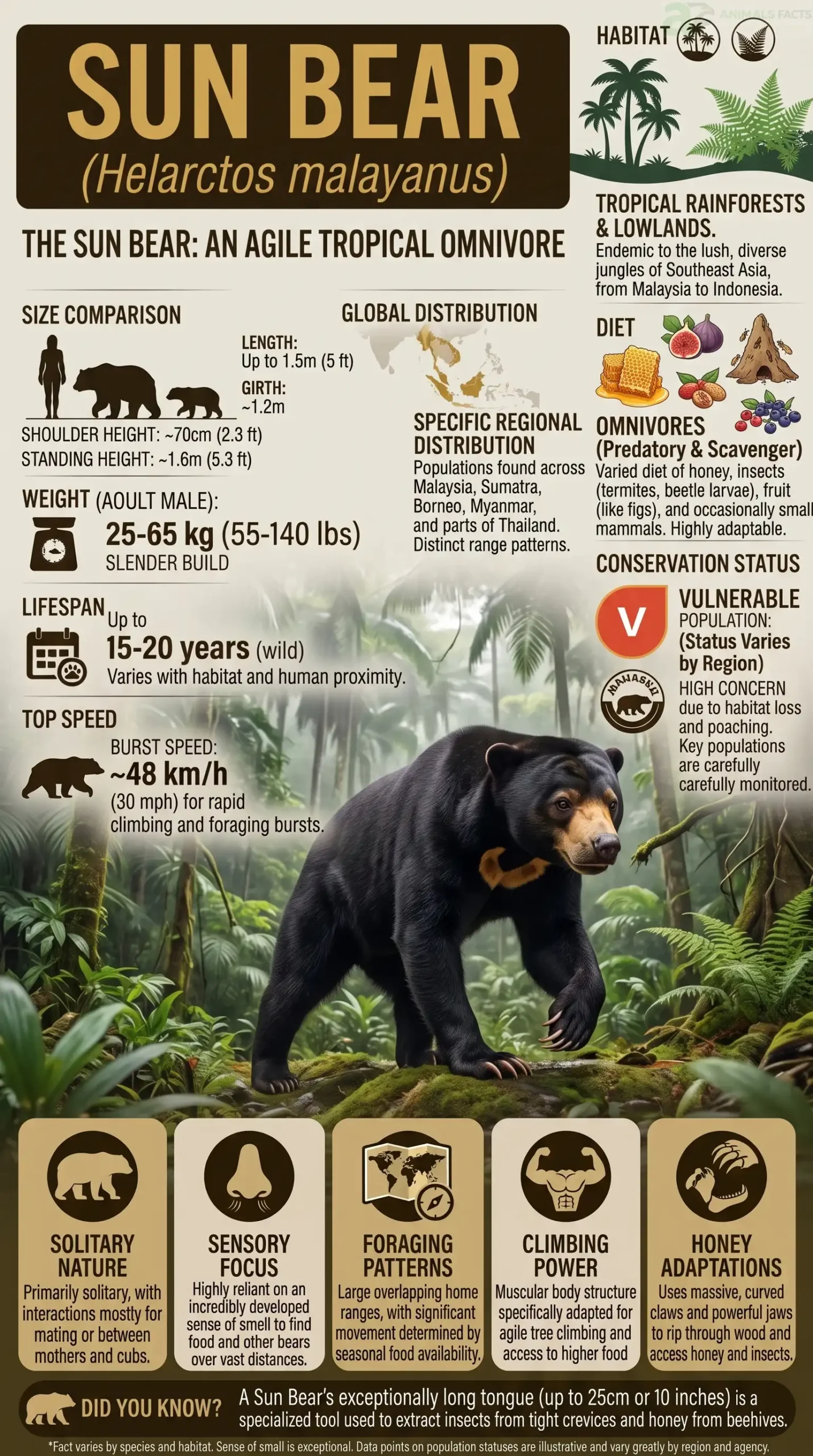
| Habitat | Lowland and hill tropical rainforest — Sumatra, Borneo, Peninsular Malaysia, Thailand, Myanmar, Laos, Cambodia, Vietnam, southern China, Bangladesh, northeast India |
| Lifespan | 25 years in the wild (estimated); up to 30 years in captivity |
| Diet | Omnivore — insects (termites, beetles), honey, fruit, small vertebrates, roots |
| Weight | 27–65 kg (males typically 30–60% heavier than females) |
| Body Length | 100–140 cm |
| Shoulder Height | 60–70 cm |
| Tongue Length | 20–25 cm — the longest tongue relative to body size of any bear species |
| Conservation Status | Vulnerable (IUCN Red List) |
| Global Wild Population | Estimated fewer than 10,000 mature individuals; some estimates considerably lower — poorly quantified |
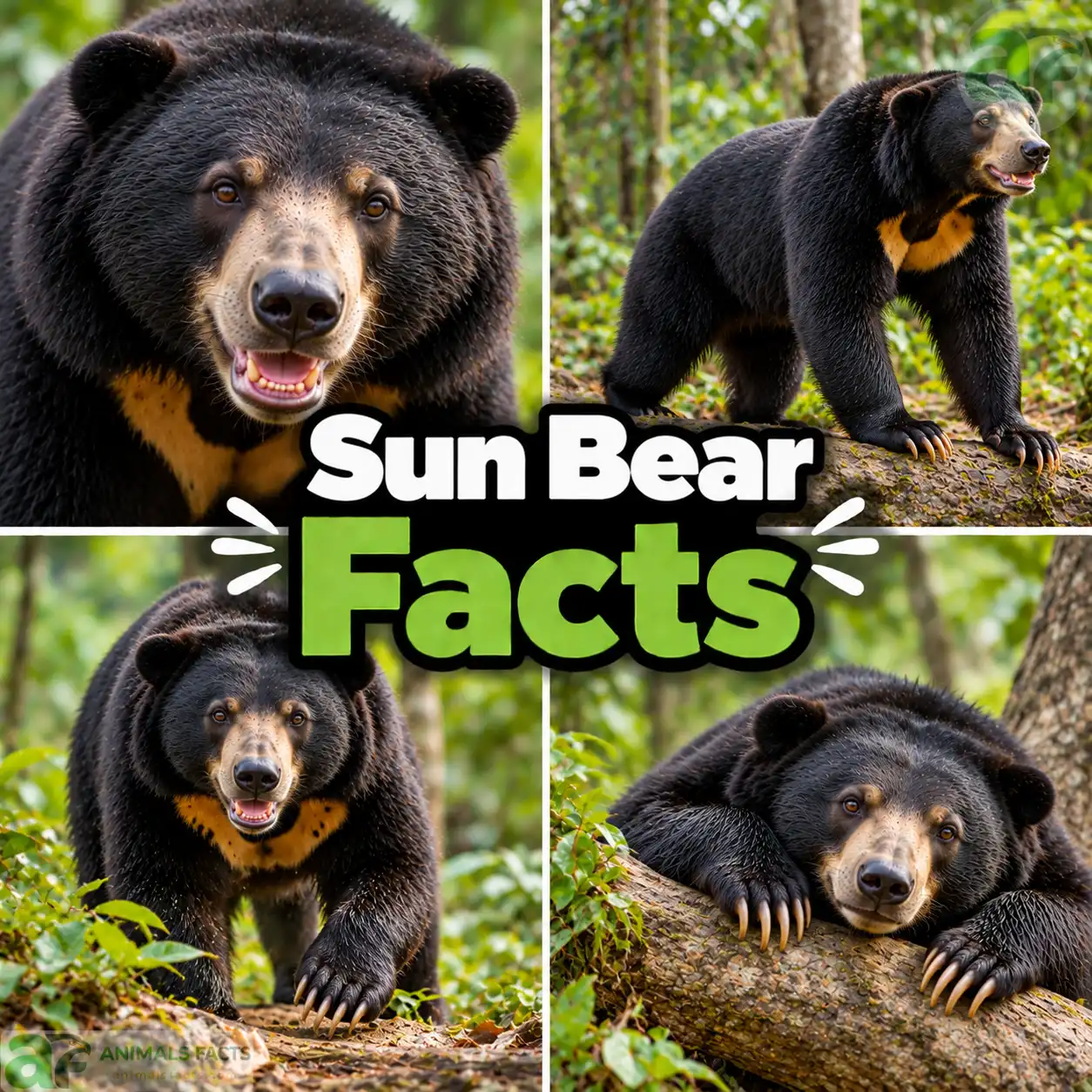
| Unique Feature | World’s smallest bear; longest tongue of any bear; unique crescent-shaped chest patch; most arboreal bear species; extreme loose skin allows it to twist and bite attackers |
 1. Introduction: What is a Sun Bear?
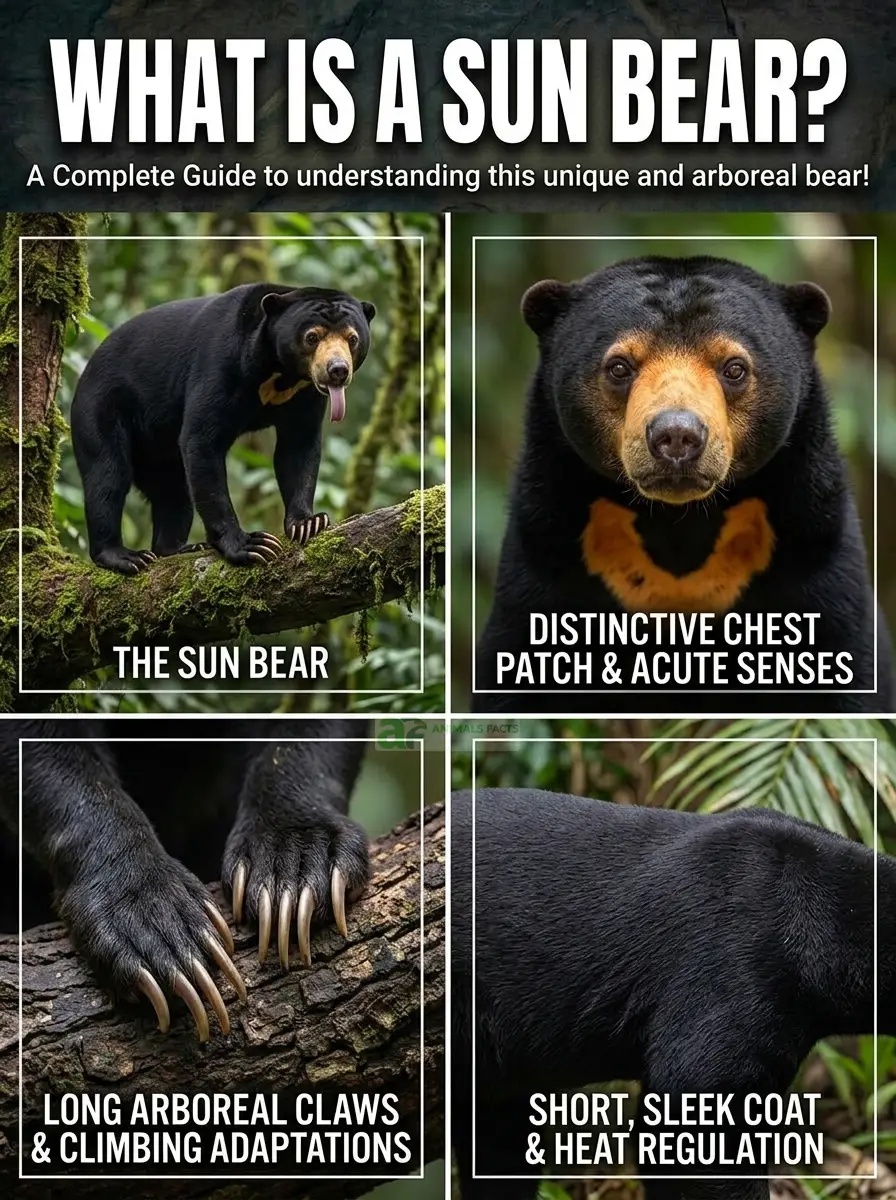
It weighs less than many large domestic dogs. Its tongue — 20 to 25 centimeters long — is proportionally the longest of any bear species on Earth, inserted into termite mounds and beehives with extraordinary precision to extract insects and honey. It climbs trees with remarkable ease, nests in treetops, and — despite its gentle-sounding nickname of “honey bear” — is considered by local communities across Southeast Asia to be one of the most dangerous animals in the region when cornered, possessing a ferocity that generates genuine respect and fear far beyond what its modest size might suggest. And it is disappearing from the tropical rainforests of Southeast Asia so rapidly, and so quietly, that most people outside the region have never heard of it at all. Sun bear facts are remarkable from the very first.
The sun bear — Helarctos malayanus — is the world’s smallest bear species, the only bear species in its own genus, and perhaps the least known and least publicly recognized of the world’s eight bear species despite being genuinely extraordinary in its biology, ecology, and conservation situation. Named for the distinctive crescent-shaped golden or orange patch on its chest that supposedly resembles a rising sun, the sun bear inhabits the lowland tropical rainforests of Southeast Asia and parts of South Asia — an environment as different from the Arctic tundra of the polar bear or the Rocky Mountain forests of the grizzly as it is possible to imagine within a single genus, demonstrating the extraordinary evolutionary diversity that the bear family has achieved across millions of years of divergent adaptation.
Whether you are a student researching sun bear facts for a school project, a wildlife traveler planning a visit to Borneo or Sumatra, a conservation advocate concerned about the bile farming crisis that has made the sun bear a symbol of one of Asia’s most troubling wildlife welfare situations, a parent looking for sun bear facts for kids, or simply someone who has never heard of this remarkable small bear and wants to understand why it matters — this is the most complete guide to sun bear facts you will find anywhere. We cover sun bear habitat, sun bear diet, sun bear behavior, communication, reproduction, the unique chest patch, the incredible tongue, the bile farming emergency, conservation, mythology, and the extraordinary story of the world’s smallest and most overlooked bear species. Let us begin.
2. Sun Bear Species Overview & Classification
The sun bear belongs to the family Ursidae and occupies its own unique evolutionary position within the bear family as the sole living species in the genus Helarctos — a taxonomic isolation reflecting millions of years of independent evolutionary development in the tropical rainforest environments of Southeast Asia, separate from the genus Ursus that contains all other living bear species.
The Sun Bear’s Unique Taxonomic Position
The sun bear diverged from the common ancestor of the genus Ursus sometime in the distant past — earlier than the divergence of most Ursus species from each other — and has since evolved as an independently specialized tropical forest bear with no close living relatives. Its placement in the separate genus Helarctos (from the Greek “sun” and “bear”) distinguishes it taxonomically from all other living bears and reflects its genuinely distinct evolutionary history.
Species Classification Table
| Level | Classification |
|---|---|
| Kingdom | Animalia |
| Phylum | Chordata |
| Class | Mammalia |
| Order | Carnivora |
| Family | Ursidae |
| Genus | Helarctos |
| Species | H. malayanus |
| Common Names | Sun Bear, Honey Bear, Malay Bear, “Beruang Madu” (Indonesian/Malay) |
| Taxonomic Note | Sole species in genus Helarctos; most basal (earliest-diverging) member of the bear family according to some analyses |
Subspecies
| Subspecies | Scientific Name | Range | Notes |
|---|---|---|---|
| Malay Sun Bear | Helarctos malayanus malayanus | Mainland SE Asia, Sumatra | Larger of the two subspecies |
| Bornean Sun Bear (Bornean Pygmy Sun Bear) | Helarctos malayanus euryspilus | Borneo only | Smaller; some genetic distinctiveness documented |
Species Evolution & Discovery Timeline
~5–6 million years ago: The sun bear lineage diverged from the common ancestor of the bear family — establishing the independent evolutionary trajectory that would eventually produce the highly specialized tropical forest bear of today.
~2–3 million years ago: Modern sun bears achieved something close to their present form — small, arboreal, insect and honey-specialist bears adapted to the complex environment of Southeast Asian lowland rainforest.
Pre-colonial era: Sun bears were well-known throughout their range to local Indigenous peoples, who maintained a range of relationships with the species including subsistence hunting, respect for the animal’s reported ferocity, and the use of sun bear parts in traditional medicine — the latter eventually becoming a devastating threat as demand expanded.
1820: The sun bear was formally scientifically described by Stamford Raffles — the British colonial administrator best known for founding Singapore — establishing the species’ place in Western scientific taxonomy.
Late 19th–20th century: The bear bile farming industry — using sun bears and Asiatic black bears as the primary sources of bile extracted for traditional Chinese and other Asian medicine markets — expanded dramatically, eventually housing tens of thousands of bears in severely inadequate captive conditions across Vietnam, China, Laos, and other countries.
1987–present: The emergence of international conservation advocacy specifically targeting bear bile farming — led initially by Jill Robinson (founder of Animals Asia) and subsequently expanded through multiple organizations — began generating significant international awareness of the sun bear’s welfare and conservation crisis.
2004: Wong Siew Te founded the Bornean Sun Bear Conservation Centre (BSBCC) in Sandakan, Sabah — one of the world’s most important sun bear rehabilitation and conservation education facilities, becoming a major center for sun bear research and public awareness.
3. Sun Bear Physical Description & Unique Features
The sun bear’s physical design is a masterwork of adaptation for life in the complex, three-dimensional environment of the Southeast Asian tropical rainforest — combining the smallest body size of any bear species with a suite of uniquely specialized features that reflect millions of years of evolution in a tropical forest environment unlike any other bear’s habitat.
Size — The World’s Smallest Bear
Adult sun bears are dramatically smaller than any other bear species — approximately the size of a large domestic dog rather than the imposing dimensions of other bear family members:
- Males: Typically 30–60 kg, with the Bornean subspecies averaging somewhat smaller
- Females: Typically 20–40 kg — approximately 30–60% lighter than males on average
- Body length: 100–140 cm — smaller than many large dog breeds
- Comparison: The world’s largest polar bear male can weigh approximately 10–15 times as much as an adult sun bear
The Extraordinary Tongue
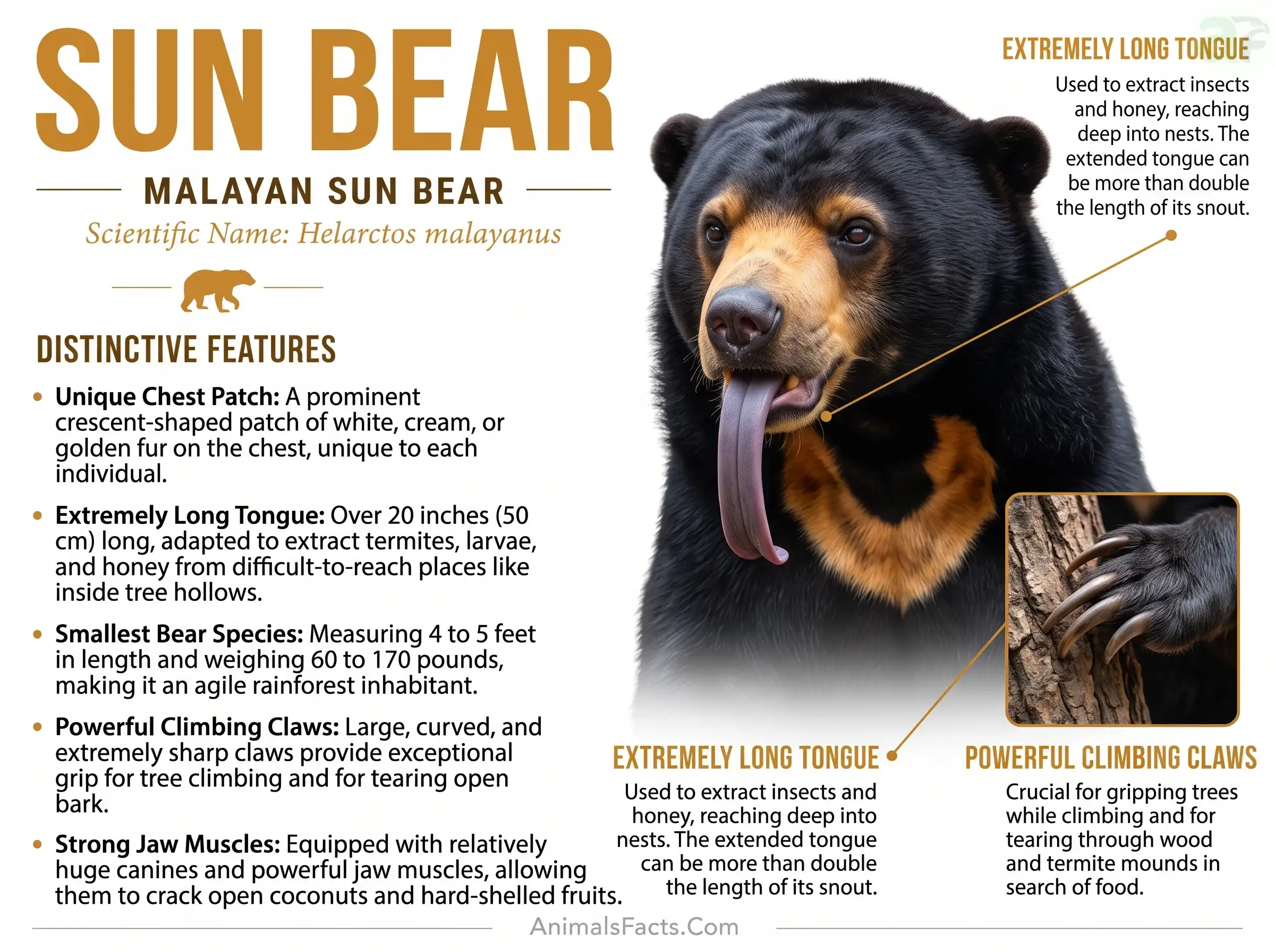
The sun bear’s most celebrated anatomical feature — a tongue measuring 20–25 centimeters in length — is the longest tongue relative to body size of any bear species, and one of the most specialized feeding adaptations in the bear family. This remarkable organ is used with extraordinary precision to:
- Extract honey and bee larvae from natural beehive cavities in hollow trees
- Reach deep into termite mounds to extract soldiers and workers
- Access beetle grubs from within rotting wood galleries
- Lap up bee larvae, ants, and other small insects from exposed colonies
The tongue’s length allows sun bears to reach food in cavities and tunnels that the bear’s paws can open or enlarge but cannot reach — a combination of tool (the powerful forepaws and long claws for breaking open substrate) and extraction implement (the tongue) that makes the sun bear one of the most efficient insectivore bears in the world.
Remarkable Loose Skin
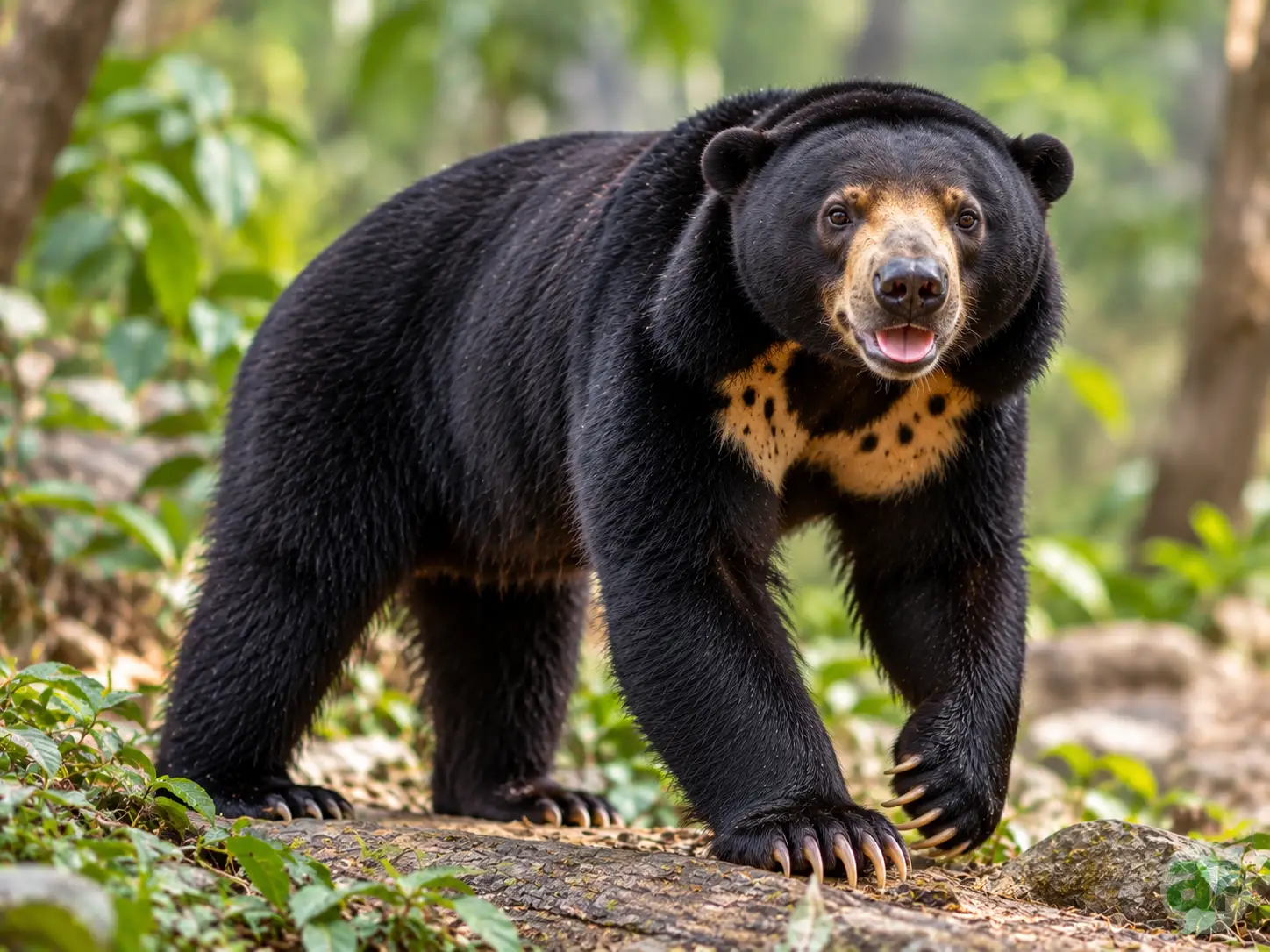
The sun bear possesses notably loose, wrinkled skin around the neck and shoulders — more pronounced than in most other bear species — that serves a remarkable defensive function: when seized by a predator or competitor around the scruff, the sun bear can rotate its body within the loose skin to turn and bite its attacker. This “turn-and-bite” capability, combined with the sun bear’s documented ferocity when cornered, has generated a reputation as one of the most dangerous animals in its range despite its modest size.
The Chest Patch
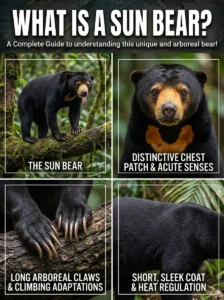
The crescent-shaped chest patch that gives the sun bear its common name varies considerably between individuals — ranging from pale cream or white through golden-yellow, orange, and reddish-orange in color, and from a well-defined crescent shape to broader, less defined patterns. Genetic research has documented that individual chest patches are unique to each bear, similar to the individual fingerprint patterns of humans, and researchers have used chest patch photography for individual identification in field studies.
Arboreal Adaptations
Unlike most other bear species — which spend the majority of their time on the ground — sun bears are highly arboreal:
- Short, strong, curved claws adapted for climbing (similar to black bears but more extreme)
- Partially inward-turning paws that improve grip on vertical surfaces
- Flexible wrists that allow rotation useful for tree climbing
- Nest building behavior — sun bears build sleeping platforms in trees from bent and broken branches, an unusual behavior unique among bears
Did You Know? Research has documented that sun bears build sleeping nests in trees — bending and breaking branches to create flat platforms where they rest, often at elevations of 2–7 meters above the forest floor. This nesting behavior is unique among living bear species and closely parallels the nest-building behavior of great apes like chimpanzees and orangutans — which also build arboreal sleeping nests in the same Southeast Asian forests. The convergent evolution of tree-nest construction in both bears and apes in the same environment represents a fascinating example of independent evolutionary solutions to the same challenge of comfortable, safe, elevated sleeping in a complex tropical forest canopy.
4. Top 25 Surprising & Interesting Sun Bear Facts
- The sun bear is the world’s smallest bear species — adults typically weighing only 27–65 kg, comparable in size to a large dog rather than the imposing dimensions of other bears.
- The sun bear possesses the longest tongue relative to body size of any bear species — measuring 20–25 centimeters and used with extraordinary precision to extract honey and insects from tree cavities, beehives, and termite mounds.
- Sun bears build sleeping nests in trees — bending and breaking branches to create elevated sleeping platforms, a behavior unique among bears and paralleling the nest-building of great apes in the same forests.
- The sun bear’s loose neck and shoulder skin allows it to rotate within its own skin when seized by a predator — turning to bite the attacker even while being held, a remarkable defensive adaptation that has earned sun bears a ferocious reputation despite their small size.
- Despite being the world’s smallest bear, the sun bear is reported by local communities across Southeast Asia to be one of the most dangerous animals in the forest when cornered or threatened, with a ferocity and pain tolerance that belies its modest body size.
- Each sun bear’s chest patch is unique — functioning as an individual identification marker similar to fingerprints, used by researchers to identify individual bears from photographs.
- The sun bear is classified as a Vulnerable species by the IUCN, with population declines of approximately 30% documented over the past 30 years — driven primarily by habitat loss and hunting.
- Sun bears have been documented using sticks as tools — inserting stick-shaped objects into tree holes to extract insects and honey in a behavior comparable to chimpanzee stick-tool use, representing one of the most convincing cases of tool use documented in bears.
- The sun bear’s fur is the shortest and sleekest of any bear species — an adaptation to the tropical climate of Southeast Asia that reduces heat retention in the hot, humid environment.
- Sun bears have been documented consuming over 100 different species of insects across their range, making them among the most insect-diverse diets of any bear species and reflecting the extraordinary invertebrate richness of the Southeast Asian tropical rainforest.
- The bear bile farming industry — extracting bile from captive bears through permanently implanted catheters — has historically held thousands of sun bears in severely inadequate captive conditions in Vietnam, Laos, and China, making sun bear welfare one of the most severe documented wildlife farming cruelty issues in the world.
- Sun bears do not hibernate — inhabiting equatorial tropical rainforest where seasonal food scarcity is minimal compared to temperate-zone environments, they remain active year-round without the need for the fat-storage and dormancy cycle that characterizes temperate bear species.
- The sun bear has bare pads on the inner wrists — an unusual anatomical feature for a bear, believed to provide improved grip during tree climbing.
- Wong Siew Te — the founder of the Bornean Sun Bear Conservation Centre — has described sun bears as “the most mysterious and least studied bear species in the world,” a characterization reflecting the genuine scientific knowledge gaps that characterize research on this species compared to more accessible and better-funded bear species.
- Sun bears are primarily nocturnal or crepuscular across most of their range — though they shift toward diurnal activity patterns in protected areas where human disturbance risk is lower, suggesting that nocturnal behavior in many populations is a learned avoidance response to human activity rather than a fundamental behavioral preference.
- Research has documented that sun bears are extraordinarily sensitive to human disturbance — avoiding areas of even minimal human activity with a degree of behavioral disruption that exceeds most other bear species and contributes significantly to the challenges of managing sun bear populations in human-modified landscapes.
- The Bornean Pygmy Sun Bear (H. m. euryspilus) is the smaller of the two recognized sun bear subspecies — sometimes 20–30% smaller than mainland sun bears, adapted to the specific resource conditions of Borneo’s forest ecosystem.
- Sun bears have been documented raiding agricultural crops including palm oil plantations, which generates significant human-wildlife conflict given the economic importance of palm oil production across their range — with retaliatory killing by plantation workers representing one of the most significant documented threats to specific sun bear populations.
- The sun bear’s claws are longer relative to body size than those of most other bear species — enabling the powerful bark-tearing and substrate-opening behavior that provides access to the insects and honey that dominate the species’ diet.
- Research suggests the sun bear may function as an important “keystone species” in Southeast Asian rainforest — with its bark-stripping, log-tearing, and tree-nest-building activities creating microhabitats used by dozens of other species, and its role as a fruit consumer contributing to seed dispersal patterns that influence forest regeneration.
- Sun bears in human care have been observed mimicking the facial expressions of human caretakers — suggesting a degree of social facial communication capability previously underestimated in bears, and generating significant scientific interest in bear social cognition.
- The Bornean Sun Bear Conservation Centre (BSBCC) in Sandakan, Sabah, Malaysia — one of the world’s most important sun bear facilities — has rehabilitated and released dozens of rescued sun bears while generating foundational behavioral and ecological research on the species.
- Sun bears have been documented swimming to access forested islands, and coastal populations occasionally forage in mangrove habitat — though they are considerably less aquatic than some other bear species.
- The sex ratio of sun bear populations across much of their range appears skewed toward females — possibly reflecting higher male mortality from hunting and conflict, though comprehensive population data remains limited.
- Sun bears produce a range of vocalizations including barks, growls, roars, and an unusual “sun bear squeal” used during social interactions and in response to threatening stimuli — a vocal repertoire that remains substantially less studied than the vocalizations of more accessible bear species.
5. Fun Facts About Sun Bear
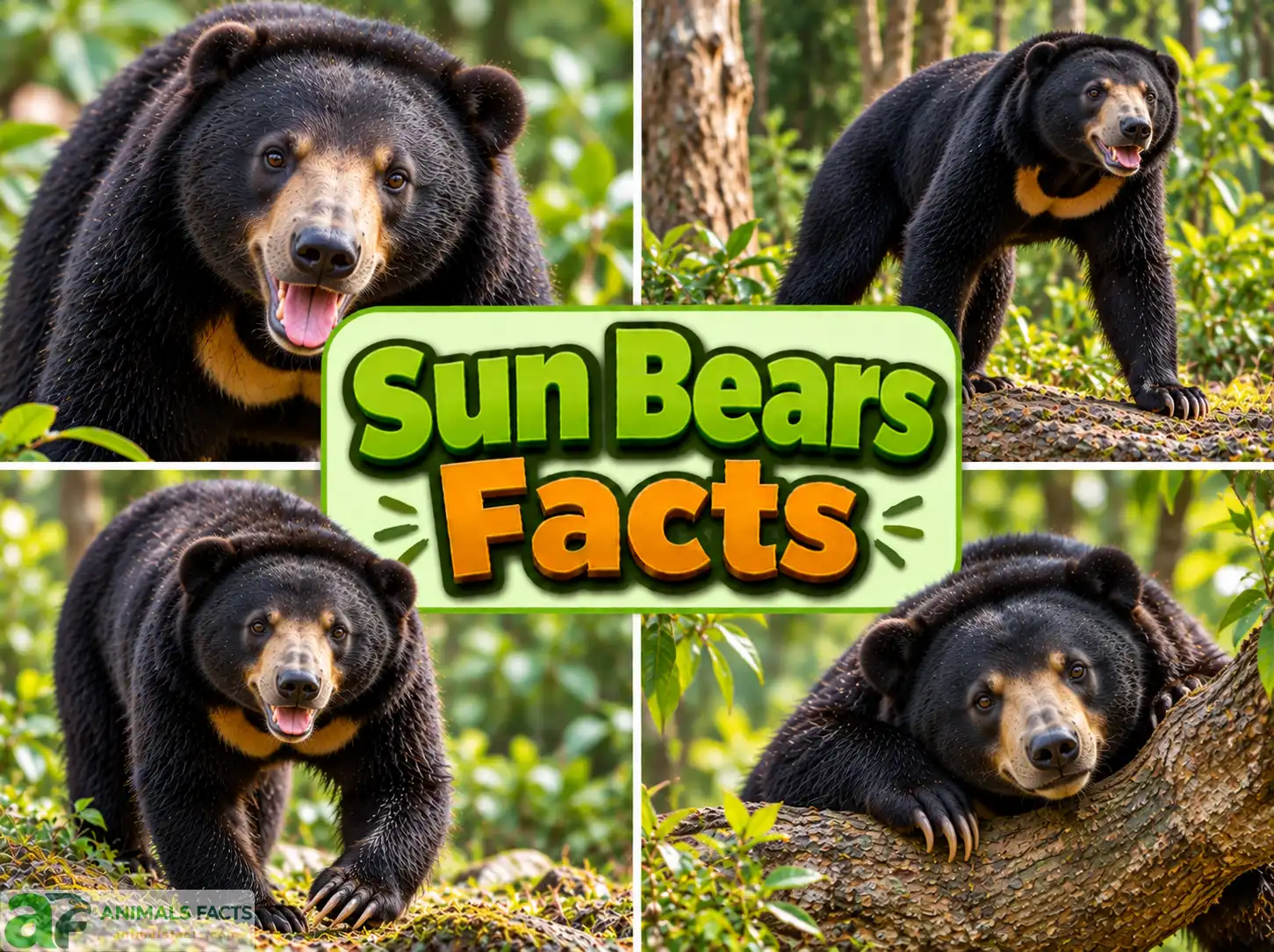
- The sun bear is the world’s smallest bear — about the size of a large dog!
- Its tongue reaches 20–25 cm — the longest of any bear, used to lick honey and insects.
- Sun bears build sleeping nests in trees — like chimpanzees!
- Their loose neck skin lets them twist to bite attackers even while being held.
- Every sun bear has a unique chest patch — like a fingerprint.
- Sun bears are the most arboreal (tree-loving) bear in the world.
- They don’t hibernate — living in tropical rainforest year-round.
- Sun bears are considered among the most ferocious animals in their range when threatened.
- They have been seen using sticks as tools to extract honey and insects.
- Their fur is the shortest and sleekest of any bear — adapted to tropical heat.
- Sun bears are Vulnerable — with population declining ~30% over the past 30 years.
- The bear bile farming industry has kept thousands of sun bears in cruel conditions.
6. Sun Bear Habitat & Geographic Range
The sun bear’s geographic range spans the tropical rainforest belt of Southeast Asia — one of the world’s most biodiverse but also most severely threatened forest biomes — across an enormous region that spans multiple nations and encompasses dramatic variation in forest type, elevation, and conservation status.
Primary Habitat Types
Lowland tropical rainforest: The sun bear’s optimal and most characteristic habitat — the dense, multi-layered lowland dipterocarp forest of Sumatra, Borneo, the Malay Peninsula, and mainland Southeast Asia, with its extraordinary diversity of fruit-bearing trees, abundant insect life, and structural complexity that supports the species’ highly arboreal lifestyle.
Hill forest and montane forest margins: Sun bears occupy forest habitats up to approximately 2,500 meters elevation in some parts of their range, demonstrating altitudinal flexibility similar to that of other bear species, though they are most commonly associated with lowland and hill forest environments.
Mangrove and coastal forest: Coastal sun bear populations have been documented foraging in mangrove habitat — demonstrating ecological flexibility that extends beyond the classic interior tropical rainforest image of the species.
Secondary forest and forest fragments: Like many tropical forest species, sun bears have been documented in secondary forest — regenerating areas that have been logged or otherwise disturbed — though at lower densities and with reduced viability for long-term population persistence compared to intact primary forest.
Agricultural margins (conflict context): Sun bears regularly enter oil palm plantations, rubber plantations, and other agricultural areas at the forest-agriculture interface in search of food — generating the human-wildlife conflict that represents one of the most significant contemporary threats to the species.
Geographic Range
| Country | Status | Notes |
|---|---|---|
| Indonesia (Sumatra and Borneo) | Present; declining | Major deforestation pressure; Sumatra population severely reduced |
| Malaysia (Peninsular and Borneo/Sabah, Sarawak) | Present; recovering in protected areas | Best-studied populations (BSBCC in Sabah) |
| Thailand | Present; fragmented | Forest loss has fragmented populations significantly |
| Myanmar | Present; poorly monitored | Significant range but limited research |
| Laos | Present; declining | Hunting and bile farming threats |
| Cambodia | Present; severely reduced | One of the most threatened Southeast Asian populations |
| Vietnam | Present; severely reduced | Bile farming and hunting pressure; major decline |
| China (Yunnan province) | Present; critically small | Possibly functionally extinct across much of former range |
| Bangladesh | Present; very small; fragmented | Northernmost range; little studied |
| India (northeastern states) | Present; fragmented | Small populations in Assam and neighboring states |
Did You Know? The sun bear has experienced range contraction and population decline so severe in Vietnam — primarily due to the combination of habitat loss and the bear bile farming industry — that the country’s wild sun bear population may now number in the hundreds or low thousands, compared to populations that likely numbered in the tens of thousands in the mid-20th century before deforestation and bile farming industrialization transformed the country’s relationship with wildlife. Vietnam has made significant regulatory progress on bear bile farming, but the challenge of transitioning a culturally embedded practice within a generation while simultaneously addressing the deforestation that fragments remaining wild habitat represents one of conservation’s most complex multi-dimensional challenges.
7. Sun Bear Diet & Feeding Behavior
The sun bear is the most insectivore-focused of the world’s eight bear species — with insects and honey comprising a larger proportion of the diet than in any other bear — reflecting its evolutionary specialization for tropical forest invertebrate resources unavailable to temperate-zone bears in comparable quantities.
What Sun Bears Eat
Sun bear diet across their range reflects the extraordinary tropical biodiversity of their environment — with individual bears documented consuming dozens of different plant and animal species across a single season, but consistently returning to insects, honey, and fruit as the dietary foundations.
Diet Breakdown Table
| Food Type | Approximate Percentage | Notes |
|---|---|---|
| Termites and ants | 25–40% | Primary invertebrate prey; extensive mound and log excavation |
| Honey and bee larvae (wild bee colonies) | 10–20% | Critical high-calorie food; responsible for “honey bear” name |
| Beetles and beetle larvae (grubs) | 10–20% | Extracted from rotting wood; high protein/fat content |
| Fruit (various tropical species) | 15–30% | Varies seasonally with fruiting events; important caloric supplement |
| Small vertebrates (lizards, rodents, birds, eggs) | 5–10% | Supplementary protein source |
| Plant material (roots, palm hearts, young shoots) | 5–10% | Important when other foods scarce |
| Carrion | 1–5% | Occasional; taken opportunistically |
Feeding Techniques
Beehive raiding: One of the sun bear’s most celebrated and most important feeding behaviors — locating wild bee colonies in hollow trees or rocky crevices using their acute sense of smell, then tearing open the nest cavity with their powerful claws before inserting the long tongue to extract honey and bee larvae.
Termite mound excavation: Using their strong forepaws and long claws to break into termite mounds — including the extremely hard-cemented mounds of some tropical termite species — then rapidly inserting the tongue to extract termites before the colony can mount a defensive response.
Log tearing: Ripping apart rotting logs and bark with their claws to access beetle grubs, ants, and other wood-boring insects — a behavior that simultaneously provides food and contributes to dead-wood decomposition.
Stick tool use: Inserting stick-shaped objects into tree holes and honey deposits to extract inaccessible food — a behavior that has generated significant scientific interest as a potential example of tool use in wild bears, with implications for understanding the evolution of tool-using cognitive capabilities.
Did You Know? Research conducted at the Bornean Sun Bear Conservation Centre in Sabah observed rehabilitated sun bears spontaneously selecting appropriate stick sizes for extracting honey from narrow cavities — choosing sticks that were narrow enough to fit into the hole while rigid enough to function effectively as extraction tools. The bears showed flexibility in tool modification (breaking or trimming sticks to appropriate size) and tool transportation (carrying selected sticks to the target site). While the significance of this behavior as evidence of genuine tool use remains subject to scientific discussion, it demonstrates a level of object manipulation and apparent problem-solving sophistication that has significantly advanced understanding of cognitive capabilities in bear species.
8. Sun Bear Reproduction & Life Cycle
Sun bear reproduction is the least studied of any bear species — a consequence of the combination of small, fragmented populations difficult to monitor, dense tropical rainforest habitat that impedes observation, and the relatively limited research funding historically directed toward this species compared to more high-profile bears.
Mating Behavior
Unlike temperate-zone bears that mate during a defined seasonal window tied to hibernation and cub-birth timing, sun bears — living in a tropical environment without strong seasonality — can breed at any time of year, with no documented consistent breeding peak across their range. This non-seasonal reproduction, combined with their lack of hibernation, means sun bears potentially produce offspring more continuously than their temperate relatives, though the lack of comprehensive population monitoring makes precise reproductive rate assessment difficult.
Delayed implantation — whether or not sun bears practice the embryonic diapause documented in other bear species — is uncertain and remains an active area of scientific investigation given limited documented case studies.
Gestation and Birth
Gestation period: Approximately 95–174 days — a remarkably wide documented range reflecting both genuine biological variation and the limited sample sizes available in the research literature.
Litter size: Typically 1–2 cubs (most commonly 1–2 in captive settings; wild data limited).
Birth weight: Approximately 300–340 grams per cub — very small relative to adult size, consistent with the general bear pattern of highly altricial young.
Den location: Unlike temperate bears that den in specific winter dens, sun bears do not have a denning season tied to hibernation — mothers may give birth in natural cavities, dense vegetation, or other sheltered locations at any time of year.
Key Developmental Stages
| Stage | Age | Key Development |
|---|---|---|
| Neonatal | 0–4 weeks | Eyes closed; entirely helpless; nursing |
| Eyes open | ~25 days | Beginning visual awareness |
| First mobility | 6–8 weeks | Beginning to move and explore |
| Weaning | 3–6 months | Gradual transition to solid food |
| Climbing development | 3–8 months | Developing the arboreal capabilities essential to adult behavior |
| Independence | 18–24 months | Separation from mother |
| Sexual maturity | ~3 years | First breeding possible |
Lifespan Comparison Table
| Species | Average Wild Lifespan | Maximum Confirmed |
|---|---|---|
| Sun Bear | ~25 years (estimated) | ~30 years (captivity) |
| American Black Bear | 18–23 years | ~39 years (captivity) |
| Grizzly Bear | 20–25 years | ~44 years (captivity) |
| Spectacled Bear | 20–25 years (estimated) | ~38 years (captivity) |
9. Social Behavior & Communication
The sun bear is predominantly solitary outside of mother-cub family groups and brief mating associations — a behavioral pattern consistent with most bear species and reflecting the distributed, resource-focused ecology of a bear that relies on individually located food sources rather than the concentrated, seasonally predictable resources that can generate group tolerance in other bears.
Limited Social Interaction
The solitary nature of sun bears — combined with the dense forest habitat that limits observation distances and the species’ high sensitivity to human disturbance — has meant that detailed natural behavioral documentation is considerably more limited for sun bears than for more accessible, better-studied bear species. Much of what is known about sun bear social behavior comes from observations at the Bornean Sun Bear Conservation Centre, where groups of rehabilitated bears interact in managed forest enclosures.
Facial Mimicry
One of the most scientifically interesting sun bear behavioral discoveries in recent years involves the species’ remarkable capacity for facial mimicry — documented by researchers observing that sun bears in social contexts at rehabilitation facilities precisely and rapidly mimic the facial expressions of other bears, apparently as a social communication signal. This mirroring of conspecific facial expressions — previously thought to be limited to humans and great apes among non-primate mammals — suggests a level of social facial communication sophistication previously unsuspected in bears and potentially representing an adaptation to the social complexity of living in tropical forest where visual communication may be more important than in open-country bear habitats.
Communication Methods
Scent marking: As with most solitary bears, scent marking through urine, feces, and glandular secretions likely represents the primary communication medium — though the specific details of sun bear scent communication remain less documented than in more studied bear species.
Tree scratch marking: Sun bears scratch trees — leaving claw and bite marks that communicate presence, size, and identity to other individuals visiting the same trees.
Vocalizations: Sun bears produce a diverse range of vocalizations — including barks, growls, whimpers, and a distinctive “sun bear squeal” — that remain less thoroughly documented and interpreted than the vocalizations of more extensively studied bear species.
Did You Know? A 2024 study published in the journal Current Biology documented that sun bears demonstrate rapid and precise facial mimicry of other sun bears during play interactions — producing specific facial expressions in immediate response to the same expressions by play partners with a fidelity that suggests intentional, socially communicative mirroring rather than coincidental similarity. The researchers described this as “the most compelling evidence yet of intentional facial mimicry in a non-primate mammal,” comparing the sun bears’ facial communication complexity to that previously documented only in humans, great apes, and a handful of other cognitively sophisticated species. This finding fundamentally changes scientific understanding of sun bear social cognition and suggests the species’ solitary reputation may have overshadowed genuine social intelligence.
10. Predators & Defense Mechanisms
The sun bear occupies an unusual position among bear species in facing genuine predation risk as an adult — its small size means that several large predators in its range can and do prey on adults, not just cubs, creating more significant natural predation pressure than that faced by the larger bear species.
Natural Predators
Tigers: The most significant natural predator of adult sun bears in their shared range — tigers are documented predators of sun bears, with the sun bear’s small size making it accessible prey for a species that regularly takes prey far larger than itself. The ecological relationship between tigers and sun bears in shared forest habitat has been little studied but likely influences sun bear habitat selection and activity patterns significantly.
Leopards: In areas of range overlap, leopards represent a documented predation threat to sun bears — particularly to cubs and smaller individuals.
Reticulated Pythons: Large reticulated pythons — potentially the world’s longest snakes — represent a genuine predation risk in the arboreal and forest floor environments that sun bears occupy, with documented cases of large pythons consuming sun bears.
Dholes (Asian Wild Dogs): Pack-hunting dholes can coordinate to overwhelm a sun bear through numerical advantage, representing a predation risk that the sun bear’s individual ferocity and pain tolerance may not adequately counter when facing a coordinated pack.
Humans: By far the dominant cause of sun bear mortality across their range — through direct hunting (for meat, for traditional medicine, for bear bile, and for the exotic pet trade), habitat destruction, vehicle collisions, and in some areas, trapping as agricultural pests.
Defense Mechanisms — The “Turn-and-Bite” Capability
The sun bear’s most remarkable and most distinctive defensive adaptation is the combination of loose neck and shoulder skin with exceptional individual ferocity that has generated its reputation as one of the most dangerous animals in Southeast Asian forests:
Loose skin rotation: When seized by a predator at the scruff, the sun bear’s loose skin allows it to rotate within the grip — turning to face and bite the attacker even while being held. This capability, combined with the sun bear’s powerful jaws and apparent high pain tolerance, means that a predator that has caught a sun bear has not necessarily secured a successful kill.
Arboreal escape: As the most arboreal bear species, the sun bear’s tree-climbing capability provides an effective escape route from ground-based predators — with the bear’s speed and agility in trees significantly exceeding that of most large cat species.
11. Sun Bear Facts for Kids
Hey kids — get ready to discover why the sun bear, the world’s smallest bear, is also one of the most extraordinary!
- The sun bear is the tiniest bear in the whole world — an adult sun bear is about as big as a large dog! A big polar bear can weigh fifteen times as much as a sun bear!
- Even though it’s small, the sun bear has the longest tongue of any bear — almost as long as a ruler! It uses this amazing tongue to lick honey and insects out of tiny spaces in trees.
- Sun bears are incredible climbers — they spend a lot of their time up in the trees, and they even build nests up in the branches to sleep in, just like chimpanzees do in the same forests!
- The sun bear gets its name from the special crescent-shaped patch on its chest that looks like a rising sun — and each sun bear’s patch is totally unique, just like your fingerprint!
- Sun bears have loose, baggy skin around their neck that lets them do something incredible — if an animal grabs them by the scruff, they can twist around inside their skin and bite right back!
- Sun bears live in tropical rainforests in Southeast Asia — places that are warm and wet all year round. Because of this, they don’t need to hibernate like bears in colder places!
- Despite being the smallest bear, sun bears have a reputation for being one of the most ferocious animals in their jungle when they feel threatened. Even much bigger animals try to stay away!
- Scientists recently discovered that sun bears can copy each other’s facial expressions really precisely during play — a kind of facial communication that scientists didn’t know bears could do so well!
Did You Know? Sun bears have been seen using sticks as tools to get honey! When a honey deposit is in a hole that’s too narrow for their tongue, some sun bears will pick up a stick, break it to just the right size, stick it into the hole to scoop out some honey, then lick the honey off the stick! This kind of tool use — choosing and using an object to help get food — is something that scientists thought only a few very clever animals like chimpanzees and crows could do. The sun bear is proving to be much smarter than most people realized!
12. Relationship with Humans
The sun bear’s relationship with human communities across Southeast Asia is one of the most complex and most concerning large mammal-human relationships in Asia — encompassing traditional Indigenous coexistence, hunting for food and traditional medicine, the devastating industrialization of the bile farming trade, habitat destruction, and an increasingly urgent modern conservation effort.
Traditional and Indigenous Relationships
Indigenous communities across the sun bear’s range have maintained traditional relationships with the species across generations — including subsistence hunting (regulated by traditional ecological knowledge systems), avoidance behaviors based on respect for the bear’s reputation for ferocity, and the use of sun bear parts in local traditional medicine. These relationships, while generating some mortality pressure, existed within a broader ecological context of sufficient habitat and population density that allowed sun bear populations to persist.
The Bear Bile Industry — A Crisis of Scale
The most devastating and most widely publicized threat to sun bear welfare and populations is the bear bile farming industry — a practice in which bears are kept in severely inadequate captive conditions to allow repeated or continuous extraction of bile from their gallbladders, used in traditional Chinese and other Asian medicine for its documented active compound ursodeoxycholic acid (UDCA).
The industry operates at the scale of tens of thousands of bears held in multiple countries — historically including Vietnam, China, Laos, and Myanmar — with conditions that have generated some of the most extensive and most widely documented animal welfare documentation of any wildlife farming practice, including:
- Small “crush cages” preventing normal movement
- Permanent surgical or catheter implants for bile extraction
- Psychological distress and repetitive stress behaviors consistent with extreme suffering
- Denial of normal social, feeding, and movement behaviors across lifetimes of captivity
While significant legislative and advocacy progress has been made — particularly in Vietnam, where a bear bile farming phase-out program has dramatically reduced the registered captive bear population — the industry continues in various forms, and the demand for bear bile in traditional medicine markets creates ongoing incentives for both farming and wild poaching.
The Exotic Pet Trade
Sun bear cubs — orphaned when mothers are killed for meat or bile — are sometimes captured and sold as exotic pets across Southeast Asian markets. While small sun bears may appear manageable as pets, adult sun bears retain full wild behavioral capabilities and territorial requirements that make them genuinely dangerous and profoundly unsuitable as pets, resulting in most eventually being surrendered to wildlife facilities like the BSBCC when they become too large and difficult to manage.
13. Sun Bear Conservation Status & Threats
The sun bear’s Vulnerable IUCN classification reflects genuine and ongoing population declines — estimated at approximately 30% over the past 30 years — across a species whose total population is poorly quantified but believed by many researchers to be considerably smaller than published estimates suggest.
Conservation Data (2026)
| Region / Country | Status | Population Notes | Trend |
|---|---|---|---|
| Borneo (Malaysia, Indonesia) | Vulnerable | Best-studied populations; some stable in PAs | Declining overall |
| Sumatra | Vulnerable to Endangered (regional) | Severe deforestation pressure | Sharply declining |
| Peninsular Malaysia | Vulnerable | Forest loss fragmenting populations | Declining |
| Thailand | Near Threatened to Vulnerable (regional) | Fragmented; partially protected | Declining |
| Vietnam | Critically Reduced (national) | Wild population severely depleted | Sharply declining |
| China (Yunnan) | Critically low | Possibly functionally extinct across most former range | Critical |
| India/Bangladesh | Critically small | Peripheral range; isolated populations | Declining |
Major Threats
Deforestation and habitat loss: The most fundamental and most geographically extensive threat — Southeast Asia has some of the highest documented deforestation rates in the world, driven primarily by palm oil, paper, and rubber plantation expansion. The lowland tropical forest that represents optimal sun bear habitat has been reduced by over 50% in some range countries within the past few decades, with the conversion of continuous forest to monoculture plantation dramatically eliminating both sun bear habitat and prey availability.
Hunting for meat and traditional medicine: Hunting of sun bears for bushmeat and for traditional medicine use — including bear parts with perceived medicinal properties — represents a significant and poorly quantified mortality source across much of the species’ range, particularly in areas with weak wildlife protection enforcement.
The bear bile farming and trade: As described above, both the direct welfare catastrophe of captive bear bile farming and the ongoing incentive for wild bear poaching created by bile market demand represent significant threats to sun bear populations across the species’ range.
The exotic pet trade: Demand for sun bear cubs as exotic pets drives additional hunting of adult females and creates welfare disasters for the captured cubs regardless of their ultimate fate.
Human-wildlife conflict: Sun bear crop raiding of oil palm, sugarcane, and other agricultural crops generates retaliatory killing that represents a significant and growing mortality source as agricultural expansion brings farming communities into increasing proximity with remaining sun bear populations.
Did You Know? Research using camera traps to monitor sun bears across Borneo has revealed that the species shows extremely low population density even in seemingly intact forest — sometimes detecting fewer than 1 individual per 10 km² of continuous forest — suggesting that the total wild sun bear population is potentially much smaller than published estimates based on habitat area alone would suggest. This finding has significant implications for conservation urgency, indicating that the loss of even moderate areas of apparently intact sun bear habitat may represent a proportionally much more severe population impact than the same habitat loss would imply for species with higher population densities.
14. Famous Sun Bears
Bornean Sun Bear Conservation Centre Bears — Debbie, Bermuda, and Friends
The rehabilitated sun bears of the Bornean Sun Bear Conservation Centre (BSBCC) in Sandakan, Sabah — including named individuals who were rescued as orphaned cubs from various situations including the pet trade, bile farming, and deforestation-related orphaning — represent the world’s most extensively documented individual sun bears. These individuals have contributed enormously to scientific understanding of sun bear behavior, cognition, and welfare through the research programs centered on the facility, and have become important ambassadors for sun bear conservation through the Centre’s public education programs.
Ah Bui — The First BSBCC Release
Several BSBCC-rehabilitated sun bears have been successfully reintroduced to wild forest in Sabah — with early release individuals including bears like Ah Bui generating foundational data on post-release sun bear behavior, territory establishment, and wild food use, demonstrating that bears rehabilitated from early captivity or pet trade situations can successfully transition to wild forest life with appropriate rehabilitation preparation.
The Facial Mimicry Study Bears
The sun bears whose facial communication behavior was documented in the 2024 Current Biology facial mimicry study — conducted at a bear facility in Europe — have generated international scientific attention as the subjects of a landmark discovery about bear cognitive and social capabilities, contributing to a fundamentally revised scientific understanding of sun bear social intelligence.
15. Role in Ecosystem & Food Chain
The sun bear functions as an important keystone species in the Southeast Asian tropical rainforest — with its feeding activities, nest-building behavior, and movement patterns generating ecological effects that extend far beyond simple predator-prey dynamics to fundamentally shape habitat structure and biodiversity.
Forest “Carpenter” — Structural Modification
The sun bear’s extensive bark-stripping, log-tearing, and tree-scratching activities — while motivated by food-seeking — create an extraordinary variety of structural modifications to the forest environment that provide critical habitat for dozens of other species. The tree cavities enlarged by sun bear foraging provide nesting sites for hornbills, small owls, flying squirrels, and numerous other cavity-dependent species. The rotting logs torn apart for insect larvae create exposed surface areas that accelerate decomposition and provide foraging substrate for dozens of other insect-dependent animals. The dead-wood habitat complexity generated by sun bear activity represents a significant contribution to overall forest biodiversity that persists for years after the bear’s feeding visit.
Seed Dispersal
Sun bears consume significant quantities of tropical fruit — particularly during fruiting events when specific tree species produce synchronized mast crops — and distribute seeds across their home ranges through their digestive tracts. For some large-seeded tropical tree species whose seeds require passage through a large mammal’s digestive tract for optimal germination conditions, sun bear seed dispersal may represent a critical ecological service.
Insect Population Regulation
The sun bear’s intensive insect predation — particularly of termites and wood-boring beetles — represents a significant and largely unquantified ecological service, with termite population regulation specifically affecting dead-wood decomposition rates and the carbon cycling processes associated with tropical forest productivity.
16. Sun Bear Myths, Folklore & Cultural Significance
The sun bear occupies a complex position within the cultural traditions of the diverse societies across its Southeast Asian range — simultaneously a respected and feared forest animal, a component of traditional medicine systems, and an increasingly prominent symbol of biodiversity conservation for a new generation of regional conservation advocates.
Indigenous Southeast Asian Traditions
Across the diverse Indigenous nations and traditional communities within the sun bear’s range — including Dayak peoples of Borneo, Orang Asli communities of Malaysia, Karen and other Myanmar hill peoples, and numerous other groups — the sun bear has historically been respected as a forest animal of considerable power. The bear’s documented ferocity when threatened has generated legends and cultural protocols around bear encounters, reflecting genuine observation of the animal’s defensive capabilities across generations of human-bear coexistence.
Traditional hunting protocols: Many Indigenous communities maintained specific traditional protocols governing sun bear hunting — including restrictions on who could hunt bears, ritual acknowledgments of the bear’s spirit following kills, and specific uses of bear materials that embed the animal within a broader cosmological framework of human-forest relationships.
Traditional Medicine Context
The use of sun bear bile and other bear parts in Traditional Chinese Medicine and related traditional medicine systems across Asia reflects a long cultural tradition of attributing medicinal properties to bear-derived substances — with bile specifically associated with liver and digestive health and fever reduction. The active compound ursodeoxycholic acid (UDCA) in bear bile has genuine medicinal properties that have been replicated in synthetic pharmaceutical form, but the cultural and traditional medicine framework that drove demand for natural bear bile has proven resistant to substitution despite the availability of synthetic alternatives.
Sun Bear as Conservation Symbol
In contemporary Southeast Asian conservation communication, the sun bear is increasingly being developed as a symbol of regional rainforest biodiversity loss — particularly effectively in Malaysia and Indonesia, where the species’ status as the “world’s smallest bear” and its distinctive appearance make it an accessible and emotionally resonant ambassador for broader tropical forest conservation.
17. Sun Bears in Pop Culture
The sun bear is perhaps the least represented major wild bear species in Western popular culture — reflecting both its relative obscurity to audiences outside Southeast Asia and the limited media and documentary attention the species has historically received compared to more photogenic or more high-profile bear species. However, recent years have seen growing popular awareness.
Growing Social Media Presence
Social media footage from the Bornean Sun Bear Conservation Centre and similar facilities — showing sun bears’ climbing ability, playful behavior, and reactions to food enrichment — has generated significant viral engagement in recent years, substantially increasing global public awareness of the species. The 2024 facial mimicry research coverage reached mainstream media audiences worldwide, introducing many people to the sun bear for the first time through an intellectually engaging scientific discovery.
The “Zoo Animal Bear” Phenomenon
A 2023 viral social media story in which Chinese social media users suggested that the sun bears at Hangzhou Zoo in China were actually humans in bear costumes — due to the bears’ unusually upright posture and wrinkled skin creating a strangely human appearance when standing — generated extraordinary global media coverage for the sun bear, with most coverage noting with amusement that the bears’ appearance was simply a reflection of the species’ remarkably loose skin and unusual posture. The Hangzhou Zoo formally denied that their bears were humans, but the story nevertheless introduced millions of people worldwide to the sun bear for the first time.
Documentary Coverage
Multiple BBC and National Geographic productions covering Southeast Asian tropical forest biodiversity have featured sun bears, with the BSBCC’s facilities and the story of bear bile farming generating particular documentary interest. The increased coverage of both bear bile welfare issues and the BSBCC’s rehabilitation work has contributed to growing public awareness of the species’ conservation situation.
18. Sun Bear Facts vs. Common Myths
Myth: Sun bears are domesticated or semi-domesticated bears that are safe to keep as pets. Fact: Sun bears are wild animals with full wild behavioral capabilities, high intelligence, significant physical strength relative to their size, and an extreme ferocity when threatened that makes them genuinely dangerous. While cubs can be raised in captivity and may appear manageable, adult sun bears retain completely wild behavioral instincts and territorial requirements. They are illegal to keep as pets under CITES Appendix I protections and in most range country laws, and wildlife facilities across Southeast Asia consistently receive adult sun bears surrendered from private ownership when owners realize they cannot safely manage them.
Myth: Sun bears are harmless because they’re so small. Fact: Sun bears are widely regarded by local communities across Southeast Asia as one of the most dangerous animals in the forest when threatened — more feared by experienced forest workers than tigers in some contexts, because the sun bear’s tendency to stand its ground, its ferocity when cornered, and its “turn-and-bite” loose skin capability mean that a confrontation with a sun bear in the forest can result in very serious injuries despite the bear’s modest size.
Myth: Synthetic alternatives have made bear bile farming unnecessary and therefore it has stopped. Fact: While synthetic ursodeoxycholic acid (UDCA) is widely available, affordable, and pharmaceutically effective as a substitute for bear bile, traditional medicine demand for natural bear bile continues in parts of China, Vietnam, Laos, and other countries — driven by the cultural belief that natural bear bile has properties beyond those of synthetic alternatives. The farming industry continues in various forms, and the combination of remaining farmed populations and ongoing wild poaching for bile means the threat to sun bears from this source has not been eliminated despite significant advocacy progress.
Myth: Sun bears don’t hibernate because they’re “lazy.” Fact: Sun bears don’t hibernate because they live in tropical rainforest where year-round food availability makes hibernation unnecessary — the seasonal food scarcity that drives hibernation in temperate-zone bears simply doesn’t exist in the equatorial forests that sun bears inhabit. The absence of hibernation is an adaptation to tropical forest ecology, not a behavioral characteristic.
Myth: The Hangzhou Zoo sun bears were humans in costumes. Fact: The viral 2023 social media claim that sun bears at Hangzhou Zoo appeared to be humans in bear costumes was unambiguously false — the bears were genuine sun bears, whose unusual upright posture and distinctively loose, wrinkled skin create a somewhat human-like appearance when standing that is genuinely characteristic of the species. The zoo formally denied the claim, and sun bear experts worldwide confirmed that the animals’ appearance was typical of the species.
19. Best Places to See Sun Bears in the Wild
Danum Valley Conservation Area, Sabah, Malaysia
One of Borneo’s finest intact primary lowland rainforest areas — Danum Valley supports a significant sun bear population in virtually pristine dipterocarp forest, with experienced local guides and well-established research infrastructure providing the best available opportunities for wild sun bear observation in genuinely natural forest conditions.
Bornean Sun Bear Conservation Centre (BSBCC), Sandakan, Sabah
While not a wild viewing experience in the traditional sense, the BSBCC in Sandakan provides the most reliable and most informative sun bear viewing available anywhere in the world — with rescued and rehabilitated bears accessing large natural forest enclosures where they can be observed in near-natural conditions, alongside educational programs that provide extraordinary insight into sun bear behavior, ecology, and conservation.
Taman Negara National Park, Peninsular Malaysia
Taman Negara — one of the world’s oldest rainforests and Malaysia’s premier national park — supports sun bear populations in its extensive primary forest, with guided wildlife walks and night expeditions providing the best available opportunities for wild sun bear observation in the Malay Peninsula.
Tabin Wildlife Reserve, Sabah, Malaysia
Tabin Wildlife Reserve in Sabah supports sun bear populations alongside Bornean pygmy elephants, orangutans, and exceptional general wildlife diversity — with specialized wildlife guides experienced in tracking and locating sun bears among multiple other Bornean wildlife specialties.
Khao Yai National Park, Thailand
Khao Yai — one of Thailand’s premier national parks and a UNESCO World Heritage Site — supports sun bear populations in its extensive primary forest, with the park’s well-developed wildlife viewing infrastructure providing reasonable opportunities for sun bear observation alongside Thailand’s broader forest wildlife community.
20. Top Documentaries & Books
Must-Watch Documentaries
“The Last Stand of the Orangutan” (IUCN, various versions) — While primarily focused on orangutans, multiple documentaries covering Bornean and Sumatran deforestation address sun bear conservation in the context of the same threat landscape, providing essential context for understanding sun bear habitat loss.
BBC Wildlife and National Geographic Southeast Asia forest productions — Multiple major wildlife documentary productions have featured sun bear segments, with the BSBCC’s facilities providing the most accessible filming location for high-quality sun bear behavioral footage.
“Animals Asia: The Moon Bear Campaign” and related productions — Documentary coverage of the bear bile farming campaign by Animals Asia has generated significant public awareness of both the sun bear welfare crisis and the broader conservation situation, available through Animals Asia’s media library.
Essential Books
“Wild Cats of the World” adjacent — “Bears of the World” by various authors — Comprehensive scientific overviews of bear species including the sun bear provide the most complete available popular reference on the species’ biology and conservation.
“Bear Witness” — Various journalist and advocacy accounts of the bear bile farming crisis provide accessible narrative coverage of the welfare and conservation situation.
Research publications from the Bornean Sun Bear Conservation Centre — Available through academic databases, BSBCC’s published research represents the most current and most rigorously documented scientific knowledge of sun bear ecology, behavior, and rehabilitation.
21. Comparison of Sun Bears with Similar Bear Species
| Feature | Sun Bear | Sloth Bear | Spectacled Bear | American Black Bear | Giant Panda |
|---|---|---|---|---|---|
| Scientific Name | Helarctos malayanus | Melursus ursinus | Tremarctos ornatus | Ursus americanus | Ailuropoda melanoleuca |
| Weight | 27–65 kg | 55–145 kg | 60–200 kg | 57–300 kg | 70–125 kg |
| Distribution | SE Asia | Indian subcontinent | Andes (South America) | North America | Central China |
| Habitat | Tropical rainforest | Dry forest, grassland | Cloud/montane forest | Temperate forest | Bamboo forest |
| Hibernation | No (tropical) | No (tropical) | Sometimes (high altitude) | Yes | No |
| Primary Diet | Insects, honey, fruit | Insects (termites, ants), fruit | Fruit, bromeliads | Berries, nuts, insects, fish | Bamboo (99%) |
| Tongue Adaptation | Longest of any bear | Extensible with lip-nostril gap for insect suction | Standard | Standard | Specialized for bamboo |
| Arboreal Skill | Most arboreal bear | Moderate | Good (Andean terrain) | Good (curved claws) | Limited |
| Conservation Status | Vulnerable | Vulnerable | Vulnerable | Least Concern | Vulnerable (recovering) |
| Population | <10,000 (declining) | 10,000–25,000 (declining) | 10,000–20,000 (declining) | 800,000–950,000 | ~1,860 (recovering) |
| Unique Feature | World’s smallest bear; tree nests; facial mimicry | Insect-suction feeding; no upper incisors | Only South American bear; unique spectacle markings | Most color variation of any bear | Most bamboo-specialized carnivore |
22. How You Can Help
Sun bear conservation requires simultaneous action across multiple threat categories — the deforestation, hunting, bile farming, and pet trade threats require different strategies and different organizational partners, all necessary for comprehensive protection of this Vulnerable species.
Support These Organizations
Animals Asia (animalsasia.org) — The leading international organization specifically campaigning against bear bile farming, operating bear sanctuaries in China and Vietnam and advocating for an end to bile farming practices, with direct welfare benefit for thousands of captive sun bears and Asiatic black bears.
Bornean Sun Bear Conservation Centre (BSBCC) (bsbcc.org.my) — The world’s leading sun bear-specific conservation organization — conducting rehabilitation and research in Sabah, directly rescuing and caring for individual sun bears, and generating the scientific knowledge base essential to effective sun bear conservation.
WWF Malaysia and WWF Indonesia (wwf.org) — Running comprehensive rainforest conservation programs directly relevant to sun bear habitat protection across Borneo and Sumatra.
TRAFFIC (traffic.org) — The wildlife trade monitoring network specifically documenting and combating the illegal bear bile and sun bear pet trade that represents one of the most significant direct threats to wild sun bear populations.
Practical Actions
Choose certified sustainable palm oil products. Palm oil plantation expansion is the primary driver of lowland tropical forest loss across Borneo and Sumatra — consuming products certified as RSPO (Roundtable on Sustainable Palm Oil) sustainable helps reduce demand for deforestation-driven palm oil production. Checking for RSPO certification on food and cosmetic products you purchase has direct relevance to sun bear habitat.
Support bear bile farming phase-out. Purchasing products that specifically avoid bear bile ingredients (check labels on traditional medicine products), supporting Animals Asia’s bile-free alternatives campaigns, and advocating for regulatory change in countries where farming continues all contribute to reducing the demand and supply-side drivers of the bile farming industry.
Never support exotic sun bear pets. Declining to purchase, support, or share content celebrating private sun bear ownership — and reporting suspected illegal sun bear trade through appropriate channels — helps reduce the pet trade pressure on wild populations.
Support BSBCC directly. The Bornean Sun Bear Conservation Centre accepts donations that directly fund sun bear rehabilitation, research, and education — representing one of the most efficient and most focused sun bear conservation investment options available to international supporters.
Raise awareness. The sun bear suffers disproportionately from public anonymity compared to more famous bear species — sharing accurate information about the species, its conservation status, and the specific threats it faces helps generate the public attention and advocacy support necessary for conservation policy progress.
Did You Know? Vietnam’s government-mandated bear bile farming phase-out program — implemented through collaboration between Vietnamese authorities and international organizations including Animals Asia — had dramatically reduced the country’s registered captive bear population from approximately 4,000 bears in 2005 to fewer than 400 by 2024, representing one of the most significant achievements in the global campaign to end bear bile farming. This progress demonstrates that even deeply embedded wildlife exploitation practices can be significantly reduced through a combination of government regulation, international advocacy, economic alternatives for traditional medicine practitioners, and sustained public pressure — providing a model applicable to remaining bile farming operations in other countries.
23. Frequently Asked Questions About Sun Bears
Q1: What is the scientific name of the sun bear?
The sun bear’s scientific name is Helarctos malayanus — making it the sole living species in its own genus, Helarctos. The genus name derives from Greek words meaning “sun bear.” The family is Ursidae (bears), order Carnivora, class Mammalia. There are 2 recognized subspecies — H. m. malayanus (mainland SE Asia and Sumatra) and H. m. euryspilus (Borneo pygmy sun bear).
Q2: Why is it called a sun bear?
The sun bear is named for the distinctive crescent-shaped patch on its chest, typically golden yellow, orange, or white in color, that reportedly resembles a rising or setting sun. The chest patch is individually unique to each bear — functioning as an individual identification marker similar to human fingerprints.
Q3: How big is a sun bear?
Adult sun bears typically weigh between 27 and 65 kilograms — making them the world’s smallest bear species, comparable in size to a large domestic dog. Males average somewhat heavier than females. The Bornean subspecies averages slightly smaller than the mainland subspecies.
Q4: Are sun bears endangered?
Sun bears are classified as Vulnerable by the IUCN, with population declines estimated at approximately 30% over the past 30 years. The total wild population is poorly quantified but believed to be fewer than 10,000 mature individuals — possibly considerably fewer. Several regional populations face considerably more acute conservation situations than the global Vulnerable classification suggests.
Q5: What do sun bears eat?
Sun bears are omnivores with a strong emphasis on insects and honey — their diet primarily includes termites, ants, beetles and beetle grubs, honey, and bee larvae, supplemented by tropical fruit, small vertebrates, roots, and occasionally carrion. Their extraordinarily long tongue (20–25 cm) is specifically adapted for extracting insects and honey from narrow cavities in trees and termite mounds.
Q6: Do sun bears hibernate?
No — sun bears do not hibernate. They inhabit equatorial tropical rainforest where food remains available year-round and where the seasonal food scarcity that drives hibernation in temperate-zone bears does not exist. Sun bears remain active throughout the year without the winter dormancy cycle that characterizes their temperate-zone relatives.
Q7: What is bear bile farming?
Bear bile farming is the practice of keeping bears — primarily sun bears and Asiatic black bears — in captivity specifically to extract bile from their gallbladders for use in traditional medicine. The bile is extracted through permanently implanted catheters or surgically created fistulas. The practice has been documented as causing severe and sustained suffering in captive bears and has generated enormous international advocacy for its elimination.
Q8: Can sun bears climb trees?
Yes — sun bears are the most arboreal (tree-climbing) bear species in the world. They climb trees routinely for food, shelter, and rest, and uniquely among bears, they build sleeping nests in trees from bent and broken branches — a behavior that parallels nest-building in great apes like chimpanzees and orangutans.
Q9: How long do sun bears live?
Wild sun bear lifespan is estimated at approximately 25 years, though precise data is limited by the difficulty of monitoring wild individuals across the species’ dense forest range. Captive sun bears have been documented living up to approximately 30 years in appropriate facilities.
Q10: How can I help sun bear conservation?
Key actions include: choosing RSPO-certified sustainable palm oil products to reduce deforestation driving sun bear habitat loss; supporting Animals Asia in their bear bile farming phase-out campaign; supporting the Bornean Sun Bear Conservation Centre with direct financial contributions; never supporting the exotic pet trade in sun bears; supporting TRAFFIC and wildlife trade monitoring efforts; and raising awareness about this little-known but genuinely endangered species.
24. Sources & References
Research Sources
- Wikipedia — Helarctos malayanus and related articles
- IUCN Red List — iucnredlist.org
- Animals Asia — animalsasia.org
- Bornean Sun Bear Conservation Centre — bsbcc.org.my
- WWF — worldwildlife.org
- TRAFFIC — traffic.org
- National Geographic — nationalgeographic.com
- Smithsonian’s National Zoo — nationalzoo.si.edu
- Encyclopaedia Britannica — britannica.com
- BBC Wildlife — bbc.co.uk
- Live Science — livescience.com
- Sunquist, Mel and Fiona — “Wild Cats of the World” (2002) [comparative reference]
- Chadwick, Douglas H. — “Essence of a Bear” (various publications)
- Meijaard, Erik et al. — Sun bear ecology and conservation publications (multiple)