
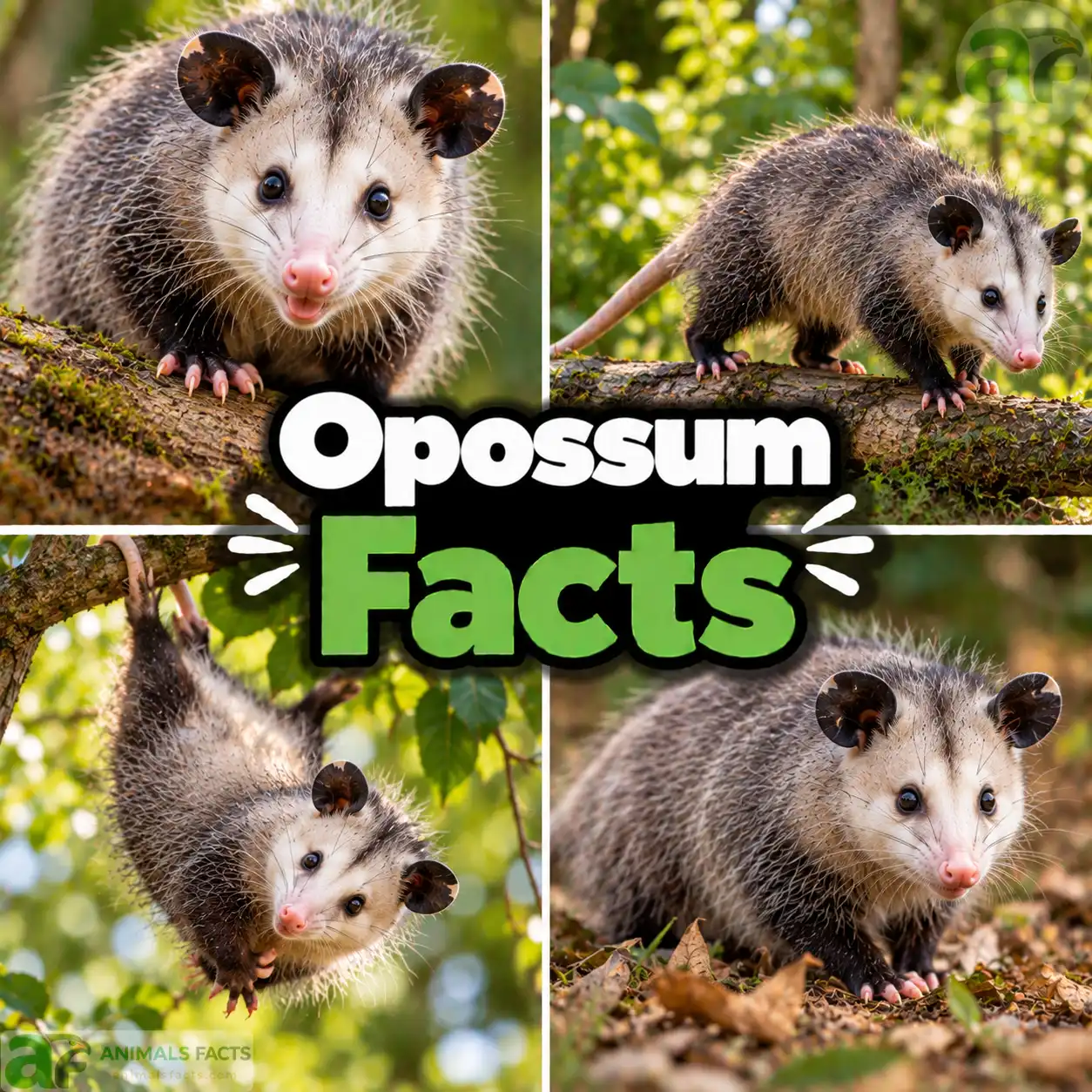
Opossum Facts
| Feature | Details |
|---|---|
| Scientific Name | Didelphis virginiana (Virginia opossum — most common species) |
| Kingdom | Animalia |
| Phylum | Chordata |
| Class | Mammalia |
| Infraclass | Marsupialia |
| Order | Didelphimorphia |
| Family | Didelphidae |
| Common Names | Opossum, possum (informal), Virginia opossum |
| Native Range | North America, Central America, South America (100+ species across Americas) |
| Habitat | Deciduous forest, woodland, farmland, suburban areas, riparian zones |
| Lifespan | 1.5–2 years (wild); up to 4 years (captivity) — one of the shortest lifespans of any mammal its size |
| Diet | Omnivorous — insects, carrion, fruit, grains, small animals, garbage |
| Body Length | 35–55 cm body plus 25–53 cm tail |
| Height | 15–20 cm at shoulder |
| Weight | 0.8–6 kg (average adult ~2–3 kg) |
| Top Speed | 24 km/h — not fast; relies on other defense strategies |
| Conservation Status | Least Concern (IUCN) — abundant and adaptable |
| Number of Species | Over 100 species in order Didelphimorphia |
| Defining Feature | Prehensile tail and “playing dead” (thanatosis) defense |
| Immunity | Near-complete immunity to most North American snake venoms |
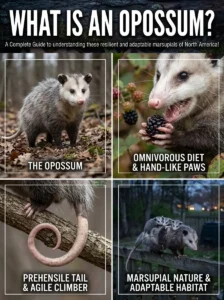 1. Introduction: What is an Opossum?
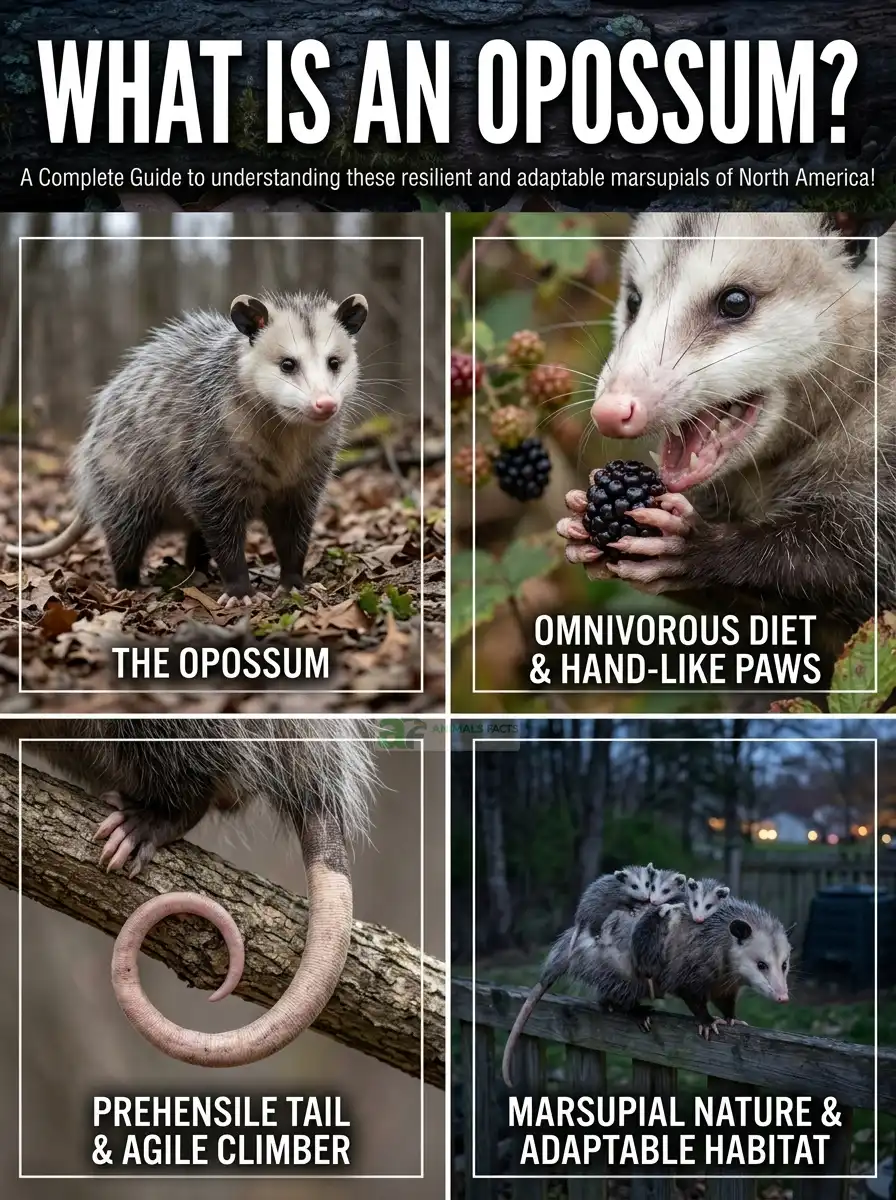
It is the middle of the night, and something is shuffling through the fallen leaves at the edge of a suburban backyard — a pale, white-faced creature with beady black eyes, a pointed pink snout, and a naked, rat-like tail that grips the fence rail with the confident dexterity of a hand. Most people who see this animal in a flashlight beam react with discomfort or even revulsion — a reaction that is among the least justified in all of wildlife observation. Opossum facts begin with this single, critical truth: the Virginia opossum is one of the most ecologically valuable, biologically extraordinary, and genuinely misunderstood animals in North America — an ancient marsupial whose lineage predates the extinction of the dinosaurs, whose immune system is producing molecules that scientists are investigating as potential treatments for human snakebite, and whose contribution to controlling ticks, cockroaches, and rodents in suburban ecosystems represents an ecological service worth billions of dollars annually.
The opossum is North America’s only native marsupial — a direct descendant of a lineage that has existed on this continent for over 65 million years, surviving the asteroid impact that killed the non-avian dinosaurs, surviving multiple ice ages, and surviving the arrival of human beings to emerge into the 21st century as one of the most abundant and most adaptable mammals in the Western Hemisphere. Interesting facts about opossums reveal an animal of stunning biological sophistication disguised in an appearance that popular culture has decided to find unappealing: extraordinary immunity to snake venoms through a specific peptide in their blood that neutralizes neurotoxins; the most elaborate involuntary death-simulation of any North American animal — a genuine neurological shutdown that produces a comatose state indistinguishable from death; prehensile tail dexterity that allows complex arboreal manipulation; a reproductive system so ancient and so streamlined that an opossum can produce a litter in just 13 days — the shortest gestation of any North American mammal.
Whether you are searching for opossum facts for kids to explore the science of marsupial biology and ecological service, a wildlife enthusiast wanting to understand the remarkable animal that shares your suburban neighborhood, a researcher interested in opossum habitat and ecology, or simply someone who encountered an opossum playing dead on your driveway and needed to understand everything that just happened — this is your comprehensive guide. We cover opossum scientific name, opossum diet, opossum size and weight, opossum behavior, the extraordinary biology of playing dead, the remarkable anti-venom properties of opossum blood, the conservation status, cultural significance, and the profound ecological roles these ancient animals play in North American ecosystems. The world’s most underappreciated mammal deserves your complete attention.
2. Opossum Species Overview & Classification
The opossum family encompasses remarkable diversity — the 100+ species of the order Didelphimorphia represent the most species-rich marsupial order outside Australia, and the Virginia opossum is only the most familiar member of an ancient and fascinating lineage.
Species Classification Table
| Taxonomic Rank | Classification |
|---|---|
| Kingdom | Animalia |
| Phylum | Chordata |
| Class | Mammalia |
| Infraclass | Marsupialia |
| Order | Didelphimorphia |
| Family | Didelphidae (Gray, 1821) |
| Number of Genera | 19 genera |
| Number of Living Species | Over 100 species |
| Temporal Range | ~65 million years to present |
| Sister Group | Australian marsupials — shared common ancestor ~65–80 million years ago |
The Virginia Opossum — The Most Familiar Species
The Virginia opossum (Didelphis virginiana) is the largest opossum in North America, the northernmost marsupial species in the world, and the species most familiar to North Americans as the archetypal “opossum.” Its classification:
| Taxonomic Rank | Classification |
|---|---|
| Family | Didelphidae |
| Genus | Didelphis |
| Species | D. virginiana (Kerr, 1792) |
| Common Names | Virginia opossum, North American opossum |
| Range | Southern Canada through Central America |
Selected Other Opossum Species
The order Didelphimorphia contains remarkable diversity far beyond the familiar Virginia opossum:
| Species | Scientific Name | Range | Notable Feature |
|---|---|---|---|
| Virginia opossum | Didelphis virginiana | North/Central America | Largest; most studied; plays dead |
| Common opossum | Didelphis marsupialis | Central/South America | Very similar to Virginia; more tropical |
| Water opossum (Yapok) | Chironectes minimus | Central/South America | Only aquatic marsupial in world; waterproof pouch |
| Short-tailed opossum | Monodelphis domestica | South America | Standard genomics research model — genome fully sequenced |
| Mouse opossum | Marmosa species | South/Central America | No functional pouch; tiny; 100+ species |
| Four-eyed opossum | Philander species | South/Central America | White spots above eyes resembling extra eyes |
| Lutrine opossum | Lutreolina crassicaudata | South America | Most weasel-like opossum; aggressive predator |
“Opossum” vs. “Possum” — The Name Confusion
The terms “opossum” and “possum” are frequently confused:
- Opossum — the correct term for all species of the order Didelphimorphia in the Americas; derives from the Powhatan Algonquian word aposoum meaning “white beast” or “white dog”
- Possum — in informal American usage, a shortened form of “opossum” referring to the Virginia opossum; however, in Australia, “possum” refers to entirely unrelated marsupials of the suborder Phalangeriformes
- The Australian possums (family Phalangeridae and related families) are not opossums — they belong to a completely different marsupial order that evolved independently in Australia
- In scientific writing, “opossum” always refers to American didelphid marsupials; “possum” in a scientific context refers to Australian species
The Extraordinary Evolutionary Age
One of the most important and most astonishing opossum facts is the evolutionary antiquity of the lineage:
~65–80 million years ago — The ancestors of modern opossums are already present in North America — one of the oldest mammalian lineages in continuous North American residence. Fossil opossum-like marsupials (Alphadon and related genera) have been recovered from Cretaceous period deposits — contemporaneous with the non-avian dinosaurs.
66 million years ago — The Chicxulub asteroid impact eliminates approximately 75% of all species on Earth including all non-avian dinosaurs. Opossum ancestors survive — along with the ancestral placental mammal lineages — to diversify in the subsequent Paleogene epoch.
~70 million years ago — The marsupial-placental split: the lineage that produces all marsupials (including opossums) diverges from the lineage that produces all placental mammals (including humans, dogs, horses, whales, and all other familiar mammals).
~50–65 million years ago — American and Australian marsupial lineages diverge as the southern continents separate; Australian marsupials and American opossums represent the two major surviving marsupial radiations.
~3 million years ago — The Great American Biotic Interchange — when North and South America connected through Panama — allows the Virginia opossum lineage to expand northward from South American origins, eventually reaching as far north as Canada.
Evolution & Discovery Timeline
~65–80 million years ago — Opossum ancestors present in North America alongside dinosaurs
1608 — Captain John Smith provides the first detailed English-language description of the Virginia opossum — describing it as having a head like a swine, tail like a rat, and carrying its young in its belly “in a bag” — the first documented European account of a North American marsupial
1698 — Edward Tyson conducts the first anatomical study of a Virginia opossum in England — the first scientific examination of a marsupial in Western science
1792 — Robert Kerr formally describes Didelphis virginiana — establishing the formal binomial nomenclature still used today
1950s–1960s — Field studies of opossum ecology and behavior begin providing systematic data on habitat use, diet, and social structure
1989 — Research on opossum blood proteins identifies LTNF (Lethal Toxin Neutralizing Factor) — the peptide responsible for opossum immunity to pit viper venom — a discovery with profound implications for snakebite treatment research
2007 — The short-tailed opossum (Monodelphis domestica) becomes the first marsupial to have its complete genome sequenced — an event of landmark importance for understanding marsupial biology and the evolutionary divergence of mammalian lineages
“The Virginia opossum is a living fossil — an animal that has changed remarkably little from its Cretaceous ancestors and that has survived by being one of the most adaptable, most reproductively flexible, and most ecologically versatile mammals that has ever walked this continent. We dismiss it at our peril.”
— Dr. Robert Voss, Curator of Mammals, American Museum of Natural History, and leading authority on opossum taxonomy
3. Opossum Physical Description & Unique Features
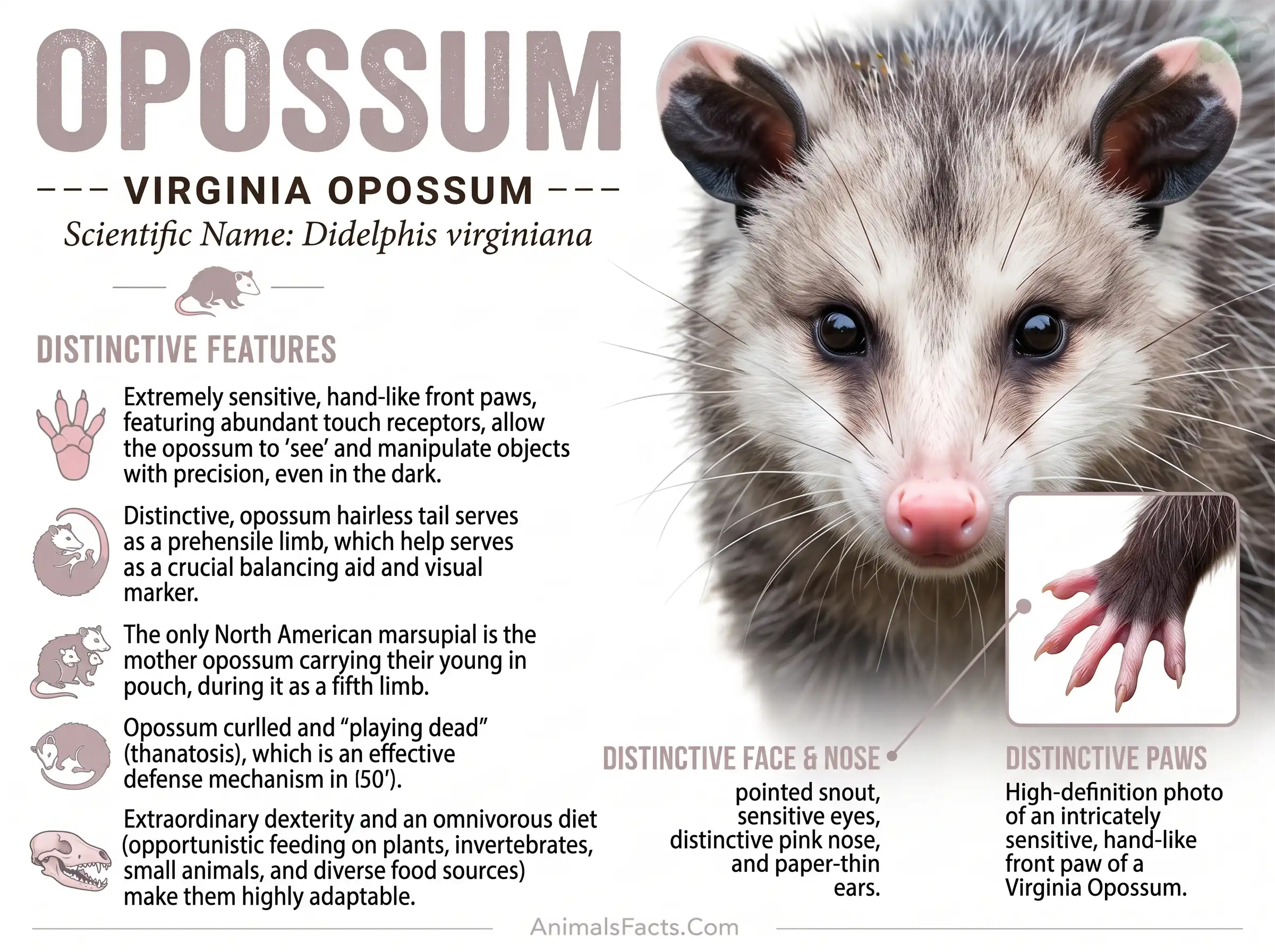
Opossum size and weight make the Virginia opossum a medium-small mammal — roughly the size of a domestic cat — with a distinctive appearance that combines features often described unfavorably but that are in fact precisely adapted for the opossum’s ecological role and lifestyle.
Body Form
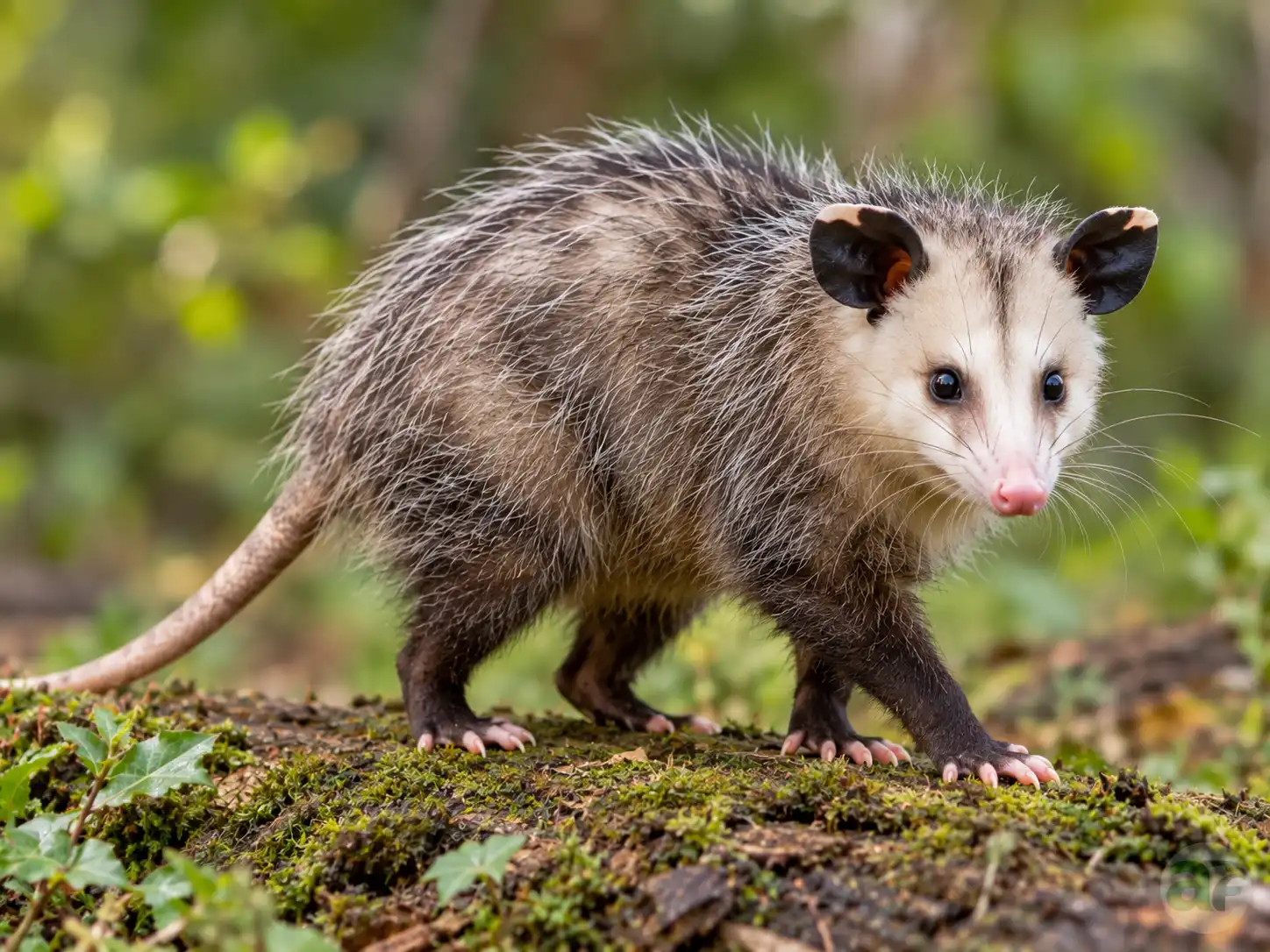
The Virginia opossum has a stocky, low-slung body covered in coarse, white-tipped grey fur with a paler face and a distinctly pointed pink snout. The body form reflects adaptations for omnivorous generalism — neither specialized for speed, nor for digging, nor for strict arboreal life — but capable of all of these activities at a moderate level:
Head — The opossum’s long, pointed snout houses 50 teeth — the most teeth of any North American land mammal. These teeth include both sharp incisors (for cutting), canines (for gripping), and flat premolars and molars (for grinding) — reflecting the species’ omnivorous diet across a enormous range of food types.
Ears — Thin, black, leathery ears that are largely hairless — giving the opossum its somewhat rodent-like appearance. The ears are sensitive to sound and can rotate independently to track sounds from different directions.
Eyes — Small, dark, reflective eyes that produce a distinctive eye-shine when illuminated at night — making opossum detection during nocturnal surveys relatively straightforward. The eyes are well-adapted for low-light conditions, reflecting the species’ predominantly nocturnal activity pattern.
The Prehensile Tail — A Fifth Hand
The opossum’s most anatomically distinctive feature is its naked, scaly, prehensile tail — which functions as a genuine fifth limb in arboreal situations:
- Can grip and wrap around branches, wires, and other structures to support the animal’s weight
- Used for balance during climbing — providing a stabilizing third point of contact when navigating narrow branches or wires
- Young opossums use the tail to hang briefly from branches in the manner depicted in cartoons — though adults are too heavy to hang by the tail for extended periods
- Functions as a fat storage organ during periods of food abundance — thickening noticeably when the animal is well-fed
- Occasionally used as a carrying assist for nesting material — the opossum curling the tail around leaves and grass before carrying them to a den site
The Paws — Primate-Like Dexterity
The opossum’s hind paws are among its most remarkable anatomical features — equipped with an opposable “thumb” (the hallux) that lacks a claw and provides a gripping capability unique among North American mammals:
- The opposable hallux allows the opossum to grip branches, cables, and other surfaces with the hind foot independently of the other toes
- Combined with the prehensile tail, this gives the opossum a three-point suspension system in arboreal situations
- The forepaws have five clawed digits without an opposable thumb — but with sufficient dexterity for food manipulation
The Remarkable Teeth — 50 Strong
The Virginia opossum has 50 teeth — the highest tooth count of any North American land mammal. This dental formula (I 5/4, C 1/1, P 3/3, M 4/4) reflects the species’ omnivorous dietary requirements:
- 10 incisors (upper and lower) — for cutting plant material and small prey
- 4 canines — for gripping and piercing
- 12 premolars — for shearing
- 16 molars — for grinding plant matter
This extensive dental armament allows opossums to process an extraordinary range of food types with a single jaw configuration — reflecting the species’ dietary flexibility.
Body Temperature
One of the most biologically significant physical features of the opossum is its unusually low body temperature — approximately 34–35°C compared to 37–38°C for most placental mammals. This low body temperature has several important consequences:
Rabies resistance — The opossum’s low body temperature makes it extremely resistant to rabies — the rabies virus cannot replicate effectively at the lower body temperatures maintained by opossums. This makes the opossum one of the very few North American wild mammals that virtually never contracts or transmits rabies — an important public health consideration given their abundance in suburban environments.
Reduced metabolic rate — A lower body temperature requires less energy to maintain — contributing to the opossum’s ability to survive on low-quality food sources and in marginal habitats.
💡 Did You Know? The opossum has 50 teeth — more than any other land mammal in North America. For comparison, adult humans have 32 teeth (including wisdom teeth), dogs have 42, cats have 30, and horses have 36–44. The opossum’s remarkable dental battery reflects the dietary flexibility of an animal that may eat insects, carrion, fruit, grain, eggs, snakes, ticks, cockroaches, and almost anything else it encounters in the course of a night’s foraging. This dental diversity is in fact a biological inheritance from the ancient, generalist marsupial ancestors of the Cretaceous period — the opossum’s teeth have changed remarkably little from those of its 65-million-year-old ancestors.
4. Top 25 Amazing Opossum Facts
Here is your definitive collection of the most extraordinary, scientifically verified, and genuinely astonishing opossum facts as of 2026:
- The Virginia opossum is North America’s only native marsupial — the sole representative of the ancient marsupial lineage on a continent that has been dominated by placental mammals for 66 million years.
- Opossum ancestors lived alongside non-avian dinosaurs — the opossum lineage extends to at least 65–80 million years ago, making opossums one of the oldest mammalian lineages in continuous North American residence.
- Opossums are virtually immune to most North American pit viper venoms — including rattlesnake, copperhead, and cottonmouth — through a specific blood peptide called LTNF (Lethal Toxin Neutralizing Factor) that neutralizes hemotoxic snake venoms. Research on this peptide is actively investigating its potential as a universal antivenom for human snakebite treatment.
- “Playing possum” is a real, documented neurological phenomenon — called thanatosis — in which the opossum enters a genuine comatose state that it cannot voluntarily control or end. This is not a deliberate choice but a reflexive neurological shutdown in response to extreme threat, during which the opossum becomes limp, the tongue lolls, the eyes glaze, and the animal emits a foul-smelling fluid from anal glands. The episode typically lasts 1–4 hours.
- Virginia opossums have a gestation period of only 12–13 days — the shortest gestation of any North American mammal. Newborns are essentially embryonic — weighing approximately 0.13 grams (less than a paper clip) and measuring approximately 1 cm in length when born.
- Despite their ancient origins, opossums have a remarkably short lifespan — wild Virginia opossums typically survive only 1.5–2 years, making them among the shortest-lived mammals of their body size. This is thought to reflect the species’ “live fast, die young” reproductive strategy — prioritizing rapid reproduction over longevity.
- An opossum’s body temperature of 34–35°C — lower than most placental mammals — makes it effectively resistant to rabies, as the rabies virus cannot replicate efficiently at these temperatures. Opossums essentially never contract or transmit rabies despite living in close association with the humans and animals that sometimes do.
- A single Virginia opossum can consume up to 5,000 ticks per season — foraging ticks off its body and destroying them. Research published in 2021 confirmed that opossums are among the most effective natural tick population controllers in their range — providing an ecosystem service that directly reduces human and pet exposure to Lyme disease.
- The opossum’s prehensile tail and opposable hind thumb give it a combination of limb versatility unmatched among North American mammals — the animal effectively has three grasping structures (two forepaws and a tail) for arboreal navigation.
- Female opossums have a divided (bicornuate) uterus and a forked vagina — an ancient reproductive anatomy that reflects the opossum’s deep evolutionary divergence from placental mammals. Male opossums correspondingly have a bifurcated (forked) penis — one of the most distinctive reproductive anatomies in North American mammals.
- A litter of opossum joeys born simultaneously may include up to 20 individuals — but the female opossum has only 13 nipples (12 arranged in a circle plus 1 in the center). Joeys that fail to secure a nipple within the first minutes after birth will die — creating an immediate postnatal competition that determines which joeys survive.
- The opossum is the only North American mammal with a prehensile tail — a feature far more commonly associated with South American primates and other arboreal mammals.
- Opossums have extraordinary dietary flexibility — consuming over 100 documented food types including insects, carrion, snakes, ticks, garden snails, small rodents, birds, eggs, fruit, grain, vegetables, garbage, and pet food.
- The water opossum (Chironectes minimus) of Central and South America is the world’s only fully aquatic marsupial — with webbed hind feet and a waterproof pouch that seals shut when submerged, protecting joeys during underwater swimming.
- Opossums have been documented eating venomous copperheads, timber rattlesnakes, and cottonmouths — consuming the snake whole without ill effect, reflecting their remarkable venom immunity.
- The short-tailed opossum (Monodelphis domestica) was the first marsupial to have its complete genome sequenced (2007) — a landmark in evolutionary biology that revealed that marsupials and placental mammals share approximately 95% of their protein-coding genes despite 70 million years of separate evolution.
- Opossums are self-cleaning animals that spend considerable time grooming — and are documented to groom ticks from their own bodies at a rate suggesting they can destroy the majority of ticks that attach to them during foraging.
- The Virginia opossum has expanded its range northward by several hundred kilometers over the past century — a range expansion attributed to climate warming and the proliferation of suburban environments with reliable food sources (garbage, pet food, compost).
- Baby opossums are born at a developmental stage equivalent to approximately week 7 of human fetal development — they are furless, blind, and their limbs are barely formed, yet they must independently crawl from the birth canal to the mother’s pouch using only their forelimbs — a journey of approximately 10 cm that takes about 3 minutes and during which the majority of joeys that will eventually die do so.
- Opossums are immune to the venom of honeybees and many other stinging insects — allowing them to consume beehives and wasp nests with apparent impunity. This immunity is related to but distinct from the pit viper venom immunity.
- The opossum’s immune system is being studied as a model for human immune system research — the species’ broad immunological versatility and resistance to multiple toxins and pathogens make it valuable for understanding innate immune mechanisms.
- Opossums do not hibernate — they remain active year-round, though cold weather significantly reduces activity and can cause frostbite on the naked ears, tail, and feet of northern populations that have expanded into cold climates.
- The Virginia opossum produces a characteristic “click” vocalization when foraging — a rapid clicking of the teeth that is thought to serve as a close-range contact call between foraging individuals and between mothers and young.
- Opossums have a remarkable ability to find and remember food sources — laboratory testing of spatial memory in opossums has shown that they outperform dogs, cats, and pigs on some maze and food-location memory tasks, challenging the popular perception of the opossum as a dim-witted animal.
- Opossum fat and rendered grease was used extensively in colonial American folk medicine — applied topically for chest colds, respiratory ailments, and joint pain — and opossum tail broth was consumed as a treatment for various ailments in early American settler communities, reflecting the species’ deep integration into early North American human culture.
5. Opossum Fun Facts About Opossums
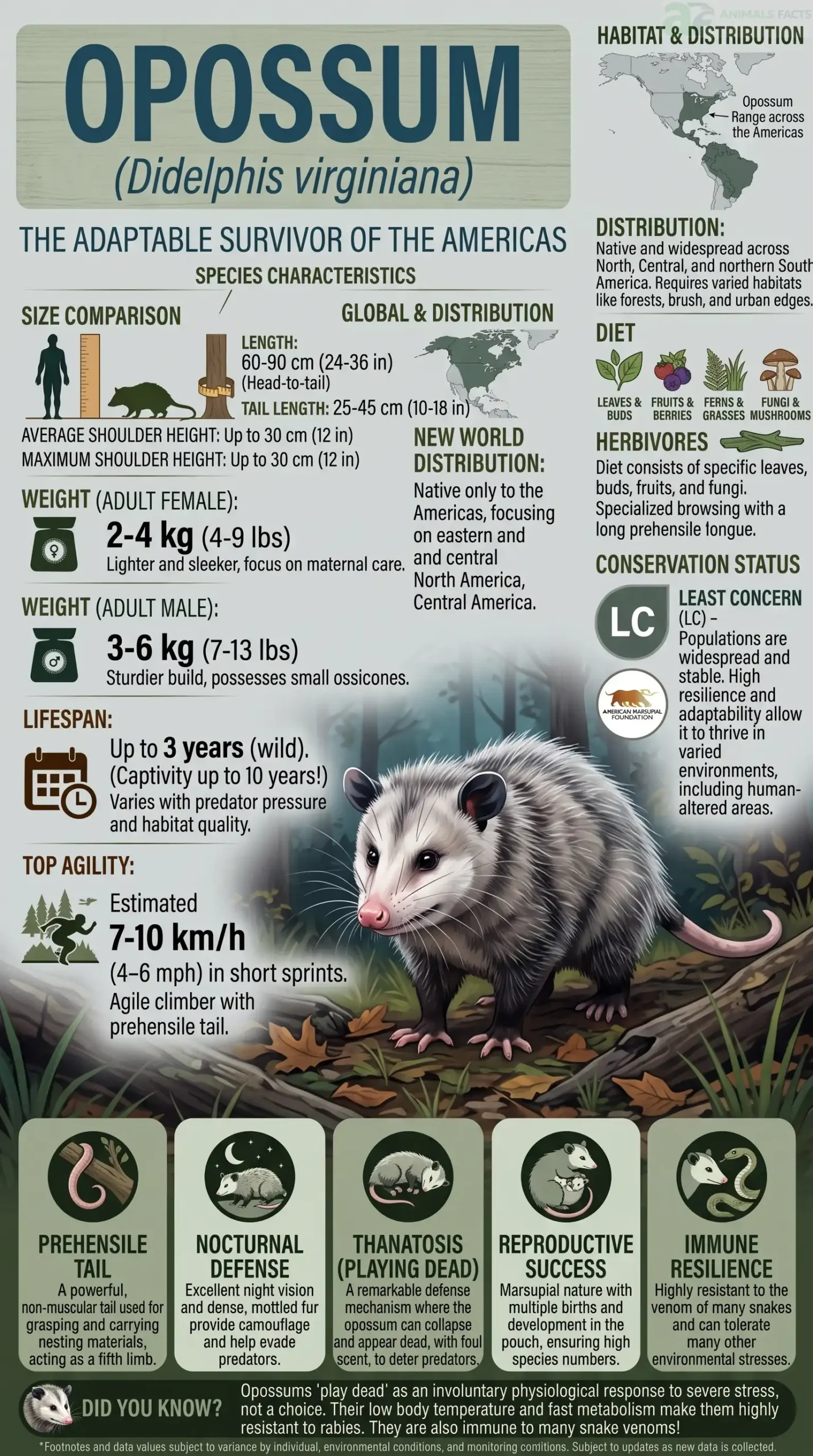
- Opossums are North America’s only marsupial — descended from dinosaur-era ancestors
- They have 50 teeth — more than any other North American land mammal
- “Playing possum” is a real neurological shutdown — not a deliberate choice
- Opossums eat 5,000 ticks per season — helping prevent Lyme disease
- They are virtually immune to rabies — due to their low body temperature
- Opossum blood contains a peptide that neutralizes snake venom
- Gestation lasts only 12–13 days — the shortest in North America
- Newborns weigh 0.13 grams — less than a paper clip
- Opossums have opposable hind thumbs — like primates
- They are not aggressive — one of the least dangerous wild animals
- Playing dead can last 1–4 hours — completely involuntary
- Opossums have the smartest spatial memory of many common animals
6. Opossum Habitat & Geographic Range
Opossum habitat is among the most diverse of any North American mammal — reflecting the species’ extraordinary ecological flexibility and its ability to exploit almost any environment that provides food and shelter.
Habitat Types
Virginia opossums are true habitat generalists — occupying a remarkable range of environments:
Deciduous forest and woodland — The core native habitat; provides den sites in hollow logs, tree cavities, and dense brush piles, along with a diverse food base of invertebrates, small vertebrates, and fruit
Riparian zones (stream and river margins) — Heavily used; provides excellent food diversity (aquatic invertebrates, amphibians, fish, waterfowl eggs, riparian vegetation) and abundant den sites
Agricultural land and farmland margins — Heavily exploited; access to grain storage areas, livestock feed, garden produce, and the abundant insects associated with agricultural environments
Suburban and urban environments — One of the most successful wild mammals in suburban North America; exploits garbage, compost, pet food, ornamental plantings, and human structural features as den sites
Grassland with woodland patches — Present; uses woodland patches as den sites and grassland as foraging habitat
Semi-arid environments — Present in the southwestern United States and Mexico; less abundant than in moister environments but documented across a broad semi-arid range
What Opossums Require
- Food availability — As omnivores consuming almost anything organic, opossums can persist in almost any environment with sufficient overall biological productivity
- Den sites — Hollow logs, tree cavities, brush piles, abandoned animal burrows, rock crevices, and increasingly human structures (under decks, in attic spaces) provide essential resting and birthing sites. Opossums are not territorial and do not maintain fixed den sites — rotating among multiple den locations across their home range
- Water — Access to water is important but opossums can exploit a wide range of water sources including puddles, streams, birdbaths, and pet water bowls
Geographic Range
| Region | Status | Notes |
|---|---|---|
| Eastern United States | Abundant | Core of North American range |
| Midwestern United States | Abundant | Expanded range with agriculture and suburbs |
| Western United States | Present | Introduced populations established by ~1890s |
| Southern Canada | Present — range expanding | Range limit at approximately 50°N latitude |
| Central America | Present | Common throughout |
| Northern South America | Present | Overlaps with common opossum (D. marsupialis) |
| Pacific Coast (introduced) | Established | California, Oregon, Washington — introduced populations |
💡 Did You Know? The Virginia opossum is the northernmost marsupial species in the world — ranging into southern Canada as far north as Ontario and British Columbia. This range expansion northward from its historical southeastern US stronghold has occurred primarily over the past 100–150 years — driven by two forces: climate warming that has reduced the severity of winter cold that previously prevented northern persistence, and the explosion of suburban environments that provide reliable food (garbage, pet food) and shelter (human structures) that buffer opossums against cold and food scarcity. The naked ears, tail, and feet of northern opossums are frequently damaged by frostbite — evidence that northern expansion has outpaced physiological cold adaptation.
7. Opossum Diet & Feeding Behavior
Opossum diet is the broadest and most flexible of any North American mammal — and understanding what opossums eat is fundamental to understanding their extraordinary ecological value.
Diet Breakdown Table
| Food Type | Estimated % of Diet (seasonal variation) | Notes |
|---|---|---|
| Invertebrates (insects, beetles, snails, worms, ticks) | ~30–40% | Primary food category; ticks especially important |
| Carrion (dead animals of all types) | ~20–30% | Critical ecological role as scavenger |
| Fruit and berries | ~15–25% | Seasonally important; persimmons especially favored |
| Small vertebrates (mice, voles, small rabbits) | ~10–15% | Opportunistic predation |
| Eggs and nestlings | ~5–10% | Opportunistic; significant where abundant |
| Grain and plant matter | ~5–10% | Agricultural margins and gardens |
| Garbage and human food waste | ~5–15% (suburban) | Increasingly important near human habitation |
| Snakes (including venomous) | ~2–5% | Includes pit vipers; venom immunity allows this |
| Pet food (cat and dog food) | ~5–10% (suburban) | Highly exploited where available |
The Tick Ecosystem Service
One of the most practically significant aspects of opossum diet is their tick consumption — and the ecosystem service value of this behavior has been dramatically upgraded by recent research:
The mechanism — Opossums are meticulous groomers — they spend considerable time licking and grooming their fur, and ticks attempting to attach to opossums are groomed off and swallowed at a high rate. Research published in the journal Proceedings of the Royal Society B documented that a single opossum destroys an estimated 5,500 ticks per week under experimental conditions — and approximately 95% of ticks that attempt to feed on an opossum are killed during grooming.
The public health implication — Ixodes scapularis (the black-legged tick, primary vector of Lyme disease bacteria Borrelia burgdorferi) is one of the tick species that opossums consume and destroy. In regions where Lyme disease is endemic, opossum population reduction — through road kills, habitat loss, or persecution — may correlate with increased tick abundance and increased Lyme disease risk.
Estimated scale — In habitats with normal opossum densities, opossums may collectively destroy tens of millions of ticks per square kilometer per year — a tick control service of enormous potential value in terms of reduced Lyme disease transmission.
The Carrion Cleaning Role
Opossums are important scavengers across North American ecosystems — consuming dead animals of all types and thereby:
- Removing carcasses that would otherwise become disease reservoirs and attract larger scavengers
- Cycling nutrients from animal biomass back into the soil food web more rapidly
- Reducing the duration of time that botulism, anthrax, and other carcass-associated pathogens remain accessible to other wildlife
Venomous Snake Predation
The opossum’s documented predation on venomous pit vipers — including rattlesnakes, copperheads, and cottonmouths — is one of its most remarkable dietary behaviors. The mechanism:
LTNF (Lethal Toxin Neutralizing Factor) — A specific peptide in opossum blood that binds to and neutralizes the metalloprotease enzymes in pit viper hemotoxic venom — preventing the tissue destruction and blood coagulation disruption that makes pit viper venom lethal. The peptide has been characterized biochemically and is being investigated as the basis for a potential synthetic universal antivenom that could be produced affordably and used without refrigeration — potentially transforming snakebite treatment in developing countries where current antivenom is expensive, requires refrigeration, and often causes severe allergic reactions.
8. Opossum Reproduction & Life Cycle
Opossum reproduction is one of the most biologically extraordinary aspects of the species — reflecting the ancient marsupial reproductive strategy in its most dramatic form and producing some of the most remarkable developmental biology in any North American mammal.
Mating Behavior
Virginia opossums are promiscuous — both males and females mate with multiple partners in a breeding season. There is no pair bonding, no male parental care, and essentially no sustained social interaction between adults outside of the mating encounter itself.
Mating season — Virginia opossums breed primarily from January to July in their northern range (two to three litters possible in a single season) and potentially year-round in warmer southern and Central American portions of the range.
Male reproductive anatomy — Male opossums have a bifurcated (forked) penis — a distinctive anatomical feature that corresponds with the female’s forked reproductive tract. This reproductive anatomy is an ancient marsupial trait present in most didelphid species.
The 12–13 Day Gestation — The World’s Fastest
The 12–13 day gestation of the Virginia opossum is the shortest of any North American mammal — and one of the shortest of any mammal globally. This incredibly brief pregnancy produces newborns at a developmental stage equivalent to approximately week 6–7 of human fetal development:
- Born furless
- Born blind — eyes non-functional
- Forelimbs with functional claws present — essential for the crawl to the pouch
- Hindlimbs barely begun — paddle-like stubs
- Head and forelimbs disproportionately developed relative to the rest of the body — the minimum development needed for pouch-reaching
The Miraculous Crawl
Immediately after birth, each joey must independently crawl from the birth canal to the mother’s pouch — a journey of approximately 10 cm that takes approximately 3 minutes and represents one of the most physically demanding events in the life of any mammal relative to the animal’s developmental stage. The joey navigates this journey using:
- Forelimb swimming motion — grasping the mother’s fur with the clawed forelimbs
- Chemosensory navigation — following olfactory gradients toward the pouch
- Gravity — the mother typically licks a path through her fur before birth, and positions herself to allow gravity to assist the upward crawl
The Nipple Competition
The opossum’s pouch contains 13 nipples — 12 arranged in a horseshoe and 1 in the center. Average litter sizes of 8–9 joeys typically mean there are more joeys than nipples available — and joeys that fail to secure and permanently attach to a nipple within the first minutes after birth die within hours. Each nipple swells after attachment — physically locking the joey in place.
Development Stages
- Newborn (Day 0) — Born at 0.13 grams; crawls to pouch; attaches to nipple
- Pouch young (Days 1–60) — Attached to nipple; developing rapidly; eyes open at approximately Day 55–65
- Active pouch young (Days 60–100) — Beginning to release from nipple; exploring inside pouch; beginning to emerge briefly
- Riding young (Days 100–120) — Leave pouch but ride on mother’s back, clinging to her fur
- Weaning (approximately Day 120) — Beginning independent foraging; still associating with mother
- Full independence (approximately Days 100–150) — Completely independent
- Sexual maturity — approximately 6–8 months — one of the fastest developments to sexual maturity of any North American mammal
The Short, Intense Life
Virginia opossums live extraordinarily short lives for mammals of their size — 1.5–2 years on average in the wild. This short lifespan is reflected in a reproductive strategy of maximum output during a brief breeding window:
- 2–3 litters per year in productive environments
- 8–9 joeys per litter on average
- Sexual maturity by 6 months — meaning a female born in January may produce her own first litter by July of the same year
This reproductive intensity is the marsupial equivalent of a “live fast, die young” strategy — the opossum invests in maximum early reproduction rather than the long-term survival strategies of larger, longer-lived mammals.
Opossum Lifespan Comparison Table
| Species | Average Lifespan (Wild) | Maximum Documented | Reproductive Strategy |
|---|---|---|---|
| Virginia opossum | 1.5–2 years | ~4 years (captivity) | Many litters; short life |
| Common opossum (D. marsupialis) | 2–3 years | ~5 years (captivity) | Similar to Virginia |
| Domestic cat | 12–15 years | ~30 years | Few litters; longer life |
| Eastern grey squirrel | 6–12 years | ~20 years | Moderate strategy |
| White-tailed deer | 8–14 years | ~20 years | Few offspring; longer life |
9. Social Behavior & Communication
Opossum social behavior is characterized primarily by solitude — these are among the most independent and least socially organized of North American mammals, with social interactions limited primarily to mating encounters and maternal care.
Solitary Lifestyle
Virginia opossums are almost entirely solitary outside of mating and mother-young associations. Adults actively avoid each other for most of the year — maintaining overlapping home ranges that they navigate using a loose, time-sharing system of olfactory communication.
Home range — Virginia opossum home ranges are typically 12–40 hectares in woodland habitats — relatively small for a mammal of their size, reflecting the high food density of the habitats they occupy. In suburban environments, ranges may be even smaller given the high food density. Ranges of neighboring individuals overlap substantially — but direct contact is avoided through scent marking rather than territorial defense.
Den site use — Opossums use multiple den sites within their home range — rotating among hollow logs, brush piles, abandoned burrows, and human structures — spending rarely more than 2–3 consecutive nights in the same location. This nomadic denning pattern reduces parasite buildup and reduces the predictability of the opossum’s location for predators.
Communication Methods
Olfactory communication — The primary communication channel — opossums mark substrates with secretions from various glands including lateral chest glands (rubbed against surfaces) and anal glands (the same glands that produce the foul-smelling fluid during thanatosis).
Vocalizations — The opossum’s vocal repertoire is limited but functional:
- Clicking — The most common vocalization; a rapid dental click produced by contact between upper and lower teeth; used as a close-range contact call, particularly between mothers and offspring
- Hissing — A defensive sound produced when threatened and before or after a thanatosis episode
- Growling and screeching — Used during fighting encounters between adults
- Ultrasonic vocalizations — Very young joeys produce ultrasonic calls within the pouch — audible to the mother but inaudible to most predators
Intelligence
The opossum’s reputation for low intelligence is substantially undeserved — an artifact of the animal’s primarily reflexive defensive behavior (thanatosis) and its less-expressive face compared to animals humans find more relatable:
Spatial memory — Laboratory studies have consistently demonstrated that opossums show superior spatial memory compared to dogs, cats, rabbits, and pigs — performing better on maze tests and food-location memory tasks. This finding is consistent with the foraging demands of a highly nomadic omnivore navigating complex environments.
Learning — Opossums show normal associative learning — responding to operant conditioning, learning to avoid unpleasant stimuli, and modifying behavior based on experience.
Problem-solving — Captive opossums demonstrate moderate problem-solving capability — successfully working through multi-step food access challenges.
The primary reason opossums appear unintelligent in wild observation is that thanatosis — the reflexive death-simulation — dominates interactions with perceived threats, giving the impression of a passive, unresponsive animal. The intelligence emerges in foraging and navigation contexts rather than predator encounters.
10. Predators & Defense Mechanisms
The opossum’s defense system is one of the most unusual and most physiologically sophisticated of any North American mammal — relying not on speed, strength, or agility but on a suite of strategies that exploit predator psychology and innate immune capability.
Natural Predators
- Great horned owls (Bubo virginianus) — The most significant predator of Virginia opossums; takes individuals of all sizes; responsible for significant opossum mortality in many populations
- Red foxes (Vulpes vulpes) and gray foxes (Urocyon cinereoargenteus) — Documented opossum predators; primarily take juveniles and sub-adults
- Coyotes (Canis latrans) — Important opossum predators; take individuals of all sizes
- Bobcats (Lynx rufus) — Documented opossum predators in areas of co-occurrence
- Domestic dogs — Significant opossum mortality agent particularly in suburban environments
- Raccoons (Procyon lotor) — Occasionally kill opossums; primarily compete for food resources
- Humans (vehicles) — Road kill is the single largest source of opossum mortality across the species’ range — estimates suggest that vehicle strikes kill millions of opossums annually in North America
The Defense Arsenal
Thanatosis (“Playing Dead”) — The opossum’s most famous defense mechanism is its most physiologically remarkable. When overwhelmed by a perceived threat that exceeds the opossum’s fight-or-flight response capability, the animal undergoes an involuntary neurological shutdown — entering a comatose state that is genuinely indistinguishable from death to most predators:
- The body becomes completely limp
- The mouth falls open, tongue lolling
- The eyes become glazed and unfocused
- The anal glands release a foul-smelling greenish fluid that mimics the odor of putrefaction
- The breathing slows dramatically
- The episode lasts 1–4 hours — the opossum cannot voluntarily end it before the neurological reset occurs
This defense is effective against predators that have evolved to avoid consuming already-dead animals — which may harbor disease or produce toxins from decomposition. Canids (foxes, coyotes, dogs) are particularly susceptible to this deception; birds of prey less so, as raptors will consume carrion.
Threat display — Before entering thanatosis, an opossum typically attempts a threat display — opening the mouth wide to display all 50 teeth, hissing loudly, and producing the anal gland fluid. This display looks ferocious but is almost invariably bluff — opossums very rarely bite humans or other animals even when handled.
Venom immunity — As described above, the opossum’s blood contains LTNF — allowing it to survive encounters with pit vipers that would be lethal to virtually any other mammal its size.
Rabies immunity — The low body temperature effectively prevents rabies establishment — meaning opossums do not need to defend against one of the most significant infectious threats to North American wildlife and are not a source of rabies transmission to humans or other animals.
💡 Did You Know? The LTNF peptide in opossum blood that neutralizes pit viper venom has attracted serious research attention from snakebite medicine specialists because it offers a potential path to a universal synthetic antivenom — a treatment that could work against multiple snake species without requiring the expensive, logistics-intensive, species-specific antivenom production currently used. Current snake antivenom is made by injecting horses or sheep with venom and harvesting the resulting antibodies — a process that is expensive, requires refrigeration, and produces antivenom that only works against the specific species it was produced with. A synthetic LTNF-based antivenom could potentially be produced cheaply, stored without refrigeration, and effective against multiple species simultaneously — transforming snakebite treatment in developing countries where snakebite kills tens of thousands of people annually.
11. Opossum Facts for Kids
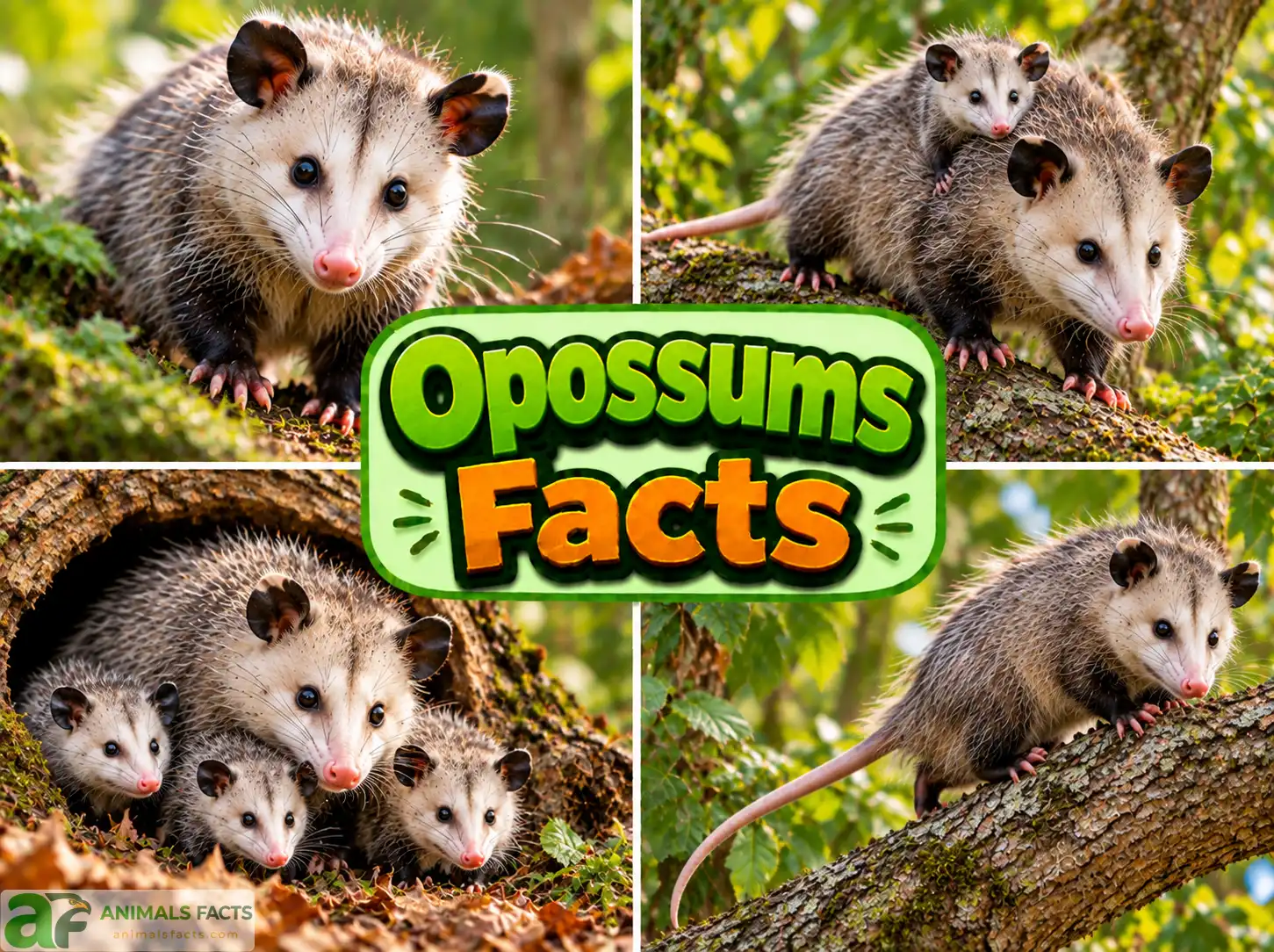
Hey amazing young wildlife explorers! Here are some absolutely incredible opossum facts for kids that will make you the most fascinating animal expert in your whole class:
- 🐾 Opossums are America’s ONLY marsupial! A marsupial is an animal that carries its babies in a pouch — like a kangaroo. The opossum is the only wild animal in all of North America that does this. It is like having a tiny kangaroo in your neighborhood!
- 🐾 They lived with DINOSAURS! Opossum ancestors were alive 65 to 80 million years ago — walking around on Earth at the same time as T. rex and Triceratops. When the asteroid hit and the dinosaurs went extinct, the opossums survived. They are living dinosaur-era survivors!
- 🐾 Baby opossums weigh LESS than a paper clip! When an opossum is born, it is only about 1 centimeter long and weighs 0.13 grams. That is smaller and lighter than a jellybean! And yet this tiny baby has to climb all the way into its mother’s pouch by itself — using only its tiny front legs.
- 🐾 Playing dead is NOT a choice! When an opossum “plays possum,” it is not pretending or deciding to trick a predator. Its brain actually shuts down automatically — like fainting — and the opossum cannot wake itself up until it is ready. It can stay “dead” for up to 4 hours!
- 🐾 Opossums eat 5,000 TICKS every season! Ticks are tiny bugs that can make people and animals very sick with diseases like Lyme disease. Opossums groom ticks off their fur and eat them — helping to keep tick numbers down and keeping the neighborhood healthier for everyone!
- 🐾 Snake venom doesn’t work on them! Opossums have something special in their blood that stops rattlesnake and copperhead venom from working — so they can actually EAT venomous snakes for dinner with no problems at all. Scientists are studying this to help people who get bitten by snakes!
- 🐾 They almost never get rabies! Opossums have a lower body temperature than most animals, and the rabies virus cannot survive at that temperature. This means that despite living in cities and suburbs all over North America, opossums are one of the safest wild animals in terms of disease.
- 🐾 They have a THUMB on their back feet! Opossum back feet have an opposable thumb — like you have on your hands — that lets them grip branches. Combined with their grabbing tail, they can hold onto three different things at once while climbing!
12. Relationship with Humans
The relationship between opossums and humans in North America is one of the most practically significant yet most culturally undervalued human-wildlife relationships on the continent — an animal that provides enormous ecosystem services to human communities while receiving negligible appreciation and actively negative cultural associations.
Indigenous American Relationships
Opossum in Indigenous traditions — The opossum was a significant animal in the cultures of many eastern North American Indigenous peoples — both as a food resource and as a character in oral tradition. The very name “opossum” derives from the Powhatan Algonquian language (aposoum — “white beast” or “white dog”) — one of the many Indigenous ecological terms that passed into English through early colonial contact.
Multiple southeastern US Indigenous nations — including Cherokee, Choctaw, Creek, and Chickasaw peoples — hunted opossums as a significant food resource. Opossum meat — described as fatty and flavorful — was consumed roasted or boiled, and the animal’s fat was used for multiple practical purposes including skin care and waterproofing.
Opossum in Indigenous oral tradition — The opossum appears as a character in the oral literatures of multiple Indigenous cultures — frequently cast as a trickster or a comedic character whose overconfidence or vanity leads to consequences. In several Cherokee stories, the opossum loses its formerly bushy tail through an act of hubris — explaining why opossums now have a naked tail. These traditions reflect the sophisticated ecological observation that indigenous peoples applied to all the animals sharing their landscape.
Colonial American Uses
European colonists and early American settlers quickly incorporated the opossum into their practical resource base:
Food — Opossum was a dietary staple for many colonial American communities — particularly in the South where “opossum and sweet potatoes” became a traditional dish that persists in some southern American culinary traditions to the present. “Possum as meat” is documented in numerous 18th and 19th century cookbooks and household guides.
Folk medicine — Opossum fat and various body parts were used extensively in colonial American folk medicine — opossum grease was applied topically for respiratory ailments, joint pain, and skin conditions; opossum tail broth was consumed as a general tonic.
Fur trade — Opossum pelts were used for fur trim in clothing — though the coarse fur was of lower value than beaver or fox pelt.
Contemporary Human-Opossum Dynamics
Suburban coexistence — The opossum is one of the most successful urban wildlife species in North America — thriving in suburban environments where garbage, compost, pet food, and human structures provide food and shelter. Most suburban opossum encounters are entirely benign — the animal foraging in a yard at night before moving on.
Conflict situations — The most common human-opossum conflicts involve:
- Garden and garbage foraging — opossums raiding vegetable gardens, compost bins, and garbage cans
- Structural entry — occasionally entering attics, crawl spaces, and under decks for denning
- Poultry predation — opossums will take eggs and young birds if accessible; secured coops prevent this
Vehicle mortality — Road kill is the most significant human impact on opossum populations — the species’ slow speed, nocturnal habits, and tendency to freeze on roads (an extension of the thanatosis response) make it one of the most commonly road-killed mammals in North America.
The Wildlife Rehabilitation Community
The wildlife rehabilitation community maintains a particularly active relationship with opossums — orphaned joeys (frequently produced when mother opossums are killed by vehicles) are among the most common rehabilitation cases in eastern and midwestern US wildlife rehabilitation centers. Raising opossum joeys — particularly those separated from the mother at early pouch stages — is technically demanding, requiring specialized formula, heated incubators, and strict hygiene protocols.
13. Opossum Conservation Status & Threats
The Virginia opossum’s conservation status — Least Concern — accurately reflects a species that is abundant, adaptable, and in many areas actually expanding its range. However, this overall stability does not mean the species faces no threats, and several related opossum species face more significant conservation challenges.
Conservation Status Overview
| Species | IUCN Status | Population Trend | Notes |
|---|---|---|---|
| Virginia opossum (D. virginiana) | Least Concern | Stable to Increasing | Range expanding northward |
| Common opossum (D. marsupialis) | Least Concern | Stable | Tropical range; slightly more forest-dependent |
| Water opossum (C. minimus) | Least Concern | Decreasing | Wetland habitat specialist; vulnerable to habitat loss |
| Short-tailed opossum (M. domestica) | Least Concern | Stable | Laboratory animal; abundant |
| Various other didelphid species | Variable — some Threatened | Variable | Some rainforest specialists at risk |
Threats to Virginia Opossum
While broadly secure, the Virginia opossum faces several threats:
| Threat | Description | Impact Level |
|---|---|---|
| Vehicle strikes | Single largest mortality source — millions killed annually | High mortality; no population impact |
| Habitat loss | Forest clearance in southern core range | Medium |
| Persecution | Some deliberate killing by farmers and homeowners | Low |
| Domestic dog attacks | Significant urban and suburban mortality | Medium |
| Pest control poisoning | Secondary poisoning from rodenticide use | Medium — underestimated |
| Climate extremes | Northern populations vulnerable to severe cold | Increasing concern |
Threats to South American Opossum Species
While the Virginia opossum thrives, many South American didelphid species face more significant conservation challenges:
- Amazon and Atlantic Forest deforestation — threatens forest-specialist opossum species
- Several species of small opossums are assessed as Near Threatened, Vulnerable, or Endangered due to restricted ranges coinciding with high deforestation rates
- The water opossum (Chironectes minimus) faces pressure from wetland degradation and water pollution across its Central and South American range
14. Famous Opossums in History & Pop Culture
Famous Named Opossums
“Pogo” — The opossum protagonist of Walt Kelly’s celebrated comic strip Pogo (1948–1975) — set in the Okefenokee Swamp of Georgia. Pogo is one of the most celebrated characters in the history of American newspaper comics — a philosophical, gentle opossum whose observations on American politics and society earned Kelly the nickname “the greatest political satirist of the 20th century.” Pogo’s famous quote — “We have met the enemy and he is us” — produced for the first Earth Day in 1971 — is among the most quoted phrases in American environmental history.
“Heidi” — A Virginia opossum at the Leipzig Zoo in Germany who became a global internet celebrity in 2010 when her notably crossed eyes attracted extraordinary media attention. Heidi’s eyes — a result of excess fat deposits behind the eyes rather than a vision problem — made her the subject of millions of social media posts and a German television special in which she predicted the winner of the Academy Awards ceremony (in a parody of Paul the Octopus’s World Cup predictions). Heidi briefly became one of the most famous animals in the world.
The “Possum Drop” — In Brasstown, North Carolina, an annual New Year’s Eve “Possum Drop” tradition — in which a live opossum was lowered in a plexiglass box as the clock struck midnight (a parody of the Times Square ball drop) — became a celebrated and controversial American folk tradition. The tradition was eventually modified following legal challenges from animal welfare organizations but remains part of the cultural landscape of opossum-human relations in rural America.
Opossum in Early American History
Captain John Smith’s 1608 description — The first detailed English description of the Virginia opossum — appearing in Smith’s accounts of the Virginia colony — introduced the animal to European scientific and popular awareness. Smith’s description of the opossum as an animal “of the bignesse of a Cat” with a snout “like a Swine, and a taile like a Rat” and carrying young in “a bag under the belly” was the foundational European account of North American marsupial biology.
15. Role in Ecosystem & Food Chain
The opossum’s ecological role in North American ecosystems is one of the most genuinely multifaceted and most practically significant of any urban wildlife species — providing services that directly benefit human health and ecological functioning simultaneously.
The Tick Control Service
As documented above, the opossum’s compulsive self-grooming behavior results in the destruction of enormous numbers of ticks — particularly Ixodes scapularis (black-legged tick), the primary vector of Lyme disease (Borrelia burgdorferi), Anaplasmosis (Anaplasma phagocytophilum), and Babesiosis (Babesia microti).
In ecological research contexts, the opossum has been identified as potentially the most important tick population suppressor in its range — with individual opossums destroying thousands of ticks per week simply through routine grooming behavior. Landscape-level models suggest that opossum presence in a habitat may substantially reduce Lyme disease risk — a public health service of considerable economic value.
The Scavenging Service
Opossums are among the most important vertebrate scavengers in eastern North American ecosystems — consuming carcasses of road-killed animals, dead birds, fish, and other animal remains that would otherwise:
- Accumulate as disease reservoirs for pathogens including botulism, salmonella, and anthrax
- Attract larger scavengers (vultures, ravens, coyotes) that may create human conflict situations
- Persist for extended periods, creating aesthetic and public health concerns in suburban environments
The opossum’s scavenging services effectively function as a nocturnal sanitation system in many suburban and rural environments — a role that goes almost entirely unrecognized by the human communities that benefit from it.
Prey Species Role
Opossums themselves represent an important prey resource for multiple native predator species:
- Great horned owls — one of the primary prey items in many eastern US owl territories
- Red and gray foxes — an important secondary prey species
- Coyotes — supplementary prey
The opossum’s high reproductive rate and population abundance makes it a reliable and renewable prey resource that helps sustain predator populations across the urban-wildland interface.
Seed Dispersal
As significant consumers of fruit and berries, opossums serve as seed dispersers for numerous plant species — consuming fruits whole and depositing viable seeds in their feces at distances from parent plants. This seed dispersal function is particularly important in fragmented suburban environments where larger frugivorous mammals (bears, deer in some areas) may be absent.
16. Myths, Folklore & Cultural Significance
The opossum occupies a distinctive cultural position in North American tradition — simultaneously the subject of rich Indigenous oral literature, the protagonist of one of America’s most celebrated political comic strips, and the unfortunate target of cultural dismissal and aesthetic disdain that has no biological justification.
The “Ugly” Animal Problem
The opossum faces what might be called the “ugly animal problem” — a set of cultural biases that lead to systematically lower public appreciation for ecologically important animals that don’t meet conventional standards of cuteness or charisma:
- The pale, hairless face, pink nose, and rat-like tail trigger negative aesthetic responses in many people that bear no relationship to the animal’s ecological value or behavioral sophistication
- The thanatosis behavior — which looks like illness or death — reinforces perceptions of the animal as unhealthy or unintelligent
- Association with garbage and carrion — which is actually a valuable ecological service — is culturally coded as undesirable
- The “ugly animal” perception translates directly into lower conservation concern, less research funding, and higher tolerance for lethal control — even for a species providing genuine public health benefits
The Ugly Animal Preservation Society — a British conservation comedy organization — has explicitly highlighted the opossum as an example of a species whose genuine ecological importance is obscured by negative aesthetic associations, arguing that conservation culture’s focus on charismatic megafauna systematically underfunds protection of ecologically vital but aesthetically less appealing species.
Cherokee Opossum Tales
Multiple Cherokee oral tradition accounts feature the opossum — typically as a character whose current tail (naked and rat-like) is a punishment for vanity. In one version, the opossum once had a beautiful bushy tail but boasted about it so obsessively that a trickster (often the rabbit in these tales) tricked him into allowing his tail fur to be removed — leaving the naked tail the opossum now carries. These stories served multiple functions — explaining observed natural history, providing moral instruction about the dangers of vanity, and reflecting the deep observational engagement with local wildlife that characterizes Indigenous ecological knowledge traditions.
Southern American Folk Tradition
The opossum features extensively in Southern American folk culture — appearing in songs, folk sayings, hunting traditions, and culinary culture in ways that reflect long-term coexistence between human communities and the species:
“Possum and sweet potatoes” — A traditional Southern American dish combining roasted opossum meat with sweet potatoes that was a significant protein source for many communities through the 19th and early 20th century and remains part of Southern food heritage.
Hunting tradition — Opossum hunting with dogs at night was a significant recreational and subsistence activity across the rural American South for generations — with the hunting culture reflecting the species’ ecological familiarity and its role as a community food resource.
17. Opossums in Pop Culture
Pogo comic strip (1948–1975) — Walt Kelly’s groundbreaking political comic strip featuring the opossum Pogo and his Okefenokee Swamp community of animal characters is universally acknowledged as one of the finest achievements in American newspaper comic history. Kelly used Pogo and company to satirize McCarthyism, political corruption, environmental destruction, and American society with a sophistication and courage that inspired generations of subsequent political cartoonists. Pogo’s “We have met the enemy and he is us” — produced for Earth Day 1971 — is among the most quoted environmental statements in American cultural history and continues to define a particular strain of American ecological self-examination.
“Heidi” the Cross-Eyed Opossum (2010) — The Leipzig Zoo opossum whose cross-eyes generated global media coverage and hundreds of millions of internet views. Heidi’s brief global celebrity demonstrated both the potential for unusual animal stories to generate extraordinary public engagement and the cultural appetite for content featuring unusual-looking animals.
“Over the Hedge” (DreamWorks, 2006) — The animated film based on the comic strip of the same name features Stella — a Virginia opossum — as a significant supporting character. While not a perfect representation of opossum biology, the film introduced opossum characters to a mainstream children’s film audience.
Opossum Springs and various children’s educational media — The opossum features in educational content about North American wildlife and marsupial biology in children’s books, museum exhibits, and nature education programs — particularly for programs emphasizing the value of “ugly” or overlooked wildlife.
Wildlife rehabilitation social media — The most significant contemporary cultural representation of opossums occurs through the wildlife rehabilitation community’s social media presence — with images and videos of rescued opossum joeys accumulating enormous views and social shares that have substantially improved the public perception of opossums particularly among younger demographics. “Opossum joeys wrapped in tiny blankets” content has become a genuinely significant genre of feel-good wildlife content on Instagram and TikTok.
18. Opossum Facts vs. Common Myths
| Common Myth | The Real Fact |
|---|---|
| “Opossums carry rabies and are dangerous” | False — opossums essentially never contract rabies due to their low body temperature; they are one of the least dangerous wild animals in terms of disease transmission |
| “Playing possum is a deliberate trick” | False — thanatosis is an involuntary neurological reflex that the opossum cannot control; it is not a conscious deception strategy |
| “Opossums are rodents” | False — opossums are marsupials; they are more closely related to kangaroos and koalas than to rats or mice |
| “Opossums are aggressive and will attack people” | False — opossums are among the least aggressive wild mammals; they almost never bite humans even when handled; the threat display of open mouth and hissing is almost invariably bluff |
| “Opossums hang from trees by their tails” | Partially false — baby opossums can hang briefly by their tails; adult opossums are too heavy for sustained tail-hanging but use their tails for balance and gripping |
| “Opossums are unintelligent” | False — opossums outperform cats, dogs, and pigs on spatial memory tasks; they are cognitively capable animals whose intelligence is not well-expressed in predator encounter scenarios |
| “Opossums are pests that should be removed” | Largely false — opossums provide significant ecosystem services including tick control, scavenging, and snake predation; in most cases they are beneficial wildlife neighbors |
| “A “possum” and an “opossum” are different animals” | In North America — no; “possum” is simply the informal abbreviation of “opossum” referring to the same animal. In Australia, “possum” refers to entirely different, unrelated marsupials |
19. Best Places to See Opossums in the Wild
1. Your Own Backyard — Eastern United States — Virginia opossums are among the most abundant and most accessible wild mammals in eastern North America. In suburban and rural environments east of the Rocky Mountains, opossums are almost certainly present whether you know it or not — emerging after dark to forage. Setting up a simple wildlife camera at a brush pile, compost bin, or under a fruit tree is the most reliable method of observing local opossums in detail.
2. National and State Parks of the Eastern United States — Most eastern US national and state parks with deciduous forest habitats support healthy opossum populations. Shenandoah National Park (Virginia), Great Smoky Mountains National Park (Tennessee/North Carolina), and Congaree National Park (South Carolina) all have excellent opossum populations visible on night walks.
3. Riparian Areas Throughout the Range — Stream corridors, river margins, and wetland edges are among the most reliably productive opossum habitat — providing food diversity and den site abundance that concentrates opossum activity. Night-time walks along stream corridors with a flashlight frequently reveal opossum eye-shine.
4. Wildlife Rehabilitation Centers — For close-range, educational opossum encounters — particularly with joeys — accredited wildlife rehabilitation centers across the eastern United States that work with opossums provide educational programs and opportunities to observe the animals at developmental stages rarely visible in the wild. Contact your state wildlife agency for a list of licensed rehabilitators in your area.
5. Texas and Oklahoma — The south-central United States supports exceptional opossum populations across diverse habitats — from riparian woodland to agricultural margins. Big Thicket National Preserve (Texas) and Chickasaw National Recreation Area (Oklahoma) offer night wildlife observation opportunities in excellent opossum habitat.
6. Florida Everglades and Coastal Areas — The opossum is common throughout Florida — including in and around the Everglades National Park ecosystem where it represents one of the native mammals most consistently visible to park visitors on evening wildlife drives.
7. Central America — Expanded Opossum Diversity — For visitors interested in the broader diversity of the opossum family beyond the Virginia opossum, Costa Rica offers remarkable access to multiple opossum species including common opossums, mouse opossums, and four-eyed opossums in tropical forest settings. Night tours at wildlife lodges in Monteverde, La Selva, and the Osa Peninsula regularly encounter multiple opossum species.
20. How You Can Help
Supporting opossum populations and the ecosystems they maintain requires primarily education and attitude change — the greatest threats to opossums are cultural (persecution, road kills from inattention) rather than the large-scale habitat threats facing more conventional conservation species.
Support these organizations:
- National Wildlife Federation — nwf.org — advocacy for native wildlife including opossums; NWF’s certified wildlife habitat program encourages backyard wildlife support
- WIRES and similar state wildlife rehabilitation networks — your state wildlife agency maintains a list of licensed wildlife rehabilitators who care for injured and orphaned opossums
- The Opossum Society of the United States — opossumsocietyus.org — dedicated to opossum welfare, public education, and wildlife rehabilitation support
- Defenders of Wildlife — defenders.org — advocacy for native wildlife including underappreciated species
What you can do:
- Drive slowly at night near wildlife habitats — vehicle strikes are the single largest preventable source of opossum mortality; slowing down and scanning for eye-shine on rural and suburban roads saves lives
- Don’t use rodenticides — secondary poisoning of opossums consuming poisoned rodents is a significant and underestimated mortality source; use humane traps and habitat modification instead
- Provide brush piles and log piles — these provide natural den sites for opossums in suburban gardens and reduce the likelihood of the animals seeking structural entry to buildings
- Share accurate information — the opossum’s enormous public relations problem is addressable through education; sharing accurate, positive information about their ecological services (tick control, rabies immunity, scavenging) changes perceptions
- Contact a licensed rehabilitator if you find an injured or orphaned opossum — do not attempt to rehabilitate wildlife without proper training and licensing
21. Top Documentaries & Books
Must-Watch Documentaries
- “Wild America” (PBS, Marty Stouffer) — Classic American wildlife series with multiple episodes touching on opossum ecology and behavior
- “America’s Backyard Wildlife” (various producers) — Multiple documentary series on suburban wildlife ecology include extensive opossum content; available through streaming platforms
- “Wild Suburbia” (National Geographic) — Features opossum ecology in the context of urban wildlife generally
- “Marsupials: The Secret Order” (BBC) — Covers the broader marsupial order including North American opossums in the context of global marsupial diversity
- Wildlife rehabilitation YouTube channels — Multiple licensed wildlife rehabilitators maintain YouTube channels documenting opossum joey development and rehabilitation; these channels collectively represent some of the finest educational content on opossum biology available
Must-Read Books
- “The World of the Opossum” by various natural history authors — Multiple natural history treatments of the Virginia opossum available through university press and natural history publishers
- “Pogo” collected volumes by Walt Kelly — Not strictly a nature book but the most culturally significant opossum-centered creative work in American history; available in multiple collected editions
- “Mammals of North America” by Roland W. Kays and Don E. Wilson — Comprehensive field reference including excellent opossum species accounts
- “Wild Neighbors: The Humane Approach to Living with Wildlife” by John Hadidian et al. (Humane Society Press) — The most practical guide to coexisting with suburban wildlife including opossums
- “Marsupials” by Patricia Armati et al. — Academic but accessible coverage of global marsupial biology including the American opossum family
22. Comparison with Similar Marsupial Species
| Feature | Virginia Opossum | Common Opossum | Water Opossum | Short-tailed Opossum | Australian Brushtail Possum |
|---|---|---|---|---|---|
| Scientific name | Didelphis virginiana | Didelphis marsupialis | Chironectes minimus | Monodelphis domestica | Trichosurus vulpecula |
| Order | Didelphimorphia | Didelphimorphia | Didelphimorphia | Didelphimorphia | Diprotodontia |
| Range | N./C. America | C./S. America | C./S. America | S. America | Australia |
| Weight | 0.8–6 kg | 0.5–2.5 kg | 0.6–0.8 kg | 60–150 grams | 1.2–4.5 kg |
| Pouch | Yes | Yes | Yes (waterproof) | No functional pouch | Yes |
| Prehensile tail | Yes | Yes | Yes | Yes | Yes |
| Thanatosis | Yes — documented | Yes | Unknown | No | No |
| Aquatic ability | Moderate | Low | Fully aquatic | Low | Low |
| Conservation | Least Concern | Least Concern | Least Concern | Least Concern | Least Concern |
| Relationship to humans | Urban/suburban | Tropical; less urban | Aquatic specialist | Lab research model | Urban pest/beloved |
23. Frequently Asked Questions About Opossums
What is the scientific name of the opossum?
The most familiar opossum — the Virginia opossum — is Didelphis virginiana (Kerr, 1792). The genus name Didelphis derives from the Greek di (two) and delphys (womb) — referring to the two-compartment uterus of female opossums. The species name virginiana refers to Virginia, where early colonial specimens were collected. The family Didelphidae contains all American opossums, within the order Didelphimorphia — which encompasses over 100 opossum species. The common opossum of Central and South America is Didelphis marsupialis (Linnaeus, 1758).
Why do opossums play dead?
Playing possum — scientifically termed thanatosis — is an involuntary neurological reflex that the opossum cannot consciously control or end. When overwhelmed by extreme threat stimuli, the opossum’s nervous system enters a state analogous to a fainting episode — producing complete muscle limpness, glazed eyes, open mouth, drastically slowed breathing, and the release of a foul-smelling fluid from anal glands that mimics putrefaction. The opossum cannot choose to play dead and cannot choose to stop — the episode resolves on its own after 1–4 hours when the nervous system resets. This behavior is effective against predators that avoid consuming dead animals, particularly canids, but is less effective against birds of prey that consume carrion.
Are opossums dangerous to humans or pets?
No — Virginia opossums are among the least dangerous wild mammals in North America. They are non-aggressive, slow-moving, and extremely unlikely to bite humans even when handled. Their primary defense (thanatosis) involves becoming completely passive rather than fighting. They are essentially never a source of rabies, do not carry Lyme disease (they actually reduce it), and represent essentially no threat to pets larger than a mouse. The greatest risk an opossum poses to domestic animals is potential disease transmission through shared food bowls — not through aggression. Opossums will occasionally take eggs from unsecured chicken coops but rarely confront adult poultry.
Do opossums really eat ticks?
Yes — this has been confirmed through controlled studies. Research published in the Proceedings of the Royal Society B documented that opossums destroy approximately 5,500 ticks per week through grooming behavior — with approximately 95% of ticks that land on opossums being groomed off and consumed. Over a season, this equates to approximately 5,000 or more ticks destroyed per opossum. This tick-destroying behavior directly reduces the abundance of black-legged ticks (Ixodes scapularis) — the primary vector of Lyme disease bacteria — in habitats where opossums are present, making opossums one of the most significant natural Lyme disease risk reducers in their range.
Are opossums marsupials?
Yes — Virginia opossums are marsupials — members of the infraclass Marsupialia. They are the only native marsupial species in North America. As marsupials, opossums share with kangaroos, koalas, wombats, and other Australian marsupials the fundamental reproductive strategy of giving birth to extremely altricial (undeveloped) young that complete development in a pouch while attached to a nipple. The marsupial-placental mammal split occurred approximately 160–180 million years ago — meaning that the opossum is about as distantly related to a human, dog, or rat as it is possible to be while still being a mammal.
What do opossums eat?
Virginia opossums eat virtually anything organic — making them among the most ecologically flexible omnivores in North America. Their diet includes insects (30–40%), carrion (20–30%), fruit and berries (15–25%), small vertebrates including mice and voles (10–15%), eggs and nestlings (5–10%), grain and vegetation (5–10%), garbage and human food waste (5–15% in suburban areas), and venomous snakes (2–5%). They have been documented consuming over 100 distinct food types. In suburban environments, garbage, compost, pet food, and fallen fruit are important food sources. Their willingness to consume carrion, garbage, ticks, and venomous snakes simultaneously makes them one of the most ecologically multifunctional animals in North America.
How long do opossums live?
Virginia opossums are extremely short-lived for their body size — averaging only 1.5–2 years in the wild, with maximum lifespans of approximately 4 years in captivity. This makes them among the shortest-lived mammals of their size class anywhere in the world — a domestic cat lives 8–10 times longer, and a comparably sized raccoon lives 4–5 times longer. The short lifespan reflects the species’ “live fast, reproduce quickly” life history strategy — reaching sexual maturity by 6 months and producing multiple litters per year, the opossum maximizes reproductive output during a brief but reproductively intense life.
Can opossums be kept as pets?
In most US states, keeping wild-caught opossums as pets is illegal without specific wildlife keeper licenses. Some states permit ownership of captive-bred opossums — and a small community of licensed opossum owners exists. However, opossums make generally poor conventional pets — they have specific dietary needs, are primarily nocturnal, and have not undergone the domestication process that makes dogs and cats suitable companions. The most appropriate interactions with opossums are through licensed wildlife rehabilitation programs — where orphaned animals are cared for and ultimately released. Anyone finding an orphaned opossum joey should contact their state’s licensed wildlife rehabilitators rather than attempting to raise the animal themselves.
24. Sources & References
- Wikipedia — Didelphis virginiana, Didelphimorphia, Didelphidae, Thanatosis, Lethal toxin-neutralizing factor
- IUCN Red List — iucnredlist.org (assessments for Virginia opossum and related species)
- National Geographic — nationalgeographic.com
- Smithsonian National Museum of Natural History — naturalhistory.si.edu
- BBC Wildlife / BBC Earth — bbcearth.com
- Britannica — britannica.com/animal/Virginia-opossum
- Live Science — livescience.com
- Voss, Robert S. and Jansa, Sharon A. — multiple published papers on didelphid taxonomy; American Museum of Natural History
- Keesing, F. et al. — published research on opossum tick consumption and Lyme disease ecology
- Perez, J.C. et al. (1989). “Isolation and characterization of a factor from the opossum (Didelphis virginiana) serum that neutralizes pit viper venom.” Toxicon
- Mikkelsen, T.S. et al. (2007). “Genome of the marsupial Monodelphis domestica reveals innovation in non-coding sequences.” Nature
- Luo, Z.X. et al. — published research on early marsupial evolution and Cretaceous marsupial fossils