
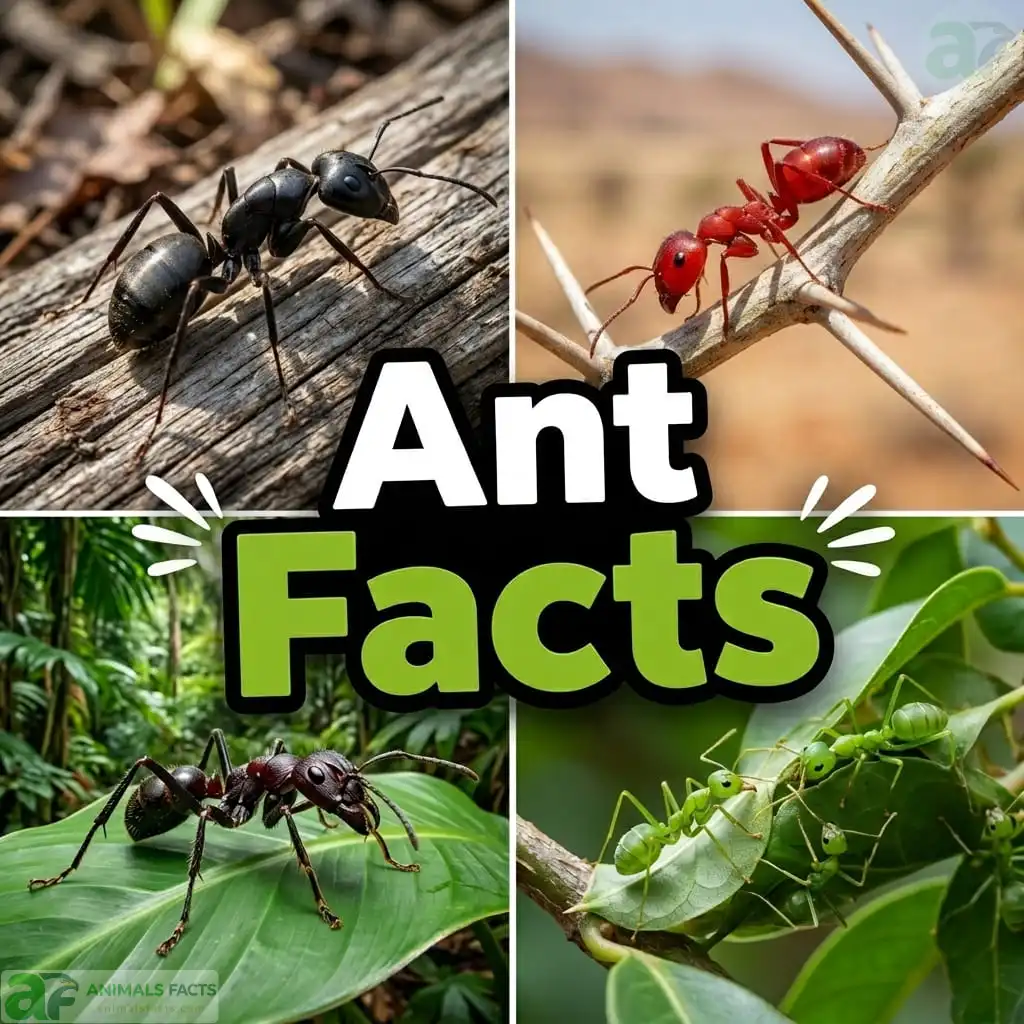
Ant Facts
| Feature | Details |
|---|---|
| Scientific Name | Formicidae (family); ~20,000+ species |
| Kingdom | Animalia |
| Phylum | Arthropoda |
| Class | Insecta |
| Order | Hymenoptera |
| Family | Formicidae (Latreille, 1809) |
| Number of Species | Over 20,000 described species (estimated 20,000–30,000 total) |
| Habitat | Every terrestrial habitat on Earth except Antarctica and the high Arctic |
| Lifespan | Workers: weeks to years; Queens: up to 30+ years |
| Diet | Omnivores — seeds, fungi, nectar, insects, carrion, plant material |
| Size Range | 0.75 mm (Carebara brevipilosa) to 37 mm (Dorylus army ant queen) |
| Weight | From a fraction of a milligram to a few hundred milligrams (queens) |
| Top Speed | Up to 5.1 km/h (Cataglyphis bicolor — Sahara silver ant) |
| Conservation Status | Varies — most common; some species Critically Endangered |
| Global Population | Estimated 20 quadrillion individuals (2022 census) |
| Biomass | Combined ant biomass exceeds that of all wild birds and mammals combined |
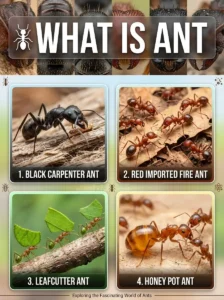 1. Introduction: What is an Ant?
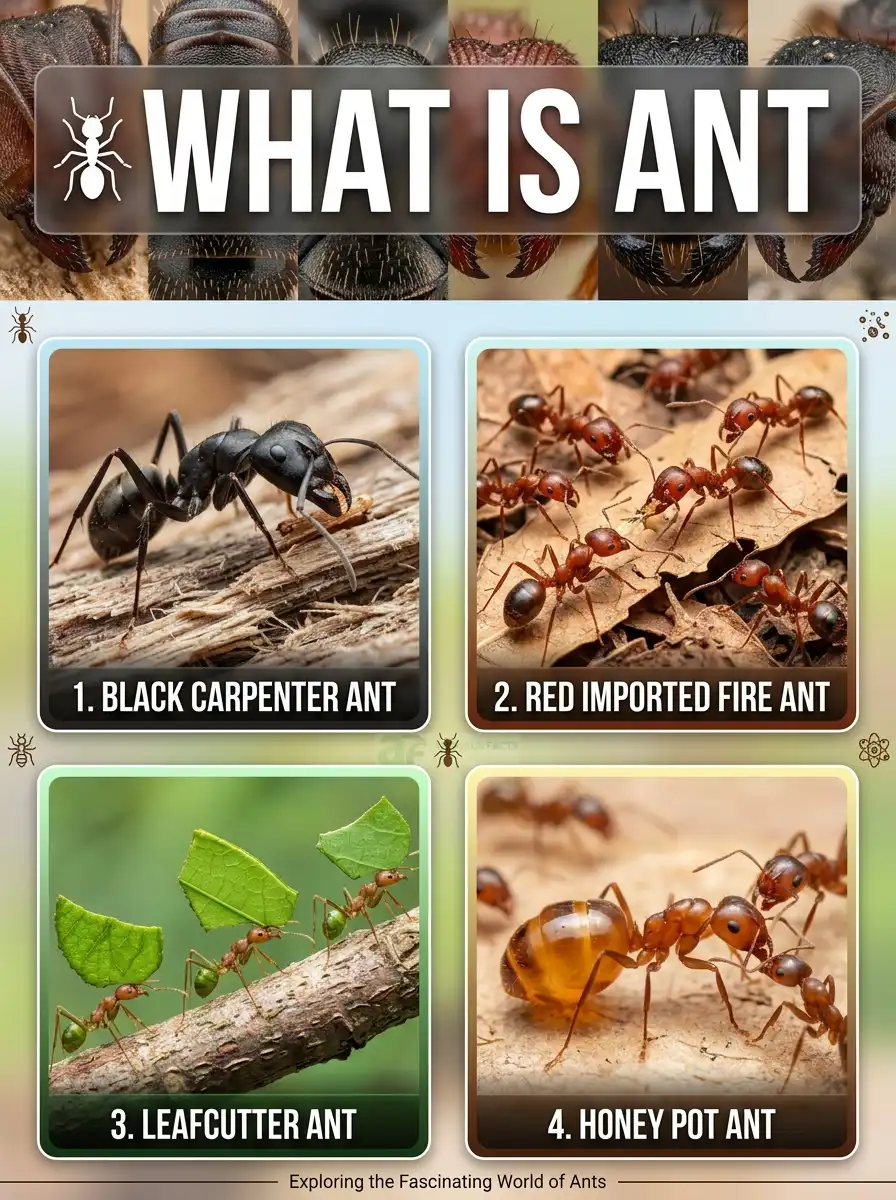
Bend down and look at the ground beneath your feet almost anywhere on Earth — in a tropical rainforest, on a suburban sidewalk, in a desert canyon, at the edge of an arctic meadow — and you will almost certainly find ants. They are, by almost every measurable standard, the most successful land animals on the planet. Ant facts consistently reveal a group of creatures so extraordinarily capable, so profoundly important to terrestrial ecosystems, and so cognitively sophisticated (relative to brain size) that the more you learn about them, the more your entire understanding of what “intelligence” and “society” mean gets quietly but thoroughly revised.
The numbers alone are staggering. A landmark 2022 study published in PNAS calculated the global ant population at approximately 20 quadrillion individuals — that’s 20,000,000,000,000,000 ants alive right now. Their combined biomass exceeds that of all wild birds and all wild mammals on Earth combined. There are approximately 2.5 million ants for every human being alive today. And yet, despite this extraordinary abundance, interesting facts about ants reveal that they are not simply numerous — they are individually remarkable. Ants navigate by the polarization of sunlight. They farm fungi with agricultural practices unchanged for 50 million years. They wage organized warfare, tend livestock, build climate-controlled cities, and communicate in a chemical language of extraordinary complexity.
Whether you’re a student searching for ant facts for kids for a science project, a naturalist who has always marveled at the silent highways of ants crossing your garden path, a researcher interested in ant habitat and ecology, or simply someone who sat on an ant hill once and developed an involuntary but lasting respect for these creatures, this is your comprehensive guide. We cover ant scientific names, ant diet, ant size and weight, ant behavior, ant social structure, and the profound role these tiny animals play in keeping the entire planet functioning. The smallest animals doing the biggest work deserve our full attention. Let’s give it to them.
2. Ants Species Overview & Classification
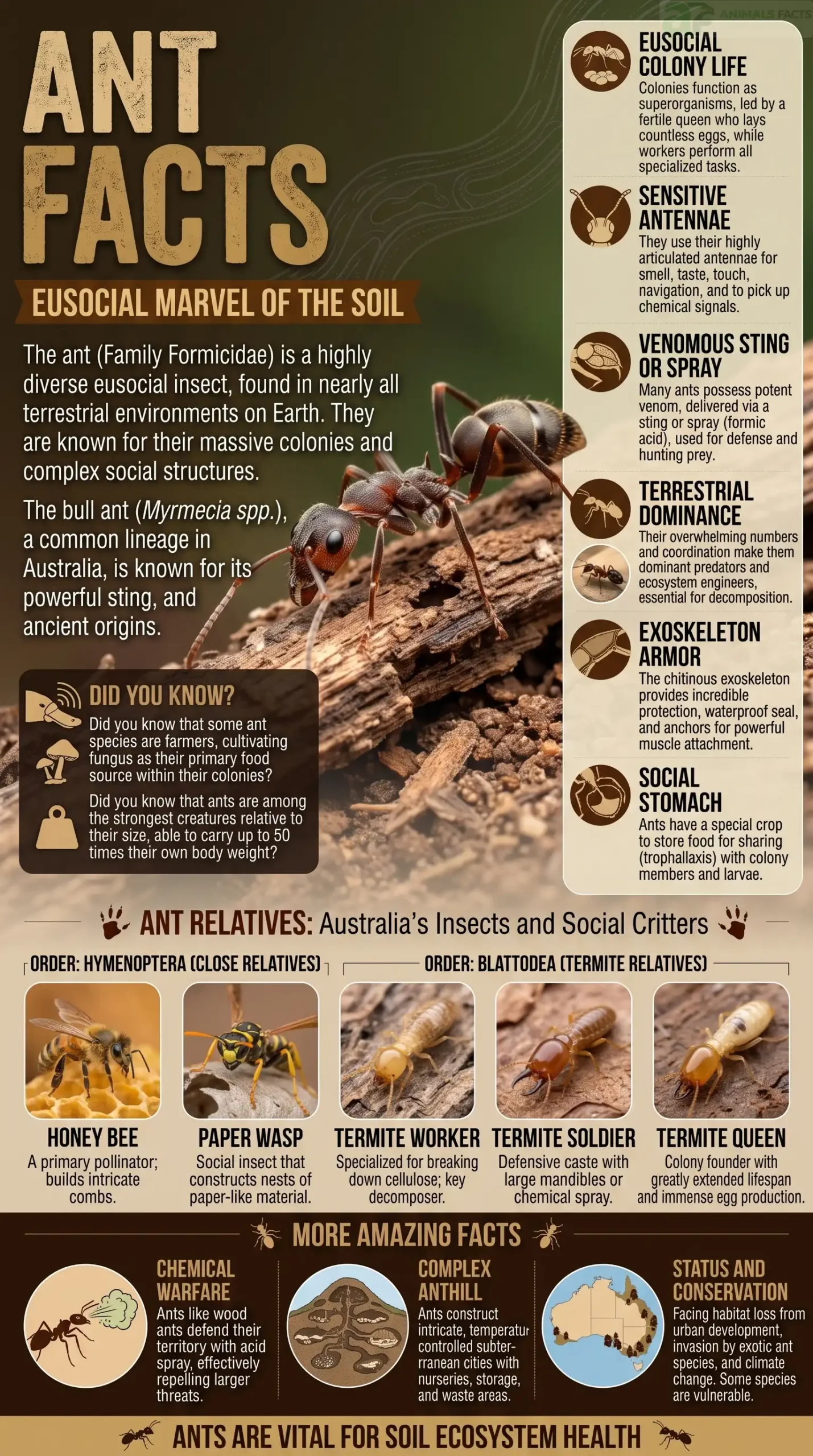
Ants belong to the family Formicidae within the order Hymenoptera — the same order as wasps and bees, from which ants evolved approximately 130–168 million years ago. They are eusocial insects — meaning they live in complex cooperative societies with overlapping generations, reproductive division of labor, and cooperative care of young — a level of social organization shared with termites, some bees and wasps, and remarkably few other animal groups.
Species Classification Table
| Taxonomic Rank | Classification |
|---|---|
| Kingdom | Animalia |
| Phylum | Arthropoda |
| Class | Insecta |
| Order | Hymenoptera |
| Family | Formicidae (Latreille, 1809) |
| Number of Subfamilies | 17 recognized subfamilies |
| Number of Genera | ~340+ genera |
| Number of Described Species | ~20,000+ formally described |
| Estimated Total Species | 20,000–30,000 (including undescribed) |
| Temporal Range | ~130–168 million years ago to present |
Major Ant Subfamilies
Ants are organized into 17 subfamilies, each with distinct characteristics:
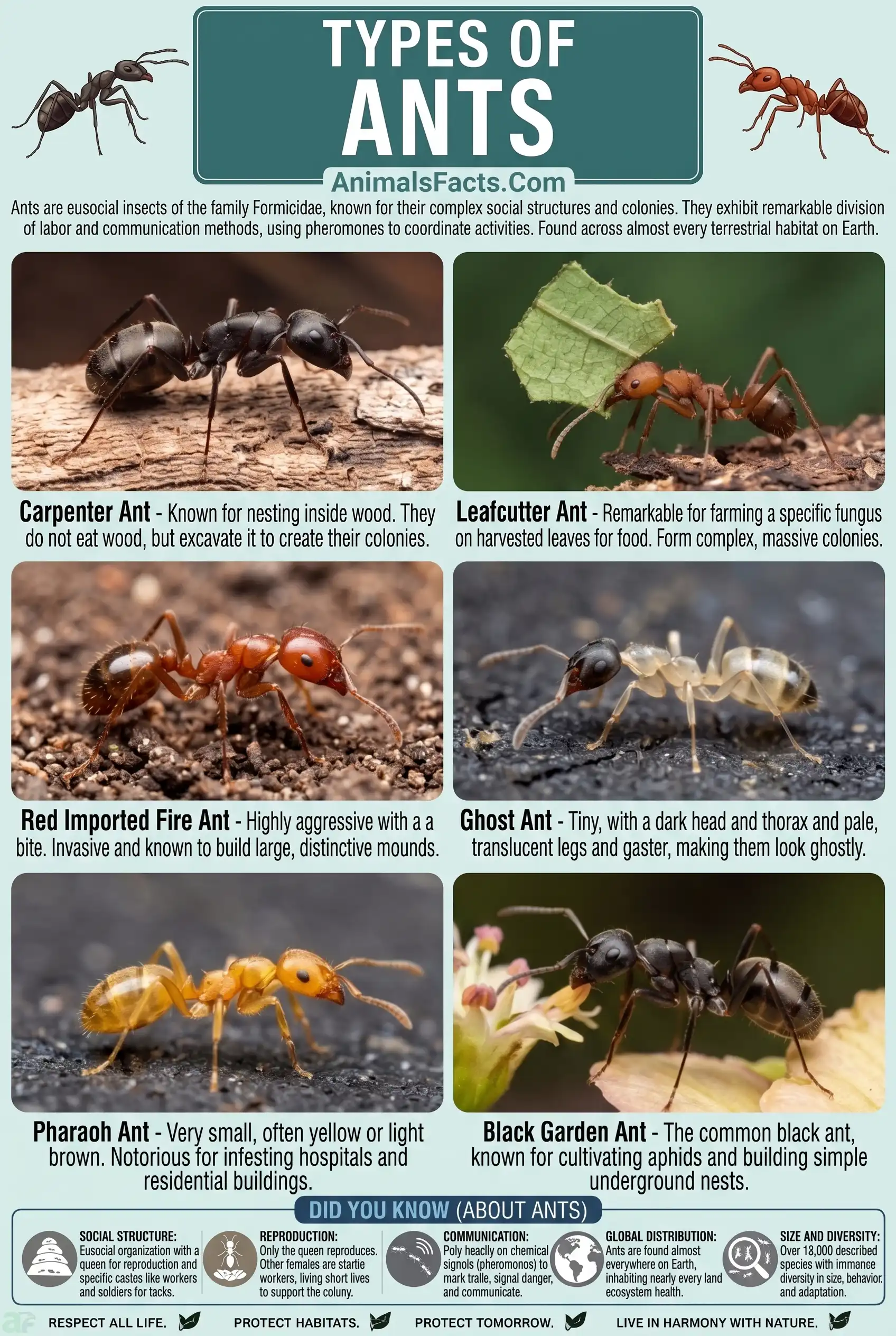
- Formicinae — Includes wood ants, carpenter ants, Formica species; many spray formic acid
- Myrmicinae — The largest subfamily (~6,500 species); includes fire ants, harvester ants, leafcutter ants
- Dolichoderinae — Includes Argentine ants, odorous house ants; produce repellent chemicals
- Ponerinae — “Primitive” ants with simple social structure; includes bullet ant
- Dorylinae — Army ants and driver ants; among the most fearsome predators in the insect world
- Pseudomyrmecinae — Slender, wasp-like ants; many live in acacia tree thorns
Remarkable Species Within Formicidae
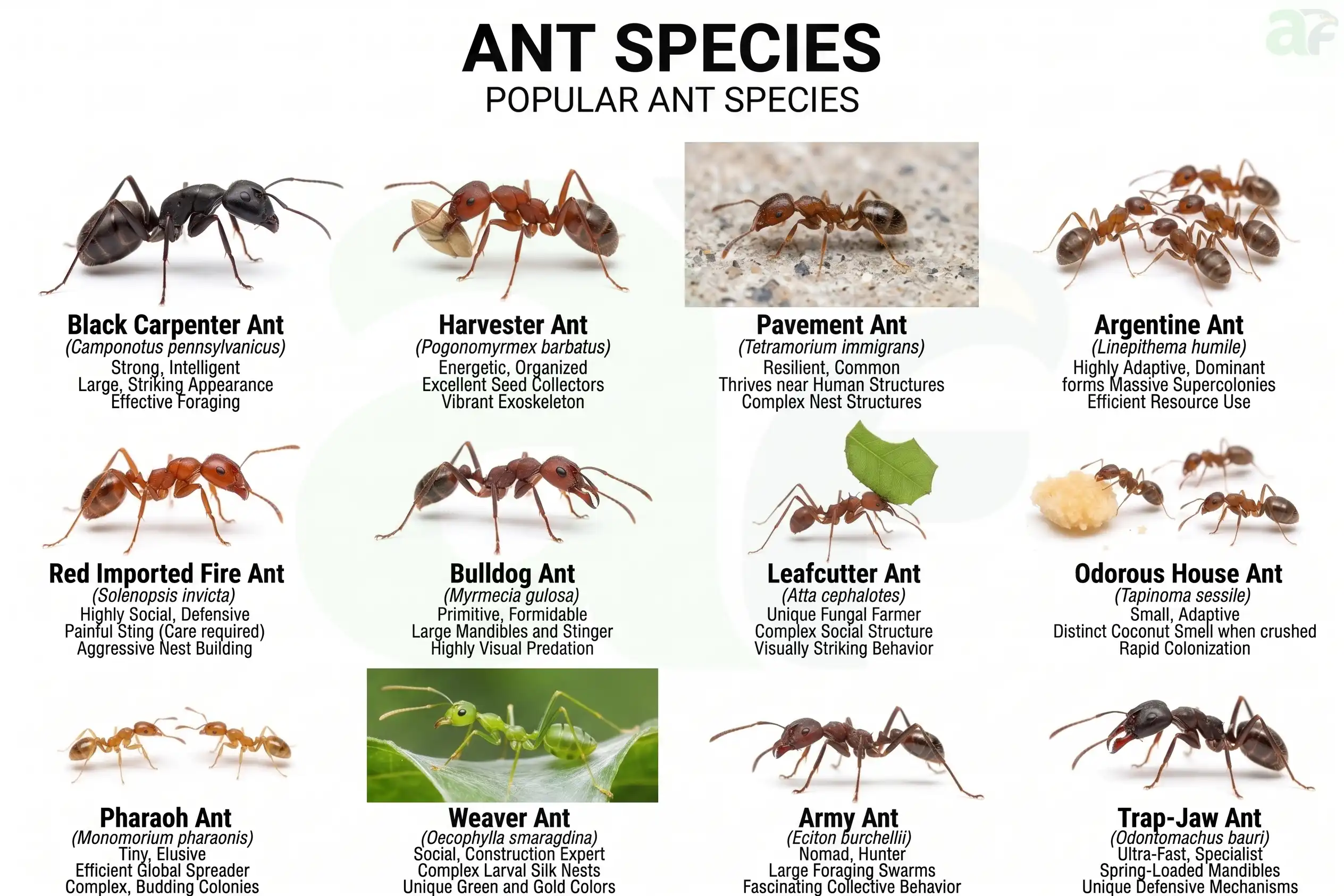
- Atta cephalotes (leafcutter ant) — Master fungus farmers of the American tropics
- Dorylus wilverthi (African driver ant) — Largest ant colonies on Earth; up to 20 million individuals
- Paraponera clavata (bullet ant) — The world’s most painful insect sting
- Cataglyphis bicolor (Sahara silver ant) — Fastest ant; navigates by polarized sunlight
- Solenopsis invicta (red fire ant) — Global invasive; forms living “rafts” to survive floods
- Oecophylla smaragdina (weaver ant) — Builds nests by sewing leaves together using larval silk
- Linepithema humile (Argentine ant) — Formed the world’s largest known supercolony — a network of nests spanning 6,000 km across Southern Europe
Evolution & Discovery Timeline
~300 million years ago — Ancestral hymenoptera appear during the Carboniferous period.
~130–168 million years ago — The first true ants evolve from wasp-like ancestors during the Cretaceous period. The oldest confirmed ant fossil is ~100 million years old, found preserved in amber from Myanmar.
~100 million years ago — The oldest known ant specimen, Sphecomyrma freyi, discovered preserved in Cretaceous amber, shows both ant and wasp characteristics — a remarkable transitional form.
~50 million years ago — Leafcutter ants develop their fungus-farming relationship — one of the oldest agricultural systems known, predating human agriculture by 50 million years.
~40 million years ago — Army ants evolve their characteristic nomadic raiding lifestyle.
~20–15 million years ago — Modern ant genera and subfamilies largely in their current forms; ants are already the dominant ground invertebrates in most terrestrial ecosystems.
1758 — Carl Linnaeus formally classifies ants in Systema Naturae, establishing the scientific foundation for modern myrmecology (the study of ants).
1809 — Pierre André Latreille formally establishes the family Formicidae.
1910–1930 — American entomologist William Morton Wheeler revolutionizes understanding of ant social organization with his concept of the ant colony as a “superorganism.”
1971 — E.O. Wilson publishes landmark research on ant chemical communication that establishes the field of sociobiology and earns him the Pulitzer Prize for his later popular works.
2022 — A comprehensive study published in PNAS produces the first reliable global census of ant populations: ~20 quadrillion individuals representing approximately 12 megatons of dry carbon biomass — more than all wild birds and mammals combined.
“Ants have the most complicated social organization on earth next to humans. Their colonies are superorganisms, where the individual matters not at all except to serve the whole.” — Edward O. Wilson, two-time Pulitzer Prize winner and the world’s leading myrmecologist
3. Physical Description & Unique Features of Ants
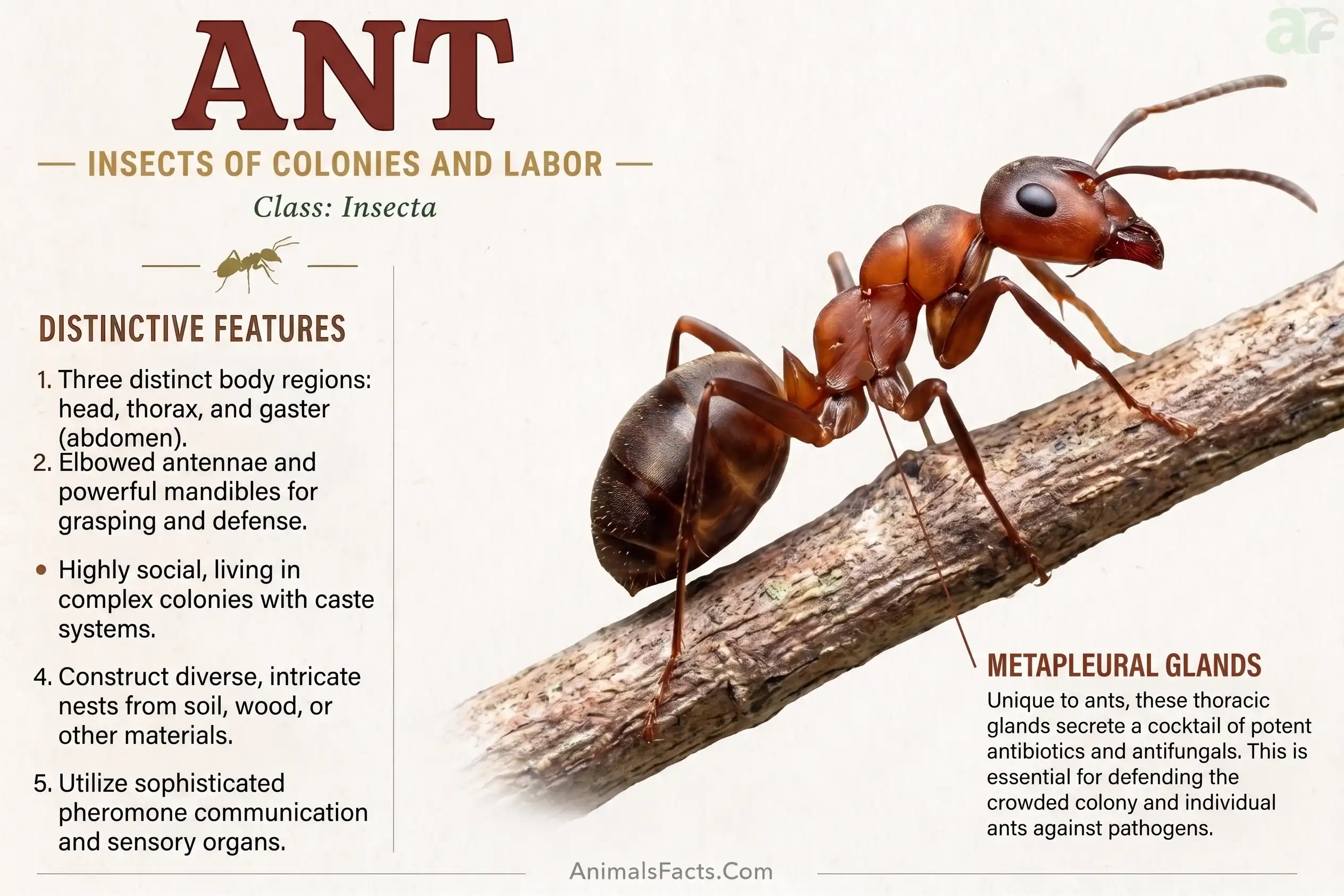
Ant size and weight span an extraordinary range within a single family — from near-invisible specks to insects large enough to be heard walking. Yet all ants share a distinctive body plan that makes them immediately recognizable.
Body Structure
All ants share a three-segmented body plan:
Head — Contains the brain, compound eyes, antennae (critical chemosensory organs), mandibles (the primary tool for digging, carrying, fighting, and food manipulation), and in some species simple eyes (ocelli) that detect light intensity.
Mesosoma (thorax) — The middle segment to which all six legs attach. In winged reproductives, the mesosoma also bears one or two pairs of wings.
Metasoma (gaster) — The abdomen, which contains the digestive system, reproductive organs, and in many species the venom gland connected to the stinger.
Between the mesosoma and metasoma is a distinctive feature unique to ants — the petiole (and in many species a second node, the postpetiole): one or two narrow waist segments that give ants their characteristic pinched appearance and allow extreme flexibility of the gaster for stinging, spraying acid, or grasping prey.
The Ant Castes
The most distinctive feature of ant biology is the caste system — genetically identical individuals expressing radically different physical forms and behaviors depending on developmental conditions:
Queen — The largest caste in most species; sole or primary reproductive female; initially winged, losing wings after mating; can live 10–30+ years. Queens have enormous gasters filled with reproductive organs and fat reserves.
Workers — Sterile females; the backbone of colony function; range from tiny minors to large majors; lifespan typically weeks to several years depending on species.
Soldiers — Specialized workers with enlarged heads and mandibles for colony defense; present in some but not all species.
Males (drones) — Winged; exist solely to mate with virgin queens; typically short-lived (weeks); die after mating.
Size Extremes
The smallest ant known is Carebara brevipilosa (India/SE Asia) — with minor workers measuring approximately 0.75–1 mm in body length. The largest ant is the Dorylus (driver ant) queen — which can reach 37 mm (nearly 1.5 inches) in body length and produce up to 3–4 million eggs per month. Among more commonly known ants, carpenter ant queens (Camponotus species) can reach 20 mm in length.
Did You Know? Ants lack lungs — they breathe through a network of tiny tubes called spiracles that open along the sides of their body and deliver oxygen directly to their tissues. This passive respiratory system is why ants cannot survive underwater for more than a short period, and why fire ant colonies can form floating rafts rather than drown during floods — the ants at the bottom of the raft trap enough air bubbles to keep the colony alive.
4. Top 25 Amazing Ant Facts
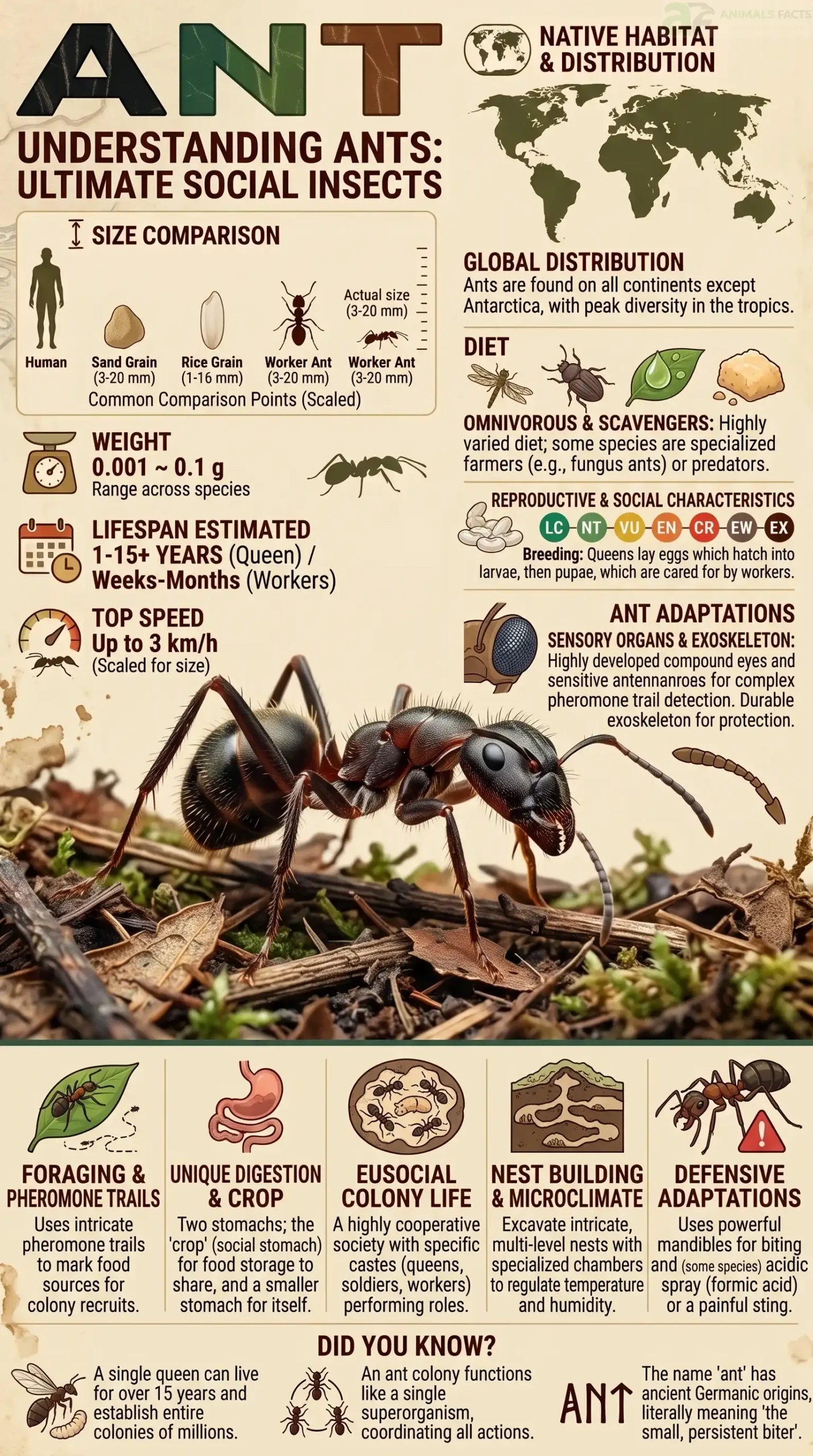
Here is your comprehensive collection of the most extraordinary, scientifically verified, and genuinely mind-bending ant facts as of 2026:
- The global ant population is estimated at ~20 quadrillion individuals — enough ants to form a chain from Earth to the sun and back over 3,000 times.
- Ants have colonized every continent on Earth except Antarctica — and some island environments within the Arctic Circle.
- An ant can carry 10–50 times its own body weight — equivalent to a human carrying a small car.
- Leafcutter ants have practiced fungus farming for approximately 50 million years — making them the inventors of agriculture, 50 million years before Homo sapiens tried it.
- Army ants (Eciton burchellii of South America) can form living structures called bivouacs — temporary nests made entirely from the linked bodies of hundreds of thousands of workers forming walls, chambers, and passageways.
- The Argentine ant (Linepithema humile) has formed the world’s largest known supercolony — a connected network of nests spanning approximately 6,000 km along the Mediterranean coast of Europe.
- Exploding ants (Camponotus saundersi) can detonate themselves as a defense strategy — contracting their bodies so violently that their venom-filled glands rupture, spraying toxic secretions over attackers.
- Some ant species practice chemical warfare — Formica wood ants spray formic acid (which gives ants their family name, Formicidae) accurately at targets up to 30 cm away.
- The bullet ant (Paraponera clavata) has the most painful insect sting in the world — rated 4+ on the Schmidt Pain Index; victims describe the sensation as “waves of burning, throbbing pain” lasting up to 24 hours.
- Certain ant species have evolved zombie ant manipulation — the fungus Ophiocordyceps unilateralis (a different organism than ants, but affecting them) infects ants and controls their behavior, causing them to climb to a specific height and bite a leaf vein before dying and releasing spores.
- Queen fire ants (Solenopsis invicta) can fly, mate, establish a colony, and lay thousands of eggs per day — all from a single mating flight.
- Ants have been farming aphids as livestock for millions of years — herding them, protecting them from predators, milking them for honeydew, and even relocating them to better feeding sites.
- The Sahara silver ant (Cataglyphis bicolor) can navigate back to its nest from any location in the open desert using a sophisticated path integration system — counting its own steps and calculating direction from the angle of polarized sunlight.
- Weaver ants (Oecophylla species) construct their nests by sewing leaves together — holding the edges of two leaves together while other workers carry larvae across the seam, stimulating them to produce silk that bonds the leaves.
- Some ant species engage in slavery — raiding the nests of other species, stealing pupae that develop into enslaved workers that perform labor for the raiding colony.
- The combined ant biomass on Earth represents approximately 12 megatons of dry carbon — exceeding the combined mass of all wild birds and all wild mammals.
- Ants have been documented farming aphid eggs through winter — storing them in their underground chambers and bringing them to fresh plants in spring, then returning them to storage each autumn.
- Fire ant colonies can survive flooding by forming living rafts — with thousands of workers interlocking their bodies to create a waterproof floating platform, with the queen and eggs protected in the center.
- The trap-jaw ant (Odontomachus bauri) can close its mandibles at speeds of 126–230 km/h — the fastest-moving appendage of any living animal — generating forces capable of launching the ant several centimeters into the air as an escape mechanism.
- Ants perform surgery — a 2024 study in Nature Communications confirmed that Florida carpenter ants (Camponotus floridanus) amputate the limbs of injured nestmates, treating the wound with antimicrobial secretions, with an extremely high survival rate for treated individuals.
- A single leafcutter ant queen can live for over 25 years — establishing, growing, and directing a colony that can ultimately contain 8–10 million workers.
- Ants “talk” to each other primarily through pheromones — chemical signals that can convey information about food location, danger, identity, and social status with remarkable specificity.
- The Mycocepurus smithii leafcutter ant species is entirely female — all individuals are sterile clones of the queen, with no males ever produced; reproduction occurs exclusively through parthenogenesis (unfertilized eggs).
- Ants maintain dedicated cemeteries (“middens“) where dead colony members are deposited — with workers responding to oleic acid (the chemical of decomposition) and removing any object producing it, including live nestmates experimentally painted with the compound.
- Fossil evidence indicates that ants survived the Cretaceous-Paleogene mass extinction (the same event that killed non-avian dinosaurs) — diversifying explosively in the new ecological landscape following the extinction.
5. Ant Fun Facts for Kids
- Ants have inhabited Earth for over 130 million years
- The total weight of ants on Earth exceeds the weight of all wild birds and mammals combined
- Ants have two stomachs — one for personal digestion and one (the crop) for storing food to share with nestmates
- Some ant queens live for over 30 years — making them among the longest-lived insects on Earth
- Ants don’t have ears — they “hear” through vibrations sensed in their legs and body
- Fire ants can form a living raft that floats for weeks without drowning
- The trap-jaw ant has the fastest bite of any animal — up to 230 km/h
- Ants teach each other — a process called tandem running where experienced ants guide naive nestmates to food
- Ant colonies can contain from a few dozen to 20+ million individuals depending on species
- Ants were the first farmers on Earth — 50 million years before humans
- Some ant species are legally protected — several Formica species in European countries are protected by law
- A colony of leafcutter ants can defoliate a citrus tree overnight
6. Natural Habitat & Geographic Range
Ant habitat diversity is virtually unmatched in the insect world. Ants have colonized every terrestrial ecosystem on Earth except the permanently frozen zones of Antarctica and the high Arctic — and even in subarctic environments, cold-tolerant species push the boundaries of where ants can survive.
Habitat Types
Ants occupy tropical rainforests, temperate deciduous forests, boreal taiga, deserts, grasslands, wetland margins, alpine meadows, coastal dunes, agricultural fields, suburban gardens, and the inside of human homes and buildings. They nest underground, in rotting wood, in living plants, under rocks, in leaf litter, in soil mounds, between wall cavities, and suspended in trees.
Habitat Range by Continent
| Continent/Region | Notable Species | Primary Habitat Types | Diversity Level |
|---|---|---|---|
| South America | Leafcutter ants, army ants, bullet ant, fire ant | Tropical rainforest, savanna, cloud forest | Highest — >3,000 species |
| Africa | Driver ants, weaver ants, harvester ants | Rainforest, savanna, desert | Very high |
| Asia | Weaver ants, carpenter ants, fire ants (invasive), Carebara | Tropical forest, agricultural, urban | Very high |
| Australia | Bulldog ants, jack jumper ants, green tree ants | Woodland, scrubland, desert | High — many unique genera |
| North America | Carpenter ants, fire ants (invasive), harvester ants, Formica | Forest, grassland, desert, suburban | High |
| Europe | Red wood ants, black garden ants, yellow meadow ants, Argentine ant (invasive) | Woodland, grassland, urban | Moderate |
| Arctic/Subarctic | Formica species, Lasius species | Taiga edge, tundra margin | Low but present |
| Antarctica | None native | N/A | Absent |
Did You Know? The red wood ant (Formica rufa) of European forests builds mound nests that can reach 2 meters high and 7 meters in diameter — housing up to 500,000 workers — and has been building in the same forest patches for hundreds of years. Some European wood ant mound complexes are believed to be over 400 years old, making them among the longest-lived continuously occupied animal structures outside of human construction.
7. Diet & Feeding Behavior
Ant diet spans virtually the entire range of available food types — ants are among the most successful omnivores on the planet, and different species have evolved remarkable specializations within the broad omnivore category.
Diet Breakdown Table
| Food Type | Approximate % of Global Ant Species That Consume It | Notable Examples |
|---|---|---|
| Sugars (nectar, honeydew, fruit) | ~80% | Most worker species; sugar ants, carpenter ants |
| Seeds and grains | ~40% | Harvester ants (Messor, Pogonomyrmex) |
| Fungi (cultivated or foraged) | ~40% | Leafcutter ants, fungus gardeners |
| Other insects and arthropods | ~60% | Army ants, fire ants, ponerine ants |
| Vertebrate prey (birds, mammals, reptiles)** | ~5% | Driver ants, army ants (swarms) |
| Carrion and dead organisms | ~50% | Most generalist species |
| Plant material (leaves, stem tissue) | ~30% | Leafcutter ants (for fungus substrate), some direct feeders |
| Aphid honeydew (farmed) | ~40% | Formica, Lasius, Camponotus |
| Blood and body fluids | ~2% | Some ponerine and army ant species |
Remarkable Feeding Strategies
Leafcutter ant agriculture — The most sophisticated non-human food production system on Earth. Leafcutter ants (Atta and Acromyrmex species) cut fragments of leaves, flowers, and soft plant material — not to eat directly, but to carry back to underground fungus gardens where the material serves as substrate for cultivating the fungus Leucoagaricus gongylophorus. The fungus is the sole food source for the colony’s larvae. The agricultural system includes pest management (using bacterial secretions from specialized body glands to suppress competing mold species), quality control (workers reject plant material toxic to their fungus), and selective breeding (different genetic strains of the fungus have been maintained by different leafcutter populations for millions of years).
Army ant raiding — Columns of South American army ants (Eciton burchellii) can number 200,000 individuals in a single swarm raid, flowing through the forest floor and consuming every invertebrate, small vertebrate, and immobile animal unable to escape. A single swarm raid covers a front of 20 meters and advances at 20 meters per hour, consuming everything in its path.
Tandem running teaching — Ant species including Temnothorax albipennis engage in tandem running — an experienced worker leads a naive nestmate to a new food source or nest site using a coordinated leader-follower system, with the leader adjusting speed to keep the follower in contact. This represents one of the clearest examples of teaching (as formally defined in behavioral biology) outside of vertebrates.
8. Reproduction & Life Cycle
The ant life cycle is one of the most complex and fascinating in the insect world, centered on the queen as the colony’s sole or primary reproductive individual and characterized by complete metamorphosis and elaborate caste determination.
The Nuptial Flight
Ant reproduction is typically initiated by a nuptial flight — a mass emergence of winged reproductive males and virgin queens (alates) that fly into the air to mate. This event is often synchronized across entire populations of a species, triggered by specific environmental conditions (temperature, humidity, wind). The synchronization ensures that males and queens from different colonies meet — preventing inbreeding.
During the nuptial flight, a queen typically mates with multiple males, storing sperm in her spermatheca (a specialized organ) that she will use to fertilize eggs for the rest of her life — sometimes 20–30 years. After mating, males die; queens find a suitable nest site, remove their wings (which they absorb as a nutrient source during the founding phase), and begin establishing a new colony.
Colony Founding
A newly mated queen initially raises her first brood entirely alone — feeding the larvae from her own fat reserves and metabolized wing muscles. The first workers that emerge are typically small (nanitic workers) — they take over foraging and brood care, allowing the queen to focus exclusively on egg production for the rest of her life.
Complete Metamorphosis
Like all holometabolous insects, ants undergo complete metamorphosis through four stages:
- Egg — Tiny, oval, white; typically deposited in specialized brood chambers
- Larva — Legless, worm-like; fed by workers; undergoes multiple instars (growth stages)
- Pupa — Non-feeding; undergoing metamorphosis; in some species enclosed in a silken cocoon
- Adult (imago) — Fully formed ant; caste determined by developmental conditions during larval stage
Caste Determination
Whether a larva develops into a queen, worker, or soldier is determined primarily by nutrition and pheromones during the larval stage — not genetics. In most species, larvae fed richer diets and separated from queen-produced inhibitory pheromones develop into reproductive queens; larvae fed restricted diets in the presence of queen pheromones develop into sterile workers. The mechanisms are remarkably precise and actively managed by the colony.
Lifespan Comparison Table
| Species/Caste | Worker Lifespan | Queen Lifespan | Colony Size |
|---|---|---|---|
| Leafcutter ant (Atta cephalotes) | 1–2 months | 15–25 years | 1–10 million |
| Red wood ant (Formica rufa) | 1–2 years | 15–25 years | 100,000–500,000 |
| Fire ant (Solenopsis invicta) | ~5 weeks | 6–7 years | 100,000–500,000 |
| Argentine ant (Linepithema humile) | ~1 year | Several years | Millions (supercolony) |
| Driver ant (Dorylus wilverthi) | ~1 month | Up to 15 years | 15–22 million |
9. Social Behavior & Communication
Ant social behavior and communication represent perhaps the most sophisticated collective intelligence system found in any non-human animal — achieved without any individual ant having more than the simplest neurological complexity.
The Superorganism
The concept of the ant colony as a superorganism — first articulated by William Morton Wheeler in the early 20th century and elaborated by E.O. Wilson — captures something fundamental about ant biology. No individual ant “understands” the colony. No ant plans the architecture of the nest or decides when to launch a raid. Yet the colony as a whole builds precise, thermally regulated, architecturally sophisticated nests, launches coordinated military operations, manages agriculture, maintains health and hygiene systems, and adapts to environmental change with remarkable efficiency. The colony’s intelligence is genuinely emergent — arising from the interactions of thousands of simple individuals following simple rules.
Chemical Communication
Ants communicate primarily through pheromones — chemical signals that are detected by the antennae with extraordinary sensitivity. Different glands produce different pheromone types conveying specific information:
- Trail pheromones — Deposited by foragers returning from food sources; recruit other workers to follow the route; self-amplifying (more successful trails become stronger, less-used trails evaporate)
- Alarm pheromones — Released when ants are threatened; trigger defensive or aggressive behavior in nearby nestmates
- Queen pheromones — Produced by the queen; suppress worker reproductive development; signal queen presence and health
- Death pheromones (oleic acid and related compounds) — Signal that a nestmate has died and should be removed from the colony
- Recognition pheromones (cuticular hydrocarbons) — Allow ants to identify nestmates vs. strangers, caste, and reproductive status
Sound & Vibration
Many ant species also communicate through stridulation — producing sounds by rubbing body parts together. These vibrations are transmitted through the substrate and detected by legs, providing alarm signals and coordination cues not detectable by other species.
Collective Decision Making
Ant colonies make collective decisions — about nest location, raiding routes, resource allocation, and response to threats — through decentralized processes where individual ants follow local rules that aggregate into colony-level behavior. Studies of T. albipennis (a rock ant) have shown that colonies locate optimal nest sites through a quorum sensing mechanism — individual scouts investigate potential sites and recruit nestmates only when they have encountered sufficient numbers of other scouts at a given site, ensuring collective validation before commitment.
10. Predators & Defense Mechanisms
Despite their enormous populations, individual ants face an array of natural predators — and have evolved an extraordinary range of defensive strategies in response.
Natural Predators
- Anteaters (giant anteater, tamandua) — Specialized ant predators with elongated snouts and sticky tongues capable of extracting ants from defended nests
- Aardvarks — African equivalent of anteaters; heavy excavators of termite and ant mounds
- Pangolins — Scale-covered mammals that roll into balls when disturbed; highly specialized ant eaters
- Woodpeckers — Use their bills to excavate ant-rich wood; significant predators of carpenter ants
- Various birds — Many bird species consume ants, particularly during nuptial flights
- Lizards, frogs, and toads — Major predators of worker ants at the surface
- Antlions — Larval antlions (Myrmeleon species) create pitfall traps specifically to capture ants
- Other ants — Army ants, slave-making ants, and competitive species prey on other ant colonies
- Parasitic wasps — Some parasitize ant larvae or adults
Defense Strategies
Chemical weaponry — Ants deploy an extraordinary arsenal of chemical defenses. Formic acid (sprayed by Formica species), venom (injected by stinging species including fire ants and bullet ants), repellent secretions (produced by Dolichoderinae species), and contact toxins all deter predators.
Physical defense — The mandibles of soldier castes are the primary physical weapon. Soldier ants of species like Camponotus (carpenter ants) and Atta (leafcutter ants) have mandibles capable of drawing blood from human fingers with their grip. Driver ant soldiers have hooklike mandibles that lock onto attackers and cannot be removed without tearing the ant’s body from its head.
Self-sacrifice (autothysis) — Malaysian exploding ants (Camponotus saundersi) contract their bodies until their venom glands rupture, spraying toxic secretions in a final defensive act.
Group defense — When a colony is threatened, alarm pheromones instantly recruit thousands of defenders. Fire ant swarms can kill and consume vertebrate animals many times their own size through coordinated mass attack.
Nest architecture — Many species build nests specifically designed for defense — with narrow, easily blockable entrances; false corridors; and sealed emergency chambers.
Did You Know? A 2024 study in Nature Communications confirmed that Florida carpenter ants perform limb amputation surgery on injured nestmates — nurses amputate injured legs at specific locations (at the upper femur, not the lower) based on the type of injury and infection risk, apply antimicrobial secretions, and the survival rate of treated ants is over 90%. This represents the first documented case of limb amputation as a medical treatment in any non-human animal.
11. Ant Facts for Kids
Hey young explorers and future scientists! Here are the most incredible ant facts for kids that will absolutely blow your mind:
🐜 Ants are SUPER strong! An ant can carry 10 to 50 times its own body weight. That’s like you carrying a car — or maybe two!
🐜 Ants invented farming 50 MILLION years ago! Leafcutter ants grow their own food — a special fungus that they feed with cut leaves. They were farming long before any human even existed!
🐜 Ants can float! Fire ants link their bodies together to form a living raft when their underground home floods. They can float for weeks without drowning!
🐜 Ants have TWO stomachs! One stomach digests food for themselves, and one special stomach stores food to share with the whole colony — like carrying a lunchbox for all their friends.
🐜 The queen ant can live for 30 YEARS! That’s older than many of your parents’ cars. Regular worker ants only live a few weeks, but the queen keeps the whole colony going for decades.
🐜 Ants can teach each other! Some ant species guide their friends to food using a special “tandem running” technique — like taking a friend by the hand to show them where the good snacks are.
🐜 Ants talk with smells! They release chemicals called pheromones that other ants can “smell” with their antennae, sending messages about food, danger, and more — all without making a single sound.
🐜 Some ants can EXPLODE! Malaysian exploding ants squeeze their bodies so hard that they pop open, covering enemies in toxic goo. Now THAT’S a superhero power!
12. Relationship with Humans
The relationship between ants and humans is one of the most complex, ancient, and consequential human-animal relationships in existence — spanning everything from pest control and agriculture to medicine, cultural mythology, and frontier-breaking scientific discovery.
Agricultural & Economic Impact
Ants have a dual relationship with human agriculture. On one hand, beneficial ants provide enormous pest control services — consuming enormous quantities of crop-damaging insects and aerating soil in ways that improve crop yields. Leafcutter ant colonies in natural forest systems turn over more soil than earthworms per unit area and contribute significantly to nutrient cycling.
On the other hand, harmful invasive ant species — particularly the red imported fire ant (Solenopsis invicta), the Argentine ant (Linepithema humile), and the little fire ant (Wasmannia auropunctata) — cause billions of dollars of agricultural, ecological, and public health damage annually. Fire ants sting humans, livestock, and wildlife with potentially fatal results; Argentine ants displace native species across entire regions; and fire ants damage electrical equipment (with billions of dollars of damage in the United States alone from electrical system failures caused by fire ants nesting in junction boxes and circuit breakers).
Medical Significance
Ant stings are a significant medical concern globally. Fire ant stings cause tens of thousands of anaphylactic reactions and several deaths annually in the United States. Bullet ant stings (Paraponera clavata) are used in a painful initiation ceremony by the Sateré-Mawé people of Brazil — young men wear gloves filled with hundreds of bullet ants and must keep them on for 10 minutes as a test of endurance and entry to warrior status.
Conversely, ant venom compounds are being actively studied for medical applications — compounds derived from fire ant and bullet ant venom have shown potential as antibiotics, anti-cancer agents, and treatment for rheumatoid arthritis.
Ants as Food
Ants and their larvae are consumed as food in multiple cultures worldwide. In Mexico, escamoles (ant larvae, particularly of Liometopum apiculatum) are considered a delicacy — sometimes called “insect caviar” — and command premium prices. In Colombia, Hormigas culonas (big-bottomed ants — Atta laevigata queens) have been eaten since pre-Columbian times and are sold as a snack food. In various Southeast Asian and African cultures, weaver ant larvae, leafcutter ants, and other large ant species are consumed regularly as high-protein food sources.
13. Conservation Status & Threats
While ants as a group are extraordinarily abundant and successful, individual species face genuine conservation threats — and the loss of specific ant species can have disproportionate ecological consequences given their keystone roles.
Conservation Status Overview
| Status Category | Approximate Number of Ant Species |
|---|---|
| Not assessed (vast majority) | ~18,000+ species |
| Least Concern | ~500 assessed species |
| Near Threatened | ~50 species |
| Vulnerable | ~40 species |
| Endangered | ~25 species |
| Critically Endangered | ~15 species |
| Legally Protected | Several European Formica species |
Threatened Species Examples
- Sri Lankan relict ant (Aneuretus simoni) — One of the world’s rarest ants; a living fossil and sole member of subfamily Aneuretinae; confined to a tiny area of Sri Lankan rainforest; classified as Vulnerable
- Velvety tree ant (Liometopum occidentale) — Western US; threatened by habitat loss
- Formica species (Europe) — Multiple European wood ant species legally protected in Germany, UK, Switzerland due to old-growth forest habitat loss
Major Threats
| Threat | Impact |
|---|---|
| Habitat destruction (deforestation, urbanization) | Loss of specialized habitat for endemic species |
| Invasive ant species | Argentine ants, fire ants displace native species globally |
| Pesticide use | Broad-spectrum insecticides kill non-target ant species |
| Climate change | Alters phenology, prey availability, and habitat quality |
| Light pollution | Disrupts nuptial flight timing and colony behavior |
14. Famous Ants in History & Pop Culture
Scientifically Famous Ant Individuals & Colonies
E.O. Wilson’s Lasius niger colonies (1950s–1960s) — Harvard entomologist E.O. Wilson conducted landmark experiments with black garden ant colonies that established the foundations of modern ant communication research, earning him recognition as the world’s foremost myrmecologist and two Pulitzer Prizes for his subsequent books.
The Californian Argentine ant supercolony — A single connected Argentine ant supercolony detected through genetic analysis stretching from San Diego to San Francisco (~900 km) along the California coast — and subsequently linked to the Mediterranean European supercolony spanning 6,000 km — forming what is potentially a single genetically connected ant network across two continents.
The Leafcutter Queen “Atta” — Documented leafcutter ant queens at research stations in Trinidad and Panama whose colonies have been continuously monitored for over 25 years — providing the most complete longitudinal datasets on ant colony development and queen longevity in scientific literature.
15. Role in Ecosystem & Food Chain
Ants are perhaps the single most important group of invertebrates in terrestrial ecosystems — performing so many simultaneous ecological functions that their removal from any ecosystem causes measurable and significant deterioration.
Soil Engineers
Ants are the world’s most important soil engineers outside of earthworms. Their tunneling, nest-building, and chamber construction aerates soil, improves drainage, increases water infiltration, and brings subsoil material to the surface. Studies have shown that soil where ants are active has significantly better physical structure, higher nutrient levels, and more diverse microbial communities than ant-free soil.
A single red wood ant colony (Formica rufa) moves an estimated 1 tonne of soil per year — and a forest containing hundreds of such colonies has its entire upper soil layer substantially churned and aerated over the course of decades.
Seed Dispersal (Myrmecochory)
Over 11,000 plant species worldwide — approximately 4.5% of all flowering plants — depend primarily on ants for seed dispersal, a relationship called myrmecochory. These plants produce seeds with a nutritious fatty appendage called an elaiosome that ants collect and carry back to their nests, discarding the viable seed in a nutrient-rich midden environment ideal for germination. Plants in this relationship include many woodland wildflowers (bloodroot, trillium, hepatica), Australian Proteaceae, and South African fynbos species.
Pest Control
Ants are the world’s largest biological pest control system — consuming enormous quantities of other insects, including agricultural pests, disease vectors, and decomposers. Studies in tropical agriculture have shown that maintaining native ant communities reduces crop damage from caterpillars and beetles by up to 50% compared to ant-excluded controls.
Decomposition
As generalist scavengers, ants contribute significantly to decomposition — breaking down dead insects, small vertebrates, and plant matter into nutrient components that can be recycled through the ecosystem. Their activity accelerates decomposition rates measurably compared to ant-excluded environments.
16. Myths, Folklore & Cultural Significance
Ants have featured in human mythology, folklore, and philosophical writing across virtually every culture that has shared its environment with them — typically as symbols of industry, community, wisdom, and the power of the collective over the individual.
Aesop’s Ants
The most famous ant in Western cultural history is the ant of Aesop’s Fable “The Ant and the Grasshopper” (6th century BCE) — which established the ant as the universal symbol of industrious foresight contrasted with the grasshopper’s improvident idleness. This fable has been retold in essentially every European language and culture and remains one of the most widely known moral stories in the Western tradition.
Solomon’s Ants
In the Hebrew Bible (Proverbs 6:6), King Solomon’s wisdom literature specifically commends the ant as a model of industrious self-direction: “Go to the ant, thou sluggard; consider her ways, and be wise.” This passage cemented the ant’s role as a moral exemplar in Jewish, Christian, and Islamic traditions — a tiny creature whose organization and industry put lazy humans to shame.
Indigenous American Traditions
In Hopi and Navajo mythology, Ant People (Sowi’ngwa) are underground beings who sheltered the first humans during the destruction of previous worlds — playing a salvific role in the creation narrative. The ant is therefore sacred in some Southwestern Puebloan traditions, associated with survival, perseverance, and the underground world.
In Amazonian indigenous traditions, the bullet ant (Paraponera clavata) features in rites of passage of the Sateré-Mawé people — young men demonstrate their transition to warrior status by enduring 10 minutes of bullet ant stings with hands enclosed in ant-filled gloves. This ritual, which must be completed 20 times over a boy’s initiation period, treats the ant not merely as a physical organism but as a spiritual force capable of conferring strength and courage.
Asian Traditions
In Chinese culture, the ant is a symbol of loyalty, patriotism, and hard work — appearing in classical literature as a model of collective virtue. In Japanese tradition, ants symbolize diligent teamwork and appear in proverbs emphasizing the importance of collective effort over individual ambition.
17. Ants in Pop Culture
Antz (DreamWorks, 1998) — Featuring an all-star voice cast including Woody Allen and Sylvester Stallone, this animated film depicts an ant colony navigating themes of individuality, conformity, and revolution — one of the most philosophically ambitious animated films of the 1990s. It generated considerable scientific interest for its (relatively) accurate depiction of ant caste dynamics.
A Bug’s Life (Pixar, 1998) — Released in the same year as Antz, Pixar’s version features an ant colony oppressed by grasshoppers. Its depiction of collective action, resource allocation, and social dynamics drew on genuine myrmecological research.
The Ants by Bert Hölldobler & E.O. Wilson (1990) — The most comprehensive scientific treatise on ants ever published, this 732-page monograph won the Pulitzer Prize for General Nonfiction in 1991 — one of the very few scientific textbooks to win a major literary prize.
Ant-Man (Marvel Cinematic Universe, 2015–present) — The Marvel superhero whose powers derive from size manipulation and ant communication has generated enormous public awareness about real ant biology — film producers consulted with myrmecologists, and the films’ depictions of ant behavior (while fantastical) incorporate genuine facts about ant species, colony behavior, and communication.
18. Ant Facts vs. Common Myths
| Common Myth | The Real Fact |
|---|---|
| “Ants are simple, mindless creatures” | Ant colonies demonstrate emergent intelligence, collective decision-making, teaching, and problem-solving at a level unmatched in most animal groups |
| “All ants sting” | False — only ants with a functional stinger can sting; many species (Formicinae, most Dolichoderinae) cannot sting and instead bite and spray formic acid |
| “The queen ant rules the colony” | Misleading — the queen is the colony’s reproductive center, but does not “rule” or direct worker behavior; the colony is a self-organizing system |
| “Ants are insects that can carry any weight” | While impressive, the “20x body weight” figure is for small ants; large ants carry less relative to body weight |
| “Army ants can skeletonize a human” | Exaggerated — army ants avoid large mobile animals; their prey is primarily small invertebrates and vertebrates; healthy humans are not at risk |
| “Fire ants are native to North America” | False — red fire ants (Solenopsis invicta) are invasive from South America, accidentally introduced to the US in the 1930s |
| “Ants don’t sleep” | False — both workers and queens sleep, in short cycles; queens have longer sleep periods |
| “Ants are endangered” | As a group, no — but individual species face genuine extinction risk, particularly endemic island and forest specialists |
19. Best Places to Experience Ants in the Wild
1. Amazon Rainforest, Peru & Brazil — The most ant-diverse region on Earth. Guided forest walks with knowledgeable naturalists offer encounters with leafcutter ant highways, army ant raids in progress, bullet ant colonies, and dozens of specialist species. Every square meter of Amazon forest floor supports multiple ant colonies simultaneously.
2. Costa Rica & Panama — Outstanding accessibility for ecotourists combined with extraordinary ant diversity. Barro Colorado Island in Panama is one of the most studied ecosystems on Earth precisely because of its ant diversity — research stations offer guided walks past active leafcutter ant trails that can be 100 meters long.
3. Borneo, Malaysia — The dipterocarp forests of Borneo host spectacular weaver ant (Oecophylla) colonies in the forest canopy, multiple army ant species, and some of the highest ant species density outside the Neotropics.
4. Namib Desert, Namibia — The extraordinary Sahara silver ant has a Namibian cousin, and desert ant diversity in the Namib is remarkable — species adapted to extreme heat, sandstorm conditions, and minimal water make this one of the most challenging and impressive ant communities on Earth.
5. Białowieża Forest, Poland/Belarus — Europe’s most intact old-growth forest contains extraordinary red wood ant (Formica rufa) mound communities — some mounds over a century old, reaching 2 meters height, supporting hundreds of thousands of workers. The mounds are a UNESCO World Heritage-adjacent attraction in their own right.
6. Australian Outback — Australia has a remarkably distinct ant fauna with many endemic genera, including the extraordinary bulldog ant (Myrmecia) — among the most primitive living ants, capable of jumping and with excellent vision — and the jack jumper ant (Myrmecia pilosula), whose sting is one of the most dangerous of any Australian insect.
7. Your own backyard — Virtually anywhere in the temperate or tropical world, careful observation of any square meter of lawn, garden, or woodland edge will reveal active ant colonies within minutes. iNaturalist and the School of Ants citizen science project allow amateur naturalists worldwide to contribute meaningfully to ant distribution science from their own homes.
20. How You Can Help
Ant conservation and the broader cause of invertebrate conservation is something anyone can contribute to.
Support these organizations:
- E.O. Wilson Biodiversity Foundation — eowilsonfoundation.org — supports biodiversity research including ant systematics
- Xerces Society for Invertebrate Conservation — xerces.org — the leading invertebrate conservation organization in North America
- The Rainforest Trust — rainforesttrust.org — protects tropical forest habitat critical for ant diversity
- iNaturalist — inaturalist.org — citizen science platform accepting ant observations that contribute to distribution databases
- School of Ants — schoolofants.wordpress.com — citizen science project mapping ant species in urban environments
What you can do:
- Reduce pesticide use in your garden — insecticides are non-selective and devastate native ant communities alongside target pests
- Leave leaf litter in garden areas — decomposing leaf litter is critical habitat for many ant species
- Avoid invasive plant removal without replacement — native plant communities support native ant-plant mutualistic relationships that exotic plants cannot replicate
- Report invasive ant sightings — Argentine ants, fire ants, and little fire ants outside their native range should be reported to national biosecurity agencies
- Contribute to iNaturalist and School of Ants — your backyard observations are genuinely valuable to ant scientists
21. Top Documentaries & Books
Must-Watch Documentaries
- Life in the Undergrowth (BBC, 2005) — David Attenborough’s five-part series on invertebrate life features extraordinary ant content including army ant raids, leafcutter ant agriculture, and weaver ant construction — among the finest nature documentary footage ever produced of social insects
- Planet Earth II — Jungles (BBC, 2016) — Contains spectacular slow-motion footage of leafcutter ant trails and army ant raids in the Amazon
- The Ants: Nature’s Secret Power (ORF/NDR, 2004) — A dedicated documentary on ant biology featuring extraordinary macro photography and behavioral sequences
- Micro Monsters with David Attenborough (Sky 3D/BBC, 2013) — Cutting-edge macro photography of ant and invertebrate behavior including army ant bivouacs
Must-Read Books
- The Ants by Bert Hölldobler & E.O. Wilson (1990) — Pulitzer Prize winner; the definitive scientific treatise on ant biology; comprehensive, authoritative, magnificent
- The Superorganism by Bert Hölldobler & E.O. Wilson (2009) — More accessible follow-up focused on social organization and communication
- Journey to the Ants by Bert Hölldobler & E.O. Wilson (1994) — Popular science introduction to ant biology by the world’s leading myrmecologists
- Adventures Among Ants by Mark W. Moffett (2010) — Beautifully written and photographed popular science overview of world ant diversity
- Ant Encounters by Deborah Gordon (2010) — Focused on how ant colonies make decisions without centralized control; outstanding for general readers
22. Comparison with Similar Insects
| Feature | Ants (Formicidae) | Termites (Termitidae) | Bees (Apidae) | Wasps (Vespidae) |
|---|---|---|---|---|
| Order | Hymenoptera | Blattodea (cockroach relatives) | Hymenoptera | Hymenoptera |
| Eusociality | Yes — highly eusocial | Yes — highly eusocial | Yes (many species) | Yes (some species) |
| Colony size | 10–22 million | Up to 3 million | Up to 100,000 | Up to ~10,000 |
| Diet | Omnivore/varied | Wood cellulose (via gut symbionts) | Nectar, pollen | Omnivore, carnivore |
| Worker sex | All-female | Both sexes | All-female | All-female |
| Wings | Reproductives only | Reproductives only | All adults | All adults |
| Number of species | ~20,000 | ~3,000 | ~20,000 | ~100,000 |
| Stinger | Many species | No stinger | Yes (females) | Yes (females) |
| Ecological role | Predator, decomposer, farmer, seed disperser | Decomposer (wood) | Pollinator, seed disperser | Predator, pollinator |
23. Frequently Asked Questions About Ants
Q1. What is the scientific name for ants?
Ants belong to the family Formicidae (Latreille, 1809), within the order Hymenoptera. The family name derives from the Latin formica (ant) — which also gives us the word formic acid (the chemical ants produce and spray as a defense). Individual ant species each have their own scientific names — for example, the red fire ant is Solenopsis invicta, the leafcutter ant is Atta cephalotes, the Argentine ant is Linepithema humile, and the bullet ant is Paraponera clavata. The entire family is sometimes referred to informally as Formicidae or formicids.
Q2. How many species of ants are there?
As of 2026, approximately 20,000 species of ants have been formally described and catalogued. The actual total number of species, including undescribed species particularly in tropical regions, is estimated at 20,000–30,000. New ant species continue to be described at a rate of several hundred per year. The largest ant genus is Pheidole (big-headed ants), with over 1,000 described species.
Q3. How many ants are there on Earth?
A landmark 2022 study published in PNAS by Sabine Nooten, Patrick Schultheiss, and colleagues calculated the global ant population at approximately 20 quadrillion (20 × 10¹⁵) individuals. This represents approximately 12 megatons of dry carbon biomass — exceeding the combined dry biomass of all wild birds and all wild mammals on Earth. The study used standardized sampling data from over 12,000 sites across all continents and biomes.
Q4. What do ants eat?
Ant diet varies enormously by species. Most ants are omnivores — consuming a combination of sugars (from nectar, honeydew, fruit), proteins (from insects, carrion, seeds), and fats. Specialist dietary strategies include fungus farming (leafcutter ants), seed harvesting (harvester ants), aphid herding for honeydew (many Formicinae and Myrmicinae), and predatory raiding (army ants, driver ants). No ant species is a strict herbivore or strict carnivore — all consume some protein and some carbohydrate.
Q5. How strong are ants?
Worker ants can carry 10 to 50 times their own body weight, depending on species and ant size. Smaller ants tend to carry proportionally more than larger ants due to the scaling laws of physics. A leafcutter ant worker carrying a leaf fragment is routinely carrying 3–10 times its body weight while navigating complex terrain. The Sahara silver ant is recorded carrying prey items exceeding 70 times its body weight in some observations.
Q6. How long do ants live?
Lifespan varies enormously by caste and species. Worker ants typically live from a few weeks (small species with high worker turnover) to several years (large species in temperate climates). Queens are among the longest-lived insects on Earth — leafcutter ant queens can live 15–25 years, red wood ant queens up to 25 years, and Lasius niger queens have been documented living over 28 years in captivity — the longest documented lifespan of any insect.
Q7. Are ants harmful or beneficial to humans?
Both, depending on species and context. Ants collectively provide enormous ecological benefits — soil aeration, pest control, seed dispersal, and decomposition services — that underpin the functioning of terrestrial ecosystems we depend on. Several ant species are also directly beneficial to agriculture as natural pest controllers. However, invasive ant species (particularly fire ants and Argentine ants) cause billions of dollars of damage annually through crop destruction, livestock stings, electrical equipment damage, and displacement of native species. The global cost of invasive ant damage is estimated at over $1 billion per year in the United States alone.
Q8. How do ants communicate?
Ants communicate primarily through pheromones — chemical signals detected by their antennae. Different glands produce pheromones conveying specific messages: trail pheromones direct nestmates to food sources; alarm pheromones trigger defensive behavior; queen pheromones regulate worker development and reproductive suppression; recognition pheromones (cuticular hydrocarbons) allow nestmate identification. Ants also communicate through tactile signals (antennal contact, head-butting, body touching) and vibrational signals produced by stridulation. The sophistication of ant chemical communication rivals and in some respects exceeds any non-human communication system.
Q9. Why can’t I get rid of ants in my house?
Most species of ants that enter homes are doing so in search of food (sugar, protein) or moisture — and are following trail pheromones left by scouts that found resources inside. Killing visible workers does not solve the problem because the colony continues sending new foragers; the only effective long-term solution is removing the food/moisture source, sealing entry points, and where necessary using baits that workers carry back to the colony rather than surface sprays that only kill foragers. Argentine ant supercolonies — which can span entire city blocks — are particularly difficult to eradicate because eliminating one nest simply results in neighboring nests expanding to fill the vacancy.
24. Sources & References
Research Sources
- Wikipedia — Formicidae, Eusociality, Atta cephalotes, Solenopsis invicta, Cataglyphis bicolor
- National Geographic — nationalgeographic.com
- Smithsonian Institution — si.edu
- Britannica — britannica.com/animal/ant
- Live Science — livescience.com
- BBC Wildlife / BBC Earth — bbcearth.com
- Nooten, S.S. et al. (2022). “The abundance, biomass, and distribution of ants on Earth.” PNAS
- Hölldobler, B. & Wilson, E.O. (1990). The Ants. Harvard University Press (Pulitzer Prize winner)
- Hölldobler, B. & Wilson, E.O. (2009). The Superorganism. W.W. Norton
- Frank, E.T. et al. (2024). “Wound treatment and selective amputation in the ant Camponotus floridanus.” Nature Communications
- E.O. Wilson Biodiversity Foundation — eowilsonfoundation.org
- Xerces Society — xerces.org