
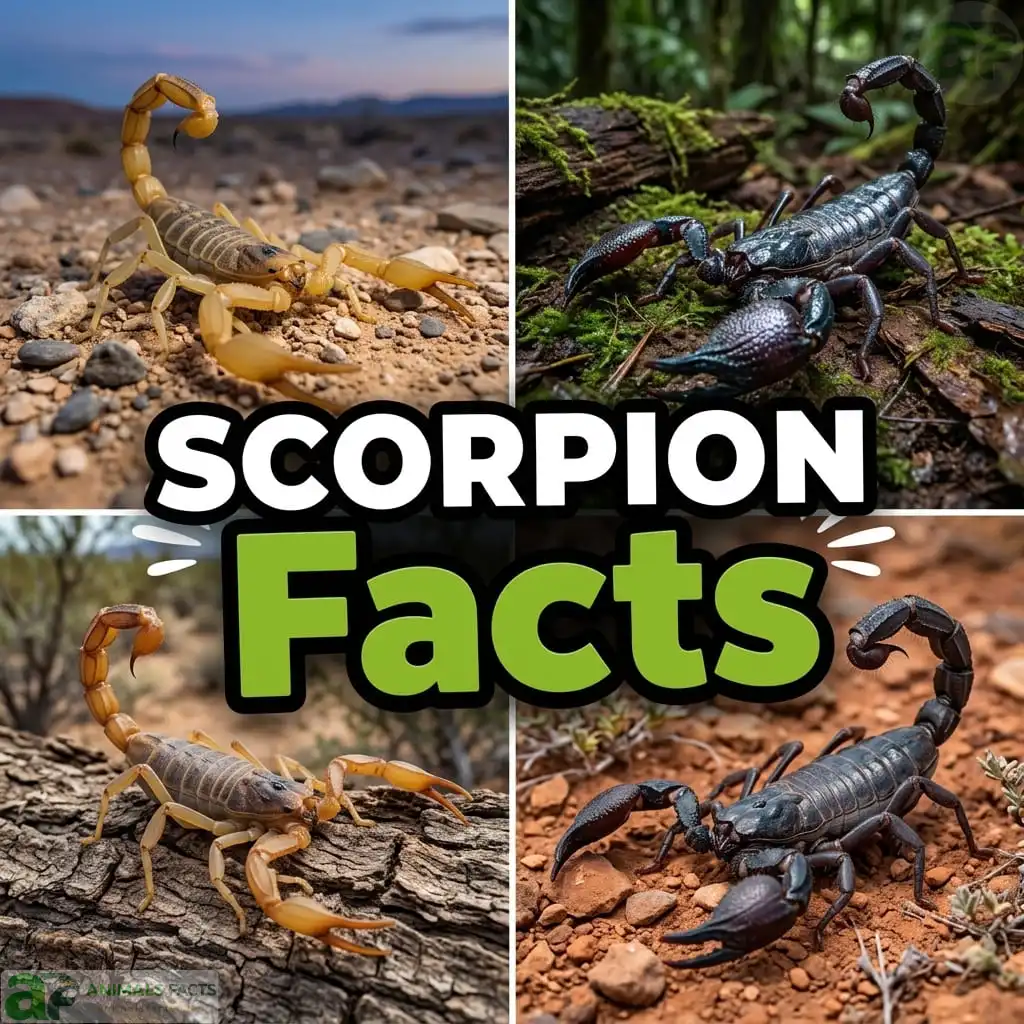
Scorpion Facts
| Feature | Details |
|---|---|
| Scientific Name | Scorpiones (order); ~2,700 described species |
| Kingdom | Animalia |
| Phylum | Arthropoda |
| Class | Arachnida |
| Order | Scorpiones (C.L. Koch, 1850) |
| Number of Families | 18 recognized families |
| Number of Species | ~2,700 described; estimated 3,000–4,000 total |
| Habitat | Deserts, rainforests, grasslands, mountains, caves — every continent except Antarctica |
| Lifespan | 2–25 years depending on species; some emperor scorpions live 25+ years in captivity |
| Diet | Insects, spiders, other scorpions, small vertebrates |
| Size Range | 9 mm (Microtityus minimus) to 23 cm (giant forest scorpion) |
| Weight | Less than 1 gram to approximately 60 grams (emperor scorpion) |
| Speed | Up to 19 km/h (Arizona bark scorpion, short burst) |
| Conservation Status | Varies — most not assessed; some species threatened |
| Venom Danger | Only ~30–35 of 2,700 species have venom medically dangerous to healthy adults |
| Global Sting Deaths | Estimated 2,600–3,250 deaths per year globally (primarily in developing countries) |
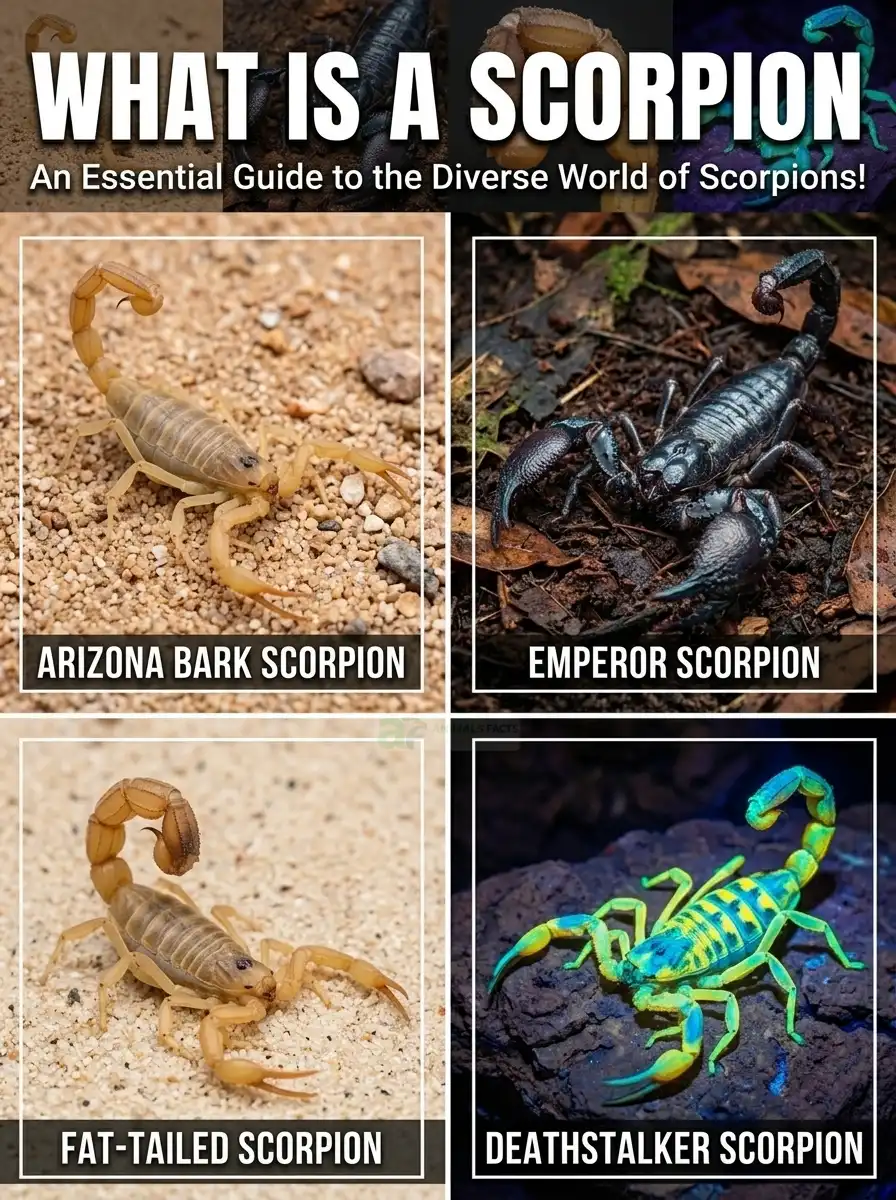
 1. Introduction: What is a Scorpion?
Picture an animal so perfectly designed that it has remained essentially unchanged for 430 million years — surviving every mass extinction event, colonizing every continent except Antarctica, and thriving in environments ranging from the hottest deserts on Earth to the deepest caves and the highest mountain passes. Now picture it armed with pincers, eight legs, and a curved, venom-tipped tail that it can strike faster than you can blink. That animal is the scorpion — and scorpion facts consistently reveal one of the most extraordinary survival stories in the entire history of life on Earth.
Interesting facts about scorpions go far beyond the fear and fascination their appearance typically generates. These ancient arachnids glow electric blue-green under ultraviolet light for reasons science still doesn’t fully understand. Their females give birth to live young and carry them on their backs for weeks. Some species can slow their metabolic rate to 1/3,000th of normal during starvation and survive on a single insect per year. They sense their environment through leg-mounted vibration detectors so sensitive they can detect footsteps through sand at a distance. And of approximately 2,700 known species, only about 30–35 produce venom medically dangerous to healthy adult humans — making the fear of all scorpions wildly disproportionate to the actual risk most species pose.
Whether you’re searching for scorpion facts for kids to make a science lesson come alive, studying scorpion habitat and ecology for academic research, a nature enthusiast captivated by desert wildlife, or someone who has just encountered a scorpion and wants to understand what they were dealing with — this is your comprehensive guide. We cover scorpion scientific names, scorpion diet, scorpion size and weight, scorpion behavior, the remarkable biology of venom and fluorescence, and everything else these extraordinary animals have to offer. The world’s most successful arachnid deserves your full attention.
2. Scorpion Species Overview & Classification
Scorpions belong to the order Scorpiones within the class Arachnida — making them relatives of spiders, mites, ticks, and harvestmen rather than insects. They are one of the oldest terrestrial animal orders on Earth, with a fossil record stretching back 430 million years to the Silurian period.
Species Classification Table
| Taxonomic Rank | Classification |
|---|---|
| Kingdom | Animalia |
| Phylum | Arthropoda |
| Subphylum | Chelicerata |
| Class | Arachnida |
| Order | Scorpiones (C.L. Koch, 1850) |
| Number of Families | 18 recognized families |
| Number of Genera | ~200+ genera |
| Number of Described Species | ~2,700 species |
| Estimated Undescribed Species | 3,000–4,000 total estimated |
| Temporal Range | ~430 million years ago to present |
Major Scorpion Families
Scorpion diversity is organized into 18 families with distinct characteristics:
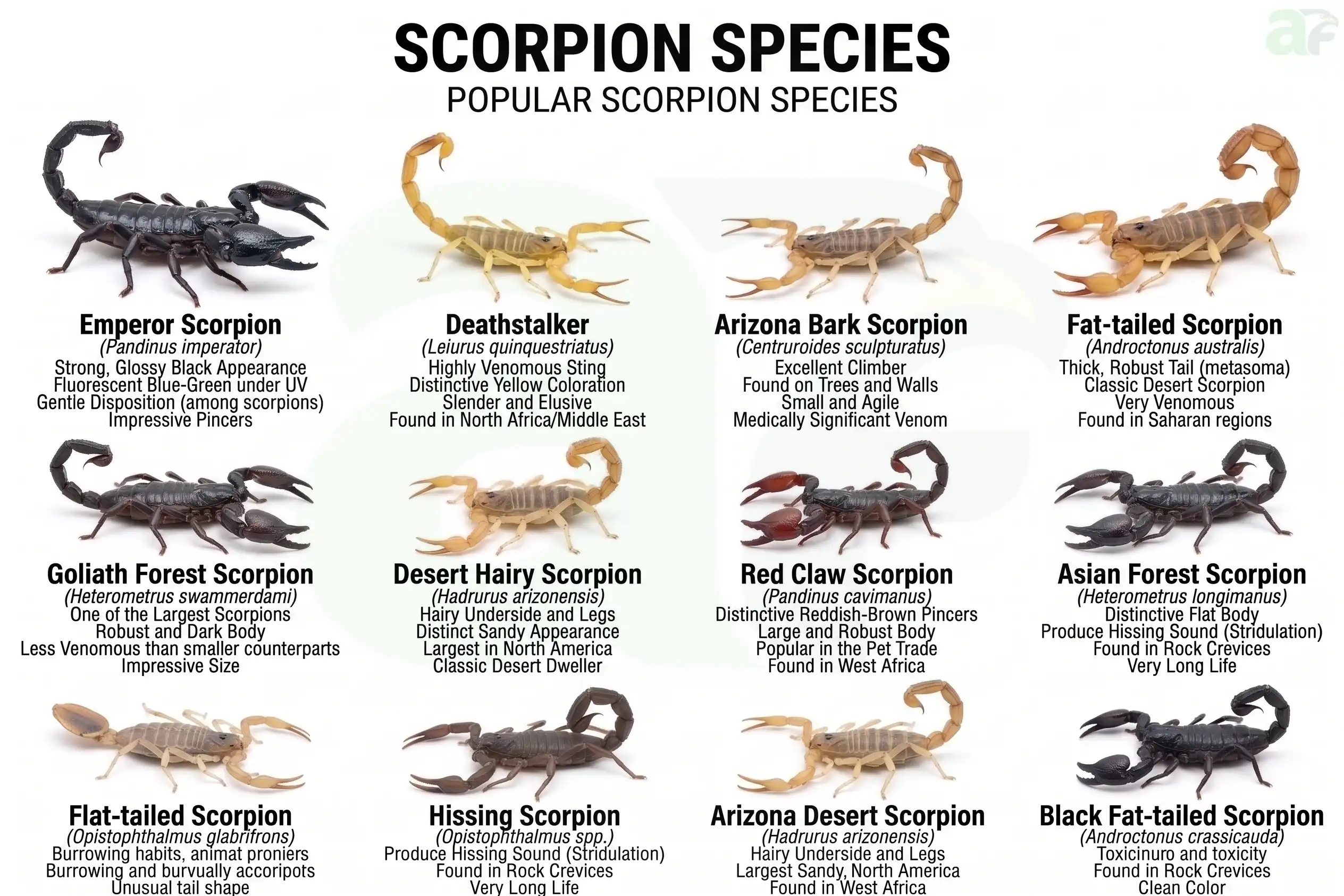
- Buthidae — The largest and most dangerous family; ~1,200 species including deathstalker (Leiurus quinquestriatus), fat-tailed scorpion (Androctonus), Arizona bark scorpion (Centruroides sculpturatus); contains the majority of medically significant species
- Scorpionidae — Large forest scorpions; includes the emperor scorpion (Pandinus imperator), giant forest scorpion (Heterometrus); generally mild venom despite impressive size
- Diplocentridae — Medium-sized scorpions of the Americas and Middle East
- Chactidae — Primitive scorpions of the Americas
- Vaejovidae — North American scorpions
- Caraboctonidae — South American and Asian scorpions
- Hormuridae — Africa, Middle East, and Asia; includes several cave-adapted species
Remarkable Species Within Scorpiones
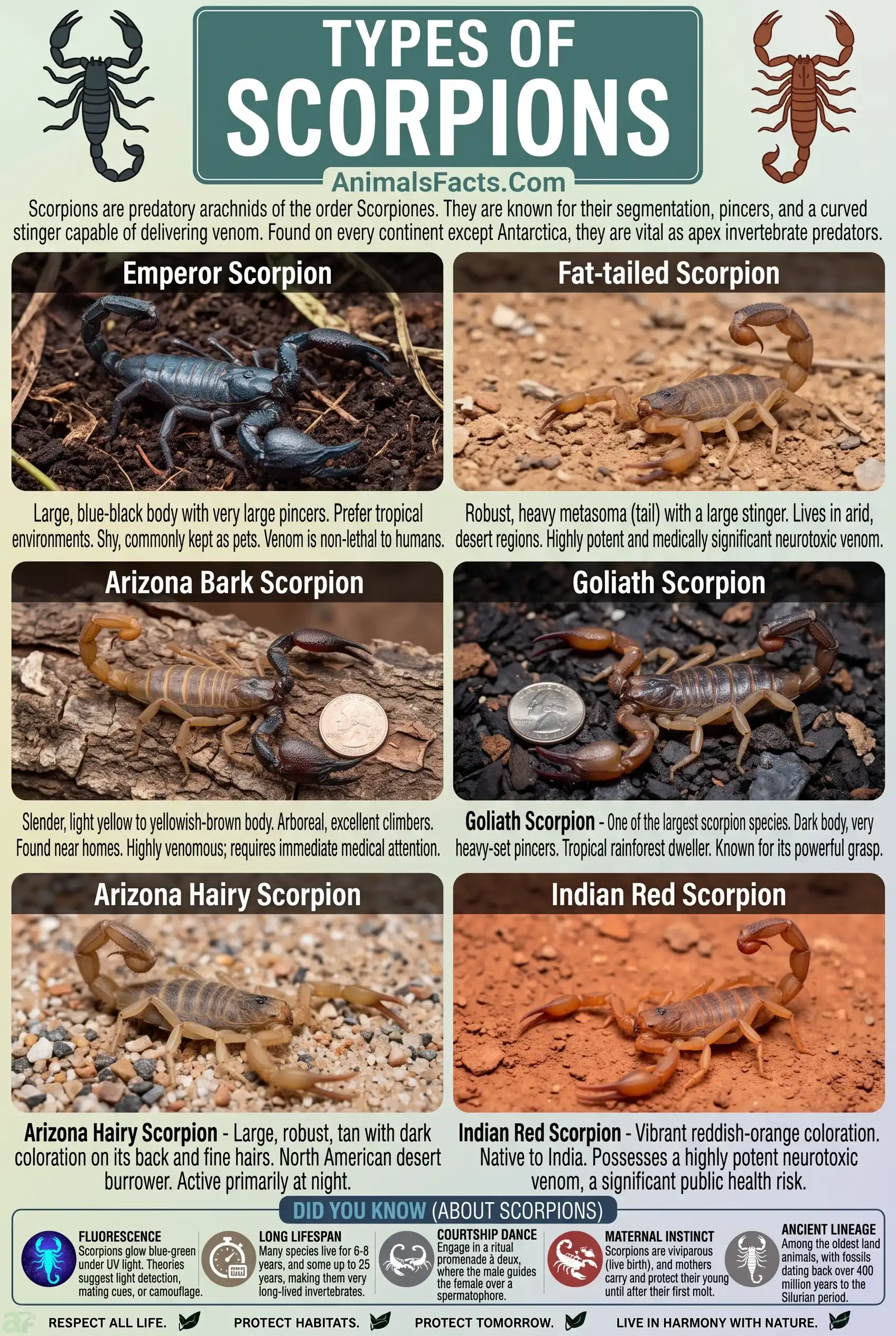
- Leiurus quinquestriatus (deathstalker) — Possibly the world’s most venomous scorpion; found across North Africa and Middle East
- Androctonus australis (fat-tailed scorpion) — Responsible for the majority of fatal scorpion stings in North Africa
- Pandinus imperator (emperor scorpion) — World’s most popular pet scorpion; gentle giant with mild venom
- Centruroides sculpturatus (Arizona bark scorpion) — Only medically significant scorpion in North America
- Parabuthus transvaalicus (South African thick-tailed scorpion) — Can spray venom up to 1 meter
- Microtityus minimus (Virgin Islands) — World’s smallest scorpion at ~9 mm
- Heterometrus spinifer (giant forest scorpion) — Among the world’s largest at up to 23 cm
Evolution & Discovery Timeline
~430 million years ago — The earliest scorpion ancestors appear during the Silurian period — marine animals with gills rather than lungs. The genus Proscorpius from this era is among the earliest confirmed scorpion fossils.
~400 million years ago — Scorpions begin the transition to terrestrial life during the Devonian period — developing book lungs and the ability to survive on land.
~350 million years ago — Fully terrestrial scorpions appear during the Carboniferous period — some reaching extraordinary sizes. Pulmonoscorpius kirktonensis of Scotland reached an estimated 70 cm in length.
~300 million years ago — The scorpion body plan essentially reaches its modern form — the design has been stable for 300 million years with minimal change.
~250 million years ago — Scorpions survive the Permian-Triassic mass extinction (the largest extinction event in Earth’s history, killing ~96% of marine species and ~70% of terrestrial species) — demonstrating extraordinary resilience.
~66 million years ago — Scorpions survive the Cretaceous-Paleogene extinction event that killed non-avian dinosaurs.
1758 — Carl Linnaeus formally classifies scorpions in Systema Naturae.
1850 — C.L. Koch formally establishes the order Scorpiones in its modern taxonomic form.
1979 — The first systematic study of scorpion fluorescence under UV light is published — triggering decades of research attempting to explain the biological purpose of this extraordinary phenomenon.
2023 — A comprehensive study of scorpion venom peptides identifies multiple compounds with antibiotic, anti-cancer, and anti-malarial properties — expanding interest in scorpion venom as a pharmaceutical resource.
“Scorpions are among the great survivors of this planet — a body plan so effective that 430 million years of evolution has seen fit to change almost nothing about it. That’s not stubbornness. That’s perfection.” — Dr. Lorenzo Prendini, scorpion expert and curator at the American Museum of Natural History
3. Physical Description & Unique Features
Scorpion size and weight span a remarkable range within a single order — from near-invisible specks to animals longer than a human hand — and the scorpion body plan incorporates some of the most remarkable sensory and physical adaptations in the arachnid world.
Body Structure
All scorpions share a distinctive and immediately recognizable body plan divided into two main sections:
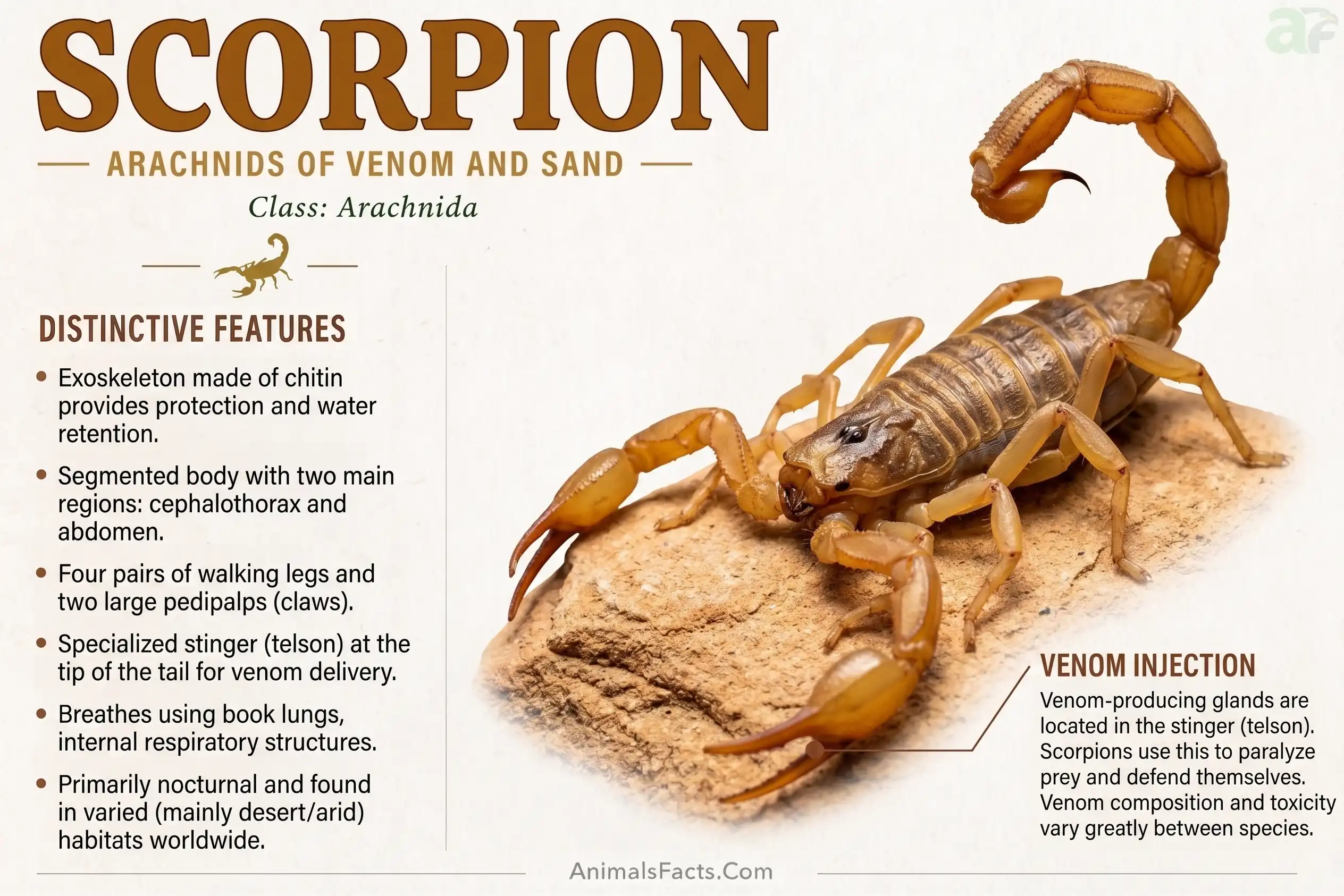
Cephalothorax (prosoma) — The fused head and thorax; bears the chelicerae (small, pincer-like mouthparts for manipulating food), the pedipalps (the large, claw-like pincers used for grasping prey and defense), and the four pairs of walking legs. The cephalothorax also bears the eyes: typically a pair of large median eyes on the top of the cephalothorax and 2–5 pairs of smaller lateral eyes along the front edges. Despite having up to 12 eyes, scorpion vision is generally poor — they are primarily motion detectors rather than image-formers.
Metasoma (abdomen + tail) — Divided into the mesosoma (broad anterior abdomen containing most organs) and the metasoma (the narrow, five-segmented “tail” ending in the telson — the bulbous venom gland with its sharp, curved aculeus or stinger).
The Pedipalps
The scorpion’s pedipalps — its “claws” or “pincers” — are not merely decorative. They are among the most sensitive mechanoreceptive organs in the arthropod world, densely packed with sensory hairs that detect vibrations, textures, and chemical signals. The relative size and shape of the pedipalps relative to the tail is a useful guide to venom potency: in general, large, robust pedipalps correlate with weaker venom (the animal can subdue prey physically) while slender, weak-looking pedipalps correlate with more potent venom (the animal must rely on chemistry to subdue prey). This rule applies remarkably well across the most dangerous and least dangerous scorpion species.
The Slit Sensilla & Basitarsal Combs
The scorpion leg underside bears specialized sensory structures called basitarsal sensory organs (combs or pectines), and the legs themselves are covered in slit sensilla — mechanosensory organs that detect vibrations transmitted through the substrate with extraordinary sensitivity. A scorpion can detect footsteps through sand from 30 cm away using these sensory systems — essentially “seeing” its environment through vibration in the ground beneath it.
Fluorescence
One of the most visually spectacular scorpion facts is their fluorescence under ultraviolet (UV) light. All scorpion species tested — including preserved museum specimens hundreds of years old — glow a brilliant blue-green under UV illumination. The fluorescent compounds (primarily beta-carboline and 7-hydroxy-4-methylcoumarin) are located in the cuticle (outer shell). Multiple hypotheses have been proposed for the function of this fluorescence — including UV reflection for navigating by moonlight, mate recognition, prey detection, or a UV warning signal — but no definitive biological explanation has been universally accepted as of 2026.
Size & Weight
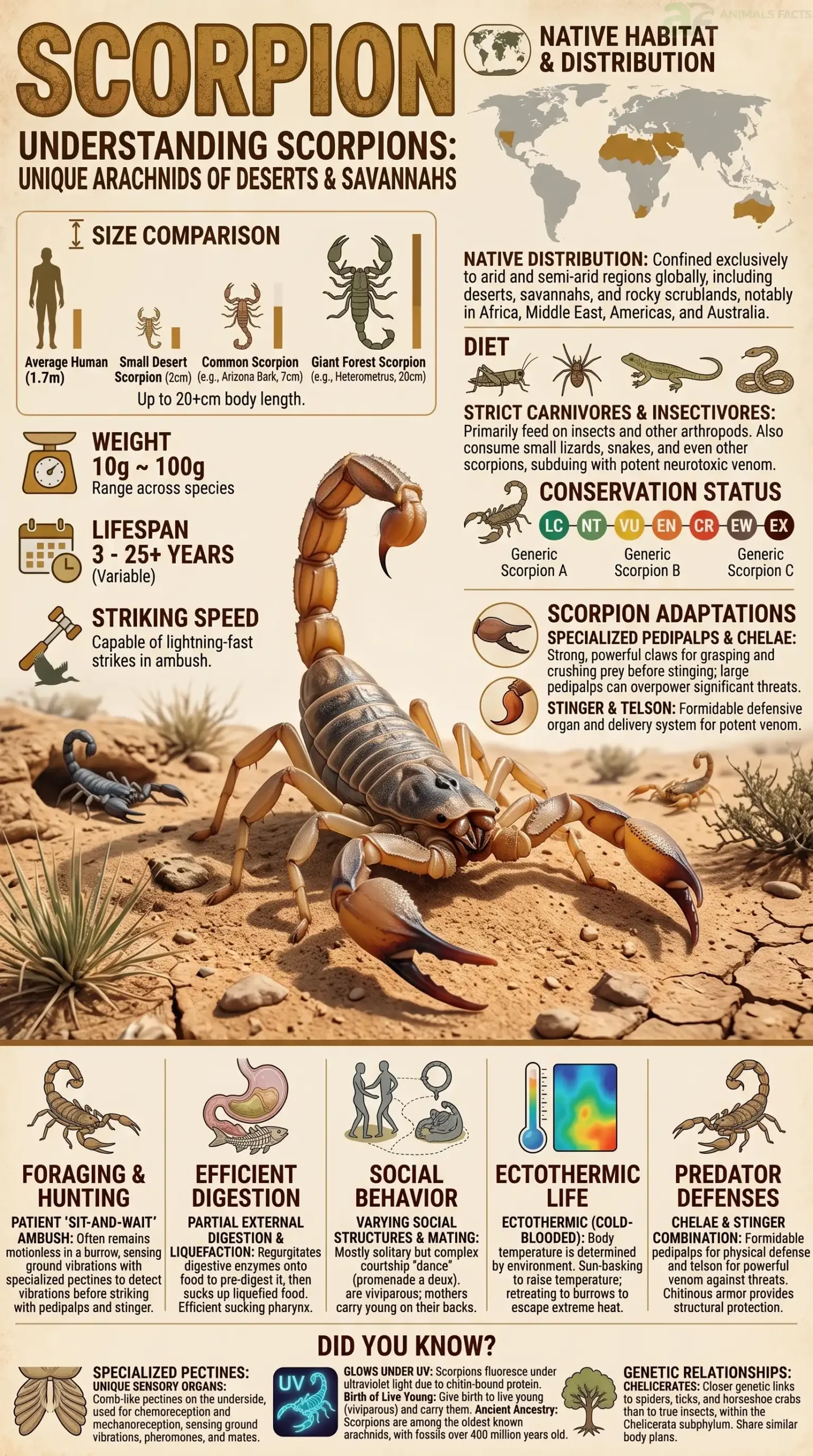
The world’s smallest scorpion is Microtityus minimus of the Virgin Islands, measuring approximately 9 mm in body length as an adult. The world’s largest are various species of Heterometrus (giant forest scorpion) and Pandinus (emperor scorpion) of Africa, reaching 18–23 cm in length and weighing up to approximately 60 grams — comparable to a small mouse.
Did You Know? The deathstalker scorpion (Leiurus quinquestriatus) — arguably the world’s most venomous scorpion — has some of the most slender, delicate-looking pedipalps of any scorpion. This is not coincidental: the “weak claws = strong venom” rule applies directly here. A deathstalker could not reliably subdue prey with its pincers — it depends entirely on the speed and potency of its venom, which gram for gram is among the most toxic substances produced by any animal.
4. Top 25 Amazing Scorpion Facts
Here is your comprehensive collection of the most extraordinary, scientifically verified, and genuinely astonishing scorpion facts as of 2026:
- Scorpions have existed for approximately 430 million years — predating dinosaurs by over 200 million years and surviving every mass extinction event in Earth’s history.
- All scorpions fluoresce blue-green under UV (ultraviolet) light — a property found even in preserved museum specimens hundreds of years old. The biological reason remains incompletely understood.
- Of approximately 2,700 described scorpion species, only about 30–35 produce venom capable of killing a healthy adult human — meaning over 98% of scorpion species are not medically dangerous to adults.
- The deathstalker scorpion (Leiurus quinquestriatus) of North Africa and the Middle East is widely considered the world’s most venomous scorpion — its venom contains potent neurotoxins (chlorotoxin, agitoxin, scyllatoxin) that can cause cardiac and respiratory failure.
- Scorpions can reduce their metabolic rate to 1/3,000th of normal during starvation and survive on a single insect per year in laboratory conditions.
- Female scorpions give birth to live young (viviparous or ovoviviparous depending on species) — not eggs — and carry the newborn young on their backs until after their first molt.
- The emperor scorpion’s venom is so mild that the main risk to humans is not venom but the physical injury from its powerful claws.
- Scorpion venom is currently one of the most expensive liquids on Earth — estimated at up to $39 million per liter (deathstalker venom) due to the difficulty of collection and its value in pharmaceutical research.
- The fat-tailed scorpion (Androctonus australis) of North Africa is estimated to cause more human deaths per year than any other scorpion species, responsible for the majority of North Africa’s several thousand annual scorpion sting fatalities.
- Some scorpion species can survive being frozen solid in ice and resume activity when thawed — recorded in species from cold mountain environments.
- Scorpion book lungs — the same basic respiratory structure used by the first land scorpions 400 million years ago — are still in use today, virtually unchanged from the ancestral design.
- The South African thick-tailed scorpion (Parabuthus transvaalicus) can spray venom up to 1 meter from its sting — the only scorpion species confirmed to spray rather than inject venom.
- A scorpion’s exoskeleton contains compounds that make it highly resistant to UV radiation, desiccation, and certain environmental toxins — explaining in part how they survive the most extreme desert environments on Earth.
- Scorpion fossils from the Carboniferous period include species reaching 70 cm in length — the largest scorpions that ever existed, compared to a maximum of 23 cm today.
- The Arizona bark scorpion (Centruroides sculpturatus) is the only medically significant scorpion species in the United States — and can be found hiding under bark, rocks, and inside homes across the American Southwest.
- Scorpions have a slit sensory system in their legs so sensitive they can detect vibrations from footsteps through sand at a distance of 30 cm — essentially “seeing” through ground vibration.
- The ancient Egyptians considered the scorpion so dangerous that priests of the goddess Serket (the scorpion goddess) were trained in treating scorpion stings — making them possibly the world’s first specialized toxicologists.
- Scorpion pectines (comb-like appendages on the underside of the abdomen) are extraordinarily sensitive chemical and tactile sensors used to assess the quality of substrate during mating dances and to detect prey vibrations.
- Scorpion venom compounds are currently being researched for treatment of brain tumors (chlorotoxin from deathstalker venom), malaria, diabetes, autoimmune diseases, and antibiotic-resistant bacterial infections.
- The coconut crab (Birgus latro) has been documented successfully defending itself against scorpion attacks in tropical island environments — one of the few invertebrates that routinely survives scorpion encounters.
- Some desert scorpions have hydrophobic (water-repelling) cuticle that prevents water from escaping through the body surface — reducing water loss to nearly zero in conditions where most animals would rapidly desiccate.
- Scorpions have been found living at altitudes above 5,000 meters in the Himalayas and Andes — among the highest-altitude arachnids confirmed.
- The courtship dance of scorpions (called promenade à deux or “walking together”) can last from minutes to hours — the male gripping the female’s pedipalps and leading her over the substrate searching for a suitable site to deposit his spermatophore.
- Scorpion mothers are among the most devoted invertebrate parents — some species carry their young for up to 25–30 days until after the first molt, during which the young are entirely dependent on the mother’s protection.
- A 2022 study confirmed that certain scorpion species use moonlight intensity to regulate their nocturnal activity — becoming less active on nights with bright moonlight to avoid predation, and using their fluorescent cuticle as a UV/moonlight detector.
6. Scorpion Fun Facts for Kids
- Scorpions have inhabited Earth for over 430 million years without fundamentally changing their body plan
- All scorpions glow under UV light — and nobody is completely sure why
- Scorpion venom is potentially worth up to $39 million per liter
- Only about 30–35 of 2,700 species can kill a healthy adult human
- Scorpions can survive being frozen and thawed in some species
- The emperor scorpion is one of the world’s most popular exotic pets
- Scorpions can survive on one insect per year during severe food shortage
- Some scorpions can live for over 25 years — longer than many domestic animals
- Scorpions were the first animals to colonize dry land from the sea
- Baby scorpions ride on their mother’s back after birth
- A scorpion can detect ground vibrations from 30 cm away through its legs
- The deathstalker’s venom is being studied as a brain tumor treatment
5. Natural Habitat & Geographic Range
Scorpion habitat diversity is remarkable for a group of animals so strongly associated with deserts in the popular imagination — while deserts are indeed among the richest scorpion environments, these ancient arachnids have colonized virtually every terrestrial habitat on Earth.
Habitat Types
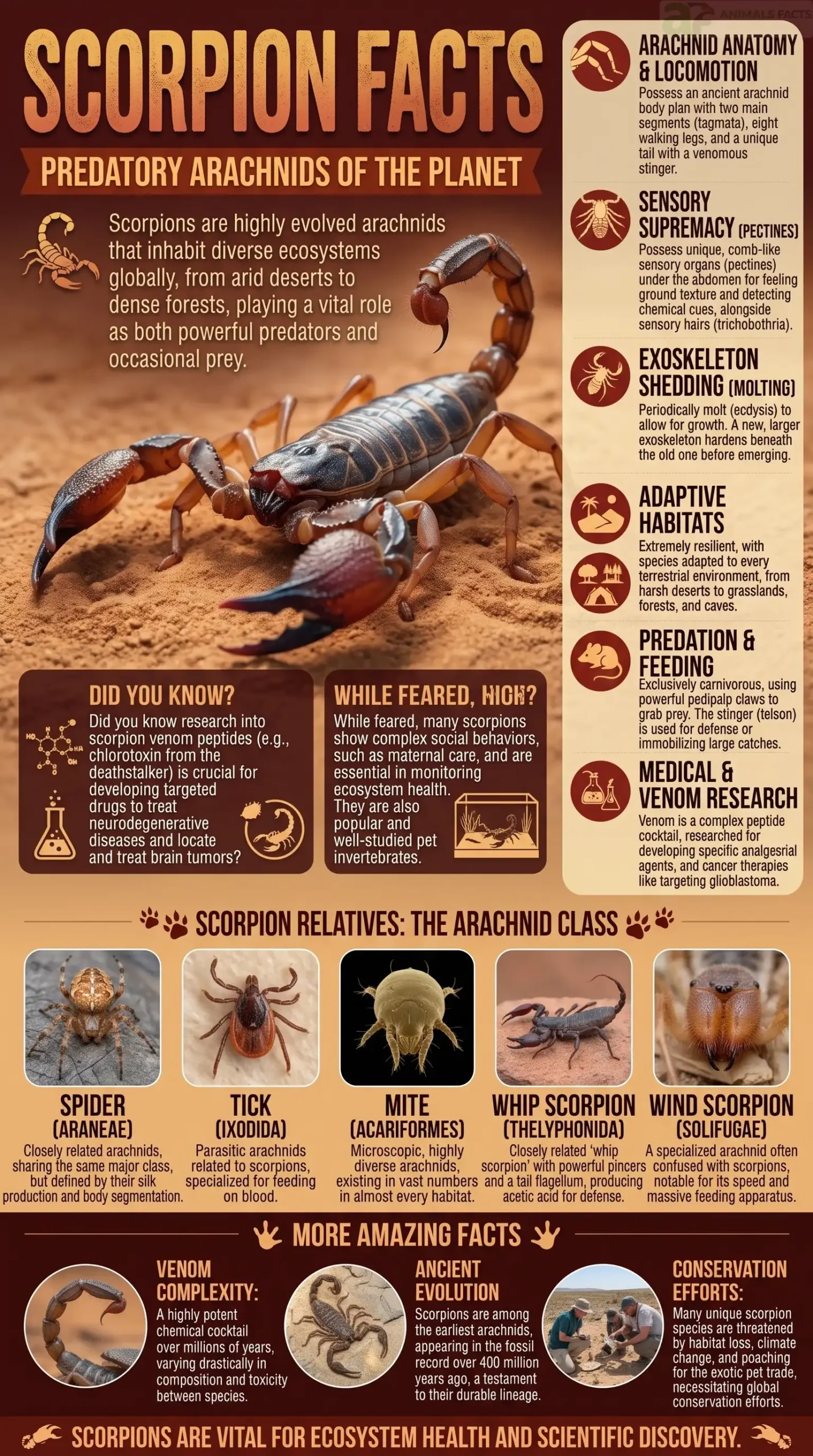
Scorpions inhabit deserts, tropical and subtropical forests, Mediterranean scrublands, grasslands, mountains (including above the snowline in some species), caves, coastal dunes, and even urban environments. They require only three basic things: food (arthropods), shelter from temperature extremes and predators (rocks, bark, soil crevices, burrows), and adequate moisture (though many desert species are extraordinarily resistant to desiccation).
Habitat Range by Continent
| Continent/Region | Notable Species | Habitat Type | Medically Significant? |
|---|---|---|---|
| North Africa/Middle East | Deathstalker, fat-tailed scorpion, yellow scorpion | Desert, semi-arid | Yes — highest death rate |
| Sub-Saharan Africa | Emperor scorpion, burrowing scorpions, Parabuthus | Savanna, rainforest, desert | Some species yes |
| North America | Arizona bark scorpion, striped bark scorpion | Desert, scrubland, urban | Arizona bark scorpion only |
| South America | Brazilian yellow scorpion (Tityus serrulatus), Bothriurus | Tropical forest, savanna, urban | Brazilian yellow scorpion yes |
| Central America/Caribbean | Various Centruroides | Tropical forest | Some species yes |
| South Asia | Indian red scorpion (Hottentotta tamulus) | Dry forest, urban, agricultural | Yes — highly dangerous |
| Southeast Asia | Giant forest scorpion, Asian forest scorpion | Tropical forest | Generally mild |
| Australia | Various Urodacus, Cercophonius | Desert, forest, urban | Generally mild |
| Europe | Euscorpius (small cave/rock scorpions) | Mediterranean forest, rock | Not medically significant |
| Antarctica | None | N/A | N/A |
Did You Know? The Indian red scorpion (Hottentotta tamulus) of India and Sri Lanka is considered by many toxicologists to be the world’s most medically dangerous scorpion when measured by actual annual human deaths caused — its venom causes severe cardiac symptoms and kills more people annually in India than the famous deathstalker causes in North Africa. Children are particularly vulnerable, with fatality rates for untreated envenomations in children potentially exceeding 30%.
6. Diet & Feeding Behavior
Scorpion diet is almost exclusively carnivorous — these animals are highly effective predators of insects and other arthropods, with larger species occasionally taking small vertebrate prey.
Diet Breakdown Table
| Prey Type | Estimated % of Diet | Notes |
|---|---|---|
| Insects (beetles, crickets, moths, cockroaches) | ~60–70% | Primary prey for most species |
| Spiders and other arachnids | ~15–20% | Particularly common in resource-limited environments |
| Other scorpions | ~5–10% | Cannibalism documented in many species |
| Isopods and myriapods (pillbugs, centipedes) | ~5–10% | Ground-dwelling prey |
| Small vertebrates (lizards, mice, small frogs) | ~3–5% | Primarily large species like emperor scorpion |
| Earthworms and soft-bodied invertebrates | ~2–5% | Supplementary, particularly for burrowing species |
Hunting Strategy
Scorpions are ambush predators — they do not pursue prey but wait patiently in concealed positions for prey to come within striking range. Their extraordinary vibration-sensing system in their legs (the slit sensilla and basitarsal organs) alerts them to approaching prey before it is visible, while their pectines (abdominal combs) detect chemical signals on the substrate.
The attack sequence is rapid: pedipalps grab the prey (with larger prey items, both pedipalps and sting are deployed simultaneously), the sting is driven into the prey to inject venom, and the chelicerae (small mouthparts) then tear the prey apart while digestive fluids are secreted onto it — scorpions pre-digest their food externally, liquefying the internal organs and tissues before sucking the liquefied content through their small, narrow mouth.
Remarkable Fasting Ability
One of the most extraordinary scorpion facts related to feeding is the species’ capacity for extreme fasting. Laboratory studies have confirmed that desert scorpions can reduce their metabolic rate to approximately 1/3,000th of their normal rate during starvation — effectively entering a state of suspended animation while remaining technically alive and capable of responding to stimulation. In this state, some species have survived for 12 months or more without any food or water — an adaptation to the extreme boom-and-bust resource cycles of desert environments.
7. Reproduction & Life Cycle
Scorpion reproduction involves one of the most elaborate courtship rituals in the arachnid world — and a reproductive strategy that is uniquely advanced among arachnids.
Courtship: The Promenade à Deux
Scorpion courtship begins with a male locating a female through chemical cues and vibration detection. When contact is made, the male grasps the female’s pedipalps (chelae-to-chelae grip) and initiates the promenade à deux — a prolonged, mutual “dance” in which the male leads the female across the substrate while she follows. This dance can last from minutes to over 24 hours.
During the dance, the male is searching for a smooth, hard substrate on which to deposit his spermatophore — a complex, stalked structure containing a packet of sperm. When a suitable spot is found, the male deposits the spermatophore and maneuvers the female over it until her genital opening contacts the sperm packet and the sperm are transferred. The process is precise and often involves multiple attempts.
After mating, the male typically retreats rapidly — females of many species are cannibalistic and will eat the male if given the opportunity.
Birth & Maternal Care
Uniquely among arachnids, virtually all scorpions are viviparous or ovoviviparous — giving birth to live young rather than laying eggs. Gestation periods vary from 2 months to 18 months depending on species and environmental conditions. Litter sizes range from 1–2 young (some burrowing species) to over 100 young (some buthid species).
Newborn scorpions (called scorplings or first-instars) are born soft, white, and unable to defend themselves. They immediately climb onto their mother’s back — the mother lowering herself or positioning her pedipalps as a ramp — and remain there until their first molt (typically 1–2 weeks after birth). During this period, the mother is highly defensive and will attack any threat to her young.
Growth Stages
- First instar (on mother’s back) — Soft, unpigmented; entirely dependent on mother
- First molt — Leaves mother’s back; begins independent life; cuticle hardens and fluorescence develops
- Juvenile stages (4–7 additional molts) — Each molt produces a larger individual; takes months to years
- Sexual maturity — Reached after final molt; timing varies from 6 months to 7 years depending on species
Lifespan Comparison Table
| Species | Lifespan (Wild) | Lifespan (Captivity) | Notes |
|---|---|---|---|
| Emperor scorpion (Pandinus imperator) | 6–8 years | Up to 25 years | Most popular pet scorpion |
| Deathstalker (Leiurus quinquestriatus) | 4–6 years | ~10 years | Most venomous species |
| Arizona bark scorpion (Centruroides sculpturatus) | 3–6 years | ~8 years | N. America’s most dangerous |
| Giant forest scorpion (Heterometrus spinifer) | 6–10 years | Up to 20 years | Asia’s largest species |
8. Social Behavior & Communication
Scorpions are among the most solitary arachnids — they are territorial, cannibalistic outside of mating contexts, and communicate primarily through vibration and chemical signals rather than social displays.
Solitary Nature
Outside of mating and maternal care, most scorpion species maintain exclusive individual territories and actively avoid conspecifics. Encounters between adult scorpions outside of mating season typically result in one or both animals retreating, or in combat that may end in cannibalism.
The principal exception is maternal behavior — female scorpions with young are unusually tolerant of physical contact (with their young) and unusually aggressive toward any other animal that approaches the brood.
Communication Systems
Vibrational communication — Through the slit sensilla in their legs and the pectines on their abdomen, scorpions both produce and detect vibrational signals on substrate surfaces. These signals are used to locate mates, detect predators, and coordinate the mating dance. Different species produce species-specific vibrational signatures during courtship.
Chemical communication — Scorpions deposit chemical signals through feces, cuticle secretions, and specialized glands — leaving territorial markers and potentially mate-attraction signals detectable by other scorpions through their pectines.
UV/fluorescence signaling — A 2023 study provided the most compelling evidence yet that scorpion fluorescence may play a role in conspecific recognition — scorpions responded differently to UV-illuminated conspecifics compared to non-illuminated ones, suggesting that fluorescence may serve a communication function in addition to or instead of the other proposed functions.
Intelligence
Scorpions are not cognitively complex animals — their nervous system is relatively simple and their behavior is largely instinct-driven. However, they demonstrate learned avoidance of specific environmental hazards, spatial memory of their burrow and territory, and the complex sequential behavior of the courtship dance — all suggesting a level of behavioral flexibility beyond simple reflex.
9. Predators & Defense Mechanisms
Despite their formidable venom and armored exoskeleton, scorpions face numerous natural predators — and have evolved a sophisticated array of defensive strategies beyond the obvious one of stinging.
Natural Predators
- Meerkats — Among the most scorpion-specialized mammalian predators; able to eat even highly venomous species with apparent immunity due to detoxification adaptations
- Mongooses — Similar to meerkats; semi-resistant to scorpion venom through behavioral and physiological adaptations
- Owls and nocturnal raptors — Major predators; grab scorpions from above before they can sting
- Bat species — Several bat species specialize in scorpion predation in desert environments
- Centipedes — Major predators of smaller scorpion species; themselves highly venomous
- Baboons and some primates — Remove the stinger before eating
- Grasshopper mice (Onychomys) — Extraordinarily resistant to bark scorpion venom; documented eating highly venomous scorpions routinely
- Other scorpions — Cannibalism and interspecific predation are common
- Humans — Killed in large numbers due to human fear; also collected for venom extraction and the pet trade
Defense Strategies
Venom — The first and most famous defense. However, venom is metabolically expensive to produce and is primarily a predation tool rather than a defensive one — scorpions prefer to sting prey rather than predators, and many species will attempt to flee or use their pedipalps before deploying venom against a predator.
Physical armor — The scorpion exoskeleton is a remarkably hard, chemically resistant material that protects against crushing, desiccation, UV radiation, and many environmental hazards.
Cryptic coloration — Most scorpion species are sand, brown, or black — closely matching their substrate. In their natural environment, a motionless scorpion is often effectively invisible.
Burrowing — Many scorpion species dig burrows that provide temperature regulation, moisture retention, and protection from surface predators simultaneously.
Thanatosis — Some species “play dead” when threatened by a predator they cannot sting effectively.
Autotomy — A few scorpion species can voluntarily shed their tail (including the venom gland) as a last-ditch escape mechanism. This is ultimately fatal — the scorpion cannot defecate without its tail section — but allows the individual to survive long enough to potentially reproduce.
Did You Know? The grasshopper mouse (Onychomys torridus) of the American Southwest is one of the world’s only mammals with demonstrated resistance to bark scorpion venom. Research published in Science (2013) revealed that the grasshopper mouse’s pain receptors have evolved a modified sodium channel that scorpion venom actually suppresses pain rather than causing it — allowing the mouse to eat bark scorpions with apparent comfort. This extraordinary evolutionary adaptation makes it essentially immune to the venom of the only medically significant scorpion in North America.
10. Scorpion Facts for Kids
Hey curious young scientists! Here are some totally wild scorpion facts for kids that will amaze everyone you tell:
- 🦂 Scorpions are super old! They’ve been on Earth for 430 million years — that’s longer than dinosaurs, longer than most plants, and almost as long as fish have existed. They are ancient champions of survival!
- 🦂 Scorpions glow in the dark — sort of! If you shine a special ultraviolet (UV) light on a scorpion in the dark, it glows a brilliant blue-green color. Scientists still don’t fully understand why, but it’s one of nature’s most beautiful mysteries!
- 🦂 Baby scorpions ride on their mum’s back! When baby scorpions are born, they climb straight onto their mother’s back and stay there for their first couple of weeks of life until they’re tough enough to go out on their own.
- 🦂 Most scorpions WON’T kill you! Out of about 2,700 scorpion species, only around 30–35 have venom that could seriously harm a healthy adult human. Most scorpions are not nearly as dangerous as people think.
- 🦂 Scorpions can eat just ONE insect per year! When food is very scarce, a scorpion can slow its body down so much that it barely needs to eat at all. It’s like hitting a biological pause button!
- 🦂 Scorpions feel the ground like superheroes! Their legs are covered in special sensors that can feel vibrations from footsteps 30 cm away — like having a built-in earthquake detector under your feet!
- 🦂 Scorpion venom is incredibly valuable! The venom from the deathstalker scorpion is so rare and useful for medicine that it could be worth up to $39 million for just one liter. That makes it one of the most expensive liquids on Earth!
- 🦂 Some scorpions can survive being FROZEN! Certain scorpion species living in cold mountains can be frozen solid in ice and then thaw out completely fine when it warms up. Now that’s tough!
11. Relationship with Humans
The relationship between humans and scorpions spans thousands of years of cultural, medical, and ecological interaction — from ancient Egyptian scorpion goddess worship to cutting-edge 21st-century pharmaceutical research.
Medical Significance
Scorpion stings are a significant global public health problem. The World Health Organization estimates that scorpion stings affect approximately 1.2 million people annually worldwide, resulting in approximately 2,600–3,250 deaths — the vast majority in Mexico, North Africa, the Middle East, India, and Brazil. Children, elderly people, and people with pre-existing cardiac or respiratory conditions face the highest mortality risk.
The most dangerous scorpion species medically are:
- Androctonus australis (fat-tailed scorpion) — North Africa; majority of African scorpion deaths
- Hottentotta tamulus (Indian red scorpion) — India and Sri Lanka; causes severe cardiac complications
- Leiurus quinquestriatus (deathstalker) — Middle East and North Africa
- Tityus serrulatus (Brazilian yellow scorpion) — Brazil; causes thousands of hospitalizations annually
- Centruroides sculpturatus (Arizona bark scorpion) — US; responsible for most US envenomations
Scorpion Venom in Medicine
Paradoxically, the same venom that makes scorpions medically dangerous is also one of the most promising sources of novel pharmaceutical compounds ever identified:
Chlorotoxin (from deathstalker venom) — Binds specifically to chloride channels in cancer cells; currently in clinical trials as a brain tumor imaging agent (when tagged with fluorescent compounds, it lights up glioma cells during surgery)
Androctonin (from Androctonus venom) — Shows broad-spectrum antibiotic activity against drug-resistant bacteria
Maurotoxin and related compounds — Being studied for treatment of autoimmune diseases including rheumatoid arthritis and multiple sclerosis
Birtoxin — Studied as a potential anti-malarial compound
Scorpions as Pets
The emperor scorpion (Pandinus imperator) is the world’s most popular exotic scorpion pet — widely kept due to its impressive size, relatively docile temperament, and mild venom that rarely causes more than local pain in humans. They are legal in most jurisdictions and available through specialist exotic pet retailers. However, the wild-caught emperor scorpion trade has contributed to population declines, leading to the species being listed on CITES Appendix II — restricting but not prohibiting international commercial trade.
Food Use
Scorpions are consumed as food in several cultures — most notably in China (where fried scorpions are sold as street food in Beijing’s Wangfujing market), in Thailand and other Southeast Asian countries, and in parts of Mexico and Central America. Commercially farmed scorpion products (chips, energy drinks, cosmetics) are available internationally.
12. Conservation Status & Threats
The conservation status of scorpions as a group is poorly understood — the vast majority of the ~2,700 species have never been formally assessed by the IUCN, and most scorpion species have no legal protection whatsoever despite facing significant habitat threats.
Conservation Status Overview
| Status Category | Approximate Number of Scorpion Species |
|---|---|
| Not Assessed | ~2,600+ species (overwhelming majority) |
| Least Concern | ~50 species formally assessed |
| Vulnerable | ~15 species |
| Endangered | ~8 species |
| Critically Endangered | ~5 species |
| CITES Listed | Emperor scorpion (Pandinus imperator) — Appendix II |
Major Threats
| Threat | Description | Impact |
|---|---|---|
| Habitat destruction | Deforestation, agricultural expansion, urbanization | High — particularly for forest species |
| Overexploitation | Pet trade (especially emperor scorpion), venom extraction | Medium-High |
| Pesticide use | Broad-spectrum insecticides kill scorpions and their prey | Medium-High |
| Climate change | Alters desert and forest habitat; affects prey availability | Increasing |
| Human persecution | Killed on sight; massive mortality around human habitations | Medium |
| Scientific collection | Some rare species collected for research without population data | Low-Medium |
13. Famous Scorpions in History & Pop Culture
Historically Significant Scorpion Species & Cultural References
“The Wadi Tumilat Deathstalker” — Ancient Egyptian texts from the New Kingdom period (~1550–1070 BCE) describe medical treatment for deathstalker stings in precise anatomical terms — reflecting the ancient Egyptians’ advanced understanding of scorpion envenomation at a time when most of the world had no systematic medical knowledge of the condition.
The Emperor Scorpion in Western Zoos — First successfully kept in European zoos in the early 20th century, the emperor scorpion’s extraordinary combination of impressive size, relative docility, and parental behavior (carrying young on back) made it an early star of exotic animal collections. Today it remains the most exhibited scorpion species in zoos worldwide.
The “Scorpion King” of historical record — Pharaoh Scorpion I and Scorpion II of ancient Egypt (~3200–3050 BCE) bear the scorpion as their name hieroglyph — reflecting the scorpion’s centrality to pre-dynastic Egyptian royal identity and religious symbolism.
14. Role in Ecosystem & Food Chain
Scorpions perform multiple critical ecological roles in the ecosystems they inhabit — as predators, prey, and indicators of ecosystem health.
Predation & Pest Control
In desert and tropical ecosystems, scorpions are among the most important arthropod predators of insects and other invertebrates. In the Sonoran Desert of North America, scorpions are estimated to consume a significant proportion of the annual production of insects and other arthropods — providing natural pest regulation services analogous to those provided by ants in other ecosystem types.
Studies in agricultural areas adjacent to natural scorpion habitat in India and North Africa have shown that scorpion populations in field margins reduce populations of crop-damaging insects — a free ecosystem service of meaningful economic value.
Prey Species
As prey, scorpions are critical food resources for a specialized guild of predators — meerkats, mongooses, owls, grasshopper mice, and specific bat and lizard species that depend on scorpions as primary prey. The loss of scorpion populations from an ecosystem cascades upward to affect these specialist predators.
Ecosystem Health Indicators
Scorpions are increasingly recognized as useful bioindicators of ecosystem health. Their sensitivity to soil chemistry, temperature, humidity, and prey availability makes their abundance and diversity a reliable signal of overall ecosystem condition. Declining scorpion diversity has been documented as an early indicator of desertification in North African and Middle Eastern landscapes.
15. Myths, Folklore & Cultural Significance
The scorpion has occupied a central position in human mythology and symbolism across virtually every culture that has shared its habitat — universally associated with danger, death, and supernatural power, but also with protection, healing, and the divine.
Ancient Egypt — Serket the Scorpion Goddess
The most elaborately developed scorpion mythology belongs to ancient Egypt, where the scorpion goddess Serket (also Selket, Serqet) was one of the most important deities in the Egyptian pantheon. Serket was depicted as a woman wearing a scorpion on her head — she was the protector against venomous creatures, the patron of healers who treated scorpion stings, and one of the four goddesses who protected the organs of the dead during mummification. She guarded the canopic jar containing the intestines in the royal funerary rite.
Serket’s scorpion priests were early practitioners of medical toxicology — accumulating practical knowledge of envenomation treatment over centuries that was recorded in medical papyri and constitutes some of the earliest systematic medical writing in human history.
Mesopotamia & Middle East
In Babylonian mythology, scorpion-people (Girtablullu) were divine guardians who stood at the twin peaks of the mountain of the sunrise, guarding the gates through which the sun passed each morning. These hybrid beings — human above the waist, scorpion below — appear in the Epic of Gilgamesh as the guardians of the threshold between the human and divine worlds.
The Zodiac
The scorpion gives its name to Scorpius — one of the twelve classical constellations of the zodiac and the source of the Scorpio astrological sign (October 23 – November 21). In Greek mythology, the Scorpius constellation was placed in the sky by the goddess Artemis (or by Gaia, depending on the version) to kill the great hunter Orion — the two constellations placed on opposite sides of the sky so they never appear simultaneously, ensuring the scorpion can never again threaten the hunter.
Indigenous Traditions
In Mesoamerican traditions — particularly Aztec mythology — the scorpion (colotl in Nahuatl) was associated with Malinalxochitl, a goddess of scorpions and desert creatures, and featured in calendar systems and ritual iconography. In Andean cultures, stylized scorpion motifs appear in textiles and ceramics going back thousands of years.
16. Scorpions in Pop Culture
The Scorpions (rock band, founded 1965, Hanover, Germany) — One of the world’s best-selling rock bands with over 150 million albums sold, their 1990 power ballad “Wind of Change” became one of the bestselling singles in European history. Their scorpion name and imagery contributed significantly to the scorpion’s status as a rock and metal cultural symbol.
The Scorpion King (2002, Universal Pictures) — Film starring Dwayne “The Rock” Johnson based on a character from The Mummy franchise. The character’s name directly evokes the ancient Egyptian “Scorpion King” historical tradition and the scorpion’s associations with royalty, danger, and power.
Scorpion (CBS TV series, 2014–2018) — Based loosely on the life of computer expert Walter O’Brien; while not featuring scorpions prominently, the show’s name contributed to renewed public awareness of the scorpion as a symbol of intelligence and danger combined.
Scorpion in Mortal Kombat — The iconic yellow-clad ninja character Hanzo Hasashi/Scorpion has been one of the franchise’s most popular characters since 1992, with his signature “GET OVER HERE!” spear attack and scorpion-themed aesthetics making him globally recognizable across gaming culture.
17. Scorpion Facts vs. Common Myths
| Common Myth | The Real Fact |
|---|---|
| “All scorpions are deadly” | False — only ~30–35 of 2,700 species have medically dangerous venom; most produce only localized pain comparable to a bee sting |
| “Scorpions sting themselves to death when surrounded by fire” | False — this is a persistent myth; scorpions are actually resistant to many toxins and the convulsions observed in heat-stressed scorpions are heat-related, not self-stinging |
| “Bigger scorpions are more dangerous” | Generally false — the opposite is often true; the most dangerous species (deathstalker, fat-tailed) are small to medium; the largest (emperor scorpion) has mild venom |
| “Scorpions are insects” | False — scorpions are arachnids (8 legs, 2 body segments), not insects (6 legs, 3 body segments); they are more closely related to spiders |
| “Scorpions only live in deserts” | False — scorpions inhabit rainforests, mountains, grasslands, Mediterranean scrublands, and even cave environments worldwide |
| “The sting is in the tail” | Partially true — the venom gland and stinger are in the telson at the tip of the metasoma (“tail”), but the metasoma is technically part of the abdomen, not a tail |
| “Mother scorpions eat their young” | False — scorpion mothers are highly protective; the “eating young” myth refers to a first molt phenomenon misinterpreted; it is actually the mother that is sometimes cannibalized by her offspring |
| “Scorpion venom is always a neurotoxin” | Oversimplified — scorpion venoms contain dozens to hundreds of compounds; while many include neurotoxins, they also contain cytotoxins, hemotoxins, and other bioactive compounds |
18. Best Places to See Scorpions in the Wild
1. Sonoran Desert, Arizona & Mexico — The richest scorpion habitat in North America, home to over 40 species including the Arizona bark scorpion. Guided UV flashlight night walks in parks around Tucson, Saguaro National Park, and Organ Pipe Cactus National Monument regularly turn up multiple species. The Sonoran Desert Museum in Tucson has excellent scorpion exhibits.
2. Sahara Desert, Morocco — The pre-Saharan hammada and ergs of southern Morocco host the deathstalker and fat-tailed scorpion alongside a spectacular diversity of desert invertebrates. Guided night walks with local naturalists from bases in Merzouga and Zagora offer reliable scorpion encounters.
3. Namib Desert, Namibia — The Namib’s ancient desert pavements and dune systems host multiple scorpion species uniquely adapted to one of the world’s most extreme environments. NamibRand Nature Reserve and Sossusvlei offer guided scorpion tracking under UV lights.
4. Borneo Rainforest, Malaysia — The tropical forests of Borneo host the giant forest scorpion (Heterometrus spinifer) alongside extraordinary invertebrate diversity. Night walks in Danum Valley Conservation Area and Maliau Basin provide encounters with scorpions in lush rainforest settings far removed from the desert stereotype.
5. Central Kalahari, Botswana — The Kalahari’s red sand plains host multiple African buthid species and the extraordinary behavior of meerkat packs that hunt them. Central Kalahari Game Reserve night drives with expert guides offer opportunities to observe scorpions alongside their most specialized predators.
6. Atacama Desert, Chile — One of the driest places on Earth, the Atacama supports highly specialized scorpion species in extreme conditions. Research stations at San Pedro de Atacama offer guided UV light walks and exposure to species found nowhere else.
7. Your local desert or scrubland — In many parts of North America, Europe (Mediterranean), Australia, and the Middle East, UV flashlights (available cheaply online) and a night walk in rocky or sandy habitat during warm months will reveal scorpions invisible by day. Always wear closed-toe shoes and never place your hands under rocks without visual inspection first.
19. How You Can Help
Scorpion conservation is a genuinely underdeveloped field — these animals need advocates.
Support these organizations:
- Xerces Society for Invertebrate Conservation — xerces.org — the most significant invertebrate conservation organization in North America
- IUCN Arachnida Specialist Group — iucn.org — the body responsible for formal scorpion conservation assessments
- Invertebrate Conservation Trust (Buglife) — buglife.org.uk — UK-based, global relevance
- iNaturalist — inaturalist.org — contribute scorpion observations to global distribution databases
- ArachnoBoards and Arachnoboards Conservation Fund — the largest arachnid hobbyist community, with active conservation education programs
What you can do:
- Never kill a scorpion unnecessarily — most species are ecologically valuable; if found indoors, use a glass and card to relocate outdoors rather than killing
- Reduce pesticide use — insecticides kill scorpions and their prey
- If you keep pet scorpions, buy captive-bred — never wild-caught; reduces pressure on wild populations
- Report scorpion sightings on iNaturalist — distribution data for most species is extremely limited; your sightings genuinely contribute to scientific knowledge
- Support habitat protection in the world’s desert regions — scorpion diversity is highest in intact natural landscapes
20. Top Documentaries & Books
Must-Watch Documentaries
- Life in the Undergrowth (BBC, 2005) — David Attenborough’s landmark invertebrate series features scorpion hunting, courtship, and maternal behavior in outstanding close-up footage
- Micro Monsters with David Attenborough (Sky 3D/BBC, 2013) — Extended scorpion sequences including UV fluorescence demonstration and hunting behavior in slow motion
- Planet Earth: Deserts (BBC, 2006) — Features desert scorpion behavior in the Sonoran and Saharan contexts with spectacular cinematography
- Deadly Dozen: Australia (National Geographic) — Features Australian scorpion species alongside the continent’s other venomous animals
- The Secret Life of Scorpions (PBS/documentary) — Dedicated documentary on scorpion biology, venom research, and medical significance
Must-Read Books
- Scorpions of the World by Eric Ythier — Comprehensive photographic guide to global scorpion diversity
- Venomous: How Earth’s Deadliest Creatures Mastered Biochemistry by Christie Wilcox — Excellent chapter on scorpion venom chemistry and pharmaceutical applications
- Desert Life by Mark Carwardine — Accessible natural history of desert environments with substantial scorpion content
- Arachnids by Jan Beccaloni (Natural History Museum) — Beautifully illustrated comprehensive guide to all arachnid groups including scorpions
- Field Guide to North American Scorpions by Gary Polis (ed.) — The standard scientific reference for North American species
21. Comparison with Similar Arachnids
| Feature | Scorpion (Scorpiones) | Spider (Araneae) | Pseudoscorpion (Pseudoscorpiones) | Whip Scorpion (Thelyphonida) |
|---|---|---|---|---|
| Body segments visible | 2 main + segmented tail | 2 (cephalothorax + abdomen) | 2 (no tail) | 2 + thin tail (“whip”) |
| Legs | 8 | 8 | 8 | 8 |
| Venom | Yes — all species | Yes — almost all | Yes — in pedipalps, no stinger | No venom — sprays acid |
| Silk production | No | Yes — all species | Yes — for egg cases | No |
| Eyes | 2–12 | 2–8 | 2–4 | 2 |
| Stinger | Yes | No | No | No |
| Pincers (pedipalps) | Large, prominent | Small or absent | Large (proportionally) | Small to medium |
| Fluorescence under UV | Yes — all species | Some species | Not known | No |
| Number of species | ~2,700 | ~50,000+ | ~3,500 | ~160 |
| Maternal care | Yes — carries young | Egg sac guarding | Yes — egg case | Limited |
22. Frequently Asked Questions About Scorpions
Q1: What is the scientific name for scorpions?
Scorpions belong to the order Scorpiones (C.L. Koch, 1850), within the class Arachnida of the phylum Arthropoda. Individual species each have their own scientific names — the deathstalker is Leiurus quinquestriatus, the emperor scorpion is Pandinus imperator, the Arizona bark scorpion is Centruroides sculpturatus, and the fat-tailed scorpion is Androctonus australis. The order Scorpiones contains approximately 2,700 described species across 18 families.
Q2: How many scorpion species exist?
Approximately 2,700 species of scorpions have been formally described as of 2026, with scientists estimating the true total (including undescribed species) at 3,000–4,000 species. New scorpion species are described regularly — approximately 20–40 new species per year — particularly from poorly-surveyed regions of the Middle East, Africa, and Southeast Asia. The largest family is Buthidae with approximately 1,200 species.
Q3: Are all scorpions dangerous?
No — this is one of the most important scorpion facts to understand. Of approximately 2,700 described species, only about 30–35 produce venom capable of causing medically significant envenomation in healthy adults. The remainder produce stings comparable in severity to a bee sting — painful locally but not systematically dangerous. The most dangerous species are concentrated in specific families (particularly Buthidae) in North Africa, the Middle East, India, and South America. Children, elderly people, and those with pre-existing conditions face elevated risk even from less dangerous species.
Q4: Where do scorpions live?
Scorpions inhabit virtually every terrestrial environment on Earth except Antarctica. While most strongly associated with hot deserts (which do indeed support the highest species diversity and population densities), scorpions also live in tropical rainforests, temperate forests, grasslands, mountains, Mediterranean scrublands, caves, and urban environments. They require shelter from temperature extremes (rocks, bark, burrows), arthropod prey, and adequate moisture — conditions met in almost every terrestrial habitat.
Q5: What do scorpions eat?
Scorpions are carnivores that eat primarily insects, spiders, and other arthropods. Larger species also consume small vertebrates including lizards and mice. They are ambush predators — waiting motionless for prey to come within striking range, then seizing it with their pedipalps and injecting venom. Scorpions pre-digest their food externally by secreting digestive enzymes onto the prey, then sucking up the liquefied contents through their narrow mouths.
Q6: Why do scorpions glow under UV light?
All scorpions tested fluoresce a characteristic blue-green color under ultraviolet (UV) light. The fluorescent compounds — primarily beta-carboline and 7-hydroxy-4-methylcoumarin — are located in the cuticle (exoskeleton). Despite decades of research, the biological function remains debated. Leading hypotheses include: UV detection to sense moonlight intensity; mate recognition using reflected UV; camouflage disruption that paradoxically assists in remaining unseen from predators that see in UV; or simply a non-functional byproduct of cuticle chemistry. A 2022–2023 study provided the most compelling evidence yet for a communication function — but the question is not fully resolved.
Q7: How long do scorpions live?
Scorpion lifespan varies enormously by species. Small buthid scorpions may live 3–5 years. The emperor scorpion (Pandinus imperator) has been documented living over 25 years in captivity — making it one of the longest-lived arthropods known. Most medium-sized species live approximately 5–10 years in the wild, potentially longer in captivity. The Arizona bark scorpion typically lives 3–6 years in the wild.
Q8: Is scorpion venom used in medicine?
Yes — scorpion venom is one of the most promising sources of pharmaceutical compounds currently under research. Key developments include: chlorotoxin (from deathstalker venom) in clinical trials as a brain tumor imaging agent; androctonin and related peptides as potential antibiotics against drug-resistant bacteria; various venom peptides being studied for autoimmune disease, malaria, and diabetes treatment. Scorpion venom’s value in pharmaceutical research is the primary reason it can cost up to $39 million per liter to produce commercially — collection requires manual milking of individual animals, generating only tiny quantities per session.
Q9: Can scorpions survive extreme conditions?
Remarkably well — scorpions are among the most environmentally robust animals on Earth. They can survive: being frozen solid (some mountain species); months without food or water by reducing metabolism to ~1/3,000th of normal; extreme heat (some Saharan species survive soil temperatures of 47°C); intense UV radiation (their cuticle provides strong UV protection); and radiation (scorpions survive radiation doses that would kill most other animals). This environmental resilience explains in part why scorpions have survived five mass extinction events and 430 million years of Earth history.
Sources & References
Research Sources
- Wikipedia — Scorpiones, Leiurus quinquestriatus, Pandinus imperator, Centruroides sculpturatus
- IUCN Red List — iucnredlist.org
- National Geographic — nationalgeographic.com
- Smithsonian Institution — si.edu
- Britannica — britannica.com/animal/scorpion
- Live Science — livescience.com
- BBC Wildlife / BBC Earth — bbcearth.com
- World Health Organization — who.int (scorpionism data)
- Prendini, Lorenzo — multiple published papers on scorpion systematics and biogeography (AMNH)
- Rowe, Ashlee H. et al. (2013). “Voltage-gated sodium channel in grasshopper mice defends against bark scorpion toxin.” Science
- Chippaux, J.P. & Goyffon, M. (2008). “Epidemiology of scorpionism.” Acta Tropica
- Xerces Society — xerces.org