

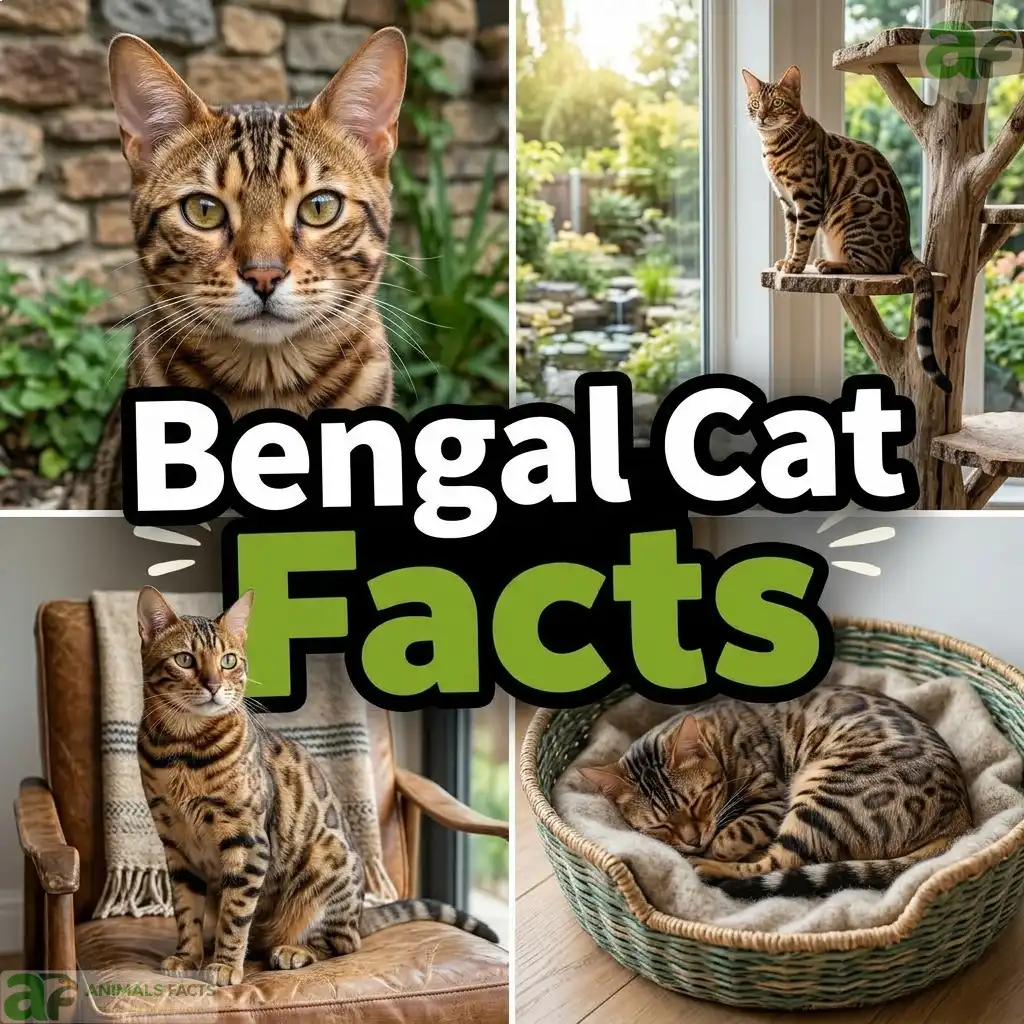
Bengal Cat Facts
| Feature | Details |
|---|---|
| Scientific Name | Felis catus × Prionailurus bengalensis (hybrid) |
| Kingdom | Animalia |
| Phylum | Chordata |
| Class | Mammalia |
| Order | Carnivora |
| Family | Felidae |
| Common Names | Bengal cat, Bengal |
| Parent Species | Domestic cat (Felis catus) × Asian leopard cat (Prionailurus bengalensis) |
| Origin | First bred in the United States, 1963 |
| Habitat | Domestic home environments; indoor and supervised outdoor |
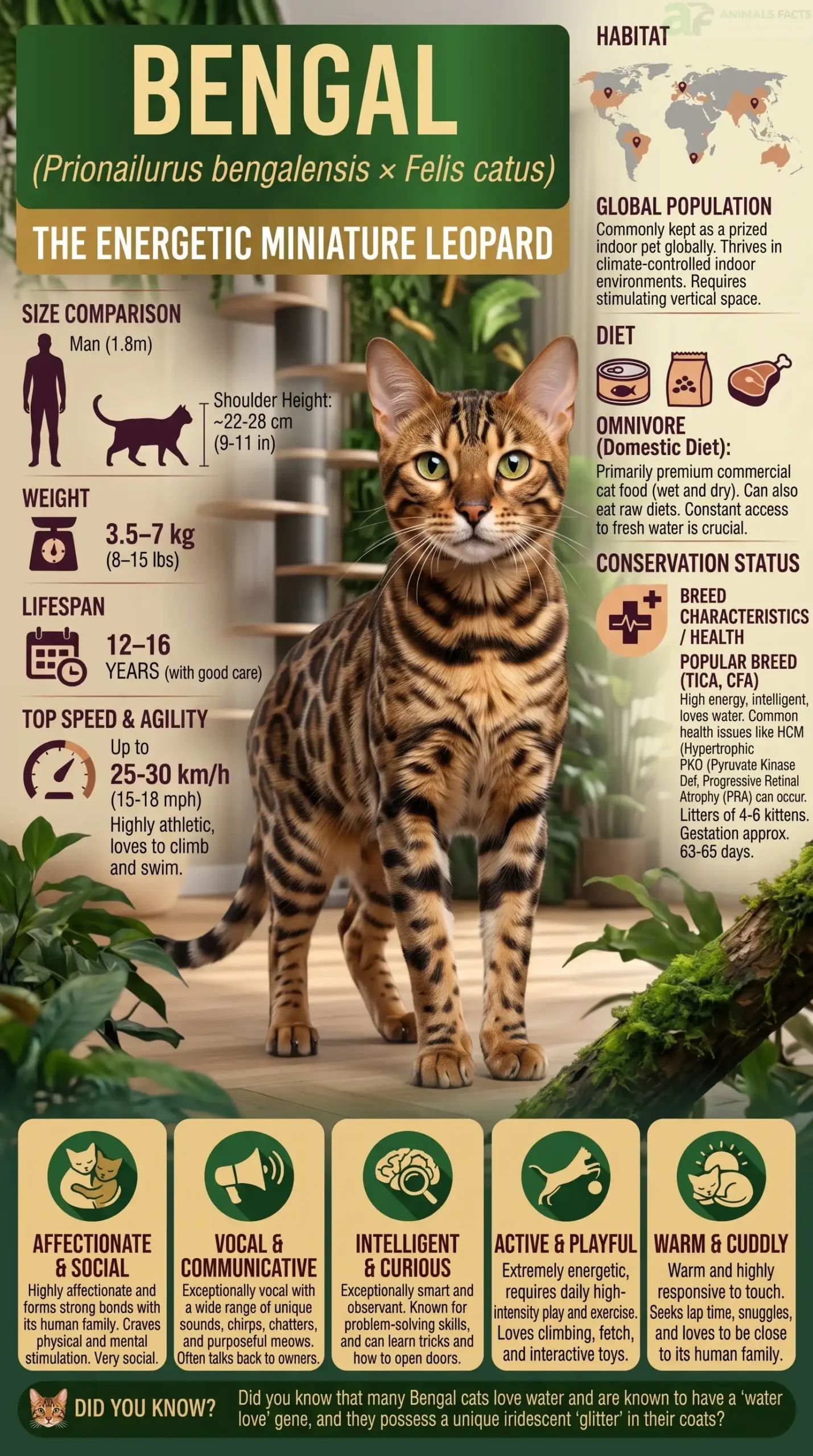
| Lifespan | 12–16 years depending on generation and care |
| Diet | High-protein raw or premium commercial cat food; meat-based diet |
| Height | 30–40 cm at shoulder |
| Body Length | 35–50 cm body length plus tail |
| Weight | 3.5–8 kg (males typically larger than females) |
| Top Speed | Up to 48 km/h in short bursts |
| Conservation Status | Not applicable — domestic hybrid breed |
| TICA Recognition | Fully recognized breed since 1991 |
| Price Range | $1,500–$10,000+ depending on generation and quality |
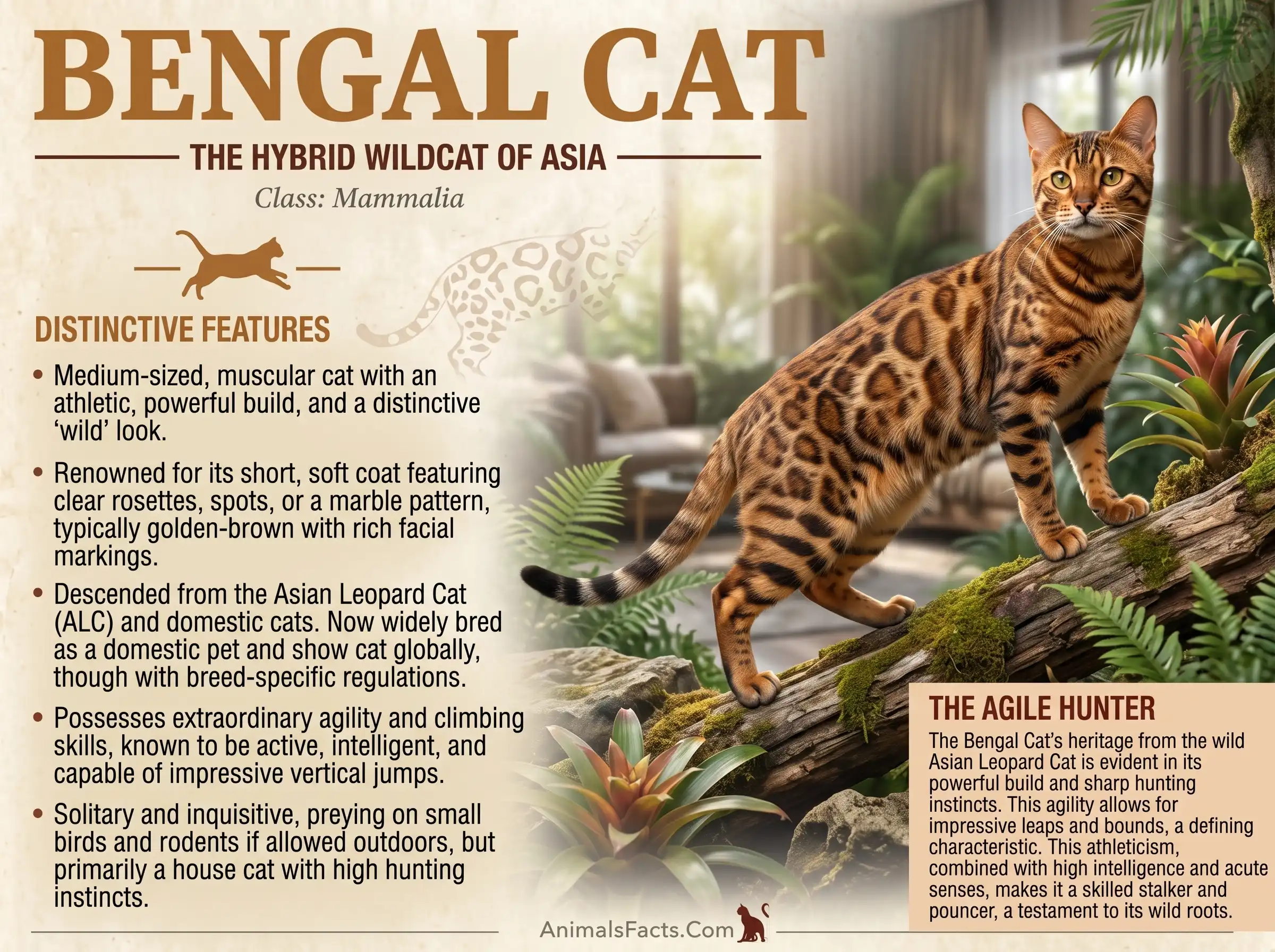
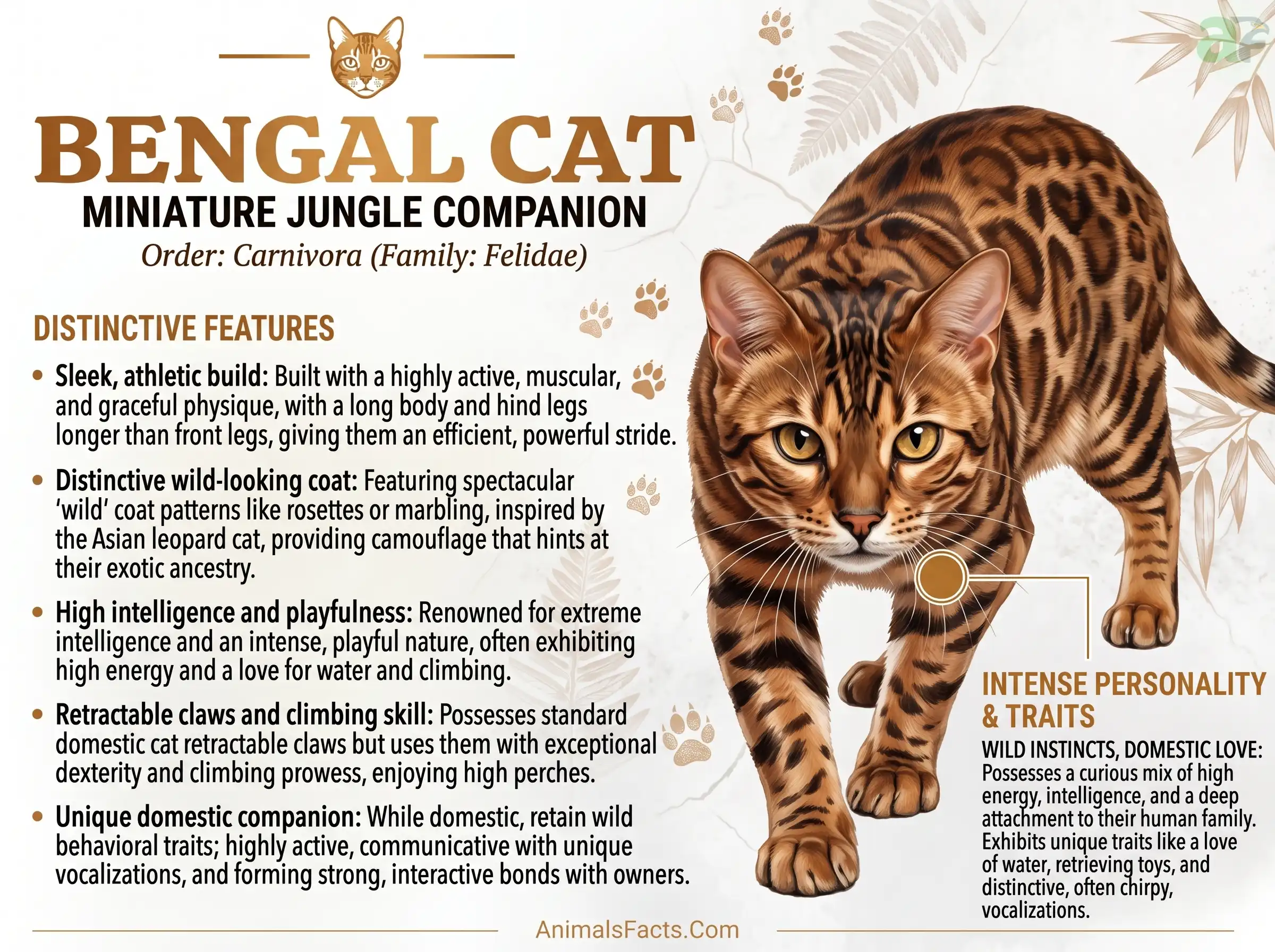
| Defining Feature | Glittered, spotted or marbled wild-looking coat with extraordinary iridescent sheen |
 1. Introduction: What is a Bengal Cat?
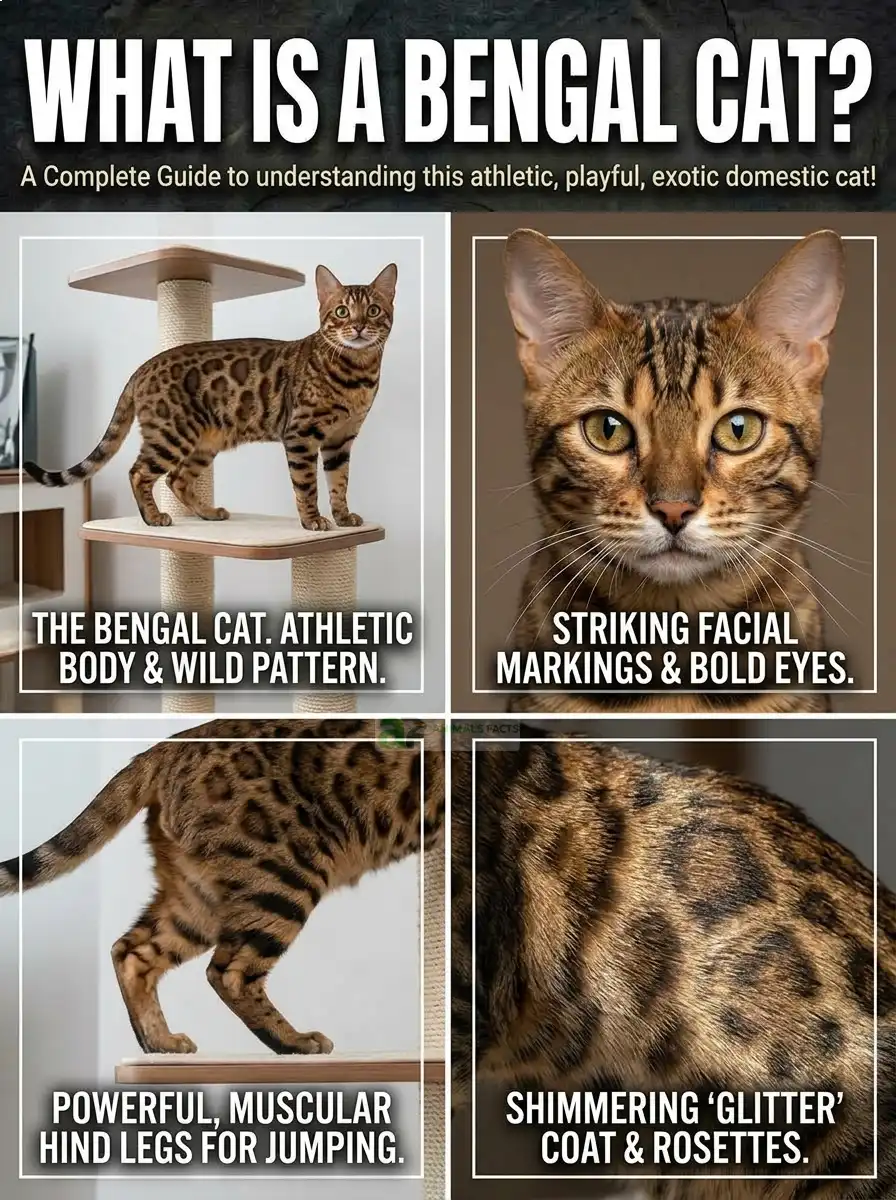
Picture a cat that looks as though it belongs on the floor of a tropical rainforest — with a coat of bold, wild-animal spots or intricate swirling marbled patterns that glow with an iridescent sheen in sunlight, a muscular, athletic body built for speed and agility, and eyes that regard you with an intelligence that simultaneously says “I love you” and “I am planning something.” Bengal cat facts begin with this single, extraordinary image — a domestic cat that has been carefully bred over decades to bring the breathtaking visual drama of a wild leopard cat into a living room while maintaining the social warmth and companionship that makes cats beloved companions across the world.
The Bengal cat is the product of a remarkable breeding program that began in 1963 when geneticist Jean Mill crossed a domestic cat with an Asian leopard cat (Prionailurus bengalensis) — a small wild felid native to South and Southeast Asia. The result, refined through decades of careful selection by dedicated breeders working with the International Cat Association, is a breed that has become one of the most popular and most sought-after domestic cat breeds in the world — consistently ranking among the top breeds registered with TICA and generating passionate communities of owners and enthusiasts on every inhabited continent. Interesting facts about Bengal cats reveal a breed of extraordinary complexity — the water-loving cat that joins its owner in the shower, the leash-walking cat that accompanies its family on hiking trails, the chirping, chattering, intensely vocal cat whose communication repertoire far exceeds that of most domestic breeds, and the glittering coat that is unlike anything else in the entire world of domestic animals.
Whether you are searching for Bengal cat facts for kids to explore the science of hybrid cat genetics and wild cat heritage, a prospective owner researching Bengal cat habitat requirements and care needs before making a commitment, a cat enthusiast fascinated by the extraordinary coat genetics that produce the Bengal’s famous glitter, or simply someone who encountered a photograph of this leopard-patterned domestic cat and needed to know everything immediately — this is your comprehensive guide. We cover Bengal cat scientific name, Bengal cat diet, Bengal cat size and weight, Bengal cat behavior and intelligence, the generation system, legal status, conservation implications of the wild parent species, and everything else that makes these remarkable animals the most visually spectacular domestic cats in the world. The miniature leopard of the living room awaits.
2. Species Overview & Classification
The Bengal cat occupies a taxonomically fascinating position — recognized as a domestic cat breed by the International Cat Association yet carrying in its early generations the genetic heritage of a genuinely wild felid species that belongs to a completely different genus from the domestic cat.
Species Classification Table
| Taxonomic Rank | Classification |
|---|---|
| Kingdom | Animalia |
| Phylum | Chordata |
| Class | Mammalia |
| Order | Carnivora |
| Family | Felidae |
| Subfamily | Felinae |
| Father (Sire) — F1 | Asian leopard cat — Prionailurus bengalensis |
| Mother (Dam) — F1 | Domestic cat — Felis catus |
| Hybrid Designation | Felis catus × Prionailurus bengalensis (F1) |
| Taxonomic Status | Recognized domestic breed (TICA, 1991) |
| Breeding Registry | International Cat Association (TICA) |
The Filial Generation System
Like the Savannah cat, Bengals are described using a filial generation system that tracks how many generations removed from the original Asian leopard cat a given Bengal is:
| Generation | Parent Combination | ALC Content | Typical Weight | Fertility | Legal Status |
|---|---|---|---|---|---|
| F1 | ALC × domestic cat | ~50% | 5–8 kg | Males sterile; females fertile | Restricted in many areas |
| F2 | F1 Bengal × domestic/Bengal | ~25% | 4–7 kg | Males mostly sterile | Restricted in some areas |
| F3 | F2 × domestic/Bengal | ~12.5% | 4–7 kg | Males mostly sterile | Some restrictions |
| F4 | F3 × domestic/Bengal | ~6.25% | 3.5–7 kg | Both sexes fertile | Generally unrestricted |
| F5+ | Later generation crosses | <3% | 3.5–6 kg | Fully fertile | Unrestricted |
The Parent Species
Asian Leopard Cat (Prionailurus bengalensis):
- Native to South, Southeast, and East Asia — from Pakistan to the Russian Far East
- Weight: 2–8 kg depending on subspecies and location
- Strikingly spotted coat; highly distinctive wild cat appearance
- Expert climber and swimmer
- IUCN Status: Least Concern overall — but several island subspecies are Endangered
- The species’ name (bengalensis) refers to Bengal — the region of South Asia — from where early specimens were described
Domestic Cat (Felis catus):
- Domesticated approximately 10,000 years ago from the African wildcat (Felis lybica)
- Global population approximately 600 million domestic cats worldwide
- Fully domesticated — capable of close human companionship
The History of Breed Development
1963 — Jean Sugden Mill — an American geneticist and cat breeder — makes the first deliberate cross between a domestic cat and an Asian leopard cat, producing what she calls a “domestic cat with a wild look.” Mill’s initial motivation included a desire to create a cat that, due to its leopard-cat appearance, might reduce demand for wild leopard cat pelts.
1963–1981 — Mill’s early hybrid project is interrupted by personal circumstances. During the same period, geneticist Dr. Willard Centerwall at Loma Linda University independently crosses Asian leopard cats with domestic cats as part of research into feline leukemia immunity — because Asian leopard cats show natural immunity to certain feline leukemia strains.
1981 — Jean Mill resumes her Bengal breeding program — acquiring several of Dr. Centerwall’s hybrid cats and continuing systematic development of the breed with the goal of creating a domestic cat with genuinely wild appearance and fully domestic temperament.
1983 — The Bengal is presented to TICA for the first time — beginning the formal recognition process.
1991 — TICA grants the Bengal cat Championship status — full recognition as a show breed — marking the Bengal’s arrival as a formally established domestic cat breed.
2000s — Bengal cats become one of the fastest-growing cat breeds globally — with registered breeders expanding to every inhabited continent and the Bengal community becoming one of the largest and most active in the cat fancy world.
2012 — The Bengal becomes the most registered pedigree cat in the UK with The Governing Council of the Cat Fancy (GCCF) — a position it maintains through the 2020s.
2026 — Bengal cats are consistently among the top 5 most popular cat breeds globally by TICA registration numbers and command among the highest prices of any domestic cat breed, with exceptional show quality cats reaching prices exceeding $10,000.
“The Bengal cat represents one of the most successful achievements in deliberate domestic cat breed development — creating an animal that genuinely captures the wild beauty of a leopard cat while maintaining the social warmth and companion qualities that make cats such extraordinary human companions. It is a genuine triumph of thoughtful, responsible breeding.”
— Dr. Leslie Lyons, Professor of Comparative Medicine, University of Missouri, and leading feline geneticist
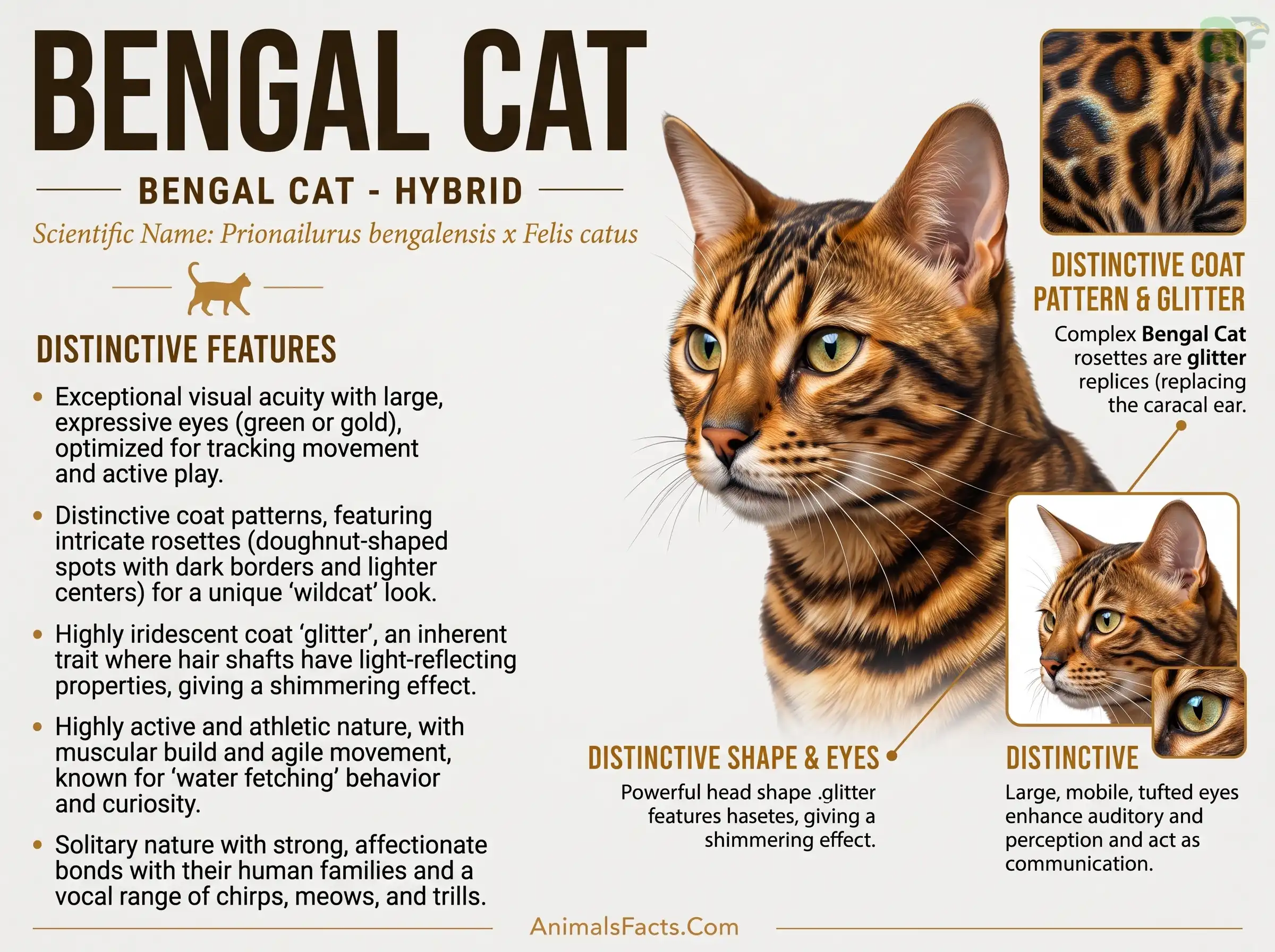
3. Physical Description & Unique Features
Bengal cat size and weight make it a medium to large domestic cat — but its most immediately distinctive physical feature is not its size but the extraordinary coat that has made the Bengal one of the most visually spectacular domestic animals in the world.
The Coat — The Bengal’s Defining Glory
The Bengal cat’s coat is the feature that has driven the breed’s extraordinary popularity — combining wild animal patterning with a unique glittering iridescent quality that has no parallel in any other domestic cat breed:
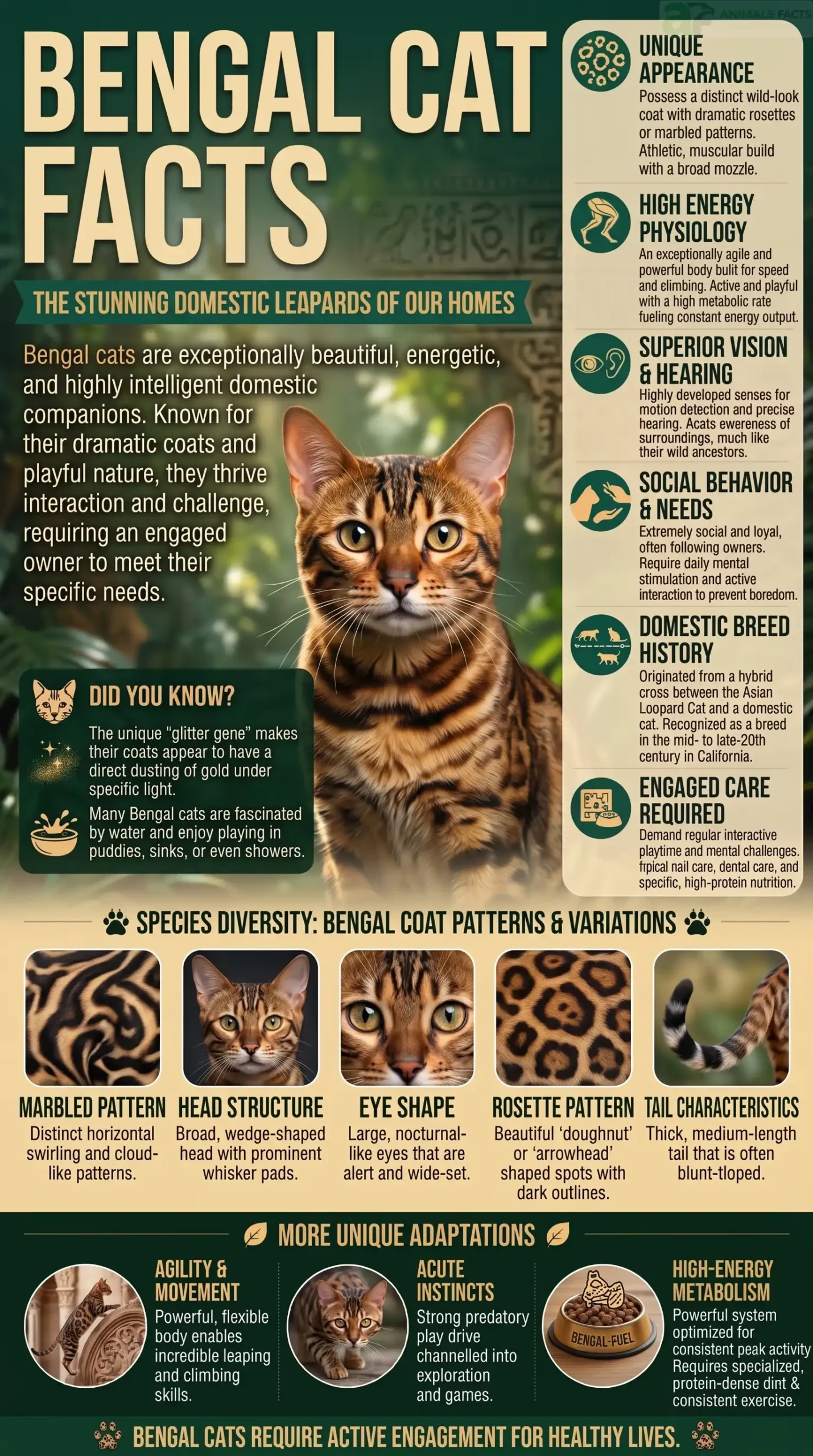
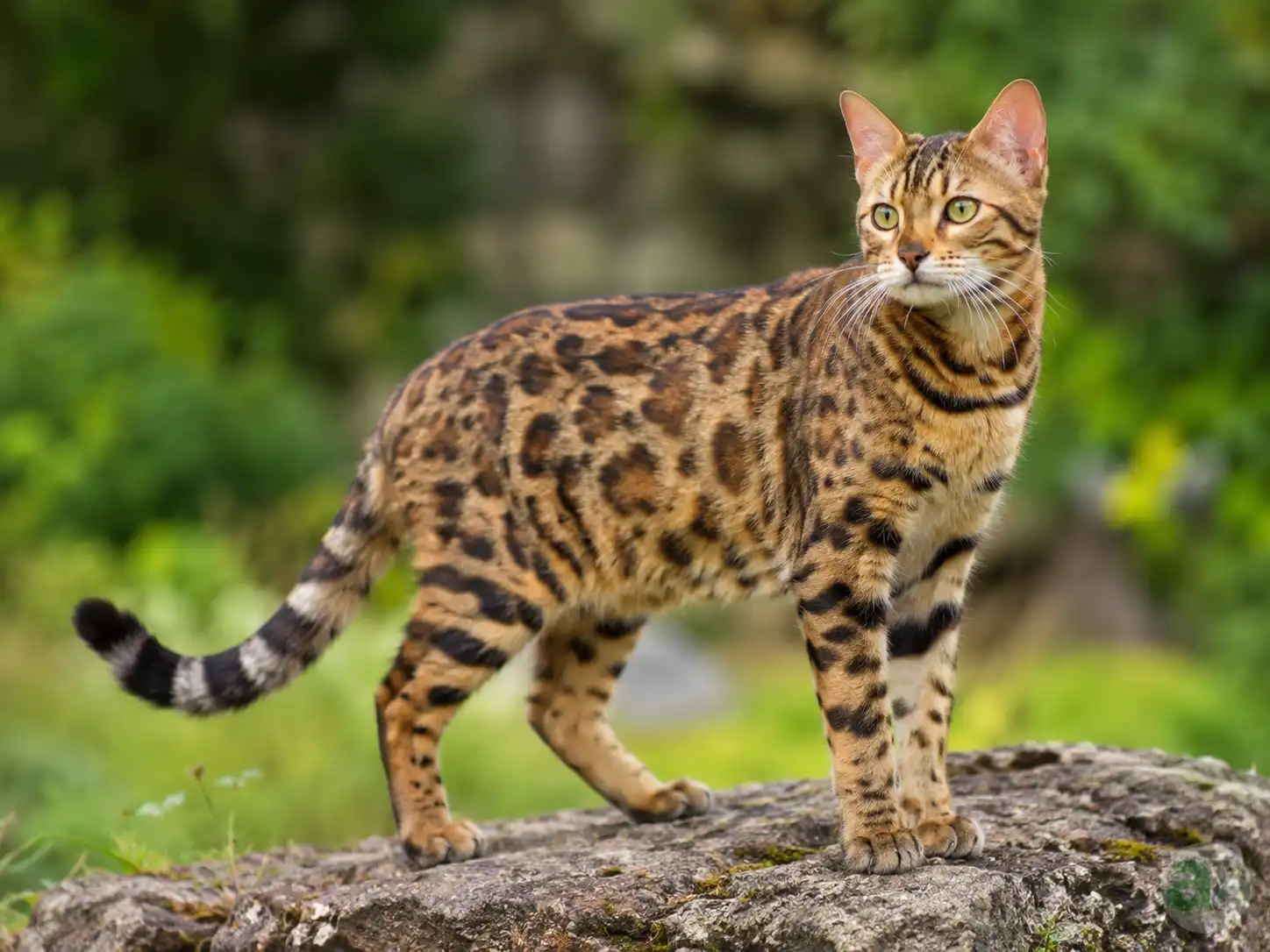
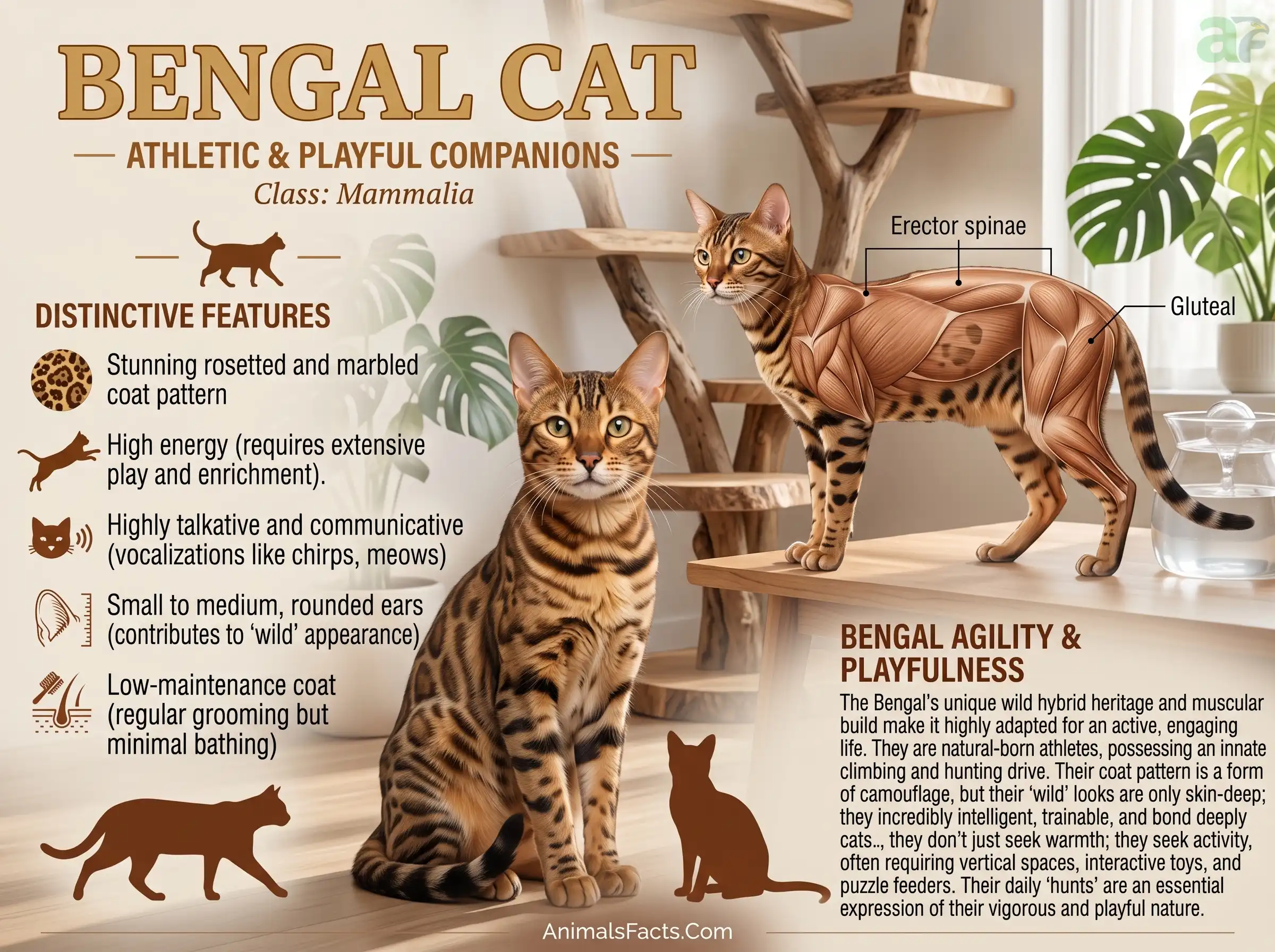
Spotted coat — The most common and most celebrated Bengal coat pattern — bold, high-contrast spots distributed across the body in various arrangements. Unlike the spots of tabby cats, Bengal spots should be random and scattered rather than in rows, and ideally should show two-toned rosetted patterning — spots with a darker outline and a lighter or contrasting center — exactly replicating the pattern of wild leopard cats and other spotted wild felids.
Rosetted spots — The most prized form of Bengal spotting — spots that form partial or complete rings (rosettes) around a lighter center, exactly as seen in wild cats including leopards, jaguars, and Asian leopard cats. Bengal rosettes may be arrow-head, paw-print, donut, or clouded in shape — different rosette forms that are distinguished and judged in cat shows.
Marbled coat — The second recognized Bengal pattern — swirling, flowing horizontal patterns that flow in a horizontal direction across the body (never vertical tabby stripes). Marbled patterns should be complex, multi-toned, and distinctly different from classic tabby patterns — the ideal marbled Bengal resembles the pattern of a clouded leopard or marbled cat.
The Glitter — Bengals’ Most Unique Feature
The most scientifically remarkable feature of Bengal cat coat genetics is the glitter — a quality found in some Bengals in which the individual hair shafts are translucent at the tip, allowing light to enter the hair shaft and be internally reflected, producing a shimmering, iridescent effect that makes the coat appear to sparkle in sunlight as though lightly dusted with gold or pearl powder.
This glitter effect is genuinely unique in the domestic cat world — no other breed produces it consistently — and is one of the most prized qualities in show Bengal cats. The genetic basis of Bengal glitter is not fully characterized as of 2026 — it appears to involve a recessive genetic trait that is distinct from standard coat color genetics.
Two glitter types are recognized:
- Gold glitter — Warm golden iridescence; most common in brown-spotted Bengals
- Pearl or silver glitter — Cool silver iridescence; associated with silver-coated Bengals
Coat Colors
Bengal cats are recognized in several color categories:
Brown tabby — The most common and most immediately “wild-looking” coloration — warm brown to golden base with black to dark brown spots or marbling. The combination of warm base color, high-contrast spots, and gold glitter produces the closest visual approximation to a wild leopard cat.
Snow — Three snow variations exist, all producing a pale, contrast-reduced coat:
- Seal lynx point — The palest snow; cream to white base with spots barely visible at birth, darkening slightly with age; blue eyes
- Seal mink — Slightly warmer ivory base; more visible contrast; aqua eyes
- Seal sepia — Warmest snow; most visible contrast; gold to green eyes
Silver — Pale silver to grey base with black spots or marbling; associated with pearl glitter; producing a dramatically high-contrast appearance
Charcoal — A separate genetic component producing a darker, more dramatic appearance with a distinctive “cape” and “mask” pattern; can be combined with any base color
Body Form
Beyond the coat, the Bengal’s body has specific conformation characteristics that distinguish it from standard domestic cats:
Muscular, athletic build — The Bengal is a medium to large cat with a notably muscular, substantial build — particularly in the hindquarters, which are slightly higher than the forequarters (the “cheetah curve”) — giving the Bengal a characteristic stance suggesting readiness for explosive movement.
Broad, wedge-shaped head — The Bengal head is broad with prominent rounded contours — quite different from the sharp wedge of oriental breeds or the round head of cobby breeds. The nose is broad and slightly puffed, and the whisker pads are prominent — giving the face a wild cat appearance.
Large, oval eyes — The eyes are large, oval to round, and set relatively wide apart — in shades of green to gold in brown Bengals and blue in snow seal lynx points.
Thick, tapered tail — The tail is medium length with a distinctive thick base that tapers to a rounded tip — not the thin, sharp-tipped tail of some oriental breeds.
Did You Know? The Bengal cat’s famous glitter effect — the iridescent, sparkling quality of the coat — was first noticed in a Bengal named “Millwood Tory of Delhi” — one of Jean Mill’s early breeding cats — and is believed to derive from the wild Asian leopard cat’s coat, which shows a similar iridescent quality when viewed in sunlight. The glitter trait was selectively amplified through the Bengal breeding program — producing the extraordinary sparkling coats of modern show-quality Bengals that have no parallel in any other domestic cat breed.
4. Top 25 Amazing Bengal Cat Facts
Here is your definitive collection of the most extraordinary, scientifically verified, and genuinely astonishing Bengal cat facts as of 2026:
- The Bengal cat is the only domestic cat breed whose coat produces a natural glitter effect — a sparkling, iridescent sheen caused by translucent hair tips that internally reflect light, making the coat appear to shimmer in sunlight.
- The Bengal breed was partly developed by geneticist Jean Mill with the goal of making a cat so beautiful that it would reduce demand for wild leopard cat pelts — the theory being that if people could own a cat that looked like a leopard cat without killing one, the wild fur trade would be undermined.
- Bengal cats were also developed from hybrid research conducted at Loma Linda University by Dr. Willard Centerwall — who was studying whether the Asian leopard cat’s natural immunity to certain strains of feline leukemia could be bred into domestic cats to protect them from this deadly disease.
- Many Bengal cats love water — they will play in running taps, join their owners in the shower, splash in water bowls, and some individuals will wade into shallow pools. This water affinity is directly inherited from the Asian leopard cat parent, which is an excellent swimmer.
- Bengal cats are frequently described as the “dog of the cat world” — like Savannah cats, they follow their owners from room to room, greet them at the door, learn their name reliably, play fetch, and walk on a leash with appropriate training.
- The first Bengal cat ever shown at a TICA show — in the early 1980s — caused significant controversy within the cat fancy community, with some judges and breeders arguing that hybrid cats should not be eligible for championship competition. The debate continued until TICA granted full championship status in 1991.
- Bengal cats are the most registered pedigree cat breed in the United Kingdom — a position maintained consistently from the early 2010s through the present, reflecting the breed’s extraordinary and enduring popularity among British cat enthusiasts.
- Early generation (F1–F3) Bengal males are almost universally sterile — the same hybrid incompatibility pattern seen in many interspecific hybrids; female fertility is maintained at all generations; full male fertility is typically restored at F4 and beyond.
- The Bengal cat’s rosetted spot pattern — spots with a lighter center surrounded by a darker outline — is produced by a complex interaction of tabby genetics and agouti gene expression that creates the two-toned spots seen in wild cats. No other domestic cat breed produces true rosettes consistently.
- Bengal cats were used in research that contributed to understanding feline leukemia — the Asian leopard cat’s immunity to certain feline leukemia strains has been a subject of ongoing veterinary research since Centerwall’s initial breeding program in the 1960s and 1970s.
- A single show-quality Bengal kitten can cost $5,000–$10,000+ — making top-quality Bengals among the most expensive domestic cats in the world; pet-quality Bengals from registered breeders typically range from $1,500–$4,000.
- Bengal cats have been documented opening cabinet doors, flushing toilets, operating lever door handles, and in one documented case, switching light switches — their problem-solving intelligence regularly exceeding that of standard domestic cats.
- The Bengal’s vocalization repertoire is distinctive — they produce chirps, trills, mews, yowls, and chattering sounds that are more varied and more frequent than most domestic cat breeds — many Bengal owners describe their cats as extraordinarily vocal and conversational.
- Bengal cats have been documented catching fish from aquarium tanks — their hunting drive, water affinity, and manual dexterity combining to make household fish tanks a genuine risk without secure lids when a Bengal is in residence.
- The Asian leopard cat parent of Bengal cats ranges across more countries than any other wild cat species — from Pakistan and India through Southeast Asia to Russia, Korea, and Japan — and shows extraordinary geographic variation in size and coat pattern across its range.
- The first domestic cat to be cloned commercially was a Bengal cat — “Little Nicky” — produced in 2004 by the company Genetic Savings & Clone for a Texas owner who paid approximately $50,000 for the procedure.
- Bengal cats have been banned or restricted in several US states and jurisdictions — including Hawaii and parts of New York City — reflecting regulatory concerns about hybrid wild cat ownership that classify early-generation Bengals as wildlife rather than domestic pets.
- The Bengal cat’s body conformation — with hindquarters slightly higher than the forequarters — mirrors the stance of the Asian leopard cat and several other wild felids and is described in the breed standard as the characteristic “cheetah curve” of the Bengal spine.
- Bengals are among the most athletic domestic cats — documented leaping to heights exceeding 180 cm from a standing position, running at estimated speeds of 48 km/h, and navigating vertical surfaces with an agility that makes standard cat-proofing strategies inadequate.
- The charcoal Bengal — produced by a specific genetic combination involving a non-agouti gene — was only formally recognized as a distinct color category by TICA in 2020 — making it one of the most recently established Bengal color varieties and demonstrating ongoing evolution in breed standards.
- Research has confirmed that Bengal cats show significantly higher activity levels than most domestic cat breeds across all age groups — requiring substantially more environmental enrichment, interactive play, and physical exercise to maintain psychological wellbeing.
- The marbled Bengal pattern — the flowing, horizontal swirl pattern that is the second recognized Bengal coat pattern — was not present in the original Jean Mill breeding cats but emerged as a spontaneous variation in later generations and was subsequently incorporated into the breed standard as an equal alternative to spotted patterning.
- Bengal cats are thought to be more resistant to certain feline diseases than typical domestic cats — potentially reflecting hybrid vigor from the Asian leopard cat cross — though this resistance is not formally quantified and should not be relied upon as a substitute for standard veterinary preventive care.
- The Bengal’s glitter gene has been mapped to a specific chromosomal region by feline geneticists at the University of Missouri — contributing to the broader understanding of the genetics of hair shaft structure in domestic cats and potentially having implications for understanding similar traits in other felid species.
- As of 2026, the global Bengal cat community encompasses registered breeders in over 60 countries — making the Bengal one of the most internationally distributed domestic cat breeds and supporting one of the largest and most active breed communities in the cat fancy world.
5. Fun Facts About Bengal Cats
- Bengals have a glitter effect in their coat — no other cat breed has this
- The breed was partly created to save wild leopard cats from the fur trade
- Many Bengals genuinely love water — some join their owners in the shower
- Bengals are the most popular pedigree cat in the UK
- The first commercially cloned domestic cat was a Bengal
- Bengals can cost $10,000+ for show-quality kittens
- Early generation males are sterile — like many hybrid animals
- Bengals can jump 180 cm vertically from standing
- They can open doors, flush toilets, and operate light switches
- The breed was also developed to study feline leukemia immunity
- Bengals are banned in Hawaii and some other jurisdictions
- The charcoal Bengal color was only recognized by TICA in 2020
6. Natural Habitat & Geographic Range
Bengal cat habitat in the domestic sense spans every country where ownership is legal — from North American suburban homes to European apartments and Asian luxury residences. However, as with all cats carrying wild felid heritage, the Bengal’s habitat requirements — particularly for active, stimulation-rich environments — are considerably more demanding than those of standard domestic cats.
Where Bengal Cats Live
Bengal cats are found as companion animals across:
- United States — the primary breeding and ownership market; some state and local restrictions on early generations
- United Kingdom — the single largest national market by TICA registrations; unrestricted
- Europe — legal across most of the European Union; strong communities in France, Germany, Netherlands, Belgium, and Scandinavia
- Australia — F4+ generations generally unrestricted; early generations subject to state wildlife regulations
- Asia — growing ownership particularly in Japan, South Korea, Singapore, and increasingly China
- Canada — legal nationwide with provincial variation in early generation regulations
Legal Restrictions
| Jurisdiction | Status | Notes |
|---|---|---|
| Hawaii, USA | F1–F3 Banned | Classified as wildlife hybrids |
| New York City, USA | Restricted | Requires permit for early generations |
| Georgia, USA | F1–F3 Restricted | State exotic animal regulations |
| Australia | F1–F3 restricted | State-by-state variation; F4+ generally legal |
| Belgium | Restricted | Some local regulations |
Ideal Home Environment
Bengal cat habitat requirements vary by generation:
F1 and F2 Bengals:
- Very large home with extensive indoor vertical space
- Secure outdoor enclosure strongly recommended
- Water features — many individuals actively seek water play
- Advanced enrichment — puzzle feeders, climbing structures, prey-simulation toys
- Experienced exotic cat owner required
F4 and later Bengals:
- Adaptable to standard home environments with adequate enrichment
- Still more active than standard cats — minimum 30–45 minutes of interactive play daily
- Apartment living possible with sufficient environmental complexity
- Appropriate for experienced cat owners willing to commit to active engagement
- Secure windows and doors important given athletic climbing and jumping capability
The Asian Leopard Cat’s Natural Habitat
The wild parent species — the Asian leopard cat (Prionailurus bengalensis) — occupies an extraordinarily diverse range of natural habitats across Asia:
- Tropical and subtropical forests — the primary habitat across Southeast and South Asia
- Temperate forests — in the northern parts of the range including China, Korea, and Russia’s Primorsky Krai
- Grasslands and scrubland — in the drier parts of the range
- Agricultural margins — the species shows considerable tolerance of human-modified landscapes
- Elevations from sea level to approximately 3,000 meters in parts of the Himalayan foothills
Did You Know? The Asian leopard cat — the wild parent of Bengal cats — is one of the most geographically widespread wild cat species in the world, ranging from Pakistan in the west to the Russian Far East and Japan in the east — a distribution spanning approximately 90 degrees of longitude. The species shows remarkable size variation across this range — from the tiny Sunda leopard cat of the Indonesian islands (weighing as little as 2 kg) to the large northern leopard cats of Korea and Russia (reaching 8 kg) — with the Bengal cat breed drawing from domestic crosses with multiple parts of this range.
7. Diet & Feeding Behavior
Bengal cat diet requires considerably more thought than feeding a standard domestic cat — particularly in earlier generations where the wild Asian leopard cat heritage produces physiological and behavioral characteristics that differ meaningfully from purely domestic animals.
Diet Breakdown Table
| Food Type | Recommended % | Notes |
|---|---|---|
| High-protein commercial cat food (grain-free, meat-first) | ~40–60% | Premium brands with high meat content |
| Raw meat (whole prey or prepared raw) | ~20–40% | Most closely matches wild parent diet |
| Cooked lean meat (chicken, turkey, fish) | ~10–20% | Supplementary protein source |
| Raw bones (appropriate size) | ~5–10% | Dental health; behavioral enrichment |
| Freeze-dried or dehydrated raw | ~5–10% | Convenient raw-equivalent option |
The Raw Diet Discussion for Bengals
The debate around raw feeding is particularly active in the Bengal cat community — with specific considerations unique to the breed:
Arguments supporting raw feeding for Bengals:
- Asian leopard cats consume exclusively whole prey in the wild
- Earlier generation Bengals may have digestive systems better suited to raw protein
- Many Bengal breeders and owners report improved coat condition, muscle tone, and energy on raw diets
- Higher moisture content supports urinary tract health
- The glitter coat quality is anecdotally reported to improve on high-quality raw or wet food diets
Arguments for high-quality commercial food:
- Properly formulated commercial foods provide complete, balanced nutrition
- Pathogen risks of raw meat feeding (Salmonella, Listeria) require careful management
- Later generation Bengals have digestive systems essentially equivalent to domestic cats
- Commercial food is more nutritionally predictable
Most Bengal cat breeders and veterinarians specializing in exotic breeds recommend a combination approach — high-quality, grain-free commercial food as the dietary foundation, supplemented with raw or cooked meat and appropriate variety.
Specific Bengal Feeding Considerations
Taurine adequacy — Like all cats, Bengals are obligate carnivores requiring dietary taurine; all food should contain adequate taurine content.
Fish caution — While many Bengals show enthusiastic interest in fish (reflecting the Asian leopard cat’s fishing behavior), excessive fish in the diet can interfere with thiamine absorption; fish should be a supplement rather than a dietary staple.
Food puzzle enrichment — Bengals’ high intelligence and hunting drive make food puzzle feeders an important tool — providing both mental stimulation and slowing food consumption to prevent the rapid eating that can cause digestive issues in enthusiastic Bengal feeders.
8. Reproduction & Life Cycle
Bengal cat reproduction is characterized by the same hybrid sterility challenges seen in other interspecific hybrids — with early generation males being essentially non-functional reproductively while females maintain fertility across all generations.
The Male Sterility Pattern
F1 males — Almost universally sterile; cannot be used in breeding
F2 males — Largely sterile; occasional fertility possible but unreliable
F3 males — Variable fertility; occasionally used in limited breeding
F4 males — Typically fertile; used in standard breeding programs
F5+ males — Standard domestic cat fertility
Female Fertility
Bengal female cats are fertile at all generations — providing the reproductive continuity that makes progressive generation breeding possible. F1 females are bred to domestic cats or to later-generation Bengal males to produce F2 offspring.
Gestation & Birth
- Gestation period: 63–67 days — standard domestic cat gestation
- Litter size: typically 3–5 kittens per litter
- Birth weight: approximately 80–120 grams per kitten
- Kitten pattern visibility: spotted and marbled patterns are clearly visible from birth — unlike many coat patterns that take time to develop
Kitten Development
Bengal kittens pass through a remarkable developmental phase called “fuzzing” — between approximately 2–8 weeks of age, Bengal kittens’ coats become temporarily blurry, grey, and indistinct — the spots and markings obscured by a layer of longer, protective guard hairs. This “fuzz” disappears gradually as the kitten matures, revealing the adult coat pattern in its full clarity by approximately 12–16 weeks.
The “fuzzing” phenomenon is thought to be a vestigial camouflage adaptation from the wild ancestor — obscuring the distinctive spot pattern of kittens during their most vulnerable developmental phase.
Lifespan Comparison Table
| Animal | Average Lifespan | Max Documented | Reproductive? |
|---|---|---|---|
| Bengal cat (F4+) | 12–16 years | ~20 years | Yes — fully fertile |
| Bengal cat (F1) | 12–15 years | ~18 years | Females only |
| Asian leopard cat | 8–13 years (wild); up to 15 (captivity) | ~15 years | Yes |
| Savannah cat (F4+) | 15–20 years | ~22 years | Yes |
| Standard domestic cat | 13–17 years | ~30 years | Yes |
9. Social Behavior & Communication
Bengal cat social behavior is one of the most frequently discussed and most widely celebrated aspects of the breed — combining domestic cat social adaptability with Asian leopard cat-derived behavioral characteristics to produce cats of extraordinary personality and interactive capability.
The Dog-Like Loyalty
Like Savannah cats, Bengal cats are widely described as exhibiting dog-like behaviors that distinguish them from typical domestic cats:
- Following specific family members from room to room throughout the day
- Greeting owners at the door with consistent enthusiasm
- Playing fetch — many Bengals retrieve thrown toys repeatedly and reliably
- Learning their name and responding to it more reliably than most cats
- Walking on a leash — with appropriate harness training from kittenhood
- Bonding intensely with specific family members while being interactive with all
Water Fascination
Bengal cats share the water fascination of their Savannah cat cousins — with the behavioral trait having an independent genetic origin in the Asian leopard cat lineage:
- Playing with running water from taps
- Joining owners in the shower voluntarily
- Playing in shallow water features
- Dipping paws in water bowls before drinking
- In some documented cases, fishing live fish from aquarium tanks
Intelligence & Problem-Solving
Bengals are consistently rated among the most cognitively capable of all domestic cat breeds. Documented Bengal intelligence behaviors include:
- Opening lever door handles reliably
- Flushing toilets deliberately (apparently for entertainment)
- Operating light switches — documented in multiple individual cats
- Unlocking cage and cabinet latches — including multi-step mechanisms
- Learning household routines with remarkable precision
- Discriminating between family members with nuanced behavioral responses to each
The Bengal Voice
Bengal cats are exceptionally vocal — producing a wider range of sounds more frequently than most domestic cat breeds:
Chirps and trills — The most distinctive Bengal vocalization — a series of bird-like sounds used in excited communication, particularly when watching prey or greeting owners
Chattering — The characteristic rapid-jaw-clicking vocalization produced by cats watching birds; Bengals produce this more frequently and more dramatically than most domestic cats
Yowling — A loud, plaintive sound used when demanding attention, food, or expressing displeasure
Meows — Variable in frequency; some Bengals meow constantly and conversationally; others use meows sparingly
Purring — Present and robust; Bengal purrs can be notably loud
10. Predators & Defense Mechanisms
In the domestic context, Bengal cats face no significant natural predators — they live in protected home environments. However, the breed’s defensive behavioral repertoire — inherited from the Asian leopard cat — is considerably more developed than that of standard domestic cats.
Enhanced Defensive Capabilities
Speed and athleticism — Bengal cats can achieve approximately 48 km/h in short bursts — faster than most domestic cats — and their superior jumping ability (180+ cm vertical) gives them access to elevated escape positions unavailable to standard cats.
Heightened startle response — Early generation Bengals in particular show a more dramatic startle response than standard domestic cats — reacting to sudden movements or sounds with explosive speed that reflects the Asian leopard cat’s survival-oriented nervous system.
Territorial behavior — Bengals tend to be more territorially aware than standard domestic cats — investigating and monitoring their home environment with consistent attention and reacting more assertively to perceived intrusions than typical domestic cats.
Risks in Free-Roaming
As with Savannah cats, unsupervised outdoor free-roaming presents specific risks for Bengal cats:
- Their exceptional hunting drive makes them significantly more effective hunters than standard domestic cats — posing greater threats to local wildlife
- Their distinctive appearance makes them targets for theft — particularly high-value F1 and F2 individuals
- Early generation legal status in some jurisdictions means free-roaming Bengals may be subject to seizure as wildlife hybrids
Did You Know? The Asian leopard cat — the wild parent of Bengal cats — is one of the very few wild cat species that successfully coexists with human agricultural landscapes across much of its Asian range. The species inhabits oil palm plantations, tea estates, and rice paddy margins across South and Southeast Asia — showing an adaptability to human-modified landscapes that exceeds most wild felids. This behavioral flexibility, inherited in part by Bengal cats, may partly explain the Bengal’s ability to adapt to diverse domestic home environments — from large country houses to urban apartments.
11. Bengal Cat Facts for Kids
Hey incredible young animal lovers and future cat scientists! Here are some truly mind-blowing Bengal cat facts for kids that will make everyone in your family say “Really?!”
- 🐆 Bengal cats look like tiny leopards! The spots, the rosettes, and the wild pattern are all real — no paint, no stickers, no camera tricks. Bengal cats genuinely look like miniature wild cats from the African or Asian jungles.
- 🐆 Their fur GLITTERS like gold! Bengal cats have something no other domestic cat breed has — a sparkling, glittering coat that seems to shimmer in sunlight as though it has been lightly dusted with golden fairy dust. This glitter is completely natural and built into the structure of their fur!
- 🐆 Bengal cats LOVE water! While most cats run screaming from a drop of water, many Bengals actively seek it out — playing with running taps, joining their owners in the shower, and trying to catch the water with their paws. They got this from their wild Asian leopard cat ancestors who are expert swimmers!
- 🐆 They can play FETCH like dogs! Many Bengal cats retrieve thrown toys and bring them back for another throw — repeatedly, reliably, and with obvious enthusiasm. Dogs are not the only pets who know this game!
- 🐆 The first Bengal cat was created to SAVE wild leopard cats! The scientist who created the Bengal breed partly did so hoping that if people could own a cat that LOOKED like a wild leopard cat, they would stop buying coats made from real leopard cat skins. Fashion versus wildlife — Bengal cats were meant to help!
- 🐆 Bengal kittens temporarily go BLURRY! Between about 2 and 8 weeks old, Bengal kittens develop a temporary fuzzy coat that hides their spots — making them look almost plain. Then the fuzz fades and their beautiful spots appear in full glory!
- 🐆 The first cloned pet cat was a BENGAL! In 2004, a Bengal cat named “Little Nicky” became the first commercially cloned domestic cat — copied from the cells of the owner’s beloved pet. Science fiction became science fact, and a Bengal cat was at the center of it!
- 🐆 Bengals can jump HIGHER than your refrigerator! Bengal cats can leap over 180 centimeters straight up from a standing position — taller than most adults. Nothing in your home is out of reach for a motivated Bengal cat!
12. Relationship with Humans
The relationship between Bengal cats and humans is one of the most intensely bonded, most actively engaging, and most carefully considered human-cat relationships in the entire history of domestic cat breeding — combining genuine wild cat heritage with decades of selective breeding for human compatibility.
The Founding Vision
Jean Mill’s original vision for the Bengal breed was explicitly humanitarian — she hoped that by creating a domestic cat that looked like a wild leopard cat, she could simultaneously satisfy human desire for exotic-looking animals AND reduce demand for wild leopard cat pelts in the fashion industry. This conservation-inspired motivation gives the Bengal breed a cultural origin story quite unlike any other domestic cat breed — where the purpose of the breeding program was explicitly connected to wild cat welfare.
Whether this goal was achieved is debatable — the Bengal cat’s popularity has demonstrably increased awareness of and affection for Asian leopard cats, but has not demonstrably reduced poaching pressure on wild populations. The question of whether creating a domestic analog to a wild species reduces or increases demand for the wild animal remains genuinely unresolved.
The Bonding Relationship
Bengal cat owners — as a community — are among the most vocal, most organized, and most passionate cat breed enthusiasts in the world. The intensity of the human-Bengal bond that many owners describe is significantly greater than typically described for standard domestic cats — with owners frequently comparing the relationship to having a dog in terms of bonding depth, responsiveness, and interactive engagement.
This bonding intensity is both the Bengal’s most celebrated attribute and one of its most important welfare considerations — Bengals that are left alone for extended periods, denied adequate stimulation, or separated from their primary bonded person may experience significant psychological distress.
The Financial Relationship
Bengal cat breeding and ownership is one of the most economically significant niches in the domestic cat industry:
- Breeding programs — quality Bengal breeding is one of the most expensive domestic cat breeding operations; maintaining Asian leopard cat parents (for F1 production), providing appropriate facilities for early generations, and achieving show-quality breeding outcomes requires substantial investment
- Purchase prices — $1,500–$10,000+ creates a significant secondary market for Bengal cat insurance, veterinary care, and specialist services
- Show community — Bengal cat shows generate significant economic activity within TICA and national cat fancy organizations globally
Legal Complexity
One of the most practically significant aspects of the human-Bengal relationship is the legal complexity surrounding ownership of early generation cats. Because F1–F3 Bengals carry significant wild felid genetic content, they occupy a legally ambiguous space between domestic pet and wildlife in many jurisdictions. Prospective owners must verify local regulations before acquiring any Bengal cat — particularly early generations — and should be aware that regulations change and that animals legal at the time of purchase may become subject to new restrictions subsequently.
13. Conservation Status & Threats
As a domestic cat breed rather than a wild species, the Bengal cat has no IUCN conservation status. However, the conservation status of its wild parent species — the Asian leopard cat — and the potential ecological impact of Bengal cats on wildlife are important considerations.
Asian Leopard Cat Conservation Context
| Feature | Details |
|---|---|
| IUCN Status | Least Concern (overall) |
| Population Trend | Decreasing in many areas |
| Primary Threats | Habitat loss, hunting, illegal pet trade |
| Island Subspecies | Several island subspecies Endangered or Critically Endangered |
| CITES Listing | Appendix II (most populations) |
The Asian leopard cat faces multiple conservation threats across its range:
Habitat loss — Deforestation and agricultural expansion across South and Southeast Asia are reducing Asian leopard cat habitat dramatically — particularly in Southeast Asian countries where palm oil expansion has transformed extensive forest areas.
Hunting — Asian leopard cats are hunted for traditional medicine, for their pelts (the original concern that motivated Jean Mill’s Bengal breeding project), and as bushmeat in parts of their range.
Illegal pet trade — Asian leopard cat kittens are captured from wild populations for sale as exotic pets — a trade that is both legally prohibited and ecologically damaging.
Bengal Cat Ecological Considerations
The ecological impact of Bengal cats reflects the same concerns applicable to all domestic cats with enhanced hunting capability:
Enhanced hunting drive — Bengals, particularly early generations, show stronger prey drive than standard domestic cats — making free-roaming Bengals potentially greater threats to local wildlife
Containment as solution — Keeping Bengal cats indoors or in secure outdoor enclosures eliminates wildlife predation risk while still providing rich, stimulating environments
Genetic pollution risk — In areas where Asian leopard cats occur naturally, theoretically, escaped or released early-generation Bengals could interbreed with wild populations — though this risk is extremely low given the geographic separation between most Bengal ownership areas and Asian leopard cat range.
14. Famous Bengal Cats in History & Pop Culture
Famous Named Bengal Cat Individuals
“Mill’s Millwood Tory of Delhi” — Jean Mill’s foundational breeding cat — one of the earliest hybrids in Mill’s program whose descendant lines form the genetic foundation of much of the modern Bengal breed. The cats of Mill’s early program are documented in breed histories as the starting point of the most significant domestic cat breed development project of the 20th century.
“Little Nicky” — The first commercially cloned domestic cat — a Bengal cat produced in 2004 by the company Genetic Savings & Clone for a Texas woman named Julie who paid approximately $50,000 to have her deceased Bengal cat Nicky reproduced through somatic cell nuclear transfer. Little Nicky’s creation generated global media coverage and significant ethical debate about pet cloning — introducing the world to the concept of commercially cloned companion animals through a Bengal cat.
“Jungletrax Afurr-Aphrodite” — One of the most celebrated show Bengal cats in TICA history — a multiple Best of Breed and Best in Show winner whose extraordinary coat quality and conformation set standards that influenced Bengal breeding programs globally.
“Thor” — A Belgian Bengal cat who achieved global social media fame in 2016 when photographs of his extraordinarily vivid spotted coat — described by media worldwide as making him look like a “miniature tiger” or “miniature leopard” — went viral across multiple platforms, accumulating millions of shares and introducing Bengal cats to audiences who had never encountered the breed. Thor’s Instagram account subsequently accumulated hundreds of thousands of followers.
15. Role in Ecosystem & Food Chain
As domestic animals maintained in human homes, Bengal cats play no intended role in natural ecosystems. However, as with all domestic cats, their ecological footprint when given outdoor access is a significant wildlife conservation concern.
The Enhanced Predation Concern
Research on domestic cat predation has established that standard domestic cats in the United States kill between 1.3–4 billion birds and 6.3–22.4 billion small mammals annually — making free-roaming cats one of the most significant anthropogenic causes of wildlife mortality globally.
Bengal cats represent an amplified version of this concern due to:
- Enhanced hunting drive from Asian leopard cat ancestry — particularly in earlier generations
- Greater athleticism enabling capture of prey items (particularly birds) that standard cats cannot catch
- Water-hunting capability — the Bengal’s fishing behavior documented in domestic settings suggests potentially greater threat to amphibians and fish in outdoor settings
- Higher activity levels — more active cats have more opportunities for wildlife encounters per unit time outdoors
The Responsible Ownership Solution
The solution to Bengal cat ecological impact is the same as for Savannah cats:
- Indoor-only living — eliminates predation risk while still providing a rich life with adequate enrichment
- Enclosed outdoor spaces (catios, secured garden runs) — allows outdoor stimulation without wildlife predation
- Leash-walked outdoor access — controlled outdoor enrichment under supervision
16. Myths, Folklore & Cultural Significance
The Modern Cultural Mythology of the Bengal
Unlike ancient cat breeds with centuries of cultural history, the Bengal is a creation of the late 20th century — too recent to have accumulated traditional folklore. Its cultural significance is therefore an entirely modern phenomenon, shaped by social media, cat fancy culture, and the broader human fascination with the intersection of wild and domestic.
The “miniature leopard” cultural narrative — The most pervasive cultural mythology around Bengal cats is the “miniature wild cat in your living room” narrative — the idea that owning a Bengal provides access to some essence of wild cat magnificence in a form that is safe, legal, and companionable. This narrative is both genuinely founded (Bengal cats do carry genuine wild cat heritage and look genuinely wild) and somewhat overdrawn (F4+ Bengal cats are behaviorally domestic animals, not wild cats).
Conservation symbolism — In cat breeding and exotic pet communities, the Bengal is frequently invoked as a model of responsible hybridization — an animal that satisfies human desire for wild-looking pets while channeling those desires into domestic breeds rather than wild animal ownership. Whether this argument holds water in practice is debated.
The “ethical exotic” concept — Bengal cats occupy a unique cultural space as a breed that attempts to resolve the tension between human desire for wild-looking animals and the ethical problems of wild animal ownership — offering an apparently ethical compromise that not everyone finds convincing.
17. Bengal Cats in Pop Culture
“Thor” the Bengal viral phenomenon (2016) — The Belgian Bengal cat whose photographs went globally viral in 2016 — described in international media as looking like a “miniature tiger” — introduced Bengal cats to mainstream global audiences who had not previously encountered the breed and generated extraordinary public interest that measurably increased Bengal cat registrations and breeder inquiries.
Social Media Dominance — Bengal cats are among the most-photographed and most-shared domestic cat subjects on social media globally — their dramatic appearance generating consistent engagement across Instagram, TikTok, Facebook, and YouTube. Multiple individual Bengal cats maintain followings of 100,000–500,000+ followers on Instagram, and Bengal cat content collectively generates billions of views annually.
“Little Nicky” and the pet cloning moment (2004) — The first commercially cloned domestic cat — a Bengal — generated global coverage across major media outlets and introduced the world to the possibility of pet cloning through the story of one Bengal cat and one devoted owner. The story remains one of the most widely referenced examples in bioethics discussions about animal cloning.
Luxury lifestyle media — Bengal cats frequently feature in interior design publications, luxury lifestyle content, and high-net-worth lifestyle media as markers of sophisticated taste in companion animals — positioned alongside other luxury goods in the visual vocabulary of aspirational living content.
18. Bengal Cat Facts vs. Common Myths
| Common Myth | The Real Fact |
|---|---|
| “Bengal cats are wild animals” | False — F4+ Bengal cats are domestic animals; only F1–F3 show significant wild behavioral characteristics |
| “Bengal cats are aggressive because they’re part wild cat” | Largely false — well-socialized Bengals are typically affectionate; any aggression is usually related to inadequate socialization or enrichment, not inherent wildness |
| “Bengal cats are hypoallergenic” | Unproven — Some owners report fewer allergic reactions; no scientific evidence confirms hypoallergenic status |
| “All Bengal cats have glittery coats” | False — glitter is a distinct genetic trait not present in all Bengals; it requires specific genetic inheritance |
| “Bengal kittens have no markings” | Partially true — during the “fuzzing” phase (2–8 weeks), markings are temporarily obscured; they are clearly visible at birth and after fuzzing resolves |
| “Bengal cats are low-maintenance like other cats” | False — Bengals require significantly more interactive play, environmental enrichment, and owner engagement than standard domestic cats |
| “F1 Bengal cats make excellent pets” | Generally false — F1 Bengals retain significant wild behavioral characteristics and require expert management; F4+ cats make suitable pets for appropriate owners |
| “The Bengal cat is named after Bengal tigers” | False — the Bengal cat is named after the Asian leopard cat (Prionailurus bengalensis) — the “bengalensis” referring to the Bengal region of South Asia, not the Bengal tiger |
19. Best Places to Experience Bengal Cats
1. TICA Cat Shows — The International Cat Association’s cat shows — held across North America, Europe, Asia, and Australia throughout the year — provide the finest opportunity to see multiple Bengal cats of exceptional quality, with expert exhibitors available to discuss the breed in depth. Bengal cats consistently represent one of the largest breed entries at TICA championship shows.
2. Reputable TICA-Registered Breeders — Visiting Bengal cat breeders — and spending time with kittens and adult cats of multiple generations — provides the most authentic and educational Bengal cat experience. Quality breeders welcome prospective owners to meet their cats, ask questions, and understand the commitment involved in Bengal cat ownership.
3. Bengal Cat Specialty Shows and Meetups — Active Bengal cat communities in the United States, United Kingdom, Australia, and Europe organize breed-specific shows and owner meetups where multiple cats and experienced owners gather. These events provide exceptional educational opportunities.
4. The Cat Café Experience — A growing number of cat cafés specializing in exotic breeds — particularly in the United States, United Kingdom, and Japan — include Bengal cats in their resident populations, providing a no-commitment opportunity to interact with the breed.
5. Social Media and YouTube — The most accessible Bengal cat encounter for most people globally — the extraordinary volume of high-quality video content on YouTube and social media provides an excellent introduction to Bengal cat appearance, personality, and behavior across multiple generations and color varieties.
20. How You Can Help
Supporting Bengal cats and their wild parent species requires action across multiple fronts.
Support these organizations:
- TICA Foundation — tica.org — supports breed welfare standards and research
- Panthera — panthera.org — wild cat conservation including Asian leopard cat range countries
- TRAFFIC — traffic.org — monitoring and combating illegal trade in Asian leopard cats
- WCS Asia Program — wcs.org — field conservation in Asian leopard cat range countries
- Born Free Foundation — bornfree.org.uk — advocates for captive wild cat welfare globally
What you can do:
- If you own a Bengal — keep it indoors or in secure outdoor enclosures to protect local wildlife
- Purchase only from TICA-registered breeders — responsible breeders prioritize health, socialization, and welfare
- Never purchase from unregistered or “backyard” breeders — irresponsible breeding produces poorly socialized cats with health problems
- Support Asian leopard cat conservation — the wild parent species faces genuine threats; the Bengal community’s conservation of this species’ image should translate to financial support for its protection
- Verify legal status before purchasing early generation Bengals
- Educate others — accurate information about Bengal cats and their wild ancestry helps build genuine understanding
21. Top Documentaries & Books
Must-Watch Documentaries
- “Big Cats: An Amazing Animal Family” (BBC) — Covers Asian leopard cat ecology and the wild parent species of Bengal cats
- “Big Cat Diary” (BBC Kenya) — While focused on African cats, provides context for understanding wild felid behavior relevant to Bengal cat heritage
- Bengal cat YouTube channels — Multiple dedicated channels provide hundreds of hours of Bengal cat behavioral documentation, care advice, and owner experiences
- “Cats as Pets: The Exotic Side” (various wildlife networks) — Features Bengal and other exotic breed cats with discussion of hybrid cat genetics
- National Geographic wild cat content — Extensive Asian leopard cat coverage providing context for the Bengal’s wild heritage
Must-Read Books
- “The Bengal Cat Handbook” by various specialist authors — The most comprehensive popular guide to the breed
- “Cat Sense” by John Bradshaw — The definitive popular science book on domestic cat behavior; essential reading for understanding Bengal cats in context
- “Wild Cats of the World” by Luke Hunter — Includes Asian leopard cat coverage essential for understanding the Bengal’s wild heritage
- “Total Cat Mojo” by Jackson Galaxy — Practical guide to understanding and enriching domestic cat lives; particularly relevant for high-drive Bengals
- “The Complete Bengal Cat” by various Bengal specialist authors — Breed-specific care, genetics, and showing guide
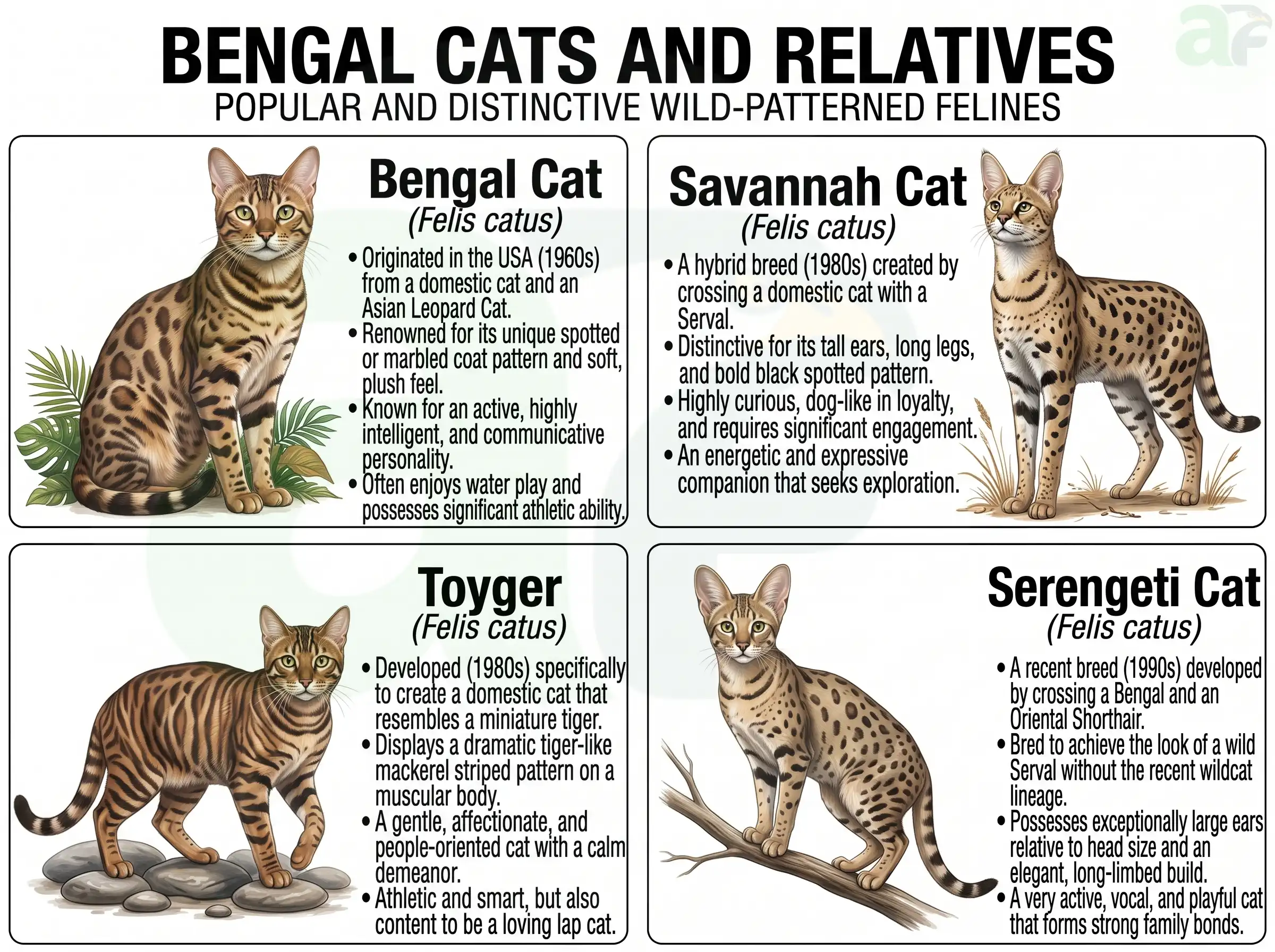
22. Bengal Cat Comparison with Similar Exotic Cat Breeds
| Feature | Bengal Cat | Savannah Cat | Chausie | Ocicat | Egyptian Mau |
|---|---|---|---|---|---|
| Wild parent | Asian leopard cat | African serval | Jungle cat | None (domestic only) | None (domestic only) |
| Wild parent size | 2–8 kg | 8–18 kg | 5–16 kg | N/A | N/A |
| TICA status | Full Championship (1991) | Full Championship (2012) | Full Championship (2013) | Full Championship | Full Championship |
| F4 price | $1,500–$4,000 | $1,000–$5,000 | $500–$2,000 | $800–$2,000 | $500–$2,000 |
| Coat feature | Rosettes + glitter | Spotted | Spotted/ticked | Spotted (thumbprint) | Spotted (M forehead) |
| Water affinity | Strong | Very strong | Moderate | Low | Low |
| Dog-like behavior | Strong | Very strong | Moderate | Moderate | Low |
| Size | Medium-large | Much larger (F1) | Medium-large | Medium | Medium |
| Legal restrictions | Some (early gen.) | More restrictions | Fewer | None | None |
| Breed age | Since 1963 | Since 1986 | Since 1990s | Since 1966 | Ancient breed |
23. Frequently Asked Questions About Bengal Cats
Q1: What is the scientific name of the Bengal cat?
The Bengal cat is a hybrid between the domestic cat (Felis catus) and the Asian leopard cat (Prionailurus bengalensis). First-generation (F1) Bengal cats are classified as Felis catus × Prionailurus bengalensis hybrids — an intergeneric hybrid crossing two different genera within the Felinae subfamily. Later generations (F4+) are increasingly classified simply as Felis catus — domestic cats — and are recognized by TICA under the domestic cat breed framework. The breed name “Bengal” derives from the species name bengalensis of the Asian leopard cat — which refers to the Bengal region of South Asia — and is NOT a reference to the Bengal tiger (Panthera tigris tigris), a common misconception.
Q2: How big do Bengal cats get?
Bengal cats are medium to large domestic cats — typically weighing 3.5–8 kg with body lengths of approximately 35–50 cm plus tail. Males are generally larger than females. F1 Bengal cats — with 50% Asian leopard cat content — can reach the higher end of this range or slightly beyond. The Bengal’s muscular, athletic build makes them appear larger than their weight would suggest — particularly the prominent hindquarters and broad chest that characterize the breed standard. Bengal cats continue growing until approximately 2–3 years of age.
Q3: Are Bengal cats legal to own?
Bengal cat legality varies significantly by jurisdiction and generation. F4+ Bengal cats — the most common pet Bengals — are legal without specific restriction in most of the United States, United Kingdom, Europe, Canada, and most of Asia. F1–F3 Bengals are restricted or banned in some US states (including Hawaii and Georgia), New York City, and several other jurisdictions. Australia has state-by-state variation with early generations typically subject to wildlife regulations. Prospective owners must verify local regulations specific to their city, state/province, and country before purchasing any Bengal cat — regulations can change, and local municipal rules may differ from state/national rules.
Q4: Why do Bengal cats love water?
The Bengal cat’s water affinity is a behavioral trait directly inherited from the Asian leopard cat parent — a species that inhabits riparian (riverside) environments across much of its Asian range and is an excellent swimmer. Asian leopard cats regularly hunt fish, frogs, and crustaceans in and around water — and their comfort in and around water is a genuine ecological adaptation to their habitat. Bengal cats, particularly in earlier generations with higher Asian leopard cat content, often retain this water affinity strongly — displaying behaviors including tap-playing, shower-joining, pool-wading, and attempted fish-catching from aquarium tanks that reflect their wild ancestry.
Q5: What is the Bengal cat’s famous glitter coat?
Bengal cat glitter is a unique optical phenomenon in which individual hair shafts are translucent at the tips — allowing light to enter and be internally reflected, producing a sparkling, iridescent shimmering effect when the coat is viewed in light. This glitter effect — found in no other domestic cat breed — makes the Bengal’s coat appear to shimmer as though lightly dusted with gold or pearl powder. The genetic basis of glitter involves a specific trait distinct from standard coat color genetics, mapped to a specific chromosomal region by researchers at the University of Missouri. Two glitter types are recognized: gold glitter (warm golden iridescence, common in brown Bengals) and pearl/silver glitter (cool silver iridescence, associated with silver-coated Bengals).
Q6: What is the difference between F1, F2, F3, F4, and F5 Bengal cats?
The filial generation number indicates how many generations removed from the original Asian leopard cat parent a Bengal cat is. F1 cats are 50% Asian leopard cat — direct offspring of an ALC and domestic cat — showing the most wild-like behavior and appearance and being most restricted legally. F2 cats (25% ALC) are slightly more domestic in behavior. Each subsequent generation halves the ALC content: F3 (12.5%), F4 (6.25%), F5 (3.125%). As ALC content decreases, cats become more domesticated in behavior and temperament, fully fertile (males are typically sterile in F1–F3), and more appropriate as pets for non-specialist owners. F4 and later generations are the standard “pet Bengal” and are appropriate for experienced cat owners. F1–F3 cats are generally only appropriate for specialist breeders or highly experienced exotic cat owners.
Q7: Do Bengal cats require special veterinary care?
Yes — early generation Bengals benefit from veterinary care from practitioners experienced with both domestic cats and wild felid hybrids. Specific considerations include: anesthesia protocols (some wild cat hybrid animals respond differently to standard anesthetic agents — discuss this with your vet before any procedure), vaccine selection (some veterinary guidelines suggest avoiding modified live vaccines in early generation hybrids — consult an exotic cat-experienced veterinarian), and nutritional guidance appropriate for the cat’s specific generation. Standard F4+ Bengal cats can receive standard domestic cat veterinary care with the same protocols used for any healthy domestic cat, though disclosure of Bengal breed status to veterinarians is always recommended.
24. Sources & References
- Wikipedia — Bengal cat, Prionailurus bengalensis, Felis catus, Hybrid (biology)
- International Cat Association (TICA) — tica.org (breed standard and registration data)
- National Geographic — nationalgeographic.com
- Smithsonian National Museum of Natural History — naturalhistory.si.edu
- BBC Wildlife / BBC Earth — bbcearth.com
- Britannica — britannica.com/animal/Bengal-cat
- Live Science — livescience.com
- IUCN Red List — iucnredlist.org (Asian leopard cat conservation status)
- Lyons, Leslie A. — published research on feline genetics; University of Missouri
- TRAFFIC — traffic.org (Asian leopard cat trade monitoring)
- Sunquist, Mel and Fiona (2002). Wild Cats of the World. University of Chicago Press
- Hunter, Luke (2015). Wild Cats of the World. Bloomsbury Publishing
- Governing Council of the Cat Fancy (GCCF) — gccfcats.org (UK breed registration data)
- Born Free Foundation — bornfree.org.uk