

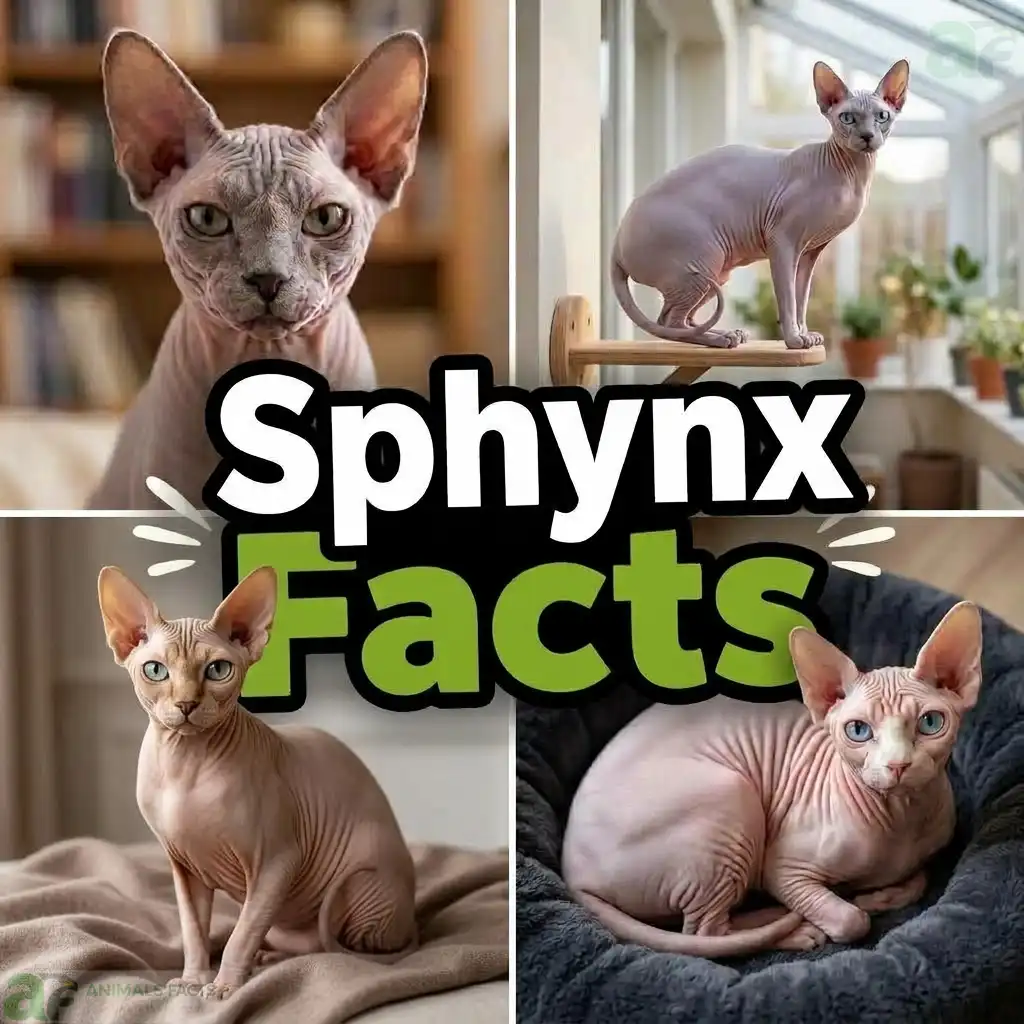
Sphynx Cat Facts
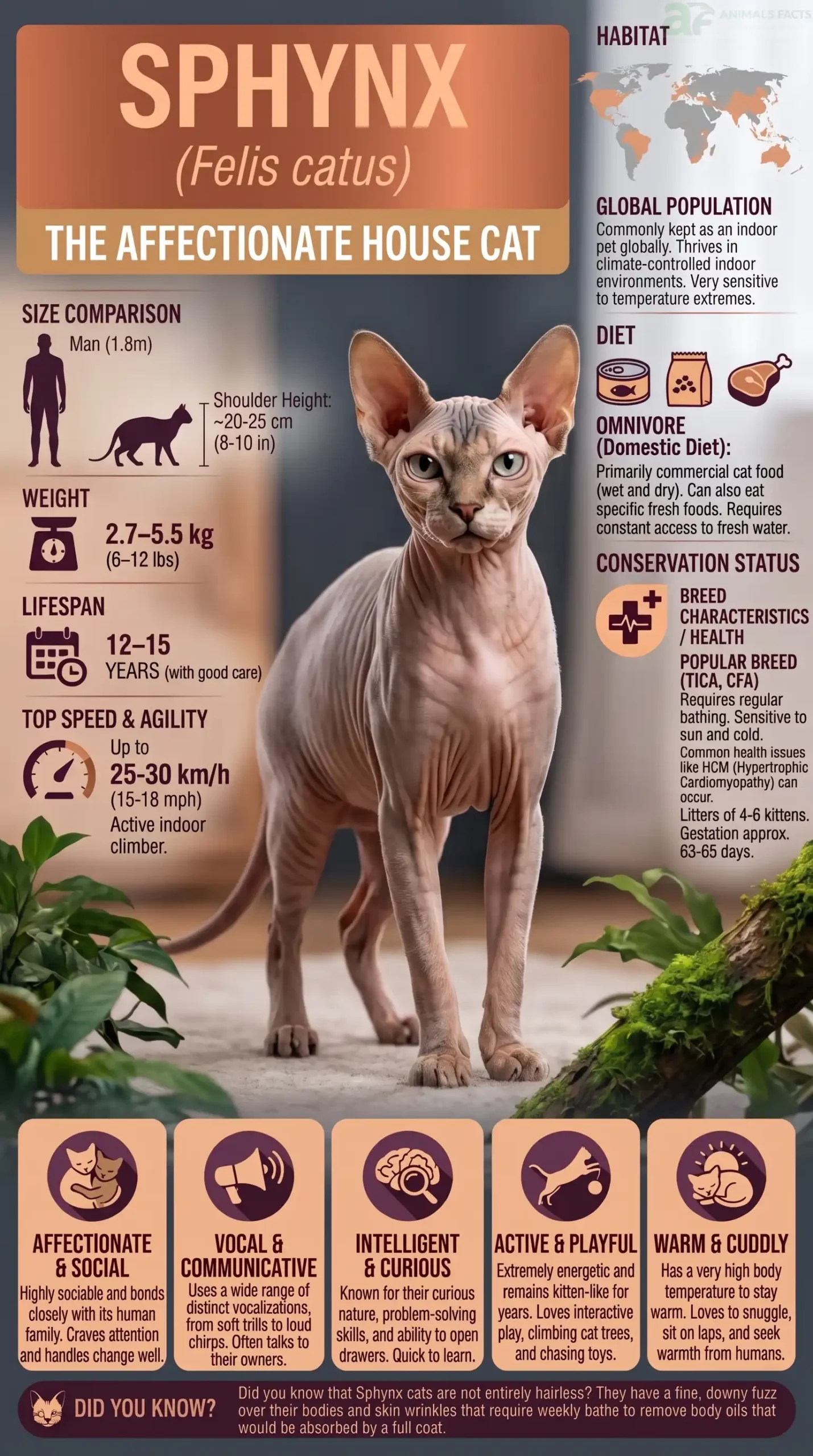
| Feature | Details |
|---|---|
| Scientific Name | Felis catus (domestic cat) |
| Kingdom | Animalia |
| Phylum | Chordata |
| Class | Mammalia |
| Order | Carnivora |
| Family | Felidae |
| Common Names | Sphynx cat, sphinx cat, hairless cat |
| Origin | First bred in Toronto, Canada, 1966 |
| Habitat | Exclusively indoor domestic environments |
| Lifespan | 8–14 years (average); up to 20 years with excellent care |
| Diet | High-protein, high-fat diet; premium commercial or raw food |
| Height | 23–30 cm at shoulder |
| Body Length | 30–46 cm body length plus tail |
| Weight | 3.5–7 kg (males typically larger than females) |
| Top Speed | Up to 48 km/h in short bursts |
| Conservation Status | Not applicable — fully domestic breed |
| TICA Recognition | Fully recognized breed since 2002 |
| Defining Feature | Near-complete absence of fur — the world’s most recognized hairless cat breed |
| Body Temperature | 4°C warmer to the touch than furred cats |
 1. Introduction: What is a Sphynx?
There is a cat that greets you at the door with the enthusiasm of a puppy, drapes itself across your shoulders like a living stole, demands your attention with theatrical persistence, and radiates warmth like a small, purring furnace — a cat whose wrinkled, velvet-skinned face wears an expression of ancient wisdom combined with irrepressible mischief, whose enormous ears stand like satellite dishes above a head that has been described as simultaneously alien and endearing, and whose striking appearance has made it one of the most recognized, most debated, and most beloved cat breeds in the world. Sphynx cat facts begin with this single, extraordinary image — the cat that is not what it appears, the naked cat that is paradoxically one of the warmest, both literally and emotionally, creatures in the entire domestic animal world.
The Sphynx cat is the product of a spontaneous natural mutation that occurred in a domestic cat litter in Toronto, Canada, in 1966 — a genetic accident that produced a hairless kitten that observant breeders recognized as the foundation of something extraordinary. Over the following decades, dedicated breeders working with this natural mutation — crossed strategically with other breeds to maintain health and genetic diversity — developed the Sphynx into a fully established, globally recognized breed that now commands one of the most passionate and most devoted ownership communities in the cat fancy world. Interesting facts about Sphynx cats reveal a breed of breathtaking contradictions: a cat that appears naked but is actually covered in the finest, warmest suede-like down imaginable; a cat that looks hairless but requires more grooming than most furred breeds; a cat whose appearance initially strikes many people as alien or even unsettling but whose personality inspires the kind of devoted, long-term affection that owners of other breeds rarely describe with equal intensity.
Whether you are searching for Sphynx cat facts for kids to explore the science of genetic mutations and selective breeding, a prospective owner researching Sphynx cat habitat requirements and care needs, a cat enthusiast fascinated by the extraordinary genetics of hairlessness in domestic cats, or simply someone who encountered a photograph of this wrinkled, enormous-eared, apparently ageless cat and needed to understand everything about it immediately — this is your comprehensive guide. We cover Sphynx cat scientific name, Sphynx cat diet, Sphynx cat size and weight, Sphynx cat behavior and social intelligence, the genetics of hairlessness, health considerations, cultural significance, and everything else that makes these remarkable animals the most personality-driven, most human-connected domestic cat breed in the world. The warm, naked philosopher of the cat world awaits.
2. Species Overview & Classification
Unlike the Bengal or Savannah cat — which carry wild felid heritage — the Sphynx cat is a fully domestic cat (Felis catus) in every genetic sense, belonging to no hybrid category. Its defining characteristic — the near-absence of fur — results from a recessive genetic mutation affecting hair follicle development that occurred spontaneously in the domestic cat gene pool.
Species Classification Table
| Taxonomic Rank | Classification |
|---|---|
| Kingdom | Animalia |
| Phylum | Chordata |
| Class | Mammalia |
| Order | Carnivora |
| Family | Felidae |
| Subfamily | Felinae |
| Genus | Felis |
| Species | Felis catus (Linnaeus, 1758) |
| Breed Origin | Toronto, Canada, 1966 |
| Primary Cross Breeds | Devon Rex (primary); American Shorthair; later Domestic Shorthair |
| Taxonomic Status | Fully domestic cat breed — no wild felid heritage |
| Breeding Registry | TICA (Championship 2002); GCCF (UK); CFA (Championship 2002) |
The Genetics of Hairlessness
The Sphynx’s hairlessness results from a recessive allele of the keratin 71 gene (KRT71) — designated as the hr (hairless) gene. This gene controls the normal development of hair follicles — and the mutant allele produces follicles that are structurally abnormal, resulting in hair shafts that either fail to develop properly or break off extremely close to the skin surface, producing the characteristic velvety, near-naked feel.
Key genetic facts:
- The hr allele is recessive — a cat must inherit two copies (one from each parent) to express hairlessness
- Cats with one copy (heterozygous) are typically fully furred — carriers of the hairless gene without expressing it
- The Sphynx hairless gene is genetically distinct from the hairless gene in other hairless cat breeds — hairlessness has evolved independently multiple times in domestic cats
- The same gene (KRT71) in its mutant form also produces Cornish Rex and Devon Rex curly coat phenotypes — different mutations in the same gene produce different coat outcomes
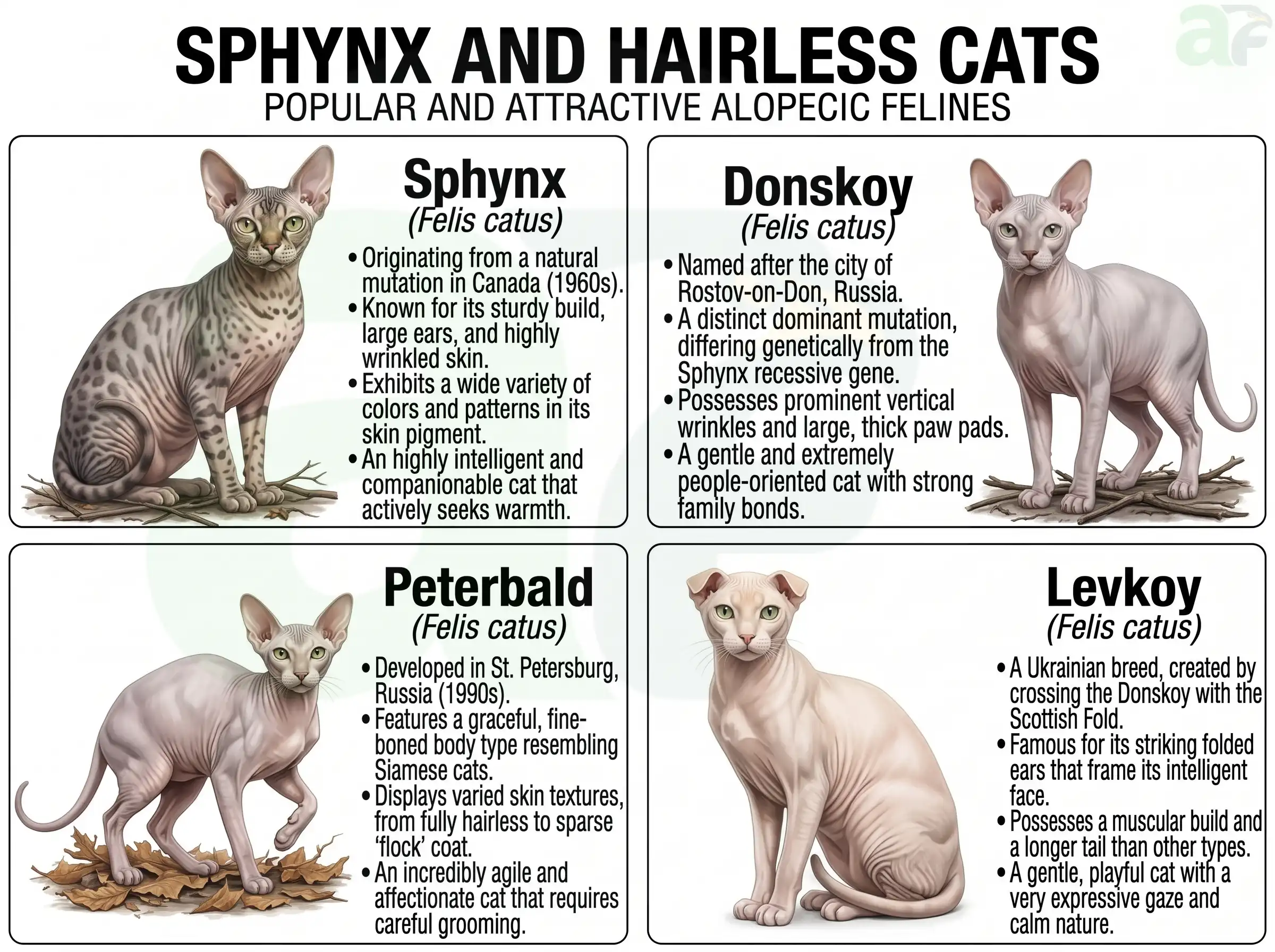
Related Hairless Cat Breeds
Several other hairless cat breeds exist — each with a distinct genetic origin:
| Breed | Origin | Genetic Basis | Key Difference from Sphynx |
|---|---|---|---|
| Sphynx | Toronto, Canada (1966) | KRT71 hr allele | Foundation hairless breed |
| Donskoy (Don Sphynx) | Russia (1987) | Completely different dominant gene | Different gene; some hair regrowth |
| Peterbald | Russia (1994) | Donskoy gene × Oriental | Variable hairlessness; elongated body |
| Bambino | USA (2005) | Sphynx × Munchkin | Sphynx hairless + short legs |
| Dwelf | USA (2008) | Sphynx × Munchkin × American Curl | Hairless + short legs + curled ears |
| Ukrainian Levkoy | Ukraine (2004) | Donskoy × Scottish Fold | Folded ears + hairlessness |
Breed Development History
1966 — In Toronto, Canada, a domestic cat gives birth to a hairless kitten later named “Prune” — the first documented ancestor of the modern Sphynx breed. Owner Ridyadh Bawa works with cat breeder Yania Bawa to attempt to establish the hairless trait through selective breeding.
1971 — The Cat Fanciers’ Association (CFA) in the United States grants provisional status to the Sphynx — but subsequently withdraws recognition citing health concerns about the narrow gene pool of early breeding programs.
1975–1978 — Additional hairless cats are discovered in Toronto and in Minnesota — providing new, unrelated individuals to diversify the genetic foundation of the developing breed.
1978 — Dutch breeder Hugo Hernandez acquires a pair of hairless cats and establishes a European breeding program — crossing with Devon Rex cats to introduce genetic diversity while maintaining the hairless phenotype. This Devon Rex cross is the foundation of the modern European Sphynx breeding program and remains the most genetically important outcross in the breed’s history.
1980s — The breed expands across Europe and North America — with increasingly standardized breeding protocols emphasizing health, genetic diversity, and consistent conformation.
1985 — The International Cat Association (TICA) begins accepting Sphynx cats for competition — an important step toward full recognition.
2002 — Both TICA and the Cat Fanciers’ Association (CFA) grant the Sphynx full Championship status — the highest level of recognition in North American cat fancy.
2002–present — The Sphynx becomes one of the fastest-growing cat breeds globally — expanding from relative rarity to consistently ranking among the top 5 most popular cat breeds by TICA registration numbers.
2010s — The Sphynx community becomes one of the most active and most organized in social media — with individual Sphynx cats accumulating hundreds of thousands of social media followers and the breed becoming one of the most photographed domestic animals on the internet.
2026 — Sphynx cats consistently rank among the top 5 most popular cat breeds globally — with registered breeders on every inhabited continent and a global owner community of millions.
“The Sphynx cat is living proof that a cat’s personality — its warmth, its intelligence, its need for connection — is entirely independent of its coat. If anything, removing the fur removes the last barrier between the cat and its human companion. These are the most openly affectionate, most socially engaged cats I have ever encountered in decades of feline research.”
— Dr. Sarah Ellis, Feline Behavior Specialist, International Cat Care
3. Physical Description & Unique Features
Sphynx cat size and weight make it a medium-sized domestic cat — but its physical features are so dramatically different from the standard cat body plan that virtually every aspect of its appearance generates either fascination, affection, or occasionally discomfort in observers unfamiliar with the breed.
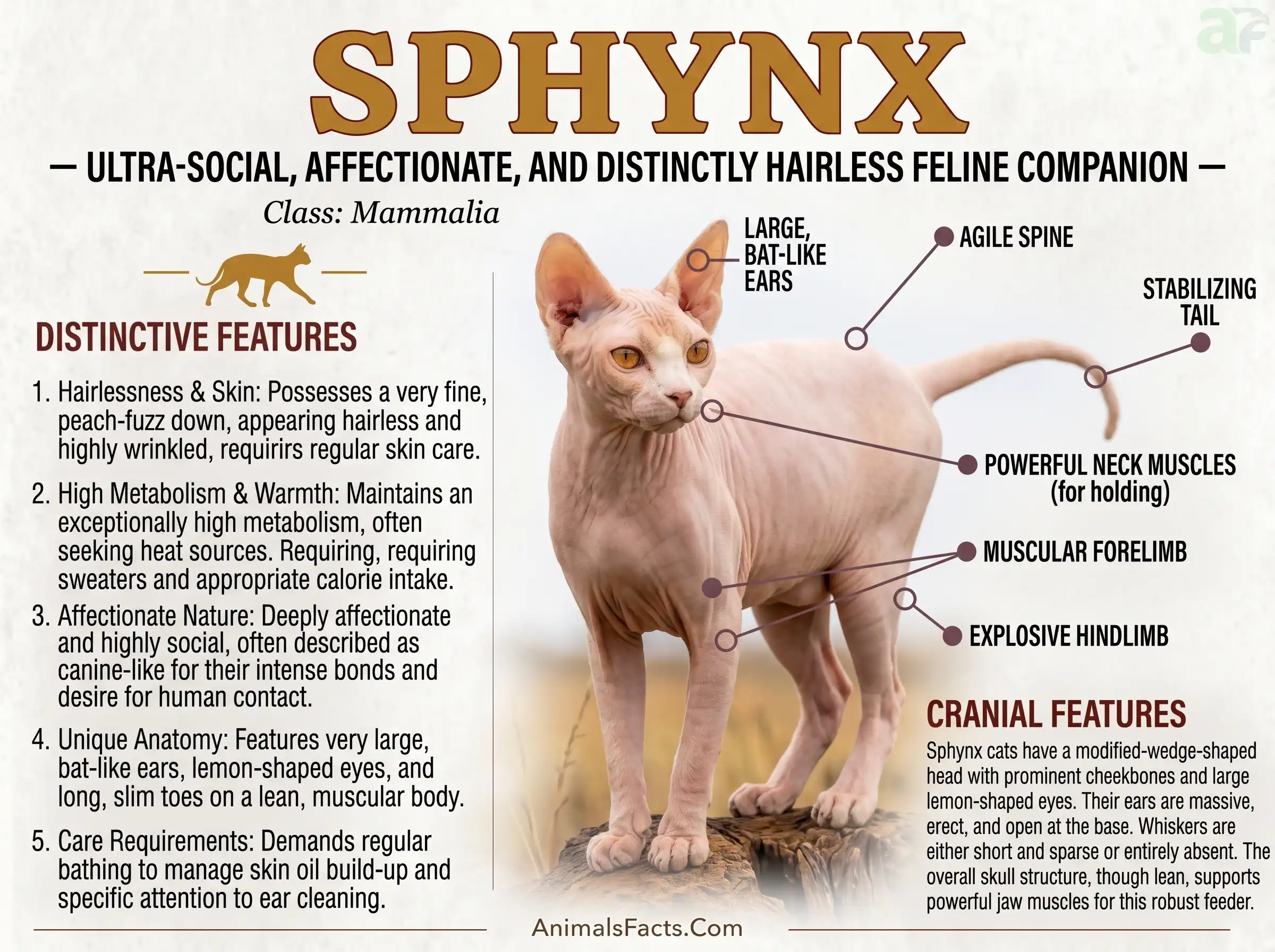
The Skin — Not Truly Naked
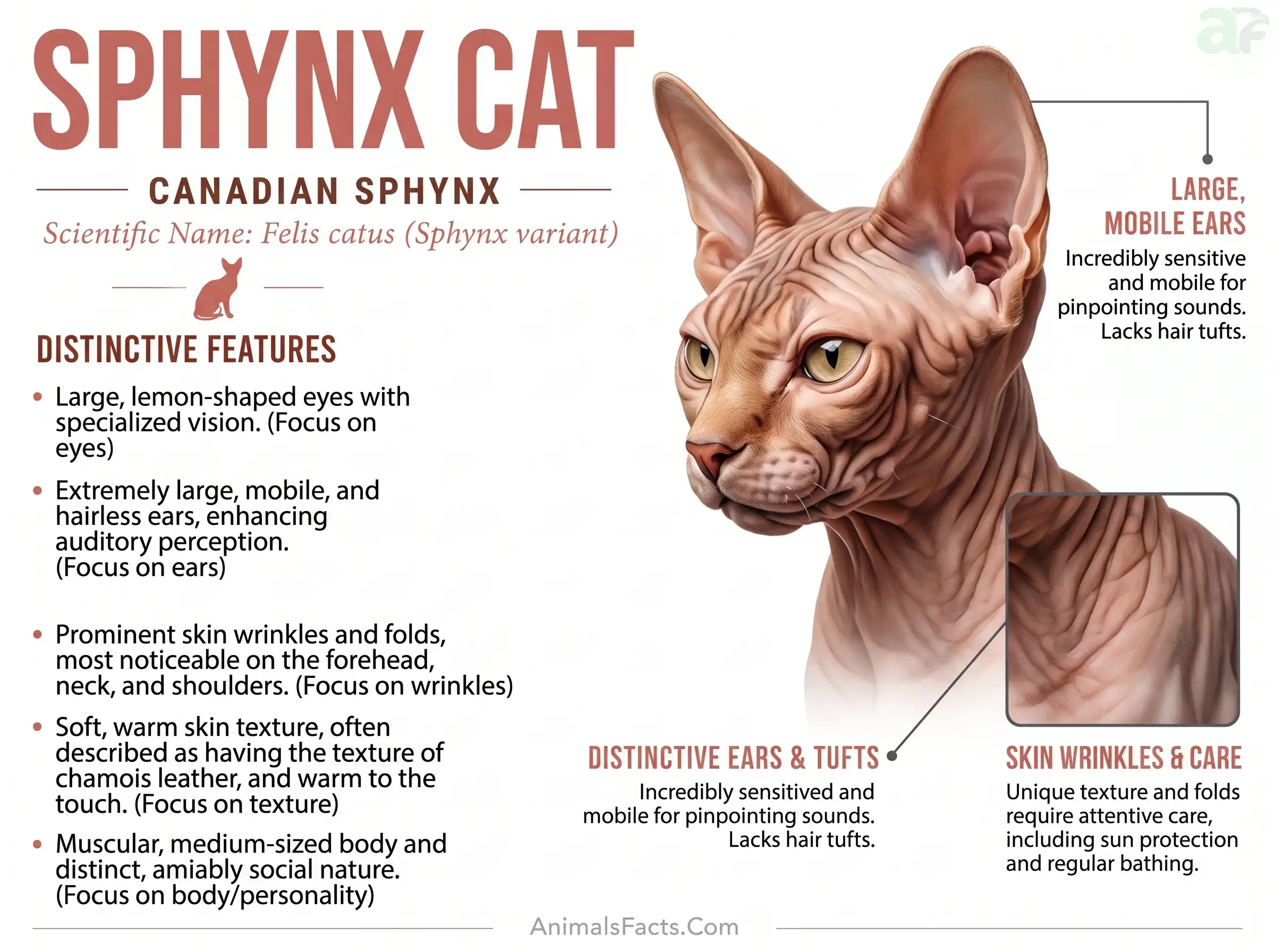
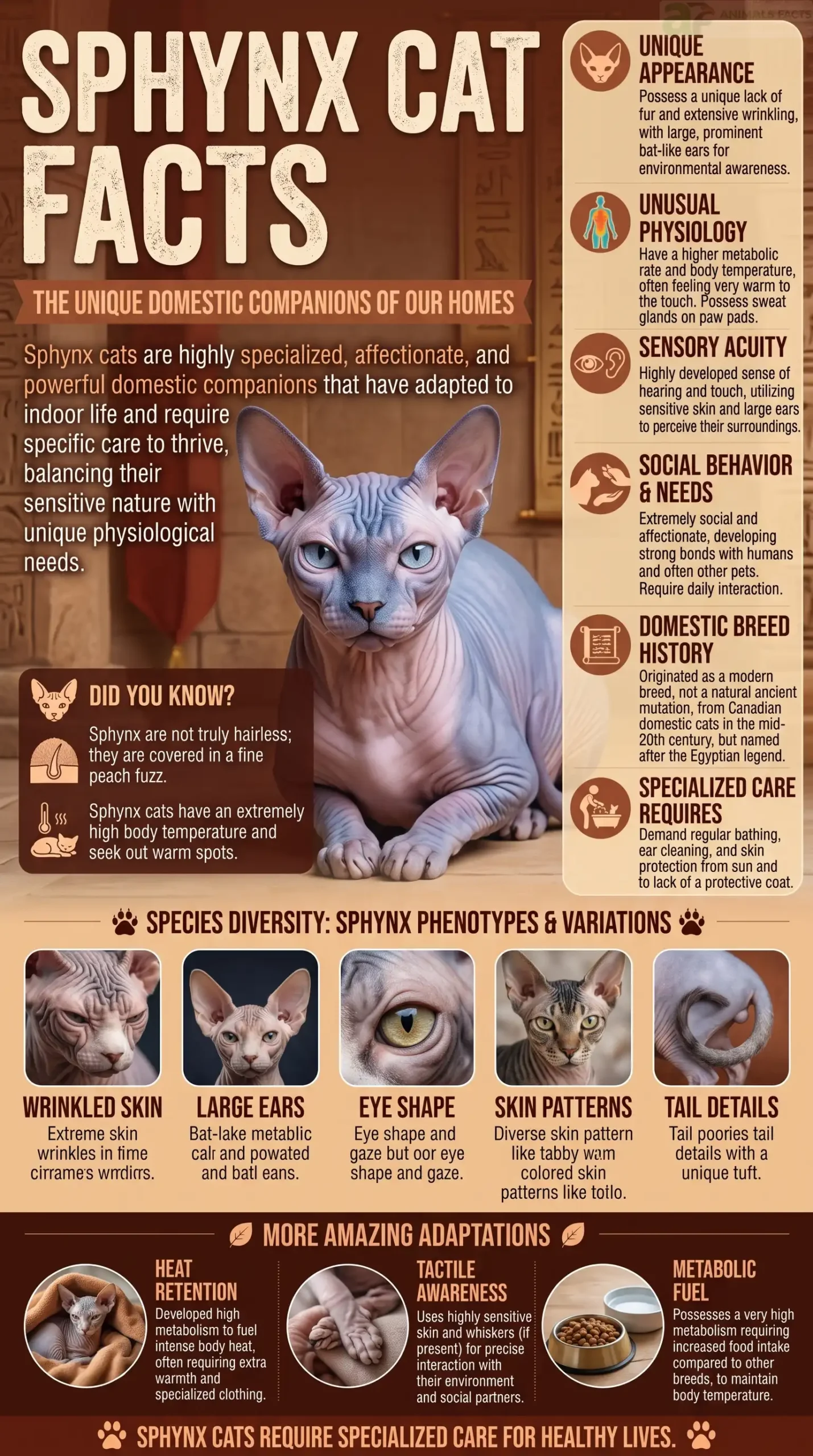
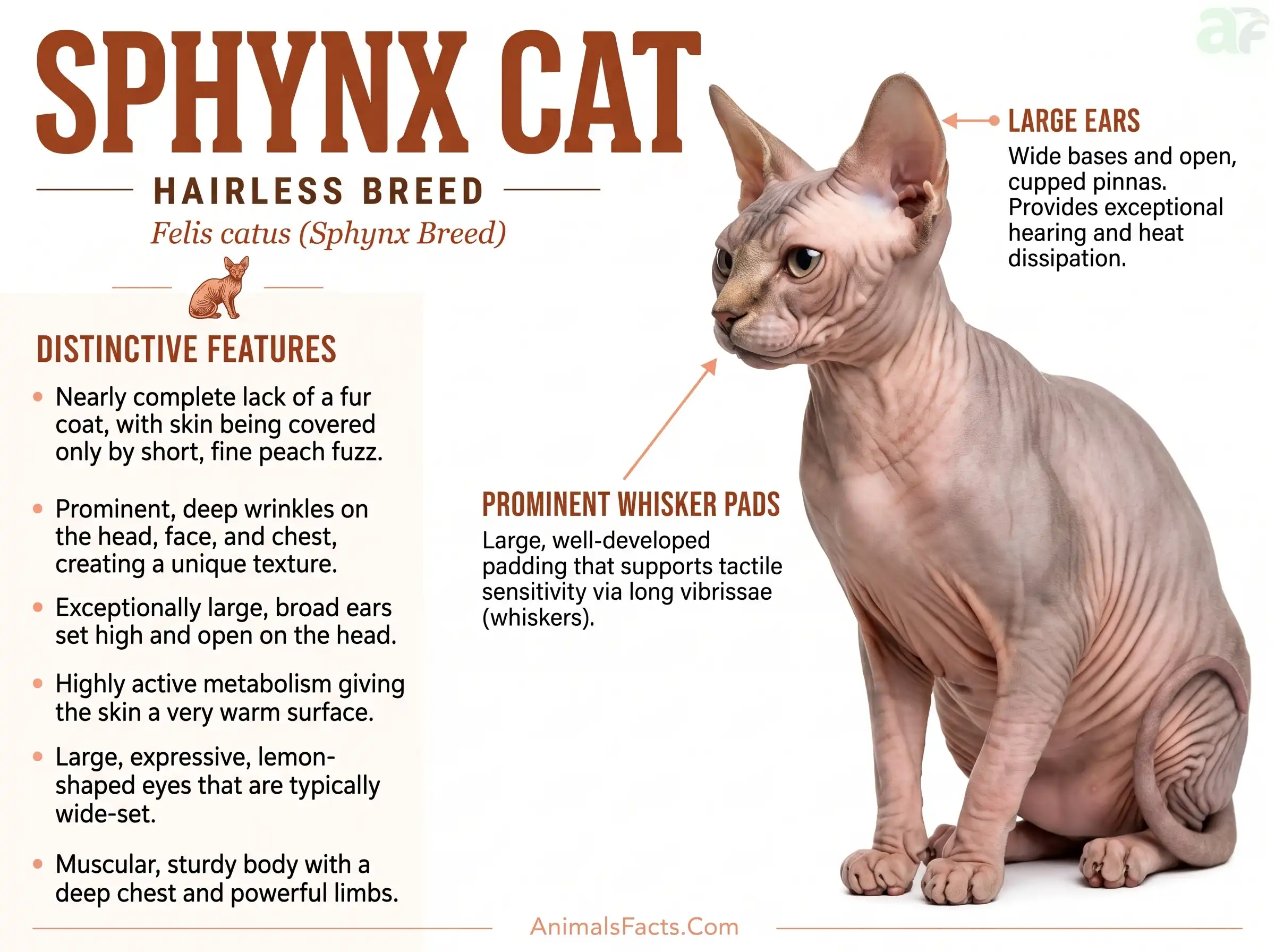
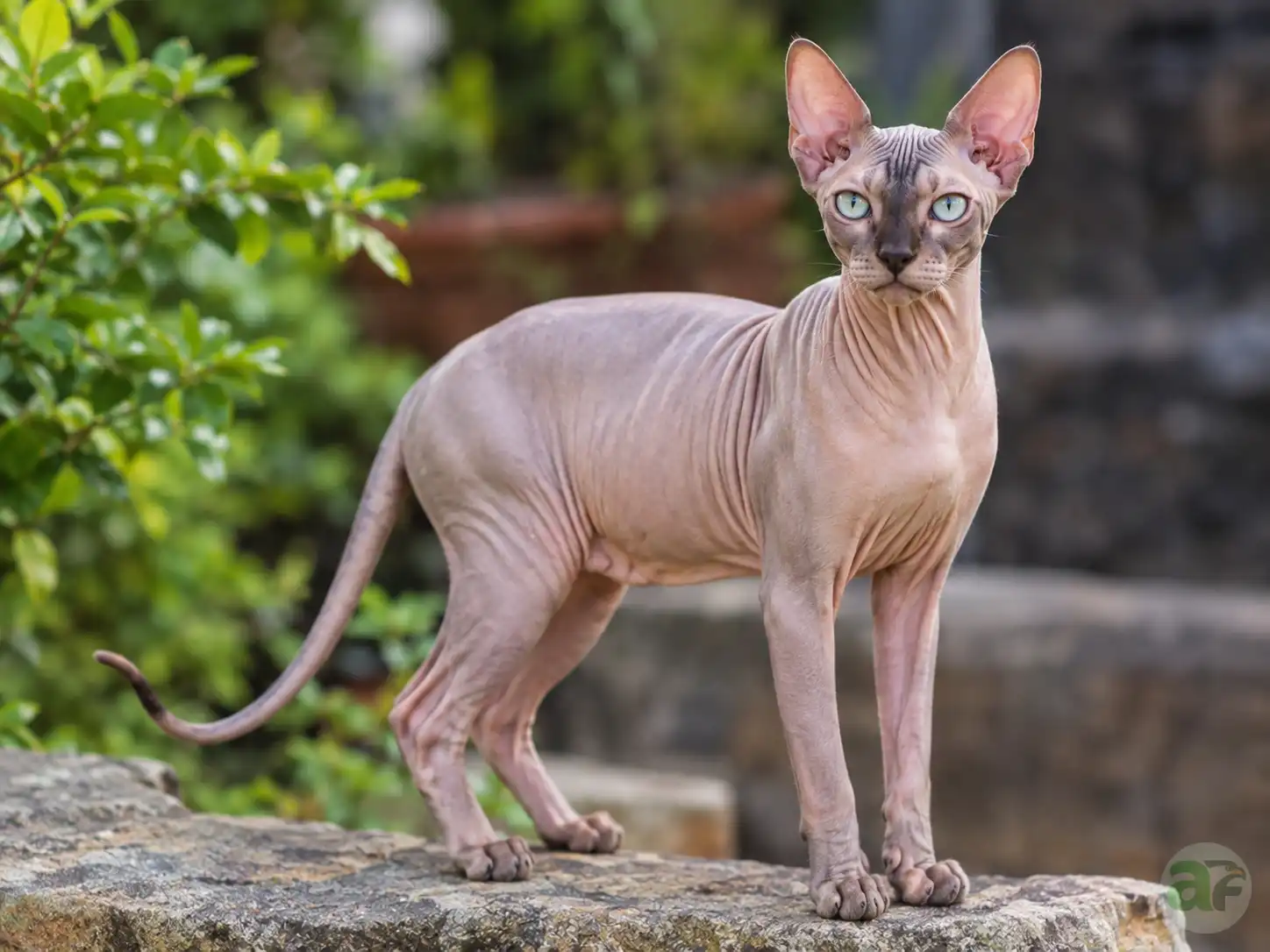
The most fundamental misunderstanding about Sphynx cats is the assumption that they are completely naked. They are not — they are covered in an extraordinarily fine layer of downy fuzz — individual hairs so short, so fine, and so closely appressed to the skin that they are essentially invisible to the naked eye but unmistakably present to the touch. This down creates a skin texture that owners consistently describe as feeling like warm chamois leather, suede, warm velvet, or a warm peach — extraordinarily soft, extraordinarily warm, and unlike the feel of any other animal’s skin.
This fine down is present across most of the body — though the degree of hairlessness varies between individuals:
- Completely naked individuals — some Sphynx cats have essentially no visible or tangible hair anywhere on the body; the rarest expression of the gene
- Standard hairless — fine down visible only in certain light angles; the most common expression
- Slightly fuzzy — visible but extremely fine hair; more common in kittens and in cooler climates
Additionally, most Sphynx cats have short, fine hair on several body areas regardless of individual hairlessness level:
- Face — Fine hair around the muzzle and eyebrow ridges
- Ears — Fine hair on the outer ear surface and inside the ear canal (though ear hair is less common)
- Tail — The tail frequently has a “lion tail” — a pom-pom of slightly longer hair at the tip
- Feet — Some individuals have fine hair on the feet and between the toes
The Wrinkles — The Sphynx Signature
The Sphynx’s most visually distinctive feature after its hairlessness is its extraordinary wrinkled skin — deep folds and creases that concentrate particularly around:
- The forehead and brow ridge — producing the intense, furrowed expression that makes Sphynx cats appear perpetually thoughtful, concerned, or conspiratorial depending on the observer’s interpretation
- The neck — prominent neck folds are a hallmark of the breed
- The shoulders and chest — wrinkled folds over the front of the body
- The belly — a characteristic loose, rounded belly that Sphynx cats carry at all body conditions
These wrinkles are not a sign of age, ill health, or unusual body condition — they are a structural feature of the breed caused by the combination of the relatively loose skin (which in a furred cat would be hidden under the coat) and the hairlessness that makes all skin features visible. All cats have this loose skin — but in furred cats, it is concealed; in the Sphynx, it becomes a defining aesthetic feature.
The Head — Ancient and Extraterrestrial
The Sphynx head is one of the most distinctive in the entire domestic cat world — a modified wedge shape with specific features that create the breed’s characteristic expression:
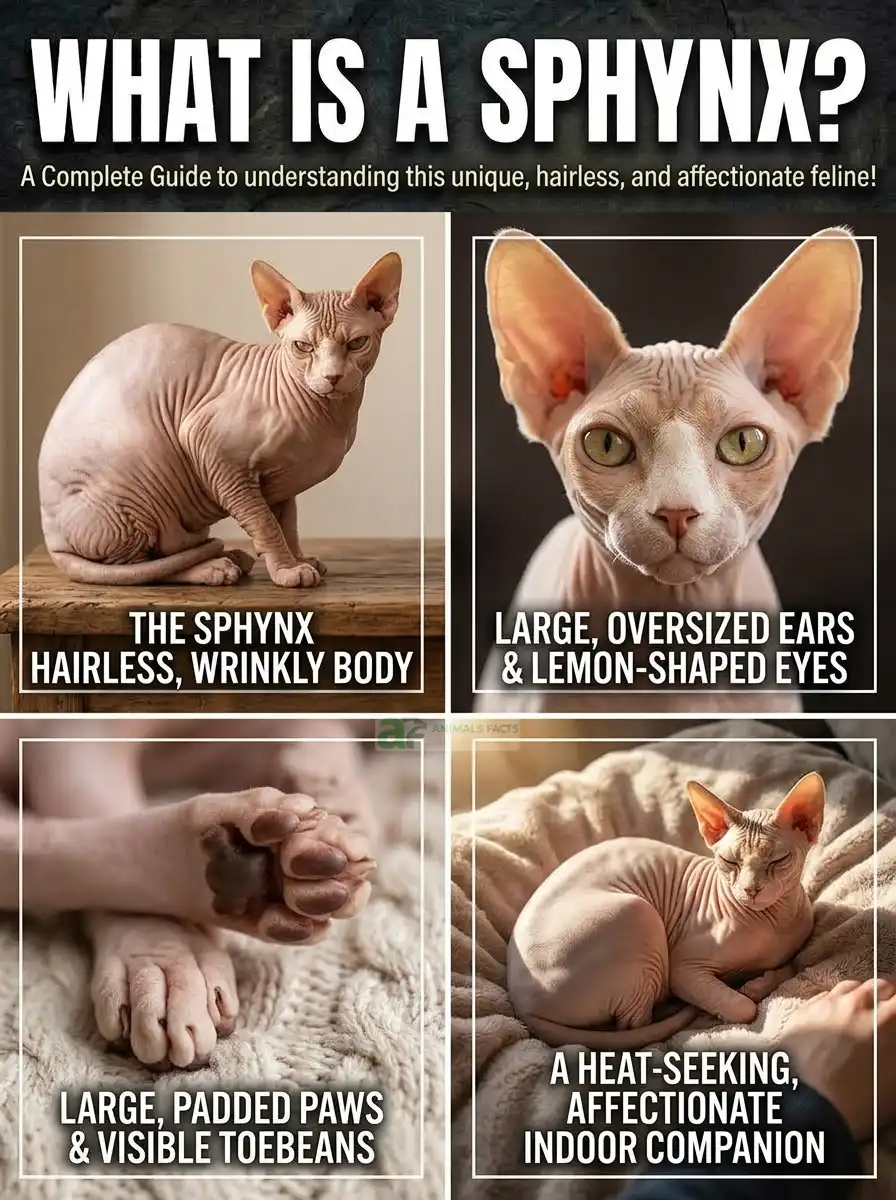
Enormous ears — The Sphynx’s ears are disproportionately large relative to the head — wide at the base, open, and upright, with no hair inside the ear and minimal hair on the outside. These ears give the Sphynx its characteristic alert, listening expression and are frequently described as resembling satellite dishes or bat wings. The large ears are not merely aesthetic — they provide the Sphynx with exceptional hearing, and the absence of ear hair means that ear wax accumulates more rapidly than in furred cats, requiring regular cleaning.
Prominent cheekbones and whisker pads — The Sphynx has dramatically pronounced cheekbones and large, round whisker pads that give the face its characteristic width and the appearance of exaggerated facial features. The whisker pads are prominent to the point of appearing almost swollen — contributing to the breed’s distinctive facial profile.
Whiskers — Sphynx cats may have no whiskers, broken whiskers, or short, sparse whiskers — the same gene that affects hair follicle development affects whisker development. This partial or complete whisker absence is a notable characteristic with practical implications — whiskers are important sensory organs in cats, and their reduction may affect some aspects of the Sphynx’s spatial awareness and prey-detection capability.
Lemon-shaped eyes — The eyes are large, lemon-shaped (not round like many breeds), set at a slight angle — contributing to the somewhat exotic, slightly otherworldly expression that characterizes the breed.
Body Temperature
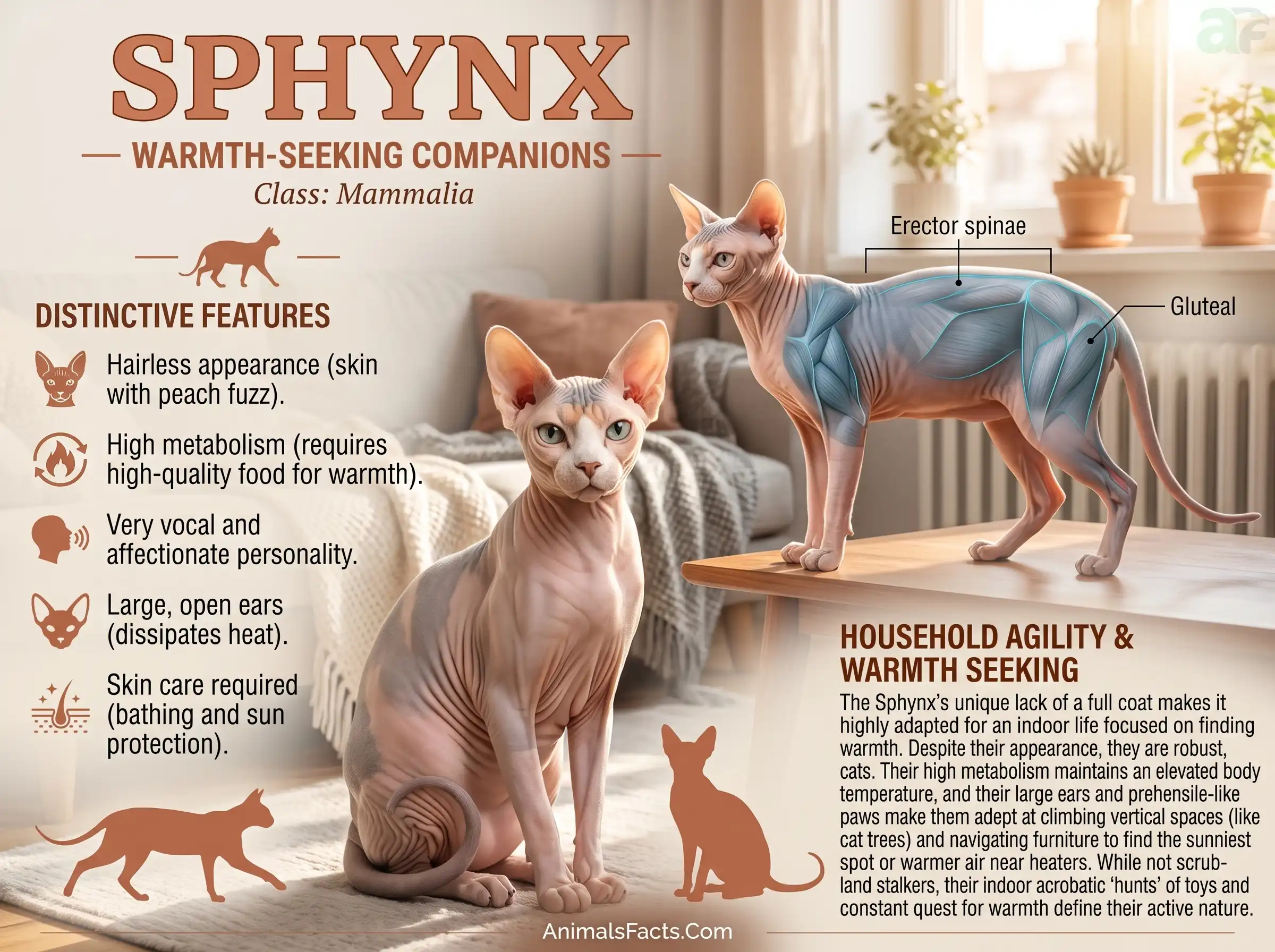
One of the most immediately striking experiences of first touching a Sphynx cat is the heat — Sphynx cats feel dramatically warmer to the touch than furred cats, running approximately 4°C warmer on their skin surface. This is not because Sphynx cats run a higher internal body temperature — their core temperature is normal for domestic cats — but because the absence of fur removes the insulating layer that holds heat close to the skin of furred cats. Without this insulation, metabolic heat radiates directly from the skin surface — making the cat feel hot to the touch.
This heat loss through the skin also drives the Sphynx’s notoriously high caloric needs — the cat must eat more food to maintain normal body temperature because it loses heat through the skin at a higher rate than furred cats.
Skin Coloration
Without fur to determine coat color, Sphynx cats display their skin pigmentation directly — with skin colors corresponding to what the fur color would be in a furred cat:
- Black-skinned — Where a cat would be fully black-furred
- Pink-skinned — Where a cat would be white-furred
- Brown or tan-skinned — Various tabby and other patterns
- Spotted or patched — Calico, tortoiseshell, and other multi-color patterns appear as skin pigmentation patterns rather than fur color patterns
This direct skin pigmentation display means that the Sphynx’s color patterns are visible on the skin itself — creating the extraordinary visual effect of a cat that appears to be wearing a painted or tattooed skin rather than a fur coat.
Did You Know? The Sphynx cat’s skin produces significantly more sebum (natural skin oil) than furred cats — because in a furred cat, sebum is absorbed and distributed by the fur, whereas in the Sphynx, with no fur to absorb it, the oil accumulates on the skin surface. This sebum accumulation is responsible for the Sphynx’s characteristic slightly oily feel and the brown residue that develops on the skin, furniture, and bedding. Sphynx cats require regular bathing — typically weekly — to remove accumulated skin oils that would otherwise build up to uncomfortable and potentially unhealthy levels. This makes the Sphynx one of the most grooming-intensive domestic cat breeds despite being hairless — a paradox that consistently surprises prospective owners.
4. Top 25 Amazing Sphynx Cat Facts
Here is your definitive collection of the most extraordinary, scientifically verified, and genuinely astonishing Sphynx cat facts as of 2026:
- Sphynx cats are not truly hairless — they are covered in an extremely fine, short down that makes their skin feel like warm chamois leather or suede — often described as the most pleasant texture of any domestic animal to touch.
- Sphynx cats run approximately 4°C warmer to the touch than furred cats — because the absence of fur removes the insulating layer that traps heat in furred cats, allowing metabolic heat to radiate directly from the skin surface.
- The Sphynx breed originated from a single spontaneous genetic mutation in a domestic cat litter in Toronto, Canada, in 1966 — a natural accident that breeders recognized as the foundation of a new breed.
- Sphynx cats require regular weekly bathing — one of the most grooming-intensive of all domestic cat breeds despite their hairless appearance — because their skin produces oils that in furred cats would be absorbed by fur, but in Sphynx cats accumulate on the skin surface.
- The Sphynx’s hairlessness is caused by a recessive allele of the keratin 71 gene (KRT71) — the same gene that in different mutant forms produces the Cornish Rex and Devon Rex curly coats — different mutations in one gene producing dramatically different coat outcomes.
- Sphynx cats eat approximately 20–30% more food than similarly sized furred cats — because the lack of fur insulation means they lose more body heat through the skin and must consume more calories to maintain normal body temperature.
- The first hairless kitten that became the founding ancestor of the Sphynx breed was named “Prune” — a fitting name for the wrinkled, pruney-looking hairless kitten born in Toronto in 1966.
- Sphynx cats have a reputation as the most affectionate domestic cat breed — consistently described by owners and breed specialists as the most social, most human-oriented, and most persistently attention-seeking of all cat breeds.
- The breed’s name “Sphynx” (note the spelling — not “Sphinx”) was chosen to reference the famous Great Sphinx of Giza in Egypt — the ancient stone monument depicting a human-headed lion, whose exotic and ancient quality the hairless cat’s appearance was thought to evoke.
- Sphynx cats are not hypoallergenic — a persistent and medically important myth. Cat allergies are primarily caused by the Fel d 1 protein secreted in cat saliva and skin glands — which Sphynx cats produce at normal or even elevated levels. However, because Sphynx cats groom less effectively (with fine-hair rather than full-fur grooming) and shed no fur to carry allergens into the environment, some allergic individuals report fewer reactions.
- The Sphynx’s enormous ears accumulate ear wax significantly faster than furred cats — requiring regular ear cleaning (typically weekly) as a routine care requirement that many new owners are not prepared for.
- Most Sphynx cats have no whiskers, broken whiskers, or very short, sparse whiskers — the same gene mutation affecting hair follicle development also affects the specialized follicles that produce whiskers.
- Sphynx cats are highly susceptible to cold — they cannot tolerate temperatures below approximately 21°C comfortably and should always have access to warm hiding places, cat sweaters or coats, and heated sleeping areas.
- The Sphynx is prone to a serious heart condition called Hypertrophic Cardiomyopathy (HCM) — an abnormal thickening of the heart muscle that is the most significant health concern in the breed and requires regular cardiac monitoring from 2 years of age.
- Sphynx cats are highly susceptible to sunburn — their near-naked skin offers no UV protection, and direct sunlight exposure exceeding 30 minutes can cause genuine sunburn requiring veterinary attention.
- The famous James Bond villain’s cat — Dr. No’s white cat — is the most culturally significant fictional Sphynx cat appearance, cementing the breed’s association with sophistication, mystery, and villainy in popular culture despite the actual animal’s gentle, sociable nature.
- Sphynx cats display social behavior more typical of dogs than cats — they form strong bonds with all family members rather than preferring one person, follow family members throughout the house, and become visibly distressed when left alone for extended periods.
- The Sphynx’s skin can tan in sunlight — the skin pigmentation responds to UV exposure in the same way human skin does, with darker pigmentation developing on exposed skin areas after sunlight exposure. However, this tanning occurs alongside sunburn risk and does not provide meaningful UV protection.
- Sphynx cats are among the most energetic domestic cat breeds at all life stages — maintaining kitten-like activity levels into old age and requiring consistently high levels of interactive play and environmental enrichment throughout their lifespan.
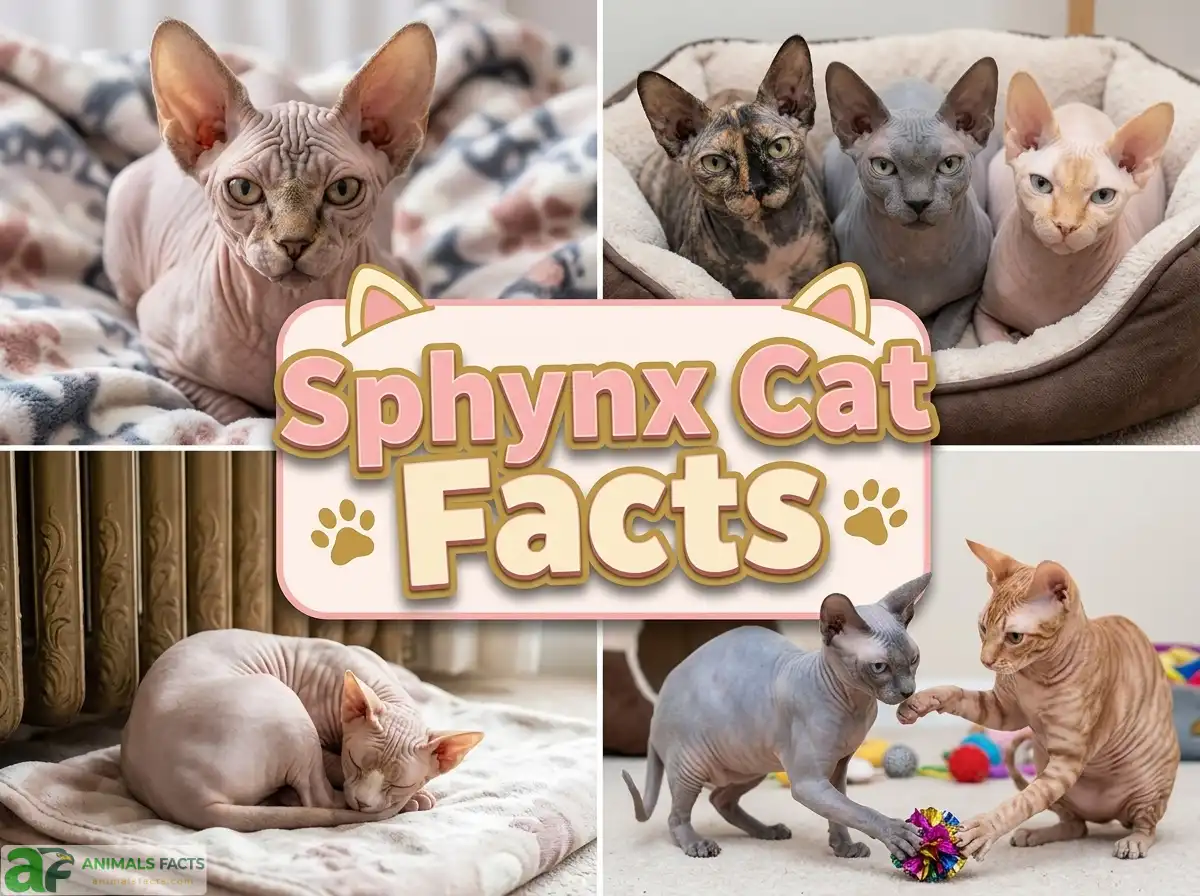
- Because they cannot regulate body temperature through fur insulation, Sphynx cats are extraordinary bed-sharing companions — they instinctively seek warm bodies to sleep against and will burrow under blankets, share pillows, and position themselves against human bodies with considerable determination.
- The Sphynx breed maintains genetic health through regular outcrossing to Devon Rex and domestic shorthair cats — without this genetic diversity management, the breed’s small founding population would create dangerous levels of inbreeding.
- Sphynx cats show a remarkable behavioral characteristic called “heart dog syndrome” among owners — a pattern of human-animal bonding so intense and so specific to the Sphynx breed that it is described in owner communities as resembling the human-dog bond more than the typical human-cat relationship.
- The Sphynx is not actually an ancient Egyptian breed — despite the name and the exotic appearance, the breed is only approximately 60 years old and originated in Canada. The ancient Egyptians did not keep hairless cats.
- Sphynx cats can develop Hereditary Myopathy — a muscle disorder specific to the breed that causes progressive muscle weakness and is one of the breed-specific health conditions requiring genetic screening in responsible breeding programs.
- Despite their alien appearance, Sphynx cats show the full range of domestic cat behavioral responses — they play, hunt, climb, vocalize, groom (themselves and each other, despite minimal fur), and form complex social relationships with humans and other animals in ways that confirm their fully domestic cat status in every behavioral respect.
5. Fun Facts about Sphynx
- Sphynx cats feel like warm suede — not like naked skin
- They run 4°C warmer to the touch than furred cats
- The first Sphynx ancestor was named “Prune”
- Sphynx cats eat 20–30% more food than similar-sized furred cats
- They need weekly baths despite being hairless
- Sphynx cats are not hypoallergenic — they still produce Fel d 1
- They get sunburned in direct sunlight
- Their skin can actually tan like human skin
- Most have no whiskers — or very short broken ones
- The breed is only 60 years old — not ancient Egyptian
- Sphynx cats are the most affectionate domestic cat breed
- They are prone to heart disease and need regular cardiac screening
6. Natural Habitat & Geographic Range
Sphynx cat habitat is exclusively and necessarily indoor domestic environments — the Sphynx is the domestic cat breed most completely dependent on human-managed living conditions of any breed, for biological reasons that are directly connected to its defining physical characteristic.
Why Sphynx Cats Are Exclusively Indoor Animals
The Sphynx’s near-complete hairlessness creates a set of environmental vulnerabilities that make outdoor or unsupervised existence genuinely dangerous:
Temperature sensitivity — Without fur insulation, Sphynx cats cannot maintain body temperature in ambient temperatures below approximately 20–21°C — temperatures that are routinely experienced outdoors in temperate climates for most of the year. Exposure to cold can cause dangerous hypothermia far more rapidly in a Sphynx than in any furred cat.
Sunburn risk — Direct sunlight on unprotected skin causes genuine UV damage — Sphynx cats exposed to direct sun for extended periods develop sunburn requiring veterinary treatment, and chronic sun exposure increases skin cancer risk.
Skin vulnerability — The Sphynx’s exposed skin is significantly more vulnerable to abrasions, cuts, insect bites, and environmental contaminants than the protected skin of furred cats. Outdoor environments expose the skin to hazards that fur normally provides significant protection against.
Social vulnerability — The Sphynx’s extremely social, human-bonded nature makes it poorly equipped for the independent, territory-managing behavior required for outdoor cat life — these cats are not temperamentally suited to the extended solitude of outdoor roaming.
Ideal Indoor Habitat Requirements
Temperature — Minimum 21–22°C throughout the home at all times; ideally 22–26°C. Sphynx cats require access to warm sleeping areas — heated cat beds, blanket-filled sleeping spaces, and human bedding are all important.
Sunlight management — Windows should provide natural light but Sphynx cats should have access to shade and shelter from direct sunlight — UV-blocking window film is recommended in homes with large south-facing windows.
Enrichment environment — Despite the indoor restriction, Sphynx cats need extensive vertical space (cat trees, wall-mounted shelves), hiding places (tunnels, covered beds), interactive toys, and human social interaction to maintain psychological wellbeing.
Other animals — Sphynx cats are typically excellent with other cats, with dogs, and with gentle children — their social nature means they benefit from animal companionship during periods when human family members are not home.
Global Distribution
Sphynx cats are maintained as companion animals across:
- United States — the largest single market; unrestricted nationwide
- United Kingdom — significant and growing population; fully legal
- France — particularly popular; strong Sphynx breeding community
- Russia — significant population; Russian breeders also work with related Donskoy and Peterbald breeds
- Australia — fully legal nationwide; growing population
- Asia — rapidly growing market in Japan, South Korea, China, and Southeast Asia
- Middle East — significant ownership in UAE, Saudi Arabia, and other Gulf states
Did You Know? The Sphynx cat’s extraordinary heat-seeking behavior — the tendency to seek out the warmest available location at all times — is a direct behavioral consequence of its lack of insulating fur. Wild felid ancestors regulate body temperature through behavioral thermoregulation (seeking shade or warmth as needed) combined with fur insulation. The Sphynx retains the behavioral component but lacks the physical component — producing cats that will seek the warmest body, the sunniest patch, the coziest blanket, and the inside of any available duvet with a single-minded purposefulness that owners of furred cats find extraordinary. The Sphynx’s body-seeking warmth behavior is simultaneously a welfare need and one of the breed’s most endearing characteristics — these cats are the ultimate living hot-water bottles.
7. Diet & Feeding Behavior
Sphynx cat diet is one of the most practically significant ownership considerations — because the breed’s elevated caloric needs, specific nutritional requirements, and sensitive digestive system make feeding choices considerably more impactful than for typical domestic cats.
Diet Breakdown Table
| Food Type | Recommended % | Notes |
|---|---|---|
| High-protein, high-fat wet food (grain-free, meat-first) | ~50–60% | Primary dietary component; moisture important |
| High-quality dry food (grain-free) | ~20–30% | Supplementary; important for dental health |
| Raw meat (prepared raw diet) | ~10–30% | Many Sphynx breeders recommend raw feeding |
| Cooked lean meat (chicken, turkey, fish) | ~5–15% | Supplementary protein |
| Vitamin supplements | As directed by veterinarian | Some Sphynx cats benefit from omega fatty acid supplementation |
The Elevated Caloric Requirement
The most distinctive aspect of Sphynx cat feeding is the elevated caloric need — approximately 20–30% more calories than a similarly sized furred cat requires. This elevated requirement results directly from the breed’s heat loss through uninsulated skin:
Without fur to trap metabolic heat near the body, Sphynx cats lose significantly more heat to the environment — and must consume more food to fuel the metabolic processes that generate this additional heat. The practical consequence is that Sphynx cats are frequent, enthusiastic eaters — appearing perpetually hungry in a way that reflects genuine physiological need rather than behavioral food obsession.
Practical feeding approach — Most Sphynx cat nutrition experts recommend:
- Multiple small meals rather than one or two large meals — supporting stable blood sugar and energy levels
- Free-feeding dry food with wet food meals — combining the caloric density of dry food with the moisture and palatability of wet food
- High-protein, high-fat formulations — reflecting the caloric composition needed to maintain body weight despite elevated heat loss
Digestive Sensitivity
Sphynx cats are notably digestive-sensitive — prone to gastrointestinal upset when dietary changes are made abruptly or when food quality is inadequate. Symptoms including loose stool, flatulence, and vomiting are disproportionately common in Sphynx cats compared to other breeds, and dietary management is an important component of Sphynx health care.
Key dietary considerations:
- Grain-free formulations are generally better tolerated, though individual variation is significant
- Sudden food changes should be avoided — transitions over 7–14 days are recommended
- Flatulence — the Sphynx is notorious for producing impressive quantities of gas; high-quality, easily digestible food minimizes this
- Food-grade omega fatty acids — many Sphynx owners and breeders supplement with fish oil or other omega-3 sources to support skin health and reduce sebum accumulation
The Food-Seeking Personality
Beyond physiological need, Sphynx cats display an enthusiastic, theatrical relationship with food that many owners find one of the breed’s most entertaining characteristics. These cats will:
- Investigate every meal preparation in the kitchen with intense interest
- Attempt to share meals with their human family members with considerable persistence
- Learn the sounds associated with food preparation (can openers, refrigerator doors, food containers) with extraordinary speed and respond to them immediately
- Demonstrate apparent grief when food bowls are empty that exceeds the response of most other cat breeds
8. Reproduction & Life Cycle
Sphynx cat reproduction follows standard domestic cat patterns — with no hybrid sterility complications (the breed is fully domestic) — but with specific health screening requirements that responsible breeders implement to prevent transmission of breed-specific genetic conditions.
Breeding Health Screening
Responsible Sphynx breeding requires comprehensive health screening before any breeding pair is selected:
Hypertrophic Cardiomyopathy (HCM) screening — Echocardiographic (cardiac ultrasound) examination by a board-certified cardiologist is required annually for all breeding cats. Cats showing HCM are removed from breeding programs.
Hereditary Myopathy screening — Genetic testing for the myopathy mutation is available and should be performed on all breeding animals.
Blood group testing — Sphynx cats can carry different blood types, and Type A × Type B crosses produce kittens that may suffer Neonatal Isoerythrolysis — a serious condition where maternal antibodies attack the kitten’s red blood cells. Blood typing of both parents is essential.
HCM gene testing — A genetic test for the most common HCM mutation (MYBPC3) is available and recommended as a screening tool alongside — not instead of — echocardiographic examination.
Breeding Season and Mating
- Sphynx cats are polyestrous — females cycle throughout the year in indoor environments
- Estrus cycles occur approximately every 14–21 days if the female is not mated
- Mating occurs with standard domestic cat breeding behavior — the breed has no specific reproductive peculiarities
Gestation & Birth
- Gestation period: 63–67 days — standard domestic cat gestation
- Litter size: typically 4–6 kittens per litter — Sphynx cats tend toward larger litters than some other breeds
- Birth weight: approximately 70–100 grams per kitten
- Appearance at birth: kittens are born with visible wrinkles and are clearly hairless from birth — unlike some hairless breeds where hairlessness develops postnatally
Kitten Development
0–2 weeks — Born with eyes and ears closed; hairless and wrinkled; highly dependent on mother’s warmth given lack of fur insulation; require supplemental heating if the litter is large or the mother’s milk supply is limited
2–4 weeks — Eyes and ears open; beginning to regulate body temperature more effectively; strong social bonds with littermates developing
4–8 weeks — Highly active; developing distinctive Sphynx personality traits — sociability, vocalization, and attention-seeking — visible from this age
8–12 weeks — The standard age for first veterinary examination, initial vaccinations, and genetic screening before placement in new homes
12–16 weeks — Standard minimum age for placement in new homes — later than many cat breeds, reflecting the Sphynx’s extended socialization period and need for adequate maternal and sibling interaction
4–6 months — Spay/neuter recommended for pet-quality kittens; Sphynx cats reach sexual maturity at this age
Lifespan Comparison Table
| Breed/Species | Average Lifespan | Max Documented | Notes |
|---|---|---|---|
| Sphynx cat | 8–14 years | ~20 years | HCM risk can reduce lifespan |
| Devon Rex | 9–15 years | ~20 years | Primary outcross breed |
| Donskoy | 12–15 years | ~18 years | Russian hairless; different gene |
| Bengal cat | 12–16 years | ~20 years | Popular exotic breed |
| Standard domestic cat | 13–17 years | ~30 years | Average across all breeds |
9. Social Behavior & Communication
Sphynx cat social behavior is the defining aspect of the breed — and represents the most significant way in which Sphynx cats differ from virtually every other domestic cat breed in the world. These are not merely affectionate cats. They are cats that redefine what the human-cat relationship can be.
The Extraordinary Social Nature
The Sphynx cat’s social behavior is so distinctive and so consistently described that it has its own cultural vocabulary within the breed community:
“Velcro cat” — The most common owner description of Sphynx behavior — the cat that sticks to its human with a persistence and completeness that suggests the cat has been physically attached. Sphynx cats follow their owners throughout the house, position themselves on human shoulders, chests, and laps whenever possible, and demonstrate visible distress at the departure of family members.
“People cat” — Unlike many breeds that bond with one person, Sphynx cats typically bond with all family members — greeting all humans who enter the home with equal enthusiasm, including strangers, which creates an unusually welcoming and non-discriminating social presence.
“Dog-cat hybrid” — The most common behavioral description from owners with both dog and cat experience — Sphynx cats combine what owners perceive as the best qualities of both: the dog’s loyalty, gregariousness, and affectionate expressiveness combined with the cat’s independence, intelligence, and cleanliness.
Separation Distress
The Sphynx’s intense social bonding creates a significant welfare consideration — separation distress when left alone for extended periods. Sphynx cats are not suited to households where they will be alone for more than 8–10 hours regularly. Welfare responses to extended solitude include:
- Excessive vocalization
- Destructive behavior
- Over-grooming
- Inappropriate elimination
- Loss of appetite
- Visible depression
The recommended solution is either multi-cat households where Sphynx cats have feline companionship, or work-from-home arrangements that provide consistent human presence.
Interspecies Sociability
The Sphynx’s high social drive extends to other animals — they are among the most reliably dog-friendly, cat-friendly, and child-friendly of all domestic cat breeds:
With dogs — Most Sphynx cats actively seek canine companionship — approaching dogs rather than avoiding them, initiating play, and in many cases sleeping curled against the resident dog in the way they would sleep against a human companion.
With other cats — Sphynx cats are typically excellent with other cats — including other Sphynx cats and cats of other breeds. Many breeders recommend keeping Sphynx cats in pairs specifically to address the breed’s high social needs.
With children — The Sphynx’s combination of high social tolerance, patience, and desire for physical contact makes them exceptional family cats — they seek rather than avoid children’s attention.
Communication
The Sphynx’s vocal repertoire is extensive and expressive:
Loud, persistent meowing — Sphynx cats are notably vocal in expressing needs — food, attention, entertainment, and companionship are all communicated through meowing of varying intensity and urgency.
Trilling and chirping — Particularly when greeting family members or when excited by something in the environment.
Purring — The Sphynx purr is notably loud and vibrant — described by many owners as the loudest, most powerful purr they have ever experienced in a domestic cat.
“Conversation” — Many owners report that Sphynx cats engage in what feels like genuine conversational exchange — responding to human speech with vocalizations that appear to be context-appropriate responses rather than random sound production.
10. Predators & Defense Mechanisms
In the exclusively indoor environments where Sphynx cats live, natural predation is not a relevant concern — these cats face essentially no predation risk in their managed domestic environments. However, the breed’s specific vulnerabilities and defensive capabilities are worth understanding.
Physical Vulnerabilities
Temperature vulnerability — The Sphynx’s greatest survival vulnerability is temperature — without fur insulation, these cats would face life-threatening hypothermia in outdoor environments far more rapidly than furred cats.
Skin vulnerability — Exposed skin is significantly more vulnerable to injury from environmental hazards — abrasions, sunburn, insect bites, and chemical skin irritation are all greater risks for the Sphynx than for furred cats.
Compromised camouflage — In the rare scenario of an outdoor encounter with a threat, the Sphynx’s distinctive, highly visible appearance provides essentially no camouflage against any background — the cat’s wrinkled, skin-colored body is unmistakable in any environment.
Defensive Capabilities
Despite vulnerabilities, Sphynx cats retain the full range of domestic cat defensive capabilities:
Speed — At approximately 48 km/h in short bursts, Sphynx cats are as fast as any other domestic cat — able to reach safety rapidly when motivated.
Climbing — Sphynx cats are excellent climbers — their athletic build and strong claws enable rapid vertical escape to elevated positions when threatened.
Scratch and bite defense — Standard cat claws and bite response — the Sphynx’s claws are fully functional and its bite is strong relative to body size.
Threat vocalization — Hissing, growling, and spitting produce a genuinely alarming threat display that deters many potential threats.
The Social Defense Strategy
The most distinctive Sphynx defense strategy is not physical but social — the breed’s extraordinary human-bonding means that in domestic environments, the human family effectively functions as the Sphynx’s primary protection system. Sphynx cats are generally more likely to approach than to retreat from perceived threats — their high social drive creating a behavioral tendency toward investigation and engagement rather than the flight response typical of more solitary breeds.
Did You Know? The Sphynx’s complete vulnerability to cold means that in the event of a home heating failure during winter months, Sphynx cats face genuine risk of hypothermia significantly faster than any furred cat would. Responsible Sphynx owners should have emergency heating plans — cat sweaters, emergency heated pads, or a designated warm room — as part of standard disaster preparedness. In documented cases of extended power outages during winter, Sphynx cats have required veterinary treatment for cold exposure that a furred cat in the same situation would have tolerated without difficulty.
11. Sphynx Cat Facts for Kids
Hey amazing young animal explorers and future cat science experts! Here are some absolutely incredible Sphynx cat facts for kids that will make every cat lover you know say “Wow!”
- 🐱 Sphynx cats feel like living HOT WATER BOTTLES! They feel about 4 degrees warmer than regular cats when you touch them — because without fur, all their body heat goes straight through their skin. Cuddling a Sphynx cat is like hugging a warm, living velvet cushion!
- 🐱 They are NOT actually naked! Even though they look completely bare, Sphynx cats have an incredibly fine layer of tiny hairs — so short and soft you can barely see them — that makes them feel like the softest, warmest suede you have ever touched.
- 🐱 The first Sphynx cat was named “Prune!” In 1966 in Toronto, Canada, a regular cat had a hairless kitten — probably because of a natural accident in the genes — and the breeders who noticed called it Prune because of its wrinkled little face. That kitten was the great-great-great-grandmother of all Sphynx cats today!
- 🐱 Sphynx cats can get SUNBURNED! Just like people with very pale skin, Sphynx cats can get real sunburn from being in direct sunlight for too long — because they have no fur to protect them from UV rays. Sphynx cats definitely need to stay indoors or in the shade!
- 🐱 They need a BATH every week! This surprises everyone — a hairless cat that needs more grooming than a fluffy one! In regular cats, oily secretions are absorbed by the fur. In Sphynx cats, the oil collects on the skin and has to be washed off. They are actually very high-maintenance!
- 🐱 Most Sphynx cats have NO whiskers! The same gene that causes their hairlessness also affects their whiskers — so many Sphynx cats have tiny broken whisker stubs or no whiskers at all. Imagine being a cat without proper whiskers!
- 🐱 They act more like puppies than cats! Sphynx cats follow their owners everywhere, jump on their shoulders, sleep in their beds, and greet everyone who comes to the door. They are famous as the friendliest, most sociable, most “cuddly” of all cat breeds!
- 🐱 Their skin shows SPOTS and PATTERNS! Because they have no fur to hide their skin color, Sphynx cats with spotted or striped genetics show those patterns directly on their skin — like a cat with a painted or tattooed body!
12. Relationship with Humans
The relationship between Sphynx cats and humans is one of the most intense, most frequently analyzed, and most consistently described as exceptional of any domestic animal breed relationship — producing an owner community notable for the depth and passion of its attachment to the breed.
The Extraordinary Bond
The Sphynx-human bond is described consistently in terms that go beyond typical pet ownership:
Physical intimacy — The Sphynx’s heat-seeking, body-contact-seeking behavior produces levels of physical closeness between cat and human that most pet owners do not experience with furred cats. A Sphynx will position itself on a human’s chest, shoulders, or lap with a completeness and persistence that creates genuine physical warmth — literally and emotionally.
Emotional responsiveness — Sphynx owners consistently report that their cats appear to read and respond to human emotional states — seeking out distressed family members, remaining with sick individuals, and generally demonstrating an emotional attentiveness that exceeds most other cat breeds.
Communication complexity — The Sphynx’s extensive vocal repertoire and apparent responsiveness to human speech creates interactions that owners describe as genuinely conversational — more resembling the communication dynamic of a dog or even a social bird than the stereotypical independent cat.
The Commitment of Ownership
Sphynx cat ownership requires specific, consistent commitments that distinguish it from ownership of most other cat breeds:
Weekly bathing — The most universally cited unique care requirement — Sphynx cats require bathing every 5–10 days to remove accumulated skin oils. This bathing routine, while initially challenging for cat-inexperienced owners, becomes routine with practice and is actually described by many owners as a positive bonding activity.
Regular ear cleaning — Weekly ear cleaning with appropriate veterinary-grade ear cleaner to remove accumulated wax — a routine requirement without which the ears develop significant wax buildup that can cause discomfort and infection.
Nail cleaning — The skin fold around the nail base accumulates dirt and oil — requiring weekly cleaning with a damp cloth or cotton ball.
Temperature management — Consistent home temperature maintenance, provision of heated sleeping areas, and cat-appropriate clothing for cold environments.
Cardiac monitoring — Annual cardiac ultrasound examination by a board-certified cardiologist from 2 years of age — a veterinary expense that is specific to the breed and should be budgeted for.
Cultural Community
The Sphynx owner community is one of the most cohesive, most active, and most supportive in the domestic animal world:
Online communities — Dedicated Facebook groups, Reddit communities, and Instagram accounts collectively reaching millions of followers maintain active, supportive spaces for Sphynx owners globally.
Breed-specific events — Sphynx cat meetups, TICA shows with significant Sphynx representation, and breed-specific gatherings occur in major cities across North America, Europe, and Asia.
Health advocacy — The Sphynx community maintains particularly active advocacy for HCM research funding and breed health improvement — reflecting the community’s awareness of the health challenges the breed faces.
13. Conservation Status & Threats
As a fully domestic cat breed with no wild cat heritage, the Sphynx cat has no IUCN conservation status — it is not a threatened species but a domestic breed whose welfare concerns relate to health management and responsible breeding practices.
Breed Health Challenges
The most significant “conservation” concern for the Sphynx breed is the management of breed-specific health conditions — particularly HCM:
Hypertrophic Cardiomyopathy (HCM) — The most serious breed health challenge; a genetic predisposition to abnormal heart muscle thickening that can cause heart failure, arrhythmia, and sudden death. Studies suggest that HCM affects a significant proportion of Sphynx cats — with estimates ranging from 20–60% of the breed showing some degree of cardiac abnormality. Responsible breeders conduct annual cardiac screening and remove affected individuals from breeding programs.
Hereditary Myopathy — A muscle disorder causing progressive weakness; a genetic test is available and responsible breeders screen for this condition.
Skin conditions — The Sphynx’s exposed skin is susceptible to ringworm, sunburn, bacterial skin infections, and urticaria pigmentosa (a skin pigmentation condition seen specifically in Sphynx cats) — requiring ongoing dermatological awareness from owners and veterinarians.
The Genetic Diversity Challenge
The Sphynx breed faces the genetic diversity challenges common to all breeds developed from small founding populations:
- The breed traces to a very small number of founding cats — creating inherent inbreeding concerns
- Regular outcrossing to Devon Rex and domestic cats is required to maintain adequate genetic diversity
- The HCM mutation may have been present in a significant proportion of early breeding animals — potentially explaining the high prevalence of cardiac disease in the breed
Responsible Breeding Advocacy
Conservation of the Sphynx breed’s long-term health requires sustained advocacy for:
- Mandatory HCM screening of all breeding animals before use in breeding programs
- Genetic diversity programs — including sanctioned outcrosses to Devon Rex and other breeds
- Transparency in health data — public disclosure of health test results by breeders
- Purchaser education — prospective owners understanding the health testing that responsible breeders provide
14. Famous Sphynx Cats in History & Pop Culture
Famous Named Sphynx Cat Individuals
“Prune” — The founding ancestor of the entire Sphynx breed — the hairless kitten born in Toronto in 1966 whose genetic mutation was recognized by breeders as the foundation of a new breed. Without Prune, there would be no Sphynx cat — making this wrinkled kitten one of the most consequential animals in the history of domestic cat breeding.
“Mr. Bigglesworth” — The most famous fictional Sphynx cat in popular culture — the hairless cat companion of Dr. Evil in the Austin Powers film franchise (1997, 1999, 2002). Mr. Bigglesworth — played in the films by a Sphynx cat named “Ted NudeGent” — became one of the most recognizable animal actors in Hollywood and significantly raised public awareness of the Sphynx breed globally. The character’s transformation from a furred cat to a hairless one (after surviving cryogenic freezing with Dr. Evil) is one of the franchise’s most memorable running jokes.
“Ted NudeGent” — The real Sphynx cat who portrayed Mr. Bigglesworth in the Austin Powers films — owned and trained by professional animal trainer Tammy Maples. Ted NudeGent’s performance in the films generated extraordinary public interest in the Sphynx breed and is widely credited by breeders with the dramatic expansion in Sphynx popularity during the late 1990s and early 2000s.
“Xherdan” — A Swiss Sphynx cat who achieved global internet fame in 2018 when photographs of his extraordinarily wrinkled, vivid pink skin and intensely penetrating expression went viral globally — generating millions of social media shares and news articles across dozens of countries under headlines describing him as “the world’s most terrifying cat” or “the cat that looks like a brain.” Xherdan’s photographs created a cultural moment around Sphynx cat aesthetics that introduced the breed to global audiences with dramatic impact.
“Lil Bub” — While not technically a Sphynx, this famous internet cat with distinctive features generated enormous interest in non-standard-appearance cats that contributed broadly to the cultural normalization of unusually-appearing cats including Sphynx cats.
15. Role in Ecosystem & Food Chain
As exclusively indoor domestic cats, Sphynx cats play essentially no direct ecological role in natural ecosystems — their complete indoor lifestyle means they do not interact with wildlife in the way that outdoor domestic cats do.
The Ecological Non-Impact
Unlike outdoor domestic cats — which are significant wildlife predators — indoor-only Sphynx cats:
- Kill no wild birds or mammals — their complete indoor existence eliminates this ecological impact
- Introduce no invasive predation pressure to local wildlife communities
- Contribute no feral cat population pressure — well-managed Sphynx cats are spayed/neutered and have no path to feral population establishment
In this regard, the Sphynx’s required indoor lifestyle is an inadvertent ecological benefit — the most common negative ecological impact of domestic cats is entirely eliminated by the breed’s necessary indoor confinement.
Companion Animal Ecosystem Role
In the human household ecosystem, Sphynx cats do contribute to some ecological processes:
Human physical and mental health — Extensive research demonstrates that companion animal ownership — and specifically cat ownership — reduces human stress, lowers blood pressure, improves mood, reduces loneliness, and may provide cardiovascular health benefits. The Sphynx’s exceptionally affectionate nature may amplify these health benefits compared to less physically interactive breeds.
Economic ecosystem — The Sphynx breed supports a significant economic ecosystem of breeders, veterinary specialists, grooming supply manufacturers, clothing designers (for cat sweaters and coats), and specialized care product companies.
16. Myths, Folklore & Cultural Significance
The Egyptian Connection — True and False
The Sphynx cat’s name invokes ancient Egypt — the Great Sphinx of Giza, the pharaohs, the ancient civilization that revered cats above virtually all other animals. This cultural association is simultaneously meaningful and entirely misleading:
The myth — The Sphynx cat is an ancient Egyptian breed, descended from the cats revered in ancient Egypt, potentially sharing lineage with the cats depicted in ancient Egyptian art and associated with the goddess Bastet.
The reality — The Sphynx cat is approximately 60 years old, originating from a spontaneous genetic mutation in Toronto, Canada, in 1966. Ancient Egyptians kept cats — but they were the ancestors of the modern domestic cat, fully furred. Hairless cats did not feature in ancient Egyptian cat culture. The name “Sphynx” was chosen for its evocative exotic quality — not because of any actual connection to ancient Egypt.
What is true — Ancient Egypt’s extraordinary cat culture — their reverence for cats as sacred animals, associated with the goddess Bastet, kept in temples, mummified after death, and mourned publicly — is the most important cultural context for the domestication of the cat lineage from which all domestic cats including the Sphynx descend. In this indirect sense, ancient Egyptian cat culture is indeed part of the Sphynx’s heritage — as it is part of every domestic cat’s heritage.
The Villain Cat Cultural Mythology
The most significant cultural mythology surrounding the Sphynx cat is its association with villainy in popular culture — the bald, stroking-villain-companion trope that has made the Sphynx one of the most recognizable cinematic shorthand devices for menace, sophistication, and evil:
The James Bond franchise — beginning with Dr. No (1962) — established the imagery of a bald villain stroking a white cat as a visual shorthand for sophisticated menace. While the original Bond villain’s cat was not technically a Sphynx (the breed did not yet exist), the visual template it established — bald, pale, exotic-looking cat — was subsequently embodied by the Sphynx in multiple cultural contexts.
The Austin Powers franchise — in which Dr. Evil’s transformation from a Bond-villain parody character is signaled by his hairless cat Mr. Bigglesworth — cemented the Sphynx’s pop culture identity as simultaneously the quintessential villain’s cat and an object of affection and humor.
17. Sphynx Cats in Pop Culture
Austin Powers Franchise (1997–2002) — Mr. Bigglesworth — played by Sphynx cat Ted NudeGent — is arguably the most culturally impactful animal actor in the history of cat breed promotion. The character’s transformation from a fluffy white cat to a hairless Sphynx following cryogenic freezing, combined with Dr. Evil’s obviously genuine affection for his cat, introduced the Sphynx to global audiences of hundreds of millions and is widely credited by Sphynx breeders with dramatically increasing breed popularity in the early 2000s.
“Xherdan” the Viral Sphynx (2018) — The Swiss Sphynx cat whose photographs went globally viral — described by international media as “the world’s most terrifying cat,” “the cat that looks like an alien,” and “the most unsettling animal on the internet” — generated extraordinary global media coverage and social media engagement that introduced the breed to vast audiences and sparked cultural debates about the aesthetics of unusual-looking animals.
Social Media Presence — Sphynx cats are among the most-followed domestic animals on social media — their dramatically distinctive appearance generating consistent engagement across Instagram, TikTok, and YouTube. Multiple individual Sphynx cats maintain 500,000–2,000,000+ followers on Instagram, and Sphynx cat content collectively generates billions of views annually.
Fashion and Design — The Sphynx’s extraordinary visual aesthetic has made it a popular subject in high-fashion photography, luxury goods marketing, and contemporary art — with the breed’s ancient-alien-chic appearance aligning particularly well with avant-garde fashion aesthetics.
Halloween and Cosplay Culture — The Sphynx’s dramatic appearance makes it an annual social media phenomenon during Halloween season — with owners dressing their Sphynx cats in elaborate costumes that the cats’ patient, social temperament generally tolerates with remarkable equanimity.
18. Sphynx Cat Facts vs. Common Myths
| Common Myth | The Real Fact |
|---|---|
| “Sphynx cats are completely naked” | False — they are covered in extremely fine down that feels like warm suede or chamois leather |
| “Sphynx cats are hypoallergenic” | False — they produce the same Fel d 1 allergen protein as furred cats; some allergic individuals report fewer reactions but this is not consistent or reliable |
| “Sphynx cats are an ancient Egyptian breed” | False — the Sphynx is approximately 60 years old, originating in Toronto, Canada, in 1966; it has no connection to ancient Egypt |
| “Sphynx cats require no grooming” | False — they require weekly bathing, regular ear cleaning, and nail cleaning — more grooming-intensive than most furred breeds |
| “Sphynx cats are cold to the touch” | False — they feel approximately 4°C warmer than furred cats; touching a Sphynx is like touching a warm, living radiator |
| “Sphynx cats are unhealthy because of their mutation” | Partially true — HCM is a genuine breed health concern; responsible breeding with health screening significantly reduces but does not eliminate this risk |
| “Sphynx cats are mean or unsociable” | False — Sphynx cats are among the most affectionate, most sociable, and most human-bonded of all domestic cat breeds |
| “Sphynx cats can go outdoors in summer” | False — even in warm weather, direct sunlight causes sunburn and the risk of overheating in a cat that cannot regulate temperature through fur is significant |
19. Best Places to Experience Sphynx Cats
1. TICA and CFA Cat Shows — The finest opportunity to see multiple Sphynx cats of exceptional quality in a structured setting — with knowledgeable exhibitors available to discuss the breed, health considerations, and ownership requirements in depth. Sphynx cats typically represent large breed entries at major TICA and CFA championship shows across North America, Europe, and Asia.
2. Reputable TICA or CFA-Registered Breeders — Visiting Sphynx cat breeders and spending time with adults and kittens provides the most authentic and educational experience — including the opportunity to feel the warmth and velvety texture of the skin, experience the Sphynx’s social personality firsthand, and ask detailed questions about care requirements from experienced owners.
3. Sphynx Cat Specialty Cafes — Several cat cafés in the United States, United Kingdom, and Japan specifically feature Sphynx cats or include them in their resident populations — providing a supervised, no-commitment interaction opportunity.
4. Sphynx Cat Owner Meetups — Active Sphynx owner communities in most major cities organize regular meetups — providing opportunities to meet multiple cats and experienced owners simultaneously.
5. Social Media and YouTube — The most accessible Sphynx cat experience for most people globally — the extraordinary volume of high-quality video content on YouTube and social media channels provides excellent introduction to Sphynx cat appearance, personality, and behavior. Channels dedicated specifically to Sphynx cats have accumulated millions of followers and provide genuinely educational content alongside entertainment.
6. Veterinary Schools with Feline Medicine Programs — Several veterinary schools with feline medicine specializations maintain relationships with Sphynx cat breeders for educational purposes — occasional educational events may provide public access to breed encounters in a medically educational context.
20. How You Can Help
Supporting Sphynx cats requires action primarily focused on breed health advocacy, responsible ownership education, and support for the organizations working to address the breed’s specific health challenges.
Support these organizations:
- TICA Foundation — tica.org — supports cat breed welfare research and education
- Winn Feline Foundation — winnfelinehealth.org — funds research into feline health conditions including HCM, which affects Sphynx cats disproportionately
- International Cat Care — icatcare.org — evidence-based feline welfare organization with breed-specific health information
- Morris Animal Foundation — morrisanimalfoundation.org — funds veterinary research including cardiac research relevant to HCM
What you can do:
- If you own a Sphynx cat — maintain annual cardiac screening with a board-certified cardiologist from age 2; work with veterinarians experienced with the breed; maintain strict indoor lifestyle; budget for the breed’s specific care requirements
- Purchase only from health-tested breeders — demand evidence of HCM screening (cardiac ultrasound results), genetic test results, and blood type testing from any breeder you consider
- Never purchase from pet shops or unregistered breeders — irresponsible breeding produces cats with undetected HCM and other health conditions that cause suffering and significant owner expense
- Support HCM research — donations to the Winn Feline Foundation directly fund the cardiac research that could improve health outcomes for the breed
- Educate others — sharing accurate information about Sphynx cat care requirements — particularly the hypoallergenic myth and the extensive grooming needs — helps prevent impulse purchases by unprepared owners
21. Top Documentaries & Books
Must-Watch Documentaries
- “The Secret Life of Cats” (BBC Horizon) — Comprehensive investigation into domestic cat behavior and social structure; provides scientific context for understanding Sphynx behavioral distinctiveness
- “Cats as Pets: The Hairless Variety” (various producers) — Multiple documentary treatments of hairless cat breeds including Sphynx cats are available through Animal Planet and wildlife network archives
- “Inside the Cat Mind” (Channel 4/National Geographic) — Scientific investigation of domestic cat cognition; provides research-based context for the Sphynx’s reportedly exceptional social intelligence
- Sphynx cat YouTube channels — Multiple dedicated channels provide hundreds of hours of Sphynx cat behavioral documentation, care tutorials, and owner experience that collectively represent the most practically useful educational content available for prospective owners
Must-Read Books
- “The Sphynx Cat Handbook” by various specialist authors — The most comprehensive popular guide to the breed; covers history, genetics, health, care, and showing
- “Cat Sense” by John Bradshaw — The definitive popular science account of domestic cat behavior and cognition; essential reading for understanding Sphynx social behavior in scientific context
- “Your Cat: The Owner’s Manual” by Dr. Marty Becker — Practical veterinary care guide; particularly valuable for the Sphynx’s specific health and care needs
- “The Domestic Cat: The Biology of its Behaviour” edited by Dennis Turner and Patrick Bateson — Scientific foundation for understanding domestic cat behavior including the social structures that make Sphynx behavior distinctive
- “Total Cat Mojo” by Jackson Galaxy — The most practical guide to enriching domestic cat lives and understanding feline behavior; essential reading for Sphynx owners managing high-energy, high-social-need cats
22. Comparison with Similar Hairless Cat Breeds
| Feature | Sphynx | Donskoy | Peterbald | Bambino | Devon Rex |
|---|---|---|---|---|---|
| Origin | Toronto, Canada (1966) | Russia (1987) | Russia (1994) | USA (2005) | England (1960) |
| Hairless gene | KRT71 recessive | Completely different dominant gene | Donskoy gene | Sphynx gene + Munchkin | KRT71 (different allele) |
| Coat | Near-naked; fine down | Variable; some regrow hair | Variable; gradient of hairlessness | Near-naked + short legs | Curly, short fur |
| Body type | Medium; muscular | Medium-large; muscular | Slender; oriental | Short-legged; medium body | Small-medium; slender |
| Ear size | Very large | Large | Very large | Large | Very large |
| Temperature feel | Very warm | Very warm | Very warm | Very warm | Warm |
| Social nature | Extremely high | High | High | High | High |
| Health concerns | HCM; myopathy | Ectodermal dysplasia | Various | Joint issues (short legs) | HCM; myopathy |
| TICA status | Championship (2002) | Championship | Championship | Advanced New Breed | Championship |
| Price range | $1,500–$5,000 | $1,000–$3,000 | $1,500–$3,500 | $1,500–$3,500 | $800–$2,500 |
23. Frequently Asked Questions About Sphynx Cat Facts
Q1: What is the scientific name of the Sphynx cat?
The Sphynx cat’s scientific name is Felis catus (Linnaeus, 1758) — the standard scientific designation for the domestic cat. Unlike Bengal or Savannah cats, which carry wild felid heritage, the Sphynx is a fully domestic cat with no wild species crossing in its development. Its hairlessness results from a recessive allele of the keratin 71 gene (KRT71) — a spontaneous natural mutation within the domestic cat gene pool. The breed name “Sphynx” is spelled with a “ph” rather than the standard English “sphinx” — a deliberate spelling choice made during breed establishment to create a distinctive breed identity.
Q2: Are Sphynx cats truly hypoallergenic?
No — Sphynx cats are not hypoallergenic — this is one of the most medically important misconceptions about the breed. Cat allergies in humans are primarily triggered by the protein Fel d 1 — secreted in cat saliva, skin glands, and the base of hair follicles — not by cat fur itself. Sphynx cats produce Fel d 1 at normal or even elevated levels compared to furred cats. People with cat allergies may report fewer reactions around Sphynx cats — but this is because furred cats distribute Fel d 1 widely through their environment via shed fur, while Sphynx cats shed no fur to carry the allergen into the air. The allergen is still present on the Sphynx’s skin and in its saliva — and can cause allergic reactions through direct contact. Anyone with cat allergies considering a Sphynx cat should spend extended time with the breed before purchasing to assess their individual response.
Q3: Why do Sphynx cats need bathing?
Sphynx cats require regular bathing — typically every 5–10 days — because their skin produces sebum (natural skin oil) at the same rate as furred cats — but without fur to absorb and distribute this oil, it accumulates on the skin surface. This accumulated sebum creates a visible brownish-black residue on the skin, an oily feel, and potentially an odor that owners find unpleasant. Left unmanaged, the oil buildup can also contribute to skin infections, clogged follicles, and skin conditions. Bathing removes the accumulated oil and keeps the skin clean and healthy. The bathing routine, while initially surprising to owners expecting a low-maintenance pet, typically becomes a routine bonding activity that most Sphynx cats tolerate well when introduced from kittenhood.
Q4: What are the main health concerns for Sphynx cats?
The most significant Sphynx health concerns are:
Hypertrophic Cardiomyopathy (HCM) — The most serious breed health issue; estimated to affect a significant proportion of the breed; requires annual cardiac ultrasound screening from age 2. Hereditary Myopathy — A progressive muscle weakness condition; genetic testing available. Skin conditions — Sunburn vulnerability, ringworm susceptibility, urticaria pigmentosa (a skin pigmentation condition specific to Sphynx cats). Dental disease — Common in many cat breeds including Sphynx; regular dental care important. Respiratory infections — Some evidence that Sphynx cats may be more susceptible to upper respiratory infections than furred breeds. Prospective owners should purchase only from breeders who conduct and can document annual cardiac screening and genetic testing for all breeding animals.
Q5: How much do Sphynx cats cost?
Sphynx cat prices vary by breeding quality, location, and breeder reputation. Pet-quality Sphynx kittens from registered breeders typically cost $1,500–$3,000. Show-quality kittens from well-regarded breeding lines may cost $3,000–$5,000+. Beyond the purchase price, Sphynx cat ownership carries ongoing costs significantly higher than standard cats: specialized food ($100–$200/month), annual cardiac screening ($300–$600/year), grooming supplies (cat shampoo, ear cleaning supplies — $50–$100/year), cat clothing for cold environments ($50–$200/year), and potentially higher veterinary costs if cardiac disease develops. Total first-year ownership costs for a Sphynx cat are typically $3,000–$6,000 above the purchase price.
Q6: Do Sphynx cats get along with other pets?
Exceptionally well — the Sphynx is among the most reliably pet-compatible of all domestic cat breeds. Their high social drive extends to other animals — they typically approach rather than avoid dogs, bond readily with other cats (including cats of other breeds), and generally adjust well to multi-pet households. Most breeders recommend that Sphynx cats be kept in pairs or in households with other pets specifically to address the breed’s high social needs during periods when human family members are unavailable. The Sphynx’s social temperament means that solitary confinement in single-animal households with frequently absent owners represents a genuine welfare concern.
Q7: Can Sphynx cats live outdoors?
Absolutely not — Sphynx cats cannot live outdoors safely under any circumstances. The combination of cold vulnerability (risk of hypothermia at temperatures below 20°C), sunburn risk (unprotected skin burns in direct sunlight), skin abrasion vulnerability (exposed skin without fur protection), and extreme social dependence on human companionship makes outdoor life genuinely dangerous and genuinely distressing for Sphynx cats. This breed should always be maintained as strictly indoor cats — with outdoor enrichment provided only through secure catios, enclosed balconies, or supervised leash-walks in warm weather. The Sphynx’s complete indoor lifestyle is both a welfare requirement and one of the inadvertent ecological benefits of the breed — indoor Sphynx cats cause no wildlife predation.
24. Sources & References
- Wikipedia — Sphynx cat, Felis catus, Hairless cat, KRT71 gene
- International Cat Association (TICA) — tica.org (breed standard and registration data)
- Cat Fanciers’ Association (CFA) — cfa.org (breed standards and health information)
- International Cat Care — icatcare.org (breed health information)
- Winn Feline Foundation — winnfelinehealth.org (HCM research data)
- National Geographic — nationalgeographic.com
- Smithsonian National Museum of Natural History — naturalhistory.si.edu
- BBC Wildlife / BBC Earth — bbcearth.com
- Britannica — britannica.com/animal/Sphynx-cat
- Live Science — livescience.com
- Lyons, Leslie A. — published research on feline coat genetics (KRT71); University of Missouri
- Meurs, K.M. et al. — published HCM research in feline cardiology journals
- Ellis, Sarah — published feline behavioral research; International Cat Care
- Governing Council of the Cat Fancy (GCCF) — gccfcats.org