

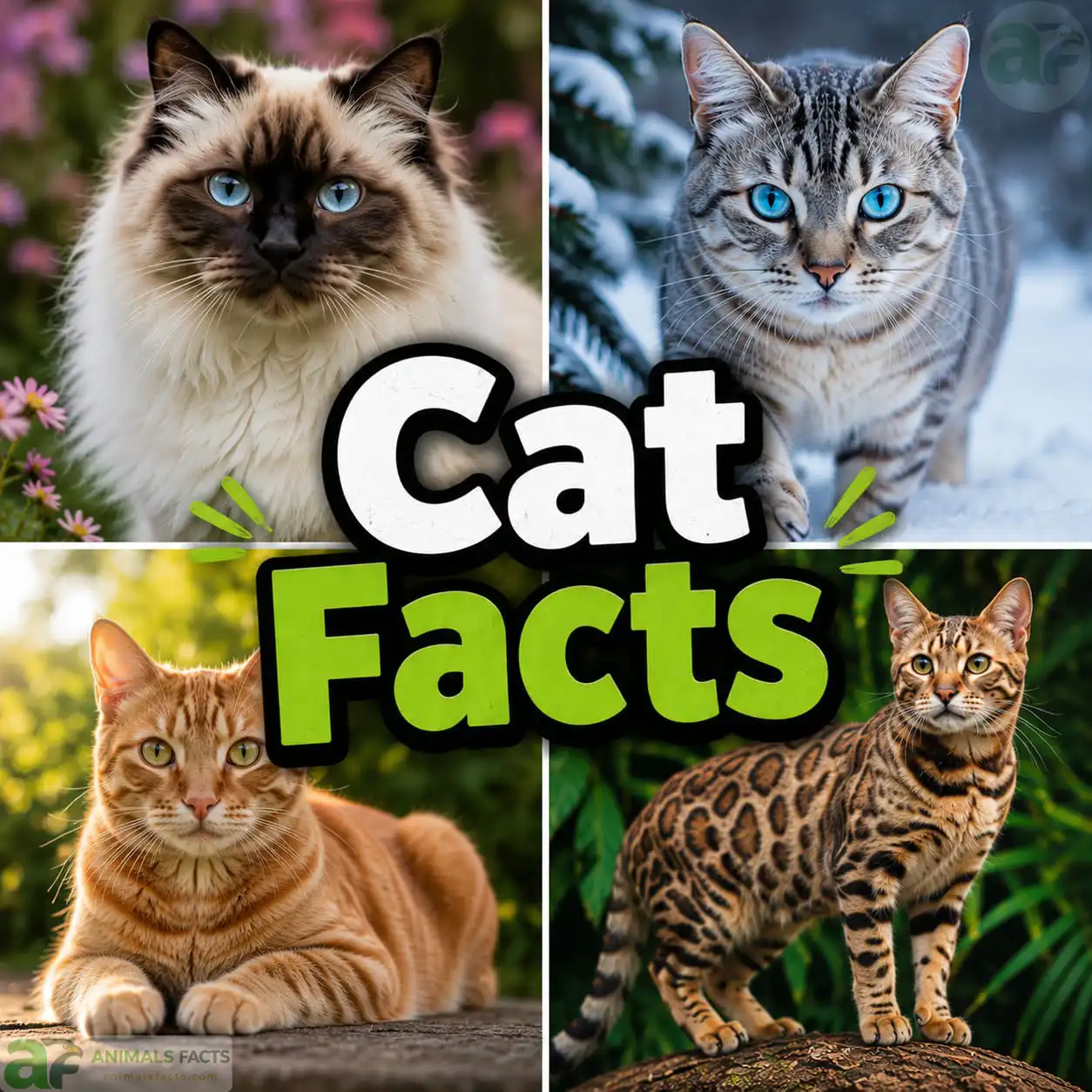
Cat Facts
| Feature | Details |
|---|---|
| Scientific Name (Domestic Cat) | Felis catus |
| Scientific Name (Wildcat ancestor) | Felis lybica (African Wildcat) |
| Kingdom | Animalia |
| Phylum | Chordata |
| Class | Mammalia |
| Order | Carnivora |
| Family | Felidae |
| Total Wild Cat Species | 37 species in family Felidae |
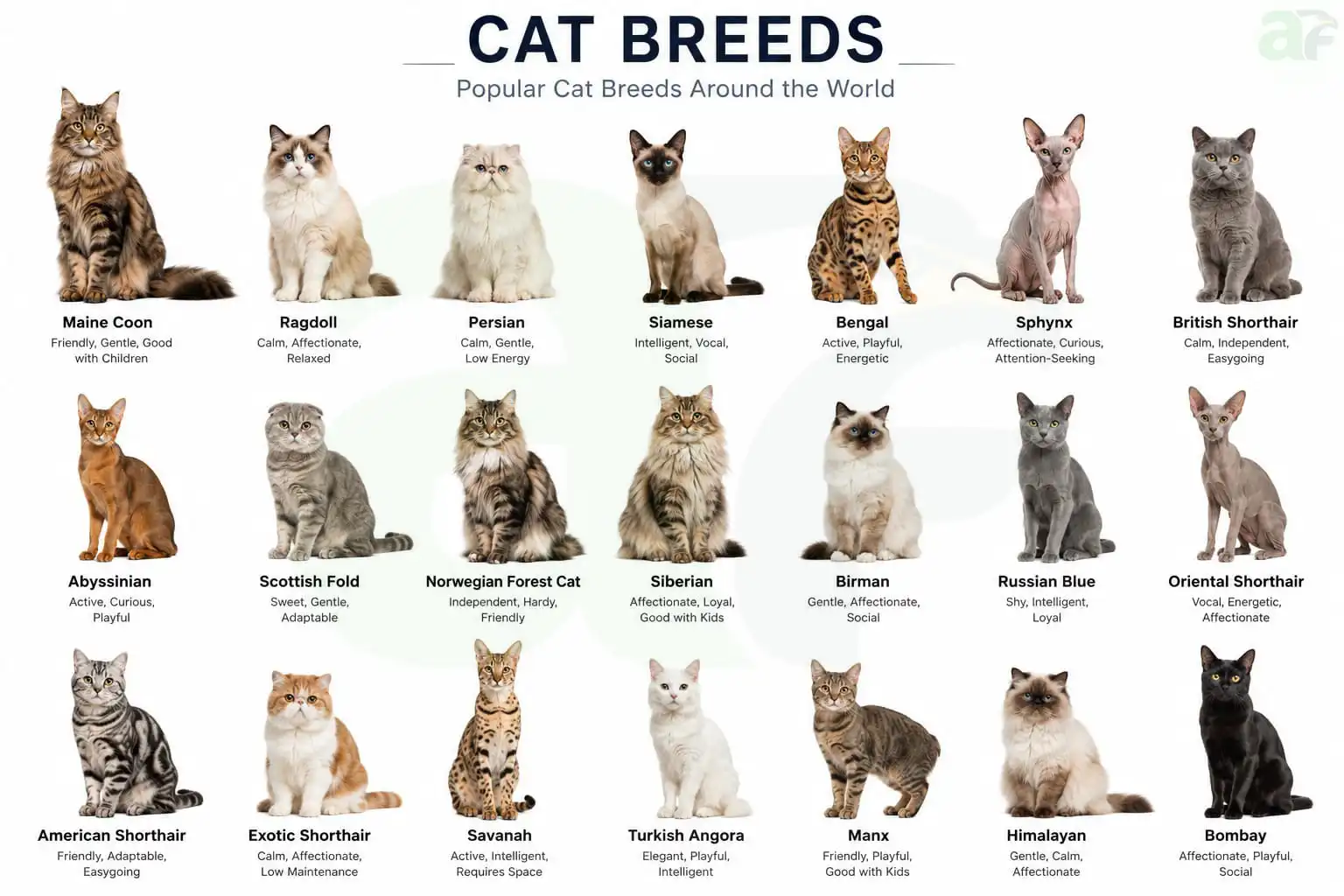
| Total Domestic Cat Breeds | Approximately 71–100 recognized breeds worldwide |
| Habitat | Every continent except Antarctica; domestic cats present globally |
| Lifespan (Domestic) | 12–18 years average; up to 29 years (confirmed record) |
| Diet | Obligate carnivores — require animal protein exclusively |
| Smallest Wild Cat | Rusty-spotted Cat (Prionailurus rubiginosus) — as small as 0.9 kg and 35 cm body length |
| Largest Wild Cat | Tiger (Panthera tigris) — up to 300 kg and 3.3 meters body length |
| Fastest Cat | Cheetah (Acinonyx jubatus) — up to 130 km/h (80 mph) |
| Domestic Cat Global Population | Estimated 600 million–1 billion domestic and feral cats worldwide |
| Conservation Status (Domestic) | Not evaluated (domesticated species) |
| Most Endangered Wild Cat | Amur Leopard (Panthera pardus orientalis) — fewer than 100 wild individuals |
 1. Introduction: What is a Cat?
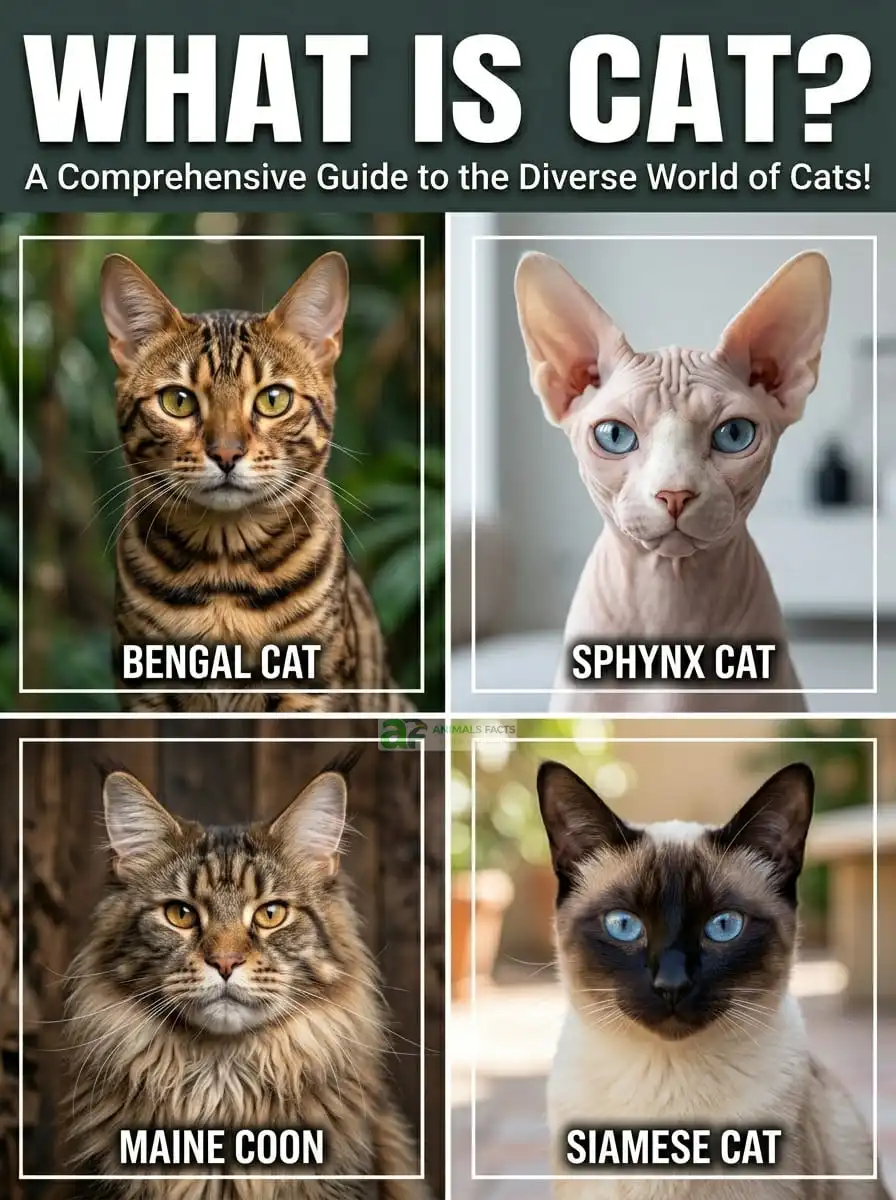
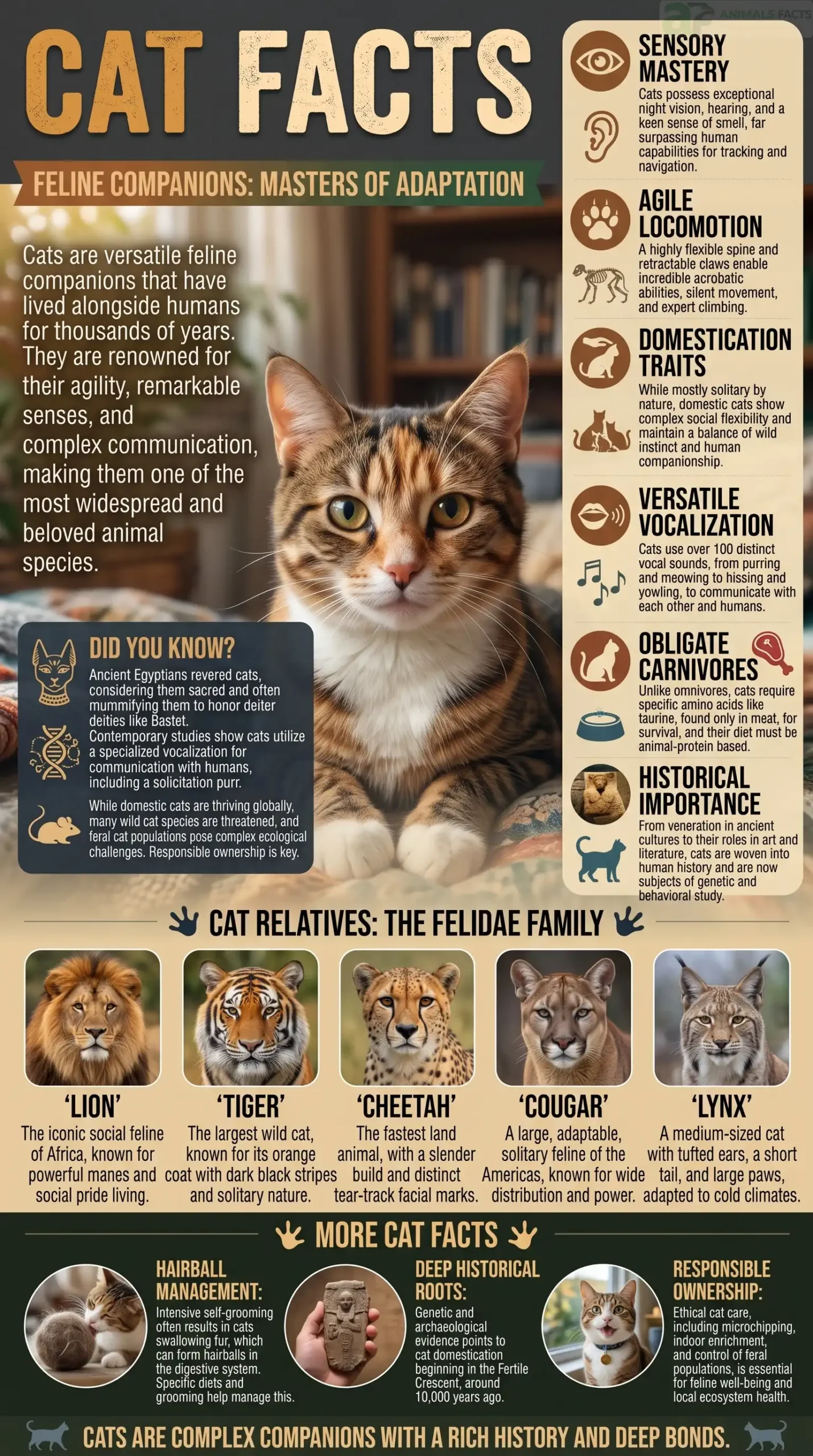
They have been worshipped as gods, feared as demons, celebrated as internet celebrities, and cherished as companions by billions of people across thousands of years of human history. They are simultaneously among the most domesticated animals on Earth and the most determinedly wild — a paradox that defines everything fascinating about them. Cat facts reveal an animal of extraordinary sensory power, behavioral sophistication, and evolutionary perfection — a creature so well-designed by millions of years of evolution that it has barely changed since its wild ancestors first stalked the grasslands of ancient Africa.
The family Felidae — encompassing 37 species from the domestic cat to the tiger — represents one of the most anatomically consistent and evolutionarily successful carnivore lineages in the history of mammals. Every felid, from the Rusty-spotted Cat of Sri Lanka (weighing less than a kilogram) to the Siberian Tiger (weighing up to 300 kilograms), shares the same fundamental body plan — retractable claws, binocular forward-facing vision, highly specialized carnivore dentition, extraordinary agility, and a stalking predatory technique refined over 25 million years of evolution. The domestic cat sitting on your lap retains every one of these predatory adaptations completely intact.
Whether you are a devoted cat owner searching for cat facts you have never heard, a student writing a school project on wild cats, a wildlife enthusiast fascinated by the secret lives of big cats, or simply someone who has spent time watching a cat stalk a toy across the floor and wondered what extraordinary neural machinery drives that perfect focused intensity — this is the most complete guide to cat facts you will find anywhere. We cover cat habitat, cat diet, cat behavior, reproduction, intelligence, conservation, mythology, and the extraordinary cultural history of humanity’s most enigmatic animal companion. Let us begin.
2. Cat Species Overview & Classification
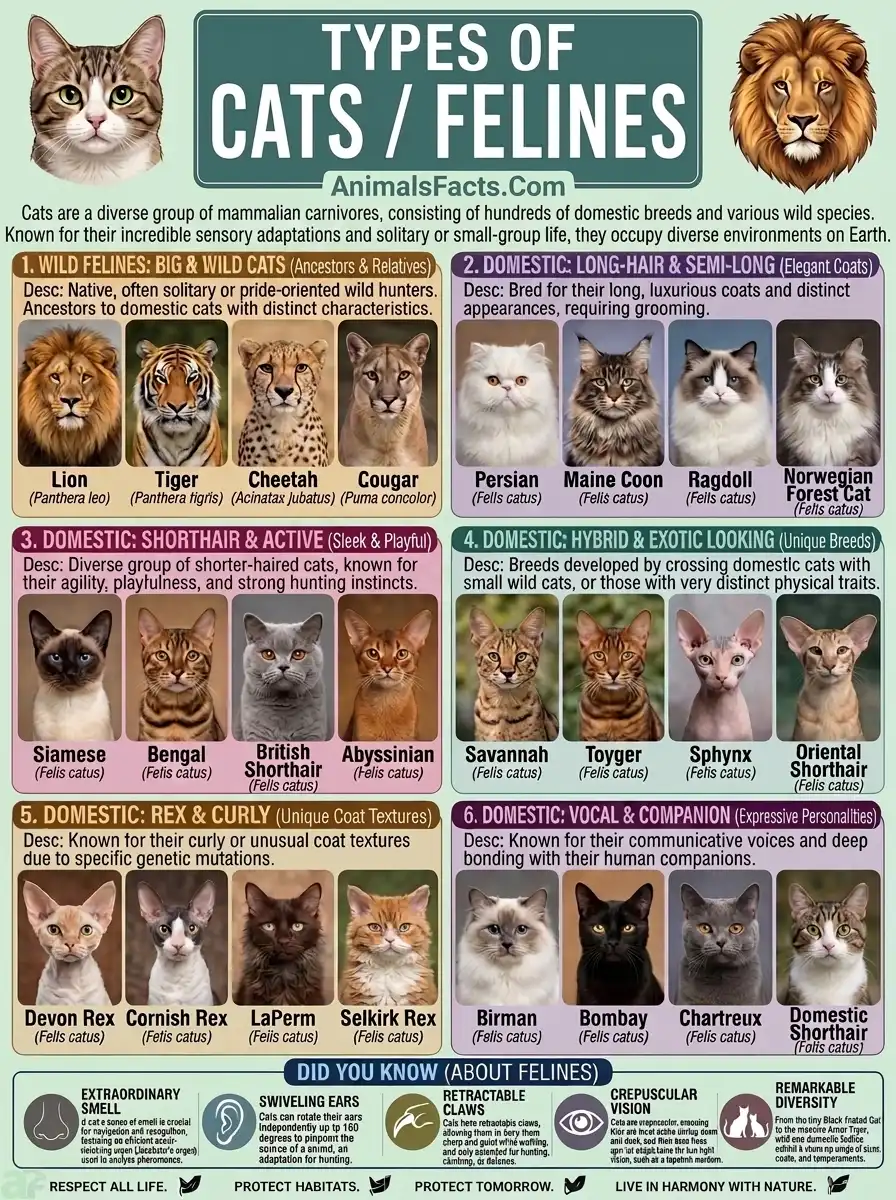
Cats belong to the family Felidae — one of the most specialized and anatomically consistent carnivore families on Earth. All felids are obligate carnivores with remarkably similar body plans, reflecting the extraordinary efficiency of the basic cat design that evolution settled on and has maintained largely unchanged across tens of millions of years.
What Defines a Felid?
All members of family Felidae share these defining characteristics:
- Retractable claws: All cats except the Cheetah can fully retract their claws into protective sheaths — keeping them sharp for prey capture and climbing. Cheetah claws are semi-retractable and permanently exposed for traction during high-speed pursuit
- Binocular vision: Forward-facing eyes provide exceptional depth perception critical for judging distances during prey capture
- Obligate carnivory: All cats require animal protein for survival — they cannot synthesize certain essential nutrients (including taurine and arachidonic acid) and must obtain them from prey
- Specialized dentition: Large canine teeth for killing; carnassial teeth (modified molars) for shearing flesh — virtually no grinding teeth, as cats do not chew plant material
- Highly specialized stalking behavior: All cats use the same fundamental hunting technique — patient stalking, freezing, and a final explosive rush or spring to capture prey
- Solitary hunters: With the exception of Lions (which live in prides) and Cheetahs (which sometimes form coalitions), all cats are solitary hunters
Major Cat Classification Table
| Subfamily | Genera | Key Species | Notable Feature |
|---|---|---|---|
| Pantherinae | Panthera, Neofelis | Lion, Tiger, Leopard, Jaguar, Snow Leopard, Clouded Leopard | Can roar (Panthera); modified hyoid bone |
| Felinae | Felis, Puma, Acinonyx, Lynx, and others | Domestic Cat, Cougar, Cheetah, Lynx, Ocelot, Serval | Purr but cannot roar |
Cat Family Tree – 37 Wild Species
Big Cats (Panthera lineage): Tiger, Lion, Leopard, Jaguar, Snow Leopard, Clouded Leopard, Sunda Clouded Leopard
Cheetah (Acinonyx): Cheetah — unique among cats for its semi-retractable claws and extreme speed adaptation
Medium Wild Cats: Cougar/Mountain Lion, Caracal, Serval, Ocelot, Clouded Leopards, Lynx species (4), Fishing Cat, Flat-headed Cat
Small Wild Cats: Bobcat, Wildcat species, Jungle Cat, Sand Cat, Black-footed Cat, Rusty-spotted Cat, Margay, Oncilla, Pampas Cat, Geoffroy’s Cat, Kodkod, Andean Cat, Bay Cat, Asian Golden Cat, Marbled Cat, Leopard Cat, Pallas’s Cat, Chinese Mountain Cat
Domestic Cat: Felis catus — descended from the African Wildcat (Felis lybica)
Species Evolution & Discovery Timeline
~25 million years ago: The earliest confirmed felid ancestors — Proailurus lemanensis — appeared during the Oligocene Period in Europe. This small, arboreal cat-like carnivore is considered the first true felid ancestor.
~20 million years ago: Pseudaelurus — a more advanced felid — diversified across Europe, Asia, and eventually North America, giving rise to the modern felid lineages.
~11 million years ago: The Pantherinae (big cat) and Felinae (small cat) lineages diverged from a common ancestor — establishing the two main branches of the cat family that persist today.
~3.8 million years ago: The Cheetah lineage diverged from other felids — representing one of the most extreme evolutionary specializations in the family.
~2 million years ago: The ancestors of the domestic cat lineage diverged in Africa and the Middle East.
~10,000 years ago: The African Wildcat (Felis lybica) began the process of domestication in the ancient Fertile Crescent — the same region where early human agricultural settlements were establishing themselves and creating the rodent-rich environments that attracted wildcats.
~9,500 years ago: The oldest confirmed evidence of deliberate cat-human association — a burial at Shillourokambos, Cyprus containing a human interred alongside a cat — dated to approximately 9,500 years ago.
~4,000 years ago: Cats appear in ancient Egyptian art and religious contexts — by this period, the domestication process was fully established in the Nile Valley.
1871: The first major cat show was held at Crystal Palace, London — marking the beginning of formal breed standardization and pedigree registration.
2007: The domestic cat genome was fully sequenced — revealing the genetic basis of domestication and the extraordinary closeness between domestic cats and their wild ancestors.
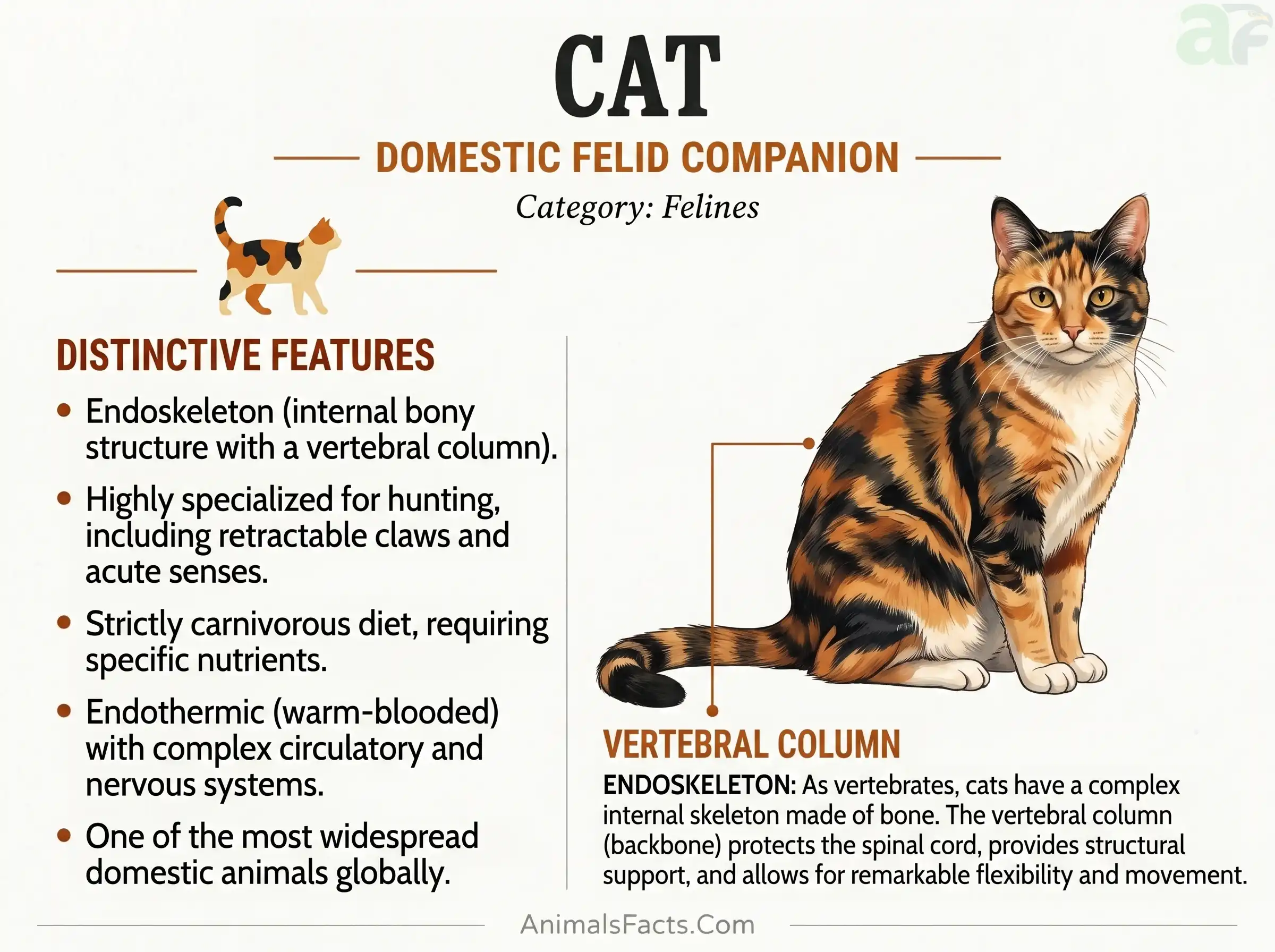
3. Cat Physical Description & Features
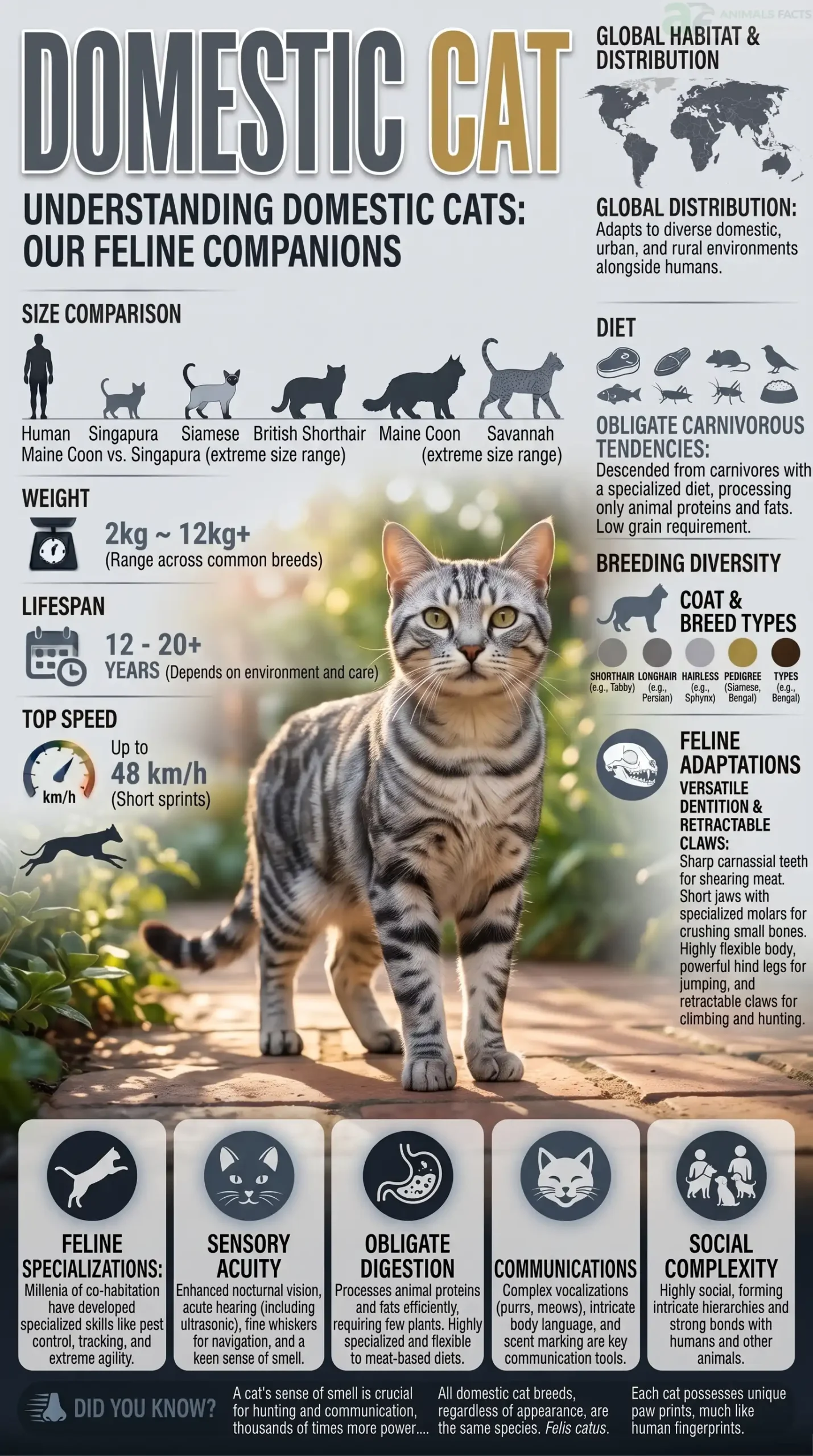
Cats are perhaps the most physically refined predators in the mammalian world — every aspect of their anatomy is a masterpiece of evolutionary optimization for hunting, agility, and sensory awareness.
Size Extremes
Smallest wild cat: The Rusty-spotted Cat (Prionailurus rubiginosus) of Sri Lanka and India — adult males weigh as little as 0.9–1.6 kg with a body length of approximately 35–48 cm. The Rusty-spotted Cat is so small it has been described as “a predator in miniature” — yet it hunts with the same predatory precision and fearless ferocity as its much larger relatives.
Largest wild cat: The Siberian Tiger (Panthera tigris altaica) — male individuals reaching confirmed weights of up to 300 kg and body lengths of up to 3.3 meters (not including tail) — the largest felid alive and the largest wild cat in all of recorded natural history.
Heaviest living cat (including domestic): The heaviest recorded domestic cat weighed 21.3 kg — but veterinary organizations consider such extreme weights a serious health concern and actively discourage deliberate overfeeding.
Extraordinary Feline Physical Adaptations
The Righting Reflex: Cats have a unique vestibular system in their inner ear combined with an extremely flexible spine and lack of a functional collarbone — together allowing them to rotate their body in mid-air during a fall and land feet-first in as little as 0.3 seconds from heights as low as 30 cm. This is called the righting reflex and is one of the most studied phenomena in feline physiology.
Retractable Claws: All cats except the Cheetah possess retractable claws sheathed in protective skin folds when not in use — kept razor-sharp because they never contact the ground during normal movement. The retraction mechanism is controlled by elastic ligaments that passively hold claws retracted; muscular contraction extends them for prey capture and climbing.
Night Vision: Cat eyes contain a reflective layer behind the retina called the tapetum lucidum — which reflects light back through the photoreceptor cells a second time, essentially doubling the light available for low-light vision. Cats can see in light levels approximately six times lower than humans can detect. Their pupils can dilate to enormous size in darkness and contract to narrow vertical slits in bright light — controlling light intake over an extraordinarily wide range.
Whiskers (Vibrissae): Cat whiskers are not merely sensory decorations — they are precision instruments. Embedded significantly deeper than ordinary hair and connected to a rich nerve supply, whiskers detect air pressure changes, air currents, and direct contact. They extend approximately to the width of the cat’s body — serving as a gauge for whether a space is wide enough to pass through. In complete darkness, whiskers alone allow cats to build a three-dimensional map of their immediate environment.
The Purr: One of the most distinctive and studied sounds in the animal kingdom — cats produce a continuous vibration on both inhale and exhale at frequencies between 25 and 150 Hz. This frequency range has been shown to promote bone density, accelerate healing of bone fractures, reduce pain, and decrease stress both in cats and potentially in the humans who hear them. Domestic cats can also embed a higher-pitched cry within their purr — a “solicitation purr” that activates human caregiving responses. Only cats in subfamily Felinae (small cats) purr continuously; big cats in genus Panthera only purr on the exhale.
Did You Know? The domestic cat’s skeleton contains approximately 230 bones — compared to the human’s 206 bones. The extra bones are found primarily in the spine and tail — giving cats the extraordinary spinal flexibility that allows them to rotate their spine through a greater arc than virtually any other comparably-sized mammal, contorting their bodies in ways that appear to defy anatomy.
4. Top 25 Surprising & Interesting Cat Facts
- Cats spend approximately 70% of their lives sleeping — between 12 and 16 hours per day on average, with some cats sleeping up to 20 hours daily.
- The domestic cat is the only cat species that holds its tail vertically upright while walking as a social signal — no wild cat species does this. It is a behavior that evolved exclusively in domestic cats as a greeting signal to humans.
- Cats cannot taste sweetness — they lack a functional copy of the gene that encodes the sweet taste receptor (Tas1r2), making them the only known mammal genuinely incapable of detecting sweet flavors.
- The Cheetah is the fastest land animal on Earth — reaching speeds of up to 130 km/h (80 mph) in approximately 3 seconds from a standing start, accelerating faster than most sports cars.
- A group of cats is called a “clowder”; a group of kittens is called a “kindle”; a group of wild cats such as lions is called a “pride”.
- Tigers are the only striped big cat — and each tiger has a unique stripe pattern as individual as a human fingerprint. No two tigers have identical stripes.
- Cats have a specialized organ in the roof of their mouth called the vomeronasal organ (Jacobson’s organ) — used to detect chemical signals (pheromones). When a cat makes the “Flehmen response” (curling the upper lip and opening the mouth), it is drawing air over this organ to analyze scents.
- The Snow Leopard cannot roar — despite being classified with big cats, its modified hyoid bone only allows it to purr, chuff, hiss, and mew. It is one of the most mysterious and least-studied large cats on Earth.
- Domestic cats have approximately 473 taste buds — compared to approximately 9,000 in humans. They compensate through their extraordinary sense of smell — much of what humans experience as “taste” is actually smell.
- The Jaguar has the most powerful bite of any cat relative to body size — strong enough to bite directly through the skull of its prey and through turtle shells. Its scientific name Panthera onca derives from a Greek word meaning “hunter.”
- Cats’ claws curve downward — which is why cats can climb up trees easily but struggle to descend headfirst and must back down carefully or jump.
- The oldest confirmed domestic cat ever recorded was Creme Puff of Austin, Texas — who lived to 38 years and 3 days of age, verified by Guinness World Records. She died in 2005.
- Lions are the only truly social cats — living in family groups called prides of up to 30 individuals. All other wild cat species are solitary.
- The Black-footed Cat of southern Africa is the deadliest wild cat on Earth relative to its size — it successfully kills prey in approximately 60% of hunts, the highest hunting success rate of any wild cat. It is smaller than a domestic cat.
- Cats walk by moving both right legs then both left legs — a “pacing gait” shared by only a handful of other animals including camels and giraffes. Most four-legged animals alternate diagonal leg pairs.
- The Sand Cat of North Africa and the Middle East is the only cat that lives primarily in true desert — it can survive without drinking water at all, obtaining all necessary moisture from its prey.
- A domestic cat’s hearing range extends to approximately 79,000 Hz — significantly higher than human hearing (20,000 Hz) and even higher than dog hearing (65,000 Hz). This allows cats to detect the ultrasonic vocalizations of rodent prey.
- The Leopard is the strongest climber of all the big cats — capable of carrying prey heavier than itself up vertical tree trunks to cache in branches beyond the reach of lions and hyenas.
- Cats have true color vision — but their color spectrum is narrower than humans’, with particular sensitivity to blues and greens but reduced ability to distinguish reds and oranges.
- The Clouded Leopard has the longest canine teeth relative to body size of any living cat — proportionally longer than those of any living felid including lions and tigers, earning it the comparison to the extinct saber-toothed cats.
- Domestic cats can make approximately 100 distinct vocal sounds — dogs can make approximately 10. Cats also meow almost exclusively at humans — adult cats rarely meow at other cats. The meow is a communication strategy developed specifically to manipulate human caregivers.
- The Pallas’s Cat (Otocolobus manul) of Central Asian steppes has the densest fur of any cat species — its extraordinarily thick coat protects it from temperatures as low as -50°C in its Siberian and Central Asian habitat.
- Domestic cats are estimated to kill between 1.3 and 4 billion birds and 6.3 to 22.3 billion mammals annually in the United States alone — making them one of the greatest human-associated threats to wildlife in the world.
- The Fishing Cat of South and Southeast Asia is a semi-aquatic predator that actively hunts fish by diving into water — it has partially webbed feet and a coat that sheds water rapidly.
- Cats produce a unique fatty acid in their saliva — delta-6-desaturase — that they spread across their fur during grooming, which has a significant role in coat maintenance and potentially in chemical communication. This is the compound most commonly responsible for allergic reactions in humans sensitized to cats.
5. Cats Fun Facts
- Every domestic cat in the world is descended from five founding female African Wildcats that were domesticated in the ancient Near East approximately 10,000 years ago — confirmed by mitochondrial DNA analysis.
- The Cheetah is so evolutionarily different from other cats that it is the sole member of its genus (Acinonyx) — its closest relative is the Puma, not the Leopard as is commonly assumed.
- Cats spend approximately 30–50% of their waking hours grooming — both for hygiene and for thermoregulation (saliva evaporation cools the skin).
- The domestic cat’s meow is almost entirely a communication developed for humans — adult cats in the wild rarely vocalize to each other.
- A domestic cat can jump approximately 5–6 times its own body height in a single vertical leap — equivalent to a human jumping over a 10-meter building.
- The Black-footed Cat — the world’s deadliest small predator — makes approximately 14 kills per night, hunting more successfully than lions (25% success) or leopards (38% success).
- Tigers are strong swimmers and actively seek water — they regularly swim across rivers more than 8 kilometers wide and will cool themselves by lying in streams.
- The domestic cat’s purr at 25–50 Hz is within the frequency range shown to promote bone healing and pain reduction in therapeutic medical research.
- The Snow Leopard is the only big cat that cannot roar — its modified hyoid bone allows only purring, chuffing, and mewing.
- The domestic cat’s brain is structurally more similar to the human brain than a dog’s brain is — both cats and humans have nearly identical regions of the brain dedicated to processing emotions.
- The Jaguar’s name comes from the indigenous Tupi word “yaguara” meaning “he who kills with one leap.”
- There are more domestic cats on Earth than any other pet animal except possibly the dog — with an estimated 600 million to 1 billion domestic and feral individuals worldwide.
6. Cat Habitat & Geographic Range
Cats are among the most geographically widespread of all carnivore families — absent natively only from Australia, Antarctica, and several oceanic islands (though feral domestic cats have been introduced to most of these environments by humans, often with catastrophic consequences for native wildlife).
Major Wild Cat Habitat Types
Tropical Rainforests: The most species-rich cat habitat. The Amazon Basin supports Jaguars, Ocelots, Margays, Oncillas, Pumas, and Jaguarundis — six wild cat species sharing a single forest system. Southeast Asian rainforests host Tigers, Leopards, Clouded Leopards, Marbled Cats, Fishing Cats, and several other species. Arboreal specialists like the Margay spend almost their entire lives in the forest canopy.
Grasslands & Savannas: African savannas support the greatest concentration of large wild cats on Earth — Lions, Leopards, Cheetahs, and Servals all share the same landscape in parts of East Africa. The Caracal and Sand Cat extend into adjacent semi-arid and desert zones.
Mountain Environments: The Snow Leopard inhabits the high-altitude mountains of Central and South Asia — from the Himalayas to the Altai — at elevations of 3,000–5,500 meters. The Mountain Lion (Cougar/Puma) ranges from the Canadian Rockies to Patagonia across an extraordinary altitudinal range. The Andean Cat lives in the high Andes of South America at elevations comparable to the Snow Leopard.
Temperate & Boreal Forests: Lynx species (Eurasian Lynx, Canada Lynx, Iberian Lynx, Bobcat) dominate temperate and boreal forest cat communities across North America, Europe, and Asia.
Deserts: The Sand Cat and Caracal have adapted to true desert environments. The Sand Cat survives in the Sahara, Arabian Desert, and Central Asian deserts without drinking water — obtaining all moisture from prey.
Wetlands & Rivers: The Fishing Cat of South Asia and the Flat-headed Cat of Southeast Asia have specialized for aquatic hunting. Tigers in the Sundarbans mangrove forests of Bangladesh and India are the only tigers regularly hunting in a tidal saltwater environment.
Habitat Range by Continent
| Continent | Notable Wild Cat Species | Approximate Species Count |
|---|---|---|
| Asia | Tiger, Snow Leopard, Clouded Leopard, Leopard, Fishing Cat, Pallas’s Cat, Sand Cat, Lynx | 16+ |
| Africa | Lion, Leopard, Cheetah, Serval, Caracal, African Wildcat, Sand Cat, Black-footed Cat | 10 |
| South America | Jaguar, Puma, Ocelot, Margay, Oncilla, Jaguarundi, Andean Cat, Pampas Cat, Geoffroy’s Cat, Kodkod | 10 |
| North America | Cougar/Mountain Lion, Bobcat, Canada Lynx, Jaguar (southern borderlands), Ocelot (Texas borderlands) | 5 |
| Europe | Eurasian Lynx, Iberian Lynx, European Wildcat | 3 |
| Australia | No native wild cats (feral domestic cats introduced) | 0 native |
| Antarctica | No cats | 0 |
Did You Know? The Iberian Lynx (Lynx pardinus) was once the world’s most critically endangered cat — with a population that collapsed to just 94 individuals in 2002, making it the most endangered felid ever documented. Following extraordinary conservation efforts including captive breeding, reintroduction programs, and rabbit prey habitat restoration, the population had recovered to approximately 1,700 individuals by 2024 — one of the most successful large carnivore recovery programs in history.
7. Cat’s Diet & Feeding Behavior
All cats — without exception — are obligate carnivores. Unlike dogs, which can survive and even thrive on plant-based diets with appropriate supplementation, cats have evolved metabolic pathways that make animal protein nutritionally essential for survival. Cats cannot synthesize taurine, arachidonic acid, vitamin A, and several other essential nutrients from plant precursors — they must obtain them directly from animal tissue.
Why Cats are Obligate Carnivores
The metabolic differences between cats and dogs (or humans) reflect millions of years of evolutionary specialization:
Taurine deficiency: Without adequate dietary taurine (found only in animal tissue), cats develop dilated cardiomyopathy (DCM) — fatal heart disease — and central retinal degeneration leading to irreversible blindness.
Protein metabolism: Cats have permanently upregulated protein-metabolizing enzymes — they continuously break down protein for energy even when dietary protein is scarce, meaning they have higher minimum protein requirements than any other domestic mammal.
Glucose regulation: Cats have limited ability to digest carbohydrates efficiently and minimal capacity to regulate blood glucose from carbohydrate sources — their metabolic system is calibrated for a near-zero-carbohydrate prey-based diet.
How Cats Hunt
All wild cats — and domestic cats given the opportunity — hunt using the same fundamental technique: patient stalking followed by explosive ambush.
The hunting sequence involves: detecting prey (through sight, sound, or smell); freezing and stalking (approaching using cover, moving only when the prey’s attention is elsewhere, stopping completely when detected); the stalk (a slow, careful advance keeping the body low, weight on the hindquarters building tension); and the explosive final rush (an explosive spring or charge covering the final distance in a fraction of a second).
Cats kill prey primarily through a precision bite to the back of the skull or neck — severing the spinal cord or asphyxiating through throat bite — rather than through exhaustion or physical overpowering.
Diet Breakdown Table
| Cat Species | Primary Food | Secondary Food | Feeding Method |
|---|---|---|---|
| Tiger | Large ungulates (deer, wild pigs, buffalo) 80% | Small mammals, fish, birds 20% | Ambush; throat bite |
| Lion | Large ungulates (wildebeest, zebra, buffalo) 75% | Carrion, small mammals 25% | Pack ambush; suffocation |
| Leopard | Medium ungulates, primates 60% | Small mammals, birds, reptiles 40% | Stalk and ambush; throat bite |
| Cheetah | Gazelle, impala, hares 90% | Other small antelopes 10% | High-speed pursuit; trip and suffocate |
| Jaguar | Large mammals, caiman, giant river turtle 60% | Fish, deer, peccary 40% | Ambush; skull bite |
| Snow Leopard | Blue sheep (bharal), ibex 70% | Smaller mammals, birds 30% | Ambush on mountain terrain |
| Domestic Cat | Small rodents, birds 50% | Reptiles, invertebrates, fish 50% | Stalk; pounce; neck bite |
| Black-footed Cat | Small rodents, birds, insects 90% | Reptiles, invertebrates 10% | Active nocturnal hunting; high success rate |
| Sand Cat | Rodents, small reptiles, birds 80% | Insects, invertebrates 20% | Desert stalking; burrow flushing |
| Fishing Cat | Fish, frogs, crustaceans 70% | Small mammals, birds 30% | Aquatic ambush; diving |
Did You Know? The Black-footed Cat (Felis nigripes) of southern Africa — the world’s smallest African wild cat at just 1–2.5 kg — is statistically the most lethal wild predator on Earth relative to hunting attempts. With a 60% hunt success rate and making up to 14 kills per night, it is proportionally more deadly than any lion, leopard, or cheetah. Scientists have described it as an animal with “the heart of a lion in the body of a kitten.”
8. Cat Reproduction & Life Cycle
Domestic Cat Reproduction
Female domestic cats (queens) reach sexual maturity at approximately 4–10 months of age — unusually early for a mammal of their size, reflecting the high reproductive rate required to compensate for the high juvenile mortality of wild ancestors.
Female cats are polyestrous — they cycle through multiple estrous periods throughout the breeding season (in temperate climates) or year-round (in tropical climates and most domestic situations). Crucially, female cats are induced ovulators — they only release eggs in response to mating stimulation, not on a fixed hormonal cycle. This means that unmated females continue cycling repeatedly throughout the breeding season in a state of continuous estrus.
Gestation period: 63–67 days (approximately 9 weeks)
Litter size: Typically 3–5 kittens (range: 1–9)
Neonatal state: Kittens are born altricial — blind, deaf, and helpless at birth. Their eyes open between 7–14 days; their ear canals open around 14 days.
Socialization window: The critical period for kitten socialization is approximately 2–7 weeks of age — kittens handled by humans during this window develop comfort with human contact; kittens not handled during this period remain permanently fearful of humans regardless of subsequent exposure.
Key Developmental Stages
| Stage | Age | Key Development |
|---|---|---|
| Neonatal | 0–2 weeks | Eyes and ears closed; thermally dependent on mother |
| Transitional | 2–4 weeks | Eyes and ears open; first wobbly walking; beginning to play |
| Socialization | 4–8 weeks | Critical window; rapid behavioral development; weaning begins |
| Juvenile | 2–6 months | Adult teeth emerging; increasing independence; play behavior peaks |
| Adolescent | 6–12 months | Sexual maturity; territorial behavior developing |
| Adult | 1–10 years | Full physical and behavioral maturity |
| Senior | 10+ years | Declining physical capacity; increased health monitoring |
Lifespan Comparison Table
| Species | Average Lifespan | Record / Maximum |
|---|---|---|
| Rusty-spotted Cat | 12–15 years (captivity) | ~17 years |
| Domestic Cat (indoor) | 12–18 years | 38 years 3 days (Creme Puff, USA) |
| Domestic Cat (outdoor) | 5–7 years | — |
| Cheetah | 10–12 years (wild) | ~20 years (captivity) |
| Lion | 10–14 years (wild) | ~29 years (captivity) |
| Tiger | 10–15 years (wild) | ~26 years (captivity) |
| Snow Leopard | 10–13 years (wild) | ~21 years (captivity) |
| Puma / Mountain Lion | 8–13 years (wild) | ~29 years (captivity) |
9. Social Behavior & Communication of Cats
Cats are frequently described as solitary and asocial — a characterization that is largely accurate for wild cats but significantly oversimplifies the social lives of domestic cats and misses the extraordinary complexity of feline communication.
Social Structures
Domestic cats: Domestic cats are facultatively social — capable of living alone or in groups depending on circumstances. In free-ranging domestic and feral populations, cats form loose social groups based on kinship, food availability, and familiarity — particularly colonies of related females who cooperate in raising kittens. These social groups lack the rigid hierarchies of wolf or primate societies and are better described as tolerant aggregations than true social units.
Lions: The only truly social wild cats — living in prides of 3–30 individuals comprising related females, their offspring, and a coalition of males. Pride females cooperate in hunting, cub-rearing, and territory defense. Male lions form coalitions (usually brothers or cousins) to compete for pride tenure.
Cheetahs: Males sometimes form coalitions of 2–5 individuals (usually brothers) for territory defense and cooperative hunting. Female cheetahs are solitary except when raising cubs.
Communication Methods
Vocalizations: Cats produce one of the most diverse vocal repertoires of any carnivore. The domestic cat alone can produce approximately 100 distinct sounds — compared to approximately 10 for dogs.
Purring: At 25–150 Hz — used to express contentment but also produced when stressed, injured, or dying. Some researchers believe purring may have a self-healing function.
Meowing: Almost exclusively a communication directed at humans by domestic cats — adult wild cats and feral cats rarely meow at each other. The domestic cat’s meow is a uniquely human-directed vocalization that evolved during domestication to exploit human responses to infant-like sounds.
Chirping and chattering: Produced when a cat observes prey it cannot reach — the precise function is debated. Some researchers suggest it mimics the calls of prey to attract them; others suggest it is a frustrated predatory response.
Hissing and growling: Defensive threat communications — warning of imminent aggression.
Caterwauling: The distinctive loud, wailing vocalizations of cats in estrus — produced by females to attract males and by males in competition.
Body Language: Cats communicate extensively through posture, tail position, and facial expression:
- Slow blink: A relaxed, trusting signal — “cat kiss.” Humans who slow-blink back at cats establish trust and positive association more effectively than any other non-tactile interaction
- Tail held high: Greeting signal unique to domestic cats — not seen in any wild cat species
- Tail puffed: Fear or aggression — the classic “Halloween cat” posture
- Head butting (bunting): Affectionate social bonding — depositing scent from facial glands on familiar objects and individuals
- Kneading: Retained from kittenhood nursing behavior — expressing contentment and security
- Exposed belly: NOT always an invitation to touch — in cats, belly exposure signals trust but physical contact with the belly frequently triggers a defensive bite-and-kick response
Did You Know? Research published in 2020 confirmed that cats actually do recognize their own names when called by their owners — they produce measurably distinct responses including head turning, ear movements, and tail movements specifically when their own name is spoken, compared to other words of similar length and phonetic structure. The finding confirmed that domestic cats are paying more attention to human speech than their reputation for indifference suggests.
10. Predators & Defense Mechanisms
Natural Predators of Cats
Wild cats — even the largest species — face predation and competition from other large carnivores, and smaller cat species are preyed upon by larger ones. The primary threats to wild cats include:
Apex predators competing with and occasionally killing cats:
Hyenas and Wild Dogs regularly steal kills from and occasionally kill Cheetahs and Leopards — Cheetahs are particularly vulnerable because their high-speed sprint leaves them exhausted after a hunt. Lions kill Cheetahs, Leopards, and Wild Dogs when they encounter them.
Wolves and Bears compete with and occasionally kill Lynx species in North America and Europe.
Larger cats kill smaller cats: Tigers kill Leopards and Clouded Leopards in areas of overlap. Lions kill Cheetahs and Leopards. Pumas kill Bobcats and Ocelots in areas of overlap.
Eagles and large raptors: Martial Eagles, Crowned Eagles, and Golden Eagles predate on small wild cats and occasionally on large cat cubs.
Crocodilians: Nile Crocodiles and Saltwater Crocodiles occasionally kill Lions, Tigers, and Leopards that enter water or cross rivers.
Humans: The primary cause of mortality for virtually every wild cat species — through direct persecution, road kills, habitat loss, and prey depletion.
Defense Mechanisms
Retractable claws: Kept surgically sharp by remaining sheathed during normal movement — deployed instantly in combat or prey capture with devastating effectiveness.
Explosive acceleration: The primary escape tool for most cats — even non-speed-specialist cats like leopards can accelerate to 58 km/h in an explosive burst sufficient to escape most threats.
Climbing: Most cats are exceptional climbers — retreating to trees removes them from most terrestrial threats. The Leopard uses tree-climbing offensively to cache kills beyond the reach of lions and hyenas.
Camouflage: Virtually every wild cat species has evolved cryptic coloration matching its primary habitat. Tiger stripes disappear among tall grass in dappled light. Leopard rosettes break up the body outline in woodland. Snow Leopard’s grey-white coat is nearly invisible against rocky mountain terrain.
Solitary, secretive lifestyle: Most small and medium wild cats are so rarely seen by humans that their basic ecology remained poorly understood until camera trapping technology became widespread. Their secretive, solitary habits make them extraordinarily difficult to locate and virtually impossible to approach in the wild.
11. Cat Facts for Kids
Hey kids — get ready to discover why cats are some of the most amazing animals on Earth! From tiny kittens to enormous tigers, the cat family is full of incredible surprises!
- Cats can jump five or six times their own height in a single leap — if you could do that, you would be able to jump over a 10-meter building in one bound!
- A cat’s tongue is covered in tiny backward-facing hooks called papillae — they work like a built-in comb to keep their fur clean and a built-in straw to lap up water super efficiently!
- The Cheetah is the fastest land animal on Earth — it goes from 0 to 100 km/h faster than a sports car and can reach 130 km/h at full sprint!
- Tigers love water and are excellent swimmers — they will cool off in rivers and can swim several kilometers at a time!
- A cat’s purr is actually healing — the vibration frequency of a purr (25–50 Hz) helps bones heal faster and reduces pain. Scientists are studying cat purrs to help treat human injuries!
- The Clouded Leopard has the longest fangs relative to its body size of any living cat — its teeth are proportionally as long as those of an extinct saber-toothed cat!
- Cats always land on their feet because they have a special reflex in their inner ear — they can right themselves in the air in less than a third of a second!
- There are 37 species of wild cats in the world — from the Rusty-spotted Cat that weighs less than a bag of flour, to the Siberian Tiger that can weigh as much as a large motorcycle!
Did You Know? Cats talk to humans in a way they never talk to other cats! Adult cats in the wild almost never meow at each other — they communicate with other cats through scent, body language, and sounds like hissing and growling. But domestic cats developed the meow specifically to communicate with people — it works because it sounds similar to a baby crying, and humans are biologically programmed to respond to that sound!
12. Cats Relationship with Humans
The relationship between humans and cats is one of the most ancient, most culturally significant, and — in its current form — most ecologically complex in the natural world.
The Domestication Story
Unlike dogs — which were actively domesticated by humans for specific working purposes — cats are believed to have self-domesticated to a significant degree. As early human agricultural settlements in the Fertile Crescent (modern-day Iraq, Syria, Turkey, and surrounding regions) accumulated grain stores approximately 10,000 years ago, these stores attracted rodents. Rodents attracted wildcats. Wildcats that were less fearful of humans could exploit this rodent-rich environment more effectively than shyer individuals — and humans, recognizing the benefit of having rodent hunters near their grain stores, tolerated or encouraged the presence of these bolder wildcats.
Over thousands of generations, natural selection favored wildcats that were comfortable near humans — and humans increasingly selected for the most docile and sociable individuals. The result was not the dramatic behavioral and physical transformation seen in dog domestication, but a much subtler process — which explains why domestic cats remain so much closer to their wild ancestors in behavior, physiology, and independence than domestic dogs.
The domestic cat genome study of 2007 confirmed that all domestic cats worldwide descend from five founding female African Wildcats (Felis lybica) that were domesticated in the Near East — possibly in five separate but geographically proximate locations — approximately 10,000 years ago.
Cats as Working Animals
While the cultural narrative of cats focuses on companionship, cats have performed one essential working function throughout human history: rodent control. The devastating economic and public health consequences of rodent infestations — in grain stores, ships, markets, and homes — made cats indispensable members of human settlements.
Royal Navy ship’s cats were standard crew members on British Royal Navy vessels for centuries — their names recorded in ships’ logs alongside human crew. They were kept to control rats that would otherwise consume provisions and gnaw through rope and wooden structures. The last official Royal Navy ship’s cat (Simon of HMS Amethyst) received the Dickin Medal — the animal equivalent of the Victoria Cross — for service during the 1949 Yangtze Incident.
Library cats, bookshop cats, and farm cats continue to serve rodent-control functions in many parts of the world — and are appreciated as cultural fixtures as much as functional workers.
Cats as Conservation Threats
The extraordinary hunting competence that makes cats valuable rodent controllers also makes domestic and feral cats one of the most severe threats to wildlife in the modern world. In the United States alone, free-ranging domestic cats are estimated to kill between 1.3 and 4 billion birds and 6.3 to 22.3 billion small mammals annually. On islands worldwide — where native birds and mammals evolved without mammalian predators — feral cats have driven dozens of species to extinction.
13. Cat Conservation Status & Threats
The family Felidae faces one of the most serious and wide-ranging conservation crises of any large carnivore group — with the majority of wild cat species classified as threatened or near threatened by the IUCN Red List.
Wild Cat Conservation Data (2026)
| Species | IUCN Status | Estimated Wild Population | Primary Threat |
|---|---|---|---|
| Amur Leopard | Critically Endangered | ~100 | Habitat loss; poaching |
| Iberian Lynx | Endangered (recovering) | ~1,700 | Habitat loss; road kills; prey decline (rabbits) |
| Snow Leopard | Vulnerable | 4,000–6,500 | Poaching; livestock conflict; climate change |
| Tiger | Endangered | ~5,574 (2022 census) | Habitat loss; poaching; prey depletion |
| Cheetah | Vulnerable | ~7,100 | Habitat loss; human conflict; illegal trade |
| Lion | Vulnerable | ~20,000–25,000 | Habitat loss; human conflict; prey depletion |
| Jaguar | Near Threatened | ~64,000 | Deforestation; human conflict |
| Leopard | Vulnerable | ~250,000 (estimated) | Habitat loss; poaching; human conflict |
| Clouded Leopard | Vulnerable | Unknown | Deforestation; poaching |
| Fishing Cat | Vulnerable | Unknown | Wetland loss; poaching |
| Flat-headed Cat | Endangered | Unknown | River pollution; deforestation |
Major Threats to Wild Cats
Habitat Loss: The single greatest threat to most wild cat species — deforestation, agricultural expansion, urban development, and infrastructure construction fragment and destroy the large contiguous territories that most wild cats require. Tigers have lost approximately 93% of their historical range since 1900.
Poaching and the Illegal Wildlife Trade: Wild cats are targeted for their fur, bones, organs, and teeth — particularly for traditional medicine markets in Asia. A single Tiger skeleton can sell for thousands of dollars in illegal wildlife markets. Cheetah cubs are in high demand as exotic pets in the Middle East — most die in transit.
Human-Wildlife Conflict: As human populations expand into cat territory and prey animals are depleted, cats increasingly predate on livestock — triggering retaliatory killings by farmers and herders. This conflict is the primary threat to Lions, Leopards, Snow Leopards, and Cheetahs in most of their remaining range.
Climate Change: Melting glaciers and rising temperatures are altering and shrinking the Snow Leopard’s alpine habitat. Sea level rise threatens Sundarbans Tiger habitat. Changing prey distributions affect cats dependent on specific prey species.
Did You Know? The Tiger — the largest and most iconic of all wild cats — once ranged across Asia from Turkey to the Russian Far East. Today, tigers survive in approximately 7% of their historical range — scattered across 13 countries in isolated and fragmented populations. The global wild tiger population of approximately 5,574 individuals (2022 census, the most accurate ever conducted) fits within a single large stadium. Despite this, the tiger population has shown a genuine increase from its historic low of approximately 3,200 in 2010 — one of the most significant large carnivore recoveries in history.
14. Famous Cats
Grumpy Cat – The Most Famous Internet Cat
Grumpy Cat (real name Tardar Sauce) was a female domestic cat from Morristown, Arizona, whose permanently displeased facial expression — caused by feline dwarfism and an underbite — made her one of the most recognizable animals in internet history. Her first photograph was posted to Reddit in September 2012 and went viral within hours. At her peak, Grumpy Cat’s image had been viewed billions of times, she had appeared on the cover of Time magazine, starred in a Lifetime Christmas movie, and generated merchandise revenue estimated at over $100 million. She died in May 2019 — her death was reported by major news outlets worldwide. She remains the most commercially successful internet animal of all time.
Creme Puff – The World’s Oldest Cat
Creme Puff was a domestic cat owned by Jake Perry of Austin, Texas — who was born on August 3, 1967 and died on August 6, 2005, at the confirmed age of 38 years and 3 days. She was officially recognized by Guinness World Records as the oldest cat ever verified. Her extraordinary longevity — nearly three times the average domestic cat lifespan — has been attributed to a highly unconventional diet including bacon, eggs, and coffee, though nutritional scientists maintain the specific diet was probably coincidental rather than causative.
Félicette – The First Cat in Space
Félicette was a French stray cat who became the first and only cat ever launched into space — aboard a French rocket on October 18, 1963. She survived the 15-minute flight, which reached an altitude of approximately 157 kilometers, and was successfully recovered. A bronze statue of Félicette was unveiled at the International Space University in Strasbourg, France in December 2019 — nearly 60 years after her historic flight — following a crowdfunding campaign by space enthusiasts who felt she had been unjustly forgotten in the history of animal spaceflight.
Choupette – Karl Lagerfeld’s Cat
Choupette Lagerfeld – a white Birman cat owned by fashion designer Karl Lagerfeld — became one of the most followed cat celebrities in the world, with her own Instagram account and dedicated staff. Lagerfeld described Choupette as the love of his life and reportedly left a portion of his substantial estate to her. Following Lagerfeld’s death in February 2019, Choupette’s future care became the subject of international media coverage — she remains in the care of his personal assistant.
Jock – Winston Churchill’s Cat
Sir Winston Churchill was a devoted cat lover who kept cats throughout his political career. Jock — a marmalade cat given to Churchill as a gift for his 88th birthday in 1964 — sat beside him in his final days at Chartwell, his family home in Kent. Churchill reportedly requested that a marmalade cat named Jock always be present at Chartwell — a wish honored by the National Trust, which has maintained an official succession of cats named Jock I through Jock VIII at Chartwell to the present day.
15. Role in Ecosystem & Food Chain
Wild cats play irreplaceable roles in maintaining healthy ecosystems — as apex or mesopredators regulating prey populations, as agents of top-down trophic control shaping prey behavior and distribution, and as indicator species for ecosystem health.
Top-Down Trophic Control
Wherever cats have been removed from ecosystems — through hunting, habitat loss, or human persecution — the consequences have been dramatic and destabilizing.
The removal of Pumas from large areas of eastern North America following European colonization contributed to the explosive proliferation of White-tailed Deer — which now cause billions of dollars in agricultural damage, vehicle collisions, and Lyme disease transmission annually in the absence of effective predator control.
The recovery of Lynx populations in Yellowstone after wolf reintroduction reduced coyote competition demonstrated a complex web of mesopredator interactions — showing that the presence or absence of large cats reverberates through entire predator communities.
Prey Behavior Modification
The “Ecology of Fear” — the modification of prey behavior by the mere presence of predators — is as ecologically significant as actual predation. In areas where Lions are active, antelope, zebra, and buffalo alter their foraging patterns, movement routes, and water access timing — creating heterogeneous landscape use that promotes plant diversity and prevents overgrazing of any single area.
Snow Leopards similarly regulate Blue Sheep (bharal) populations in Himalayan ecosystems — preventing overgrazing of fragile alpine vegetation on which entire mountain communities of plants and animals depend.
Domestic Cats as Ecological Disruptors
The ecological impact of domestic and feral cats on wildlife ecosystems is one of the most significant and most contested issues in conservation biology. The scale of wildlife mortality attributed to free-roaming cats is so large — estimated at billions of birds and small mammals annually in North America alone — that cats are considered one of the greatest human-associated threats to wildlife globally.
On islands — where cats have been introduced to virtually every inhabited and many uninhabited islands worldwide — their impact has been catastrophically disproportionate. Feral cats are responsible for approximately 14% of all bird, mammal, and reptile extinctions on islands — making them one of the most ecologically damaging introduced species in history.
16. Cat Myths, Folklore & Cultural Significance
No animal has inspired a more globally diverse, more contradictory, or more emotionally charged body of mythology and cultural significance than the cat. Worshipped in one civilization, feared in another, beloved by billions and associated with both divine benevolence and sinister power — cats have occupied the center of human imagination in virtually every culture that has ever encountered them.
Ancient Egypt
The cat’s cultural significance in ancient Egypt surpasses that of virtually any other animal in any civilization in human history. Bastet — the cat-headed goddess of home, fertility, protection, music, and joy — was one of the most popular and widely worshipped deities in the entire Egyptian pantheon. Her cult center at Bubastis was one of the most visited pilgrimage sites in ancient Egypt — visited annually by hundreds of thousands of worshippers.
Killing a cat in ancient Egypt — even accidentally — was reportedly punishable by death. Cats were mummified by the millions and offered as gifts to Bastet. When a household cat died, family members shaved their eyebrows in mourning. Egyptian armies carried mummified cats into battle — and Persians at the Battle of Pelusium (525 BCE) allegedly held live cats before them as shields, knowing Egyptian soldiers would not risk killing them.
The Egyptian Mau — a spotted domestic cat breed — is considered the most direct living descendant of the sacred cats of ancient Egypt.
Medieval Europe – The Dark Period
The association of cats — particularly black cats — with witchcraft, the devil, and evil in medieval European culture represents one of the most dramatic reversals of cultural attitude toward any animal in history. Pope Gregory IX issued a papal bull in 1232 CE associating black cats with Satanism — triggering centuries of systematic cat persecution across Europe.
During the Black Death (bubonic plague) of the 14th century, this persecution reached its most catastrophic consequences — with cats killed in large numbers across Europe precisely at the moment when they could have controlled the rat populations that spread the plague. The irony — that the persecution of cats may have significantly worsened the Black Death — is one of the darkest examples of cultural mythology producing ecological consequences in human history.
Japan – The Maneki Neko
The Maneki Neko (“beckoning cat”) — a ceramic or lacquer figurine of a cat with one paw raised — is one of the most recognizable symbols in Japanese commercial culture, displayed in the windows and doorways of businesses worldwide as a charm to attract good fortune and customers. The raised left paw is believed to attract customers; the raised right paw attracts wealth.
The Nekomata and Bakeneko — supernatural cat spirits in Japanese folklore — are among the most celebrated supernatural beings in the Japanese mythological tradition, capable of shapeshifting, cursing, and resurrection.
Islamic Tradition
In Islamic tradition, the domestic cat occupies a uniquely honored position — the Prophet Muhammad was a devoted cat lover, and numerous hadith (oral traditions) describe his affection for cats and prohibit their mistreatment. According to tradition, the “M” marking on the forehead of tabby cats was created when Muhammad rested his hand on the head of his favorite cat Muezza. Cats are considered ritually clean in Islamic tradition — unlike dogs — and are permitted in mosques and Islamic homes.
17. Cats in Pop Culture
Cats have dominated human creative and entertainment culture from ancient Egypt to the internet age — and show no signs of relinquishing their cultural dominance.
Internet Culture
The domestic cat is the undisputed monarch of internet culture. Cat content consistently dominates web traffic, social media engagement, and video platform viewing globally. YouTube alone hosts hundreds of billions of views on cat-related content. The LOLcat internet meme format — cat photographs captioned in broken English — was one of the most influential early internet meme genres. Grumpy Cat, Lil Bub, Maru, Nyan Cat, and countless other cat internet celebrities have achieved followings in the tens of millions.
Research into why cats dominate internet culture suggests that viewing cat content triggers the same neurological reward responses as viewing infant faces — the “cute aggression” response — making cat content uniquely compelling and shareable.
Film & Television
“The Lion King” (Disney, 1994 & 2019) — One of the highest-grossing animated films ever made; built entirely around the mythology of lion family life and succession on the African savanna. The film’s depiction of lion society has shaped popular understanding of lion behavior — and its iconic score and imagery remain among the most recognized in cinema history.
“Puss in Boots” (Shrek franchise; standalone films 2011 & 2022) — One of the most beloved animated cat characters in modern cinema; the Antonio Banderas-voiced swashbuckling cat became a cultural phenomenon and spawned one of DreamWorks’ most successful standalone franchise extensions.
“Cats” (Andrew Lloyd Webber musical, 1981; film, 2019) — The second-longest-running show in Broadway history (18 years) and the longest-running in West End history (21 years). The 2019 film adaptation became one of the most discussed film releases of the decade — though primarily for controversial reasons surrounding its visual effects.
“The Aristocats” (Disney, 1970) — A beloved animated feature following a family of aristocratic Parisian cats; introduced generations of children to the charming and self-possessed nature of domestic cats through animation.
Literature
“The Cat in the Hat” by Dr. Seuss (Theodor Geisel) (1957) — One of the best-selling children’s books ever published; the mischievous, anthropomorphic Cat in the Hat is one of the most recognized fictional characters in children’s literature worldwide.
“Old Possum’s Book of Practical Cats” by T.S. Eliot (1939) — A collection of whimsical poems about cats that became the basis for Andrew Lloyd Webber’s Cats musical; Eliot’s characterizations of cat personalities remain among the most celebrated in English poetry.
“The Master and Margarita” by Mikhail Bulgakov (1967) — Features Behemoth — a giant, vodka-drinking, chess-playing black cat who is one of the devil’s retinue — as one of the most beloved and memorable cat characters in world literature.
18. Cat Facts vs. Common Myths
Myth: Cats always land on their feet from any height. Fact: Cats have a righting reflex that allows them to right themselves and land feet-first from heights above approximately 30 cm, but they are not invincible. From very low heights they cannot complete the righting rotation; from very high heights terminal velocity provides insufficient time for rotation AND injury occurs regardless of landing position. “High-rise syndrome” — injuries from falls from tall buildings — is a documented veterinary emergency.
Myth: Cats are nocturnal. Fact: Cats are crepuscular — most active at dawn and dusk — not strictly nocturnal. Their peak activity periods correspond to the activity patterns of their primary small mammal prey. Many domestic cats adapt their activity patterns to match their owner’s schedule.
Myth: Cats purr only when happy. Fact: Cats purr in a wide range of emotional and physical states — including when frightened, injured, in labor, and dying. Purring appears to function as a self-calming and potentially self-healing mechanism rather than exclusively as a happiness signal. A cat purring is not necessarily a content cat.
Myth: Black cats are bad luck. Fact: The association of black cats with bad luck is a specifically Western European cultural belief with medieval religious origins — and is not universal. In Japanese, Scottish, English, and many other cultures, black cats are considered good luck. In ancient Egypt, all cats were considered sacred and protective.
Myth: Cats are clean because they groom themselves. Fact: Cat grooming maintains fur condition and distributes skin oils — but does not eliminate bacteria, fungi, or parasites. Cats groom themselves primarily for thermoregulation (saliva evaporation cools them) and social bonding (allogrooming between familiar cats). Cat fur can still carry allergens, parasites, and bacteria despite regular grooming.
Myth: Cats need milk. Fact: Most adult cats are lactose intolerant — they lack sufficient lactase enzyme to digest the lactose in cow’s milk. Feeding milk to cats frequently causes diarrhea and digestive discomfort. The image of a cat happily lapping milk is a cultural cliché with no nutritional basis. Water is the appropriate drink for adult cats.
Myth: Indoor cats do not need veterinary care. Fact: Indoor cats remain subject to dental disease, obesity, diabetes, hyperthyroidism, kidney disease, internal parasites, and cancer — all of which require veterinary diagnosis and treatment. Regular veterinary examination, vaccination, and preventive care are essential for indoor cats regardless of their exposure to outdoor risks.
19. Best Places to See Wild Cats
Masai Mara, Kenya & Serengeti, Tanzania
The gold standard of Big Cat viewing — the East African savanna ecosystem of the Masai Mara and Serengeti supports the highest densities of Lions, Leopards, and Cheetahs accessible to wildlife tourists anywhere on Earth. Game drives during the Great Migration (July–October) provide exceptional opportunities to observe predation events involving all three species. The Mara Triangle and Serengeti Central regions consistently produce the finest big cat sightings.
Ranthambore National Park, India
The most accessible location for Tiger viewing in India — Ranthambore’s relatively open landscape and habituated tigers provide exceptional photographic opportunities at close range. The park supports approximately 70–75 tigers and is famous for its tigers being photographed in historic Mughal-era ruins — one of the most atmospheric wildlife photography settings in the world.
Sabi Sand Game Reserve, South Africa
Widely considered the finest Leopard viewing destination in the world — Sabi Sand’s habituated leopard population has been followed and studied for decades, and individual leopards allow vehicles to approach within a few meters during both day and night drives. The reserve also provides excellent Lion and Cheetah viewing as part of the broader Kruger ecosystem.
Ladakh, India — Snow Leopard Homeland
The high-altitude landscape of Ladakh in northern India — particularly the Hemis National Park and surrounding areas — offers the best accessible opportunities for Snow Leopard sightings of any location in the world. Winter (January–March) is peak viewing season, when Snow Leopards descend to lower elevations following Blue Sheep prey. Several specialist tour operators run dedicated Snow Leopard tracking expeditions with professional naturalists.
Pantanal, Brazil & Bolivia
The world’s largest tropical wetland is the finest location on Earth for Jaguar viewing — particularly the Cuiabá River corridor in Brazilian Mato Grosso, where habituated jaguars hunt Giant River Otters, Capybara, and Caiman in open riverbank habitat visible from boats. The density of jaguar sightings here exceeds any other location in their range.
Doñana National Park, Spain
Home to the Iberian Lynx — the world’s most endangered cat species that is currently in active recovery. Guided tours within the park and in surrounding Andújar Natural Park provide opportunities to observe these extraordinarily beautiful cats in their native Mediterranean scrubland and cork oak forest habitat — a privilege that was impossible just a decade ago when the population had collapsed to near-extinction.
20. Cats Top Documentaries & Books
Must-Watch Documentaries
“Big Cats” (BBC Earth, 2018) — A three-part series narrated by David Attenborough following Lion, Cheetah, and Leopard families across the African savanna with extraordinary intimacy; widely considered the finest dedicated big cat documentary series ever produced.
“Snow Leopard: Beyond the Myth” (various networks) — One of several exceptional documentaries exploring the life of the world’s most elusive large cat in its Himalayan habitat; each offers extraordinary footage of an animal rarely seen by human eyes.
“The Last Lions” (National Geographic, 2011) — A remarkably moving documentary following a lone lioness attempting to protect her cubs in the Okavango Delta; narrated by Jeremy Irons and filmed over three years with extraordinary dedication.
“The Serengeti Rules” (PBS/Netflix, 2018) — Explores the ecological rules governing predator-prey relationships, with significant focus on how lion and cheetah predation structures African savanna ecosystems.
“Tiger: Spy in the Jungle” (BBC, 2008) — Uses cameras hidden in realistic decoy animals to film tiger family life in India with unprecedented intimacy — one of the most innovative wildlife documentary productions ever made.
Essential Books
“The Snow Leopard” by Peter Matthiessen (1978, National Book Award) — A classic of nature writing and spiritual memoir; Matthiessen’s account of tracking Snow Leopards in the Himalayas combines natural history, Buddhist philosophy, and personal grief into one of the finest wilderness books ever written.
“The Tiger: A True Story of Vengeance and Survival” by John Vaillant (2010) — The extraordinary true account of an Amur Tiger that hunted human hunters in the Russian Far East; a masterpiece of narrative nonfiction that illuminates tiger biology, behavior, and the conservation crisis facing the species.
“Cat Sense: How the New Feline Science Can Make You a Better Friend to Your Pet” by John Bradshaw (2013) — The most scientifically current and accessibly written popular science book on domestic cat behavior and cognition; essential reading for any serious cat owner.
“The Wild Cat Book” by Fiona and Mel Sunquist — The most comprehensive popular reference on all 37 wild cat species; beautifully illustrated and scientifically rigorous.
“Inside of a Lion” by various contributors — Multiple acclaimed books have explored lion social biology, from George Schaller’s pioneering “The Serengeti Lion” (1972) — the first comprehensive scientific study of wild lion behavior — to more recent popular accounts of lion pride dynamics.
21. Comparison of Major Cat Species
| Feature | Domestic Cat | Tiger | Lion | Cheetah | Snow Leopard |
|---|---|---|---|---|---|
| Scientific Name | Felis catus | Panthera tigris | Panthera leo | Acinonyx jubatus | Panthera uncia |
| Weight | 3.5–5 kg (typical) | 100–300 kg | 120–250 kg | 21–72 kg | 22–55 kg |
| Body Length | 46–51 cm | 1.4–3.3 m | 1.4–2.5 m | 1.1–1.5 m | 0.9–1.3 m |
| Distribution | Global (with humans) | Asia (13 countries) | Sub-Saharan Africa; small India population | Africa; small Iran population | Central / South Asia mountains |
| Habitat | All (with humans) | Forest, grassland, mangrove | Savanna, woodland | Open savanna | High-altitude mountains |
| Diet | Small rodents, birds | Large ungulates | Large ungulates | Gazelle, impala | Blue sheep, ibex |
| Social Structure | Solitary / loose groups | Solitary | Prides (unique) | Solitary / male coalitions | Solitary |
| Lifespan (wild) | 5–7 years (outdoor) | 10–15 years | 10–14 years | 10–12 years | 10–13 years |
| Can Roar? | No (purrs) | Yes | Yes | No (purrs, chirps) | No (purrs, chuffs) |
| Conservation Status | Not evaluated | Endangered | Vulnerable | Vulnerable | Vulnerable |
| Unique Feature | Meow for humans; self-domesticated | Largest cat; swimmer; unique stripes | Only social cat; mane (male) | Fastest land animal | Cannot roar; densest fur; mountain specialist |
22. How You Can Help
Wild cat conservation is one of the most underfunded and most urgently needed areas of wildlife conservation. Every person who cares about cats — whether they keep domestic cats or simply admire wild ones — can make a meaningful difference.
Support These Organizations
Panthera (panthera.org) — The world’s leading wild cat conservation organization; runs science-based conservation programs for all 37 wild cat species worldwide with particular focus on tigers, lions, leopards, jaguars, and snow leopards.
WWF Big Cats Program (worldwildlife.org) — Funds tiger, snow leopard, lion, and other big cat conservation through habitat protection, anti-poaching programs, and human-wildlife conflict mitigation.
Snow Leopard Trust (snowleopardtrust.org) — Dedicated exclusively to Snow Leopard conservation through community-based programs, scientific research, and sustainable enterprise development in Central Asian snow leopard range countries.
Cheetah Conservation Fund (cheetah.org) — The world’s leading cheetah research and conservation organization; founded by Dr. Laurie Marker in Namibia in 1990 and running programs across Africa and Iran.
African Wildlife Foundation (awf.org) — Runs community coexistence, anti-poaching, and habitat protection programs for Lions, Leopards, and Cheetahs across sub-Saharan Africa.
SOS — Save Our Species (iucn-sos.org) — Funds field conservation for the world’s most critically endangered species including Amur Leopard, Iberian Lynx, and other critically endangered felids.
Practical Actions
Keep domestic cats indoors. The single most effective action any cat owner can take to protect wildlife — indoor cats live significantly longer, healthier lives (average 12–18 years vs. 5–7 years for outdoor cats) while causing zero wildlife mortality. Alternatives including “catio” enclosures and cat-proof garden fencing allow cats outdoor access without wildlife impact.
Never purchase products made from wild cat parts. Avoid any product that cannot be verified as free from wild cat derivatives — including certain traditional medicines, fur products, and decorative items.
Support eco-tourism that funds wild cat conservation. Safari tourism, big cat trekking programs, and wildlife lodge visits that direct revenue to conservation programs provide direct economic incentives for cat protection and community coexistence.
Choose sustainable food. Agricultural intensification and deforestation for cattle ranching, palm oil, and soy production are the primary drivers of wild cat habitat loss. Reducing consumption of these products — or choosing certified sustainable alternatives — reduces pressure on wild cat habitats.
Participate in citizen science. iNaturalist (inaturalist.org), Camera CATalog (wildlifeinsights.org), and Wildlife Insights platforms accept wild cat observation data from tourists, researchers, and local communities worldwide — contributing to global wild cat distribution monitoring.
Did You Know? The Tiger’s global wild population — standing at its lowest point of approximately 3,200 individuals in 2010 — has increased to an estimated 5,574 animals in the most comprehensive tiger census ever conducted (2022). This recovery — achieved through intensive anti-poaching efforts, habitat protection, and prey recovery in countries including India, Nepal, Bhutan, Russia, and others — represents one of the most significant large carnivore conservation recoveries in modern history. Conservation works. With sufficient commitment and resources, even the most threatened cats can be saved.
23. Frequently Asked Questions about Cats
Q1: How many species of wild cats exist?
There are 37 recognized wild cat species in family Felidae, ranging from the Rusty-spotted Cat (less than 1 kg) to the Siberian Tiger (up to 300 kg). They are divided into two subfamilies: Pantherinae (big cats capable of roaring — including lions, tigers, leopards, jaguars, and snow leopards) and Felinae (all other cats, including domestic cats, cheetahs, cougars, lynx, and small wild cats).
Q2: What is the scientific name of the domestic cat?
The domestic cat’s scientific name is Felis catus. It is classified as a subspecies of the African Wildcat (Felis lybica) — its direct wild ancestor — reflecting the domestic cat’s descent from wild African cats domesticated approximately 10,000 years ago in the Fertile Crescent region of the ancient Near East.
Q3: Are cats truly obligate carnivores?
Yes — all cats without exception are obligate carnivores. This means they require animal protein for survival — they cannot synthesize essential nutrients including taurine, arachidonic acid, vitamin A (retinol), and vitamin D3 from plant sources and must obtain them directly from animal tissue. Feeding cats a vegan or vegetarian diet without careful supplementation can cause serious and potentially fatal nutritional deficiencies.
Q4: Why do cats purr?
Cats purr for multiple reasons — not exclusively when happy. Purring is produced on both inhale and exhale at frequencies of 25–150 Hz and is associated with contentment, social bonding, solicitation, stress relief, and potentially self-healing. The frequency of purring falls within ranges shown to promote bone density, accelerate fracture healing, and reduce pain in clinical research. Cats in distress, labor, or near death also purr — suggesting a self-calming and possibly self-medicating function.
Q5: What is the fastest wild cat?
The Cheetah (Acinonyx jubatus) is the fastest land animal on Earth — reaching confirmed top speeds of 120–130 km/h in approximately 3 seconds from a standing start. The Cheetah’s body is uniquely adapted for speed: semi-retractable claws for traction, a highly flexible spine that extends its stride to an extraordinary length, enlarged nasal passages for rapid oxygen intake, and a rudder-like tail for balance during high-speed turns.
Q6: How long do cats live?
Average indoor domestic cat lifespan is 12–18 years; outdoor domestic cats average only 5–7 years due to traffic, predation, disease, and fighting. The oldest confirmed cat ever was Creme Puff of Austin, Texas — who lived 38 years and 3 days. Wild cat lifespans range from approximately 10–15 years for most species, with captive individuals consistently living longer.
Q7: Are cats dangerous to wildlife?
Yes — this is one of the most significant and most contested issues in conservation biology. Free-ranging domestic cats are estimated to kill between 1.3 and 4 billion birds and 6.3 to 22.3 billion small mammals annually in the United States alone. On islands, feral cats have been responsible for approximately 14% of all bird, mammal, and reptile extinctions globally. Keeping domestic cats indoors or providing secure outdoor enclosures (catios) eliminates this impact entirely.
Q8: Can cats and humans bond genuinely?
Yes — scientifically confirmed. Research published in 2019 demonstrated that domestic cats form secure attachment bonds with their primary human caregivers — displaying behaviors classified as “secure attachment” in standardized behavioral tests previously used only with human infants and dogs. Studies have also confirmed that mutual gazing between cats and owners releases oxytocin (the bonding hormone) in both species — confirming the bond is physiologically real and bidirectional.
Q9: What is the rarest wild cat?
The Amur Leopard (Panthera pardus orientalis) of the Russian Far East and northeastern China is the rarest wild cat — with a wild population estimated at fewer than 100 individuals, making it the rarest large wild cat on Earth. The Iberian Lynx was previously the rarest, but its extraordinary conservation recovery (from 94 individuals in 2002 to approximately 1,700 in 2024) has removed it from the most-endangered position.
Q10: How can I help wild cat conservation?
Key actions include: keeping domestic cats indoors to protect wildlife; supporting organizations like Panthera, WWF Big Cats, Snow Leopard Trust, and Cheetah Conservation Fund through membership or donation; choosing sustainable products that reduce deforestation and habitat loss; participating in eco-tourism that funds conservation programs; and sharing accurate information about wild cats to counter the fear and misunderstanding that drive persecution of these species. The recovery of Tiger populations from near-extinction demonstrates that cat conservation works when given sufficient resources and commitment.
24. Sources & References
Research Sources
- Wikipedia — Family Felidae and individual species articles
- IUCN Red List — iucnredlist.org
- Panthera — panthera.org
- Snow Leopard Trust — snowleopardtrust.org
- Cheetah Conservation Fund — cheetah.org
- WWF Big Cats Program — worldwildlife.org
- National Geographic — nationalgeographic.com
- Smithsonian’s National Zoo — nationalzoo.si.edu
- Encyclopaedia Britannica — britannica.com/animal/cat
- BBC Wildlife — bbc.co.uk
- Live Science — livescience.com
- Cat Specialist Group (IUCN) — catsg.org
- iNaturalist — inaturalist.org
- Bradshaw, John — “Cat Sense” (2013)
- Sunquist, Fiona & Mel — “The Wild Cat Book”
- Matthiessen, Peter — “The Snow Leopard” (1978)
- Vaillant, John — “The Tiger” (2010)