
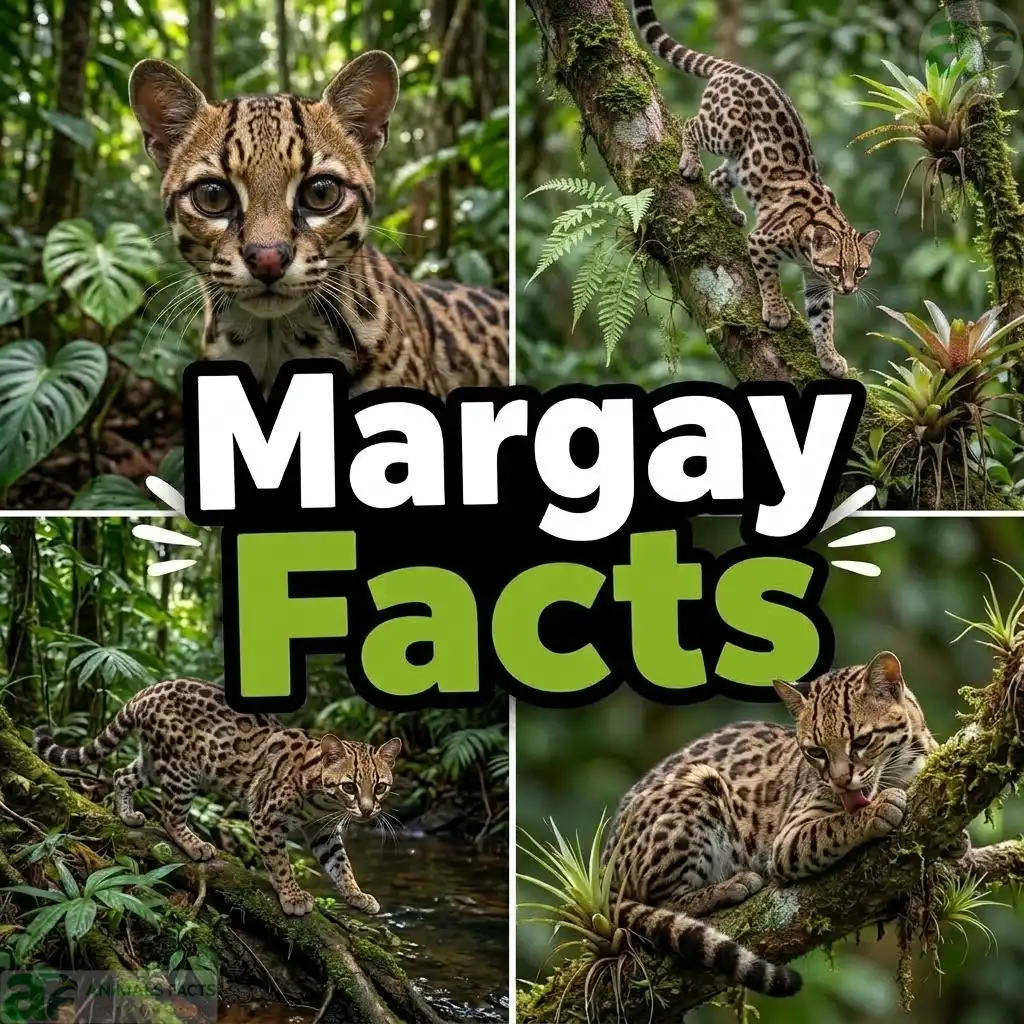
Margay Facts
| Feature | Details |
|---|---|
| Scientific Name | Leopardus wiedii |
| Common Names | Margay, Tree Ocelot, Long-tailed Spotted Cat |
| Kingdom | Animalia |
| Phylum | Chordata |
| Class | Mammalia |
| Order | Carnivora |
| Family | Felidae |
| Genus | Leopardus |
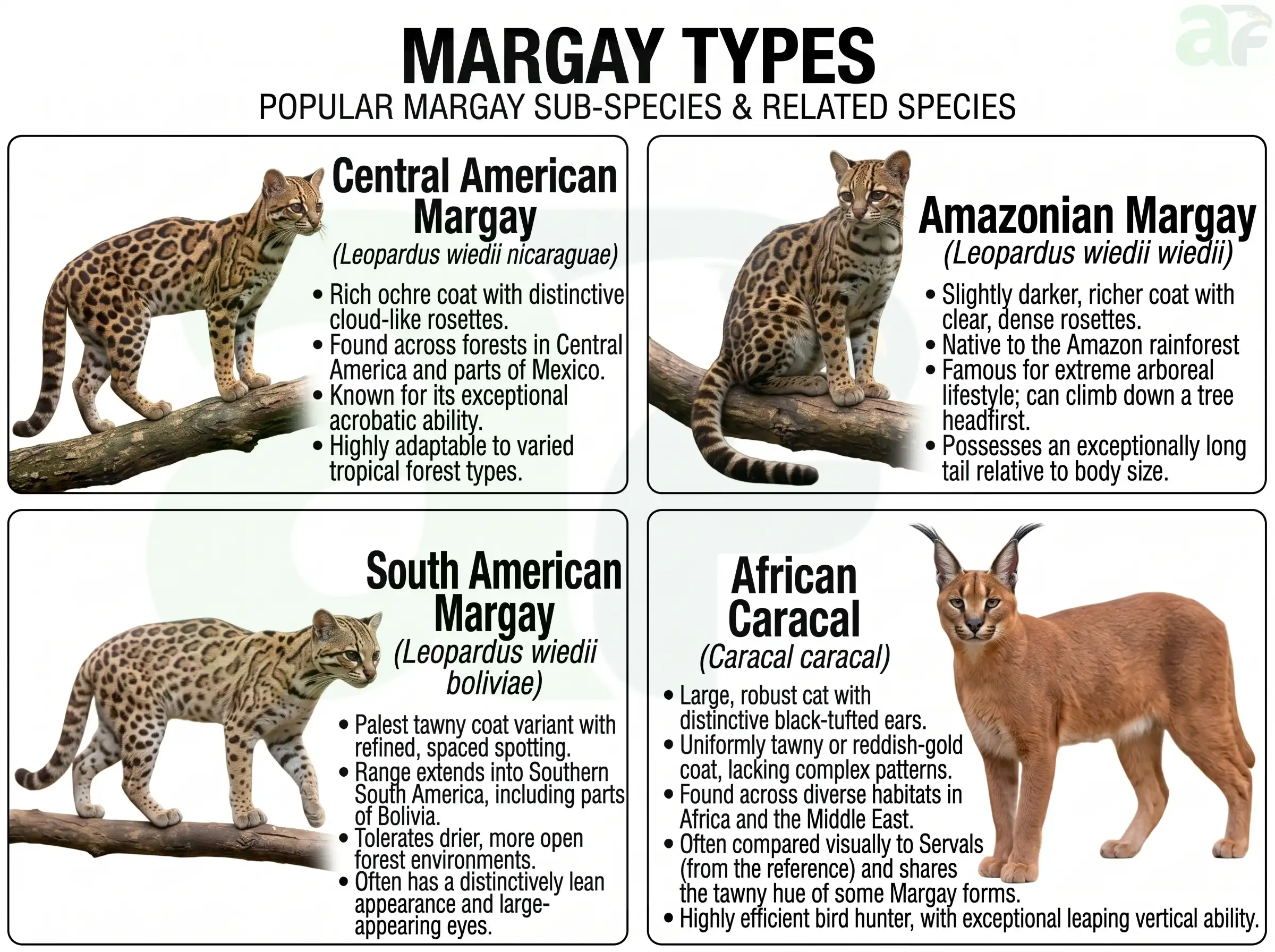
| Current Subspecies | Historically up to 10 described; modern taxonomy supports broad regional groupings rather than sharply distinct subspecies |
| Habitat | Dense tropical and subtropical forest, cloud forest — from northern Mexico through Central America to northern Argentina |
| Lifespan | 10–12 years in the wild; up to 24 years in captivity |
| Diet | Carnivore — small arboreal mammals, birds, reptiles, frogs, eggs, insects |
| Weight | 2.6–4 kg (occasionally up to 9 kg in larger individuals) |
| Body Length | 48–79 cm (excluding tail); tail adds 33–51 cm — the longest tail relative to body length of any wild cat |
| Shoulder Height | 30–35 cm |
| Top Speed | Not well documented; built for climbing agility rather than ground speed |
| Ankle Rotation | Up to 180 degrees — allowing head-first descent from trees, a capability shared by very few mammals |
| Conservation Status | Near Threatened (IUCN Red List) |
| Global Wild Population | Estimated population unknown precisely but believed to be in the tens of thousands; declining |
| Unique Feature | The most specialized arboreal (tree-dwelling) wild cat in the world; can leap horizontally up to 3.7 meters between trees; ankle joints rotate 180 degrees |
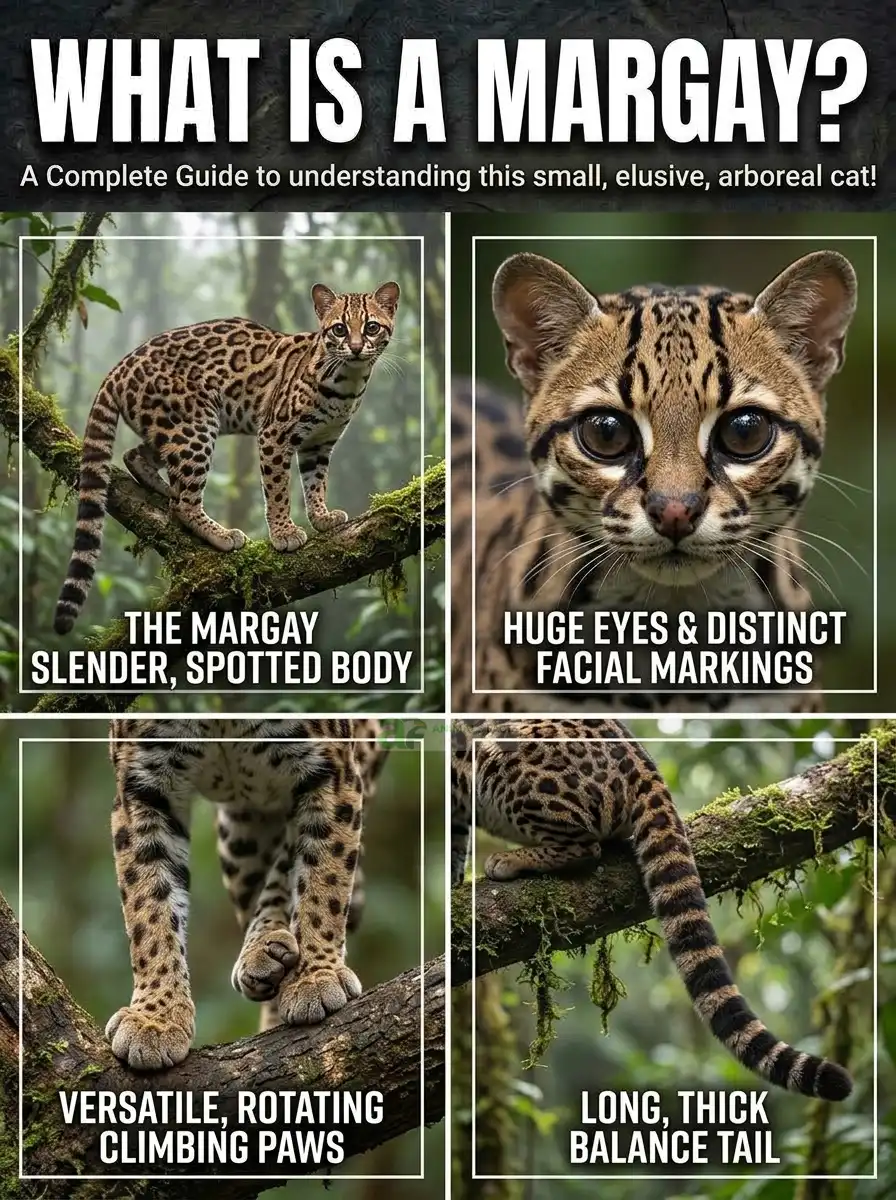
 1. Introduction: What is a Margay?
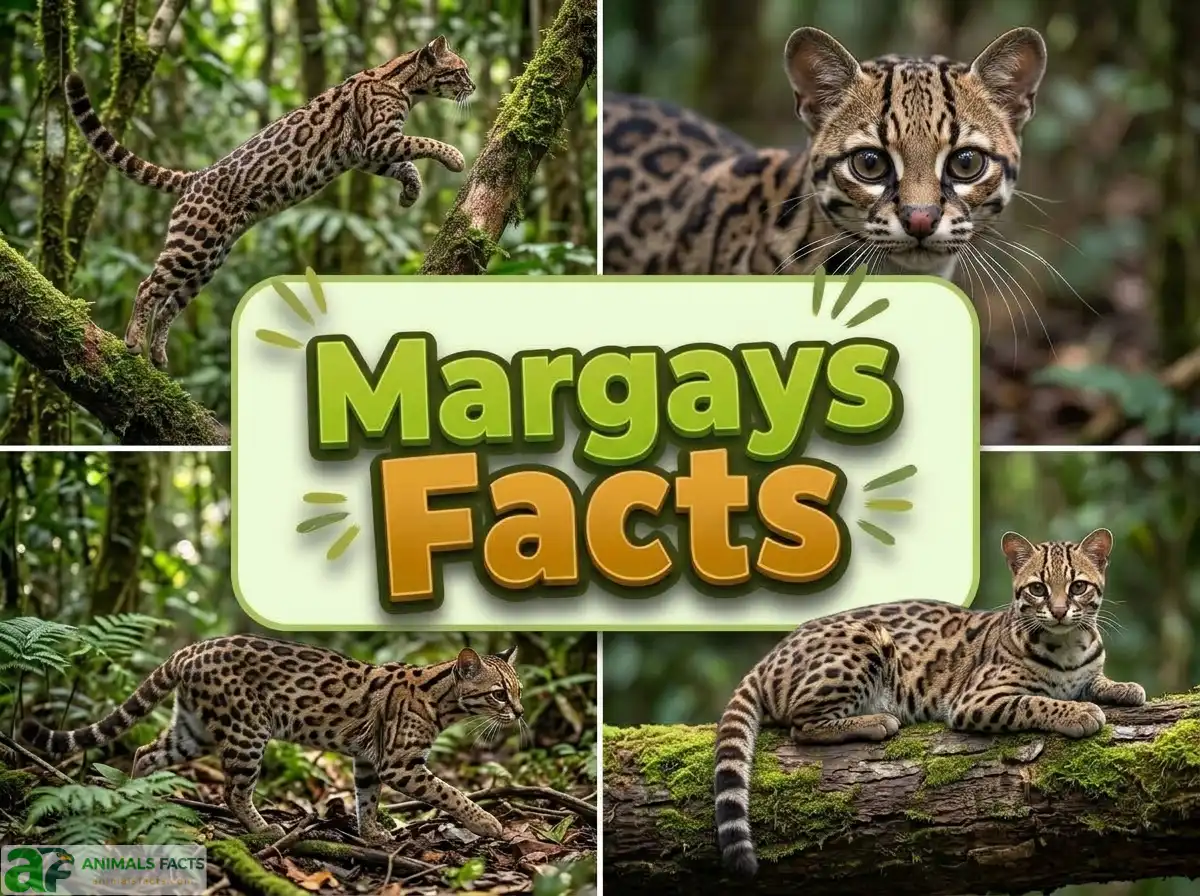
It can hang from a tree branch by a single hind paw, suspended upside down like a trapeze artist, while reaching out with a forepaw to snatch prey from an adjacent limb. It can run headfirst down a vertical tree trunk — a feat that virtually no other cat on Earth, including its much larger relatives, can replicate. It has ankle joints that rotate a full 180 degrees, squirrel-like proportions, and a tail so long that it sometimes exceeds the length of its own body, all combined into the most thoroughly and completely tree-adapted wild cat that has ever evolved. Margay facts reveal an animal so specialized for life in the forest canopy that researchers have described it, without exaggeration, as the most acrobatic cat in the world.
The margay — Leopardus wiedii — is a small, strikingly beautiful spotted wild cat found throughout the forests of Central and South America, closely related to the larger ocelot but occupying an almost entirely different ecological niche through its extraordinary specialization for an arboreal lifestyle. While most cats — even accomplished climbers like leopards — remain fundamentally ground-based predators that use trees opportunistically, the margay spends the overwhelming majority of its life in the forest canopy, hunting, resting, and even giving birth high above the forest floor in a manner unmatched by any other felid species on Earth. This extreme specialization has made the margay one of the most physically extraordinary and least frequently observed wild cats anywhere in the Americas.
Whether you are a student researching margay facts for a school project, a wildlife enthusiast fascinated by the margay’s incredible acrobatic abilities, a conservation advocate interested in the threats facing this elusive forest specialist, a parent looking for margay facts for kids, or simply someone who has stumbled across a viral video of a margay’s extraordinary tree-climbing skills — this is the most complete guide to margay facts you will find anywhere. We cover margay habitat, margay diet, margay behavior, communication, reproduction, conservation, mythology, and the extraordinary story of the most completely tree-adapted cat species on the planet. Let us begin.
2. Species Overview & Classification
The margay belongs to the family Felidae within the subfamily Felinae — the non-roaring cats — and specifically to the genus Leopardus, the exclusively American lineage of small spotted cats that also includes the ocelot, oncilla, Andean cat, Geoffroy’s cat, and several other species found only in the Western Hemisphere.
The Margay’s Place Within Leopardus
The margay’s closest relatives within the genus Leopardus are the ocelot (Leopardus pardalis) and the oncilla (Leopardus tigrinus), with genetic research confirming that these three species share a relatively recent common ancestor compared to other Leopardus species. Despite this close relationship, the margay has evolved a body plan and behavioral ecology dramatically different from its closest relatives — trading the ocelot’s larger size and more generalist ground-based hunting strategy for an extreme specialization toward life in the forest canopy.
Species Classification Table
| Level | Classification |
|---|---|
| Kingdom | Animalia |
| Phylum | Chordata |
| Class | Mammalia |
| Order | Carnivora |
| Family | Felidae |
| Subfamily | Felinae |
| Genus | Leopardus |
| Species | L. wiedii |
| Closest Relatives | Ocelot (L. pardalis), Oncilla (L. tigrinus) |
Margay Subspecies (Historical Classification)
Historical taxonomy described up to 10 subspecies of margay based on regional variation, though modern genetic analysis generally supports broader regional population groupings:
| Regional Population | Range | Notes |
|---|---|---|
| Northern/Mexican Margay | Mexico through Central America | Best studied population in the species’ northern range |
| Amazon Basin Margay | Brazil, Peru, Colombia, Ecuador | Largest portion of total global population |
| Atlantic Forest Margay | Southeastern Brazil | Severely reduced; critically threatened regionally |
| Andean Margay | Andean foothill forests | Lower density; less studied |
| Southern Range Margay | Northern Argentina, Paraguay | Southernmost populations |
Species Evolution & Discovery Timeline
~8 million years ago: The Leopardus lineage — the exclusively American small spotted cat group — diverged from the broader felid family tree during the Miocene Epoch, establishing the evolutionary foundation for all eight modern Leopardus species including the margay.
~3 million years ago: The margay’s lineage began diverging from the shared ancestor with the ocelot and oncilla, beginning the species’ independent evolutionary path toward its extreme arboreal specialization — a trajectory distinct from the more ground-oriented adaptations that characterize its closest relatives.
Pre-Columbian era: Margay imagery and remains appear in the archaeological record of several Central and South American civilizations, though documentation is considerably less extensive than for the jaguar or ocelot, likely reflecting the margay’s naturally secretive, canopy-dwelling lifestyle that made it far less visible to human observers than its ground-dwelling relatives.
1823: The margay was formally scientifically described by German naturalist Johann Baptist von Spix, who named the species after Prince Maximilian of Wied-Neuwied, a German explorer and naturalist who conducted significant early scientific expeditions in Brazil — the origin of the species’ scientific name, “wiedii.”
1970s–1980s: Like the ocelot, the margay was subjected to intensive hunting for the international fur trade, with significant population declines documented across much of its range during this period, driven by demand for its beautifully patterned pelt.
1992: The margay was listed in CITES Appendix I — providing the highest level of international trade protection and effectively banning commercial international trade in margay skins and products.
2008: Field research definitively documented the margay’s extraordinary ability to mimic the vocalizations of prey species — specifically pied tamarin monkey distress calls — representing one of the first scientifically documented cases of vocal mimicry used as a hunting strategy in any wild cat species.
2015: The IUCN reclassified the margay’s conservation status from Near Threatened to confirm its continued Near Threatened classification, reflecting ongoing population pressure from habitat loss across its range, with status assessments continuing to track population trends through 2026.
3. Physical Description & Unique Features
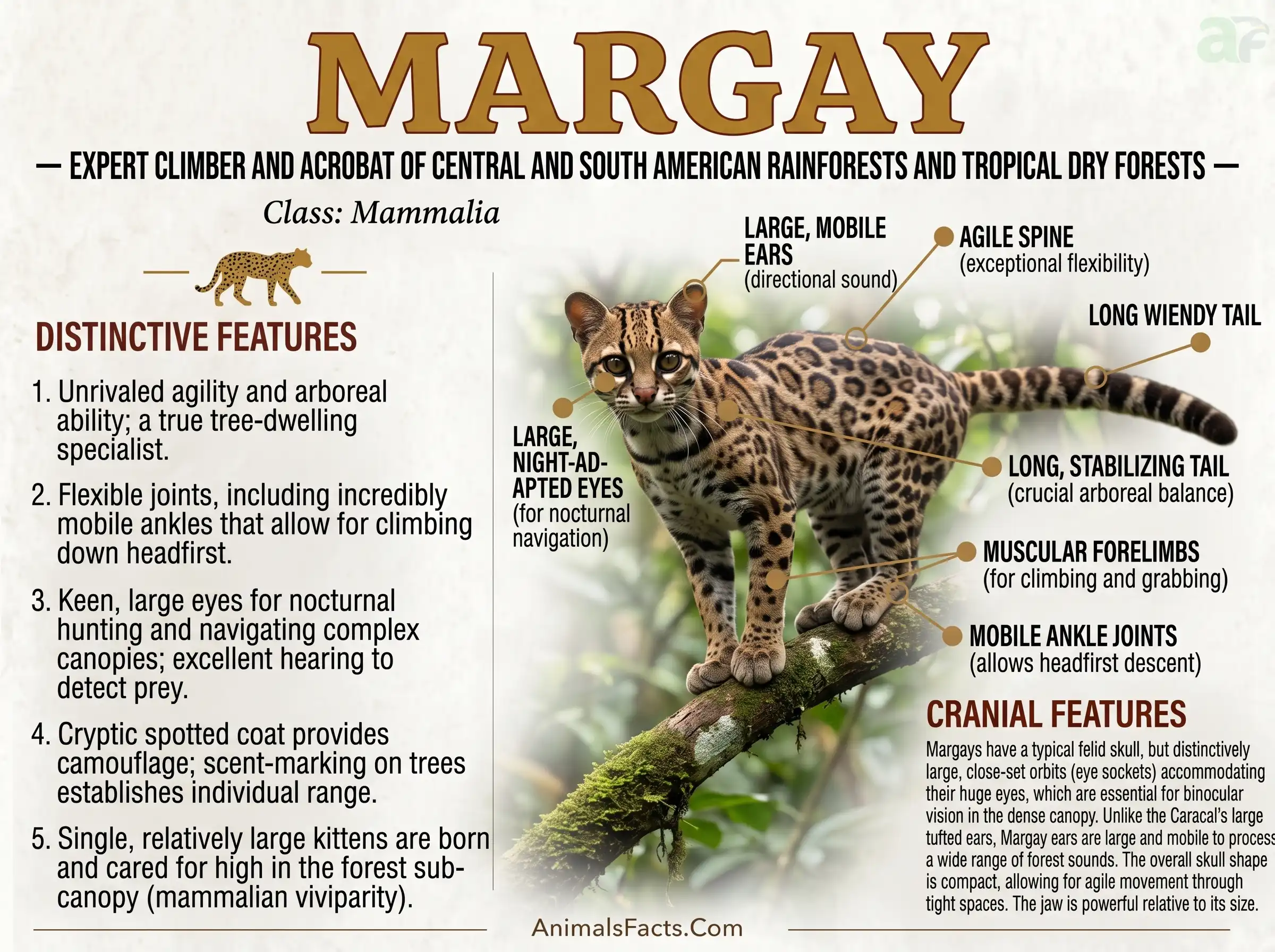
The margay possesses one of the most extraordinary and highly specialized physical designs of any wild cat on Earth — a body plan that represents the most extreme adaptation for arboreal life documented in the entire cat family, surpassing even the climbing capabilities of much larger and more famous tree-dwelling cats like the leopard and clouded leopard.
Size and Build
The margay is a small cat — significantly smaller than its close relative the ocelot and only modestly larger than a typical domestic cat, though its long tail and proportionally large eyes give it a visually distinctive appearance:
- Weight: Typically 2.6–4 kg, with larger individuals occasionally reaching up to 9 kg
- Body length: 48–79 cm excluding tail
- Tail length: 33–51 cm — proportionally the longest tail relative to body length of any wild cat species, often nearly equaling the length of the body itself
The Extraordinary Ankle Joint
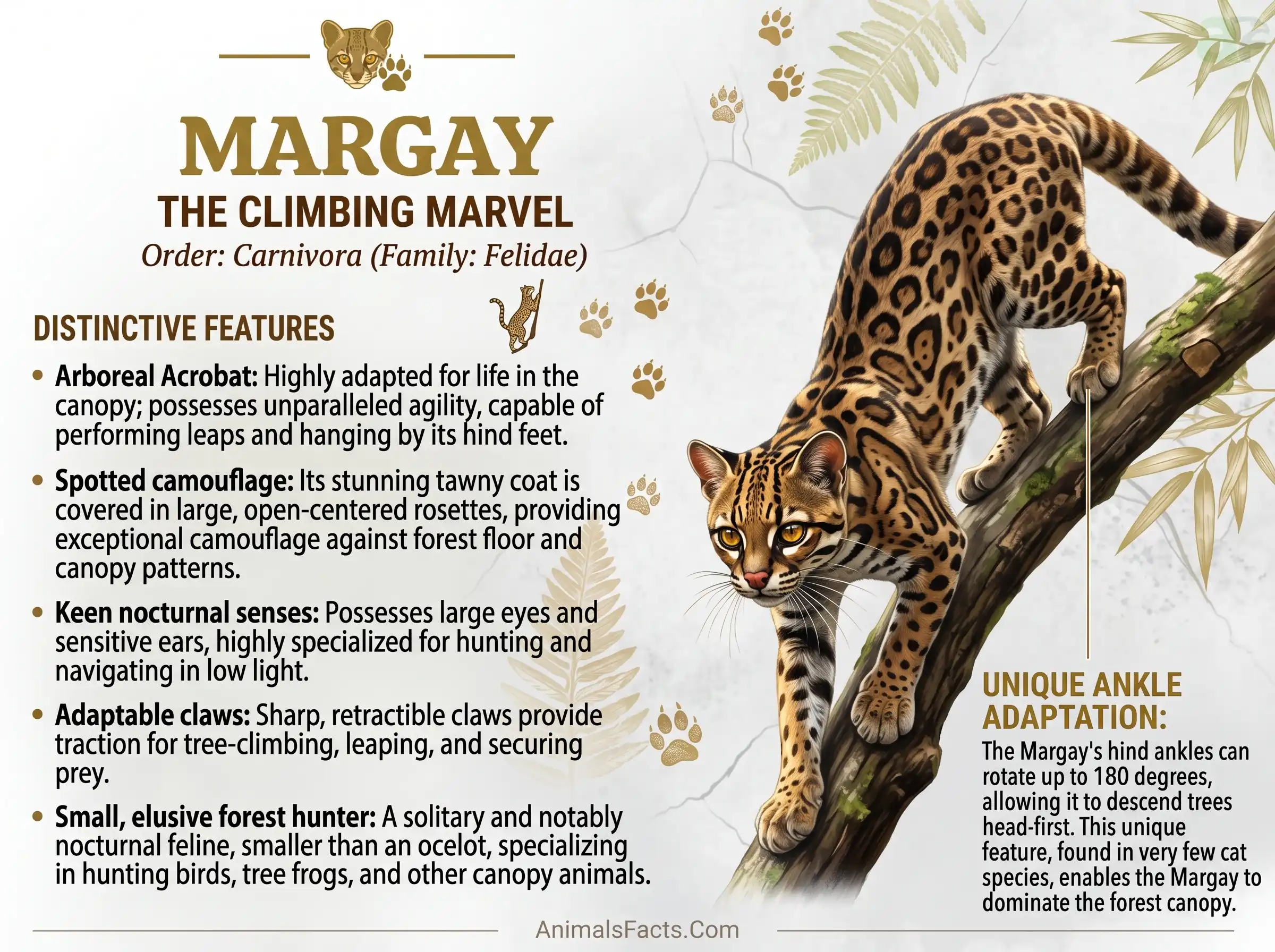
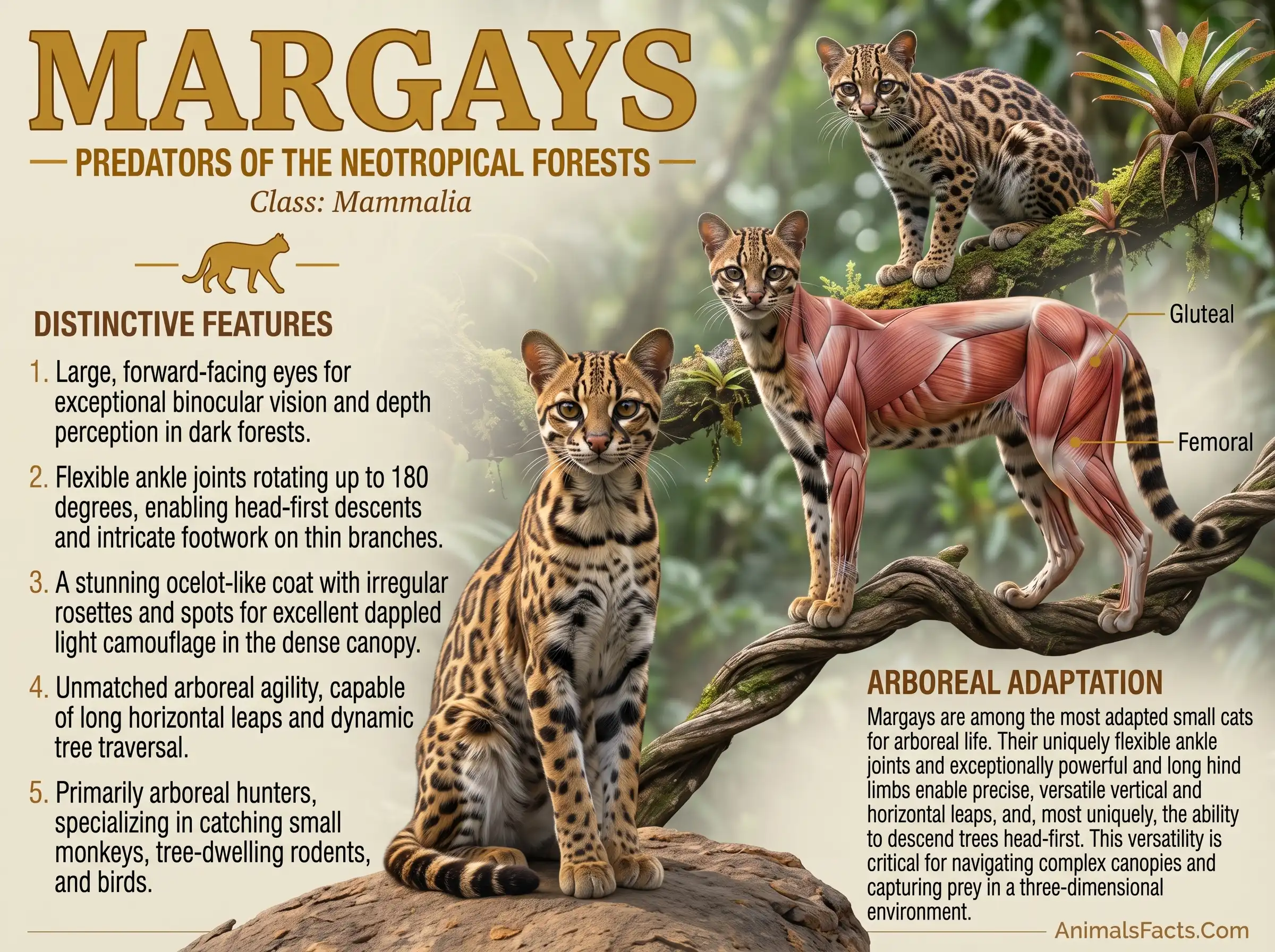
The single most remarkable anatomical feature that defines the margay’s extreme arboreal specialization is its uniquely flexible ankle joint — capable of rotating a full 180 degrees. This extraordinary flexibility allows the margay to grip tree trunks and branches with its hind feet while climbing or descending in any orientation, including the ability to run headfirst down a vertical tree trunk — a maneuver that very few mammals of any kind can perform, and one that is impossible for virtually every other cat species, including most other accomplished felid climbers.
This ankle rotation capability — shared in the cat family only with the much larger clouded leopard, which independently evolved a similar (though less extreme) adaptation — represents one of the most striking examples of convergent evolution for arboreal specialization documented within the order Carnivora.
Hind Leg and Paw Adaptations
Beyond the rotating ankle, the margay’s entire hind limb structure is specialized for climbing — with hind legs that can rotate at the hip to a greater degree than most cats, large, broad paws providing exceptional grip on bark and branches, and powerful, sharp, fully retractable claws optimized for secure attachment to vertical and inverted surfaces.
The Exceptionally Long Tail
The margay’s remarkably long tail — sometimes nearly matching the length of its body — serves as a critical counterbalancing organ during the complex three-dimensional movements required for canopy-level hunting and travel, functioning similarly to a tightrope walker’s balancing pole and allowing the margay to maintain stability during leaps, climbs, and the extraordinary suspended postures it adopts while hunting from branches.
Large Eyes for Nocturnal Vision
The margay possesses proportionally enormous eyes relative to its skull size — among the largest of any wild cat relative to head size — providing exceptional visual acuity in the low-light conditions of both the nighttime hours when the species is most active and the dim, shaded environment beneath a dense forest canopy even during daylight.
Did You Know? The margay’s 180-degree ankle rotation allows it to perform a feat that researchers describe as genuinely unique among cats — descending a tree completely headfirst, gripping the bark with hind feet rotated backward while the front paws and body face downward toward the ground. Most other climbing cats, including leopards and even the smaller ocelot, must descend trees either tail-first (backing down, similar to a domestic cat) or via a controlled jump from a lower branch, because their ankle structure does not permit the rotation necessary for secure headfirst descent. This single anatomical adaptation places the margay in an extremely select group of mammals — alongside squirrels and a small number of other specialized arboreal species — capable of this maneuver.
4. Top 25 Surprising & Interesting Margay Facts
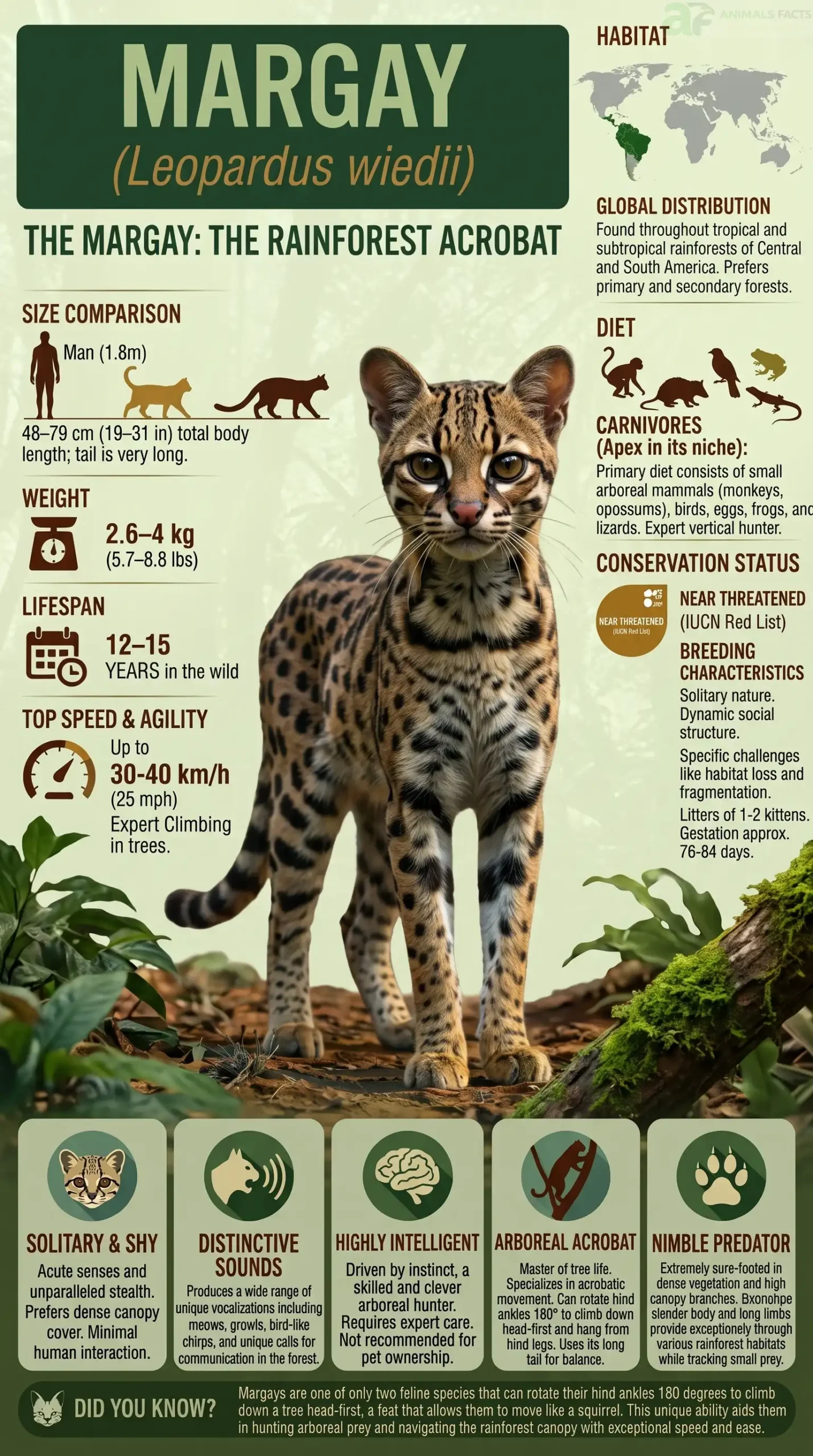
- The margay’s ankle joints can rotate 180 degrees — allowing it to descend trees completely headfirst, a feat that almost no other cat species, including most much larger climbing cats, can replicate.
- The margay has the longest tail relative to body length of any wild cat — sometimes nearly equaling the length of its own body, used primarily as a counterbalancing tool during complex arboreal movements.
- Researchers have documented margays hanging from tree branches by a single hind foot — an acrobatic capability matched by very few mammals of any kind and unique among cats.
- In a landmark 2009 field study, researchers in the Brazilian Amazon documented a margay mimicking the distress calls of pied tamarin monkeys — apparently using vocal deception to lure curious tamarins into striking range, representing one of the first documented cases of vocal mimicry as a hunting strategy in any wild cat.
- The margay can leap horizontally between trees across gaps of up to 3.7 meters — an extraordinary distance for an animal weighing only 2.6–4 kg.
- Unlike most cats, which spend the majority of their time on the ground even if they can climb well, the margay spends an estimated majority of its active life in the forest canopy — making it the most thoroughly tree-dwelling cat species on Earth.
- The margay’s eyes are proportionally among the largest of any wild cat relative to skull size, providing exceptional night vision critical for its primarily nocturnal hunting activity.
- Female margays have been documented giving birth and raising young kittens in tree cavities well above the forest floor — a denning behavior distinct from the ground-level dens used by most other small cat species.
- The margay’s scientific name, Leopardus wiedii, honors Prince Maximilian of Wied-Neuwied, a German naturalist whose early 19th-century scientific expeditions in Brazil contributed significantly to Western scientific knowledge of South American wildlife.
- Despite weighing only a few kilograms, margays have been documented preying on squirrels, opossums, and various arboreal rodents that are themselves skilled climbers — meaning the margay must out-maneuver prey species that have their own significant climbing adaptations.
- The margay’s hind feet can rotate to grip branches in a manner that allows it to run along the underside of a branch, suspended upside down, a behavior documented in very few other mammals.
- Margays were subjected to intensive hunting during the international fur trade boom of the 1960s through 1980s, with an estimated hundreds of thousands of individuals killed for their beautifully patterned pelts before international trade protections were established.
- The margay is sometimes called the “tree ocelot” due to its close relationship to and superficial resemblance with the more ground-dwelling ocelot, despite the two species occupying dramatically different ecological niches.
- Unlike many cats that primarily hunt on the ground and use trees opportunistically, the margay has been documented capturing the majority of its prey directly in the forest canopy, rarely needing to descend to ground level during normal hunting activity.
- The margay’s whiskers and facial vibrissae are particularly well-developed, providing critical tactile information that supplements vision during the complex three-dimensional navigation required for canopy travel in low-light conditions.
- Research suggests the margay may achieve population densities as low as 1 individual per 5–15 km² in some habitats — reflecting both the species’ relatively low population density even in suitable habitat and the significant home range space required to sustain an individual margay’s dietary needs.
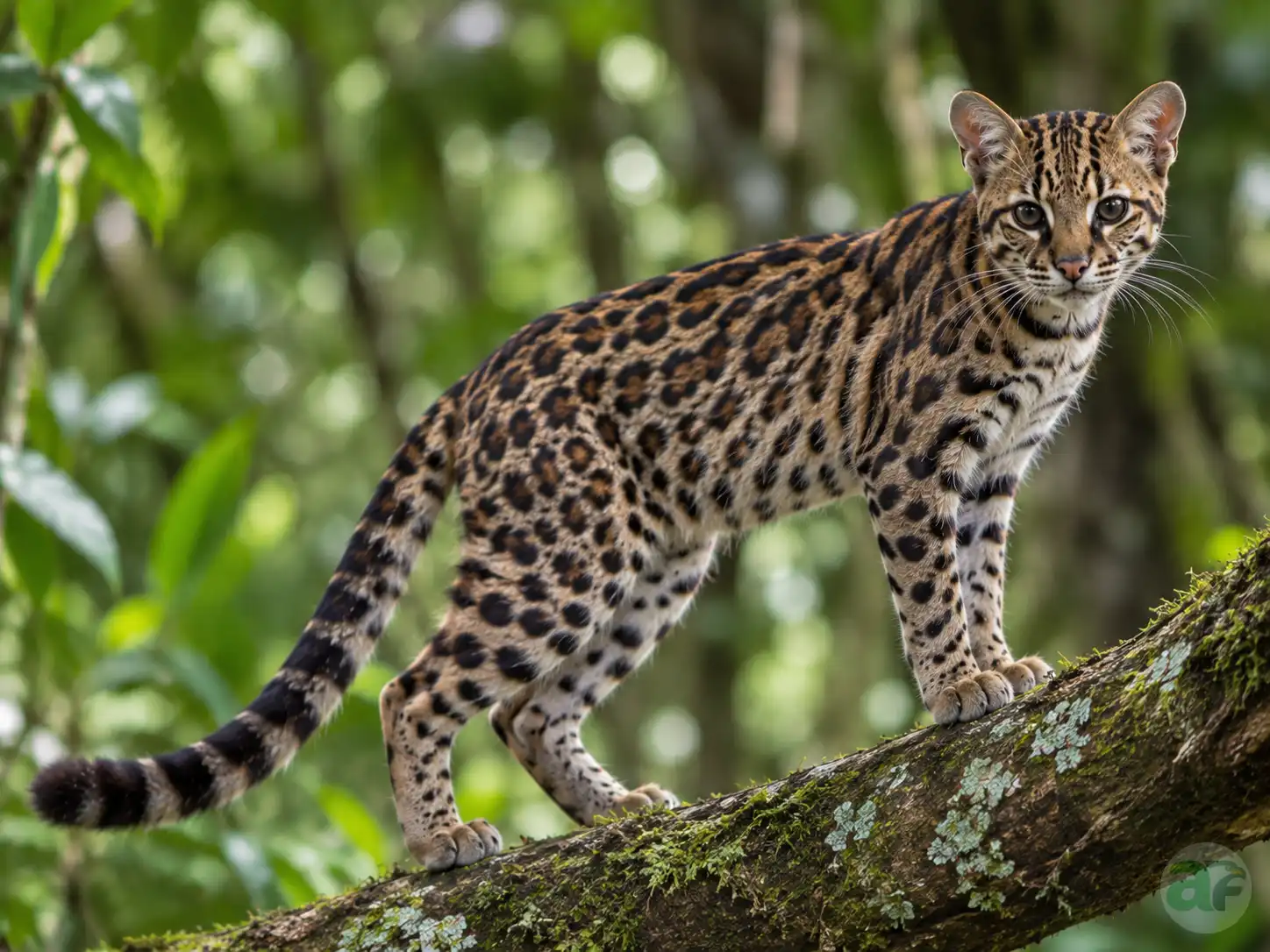
- The margay’s coat pattern features bold dark spots, rosettes, and streaks on a background ranging from pale buff to rich ochre — a pattern that, like the ocelot’s, is believed to be individually unique to each animal.
- Margays have occasionally been documented hunting on the ground as well as in trees, particularly when pursuing terrestrial prey or moving between forest patches, demonstrating that while extremely specialized for arboreal life, the species retains meaningful ground-based capability.
- The margay’s relatively small litter size (typically just 1 kitten) and extended maternal dependency period represent one of the lowest reproductive rates documented among similarly-sized wild cat species — a factor significantly limiting the species’ capacity for rapid population recovery following declines.
- Field researchers studying margays face particular challenges due to the species’ extreme canopy-dwelling behavior, which makes traditional ground-level camera trap monitoring techniques — highly effective for studying ocelots and other ground-dwelling cats — considerably less effective for comprehensive margay population assessment.
- The margay’s claws are exceptionally sharp and curved, optimized specifically for secure grip on bark and branches rather than for the more generalized ground-based prey capture function served by the claws of more terrestrial cat species.
- Margays have been documented in cloud forest habitats at elevations exceeding 3,000 meters in parts of their range — demonstrating that the species’ arboreal specialization extends across a remarkable range of forest types and elevations.
- The margay’s distinctive large, round head with forward-facing eyes provides excellent binocular vision and depth perception — a critical sensory adaptation for accurately judging distances during the precise leaps required for canopy-level travel and hunting.
- Despite its remarkable physical specialization, the margay remains one of the least studied wild cat species in the Americas, with significant gaps in scientific understanding of its population status, ecology, and behavior across much of its enormous geographic range.
- The margay’s combination of extreme arboreal specialization and relatively small body size means it occupies an ecological niche almost entirely distinct from its close relative the ocelot, despite the two species frequently sharing the same forest habitat — a remarkable example of niche partitioning between closely related felid species.
5. Fun Facts About Margay
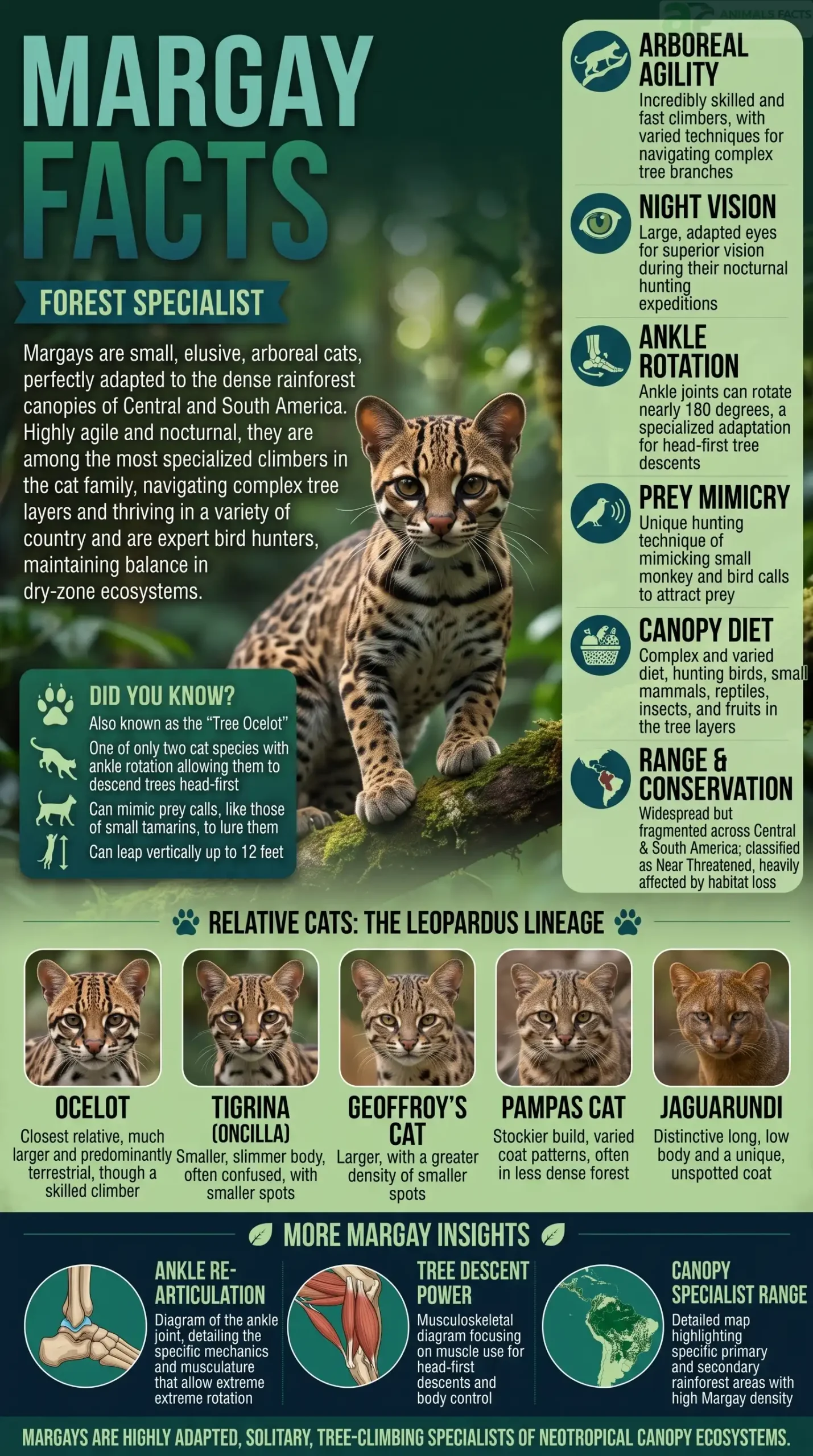
- The margay’s ankles rotate 180 degrees — letting it climb down trees headfirst.
- The margay has the longest tail relative to body size of any wild cat.
- Margays can leap 3.7 meters between trees.
- A margay was documented mimicking monkey distress calls to lure prey.
- Margays spend the majority of their lives in the forest canopy.
- The margay is sometimes called the “tree ocelot.”
- Margay eyes are proportionally among the largest of any wild cat.
- Female margays give birth in tree cavities above the forest floor.
- Margays typically have just 1 kitten per litter — one of the lowest rates of any small cat.
- The margay’s scientific name honors a German prince and naturalist.
- Margays were heavily hunted for the fur trade in the 1960s–1980s.
- The margay can run along the underside of a branch, upside down.
6. Natural Habitat & Geographic Range
The margay’s habitat requirements are among the most specific and demanding of any small wild cat in the Americas — reflecting its extreme arboreal specialization and consequent dependency on continuous, structurally complex forest canopy rather than the more flexible ground-level cover requirements of its relative the ocelot.
Primary Habitat Types
Tropical rainforest: The margay’s optimal and most characteristic habitat — dense, multi-layered tropical rainforest with continuous canopy cover providing the structural complexity necessary for the species’ extensive arboreal activity. The Amazon Basin represents the core of the global margay population, supporting the largest continuous habitat available to the species.
Cloud forest: Margays inhabit montane cloud forest habitats at significant elevation across portions of Central America and the Andean foothills — demonstrating the species’ capacity to thrive in the structurally complex, continuously moist forest environments found at higher elevations, distinct from but ecologically similar to lowland rainforest in their canopy structure.
Tropical dry forest: While less optimal than rainforest, margays are documented in tropical dry forest habitats across parts of Mexico and Central America, provided sufficient canopy continuity and structural complexity remains present even during the seasonal leaf loss that characterizes these drier forest types.
Atlantic Forest (Brazil): The severely fragmented Atlantic Forest of southeastern Brazil — one of the world’s most critically endangered forest biomes — supports a margay population facing particularly severe conservation pressure due to the extreme historical reduction of this habitat type, with less than 12% of the original Atlantic Forest extent remaining.
Forest fragments and corridors: Unlike the more habitat-flexible ocelot, margays show limited tolerance for habitat fragmentation — research has documented that margays generally require relatively large, continuous forest patches and are significantly less likely than ocelots to persist in small forest fragments or to successfully traverse open agricultural land between forest patches.
Habitat Range by Continent/Region
| Region | Countries | Population Status | Notes |
|---|---|---|---|
| Mexico and Central America | Mexico, Guatemala, Belize, Honduras, Costa Rica, Panama | Reduced; fragmented | Declining due to deforestation |
| Amazon Basin | Brazil, Peru, Colombia, Ecuador, Venezuela | Largest remaining population | Relatively stable in intact forest; deforestation threat |
| Atlantic Forest | Southeastern Brazil | Critically reduced | Severely fragmented; high conservation concern |
| Andean foothills and cloud forest | Peru, Bolivia, Ecuador, Colombia | Present but poorly quantified | Limited research; likely declining |
| Southern range | Northern Argentina, Paraguay, Uruguay | Low density; range margin | Declining; southernmost populations |
Did You Know? Unlike the more habitat-flexible ocelot, which can persist in fragmented forest patches, agricultural margins, and even shade-grown coffee plantations, the margay shows significantly greater habitat sensitivity to forest fragmentation — research comparing the two closely related species in the same landscapes has consistently documented that margays require larger, more continuous forest tracts and decline more severely in fragmented or degraded habitat than their ocelot relatives. This habitat specificity makes the margay a particularly sensitive indicator species for forest ecosystem health and connectivity across its range, with margay population decline often signaling broader forest degradation that may not yet be affecting the more adaptable ocelot population in the same area.
7. Diet & Feeding Behavior
The margay is a highly specialized arboreal predator — hunting the overwhelming majority of its prey directly within the forest canopy rather than on the ground, a hunting strategy virtually unique among the world’s wild cat species and requiring an extraordinary combination of climbing agility, balance, and precision.
What Margays Eat
The margay’s diet reflects its specialized arboreal hunting niche — concentrated heavily on the small mammals, birds, and other prey species that themselves inhabit the forest canopy, distinguishing the margay’s dietary composition significantly from the more ground-focused diet of its relative the ocelot, even when the two species share the same forest habitat.
Diet Breakdown Table
| Prey Type | Approximate Percentage | Notes |
|---|---|---|
| Arboreal rodents (squirrels, tree rats) | 25–40% | Primary prey across most of range |
| Birds (canopy-dwelling and nesting species) | 15–25% | Significant prey; includes eggs and nestlings |
| Opossums and small marsupials | 10–20% | Important prey across Central and South America |
| Reptiles (arboreal lizards, snakes) | 10–15% | Significant supplementary prey |
| Frogs and amphibians | 5–10% | Particularly in wetter forest habitats |
| Insects and invertebrates | 5–10% | Supplementary; more significant for juveniles |
| Fruit (occasional) | 1–5% | Minor dietary supplement; documented but uncommon |
| Primates (small species, occasionally) | <5% | Rare; documented including the famous tamarin mimicry case |
Hunting Strategy
The margay’s hunting strategy is built almost entirely around its extraordinary climbing and balance capabilities — a fundamentally different approach from the ground-based stalk-and-ambush technique used by most small cats:
Canopy stalking: The margay moves through the forest canopy with remarkable stealth, using branches, vines, and tree trunks as a three-dimensional hunting territory, stalking prey through careful, deliberate movement that takes full advantage of its exceptional balance and grip.
The suspended ambush: One of the margay’s most distinctive hunting postures involves hanging from a branch — sometimes by a single hind foot, with the body and tail providing counterbalance — while reaching toward prey on an adjacent branch or below, a technique that allows the cat to access prey positions that would be impossible to reach through conventional approach.
Headfirst pursuit: The margay’s unique 180-degree ankle rotation allows it to pursue prey attempting to escape downward along a tree trunk by descending headfirst in direct pursuit — a capability that effectively eliminates one of the primary escape strategies (rapid descent) that might otherwise allow arboreal prey to evade a less specialized predator.
Vocal mimicry: As documented in the landmark 2009 field study, margays have been observed producing vocalizations mimicking the distress calls of prey species — specifically pied tamarin monkeys — apparently exploiting the social, alarm-responsive behavior of group-living prey species to lure curious or concerned individuals into striking range.
Did You Know? The 2009 documentation of a margay mimicking pied tamarin monkey distress calls in the Brazilian Amazon — observed by primatologist researchers studying the tamarin group rather than margay specialists — represents one of the most scientifically significant behavioral discoveries in recent wild cat research. The observed margay produced calls similar enough to tamarin distress vocalizations that several tamarins in the group approached to investigate, a response consistent with the cooperative alarm-response behavior documented in many primate social groups. While this single observation does not confirm vocal mimicry as a regular or widespread margay hunting strategy, it suggests a level of behavioral sophistication and acoustic learning capability that researchers had not previously documented in any wild cat species, opening significant new questions about feline cognitive and vocal capabilities.
8. Reproduction & Life Cycle
Margay reproduction is characterized by one of the lowest reproductive rates of any wild cat species — a consequence of small litter sizes, extended gestation relative to body size, and a prolonged maternal dependency period reflecting the complex arboreal hunting skills kittens must master before achieving independence.
Mating Behavior
Margays are primarily solitary animals outside of brief mating encounters, with limited detailed behavioral documentation available given the species’ secretive, canopy-dwelling lifestyle that makes direct observation of mating behavior particularly challenging for researchers compared to more ground-accessible cat species.
Female margays advertise reproductive availability through scent marking and vocalizations, with males in overlapping territories responding to locate receptive females during the relatively brief mating period.
Gestation and Birth
Gestation period: Approximately 76–85 days — notably longer relative to body size than most comparably sized cats.
Litter size: Typically just 1 kitten (occasionally 2) — one of the smallest litter sizes documented among small wild cat species, reflecting the margay’s strategy of investing heavily in very limited offspring rather than producing larger litters.
Birth weight: Approximately 85–170 grams per kitten — remarkably small even relative to the margay’s already modest adult body size.
Den location: Unusually among small cats, margay kittens are frequently born in tree cavities or hollow trees well above the forest floor, rather than the ground-level dens (rock crevices, dense brush) typical of most other small felid species — a denning strategy directly reflecting the species’ extreme arboreal specialization extending even to the reproductive process.
Key Developmental Stages
| Stage | Age | Key Development |
|---|---|---|
| Neonatal | 0–2 weeks | Eyes closed; entirely helpless; remains in tree den |
| Eyes open | 14–21 days | Beginning visual awareness (notably later than many small cats) |
| First mobility | 6–8 weeks | Beginning to move within den area |
| Weaning | 2–3 months | Transition to solid food |
| Climbing skill development | 3–8 months | Critical period for developing the species’ specialized arboreal hunting capabilities |
| Independence | 10–12 months | Separation from mother (notably extended compared to many small cats) |
| Sexual maturity | Approximately 12 months | First breeding possible |
Lifespan Comparison Table
| Species | Average Wild Lifespan | Maximum Confirmed |
|---|---|---|
| Margay | 10–12 years | ~24 years (captivity) |
| Ocelot | 7–10 years | ~20 years (captivity) |
| Oncilla | 10–12 years (estimated) | ~17 years (captivity) |
| Geoffroy’s Cat | 8–14 years | ~20 years (captivity) |
| Bobcat (comparison) | 7–10 years | ~32 years (captivity) |
9. Social Behavior & Communication
The margay is a predominantly solitary species — maintaining individual territories with relatively limited direct documentation of social dynamics compared to more thoroughly studied small cats, reflecting the genuine research challenges posed by the species’ extreme arboreal, low-density, and secretive behavioral profile.
Territorial Organization
Margay territory sizes are believed to be relatively large for a cat of its small body size, though precise documentation remains limited compared to better-studied species:
- Estimated territory size: Ranges from approximately 11–16 km² in some studied populations, though this likely varies considerably based on habitat quality and prey density across the species’ enormous geographic range
The margay’s low documented population densities — sometimes as low as 1 individual per 5–15 km² — suggest correspondingly large individual territorial requirements compared to many other small cat species, consistent with the relatively limited prey base available within the specific arboreal hunting niche the species occupies.
Communication Methods
Scent marking: As with most solitary felids, scent marking through urine, feces, and scratch marks likely represents the primary territorial communication method, though the margay’s extensive canopy-level activity means much of this marking behavior may occur at elevations difficult for researchers to document compared to the ground-level marking behavior of more terrestrial cats.
Vocalizations: Margays produce vocalizations including purring, hissing, and growling typical of small cats, alongside the remarkable documented capacity for vocal mimicry of prey species calls described in the diet section — representing one of the most behaviorally sophisticated vocal capabilities documented in any wild cat.
Body language: Given the margay’s extraordinary physical flexibility and the unique postures it adopts during canopy navigation and hunting, body language communication likely involves a range of postural and movement signals that remain incompletely documented by researchers, reflecting the broader knowledge gaps that characterize scientific understanding of this elusive species.
Did You Know? The margay’s genuinely low population density and extreme arboreal behavior make it one of the most difficult wild cat species to study using conventional research methodologies — the camera trap networks that have generated extensive population and behavioral data for ground-dwelling relatives like the ocelot are considerably less effective for documenting margay activity, which frequently occurs well above the ground-level camera placement standard for most wildlife monitoring programs. This methodological challenge means that fundamental aspects of margay social behavior, territorial dynamics, and population ecology remain less thoroughly documented than for almost any other Leopardus species, representing a significant ongoing gap in scientific understanding of this remarkable cat.
10. Predators & Defense Mechanisms of Margay
As a small cat occupying forest habitats shared with numerous larger predators, the margay faces genuine predation risk across its range — though its extraordinary arboreal capabilities provide defensive advantages largely unavailable to more ground-based small cat species.
Natural Predators
Jaguars: The most significant natural predator of margays across Central and South America — though the margay’s predominantly arboreal lifestyle provides meaningful protection compared to the more ground-active ocelot, which faces more frequent jaguar predation risk.
Pumas (Mountain Lions): A secondary predator threat in areas of range overlap, with pumas representing significant predation risk particularly when margays descend to ground level for travel between forest patches or during ground-based hunting forays.
Ocelots: Despite their close evolutionary relationship, ocelots are documented occasional predators of margays — reflecting the broader pattern of intraguild predation among felid species sharing overlapping habitat and partially overlapping prey resources.
Large raptors: Harpy Eagles and other large forest raptors represent significant predation risk, particularly for margay kittens and smaller adults, given the species’ extensive canopy-level activity that brings it into the same vertical habitat zone regularly patrolled by these powerful aerial predators.
Large snakes: Boa constrictors and other large arboreal or semi-arboreal snake species represent a genuine predation risk in the canopy environment the margay primarily inhabits, with the cat’s extensive time spent on branches and in tree cavities creating potential encounter opportunities with ambush-hunting serpents.
Humans: Historically the dominant mortality source through the fur trade, and currently through habitat destruction, vehicle collisions (particularly when margays cross roads during dispersal or territorial movement), and occasional illegal hunting.
Defense Mechanisms
Arboreal escape: The margay’s primary and most distinctive defensive strategy — its extraordinary climbing ability, including the unique headfirst descent capability, provides escape options into the forest canopy that are simply unavailable to ground-based predators, making the margay considerably more difficult to successfully pursue than most comparably sized terrestrial mammals.
Cryptic coloration: The margay’s spotted coat provides effective camouflage against the dappled light and complex visual texture of forest canopy habitat, supporting the species’ behavioral crypticity as a secondary defensive strategy.
Behavioral avoidance: Given the margay’s predominantly nocturnal activity pattern and extensive canopy-level behavior, the species likely benefits from significant temporal and spatial separation from many of its primary predators, which tend toward greater ground-level and, in the case of jaguars, more crepuscular activity patterns.
11. Margay Facts for Kids
Hey kids — get ready to discover why the margay might be the most amazing acrobat in the entire animal kingdom!
- The margay can climb down a tree completely headfirst — like running down a wall upside down! Almost no other cat in the world can do this because their ankles don’t bend the right way, but the margay’s ankles can rotate all the way around, like a complete circle!
- The margay’s tail is almost as long as its whole body — it uses this super long tail like a balancing pole, just like a tightrope walker, to help it stay steady while doing tricky moves high up in the trees!
- Scientists once watched a margay make sounds that copied a baby monkey crying — they think the margay was trying to trick the mommy monkeys into coming closer so it could catch one! That’s like a cat learning to “talk” in monkey language to trick its prey!
- A margay can jump almost 4 meters between trees — that’s like jumping across more than two car-lengths while you’re way up high in a tree!
- Margays spend most of their whole lives up in the trees — way more than any other wild cat! They even have their babies in special tree holes high above the ground!
- The margay has huge eyes compared to its head — even bigger than most other cats! This helps it see really well in the dark forest at nighttime, when it does most of its hunting.
- Mommy margays usually only have one baby kitten at a time — that’s much fewer than most cats, which often have three or four babies!
- The margay is sometimes nicknamed the “tree ocelot” because it looks a bit like its cousin, the ocelot, but the margay spends almost all its time up in the trees instead of on the ground!
Did You Know? A margay can actually hang from a tree branch using just one back foot — like doing a one-footed handstand, except upside down and way up in a tree! While hanging like this, it can reach out with its front paws to grab food from a nearby branch. No other cat in the whole world is known to be able to do this amazing acrobatic trick — it’s one of the things that makes the margay one of the most incredible climbers in the entire animal kingdom!
12. Relationship with Humans
The margay’s relationship with humans is considerably less extensively documented than that of its larger relatives, reflecting both its naturally secretive, canopy-dwelling lifestyle and the more limited historical and contemporary human interaction this behavioral pattern has generated compared to more visible ground-dwelling cats.
Historical and Pre-Columbian Connections
While margay remains and imagery do appear in the archaeological record of several Central and South American civilizations, documentation of the species’ cultural significance is considerably less extensive than for the jaguar or even the ocelot — likely reflecting the simple reality that a primarily nocturnal, canopy-dwelling cat would have been far less frequently encountered and observed by human communities than ground-active predators, limiting the opportunities for the kind of sustained cultural engagement documented for more visible species.
The Fur Trade Era
Like the ocelot, the margay was subjected to intensive commercial hunting during the international fur trade boom of the 1960s through 1980s — with the species’ beautifully patterned pelt commanding significant value in fashion markets. Estimates suggest that hundreds of thousands of margays were killed for the international fur trade during this period, representing a catastrophic population impact for a species already characterized by naturally low population densities and limited reproductive capacity. The 1992 CITES Appendix I listing — providing the strictest level of international trade protection — significantly reduced this commercial hunting pressure, though the population recovery from this historical exploitation has been slower and less complete than for some other affected cat species, likely reflecting the margay’s inherently low reproductive rate.
Contemporary Relationships
Contemporary human-margay interaction is relatively limited compared to other wild cats, given the species’ extreme habitat specificity (requiring continuous forest canopy largely incompatible with human agricultural or settlement activity) and its predominantly nocturnal, arboreal behavioral pattern that minimizes direct encounters with human communities. The most significant contemporary human impact on margays is indirect — through deforestation and forest fragmentation that progressively reduces the continuous canopy habitat the species absolutely requires, rather than through direct conflict or persecution comparable to that experienced by more ground-active and livestock-impacting cat species like the ocelot or jaguar.
13. Conservation Status & Threats
The margay’s Near Threatened IUCN classification reflects genuine ongoing population decline across significant portions of its range, driven primarily by the species’ acute sensitivity to the deforestation and forest fragmentation occurring across Central and South America.
Global Margay Conservation Data (2026)
| Region / Population | Status | Population Trend | Primary Threat |
|---|---|---|---|
| Amazon Basin | Near Threatened (regional) | Declining | Deforestation |
| Atlantic Forest | Critically threatened (regional) | Sharply declining | Severe historical habitat loss |
| Central America | Near Threatened (regional) | Declining | Deforestation; fragmentation |
| Mexico | Threatened (nationally) | Declining | Habitat loss; fragmentation |
| Andean foothill forest | Data deficient (regional) | Likely declining | Poorly monitored |
| Southern range margins | Near Threatened (regional) | Declining | Habitat loss at range periphery |
Major Threats to Margays
Deforestation and habitat loss: The single most significant threat to margay populations across virtually the entire species’ range — given the margay’s acute dependency on continuous, structurally complex forest canopy, deforestation represents a fundamentally more severe threat to this species than to more habitat-flexible relatives like the ocelot, which can persist in fragmented or modified landscapes that the margay generally cannot tolerate.
Habitat fragmentation: Beyond outright deforestation, the fragmentation of remaining forest into smaller, isolated patches represents a particularly severe threat specific to the margay’s ecological requirements — research has consistently documented that margays show significantly greater sensitivity to fragmentation than ocelots, with margay populations frequently absent from forest fragments below certain size thresholds where ocelots can still persist.
Low reproductive rate: The margay’s naturally limited reproductive capacity — typically just one kitten per litter with an extended maternal dependency period — means that population recovery following decline occurs considerably more slowly than for cat species with higher reproductive rates, compounding the impact of ongoing habitat loss and historical fur trade exploitation.
Road mortality: While less studied than for more ground-active cats, road construction through forest habitat represents a documented mortality threat, particularly when margays must cross roads during dispersal movements or while traveling between forest fragments.
Illegal hunting and pet trade: Despite CITES protection, the margay continues to face some pressure from illegal hunting and capture for the exotic pet trade, though this threat is generally considered less severe than the dominant habitat loss pressure affecting the species.
Did You Know? Research comparing margay and ocelot population responses to forest fragmentation across multiple study sites in Central and South America has consistently found that margays disappear from fragmented landscapes considerably more readily than ocelots, even when the two species previously coexisted in the same intact forest habitat. This differential sensitivity reflects the margay’s much more specific arboreal habitat requirements — while an ocelot can adjust its largely ground-based hunting strategy to function reasonably well in degraded or fragmented forest, the margay’s entire hunting and reproductive strategy depends on the kind of continuous, structurally complex canopy that simply does not exist in small, isolated, or significantly degraded forest fragments, making margay population presence a particularly sensitive indicator of genuine forest ecosystem integrity.
14. Famous Margays
The Pied Tamarin Mimicry Margay
While not individually named in published research, the wild margay observed in 2009 in the Brazilian Amazon mimicking pied tamarin distress calls — documented by primatologist researchers studying the tamarin group rather than margay specialists — represents arguably the most scientifically significant individual margay ever documented, having contributed a genuinely novel behavioral discovery to the scientific understanding of wild cat hunting strategies and cognitive capabilities that continues to be cited and discussed in subsequent research.
Captive Margay Ambassadors
Several accredited zoos and wildlife conservation facilities across North America and Europe maintain captive margay populations as part of broader small wild cat conservation breeding and education programs, with individual animals at facilities such as various AZA-accredited zoos in the United States serving as important ambassadors for public education about this little-known species, given the extreme difficulty of observing wild margays directly in their natural canopy habitat.
Research Program Individuals
Given the methodological challenges of studying margays in the wild — discussed extensively in the Social Behavior section — relatively few individual wild margays have been extensively tracked or documented through long-term research programs compared to better-studied small cats like the ocelot. This represents an ongoing area of conservation research priority, with several research institutions across Brazil, Costa Rica, and Mexico working to develop improved monitoring techniques specifically adapted to the margay’s challenging arboreal behavioral profile.
15. Role in Ecosystem & Food Chain
The margay occupies a uniquely specialized ecological niche within the forest ecosystems it inhabits — functioning as the primary canopy-level mammalian predator across much of its range, a position occupied by few if any other mammalian carnivores in the same forest systems.
The Canopy Predator Niche
By specializing almost entirely in canopy-level hunting, the margay occupies an ecological niche that is largely distinct from, and complementary to, the niches filled by its more ground-focused relatives including the ocelot and oncilla — even when these species share the same forest habitat. This niche partitioning allows multiple small cat species to coexist within the same forest area without direct competitive exclusion, with each species exploiting different components of the available prey community through specialized hunting strategies adapted to different vertical strata of the forest ecosystem.
Arboreal Prey Population Regulation
The margay’s intensive predation on arboreal rodents, birds, and other canopy-dwelling prey species provides a population regulation function that, in most forest ecosystems, would otherwise have relatively few dedicated mammalian predators specifically adapted to access this particular prey community — making the margay’s ecological role genuinely distinctive compared to the broader pattern of small cat predation in most ecosystems worldwide.
Indicator Species Function
As discussed in the conservation section, the margay’s acute sensitivity to forest fragmentation and habitat degradation makes the species a particularly valuable ecological indicator — margay population presence and density can serve as a meaningful proxy for genuine forest ecosystem integrity and canopy connectivity, providing conservation researchers and land managers with a sensitive early-warning signal of forest degradation that may not yet be apparent through assessment of more habitat-flexible species.
16. Myths, Folklore & Cultural Significance
The margay occupies a relatively limited but genuinely documented position within the cultural traditions of Central and South American civilizations, reflecting both authentic historical cultural engagement and the constraints imposed by the species’ naturally secretive behavioral profile on the depth of human cultural documentation.
Pre-Columbian Cultural References
While considerably less prominently featured than the jaguar in the dominant spiritual and political symbolism of major Mesoamerican and South American civilizations, margay imagery and remains have been documented in the archaeological record of several pre-Columbian cultures — suggesting some level of recognition and cultural significance, though the precise nature and depth of this significance remains less thoroughly documented and understood by researchers compared to the extensively studied jaguar and even ocelot cultural traditions.
Indigenous Amazonian Traditions
Across various Indigenous communities of the Amazon Basin — where the margay’s primary stronghold population persists — the species features in some local oral traditions associated with the forest canopy world, stealth, and the boundary between the visible forest floor and the hidden realm above, reflecting genuine cultural recognition of the margay’s distinctive and highly specialized arboreal lifestyle, though comprehensive ethnographic documentation specifically focused on margay cultural significance remains limited in the broader academic literature.
Modern Conservation Symbolism
In contemporary conservation communication, the margay has increasingly become recognized as a symbol of the hidden biodiversity of the forest canopy — representing the broader category of canopy-dwelling species that remain poorly understood and underappreciated compared to more visible ground-level wildlife, and serving as an effective ambassador species for broader forest canopy conservation and research investment.
17. Margays in Pop Culture
The margay has generated a relatively modest but growing presence in contemporary popular culture, driven primarily by increasing social media visibility of its extraordinary physical capabilities rather than the kind of sustained mainstream media attention directed toward more famous wild cats.
Social Media and Viral Content
The margay’s extraordinary climbing and acrobatic capabilities — particularly footage demonstrating the species’ unique headfirst tree descent and suspended hunting postures — have generated significant engagement across wildlife social media platforms in recent years, with videos showcasing these capabilities often achieving substantial viral reach as audiences discover this little-known cat’s genuinely extraordinary physical abilities for the first time.
Film and Television
Wildlife documentary coverage — The margay has featured in several BBC and National Geographic productions focused on Amazonian and Central American forest ecosystems, typically highlighted specifically for its remarkable arboreal capabilities within broader programming about tropical forest biodiversity, though dedicated standalone margay documentaries remain rare given the genuine difficulty of filming this elusive species in its natural canopy habitat.
Educational and zoo-based content — Several accredited zoos maintaining captive margay populations have produced educational video content showcasing the species’ distinctive physical capabilities and conservation status, contributing to gradually increasing public awareness of this previously little-known cat species.
Limited Mainstream Recognition
Compared to its better-known relatives — the ocelot (made famous partly through its historical association with Salvador Dali and its appearance in the “Archer” television series) and the jaguar — the margay remains considerably less recognized within mainstream popular culture, representing one of the clearest examples among the world’s wild cat species of a genuinely extraordinary animal that has not yet achieved popular cultural recognition proportionate to its remarkable biological characteristics.
18. Margay Facts vs. Common Myths
Myth: The margay and the ocelot are essentially the same animal. Fact: While closely related and superficially similar in coat pattern, the margay and ocelot are distinct species with dramatically different ecological niches — the margay is significantly smaller, has a proportionally much longer tail, possesses the unique 180-degree ankle rotation enabling headfirst tree descent, and spends the overwhelming majority of its life in the forest canopy, while the ocelot is larger, more ground-focused, and considerably more tolerant of habitat fragmentation and modified landscapes.
Myth: All cats can climb down trees headfirst like squirrels. Fact: This capability is genuinely rare among cats — most felid species, including accomplished climbers like leopards and even the closely related ocelot, must descend trees either tail-first (backing down) or via controlled jumps, because their ankle joint structure does not permit the necessary rotation. The margay’s 180-degree ankle rotation represents a specific and unusual anatomical adaptation shared in the cat family only with the much larger clouded leopard, which evolved a similar capability independently.
Myth: Margays primarily hunt on the ground like most small cats. Fact: Unlike most cat species, which remain fundamentally ground-based predators even when capable of climbing, the margay is genuinely exceptional in conducting the majority of its hunting activity directly within the forest canopy — making it the most thoroughly arboreal-specialized cat species in the world, distinguishing its hunting ecology significantly from virtually every other felid.
Myth: The margay is critically endangered and facing imminent extinction. Fact: The margay is currently classified as Near Threatened by the IUCN — a genuine conservation concern reflecting ongoing population decline, but not the most severe classification (which would be Vulnerable, Endangered, or Critically Endangered). However, certain regional populations, particularly in Brazil’s severely fragmented Atlantic Forest, face considerably more acute conservation pressure than the species’ overall global classification suggests.
Myth: Margays mimic monkey calls regularly as a standard hunting technique. Fact: The famous 2009 documentation of vocal mimicry represents a single scientifically documented observation rather than confirmed evidence of a regular, widespread hunting strategy across the species. While this observation suggests genuine behavioral sophistication and potential for acoustic mimicry capability, researchers have not yet established how common or systematic this behavior is across the broader margay population, and it should be understood as a fascinating documented capability rather than an established standard hunting technique.
Myth: Margays are common and easy to observe in the wild. Fact: Margays are among the most difficult wild cats to observe anywhere in the Americas, reflecting their naturally low population densities, predominantly nocturnal activity, and extensive canopy-level behavior that places them largely outside the typical observation range of ground-based wildlife viewing. Even experienced wildlife researchers and guides in margay habitat may go years without a confirmed sighting, making this one of the most genuinely elusive wild cat species in the world.
19. Best Places to See Margays in the Wild
Corcovado National Park, Costa Rica
The Osa Peninsula’s Corcovado National Park — one of Central America’s most biodiverse protected areas — supports a documented margay population in primary rainforest habitat, with experienced local naturalist guides occasionally able to locate this elusive species during patient, specialized night spotlighting expeditions, though sightings remain genuinely uncommon even with expert guidance.
Amazon Research Stations, Peru and Brazil
Several remote Amazon research stations and associated ecotourism lodges — including facilities in Peru’s Madre de Dios region and Brazil’s Amazonas state — offer the best realistic opportunities for margay observation, given the combination of pristine continuous forest canopy habitat and experienced researcher or guide knowledge of the species’ behavioral patterns and likely activity areas.
Cockscomb Basin Wildlife Sanctuary, Belize
Already noted as an excellent jaguar viewing destination, Cockscomb Basin also supports documented margay presence in its extensive primary forest habitat, with the sanctuary’s relatively intact and continuous forest canopy providing the structural habitat conditions the species requires.
Iguazu National Park, Argentina/Brazil
The forests surrounding the spectacular Iguazu Falls — spanning the Argentina-Brazil border — support a documented margay population at the southern margin of the species’ range, within one of South America’s most accessible and well-protected forest ecosystems.
Monteverde Cloud Forest Reserve, Costa Rica
The renowned Monteverde Cloud Forest — one of Central America’s most celebrated protected montane forest ecosystems — supports margay populations adapted to cloud forest habitat, with the reserve’s well-developed naturalist guide network providing the best available expertise for attempting margay observation in this distinctive forest type.
Tambopata National Reserve, Peru
The Tambopata region of southeastern Peru, supporting some of the Amazon’s most pristine and biodiverse lowland rainforest, hosts documented margay populations alongside exceptional broader wildlife diversity, with several established research and ecotourism lodges offering night-focused wildlife excursions that occasionally produce margay sightings.
20. Top Documentaries & Books
Must-Watch Documentaries
“Big Cats” (BBC Earth, 2018) — This comprehensive big cat documentary series includes notable margay footage demonstrating the species’ extraordinary acrobatic and climbing capabilities, providing some of the most accessible and widely viewed margay content currently available to general audiences.
Various Amazon and Central American forest ecosystem documentaries — Multiple BBC, National Geographic, and Discovery Channel productions covering tropical forest biodiversity have featured margay segments, typically highlighting the species’ remarkable headfirst tree descent capability as a signature behavioral demonstration.
Zoo and conservation facility educational content — Several accredited zoos maintaining captive margay populations have produced educational documentary-style content specifically focused on the species, providing valuable accessible introduction material given the genuine difficulty of filming wild margays in their natural canopy habitat.
Essential Books
“Wild Cats of the World” by Mel and Fiona Sunquist (2002) — The essential comprehensive scientific reference for all wild cat species, including a detailed margay chapter covering the species’ remarkable arboreal specialization and ecology within the definitive overview of the world’s felids.
“Small Wild Cats: The Animal Answer Guide” by Jim Sanderson and Patrick Watson — An accessible popular science account covering smaller wild cat species worldwide, including substantial margay coverage as part of the broader exploration of often-overlooked felid species.
Scientific publications on the 2009 tamarin mimicry observation — The original peer-reviewed publication documenting the margay’s vocal mimicry behavior, along with subsequent academic discussion and citation of this finding, provides essential reading for those interested in the scientific details of this remarkable documented behavior.
21. Comparison of Margays with Similar Small Wild Cats
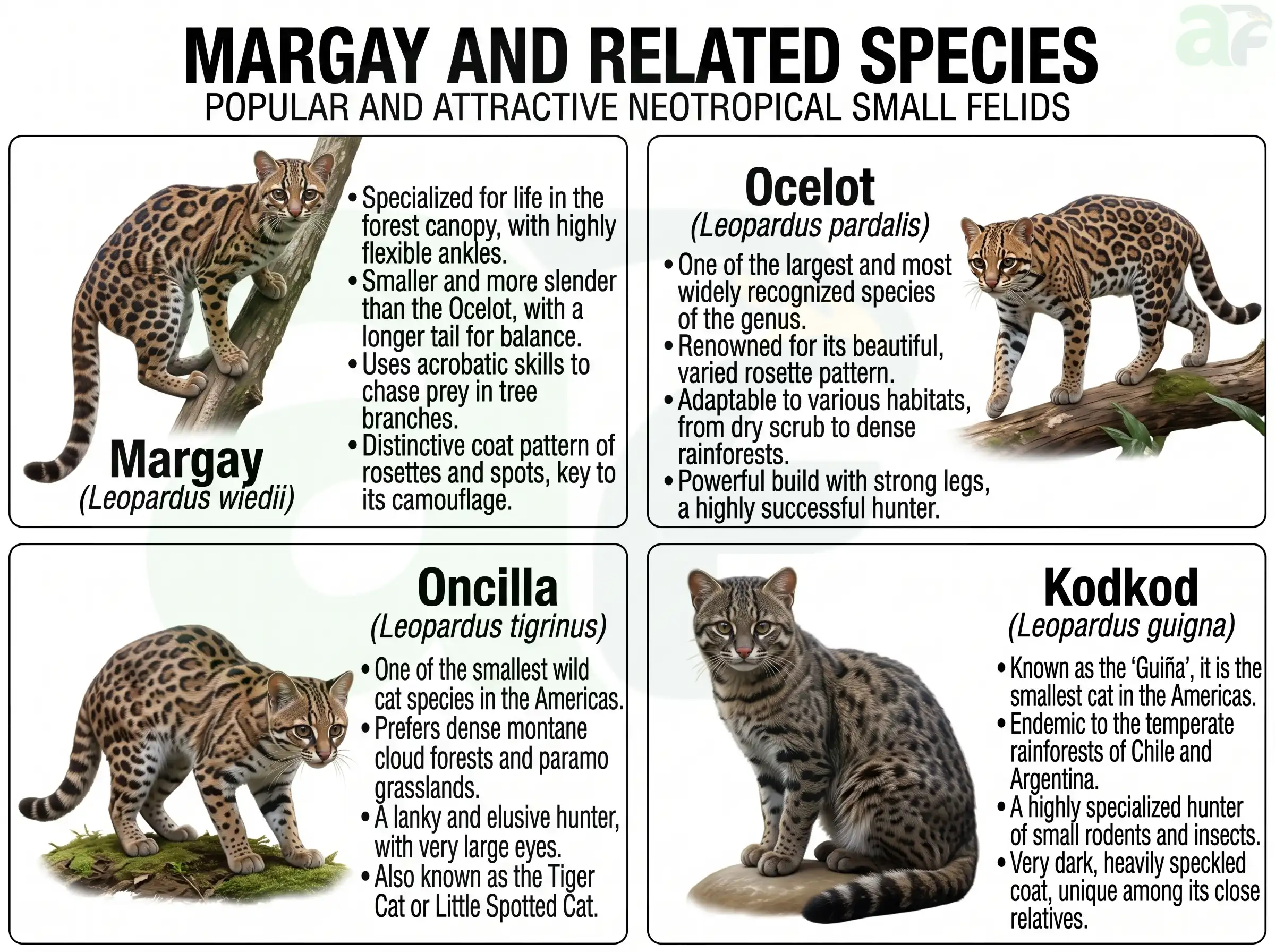
| Feature | Margay | Ocelot | Oncilla | Clouded Leopard | Geoffroy’s Cat |
|---|---|---|---|---|---|
| Scientific Name | Leopardus wiedii | Leopardus pardalis | Leopardus tigrinus | Neofelis nebulosa | Leopardus geoffroyi |
| Weight | 2.6–4 kg (up to 9 kg) | 7–16 kg | 1.5–3 kg | 11–23 kg | 2–8 kg |
| Distribution | Mexico to Argentina | S. Texas to Argentina | Central/South America | Southeast Asia | Southern South America |
| Habitat | Continuous tropical/cloud forest | Tropical forest, scrubland | Forest, grassland | Dense tropical forest | Grassland, scrubland |
| Arboreal Specialization | Extreme; most arboreal cat in the world | Moderate | Limited | High; ankle rotation similar to margay | Minimal |
| Tail Length (relative) | Longest of any wild cat | Moderate | Moderate | Long | Moderate |
| Ankle Rotation | 180 degrees | Standard | Standard | ~180 degrees (independently evolved) | Standard |
| Conservation Status | Near Threatened | Least Concern (globally) | Vulnerable | Vulnerable | Least Concern |
| Litter Size | Typically just 1 kitten | 1–2 kittens | 1–2 kittens | 1–5 cubs | 1–4 kittens |
| Unique Feature | Headfirst tree descent; vocal mimicry | Most elaborately patterned small cat | Smallest South American cat | Largest cat with margay-like ankle rotation | Most common small South American cat |
22. How You Can Help
Margay conservation requires particular attention to forest connectivity and continuity given the species’ acute sensitivity to habitat fragmentation, distinguishing its conservation needs significantly from more habitat-flexible relatives like the ocelot.
Support These Organizations
Panthera (panthera.org) — Conducts broader small cat conservation research across Central and South America, including margay-relevant habitat connectivity and forest protection initiatives.
Wildlife Conservation Society (wcs.org) — Supports forest ecosystem conservation across multiple margay range countries, with habitat protection work directly relevant to the species’ specific continuous-canopy requirements.
Rainforest Trust (rainforesttrust.org) — Focuses specifically on tropical forest land protection and acquisition across Central and South America, directly addressing the habitat continuity threats most significant to margay conservation.
SOS Mata Atlântica (sosma.org.br) — A Brazilian organization specifically focused on protecting and restoring the critically endangered Atlantic Forest, directly relevant to the margay’s most severely threatened regional population.
Cat Survival Trust and Small Wild Cat Conservation organizations — Various international organizations focused specifically on lesser-known small cat species provide important support for margay-specific research and conservation given the species’ relative scientific neglect compared to better-known cats.
Practical Actions
Support certified sustainable forest products. Consumer choices favoring certified sustainable timber, paper, and agricultural products from margay range countries help reduce the deforestation pressure that represents the species’ most significant existential threat.
Support reforestation and forest corridor initiatives. Given the margay’s particular sensitivity to habitat fragmentation, organizations specifically working to restore forest connectivity between fragmented habitat patches provide especially valuable conservation benefit for this species compared to more general habitat protection efforts.
Avoid the exotic pet trade. Refraining from supporting businesses or individuals offering margays or margay products for sale helps reduce demand that can drive illegal capture from already-stressed wild populations.
Support Atlantic Forest conservation specifically. Given the acute crisis facing margay populations in Brazil’s Atlantic Forest, directing conservation support specifically toward this critically threatened biome provides particularly high-impact benefit for the species’ most vulnerable regional population.
Participate in citizen science. Wildlife observation platforms including iNaturalist welcome margay sighting reports, contributing valuable distribution data that is particularly important given the genuine scientific knowledge gaps affecting this difficult-to-study species.
Did You Know? The Atlantic Forest of southeastern Brazil — now reduced to less than 12% of its original extent — represents one of the world’s most critically endangered forest biomes, and the margay populations remaining within its severely fragmented patches face genuinely acute extinction risk at the regional level. Conservation organizations working specifically on Atlantic Forest restoration and connectivity — including reforestation initiatives designed to reconnect isolated forest fragments — represent some of the highest-priority and highest-impact conservation investments available for margay protection, given the species’ demonstrated inability to persist in the kind of small, isolated forest patches that now characterize most of this biome’s remaining habitat.
23. Frequently Asked Questions About Margays
Q1: What is the scientific name of the margay?
The margay’s scientific name is Leopardus wiedii — placing it in the genus Leopardus, the exclusively American lineage of small spotted cats that also includes the ocelot and oncilla. The species name “wiedii” honors Prince Maximilian of Wied-Neuwied, a German naturalist whose early 19th-century expeditions contributed to scientific knowledge of South American wildlife. The family is Felidae, subfamily Felinae, order Carnivora, class Mammalia.
Q2: How is the margay different from the ocelot?
While closely related, the margay and ocelot occupy dramatically different ecological niches. The margay is significantly smaller, has a much longer tail relative to body size, possesses a unique 180-degree ankle rotation allowing headfirst tree descent, and spends the vast majority of its life in the forest canopy. The ocelot is larger, more ground-focused, and considerably more tolerant of habitat fragmentation than the margay.
Q3: Can margays really climb down trees headfirst?
Yes — this is one of the margay’s most remarkable and scientifically documented capabilities. The margay’s ankle joints can rotate a full 180 degrees, allowing it to grip tree bark with its hind feet rotated backward while descending headfirst — a capability shared in the cat family only with the much larger clouded leopard, and virtually unmatched among other mammals.
Q4: Are margays endangered?
The margay is classified as Near Threatened by the IUCN, reflecting genuine ongoing population decline driven primarily by deforestation and habitat fragmentation. Certain regional populations face considerably more severe conservation pressure — particularly in Brazil’s critically reduced Atlantic Forest, where the species faces acute regional extinction risk.
Q5: What do margays eat?
Margays primarily hunt arboreal prey including squirrels, tree rats, birds (and their eggs and nestlings), opossums, arboreal reptiles, and frogs. Unlike most cats, which hunt predominantly on the ground, the margay captures the majority of its prey directly within the forest canopy, reflecting its extreme arboreal specialization.
Q6: Is it true that margays can imitate monkey sounds?
In a scientifically documented 2009 observation in the Brazilian Amazon, researchers recorded a wild margay producing vocalizations that closely mimicked the distress calls of pied tamarin monkeys, apparently attempting to lure curious tamarins within striking range. While this represents a single confirmed observation rather than proof of a widespread regular hunting technique, it demonstrates remarkable vocal and behavioral sophistication not previously documented in wild cats.
Q7: How big do margays get?
Margays are small cats, typically weighing between 2.6 and 4 kilograms, with larger individuals occasionally reaching up to 9 kg. Their body length ranges from 48 to 79 cm, but their tail — proportionally the longest of any wild cat — adds an additional 33 to 51 cm, sometimes nearly equaling the length of the body itself.
Q8: How long do margays live?
Wild margays typically live 10 to 12 years, with the maximum confirmed captive lifespan reaching approximately 24 years — among the longer lifespans documented for small wild cat species.
Q9: Where do margays live?
Margays inhabit continuous tropical and subtropical forest from northern Mexico through Central America to northern Argentina, with the Amazon Basin supporting the largest remaining portion of the global population. The species requires structurally complex, continuous forest canopy and shows limited tolerance for fragmented or degraded habitat compared to its relative the ocelot.
Q10: How can I help margay conservation?
Key actions include: supporting forest connectivity and reforestation initiatives, given the margay’s acute sensitivity to habitat fragmentation; supporting Atlantic Forest conservation organizations specifically, given the severe regional crisis facing this population; choosing certified sustainable forest products; avoiding the exotic pet trade; and participating in citizen science platforms that contribute valuable distribution data for this genuinely understudied species.
24. Sources & References
Research Sources
- Wikipedia — Leopardus wiedii and related articles
- IUCN Red List — iucnredlist.org
- Panthera — panthera.org
- Wildlife Conservation Society — wcs.org
- Rainforest Trust — rainforesttrust.org
- SOS Mata Atlântica — sosma.org.br
- National Geographic — nationalgeographic.com
- Smithsonian’s National Zoo — nationalzoo.si.edu
- Encyclopaedia Britannica — britannica.com
- BBC Wildlife — bbc.co.uk
- Live Science — livescience.com
- Sunquist, Mel and Fiona — “Wild Cats of the World” (2002)
- Calleia, Fabio O. et al. — “Hunting Strategy of the Margay (Leopardus wiedii) to Attract the Wild Pied Tamarin (Saguinus bicolor)” (Neotropical Primates, 2009)
- Sanderson, Jim and Watson, Patrick — “Small Wild Cats: The Animal Answer Guide”