

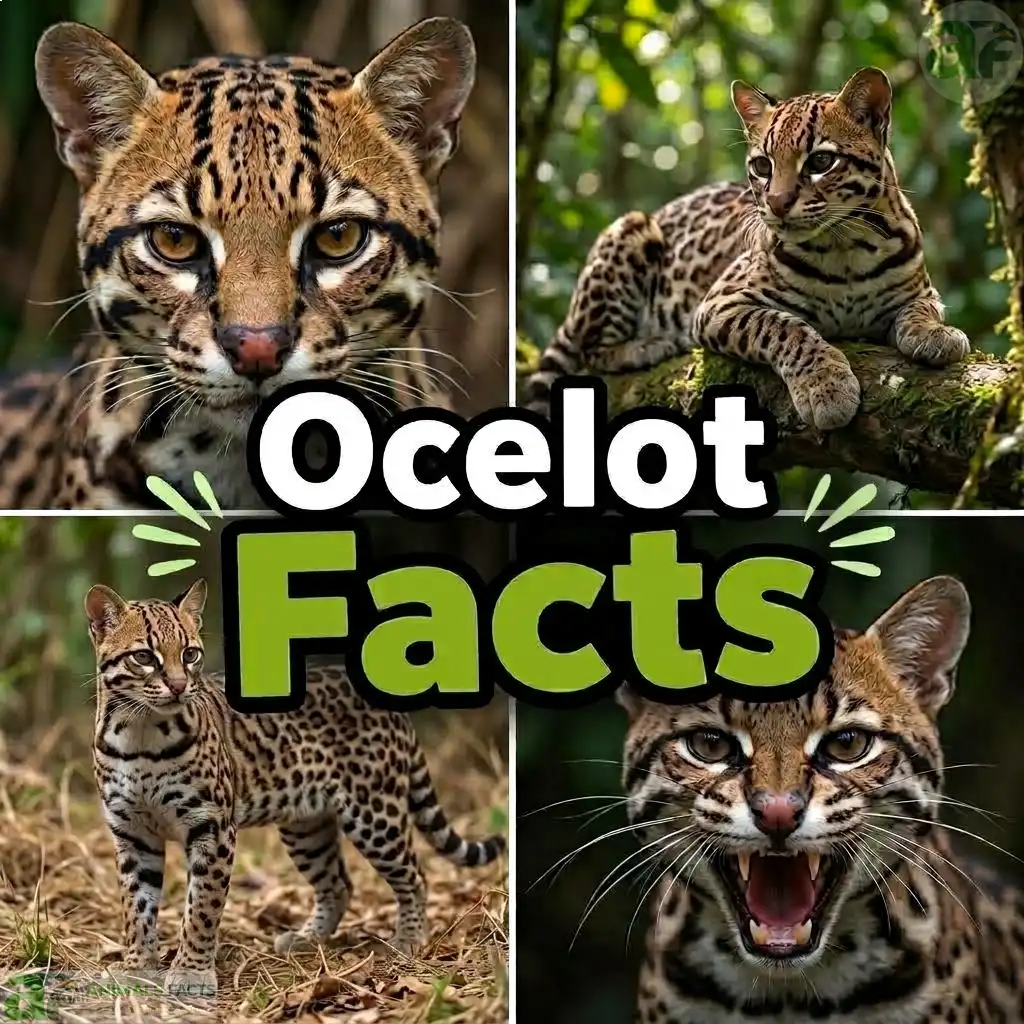
Ocelot Facts
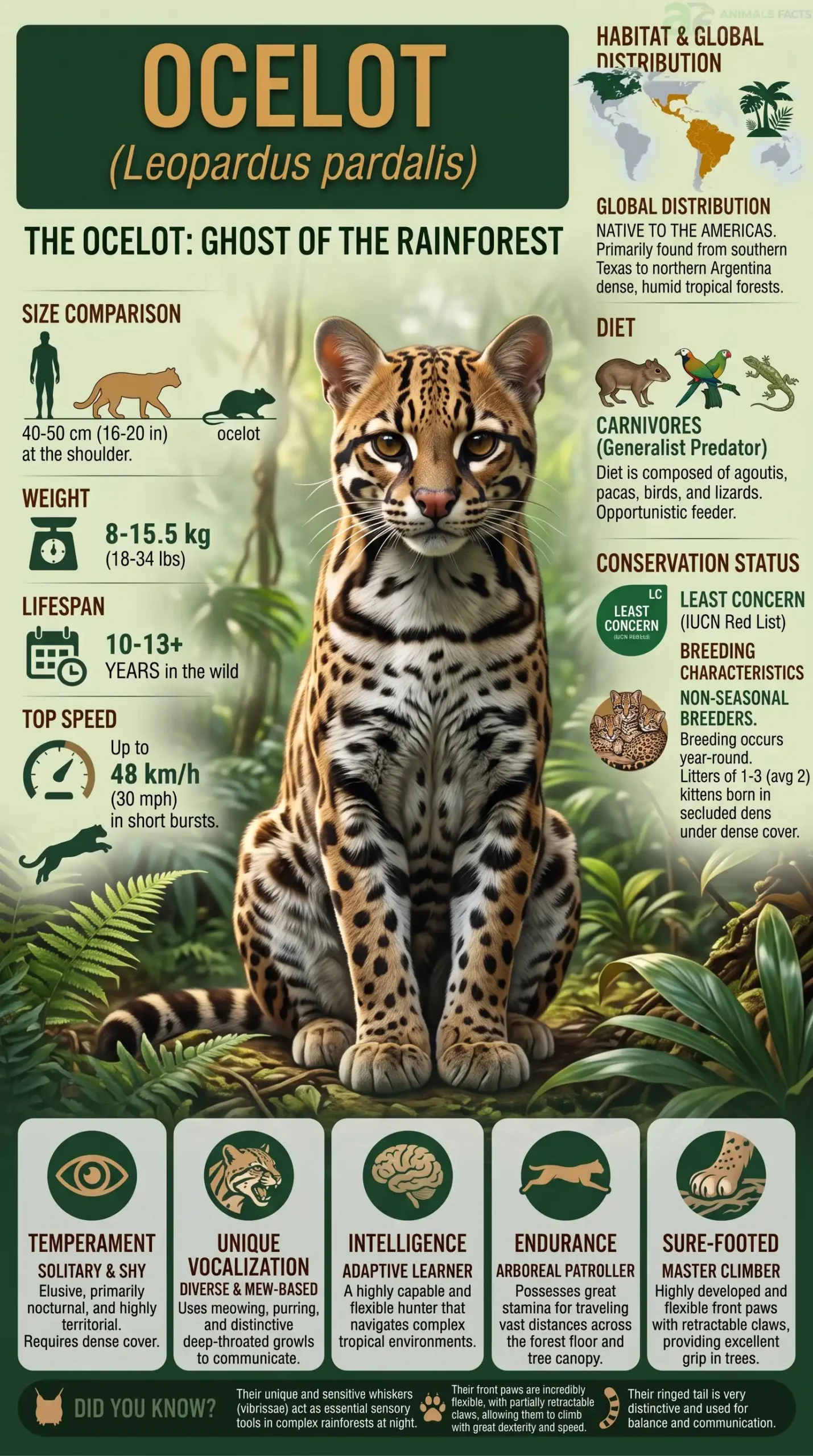
| Feature | Details |
|---|---|
| Scientific Name | Leopardus pardalis |
| Kingdom | Animalia |
| Phylum | Chordata |
| Class | Mammalia |
| Order | Carnivora |
| Family | Felidae |
| Genus | Leopardus |
| Current Subspecies | 2 recognized subspecies under revised 2017 IUCN taxonomy (formerly up to 10) |
| Habitat | Tropical and subtropical forests, scrubland, and mangroves — from southwestern Texas through Mexico, Central America, and South America to northern Argentina |
| Lifespan | 7–10 years in the wild; up to 20 years in captivity |
| Diet | Nocturnal carnivore — rodents, small mammals, lizards, frogs, fish, crabs, birds |
| Weight | 7–16 kg (males average heavier than females) |
| Body Length | 55–100 cm (excluding tail); tail adds 27–45 cm |
| Shoulder Height | 40–50 cm |
| Top Speed | Approximately 65 km/h (40 mph) in short bursts |
| Conservation Status | Least Concern (IUCN Red List) — regionally threatened; US populations Endangered |
| Global Wild Population | Estimated ~800,000 individuals (though significant uncertainty) |
| Unique Feature | Most strikingly marked small wild cat in the Americas; each ocelot’s coat pattern is completely unique; among the few cats able to rotate its hind feet to descend trees head-first |
 1. Introduction: What is a Ocelot?
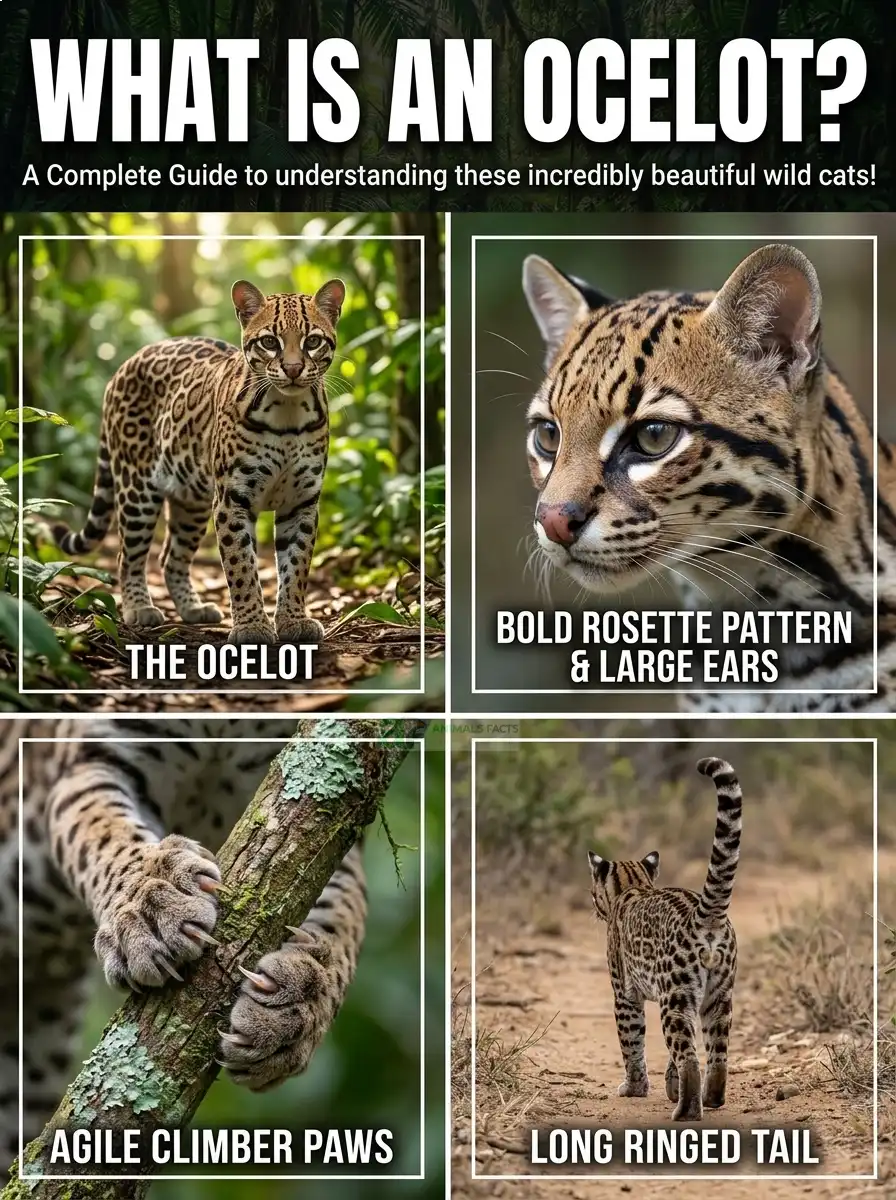
It is the most strikingly beautiful small wild cat in the Americas — a compact, jewel-patterned predator whose extraordinary coat combines spots, stripes, chains, and blotches into a pattern so intricate and individually unique that no two ocelots in the world look exactly alike. For decades, this very beauty nearly drove it to extinction, with hundreds of thousands slaughtered for the fur trade during the 20th century. Today, the ocelot survives across a remarkable range stretching from the Texas borderlands to the forests of northern Argentina — yet its story remains one of the most compelling and least widely known in American conservation. Ocelot facts are full of surprises, contradictions, and genuinely extraordinary biological details that reveal how much more there is to this animal than its gorgeous coat.
The ocelot — Leopardus pardalis — is the largest member of the genus Leopardus, a group of small spotted cats unique to the Western Hemisphere that also includes the margay, oncilla, Andean cat, and Geoffroy’s cat. Despite its modest size — rarely exceeding 16 kg and often closer in weight to a large domestic cat — the ocelot is a remarkably efficient and ecologically significant predator, functioning as a critical regulator of small mammal and reptile populations across some of the most biodiverse ecosystems on Earth. Its nocturnal habits, dense forest habitat preferences, and extreme behavioral crypticity make it one of the most difficult wild cats to study and observe, and one of the most poorly understood despite being the most well-known and commonly depicted small cat in popular culture.
Whether you are a student searching for ocelot facts for a school project, a wildlife enthusiast planning a trip to observe ocelots in their natural habitat, a conservation advocate interested in the Texas ocelot’s precarious status, a parent looking for ocelot facts for kids, or simply someone who has been captivated by the beauty of the animal from photographs — this is the most complete guide to ocelot facts you will find anywhere. We cover ocelot habitat, ocelot diet, ocelot behavior, communication, reproduction, conservation, mythology, and the fascinating story of one of the Americas’ most beautiful and most endangered regional wild cat populations. Let us begin.
2. Ocelot Species Overview & Classification
The ocelot belongs to the family Felidae within the subfamily Felinae — the non-roaring cats — and specifically to the genus Leopardus, a group of small spotted cats that evolved entirely within the Western Hemisphere and represents a distinct New World felid lineage with no close counterparts in Africa or Asia.
The Leopardus Lineage
The genus Leopardus is unique to the Americas and contains eight species of small-to-medium spotted wild cats, all sharing a common ancestor that diverged from other felid lineages approximately 8 million years ago. The ocelot is the largest and most widely distributed member of this New World cat lineage — significantly larger than its closest relatives the margay (Leopardus wiedii) and oncilla (Leopardus tigrinus), and considerably more geographically widespread.
Species Classification Table
| Level | Classification |
|---|---|
| Kingdom | Animalia |
| Phylum | Chordata |
| Class | Mammalia |
| Order | Carnivora |
| Family | Felidae |
| Subfamily | Felinae |
| Genus | Leopardus |
| Species | L. pardalis |
| Common Names | Ocelot, Dwarf Leopard (historical), Manigordo (Costa Rica), Tigrillo (parts of South America) |
Subspecies (Current Recognized)
The 2017 IUCN Cat Specialist Group revised ocelot taxonomy from the historical recognition of up to 10 subspecies to just 2 recognized subspecies:
| Subspecies | Scientific Name | Range |
|---|---|---|
| Northern Ocelot | Leopardus pardalis pardalis | Mexico, Central America, western South America (Colombia, Venezuela) |
| Southern Ocelot | Leopardus pardalis mitis | Eastern and southern South America (Brazil, Bolivia, Paraguay, Uruguay, Argentina) |
Related Species in the Leopardus Genus
| Species | Scientific Name | Size Comparison to Ocelot | Conservation Status |
|---|---|---|---|
| Margay | Leopardus wiedii | Smaller (3–9 kg) | Near Threatened |
| Oncilla | Leopardus tigrinus | Smallest (1–3 kg) | Vulnerable |
| Geoffroy’s Cat | Leopardus geoffroyi | Smaller (2–8 kg) | Least Concern |
| Andean Cat | Leopardus jacobita | Smaller (4–7 kg) | Endangered |
| Pampas Cat | Leopardus colocola | Smaller (3–7 kg) | Near Threatened |
Species Evolution & Discovery Timeline
~8 million years ago: The Leopardus lineage diverged from the common ancestor of all New World cats during the Miocene Epoch — establishing the evolutionary foundation for the exclusively American small spotted cat group to which the ocelot belongs.
~2–3 million years ago: The ocelot as a distinct species appeared during the Pliocene-Pleistocene transition — initially distributed across a range encompassing much of South and Central America before expanding northward as climate changed and habitat shifted.
~2,500 years ago: The ocelot features in the artwork and ceremonial traditions of early Mesoamerican civilizations — with ocelot imagery appearing in Olmec, Maya, and Aztec artistic traditions suggesting the animal held cultural significance predating any written records.
1758: Carl Linnaeus formally classified the ocelot as Felis pardalis in Systema Naturae — later reclassified as Leopardus pardalis as the New World cat genus was established.
1970s–1980s: The height of the ocelot fur trade — with hundreds of thousands of ocelots killed annually across their range to supply fashion markets, primarily in Europe and North America. Estimates suggest that in peak years, over 200,000 ocelot skins were traded internationally — driving dramatic population declines across the species’ range.
1973: The ocelot was listed in CITES Appendix I — effectively banning international commercial trade in ocelot skins and products, a critical step that began reducing the most acute threat to the species at the time.
1982: The Texas ocelot was listed as Endangered under the US Endangered Species Act — one of fewer than 100 ocelots estimated to remain in the entire United States at the time.
2017: The IUCN Cat Specialist Group’s comprehensive revision of wild cat taxonomy consolidated historical ocelot subspecies into the current 2-subspecies framework, simplifying management while maintaining recognition of genetically meaningful regional variation.
3. Ocelot Physical Description & Unique Features
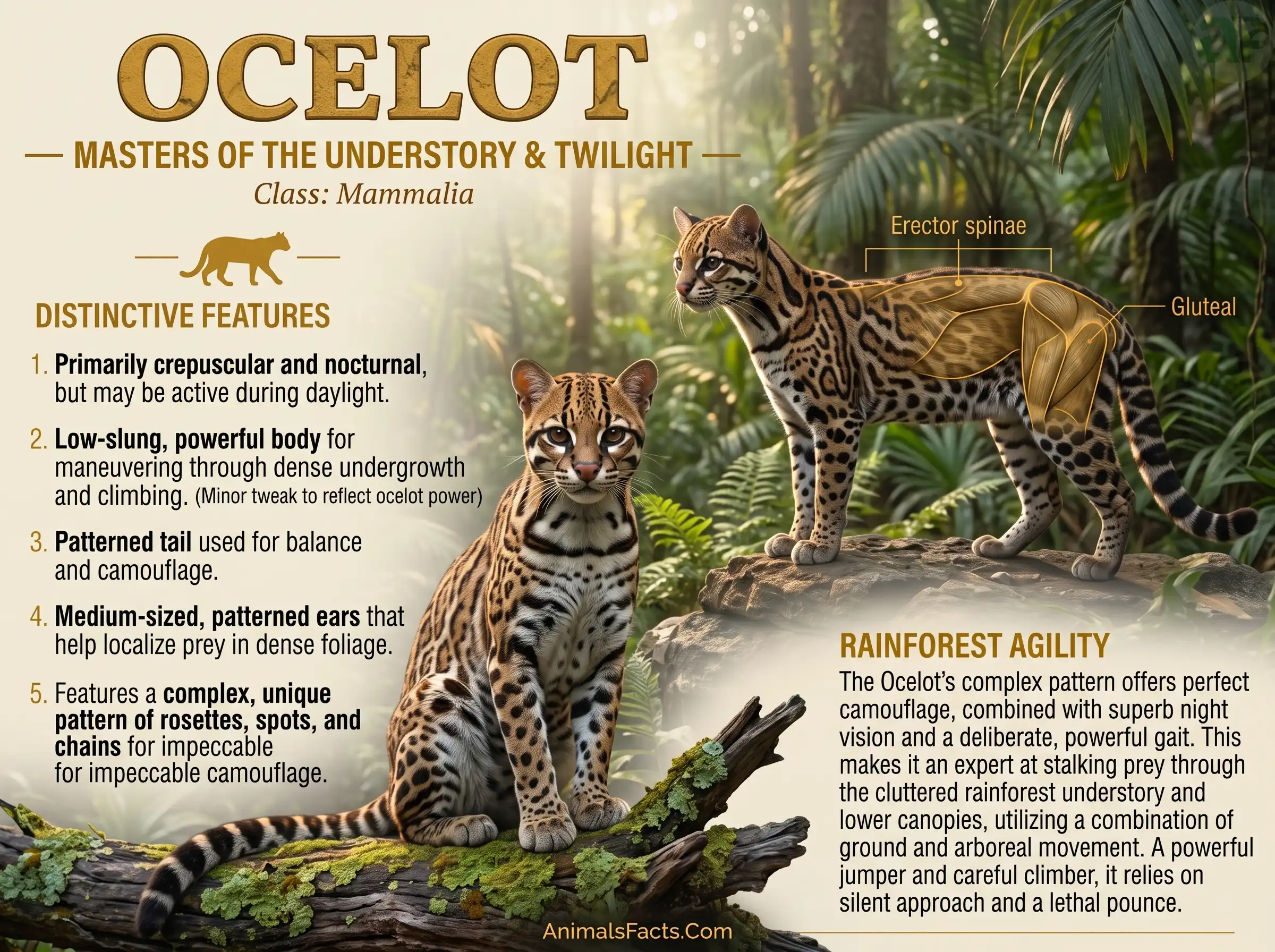
The ocelot is without question the most elaborately and beautifully patterned of the Americas’ wild cats — its coat representing one of the most complex and visually striking examples of biological pattern formation in the entire mammalian class.
Size and Sexual Dimorphism
The ocelot is the largest member of genus Leopardus but is considerably smaller than the jaguar or cougar — more comparable in size to a large domestic cat or a medium-sized dog. Males are typically 20–30% larger than females, with considerable variation across the species’ geographic range:
- Large northern males (Mexico, Texas): Up to 16 kg in weight and 100 cm body length
- Average adults: 7–11 kg and 55–80 cm body length
- Females: Typically 5–9 kg, noticeably smaller than males from the same region
The Extraordinary Coat
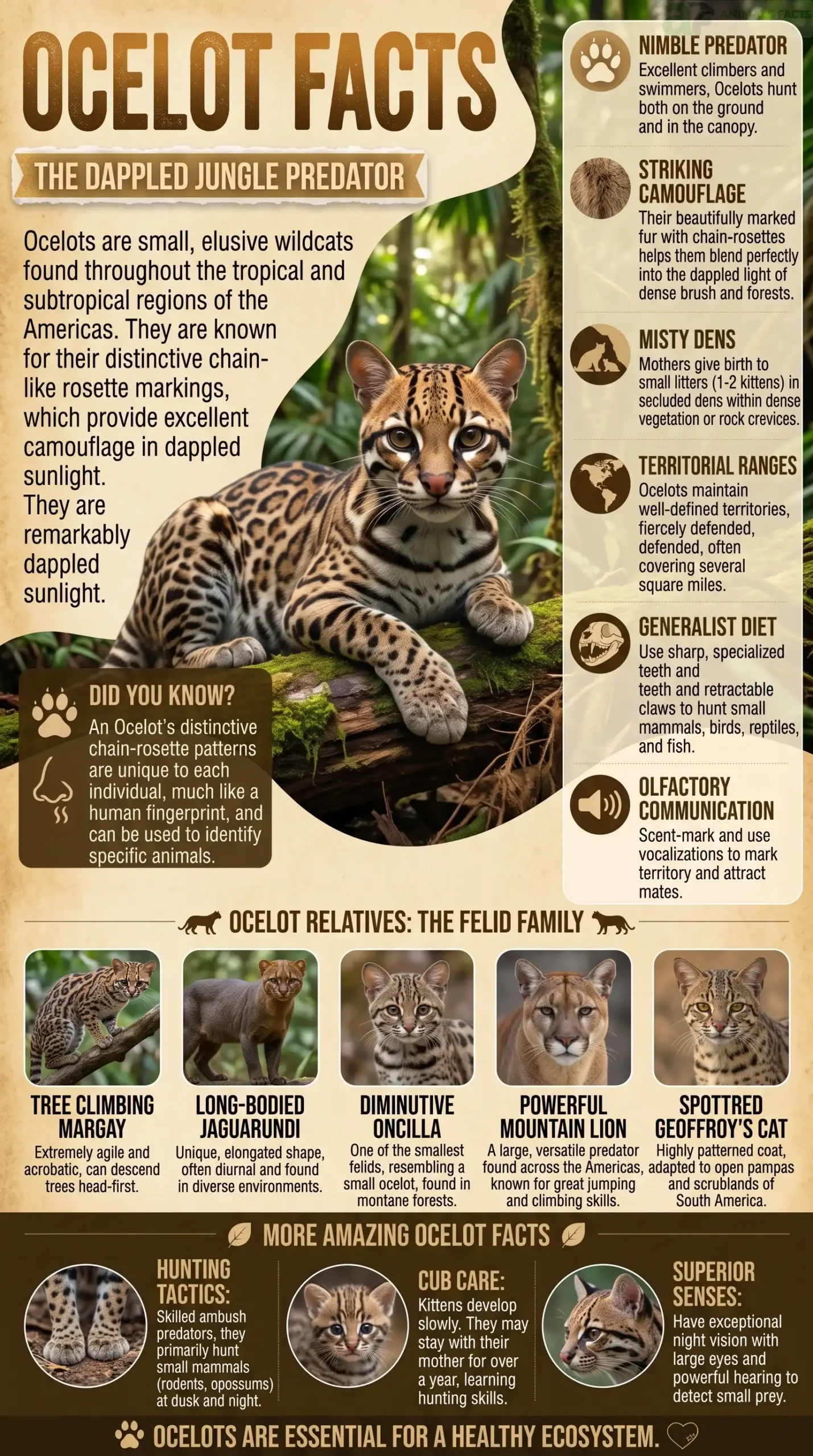
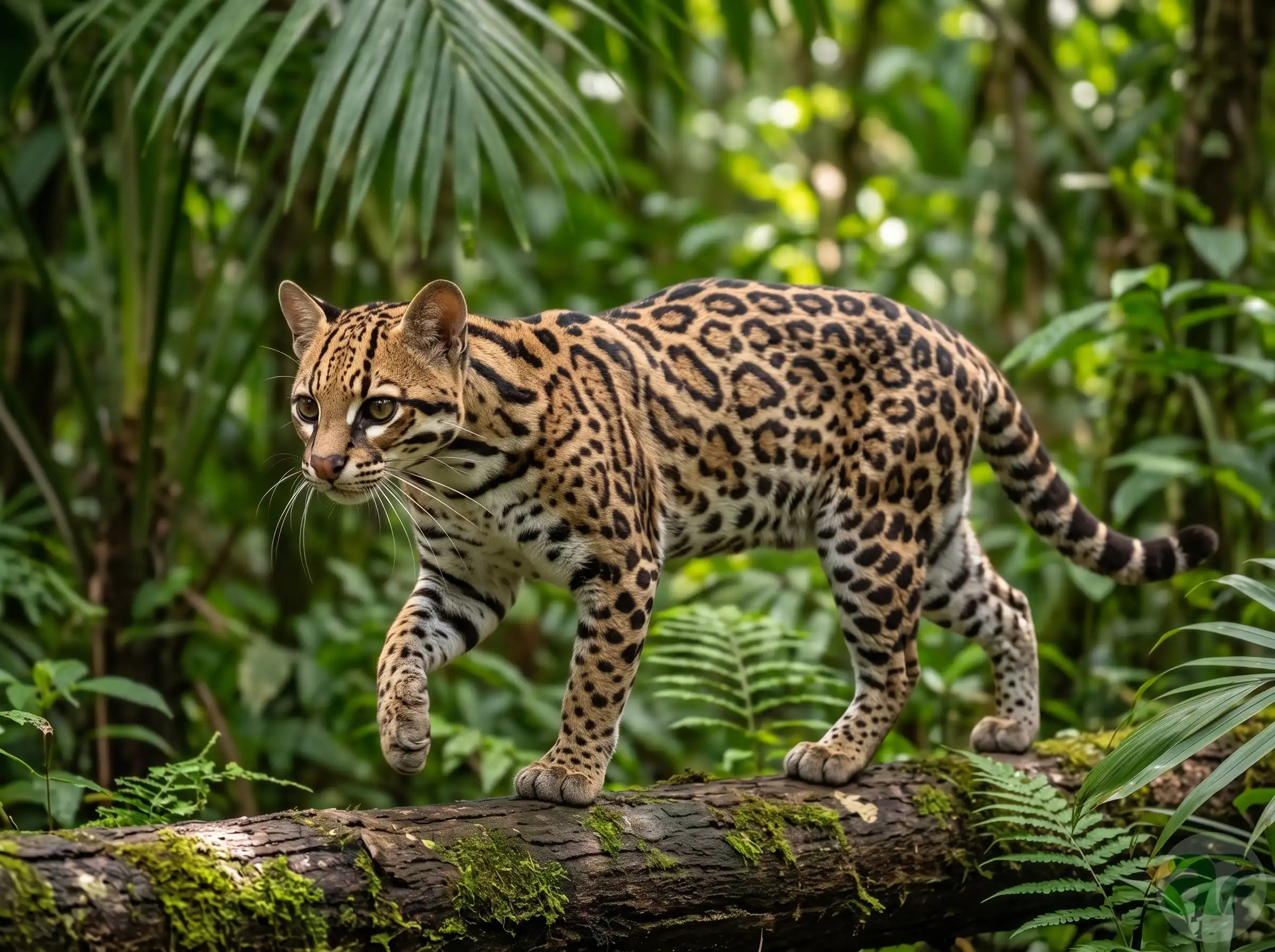
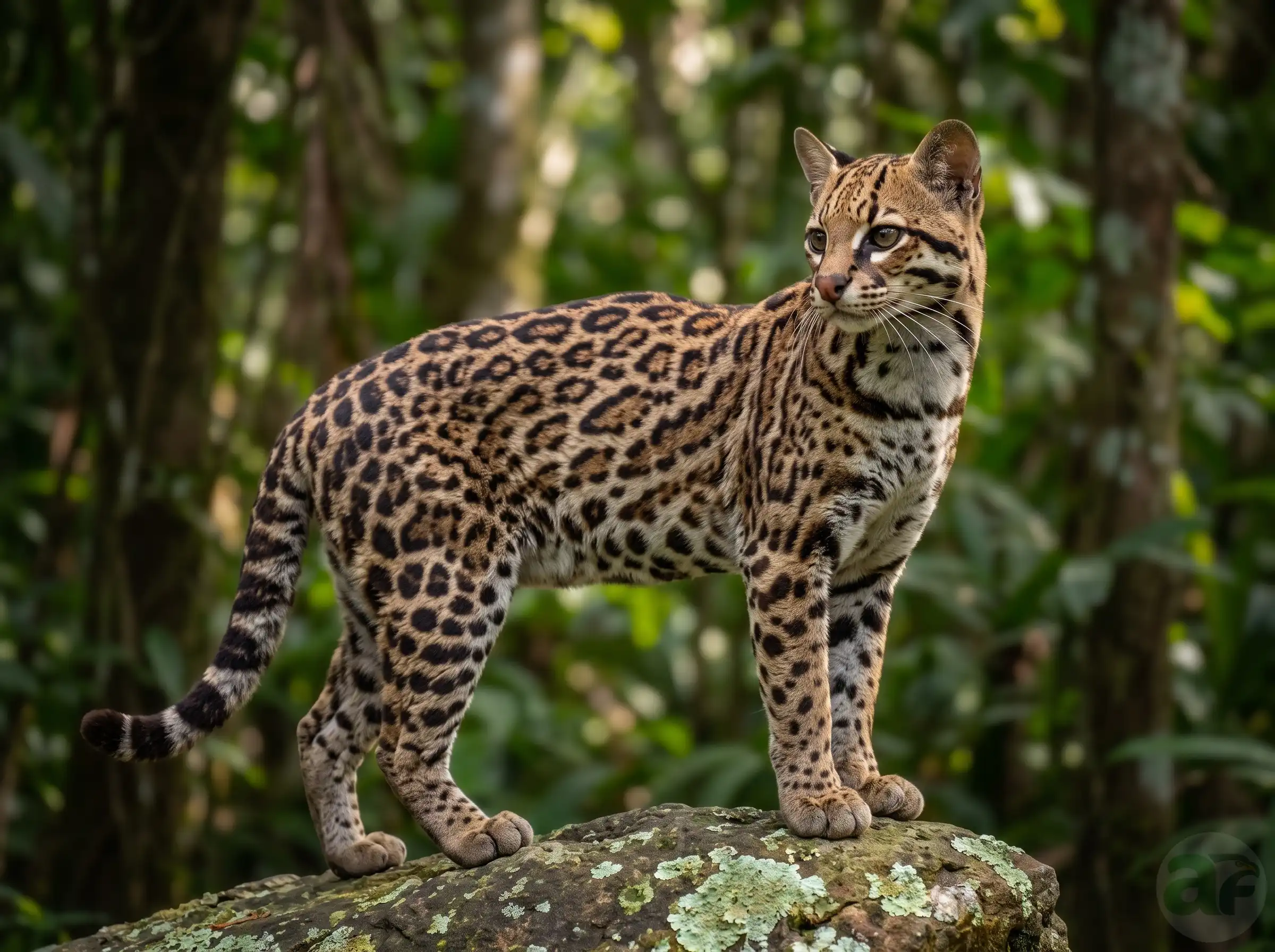
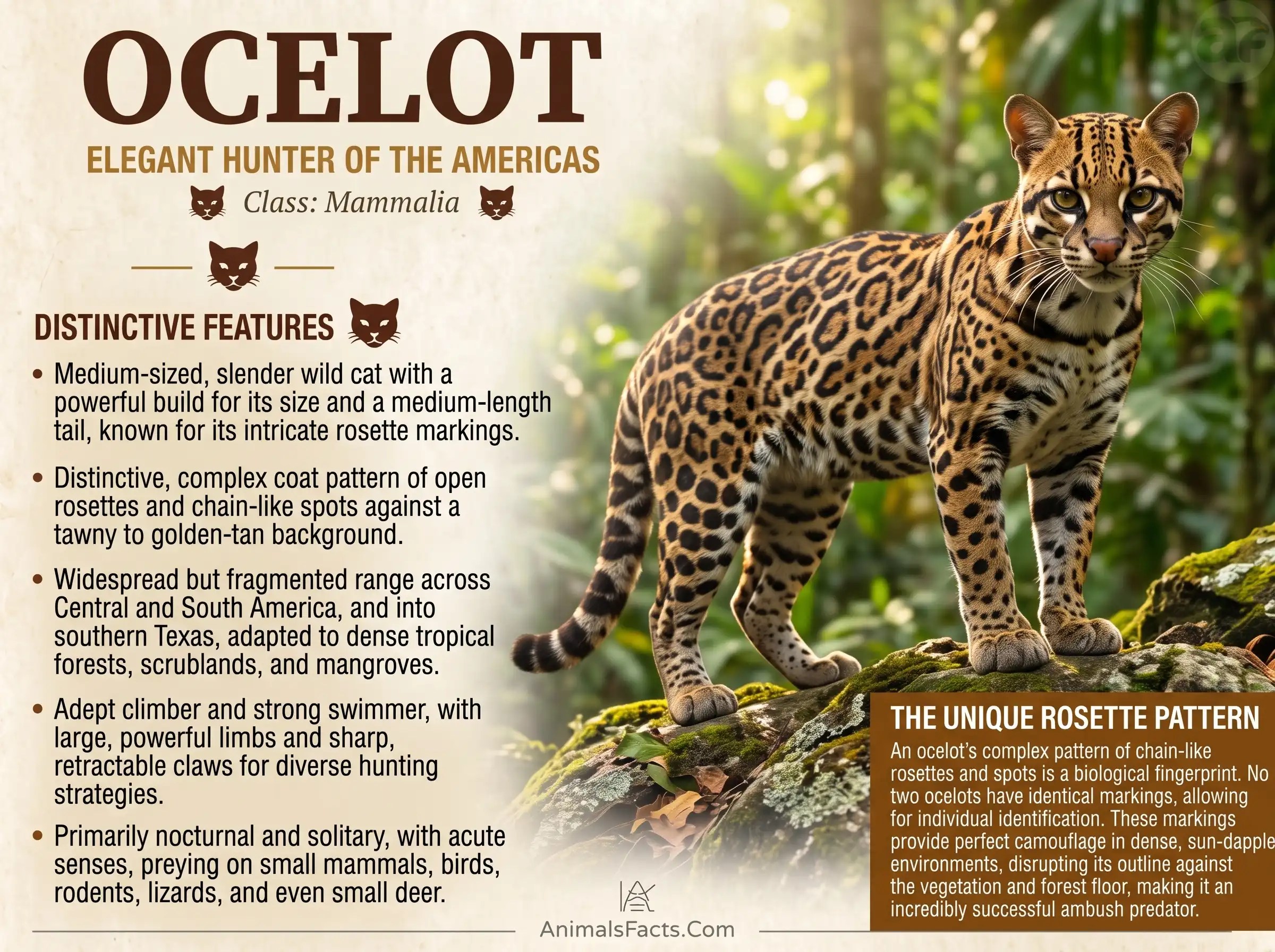
The ocelot’s coat is its most celebrated and most distinctive feature — a complex mosaic of spots, elongated blotches, open rosettes, solid dots, and chain-like streaks arranged across a background that varies from tawny yellow and ochre to pale grey and whitish in some individuals. The underside is typically white or pale cream.
What makes the ocelot’s pattern genuinely extraordinary is its combination of multiple pattern types in a single coat — unlike leopards (primarily rosettes), cheetahs (solid spots), or domestic cats (tabby stripes), the ocelot simultaneously displays solid spots on the head, elongated blotches and open rosettes on the body, and streaking stripes on the neck and shoulders. This multi-element patterning is so complex that every single ocelot carries a completely unique coat pattern — with no two individuals displaying identical marking arrangements.
The Unique “Head-First Tree Descent” Capability
One of the ocelot’s lesser-known but genuinely remarkable anatomical features is its ability to rotate its hind feet outward — allowing the ocelot to grip bark during tree descent and come down head-first rather than tail-first like most climbing mammals. This capability, shared by very few animals (including squirrels and some other small cats), reflects the ocelot’s adaptation to an arboreal lifestyle significantly more developed than most of its larger wild cat relatives.
Eyes Built for Night Hunting
The ocelot’s large, forward-facing eyes are optimized for nocturnal hunting — with an exceptional tapetum lucidum (the reflective layer behind the retina) that provides dramatically enhanced light sensitivity in low-light conditions, allowing the ocelot to hunt effectively on moonless nights in dense tropical forest where light levels approach complete darkness. This extraordinary night vision is considered one of the primary factors enabling the ocelot’s successful nocturnal hunting strategy in environments where even minimal light can be exploited to locate prey.
Did You Know? The ocelot’s coat pattern is so complex and so individually variable that wildlife researchers can identify specific individual ocelots from photographs alone — without needing to capture, tag, or handle the animals. Camera trap networks across ocelot range countries use computerized pattern-matching algorithms originally developed for identifying individual tigers and cheetahs by their coat markings, allowing researchers to build population registers of known individuals across large areas and monitor populations with remarkable precision. Some research sites have registered over 100 individual ocelots from a single camera trap study area — providing extraordinary detailed population data.
4. Top 25 Surprising & Interesting Ocelot Facts
- Every ocelot in the world has a completely unique coat pattern — the combination of spots, blotches, rosettes, and streaks is as individually distinctive as a human fingerprint.
- The ocelot is the largest member of the exclusively American Leopardus genus — which contains eight species of small spotted wild cats found only in the Western Hemisphere.
- In the United States, the ocelot now occurs naturally only in extreme southern Texas along the Rio Grande border — with a total wild population of approximately 50–80 individuals, making it one of the rarest wild cats in North America.
- At the height of the fur trade in the 1960s–1980s, an estimated 200,000 ocelot skins per year were traded internationally — with single ocelot fur coats requiring the skins of up to 25 individual animals.
- Ocelots have been documented hunting fish by scooping them from shallow water using a precise forepaw-slapping technique — one of relatively few small cats that regularly incorporates aquatic prey into their diet.
- The ocelot can rotate its hind ankles outward, allowing it to descend trees head-first — a capability shared by only a handful of other animals including squirrels and some other small felids.
- Ocelots practice monogamous pair bonding in some populations — with males and females maintaining long-term exclusive relationships and sharing overlapping home ranges, an unusual social organization for a solitary wild cat species.
- The ocelot’s tongue is covered with backward-pointing papillae (rough projections) so pronounced that it was historically used as a rasp for removing bark from wood by Indigenous peoples — one of the most unusual documented human uses of any animal body part in ethnobotanical history.
- Ocelots have been documented consuming over 100 different prey species across their range — demonstrating dietary flexibility comparable to much larger predators.
- The famous Salvador Dali kept a pet ocelot named Babou — which traveled with him extensively including on ocean liners and to fashionable restaurants, becoming one of the most celebrated exotic pets of the 20th century.
- Female ocelots have a very low reproductive rate for a small cat — typically producing only 1–2 cubs per litter and raising cubs for up to 2 years before they disperse, meaning a female may only successfully raise 1–2 cubs every 2 years.
- The Texas ocelot population is so small and so genetically isolated that researchers have documented significant inbreeding depression — with genetic diversity declining measurably and health indicators following patterns disturbingly similar to those seen in the Florida Panther before its genetic rescue program.
- Ocelots are strongly nocturnal across most of their range — hunting almost exclusively between dusk and dawn, with activity typically peaking in the first few hours after sunset and again before dawn.
- The word “ocelot” derives from the Nahuatl (Aztec) word “ōcēlōtl” — which in Aztec cosmology referred to a specific kind of large spotted cat (though the word was often applied to jaguars in many contexts) — reflecting the deep cultural roots of the ocelot in Mesoamerican civilization.
- Ocelots demonstrate a remarkable capacity for scent communication — maintaining complex networks of urine spray marks across their territories that provide detailed information about individual identity, reproductive status, and territory boundaries to other ocelots.
- The Texas ocelot population has shown evidence of attempted natural recolonization of historical range — with individual ocelots occasionally documented in areas of Texas outside their current known range, suggesting that with adequate habitat connectivity, natural range recovery might be possible.
- Ocelots have been documented prey-switching in response to changes in prey availability with remarkable speed — shifting from primarily rodent-based diets to reptile or bird-dominated diets within weeks of prey population fluctuations, demonstrating behavioral flexibility rare among felids of their size.
- The ocelot’s claws are fully retractable — unlike the semi-retractable claws of cheetahs and cougars — providing the sharp, hook-like grip that enables both effective prey capture and tree climbing.
- Ocelots communicate through at least 8 distinct vocalizations including meows similar to domestic cats, yowling, hissing, growling, and a unique short, sharp “wah” contact call between mothers and cubs.
- In some parts of their range, ocelots have been documented hunting from tree branches — waiting patiently for prey to pass beneath before dropping onto the target from above, a hunting technique rare among small cats but occasionally documented in ocelots occupying heavily forested habitats.
- The ocelot’s home territory is typically much larger than you might expect for an animal of its size — with male territories documented up to 46 km² in some habitats, and females maintaining ranges of 15–20 km².
- Ocelots have a remarkable ability to survive in human-modified landscapes — documented persisting in fragmented forest patches, coffee and cacao plantations, and secondary forest habitats that other wild cat species cannot tolerate — making them valuable indicators of landscape health.
- Despite their relatively small size, ocelots have been documented killing prey larger than themselves in exceptional cases — including adult agoutis, peccary piglets, and juvenile monkeys that significantly exceed the ocelot’s own weight.
- Research in the Pantanal of Brazil has documented ocelots and crab-eating raccoons regularly competing for the same food sources along river margins — with ocelots frequently displacing raccoons from favored fishing spots through persistent territorial behavior.
- The US Fish and Wildlife Service’s Texas Ocelot Recovery Plan is one of the most detailed and intensively managed single-species recovery programs for any small wild cat in North American history — involving extensive habitat management, wildlife corridor development, captive breeding, and genetic analysis across the binational US-Mexico border landscape.
5. Ocelot Fun Facts for Kids
- Every ocelot has a completely unique coat pattern — no two ocelots look alike.
- Ocelots can descend trees head-first — a rare ability among cats.
- The word “ocelot” comes from the Aztec language Nahuatl.
- Famous surrealist artist Salvador Dali kept a pet ocelot named Babou.
- Ocelots can eat over 100 different prey species across their range.
- Only about 50–80 ocelots survive in the wild in the United States today.
- Up to 200,000 ocelot skins were traded annually at the height of the fur trade.
- Ocelots fish by slapping their paws into shallow water.
- Ocelots are almost entirely nocturnal — hunting mostly after dark.
- The ocelot is the biggest cat in the Leopardus genus.
- Female ocelots raise cubs for up to 2 years — unusually long for a small cat.
- Ocelots have been documented surviving in coffee and cacao plantations.
6. Natural Habitat & Geographic Range
The ocelot is a habitat specialist of dense, structurally complex environments — strongly associated with closed-canopy forests, dense scrubland, and riparian thickets that provide the cover essential for its stalking-ambush hunting strategy and for the daytime resting concealment that its nocturnal lifestyle requires.
Primary Habitat Types
Tropical rainforest: The ocelot’s optimal habitat — dense, multi-layered tropical rainforest with a closed canopy, abundant understory vegetation, and high small mammal, reptile, and amphibian prey density. The Amazon Basin and the wet forests of Central America support the core of the global ocelot population.
Tropical dry forest: Ocelots are documented across tropical dry forest habitats in Mexico, Central America, and parts of South America — adapting their activity patterns and prey selection to the reduced moisture and more open structure of seasonally dry tropical forest.
Mangrove and coastal forest: Ocelots inhabit mangrove systems across coastal areas of Central and South America — exploiting the exceptional prey density of crabs, fish, amphibians, and water birds associated with these productive coastal ecosystems.
Subtropical thornscrub: The characteristic habitat of the Texas ocelot — the unique, dense subtropical thorn brush of the lower Rio Grande Valley, called “tamaulipan thornscrub” or locally “brushland” — provides the thick, impenetrable vegetation cover that ocelots require but which has been reduced to less than 5% of its historical extent by agricultural clearing across southern Texas.
Coffee, cacao, and other agroforestry systems: One of the most important recent findings in ocelot conservation research — ocelots can persist and successfully breed in shade-grown coffee and cacao plantations that maintain adequate tree cover and understory complexity, providing valuable habitat connections between forest fragments in otherwise agricultural landscapes.
Habitat Range by Region
| Region | Country Examples | Population | Status |
|---|---|---|---|
| Amazon Basin | Brazil, Peru, Colombia, Ecuador | Largest portion of global population | Relatively stable; deforestation threat |
| Central America | Mexico, Guatemala, Belize, Costa Rica, Panama | Moderate; fragmented | Declining; habitat loss |
| Atlantic Forest | Southeastern Brazil | Critically reduced | Endangered in this biome |
| Pantanal | Brazil, Bolivia, Paraguay | Significant | Relatively stable |
| Caribbean Coast | Venezuela, Colombia | Moderate | Poorly monitored |
| Andes foothills | Peru, Bolivia, Ecuador, Colombia | Low density | Declining |
| Gran Chaco | Argentina, Paraguay, Bolivia | Moderate | Declining |
| Southern Range | Uruguay, N. Argentina | Low; southernmost | Declining |
| United States (Texas) | South Texas only | ~50–80 individuals | Critically threatened |
Did You Know? The ocelot’s habitat requirement for dense cover is so pronounced that research in Texas has determined a minimum of approximately 80% canopy closure within ocelot home ranges is necessary for successful territory establishment and breeding. In southern Texas, where historical tamaulipan thornscrub has been reduced to fragments covering less than 5% of its former extent, this density threshold is met in only a handful of locations — making habitat quality even more critical to Texas ocelot survival than the absolute amount of land theoretically available. Even small habitat improvements — removing cattle fencing from key vegetation patches, allowing thornscrub natural regeneration — can dramatically improve the effective habitat available to the existing population.
7. Diet & Feeding Behavior
The ocelot is a highly specialized nocturnal stalk-and-ambush predator — hunting primarily small-to-medium prey under conditions of near-complete darkness, using exceptional low-light vision, acute directional hearing, and a patient approach strategy to secure prey across a broader range of species than most small wild cats anywhere in the world.
What Ocelots Eat
Ocelot diet varies significantly by habitat and geographic location — reflecting the species’ opportunistic, flexible approach to prey selection across the diverse environments it inhabits. Across most of its range, small mammals — particularly rodents — form the dietary foundation, supplemented by reptiles, amphibians, birds, and invertebrates.
Diet Breakdown Table
| Prey Type | Approximate Percentage | Notes |
|---|---|---|
| Small rodents (rats, mice, agoutis, pacas) | 35–55% | Primary prey across all habitats |
| Reptiles (lizards, snakes) | 15–25% | Important across all tropical habitats |
| Amphibians (frogs, toads) | 10–15% | Significant in wet habitats; often abundant |
| Birds (ground-nesting and roosting species) | 10–20% | Important where dense bird populations exist |
| Crabs and fish | 5–15% (coastal/riparian) | Significant in mangrove and river habitats |
| Insects and invertebrates | 2–5% | Supplementary; more important for juveniles |
| Opossums and small marsupials | 5–10% | Taken across range where abundant |
| Small monkeys (occasionally) | <2% | Rare; exceptional cases documented |
Hunting Strategy
The ocelot hunts through a combination of active searching and patient ambush — moving slowly and deliberately through its territory during nocturnal hunts, using its exceptional hearing and night vision to detect prey at short range before launching a rapid, precise pounce.
Sensory hunting: Ocelots rely heavily on acute directional hearing to locate prey in conditions of near-total darkness — their large, mobile ears independently rotating to triangulate the precise location of a rustle or movement before the animal is visually confirmed. This acoustic hunting capability allows effective hunting in dense vegetation where even the ocelot’s exceptional night vision provides limited advantage.
Stalk and pounce: Once prey is located — typically at very short range of 1–5 meters — the ocelot begins a slow, deliberate stalk using every available piece of cover, before launching a rapid final pounce that pins the prey under both forepaws simultaneously. The killing bite targets the back of the skull or the upper neck — typically severing the spinal cord for rapid, efficient prey dispatch.
Aquatic hunting: At water margins, ocelots use a distinctive forepaw-slapping technique to stun fish in shallow water — similar to that documented in fishing cats (Prionailurus viverrinus) of Asia — before extracting the fish from the water with hooked claws. Crab hunting in mangrove habitats involves a patient, reactive technique in which the ocelot waits for crab movement before striking with precise paw-snatch.
Did You Know? Research tracking ocelot hunting behavior using GPS data and camera traps documented that individual ocelots maintain surprisingly consistent nightly hunt routes — following the same paths, checking the same hunting sites, and visiting the same water features in a predictable sequential pattern across multiple nights. This “route trapping” behavior — maintaining consistent movement corridors through familiar territory — allows ocelots to exploit the predictable micro-habitat preferences of their prey (which tend to concentrate at specific feeding, drinking, and sheltering locations) while minimizing the energy cost of random searching in dense forest habitat.
8. Reproduction & Life Cycle
Ocelot reproduction is characterized by one of the lowest reproductive rates of any comparably sized wild cat — a consequence of small litter sizes, extended maternal dependency, and the high mortality risks of the dispersal period for young ocelots attempting to establish independent territories in increasingly fragmented habitats.
Mating Behavior
Ocelots are primarily solitary animals outside of breeding associations — with male and female home ranges overlapping but individuals typically avoiding direct contact except during the mating period. In some populations, particularly where high-quality habitat supports stable pair territories, males and females maintain long-term spatial associations that some researchers characterize as facultative monogamy — an unusual social arrangement for a small wild cat species.
Female ocelots advertise estrus through urine marking and vocalizations — including a distinctive yowling similar to domestic cats but more sustained — with males in overlapping ranges responding and seeking out receptive females.
Gestation and Birth
Gestation period: Approximately 70–85 days — among the shorter gestations for a cat of the ocelot’s size.
Litter size: Typically 1–2 cubs (most commonly 1 in much of the range) — the smallest consistent litter size of any member of the Leopardus genus, reflecting the ocelot’s ecological strategy of investing heavily in very few offspring rather than producing larger litters with higher individual mortality rates.
Birth weight: Approximately 200–340 grams per cub.
Den location: A well-concealed location in dense vegetation, hollow log, rocky crevice, or within dense thornscrub — chosen specifically for concealment from predators and from competing ocelots.
Key Developmental Stages
| Stage | Age | Key Development |
|---|---|---|
| Neonatal | 0–2 weeks | Eyes closed; spotted coat present; helpless |
| Eyes open | 14–18 days | Beginning visual awareness |
| First outings | 6–8 weeks | First exploration outside den |
| Weaning | 3–4 months | Transition to solid food |
| Hunting learning | 4–12 months | Accompanies mother; learning prey detection |
| Kill participation | 8–18 months | Beginning to participate in hunts |
| Independence | 18–24 months | Separation from mother; establishing range |
| Territory establishment | 2–3 years | High-mortality dispersal period |
| Sexual maturity | Female: ~18–24 months; Male: ~24–30 months | First breeding possible |
Lifespan Comparison Table
| Species | Average Wild Lifespan | Maximum Confirmed |
|---|---|---|
| Ocelot | 7–10 years | ~20 years (captivity) |
| Margay | 10–12 years | ~24 years (captivity) |
| Cougar/Mountain Lion | 8–13 years | ~20 years (captivity) |
| Jaguar | 12–15 years | ~23 years (captivity) |
| Domestic Cat | 12–18 years | ~30 years (captivity record) |
9. Social Behavior & Communication
The ocelot’s social organization represents a fascinating middle position within the solitary-social spectrum of small wild cats — more complex than the strict solitary lifestyle of some small felids, but without the persistent social bonds of genuinely social species.
Territory and Social Organization
Male territories in the ocelot’s range are typically two to three times larger than female territories — overlapping with the ranges of multiple females in a spatial arrangement that mirrors the territorial organization of larger solitary cats including tigers and leopards. Territory sizes vary considerably by habitat quality and prey density:
- Dense tropical forest (Brazil): Female territories ~15–20 km²; male territories ~30–46 km²
- Texas thornscrub: Female territories ~6–15 km²; male territories ~10–25 km²
- Agroforestry landscapes: Smaller, reflecting reduced available habitat
In populations studied in Brazil and Mexico, researchers have documented a surprisingly complex pattern of male spatial tolerance — with some pairs of males maintaining partially overlapping ranges without persistent aggressive interaction, suggesting that the strict exclusive territoriality typical of some solitary cats may be relaxed in certain population contexts.
Communication
Scent marking: The primary communication medium — ocelots spray urine on prominent vegetation, rocks, and trail junctions throughout their territories, maintaining a chemical information network that conveys identity, sex, reproductive status, and territory occupancy to other ocelots across the range without requiring direct contact.
Vocalizations: Ocelots produce a richer vocal repertoire than many similarly-sized wild cats — including meows, yowls, growls, hisses, churrs, and the distinctive short “wah” contact call used between mothers and cubs. During the mating season, both males and females produce loud, sustained yowling that can be heard across considerable distances in forest environments.
Body language: Visual communication through tail position, ear orientation, body posture, and facial expression — with the characteristic facial markings of the ocelot (including bold white patches around the eyes) potentially functioning as visual communication signals during close-range encounters, enhancing the readability of subtle facial expressions in low-light forest conditions.
Did You Know? Research comparing ocelot activity patterns with those of larger competing cats in the same ecosystems has demonstrated that ocelots in areas where jaguars are abundant shift their activity to be even more strongly nocturnal and more temporally concentrated in the hours of lowest jaguar activity — while ocelots in areas without jaguars show more variable and sometimes crepuscular activity patterns. This temporal avoidance of a larger competitor through activity time adjustment — without any change in habitat use or prey selection — represents a remarkably fine-grained behavioral adaptation that allows these two species to share ecosystems while minimizing direct competitive encounters.
10. Predators & Defense Mechanisms
Despite their formidable hunting skills, ocelots — particularly cubs and young dispersing individuals — face significant predation risk from multiple larger carnivores across their range, and adult ocelots in certain habitat conditions can also be vulnerable to specific threats.
Natural Predators
Jaguars: The most significant natural predator of ocelots across their overlapping range in Central and South America — with jaguar predation on ocelots documented in camera trap studies and research across multiple range countries. Where jaguars are abundant, ocelot populations show measurable behavioral responses including shifted activity timing, reduced use of areas with high jaguar activity, and increased use of tree cover.
Pumas (Mountain Lions): A secondary predator and significant competitor in areas where ocelots, pumas, and jaguars coexist — with pumas occupying an intermediate competitive position between jaguars (dominant) and ocelots (subordinate). The three-way competitive hierarchy among these species has generated significant research interest as an example of intraguild predation in a multi-predator community.
Harpy Eagles and other large raptors: Significant predators of ocelot cubs and smaller individuals in tropical forest habitats — with Harpy Eagles (Harpia harpyja) — the largest raptor in the Americas — documented taking ocelots as prey in multiple range countries.
Large boa constrictors and anacondas: In humid South American habitats, large constrictors represent genuine predation risk to smaller ocelots and cubs, particularly in environments where encounters at water margins or in dense vegetation create opportunities for ambush by these powerful serpents.
Humans: By far the dominant cause of ocelot mortality across the entire range — historically through the fur trade, currently through vehicle collisions, persecution by poultry farmers, habitat destruction, and (increasingly) roadkill as highway networks expand into remaining ocelot habitat.
Defense Mechanisms
Cryptic nocturnal behavior: The ocelot’s primary and most comprehensive defensive strategy — hunting at night in dense cover, resting during daylight in concealed locations, and maintaining extreme behavioral crypticity that makes it one of the most difficult small wild cats to observe even in areas of relatively high population density.
Dense cover use: Ocelots demonstrate a very strong preference for the densest available vegetation cover in any landscape — selecting the most structurally complex, visually impenetrable areas for resting, raising cubs, and moving between hunting areas. This habitat preference provides simultaneous camouflage from both predators and prey.
Tree escape: When threatened at ground level, ocelots rapidly ascend trees using their fully retractable claws and their unusual ability to descend head-first — providing effective escape from ground-based predators including dogs and some larger cats.
11. Ocelot Facts for Kids
Hey kids — get ready to discover why the ocelot is one of the most beautiful and fascinating wild cats in the entire world!
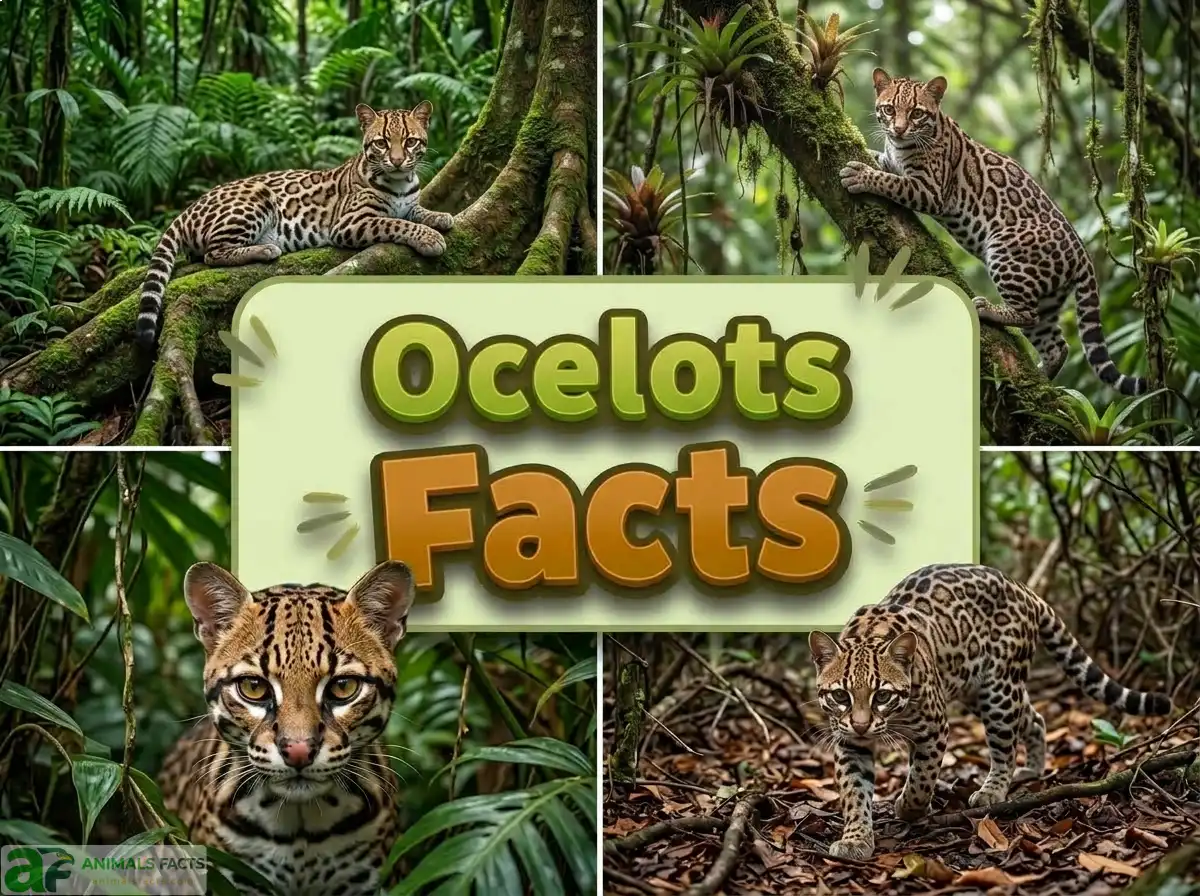
- Every single ocelot has a completely different pattern on its fur — spots, stripes, blotches, and rings all mixed together in a way that’s unique to each individual animal, just like your fingerprints are different from everyone else’s!
- Ocelots are expert night hunters — their enormous eyes can see so well in the dark that they can hunt on even the blackest, cloudiest night when you or I couldn’t see our hand in front of our face!
- Ocelots can climb down trees head-first, like a squirrel — most animals have to back down from trees, but ocelots have special ankles that can twist around to help them grip the bark pointing downward!
- The name “ocelot” comes from an ancient Aztec word — the same civilization that built enormous pyramids in Mexico thousands of years ago!
- A famous artist named Salvador Dali had a pet ocelot named Babou — and he took Babou on boats, to fancy restaurants, and all over the world! (Wild ocelots should never be kept as pets though!)
- Ocelots sometimes fish for their dinner — they sit by the water and scoop fish out with their paws, just like you might try to catch them with your hands!
- In the whole United States, there are only about 50–80 wild ocelots left — all living near the border with Mexico in southern Texas. That’s fewer ocelots in the whole country than there are students in many school classrooms!
- Baby ocelots are called kittens or cubs, and they have beautiful spotted coats from the moment they’re born — just like their parents, but tiny!
Did You Know? At one time, real ocelot fur coats were so fashionable that one coat required the skins of up to 25 individual ocelots! This meant hundreds of thousands of ocelots were killed every year just to make clothing. In the 1970s and 1980s, ocelot populations collapsed dramatically because of this hunting pressure. Today, an international law called CITES makes it illegal to trade ocelot skins internationally — and most people worldwide have switched to synthetic fur alternatives, giving wild ocelot populations a much-needed chance to recover.
12. Relationship with Humans
The ocelot’s relationship with humanity spans from ancient pre-Columbian reverence through catastrophic exploitation for the fashion industry to contemporary conservation challenges that continue to test the limits of human-wildlife coexistence across one of the Americas’ most biologically diverse but most rapidly changing landscapes.
Ancient Human Connections
Ocelots have coexisted with human civilizations across the Americas for thousands of years — appearing in the art, cosmology, and material culture of multiple pre-Columbian civilizations. Olmec, Maya, Aztec, and numerous South American Indigenous cultures incorporated ocelot imagery into ceremonial objects, architectural decoration, and religious practice — reflecting the animal’s cultural significance in societies that lived in intimate proximity to these beautiful and somewhat mysterious small cats.
The Aztec word “ōcēlōtl” — from which the modern English name derives — was applied to spotted wild cats generally, with the ocelot representing a smaller but still spiritually significant member of the cat family in Aztec cosmological tradition. The Ocelot Order — the Aztec warrior society associated with spotted cat power — drew on the ocelot’s combination of stealth, hunting skill, and beautiful appearance as emblems of elite warrior status.
The Fur Trade Catastrophe
The 20th century fur trade represents the single most catastrophic human impact on ocelot populations in recorded history. From the 1950s through the 1980s, international demand for ocelot skins — particularly from the European and North American fashion markets — drove commercial hunting operations that killed hundreds of thousands of ocelots annually across their range.
The mathematics of this exploitation were staggering — a single ocelot fur coat required 13–25 individual animal skins, and the prices paid per skin were high enough to generate profitable commercial hunting operations across Central and South America. Before the trade declined following CITES Appendix I listing in 1973 and subsequent tightening of enforcement, ocelot populations across Mexico, Central America, and much of South America had been severely depleted. In the United States, the Texas population — which likely numbered in the low thousands as recently as the 1930s — had been reduced to fewer than 100 individuals by the 1980s.
Contemporary Relationships — Conflict and Coexistence
The most significant contemporary human-ocelot conflict is poultry predation — ocelots entering chicken coops, duck pens, and small-scale poultry operations in rural communities adjacent to forest habitat, generating retaliatory killing that represents a significant mortality source. Unlike cattle ranching conflicts with jaguars and cougars, ocelot-poultry conflict affects primarily small-scale subsistence farming communities — where economic losses from ocelot predation can represent a genuinely significant proportion of household income, creating powerful conflict incentives that require sensitive, community-engaged solutions.
13. Conservation Status & Threats
The ocelot’s IUCN Least Concern overall status reflects its relatively large global population across the Amazon Basin and other core range areas — but this broad classification significantly understates the genuine conservation urgency facing several regional populations.
Global Ocelot Conservation Data (2026)
| Region / Population | Status | Population Estimate | Trend |
|---|---|---|---|
| Amazon Basin | Least Concern | Largest portion of global population | Declining (deforestation) |
| Atlantic Forest | Endangered (regional) | Severely reduced | Sharply declining |
| Central America | Vulnerable (regional) | Fragmented; declining | Declining |
| Gran Chaco | Vulnerable (regional) | Moderate | Declining |
| Southern South America | Near Threatened (regional) | Low; southernmost | Declining |
| Texas, USA | Endangered (US ESA) | ~50–80 individuals | Critically low; recovering slowly |
| Mexico | Threatened (nationally) | Reduced; fragmented | Declining |
Major Threats to Ocelots
Habitat loss and fragmentation: The most fundamental and widespread threat — the conversion of ocelot habitat to agricultural land, pasture, urban development, and monoculture plantations across both the North American and South American range has progressively reduced the available habitat and — critically — fragmented remaining habitat patches into isolated islands that cannot support viable populations independently and prevent genetic exchange between populations.
Road mortality: Increasingly identified as one of the most significant documented causes of ocelot mortality across multiple parts of the range — with studies in southern Brazil, southern Texas, and parts of Central America documenting substantial roadkill rates that, in small populations, represent demographically significant annual losses. In Texas particularly, vehicle collisions account for a disproportionate share of documented adult ocelot deaths annually.
Retaliatory killing: Poultry predation driving retaliatory killing by small-scale farmers across Central and South America — representing a mortality source that is difficult to quantify precisely but acknowledged as significant by most conservation researchers working on ocelot populations.
Prey depletion: Commercial and subsistence hunting of the small mammals, reptiles, and birds that constitute ocelot prey across forested habitats can significantly reduce local prey abundance — reducing the carrying capacity of otherwise structurally suitable ocelot habitat.
Genetic isolation: The Texas ocelot population is so small and so isolated that measurable genetic diversity loss and documented inbreeding effects are now of serious conservation concern — with researchers actively planning a potential genetic rescue involving the translocation of ocelots from Mexico to restore gene flow, following the successful Florida Panther genetic rescue model.
Did You Know? The Texas ocelot population exists in essentially two isolated subpopulations — one centered on the Laguna Atascosa National Wildlife Refuge area and one in the Willacy County area further south — separated by approximately 40 kilometers of agricultural land with almost no usable habitat cover. These two groups rarely if ever exchange individuals, and research using genetic analysis has confirmed that they are diverging genetically due to this isolation. Reconnecting these two subpopulations through targeted habitat restoration and wildlife corridor development across the intervening farmland is now considered one of the highest conservation priorities for the US ocelot recovery program.
14. Famous Ocelots
Babou — Salvador Dali’s Legendary Companion
Babou was the most celebrated pet ocelot in history — the constant companion of Spanish surrealist artist Salvador Dali throughout the 1960s and 1970s. Dali acquired Babou in the early 1960s and maintained the ocelot as a traveling companion across Europe and North America — taking Babou on ocean liner voyages, into fashionable restaurants and hotels, and to public appearances where the ocelot served simultaneously as a fashion statement, conversation piece, and genuine companion.
The famous story of Dali aboard an ocean liner, when a woman expressed alarm at seeing what she thought was a pet full-sized cat, and Dali responded that Babou was “an ocelot, an entirely different animal” while apparently implying it was harmless — has become one of the most quoted anecdotes about celebrity exotic pet ownership, though the exact details vary across different accounts. Babou appears in several Dali artworks and photographs, becoming inseparable from the artist’s public persona during this period.
The Texas Ocelots — Conservation Icons
The individually monitored ocelots of Laguna Atascosa National Wildlife Refuge in Texas — tracked through GPS collars, camera traps, and genetic sampling by US Fish and Wildlife Service researchers and partner organizations — have become among the most extensively documented individual small wild cats in North American conservation research. These named and numbered individuals represent genuinely important conservation subjects — each animal representing a significant percentage of the total US wild ocelot population, and each documented birth representing a meaningful increase in a critically small population.
Andy Warhol’s Ocelot Reference
While not a pet, the ocelot’s connection to 20th century art and celebrity culture extends beyond Dali — with Andy Warhol’s endangered species print series (1983) featuring the ocelot as one of the selected subjects, bringing awareness of the species’ conservation challenges to international art audiences and helping establish the ocelot as a cultural symbol of the endangered species crisis in a period when public conservation awareness was rapidly growing.
15. Role in Ecosystem & Food Chain
The ocelot occupies a critical mesopredator position in the food webs of every ecosystem it inhabits — functioning as the primary regulator of small mammal, reptile, and amphibian populations in tropical and subtropical American ecosystems, and serving as an important link in the energy flow between small prey species and larger apex predators.
Small Mammal and Rodent Control
The most ecologically significant contribution of ocelot predation is the regulation of rodent populations — particularly rats and mice — across their range. Research across multiple tropical American ecosystems has documented that ocelot predation rates on rodent populations are sufficient to measurably influence rodent population dynamics — with ocelot removal or reduction associated with rodent population increases that in turn generate agricultural damage, disease transmission risk, and disruption of seed dispersal and other ecological processes influenced by rodent population density.
“Mesopredator Release” Effects
In ecosystems where jaguar and puma populations have been reduced or eliminated — the apex predators that normally regulate ocelot populations — ocelot numbers can increase substantially in what ecologists call “mesopredator release.” Elevated ocelot populations can then exert disproportionate predation pressure on smaller prey species including ground-nesting birds, amphibians, and small reptiles — generating cascading ecological effects that alter community composition in ways that can be difficult to reverse once established.
This mesopredator release dynamic highlights the importance of maintaining complete large-carnivore communities rather than managing individual species in isolation — and provides ecological rationale for jaguar and puma conservation in regions where ocelots are more abundant.
Seed Dispersal and Prey Ecology
Ocelots contribute indirectly to seed dispersal through the movement of prey species whose caching and foraging behavior influences plant community composition. Ocelot predation pressure on small rodents influences the behavior of seed-caching rodents — altering the scale, timing, and spatial distribution of seed caching that drives forest regeneration across tropical American landscapes.
16. Myths, Folklore & Cultural Significance
The ocelot occupies a significant but somewhat understated position in the cultural traditions of the Americas — receiving less mythological attention than the jaguar (which dominated Mesoamerican spiritual traditions as the supreme cat deity) but appearing consistently in the art, symbolism, and ceremonial practice of dozens of Indigenous traditions across the species’ range.
Aztec Tradition — The Ocelot Order
In Aztec society, the Ocēlōtl (ocelot order or jaguar warrior society) was one of the two supreme military orders — alongside the Eagle Warriors — whose members were considered the elite of the Aztec military, distinguished by elaborate ocelot-skin regalia and associated with the spotted cat’s combination of stealth, power, and beautiful yet deadly appearance. While the large spotted cats in Aztec cosmology were primarily represented by the jaguar, the ocelot contributed to the “spotted cat” spiritual complex that permeated Aztec military and religious culture.
The deity Tezcatlipoca — one of the most important gods in the Aztec pantheon, associated with night, darkness, magic, and the earth — was closely connected with ocelot imagery, with ocelot being one of his animal manifestations and his sacred animal in several cosmological traditions.
Maya Traditions
The Maya — whose civilization produced some of the most sophisticated art and architecture in pre-Columbian America — incorporated spotted cat imagery extensively into their artistic tradition, with ocelot patterns appearing in textiles, carved stonework, and painted ceramics across the Classic Maya period. While the jaguar was the primary cat deity, the ocelot’s spotted coat contributed to the general “spotted cat power” aesthetic that permeated Maya royal and religious iconography.
South American Indigenous Traditions
Across the diverse Indigenous communities of South America — particularly in the Amazon Basin, where ocelots are more commonly encountered than jaguars in many localities — the ocelot features in oral tradition, shamanic practice, and community cultural traditions as a spirit animal associated with night, hunting skill, concealment, and the boundary between the visible and invisible worlds. The ocelot’s nocturnal nature and extreme behavioral crypticity made it a natural symbol for hidden power and the ability to move unseen between different realms of existence.
17. Ocelots in Pop Culture
While less prominently featured in mainstream popular culture than larger cats, the ocelot has generated a significant and culturally diverse presence across multiple entertainment and commercial contexts — driven primarily by the combination of its extraordinary beauty and the decades-long association between exotic pet ocelots and celebrity culture.
Film and Television
Ocelots in nature documentaries — While no single documentary has achieved the cultural penetration of “Eye of the Leopard” or “The Lion King” for the ocelot specifically, multiple BBC, National Geographic, and PBS productions have featured ocelot sequences within broader Amazon, Pantanal, and small wild cat documentaries, gradually building public recognition and appreciation for the species.
“Archer” (FX/FXX animated series) — The animated spy comedy “Archer” features the protagonist Sterling Archer with a pet ocelot named Babou — a clear reference to Salvador Dali’s famous ocelot — generating substantial popular interest in ocelots among the show’s audience and establishing the ocelot as a pop culture touchstone for a generation of viewers unfamiliar with the Dali connection. The show’s ocelot references became one of its most beloved recurring elements, with “Babou” appearing in multiple episodes and generating significant social media engagement around ocelots as a concept.
Wildlife camera trap footage on social media — Ocelot camera trap footage from the Pantanal, the Amazon, and Texas ocelot monitoring programs has generated significant viral engagement across wildlife social media platforms, with ocelots’ extraordinary beauty making them consistently popular subjects for wildlife photography accounts.
Fashion and Commercial Use
The ocelot coat pattern — while representing one of the darkest chapters in fashion history during the fur trade era — has paradoxically maintained significant commercial influence in the fashion industry through synthetic ocelot print textiles, which reproduce the ocelot’s distinctive spotted pattern in fake fur and printed fabrics. The ocelot’s coat remains one of the most recognizable and frequently reproduced wild animal patterns in fashion design, generating commercial revenue that — in theory — has no connection to actual ocelot harm while maintaining public familiarity with the species’ distinctive appearance.
18. Ocelot Facts vs. Common Myths
Myth: The ocelot is a small, harmless pet similar to a domestic cat. Fact: While ocelots can be tamed if raised from birth and have been historically kept as exotic pets (most famously by Salvador Dali), they are wild animals with complex behavioral, spatial, and dietary needs entirely different from domestic cats. Adult ocelots are capable of inflicting serious injuries, spray urine territorially like all wild cats (producing a far more pungent scent than domestic cats), require enormous territories in the wild, and suffer significantly from captivity-related stress. They are illegal to keep without permits in the United States and most other range countries.
Myth: The ocelot is an endangered species globally. Fact: The ocelot is classified as Least Concern globally by the IUCN — reflecting a substantial global population estimated in the hundreds of thousands, primarily in the Amazon Basin. However, specific regional populations — including the US Texas population (~50–80 individuals) and the Atlantic Forest population — face genuinely severe conservation challenges. The global classification can create a misleadingly optimistic impression of the ocelot’s status at regional and national levels.
Myth: Ocelot coats available in vintage markets represent historical items that no longer harm wild populations. Fact: While the production of new ocelot fur products is banned under CITES, the market for “vintage” ocelot fur products creates demand that is difficult to verify as genuinely pre-ban, potentially stimulating illegal contemporary killing. More significantly, the normalization of wearing ocelot-patterned products (whether genuine or synthetic) in contexts that glamorize the historical fur trade creates cultural attitudes that make conservation communication more challenging.
Myth: The ocelot is the same animal as the margay. Fact: The ocelot and margay (Leopardus wiedii) are distinct species — both members of the Leopardus genus but significantly different in size (ocelots are typically twice the weight of margays), habitat use (margays are more strictly arboreal), and behavioral ecology. The margay has proportionally larger eyes and a longer tail relative to body size, and is more specialized for tree-based hunting than the ocelot.
Myth: Ocelots only live in rainforests. Fact: While rainforest is the ocelot’s optimal habitat, the species successfully occupies a much wider range of environments — including subtropical thornscrub (Texas), dry tropical forest, coffee and cacao agroforestry systems, mangrove coastal forests, and secondary forest habitats — demonstrating significant habitat flexibility that makes the species more conservation-resilient than strictly rainforest-dependent species, provided adequate cover density is maintained.
19. Best Places to See Ocelots in the Wild
Pantanal, Brazil — The Best Ocelot Viewing in the World
The Brazilian Pantanal — already celebrated for jaguar viewing — also offers the most accessible and reliable ocelot viewing available anywhere in the species’ range. Night drives and boat-based spotlighting along the Transpantaneira road and the Cuiabá River corridor regularly produce ocelot sightings at relatively close range, with the open marshy landscape and habituated wildlife providing exceptional photography opportunities.
Laguna Atascosa National Wildlife Refuge, Texas, USA
The primary US ocelot stronghold — this refuge near Brownsville, Texas supports the majority of the US wild ocelot population and offers occasional glimpses of this extraordinarily rare North American wild cat through organized night drives, camera trap viewing programs, and guided refuge tours. While sightings are uncommon (reflecting the very small population size), the refuge’s conservation education programs make it an outstanding destination for understanding US ocelot conservation.
Corcovado National Park, Costa Rica
Costa Rica’s Osa Peninsula supports high ocelot densities in some of Central America’s finest remaining primary rainforest, with experienced local naturalist guides offering multi-day night spotlight tours that provide some of the best ocelot viewing opportunities in Central America alongside extraordinary general biodiversity.
Yucatan Peninsula, Mexico
The semi-deciduous tropical forests of Mexico’s Yucatan Peninsula — including the Sian Ka’an Biosphere Reserve and the forests surrounding Calakmul Biosphere Reserve — support significant ocelot populations in a landscape that also preserves extraordinary cultural connections to ocelot significance in ancient Maya civilization.
Amazon Lodges, Peru and Ecuador
Several remote Amazon jungle lodges in Peru (including lodges along the Madre de Dios River near Manu National Park) and Ecuador (Sacha Lodge, Napo Wildlife Center) offer night spotlight boat trips and trail walks that regularly produce ocelot sightings in genuinely pristine Amazonian rainforest habitat — typically providing the most intimate and authentic encounters with ocelots in genuinely wild conditions.
Belize — Cockscomb Basin and Chan Chich Lodge
The Cockscomb Basin Wildlife Sanctuary and the Chan Chich Lodge area of northern Belize offer excellent ocelot viewing in a country where relatively intact forest cover and good wildlife management have maintained reasonable ocelot densities within a tourism-accessible framework.
20. Top Documentaries & Books
Must-Watch Documentaries
“Big Cats” (BBC Earth, 2018) — While broadly focused on multiple cat species, this BBC production includes exceptional ocelot sequences filmed in Brazil and Central America, with the production quality and naturalist narration characteristic of BBC Natural History Unit productions.
“Amazon: The World’s Greatest River” and related BBC/NatGeo Amazon productions — Multiple large-scale Amazon ecosystem documentaries include ocelot footage within their broader coverage of rainforest predator communities.
“Wild Cats of the World” (various wildlife network productions) — Several natural history productions specifically focused on small wild cats have featured ocelots prominently, providing some of the most dedicated and scientifically accurate coverage of ocelot natural history available.
“Saving Texas Ocelots” — Various documentary short-format productions covering the US ocelot conservation effort in Texas — available through US Fish and Wildlife Service and partner organization websites — provide accessible overviews of the Texas ocelot’s precarious situation and the recovery programs addressing it.
“Eyes of the Night” and related nocturnal wildlife documentaries — Ocelots feature prominently in multiple nocturnal wildlife documentary productions that use night-vision and thermal camera technology to reveal the invisible world of nocturnal predators in tropical forest environments.
Essential Books
“Wild Cats of the World” by Mel and Fiona Sunquist (2002) — The essential comprehensive reference for all wild cat species, with a detailed ocelot chapter covering every aspect of the species’ biology, ecology, and conservation — the standard scientific reference for ocelot natural history.
“Ocelot: Facts and Folklore” and related ethnobotanical and cultural history publications — Several academic publications exploring the ocelot’s cultural significance across pre-Columbian civilizations provide excellent context for understanding the animal’s deep historical relationship with human communities across its range.
“The Small Wild Cats” by Jim Sanderson and Patrick Watson — An accessible popular science account covering the world’s smaller wild cat species including the ocelot, margay, oncilla, and their Leopardus relatives.
21. Comparison of Ocelots with Similar Small Wild Cats
| Feature | Ocelot | Margay | Serval | Fishing Cat | Bobcat |
|---|---|---|---|---|---|
| Scientific Name | Leopardus pardalis | Leopardus wiedii | Leptailurus serval | Prionailurus viverrinus | Lynx rufus |
| Weight | 7–16 kg | 3–9 kg | 8–18 kg | 5–16 kg | 6–18 kg |
| Distribution | S. Texas through South America | Mexico through South America | Sub-Saharan Africa | South and Southeast Asia | North America |
| Habitat | Tropical forest, scrubland | Dense tropical forest (strongly arboreal) | Grassland, wetland margins | Wetlands, mangroves, rivers | Forest, scrubland, suburban |
| Primary Diet | Rodents, reptiles, birds, fish | Arboreal prey (birds, lizards, mice) | Small mammals, birds | Fish, frogs, birds, rodents | Rabbits, rodents, deer |
| Tree Climbing | Good; head-first descent | Exceptional; most arboreal of all cats | Moderate | Moderate | Moderate |
| Activity | Predominantly nocturnal | Strictly nocturnal | Primarily nocturnal | Nocturnal | Crepuscular/nocturnal |
| Conservation Status | Least Concern (globally) | Near Threatened | Least Concern | Vulnerable | Least Concern |
| Social Structure | Solitary (some pair bonding) | Solitary | Solitary | Solitary | Solitary |
| Unique Feature | Most elaborately patterned small cat; head-first tree descent | Can rotate ankles 180°; most specialized for arboreal life | Long legs; most visible small cat | Webbed feet; fishing specialist | Tufted ears; most numerous North American wild cat |
22. How You Can Help
Ocelot conservation requires targeted action across multiple fronts — from the genuinely urgent genetic crisis facing the Texas ocelot population to the broader habitat connectivity challenges affecting Central and South American populations.
Support These Organizations
US Fish and Wildlife Service Texas Ocelot Recovery Program — The primary US federal program managing Texas ocelot recovery, supported through various partner organizations and accessible through wildlife refuge visitor programs and volunteer opportunities.
Defenders of Wildlife (defenders.org) — Runs active ocelot advocacy and habitat conservation programs in Texas, focusing on private land habitat improvement and wildlife corridor development.
Panthera (panthera.org) — Conducts ocelot research and conservation across Central and South America as part of comprehensive small cat conservation programs.
Cat Survival Trust and Small Cat Alliance — International organizations focused on small wild cat conservation across multiple species including the ocelot.
WWF Brazil (wwf.org.br) — Supports ocelot conservation across the Pantanal and Amazon Basin through broader wildlife and habitat conservation programs.
Practical Actions
Support shade-grown coffee and certified sustainable cacao products. Research has confirmed that ocelots can persist in shade-grown coffee and cacao plantations that maintain tree cover and understory complexity — making certified sustainable purchases of these products a direct conservation action that supports ocelot-compatible agricultural practices.
Never purchase real ocelot skin or fur products. While CITES bans have dramatically reduced the international fur trade, illegal ocelot products continue to circulate in some markets. Avoiding any product claiming to be genuine ocelot fur and reporting suspected illegal trade to TRAFFIC or relevant authorities contributes to demand reduction.
Support wildlife crossing infrastructure. In Texas particularly, road mortality is a critical ocelot population threat. Supporting advocacy organizations working on highway wildlife crossing construction in the Rio Grande Valley — including underpasses specifically designed for ocelot movement — directly addresses one of the most significant documented Texas ocelot mortality sources.
Participate in citizen science. iNaturalist and Texas-specific ocelot monitoring platforms welcome wildlife observation reports and camera trap submissions that contribute to population monitoring across both the Texas and broader Mexican range.
Support private land conservation programs. In Texas, the majority of remaining ocelot habitat is on private ranch land rather than public protected areas — making private landowner incentive programs for habitat maintenance, brush clearing prevention, and predator coexistence critically important. Supporting organizations that fund private land easements and voluntary conservation agreements in the Rio Grande Valley directly protects ocelot habitat.
Did You Know? The Laguna Atascosa National Wildlife Refuge in Texas has installed specialized wildlife underpasses beneath roads crossing ocelot habitat — camera trap monitoring of these underpasses has confirmed that ocelots actually use them to cross beneath roads rather than crossing the dangerous road surface itself. One documented individual ocelot was recorded using the same underpass over 100 times across a monitoring period — demonstrating that these structures genuinely serve their intended purpose once ocelots discover and become comfortable using them, and providing strong evidence for expanding this infrastructure across additional road crossing points within Texas ocelot range.
23. Frequently Asked Questions About Ocelots
Q1: What is the scientific name of the ocelot?
The ocelot’s scientific name is Leopardus pardalis — placing it in the genus Leopardus, a group of eight small spotted wild cat species found exclusively in the Western Hemisphere. The family is Felidae (cats), subfamily Felinae (non-roaring cats), order Carnivora, and class Mammalia.
Q2: Where do ocelots live?
Ocelots inhabit a range stretching from extreme southern Texas through Mexico, Central America, and South America to northern Argentina — the widest range of any Leopardus species. They strongly prefer dense forest, scrubland, and vegetated areas with adequate cover, and are most abundant in the Amazon Basin, Pantanal, and tropical forests of Central America.
Q3: Are ocelots endangered?
Globally, ocelots are classified as Least Concern by the IUCN, with an estimated population in the hundreds of thousands. However, the US population in Texas (~50–80 individuals) is classified as Endangered under the Endangered Species Act, and several regional populations — including the Atlantic Forest population in Brazil — face genuinely serious conservation situations.
Q4: What do ocelots eat?
Ocelots are nocturnal carnivores with an extraordinarily diverse diet — primarily small rodents (rats, mice, agoutis, pacas), but also lizards, frogs, birds, crabs, fish, snakes, opossums, and various other small prey. Over 100 documented prey species have been recorded across the ocelot’s range — more dietary breadth than most small cats of comparable size.
Q5: Can ocelots be kept as pets?
Ocelots are illegal to keep as pets without special permits in the United States and most other range countries under CITES and national endangered species legislation. Even where historically permitted, ocelots make extremely challenging pets — they are wild animals with complex behavioral needs, powerful territorial scent marking, nocturnal activity patterns, and spatial requirements utterly incompatible with domestic settings.
Q6: How big are ocelots?
Ocelots typically weigh between 7 and 16 kg and measure 55–100 cm in body length — roughly comparable to a large domestic cat or small dog. Males are consistently larger than females from the same region. The largest ocelots occur in the northern portions of the range (Mexico, Texas) while some South American populations average somewhat smaller.
Q7: What is the difference between an ocelot and a margay?
Both ocelots and margays (Leopardus wiedii) belong to the genus Leopardus and have similar spotted coat patterns, but they differ significantly in size (ocelots are typically twice the weight), habitat use (margays are much more strongly arboreal), and anatomical specialization (the margay can rotate its ankles 180 degrees for superior tree-climbing capability). They are distinct species that share habitat across much of Central and South America.
Q8: Why is the Texas ocelot population so small?
The Texas ocelot population was reduced from a historically larger number by a combination of habitat destruction (the clearing of tamaulipan thornscrub for agriculture reduced suitable habitat to less than 5% of its historical extent), the fur trade (killing ocelots directly for their skins), and ongoing road mortality (vehicle collisions on roads crossing remaining habitat). The current population of ~50–80 individuals reflects the cumulative impact of these historical and ongoing threats in the most marginal portion of the ocelot’s range.
Q9: How long do ocelots live?
Wild ocelots typically live 7–10 years — a relatively short lifespan reflecting the high mortality risks of predation, road collisions, and the challenges of territory establishment during dispersal. In captivity with appropriate care, ocelots can live up to 20 years, significantly exceeding their typical wild lifespan.
Q10: How can I help ocelot conservation?
Key actions include: supporting certified shade-grown coffee and sustainable cacao products that incentivize ocelot-compatible farming; supporting organizations working on Texas ocelot recovery including Defenders of Wildlife and US Fish and Wildlife Service programs; avoiding real animal fur products; advocating for wildlife crossing infrastructure on roads through Texas ocelot habitat; and participating in citizen science programs that contribute to ocelot population monitoring across the species’ range.
24. Sources & References
Research Sources
- Wikipedia — Leopardus pardalis and related articles
- IUCN Red List — iucnredlist.org
- US Fish and Wildlife Service — fws.gov (Texas Ocelot Recovery Program)
- Defenders of Wildlife — defenders.org
- Panthera — panthera.org
- National Geographic — nationalgeographic.com
- Smithsonian’s National Zoo — nationalzoo.si.edu
- Encyclopaedia Britannica — britannica.com
- BBC Wildlife — bbc.co.uk
- Live Science — livescience.com
- TRAFFIC — traffic.org
- WWF — worldwildlife.org
- Sunquist, Mel and Fiona — “Wild Cats of the World” (2002)
- Horne, Jessica S. et al. — “Quantifying sources of mortality for ocelots” (2020, Southeastern Naturalist)
- Doherty, Tim S. et al. — “Mesopredator release effects on ocelot communities” (various publications)