
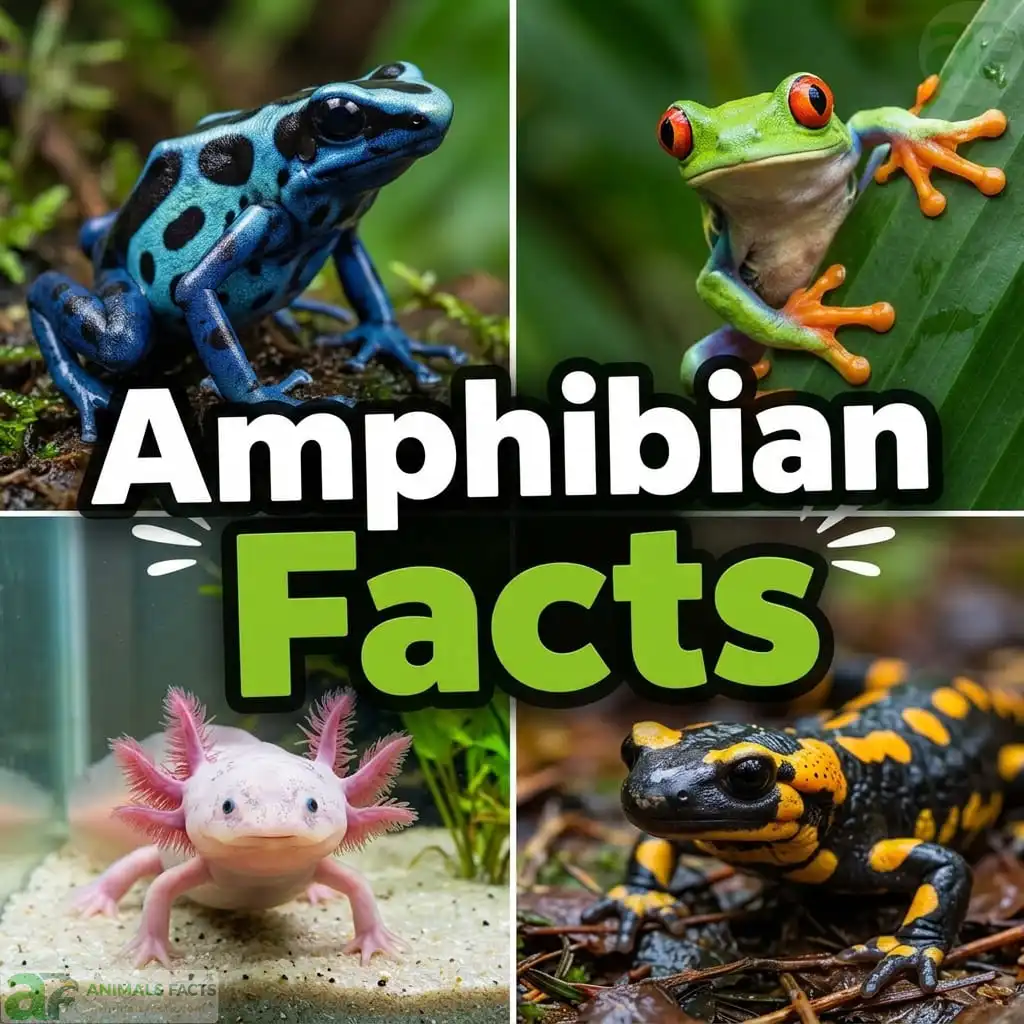
Amphibian Facts
| Feature | Details |
|---|---|
| Scientific Class | Amphibia |
| Kingdom | Animalia |
| Phylum | Chordata |
| Total Known Species | Approximately 8,000–8,500 species worldwide |
| Oldest Amphibian Group | Caecilians — closest to ancient amphibian ancestors |
| Habitat | Every continent except Antarctica; freshwater, terrestrial, and arboreal environments |
| Smallest Amphibian | Paedophryne amauensis (frog, Papua New Guinea) — 7.7 mm body length; smallest known vertebrate on Earth |
| Largest Amphibian | Chinese Giant Salamander (Andrias davidianus) — up to 1.8 meters and 60 kg |
| Fastest Amphibian | African Clawed Frog in water — bursts of approximately 15 km/h; Salamanders on land relatively slow |
| Longest Lifespan | Japanese Giant Salamander — confirmed over 50 years in captivity; Fire Salamander — up to 50 years |
| Diet | Carnivores as adults; many are herbivores as larvae (tadpoles) |
| Conservation Status | Over 2,000 species currently threatened — the most threatened vertebrate class on Earth |
| Global Population | Declining rapidly; over 40% of all amphibian species show population decreases |
| Unique Characteristic | Permeable skin; dual terrestrial and aquatic life cycle; ectothermic |
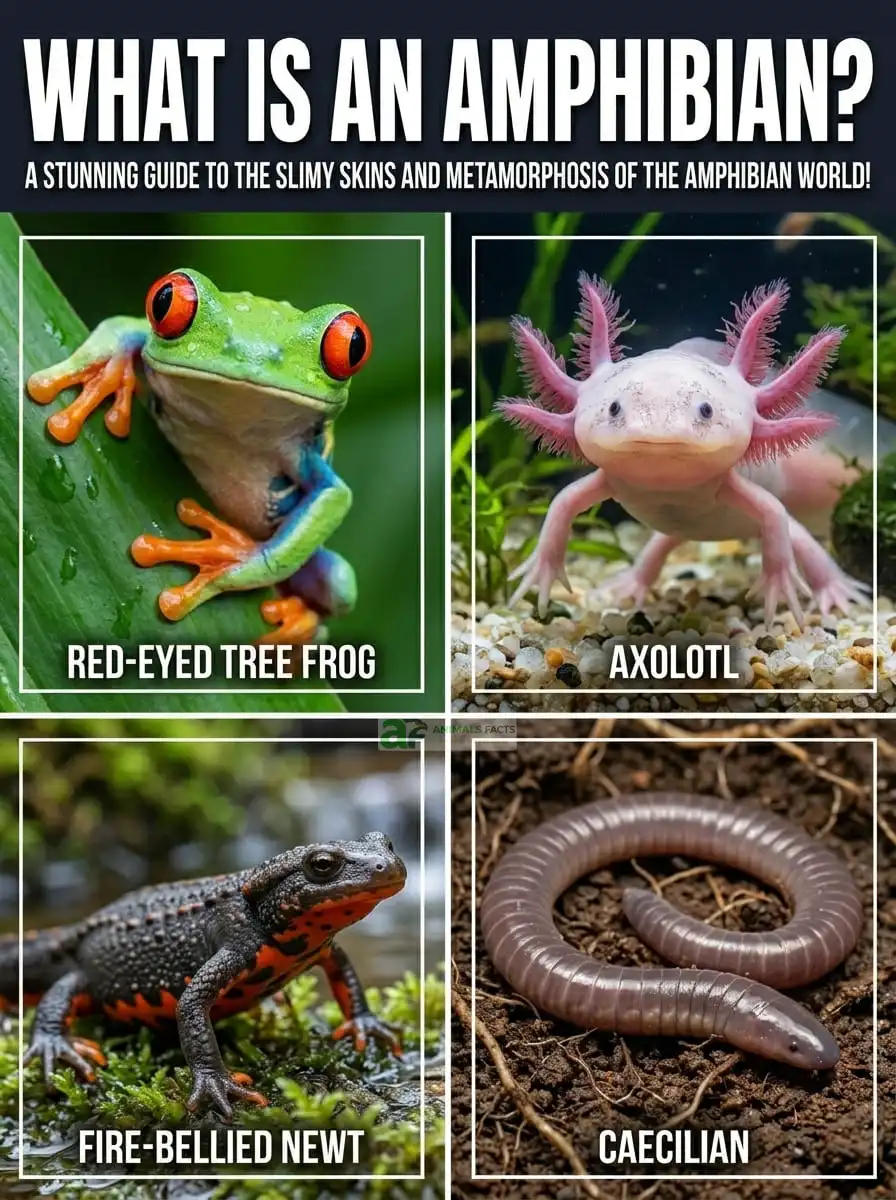
1. Introduction: What is an Amphibian?
Picture an animal that lives two completely different lives — one in the water, one on land. An animal whose skin breathes oxygen directly from the atmosphere, absorbs water without drinking a single drop, and secretes some of the most potent toxins ever discovered in the natural world. An animal whose ancestors were the first vertebrates to walk on land over 375 million years ago — pioneers that transformed the entire course of life on Earth. These are amphibians — and amphibian facts are among the most surprising, most scientifically important, and most urgently relevant in all of biology.
The word “amphibian” comes from the ancient Greek amphibios — meaning “living a double life.” It is a perfect description. Amphibians are the bridge between two worlds: the aquatic environment where most species breed, and the terrestrial environment where most species spend their adult lives. With nearly 8,500 known species distributed across every continent except Antarctica, they encompass extraordinary diversity — from the Goliath Bullfrog of Cameroon (the world’s largest frog, weighing over 3 kilograms) to the miniature Paedophryne amauensis of Papua New Guinea (the smallest vertebrate on Earth at just 7.7 mm), and from the brilliantly toxic Poison Dart Frogs of the Amazon to the ancient, serpentine Caecilians that most people have never heard of.
Yet amphibian facts carry a dark urgency alongside their wonder. Amphibians are the most threatened class of vertebrates on Earth. Over 40% of all species are declining. A devastating fungal disease called chytridiomycosis has already driven over 90 species to extinction since the 1970s — the greatest infectious disease impact on vertebrate biodiversity in recorded history. Understanding amphibians — their biology, their ecological role, their cultural significance, and the threats they face — has never been more important. This article is your complete guide to all of it.
2. Amphibian Species Overview & Classification
Amphibians occupy a unique evolutionary position — they are the oldest living lineage of terrestrial vertebrates, descended directly from the fish-like creatures that first crawled onto land during the Devonian Period approximately 375 million years ago.
What Defines an Amphibian?
All amphibians share these defining characteristics:
- Permeable, moist skin: Amphibian skin is thin, scaleless, and highly permeable — allowing gas exchange (breathing) and water absorption directly through the skin surface
- Ectothermic: Like reptiles, amphibians are cold-blooded — regulating body temperature through external sources
- Complex life cycle: Most species undergo metamorphosis — transforming from aquatic larvae (tadpoles or larvae with gills) into adults with lungs
- Dependence on moisture: Permeable skin makes amphibians highly vulnerable to desiccation — they must remain near water or in moist environments
- Carnivorous adults: Almost all adult amphibians are carnivores; many larvae are herbivores or omnivores
Major Amphibian Classification Table
| Order | Common Name | Approx. Species | Key Examples |
|---|---|---|---|
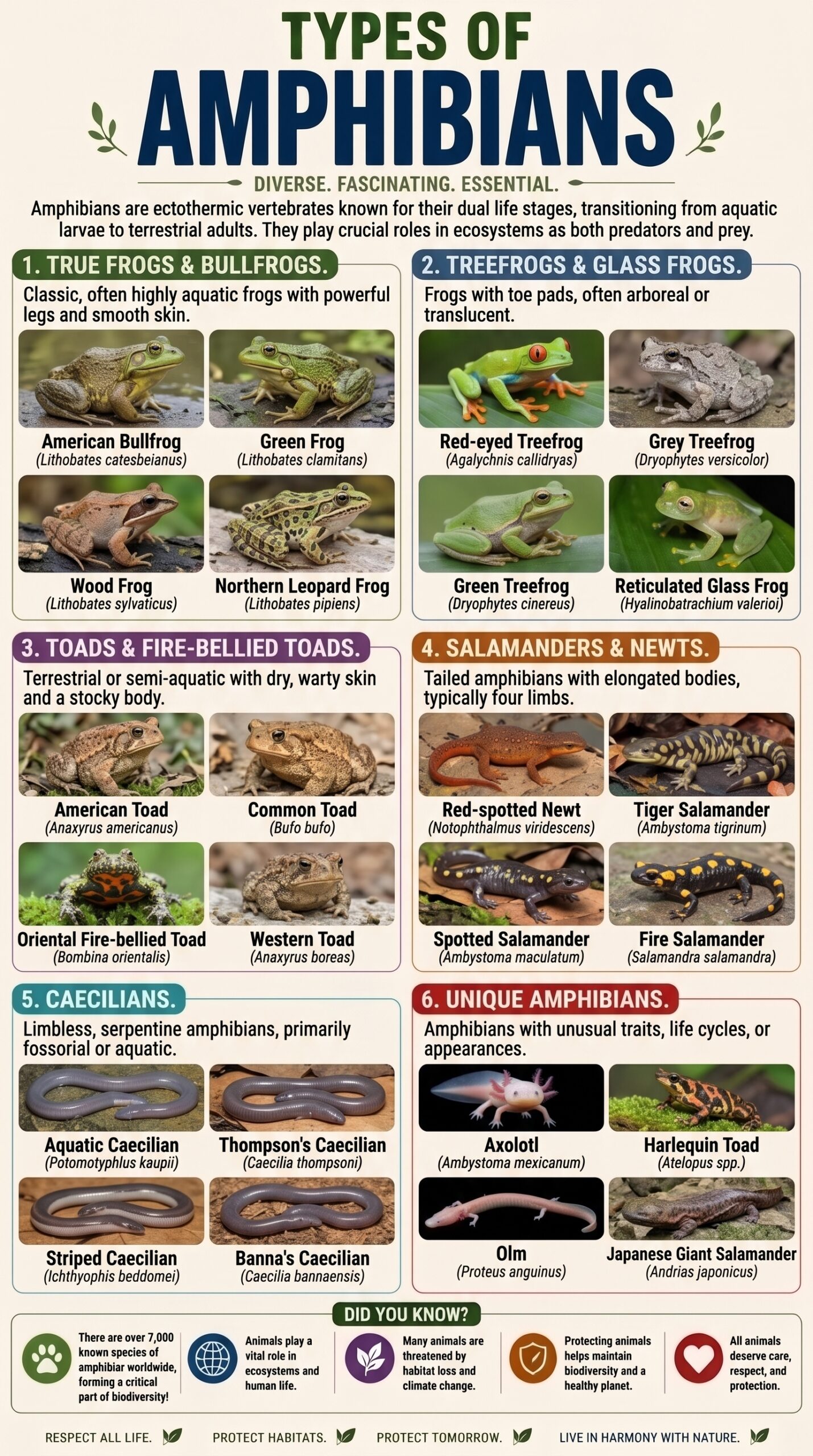
| Anura | Frogs & Toads | ~7,000 | Tree Frog, Poison Dart Frog, Bullfrog, Toad |
| Urodela | Salamanders & Newts | ~700 | Axolotl, Giant Salamander, Fire Salamander, Mudpuppy |
| Gymnophiona | Caecilians | ~220 | Rubber Eel, Boulenger’s Caecilian, Ringed Caecilian |
Species Evolution & Discovery Timeline
~375 million years ago: The first tetrapods — four-limbed vertebrates — emerged from water onto land during the Late Devonian Period. Tiktaalik roseae, discovered in Arctic Canada in 2004, represents one of the key transitional fossils between lobe-finned fish and the first amphibian-like tetrapods.
~340 million years ago: True amphibians — animals capable of both aquatic and terrestrial life — were well established during the Carboniferous Period, a warm, swampy era when giant amphibians were among the dominant land vertebrates. Some, like Prionosuchus, reached lengths of 9 meters.
~250 million years ago: The Permian-Triassic mass extinction devastated early amphibian diversity; survivors eventually gave rise to the three modern amphibian orders.
~250 million years ago: The divergence of the three modern orders — Anura (frogs), Urodela (salamanders), and Gymnophiona (caecilians) — is estimated to have occurred during the Triassic Period.
1758: Carl Linnaeus formally classified amphibians as a distinct group in Systema Naturae.
1768: Caecilians were formally described by European scientists, though they had been known to Indigenous peoples across tropical regions for thousands of years.
1861–1870s: European naturalists documented the extraordinary diversity of amphibians in tropical regions of South America and Southeast Asia during the Victorian era of natural history exploration.
1938: The Axolotl became one of the most studied laboratory amphibians after scientists discovered its extraordinary regenerative abilities.
2004: Discovery of Tiktaalik roseae in the Canadian Arctic provided one of the most complete transitional fossil records between fish and amphibians ever found.
2012: Paedophryne amauensis — a frog from Papua New Guinea measuring just 7.7 mm — was formally described and confirmed as the smallest known vertebrate on Earth.
2013–2020s: The chytridiomycosis fungal pandemic was fully characterized by scientists as the greatest infectious disease impact on vertebrate biodiversity in recorded history — driving at least 90 amphibian species to extinction and threatening hundreds more.
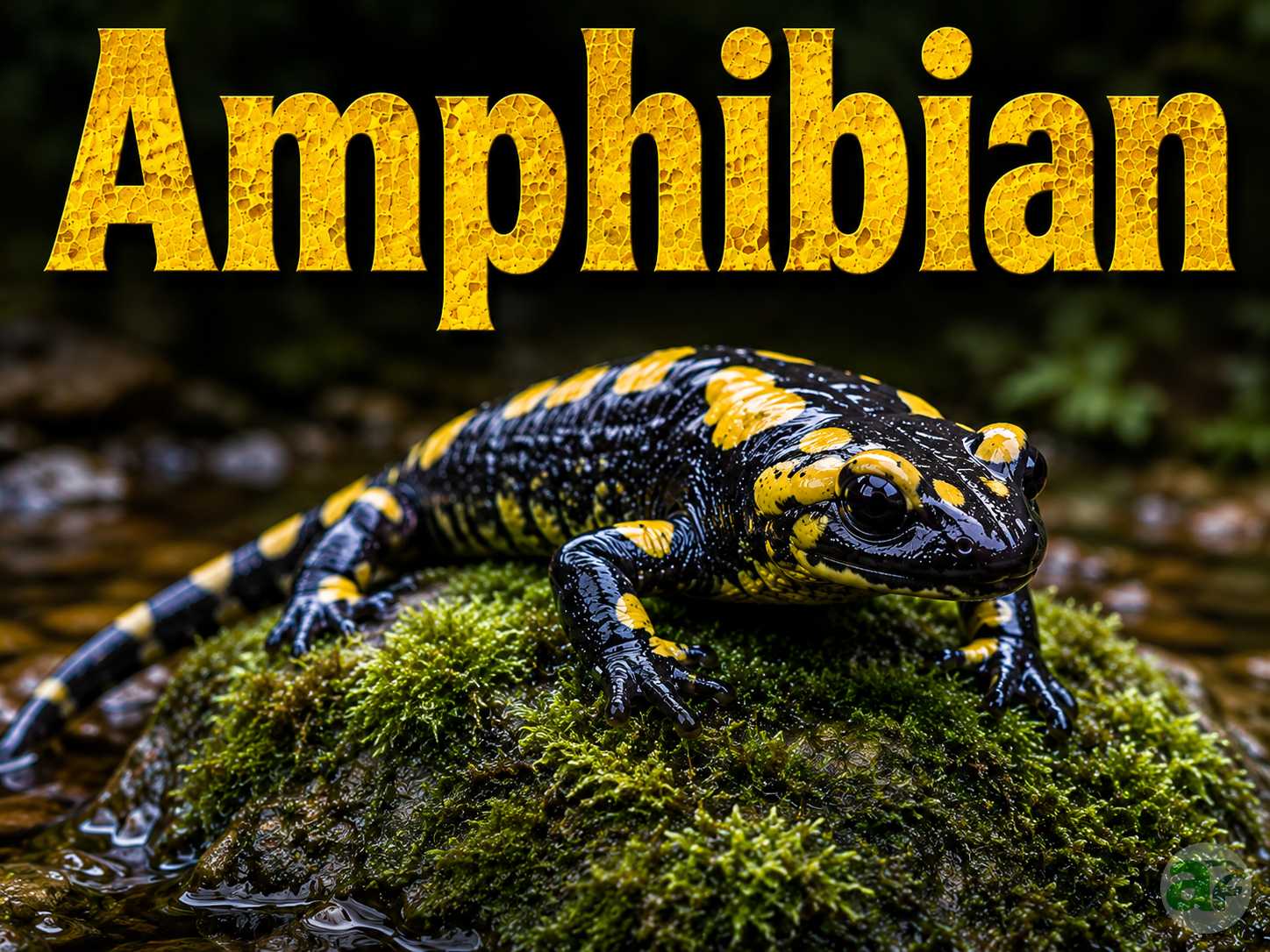
3. Amphibians Physical Description
Amphibians display some of the most remarkable physical adaptations in the entire animal kingdom — particularly given that many of them must function effectively in two completely different environments across a single lifetime.
Size Extremes
Smallest vertebrate on Earth: Paedophryne amauensis — a frog from Papua New Guinea described in 2012, measuring just 7.7 mm body length — smaller than the width of a human thumbnail.
Largest amphibian: The Chinese Giant Salamander (Andrias davidianus) reaches lengths of up to 1.8 meters and weights up to 60 kg — though critically endangered individuals of this size are now extremely rare. Historical accounts describe specimens exceeding 2 meters.
Largest frog: The Goliath Bullfrog (Conraua goliath) of Cameroon and Equatorial Guinea — up to 32 cm long and over 3.25 kg in weight — the heaviest frog on Earth.
Largest toad: The Cane Toad (Rhinella marina) — originally from South and Central America but now invasively established in Australia, Florida, and other regions — can reach weights over 2 kg.
The Extraordinary Amphibian Skin
The single most remarkable physical feature of all amphibians is their skin — and it deserves special attention, because it is unlike the skin of any other vertebrate group on Earth.
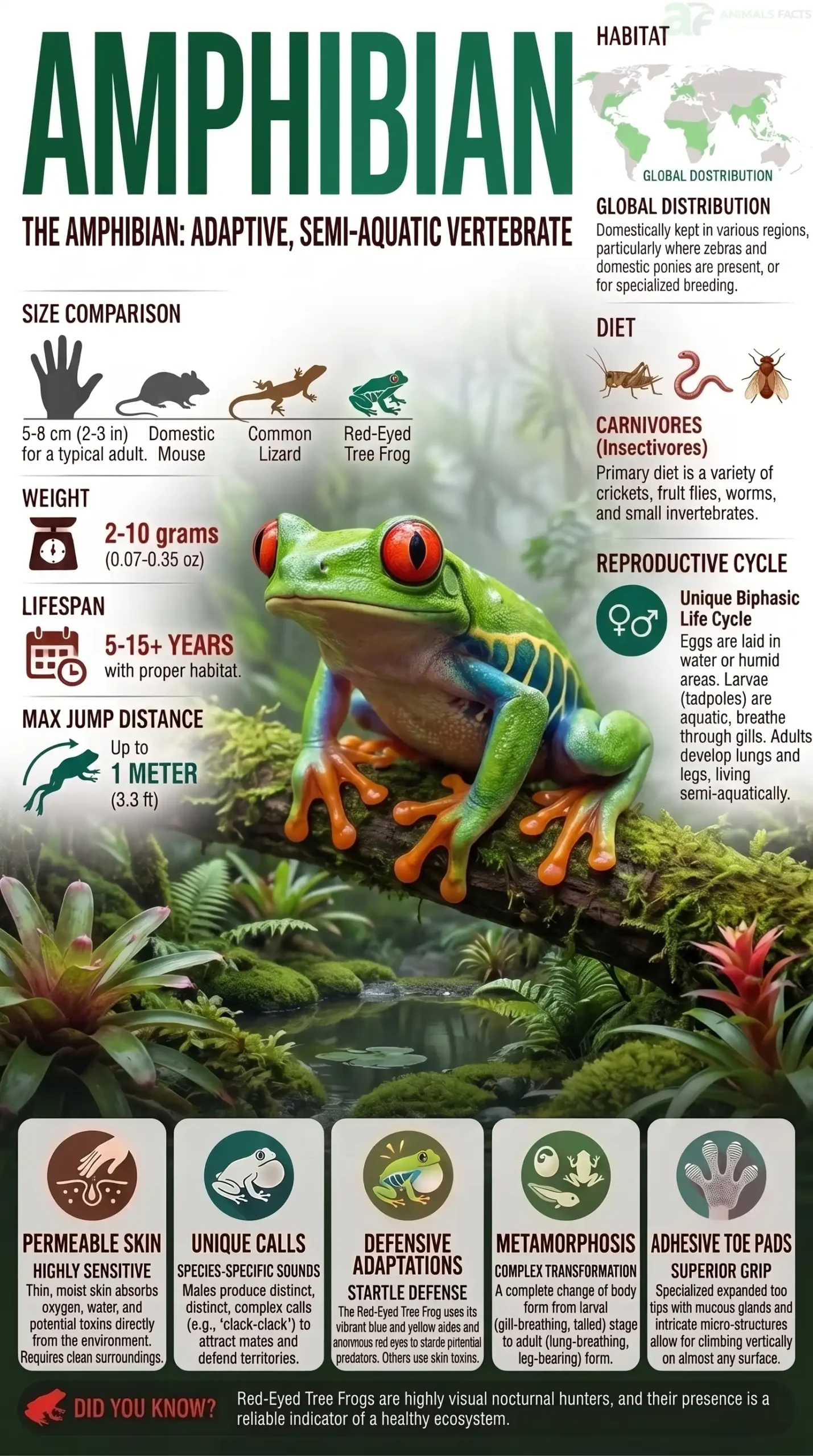
Amphibian skin is thin, moist, scaleless, and highly permeable. It functions simultaneously as:
- A respiratory organ: Up to 90% of an amphibian’s oxygen uptake can occur through the skin in some species — making the lungs secondary or even vestigial
- A water absorption organ: Amphibians do not drink water through their mouth — they absorb it entirely through their skin. Many species have specialized “drinking patches” on their belly and inner thighs where skin is particularly permeable to water uptake
- A chemical defense system: The skin glands of many amphibians produce powerful chemical deterrents — from mildly irritating secretions to the most potent biological toxins known to science
- A communication surface: Skin color patterns signal toxicity, reproductive readiness, and species identity
Skin Toxicity
Amphibian skin toxins range from mild to extraordinarily lethal:
Mildly toxic: Most toads produce bufadienolides — steroid compounds in their parotoid glands that cause nausea, arrhythmia, and paralysis in predators that mouth them. Unpleasant but not generally lethal to large animals.
Moderately toxic: Fire Salamanders produce samandarin — an alkaloid causing seizures and respiratory failure in small predators.
Lethally toxic: Poison Dart Frogs (family Dendrobatidae) are among the most toxic animals on Earth. The Golden Poison Frog (Phyllobates terribilis) of Colombia carries enough batrachotoxin in its skin to kill 10 adult humans or 20,000 mice — making it, gram for gram, one of the most poisonous animals ever discovered.
Did You Know? Poison Dart Frogs are not born toxic. They acquire their extraordinary toxins from the specialized insects they eat in the wild — particularly certain beetles and mites that contain plant-derived alkaloids. Captive-bred Poison Dart Frogs raised on a diet of fruit flies and crickets are completely non-toxic — demonstrating that their toxicity is entirely diet-dependent.
4. Top 25 Surprising & Interesting Amphibian Facts
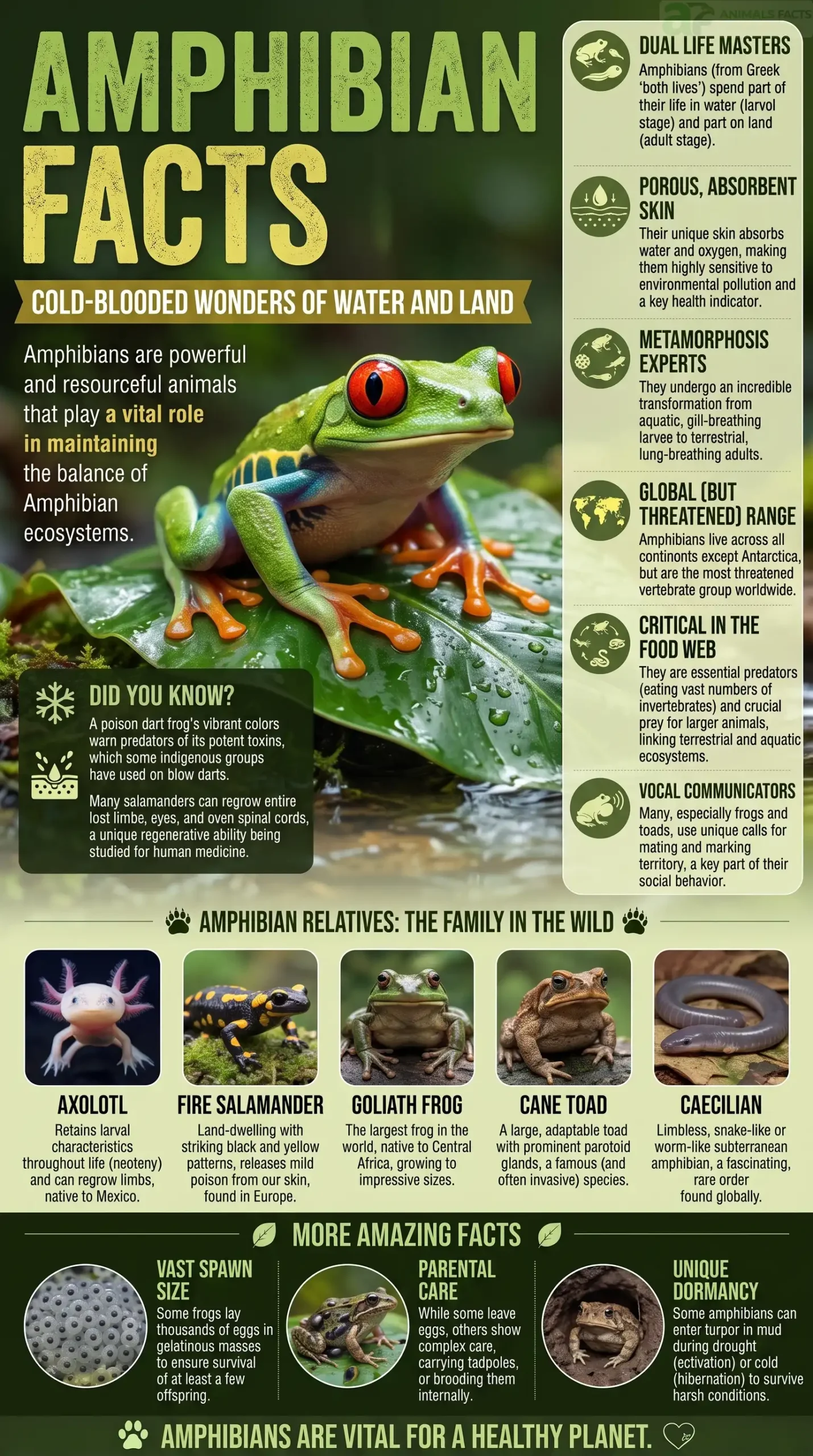
- Amphibians were the first vertebrates to walk on land — pioneers that transformed Earth’s ecology over 375 million years ago.
- The Paedophryne amauensis frog of Papua New Guinea is the smallest vertebrate on Earth at just 7.7 mm — discovered as recently as 2012.
- The Golden Poison Frog (Phyllobates terribilis) carries enough toxin in its skin to kill 10 adult humans — the most toxic animal relative to body size yet confirmed.
- The Axolotl can regenerate not just limbs but also portions of its heart, spine, and brain — inspiring major biomedical research into human tissue regeneration.
- The African Lungfish can survive complete desiccation — sealing itself inside a mucus-lined burrow in dried mud and entering suspended animation for up to 4 years waiting for rain.
- The Wood Frog of North America freezes solid in winter — up to 65% of its body water becomes ice, its heart stops completely, and it appears dead for months before thawing and hopping away in spring.
- The Chinese Giant Salamander is the world’s largest amphibian and one of the most endangered — fewer than 50,000 are believed to survive in the wild, almost all in captivity.
- Male Midwife Toads carry fertilized eggs wrapped around their hind legs for weeks, periodically visiting water to keep them moist, until the tadpoles are ready to hatch.
- The Hairy Frog (Trichobatrachus robustus) of Central Africa deliberately breaks its own toe bones to create retractable bone claws used in defense — earning it the nickname “Wolverine Frog.”
- Caecilians — the least-known order of amphibians — are limbless, nearly blind, burrowing creatures that superficially resemble large earthworms and were unknown to Western science until the 18th century.
- The Gastric-brooding Frog of Australia (now extinct) swallowed its fertilized eggs, turned off stomach acid production entirely, and gave birth through its mouth — one of the most extraordinary reproductive strategies ever documented.
- Some salamander species — including the Cave Salamander of Slovenia — can survive for over 100 years, making them among the longest-lived amphibians known.
- The Glass Frog has transparent skin on its underside — its beating heart, flowing blood, and developing eggs are all visible through the skin to the naked eye.
- Frogs cannot survive in salt water — their permeable skin allows salt to diffuse in, fatally disrupting their body chemistry. Only the Crab-eating Frog of Southeast Asia has evolved tolerance for brackish water.
- The Surinam Toad has no tongue, no teeth, and an extraordinary reproductive strategy — the female’s back absorbs fertilized eggs, which develop through the entire metamorphic cycle embedded in the skin, eventually erupting through the skin as fully formed juveniles.
- Tree Frogs produce a specialized mucus on their toe pads that creates wet adhesion — similar to how a wet piece of paper sticks to glass — allowing them to cling to smooth vertical surfaces and hang from glass upside down.
- The Olm (Proteus anguinus) — a blind cave salamander from the caves of Slovenia — can survive without food for up to 10 years and is estimated to live for over 100 years.
- Amphibians are the world’s most threatened vertebrate class — more than 40% of all species are declining, and more than 200 species are believed to have gone extinct in the last 50 years.
- The American Bullfrog has been introduced globally and is classified as one of the 100 worst invasive species in the world by the IUCN — it eats virtually anything that fits in its enormous mouth, including birds, small mammals, and other frogs.
- Some frog species have evolved antifreeze proteins in their blood — allowing them to survive being partially frozen solid for months during winter hibernation without cell damage.
- Salamander larvae of some species are cannibalistic — they develop enlarged heads and specialized teeth specifically adapted for eating smaller members of their own species.
- The Túngara Frog of Central America creates a foam nest on the water surface by whipping a protein-rich secretion into a foam that insulates and protects eggs from temperature extremes, desiccation, and predators.
- Caecilian mothers allow their young to peel and eat the specialized outer layer of their skin — a behavior called dermatophagy — providing the young with rich nutrients in the first weeks of life.
- The Goliath Bullfrog is one of the only frog species known to actively construct its own breeding pond — clearing rocks and vegetation to create suitable nesting pools, behavior remarkable in an amphibian.
- The fungal disease chytridiomycosis, caused by Batrachochytrium dendrobatidis (Bd), has infected over 700 amphibian species and driven at least 90 species to extinction — the greatest documented loss of biodiversity from a single pathogen in vertebrate history.
5. Amphibians Fun Facts for Kids
- Amphibians were the dominant land vertebrates on Earth for over 100 million years before dinosaurs appeared.
- The Axolotl never fully grows up — it retains its juvenile aquatic form for its entire life through a process called neoteny.
- Poison Dart Frogs are so dangerous that Indigenous hunters in Colombia use their skin secretions to coat blowpipe darts for hunting large game — the practice that gave the group its common name.
- The Wood Frog survives being completely frozen solid — its heart stops, its brain activity ceases, and it has no vital signs for months.
- Salamanders are among the most biologically important research animals in science — their regenerative abilities continue to revolutionize biomedical research.
- The African Clawed Frog was used as a human pregnancy test from the 1930s to the 1960s — a woman’s urine was injected into the frog, which would lay eggs within 12 hours if the woman was pregnant.
- Some Caecilian species give birth to live young — a remarkably mammal-like reproductive strategy for an amphibian.
- Frogs do not close their eyes to blink — they close their eyes by retracting their eyeballs downward into their skull, and the eyeball pressing down on the roof of the mouth actually helps them swallow food.
- The Olm cave salamander navigates in complete darkness using a combination of chemical senses, electroreception, and a rudimentary sensitivity to the Earth’s magnetic field.
- Salamander larvae breathe through external gills that grow like feathery crowns around their heads — similar to those of the axolotl.
- A group of frogs is called an “army.” A group of toads is called a “knot.” A group of salamanders is called a “band.”
- Amphibians regulate their body temperature partly by choosing their position — basking in sunlight to warm up and retreating into shade, water, or burrows to cool down.
6. Natural Habitat of Amphibians
Amphibians are highly adaptable in terms of habitat — yet their fundamental dependence on moisture makes them uniquely vulnerable to environmental change. They are found on every continent except Antarctica and in an extraordinary variety of environments — from tropical rainforests to desert oases, from sea level to high-altitude mountain streams.
Major Amphibian Habitat Types
Tropical Rainforests: The most species-rich amphibian habitat on Earth. The Amazon Basin alone contains over 1,000 frog species. The Congo Basin, Southeast Asian rainforests, and Central American cloud forests are also extraordinarily rich in amphibian diversity. Tropical rainforests host the vast majority of the world’s tree frog, poison dart frog, and caecilian diversity.
Temperate Forests: Salamanders are particularly characteristic of temperate North American and European forests. The Appalachian Mountains of the eastern United States are known as the “salamander capital of the world” — hosting more salamander species per unit area than anywhere else on Earth.
Freshwater Ecosystems: Most amphibians breed in freshwater — streams, ponds, lakes, flooded forests, and even temporary rain pools. Many species are restricted to specific stream types or water chemistry conditions.
Deserts: Several amphibian species have evolved remarkable adaptations for desert survival. The Water-holding Frog of Australia stores water in its bladder and body tissues, buries itself in mud, and secretes a waterproof mucus cocoon — emerging only when heavy rainfall breaks its torpor, sometimes after years of dormancy.
Underground / Subterranean: Caecilians are almost entirely subterranean, burrowing through soil in tropical regions. The Olm salamander of Central Europe lives exclusively in underground cave systems, never emerging into surface environments.
High Altitude: Several frog species have adapted to high-altitude environments. The Titicaca Water Frog lives in Lake Titicaca at 3,800 meters above sea level in the Andes. The Common Toad ranges up to 8,000 meters in some parts of the Himalayas.
Arboreal (Tree-dwelling): Tree frogs have colonized the forest canopy across tropical and subtropical regions worldwide — using adhesive toe pads to navigate vertical surfaces and often completing their entire lives without descending to the forest floor.
Habitat Range by Continent
| Continent | Notable Amphibian Groups | Approximate Species |
|---|---|---|
| South America | Poison Dart Frogs, Tree Frogs, Horned Frogs, Caecilians, Giant Salamanders | 3,000+ |
| Asia | Giant Salamanders, Caecilians, Tree Frogs, Toads, Narrow-mouthed Frogs | 2,000+ |
| Africa | Goliath Bullfrog, Hairy Frog, Reed Frogs, Foam Nest Frogs, Caecilians | 1,200+ |
| North America | Salamanders, Mudpuppies, Hellbenders, American Bullfrog, Toads | 1,000+ |
| Australia & Oceania | Gastric-brooding Frog (extinct), Water-holding Frog, Tree Frogs | 400+ |
| Europe | Fire Salamander, Common Toad, Tree Frog, Olm, Newts | 200+ |
| Antarctica | No amphibian species | 0 |
Did You Know? The Amazon Basin of South America is the single most biodiverse amphibian region on Earth. New frog species are still being discovered in the Amazon at the remarkable rate of approximately 10–20 new species per year — even as existing species face escalating threats from deforestation, disease, and climate change.
7. Amphibians Diet & Feeding Behavior
One of the most fascinating aspects of amphibian biology is the dramatic transformation in diet that accompanies their metamorphosis from larva to adult — in many species, the animal’s entire dietary strategy changes completely during this transition.
Larval Diet
Most amphibian larvae are herbivores or omnivores — feeding on algae, aquatic plant material, detritus (decomposing organic matter), and microorganisms. Tadpoles typically graze on algae coating underwater surfaces using specialized rasping mouthparts. Some tadpole species — including those of the Horned Frog and certain tree frogs — are carnivorous from hatching, consuming other tadpoles, invertebrates, and even small vertebrates.
Adult Diet
Adult amphibians are almost universally carnivores, consuming a wide variety of invertebrates and, in larger species, small vertebrates. The vast majority are ambush or sit-and-wait predators — remaining motionless until suitable prey approaches within striking range.
Feeding Methods
Ballistic tongue strike: Used by most frogs and toads — the tongue is launched forward with extraordinary speed, with a soft, sticky surface that captures prey through adhesion. Frog tongues are up to 10 times softer than human tongues — the unique softness maximizes adhesion by conforming to irregular prey surfaces.
Suction feeding: Used by many aquatic salamanders and larval amphibians — the mouth opens rapidly, creating suction that pulls prey in.
Direct bite: Used by large species like the Chinese Giant Salamander, Hellbender, and the Horned Frog (Ceratophrys) — which ambushes prey from a concealed position and engulfs it with its enormous mouth.
Filter feeding: Some larval amphibians (certain tadpoles) filter microorganisms from water using gill rakers.
Diet Breakdown Table
| Amphibian Group | Primary Food | Secondary Food | Feeding Method |
|---|---|---|---|
| Small Frogs & Toads | Insects (70%) | Spiders, worms (30%) | Tongue strike |
| Large Frogs (Bullfrog, Horned Frog) | Insects, small vertebrates (60%) | Fish, small mammals, other frogs (40%) | Ambush; gape and engulf |
| Tree Frogs | Flying insects (75%) | Small invertebrates (25%) | Ballistic tongue; aerial strike |
| Poison Dart Frogs | Ants, mites, beetles (90%) | Other small invertebrates (10%) | Active foraging; tongue strike |
| Giant Salamanders | Fish, crayfish (60%) | Frogs, small mammals, invertebrates (40%) | Ambush; suction bite |
| Fire Salamander | Earthworms, slugs (60%) | Insects, small amphibians (40%) | Active foraging |
| Caecilians | Earthworms, termites (70%) | Soil invertebrates, small vertebrates (30%) | Bite and twist; subterranean pursuit |
| Tadpoles (general) | Algae, detritus (80%) | Microorganisms, plant matter (20%) | Grazing; filter feeding |
Did You Know? The Pacman Frog (Ceratophrys ornata) of South America is named for its resemblance to the video game character — it is essentially a giant mouth attached to a small body. It is completely ambush-adapted, sitting motionless for days at a time and engulfing virtually anything that moves past it — including mice, small birds, and other frogs up to its own body size. It has been described by herpetologists as “a stomach with legs.”
8. Amphibians Reproduction & Life Cycle
The amphibian life cycle is one of the most extraordinary biological transformations in the natural world. Metamorphosis — the radical reshaping of the entire body plan from aquatic larva to terrestrial adult — is the defining characteristic of most amphibian species and one of the most studied processes in all of developmental biology.
The Metamorphic Life Cycle
Stage 1 — Eggs: Most amphibians lay eggs in or near water. Eggs are typically encased in a transparent jelly that provides protection and moisture. Some species lay individual eggs; others deposit masses of thousands.
Stage 2 — Larvae: Eggs hatch into aquatic larvae — tadpoles in frogs and toads, larvae in salamanders and caecilians. Larvae breathe through external or internal gills, have tails, and are largely or entirely aquatic.
Stage 3 — Metamorphosis: Triggered by thyroid hormones, metamorphosis produces dramatic physical changes: gills are absorbed, lungs develop, limbs emerge, the digestive system restructures (in herbivorous tadpoles transitioning to carnivorous adults), the tail is absorbed (in frogs), and the skin changes in structure and chemistry.
Stage 4 — Juvenile: The newly metamorphosed juvenile resembles a small adult and begins terrestrial life, though it must remain in moist environments.
Stage 5 — Adult: Sexually mature individuals capable of reproduction; most return to water to breed.
Remarkable Variations
Direct development: Some species skip the aquatic larval stage entirely — eggs hatch as fully formed miniature adults. Many tropical tree frogs and forest salamanders use this strategy, eliminating dependence on standing water for reproduction.
Neoteny (Paedomorphosis): Some salamanders — most famously the Axolotl — never undergo full metamorphosis, retaining juvenile aquatic features throughout their entire adult life.
Foam nest construction: Many tree frogs and foam nest frogs whip secretions into protective foam nests above water — the foam insulates eggs from temperature extremes and predators.
Terrestrial egg-laying: Some species lay eggs in moist terrestrial environments — under logs, in leaf litter, in bromeliads, or in tree holes — completely bypassing standing water.
Live birth (vivipary): Several caecilian species and a handful of salamander species give birth to fully developed live young.
Mating Behaviors
Chorus calling: Male frogs and toads produce species-specific advertisement calls — often in enormous choruses containing thousands of individuals — to attract females and deter rival males. The Coqui Frog of Puerto Rico produces calls reaching 100 decibels — as loud as a lawnmower.
Amplexus: The characteristic mating embrace of most frogs and toads — the male grips the female from behind (in various anatomical positions depending on species) and fertilizes eggs externally as she releases them.
Internal fertilization: Salamanders and caecilians typically use internal fertilization. Male salamanders deposit spermatophores (sperm packets) that females collect with their cloaca.
Lifespan Comparison Table
| Species | Average Lifespan | Record/Maximum |
|---|---|---|
| Poison Dart Frog | 3–6 years (wild) | ~10 years (captivity) |
| Common Toad | 10–12 years (wild) | ~40 years (captivity) |
| American Bullfrog | 7–9 years (wild) | ~16 years (captivity) |
| Fire Salamander | 14–20 years (wild) | ~50 years (captivity) |
| Axolotl | 5–6 years (wild) | ~15 years (captivity) |
| Japanese Giant Salamander | 30–40 years (wild) | ~52 years (captivity) |
| Olm (Cave Salamander) | ~58 years (estimated wild) | ~100+ years (estimated) |
9. Social Behavior & Communication
Amphibians have long been considered simple, solitary, and communicatively limited animals. Decades of research have overturned that view — revealing sophisticated communication systems, unexpected social complexity, and in some species, surprisingly elaborate social structures.
Vocal Communication
Frogs and toads are among the most vocal animals on Earth relative to body size. Their calls serve multiple functions:
Advertisement calls: Species-specific calls produced by males to attract females of the same species and deter rival males. Each species has a unique call — allowing biologists to identify species by sound alone and allowing frogs to locate appropriate mates in dense mixed-species choruses.
Aggressive calls: Produced by males defending territories or calling sites from rival males.
Release calls: Produced when a frog is grasped by another individual of either species or sex in an inappropriate amplexus attempt — signaling the mistake.
Distress calls: High-pitched screams produced by some species when grabbed by a predator — potentially startling the predator into releasing the frog.
Rain calls: Some species produce calls specifically in response to falling atmospheric pressure preceding rainfall — triggering breeding aggregations.
Chemical Communication
Salamanders and caecilians rely heavily on chemical signals (pheromones) for communication. Male salamanders deposit chemical trails and nasal secretions that convey information about species identity, sex, reproductive condition, and individual identity to potential mates and rivals.
Social Structures
Largely solitary: Most amphibians outside of breeding season are solitary, territorial, and intolerant of conspecifics (members of the same species) except as potential mates.
Breeding aggregations: Many species converge in large numbers at breeding sites — creating temporary social aggregations of hundreds to thousands of individuals. The Boreal Toad of North America and the European Common Toad form massive annual breeding aggregations at traditional pond sites.
Parental care: More common among amphibians than traditionally recognized. Beyond the elaborate parental behaviors of caecilians (skin feeding) and certain frogs (egg carrying, tadpole transport), several frog species guard clutches of eggs, fans them with their legs to maintain oxygenation, and transport hatching tadpoles to water on their backs.
Did You Know? The male Darwin’s Frog of Chile and Argentina takes tadpole parental care to an extraordinary extreme — he scoops newly hatched tadpoles into his vocal sac, where they develop through metamorphosis inside his throat, emerging as fully formed froglets up to 60 days later. He literally incubates his offspring in his own mouth throughout their entire larval development.
10. Predators & Defense Mechanisms
Amphibians occupy a middle position in most food webs — they are significant predators of invertebrates and each other, and they are themselves prey for a very wide range of larger animals. This dual role has driven the evolution of some of the most spectacular and diverse defensive strategies in the entire animal kingdom.
Common Amphibian Predators
Birds: Herons, storks, egrets, kingfishers, and numerous raptor species prey heavily on frogs, toads, and salamanders. In many ecosystems, birds are the primary amphibian predators.
Snakes: Many snake species specialize in amphibian prey — garter snakes, water snakes, and various tropical species feed almost exclusively on frogs and salamanders.
Fish: A major predator of amphibian eggs and larvae (tadpoles). The introduction of fish to naturally fishless mountain ponds and streams has been devastating for amphibian populations worldwide.
Mammals: Otters, raccoons, hedgehogs, shrews, foxes, and domestic cats all prey on amphibians.
Other amphibians: Large frogs such as the American Bullfrog and Horned Frog readily eat smaller frogs, toads, and salamanders. Cannibalism is common in many species, particularly at the larval stage.
Invertebrates: Large diving beetles, dragonfly larvae, leeches, and predatory aquatic insects are significant predators of eggs and small larvae.
Defense Mechanisms
Toxic skin secretions: The most widespread amphibian defense. Ranging from mild irritants to lethal poisons — virtually all amphibians produce some level of skin secretion that is deterrent or harmful to potential predators.
Warning coloration (Aposematism): Brightly colored frogs — particularly Poison Dart Frogs — advertise their toxicity through vivid red, yellow, orange, and blue coloration that predators learn to associate with danger. This strategy only works because the toxins are genuinely dangerous — the bright colors are an honest warning, not a bluff.
Cryptic coloration (Camouflage): The majority of amphibian species rely on camouflage as their primary defense. Many tree frogs and salamanders are virtually invisible against their natural backgrounds. The Vietnamese Mossy Frog (Theloderma corticale) has a bumpy, mottled green and brown skin that makes it indistinguishable from moss-covered rock surfaces.
Unken reflex: Several salamander and newt species — including the Fire-bellied Toads and California Newt — arch their back and curl their tail upward when threatened, displaying a brightly colored belly that warns of toxicity. This dramatic warning posture is called the “unken reflex” or “unkenreflex.”
Inflation: The Common Toad inflates its body by gulping air and stands on extended legs when threatened — making itself appear significantly larger to deter predators.
Bone claw defense: The Hairy Frog (Trichobatrachus robustus) of Central Africa deliberately breaks its own toe bones when threatened, forcing sharp bone fragments through the skin to create retractable claws — the only amphibian known to use bone as a weapon in active defense.
Freeze survival: The Wood Frog and several other North American frog species can survive being frozen solid in winter — their body chemistry produces cryoprotectants that prevent lethal ice crystal formation in cells during freezing temperatures.
11. Amphibian Facts for Kids
Hey kids — welcome to the amazing world of amphibians! These creatures are absolutely incredible, and once you learn some of these facts, you will never look at a frog or salamander the same way again!
- Frogs were the first animals with a backbone to live on land! Their ancient ancestors crawled out of the sea over 375 million years ago — long before dinosaurs existed.
- The Wood Frog freezes completely solid in winter — its heart stops, its blood stops flowing, and it has no vital signs at all. Then in spring, it thaws out and hops away like nothing happened!
- Poison Dart Frogs are so toxic that just touching one with your bare hands could be dangerous — yet they are only the size of your thumbnail!
- Salamanders can regrow lost limbs — scientists study them to learn how this extraordinary healing might one day help injured humans.
- Frogs drink through their skin, not their mouth — they sit in shallow water and absorb it directly through special patches on their belly!
- The Glass Frog has a see-through tummy — you can watch its heart beating and see all its organs clearly through its skin!
- The Olm cave salamander can go without eating for 10 years and may live for 100 years — all while living in total darkness underground!
- The Goliath Bullfrog is the world’s biggest frog — it is as heavy as a small cat and its legs are so powerful it can jump over 3 meters in a single leap!
Did You Know? Scientists discovered that the African Clawed Frog can be used as a pregnancy test! Between the 1930s and 1960s, doctors would inject a small amount of a pregnant woman’s urine into the frog. If she was pregnant, her hormones would cause the frog to lay eggs within 12 hours. This was one of the first reliable human pregnancy tests ever developed — and it was entirely based on an amphibian!
12. Relationship with Humans
The relationship between humans and amphibians spans thousands of years — encompassing food, medicine, mythology, scientific research, and increasingly urgent conservation concern.
Amphibians as Food
Frogs legs have been consumed as food for thousands of years across multiple cultures. France is perhaps most famously associated with frog consumption, though China and Indonesia are the largest consumers globally — together accounting for the majority of the estimated 200–1,000 million frogs consumed as food worldwide each year. The American Bullfrog and the Edible Frog of Europe are the most commonly consumed species. Large-scale wild collection for the food trade has significantly depleted frog populations in several countries and regions.
Amphibians in Medicine
Amphibians have contributed to human medicine in ways that are only beginning to be fully appreciated:
Epibatidine — a powerful painkiller isolated from the skin of the Phantasmal Poison Frog (Epipedobates tricolor) of Ecuador; approximately 200 times more powerful than morphine and completely non-addictive, it inspired a generation of synthetic pain relief research.
Dermaseptins — antimicrobial peptides from the skin of Phyllomedusa tree frogs (South America) with potent activity against bacteria, fungi, and even certain viruses; actively researched as potential antibiotics in the era of antibiotic resistance.
Magainins — antimicrobial peptides from the African Clawed Frog skin; in clinical trials for treating diabetic ulcers and other difficult-to-treat infections.
Caerulein — a peptide from the skin of the Green Tree Frog (Australia) used as a diagnostic tool in gastroenterology, stimulating pancreatic enzyme secretion.
The human pregnancy test based on the African Clawed Frog (see Facts for Kids section) was one of the first reliable biological pregnancy tests ever developed and was used clinically for decades.
Amphibians as Research Animals
The Axolotl is one of the most important research animals in modern biomedical science — studied for tissue regeneration, developmental biology, and genetics. The African Clawed Frog is among the most widely used vertebrate model organisms in cell and developmental biology. Frog embryos — particularly those of the Xenopus species — have been used in biological research since the 1930s and continue to yield fundamental insights into developmental biology, genetics, and cell signaling.
13. Amphibians Conservation Status & Threats
Amphibians are the most threatened class of vertebrates on Earth — facing a crisis of such severity that scientists describe it as the “amphibian extinction crisis.” The scale and speed of amphibian declines is without precedent in the history of vertebrate conservation.
Global Conservation Data (2026)
| IUCN Category | Number of Amphibian Species |
|---|---|
| Critically Endangered | 500+ |
| Endangered | 800+ |
| Vulnerable | 700+ |
| Near Threatened | 300+ |
| Data Deficient | 1,400+ (unknown status) |
| Extinct since 1970 | 90+ confirmed; possibly 200+ |
Major Threats in Detail
Chytridiomycosis: The single greatest biological threat in the history of amphibian conservation. Caused by two related fungal pathogens — Batrachochytrium dendrobatidis (Bd) and Batrachochytrium salamandrivorans (Bsal) — these diseases attack the amphibian skin, disrupting electrolyte absorption and causing cardiac arrest. Bd has infected over 700 species and driven at least 90 to extinction. Bsal — which appears to have originated in Asian salamander trade — is particularly threatening to European and North American salamander diversity and is considered one of the most urgent emerging wildlife disease threats worldwide.
Habitat Loss: Deforestation, wetland drainage, agricultural expansion, urbanization, and water diversion destroy and fragment amphibian habitat at an accelerating global rate. Amphibians’ dependence on specific microhabitats — particular stream types, specific moisture conditions, intact forest structure — makes them especially sensitive to habitat alteration.
Climate Change: Shifting precipitation patterns, altered seasonal timing, increased drought frequency, and rising temperatures affect amphibian breeding success, development rates, disease susceptibility, and habitat availability. Many high-altitude amphibian species have extremely limited ranges and no capacity to move to cooler climates as temperatures rise.
Pollution: Agricultural pesticides and herbicides, particularly atrazine (the most widely used herbicide in the world), have been shown to cause sex reversal and reproductive failure in frogs at concentrations found in natural waterways. Acid rain, heavy metal contamination, and endocrine-disrupting chemicals all negatively affect amphibian populations near agricultural and industrial areas.
Invasive Species: Introduced fish (trout, bass, perch) have devastated amphibian populations in mountain lakes and streams worldwide. The American Bullfrog — introduced globally as a food species and through the pet trade — is classified as one of the 100 worst invasive species on Earth: it eats virtually any amphibian it encounters and carries Bd without being fatally affected.
Wildlife Trade: Millions of amphibians are traded annually for the pet trade, food markets, and traditional medicine — both legally and illegally. The Asian salamander trade is believed to be the primary vector through which Bsal spread from Asia to Europe.
Did You Know? The fungal disease chytridiomycosis has been called by scientists “the worst infectious disease ever recorded among vertebrates in terms of the number of species impacted and the rapidity of its spread.” It has caused population declines in over 500 amphibian species on every continent where amphibians occur — and its spread continues to accelerate globally.

14. Famous Amphibians
The Gastric-Brooding Frog – Extinct Marvel
The Southern Gastric-brooding Frog (Rheobatrachus silus) of Queensland, Australia, was one of the most extraordinary animals ever discovered. The female swallowed her fertilized eggs, completely shut down her stomach acid production through a chemical secreted by the tadpoles, and gave birth through her mouth 6–7 weeks later as fully formed froglets. Scientists believed this discovery could revolutionize ulcer and acid reflux treatment in humans. Tragically, the species went extinct in 1981 — just 8 years after its discovery — due to chytridiomycosis. Its sister species, the Northern Gastric-brooding Frog, went extinct in 1985. The extraordinary reproductive strategy died with them.
Kermit – The World’s Most Famous Amphibian
Kermit the Frog — created by puppeteer Jim Henson in 1955 and first appearing on local television in Washington D.C. — is arguably the most recognizable amphibian in human cultural history. Initially made from a discarded coat and ping-pong ball eyes, Kermit became the anchor of The Muppet Show, one of the most internationally successful television programs ever made, and has appeared in films, commercials, and cultural events worldwide for over 70 years. His famous reflection “It’s not easy being green” has become a broadly applicable cultural touchstone well beyond its original context.
Mr. Toad – The Literary Amphibian
Mr. Toad — the extravagant, impulsive, and irresistibly charming toad from Kenneth Grahame’s 1908 novel “The Wind in the Willows” — is one of the most beloved animal characters in English literature. Toad Hall and its reckless owner have inspired theatrical productions, Disney adaptations, and generations of readers since the novel’s publication.
The Axolotl of Indiana University
The axolotl colony maintained at Indiana University — the world’s most important axolotl research population — has supplied research institutions worldwide with animals since the 1970s and has been central to some of the most significant discoveries in regenerative biology. Individual axolotls within this colony have enabled groundbreaking research into limb regeneration, heart repair, spinal cord regeneration, and cancer resistance — making them collectively among the most scientifically valuable amphibian individuals ever maintained.
Ole and Terri – The African Clawed Frogs of Science
The African Clawed Frog (Xenopus laevis) has been used in biological research since the 1930s and is kept in research laboratories across every continent. Individual laboratory colonies — particularly at the Medical Research Council in Cape Town, where the species was first used in pregnancy testing, and at major developmental biology laboratories worldwide — have contributed to Nobel Prize-winning research in cell biology and developmental genetics. No individual frog became famous, but as a species, Xenopus laevis has arguably contributed more to human biomedical knowledge than any other amphibian in history.
15. Role in Ecosystem & Food Chain
Amphibians are ecologically indispensable components of virtually every freshwater and many terrestrial ecosystems on Earth. Their dual role — as both significant predators and significant prey — places them at the center of food webs in ways that make their decline a profound ecological crisis.
Pest Control
Adult frogs, toads, and salamanders collectively consume astronomical quantities of insects and other invertebrates. A single Common Toad can consume over 10,000 insects, slugs, and other invertebrates in a single summer — making toads invaluable natural pest controllers in agricultural landscapes. The global economic value of amphibian pest control services is estimated in the billions of dollars annually.
Studies in rice paddies across Asia have documented dramatically increased insect pest pressure and reduced crop yields in areas where frog populations have been depleted — demonstrating the direct agricultural value of amphibians as natural insecticide.
Food for Other Species
As prey, amphibians form a critical energy transfer layer in food webs — converting the energy of insects, invertebrates, and plant material (as tadpoles) into a form accessible to larger predators including herons, egrets, snakes, otters, raccoons, and larger amphibians. The decline of amphibian populations removes a major energy source from these food webs, with cascading effects on the predators that depend on them.
Nutrient Cycling
Tadpoles are among the most important algae grazers in many freshwater ecosystems — preventing algal overgrowth, maintaining water clarity, and cycling nutrients through the food web. Their feces fertilize aquatic plants and support the invertebrate communities that form the base of freshwater food chains.
The mass emergence of newly metamorphosed frogs and toads from breeding ponds — sometimes involving millions of individuals from a single large pond — represents a massive transfer of energy and nutrients from aquatic to terrestrial ecosystems, fertilizing surrounding forest soils and providing a critical seasonal food pulse for terrestrial predators.
Indicator Species
Amphibians are among the most sensitive and reliable indicator species in ecosystem health monitoring. Their permeable skin makes them immediately vulnerable to water and soil contamination. Their complex life cycle — requiring healthy terrestrial, freshwater, and often arboreal habitats — means their presence and population health reflects the condition of multiple ecosystem components simultaneously. Scientists worldwide use amphibian population monitoring as a primary tool for assessing freshwater ecosystem health and the impacts of agricultural chemicals.
16. Amphibians Myths, Folklore & Cultural Significance
Amphibians — particularly frogs and toads — occupy a remarkably prominent place in the mythology, folklore, and cultural traditions of human societies across the world, from the earliest recorded civilizations to the present day.
Ancient Egypt
The frog was one of the most sacred animals in ancient Egyptian religion. Heket — the frog-headed goddess of fertility, childbirth, and resurrection — was among the oldest deities in the Egyptian pantheon. Her association with the annual flooding of the Nile (which brought the frogs) made her a symbol of life, abundance, and the renewal of the world. Frog amulets were placed alongside the dead to ensure resurrection in the afterlife. The biblical Plague of Frogs — the second of the Ten Plagues visited upon Egypt — was directly aimed at Heket, representing divine power over one of Egypt’s most sacred symbols.
Ancient China & East Asia
In Chinese mythology, the Moon Toad or Moon Frog (Chan Chu) is an immortal three-legged toad believed to live on the moon, associated with the lunar cycle, wealth, and good fortune. Images of the three-legged Money Toad holding a coin in its mouth remain one of the most popular Chinese good luck symbols in businesses worldwide.
In Japanese tradition, the frog (kaeru) is associated with good luck, safe homecoming, and the return of travelers — the word kaeru means both “frog” and “to return” in Japanese.
Indigenous Amazonian Traditions
In Amazonian Indigenous cultures, the relationship between humans and Poison Dart Frogs is deeply embedded in spiritual practice. The Matses and Mayoruna peoples of Peru and Colombia use the secretion of the Giant Monkey Frog (Phyllomedusa bicolor) in the ritual kambo ceremony — a purification practice involving deliberate exposure to the frog’s secretions to induce a powerful physiological response believed to cleanse the body and spirit. Kambo ceremonies have gained international attention in the 21st century, though they carry significant health risks when conducted outside traditional contexts.
European Folklore
In European folk tradition, toads were associated with witchcraft, poison, and the devil — a reputation earned from their toxic skin secretions and habit of emerging en masse on dark rainy nights in ways that must have seemed supernatural to pre-scientific societies.
The witch’s familiar — the toad as companion and magical assistant to witches — is one of the most persistent images in European folklore and remains central to Western Halloween imagery today.
Conversely, frogs were considered good luck symbols in many European cultures — their association with rain and water made them welcome visitors to farmland during drought.
Native American Traditions
Frogs are associated with rain, water, and purification across many Native American and First Nations traditions. The Anishinaabe people of the Great Lakes region consider the frog a symbol of transformation — its metamorphosis from aquatic larva to terrestrial adult representing the journey of the soul through different stages of existence. Frog clan membership is recognized in multiple First Nations governance structures across North America.
17. Amphibians in Pop Culture
Despite — or perhaps because of — their alien biology and dramatic life cycles, amphibians have inspired some of the most beloved characters and stories in human popular culture.
Film & Animation
“The Princess and the Frog” (Disney, 2009) — Built on the ancient “frog prince” fairy tale tradition; the first Disney animated feature to feature an African-American princess and one of the most commercially successful Disney animated films of its era.
“Frog and Toad” (based on Arnold Lobel’s books, 1970–1983; adapted for Netflix, 2022) — One of the most beloved children’s literature series in the English language; the gentle friendship between Frog and Toad has introduced generations of young readers to amphibians in a warm and accessible way.
“Kermit the Frog” (The Muppets franchise, 1955–present) — Discussed in detail in the Famous Amphibians section; the most culturally significant amphibian character in history.
“Rango” (2011) — While the eponymous character is a chameleon, the film features vivid salamander, frog, and toad characters and helped introduce younger audiences to the diversity of amphibian and reptile life.
Literature
“The Wind in the Willows” by Kenneth Grahame (1908) — Mr. Toad is one of the most enduring animal characters in English literature, and the novel has inspired theatrical productions, film adaptations, and cultural references across more than a century.
“Frog and Toad Are Friends” by Arnold Lobel (1970) — Winner of a Caldecott Honor and one of the most widely read early chapter books in the world; has introduced millions of children to amphibians through the lens of warm, funny friendship.
“A Frog’s Life” and similar popular science books for children have made amphibian biology accessible to younger audiences worldwide.
Music & Art
“Joy to the World” (Three Dog Night, 1971) — Featured the line “Jeremiah was a bullfrog” — making the bullfrog one of the most famous amphibians in popular music history, despite the lyric’s complete lack of biological context.
The Frog Chorus — Paul McCartney’s “We All Stand Together” (1984), featuring frog characters from the animated short “Rupert and the Frog Song”, reached number three on the UK singles charts and introduced a generation of British children to frogs through music.
Video Games
“Frogger” (Konami, 1981) — One of the most iconic and commercially successful arcade games ever created; the simple premise of guiding a frog safely across a busy road and river has been reimagined and re-released across dozens of platforms over more than four decades.
“Battletoads” (Rare, 1991) — A popular and notoriously difficult video game franchise featuring anthropomorphic toad characters; a cult classic of early gaming culture.
18. Amphibian Facts vs. Common Myths
Myth: Touching a toad gives you warts. Fact: Completely false. Warts are caused by the human papillomavirus (HPV) — a human-specific virus that toads cannot carry or transmit. The bumpy texture of toad skin (which is caused by parotoid glands containing chemical deterrents, not warts) may have inspired this myth, but no amphibian can give a human warts under any circumstances.
Myth: Frogs and toads are the same animal. Fact: “Toad” is a common name generally applied to terrestrial, drier-skinned, shorter-legged members of the order Anura — but it is not a scientifically distinct group. All toads are frogs (members of Anura), but not all frogs are toads. The distinction is informal and based on appearance rather than phylogeny.
Myth: Salamanders can survive fire. Fact: This ancient European myth — which gave the Fire Salamander its name — arose because salamanders hiding in logs would emerge when the wood was placed on a fire. They were not surviving the flames; they were fleeing the heat. No amphibian has any fire resistance.
Myth: Frogs drink water through their mouths. Fact: Frogs absorb water entirely through their permeable skin — particularly through specialized areas on their belly and inner thighs called the “drinking patch.” They do not drink through their mouths at any stage of their adult life.
Myth: Amphibians are slimy and unpleasant to touch. Fact: Most amphibians are moist rather than slimy — their skin must remain hydrated for gas exchange. Some species produce mucus that can feel slippery. The sensation varies enormously by species — many salamanders and tree frogs have smooth, pleasant-feeling skin. Some species, however, do produce sticky or irritating secretions that make handling inadvisable.
Myth: Poison Dart Frogs are dangerous to keep as pets. Fact: Captive-bred Poison Dart Frogs raised on standard captive diets (fruit flies, crickets) are completely non-toxic — they acquire their toxins from specialized wild insects containing plant-derived alkaloids. Captive-bred animals are widely kept as pets and are harmless to handle with clean hands.
Myth: Frogs can only live near water. Fact: While most frogs breed in water, many species spend the vast majority of their lives in entirely terrestrial environments — in forests, grasslands, and even deserts. The Water-holding Frog of Australia can survive for years without access to standing water by sealing itself in a moisture-retaining mucus cocoon underground.
19. Best Places to See Amphibians in the Wild
Amazon Basin, Brazil, Peru & Ecuador
The most biodiverse amphibian region on Earth, with over 3,000 species concentrated in a single drainage system. Yasuni National Park in Ecuador, Manu National Park in Peru, and the flooded forests of the Brazilian Amazon offer extraordinary opportunities to observe tree frogs, poison dart frogs, caecilians, and hundreds of other species. Night walks with experienced guides through tropical forest are the most productive way to encounter the extraordinary diversity of this region.
Monteverde Cloud Forest Reserve, Costa Rica
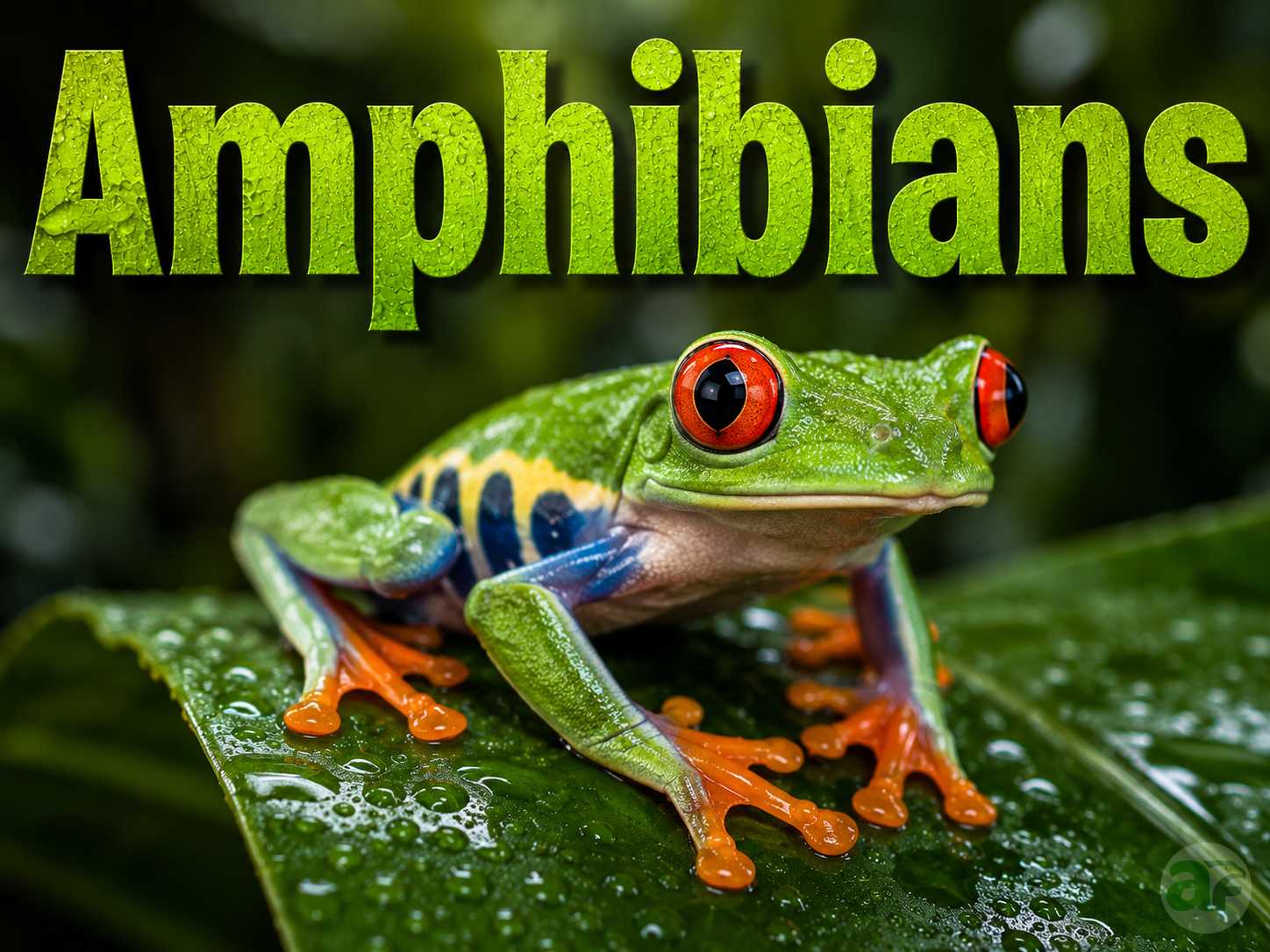
One of the world’s most famous amphibian destinations — home to over 100 frog and toad species including the spectacular Red-eyed Tree Frog (Agalychnis callidryas), whose electric green body and vivid red eyes have made it one of the most photographed animals in the natural world and an icon of tropical biodiversity.
Appalachian Mountains, Eastern USA
The “Salamander Capital of the World” — the southern Appalachians (particularly Great Smoky Mountains National Park and surrounding national forests) host more salamander species per unit area than anywhere else on Earth. Over 30 species occur in this region, including the remarkable Hell-bender (Cryptobranchus alleganiensis) — the largest salamander in North America, reaching 74 cm in length.
Borneo Rainforest, Malaysia & Indonesia
Home to extraordinary tree frog diversity including the Wallace’s Flying Frog (Rhacophorus nigropalmatus) — which glides between trees using webbed feet and skin flaps — and dozens of other endemic species. Danum Valley Conservation Area and Maliau Basin are among the best access points for amphibian observation.
Madagascar
As with reptiles, Madagascar is extraordinary for amphibian endemism — approximately 99% of Madagascar’s amphibian species are found nowhere else on Earth. Over 300 frog species have been described, with new species regularly discovered. Ranomafana National Park and Masoala National Park are premier amphibian observation sites.
Titicaca Lake, Bolivia & Peru
Home to the remarkable Titicaca Water Frog (Telmatobius culeus) — a giant, entirely aquatic frog with extraordinarily baggy skin (which maximizes surface area for cutaneous respiration in the oxygen-poor high-altitude water) that lives at 3,800 meters above sea level. Despite being one of the most unusual amphibians on Earth, the species is Critically Endangered due to pollution, over-collection, and invasive trout.
Postojna Cave System, Slovenia
Home to the extraordinary Olm (Proteus anguinus) — the “human fish” of European folklore — a blind, cave-dwelling salamander that can live for 100 years, survive without food for a decade, and navigate in complete darkness using magnetic, chemical, and electrical senses. Postojna Cave is the most accessible location for observing this remarkable living relic of pre-ice age European fauna.
20. Amphibians Top Documentaries & Books
Must-Watch Documentaries
“David Attenborough’s Life in Cold Blood” (BBC, 2008) — Though primarily focused on reptiles, this five-part series includes substantial and beautifully filmed coverage of amphibian diversity, behavior, and biology. The episode “Amphibious Assault” is among the finest television documentaries on amphibian natural history ever produced.
“Racing Extinction” (Discovery Channel, 2015) — Academy Award-nominated documentary covering the global extinction crisis with substantial coverage of amphibian collapse, chytridiomycosis, and conservation efforts worldwide.
“The Amphibian Avenger” (various broadcast networks) — Documents the work of conservation herpetologists attempting to save critically endangered amphibian species from chytridiomycosis through captive breeding programs.
“Our Planet” (Netflix, 2019) — David Attenborough’s landmark series includes sequences covering freshwater ecosystem decline that contextualize the amphibian extinction crisis within the broader biodiversity emergency.
“The Last Frog” (various wildlife networks) — A moving documentary focused on the work of Amphibian Ark and associated conservation programs racing to save the most critically endangered frog species from extinction through captive breeding.
Essential Books
“The Sixth Extinction” by Elizabeth Kolbert (2014, Pulitzer Prize) — Several chapters focus directly on the amphibian extinction crisis, including a detailed account of chytridiomycosis and the work of conservation herpetologists in Panama attempting to save species ahead of the advancing fungal disease front.
“Frogs: A Chorus of Colors” by John Behler & Deborah Behler — A beautifully illustrated exploration of frog diversity and natural history by the former curator of herpetology at the Bronx Zoo.
“Amphibians: The World of Frogs, Toads, Salamanders and Newts” by Robert Hofrichter — The most comprehensive popular science overview of amphibian diversity, biology, and conservation currently available in English.
“A Field Guide to Western Reptiles and Amphibians” by Robert Stebbins & Norman Cohen — The definitive field reference for North American amphibians west of the Mississippi.
“Frog: A Photographic Portrait” by Thomas Marent — One of the most visually extraordinary natural history books ever published on amphibians; the photography alone makes it worth owning for any amphibian enthusiast.
21. Amphibians Comparison of Major Amphibian Groups
| Feature | Frogs & Toads (Anura) | Salamanders & Newts (Urodela) | Caecilians (Gymnophiona) |
|---|---|---|---|
| Known Species | ~7,000 | ~700 | ~220 |
| Limbs | 4 (adults); none (larvae) | 4 (most species) | None |
| Tail | Absent in adults | Present throughout life | Present |
| Distribution | Global (exc. Antarctica) | Northern Hemisphere + tropics | Tropical regions only |
| Primary Habitat | Terrestrial, arboreal, aquatic | Terrestrial, arboreal, aquatic, cave | Subterranean, aquatic |
| Diet (adult) | Insects, invertebrates, small vertebrates | Insects, worms, invertebrates, small vertebrates | Earthworms, termites, invertebrates |
| Reproduction | Eggs in water; external fertilization (most) | Spermatophores; internal fertilization | Eggs or live young; parental care |
| Largest Species | Goliath Bullfrog (32 cm, 3.25 kg) | Chinese Giant Salamander (1.8 m, 60 kg) | Thompson’s Caecilian (~1.5 m) |
| Smallest Species | Paedophryne amauensis (7.7 mm) | Various pygmy salamanders (~2.5 cm) | Idiocranium russeli (~11 cm) |
| Lifespan | 2–40 years | 5–100+ years | 5–13 years (poorly known) |
| Conservation | Most threatened group; Bd devastating | Bsal emerging crisis; many threatened | Poorly known; many Data Deficient |
| Unique Feature | Metamorphosis; vocal calls; toxicity | Regeneration; neoteny; cave adaptation | Limblessness; skin feeding; dermal teeth |
22. How You Can Help
The amphibian extinction crisis is real, urgent, and accelerating — but it is not inevitable. Conservation programs around the world are achieving real results, and individual actions make a genuine difference. Here is what you can do.
Support These Organizations
Amphibian Ark (AArk) (amphibianark.org) — The global coordinating body for amphibian conservation breeding programs; manages the rescue of the world’s most critically endangered species from extinction through ex-situ (captive) conservation while in-situ (wild) threats are addressed.
IUCN SSC Amphibian Specialist Group (amphibians.org) — Coordinates global amphibian conservation assessment, research, and action planning; maintains the world’s most comprehensive amphibian species database.
Save the Frogs! (savethefrogs.com) — The world’s largest amphibian conservation organization focused on public education, habitat protection, pesticide reform, and supporting conservation research globally.
Froglife (froglife.org) — UK-based charity dedicated to the conservation of amphibians and reptiles through habitat management, citizen science programs, and public education.
Durrell Wildlife Conservation Trust (durrell.org) — Active in captive breeding and reintroduction of critically endangered amphibian species, inspired by the work of Gerald Durrell.
Practical Actions
Create amphibian habitat in your garden. Installing a garden pond — even a small one — is one of the single most effective actions an individual can take to support local amphibian populations. A pond of just 2 square meters can support breeding populations of multiple frog, toad, and newt species.
Never release pet amphibians into the wild. Released pet frogs and salamanders can carry Bd and Bsal into wild populations — potentially devastating local amphibians that have no resistance to the introduced pathogen. If you can no longer keep a pet amphibian, contact a local herpetological society or rescue organization.
Reduce garden pesticide use. Frogs and toads in your garden are powerful natural pest controllers — and they are exquisitely sensitive to pesticide exposure through their permeable skin. Organic gardening methods protect both the amphibians and their insect food base simultaneously.
Drive carefully at night in spring. In many temperate regions, frogs and toads migrate in large numbers to breeding ponds on warm, wet spring nights — and road mortality during these migration events kills millions of animals annually. Slowing down on rural roads during spring rainfall saves lives.
Participate in amphibian citizen science. iNaturalist (inaturalist.org), FrogWatch USA (aza.org/frogwatch), and Froglife’s Dragon Finder (UK) all welcome amphibian observations from members of the public — contributing directly to global amphibian population monitoring.
Support sustainable agriculture and clean water policies. Agricultural pesticide runoff — particularly atrazine — is among the most documented chemical threats to wild amphibian populations. Supporting organic farming, stricter pesticide regulation, and clean water protection policies protects amphibians at a landscape scale.
Did You Know? The Panamanian Golden Frog (Atelopus zeteki) — a species sacred to Panamanian national identity and depicted on lottery tickets and cultural materials — went functionally extinct in the wild in 2006 when chytridiomycosis swept through its remaining mountain habitat. A captive population of approximately 1,500 individuals is maintained at the El Valle Amphibian Conservation Center in Panama — representing the entire surviving population of one of the world’s most recognizable amphibians. International funding and support for this program is critical to its survival.
23. Frequently Asked Questions About Amphibians
Q1: How many species of amphibians exist in the world?
As of 2026, scientists have formally described approximately 8,000 to 8,500 amphibian species worldwide. New species continue to be discovered — particularly frogs in tropical rainforests — at a rate of approximately 100–200 new species per year. The Amazon Basin, Madagascar, and Southeast Asia continue to yield new species with remarkable regularity even as existing species face accelerating threats.
Q2: What makes an animal an amphibian?
All amphibians share three defining characteristics: permeable, scaleless, moist skin that allows gas exchange and water absorption; an ectothermic (cold-blooded) metabolism; and in most species, a complex life cycle involving aquatic larvae that transform through metamorphosis into terrestrial adults. The three living orders are Anura (frogs and toads), Urodela (salamanders and newts), and Gymnophiona (caecilians).
Q3: Are amphibians dangerous to humans?
Very few amphibians pose any direct danger to humans. Poison Dart Frogs are extraordinarily toxic but only if their skin secretions enter the bloodstream — they are not aggressive and pose no danger to people who observe them without touching. Cane Toads produce toxic secretions that can be dangerous to pets that mouth them. The vast majority of amphibians are completely harmless to humans. Handling any amphibian with bare hands is discouraged primarily to protect the amphibian from chemicals and oils on human skin rather than for human safety.
Q4: Why are amphibians so important to ecosystems?
Amphibians perform critical ecological roles as pest controllers (consuming enormous quantities of insects and invertebrates), prey species (feeding snakes, herons, otters, and numerous other predators), nutrient cyclers (tadpoles as major algae grazers; metamorphic emergences transferring nutrients from aquatic to terrestrial systems), and indicator species (their sensitive skin making them the most reliable monitors of freshwater and soil ecosystem health).
Q5: What is killing amphibians worldwide?
The primary causes of amphibian decline are: chytridiomycosis (fungal skin disease — the single greatest biological threat); habitat loss (deforestation, wetland drainage, urban expansion); climate change (altered rainfall, temperature extremes, drought); pollution (pesticides, particularly atrazine; heavy metals; acid rain); invasive species (American Bullfrog, introduced fish); and the wildlife trade (over-collection for food, pets, and traditional medicine).
Q6: Can amphibians feel pain?
Yes — all vertebrates, including amphibians, have nervous systems capable of detecting and responding to noxious stimuli. Scientific consensus holds that amphibians experience pain and stress. This has significant implications for how amphibians should be handled in research, the pet trade, and food production contexts.
Q7: Are frogs and toads the same animal?
All toads are frogs — the term “toad” is simply a common name applied informally to certain terrestrial, dry-skinned members of the order Anura. There is no distinct scientific family called “toads” — the familiar Common Toad (Bufo bufo) and its relatives belong to the same order as tree frogs, bullfrogs, and poison dart frogs. The distinction between “frog” and “toad” is based on informal appearance characteristics rather than biological classification.
Q8: How do poison dart frogs get their toxins?
Poison Dart Frogs acquire their toxins from the specialized insects they eat in the wild — particularly certain beetles, mites, and other invertebrates that contain plant-derived alkaloid compounds. The frogs metabolize and concentrate these compounds in specialized skin glands, producing toxins far more potent than the original dietary source. Critically, captive-bred Poison Dart Frogs raised on standard diets are completely non-toxic — demonstrating that their toxicity is entirely diet-dependent, not genetic.
Q9: What is chytridiomycosis and why is it so dangerous?
Chytridiomycosis is a fungal skin disease caused by Batrachochytrium dendrobatidis (Bd) and the related Batrachochytrium salamandrivorans (Bsal). The disease attacks the amphibian’s skin — disrupting its ability to absorb water and electrolytes, eventually causing cardiac arrest. It has been characterized by scientists as “the worst infectious disease ever recorded among vertebrates in terms of species affected”. It has infected over 700 amphibian species, driven at least 90 to extinction, and caused population declines in hundreds more. There is currently no practical method for treating wild populations at landscape scale.
Q10: How can I help amphibians near my home?
The most impactful actions include: building a garden pond (even small ponds support significant amphibian populations); reducing or eliminating pesticide use in your garden; driving carefully on rural roads on warm, wet spring nights when mass migrations to breeding ponds occur; never releasing pet amphibians into the wild; participating in citizen science programs such as FrogWatch USA or iNaturalist; and supporting amphibian conservation organizations such as Amphibian Ark and Save the Frogs.
24. Sources & References
Research Sources
- Wikipedia — Class Amphibia and individual species articles
- IUCN Red List — iucnredlist.org
- IUCN SSC Amphibian Specialist Group — amphibians.org
- Amphibian Ark — amphibianark.org
- Save the Frogs — savethefrogs.com
- National Geographic — nationalgeographic.com
- Smithsonian’s National Zoo — nationalzoo.si.edu
- Encyclopaedia Britannica — britannica.com
- BBC Wildlife — bbc.co.uk
- Live Science — livescience.com
- Animal Diversity Web (University of Michigan) — animaldiversity.org
- AmphibiaWeb — amphibiaweb.org
- iNaturalist — inaturalist.org
- WWF — wwf.org
- Kolbert, Elizabeth — “The Sixth Extinction” (2014)
- Hofrichter, Robert — “Amphibians: The World of Frogs, Toads, Salamanders and Newts”
- Marent, Thomas — “Frog: A Photographic Portrait”