
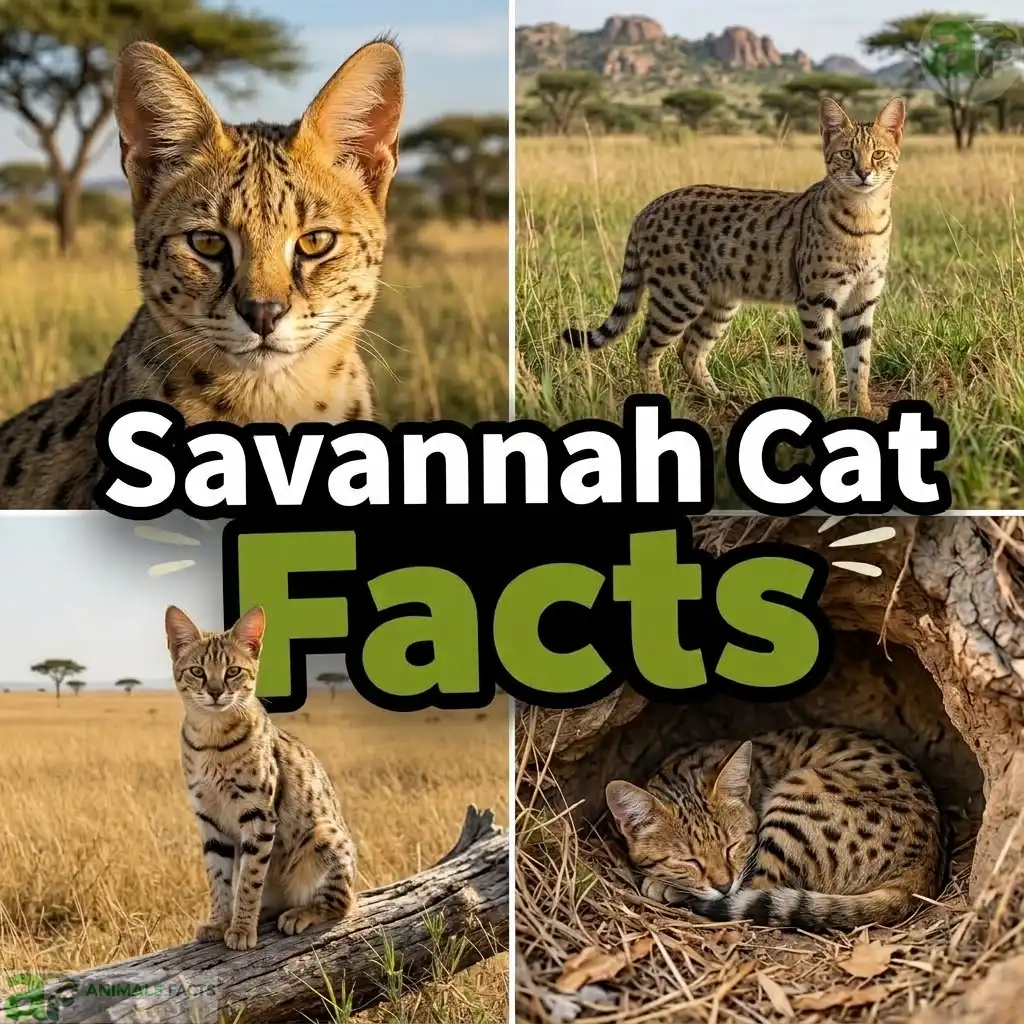
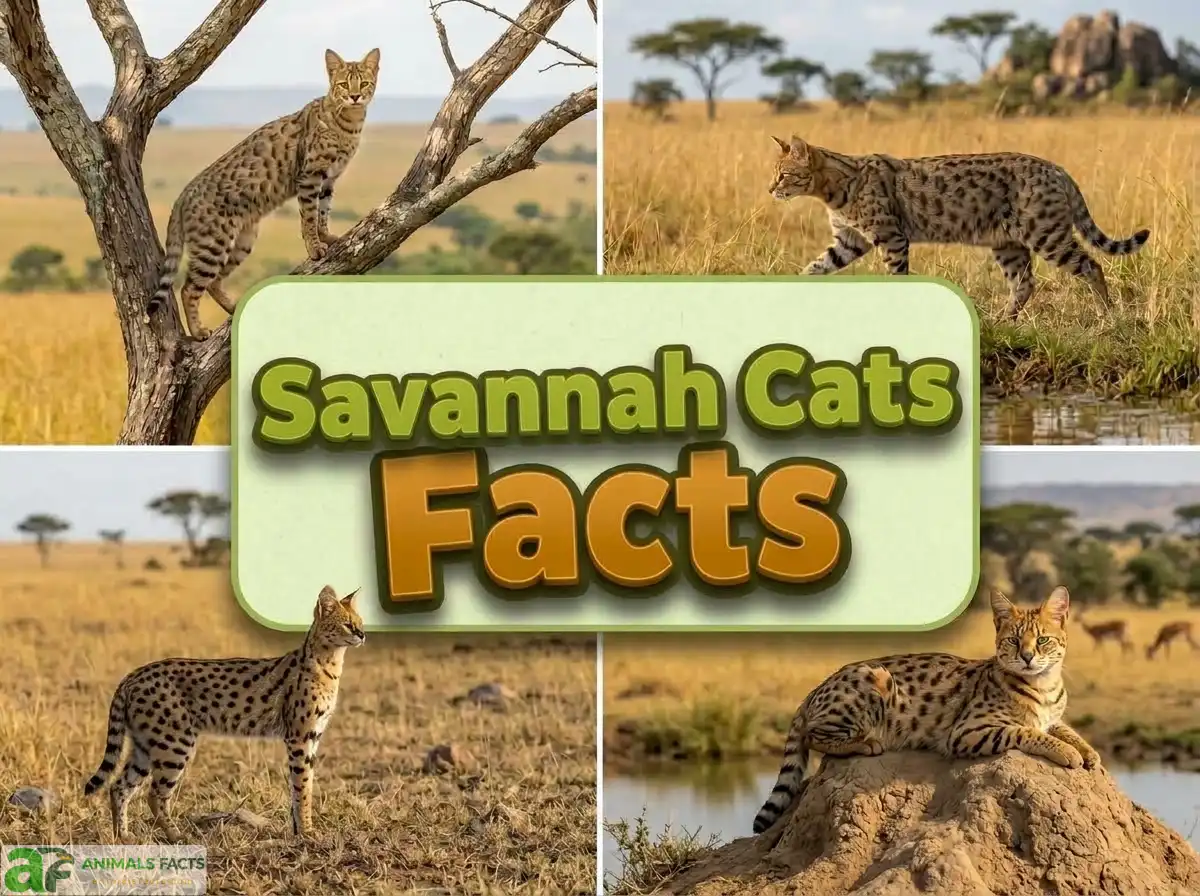
Savannah Cat Facts
| Feature | Details |
|---|---|
| Scientific Name | Felis catus × Leptailurus serval (hybrid) |
| Kingdom | Animalia |
| Phylum | Chordata |
| Class | Mammalia |
| Order | Carnivora |
| Family | Felidae |
| Common Names | Savannah cat |
| Parent Species | Domestic cat (Felis catus) × African serval (Leptailurus serval) |
| Origin | First bred in the United States, 1986 |
| Habitat | Domestic home environments; some outdoor access |
| Lifespan | 12–20 years depending on generation and care |
| Diet | High-protein raw or premium commercial cat food; meat-based diet |
| Height | 35–45 cm at shoulder — taller than any standard domestic cat |
| Body Length | 45–60 cm body length plus tail |
| Weight | 3.5–11 kg depending on generation (F1 cats heaviest) |
| Top Speed | Up to 50 km/h in short bursts |
| Conservation Status | Not applicable — domestic hybrid breed |
| TICA Recognition | Fully recognized breed since 2012 |
| Price Range | $1,000–$20,000+ depending on generation |
| Legal Status | Banned or restricted in several countries and US states |
 1. Introduction: What is a Savannah Cat?
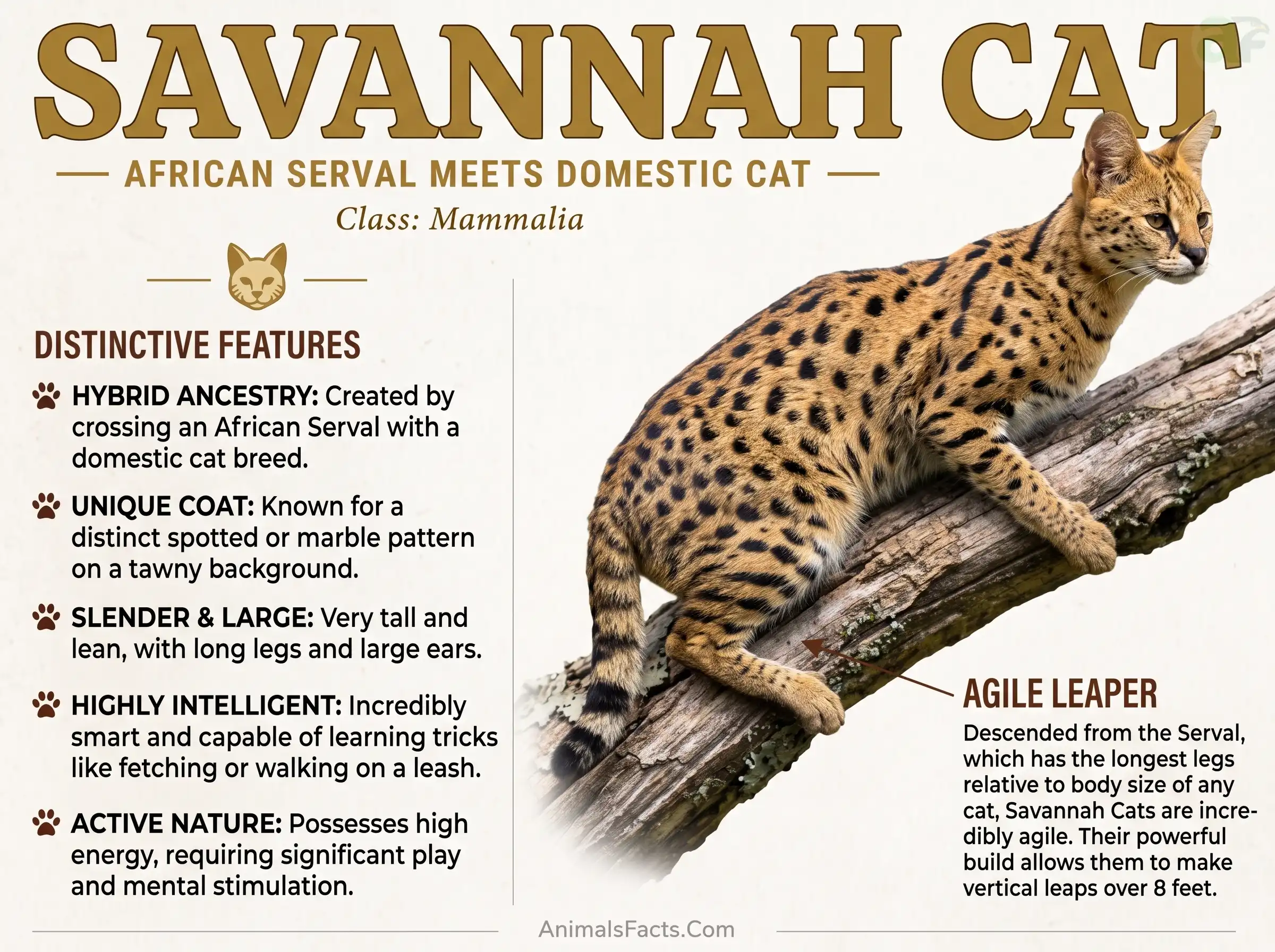
Imagine a cat that stands as tall as a medium-sized dog, moves with the fluid, athletic grace of a wild predator, has spots like a miniature cheetah, leaps to the top of your refrigerator from a standing position without apparent effort, and regards you with the sharp, alert intelligence of an animal whose evolutionary programming is only one or two generations removed from the open savannas of sub-Saharan Africa. Savannah cat facts begin with this single, extraordinary image — the most visually striking, physically impressive, and behaviorally complex domestic cat breed ever created, occupying a unique space between the wild world and the domestic one that no other pet animal quite inhabits.
The Savannah cat is the product of a deliberate and carefully managed cross between the domestic cat (Felis catus) and the African serval (Leptailurus serval) — a long-legged, large-eared wild African cat famous for the highest leap relative to body size of any cat on Earth. Interesting facts about Savannah cats reveal a breed that has taken the cat fancy world by storm since its formal recognition in 2012 — routinely described as “the dog of the cat world” for its tendency to follow owners from room to room, learn its name, play fetch, walk on a leash, and form intense loyal bonds with specific family members. Yet beneath these endearing domestic qualities lies a wild heritage that expresses itself in jumping ability that defies belief, a fascination with water that confounds typical cat expectations, and an intelligence that routinely outwits conventional cat management strategies.
Whether you are searching for Savannah cat facts for kids to satisfy a family’s curiosity about this remarkable breed, a potential owner researching Savannah cat habitat requirements and care needs before making a commitment, a cat enthusiast fascinated by the science of hybrid cat genetics and breed development, or someone who simply saw a photograph of a Savannah cat and needed to know immediately and completely everything about this extraordinary animal — this is your comprehensive guide. We cover Savannah cat scientific name, Savannah cat diet, Savannah cat size and weight across all generations, Savannah cat behavior and social intelligence, the legal landscape of Savannah cat ownership, conservation implications, and everything else these remarkable animals have to offer. The wild in the living room awaits.
2. Species Overview & Classification
The Savannah cat occupies a taxonomically complex position — it is recognized as a domestic cat breed by the International Cat Association (TICA) yet its parentage involves a wild felid species (Leptailurus serval) that belongs to a completely different genus from the domestic cat, making it a genuine intergeneric hybrid in its early generations.
Species Classification Table
| Taxonomic Rank | Classification |
|---|---|
| Kingdom | Animalia |
| Phylum | Chordata |
| Class | Mammalia |
| Order | Carnivora |
| Family | Felidae |
| Subfamily | Felinae |
| Father (Sire) — F1 | African serval — Leptailurus serval |
| Mother (Dam) — F1 | Domestic cat — Felis catus |
| Hybrid Designation | Felis catus × Leptailurus serval (F1) |
| Taxonomic Status | Recognized domestic breed (TICA, 2012) |
| Breeding Registry | International Cat Association (TICA) |
The Filial Generation System — Understanding F1 Through F7
The most important concept in understanding Savannah cat size and weight and behavior is the filial generation system — a numbering system that tracks how many generations removed from the original serval parent a given Savannah cat is:
| Generation | Parent Combination | Serval Content | Typical Weight | Typical Size | Fertility |
|---|---|---|---|---|---|
| F1 | Serval × domestic cat | ~50% serval | 8–11 kg | Largest | Males sterile; females fertile |
| F2 | F1 Savannah × domestic/Savannah | ~25% serval | 6–9 kg | Very large | Males mostly sterile; females fertile |
| F3 | F2 × domestic/Savannah | ~12.5% serval | 5–8 kg | Large | Males mostly sterile; females fertile |
| F4 | F3 × domestic/Savannah | ~6.25% serval | 4–7 kg | Medium-large | Males fertile; females fertile |
| F5 | F4 × domestic/Savannah | ~3.125% serval | 3.5–6 kg | Medium | Fully fertile |
| F6+ | Later generation crosses | <3% serval | 3.5–5.5 kg | Approaching standard | Fully fertile |
The Parent Species
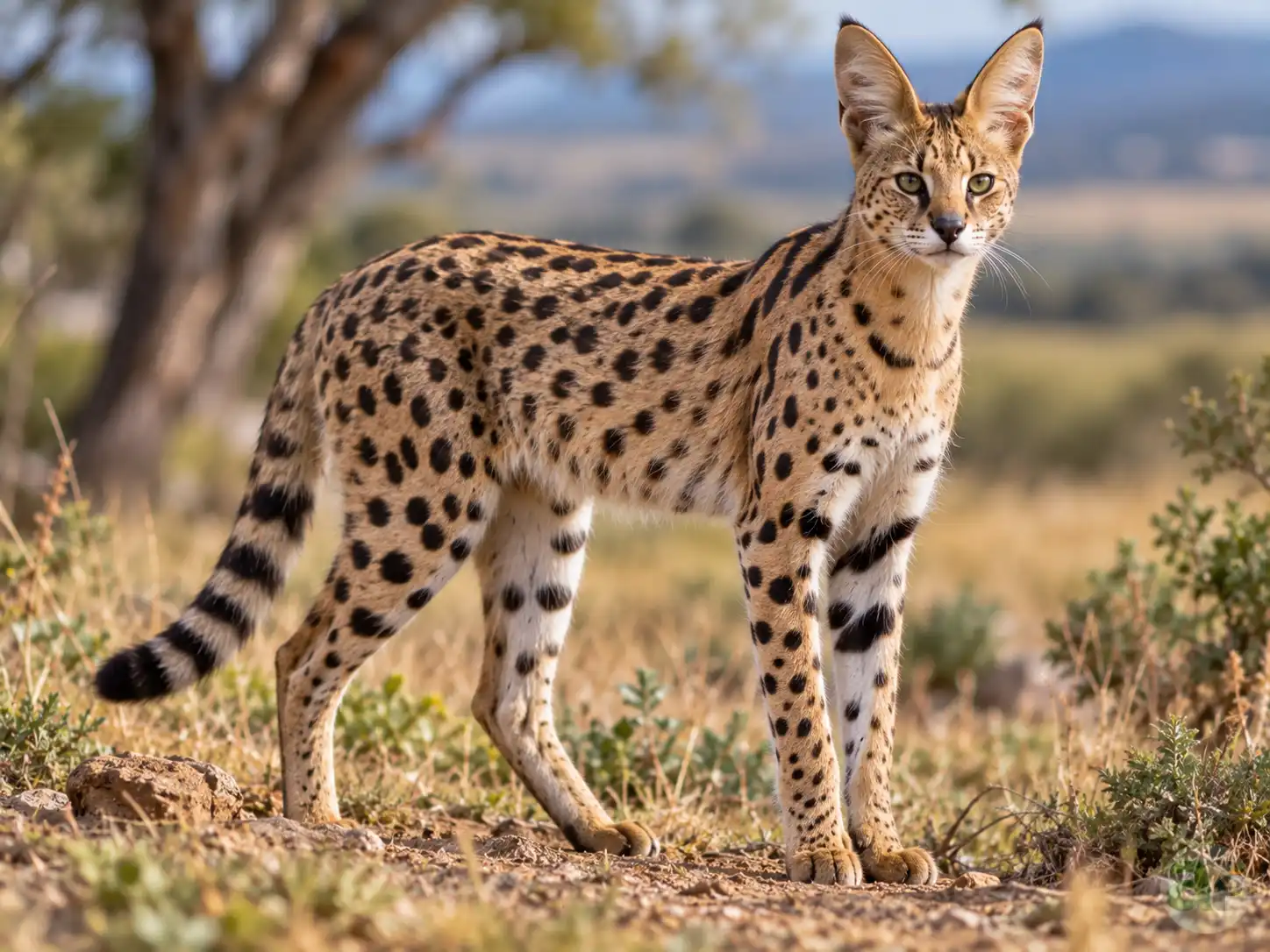
African Serval (Leptailurus serval):
- Native to sub-Saharan Africa — grasslands, savannas, wetland margins
- Weight: 8–18 kg; Height: 54–62 cm at shoulder
- Famous for the highest leap relative to body size of any cat — can jump 3 meters vertically
- Large, rounded ears providing exceptional hearing — can detect rodents underground
- Spotted coat; long legs; small head relative to body
- IUCN Status: Least Concern — population stable across most of African range
Domestic Cat (Felis catus):
- Domesticated approximately 10,000 years ago from the African wildcat (Felis lybica)
- Global population: approximately 600 million domestic cats worldwide
- Extremely variable in size, coat, and behavior across breeds
- Fully domesticated — capable of close human companionship
The History of Breed Development
1986 — Judee Frank — a Bengal cat breeder — becomes the first person to successfully breed a domestic cat with an African serval, producing the first documented F1 Savannah cat. This first hybrid kitten was named “Miracle” — reportedly by those present at the birth who were astonished that the cross had produced a viable offspring.
1989 — Patrick Kelly acquires one of Judee Frank’s Savannah kittens and begins working systematically with breeder Joyce Sroufe to develop the Savannah as a formal breed — establishing the breeding protocols, standards, and documentation that would eventually lead to TICA recognition.
1996 — Joyce Sroufe writes the original Savannah breed standard and presents the breed to TICA for the first time — beginning the long process toward formal recognition.
2001 — TICA accepts the Savannah cat for registration — an important step toward full recognition that allows breeders to document and track bloodlines formally.
2012 — The International Cat Association (TICA) grants the Savannah cat full Championship status — the highest level of recognition for a domestic cat breed — allowing Savannahs to compete in all TICA shows.
2016–2024 — The Savannah cat becomes one of the fastest-growing exotic cat breeds in the world — with registered breeders on every inhabited continent and a global community of owners and enthusiasts generating extraordinary social media content that has introduced the breed to hundreds of millions of people worldwide.
“The Savannah cat represents something genuinely novel in the history of domesticated animals — an animal that is simultaneously a legitimate domestic companion and a living connection to the wild cat world of Africa. Understanding them requires understanding both worlds.” — Dr. Leslie Lyons, Professor of Comparative Medicine, University of Missouri, and leading feline geneticist
3. Physical Description & Unique Features
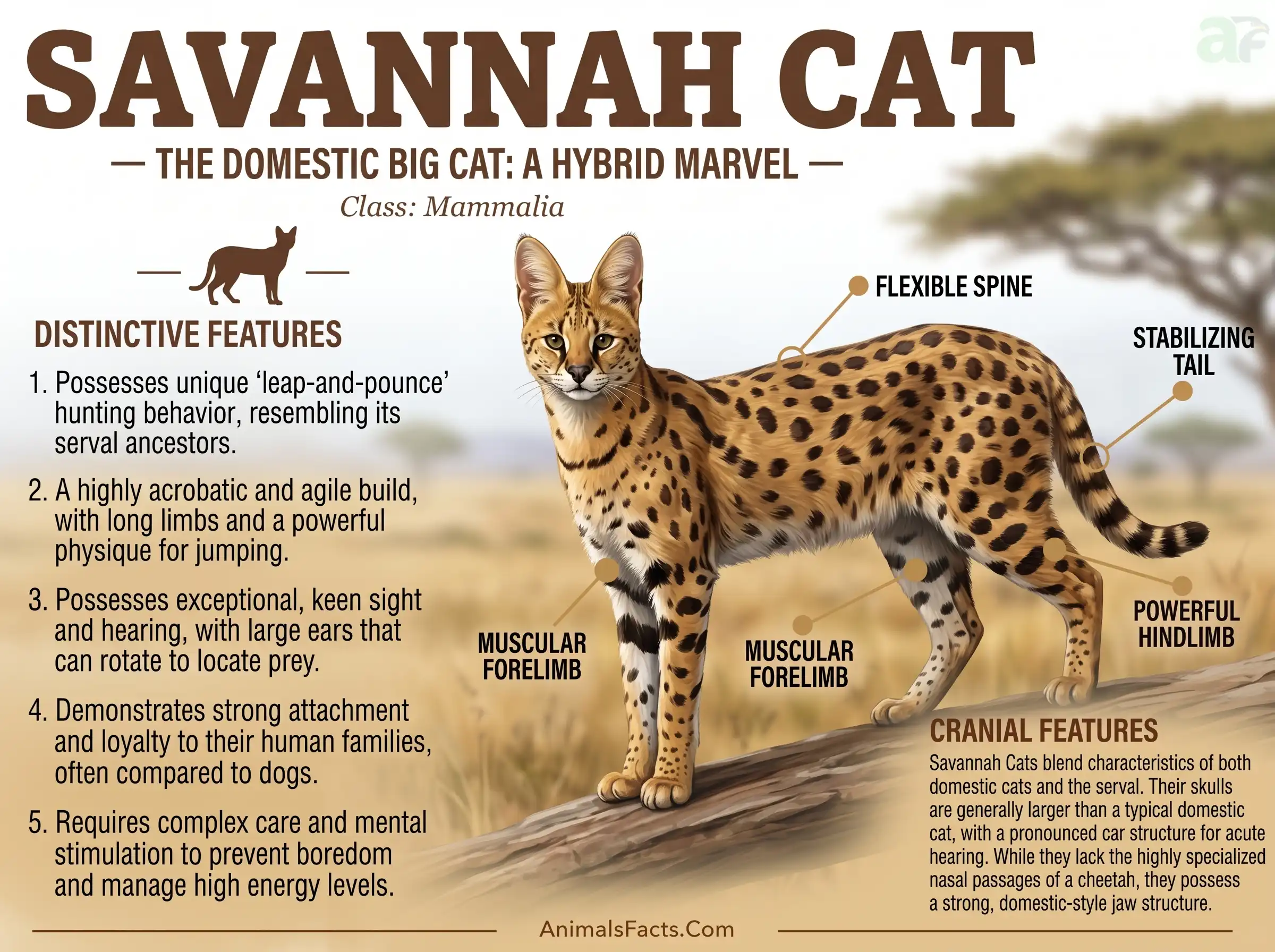
Savannah cat size and weight are the most immediately striking physical characteristics — and what makes the Savannah so visually distinctive is not merely its size but the specific combination of serval-influenced proportions that give it an appearance unlike any other domestic cat breed.
Body Proportions — The Serval Influence
The Savannah cat’s body reflects significant serval heritage — particularly in early generations:
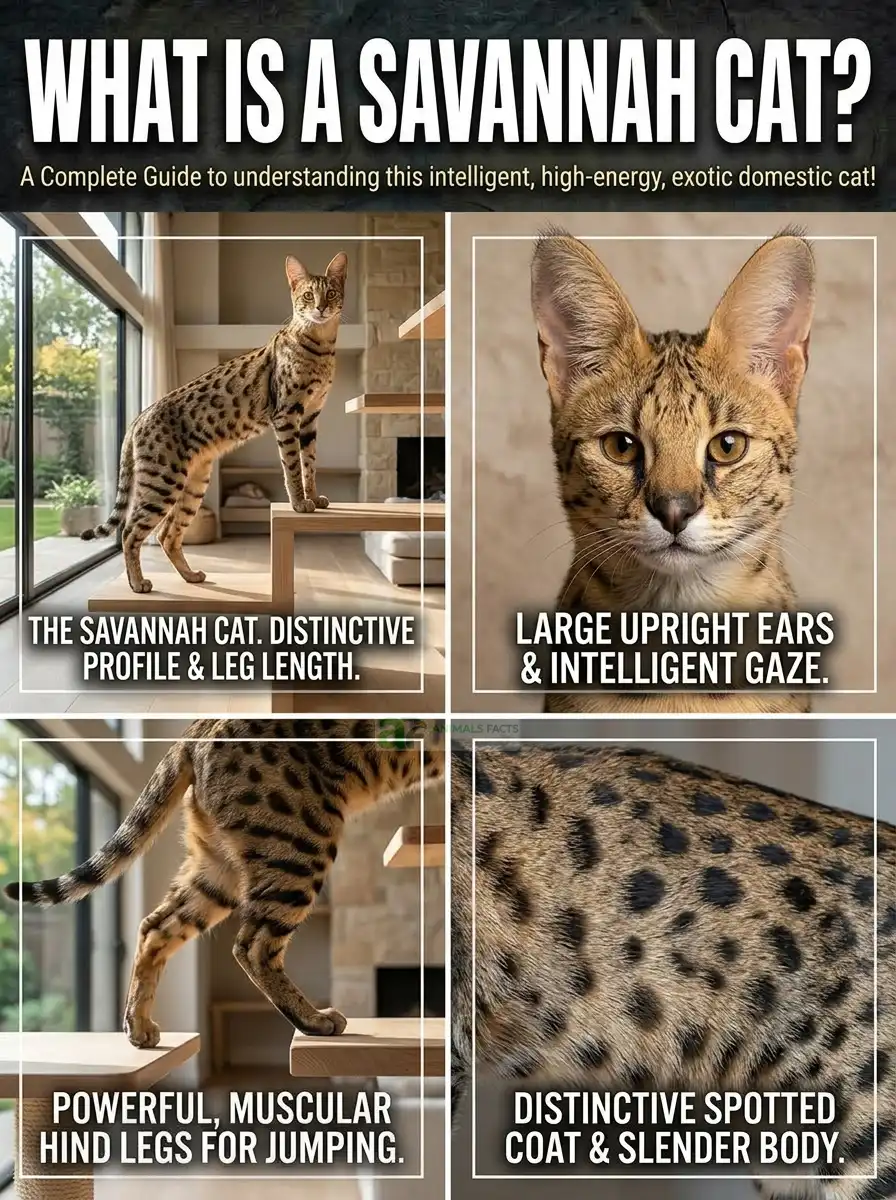
Long legs — The Savannah cat has proportionally longer legs than any standard domestic cat breed — reflecting the serval’s extraordinarily long limbs evolved for high-grass savanna hunting. These long legs give Savannahs a distinctive, high-stepping gait that is immediately identifiable as different from typical domestic cat movement.
Long neck — A longer, more slender neck than typical domestic cats — again reflecting serval proportions and contributing to the breed’s overall elegant, elongated appearance.
Small, wedge-shaped head — Savannahs have a relatively small head compared to body size — a serval characteristic — with a long, wedge-shaped facial profile quite different from the rounder heads of most domestic cat breeds.
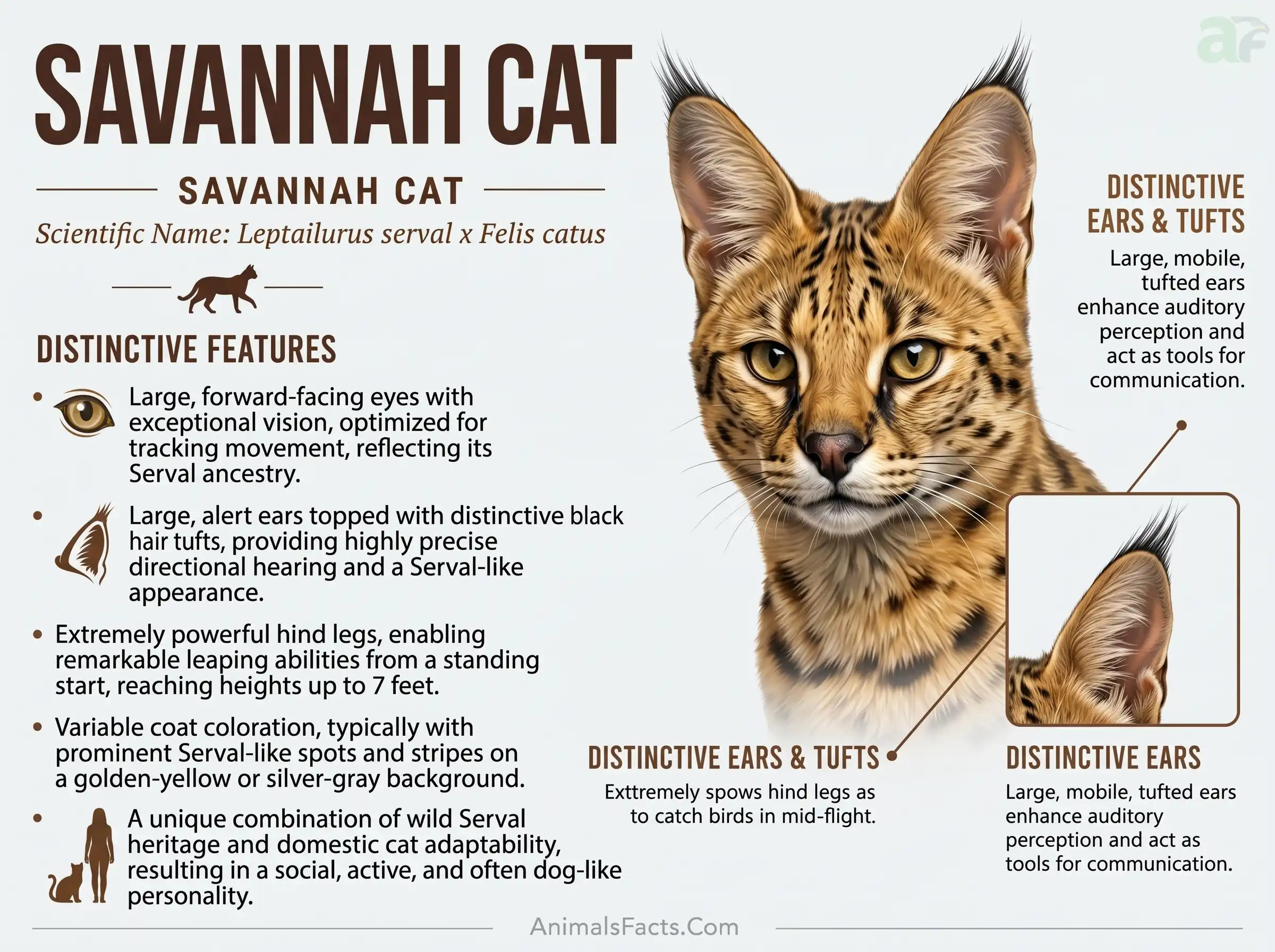
Large, upright ears — Perhaps the most immediately distinctive feature of the Savannah cat — the ears are large, rounded, and positioned high and upright on the head, reflecting the serval’s famous radar-dish ear structure. The ears often show a “ocelli” — a lighter patch on the back of the ear — a characteristic marking of the serval that appears in varying degrees in Savannah cats.
Hooded eyes — The eyes are typically medium to large, with a distinctive “hooded” appearance created by the brow ridge — giving Savannah cats a slightly exotic, intensely focused expression that many owners describe as “wild-looking” even in relaxed cats.
Long tail — The tail is medium length and typically somewhat shorter than most domestic cats relative to body size — reflecting the serval’s proportions.
Coat & Coloration
The Savannah cat breed standard accepts several coat patterns and colors:
Spotted tabby — The most characteristic and valued pattern — bold, solid black or dark brown spots on a golden, tawny, or silver base coat. This spotted pattern most closely echoes the serval parent’s coat and is the pattern most commonly associated with the breed.
Black (melanistic) — Solid black Savannah cats occur when both the spotted and solid color genetics align. Ghost spotting may be visible in certain lighting on black individuals.
Black smoke — Black with silver banding on individual hairs — producing a shimmering, dark appearance.
Silver spotted tabby — Silver base coat with black spots — a striking, high-contrast pattern.
Brown spotted tabby — Warm brown base with darker brown to black spots — more common in lower generation cats.
Tear Stain Markings
A particularly distinctive Savannah cat feature inherited from the serval parent is the “tear stain” or “cheetah tear” markings — dark lines running from the inner corner of the eye downward along the side of the nose, resembling the tear tracks on a cheetah’s face. These markings are highly valued in show quality Savannah cats and are a direct inheritance from the serval parent.
Did You Know? The African serval has the highest leap relative to body size of any cat on Earth — capable of jumping 3 meters (10 feet) vertically and 3.7 meters (12 feet) horizontally from a standing position to catch birds in flight. Savannah cats inherit a significant portion of this extraordinary leaping ability — F1 and F2 Savannahs have been documented jumping to the tops of 2-meter refrigerators and 3-meter bookshelves from a standing start, making them by far the most athletic domestic cat breed and requiring owners to fundamentally rethink the concept of “cat-proof” storage.
4. Top 25 Amazing Savannah Cat Facts
Here is your definitive collection of the most extraordinary, scientifically verified, and genuinely astonishing Savannah cat facts as of 2026:
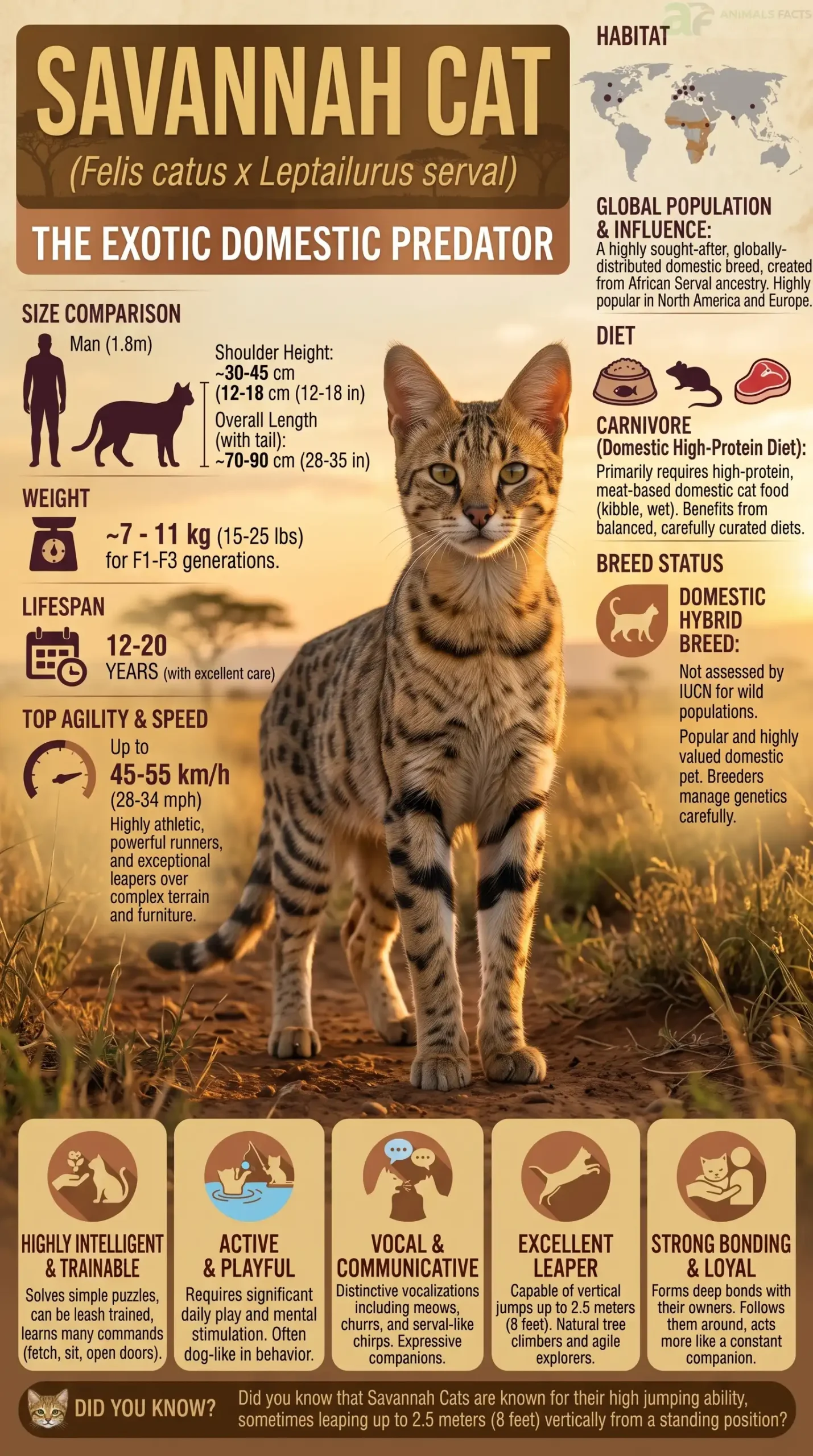
- The Savannah cat holds the Guinness World Record for the tallest domestic cat — with multiple record holders over the years, the most recent being “Fenrir Antares Powers” who measured 47.83 cm (18.83 inches) at the shoulder in 2021.
- F1 Savannah cats — the first generation hybrids between an African serval and a domestic cat — can weigh up to 11 kg (24 lbs) and stand taller than most small dog breeds.
- The first Savannah cat ever born was named “Miracle” — produced in 1986 by breeder Judee Frank when her domestic cat was accidentally bred with her pet African serval.
- Savannah cats are often called the “dog of the cat world” — they routinely follow owners from room to room, greet them at the door, play fetch, walk on leashes, and form intensely loyal bonds with specific family members in ways atypical of standard domestic cats.
- Early generation (F1 and F2) male Savannah cats are almost always sterile — the same genomic incompatibility that makes many hybrid animals reproductively non-functional affects Savannah cat males until the F4 or F5 generation, when fertility is typically restored.
- Savannah cats can jump over 2 meters (7 feet) vertically from a standing position — a capability inherited from the serval parent, who holds the record for the highest leap of any cat relative to body size.
- Unlike most domestic cats, many Savannah cats genuinely enjoy water — they will play in running water, join their owners in the shower, and some individuals will wade into shallow water voluntarily — a behavior directly inherited from the serval’s wetland habitat associations.
- The price of an F1 Savannah cat can reach $20,000 or more — making it the most expensive domestic cat breed in the world, with even later generation F5+ cats typically costing $1,000–$5,000.
- Savannah cats are banned or heavily restricted in several countries including Australia, Iceland, and Hawaii — and restricted in multiple US states including Georgia, Hawaii, Nebraska, and Rhode Island — due to concerns about their potential ecological impact if they became feral.
- Savannah cats have significantly longer legs relative to body size than any standard domestic cat breed — their proportions are the most serval-like of any domestic cat, giving them a distinctive high-stepping gait recognizable from a distance.
- The serval parent of F1 Savannah cats is the same wild cat famous for catching birds in mid-air with an extraordinary aerial leap — and F1 Savannahs retain enough of this hunting drive to be capable hunters significantly more formidable than standard domestic cats.
- Savannah cats are known for a distinctive vocalization called a “chirp” or “chitter” — a sound intermediate between the domestic cat’s meow and the serval’s characteristic chirping call — that owners report as one of the most charming and distinctive aspects of the breed.
- The Savannah cat’s vocabulary extends beyond the chirp — they produce hisses that sound like a snake (an inherited serval defensive behavior), chuffs, meows, purrs, and a characteristic “goose-hiss” that startles unfamiliar visitors.
- Savannah cats can be trained to walk on a leash and harness with relative ease compared to standard cats — making outdoor enrichment experiences more accessible for owners who want their cat to have outdoor stimulation without free-roaming risks.
- The International Cat Association (TICA) fully recognized the Savannah cat as an official breed in 2012 — after a development and acceptance process that took over 15 years from the breed’s first presentation to the organization.
- Savannah cats require significantly larger living spaces than standard domestic cats — particularly F1 and F2 individuals, whose wild heritage translates into activity levels, territorial instincts, and physical capabilities that standard apartment environments cannot adequately accommodate.
- The “ocelli” markings on the back of Savannah cat ears — lighter patches on a darker background that resemble eyes when viewed from behind — are directly inherited from the serval parent and serve the same function in the wild: making a foraging serval appear to have eyes in the back of its head to deter ambush by predators.
- Savannah cats have been documented opening doors — including round doorknobs — flushing toilets (deliberately, apparently for entertainment), unlatching cage doors, and accessing secured food storage — reflecting an intelligence level that regularly surpasses standard domestic cat problem-solving capability.
- F1 Savannah cats require socialization from birth — kittens that are not extensively handled and exposed to diverse stimuli during their first weeks of life may develop shy, skittish, or aggressive behaviors that make them difficult companions despite their physical magnificence.
- The serval parent used in F1 breeding must typically be a captive-raised, human-socialized serval — wild-caught servals are generally unsuitable for the breeding programs that produce Savannah cats, and the welfare of the serval parent is a primary ethical concern in responsible Savannah breeding.
- Savannah cats have been used in animal-assisted therapy programs — their intelligence, trainability, and social bonding make some individuals (particularly later generations with more settled temperaments) excellent therapy animals for specific contexts.
- The coat spots of a Savannah cat are completely unique to each individual — no two Savannahs have identical spot arrangements, making coat pattern a reliable individual identification tool in much the same way as fingerprints in humans.
- Savannah cats are significantly more active than standard domestic cats — requiring interactive play sessions of 30–60 minutes or more per day to prevent boredom-related destructive behaviors, which in an F1 Savannah can include damage to furniture, fixtures, and anything else within the cat’s considerable physical reach.
- The global Savannah cat community — breeders, owners, and enthusiasts — is one of the most active and organized in the cat fancy world, with dedicated social media accounts collectively reaching tens of millions of followers and producing some of the most widely shared cat content on the internet.
- Several veterinarians who specialize in exotic felines recommend that F1 and F2 Savannah cat owners seek veterinary care from practitioners experienced with both domestic cats and wild felids — because the hybrid nature of early generation cats means that standard domestic cat medical protocols may not always be appropriate for their care.
5. Fun Facts About Savannah Cat
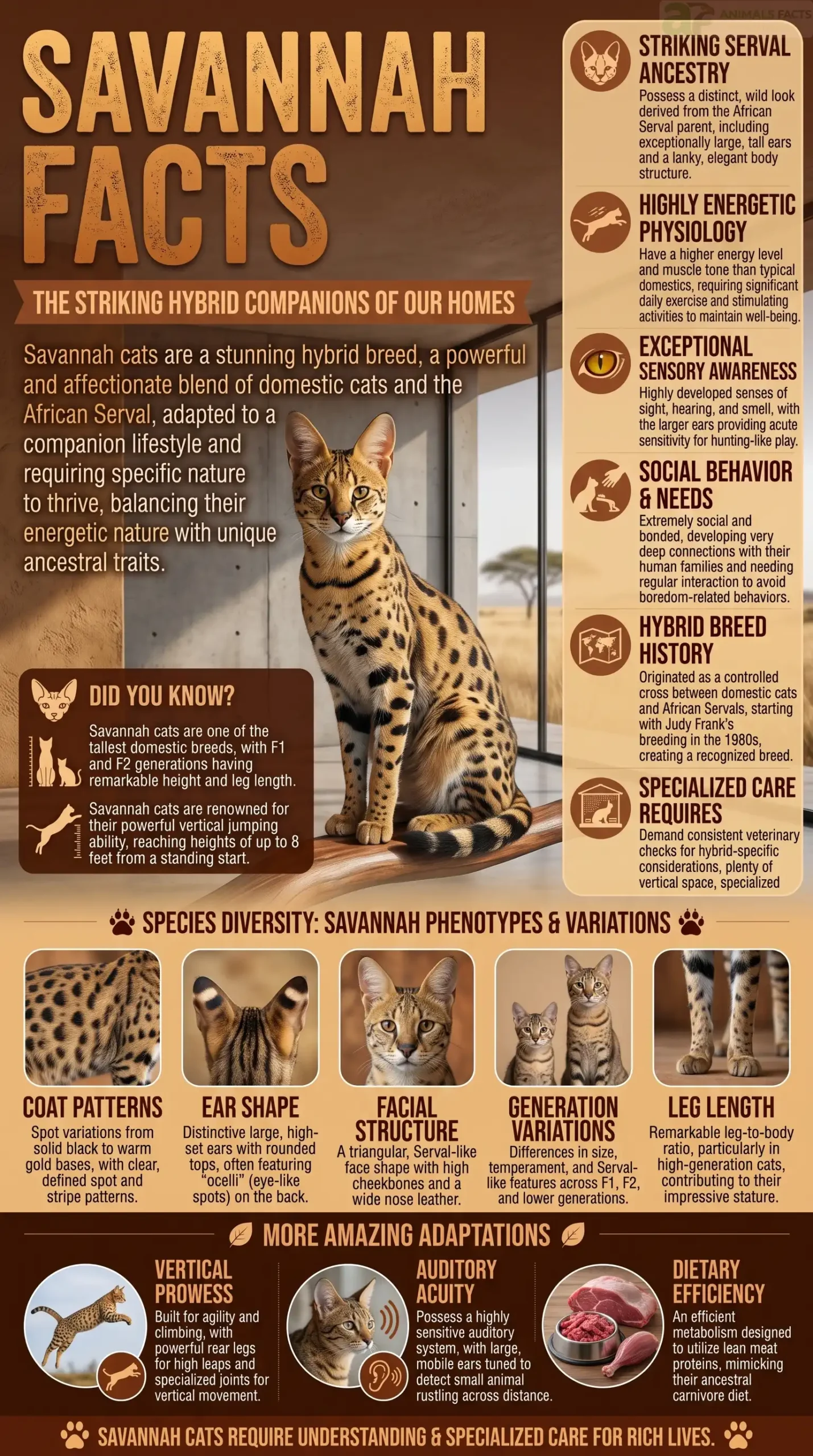
- Savannah cats hold the Guinness World Record for tallest domestic cat
- The first Savannah cat was born in 1986 and named “Miracle”
- Savannah cats are called the “dog of the cat world” for their loyalty
- F1 Savannah cats can weigh up to 11 kg — bigger than many dogs
- They can jump over 2 meters vertically from a standing position
- Many Savannah cats love water — unusual for domestic cats
- F1 Savannah cats can cost $20,000+ — the world’s most expensive cat breed
- Savannah cats are banned in Australia and Hawaii
- They can open doors and flush toilets with their problem-solving intelligence
- Each Savannah cat has a completely unique spot pattern
- They can be trained to walk on a leash
- They produce a distinctive “chirp” vocalization inherited from the serval
6. Natural Habitat & Geographic Range
Savannah cat habitat in the domestic sense spans every country where ownership is legal — from North American suburban homes to European apartments and Asian luxury residences. However, the breed’s requirements — given its wild heritage — are among the most demanding of any domestic cat, making “habitat” in the context of Savannah cat ownership a genuinely important welfare consideration.
Where Savannah Cats Live
Savannah cats are found as companion animals in homes across:
- United States — the primary breeding and ownership market; regulated at state level with some restrictions
- United Kingdom — legal ownership; growing breeder and owner community
- Europe — legal in most countries; growing population particularly in Germany, France, Netherlands
- Canada — legal nationwide; growing community
- Middle East — significant ownership market particularly in UAE
- Asia — growing market in Japan, South Korea, Singapore, and other wealthy urban markets
Banned or Restricted Jurisdictions
| Jurisdiction | Status | Reason |
|---|---|---|
| Australia | Banned entirely | Concern about potential ecological impact of feral hybrids on native wildlife |
| Hawaii, USA | Banned | State classification as a wild animal hybrid; ecological concerns |
| Georgia, USA | Banned | State exotic animal regulations |
| Nebraska, USA | Banned | State exotic animal regulations |
| Rhode Island, USA | Restricted (F4+ only) | Partial restriction based on wild content |
| Iceland | Banned | Strict biosecurity regulations |
| New Zealand | Banned | Concern about native wildlife; strict biosecurity |
Ideal Home Environment
The specific habitat requirements of Savannah cats vary significantly by generation:
F1 and F2 Savannahs:
- Large home with outdoor access — minimum several rooms; outdoor enclosure strongly recommended
- Secure perimeter — extraordinary jumping ability (2+ meters) requires fencing specifically designed for serval-hybrid cats
- Vertical space — tall cat trees, wall-mounted shelving, and perches reflecting the breed’s love of height
- Enrichment environments — puzzle feeders, water features, hiding places, and prey-simulation toys
- Experienced cat owner — not appropriate for first-time cat owners
F4 and later Savannahs:
- More adaptable to standard home environments
- Still require more space and enrichment than typical domestic cats
- Apartment living possible with adequate daily exercise and enrichment
- More appropriate for experienced cat owners willing to commit to active engagement
Did You Know? The African serval — the wild parent of F1 Savannah cats — is native to sub-Saharan Africa where it inhabits grasslands, savannas, and wetland margins at altitudes from sea level to 3,000 meters. The serval’s large ears are so sensitive they can locate rodents moving underground and catch prey by leaping straight up and landing with both forepaws on the prey item — a hunting technique that is remarkably effective and contributes to a success rate of approximately 50% per hunting attempt, far higher than most wild felids. This extraordinary hunting capability is partially inherited by Savannah cats — particularly in early generations — and contributes to the breed’s remarkably fast reflexes and intense prey drive.
7. Diet & Feeding Behavior
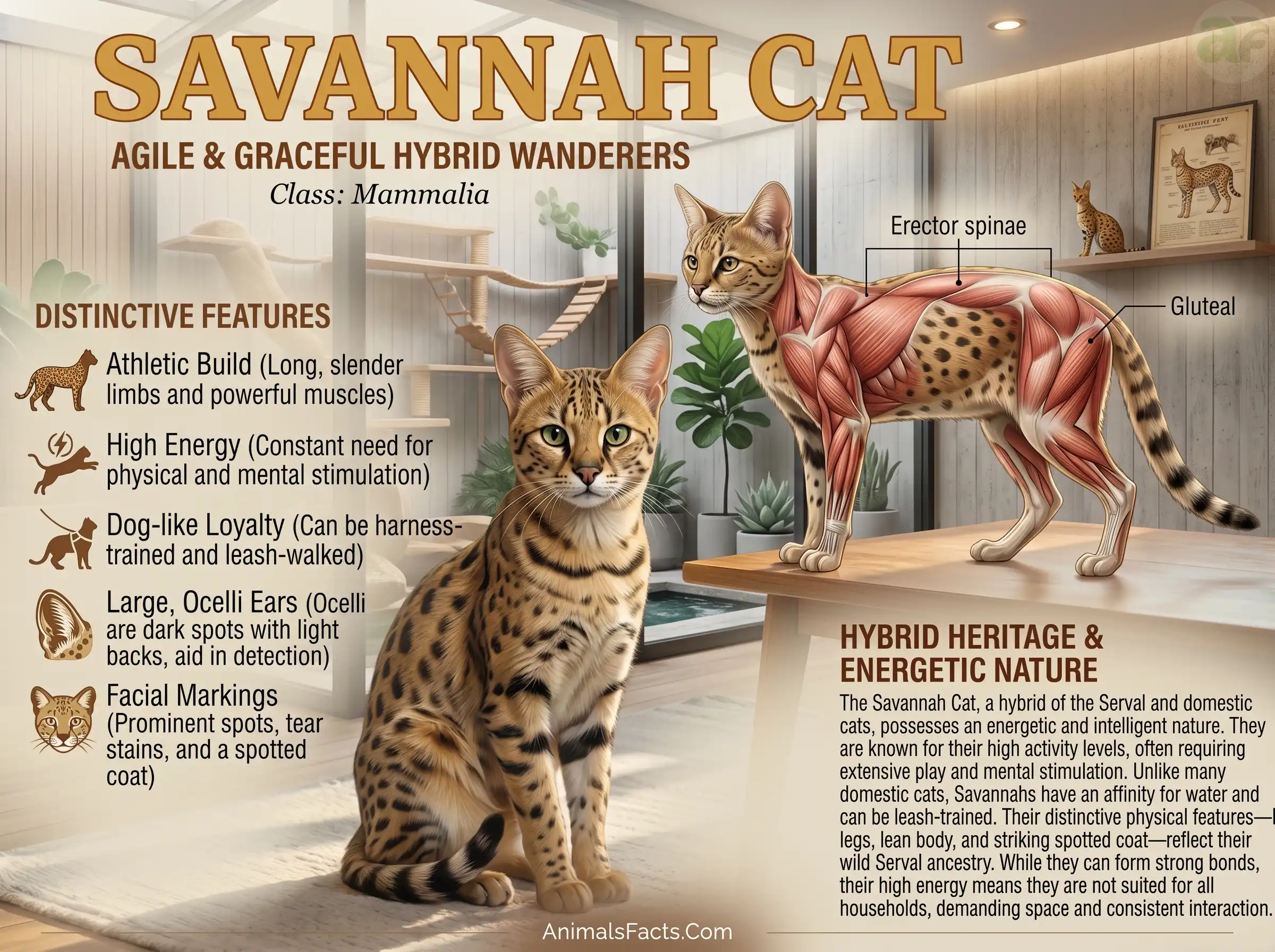
Savannah cat diet requires considerably more thought and care than that of a standard domestic cat — particularly in early generations where the wild serval heritage produces physiological characteristics and nutritional needs that differ meaningfully from purely domestic animals.
Diet Breakdown Table
| Food Type | Recommended % of Diet | Notes |
|---|---|---|
| Raw meat (whole prey or prepared raw) | ~40–60% (for early gen.) | Most closely matches natural serval diet; highest biological value |
| High-protein commercial cat food | ~30–50% | Premium brands with high meat content; avoid grain-heavy formulas |
| Cooked lean meat | ~10–20% | Chicken, turkey, beef — supplementary protein |
| Raw bones (appropriate size) | ~5–10% | Dental health; nutritional enrichment |
| Freeze-dried or dehydrated raw | ~5–10% | Convenient raw-equivalent option |
| Fruits and vegetables | Minimal/occasional | Small amounts as treats; cats are obligate carnivores |
The Raw Diet Debate
Raw diet feeding for Savannah cats is a significantly more active discussion than for standard domestic cats — for several important reasons:
Arguments for raw feeding in Savannahs:
- The serval parent eats exclusively whole prey — rodents, birds, frogs, lizards, and insects — in the wild
- Early generation Savannahs have digestive systems closer to a wild felid than a standard domestic cat
- Raw feeding proponents report better coat condition, muscle tone, and energy levels in Savannah cats on raw diets
- Higher moisture content in raw food supports urinary tract health — a concern in many cat breeds
Arguments for high-quality commercial food:
- Properly formulated commercial foods provide complete nutrition without the pathogen risks of raw meat
- Easier to manage nutritionally — ensuring correct vitamin and mineral balance
- More practical for most owners
- Later generation Savannahs have digestive systems similar to standard domestic cats
Most Savannah cat breeders and experienced owners recommend a combination approach — high-quality, grain-free commercial food as the dietary foundation, supplemented with raw or lightly cooked meat, appropriate raw bones, and variety to prevent nutritional monotony.
Foods to Avoid
Several food items are particularly important to avoid in Savannah cat feeding:
- Taurine-deficient foods — cats are obligate carnivores requiring dietary taurine; all Savannah cat food should contain adequate taurine
- Grain-heavy, low-protein foods — inappropriate for a cat with significant wild felid heritage
- Onions, garlic, grapes, raisins — toxic to cats
- Avocado — toxic to cats
- Chocolate, caffeine — toxic to cats
- Excessive carbohydrates — cats have limited ability to metabolize carbohydrates; high-carb diets contribute to obesity and diabetes
Daily Intake
Savannah cat daily food requirements vary significantly by generation and individual size:
- F1 adult (9–11 kg): approximately 300–450 grams of food per day
- F4/F5 adult (4–6 kg): approximately 150–250 grams of food per day
- Active, young Savannahs may require at the higher end of their size-appropriate range; older or less active individuals at the lower end
8. Reproduction & Life Cycle
Savannah cat reproduction is one of the most complex aspects of the breed — particularly in early generations where the wild serval heritage creates the same hybrid sterility challenges seen in other interspecific hybrids.
The Male Sterility Problem
One of the most significant practical challenges in Savannah cat breeding is the sterility of early generation males:
- F1 males — Almost universally sterile; cannot be used in breeding programs
- F2 males — Largely sterile; occasional fertility documented but not reliably reproductive
- F3 males — Variable fertility; some F3 males are fertile enough for limited breeding use
- F4 males — Typically fertile; can be used in breeding programs
- F5+ males — Standard domestic cat fertility
This progressive restoration of male fertility as the serval content decreases is consistent with the pattern seen in other hybrid animals and reflects the progressive normalization of the genome as it approaches the fully domestic cat standard.
Female Fertility
Female Savannah cats are fertile at all generations — F1 females can be bred back to domestic cats or servals (though serval backcrosses for F1 production typically use domestic cat females rather than F1 females). This female fertility across all generations is the cornerstone of the Savannah breeding program — each generation of new F1 kittens requires a domestic cat female who is willing to accept a serval as a mate, which is itself not guaranteed and requires careful management.
Breeding Challenges
F1 production — Producing F1 Savannah cats requires maintaining captive African servals as breeding males — an expensive, complex, and welfare-sensitive undertaking. Servals are wild animals that require specialized facilities, veterinary care, diet, and enrichment. Not all servals will mate with domestic cats, and not all domestic cat females will accept a serval mate. F1 litters are small (typically 1–3 kittens), gestation varies between the two parent species’ normal ranges, and kitten survival rates can be lower than in standard domestic cat breeding.
Gestation Period — Savannah cat gestation is approximately 65–70 days — slightly longer than a standard domestic cat’s 63–65 days, reflecting the serval’s slightly longer gestation of approximately 65–75 days. F1 kittens are born relatively more developed than standard domestic cat kittens, reflecting the longer gestation.
Lifespan Comparison Table
| Animal | Average Lifespan | Max Documented | Reproductive Status |
|---|---|---|---|
| F1 Savannah cat | 12–17 years | ~20 years | Females fertile; males sterile |
| F4/F5 Savannah cat | 15–20 years | ~22 years | Both sexes fertile |
| African serval | 10–12 years (wild); up to 20 years (captivity) | ~23 years | Fully fertile |
| Standard domestic cat | 13–17 years | ~30 years | Fully fertile |
| Bengal cat | 12–16 years | ~20 years | Fully fertile (later generations) |
9. Social Behavior & Communication
Savannah cat social behavior is one of the most frequently discussed and most widely misunderstood aspects of the breed — combining domestic cat social adaptability with serval-derived behavioral characteristics to produce animals whose social lives are genuinely more complex than standard domestic cats.
The Dog-Like Loyalty
The Savannah cat’s reputation for dog-like behavior is one of its most distinctive and documented characteristics. Unlike most domestic cats — which are relatively independent, form loose social bonds with their household, and often appear indifferent to human comings and goings — Savannah cats typically:
- Follow specific family members from room to room throughout the day
- Greet owners at the door with the enthusiasm typically associated with dogs
- Play fetch with appropriate toys — retrieving thrown items and returning them for repeated throws
- Learn their name and respond to it reliably
- Walk on a leash and harness with appropriate training from kittenhood
- Bond intensely with one or two specific people while being reserved toward strangers
This behavioral profile reflects both the serval’s social adaptability (servals are not as solitary as larger wild cats in some habitats) and the selection pressure applied by breeders who have prioritized sociability and human affiliation in their breeding programs.
Water Fascination
One of the most reliably documented and consistently amusing Savannah cat behavioral characteristics is their fascination with water — a trait directly inherited from the serval parent, which frequently hunts in and around wetland environments and is comfortable in water. Savannah cats commonly:
- Play with running water from taps — often attempting to catch the stream
- Wade into shallow water deliberately
- Join owners in the shower or bathtub
- Dip paws into water bowls before drinking
- Play with water features specifically provided for their enrichment
Intelligence & Problem-Solving
Savannah cats consistently rank among the most cognitively capable domestic cat breeds — with documented behaviors that exceed the typical problem-solving repertoire of standard domestic cats. Verified Savannah cat intelligence behaviors include:
- Opening lever door handles — from both sides
- Operating round doorknobs — by gripping and rotating
- Flushing toilets — apparently for entertainment value
- Unlatching cage and cabinet doors — including multi-step latch mechanisms
- Learning household routines — anticipating feeding times, owner schedules, and predictable events
- Discriminating between familiar and unfamiliar individuals — with nuanced responses to each
Communication
The Savannah cat’s vocal repertoire is broader and more variable than most domestic cat breeds:
The “chirp” — A distinctive sound intermediate between the domestic cat meow and the serval’s characteristic chirping call — described by owners as one of the most charming and endearing aspects of the breed
The “cheetah hiss” — A loud, dramatic hiss that sounds surprisingly snake-like and is used when startled or threatened — a direct inheritance from the serval’s defensive vocalization repertoire
The purr — Present and characteristic — though some owners report Savannah cat purrs are slightly different in quality from standard domestic cat purrs
Meows — Variable across individuals — some Savannahs meow frequently, others very rarely, reflecting individual personality and generation differences
10. Predators & Defense Mechanisms
In the domestic context, Savannah cats face no significant natural predators — they live in protected home environments where the threat profile consists primarily of other household pets, unfamiliar visitors, and novel environmental stimuli rather than genuine predation risk. However, the breed’s defensive behavioral repertoire — largely inherited from the serval parent — is considerably more developed than that of a standard domestic cat.
Defensive Behaviors
The threat hiss — Savannah cats produce a distinctive, loud, snake-like hiss when threatened or startled that is significantly more dramatic than the typical domestic cat hiss — and has been reported to startle even experienced animal handlers unfamiliar with the breed.
Puffing up — Like all cats when threatened, Savannahs puff their fur to appear larger — but given their already impressive size, the effect is particularly striking.
The vertical leap — In a genuine defensive emergency, a Savannah cat’s ability to launch vertically more than 2 meters gives them escape options unavailable to standard cats — they can reach elevated positions (tops of wardrobes, high shelving units) that effectively remove them from any ground-level threat.
Speed — Savannah cats can achieve speeds of approximately 50 km/h in short bursts — significantly faster than most home intruders and faster than any standard domestic cat.
Risks in Free-Roaming
While Savannah cats have impressive defensive capabilities, responsible ownership strongly discourages unsupervised outdoor free-roaming for several important reasons:
- Their exceptional hunting drive — particularly in early generations — makes them a significant threat to local wildlife populations including birds, small mammals, and reptiles
- Their high visibility compared to standard cats makes them targets for theft — particularly high-value F1 and F2 individuals
- Their unfamiliarity with traffic — despite their intelligence and speed, Savannah cats are not better equipped than standard cats to navigate road traffic safely
- Their potential legal status — in some jurisdictions, a Savannah cat found roaming free may be subject to seizure as a “wild animal hybrid”
Did You Know? The ocelli markings on the back of Savannah cat ears — the light-colored patches on the dark ear back that resemble false eyes — are directly inherited from the serval parent and serve an important wild function. When a serval is foraging through tall grass with its head down, the ocelli markings on its raised ears make it appear to predators approaching from behind that the animal is watching them — a visual deterrent that has been demonstrated to reduce ambush predation on servals and other similarly marked cats. Many Savannah cats show these same distinctive ear markings, a reminder that even in a domestic living room, their coat carries millions of years of wild evolutionary story.
11. Savannah Cat Facts for Kids
Hey incredible young animal lovers and future cat experts! Here are some totally fascinating Savannah cat facts for kids that will make everyone in your family amazed:
- 🐆 A Savannah cat is half wild! Well, the first generation ones are — the parent of every F1 Savannah cat is a real African wild cat called a serval, which lives on the grasslands of Africa. So your pet Savannah cat has wild African blood!
- 🐆 They can jump INCREDIBLY high! Savannah cats can jump over 2 meters straight up from a standing position — that is taller than most adults. They can land on top of refrigerators and tall bookshelves without any trouble at all!
- 🐆 They LOVE water! Most cats hate water — but Savannah cats love it! They will play with running taps, wade into puddles, and some will even join their owners in the shower. They got this from their serval parent, who lives near rivers and wetlands in Africa!
- 🐆 They act more like dogs than cats! Savannah cats follow their owners everywhere, greet them at the door when they come home, play fetch like a dog, and can even learn to walk on a leash. They are famous as the “dog of the cat world”!
- 🐆 They can open doors! Savannah cats are so clever that many owners discover their cat has figured out how to open door handles — and some have even been caught flushing the toilet apparently just because they figured out how and thought it was interesting!
- 🐆 The first Savannah cat ever born was called “Miracle”! In 1986, a breeder accidentally found that her domestic cat had had kittens with her pet serval. The result was so astonishing she named the first kitten “Miracle” — and that kitten was the beginning of the whole Savannah cat breed!
- 🐆 One Savannah cat holds the world record for tallest domestic cat! “Fenrir Antares Powers” — a Savannah cat — officially holds the Guinness World Record for the tallest domestic cat in the world, measured at nearly 48 cm tall at the shoulder!
- 🐆 Each Savannah cat has completely unique spots! Just like no two leopards have the same spot pattern, no two Savannah cats have identical spots. Each one is uniquely and individually patterned — like a spotted fingerprint!
12. Relationship with Humans
The relationship between Savannah cats and humans is one of the most complex, most intensely bonded, and most carefully considered human-cat relationships in the entire history of domestic cats — combining the ancient, profound partnership between humans and domestic cats with the more recent, more complex, and more ethically nuanced territory of wild-domestic hybrid animal ownership.
A Breed Built on Human Relationships
Unlike wild cats brought into captivity, Savannah cats are bred from birth to live with humans — the socialization process begins in the earliest days of life and continues through careful handling, exposure to diverse stimuli, and deliberate relationship-building between kittens and their human families. This intentional cultivation of human-animal bonds is one of the most important aspects of responsible Savannah cat breeding — kittens that are not adequately socialized early are significantly less likely to become confident, well-adjusted companions.
The Bonding Depth
The bonds that Savannah cats form with their primary human caregivers are described by owners and researchers as qualitatively different from those of standard domestic cats — more intense, more consistent, and more exclusive. Many Savannah cats form strong preferential bonds with one or two specific people in their household while being noticeably more reserved or aloof with others — a behavioral pattern more typically associated with dogs than with cats. This bonding intensity is one of the breed’s most frequently cited attractions and one of its most important welfare considerations — Savannahs that are separated from their primary bonded person may experience significant stress.
The Responsibility of Ownership
Savannah cat ownership — particularly of early generation cats — carries significant responsibilities that distinguish it from standard cat ownership:
Time commitment — Savannah cats require substantially more interactive time than standard domestic cats — minimum 30–60 minutes of active play per day for early generation individuals, with additional companionship and enrichment throughout the day.
Financial commitment — Beyond the initial purchase price ($1,000–$20,000+), Savannah cats require:
- High-quality food — significantly more expensive than standard cat food
- Specialized veterinary care — practitioners experienced with exotic cat hybrids
- Environmental enrichment — tall cat trees, wall-mounted shelving, puzzle feeders, outdoor enclosures
- Pet insurance — particularly important given the higher veterinary costs
Legal awareness — Prospective owners must verify the legal status of Savannah cat ownership in their specific jurisdiction — state, county, and municipal regulations vary significantly even within countries where ownership is broadly legal.
Savannah Cats and Other Pets
Savannah cats’ relationships with other household pets require careful management:
- With other cats — Can coexist with other cats if introduced carefully, particularly if both animals are socialized from kittenhood; Savannahs may dominate smaller domestic cats
- With dogs — Can develop excellent relationships with dogs, particularly dog-friendly breeds; the Savannah’s dog-like social tendencies often facilitate these relationships
- With small animals (rodents, birds, rabbits) — High risk — the Savannah’s strong serval-derived prey drive makes cohabitation with small animals genuinely dangerous; separate, secure housing essential
13. Conservation Status & Threats
As a domestic cat breed rather than a wild species, the Savannah cat has no IUCN conservation status — it is not endangered or threatened in the conservation sense. However, the conservation context of its wild parent species — the African serval — and the potential ecological impact of Savannah cats on wild bird and small mammal populations are genuinely important considerations.
Serval Conservation Context
| Feature | Details |
|---|---|
| IUCN Status | Least Concern |
| Wild Population | Estimated stable across sub-Saharan Africa |
| Primary Threats | Habitat loss, hunting for fur, capture for pet trade |
| Captive Serval Trade | Servals used in Savannah breeding must be legally obtained and properly licensed |
The Serval Welfare Issue in Breeding
The welfare of servals used in Savannah cat breeding programs is one of the most significant ethical concerns in the breed. Responsible breeding requires:
- Legally obtained servals — sourced through licensed channels, not from wild populations
- Appropriate captive facilities — meeting the space, enrichment, diet, and veterinary care needs of a wild felid
- Behavioral welfare — ensuring the serval can express natural behaviors and is not subjected to stress beyond what responsible management requires
- Limited breeding use — servals should not be used exclusively as breeding machines but should be maintained as individual animals with their own welfare needs
Some critics of the Savannah cat breed argue that the use of captive servals in breeding programs — even when conducted responsibly — creates demand that may indirectly support the wild serval trade and that the welfare needs of captive servals cannot be fully met in breeding facility contexts.
Ecological Impact of Savannah Cats
The ecological impact of Savannah cats represents a genuine conservation concern — particularly in the context of free-roaming or feral populations:
- Enhanced hunting capability — Savannah cats, particularly early generations, are significantly more effective hunters than standard domestic cats — their greater speed, leaping ability, and prey drive make them potential threats to wildlife populations if they establish feral colonies
- Australia and New Zealand’s concern — These countries’ bans on Savannah cats reflect genuine ecological risk assessment — both nations have suffered catastrophic bird and small mammal extinctions from introduced predators and take a precautionary approach to any animal with enhanced predatory capability
- Responsible ownership — Keeping Savannah cats as indoor or safely enclosed outdoor cats dramatically reduces ecological impact; the breed’s legal status in many jurisdictions is tied to this containment requirement
14. Famous Savannah Cats in History & Pop Culture
Famous Named Savannah Cat Individuals
“Miracle” — The first Savannah cat ever born — produced in 1986 when breeder Judee Frank’s domestic cat was inadvertently mated with her pet African serval. The kitten’s birth was so unexpected and remarkable that it was named “Miracle” by those present — a name that retrospectively honors the animal’s status as the progenitor of an entire breed that now spans the globe.
“Scarlett’s Magic” — The first F1 Savannah cat bred with intention rather than accident — produced by Patrick Kelly working with breeder Joyce Sroufe after Kelly acquired one of Judee Frank’s hybrid kittens. Scarlett’s Magic was presented to TICA and is documented in breed history as the foundation animal of the formal Savannah cat breeding program.
“Trouble” — A Savannah cat owned by hotel magnate Leona Helmsley who famously inherited $12 million from her owner’s estate in 2007 — though a court later reduced the bequest to $2 million. While Trouble was reportedly a Maltese dog in most accounts, the story generated significant discussion about luxury pet ownership that contributed to broader awareness of high-value exotic cat breeds including Savannahs.
“Fenrir Antares Powers” — The current Guinness World Record holder for the world’s tallest domestic cat — a Savannah cat owned by William John Powers of Michigan, USA, who measured 47.83 cm (18.83 inches) at the shoulder when the record was confirmed in 2021. Fenrir’s extraordinary stature — documented with Guinness precision — generated global media coverage that introduced millions of people to the Savannah cat breed.
“Arcturus Aldebaran Powers” — A previous Guinness World Record holder for world’s tallest domestic cat — also owned by William John Powers — who measured 48.40 cm (19.05 inches) at the shoulder before his death in a house fire in 2017. Arcturus’s record and tragic death generated enormous public attention and sympathy that significantly elevated Savannah cat awareness globally.
15. Role in Ecosystem & Food Chain
As domestic animals maintained in human homes, Savannah cats play no intended or positive role in any natural ecosystem — like all domestic cats, their ecological footprint is determined by how their owners manage their access to the outdoors and their interactions with wild animals.
The Predation Impact of Free-Roaming Cats
The ecological impact of free-roaming domestic cats on wildlife populations is one of the most extensively documented and most contentious topics in conservation biology. Standard domestic cats in the United States alone are estimated to kill 1.3–4 billion birds and 6.3–22.4 billion small mammals annually — making free-roaming cats one of the most significant anthropogenic causes of wildlife mortality globally.
Savannah cats represent an amplified version of this concern — their enhanced hunting capability (greater speed, higher leaping ability, stronger prey drive) means that a free-roaming Savannah cat likely kills wildlife at a higher rate than a standard domestic cat of equivalent outdoor access. This is the primary conservation rationale for the bans and restrictions on Savannah cat ownership in ecologically sensitive jurisdictions.
The Responsible Ownership Solution
The solution to the Savannah cat ecological impact concern is straightforward and effective:
- Indoor-only living — eliminates predation risk entirely while still providing a rich life with adequate enrichment
- Enclosed outdoor spaces (catios, outdoor runs) — allows outdoor stimulation without predation access
- Leash-walked outdoor time — provides outdoor enrichment under controlled conditions
The Savannah cat community — through breed associations, responsible breeders, and owner networks — is generally strongly supportive of these management approaches, recognizing that responsible ownership practices are the foundation of maintaining legal ownership rights in jurisdictions that have not yet banned the breed.
16. Myths, Folklore & Cultural Significance
Unlike ancient cat breeds with millennia of cultural history, the Savannah cat is too recently developed to have accumulated traditional folklore — it was created in 1986 and formally recognized as a breed only in 2012. Its cultural significance is therefore a phenomenon of the modern media age rather than ancient tradition.
The Exotic Cat Cultural Moment
The broader cultural phenomenon of exotic-looking domestic cat breeds — of which the Savannah cat is the most extreme and most spectacular example — reflects several intersecting cultural trends of the late 20th and early 21st century:
Status and luxury — The extraordinary price of F1 Savannah cats positions them within luxury goods culture — the $20,000 cat as an expression of wealth, taste, and access to rare things. This cultural positioning is simultaneously genuine (Savannah cats are genuinely remarkable animals) and troubling (when animals become status symbols, welfare concerns can be subordinated to prestige).
Wild animal fascination — Human fascination with wild animals — particularly large, spotted, dramatically beautiful wild cats — is ancient and deep. The Savannah cat allows its owners to access a version of this fascination in their domestic environment — the spotted cat that watches you with serval intelligence from the top of your bookshelf is both safe companion and wild creature, simultaneously.
Social media spectacle — The Savannah cat is one of the most photographable, most visually striking, and most behaviorally extraordinary subjects in the entire landscape of cat social media content. Accounts dedicated to Savannah cats have accumulated tens of millions of followers globally, with individual videos of Savannah cats jumping, opening doors, swimming, or walking on leashes routinely reaching millions of views.
The “Wild in the Home” Cultural Narrative
The Savannah cat occupies a unique cultural space as the domesticated version of the wild — an animal that allows its owners to experience some of the beauty, intelligence, and physical magnificence of a wild African predator while remaining within the ethical and practical boundaries of domestic animal companionship. This narrative — carefully cultivated by the breed community — positions Savannah ownership as a sophisticated, responsible alternative to actual wild cat ownership.
17. Savannah Cats in Pop Culture
Social Media Dominance — The Savannah cat is unquestionably one of the most social-media-dominant cat breeds in the world — with multiple individual Savannah cat accounts exceeding 500,000 followers on Instagram and TikTok, and collective Savannah cat content generating billions of views annually. The breed’s dramatic appearance, extraordinary athletic capabilities, and unusual behavioral characteristics (water play, leash walking, door opening) produce content that consistently outperforms standard cat content in engagement metrics.
“Fenrir” and “Arcturus” Global Media Coverage — The Guinness World Record stories of the Powers family’s record-breaking Savannah cats generated coverage in National Geographic, BBC, CNN, Daily Mail, The Guardian, and hundreds of other outlets worldwide — introducing the breed to mainstream audiences who had never encountered a Savannah cat before and generating significant interest in the breed.
Luxury Lifestyle Media — Savannah cats regularly feature in luxury lifestyle publications, YouTube channels, and social media content targeting high-net-worth audiences — positioned alongside other luxury goods as expressions of sophisticated, aesthetically curated living. This positioning has contributed to the breed’s reputation as the most prestigious domestic cat breed in the world.
Veterinary and Science Media — The Savannah cat’s genetics — particularly the interesting questions around hybrid fertility, genomic compatibility, and the expression of wild traits in domestic contexts — have made the breed a recurring subject in veterinary medicine publications, genetics research discussions, and science communication content reaching both professional and general audiences.
18. Savannah Cat Facts vs. Common Myths
| Common Myth | The Real Fact |
|---|---|
| “Savannah cats are wild animals” | False — while they have wild heritage, Savannah cats are bred as domestic companions; later generations (F4+) are behaviorally very similar to standard domestic cats |
| “F1 Savannah cats are dangerous to own” | Partially false — well-socialized F1s can be excellent companions; however they require experienced owners, appropriate environments, and significant time commitment |
| “Savannah cats are hypoallergenic” | False — no cat breed is truly hypoallergenic; Savannahs may produce slightly different allergen levels but are not reliably safe for cat-allergic individuals |
| “All Savannah cats are huge” | False — F1 and F2 cats are significantly larger than standard cats; F5+ cats may be only slightly larger than a large domestic cat |
| “Savannah cats cannot live with other pets” | Partially false — with proper socialization and management, many Savannahs coexist well with dogs and other cats; small animals (rodents, birds) are genuinely at risk |
| “Savannah cats are low-maintenance like other cats” | False — particularly for early generations, Savannahs require substantially more time, space, enrichment, and specialized care than standard domestic cats |
| “You can freely own a Savannah cat anywhere” | False — Savannah cats are banned in Australia, Hawaii, New Zealand, Iceland, and multiple other jurisdictions; legal status must be verified before purchase |
| “The higher the generation number, the better the cat” | Matter of preference — F1 cats are most serval-like and most unusual; F5+ cats are most domestic and most manageable; “better” depends entirely on the owner’s lifestyle and preferences |
19. Best Places to Experience Savannah Cats
1. Reputable Savannah Cat Breeders — The best way to experience Savannah cats authentically is through visits to reputable, TICA-registered breeders who will allow prospective owners to spend time with kittens and adult cats of multiple generations. This experience — seeing the dramatic size difference between F1 and F5 cats, experiencing the dog-like bonding behavior, and witnessing the extraordinary leaping ability — is the most educational and authentic introduction to the breed. Research breeders thoroughly and look for TICA membership, transparent breeding practices, and willingness to answer detailed welfare questions.
2. TICA Cat Shows — The International Cat Association’s cat shows — held regularly across North America, Europe, Asia, and other regions — include Savannah cat competition classes where the public can observe multiple cats of different generations in a structured setting with knowledgeable exhibitors willing to discuss the breed. These events are among the best educational opportunities for prospective owners.
3. Savannah Cat Owner Meetups — Active Savannah cat owner communities in many major cities organize meetups, playdates, and educational events that allow interested people to meet multiple cats with experienced owners who can provide firsthand accounts of the ownership experience.
4. Specialty Cat Cafes — A small number of specialty cat cafes in the United States, UK, and Japan specifically feature exotic cat breeds including Savannahs — providing a supervised, no-commitment opportunity to spend time with Savannah cats of various generations.
5. Social Media and YouTube — The most accessible way to experience Savannah cats for the majority of people globally — the extensive catalog of high-quality video content on YouTube, Instagram, and TikTok provides an excellent introduction to Savannah cat appearance, behavior, and personality that is both entertaining and genuinely informative.
6. Exotic Animal Sanctuaries — Some exotic animal sanctuaries that work with servals, caracals, and other small wild cats also occasionally house or work with high-generation Savannah cats — providing educational context that situates the breed within the broader wild cat world.
7. Veterinary Schools with Exotic Animal Programs — Several veterinary schools in the United States and UK that have exotic or zoo animal medicine programs maintain relationships with Savannah cat breeders and may provide educational access to the breed through supervised visits or educational events.
20. How You Can Help
Supporting Savannah cats and their wild parent species requires action on multiple fronts — from responsible ownership practices to serval conservation and broader wild cat welfare advocacy.
Support these organizations:
- Serval Conservation Africa — various organizations working on serval habitat protection and anti-poaching in sub-Saharan Africa
- International Cat Association (TICA) — tica.org — promotes responsible breeding standards and welfare advocacy for Savannah cats
- The Savannah Cat Association — savannahcat.com — dedicated breed association promoting responsible ownership and breeding practices
- Born Free Foundation — bornfree.org.uk — advocates for wild cat welfare globally, including servals in the captive pet trade
- Big Cat Sanctuary — thebigcatsanctuary.org — UK-based wild cat welfare organization
- Wildlife Conservation Society — wcs.org — broader wild cat conservation including serval range countries
What you can do:
- If you own or plan to own a Savannah cat — verify legal status in your jurisdiction, purchase only from TICA-registered breeders with transparent welfare practices, commit to indoor or safely enclosed management, and budget for the full cost of responsible ownership
- Support serval welfare — the servals used in Savannah breeding require excellent care; support organizations that advocate for captive wild cat welfare standards
- Keep cats contained — whether you own a Savannah cat or a standard domestic cat, keeping cats indoors or in enclosed outdoor spaces is the single most impactful action you can take for wildlife conservation
- Advocate for responsible exotic pet regulation — support sensible regulation that protects both animal welfare and ecological security without unnecessarily criminalizing responsible exotic pet ownership
- Educate others — share accurate information about Savannah cat care requirements to prevent impulse purchases by unprepared owners
21. Top Documentaries & Books
Must-Watch Documentaries
- “The World’s Most Expensive Cat” (various producers) — Multiple documentary treatments of the Savannah cat breed focusing on its extraordinary price, wild heritage, and the lifestyle of F1 ownership; widely available through streaming platforms
- “Exotic Cats as Pets” (National Geographic, Animal Planet) — Various episodes examining the growing exotic cat hybrid pet market including Savannah cats; provides important ethical context alongside the fascination
- “African Cats” (Disney Nature, 2011) — While focused on lions and cheetahs rather than servals, this documentary provides beautiful context for the African wild cat heritage that Savannah cats carry in their genetics
- “Cat Nation” (PBS, 2018) — Explores the human-cat relationship including discussion of exotic breeds and the genetics of cat domestication
- Savannah Cat YouTube channels — Multiple dedicated YouTube channels provide hundreds of hours of Savannah cat behavioral documentation, care advice, and owner experiences that collectively represent some of the best breed-specific educational content available
Must-Read Books
- “The Savannah Cat Handbook” by various specialist authors — Multiple editions covering the breed’s history, care requirements, and behavioral characteristics; the most comprehensive popular guide to the breed
- “Cat Sense” by John Bradshaw — The definitive popular science book on domestic cat cognition and behavior; essential reading for understanding Savannah cats in the context of feline behavioral biology
- “The Domestic Cat: The Biology of its Behaviour” edited by Dennis Turner & Patrick Bateson — Academic but accessible; the scientific foundation for understanding what makes Savannah cats behaviorally distinct from standard domestic cats
- “Total Cat Mojo” by Jackson Galaxy — While not Savannah-specific, the most practical guide to understanding and enriching domestic cat lives; particularly relevant for the complex behavioral needs of Savannah cats
- “Wild Cats of the World” by Luke Hunter — Comprehensive guide to all wild cat species including the serval; provides essential understanding of the wild heritage that Savannah cats carry
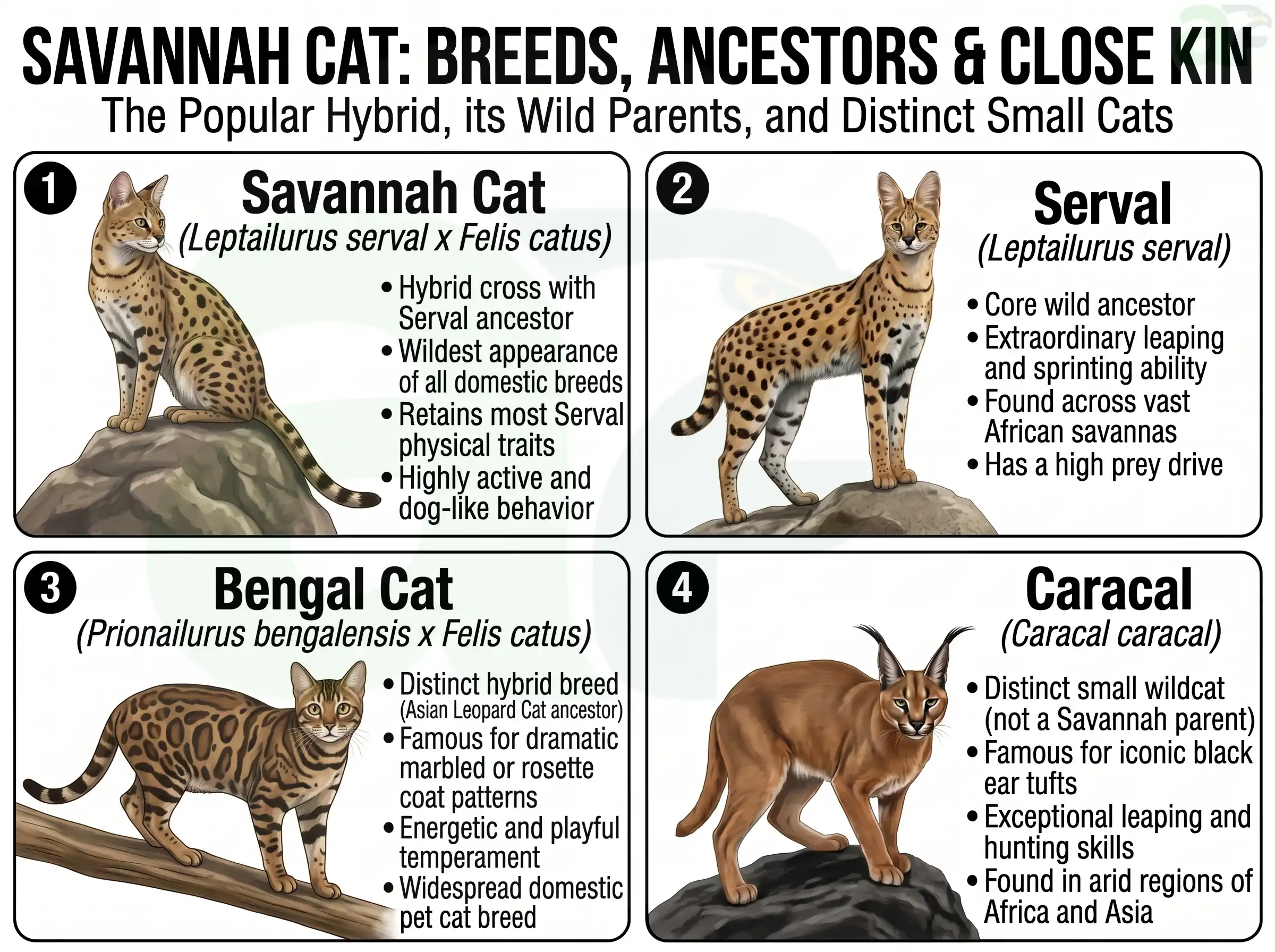
22. Comparison with Similar Exotic Cat Breeds
| Feature | Savannah Cat | Bengal Cat | Chausie | Caracat |
|---|---|---|---|---|
| Wild parent | African serval | Asian leopard cat | Jungle cat | Caracal |
| Wild parent size | 8–18 kg | 3.5–7 kg | 5–16 kg | 8–20 kg |
| TICA status | Full Championship (2012) | Full Championship (1997) | Full Championship (2013) | Advanced New Breed |
| F1 price | $10,000–$20,000+ | $2,000–$5,000 | $1,000–$5,000 | $7,000–$15,000 |
| Size vs. domestic cat | Much larger (F1: up to 11 kg) | Larger (5–8 kg) | Larger (5–9 kg) | Larger (5–11 kg) |
| Coat pattern | Spotted/mackerel | Spotted/rosette/marbled | Spotted/ticked | Spotted/solid |
| Water affinity | Strong (serval heritage) | Moderate (ALC heritage) | Low | Low |
| Dog-like behavior | Very strong | Moderate | Moderate | Moderate |
| Legal restrictions | Several countries/states | Fewer restrictions | Few restrictions | Emerging restrictions |
| Breed maturity | 38+ years | 60+ years | 35+ years | Very recent |
23. Frequently Asked Questions About Savannah Cats
Q1.What is the scientific name of a Savannah cat?
The Savannah cat is a hybrid between the domestic cat (Felis catus) and the African serval (Leptailurus serval). First-generation (F1) Savannah cats are therefore classified as Felis catus × Leptailurus serval hybrids — an intergeneric hybrid (crossing two different genera) that is unusual in the felid family. Later generations, as the serval content decreases, are increasingly classified simply as Felis catus — domestic cats — and the breed is recognized by TICA under the domestic cat classification framework. There is no single binomial species name for Savannah cats as they are a breed rather than a species.
Q2. How big do Savannah cats get?
Savannah cat size varies dramatically by generation. F1 Savannah cats — the first generation crosses between serval and domestic cat — are the largest, with males reaching up to 11 kg (24 lbs) and standing 40–45 cm at the shoulder — taller than many small dog breeds. F2 cats are slightly smaller at 6–9 kg. By F4 and F5, Savannah cats are 4–7 kg — significantly larger than an average domestic cat but within the range of large domestic breeds. The Guinness World Record for tallest domestic cat is held by Savannah cats — most recently by “Fenrir Antares Powers” at 47.83 cm at the shoulder.
Q3. Are Savannah cats legal to own?
Savannah cat legality varies dramatically by jurisdiction and must be verified before purchase. Banned entirely in Australia, Hawaii (USA), New Zealand, Iceland, and several other jurisdictions. Restricted in multiple US states including Georgia, Nebraska, and Rhode Island — with some states restricting early generations (F1, F2, F3) while permitting later generations. Legal without specific restriction in most of the United States, UK, most of Europe, Canada, and many Asian countries. Buyers must check not only national and state/provincial law but also municipal regulations — some cities have additional restrictions beyond state law.
Q4. What is the difference between F1, F2, F3, F4, and F5 Savannah cats?
The filial generation number indicates how many generations removed from the original serval parent a Savannah cat is. F1 cats are 50% serval — direct offspring of a serval and domestic cat — the largest, most wild-looking, and most expensive ($10,000–$20,000+). F2 cats (25% serval) are slightly smaller and more domesticated. Each subsequent generation halves the serval content: F3 (12.5%), F4 (6.25%), F5 (3.125%). As serval content decreases, cats become smaller, more domesticated in behavior, fully fertile (males are sterile in F1-F3), and less expensive ($1,000–$5,000 for F4/F5). Later generations maintain the spotted appearance and many Savannah personality traits while being considerably more manageable as pets.
Q5. Do Savannah cats really act like dogs?
Yes — this is one of the most consistently documented and universally reported characteristics of the breed. Savannah cats are famous for following owners from room to room, greeting them at the door, playing fetch, walking on leashes, learning their name reliably, and forming intensely loyal bonds with specific family members — all behaviors typically associated with dogs rather than cats. This dog-like behavioral profile appears to reflect both the serval’s social adaptability and selection pressure by breeders who have prioritized sociability. The intensity of these behaviors is typically strongest in F1 and F2 cats and somewhat moderated in later generations, though even F5 Savannahs are generally significantly more “dog-like” than standard domestic cat breeds.
Q6. How much does a Savannah cat cost?
Savannah cat prices vary enormously by generation and breeder. F1 Savannah cats — direct serval × domestic cat hybrids — typically range from $10,000 to $20,000+ for well-bred individuals from reputable breeders. F2 cats range from $5,000 to $10,000. F3 cats range from $2,000 to $5,000. F4 and F5 cats range from $1,000 to $3,000. Beyond the purchase price, ongoing costs include high-quality food ($150–$300/month for early generations), specialized veterinary care, environmental enrichment, and potentially pet insurance — making Savannah cat ownership one of the most financially significant commitments in the domestic pet world.
Q7. Are Savannah cats good pets for families with children?
Later generation Savannahs (F4+) can be excellent family pets for families with older, respectful children — their intelligence, playfulness, and social nature make them wonderful companions for engaged family environments. F1 and F2 Savannahs are better suited to adult-only households or families with teenagers rather than young children — their size, prey drive, and wild behavioral tendencies require experienced handling that young children cannot reliably provide. Any Savannah cat introduced to a family with children requires careful socialization, supervision during early interactions, and children who are taught to interact respectfully with the cat. Small animals (hamsters, rabbits, pet birds) should never be kept in the same household as Savannah cats of any generation.
Q8. Do Savannah cats require special veterinary care?
Yes — particularly for early generation cats. F1 and F2 Savannah cats benefit from veterinary care from practitioners with experience in both domestic cats and wild felids — their hybrid nature means that some standard domestic cat protocols may not be appropriate. Specific veterinary considerations include: anesthesia protocols (some wild cat hybrids respond differently to standard anesthetic agents), vaccine selection (modified live vaccines may be contraindicated in early generation Savannahs by some veterinary guidelines), diet counseling (appropriate for the cat’s specific generation and serval content), and parasite control protocols. Savannah cat owners should disclose their cat’s breed and generation to their veterinarian and seek out practitioners with exotic felid experience where possible.
24. Sources & References
- Wikipedia — Savannah cat, Leptailurus serval, Felis catus, Hybrid (biology)
- International Cat Association (TICA) — tica.org (breed standard and registration data)
- Guinness World Records — guinnessworldrecords.com (tallest domestic cat records)
- National Geographic — nationalgeographic.com
- Smithsonian National Museum of Natural History — naturalhistory.si.edu
- BBC Wildlife / BBC Earth — bbcearth.com
- Britannica — britannica.com/animal/savannah-cat
- Live Science — livescience.com
- The Savannah Cat Association — savannahcat.com
- IUCN Red List — iucnredlist.org (African serval conservation status)
- Lyons, Leslie A. — published research on feline genetics; University of Missouri
- Journal of Veterinary Medicine — published papers on exotic feline hybrid veterinary care
- Born Free Foundation — bornfree.org.uk (captive wild cat welfare standards)
- Association of Zoos and Aquariums — aza.org