


Dog Facts
| Feature | Details |
|---|---|
| Scientific Name (Domestic Dog) | Canis lupus familiaris |
| Scientific Name (Gray Wolf — ancestor) | Canis lupus |
| Kingdom | Animalia |
| Phylum | Chordata |
| Class | Mammalia |
| Order | Carnivora |
| Family | Canidae |
| Common Name | Dog (domestic); Wild Dog (various wild canid species) |
| Total Dog Breeds (Domestic) | Approximately 360–400 recognized breeds worldwide |
| Total Wild Canid Species | 36 species in family Canidae |
| Habitat | Every continent except Antarctica; every environment from Arctic tundra to tropical rainforest |
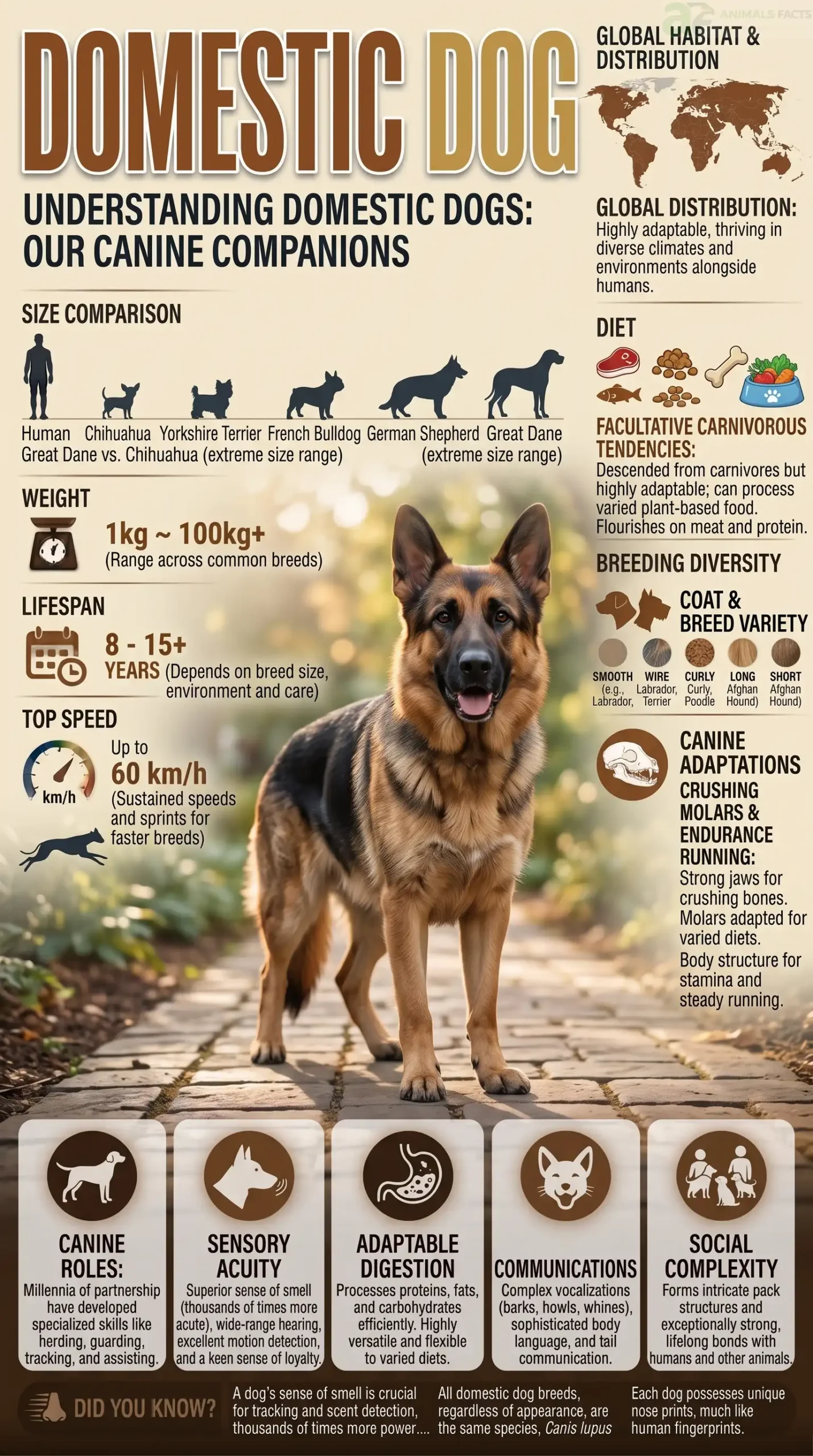
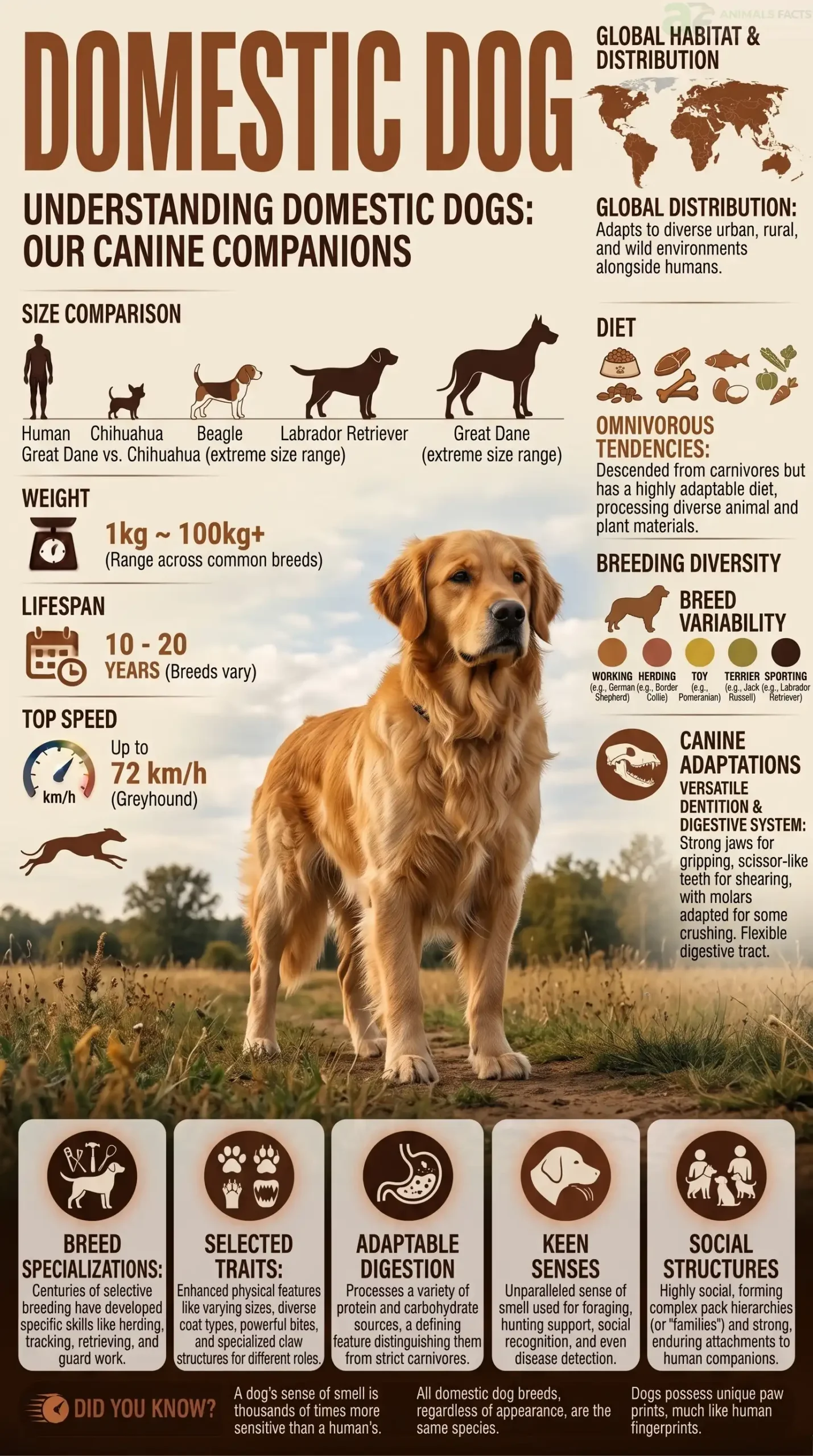
| Lifespan | 10–13 years average (domestic); varies by size — small breeds up to 20 years; large breeds 7–10 years |
| Diet | Omnivores — meat, vegetables, fruits, grains (domestic); primarily carnivorous (wild canids) |
| Smallest Breed | Chihuahua — as small as 900 grams and 15 cm tall |
| Largest Breed | Great Dane / Irish Wolfhound — up to 90 kg and 82 cm shoulder height |
| Fastest Dog | Greyhound — up to 72 km/h (45 mph) |
| Fastest Wild Canid | African Wild Dog — sustained speeds up to 66 km/h |
| Global Domestic Dog Population | Estimated 900 million–1 billion dogs worldwide |
| Conservation Status (Domestic) | Not evaluated (domesticated species) |
| Conservation Status (African Wild Dog) | Endangered — fewer than 6,600 survive in the wild |
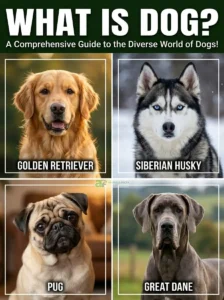 1. Introduction: What is a Dog?
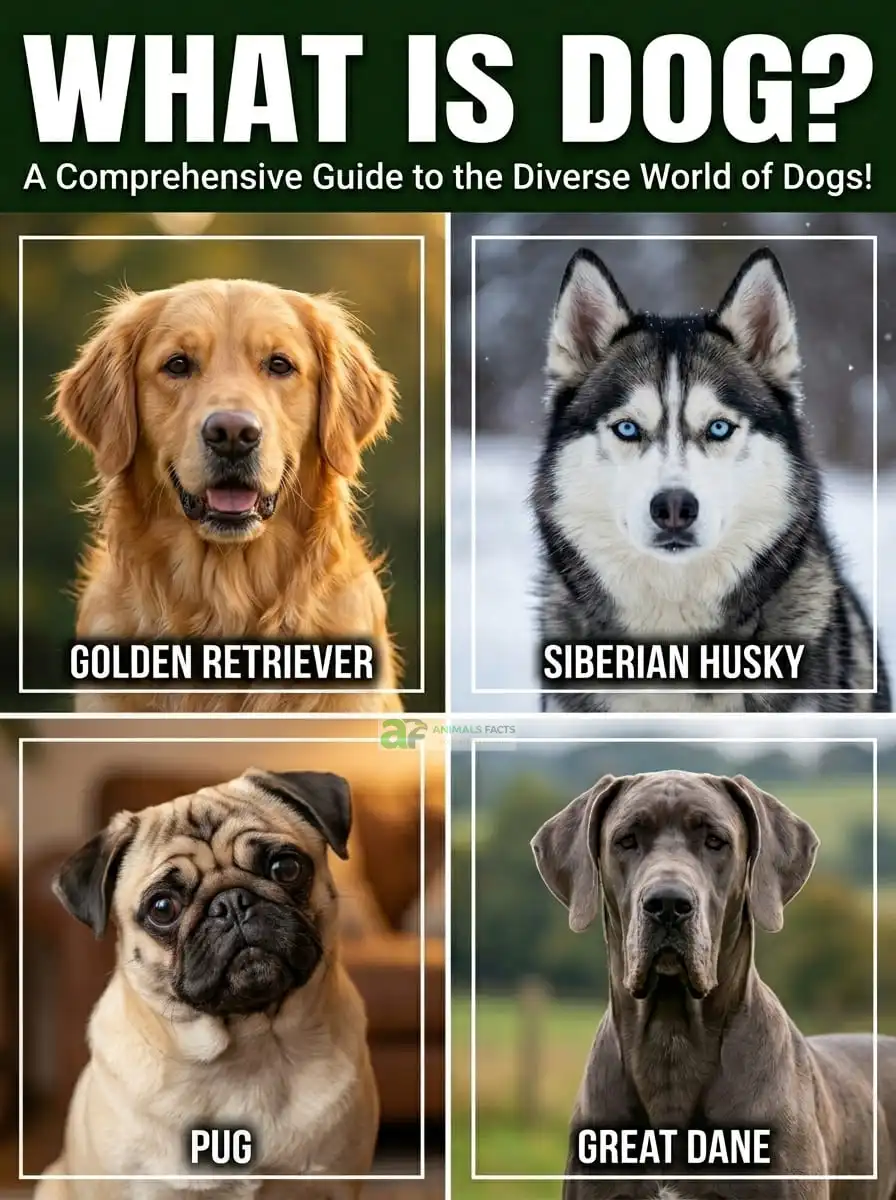
They have walked beside us for over 15,000 years. They have pulled our sleds, herded our livestock, guarded our homes, guided our blind, detected our cancers, found our survivors buried beneath rubble, and comforted us in our darkest moments. No other relationship between humans and any other species in the entire history of our planet comes remotely close to matching the depth, breadth, and mutual transformation of the bond between humans and dogs. Dog facts are, at their heart, facts about the most extraordinary interspecies partnership ever formed on Earth.
The domestic dog — Canis lupus familiaris — is a subspecies of the Gray Wolf, shaped by millennia of selective breeding into the most physically and behaviorally diverse single species of any mammal on Earth. From the pocket-sized Chihuahua weighing less than a kilogram to the towering Great Dane standing over 80 centimeters at the shoulder — both are the same species, both descended from wolf ancestors, and both still capable of interbreeding with wolves today. Beyond the domestic dog, the family Canidae encompasses 36 wild species — from the Arctic Fox surviving on polar ice to the Maned Wolf stalking the South American savanna on legs seemingly borrowed from a deer.
Whether you are a dedicated dog owner searching for dog facts you have never heard before, a student looking for dog facts for kids, a wildlife enthusiast fascinated by the African Wild Dog, or simply someone who looked into their dog’s eyes this morning and wondered about the extraordinary journey that brought this animal to their sofa — this is the most complete guide to dog facts you will find anywhere. We cover dog habitat, dog diet, dog behavior, reproduction, intelligence, conservation, mythology, and pop culture from the ancient world to today. Let us begin.
2. Dog Species Overview & Classification
The domestic dog and its wild relatives belong to the family Canidae — one of the most widespread and ecologically successful mammal families on Earth. Canids are characterized by their long legs, deep chests, bushy tails, non-retractable claws, and highly developed social and communicative behaviors.
What Defines a Canid?
All members of family Canidae share these defining characteristics:
- Long muzzle with a well-developed olfactory system — among the most sensitive noses of any mammal
- Non-retractable claws — unlike cats, canid claws cannot be retracted and are used for traction rather than prey capture
- Digitigrade locomotion — canids walk on their toes, not the flat of their feet, enabling speed and endurance
- Highly social behavior — most canid species live in family groups or packs with complex social hierarchies
- Omnivorous tendency — while primarily carnivorous, most canids readily consume plant material when available
- Exceptional communication — through vocalizations, body language, facial expression, and chemical signals
Major Canid Classification Table
| Group | Scientific Genus | Approx. Species | Key Examples |
|---|---|---|---|
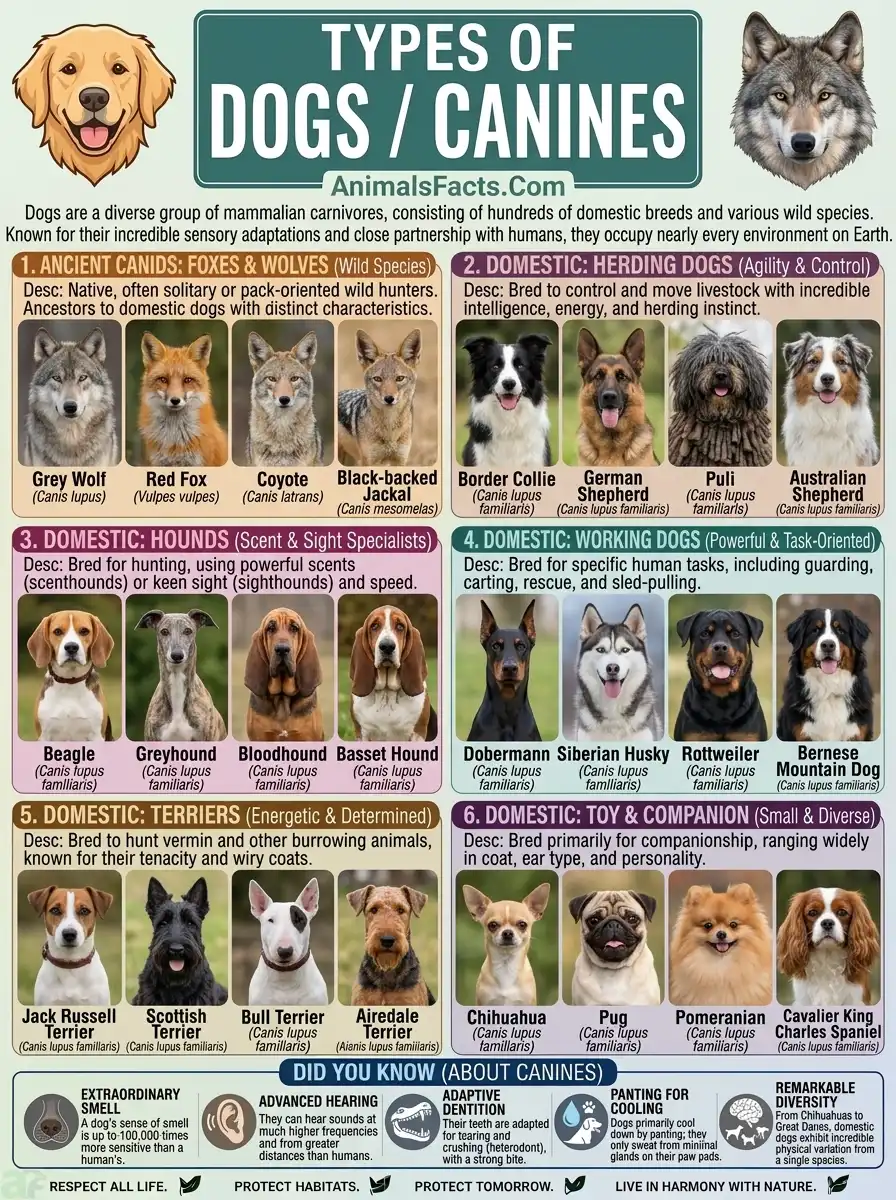
| True Dogs & Wolves | Canis | 8 | Gray Wolf, Domestic Dog, Coyote, Ethiopian Wolf, Dingo |
| Foxes | Vulpes | 12 | Red Fox, Arctic Fox, Fennec Fox, Swift Fox |
| South American Canids | Various | 7 | Maned Wolf, Bush Dog, South American Fox |
| African Wild Dog | Lycaon | 1 | African Wild Dog (Painted Dog) |
| Dholes | Cuon | 1 | Dhole (Asian Wild Dog) |
| Raccoon Dog | Nyctereutes | 2 | Raccoon Dog (East Asia) |
| Other Foxes | Urocyon / Otocyon | 3 | Gray Fox, Island Fox, Bat-eared Fox |
Domestic Dog Breed Groups
The Fédération Cynologique Internationale (FCI) — the world’s primary dog breed registry — recognizes approximately 360 breeds organized into 10 major groups:
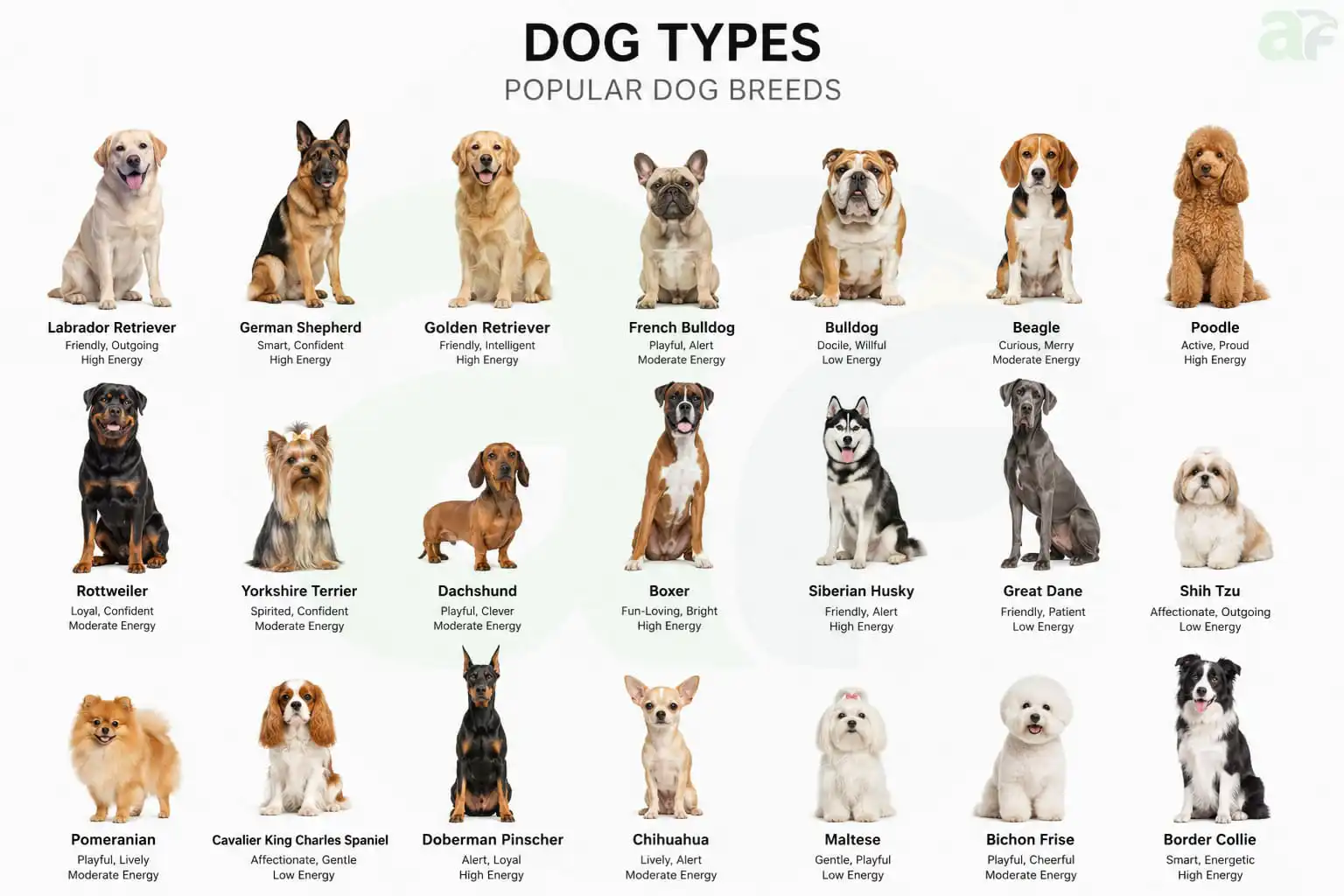
Group 1 — Herding Dogs: Border Collie, German Shepherd, Australian Shepherd Group 2 — Pinschers, Schnauzers & Working Dogs: Rottweiler, Dobermann, Great Dane Group 3 — Terriers: Jack Russell, Bull Terrier, Airedale Terrier Group 4 — Dachshunds: Standard, Miniature, and Rabbit Dachshund Group 5 — Spitz & Primitive Types: Husky, Malamute, Basenji, Shiba Inu Group 6 — Scent Hounds: Beagle, Bloodhound, Basset Hound Group 7 — Pointing Dogs: German Pointer, Vizsla, Weimaraner Group 8 — Retrievers & Flushing Dogs: Labrador, Golden Retriever, Spaniel Group 9 — Companion & Toy Dogs: Poodle, Pug, Chihuahua, Maltese Group 10 — Sighthounds: Greyhound, Saluki, Afghan Hound, Whippet
Species Evolution & Discovery Timeline
~40,000–15,000 years ago: The domestication of the dog from Gray Wolf ancestors occurred — the exact date and location remain actively debated, with genetic evidence suggesting an origin in either Central Asia, East Asia, or Europe, or possibly multiple independent domestication events. Dogs are the oldest domesticated animal in human history — predating cattle, sheep, and all other domestic animals by thousands of years.
~15,000 years ago: Archaeological evidence from a burial site in Bonn-Oberkassel, Germany (dated 14,000 years ago) provides the oldest confirmed evidence of a dog buried alongside humans in a deliberate, emotionally significant burial — suggesting the dog-human bond was already deeply established by this time.
~8,000 years ago: Distinct dog breeds or types begin to appear in archaeological records — suggesting deliberate selective breeding was already occurring in the ancient Middle East and Asia.
~4,000 years ago: Egyptian art depicts dogs remarkably similar to modern Greyhounds, Salukis, and Basenjis — confirming that refined breed types existed in the ancient world.
~2,000 years ago: Roman writers describe distinct dog types including herding dogs, hunting dogs, guard dogs, and companion dogs — demonstrating that functional breed differentiation was well established in the ancient Mediterranean world.
1873: The Kennel Club — the world’s first formal dog breed registry — was established in Great Britain, beginning the modern era of formal breed standards and pedigree registration.
1990s–2000s: DNA analysis begins to revolutionize understanding of dog domestication and breed history — revealing that all domestic dogs share a common wolf ancestor and that modern breeds are surprisingly recent in genetic terms.
2004: The Dog Genome Project completed the first sequencing of the domestic dog genome — opening a new era of understanding dog genetics, health, and the biological basis of dog-human bonding.
3. Dogs Physical Description & Unique Features
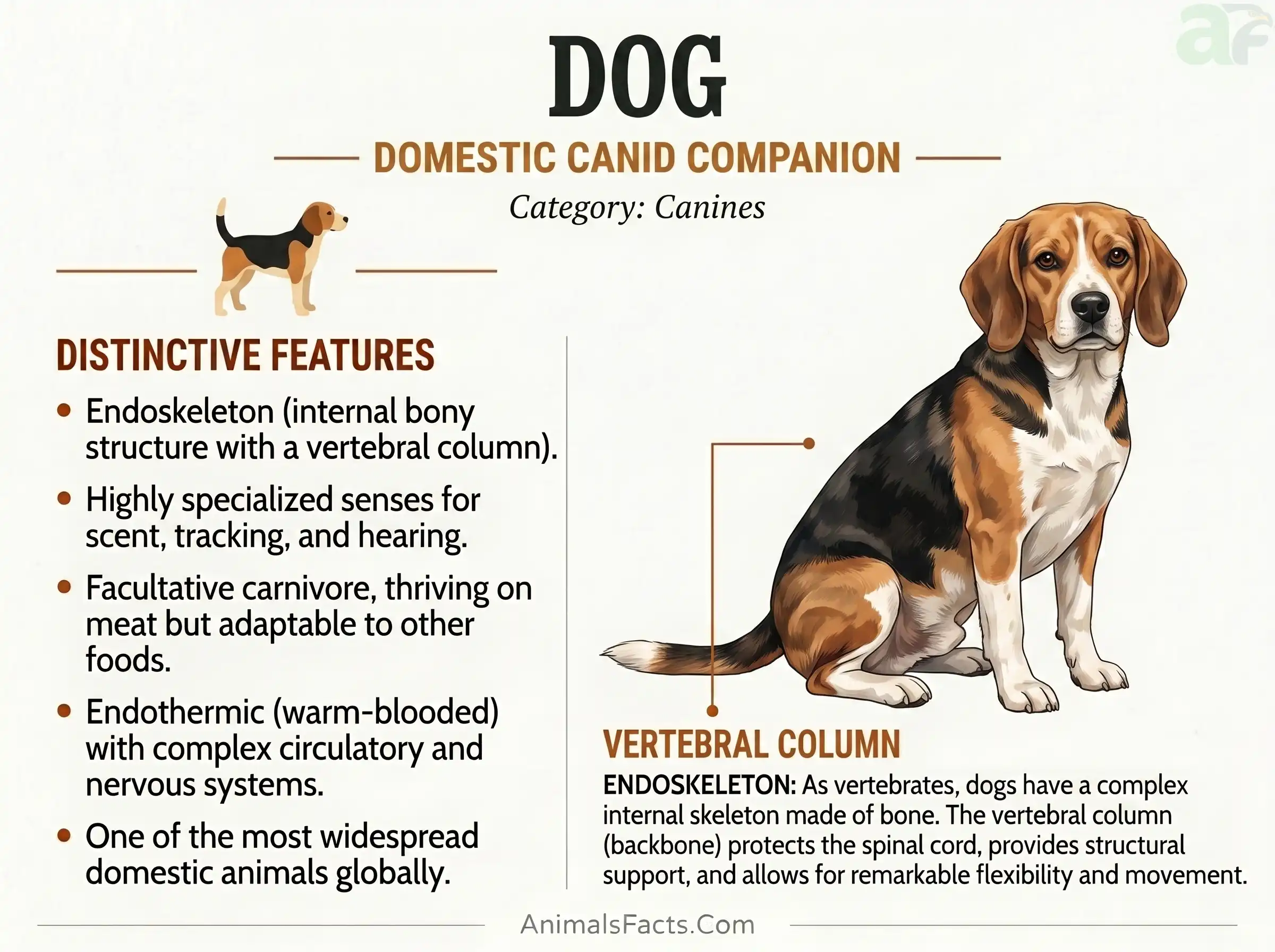
The domestic dog is the most physically diverse single species of any mammal ever to have existed — a direct consequence of thousands of years of deliberate human selective breeding for appearance, function, and temperament.
Size Extremes
Smallest dog breed: The Chihuahua — the smallest recognized breed, with individuals weighing as little as 900 grams (less than a kilogram) and standing just 15–23 cm tall. The smallest dog ever recorded by Guinness World Records was a Chihuahua named Miracle Milly — measuring just 9.65 cm tall and weighing 170 grams.
Largest dog breed by height: The Irish Wolfhound and Great Dane — standing up to 82 cm at the shoulder. The tallest dog ever recorded was a Great Dane named Zeus (USA) — measuring 111.8 cm at the shoulder.
Heaviest dog breed: The English Mastiff and Saint Bernard — regularly reaching 90+ kg in weight. The heaviest dog ever recorded was an English Mastiff named Zorba — weighing 155.6 kg.
The Remarkable Canine Nose
The dog’s sense of smell is the most extraordinary aspect of its physiology — and deserves special attention because it defines the dog’s relationship with its environment more fundamentally than any other sense.
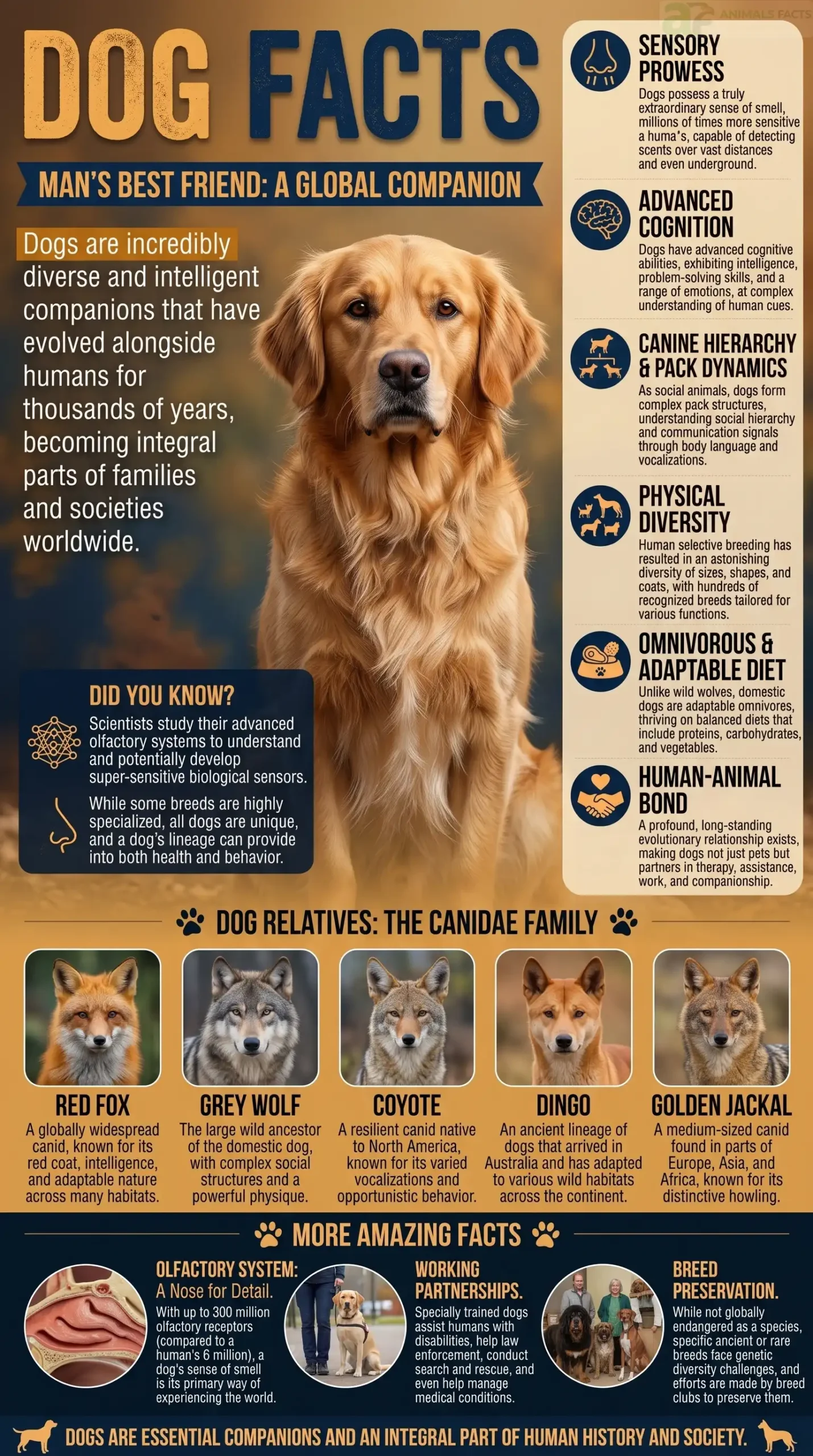
A dog’s nose contains approximately 300 million olfactory receptors — compared to approximately 6 million in humans. This gives dogs a sense of smell estimated to be 10,000 to 100,000 times more sensitive than ours. Dogs can detect cancer, epileptic seizures before they occur, specific human emotions through smell, COVID-19 infection, underground gas leaks, specific individual humans from trace scent evidence hours or days old, and explosives, drugs, and currency in quantities so small they are undetectable by any current machine.
The Bloodhound has the most refined nose of any dog breed — its trailing ability is so reliable that Bloodhound-tracked scent evidence has been admitted in courts of law as forensic evidence in the United States.
Other Remarkable Physical Traits
Hearing: Dogs can hear sounds at frequencies between 40 Hz and 65,000 Hz — humans hear between 20 Hz and 20,000 Hz. Dogs can hear sounds four times further than humans and can precisely locate the direction of a sound in 1/600th of a second by comparing the arrival time of the sound at each ear. Their 18 movable ear muscles allow independent ear movement to focus on specific sound sources.
Vision: Dogs see the world in a modified color spectrum — they are not completely colorblind but perceive colors similarly to a human with red-green color blindness, seeing primarily in shades of blue, yellow, and grey. However, their motion detection is far superior to humans, and many breeds have a much wider field of view (up to 270 degrees in some sighthound breeds compared to approximately 180 degrees in humans).
Sweat glands: Dogs do not sweat through their skin (except slightly through their paw pads). They regulate body temperature primarily through panting — evaporating water from the tongue and respiratory tract — a highly efficient cooling mechanism at the cost of significant water loss.
Did You Know? The Basenji is the only dog breed in the world that does not bark. Instead, it produces a unique vocalization described as a “barroo” — a yodel-like sound unique to the breed. The Basenji is also one of the most ancient dog breeds, with depictions in ancient Egyptian art dated over 4,000 years ago and genetic evidence suggesting it is among the least diverged from ancestral wolf genetics of any modern breed.
4. Top 25 Surprising & Interesting Dog Facts
- Dogs and humans have co-evolved together for so long that dogs have developed a unique muscle above their inner eyebrow — the levator anguli oculi medialis — that wolves completely lack. This muscle allows dogs to make the “puppy eyes” expression that triggers caregiving instincts in humans — a biological adaptation specifically shaped by domestication.
- The Greyhound is the fastest dog breed on Earth — reaching speeds of up to 72 km/h (45 mph). In a straight race, a Greyhound could outrun a horse over short distances.
- Dogs are one of only a handful of non-human animals confirmed to understand human pointing — they follow a pointed finger to an indicated location, a skill that chimpanzees and even wolves raised by humans struggle to master consistently.
- The Norwegian Lundehund has six toes on each foot — more than any other dog breed — an adaptation developed for climbing steep cliff faces to hunt Puffin birds in Norway.
- Dogs can be trained to detect cancer, diabetes, epileptic seizures, COVID-19, and numerous other medical conditions with accuracy comparable to or exceeding clinical laboratory tests in blind studies.
- A dog’s nose print is as unique as a human fingerprint — the pattern of ridges and creases on a dog’s nose is completely individual and can be used for identification.
- The Border Collie is widely considered the most intelligent dog breed — capable of learning over 1,000 words and understanding abstract concepts such as size and category. A Border Collie named Chaser learned the names of 1,022 individual objects — the largest verified vocabulary of any non-human animal.
- Dogs dream — EEG studies have confirmed that dogs experience REM sleep similar to humans, during which their brains show activity patterns consistent with dreaming, often accompanied by twitching, paddling, and soft vocalizations.
- The African Wild Dog (Lycaon pictus) has the highest hunting success rate of any large African predator — it successfully kills prey in approximately 80% of hunts, compared to approximately 25–30% for lions.
- Dogs have a third eyelid — called the nictitating membrane or haw — a translucent inner eyelid that sweeps horizontally across the eye to provide additional protection and distribute tear film.
- The Saluki is believed to be the oldest recognized dog breed — depicted in Sumerian art dating back over 5,000 years and mentioned in ancient texts from Mesopotamia and Egypt.
- A dog’s normal body temperature is 38.3–39.2°C (101–102.5°F) — higher than the human normal of 37°C (98.6°F).
- Dogs have approximately 1,700 taste buds — compared to approximately 9,000 in humans. They compensate for less taste sensitivity with their extraordinary sense of smell — they essentially “taste” food largely through smelling it.
- The Dingo of Australia is not a domestic dog gone wild — it is a distinct wild canid that arrived in Australia approximately 3,500–4,000 years ago with human seafarers and subsequently became fully wild. Genetic analysis places it closer to ancient Asian dog lineages than to modern domestic breeds.
- Dogs’ paws contain sweat glands — the only location on their body where they perspire. Dogs leave scent trails through their paws wherever they walk — this is part of why dogs sniff the ground so extensively.
- The Chow Chow and the Shar-Pei are among the most genetically ancient domestic dog breeds — DNA analysis consistently places them among the dog lineages least diverged from ancestral wolf genetics.
- A dog’s heartbeat typically ranges from 60–140 beats per minute depending on size — smaller dogs have faster heart rates than larger dogs.
- Dogs can be left-pawed or right-pawed — approximately equal proportions prefer the left or right paw for tasks, similar to human handedness.
- The Bloodhound can follow a scent trail over 300 hours old and has tracked humans over distances exceeding 220 kilometers — making it the world’s most accomplished scent tracker.
- Dogs have a vomeronasal organ (Jacobson’s organ) in the roof of their mouth — a secondary chemical detector that picks up pheromones and other chemical signals invisible to their regular olfactory system.
- The Tibetan Mastiff is one of the most expensive dog breeds in the world — a single red Tibetan Mastiff puppy sold for approximately $1.5 million in China in 2014, the highest price ever publicly documented for a single dog.
- A dog’s sense of time is genuine — studies have shown that dogs respond differently to owners who have been away for 30 minutes versus 2 hours, suggesting they experience and measure the passage of time.
- The Xoloitzcuintli (Mexican Hairless Dog) is one of the oldest dog breeds in the Americas — it has existed largely unchanged for approximately 3,000–4,000 years and was sacred to the ancient Aztec and other Mesoamerican civilizations.
- Dogs evolved the ability to digest starch — a key difference from wolves. Domestic dogs have multiple copies of the AMY2B gene encoding amylase (a starch-digesting enzyme), allowing them to thrive on human agricultural food — a genetic adaptation that co-evolved with human farming over thousands of years.
- The world’s oldest confirmed dog was an Australian Cattle Dog named Bluey — who lived to 29 years and 5 months of age, a record verified by the Guinness World Records in 1939 that has never been officially broken.
5. Dogs Fun Facts
- There are approximately 900 million to 1 billion dogs on Earth — making the domestic dog the most numerous large carnivore in the world by an enormous margin.
- The domestic dog has been selectively bred into more physical diversity than any other mammal species — a Chihuahua and a Great Dane are technically the same species.
- Dogs and humans make eye contact in a way no other non-human species does — mutual gazing between dogs and owners releases oxytocin (the “bonding hormone”) in both species.
- A Greyhound would beat a Cheetah in a race over 700 meters — the cheetah accelerates faster but tires quickly, while the Greyhound maintains near-top speed for much longer.
- The Border Collie named Chaser had the largest verified vocabulary of any non-human animal — 1,022 words — and could understand grammatical commands combining multiple nouns and verbs.
- Dogs were the first animals sent to space by any nation — the Soviet dog Laika orbited Earth aboard Sputnik 2 in 1957.
- Dogs can smell underwater — they detect scent molecules dissolved in water through their highly sensitive olfactory system.
- The African Wild Dog’s large rounded ears serve as the primary cooling mechanism — blood flowing through the thin-skinned ears is cooled by the air and then circulates back through the body.
- Dogs’ paw pads contain a counter-current heat exchange system in cold-weather breeds — warm blood going to the feet warms cold blood returning from the feet, preventing dangerous heat loss in Arctic conditions.
- A dog’s brain dedicates 40 times more neural real estate to processing smells than a human brain does.
- The Dhole (Asian Wild Dog) is one of the few predators that regularly kills Tigers when hunting cooperatively in a pack.
- Dogs have been trained to detect specific individuals from scent evidence over 5 years old — demonstrating a memory and discrimination capacity that far exceeds any artificial scent detection technology.
6. Dogs Natural Habitat & Geographic Range
The domestic dog is the most geographically widespread large carnivore on Earth — found on every continent including as working dogs and research station companions in Antarctica. Wild canid species cover a similarly vast geographic range — from the Arctic Fox on polar ice to the Crab-eating Fox in South American wetlands.
Domestic Dog Habitats
Domestic dogs inhabit every environment where humans live — from dense urban cities to remote pastoral communities, from Arctic villages to equatorial rainforest edges. Their extreme behavioral and physiological adaptability — a direct product of domestication — allows them to thrive in virtually any climate and environment.
Wild Canid Habitats
Arctic and Subarctic: The Arctic Fox survives the harshest cold on Earth — its thick fur provides insulation against temperatures as low as -50°C, and its small rounded ears minimize heat loss. Wolves occupy boreal forests and Arctic tundra across North America, Europe, and Asia.
Temperate Forests: Gray Wolves, Red Foxes, and Coyotes are primary temperate forest canids in the Northern Hemisphere.
Grasslands & Savannas: The African Wild Dog and Black-backed Jackal dominate African savanna canid communities. The Maned Wolf occupies South American cerrado (tropical savanna) on its distinctive long legs.
Deserts: The Fennec Fox — the smallest wild canid — survives in the Sahara Desert using its enormous ears (which function as radiators to dissipate heat) and its ability to go without drinking water, obtaining moisture from food.
Tropical Rainforests: The Bush Dog of South America is the only fully rainforest-adapted canid — short-legged, semi-aquatic, and adapted to dense forest hunting.
Mountain Environments: The Ethiopian Wolf — the world’s most endangered canid — lives exclusively in the high-altitude Afroalpine meadows of Ethiopia above 3,200 meters, where it hunts giant mole rats in a specialized highland ecosystem.
Habitat Range by Continent
| Continent | Notable Wild Canid Species | Domestic Dog Status |
|---|---|---|
| Africa | African Wild Dog, Ethiopian Wolf, Side-striped Jackal, Black-backed Jackal, Bat-eared Fox | Present everywhere |
| Asia | Gray Wolf, Dhole, Red Fox, Tibetan Fox, Raccoon Dog, Corsac Fox | Present everywhere |
| Europe | Gray Wolf, Red Fox, Arctic Fox (north), Golden Jackal | Present everywhere |
| North America | Gray Wolf, Coyote, Red Fox, Swift Fox, Gray Fox, Arctic Fox | Present everywhere |
| South America | Maned Wolf, Bush Dog, South American Fox, Crab-eating Fox | Present everywhere |
| Australia & Oceania | Dingo (wild), Quoll competitor (feral dogs) | Present everywhere |
| Antarctica | None (native wild canids absent) | Working/companion dogs at research stations |
Did You Know? The Coyote — historically confined to western North America — has expanded its range dramatically since the 1900s to cover the entire North American continent, including every major city from Los Angeles to New York. It has exploited the elimination of wolf competition, urban food sources, and human landscape modification to become one of the most successful wild canid range expansions in recorded history. Coyotes are now regularly documented in Central Park, Manhattan and in every US state.
7. Dog Diet & Feeding Behavior
The domestic dog is a facultative omnivore — primarily evolved as a carnivore through its wolf ancestry, but capable of obtaining nutrition from a wide range of plant and animal foods. This dietary flexibility was a critical factor in the success of dog domestication, allowing dogs to share the diverse food resources of human settlements.
Domestic Dog Diet
Modern domestic dogs are fed a wide variety of diets — from commercially produced dry kibble and wet food to raw meat diets (BARF — Biologically Appropriate Raw Food), home-cooked meals, and various combinations. The nutritional requirements of domestic dogs include:
Protein: The primary nutritional requirement — essential for muscle maintenance, immune function, and tissue repair. Minimum 18% protein in adult maintenance diets; higher in working, growing, and reproductive dogs.
Fats: The most energy-dense nutrient — essential for skin and coat health, brain function, and fat-soluble vitamin absorption. Omega-3 and Omega-6 fatty acids are particularly important for coat condition and inflammation management.
Carbohydrates: Not strictly essential for dogs but efficiently used as an energy source. Domestic dogs have evolved multiple copies of the starch-digesting gene AMY2B — giving them significantly greater starch digestion capacity than wolves.
Toxic foods for dogs: Several common human foods are toxic to dogs and must never be fed to them:
| Food | Toxic Component | Effect |
|---|---|---|
| Chocolate | Theobromine | Cardiac arrhythmia, seizures, death |
| Grapes & Raisins | Unknown compound | Acute kidney failure |
| Onions & Garlic | Thiosulfate | Hemolytic anemia (red blood cell destruction) |
| Xylitol (sweetener) | Xylitol itself | Hypoglycemia, liver failure |
| Macadamia Nuts | Unknown compound | Weakness, hyperthermia, tremors |
| Avocado | Persin | Vomiting, diarrhea |
| Alcohol | Ethanol | Nervous system depression, death |
Wild Canid Diet
| Wild Canid | Primary Food | Secondary Food | Feeding Method |
|---|---|---|---|
| Gray Wolf | Large ungulates (deer, elk, bison) 80% | Small mammals, carrion 20% | Pack pursuit; hamstringing |
| African Wild Dog | Medium antelopes (impala, gazelle) 85% | Small mammals, birds 15% | Pack pursuit; endurance hunting |
| Red Fox | Small mammals (voles, rabbits) 50% | Birds, berries, invertebrates, carrion 50% | Solitary stalking; mousing pounce |
| Coyote | Small mammals 40% | Fruit, insects, carrion, deer (scavenged) 60% | Opportunistic; highly flexible |
| Fennec Fox | Insects, small rodents 60% | Roots, eggs, fruit 40% | Solitary foraging |
| Ethiopian Wolf | Rodents (giant mole rats) 95% | Other small mammals 5% | Solitary stalking |
| Maned Wolf | Fruit (particularly Wolf Apple) 50% | Small mammals, birds, insects 50% | Solitary; omnivorous foraging |
| Dhole | Deer, wild pigs, goats 80% | Small mammals, berries 20% | Pack pursuit; disembowelment |
Did You Know? The Maned Wolf (Chrysocyon brachyurus) of South America has a diet that is approximately 50% fruit — particularly a fruit called the Wolf Apple (Solanum lycocarpum), which constitutes such a large portion of its diet that the wolf is considered the primary seed disperser of this plant. The relationship is so significant that the Wolf Apple is sometimes called the “Maned Wolf’s fruit” — a remarkable example of plant-animal mutualism between a large carnivore and a fruit-bearing plant.
8. Dog’s Reproduction & Life Cycle
Domestic Dog Reproduction
Female domestic dogs reach sexual maturity at approximately 6–12 months of age depending on breed — smaller breeds mature earlier, giant breeds later. Unlike wolves and most wild canids that have a single annual breeding season, domestic dogs typically experience two estrous cycles per year (every 6 months) — a change from the wolf’s single annual cycle that occurred during domestication.
Gestation period: 58–65 days (approximately 2 months)
Litter size: Varies enormously by breed — from 1–2 puppies in toy breeds to 12–15 in large breeds. The largest confirmed domestic dog litter on record was 24 puppies, born to a Neapolitan Mastiff in the UK in 2004.
Neonatal development: Puppies are born blind, deaf, and helpless — unable to regulate their own body temperature and entirely dependent on the mother for warmth, nutrition, and stimulation of elimination. Eyes and ear canals open between 10–14 days after birth.
Key developmental stages:
| Stage | Age | Key Development |
|---|---|---|
| Neonatal | 0–2 weeks | Eyes and ears closed; entirely dependent on mother |
| Transitional | 2–4 weeks | Eyes and ears open; beginning to walk; first teeth emerging |
| Socialization | 3–12 weeks | Critical window for social learning; exposure to people, animals, sounds |
| Juvenile | 3–6 months | Rapid growth; second teeth; increasing independence |
| Adolescent | 6–18 months | Sexual maturity; behavioral testing; full adult size approaching |
| Adult | 1–7 years | Full physical and behavioral maturity |
| Senior | 7+ years (varies by size) | Declining physical capacity; increased health monitoring needed |
Lifespan Comparison Table
| Species | Average Lifespan | Record / Maximum |
|---|---|---|
| Chihuahua | 14–17 years | ~22 years |
| Labrador Retriever | 10–12 years | ~19 years |
| Great Dane | 7–10 years | ~15 years |
| Domestic Cat | 12–18 years | ~29 years (Creme Puff, USA) |
| Gray Wolf | 6–8 years (wild) | ~17 years (captivity) |
| Red Fox | 3–4 years (wild) | ~14 years (captivity) |
| African Wild Dog | 10–12 years (wild) | ~17 years (captivity) |
| Australian Cattle Dog (Bluey) | — | 29 years 5 months — confirmed oldest dog ever |
9. Social Behavior & Communication
Dogs are one of the most socially sophisticated and communicatively complex species in the animal kingdom — and their ability to communicate across the species barrier with humans is arguably the most extraordinary interspecies communication system ever documented in natural history.
Pack Structure and Social Hierarchy
Domestic dogs — while far removed from wolf pack life — retain strong social instincts. They are fundamentally social animals that experience genuine stress when isolated for extended periods. Multi-dog households typically establish social hierarchies through subtle behavioral signals — body posture, access to resources, and behavioral deference — rather than the dramatic confrontations depicted in popular culture.
Wild wolves live in family packs consisting of a breeding pair (often called the “alpha” pair) and their offspring of various ages. The old concept of “alpha wolves” dominating through aggression has been significantly revised by modern research — wolf packs are primarily family units in which the breeding parents make decisions as experienced adults, and younger pack members defer to them much as children defer to parents rather than as subordinates to a tyrant.
Communication Methods
Vocalizations: Dogs produce an extraordinarily rich vocal repertoire:
Barking: The most distinctively domestic dog vocalization — adult wolves rarely bark, but domestic dogs have evolved barking as a primary communication tool through the process of domestication, likely selected for as an alarm signal useful to humans. Bark pitch, duration, frequency, and pattern all convey different information — and experienced dog owners can reliably distinguish their own dog’s different barks.
Howling: Maintained from wolf ancestry — used for long-distance communication, group cohesion, and location broadcasting. Dogs howl in response to sirens, musical instruments, and other dogs.
Whining and whimpering: Signals anxiety, excitement, frustration, or desire for social contact.
Growling: Primarily a warning signal — communicating discomfort, threat perception, or resource guarding. Importantly, growling is a valuable warning communication that should never be punished out of dogs, as it prevents escalation to biting.
Body Language: Dogs communicate through a rich visual language including:
- Tail position and movement: High and stiff indicates arousal or dominance; low indicates submission or fear; wide wagging indicates friendly excitement; slow wag at mid-height indicates uncertainty
- Ear position: Forward indicates alertness or interest; pinned back indicates fear or submission
- Body posture: Play bow (front down, rear up) is a universal invitation to play; rolling over exposes the vulnerable belly in submission
- Facial expression: The uniquely dog-specific ability to make “puppy eyes” through the levator anguli oculi medialis muscle — a movement that triggers caregiving responses in humans
Chemical communication: Dogs leave complex chemical messages through urine marking, anal gland secretions, and paw gland secretions — conveying information about identity, sex, reproductive status, health, and emotional state to other dogs. A dog sniffing a fire hydrant is reading a complex chemical bulletin board of information left by every dog that has passed recently.
Did You Know? A landmark 2015 study published in the journal Science demonstrated that mutual gazing between dogs and their owners triggers a surge of oxytocin (the “bonding hormone”) in both human and dog — the same hormonal mechanism that creates the bond between human parents and their infants. This was the first documented case of the oxytocin bonding loop operating between two different species — confirming biologically what dog owners have always known intuitively: the dog-human bond is genuine, mutual, and physiologically real.
10. Predators & Defense Mechanisms
Wild Canid Predators
In the wild, canids face predation from larger carnivores and in some cases other canids. The primary predators of wild canids include:
Large apex predators: Wolves, Cougars, Bears, Leopards, and Lions predate on smaller canid species including foxes, jackals, and coyotes. In wolf territory, wolf predation on Coyotes is one of the primary limiting factors on coyote populations.
Eagles and large raptors: Golden Eagles, Martial Eagles, and Crowned Eagles are documented predators of fox pups, jackal pups, and small wild canids.
Large snakes: Pythons and large constrictors occasionally prey on small canids in tropical regions.
Humans: The primary historical predator of virtually all large canid species worldwide — wolves were systematically exterminated across most of Europe and North America during the 18th and 19th centuries. The Ethiopian Wolf faces catastrophic risk from rabies transmitted by domestic dog contact. The African Wild Dog has lost over 25% of its population in recent decades primarily to human-wildlife conflict, road kills, and disease from domestic dog contact.
Defense Mechanisms of Wild Canids
Speed and endurance: The primary escape strategy for most canids. Wolves and African Wild Dogs are endurance specialists — capable of sustained running at high speeds for hours. Foxes use exceptional acceleration and agility.
Pack defense: Wolves defend each other from larger predators cooperatively — wolf packs have been documented successfully driving bears and mountain lions from kills through coordinated group threat displays and harassment.
Burrow retreating: Foxes and smaller canids retreat to underground dens — their dens frequently have multiple entrances and can be dug quickly in loose soil as emergency escapes.
Scent marking and territory: Canid territories clearly marked with scent allow resident animals to monitor for intruder threats and maintain spatial separation from competing predators.
Vocalization alarms: Coordinated alarm howling by wolf packs warns pack members of approaching threats — one of the most effective early warning systems of any social predator.

11. Dog Facts for Kids
Hey kids — are you ready to discover just how amazing dogs really are? Whether you have a dog at home or just love these incredible animals, these facts are going to blow your mind!
- Dogs have been best friends with humans for over 15,000 years — they are the very first animal humans ever tamed. Before we had cows, sheep, or horses, we had dogs!
- A dog’s nose is so powerful it can smell things 100,000 times better than you can. Some dogs are trained to sniff out cancer in humans — they can smell a disease before any machine can detect it!
- The Border Collie is so smart it learned over 1,000 words — that is more words than many two-year-old children know!
- Dogs dream just like you do! When your dog twitches and whimpers in its sleep, it is probably dreaming about chasing something or playing with you!
- Every dog’s nose print is completely unique — just like your fingerprint. No two dogs have the same nose pattern!
- The fastest dog in the world — the Greyhound — can run as fast as 72 km/h. That is faster than most cars are allowed to go on city roads!
- Dogs can hear sounds from four times further away than humans — and they can move each ear independently, like a satellite dish pointing in different directions!
- The smallest dog that ever lived weighed less than a chocolate bar — a tiny Chihuahua named Miracle Milly who weighed only 170 grams!
Did You Know? When you look into your dog’s eyes and it looks back at you, both of you get a rush of a special “love chemical” called oxytocin in your brains — the same chemical that makes parents love their babies. Scientists discovered this in 2015 and it scientifically proved what every dog owner already knew: the love between a dog and its human is real and happens in both of your bodies at the same time!
12. Relationship with Humans
No relationship in the history of human civilization — with any other animal or arguably with any human community — has been as long, as mutual, or as transformative as the relationship between humans and dogs.
The Oldest Partnership
The domestication of the dog from Gray Wolf ancestors was not a single event but a gradual process of mutual selection — wolves that were less fearful of humans benefited from access to human food scraps; humans benefited from the wolves’ superior senses and herding instincts. Over thousands of generations, this mutual selection produced an animal increasingly attuned to human social signals, increasingly dependent on human contact, and increasingly unlike its wolf ancestors in both behavior and physiology.
The key evidence for the depth of the ancient dog-human bond comes from burial archaeology — dogs buried alongside humans, sometimes with grave goods, sometimes cradled in a human’s arms. The Bonn-Oberkassel burial in Germany (approximately 14,000 years ago) contains a human couple buried with a dog — the dog shows signs of having been carefully nursed through a severe illness for weeks before death, suggesting it was kept alive through significant human care despite being a burden. This is the earliest evidence of dogs being kept as companions rather than purely as working animals.
Working Roles Throughout History
Dogs have served humans in an extraordinary range of working roles throughout history:
Hunting: Bred and used for hunting for at least 10,000 years — from the ancient Egyptian Saluki pursuing gazelle across desert sands to the modern Labrador Retriever collecting waterfowl. Every major hunting dog group — sighthounds, scenthounds, gun dogs, and terriers — was developed to assist specific hunting methods.
Herding: The development of herding dog breeds — Border Collie, Australian Shepherd, German Shepherd, Anatolian Shepherd — transformed livestock management, enabling small numbers of people to control large flocks and herds across vast landscapes.
Guarding: Mastiff-type dogs have guarded human settlements, livestock, and property for thousands of years — depicted on Assyrian palace reliefs dated to 650 BCE.
Sledding and transport: Arctic breeds — Siberian Husky, Alaskan Malamute, Greenland Dog, Samoyed — enabled human survival and exploration in polar environments for thousands of years, transporting people and goods across ice and snow with remarkable efficiency.
Military service: Dogs have served in military roles across every era — from ancient Roman war dogs fitted with spiked armor to World War II messenger dogs, mine-detection dogs, and modern Special Forces Military Working Dogs used in the most demanding combat and counterterrorism operations.
Medical detection: The most frontier area of modern working dog application — dogs detecting cancer, diabetes, epilepsy, COVID-19, malaria, Parkinson’s disease, and numerous other medical conditions with accuracy that frequently exceeds clinical laboratory tests.
Search and rescue: Dogs equipped with extraordinary noses and tracking ability have saved thousands of human lives — finding survivors of avalanches, earthquakes, building collapses, and wilderness disappearances.
Assistance and therapy: Guide dogs for the blind, hearing dogs for the deaf, mobility assistance dogs for wheelchair users, psychiatric service dogs for PTSD and anxiety disorders, and therapy dogs visiting hospitals, schools, and care homes — the range of documented beneficial roles for dogs in human health is expanding rapidly.
13. Dogs Conservation Status & Threats
While the domestic dog as a species is in no danger of extinction — with nearly 1 billion individuals worldwide — many wild canid species face serious conservation challenges, and the domestic dog itself represents one of the most significant threats to many wild carnivore populations globally.
Wild Canid Conservation Data (2026)
| Species | IUCN Status | Estimated Wild Population | Primary Threat |
|---|---|---|---|
| Ethiopian Wolf | Critically Endangered | ~500 | Rabies from domestic dogs; habitat loss |
| African Wild Dog | Endangered | ~6,600 | Habitat fragmentation; disease from domestic dogs; human conflict |
| Dhole (Asian Wild Dog) | Endangered | ~2,500 | Prey depletion; habitat loss; persecution |
| Darwin’s Fox | Vulnerable | ~1,500 | Habitat loss; feral dog predation |
| Island Fox | Near Threatened | Recovering | Golden Eagle predation; feral pigs; disease |
| Gray Wolf | Least Concern (globally) | ~300,000 | Persecution; habitat loss in specific regions |
| Red Fox | Least Concern | Abundant | Fur trade; rabies management |
| Arctic Fox | Least Concern | ~300,000 | Climate change; Red Fox competition |
Domestic Dogs as a Conservation Threat
Paradoxically, the domestic dog — humanity’s closest animal companion — is one of the most serious threats to wild animal populations worldwide:
Disease transmission: Domestic dogs carry rabies, distemper, parvovirus, and other diseases that are catastrophic to wild canid populations with no immunity. Rabies periodically decimates Ethiopian Wolf populations — a single outbreak can kill a significant proportion of the total surviving population. African Wild Dogs are similarly vulnerable.
Direct predation by feral dogs: An estimated 200 million feral dogs worldwide predate on wildlife — including ground-nesting birds, small mammals, reptiles, and even deer. In island ecosystems, feral dogs have driven multiple species to extinction.
Hybridization: Gray Wolves in areas of high human density are increasingly hybridizing with domestic and feral dogs — a process that threatens the genetic integrity of wild wolf populations in parts of Europe and Asia.
Competition: Feral and free-roaming domestic dogs compete with wild carnivores for prey and territory — directly impacting wolf, wild dog, and jackal populations in many regions.
Did You Know? The Ethiopian Wolf — the world’s most endangered canid with fewer than 500 individuals remaining — faces its greatest threat not from habitat loss or hunting, but from rabies carried by domestic dogs in surrounding villages. A single rabies outbreak in 2019 killed more than 20% of the Bale Mountains wolf population within weeks. An extraordinary international rabies vaccination program for local domestic dogs — funded by the Ethiopian Wolf Conservation Programme — has become the primary tool for preventing further outbreaks and is credited with preventing the total extinction of this extraordinary species.
14. Famous Dogs
Laika – The First Animal in Space
Laika — a stray dog from the streets of Moscow — became the first animal to orbit Earth aboard the Soviet spacecraft Sputnik 2 on November 3, 1957. Laika was selected from Moscow strays because street dogs were believed to be better conditioned to physical hardship than pampered pets. The spacecraft was not designed for recovery — Laika died within hours of launch from overheating when the thermal control system malfunctioned. Her story provoked international debate about animal welfare in scientific experimentation and remains one of the most poignant episodes in space history. She is memorialized by a monument in Moscow and by streets and stamps named in her honor across the former Soviet Union.
Rin Tin Tin – Hollywood’s First Superstar
Rin Tin Tin was a German Shepherd puppy rescued from a World War I battlefield in France by American soldier Lee Duncan in 1918. Duncan trained the dog and brought him to Hollywood — where Rin Tin Tin starred in 27 Warner Bros. films between 1922 and 1931, becoming one of the most famous animals in cinema history and reportedly saving Warner Bros. from bankruptcy with the box office success of his early films. He received the most votes in the first Academy Award for Best Actor but was ruled ineligible because he was a dog. Rin Tin Tin died in 1932 and is buried in Paris, France.
Hachiko – Loyalty Beyond Death
Hachiko was an Akita dog owned by Professor Hidesaburo Ueno of the University of Tokyo. Each day, Hachiko met Professor Ueno at Shibuya Station when he returned from work. In May 1925, Professor Ueno died suddenly at work and never returned. For the next 9 years, 9 months, and 15 days, Hachiko returned to Shibuya Station every day at the time of the evening train — waiting for his owner who never came. He died in 1935, still waiting. A bronze statue of Hachiko erected at Shibuya Station in 1934 — while he was still alive — is today one of the most visited landmarks in Tokyo and one of the world’s most powerful symbols of canine loyalty.
Endal – The Most Decorated Service Dog in History
Endal was a Yellow Labrador Retriever and assistance dog who served Gulf War veteran Allen Parton — who had been left with no memory, no speech, and very limited movement after being severely wounded. Endal not only performed over 100 distinct assistance tasks for Allen but was credited with teaching him to communicate again, and once — when Allen was knocked from his wheelchair by a car — Endal pulled a blanket over him, retrieved his mobile phone, and went to a nearby hotel to summon help. He was named “Dog of the Millennium” by the Dog of the Year awards and received the PDSA Gold Medal — the animal equivalent of the George Cross — among numerous other honors.
Chaser – The Smartest Dog in the World
Chaser was a Border Collie owned by psychology professor Dr. John Pilley of Wofford College, South Carolina. Between 2004 and 2009, Dr. Pilley trained Chaser to recognize the names of 1,022 individual objects — stuffed animals, balls, and frisbees — the largest verified vocabulary ever documented in any non-human animal. Chaser also demonstrated the ability to learn new words by exclusion (if she knew the names of all but one object, she could correctly identify a new one by its unfamiliar name), and could understand grammatical commands combining different verbs and nouns. She died in 2019 and remains the most cognitively studied individual dog in scientific history.
15. Role in Ecosystem & Food Chain
Wild Canids as Ecosystem Engineers
Gray Wolves are among the most powerful keystone species in terrestrial ecosystems. The reintroduction of wolves to Yellowstone National Park in 1995 — after a 70-year absence — triggered one of the most celebrated and extensively studied trophic cascades in conservation biology:
Wolf predation changed the behavior of elk — elk avoided lingering in valleys and river areas where wolves could easily catch them. This behavioral change allowed riverside vegetation to recover — particularly willows, aspens, and cottonwoods. The vegetation recovery stabilized river banks, reduced erosion, changed water flow patterns, and even altered the course of rivers. Beaver populations increased (using the willow recovery for dam building), creating wetland habitats for fish and birds. The return of wolves literally changed the rivers of Yellowstone.
This story — documented in a widely viewed 2014 short film called “How Wolves Change Rivers” — has become one of the most powerful illustrations of top-down ecological regulation in modern conservation science.
African Wild Dogs similarly regulate prey populations and behavior in African savanna ecosystems — their extreme hunting efficiency selectively removes sick, old, and injured prey animals, improving the overall genetic health of prey populations.
Foxes perform critical rodent control services in agricultural and grassland ecosystems worldwide. A single Red Fox family territory can encompass considerable agricultural land — consuming thousands of voles, mice, and rabbits annually, significantly reducing rodent crop damage.
Domestic Dogs in Modern Ecosystems
As described in the conservation section, free-roaming domestic dogs exert significant negative impacts on wildlife ecosystems through predation, disease transmission, and competition. However, working dogs in conservation represent a positive ecological role — conservation detection dogs are now widely deployed to locate rare plants and animals for survey, detect invasive species, find illegal wildlife products, and monitor wildlife populations through scat detection — all with accuracy and efficiency far exceeding any alternative method.
16. Dog Myths, Folklore & Cultural Significance
Few animals have generated a more globally diverse, more symbolically powerful, or more emotionally resonant body of mythology and cultural significance than the dog.
Ancient Egypt
The Jackal-headed god Anubis — deity of death, the afterlife, and mummification — was one of the most important gods in the entire Egyptian pantheon. Depicted as a man with a jackal or dog head, Anubis was the guardian of the dead, the guide of souls through the underworld, and the presider over the weighing of the heart against the feather of Ma’at (truth) in the judgment of the dead. Real jackals and dogs were mummified by the thousands and offered at the sacred site of Saqqara — archaeologists have found over 8 million mummified animal remains there, many of them dogs and jackals offered to Anubis.
Ancient Greece & Rome
The three-headed dog Cerberus guarded the entrance to the Greek underworld — preventing the living from entering and the dead from leaving. The capture of Cerberus was the twelfth and final labor of Heracles — one of the most celebrated mythological achievements in the entire Greek tradition.
Hecate — goddess of magic, crossroads, and ghosts — was always accompanied by dogs and associated with the howling of dogs at night. Dogs were sacrificed to Hecate at crossroads as offerings.
In Rome, the concept of the faithful dog was deeply embedded in culture. The Latin phrase “cave canem” (beware of the dog) appears on mosaic floors in Pompeii — demonstrating that guard dogs were a normal feature of Roman domestic life. Roman authors praised dogs extensively for their loyalty and intelligence.
Norse Mythology
Garm — a mighty dog or wolf-hound — guarded the entrance to Hel (the Norse underworld) in a parallel to Greek Cerberus mythology. In Norse tradition, dogs were associated with death omens and with the goddess Hel — hearing a howling dog at night was considered a portent of death in Norse and subsequent Scandinavian folk tradition.
Indigenous Traditions
The Aztec civilization had a profound relationship with dogs. The Xoloitzcuintli (Mexican Hairless Dog) — one of the oldest breeds in the Americas — was kept as a sacred companion and food animal. In Aztec cosmology, the Xoloitzcuintli guided the souls of the dead through the nine levels of the underworld Mictlan to reach their final rest — ensuring each person had a dog burial companion was an act of profound religious importance. The dog was associated with the god Xolotl — deity of lightning, death, and the underworld — whose very name is preserved in the breed’s name.
Chinese Zodiac
The Dog is the eleventh animal in the Chinese Zodiac — associated with loyalty, honesty, caution, and responsibility. People born in dog years (1934, 1946, 1958, 1970, 1982, 1994, 2006, 2018, 2030) are said to share the dog’s characteristic virtues. The Chinese New Year Dog symbol has been celebrated across East Asia for thousands of years.
17. Dogs in Pop Culture
Dogs have been at the center of human storytelling, entertainment, and cultural creation across every medium and every era — from ancient cave paintings depicting dogs in hunting scenes to billion-dollar animated franchises.
Film & Animation
“Lassie Come Home” (1943 and franchise) — The story of a devoted Rough Collie who travels hundreds of miles to return to her boy became one of the most beloved animal stories in cinema history, spawning television series, books, and cultural references across seven decades.
“101 Dalmatians” (Disney, 1961 & 1996) — One of Disney’s most successful animated and live-action productions; introduced the world to one of the most recognizable dog breed-specific villains in cinematic history (Cruella de Vil) and sparked enormous interest in Dalmatian breed popularity.
“Rin Tin Tin” (1922–1931 film series; 1950s television series) — As detailed in the Famous Dogs section; the single most commercially significant dog performance in cinema history.
“Marley & Me” (2008) — Based on journalist John Grogan’s memoir about life with an incorrigibly misbehaved Labrador Retriever; became one of the most commercially successful dog films ever made and one of the most genuinely moving depictions of the dog-human bond in mainstream cinema.
“Isle of Dogs” (Wes Anderson, 2018) — A stop-motion animated feature set in a near-future Japan where dogs have been exiled; widely praised for its extraordinary visual craft and its affectionate celebration of dog behavior and character.
Literature
“The Call of the Wild” by Jack London (1903) — One of the most celebrated animal novels in English literature; the story of Buck, a domesticated dog who rediscovers his wild nature in the Klondike Gold Rush, remains in continuous print after over 120 years.
“White Fang” by Jack London (1906) — The companion novel to The Call of the Wild, following the journey of a wild wolf-dog hybrid toward domestication; together the two novels represent the most celebrated literary exploration of the dog-wolf-human continuum.
“Old Yeller” by Fred Gipson (1956) — A children’s novel about a boy and his dog in 1860s Texas; the most celebrated and emotionally devastating dog story in American children’s literature.
“A Dog’s Purpose” by W. Bruce Cameron (2010) — A hugely popular novel (and subsequent film) exploring the relationship between dogs and humans through multiple dog lives; one of the bestselling dog books of the 21st century.
Television
“Lassie” (CBS, 1954–1973) — One of the longest-running and most watched television series in US history; the character of Lassie — always played by male Rough Collie descendants of the original Lassie dog, Pal — became the most recognized dog character in television history.
“Rin Tin Tin” (ABC, 1954–1959) — The television continuation of the original cinema star’s legacy; one of the most-watched early American television programs.
18. Dog Facts vs. Common Myths
Myth: Dogs see the world in black and white. Fact: Dogs are not colorblind. They perceive color similarly to a human with red-green color blindness — seeing primarily in shades of blue, yellow, and grey. They cannot see red or green as distinct colors, but their visual world is far from monochrome.
Myth: A dog’s mouth is cleaner than a human’s mouth. Fact: This is entirely false. Dogs’ mouths contain hundreds of bacterial species — many of which are not found in human mouths and some of which can cause significant infections in humans through bites. Dog saliva has mild antibacterial properties against some bacteria but is not remotely “cleaner” than human saliva.
Myth: You cannot teach an old dog new tricks. Fact: Adult and senior dogs are fully capable of learning new behaviors and commands. While puppies may learn certain things more quickly due to the critical socialization window, adult dogs are often easier to train because they have better attention spans and impulse control than puppies. The myth has no scientific basis.
Myth: Dogs eat grass only when they are sick. Fact: Studies have found that the majority of grass-eating episodes in dogs show no prior signs of illness, and only a small minority results in vomiting. Dogs eat grass for multiple reasons — because they enjoy it, to add fiber to their diet, or simply out of curiosity. It is normal behavior and not necessarily a sign of digestive problems.
Myth: Dominant dogs must be physically dominated to establish the owner as “alpha.” Fact: The “dominance theory” of dog training — derived from misinterpreted studies of captive wolves in the 1970s — has been thoroughly discredited by modern behavioral science. Dogs do not think of their owners as rival pack leaders to be defeated. Positive reinforcement training based on reward and clear communication is both more effective and less harmful than physical dominance techniques. The American Veterinary Society of Animal Behavior has formally condemned alpha-roll and similar dominance-based training methods.
Myth: A wagging tail always means a dog is friendly. Fact: Tail wagging communicates arousal and emotional state — not necessarily friendliness. The speed, height, and direction of the wag all convey different information. A high, stiff, slow wag can indicate threat or dominance arousal. A wide, full-body wag at mid-height indicates friendly excitement. Reading tail position and movement in context with the dog’s overall body language is essential for accurate interpretation.
Myth: Dogs feel guilt when they do something wrong. Fact: The “guilty look” that dogs display — lowered head, averted eyes, flattened ears — is actually a fear and appeasement response triggered by cues in the owner’s behavior (such as tone of voice, posture, and facial expression) indicating that the owner is displeased. Research has shown that dogs display this look equally whether or not they have actually done anything wrong — as long as the owner appears upset.
19. Best Places to See Wild Dogs
Lycaon Painted Dog Conservation Area, Zimbabwe
Painted Dog Conservation (PDC) near Hwange National Park operates one of the most significant African Wild Dog conservation and rehabilitation programs in Africa — with a dedicated visitor facility allowing exceptional close encounters with habituated wild dog packs. The African Wild Dog (Lycaon pictus) is one of the rarest and most visually spectacular large predators on the continent.
Bale Mountains National Park, Ethiopia
The only place on Earth where the Ethiopian Wolf can be reliably observed in the wild. The high-altitude Sanetti Plateau supports the world’s largest remaining Ethiopian Wolf population — approximately 250–300 individuals — that are habituated to tourist vehicles and can be observed at close range hunting giant mole rats in the open afroalpine meadows. The spectacle of seeing the world’s rarest canid in its unique highland habitat is one of Africa’s most extraordinary wildlife experiences.
Kruger National Park, South Africa
One of the best locations in Africa for African Wild Dog viewing, with several habituated packs tracked by safari operators. Wild dogs are most active in the early morning and late afternoon, when their high-energy pack hunts can be observed. Sightings are less predictable than for lions or elephants but among the most exciting experiences the park offers.
Yellowstone National Park, USA
The best location in North America for observing Gray Wolves in the wild — the Lamar Valley in the northeast of the park is known as “America’s Serengeti” for wildlife viewing. Since wolf reintroduction in 1995, the Lamar Canyon Pack and several other packs have become habituated to vehicle presence and are reliably viewable from the road, particularly in winter when their tracks and pack movements are more visible against the snow.
Hokkaido, Japan – Ezo Red Fox
The Ezo Red Fox of Hokkaido, Japan — a distinct subspecies of Red Fox — has become famous for its extraordinary tameness around humans in certain areas, particularly near the tourist town of Biei. Foxes approach vehicles and photographers in open farm fields — providing extraordinary close-range photography opportunities with one of the most handsome fox populations in the world.
Thar Desert, Rajasthan, India – Indian Fox
The open scrubland and grasslands around Tal Chhapar Wildlife Sanctuary and the broader Thar Desert of Rajasthan support the Indian Fox (Vulpes bengalensis) — a small, elegant fox species with enormous ears, easily observed in open habitat around denning sites in winter months.
Torres del Paine National Park, Chile – South American Fox
The vast open steppe landscapes of Torres del Paine in Chilean Patagonia support South American Gray Foxes (Lycalopex griseus) that are remarkably tame and frequently encountered at close range, particularly near the park’s refugios (mountain huts) where they have learned to associate human presence with food scraps.
20. Dogs Top Documentaries & Books
Must-Watch Documentaries
“Dogs” (Netflix, 2018) — A six-episode documentary series exploring the human-dog bond across different cultures and circumstances — including a Syrian refugee and his dog, a young girl whose service dog transforms her life, and a Japanese dog trainer. Widely considered the most emotionally powerful documentary series about dogs ever produced.
“Pick of the Litter” (Disney+, 2018) — Follows a litter of Guide Dog Foundation puppies from birth through two years of intensive training to their evaluation as guide dogs for the blind — one of the most honest and moving depictions of working dog training ever filmed.
“The Champions” (2015) — Documents the rehabilitation of dogs rescued from Michael Vick’s illegal dog-fighting operation — dogs once condemned as unadoptable that were transformed by dedicated rehabilitation into beloved family pets and therapy dogs. A powerful testament to canine resilience and adaptability.
“David Attenborough’s Natural World — The Secret Life of Dogs” (BBC) — A beautifully filmed natural history documentary exploring the biology, senses, and behavior of domestic dogs through the lens of wildlife filmmaking techniques.
“African Wild Dog: Running Wild” (National Geographic) — One of the finest documentaries on African Wild Dog pack behavior, hunting strategies, and the conservation challenges facing this critically endangered species.
Essential Books
“Inside of a Dog: What Dogs See, Smell, and Know” by Alexandra Horowitz (2009) — The most scientifically rigorous and accessibly written popular science book ever published about the inner life of dogs; essential reading for every serious dog owner.
“The Other End of the Leash” by Patricia McConnell (2002) — A primatologist and animal behaviorist’s exploration of the communication gap between humans and dogs; transformative for understanding dog-human interaction.
“Chaser: Unlocking the Genius of the Dog Who Knows a Thousand Words” by John W. Pilley (2013) — The account of the most extensive dog language research ever conducted; a compelling combination of personal memoir and groundbreaking science.
“The Call of the Wild” by Jack London (1903) — The greatest novel ever written about the dog-wolf-human relationship; as relevant and moving today as when it was published.
“Merle’s Door” by Ted Kerasote (2007) — A meditation on what dogs might be if given greater freedom and agency; beautifully written and philosophically rich.
21. Comparison of Major Canid Dog Species
| Feature | Domestic Dog | Gray Wolf | African Wild Dog | Red Fox | Ethiopian Wolf |
|---|---|---|---|---|---|
| Scientific Name | Canis lupus familiaris | Canis lupus | Lycaon pictus | Vulpes vulpes | Canis simensis |
| Size | 1–90 kg (varies by breed) | 20–80 kg | 18–36 kg | 3–14 kg | 11–19 kg |
| Distribution | Global (with humans) | N. America, Europe, Asia | Sub-Saharan Africa | Global (most widespread) | Ethiopia only |
| Habitat | All (with humans) | Forest, tundra, grassland | African savanna | All terrestrial habitats | Afroalpine meadows 3,200m+ |
| Diet | Omnivore (domestic) | Large ungulates | Medium antelopes | Generalist omnivore | Rodent specialist |
| Social Structure | Pack/family (domestic) | Family pack | Pack (6–20) | Solitary/pair | Family group |
| Lifespan | 10–20 years | 6–17 years | 10–12 years | 3–14 years | 8–12 years |
| Conservation Status | Not evaluated | Least Concern | Endangered | Least Concern | Critically Endangered |
| Hunting Success | N/A (domestic) | ~20–25% | ~80% | ~30% | ~60% (specialist) |
| Unique Feature | Most diverse mammal species; dog-human bond | Ecosystem engineer; trophic cascade | Highest hunting success of large African predator | Most widespread wild carnivore | Most endangered canid; rodent specialist at high altitude |
22. How You Can Help
Both wild canid conservation and the welfare of domestic dogs worldwide deserve active human support — and there is something meaningful that every person can do.
Support These Organizations
African Wildlife Foundation – Wild Dog Conservation (awf.org) — Funds community coexistence programs, veterinary care, and habitat protection for African Wild Dogs across sub-Saharan Africa.
Ethiopian Wolf Conservation Programme (ethiopianwolf.org) — The primary conservation organization protecting the world’s most endangered canid through rabies vaccination of domestic dogs, wolf population monitoring, and community engagement in Ethiopia’s Bale Mountains.
Painted Dog Conservation (painteddog.org) — Runs rehabilitation, anti-poaching, and community education programs for African Wild Dogs in Zimbabwe; supports direct field conservation with measurable results.
International Wolf Center (wolf.org) — Dedicated to wolf education and conservation; runs the most comprehensive wolf natural history education programs in North America.
Dogs Trust (dogstrust.org.uk) — The UK’s largest dog welfare charity — campaigns against puppy mills, funds responsible dog ownership education, and operates an extensive rescue and rehoming network.
Humane Society of the United States (humanesociety.org) — Campaigns against dog fighting, puppy mills, and irresponsible breeding while supporting shelter reform and responsible dog ownership nationwide.
Practical Actions
Adopt, don’t shop. An estimated 3.3 million dogs enter US animal shelters annually. Choosing to adopt from a shelter or rescue organization saves a life and reduces demand for commercially bred dogs from puppy mills.
Vaccinate your dogs. In regions bordering wild carnivore habitat — particularly Ethiopia, Zimbabwe, and other African Wild Dog and Ethiopian Wolf range countries — ensuring domestic dogs are vaccinated against rabies and distemper directly protects critically endangered wild canid populations.
Support responsible breeding. If purchasing from a breeder, research thoroughly — choose breeders who health-test breeding stock, socialize puppies appropriately, and prioritize health over extreme physical traits that cause suffering (excessively flat faces, excessively wrinkled skin, excessively small or large body proportions).
Spay and neuter. Controlling the domestic dog population reduces the number of stray and feral dogs that predate wildlife and compete with wild carnivores.
Report illegal dog fighting. Dog fighting remains a serious criminal issue in many countries — reports to animal control authorities or national animal welfare organizations are critical for enforcement.
Participate in wildlife monitoring. In regions with wild canid populations — wolves, foxes, African wild dogs — sightings reported to citizen science platforms like iNaturalist and Wildlife Observer contribute directly to population monitoring.
Did You Know? The African Wild Dog is one of the rarest and most endangered mammals in Africa — yet it receives a tiny fraction of the conservation funding directed to elephants, lions, and rhinos. Studies have shown that communities living near African Wild Dog populations can benefit significantly from wildlife tourism — creating economic incentives for coexistence that are proving more effective than enforcement alone. Supporting eco-tourism operations that include African Wild Dog viewing directly funds local conservation.

23. Frequently Asked Questions about Dogs
Q1: What is the scientific name of the domestic dog?
The domestic dog’s scientific name is Canis lupus familiaris — a subspecies of the Gray Wolf (Canis lupus). This classification reflects the direct descent of all domestic dogs from wolf ancestors. All domestic dogs — regardless of breed — are the same species and are fully capable of interbreeding with each other and with Gray Wolves.
Q2: When were dogs first domesticated?
The domestication of dogs from Gray Wolf ancestors occurred between approximately 15,000 and 40,000 years ago — the exact date and geographic location remain actively debated by researchers. Dogs are the oldest domesticated animal in human history — significantly predating the domestication of cattle, sheep, horses, and all other domestic animals.
Q3: How many dog breeds exist in the world?
The Fédération Cynologique Internationale (FCI) — the world’s primary international dog breed registry — currently recognizes approximately 360 breeds. Including breeds recognized by national kennel clubs not affiliated with the FCI, the total number of distinct recognized breeds worldwide is approximately 400. New breeds continue to be developed and recognized regularly.
Q4: What is the most intelligent dog breed?
The Border Collie is consistently ranked as the most intelligent dog breed by animal behavior researchers. The Border Collie Chaser demonstrated the largest verified vocabulary of any non-human animal — 1,022 individual object names — and showed understanding of abstract concepts and grammatical commands. Other breeds consistently ranked highly for intelligence include the Poodle, German Shepherd, Golden Retriever, Dobermann, Shetland Sheepdog, Labrador Retriever, Papillon, Rottweiler, and Australian Cattle Dog.
Q5: How long do dogs live?
Average dog lifespan varies significantly by size. Small breeds typically live 14–17 years; medium breeds approximately 12–14 years; large breeds approximately 10–12 years; and giant breeds often only 7–10 years — a pattern of larger dogs having shorter lives seen across many mammal species. The longest confirmed domestic dog lifespan is 29 years and 5 months — an Australian Cattle Dog named Bluey.
Q6: Are dogs colorblind?
No — dogs are not completely colorblind. They see the world in colors similar to a human with red-green color blindness — perceiving primarily blue, yellow, and grey tones, but unable to distinguish red from green as separate colors. Their color vision is less rich than human color vision, but their world is far from black and white.
Q7: Can dogs really detect cancer?
Yes — extensive research has confirmed that dogs can detect certain cancers with remarkable accuracy. Studies have documented dogs reliably detecting lung cancer, breast cancer, colorectal cancer, prostate cancer, skin cancer (melanoma), and ovarian cancer from breath samples, urine samples, or skin odor — typically with accuracy rates between 88–99% in controlled blind studies. The biological mechanism is the detection of volatile organic compounds (VOCs) released by cancer cells into body fluids and breath.
Q8: What is the rarest wild canid?
The Ethiopian Wolf (Canis simensis) is the world’s rarest canid and one of Africa’s most endangered mammals — with a total wild population of approximately 500 individuals, confined entirely to a handful of high-altitude mountain ranges in Ethiopia. Its primary threats are rabies transmitted by domestic dogs and habitat loss due to agricultural expansion into the Afroalpine meadows where it hunts.
Q9: Are dogs pack animals?
Dogs are social animals that evolved from pack-living wolves — but the concept of the “pack” as it applies to domestic dogs is frequently misunderstood. Domestic dogs do not form stable wolf-like packs with other dogs in the absence of humans. Rather, domestic dogs form social attachments primarily with humans — treating human family members as their primary social group. Multi-dog households form flexible social groupings but typically without the rigid hierarchical structure of wild wolf packs.
Q10: How can I help wild dog conservation?
Key actions include: donating to organizations such as the Ethiopian Wolf Conservation Programme, Painted Dog Conservation, and African Wildlife Foundation; supporting eco-tourism that includes African Wild Dog and wolf viewing — tourism revenue directly funds conservation; ensuring domestic dogs near wild carnivore habitat are vaccinated against rabies and distemper; supporting habitat protection policies that preserve wild canid range; and sharing accurate information about wolves and wild dogs to counter the fear and misunderstanding that drive persecution of these species in many regions.
24. Sources & References
Research Sources
- Wikipedia — Canis lupus familiaris, Canidae, and individual species articles
- IUCN Red List — iucnredlist.org
- American Kennel Club — akc.org
- Fédération Cynologique Internationale — fci.be
- Ethiopian Wolf Conservation Programme — ethiopianwolf.org
- Painted Dog Conservation — painteddog.org
- National Geographic — nationalgeographic.com
- Encyclopaedia Britannica — britannica.com/animal/dog
- Smithsonian’s National Zoo — nationalzoo.si.edu
- Encyclopaedia Britannica — britannica.com
- BBC Wildlife — bbc.co.uk
- Live Science — livescience.com
- American Veterinary Medical Association — avma.org
- Horowitz, Alexandra — “Inside of a Dog” (2009)
- McConnell, Patricia — “The Other End of the Leash” (2002)
- Pilley, John W. — “Chaser: Unlocking the Genius of the Dog Who Knows a Thousand Words” (2013)
- Mech, L. David — “The Wolf: The Ecology and Behavior of an Endangered Species” (1970)