
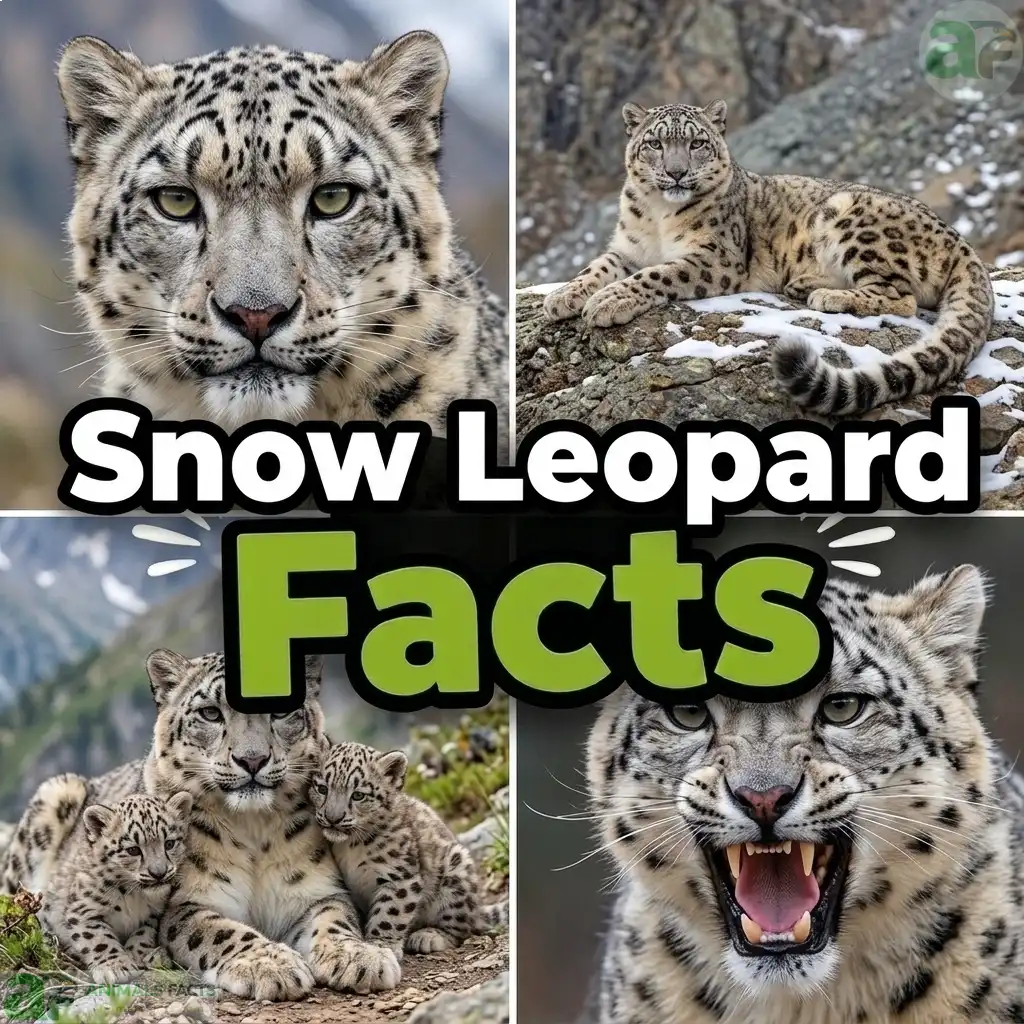
Snow Leopard Facts
| Feature | Details |
|---|---|
| Scientific Name | Panthera uncia (Schreber, 1775) |
| Kingdom | Animalia |
| Phylum | Chordata |
| Class | Mammalia |
| Order | Carnivora |
| Family | Felidae |
| Genus | Panthera |
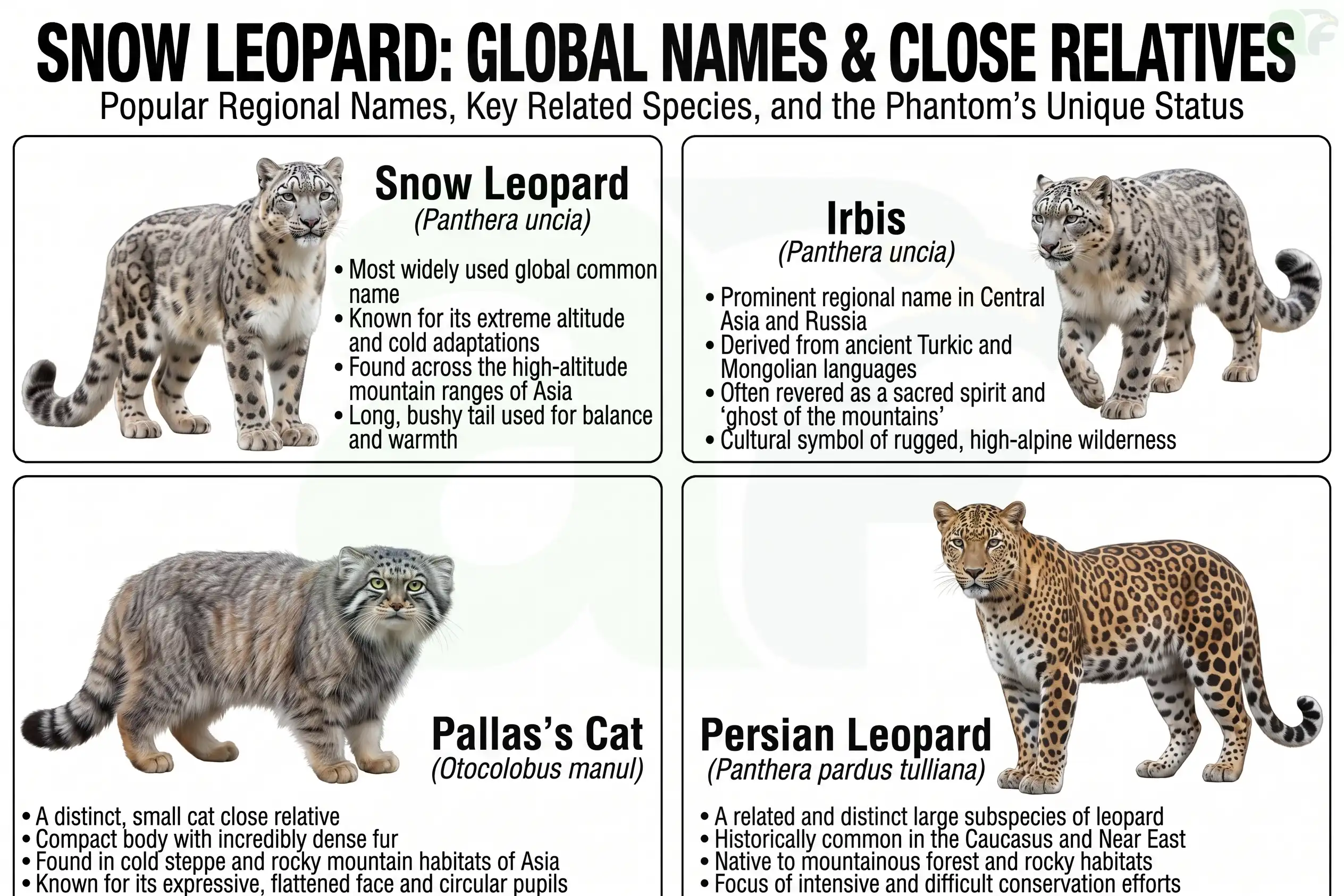
| Common Names | Snow leopard, ounce, ghost of the mountains |
| Native Range | Central Asia — 12 countries across the Himalayan and Central Asian mountain ranges |
| Habitat | Alpine and subalpine rocky mountain terrain; elevations of 3,000–5,500 meters |
| Lifespan | 10–12 years (wild); up to 21 years (captivity) |
| Diet | Blue sheep (bharal), ibex, argali, marmots, pikas, livestock |
| Height | 56–65 cm at shoulder |
| Body Length | 75–150 cm plus 80–105 cm tail |
| Weight | 22–55 kg (males larger than females) |
| Top Speed | Up to 64 km/h in short bursts |
| Conservation Status | Vulnerable (IUCN Red List, 2017) |
| Estimated Wild Population | 4,000–6,500 individuals |
| Tail Length | Among the longest of any cat — nearly equal to body length; used for balance and warmth |
 1. Introduction: What is a Snow Leopard?
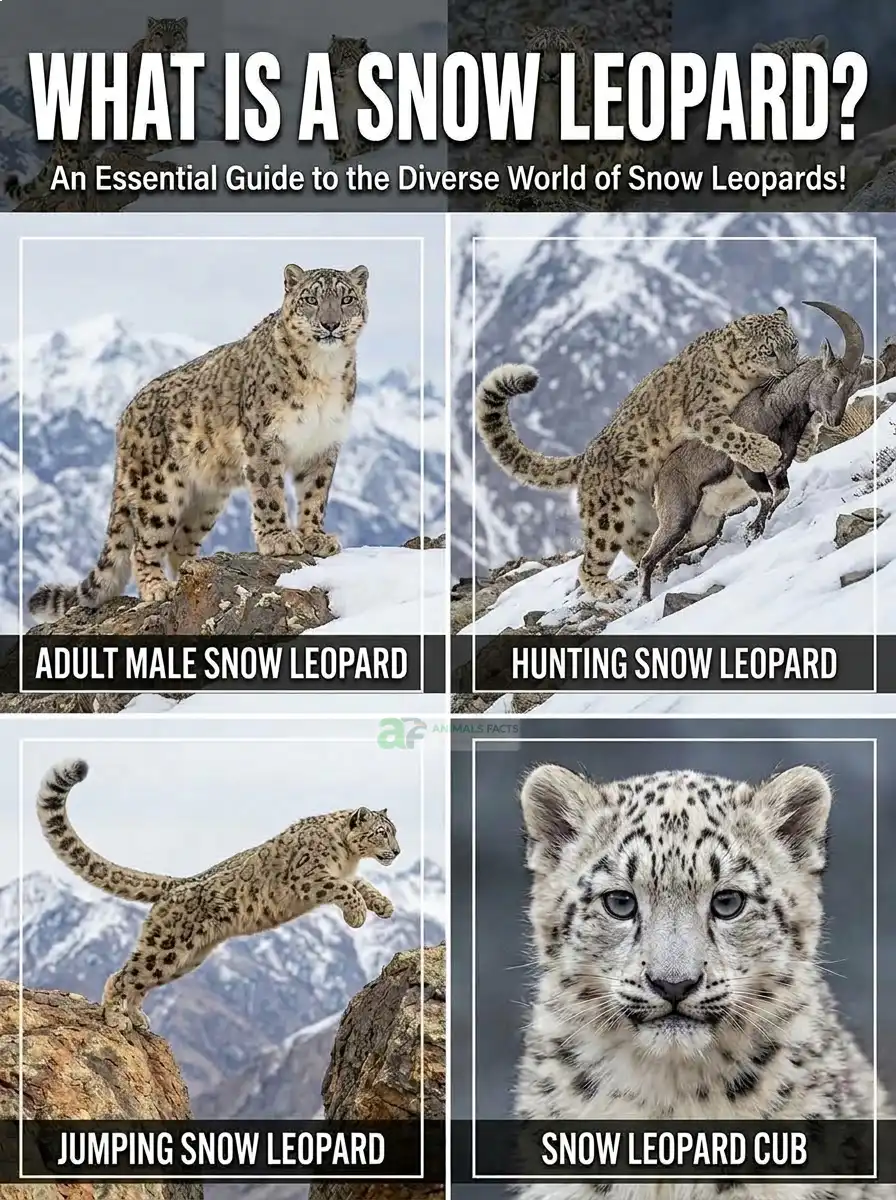
High in the frozen mountain passes of Central Asia, where the air is so thin that most animals cannot survive and the winters are brutal enough to turn rock faces into ice-draped cathedrals, one of the planet’s most spectacularly evolved predators moves in near-perfect silence. Snow leopard facts begin with this single image — an animal so beautifully adapted to its extreme environment, so sublimely camouflaged against the grey and white of the high mountains, and so fundamentally elusive that it earned the nickname “ghost of the mountains” long before wildlife cameras existed to confirm its presence. In some regions where snow leopards are known to live, local people go entire lifetimes without ever seeing one in the wild.
Interesting facts about snow leopards reveal an animal that is simultaneously one of the world’s most recognized endangered species and one of its least studied. Its pale, smoke-grey coat dappled with black rosettes allows it to vanish against rocky terrain with an effectiveness that borders on the supernatural. Its enormous, fur-padded paws function as natural snowshoes. Its tail — nearly as long as its entire body — wraps around it like a self-made scarf in temperatures that plunge to -40°C. It can bring down prey three times its own body weight on near-vertical mountain slopes, and it can leap up to 9 meters horizontally and 15 meters downhill from a standing position. Snow leopard facts are, in short, the facts of an animal at the absolute pinnacle of feline evolution for a specific and merciless environment.
Whether you are a student searching for snow leopard facts for kids to bring a conservation lesson to life, a wildlife enthusiast planning a trip to see this elusive cat in its natural habitat, a researcher interested in snow leopard habitat and ecology, or simply someone captivated by the idea of one of Earth’s most beautiful and least-seen predators — this is your comprehensive guide. We cover snow leopard scientific name, snow leopard diet, snow leopard size and weight, snow leopard behavior, conservation threats, cultural mythology, and the profound ecological role this magnificent cat plays in the mountain ecosystems of Central Asia. The ghost of the mountains has a story to tell. Let’s listen.
2. Snow Leopard Species Overview & Classification
The snow leopard occupies a uniquely complex position in the taxonomy of the big cat family — it is the only member of its genus that cannot roar, defying the traditional definition of “big cat,” yet it is genetically confirmed as a true member of the Panthera lineage that includes lions, tigers, leopards, and jaguars.
Species Classification Table
| Taxonomic Rank | Classification |
|---|---|
| Kingdom | Animalia |
| Phylum | Chordata |
| Class | Mammalia |
| Order | Carnivora |
| Family | Felidae |
| Subfamily | Pantherinae |
| Genus | Panthera |
| Species | P. uncia (Schreber, 1775) |
| Former Classification | Uncia uncia (used until 2008) |
| Sister Species | Tiger (Panthera tigris) — confirmed by molecular analysis |
Taxonomy Notes
The snow leopard’s taxonomic placement changed significantly in 2008 when a comprehensive molecular phylogenetic study confirmed that it belongs to the genus Panthera rather than the separate genus Uncia in which it had been placed for much of the 20th century. Further molecular analysis published in 2010 and later confirmed in multiple studies through 2023 established that the tiger (Panthera tigris) is the snow leopard’s closest living relative — a finding that surprised many taxonomists who had assumed the common leopard (Panthera pardus) to be more closely related.
Subspecies Comparison Table
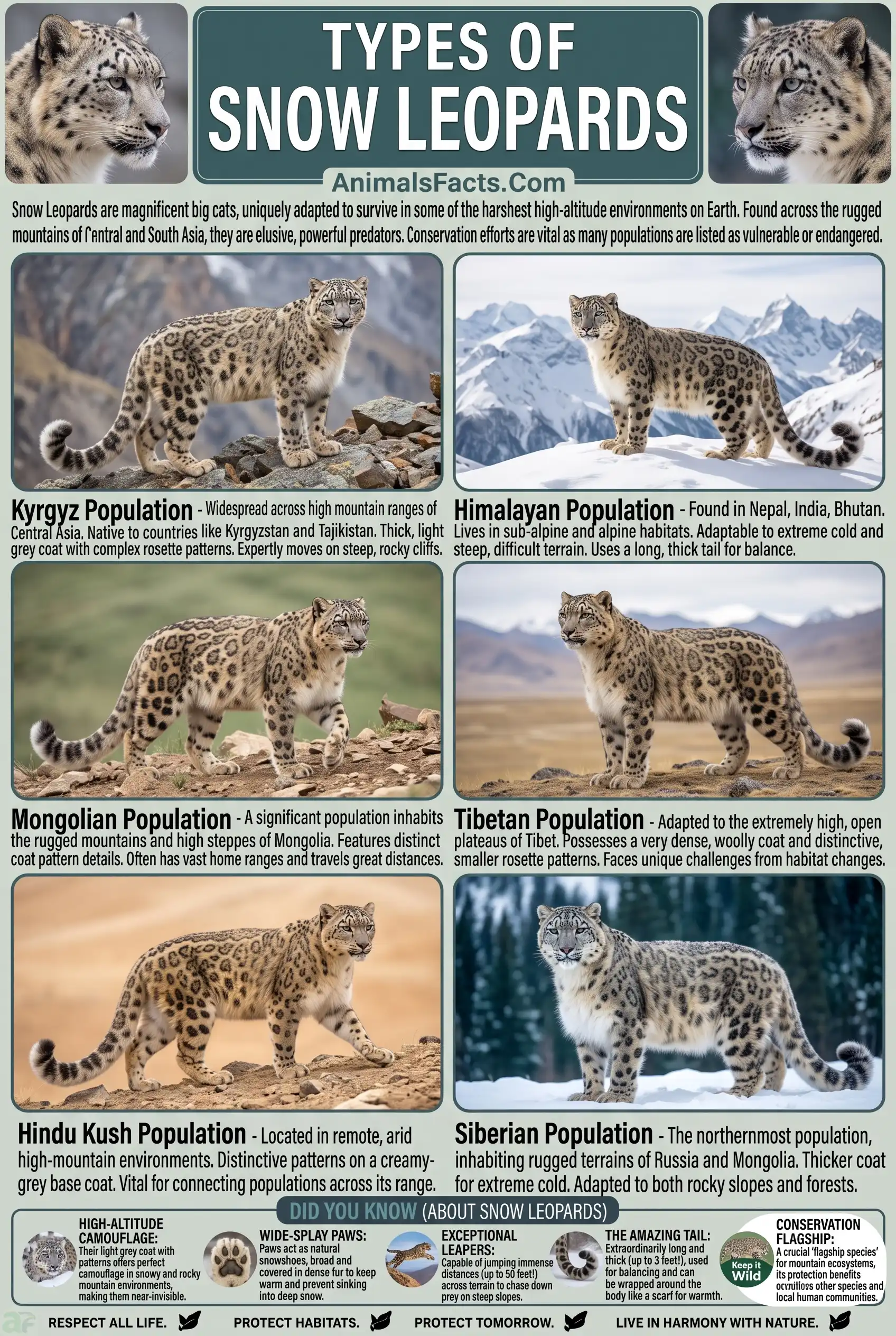
Currently, most taxonomic authorities treat the snow leopard as a monotypic species with no formally recognized subspecies. However, some recent genetic studies have proposed the existence of three geographically distinct populations that may represent subspecific variation:
| Population | Geographic Range | Notes |
|---|---|---|
| Northern/Central population | Russia, Mongolia, western China | Largest population cluster |
| Western/Himalayan population | India, Nepal, Bhutan, Pakistan | Most studied and photographed |
| Southern/Central Asian population | Afghanistan, Kyrgyzstan, Tajikistan, Kazakhstan | Least studied; significant population |
These population groupings are not formally recognized as subspecies by the IUCN as of 2026, pending further genetic research.
Evolution & Discovery Timeline
~3.9–6 million years ago — Molecular clock estimates suggest the snow leopard lineage diverges from the ancestral Panthera lineage, with the tiger being its closest sister species.
~4 million years ago — The ancestral Panthera radiation occurs in Asia, with the snow leopard lineage adapting to high-altitude mountain environments as the Tibetan Plateau and Himalayan ranges reach their modern elevations.
1775 — German naturalist Johann Christian Daniel von Schreber formally describes the snow leopard as Felis uncia based on specimens from the Altai Mountains of Siberia — the first formal Western scientific description.
1930 — The snow leopard is reclassified into the genus Uncia — a separate genus that it occupies for nearly 80 years before molecular evidence restores it to Panthera.
1971 — The first snow leopard is successfully bred in captivity at the Helsinki Zoo — a landmark in the understanding of snow leopard reproductive biology.
1981 — Biologist Rodney Jackson initiates the first intensive field study of wild snow leopards in Nepal’s Langu Valley, establishing the foundation of modern snow leopard field ecology using radio-telemetry.
1986 — The Snow Leopard Trust is established — the first organization dedicated specifically to snow leopard conservation.
2008 — Molecular phylogenetic analysis formally moves the snow leopard from Uncia uncia to Panthera uncia.
2010 — Landmark study confirms tiger as snow leopard’s closest living relative — a finding that reshapes understanding of Panthera evolution.
2016 — The snow leopard’s IUCN status is controversially downlisted from Endangered to Vulnerable — a change that triggered significant debate within the conservation community about whether the population data justified the reclassification.
2020–2024 — Expansion of camera trap networks across the snow leopard’s range (Mongolia, India, Bhutan, Tajikistan) provides the most comprehensive population data ever collected, though significant portions of the range remain unsurveyed.
“The snow leopard is the perfect predator for its world — an animal of such extraordinary physical capability and such exquisite camouflage that even those who seek it most diligently can spend years in its mountains and never see it. That invisibility is both its greatest protection and the greatest challenge to understanding it.” — Dr. Rodney Jackson, founder of the Snow Leopard Conservancy and the world’s foremost field researcher on wild snow leopards
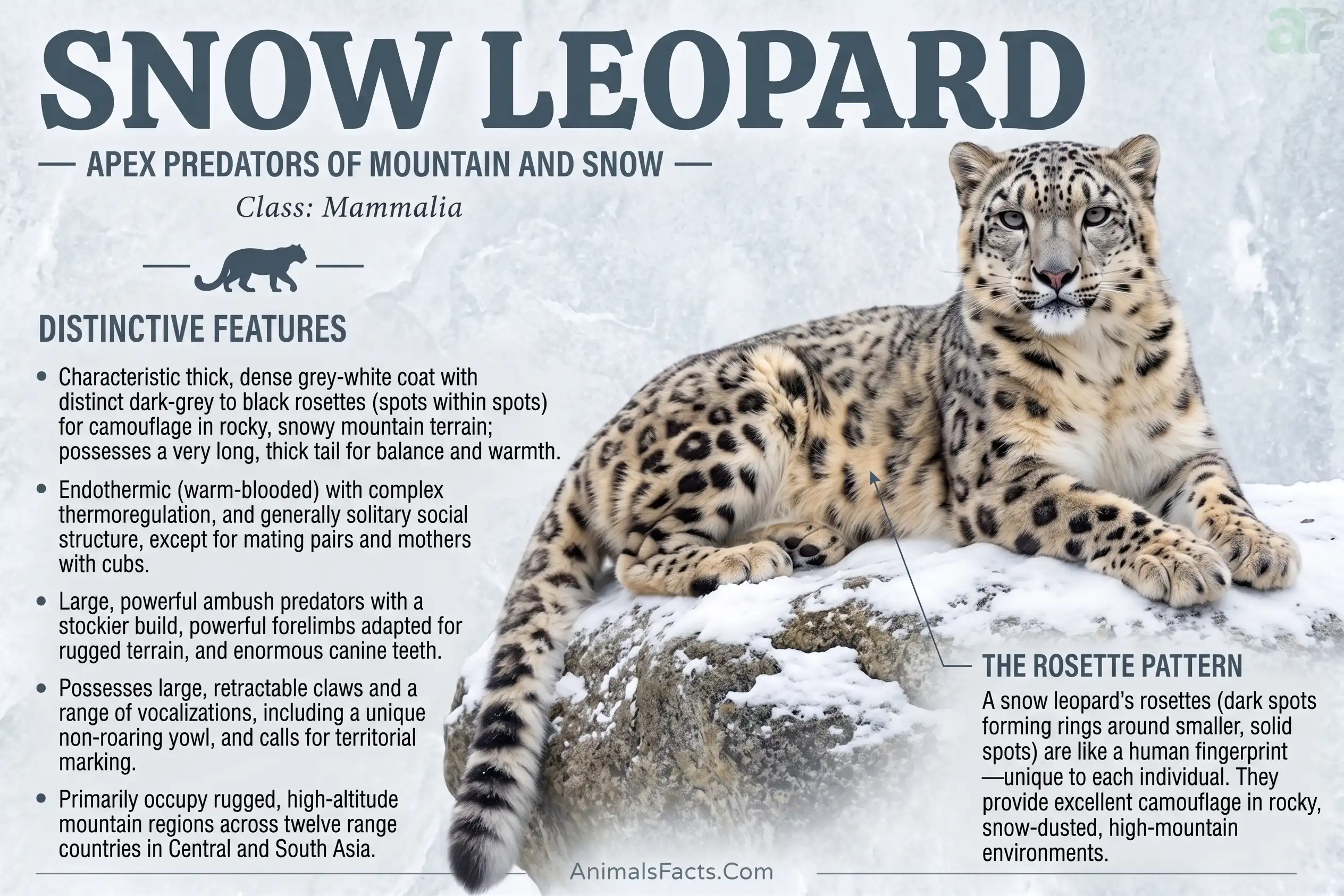
3. Snow Leopard Physical Description & Unique Features
Snow leopard size and weight make it a medium-large cat — smaller than a lion or tiger but powerfully built relative to its body mass, with physical adaptations to high-altitude mountain life so precise and complete that every aspect of its morphology tells a story of evolutionary refinement.
Body & Coat
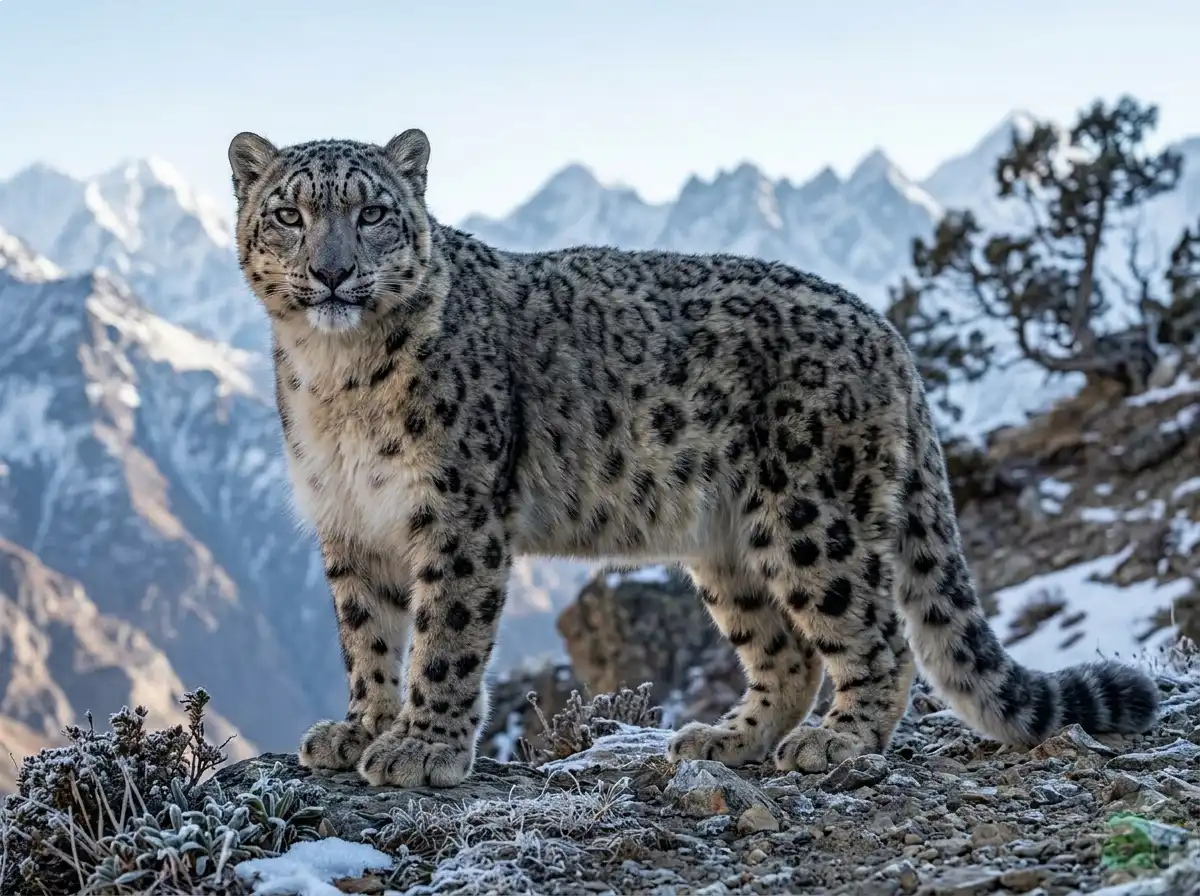
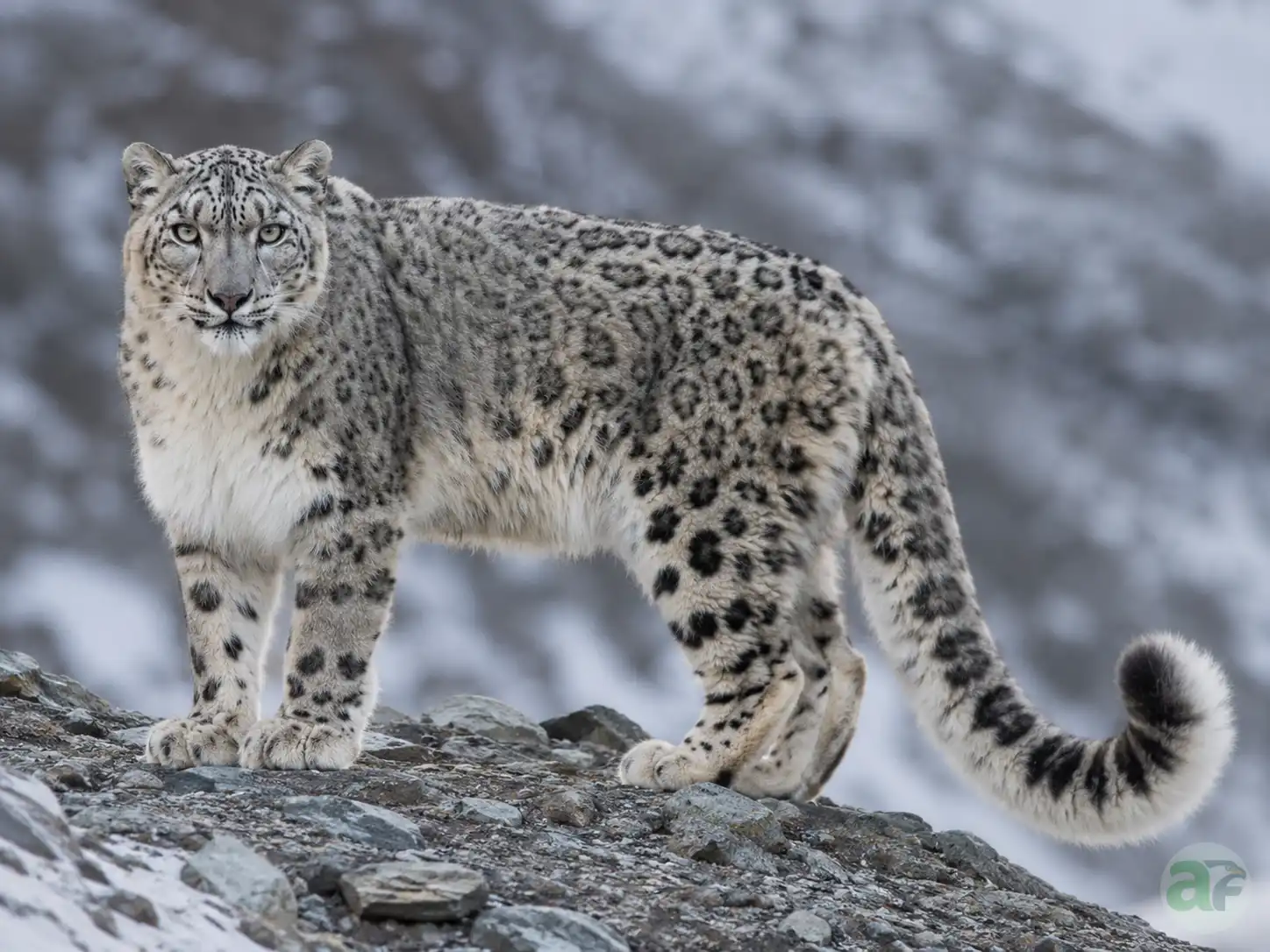
The snow leopard’s coat is one of the most striking and functionally sophisticated of any felid. The base color is pale smoky grey to creamy yellow-white on the underparts, overlaid with a pattern of solid black spots and larger black rosettes (ring-shaped markings with a lighter center) distributed across the back, flanks, and tail. This pattern is unique to each individual — no two snow leopards have identical rosette arrangements — functioning as a natural identification system for researchers using camera trap photos.
The coat has two distinct layers: a dense, woolly underfur up to 5 cm thick that provides thermal insulation against extreme cold, and longer coarser guard hairs that shed moisture and provide additional insulation. The combined fur thickness provides effective protection against temperatures as low as -40°C and wind-chill conditions that would kill most other large mammals.
The Remarkable Tail
The snow leopard’s tail is perhaps its most immediately distinctive physical feature — measuring 80–105 cm in length, it is proportionally one of the longest tails of any felid and can approach the length of the cat’s own body. This extraordinary tail serves multiple critical functions:
- Balance — On near-vertical rocky slopes and narrow mountain ledges, the tail functions as a dynamic counterbalance during rapid movement
- Insulation — Snow leopards habitually wrap their tail around their face and body when resting in cold conditions, using it as a self-contained scarf and blanket
- Fat storage — The thick, well-furred tail stores fat reserves that can be metabolized during lean periods
Paws & Feet
The snow leopard’s paws are disproportionately large relative to body size — the largest relative paw size of any felid. These large paws serve as natural snowshoes, distributing the cat’s weight over a greater surface area when walking on snow and ice. The paws are densely furred on both the upper and lower surfaces, providing additional insulation and traction on icy terrain. Retractable claws remain sharp and effective for gripping rocky surfaces.
Head & Nose
The snow leopard has a relatively small head compared to other Panthera species, with a distinctly domed forehead and a wide, shortened face. The nasal cavity is enlarged — a critical adaptation for warming and humidifying the thin, cold air of high altitude before it reaches the lungs. The nostrils are relatively large for a cat of its size, and the lungs themselves have a larger relative volume than comparable-sized lowland cats — adaptations that maximize oxygen extraction at altitudes where the air contains 30–50% less oxygen than at sea level.
Gender & Age Differences
Male snow leopards are significantly larger than females — typically weighing 35–55 kg against females’ 22–40 kg. Juveniles are born with a denser pattern of spots that gradually develops into the adult rosette pattern as they mature. By 2 years of age, young snow leopards have largely attained adult coat patterns, though full physical maturity is not complete until approximately 3 years in females and 4 years in males.
Did You Know? The snow leopard cannot produce a full roar — despite belonging to the genus Panthera, which contains the four species traditionally capable of roaring (lion, tiger, leopard, jaguar). The snow leopard’s hyoid bone is partially ossified rather than fully elastic, limiting its vocalizations to chuffs, hisses, mews, wails, and the extraordinary puffing sound called a “prusten” or chuff — the same friendly contact call made by tigers. This vocal limitation means the snow leopard sits at a unique intersection between roaring cats and purring cats in felid biology.
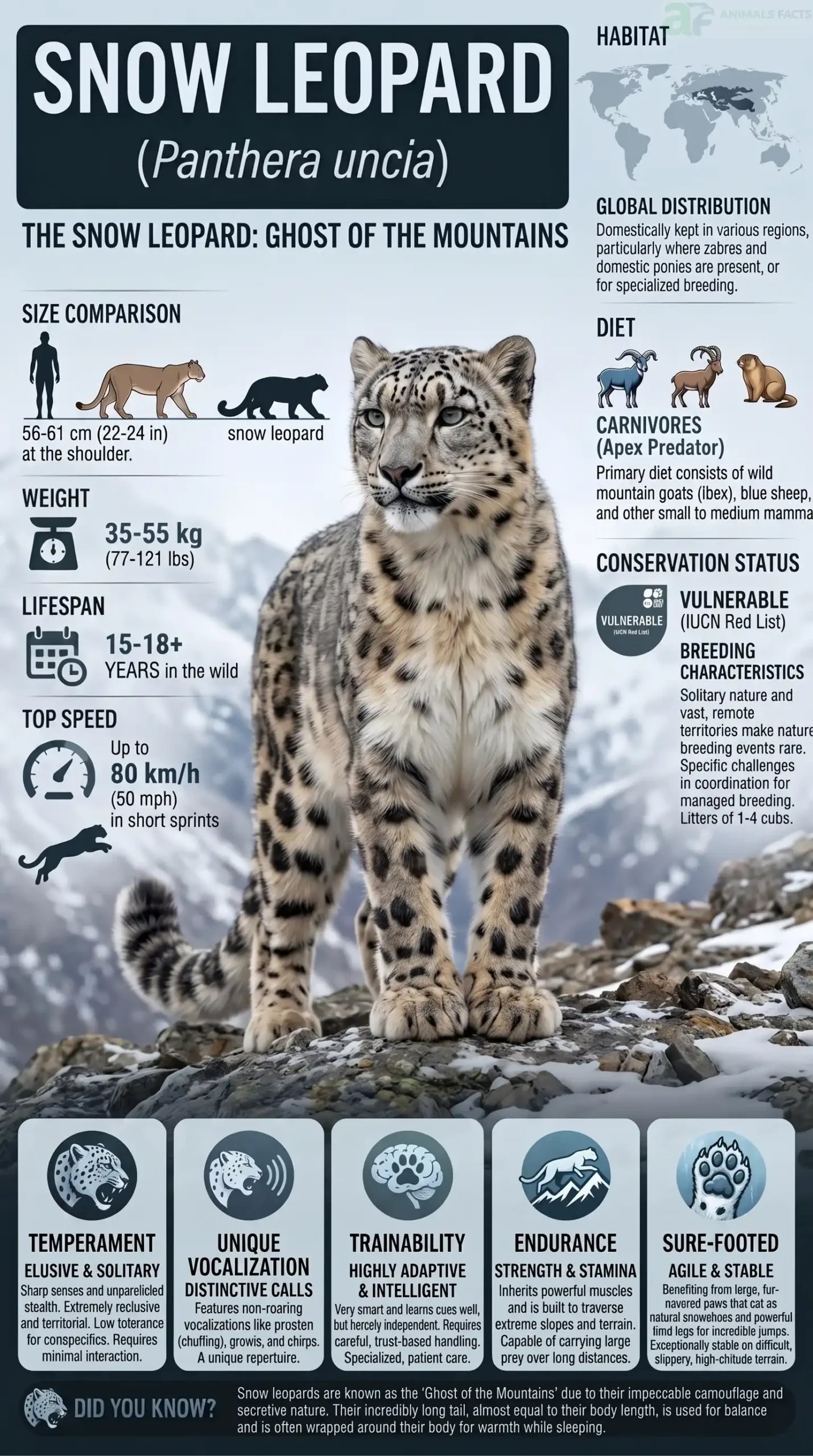
4. Top 25 Amazing Snow Leopard Facts
Here is your definitive collection of the most extraordinary, scientifically verified, and genuinely astonishing snow leopard facts as of 2026:
- Snow leopards are so perfectly camouflaged against rocky mountain terrain that they have earned the nickname “ghost of the mountains” — in many parts of their range, local people live among them for generations without ever seeing one.
- A snow leopard’s tail is nearly as long as its entire body — up to 105 cm — and is routinely wrapped around the face and body as a self-made scarf in sub-zero temperatures.
- Snow leopards can leap up to 9 meters horizontally from a standing start — and can jump up to 15 meters downhill when pursuing prey on steep mountain slopes.
- The snow leopard is the highest-altitude large predator on Earth — regularly hunting at elevations of 5,000–5,500 meters and occasionally recorded at 5,800 meters on the Tibetan Plateau.
- Despite belonging to the genus Panthera, the snow leopard is the only member of this genus that cannot roar — its partially ossified hyoid bone limits vocalizations to chuffs, hisses, and wails.
- Snow leopards can kill prey up to three times their own body weight — including blue sheep (bharal) weighing 75 kg or more — by ambushing from above on steep rocky terrain.
- The snow leopard’s closest living relative is the tiger (Panthera tigris) — not the common leopard (Panthera pardus) as was long assumed. Molecular analysis confirmed this surprising relationship in 2010.
- Camera trap studies have confirmed that snow leopards have individual home ranges of 12–100 km² in good habitat, expanding to over 1,000 km² in areas of low prey density.
- Snow leopards are crepuscular — most active at dawn and dusk — but in remote areas with minimal human disturbance they have been recorded as fully diurnal.
- A single snow leopard can consume 10–15 kg of meat in a single feeding and may return to the same large kill over 3–5 days — unusual persistence for a solitary cat.
- Snow leopards use scrapes, spray marks, and scat deposits on prominent rocks, ridgelines, and passes to communicate with other snow leopards across their range — essentially maintaining a chemical social network across mountain terrain.
- The snow leopard’s enlarged nasal cavity warms and humidifies the thin, cold air of high altitude before it reaches the lungs — a critical physiological adaptation that allows effective respiration at elevations where oxygen concentration is 30–50% lower than at sea level.
- Snow leopards are among the most difficult large carnivores to census — population estimates for the entire species range from 4,000 to 6,500 individuals, with the uncertainty reflecting genuine gaps in surveying of remote terrain.
- Unlike most big cats, snow leopards are not aggressive toward humans — no verified fatal attack on a human has ever been documented by a wild snow leopard. When confronted, they typically retreat.
- The snow leopard’s rosette pattern is unique to each individual — no two snow leopards have the same arrangement of spots and rosettes, allowing researchers to identify individuals from camera trap photographs without radio-collaring.
- Snow leopards practice infanticide avoidance through the timing of births — cubs are born between April and June, timing their first months of life to coincide with the maximum availability of prey and the most favorable weather conditions.
- A snow leopard’s paws are so large relative to body size that they distribute the cat’s weight across a greater surface area than virtually any other felid — effectively functioning as built-in snowshoes on deep snow and scree slopes.
- Snow leopards are the national symbol of several Central Asian nations — Afghanistan includes the snow leopard on its coat of arms, and the animal holds deep cultural significance across Kazakhstan, Kyrgyzstan, Tajikistan, and Pakistan.
- Climate change threatens to reduce the snow leopard’s suitable Himalayan habitat by up to 30% by 2050, according to modeling studies published in 2022 — making it one of the vertebrate species most directly threatened by warming in mountain ecosystems.
- Camera trap studies in Mongolia’s South Gobi have documented snow leopards traveling 40–50 km in a single night while patrolling their territory — revealing a level of mobility that requires enormous, intact landscape corridors for population connectivity.
- Snow leopard cubs are born blind and helpless, weighing approximately 450–600 grams — they open their eyes at approximately 7 days and begin exploring their rocky den environment at 2 months.
- The Snow Leopard Trust has pioneered community livestock insurance programs in Central Asia — compensating herding families for livestock lost to snow leopard predation — dramatically reducing retaliatory killing and establishing one of the most successful human-wildlife conflict models in conservation.
- Snow leopards have been recorded consuming significant quantities of vegetation — grass, sedge, and willow twigs — in addition to their meat diet. This unusual behavior for a large carnivore is thought to aid digestion or provide specific micronutrients.
- The snow leopard’s geographic range spans approximately 1.8 million km² — but because this range is highly fragmented and the cat lives at very low densities, the total number of individuals within it remains critically low.
- Genetic analysis published in 2023 indicates that the global snow leopard population is divided into five genetically distinct populations with limited gene flow between them — a fragmentation pattern with serious implications for long-term genetic diversity and population resilience.
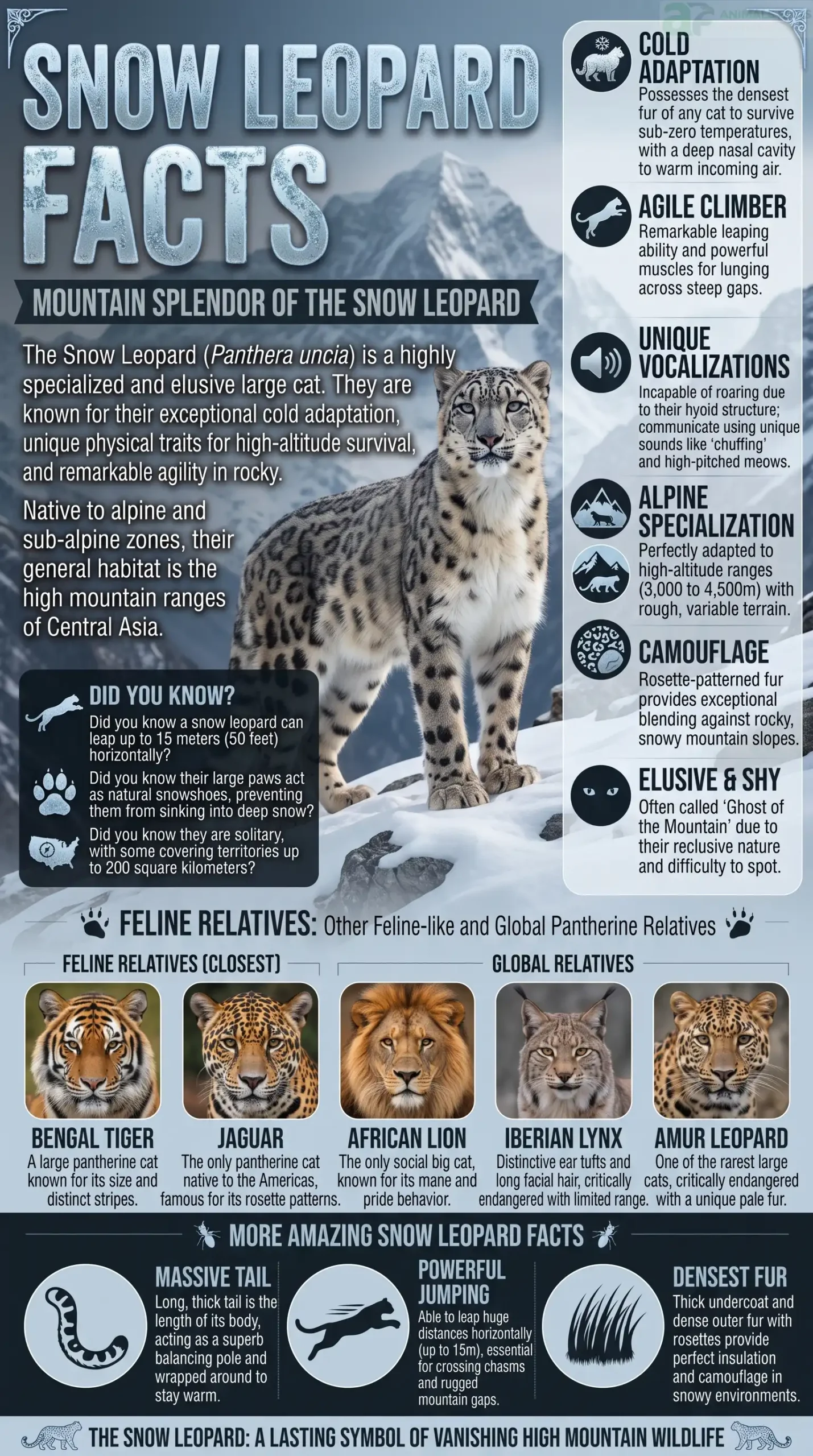
5. Snow Leopard Fun Facts for Kids
- Snow leopards can leap 9 meters horizontally — the length of a school bus
- Their tail can be wrapped around their face like a built-in scarf against -40°C cold
- They are the only Panthera species that cannot roar
- Their closest relative is the tiger — not the common leopard
- Snow leopards are never aggressive to humans — no fatal wild attack has ever been documented
- The snow leopard’s paws are the largest relative to body size of any cat
- They hunt at the highest elevations of any large predator on Earth
- Each snow leopard has a unique rosette pattern like a fingerprint
- Snow leopards may travel 50 km in a single night across mountain terrain
- Only 4,000–6,500 individuals remain in the wild
- Their habitat could shrink by 30% due to climate change by 2050
- Snow leopards eat grass and twigs in addition to their meat diet
6. Natural Habitat & Geographic Range
Snow leopard habitat is defined by its extremes — these cats occupy one of the most challenging terrestrial environments on Earth, the high mountain ranges of Central and South Asia, where they have evolved over millions of years as the apex predator of the alpine zone.
Habitat Requirements
Snow leopards require a specific combination of habitat features:
- Elevation — Typically 3,000–5,500 meters above sea level; summer ranges are higher, winter ranges lower as they follow prey migrations
- Rocky terrain — Cliffs, ridges, ravines, and boulder fields provide ambush cover, denning sites, and territorial marking locations
- Adequate prey — Minimum densities of primary prey species (blue sheep, ibex, argali)
- Low human disturbance — Core territories are generally avoided by humans due to extreme terrain
- Connectivity — Sufficient landscape linkage between population clusters for gene flow and dispersal
Snow leopards use different elevation zones seasonally — following their primary prey (particularly blue sheep and ibex) to higher summer pastures and retreating to lower elevations in winter when prey move down to avoid deep snow.
Habitat Range by Country
| Country | Estimated Population | Key Habitats | Threat Level |
|---|---|---|---|
| China (Tibet/Xinjiang) | 2,000–2,500 | Tibetan Plateau, Kunlun, Altai | Moderate |
| Mongolia | 500–1,000 | Mongolian Altai, Gobi-Altai | Moderate |
| Russia | 70–90 | Altai, Sayan Mountains | Low population, high per-individual impact |
| India | 400–700 | Ladakh, Himachal Pradesh, Uttarakhand, Sikkim | High — human conflict, habitat pressure |
| Pakistan | 200–420 | Hindu Kush, Karakoram, Himalayas | High |
| Nepal | 300–500 | Himalayan range | High — studied, accessible |
| Bhutan | 100–200 | Eastern Himalayas | Moderate |
| Kyrgyzstan | 150–500 | Tien Shan Mountains | Moderate |
| Tajikistan | 180–220 | Pamir Mountains | Moderate |
| Afghanistan | 100–200 | Hindu Kush | Very High — conflict, inaccessible |
| Kazakhstan | 50–180 | Altai foothills | Low population |
| Uzbekistan | 20–50 | Gissar Range | Critically low |
Did You Know? Snow leopards are found in 12 countries — making them the most geographically widespread of any Central Asian large predator. However, the distribution within this range is highly fragmented — snow leopards are absent from enormous areas of nominally suitable habitat due to poaching pressure, prey depletion, and human settlement, meaning the effective occupied range is far smaller than the theoretical total.
7. Diet & Feeding Behavior
Snow leopard diet is dominated by wild ungulates — large hoofed prey animals of the high mountains — supplemented by smaller prey during lean periods and occasionally by livestock, a dietary choice that creates the most serious human-wildlife conflict in the snow leopard’s range.
Diet Breakdown Table
| Prey Type | Estimated % of Diet | Notes |
|---|---|---|
| Blue sheep / Bharal (Pseudois nayaur) | ~40–50% | Primary prey across most of range |
| Himalayan ibex (Capra sibirica) | ~20–25% | Primary prey in rocky gorge habitats |
| Argali (Ovis ammon) | ~10–15% | Largest wild sheep; taken where available |
| Marmots (Marmota species) | ~5–10% | Important supplementary prey, especially summer |
| Woolly hares (Lepus oiostolus) | ~3–5% | Small prey, supplement in lean periods |
| Pikas (Ochotona species) | ~2–3% | Very small prey; taken opportunistically |
| Domestic livestock | ~5–15% (varies by area) | Sheep, goats, yaks, horses; major conflict driver |
| Birds and small mammals | ~2–3% | Opportunistic; snowcock, chukar partridge |
| Vegetation | ~occasional | Grass and twigs; unusual for a large carnivore |
Hunting Strategy
The snow leopard is an ambush predator of exceptional skill, exploiting its extreme environment’s topography in ways that make it uniquely effective despite its relatively modest body weight.
High-ground advantage — Snow leopards invariably stalk prey from above, using ridgelines, cliff faces, and boulder fields as concealment. The approach to prey may take hours — the cat moving in absolute silence, using rocks and terrain features to mask its profile, freezing whenever the prey looks up.
The final approach — When within striking distance (typically 10–30 meters), the snow leopard launches a rapid rush from above, using gravity and explosive muscular power simultaneously. The downhill momentum of the attack generates force far exceeding what the cat could achieve on flat ground — critical for subduing prey several times its own weight.
Kill technique — Snow leopards typically kill by suffocation — biting the prey’s throat and holding until death, or by a suffocating neck bite. For large prey, the attack may last several minutes as the prey struggles, with the snow leopard maintaining the throat grip through powerful forelimb grip.
Drag and cache — After a kill, snow leopards frequently drag the carcass to a sheltered location — behind rocks, under overhangs — to reduce visibility to competitors and scavengers.
8. Reproduction & Life Cycle
Snow leopard reproduction is timed to the extreme seasonality of the high mountain environment — with births calibrated to give cubs their best chance of survival in one of the world’s most demanding landscapes.
Mating Behavior
Snow leopards are solitary for most of the year but come together for a brief mating season in late winter — typically January to March — when the increased duration of daylight triggers reproductive hormones. Males locate receptive females through scent marking — following the chemical trail of the female’s spray marks and scrapes, which communicate her reproductive status with remarkable biochemical specificity.
The mating period lasts 5–8 days — during which the pair remains together, mating repeatedly. Both partners are aggressive and vocalize extensively during this period — the normally quiet mountain air punctuated by the haunting yowling and wailing calls of mating snow leopards that have led local people for centuries to interpret the sounds as supernatural.
Birth & Early Development
After a gestation period of 90–105 days, females give birth in April to June — a timing that ensures cubs’ first months coincide with maximum prey availability and the most favorable weather. Litters typically contain 2–3 cubs (occasionally 1 or 4), born in a rocky den lined with the mother’s own fur. The den site is carefully selected — typically a cave, rock overhang, or deep crevice that provides protection from weather and concealment from predators.
Growth Stages
- Birth (0–7 days) — Born blind, helpless; weigh 450–600 grams; mother rarely leaves
- Early cub (7–60 days) — Eyes open at ~7 days; begin moving at 2 months; mother hunts while leaving cubs in den
- Exploration phase (2–4 months) — Cubs begin exploring den area; play-fighting establishes sibling dynamics
- Learning phase (4–12 months) — Cubs begin accompanying mother on hunts; learn terrain and prey behavior through observation
- Active participation (12–18 months) — Begin participating in hunts; developing independent hunting skills
- Dispersal (18–24 months) — Gradually become independent; disperse from mother’s territory to establish own range
- Sexual maturity — 2–3 years in females; 3–4 years in males
Lifespan Comparison Table
| Species | Average Lifespan (Wild) | Average Lifespan (Captivity) | Notes |
|---|---|---|---|
| Snow leopard (Panthera uncia) | 10–12 years | Up to 21 years | Short wild lifespan due to harsh conditions |
| Common leopard (Panthera pardus) | 12–15 years | Up to 23 years | Warmer habitat; slightly longer lifespan |
| Tiger (Panthera tigris) | 10–15 years | Up to 26 years | Closest living relative |
| Clouded leopard (Neofelis nebulosa) | 11–15 years | Up to 17 years | Related forest specialist |
9. Social Behavior & Communication
The snow leopard is one of the most solitary of all the large felids — a lifestyle perfectly adapted to the sparse prey densities and vast territories of its mountain domain. Yet its social life, while limited in direct contact, is rich in indirect communication through an elaborate system of chemical and physical signals.
Territorial Communication
Snow leopards maintain individual territories through an extensive scent-marking system — depositing chemical messages at prominent landscape features that other snow leopards routinely encounter as they move through mountain terrain. Marking sites include:
- Prominent boulders and cliff faces at trail junctions
- Mountain passes through which prey animals channel their migrations
- Ridgeline sites with broad visibility across territory
- Scrapes — areas where the cat repeatedly scratches the soil and urinates, creating a persistent and complex chemical signal
- Claw marks on rock faces and trees at the boundary of territories
The chemical composition of snow leopard scent markings encodes information about the individual’s identity, sex, age, reproductive status, and time since last visit — essentially a detailed social message board accessible to any snow leopard that passes through.
Overlap & Avoidance
Radio-telemetry studies have revealed that despite maintaining nominal home territories, snow leopards’ ranges frequently overlap — particularly along shared prey migration routes. Rather than defending boundaries through direct aggression, snow leopards practice temporal avoidance — using the same trails and hunting grounds at different times, guided by reading each other’s scent marks. This elegant solution to sharing limited resources without costly fighting is one of the most sophisticated aspects of snow leopard social organization.
Intelligence
Snow leopards demonstrate spatial memory of extraordinary precision — recalling the locations of prey concentration areas, ambush sites, water sources, and territorial markers across enormous territories. Camera trap studies have documented individuals following the same patrol routes along ridgelines and passes with remarkable consistency — suggesting detailed mental mapping of their home range. Problem-solving ability in captive snow leopards — including learning novel tasks and manipulating unfamiliar objects — suggests cognitive capabilities broadly comparable to other large felids.
10. Predators & Defense Mechanisms
Adult snow leopards have no natural predators capable of threatening them in their high-altitude domain — they are the uncontested apex predator of the alpine zone. However, cubs and weakened adults face threats, and human pressure on the species is severe.
Threats to Cubs & Weakened Individuals
- Wolves (Canis lupus) — The only wild predator that might threaten a snow leopard; packs can drive individual snow leopards from kills and occasionally attack weakened individuals
- Brown bears (Ursus arctos) — Overlap in habitat in some areas; bears may displace snow leopards from kills but direct predation on healthy adults is extremely rare
- Golden eagles (Aquila chrysaetos) — Documented taking snow leopard cubs in at least one camera trap observation
- Humans — The most significant threat to snow leopards at every life stage; poaching, retaliatory killing, and habitat encroachment
Snow Leopard Defense & Escape Strategies
Snow leopards rely on their superior knowledge of terrain as their primary defense mechanism. In the extreme rocky terrain they occupy, their ability to traverse near-vertical rock faces, leap across crevasses, and navigate ice-covered slopes at speed gives them an effective escape capability that no human pursuer can match on foot.
Camouflage is the secondary defense — when threatened, snow leopards typically freeze and rely on their extraordinary coat pattern to disappear against rocky backgrounds before a threat has confirmed their location.
Avoidance is the tertiary strategy — snow leopards are extraordinarily sensitive to human presence and will abandon territories or shift activity patterns significantly in response to sustained human presence, even without direct persecution.
Did You Know? Snow leopards are the only large felid that has never been documented killing a human being. Despite sharing landscapes with herding communities across Central Asia for millennia, and despite being cornered, trapped, and handled by researchers on multiple occasions, wild snow leopards consistently choose flight over fight when confronted by humans. This unusual characteristic — shared with few other large predators — has been attributed to the extremely low human population densities they historically shared their range with, giving them limited evolutionary pressure to develop human-directed aggression.
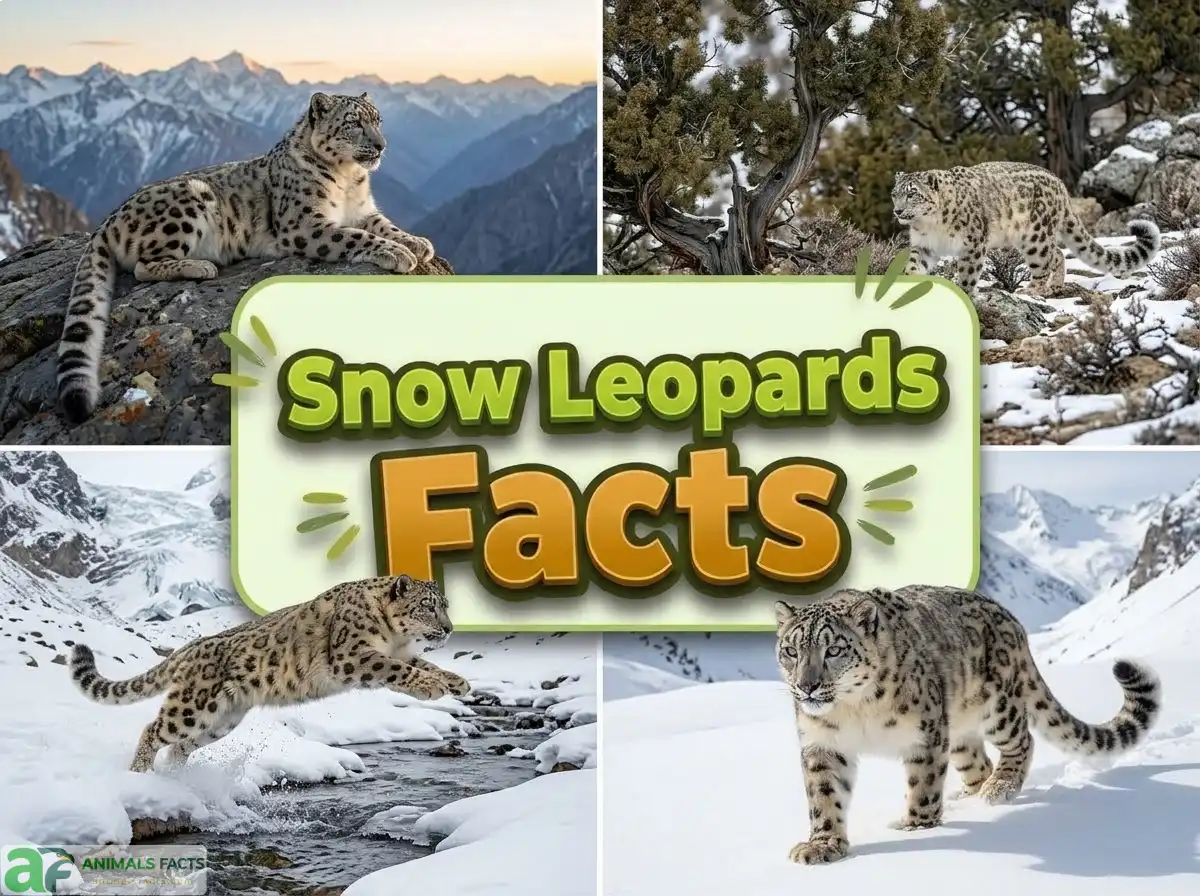
11. Snow Leopard Facts for Kids
Hey amazing young wildlife explorers! Here are some truly incredible snow leopard facts for kids that will make you the most interesting person in your class:
- Snow leopards are the “ghosts of the mountains!” They are so perfectly camouflaged and so quiet that people have lived in the same mountains as snow leopards for their entire lives without ever seeing one. They are nature’s ultimate hide-and-seek champions!
- Their tail is as long as their whole body! Imagine having a tail so long you could wrap it completely around yourself like a blanket. That’s exactly what snow leopards do when it’s freezing cold — they wrap their giant fluffy tail around their face to stay warm!
- They can jump as far as a school bus is long! Snow leopards can leap up to 9 meters in a single bound — that’s roughly the length of a school bus — and they do this on rocky mountain slopes where one wrong step would be dangerous!
- They’re the only big cat that can’t roar! Even though they’re related to lions and tigers, snow leopards can’t produce a full roar. Instead they make soft chuffing sounds, hisses, and wails. Imagine being a big cat that purrs instead of roars!
- Their closest relative is the TIGER! Scientists discovered that snow leopards are most closely related to tigers — not leopards, despite the similar name. It’s like finding out your closest relative is someone completely unexpected!
- Their paws work like snowshoes! Snow leopard feet are so big and so well-furred that they spread out the cat’s weight over a large area — just like the snowshoes people wear to walk on deep snow — so they don’t sink in!
- They live higher than almost any other large animal! Snow leopards regularly hunt at altitudes of 5,000 meters — that’s higher than most helicopter flights, and higher than almost any other large animal can survive. They’re the highest-altitude hunters on Earth!
- There are fewer snow leopards than giant pandas! With only 4,000–6,500 in the wild, snow leopards are actually rarer than giant pandas. They desperately need our help to survive!
12. Relationship with Humans
The relationship between snow leopards and humans is one of the most nuanced in all of big cat conservation — combining ancient cultural reverence, devastating livestock conflict, traditional persecution, the complex pressures of poverty in remote mountain communities, and some of the most innovative and successful community-based conservation programs in the world.
Traditional Coexistence
For thousands of years, the herding communities of Central Asia — Tibetan herders, Mongolian nomads, Pakistani mountain pastoralists, Kyrgyz shepherds — have lived in the same mountains as snow leopards. These communities possess a depth of ecological knowledge about snow leopard behavior and habitat that Western science is only beginning to document and utilize. Traditional attitudes toward snow leopards are complex and culturally variable — in some communities the cat is revered as a spiritual guardian of mountain passes; in others it is simply regarded as a livestock thief to be eliminated.
Livestock Predation — The Central Conflict
The most significant ongoing source of human-snow leopard conflict is livestock predation. As wild prey populations have declined through hunting, habitat loss, and competition with domestic livestock for grazing, snow leopards have increasingly turned to herding families’ sheep, goats, yaks, and horses as readily available prey. A single predation event that kills multiple animals in a confined corral can represent the loss of months of family income in communities with minimal economic buffer.
This economic pressure drives retaliatory killing — herders killing snow leopards in response to livestock losses — which is estimated to account for a significant proportion of all snow leopard mortality. However, the percentage of herding families who retaliate has decreased significantly in areas where livestock insurance programs have been established — demonstrating that economic compensation is one of the most effective conservation tools available.
Poaching for the Wildlife Trade
Beyond retaliatory killing, snow leopards are targeted by organized poaching networks for their stunning pelts (valued on the illegal luxury fur market) and for traditional medicine use of bones and body parts — a trade that mirrors the pressure on tigers in the same region. Although international trade in snow leopard products is banned under CITES Appendix I (since 1975), illegal trade persists across Central Asia, Russia, and into Chinese markets.
13. Conservation Status & Threats
The snow leopard’s conservation status — Vulnerable on the IUCN Red List as of 2017 — reflects both the genuine precariousness of a species with fewer than 6,500 wild individuals spread across a politically fragmented and logistically challenging range, and the ongoing uncertainty about the true size and trajectory of the global population.
IUCN Status Overview
| Feature | Details |
|---|---|
| IUCN Status | Vulnerable (VU) |
| Previous Status | Endangered (EN) — downlisted in 2017 |
| Population Trend | Decreasing |
| Wild Population Estimate | 4,000–6,500 individuals |
| Mature Individuals | Fewer than 2,500 estimated |
| Countries with Breeding Populations | 12 countries |
Major Threats
| Threat | Description | Impact Level |
|---|---|---|
| Retaliatory killing | Herders killing snow leopards after livestock losses | High — primary direct mortality cause |
| Poaching for fur and body parts | Illegal wildlife trade for pelts and traditional medicine | High — organized criminal networks |
| Prey depletion | Overhunting of wild ungulates reduces prey availability | High — forces increased livestock predation |
| Habitat loss and degradation | Expanding human settlement, infrastructure, mining | Medium-High |
| Climate change | Warming reduces high-altitude habitat; drives prey species upslope | High and increasing |
| Human-wildlife conflict | Broader pattern of persecution beyond retaliatory killing | High |
| Inbreeding and genetic fragmentation | Five genetically distinct populations with limited gene flow | Long-term threat |
| Disease | Exposure to domestic animal diseases (canine distemper, FIV) | Emerging concern |
The Controversy of the 2017 Downlisting
The 2017 downlisting of the snow leopard from Endangered to Vulnerable by the IUCN was among the most controversial conservation status decisions of the decade. Critics — including several prominent snow leopard researchers — argued that the decision was premature, based on population modeling with huge uncertainty ranges, and that it risked reducing the sense of urgency around snow leopard conservation. Proponents argued it reflected improved population data and appropriate application of IUCN criteria. The debate remains unresolved in the conservation community as of 2026.
14. Famous Snow Leopards in History & Pop Culture
Famous Named Snow Leopard Individuals
“Tai” — A female snow leopard at the San Diego Zoo who became one of the most photographed and publicized captive snow leopards in the world during the 1990s and 2000s, generating millions in conservation fundraising through her public visibility and the zoo’s breeding program.
“Madchen” — A snow leopard at Smithsonian’s National Zoo in Washington D.C. whose successful breeding — producing cubs that were successfully raised in captivity — contributed critically to the understanding of snow leopard reproductive biology in the early decades of captive management.
“Orhan” — A wild snow leopard fitted with a radio collar in Kyrgyzstan’s Tien Shan mountains in 2012 who became the subject of one of the most detailed long-term tracking studies ever conducted, providing the first comprehensive data on snow leopard daily movement patterns and territory use across seasons.
“Laila” — A female snow leopard in Nepal’s Kanchenjunga Conservation Area whose camera-trap images — first captured in 2019 and repeatedly documented through 2024 — provided some of the most detailed behavioral sequences of a wild snow leopard ever recorded, including footage of her raising cubs to independence.
The BBC/Planet Earth Snow Leopard
The snow leopard sequence in the BBC’s Planet Earth II (2016) — in which a snow leopard hunts bharal on near-vertical Himalayan cliffs — became one of the most watched and celebrated wildlife sequences ever broadcast, attracting over 50 million views on YouTube and generating extraordinary global interest in snow leopard conservation. The sequence took over a year of filming attempts to capture.
15. Role in Ecosystem & Food Chain
The snow leopard occupies the apex predator position in the high mountain ecosystems of Central Asia — a role whose importance extends far beyond the dramatic spectacle of predation itself and encompasses the entire functioning of mountain biodiversity.
Regulating Wild Ungulate Populations
Snow leopards primarily prey on blue sheep (bharal), Himalayan ibex, and argali — the dominant large herbivores of the Central Asian alpine zone. By regulating these populations, snow leopards prevent the overgrazing of high-altitude vegetation that would otherwise occur in their absence. Studies in Nepal have shown that areas with healthy snow leopard populations maintain significantly more diverse and productive alpine plant communities than comparable areas where snow leopard populations have been eliminated.
The Trophic Cascade Effect
In areas where snow leopards have been removed, blue sheep and ibex populations increase rapidly — overgrazing sparse alpine vegetation, reducing plant diversity, destabilizing steep slopes (which increases erosion and landslide risk), and competing with domestic livestock for the limited grazing of high altitude pastures. The snow leopard’s presence effectively subsidizes pastoral livelihoods by preventing the ungulate overgrazing that would otherwise reduce pasture quality — an irony not lost on conservationists who work with herding communities that simultaneously lose livestock to snow leopard predation.
Ecosystem Indicator
The snow leopard is a flagship and umbrella species — its conservation requirements (large intact habitat, sufficient prey populations, minimal human disturbance) encompass and protect the entire mountain ecosystem it inhabits. Protecting snow leopard habitat effectively protects entire watersheds — including the headwaters of major Asian river systems (the Ganges, Indus, Mekong, Yangtze, and Yellow Rivers all originate in snow leopard range) that provide water to over 1.3 billion people.
16. Myths, Folklore & Cultural Significance
Across the mountains of Central Asia, the snow leopard has occupied a position in human spiritual and cultural life as elevated and mysterious as the high peaks it inhabits. Its extreme elusiveness — visible only to the most fortunate and most persistent — has made it a powerful symbol of the unseen forces that shape mountain life.
Tibetan & Himalayan Buddhist Traditions
In Tibetan Buddhist tradition, the snow leopard is associated with the snow lion — a mythological creature of the high mountains that appears on the Tibetan flag and represents fearlessness, joy, and unconditional well-being. While the snow lion of mythology is a distinct concept, its origins are deeply entangled with the real snow leopard — the “lion of the mountains” that early Buddhist tradition encountered in the high Himalayas. Snow leopard sightings are considered auspicious omens in many Himalayan Buddhist communities — a sign of good fortune and divine favor for the upcoming season.
The Dalai Lama has personally invoked the snow leopard as a symbol of environmental stewardship and spoken publicly about the importance of its conservation — lending significant spiritual authority to conservation messaging in communities that might otherwise regard government-mandated conservation with suspicion.
Central Asian Nomadic Traditions
Among the Kyrgyz people of the Tien Shan mountains, the snow leopard (irbis in Kyrgyz) is the national animal and a central symbol of national identity — appearing on the coat of arms of Kyrgyzstan and embedded in Kyrgyz oral literature, proverbs, and artistic traditions extending back centuries. The snow leopard symbolizes strength, independence, and adaptability — qualities that Kyrgyz culture associates with the nomadic herding lifestyle of the mountains.
In Mongolian shamanic tradition, the snow leopard is a powerful totem animal associated with mountain spirits and the protection of herds. Shamanic practitioners in western Mongolia invoke snow leopard spirit power in rituals designed to protect livestock from disease and predation — a cultural complexity that places the same animal simultaneously as spiritual protector and physical threat to livestock.
Kazakh Eagle Hunter Tradition
The eagle hunters of Kazakhstan and Mongolia — practitioners of the ancient art of hunting with golden eagles — traditionally regard the snow leopard as the supreme challenge: the animal that a golden eagle can track but rarely defeat alone. The rare combination of eagle and human hunter working together to take a snow leopard was the ultimate achievement of this hunting tradition — though such hunts are now illegal and the tradition has shifted to non-lethal demonstration.
17. Snow Leopards in Pop Culture
Planet Earth II — Mountains (BBC, 2016) — The snow leopard hunting bharal sequence in David Attenborough’s landmark series generated more social media engagement than any other wildlife sequence of the decade — with over 50 million YouTube views — and is credited by the Snow Leopard Trust with a measurable increase in conservation donations following broadcast.
The Snow Leopard by Peter Matthiessen (1978) — One of the most celebrated works of American nature writing, this National Book Award-winning account of Matthiessen’s journey through the mountains of Nepal in search of snow leopards established the “ghost of the mountains” mythology in Western literary culture and inspired generations of wildlife enthusiasts, researchers, and conservationists.
Mac OS X Snow Leopard (Apple, 2009) — Apple’s operating system named after the snow leopard dramatically increased the species’ name recognition globally — particularly among younger, technology-oriented demographics — and generated substantial social media discussion linking the product’s speed and elegance to its namesake animal.
Warriors: Power of Three (novel series) — The snow leopard features in multiple young adult adventure and fantasy novel series as a symbol of mystery, power, and the wild mountains — contributing to the species’ extraordinary resonance with younger audiences worldwide.
Kung Fu Panda 2 (DreamWorks, 2011) — While the primary snow leopard character (Tai Lung from the original film) appeared in 2008, the franchise’s sequel reinforced snow leopard character archetypes in children’s animated media globally.
18. Snow Leopard Facts vs. Common Myths
| Common Myth | The Real Fact |
|---|---|
| “Snow leopards are leopards” | False — snow leopards are a distinct species (Panthera uncia) more closely related to tigers than to common leopards (Panthera pardus) |
| “Snow leopards can roar like other big cats” | False — snow leopards cannot produce a full roar; their partially ossified hyoid bone limits them to chuffs, hisses, and wails |
| “Snow leopards are aggressive toward humans” | False — no verified fatal wild snow leopard attack on a human has ever been documented; they consistently avoid human confrontation |
| “Snow leopards only live in snow” | Partially false — they inhabit rocky alpine terrain year-round; they follow prey to lower elevations in winter where snow may be minimal |
| “Snow leopards are common in zoos and not really endangered” | Misleading — captive populations (~600 individuals) do not substitute for wild populations; the species remains genuinely threatened |
| “The 2017 downlisting means snow leopards are safe” | False — downlisting to Vulnerable still means the species is at significant extinction risk; population is still declining |
| “Snow leopards kill frequently and wastefully” | False — snow leopards feed from large kills over multiple days and kill only when necessary; they are highly efficient hunters |
| “All snow leopards look alike” | False — each individual has a unique rosette pattern that allows identification from camera trap photos, similar to human fingerprints |
19. Best Places to See Snow Leopards in the Wild
1. Hemis National Park, Ladakh, India — The most reliably productive snow leopard watching destination in the world. India’s largest national park, centered on the Hemis monastery area, has the highest confirmed snow leopard density of any protected area, with winter sightings becoming increasingly regular for patient, properly guided visitors. Expert guides — many of them former herders who know the landscape intimately — lead multiday treks in January and February when snow leopards descend to lower elevations following prey.
2. Kibber Wildlife Sanctuary, Spiti Valley, India — The village of Kibber and surrounding sanctuary in Himachal Pradesh offers an outstanding combination of wildlife and cultural experience. Local guides trained by the Snow Leopard Trust operate community-run wildlife tourism programs that directly benefit local herding families — making your visit directly conservation-relevant.
3. Kanchenjunga Conservation Area, Nepal — Nepal’s most remote conservation area, bordering Sikkim, harbors a significant snow leopard population in terrain that receives few visitors. Dedicated snow leopard tracking expeditions with local Tibetan community guides offer genuine wilderness encounter opportunities.
4. South Gobi, Mongolia — The Mongolian Altai range in the South Gobi hosts a significant and relatively accessible snow leopard population. Irbis tours operated by the Snow Leopard Trust and local partners offer combination wildlife and nomadic culture experiences that directly fund community conservation programs.
5. Wakhan Corridor, Tajikistan — The remote, seldom-visited Wakhan Corridor — where Tajikistan borders Afghanistan and China — harbors a significant snow leopard population across the Pamir Mountains. Expeditions require significant logistical planning but reward visitors with extraordinary wildlife encounters in genuinely pristine mountain wilderness.
6. Sarychat-Ertash State Reserve, Kyrgyzstan — The Tien Shan mountains of Kyrgyzstan support a substantial snow leopard population, with the Sarychat-Ertash reserve offering the best combination of access and wildlife management. Guided expeditions from Bishkek reach the reserve after traversing spectacular mountain scenery.
7. Barskoon Valley, Kyrgyzstan — An increasingly popular alternative to Sarychat-Ertash, the Barskoon Valley offers excellent snow leopard tracking opportunities combined with spectacular Issyk-Kul lake scenery and extraordinary culture immersion with Kyrgyz nomadic communities.
20. How You Can Help
Snow leopard conservation depends on action at every level — from international policy to individual lifestyle choices and direct financial support.
Support these organizations:
- Snow Leopard Trust — snowleopard.org — the world’s oldest and largest dedicated snow leopard conservation organization; operates community programs across the range
- Panthera — panthera.org — global wild cat conservation including the Snow Leopard Program
- WWF Snow Leopard Program — worldwildlife.org — global advocacy and field programs
- Snow Leopard Conservancy — snowleopardconservancy.org — Rodney Jackson’s organization focusing on community-based conservation
- TRAFFIC — traffic.org — monitoring and combating illegal snow leopard trade
What you can do:
- Adopt a snow leopard through the Snow Leopard Trust — funds go directly to community livestock insurance programs
- Choose responsible tourism — book wildlife tours with community-operated programs in India, Mongolia, and Kyrgyzstan where your money directly benefits local herding families
- Avoid products made from big cat fur — demand reduction is essential for combating the illegal wildlife trade
- Support climate action — climate change is one of the greatest long-term threats to snow leopard habitat
- Spread awareness — sharing accurate snow leopard facts on social media increases public engagement with conservation and drives donations
- Report illegal wildlife trade — if you see snow leopard products for sale, report to TRAFFIC or national wildlife crime units
21. Top Documentaries & Books
Must-Watch Documentaries
- Planet Earth II — Mountains (BBC, 2016) — The snow leopard hunting bharal sequence is the most celebrated wildlife film sequence of the decade; essential viewing for any snow leopard enthusiast
- Snow Leopard: Beyond the Myth (National Geographic) — A dedicated documentary on snow leopard biology, ecology, and the research efforts of Rodney Jackson in Nepal
- Ghost of the Mountains (2017) — An extraordinary documentary following a Chinese filmmaker’s multi-year effort to document snow leopards in the wild on the Tibetan Plateau; critically praised for its authenticity
- The Himalayas (National Geographic) — Features extensive snow leopard coverage in the context of Himalayan mountain ecology
- Our Planet: Mountains (Netflix, 2019) — David Attenborough narrates extraordinary snow leopard footage in the context of global mountain ecosystem conservation
Must-Read Books
- The Snow Leopard by Peter Matthiessen (1978) — National Book Award winner; the definitive literary account of snow leopard country and the quest to see the ghost of the mountains
- Snow Leopard: The Secret Lives of a Disappearing Icon by Dhritiman Mukherjee — Extraordinary photographic natural history by one of India’s greatest wildlife photographers
- Tracking the Ghost Leopard by Gary Aronsen — Account of field research in Mongolia; accessible to general readers
- In Search of Snow Leopards by Sy Montgomery — Accessible natural history focused on snow leopard ecology and conservation for a general audience
- Snow Leopards of Hemis by Tara Gandhi — The conservation story of Hemis National Park told through the experiences of local community members and researchers
22. Comparison with Similar Big Cat Species
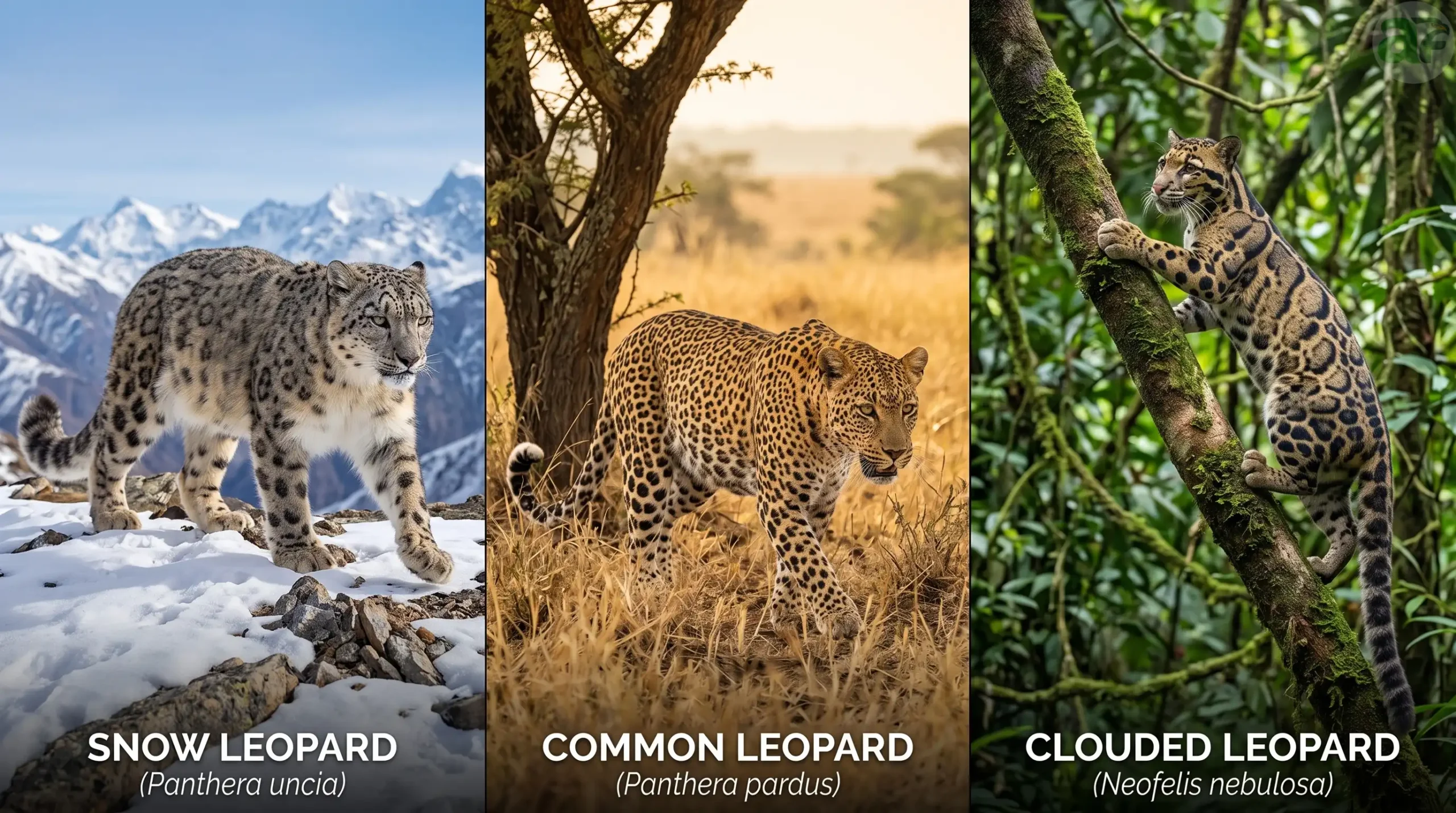
| Feature | Snow Leopard (P. uncia) | Common Leopard (P. pardus) | Clouded Leopard (Neofelis nebulosa) | Tiger (P. tigris) |
|---|---|---|---|---|
| Scientific name | Panthera uncia | Panthera pardus | Neofelis nebulosa | Panthera tigris |
| Weight (male) | 35–55 kg | 37–90 kg | 11–23 kg | 90–310 kg |
| Habitat | High mountain (3,000–5,500 m) | Forest, savanna, mountain | Dense tropical forest | Tropical/temperate forest |
| Range | Central Asia (12 countries) | Africa, Asia | South/Southeast Asia | Asia |
| Can roar? | No | Yes | No | Yes |
| Primary prey | Blue sheep, ibex | Gazelle, impala, deer | Deer, primates, pigs | Deer, wild boar, sambar |
| Conservation status | Vulnerable | Vulnerable | Vulnerable | Endangered |
| Wild population | 4,000–6,500 | 250,000+ | ~10,000 | ~3,900 |
| Tail | Very long (80–105 cm) | Long (60–110 cm) | Very long (75–91 cm) | Medium (60–110 cm) |
| Closest relative | Tiger | Snow leopard | Tiger (distant) | Snow leopard |
23. Frequently Asked Questions About Snow Leopards
Q1: What is the scientific name of the snow leopard?
The snow leopard’s scientific name is Panthera uncia (Schreber, 1775). It was first formally described by German naturalist Johann Christian Daniel von Schreber in 1775 as Felis uncia. For much of the 20th century it was classified in its own genus as Uncia uncia, but molecular phylogenetic analysis published from 2006 onward firmly established its placement within the genus Panthera — alongside lions (P. leo), tigers (P. tigris), leopards (P. pardus), and jaguars (P. onca). Its species epithet uncia is thought to derive from the Old French once or Latin uncia, both meaning a unit of weight but also used historically to describe small spotted cats.
Q2: How many snow leopards are left in the wild?
As of 2026, the global wild snow leopard population is estimated at 4,000–6,500 individuals, of which fewer than 2,500 are estimated to be mature, breeding adults. The uncertainty in this range reflects genuine gaps in survey coverage across the species’ 1.8-million-km² range — particularly in China (which holds the largest single national population), Afghanistan (where conflict prevents systematic surveying), and several Central Asian states. These numbers place the snow leopard among the rarer large felids globally — numerically less common than lions, tigers (barely), and common leopards, but more numerous than cheetahs in the wild.
Q3: Why is the snow leopard called the “ghost of the mountains”?
The snow leopard earned its famous nickname through a combination of characteristics that make it extraordinarily difficult to see in the wild. Its pale grey-white coat with black rosettes provides near-perfect camouflage against the rocky, lichen-covered terrain of its mountain habitat. It is almost completely silent in movement. It is predominantly crepuscular — most active at dawn and dusk when visibility is limited. It inhabits extremely remote terrain that few humans enter. And it has a well-documented avoidance behavior toward humans — detecting human presence from great distances and departing long before humans are aware of its presence. In many parts of its range, local people know the snow leopard exists from tracks, kills, and occasional livestock losses but may never see one in decades of living in the same mountains.
Q4: What do snow leopards eat?
Snow leopard diet is dominated by large mountain ungulates. The blue sheep (bharal) (Pseudois nayaur) is the primary prey across most of the range, supplemented by Himalayan ibex (Capra sibirica) in rocky gorge habitats and argali (Ovis ammon — the world’s largest wild sheep) where available. Smaller prey including marmots, woolly hares, pikas, snowcocks, and chukar partridges are taken opportunistically. In areas near human habitation, domestic livestock (sheep, goats, yaks, and horses) are taken, creating the primary source of human-snow leopard conflict. Snow leopards have also been documented consuming grass and twigs — unusual behavior for a large carnivore, possibly serving a digestive or micronutrient function.
Q5: Can snow leopards roar?
No — and this is one of the most fascinating snow leopard facts and one of the features that distinguishes this species from the other four members of the genus Panthera. The ability to roar in lions, tigers, leopards, and jaguars depends on a specialized fully elastic hyoid bone in the throat that amplifies low-frequency vocalizations. In the snow leopard, the hyoid is only partially ossified — more flexible than in purring cats but not fully elastic enough for a true roar. Instead, snow leopards produce a range of vocalizations including chuffs, hisses, mews, puffing sounds, yowls, and the characteristic “prusten” — a friendly puffing breath through the nose used as a greeting, also produced by tigers.
Q6: Where do snow leopards live?
Snow leopards are found across 12 countries in Central and South Asia: China (the largest population), Mongolia, Russia, India, Nepal, Bhutan, Pakistan, Afghanistan, Kazakhstan, Kyrgyzstan, Tajikistan, and Uzbekistan. They inhabit high mountain terrain at elevations of 3,000–5,500 meters across the major mountain ranges of the region — the Himalayas, Karakoram, Hindu Kush, Pamir, Tien Shan, Altai, and Kunlun ranges. They are not found in lowland habitats and use significantly lower elevations only in the depths of winter when prey descends from the highest terrain.
Q7: How big is a snow leopard?
Adult snow leopards have a body length of 75–150 cm plus an additional 80–105 cm of tail. They stand 56–65 cm at the shoulder. Males weigh 35–55 kg while females are considerably lighter at 22–40 kg. Despite this relatively modest body mass, their proportionally enormous paws, massive leg musculature, and long, powerfully built body give them an appearance of considerable larger size and formidable physical power — particularly in the thick winter coat that doubles their apparent mass.
Q8: Are snow leopards endangered?
The snow leopard is classified as Vulnerable on the IUCN Red List — a classification representing a significant extinction risk, though not the immediate crisis-level risk of Endangered or Critically Endangered status. This classification was downlisted from Endangered in 2017 — a decision that remains controversial among conservation scientists. With a total wild population of 4,000–6,500 (fewer than 2,500 mature adults), a decreasing population trend, and multiple unresolved threats including climate change, the species remains genuinely threatened. Its conservation requires urgent and sustained attention despite the technical downlisting.
Q9:How do snow leopards communicate?
Snow leopards communicate primarily through scent marking — an elaborate system of spray marks, scrapes, and fecal deposits at prominent terrain features that conveys detailed information about individual identity, sex, reproductive status, and territory. They also communicate through vocalizations including chuffs (a friendly puffing breath), hisses (alarm/aggression), mews (between mother and cubs), yowling calls during mating season, and the prusten greeting. Visual signals — posture, tail position, facial expression — are used in the rare direct encounters between individuals. Physical communication between mother and cubs includes nose-touching, mutual grooming, and play behavior that reinforces social bonds and teaches cubs essential hunting and territorial skills.
24. Sources & References
Research Sources
- Wikipedia — Panthera uncia, Snow leopard, Felidae, Panthera
- IUCN Red List — iucnredlist.org (2016–2024 assessments)
- Snow Leopard Trust — snowleopard.org
- Panthera — panthera.org
- National Geographic — nationalgeographic.com
- WWF Global — worldwildlife.org
- BBC Wildlife / BBC Earth — bbcearth.com
- Britannica — britannica.com/animal/snow-leopard
- Live Science — livescience.com
- Smithsonian’s National Zoo — nationalzoo.si.edu
- Jackson, Rodney — multiple published field research papers on snow leopard ecology
- Janecka et al. (2017). “Range-wide snow leopard occupancy analysis.” Oryx
- McCarthy, T. et al. (2017). “Assessing priorities for improving the IUCN Red List status of the snow leopard.” Cat News
- Matthiessen, Peter (1978). The Snow Leopard. Viking Press